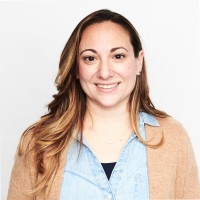
Christina Asquith was a 29-year-old journalist and author, living in New York and working on her first book, when the U.S. went to war in Iraq. “I had some advice from a friend of mine, which was, ‘If you want to cover a war, just go. Don’t wait for an editor to send you with a big expense account, because it will probably never happen,'” she explained. “So I decided to just go. I bought a ticket to Kuwait and I hitchhiked into Baghdad.”
While working as a freelancer in Iraq, Asquith focused her coverage on education in the devastated country, but through her reporting she started to meet women whose stories she wanted to tell. So, she shifted her focus and began “gathering string,” for what would eventually become Sisters In War: A Story of Love, Family and Survival in the New Iraq.
Also on Mediabistro


“I was talking to women, in some cases really getting to know them well and becoming really good friends with them,” she said. “Most male reporters aren’t even allowed to talk to Iraqi women in private, and here I was sitting in their bedrooms talking about very personal things. There was really another side to the war that I thought I should tell, because I could tell it.”
How did you go about freelancing in a foreign country?
It’s actually a lot easier to freelance in a foreign country because there’s usually not as much competition and — by the virtue of the fact that you are there and the editors don’t have to pay for you to be there — editors are definitely interested in news from whatever exotic location you may be. I laid all the groundwork before I left. I called all my editors, told them I was going, gave them some story ideas, and told them I would be calling them again from Iraq. I had lined up one assignment with The New York Times to write about education in Iraq, and when I finished that story, I just decided to stay in Iraq because it was a huge story and it was a great opportunity for freelancers.
What were you covering for them before you went to Iraq?
I was covering education for publications like The Economist, The Christian Science Monitor, The New York Times, The Guardian, Glamour and Elle magazine. On the back of my book, The Emergency Teacher, which is about a year I spent in an inner city school as a teacher, I became kind of an education expert. I found that it’s much easier to freelance when you have a niche like that. So that was my angle on almost every story, and that’s why I went to Iraq — to cover education. I never imagined I would end up writing about women.
| “Iraq is one of the most over-covered events of our time, and not a lot of these books were selling. But there was not a single book among all of the books sagging the bookshelves about women’s experiences during the war.” |
How did the story of these women come out of your original reporting on education?
I kept meeting so many women, and I realized that because there weren’t that many female journalists in Iraq, I was getting a story that a lot of reporters couldn’t access. After I was finished interviewing them for a story, we would just chat for hours about how their lives were changing as a result of the U.S. invasion and the exposure to the West and Western culture.
There were two sisters, Zia and Nunu, who I met while I was working on a story for Elle. Their lives were just absolutely upended by the war. One of them fell in love with an American man and the other was forbidden from going to school anymore. I became very personally connected with them throughout 2003 and 2004. I asked them at one point, in 2004, ‘Do you think I could write a book about you and your experiences and use that as a microcosm for telling the bigger picture about how the war is affecting the lives of women?’ I was really surprised that they were excited about it.
Sisters in War also focuses on two other women. How did you meet them, and why did you choose to feature them in your book?
I realized that it was wonderful to be able to tell the story [of the sisters] up close and personal. But in doing so I wasn’t able to tell the bigger picture of what was going on. Mostly, I wasn’t able to tell the story of the U.S. effort to bring women’s rights to Iraq. So I decided to expand the coverage and write about two American women who were over there trying to “import” feminism. They are Captain Heather Coyne and Manal Omar. I followed their lives as well from 2003 through 2008.
| “I got my eyebrows threaded with them. I stayed over at their house. I moved in with them. I fasted for Ramadan with them. I read the Koran with them. Even when they became refugees and were forced out of the country, I fled to Oman and lived with them.” |
How did you go about “following” the lives of the women in your book?
I spent a lot of time with them. I went to the beauty shop with them. I went and got my eyebrows threaded with them. I stayed over at their house. I moved in with them. I fasted for Ramadan with them. I read the Koran with them. Even when they became refugees and were forced out of the country, I fled to Oman and lived with them and watched them go through the process of figuring out where to live and how to survive. I had that freedom as a freelancer with a book contract to spend the kind of time that I needed to spend with them over the course of five years.
So it took five years to research the book?
Yes. I followed them over five years, but I did other things throughout that time. Sometimes I was with them full time and other times I was just popping in and out of their lives. In 2007, at the height of the civil war, Nunu was trapped inside her house for months and months at a time — if she had left, she would have been killed. So the only way I could know what was going on with her was to call her cell phone from the comforts of my home in Washington, D.C., and interview her every week.
Did you find it difficult to find an agent or publisher who wanted to work with you and publish your book?
Yes. Iraq is one of the most over-covered events of our time, and not a lot of these books were selling. But there was not a single book among all of the books sagging the bookshelves about women’s experiences during the war. Even as I was writing, I was waiting in fear to see one pop up all of a sudden on Amazon. None ever did. So that was the angle with which I sold the book.
But my break didn’t come in terms of selling the book until a fellow journalist, Rajiv Chandrasekaran, who wrote Imperial Life in the Emerald City, recommended me to a Random House editor who had contacted him looking for someone to write about Iraq. A year earlier, Rajiv had called me asking for help for his book. So he was kind of returning the favor. It really goes to show that it helps to help your colleagues.
Tips for working as a freelancer abroad:
1. Have a network. “In every war zone I’ve been to, there’s a community of journalists and they all really help each other out,” Asquith explained. “Tap into it.”
2. Don’t be afraid to ask for help from others. “I leaned on my colleagues quite a bit,” she admits. “There was one colleague I had who leant me his flack jacket every time I needed it for a story because bulletproof vests cost thousands of dollars.”
3. Make all the contacts you can before you leave, and plan to communicate with editors mostly via email.
4. Become an expert. Asquith advises writers to stick to what they know and develop a beat. “Be persistent and don’t give up. In 2005, the market was saying that no one would sell an Iraq book because Iraq books weren’t selling. But by 2007, the market was saying something else.”
5. Look for translators in offbeat positions at universities. “I would really look hard to find translators at the university and they would not be working as translators,” Asquith said. “They were students or had other jobs. I would hire them as my translator because they were so good.”
By Amanda Ernst
Topics:
Mediabistro Archive