Last updated: January 2026
In this article:Food Media Careers | Salaries | Food Stylist | Food Writer | Food Photographer | Content Creator | How to Break In | FAQs
Also on Mediabistro


The food media industry offers diverse career paths for people who love food and storytelling. From food magazine editors and cookbook authors to food stylists and social media creators, opportunities exist across publishing, advertising, television, and digital platforms.
Whether you want to write for Bon Appétit, style dishes for commercial shoots, or build a food-focused following on Instagram or TikTok, here’s how to launch a career in food media.
Types of Food Media Jobs
Food media encompasses a wide range of roles across different platforms:
| Role | What They Do | Where They Work |
|---|---|---|
| Food Writer/Editor | Write articles, recipes, and reviews | Magazines, websites, cookbooks |
| Food Stylist | Make food look appealing for photos/video | Advertising, TV, publishing |
| Food Photographer | Capture food images for various media | Magazines, brands, restaurants |
| Recipe Developer | Create and test recipes | Test kitchens, brands, publishers |
| Food Content Creator | Create food videos and social content | YouTube, TikTok, Instagram |
| Food Copywriter | Write marketing copy for food brands | Agencies, brands, restaurants |
| Food Journalist | Report on the food industry, trends, and culture | Newspapers, magazines, digital media |
Food Media Salaries
Compensation in food media varies widely based on role, experience, and whether you work in-house or freelance:
| Role | Entry-Level | Experienced |
|---|---|---|
| Food Writer/Editor | $40,000 – $55,000 | $60,000 – $90,000+ |
| Food Stylist | $300 – $500/day | $800 – $2,000+/day |
| Food Photographer | $250 – $500/day | $1,000 – $5,000+/day |
| Recipe Developer | $45,000 – $55,000 | $65,000 – $85,000 |
| Food Content Creator | Variable (brand deals) | $50,000 – $500,000+ |
| Food Copywriter | $45,000 – $55,000 | $65,000 – $90,000 |
Food Stylist: Making Food Look Irresistible
Food stylists make food look appealing for photographs, commercials, and video content. Their work appears on menus, billboards, television, packaging, and cookbooks.
Atlanta-based Tami Hardeman got her start in food styling by way of fashion. As a writer for Women’s Wear Daily, she styled photo shoots as part of her role. When offered the opportunity to style food for a shoot, she took it—and never looked back. She’s since worked with major brands including McDonald’s, Arby’s, and Olive Garden.
“Food stylists are hired to make food look good enough to eat,” Hardeman explains. “These days, stylists don’t use a lot of fake food or tricks—too many truth-in-advertising laws. I have a huge kit of tools: spritzers, tweezers of every sort, hundreds of brushes.”
How to Become a Food Stylist
- Assist established stylists – Most successful food stylists spent years assisting before going solo
- Practice constantly – Cook dishes, style them, photograph them
- Build a portfolio – Document your best work on a website
- Study culinary arts – Some programs offer food styling courses
- Stay current – Follow food photography trends on Instagram and in magazines
“I assisted for a long time,” Hardeman says. “Take time with your camera—it doesn’t have to be fancy—and take photographs of your food. The best way to learn how to become a stylist is to practice.”
Food Writer & Blogger: Carving Out a Niche
Food writing spans many formats: magazine features, cookbook authorship, restaurant reviews, recipe content, and food journalism. Many food writers build audiences through blogs or newsletters before transitioning to traditional publishing.
Successful food blogger Clotilde Dusoulier parlayed her site Chocolate & Zucchini into a career as a cookbook author. The path from blogger to published author remains viable today—though the platform has shifted from blogs to newsletters, Instagram, and TikTok.
Types of Food Writing Jobs
- Magazine/website staff writer – Bon Appétit, Food & Wine, Serious Eats, Eater
- Cookbook author – Publishers like Clarkson Potter, Ten Speed Press
- Restaurant critic – Newspapers, magazines, digital outlets
- Recipe writer – Test kitchens, brands, food publications
- Food journalist – Covering the food industry, policy, and culture
- Newsletter creator – Substack, Beehiiv, and other platforms
How to Break Into Food Writing
- Start a platform – Blog, newsletter, or social media presence showcasing your voice
- Pitch publications – Study mastheads and pitch editors with specific story ideas
- Build clips – Write for smaller publications to build a portfolio
- Engage the community – Comment on, share, and connect with other food writers
- Develop expertise – Specialize in a cuisine, technique, or angle
“Write the kind of pieces that would interest a Serious Eats or a Food & Wine on your own platform,” advises food writer Zach Brooks. “Once you have a nice body of work, start joining their community by engaging with their content. By contributing your unique perspective and quality content, you’ll get noticed.”
Food Photographer: Building a Mouthwatering Portfolio
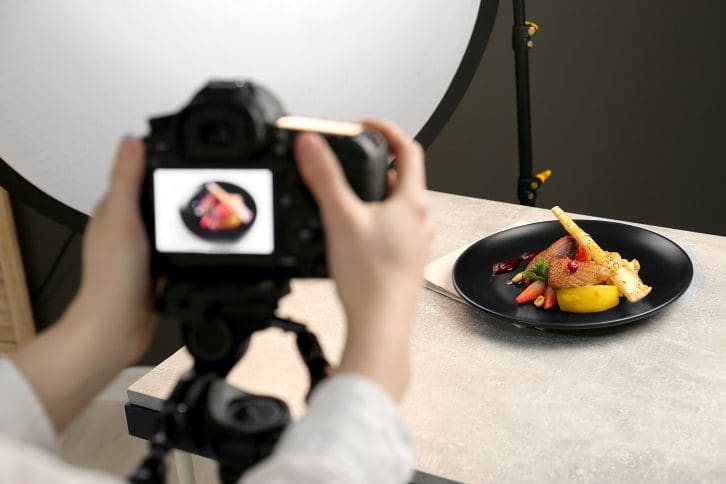
Food photographers capture images for cookbooks, magazines, advertising campaigns, restaurants, and social media. The field ranges from editorial work (magazines, cookbooks) to commercial work (advertising, packaging).
New York-based photographer Bill Brady has been a professional photographer for over 20 years, with clients including Boar’s Head, Godiva, Moët Hennessy, and Krispy Kreme.
“The best advice I can give aspiring photographers is to shoot and create a strong portfolio,” Brady says. “If you have zero experience, approach a local restaurant and offer to shoot their food for free.”
How to Become a Food Photographer
- Shoot constantly – Build a diverse portfolio of food images
- Study the style – Analyze photography in publications you want to work for
- Offer free shoots – Approach local restaurants to build experience
- Network relentlessly – Referrals drive most photography work
- Learn lighting – Natural and artificial lighting techniques are essential
- Develop a signature style – Stand out with a recognizable aesthetic
“Most people hire you if you have a photograph in your portfolio that matches what they want,” Brady explains. “If you want to shoot for a particular magazine, study their style and create a unique spin on it.”
Award-winning photographer Lou Manna, whose work appears in over 40 cookbooks and campaigns for Kraft Foods, Dannon, and the Culinary Institute of America, emphasizes versatility: “These days one cannot just be a food photographer—it’s only 40 percent of what I do.”
Food Content Creator: The Modern Path
Social media has created entirely new career paths in food media. Food content creators build audiences on platforms like TikTok, Instagram, and YouTube, earning income through brand partnerships, sponsored content, and their own products.
Platforms for Food Content Creators
- TikTok – Short-form recipe videos, food trends, restaurant reviews
- Instagram – Food photography, Reels, recipe content
- YouTube – Long-form cooking videos, food travel, reviews
- Substack/newsletters – Recipe newsletters, food writing
- Podcasts – Food industry discussions, interviews, storytelling
How to Build a Food Content Career
- Choose your niche – A specific angle helps you stand out (budget cooking, regional cuisine, dietary restrictions)
- Post consistently – Algorithms reward regular content
- Engage authentically – Build community, respond to comments, collaborate with others
- Learn the platforms – Each has different best practices for content
- Diversify income – Brand deals, affiliate marketing, digital products, cookbooks
Food Copywriter: Crafting the Right Words
Food copywriters write marketing copy for restaurants, food brands, packaging, and advertising. The role combines writing skills with food knowledge.
Andy Boynton of Seattle transitioned from managing editor at Amazon to freelance food copywriter. “Cooking was always a passion, so I took some culinary classes—but it became clear early on that I was a better writer than a chef,” he says.
Boynton combined his writing background with his love of food, freelancing for Allrecipes.com, Le Cordon Bleu schools, and reviewing food books for Publishers Weekly and Gastronomica.
“There are a lot of opportunities for food copywriters,” Boynton says. “Everyone from food manufacturers to supermarket chains to gourmet retailers needs writers. I’m a big believer that you should use what you have—your connections and experience—and you have more than you think.”
How to Break Into Food Media
1. Build a Portfolio
Every food media career requires demonstrable work. Start creating content now—even without paying clients. Write recipes, style dishes, photograph food, and create videos. Document everything on a professional website.
2. Develop Food Knowledge
Immerse yourself in food culture. Cook regularly, dine out, read cookbooks and food publications, and travel for food experiences. The more you know, the better your work will be.
3. Assist Established Professionals
Many food stylists, photographers, and test kitchen professionals hire assistants. This is invaluable hands-on learning and networking.
4. Network in the Industry
Attend food events, engage on social media, and join professional organizations. Referrals drive much of the hiring in food media.
5. Pitch Relentlessly
For writing and photography, pitch publications directly with specific ideas. Study their content, identify gaps, and propose stories only you can tell.
6. Take Entry-Level Positions
Editorial assistant roles at food magazines, test kitchen positions, and agency assistant jobs provide pathways into the industry.
Where to Find Food Media Jobs
- Mediabistro – Media and publishing jobs including food positions
- LinkedIn – Search “food editor,” “food stylist,” “recipe developer”
- Publication websites – Check careers pages at Condé Nast, Dotdash Meredith, etc.
- Food industry associations – IACP, James Beard Foundation job boards
Frequently Asked Questions
How do I get a job in food media?
Start by building a portfolio that demonstrates your skills—whether that’s food writing, photography, or styling. Assist established professionals to gain experience, network within the industry, and pitch publications or agencies directly. Entry-level positions, such as editorial assistant or test kitchen assistant, can also provide pathways in.
What jobs are there in food media?
Food media jobs include food writer/editor, food stylist, food photographer, recipe developer, food content creator, food copywriter, cookbook author, restaurant critic, test kitchen professional, and food journalist. Opportunities exist in magazines, digital media, television, advertising, publishing, and social media.
How much do food media jobs pay?
Salaries vary widely. Entry-level food writers and editors earn $40,000–$55,000, while senior editors can earn $70,000–$90,000+. Food stylists charge $300–$ 2,000 per day, depending on their experience. Food photographers earn $250–$5,000+ per day. Content creators have highly variable incomes based on audience size and brand deals.
Do I need culinary training to work in food media?
Formal culinary training isn’t required for most food media jobs, but knowledge of food is essential. Many successful food writers, stylists, and photographers are self-taught home cooks. However, culinary school can provide valuable skills and connections, especially for recipe development and styling.
How do I become a food stylist?
Start by assisting established food stylists—this is how most professionals learn the craft. Practice styling and photographing food on your own, build a portfolio, and stay current with visual trends. Some culinary schools offer food styling courses, but hands-on experience is most important.
Can I make a living as a food blogger?
Yes, though it’s competitive. Food bloggers earn income through advertising, sponsored content, affiliate marketing, and product sales. Building a sustainable income typically takes years of consistent content creation. Many food bloggers diversify their income through cookbooks, brand partnerships, and other revenue streams.
What skills do I need for food photography?
Technical photography skills (lighting, composition, camera operation), food styling basics, photo editing proficiency, and an eye for visual storytelling. Understanding how to work with food stylists and art directors is also important for commercial work.
How do I get published in food magazines?
Study the publication’s content and voice, then pitch specific story ideas to editors. Build clips by writing for smaller publications first. Having a platform (blog, social media) that demonstrates your expertise helps. Networking and persistence are essential—expect rejection before acceptance.
Ready to launch your food media career? Browse food media jobs on Mediabistro.