NEW YORK, NY / ACCESS Newswire / September 25, 2025 / In today’s fast-paced world, time is precious-but self-expression is just as essential. Nails2Go was created to meet that need, becoming the go-to brand for chic, on-demand press-on nail solutions. Based in New York and New Jersey, Nails2Go has redefined beauty at your fingertips: quick, affordable, and always stylish.
Founded by Jamie Ruan, Nails2Go was born from a simple vision: to bridge elegance and convenience. Today, the brand operates four thriving retail locations along with a vibrant online presence, attracting a loyal community of customers who value creativity, individuality, and practicality.
Each design is a handcrafted work of art. From bold patterns and minimalist elegance to vibrant colors and trendsetting styles, Nails2Go offers something for everyone. With high-quality materials, perfect fit, and constantly refreshed collections, customers can change their look anytime, anywhere.
But Nails2Go is more than just beautiful nails. It represents empowerment. Through wholesale partnerships and franchise opportunities, the company creates pathways for women entrepreneurs to thrive, turning passion into independence. For many, wearing Nails2Go is not just about style-it’s about confidence, self-expression, and identity.
Customer experience is at the heart of the brand. From the moment you browse a collection to the instant you press on a set, every detail is carefully designed. By listening to feedback and incorporating community voices into each collection, Nails2Go keeps its offerings fresh, relevant, and authentic.
As the beauty and fashion industries continue to evolve, Nails2Go stands out by merging artistry with practicality. It’s not just about what you wear-it’s about how you feel when you wear it. Nails2Go invites you to express yourself boldly, shine unapologetically, and carry elegance and confidence at your fingertips.
Arrive AI ($ARAI) Surpasses 1 Million Views on New to The Street TV Commercials
By
Media News
2 min read • Published September 25, 2025
By
Media News
2 min read • Published September 25, 2025
Joins global brands Goldman Sachs, KITON, FLOKI, Ford Motors, and IMG Academy in going viral across NTTS’s YouTube and social media platforms
NEW YORK, NY / ACCESS Newswire / September 25, 2025 / New to The Street is proud to announce that its client Arrive AI (NASDAQ:ARAI) has surpassed 1 million views on its New to The Street TV commercials. The milestone reflects the growing impact of NTTS’s national broadcast and digital ecosystem, which has become a go-to media platform for innovative companies and world-class brands.
With commercials airing nationwide on Fox Business and Bloomberg, amplified by Times Square billboards and NTTS’s 3.5 million+ subscriber YouTube channel, Arrive AI has joined a roster of major brands – including Goldman Sachs, KITON, FLOKI, Ford Motors, and IMG Academy – that have achieved viral reach with NTTS’s signature "sponsored-to-earned" media model.
Vince Caruso, Co-Founder and CEO of New to The Street, stated: "Arrive AI is breaking new ground in artificial intelligence, and their 1 million-plus commercial views demonstrate how fast the market is connecting with their story. At New to The Street, our mission is to give high-growth companies the same scale and visibility as global household names. We are thrilled to see Arrive AI join Goldman Sachs, KITON, FLOKI, Ford Motors, and IMG Academy as one of our most viral brands."
The NTTS multi-platform model ensures commercial content not only reaches audiences during market-hour broadcasts, but continues to gain traction through YouTube, X, LinkedIn, Facebook, Instagram, and Reddit – driving measurable ROI for its clients.
About Arrive AI
Arrive AI (NASDAQ: ARAI) is a next-generation technology company leveraging artificial intelligence to transform how businesses and consumers interact with data, automation, and digital experiences. With innovative solutions across multiple industries, Arrive AI is building scalable tools to enhance efficiency and unlock new growth opportunities.
About New to The Street
Since 2009, New to The Street has been one of the longest-running U.S. and international sponsored and syndicated Nielsen-rated television brands, broadcasting weekly on Fox Business and Bloomberg as sponsored programming. With over 3.5 million YouTube subscribers, iconic Times Square billboards, and guaranteed earned media placements, New to The Street delivers its trademark "Opportunities To Consider™" segments, helping public and private companies tell their stories to investors, business leaders, and audiences worldwide.
Newsmax Draws Over 8 Million Viewers for Charlie Kirk Remembrance Service
By
Media News
3 min read • Published September 25, 2025
By
Media News
3 min read • Published September 25, 2025
BOCA RATON, FL / ACCESS Newswire / September 25, 2025 / Newsmax Inc. (NYSE:NMAX) ("Newsmax" or the "Company") today proudly announced that the Company’s live coverage of the Charlie Kirk Remembrance Service from Phoenix delivered record-setting ratings, with over eight million Americans tuning in across its television platforms.
The service, which honored the life and legacy of one of the most influential conservative voices of his generation, resonated deeply with viewers nationwide.
Newsmax’s commitment to delivering meaningful, live coverage of moments that matter was met with an overwhelming response and unprecedented ratings success.
According to Nielsen data and internal streaming metrics:
8+ million total viewers watched Newsmax and Newsmax2 combined.
6+ million tuned into Newsmax’s cable channel, marking one of the network’s strongest live event performances to date.
2+ million streamed on Newsmax2, the network’s fast-growing streaming platform, showcasing Newsmax’s reach beyond traditional television.
2.5 million cable viewers were in the key demo A35-64.
#2 in cable overall; Newsmax ranked just behind Fox News in total audience during coverage.
These results underscore Newsmax’s extraordinary growth and relevance, as Americans increasingly turn away from legacy media outlets in search of unfiltered, balanced coverage.
A National Moment of Remembrance
Charlie Kirk, founder of Turning Point USA, has been a prominent advocate for conservative principles, youth empowerment, and faith-based activism. He was a frequent guest on Newsmax, including during long periods he was banned from appearing on Fox News.
His remembrance service in Phoenix was a solemn yet inspirational gathering, drawing President Trump and the Kirk family, friends, political leaders and supporters from across the country.
Newsmax delivered live, uninterrupted coverage for eight hours, ensuring millions of Americans could take part in honoring Kirk’s contributions. The broadcast highlighted heartfelt tributes, stirring personal stories, and reflections on his enduring impact on conservative thought and grassroots movements.
"Americans are making the switch to Newsmax in historic numbers," said Christopher Ruddy, CEO of Newsmax. "The overwhelming response to our coverage of the Charlie Kirk Remembrance shows that when a moment matters, people turn to Newsmax. We are proud to provide a platform that honors America’s values, traditions, and leaders like Charlie Kirk. We thank our viewers for placing their trust in us."
About Newsmax Newsmax Inc. is listed on the NYSE (NMAX) and operates, through Newsmax Broadcasting LLC, one of the nation’s leading news outlets, the Newsmax channel. The fourth highest-rated network is carried on all major pay TV providers. Newsmax’s media properties reach more than 40 million Americans regularly through Newsmax TV, the Newsmax App, its popular website Newsmax.com, and publications such as Newsmax Magazine. Through its social media accounts, Newsmax reaches 20 million combined followers. Reuters Institute says Newsmax is one of the top U.S. news brands and Forbes has called Newsmax "a news powerhouse."
Patriot.TV Lands “Biggest MAGA Mouth in the World” as Wayne Allyn Root’s WAR Zone Joins America’s Fastest-Growing Conservative News Outlet
By
Media News
6 min read • Published September 25, 2025
By
Media News
6 min read • Published September 25, 2025
Patriot.TV (OTCID:CBMJ) challenges Fox (FOX), Newsmax (NMAX), and Sinclair (SBGI) amid explosive growth, while legacy outlets Warner Bros. Discovery (WBD), Paramount (PARA), and Disney (DIS) face declining ratings and eroding trust.
ATLANTA, GEORGIA / ACCESS Newswire / September 25, 2025 / Conservative Broadcast Media & Journalism, Inc. (OTCID:CBMJ) and its flagship network Patriot TV, is proud to announce that nationally recognized TV and radio host, best-selling author, and political commentator Wayne Allyn Root is joining its lineup this week with his show, "WAR Zone with Wayne Allyn Root." This marks a major addition to Patriot TV’s roster, bringing Root’s high-profile, high-energy MAGA voice to a primetime slot on the burgeoning network.
Dubbed "the Conservative Warrior" and "the biggest MAGA mouth in the world" by the media, Wayne Allyn Root is known for his unapologetic, balls-to-the-wall, pedal-to-the-metal style of conservative commentary. He says, "WAR Zone" will be the antidote to mainstream media bias and "fake news," offering instead what he calls "WAYNE-Stream Media"- a rare blend of raw truth and world-class energy geared toward America-First patriots.
Root has been a popular national TV host for decades, as well as a nationally syndicated radio host, newspaper columnist, and best-selling author of 17 books. His bold, fiery approach has made him a household name among grassroots conservatives and liberty-minded MAGA patriots. Notably, President Donald J. Trump has appeared as Root’s guest a record-setting 16 times, underscoring Root’s prominence and credibility in the movement.
"What an honor to join Patriot TV and their millions of conservative viewers," said Wayne Allyn Root. "My weekend powerhouse TV show, " America’s Top Ten Countdown" , reaches millions on Real America’s Voice TV. Now my daily video podcast WAR Zone will be on multiple dynamic platforms from Patriot TV, to serving as the official podcast of " The Gateway Pundit", reaching their 2.5 million unique daily readers, as well as livestreamed on X, Gettr, and TruthSocial. The left has tried everything to stop me, ban me, censor me, harass me, yet the popularity and reach of my shows just keeps exploding. That’s called WINNING! "
JD Rucker, President of Patriot TV, welcomed Root to the network with enthusiasm. "Wayne Allyn Root is a powerhouse in conservative media," said Rucker. "His addition to Patriot TV is a major win for our audience and our mission. We’re excited to give him a platform that matches his reach and passion, and we know WAR Zone will be a cornerstone of our network." The new program debuts this week across Patriot TV’s streaming channels, The Gateway Pundit, Rumble, and major social media platforms. "WAR Zone with Wayne Allyn Root" will air live each weekday from 6:00-8:00 PM ET (3:00-5:00 PM PT). Viewers can expect Root’s trademark mix of hard-hitting MAGA political analysis, lively interviews with high-profile conservative stars, and an unyielding defense of President Trump, America First, and personal freedom, and free enterprise.
The addition of Wayne Allyn Root’s hit show comes amid an explosive period of growth andmomentum for Patriot TV. Under the leadership of JD Rucker, who took the helm as President and COO in late June 2025, the network has rapidly expanded its content, audience, and market footprint. In just a few months, Patriot TV’s parent company Conservative Broadcast Media & Journalism (OTCID:CBMJ) has celebrated a string of strategic victories and milestones that bolster its position as a rising force in conservative media.
Patriot.TV’s momentum has been fueled by a series of strategic wins under the CBMJ umbrella. The acquisition of " The Conservative Playbook" , a popular newsletter and website with more than 40,000 dedicated subscribers, instantly broadened the network’s reach and reinforced its challenge to legacy outlets. The company also expanded internationally with the hiring of Scarlett Karoleva as European Affairs Correspondent, adding a global perspective to its lineup and further solidifying Patriot.TV as "America’s fastest-growing conservative news platform."
Domestically, Patriot.TV has brought in several prominent voices, including Wayne Dupree, Drew Berquist, and David Pollack, each adding nationally recognized programs and their loyal audiences to the network. On the business side, a new partnership with Evergreen Media Partners has opened up lucrative advertising opportunities, giving brands direct access to Patriot.TV’s highly engaged viewers while accelerating the company’s monetization strategy.
These moves have been translated directly into results. In July 2025, Patriot.TV hit a record 1.6 million live viewers on Rumble, its strongest month to date.
Each of these accomplishments has occurred since JD Rucker assumed leadership in June, highlighting the impact of his vision and execution. "Patriot TV is becoming the destination for truth-driven journalism," Rucker said in a recent statement. "Bringing in bold voices and investing in quality content underscores our commitment to fearless reporting that the American people can trust." Under Rucker’s guidance, Patriot TV has transformed into a high-growth media platform, launching hit shows, forging partnerships, and unlocking value for its audience and shareholders alike.
Patriot TV’s steady ascent is especially notable given the turmoil plaguing other political news outlets on a near-daily basis. The broader media landscape is in flux as audiences are rapidly abandoning traditional cable and broadcast networks in favor of independent streaming platforms. Many legacy outlets have been rocked by declining ratings, leadership shake-ups, and waning public trust, creating an atmosphere of instability in mainstream newsrooms. By contrast, Patriot TV has been consistently gaining viewers and momentum while avoiding the controversies that mire its competitors.
Industry trends underscore this shift. Major liberal-leaning media conglomerates, from Warner Bros. Discovery’s CNN (WBD) to Paramount’s (PARA) CBS News and Disney’s (DIS) ABC, have suffered steep double-digit ratings declines and shrinking ad revenues. Even some conservative-leaning cable networks face stagnation as viewers seek unfiltered content. Meanwhile, digital-first outlets like Patriot TV are capitalizing on this exodus from legacy media. Patriot TV’s meteoric rise is challenging the dominance of established conservative networks like Fox News (FOX) and Newsmax (NMAX), which remain relevant but now face mounting competition from more agile streaming platforms. In short, Patriot TV is surging ahead while old-guard media struggles, reflecting a broader seismic shift in viewer habits toward on-demand, values-aligned content.
With its authentic programming and innovative multi-platform distribution, Patriot TV has tapped into the growing demand for trustworthy conservative voices. The network’s success comes as Americans increasingly bypass corporate media gatekeepers in favor of outlets that share their values and tell it like it is. Patriot TV’s consistent positive growth, contrasted with the chaos and decline gripping much of the mainstream media, positions the company as a beacon of stability and opportunity in the current news ecosystem.
With over three million monthly video views and hundreds of thousands of engaged readers across its platforms, Patriot TV continues to expand its influence in the conservative media landscape. The addition of "Wayne Allyn Root’s WAR Zone" further cements Patriot TV’s position as a leading voice for Americans seeking news and commentary outside the mainstream.
About Patriot.TV: Patriot.TV is a digital-first streaming platform delivering patriotic news, commentary, and original programming. Operating as a subsidiary of Conservative Broadcast Media & Journalism (OTCID:CBMJ), Patriot.TV is committed to American values, free speech, and truthful, unfiltered content for underserved audiences. With a cutting-edge multi-platform distribution strategy, Patriot.TV reaches viewers across its website, social media, and streaming apps, and drives revenue through sponsorships, advertising, affiliate partnerships, and memberships. Since its launch, Patriot.TV has become a burgeoning home for conservative voices, featuring an array of shows hosted by military veterans, media insiders, and grassroots influencers devoted to informing and empowering the American public. Visit www.Patriot.TV for more information.
About Conservative Broadcast Media & Journalism Inc. (OTCID:CBMJ):CBMJ is a publicly traded media and digital broadcasting company focused on delivering conservative and faith-based content. Its wholly owned subsidiary, Patriot.TV, serves as a premier destination for news, commentary, and original programming that reflects traditional American values. For more information, visit www.Patriot.TV.
Media Contact: Mark Schaftlein – CEO, Conservative Broadcast Media & Journalism (877) 704-6773
SOURCE: Conservative Broadcast Media & Journalism, Inc.
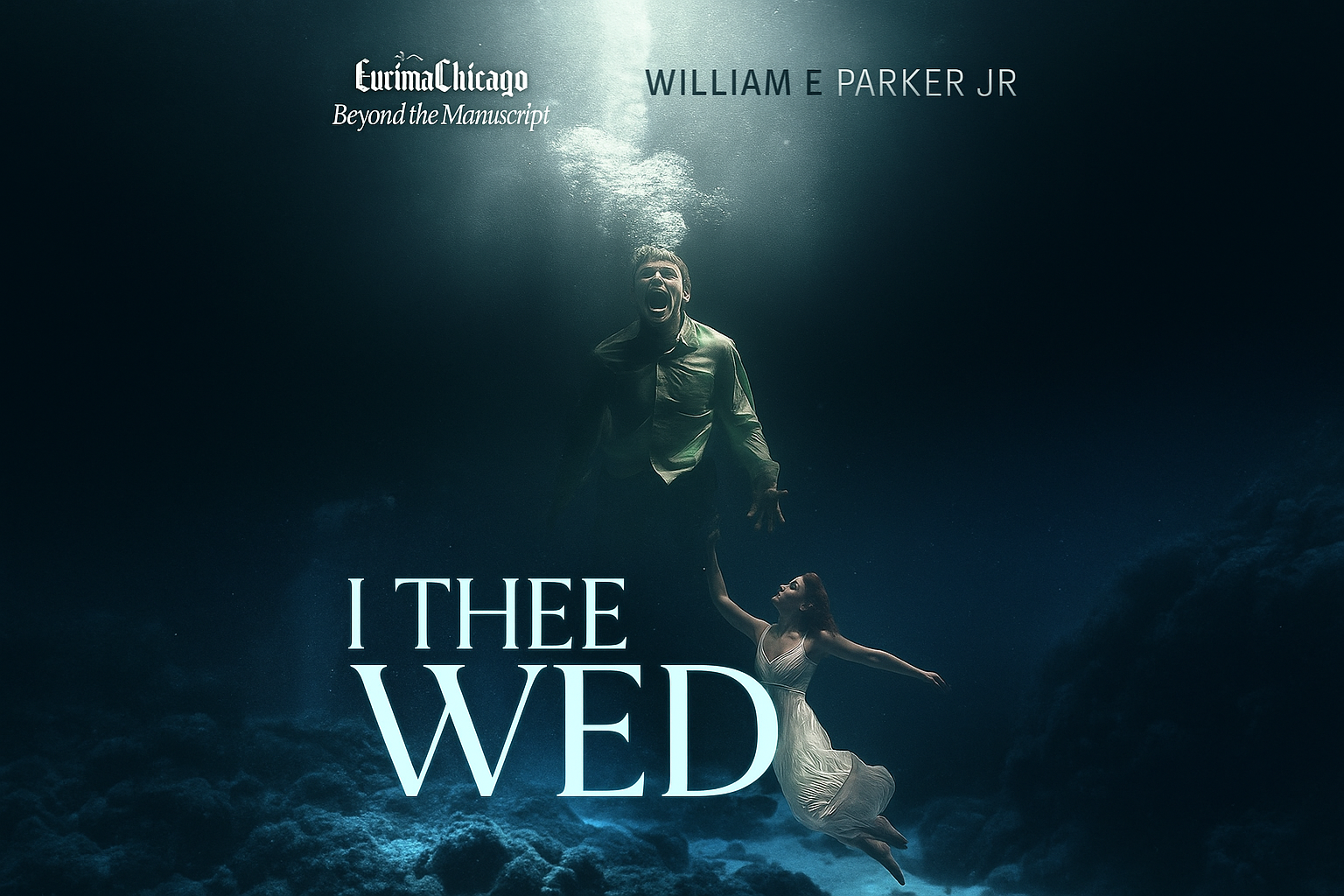
In the literary world, few manuscripts arrive with the raw, unflinching grit of William E. Parker Jr.’s I Thee Wed. This novel doesn’t open with polished banquets or sparkling love affairs; it begins in the mud, the mosquitoes, and the misery of a man named Frank Philman. Homeless, hungover, and perpetually on the edge of disaster, Frank embodies every scar left behind by poor choices and bad luck. Yet through Parker’s sharp storytelling, Frank is more than a caricature of failure; he is a tragic mirror held up to society’s underbelly.
Grit on the Pavement
Parker wastes no time plunging readers into Naples, Florida’s humid underworld. Frank stumbles between the Waffle House, liquor stores, and a Goodwill heist with the same reckless rhythm that defines his life. His brief windfall; earning a hundred-dollar bill while hawking newspapers at an intersection; shows how fragile luck can be when survival itself is the gamble.
The narrative is reminiscent of John Steinbeck’s Cannery Row, where drifters and misfits navigate daily survival against the backdrop of a larger economic landscape. Parker’s Naples is his own version of Steinbeck’s Monterey; alive with desperation, humor, and small bursts of grace.
A Clash of Worlds
The manuscript also introduces Diane Smith, a wealthy businesswoman whose family lineage is steeped in legend and land. Her loneliness; and her encounter with Frank; sets up an unlikely, combustible relationship that blurs the boundaries of class, desire, and power. Where Frank embodies raw survival, Diane represents legacy, wealth, and the ghosts of tradition.
This clash echoes not only personal choices but historic ruptures: Parker’s work recalls the stark divides seen during the Great Depression, when breadlines and Wall Street boardrooms existed just blocks apart. In I Thee Wed, Naples becomes a microcosm of America itself; where privilege and poverty co-exist in uncomfortable proximity.
Parker’s Voice
What makes I Thee Wed compelling is Parker’s refusal to sanitize. His prose is blunt, sometimes profane, always unapologetic. The Naples he sketches is not the glossy, beachside paradise of postcards, but a place where fortune-tellers hustle, liquor clerks sneer, and cops can be both saviors and predators. It is Florida noir with a surreal twist; a world where the mosquitoes don’t bite, but the past surely does.
Beyond the Manuscript
In I Thee Wed, William E. Parker Jr. is not simply telling a story of one homeless man. He is probing at deeper truths: how luck can shift in an instant, how society perceives worth, and how myths; personal, cultural, and supernatural; still cling to our lives. This manuscript forces readers to confront the uncomfortable, while dangling the possibility of redemption just out of reach.
Parker reminds us that every character, no matter how flawed, carries echoes of our shared humanity. Beyond the manuscript, I Thee Wed is a work about survival, consequence, and the haunting spaces between reality and imagination.
Disclaimer
This is a critical, opinion-based cultural analysis authored by the Editorial Team and reflects their personal editorial perspective.
The views expressed do not represent the institutional stance of Evrima Chicago.
The article draws from open-source information, legal filings, published interviews, and public commentary.
All allegations referenced remain under investigation or unproven in a court of law.
No conclusion of criminal liability or civil guilt is implied. Any parallels made to public figures are interpretive in nature and intended to examine systemic patterns of influence, celebrity, and accountability in American culture.
Where relevant, satirical, rhetorical, and speculative language is used to explore public narratives and their societal impact.
Readers are strongly encouraged to engage critically and examine primary sources where possible.
This piece is protected under the First Amendment of the U.S. Constitution and published under recognized standards of opinion journalism. Editorial inputs contact: waasay@evrimachicago.com
Evrima Chicago remains committed to a clear distinction between fact-based reporting and individual editorial perspective.
David Deaton: Thrillers That Make Global Conspiracy Personal
By
Media News
5 min read • Published September 25, 2025
By
Media News
5 min read • Published September 25, 2025
‘Beyond the Manuscript’ By the Editorial Team, Evrima Chicago
NAPERVILLE, IL / ACCESS Newswire / September 24, 2025 / Introduction: The Conspiracy as a Mirror
Crime fiction has always been more than entertainment. From John le Carré’s Cold War spies to Tom Clancy’s geopolitics, the best thrillers double as cultural artifacts – mirrors reflecting the fears, ambitions, and suspicions of their moment. David Deaton’s Avenge Conspiracy and its companion novels carry this tradition into the twenty-first century.
Deaton does not treat conspiracy as an abstract idea. He places it in motion, scattering pieces across Los Angeles, Washington, Taipei, Beijing, and Honolulu, then asking ordinary and extraordinary people to respond. The result is fiction that feels immediate, a blend of adrenaline and commentary on how justice struggles to keep pace with global crime.
Avenge Conspiracy: Justice Without Borders
From the first ambush in Los Angeles to the final confrontation in Hawaii, Avenge Conspiracy works at the speed of a raid. The antagonist, Triad leader Li Chu, is no shadowy caricature. He is a figure with resources, loyalty, and lineage, positioned as heir to a family legacy of power.
What makes the novel convincing is the detail Deaton invests in how such a pursuit might unfold: cooperation between U.S. and Chinese agencies, reliance on intelligence networks in Taiwan, coordination with elite operatives when the mission turns kinetic. The story shows not only what action looks like, but how fragile alliances make or break operations. Corruption and betrayal are constant risks, and every decision carries consequence.
By moving readers through multiple countries, the novel insists that modern crime is transnational – and so must be the pursuit of justice.
The Red Shoebox: When Ordinary People Hold Extraordinary Secrets
In Presidential Conspiracy, Deaton narrows the frame from global manhunt to domestic shock. A red shoebox dropped in Los Angeles carries plans that could destabilize the White House. Inside: floor maps, videotape, and the possibility of an assassination plot involving the Vice President.
The shoebox becomes a device of fate, forcing three friends – a prosecutor, a director, and a detective – into roles they never sought. Unlike trained agents, their power lies in improvisation, loyalty, and the courage to move when silence would be easier.
Deaton reminds readers that democracy’s survival often hinges not on institutions alone, but on individuals willing to act in moments of doubt. The shoebox, ordinary in appearance, becomes extraordinary by what it demands: moral choice under uncertainty.
Foreign Conspiracy: Crime in the Civic Arena
If Avenge Conspiracy dramatizes global operations and Presidential Conspiracy dramatizes hidden plots, Foreign Conspiracy situates both in the civic arena. The action begins in Washington with the collapse of a Chinese general and continues with assassination attempts on American leaders.
Cities become battlegrounds. Los Angeles freeways, intersections, and airports transform into high-stakes chessboards. The ambush at Beverly and Berendo, the chaos at San Gabriel Airport – these moments make geopolitics tangible, showing how global conflicts spill into local lives.
Themes of civic responsibility and gray-zone justice run throughout. Characters make choices not in clean lines, but in shadows where loyalty, law, and survival blur. This ambiguity is what keeps the narrative honest: justice is never simple, and conspiracy thrives in the spaces between.
Signals and Shadows: The Art of the Thriller
In Signals and Shadows, Deaton refines the art of suspense. The opening scenes at a presidential gala illustrate the political thriller’s power: elegance concealing danger, ceremony masking plots. State dinners become characters themselves, choreographed rituals vulnerable to disruption.
The sniper’s bullet aimed at the Vice President, the sudden collapse of a general, the ripple of whispers in a ballroom – these are not just plot points but explorations of fragility in systems designed to project strength.
Deaton’s craft lies in juxtaposition: silver trays and hidden weapons, laughter and panic, loyalty and betrayal. His thrillers remind us that danger rarely announces itself loudly. It often arrives in the quietest moments.
The Ensemble as Hero
Across the series, one motif anchors the chaos: the ensemble. Deaton refuses to grant one figure sole savior status. Instead, prosecutors, filmmakers, detectives, agents, and diplomats form coalitions where trust is the only currency.
This insistence on teamwork is both literary device and cultural commentary. In a world where global crime networks operate with coordination, justice cannot be the work of a lone wolf. It requires collaboration across professions, cultures, and nations. Deaton’s fiction dramatizes this principle through raids, interrogations, and hospital vigils, showing how bonds forged in crisis become the backbone of survival.
Beyond the Manuscript: What Deaton Brings to the Genre
For Evrima Chicago, Beyond the Manuscript seeks authors whose work extends beyond entertainment into cultural dialogue. Deaton qualifies because his thrillers ask readers to consider more than plot:
How do ordinary people respond when institutions fail?
How does global crime blur the line between foreign and domestic?
How do conspiracies thrive in shadows of doubt, ceremony, or complacency?
In presenting crime as both network and narrative, Deaton situates his readers in dilemmas that echo reality: justice must be collective, vigilant, and prepared for betrayal.
Conclusion: The Conspiracy as Cultural Text
David Deaton’s novels remind us that thrillers are not escape hatches. They are cultural texts encoding fears of corruption, the fragility of democracy, and the persistence of networks that defy borders.
By weaving global action with intimate choices, Deaton creates stories that resonate beyond their pages. They challenge readers to imagine not only what agents or presidents would do, but what they themselves might do if handed a shoebox, ambushed at an intersection, or seated at a gala where silence hides conspiracy.
Beyond the Manuscript highlights Deaton because his fiction speaks to a truth larger than any single chase: conspiracy is not just plot, but a condition of the modern world, and the pursuit of justice is never finished.
Disclaimer
This is a critical, opinion-based cultural analysis authored by the Editorial Team and reflects their personal editorial perspective.
The views expressed do not represent the institutional stance of Evrima Chicago.
The article draws from open-source information, legal filings, published interviews, and public commentary.
All allegations referenced remain under investigation or unproven in a court of law.
No conclusion of criminal liability or civil guilt is implied.
Any parallels made to public figures are interpretive in nature and intended to examine systemic patterns of influence, celebrity, and accountability in American culture.
Where relevant, satirical, rhetorical, and speculative language is used to explore public narratives and their societal impact.
Readers are strongly encouraged to engage critically and examine primary sources where possible.
This piece is protected under the First Amendment of the U.S. Constitution and published under recognized standards of opinion journalism.
Every generation confronts moments that demand courage, clarity, and faith. For Christie Sikora, the call to write Worthy: For Such a Time as This arose from that urgency. Her manuscript, available through Amazon, is not a theoretical text but a devotional roadmap – one that blends biblical foundations with lived experience to remind readers of their God-given worth.
The Heart Behind the Work
At the center of Sikora’s manuscript is a pressing conviction: too many people live beneath the weight of shame, distraction, or fear, forgetting the intrinsic value conferred by faith. By anchoring each chapter in scripture and personal reflection, Sikora offers a guide that is both pastoral and practical.
Her book functions as a companion – not just to be read, but to be prayed through, journaled with, and lived out. In this way, it continues the tradition of devotional literature that is less about doctrine and more about daily transformation.
Themes of Worth and Identity
Sikora’s lessons consistently point toward rediscovery of worth.
Identity in Christ emerges as the antidote to cultural comparison.
Faith during trials becomes a way to reframe obstacles as opportunities.
Prayer and scripture provide grounding practices for those navigating uncertainty.
Purpose and calling are illuminated as realities accessible to all believers, not reserved for a select few.
The chapters move with a rhythm of teaching, reflection, and application, guiding readers from insight into action.
A Surprising Historical Lens: Mossad’s Failures and the Lillehammer Affair
What distinguishes Sikora’s manuscript is her willingness to reach beyond the expected devotional frameworks. In Chapter XV, Mossad’s Failures: Achmed Bouchiki and Ali Hassan Salameh, she turns to twentieth-century history to illustrate the complexity of human identity, ambition, and consequence.
She revisits the Lillehammer affair – Mossad’s botched 1973 operation in Norway that mistakenly killed an innocent waiter, Achmed Bouchiki, while targeting the charismatic Palestinian leader Ali Hassan Salameh. Salameh, a controversial figure groomed as Yasser Arafat’s heir, embodied contradictions: heir to a militant legacy yet cosmopolitan in lifestyle, chain-smoking cigars while moving within guerrilla circles, admired by allies and loathed by enemies.
For Sikora, the story is not about espionage intrigue alone. It is about the way legacy, perception, and power shape identity. Just as Salameh navigated the shadow of his father’s resistance heroism, readers must reckon with their own inheritances – both empowering and constraining. The chapter becomes a meditation on how ambition, charisma, and history can shape lives, for better or worse, and how spiritual worth must be distinguished from worldly status.
The Manuscript as Ministry
Like many devotional authors, Sikora does not position her manuscript as literary achievement alone, but as ministry. She writes not from a distance but as a participant in the struggles she addresses. That authenticity is evident in the design of her work: space for readers to write their own prayers and reflections, invitations to engage with scripture beyond the page, and encouragement to see their own lives as testimonies in progress.
Why This Work Matters
Worthy arrives in a cultural moment marked by fragmentation, anxiety, and digital overload. Against those forces, Sikora’s text calls for rootedness in timeless truths. In doing so, it provides an alternative to self-help rhetoric: instead of telling readers to "manufacture" worth, she reminds them to reclaim it as something already bestowed.
Her use of history – even episodes as complex and sobering as the Lillehammer affair – expands the scope of devotional literature. It shows that faith and identity must be tested against the realities of human ambition, error, and conflict.
Beyond the Manuscript
What qualifies Sikora’s work for our series is the way it transcends the written form. Her devotional is not a static product but an invitation to a journey. Each page becomes a catalyst for dialogue between reader and God, between past wounds and future hope.
In this way, the manuscript is not simply about reading, but about becoming.
Conclusion: For Such a Time as This
Christie Sikora’s Worthy: For Such a Time as This is both title and mandate. It insists that readers step into their moment with confidence, armed not by self-promotion but by divine assurance. For those interested in exploring her message further, the book is accessible through Amazon.
For Evrima Chicago’s Beyond the Manuscript, her work exemplifies the heart of this series: manuscripts that do more than sit on shelves, but instead breathe into communities, families, and individual hearts with lasting impact. By engaging scripture, reflection, and even episodes like the Mossad’s failures, Sikora reminds us that worth and identity are never static – they are forged in the intersection of history, faith, and calling.
Editorial Team Evrima Chicago
Disclaimer
This is a critical, opinion-based cultural analysis authored by the Editorial Team and reflects their personal editorial perspective.
The views expressed do not represent the institutional stance of Evrima Chicago.
The article draws from open-source information, legal filings, published interviews, and public commentary.
All allegations referenced remain under investigation or unproven in a court of law.
No conclusion of criminal liability or civil guilt is implied.
Any parallels made to public figures are interpretive in nature and intended to examine systemic patterns of influence, celebrity, and accountability in American culture.
Where relevant, satirical, rhetorical, and speculative language is used to explore public narratives and their societal impact.
Readers are strongly encouraged to engage critically and examine primary sources where possible.
This piece is protected under the First Amendment of the U.S. Constitution and published under recognized standards of opinion journalism.
When a manuscript sits on a desk, it is an object of paper and ink. When an author brings their life to bear on that manuscript, it becomes a ledger of experience, belief and consequence. In the work of Dr. Jozlyn Hall, those ledgers are precisely what she reads – not simply to critique prose or plot, but to map the human currents that produce both harm and hope.
Dr. Hall’s professional identity is not easily pigeonholed. Trained in social work and holding advanced doctorates that align psychological insight with religious and pastoral perspectives, she operates at the uneasy intersection of law, therapy and storytelling. That intersection has become the source of a distinctive practice: mitigation, an applied, narrative-driven discipline intended to place an individual’s life in context for legal decision-makers, with the broader aim of restoring options and dignity to people entangled in the criminal justice system.
This profile, prepared for Evrima Chicago’s series Beyond the Manuscript, examines Hall’s method, her published work, and the ethical and practical questions that arise when an author’s life becomes both evidence and narrative.
From training to practice: a multidisciplinary foundation
Hall’s curriculum vitae signals deliberate breadth. With a Master of Social Work as a base and doctoral training in psychology and religious studies, her education equips her to translate psychological assessment into a culturally and morally literate account of a person’s life. That combination matters in mitigation work because judges, parole boards and clemency authorities rarely make decisions solely on diagnostic checklists; they respond to narratives that show causal pathways, risk reduction strategies, and credible plans for rehabilitation.
Over more than a decade of professional practice, Hall has developed a model that blends clinical assessment with case management and restorative planning. Her work routinely covers psychological and substance-use assessment, developmental history, family and community context, and a structured re-entry plan that ties recommendations to measurable supports. This is not advocacy in the rhetorical sense; it is forensic, evidence-based narrative construction.
Mitigation as storytelling and why that matters
Mitigation specialists operate in a paradox. Their work must be rigorous enough to withstand legal scrutiny while remaining compelling enough to humanize individuals who, on paper, are defined by a conviction or a sentence. Hall’s approach treats mitigating evidence as narrative: background trauma, systemic disadvantage, treatment adherence, vocational readiness – each element becomes a chapter in an explanatory account that helps decision-makers see beyond the moment of criminality.
That narrative approach echoes larger trends in the criminal-justice reform movement, where storytelling is used as a corrective to dehumanizing statistics. But narrative alone is insufficient; it must be paired with documentation, corroboration, and concrete plans. Hall’s practice, as she frames it in her work, insists on both. She does not merely describe hardship, she delineates the resources and programmatic interventions that can materially reduce risk.
Notable contributions and public work
Hall has moved beyond the courtroom into published materials aimed at practitioners and those she serves. Her workbook, presented as a trauma-informed program for justice-involved individuals, illustrates a pragmatic extension of her mitigation philosophy: healing and accountability as iterative, teachable practices. By offering structured reflection, curricula and certificate outcomes, the workbook reframes rehabilitative work as measurable and transferable, a critical move when convincing institutions to invest in re-entry supports.
Hall’s professional footprint also includes contributions to high-profile mitigation efforts where her assessments and reports have been part of commutation and sentence-modification advocacy. Such cases demonstrate the real-world consequences of mitigation work: when carefully constructed accounts and treatment plans are submitted alongside legal motions, they can materially affect outcomes.
Methodology: assessment, corroboration, and re-entry planning
A mitigation specialist’s toolkit is pragmatic. Hall’s reported practice includes comprehensive psychological testing, clinical interviews, collateral interviews with family and service providers, and the development of a re-entry or treatment plan tailored to the individual. Importantly, her plans emphasize measurable support : placement in specific treatment programs, vocational training pathways, and community-based supervision that ties individuals to resources rather than leaving them adrift.
The methodology is designed to answer three questions judges and boards implicitly ask: (1) Who is this person beyond the offense? (2) What changed since the event or what circumstances explain the conduct? (3) If released or given a reduced sentence, what mitigations ensure public safety and support successful reintegration? Hall’s documents aim to provide evidence-based responses to each question.
Ethical contours and verification
Mitigation is ethically complex. Specialists must walk a careful line between advocacy and factual accuracy. The credibility of a mitigation report depends on transparent sourcing: test results, treatment records, corroborated timelines. Any suggestion of unsupported claims can undermine an otherwise persuasive account.
In Hall’s case, the public profile lists multiple academic accomplishments and practical involvements. For users of mitigation services, and for institutions considering her reports, basic verification of credentials, licensure and published work is a reasonable due-diligence step. Hall’s model, however, rests on the premise that narrative, when grounded in documentation, can correct judicial myopia without obscuring accountability.
Impact beyond the file
Mitigation work that succeeds in the courtroom can also ripple into communities. When well-designed re-entry plans secure housing, treatment, and employment, they reduce recidivism risk and create tangible social returns. Hall’s instructional materials and curricula seek to replicate successful interventions at scale: a workbook completed in custody or during supervised release creates measurable milestones that signal readiness for increased liberty.
Moreover, Hall’s blending of pastoral counseling with clinical practice speaks to a broader cultural turn in rehabilitation: the recognition that spiritual or existential resources often matter in the work of change. By integrating religious studies and pastoral methods with social work assessment, her approach addresses dimensions of identity and meaning that conventional clinical models sometimes neglect.
Critiques and open questions
No profile is complete without scrutiny. Critics of mitigation sometimes argue that skilled narrative framing can be used to obscure additional harms or to tilt sympathy inappropriately. Others point to the variability of mitigation’s effectiveness across jurisdictions: some decision-makers are receptive; others remain tethered to punitive norms.
For Hall specifically, the dual doctorate profile invites further academic scrutiny: readers interested in citation trails, peer-reviewed publications, and licensure records should seek primary documentation. Transparency about methodology, institutional affiliations and the measurable outcomes of recommended programs would strengthen the claim that mitigation is not merely persuasive storytelling but a public-safety tool tied to evidence.
Why an author profile matters here
At Evrima Chicago, Beyond the Manuscript exists to uncover the human architecture that shapes an author’s work. In the case of a practitioner like Dr. Jozlyn Hall, the manuscript is not simply a book or a report, it is the forensic portfolio she assembles for other people’s lives. By examining her craft, we illuminate how narratives function not only as art but as instruments of mercy and civic policy.
This matters because the stories that reach decision-makers determine who receives second chances, who gains access to treatment, and who remains confined without possibility. Understanding the mechanics of mitigation – the interviews, the corroborations, the measurable supports – helps readers evaluate how justice is administered and, crucially, how it might be reformed.
Closing: the author as architect of redemption
Dr. Jozlyn Hall is, by training and practice, an architect of redemption narratives. Her work underscores an uneasy but necessary truth: lawmaking and law enforcement are not the only authorities that define a life’s meaning. In mitigation, narrative becomes a procedural tool that can reframe a person’s arc from static culpability to dynamic possibility.
Beyond the Manuscript will continue to examine authors whose work extends beyond pages into policy, care, and civic life. In profiling practitioners like Hall we ask the reader to consider how expertise, empathy, and evidence combine to change outcomes, and whether society has the will to let those changes hold.
This is a critical, opinion-based cultural analysis authored by the Editorial Team and reflects their personal editorial perspective.
The views expressed do not represent the institutional stance of Evrima Chicago.
The article draws from open-source information, legal filings, published interviews, and public commentary.
All allegations referenced remain under investigation or unproven in a court of law.
No conclusion of criminal liability or civil guilt is implied.
Any parallels made to public figures are interpretive in nature and intended to examine systemic patterns of influence, celebrity, and accountability in American culture.
Where relevant, satirical, rhetorical, and speculative language is used to explore public narratives and their societal impact.
Readers are strongly encouraged to engage critically and examine primary sources where possible.
This piece is protected under the First Amendment of the U.S. Constitution and published under recognized standards of opinion journalism.
Kaye Allene Allen: Faith, Resilience, and Speaking to the Next Generation
Introduction: A Voice Born Out of Trial
When an author writes after crisis, the words are never just words. They are survival, testimony, and offering. For Kaye Allene Allen, the manuscript What Does He Say to the Next Generation is not merely a book. It is the vineyard she never expected to plant, sown after a stroke reshaped her body, her ministry, and her sense of purpose.
The Calling Behind the Pages
Allen frames her story with candor. Before illness, she was a pastor, teacher, and women’s ministry leader. After illness, she felt stripped of assignment and identity until prayer, scripture, and memory recalled her to a new form of ministry: discipling the young.
Where some might see a setback, Allen saw a summons. Her book, written as a series of structured lessons, is a way of pouring spiritual inheritance into a generation facing distraction, anxiety, and fractured cultural signals.
Lessons as Blueprints for Character
Each chapter in Allen’s book functions less as abstract theology and more as apprenticeship in living.
Obedience is framed not as blind compliance but as building life on a rock-solid foundation.
Prayer is not ritual recitation but light in the darkness of overwhelm.
The Fruits of the Spirit become virtues tested not in theory but in cafeterias, friendships, and late-night decisions.
Forgiveness, trust, patience, and truth are presented in language young readers can practice, memorize, and carry into their daily battles.
Allen’s pedagogy is deliberate: memorize scripture, apply it, reflect on it, pray it, and write about it. Each lesson is scaffolded with reflection questions and journal space, anchoring learning not in passive reading but in lived practice.
The Vineyard Metaphor
When Allen speaks of her "vineyard," she is invoking Jeremiah’s imagery of rebuilding and fruit-bearing. Her vineyard is not soil and vine, but classroom and heart. By focusing on the next generation, she aligns herself with the ancient mandate of Titus 2 – that older women and men disciple the young, passing wisdom not through abstract sermons but through lived mentorship.
Why This Work Matters
In a moment when American youth culture is shaped by fragmented digital voices, Allen’s text stands as a counter-narrative. It is a manual of rootedness. More than that, it represents a transfer of spiritual capital: the hard-won lessons of an elder poured into the fragile vessels of the young.
Her book reminds us that manuscripts are not just records. They are inheritances. And in this case, inheritance is not wealth or property, but instruction, discipline, and encouragement.
Beyond the Manuscript
What makes Allen a fit for our Beyond the Manuscript series is that her book is not simply literature. It is lived theology. Born of physical limitation, it teaches spiritual resilience. Written for children and youth, it models intergenerational responsibility.
In Allen’s case, the manuscript itself is only the beginning. Each verse memorized, each prayer written in a journal, each child mentored becomes a continuation of the text. Her vineyard grows not in pages but in people.
Conclusion: From Stroke to Seed
If every manuscript carries both a story and a purpose, What Does He Say to the Next Generation carries Allen’s renewed purpose after loss. It is her answer to the question, "Lord, what now?"
For Evrima Chicago, highlighting Allen’s journey is to remind readers of what Beyond the Manuscript stands for: that the most powerful manuscripts are not only read but lived. And that sometimes, the fruit of a book is not found on shelves, but in lives transformed.
Disclaimer
This is a critical, opinion-based cultural analysis authored by the Editorial Team and reflects their personal editorial perspective.
The views expressed do not represent the institutional stance of Evrima Chicago.
The article draws from open-source information, legal filings, published interviews, and public commentary.
All allegations referenced remain under investigation or unproven in a court of law.
No conclusion of criminal liability or civil guilt is implied.
Any parallels made to public figures are interpretive in nature and intended to examine systemic patterns of influence, celebrity, and accountability in American culture.
Where relevant, satirical, rhetorical, and speculative language is used to explore public narratives and their societal impact.
Readers are strongly encouraged to engage critically and examine primary sources where possible.
This piece is protected under the First Amendment of the U.S. Constitution and published under recognized standards of opinion journalism.
TRIQ I-IMSIDA IL-GZIRA, MT / ACCESS Newswire / September 24, 2025 / Raketech Group Holding Plc, ("Raketech" or "the Company") (STO:RAKE), today announced an agreement to sell the Casumba assets due to regulatory developments affecting its markets.
The transaction, valued at a fixed consideration of EUR 12 million, will be paid in monthly instalments through December 2029, with no upfront cash payment. Under IFRS 9 accounting standards, the deferred consideration has been measured at the fair value of approximately EUR 7 million at closing. The EUR 5 million difference between the fixed consideration and the fair value reflects an element of ongoing credit risk and the extended payment schedule. Any further adjustments will be recognised through the profit and loss account over the payment period, in accordance with IFRS 9 requirements.
The consideration carries an 8% interest rate and will be paid in variable monthly instalments through December 2029.
Strategic Rationale
The sale supports Raketech’s platform-first strategy, focusing on core markets and sustainable growth in iGaming affiliation. The decision to divest Casumba stems from recent regulatory shifts in its markets. This move aims to remove regulatory risks, and redirect capital to Raketech’s leading iGaming affiliation platform, AffiliationCloud.
Financial Impact
The Casumba assets generated annualised revenues of approximately EUR 4.0 million with an EBITDA of EUR 2.9 million, based on the Q2 2025 run rate.
Raketech will record a non-cash loss on disposal of approximately EUR 10 million in Q3 2025. This loss primarily arises from the difference between the book value of the Casumba assets and the IFRS 9 fair value of the consideration. The loss on disposal is a one-off, non-recurring loss and will not impact Raketech’s cash flow or operational performance.
Timeline
The transaction has been signed and closed on 24 September 2025.
CEO Commentary
Johan Svensson, CEO of Raketech, commented:
"This sale marks another step in refining our portfolio and concentrating on our core goal of creating the top commercial platform for iGaming affiliation. By divesting Casumba, we eliminate regulatory exposure and unlock resources for growth opportunities. This transaction reflects our dedication to sustainable shareholder value and financial discipline"
Raketech is a leading online affiliate and content marketing company, with expertise in delivering comparison services for sports and gaming, online guides, communities, and social media products. Raketech guides sports and gaming enthusiasts to the best possible services, while also delivering high-quality traffic and leads to its partners. Raketech grows both organically and via acquisitions and operates its business in accordance with a clear framework for responsible affiliate marketing services. The company’s shares are listed in Nasdaq First North Premier Growth Market with ticker RAKE. DNB Carnegie Investment Bank AB (publ) is the company’s Certified Adviser. For more information, visit www.raketech.com.
This information is information that Raketech is obliged to make public pursuant to the EU Market Abuse Regulation. The information was submitted for publication, through the agency of the contact persons set out above, at 2025-09-24 17:40 CEST.