Mediabistro Logo Mediabistro Logo
  • Jobs
    Search Creative Jobs Hot Jobs Remote Media Jobs Create Job Alerts
    Job Categories
    Creative & Design Marketing & Communications Operations & Strategy Production Sales & Business Development Writing & Editing
    Quick Links
    Search All Jobs Remote Jobs Create Job Alerts
  • Career Resources
    Career Advice & Articles Media Industry News Media Career Interviews Creative Tools Resume Writing Services Interview Coaching Job Market Insights Member Profiles
  • Mediabistro Membership
    Membership Overview How to Pitch (Premium Tool) Editorial Calendars (Premium Access) Courses & Training Programs Membership FAQ
  • Showcase
    Featured Creative Stories Submit your Story
  • Log In
Post Jobs
Mediabistro Logo Mediabistro Logo
Search Creative Jobs Hot Jobs Remote Media Jobs Create Job Alerts
Job Categories
Creative & Design Marketing & Communications Operations & Strategy Production Sales & Business Development Writing & Editing
Quick Links
Search All Jobs Remote Jobs Create Job Alerts
Career Advice & Articles Media Industry News Media Career Interviews Creative Tools Resume Writing Services Interview Coaching Job Market Insights Member Profiles
Membership Overview How to Pitch (Premium Tool) Editorial Calendars (Premium Access) Courses & Training Programs Membership FAQ
Featured Creative Stories Submit your Story
Log In
Post Jobs
Log In | Sign Up

Follow Us!

Advice From the Pros

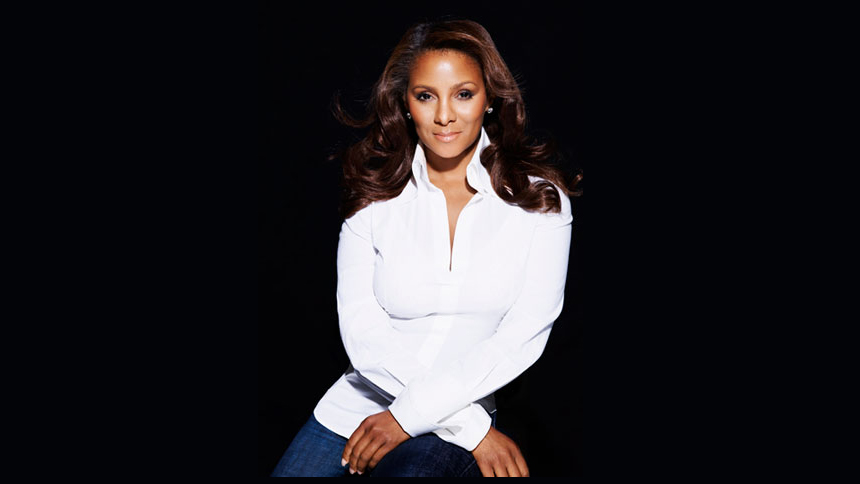
So What Do You Do, Marvet Britto, President and CEO of The Britto Agency?

'At the end of the day, truth is what elevates brands'

marvet-britto-feature
Admin icon
By Andrea Williams
@AndreaWillWrite
Andrea Williams is an author, journalist, and columnist for The Tennessean with over 16 years of experience in journalism and 20 years in copywriting and communications strategy. Her work spans national outlets and high-traffic digital brands.
8 min read • Originally published October 15, 2015 / Updated March 19, 2026
Admin icon
By Andrea Williams
@AndreaWillWrite
Andrea Williams is an author, journalist, and columnist for The Tennessean with over 16 years of experience in journalism and 20 years in copywriting and communications strategy. Her work spans national outlets and high-traffic digital brands.
8 min read • Originally published October 15, 2015 / Updated March 19, 2026

As a publicist, Marvet Britto’s roster is deep with celebrities (Angela Bassett, Kim Cattrall and the NBA’s Tyson Chandler), blue chip companies (Motorola and Microsoft) and an entire island (Anguilla).

And while many in the PR biz toil in virtual anonymity on behalf of their clients, Britto is a star in her own right, with 80,000-plus Twitter followers and regular appearances on MSNBC, the Today show and HLN to discuss her work as a global brand and PR strategist.

Surprisingly, in an industry that runs on personal connections, the New York native’s secret for PR superstardom is less about who she knows and is instead firmly rooted in how hard she’s willing to work.

“I actually call networking ‘not working,'” she says. Here, she discusses what it really takes to land a high-profile client and why she has no problem walking away from one.


Name: Marvet Britto
Position: President/CEO of The Britto Agency and TV, film and theater producer
Resume: Went to college for two years and then worked odd jobs (waitressing, etc.) while researching the PR industry. After no luck finding internships or full-time positions, opened her own firm, The Britto Agency, in 1993. Past clients include Payless, Motorola, Mariah Carey, and athletes Gary Sheffield and Stephon Marbury. Shaped the exit campaign for former New York governor David Paterson’s move into the private sector, including landing him an appearance spoofing himself on Saturday Night Live. Co-executive producer of the films The Woodsman and Shadowboxer and producer of the plays Mama I Want to Sing and the Tony-nominated The Trip to Bountiful.
Birthday: March 11
Hometown: Manhattan
Education: Attended Tuskegee University for two years
Marital status: Single
Media idols: Oprah and Tamron Hall because “she multitasks. She’s got a million jobs. I love her energy and her spunk and her passion for her craft.”
Favorite TV shows: 60 Minutes and anything on CNBC and The History Channel
Guilty pleasure: Sweets
Last book read: The Bible
Twitter handle: @MarvetBritto


You’ve represented a slew of celebrities. How did you score your first high-profile client, and what advice do you have for up-and-coming publicists to do the same? 

For me, it was always about my personal business acumen and really focusing on the value system I felt I could bring to clients. And I’m blessed to say, in almost 20 years of business, I’ve never solicited one client. They have all come to me based on referrals, and I would hope it has been fueled by the work I have done.

I think, so often today, people really spend most of their time networking. I actually call networking “not working,” because most people go to rooms, or dinners, or events and spend 90 percent or more of their time talking to people they already know.

So, for me, I felt as though I would just simply do the work and do the work to the greatest degree of excellence and others would gravitate to me. They would seek me out based on the mutual desire to achieve a similar level of excellence. I believe that when you do something well, you will create a category and begin to define and build your own brand, [to] which others will, like a magnet, be drawn to you.

So, in my instance, everyone from Angela Bassett to Kim Cattrall to Mariah Carey to companies like Motorola have all sought me out for my services, based on the talent of my firm and the capabilities of my firm.

So you’re saying that as long as people do their work and do it well, they’re going to get the big clients and the big opportunities. 

Yeah, because people like hard work. People gravitate to people who toil tirelessly in any industry. People see. That’s what they notice. That’s what becomes your business card, if you will. We call it “brand” in this day and age, but you really become known for your pedigree and your work.

I think that so many people are interested in the introduction to people being made, but your introduction needs to be your body of work. So, really, you should hone [your skills] and really be laser focused on doing the best work that you can do, because that is the best resume any person could have.

You know, a lot of people are working on their social currency when they should be focused on their work currency. They should be focused on doing the work, because, at the end of the day, people are referred based on the work.

We’re in this generation of microwave success. Everyone wants to press 2-0-0-Start and be their favorite person tomorrow. They want to be Marvet Britto tomorrow, not realizing that it took me 20 years to get here, and I’m still toiling 18-, 19-hour days, trying to really cement my place in the realms and world of PR.

What do you do when your own moral convictions or beliefs interfere with your work with a client? 

You step away from it. I have a scripture on my wall that I look at from my desk, and it says simply, “For what shall it profit a man if he shall gain the whole world, yet lose his own soul,” Mark 8:36. That is on the wall of my office, and it has been for 20 years. And that scripture is there because it reminds me that nothing I do in my life or business should ever compromise my moral compass.

We’re living in a generation where people compromise their morals for financial or personal gain, [but] for me it really is not about sacrificing my character or integrity to excel in life, because ultimately the very thing that you do to get ahead will be the very thing that keeps you from ever really growing in business.

So, I always tell people that karma never loses an address. And sometimes in business you get a little bit discouraged by being overlooked, or being passed over, or not being supported, or any of the things that we face in business, but I believe that if you keep a high level of standards in your operating procedures, you will be respected for such.

I always tell people, “It’s not what you say yes to, it’s what you say no to that builds equity.” So, for me, I’ve had to stop working with A-list clients. I knew that I was being asked to compromise my morals or my character or integrity to protect them or to work with them, and I wasn’t willing to do so. I’ve always run my business from a place of truth. There are a lot of people that believe that being a publicist means that you’re supposed to protect your client at any costs.

I don’t subscribe to that school. I subscribe to the school of being completely transparent with media and being completely transparent and truthful because, at the end of the day, truth is what elevates brands. When you are a truthful brand, you will create an organic connection to your consumer.

You were instrumental in getting the cast of Real Housewives of Atlanta to Anguilla this past season. What do you say to people who criticize PR orchestrations like that on reality shows or elsewhere? Do you think the network has an obligation to disclose your involvement?

I don’t think the network hid my involvement. I think Peter [Thomas, cast member] spoke about his friend, who’s a publicist, who arranged for the housewives to go to Anguilla. I’m the global brand strategist for the island of Anguilla, and any time I represent something that’s beautiful and excellent, I want to make sure that I’m able to share that with our community.

So, I don’t think it was a secret. But, for me, being on camera for the Housewives would have been gratuitous. There wouldn’t have really been a purpose apart for me getting shine, when I represent the island and I wanted Anguilla to be the star.

What is the most important skill that publicists need?

Communication. I think a lot of PR people forget that communication is the singular most important tool that you must employ. I’m hearing these days that a lot of publicists don’t necessarily return calls; they’re not getting back to people swiftly, and they’re emailing and they’re losing the art of personal.

And that’s why I always encourage people to read Terrie Williams’ book, The Personal Touch, because to be a rock star in PR you have to be a great communicator. You have to communicate people’s needs and aspirations. That’s the only thing that will allow you to thrive in this business.

It seems like everyone has a PR firm. When is the right time for publicists to strike out on their own, and when do they need to stay under the tutelage of someone more experienced?

To be honest with you, I only started my own firm because I didn’t have any PR experience, and I wasn’t able to work within a firm with no PR experience. I think that people should stay within an incubated professional environment as long as they can, because being a business owner is a very difficult road.

There are a lot of moving parts, and it’s not easy being a business owner and dealing with all of the various aspects of business, from staffing to payroll to employees. You have to deal with all the things, and even if you have a team, like I do, you still have to oversee it. So, if you can work for someone and have the freedom to create, then that’s the best thing.

And I also have to say I was very blessed to have some great, A-list clients. Social media has allowed there to not be as many superstars as there used to be, because stars now are becoming more accessible, which means that their equity has become more diluted. So, in order to strike out on your own, you have to really have an arsenal of powerful alliances and clients to support you. And if you don’t have that, then it’s very difficult, not only to financially sustain yourself, but to make a mark in a very cluttered industry.

This interview has been edited for length and clarity. 
Topics:

Advice From the Pros, Be Inspired, Interviews
Advice From the Pros

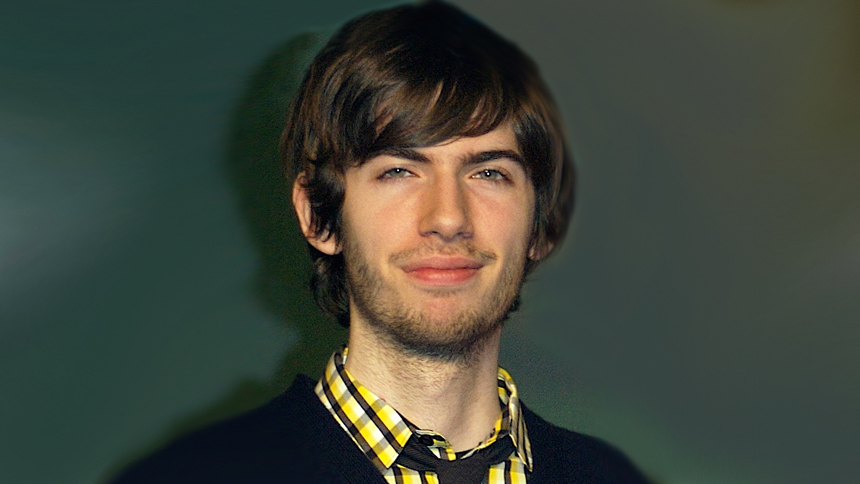
So What Do You Do, David Karp, Founder of Tumblr?

Popularity, not profit, is the idea for this Web platform prodigy

David Karp, Founder of Tumblr
By Sammy Davis
10 min read • Originally published October 15, 2015 / Updated March 19, 2026
By Sammy Davis
10 min read • Originally published October 15, 2015 / Updated March 19, 2026

When David Karp was 15, he dropped out of high school to be homeschooled on New York’s Upper West Side. At 17, he moved to Tokyo to work for UrbanBaby, an online parenting advice site with highly trafficked message boards full of urban-dwelling moms and dads.

And when he was 20, he founded Tumblr, a Web platform inspired by the tumblelog, a blog format which enables short-form, mixed-media posts. All of this without ever attending college — as Karp says, he’s just waiting on his honorary degree.

Karp wanted to share his life instantaneously, and without the time commitment required of other blogging platforms. More than that, he wanted others to experience the satisfyingly speedy genesis of tumblelog posts.

As one of New York’s youngest tech darlings, Karp set up shop for his development consulting company, Davidville, on 29th & Park Avenue and then introduced Tumblr to the public in February 2007. If WordPress is for the OCD-est of bloggers, then Tumblr is for the ADD-est in the pack. No post is ever too short or too fast, and no tumblelog ever has too many entries.

Karp spoke with mediabistro.com about Tumblr’s success, its latest features, and why anyone concerned about their Google rankings needs a tumblelog.


Name: David Karp
Position: Founder, Tumblr
Resume: Computer support, to intern, to consultant, to product developer, to CTO of UrbanBaby, to Web developer
Birthday: July 6, 1986
Hometown: New York City
Education: Freshman year at Bronx Science High School
Marital status: Unmarried
First section of the Sunday Times: Not a regular reader
Favorite television shows: The Colbert Report
Guilty pleasure: New York City restaurants
Last book read: Crossing the Chasm by Geoffrey A. Moore


Where did the idea for Tumblr come from?

Sometime in 2005, I came across a tumblelog called Projectionist. It was actually, at the time, a blog that was tracking all of the tumblelogs on the Web. These tumblelogs were literally published tools to more easily do what people had been doing back in old Angelfire pages, which was putting up random bits of media and making it look a little bit like a blog.

Projectionist solved the posting problems of WordPress with a brilliant aesthetic sense: You can put up bits of media but the theme or the “skin” will take care of the aesthetics, and the media will be in nice little enclosures. Video will come up in a nice frame, blurbs will come up in nice little bubbles, there will be the ability to make gorgeous typography quotes.

So the first thing that really caught my attention was the blog Projectionist. This was a very young movement — it was one that [founding developer Marco Arment and I] realized no one was really developing on. We liked the idea that we could be the ones to link that, we could make the first tool that made that accessible to everyone, and could completely reinvent on the idea of a tumblelog.

I sat on the idea for a year and a half, and it was pretty clear no one was really doing anything with it. I was running a consulting company in 2006, and one month we had two weeks between contracts where we were just sitting around, and I said “Hey, let’s go for it. Let’s see if we can build this thing.”

It took [Marco and I] two weeks to build, and it became the first version of Tumblr. We launched it and showed it to the tumblelog community, and overnight we had like 30,000 registered users in this community who were following those things, who didn’t have the know-how to create it themselves.

Tumblr is distinctly different from other blogging platforms. How did you achieve that?

The magic of Tumblr is we let you put anything in and get it out any way you want. We want you to be able to post anything. Tumblr takes care of formatting content nicely and making it look good on your blog.

When we say you can take the content out any way, you can take that blog anywhere you want because our API (application programming interface) is totally open to pull that content and put it anywhere on the Web. You can incorporate your content into any other site, make your own domain name and do anything with that data.

We’ve created what is the most flexible platform for publishing in the world. You can put anything in and get anything out. We’re doing a pretty good job of that.

How do you market Tumblr? How do you advertise it? How do you promote it?

We’re taking advantage of the really incredible user base of Tumblr and hoping to focus on the people who are doing really amazing things with it, and to do everything we can to make that resonate with the people who are our users, and with [those] who are fans of what we’re doing.

Do you aim to sell Tumblr?

I don’t think we aim to sell anything. I’m much more enchanted with the notion of something that’s employing me in 15 years rather than something that we flip in a year. And again, that’s something that we don’t think about. And that’s certainly not our goal.

Why not?

We’re not motivated by money. We are into this thing that we’re building.

Who is Tumblr’s competition?

The biggest reason we’re not really thinking about competition is that our interest is in the next big thing we haven’t come up with yet, not necessarily just different ways to do the same stuff that we’ve already doing.

It’s [for] the same reasons why no one is really adopting the Twitter clones that are coming up. They’re not really inventing anything new. They may have slightly better tools and they may fix up a few of the problems. But there are two ways to solve problems: One of them is implementing a feature, making it a setting, or something to just kind of quell users who are saying, “Man I wish I did this” versus inventing a completely new product that solves all of the old problems of all those makeshift tools, but serves users in a completely new way.

What can other media companies learn from Tumblr, or the approach to creating it?

A lot of what we’ve done isn’t our invention. We try to emulate people doing the smartest stuff and follow their lead.

Jason Fried had for a long time preached to have a very open communication channel with your users, talk about what you’re doing, and don’t be afraid to ignore some of the feedback coming in because the stuff that’s really good or really, really important will always come to the top. That’s something we’ve taken into account.

Also, we’ve tried to keep as cheap and lean an operation as possible, but that’s not an original idea. That’s something you should take seriously because it puts you in a much easier position in so many ways. Even if you can raise money, every time you raise money you lost three months pushing out paperwork and getting it to close. It’s a real loss. It keeps our focus different.

What’s really been important to us, I guess, is we didn’t feel like this was a tech industry thing really. We cared about the community and told them why we’re excited and that we’re with them religiously, but we’re just as excited about the other industries and what they are doing and how we can fit into them. In a lot of ways, we’ve been thinking about the media industry a lot — we like thinking about the really neat things people can do with media.

We talk to a lot of bloggers, Viacom and MTV and those folks — what are they doing, and what could they be doing and what they are thinking about. Adding that extra dimension to what’s just a Web tool, I think, is what makes it a much more meaningful development of focus.

Many online journalists and bloggers use Tumblr for their personal blogs. How would you explain the attraction for those who blog for a living, who finish their workday spent in front of a computer screen and, in large numbers, go and do the same for themselves via Tumblr?

That’s the whole reason they weren’t going for TypePad or WordPress: One reason is they’re not supposed to be blogging while employed. They can’t have anything that resembles a blog. They don’t want to come home and keep writing.

It’s a passion, but in a lot of cases, it’s work for them so what they wind up doing is they post to Tumblr and it’s a very transparent thing — you can have a tumblelog in addition to everything else you do, while you’re doing research you can grab those links and share them transparently.

A lot of times people look at Tumblr as an auxiliary to long-form blogging, or it can be viewed that way, and I think it’s how a lot of media people are using it. One really interesting characteristic of it is that it’s much easier to maintain, and I think it’s [a type of blogging that’s] much easier to sustain.

You’re able to get [a tumblelog] up and running really quickly, much faster than I think a long-form blog where there’s a lot more editorial consideration. You can just kind of turn the thing on.

Do you think of Tumblr as a microblog?

It’s interesting, every time we use that phrase, our users go “No, it really isn’t guys.” It supports microblogging, and there is no other platform that supports small bits of every type of media like Tumblr does. But really, you’re just as free to post any long-form stuff you want.

I think the real trick is that it’s the first real platform to alter that flexibility. We bill it as the easiest way to share yourself. It is a publishing tool, but because of the kind of simplicity and ease of publishing, it’s been able to serve a much wider audience who’s really just in it for the sharing, or that feeling of popularity of creating something online.

Do you feel blogs are contributing to the millennial narcissism?

For the first time, the millennial generation is growing up realizing and understanding that if you don’t put yourself out there, the search results that come up next to your name are not necessarily going to be flattering. The only way to control that is to be out there, to flood the Web with stuff that you’re comfortable with.

Now, when you search my name, you come across the thousands of posts I feel comfortable representing me. That’s not the case for a lot of people, who got tagged in one embarrassing picture on Flickr, or all they have is their Facebook account, and things that they wouldn’t want representing themselves to anyone.

I think that it’s going to be necessary for our generation to be a little bit more, not necessarily narcissistic, but open to the public. I don’t know if that’s necessarily a bad thing. I think at the end of the day we all crave that popularity, and this is a great, really fun way to have that identity and have that online as we’re increasingly spending our time there.

Who are some Tumblr users you were excited/inspired to see using your platform, and why?

The stuff that I’m really giddy about are the big media companies who are companies who could build their own things because they’re comfortably using their open source tool, but who see there’s so much advantage to building on top of a centralized tool.

They’re comfortable knowing that they can own content and use [Tumblr] as a platform, and they’re ready to build stuff on top of us. This is some outreach that we’ve started to focus on, convincing the big guys to treat us like the solution to their awful proprietary concepts. That’s one thing I’m kind of excited about.

Who are you hiring exactly?

We’re trying to hire more people who are talent people who will help other people do other interesting things with Tumblrs. We’ll help you get a designer, if you need an editor or just someone to help out, or if you need some ideas or if you need help coding Tumblr, then talk to this person [from Tumblr].

We will just have a repository of really talented people who get Tumblr and can help other people build their own brands.

This interview has been edited for length and clarity. 
Topics:

Advice From the Pros, Be Inspired, Interviews
Advice From the Pros

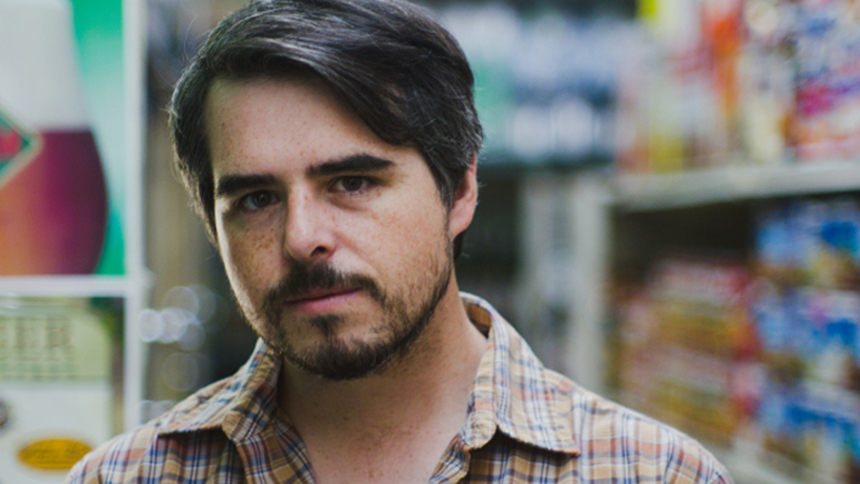
So What Do You Do, Ryan Schreiber, Founder and CEO of Pitchfork?

How a high school grad with no experience built the definitive online music mag

ryan-schreiber-feature
Admin icon
By Andrea Williams
@AndreaWillWrite
Andrea Williams is an author, journalist, and columnist for The Tennessean with over 16 years of experience in journalism and 20 years in copywriting and communications strategy. Her work spans national outlets and high-traffic digital brands.
8 min read • Originally published October 15, 2015 / Updated March 19, 2026
Admin icon
By Andrea Williams
@AndreaWillWrite
Andrea Williams is an author, journalist, and columnist for The Tennessean with over 16 years of experience in journalism and 20 years in copywriting and communications strategy. Her work spans national outlets and high-traffic digital brands.
8 min read • Originally published October 15, 2015 / Updated March 19, 2026

Way, way back in 1995, when the first dot-com domain name was celebrating its tenth birthday and the World Wide Web was still an incredibly young four years old, the Internet was truly unchartered territory.

But for Ryan Schreiber, then a 19-year-old record store clerk, it was the perfect Petri dish for a new music experiment. With no publishing or writing background, Schreiber took to the net and created an online shrine to the indie bands he loved, cold-calling record labels to secure artist interviews.

“I was calling up labels out of the blue like, ‘Hi I have this music magazine on the Internet,'” Schreiber said, “and people were like, ‘On the what?'”

Pitchfork‘s early years were scrappy and shaky, but the site has solid footing now and is widely regarded as one of the most authoritative voices in the industry. Today, Schreiber has an entire editorial crew and a bevy of contributors to assign and write reviews but, with 99 percent of his workday dedicated to finding the next indie music sensation, he still has the best job in the world.


Name: Ryan Schreiber
Position: Founder/CEO of Pitchfork.com
Resume: Worked as a record store clerk before launching Pitchfork in 1995
Birthday: January 26, 1976
Hometown: Milwaukee
Education: Graduated from Hopkins High School in Minnetonka, Minn.
Marital status: Married
Media idol: Roger Ebert and musician, poet and visual artist Patti Smith. “She’s an incredible writer and one of those people who is just great at everything she does.”
Favorite TV show: Arrested Development
Guilty pleasure: “I buy a lot of t-shirts on eBay, and I can’t stop. My closet is so full, it’s ridiculous.”
Last book read: R. Kelly’s autobiography SoulaCoaster
Twitter handle: @RyanPitchfork


Going back to when you first launched Pitchfork, what was on your mind when you decided to break out and do your own thing?

Well, a friend of mine had introduced me to the Web pretty early on, around ’94. So I had been on it for a while by the time that I started Pitchfork, and there was just not really a lot out there for independent music. There were not a lot of music publications or anything like that online, but especially for independent music it was really just a blank slate. And I had always been interested in publishing and music writing and criticism.

I read a ton of music magazines at the time — I just consumed them voraciously — and it seemed like it would be kind of a fun experiment. It was the height of 90’s ‘zine culture at that time too, so there were all these sort of DIY fan-zines floating around. And it just seemed really manageable to do something like that on my end. So, I just started writing. I started a Web page, and from there I started to try to get interviews with artists through reaching out to record labels.

When did you know that you had something big?

I guess at the point where it felt like it was starting to be realistic for me to make a living off it was probably around ’99 or so. We had, especially comparatively, a really tiny readership; it was maybe something like 2,000 readers a month or something. But at that point it had sort of become, in this very, very small, niche way, the main, online resource for independent music.

So, I felt like maybe I could start to experiment with advertising or something like that. And I was done trying to make ends meet in other ways and really wanted to find a way to make it work. So, I essentially started calling labels and local businesses asking if they would want to advertise for a very small amount. Eventually I got some takers.

The Internet is a lot more crowded than when you first started. How do you keep Pitchfork relevant and distinguishable from the competition?

It’s just a grind, basically. The way that we keep it running and keep it interesting to us is just continuing to really engage with and dig up all forms of music. But there are also so many people working on Pitchfork now that it’s great, because a day in the office is people throwing around, “Oh, I just heard this; check this out,” “What do you think about this?” There’s a lot of conversation going about current music and, by current, I mean what’s come out that day. So, it’s a fun environment for us all to work in.

Besides the core, full-time staff at Pitchfork, there’s also a whole extended family of contributors as well, and they also kind of suggest things. They’ll pitch track reviews and things like that, or album reviews. So, for me and Mark Richardson, who’s editor-in-chief, and our entire editorial team, pretty much 99 percent of our days are spent listening to and discussing music.

So it really comes down to that. It’s something that you live and breathe and it’s what we’re super passionate about, so it’s just a matter of staying current and loving what you do.

What two pieces of advice would you give to a blogger or entrepreneur who is interested in starting an online venture?

Distinguish yourself. Make sure that your voice is independent and unique and that your opinions on your subject vary from the other voices that exist in that field and that your area of expertise is specific to you, and you’re not just out there covering the exact same things that everybody else is in the same way. Just be unique and have an independent voice.

And the other thing I would say is to be willing to put in the work for a long period of time for just the love of it. Today, more so than any other time, it seems really difficult to make a living in the media, especially in the music media. It’s just so crowded, and at this point the publications that are really able to establish themselves are the ones that are the most passionate and the most relatable. I find that the publications I tend to connect with most are ones that are, in many cases, written by a single voice, somebody who has a really interesting viewpoint or perspective. 

You didn’t have any previous writing experience when you started Pitchfork. So do you think passion is more important than skill or experience?

No, I don’t think one is more important than the other. They’re both really important. The fact that I didn’t have any experience was definitely not an asset to me when I started. In a lot of what I wrote at that time, you can really tell that [writing] was not something that I really had a firm grasp on at that point.

So both of those things are key. I think, at this point, you need both of those to establish yourself, but I do think that passion is maybe slightly more necessary than skill because people are open to a certain amount of amateurism on the Web. As long as you’re getting your point across and doing it in an interesting way, you don’t necessarily need to be technically a perfect writer. You can just be an enthusiast who is able to communicate in a reasonably relatable way, and in many cases that’s enough for people.

A positive Pitchfork review is a really big deal to an artist, and you’ve been credited with breaking several big names. Which of your reviews has been the most controversial, and why? And which one are you the most proud of?

I would say the review that has been the most controversial was our review of Jet’s “Shine On” in 2006. To this day, it’s probably our most popular review, which is funny because there’s no text. It was just a rating with a YouTube video of a monkey drinking its own piss. [Laughing] That got a lot attention. It’s such a bizarre and funny video, and it’s such a strange thing to see, that the sort of bewildering qualities of this video were, in itself, sort of an early form of viral activity.

So, it’s kind of interesting to me that it was responded that strongly to, and it’s also one of my favorite reviews, too. To pick a favorite review would be so, so difficult. I feel really lucky to work with so many people whose talents I really admire and who, at the end of the day, I feel are some of the best people working in this field. So as far as favorites go, it’s just so difficult to choose.

Most of the major music magazines, like Blender and more recently Spin, have folded partly due to the explosion of music information online. Do you think a purely music magazine can still survive in print?

I think if you’re going to be able to do a print publication that works in 2013, it has to really take advantage of that format, and the things that that format offers that are much more difficult to execute on the Web are having really expansive, beautiful layouts for your articles and features and making it feel like a desirable object. So, I think publications like Fader and Wax Poetics potentially could sustain, because they look great and the writing is really good.

And those are publications that also have a little different approach. I think that a lot of publications tend to go with formula so often, and both of those publications tend to break a little bit from the norm. It used to be that when you picked up a music magazine in, like, the 90s there was all this cheap, chintzy content thrown in there and goofy sidebars and just sort of filler, almost. And it’s really just not an option anymore.

I feel like if people are willing to make an investment in a music magazine — or in a magazine of any sort, currently — they want something that feels substantial and feels significant. It’s not a joke. It’s a real thing.

This interview has been edited for length and clarity.
Topics:

Advice From the Pros, Be Inspired, Interviews
Advice From the Pros

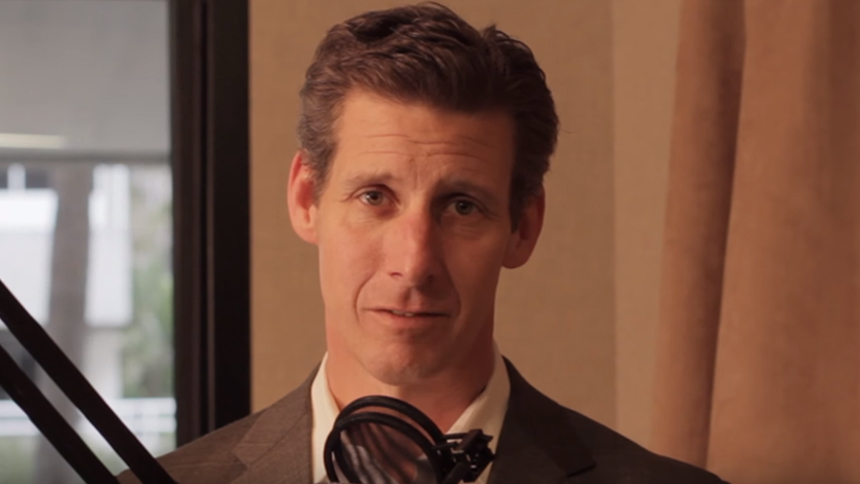
So What Do You Do, Kai Ryssdal, Marketplace Host/Senior Editor?

'You have to be willing to do whatever it takes.'

kai-ryssdal-feature
By E.B. Boyd
7 min read • Originally published October 15, 2015 / Updated March 19, 2026
By E.B. Boyd
7 min read • Originally published October 15, 2015 / Updated March 19, 2026

If you’re looking for the latest news on the economy these days, one place you might be turning to is American Public Media’s flagship broadcast, Marketplace.

If so, you’re in the company of an estimated five million public radio listeners* who rely on host Kai Ryssdal to explain the intricacies of mortgage-backed securities, credit default swaps, and the markets.

Ryssdal started his career as many do: as an intern at a public radio station. Unlike most, however, that was after having already been a Navy pilot and a U.S. Foreign Service officer. In 1997, Ryssdal and his wife left their postings in Beijing so she could attend business school at Stanford.

He took a job at a bookstore in Palo Alto, and it was while shelving books one evening — and wondering what he was going to do with his life — that he came across a book listing radio internships. Long considered a “news freak,” Ryssdal decided to give broadcasting a shot. He spent a year and a half schlepping at San Francisco’s KQED before finally making it on air.

Ryssdal moved to southern California and the Marketplace Morning Report in 2001, where he spent four years waking up at midnight in order to begin broadcasting at 2:50 a.m. — which was 5:50 a.m. back east. Ryssdal took over the reins at Marketplace in 2005. mediabistro.com caught up with him to learn how he crafts Marketplace stories that keep listeners tuned in.


Name: Kai Ryssdal
Position: Host and senior editor, Marketplace
Resume: “Starting at the beginning, U.S. Navy (1985-1993), U.S. Foreign Service (1993-1997). Then I managed to get myself an internship at KQED. I stuck around long enough, they finally put me on the radio, and 10 years later, here I am.”
Birthday: October 8, 1963
Hometown: Briarcliff Manor, New York
Education: BA, History, Emory University 1985; MA National Security Studies, Georgetown University, 1993
Marital status: Married since 1997 with three sons and one daughter
First section of Sunday Times: “The front page, then Sports, then the wedding announcements, then Week in Review, then Business.”
Favorite TV show: Lately, Mad Men
Last book read: “Goodnight Moon, to my 1 1/2 year old. Otherwise, catching up on back issues of The New Yorker.”
Guilty pleasure: Peanut M&Ms


Do you have an algorithm for deciding what makes a Marketplace story?

One of the most important things we do is context — to place individuals and companies and the larger economy in their proper context. For individuals, it’s why things like auction rate securities matter, [and] what that will mean for their municipalities as they try to get loans to build a new swimming pool. For companies, what the earnings picture is. For the U.S. economy, what the global economy picture is. There’s a finite amount that anybody can digest. This stuff is dense, and it’s hard, and it’s complicated — and frankly, sometimes it’s not all that interesting. It’s a pretty high bar to get on to the program.

The fact that it took so long for folks to catch on — what do you think that says about the human interest in bad news and/or business journalism’s ability to ring the bell?

This stuff is so complicated, and in this instance so dark and so depressing, that it’s easy not to pay attention. There’s also so much noise out there. The less you personally have a filter — where you say, “I can’t pay attention to that. I’m going to listen to these 14 things today and not the 80 that are out there” — you just get swamped. Then all the information that is out there gets devalued, because there is so much.

What does your typical day look like?

I get up really early because out here in California, we’re behind the time zone. By the time I get up at 4:30 or 5:00 in the morning, things are already happening on the East Coast. I get up and digest the news of the day. I start thinking about what the lead story is going to be and what the through-line of the broadcast is going to be. If you think about my job, it’s really to make sure that everybody who’s listening at the beginning of the broadcast is still there at the end. So I have to make that connection between the lead story of the day, the stories that follow in the newscast, and then the features and interviews that devolve throughout the program.

I do a quick check of the markets. I call some people if there are issues or questions about a story that I don’t quite understand, and then our morning editorial meeting at 8:00 gets everybody rolling. We do a pass-down from our overnight shift, the guys who work on the Marketplace Morning Report, so we know what’s been going on overseas and in the overnight economy.

Reporters get assigned, I do interviews or other prep work, and then at noon, I start writing the show. The reporters and editors work to get their stuff in by 1:00 p.m. Los Angeles time, and we go on the air for our first set of broadcasts at 2:00 pm L.A. time. On a not-market-meltdown day, things are pretty calm around here by 4:00 p.m.

I’ve been told the Marketplace broadcast explicitly has a specific persona. Is that right?

There absolutely is a Marketplace persona and a Marketplace voice. It’s something you figure out very quickly when you get here. All our reporters, producers, and editors understand that the thing that makes Marketplace is the sound. It is the irreverence, the wit, the accessibility, the humor, and when needed, a bit of edginess that makes these stories we do listenable. It’s absolutely something we concentrate on and work at very hard.

Who figured that out?

It’s been that way at Marketplace for 20 years. When Jim Russell and J.J. Yore started this program, they deliberately started out to do a business program that was not straight numbers and straight stocks and all that not-so-interesting stuff that other business programs are. It has carried through 20 years amazingly successfully because we all realize that this is our niche.

What stories have most resonated with listeners?

The stories we did from China two-and-a-half years ago, even today. I was in Baltimore recently, giving a couple of speeches, and people were still coming up to me, saying, “Those China broadcasts were just the most amazing thing I ever heard.” But point out any story in the last four months for sheer impact and importance, and you can pick those as well.

What advice would you give to someone who wanted to follow in your footsteps?

You have to do whatever makes you happy. You can’t replicate what I did because I got unbelievably lucky. I was in the right place at the right time and willing to make a change and take some risks. When I came here to take the Morning Report job, I was married, I had two little children, and I was getting up in the middle of the night to go to work. You have to be willing to do whatever it takes. Never say no. If someone says, “Can you come in on Sunday and go to Chinatown to get us some tape for the Monday broadcast,” you have to say yes. And that goes now more than ever in journalism, when it’s so hard to find really good work. If you have an opportunity, you absolutely have to grab it.

Was there anything you learned in the Navy that is coming handy now?

Discipline. Getting up at midnight to go to work for four years in a row takes a certain amount of discipline. Writing on deadline every single day takes discipline.

Who do you see as Marketplace‘s main competition, and how do you think you’re doing against them?

Our competition comes on two levels, really. On the macro scale, we’ve got to deal with the same issue everyone else in journalism does — the sheer amount of information that’s out there, online, on the air and on paper — and how to make ourselves stand out. More specifically within public radio, business and the economy is the story right now, and a lot of other programs have raised their game. I think the things that have set us apart from the beginning — our attitude, how we go about telling the stories behind the numbers and statistics — have really helped keep us ahead and set us apart.

What about your future? You’ve already had three or four careers. Do you think you want to do something else down the road?

There is nothing I’m not willing to try. I got into radio because I think it’s fun and interesting. But there’s a lot going out there.

What’s a blog or news source where you get really interesting news, insights, and tidbits from, that the average person might not be aware of?

Planet Money at NPR because Adam Davidson is a) a friend of mine and b) really creative and talented.

This interview has been edited for length and clarity.
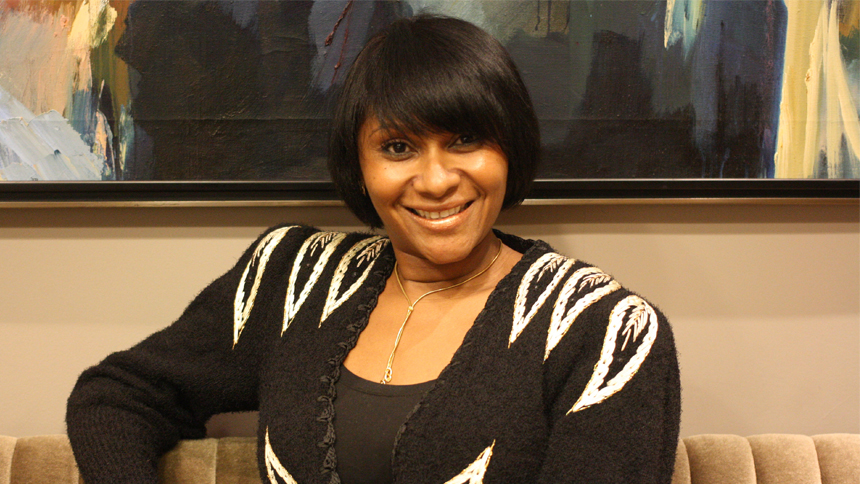
Topics:

Advice From the Pros, Be Inspired, Interviews
Advice From the Pros

So What Do You Do, Kierna Mayo, Editorial Director for Ebony.com?

'We're looking for the best original content.'

kierna-mayo-feature
Admin icon
By Janelle Harris
@thegirlcanwrite
Janelle Harris is a multimedia producer, director, and founder of Harris Two Productions with decades of experience in non-fiction storytelling for networks including Bravo, Discovery, and A&E. A Howard University graduate, she specializes in amplifying diverse voices across television, film, and digital media.
8 min read • Originally published October 16, 2015 / Updated March 19, 2026
Admin icon
By Janelle Harris
@thegirlcanwrite
Janelle Harris is a multimedia producer, director, and founder of Harris Two Productions with decades of experience in non-fiction storytelling for networks including Bravo, Discovery, and A&E. A Howard University graduate, she specializes in amplifying diverse voices across television, film, and digital media.
8 min read • Originally published October 16, 2015 / Updated March 19, 2026

If you were a black girl in the late 1990s threading together the elements of a fabulous life, you undoubtedly read Honey. If you were a black girl in the late 1990s who aspired to feed yourself and your future family as a journalist, you undoubtedly cherished Honey. You also admired its founder, Kierna Mayo.

Even if you didn’t know her by name, you knew her work and you certainly traipsed the pathway she laid as not only the creator of your favorite magazine, but also a writer who offered herself up as a mouthpiece for the interests of young, hip-hop-generation of black women.

Establishing herself as an editorial badass early on propelled Mayo into an enviable career that has led to her current position as the team-leading visionary for the polished and redesigned Ebony.com. It’s a full-circle promenade from publishing her own title to breathing new life into the digital presence of one of the oldest in African Americana.

“Being at Ebony.com has been a real reminder for me because, in many ways, it was a startup,” she says. “So the kind of passion and determination that went into creating Honey went into creating Ebony.com.” Here, the editorial triple threat, who’s in the process of penning a novel, talks trolls, hip-hop and creating content for the people.


Name: Kierna Mayo
Position: Editorial in Chief/VP, Digital Content, for Ebony.com
Resume: One of the first female editors at then-startup hip-hop magazine The Source; penned first-gen hip-hop feminist articles pushing women’s interests and perspectives. Continued that work as co-founder and founding editor-in-chief of Honey. Recruited by Susan Taylor to oversee direction of Essence Girl, a magazine supplement for African-American tweens and teens. Served as senior editor of CosmoGirl, then online editor at Cafemom.com. Became editorial director of Tyra.com, an online women’s magazine for Tyra Banks’ Bankable Enterprises. Leader of editorial team at Ebony.com, where she was recruited to envision and execute its redesign and increased traffic by over 500 percent. Site won GLAAD Award for Outstanding Digital Journalism and was a finalist for The Best of the Web Min Award in 2013. Contributed to several books, including And It Don’t Stop: The Best American Hip-Hop Journalism of the Last 25 Years. In early 2015, became EIC/VP, Digital Content for Ebony.com.
Birthday: Feb. 6, 1970
Hometown: Brooklyn, N.Y.
Education: BA in mass media arts from Hampton University
Marital status: Married
Media mentor: Susan Taylor
Favorite TV show: House of Lies
Guilty pleasure: Playing with WWE action figures with her son
Last book read: Redefining Realness by Janet Mock, which Mayo says “is a truly remarkable memoir.”
Twitter handle: @kiernamayo


Creating and re-imagining websites seems to have become a sweet spot for you. What sensibilities did you bring over from magazines to the online world?

I brought my entire skill set, including my intuitive sense about audience and visual impact. Those are very important magazine skills when you’re a packager — someone in charge of cover lines or selecting the strongest image. I did have to unlearn this notion of a three-month window to create, develop and refine. The three-month window can become a three-minute window online.

I often encourage peers who’ve made careers in the print world not to be intimidated by the crossover to digital. I feel like I deal in the alternate universe with magazine purists on one side who are conditioned to holding their bylines in their hand as opposed to clicking on them. Those are my 38-and-up friends. All of my 37-and-under friends understand and respect this new media. I try to get young writers who’ve been able to make a way for themselves online to understand and respect the work that goes into the process of creating magazines.

They aren’t used to having rounds of revisions or three editors on their stories. They’re much more used to blog-style writing, which is I write it, I publish it, you react. That has its place. But the meticulous nature of creating a magazine is also a very valuable thing to understand. If you’re an online writer and you have the opportunity to have a quality edit or revision happen to your work, don’t be offended. Take advantage of that.

You were a finalist for the ‘MIN Best of the Web 2013’ awards in the Digital Magazine category and received an honorable mention. What were the key changes you made in content to boost traffic?

First of all, it’s hard to talk about Ebony.com in any ‘I’ sort of way. It really has taken everyone on board to bring it to where it is. Quite frankly, when I came to the table, the site felt and operated more like an afterthought as opposed to a key component of the editorial output of Johnson Publishing.

When Ebony.com became a corporate priority, a new design team was brought in, and I was called to reimagine it from the bottom up. At the time, I recall really being moved by The Daily Beast and brands that were utilizing big, heavy type as a means to grab attention. One visually striking component about tabloids is that headlines and images are big. I thought if we could find a way to integrate the beauty of the Ebony print redesign with what we were trying to do, you could feel the connection between the magazine and the website.

How do you create a balance between original reporting, blogs and aggregated news?

We’re never looking for 50/50 of anything. We’re looking for the best original content. That’s the driver because we respect our audience. We know that we’re charged with reaching many types of black people: both men and women, 20-somethings and 40-somethings, upwardly mobile and blue collar. The gamut and diversity in black America demands the stories meet people where they are and by that mandate alone, we have to search ourselves to distill and determine the best editorial direction on a daily basis.

That said, we have a section on the site called ‘Blacklisted,’ and it’s a list of the 10 most interesting stories that we can aggregate. Outside of that, everything is original. We publish [from] 20 to 30 pieces of content a day, so it’s quite an undertaking photographically and editorially.

There’s never too much of one thing, but there’s always just enough of everything. If you’re into black weddings, we’ve got weddings for you. If you’re into gossip, we have that. If you’re into news and views, we have any number of op-eds and original reported stories and exclusives every day. So as an editor, it doesn’t get old.

How do you decide which sites to aggregate news and information from and with whom to partner?

They’re not partnerships necessarily. We can aggregate from the smallest blogger to The Washington Post. We’re not really particular except that it has to be well reported and we have to appreciate your take. When we aggregate, we always throw back. We don’t take people’s stories in their entirety.

If you want to read the whole story, you’ll have to go back to the original site. We see this as a partnership of sorts, even though it’s not formal. And as you grow traffic for other sites by way of how you aggregate their content, they often do the same for you.

The New Yorker ran a story on the psychology of online comments. Do you think trolls compromise or weaken journalists’ storytelling?

Yes, I do. Trolls are a drag. They, first of all, and probably most importantly, divert the healthy conversation, dialogue and constructive criticism. The potential for people to be heard gets eclipsed by trolls and that, of course, is their intention. On the other hand, I think savvy online editors recognize that there’s only so much intimidation you can deal with.

For example, all of our Trayvon Martin coverage was trolled. Just vitriol, incredibly painful, racist commentary. That said, nothing was going to stop us from finding the best take on all Trayvon Martin-related news and information. You just kind of have to exist in the world with them, keep your content above the fray and encourage your audience not to be intimidated because the brilliant ideas and thoughts that come out in community often inform editorial decisions.

You can learn something by way of the dialogue that happens on your pages. But I would be remiss if I wasn’t truthful about the fact that you think about how people respond to things as you create. I try not to let that kind of negative energy or intention take us off our path. There have been personal attacks on virtually all of us on the site. It’s part of the job. The democracy that digital media offers all of us comes with some really damning qualities.

In your 22 years of being a journalist and a writer, what story encompasses your legacy?

The story that changed my life is the story I worked on with a woman named Janet Mock. I wrote it two years ago for Marie Claire. It’s not even the best story I’ve ever written, but it’s the most impactful. Janet is a transgendered woman who trusted me enough with her personal truth to come out to the world by way of the piece that I did. It forced me to have a new set of eyes because of the vulnerability that she was willing to display when she didn’t have to tell a soul.

This is a person who, at the time, was an editor at People.com. Most people didn’t know her story. Her bravery was so humbling that I really had to check myself around fear and ask myself some questions about how I’ve let it hold me back. Here I was dealing with someone whose entire life was about to change forever and she was trusting me. It was a radical experience.

The other thing was the specifics of the story. I had never had a person tell me about what it feels like to have gender-reassignment surgery. I had never been sitting on the couch with someone who invited me into their home and showed me pictures of them as a child of a different gender. Like so many people, my stereotypes, assumptions and humanity were challenged.

Janet, in the last two years, has gone on to become a very outspoken role model and spokesperson for her transgender community. She’s so beautiful inside and out, most people who encounter her post coming out are floored by it all and changed as well. I take personal joy in my role in that.

This interview has been edited for length and clarity.
Topics:

Advice From the Pros, Be Inspired
Advice From the Pros

So What Do You Do, Mark Aldam, President of Hearst Newspapers?

'I believe that the printed newspaper will be around long enough to print our obituaries.'

mark-aldam-feature
By Janday Wilson
7 min read • Originally published October 16, 2015 / Updated March 19, 2026
By Janday Wilson
7 min read • Originally published October 16, 2015 / Updated March 19, 2026

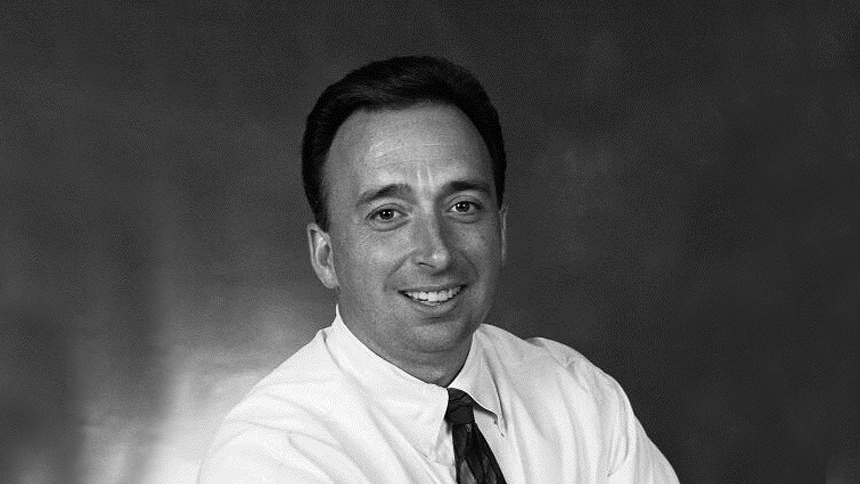
Although his resume indicates otherwise, Mark Aldam nearly took a completely different career path into the financial services industry. Instead, he opted to make half the salary he would have made working in finance in New York and jumped at the opportunity to spend his 20s in what he describes as “the beautiful Berkshire hillside” at the Berkshire Eagle, where he spent summers interning and committed to a career in the newspaper industry.

And commit he did. Aldam has spent nearly 30 years in the newspaper business in a variety of roles. Now, as president of Hearst Newspapers, he oversees a major division of the media behemoth Hearst Corporation that publishes 36 weekly newspapers and 15 daily newspapers, sells digital marketing services in 103 markets across the country, has directories businesses, and operates in 56 local markets with more than 5,000 employees.

The newspaper vet shares with Mediabistro what excites him about the business, reveals strategies that differentiate Hearst from other leading media companies and offers some choice words for those who sound the death knell for the printed paper.


Name: Mark Aldam
Position: President, Hearst Newspapers; senior vice president and director, Hearst Corporation
Resume: In 1994, served as the advertising director of The Hartford Courant in Connecticut and became senior vice president/chief operating officer in 2005. Joined Hearst in 2006 as the publisher of the Times Union in Albany, New York. In 2010, named executive vice president/deputy group head, with oversight of eight Hearst properties. Became president of Hearst Newspapers in 2011. Currently serves on the board of directors of the Newspaper Association of America and the Newspaper National Network LP, and on the board of trustees of the American Press Institute.
Birthdate: December 25, 1963
Hometown: Pittsfield, Massachusetts
Education: Westfield State University, Western New England College (MBA)
Marital status: Married
Media mentors: Steve Swartz, president and CEO of Hearst Corporation; and Martin Langeveld, 30-year veteran of the daily newspaper business and freelance marketing and strategic planning consultant
Best career advice received: Hard work beats talent when talent doesn’t work hard. Preparation is the only path to sustainable success.
Guilty pleasure: Live NHL hockey
Last book read: Unbroken, by Laura Hillenbrand; and The Boys of Winter , by Wayne Coffey


What is a typical day like for you?

All of the unit leaders report into our New York office and directly to me. I’m the former operator. I was a publisher for more than 25 years in the newspaper marketplace working for Tribune and Times Mirror prior to joining Hearst, so I’m actively involved in working with our unit leaders on execution and developing our strategic footprint and bringing new products to market.

So I spend about two weeks out of every month on the road with our leadership teams in San Francisco, Houston, San Antonio, Albany, Connecticut, Buffalo, New York; and then in some smaller markets. But, generally, I’m very actively involved in managing the day-to-day operations of our units.

What excites you most about the newspaper business?

Well, being the leading local media enterprise in each of the markets in which we compete is a very exciting and energizing force. And we’re very committed to growing our presence in those markets and pivoting the business model — not completely away from print because print’s still very healthy, but clearly we need to respond to business around those print assets in our key large markets.

And it’s a lot of fun to still be in a business where we’re providing content that’s meaningful to the lives of our readers and that consumers are willing to pay for. The competitive environment could not be more interesting than it is today.

News Corp, Tribune, Time Warner, E.W. Scripps and, most recently, Gannett have separated their publishing assets from their TV and film assets, signifying their core business focus is shifting from print. What sets Hearst apart from these competitors?

While we still believe that print’s healthy, we’ve also made a strong move to open the digital business model wide, and 30 percent of our ad revenue has migrated to digital experiences.

So we’ve quickly grown the volume of digital revenue at a time [when] we’re managing, obviously, the change in preferences as brands and large retail customers are moving more of their dollars away from print. And [we are] the local media of significance in each of our markets — our breaking news websites are far and away the largest reach vehicles in the market.

The next local competitor[‘s]… audience levels are five times less than what [Hearst’s] Houston Chronicle delivers in any 30-day period. And even among national news sites, our local media companies now rank among the top two or three Web presences in San Francisco, Houston, Albany, San Antonio and Connecticut. So not only are we the leading local media, we’re competing with national reach vehicles, as well, for the consumer’s interest in news.

What strategies has Hearst put in place to accomplish these goals?

I think two strategic moves we’ve made that are helping to separate us locally include our commitment to hiring more quality journalists and not cutting reporting resources. We’ve made a deliberate effort to add top journalists to our newsrooms.

All of our editors are Pulitzer-Prize-winning journalists. Most of our current editors have only joined us in the last four years. They each bring a digital sensibility and understanding that enterprise news still matters and that to keep the consumer paying for content the experience has to be unique, and so we have to have a ground game of local reporting resources.

That move we’ve made is continuing to invest in newsgathering resources. And secondly, I think we’ve made the right moves to develop digital products that are responsive to where the consumer wants to engage with media. So our mobile products are state of the art, both on the tablet as well as [on] the smartphone. And we have premium digital products that are available, as well, that supplement print. If you want to read this morning’s Houston Chronicle on your smartphone you can do that as opposed to just look for breaking news that is occurring out on the marketplace.

What about your work keeps you up at night?

Well, we worry and we’re paid to worry, I think. We worry a lot about making sure we’ve got the right balance in the going-forward business model that values the consumer’s ongoing relationship with our paid experiences, and not being as dependent on advertising to drive the top line.

But, you know, making the right investments that are going to bring more services to our customers and taking a few risks today that will pay off two years from now — those are the decisions, I think, that keep me up at night.

What are some risks that you have been considering recently?

I couldn’t [say] in specifics, but I could tell you that in two key areas of the digital ecosystem we’re looking very, very hard at expanding the services we provide because we see it as an emerging marketplace. And very few of our competitors offer a full suite of services that take the referring customer experience and create content management and marketing automation solutions for small businesses — so that’s one space.

And then social media would be a second, where we today create presence for our clients. But these customers need more publishing solutions and tools that we currently don’t offer, so by making investments in those key areas we believe we’ll strengthen that part of our business. But it’s somewhat of a risk because very few people are in that space today.

What do you say to those people that avidly believe the newspaper industry is in peril?

So I think there’s obviously some truth to the concern about the printed newspaper’s future given just the relationship between print ads and the size of the paper that most publishers produce. But my first response is: I believe that the printed newspaper will be around long enough to print our obituaries. That generally gets their attention.

But I think the newspapers that have responded to where consumers demand to access news and information — which is in their palm, and on their desktops and tablets — I think we stand a very good chance of being an influential part of the community, as long as we keep investing in the newsgathering resources that can keep government accountable, that can expose corruption, and that can be a reporting resource for the community that keeps people who live, work and educate their kids informed about what’s important to the quality of life in those regions. I think we’ll have a long life. But the path to migrating to that digital future is a complicated one because you can’t just turn off the printing presses overnight.

This interview has been edited for length and clarity. 
Topics:

Advice From the Pros, Be Inspired, Interviews
Advice From the Pros

So What Do You Do, Dominic Chu, Markets Reporter for CNBC?

'When you're going on air, you have to be 'on' right away'

dominic-chu-feature
Admin icon
By Janelle Harris
@thegirlcanwrite
Janelle Harris is a multimedia producer, director, and founder of Harris Two Productions with decades of experience in non-fiction storytelling for networks including Bravo, Discovery, and A&E. A Howard University graduate, she specializes in amplifying diverse voices across television, film, and digital media.
6 min read • Originally published October 16, 2015 / Updated March 19, 2026
Admin icon
By Janelle Harris
@thegirlcanwrite
Janelle Harris is a multimedia producer, director, and founder of Harris Two Productions with decades of experience in non-fiction storytelling for networks including Bravo, Discovery, and A&E. A Howard University graduate, she specializes in amplifying diverse voices across television, film, and digital media.
6 min read • Originally published October 16, 2015 / Updated March 19, 2026

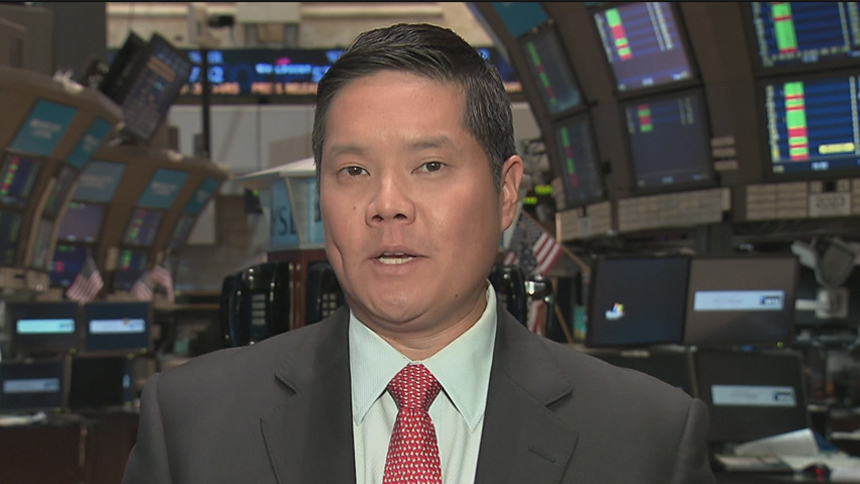
By day, Dominic Chu is the smiling, now familiar face delivering the latest news on stock, bond and currency markets, but, generally speaking, he is a master of career reinvention.

After a stint as a budding chef at Cornell University and success on Wall Street as a trader and investor, Chu made the jump to TV in 2010 after responding to a casting call embedded in one of the tickers on Bloomberg.com. “They held an open audition for people who had Wall Street experience to come in for a possible career in media,” he remembers. “They ended up going through this whole interview process with an audition at the end and selecting people to come on. I was one of them.”

Today, skills gained from those seemingly unrelated positions come in handy daily on the CNBC set. Plus, says Chu, “I make a mean Osso Buco.”


Name: Dominic Chu
Position: CNBC Markets Reporter
Resume: Started at UBS, fielding treasury management, guaranteed investment products and foreign exchange. Served as head trader and portfolio manager for Hennessy Advisors and eventually moved to Seascape Capital Management to manage accounts, mutual funds and alternative investments. Joined Bloomberg Television in 2010. In 2013, jumped to CNBC.
Birthday: June 6
Hometown: San Ramon, Calif.
Education: Bachelor’s degree in hotel administration from Cornell University
Marital status: Single
Media idol: Peter Jennings
Favorite TV show: “I like The Big Bang Theory for comedy, and I love murder mystery-type stuff, so I’d say Castle on ABC, too.”
Guilty pleasure: Golf
Last book read: Banker to the World by William R. Rhodes
Twitter handle: @TheDomino


Besides your obvious knowledge of the material, what did you bring with you from your finance career that made you transition fairly easily into television?

You know what I think it is? There are a lot of similarities between a full-throttle newsroom and a trading desk on a trading floor. You’re being blitzed with all kinds of information, and you have to make heads or tails of it in a coherent fashion in as quick a time as possible.

It’s kind of like trading during times when there are volatile markets or big economic data releases. You have to deal with lots of information on a real-time basis. I think that that was probably the thing that most prepared me for this kind of job, because in an organization like Bloomberg you’re dealing with a lot of breaking news all the time.

You were on air during the Flash Crash in 2010 when the stock market plunged 1,000 points. What was the most challenging thing about covering that day and how did reporting on such a pivotal event make you a better journalist?

That was where I really cut my teeth in terms of journalism. It was definitely a very fast and furious situation. Things were literally happening not in hours or minutes, but seconds sometimes. It was a bit of an adrenaline rush, because it was historic just by the sheer volatility. Probably one of the hardest parts was trying to stay calm and be able to deliver some kind of message that was understandable to the audience.

Everything comes so fast these days that you have to make sure that you understand what’s going on yourself before you just have a gut reaction to something. For me, it really was a test to stay on task and a defining moment in a career that was obviously very, very young in terms of age. But, to look back on it now, it was great to be involved in such a historic event in real time and to have viewers and listeners count on me to give them information.

You spotted an ad for your current position in a news ticker and auditioned. Have you had to work harder for respect as a journalist because of the way you came in?

It was interesting, because it was taking what I would normally do with a career on Wall Street — the same information I’d be looking for as a trader, the same kind of research, the same kind of analysis I’d be doing if I was still working on Wall Street — and translating that to help viewers and listeners understand what was going on in the markets.

I think that there are two sides to that as a journalist. You bring a different perspective to news you’re covering, one where you used to be a client of the news and now you’re delivering the news. On one hand, as you said, you feel a sense of having to prove yourself. There are obviously a number of great journalists, especially in business news, that I have grown up following. On the other, you’re trying to compete and help people better understand you as a journalist and, hopefully, that leads to respect as a contributing member of the media.

Diversity is always a big issue in media, making sure that there are different voices behind and in front of the camera. What do you think finally has to happen for this to be a non-issue and for the newsroom to truly be diverse?

It depends on what your definition of diverse is. Sitting right next to me are people of South Asian descent, other people of Asian descent, African-Americans, Hispanics. We have men and women, people of all religions from the West Coast, Midwest, East Coast. I don’t know how to say this without sounding cheesy or cliché, but I honestly feel like our newsroom is strong because we have such different backgrounds and points of view.

In general, for the whole field, do you think all voices are being represented as well behind and in front of the camera?

I think so. Our perspective as a news organization has always been to present the facts and provide some insight into where we think those facts can lead. One of the things that I’ve heard a lot of feedback from traders, market professionals and investment managers that we talk to on a regular basis is they appreciate the fact that we don’t have a huge amount of editorial content. We’re not leaning far one way or another in terms of the political or economic view spectrum.

Rather than try to project or use it as a bully pulpit to further some kind of agenda, what we have right now is an organization that can provide you with some kind of data you need to make decisions in your life financially and take control of your own destiny.

If you were head of a journalism school or program, how would you prepare students to be in this field? What did you have to learn on the ground that you wish you would’ve known beforehand?

I don’t think any kind of broadcast media job is ever easy right off the bat. I came into this role with no real experience with broadcast journalism. I’ve done public speaking before but nothing really prepares you for what it’s like to stare into a camera lens and know that you’re on live television. I think for me, the hardest thing to get used to at first was this idea that when you’re going on air, you have to be “on” right away.

For live television, there is no double take, no stopping and starting over. You just kind of have to deal with it and move on. I wish I would’ve been a little bit more geared up, prepared. It was definitely a rude awakening. I had butterflies in my stomach like I couldn’t believe. You slowly but surely get used to it and luckily, the more you do it, the easier it gets.

This interview has been edited for length and clarity. 
Topics:

Advice From the Pros, Be Inspired, Interviews
Advice From the Pros

So What Do You Do, Pete Cashmore, Mashable Founder and CEO?

'Content is not a scarce resource; attention is a scarce resource'

pete-casmore-feature
By Joe Ciarallo
7 min read • Originally published October 19, 2015 / Updated March 19, 2026
By Joe Ciarallo
7 min read • Originally published October 19, 2015 / Updated March 19, 2026

mediabistro.com recently spoke with Cashmore about the evolving nature of the site, his reaction to incessant coverage of himself in tech blogs, whether online media outlets should impose pay walls, and if he thinks MySpace will ever bounce back. Pete Cashmore is founder and CEO of Mashable, one of the largest blogs in terms of audience.

Born in Scotland, Cashmore spent some time in the U.S. and now runs Mashable from the U.K. Founding the site was pretty much his first job, as he worked as a Web consultant for a short time beforehand. The site’s mission is to be “the social media guide” and cover all things social media.


Name: Pete Cashmore
Position: Founder and CEO, Mashable
Resume: Was involved in Web consulting prior to starting Mashable in 2006 from his bedroom in Scotland. He was 19 at the time.
Birth date: September, 1985
Hometown: Aberdeen, Scotland
Marital status: Single
Favorite TV show: “At the moment, Top Gear.”
Guilty pleasure: “A glass of red wine from time to time.”
Last book read: “Currently reading The Social Media Bible [by Lon Safko and David Brake].”


Tell us a little bit about the background of Mashable. How did the site start? Was there something that sparked the idea?

I just was really passionate about the space, and wanted to get involved, and I felt like social networking wasn’t being covered to the degree it could be. I was of the age group that uses those social networking [tools]. I felt like I was in place to cover it. It was personal interest. I didn’t necessarily know there was an audience for it.

How has the site changed and evolved since it launched? What are some of the big milestones that you are proud of?

I think we started off as focusing on social networking, and now we’re social media. We rebranded in January this year to be the social media guide, which is a bit more holistic: looking at the whole spectrum — how tools like Facebook, Twitter, YouTube are affecting media [and] society.

Obviously when it started out nobody was really sure that blogging was going to take off or come to be anything, or be something that would make people money. In 2006, we did our first ad deal. It was only a few thousand per month, but it kind of legitimized blogging as a business. Selling a first ad legitimized that this may go somewhere — this may actually work.

Has Mashable shifted more to “mainstream” coverage as opposed to more detailed ins and outs of the social media/tech world?

I think it’s always been true that Mashable is more consumer-facing. It’s always been about, “How can you, as a Web user, work with these tools?” It was always speaking to the user directly. I think that’s been a common thread throughout. When you compare [Mashable] to old school tech magazines, we certainly say we’re more focused on the user and the utility for users. For example, we don’t cover things like funding announcements. We focus on the user.

What about the reporting process at Mashable? How do you decide what to cover and how to cover it?

That’s always our focus: “How is this useful to the reader,” and, “How may they get utility out of this tool?” Obviously we want something that is accessible to our reader’s base. We want it to be of interest. As I’ve said, “It has to be good.” People say, “How do I pitch Mashable?” We’ve actually done a few posts on how to pitch Mashable. But really, we go to the site, try it out, say, “Hey, is this good or useful to me?” and if it is, we write about it.

Mashable also focuses a lot on how social media is used within charities and nonprofits. What are some of the ways these organizations are using social media with success?

We’re currently doing a three-month campaign to raise awareness and funds for causes. With Social Good, we picked these four causes that we’re using tools to raise money for. I think our interest has always been there. We’re working with the Humane Society, Oxfam, the WWF and Livestrong. In terms of examples, [for] Thanksgiving last year, there was Tweetsgiving. Twestival this year raised $250k.

Ashton [Kutcher], when he hit 1 million followers [on Twitter], he gave away malaria nets. There are lots of examples of using social media for a cause. It’s good for visibility. There are no major barriers. People are happy to pass along that message.

Gawker Media’s Nick Denton recently told Advertising Age, “original reporting will be rewarded” in terms of reporters for his sites. He hinted that it’s not enough just to aggregate and provide opinion anymore, because now everyone is doing that on their Facebook feeds, Twitter, Tumblr, etc. What is your take on this?

I think there is value in both original reporting and curation, and I think there will always be two pieces to that. There are two levels in the news process. There is original reporting and there is curation, which is just as hard, saying, “This is what’s out there, this is why it is important.” Both have their places, and it’s not a case of ‘either or.’

Valleywag and other gossipy blogs have focused on your good looks and appearances at parties. Do you read those posts? What is your take on that?

I think we’re kind of beyond that. I’m really neutral on it. They’re going to cover what they’re going to cover. It’s up to them.

What will “traditional” media outlets have to do to survive in the social media age?

There are multiple, multiple strategies. It really depends on what [your] audience is. If you’re local, you have to be focused on local — and you’re in the best position to bring in unique stories from that community. Buckle down and become the hub of local news. National news is more challenging because news is becoming more commoditized.

The role for them is multi-faceted in terms of obviously, well, forget about the distribution model. The distribution model will be the Web or whatever device people are using. But the standards are the same. We still need people digging into stories. Really, very little has changed, just the distribution model is different. Obviously, they need to figure out blogging, short-form writing. There is no point in writing like the pyramid anymore. You have to write the story in three paragraphs.

Also, there has to be a place as well where they can have a role and understand a place for blogs in the middle. A good example of that is iReport, where CNN is trying to source stories from the community. It’s not always correct info, but things like that are, while risky — it’s riskier not to try stuff like that. And tolerate the fact that not all will be 100 percent accurate.

It comes back to curation: You’re not always going to be source of story, but is there a way for you to curate content that is coming from [the] community? They need to become both sources of news and curators of community-sourced news.

Many media companies are now reverting back to, or considering pay walls for all of their content, even online. Where is this effective and where is it not?

It’s a very challenging setup. We’ve yet to see if it works. I’m dubious to see if it works. Ultimately the challenge on [the] Web is that there are so many sources of content that by locking up yours, you drive people elsewhere. Content is not a scarce resource; attention is a scarce resource. If you put [up] barriers, they will go elsewhere. In the vast majority of cases, a pay wall is a hindrance. We should be focusing on how we [can] make ad models that are more engaging rather than push readers to other sites.

Do you think Facebook will be how we all eventually “sign in” to the Web?

“All” is a general term. There is always going to be fragmentation. Facebook will be a big player in the identity market, because it is tied to your real name, and that is very important.

Where do you see Mashable one year from now?

Obviously, social media is continuing to grow and we’re going to continue to grow with it, and we’re going to cover a wider aspect of what’s happening with social media. We’re in a niche where we feel we’re leading.

We’re going to see more mainstream attention of social media. The mainstream media is promoting Facebook pages [and] Twitter pages. The media is becoming social. Social media is the media. Social media will become so broad, in that it covers a huge swath of media, and our coverage will become broader, in terms of covering all of media.

This interview has been edited for length and clarity.
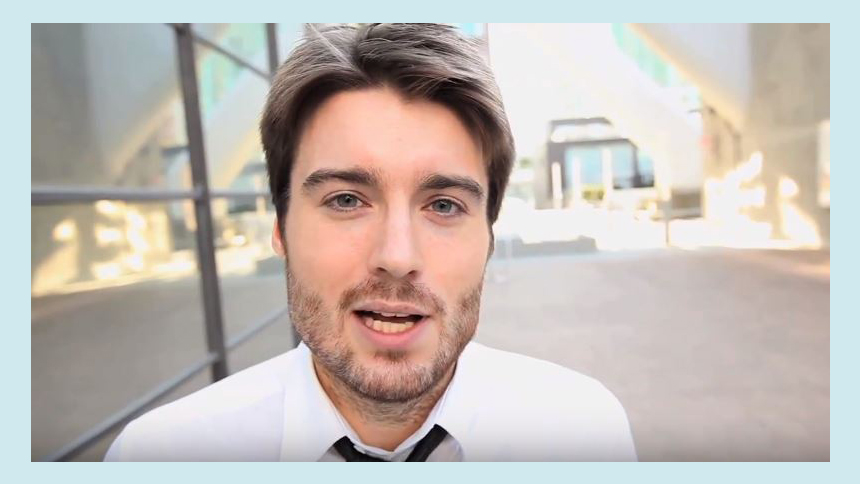
Topics:

Advice From the Pros, Be Inspired, Interviews
Advice From the Pros

So What Do You Do, Maria Elena Salinas, Univision Network News Anchor?

Salinas on gender, advocacy, and Spanish-speaking media

Maria-Elena-Salinas-feature
By Kevin Allocca
11 min read • Originally published October 19, 2015 / Updated March 19, 2026
By Kevin Allocca
11 min read • Originally published October 19, 2015 / Updated March 19, 2026

With Diane Sawyer’s near-5-year-run on ABC “World News”, the spotlight is once again on the female news anchor and the progress that broadcast news has made in the past decade.

But in 1987, almost 20 years prior to Katie Couric earning a spot as the first woman to anchor a network broadcast, María Elena Salinas became an anchor of “Noticiero Univision,” the national Spanish-language evening news broadcast on Univision. Since then, she and her co-anchor Jorge Ramos have watched Spanish-language news go from a small enterprise to a major media player, a point that was driven home in 2007 when Salinas and others hosted the first-ever Democratic and Republican presidential candidate Forums in Spanish on Univision.

During the 2008-2009 broadcast season, “Noticiero Univision” averaged 2.4 million viewers each weeknight, its best performance ever. And the program’s audience continues to grow, notably among younger demographics, something that can’t be said for some of its English-language competitors.

Salinas, an Emmy-award winning journalist, is also co-host of the prime-time newsmagazine “Aqui y Ahora” and a syndicated columnist. She’s not afraid to offer opinions and analysis, often speaking out in advocacy of Hispanic-American issues, and is regularly counted as one of the most influential Hispanic women in the country.

Here, she talks to mediabistro.com about gender in the broadcast newsroom, making the transition from a tiny local station to network news, and the growing Spanish-language media market.


Name: María Elena Salinas
Position: Anchor, Univision Network News, co-host of “Aqui y Ahora” news magazine, and syndicated columnist.
Resume: Co-anchor of the national evening newscast “Noticiero Univision” and the primetime news magazine “Aqui y Ahora,” and referred to by The New York Times as “the voice of Hispanic America.” Began as a reporter for KMEX-34 in Los Angeles in 1981, and assumed the anchor chair of “Noticiero Univision” in 1987, where she has been since. She is also a radio analyst on Latino issues and is one of few Hispanic syndicated columnists in the United States, where her column is published in more than 55 newspapers in both Spanish and English. Her memoir I Am My Father’s Daughter: Living A Life Without Secrets — a best-selling Spanish-language book — was published in 2006.
Birthdate: December 30th
Hometown: Los Angeles, California
Education: She went to community college in Los Angeles for two years where she majored in marketing. After she began working in television, she went back to school to UCLA extension: broadcast journalism.
Marital status: Divorced. Mother of two beautiful daughters.
First section of the Sunday Times: “Week in Review.”
Favorite TV show: Anderson Cooper 360
Guilty pleasure: Chocolate and shoes.


How did your career get started in news?

First I worked in radio, in 1979, and then in 1981 I moved from radio to television, Channel 34 in Los Angeles. Back then it was a little tiny, tiny station. I was the only female. There [were] only two reporters, and I was doing everything. I was anchoring, I was reporting, I hosted a daily public address program live, and then on weekends I did an entertainment program, so I guess that’s the way it is when you work for a little station [laughs].

But my intention was not necessarily to go into news. I was working in radio before, and I had studied marketing. I was very much interested in what was becoming a booming Hispanic market in the advertising side, and I honestly thought that that was my way in. But once I began working in news, I became so obsessed.

So, how did you make the move from that local station to a national program?

When I started working at Channel 34, we didn’t have a network newscast. I was a contributor to the newscast, and at the end of 1986 there was a big shakeup in what was then Spanish International Network — now it’s called Univision, but the network at the time was called S-I-N, SIN. There was a big shakeup and half of the staff left and formed what is now Noticiero Telemundo, and as part of the new group let’s say, I eventually came on board to anchor the late night news. There was a one-hour late night newscast.

It was an interesting time for that transition. We were owned by Emilio Azcarraga of Mexico, and he had warned that Jacobo Zabludovsky, who at the time was news director in Mexico City of Televisa’s newscast, was coming over to take over and be news director of our newscast. Miami is a very political city, and at the time Mexican press was perceived as not being free, as being just a mouthpiece for the Mexican government, who in turn had a very close relationship with Cuba.

Basically we got a lot of backlash, and the headlines were, “The Communists are coming to take over our newscast.” So, half of the people left in protest, and of course it never materialized, it never happened. The protest actually worked, because Zabludovsky never came to the United States to take over our news department. But at that time, that whole transition is when I moved over from the local station to the network.

What did the landscape of Spanish-language journalism look like then compared to now?

At the beginning, people saw Channel 34 and the few affiliates that we had at the time as, you know, these little low-power stations with low quality that only undocumented immigrants watched. It was very difficult to cover, for example a presidential election, because we’d always have to be explaining who we were: “Channel 30-what?” You know, people just had absolutely no idea who we were.

People who came into the industry always saw Channel 34 and Spanish-language media as a stepping-stone to bigger and better things. [Latinos] figured this is where we might learn a little bit about the profession and then move on to, you know, real TV: ABC, CBS, NBC, CNN then was beginning to make a dent or to be heard. And what happened is little by little Spanish-language media has grown so much that now it’s the other way around. Now you see people from ABC, CBS and NBC moving to Spanish, because it’s now the fastest-growing media, or fastest-growing network in the country.

So it was very different back then. Very, very different.

Now, there are 50 million Latinos in the United States, as opposed to 14 million. Our buying power right now is $1 trillion. In Los Angeles for example, when I used to cover local politics there were no Hispanics at the local level at all, not in the Board of Supervisors, not in the Board of Education, not in City Hall. Now we have a Latino mayor, several assemblymen, several council members, and on the Board of Education and just everywhere.

And right now I think not only [has] the Latino buying power increased, but Latino political power has also increased to the point where we no longer have to give an explanation of who we are and what we do. Now the doors of the White House are open to us. Now it is the politicians who reach out to us in order to get to the Hispanic vote. During the last election debates at Univision, [we had] both Democrat debates and Republican debates and that was unheard of.

Let’s go back for a second. How did the transition come about as you coming on as an evening news anchor?

January of 1987, I was a network anchor for the late night show, and then in early ’88, a new news director came in and teamed up my co-anchor and I, Jorge Ramos. Jorge was already doing the 6:30 for a little over a year, and then I had been doing the 11:00 for about a year.

This was an 11:00 network newscast, because we didn’t have local news at the time in our affiliate. So they teamed us up, and we did both newscasts together. We’ve been together ever since, so for 21 years Jorge and I have been anchoring together. So I have been a network anchor for, well since 1987, so that’s 22 years.

There’s a lot of conversation right now about the ascension of the female evening news anchor because of Katie Couric in the last few years, and Diane Sawyer at “World News”. But you’ve been doing this for longer than both of them. Was gender ever a discussion when you first started?

You know, it wasn’t. The Latino society is very macho, even though when you think about it, [in] Latin America, we’ve had female presidents, and in the United States we haven’t yet elected a woman as president. However, in the news business I think that in a lot of Latin American countries you still have the male figure, which is a dominant figure, and if you ever do have a female anchoring a network newscast, it’s usually just a decoration.

It’s changed somewhat, not to the point where you have primetime news anchored by women, but for us it was automatically accepted, because I was actually there before Jorge was. I started working in 1981, he started working in 1984, and because it was never really an issue for us. It’s changed so much that in our network, women really have more power than men.

Univision’s vice president Alina Falcon is a woman. Our two vice presidents of news are women. All of our executive producers are women. Our chief editor is a woman. So we really do have a lot of women in management and mid-management positions here at Univision.

I know you’ve had a lot of big interviews in your career. Which do you feel was the most important?

That really depends on the moment. One of the most interesting interviews were with Pinochet. He never really had much to say, but the fact that he gave us the interview thinking that I was a Cuban from Miami who was going to agree with his politics, and was very upset, or uncomfortable when he realized that I wasn’t.

That was one of the very few interviews he did when he was a dictator. And then Subcomandante Marcos, which is the rebel leader in Mexico, we did a two-hour interview with him. It was the very first time that he came out of the jungles of Mexico into the capital to speak face to face — but not really face to face because he continued to wear a mask — with Mexican President Vincente Fox.

That was also a very interesting experience. I interviewed President Obama when he was the president-elect, and it was amazing — the reaction of people to that. “Wow, what was it like to see him?” I said, “Well, this is the third time I’ve interviewed him. Nobody ever said anything before.” But all of the sudden he turned into this person that is bigger than life. That’s why I say it really depends on the time that you do the interview. If you get the interview of the head newsmaker then, then that’s it. Then you’ve made it.

You’ve been described as someone who practices advocacy journalism. Do you agree with that?

Yes, I do agree with that. Some people say it as if it was something with a negative connotation, and I don’t necessarily see it as that because I think that sometimes what we do is that we end up becoming the voice of voiceless, and we advocate, not amongst ourselves, but in the general market, the English-language market, on issues that affect Latinos. I’ve had debates with people like Lou Dobbs, for example, on immigration, and what I would say is that what I do is actually ask for debate, because up to now it sounds like a monologue attacking immigrants and accusing immigrants for all the ills of this country.

So by contributing their side and by talking about the contributions of Latinos and immigrants, and just giving a completely different perspective of what is usually out there about immigrants, it’s to some people advocacy journalism, and if talking about the contributions of Latinos turns me into a journalist who practices advocacy, then I don’t mind, then let it be. I also write a syndicated column. I am very careful in my column not to get involved in partisan politics, but I do talk about issues that affect Latinos.

Do you think that bilingual news, particularly Spanish-language newscasts will continue to grow in the next decade?

I think so, because Latinos are continuing to grow. We’re supposed to be 25 percent of the population by the year 2050. I remember people telling me when I started working at KMEX, “You really should try to make a transition into English TV, because there’s no future in Spanish-language TV, because Latinos will assimilate.” We’re talking 1981, ’82, ’83. And look what has happened now. Not only is the Hispanic community the fastest-growing community, but Spanish-language media is the fastest-growing media, and our viewership continues to grow. I mean, who would think back then that our stations would be beating ABC, CBS and NBC in the ratings in places like Miami or Los Angeles?

That was unheard of. So, I think that those who assumed that there was no future in Spanish-language media were wrong. I mean Latinos have been assimilating little by little, but assimilation doesn’t mean leaving behind your language and your culture. They continue to speak Spanish because Spanish is the one thing that unifies all of Latinos.

Who would you consider your inspirations professionally in the industry?

When I started working actually, there were women that I admired, such as Jessica Savitch, and Diane Sawyer, believe it or not [laughs]. It’s interesting for anyone to wonder whether this country is ready for a woman to be anchor. I mean Katie Couric of course already proved that. But I think women have always been ready to do this.

It’s sometimes the psyche of the country that hasn’t been ready. Peter Jennings was definitely someone whose career I followed. He always showed not only journalistic excellence, but he always showed compassion in his brand of journalism, and that’s something that I always admired.

What are the opportunities like right now for young people who want to become Spanish-language journalists?

I think the opportunities are there, because Spanish-language media is growing so fast. And I put my money where my mouth is. I have a scholarship that comes out of my pocket that is distributed by the National Association of Hispanic Journalists for students that want to follow a career in Spanish-language media. So I do think there’s more and more students, especially young women even more than young men, that are following a career in Spanish-language media.

Not only is Univision growing, Telemundo, and there’s, you know, more and more Spanish-language networks and radio stations, but as far as publications, just about every major publication now has a Spanish version. I think media is realizing that they need to have content that Latinos can relate to.


This interview has been edited for length and clarity. 
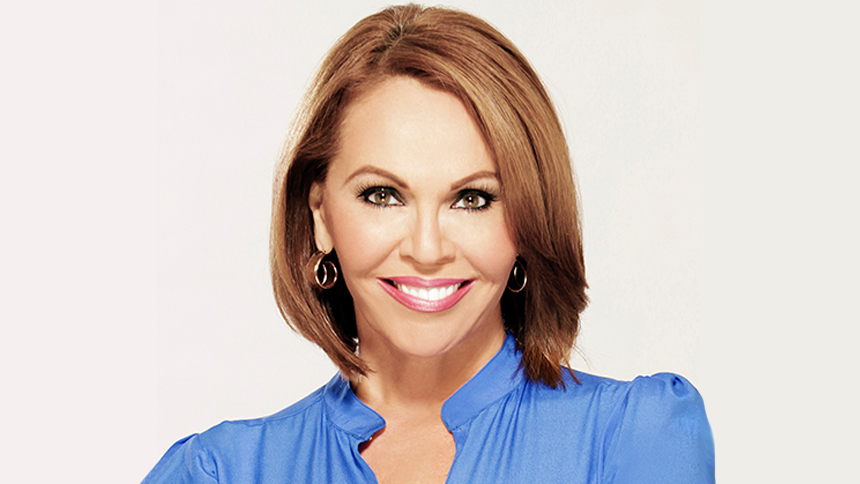
 

Topics:

Advice From the Pros, Be Inspired, Interviews
Advice From the Pros

So What Do You Do, Amanda Hocking, Author and Self-Publishing Powerhouse?

How this self-publisher became a bestseller

amanda-hocking-feature
By Jeff Rivera
8 min read • Originally published October 19, 2015 / Updated March 19, 2026
By Jeff Rivera
8 min read • Originally published October 19, 2015 / Updated March 19, 2026

Unable to find a publisher, Amanda Hocking took the fate of her success as an author into her own hands and released her YA troll princess tales as eBooks through Amazon. Although price points varied from 99 cents to $2.99, the results were astounding: 1.5 million copies sold. That success didn’t go unnoticed, as St. Martin’s Press signed her to a deal reportedly worth over $2 million in 2011, and her bestselling Trylle series got optioned for two films.

Call Hocking the darling of the DIY movement or the leader of the digital publishing revolution, but don’t dare call her an overnight success.

“I worked really hard at this for my entire life. I was trying to get published for nine years before I started selling books, and I have been writing literally since I could write,” Hocking told us. “And I think that a lot of people are missing that, because I think they see self-publishing as, ‘Well, you could just click and upload it, and then that’s it.’ There’s a lot of time, energy and your heart that you put into it.”


Name: Amanda Hocking
Position: Author
Resume: Started writing novels at the age of 17 and turned to self-publishing at 25 when she was unable to find a publisher. Achieved breakout success with My Blood Approves in 2010; less than a year later, had seven books on USA Today‘s bestsellers list. Went on to sell 1.5 million copies. Joined St. Martin’s Press in 2011.
Birthday: July 12, 1984
Hometown: Austin, Minnesota
Education: High school, some college
Marital status: Single
Media Idol: Jim Henson “because he was an amazing person.”
Favorite TV shows: Southland
Guilty pleasure: Jersey Shore
Last book read: You’re Not Doing it Right by Michael Ian Black
Twitter handle: @amanda_hocking


What are the advantages and disadvantages of being with a traditional publisher?

Having a team of people that can help me do all of the stuff so I don’t have to is definitely an advantage. I was getting really bogged down and stressed out by all the little details that go into publishing a book on your own, and now there’s a whole team of people that did what I did. It’s much easier. I can just focus on writing a book, and then I can just send it to them, and if I have problems and stuff, I can tell them.

I guess the disadvantage is that I have lost control over things. I have input and everything, but I don’t get to decide how much things are priced for or when they come out. I don’t mind it, but I know that for other people that would be a bigger issue. So, it was a trade that works for me.

I’m still involved with the publicity and the marketing but they set it up. They made a website, and they set up the campaigns, and they do the commercials. They’ve done really great marketing for me that I wouldn’t have been able to do on my own; they had a big spread event in a “Hunger Game Special Edition” for People magazine. And they did commercials on MTV. That stuff I wouldn’t have been able to do myself or know how to do.

Before the launch, I was having pre-wedding jitters. I panicked because somebody else’s book was selling better and I was freaking out. Because if this didn’t work, if my book really bombed, it would have ruined everything I had set up. I just had a meltdown; I was really stressed out but everything worked out.

Many digital authors are trying to get where you are but are failing miserably. What are they doing wrong?

A lot of authors tend to over market or they don’t take criticisms very well. They think that their book is perfect. They don’t want to get bogged down with editing or covers, because they think their book is so good. Or they market too hard. All they do is talk about their book and nobody wants to hear, “Buy my book.” They want to have a conversation with you.

Right now, the market’s gotten really saturated, and there’s so many books that it’s hard to make them stand out. I was fortunate when I started publishing; the market was just starting to take off. I think that writers need to just focus more on writing and relax. I know it’s really hard when you’re publishing to separate yourself from it. In the beginning, I was obsessed with checking my sales every 10 seconds.

I think you need to take that deep breath and take a step back and focus on writing and just relax and be present on the Internet. If you are writing and you’re putting out something that’s good, I think eventually you will find an audience. It’s just a matter of how long it will take.

I think the biggest things that I see people do is becoming very spammy. Or they’ll comment on blogs and all they really say is, “Yeah, I agree with you because my book is like this.” They’re not adding anything to that conversation. They just immediately start talking about their book. I get tweets all the time from people that say, “Buy my book.” I know nothing about this person. I know nothing about their book. All they’re saying is to buy their book and I’m not going to do that. They’re just being obnoxious.

Also, new writers respond to negative reviews and have great catastrophic meltdowns. You can’t respond to reviews at all except to say “thank you for reading the book.” That’s the best you can do; otherwise, you’re just going to look bad even if the reviewer is totally out of line.

What did you do, step by step, to effectively build your fan base?

I think what ended up working the best for me is that I had a blog; I had a Facebook; I had a Twitter. I gave books away a lot too. I would give books to anybody who was willing to do a review, so they would start getting the word of mouth out there. And it started taking off from there.

I was also active on the Kindle Boards, but I think the best thing that I really did was just be present. I did [a theme-driven blog tour] Zombiepalooza in the first year and I had something going on every day. I had other writers contributing, and they were doing giveaways or short stories. There was 31 days of stuff and that was incredibly stressful. I think as far as being effective compared to the amount of stress it was, I don’t think it was worth it.

You need to be discerning too; if you’re hosting a blog tour, make sure it is entertaining content. My most effective techniques were talking to book bloggers and in giveaways. What I wouldn’t do again was Facebook ads. It didn’t really sell any more books.

What is your writing process like? How do you stay so prolific?

I speak about it for a long time before I even outline or anything else, and I always hand write my outline. I’ll start with notes; then I’ll start formatting the outline. And I’ll write usually about two or three outlines, so by the time I do write the book I’ve got the story completely mapped out in my head.

If I write less than 5,000 words, I’m disappointed. Normally, it’s between 5,000 to 8,000 words a day that I’ll write on average. I start writing usually pretty late in the day, like seven or eight at night or later than that. I think I started writing at night because I worked in the evenings. People can’t call. Everyone else is in bed. It’s just a matter of turning off the Internet and then I really have nothing to distract me.

A lot of entertainers and authors struggle financially, because they blow or mismanage their money when it comes in large sums. What was your strategy for handling such a large advance?

I knew that I didn’t want to blow it. I’m very conscious of the fact that I’m doing well right now, but at any time this can stop. I don’t want to be somebody who had a million dollars and then they are broke the next year.

So, I’m trying very hard to get myself out of debt. I want to pay for it in cash. And, then, I put a lot in savings. I’ve tried to, though, to help out friends and family. I donate to charity, and I think that’s hard for me to figure out a balance in regards to what to save, what to donate, and what to spend.

How did you land your agent?

I said on the Kindle boards that I didn’t have an agent and somebody suggested my agent Steve. I emailed him on a Monday, and by Thursday he responded. It was actually pretty quick. He’s been my agent ever since.

How did you land your movie deal? How involved will you be in the casting?

The movie deal started because Terri Tatchell, the screenwriter, emailed me in January of last year, and she said that she just read the books and she loved them. And she wanted to turn it into a movie. She approached me, and she seems really brilliant and really knows what she’s doing, and I really trust her with the project.

I have no idea how involved I will be in the casting or anything like that. I would rather not be super involved, though, because whoever gets cast, there are going to be people who say, “That’s not right; that’s not who it should be.” Whoever she picks will be great.

Where do you imagine you will be five years in the future?

I actually have no clue. I mean, it’s such a hard thing to picture, because five years ago I never would have pictured myself here. So, it’s really hard to say. I would like to be able to still be writing. I think in five years I’ll be writing, and I’ll be working on something, and hopefully people will still be reading it.


This interview has been edited for length and clarity. 
Topics:

Advice From the Pros, Be Inspired

Posts navigation

Older posts
Newer posts
Featured Jobs
Kirkus Media
Editorial Intern
Kirkus Media
New York City, New York (US)

Gaia Inc
MEDIA COORDINATOR
Gaia Inc
Louisville, CO

Gaia Inc
Global Paid Media Specialist
Gaia Inc
Louisville, CO

Gaia Inc
Director of Media Strategy
Gaia Inc
Louisville, CO

Hearst Television
Account Executive
Hearst Television
Milwaukee, WI, United States

All Jobs »
PREMIUM MEMBER

Greg Whitt

Washington, DC
15 Years Experience
I write primarily about music and culture, but I've also published essays and reported articles on social justice, race, fashion, and sports at some...
View Full Profile »
Join Mediabistro Membership Today

Stand out from the crowd with a premium profile

Mediabistro Logo Find your next media job or showcase your creative talent
  • Job Search
  • Hot Jobs
  • Membership
  • Newsletter
  • Career Advice
  • Media News
  • Hiring Tips
  • Creative Tools
  • About
Facebook YouTube Instagram LinkedIn
Copyright © 2026 Mediabistro
  • Terms of Use
  • Terms of Service
  • Privacy