Circulation: 1.5 million in print; 1 million online
Frequency: Monthly
Special issues: Black women in Hollywood (March); careers (April); beauty (May); body and health (July); holiday season (December)
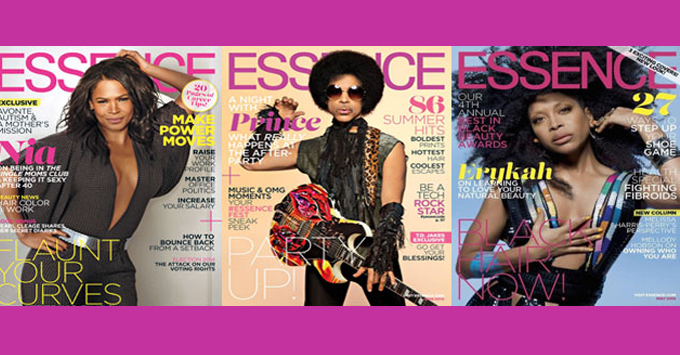
Background: Since it was founded in 1970, Essence has been more than a general-interest book to its dedicated readership. It’s been a lifestyle resource, a conversation starter, a beauty and fashion bible, a social issue agitator, a how-to for relationships, a recipe book, and a champion for black womanhood. All this, pressed, polished and published monthly onto some 150-odd pages.
Celebrating 45 years as a newsstand mainstay for ladies of African descent, the mag and its site have enjoyed a longevity that few publications in the same market have been able to duplicate. “Black women come to Essence to get inspiration, insight and relevant information about our culture they cannot find anywhere else,” said editor in chief Vanessa K. Bush. “Each month, they count on us to bring the best.”
Although the target market of black women ages 18 to 49 hasn’t changed, the leadership of Essence has over the years. In 2000, the original owners — including Edward Lewis and Clarence Smith, who dreamt up the concept for the magazine and brought on famed photographer, filmmaker and writer Gordon Parks as its editorial director — formed a joint venture with Time Inc. Five years later, that corporate media conglomerate acquired the magazine, adding it to a stable that includes other heavy hitters like Sports Illustrated and People. Devotees worried that the change of ownership would impact the true-to-life content they’d always sought and appreciated.
Still, Essence has continued to expand from the magazine that mothers and grandmothers put on the coffee table to a full-out, multifaceted brand. Essence.com attracts more than 1 million unique monthly visitors, and the Essence Music Festival, approaching its 20th year, draws more than 200,000 attendees for an annual weekend of music and entertainment in New Orleans.
But the pulse that courses through the Essence body of business is still that crisp, printed page on which black women are venerated and celebrated — and where freelancers are encouraged to pitch fresh ideas that speak to that readership.
What to pitch: Many contributors are award-winning journalists, not only for Essence but other major newspapers and magazines. Good for them, but good for aspiring freelancers, too: even with that stable of excellence at their behest, editors enthusiastically invite new writers to pitch stories because they are, above all, interested in recruiting the right talent to speak to their readers. For that reason, the wealth of journalistic storytelling spans cover stories on celebrities like Jill Scott, Gabrielle Union and Michelle Obama to in-depth pieces on issues like gun violence and autism.
As is the case with many other pubs, the front-of-book departments are the best way to break in. Editors are looking for writers with areas of expertise to generate compelling service pieces and news stories for each section that impart something — a fact, an anecdote, an idea — readers hadn’t encountered before. Articles start around 850 words; however, those that open each section are a bit longer. Three key elements by which to pitch: research, timeliness and relevance.
The culture section, now called “Scene,” houses all things entertainment. “We’re always looking for great content, so we work with freelancers quite often for that,” explained deputy managing editor Dawnie Walton. Because black Hollywood is always buzzing with goings-on, she and fellow editors are looking for writers to do short profiles of celebrities, typically tied to a project that they have coming out in film, television, music or stage.
Health reporters should target “Healthy & Happy,” which covers fitness trends and medical news and issues, but most importantly takes a holistic approach to looking and feeling good and living well. Editors are interested in stories that include — but also go beyond — physical health. Think mental, spiritual and emotional well-being to capture and (hopefully) write about the breadth of complete, soul-satisfying happiness that comes from being totally healthy.
Also possibility rich are “Money & Power” and “Sex & Love,” whose section titles are self-explanatory. Two new features of the mag and potential gateways for incoming writers: “Share,” an essay column on the back page of the book that tells a woman’s inspirational story, either as-told-to or personal; and “Women to Watch,” a spotlight on a professional about an impressive achievement in her respective field.
Although not completely off-limits, features are generally assigned to veteran journalists intimately familiar with the nuances of Essence content. But if you’ve got a great idea, a newsy hook or an interesting trend to make the pitch more palatable, go for it. Those pieces typically run 1,200 to 2,500 words.
In all cases, the more detail you offer, the stronger the pitch comes off. Show editors a well-thought-out, complete vision for a potential story with a working hed and dek. Give a little background, including anecdotes, interviews, sources or statistics you propose to use in the piece. Provide a compelling fact or statistic to whet interest. Describe the content of a possible sidebar. Your pitch should also convince editors that now is the particular time to publish this particular story. Most importantly, think about what makes it unique to the Essence reader.
What not to pitch: Fashion and beauty are predominantly done in house.
Online opportunities: As an extension of the Essence brand, the website is a resource for fashion, beauty, entertainment, relationships and news. Editors accept pitches on all topics, but they don’t take any shortcuts on quality just because the material is online. “We tend to like pitches that are based around something that’s either a hot topic or extremely interesting to our audience,” Walton explained. “For instance, when we were covering the verdict in the Michael Dunn trial, we had an attorney write a piece about how she felt the prosecutors had done and some of the unfair blame she felt they were taking in that very sad case. That was someone coming in with a perspective that we don’t necessarily have in house.” In all, timeliness works even better in the online world, so aligning pitches with hot news or upcoming events is generally a good idea.
What publicists should pitch: Like just about every staff at every publication in every market, Essence editors are inundated with press releases and emails from PR folks, which makes understanding the mag, its audience and its mission that much more critical. “The number one thing I want publicists to know is that yes, Essence is a magazine for black women. Our mission statement is ‘We tell black women’s stories like no one else can.’ But,” Walton stressed, “you still need to know a little bit more about the brand than just pitching anything having to do with black people in general.” Also helpful: pitching to the right person. (It sounds snarky, but editors are clear that it’s an ongoing miscommunication and an ever-so-slight annoyance.) Take a look at the masthead and know who covers what to make a press release or story suggestion more targeted.
Percentage freelance content: About 40 percent to 50 percent for the magazine and 15 percent to 20 percent for the website
Percentage freelance submissions accepted: Less than 5 percent
Recent freelance stories pitched and published: “We had a story in our April 2014 issue about Avonte Oquendo’s mother, Vanessa Fontaine, pitched by a writer who lived in the area where Avonte went missing,” said Walton. “The story takes you from her perspective as a mother raising a boy with autism and her tirelessness during his search to her unanswered questions about how this could have happened and the devastation of learning his fate.”
Etiquette: Email a detailed and clear — but punchy and succinct — pitch to editors, highlighting what makes it special for Essence. “Let us evaluate the idea. If you’re a new writer to us, then you should send your LinkedIn page or tell us who you’ve written for,” Walton suggested. Hold off on sending the clips, though. Editors will ask for them when they’re ready. Feel free to send a link to an online portfolio if you have that. Allow two weeks for follow-ups. “Of course, sooner is better if you have something that’s very timely. If you’re offering an exclusive for the website, for instance, feel free to follow up in a day or so because we wouldn’t want to miss that opportunity,” she added. “But if it’s for the magazine, give it a couple of weeks.”
Lead time: Three to four months
Pay rate: $1.50 a word for features and departments (but a flat-rate system is used in some instances)
Payment schedule: A month after publication
Kill fee: 25 percent
Rights purchased: First North American serial rights
Contact info:
Essence Communications Inc.
135 W. 50th St., 4th Floor
New York, NY 10020
(212) 522-1212
www.essence.com
Twitter | Facebook
FirstInitialLastName@essence.com
Direct pitches to the appropriate editor:
Live Events Editorial Programming Lead and Senior Editor Rachaell Davis: RDAVIS at ESSENCE dot COM
Deputy Editor Cori Murray: CMURRAY at ESSENCE dot COM
Entertainment Editor Brande Victorian: BVICTORIAN at ESSENCE dot COM
Online, Essence.com Senior Editor Charli Penn: CPENN at ESSENCE dot COM
News, Politics and Issues Editor Breanna Edwards: BEDWARDS at ESSENCE dot COM
Associate Fashion Features Editor Nandi Howard: NHOWARDS at ESSENCE dot COM
Janelle Harris resides in Washington, D.C., frequents Twitter and lives on
Facebook.
[EDITOR’S NOTE: Though we’ve updated this article recently, the speed at which things move in media means things may have already changed since then. Please email us if you notice any outdated info.]