Mediabistro Logo Mediabistro Logo
  • Jobs
    Search Creative Jobs Hot Jobs Remote Media Jobs Create Job Alerts
    Job Categories
    Creative & Design Marketing & Communications Operations & Strategy Production Sales & Business Development Writing & Editing
    Quick Links
    Search All Jobs Remote Jobs Create Job Alerts
  • Career Resources
    Career Advice & Articles Media Industry News Media Career Interviews Creative Tools Resume Writing Services Interview Coaching Job Market Insights Member Profiles
  • Mediabistro Membership
    Membership Overview How to Pitch (Premium Tool) Editorial Calendars (Premium Access) Courses & Training Programs Membership FAQ
  • Log In
Post Jobs
Mediabistro Logo Mediabistro Logo
Search Creative Jobs Hot Jobs Remote Media Jobs Create Job Alerts
Job Categories
Creative & Design Marketing & Communications Operations & Strategy Production Sales & Business Development Writing & Editing
Quick Links
Search All Jobs Remote Jobs Create Job Alerts
Career Advice & Articles Media Industry News Media Career Interviews Creative Tools Resume Writing Services Interview Coaching Job Market Insights Member Profiles
Membership Overview How to Pitch (Premium Tool) Editorial Calendars (Premium Access) Courses & Training Programs Membership FAQ
Log In
Post Jobs
Log In | Sign Up

Follow Us!

Advice From the Pros

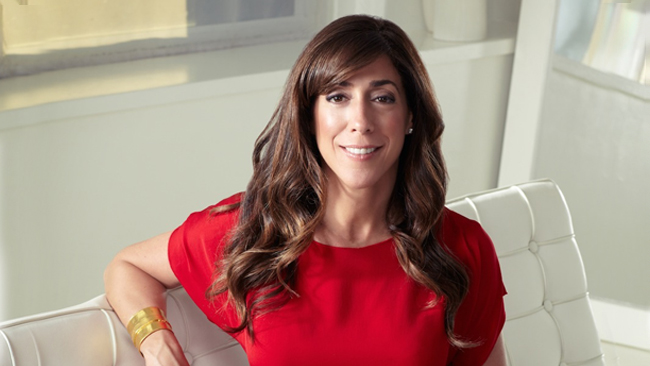
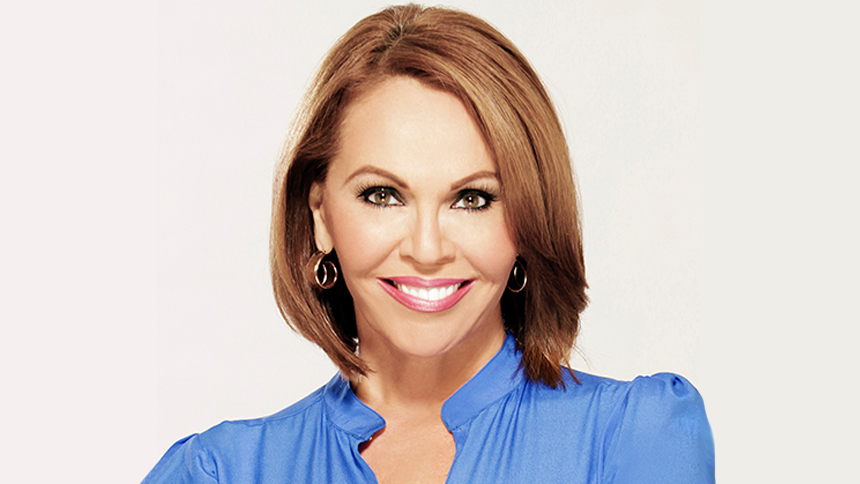
So What Do You Do, Maria Elena Salinas, Univision Network News Anchor?

Salinas on gender, advocacy, and Spanish-speaking media

Maria-Elena-Salinas-feature
By Kevin Allocca
11 min read • Originally published October 19, 2015 / Updated March 19, 2026
By Kevin Allocca
11 min read • Originally published October 19, 2015 / Updated March 19, 2026

With Diane Sawyer’s near-5-year-run on ABC “World News”, the spotlight is once again on the female news anchor and the progress that broadcast news has made in the past decade.

But in 1987, almost 20 years prior to Katie Couric earning a spot as the first woman to anchor a network broadcast, María Elena Salinas became an anchor of “Noticiero Univision,” the national Spanish-language evening news broadcast on Univision. Since then, she and her co-anchor Jorge Ramos have watched Spanish-language news go from a small enterprise to a major media player, a point that was driven home in 2007 when Salinas and others hosted the first-ever Democratic and Republican presidential candidate Forums in Spanish on Univision.

During the 2008-2009 broadcast season, “Noticiero Univision” averaged 2.4 million viewers each weeknight, its best performance ever. And the program’s audience continues to grow, notably among younger demographics, something that can’t be said for some of its English-language competitors.

Salinas, an Emmy-award winning journalist, is also co-host of the prime-time newsmagazine “Aqui y Ahora” and a syndicated columnist. She’s not afraid to offer opinions and analysis, often speaking out in advocacy of Hispanic-American issues, and is regularly counted as one of the most influential Hispanic women in the country.

Here, she talks to mediabistro.com about gender in the broadcast newsroom, making the transition from a tiny local station to network news, and the growing Spanish-language media market.


Name: María Elena Salinas
Position: Anchor, Univision Network News, co-host of “Aqui y Ahora” news magazine, and syndicated columnist.
Resume: Co-anchor of the national evening newscast “Noticiero Univision” and the primetime news magazine “Aqui y Ahora,” and referred to by The New York Times as “the voice of Hispanic America.” Began as a reporter for KMEX-34 in Los Angeles in 1981, and assumed the anchor chair of “Noticiero Univision” in 1987, where she has been since. She is also a radio analyst on Latino issues and is one of few Hispanic syndicated columnists in the United States, where her column is published in more than 55 newspapers in both Spanish and English. Her memoir I Am My Father’s Daughter: Living A Life Without Secrets — a best-selling Spanish-language book — was published in 2006.
Birthdate: December 30th
Hometown: Los Angeles, California
Education: She went to community college in Los Angeles for two years where she majored in marketing. After she began working in television, she went back to school to UCLA extension: broadcast journalism.
Marital status: Divorced. Mother of two beautiful daughters.
First section of the Sunday Times: “Week in Review.”
Favorite TV show: Anderson Cooper 360
Guilty pleasure: Chocolate and shoes.


How did your career get started in news?

First I worked in radio, in 1979, and then in 1981 I moved from radio to television, Channel 34 in Los Angeles. Back then it was a little tiny, tiny station. I was the only female. There [were] only two reporters, and I was doing everything. I was anchoring, I was reporting, I hosted a daily public address program live, and then on weekends I did an entertainment program, so I guess that’s the way it is when you work for a little station [laughs].

But my intention was not necessarily to go into news. I was working in radio before, and I had studied marketing. I was very much interested in what was becoming a booming Hispanic market in the advertising side, and I honestly thought that that was my way in. But once I began working in news, I became so obsessed.

So, how did you make the move from that local station to a national program?

When I started working at Channel 34, we didn’t have a network newscast. I was a contributor to the newscast, and at the end of 1986 there was a big shakeup in what was then Spanish International Network — now it’s called Univision, but the network at the time was called S-I-N, SIN. There was a big shakeup and half of the staff left and formed what is now Noticiero Telemundo, and as part of the new group let’s say, I eventually came on board to anchor the late night news. There was a one-hour late night newscast.

It was an interesting time for that transition. We were owned by Emilio Azcarraga of Mexico, and he had warned that Jacobo Zabludovsky, who at the time was news director in Mexico City of Televisa’s newscast, was coming over to take over and be news director of our newscast. Miami is a very political city, and at the time Mexican press was perceived as not being free, as being just a mouthpiece for the Mexican government, who in turn had a very close relationship with Cuba.

Basically we got a lot of backlash, and the headlines were, “The Communists are coming to take over our newscast.” So, half of the people left in protest, and of course it never materialized, it never happened. The protest actually worked, because Zabludovsky never came to the United States to take over our news department. But at that time, that whole transition is when I moved over from the local station to the network.

What did the landscape of Spanish-language journalism look like then compared to now?

At the beginning, people saw Channel 34 and the few affiliates that we had at the time as, you know, these little low-power stations with low quality that only undocumented immigrants watched. It was very difficult to cover, for example a presidential election, because we’d always have to be explaining who we were: “Channel 30-what?” You know, people just had absolutely no idea who we were.

People who came into the industry always saw Channel 34 and Spanish-language media as a stepping-stone to bigger and better things. [Latinos] figured this is where we might learn a little bit about the profession and then move on to, you know, real TV: ABC, CBS, NBC, CNN then was beginning to make a dent or to be heard. And what happened is little by little Spanish-language media has grown so much that now it’s the other way around. Now you see people from ABC, CBS and NBC moving to Spanish, because it’s now the fastest-growing media, or fastest-growing network in the country.

So it was very different back then. Very, very different.

Now, there are 50 million Latinos in the United States, as opposed to 14 million. Our buying power right now is $1 trillion. In Los Angeles for example, when I used to cover local politics there were no Hispanics at the local level at all, not in the Board of Supervisors, not in the Board of Education, not in City Hall. Now we have a Latino mayor, several assemblymen, several council members, and on the Board of Education and just everywhere.

And right now I think not only [has] the Latino buying power increased, but Latino political power has also increased to the point where we no longer have to give an explanation of who we are and what we do. Now the doors of the White House are open to us. Now it is the politicians who reach out to us in order to get to the Hispanic vote. During the last election debates at Univision, [we had] both Democrat debates and Republican debates and that was unheard of.

Let’s go back for a second. How did the transition come about as you coming on as an evening news anchor?

January of 1987, I was a network anchor for the late night show, and then in early ’88, a new news director came in and teamed up my co-anchor and I, Jorge Ramos. Jorge was already doing the 6:30 for a little over a year, and then I had been doing the 11:00 for about a year.

This was an 11:00 network newscast, because we didn’t have local news at the time in our affiliate. So they teamed us up, and we did both newscasts together. We’ve been together ever since, so for 21 years Jorge and I have been anchoring together. So I have been a network anchor for, well since 1987, so that’s 22 years.

There’s a lot of conversation right now about the ascension of the female evening news anchor because of Katie Couric in the last few years, and Diane Sawyer at “World News”. But you’ve been doing this for longer than both of them. Was gender ever a discussion when you first started?

You know, it wasn’t. The Latino society is very macho, even though when you think about it, [in] Latin America, we’ve had female presidents, and in the United States we haven’t yet elected a woman as president. However, in the news business I think that in a lot of Latin American countries you still have the male figure, which is a dominant figure, and if you ever do have a female anchoring a network newscast, it’s usually just a decoration.

It’s changed somewhat, not to the point where you have primetime news anchored by women, but for us it was automatically accepted, because I was actually there before Jorge was. I started working in 1981, he started working in 1984, and because it was never really an issue for us. It’s changed so much that in our network, women really have more power than men.

Univision’s vice president Alina Falcon is a woman. Our two vice presidents of news are women. All of our executive producers are women. Our chief editor is a woman. So we really do have a lot of women in management and mid-management positions here at Univision.

I know you’ve had a lot of big interviews in your career. Which do you feel was the most important?

That really depends on the moment. One of the most interesting interviews were with Pinochet. He never really had much to say, but the fact that he gave us the interview thinking that I was a Cuban from Miami who was going to agree with his politics, and was very upset, or uncomfortable when he realized that I wasn’t.

That was one of the very few interviews he did when he was a dictator. And then Subcomandante Marcos, which is the rebel leader in Mexico, we did a two-hour interview with him. It was the very first time that he came out of the jungles of Mexico into the capital to speak face to face — but not really face to face because he continued to wear a mask — with Mexican President Vincente Fox.

That was also a very interesting experience. I interviewed President Obama when he was the president-elect, and it was amazing — the reaction of people to that. “Wow, what was it like to see him?” I said, “Well, this is the third time I’ve interviewed him. Nobody ever said anything before.” But all of the sudden he turned into this person that is bigger than life. That’s why I say it really depends on the time that you do the interview. If you get the interview of the head newsmaker then, then that’s it. Then you’ve made it.

You’ve been described as someone who practices advocacy journalism. Do you agree with that?

Yes, I do agree with that. Some people say it as if it was something with a negative connotation, and I don’t necessarily see it as that because I think that sometimes what we do is that we end up becoming the voice of voiceless, and we advocate, not amongst ourselves, but in the general market, the English-language market, on issues that affect Latinos. I’ve had debates with people like Lou Dobbs, for example, on immigration, and what I would say is that what I do is actually ask for debate, because up to now it sounds like a monologue attacking immigrants and accusing immigrants for all the ills of this country.

So by contributing their side and by talking about the contributions of Latinos and immigrants, and just giving a completely different perspective of what is usually out there about immigrants, it’s to some people advocacy journalism, and if talking about the contributions of Latinos turns me into a journalist who practices advocacy, then I don’t mind, then let it be. I also write a syndicated column. I am very careful in my column not to get involved in partisan politics, but I do talk about issues that affect Latinos.

Do you think that bilingual news, particularly Spanish-language newscasts will continue to grow in the next decade?

I think so, because Latinos are continuing to grow. We’re supposed to be 25 percent of the population by the year 2050. I remember people telling me when I started working at KMEX, “You really should try to make a transition into English TV, because there’s no future in Spanish-language TV, because Latinos will assimilate.” We’re talking 1981, ’82, ’83. And look what has happened now. Not only is the Hispanic community the fastest-growing community, but Spanish-language media is the fastest-growing media, and our viewership continues to grow. I mean, who would think back then that our stations would be beating ABC, CBS and NBC in the ratings in places like Miami or Los Angeles?

That was unheard of. So, I think that those who assumed that there was no future in Spanish-language media were wrong. I mean Latinos have been assimilating little by little, but assimilation doesn’t mean leaving behind your language and your culture. They continue to speak Spanish because Spanish is the one thing that unifies all of Latinos.

Who would you consider your inspirations professionally in the industry?

When I started working actually, there were women that I admired, such as Jessica Savitch, and Diane Sawyer, believe it or not [laughs]. It’s interesting for anyone to wonder whether this country is ready for a woman to be anchor. I mean Katie Couric of course already proved that. But I think women have always been ready to do this.

It’s sometimes the psyche of the country that hasn’t been ready. Peter Jennings was definitely someone whose career I followed. He always showed not only journalistic excellence, but he always showed compassion in his brand of journalism, and that’s something that I always admired.

What are the opportunities like right now for young people who want to become Spanish-language journalists?

I think the opportunities are there, because Spanish-language media is growing so fast. And I put my money where my mouth is. I have a scholarship that comes out of my pocket that is distributed by the National Association of Hispanic Journalists for students that want to follow a career in Spanish-language media. So I do think there’s more and more students, especially young women even more than young men, that are following a career in Spanish-language media.

Not only is Univision growing, Telemundo, and there’s, you know, more and more Spanish-language networks and radio stations, but as far as publications, just about every major publication now has a Spanish version. I think media is realizing that they need to have content that Latinos can relate to.


This interview has been edited for length and clarity. 
 

Topics:

Advice From the Pros, Be Inspired, Interviews
Advice From the Pros

So What Do You Do, Amanda Hocking, Author and Self-Publishing Powerhouse?

How this self-publisher became a bestseller

amanda-hocking-feature
By Jeff Rivera
8 min read • Originally published October 19, 2015 / Updated March 19, 2026
By Jeff Rivera
8 min read • Originally published October 19, 2015 / Updated March 19, 2026

Unable to find a publisher, Amanda Hocking took the fate of her success as an author into her own hands and released her YA troll princess tales as eBooks through Amazon. Although price points varied from 99 cents to $2.99, the results were astounding: 1.5 million copies sold. That success didn’t go unnoticed, as St. Martin’s Press signed her to a deal reportedly worth over $2 million in 2011, and her bestselling Trylle series got optioned for two films.

Call Hocking the darling of the DIY movement or the leader of the digital publishing revolution, but don’t dare call her an overnight success.

“I worked really hard at this for my entire life. I was trying to get published for nine years before I started selling books, and I have been writing literally since I could write,” Hocking told us. “And I think that a lot of people are missing that, because I think they see self-publishing as, ‘Well, you could just click and upload it, and then that’s it.’ There’s a lot of time, energy and your heart that you put into it.”


Name: Amanda Hocking
Position: Author
Resume: Started writing novels at the age of 17 and turned to self-publishing at 25 when she was unable to find a publisher. Achieved breakout success with My Blood Approves in 2010; less than a year later, had seven books on USA Today‘s bestsellers list. Went on to sell 1.5 million copies. Joined St. Martin’s Press in 2011.
Birthday: July 12, 1984
Hometown: Austin, Minnesota
Education: High school, some college
Marital status: Single
Media Idol: Jim Henson “because he was an amazing person.”
Favorite TV shows: Southland
Guilty pleasure: Jersey Shore
Last book read: You’re Not Doing it Right by Michael Ian Black
Twitter handle: @amanda_hocking


What are the advantages and disadvantages of being with a traditional publisher?

Having a team of people that can help me do all of the stuff so I don’t have to is definitely an advantage. I was getting really bogged down and stressed out by all the little details that go into publishing a book on your own, and now there’s a whole team of people that did what I did. It’s much easier. I can just focus on writing a book, and then I can just send it to them, and if I have problems and stuff, I can tell them.

I guess the disadvantage is that I have lost control over things. I have input and everything, but I don’t get to decide how much things are priced for or when they come out. I don’t mind it, but I know that for other people that would be a bigger issue. So, it was a trade that works for me.

I’m still involved with the publicity and the marketing but they set it up. They made a website, and they set up the campaigns, and they do the commercials. They’ve done really great marketing for me that I wouldn’t have been able to do on my own; they had a big spread event in a “Hunger Game Special Edition” for People magazine. And they did commercials on MTV. That stuff I wouldn’t have been able to do myself or know how to do.

Before the launch, I was having pre-wedding jitters. I panicked because somebody else’s book was selling better and I was freaking out. Because if this didn’t work, if my book really bombed, it would have ruined everything I had set up. I just had a meltdown; I was really stressed out but everything worked out.

Many digital authors are trying to get where you are but are failing miserably. What are they doing wrong?

A lot of authors tend to over market or they don’t take criticisms very well. They think that their book is perfect. They don’t want to get bogged down with editing or covers, because they think their book is so good. Or they market too hard. All they do is talk about their book and nobody wants to hear, “Buy my book.” They want to have a conversation with you.

Right now, the market’s gotten really saturated, and there’s so many books that it’s hard to make them stand out. I was fortunate when I started publishing; the market was just starting to take off. I think that writers need to just focus more on writing and relax. I know it’s really hard when you’re publishing to separate yourself from it. In the beginning, I was obsessed with checking my sales every 10 seconds.

I think you need to take that deep breath and take a step back and focus on writing and just relax and be present on the Internet. If you are writing and you’re putting out something that’s good, I think eventually you will find an audience. It’s just a matter of how long it will take.

I think the biggest things that I see people do is becoming very spammy. Or they’ll comment on blogs and all they really say is, “Yeah, I agree with you because my book is like this.” They’re not adding anything to that conversation. They just immediately start talking about their book. I get tweets all the time from people that say, “Buy my book.” I know nothing about this person. I know nothing about their book. All they’re saying is to buy their book and I’m not going to do that. They’re just being obnoxious.

Also, new writers respond to negative reviews and have great catastrophic meltdowns. You can’t respond to reviews at all except to say “thank you for reading the book.” That’s the best you can do; otherwise, you’re just going to look bad even if the reviewer is totally out of line.

What did you do, step by step, to effectively build your fan base?

I think what ended up working the best for me is that I had a blog; I had a Facebook; I had a Twitter. I gave books away a lot too. I would give books to anybody who was willing to do a review, so they would start getting the word of mouth out there. And it started taking off from there.

I was also active on the Kindle Boards, but I think the best thing that I really did was just be present. I did [a theme-driven blog tour] Zombiepalooza in the first year and I had something going on every day. I had other writers contributing, and they were doing giveaways or short stories. There was 31 days of stuff and that was incredibly stressful. I think as far as being effective compared to the amount of stress it was, I don’t think it was worth it.

You need to be discerning too; if you’re hosting a blog tour, make sure it is entertaining content. My most effective techniques were talking to book bloggers and in giveaways. What I wouldn’t do again was Facebook ads. It didn’t really sell any more books.

What is your writing process like? How do you stay so prolific?

I speak about it for a long time before I even outline or anything else, and I always hand write my outline. I’ll start with notes; then I’ll start formatting the outline. And I’ll write usually about two or three outlines, so by the time I do write the book I’ve got the story completely mapped out in my head.

If I write less than 5,000 words, I’m disappointed. Normally, it’s between 5,000 to 8,000 words a day that I’ll write on average. I start writing usually pretty late in the day, like seven or eight at night or later than that. I think I started writing at night because I worked in the evenings. People can’t call. Everyone else is in bed. It’s just a matter of turning off the Internet and then I really have nothing to distract me.

A lot of entertainers and authors struggle financially, because they blow or mismanage their money when it comes in large sums. What was your strategy for handling such a large advance?

I knew that I didn’t want to blow it. I’m very conscious of the fact that I’m doing well right now, but at any time this can stop. I don’t want to be somebody who had a million dollars and then they are broke the next year.

So, I’m trying very hard to get myself out of debt. I want to pay for it in cash. And, then, I put a lot in savings. I’ve tried to, though, to help out friends and family. I donate to charity, and I think that’s hard for me to figure out a balance in regards to what to save, what to donate, and what to spend.

How did you land your agent?

I said on the Kindle boards that I didn’t have an agent and somebody suggested my agent Steve. I emailed him on a Monday, and by Thursday he responded. It was actually pretty quick. He’s been my agent ever since.

How did you land your movie deal? How involved will you be in the casting?

The movie deal started because Terri Tatchell, the screenwriter, emailed me in January of last year, and she said that she just read the books and she loved them. And she wanted to turn it into a movie. She approached me, and she seems really brilliant and really knows what she’s doing, and I really trust her with the project.

I have no idea how involved I will be in the casting or anything like that. I would rather not be super involved, though, because whoever gets cast, there are going to be people who say, “That’s not right; that’s not who it should be.” Whoever she picks will be great.

Where do you imagine you will be five years in the future?

I actually have no clue. I mean, it’s such a hard thing to picture, because five years ago I never would have pictured myself here. So, it’s really hard to say. I would like to be able to still be writing. I think in five years I’ll be writing, and I’ll be working on something, and hopefully people will still be reading it.


This interview has been edited for length and clarity. 
Topics:

Advice From the Pros, Be Inspired
Advice From the Pros

So What Do You Do, Frank Warren, Founder, PostSecret Project?

'In a weird way, the secrets give me strength'

frank-warren-feature
By Rebecca L. Fox
17 min read • Originally published October 19, 2015 / Updated March 19, 2026
By Rebecca L. Fox
17 min read • Originally published October 19, 2015 / Updated March 19, 2026

With more than 200 million visitors over the past ten years, PostSecret’s success is the stuff of Internet marketing dreams.

And yet, founder Frank Warren has remained — some might say stubbornly — wedded to a non-remunerative model that eschews paid advertising and other profit streams in order to keep his project “pure” — the only income Warren derives is through royalties from books gathering secrets around a central theme, and fees for talks tied the project he gives at colleges and universities.

What drives Warren to tirelessly winnow the 1,000-plus secrets mailed to him on postcards per week into the 20 he posts to the site each Sunday? “In a weird way, the secrets give me strength,” he tells us.

“Even after seeing almost a quarter of a million of them, I still feel like a kid Christmas morning every day when I go to my mailbox.” We spoke with him to get his take on topics ranging from social media’s impact on projects like his, to how Hollywood has come calling.


Name: Frank Warren
Position: founder, PostSecret Project
Resume: accidental artist
Birthdate: March 21, 1964
Hometown: California, northern and southern
Education: B.S., UC Berkeley
Marital status: Happily
First section of the Sunday Times: (Great question) I start at the beginning but I never go in order.
Favorite television show: Carnivale
Guilty pleasure: Texas Hold’em
Last book read: This I Believe (NPR)


What do you think accounts for the longevity of PostSecret?

I think that’s a really insightful question to begin with, because PostSecret has only been around three or four years, but in terms of the Internet and the Web, there is a longevity there. I talk to people often about how a lifespan on the Internet is different than anywhere else — you know, films, art.

In the very beginning I tried not to define PostSecret as a hot Web site because, really, there’s this pattern with that where you see a hot Web site really kind of catch on fire, and people are talking about it. Then it always comes back down, and whether or not you can survive that dip is everything.

So I’ve been really fortunate with this project, and it’s grown in an incremental way but a consistent way. For three and a half years, every quarter the traffic has increased to the Web site, and I think that’s due to a few things. One is, there hasn’t been a huge pop with the project. For example, if I’d been on Oprah when the first book came out, there would have been this huge sort of excitement or attention, and then nothing.

But it’s always been like this gradual, organic growth. I think part of it is, I’ve stayed true to the concept and I haven’t kind of fallen for the pitfalls that Starbucks, for example did, where they had this great product — coffee — but then they started adding in all these other things that took away from the experience, and now they’ve had to backtrack and they’ve had that decline. I’ve never tried to leverage the content to monetize the site, so I don’t have any popup ads. I’ve never taken one dollar for a paid advertisement on the Web site, even though I’ve had over 140 million visitors.

And I think the community that’s built up around the project respects that, and it becomes more pure, and special, and different from other Web sites, because you don’t see ads all over this very popular blog.

So, I think little decisions I’ve made along the way to identify and protect what’s special and pure about this organic community has made it a Web site that not only has had this life, but a project that’s had a life, too, and allowed me to share the secrets in different ways besides the Web site: the books, the art exhibits.

I do a lot of traveling to college campuses and sharing the stories behind the secrets there. We’re even talking now with people in Hollywood about a longer narrative based upon the project.

Would it be some sort of fictionalization to do with the project, would it be a documentary about the project? How do you envision that?

We’re still a long ways off on the final product, but we’re talking about all those ideas. We have some documentary footage of me giving the talk on college campuses, and how sometimes that turns into college students sharing their own secrets — not anonymously, but in front of their classmates, about eating disorders and academic pressure, and abuse.

We’re also talking about fictionalizing stories behind the secrets and seeing how these stories intermingle in surprising and extraordinary ways. I think an example of that would be the movie Crash, in these subnarratives and how they intermingle. There’s also the possibility of telling my story, then showing how these other secrets and stories weave into that and weave out of it.

I think what’s given me the most hope is looking at a radio show like This American Life, and how they took their time but they were able to transfer what was special about that radio show to an interesting Showtime series that preserves that integrity. I hope to do the same thing.

You mentioned not running advertising on the site. What do you do financially to make your money so that you can support yourself and your family and the project?

I’m in a unique position, because I don’t really have any artistic training or background. I’ve been a small business owner for about 20 years, and I started my own business, Instant Information Systems, about 20 years ago. I still own it and run it as an absentee owner.

So thankfully, this project came and found me at a time in my life where financially I’m pretty set, which has allowed me to make the statements based upon this project’s integrity and what’s in the best interest of PostSecret, not based upon my own financial needs.

And really I’ve been happy to not just say no to some of the advertising that has been offered, but also to take PostSecret and kind of show that there’s this nonprofit component to it and how we raise awareness for 1-800-SUICIDE, the National Suicide Prevention Hotline. Last year we raised over $150,000 for that charity. I think that’s a strong component to the project, also.

Oh, I should add that the books have royalties, so it’s not a nonprofit organization. The books have royalties, and also there’s typically a speaking fee when I go and give a talk, so there are some revenue streams besides advertising to support the project.

You mention fundraising that you do for mental health issues. Were you an advocate for mental health prior to PostSecret, or did that come up as a result of the project and the nature of what was being shared?

A little bit of both. Suicide has always played a role in my life. I lost a family member to suicide and a very good friend to suicide. When I started PostSecret I was a volunteer on a suicide prevention hotline, actually answering the phones.

So when the project got really popular, I wanted to do something good with that popularity and with that awareness, and I knew 1-800-SUICIDE very well and the good work they did, so it was a natural match for me.

Talk about the editing process each week as you determine which secrets you’ll post.

People come to the Web site every Sunday and see, you know, 20 or so secrets, and I don’t think they understand how painstaking the process is to select them and to arrange them. I get about 1,000 a week, and from that I select 20.

I’m selecting secrets that really have a ring of authenticity to them, that express any human feeling, whether it’s humor, fear, sexuality, a shocking secret. I’m looking for anything that’s new and fresh and different. And you would think you would run out of secrets after seeing, you know, 200,000, but every day there’s surprises I pull out of the mailbox.

Once I have that selection I arrange them in a way where I try and tell a story, or I compose a song. I’m thinking of trying to hit all the notes and get a nice rhythm, and really taking people emotionally someplace different than where they were when they started [reading].

One of the criticisms I receive for the Web site is that some people find it depressing, and so I’ve tried to respond to that, too. So, at the end of the selection of secrets, usually there’s one or two that are kind of hopeful or optimistic to be a counter to some of the heavier secrets. I get a lot of those, you know, because secrets are things that we don’t want to tell our friends or family because maybe we feel embarrassed by them, or humiliated, or isolated.

So I think by their very nature most secrets are kind of heavy, so I like to lighten that also with a composition that always includes something optimistic or hopeful.

Over the years has your nose for false-seeming or inauthentic secrets grown sharper?

I see the postcards as works of art more, and so seeing them from that perspective, I see the truthfulness of the cards as having multiple layers. If you walk into a bookstore, you can find value in the nonfiction section, but maybe it’s that fictional book that really causes you to change your life. I think that’s possible with this project, too.

And it’s always surprising to get emails from people who talk about how sending in a secret was transformative for them, and how they might write something like, “When I wrote down my secret, Frank, I thought it was true. But by the time you posted it it was false.” Or just the opposite, they’ll say, “When I wrote this postcard I thought I was just pulling it out of thin air, but when I saw it in the book, I realized it was a process of me coming out to myself.”

One of the themes that occurs again and again in this project is that there are two kinds of secrets: the secrets that we hide from other people and the ones that we keep from ourselves. Sometimes, through the process of making out the secret anonymously, you’re forced to face a secret that maybe isn’t as fictitious as you would hope for or thought an hour before.

What you’re saying brings to mind the controversy right now surrounding memoirs and how authentic or veering into fiction they are.

I think it’s a complicated issue, because I think in a lot of ways artists are storytellers, and storytellers have a job, and that job is to take a story and have it reverberate with people, have it inspire people. There’s different tools you can draw upon to create that.

In some ways the memoirist is like the magician, and you go to the performance to see the show, and you know that behind the scenes things might not always appear as they do on the surface, but what it’s really about is that moment of awe, of mystery, that makes you identify with those parts in your life that are mysterious but sometimes you forget about in our everyday lives.

So I think we expect a lot from our memoirs — maybe too much — and I think that might be changing slowly. I know with PostSecret, I think of the project as being very inspirational, and I think one of the things that draws people to the books and to the Web site is that sort of raw authenticity. In so many parts of our life now the work — the art, whatever it is — it’s mitigated; whether it’s a band that goes to a record contract or a recording studio, or a film that goes to a film studio, or a book that comes to a publisher.

All that creative content at some point has to go through like a big conference table with a bunch of white guys sitting around and making decisions by demographics and marketability. And I think that lost in that sometimes is that sense of realness, like the punk rock part of it that has a real rawness. With PostSecret I think one of the things people respond to is they feel that authenticity.

People mail me their postcards, but there’s no committee, there’s no P.O. box. They just come to my home mailbox, and if I think it feels like a real secret, I’m going to put it on the Web site, whether it’s politically incorrect, offensive, involves nudity. Secrets are secrets for a reason, so I think when people see that I’m sharing these raw secrets, it really allows people to make that authenticity connection, which I think so many of us are looking for in this society right now.

Is it true that you include a secret of your own in each book?

I do, yes.

Have you ever in any forum acknowledged which are your own?

I don’t usually. I have talked about one of the secrets — well, yeah, one of the secrets I’ve included in the books, that’s in the first book. And a lot of my college talks are talking about — well, first of all I share stories behind the secrets in the book that I can’t do on the Web site. I show images of postcards that were censored out of the book by the publisher — the secret secrets.

And also what I do is talk a little bit about a secret I carried in my own life for most of my life, something that happened to me in elementary school. And in my talks I talk about, you know, my personal journey in facing a part of my own life that I was hiding from.

Secrets the publisher had censored out of the book: what are their criteria for that?

In general, HarperCollins has been very liberal in allowing me to share many, many of the secrets that I’ve received exactly as they appeared in my mailbox. But there are some issues that we have to be careful with. For example, if an image is copyrighted, like if somebody writes their secret on a Hallmark card, we can’t include that in the book because Hallmark could take legal action against me and the publisher.

Or if a postcard has an image of a child’s face on the postcard, obviously we don’t know if that child gave permission. So that’s another way we have to limit what we can share in the book because of issues of copyright and personal privacy.

You’ve had PostSecret open to user comments for brief periods of time. Do you anticipate doing that again for any reason?

One of the reasons I think the project has grown and developed and had this longer life is because I’ve consistently tried to experiment with it and try new things. And it doesn’t always work, but even the failures allow me to identify something special about the project that I didn’t notice before. When I did open up the blog where anyone could post a secret, I thought that was a great experiment.

For one thing, it showed people what my email looks like every week, and people got a sense of peeking [into] that. But also, it made me realize that one of the special things about the project is the nonjudgmental nature that it has. I think one of the reasons people feel comfortable sharing secrets with me is because they know they’re not going to be exploited, they’ll be treated with respect, and it’ll be nonjudgmental.

And so that’s why I discontinued the comments on the blog. Some of them were very harsh and judgmental, and I didn’t want people to feel like they couldn’t trust me with their secrets, that the place wouldn’t be safe any longer.

What about not making the archives of secrets available for people to look back at them?

I think of PostSecret in general as a collection of secrets that I share with people different ways. On the Web, I think of the secrets that I’ve shared there as being living secrets. When you go there on Sunday, you know somebody’s carrying that burden in real time, and I think that makes a certain kind of connection.

In terms of the archives of the secrets, that’s how I think of the books really: as being an archive or a testament, as telling a longer narrative about each of our lives with our secrets. And then in the museum exhibits, I think of those as showing the tangibility of the actual postcards and the number of secrets I get; hundreds of them are in those exhibits.

So, the reason I don’t have archives on the Web is because each way I share the secrets, I find emphasizes certain elements in the nature of our secrets. And I think the books do a good job of archiving them, better than the Web would.

Is there a particular medium through which you disseminate the secrets that you prefer?

Actually, when I go to speak on college campuses. That’s very gratifying, because I get to share stories behind the postcards and also hear the stories coming back to me from the students, which can be very inspiring. Also, to see them share their own secrets among themselves and really kind of leave the place feeling more warmly and with more empathy between classmates, that seems to be like a way that PostSecret is really changing lives in the real world.

I also like the art exhibits. We have freestanding Plexiglas units that hold the postcard sandwiched between Plexiglas. So I like the way that people can see both sides of the postcards, but also when people come to the exhibit, you know, you’ll be reading on one side, I’ll be reading on the other side, and we can see our faces through the glass and gauge the reactions that we’re having, almost like a silent dialogue is happening there. That can be very special, too.

You go through so many secrets, week in, week out, and a lot of them are very dark. What is it like personally and emotionally to be grappling with that on a continual basis?

I think in some ways I’ve had to become the person who can look at all those postcards everyday, because some of the details on the secrets are painful and difficult to read. But at a very deep level I have a strong connection to the project, and I think that some people come to the Web site or look at the project and it might make them feel depressed or down, but I have the opposite reaction.

In my childhood I had some difficulties, I had some challenges, so when I see these postcards every day it makes me feel like I’m not alone with my burden. I feel more connected to people. So in a weird way the secrets give me strength. And even after seeing almost a quarter of a million of them, I still feel like a kid Christmas morning every day when I go to my mailbox.

Do you ever take a vacation from PostSecret? I know you’ve had a couple of breaks here and there in the last several years, but they’ve been few and far between.

I don’t think I can really take a vacation from it, because even now as we sit here, postcards are piling up in the mailbox at home that I’ll have to go through when I get back. So I can’t really get away from it. I can kind of postpone it, but there’s no vacation for the PostSecret guy.

Do you look at each and every postcard you receive?

Yeah, they’re all mailed to my home address. I look at every one and I keep every one. It’s a pretty singular archive of postcards.

You must be investing a lot in storage.

I think I literally have a ton of secrets on postcards.

Have you considered stopping PostSecret at any point, or when you look to the future do you anticipate bringing it to a close at any particular point?

The community continues to grow and develop, and I get more and more secrets, so I see it thriving right now. I don’t know how it’s going to end. I try to just focus on making the right decisions to protect the purity of it every day and not really have goals set for the project. I just try and follow where it’s leading me, and so far it’s been an amazing journey.

I guess there is kind of a conflict, though. I would like it to go on for a long time. At the same time I see value in just kind of stopping it before it ‘jumps the shark,’ I guess.

How does PostSecret capitalize on what online publishing affords people who don’t have any previous experience in publishing?

I’m really excited about the opportunities that are available for anybody now — students, artists, entrepreneurs — to use these new social tools, these new tools of communication that are making new kinds of conversation possible.

I think PostSecret is one example of a new conversation that brings the community together, but I think there are hundreds or thousands of others that are yet to be born. It’s just waiting for that one person to have faith and an idea, a crazy idea and make it happen. You know, an idea like PostSecret that reveals the hidden humor and beauty of art in our everyday lives that often goes unnoticed.

What’s your personal relationship with technology? Are you a techie person?

I’m not a hardcore technical geek, but I’ve always had a strong interest in the intersection of technology and culture and art.

And what’s your daily media consumption?

Well, I’m a big fan of The New York Times. Every day I check BoingBoing. I’m also on television watching The Daily Show a lot. So I guess that’d be my trifecta right there: we’ve got the Web site, the newspaper and the television that I like.

This interview has been edited for length and clarity.
Topics:

Advice From the Pros, Be Inspired, Interviews
Advice From the Pros

So What Do You Do, Cecily von Ziegesar, Creator of Gossip Girl

Best-seller Ziegesar talks tv deals, Alloy, and breaking writer's block

Cecily-Von-Ziegesar-feature
By Jeff Rivera
8 min read • Originally published October 20, 2015 / Updated March 19, 2026
By Jeff Rivera
8 min read • Originally published October 20, 2015 / Updated March 19, 2026

You don’t need to be a member of the Upper East Side elite to know that Gossip Girl is a force to be reckoned with. With 11 books in the original series, prequels, a spinoff series, and a five-season TV show, Gossip Girl has firmly cemented its place as one of the most successful young adult franchises of our time.

Cecily Von Ziegesar certainly had no idea that Gossip Girl was going to be such a blockbuster when she began writing the series. An editor at book packaging company Alloy, it was von Ziegesar’s job to help develop ideas for book series and then commission writers to see them through. Yet, while she always dreamed of writing herself, she never gave it serious thought until the inspiration for Gossip Girl came through an Alloy brainstorming session.

“We sent my proposal out to a bunch of publishers and Cindy Eagan, an editor at Little Brown Children’s Books, was very enthusiastic,” Ziegesar recalled. “When she came in for a first meeting to discuss it, she asked who’d written the proposal. I raised my hand, and she said, ‘Well you have to write the books.’ She was my champion.”


Name: Cecily von Ziegesar
Position: Author
Resume: Started out as middle grade and young adult fiction series editor at Alloy Entertainment. Developed and wrote Gossip Girl as part of her job there and then quit to write full-time.
Birthday: June 27, 1970
Hometown: New York City
Education: BA in English from Colby College. Dropped out of MFA program in fiction writing at University of Arizona in Tucson after one year.
Marital status: Married with two children
Media Idol: Woody Allen
Favorite TV shows: Gossip Girl, Downton Abbey, Homeland and Mad Men
Guilty pleasure: Tweeting while watching Gossip Girl
Last book read: P.D. James’ Death Comes to Pemberley
Twitter handle: @cesvonz


Were you writing Gossip Girl on the job, or just going home at night and doing a double shift?

Gossip Girl came out of a brainstorming meeting and I was assigned to the project. I wrote the proposal, coming up with the characters and the plot of the first book, as well as writing the first Gossip Girl column. We sent my proposal out to a bunch of publishers and Cindy Eagan, an editor at Little Brown Children’s Books, was very enthusiastic.

When she came in for a first meeting to discuss it, she asked who’d written the proposal. I raised my hand, and she said, “Well you have to write the books.” She was my champion, insisting that my name also be on the books, instead of a fake name, a method which the company tended to use in case the writer of a series changed.

I wrote the first two books on weekends and in the evening, but still kept a full workload. At the end of writing the second book, I’d just started maternity leave. After my baby was born, I decided to go freelance as an editor so I had more time to write, and after the third book hit the bestseller list I wound up just writing full-time.

Alloy owns the copyright to Gossip Girl. I didn’t have an agent to start with, and I had the standard writer-for-hire deal with them that all our series authors had. But, after the second book came out, I hired an agent to renegotiate a better contract with them.

Do you still develop projects with Alloy, and what are your thoughts about those who accuse them of taking advantage of authors?

You know what you’re getting into when you work with that packager. And so, if you wanted to just do something on your own, then you should go do it. I feel like it’s dishonest to complain about the relationship when you knew what you were getting into in the first place.

Like any relationship, there are things that are difficult and things that are good about it. I think if you honestly looked at a lot of the series where the writers have worked with packagers, they just wouldn’t have happened otherwise because it takes that many people to get something in that quantity out that quickly — to a certain quality, too, because it’s a big endeavor. And they’re able to make it all happen well and fast.

You’ve created some dynamic characters in your novels. What’s your best tip for authors who may need help in character development?

I take a lot of material from my own life. So, I just think about people that I know. In order to kind of get them away from that specific person, then I might change their sex, make them a girl if the real person’s a guy. I just think about the little details of their character, or their little idiosyncrasies, their little tics, the way that they talk. That helps in bringing your characters to life, but it’s hard to tell people how to write.

Everybody has their own style, but I definitely feel like I always start with something that’s real, an actual occurrence or somebody that I really know. Then, I change it so much that it’s not that anymore. But that’s always a kind of germ of where the person comes from.

I had a friend who was obsessed with Audrey Hepburn and, so, Blair is obsessed with Audrey Hepburn. But I just borrowed that characteristic from a friend. The rest of Blair’s characteristics have nothing to do with that friend.

Your series has sparked a lot of debate among parents who say your characters promote bad examples for children. What do you say to them besides “Don’t let your kids read Gossip Girl“?

I’m writing books that are appealing and entertaining. I think anybody who’s sitting down to read my books knows that. I never once said that I was writing books with guidelines for how to live. I mean, they’re fiction, and I think that’s the role of fiction: to entertain. And I don’t care whether it’s for children or for adults. That’s what fiction is about: escaping into another world.

I absolutely hate kids’ books that have lessons telling kids how to behave. For me, that is not the role of fiction at all.

If my books are not the kind of books that these parents want their kids to read, then tell your kids not to read them. And they’ll read them under the covers with the flashlights. I’m a parent, and I don’t understand that sort of censorship, because everybody has a sort of taste for something different.

And you can’t prevent somebody from reading something. I try to write the best books that I can write. And if they don’t like them, then they don’t have to read them.

A lot of authors battle writer’s block. What are your tips for them?

Oh, God, I have the same problem, but for me reading is the best way. Everybody’s different but I feel like reading inspires me. I go back to the books that I love where I really love the writing, and I reread them. Sometimes I just pick up from the middle or from just anywhere, and I’ll just read a passage that I love. And that’ll get me wanting to write again.

I also just like getting up and moving around. I run. And I feel like when I’m running, I’m thinking about writing. I’m thinking about what I want to write. I can’t wait to get home. I’m running faster so I can write down the things that I thought of.

But the worst thing you can do is to just sit there in front of your computer trying to force the book out. It’s just not going to happen. You have to be inspired. I feel like you shouldn’t even sit down to write until you have that kind of “Oh, yes. Yes, I got it. I got to get this down.” feeling, because just sitting there and plotting away is just making yourself do something. It’s not going to be good. It’s not going to be worth keeping.

How did you land the TV deal, and what can authors do before they put a word on the page to ensure a better chance of landing a TV or film deal?

It’s funny because I think if you want to write something for TV or film, you should just go write a screenplay.

I really think it’s to a book’s detriment to think of it as, “Oh, this is going to be a great movie.” It’s hard! I think the best thing to do is write a book thinking no one’s going to read it. It’s certainly not going to be made into a movie, and I’m just doing this because I have to write this book, because I really want to write this book. I’m not writing this because it’s going to be a huge hit.

The most successful books were not meant to be; they came out of nowhere. I don’t really have that advice for someone, because it’s something that I think happens just because something is good. And, obviously, having the right connections. That always helps.

What other projects are you developing?

All of the Gossip Girl-related series are finished. So, the show continues, but this might be the last season. Who knows? So far, it’s been a really good season. I’m just starting to write two different books. One of them is sort of more of a YA book and one of them is an adult novel.

But I’m really in the very first pages. I don’t have a publisher for them yet or anything. I’m not working with Alloy on this. It’s just me.

This interview has been edited for length and clarity.
Topics:

Advice From the Pros, Be Inspired, Interviews
Advice From the Pros

So What Do You Do, Tamron Hall, Anchor of MSNBC’s NewsNation?

The cable news anchor on staying true to her local TV roots

tamron-hall-feature
Admin icon
By Janelle Harris Dixon
Janelle Harris Dixon is a narrative journalist, copywriter, and content strategist with more than 20 years of experience covering race, culture, equity, and social justice. Her work has appeared in Essence, Ebony, The Atlantic, Rolling Stone, the Washington Post, Smithsonian, and more than 50 other publications. She holds a B.A. from Lincoln University and an M.A. in African American Studies from Temple University.
9 min read • Originally published October 20, 2015 / Updated March 19, 2026
Admin icon
By Janelle Harris Dixon
Janelle Harris Dixon is a narrative journalist, copywriter, and content strategist with more than 20 years of experience covering race, culture, equity, and social justice. Her work has appeared in Essence, Ebony, The Atlantic, Rolling Stone, the Washington Post, Smithsonian, and more than 50 other publications. She holds a B.A. from Lincoln University and an M.A. in African American Studies from Temple University.
9 min read • Originally published October 20, 2015 / Updated March 19, 2026

Whether interviewing a world leader or hurling water balloons at her co-hosts, that’s Tamron Hall’s signature move: journalistic dexterity. As a co-host on Today, the face of her weekday MSNBC program, NewsNation with Tamron Hall, and host of Deadline Crime on DiscoveryID, the Texas native has been juggling gigs since joining the NBC news team five years ago.

And, like anyone with a national platform, she hasn’t been without her critics and controversies. (One of her election season interviews was quickly labeled a “throw down” by the good fans of YouTube. More on that later…) But, true to her local TV roots, Hall’s commitment is to the folks on the other side of the camera. “I’m about being honest and knowing that people are watching, and they want to know that I’m asking questions that they want the answers to,” she told Mediabistro.

Here are more of her thoughts on objective reporting, balancing perspectives and getting to the bottom of a story.


Name: Tamron Hall
Position: Anchor of NewsNation with Tamron Hall on MSNBC, co-host on NBC’s Today and Weekend Today, host of DiscoveryID series, Deadline: Crime with Tamron Hall. 
Resume: Started as general assignment reporter in Bryan, TX, then moved to Dallas. Spent 10 years at WFLD in Chicago, where she was a general assignment reporter, consumer reporter and morning show host on the local Fox affiliate. Joined MSNBC in 2007. Served as correspondent for Emmy Award-winning NBC News special, The Inauguration of Barack Obama, in 2010.
Birthday: September 16
Hometown: Luling, TX
Education: B.A. in broadcast journalism from Temple University
Marital status: Single
Favorite TV show: The Walking Dead
Guilty pleasure: Anything chocolate
Media idol: Iola Johnson. “She was a local news anchor in Dallas when I was growing up. She was this brilliant, strong, African-American woman who was on TV before Oprah, before anybody. She was the inspiration for me to get into this business, at least part of the equation.”
Last book read: A New Earth: Awakening to Your Life’s Purpose by Eckhart Tolle
Twitter handle: @tamronhall


What important lessons did you glean from starting off in a smaller market before moving into the big time and how did it prepare you? 

I think it was just a growth process. By the time I left Bryan, I’d had a chance to cover small town, local stories, so I had an opportunity to see how these stories impact someone’s life. On a national scale, obviously we’re playing to a broader audience, even though they say all stories are local.

But there was something special about local news, especially in a smaller market where you got to know the individuals of that town. It’s a small town, so I could go to the gas station and everyone would have a story idea. Not that I go unrecognized now — people call all the time with story ideas — but if I look back at it in a nostalgic way, there was something special about covering news in a smaller community.

You’ve recently been contributing more to Today. Is being on that show where you see yourself down the line? How would you describe your role there?

My role there is filling in for Natalie [Morales] and on the weekends. I consider myself a part of the Today show family but, more than that, I consider myself just a part of the synergy. I really enjoy my days for example, like today, where I co-hosted with Willie [Geist] at 9 on Today and now I’m getting ready for my MSNBC NewsNation show. So, I don’t see my role with one or the other.

I love the back and forth of politics and hashing out things that are of great importance in our lives, but I also love, for example, the conversation I had in a segment on Today at 9 with a group of moms where we posed situations to them like, when would you allow your daughter to date and should you cry in front of your child?

It was stimulating; it was real. I enjoy that aspect of the Today show. I know some people would see that as fluff, but the reality is that’s something that parents face every day, those kinds of topics. Here I am talking with these moms about parental issues, normal life, if you will, and then I will be awaiting a news conference with President Hamid Karzai on NewsNation.

They’re vastly different worlds but both stimulate a part of my natural instinct as an individual and born journalist.

There’s a lot of talk about CNN’s “objective” positioning in prime time being partly responsible for its losing ratings. Do you think that’s a fair assessment or are the other networks, like MSNBC, just better?

When I came to MSNBC, its identity as the place for politics was growing. It’s been widely accepted by our audience. I don’t think that our primetime coverage is the same coverage offered all day. We have a fantastic lineup of people — I don’t know if you would describe them as pundits or voices in the community.

Rachel [Maddow], to me, is more than a “pundit.” She’s phenomenal, and I think she offers a reasonable perspective based on who she is and her political views. I think she does a fantastic job at it. I feel the same way about Chris [Matthews] and Lawrence [O’Donnell] and Ed [Schultz] and, of course, Rev. Al [Sharpton]. So, they offer something different that has resonated for reasons that I think are obvious. People want to hear those perspectives.

That’s not what we do on NewsNation. I don’t have the same role on MSNBC as Rachel. I discuss obvious questions. Right now, we have gun control debate. Why does someone need a gun clip with 20 rounds? That’s not right or left. That’s an obvious question.

Now, upon me asking that question, you will have some people who will say, “Oh, she’s a lefty” or “That’s MSNBC’s left-leaning perspective.” No, it’s not. It’s a logical question. So, for me, our show is not an opinion show, but it’s not a show that’s afraid of opinions.

How do you balance delivering news without interjecting your own personal opinions, even on issues you feel strongly about?

I balance it like the journalists before me. I’m 42, so I’ve been on TV in some capacity since I was 18. It’s not a struggle for me to hold out my opinion. I’m here to explore and ask questions of our guests. I’m not a puppet. I don’t just sit there.

Everything I ask is a question from Tamron, like it or not. My team does not write my questions. We put together a segment. We talk about the elements that I want, but we have a conversation for that hour with our guests.

I think that I don’t struggle with “Oh gosh, will it look like I’m giving my opinion?” “Will someone be upset if I say this?” I don’t go through my day like that. I go through my day trying to provide the most accurate and relevant information. We try to book the most compelling guests. We don’t say, “Oh, we can’t have this person on, because he or she subscribes to this point of view.”

We invite a range of people on our show, and I always tell myself my opinion doesn’t matter. I’ll tell you over coffee or dinner at my house, but during that hour, my opinion doesn’t matter. My ability to not be afraid to ask tough questions or to confront, that matters.

Tim Carney of Washington Examiner came on your show and alleged that you and other reporters were focusing too much on Mitt Romney’s past, after which you promptly served him for dodging the question he was invited on to address. Considering you started trending on Twitter almost immediately, how do you feel you handled the situation in retrospect? Was there any fallout from the producers?

I received no fallout from it. I handled it, I believe, the best way at that time. I don’t think that I — to use your word — “served” him. I just handled a situation that wasn’t best for my audience and my viewers.

We were having a conversation and I was asking a legitimate question, and I felt at the time that we were cheating the viewer with what was just political gamesmanship. I’m not here to judge anyone’s opinions, but I would like to have a question answered.

So, for me, it was not about admonishing him or creating a moment or trying to be controversial. My job is to ask questions and get to the bottom of the story or the issue at hand, and I felt that we were being unfair to the viewer in having a conversation that was not about the issue at hand.

“Gut Check” and “We Just Thought You Should Know” are popular segments of your show that are built on viewer reaction from Facebook and Twitter. How do you keep the dialogue constructive and positive when the online world breeds trolls?

You don’t. You have no control, which is the genius of it and, I guess, the peril of it as well… It doesn’t always feel good, I don’t always agree, but it’s interesting insight. I’m from a very passionate family — I’m Southern — and we wear our feelings on our sleeves.

You do a lot of apologizing when you grow up in the South, because somebody’s going to blurt something out and then come back and say, “Well, I didn’t mean to say it that way.” But I grew up in a home where we speak our minds and I was always encouraged to say what I felt, even when my parents disagreed.

So, I appreciate it but I don’t like the anonymity. I do wish we knew who we were talking to. I like the rawness; I love the real reaction; I don’t like the anonymity. But, on the counter to that, if people had to identify themselves, would we have that raw reaction?

What’s your ultimate goal? What do you want to do that you haven’t done yet?

I think that’s an impossible question to answer. I’m too young for a bucket list. I’m kind of a hippie — I’m not regimented in the sense of my life. I don’t look at life like a list of goals, and I say that because each and every time in my life I’ve said “I want this” or “this is where I should be,” something else has happened and it’s always been a beautiful experience.

So, I’m not one of these regimented people. I don’t have a resume of what I expect from life. I stop and smell the roses, and if I get pricked by a thorn I just move on to the next flower.

I don’t have an outline of what Tamron should be doing. I just said my name in third person. That’s awful. But, no, I don’t outline life. That’s boring.

This interview has been edited for length and clarity.
Topics:

Advice From the Pros, Be Inspired, Interviews
Advice From the Pros

So What Do You Do, Noah Callahan-Bever, EIC, Complex?

He went from intern to EIC before his 30th birthday

noah-bever-feature
Admin icon
By David S. Hirschman
@davehirschman
David Hirschman spent more than seven years as News Editor at Mediabistro, where he covered the media industry from the inside. He has written for the New York Times, Wired, New York Magazine, Advertising Age, and dozens of other publications, and later co-founded Street Fight, a media and events company that was acquired in 2017. He holds a B.A. from Brown University and a graduate degree from the Columbia University Graduate School of Journalism.
10 min read • Originally published October 21, 2015 / Updated March 19, 2026
Admin icon
By David S. Hirschman
@davehirschman
David Hirschman spent more than seven years as News Editor at Mediabistro, where he covered the media industry from the inside. He has written for the New York Times, Wired, New York Magazine, Advertising Age, and dozens of other publications, and later co-founded Street Fight, a media and events company that was acquired in 2017. He holds a B.A. from Brown University and a graduate degree from the Columbia University Graduate School of Journalism.
10 min read • Originally published October 21, 2015 / Updated March 19, 2026

To folks used to slowly toiling their way up the ladder in the world of magazines, Noah Callahan-Bever may seem to have shot up really quickly to the role of EIC at Marc Ecko’s Complex. But Callahan-Bever has been working at urban music/culture magazines in New York since before he graduated high school, and had plenty of seasoning at Vibe, Mass Appeal, The Source and MTV News on his way up.

Here he talks to mediabistro.com about his career path, where Complex fits in the world of men’s magazines, and his collaboration last year on 50 Cent’s biography.


Name: Noah Callahan-Bever
Position: Chief Content Officer and Editor-in-chief, Complex Magazine, as well as Four-Pins, First We Feast, Pigeons & Planes, Sole Collector, Green-Label, Collider.
Birthdate: 5/2/79
Hometown: New York City
Education: A few years of college at NYU (dropped out)
Marital status: Single
First section of the Sunday Times: The homepage, though I’ll occasionally buy the print edition if the magazine looks interesting
Favorite television show: Seinfeld
Guilty pleasure: Will Smith movies
Last book read: The Elementary Particles by Michel Houellebecq
Twitter handle: @N_C_B


You’re a pretty young guy to be editor-in-chief of a major magazine — tell me a little bit about your career up until now. How did you get started in magazines and what was the draw?

I got started when I was 17. I was a senior in high school and AP classes wrapped up in May, so I had a month of downtime when my school made me find an internship program for the month before graduation.

So, in anticipation of that, I reached out in January to the makers of this small, independent magazine called ego trip — they’re the guys who do Miss Rap Supreme and The White Rapper Show on VH1, and have subsequently stopped doing the magazine — and I became the intern who wouldn’t go home.

Had you always been into writing-related stuff?

Not at all. I was just really into rap music and I really liked comics, and I originally wanted to be a comic-book writer.

But at the time there was a really vibrant independent magazine scene that had cropped up around New York — graffiti, hip-hop and such things — and ego trip was absolutely hilarious — super snarky, very informed and very critical of all kinds of music.

I’d never read a magazine before that dealt with rock and with pop from the perspective of someone who was originally a hip-hop fan, which is where I was coming at it from. I basically just cold-called them and kept leaving messages until they finally called me back.

A lot of the book was a collaborative effort, so here I was at 17, and I got to sit in to watch these guys who are essentially writing most of the cover stories for Vibe and The Source at the time. They had sort of formed this as an outlet because they wanted to write freely about music and not be constrained by the kind of commercial issues that The Source and Vibe had to deal with.

I started out doing this comic strip for the magazine called “Jiggy,” which was a lampoon of “Ziggy,” only putting Ziggy in hip-hop scenarios. Then someone who was supposed to write a Chubb Rock review fell out, and I said “I could write it.”

And then you pretty quickly moved on to Vibe that summer.

After the internship was over, I needed a summer job, and Sasha knew this guy who got promoted to be the research chief there, and he was looking to put together a research department. He said “We’d kind of have to lie about how old you are, but I can put in a good word.” So we sat down and he was cool with it, and was like “Okay, you can be a fact-checker, but as far as the higher-ups are concerned, you’re 20.”

So I fact-checked four issues of Vibe that summer, and in the middle of that I found myself in another situation where a writer bailed on a 400-word thing, and the music editor got informed of this while she was standing at my desk.

By then I was pretty familiar with how raw copy came in, and so I said “I’d like to try.”

And that set your career in motion?

Well, so I went to college and Vibe launched Blaze magazine. The editor-in-chief of it had been the managing editor of Vibe and reached out to me, and I was an editorial assistant the next summer.

And then I was a contracted writer for the rest of Blaze‘s existence — at which point I kind of dropped out of college. I wrote for MTV News for a while and then ended up being editor-in-chief of Mass Appeal.

From there I went back to Vibe as a senior editor, and then came to Complex in 2005 as a deputy, and was promoted a couple of years later.

Clearly Complex is a different kind of men’s magazine from classic titles like Esquire, GQ, Details, etc. — and not just because Marc Ecko is behind it. Who’s your ideal reader and how do you think what you do is different from other men’s titles?

The reason I was drawn to Complex and the reason I think I’ve been successful is that I’m very much making the magazine for people like myself.

My generation of people grew up reading The Source, and XXL, and Big Brother and Thrasher and Skateboard. And as we got into our early 20s, you grow beyond being strictly interested in the niche culture that you were into before.

But there’s no real obvious next step for most of those kids. The aim of Complex to me is to create a magazine that is informed by the sensibilities of these adolescent interests but is also there to open your world up and show you new stuff, and acknowledge that you’re becoming a man.

How do you approach putting together an issue?

We have — out of seven issues a year — three or four with themes. With something like “Style and Design,” it’s such a lynchpin for [the magazine’s] culture because Complex‘s aesthetic is so heavily influenced by the worlds of graphic design, graffiti, and the styling of products.

We make that one of our fattest issues of the year, and it’s also a good opportunity to put a stake in the ground for something that’s so uniquely us. But sometimes, for instance, there’s something like nine comic book movies coming out this summer, and we’ll do a package around that.

Then it’s all about what my design director Tim, who is a comic book enthusiast, thinks about it. Or Bradley, my lifestyle editor, who is an authority in sneakers and sneaker culture. Or my senior staff writer Justin, who has a voracious appetite for movies and Hollywood stuff.

Every person on the staff has a very specific world that they are the master and commander of — and so whenever we turn our attention to that thing we have this incredibly informed person with an incredible voice who can give their spin on it and can tell you how these things can be interesting to the very informed person.

If we write about Lil Wayne, we want to write about him to open him up to a reader who doesn’t necessarily know rap that well. But then we’ll have an interview that’s more hard-hitting that most of the music mags that cover him.

What’s the deal with the double-cover? Seems like it would be expensive to do two cover shoots every time you put out an issue.

It is, but we’re seven times a year, so it’s no more costly [than it would be for a monthly]. The magazine started with two covers from the first issue, and it was heavily influenced by Japanese sneaker magazines that influenced the design of Lucky — and they often have two covers.

And if you look at what kinds of covers sell magazines for young men, it’s sexy-looking girls and male celebrities who say bombastic, outrageous things — particularly rappers, but occasionally certain very compelling Hollywood people.

When Marc [Ecko] and the original team were coming up with it, they figured that if they could do two covers they could get the best of both worlds. And there have been times when we’ve nailed that incredibly well, with a girl who is really hot, and someone like Lil Wayne saying “Fuck Jay-Z.”

It also serves to break apart the two sections of the magazine and show that what we’re doing has two very distinct parts that offer different experiences.

With Complex so involved with niche culture, do you think it would ruin things if you got too big, effectively making your “niches” mainstream?

Our intention was never sort of to make the most mainstream magazine. The beauty is the cross-pollination we get between the niche cultures — if you look at what’s going on in mainstream culture, it’s the niche cultures that are driving everything.

So in a certain way, I do feel like we have slightly limited ambition, but what we are trying to do is create real, lasting relationships with our readers. If you go super-pop and mainstream, you’re not making the same connections with consumers as you are when you’re doing something that’s a little bit more grounded and niche.

I want the [consumer’s] experience to be something like “Hey, me and my friends know about a lot of cool shit, that you’ll probably be into too — come hang out with us for two hours.”

I want to be super-credible about the stuff we talk about, but also inclusive, and make it accessible for people that might not be hip to all of it.

You co-authored a biography of 50 Cent. Tell me about that.

He was incredibly forthcoming.

That basically just came together because I had done one the first interviews with him for Blaze in 1998, and I interviewed him about 15 times subsequently. I know him fairly well. So when the book project came up, he had his book company reach out to me.

We sat down over the next six months and did a bunch of interviews, and I whipped it up into one cohesive narrative.

What’s your position on boss Marc Ecko putting an asterisk on Barry Bonds’ home run ball? For or against?

I think baseball is a dreadfully boring sport to watch unless you’re in person, so I don’t really care.

But I think it was really cool that Marc did that — it created a really interesting dialogue.

How involved is he in the day-to-day running of the magazine?

In a lot of ways, I think the magazine is an expression of the aesthetic that he established 15 years ago with the clothing brand. On the day-to-day, he and I sit and chat about pop culture and what’s going on in the world.

I keep him informed of what we’re doing, but he’s not particularly involved on the day-to-day pages and what we do with celebrities.

I’ll bounce ideas off of him because he’s smart as shit, and can often act as a catalyst in my thinking about something. And sometimes he’ll present me with a challenge like “I want you to figure out how to do a green issue that is responsible and forces our consumers to think of the environment — but do it in a credible way, because we are, after all a magazine of consumption.” But he was very hands-off about it.

It’s just like “Here’s your challenge, go to it.”

Tell me a little about what Complex is doing on the Web.

Everywhere else that I’ve worked, the Web has been kind of an afterthought, run by a B-team, kind of a footnote on the brand. We’re looking at it in a much more pro-active way, almost in a New York Times model where it’s like the Web site is the daily paper and the magazine is like the New York Times magazine.

All my editors are producing daily content for the Web, whether it be for the blogs or features, and the art and photo departments are always doing the direction on both.

As a bi-monthly, sometimes it just seems like ages between issues, and this is an opportunity for us to have this daily interaction with our consumers. It’s exciting because I feel like it’s a challenge to me and my staff to find new ways to think about our content and to tell the same stories in different ways.

I’ve got seasoned features editors who are fumbling around trying to do video, and for them it’s awesome — it’s like “I haven’t used my brain this actively in years.” They’re trying to figure out how to produce a video shoot and edit it, and tell the same story that’s going to be on the cover of the next issue — but in video.

This interview has been edited for length and clarity. 
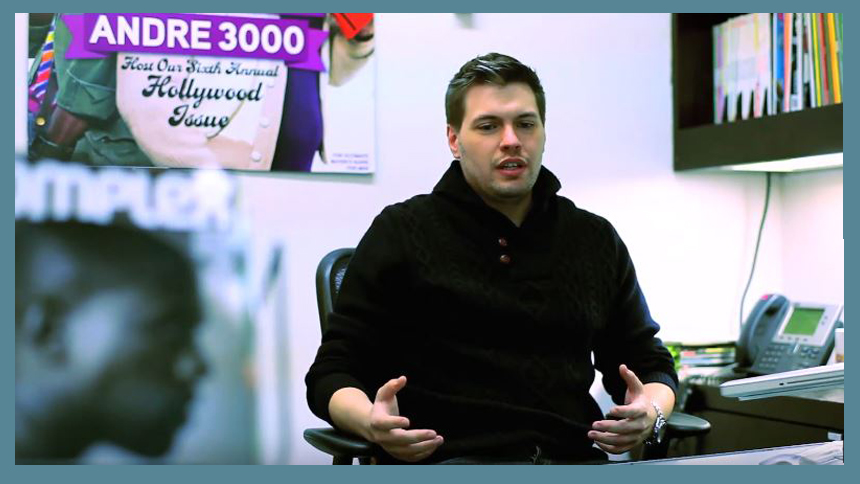
Topics:

Advice From the Pros, Be Inspired, Interviews
Advice From the Pros

So What Do You Do, Denene Millner, Co-Author of Act Like a Lady, Think Like a Man?

One journalist's path to becoming an author

denene-millner-feature
Admin icon
By Janelle Harris Dixon
Janelle Harris Dixon is a narrative journalist, copywriter, and content strategist with more than 20 years of experience covering race, culture, equity, and social justice. Her work has appeared in Essence, Ebony, The Atlantic, Rolling Stone, the Washington Post, Smithsonian, and more than 50 other publications. She holds a B.A. from Lincoln University and an M.A. in African American Studies from Temple University.
8 min read • Originally published October 21, 2015 / Updated March 19, 2026
Admin icon
By Janelle Harris Dixon
Janelle Harris Dixon is a narrative journalist, copywriter, and content strategist with more than 20 years of experience covering race, culture, equity, and social justice. Her work has appeared in Essence, Ebony, The Atlantic, Rolling Stone, the Washington Post, Smithsonian, and more than 50 other publications. She holds a B.A. from Lincoln University and an M.A. in African American Studies from Temple University.
8 min read • Originally published October 21, 2015 / Updated March 19, 2026

Most writers’ love affairs with words usually begin with a pivotal book or a poem, maybe even an especially moving piece in Highlights. Denene Millner‘s blossomed reading the lyrics on the back of a Stevie Wonder album cover when she was a kid. “I don’t remember thinking I could write something like that. I just remember falling in love with the words. What nine-year-old does that?” she told us with a laugh.

Funny as it may seem now, it’s a good thing she did. An award-winning journalist and the author of 21 books and counting, Millner has married her interests in African-Americana, politics and entertainment with her natural curiosity as a journalist. Her latest project: ghostwriting a memoir on a famous black opera singer.

Here, the media triple threat talks about writing for celebs, becoming your own brand and building a business out of necessity.


Name: Denene Millner
Position: Journalist, author, ghostwriter, columnist and founder of mybrownbaby.com
Resume: Recruited by The Associated Press straight out of college, working as a political reporter in New York and New Jersey. Transitioned to entertainment and political reporter at the New York Daily News. Held executive and features editor positions at Honey before becoming editor at Parenting. Founded mybrownbaby.com, which was named one of Babble.com’s Top 100 Mom Blogs of 2011. Author of 21 books, including ghostwriting Steve Harvey’s New York Times-bestseller Act Like a Lady, Think Like a Man and My Brother Charlie with Holly Robinson Peete.
Birthdate: October 21, 1968
Hometown: Bay Shore, Long Island
Education: B.A. in communications from Hofstra University
Marital status: Married to fellow journalist Nick Chiles
Media idols: Melissa Harris-Perry and Rachel Maddow
Favorite TV shows: Scandal and Melissa Harris-Perry. “And, I’m almost embarrassed to say it, but I really dig Black Ink on VH1.”
Guilty pleasure: Reality TV
Last book read: And So I Sing by Rosalyn Story and My Lord, What a Morning, the autobiography of Marian Anderson
Twitter handle: @mybrownbaby


Act Like a Lady, Think Like a Man was a huge success for Steve Harvey. How does ghostwriting or co-authoring a bestselling book of that magnitude help your career if your name isn’t the headliner?

It opened doors for me for other projects, because when other celebrities are considering who should write their book, they’re going to see my representation and my reputation as a writer. You know, New York Times-bestselling writer and top-selling book of 2009 is a hell of a calling card.

In some other ghostwriting projects, my name hasn’t even been on the spine or the title page, but I try my best to negotiate that so that somebody knows I wrote it besides my family. It opens a lot of doors for more work, which is kind of awesome.

It’s all any writer can ask.

What’s the difference between ghostwriting and co-authoring and how did you make such lucrative connections?

Ghostwriting means that a celebrity approaches you and you work with them, sort of dig into their mind about what they want to deliver in book form, and then you’re responsible for writing it.

So I’ll interview the person, get as much information as I can out of them, do research and then write the project, but the other person’s name is on the book, and there’s no indication whatsoever that I wrote it. You might be able to find my name in the acknowledgements if that’s been negotiated in the contract and they lived up to it.

I’ve had a couple of projects where they were supposed to acknowledge me and it didn’t happen, and there’s really nothing you can do because the book’s already been published.

A co-author is someone whose name is included in the book. You do know that that person helped the author to write the book, and so in that instance my name is either on the cover, on the spine, on the title page or in the acknowledgements.

My first co-writing project was a children’s book. I was approached by an editor with whom I’ve worked before. She knew my reputation and my ability to get things done and asked me if I’d be interested in writing a book. I said, “Of course.” That was a ghostwriting project that opened the door for me to do a second book, a co-writing project, with Holly Robinson Peete.

The Steve Harvey co-author partnership came from another editor that I worked for. She was familiar with my work, and they were looking for an Atlanta-based writer to work with him. It needed to be a quick turnaround. We had six weeks to get it done, and I was here in Atlanta. I got asked to go in and speak with him and we hit it off. I got hired to write his book.

That’s basically how it works.

I have the best agent on the planet, Victoria Sanders, who is an expert at pairing me with great celebrities who are looking for projects.

You seem to have the cooperative writing thing down pat. What are some elements to working closely on a writing project with the least amount of drama or creative conflict? 

[Laughs] I don’t know what that looks like.

It’s really crucial that the person who’s writing the book trusts me. It’s extremely difficult to walk into a project with someone who doesn’t trust that you can deliver.

There’s nothing worse than working with someone who doesn’t trust you to do your job. And that’s whatever you’re doing. You could be bagging groceries at Kroger. If someone doesn’t trust you not to put the eggs underneath the milk, they’re going to give you a hard time for it.

I also need my co-author to understand and respect the schedule. The one thing I’m a stickler for is deadlines: a) because I get hired because I respect deadlines and b) because I need to finish this project, because I may have two more lined up. So I need to stick to my own deadlines for my edification, for my own work, so my family can eat and I can keep my paychecks coming.

Those two are my biggest things.

What changed about your career once you wrote your first book? How did it use your talent differently than journalism did?

I published my first book in 1997. It was a total fluke. The book was called The Sistahs’ Rules. It was sort of the African-American answer to this book called The Rules.

It was a relationship book by these two women who were on Oprah like every other week, it seemed, and talked about how to go back to Old School Relationship 101 where you bash a guy over his head and convince him that he should marry you by playing all of these little, silly games.

I wrote a feature story for the Daily News about how “the rules” would never work for black women, because black men would never go for them. My editor and the graphic designer created this mock book for the illustration and it said Rules for the Sisters: Can Black Women Find True Love? by Denene Millner.

I got a call from an agent the day that it appeared in the newspaper asking me if I would do the black version of The Rules, and I had a book deal by like, 3:00 that afternoon and permission from Pete Hamill, my editor at the time, to take a month off to “write the hell out of that book.”

MyBrownBaby.com has grown by leaps and bounds since it launched. Why was it important to create an online space specifically for African-American mothers?

My last job inside of an office was working at Parenting. I loved what the magazine did, but I just found that the brand didn’t necessarily speak to black mothers.

When I moved to Atlanta, they gave me a column called “Reality Check,” and every month I would give advice on parenting ethics and etiquette. But during the 2008 election, there was a conversation about Bristol Palin, and I just remember getting the impression from newspapers and websites that we weren’t supposed to talk about her decision to have a baby or her getting pregnant.

I just felt like, you know what? This is not the conversation that my black mom friends and I are having. As a matter of fact, we’re all walking around saying if that was Sasha or Malia who wound up knocked up during the presidential election, they would’ve buried Obama under the bus, under the White House, and the whole discussion would’ve been about the irresponsibility of black women, teenagers, the high rate of single motherhood in our communities.

It would’ve been about irresponsibility or our aversion to protection.

So I said, “Since nobody else is going to say it, I’ll go on ahead and say it. I wrote something basically to that effect and emailed it to all of my friends and said, “I managed to set up a blog on Blogger. You need to read it and leave comments.” It felt good to me.

I got to write from a very specific black mom perspective in a way that you won’t find anywhere else. It was a huge hit right off of the bat, because nobody was talking about what it means to raise black children in America and what it means to constantly be thrown under the bus when we’re talking about black mothers but never being invited to the conversation.

You’re also a social media strategist. How did you market your unique understanding of African-American moms to create those opportunities?

If you want to talk to black moms, My Brown Baby is where you’re going to find that audience.

I did a campaign last year with Goodnights, which is a brand of nighttime training pants. If you’re looking to speak to African-American mothers about teaching their children not to go to the bathroom in their bed, this is where you’ll find them.

So the partnerships are obvious, but they’re not easy to get. There are still those companies that think if they just work with the larger, white bloggers that they’re going to kind of hit some black folks.

And of course, they do, because just because you’re an African-American mom doesn’t mean you’re not going to read a Babble.com or Parents.com or a Parenting.com. But you might not read it as religiously as you would a MyBrownBaby.com, because you know that you’re going to get a very specific, Afrocentric perspective.

This interview has been edited for length and clarity. 

Topics:

Advice From the Pros, Be Inspired, Interviews
Advice From the Pros

Hey, How’d You Start Your Own Lifestyle Brand, Melissa Musen Gerstein and Denise Albert?

How they built The Moms into a multimedia juggernaut

the-moms-feature
Admin icon
By Valerie Berrios
@valerieberrios
Valerie Berrios is a published author and senior content manager with nearly two decades of experience in digital publishing, including roles at Audible, Disney Streaming, Everyday Health, and Mediabistro. She specializes in content strategy, editorial operations, and international content launches.
8 min read • Originally published October 21, 2015 / Updated March 19, 2026
Admin icon
By Valerie Berrios
@valerieberrios
Valerie Berrios is a published author and senior content manager with nearly two decades of experience in digital publishing, including roles at Audible, Disney Streaming, Everyday Health, and Mediabistro. She specializes in content strategy, editorial operations, and international content launches.
8 min read • Originally published October 21, 2015 / Updated March 19, 2026

Between the two of them, Melissa Musen Gerstein and Denise Albert have racked up quite impressive credits as television producers for such highly rated shows as Good Morning America and Anderson Cooper 360.

But after they became mothers, each had a yearning to branch off and start her own company. The result was what is now The Moms lifestyle brand, based on encouraging honest and sometimes-controversial conversations about parenting.

Gerstein and Albert started the Carrie Bradshaw way in October 2009 with a newspaper column called Moms in the City. A year later, thanks to a grassroots email campaign and their TV connections that helped them nab interviews with celebrity parents, they got booked on local news programs and eventually landed a TV show on NBC. These days, Gerstein and Albert have a weekly “MOMmentary” show on Sirius XM Radio; they host star-studded Mamarazzi events and Fashion Week shows, with “real women” walking the runway; and in October 2013 even debuted their own handbag line.

Here’s how these hard-working mamas did it.


How did each of you get started in the TV business?

Albert: My background in television began when I was 14. I actually started interning at MTV and at NBC Sports. And then I went to Boston University, and I worked my way through college at WBZ and another local station. My first job after college was with Inside Edition. I started there as a story coordinator, which is basically a booker, learning the ins and outs of the business.

I had worked my way up to a producer, and also, I did some on-air reports for them. And then I left and went to be a reporter for a television show called New York Central. I was also a feature reporter for the NBA. [Then] I went to Good Morning America as producer, which was awesome. [Around this time] is when I met Melissa.

I stayed at Good Morning America for about four years, and then I left after I had my first son and I went to run David Blaine’s company, so I produced his ABC television specials and ran his company.

Gerstein: I started really in television when I got my SAG card. I was at the University of Arizona on a dance scholarship and, just through the performing arts, wound up in TV. And then I moved to New York and got an internship at MTV while I was at NYU.

My first job out of college was working for the Weinsteins as an assistant, and I realized I loved production. I ended up working in film as an assistant and then moved to theater and worked for the Weisslers during Chicago on Broadway, and then moved to the CBS Weekend News as an assistant producer.

I segued to MSNBC as a breaking-news producer. And then I moved to Toronto and launched and produced Canadian Idol, which was an amazing experience. [My family and I] moved back to New York and I produced for various shows at CNN, [working with] Anderson Cooper, Aaron Brown, Paula Zahn.

And then I wound up at CNBC on The Big Idea with Donny Deutsch, which really inspired me personally to have my own big idea and led me to Denise Albert and to the birth of our company, The Moms.

And so how did the two of you team up?

Albert: Well, as Melissa said, she was booking entrepreneurs on the Donny Deutsch show. I was at Good Morning America. I was pregnant with my first child, and I felt like there was conversation missing in the parenting world.

I wanted to have very smart conversations, and not talk about being pregnant, and not necessarily talk about how many diapers or poops or bottles my kid was going to have during the day. And so I had this idea to really do what I know and love, which is television and journalism, but in the parenting space.

Melissa and I were connected through another person and we were told, ‘Oh, you guys have the same idea.’ And so that’s how we originally began as Moms in the City. We wanted something where we could have this parenting conversation in a forum that we knew: television. And so we knew also, as television producers, that we should start in print. We got a column in a newspaper called Metro US.

Gerstein: We wrote very like Sex and the City. We also thought, ‘Wow, that column was so successful, let’s launch Moms in the City in print,’ and so, basically, we would write a very bold, provocative column about parenting, and then we would interview a celebrity mom based on that topic, which obviously generated a lot of attention and traction.

And then we started getting booked on local television shows to talk about our columns, and also topical news that affected parents, whether it was how to discuss the images coming out of Haiti with your kids [or] the homeless problem on the streets.

And after our fourth appearance on WNBC, we got offered a TV show, actually a pilot, which then got picked up on a channel called NBC Nonstop, which ran in ten markets across the country.

Albert: This was a calculated plan on our part.

It’s not just that we got a television show. We started an email blast. This was all part of our nontraditional business plan, because we didn’t really have one. What Melissa and I knew was how to create buzz, and we knew if we could create buzz, we could get that end result that we were looking for.

So we emailed everyone in the country that we knew to say, ‘Hey, we’re doing this column. You should know about it.’ And that’s when we really started getting booked on the shows. But at the same time, it was when we got the television show that it worked out that NBC had a deal with taxis, so they pushed our content out [via backseat TVs].

And that was really how we got our start with this company.

Tell me about your Mamarazzi events.

Gerstein: So there was a segment on our television show called Mamarazzi where we interviewed celebrity moms and dads, wherever we could get them, when they were in New York City promoting [projects]. After I interviewed Sarah Jessica Parker for a film called I Don’t Know How She Does It, based on the working mom’s life and all of her struggles, [we] were engrossed in a conversation.

I have three kids, she has three kids, and we realized there’s a bigger conversation to be had here. We put together, in two weeks, the first-ever working moms’ town hall, which we decided was a Mamarazzi event. And we aggregated mom bloggers and press to screen the film, and then Denise and I moderated a Q&A with Sarah Jessica after the film.

And then we realized, ‘Well, this is pretty cool, we can monetize this. Let’s get a brand involved that wants to reach our core demo of moms, and also get traditional media and social-media exposure.’ And now we have hosted over 50 Mamarazzi live town hall events.

Albert: And what these Mamarazzi events are doing is giving moms access to celebrities, and we’re giving brands access to moms. So we’re bringing moms, influencers, celebrities and brands all together for one purpose, which is really the parenting conversation.

That’s what this is all about.

Let’s talk about your latest venture.

Gerstein: We just signed a deal with SiriusXM Radio for our annual radio show that airs weekly, called The Moms with Denise and Melissa.

I would say, for me personally, the greatest thing about the SiriusXM Radio show is the immediate feedback. It’s that direct contact with that caller. And I’ve always said that there is no mom manual out there.

So when we have this platform; you know, they have 55 million subscribers, and to be able to reach moms all across the country, who have various jobs, children of various ages, and to come together and have this medium, it’s amazing.

Albert: And I want to just add one thing that I think separates everything that we’re doing from some other things out in the media today.

I think we’ve sort of lived the last ten years in a reality show world. But what’s important for us is that Melissa and I have both worked so hard as television producers and journalists, and to be able to continue to do that in the way that we have is really what our goal was.

I mean I remember when I was leaving to go on maternity leave and somebody said to me, ‘Are you going to continue working?’ and it was: to me, like how could you even ask me that question?

I’ve worked so hard, and I’m having a baby, like why can’t I continue working? It was very important for us to create a business and to really be seen as businesswomen, and as journalists and as producers.

And we have been able to do that without doing a reality show.

Tips from The Moms on starting your own multi-platform brand:

1. Never take no for an answer. “People will tell you, ‘You should do this, you shouldn’t do that…'” says Gerstein. “You really need to stick with your gut. My grandfather, my father, they have always said if you don’t love what you do, you will not be successful.”

2. Choose a partner in crime. Explains Gerstein: “Because you will have ups and downs, and that business partner is so crucial for your spirit, for your business, and Denise is in it to win it with me.”

3. Just go for it. “To me, anything is possible,” says Albert.

4. Stay on message. “Do not get off of that track,” says Gerstein. “Stay on the original plan. Consistency is key.”

This interview has been edited for length and clarity. 
Transcription furnished by: RA Fisher Ink

Topics:

Advice From the Pros, Be Inspired, Hey, How'd You Do That?
Advice From the Pros

So What Do You Do, Marcy Bloom, Senior Vice President and Group Publisher of Modern Luxury?

For Marcy, it's all about the love of the mag

marcy-bloom
Admin icon
By Valerie Berrios
@valerieberrios
Valerie Berrios is a published author and senior content manager with nearly two decades of experience in digital publishing, including roles at Audible, Disney Streaming, Everyday Health, and Mediabistro. She specializes in content strategy, editorial operations, and international content launches.
7 min read • Originally published October 27, 2015 / Updated March 19, 2026
Admin icon
By Valerie Berrios
@valerieberrios
Valerie Berrios is a published author and senior content manager with nearly two decades of experience in digital publishing, including roles at Audible, Disney Streaming, Everyday Health, and Mediabistro. She specializes in content strategy, editorial operations, and international content launches.
7 min read • Originally published October 27, 2015 / Updated March 19, 2026

Earlier this year, Modern Luxury, the largest publisher of luxury regional magazines in the United States, welcomed Marcy Bloom as its new senior VP and group publisher. Bloom is a publishing veteran who worked her way up the ranks at Condé Nast and while at the helm of Lucky magazine became the media giant’s youngest publisher.

After briefly leaving the magazine biz to volunteer for Orphan Aid in Ghana and become a certified yoga instructor, Bloom was lured back to publishing when given the opportunity to help with the national expansion of the Modern Luxury properties. In the new role, Bloom has reteamed with Michael Wolfe, the newly anointed publisher of national sales, with whom she’d worked at GQ. Here, Bloom talks about her career and how she and Wolfe plan to take Modern Luxury to the next level.


Position: Senior VP and group publisher of Modern Luxury
Resume: Began her publishing career as a sales assistant at Condé Nast’s Self magazine. Launched All About You magazine at Petersen Publishing. Served as Midwest director at Time Inc.’s Teen People. Returned to Condé Nast as associate publisher of GQ, where she led the launch of the magazine’s first-ever digital edition. Promoted to VP and publisher of Lucky. In February 2014, appointed senior VP and group publisher of Modern Luxury magazines.
Birthday: March 25
Hometown: Dix Hills, New York
Education: University of Maryland at College Park; University of Platteville in Seville, Spain; certified yoga instructor
Marital status: Single
Media mentors: Peter Hunsinger (“He was my publisher at GQ for eight years. Not only is he an unbelievable mentor and teacher and boss, but I’ve learned so many valuable life lessons from him.”) and Roger Farah, former vice chairman/CEO of Ralph Lauren (“I told him that I was going to leave my job at Lucky basically before anyone else, and he could not have been more supportive.”).
Best career advice received: “Hire people that are smarter than you and do things that you don’t, and then let them do their thing.”
Guilty pleasures: karaoke, ’80s music, and movies like Clueless and True Romance.
Last book read: Lead with a Story by Paul Smith
Twitter handle: @MRBloom25


How did you end up working in publishing?

Well, I graduated with a communications degree, but I was all about surrounding myself with people that inspired me, and a woman, a family friend, was a publisher of five regional magazines. She mentored me in high school and college. And so learning from her, that’s just where I went naturally.

You eventually became Condé Nast’s youngest publisher (at age 36) while at Lucky. How do you think you got to that top spot so early in your career?

One [reason was] putting a lot of pressure on myself. [Having] a lot of amazing mentors, and quite frankly, Condé was such a great experience for me. We loved what we were doing at GQ. I learned a ton from the brand and my bosses there. And when you’re loving what you’re doing it’s easy to grow and work hard, and so with a lot of support from my management and the corporate management—they really put me [in that position at Lucky]. I think if you work hard and your intentions are great and you know what you’re looking to accomplish, people respond. I believe that.

Tell me about the hiatus you took from publishing after Lucky to do volunteer work.

It was great. I took a year off, actually 13 months. I just felt that I needed a fresh perspective. I’d been doing the same thing, for the most part, for so long and I lost my love for it, and I wanted to see a little bit outside of the world I lived in. So I made plans to go to Ghana to work in an orphanage. I planned on it being a short time off and when I got back from Ghana, I really got inspired by what I wanted to do next, [but] I didn’t know what that was.

I was trying a bunch of different things. And I became a certified yoga instructor. I worked with two dear friends on their startups, so I was getting the opportunity to dabble in different businesses. And I loved it. And then, you know, reality comes back and you say, ‘Okay, you’ve got to get a regular working schedule now.’

You’ve been in magazine advertising for a while, so how do you think it’s changed with the arrival of digital media?

Such a good question. You know, I believe that one of the key things that digital has done is it’s allowed you to be more targeted. And that is from a national magazine perspective, which is where I spent 17 years, you can’t get as close as you can in a digital sense. And that’s actually why I’m beyond inspired by what we’re doing here [at Modern Luxury] because we have a closeness and an intimacy. We have editors, sales staff and marketers in each market. Our brands reflect those markets. So we’re getting as close as you can via print, and that feels extremely relevant, especially because of what digital can offer.

How do you create a national advertising platform for a company that’s comprised of very niche, regional publications?

First and foremost, [it’s about] organizing, hiring and really making clear our mission, our program. Modern Luxury has basically been built by and from several different brands, so the national story is just now being told because we really have scale now. So step one for Michael [Wolfe] and for me is to simplify and organize our messaging to the advertising and marketing community based on what we know about our consumers and what they love and get from Modern Luxury. We have so much content on the local level, and so many editors, that we are harnessing all this information to be able to create a powerhouse brand.

And what’s interesting is that our national editorial director and our national creative and fashion directors, they look at the brand from one lens, and then each editor-in-chief, with the knowledge of their market, they get to look at it from that lens. So the direction is set from a national perspective. For example, Macy’s pioneered with the concept of ‘My Macy’s.’ They shifted their whole strategy to ‘your stores,’ the store you go to, wherever you are, in New York or in Atlanta. That product reflects the sensibility of the people in it.

So you walk into your Macy’s and you say, ‘This is for me.’ I look at our media content the exact same way. And that’s what we’re talking to clients about: we’re able to get closer because we’re actually speaking to you where it’s most important, which is your restaurant, your home, your neighborhood, your luxury. And because we have so much staff and so many editors, we actually can credit national fashion stories in Chicago, in Atlanta, in Dallas, in Houston. And that is a gift to the consumer, and then clearly to the advertiser.

What initiatives are you working on now for Modern Luxury?

We just finished conducting a research study that looked at our top 15 markets, the habits of the affluent and the luxury consumer and what drives them to do things. And the biggest driver is philanthropy. So that’s one thing we’re working on. Because our November issue is our philanthropy issue, in every market, we have built and are going to roll out shortly a philanthropy program surrounding what we’ve learned.

Really the concept is, how do we celebrate local charities and give them national voices? We want to create a large network of small regional-based charities and launch them into being bigger brands, and tying in clients where we can. [The goal is to] become, to the consumer and to our reader, a place to go to help strengthen and grow an important issue or important initiative in their city.

What words of advice do you have to people just starting out in their careers?

I think you have to trust your instincts. Say when you’re on an interview, you have to stay true to yourself. You have to be balanced in everything you do. And if you bring passion to it, then you’re golden. I believe if you stay true to who you are, then you show confidence. And people want to work around confident people and you add value when you are.

This interview has been edited for length and clarity.
Transcription furnished by: RA Fisher Ink

Topics:

Advice From the Pros, Be Inspired, Interviews
Be Inspired

New Program Will Certify Advertising Agencies That Prioritize Gender Equality

Advocacy group announces voluntary auditing

gender-equality-conference-feature
By Katie Richards
@ktjrichards
Katie Richards is a reporter at Adweek.
3 min read • Originally published October 27, 2015 / Updated March 19, 2026
By Katie Richards
@ktjrichards
Katie Richards is a reporter at Adweek.
3 min read • Originally published October 27, 2015 / Updated March 19, 2026

The 3 Percent Conference has a new plan for promoting gender equality at America’s advertising agencies: It’s introducing a certification program. The advocacy group announced the initiative at its New York conference today, equipped with data from a study that details what 328 women working in agencies really want.

The seal of approval—introduced by twtw Companies president Erin Carpenter and Accelerating Women founder and CEO Lisen Stromberg—is called “3 Percent Certified.” The program will certify agencies that not only set out to promote equality, but make real changes to their organization along the way.

“We are going to go out and talk to the talent, find out what the talent is experiencing, look at the individual agency’s programs, cultures and community and go beyond that to see what’s the benchmark, not just in the industry but outside the industry,” Stromberg said. “You can find out, how is your agency doing and what can your agency do to make changes?”

When an agency applies for certification, an independent auditing committee will collect information on salaries, the breakdown of men and women in leadership positions, and more. Then, the group will suggest benchmarks along with ways to reach a more balanced agency. If the shop can successfully hit those goals, it will be certified.

“We’re not going to be unrealistic and say to an agency that’s 8 percent women to be 50 percent in a year, but we will have reasonable, attainable goals that will move that needle,” Carpenter said.

“By earning that [certification], you’re sending the message out that says, ‘Hey, this is an agency that really honors and respects diversity, honors and respects respects women,’ and that is a talent-acquisition tool like there is none,” Stromberg added.

While 3 Percent Conference founder Kat Gordon had the idea awhile ago, Carpenter said the organization had to prove that placing more women in leadership roles leads to happier employees and better work cultures. Once the study on what ad women want was complete, it provided the necessary data to kick the certification program off.

The 3 Percent Conference study showed that while 56 percent of women reported they were making an adequate salary ($100,000 a year or more) and 78 percent stated they were satisfied with their current roles, 30 percent have no female leaders to look up to. An additional 60 percent reported that their agency was below the new standard of 11 percent of females holding creative director roles.

At agencies where women make up at least a quarter of the creative leadership, women reported higher levels of job satisfaction, better pay and fewer instances of discrimination than other agencies. For instance, 64 percent said they earn over $100,000, compared with 54 percent of their counterparts at more male-dominated agencies.

“Integration of data and the importance of having analytics to drive what we are talking about just became much more important. It became less abstract and more concrete. We were able to track what happens when the leadership ratio goes up a bit, and we’re seeing a real impact,” Carpenter said.

This article was originally published on Adweek.com on Oct. 26, 2015.

Topics:

Be Inspired, Work Spaces

Posts navigation

Older posts
Newer posts
Featured Jobs
A
A
A

h
h
h

h
h
h

H
H
H

M
M
M

All Jobs »
PREMIUM MEMBER

Linh Nguyen

Lansing, MI
4 Years Experience
I graduated from Loyola University Chicago in May 2018 with a Bachelor of Arts degree with a major in Fine Arts: Drawing and Painting and a minor in...
View Full Profile »
Join Mediabistro Membership Today

Stand out from the crowd with a premium profile

Mediabistro Logo Find your next media job or showcase your creative talent
  • Job Search
  • Hot Jobs
  • Membership
  • Newsletter
  • Career Advice
  • Media News
  • Hiring Tips
  • Creative Tools
  • About
Facebook YouTube Instagram LinkedIn
Copyright © 2026 Mediabistro
  • Terms of Use
  • Terms of Service
  • Privacy