

Mediabistro Logo Mediabistro Logo
  • Jobs
    • View All Creative Jobs
    • Hot Jobs
    • Create Job Alerts
  • Membership
    • Overview
    • How to Pitch
    • Mastheads & Editorial Calendars
    • Browse Courses
    • FAQ
  • Showcase
  • Resources
    • Media News
    • Resume Writing Services
    • Market Trends
    • Articles
    • Member Profiles
  • Log In
Join Free Post Jobs
Mediabistro Logo Mediabistro Logo
Jobs
View All Creative Jobs Hot Jobs Create Job Alerts
Membership
Overview How to Pitch Mastheads & Editorial Calendars Browse Courses FAQ
Showcase
Resources
Media News Resume Writing Services Market Trends Articles Member Profiles
Log In
Post Jobs Join Mediabistro

Climb the Ladder

Resign job without burning bridges

By Scouted.io
By Scouted.io

Unless you plan to stay with the same company for 30+ years, everyone will need to write a resignation letter at some point in their career. Doing that right as well as handling the transition period well could be an important factor in whether you’ll be able to add your current employer to your list of references. Do it wrong, and you may end up burning some bridges.

Don’t be too hasty

Say your current work environment is, well, less than pleasant. Even if you just had a great interview at a new company, don’t pack your bags just yet. Make sure your new job is finalized in writing. Meaning: the company has formally offered you the position, you’ve negotiated and accepted, and you’ve set a start date. Then and only then should you have all the green lights to quit your job. Things can often happen during a hiring process and you don’t want to find yourself out of a job or having that awkward conversation to ask for your job back. Just make sure your new job in set in stone before saying “Sayonara!”

Let your manager be the first to know

While you might be good friends with your coworkers and eager to tell them about your new job, hold off until you communicate with your manager. You don’t want them hearing through the grapevine that you plan to leave before you have a chance to talk with them yourself. Also be sure that what you tell your coworkers, your reason for leaving, is consistent with what you tell your boss. Don’t risk your boss finding out the reason you’re leaving is because you don’t like his or her management style rather than that your new company has a shorter commute like you told them.

Also read: How Important is Autonomy and Meaningful Work to Millennials?

After a conversation, resign in writing

Keeping with the theme of getting things in writing, you’re going to want to take your resignation a step further than just having a chat with your boss. However, it’s important that your written resignation doesn’t come as a surprise to your manager, but rather as a formality. After you’ve had a conversation about your intent to leave, send an email with your intended last day of work and thank them for having you at their company. While explaining your reasons for leaving aren’t entirely necessary, you can include this as well if you like. Here’s an example of a resignation  email or letter you can write to your employer:

Dear [BOSS],

Please accept this letter as notice of my resignation. My last day of employment will be April 9, 2019.

I have enjoyed my time with [COMPANY] and am grateful for the skills I’ve learned as well as the relationships I’ve formed during my time here.

Please let me know how I can be of assistance during the transition.

All the best,

[YOU]

Even if you resign in writing, you’re going to want to follow up with a conversation, just to make sure you and your current employer are on the same page. And if you first have a conversation with your boss, be sure to follow up with a written resignation letter, just to seal the dale and make sure everything, including your last day, is clear.

Give your employer at least 2 weeks notice

Many employers will have a written policy on how much notice you should give before resigning, commonly two weeks but it could be more. Do your best to stick with that at the very least in order to give them enough time to bring someone in and start training in your position. If you don’t leave enough notice, it could burn bridges and leave you with a not so happy job reference in the future.

Of course, you may out of good will give your employer a whole 8 weeks notice. Be careful to not make your notice overly long if you don’t have to. If you do and you find yourself restless to start your new jon, you’re going to end up resenting your current job and not motivated to get anything done. Also not a great way to leave on a good note. Try to time something that’s quick and painless for both you and your employer, allowing them to transition as best as possible but also allows you to move on bigger and better things.

[sc name=“Newsletter”]

Have a transition plan

Want to leave your job but still want your boss to like you? Come up with a transition plan. Coordinate who will take on your responsibilities or unfinished projects during the transition and who, if not you, who you recommend for training your replacement.

Which brings us to our next point…

Train your replacement

In order to keep things smooth and peachy between you and your current employer, why not offer to train your replacement? If you do this, start by creating a master list of all your responsibilities, key documents and files, and write down instructions for using specific software or completing certain tasks. For example, if your job is to write a monthly newsletter, outline how to use the email service provider, the style guide you use when formatting the email, who is responsible for approving the email, and who to send it to. As you work through your notice, keep a document open where you take notes on your day-to-day tasks that may be helpful to your replacement. Your replacement will be able to use this as their playbook or user manual when coming into your role.

Refer someone to take your place

What’s better than training your own replacement? Finding one! Of course, you’ll probably still have to train them, but if you previously had a good relationship with your boss and you’re looking for ways to maintain that, why not recommend who you think would fill the job well? Of course, only recommend someone if you actually think they could do your job well. If they end of being great, you can bet your boss will be your next best job reference!

If you’ve had a good experience resigning from a job in the past, leave your best tips in the comments below!


 

Unless you plan to stay with the same company for 30+ years, everyone will need to write a resignation letter at some point in their career. Doing that right as well as handling the transition period well could be an important factor in whether you’ll be able to add your current employer to your list of references. Do it wrong, and you may end up burning some bridges.

Topics:

Candidates, Climb the Ladder
Climb the Ladder

Check interview recruiter major tech company

By Scouted.io
By Scouted.io

Any interview can be intimidating. Don’t you wish you had the chance to peek into the mind of your interviewer?

Well, today, you can.

We wanted to interview a recruiter for one of the top tech companies in the world. In our interview, we asked questions that we thought would be helpful for candidates, especially those seeking roles in the tech industry.

Karesa helps us look into what hiring managers are looking for and even thinking during your interview. She gives tips on how to impress your interviewer and go the extra mile in order to make a great first impression.

Check out our talk with Karesa below and learn more about how you can ace your interview and land the job of your dreams!

If you were to give a candidate the shortest pep-talk ever, what would you say?

Any interview is a learning opportunity and a chance to showcase your strengths. It is normal to interview for multiple jobs before receiving an offer so don’t be discouraged when you’re starting your job search. With that in mind, control what you can control- PREPARE for any interview, be positive, and express interest/passion for the job

Is there anything you love to see on a candidate’s resume?

First of all, I love when resumes are organized and easy to read. Besides that, I really love to see special awards/honors- this shows me you are a top performer. It’s also fun to see interests/hobbies at the bottom of a resume too.

Do you have a pet peeve when it comes to interviews?

Do I have to choose just one?? Just kidding! 🙂 My number one pet peeve is when candidates treat the interview/ phone screen with a recruiter as a formality. A recruiter can end up being your champion to hiring managers. If a hiring manager is on the fence about whether to hire you or not but you treated the recruiter really well, the recruiter is way more likely to go above and beyond to ensure that you are selected for the job. Another pet peeve: when a candidate is negative in an interview. Do not talk negatively about a previous employer under any circumstance.  

Another pet peeve is irrelevant messages on LinkedIn- see the last section.

[sc name=“Newsletter”]

What questions do you wish candidates would ask you during an interview?

Questions on things actually curious about! Get curious about the job! Some people pick the first question they see when they Google “questions to ask interviewer” but make sure the questions you ask are relevant to the job/company. The questions you ask reveal more about yourself and where your interests lie than you might realize.

Does a candidate typically come off as more desirable if they are currently employed?

Yes! With the unemployment rate where it is, I am usually skeptical about candidates that are not currently working. I definitely recommend interviewing while you are employed if possible.

What could a successful candidate do to “go the extra mile” during their interview process without overdoing it?

Send thank you notes!

Do your research on the company: anything happening in the news? Any blog posts you can mention?

Give honest feedback after your interviews- follow up with the hiring manager or recruiter with feedback on your experience interviewing. What did you enjoy, what confused you, what surprised you, etc. This will show your thoughtfulness and is really helpful

Be responsive and available- Respond quickly to emails and set aside time during business hours for interviews/phone calls. I love it when a candidate proactively sends me times they are available to talk without having to ask them.

What research do you do about a candidate before they come in for an interview?

It depends. At the very minimum, I will have read through the resume and LinkedIn profile. When possible, I’ll review references (Has anyone I know worked with the candidate previously? Can they speak to the candidate’s skills? Where did they go to school?) I also might simply Google a person’s name to see if they have any relevant publications, awards, blog posts, websites, or presenting at an upcoming event.

What technical skills do you ask a candidate to demonstrate during their interview?

I personally don’t conduct any technical interviews but any engineering candidates should spend plenty of time preparing and be ready to code from scratch. Here are a few resources I recommend for practice coding problems:

  • https://techdevguide.withgoogle.com/
  • https://www.hackerrank.com/
  • http://oj.leetcode.com/
  • http://www.programming-challenges.com/pg.php?page=index
  • www.topcoder.com
  • www.projecteuler.net
  • www.careercup.com
  • www.geeksforgeeks.org

We loved hearing Karesa’s side of the story when it comes to hiring candidates! Did you find this post helpful? Let us know in the comments below and let us know what follow up questions you would have for an interview at a major tech company!


Karesa is a Sofware Engineer Recruiter at one of the largest tech companies in the world. She has several years experience in the recruiting sphere and loves connecting with engineers who have a passion for solving complex problems at scale.

Topics:

Candidates, Climb the Ladder
Climb the Ladder

What are soft skills and why are they important

By Scouted.io
By Scouted.io

More and more companies are weighing soft skills heavily in the job interview process. While one candidate may have looked great on paper with all the right education and work experience, a company may have come to find that they didn’t mesh well with the rest of the team. Or they may have had little understanding of how to communicate about their work to outside teams or even customers.

That’s right, young job seekers or career changers are in luck because these days, companies are tired of making hires that simply don’t function well within their workplace. And with cool job platforms *cough* Scouted *cough* that take your soft skills into account and advocate on your behalf to hiring managers, why not put a little more effort into flaunting what you’ve got?

But first of all, let’s answer a few questions.

What are soft skills, exactly?

While hard skills are learned, soft skills are the things you bring to a job naturally. Things like your personality, natural talents, personal attributes, and insights. They shape how a person interacts with others effectively and cooperatively as well as how they go about solving new problems. However, that’s not to say that a person can’t improve on their soft skills (more on that below).

Here’s a list of some of our favorite attributes:

  • Emotional Intelligence
  • Problem-solving
  • Communication
  • Creativity
  • Curiosity
  • Goal-orientation
  • Intellectual horsepower (one’s processing speed)
  • Organization
  • Tenacity
  • Analytical thinking
  • Self-starter
  • Professional/Mature
  • Adaptability

Why employers care about soft skills/why are they important?

According to ICIMS, “Ninety-four percent of recruiting professionals believe an employee with stronger soft skills has a better chance of being promoted to a leadership position than an employee with more years of experience but weaker soft skills.”

Soft skills can be the differentiator between whether or not you or someone slightly more qualified lands a job. If you have all the job requirements on paper, but lack the skills to connect with your team and communicate your ideas, the job may go to someone who can. Using your soft skills, you’ll also hopefully be able to build a rapport with the hiring manager during your interview. However, these skills aren’t just important for intercommunication.

Different roles will require different types of soft skills that are extremely important for customer-facing positions as well. For examples, a sales representative will use their communication skills daily on the job while a product manager will use many technical skills as well as soft skills like organization, communication, problem-solving, and even evangelism.

[sc name=“Newsletter”]

Can I improve on my soft skills?

Although soft skills are considered to be those useful on-the-job traits that come naturally to us, we can improve them. Anyone can practice and improve their written and oral communication skills. Other skills like emotional intelligence, being a self-starter, or adaptability may take more effort to improve, but if you’re able to commit to developing a new habit that will enhance your job-related skills, then go for it! Skills like tenacity, energy, and creativity, on the other hand, may be harder to develop; instead of trying to gain more soft skills, try working on improving the ones that come naturally to you.

How to show off your soft skills

If you’re a young job-seeker that doesn’t have much by the way of experience yet, your shining personality may come in handy, especially if a company is looking to fill a role and is willing to train “the right person.” First, narrow down the soft skills you believe you’re best at and confirm your list with a friend or colleague (the soft skills you’re not so great at may be examples of what to mention when the question “What are your weaknesses?” comes up. Because it will). Instead of simply including a bulleted list on your resume of your soft skills, during an interview try to reference times when you used them in past work environments. In your cover letter, allude to some of the soft skills you use regularly in your current position.

Overall, you’ll want to talk about your soft skills in a way that highlights what you can bring to a role and how they’ll help you improve the company. Give real-life examples and don’t try to convince anyone you have personality traits that you really just don’t. Sooner or later, someone will be able to tell.

What are your top soft skills? Have you ever tried to improve them? Leave your tips in the comments below and share the post with someone who may need an extra oomph to their cover letter.


While hard skills are learned, soft skills are the things you bring to a job naturally. Things like your personality, natural talents, personal attributes, and insights. They shape how a person interacts with others effectively and cooperatively as well as how they go about solving new problems.

Topics:

Candidates, Climb the Ladder
Climb the Ladder

3 ways to keep learning in the workplace

By Scouted.io
By Scouted.io

People ask me occasionally for advice when it comes to working for a startup or what is it like working for a startup. I usually give the same answer: “I am always learning and always make time to learn.” I would say on average, I spend at least 30% of a work week learning, whether it’s reading, listening to podcasts, talking to people, etc… 30% of a week sounds like an awful lot right? But in reality that 30% of my week is incredibly critical in ensuring that I become a more effective and efficient member of our team! It’s not a lot of time to dedicate when I know that learning now will save me time and effort later on, as well as keeping my mind fresh and refreshed.

So how does one “learn” in the workplace and how do can you apply your learnings to your work and personal life? I will break down the 3 key areas where I attempt to spend the majority of the time when it comes to learning.

Reading

I spend at least 30 minutes to an hour every morning reading. By carving out a time to read in the mornings I am ensuring that I am learning in a structured manner daily. This to me is a very sacred time to me, much like CEO’s or other key executives lock off an hour in the mornings to deal with emails, I ensure that my morning ritual of reading is never double booked or sacrificed. By doing this I am effectively setting myself up for the rest of the day with additional knowledge and knowing that I won’t be pressured into having to “learn” later in the day.

I usually have a couple of key websites, publications, and books that are my go-to’s. I usually break it down between the current news/events, startup news, startup/career/workplace advice, marketing publications, and sports/soccer (eh gotta have some fun reading as well.) I always try to read the same set of sources, again just comes down to the whole routine thing. That being said I am always looking for new places to read (send them if you got them!) But I always try to read something new or “unknown” to me daily, whether that be a publication, subject, or random fact. I usually head to Medium or Wikipedia just to learn something new and unexpected. Some of my favorite reads include.

  • Techcrunch
  • Venturebeat
  • TifoFootball
  • Hacker Noon
  • These Football Times
  • Ahrefs Blog

So why is reading important? Honestly, it sounds like I just waste an hour a day on reading miscellaneous stuff. This is true unless you apply/incorporate the knowledge that you are reading into real-world scenarios. For example, things like applying new marketing techniques to my digital campaigns or trying out a new method of planning out my week’s schedule. Knowledge is only as powerful as the user who wields it. So hey, why not step outside of your comfort zone and try something new based on some random thing you read on the internet? Sometimes you should trust the internet.

[sc name=“Newsletter”]

Listening

Listening isn’t just about listening to podcasts, in reality, listening is more about making sure that you don’t let the world pass by you without acknowledging the nuggets of information that may befall your ears. This could mean conversations with coworkers, friends, at meetups, etc. The importance of listening skills might sound cliche, but it’s something that I find to be critical when comes to learning in the workplace. Listening to people around you, especially those that are smarter than you, is always a great way to learn and is easily accessible. It’s an easy way to get a daily dose of learning.

Beyond listening to coworkers and people alike, podcasts are a great source of learning. As a media format, podcasts have really exploded with a variety of topics and genres readily available. I could talk endlessly about podcasts and how revolutionary they are, but most people already know that…

So what podcasts do I listen to while at work or commuting? Again, very similar to my reading habits, my podcast listening habits really vary. From How I Built This to Pardon My Take, I try to listen to a variety of things to keep my horizons open!

  • Pardon My Take
  • How I Built This
  • YCombinator School
  • Product Hunt Radio
  • Serial

Talking

Very similar to listening is talking. That being said, I separated the two formats mainly because it requires a different set of skills and time commitment in order for it to be worthwhile. Being able to listen is one thing and an important skill in its own right. Being able to respond and foster additional conversation is another skill. By prompting further conversation and engaging with people in conversation/debate, you are able to discover additional viewpoints and understandings of a topic.

This is easily the most important format of learning, by talking with others you are ensuring that you are not in an echo chamber of your understanding of a topic. You can selectively choose what you want to read or what you want to listen to, and to an extent, the people you are talking to. That being said, with talking with others you are always giving yourself additional viewpoints and continuing to learn through conversation and engagement.

So who should you be conversing/talking with? The easiest people are ones that are readily available to you, co-workers, friends, family, etc… Though as I mentioned above about echo chambers, the best set of people you can learn from are strangers or new people outside of your current network. These are the people that are going to give you the best value in being able to understand their point of view for a certain topic. Try going to meetups or free conferences in your area, there are a variety of different options that you can find on Meetup or Eventbrite. Try following a couple of different email lists that constantly keep you updated on events, one of my favorite here in TechNY Daily. Experiencing and talking with new people allows for you promote your ideas but also hear new ones. There is no greater format of learning while you are working than engaging in conversation with new people and your peers.

Also read: 4 Insightful TED Talks For Job Hunters

Conclusion

There are plenty of different ways to learn and grow. That being said, in the workplace it can be difficult to expand your horizons with the day to day work. Make sure you carve out a niche of time to grow and prosper. Hopefully, with those three key areas of learning, you can help yourself out even for 30 minutes a day!


There are plenty of different ways to learn and grow. That being said, in the workplace it can be difficult to expand your horizons with the day to day work. Make sure you carve out a niche of time to grow and prosper. Hopefully, with those three key areas of learning, you can help yourself out even for 30 minutes a day!

Topics:

Candidates, Climb the Ladder
Climb the Ladder

The email template we use to stay accountable

By Scouted.io
By Scouted.io

Accountability.

What does that word make you think of? Does it scare you? Make you want to work hard?

It can be really easy to lose track of the tasks you have to accomplish at work. Especially if you work for a small office where every member of the team is their very own department. And, if you’re anything like me, it can be all too easy to let the less fun things on your to-do list fall to the wayside, unnoticed.

Which is why I’ve grown to love our approach to accountability here at the Scouted office. Each Monday, we write an email with a list of things we plan to get done this week or goals we hope to meet. Every Tuesday, we have an office-wide meeting where we go over how the previous week went with hitting those goals. Throughout the week, each of us has a “sync-up” meeting with the head of our team. Since I work remotely, I have a meeting with my team lead on Mondays as well as Fridays, one meeting to align on our goals for the week and another to see how we did. Then, the next Monday, we outline our next goals for the new week as well as where we’re at on the things we had hoped to accomplish the week before.

This post was originally featured in our weekly newsletter. Sign up to get awesome job advice sent right to your inbox!

[sc name=“Newsletter”]

That email usually looks something like this:

[Summary, 3-5 sentences] This week is a pretty typical week. I’ll be continuing my work on X project and picking up a new project where we hope to be implementing Y.

Last week:

  • Write and send newsletter -done

  • Write a blog post -done

  • Collaborate with guest bloggers -in progress

  • Post to Instagram -pushed (waiting on photos)

This week:

  • Write a blog post

  • Write weekly newsletter

  • Create next month’s content calendar

  • Collaborate with guest bloggers

Our summary and bulleted lists can contain as much clarification and description as we feel the team might need to understand our objectives for the week. While it might feel intimidating at first for your boss to see line items in the red, what makes a huge difference is our team’s value of transparency. Things come up and sometimes goals aren’t met, but if we’re transparent about it, we can keep everyone on the same page with where we’re at as well as hold ourselves accountable to our own work.

What do you think of the way the Scouted team stays accountable to each other? Could you see yourself implementing a system like this in your own workplace? Reply to this email and let us know what you think!

Topics:

Candidates, Climb the Ladder
Climb the Ladder

How to work remotely

By Scouted.io
By Scouted.io

What does it mean to work remotely?

Working remotely is a work situation where an employee carries out their work responsibilities from home and communicate with their team via email, video and voice calls, and instant messaging. Employees may choose to work from home to save on commuting expenses, to work out of the comfort of their own home, or because they live in a different location entirely than their company. Some startups have entirely remote or “distributed” teams including companies like Aha, Invision, and Buffer.

Whether you’re looking to find a remote job or simply hoping that your current boss will start letting you work from home, working remotely, at least some of the time, is almost everyone’s dream. Sure, there are many who would say that they work better in a structured office environment, but many would love the choice to work from home or a local coffee shop here or there.

But while a remote job might be your dream, how on earth does one get one of those? Or harder yet, if you’re working a regular 9-5, how do you convince your boss to start letting you stay home?

Here are a few of the tips we’ve found that might help you pop the question to your boss or help you find a new work from home gig.

What type of job can you do from home?

First, it should probably go without saying that you’ll need a job that can relatively easily be done from anywhere. If you work mainly from your computer, then you’re probably good to go.

Here are a few great jobs you can do working from home:

  • Digital marketing
  • Writing jobs
  • Web or graphic design
  • Engineering and IT roles
  • Sales representatives
  • Customer service and support
  • Account management

How to get a remote job

Of course, unless you’re a freelancer, it probably won’t be easy to get your very first remote job unless you’ve had your fair share of experience working from home in the past (and were good at it). So let’s talk about a few ways you can enter the world of remote work:

Freelance

One simple way to gain experience working from home is, you guessed it, becoming a freelancer. The nice thing about freelancing, of course, is that you determine your own schedule, work load, and clientele. The downside is lack of job security, you’re on your own when it comes to finding clients, and it difficult to start out with little experience. However, if you are able to build a productive work ethic while doing some freelance jobs (whether that’s your full time gig or you do it on the side) experience freelancing can be a great way to help convince your boss that you’re able to bring your work home with you.

Prove that you’re an excellent communicator

While working remotely has its share of upsides, one downside is that it can be difficult to communicate with and stay in sync with your team. Before you begin to look for remote work or ask your boss if you can work from home more often, you’ll need to demonstrate that you’re an excellent communicator. Make sure that you respond quickly to all emails and office chat communications. Make it a point to be at every meeting you’re expected to attend (this shouldn’t change when working remotely).

When a company called Bynder decided to test a “Remote Week” for all of their employees, this is what they said about communication during that time: “A sizeable number of our employees felt the key to building trust with team members was to communicate and be readily available… Our employees also felt daily virtual meetups and regular check-ins were essential, and served as an alternative for the invaluable face time that usually occurs in the office every day.”

It requires a lot of trust for a manager to let an employee work remotely and that trust won’t come without earning it. Use your regular office time to first prove that you’re an excellent communicator and readily available, then put it to the test during a trial run (more on that below).

[sc name=“Newsletter”]

Also read: Tips to Improve Your Writing Skills so You Can Land That Marketing Job

Stay organized and be accountable

As important as it is to keep the lines of communication open while working remotely, it won’t matter one bit if your work goes untouched. Before pitching the idea of working from home to your boss, come up with a plan for how you intend to stay organized and hold yourself accountable with your new found freedom. Offer to have weekly sync-ups with your manager to get on the same page about your work for the week. Then, have another sync-up at the end of the week to talk about what got done, what didn’t, and why. Whether or not your team already has ways of staying accountable week by week, your boss will probably like the initiative you took to come up with a game plan despite whether or not they allow you to actually work from home.

Do a work from home trial run

Whether you’d simply like to work from home a couple days a week or find a new remote job, you’re going to need to build up a good track record of being able to stay on task even when no one’s watching. Have a conversation with your boss and let them know that you’re interested in working from home more often. Ask them if it would be ok, for about a month or so, to work from home every Friday. At the end of that time, ask your boss for feedback on how they thought you did communicating with your team and getting your work done. Then, you may potentially have better reason to ask for more work-from-home time, or simply to make WFH Friday’s more permanent.

Whether or not you’re simply hoping to work from home more often or find a completely remote position, it takes a lot of groundwork to build up trust with your employer. If you’re able to prove that you’re an effective employee no matter where you’re working and you have the gear and tech that’ll help you communicate consistently, then the doors of the remote working world are wide open for you.

Have you ever worked remotely? What were some struggles you faced while working from home? What were your favorite parts? Leave your thoughts in the comments below and share with a friend who dreams of working at their kitchen table.

Topics:

Candidates, Climb the Ladder
Climb the Ladder

How to get a job at a startup

By Scouted.io
By Scouted.io

I’m not going to be the first to say it, but I’ll say it anyway: Startup jobs are fun. They’re exciting. AND, they’re hard work. Maybe you’ve always wanted to get a job at a startup but you weren’t sure who was hiring or who to even talk to. We might be able to help with that.

We wrote this post to give you some tips on how to network with startups, get yourself noticed, and ultimately land your dream job. Ready to dive in?

Network at tech events

Even with so many niche startups out there, many of them fall within the tech sphere. What’s good news for you is that early stage startups need and love networking events. These will be your chance to introduce yourself, stick out in the mind of a startup founder or employee, and lay the groundwork for joining the team. You’ll probably want to consider reading the rest of this post and following our advice before you go, though.

Check out this blog on networking: How to Network (Like a Boss)

Look for startup-specific job boards

*shameless plug*

There are several job boards out there that either cater specifically to startups or startups simply seem to flock to. While Scouted isn’t exclusively for startups, we do work with a lot! Not only that, but being a startup ourselves, they have a special place in our heart and it really makes our day when we’re able to send a great hire to one of our startup companies. If you haven’t already, why not sign up and see what startup jobs we have to offer?

Read the news

Say there’s a startup you’ve had your eye on in the past but there wasn’t previously a position for you. If they just finished a new round of funding, chances are they’re growing and looking to expand their team. Why not try either following up again or making your first move? Techcrunch is a good place to start when keeping up with the latest startup news and funding.

Do your homework

Once you finally get the chance to have a conversation with someone from a startup, now is your time to stand out. Don’t just ask questions, ask the right questions. Show that you know the industry, you know the company, and you’re very interested in where it’s going. Stay up to date on latest company news and releases. If you can, familiarize yourself with the product or service. Here is your chance to prove that you’re someone who brings something to the table, not just another employee.

[sc name=“Newsletter”]

Have an entrepreneur mindset

Acting like an owner, or better yet, an entrepreneur is one of the best things you can do if you want to get a job working at a startup. That type of character will be noticed by any startup founder or employee. If you’re the type of person who picks up slack when you see it, stays late or comes in early when a job needs to get done, or simply asks the right questions, you’re bound to stand out a great candidate for a startup.

Always be learning

The thing about startups is that each team member probably wears multiple hats. That being the case, and the fact that as your business grows, your responsibilities will too and you’ll constantly need to be in a state of learning. If this is something you already love to do, then you’re pretty much set.

One of the great things about working at a startup is that in most cases, you probably won’t be expected to be an expert in your field on your first day. There will, however, be high expectations that you take it upon yourself to be continuously growing, asking questions, learning how to do your job better, and gradually improving as time goes on. Since the number one goal of any startup is to maintain growth, that principle applies itself to each employee as well.

If and when you do get an interview with someone from a startup, be ready to talk about the ways you’re constantly trying to learn and improve yourself, even if they don’t necessarily have to do with the job itself. Willingness to learn is an attitude that should show up in many areas of your life and startup founders understand this very well.

Humility

When it comes to working at a startup, humility almost goes hand-in-hand with learning. If you work at a startup, you may be the first and only person on your team. If that’s the case, you can be sure there’ll be a lot of “learning as you go.” And what often comes with that is mistakes. But don’t let that scare you. Founders will probably expect you to make mistakes from time to time.

If that’s the case or if you’re simply not seeing the growth you hoped to see, you’re going to need to be willing to learn from it. Report honestly on the work you’ve been doing and get ready to be transparent about what’s going well, and what isn’t. One of the things our founders at Scouted, Jax and Robin, say is that we’ll never improve if we only focus on the things that are going well.

So be ready to be transparent with startup founders. If you get an interview, be able to give examples of past problems or inefficiencies you noticed and were able to change for the better.

Initiative

Startups are famous for their “all hands on deck” and “everyone wears multiple hats” cultures. What’s great about working at a startup is that there is typically a level playing field. Founders and employees are much more open and receptive to ideas. So if you talk to one, try to have a few!

Say you’re going after a marketing position for an early stage startup and you notice their email marketing could use some help. Why not come to the conversation with a few ideas in your back pocket for what you could do to make it better?

Bring something to the table

Elena of Skillcrush says, “Just like any job, it’s important to show that you have the skills and capabilities necessary for the position. Companies hire because they need someone to come in and solve a problem. You need to show why you’re the person who can solve their problem. Know what you’re best at and offer that to the team’s mission.”

Keep the relationship warm, even if you don’t get a job

Even if you didn’t get hired this time around, there could be a hundred different reasons for that. Do your best to maintain a relationship with the startup and its founders. You never know if their first decision was simply based on or not having the right role for you the first time around. It might even be work sticking around in a consulting or freelance capacity for a few months. Showing your worth and what you bring to the table can only be to your advantage at this point.

Also read: How to Use a Side Hustle to Get the Experience You Need for Your Dream Job

Looking for your next dream job? Check out open roles on Scouted here!

Topics:

Candidates, Climb the Ladder
Climb the Ladder

Manage job hunt working full time

By Scouted.io
By Scouted.io

Job hunting is no easy task. Some even say that searching for employment is a full-time job in and of itself. Pair that with already having a full-time job? You’re in for a handful when it comes to coordinating your current schedule with job applications, phone interviews, work samples,  second interviews, and the possible third interview.

So how can one manage their job hunt while working full-time?  We’ve come up with a few tips for that.

Yes, start your job search while you still have a job

Despite the fact that you may be jumping at the bit to quit your current job (read: How Long Should You Stay at a Job?) don’t jump the gun and quit your job before you start your next search. Right or wrong, employers can sometimes see candidates who are currently employed as more desirable than candidates who are unemployed.

In an interview we had with a recruiter from a major tech company, we were told, “With the unemployment rate where it is, I am usually skeptical about candidates that are not currently working. I definitely recommend interviewing while you are employed if possible.”

Do your best to schedule interviews outside work hours

You might be feeling “done” at your current job and attending an interview during the day might be a nice change of pace. Even so, you don’t want to arouse suspicion or give your boss a reason for reproach. Instead, do your best to schedule interviews early in the morning or after work. Depending on your company, you may want to take caution if scheduling your interview during lunch as it may run longer than expected. Many hiring managers will understand that it may come as a challenge to schedule an interview and will try to be accommodating.

[sc name=“Newsletter”]

Be careful of how you handle your references

If you’ve been at a company for a few years, it makes sense to want to put down your current boss as a reference on your resume. Here, you have two options in order to avoid an awkward conversation if your current boss finds out about your job search before you want them to.

Option 1: Try putting “references available upon request” on your resume. While you may feel like you don’t want to make more work for your hiring manager, they’ll most likely understand your decision to keep your references to yourself until later in the hiring process. After all, references checks are supposed to be one of the very last steps of the interview process so holding on to them until later shouldn’t be a problem.

Option 2: There may be job postings that ask you to include references with your application. If that’s the case, include your references on your resume, but add the note “please notify me before contacting this reference.” Just like option one, the hiring manager will most likely understand your reason for adding this note.

Gerald Walsh suggests “In your cover letter, explain that you have not included your current boss as a reference, for confidentiality reasons. You could then state you would be pleased to provide their name and contact information once a conditional offer is made. Offers are often made subject to satisfactory references from your current employer.”

During an interview, letting your prospective employer know that your current company doesn’t know you’re looking for a new job is also a fine way to keep your search on the DL. Many hiring managers may already assume this but you’ll rest easy knowing you’re on the same page.

Make your job as easy as possible

And by “job” we’re talking about your second job of searching for jobs.

Make sure you create a great resume and cover letter template that’s easily editable for each new company and application (also read: How to Edit Your Resume Based on the Job You’re Applying For). Do your best to respond quickly to recruiters’ emails as a faster response rate will ultimately make the process go faster (ie. less time hiding and sneaking around your current job). Also, keep an Excel sheet to keep track of the companies you’ve applied to, interviewed with, who you might need to follow up with, and what tasks you still need to complete.

Grab our founders’ preferred resume template here.

You’ll also want to make sure that your LinkedIn account is up to date. Since so many use LinkedIn as a professional social network, it shouldn’t raise too many flags if you decide to update it. As a precaution, however, you may want to consider turning off notifications so your connections don’t see any new updates to your profile in their feed.

Keep up your work ethic

While keeping up your motivation to work as hard as you used to might be difficult, you’ll want to do your best to keep things amicable at your current company. To take things a step further, if you plan on using your current boss as a reference, this could be a great chance to remind them how great of an employee you are. Better they’re sad to see you go than happy you’re someone else’s problem now.

Tell your boss and coworkers at the right time

Even if you just landed an interview for your dream job, you might want to wait on sharing the news with coworkers. You DON’T want your boss to hear about your new job through the grapevine. For the most part, it’s probably a good idea to keep the fact that you’re looking for a new job to yourself. Once your new job is set in stone, your supervisor and/or boss should be the first person you tell. (Read: How to Resign from a Job Without Burning Bridges). Not only should your boss be the first person you tell, but this should happen during a face-to-face conversation as well. Then, of course, your letter of resignation will follow. After this conversation, you can feel free to let the rest of your coworkers know you’ll be moving on.

Have you had to handle searching for a job while employed full time? How did you balance work life with your job hunt? Leave your tips in the comments below and share with a friend who’s currently adding their boss to their references list.

Topics:

Candidates, Climb the Ladder
Climb the Ladder

Screening thousands resumes template best resume advice

By Scouted.io
By Scouted.io

Let’s face it. There’s a lot of advice out there on how to create the perfect resume. Some of it ’s good. Some of it’s bad. Writing a resume can feel like quite the daunting task to some. Job seekers need to keep in mind professionalism, optimized formatting, keyword utilization, not to mention make it compelling enough to catch a recruiter’s eye.

We want to help you land somewhere in the middle. Don’t get us wrong. We definitely want to help you get noticed. Just- for the right reasons.

Before founding Scouted, Jax and I (Robin), spent years at the largest hedge fund in the world, Bridgewater Associates. Together, we ran one of BW’s core talent pipelines and where we reviewed over 75,000 resumes from interns to executives.

Chances are, the recruiter who’ll be reviewing your resume has seen a lot of resumes too. Maybe not tens of thousands, but a lot. Here are a few of the basic principles you should follow when submitting your resume to any job opening. Trust us, we know what we’re talking about.

Leave creativity to the creatives

Unless you’re looking for creative-based work (ie. design, writing, etc.) leave the super creative resume templates behind. If you’re applying for a role that’s likely to see a plethora of applicants, your thought may be that you want to stand out. In reality, in order to make the best impression, your experience and abilities will have an even louder voice than a chartreuse font. And, if a recruiter is sorting through hundreds of resumes and you want their attention to stick on yours, you’re going to need to make your point within seconds of them seeing your resume for the first time.

Besides that, many recruiters may be using an ATS (applicant tracking system) to initially filter through a large number of candidates. If the ATS can’t read your creative resume, then you can be sure the recruiter won’t even have the chance to view your masterpiece.

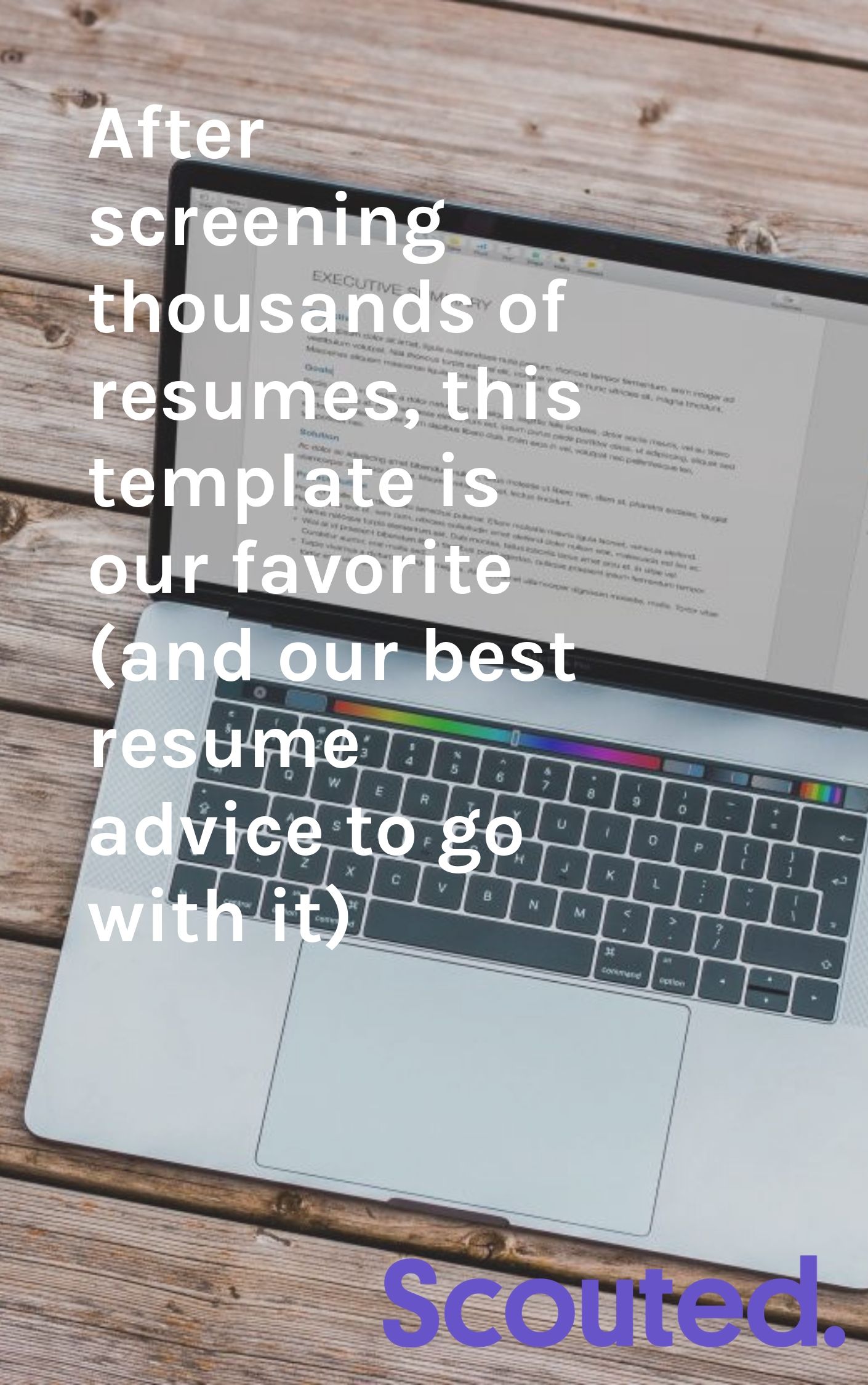
This is our preferred resume template:

Click here to download the template!

Is it fancy? Not really. Will it show recruiters exactly what they want to see? Yep!

Save your resume like this

Sometimes, the directions in the job application will specifically ask you to save your resume a certain way, possibly with the title of the position in the filename. Unless otherwise stated, we think you should save your resume like this: “FirstName LastName Resume.” Nothing complicated or fancy. Tell them who you are and what the document is and leave it at that.

Speaking of saving resumes…

Always save your resume as a PDF.

You’ll notice that our resume template is a Microsoft Word file. Whatever template you use, don’t leave it in an editable format. You never know how your resume formatting may show up on another’s computer so it’s best to play it safe and always save your resume as a PDF.

Keep it to one page

Unless you’re an extremely seasoned employee and have 20 years of experience under your belt, keep your resume to one page. We get it. You’ve done a lot and want to show off your unique side and exemplary work ethic. But seeing as recruiters are likely to make an initial judgment within the first several seconds of reading your resume, it’s best to stick to the point.

For goodness sake, use a professional email

Ok, your email doesn’t have to use a company or educational institution domain, but if you do use Gmail, just make sure you don’t use something you’ll regret like groovydaddy97@gmail.com. You won’t get the job, no matter how groovy your resume is.

Instead, try to make sure your email is simple, identifying, and professional. Here are a few helpful guidelines we took from Job-hunt.org:

  • Your email address should not be suggestive, flirtatious, generic, silly, or funny.
  • It should be professional and easy to remember and create awareness.
  • It should include your name, preferably first name and last name.
  • It should be a personal email address, not one shared with a spouse or family.
  • Try not to use numbers or underscores.
  • In particular, avoid including the year of your birth. It’s very easy to guess the probable age of Mary.Jane.Smith79@whatever.com.
  • If you cannot obtain your email at a “leading” email service such as Gmail, try your name at another email service so you can use your first name and last name.
  • Make it easy for prospective employers to find “‘you” in their inboxes.

Don’t hide your personality

While you should keep your resume simple and to one page, it’s also a great idea to add an interest or two near the bottom. In a sea of resumes, that could be the very thing that connects you with a recruiter and helps them remember you later on. Just don’t go overboard here.

Although you may really be into watching sports or building model trains, try to include activities or hobbies that could potentially translate into a skill that would be useful on the job. If you coached soccer, it could (quite literally) demonstrate team-building and leadership. If you’ve spent a lot of time traveling abroad, that could mean that you’re comfortable working with those who are different than you and are adaptable to different situations.

Here at Scouted, during our Round 1 video interviews, we give you a chance to express your interests by asking you what a perfect weekend would look like (as well as other insightful questions). If you’re really interested in helping the hiring manager get to know the real you, why not sign up and create your Scouted profile?

Don’t include an objective or summary

In reality, this information could and should be shared in a cover letter, email, or even at the interview. A hiring manager will almost always skip those and go straight to your work experience. Use this space for something much more valuable to your job hunt like relative experience, volunteer work, or related skills.

That said, if you would really like to include an objective on your resume, a one-line objective isn’t going to hurt anyone.

Don’t include references

What might surprise you about our template is that we don’t include a section for references. During most hiring processes, checking references is the last box a hiring manager needs to check before they can officially hire you. At this point, they already know that they want you to work for them, they’ve already given you an offer, and you’ve accepted it. That being the case, including your references on the document that gives the very first impression of you is unnecessary.

Most importantly, tell your story

The most effective resumes out there are the ones that tell a story- the story of you! If we can figure out who you are, what you’ve done, and what you want to do in 30 seconds or less, you’re golden. The best resumes will show a clear career progression as well as your skills that will make the hiring manager think, “Yeah. You deserve a chance here.”

Part of telling your story means that you’ll do more than simply copy and paste your past job descriptions. Tell the hiring manager what you accomplished at your last position. What difference did you make at your last company and in what ways were you an effective employee?

Also read: How to Edit Your Resume Based on the Job You’re Applying For

That being said…

Just because you’re telling a story, doesn’t mean you have the liberty to ramble. While the best resumes tell a story, they’ll still get looked over if they’re just hard to read. Formatting is pretty important when it comes to resumes which is why we recommend using our tried and true template.

Do the 10-second test

It’ll take about 10 seconds for a hiring manager to make an initial decision on your resume. After you’ve finished writing yours, walk away from it for an hour or two. When you return, try to skim it in about 10 seconds. See what you take from your resume and ask yourself if your relevant experience and expertise is clear. Once you do this, try having a friend do the same thing and see what they take from your resume as well. Edit as needed and then send it on its way!

These are most of the biggies but, of course, if you have other questions we at Scouted offer personalized resume advice! But for starters, try using our preferred resume template and go from there!

We’d love to hear your thoughts and questions in the comments below and we’ll do our best to respond to each!

Topics:

Candidates, Climb the Ladder
Climb the Ladder

Want work large company small companies resume

By Scouted.io
By Scouted.io

Say you have high aspirations to someday work for the well-known company of your dreams. Well, does that mean you need to work at well-known companies each step of the way until you get there? Will working at small businesses and startups give you the experience or “caliber” (if you will) you need to get picked up by one of the bigger guys?

We’re here to say that you’re not the only one wondering that. This is actually a fairly common concern we hear from candidates who want to work for a smaller company, but are afraid that a role at a small company won’t speak as loudly as a role at a larger corporation.

Here are a few ways you can vouch for yourself on your resume or during your interview especially if the companies you’ve worked for don’t necessarily speak for themselves.

Keep track of the difference you’re making

When you enter into a new role, it’s important to take note of how things are going in your department. Say you’re in marketing. What was the team doing when you arrived? What channels were they focusing on? What was the ROI in each of those areas? Make a note of what it was (or what it is now if you’re just starting) and when it comes time for you to move on, compare the state of the department you’re in now.

It’s important to ask yourself “What difference did I make while I was here?” Any company worth working for in the future will probably be asking the same question during your interview, so having that answer in mind will be crucial.

See, no matter what company you’re working for, if you’re able to come in and make a difference during your time there, hiring managers will notice and remember that. They’ll be able to believe that you’ll come into their company and make a difference as well.

Working for small companies can demonstrate flexibility and adaptability

What to do If You Want to Work for a Large Company but You Only Have Small Companies on Your Resume

It’s time to show the hiring manager your hat collection.

Get it?

I’ll explain.

Working for a small company often means wearing a lot of hats, filling in where needed, working wonky hours, and shifting focus quickly if needed. While these companies may lack the structure and tried and true processes that a company who’s been around for decades may have, you’re learning to do a lot more than simply fill the role you were hired for.

If you learned other valuable experience during your time at a startup or small business, be sure to mention it on your resume or cover letter. This is especially important if you’re looking for a career change or switching industries. (Also read: How to Edit Your Resume Based on the Job You’re Applying For).

Working for a startup or small biz can be a great way to expand your horizons and learn some new skills all while gaining experience in your field. Use this to your advantage when it comes to advocating for yourself later on!

[sc name=“Newsletter”]

You go above and beyond

What to do If You Want to Work for a Large Company but You Only Have Small Companies on Your Resume

One of the great things you’ll find in employees who work for smaller companies or startups is an adjective we use a lot around here: “Scrappy.”

Basically, someone who’s scrappy is willing to think outside the box. If something they’re doing isn’t working or could be better, they’re on top of thinking of new and creative ideas to improve their work. In essence, a person who’s scrappy is a person who’s passionate. By the end of the day, they get the job done, by any means necessary.

Let’s say you’re in sales and your number of qualified leads so far this month puts you just off your goal. An employee who works for a larger corporation may shrug it off as long as they were close enough. Whereas if you work for a company where you’re one of two people on the sales team, you’re probably going to dig a lot harder to find those leads by the end of the month because at this stage in the life of your company, every lead matters!

So if you’ve been able to develop something of a scrappy nature during your time at a small company, let your future employer know. As much as scaling and building repeatable processes is important, by the end of the day, you’ll make sure your goals are met.

Get shining reviews from your past employers

What to do If You Want to Work for a Large Company but You Only Have Small Companies on Your Resume

It’s one thing to say that you made a difference at your last company, it’s another thing for your old boss or coworkers to say you did. Depending on how aware your boss is if your job search, think about getting them to write a letter of recommendation to your hiring managers. Hopefully, they’ll be able to list a few ways you positively impacted their company, took responsibility and learned new skills during your time there. (Also read: How to Resign from a Job Without Burning Bridges).

Show off your ability to grow and scale

What to do If You Want to Work for a Large Company but You Only Have Small Companies on Your Resume

Chances are, if you’re moving from a smaller company to a large one, you’re going to be taking on more responsibility. It’s now your job to show hiring managers that you know how (or can quickly learn how) to take on more without becoming overwhelmed.

Try to think of ways that you grew or took on more responsibilities while in your past roles. Did you ever create a more streamlined process for something that used to be tedious? Have you ever hired or trained new employees? Ever been promoted? Find these examples and make note of them both on your cover letter and resume and during your interview. Show your hiring manager that you’re prepared to take on more responsibility, learn, and do work at a larger scale.

Use your network

What to do If You Want to Work for a Large Company but You Only Have Small Companies on Your Resume

When searching for any new job, it’s important to remember that your network will be your advocates. If you can, try to (in a not-creepy way) build relationships with people at the company you want to work for. If possible, they make be able to advocate on your behalf to the hiring manager. Personal recommendations go a long way and if you can get yourself even one good one, it could be all you need to set yourself apart from the rest. (Also read: How to Network (Like a Boss).

Align yourself with your dream company’s culture

What to do If You Want to Work for a Large Company but You Only Have Small Companies on Your Resume

Lastly, more and more these days, companies are hiring for “culture fit,” meaning that they’re looking for employees whose attitude towards their work, integrity, and values are similar to that of the rest of their company.

After doing some research, reading the job description and lurking around the company’s social media and website, ask yourself if you’re a good culture fit for the company you dream of working for. If you believe you are, then it should be fairly easy to advocate for yourself when on the subject if and when it comes up in an interview.

If you’ve ever made the leap to work for a larger company, what did you do to get there? Leave your comments below and share with a friend who’s on the job hunt.

Ps. Have you downloaded our founders’ free resume template? It’s our favorite one.

Topics:

Candidates, Climb the Ladder

Posts navigation

Older posts
Newer posts
Featured Jobs
Hearst Television
Account Executive
Hearst Television
Milwaukee, WI, United States

Hearst Television
WISN Spring Intern
Hearst Television
Milwaukee, WI, United States

Hearst Television
Anchor Reporter
Hearst Television
Westbrook, ME, United States

Mansueto Ventures
Editorial Intern
Mansueto Ventures
New York City, NY USA

Milk Street
Circulation Director
Milk Street
Remote, Work from USA

All Jobs »
PREMIUM MEMBER

Steve Ramos

Cincinnati, OH
15 Years Experience
Inventive and creative marketing professional with over 15 years of industry experience. Expertise in digital marketing, new media, and excellent...
View Full Profile »
Join Mediabistro Membership Today

Stand out from the crowd with a premium profile

Mediabistro Logo Find your next media job or showcase your creative talent
  • Jobs
  • Membership
  • Showcase
  • Resources
  • Contact
Facebook YouTube Instagram LinkedIn
Copyright © 2025 Mediabistro made-in-ny
  • Terms of Use
  • Terms of Service
  • Privacy