

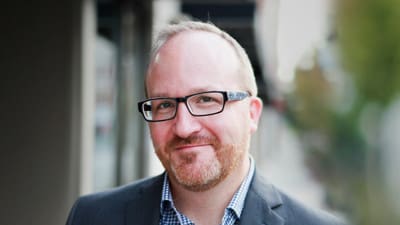
Charles Sennott has had a long career in journalism, working as a reporter and editor at the Bergen Record, the New York Daily News, and for the past 15 years as a reporter, Middle East bureau chief and Europe bureau chief at The Boston Globe. A former Neiman Fellow at Harvard University, Sennott left the Globe earlier this year to launch GlobalPost, a U.S.-based international news site. Sennott serves as executive editor and vice president alongside co-founder and CEO Philip Balboni. Since the site launched on January 12, GlobalPost has signed the New York Daily News and Star-Ledger as syndication clients. Sennott spoke with mediabistro.com about why he left the Globe, the importance of foreign news and his goals for his new enterprise.
Earlier this year, you left The Boston Globe after a number of years working abroad and on special projects here in the U.S. What spurred you to leave?
I’ve been a reporter who had what I like to call one of the last great rides in newspaper journalism. I worked for a small regional newspaper, the Bergen Record. I got across the river to the big city to work for the New York Daily News and rose to become a city editor. I covered the first Gulf War for the Daily News. I covered the World Trade Center bombing, which took me all over the world. After I left the Daily News, I went to The Boston Globe knowing that if I worked hard as an investigative and special projects reporter, I’d have a shot at being a foreign correspondent. I worked for two years as a special projects reporter and then they said we want you to go over and replace Ethan [Bronner, now with The New York Times] in Jerusalem.
Also on Mediabistro

The Boston Globe once had ambitions that would allow it to have seven foreign bureaus and a foreign editor, and I was really proud to be part of that. It’s my hometown newspaper. It’s the paper where I wanted to work my whole life, and where I really believed that I would.
When I came back from living abroad for 10 years as a foreign correspondent, I came back to a newsroom that was devastated by the economy of newspapers. It was changed, and it was changing its mission. The Boston Globe cut all of its seven foreign bureaus, no longer has a foreign editor, and is no longer really in the business of covering the world, which is my passion.
How did you and Philip Balboni end up working together on GlobalPost?
I began to cook up an idea in my basement of a not for profit organization that would be a boutique agency of foreign correspondents. I was able to get a line on a little bit of institutional funding as a not for profit, but I’m not a businessman and I was definitely hitting a wall. Right when I was pondering, “What am I going to do?” Phil Balboni, who is our CEO, got in touch with me.
We had both assembled boards of advisers, and we had overlap on those boards. We ended up getting in touch. We knew each other because Phil is an institution in Boston; he knew my work, and I had been on New England Cable News, where he was CEO and founder. Phil said, “Look, I hear you’re doing this,” and showed me a business plan that he had put together. It was very well thought-out, but I felt like it needed more depth. We, in essence, merged these two different visions — mine about really deep reporting, and his more about reporting with breadth, having a lot of correspondents. He heard out a reporter who’s not a businessperson, and he allowed me to try to figure out how to put a budget together that worked within his.
| “Newspapers are shrinking both in size and ambition.” |
What is the business model for the Web site? How do you intend to grow or at least continue what GlobalPost is doing?
The business model is to recognize that if you look across the media landscape in America, it is barren in terms of international news. There are definitely hilltops of excellence — The New York Times, NPR, The Washington Post — but in general there are very limited options for someone who wants to know about the world in terms of a place where they can go to do that. We wanted to become a place where you could have that, specifically for an American audience. Out of that need came an idea to start a Web-based news organization that would be unencumbered by legacy media. We would be able to start a new kind of news organization that would have a different cost structure, and it would allow us to build a very stealth team of correspondents. This is sort of a super-stringer model as it was often called, people who have a fixed payment every month for a set number of stories with a long-term agreement.
Our Web site intends to cover a lot of the issues we face as a country that are very global in nature, the economic crisis being the most yawning, obvious one we can see right now, but also climate change, global health, energy, etc. We came up three revenue models. And when I say we, I should really say Phil. This is his business plan. The first is advertising. The second is a syndication model. We are looking at newspapers that have abandoned or significantly cut back their foreign coverage. We offer a really attractive and affordable option to have interesting engaging content for their readership that we can provide both for their paper and their Web site at a very modest sum, and we have an incredible discounted rate for the first year. We’re hoping to get 50 papers that will be part of our network of syndication. The third model is that we are a destination site. We’re free. We want to build a community, to have that community come to us for information and not have any barrier to that.
We also are developing a membership model for what we call an inner circle of premium content. We would stream live interviews with newsmakers: We may invite the deputy interior minister, for example, of a country in turmoil and really troubleshoot them in a way that may not make for the greatest story, but would be a very interesting interview if you had interests abroad, whether economic or idealistic. We want to have this available so that you can get a much deeper grounding of a place. We also want to offer country profiles and different products for premium content that make up an attractive package for people who become members. We also just want to ask people, “Become a member and support the idea that great journalism needs to be self-sustaining.” This is a way to really vote for that and get a very good value at the same time. Beyond the paid part of that premium content, there’s an avenue to get access to that premium content where we’re developing a sort of point system. We’re coming up with a sort of schedule that will allow us to award, for free, people who have been very loyal to our site that same premium content — so it doesn’t just become news for rich people, but it becomes news for people who really care about the world and need to know. If that means you pay for that subscription or membership, that’s fine, or show us your commitment and we will create a point system for you.
In addition to diminished foreign news coverage, for various reasons, many American newspapers are now ending their relationship with the Associated Press. By syndicating articles, does GlobalPost aim to fill that void?
We can never replace the AP and we don’t intend to, nor do we have any pretension that we could try. We want to write differently than the AP. We want to find stories that are narrative and strong — we want to tell great stories, not simply deliver information. The AP has developed a reputation for excellence among its reporters for getting info right, for being there when it counts, for being a very reliable news source, but they have not earned their reputation as a place with extremely interesting writing. They’ve never had that tradition. We want to be a place where we really find an American voice for storytelling in the world. What I mean by an American voice is not jingoistic or nationalistic. I’m talking about an appreciation for a yearning in America to reach out to the world.
You attended journalism school, and you’ve taught and lectured at a few schools over the past couple years. When students ask you for advice on whether they should pursue work as a foreign correspondent, what do you tell them about what opportunities exist, and how might they set themselves up to take advantage of those?
I used to come from Iraq or Afghanistan and say, this is a great calling. You should do this. Being a reporter puts you on the front line of history. It’s really important work. We need good young people. Starting about two years ago, I couldn’t even look them in the eye, because there were so few opportunities. They don’t have a prayer of having the sort of ride that I had in newspapers, where you can rise up and get to a position where you’re in a sweet spot, like being based abroad full time. That was an extraordinary opportunity that The Boston Globe gave to me, but those opportunities are for the most part over. The idea that you could have some of the interesting positions I had along the way like a national correspondent or a special projects correspondent — those are over. Newspapers are shrinking both in size and ambition.
Now that I’ve started this new news organization and now that we have brethren like Politico and ProPublica, there is this stirring of hope. There are these new news organizations that are going to be multimedia, Web-based, multiple platforms. It’s going to require a new kind of journalism. We want great storytellers, great writers, but if you happen to also be a sufficient or even talented photographer, that’s great because you can learn FinalCut Pro and mix some multimedia packages for us. We also are interested in great storytellers who are photographers who might want to try their hand at writing. That doesn’t mean we want everyone to do everything. We want people to go to their strengths and go to excellence. When you talk to young journalism students like that, whether they’re a photographer or a writer or a producer, you can see their eyes light up because they get it. They know that they can find new ways of storytelling across platforms. They’re dying for the chance. It’s very easy to go talk to schools now, and I am flooded with applications or requests for business cards. I encourage people to come to us because we want correspondents all over the world. We want young people. We also want experienced people in the field. We want to create a community of both veteran correspondents who really know what they’re doing and young people looking for their first opportunity. I think everyone has a lot to learn from each other.
At what rate do you intend to add locations and correspondents?
Beyond the 70 correspondents in 53 countries, we hope to ramp up over time, but we’re not assigning numbers to that. We want to be in more countries, but I think more precisely we want to be more deep in big countries, like China, India, Brazil, Indonesia. We want to add staff where we think there are great stories that aren’t told often enough to an American audience.
| “We’re just this little lifeboat, and we know this is tremendous talent we’re picking up. We can’t give them full-time jobs, but we can become a very important piece of a freelance portfolio for them.” |
In your opinion, which outlets cover foreign news well? Are there any from which you draw inspiration for GlobalPost?
The Economist is an incredible organization with a very successful model, but one where voice is intentionally industrialized. There are no bylines on anything in The Economist. It’s an approach that has a very important place and I respect the organization a lot, but we want to do it very differently.
The BBC is the greatest news gathering organization in the world. I had an opportunity when I was based in London to do a lot of work with the BBC. I learned best practices just by observing how truly convergent the BBC is, in terms of print, radio, audio and video coming together in one Web site where you can really understand the world. I also hugely admire the BBC and have a lot of good friends who are correspondents there. I will point out that these two examples are British. I’m someone who loved living in London, I love the culture of the United Kingdom, but I am tired of getting my news with a British accent. I would like to have an American sensibility of storytelling.
I remember a story I did — I thought I was losing my mind, but I swore I heard a Boston accent through Arabic one day in the West Bank. I said to the guy for the hell of it, “Where are you from?” and he said, “Somerville, Massachusetts.” This falafel shop that he owned where all these young guys throwing stones at the Israeli army would go to get sandwiches, he’d often give them to them for free. I had an attitude about this — this guy is so irresponsible as to be encouraging these young teenagers to go out and throw rocks at a tank and get shot at. But once I stood there with my taxicab Arabic (I had a very good translator, a colleague who I worked with really closely), we found out that what he was telling them was [that] this methodology of throwing rocks doesn’t work, and if you want to stand up for Palestine and your rights you should do that, but find new ways to do it. He was a really interesting and positive voice with young people in the community. That kind of texture, of hearing a Boston accent through Arabic and knowing that this guy is a Bruins fan who came to the West Bank to start a falafel chain and took on the role of teaching young Palestinian kids some of the things he learned in America — I don’t read those stories in The Economist, and I don’t really see those stories on the BBC. I hope to have a group of writers, photographers, and videographers who are out there in the world looking for narratives that help us as Americans connect to the world.
What do you think are the essential qualities of a good foreign correspondent, and where did you acquire those skills in your career?
I think the greatest foreign correspondents have covered cops. When you cover cops, you are forced to go behind official information and get into a neighborhood and see for yourself whether that official information has any bearing on reality. [You] use your wits and resources, your pluck and courage or whatever skill set you have, to talk to people and hear their story out. [You] try to piece it together on your own from the street, and weave that understanding with the more official understanding that you’ve gotten from police headquarters or the prosecutor. In that weave comes a mix of storytelling, street-level reporting and official documentation. That raw skill set of covering cops, I think, sets you up to be a foreign correspondent. It also instills in you — almost into your DNA — a sense of skepticism of all sides, and you are served very well by that in the field as a foreign correspondent.
The greatest foreign correspondents are the ones who live in the country about which they write, and those who speak the language. I was only able to do that when I worked in Spanish-speaking countries. I tried hard on Arabic, but I couldn’t get it. I regret that. I think you need that. It’s something I’m not giving up on and am working on.
Great foreign correspondents want to tell a story to the friends and family they have back home. When I wrote for The Boston Globe, I never needed a reader survey to know who the readers were. They were my cousins, my friends, the guys I grew up with, my wife’s family, the people I knew my whole life. I knew who I was talking to. When you think that way as a foreign correspondent, you produce compelling stories that grab people. That really is what we want to create in our organization, and actually to be more precise, to draw upon from a very experienced set of mid-career journalists who are already out there in the world. We’re just this little lifeboat that’s trying to pick them up, and we know this is tremendous talent we’re picking up. We’re aware that we can’t give them full-time jobs, but we can become a very important piece of a freelance portfolio for them.
What made you decide you wanted to be a journalist?
My brother, Rick Sennott, was a photographer for the Boston Herald. When I was 17, he had this job on the night shift doing sports, and I used to run film for him. I couldn’t believe that he was getting paid to be courtside to watch Larry Bird. I remember specifically one night, the city editor, this grizzly old guy, opened up a Red Cross medical kit on the wall, and there’s a bottle of vodka inside. He says, “Hey kid, you want a drink?” I swear I knew at that moment, I’m doing this job, this is me. A chance to be courtside on life. At 17, that was Larry Bird for me. At 25, that was New York City and crime. At 35, that was Israel-Palestine. At 40, it was Sept. 11, Iraq, Afghanistan. And at 46, where I am now, I feel like I had an incredible ride. Now I want to share what I know with other correspondents in the field who I want to have that courtside seat.
Tips for starting an online media business:
1. Identify an under-served niche to target. “The business model is to recognize first of all that if you look across the media landscape in America, it is barren in terms of international news,” says Sennott.
2. Utilize your contacts. “I would pull together many of my friends and colleagues from the field… I knew these people, and I knew that they were in the same position I was in.”
3. Know your limitations. “I’m not a businessman.”
4. Be flexible and open to different ideas. “We, in essence, merged these two different visions — mine about really deep reporting, and his more about reporting with breadth.”
5. Develop a business plan that relies upon multiple revenue streams.
Alex Dueben is a freelance writer living just outside New York City.
Topics:
Mediabistro Archive