

Nothing better represents the holy grail of social media achievement than working for Twitter. And, for Mark Luckie, becoming the site’s manager of journalism and news is just the latest in a line of sweet social media gigs.
The author of The Digital Journalist’s Handbook held positions at Los Angeles Times, EW and Center for Investigative Reporting before selling his uber-popular blog 10,000 Words to Mediabistro’s parent company, WebMediaBrands, in 2010.
Also on Mediabistro

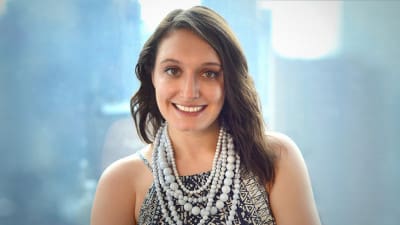
Now at Twitter, Luckie says he’s working to take the No. 2 social media platform in the world (and how we use it) to even higher echelons of greatness, including making it easier for us to integrate audio, video and graphics into the stream of conversation. And, while Twitter is increasing the prominence of non-text multimedia, Luckie says it all comes back to those basic 140 characters.
Let’s go back a little. How and why did you first launch 10,000 Words?
There was one camp that was speaking about online journalism in general but not really talking about the technology that affected it, and then there was the other camp that was talking about technology but not talking about it in a way that journalists could understand and process it. So, I saw the need for that, and really wanted to fill that void for journalists like me who were just beginning to understand technology and wanted to hear about it in a way that spoke to them, that was simple, and most importantly, that they could take something away from it and then go on to do great things in journalism.
| “The most important trait beyond technology is being able to communicate with people.” |
You scored the ultimate coup for many bloggers, and that is getting big enough to be bought out. Was it always your intention to eventually sell 10,000 Words, and how can other bloggers make their sites attractive enough to do the same?
It was never my intention to sell the blog. I thought about it in some of the later years, but I really felt like I wanted to keep control of it. I was thinking about advertising first, but I didn’t want to be beholden to advertisements and making certain numbers of pages views. But there came a time when the blog grew bigger than what I could do myself. It was getting tons of traffic, tons of page views, and getting shared everywhere, and I wanted to do more than what I was currently doing. The great thing about Mediabistro is that it allowed me to hand it off to a group that could take it to that next level that I couldn’t do by myself.
If anything, the things I prepared for in the sale was to make sure that I knew who my audience was, to look at the numbers. What are my pages views? What are my uniques? What is my bounce rate? What is my social media presence? How many Twitter followers do I have? How engaged are they? These are the questions that I asked myself, so I knew my self-worth before moving on and presenting the blog to WebMediaBrands.
You have to think of your blog as a business if you want to take it to that next level. So, you need to understand what is the product that you’re selling, who can you pitch it to, and not just say ‘This is my baby. This is something personal for me,’ but also understanding that this is a [viable product] to other people. But you have to understand that value first.
| NEXT >> Hey, How’d You Get Everyone Buzzing About #codeyear, Zach Sims? |
You then became social media manager for the Washington Post. Besides using social media, obviously, what’s one skill or trait that someone needs to succeed in a position like that?
I think the most important trait beyond technology and all of the data skills and that good stuff is being able to communicate with people. If you don’t know how to communicate with people, or you don’t know how to foster conversations, keep those conversations going, understand what people want, I think you sort of do yourself a disservice. Anyone who’s in that world can tell you that it starts with really great communication skills. Part of even the managerial role — learning how to communicate with people inside the newsroom as well as Washington Post‘s readers in the social media space — that sort of really grew my knowledge and my ability to tell a story through social media.
Now, you’re at Twitter. What does a manager of journalism and news do exactly?
It’s working with journalism organizations to come up with creative ways to use the platform beyond just the basics. I think a lot of journalism organizations really understand how Twitter works, but how do you take it to the next level? How do you create some great engagement? So, coming up with those ideas myself, working with journalism organizations to do so, and working with them to roll out products that we’re working on, like expanded search and our Twitter Cards. There are a lot of things that journalism organizations want from Twitter, and I’m sort of like the inside man who’s working on behalf of journalists to say, ‘Hey this is what journalists need to be able to do their jobs on Twitter.’
What creative uses of Twitter have you witnessed coming out of the digital journalism community that made you say, ‘I wish I had thought of that!’?
I have that reaction all the time. I actually keep a list of all of the great things that journalists and non-journalists are doing in the Twitter space. I love live chats. I love that journalists have taken on conducting live chats with readers with no sort of interference or handling by the company itself. I love taking hashtags and taking them to the next level, really ask questions via hashtags. BET’s 106 & Park, in particular, is really good at fostering conversations with hashtags and not just sort of attaching them at the end. I love what The Wall Street Journal is doing in terms of pushing graphics through Twitter, realizing that Twitter is not just a text community. That’s what it was when it originated, but now there is so many media that you can share via Twitter and really take advantage of.
| “There are tons of ‘gurus’ out there, but you have to be the one that’s done something different to separate yourself from the pack.” |
What sort of new products will Twitter be rolling out in the near future to help us produce and share our content and engage with audiences better?
Those new products are coming, and I have seen what they are, and I can tell you that they are amazing. I just can’t tell you what they are, because we are still working on them, but you are seeing some of them roll out already like the Twitter Cards and a new iPhone app. I guarantee you that they are working on various things that are just really, truly amazing that are going to transform the news.
Putting on your futurist hat, how do you see Twitter impacting journalism in the next two to three years?
I think journalists are becoming much more sophisticated in the way that they use Twitter. It isn’t the purely promotional tool that it used to be, when journalists would just sort of [push out links] and sort of wait for an audience to come to them. But what we are seeing now and what you’ll see much more in the future is journalists engaging around content, using it as a reporting source, using it as a way to engage with readers and engage with sources versus just listening to them. Some journalists are lurkers, sort of watching from the sidelines. And that’s okay, but I think you’ll find a much more engaging experience if you actually interact with people via Twitter. The more people do that, the more value they get from the platform, so you are going to see much more of that in the future.
Luckie’s Tips for Getting a Social Media Job
1. Know how to sell yourself to companies… “Really push yourself out there and say ‘I’m really talented at social media. Here’s what I have to offer.’ You should have a portfolio and be sort of promotional and let people know how great you are.”
2. but back it up with a strong portfolio. “Talk the talk and walk the walk. Have some really great engaging social media profiles. Some people say ‘I’m a social media guru;’ then, you look at their Twitter feed and it’s just a bunch of links. So, it’s really about showing ‘What’s different about me? What am I doing on Twitter, Facebook, Instagram? How am I using the ecosystem of social media to really propel my message or the message of others?'”
3. Don’t be just another social media “guru.” “Get out there and take the time to build out your ideas, because people are looking for innovators; they are looking for people who are doing things differently. There are tons of ‘gurus’ and ‘mavens’ out there, but you have to be the one that’s done something different in order to separate yourself from the pack.”
Jennifer Pullinger a freelance writer in Fairfax, Va. Visit her at www.jenniferlpullinger.com and on Twitter @JLPullinger.
Topics:
Mediabistro Archive