

The corner druggist, surrounded by candy, toilet paper and soda, has a story to tell. So does the man who has been cutting hair at the Port Authority Bus Terminal for 36 years. Even a 72-year-old accountant has a tale. Sarah Kramer has been unearthing stories of ordinary people that would otherwise be unnoticed for radio and film for more than 10 years. When she was hired at The New York Times as a multimedia and audio producer, she brought her decade’s worth of documentary-style storytelling skills. Along with fellow Times multimedia producer, Alexis Mainland, Kramer developed One in 8 Million: The Web-driven segment combines audio and photography, and a print component runs in the Metro Section of the paper. Each week, the project zeroes in on a single character living in New York City and serves up a slice of life.
Before coming to the Times, Kramer was the senior producer at StoryCorps, a Peabody Award-winning audio program that records conversations between loved ones. NPR’s Morning Edition features these stories weekly. She has also worked as a field producer and associate producer for HBO and PBS.
Also on Mediabistro
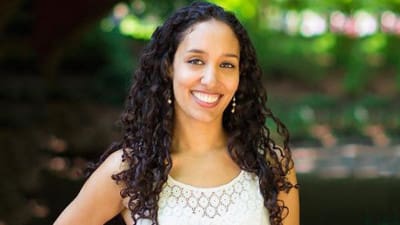

mediabistro.com caught up with Kramer to discuss the intricacies of reporting oral history through interactive multimedia, the project’s collaboration process, and her projections for Web content delivery.
How did your experience in radio lead you to this project?
I was at StoryCorps. My whole background has been in documentary storytelling, whether it’s film or radio. Then I helped to launch StoryCorps, and I was there for the next four years. [StoryCorps] very much comes out of the documentary tradition, but is based on people telling their own stories. What’s unique about it is it’s a conversation between loved ones, so it’s one person asking somebody else questions and listening to them tell stories and thoughts that maybe a regular interviewer/journalist couldn’t access in the same way. It’s partly about that dynamic, and it’s certainly about the idea that everyone has a story to tell. I think that it was working with the stories for a number of years and also being a native New Yorker and being very in love with New York that made me want to do something in the same spirit, but also bring something different. I was collaborating with Lexi Mainland, who is my colleague. We leaped on this together — she was coming from having worked at WGBH and so she had a similar sensibilities, some different sensibilities. We ultimately thought of a basic idea, which is not new to us, which is an age-old idea — where it’s just telling stories of ordinary people. What we wanted to do with this, which we as The New York Times were uniquely positioned to do, was we had the ability to tell audio stories, we have amazing photographers, we had the ability to blend those and do it in-house. We had the city at our feet and the ability to make a really beautiful design for the whole thing.
Where did this idea come from? How did you approach The New York Times with this project?
Well, I was working here. We’re both full-time employees and part of the multimedia department. Lexi is a Web producer embedded at the Metro desk. Part of her job was to do multimedia that goes along with print stories, and she was seeing a need for multimedia that could be done unattached. I was working pretty closely with the Metro desk, and one of the things I’ve been charged with along with colleagues, is we both do a lot of Web-only projects, and we also do a lot of training around the newsroom. I had been charged with improving the audio content on the Web. So Lexi and I came together and decided we wanted to think about a Web-only project that included audio, that was multimedia. We initially had a whole bunch of ideas, then we pitched a bunch of ideas and then honed a couple of them. Ultimately it turned into this. I think the managers — both on print, on the Metro desk and within the Web — were pretty quick to buy into it and see the same possibility for it. It took a long time to develop and a lot of iterations and memos and thinking about it, but everybody was pretty enthusiastic about it from the get-go.
| “It just evolved as it went along. It feels exactly like what I wanted, but it’s not necessarily what I thought it would be months earlier.” |
You were working with the multimedia aspects before this project came into being. What were you doing?
My job here is as a multimedia producer at the multimedia desk; I both produce a lot of audio slideshows, a lot of audio photo narratives. I report in audio; I edit it. And also, [I do] a lot of training in the newsroom to help other people become better at audio, so whether voicing or scriptwriting or editing them on a piece — it’s a whole slew of things.
Did you have to make any compromises to your idea, or were you able to fully realize your project?
There were ultimately a lot of people involved in it, so it became a culmination of everybody’s ideas. And one of the things that it set out to do that it has done successfully was to span the newsroom, to bring in people from different departments, to teach people different things, to be used as a training ground to a certain degree. So, it definitely realized that and that was a portion of our goal. At one point, we were thinking of having the characters linked to each other, so it could be like synaptic leaps between them, and they would somehow know each other so person would lead you to the next person. At one point that got done away with because it seemed way more unwieldy and unnecessary that way. It just evolved as it went along. I think everybody was on the same page once it launched, and, I think, [so was] everybody’s thinking involved prior to that period. It feels exactly like what I wanted, but it’s not necessarily what I thought it would be months earlier.
You were speaking about your team members — how large is the group of people you work with? What do they each do?
There are about 10 producers, included in that, Lexi and I both produce pieces. Then there are (Lexi and I included in this, as well) five people acting in the role of editor, and that spans both the print desk and Web editors. Tom Jackson, a multimedia producer, conceived of and designed the interface. There’s one photographer for the series, that’s Todd Heisler. And then there is our photo editor, Meaghan Looram, who helped conceive the photo side along with Todd, who figures out the sequence for each one of the pieces. So that’s the core group, but we get ideas from people all around the newsroom, we have gotten ideas from readers, so there’s a lot of other people thinking about it.
Have you taken any of the suggestions you get from readers?
Some of them we definitely called and pursued in terms of following up, but we haven’t actually done one for whatever reason. But we’re constantly culling through them, and we’re constantly passing them along, and I’m sure we’re going to hit on something. Some people have led us to other people, like we’ll speak to somebody whom somebody recommended, and ultimately they’ll end up knowing someone who makes more sense.
How do you typically find your subjects?
We do all the reporting methods that are typical in a sense, like we both have a road map of people we’re looking for, as well as a ton of serendipity and spontaneity involved in it. Say we wanted to find a teenage mom for one of our characters: For that, we went through a bunch of organizations [and] spoke to a bunch of girls until the producer struck up a relationship with someone who felt comfortable doing it, [who] was a good speaker. So something like that: just the normal leads one would use in reporting. There is one that hasn’t run yet, but one of the producers met [the subject] on the subway. They were stuck in Queens, and they started chatting, and then they ended up going to get a beer, but all in his mind he was thinking, “Huh, I wonder if this would be a good story.” Probably everyone I know is on the lookout and sends me ideas. Because it’s so wide-open, I think it’s fun to think about, so a lot of people are sending a lot of ideas. It just happens in a variety of ways, but our challenge is to balance it out and keep it geographically diverse and ethnically diverse, professionally diverse and socioeconomically diverse. So that’s partly where our road map comes in.
How do you think One in 8 Million as a Web-driven endeavor represents the next phase at the Times? Do you see more segments becoming Web-focused?
I think the Web will continue to grow and evolve in terms of the material it has on it and the ambitiousness of the projects we undertake. So I don’t know if there will be more Web-only material so much that what is on the Web will continue to grow and become more ambitious.
Why did you choose to pair sound and images versus a video montage?
You know, video was never really on the table. We, from the start, had just been thinking about audio married to photo. For who was conceiving of it, that was our skill set. The idea that we wanted [was for] these to be stories that were sort of meditative and quiet — and photography would allow for a lot of different images that could just be of the person. We didn’t just want a straight-on video shoot for each person.
Is that why you shoot exclusively in black and white?
That was another stylistic decision we made. Early on we wanted something that would keep the series feeling consistent and beautiful, and that was the way all of us envisioned it: black and white.
| “It puts a huge onus on a person to just say, ‘Tell me your story.’ We’re letting people talk, but we’re also steering it in the directions that we’re interested in.” |
Most of the segments are about two to three minutes in length. Do you ever feel like there are times when someone has a story that doesn’t fit into that time frame? What do you do?
This is something I learned from StoryCorps: that it’s hard to sustain the voice, a single voice, for a long period of time. Whereas if you have ambient sound or scenes, obviously there’s a lot more freedom. Many stories can be collapsed, like [the segment on the] baby deliverer. The interviewee told that in 45 minutes, and we chiseled it down to two and a half minutes. The whole 45 minutes are incredibly interesting to listen to in a different context, so I think you can often break down the story. Something like that was really challenging: It was a big challenge to edit that down and keep it totally accurate, and keep the spirit of the longer piece and keep to the essence of it. With all of our subjects, we’re not only thinking of, ‘Is the person a good talker?’ — we’re thinking, ‘What are the photographs for this?’ If somebody’s remembering something from the past and they’re no longer there, there’s certain ones that just aren’t going to be rich photographically and this really is a project of both, so we’re thinking about both elements in that. Similarly, we’re thinking, ‘Is this something that will be conveyed? Will we be using audio in this particular format to its best?’ That’s what we’re looking to do.
When you interview your subjects, do you have questions that you ask them, or do you just let them tell their stories straight?
No, we’re asking them questions. Everybody who goes to do an interview has done a lot of research, not necessarily on the person, but a lot of research to get to the person. So they’ve pre-interviewed a bunch of people, they’ve pre-interviewed this actual person, and then they’ve pitched various people to their editor. Their editor said, “Yes, this one sounds good. Go for it.” And then they’ll conceive of the questions off of the pre-interview that they want to ask — and, like any reporter, they’re asking a lot of follow-up questions. It puts a huge onus on a person to just say, “Tell me your story.” People like to be asked questions and then be able to respond. We’re letting people talk, but we’re also steering it in the directions that we’re interested in.
Do you interview your subjects in their homes?
Yeah, not necessarily always in their homes, but always in an environment that’s theirs. Both because of the idea, ‘Who knows what’s going to happen while you’re there?’ and also that’s where they’re comfortable and you automatically get information about them by being in their environment.
Do you have one session of taking the audio? How does the photographer cover the person?
Unlike a lot of what happens on the Web at the Times, we actually have a luxury in that we record the audio, we do a rough edit so that the story is loosely in place, and then the photographer, Todd, listens to the story and goes out and shoots the photography. In many ways, I think that that’s made it married very nicely together, whereas other times we have here photos that have been shot [and] we have audio that’s been recorded, but they’ve been done simultaneously, so sometimes it makes for a different process.
How long does the photographer usually have to follow the subject?
He usually goes twice, to two different locations that comprise this person’s life. It’s probably a day of work, in total work, but it often falls over more than a day.
Since you’re focusing on city characters, how do you feel the demise of the standalone City section changes the role of One in 8 Million?
I think the print paper will embody what the City section was, and there are other ways to still have that presence in the paper. That’s something that they’ll figure out. I think One in 8 fits well into Metro and also fit well into City, when City was around. Both of them are stories of the city, so One in 8 continues to fit in and continues to do that, but doesn’t become more important.
You were speaking a little bit about your experience at StoryCorps. Did you take other skills that you had learned there and apply them here? Is there anything else that comes to mind?
Well, I had been working in stories before StoryCorps: I had been working in documentary film for seven years, so part of it was I definitely applied my knowledge of story from all my experience. But I learned most of what I know about audio from StoryCorps — that’s how I got hired here to a large degree, so I’m definitely using that. I think coming here was the natural next step for me, or coming to a job like this was the natural next step. So, yeah, it’s absolutely built on everything I learned there.
Do you ever see this project expanding nationwide, say, One in 300 Million?
That would not be a decision for me to make, but no, we’re seeing this as a year-long project revolving around the city. I think the reality of this is it’s just one project we’ll do, and this has opened the door to do a whole series of other projects. I’m sure there will be another project that builds on this project.
Four tips for becoming a multimedia producer:
1. Have as many skills as possible — audio, video, flash, writing — but have an expertise. No one is going to be able to do all of them equally well.
2. Be able to think out of the box and expand the dimensions of storytelling.
3.Be a good collaborator.
4. Have a good sense of story and experience reporting and producing a range of stories.
Paulina Reso is an editorial intern at mediabistro.com.
Topics:
Mediabistro Archive