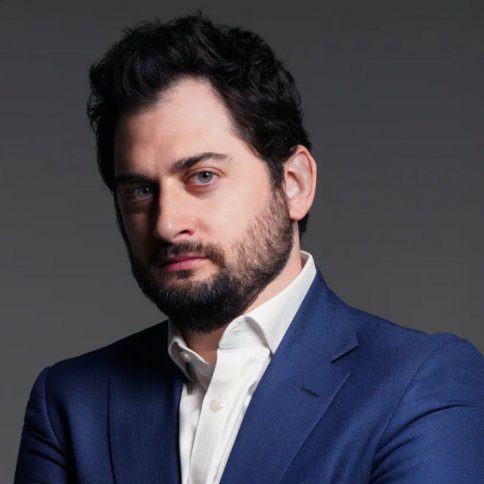

Edward Hertzman founded Sourcing Journal, sold it to Penske Media, got promoted to EVP of all Fairchild Media titles, and left to do it all over again with Athletech News. His framework for launching B2B media companies in underserved industries has a lot to teach anyone trying to build something real (and big) in the media business.
The Supply Chain Executive Who Accidentally Built a Media Empire
Edward Hertzman did not set out to become a media entrepreneur. He was a supply chain executive, traveling to factories in Karachi and Dhaka, managing sourcing and costing for Synergies Worldwide, which serviced retailers and brands ranging from Inditex (Zara) to TJMAX. He built Sourcing Journal in 2009 because he needed better information to do his actual job.
Also on Mediabistro


That origin story matters. Hertzman was not a journalist who decided to cover an industry. He was a practitioner who understood how decisions got made inside the companies he was writing about, where the pain points lived, and what kind of intelligence actually moved the needle. The publication he built reflected that: utility over narrative, decision-grade information over general interest reporting.
Within a few years, Sourcing Journal became the largest trade publication covering sourcing and supply chain in apparel and textiles, reaching more than 90,000 readers. In 2017, Penske Media Corporation acquired it. Hertzman stayed on as president, was promoted to executive vice president of all Fairchild Media titles, and spent five years learning how one of the biggest media conglomerates in the world acquires, scales, and professionalizes brands.
Then, in 2023, he left to start over.
The Pattern: Find a Big Industry With Bad Media Coverage
Hertzman’s second act is Athletech News, a B2B media company covering the fitness and wellness industry. It has attracted more than 100,000 subscribers since launch. His investment vehicle, Hertzman Global Ventures, also makes targeted bets in PE funds and supply chain tech companies. And his latest entity, Hertzman Global Intelligence, launched in 2025 as his framework expands beyond a single publication.
When we asked how he identifies these opportunities, he was disarmingly direct about the process. He looks for industries that are large, fragmented, and economically significant but where the media conversation is either nonexistent or shallow. Then he asks a specific question: can he and his team actually build real relationships with C-level executives and founders in that space?
If the investors, analysts, and trade associations in a given industry lack a credible platform, that is the opening. The opportunity is to become both the megaphone for the industry and the trusted source its leaders rely on daily for intelligence.
Validation, he says, happens fast when you are in the right space. The audience compounds. The credibility compounds. When the key players start engaging, sharing information, and turning to you as a platform, you know there is a real business there. In B2B, the metric that matters most is not traffic. It is whether the people who matter treat you as essential.
What Five Years Inside Penske Taught Him
Operating inside a large media company gave Hertzman something most indie media founders never get: a front-row seat to the mechanics of acquisition, scale, and enterprise value creation. He credits Jay Penske and his organization with teaching him the actual business of media.
The education was specific. He learned how to build infrastructure, how to scale operations, and what a buyer is really looking for in an acquisition. He came to understand that not all revenue is created equal, and where you prioritize becomes critical. The importance of economies of scale became very clear if you want to build a large, durable media company.
He also learned how to professionalize operations: sales infrastructure, audience development, and financial planning. You cannot run a real media business on instinct alone, he says. He learned to become organized and disciplined in a new way and carried that into his next chapter.
But Penske also showed him where large organizations get stuck. Speed, risk tolerance, and innovation suffer under corporate guardrails. That tension reinforced his belief that early-stage companies have a real advantage if they stay focused and nimble. He knew he could build faster outside.
The Revenue Model: What Actually Scales in Trade Media
On revenue, Hertzman is blunt about the trade-offs. Direct advertising and branded content, especially the work a studio produces, scale the fastest in the early stages. It is the easiest revenue to turn on when you are building an audience.
But it is also the most human capital-intensive, the most time-consuming, and the hardest to replicate consistently year after year. It supports the business early on, but it is not the endgame. You need more than ad revenue to build a sustainable media company.
The real goal is layering on subscriptions and events. Those are the most durable and scalable revenue streams over time. They generate recurring revenue, deepen audience relationships, and deliver real enterprise value.
Here is where Hertzman draws a sharp line. To build a real events and membership business, you have to invest in quality content and real journalism. You cannot rely on commodity news or AI-generated content. If you want people to pay, you have to create immense value, and that takes time and real money.
The barrier to entry in media has never been lower, he acknowledges. But he argues it has never been harder or more expensive to build something meaningful and lasting.
He is equally pointed about what to avoid: building a business that relies primarily on traffic, indirect revenue, or affiliate income. If you are dependent on someone else’s audience or someone else’s distribution, your business is vulnerable to disruption at any moment. The strongest position is owning your audience and monetizing it directly.
Why Athletech Waited Three Years to Host Its First Event
One of the more counterintuitive moves Hertzman made with Athletech News was waiting three full years before hosting a live event, despite events being a core part of his long-term revenue model.
The reasoning was deliberate. He did not yet have the brand cachet and personal relationships needed to bring together the right level of executives and position the brand as premium. You can always move downmarket, he notes, but going from mass to premium in any vertical is extremely difficult.
That patience extends to a broader philosophy about what the first six months of a media business should look like. No matter how much experience you have, how much money you raise, or how big your team is, building audience and creating value takes time. You need reps. You need to become part of people’s habits. They need to trust you and rely on you, and that does not happen overnight.
The biggest mistake people make, he says, is trying to accelerate trust. You cannot. You earn it over time.
The Practitioner Advantage, and What to Do When You Do Not Have It
Hertzman’s supply chain background gave Sourcing Journal an edge that traditional media coverage could not replicate. No one could question whether he had real experience. He had been on the ground in the factories. That credibility shaped everything from the editorial voice to the advertising relationships.
A traditional media person might focus on storytelling, he says. He focused on utility. That gave Sourcing Journal an advantage early because people knew the publication was not just reporting. It understood their business.
But when it came time to build Athletech, Hertzman did not have that same embedded industry experience. So he approached it differently. He became a student of the fitness and wellness industry, hired journalists who knew more than he did, and focused on listening more than prescribing.
He knew the playbook. He had to learn the players and their problems.
That distinction is worth sitting with. The playbook for building a B2B media company is transferable. The domain expertise is not. Hertzman’s solution was to be honest about the gap and hire around it rather than pretend it did not exist.
What This Means for You
Hertzman’s career arc is a case study in what happens when someone combines practitioner credibility, B2B media instincts, and the discipline of operating inside a major media conglomerate. His framework is clear: find a large, fragmented industry with shallow media coverage.
Build authority with the executives who drive it. Invest in quality content and real journalism. Own your audience. Be patient.
For media professionals watching the industry reshape itself around AI-generated content, shrinking newsrooms, and platform dependency, the signal here is worth noting. The most durable media businesses are the ones built on direct audience relationships and premium, high-utility content that people will pay for. Speed-to-market matters less than depth-of-trust.
That is not an easy path. But as Hertzman puts it, if you do not have the patience, the stomach, or the financial runway to invest in that kind of trust-building, this probably is not the right business.
Edward Hertzman is the founder and CEO of Athletech News, the founder of Sourcing Journal, the founder and Partner of Active Source Lab, and the managing partner of Hertzman Global Ventures and Hertzman Global Intelligence. He holds a B.A. in Economics from NYU and serves on the board of Delivering Good, a charitable organization that channels the resources of the fashion industry to those in need.
Mediabistro is the leading job board and career platform for media, content, and creative professionals. We regularly publish interviews, Q&As, and featured profiles with media personalities who have built an audience, an empire, or are just doing interesting things in media. Post a job or explore opportunities.
Topics:
Advice From the Pros