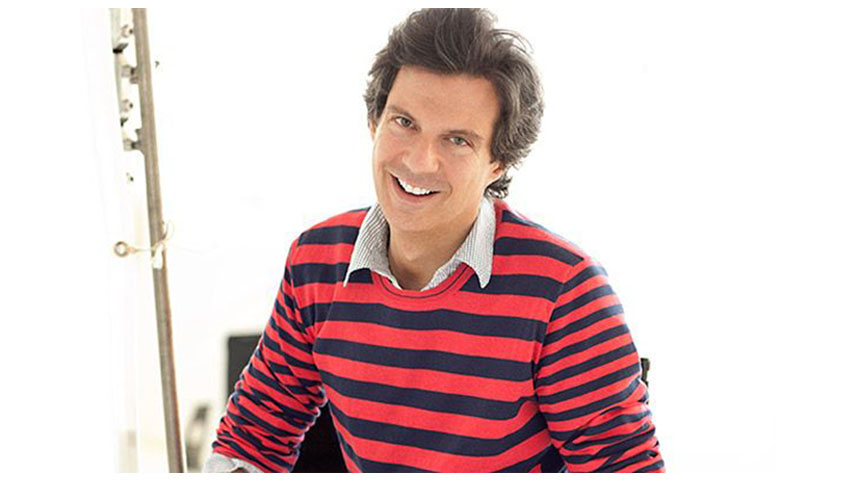

Interview originally conducted during Adam Glassman’s tenure as Creative Director at O, The Oprah Magazine
In this article:Quick Facts | The Creative Director Role | Biggest Challenges | Using Real Women as Models | Styling Oprah | Career Advice | Universal Fashion Tips | FAQs
Also on Mediabistro

Adam Glassman served as the creative director at O, The Oprah Magazine for over two decades, shaping the visual identity of one of the most influential women’s publications in media. Known for his “Adam Says” advice column and his commitment to featuring real women of all ages and body types, Glassman brought a distinctive approach to fashion journalism, prioritizing accessibility over exclusivity.
In this interview, Glassman discusses what it takes to succeed as a creative director, the challenges of finding photographers who appreciate adult women, and what it’s like to style one of the world’s most famous women every month.
Quick Facts: Adam Glassman
| Name | Adam Glassman |
| Position | Creative Director, O, The Oprah Magazine |
| Notable Column | “Adam Says” (launched 2007) |
| Birthday | November 6 |
| Hometown | Manhattan, New York |
| Education | B.A. in Business and Communications, NYU |
| Career Path | Fashion/Beauty Director at Lear’s → Freelance Art Director/Stylist at Gap → Interior Design (Garnet Hills, Ethan Allen) → Style Director at Self → Style Editor at House and Garden → Creative Director at O Magazine (2000) |
| Media Idols | Oprah Winfrey, Gayle King |
What Does a Creative Director at O Magazine Do?
What is one not-so-obvious skill needed for your position?
“In some worlds, creative director is solely like a graphic design person. In some places, like at Vogue, they’re really a fashion person solely, and they’re a kind of stylist. And, in some places, such as this, I do a little bit of it all.
“So I conceive, I produce and I pull together all of the teams involved to make all the shoots happen, to sort of figure out how to take the brilliant words in O and the brilliant story ideas and make them visually compelling.
“But what I will say is that what we’re most proud of here at O is that we put out a magazine that really is solely for the readers, not for my colleagues who work at other magazines. And we have such a unique reader because we speak to three generations of women.
“So we’re speaking to you, we’re speaking to your mom and we’re speaking to your grandmother, so to speak. And, in order to do that, you have to be a fairly creative editor, in terms of the kind of material you’re going to talk about and also how do you portray it.”
The Biggest Challenge: Finding the Right Collaborators
What is the most challenging part of your job?
“Finding enough hours in the day to do it all. I know how to do this job very well; I know the scheme and the landscape that I operate it in. It is really finding the time to do it that is the most challenging part of it.
“And, also, I will say that it is challenging to get people on board to understand the mission. I think from a creative standpoint it’s always a challenge to find photographers who love the idea of adult women and who love the idea of shooting women and making them look beautiful, and alive, and soulful and intelligent, and not just treating women like young models who are meant to be mannequins.
“And that takes some trial and error because a lot of photographers, especially young ones starting out, want to be fashion photographers with a capital ‘F.’ They want to take pictures of young, skinny girls in high fashion. I’m always looking for people who have the taste of a Vogue editor but the understanding about how to take that taste level and make it applicable and adaptable to every woman.”
Why O Magazine Uses Real Women as Models
Let’s talk about the decision to use real women and not fashion models with a capital “F.”
“When I came here, I really studied The Oprah Show, and I thought, ‘Isn’t the differentiating point between Oprah and so many of these other shows that she resonates somehow with these real people? And that even Oprah herself has had her own trials and tribulations with going up and down with dieting or other aspects of her life that everyone can relate to?’
“I thought, ‘Why don’t we do that here at O?’ I don’t want to say that we don’t ever use models because there are times that we do, but as we speak to these three generations of women, how can you do that? You can’t do it with just some young, 20 year-old model. That’s not going to appeal to your grandmother. That’s not going to appeal even to your mother as much.
“You need something that is going to appeal to everyone. So I started using women of all ages, and not just all ages, but really all shapes. And I thought that was really key.
“Even Oprah thought I was nuts in the beginning. She was like, ‘You really want to do fashion on real people?’ And I said, ‘Yes, why not? You do it on the show. You show your people in makeovers; you have it in the audience. Let’s try it.'”
What It’s Like to Style Oprah for Every Cover
Tell me what it’s like styling your boss every month.
“Well, she is our cover girl, and she is our cover girl that sells lots of issues monthly. Oprah’s really on board with that, and she’s totally fine with that. We make it as fun and as painless as possible.
“And I will say this: I try to shoot at least three covers at a time because Oprah is probably the busiest person that I know. To do a monthly cover shoot is just not time effective or possible with her schedule. We do so many at a time, and they all have to be sort of perfect.
“Oprah is the most professional person I know. She comes camera-ready, and when she comes camera-ready, it literally means ‘Let’s get dressed, and let’s start shooting.’
“All of Oprah’s clothes are made in advance and, fortunately, there isn’t a designer out there who doesn’t want to dress Oprah, so I’m lucky like that. But I start now going to all the shows, making big notes and printing out pictures, going, ‘Okay, this we’re going to make for next season; this is what we’re going to do; can they add a sleeve…’
“You know, there are certain things, like Oprah doesn’t wear sleeveless, so it’s hard to find clothes sometimes, especially in the summer months and especially if you want to do high-glamour evening. So we’re very creative about that kind of stuff. But it’s great fun, I must say. I love it.”
Career Advice for Aspiring Fashion Professionals
What is the biggest mistake that you see young professionals making?
“First of all, I think everyone should do their homework. You need to know who you’re interviewing with: not just the human being, but also the publication. And I can tell you numerous times people have come in and they’ve never picked up an issue of O Magazine. And I have to tell you something: that doesn’t fly.
“There are so few jobs out there right now for young people, and there are a lot of people looking for a job. The moment you say that to me, the interview is over, basically, in my mind.
“The other thing is you have to keep in mind that you only have one chance to make a great first impression. That’s why it’s called a first impression. So you need to look the part, but you also need to project some kind of confidence. And I don’t want to confuse confidence with cockiness, but you need some sense of self, and you need eye contact.
“I’ve had people in my office, and they weren’t even looking at me. They don’t even know what they’re talking about; they’re not looking at me; they’re looking around; they’re looking down; they’re meek. That doesn’t work.”
Looking for creative director opportunities? Browse media jobs on Mediabistro.
Adam Glassman’s 3 Universal Fashion Tips
What are three universal fashion tips for all women, regardless of age, size, or body type?
1. Befriend your tailor. “Fit is everything. Regardless of your body type, and regardless of how expensive a garment is or how little you spent on a garment, everything needs a little tweak.”
2. Embrace a nude shoe. “And I say a nude that matches your own skin tone—because a nude shoe will instantly make you look longer and leaner.”
3. Don’t follow every trend. “My overriding theme, no matter what: Just because it’s a trend, doesn’t mean you have to buy into it. If you don’t look good in it and you don’t feel comfortable in it, ignore it!”
This interview has been edited for length and clarity.
FAQs About Adam Glassman
Who is Adam Glassman?
Adam Glassman is a fashion and creative director best known for his long tenure as Creative Director at O, The Oprah Magazine. He joined the magazine in 2000 and launched his popular “Adam Says” advice column in 2007. Glassman is known for championing the use of real women of all ages and body types in fashion editorials.
What did Adam Glassman do at O Magazine?
As Creative Director, Glassman was responsible for conceiving and producing all photo shoots, styling Oprah for monthly covers, assembling creative teams, and translating the magazine’s editorial vision into compelling visuals. He pioneered the use of diverse, real women as models rather than traditional fashion models.
What is Adam Glassman’s educational background?
Adam Glassman holds a Bachelor of Arts degree in Business and Communications from New York University (NYU).
What is the “Adam Says” column?
“Adam Says” is an advice column that Adam Glassman launched in O Magazine in 2007, where he offered fashion and style guidance to readers.