
As a freelancer, you must constantly have your eyes and ears open for good ideas. When this full-time scribe attended her college reunion, she heard a story about a famous alum who survived Nazi Germany to make history of his own. And, after some intense research and collaboration with her editor, the meaty, yet triumphant tale will appear in an upcoming issue of the Italian American-focused pub Ambassador.
What the Writer Did
Christian Feuerstein: The idea germinated at the 2011 Antioch College reunion where the keynote speaker was Mario Capecchi, class of ’61. I’ve known about Dr. Capecchi and his research for years, but his personal history is just awe-inspiring. A few months later, I was idly paging through the 2011 Writer’s Market, looking for an outlet for an entirely different essay, when my eyes lit upon the entry for The Ambassador, the magazine of the National Italian American Foundation.
Also on Mediabistro

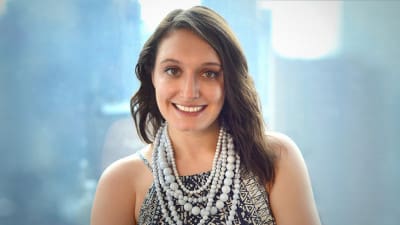
I read some back issues of the magazine online, checked the masthead and sent the pitch via email in August 2011 — but it immediately bounced back! I grabbed the email address of the next editorial person on the masthead, Don Oldenburg, and sent it to him. Turns out, he was the new editor.
The Pitch
| Subject: Query: Profile of Nobel Prize winning scientist Dr. Mario Capecchi Mario Capecchi, the co-recipient of the 2007 Nobel Prize in medicine, has a background that would have pushed other people into memoir writing or political campaigning. [1] Born in Verona in 1937, [2] Capecchi was left homeless in 1942, when his American bohemian mother was arrested by the Gestapo and sent to Dachau. Family friends who were supposed to take care of Capecchi abandoned the boy instead. [3] After living on the streets, he wound up in a hospital in Reggio Emilia, where he and other street children were given one cup of coffee and a crust of bread every day. Miraculously, his mother survived Dachau, and as soon as the Allies liberated the concentration camp, she set out to find her son. [4] They moved to a commune in Philadelphia, where Capecchi’s uncle instilled in him a love of science that led him to be mentored by legendary scientist James Watson at Harvard. Capecchi shares the Nobel Prize for medicine for his work in gene targeting of the mouse embryo-derived stem cells, working on genetically engineered mice that have one or more genes turned off through a targeted mutation. I propose writing a 1,500-word story on Dr. Mario Capecchi. I think a profile of Dr. Capecchi’s journey from poverty to prowess would be of great interest to members of the National Italian American foundation. [5] I am a freelance writer currently living outside Baltimore, MD. I’ve been published in the Antiochian, Emergency Magazine, and Writer’s Digest. I am sending links to some of my online clips below, but I’m happy to provide them in print form as well. [6] Thank you very much for your time and attention to this matter. Sincerely, Christian Feuerstein Clip 1 |
Why the Editor Bit
Don Oldenburg, editor at Ambassador:
I receive pitches from lots of writers I don’t know; I start out skeptical but am always willing to take a look. In her query, Christian listed three publications where she’d published before and four links to pieces she wrote for her college alumni magazine. None of that blew me away, necessarily, but I appreciated her professional approach and that she followed our requirements for a pitch: make it brief and convincing, tell me why you’re the writer to handle the story, and give me two or three clips. Typically, I’m more interested in how the writer writes the query than how the clips read.
Christian clearly knew the focus of the magazine. Ambassador is a glossy publication of the National Italian American Foundation. Our stories are typically about Italian Americans or of [topics of] interest to Italian Americans. Her proposed story was both and had something of a celebrity angle. Not a rock star, but Nobel Prize-winning scientist Mario Capecchi rose to the top of his profession from a tough early life that included years as a war-orphaned street urchin during WWII. His story is dramatic and compelling and light years away from the pitches I typically reject from people who want to write about themselves growing up Italian American. She included enough information to tell me the basics but kept her entire query to fewer than 300 words, which I appreciated.
But there was a potential deal breaker: I emailed her back and asked, “Do you have access to Capecchi for an interview?” I wanted a fresh piece, not a clip job. Turned out, Christian and Capecchi both are Antioch alums, and she met him at a recent Antioch reunion. That seemed promising. Christian probably should’ve included that in her original query. Access is important.
Due to my heavy deadlines at the time, it took several weeks to nail this down. But Christian was patient, enthusiastic and personable, and she answered all of my questions correctly, including whether she could get high-resolution photos of Capecchi for the story.
What Happened Next
Christian Feuerstein: I got the go-ahead for the story on September 15, 2011, and Don told me he would place the article in the spring 2012 issue. We had agreed on a 1,500-word piece, but Mario’s life story is pretty jam-packed. I ultimately sent Don two versions of the story: one that was a strict 1500 words and one that was a whopping 1,887 words, so he could see my edits and decide if my cuts were what he wanted.
Don Oldenburg: While I prefer writers to write the best story they can to the word length, I actually read both versions and pulled some information from the longer version into the story. The story arrived in good shape. I edited it, had a few questions and asked Christian to rework and simplify some of the science grafs. The Capecchi profile, “The Ravages of War, the Triumph of Science,” is running in the FOB of the spring Ambassador which comes out mid-March. We haven’t discussed another piece yet, but I’d be happy to work with Christian again.
Christian Feuerstein: One thing that changed from my initial pitch to the finished article was that Dr. Capecchi’s mother wasn’t at Dachau. She was definitely imprisoned by the Nazis for her anti-fascist work, but no records of her exist at that concentration camp. Where she was and what happened to her is still a mystery — she refused to ever speak about it to her son.
Key Components of the Pitch
(1) A strong opening sentence is key. By stating that Capecchi is a Nobel Prize winner with an unusual background, she adds drama to the pitch to ensure that the editor keeps reading. Back to pitch
(2) Including Capecchi’s hometown of Verona shows that Feuerstein knows Ambassador‘s audience: Italian Americans. Back to pitch
(3) With even more details of Capecchi’s family history, Feuerstein shows that she’s done ample research and isn’t just pitching the subject blindly -– or worse, expecting the editor to Google missing information. Back to pitch
(4) Rather than merely explain Capecchi’s circumstances, the writer paints a picture of it. Images of him surviving on “one cup of coffee and a crust of bread every day” and of his mother’s search to find him gives the editor a good idea of what the finished piece will look like. Back to pitch
(5) A good pitch should prove why the idea is relevant for the magazine you’re pitching. Feuerstein restates how Capecchi’s Italian roots and success story will resonate with Ambassador readers. Back to pitch
(6) It’s a good idea to include links to your clips if you’ve never worked with that editor or publication before. Feuerstein also shows that she is amenable and easy to work with by offering to send hard copies, as well. Back to pitch
Did your awesome pitch lead to an assignment? Editors, got a winning query in your inbox that other writers could learn from? Share the love and let us feature it in the next issue of Pitches That Worked.