Mediabistro Logo Mediabistro Logo
  • Jobs
    Search Creative Jobs Hot Jobs Remote Media Jobs Create Job Alerts
    Job Categories
    Creative & Design Marketing & Communications Operations & Strategy Production Sales & Business Development Writing & Editing
    Quick Links
    Search All Jobs Remote Jobs Create Job Alerts
  • Career Resources
    Career Advice & Articles Media Industry News Media Career Interviews Creative Tools Resume Writing Services Interview Coaching Job Market Insights Member Profiles
  • Mediabistro Membership
    Membership Overview How to Pitch (Premium Tool) Editorial Calendars (Premium Access) Courses & Training Programs Membership FAQ
  • Showcase
    Featured Creative Stories Submit your Story
  • Log In
Post Jobs
Mediabistro Logo Mediabistro Logo
Search Creative Jobs Hot Jobs Remote Media Jobs Create Job Alerts
Job Categories
Creative & Design Marketing & Communications Operations & Strategy Production Sales & Business Development Writing & Editing
Quick Links
Search All Jobs Remote Jobs Create Job Alerts
Career Advice & Articles Media Industry News Media Career Interviews Creative Tools Resume Writing Services Interview Coaching Job Market Insights Member Profiles
Membership Overview How to Pitch (Premium Tool) Editorial Calendars (Premium Access) Courses & Training Programs Membership FAQ
Featured Creative Stories Submit your Story
Log In
Post Jobs
Log In | Sign Up

Follow Us!

Climb the Ladder

How to Request to Continue Working Remotely After COVID-19

How to communicate with your manager about continuing remote work
Scouted.io icon
By Scouted
Scouted was a hiring marketplace that matched candidates to roles based on potential, serving clients from high-growth startups to Fortune 500 companies.
6 min read • Originally published August 28, 2020 / Updated March 19, 2026
Scouted.io icon
By Scouted
Scouted was a hiring marketplace that matched candidates to roles based on potential, serving clients from high-growth startups to Fortune 500 companies.
6 min read • Originally published August 28, 2020 / Updated March 19, 2026

Are you one of the employees who has been happy working from home and wants to continue to do so? Or are you simply not ready for the amount of contact that will come from returning to the office post-COVID-19 closures?

In April 2020, a poll published by Gallup revealed that “sixty-two percent of employed Americans currently say they have worked from home during the crisis, a number that has doubled since mid-March.” But the question remains whether employees will want to continue working from home post social-distancing; and so far, what we’re seeing is mixed messages. 

As COVID-19 shutdowns begin to lift, employers are considering how they’ll handle the return to the office. A McKinsey study surveyed 100 executives who said they expect “80 percent of their workforce, on average, to be back on-site by September and that 88 percent will be back by December

Depending on the type of organization you work at, flexibility around future work from home policies will likely vary a lot. For those of you whose company WFH policies are less black and white, here are some tips for those who are hoping to have those conversations with their managers and how to get started.

Understand your rights 

It’s important to understand that employers do have the right to require you to come to the office. “If you are reluctant to return to work just because you fear contamination by COVID-19, you may be out of luck unless your employment contract allows you to work remotely, you require child care, or you or your family member has a qualifying disability (Legal Zoom).”

If you are able to justify staying home for one of the reasons listed above, you may have an easier time requesting to remain remote. If not, however, we have a few considerations and tips to keep in mind before having that conversation with your employer.

Decide whether or not you’d *really* be happy continuing to work from home. 

According to a survey recently put out by the Martec Group, only 14% of employees working remotely said they were “thriving” and “loved it.” The same study found that 59% of these employees feel discouraged and do not like working from home, with 27% feeling as though their employer is doing their best to handle the situation and 32% feel as though their company is not handling the situation well. 

Those with teams who will be returning to the office will have to consider if working remotely long-tern is really for them and then also how remote work will look differently being one of the only members to have to call into meetings. 

It’s important not to assume that remote work post-COVID will be the same as remote work during COVID. For one, significant social aspects will be missed (ie. team lunches, happy hours, and daily contact with people); but, possibly, more importantly, remote employees may miss out on important impromptu office conversations or decisions. This will make it much more important for those who choose to stay working remotely to be able to advocate for themselves, to make sure they’re included in the meetings, and asked to be a part of decision-making processes.

Have an open conversation, as early as possible

Even before you’ve fully decided that you’re ready to work remotely for the long-term, having a conversation with both your manager and (if applicable) HR director about your apprehension about returning to work is a good way to readdress the issue again later, knowing more, without any surprises. This way, you can not only get a sense of their openness to allowing employees to remain working from home, and they also learn how you feel early on while the company is still considering what the WFH policy will look like moving forward. 

One of our own Scouted employees who, before the pandemic, worked full-time in our NYC office, made the decision to move closer to family in Ohio. Nicole says, 

“Before I was even totally sure that I was going to move from NY to OH, I thought it would be a good idea to have the conversation with Jax [Scouted Co-founder and CEO] to a) continue the transparency we always had and b) make sure it was something that would work on both ends so that I could plan accordingly if it didn’t. I had first learned that transparency was rewarded with Scouted when in my first in-person interview with the team… I think this gave them the confidence that I would be someone who they could trust to be honest, and also gave them the chance to figure out if that would still work. This building of trust and open communication made it possible for me to feel comfortable enough to have a conversation about working remotely.”.

Nicole Sanfilippo, Account Manager @ Scouted

Also, while it might feel much easier to propose working from home in an email or over Slack, this really is a conversation that should be had over video conferencing instead. So, try to set up some time and ask your manager if you can have a conversation about your post COVID work situation. 

Prove your effectiveness

While it’s one thing to show your manager the most recent statistics about remote work productivity, what they’ll care about most is how effective you can be while working from home. The good news is, the last several months have been a good opportunity for remote workers to show it. 

One idea to show your efficiency to your employer would be to voluntarily track your time. How long does it take you to do certain tasks now from home versus when you worked in the office? List any new projects you’ve been able to start since working from home that you may not have had time for in the office. 

Set yourself up for success

While remote work cultures across organizations vary widely, it’s important to show your manager that you will be just as reliable and successful working from home as you would be in the office. This means showing up on time for every meeting or giving advance notice if meetings need to be rescheduled, participating in meetings, getting work done on time or escalating ahead of time if not, and giving updates on the progress of your work even before you’re asked for one. This may even mean doing what you can to set up an in-home office so you can continue to work without distractions. Whatever the case, showing that you are still very much available and communicative throughout the day will only help to give your managers confidence in the decision to allow you to work from home. 

Anticipate your manager’s questions and concerns

Of course, if you ask to continue to work from home, your manager may have a few questions about how that will work. Some of those questions might be: 

  • How will you attend team meetings?
  • How can the team reach you if they have questions?
  • What will your schedule look like?
  • How will I know that you’re working?
  • How will you stay connected to the team socially?

And while you might not have a clear answer to each of their questions yet, you can do your best to work through the answer to them together or with your direct supervisor. 

Have a plan for if they say no

Now it goes without saying that if you’re considering full-time remote work, it’s important to have that conversation with your boss before making plans that depend on their answer. Of course, if your employer doesn’t think it’s a good idea for you to continue to work remotely for whatever reason, you’re left with a few options: 1). Simply return to the office, 2). Ask to compromise by working remotely part of the time, or 3). Look for remote work elsewhere.


Topics:

Candidates, Climb the Ladder
Climb the Ladder

7 Steps to Prepare for Your First Career Coach Call

woman looks at phone
Scouted.io icon
By Scouted
Scouted was a hiring marketplace that matched candidates to roles based on potential, serving clients from high-growth startups to Fortune 500 companies.
3 min read • Originally published September 4, 2020 / Updated March 19, 2026
Scouted.io icon
By Scouted
Scouted was a hiring marketplace that matched candidates to roles based on potential, serving clients from high-growth startups to Fortune 500 companies.
3 min read • Originally published September 4, 2020 / Updated March 19, 2026

So you have a call with a career coach coming up — or you’re thinking about scheduling one. It’s important to understand how you prepare for your call with a career coach, and what you can expect to get out of it. Read on for several of our tips for prepping for a call with a career coach.

Prepare to tell your story

Of course, you know your story. But having a conversation with a career coach offers a great opportunity to practice sharing your story clearly and compellingly. Not only will this help the coach get a good picture of your background and expertise, but they may also be able to share tips about how to tweak your story to be even more compelling and clear during job interviews. 

Share your elevator pitch

Having a conversation with a career coach is also a great chance for you to practice your elevator pitch. And, if you’re having trouble crafting yours, this could be the perfect opportunity to have a career coach help walk you through it.

Set your expectations

It’s important to understand that while conversations with career coaches can be extremely helpful and provide actionable tips, they don’t guarantee that you’ll land your next job at your dream company. What they can do is provide inside to industries and various role functions as well as the next steps in the career path that may eventually lead you to your dream job. 

Have your updated resume handy and make sure your coach has a copy

It may go without saying, but having an updated resume is a must before speaking with a career coach – so make sure they have a copy. If there are any errors in your resume or any ways you can improve Its layout, they will be sure to let you know. Career coaches also offer a set of experienced and fresh eyes to read over your resume. They’ll be able to tell you if your career progression is clear, and if not, how to make it that way. It may also offer suggestions for how to frame your work experience as it relates to the jobs you’re applying to as well as previous job titles.

Take some time to consider your values, skills, and interests before your conversation

My career coaches can offer many helpful resources, they can’t tell you what your dreams, values, and aspirations are. Only you can know that. So before talking to a career coach, be sure to take some time to consider these for yourself so you can share them at the time of your conversation. Knowing your values and general career goals can help your career coach create an actionable plan for the next steps.

Thinking about some weaknesses that could come up and ask your career coach how to best frame them during an interview. 

Prepare your questions

Don’t make the mistake of showing up to your career coaching session without a list of questions on hand. This will be the best way to ensure you get exactly what you need from a session with a career coach. These can range anywhere from big-picture, theoretical questions, to practical and specific questions like how to format your resume or connect with someone for an informational interview.

Take notes!

This goes without saying, right? Even if your coach says they’ll follow up with a recap of your conversation, it’s a good idea to record the pieces of advice or thoughts that stuck out to you during your discussion.

Expect to leave the conversation with goals, action items, and homework

It’s important to understand that a career coach’s job is not to find you a job, but rather to give you actionable and productive steps towards furthering your career. So expect to have your work laid out for you. While meeting with a career coach won’t make your dream company offer you a dream job, you will certainly receive strategies for creating a great target list of companies and concrete steps to take to get you closer to the path you envision.

Ready to talk to a career coach? Scouted can help. 

Topics:

Candidates, Climb the Ladder
Climb the Ladder

How to Handle a Pay Gap With Your Company

How to Handle a Pay Gap With Your Company
Scouted.io icon
By Scouted
Scouted was a hiring marketplace that matched candidates to roles based on potential, serving clients from high-growth startups to Fortune 500 companies.
5 min read • Originally published September 11, 2020 / Updated March 19, 2026
Scouted.io icon
By Scouted
Scouted was a hiring marketplace that matched candidates to roles based on potential, serving clients from high-growth startups to Fortune 500 companies.
5 min read • Originally published September 11, 2020 / Updated March 19, 2026

Women earn less than men in almost every occupation.

Even if you account for differences between men and women’s occupations, marital status, college major, hours worked and other criteria, women still earn about 7% less than men in their first year post-graduation, according to an analysis by the nonprofit American Association of University Women. Ten years after college, that gap jumps to 12%.

A recent McKinsey report shared that more women are working in senior positions, but it is still difficult for women to move up from entry-level jobs into higher roles: “For every 100 men promoted and hired to manager, only 72 women are promoted and hired,” the report said, which affects the number of women being promoted to higher positions in the corporate pipeline.

What’s more, is that fewer women being promoted directly affects the number of women in leadership roles and the c-suite, which leads to less-diverse corporate cultures and a wider pay gap over the course of a woman’s career.

It’s difficult to point to a single root factor for the gender wage disparity, be it gender biases, lack of representation and diversity in leadership, or simply the leap to overcome societal “norms,” and many of the reasons for the gender wage gap are out of an individual employees control. 

There are, however, several tools women can leverage to assure their pay is equal to that of their male counterparts. 

Ask, ask, ask

According to a study by Zoro, although more than half of employees said they were somewhat or slightly comfortable asking for a raise, 12 percent said they were not at all comfortable, and women were twice as likely as men to report a total lack of comfort.

Even if you believe your work to be outstanding and noticeable by management, if you haven’t gotten an annual raise or feel as though you’re not making as much as you deserve, it’s important to remember that those who ask, get. So whether you feel completely comfortable having a conversation about compensation with your manager or you’d definitely rather not, it’s important to the resources at your disposal so you can feel confident having an open, face-to-face talk about wage equity and/or negotiating a raise.

Back it up… with science!

There are two approaches you should take when backing up your request for more money from your manager: internal data and external. 

Internal

“Ask your manager how pay ranges are determined — do they have explicit “pay bands” that everyone at a given level would fall into? If so, where are you in your current band? If you’re asking for a promotion, what band should you fall into if they give it to you?

If they don’t use pay bands, ask them where your position falls relative to others in the company.”

If you’re able to, also try to quantify the work you do for your company, You may or may not be directly responsible for bringing in revenue, but you should be able to show how you position adds value to the company and how you’ve either take on more responsibility, gotten better at what you do, or have increase the value you contribute. 

External

There are plenty of external resources at your fingertips to use for researching the average pay for someone in your position, location, at your company type, with your level of experience, and training. If you work for a university or a public company, some of the salaries are going to be public information. Or, there may be an association for your particular industry that offers surveys about salaries. One can also have conversations with peers and network to compare the salary they had when in a similar position as you. These could be past coworkers, mentors, and connections made at events or even LinkedIn. 

Ellevest shares that a good way to start those conversations could sound like this:

“I was wondering if you might be open to talking about salaries with me. Can I tell you how much I make, and you can let me know if you think that sounds reasonable for our industry?”

Learn about the equal pay act

This act prohibits employers from paying women less than their male counterparts when they have the same amount of experience. If you believe you’re being discriminated against based on age, gender, or disability, the best thing to do is to contact the US Equal Employment Opportunity Commission (EOCC).

Seek a solution

If you do find a pay disparity between you and your coworkers, it may be tempting to have a talk with your manager that focuses more on the injustice of the situation rather than finding a solution. That’s not to say your frustrations aren’t justified. But at the end of the day, your goal is to close the pay gap, and that doesn’t happen without finding a solution. 

Krawcheck, co-founder and CEO of women’s investment platform Ellevest, advises that when you approach your boss, you should view the process as a collaboration. “I found what works for me to be fact-based, unemotional,” she says. “Approach it as a collaborative problem to be solved. Because if you are not paid what you should be, the company risks losing you.”

Negotiate for More Responsibility

You may feel as though you’re being overlooked for a lot of big projects at work. If that’s the case, instead of asking for a raise right away, you could try asking for more responsibility. Ask to be put on the teams that are doing bigger projects, or to do an additional project on your own. Ask about training opportunities, and, if not, try taking an outside course or workshops to gain more skills and knowledge.

Remember, you can negotiate more than your salary

Compensation packages are made up of many different components and what was once a priority when you started working at your company, may not be as much of a priority, now. Even if your boss says he or she is unable to raise your salary, there are other benefits you can negotiate that have monetary value. More stock in the company, additional healthcare coverage, paid time off, commuter benefits, educational benefits, gym memberships, and more. Decide which benefits would be the most important and be ready to bring them up when you speak with your managers. 

Consider Your Options

If, after doing your research and having a face-to-face conversation with your employer, you’re still not getting the raise you deserve or other forms of compensation such as extra vacation time, bonuses, etc., it may be time to start considering other options. There are other companies that will value your experience and skills and be willing to pay you the salary you truly deserve. 

Topics:

Candidates, Climb the Ladder
Climb the Ladder

Resume Tips for Career Changers With Summary Section Template

Resume Tips for Career Changers [With Summary Section Template]
Scouted.io icon
By Scouted
Scouted was a hiring marketplace that matched candidates to roles based on potential, serving clients from high-growth startups to Fortune 500 companies.
5 min read • Originally published October 2, 2020 / Updated March 19, 2026
Scouted.io icon
By Scouted
Scouted was a hiring marketplace that matched candidates to roles based on potential, serving clients from high-growth startups to Fortune 500 companies.
5 min read • Originally published October 2, 2020 / Updated March 19, 2026

Shifting careers is usually a challenge, even before 2020. One of the biggest hurdles career changers face is being able to show hiring managers how their past work experience will help them to be successful in their new role.

Did you know hiring managers only spend an average of 6 seconds reading each resume? That being the case, career changers must learn how to stand out and share their story well.

Want to know how to get started? Keep reading below.

[Read to the end to grab our Career Change Summary template]

First,

Understand what hiring managers are looking for

What do hiring managers want? Someone who can do a job and do it well. And, considering that recruiters sort through hundreds or thousands of resumes before they invite anyone to interview, you don’t want to be the one to make them connect the dots between your previous experience and what’s required for the job you want. Rather, you’ll have to paint a clear picture of what you’ll be able to do for the company. 

You can do this best in two ways:

Take stock of your transferable skills

Take a close look at the job description and do your best to mirror its language in your resume (as much as you honestly can). This not only helps hiring managers to connect the dots between your previous experience and the job you’re after, but it will also help you to get past digital screening tools looking for certain words on resumes. 

Quantify your experience

Like we said, hiring managers will only interview someone who can be effective and do the job well. The best way to prove this is by sharing that you have a track record of being effective in your past roles. The good news is that you don’t need to be a finance professional or in a management role to quantify your work experience.

Not sure how to quantify your experience? Start with these questions:

  • How much did you do?
  • How often did you do it?
  • What were the tangible results, and over what period?

Here are a few examples of statements that quantify work experience:

  • Managed public relations communications, including 100+ press releases and 10 media kits, for 10 clients in the financial services industry
  • Reviewed 25 article submissions per day and narrowed down to the top two for publication in the next day’s newspaper.
  • Launched a six-month capital campaign resulting in $8.2 million in donations, a 30% increase from the previous year’s campaign.

Write a summary section at the top of your resume

For the average job-seeker, a summary section can often be a redundant and poor use of valuable space. For the career changer or those with a non-linear career path, however, a summary section can be a valuable asset. A good summary section will be a great resource when it comes to owning your narrative and branding yourself.

Also, it’s important to be sure that the most important words in your summary section stand out. 

You can do this in two ways:

  • Bold certain words or phrases in your summary section that you believe are the most important for the hiring manager to see as they skim through your resume. 
  • Include a “Core Competencies” or “Skills” section beneath your summary (these should also be in line with your transferable skills).

Overall, your summary section should follow this format:

  • Top: List three descriptions of who you are, ie. “Political Campaign Professional, Business Operations, Account Management.
  • Middle: Briefly quantify your experience to demonstrate your impact.
  • Bottom: List key skills or competencies that align with your transferable skills.

Here are a couple of examples of great summary sections that you can take and make your own:

Political Campaign Professional | Business Operations | Account Management

Dynamic and motivated professional having launched a six-month capital campaign resulting in $8.2 million in donations, a 30% increase from the previous year’s campaign. Built and managed cross-functional teams of 10 or more individuals, demonstrating exceptional communication skills, and making critical decisions during challenges. Instrumental in managing a pivotal business shift during a period of crisis. An adaptable and transformational leader with an ability to work independently, creating weekly presentations, and gathering data for weekly, monthly, quarterly, and annual business reports.

Social media expert with expertise in the creation and management of social media strategies and campaigns for global retail organizations

  • Extensive experience in the commercial utilization of multiple social media channels including Facebook, Twitter, and YouTube.
  • Build out successful social strategies that increase brand awareness, promote customer engagement, and drive web traffic and conversions. 
  • Earned a degree in psychology and strong business acumen, bringing a customer-focused approach to online and social marketing.

Give the most resume “real-estate” to the most relevant work experience

For someone with a more traditional career progression, we would typically tell them to give the most space on their resume to the roles they’ve had most recently as they would likely be the roles that have the most relevant experience. 

For those changing careers or with non-linear career paths, however, we recommend giving more detail for the roles that are the most similar (or have similar responsibilities) to the type of role you’re now looking for. 

Pro tip:

Don’t leave any important information for the second page of your resume (if you have one). There’s a decent chance a hiring manager won’t make it to the second page of your resume, so make sure whatever is most impressive about you shows up on the first page. Did you have a great education? Put it on the first page. Have a job several years ago with a lot of relevant responsibilities? Put it on the first page.

Last but not least,

Own your narrative

Tell your story so the recruiter has no choice but to leave with the impression you want them to have about you. Before writing or editing your resume, make sure you have a clear understanding of the picture you want to leave the hiring manager – one that paints you as the perfect candidate for the job because of your varied experience, not despite it.

Click here to download Scouted’s Career Change Summary Templates

Topics:

Candidates, Climb the Ladder
Climb the Ladder

11 Things You Can Negotiate Besides Salary

11 Things You Can Negotiate Besides Salary
Scouted.io icon
By Scouted
Scouted was a hiring marketplace that matched candidates to roles based on potential, serving clients from high-growth startups to Fortune 500 companies.
5 min read • Originally published October 9, 2020 / Updated March 19, 2026
Scouted.io icon
By Scouted
Scouted was a hiring marketplace that matched candidates to roles based on potential, serving clients from high-growth startups to Fortune 500 companies.
5 min read • Originally published October 9, 2020 / Updated March 19, 2026

This year, companies may or may not be working with the same budgets they had last year. And that being the case, salary negotiations may not get you as far as they used to. The good news is, when you’re considering a new job offer, there’s a lot more you can negotiate other than your take-home pay.

Salary negotiations aren’t simply about the dollar amount on your paycheck each month. Your benefits can also play a huge part in your post-job-offer negotiating. Once an offer is made, it’s almost never in your best interest to accept it right off the bat. Although there are real dangers of over-negotiating your salary and benefits, having a few requests probably won’t put your new employer over the edge.

If you’re wondering what you should bring up during your negotiation of benefits, you’re in luck. We created a short list that you can keep in mind when it comes time to asking for elements in your compensation package other than the digits on your paycheck.

Professional development

Professional development: It’s a buzz term, sure, but it’s also an essential tool in an employee’s personal and professional growth and potential output. In many industries, like medicine, law, and education, individuals are required to participate in continuing education courses to maintain their ability to practice. This is because continuing education isn’t just a way for you to stay up to date on industry trends and new findings – continuing education ensures that you can do your job the best you possibly can.

Also read: Why Companies Should Offer Employees Mentorships, Certifications, and Personal Growth Opportunities

Phone allowance

Say you’re taking on a new sales role where you’ll be using your personal phone to make a lot of calls. While some employers are turning to a BYOD (bring your own device) policy, you may be able to ask for a small amount of compensation for your time spend on your phone for your job. Dig in and see what your employer’s policy is, you may be able to keep a few dollars in your pocket come your next phone bill.

Transportation reimbursement

Whether you take the train, rent a lime bike, or drive into work, you might be able to ask for transportation reimbursement.  You’ll need to do the math and make a logical argument to your boss before asking. And if you get a yes, definitely keep your receipts in case of any discrepancy. All in all, this could be a great way to save some cash at the end of the day.

Your title

Even if you’re not able to start your first day with a “better” title, you might be able to negotiate a new title once you pass your probationary period. Even if it seems nit-picky now, this could mean a world of difference to the next employer (should there be one) who looks at your resume.

Vacation time

Like any negotiation, asking for more vacation time will require some give-and-take. Why not ask your boss if they would be okay with adding an extra week to your vacation time if certain high-level goals are met during the year? That way, both of you get something out of your superior work ethic.

[sc name=“Newsletter”]

Work from home/remote

Even if you’re not able to negotiate on the dollar amount of your salary, you might be able to shave a little bit off the cost of your commute one or two days a week. Even if you’re currently working from home during the COVID-19 pandemic, offices may not stay that forever. Try to get clarity on your employer’s plan to return to the office and then decide if you’re comfortable working in an office setting again. If you’re able to prove that you’re an effective employee both in and out of the office during your probationary period, why not ask your boss for work from home flexibility?

Also read: How to Request to Continue Working Remotely After COVID-19

Childcare reimbursement

Unless you have a stay at home parent or you plan to have a “Bring your kids to work” day every day, you’re going to need to fork out a good amount of cash for some form of childcare. Many employers these days will offer to pay a portion of your childcare costs so be sure to ask!

Educational opportunities

What employer doesn’t want their employees to be continually growing and getting better at their jobs? Ask your employer to help you do just that and sponsor you to attend a workshop or conference. Of course, this will actually need to be relevant to your job (no free trips to Comicon here). But if you’re able to convince your boss that this would be good for you and the company as a whole, they shouldn’t have a problem with paying for some continuing education here and there.

Mentoring Opportunities

Similar to educational opportunities, your goal here is simply to get better at your job and grow within your role. Your boss may be willing to set you up with a mentor with whom you can learn and meet regularly for feedback and instruction.

Equity

If you’re joining an early stage startup, owning a share of equity will most likely be a very real part of your compensation package. The amount of equity you have can directly affect the size of your paycheck. That being said, it’s important to do your research on the size of startup you’re joining and their funding, their business model, and the team you’ll be working with.

Severance package

A severance package is what you can expect to receive if you’re let go from a job for no fault of your own. Having one defined in your contract is a good idea to make sure you and your employer are on the same page in case, for whatever reason, the job doesn’t work out down the line. Do your research on what a typical severance package looks like for someone in your position with similar years of experience.

Of course, negotiating each and every item on this list will probably send the message that you’re not exactly taking the job because you believe in the company mission. Again, be careful to not over negotiate your compensation, but do your best to make sure you’re being given what’s fair based on your experience and role at the company. 

Got any questions about salary and benefits negotiations? Leave them in the comments below and the Scouted team will do our best to answer!

Topics:

Candidates, Climb the Ladder
Climb the Ladder

The Future of Recruiting: Trends Shaping Talent Acquisition

Introduction: Scout the Future of Recruiting [Series]
Scouted.io icon
By Scouted
Scouted was a hiring marketplace that matched candidates to roles based on potential, serving clients from high-growth startups to Fortune 500 companies.
2 min read • Originally published October 22, 2020 / Updated March 19, 2026
Scouted.io icon
By Scouted
Scouted was a hiring marketplace that matched candidates to roles based on potential, serving clients from high-growth startups to Fortune 500 companies.
2 min read • Originally published October 22, 2020 / Updated March 19, 2026

The recruiting industry has faced numerous changes this year. Many firms, both large and small, cut their people teams amid the COVID-related financial downturn, companies eliminated budget for outsourced recruiting efforts, expanding teams has taken a backseat to more immediate company matters; at the same time, new HR technologies continue to emerge and, with an increasingly remote workforce, there is a growing need for innovative talent acquisition and interviewing tools.

At Scouted, we are at the forefront of internal talent conversations at companies of all sizes and across myriad industries. We share an intimate seat alongside seasoned executives where we have the opportunity to analyze hiring needs and offer guidance to teams as they strategically expand their teams.

To no one’s surprise, since March, the needs and considerations of our partner companies have shifted, and the way companies and managers are approaching hiring is new terrain for all of us involved in the process.

We’re constantly thinking about the infrastructure, resources, and expertise we have on hand and how we can deploy these assets in new ways to help an even broader spectrum of people and companies.

In that vein, we are launching a multi-part series centered around the future of recruiting. Over the next several weeks, Scouted will partner with like-minded experts in the recruiting field to share pertinent and relevant information with our community, so that our candidates and partner companies alike can make informed decisions about their 2021 talent strategy.

This multi-week series will offer readers an overview of the current state of the recruiting business, as well as dive into three primary topics of interest, including:

  • The importance of AI technologies in recruiting
  • The ins & outs of recruiting for a remote workforce
  • Why companies might consider outsourcing recruiting efforts 

Our goal is to share our wealth of knowledge — and our network of talent and recruiting experts — with our community so that you and your team can prepare for what’s ahead, whatever that means for your business right now.

Topics:

Candidates, Climb the Ladder
Climb the Ladder

The Recipe for Effective and Lasting Networking

The Recipe for Effective and Lasting Networking
Scouted.io icon
By Scouted
Scouted was a hiring marketplace that matched candidates to roles based on potential, serving clients from high-growth startups to Fortune 500 companies.
3 min read • Originally published November 19, 2020 / Updated March 19, 2026
Scouted.io icon
By Scouted
Scouted was a hiring marketplace that matched candidates to roles based on potential, serving clients from high-growth startups to Fortune 500 companies.
3 min read • Originally published November 19, 2020 / Updated March 19, 2026

As we are stuck inside and all go into our baking/cooking phase, I wanted to provide you with my favorite recipe for effective networking that will open you up to many opportunities and a great support network.


Ingredients

  • A bright and curious mind
  • Research skills
  • Willingness to reach out to individuals
  • Consistent follow-up
  • Ability to take actions based on advice 
  • Gratitude and appreciation/thank you notes
  • Optional: strong network connections through school or work.

Directions

  1. The first step in this recipe is to have a bright and curious mind with determination and grit. This is the hardest ingredient and the most foundational. Consider it your starter. Combine this with the willingness to reach out and thoroughly mix it in. 
  1.  Once you have done so, put that aside. Now, bring out your research skills/internet and start researching individuals that works in areas of interests or have a story you are interested in. This is easier with the optional strong network but it is doable either way.
  1. Combine the starter with the results of your research and reach out to the individuals. Each reach-out should be as unique as its recipient, based on the research. Someone from your field of interest will get a different outreach than someone whose story interests you. 
  1. Some of your reach-outs will start to form those networking relationships and some will not. Once you see that your effort has risen to the stage of having scheduled time to talk to the person, read more about their background and any writings they have published.  Have interesting, personalized questions in addition to general ones. Take great notes about the call. Ask for ACTIONABLE steps so you know what you have to do. 
  1. You are almost done. Once the call has occurred, take some time to research the actionable step they gave you. Within 24 hours, send a detailed thank you note. Detailed what you really loved about the call and also the research you have already taken based on their advice. There is no point of their advice if you don’t follow through on it. 
  1. Last but definitely not least, occasionally sprinkle consistent follow-ups. People want to know how the time they have invested in you has turned out. Reach back out to them occasionally to let them know how you are doing. You should not only be reaching out to them when you want something from them. By consistently following up, you are keeping yourself in their minds so when an opportunity comes up, you will be the first in their mind. If they know other resources for their new stage or new path, you will be first on their mind. 

The hardest part of all this, especially for me, is gathering the courage for that first reach-out. How do I do so without seeming like I am only using them because I need something. That is the thing, we all need help at one time or another; needing something is the impetus to build a network. What I did was create a list based on how much I felt the connection would help me develop as a person and in my career. I reached out as practice to those whom I felt were people I would like to know first; often these were individuals who were younger and still trying to figure out their paths. I tested out methods and messaging before reaching out to those with whom I felt substantial conversations about my career or life choices could be had. 

In the three years at Scouted, I went from 231 LinkedIn connections to 869; over 90% of them, I have spoken to in person or over the phone. Every year, I take some time at the end of the year to send cards to 134 people who are continuous mentors to update them and let them know how much I appreciate the relationship. 

Go form those meaningful relationships and happy networking!

Topics:

Candidates, Climb the Ladder
Climb the Ladder

How I Used My Influencer Experience to Land a Content Marketing Job

I'm an influencer. This is how I got a job in content.
Scouted.io icon
By Scouted
Scouted was a hiring marketplace that matched candidates to roles based on potential, serving clients from high-growth startups to Fortune 500 companies.
5 min read • Originally published December 4, 2020 / Updated March 19, 2026
Scouted.io icon
By Scouted
Scouted was a hiring marketplace that matched candidates to roles based on potential, serving clients from high-growth startups to Fortune 500 companies.
5 min read • Originally published December 4, 2020 / Updated March 19, 2026

In 2015, I started my blog. What began as more or less an online diary turned into a way for me to not only help others but also provide an income for my family. 

I spent a lot of time researching best practices, like how to drive traffic to the blog, ways to monetize content, and identifying content gaps within my niche. A few years later, I was able to use the experience I gained to build a personal brand to find a job doing what I was already doing – blogging, emailing, social media, planning, etc. 

I talk to a lot of people who are looking for roles in social media and content marketing and how to get started in those careers. 

What is a personal brand?

Essentially, a personal brand is your online reputation that, hopefully, follows you into the workplace. It’s a way for job seekers to tell their stories while also setting the stage for where they’re going (or aspire to go) in their careers.

A personal brand goes beyond a resume to provide a more complete picture of who you are personally and professionally.

Understand, and stick to, your reason for building a personal brand. 

As you’re building your brand, it’s important to understand – and stick to – your “why.”

If you’re reading this, that’s most likely because you’re searching for your next job. This will help anchor you when you decide to spend time doing the rest of the things on this list, like updating your LinkedIn profile, engaging and networking with other professionals online, and potentially growing your social media presence.

Remember, building a personal brand doesn’t mean becoming insta-famous. It simply helps an employer get a holistic view of you, your experience, and your career goals. 

According to a 2018 CareerBuilder survey, 70% of employers used social media to screen candidates during the hiring process. So, while you don’t need thousands of followers to build a personal brand, having an online presence is important.

Build your portfolio

A personal brand can’t exist in a vacuum – you need the experience to back it up. While you may have an impressive profile or website, what matters most to employers is whether or not you have a track record of doing the job well. 

You may not have experience in growing a company’s brand, but, if you can show that you’re able to be thoughtful and strategic when it comes to your brand and the growth that came from your hard work, you’ll be able to prove to employers that you can potentially do the same thing for their company.

Pick your industry or product wisely

When I was interviewing for my role at a seed-stage HR-tech startup (Scouted!), I was asked the question, “So why would you want to create content for us?” And it was honestly an easy question to answer. Unlike many people, I’ve enjoyed the job search process and tend to come at it from a competitive and fun standpoint. It’s an industry that I like and could see myself writing a lot about. That, and I felt that Scouted’s brand voice was similar to the one I naturally wrote in so replicating their tone and voice would be easy.

All that to say, when joining a content team, it’s important to make sure you like the subject matter and can see yourself writing, editing, or designing a lot of content around it. 

Update your LinkedIn profile

First things first, it’s important to have your LinkedIn profile updated. Think of it as an online resume where you’re able to quantify your past work experience and speak to your unique skill set. Here, you’ll also be able to make a note about the type of roles you’re searching for. 

Of course, if you’re still employed, you’re probably not going to share all over the internet that you’re on the job search. Either way, simply keeping your profile up to date will probably not tip off any colleagues as this is a good practice to be in no matter your employment status.

Connect with those who work in roles/industries/companies that you aspire to work in.

Once your LinkedIn profile is up to date, now it’s the time to connect with others. 

Instead of going on a connecting spree, try connecting with those at companies that inspire you or that you may want to work for someday, those who likely can hire your role or the industry you’d like to enter into.

The key here is being intentional with your connections. Also try drafting up a short, one or two-sentence note simply saying hello and why you’d like to connect.

Engage – and be helpful!

Now, once you’ve made a few connections, your feed will probably be filling up with posts written or shared by your growing network. Without going overboard, spend some time each day scrolling through your feed and commenting thoughtful or helpful comments on a few posts. This serves as a way to get your face and name in front of new eyes, provides value to your connections and their followers, and helps to establish you as an authority in the topic or industry in which you choose to engage.

Complete your Scouted Virtual Interview

It’s not every day that a job search platform allows you to tell your story in a way that goes beyond what you’re able to put on a resume. Have you overcome a tough hardship? Worked through school? Are you re-entering the workforce?

The Scouted Virtual interview allows you to communicate what you wish employers knew about you and what makes you stand out from the rest. Let your talents, personality, and potential do the talking!

Understand your strengths and weaknesses

What’s important to note is that claiming to be a “thought leader” or one with exponential success, who is consequently also on the job hunt may not be the best strategy.

Instead, it’s best to understand exactly what you bring to the table. What are a few things that you truly shine at? And what aspects of a role are struggles for you, or maybe even better left for someone else entirely?

Once you have this in your mind, it’ll be much easier to engage with others and establish yourself as an authority in areas where you truly have strengths, as well as seek advice from those who could complement your strengths.

Topics:

Candidates, Climb the Ladder
Climb the Ladder

What It’s Like to Work at a Seed-Stage Startup During a Pandemic

What It’s Like to Work at a Seed-Stage Startup During a Pandemic
Scouted.io icon
By Scouted
Scouted was a hiring marketplace that matched candidates to roles based on potential, serving clients from high-growth startups to Fortune 500 companies.
8 min read • Originally published December 11, 2020 / Updated March 19, 2026
Scouted.io icon
By Scouted
Scouted was a hiring marketplace that matched candidates to roles based on potential, serving clients from high-growth startups to Fortune 500 companies.
8 min read • Originally published December 11, 2020 / Updated March 19, 2026

This year was filled with uncertainty for everyone, at home and especially in the workplace. We’ve walked our partner companies and candidates through situations that nobody wants to find themselves in: managing layoffs, halting bonuses, changing careers in an unstable job market, and hiring fully remote teams for the first time out of complete necessity.

Those who work in small startups also felt the uncertainty of this year deeply. Without the reassurance and security that often comes with working for a large company, startups have more than ever had to learn how to adapt and pivot quickly to their changing environment. 

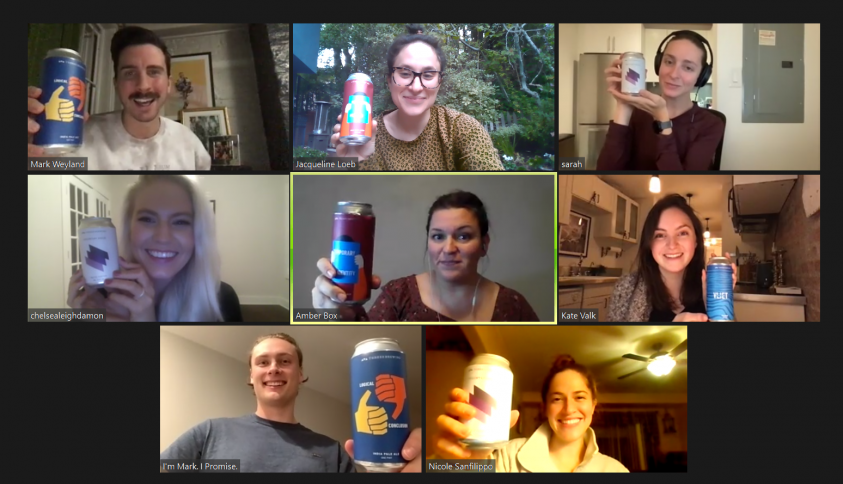
Here at Scouted, every Monday our team shares “Wins and Woes” as a way to reflect on the positives of the past week’s KPIs while also maintaining transparency about what didn’t go so well and issues that may have come up.

While we won’t pretend to have all the answers, we wanted to share what working at a startup has been like for our team this year while we did our best to pull on the good and celebrate the small (or not so small) wins of 2020.

Scouted’s 2020 Wins

We led with conviction 

The year was about rising above the “maintaining bottom line” mindset that is usually front-of-mind during a financial crisis. For many CEOs, 2020 served as an opportunity to prioritize purpose, transparency, and authenticity — with customers and employees alike. 

Regardless of company size, executives have faced the challenge of maintaining outward strength and conviction despite a potentially complex and uncertain road towards profitability, stability, or certainty of the team’s future. 

This was no exception for Jacqueline Loeb, Scouted’s Co-founder and CEO:

Community and morale have always been important to me as a CEO, but during this pandemic besides managing runway, managing morale and a strong sense of community has been paramount.  I found that with everyone remote, I need to be even more deliberate about how to ensure my team feels connected to each other, their work, and the mission of Scouted. This means everything from being extremely disciplined about holding one on ones with my team to spending a lot more time during meetings talking about life outside of work, to being creative about team bonding events. I have spent a lot more time and effort working to manage and lead my team with discipline and compassion.

We stepped up to the plate 

This year not only brought change for company-wide leadership teams, but also for department and team managers. For many, the move to remote work meant relearning how to manage not only projects but people, too. And remote management is not the same as managing in an office.  

For Sarah, Scouted’s Director of Operations, the move to remote management, especially at a seed-stage startup, brought a realization that owning her management role was more important than “feeling comfortable” in her WFH role:

The first few weeks of working from home were difficult for me. At a personal level, I struggled with staying motivated and upbeat, especially given that I generally thrive in a live, collaborative environment. But, as a senior member of a small, young team, I quickly realized I had to step up to the plate. It was in the company’s interest — and my own — that I remain positive and forward-thinking among teammates, supportive of our CEO’s strategic decisions to keep us afloat, and hopeful that there would be a way forward for an HR-tech startup. Shifting my mindset helped me to refocus my nervous energy on proactive strategic projects and aid in positioning the team to be able to focus on what we could control.

We focused on our community

Early on during this year, for many employees, strict quarantine guidelines meant that a Zoom meeting might have been the only interaction they had with someone on any given day. Scouted prioritized learning how to keep a strong company culture, despite working remotely. Mark, Head of Sales and Business Development shares how he felt his work community grow stronger and lean on being transparent with each other, even while distanced.

I’m a social person, and not just because my work in business development requires it, but also because I really do enjoy people. The demands of an isolating quarantine, especially as someone living alone, require fortitude and grit. But the small size of Scouted’s tight-knit team tethered me to sanity. We came together not only as colleagues but also as our own little quarantine family. We helped each other solve work challenges, of course, but we also overcame personal struggles, which allowed us to rise up as an affirmed, cohesive, and mighty unit. We strove to help people find jobs in a difficult economy and to help each other keep track of ourselves as a difficult year continued to press on. For that, I’ll always be both proud and grateful.

We found our motivation

As of July 2020, 42 percent of the U.S. labor force was working from home full-time. This huge shift led to a major adjustment for many. Learning to diminish distractions, push through procrastination, and muster up motivation was a huge part of learning to work from home for all of us. 

Kate, Scouted’s Product Manager, says,

Before the pandemic, I was used to being busy. Working well into the night and squeezing in errands and social activities when I could. Of the ranging impacts the pandemic has had on all of us, this feeling of ‘work busyness’ changed for me dramatically – despite there being just as much to do, if not more as our HR startup adapted to the impacts of the pandemic. NYC hit PAUSE and so did a lot of my usual motivation. 

I recently heard a comparison of this mental block to Newton’s First Law of Motion – a body in motion stays in motion. Going from the environment of a small, collaborative startup office to working alone from my living room was like starting a sprint from a dead stop, instead of the jog that I had become so used to and thrived on. With the support of transparent work culture and a Founder acutely keyed into company morale, not to mention trial and error, discipline, and lots of projects, I picked it up to a walk and am slowly back into a jog once again.

We learned how to communicate and stay connected

Other remote employees, like Chelsea who works in content marketing, felt her WFH struggles validated while also feeling more connected to the rest of the team.

I was Scouted’s first remote hire back in 2018. While I considered myself extremely lucky to be able to work from home while also working full time for a growing startup, working remotely for an in-office team came with its struggles. Being the only floating head on a Zoom screen made it harder to follow meetings or to be in touch with the rest of the team due to not being present for impromptu office conversations, social events, etc. 

During the pandemic when the whole team shifted to remote work, I found it much easier to connect with the team seeing as we were now all floating heads. My struggles of working from home (like distractions, finding motivation, staying in the know) felt validated by the rest of the team now also learning to adjust in real-time. And while I know the team won’t stay remote forever, I think it’s given us great insight on how to keep our remote employees in the loop.

We learned to be even more flexible, managing mom-life and work-life

Not only did we have to re-learn how to work from home, we had to learn how to do life completely from home as well, and balance them simultaneously. According to a Gallup coronavirus tracking survey of more than 1,200 parents, 56% of parents found remote learning difficult for their families, including 16% of parents who said it was “very difficult.”

Amber, who works in Talent Support at Scouted says,


As a mom of three with a busy household, being home and having a structured schedule has always been important. So, when the world was turned upside down by the pandemic and the rest of my team had to shift to remote work, I thought this would be easy–I had been working at home for years, after all. What I didn’t realize was how difficult it would be to have my kids home full-time and helping them shift to virtual learning while also shifting and adapting in my own role at work to meet the demands of an ever-changing world. 

I had to rely on skills I hadn’t leaned on in a long time and that meant a lot of adapting. I had been used to a set, structured schedule, but working remotely at a startup with children at home has taught me, more than anything that, while time-management and structure are immensely important to be productive, there is also a great need for you to adapt and shift with the changes that each day can bring. Flexibility gives us the space to bend when we sometimes feel like breaking. 

And simply put, we kept the faith

When facing moments of uncertainty, sometimes it comes down to simply having faith in the adaptability of your business. When we can’t control every outcome, which is rarely the case at an early-stage startup, we have to rely on the relationship and trust that we’ve built with our team.

Scouted’s Account Management lead gets real on her experience this past year: 

When COVID hit and the reality set in of what was going to happen, I didn’t immediately panic because I knew a couple of things to be true. First, was that my scrappy a$$, seed-stage startup company that I worked for had always been just that, very scrappy and always adapting to work towards something better. Second, I believed in and implicitly trusted my CEO and co-founder because no matter how good or bad things were, she was always transparent and supportive of our ideas. Lastly, I was simply grateful that no matter what did happen, that I had worked with and gotten to know these people in such an intimate way as you do on such a small team.

Topics:

Candidates, Climb the Ladder
Climb the Ladder

10 Reasons Candidates Get Turned Down That You Can Control

10 Reasons Candidates Get Turned Down From Jobs (That Are Totally in Their Control)
Scouted.io icon
By Scouted
Scouted was a hiring marketplace that matched candidates to roles based on potential, serving clients from high-growth startups to Fortune 500 companies.
5 min read • Originally published December 18, 2020 / Updated March 19, 2026
Scouted.io icon
By Scouted
Scouted was a hiring marketplace that matched candidates to roles based on potential, serving clients from high-growth startups to Fortune 500 companies.
5 min read • Originally published December 18, 2020 / Updated March 19, 2026

Let’s face it, it’s not fun getting turned down for a job. If and when we do, the biggest question we ask ourselves is, “Why?”

While some employers may provide feedback as to why they decided to go in another direction, many won’t provide any feedback or err on the side of caution and share 1-2 vague points. 

Getting turned down from a role isn’t always in your control, but today we wanted to talk about the aspects that are in your control during an interview process. If you think of any we missed, leave your ideas in the comments below!

Poor communication – especially in jobs where it matters

In some cases in everyday life, it might be ok to take a couple of days to respond to an email. Communicating with a hiring manager, however, isn’t one of them. Be sure to respond to any emails or phone calls as soon as you can as this shows hiring managers you’re excited about the role and gives them a peek into your communication skills. This is especially important for roles where communication is a big component so think of your communication with your hiring manager as part of your interview.

Being difficult to schedule

As much as you may be qualified for the job, the timing in which you’re able to speak with someone at the company is still important. What’s unknown to you as a candidate is how many other applicants the company is interviewing, how soon they’d like to hire for the role, and how excited the company is about your resume in the first place. Being difficult to interview could also make them feel as though you’re not very excited about working with their company, either.

That being said, don’t give hiring managers any reason to take your resume out of the stack by making it difficult to schedule interviews. Work around your schedule as best you can to accommodate the company’s hiring timeline.

Cold responses in emails

Many people approach emailing differently. Some treat it like texting, some are formal, and some email as though they’re having a real-time conversation. In most cases, we would recommend your emails sound professional yet friendly. Address the person you’re emailing by name, be to the point and friendly in your email, and sign your name at the bottom. 

Also read: How to Follow up After a Job Interview When You Haven’t Heard a Response (With Example Email)

Playing the victim in an interview

It’s important to take personal responsibility when explaining why you made certain career decisions, especially when speaking to why you left past roles. You may or may not have had a poor experience at your previous employer, but what a hiring manager won’t know is the entire story. If a candidate complains about former managers or says things like, “the culture was terrible,” or “I had a terrible boss”, hiring managers may become wary of whether or not you are the type of person that always puts the blame on others.

While you can of course acknowledge challenges with your former employer, be sure to also acknowledge how you might have handled a situation differently and what you learned about yourself as a result.

You can’t specifically explain why you want this job and why it makes sense for your career

No matter how large or small the company, the hiring manager wants whoever they hire to be excited to work there – not just taking any job they can get. Be sure to do your research on the company, get up to date on any recent company or industry news, and have a clear idea of how this job fits in with your overall career goals.

You’re too expensive

Ok, it’s debatable whether or not this is in your control, sometimes a company’s budget just doesn’t meet one’s salary expectations. But, you can set your expectations for certain roles within a company by understanding what type of company it is, its size, location, and other factors that may play into its ability to compensate its employees.

Not explaining how your experience aligns with the role specifically

Let’s say that the role you’re after requires that you have significant experience directly supporting c-suite executives. Or the marketing role you’re after is for a SaaS in the foodservice industry. It’s extremely important to understand what the job requires and tailor your resume and interview as much as you can to the specific position and highlight your personal experience that would make you great for that specific role. 

Caring about the wrong things

In another post, we wrote about the right and wrong answers to ask during an interview. Asking questions like “How soon can I be promoted?” or “How much vacation time do you offer?” can be a big red flag to employers that the person they’re interviewing is simply after another job or using their company as a stepping stone rather than caring about the company’s mission itself. While it’s important to know about vacation time, benefits, and your salary, these things should be negotiated after an offer is made.

Getting caught in a lie

You would think that not lying during an interview process would go without saying, but we’re going to mention it anyway. Whether it’s a fib about your GPA, work experience, or simply why you were late for your interview, do your best to be honest, and avoid the temptation to lie at all costs. A good excuse for being late (as well as a heads up call), or better yet, planning ahead,  is far better than risking getting caught in a lie and getting turned down from the role immediately.

Not enough passion (!!!)

We’ve said it before (for both candidates and clients) showing your passion and excitement during an interview process is so important! Companies want to know that they’re hiring people who are excited about their mission, their product, and about achieving goals. To better show your excitement for a role or company, be able to articulate why you want to work there, ask great interview questions, and proactively think of what you bring to the table that can help the company. 

Like we said, getting turned down from a role is rough, but it’s easier knowing that you did everything in your control to fight for it. 

Think of a point we missed? Leave it in the comments below!
Ps. check out the new and exciting companies hiring on Scouted!

Topics:

Candidates, Climb the Ladder

Posts navigation

Older posts
Newer posts
Featured Jobs
Kirkus Media
Editorial Intern
Kirkus Media
New York City, New York (US)

Gaia Inc
MEDIA COORDINATOR
Gaia Inc
Louisville, CO

Gaia Inc
Global Paid Media Specialist
Gaia Inc
Louisville, CO

Gaia Inc
Director of Media Strategy
Gaia Inc
Louisville, CO

Hearst Television
Account Executive
Hearst Television
Milwaukee, WI, United States

All Jobs »
PREMIUM MEMBER
UT

Ulanbek Torobaev

Phoenix, AZ
2025 Years Experience
View Full Profile »
Join Mediabistro Membership Today

Stand out from the crowd with a premium profile

Mediabistro Logo Find your next media job or showcase your creative talent
  • Job Search
  • Hot Jobs
  • Membership
  • Newsletter
  • Career Advice
  • Media News
  • Hiring Tips
  • Creative Tools
  • About
Facebook YouTube Instagram LinkedIn
Copyright © 2026 Mediabistro
  • Terms of Use
  • Terms of Service
  • Privacy