
Mediabistro Logo Mediabistro Logo
  • Jobs
    Search Creative Jobs Hot Jobs Remote Media Jobs Create Job Alerts
    Job Categories
    Creative & Design Marketing & Communications Operations & Strategy Production Sales & Business Development Writing & Editing
    Quick Links
    Search All Jobs Remote Jobs Create Job Alerts
  • Career Resources
    Career Advice & Articles Media Industry News Media Career Interviews Creative Tools Resume Writing Services Interview Coaching Job Market Insights Member Profiles
  • Mediabistro Membership
    Membership Overview How to Pitch (Premium Tool) Editorial Calendars (Premium Access) Courses & Training Programs Membership FAQ
  • Showcase
    Featured Creative Stories Submit your Story
  • Log In
Post Jobs
Mediabistro Logo Mediabistro Logo
Search Creative Jobs Hot Jobs Remote Media Jobs Create Job Alerts
Job Categories
Creative & Design Marketing & Communications Operations & Strategy Production Sales & Business Development Writing & Editing
Quick Links
Search All Jobs Remote Jobs Create Job Alerts
Career Advice & Articles Media Industry News Media Career Interviews Creative Tools Resume Writing Services Interview Coaching Job Market Insights Member Profiles
Membership Overview How to Pitch (Premium Tool) Editorial Calendars (Premium Access) Courses & Training Programs Membership FAQ
Featured Creative Stories Submit your Story
Log In
Post Jobs
Log In | Sign Up

Follow Us!

Climb the Ladder

What It’s Like to Work at a Seed-Stage Startup During a Pandemic

What It’s Like to Work at a Seed-Stage Startup During a Pandemic
Scouted.io icon
By Scouted
Scouted was a hiring marketplace that matched candidates to roles based on potential, serving clients from high-growth startups to Fortune 500 companies.
8 min read • Originally published December 11, 2020 / Updated March 19, 2026
Scouted.io icon
By Scouted
Scouted was a hiring marketplace that matched candidates to roles based on potential, serving clients from high-growth startups to Fortune 500 companies.
8 min read • Originally published December 11, 2020 / Updated March 19, 2026

This year was filled with uncertainty for everyone, at home and especially in the workplace. We’ve walked our partner companies and candidates through situations that nobody wants to find themselves in: managing layoffs, halting bonuses, changing careers in an unstable job market, and hiring fully remote teams for the first time out of complete necessity.

Those who work in small startups also felt the uncertainty of this year deeply. Without the reassurance and security that often comes with working for a large company, startups have more than ever had to learn how to adapt and pivot quickly to their changing environment. 

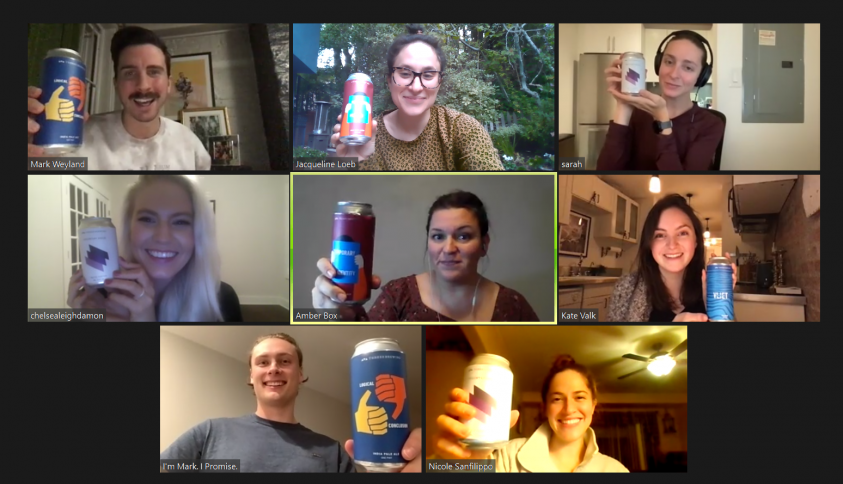
Here at Scouted, every Monday our team shares “Wins and Woes” as a way to reflect on the positives of the past week’s KPIs while also maintaining transparency about what didn’t go so well and issues that may have come up.

While we won’t pretend to have all the answers, we wanted to share what working at a startup has been like for our team this year while we did our best to pull on the good and celebrate the small (or not so small) wins of 2020.

Scouted’s 2020 Wins

We led with conviction 

The year was about rising above the “maintaining bottom line” mindset that is usually front-of-mind during a financial crisis. For many CEOs, 2020 served as an opportunity to prioritize purpose, transparency, and authenticity — with customers and employees alike. 

Regardless of company size, executives have faced the challenge of maintaining outward strength and conviction despite a potentially complex and uncertain road towards profitability, stability, or certainty of the team’s future. 

This was no exception for Jacqueline Loeb, Scouted’s Co-founder and CEO:

Community and morale have always been important to me as a CEO, but during this pandemic besides managing runway, managing morale and a strong sense of community has been paramount.  I found that with everyone remote, I need to be even more deliberate about how to ensure my team feels connected to each other, their work, and the mission of Scouted. This means everything from being extremely disciplined about holding one on ones with my team to spending a lot more time during meetings talking about life outside of work, to being creative about team bonding events. I have spent a lot more time and effort working to manage and lead my team with discipline and compassion.

We stepped up to the plate 

This year not only brought change for company-wide leadership teams, but also for department and team managers. For many, the move to remote work meant relearning how to manage not only projects but people, too. And remote management is not the same as managing in an office.  

For Sarah, Scouted’s Director of Operations, the move to remote management, especially at a seed-stage startup, brought a realization that owning her management role was more important than “feeling comfortable” in her WFH role:

The first few weeks of working from home were difficult for me. At a personal level, I struggled with staying motivated and upbeat, especially given that I generally thrive in a live, collaborative environment. But, as a senior member of a small, young team, I quickly realized I had to step up to the plate. It was in the company’s interest — and my own — that I remain positive and forward-thinking among teammates, supportive of our CEO’s strategic decisions to keep us afloat, and hopeful that there would be a way forward for an HR-tech startup. Shifting my mindset helped me to refocus my nervous energy on proactive strategic projects and aid in positioning the team to be able to focus on what we could control.

We focused on our community

Early on during this year, for many employees, strict quarantine guidelines meant that a Zoom meeting might have been the only interaction they had with someone on any given day. Scouted prioritized learning how to keep a strong company culture, despite working remotely. Mark, Head of Sales and Business Development shares how he felt his work community grow stronger and lean on being transparent with each other, even while distanced.

I’m a social person, and not just because my work in business development requires it, but also because I really do enjoy people. The demands of an isolating quarantine, especially as someone living alone, require fortitude and grit. But the small size of Scouted’s tight-knit team tethered me to sanity. We came together not only as colleagues but also as our own little quarantine family. We helped each other solve work challenges, of course, but we also overcame personal struggles, which allowed us to rise up as an affirmed, cohesive, and mighty unit. We strove to help people find jobs in a difficult economy and to help each other keep track of ourselves as a difficult year continued to press on. For that, I’ll always be both proud and grateful.

We found our motivation

As of July 2020, 42 percent of the U.S. labor force was working from home full-time. This huge shift led to a major adjustment for many. Learning to diminish distractions, push through procrastination, and muster up motivation was a huge part of learning to work from home for all of us. 

Kate, Scouted’s Product Manager, says,

Before the pandemic, I was used to being busy. Working well into the night and squeezing in errands and social activities when I could. Of the ranging impacts the pandemic has had on all of us, this feeling of ‘work busyness’ changed for me dramatically – despite there being just as much to do, if not more as our HR startup adapted to the impacts of the pandemic. NYC hit PAUSE and so did a lot of my usual motivation. 

I recently heard a comparison of this mental block to Newton’s First Law of Motion – a body in motion stays in motion. Going from the environment of a small, collaborative startup office to working alone from my living room was like starting a sprint from a dead stop, instead of the jog that I had become so used to and thrived on. With the support of transparent work culture and a Founder acutely keyed into company morale, not to mention trial and error, discipline, and lots of projects, I picked it up to a walk and am slowly back into a jog once again.

We learned how to communicate and stay connected

Other remote employees, like Chelsea who works in content marketing, felt her WFH struggles validated while also feeling more connected to the rest of the team.

I was Scouted’s first remote hire back in 2018. While I considered myself extremely lucky to be able to work from home while also working full time for a growing startup, working remotely for an in-office team came with its struggles. Being the only floating head on a Zoom screen made it harder to follow meetings or to be in touch with the rest of the team due to not being present for impromptu office conversations, social events, etc. 

During the pandemic when the whole team shifted to remote work, I found it much easier to connect with the team seeing as we were now all floating heads. My struggles of working from home (like distractions, finding motivation, staying in the know) felt validated by the rest of the team now also learning to adjust in real-time. And while I know the team won’t stay remote forever, I think it’s given us great insight on how to keep our remote employees in the loop.

We learned to be even more flexible, managing mom-life and work-life

Not only did we have to re-learn how to work from home, we had to learn how to do life completely from home as well, and balance them simultaneously. According to a Gallup coronavirus tracking survey of more than 1,200 parents, 56% of parents found remote learning difficult for their families, including 16% of parents who said it was “very difficult.”

Amber, who works in Talent Support at Scouted says,


As a mom of three with a busy household, being home and having a structured schedule has always been important. So, when the world was turned upside down by the pandemic and the rest of my team had to shift to remote work, I thought this would be easy–I had been working at home for years, after all. What I didn’t realize was how difficult it would be to have my kids home full-time and helping them shift to virtual learning while also shifting and adapting in my own role at work to meet the demands of an ever-changing world. 

I had to rely on skills I hadn’t leaned on in a long time and that meant a lot of adapting. I had been used to a set, structured schedule, but working remotely at a startup with children at home has taught me, more than anything that, while time-management and structure are immensely important to be productive, there is also a great need for you to adapt and shift with the changes that each day can bring. Flexibility gives us the space to bend when we sometimes feel like breaking. 

And simply put, we kept the faith

When facing moments of uncertainty, sometimes it comes down to simply having faith in the adaptability of your business. When we can’t control every outcome, which is rarely the case at an early-stage startup, we have to rely on the relationship and trust that we’ve built with our team.

Scouted’s Account Management lead gets real on her experience this past year: 

When COVID hit and the reality set in of what was going to happen, I didn’t immediately panic because I knew a couple of things to be true. First, was that my scrappy a$$, seed-stage startup company that I worked for had always been just that, very scrappy and always adapting to work towards something better. Second, I believed in and implicitly trusted my CEO and co-founder because no matter how good or bad things were, she was always transparent and supportive of our ideas. Lastly, I was simply grateful that no matter what did happen, that I had worked with and gotten to know these people in such an intimate way as you do on such a small team.

Topics:

Candidates, Climb the Ladder
Climb the Ladder

10 Reasons Candidates Get Turned Down That You Can Control

10 Reasons Candidates Get Turned Down From Jobs (That Are Totally in Their Control)
Scouted.io icon
By Scouted
Scouted was a hiring marketplace that matched candidates to roles based on potential, serving clients from high-growth startups to Fortune 500 companies.
5 min read • Originally published December 18, 2020 / Updated March 19, 2026
Scouted.io icon
By Scouted
Scouted was a hiring marketplace that matched candidates to roles based on potential, serving clients from high-growth startups to Fortune 500 companies.
5 min read • Originally published December 18, 2020 / Updated March 19, 2026

Let’s face it, it’s not fun getting turned down for a job. If and when we do, the biggest question we ask ourselves is, “Why?”

While some employers may provide feedback as to why they decided to go in another direction, many won’t provide any feedback or err on the side of caution and share 1-2 vague points. 

Getting turned down from a role isn’t always in your control, but today we wanted to talk about the aspects that are in your control during an interview process. If you think of any we missed, leave your ideas in the comments below!

Poor communication – especially in jobs where it matters

In some cases in everyday life, it might be ok to take a couple of days to respond to an email. Communicating with a hiring manager, however, isn’t one of them. Be sure to respond to any emails or phone calls as soon as you can as this shows hiring managers you’re excited about the role and gives them a peek into your communication skills. This is especially important for roles where communication is a big component so think of your communication with your hiring manager as part of your interview.

Being difficult to schedule

As much as you may be qualified for the job, the timing in which you’re able to speak with someone at the company is still important. What’s unknown to you as a candidate is how many other applicants the company is interviewing, how soon they’d like to hire for the role, and how excited the company is about your resume in the first place. Being difficult to interview could also make them feel as though you’re not very excited about working with their company, either.

That being said, don’t give hiring managers any reason to take your resume out of the stack by making it difficult to schedule interviews. Work around your schedule as best you can to accommodate the company’s hiring timeline.

Cold responses in emails

Many people approach emailing differently. Some treat it like texting, some are formal, and some email as though they’re having a real-time conversation. In most cases, we would recommend your emails sound professional yet friendly. Address the person you’re emailing by name, be to the point and friendly in your email, and sign your name at the bottom. 

Also read: How to Follow up After a Job Interview When You Haven’t Heard a Response (With Example Email)

Playing the victim in an interview

It’s important to take personal responsibility when explaining why you made certain career decisions, especially when speaking to why you left past roles. You may or may not have had a poor experience at your previous employer, but what a hiring manager won’t know is the entire story. If a candidate complains about former managers or says things like, “the culture was terrible,” or “I had a terrible boss”, hiring managers may become wary of whether or not you are the type of person that always puts the blame on others.

While you can of course acknowledge challenges with your former employer, be sure to also acknowledge how you might have handled a situation differently and what you learned about yourself as a result.

You can’t specifically explain why you want this job and why it makes sense for your career

No matter how large or small the company, the hiring manager wants whoever they hire to be excited to work there – not just taking any job they can get. Be sure to do your research on the company, get up to date on any recent company or industry news, and have a clear idea of how this job fits in with your overall career goals.

You’re too expensive

Ok, it’s debatable whether or not this is in your control, sometimes a company’s budget just doesn’t meet one’s salary expectations. But, you can set your expectations for certain roles within a company by understanding what type of company it is, its size, location, and other factors that may play into its ability to compensate its employees.

Not explaining how your experience aligns with the role specifically

Let’s say that the role you’re after requires that you have significant experience directly supporting c-suite executives. Or the marketing role you’re after is for a SaaS in the foodservice industry. It’s extremely important to understand what the job requires and tailor your resume and interview as much as you can to the specific position and highlight your personal experience that would make you great for that specific role. 

Caring about the wrong things

In another post, we wrote about the right and wrong answers to ask during an interview. Asking questions like “How soon can I be promoted?” or “How much vacation time do you offer?” can be a big red flag to employers that the person they’re interviewing is simply after another job or using their company as a stepping stone rather than caring about the company’s mission itself. While it’s important to know about vacation time, benefits, and your salary, these things should be negotiated after an offer is made.

Getting caught in a lie

You would think that not lying during an interview process would go without saying, but we’re going to mention it anyway. Whether it’s a fib about your GPA, work experience, or simply why you were late for your interview, do your best to be honest, and avoid the temptation to lie at all costs. A good excuse for being late (as well as a heads up call), or better yet, planning ahead,  is far better than risking getting caught in a lie and getting turned down from the role immediately.

Not enough passion (!!!)

We’ve said it before (for both candidates and clients) showing your passion and excitement during an interview process is so important! Companies want to know that they’re hiring people who are excited about their mission, their product, and about achieving goals. To better show your excitement for a role or company, be able to articulate why you want to work there, ask great interview questions, and proactively think of what you bring to the table that can help the company. 

Like we said, getting turned down from a role is rough, but it’s easier knowing that you did everything in your control to fight for it. 

Think of a point we missed? Leave it in the comments below!
Ps. check out the new and exciting companies hiring on Scouted!

Topics:

Candidates, Climb the Ladder
Climb the Ladder

Preparing for the Scouted Virtual Interview

Scouted.io icon
By Scouted
Scouted was a hiring marketplace that matched candidates to roles based on potential, serving clients from high-growth startups to Fortune 500 companies.
3 min read • Originally published January 8, 2021 / Updated March 19, 2026
Scouted.io icon
By Scouted
Scouted was a hiring marketplace that matched candidates to roles based on potential, serving clients from high-growth startups to Fortune 500 companies.
3 min read • Originally published January 8, 2021 / Updated March 19, 2026

Preparation Tips

  • There is no need to dress up, fuss over perfection, or do anything other than be yourself! 
  • We do not want you to over-prepare nor do we want you to get nervous and not be yourself, that’s why we’re sharing the questions upfront with you. We are not expecting rehearsed responses, but do gather your thoughts beforehand. The value we get is to virtually meet you and get a sense of your personality, thinking, and potential beyond your paper application. Feel free to answer off the cuff, or write your responses in advance. You do you.
  • Scouted wants to get to know you – who you really are – and how you think. We care a lot less about what you have done and a whole lot more about why you did those things. Read more from our Founder on the value of the interview here.
  • Your Virtual Interview is not public or searchable on the web. It is only available to Scouted and the select partner companies you apply to.

The Process

  • We’ll do a quick system check to make sure your device is set up properly. You’ll need a computer or phone with a functioning webcam and microphone. You’ll be prompted to do a 5-second webcam and audio test – no one will see this video.
  • Additionally, you’ll have the option to practice what it’s like to interview virtually using sample questions similar to our official questions seen below. These practice responses are also not seen by us or our partner companies.
  • Once you click ‘Begin interview’, you will be asked 1 question at a time and will be given prep time to gather your thoughts for each. After you click ‘Start Recording,’ you’ll have 1.5 minutes for that response. You will have an option to retake the question 2 times before selecting the response you’d like to submit. You will not be able to go back and review the question once submitted.
  • It should only take ~10 minutes to complete and can be done on your own time, but be sure to complete it in one sitting.
  • Once you’re finished, you’re all set to apply to any of our jobs! Your interview becomes a part of your Scouted profile and can be found on your Profile page.

The Questions:

1. You have a free weekend, with no prior commitments. How would you spend it? You are (shockingly) well-rested, but otherwise your regular, awesome self. Tell me the top 5 ways you would spend/waste your time. 

2. Tell me about the first or most impactful major decision you made on your own and why you made it. We care a lot less about the decision itself and much more about the thought process that went into it.

3. What is the hardest thing you’ve encountered/accomplished and how did you overcome it?

4. We are borrowing a question from the book Zero to One, what do you know to be true that few others agree upon?

5. Our goal is to get to know you – what is the one question you think we should have asked you and didn’t? Please answer it.

Topics:

Candidates, Climb the Ladder
Climb the Ladder

Resume Example for 2021

What your resume should look like in 2021
Scouted.io icon
By Scouted
Scouted was a hiring marketplace that matched candidates to roles based on potential, serving clients from high-growth startups to Fortune 500 companies.
8 min read • Originally published January 15, 2021 / Updated March 19, 2026
Scouted.io icon
By Scouted
Scouted was a hiring marketplace that matched candidates to roles based on potential, serving clients from high-growth startups to Fortune 500 companies.
8 min read • Originally published January 15, 2021 / Updated March 19, 2026

Over the past 30 years, resumes and the hiring process, in general, haven’t changed that much. That is up until the last few years where we’ve seen an emerging relationship between tech, AI, and human resources. It may seem counter-intuitive to manage a human-centered process with tech and AI, but when done with a human-forward approach, it can make finding a job faster and easier for candidates, and more efficient and economical for companies.

And since the recruiting process has taken a turn for technological, our resumes need to adapt. For starters, download our favorite resume template and then customize it for your own job search.

Since we spend a lot of our time reviewing resumes in order to match candidates to great jobs, we’ve come up with a list of some of the most important aspects to think about when writing your 2021 resume. We often get on the phone with candidates and ask them to tweak some of these resume mistakes and see them go on to land amazing jobs.

Are you making any of the mistakes listed below? Read on to find out!

List accomplishments instead of duties

Copying and pasting your previous job descriptions on your resume isn’t going to do you any favors. Nothing about that helps you to stand out and it also doesn’t tell employers what you accomplished while on the job. 

Instead, try thinking of the differences you made while working at your previous job. Did you streamline any processes, take on big projects, or manage a team? Write about it!

Include strong data, numbers, and performance indicators where appropriate

Going off of our last point, it’s a great idea to keep a list of personal metrics on hand to include within your resume later. Say you grew the revenue your team generated by 20% last year, that’s impressive – include it! Maybe you created 15 new processes that streamlined business functions – add it!

What we’re saying here is that numbers stand out. They tell future employers exactly what you accomplished in the past and what you can potentially do for them in the future. So, if you can include your own personal metrics on your resume, do it! 

Tailor your resume to the job description

Most people don’t just apply to jobs with a singular job title. Say you’re coming from an account management role and would be happy to land a new job in account management, but you’d also be open to roles in project management. While your experience hasn’t changed, your resume typically should (unless you’re applying from Scouted where we tell employers why you’d be a great fit for either role).

The thing is, if someone who’s hiring for a project management role reads a resume who seems like they’re actually looking for an account management role, that’s an easy way to get filtered out of a resume pile. Instead, do your best to tailor your resume to the job you’re applying for. Take a deep look at the job description to see how it would work within your resume. 

Also read: How to Edit Your Resume Based on the Job You’re Applying For

Keep your resume to one page

The rule of thumb here at Scouted is that if you have less than 10 years of experience, keep your resume to one page. In fact, we’ve seen employers automatically turn down people with less than 10 years of experience with over 1 page resumes.

Even if you feel like you have a lot of information you want an employer to know about you (much) more often than not, a resume that’s over 1 page simply seems to ramble about things that aren’t particularly relevant to the job you’re applying for. 

Instead, as we stated above, tailor your resume to the job you’re applying to and if some of your previous experience isn’t relevant, think about either leaving it off or cutting down that section to make more room for your experience that is relevant. 

Founder tip: The space you allocate on your resume should be proportionate to your time spent at a job. Think – more real estate for places you were at for a longer time, gained the most experience, etc.

Avoid an irrelevant “skills” section

This is often one of the unimportant sections that make a resume longer than it should. In this day and age, most employers will assume that you know basic computer functions, so feel free to leave Microsoft Excel off your resume. And, you may have great leadership skills, but if you’ve mentioned how you’ve lead teams and made a difference in your workplace in the experience section above, a hiring manager will gather that themselves rather than taking your word for it in the “Skills” section of your resume.

When should you have a skills section on a resume?

We typically tell candidates that special certificates and training can be mentioned in the “Skills” section. If that’s not you, better just leave it off. However, a “Skills” section can actually be really important for technical resumes to show the languages/programs you know and can also be useful if you’re concerned about being picked up by ATS (applicant tracking systems).

The main idea here is that you want to include programs/products/skills that are unique and make you stand out versus simply saying you know how to use email and write in Word.

Incorporate keywords based on the job description and industry

The way an ATS determines if your resume is a good match for the job is by scanning the text for relevant keywords. Keywords usually refer to a specific skill (“Javascript”), educational background (“journalism”), or previous position (“marketing manager”). You can get a good sense of what the keywords for the job are by looking at the job description. Note what the employer is asking for in the “Qualifications” section and see what’s on the list of job responsibilities. From there, you can adapt your resume to incorporate the words and phrases that appear frequently. 

However, don’t “stuff” your resume with keywords. Using them once — or twice, if it’s an essential part of the job — will suffice. In addition, if you use industry-related acronyms in your resume, the ATS might only be calibrated to pick up on the full spelling of the word or phrase. It’s best practice to include both (such as “UX Designer” and “User-Experience Designer”).

Keep the format simple

You might think that using graphics or a colorful design for your resume would put you ahead of the pack. And that’s possible if a hiring manager is reviewing the resume, but your plan could backfire if it has to go through an ATS first. Research from TopResume found that 21% of resumes include graphics or charts that an ATS cannot read. Instead, keep your resume to one or two simple sheets of white paper and choose a basic font like Times New Roman or Helvetica–no frills needed. If you’re not sure how to format it properly, you can try Scouted’s recommended resume template.

Tell a clear story of your career path, even if it’s non-linear

What many job seekers don’t realize is that hiring managers read resumes to get a clear picture of a candidate’s career path. They want to know why you want the job. 

So, before submitting your resume to job boards, read over it to see if your career path makes sense. Have a friend do the same. See if it makes sense to them that you’re applying for the roles you’re applying to. If it doesn’t make sense, I try mirroring some of the language in the job descriptions you’re applying to. Ask yourself how your experience would make you great at those jobs. If you’re able to communicate that, that your resume will make much more sense.

Pro tip: Always save your resume as a PDF.

You’ll notice that our resume template is a Microsoft Word file. Whatever template you use, don’t leave it in an editable format. You never know how your resume formatting may show up on another’s computer so it’s best to play it safe and always save your resume as a PDF.

Pro tip: Do the 10-second test

It’ll take about 10 seconds for a hiring manager to make an initial decision on your resume. After you’ve finished writing yours, walk away from it for an hour or two. When you return, try to skim it in about 10 seconds. See what you take from your resume and ask yourself if your relevant experience and expertise is clear. Once you do this, try having a friend do the same thing and see what they take from your resume as well. Edit as needed and then send it on its way!

To have or not to have a skills section on a resume…

We typically tell candidates that special certificates and training can be mentioned in the “Skills” section. If that’s not you, better just leave it off and use the space for something more useful. 

That being said, a “Skills” section can be really important for technical resumes to show the languages and programs you know and can also be useful if you’re concerned about being picked up by ATS (applicant tracking systems).

The main idea here is that you want to include programs/products/skills that are unique and make you stand out versus simply saying you know how to use Microsoft Office.

These are most of the biggies but, of course, if you have other questions we at Scouted offer personalized resume advice! But for starters, try using our preferred resume template and go from there!

We’d love to hear your thoughts and questions in the comments below and we’ll do our best to respond to each!

Topics:

Candidates, Climb the Ladder
Climb the Ladder

Scouted’s Virtual Interview: Tell Your Story Your Way

Even before the COVID-19 crisis, companies were trending toward video or virtual interviews and one could potentially argue that even after it’s safe to return to our offices, that video interviews will continue to be increasingly utilized. So, how are you currently feeling about your video interview skills? Does the extra experience with Facetime or Instagram stories make you a pro? Or are you nervous about not being able to get a wholistic feel for the company or read social cues as in a traditional interview? Wherever you find yourself on the preparedness spectrum, we want to share our tips for having a great video interview.
Scouted.io icon
By Scouted
Scouted was a hiring marketplace that matched candidates to roles based on potential, serving clients from high-growth startups to Fortune 500 companies.
4 min read • Originally published January 15, 2021 / Updated March 19, 2026
Scouted.io icon
By Scouted
Scouted was a hiring marketplace that matched candidates to roles based on potential, serving clients from high-growth startups to Fortune 500 companies.
4 min read • Originally published January 15, 2021 / Updated March 19, 2026

Here at Scouted, we’ve always believed that you’re more than your resume. And that foundational value has driven how we’ve built our entire company, platform, and product. That’s why we give you the opportunity to complete a Virtual Interview as part of your holistic profile, to help you show off your talents, personality, and potential. 

We’re all about empowering you to tell your story, your way.

At the end of the day, you know yourself better than anyone else. That’s why we give you the option to complete your virtual interview, only if you want to. It’ll unlock ALL of our jobs, and, more importantly, it also significantly increases your chances of landing an interview with our partner companies.

Below, we’ve detailed a few key benefits of completing the Scouted Virtual Interview and why it will help you land that awesome job…

Unlock all jobs at Scouted

The first benefit of completing your Scouted Virtual Interview is pretty obvious – it unlocks all jobs on Scouted! While many of our partner companies allow candidates to apply to roles without a Scouted Virtual Interview, several of our high-profile partner companies require it – they find the Virtual Interview extremely valuable in getting to know the candidates on their rosters. Many hiring managers also use the Scouted Virtual Interview to replace their initial phone screen, so it can also expedite your interview process!

Increases your chances of being selected for an interview for any/all jobs

Candidates on Scouted who complete their virtual interview are 58% more likely to be selected for an interview with our partner companies. Like we mentioned above, our partner companies value the Scouted Virtual Interview as a way to get to know candidates on a deeper level. It helps hiring managers make better decisions by providing more information beyond a resume by enabling them to virtually meet you (at their convenience).

Say a startup is looking to hire an operations manager and you’ve been in Financial Services your whole life but are looking to break into the startup world. From your Scouted Virtual Interview, a hiring manager has a chance to get a sense of your interpersonal skills, process orientation, as well as your grit. They can get insight into why you want to change careers and how your previous experience is transferable and relevant to other industries and functions.

Lets you control your narrative

As a candidate, your first goal is to get yourself to the interview stage with your top companies, and your main tool to do that is your resume. Most companies get inundated with applicants, and the average hiring manager spends roughly 6 seconds(!!) on each resume. If you’re worried about hiring managers making the wrong assumptions from your resume and/or overlooking your individual talents and story, your Scouted Virtual Interview provides a way around that.

Our unique five-question Virtual Interview is intentional and thoughtful: Our questions probe for grit, tenacity, interpersonal skills, and other key factors of potential success – factors that don’t always come across on a resume. We see way too much talent get overlooked for opportunities because they didn’t attend the *right* school or didn’t have the *right* former title and we realized how much both candidates and companies were missing out. We want you to be in control of the story you tell, and your Scouted Virtual Interview empowers you to do that.

My career path makes sense, but I want to stand out

Even if you’re not worried about the story your resume tells because, to be honest, your career progression makes perfect sense – it’s linear, logical, and impressive – your scouted virtual interview can be what sets you apart from the rest.

It puts a face to a name and a story that goes beyond a piece of paper. It helps you add an additional dimension to a standard job application by humanizing you and bringing your story to life.

The choice is yours

Here at Scouted, we’re all about empowering you to tell your story, your way. If you feel like you can do that without completing your Virtual Interview, we get it! Just look for the Scouted job postings without the video logo. We value you as a candidate – and we respect that you’ve opted to not complete the Scouted Virtual Interview. 

Like I said before, at the end of the day, you know yourself better than anyone! We’re just here to help guide you in your job search. We’re excited to offer job opportunities to even more candidates than before – and we’re equally committed to supporting you along your career journey in whatever way we can.

Whether you are changing careers or simply wanting to add another dimension to the standard job application – the Scouted virtual interview lets you control your narrative and, it helps us tell your story the way you want it to be told.

Happy applying!

Cheers

Jax

#hirepeoplenotresumes

Topics:

Candidates, Climb the Ladder
Climb the Ladder

How to Nail a Video Interview

Even before the COVID-19 crisis, companies were trending toward video or virtual interviews and one could potentially argue that even after it’s safe to return to our offices, that video interviews will continue to be increasingly utilized. So, how are you currently feeling about your video interview skills? Does the extra experience with Facetime or Instagram stories make you a pro? Or are you nervous about not being able to get a wholistic feel for the company or read social cues as in a traditional interview? Wherever you find yourself on the preparedness spectrum, we want to share our tips for having a great video interview.
Scouted.io icon
By Scouted
Scouted was a hiring marketplace that matched candidates to roles based on potential, serving clients from high-growth startups to Fortune 500 companies.
5 min read • Originally published January 22, 2021 / Updated March 19, 2026
Scouted.io icon
By Scouted
Scouted was a hiring marketplace that matched candidates to roles based on potential, serving clients from high-growth startups to Fortune 500 companies.
5 min read • Originally published January 22, 2021 / Updated March 19, 2026

Here’s the obvious: COVID-19 is changing the way a lot of businesses are functioning. 

That being said, many companies are finding new ways to adapt their old processes to continue functioning, even when working remotely. 

We’re seeing many companies transition to interviewing candidates over video conferencing and even creating processes to onboard new employees remotely without ever having met them in person. 

Even before the COVID-19 crisis, companies were trending toward video or virtual interviews and one could potentially argue that even after it’s safe to return to our offices, that video interviews will continue to be increasingly utilized.

So, how are you currently feeling about your video interview skills? Does the extra experience with Facetime or Instagram stories make you a pro? Or are you nervous about not being able to get a holistic feel for the company or read social cues as in a traditional interview?

Wherever you find yourself on the preparedness spectrum, we want to share our tips for having a great video interview. 

Test your equipment

The day before your interview, you’re going to want to test your ability to connect online. That’ll give you plenty of time to work out the kinks, should you find any. If you can, try to set up a practice call using the same or similar software that you’ll use for the interview (Google Meet, Skype, Zoom, etc). If that means calling your mom or your roommate 5 feet away, so be it. Better safe than showing up 10 minutes late to an interview you get to do from home.

Pick a quiet room

Ideally, you should have an entire room to yourself for the interview. Try to pick a place that’s tidy and well-lit and also free from distractions. While hiring managers will be able to understand (especially during quarantine) that some background noise is to be expected, try your best to keep the outside noise to a minimum. It’ll allow you to concentrate on your answers and hiring managers to focus on you.

Dress appropriately

We probably don’t even need to tell you this… but interviewing from home doesn’t mean you get to wear the same clothes you ate your breakfast cereal in. To play it safe, just wear what you would plan to wear to an in-house interview. Hiring managers may be less tuned in to your outfit choice during quarantine, but to play it on the safe side, be sure to pick an outfit that’s professional, non-distracting (ie. avoid bright colors or patterns – better to let your personality do the talking), and neat/free of wrinkles. 

Pro tip: we recently discovered that if you want a slightly more “polished” look during your Zoom call, simply go to settings” ➝ “video” ➝ “touch up my appearance” for a laptop, or on your phone go to “settings” ➝ ”meetings” ➝ “touch up my appearance.” We’ll be using this one for our next team meeting.

Have a copy of your resume handy

Just like you’d probably show up to an in-house interview with a copy of your resume, be sure to have a copy handy during your video interview as well. You don’t necessarily need to print out your resume (let’s save a tree, shall we?), having a PDF open on your computer to reference will work as well. 

Keep your internet tabs and running programs to a minimum

There are two types of people in the world: the ones who hate having unused internet tabs open, and the ones who have no less than 7 tabs open at all times. Which are you?

In any case, you’re going to want to close out of unused tabs and computer programs just to make sure your video quality is the best it can be and your internet speed isn’t maxed out. It’s a simple tip, but it’s a little way to help your interview run smoothly without distraction.

Take notes

Just as in any interview, taking notes is a great idea to remember important information as well as show that you’re engaged and interested. While doing your interview through your computer, you can either take notes using a pen and paper or by opening a new Word or Google doc and typing a few notes as they come up. It’s also a good idea to jot down any questions you may have ahead of time on the same sheet.

Also read: Questions You Should Always Ask in a Job Interview (And Some to Avoid)

Don’t forget your personality

While this is important in any job interview, it’s even more important to remember during a remote interview. When we don’t get the chance to meet with a hiring manager in person, things like handshakes, gestures, and “active listening” body language can be lost.

During your interview, do your best to be engaging, smile, and look into the camera. While you don’t need to overdo it with hand gestures, simply remember to have good energy and show that you’re excited about your conversation with the interviewer.

Other video interview tips:

  • Check your camera placement so that your head and shoulders are in frame and your webcam is on the same level as your face (try to avoid looking up or down into the camera).
  • Try to find a room with natural light or at the very least, make sure you are well lit.
  • Ask for a timeline and next steps before saying goodbye.
  • Don’t forget the thank-you note!
  • Be sure pets are outside the room, fed and happy.
  • If you tend to be introverted, you might need to amp your energy level a bit so that it comes through via video. Many recruiters we’ve spoken with have said amp you energy level 10-20%.
  • The hardest thing about video interviews is knowing when to start talking. So be sure to listen and let your interviewers finish their thoughts before responding as it is a lot easier to cut people off.
  • If it’s on zoom, be sure to put it on ‘gallery view’ so you can see all the parties and their reactions in real-time, like you would in a normal interview

Topics:

Candidates, Climb the Ladder
Climb the Ladder

13 Questions to Assess a Company’s Commitment to DEI

Two women in conversation at a table
Scouted.io icon
By Scouted
Scouted was a hiring marketplace that matched candidates to roles based on potential, serving clients from high-growth startups to Fortune 500 companies.
6 min read • Originally published February 1, 2021 / Updated March 19, 2026
Scouted.io icon
By Scouted
Scouted was a hiring marketplace that matched candidates to roles based on potential, serving clients from high-growth startups to Fortune 500 companies.
6 min read • Originally published February 1, 2021 / Updated March 19, 2026

Let’s be candid here… If you ask a hiring manager (or any one of your interviewers) if a company has diversity, equity, and inclusion (DEI) policies or procedures in place, you’re likely to receive a legalistic, by the books “but of course!” response. 

Yet, just because a company says something is true, doesn’t mean it is in practice. So, how do you find out about what a company’s culture is actually like? 

Here are 13 questions (plus a few tactical must-do’s) you should bring to your next interview to probe on an organization’s dedication to providing an equitable and inclusive environment for its employees. 

Start at the top. 

1 | How diverse is the executive team?

Change and impact start at the top and trickles down; a representative c-suite is a visible indicator of whether or not a company prioritizes diversity (in all senses of the word). 

This is a great place to start – and a question that you can probably answer through research on the company. Have a look at the executive team (the c-suite) – do you see people like yourself represented? If the team seems homogeneous, plan to ask your interviewers about what (if any) plans are in place or in motion to change the make-up of the executive team.

2 | What about the Board of Directors? 

A company’s Board of Directors holds enormous power, and can change or challenge the c-suite/leadership decisions, remove leadership, and make critical decisions about the future of the business, so it’s imperative that the Board is diverse. This is especially important for a privately held company where there is little regulation or color into leadership decisions. Remember, the Board will want to do what is best for business, but not all business decisions impact employees equally – make sure that you see someone like yourself on the Board, too. 

Ask about middle managers, VPs, and leadership opportunities

3 | What’s the makeup of the managerial team?

What does the current team look like? Are you joining a team of all men? All women? All engineers? All Ivy League grads? All white people? Diversity comes in all shapes and colors – ethnic, racial, socio-economic, sexual, geographical, political, religious, gender, intellectual diversity –  so it’s important to probe on the makeup of the team. 

Not to mention, managers and director-level employees are often on the front-lines of major decisions surrounding hiring, bonuses, layoffs, and firing. 

4 | What leadership training programs do you offer? 

Great, 40% of Associates are women of color! But what are you doing to advance these women within your company? Some firms do a great job of offering mentorship and training/education opportunities to help elevate and promote from within… ask about these initiatives – and who has access to these initiatives. 

5 | What does the promotion and evaluation process look like and who is in charge of these decisions? 

Now, we’re not telling you to ask for that promotion from day one. What we do encourage you to do is ask about how the company approaches annual/bi-annual evaluations and promotion decisions. It’s also important to ask who is involved in these decisions (is it a homogeneous committee?) and what data points are used to evaluate candidates (if there is not a process, that might be a red flag that schmoozing is overvalued, and things like hard work and ability undervalued).

Probe on programming and goal setting.

6 | How do you prioritize social events that all employees feel they can take part in?

Not all employees will feel at home at every event, and it’s important that teams consider this when planning company-wide or team-wide social activities. As we wrote about before, people with families might not have as flexible a schedule to attend evening events; people that don’t drink might be uncomfortable if every gathering centers around alcohol consumption. The fact of the matter is, if people are not participating in these key relationship-building events, they are not forging ahead in their careers simply from being left out. 

7 | How do you foster an open, communicative environment for your employees?

This question probes at a company’s willingness to provide a safe and open space for all employees to voice their concerns. Your interviewer might not know the ins and outs of the company’s formal policy, but they should be able — and willing — to speak to their personal experience, and that is likely better than a formal “our policy says xyz.” 

Another way to ask this question is: What are you doing to promote a culture in which individuals at all levels and of all backgrounds feel supported enough to speak up?

Ask about the HOW.

8 | How do you celebrate diversity of ideas and people?

This question is especially important for leadership and your potential immediate manager. Don’t be afraid to ask how they plan to elevate and promote the different opinions, background, and perspectives of their team and company. 

9 | Do you have a DEI working group or breakout group to help foster greater change? 

Not all companies are equally successful at fostering an inclusive culture, but all companies can (and should) continue to push for progress and do better for their employees. 

If you are interviewing with a larger company, the HR lead, Head of People, or Chief Talent Officer might be able to offer color into the various breakout groups that the company offers employees who desire the space to connect with employees of diverse backgrounds and experiences and help leadership with long-term DEI vision and goals. 

While that in itself does not mean that they value diversity, it is an indication of how they are prioritizing it.

10 | Who is in charge of the hiring process and how are they making sure that the pipeline of candidates is diverse? 

In other words, are candidates from non-traditional or non-obvious backgrounds even seeing the job opportunity? A company’s recruiting team should have processes in place to bring in diverse candidates early on in the interview process. 

11 | Did the company issue a statement of solidarity with Black Lives Matter?

If a company produced a statement around BLM, ask the people you are interviewing with about their follow through accordingly. As the adage goes, actions speak louder than words. 

If the company chose not to produce a statement, ask why – and then ask what they are doing to work towards actionable change.

And, lastly, don’t forget to ask the tough questions. 

12 | Where do you think the company needs to improve the most? 

Don’t be afraid to ask your interviewer about what the company still needs to work on in terms of creating a more diverse, equitable, and inclusive workplace. If the company is actually putting in the work, employees will likely be more willing to be more open and honest with you about the state of things.

13 | What tangible goals does the organization have surrounding diversity, equity, and inclusion? Who is responsible for making sure these goals are met? 

Goal setting is a proven method to creating a more inclusive working environment. Understanding a company’s long-term vision within their DEI initiatives will help you better understand where they’re at right now, and what the work place might look like five years from now. Not every organization is starting from the same place, and tolerance for joining a company that may be at the early stages of their DEI journey is personal. 

And a tactical few points to remember… 

Ask to speak with a peer 

The most helpful thing is likely talking to people who work at the company because talk is cheap, and leadership can say what they want, but it’s the folks on the ground who really experience a culture in action.

Pick 2 – 3 questions and ask to multiple people 

Whenever you’re trying to understand something like core values of a company, it’s good practice to pick a few questions and ask those same two or three questions to every person that you meet during the interview process. Compare the answers: Is there consistency across the board, or are there conflicting perspectives?

Topics:

Candidates, Climb the Ladder
Climb the Ladder

5 Actionable Tips to Find Your First Job Faster

5 Actionable Tips to Find Your First Job Faster
Scouted.io icon
By Scouted
Scouted was a hiring marketplace that matched candidates to roles based on potential, serving clients from high-growth startups to Fortune 500 companies.
5 min read • Originally published June 3, 2021 / Updated March 19, 2026
Scouted.io icon
By Scouted
Scouted was a hiring marketplace that matched candidates to roles based on potential, serving clients from high-growth startups to Fortune 500 companies.
5 min read • Originally published June 3, 2021 / Updated March 19, 2026

Searching for your first job is a rite of passage. Every year, millions of young people enter the job market for the first time and grapple with the uncertainty of figuring out their first career step. 

The COVID-19 pandemic only adds another layer to the uncertainty faced by first-time job seekers. In 2020, we saw the weakest job market for recent graduates since 2008, with a 45% drop in hiring for this group over the course of last year. 

Fortunately, things are looking up for the class of 2021. Many employers are ramping up hiring in recent months, and entry-level job postings are up significantly compared to this time last year. It’s still a highly competitive environment, but there are finally a growing number of opportunities.

So, how can you successfully navigate your first job search in this challenging market? Here are five tips to get started: 

1. Target your applications

Writing a thoughtful, short cover letter as part of each application is a low-effort, high-impact strategy for standing out from the crowd. It seems simple, but you would be surprised how many people either don’t submit any personal message or send one that is long and generic. 

Landing your first job is all about convincing the hiring manager that you are a great fit for the company and role, despite your lack of professional experience. This is where a short cover letter can go a long way. 

Think critically about why you’re interested in the company, then determine how your skills and experiences apply to the job. If you can convey this succinctly in a short message, you will immediately set yourself apart from the majority of candidates who simply drop their resume and contact info. It also does not have to be an essay. In fact, often a punchy three to four-sentence note — with a few bullet points on why you’re a good fit and passionate — is the perfect way to sell yourself and advance to the interview stage.

2. Engage your network

As a recent graduate, you may think that your network is more limited than it actually is. Professors, career counselors, alumni, friends, and parents are all reasonable contacts that you can reach out to during your job search. It never hurts to ask for a virtual “coffee chat,” and you may find that more people than you expected are willing to help.

Some estimates suggest that up to 70% of all jobs are not published and 50% are filled through networking. The more time that you can devote to engaging and expanding your network, the more likely it is that you will position yourself to land one of these opportunities.

The goal of each conversation that you have should not be to ask for a job. Instead, treat the conversation as a way to collect information and make a connection that could be mutually beneficial down the road. Focus on telling your story, and learning about theirs, instead of getting an immediate payoff.

Over time, the benefits of networking compound. End every meeting, whether online or in person, with “Do you know anyone you think I should connect with?” You’ll run into many dead ends, but you’ll also be surprised at how quickly your network grows and new career opportunities arise. 

3. Build a personal website

As a newcomer to the working world, your biggest weakness is your lack of professional experience. But just because you lack professional experience, does not mean that you don’t have any experience that is relevant to potential roles.

Creating a personal website is a great way to feature the experience that you do have and show off your personality to potential employers. Having this online presence helps establish credibility and gives you a place to easily post resume highlights, work samples, and other materials that hiring managers might be interested in. 

A personal website may be more critical in some fields than others, such as journalism, graphic design, or other creative fields. Regardless, it shows initiative, maturity, and a level of seriousness that can quickly put you at the top of an employer’s short list. 

If building a website from scratch seems daunting, there are a growing number of no-code tools that can help. For instance, with Notion, you can quickly build an online resume or personal site in less than a few hours. You can then share that site with employers via a public URL on Notion or your own domain.

4. Prepare to be flexible

When times are uncertain like they are now, the perfect job may not be immediately available. Remember, you’re not necessarily making the ultimate career decision with your first job. It’s an initial step to gain some experience, and you can always switch later as your goals and interests evolve. 

If you’re struggling with your search, one avenue to consider is a paid internship. It may or may not turn into a permanent gig, but studies show that roughly 70% of people to receive a paid internship are later offered a full-time job. Getting your foot in the door and getting to work — especially at a company where you could see a future fit — is better than sitting at home waiting for the perfect role that may never come. 

5. Check your social media

Finally, reviewing your social media content is always a good idea for job seekers. It’s often part of due diligence today for hiring managers to look over a candidate’s online presence before making an offer. It may seem foolish, but do not let this be a reason why you don’t get the job — in a competitive market like this, it doesn’t take much for an employer to move on to the next qualified candidate. 

Be thoughtful, stand out, have confidence in yourself, and stick with it. Your first job search is the most difficult. If you follow these tips, you’ll have some good practice for the next one.

KEVIN HARRINGTON is the chief executive officer of Joblist, an AI-powered job search platform that personalizes the process of finding the right job.

Topics:

Candidates, Climb the Ladder
Climb the Ladder

11 Tips to Refresh Your Personal Brand Before Job Hunting

Going Job Hunting? 11 Tips to Help You Clean Up Your Personal Brand First
Scouted.io icon
By Scouted
Scouted was a hiring marketplace that matched candidates to roles based on potential, serving clients from high-growth startups to Fortune 500 companies.
4 min read • Originally published June 10, 2021 / Updated March 19, 2026
Scouted.io icon
By Scouted
Scouted was a hiring marketplace that matched candidates to roles based on potential, serving clients from high-growth startups to Fortune 500 companies.
4 min read • Originally published June 10, 2021 / Updated March 19, 2026

Welcome to Recruiter Q&A, where we pose employment-related questions to the experts and share their answers!

Today’s Question: What’s one piece of advice you’d give someone who is trying to clean up their personal brand before job hunting? How will this help their chances of getting hired?

These answers are provided by Young Entrepreneur Council (YEC), an invite-only organization composed of the world’s most successful young entrepreneurs. YEC members represent nearly every industry, generate billions of dollars in revenue each year, and have created tens of thousands of jobs.


1. Google Yourself

Run a Google search of your name and location (the latter is especially important if you have a common name) and evaluate whether the image of you the algorithm presents is the one you want employers to see. You cannot clean up your personal brand unless you already know how it looks and what you desire to change. — Duran Inci, Optimum7

2. Highlight the Strengths You Have

Focus on the strengths you have. If that doesn’t feel like enough, highlight your passions as well. Use your personal brand as an opportunity to create the blueprint for becoming the person you want to be. Showcasing your enthusiasm can really impress potential employers quite a bit. — Richard Fong, Automatic Growth

3. Focus on Skills More Than Qualifications

The current economy has proven that those who survive difficult times are those with certain skills. Businesses can benefit from a skilled employee more than a person with a good educational background. I’m a college dropout myself, and I was fortunate to understand the world is run by talented and skilled people. — Vikas Agrawal, Infobrandz

4. Simplify Your Language

You can clean up your personal brand by simplifying the words you use to describe your experience. People don’t have the time or patience to read a 2000-word post about your industry experience. Keep information about past jobs, experience, and education to a minimum to attract the eyes of busy employers. — John Turner, SeedProd LLC

5. Focus on Building Value and Connections

You want to create content and have some great personal branding if you want your reputation to carry you forward. This is something that more companies are going to look at when they evaluate a candidate. Consider hiring someone to audit your profile. — Nicole Munoz, Nicole Munoz Consulting, Inc.

6. Use Social Media for a Positive Purpose

When I research prospective hires, I look at how savvy and influential they are on social media and how they interact with others. If they are polite and provide value, I’m always impressed. If they are rude, inappropriate, or lack engagement, I quickly realize they do not understand how to interact with others and may not be a fit for our company. — Matt Wilson, Under30Experiences

7. Streamline Your Website

The best way to clean up your personal brand before job hunting is to streamline your website. We’ve all visited personal brand sites that were clunky and lacking innovation. Spend some time cleaning up your design, streamlining contact forms, and fleshing out your resume and testimonials. You’ll have a much better chance at getting hired that way. — John Brackett, Smash Balloon LLC

8. Highlight Your Practical Work

Although professional qualifications and experience are important, practical work matters more than anything else. Someone who has done coding from childhood and is a whiz at solving technical problems isn’t necessarily going to have a tech degree. In your personal brand, focus on the practical projects you’ve done. Create case studies to highlight your abilities on your social media accounts. — Blair Williams, MemberPress

9. Consider the Image You Want

Consider the type of image you want to have. If you haven’t planned this out before, then it’s likely you have content on your accounts that doesn’t align with your personal brand. In that case, it’s necessary to delete any posts or subjective opinions from your social media and start fresh. — Stephanie Wells, Formidable Forms

10. Write on Job-Focused Platforms

Create content on job-focused social platforms and provide feedback to others whenever possible. When you create a small community through your personal brand, recruiters will be able to easily recognize your work ethic. Also ensure that all of your personal social profiles are professional in nature and content. — Jordan Edelson, Appetizer Mobile LLC

11. Look Through the Eyes of a Prospective Employer

Look over your social media accounts through the eyes of a prospective employer. If you have posted a lot of content that might be a problem on a particular platform, you might want to delete that account entirely. Don’t be too self-critical, though, as people expect you to have some life outside of work. — Kalin Kassabov, ProTexting

Topics:

Candidates, Climb the Ladder
Climb the Ladder

Your Value Is More Than Visible Success Metrics

Your Value Is More Than Visible Success Metrics
Scouted.io icon
By Scouted
Scouted was a hiring marketplace that matched candidates to roles based on potential, serving clients from high-growth startups to Fortune 500 companies.
3 min read • Originally published June 18, 2021 / Updated March 19, 2026
Scouted.io icon
By Scouted
Scouted was a hiring marketplace that matched candidates to roles based on potential, serving clients from high-growth startups to Fortune 500 companies.
3 min read • Originally published June 18, 2021 / Updated March 19, 2026

As a leader of an early-stage startup, I’ve learned that the value you bring to your company – and the people within it – is much more than the success metrics visible to the rest of the world. 

For those of you familiar with the world of venture capital, perhaps you’ll agree that there is often a dissonance between what I would call “perceived value” versus “inherent value.” To the outside world, the tangible milestones of raising capital, growing your team, launching new products, and increasing revenue are what define success.

And, when you don’t meet these visible expectations, it’s easy to feel insecure about your company’s worth and, by extension, your worth. It’s easy to feel unsure about the experience you are providing to your employees.  

And when you’re unsure of your employee experience, attrition can seem like a negative reflection of your team. Moreover, I’ve found that one of the most emotional parts of running my own company has been managing team transitions.

Navigating transitions can be complicated and exhausting. Not only do you have to worry about succession planning to ensure that business can continue as usual, but you also have to think about managing morale as a colleague leaving can change the cultural dynamic of your team.

Of course, I know that personnel decisions are “business, not personal.” But, It sure feels personal when these are people who didn’t just join your company, but they joined you on a mission to try and help you achieve the impossible. And then, one day, they’re no longer working by your side. 

And yet, like with many things in life, it’s just as important to know when to move on as it is to know when to stay. 

When I reflect on my time as CEO, I am most proud of what people have accomplished after leaving Scouted.  Every single person who has left Scouted has been able to punch above their weight class, taking on significant responsibility in their new job. Every single person has gone on to do meaningful, impactful, and impressive work. Each person that joined our small, scrappy startup took a chance on us.  We also took a chance on them, hiring unproven and inexperienced talent. And, it paid off for both of us.  

My co-founder and I started Scouted because we knew that a person’s first, second, or third job could change their entire career.  We wanted to create a platform and community that helped people unlock and realize their full potential. 

With time, I have learned that team transitions are the ultimate manifestation of Scouted’s mission.  And, if that’s not something to be proud of then, then I don’t know what is. 

It’s the space and opportunities you create for learning and growth that will leave the most lasting, meaningful impact.

Stay Healthy, Stay Strong,

Jax

SVP, Recruiter.com
#hirepeoplenotresumes

Topics:

Candidates, Climb the Ladder

Posts navigation

Older posts
Newer posts
Featured Jobs
Kirkus Media
Editorial Intern
Kirkus Media
New York City, New York (US)

Gaia Inc
MEDIA COORDINATOR
Gaia Inc
Louisville, CO

Gaia Inc
Global Paid Media Specialist
Gaia Inc
Louisville, CO

Gaia Inc
Director of Media Strategy
Gaia Inc
Louisville, CO

Hearst Television
Account Executive
Hearst Television
Milwaukee, WI, United States

All Jobs »
PREMIUM MEMBER

Seonaid "Sho Campbell

Livingston, MT
20 Years Experience
SUBJECTS: profiles, food and booze, quirky events, science, travel and lifestyle, architecture, BIO: I am a freelance writer and documentary...
View Full Profile »
Join Mediabistro Membership Today

Stand out from the crowd with a premium profile

Mediabistro Logo Find your next media job or showcase your creative talent
  • Job Search
  • Hot Jobs
  • Membership
  • Newsletter
  • Career Advice
  • Media News
  • Hiring Tips
  • Creative Tools
  • About
Facebook YouTube Instagram LinkedIn
Copyright © 2026 Mediabistro
  • Terms of Use
  • Terms of Service
  • Privacy