Mediabistro Logo Mediabistro Logo
  • Jobs
    Search Creative Jobs Hot Jobs Remote Media Jobs Create Job Alerts
    Job Categories
    Creative & Design Marketing & Communications Operations & Strategy Production Sales & Business Development Writing & Editing
    Quick Links
    Search All Jobs Remote Jobs Create Job Alerts
  • Career Resources
    Career Advice & Articles Media Industry News Media Career Interviews Creative Tools Resume Writing Services Interview Coaching Job Market Insights Member Profiles
  • Mediabistro Membership
    Membership Overview How to Pitch (Premium Tool) Editorial Calendars (Premium Access) Courses & Training Programs Membership FAQ
  • Showcase
    Featured Creative Stories Submit your Story
  • Log In
Post Jobs
Mediabistro Logo Mediabistro Logo
Search Creative Jobs Hot Jobs Remote Media Jobs Create Job Alerts
Job Categories
Creative & Design Marketing & Communications Operations & Strategy Production Sales & Business Development Writing & Editing
Quick Links
Search All Jobs Remote Jobs Create Job Alerts
Career Advice & Articles Media Industry News Media Career Interviews Creative Tools Resume Writing Services Interview Coaching Job Market Insights Member Profiles
Membership Overview How to Pitch (Premium Tool) Editorial Calendars (Premium Access) Courses & Training Programs Membership FAQ
Featured Creative Stories Submit your Story
Log In
Post Jobs
Log In | Sign Up

Follow Us!

Advice From the Pros

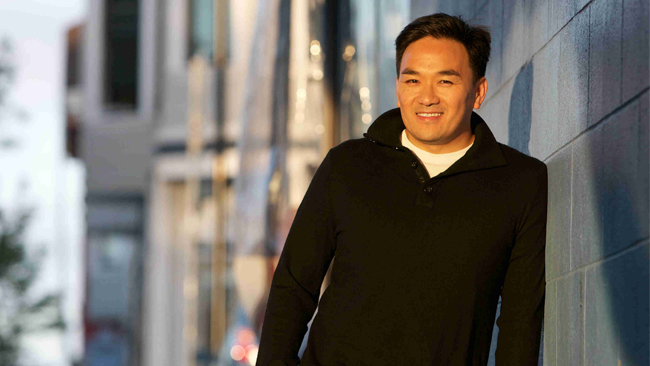
So What Do You Do, Toan Lam, ‘Chief Inspirator’ for Social Activism Site GoInspireGo.com?

Authentic stories + social media = social activism, says Toan

toan-lam
Admin icon
By Valerie Berrios
@valerieberrios
Valerie Berrios is a published author and senior content manager with nearly two decades of experience in digital publishing, including roles at Audible, Disney Streaming, Everyday Health, and Mediabistro. She specializes in content strategy, editorial operations, and international content launches.
8 min read • Originally published February 5, 2014 / Updated March 19, 2026
Admin icon
By Valerie Berrios
@valerieberrios
Valerie Berrios is a published author and senior content manager with nearly two decades of experience in digital publishing, including roles at Audible, Disney Streaming, Everyday Health, and Mediabistro. She specializes in content strategy, editorial operations, and international content launches.
8 min read • Originally published February 5, 2014 / Updated March 19, 2026

Even as a child, Toan Lam knew he wanted to tell stories. He grew up in a rough neighborhood in South Sacramento, Calif., and used reading and writing as an outlet—and eventually a passport out of dodge. He worked as a TV reporter for several years before deciding he wanted to tell only inspiring stories of people doing great things that might compel others to do the same. He founded Go Inspire Go (GIG) to accomplish this mission. The nonprofit social-activism site started out as a single YouTube page and, in four years, has grown to 90 volunteers—including members from some of the top tech companies in Silicon Valley. They have documented and shared over 60 charitable acts and counting.

“People think to be involved in philanthropy, you have to be rich, old, snotty,” says Lam. “And no, you can be a philanthroper and you can be little Phoebe Russell, a five-year-old kid who wants to help people in the food bank.”

Lam calls himself the “chief inspirator” for GIG, but adds that “we all can be inspirators. We all have the power to do something both big and small.” And he hopes to extend his passion project’s reach. He is currently in talks with a few networks about developing a TV show based on his idea of inspiring the masses through everyday heroes.


Name: Toan Lam
Position: Founder, Go Inspire Go; university instructor
Resume: Started TV news reporting in 2001 for an ABC affiliate in Wausau, Wis. Also worked as a reporter for an NBC station in Los Angeles; an NBC station in Midland, Texas; and then a CBS station in Fresno, Calif. While a reporter at an independent station in San Francisco, Lam got the opportunity to report for a worldwide syndicated show on Asian-American lifestyles called Pacific Fusion. Afterward, he hosted and reported for a PBS show called California Heartland. In 2009, he founded GIG. And today also teaches multimedia at the Academy of Art and blogging for social change at the University of San Francisco.
Birthdate: Jan. 22, 1978
Hometown: Sacramento, Calif.
Education: University of San Francisco
Marital status: Single
Media mentor: Oprah, Arianna Huffington and “storytelling king” Steve Hartman
Best career advice received: Follow your passion. It’s easier said than done. Find a way to make it work.
Last book read: The Power of Now by Eckhart Tolle
Twitter handle: @GoInspireGo


Why did you leave TV reporting to pursue social activism?

I believe that everything in your life is like scattered dots that you throw behind you and you don’t know what all these experiences mean, and one day you’re able to connect the dots. I saw all these stories of everyday people doing awesome things for other people, and I researched and I was like, whoa, there are inspiring sites and people, and they share other people’s articles. But what if I had the audacity to dream bigger and use my power— which I believe is connecting people through storytelling—for good? And so, you know, I didn’t want to do car chases and murders and political scandals anymore.

Wow, what if, instead of bringing that into people’s living rooms, what if I brought good news into people’s homes? So I thought, ‘Well, I’m going to quit my job in a month.’ It was December of 2008. I’m going to take six months to a year, and I’ll live off of the little savings that I have and just go out and tell these stories. And it was a hobby. I thought it would be fun. My dream job would be going around and interviewing people that are doing awesome things. I just wanted to inspire people to also then use their power to help other people. Guess what? Next day I go in, I get laid off. [laughs] And I was like, ‘Whoo-hoo, this is awesome!’

So then how did you get started with your new mission?

So it was just me and an intern, January 2009. And I didn’t know what I was doing. I was at a cafe and I said, ‘I’m just going to create a YouTube account, and start going out and covering everyday heroes that do small things that ripple out to meaningful changes.’ And as I had more and more conversations with people, I started discovering a pattern and I thought, well, what if I went out and I spent time with these people, and really got to know them, not just a quick 10-minute interview, but we spent the whole day with them?

And something magical happens when you make that human connection and you’re no longer a stranger. You almost become like a friend. And what if I told their authentic story, both in a blog and a video? And I was like, ‘Let me think of this algorithm: Tell authentic stories plus leverage social media equals people taking action.’ And I realized that there was a huge need for that. Because when you can tell a good story, any industry that you’re in, you can convince people that ‘Hey, you know what? You matter.’

How did your past play into your desire to tell these stories?

I was born in Vietnam. At eight months old, my dad brought me and my sisters and brothers—there are five of us—to South Sacramento, with my grandparents and an aunt and uncle, and 10 of us basically crammed in a trailer park. And then we went from bad neighborhood to bad neighborhood. So me, being a Chinese boy, the only person that I saw of color on TV that I made a connection with was with Oprah. And Oprah’s a black woman and from the South! I realized that she told people’s stories that connected people from all walks of life.

My parents wanted me to be a—my mom says, in the cutest Chinese accent, ‘Doctor, lawyer, engineer,’ in that order. And little old me here loved to read, write and talk. I read everything I could get my hands on. And that was not validated until I got into college, and I had this teacher by the name of Carolyn Weber, and she was getting her doctorate at Oxford, and she was doing a sabbatical and teaching at the University of San Francisco. So my heart was palpitating when I signed up for this class, and the first week she says, ‘I want you guys to write your first assignment, a one-page autobiographical snapshot of a moment in your life that was a big deal to you, that changed your life.’ And I forgot what I wrote.

Honestly, I just wrote it real quick and I turned it in and I didn’t even want to show up to class the next week. She gives me the paper back and she looks me dead in the eye, and she goes, ‘Lovely job.’ And in perfect red penmanship, right in the center of the paper, she said, ‘You’re such a gifted and lively writer. What will you do with your talents?’ For the first time, somebody acknowledged me. And so I just thought, wow, I want to go and be a print reporter and just write these stories. And I ended up getting jobs in TV as a matter of happenstance, and realized that I can use this power for good.

When did Go Inspire Go officially launch?

I want to say we launched in March of 2009 as Go Inspire Go. And the idea is, again, ‘Go, get up, get inspired and go and use your power to help other people.’ Four years later, we have over 90 volunteers from around the world. A lot of them from different tech companies, too—LinkedIn, YouTube, Yahoo, Google. And somebody from the World Economic Forum sits on my board. We turned it into a nonprofit, and we have made over 60 videos so far, and we’ve done over a million dollars’ worth of volunteer work thus far.

Tell me about some of the stories you’ve covered.

One of the highlights is we sent 32 kids to school in Haiti for a year. Our most popular video thus far (it was picked up by Good Morning America) is about Jorge Munoz, a school bus driver by day, but known as the ‘Angel in Queens.’ For over a decade, he goes and buys enough groceries to feed 150 people, and he and his family cook. At 9:30 every night he drives his little white Toyota truck out to the subway stop in Queens, NY, and gives it out to people that need it. Over 150 people, every night. And he’s missed one day because a snowstorm shut down all lines of transportation.

Why do you think GIG has made such an impact on people?

At the core of who I am, I’m a teacher. And I’m a seeker. And that’s what I’m doing and, you know, it’s a really basic concept I think. And it’s grown so much, because I believe that when you take action based on what’s authentic to you, your power and your intent, and it’s in alignment with who you are and what you’re supposed to be doing, it grows naturally. And, you know, four months into this Arianna Huffington emailed me and she was like, ‘This is lovely. Will you share?’ So I’ve been blogging for her for four years [on Huffington Post]. And also Deepak Chopra’s community—he and his daughter have this site called Intent.com and we share our content there as well.

I always ask people ‘What can you do?’ Smile at somebody, give somebody your food. Treat somebody, the homeless person, to a meal. I don’t know. Do—and it doesn’t even have to be that big. When people see you doing what you love and you’re helping people, there’s something amazing in that. And when you can—when you’re able to tell that story and then share the love on social media, the impact is just exponential.

This interview has been edited for length and clarity. 
Topics:

Advice From the Pros, Be Inspired, Interviews
Advice From the Pros

So What Do You Do, Mike McAvoy, President of The Onion?

'I think what's great about The Onion is everyone here cares about the content.'

mike-mcavoy-feature
Admin icon
By Valerie Berrios
@valerieberrios
Valerie Berrios is a published author and senior content manager with nearly two decades of experience in digital publishing, including roles at Audible, Disney Streaming, Everyday Health, and Mediabistro. She specializes in content strategy, editorial operations, and international content launches.
7 min read • Originally published March 19, 2014 / Updated March 19, 2026
Admin icon
By Valerie Berrios
@valerieberrios
Valerie Berrios is a published author and senior content manager with nearly two decades of experience in digital publishing, including roles at Audible, Disney Streaming, Everyday Health, and Mediabistro. She specializes in content strategy, editorial operations, and international content launches.
7 min read • Originally published March 19, 2014 / Updated March 19, 2026

The Onion has evolved into much more than that satirical newspaper we all know and love. (Sample headline: “Obama Spends Afternoon in Garage Restoring Classic Drone.”) “America’s Finest News Source” has become a full-blown digital-media company that includes an alt-weekly entertainment news site called The A.V. Club and Onion Labs, its advertising/marketing layer that helps brands get their message across with sardonic humor and the all-important nod to pop culture via social media, video series and more.

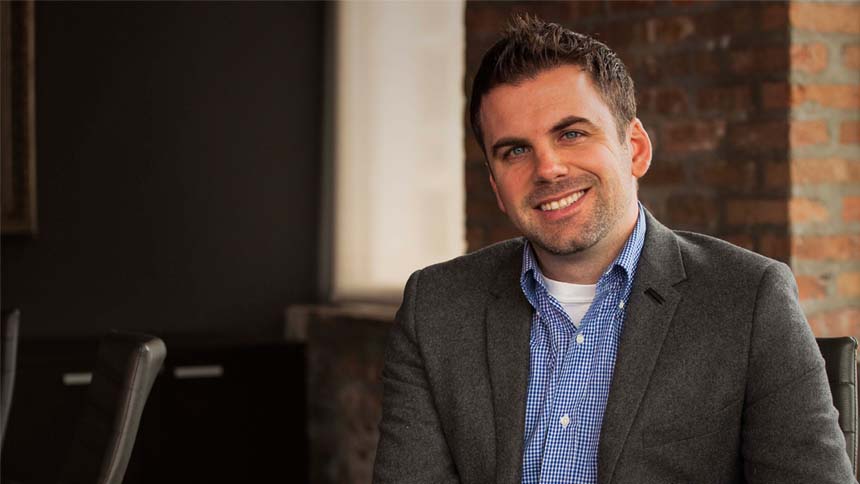
At the helm of Onion, Inc. is Mike McAvoy, who’s been with the Chicago-based company since 2005. McAvoy oversees the advertising, product development, technology and finance departments. Together with his creative team and the newly installed senior vice president of Onion Labs, Rick Hamann, McAvoy is developing innovative, comedic campaigns that he and his clients expect to be the next big viral hit. Here, McAvoy gives us the scoop on The Onion’s foray into sponsored content.


Name: Mike McAvoy
Position: President of Onion, Inc.
Resume: Started out as a financial analyst at TCF Bank in Minneapolis, and then worked on an IPO for Capella Education Company, also in Minneapolis. Three years into his career, he got the opportunity to work as the controller at The Onion, where, he said, “actually my friend’s dad was the CEO, which is a great way to get into any company; it’s who you know, right?” In January 2007, he was promoted to chief financial officer; and then in July 2008 became the chief operating officer, overseeing all the sales and product and technology. Last year, he became president of Onion, Inc., managing all functions of the business.
Birthday: January 7, 1980
Hometown: Waukesha, Wisconsin
Education: University of St. Thomas in Minnesota
Marital status: Married with twin boys
Media mentor: Steve Hannah, CEO of Onion, Inc.
Best career advice received: Don’t be afraid to fail. And don’t be afraid of critics.
Last book read: The Circle by Dave Eggers
Twitter handle: @McAvoy_TheOnion
Guilty Pleasure: “Outside of drinking — no, I’m kidding. I like to play sports. I like to be active. But that maybe isn’t as guilty as drinking. Drinking and playing sports?”


It must be pretty fun working at The Onion. How would you describe the culture, especially having been there so long?

I think what’s great about The Onion is everyone here cares about the content; they care about the products, so you have this united front in that everyone wants to see The Onion flourish.

And in terms of the culture itself, everyone works really hard. It’s a very dedicated group. Everyone’s really smart, and they have to be in order to get the joke. That’s one of the nice things about creating smart content is you attract smart people.

And it’s highly collaborative. You know, it’s a culture that was built on collaboration. There are no bylines for the content we create, and that history of The Onion creative process has really been translated to the rest of the business culture and the product culture, where it’s very team-oriented.

Like so many other publications, The Onion has moved away from its roots in print. How has the company adapted to digital?

So I think The Onion, maybe like many of our peers who were in the print business, we knew that at some point the days of print were numbered, and we were able to focus on transitioning out of print.

In 2009, we developed a franchise licensing program, where we converted our print market to really just syndication deals, or licensing deals, as a way for us to get out of the print business and focus exclusively on digital, including video.

So in 2007, we launched The Onion News Network. In 1996, we actually went online, and we always knew that the way to grow the business was through digital, and by getting out of print, it allowed us to focus 100 percent on it, which has allowed us to pursue other ventures and create Onion Labs.

Great segue. How did the idea for Onion Labs come about and how did you land Microsoft as one of your first clients?

The idea of Onion Labs, or really creating content for brands, started years ago. We’ve always gotten requests from Fortune 500 brands to create content for them as part of media buys. And in the case of Microsoft, we were at the same media agency, using the same contacts that we call on to sell media placements.

We treated [that campaign] the same way we treated everything that we do on TheOnion.com. We went through a process of creating a ton of ideas that Microsoft poured through and ended up picking the one that worked the best for them.

So it became our pitch really as a business to evolve with the whole native-advertising movement, as well as advertisers’ decision to change how they tried to reach millennials. The more they realized they need to create custom content or have content created by people who are masters at reaching that audience, the more opportunity we had for Onion Labs. And hence, we officially began Labs in 2012.

Is the tone of the content you create for brands always “Onion”-like on some level?

It really depends on what someone’s trying to buy. Sometimes the creative direction from the advertisers or the goals are much more to create something entertaining than it is to create something satirical. It’s really a mix of whatever the initiative is.

Do you have a separate creative team devoted to sponsored content?

What we do, which I think is unique for many publishers, is we use the same writing talent that we have for our company, for all our brands running in the A.V. Club, to produce The Onion Labs content. And so the idea process starts with the same writers and the same team that creates the hit videos for The Onion News Network.

So in terms of total writing talent for the company, I think we have 20 or so writers, 25 A.V. Club writers who are on staff, and so it’s a mix of those writers who work on these types of projects, as well as we have ideas from various contributors and freelancers who also help out.

Who produces your videos—and what platform do you use?

We have a video team in house. And for bigger shoots, we add on resources. We have a great freelance network in Chicago that we’ve built. Some projects are 100 percent in house, some of them we’re using outside vendors, and it’s just really dependent on how much work we have and what other work we’re doing at the time.

We use YouTube. We’re one of their premium-content providers, so we have a deal with them where we are paid money to produce original content. We also distribute content that comes from TheOnion.com to YouTube, including these advertising campaigns, and so that’s all part of our network.

But we’ve grown TheOnion.com so dramatically that that really is our primary distribution platform. The audience that we’ve built on The Onion has grown a couple hundred percent in the last 18 months.

How else does Onion Labs incorporate social media?

Every campaign that we do has a component of social activation, social promotion. So all sponsored content runs through the context of—we’re promoting a tweet that will say something like, ‘Advertiser thought this sponsored post was a good idea.’

So here’s one [example]: ‘If you believe some websites still have the integrity not to shill for sponsors, you’re as dumb as we thought.’ So for any of the content we create, whether it’s for Microsoft or for DSW, Lenovo, Ford, Home Depot, any of those big brands, we’re positioning the sponsored content in that way. And we’ve also done business where we actually are running [clients’] social media accounts for the year.

Tell me about one of your most successful campaigns so far.

I think we’ve had quite a few that have been good and have gotten good plays. We haven’t had the Old Spice viral campaign just yet, you know, where we’ve gotten 100 million hits. But we’ll let you know when we do.

I think our most successful piece, our most viewed piece was an April Fool’s joke for YouTube [last year about the social-media site selecting the best video on YouTube], which has been seen by over 11 million people.

We do a lot of work that is behind the scenes, white label or work for hire, where we’re creating content for a brand and the audience, or the world, doesn’t know it.

How do you handle native advertising when it comes to your own content?

I think for our audience, we want to bring to life ideas that we’re excited about and get advertisers to sponsor them. And that’s the beauty of the Lenovo program. We brought to life a show called “Tough Season,” which was made possible by Lenovo, and if Lenovo didn’t write the checks and didn’t help us coproduce that show, it would never have come to be.

We did that in conjunction with Digitas, the ad agency, and they were great on that. And so we’ve found a way to kind of work directly with advertisers, but also in conjunction with agencies, as they’ve been great partners for us for years.

Another one that the A.V. Club has done is with Ford, and it’s called Pop Pilgrims; it’s really a travel show in which our editors are hosts and they talk about pop-culture sites and kind of give a back story as to why a certain location is relevant in the pop-culture community.

This interview has been edited for length and clarity. 

Topics:

Advice From the Pros, Be Inspired
Advice From the Pros

So What Do You Do, Eric Noe, Managing Editor at ABC News Digital?

Noe talks challenges and opportunities in digital news

eric-noe
Admin icon
By Valerie Berrios
@valerieberrios
Valerie Berrios is a published author and senior content manager with nearly two decades of experience in digital publishing, including roles at Audible, Disney Streaming, Everyday Health, and Mediabistro. She specializes in content strategy, editorial operations, and international content launches.
8 min read • Originally published April 9, 2014 / Updated March 19, 2026
Admin icon
By Valerie Berrios
@valerieberrios
Valerie Berrios is a published author and senior content manager with nearly two decades of experience in digital publishing, including roles at Audible, Disney Streaming, Everyday Health, and Mediabistro. She specializes in content strategy, editorial operations, and international content launches.
8 min read • Originally published April 9, 2014 / Updated March 19, 2026

Update: Eric Noe is no longer the managing editor at ABC News Digital.

Eric Noe knows digital news. The journo, who began his career at the Atlanta Journal-Constitution, has been with ABC News Digital since 2004. His current role as managing editor means he’s leading editorial operations for ABCNews.com and overseeing a team of 40 across all verticals. His day-to-day consists of finding innovative ways to package news online, as well as integrating social media, mobile and video-streaming strategies, all while coordinating coverage with ABC News broadcasts.

Here, Noe speaks with Mediabistro about covering breaking news—such as last year’s Boston Marathon bombing—in the digital space; shifting trends in news media, specifically in mobile and social media; and tips on succeeding in this rapidly evolving industry.


Name: Eric Noe
Position: Managing editor at ABC News Digital
Resume: Started his media career in 1997 as a bureau clerk at the Atlanta Journal-Constitution, where he wrote obituaries, letters to the editor, local features and more. After a yearlong stint as an editor, he went back to school to earn his master’s degree in journalism at Northwestern University in Chicago. He stayed in the city to work for Reuters’ Midwest bureau, covering business and commodities news. In 2004, he joined ABC as a general-assignment reporter. Later, he became the business editor for ABCNews.com, then moved on to managing the edit desk. In 2010, he became the site’s deputy managing editor. Last year, he was promoted to managing editor.
Birthday: January 5
Hometown: Atlanta
Education: BA in English from Emory University; master’s from Northwestern
Marital status: Engaged
Media mentor: “I would say the first person who sort of drew me into this business was an old Southern columnist named Lewis Grizzard, who worked at the Journal-Constitution. My dad loved him, and I used to buy his books for my dad and read his work when I was a kid. He actually passed away a few years before I took my first job at the Journal-Constitution.”
Best career advice received: “It was one of my early editors, a guy named Frank Star, who told me, I think after the first piece that I did for him that he actually liked, ‘Just remember, you’ve chosen a business with a very short memory, so whatever you’ve done by the end of the day, be it good or bad, you wake up tomorrow with a blank slate. So you better come in tomorrow ready to start over again.'”
Last book read: The Big Crowd by Kevin Baker
Favorite TV shows: Mad Men and Seinfeld
Guilty pleasure: “I’m not afraid to watch bad ’80s movies, so you can catch me on something like Point Break on TNT on a Sunday afternoon, and I’ll pretty much watch that all the way through.”
Twitter handle: @Noe_Eric


How is ABC News online different from its TV counterpart and how has digital adapted over the years?

Well, I wouldn’t say it’s different. I mean it’s changed a lot, actually, since I’ve been [at ABCNews.com]. When I first got there, we were this little sort of Internet entity that was down at the end of the block, and we were actually in a different building than most of the newsgathering operation. And then two or three years ago, we moved into a brand new integrated newsroom, where the digital room is now back to back with the managing editors of domestic and international news. So we’re kind of at the nerve center of anything and everything that goes on at ABC News, which has been great for us.

Now it’s just a matter of figuring out how to take the news that’s gathered and put it into the different funnels. I mean, obviously, the same way the shows like Good Morning America and World News have their own specific products and their own specific audience, it’s really the same for us. We have to figure out how best to package the news that’s gathered for more of a digital audience, and, increasingly, more of a mobile audience as well, people who are getting their news on handheld devices and tablets.

Are there specific mobile initiatives you’ve launched? 

Over the summer we hired an emerging platforms editor to manage the packaging and the delivery of our mobile content. We also launched refreshments to our mobile apps in the fall, Android and iPhone, that allow people to self-curate their mobile content. They can follow a story or subject matter that we’ve been producing content on, and they’re able to star it within the app and get any updates delivered directly to their device.

It’s something I think we’ll do more with in the future because it is a way for us to allow people to feel like they’re in control of what we’re giving. And it’s being delivered to them, rather than them having to actively go out and find it from us via a search engine like Google or Yahoo.

Is competition from other networks in the digital platform as aggressive as it often is for TV news? 

I don’t know that that’s necessarily what we limit our competition to these days. I mean, now our competition is pretty much anybody who’s delivering news and information. And while being a part of an organization like ABC News we’ll always be very conscious of what the other big networks are doing and what the other big digital entities are doing, we’re also interested in what emerging digital media companies are doing. What are startups doing? How are they doing things that are different?

Can you give me an example of how your digital team covers breaking news?

One [example] that sort of was a hit with our audience, interestingly and kind of funnily, is the Justin Bieber arrest. So that’s a story that obviously is not something that is going to have global geopolitical ramifications, but, yet, for us, it’s a story that’s going to be the story of the day. And our entertainment team had done a great job of covering all the various things that Bieber had been up to in the months leading up to that, as he seemed to have gone off the golden path.

And then when he was arrested, it became more of a news story as well. We looked at a couple of different ways that we could also take it apart and have a little bit of fun with it. He’s kind of known for, on his Twitter stream, espousing all kinds of life advice through great philosophers and things like that, so we embedded a bunch of his tweets and tried to sort of compare whether or not he was following his own advice.

How else do you leverage social media?

We’ve gotten tremendous traffic on Facebook in the last year. We’re working on building out our reporting staff and being a little bit more light on our feet and being a little quicker to react to things. You look at something like the Boston Marathon week. In an event like that, Twitter becomes a competitor, because there’s so much information flying around at such a high rate of speed that we realize that if we want to resonate with people, we have to be as fast as we possibly can.

Right, so then you are in the thick of it, like every other news outlet.

It was something where, you know, that bomb goes off on Monday, and… within minutes and within hours after that, we had people on the ground in Boston, and we had a digital journalist in Moscow, digging up background on the bombers’ family in Kyrgyzstan, giving us great information from there. I was actually out on the West Coast when that bomb went off, on a trip with my fiancée, so I hopped a plane back—and there’s nothing worse for a journalist covering a breaking story than having to shut off your Blackberry for four hours and be essentially out of touch, and so I was toggling back and forth between the various cable coverage on the airplane TV—and then hopped into the newsroom Monday night and basically stayed there for the next five days.

We were able to lean on our sister company, ESPN—you know, this was a sporting event as well—and they gave us great information. Our affiliate up in Boston, WCVB, gave us great live streams. And by the end of the week, we had tremendous traffic. And I’m kind of proud to say that we didn’t have to walk back a single fact. We got everything right and didn’t have to issue any retractions, and it was a tremendous opportunity for us to show the muscle of our news division and what we can do when we [channel] it through the digital funnel.

What advice do you have for aspiring journalists looking to break into digital news?

I would say be a storyteller. When you’re thinking about a story that you’re covering, be thinking of what’s your headline, what is the most important thing here. And think about that when you’re reading or consuming video news. What is your takeaway, and then figure out how you would package it. [Storytelling is] not the straight inverted pyramid that it used to be; there are plenty of different ways to tell a story.

I think there’s been a lot of talk about listicles and whether or not they are a valid way to present news, and of course they are. There’s always going to be a place for the big news of the day, for extensively written and reported and sourced storytelling, but there are also ways to do it with a little bit of flair and a little bit of personality.

What would you say is best part of your job?

Well, waking up every day with a clean slate and trying to figure out how to cover the most interesting news of the day. And I think, you know, I mentioned competition from some less traditional sources.

They’ve kept us on our toes and they’ve forced us to think that you can do news and you can do things that are important and relevant to people, but you can do them in ways that don’t have to be totally serious all the time.

The best part of my job is that you get to be creative about the way you want to cover the news. And that’s fun, and it’s a challenge, and it’s dynamic, and we’re lucky to be in the business.

This interview has been edited for length and clarity.
Topics:

Advice From the Pros, Be Inspired, Interviews
Advice From the Pros

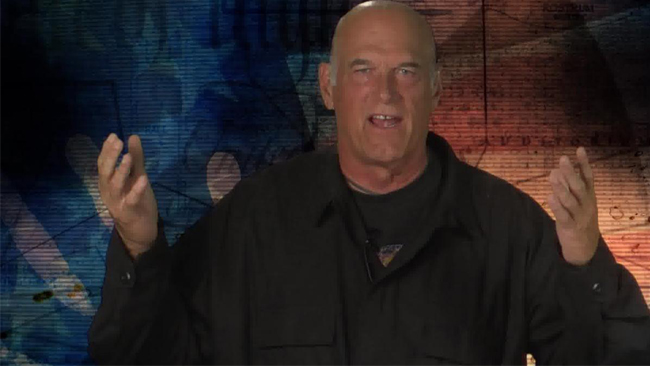
So What Do You Do, Jesse Ventura, Political Pundit, Host of ‘Off the Grid’?

'I'm actually better being interviewed than I am doing the interview.'

jesse-ventura
Admin icon
By Valerie Berrios
@valerieberrios
Valerie Berrios is a published author and senior content manager with nearly two decades of experience in digital publishing, including roles at Audible, Disney Streaming, Everyday Health, and Mediabistro. She specializes in content strategy, editorial operations, and international content launches.
8 min read • Originally published May 14, 2014 / Updated March 19, 2026
Admin icon
By Valerie Berrios
@valerieberrios
Valerie Berrios is a published author and senior content manager with nearly two decades of experience in digital publishing, including roles at Audible, Disney Streaming, Everyday Health, and Mediabistro. She specializes in content strategy, editorial operations, and international content launches.
8 min read • Originally published May 14, 2014 / Updated March 19, 2026

Jesse Ventura has never been one to mince his words. The Vietnam vet turned pro wrestler turned governor of Minnesota has been openly critical of, among other things, the nation’s two-party system, organized religion and the mainstream media.

He’s also proved to be a staunch supporter of gay marriage and the rights of Mexican immigrants who cross the border without documentation. These and other hot topics have been tackled in his books, radio shows and now via his Off the Grid online show on Ora TV, which Ventura actually films “off the grid” in Mexico. His new sounding board seems to be working for him. In just one month of the show’s January launch, viewership reached 1.3 million.

Of the show, Ventura says, “I report the stories that need to be heard. Not the ones that a corporate sponsor wants you to hear.” Recent guests have included Edward Snowden’s legal adviser, Ben Mizner; Thomas Andrews Drake; and Ron Paul. Ventura says he aims to give his guests the floor so they can “convey their message without interruption or interrogation.”

Here, Ventura talks more about his show, his disdain for network TV and his much-talked-about run for presidency.


How does Off the Grid differ from other shows you’ve worked on, such as Jesse Ventura’s America on MSNBC?

Well, this program differs in the fact that in my short-lived time at MSNBC of about four weeks—even though they paid me huge money for three years—all the topics came from upstairs. In other words, they were channeled down to the people on TV and that’s what you talk about. For Off the Grid, the topics come from me. And I don’t answer to anybody. It’s whatever topic I want to discuss that particular day. Even if something else is scheduled, I can change it right now. So it’s truly the freedom that I’m granted with Off the Grid. Plus, I don’t fall under the FCC here [in Mexico]. I’m not a big person that swears, but you have that freedom of speech when the FCC’s not involved.

So how would you describe the format of the show?

I’m not Larry King, you know, and I made that clear. Larry King, to me, is one of the greatest interview guys on the planet; he’s been that for decades. I’m not him. I’m not an interview person. I’m actually better being interviewed than I am doing the interview. I like being on the other side. So, my show has the command central, which is [my producer] Alex Logan back in what I refer to as East Berlin, the United States, the lockdown country, and so Alex will make statements [about various issues] and actually question me [about my views on those topics].

We also do whole shows just on interacting with our fans [in a series called] ‘Ask Jesse.’ They ask me questions, whatever they wanna ask, and it’s all off the top of my head. And I give them an honest answer as best I can give it at that time without doing any research on it.

We do four shows a week. It’s on every Tuesday through Friday on Ora.tv at 3 p.m. Eastern, and of course because it’s the Internet, you can pull them up any time of the day you want to watch them. You know, that’s the great thing about the Internet, is the personal convenience for the person who wants to view the shows.

How did you end up on Ora TV? Why this platform?

My last book tour in the United States was not overly successful because I was pretty much blackballed by NBC, CBS, ABC, Fox News, MSNBC. I have a difficult time now gaining an audience there because they won’t put me on, and so Off the Grid is my way of combating them.

They can’t control me now. I can do my own show and people can listen to me and hear what I have to say at their convenience. It’s been a Godsend for me. I thank Larry King from the day we met doing an interview on my book tour when he told me about Ora.tv.

Why do you think the major networks have ‘blackballed’ you?

Well, because the networks are controlled by the two political parties, the Republicans and the Democrats. And I am not either; in fact, I’m scary to them. I’ve defeated them twice. I defeated them for mayor of Brooklyn Park, Minnesota, and then I defeated them for the governorship of Minnesota. I’m a dangerous person to them, and the more they can marginalize me, or the more they can keep me out of my viewpoints, the better it is for them and their control over the country.

Tell me about the topics you cover on your show.

I cover whatever happens to be on my thought process for the day. I certainly try to be timely. I certainly love to attack the Democrats and Republicans and their political system of bribery that they’ve created. And I’m trying to wake up America to the fact that we need to abolish these two political parties because, George Washington, Thomas Jefferson and John Adams warned us that the downfall of America would be when political parties take over the government. I think we’re there.

I will also talk on topics that I think are relevant to the United States, like immigration and things of that nature, and our constant going to war. If we wouldn’t spend all our money on war, like [with] Iraq, we would have more money for [things like] healthcare than we could ever imagine.

I just try and keep [the interviews] timely, try and keep them humorous, and you know, I throw in my brand of entertainment. My focus is to entertain. My focus is to perform. If you go back to my wrestling days, I could do a three-minute interview; here, I can do a 10- to 12-minute interview on a particular subject. The only thing missing is Mean Gene. Do you know what I’m talking about there? ‘Mean Gene’ Okerlund used to be the announcer on wrestling who would stand there and hold the mic while I’d talk.

One of your most-viewed interviews was with former New Jersey Superior Court Judge Andrew Napolitano. Why do you think that conversation was such a draw?

Well, because, No. 1: Judge Napolitano and I are good friends. No. 2: politically, we think very much alike; we’re not very adversarial. You know, we’re pretty much down the line with each other on how we think. We’re libertarians, small ‘l.’ And I like to do the interviews, really, where they’re more conversation-like, not where I’m grilling someone. The key to doing an interview is to allow your person to talk. That’s why you have them on, to let them talk. I get plenty of time where I get to talk. So when I get someone like Judge Napolitano, I like to step back a little and hear what he has to say, because that helps me. I learn from that.

I actually learned a great thing the other day watching TV, from Nancy Grace. On gun control, where she confronted Piers Morgan and said, ‘I’m sick of you Brits talking down to us about gun control when you’re the reason we have guns.’ The British soldiers would invade our houses; that’s why we went to war with them. So who are the Brits to tell us about gun control when they’re responsible for it? I thought she was wonderful, and I didn’t think I’d ever be able to quote her, but I’m glad I can.

So is there any truth to you running for president in 2016?

You never say never. I don’t really have an intention of doing it, and if I did do it, I’d have to do it my way. And that would require an extreme grassroots movement. I don’t think the country’s prepared to make that type of sacrifice. If they were, and I felt that they were ready for it. See, my demon inside me, I have a demon inside me, too, and the demon rears its head occasionally and always says to me, ‘If not you, then who?’ You follow that?

Yes, and so hypothetically, what party would you run under? You used to be a Reform Party candidate.

I would run under no party whatsoever. There is no Reform Party anymore; it doesn’t exist. I would run under no party on purpose and here’s why: that would be the essence of my entire campaign. I would challenge the American people to make history and elect the first president since George Washington who does not belong to a political party. Can you imagine that?

I think people are that offended and that disgruntled over these two parties right now. They should have all been fired last fall when they allowed a government shutdown. Because if you’d have done that in the private sector, if you had a drop-dead date a year from now to finish a project, and if you got to that drop-dead date—which they knew, October 15, whatever it was—and you didn’t have the job completed, I can guarantee you in the private sector you’d be fired.

What do you think of the media’s coverage of political issues?

It’s horrible. Well, the problem with our media today is this: the downfall of the American media, believe it or not, was the show 60 Minutes. It was a terrific show, at least it used to be. I don’t watch it much anymore, but it was, at one time, phenomenal, investigative reporting. Here’s why it was the downfall: Because 60 Minutes shot to No. 1 in the ratings, and then the bean counters realized, ‘Wait a minute, you mean we can make money with the news?’

Because up until that point they wrote the news off. There was a separate department; you had the entertainment department and the news department. The news would lose money, but they’d make it up in the entertainment department. Along came 60 Minutes, and the news started to make money. That’s your problem: The news is now into ratings. It’s about getting ratings, rather than informing people. It’s now entertainment.

The news has morphed to the entertainment division. They spent more days covering the death of Anna Nicole Smith than they did the death of John Kennedy.

This interview has been edited for length and clarity.

Topics:

Advice From the Pros, Be Inspired, Interviews
Productivity

7 Definitive Traits You Need for Startup Success

How to tell if you're truly ready to be a media mogul

startup-success
Admin icon
By Amanda Ernst
Amanda Ernst Kallet is a senior business development executive currently leading AI partnerships at Meta, where she is a credited contributor to the Llama 3 and SeamlessM4T research publications. She previously held director-level roles at Verizon Media and AOL, and holds an MBA from Columbia Business School.
8 min read • Originally published March 4, 2015 / Updated March 19, 2026
Admin icon
By Amanda Ernst
Amanda Ernst Kallet is a senior business development executive currently leading AI partnerships at Meta, where she is a credited contributor to the Llama 3 and SeamlessM4T research publications. She previously held director-level roles at Verizon Media and AOL, and holds an MBA from Columbia Business School.
8 min read • Originally published March 4, 2015 / Updated March 19, 2026

With media jobs at a premium, that brilliant idea for a new media company that you’ve been batting for the past few months is starting to seem like your only way to break into the industry, escape your dead-end job or pull yourself out of unemployment.

But before you start hitting up your friends for angel investments, you should know if you have what it takes to be a successful entrepreneur.

You may think you have it figured out already. Sure, you’ve written a business plan and nailed down a URL, but according to entrepreneurs who have been through it and are still running thriving companies today, there are some things they never even thought of before launching their own company—and things they would do differently if they could.

Take their advice to heart: Here are seven traits you’ll definitely need for startup success.

1. An Ability to Work Well Alone

Entrepreneurship can be a lonely path, and a lot of people don’t realize how isolating it can be.

All of a sudden, there are no more meetings where you can afford to goof off or chat about X Factor around the water cooler. Before you quit your job determined to go solo, be sure you can indeed go solo.

Do you know how to encourage yourself and stay motivated? Can you set goals for yourself and stay focused without support from co-workers or a boss? Can you feel fulfilled by your work without getting praise from others?

If you answered “no” to any of those questions, you might not be ready to file as a sole proprietor just yet. Or, you just might need…

2. A Good Partner (Or Three)

Cezary Pietrzak was one of four friends who worked together to launch start-up travel site Wanderfly. He credits their friendship with getting the company off the ground.

“We found that we really enjoyed working together,” says Pietrzak. “I think that’s important in starting a company because you expect to spend a lot of time with other folks in your company and pull late hours, so you have to have a great relationship.”

Pietrzak’s experience shows that you shouldn’t underestimate the importance of a good partner.

If you’ve spent the last few years freelancing, you might be tempted to go it alone, but a partner can fill in skills or industry connections and know-how that you don’t have, keep you focused and contribute start-up capital, or just push you to launch an idea you’ve been talking about forever.

There’s a reason well-known companies like Johnson & Johnson and Procter & Gamble were started as partnerships. And, though it’s not a scientific study by any means, it’s pretty telling that all four entrepreneurs we spoke to for this article founded their companies with at least one other person.

In addition to finding partners who are smart, talented and hard working, here are some other things you should consider: Do you share personal and professional ideas, goals and values? Do you trust your partner? Where do you agree and disagree?

“In consulting they have the airplane seat rule: would you want to spend a long flight next to this person from New York to Singapore?” says Pietrzak. “You’re looking for people that you can just enjoy being around.”

3. Patience

Of course, you live, breathe and sleep your company—it’s your company.

But everyone else? Ehh…

Varying work ethics among your team means it could take longer than you anticipated to complete projects. Plus, there’s a lot of waiting around when it comes to bringing on clients, advertisers and users. Not everything can happen overnight.

According to the Small Business Administration, seven out of 10 new companies survive at least two years, half survive at least five years, one-third will make it 10 years and only 25 percent stay in business 15 years or more.

So while success is possible (and actually probable at least in the short term), unless you’re launching the next Pinterest, don’t expect to see results or even interest in your company immediately.

And not every company can be Pinterest; hundreds of thousands of new companies are launched every year, but only a handful become household names.

“Don’t expect things to happen on your timeline,” advises Tongal co-founder and president James DeJulio.

“Part of being an entrepreneur is being a creator. You’ve created something that wasn’t there before, and that’s a really powerful thing. You love it like it’s your baby; it’s all you think about all the time. So when someone is not thinking about it all the time, it’s not because they don’t want to do it, it’s just because it’s not their number one priority. And that’s fine. Just be patient. And as long as you stay on course it will all happen.”

4. Thriftiness

The first thing you’ll need to get your business off the ground is capital.

Whether that money is coming from your bank account, your partner, angel investors or a VC, you can’t be wasteful with your funding.

First, start-up capital should go to fund your business, hire a good team and keep the lights on. So, are you willing to forgo your own personal luxuries until the business takes off?

Start by finding a team that will help you stretch what money you have—a lawyer and accountant with small business know-how are key.

When you start to present your company and ideas to potential investors, you will want to assure them their money is in good hands and not being spent frivolously on expensive client lunches and tailored suits.

Get ready to answer questions about where investors’ money will be going and where it will make the most impact. Make that an important part of your business plan or marketing deck.

5. A Little Bit Of Business Know-How

When writers and editors try to launch new ventures, they sometimes get caught up in the larger mission of their project, possibly underestimating the importance of a business plan.

That’s what happened to Josh Benson and Tom McGeveran, co-founders of local New York news site Politico New York.

“The biggest challenge was probably figuring out how to do the non-editorial work necessary to make our idea into a business,” Benson says. “So, like, people who had actually started businesses before had to explain to us that the very nice mission statement we had come up with was not actually a ‘business plan.'”

But when developing your business plan, remember to keep it simple. Adds Benson, “Don’t do marketing-speak—it sounds as ridiculous to everyone else as it does to you.” In fact, Pietrzak suggests that all you need to pitch your company to potential investors is a 10-slide deck or Powerpoint presentation.

“It forces you to think about some of the key issues that VCs always ask about,” he says. “And it saves you time on the formality of writing something on paper, because you know your business is always going to change five different times before it catches real traction and starts to grow.”

If you don’t have a business background and want to learn the basics before launching your company, you should start with basic business management and accounting classes.

You can find courses at a local community college or online, or get training and support through organizations like the Small Business Administration.

6. Big Ideas…with Focus

“As entrepreneurs, we must constantly dream and have the conviction and obsession to transform our dreams into reality—to create a future that never existed before,” says Clara Shih, founder and CEO of Hearsay Social.

“People thought I was crazy when I was quoted in 2007 as saying that ‘five years from now, no enterprise application won’t be social.’ The idea seemed unfathomable then, but what I have come to realize is that, in Silicon Valley, anything is possible.”

But Shih also cautions against getting lost in all the possibilities of what you can achieve.

“The greatest startup advice I’ve ever received came from Thomas Layton, former OpenTable CEO and an early investor in Hearsay Social,” she says. “He told me the hardest thing about startups isn’t figuring out what to do but rather figuring out what not to do. Sometimes you’ll wish you could do everything—develop every product feature, expand to every market. But it’s just not possible.”

Investors are always intrigued by niche ideas that show potential. There is a small likelihood that your company will be the next Apple or Facebook, so think about what those companies are missing and try to fill in the gaps. What communities are underserved by products and services already on the market?

Also consider whether or not your idea is scalable. If it becomes popular, can you grow to meet demand?

7. An Ability to Adapt And, If Necessary, Accept Failure

Almost every successful entrepreneur can tell you a story of their first venture, which either wasn’t as successful as later endeavors or was a total flop. But true entrepreneurs are identifiable by their ability to see holes in the marketplace—and their own companies—and adapt.

Your company might be your baby, but you need to be able to step back and look at it with a critical eye if it’s not working, or not performing as well as you would have hoped.

And if at first you don’t succeed, don’t be afraid to start something new. For example, Tongal was the second entrepreneurial venture launched by DeJulio and his partners.

“We just kind of opened our eyes to what was possible through an investor in that first business, and then, the more we started thinking about it, the more we knew that this was where the real opportunity was,” he says.

“Most entrepreneurs usually fail or have a mild success before they are really successful.”

Topics:

Be Inspired, Productivity
Journalism Advice

Ask MB: How Do I Become a Topic Expert?

Turn yourself into every editor's go-to writer with these 9 tips

topic-expert-feature
Admin icon
By Celeste Mitchell
Celeste Mitchell is an editorial writer and editor with nearly 30 years of experience creating consumer lifestyle content for publications including Marie Claire, Cosmopolitan, Good Housekeeping, and SELF. She previously served as Deputy Editor at Cosmopolitan and taught journalism courses through Mediabistro.
4 min read • Originally published April 25, 2015 / Updated March 19, 2026
Admin icon
By Celeste Mitchell
Celeste Mitchell is an editorial writer and editor with nearly 30 years of experience creating consumer lifestyle content for publications including Marie Claire, Cosmopolitan, Good Housekeeping, and SELF. She previously served as Deputy Editor at Cosmopolitan and taught journalism courses through Mediabistro.
4 min read • Originally published April 25, 2015 / Updated March 19, 2026

So here’s a question we’ve been hearing a lot: “I’m a freelance writer for magazines and newspapers, and my friends tell me I should develop an expertise. Does this make good business sense?”

Listen to your friends.

Becoming an expert is one of the smartest moves a freelance writer can make. It means that editors think of you first when they’re doling out assignments on a particular topic. And everyone wins in this scenario—editors get quality work (from you) and you get plum assignments (from them).

And how do you become a topic expert? Here are 9 tips:

1. Choose a specialty.

Pick a subject about which you feel passionately. If you’re not genuinely interested, skip it. You don’t want to settle into an area that will ultimately bore you.

20 years ago, writer Linda Marsa went in search of her specialty by covering a variety of subjects. “You have to try all kinds of things,” says Marsa, who writes about health and science for national magazines and newspapers. “Health suited me because I am detail-oriented. You have to triple-check everything for accuracy. I also have an activist bent. I can do stories that take a hard look at shenanigans in the medical field, and I give consumers useful information. This satisfies one of the reasons I became a journalist.”

2. Move laterally.

If you have a clip on one topic, use it to make a lateral move.

Try this trick from Marsa: “My original specialty was personal finance and I wanted to shift over to health, so I wrote a story about taking care of your parents during their sunset years. It was a finance piece but I used it as a health clip too.” That article helped her land an assignment on genetics for OMNI magazine. More projects with the magazine followed, including a contributing editor position writing about health.

3. Go through open doors.

Search for a toe-hold wherever you can find it. You only need one.

Writer Jodi Bryson found her start in covering the teen market from an independently published magazine called Girls’ Life. “I happened to see their very first issue on the newsstand, and I sent them a letter,” she says. She was asked to be a stringer and started churning out stories. Ten years later, she is an established go-to girl on teen topics.

4. Study your specialty.

Learn anything and everything about your specialty.

“You have to immerse yourself in the topic,” advises Bryson. “I want to know everything about teens and children. I tune in to Noggin and The WB. I know their music, their movies, their books and magazines and fashion. I need those cultural references when I’m writing. I also know the stuff like stats on teen pregnancy and other serious issues. I’m interested in all of it.”

5. Target specific publications.

Focus your efforts on getting printed in the recognized publications of your category.

An expertise in parenting, for example, would include titles such as Parenting, Parents, Child, Working Mother, American Baby, Parent & Child and Family Fun. For men’s fitness and body building, target titles like Men’s Health, Men’s Fitness, Flex, Monster Muscle, Ironman and Muscle & Fitness.

6. Just say yes.

Don’t be an assignment size snob.

Take every opportunity to write about your specialty and run with it. “Sometimes you take on projects that are not cost effective, but they become portfolio pieces you can use to sell yourself again and again,” says Marsa. “You have nothing to sell but your skills. Do short pieces and long pieces. You name it, do it.”

7. Become a columnist.

It’s hard to nail one of these, but writing a recurring column is a fast-track trick.

Even if it pays a pittance, it’s worth your time for other benefits: You build a library of clips (fast), and it demonstrates to editors at other publications that you know your stuff and can be trusted not to flake out. Pitch column ideas to small-circulation magazines, local newspapers, ‘zines and websites, all of which are often more open to starting new columns and taking chances with new writers.

8. Write a book.

Easier said than done, of course, but there’s nothing like a book to cement your credibility and distinguish you as an expert.

Since Marsa’s book Prescriptions for Profit was published in 1999, she has been known as the authority on drug development. The book took 2 and a half years to complete, but it led to TV and radio spots, magazine interviews and a part-time writing gig at the Los Angeles Times.

9. Market yourself.

“There’s a lot of PR work involved,” says Bryson, who regularly sends letters to editors she knows—and a few she doesn’t. “I’m not always soliciting work. Sometimes I write to introduce myself as an expert.”

Topics:

Go Freelance, Journalism Advice
Managing

How to Fix Your Brand’s Damaged Reputation: 15 Proven Strategies

From monitoring your online presence to building authority, learn practical steps to protect and restore your brand's reputation in the digital age.

brand-reputation
By Fred Godlash
@fredgodo
Fred Godlash is a communications and marketing specialist based in LA.
6 min read • Originally published April 28, 2015 / Updated March 19, 2026
By Fred Godlash
@fredgodo
Fred Godlash is a communications and marketing specialist based in LA.
6 min read • Originally published April 28, 2015 / Updated March 19, 2026

Warren Buffett’s famous quote on reputation goes like this: “It takes 20 years to build a reputation and five minutes to ruin it. If you think about that, you’ll do things differently.” Reputation is breakable and needs to be maintained, but with a little common sense and effort you can manage your brand’s view.

What are some of the things you can do to protect yourself against an attack on your brand? How do you take the steps to build and restore your brand’s damaged reputation? What defense do you have against personal attacks, customer complaints and blatant falsehoods? How can people get away with saying whatever they want on the Internet with little to no consequences for their actions?

We’re here to shed some light on these types of questions, so read on.

Unfair attacks on reputation are nothing new

Slander against companies and individuals is not a new subject. In the late 19th century, the expression “yellow journalism,” coined by New York Press editor Erwin Wardman, described how newspaper moguls, specifically Joseph Pulitzer II and William Randolph Hearst, would use misleading, sensationalized stories to improve circulation.

Hearst is the subject material that inspired Orson Welles to make the film Citizen Kane, based on the influence and corruption he acquired in the 1920s and 1930s.

Why can I say anything on the Internet?

Yellow journalism is still in the media today but, due to libel and slander laws, media outlets have to be careful about how they report the news. Unfortunately, the Internet does not have the same guidelines as print and television outlets.

In 1996 Congress passed the Communications Decency Act (CDA). The law was passed to try to regulate pornography and obscenity in cyberspace. Fortunately or unfortunately, depending on your perspective, the law protects operators of Internet services by removing accountability. Websites hosting other people’s comments are not liable for the words of writers who post articles, reviews, feedback, complaints, libel statements, accusations, false claims, rip-off reports and insults.

The law keeps the spirit of free speech alive for the Internet but may enable immoral users to abuse the Web. Possibly due to so many anonymous attacks on companies, Google now gives preference to verified and identified user content and pushes the unknown authors back in the search results. Google also will remove defamatory statements from their search results.

Prevent damage by monitoring your brand

The top two ways of gauging your online reputation is by looking at the search engine results pages (SERP) and using Google Autocomplete. By staying ahead of any negative stories, you can take a proactive approach to protecting your reputation.

If you are seeing an issue emerge, you can go into Google Analytics and look for spikes in your site traffic that will point out key events and possible red flags.

Have a plan before fixing your reputation

Managing your reputation is a matter of organization and foresight. Make sure to set up Google alerts for all titles in question using brand names, product tags, popular misspellings (use analytics to find these), competitors, senior team leaders and key industry terms and popular search phrases. By discovering the problem, you can develop a solution.

Always have a well-thought-out plan for how to handle a reputation crisis. Sometimes the best fix to a problem is not to respond to the problem at all. Look to see if the offending website that hosts the negative comments about you will gain popularity by the rebuttals from the company or person trying to defend himself. If the site performs on other people’s comments, it may be a good idea not to respond at all.

Do not feed the fire.

Some say the only three laws for reputation management are authority, authority, authority. The more authority you have, the easier it is to make a big difference in where the stories will rank on the search page results. One way to establish authority is by building a social media reputation with a strong following.

This is not done by purchasing likes but by engaging with people as a thought leader or by being very transparent about your brand.

Also keep in mind that your authority can be built outside the Internet by participating in events, speaking engagements, becoming a sponsor and by joining charitable organizations. Depending on what type of outcome you are trying to achieve, authority can push your search results to page one, moving negative comments into oblivion.

There are other simple steps you can take to build or fix your reputation as it appears within search results:

  1. Own Your Past. Address the elephant in the room. Acknowledge what the company has perceived to have done wrong. Apologize and have an action plan to make it right.
  2. Control the conversation about your brand. And create an online crisis-listening program to catch increases in negative conversation before they reach bloggers and online media.
  3. Understand complaints your brand already receives. Use social media to clarify customer misunderstandings, reducing overall complaints and building brand fans at the same time.
  4. Adjust your social media response plan based on research, not emotion. Have analytics in place to help make an informed decision. Surges in traffic from websites like Reddit, where users can deliver anonymous content, can indicate a potential crisis developing.
  5. Monitor employee complaint platforms. Glassdoor is one such resource.
  6. Be proactive to prevent issues from turning into a crisis. Use decision trees that include the steps to take when an issue surfaces online or within the media for faster handling of potential issues.
  7. Limit potential surprises. Own variations of your website URL, including negative versions (Yourbrandsucks.com).
  8. Take complaints offline when possible. This ensures both a faster response for the customer, and less visibility about the issue at hand.
  9. Be quick to apologize to customer complaints. Remember that a happy customer tells five fans, an unhappy customer tells 10, a fan who had an issue resolved tells 20. This is a great way to build super fans.
  10. Be transparent when handling client issues. Transparency here means telling the customer what happened so they understand the issue. Don’t make up excuses.
  11. Fix what you can! Understand which elements of the complaint you are able to fix and do so. Use this feedback to build a better mousetrap.
  12. Use testimonials. Positive feedback from influencers can help boost any image problems.
  13. Create quality subpages from your website. This will help push negative results down.
  14. Reward loyal customers. Make your clients and supporters feel appreciated by giving them exclusive content, products or experiences.
  15. Be patient. Building a good reputation doesn’t happen overnight. And rebuilding a damaged one is an even longer process.

The Internet has changed the way reputation is handled and perceived. While it takes millions of dollars and years to build a reputable brand, it only takes 45 seconds to create a Twitter account and potentially ruin an organization’s reputation online. Nothing is more important to a company’s health than managing your brand’s reputation.

Hiring for PR, media, or creative roles? Learn why general job boards miss the mark and what actually works. Read: Where to Post Media, Creative, and Design Jobs: What Employers Get Wrong

Topics:

Climb the Ladder, Managing
Work Spaces

One Year as a Content Farm Writer

I wrote for Demand Media Studios for a year. Here's what I learned about content farms, creative survival and steady paychecks.

home office of content farm writer
Admin icon
By Amanda Layman Low
@AmandaLaymanLow
Amanda Layman is a B2B tech content writer and strategist with over 15 years of experience creating content for startups and enterprise brands. She founded Tigris, a content agency serving leading tech companies, and authored The New Freelance: A Book for Writers.
6 min read • Originally published June 4, 2015 / Updated March 19, 2026
Admin icon
By Amanda Layman Low
@AmandaLaymanLow
Amanda Layman is a B2B tech content writer and strategist with over 15 years of experience creating content for startups and enterprise brands. She founded Tigris, a content agency serving leading tech companies, and authored The New Freelance: A Book for Writers.
6 min read • Originally published June 4, 2015 / Updated March 19, 2026

You don’t have to go far to find criticism of employers like Demand Studios, Contently and Associated Content. These “content farms” employ massive numbers of writers to generate cheap content primed to appear at the top of search engine results.

They’re notorious for paying their writers next to nothing, having strict deadlines, and offering very little autonomy. But if this is true, why do people write for them?

I know exactly why. I wrote for Demand Media Studios for one year. Here’s what it was like.

A Day in the Life

On a typical work day, I’d wake up, go to the coffee shop and log in to DMS’s main page. There was a pool of titles for writers to choose from, and Demand Studios’ style guide detailed the rules for each format, with how-to pieces typically running as short as 300 words and topical pieces around 500.

Beginning writers could claim 10 articles at once, refilling their queues as needed after assignments were complete. When my ratings went up, I was approved to claim 15 titles at a time. (More on writer ratings later.)

Once I decided which piece to start with, I would assimilate information from the web and reshape it into a clear, concise piece.

The article titles were generated based on real phrases Google users searched and therefore ranged from the serious, “Missouri Child Abuse Statistics,” to the completely inane, “Why You Should Wear Clean Underwear.”

And, yes, both of these were titles I claimed and wrote. There were usually plenty of writeable titles to choose from, but occasionally I’d come across a dud like “How to Furnish a Giraffe” or “20 Benefits of a 3CQ On the JLRM36.” There were also a thousand iterations of the same article: “How to Dye Your Hair Pink,” “Best Pink Hair Color for Brunettes” or “How to Change Your Hair from Blonde to Pink.”

Sometimes these redundancies were beneficial because I could reuse the same resources across multiple articles and save time on research. At others, the droning nature of this process made me wonder, “What am I doing?”

Writer Ratings and Working with Editors

At a typical magazine, writers might get radio silence for a bad pitch or a kill fee for a piece that was never published. At DMS, the process is a little different.

There is no punishment if you don’t finish a piece; after a certain number of days, the title simply drops back into the pool for others to claim. I frequently “tricked” this system by quickly un-claiming and re-claiming a title to get extra days to work on it.

Once you’ve written a piece and submitted it, however, your work will be rated by an editor for grammar and style, among other things.

In my experience, there was only one round of editing, so if I didn’t fix my piece to that editor’s standards, he or she could reject it and I wouldn’t get another rewrite. My rating would go down slightly, which could have made it more difficult for me to qualify for more prestigious DMS markets in the future.

Title editors would attempt to weed out subjects that didn’t make sense, but ultimately writers were left to exercise their own judgment on the viability of a topic.

Consequently, there were times I’d write an entire article and have an editor reject it, because they believed I misinterpreted the title or that it should have never made it into the pool.

Conversely, there were times that DMS’ reliance on Google for subject matter worked in my favor, because I’d get to write essentially useless articles and still get paid for them.

However, since Google has improved its algorithms to push articles from content farms to the bottom of its search results, it’s very likely that Demand Studios publishes more interesting topics (with titles that actually make sense) than it did when I wrote for them.

Trying to determine if it’s worth your time to write for a content farm? Here are three major pros and cons based on my experience.

Pros

1. It’s steady pay. This is especially useful for students and beginning writers who may need the promise of quick money to get their careers rolling. I was paid twice a week at DMS, a consistency you won’t find in the nail-biting, invoice-sending world of traditional freelance writing.

2. You get a crash course in time management. In order to get the $15/hour wage at which I valued myself, I had to write one article an hour. I learned shortcuts to finding trustworthy information online and to trust my own instincts. Because of my experience with Demand, speed and accuracy are now ingrained in me, and editors I work with today often praise my ability to generate strong work very quickly.

3. It’s flexible. At DMS, I could claim and write as many or as few articles as I wanted. I could also write anywhere, as long as there was an Internet connection.

Cons

1. Your byline is lost in the shuffle. Despite having published hundreds of articles, I was virtually anonymous. Most websites that buy articles from content farms are information-oriented, meaning their readers want quick, accurate info rather than a thoughtful reading experience. They don’t care who wrote it. They just want the facts.

2. You’re a machine, not a person. At DMS, editors were nameless and faceless to the writers, just as we were to them. I never developed any relationships with colleagues, because we were kept anonymous to each other.

3. You may feel like you’re stuck in a cycle. Every minute I wrote for DMS, I was robbing myself of a minute I could have spent on writing I was passionate about. And because of the turn-and-burn nature of it, I wound up with few articles strong enough to offer as samples to new, potential clients.

So, Is It Worth It?

Both content farms and traditional outlets have their risks. Bottom line? Hoping to make it big at a content farm is like working toward becoming a CEO by flipping burgers at McDonald’s.

Yes, it’s possible to work your way up, but it may take many, many years of substandard pay and monotonous work. However, penning articles for a content farm is a consistent paycheck as long as you put in the hours.

Again, I wrote for DMS over two years ago, and it’s very likely that the platform has improved since then. I have read that they’re making strides to filter out un-writeable titles and reward their most knowledgeable writers with higher-paying assignments, and I’m sure that there are some writers who probably enjoy their experience there.

If you are thinking of writing for a content farm, you should weigh the pros and cons listed here against your own research to see if it’s a good fit for you.

Traditional freelance writing, on the other hand, is like starting your own restaurant. It is expensive, scary as hell and there is no promise of success. You may not make any money at all in the first several months, or even years. However, you get your autonomy and the fulfillment of being the boss from day one. Everything can be exactly to your taste.

I applaud anyone who is bold and brave enough to pursue a career in writing, whether it’s content writing, blogging, fan fiction or starting your own ‘zine.

In my experience, it’s not the type of writing you do that determines your success. It’s when you enjoy what you do and operate from a mindset of fullness and gratitude that you will feel the most rewarded.

Looking to level up your content team? Post a job on Mediabistro and connect with skilled writers and editors.

Topics:

Be Inspired, Work Spaces
Productivity

How to Create a Writer’s Website That Gets You Work

Attract new clients with a site that showcases your best writing

writers-website
Admin icon
By Amanda Layman Low
@AmandaLaymanLow
Amanda Layman is a B2B tech content writer and strategist with over 15 years of experience creating content for startups and enterprise brands. She founded Tigris, a content agency serving leading tech companies, and authored The New Freelance: A Book for Writers.
6 min read • Originally published June 11, 2015 / Updated March 19, 2026
Admin icon
By Amanda Layman Low
@AmandaLaymanLow
Amanda Layman is a B2B tech content writer and strategist with over 15 years of experience creating content for startups and enterprise brands. She founded Tigris, a content agency serving leading tech companies, and authored The New Freelance: A Book for Writers.
6 min read • Originally published June 11, 2015 / Updated March 19, 2026

All types of independent professionals have been hearing it for years—to do business today, you need a website.

But what exactly is the function of your website when you’re a freelance writer? Unless you’re a blogger by trade, or selling books or products to consumers, it may be difficult to determine the purpose of your page and which features to include.

However, your website can be a tremendous tool for growing your client base and your career. Let’s take a look at how to create a writer’s website that gets you work.

1. Use your website as a selling tool

The most prominent reason to start and maintain a website is to showcase your work and help your potential clients visualize how you can help them. Susan Barnes, travel writer and host of the #GirlsTravel chat on Twitter, says, “Whenever I am pitching somebody, I always link to my site, to my clips page. If you want to put everything upfront, it kind of takes away the back and forth.”

There are a few tactics you can use to ramp up the professionalism of your site. Jane Friedman, former co-founder and editor of Scratch magazine and current columnist for Publishers Weekly, says customization can make a world of difference in setting you apart from others, and making your site look polished. “Have some custom design touches, your own header or color palette or background image,” she says.

Carol Tice, freelance writer and founder of several web resources for writers, believes a picture makes a huge difference.

“Not a picture of you with a drink in your hand, holding your miniature dog—a professional but friendly-looking shot of yourself. People come on writer websites to meet the writer, to get to know them and make sure it’s not another online writing scam.”

2. Make sure your site looks professional

Writers who lack technical skills may shy away from simple things that can drastically improve the appearance of their site. Friedman emphasizes the importance of a self-hosted site, “even if it’s just faking the appearance of a self-hosted site.”

Strongly consider purchasing a domain name on content management systems like WordPress, so the site looks like your own. “That small investment adds another layer of professionalism to it,” says Friedman.

There are also good, lesser known platforms on which you can host a site. Signing up as a member of the National Association of Independent Writers and Editors (NAIWE), for example, gets you a free site. And sites like WritersResidence.com design sites specifically for writers. However, Tice warns against using free platforms: “What that communicates to prospects is that I’m a dabbler; I’m not putting time into this.”

3. Include the Essentials: Homepage, About Page and Testimonials

Tice highlights four main components of a killer website: a homepage, an “About” page, contact info, clips and testimonials. The homepage should clearly and concisely state what you do and how you can help your client, while your About page can delve into the work you’ve done recently. “A lot of people’s About pages start, ‘I first knew I wanted to be a writer when I was five years old.'” Tice says. “This is not what the client wants to know about you—they want to know, ‘Who have you been writing for lately?'”

Friedman suggests beginning with a primary call to action, whether through a tagline, layout or menu, that indicates what you specialize in. In addition, she says, “the menu needs to be direct and clear about things your target audience will be most interested in—your portfolio, clips and how to contact you.” She adds it’s important to put your name somewhere prominent, preferably in the domain name and in big print on your site’s landing page. Your contact info should be easy to find and, if possible, on every page.

It’s also helpful to include testimonials with headshots of your customers on your homepage or About page. “Testimonials convert,” says Tice. “They add huge relatability… it is amazing how our brain makes that connection with the face.”

4. Spotlight your clips

As a professional writer, your clips and portfolio will be your greatest asset for attracting new clients. Friedman recommends offering up your clips in reverse chronological order, and split them up by category if you write in different areas. “If you have work online, link directly to it, or post a PDF of the opening spread,” she states.

Barnes puts all of her clips on her site over the past two years, and makes it a practice of always asking for PDFs of print pieces. Tice also emphasizes the importance of keeping your clips organized. “Once a year, I have somebody go through and make sure the links [to my work] are valid. If you have stuff you love, get PDFs or physical copies. Magazines go under, websites fold, and you’re going to lose that work.”

5. Keep the (good) content flowing with a blog

Barnes manages what she calls a “hybrid” site that’s part blog, part traditional website. She updates her site with blog-like posts, linking her latest work as a featured story. She says, “You may write something you don’t have a home for, and you can put it on your site and tweet or [write a] Facebook [post] about it. It’s kind of like a nice bonus outlet.”

Tice maintains a blog on one of her websites, but advises that writing a blog is only best if you’re planning on pitching other blogs—or if you really have a lot to say on a topic. “There are 700 posts on my blog. Think about iterating that many [posts] about the topic you’re thinking about blogging on, and if that idea makes you want to run screaming, it’s not the right topic for you.” She adds that the problem with blogging is that, “If you don’t keep it up, it looks dusty and abandoned.”

Friedman has also seen far too many writers blog poorly, especially if they’ve been told to do it for marketing reasons. “If you have the intrinsic desire to blog, go for it—but it’s not a good idea as just a means to an end.”

6. Avoid nonessentials that can clutter your site

It may be tempting to add every clip, link, widget, bell and whistle to your page, but don’t underestimate the power of keeping your site short and sweet. Specializing in one subject or type of service can also be advantageous. Says Friedman: “If you’re too vague or general, people don’t understand how or why they should partner with you.” But keep in mind that specializing in something now doesn’t mean you can’t change it later, she adds.

You also don’t need to include a resume because the content on your site should be your resume. Another item to exclude is a rate sheet. Tice says, “With a rate sheet, you’re totally shooting yourself in the foot, giving yourself a chance to lose gigs, or having to work for rates you wouldn’t want to with pain-in-the-butt clients.”

It’s better to be succinct than to put everything out there. Some writers add extensive FAQ sheets to their site, but, Tice, for one, is against them: “Every piece of data beyond the basics, you’re just giving them a chance to not like you, without having talked to you and finding out you’re really great.”

7. Know Thy Work Is Never Done

Once your site is live, your work isn’t done. In fact, it’s never really done—not if you want to keep getting work. “This is a fluid document; it’s like a business plan, where you need to update it every quarter as your ideas change,” says Tice. She recommends revisiting, tweaking and rewriting the content at least once every six months. Frequent updates can also help boost your search-engine ranking. After all, the point of your site is visibility.

Topics:

Be Inspired, Productivity
Productivity

How to Become a Best-Selling Author

6 steps to writing, marketing, and selling a book that reaches the masses.

Author holding their published book
Admin icon
By Andrea Williams
@AndreaWillWrite
Andrea Williams is an author, journalist, and columnist for The Tennessean with over 16 years of experience in journalism and 20 years in copywriting and communications strategy. Her work spans national outlets and high-traffic digital brands.
10 min read • Originally published June 15, 2015 / Updated March 19, 2026
Admin icon
By Andrea Williams
@AndreaWillWrite
Andrea Williams is an author, journalist, and columnist for The Tennessean with over 16 years of experience in journalism and 20 years in copywriting and communications strategy. Her work spans national outlets and high-traffic digital brands.
10 min read • Originally published June 15, 2015 / Updated March 19, 2026

There are plenty of authors who write for love of the craft. But most of us also want our carefully crafted words to be read by the masses—and maybe rake in some royalties along the way.

When it comes to literary validation, hitting a best-seller list is one of the most universally recognized achievements. Even the most humble writers don’t hesitate to add “New York Times best-selling author” to their bios once they’ve earned it.

But the reality is that landing on the major rankings takes more than just talent and a killer plot. Becoming a best-selling author is just as much about marketing and promotion as the actual writing.

That can be a scary notion for introverted writers who would rather hide behind their bylines than scream “buy my book!” from the rooftops.

With that in mind, we’ve compiled expert advice to help ensure your next book reaches more than just your creative writing group. Follow these six steps, and you’ll be well on your way to best-seller status.

Quick Links

  • Know Your Audience Before You Write
  • Choose Your Publishing Path
  • Build an Email List
  • Build Your Author Brand
  • Invest in Professional Help
  • Focus on Long-Term Success
  • FAQs

1. Know Your Audience Before You Write

Rule No. 1 for becoming a best-seller: The work starts long before the book is released—as in, while you’re still writing.

If you want to set up strong sales from the start, you need to know your prospective audience and write with them in mind.

“Think of what the felt need is and how you’re going to reach someone,” says literary agent Esther Fedorkevich, founder of The Fedd Agency.

“If you’re writing a women’s book on dieting, you need to be thinking: What is going to resonate with that reader? What will the publicity angle be when the book goes on sale? What are people going to be drawn to and remember about the book?”

Understanding your audience shapes everything—from your book’s positioning and cover design to your marketing strategy and the platforms you’ll promote it on.

2. Choose Your Publishing Path

Traditional publishing or self-publishing? It’s a question every author wrestles with as the industry continues to evolve.

While some authors without an established platform may not have much choice (if traditional publishers don’t show interest), the decision isn’t always straightforward, even for those with options.

The best approach is to consider your promotional opportunities and timeline, then choose the route that best enables you to market your book effectively.

“The beautiful thing about self-publishing is that you don’t have to wait—when your book is done, you can have it up as an eBook two weeks later,” says Fedorkevich. “With a traditional publisher, once the manuscript is done, it’s a year or more before your book releases.

“So if you have something big happening—a lot of speaking dates, a timely topic, media momentum—and need your book out now, then you need to self-publish.”

Traditional vs. Self-Publishing: Quick Comparison

Factor Traditional Publishing Self-Publishing
Timeline 12–18 months after manuscript Weeks to months
Upfront cost None (publisher pays advance) $2,000–$10,000+ for editing, cover, etc.
Royalty rate 10–15% of cover price 35–70% depending on platform
Creative control Limited Full control
Distribution Bookstores, libraries, wide reach Primarily online (Amazon, etc.)
Marketing support Varies (often limited) Entirely on you

3. Build an Email List (It Beats Social Media)

A solid promotional plan should be in place at least six to nine months before your book’s release. Most authors assume this means posting constantly on social media—but that’s not where the real sales come from.

According to Tim Grahl, author of Your First 1000 Copies: The Step-By-Step Guide to Marketing Your Book, social media is often a big time sink with minimal return.

“Social media is the 90 percent of work that gets you 10 percent of results,” Grahl explains. “I’ve launched books with people who had well into six figures of Twitter followers, and the amount of book sales that came from that was pitifully low.”

The solution? Use every platform—social media, speaking engagements, your website—to collect email addresses from potential readers.

“The No. 1 thing every author should be doing, if they’re not doing anything else, is building an email list—that’s where you get direct access to people,” Grahl says.

“If you follow 100 people on Twitter, you don’t even see 1 percent of all the updates in a day. But think about how you interact with your email—you probably look at 95 to 100 percent of what comes in. That’s why you need to show up where people are actually paying attention: their inbox.”

Note: This doesn’t mean you should ignore social media entirely. Platforms like TikTok (#BookTok), Instagram, and YouTube have helped launch countless authors to best-seller status. The point is that email gives you owned access to your audience—you’re not at the mercy of algorithms.

4. Build Your Author Brand, Not Just Your Book

This may seem counterintuitive, but aggressively pushing your current title—instead of promoting your personal brand as an author—can actually limit your long-term success.

Literary mega-stars like Stephen King and John Grisham have built-in fan bases that buy every book they release, almost automatically. That should be your goal—especially if you plan to write multiple books across different genres or topics.

“If you’re trying to build something up for a specific book, that’s really short-term thinking, because this is hopefully going to be one book of many,” says Grahl. “You need people to be fans of you more than any one book.”

Focus on building an audience that will follow your career—not just buy one title and disappear.

5. Invest in Professional Help

Despite your best solo efforts—email lists, speaking engagements, social media—generating massive buzz often requires professional support. Traditional media coverage (TV, radio, major publications) still drives significant book sales, and most authors don’t have producers at Good Morning America on speed dial.

That’s where experienced publicists and book marketing professionals come in.

Meryl Moss, president of Meryl L. Moss Media Relations and founder of BookTrib.com, has helped place numerous books on The New York Times best-sellers list.

“It’s important to hire not just a professional, but a professional team with a track record of success specifically with authors and books,” says Moss.

“A campaign roadmap should include targeting traditional media (TV, radio, print) as well as online media (well-trafficked websites and blogs), securing speaking engagements, launching a social media campaign, and building a Goodreads presence. It should also include unique marketing ideas tailored to the book’s specific audience. A team with different strengths is required to execute a cohesive strategy designed to deliver results.”

What Professional Help Might Include

  • Book publicist — Pitches media, secures interviews and reviews
  • Book marketing consultant — Develops overall strategy and launch plan
  • Social media manager — Handles platform-specific promotion
  • Book cover designer — Creates a cover that sells
  • Professional editor — Ensures your manuscript is polished
  • Launch team coordinator — Organizes early readers and reviewers

6. Focus on Long-Term Success (Not Just Launch Week)

This might sound contradictory in a guide about becoming a best-seller, but hear this out: If your goal is to be a successful author well into the future, obsessing over list placement might not be your most important task.

“Typically, books that hit the best-seller lists do it within the first two weeks of release for two reasons,” Grahl explains. “One, all your presales count for that first week; and two, it’s much easier to get media buzz around new books.

“But I don’t think most writers should fixate on the best-seller list. Some books generate 4,000 sales in a week and hit the list—but then total sales drop off, and they don’t sell another 500 copies for the rest of the book’s life.”

The better approach? Think long-term.

“I’m not after getting a ton of sales in one week; I just want my book to keep selling, keep selling, keep selling,” Grahl adds. “That’s what’s going to get my name out more; that’s what’s going to connect me to more readers.”

A book that sells steadily for years—building your reputation and reader base—is often more valuable than a flash-in-the-pan best-seller that’s forgotten a month later.

What Makes a Book a “Best-Seller”?

The term “best-seller” gets thrown around a lot, but what does it actually mean?

  • The New York Times Best Sellers List — The most prestigious list, based on sales data from a curated sample of retailers. Making this list typically requires thousands of sales in a single week, though the exact threshold varies by category and competition.
  • USA Today Best Sellers List — Based on pure sales volume across all formats and retailers. Generally requires 5,000–10,000+ copies sold in a week.
  • Amazon Best Sellers — Updated hourly based on sales rank. You can become an Amazon “best-seller” in a niche category with relatively few sales—but topping major categories requires significant volume.
  • Wall Street Journal Best Sellers List — Similar to NYT, based on sales data from multiple retailers.

Keep in mind: “Amazon Best Seller” in a narrow subcategory is not the same as hitting the New York Times list. Be specific about your goals—and honest about what different achievements actually represent.

The Bottom Line

Becoming a best-selling author requires a blend of creativity, strategic marketing, and a deep understanding of your audience. Writing a compelling book is just the starting point—the real challenge lies in effectively promoting it and building a personal brand that resonates beyond a single title.

Whether you choose traditional publishing or self-publishing, the fundamentals remain the same: know your audience, build direct relationships through email, invest in professional support when needed, and focus on long-term reader engagement rather than chasing a single week of sales.

The path to best-seller status isn’t just about hitting a list—it’s about building a legacy as an author whose work continues to find and captivate readers year after year.


FAQs About Becoming a Best-Selling Author

Q: How many books do you need to sell to be a best-seller?

A: It depends on the list. To hit the New York Times best-sellers list, you typically need to sell 5,000–10,000+ copies in a single week, though this varies by category and competition. Amazon’s “best-seller” status in a niche category can be achieved with far fewer sales. The USA Today list generally requires a similar volume to the NYT.

Q: How long does it take to become a best-selling author?

A: There’s no set timeline. Some debut authors hit best-seller lists immediately; others build audiences over multiple books before breaking through. Most successful authors spend 6–12 months (or more) building their platform and marketing strategy before their book launches.

Q: Can self-published authors become best-sellers?

A: Yes. Self-published authors regularly hit Amazon best-seller lists, and some have reached the New York Times and USA Today lists as well. Success requires strong marketing, a high-quality product, and, often, a pre-existing audience or platform.

Q: How much do best-selling authors make?

A: Income varies dramatically. A New York Times best-seller might earn anywhere from $50,000 to several million dollars, depending on advance, royalty rate, total sales, and subsidiary rights (film, audio, foreign translations). Many “best-selling” authors in niche Amazon categories earn far less. The median income for full-time authors is around $20,000–$30,000 per year.

Q: Do I need a literary agent to become a best-selling author?

A: For traditional publishing with major houses, yes—most require agent submissions. For self-publishing, you don’t need an agent. However, an experienced agent can help negotiate better deals, navigate the industry, and connect you with the right publishers.

Q: Is social media important for selling books?

A: It can be, but it’s not the most effective channel for direct sales. Platforms like TikTok (#BookTok), Instagram, and YouTube have helped launch many authors—but experts consistently say email marketing delivers better ROI. Use social media to build awareness and grow your email list, not as your primary sales driver.

Q: What’s the best genre for becoming a best-seller?

A: Romance, thriller/suspense, and fantasy/sci-fi consistently dominate best-seller lists. However, the “best” genre is one you’re passionate about and can write authentically. Readers can tell when an author is writing purely for market trends.

Q: How do I get my book on the New York Times best-sellers list?

A: There’s no guaranteed formula. The NYT list is based on sales from a curated (and undisclosed) sample of retailers, with editorial discretion. Strategies include: concentrating sales in launch week, presale campaigns, bulk orders (though these are often discounted by the list), wide distribution, and strong media coverage. Working with an experienced publicist helps.

Q: Should I hire a book publicist?

A: If you have the budget and a book with commercial potential, a good publicist can significantly amplify your reach—especially for traditional media coverage. However, publicists typically cost $3,000–$15,000+ for a book campaign, so weigh the investment against your realistic sales expectations.

Q: What’s more important: writing a great book or marketing it well?

A: Both matter, but you need a quality book as the foundation. Great marketing can launch a mediocre book to initial success, but it won’t sustain sales or build a loyal readership. Conversely, a great book with no marketing may never find its audience. The most successful authors do both well.

Last updated: January 2026

Topics:

Be Inspired, Journalism Advice, Productivity

Posts navigation

Older posts
Newer posts
Featured Jobs
Kirkus Media
Editorial Intern
Kirkus Media
New York City, New York (US)

Gaia Inc
MEDIA COORDINATOR
Gaia Inc
Louisville, CO

Gaia Inc
Global Paid Media Specialist
Gaia Inc
Louisville, CO

Gaia Inc
Director of Media Strategy
Gaia Inc
Louisville, CO

Hearst Television
Account Executive
Hearst Television
Milwaukee, WI, United States

All Jobs »
PREMIUM MEMBER

Lori Barbely

Casselberry, FL
20 Years Experience
Experienced photo editor, photographer, and content creator with a focus in the travel space.
View Full Profile »
Join Mediabistro Membership Today

Stand out from the crowd with a premium profile

Mediabistro Logo Find your next media job or showcase your creative talent
  • Job Search
  • Hot Jobs
  • Membership
  • Newsletter
  • Career Advice
  • Media News
  • Hiring Tips
  • Creative Tools
  • About
Facebook YouTube Instagram LinkedIn
Copyright © 2026 Mediabistro
  • Terms of Use
  • Terms of Service
  • Privacy