Mediabistro Logo Mediabistro Logo
  • Jobs
    Search Creative Jobs Hot Jobs Remote Media Jobs Create Job Alerts
    Job Categories
    Creative & Design Marketing & Communications Operations & Strategy Production Sales & Business Development Writing & Editing
    Quick Links
    Search All Jobs Remote Jobs Create Job Alerts
  • Career Resources
    Career Advice & Articles Media Industry News Media Career Interviews Creative Tools Resume Writing Services Interview Coaching Job Market Insights Member Profiles
  • Mediabistro Membership
    Membership Overview How to Pitch (Premium Tool) Editorial Calendars (Premium Access) Courses & Training Programs Membership FAQ
  • Showcase
    Featured Creative Stories Submit your Story
  • Log In
Post Jobs
Mediabistro Logo Mediabistro Logo
Search Creative Jobs Hot Jobs Remote Media Jobs Create Job Alerts
Job Categories
Creative & Design Marketing & Communications Operations & Strategy Production Sales & Business Development Writing & Editing
Quick Links
Search All Jobs Remote Jobs Create Job Alerts
Career Advice & Articles Media Industry News Media Career Interviews Creative Tools Resume Writing Services Interview Coaching Job Market Insights Member Profiles
Membership Overview How to Pitch (Premium Tool) Editorial Calendars (Premium Access) Courses & Training Programs Membership FAQ
Featured Creative Stories Submit your Story
Log In
Post Jobs
Log In | Sign Up

Follow Us!

Entertainment

22 Asian American-centered films to watch

22 Asian American-centered films to watch
By Chris Compendio
12 min read • Originally published April 10, 2024 / Updated March 19, 2026
By Chris Compendio
12 min read • Originally published April 10, 2024 / Updated March 19, 2026

22 Asian American-centered films to watch

Cinema is an ever-evolving medium that showcases art, talent, and lived experiences. But audiences will find that representation on the screen is dependent on who is behind the camera.

White filmmakers have dominated American film since its inception. Still, over time, artists of color have been able to step in and share their stories and voices, giving viewers a glimpse of the many ways one could be American while straddling an Asian heritage.

The road to the now-increasing number of Asian American-centered movies was not without a few bumps. Whitewashed casting and blatant anti-Asian racism were prevalent in Hollywood, from the character of Fu Manchu to John Wayne portraying Genghis Khan and Mickey Rooney’s infamous performance in “Breakfast at Tiffany’s.”

While whitewashing hasn’t completely gone away—prominent examples being “Aloha” in 2015 and “Ghost in the Shell” in 2017—the practice has gone out of fashion. Public backlash has helped turn the tide, with some actors stepping down from roles not meant for them, such as Ed Skrein exiting 2019’s “Hellboy.”

Additionally, more Asian creators are producing popular movies like the 2025 releases “A Nice Indian Boy” and Andrew Ahn’s reimagining of “The Wedding Banquet.” Authenticity means that even movies that might seem niche can find audiences across the globe: Netflix’s June 2025 release “KPop Demon Hunters” has become a worldwide phenomenon, showing up on the top 10 list in all 93 countries where Netflix measures data.

Because filmmakers are drawing on their own lives and real cultural moments, there are more and more movies we can point to as having a place on this list. Overall, there is a range of films that are authentic to Asian American experiences, showing a mosaic of perspectives from several different cultures that have all made a home in the United States.

“When you look at these films, for a certain segment of our community, watching these films was not just notable, it was life-changing because they affirmed that they belong, because it gave them context,” Jeff Yang, author of “The Golden Screen: The Movies That Made Asian America,” told the San Francisco Chronicle.

Stories can range from retellings of an immigrant family’s experience in the United States to more fantastical stories rooted in Asian history or even a hybrid of both realism and fantasy. Whatever the case, Asian-based talent is on the rise, with fare including modern action movies, streaming romantic comedies, documentaries, and prestige award-winning dramas.

Stacker scoured IMDb and Metacritic data to highlight 22 Asian American films. These movies stem from different cultures, including but not limited to Chinese, Japanese, Korean, and Indian Americans. Look through this chronological list to see which movies you’ve already seen and which you need to add to your watchlist.

Chan Is Missing (1982)

– Director: Wayne Wang
– IMDb user rating: 7.1
– Metascore: 85
– Run time: 76 minutes

Hong Kong-born American director Wayne Wang has enjoyed an extensive filmmaking career, and it all started with his indie movie “Chan Is Missing.” Shot in black and white, this offbeat take on a film noir takes place in San Francisco’s Chinatown. The plot begins with the search for a missing man, but it soon transforms into a deeper examination of the Chinese American identity. There is also a meta-contextual element to the film, as it mocks the “Charlie Chan” trope and character from movies of the 1930s and ’40s.

Mississippi Masala (1991)

– Director: Mira Nair
– IMDb user rating: 6.7
– Metascore: 78
– Run time: 118 minutes

The film “Mississippi Masala” explores an interracial romance between characters portrayed by Denzel Washington and Sarita Choudhury. The film includes some historical context, depicting the expulsion of Asians from Uganda by dictator Idi Amin in 1972. After Mina, a Ugandan Indian, is forced to leave her home with her family, she settles in Mississippi, eventually falling in love with a carpet cleaner named Demetrius. The cult film explores identity, xenophobia, and colorism through this fiery romance.

The Wedding Banquet (1993)

– Director: Ang Lee
– IMDb user rating: 7.6
– Metascore: Data not available
– Run time: 106 minutes

“The Wedding Banquet,” a romantic comedy by Taiwanese filmmaker Ang Lee, centers around a gay Taiwanese immigrant man who ends up between a rock and a hard place. To satisfy his parents, the man decides to marry a Chinese woman, but when his parents unexpectedly come to Manhattan, he must hide his relationship with his male partner from them. Well-reviewed at the time of its release, the film was nominated for Best Foreign Language Film at the Academy Awards and was later added to the National Film Registry in 2023.

The Joy Luck Club (1993)

– Director: Wayne Wang
– IMDb user rating: 7.7
– Metascore: 84
– Run time: 139 minutes

Based on the book of the same name by Amy Tan, “The Joy Luck Club” was a landmark film featuring an all-Asian cast—practically unheard of for major Hollywood films at the time. The ensemble film follows the relationships between several Chinese American women and their immigrant mothers, focusing on their bonds and histories. The name of the film comes from the group of four women in the film who regularly meet to play mahjong and share stories.

Unfortunately, despite positive reviews, the casting accomplishment of “The Joy Luck Club” wouldn’t be repeated until “Crazy Rich Asians” in 2018. Prominent actors who found further fame after the film include Ming-Na Wen and Tamlyn Tomita, both of whom played daughters in the film.

Maya Lin: A Strong Clear Vision (1994)

– Director: Freida Lee Mock
– IMDb user rating: 7.3
– Metascore: Data not available
– Run time: 105 minutes

Depicting the life of Chinese American artist Maya Lin, this documentary centers on the artist’s struggles and triumphs in designing the Vietnam Veterans Memorial. The film won the Academy Award for Best Documentary Feature but faced some controversy, as the critically acclaimed documentary “Hoop Dreams” failed to garner a nomination in the category that same year. Even so, critics like Roger Ebert still conceded that “Maya Lin” was a strong and important documentary.

Snow Falling on Cedars (1999)

– Director: Scott Hicks
– IMDb user rating: 6.7
– Metascore: 44
– Run time: 127 minutes

A murder case is at the center of “Snow Falling on Cedars,” which is based on an award-winning 1994 novel by David Guterson. The film takes place in 1950s Washington state, where post-World War II anti-Japanese sentiments are prevalent. A trial for the murder where a Japanese American man stands as the accused is central to the plot, and the prejudices of the townspeople emerge. While critics did not particularly take to the film adaptation, they agreed that it was well-shot.

Better Luck Tomorrow (2002)

– Director: Justin Lin
– IMDb user rating: 7.0
– Metascore: 67
– Run time: 101 minutes

Film commentators have given crime drama “Better Luck Tomorrow” credit for combating select Asian stereotypes in the early 2000s. Featuring a cast that includes a young John Cho, the film depicts suburban Asian American high schoolers who engage in acts of theft and murder, with the plot unraveling as consequences arise from their actions. Director Justin Lin went on to direct several “Fast & Furious” films and introduced the “Better Luck Tomorrow” character Han (played by Sung Kang) to the action series.

Saving Face (2004)

– Director: Alice Wu
– IMDb user rating: 7.4
– Metascore: 65
– Run time: 91 minutes

In this LGBTQ+ romantic comedy, a closeted Chinese American woman struggles to keep her budding relationship with another woman a secret when her mother unexpectedly moves in with her. The premise of the film comes from filmmaker Alice Wu’s experience as a lesbian Taiwanese American. Although Wu took a break from directing until her 2020 film “The Half of It,” “Saving Face” had a massive impact on Asian American women in Hollywood, including Ali Wong and Awkwafina.

The Namesake (2006)

– Director: Mira Nair
– IMDb user rating: 7.5
– Metascore: 82
– Run time: 122 minutes

Filmmaker Mira Nair once again tells a story about the immigrant experience in “The Namesake,” which is based on a 2003 book by Jhumpa Lahiri. The story follows an Indian family comprising immigrant parents and American-born children; actor Kal Penn portrayed the son, Gogol, a departure from his usual comedic fare like “Harold & Kumar.” “The Namesake” is a multigenerational narrative, and throughout the film, Gogol goes through many relationships and discovers more about his identity, and yes, his namesake.

Abacus: Small Enough to Jail (2016)

– Director: Steve James
– IMDb user rating: 7.1
– Metascore: 73
– Run time: 88 minutes

The compelling story of Abacus Federal Savings Bank is the subject of this PBS documentary. Flashing back to the 2007-08 financial crisis, the film examines the only bank to face criminal charges as a result of the subprime mortgage crisis, seemingly because it was “small enough to jail” rather than “too big to fail.” The Chinatown bank was eventually able to clear its name in a long and arduous legal process, but its effects on its employees and the immigrant community it served were lasting.

Columbus (2017)

– Director: Kogonada
– IMDb user rating: 7.2
– Metascore: 89
– Run time: 100 minutes

John Cho portrays a scholar looking after his ailing father in “Columbus,” written and directed by Korean American filmmaker and video essayist Kogonada. Cho’s character strikes up a friendship with a young architectural enthusiast, and the film uses the imagery of modern buildings in Columbus, Indiana, as a metaphor for the emotions and experiences of the characters.

The Big Sick (2017)

– Director: Michael Showalter
– IMDb user rating: 7.5
– Metascore: 86
– Run time: 120 minutes

Comedian Kumail Nanjiani and his wife, writer Emily V. Gordon, wrote “The Big Sick” based on their real-life relationship. Nanjiani plays a fictional version of himself who deals with cultural clashes and inner turmoil after his girlfriend, played by Zoe Kazan, falls ill. The film garnered a Best Original Screenplay nomination at the Oscars.

Minding the Gap (2018)

– Director: Bing Liu
– IMDb user rating: 8.0
– Metascore: 89
– Run time: 93 minutes

The documentary “Minding the Gap” depicts three young men in the city of Rockford, Illinois, who navigate their complex familial and interpersonal relationships as they grow up, all while they bond over their love for skateboarding. The film explores themes of masculinity and trauma, and Chinese American director Bing Liu, as one of the subjects of his own film, turns it into a very personal story. The Hulu film received an Oscar nomination for Best Documentary Feature.

Crazy Rich Asians (2018)

– Director: Jon M. Chu
– IMDb user rating: 6.9
– Metascore: 74
– Run time: 120 minutes

Based on the bestselling book of the same name by Kevin Kwan, rom-com “Crazy Rich Asians” was reportedly the first English-language Hollywood movie with an all-Asian cast in over two decades since “The Joy Luck Club.” Starring Constance Wu, Henry Golding, Gemma Chan, Awkwafina, and Michelle Yeoh, the story centers on Wu’s character of Rachel Chu as she travels to Singapore and learns that the family of her boyfriend (Golding) is significantly wealthy. The film was a massive showcase of how an Asian-led film can be a cultural and box office powerhouse, although the development of a sequel has stalled for a few years.

Driveways (2019)

– Director: Andrew Ahn
– IMDb user rating: 7.2
– Metascore: 83
– Run time: 83 minutes

After director Andrew Ahn made “Spa Night,” he decided to veer away from his personal experience as a gay Asian American and made “Driveways,” a more intimate family drama. Hong Chau portrays a woman who arrives at the house of her late sister, intending to sell it. While she stays in the home, her young son develops an unexpected friendship with an elderly widower next door. A relatively quiet film, “Driveways” is full of subtle yet powerful moments and expresses the powerful bond that neighbors can form. Ahn would later make a more comedic film about LGBTQ+ Asian Americans with “Fire Island” in 2022.

The Farewell (2019)

– Director: Lulu Wang
– IMDb user rating: 7.5
– Metascore: 89
– Run time: 100 minutes

Starring Awkwafina as a Chinese American woman named Billi, “The Farewell” is a lighthearted drama that has Billi return to China to see her grandmother, or “nai nai.” Although her nai nai has a terminal cancer diagnosis, the family elects not to tell her as a way of sparing her grief and anxiety. Cursed with the knowledge of their matriarch’s illness, family members have a difficult time keeping their emotions in check around her as they try to enjoy their remaining time with her. The film, which is partially based on writer-director Lulu Wang’s own grandmother, gained Awkwafina a Golden Globe win for Best Actress in a Motion Picture – Musical or Comedy.

Always Be My Maybe (2019)

– Director: Nahnatchka Khan
– IMDb user rating: 6.7
– Metascore: 64
– Run time: 101 minutes

Comedic actors Randall Park and Ali Wong portray two adults who had a brief and unsuccessful fling as teenagers in “Always Be My Maybe.” In their adulthood, they cross paths again and still find a bit of spark between them. Directed by the creator of “Fresh Off the Boat,” the Netflix movie is a distinctly Asian American rom-com—and to many viewers, it was because it featured Asian American characters doing very normal rom-com things. As a bonus, it even features Keanu Reeves in a small role playing himself.

Minari (2020)

– Director: Lee Isaac Chung
– IMDb user rating: 7.4
– Metascore: 89
– Run time: 115 minutes

Loosely based on the upbringing of writer-director Lee Isaac Chung, “Minari” follows a South Korean family who immigrated to rural Arkansas in the 1980s. The narrative mainly focuses on the young son David, who has a heart condition. His father (Steven Yeun) is strict and shows tough love, and his grandmother (Youn Yuh-jung) moves from South Korea to help look after the children.

For their performances, Yeun received an Oscar nomination for Best Actor, while Youn won the Oscar for Best Supporting Actress. Controversially, the film was only in the running for Best Foreign Language Film (instead of Best Motion Picture – Drama) at the Golden Globes due to the amount of Korean dialogue it had.

Shang-Chi and the Legend of the Ten Rings (2021)

– Director: Destin Daniel Cretton
– IMDb user rating: 7.4
– Metascore: 71
– Run time: 132 minutes

The first film in the Marvel Cinematic Universe with a mostly Asian cast, “Shang-Chi and the Legend of the Ten Rings” paid homage to kung-fu action movies. Starring Simu Liu as the eponymous character, and featuring Awkwafina, Michelle Yeoh, and legendary Hong Kong actor Tony Leung as the main antagonist, the film depicted a new version of the Ten Rings and did away with the “Mandarin” and “Fu Manchu” stereotypes from the comics. The MCU movie was one of the highest-grossing films of 2021.

Everything Everywhere All at Once (2022)

– Directors: Daniel Kwan, Daniel Scheinert
– IMDb user rating: 7.8
– Metascore: 81
– Run time: 139 minutes

The filmmaking duo simply called “Daniels” made their biggest and most bonkers film with the A24 hit “Everything Everywhere All at Once.” With an all-star cast that includes Michelle Yeoh, Ke Huy Quan, Stephanie Hsu, and James Hong, the action-comedy starts with a tax audit and turns into a twisty and emotional multiverse story. It’s A24’s highest-grossing film, and it won seven Oscars, including Best Director for the Daniels; acting trophies for Yeoh, Quan, and Jamie Lee Curtis; and Best Picture.

Nam June Paik: Moon Is the Oldest TV (2023)

– Director: Amanda Kim
– IMDb user rating: 6.8
– Metascore: 79
– Run time: 107 minutes

There certainly aren’t too many artists like Nam June Paik, a Korean artist who moved to New York City. Paik’s work comprises some of the earliest examples of “video art,” utilizing televisions and video tape recorders. Paik even reportedly coined the term “electronic superhighway” before the advent of the internet. The film comes from Korean American filmmaker Amanda Kim and features narration from actor Steven Yeun.

Past Lives (2023)

– Director: Celine Song
– IMDb user rating: 7.9
– Metascore: 94
– Run time: 105 minutes

Playwright Celine Song made her film debut with the semiautobiographical drama “Past Lives,” which stars Greta Lee. The film follows a Korean American writer who reconnects with a childhood sweetheart from South Korea (Teo Yoo), whom she left after her family immigrated to Canada. As adults, they briefly meet up in New York City. The story centers around a Korean word and concept called “inyeon,” which basically means “fate” even across one’s previous lives. The film netted a Best Picture nomination at the 96th Academy Awards, and Song also received several nominations during that year’s awards circuit—including a Best Original Screenplay Oscar nomination.

Data reporting by Luke Hicks. Story editing by Carren Jao. Copy editing by Tim Bruns.

Topics:

Entertainment
Careers & Education

Best big college towns in America

Best big college towns in America
By Andrea Powell
21 min read • Originally published June 27, 2025 / Updated March 19, 2026
By Andrea Powell
21 min read • Originally published June 27, 2025 / Updated March 19, 2026

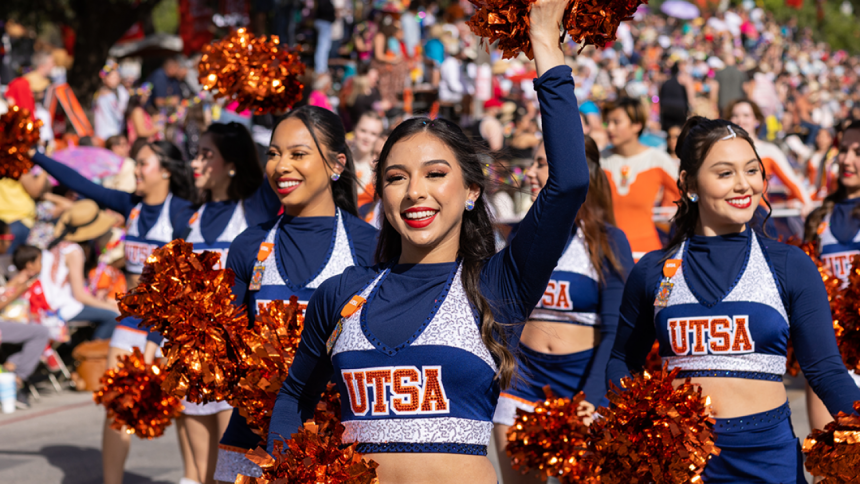
The University of Texas at San Antonio Marching Band performing at the Battle of Flowers Parade.

Roberto Galan // Shutterstock

Best big college towns in America

Every year, students from across the country agonize about where to go to college. The choices are endless: Big university or small private school? Close to home or far away? Options even abound for those committed to pursuing the standard “the college experience.” Ultimately, however, where to matriculate is heavily influenced by where a school is located, especially for prospective students looking for the perfect college town.

The local student body often significantly impacts those who call small college towns home year-round. And as enrollment falters at lesser-known colleges across the nation, these towns are feeling the strain. A May 2025 report from the Wall Street Journal notes that communities like Macomb, Illinois, home to Western Illinois University, are now seeing empty streets and suffering small businesses due to decreasing enrollment rates. 

While many factors contribute to this decline, including a downturn in the amount of high school graduates because of lower birth rates, international student enrollment—and lack thereof—has played a significant role. Fortune reported in December 2025 that as college students from abroad avoid the U.S. over President Donald Trump’s stringent immigration policies, the nation lost an estimated $1 billion in revenue.

Although not immune to these changes, larger college towns tend to be better situated to weather the storm. To recognize ​​this particular cohort, Stacker identified the 50 best big college towns using WalletHub’s 2025 Best College Towns in America report, published in October 2024. WalletHub examined 415 cities using 31 metrics, including housing cost, cost of higher education, city accessibility, crime rate, and median income of part-time workers.

The metrics were broken into three ranked categories: wallet friendliness, social environment, and academic and economic opportunities. Stacker looked at the cities on WalletHub’s ranking with at least 300,000 residents and a university or college population of at least 7,500 students. Some locations have several schools that fit the criteria, while others have one flagship university.

Read on to learn about the best big college towns in America.

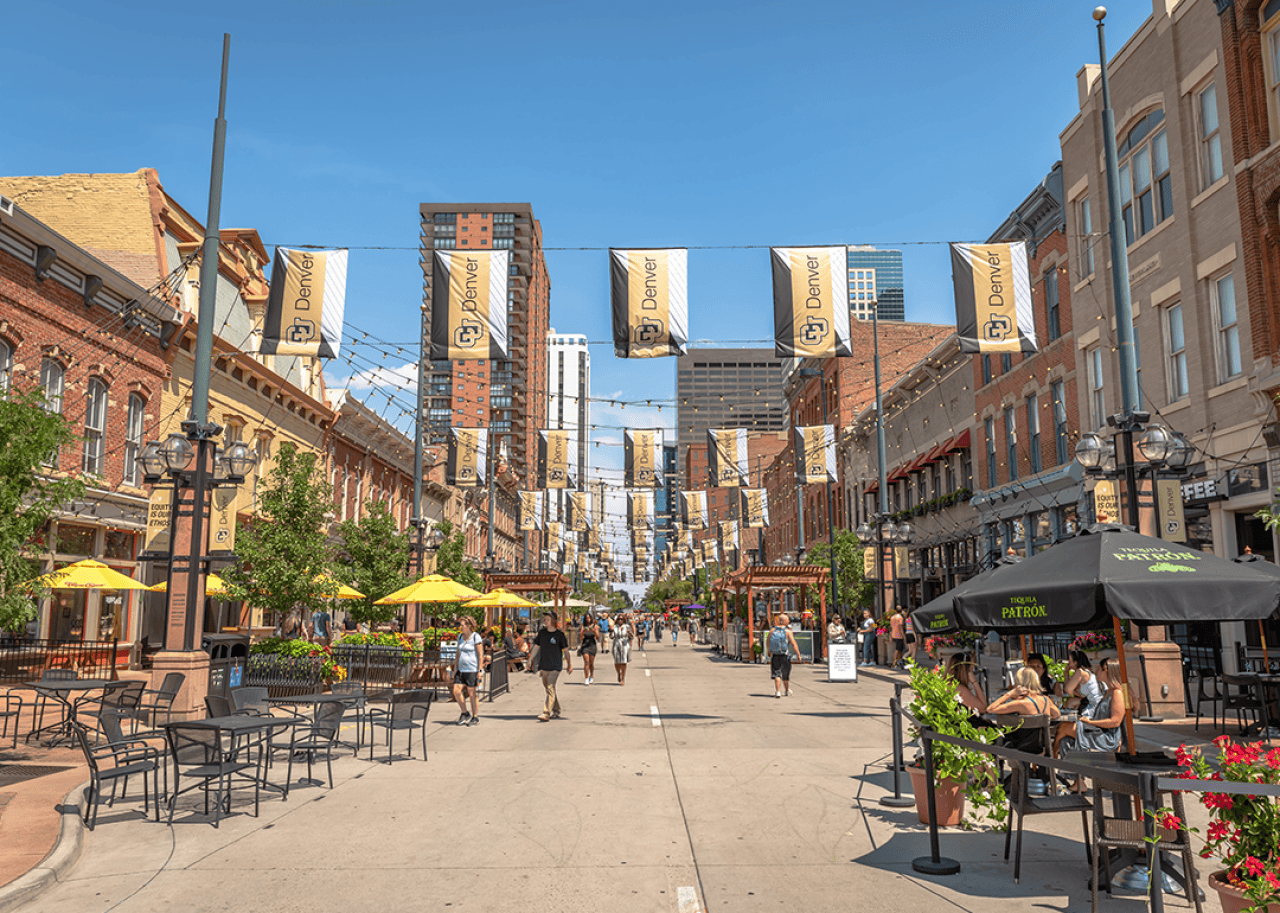
Banners and lights adorn a pedestrian friendly area of Larimer St.

Keith J Finks // Shutterstock

#50. Denver

– Total score: 49.16
– Wallet friendliness rank: 294
– Social environment rank: 31
– Academic and economic opportunities rank: 267

The Mile High City is home to students attending the University of Colorado Denver, Metropolitan State University of Denver, and Regis University, among other institutions. The city is known for its access to numerous year-round outdoor activities, and a robust public transit system covers much of the area. Denver’s status as home to thousands of students is reflected in its cuisine: The first-ever Chipotle is near the University of Denver campus.

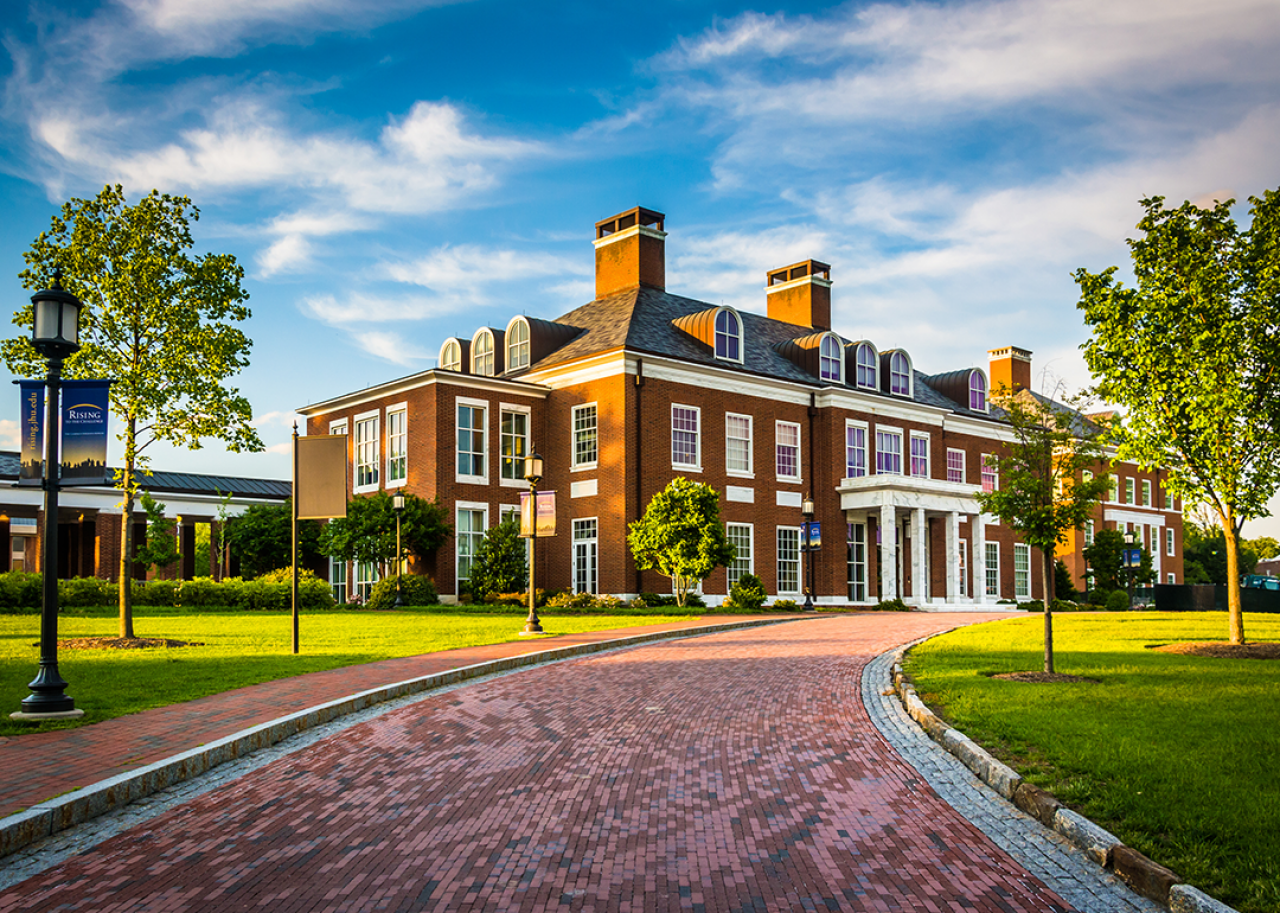
Mason Hall at John Hopkins University in Baltimore,

Jon Bilous // Shutterstocck

#49. Baltimore

– Total score: 49.22
– Wallet friendliness rank: 252
– Social environment rank: 143
– Academic and economic opportunities rank: 214

Several Baltimore-based colleges, including the renowned Johns Hopkins University, help put the “charm” into the Charm City. Baltimore also hosts Morgan State University and Coppin State University, two historically Black colleges and universities, and Loyola University Maryland and the University of Maryland, Baltimore. The city is steeped in history, including 10 public markets—some of which date back to the late 1700s—where students can sample food from around the world. Many students stick around the area after college due to a wealth of well-paying job opportunities in STEM fields, and the commute to Washington D.C. is only half an hour away by train.

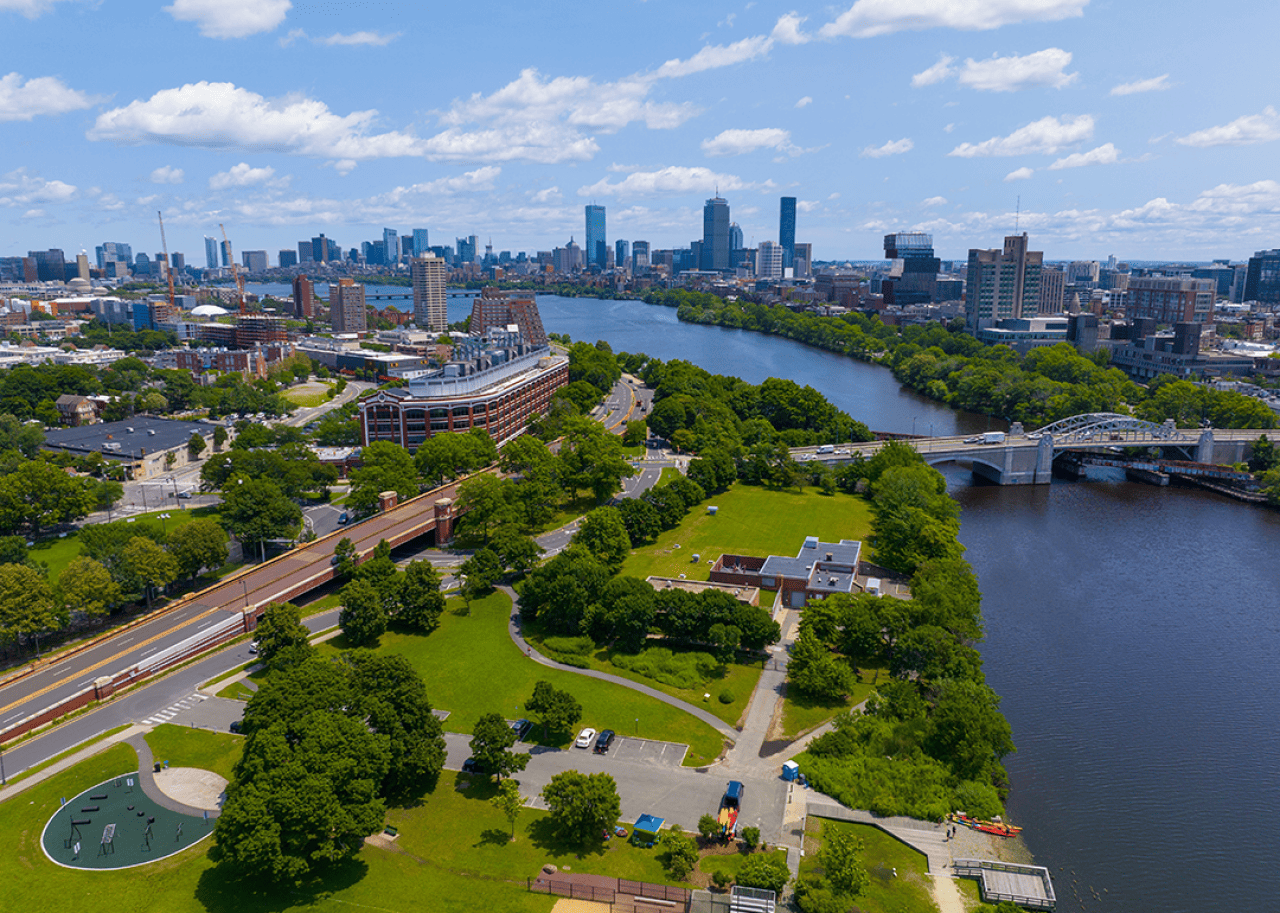
Boston University Bridge across Charles River aerial view with Cambridge on the left and Boston Back Bay on the right.

Wangkun Jia // Shutterstocck

#48. Boston

– Total score: 49.38
– Wallet friendliness rank: 392
– Social environment rank: 19
– Academic and economic opportunities rank: 157

Higher education in the United States began in the Boston area with the founding of Harvard University in 1636. Over the centuries, Boston has maintained its reputation as a magnet for students, with over 300,000 attending college in the city. Within the city limits are 26 colleges, including the esteemed Berklee College of Music, which counts Quincy Jones, Melissa Etheridge, Diana Krall, and John Mayer as alumni. The city’s rivers beckon rowers and sailors, while those who prefer dry land enjoy Boston’s many renowned cultural institutions and sports teams.

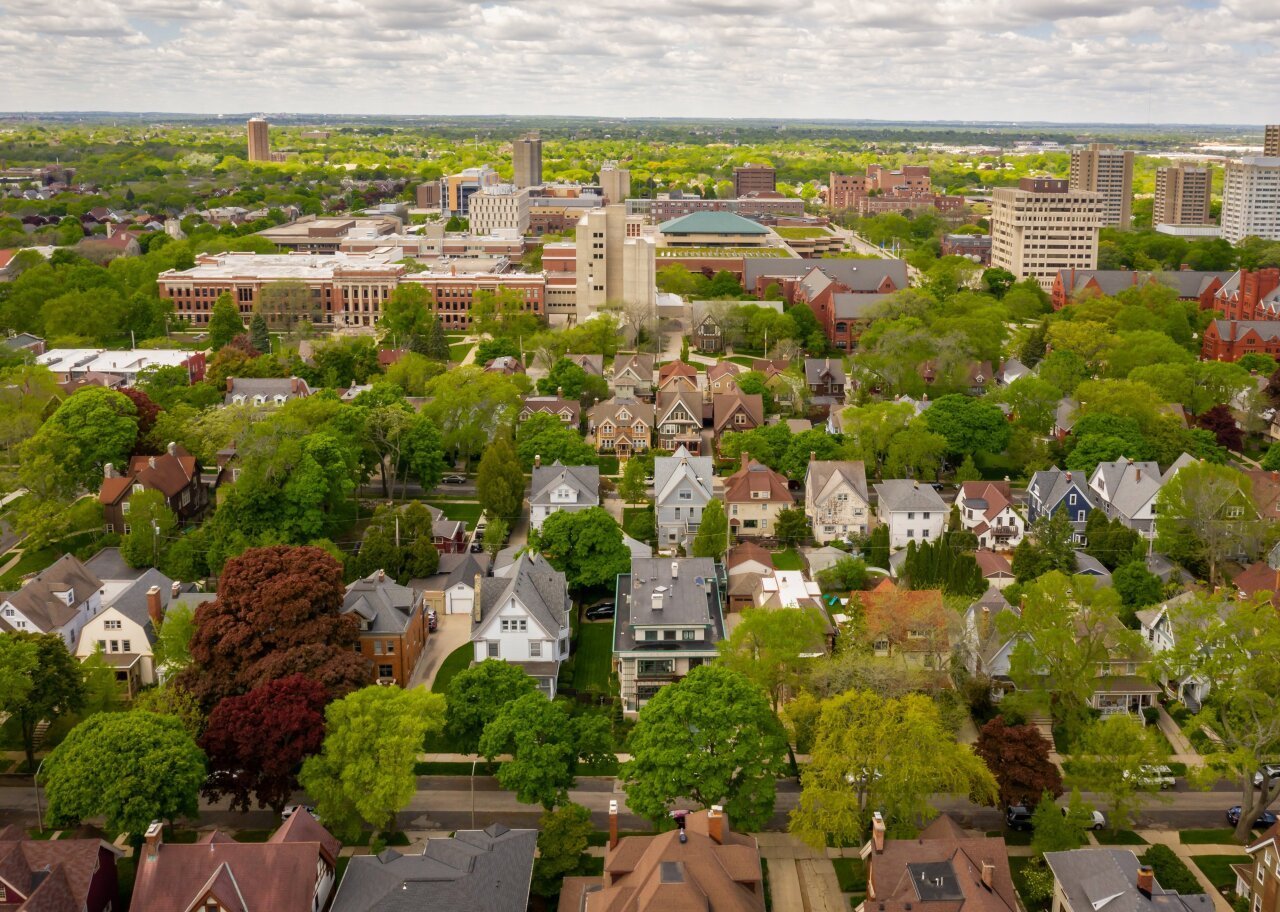
Aerial view of Milwaukee looking west towards the University of Wisconsin.

James Meyer // Shutterstock

#47. Milwaukee

– Total score: 49.44
– Wallet friendliness rank: 160
– Social environment rank: 125
– Academic and economic opportunities rank: 298

Milwaukee is home to the state’s second-largest higher ed. institution, the University of Wisconsin-Milwaukee, and several smaller schools, including Marquette University and the Milwaukee School of Engineering. Students of drinking age can participate in the city’s famous brewery tours at top brands such as Miller, but younger students can still enjoy plenty of sober activities. For instance, the city has dozens of yearly festivals celebrating food and drink, music, LGBTQ+ Pride, and more.

Elevated view of downtown Honolulu.

Leigh Trail // Shutterstock

#46. Honolulu

– Total score: 49.45
– Wallet friendliness rank: 354
– Social environment rank: 2
– Academic and economic opportunities rank: 272

Students who study in Honolulu enjoy urban living on an island paradise. Hawaii Pacific University and the University of Hawaii at Manoa are two of the five four-year colleges in the city, with about 25,000 students between them. Easily accessible beaches, surfing, snorkeling, and scuba diving make for a great study break. The area also has many cultural festivals throughout the year, including the Aloha Festival and the King Kamehameha Floral Parade.

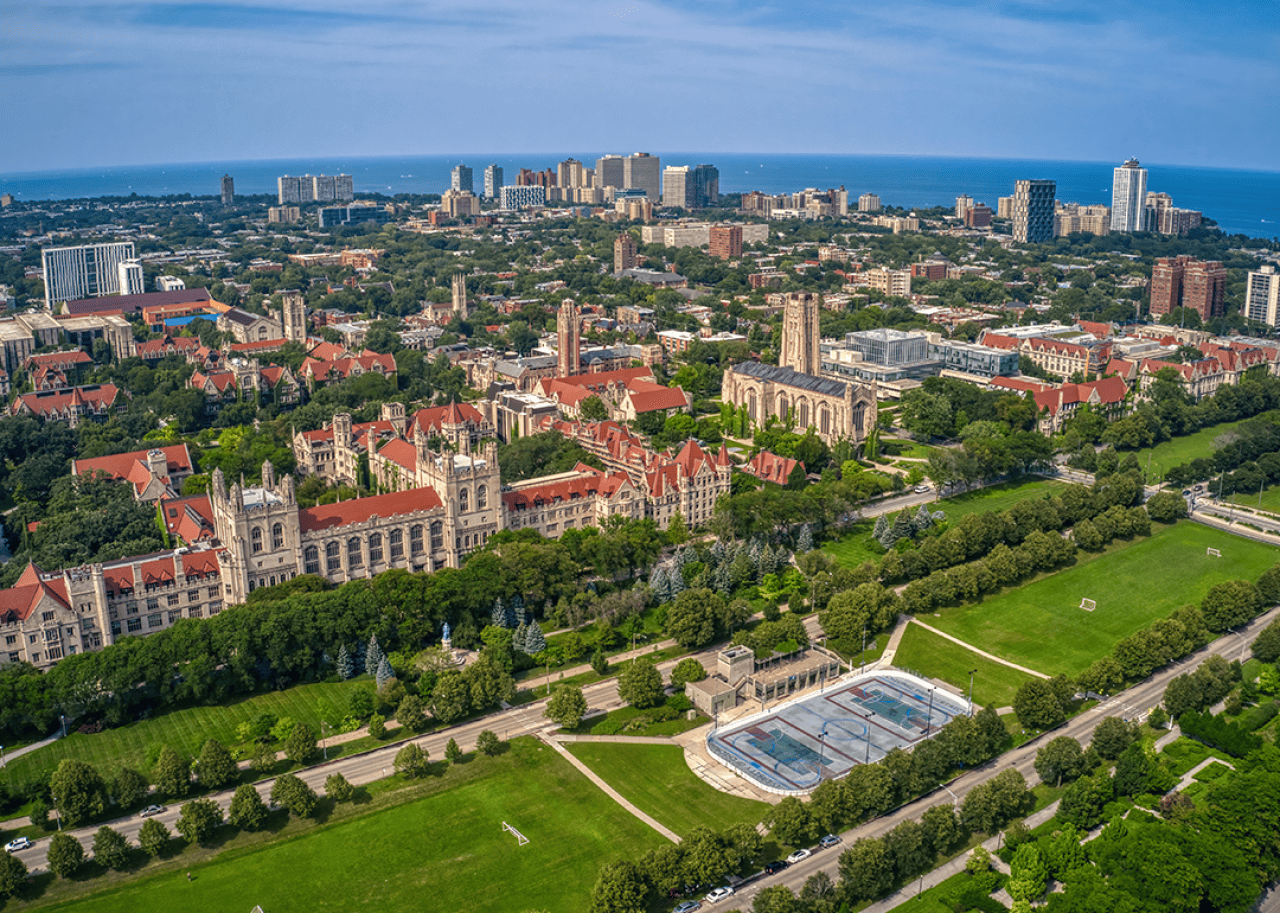
Aerial view of a large University in the Chicago Neighborhood of Hyde Park.

Jacob Boomsma // Shutterstock

#45. Chicago

– Total score: 49.62
– Wallet friendliness rank: 281
– Social environment rank: 70
– Academic and economic opportunities rank: 228

Several notable educational institutions, including the celebrated University of Chicago, call Chicago home. Other schools include Loyola University Chicago, DePaul University, the University of Illinois Chicago, and Northwestern University in nearby Evanston. The city’s diverse cultural and recreational offerings, solid public transportation system, and ties to numerous industries, from media to finance, make it a popular choice for those seeking a first-class urban college experience.

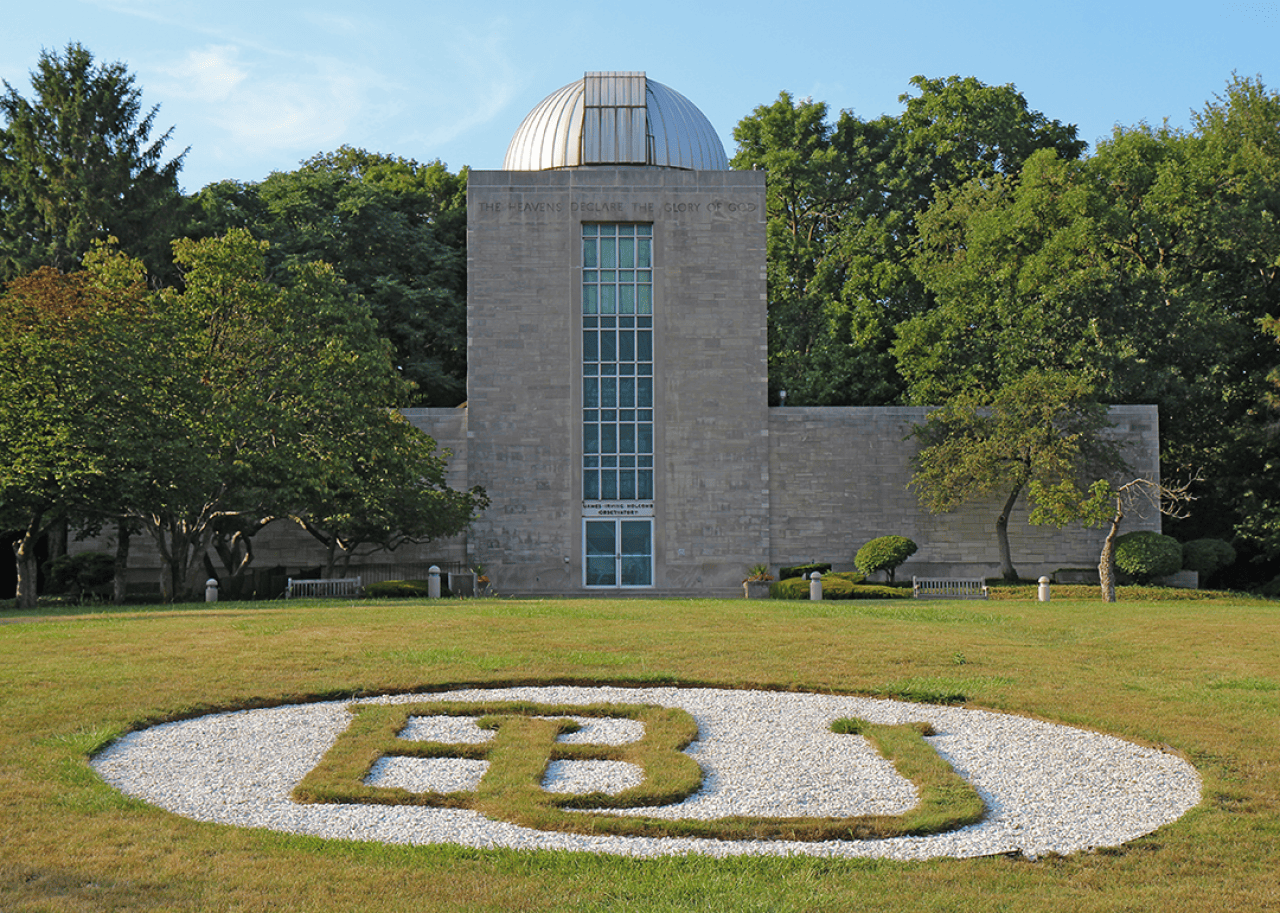
Holcomb Observatory and Planetarium at Butler University.

Stephen B. Goodwin // Shutterstock

#44. Indianapolis

– Total score: 49.64
– Wallet friendliness rank: 180
– Social environment rank: 117
– Academic and economic opportunities rank: 284

Indiana’s most populous city includes tens of thousands of students scattered across several institutions, including Indiana University Indianapolis, Butler University, the University of Indianapolis, and Marian University. Beyond its schools, Indianapolis’ cultural districts offer rich local history and a buzzing culinary scene. With a revamped public transit system in the works, Indianapolis is also home to welcome distractions from studying, such as museums, parks, and sporting events.

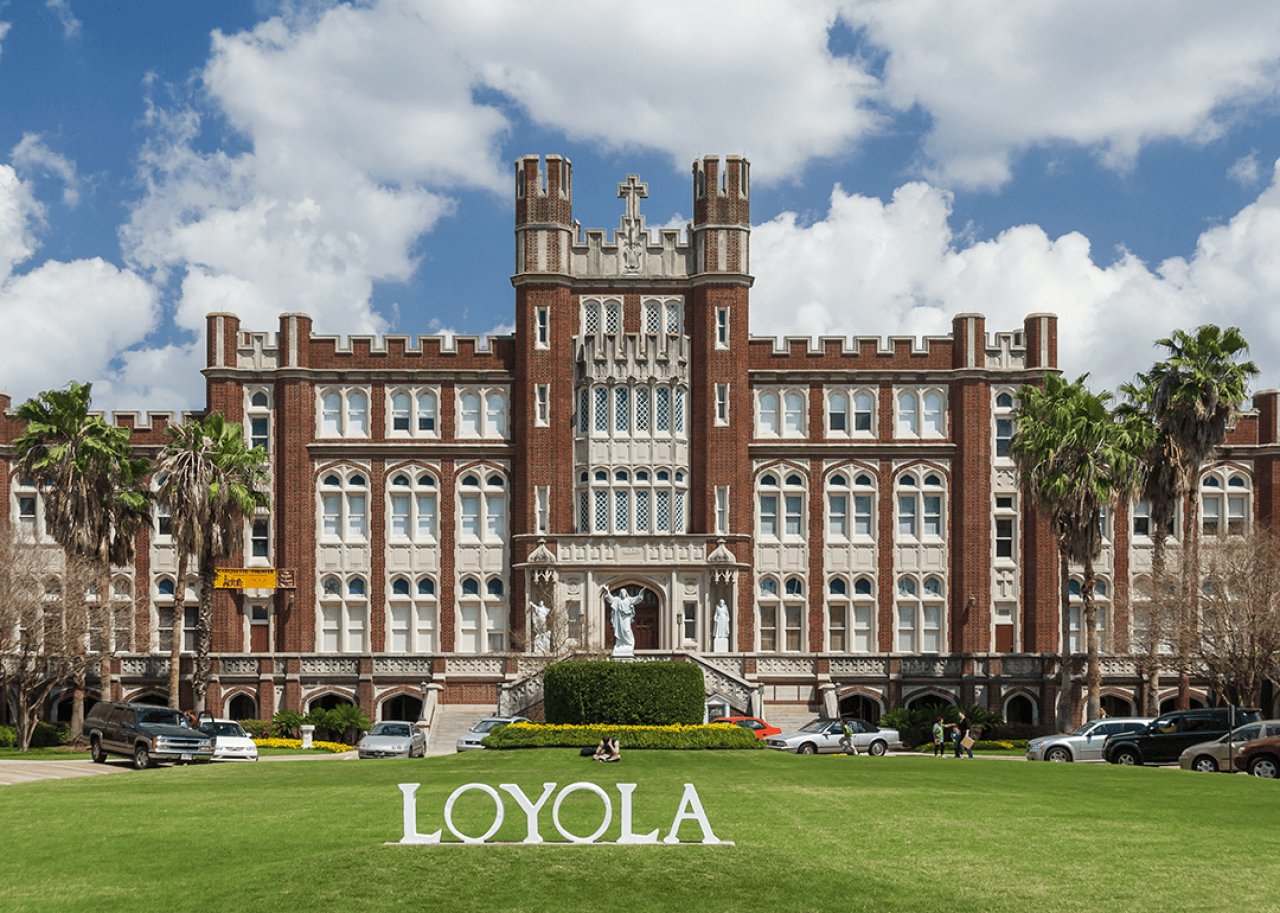
Main building and entrance to Loyola University.

amadeustx // Shutterstock

#43. New Orleans

– Total score: 49.72
– Wallet friendliness rank: 242
– Social environment rank: 71
– Academic and economic opportunities rank: 262

Several public and private institutions call the Big Easy home: Tulane University, Loyola University New Orleans, and Xavier University of Louisiana. The Louisiana State University Health Sciences Center also hosts six of the university’s schools, including the medical program. New Orleans’ storied tradition of street celebrations (second lines), live music, warm climate, and arts scene make it a popular destination for college students from around the country, many of whom stay after graduation to work in tourism, energy, and health care.

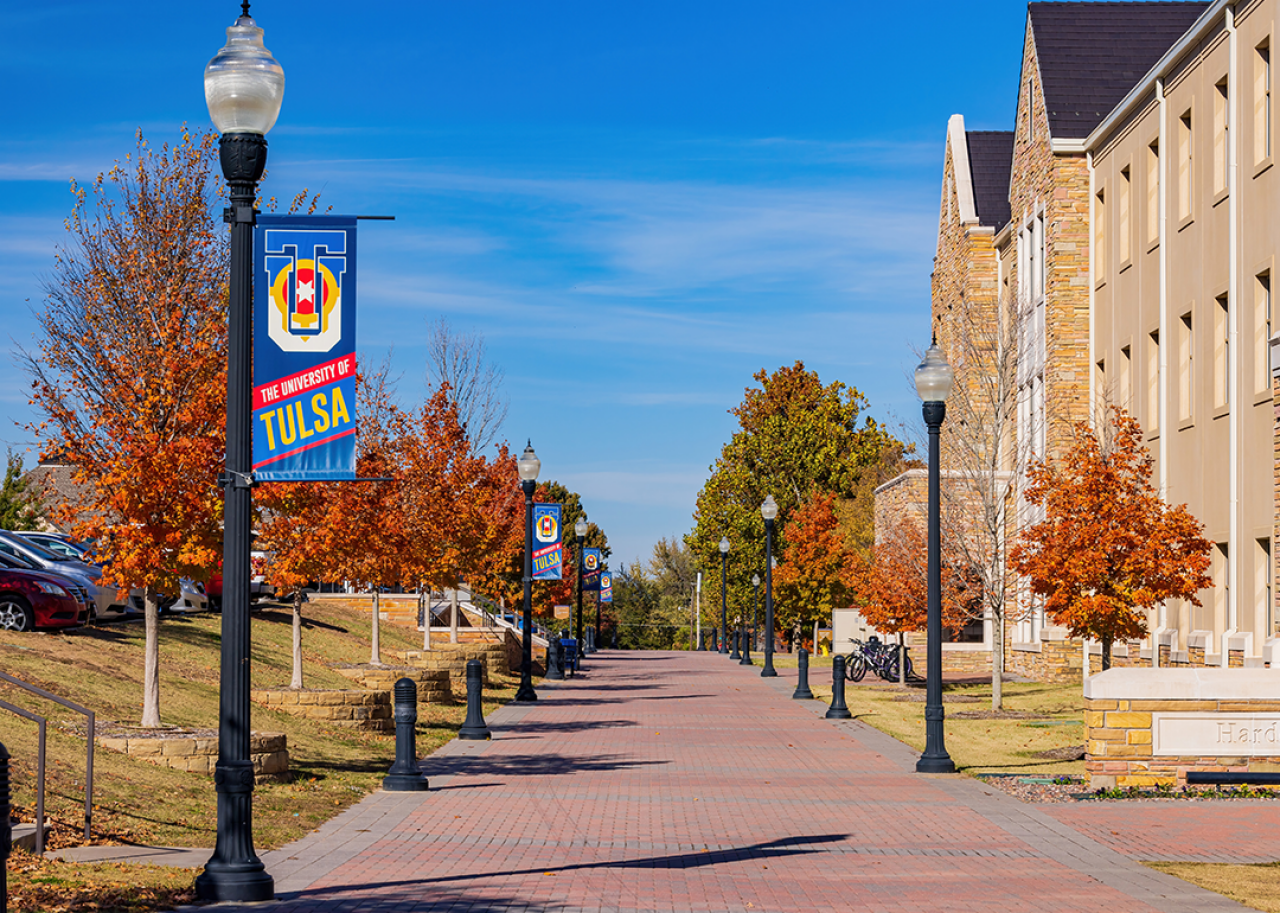
Sunny view of the beautiful campus of The University of Tulsa.

Kit Leong // Shutterstock

#42. Tulsa, Oklahoma

– Total score: 49.97
– Wallet friendliness rank: 127
– Social environment rank: 138
– Academic and economic opportunities rank: 294

Once known as the “Oil Capital of the World,” Tulsa, Oklahoma, is a medium-sized city with small-town and big-metropolis vibes. Tulsa has hosted college students for over 140 years and preserved some of the best of its history. In the Deco District, old buildings delight locals and visitors, while foodies can explore unique gastronomic creations on Cherry Street. Several technology, manufacturing, energy, and aerospace companies are headquartered in Tulsa, which makes it an optimal place to find internships, mentors, and corporate job opportunities.

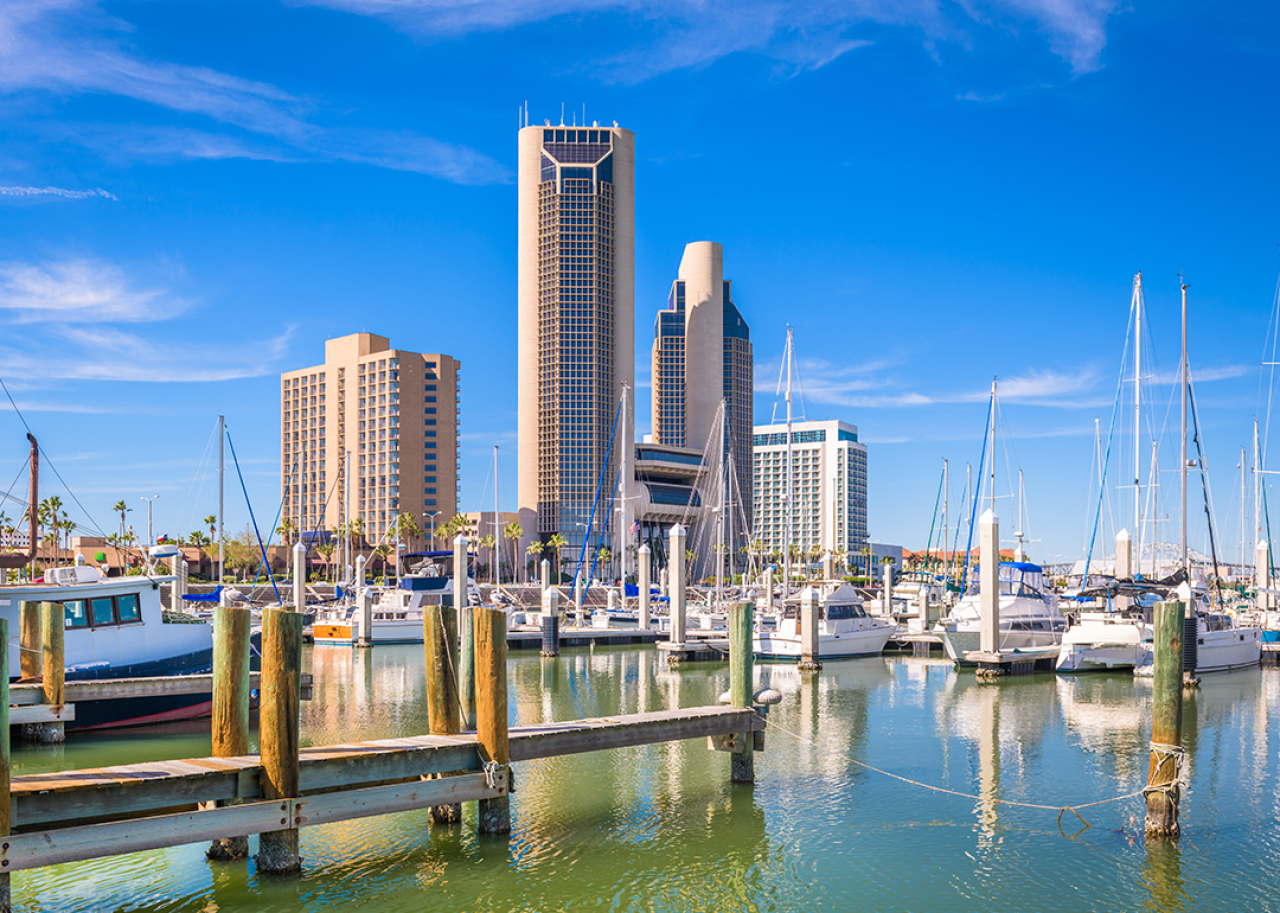
Corpus Christi skyline on the bay.

Sean Pavone // Shutterstock

#41. Corpus Christi

– Total score: 50.35
– Wallet friendliness rank: 92
– Social environment rank: 254
– Academic and economic opportunities rank: 202

A popular spring break destination, thousands of students call coastal Corpus Christi home. Students at Texas A&M University-Corpus Christi enjoy island living, as the campus is located on Ward Island, between Oso Bay and Corpus Christi Bay. The Whataburger fast food chain was founded in Corpus Christi in 1950, and the city boasts many 24-hour locations to satisfy any student’s late-night hunger cravings.

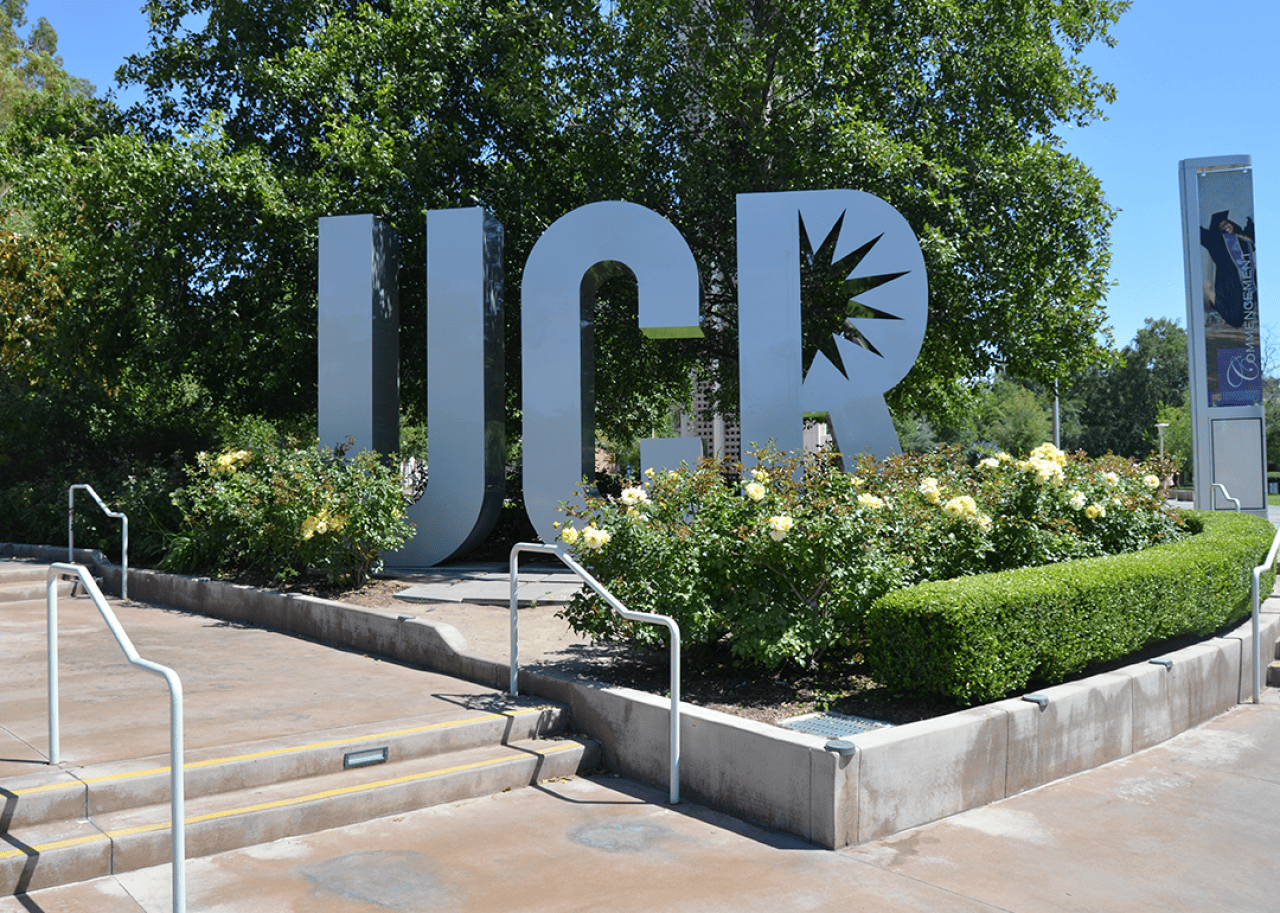
UCR sign on University of California Riverside campus.

Therodrigoc // Shutterstock

#40. Riverside, California

– Total score: 50.39
– Wallet friendliness rank: 277
– Social environment rank: 180
– Academic and economic opportunities rank: 93

Riverside is part of Southern California’s Inland Empire, an area east of Los Angeles that offers urban amenities without the same level of gridlock. Along with several community colleges, Riverside is also home to the University of California, Riverside, La Sierra University, and California Baptist University. Riverside played a major role in the development of the California citrus industry, and the area still features some orange groves. Its citrus history is preserved at California Citrus State Historic Park, which hosts an annual citrus festival.

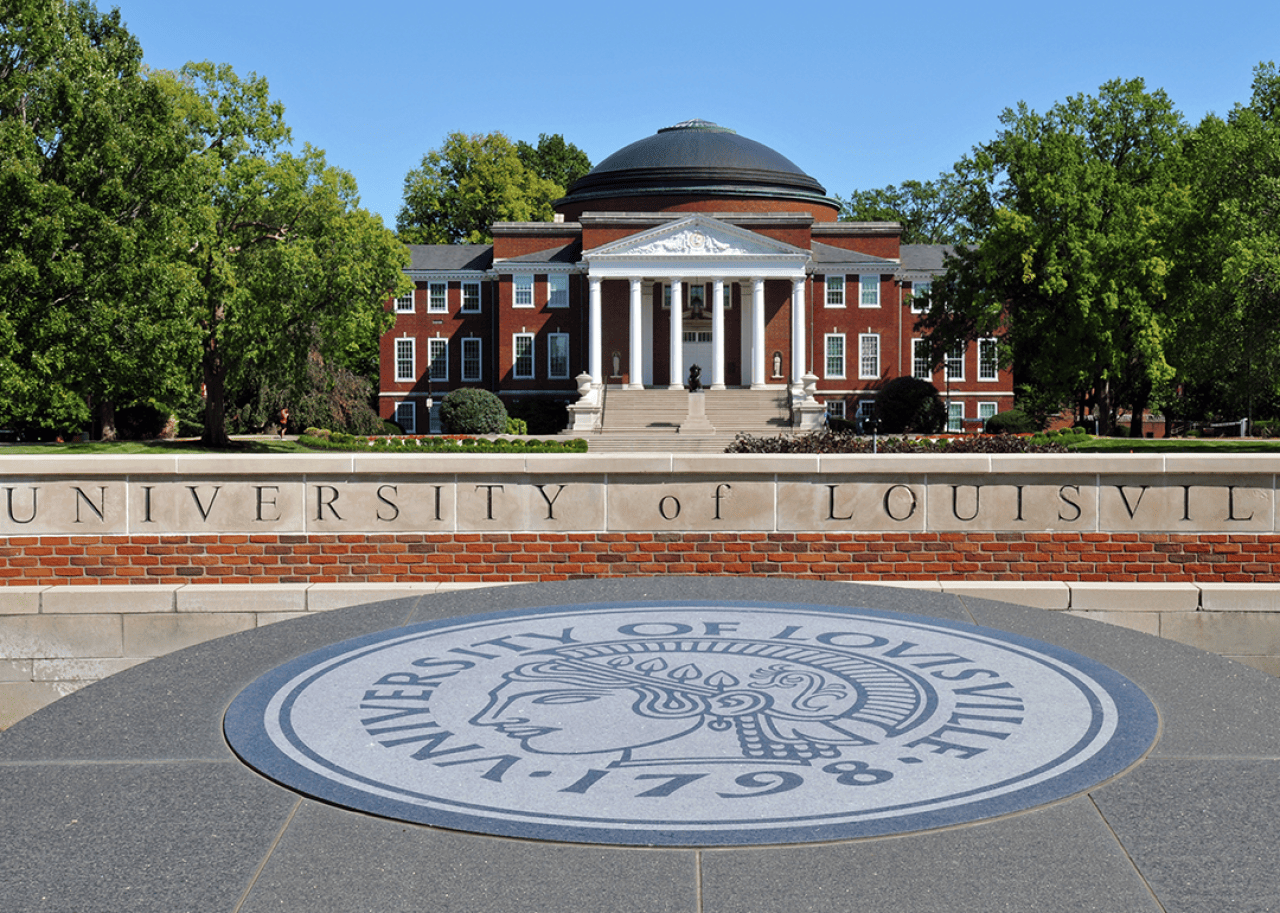
Grawemeyer Hall, an historic landmark at the University of Louisville's main Belknap Campus.

BD Images // Shutterstock

#39. Louisville, Kentucky

– Total score: 50.45
– Wallet friendliness rank: 167
– Social environment rank: 69
– Academic and economic opportunities rank: 300

Students attending any major educational institutions in Louisville, Kentucky—including the University of Louisville and Simmons College of Kentucky, a Historically Black Colleges and Universities member—have good reason to love their school’s location. The city is home to party-heavy annual events such as the Kentucky Derby, but it also enjoys a vibrant indie music scene and a park system designed by Frederick Olmsted, who planned New York’s Central Park. Like Kentucky’s other big city of Lexington, Louisville has strong traditions centered around college sports, particularly UofL’s Cardinals.

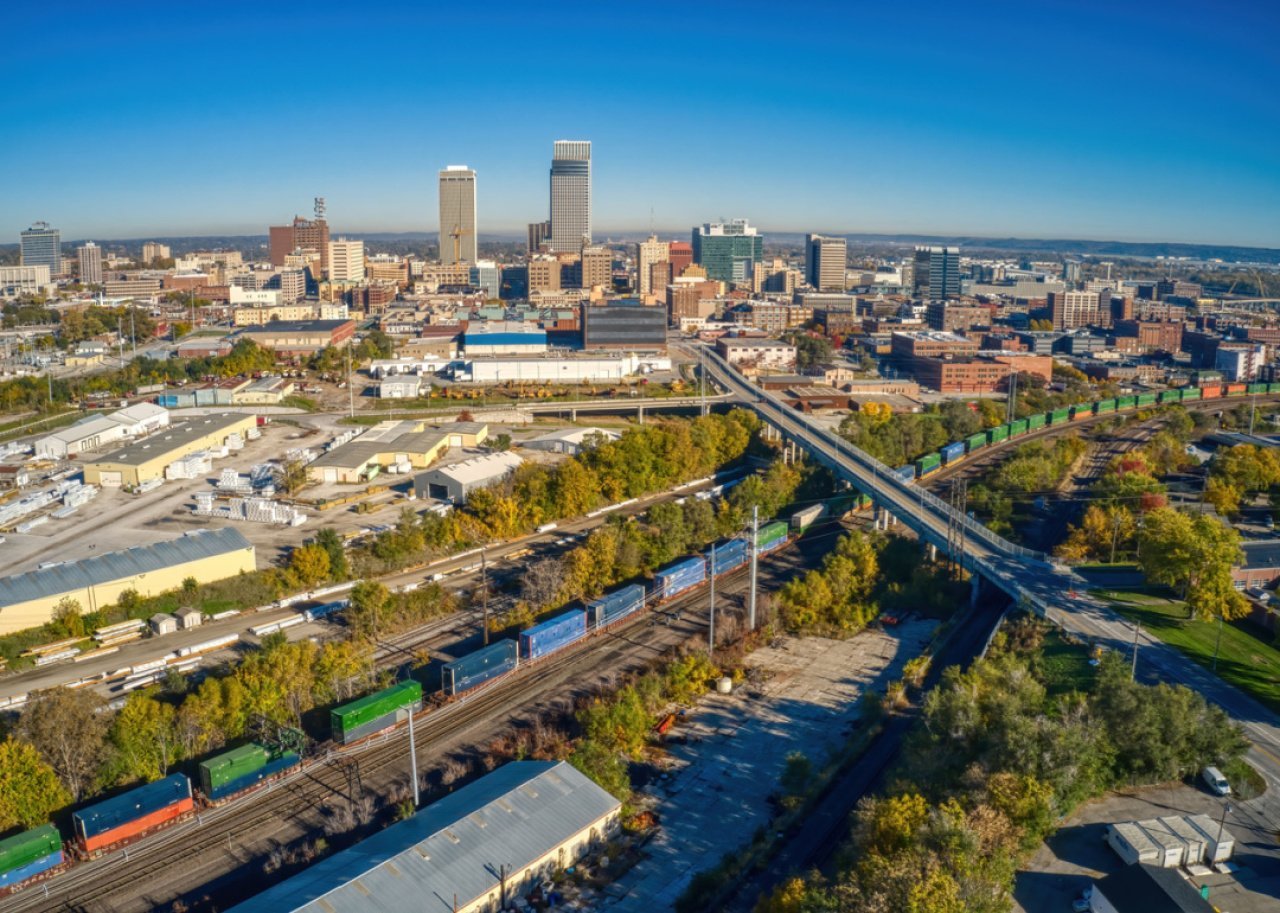
Aerial view of downtown Omaha in autumn.

Jacob Boomsma // Shutterstock

#38. Omaha, Nebraska

– Total score: 50.78
– Wallet friendliness rank: 198
– Social environment rank: 130
– Academic and economic opportunities rank: 229

Omaha, Nebraska, is a backdrop to many of the state’s educational institutions, including the University of Nebraska Omaha, Creighton University, and Clarkson College. The University of Nebraska Medical Center is also located here. With its low cost of living and various historic landmarks, Omaha offers an appealing blend of urban and suburban. The Old Market is home to everything from pubs and taverns to art galleries and live music venues.

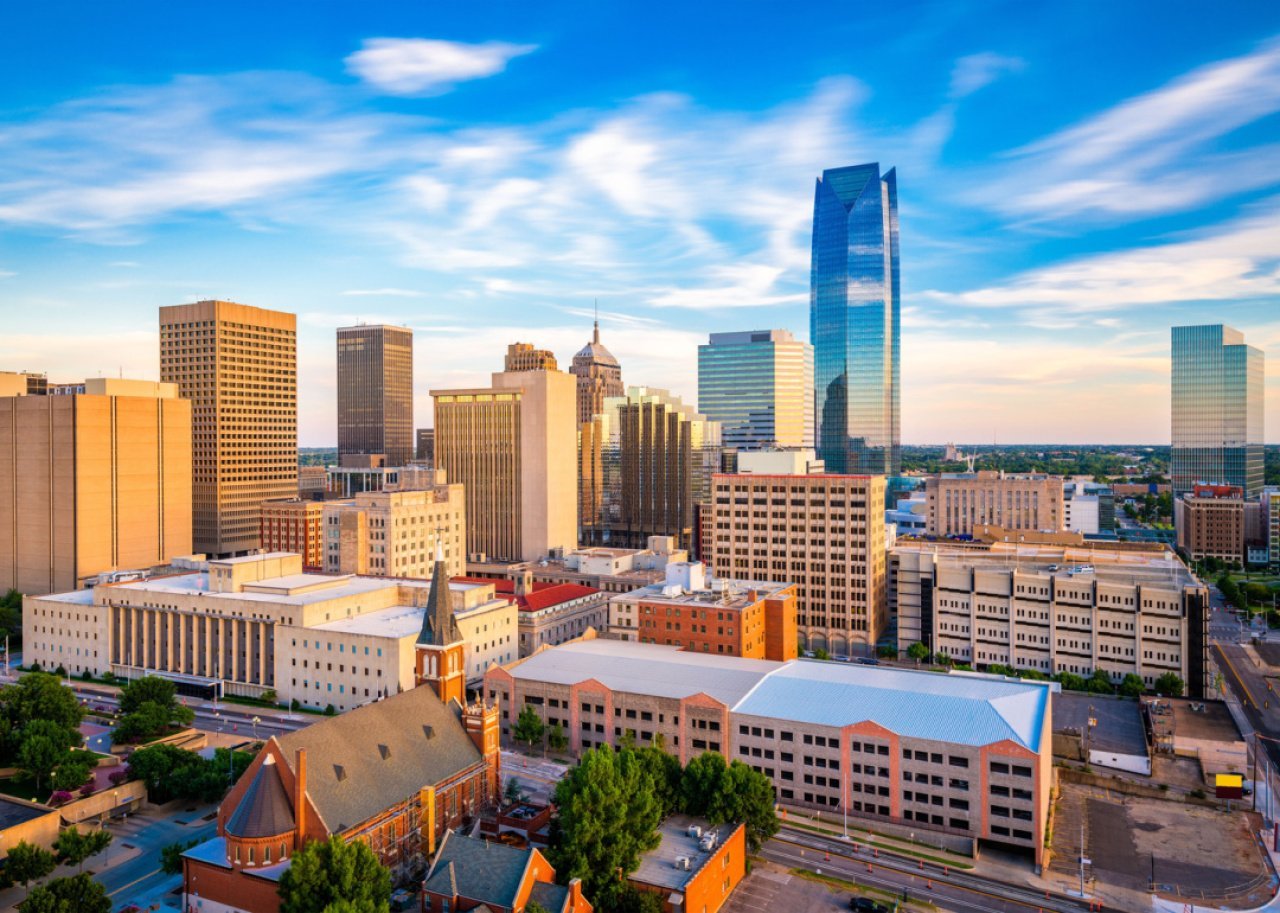
Oklahoma City downtown skyline in the late afternoon.

Sean Pavone // Shutterstock

#37. Oklahoma City

– Total score: 50.78
– Wallet friendliness rank: 84
– Social environment rank: 193
– Academic and economic opportunities rank: 258

Home to the public University of Oklahoma Norman Campus, University of Central Oklahoma, Oklahoma State University Oklahoma City, and the private Oklahoma City University and Oklahoma Christian University, Oklahoma City has something for everyone. In addition to its higher learning institutions, the city is home to the Oklahoma City Thunder basketball team, the Oklahoma City Museum of Art, and the National Cowboy and Western Heritage Museum. Bricktown is a popular nightlife destination where students can find everything from live banjo music to hip wine bars.

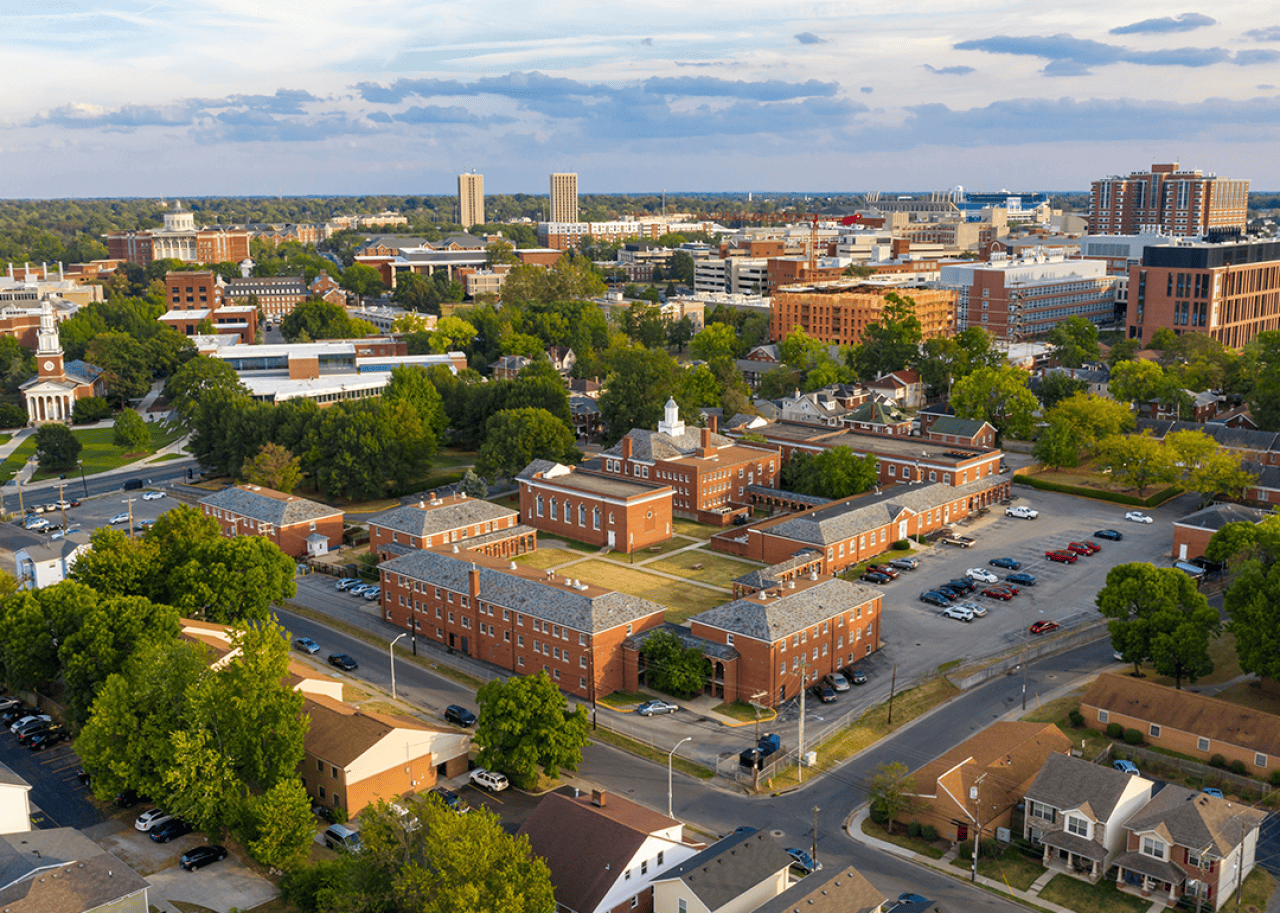
Aerial view university campus area in Lexington.

Real Window Creative // Shutterstock

#36. Lexington, Kentucky

– Total score: 50.99
– Wallet friendliness rank: 153
– Social environment rank: 106
– Academic and economic opportunities rank: 274

Known for its lively college athletics scene, Lexington, Kentucky, is home to the University of Kentucky, which is also the city’s largest employer. Transylvania University, one of the nation’s oldest colleges, is also there. Students are drawn to the area thanks to its low cost of living and variety of manufacturing job opportunities, including with Toyota Kentucky and Lockheed Martin.

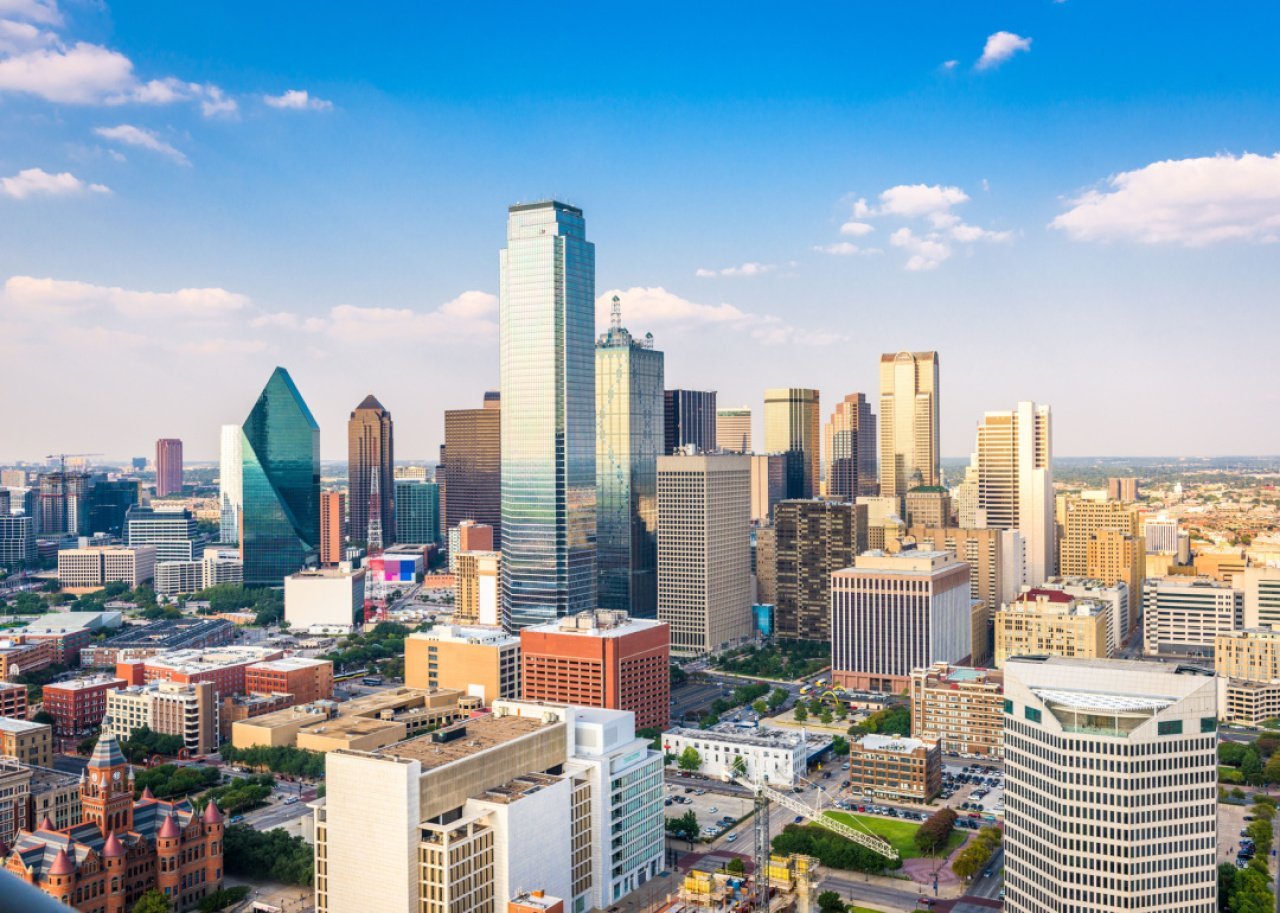
Dallas cityscape.

Sean Pavone // Shutterstock

#35. Dallas

– Total score: 51.46
– Wallet friendliness rank: 229
– Social environment rank: 124
– Academic and economic opportunities rank: 195

Dallas is home to many public and private institutions, including the University of Texas at Dallas, Southern Methodist University, and HBCU Paul Quinn College. The frozen margarita was created in the Big D, featuring a celebrated barbecue scene. The city’s downtown Arts District is popular among visitors and residents alike.

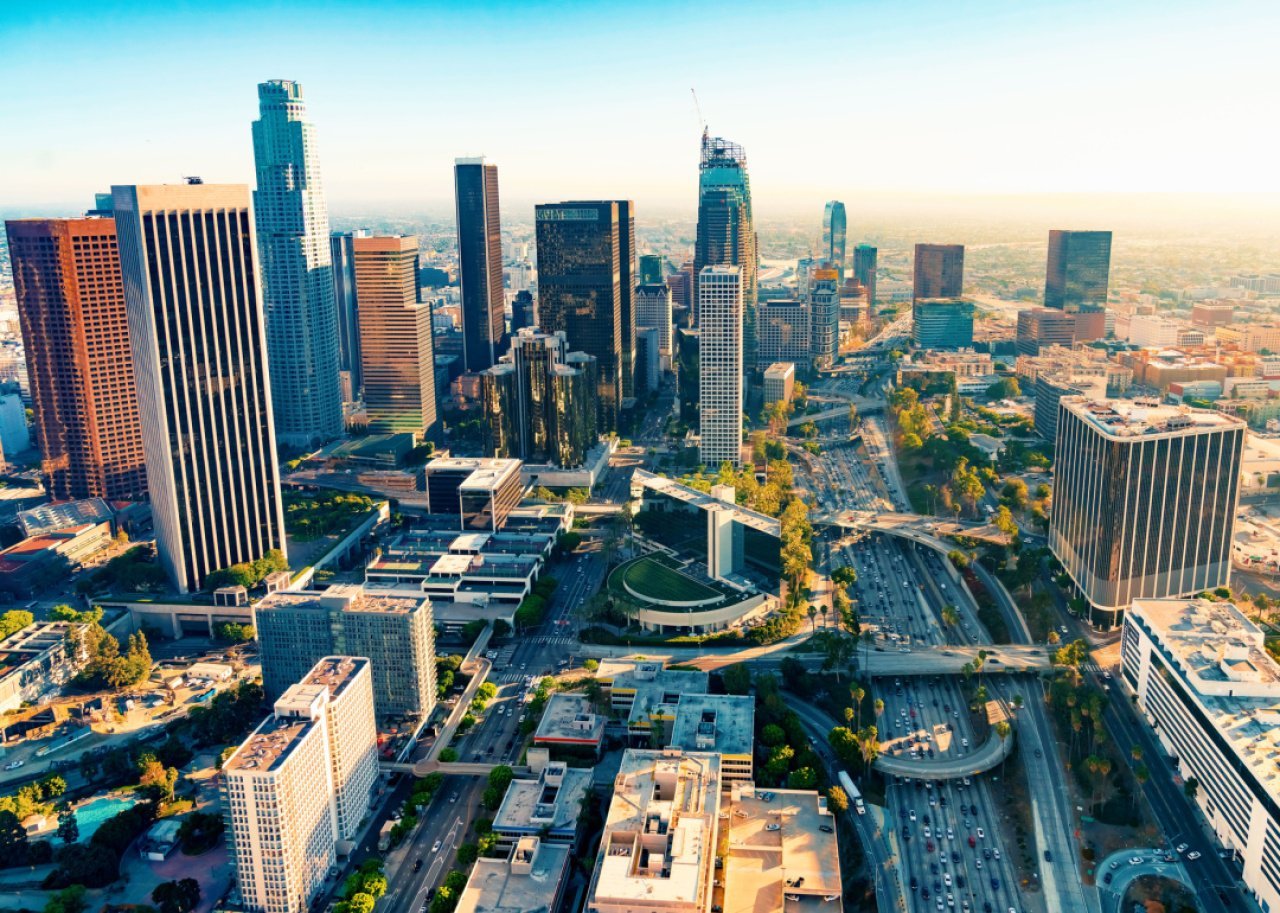
Aerial view downtown at sunset.

TierneyMJ // Shutterstock

#34. Los Angeles

– Total score: 51.55
– Wallet friendliness rank: 343
– Social environment rank: 111
– Academic and economic opportunities rank: 75

Los Angeles’s massive size and scope mean it’s more a series of districts and neighborhoods than one distinct college town. LA has several higher education institutions within the city limits, from the massive University of California, Los Angeles, to the private Loyola Marymount University, Mount Saint Mary’s University, and Occidental College. Given its proximity to Hollywood, there are also several film schools. Cultural and recreational opportunities abound, including world-renowned museums and beaches.

Boardwalk and buildings in Virginia Beach.

Ritu Manoj Jethani // Shutterstock

#33. Virginia Beach, Virginia

– Total score: 51.6
– Wallet friendliness rank: 248
– Social environment rank: 103
– Academic and economic opportunities rank: 179

Virginia Beach’s main attraction is a three-mile oceanfront boardwalk, where the Chesapeake Bay meets the Atlantic Ocean. In recent years, the city’s already pleasant coastal lifestyle has been spruced up by a bustling food and arts scene, a perfect complement to its centuries-old maritime history. Nearly 60,000 students attend four-year colleges in the area, including Regent University and Virginia Wesleyan University.

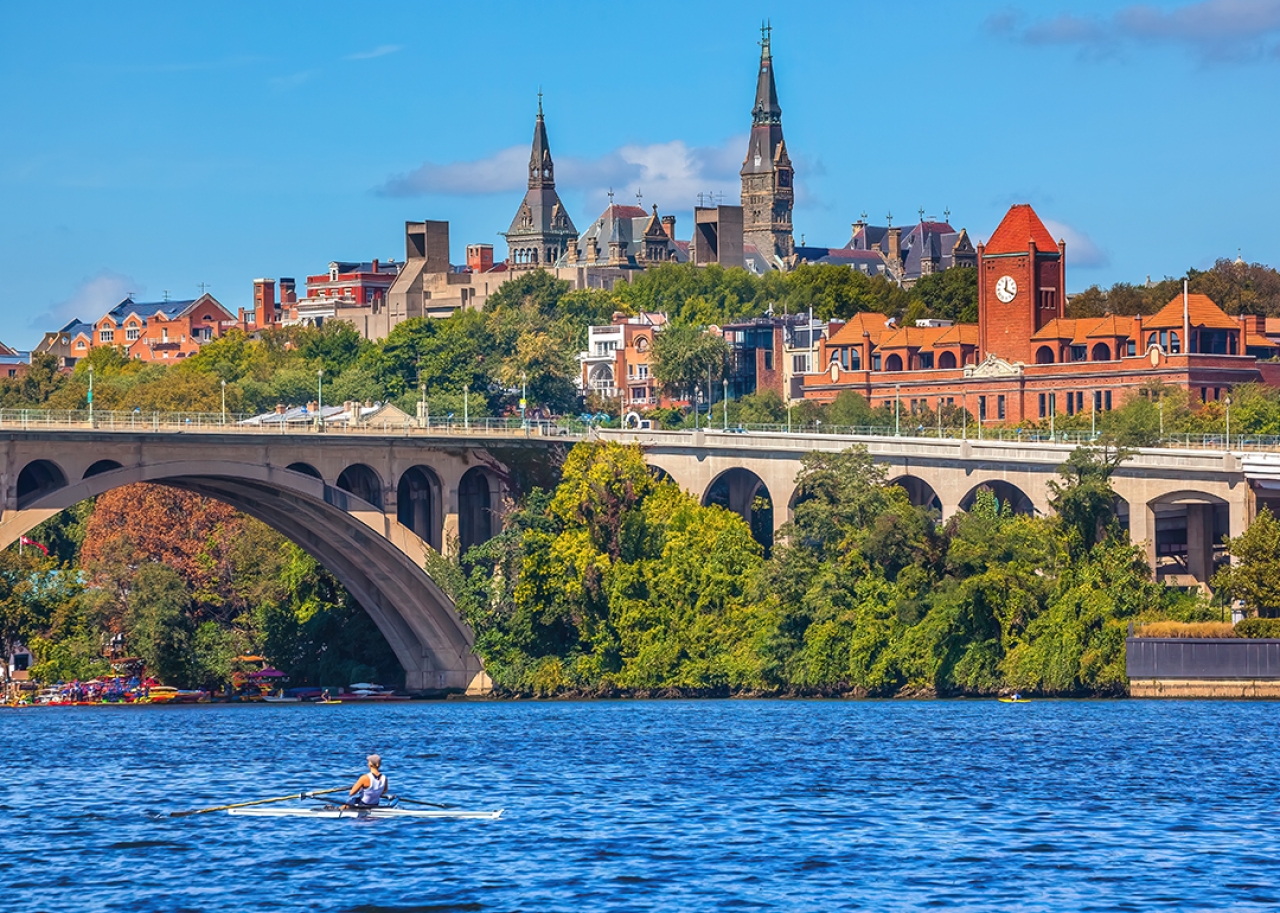
Person rowing on the Potomac River by Key Bridge.

Bill Perry // Shutterstocck

#32. Washington DC

– Total score: 51.75
– Wallet friendliness rank: 399
– Social environment rank: 21
– Academic and economic opportunities rank: 77

The nation’s capital is home to several colleges and universities, including Georgetown University, George Washington University, American University, and HBCU Howard University, with education options for many students. In Washington D.C., students can explore the rich history and beautiful architecture of the United States, from the Capitol to the Lincoln Memorial to the Smithsonian Institution. That said, remember that the cost of living is high at 148% above the national average.

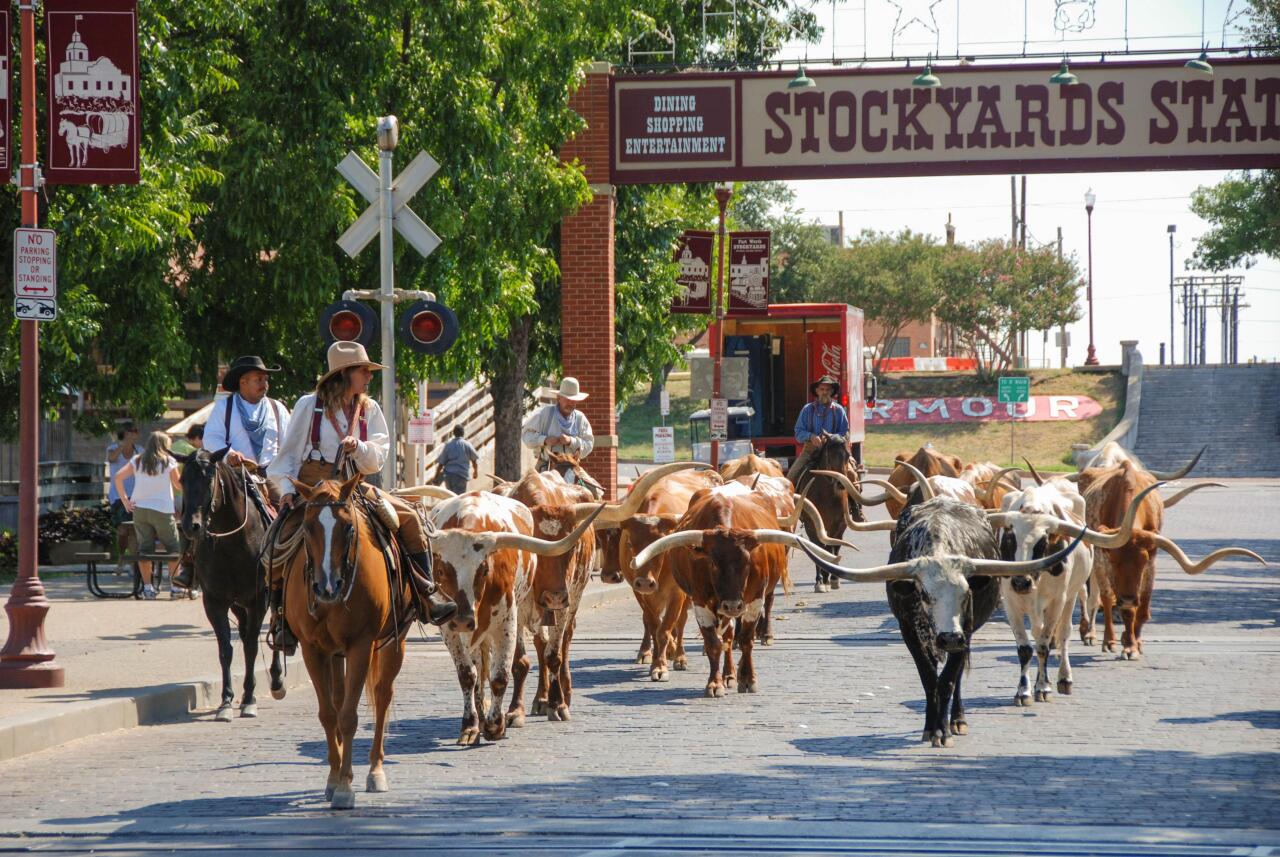
Historic Fort Worth Stockyards and Texas longhorn cattle.

CeriBreeze // Shutterstock

#31. Fort Worth, Texas

– Total score: 51.76
– Wallet friendliness rank: 228
– Social environment rank: 129
– Academic and economic opportunities rank: 181

Fort Worth, Texas, and the surrounding area are home to dozens of higher education institutions, including public universities like the University of North Texas and smaller private institutions like Texas Christian University and Texas Wesleyan University. The central transportation hub features the headquarters of American Airlines, GM Financial, and BNSF Railway, among others.

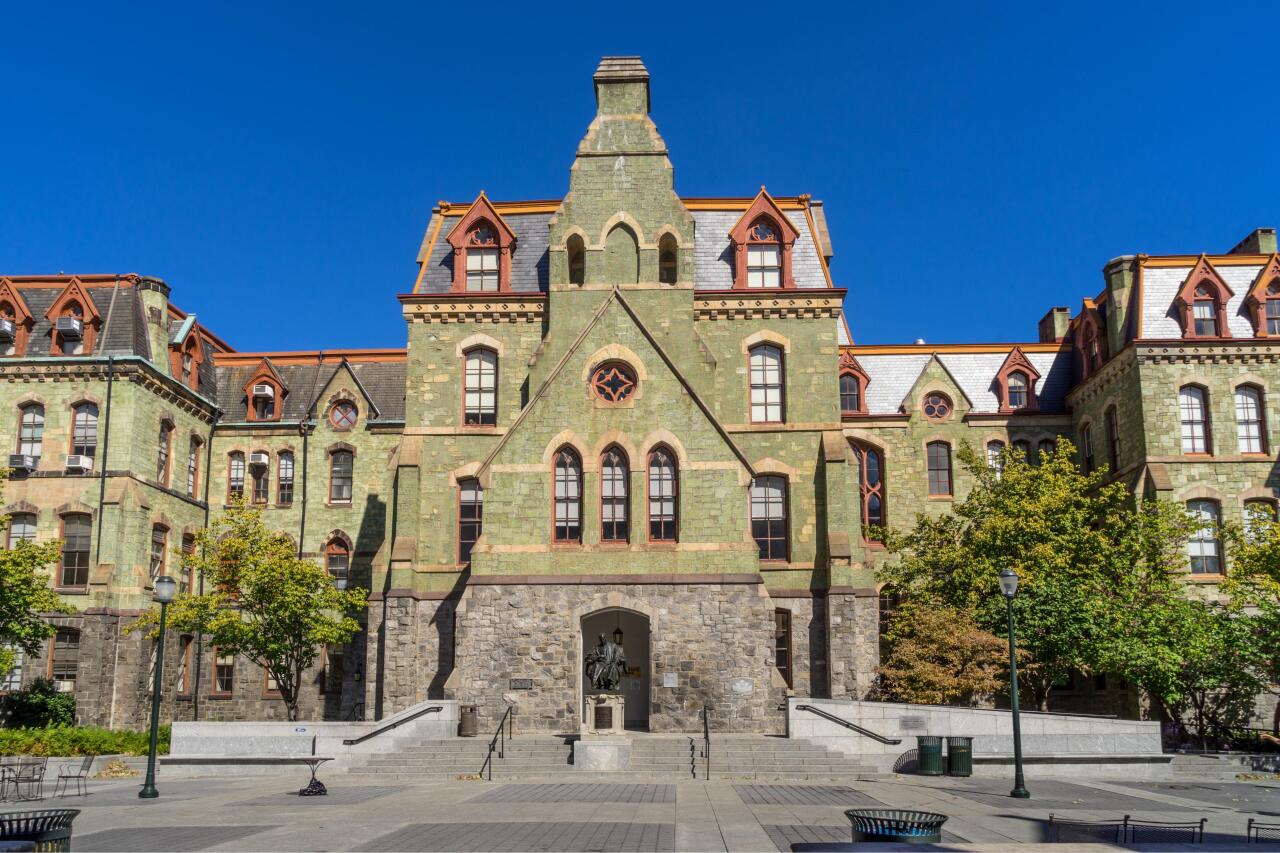
University of Pennsylvania College Hall building exterior.

Eileen_10 // Shutterstock

#30. Philadelphia

– Total score: 51.8
– Wallet friendliness rank: 261
– Social environment rank: 110
– Academic and economic opportunities rank: 166

Philadelphia is home to some of the nation’s oldest and most storied educational institutions: Temple University, Drexel University, and the Ivy League University of Pennsylvania among them. The city’s large student population is reflected in the number of bars and clubs scattered about Center City and East Passyunk. At the same time, historic tourist attractions and museums provide something for those of all interests. Major industries in the city include health care, education, and financial services.

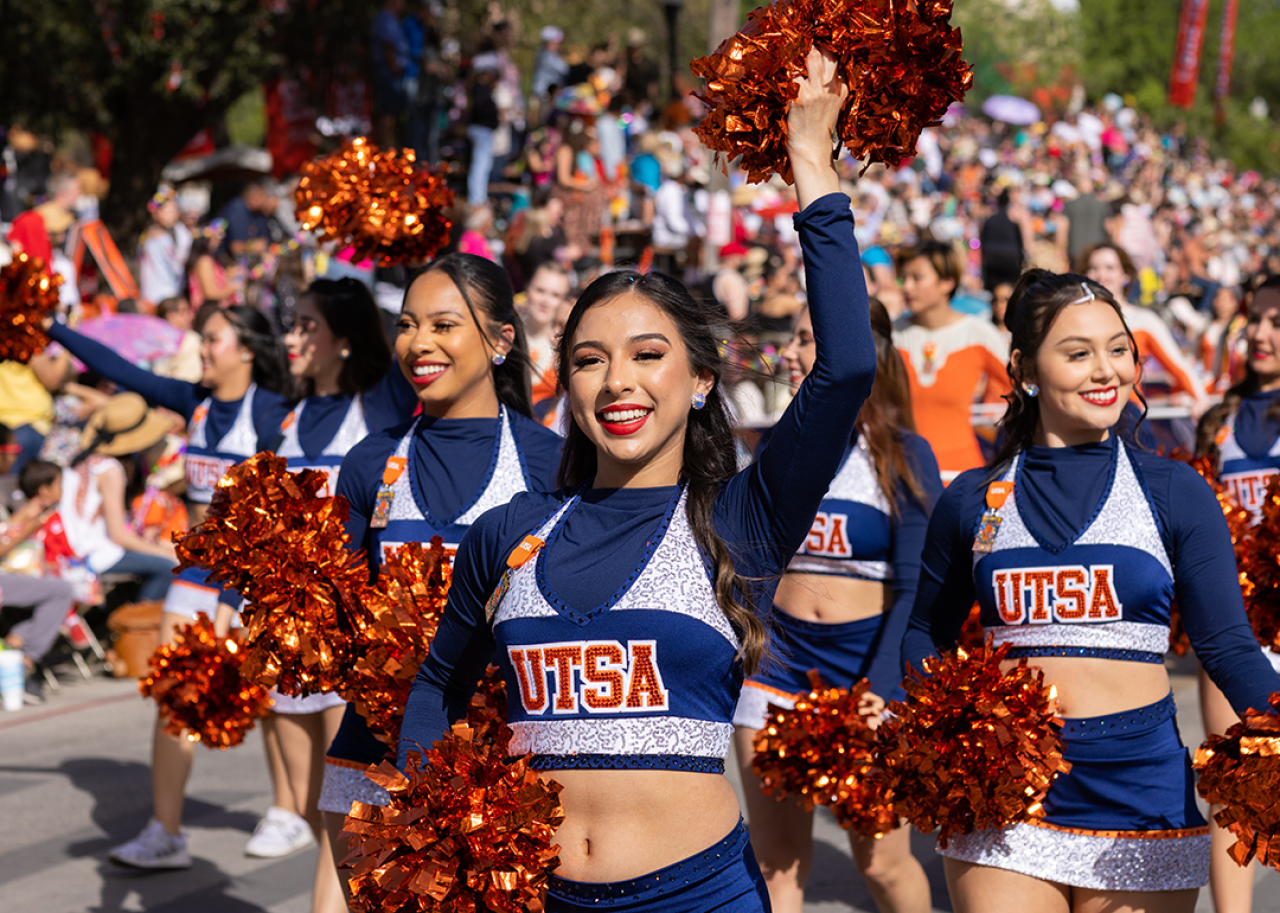
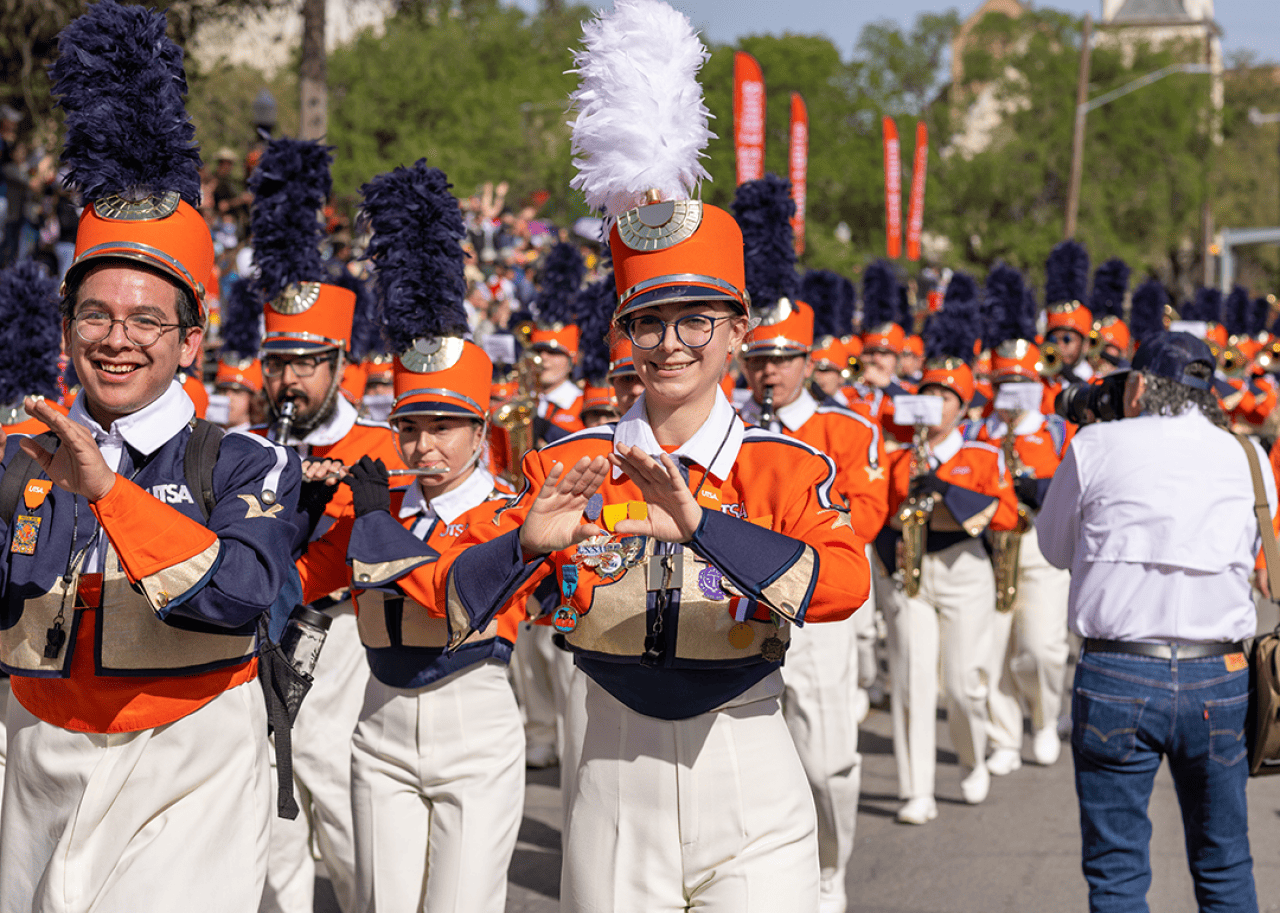
The University of Texas at San Antonio Marching Band performing at parade.

Roberto Galan // Shutterstock

#29. San Antonio

– Total score: 51.94
– Wallet friendliness rank: 60
– Social environment rank: 92
– Academic and economic opportunities rank: 309

While Texas’s two major public universities—the University of Texas and Texas A&M University—have campuses in San Antonio, there are also many private schools, including Trinity University and St. Mary’s University. San Antonio is a popular destination for people within the state and across the country, with a major sports franchise (the NBA’s San Antonio Spurs), a vibrant nightlife, and numerous historic attractions, such as the Alamo and River Walk. These features and a robust culinary scene make the city an exciting, if distracting, place to attend college.

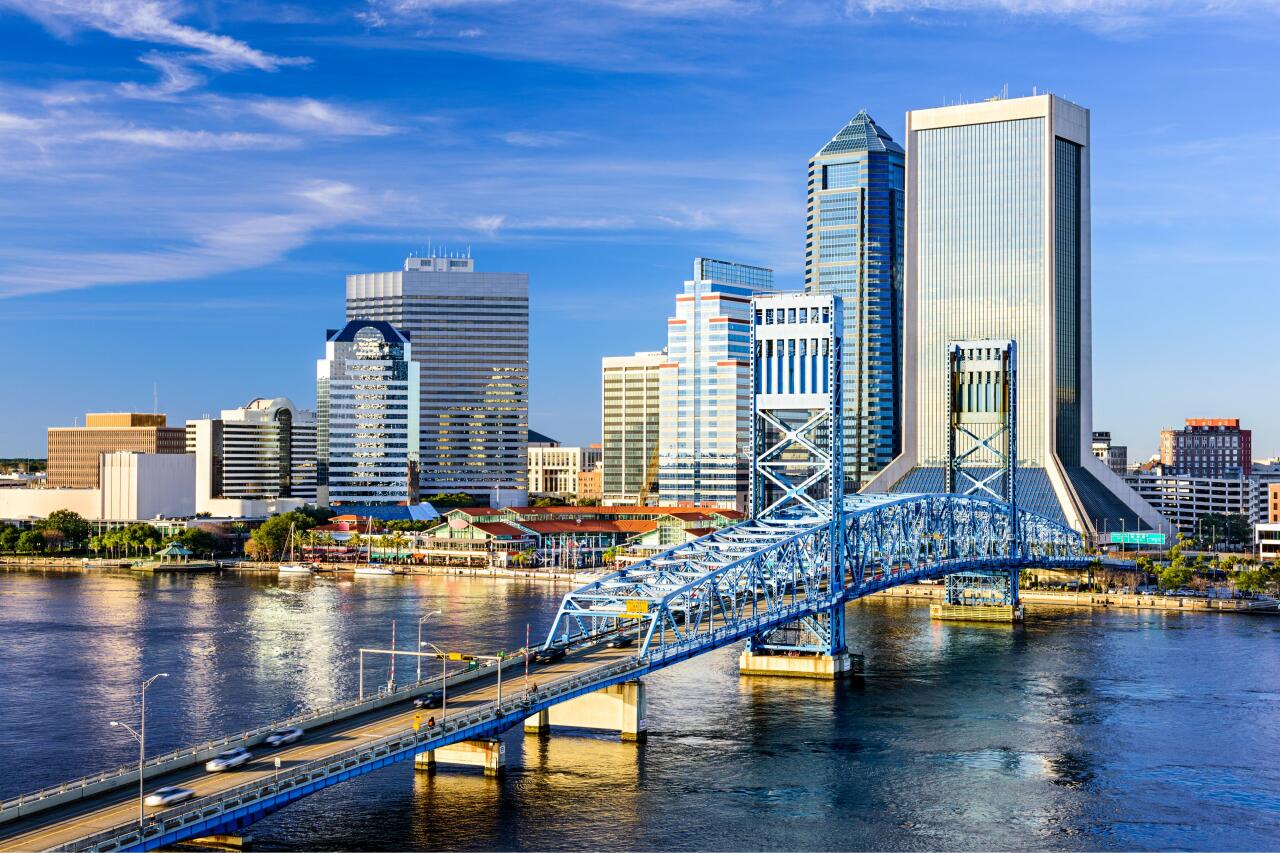
Jacksonville skyline and bridge.

ESBProfessional // Shutterstock

#28. Jacksonville, Florida

– Total score: 52.13
– Wallet friendliness rank: 116
– Social environment rank: 121
– Academic and economic opportunities rank: 254

Jacksonville, Florida, is home to several of the state’s public higher education institutions, including the University of North Florida, Florida State College at Jacksonville, and the University of Florida’s Health Science Center. Private institutions include Jacksonville University and Edward Waters University. Jacksonville is a port town that offers jobs in the transportation and shipping industries as well as the financial services field.

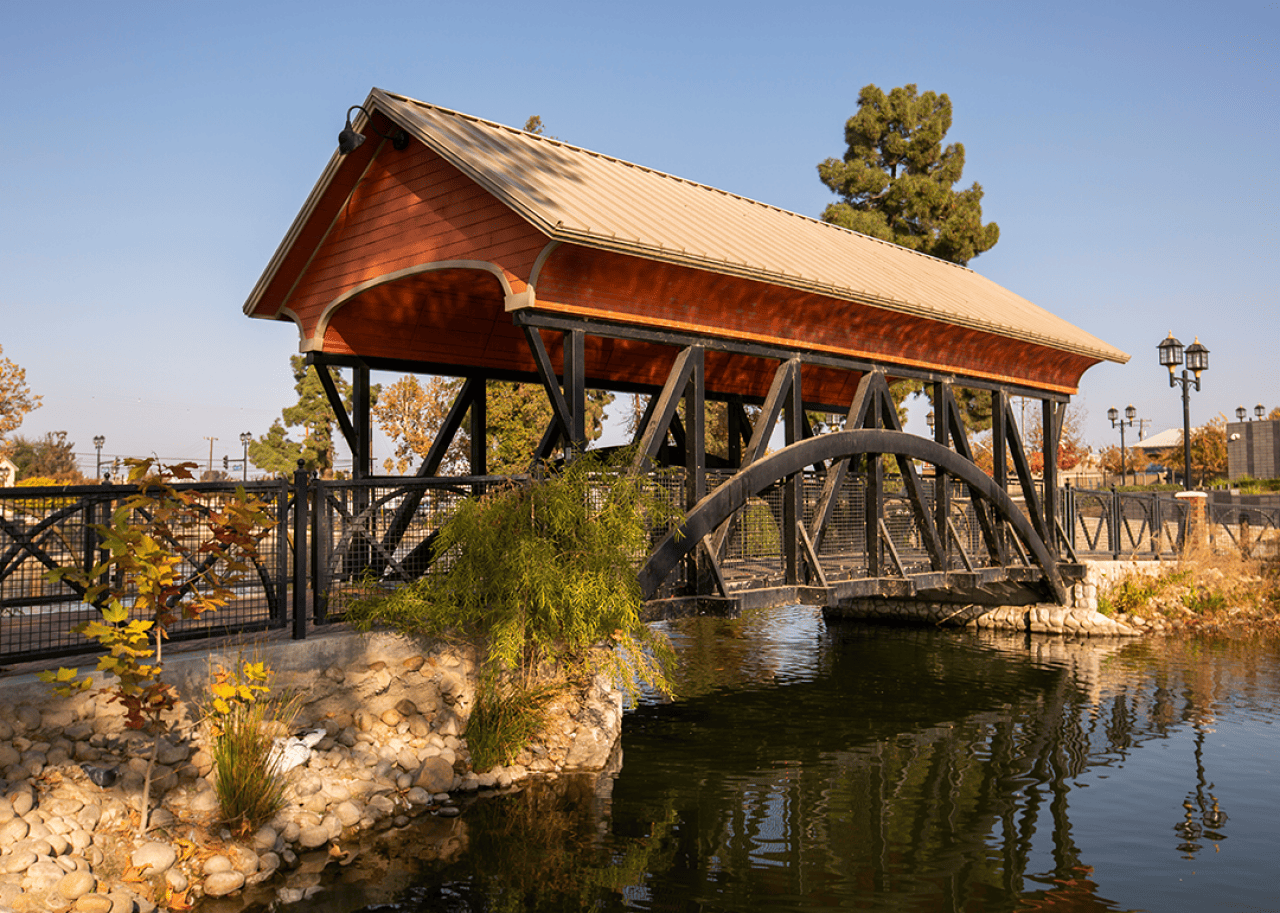
Autumn view of public park in downtown Bakersfield.

Matt Gush // Shutterstock

#27. Bakersfield, California

– Total score: 52.22
– Wallet friendliness rank: 223
– Social environment rank: 152
– Academic and economic opportunities rank: 129

The agriculture, energy, and oil industries prosper in Bakersfield, California, located on the southern end of the San Joaquin Valley to the west of the Sierra Nevada. The scenery of that part of the Golden State is breathtaking, and students attending California State University, Bakersfield, or Bakersfield College can enjoy various leisure options, like a brewery trail and farmers’ markets.

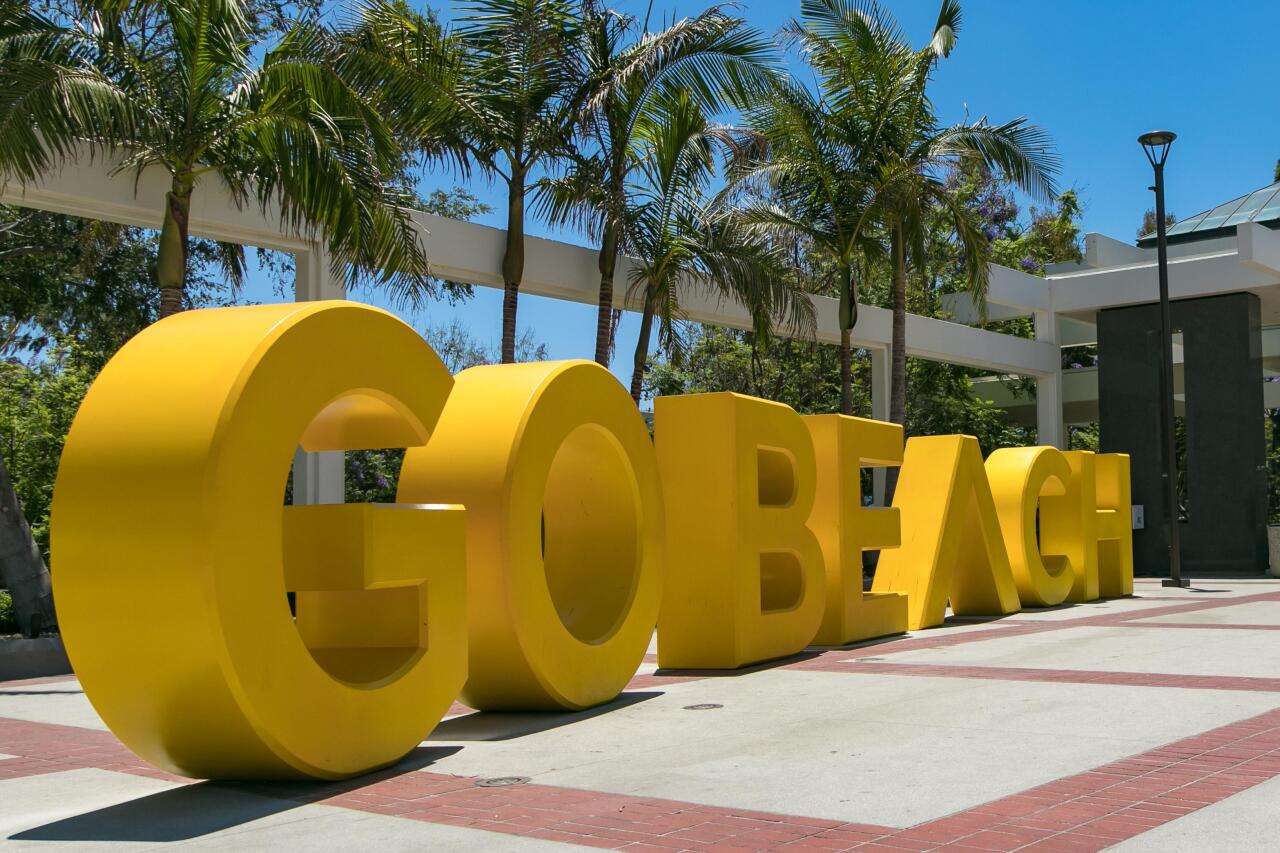
GO BEACH sign and palm trees.

BenjaminClapp // Shutterstock

#26. Long Beach, California

– Total score: 52.3
– Wallet friendliness rank: 298
– Social environment rank: 56
– Academic and economic opportunities rank: 150

What Long Beach, California, lacks in educational offerings—the only two schools within the city are California State University, Long Beach, and Long Beach City College—it more than makes up for in recreational and professional opportunities. Home to one of the busiest ports in the world and a significant oil industry presence, jobs are plentiful, and a vibrant arts scene includes numerous museums and live music venues. Plus, the city is near both Los Angeles and Orange County.

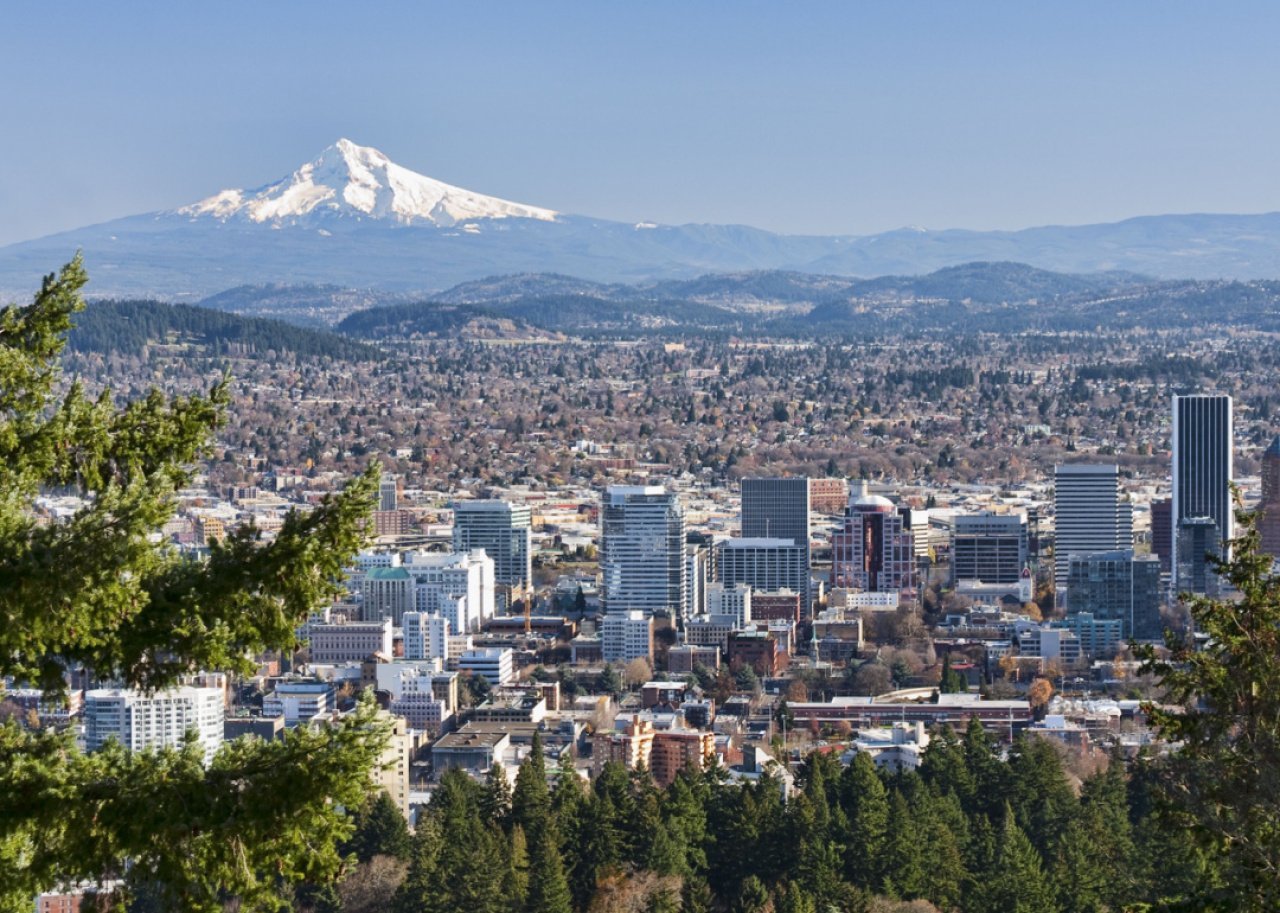
Portland cityscape from Pittock Mansion.

Josemaria Toscano // Shutterstock

#25. Portland

– Total score: 52.3
– Wallet friendliness rank: 291
– Social environment rank: 32
– Academic and economic opportunities rank: 176

Portland ranks among the world’s best cities for its commitment to sustainability and proximity to outdoor activities. Several colleges, including the University of Portland, Portland State University, and Oregon Health & Science University, draw students to the Rose City. Portland has a vibrant food scene with hundreds of food carts and over 80 breweries. But, perhaps most importantly for those who hit the books, it’s the best city in the country for coffee, according to WalletHub. Bounded by the Columbia and Willamette Rivers, Portland is home to Forest Park, one of the country’s largest urban forests, and Mt. Tabor, a volcanic cinder cone. A lack of a state sales tax is one reason to stick around after graduation, as are jobs at Nike, Columbia Sportswear, and Intel, some of the area’s top employers.

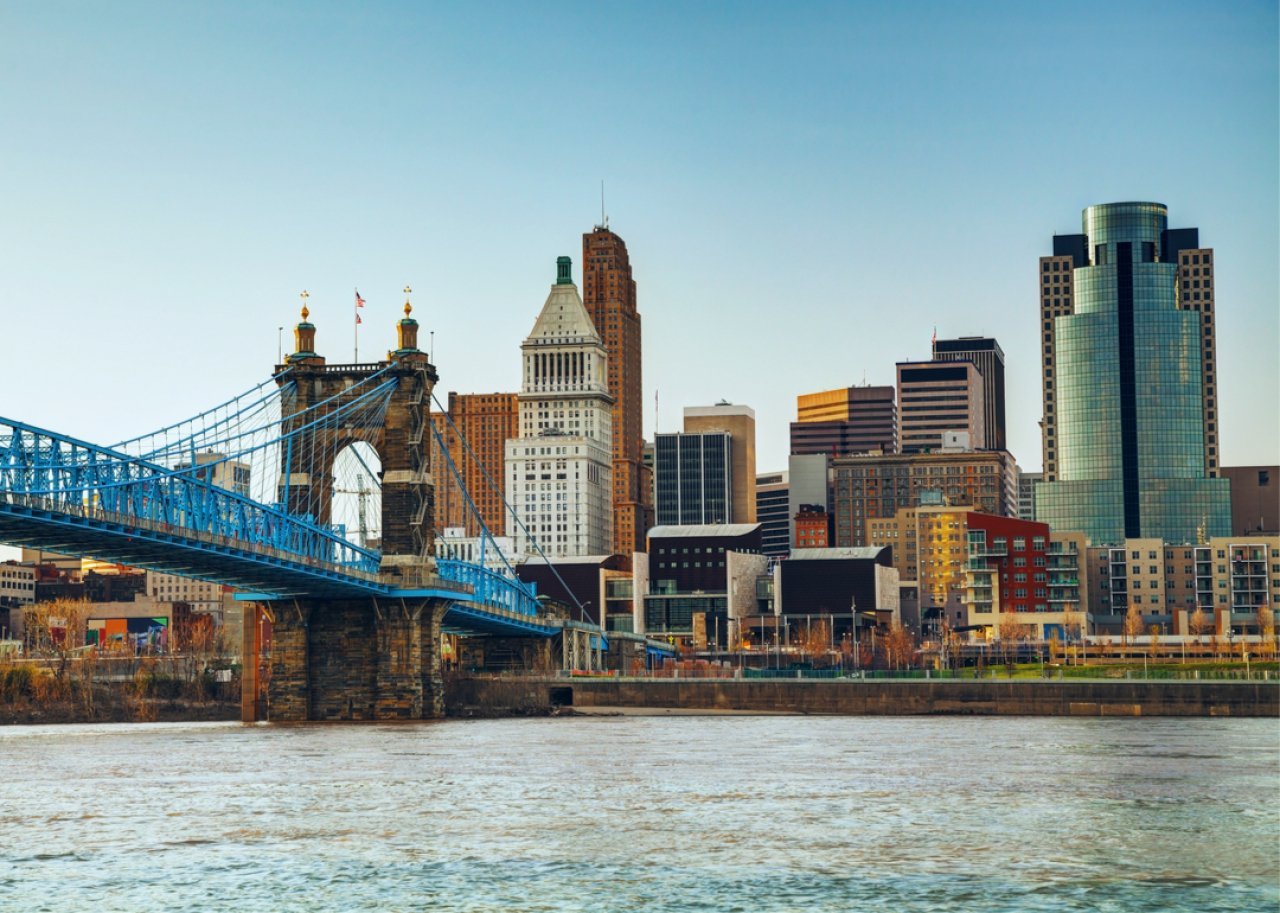
Cincinnati skyline and bridge.

photo.ua // Shutterstock

#24. Cincinnati

– Total score: 52.41
– Wallet friendliness rank: 109
– Social environment rank: 15
– Academic and economic opportunities rank: 342

Cincinnati lives up to its nickname: Queen City. With rich architectural, historical, and cultural traditions, the third-largest city in the state is a flourishing metropolis meticulously designed to balance urban infrastructure with plentiful green spaces. Artisanal brewing is popular, and the Over-the-Rhine district is famous for its 19th-century buildings. The University of Cincinnati stands out as one of the city’s best schools, and other institutions include Mount St. Joseph University and schools focused on careers in health care.

Aerial view Mesa cityscape.

TimRobertsPhotography // Shutterstock

#23. Mesa, Arizona

– Total score: 53.14
– Wallet friendliness rank: 282
– Social environment rank: 207
– Academic and economic opportunities rank: 31

A suburb of Phoenix, Mesa provides access to that city’s institutions of higher learning and satellite campuses, including Arizona State University’s Polytechnic campus and Mesa Community College. Mesa also hosts the Sonoran Desert and Tonto National Forest, highlighting the area’s rich indigenous history. The Mesa Arts Center is renowned, and nightlife includes breweries and wineries.

Saguro cactus in park.

Lucky-Photographer // Shutterstock

#22. Tucson, Arizona

– Total score: 53.33
– Wallet friendliness rank: 110
– Social environment rank: 34
– Academic and economic opportunities rank: 293

Arizona’s second-largest city is home to the University of Arizona, one of the largest schools in the country and one of Tucson’s largest employers. Tucson also features a national park, national forest, mountain range, other outdoor destinations, and trendy bars and restaurants, making it the choice for over 50,000 students.

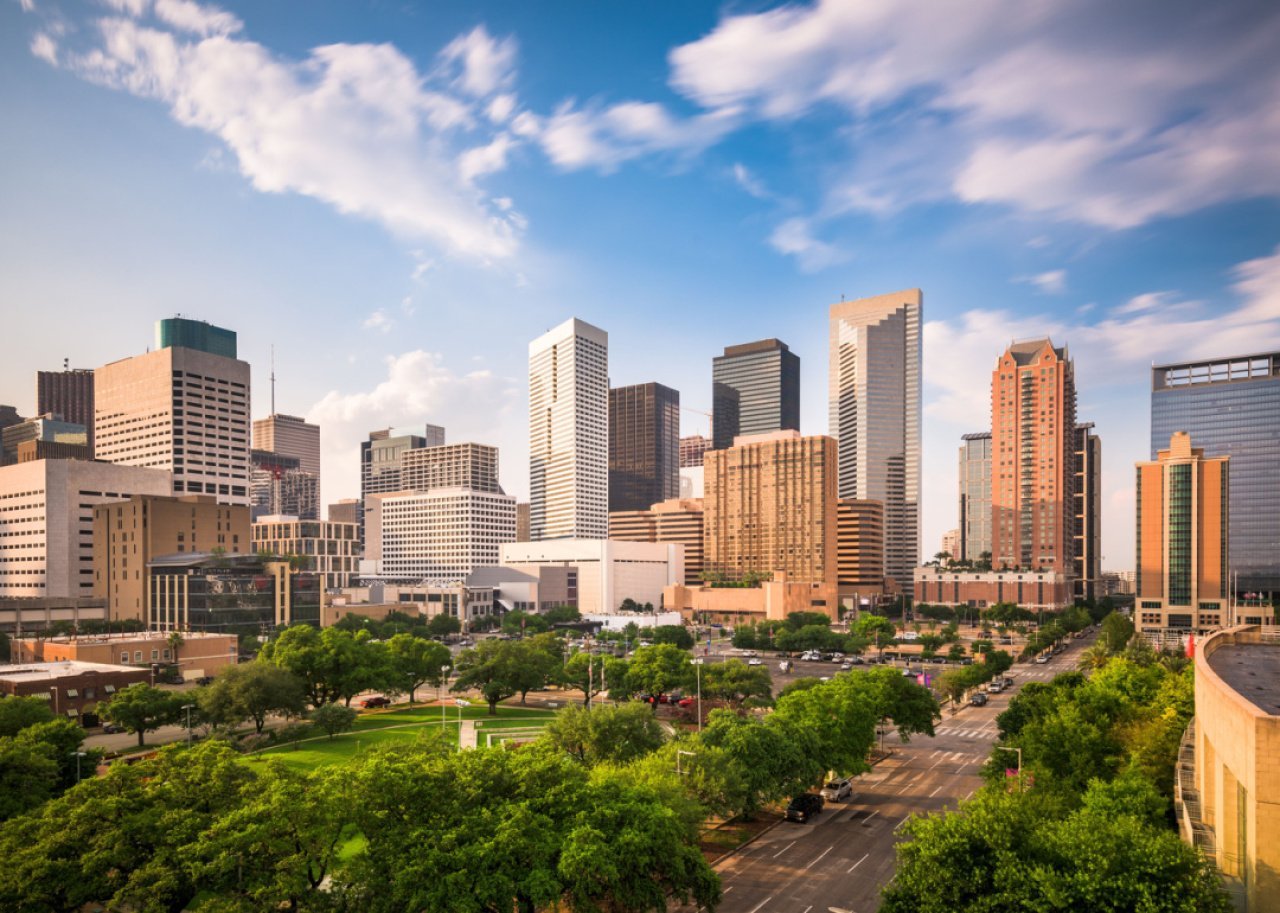
Houston downtown park and skyline.

Sean Pavone // Shutterstock

#21. Houston

– Total score: 53.38
– Wallet friendliness rank: 83
– Social environment rank: 120
– Academic and economic opportunities rank: 236

The University of Houston’s flagship campus and its Downtown and Clear Lake campuses, along with Texas Southern University and the private Rice University, are based in this Texan city. The city is a hub for the energy sector, featuring the headquarters of ConocoPhillips, Halliburton, and Phillips 66. Space City, the country’s fourth-largest metropolis, is also home to diverse arts, culinary, and sports scenes.

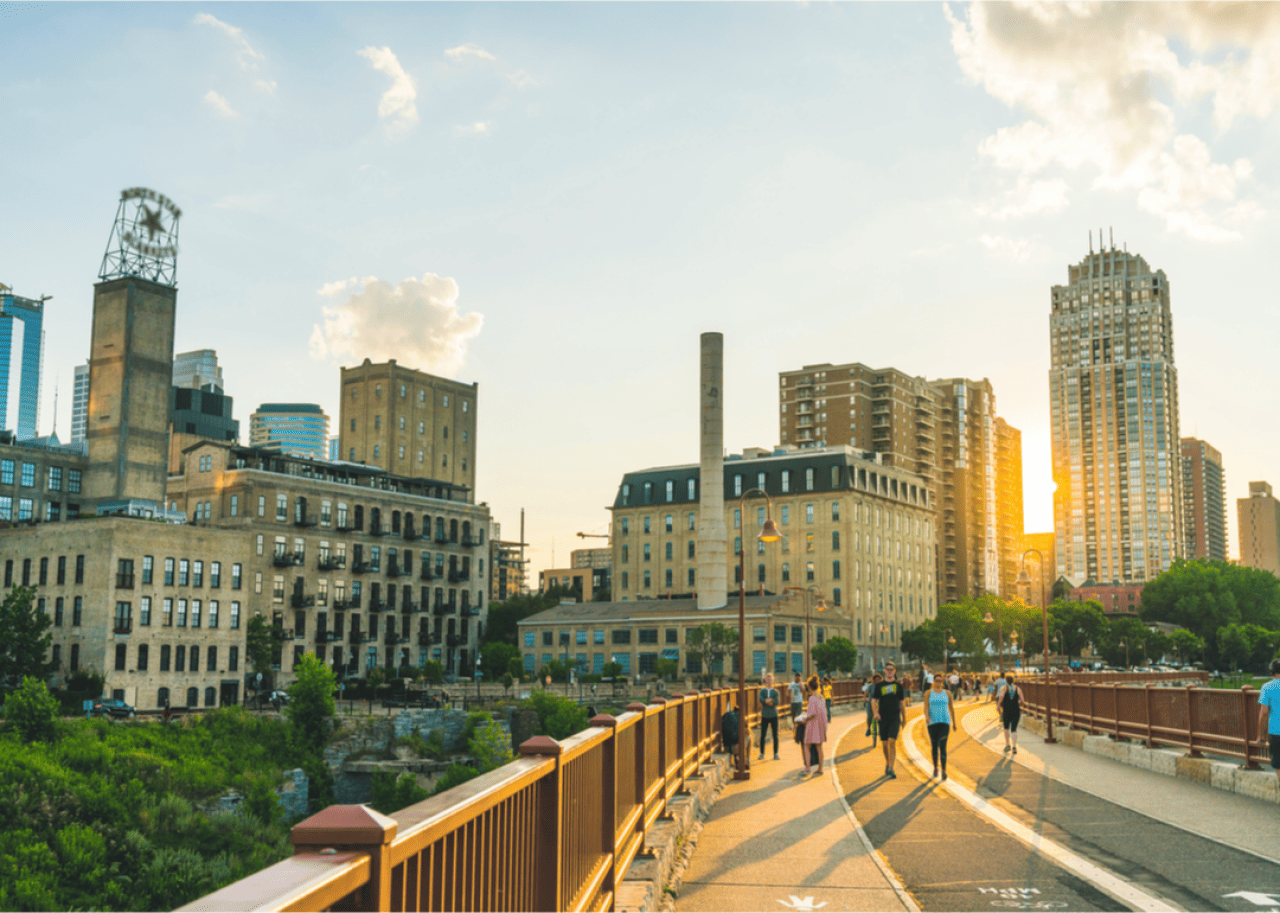
View on Stone Arch Bridge at sunset.

Checubus // Shutterstock

#20. Minneapolis

– Total score: 53.4
– Wallet friendliness rank: 179
– Social environment rank: 51
– Academic and economic opportunities rank: 220

Minneapolis is a cultural center of the Midwest and home to some colleges and universities, including the University of Minnesota, the Minneapolis College of Art and Design, and North Central University. The city has a celebrated parks system that encourages activity among residents and representation in all major North American sports leagues. Light rail and commuter lines also link the city’s neighborhoods with nearby suburbs.

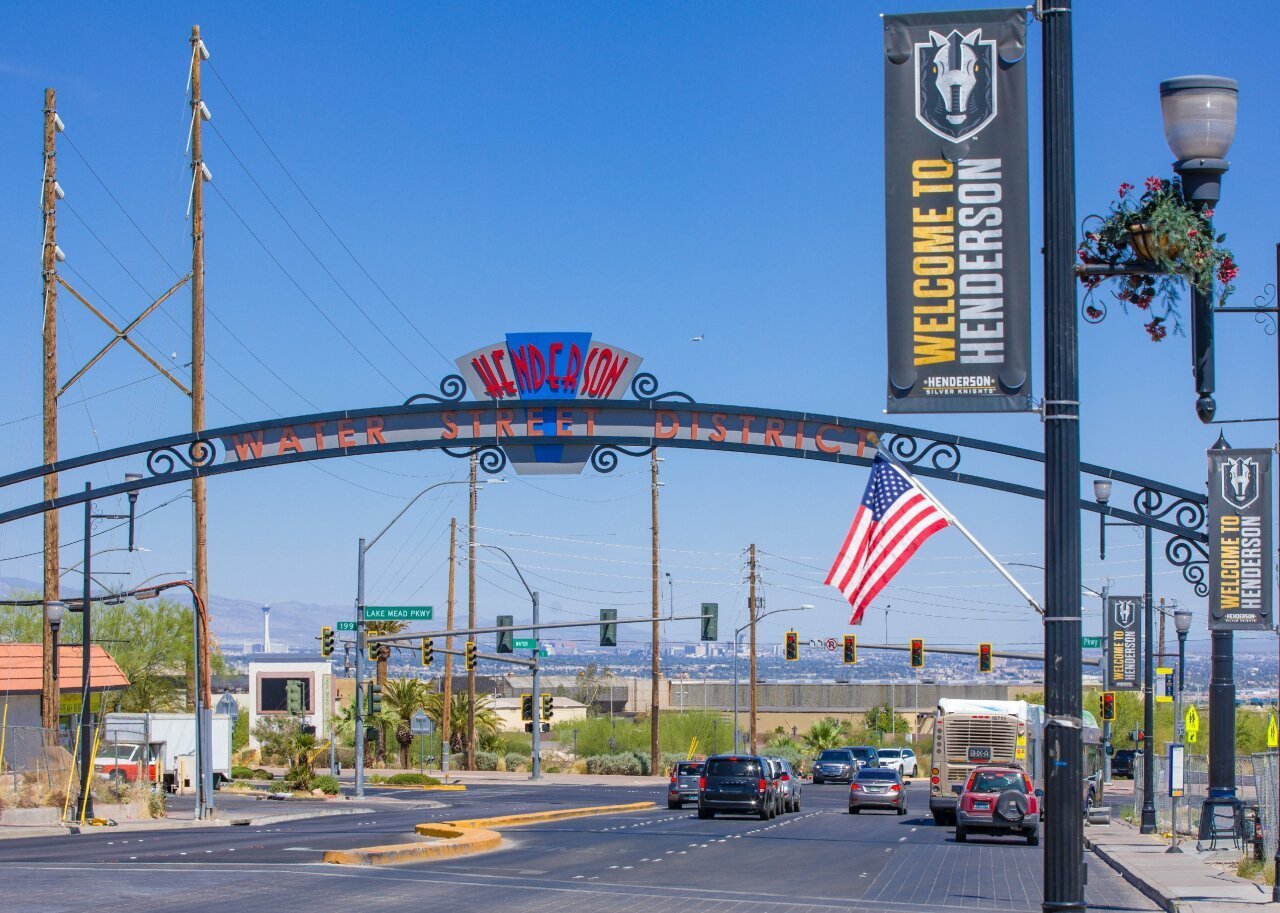
Water Street District Welcome Archway in Henderson.

RYO Alexandre // Shutterstock

#19. Henderson, Nevada

– Total score: 53.43
– Wallet friendliness rank: 250
– Social environment rank: 333
– Academic and economic opportunities rank: 5

A relatively new and thriving suburb located only a few miles southeast of the Las Vegas Strip, Henderson is an ideal setting for college students. With mild winters and 300 sunny days yearly, Henderson, Nevada, is a desirable place to shape your future. It also attracts students who enjoy outdoor activities and an “open 24 hours” lifestyle without the frenzy of its world-famous neighbor. There are several colleges in Henderson, including Nevada State University, and a handful of others less than 20 miles away.

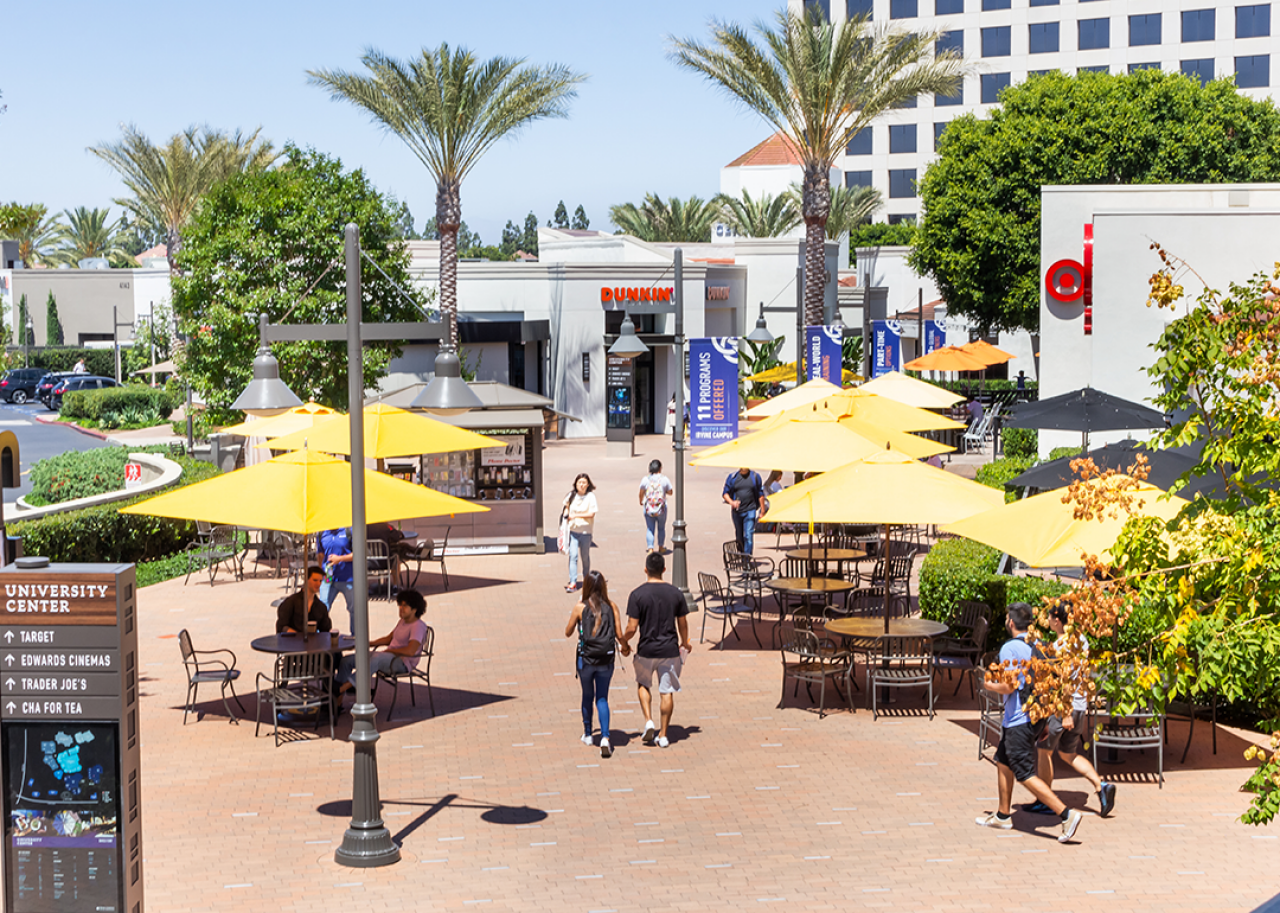
A view of students walk around the retail area of University Center at UCI.

The Image Party // Shutterstock

#18. Irvine, California

– Total score: 53.77
– Wallet friendliness rank: 379
– Social environment rank: 100
– Academic and economic opportunities rank: 19

Students in this central Orange County city have access to the best of Southern California. The city has several colleges, including the top-ranked University of California, Irvine; Westcliff University; Concordia University Irvine; and Stanbridge University, a nursing and allied health school. Lovers of outdoor recreation have convenient access to the Pacific Ocean and the city’s Great Park, a 500-plus-acre playground with an amphitheater and facilities for several sports. Nearby John Wayne International Airport ranks #1 with J.D. Power for customer satisfaction.

Aerial View of a Public Land University in Fresno,

Jacob Boomsma // Shutterstock

#17. Fresno, California

– Total score: 53.91
– Wallet friendliness rank: 141
– Social environment rank: 144
– Academic and economic opportunities rank: 167

California’s fifth-largest city beckons students to experience the best urban and rural living at Fresno State University and Fresno Pacific University, among other schools. Fresno’s half-million residents enjoy the city’s bustling cultural scene. However, the city is also located within the state’s rich agricultural heartland. Furthermore, Fresno is within a 90-minute drive from Yosemite, Kings Canyon, and Sequoia National Parks. Students at Fresno State can study at the nation’s first collegiate commercially bonded winery, which has won over 300 awards since it opened in 1997.

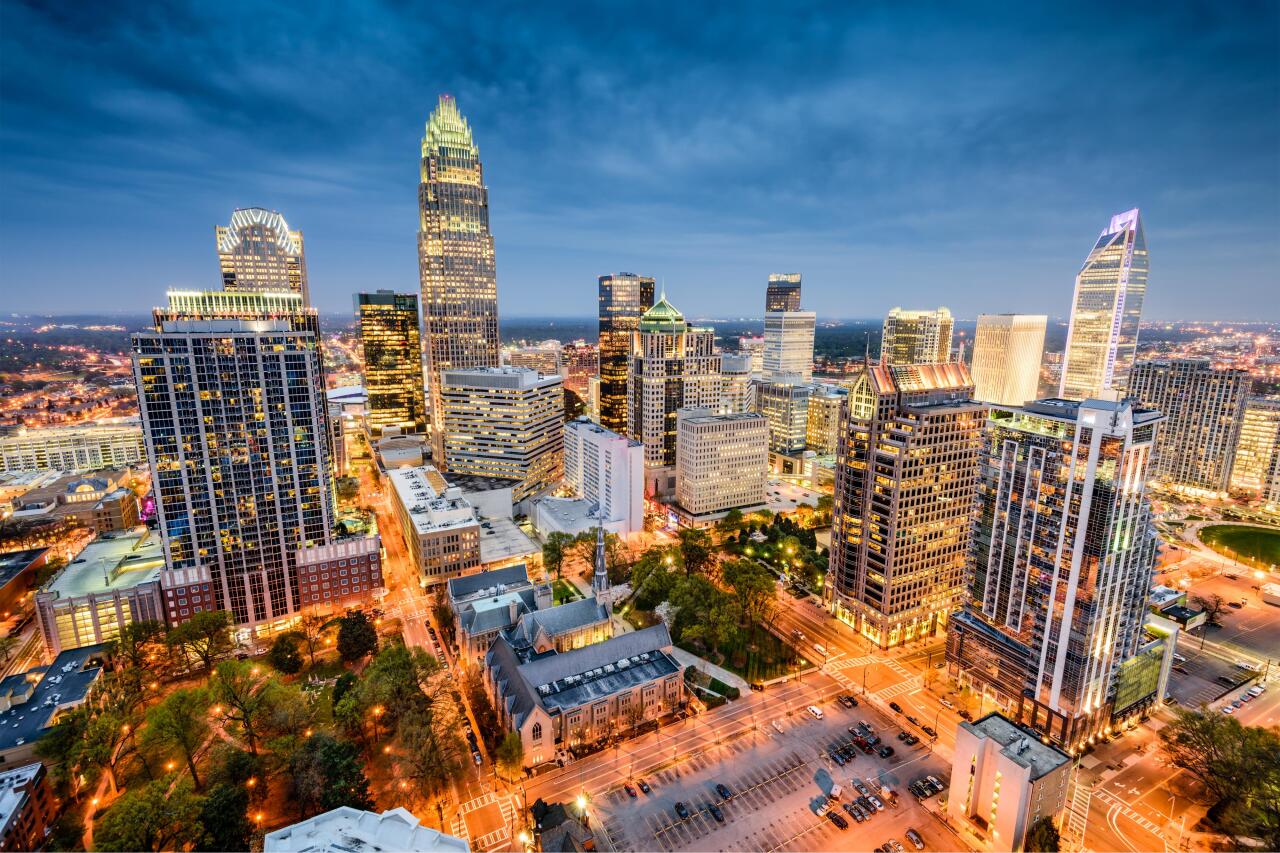
Charlotte cityscape at night.

ESBProfessional // Shutterstock

#16. Charlotte, North Carolina

– Total score: 54.16
– Wallet friendliness rank: 209
– Social environment rank: 35
– Academic and economic opportunities rank: 201

Tens of thousands of students move to Charlotte, North Carolina, to attend the University of North Carolina at Charlotte, highly-ranked Davidson College, and the smaller Queens University of Charlotte. Just up the road, the North Carolina Research Campus offers opportunities in various areas of study for both undergrad and graduate students. Charlotte is a major financial services and banking hub—the city is now the second-largest banking center behind New York.

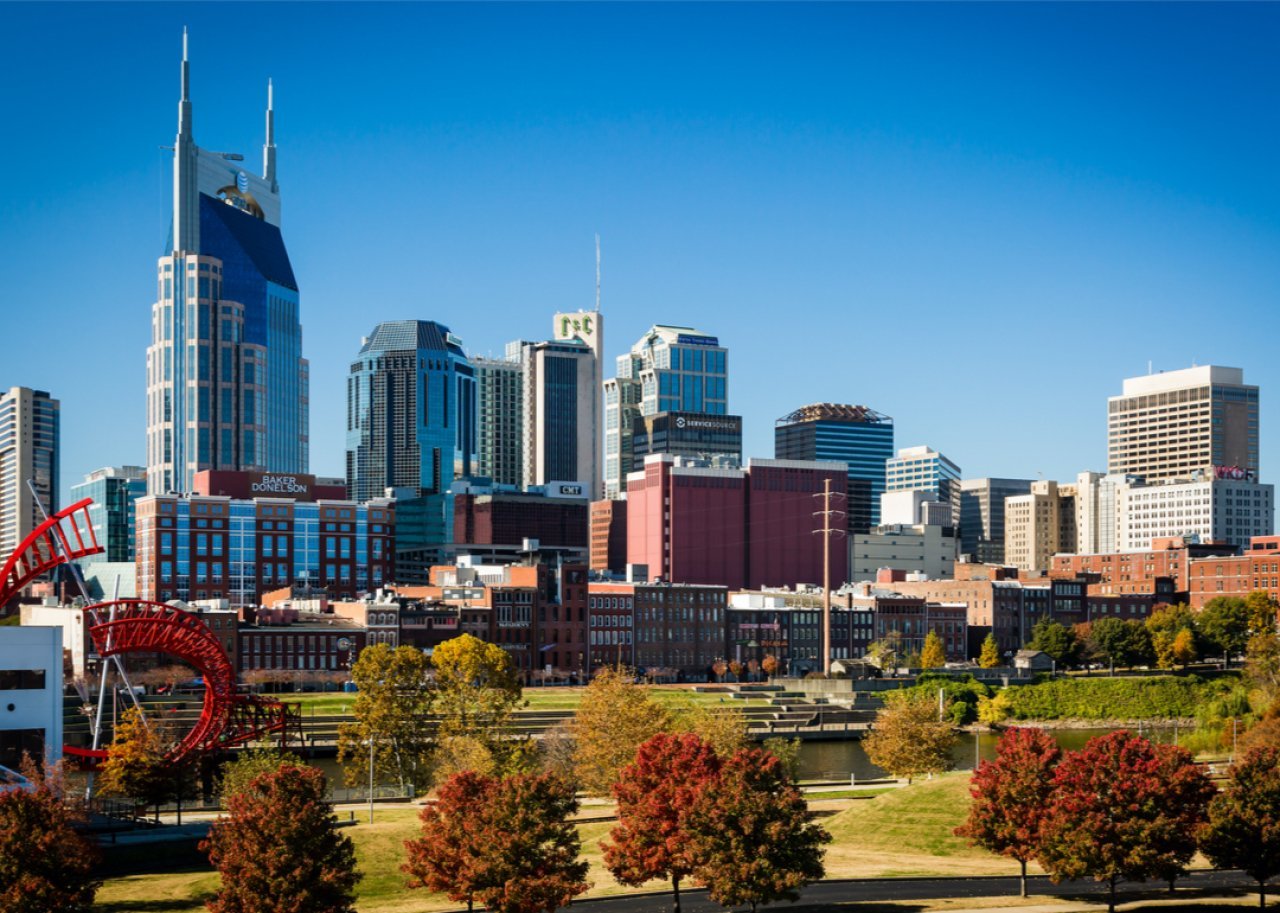
Downtown Nashville in autumn.

Brian Wilson Photography // Shutterstock

#15. Nashville, Tennessee

– Total score: 54.21
– Wallet friendliness rank: 262
– Social environment rank: 73
– Academic and economic opportunities rank: 130

Vanderbilt University is the most highly ranked college in Nashville, Tennessee, home to over 13,000 undergraduate and graduate students. Nashville also boasts a couple of HBCUs: Tennessee State University and Fisk University. Nashville’s reputation as a lively tourist destination extends to its status as a top-notch college town, with students enjoying a wide selection of live music, nightlife, and Southern cuisine.

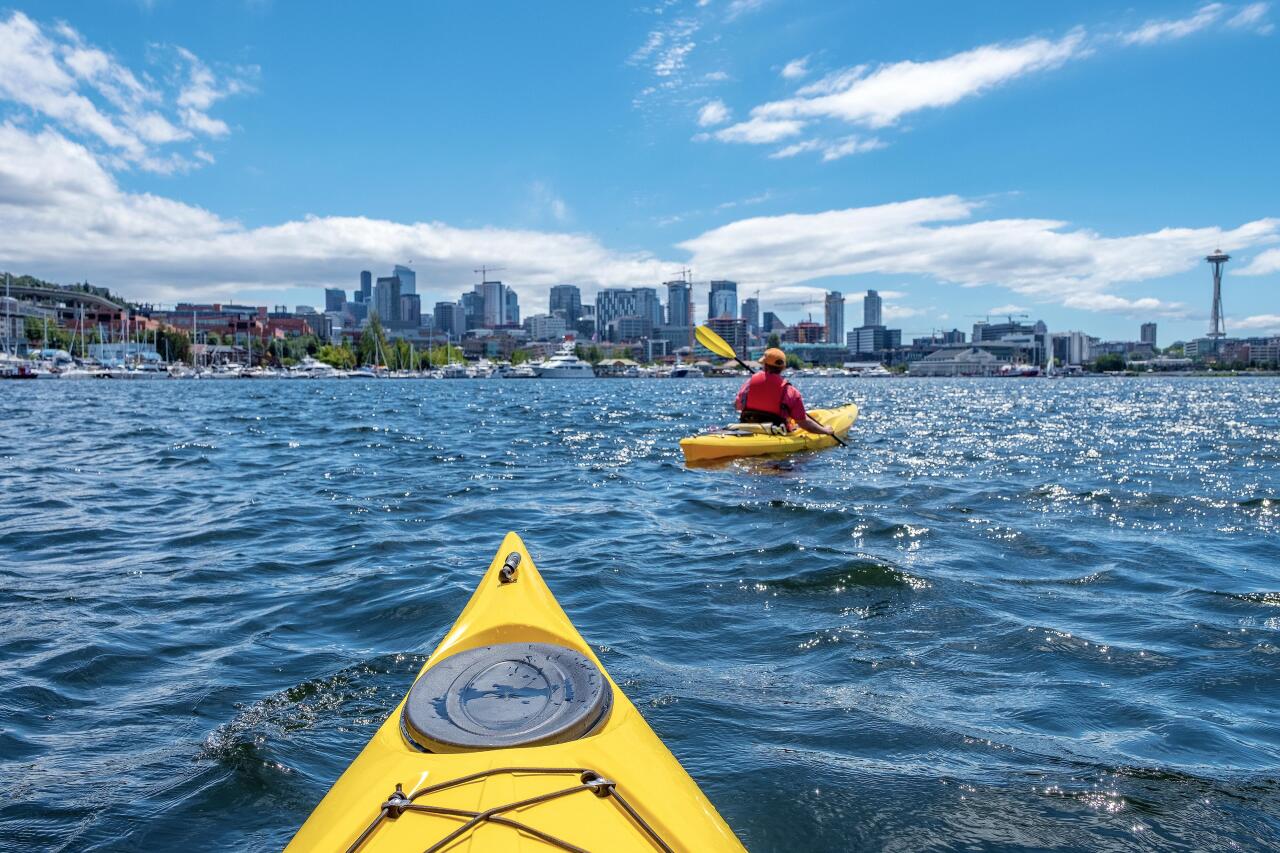
Kayakers on the Seattle waterfront.

Oksana.Perkins // Shutterstock

#14. Seattle

– Total score: 54.38
– Wallet friendliness rank: 364
– Social environment rank: 12
– Academic and economic opportunities rank: 83

Seattle’s biggest educational institution is the University of Washington, which is so large that it takes up an entire neighborhood. Other schools in the area include Seattle University and Seattle Pacific University. Like its counterparts in Silicon Valley, Seattle draws students interested in the tech and business sectors, with neighboring major corporations including Amazon, Microsoft, Starbucks, and Boeing. That said, thanks to its history as a breeding ground for alternative music and its multitude of recreational opportunities, the city draws students across a wide swath of interests.

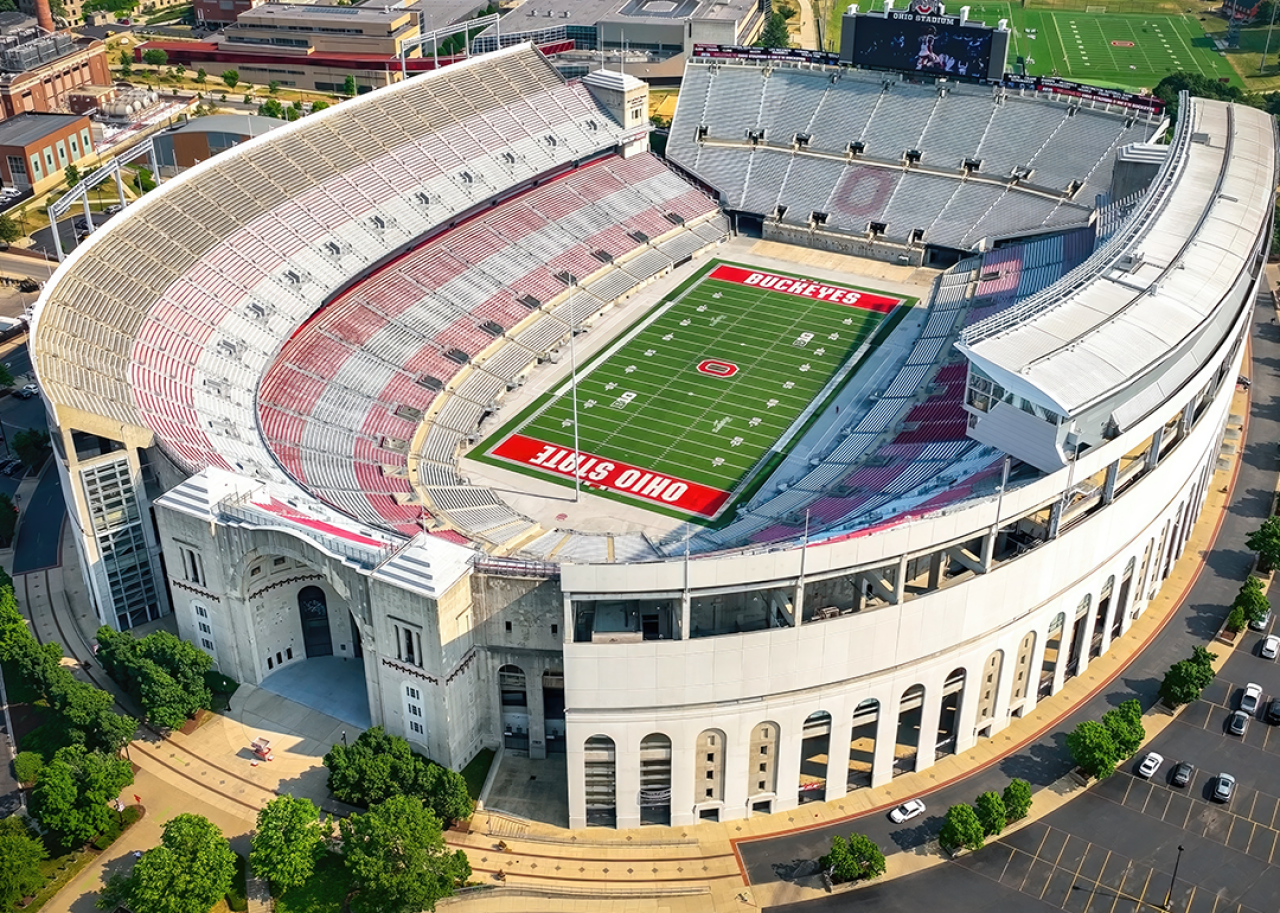
Aerial view of Ohio State Football stadium.

4kclips // Shutterstock

#13. Columbus, Ohio

– Total score: 54.63
– Wallet friendliness rank: 113
– Social environment rank: 72
– Academic and economic opportunities rank: 212

Columbus, Ohio, is home to one of the largest colleges by enrollment in the country: Ohio State University. Columbus also hosts Columbus State Community College and the Columbus College of Art and Design. Bustling neighborhoods such as the Short North feature street parades and festivals. Meanwhile, college football is a huge draw for almost everyone in town, whether or not they’re students.

Balloons at the Albuquerque International Balloon Fiesta.

Greg Meland // Shutterstock

#12. Albuquerque, New Mexico

– Total score: 55.76
– Wallet friendliness rank: 165
– Social environment rank: 83
– Academic and economic opportunities rank: 138

Educational opportunities in Albuquerque include the University of New Mexico, Central New Mexico Community College, Trinity Southwest University, and the University of St. Francis. As for recreation, students can enjoy Old Town, the Sandia Peak Tramway, and the ABQ BioPark. The city is also home to a vibrant restaurant scene and the world-famous International Balloon Fiesta, held every October.

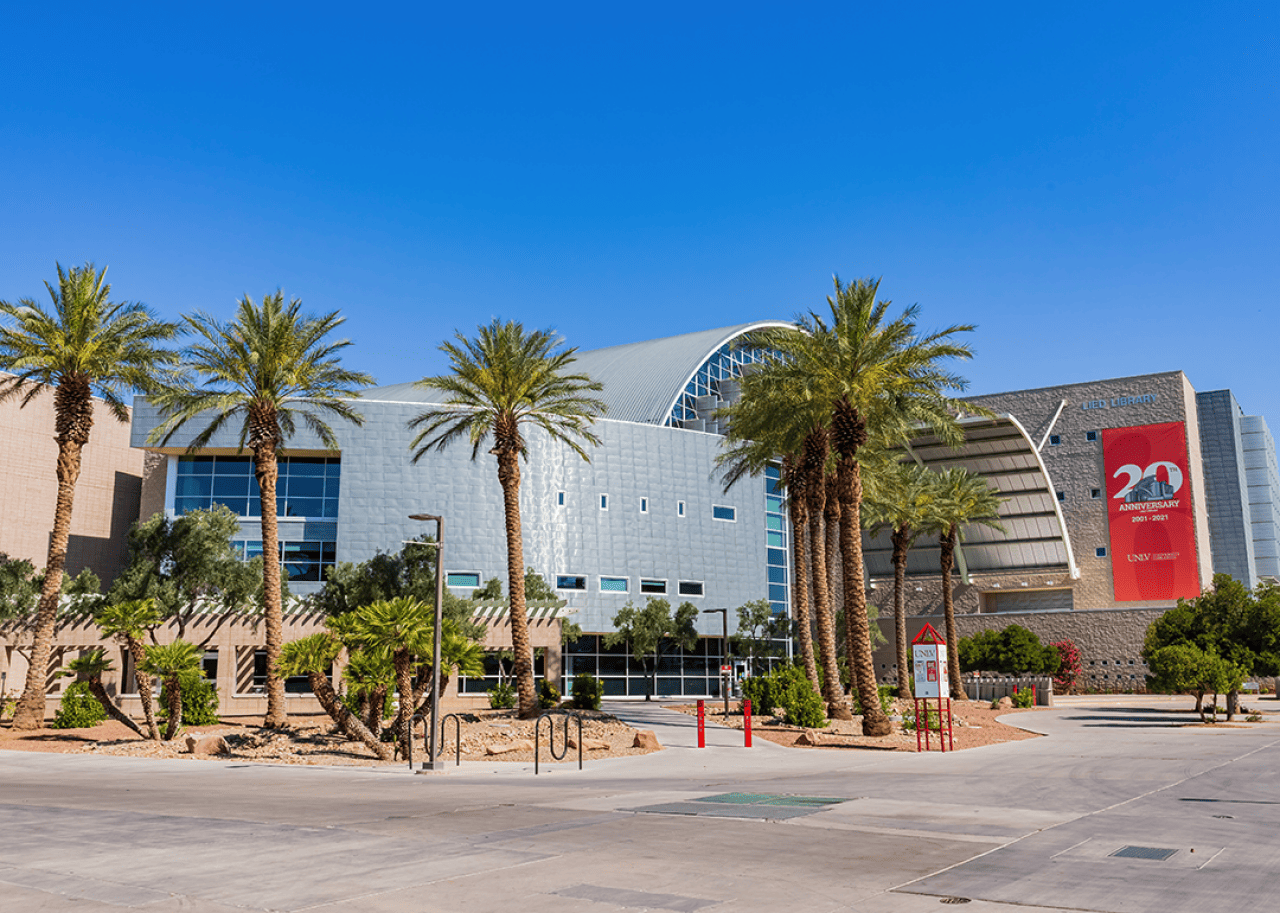
UNLV Campus buildings exterior.

Kit Leong // Shutterstock

#11. Las Vegas

– Total score: 55.76
– Wallet friendliness rank: 178
– Social environment rank: 8
– Academic and economic opportunities rank: 235

The University of Nevada, Las Vegas is the main contributor of students to Sin City. With an iconic nightlife scene and plenty of jobs in the hospitality industry, Vegas attracts those looking for a different kind of urban experience. While public transit isn’t robust and there isn’t much parkland, what the city lacks in infrastructure it makes up for in recreational and cultural offerings.

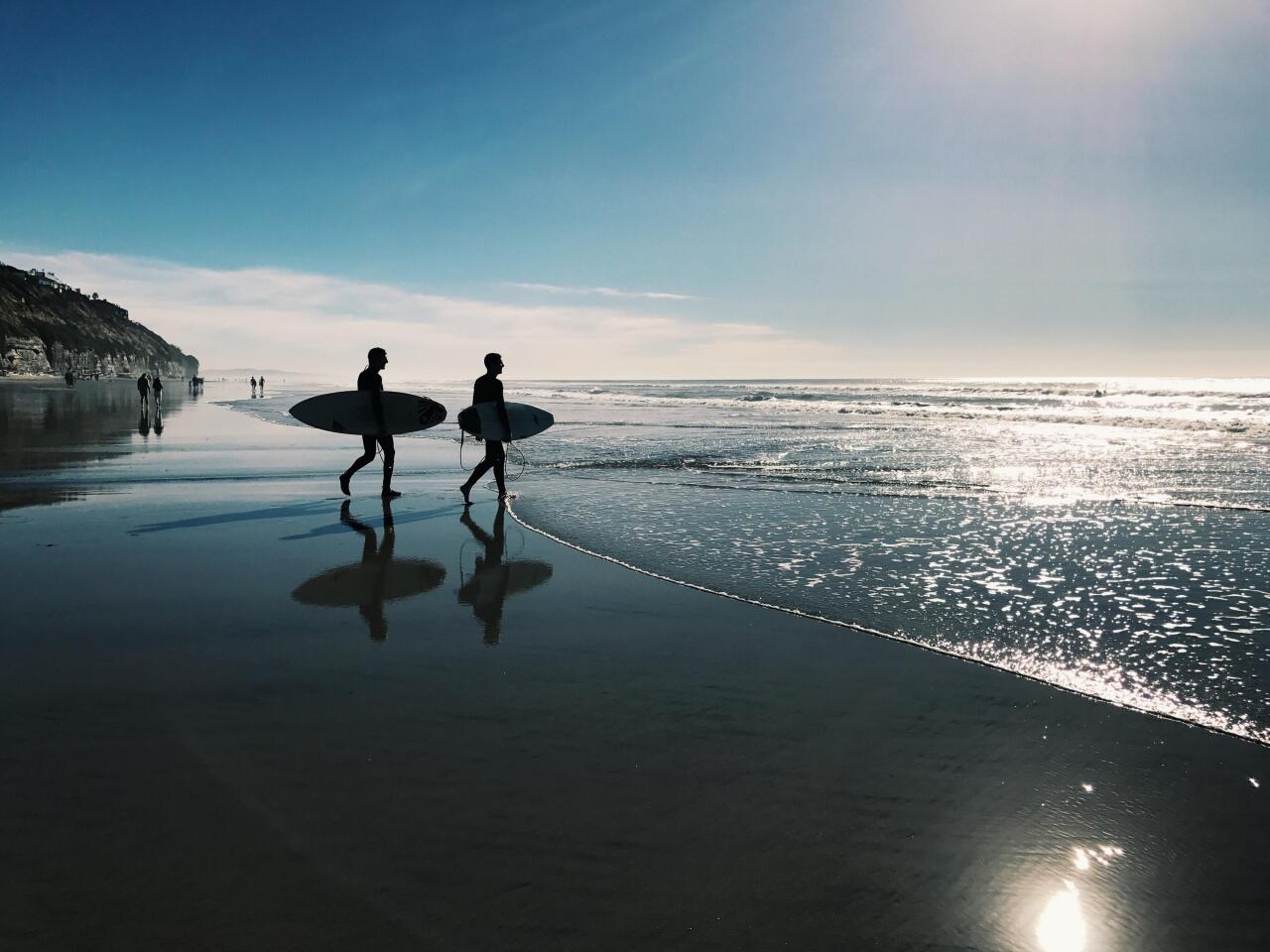
People walking with surfboards on beach.

AnjaIvanovic//Shutterstock

#10. San Diego

– Total score: 55.97
– Wallet friendliness rank: 382
– Social environment rank: 6
– Academic and economic opportunities rank: 24

Sunny San Diego may not be known as a college town, but it should be: There are nearly 30 colleges and universities in the city and beyond, including the University of California, San Diego; San Diego State University; and the private University of San Diego and Point Loma Nazarene University. Beach culture strongly holds students, who can be found surfing between classes or roller skating along Mission Beach. There is also a significant military presence thanks to Naval Base San Diego, the U.S. Navy’s largest West Coast base and the principal homeport of the Pacific Fleet.

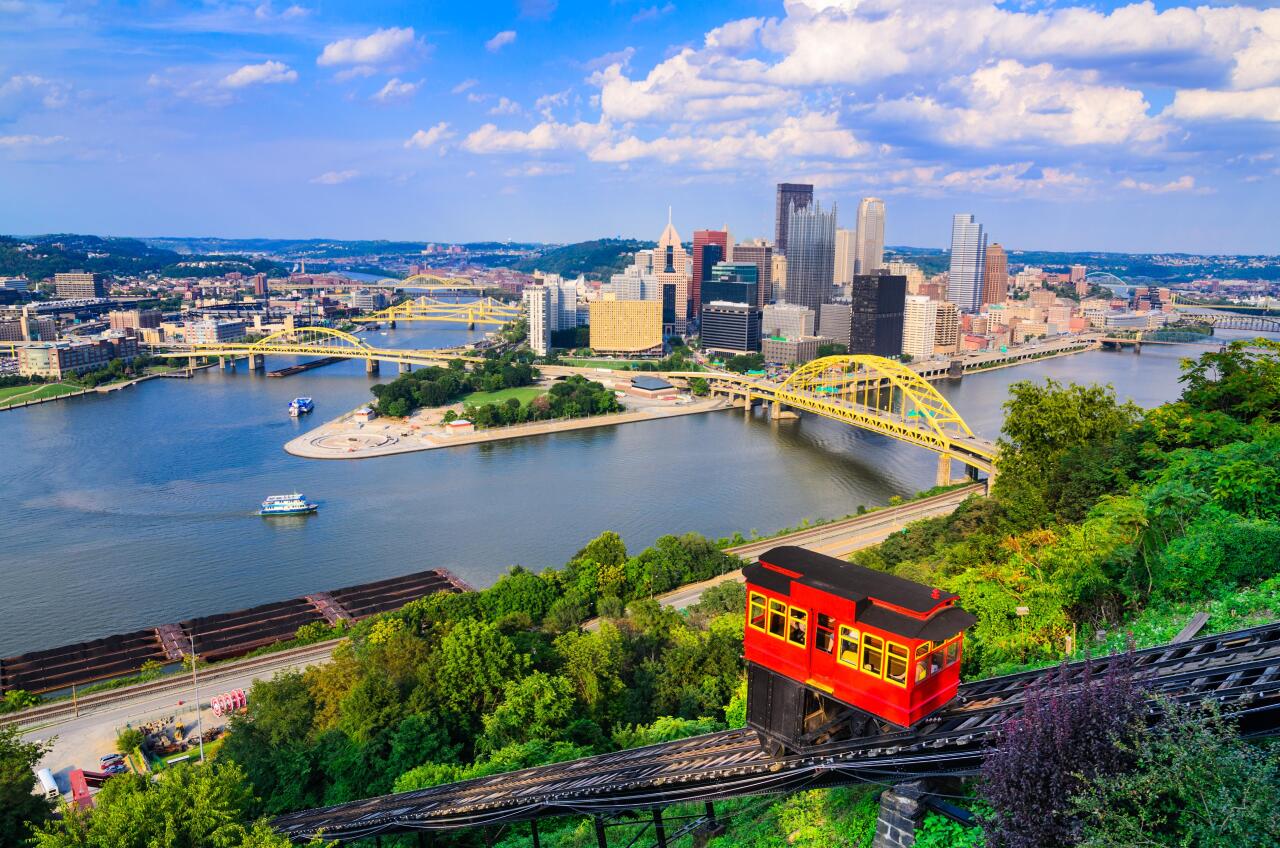
Aerial view Pittsburgh skyline.

SeanPavone // Shutterstock

#9. Pittsburgh

– Total score: 56.44
– Wallet friendliness rank: 203
– Social environment rank: 4
– Academic and economic opportunities rank: 224

One of the Rust Belt’s anchor cities, Pittsburgh is home to close to 30 universities, including the highly ranked Carnegie Mellon University and the University of Pittsburgh. Forbes and The Economist of London have called Pittsburgh the nation’s most livable city, which makes it a very attractive destination for students. While U.S. Steel still has a big presence, a growing number of biotech, health care, and financial services companies are based in the state’s second-largest metropolis.

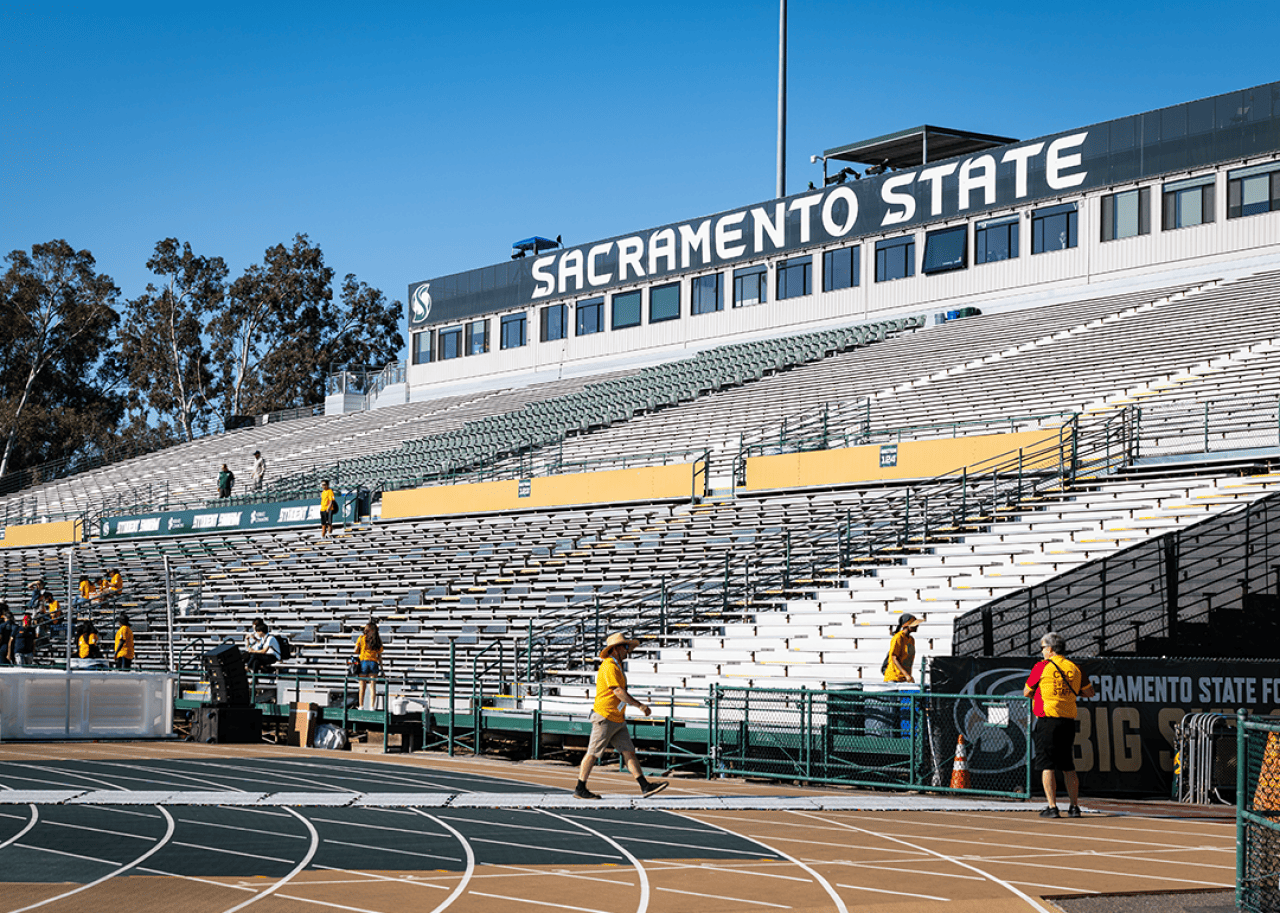
View of the bleachers at Sacramento State's Hornet Stadium.

Chris Allan // Shutterstock

#8. Sacramento, California

– Total score: 57.1
– Wallet friendliness rank: 255
– Social environment rank: 22
– Academic and economic opportunities rank: 91

The educational offerings in Sacramento, California, are surprisingly limited: California State University, Sacramento (a.k.a. Sacramento State) is the only traditional four-year college in the capital city. Other institutions with satellites in the city include the University of San Francisco and the University of the Pacific, while the University of California, Davis, is a short drive away. But what the city lacks in higher education opportunities, it makes up for in its growing popularity as a cultural destination. And compared with the nearby Bay Area, Sacramento’s cost of living is relatively affordable.

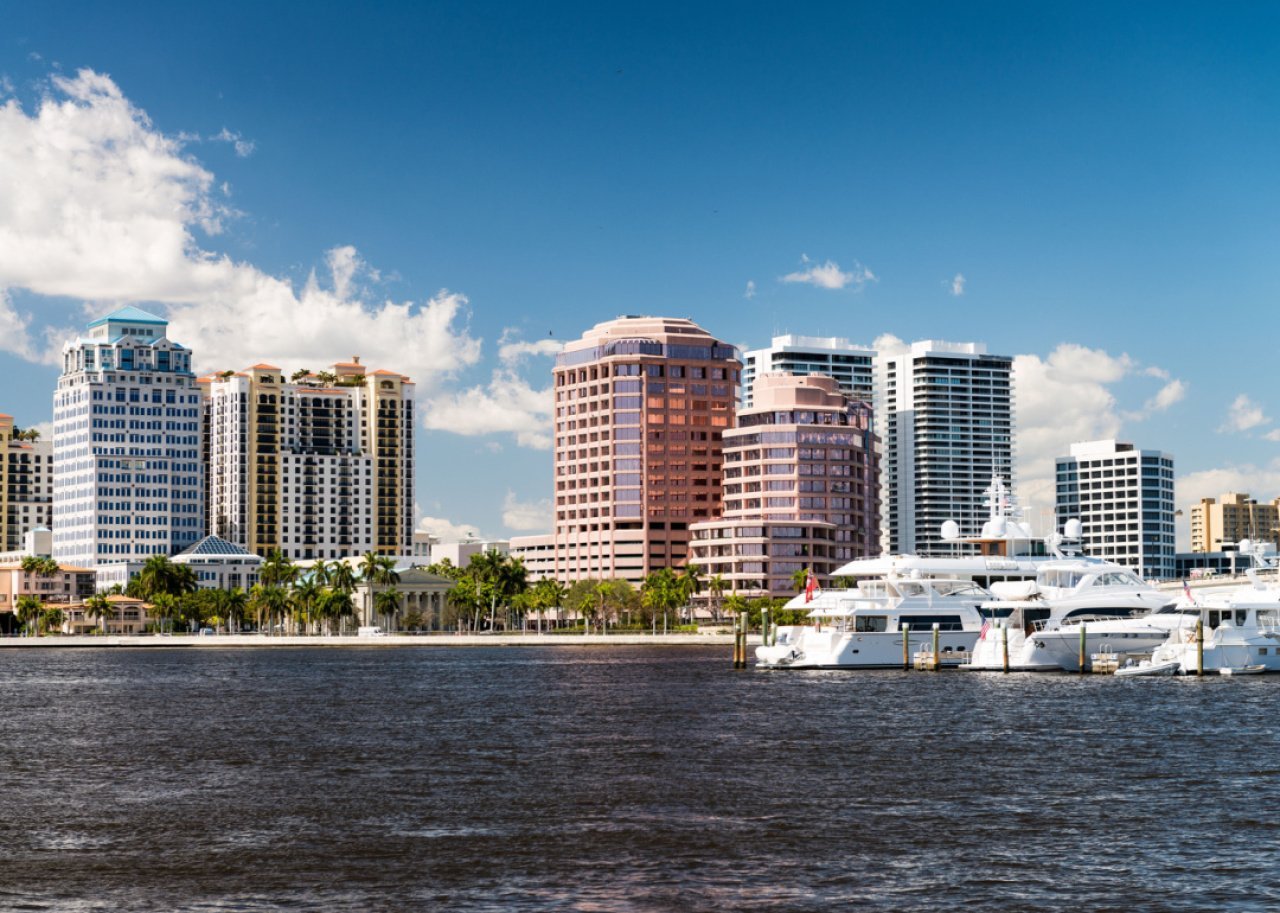
West Palm Beach skyline with marina.

GagliardiPhotography // Shutterstock

#7. Miami

– Total score: 57.69
– Wallet friendliness rank: 240
– Social environment rank: 5
– Academic and economic opportunities rank: 162

Colorful Miami hosts students from several colleges and universities. The University of Miami, Barry University, and Florida International University all enjoy the city as their backdrop. The lure of attending school in one of America’s most famous nightlife destinations is obvious, and the warm weather and diverse cuisine make it an easy choice for thousands of students every year.

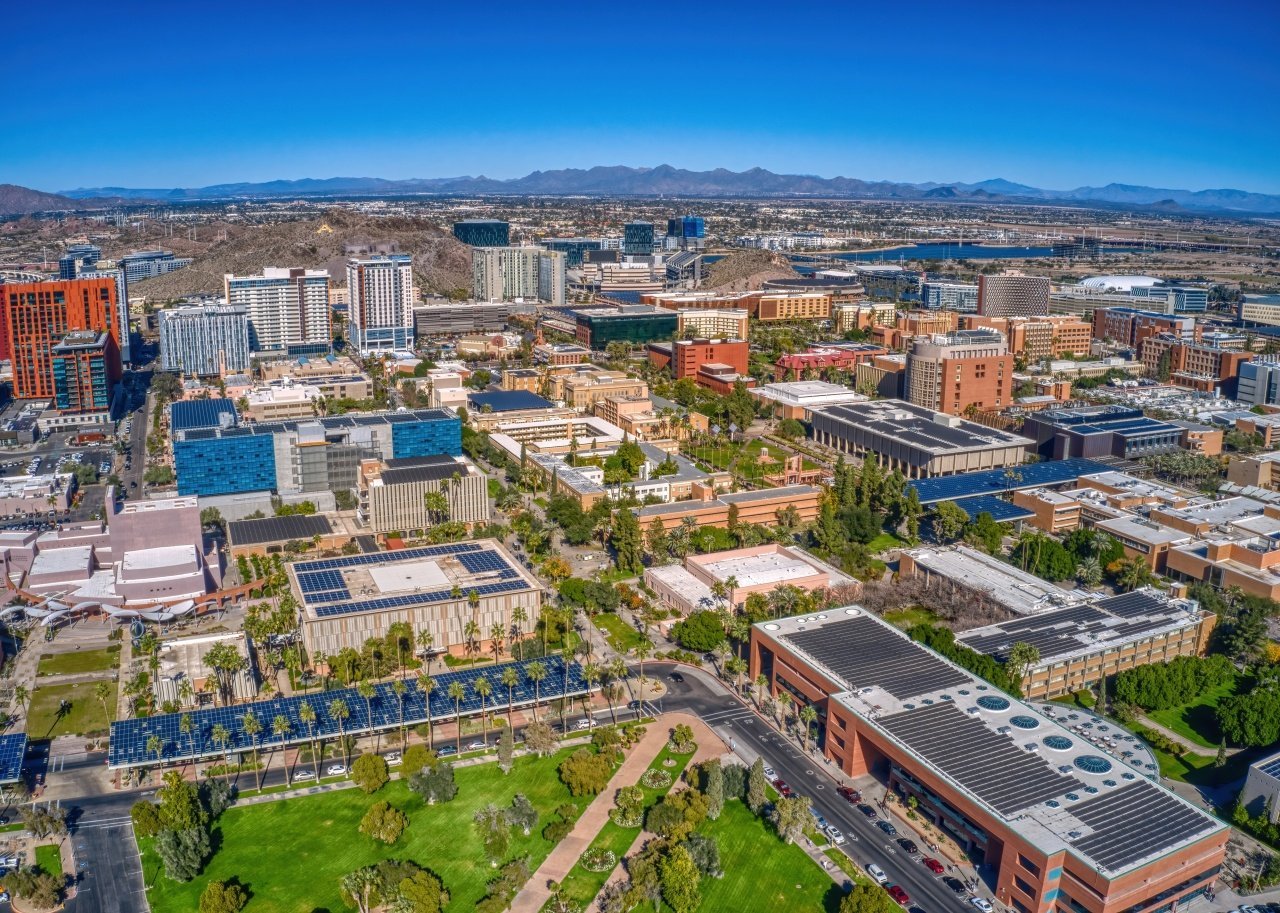
Aerial of a large University in the Phoenix suburb of Tempe.

Jacob Boomsma // Shutterstock

#6. Phoenix

– Total score: 58.54
– Wallet friendliness rank: 204
– Social environment rank: 76
– Academic and economic opportunities rank: 45

Phoenix may be notorious for its scorching heat, but that doesn’t mean students of Grand Canyon University, the neighboring Arizona State University, and Arizona Christian University won’t find much to love. The unique climate allows the Valley of the Sun to boast attractions such as the Desert Botanical Garden and Camelback Mountain. At the same time, students can also take advantage of the city’s diverse culture. The Heard Museum has 12 galleries of Native American art and installations and an outdoor sculpture collection.

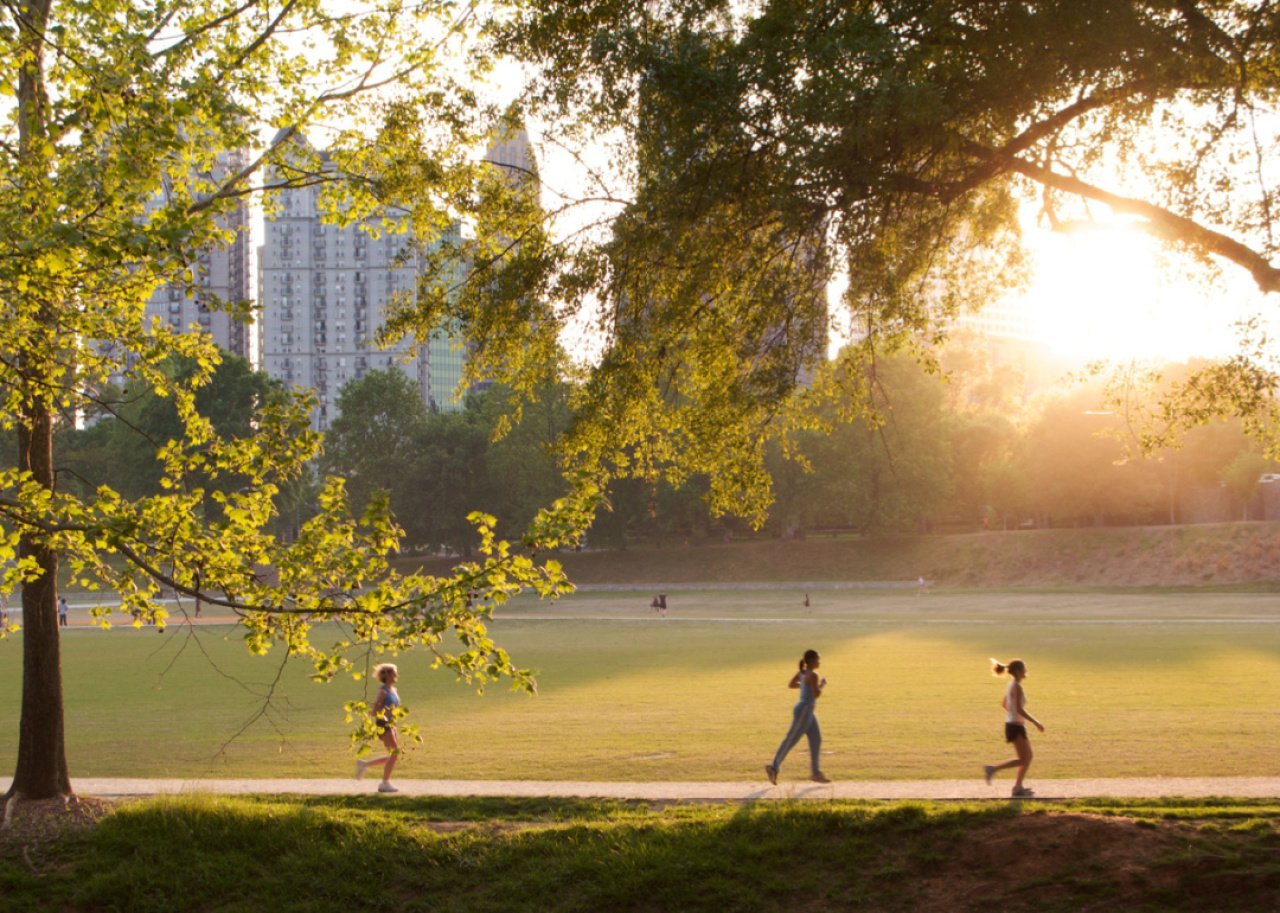
People jogging in Atlanta’s Piedmont Park.

ciapix // Shutterstock

#5. Atlanta

– Total score: 58.92
– Wallet friendliness rank: 259
– Social environment rank: 1
– Academic and economic opportunities rank: 133

Home to the highly ranked Emory University and Georgia Institute of Technology, Atlanta also has a significant concentration of HBCUs, including Morehouse College, Spelman College, and Clark Atlanta University. The city is known for its nightlife and a relatively affordable cost of living. Students can fill their downtime with visits to museums and theaters, Underground Atlanta, and The King Center.

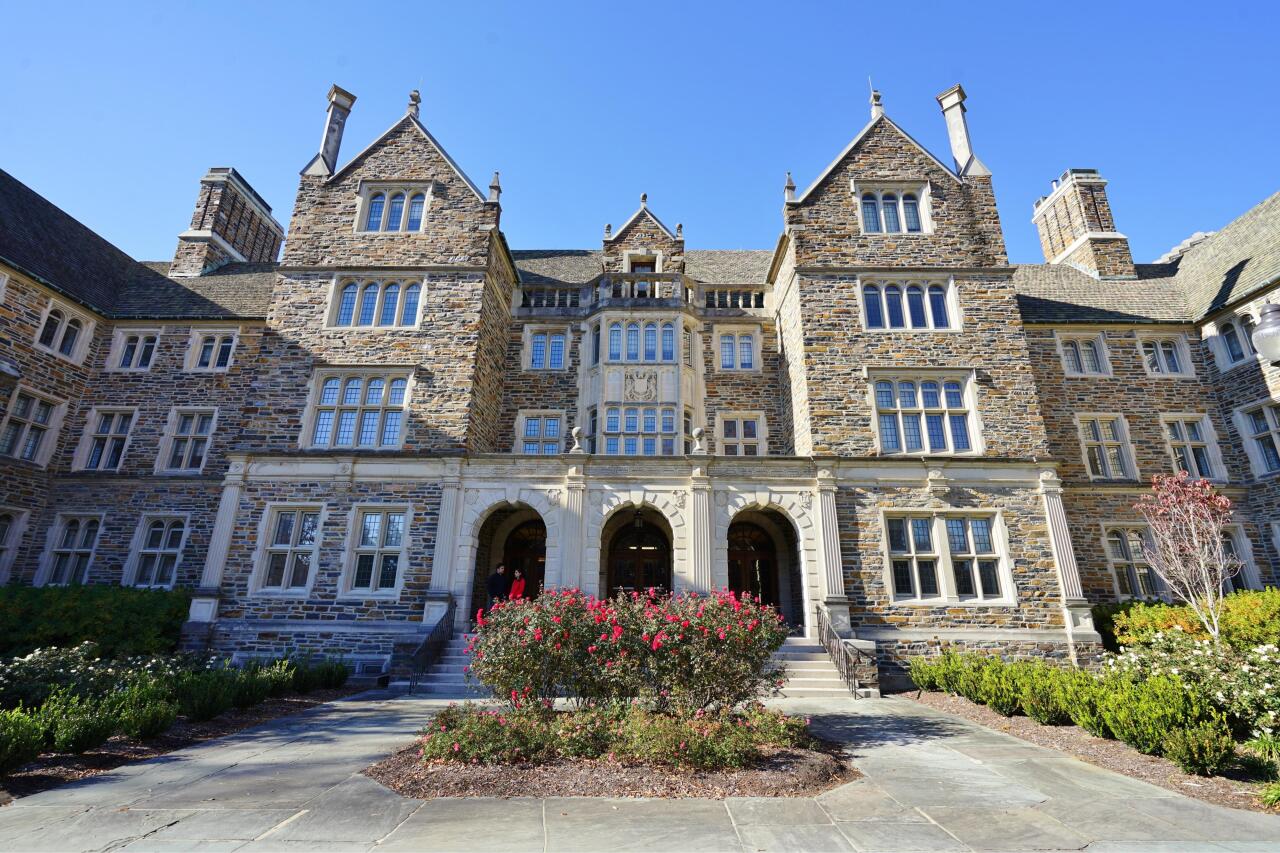
Duke University campus building exterior,

EQRoy // Shutterstock

#4. Raleigh, North Carolina

– Total score: 60.99
– Wallet friendliness rank: 176
– Social environment rank: 29
– Academic and economic opportunities rank: 63

Raleigh, North Carolina, the state’s quaint but vibrant capital, attracts students to several schools, including North Carolina State University, William Peace University, and HBCU Saint Augustine’s University. The nearby Duke University and the University of North Carolina at Chapel Hill complete Research Triangle Park with NC State. Fayetteville Street and Glenwood South are popular among Raleigh locals for their bars and coffee shops, and the city’s bus service is easy to navigate.

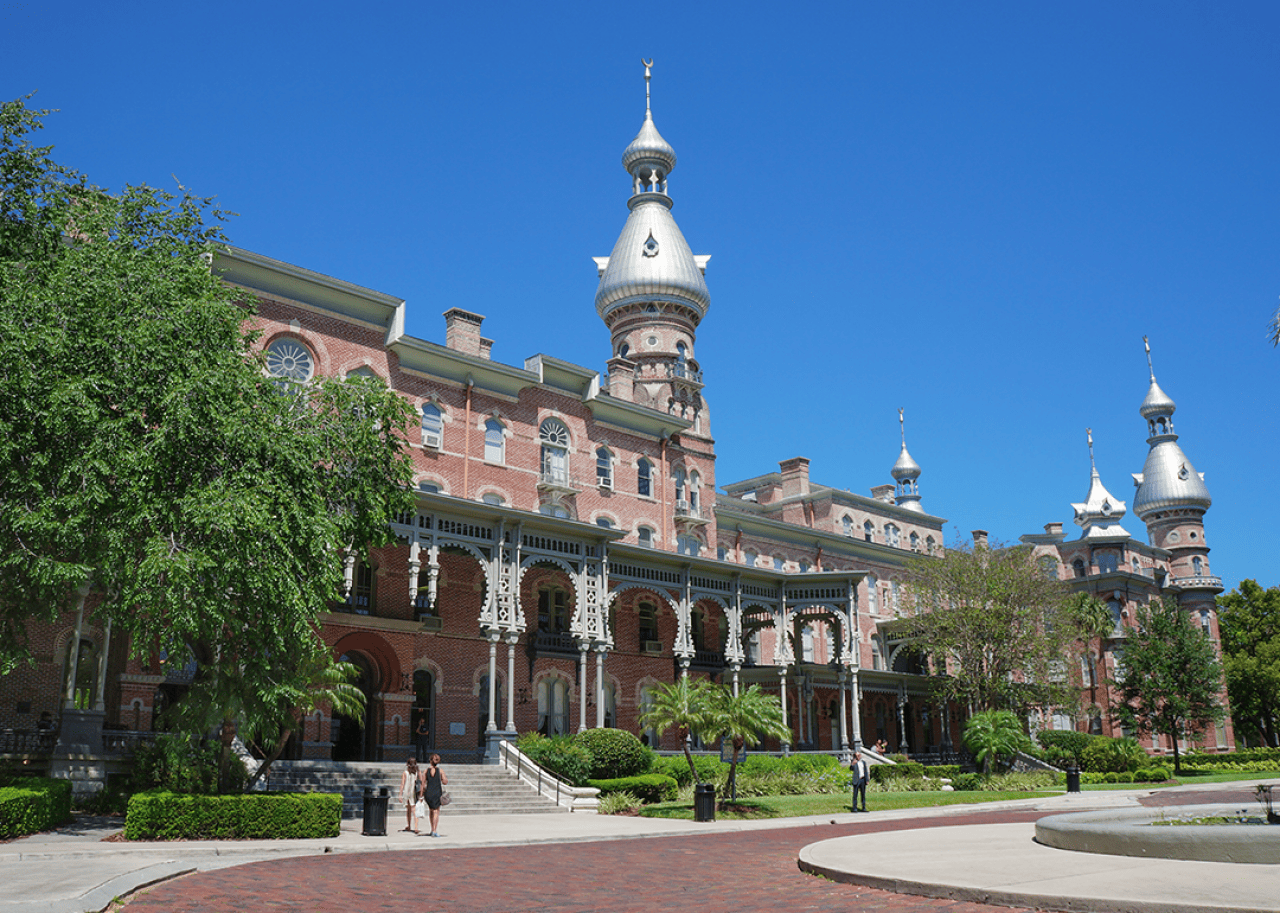
Students walking on the University of Tampa campus.

Ilya Images // Shutterstock

#3. Tampa, Florida

– Total score: 60.99
– Wallet friendliness rank: 161
– Social environment rank: 7
– Academic and economic opportunities rank: 127

Two schools bring college students to Tampa, Florida: the main campus of the massive, public University of South Florida and the smaller, private University of Tampa. Warm weather year-round and a relatively low cost of living make the city a popular destination. Tampa is also a major cruise port and tourist destination, providing ample opportunities for those looking to enter the hospitality industry.

University of Central Florida campus.

Lucky-photographer // Shutterstock

#2. Orlando, Florida

– Total score: 62.35
– Wallet friendliness rank: 164
– Social environment rank: 3
– Academic and economic opportunities rank: 94

Orlando, Florida, is home to more than Walt Disney World and Universal Studios, though students who call the city home will find no shortage of theme parks. The city’s schools include the University of Central Florida, Valencia College, and neighboring smaller institutions. Orlando is also an hour drive to beach towns like Cape Canaveral and Cocoa Beach—or you can opt to stick around and check out all the city has to offer from the vantage point of the Orlando Eye.

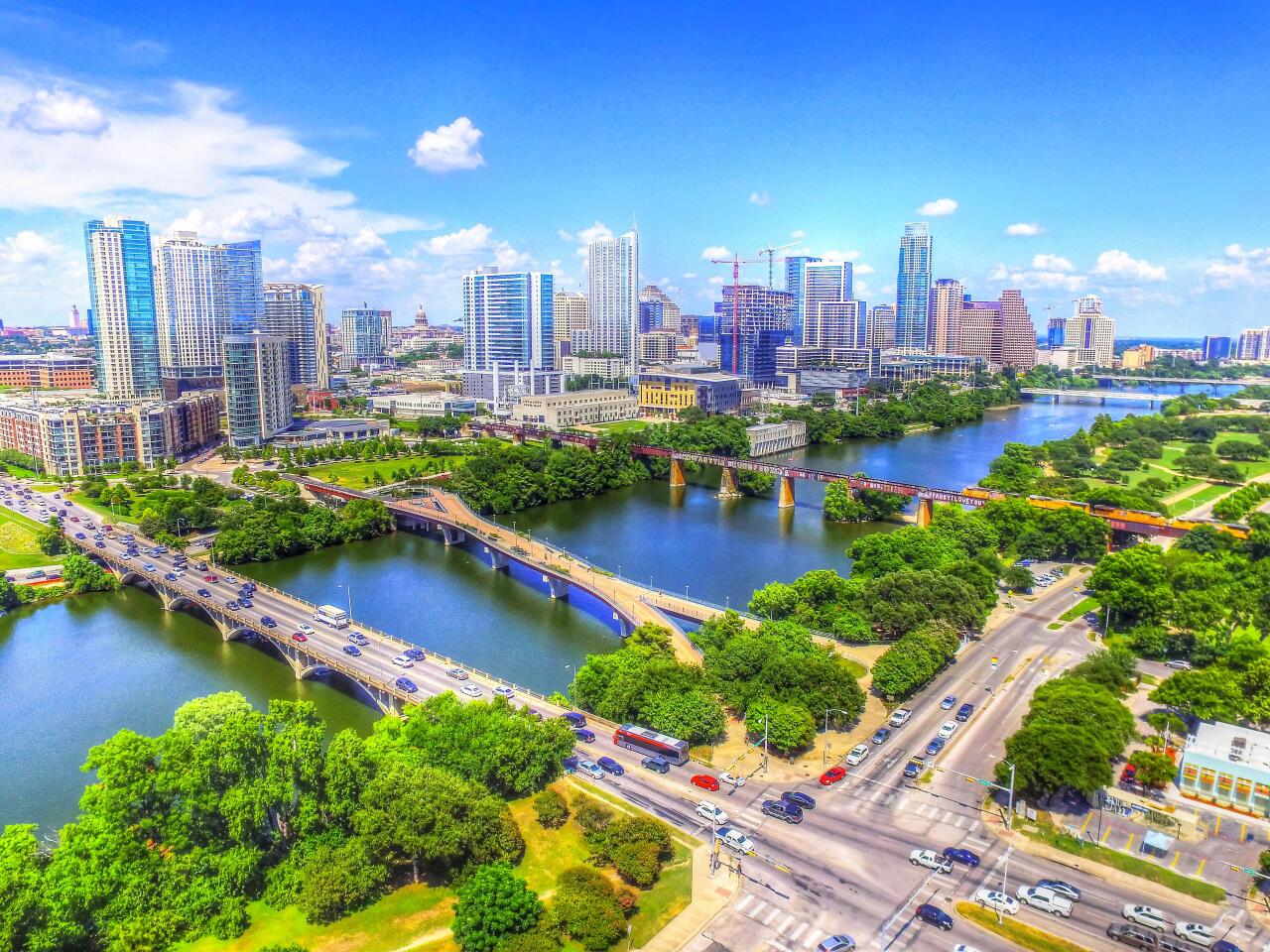
Aerial view Austin cityscape.

MikeHolp // Shutterstock

#1. Austin, Texas

– Total score: 65.16
– Wallet friendliness rank: 191
– Social environment rank: 17
– Academic and economic opportunities rank: 14

It’s no surprise that Austin, Texas, with its distinct counterculture, vibrant nightlife, hot culinary scene, and innumerable music venues, ranks as the best big college town in the United States. College students have taken notice: The University of Texas at Austin has more than 40,000 undergraduates alone. Add in grad students and those attending other schools in and around the area—including St. Edward’s University and Huston-Tillotson University—and it’s clear that Austin is a major college town.

Data reporting by Wade Zhou. Additional writing by Jill Jaracz. Story editing by Mike Taylor. Copy editing by Meg Shields. Photo selection by Clarese Moller and Elizabeth Ciano.

Topics:

Careers & Education
Entertainment

Best albums of all time by Black artists

Best albums of all time by Black artists
By Alexander Raeburn
43 min read • Originally published August 15, 2025 / Updated March 19, 2026
By Alexander Raeburn
43 min read • Originally published August 15, 2025 / Updated March 19, 2026

Best albums of all time by Black artists

There would be no American music as we know it without the contributions of Black artists. Since the earliest Africans were brought to the Americas in bondage beginning in the 16th century, Black singers and musicians have profoundly shaped every stage of American music’s evolution. From country-western, the foundation of which was banjo music from Africa, to rock ‘n’ roll, first played by the legendary Sister Rosetta Tharpe on electric guitar in 1938, each genre of American music has a Black artist (or many) who helped create it.

In addition to establishing new sounds, Black musicians worked to advance civic life as well. They helped bring about the end to segregation, with the likes of Josephine Baker, Ray Charles, and dozens more refusing to play to segregated crowds, with white allies like the Beatles taking similar stands. They also used their music to advance messages—from Billie Holiday’s “Strange Fruit” to Sam Cooke’s “A Change Is Gonna Come.”

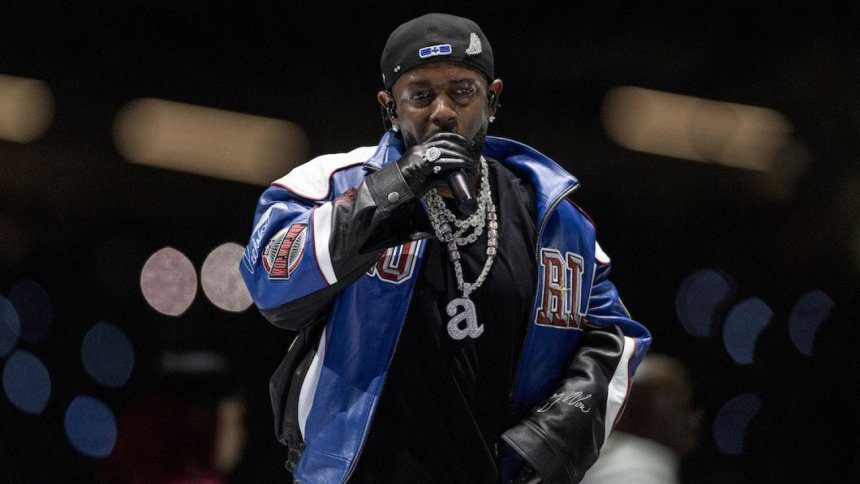
Today’s Black artists continue to break new ground—Beyoncé’s genre-bending “Cowboy Carter” sparked crucial conversations regarding diversity in country music, while André 3000 electrified audiences with his experimental flute-based album “New Blue Sun.” While both releases scored Album of the Year nominations at the 2025 Grammys, it was Beyoncé who picked up the trophy, along with two other awards, including Best Country Album. A week later, Kendrick Lamar’s Super Bowl Halftime show was rife with symbolism, including about the way Black artists have been dismissed by the predominantly white establishment as “too loud, too reckless, too ghetto.”

And that’s just the start of recent noteworthy work by Black musicians. To name just a few, Chance the Rapper’s “Star Line,” Cardi B’s “Am I the Drama?,” and Doja Cat’s “Vie” have all made waves among listeners this year. On the horizon, we can look forward to a number of undated, but hotly anticipated 2025 albums, like A$AP Rocky’s “Don’t Be Dumb,” Megan Thee Stallion’s “Megan: Act III,” and Summer Walker’s “Finally Over It.”

To celebrate some of the greatest American music of all time, Stacker compiled data on the top 100 albums by Black artists according to data from Best Ever Albums, which ranks albums according to their appearance and performance on 40,000 editorial and data-based charts, including Rolling Stone, Pitchfork, and Billboard. The Best Ever Albums score is derived from a formula that weighs how many charts an album has appeared on and how high it was on each of those charts, and awards points accordingly. For more background on how Best Ever Albums determines its rankings, click here.

As with any ranking, no “best of” list can be fully representative, particularly when dealing with such a wide range of time, talent, and musical style. The fact that Ray Charles, Nina Simone, Whitney Houston, Louis Armstrong, Ella Fitzgerald—among dozens of others—don’t appear here underscores that shortcoming. Still, this iteration of the best albums of all time by Black artists offers an insightful look at a significant cross-section of American music that ranges from jazz to soul to hip-hop and back again, with household names like Jimi Hendrix and less obvious monikers like Love and Flying Lotus.

In conjunction with this piece, be sure to check out our Spotify playlist, which features a track from each of these albums.

#100. ‘Awaken, My Love!’ by Childish Gambino

– Best Ever Albums score: 2,547
– Best Ever Albums user rating: 79
– Rank in decade: #103
– Rank all-time: #742
– Year: 2016

Childish Gambino has proven there is little he can’t do. The actor, producer, writer, director, comedian, and rapper (who is also known as Donald Glover) went heavy on the singing when he released his third studio album, “Awaken, My Love!” The album, which contains soulful, funky chart-toppers like “Me and Your Mama,” was produced and written by Gambino (with the exception of the track “Zombies”).

Must-listen: “Me and Your Mama”

#99. ‘Lady Soul’ by Aretha Franklin

– Best Ever Albums score: 2,591
– Best Ever Albums user rating: 79
– Rank in decade: #77
– Rank all-time: #735
– Year: 1968

It was obvious that 14-year-old Aretha Franklin was going to be a star when she was recorded live in 1956 by J-V-B records singing “You Grow Closer” at New Bethel Baptist Church in Detroit (the complete recordings were released in 1965 by Checker Recordings).

Just six years later, she was laying down blues and big-band tracks that would set her inevitable ascendancy to a cultural icon with a seven-decade career spanning gospel, soul, R&B, pop, rock, and virtually everything in between. In 1987, Franklin became the first woman inducted into the Rock & Roll Hall of Fame. “Lady Soul” features some of Franklin’s most famous songs of her storied career, including “(You Make Me Feel Like) a Natural Woman” and “(Sweet Sweet Baby) Since You’ve Been Gone.”

Must-listen: “(Sweet Sweet Baby) Since You’ve Been Gone”

#98. ‘Let’s Get It On’ by Marvin Gaye

– Best Ever Albums score: 2,609
– Best Ever Albums user rating: 81
– Rank in decade: #166
– Rank all-time: #728
– Year: 1973

A hallmark in soul music, Marvin Gaye’s eight-track “Let’s Get It On” album went platinum in three weeks flat and propelled the artist to icon status. In many ways, the album marked a return to Gaye’s 1960s heartthrob status and stood in stark contrast to his more introspective persona on the 1971 album “What’s Going On.”

Must-listen: “Keep Gettin’ It On”

#97. ‘The Infamous…’ by Mobb Deep

– Best Ever Albums score: 2,646
– Best Ever Albums user rating: 80
– Rank in decade: #130
– Rank all-time: #716
– Year: 1995

Mobb Deep’s sophomore album came about during an iconic and unforgettable era in hip-hop. From Wu-Tang to Nas, there was no shortage of talent. The album featured members Havoc and Prodigy, along with appearances by Raekwon, Ghostface Killah, Q-Tip, and Nas. The album showed up at #15 on the Billboard charts and had four singles, of which “Shook Ones (Part II)” was the most popular. The album went on to be a defining feature of the East Coast hardcore hip-hop scene.

Must-listen: “Shook Ones, Pt. II”

#96. ‘My Favorite Things’ by John Coltrane

– Best Ever Albums score: 2,663
– Best Ever Albums user rating: 81
– Rank in decade: #76
– Rank all-time: #709
– Year: 1961

History’s most important tenor saxophonist John Coltrane did more than turn jazz on its head: He created a whole new musical genre called psychedelic rock. Almost 60 years later, “My Favorite Things,” is still relevant and revolutionary, showing one of many gifts Coltrane gave to the historic story of jazz in America.

Must-listen: “My Favorite Things”

#95. ‘Section.80’ by Kendrick Lamar

– Best Ever Albums score: 2,665
– Best Ever Albums user rating: 80
– Rank in decade: #98
– Rank all-time: #708
– Year: 2011

Kendrick Lamar could be seen as a direct descendant of the West Coast Hip-Hop style created in Southern California during the 1990s. “Section.80” flows like a long drive up the coast. But his insightfulness is what sets him apart from the generations past. Lamar shows a thoughtful self-awareness that makes him relatable to a wide array of audiences.

Must-listen: “Rigamortis”

#94. ‘The Epic’ by Kamasi Washington

– Best Ever Albums score: 2,720
– Best Ever Albums user rating: 82
– Rank in decade: #96
– Rank all-time: #698
– Year: 2015

You’ve probably already heard his saxophone playing in the background of a Kendrick Lamar track, or maybe you saw him touring with Snoop Dogg, but Kamasi Washington went even bigger than all that with his first album “The Epic.” The album is almost three hours long and features more than 60 musicians.

Must-listen: “Clair de Lune”

#93. ‘Saxophone Colossus’ by Sonny Rollins

– Best Ever Albums score: 2,740
– Best Ever Albums user rating: 82
– Rank in decade: #14
– Rank all-time: #693
– Year: 1957

Made up of only five tracks, “Saxophone Colossus” might be Sonny Rollins’ most defining album. He made it less than a year after kicking his addiction to heroin. That year he recorded a handful of other albums, as well as being featured on records of other artists. Rollins, who had recordings with Art Blakey and Bud Powell under his belt by the time he was 20, is still alive and performing at 90 years old.

Must-listen: “Strode Rode”

#92. ‘Fear Of A Black Planet’ by Public Enemy

– Best Ever Albums score: 2,741
– Best Ever Albums user rating: 79
– Rank in decade: #125
– Rank all-time: #692
– Year: 1990

Chuck D.—prolific producer, activist, and rapper—once famously called Public Enemy, the rap group he formed, the “CNN for Black people.” That’s because, in the late ’80s, the masses had to look to hip-hop to cover racial disparities in American culture, the prison-industrial complex, poverty, profiling, and police brutality. Chuck D. helped to strengthen a culture of hip-hop that worked for social change and inspired a generation of artists.

Must-listen: “Brothers Gonna Work It Out”

#91. ‘ATLiens’ by OutKast

– Best Ever Albums score: 2,749
– Best Ever Albums user rating: 81
– Rank in decade: #124
– Rank all-time: #690
– Year: 1996

Atlanta-based hip-hop duo Outkast released its sophomore album “ATLiens” in 1996 when Andre 3000 and Big Boi were going through some big changes in life. Andre was sober, celibate, and vegan while working on it. Big Boi suffered the loss of a family member and welcomed his first child. Those factors may have influenced their work on this profound album which nearly topped the Billboard charts and remains relevant to this day.

Must-listen: “ATLiens”

#90. ‘A Tábua De Esmeralda’ by Jorge Ben

– Best Ever Albums score: 2,805
– Best Ever Albums user rating: 83
– Rank in decade: #158
– Rank all-time: #674
– Year: 1974

The title of Jorge Ben’s 1974 release translates to “The Emerald Tablet,” which was a stone containing ancient writings popular with European alchemists. A traditional Brazilian Samba musician who is highly regarded as a master of the craft, Ben filled this album with references to Egyptian texts along with upbeat melodies. Ben released more than 30 albums throughout his career.

Must-listen: “O namorado da viúva”

#89. ‘Chuck Berry Is On Top’ by Chuck Berry

– Best Ever Albums score: 2,825
– Best Ever Albums user rating: 80
– Rank in decade: #13
– Rank all-time: #671
– Year: 1959

Chuck Berry—who once said famously said he saw his career as “one long Sister Rosetta Tharpe impersonation” (see if the opening measures of her 1947 track “The Lord Followed Me” sounds familiar)—personified the adage “third time’s a charm” with his junior studio album that is widely considered to be his best. “Chuck Berry Is On Top” features his classics “Johnny B Goode,” “Maybellene,” and “Roll Over Beethoven” (just for starters) that were not just high-performing tracks of their time but have survived as rock ‘n’ roll standards for more than 70 years.

Must-listen: “Maybellene”

#88. ‘Brilliant Corners’ by Thelonious Monk

– Best Ever Albums score: 2,836
– Best Ever Albums user rating: 81
– Rank in decade: #12
– Rank all-time: #668
– Year: 1957

It wasn’t easy being Thelonious Monk at first, existing on the fringes as he did of New York City’s mid-20th-century jazz scene. But at 39 years old, with the release of his junior effort “Brilliant Corners,” Monk took his rightful, recognized place as one of the greatest pianists and composers of all time.

Must-listen: “I Surrender, Dear”

#87. ‘Lady In Satin’ by Billie Holiday

– Best Ever Albums score: 2,850
– Best Ever Albums user rating: 80
– Rank in decade: #11
– Rank all-time: #666
– Year: 1958

“Lady Satin” was the last album released while the great Lady Day was still alive, her upper vocal range damaged from years of heroin abuse. The tracks come across gritty and solemn but with the distinct beauty and delicacy that she demanded of the recording. Holiday sings from a place of staggering experience and immense, palpable loss. Whenever one wants to sit in the biting beauty sadness brings, there is quite possibly no better soundtrack than this.

Must-listen: “But Beautiful”

#86. ‘Talking Book’ by Stevie Wonder

– Best Ever Albums score: 2,905
– Best Ever Albums user rating: 80
– Rank in decade: #150
– Rank all-time: #652
– Year: 1972

Stevie Wonder (born Stevland Hardaway Morris), blind since infancy, demonstrated an early mastery over multiple instruments and a natural singing ability. His first album came out in 1962 when he was just 12. On “Talking Book,” Wonder broke from his standard Motown fare, opting instead for fresh expression through inspired ballads and inventive funk tracks that synthesized essential social commentary with high-energy dance tunes.

Must-listen: “Superstition”

#85. ‘Untitled Unmastered.’ by Kendrick Lamar

– Best Ever Albums score: 2,928
– Best Ever Albums user rating: 80
– Rank in decade: #94
– Rank all-time: #646
– Year: 2016

Lamar’s fourth album flipped the script on his previous album “To Pimp a Butterfly.” The tracks are titled with dates and numbers. There’s no album artwork. The lyrics show him as an artist responding to fame and criticism by speaking up. “Untitled Unmastered” is Lamar making a statement, presented by an artist unburdened by the need to prove himself.

Must-listen: “untitled 04”

#84. ‘Moanin” by Art Blakey & The Jazz Messengers

– Best Ever Albums score: 3,014
– Best Ever Albums user rating: 83
– Rank in decade: #9
– Rank all-time: #632
– Year: 1959

Art Blakey was a self-taught bandleader who brought along countless others on his rise to prominence in the world of jazz music. “Moanin'” was originally self-titled, but got renamed on later pressings because of the first track’s popularity.

Must-listen: “Moanin'”

#83. ‘Live At The Apollo’ by James Brown

– Best Ever Albums score: 3,091
– Best Ever Albums user rating: 79
– Rank in decade: #70
– Rank all-time: #615
– Year: 1963

James Brown’s stunning “Live at the Apollo,” the singer’s first live album, is cemented in the annals of soul and rock history as the best live concert to be captured on record. On that recording from 1962 (released the following year) is a medley featuring “Please, Please, Please,” a tune with all the elements that made James Brown James Brown.

The song has no lyrics beyond the title itself, with a few lines of longing (“Baby you did me wrong,” “Well, well you done me wrong,” and so forth), which would have been a tough sell for virtually any other artist. Record labels at first were so put off by the grittiness of the song when he began performing it in 1954 that Brown went unsigned until 1956 when King Records took a chance and set the Hardest Working Man in Show Business in motion and, arguably, changed soul music forever while setting the stage for a new genre of music decades later known as hip-hop.

Must-listen: “Medley: Please Please Please/You’ve Got The Power/I Found Someone”

#82. ‘Acid Rap’ by Chance The Rapper

– Best Ever Albums score: 3,150
– Best Ever Albums user rating: 77
– Rank in decade: #86
– Rank all-time: #609
– Year: 2013

Chance the Rapper’s second mixtape, 2013’s “Acid Rap,” solidified the Chicago artist’s ascent to stardom as well as his disdain for record labels. The mixtape was free to download and featured an array of collaborators, giving “Acid Rap” a fusion of genres. The album is bursting with hits including “Good A** Intro” and “Chain Smoker.”

Must-listen: “Good A** Intro”

#81. ‘Mm.. Food’ by MF DOOM

– Best Ever Albums score: 3,160
– Best Ever Albums user rating: 81
– Rank in decade: #103
– Rank all-time: #604
– Year: 2004

MF DOOM has almost as many names as there are albums featuring his work. In an interview with Spin magazine, Doom described his fifth studio album “Mm… Food” as being about “things you find on a picnic, or at a picnic table.” That quote makes sense when you press play, with tracks like “Beef Rap,” “Filet O Rapper,” and “Gumbo.” Doom is many people in many places making many kinds of music, but that’s what sets him apart.

Must-listen: “Kookies”

#80. ‘Piñata’ by Freddie Gibbs & Madlib

– Best Ever Albums score: 3,171
– Best Ever Albums user rating: 79
– Rank in decade: #83
– Rank all-time: #602
– Year: 2014

From humble beginnings selling mixtapes, Gibbs earned his place in the world of street rap with his third album. Released in 2014, “Piñata” is the second collaboration between Gibbs and Madlib. Danny Brown, Raekwon, Scarface, Mac Miller are among the many artists who collaborated on the album.

Must-listen: “Real”

#79. ‘Stand!’ by Sly & The Family Stone

– Best Ever Albums score: 3,260
– Best Ever Albums user rating: 80
– Rank in decade: #67
– Rank all-time: #592
– Year: 1969

Sly & The Family Stone broke boundaries from the beginning. The group’s album “Stand!” contained the first #1 single, “Everyday People.” The album deals with complex social issues with melodies and beats guaranteed to keep your feet moving.

Must-listen: “Everyday People”

#78. ‘808s & Heartbreak’ by Kanye West

– Best Ever Albums score: 3,310
– Best Ever Albums user rating: 76
– Rank in decade: #99
– Rank all-time: #577
– Year: 2008

The fourth studio album by Kanye West featured the rapper’s intimate processing of turbulent events going on in his life at the time. His mother had recently passed unexpectedly, and an engagement ended. Though family and friends encouraged him to take time off, West went inside and created “808 & Heartbreak” from an emotional state, creating a lasting piece of artistry that continues to have a great impact.

Must-listen: “See You in My Nightmares”

#77. ‘Cosmogramma’ by Flying Lotus

– Best Ever Albums score: 3,322
– Best Ever Albums user rating: 80
– Rank in decade: #78
– Rank all-time: #576
– Year: 2010

Flying Lotus is the stage name for Los Angeles producer Steven Ellison, who was brought up in the world of music as the nephew of jazz master Alice Coltrane. The album contains a blend of sounds from Ellison’s entire world of influence. From electronic music and hip-hop to jazz and video game sounds, his work on “Cosmogramma” runs the creative gamut of what a brilliant musical mind can do.

Must-listen: “…And the World Laughs With You”

#76. ‘Super Fly’ by Curtis Mayfield

– Best Ever Albums score: 3,326
– Best Ever Albums user rating: 81
– Rank in decade: #138
– Rank all-time: #575
– Year: 1972

Curtis Mayfield goes down in history as one of the most politically conscious artists of his time, a talented songwriter and guitarist, progressive soul musician, and insightful record producer. Mayfield got his start in a gospel choir and joined The Impressions when he was just 14 years old. “Super Fly” marked Mayfield’s third solo album and is rich with the early ’70s turmoil coming on the heels of the civil rights movement as it collided with American conservatism.

Must-listen: “Pusherman”

#75. ‘We Got It From Here… Thank You 4 Your Service’ by A Tribe Called Quest

– Best Ever Albums score: 3,333
– Best Ever Albums user rating: 82
– Rank in decade: #77
– Rank all-time: #573
– Year: 2016

Many people associate concept albums with bands like The Who or The Moody Blues. But the style has also been par for the course for A Tribe Called Quest, a band that released all six of its albums as cohesive, full-length commentaries on American culture. The group’s final album, ‘We Got It From Here… Thank You 4 Your Service” lays out next-level raps over tracks as varied as “Willy Wonka and the Chocolate Factory” and Musical Youth (“Pass the Dutchie”) with all-star guests including Kendrick Lamar and Elton John.

Must-listen: “We the People…”

#74. ‘Lemonade’ by Beyoncé

– Best Ever Albums score: 3,337
– Best Ever Albums user rating: 78
– Rank in decade: #76
– Rank all-time: #572
– Year: 2016

Beyoncé got her start as a teenager in Destiny’s Child, which in its own right was one of the bestselling girl groups in American history. She forged out on her own with the album “Dangerously in Love” in 2003. As her success grew so too did her messaging, which culminated in 2016 with the epic “Lemonade,” her sixth studio album. That record, which explores themes of family history, politics, relationships, and infidelity, came alongside an hour-long art film.

Must-listen: “Daddy Lessons”

#73. ‘Clube Da Esquina’ by Milton Nascimento / Lô Borges

– Best Ever Albums score: 3,361
– Best Ever Albums user rating: 82
– Rank in decade: #135
– Rank all-time: #569
– Year: 1972

Milton Nascimento is one of the most influential Brazillian musicians of all time. “Clube Da Esquina” was recorded with his dear friend and songwriting partner Lô Borges. They began writing together while Nascimento was performing at night and working as an accountant by day in the city of Belo Horizonte. Pitchfork called the album “Pet Sounds, Innervisions, and The White Album all rolled into one,” and said it “remains beloved even for those who know just a few Brazilian albums.”

Must-listen: “Cravo E Canela”

#72. ‘Voodoo’ by D’Angelo

– Best Ever Albums score: 3,419
– Best Ever Albums user rating: 80
– Rank in decade: #98
– Rank all-time: #564
– Year: 2000

Pop-soul artist D’Angelo, who had worked as a member of The Soulquarians, created something new with his sophomore effort “Voodoo.” After taking three years to record, mix, and finish, the end result shadowed the history of R&B while taking the genre to a modern space unoccupied by other artists of that time.

Must-listen: “The Root”

#71. ‘3 Feet High And Rising’ by De La Soul

– Best Ever Albums score: 3,472
– Best Ever Albums user rating: 78
– Rank in decade: #83
– Rank all-time: #558
– Year: 1989

Hailing from Long Island, hip-hop threesome (four when they brought in producer DJ Paul “Prince Paul” Huston) De La Soul’s first album “3 Feet High And Rising” took a unique stand on the East Coast rap scene. All of the four members went to the same school and created music from a place of evolving self-awareness. It was this lightness and positivity which set them apart from the rest.

Must-listen: “Potholes in My Lawn”

#70. ‘Here’s Little Richard’ by Little Richard

– Best Ever Albums score: 3,552
– Best Ever Albums user rating: 79
– Rank in decade: #8
– Rank all-time: #545
– Year: 1957

With numerous singles preceding his first full-length album, the wildly new and inventive Little Richard defined his own genre in the 1950s. His on-stage persona, flamboyant and bright, was new to the world of pop music. Countless musicians were influenced by Richards over the years. “Here’s Little Richard” was his highest-ranking album of all time, coming in at #13 on the Billboard charts.

Must-listen: “Can’t Believe You Wanna Leave”

#69. ‘Black Messiah’ by D’Angelo And The Vanguard

– Best Ever Albums score: 3,625
– Best Ever Albums user rating: 81
– Rank in decade: #71
– Rank all-time: #531
– Year: 2014

Fourteen years following “Voodoo,” R&B icon D’Angelo returned with “Black Messiah.” After struggling through some hardships and gaining new skills, his fourth album was released shortly after multiple Black men were killed by police around the country including in Ferguson, Missouri, and New York City. D’Angelo’s music spoke to the outrage of many, but it was also an experience of hope during a slew of dark days. The album was well worth the wait.

Must-listen: “Another Life”

#68. ‘Dear Science’ by TV On The Radio

– Best Ever Albums score: 3,628
– Best Ever Albums user rating: 78
– Rank in decade: #93
– Rank all-time: #530
– Year: 2008

Rock band TV On The Radio has a gritty, distorted, hard sound unlike anything else. With lyrics that go into the intellectual, and music that can make anybody get up out of their seat, “Dear Science” tells stories from somewhere between knowing and seeking, is often chaotic and wailing, and true to the band’s signature grit. Known to many to put on great performances, this rap, funk, rock group plays to a crowd all its own.

Must-listen: “Shout Me Out” (listen for obvious borrows from Bob Dylan’s “A Hard Rain’s A-Gonna Fall”)

#67. ‘Giant Steps’ by John Coltrane

– Best Ever Albums score: 3,732
– Best Ever Albums user rating: 83
– Rank in decade: #63
– Rank all-time: #519
– Year: 1960

Released after a period of recovery from drug addiction, “Giant Steps” is viewed as a masterwork of jazz music. Seen as a sort of response to Miles Davis’ slower tempo “Kind of Blue,” Coltrane’s first album on Atlantic Records was created from a veteran mindset. The title track “Giant Steps” features Cedar Walton on piano, Paul Chambers on bass, and Lex Humphries in the percussion section.

Must-listen: “Countdown”

#66. ‘Sketches Of Spain’ by Miles Davis

– Best Ever Albums score: 3,763
– Best Ever Albums user rating: 82
– Rank in decade: #62
– Rank all-time: #513
– Year: 1960

“Sketches of Spain” is a concept album that broke barriers of jazz conventions at the time. Mixed and recorded with a wide range of artists from varying musical backgrounds, the album received high praise and showcased a new side of Davis. Thanks to a partnership with composer Gil Evans who put together the album’s Latin flare, “Sketches of Spain” serves as an easily accessible piece of jazz history.

Must-listen: “Will O’ the Wisp”

#65. ‘The Blueprint’ by Jay-Z

– Best Ever Albums score: 3,764
– Best Ever Albums user rating: 78
– Rank in decade: #89
– Rank all-time: #512
– Year: 2001

The stunning, award-speckled rise of Jay-Z (Shawn Carter) over his 30-year career began with his independently released “Reasonable Doubt” in 1996 on his newly created label Roc-A-Fella and continues to this day with that label making him the richest man in hip-hop. Jay-Z’s net worth stands at around $1 billion, making him the first hip-hop billionaire in history. He demonstrates the vast reaches of today’s music industry, with his hands over the years in a streaming service, alcohol company, clothing line, sports club, and various entertainment labels.

His secret? Relying on himself to build his brands and rapping about that which he knows most about: himself. It’s not a stretch to say Jay-Z is believed to be among the best rappers in history.

Must-listen: “Song Cry”

#64. ‘The Life Of Pablo’ by Kanye West

– Best Ever Albums score: 3,916
– Best Ever Albums user rating: 75
– Rank in decade: #67
– Rank all-time: #495
– Year: 2016

“The Life Of Pablo” represents one of Kanye West’s most self-realized (and, possibly, self-obsessed) albums. Though it didn’t receive the same kind of recognition as previous work, West was able to reach out to an already established base who adores his musical skills, and the fun of questioning his methods.

Must-listen: “I Love Kanye”

#63. ‘Straight Outta Compton’ by N.W.A

– Best Ever Albums score: 3,972
– Best Ever Albums user rating: 78
– Rank in decade: #69
– Rank all-time: #490
– Year: 1988

“Straight Outta Compton” is the debut album from the unforgettable West Coast hip-hop group N.W.A. With tracks that were too much for MTV and the FBI, the album—recorded for a reported $12,000—was one of the most intense and massively popular examples of gangster rap in the late 1980s. The group was the first home of many artists who went on to create solo careers including Dr. Dre, Ice Cube, and Eazy E.

Must-listen: “Express Yourself”

#62. ‘1999’ by Prince

– Best Ever Albums score: 3,988
– Best Ever Albums user rating: 80
– Rank in decade: #68
– Rank all-time: #488
– Year: 1982

Throughout his tenure, Prince created a staggering 39 studio albums and four live albums as well as numerous compilations. Few of those albums stand out like “Lovesexy,” “Sign O’ the Times,” or the iconic “1999,” which catapulted Prince to international star status when he was just 24 years old. “1999” came out just 12 months after “Controversy” and included five commercially released singles: the apocalyptic “1999,” “Automatic,” “Delirious,” “Let’s Pretend We’re Married,” and “Little Red Corvette.” The album was inducted into the Grammy Hall of Fame in 2008.

Must-listen: “1999”

#61. ‘Head Hunters’ by Herbie Hancock

– Best Ever Albums score: 3,995
– Best Ever Albums user rating: 82
– Rank in decade: #113
– Rank all-time: #484
– Year: 1973

Prolific pianist and composer Herbie Hancock was 7 when it became obvious he was a musical prodigy. But throughout his tenure as a classical musician and jazz composer, including becoming the first Black man to win an Oscar for Best Original Score, Hancock is most well-known for the unforgettable “Head Hunters” that functioned, above all else, as a departure from classic jazz. With heavy synths and funk, Hancock planted a new flag in the arc of musical evolution and history, transforming the industry with tracks like “Chameleon” and “Watermelon Man.”

Must-listen: “Watermelon Man”

#60. ‘Tracy Chapman’ by Tracy Chapman

– Best Ever Albums score: 4,107
– Best Ever Albums user rating: 78
– Rank in decade: #66
– Rank all-time: #468
– Year: 1988

With heavyweight tracks like “Fast Car,” Tracy Chapman’s self-titled album brought substantial commercial success with numerous singles hitting the Billboard charts. From early beginnings as a busker on the streets of Boston, Chapman cemented her legacy in folk music with this series of varied, story-driven songs. The album, released on Elektra Records, was expected to have modest sales; not long after its release, the album went platinum and made Chapman a household name.

Must-listen: “Fast Car”

#59. ‘Igor’ by Tyler, The Creator

– Best Ever Albums score: 4,197
– Best Ever Albums user rating: 83
– Rank in decade: #60
– Rank all-time: #460
– Year: 2019

Tyler, The Creator lived up to his name with “Igor.” The artist handled every aspect of the album, from production to musical arrangements. Known for expressing personal anguish from his past through his music, “Igor” brings us a slightly older and wiser version of the rapper.

Must-listen: “Gone, Gone”

#58. ‘The ArchAndroid’ by Janelle Monáe

– Best Ever Albums score: 4,227
– Best Ever Albums user rating: 80
– Rank in decade: #58
– Rank all-time: #456
– Year: 2010

Janelle Monáe, who has done everything from opening for Erykah Badu to playing with Of Montreal at the Lilith Fair, was 24 when “The ArchAndroid” was released on Atlantic Records. The songs on this album vary wildly between funk, R&B, disco, cabaret, and virtually everywhere in between and are filled with pop culture references from “Star Wars” to Muhammed Ali. Monae said the tracks were inspired by dreams and colors. The musical-genre ping pong’s only recent comparison would be OutKast’s “The Love Below.”

Must-listen: “Dance or Die”

#57. ‘The Shape Of Jazz To Come’ by Ornette Coleman

– Best Ever Albums score: 4,276
– Best Ever Albums user rating: 81
– Rank in decade: #7
– Rank all-time: #450
– Year: 1959

Ornette Coleman’s Atlantic debut “The Shape Of Jazz To Come” was built on a structure unlike anything else at the time. Though it appeared unconventional then, today the album fits neatly into the progressive jazz movement. “The Shape of Jazz” also debuted Coleman performing with a rhythm section; something he hadn’t done on a record up until this.

Must-listen: “Eventually”

#56. ‘Graduation’ by Kanye West

– Best Ever Albums score: 4,310
– Best Ever Albums user rating: 77
– Rank in decade: #78
– Rank all-time: #446
– Year: 2007

“Graduation” showcases all of Kanye West’s energy and creativity in tracks with his signature creative mixing. As his third album, West showed how his skills were just that much better than those of his counterparts. Many agree that “Graduation” marks the point in West’s career when he went from a mere mortal musician to rap icon.

Must-listen: “Stronger”

#55. ‘The Chronic’ by Dr. Dre

– Best Ever Albums score: 4,372
– Best Ever Albums user rating: 80
– Rank in decade: #82
– Rank all-time: #441
– Year: 1992

While N.W.A. launched Dr. Dre, Dre’s “The Chronic” became the launching vehicle for a handful of others—including a mostly underground rapper going by the name Snoop Dog. Dre, a legend in the business, has since come under fire numerous times for his treatment of other rappers, his homophobic language, and claims of abuse by multiple women.

Must-listen: “Nothin’ but a ‘G’ Thang”

#54. ‘Midnight Marauders’ by A Tribe Called Quest

– Best Ever Albums score: 4,384
– Best Ever Albums user rating: 83
– Rank in decade: #81
– Rank all-time: #440
– Year: 1993

“Midnight Marauders,” the third album by legendary hip-hop group A Tribe Called Quest, proved to be the most successful and sold more than 1 million copies in its first year. Moving from a history of including jazz influence, this album had a more distinct feeling of funk and showcased the growing philosophical lyricism of members Q-Tip, Phife Dawg, Ali Shaheed Muhammad, and Jarobi White.

Must-listen: “Electric Relaxation”

#53. ‘I Never Loved a Man the Way I Love You’ by Aretha Franklin

– Best Ever Albums score: 4,438
– Best Ever Albums user rating: 80
– Rank in decade: #54
– Rank all-time: #435
– Year: 1967

“I Never Loved a Man the Way I Love You” is a veritable who’s-who of top Franklin numbers, from the title track and “Respect” to “Do Right Woman, Do Right Man” and “Drown in My Own Tears.” Still, Rolling Stone knocked the album when it came out for sounding flat.

Must-listen: “Do Right Woman, Do Right Man”

#52. ‘Donuts’ by J Dilla

– Best Ever Albums score: 4,516
– Best Ever Albums user rating: 81
– Rank in decade: #75
– Rank all-time: #429
– Year: 2006

The incomparable J Dilla had his hands in more musical moments in hip-hop history than most. “Donuts,” likely the artist’s penultimate work, is comprised of 31 tracks that stand as individual masterpieces. Dilla released the album shortly before dying from complications from a rare blood disorder called thrombotic thrombocytopenic purpura. Long after his death, music long considered lost was unearthed and added to the legend of one of hip-hop’s most influential beatmakers.

Must-listen: “Last Donut of the Night”

#51. ‘Kids See Ghosts’ by Kids See Ghosts

– Best Ever Albums score: 4,571
– Best Ever Albums user rating: 82
– Rank in decade: #54
– Rank all-time: #424
– Year: 2018

“Kids See Ghosts” is a musical collaboration between Kid Cudi and Kanye West. Cudi is known for being honest about his issues with mental health and said this album, along with the partnership with West, was influential in his process of getting well. Cudi continues to model how expressions of vulnerability build strength.

Must-listen: “Reborn”

#50. ‘The Miseducation Of Lauryn Hill’ by Lauryn Hill

– Best Ever Albums score: 4,608
– Best Ever Albums user rating: 77
– Rank in decade: #75
– Rank all-time: #422
– Year: 1998

Few artists (or listeners) will do anything but bow to the continued brilliance and relevance of “The Miseducation of Lauryn Hill.” Lauryn Hill’s debut album brought hip-hop into the mainstream music scene in an entirely new way and earned her five Grammy Awards, including Album of the Year—a first for a woman hip-hop artist.

Must-listen: “Doo Woop (That Thing)”

#49. ‘Maggot Brain’ by Funkadelic

– Best Ever Albums score: 4,722
– Best Ever Albums user rating: 82
– Rank in decade: #105
– Rank all-time: #414
– Year: 1971

“Maggot Brain” showcased the arrival of the wild guitar stylings of Eddie Hazel, who some called the next Jimi Hendrix. With lyrics voiced by soon to be wildly famous George Clinton, Funkadelic’s showed what Detroit would produce after years of being the home of Motown. The psychedelic sounds were unlike anything else at the time, and the album remains a classic to this day.

Must-listen: “Maggot Brain”

#48. ‘There’s A Riot Goin’ On’ by Sly & The Family Stone

– Best Ever Albums score: 4,999
– Best Ever Albums user rating: 81
– Rank in decade: #97
– Rank all-time: #389
– Year: 1971

“There’s A Riot Goin’ On” was a departure from Sly & The Family Stone’s previous album “Stand!” in that the former’s joyful melodies were replaced by the latter’s more cynical side. This was an album made during Sly Stone’s exploration of drugs, and it spoke of a darker world with harsher edges.

Must-listen: “Family Affair”

#47. ‘Bad’ by Michael Jackson

– Best Ever Albums score: 5,067
– Best Ever Albums user rating: 76
– Rank in decade: #52
– Rank all-time: #387
– Year: 1987

Michael Jackson’s conflicted history can make it difficult or unseemly to appreciate the irreversible impact he had on today’s music. In his musical career, Jackson broke the color barrier by being the first Black artist on MTV with his “Billie Jean” video; he determined a new method of production and promotion with “Thriller;” and he took home hundreds of awards. He also followed in the footsteps of greats like Nat King Cole, pushing the boundaries of what roles Black men could acceptably occupy in American society, whether adored, wanted, or rebellious.

Must-listen: “Bad”

#46. ‘Stankonia’ by Outkast

– Best Ever Albums score: 5,086
– Best Ever Albums user rating: 80
– Rank in decade: #69
– Rank all-time: #384
– Year: 2000

Outkast has always been consistent by being different. The duo’s fourth album “Stankonia” continued on with a boundaries-shattering style that harnessed the energy of the time and introduced radical hope for a new future.

Must-listen: “Ms. Jackson”

#45. ‘Run The Jewels 2’ by Run The Jewels

– Best Ever Albums score: 5,182
– Best Ever Albums user rating: 81
– Rank in decade: #46
– Rank all-time: #375
– Year: 2014

Few rappers critique the world with the kind of ferocity and scope of Run The Jewels members El-P and Killer Mike. And no one—from politicians to materialistic celebrities—is safe from the ire expressed on ‘Run The Jewels 2.’ These no-limit rappers began as a festival act and “RTJ2” is their first official album together.

Must-listen: “All My Life”

#44. ‘Legend’ by Bob Marley & The Wailers

– Best Ever Albums score: 5,187
– Best Ever Albums user rating: 84
– Rank in decade: #47
– Rank all-time: #374
– Year: 1984

Bob Marley sold more than 20 million records and goes down in history as being the first worldwide success to come from the “Third World.” As an ambassador for reggae music, he helped to spread Rastafari messaging through his songs and shone a spotlight on Jamaica and its politics. He additionally made reggae mainstream, paving the way for its international popularity throughout the United States, Britain, and Africa. “Legend,” his penultimate compilation of greatest hits, runs through the top tracks of Marley’s career.

Must-listen: “Redemption Song”

#43. ‘Otis Blue / Otis Redding Sings Soul’ by Otis Redding

– Best Ever Albums score: 5,305
– Best Ever Albums user rating: 83
– Rank in decade: #48
– Rank all-time: #369
– Year: 1965

“Otis Blue / Otis Redding Sings Soul” featured classic songs such as “Satisfaction” and “Change Gonna Come.” Recorded in two separate sessions over a 24-hour period, the largely impromptu soundtrack holds within it a certain feeling of magic and spontaneity.

Must-listen: “I’ve Been Loving You Too Long”

#42. ‘Flower Boy’ by Tyler, The Creator

– Best Ever Albums score: 5,379
– Best Ever Albums user rating: 84
– Rank in decade: #45
– Rank all-time: #366
– Year: 2017

Tyler, The Creator tries coming to terms with some of his previous conflicts and aggressive stances on his album “Flower Boy.” Taking in years of tumult and time spent processing emotions, the album is an honest piece of art that strives for something more. Though his forward stance continues, “The Creator” brings the listener along towards a better, more mature future with these songs.

Must-listen: “See You Again”

#41. ‘Off The Wall’ by Michael Jackson

– Best Ever Albums score: 5,492
– Best Ever Albums user rating: 79
– Rank in decade: #90
– Rank all-time: #359
– Year: 1979

‘”Off The Wall” marks Michael Jackson’s debut as a superstar separate from his previously achieved family fame. Open and honest, 21-year-old Jackson sang about where he was and what got him there. Produced by Quincy Jones, the album is often considered a fan favorite over the more commercially successful followup album “Thriller.”

Must-listen: “Don’t Stop ‘Til You Get Enough”

#40. ‘Blue Train’ by John Coltrane

– Best Ever Albums score: 5,496
– Best Ever Albums user rating: 84
– Rank in decade: #4
– Rank all-time: #358
– Year: 1957

Recorded in Hackensack, New Jersey, “Blue Train” marked the start of John Coltrane breaking away from fellow greats to forge his own path. With five songs totaling around 40 minutes, the album remains relevant today and is still considered to be one of the greatest jazz recordings of all time. Even Coltrane himself said the album was one of his favorites.

Must-listen: “Locomotion”

#39. ‘Atrocity Exhibition’ by Danny Brown

– Best Ever Albums score: 5,571
– Best Ever Albums user rating: 83
– Rank in decade: #44
– Rank all-time: #353
– Year: 2016

Detroit rapper Danny Brown showcases all the wild, and many of the slightly less enviable, sides of addiction and struggle in his album “Atrocity Exhibition.” The tracks serve as heady reminders of just how harrowing substance abuse can be.

Must-listen: “Today”

#38. ‘Fresh Fruit For Rotting Vegetables’ by Dead Kennedys

– Best Ever Albums score: 5,775
– Best Ever Albums user rating: 81
– Rank in decade: #44
– Rank all-time: #342
– Year: 1980

Saying the Dead Kennedys defined hardcore isn’t a stretch, especially when listening to the fast-paced punk songs on “Fresh Fruit For Rotting Vegetables.” Unabashedly left-leaning statements against conservatives and capitalism are laced through the tracks. It’s a wild experience, provided in an unfiltered and raw format, which was exactly how it was intended.

Must-listen: “California Uber Alles”

#37. ‘Liquid Swords’ by GZA

– Best Ever Albums score: 5,923
– Best Ever Albums user rating: 84
– Rank in decade: #64
– Rank all-time: #332
– Year: 1995

Rap aficionados might know GZA from his role in the iconic and everlasting group known as the Wu-Tang Clan, but his solo work is incredible as well. GZA’s second solo album, mostly recorded in his Staten Island, New York, basement, “Liquid Swords” goes down in history as one of the greatest East Coast hip-hop albums. Listen to any one of these tracks, or preferably the full album as a whole, and you’ll understand why GZA is also known as “The Genius.”

Must-listen: “Investigative Reports”

#36. ‘Blue Lines’ by Massive Attack

– Best Ever Albums score: 5,941
– Best Ever Albums user rating: 80
– Rank in decade: #63
– Rank all-time: #330
– Year: 1991

Heralded as a predecessor to modern British dance music, Massive Attack’s first album “Blue Lines” was released in the early ’90s although it sounds like it could’ve been made last week. Soulful lyrics and booming electronic beats melded together to create a uniquely energizing style that inspired a generation of musicians to come. Originating as part of a group known as the Wild Bunch that DJ’ed street parties in Bristol, England, Massive Attack became a force in the formation of New Age electronic music across the world, but that influence is especially seen in artists from the U.K. who followed in the group’s footsteps.

Must-listen: “Unfinished Symphony”

#35. ‘Silent Alarm’ by Bloc Party

– Best Ever Albums score: 6,084
– Best Ever Albums user rating: 77
– Rank in decade: #54
– Rank all-time: #326
– Year: 2005

Bloc Party’s “Silent Alarm” is an album you don’t need to skip through, with each track containing something new and worthwhile. The album has sold more than 1 million copies in the 15 years since its original release.

Must-listen: “Helicopter”

#34. ‘Aquemini’ by OutKast

– Best Ever Albums score: 6,403
– Best Ever Albums user rating: 82
– Rank in decade: #60
– Rank all-time: #311
– Year: 1998

OutKast redefined Atlanta hip-hop multiple times over the years. The group’s third album “Aquemini” demonstrated a level of growth and ownership over the genre that hadn’t been reached previously. Daunted by the idea of having succeeded with prior albums, each helped along by the production crew Organized Noize, OutKast set out to find itself anew. As with seemingly all things created by Big Boi and Andre 3000, it worked.

Must-listen: “Rosa Parks”

#33. ‘Damn.’ by Kendrick Lamar

– Best Ever Albums score: 6,639
– Best Ever Albums user rating: 80
– Rank in decade: #34
– Rank all-time: #297
– Year: 2017

Kendrick Lamar became the first rap artist to be awarded the Pulitzer Prize for Music in 2018 for his fourth studio album, “DAMN.” At just 32 years old, Lamar has already earned 17 Grammys and a nod from Time magazine as one of the 100 most influential people in the world. He is widely considered one of his generation’s most influential rappers, and as a songwriter and producer, he’s already helping to churn out and develop new talent, from Ab-Soul to Sza.

Must-listen: “LOVE.”

#32. ‘Exodus’ by Bob Marley & The Wailers

– Best Ever Albums score: 6,663
– Best Ever Albums user rating: 82
– Rank in decade: #74
– Rank all-time: #295
– Year: 1977

Bob Marley’s home in Jamaica was raided on Dec. 5, 1976 by (likely politically motivated) gunmen two days before Marley was to headline “Smile Jamaica,” a unity-themed concert meant to quell rising political tensions. The would-be assassins shot him, his wife, a friend, and Marley’s manager. A bandaged Marley performed anyway. After the concert, he went to Nassau, Bahamas, with his team; while there, he wrote “Jamming” about the attack on his life. Marley and the Wailers flew to London after Nassau, where they spent several months recording the songs that comprised “Exodus.” The album was ranked #1 of the 20th century by Time magazine.

Must-listen: “Jamming”

#31. ‘Ready To Die’ by The Notorious B.I.G.

– Best Ever Albums score: 6,693
– Best Ever Albums user rating: 81
– Rank in decade: #57
– Rank all-time: #294
– Year: 1994

Coming off like he’s reciting a premonition, The Notorious B.I.G. speaks on “Ready To Die” about a future he seemed to have known was coming. He candidly talks about the pitfalls and dangers of selling crack cocaine. He lets you know why he started and what it costs to go down that road. Whereas his West Coast counterpart was a poet, The Notorious B.I.G. was a storyteller who wove narratives from his hard-lived youth throughout his songs. At 24 years old, the artist was murdered in a drive-by shooting. The case remains unsolved to this day.

Must-listen: “Juicy”

#30. ‘Mingus Ah Um’ by Charles Mingus

– Best Ever Albums score: 7,737
– Best Ever Albums user rating: 84
– Rank in decade: #2
– Rank all-time: #255
– Year: 1959

Listening to “Mingus Ah Um” is as close as most will come to getting to know the soul of the man behind it. Complex, disjointed at times, and full of emotion, Charles Mingus’ plays to a different crowd. He created a structure for this album but left substantial room for freedom, as well. He wanted everyone to perform what they felt, while he kept the essence true to himself.

Must-listen: “Boogie Stop Shuffle”

#29. ‘Late Registration’ by Kanye West

– Best Ever Albums score: 7,933
– Best Ever Albums user rating: 83
– Rank in decade: #43
– Rank all-time: #251
– Year: 2005

“Late Registration” sold almost 1 million copies in the first week it was out. It’s hard to argue that kind of success, regardless of whether or not the man behind the curtain has flaws and exhibits wild behaviors at times. Kanye West’s self-aggrandizing artistry, coupled with being honest about his process to get there, creates a musical hook in human form which his fans just can’t get enough of. Co-producer Jon Brion helped West on his journey to once again catch the attention of the people, and it worked. When it comes down to what the beatmaker and lyricist can’t do, the answer still remains unknown.

Must-listen: “Hey Mama”

#28. ‘In A Silent Way’ by Miles Davis

– Best Ever Albums score: 8,178
– Best Ever Albums user rating: 86
– Rank in decade: #40
– Rank all-time: #247
– Year: 1969

Always the original, Miles Davis’ “In A Silent Way” captivated audiences with the unique blend of rock and jazz while also being neither, standing in open defiance of any one genre. With only a general format written down for his bandmates to work from and recorded in one session, the two long jams on “In A Silent Way” transcend rational ideas of time and space. They are as free as the minds of those playing their melodies. The album also features fellow greats including Herbie Hancock, Wayne Shorter, and Joe Zawinul.

Must-listen: “In a Silent Way”

#27. ‘Axis: Bold As Love’ by The Jimi Hendrix Experience

– Best Ever Albums score: 8,464
– Best Ever Albums user rating: 83
– Rank in decade: #38
– Rank all-time: #238
– Year: 1967

Jimi Hendrix grew up listening to Buddy Guy, Muddy Waters, and jazz music, all of which are audible in his early recordings. In addition to being one of the greatest guitar players to ever live, Hendrix was also one of the greatest performers. He was notorious for playing guitar with his teeth, setting instruments on fire, and smashing them on stage. He took chances with music no one had taken before and paved the way for future innovators like Prince.

“Axis: Bold As Love” is the second studio album from The Jimi Hendrix Experience and features “Little Wing,” a song he wrote about the Monterey Pop Festival as if it was a woman (“When I’m sad, she comes to me / With a thousand smiles, she gives to me free / It’s alright she says it’s alright / Take anything you want from me, / Anything.”)

Must-listen: “Little Wing”

#26. ‘It Takes A Nation Of Millions To Hold Us Back’ by Public Enemy

– Best Ever Albums score: 8,467
– Best Ever Albums user rating: 80
– Rank in decade: #28
– Rank all-time: #237
– Year: 1988

Formed by Chuck D and Flavor Flav, Public Enemy was sampling music in groundbreaking ways before it was standard hip-hop practice. “It Takes A Nation Of Millions To Hold Us Back” is a culmination of years of work with deeply layered beats and rich lyrics, and it shows: Public Enemy’s sophomore effort went platinum and paved the way for decades of rappers to come.

Must-listen: “Bring the Noise”

#25. ‘Sign ‘O’ the Times’ by Prince

– Best Ever Albums score: 8,539
– Best Ever Albums user rating: 81
– Rank in decade: #27
– Rank all-time: #233
– Year: 1987

Prince’s musical experimentation transformed rock, funk, pop, and new wave music. He was 7 when he wrote his first song, “Funk Machine,” and used not just his solo career to impact how music was packaged and received, but his work as a collaborator and producer. Early in his career, some of his most ambitious works like “777-9311” were used in other groups like The Time, in which Prince sang backing vocals and played all the instruments.

No one had heard anything like Prince before he came along—but forever after, you could hear his legacy in tunes from acts as wide-ranging as Beck and Justin Timberlake. On “Sign “O” the Times,” Prince graces the public with a modern-day iteration of Marvin Gaye’s “What’s Going On.”

Must-listen: “Sign “O” the Times”

#24. ‘The Money Store’ by Death Grips

– Best Ever Albums score: 8,787
– Best Ever Albums user rating: 82
– Rank in decade: #26
– Rank all-time: #221
– Year: 2012

It’s confusing, maddening, fast, and loud. It’s rock, rap, and electronic. Death Grips’ “The Money Store” is all-out weird, in the best sense of the word. It’s noise that might make you confused or angry, and maybe you’ll have to get used to it, but once it hits, you won’t find anything else like it out there.

Must-listen: “Punk Weight”

#23. ‘Yeezus’ by Kanye West

– Best Ever Albums score: 8,972
– Best Ever Albums user rating: 77
– Rank in decade: #22
– Rank all-time: #214
– Year: 2013

He might appear on this list more than any other artist, and his sixth studio album, “Yeezus” speaks to one of the reasons why. Kanye West is dramatic and big, but he’s versatile and dedicated. With the help of producer Rick Rubin, West engineered a scaled-down version of his work on this album. It feels more direct, less cluttered, and, as with the rest of his albums, it hit home with his fans.

Must-listen: “Blood on the Leaves”

#22. ‘The College Dropout’ by Kanye West

– Best Ever Albums score: 9,960
– Best Ever Albums user rating: 82
– Rank in decade: #34
– Rank all-time: #189
– Year: 2004

“The College Dropout” was the first record from West to be released on Roc-a-fella Records. Perhaps his most well-known single on the album, “Through the Wire,” was recorded while West was recovering from a car accident that almost killed him. Throughout the recording, West’s jaw was still wired shut. This album was his first big hit, and foreshadowed the successes to come.

Must-listen: “Through the Wire”

#21. ‘B***hes Brew’ by Miles Davis

– Best Ever Albums score: 11,305
– Best Ever Albums user rating: 84
– Rank in decade: #41
– Rank all-time: #163
– Year: 1970

Miles Davis innovated on every piece of music he wrote, took chances, and never grew complacent: No two of his albums are alike, and the echoes of his impact can be felt throughout our culture. “B***es Brew” serves as the standout record in the artists’ jazz fusion work, synthesizing jazz with electric piano and guitar, funk, rock, and so much more, planting a flag in the genre’s seminal work to influence all jazz-fusion work that followed.

Must-listen: “John McLaughlin”

#20. ‘Channel Orange’ by Frank Ocean

– Best Ever Albums score: 12,011
– Best Ever Albums user rating: 82
– Rank in decade: #13
– Rank all-time: #154
– Year: 2012

Frank Ocean’s “Channel Orange” flows from ’70s R&B to modern electronic dance music. This sort of time travel is shown in the track “Pyramids,” which takes the listener on a story spanning nearly all of human history. His honesty and sensitivity have made him popular across the spectrum. “Channel Orange” shows a man committed to learning about himself and the world around him.

Must-listen: “Pyramids”

#19. ‘Mezzanine’ by Massive Attack

– Best Ever Albums score: 12,094
– Best Ever Albums user rating: 83
– Rank in decade: #32
– Rank all-time: #153
– Year: 1998

Massive Attack’s third album “Mezzanine” is decidedly dark, with moods and melodies acting as a prelude to the coming shifts in the band; after its release, the band broke up. Because of the timing of the group’s fame, and the fact that its members always remained a sort of underground phenomenon, Massive Attack’s “Mezzanine” has retained its status as a cult classic.

Must-listen: “Black Milk”

#18. ‘Songs In The Key Of Life’ by Stevie Wonder

– Best Ever Albums score: 13,692
– Best Ever Albums user rating: 85
– Rank in decade: #32
– Rank all-time: #129
– Year: 1976

Most critics agree Wonder’s crowning achievement was the 1976 album “Songs in the Key of Life.” The far-reaching, ambitious record that reads like a greatest hits record earned the distinction of Album of the Year at the 19th Grammy Awards.

Must-listen: “Sir Duke”

#17. ‘Blonde’ by Frank Ocean

– Best Ever Albums score: 14,076
– Best Ever Albums user rating: 84
– Rank in decade: #9
– Rank all-time: #123
– Year: 2016

“Blonde,” written from the perspective of a young, yellow-haired girl riding in a car, represented a significant departure from the artist’s other concept album, the highly acclaimed “Channel Orange.” In “Blonde,” Ocean created a world inside of this girl’s, awash with dreamscapes, driving meditations, vulnerabilities, and social commentaries that are accessible—if strange—to everyone.

Must-listen: “Nikes”

#16. ‘Innervisions’ by Stevie Wonder

– Best Ever Albums score: 14,228
– Best Ever Albums user rating: 85
– Rank in decade: #30
– Rank all-time: #122
– Year: 1973

Stevie Wonder didn’t shy away from the systemic racism he faced every day: “Living for the City” off his “Innervisions” album confronted these issues head-on when few other artists were doing so.

Must-listen: “Living for the City”

#15. ‘Enter The Wu-Tang (36 Chambers)’ by Wu-Tang Clan

– Best Ever Albums score: 14,544
– Best Ever Albums user rating: 84
– Rank in decade: #25
– Rank all-time: #119
– Year: 1993

“Enter The Wu-Tang (36 Chambers)” is the debut album by the nine-person perfection that is Wu-Tang Clan. The album reinvigorated hip-hop across the world and brought back the heart to the New York City rap scene. During the creation of the album, recorded in part at a small house in Staten Island, the band had to scrimp by and even shoplifted canned food at times.

Must-listen: “Wu-Tang Clan Ain’t Nuthing ta F’ Wit”

#14. ‘The Black Saint And The Sinner Lady’ by Charles Mingus

– Best Ever Albums score: 15,225
– Best Ever Albums user rating: 87
– Rank in decade: #24
– Rank all-time: #113
– Year: 1963

The complex, four-part composition created by Charles Mingus for “The Black Saint And The Sinner Lady” is unlike anything else in the world of jazz. Studied by academics, this masterwork’s richness and fullness can be consumed by any listener, yet there is ample fodder for trained musicians to discover when analyzing the structure and melodies therein. This deeply personal album was written in part as a ballet and came complete with liner notes composed by Mingus’ psychologist.

Must-listen: “Group Dancers – (Soul Fusion) Freewoman And Oh, This Freedom’s Slave Cries”

#13. ‘Madvillainy’ by Madvillain

– Best Ever Albums score: 17,116
– Best Ever Albums user rating: 86
– Rank in decade: #12
– Rank all-time: #91
– Year: 2004

“Madvillainy” was created as a one-off collaboration between lyricist MF DOOM and producer Madlib. The album is a raw, spontaneous work of art that serves as a musical conversation between its creators. “Madvillainy” remains a mainstay of any serious hip-hop catalog.

Must-listen: “All Caps”

#12. ‘Purple Rain’ by Prince And The Revolution

– Best Ever Albums score: 17,917
– Best Ever Albums user rating: 83
– Rank in decade: #11
– Rank all-time: #86
– Year: 1984

The Recording Industry Association of America (RIAA) in 1999 enacted a new threshold for top-selling artists called the Diamond awards to act as a threshold for albums that sell at least 10 million copies. Prince’s “Purple Rain” album easily fit that category with well over 25 million copies (and counting) sold. When Billboard ranked all 92 (at the time) diamond-certified albums in 2016, “Purple Rain” was #1.

Must-listen: “Purple Rain”

#11. ‘Thriller’ by Michael Jackson

– Best Ever Albums score: 19,350
– Best Ever Albums user rating: 82
– Rank in decade: #9
– Rank all-time: #79
– Year: 1982

Michael Jackson’s “Thriller” goes down in history as one of the most influential rock albums of all time, but it was so much more than that. The album fuses R&B, pop, rock, and even adult contemporary, uniting fans of every ilk to make it the #1 selling album of all time. Certified 33-times platinum, Jackson supposedly got drew inspiration for “Thriller” from Tchaikovsky’s “Nutcracker Suite,” creating seamless synchronicity between painstakingly choreographed music videos and new sounds (and basslines—see “Billie Jean”) that put the album in a class all by itself.

Must-listen: “Billie Jean”

#10. ‘A Love Supreme’ by John Coltrane

– Best Ever Albums score: 19,379
– Best Ever Albums user rating: 87
– Rank in decade: #19
– Rank all-time: #78
– Year: 1965

“A Love Supreme” is a celebration of recovery, connection to God, and musical spiritualism. In the liner notes, John Coltrane reflects on his “spiritual awakening” after severe alcoholism and heroin addiction that almost cost him his career. Even the track listings—”Acknowledgment,” “Resolution,” “Pursuance,” and Psalm”—refer to his connection to his faith and recovery.

Must-listen: “Psalm”

#9. ‘Electric Ladyland’ by The Jimi Hendrix Experience

– Best Ever Albums score: 20,525
– Best Ever Albums user rating: 86
– Rank in decade: #18
– Rank all-time: #73
– Year: 1968

“Electric Ladyland” was the third and final album by The Jimi Hendrix Experience before bassist Noel Redding quit the band following a June 29, 1969, show in Denver. The album featured backing vocals from the Sweet Inspirations, an all-female group led by Whitney Houston’s mom Emily “Cissy” Houston, on “Burning of the Midnight Lamp;” and “Crosstown Traffic” featured Hendrix on a kazoo he made himself out of some cellophane and a comb.

Must-listen: “Burning of the Midnight Lamp”

#8. ‘Forever Changes’ by Love

– Best Ever Albums score: 20,581
– Best Ever Albums user rating: 85
– Rank in decade: #17
– Rank all-time: #72
– Year: 1967

Psychedelic rock act Love’s “Forever Changes” was the group’s third studio album and barely registered against the backdrop of the Summer of Love, peaking in 1968 at #154. The album has been reissued multiple times and is today widely revered as, in the words of one Pitchfork review, frontman Arthur Lee’s “paranoia-soaked 1967 masterpiece.”

Must-listen: “Alone Again Or”

#7. ‘Illmatic’ by Nas

– Best Ever Albums score: 20,600
– Best Ever Albums user rating: 86
– Rank in decade: #14
– Rank all-time: #71
– Year: 1994

West Coast rap reigned supreme in the early ’90s as hip-hop—still in its adolescence—spread nationwide. That changed in 1994 when East Coast rappers Nas and Biggie reestablished the region as “The Rap Mecca.” Despite being passed over for a signing contract with Def Jam Recordings, Nas came out swinging with his debut album “Illmatic” which is today widely regarded as one of the greatest rap albums ever made. Proving its timelessness, “Illmatic” was rereleased in 2013—almost 20 years after its initial pressing—as a box set complete with wooden case, vinyl pressing, gold CD, and four-dozen-page booklet insert.

Must-listen: “The World Is Yours”

#6. ‘What’s Going On’ by Marvin Gaye

– Best Ever Albums score: 21,149
– Best Ever Albums user rating: 85
– Rank in decade: #20
– Rank all-time: #70
– Year: 1971

Soul artist Marvin Gaye’s influence can be heard in modern-day tracks by Robin Thicke (“Blurred Lines”), The Weeknd (“The Music”), and Bilal (“Love It”). The talented musician did more than write his own tunes still adored today: He was also responsible for massive hits for The Marvelettes, Martha & The Vandellas, and did production work for Gladys Knight & The Pips and Chris Clark and the Originals. His 1971 album “What’s Going On” is widely understood to be one of the most transformative, important albums of the entire 20th century.

Must-listen: “What’s Going On”

#5. ‘Good Kid, m.A.A.d City’ by Kendrick Lamar

– Best Ever Albums score: 30,433
– Best Ever Albums user rating: 88
– Rank in decade: #4
– Rank all-time: #41
– Year: 2012

“Good Kid, m.A.A.d City” is a concept album through and through, tracing a nonlinear telling of Kendrick Lamar’s life with a who’s-who of producers credits from Dr. Dre and Pharrell Williams to T-Minus. Subtitled “A Short Film by Kendrick Lamar,” the album’s cover is a Polaroid of the artist as a toddler and real voicemails from his parents can be heard on the album.

Must-listen: “Money Trees”

#4. ‘Kind Of Blue’ by Miles Davis

– Best Ever Albums score: 31,010
– Best Ever Albums user rating: 89
– Rank in decade: #1
– Rank all-time: #39
– Year: 1959

Miles Davis’ albums did more than influence music; they altogether changed it. “Kind of Blue” perfectly encapsulates this law, as the compilation is almost universally seen as the best jazz album ever made. In it, you find Davis demonstrating—as per usual—an uncanny ability to harness new sounds of the day and put them at the forefront of his music.

Must-listen: “So What”

#3. ‘Are You Experienced’ by The Jimi Hendrix Experience

– Best Ever Albums score: 31,185
– Best Ever Albums user rating: 87
– Rank in decade: #12
– Rank all-time: #37
– Year: 1967

The Jimi Hendrix Experience’s widely influential debut album “Are You Experienced” transcended genres with songs that fused together R&B, rock ‘n’ roll, acid rock, soul, jazz, blues, and pop. That, along with Hendrix’s unmistakable sound on the guitar and efficient lyrics, sent the album soaring to the top of the charts. Today, the album has sold more than 5 million copies in the U.S. alone.

Must-listen: “Purple Haze”

#2. ‘My Beautiful Dark Twisted Fantasy’ by Kanye West

– Best Ever Albums score: 32,779
– Best Ever Albums user rating: 85
– Rank in decade: #2
– Rank all-time: #34
– Year: 2010

“My Beautiful Dark Twisted Fantasy” came out swinging, taking the #1 spot on the U.S. Billboard 200 and selling 496,000 copies in the first seven days before eventually going double platinum and securing a Grammy for Best Rap Album. The highly collaborative, genre-smashing album features a revolving door of musical guests and cameos that include Elton John, Alicia Keys, RZA, Chris Rock, Jay-Z, Bon Iver, Nicki Minaj, and (many, many, many) more.

Must-listen: “All of the Lights”

#1. ‘To Pimp a Butterfly’ by Kendrick Lamar

– Best Ever Albums score: 40,130
– Best Ever Albums user rating: 90
– Rank in decade: #1
– Rank all-time: #25
– Year: 2015

Kendrick Lamar’s “To Pimp a Butterfly” has been called alternatively “perfect” (The Verge), “dense and complex” (Pitchfork), and “dazzling” (uDiscoverMusic). Tracks feature fellow heavy-hitters including Dr. Dre, George Clinton, and Snoop Dogg, and move through a dizzying array of lyrics that explore Black American history. Words rise up alongside a stunning merge of jazz, funk, and soul that would likely stun prior inventive geniuses like Jimi Hendrix and Miles Davis.

Must-listen: “i”

Topics:

Entertainment
Uncategorized

How to Analyze Your Syllabus and Prioritize High-Impact Exam Topics for Maximum Scores

By Elina parkar
4 min read • Originally published December 4, 2025 / Updated March 19, 2026
By Elina parkar
4 min read • Originally published December 4, 2025 / Updated March 19, 2026

Exams topics can feel overwhelming, not because of the difficulty of questions alone, but due to the vast amount of material students are expected to cover. Many struggle with where to begin, how to allocate time, and which topics deserve more focus. The key to achieving maximum scores lies in understanding your syllabus thoroughly and prioritizing high-impact topics effectively. Analyzing your syllabus helps identify areas that can yield the most marks, avoid wasting time on low-yield topics, and plan revision strategically.

The first step in this process is breaking down the syllabus into manageable units. Treat each subject not as a single block but as a collection of chapters and subtopics. For instance, in mathematics, “Algebra” can be further divided into linear equations, quadratic equations, and polynomials. In science subjects like physics, mechanics can be split into laws of motion, work, and energy. Breaking topics down makes it easier to assess their importance and difficulty, and creating a spreadsheet or table listing subjects, chapters, subtopics, and difficulty levels provides a clear roadmap for study.
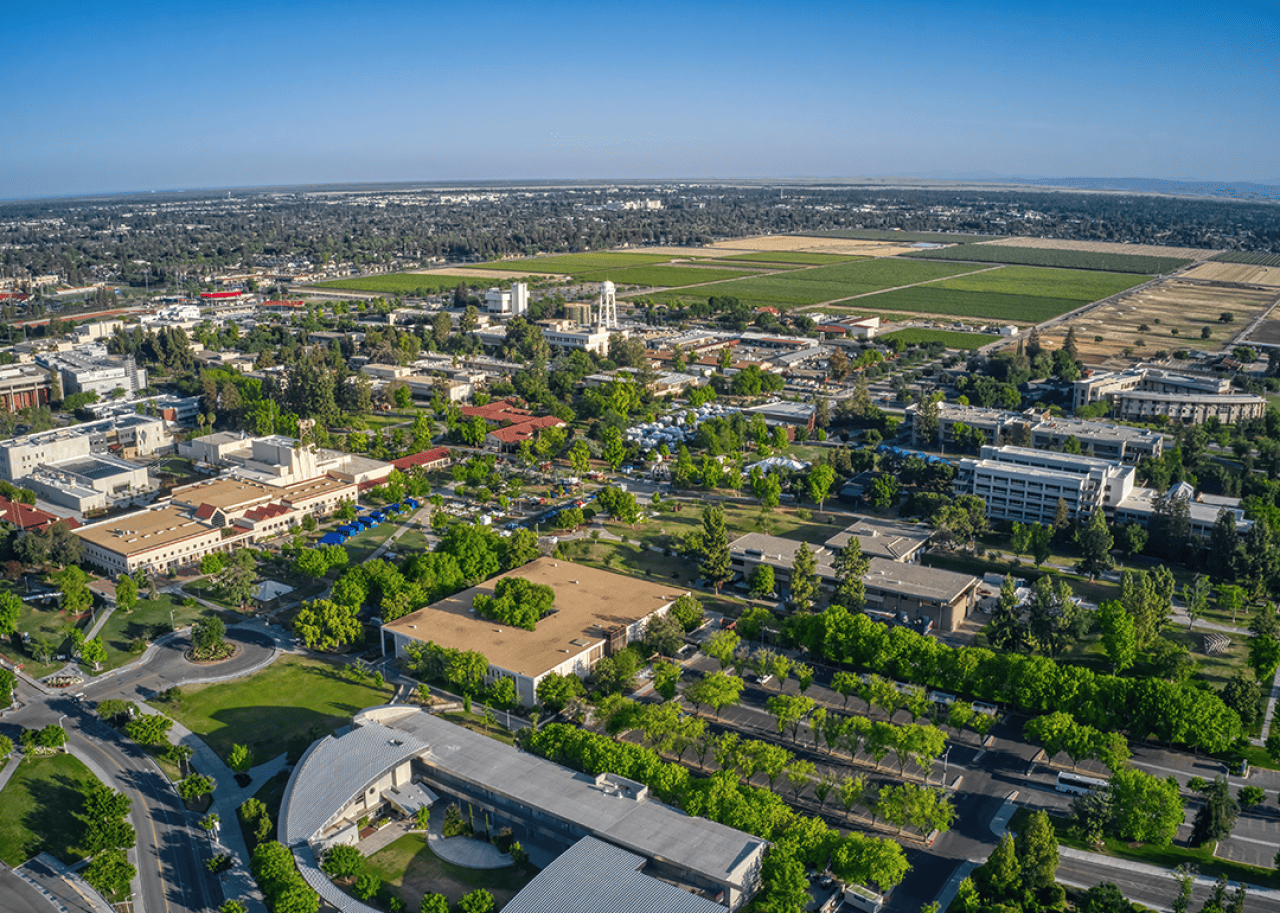
Once the syllabus is divided, the next step is to assess the weightage of each topic. Not all topics are equally important; some carry more marks or appear frequently in exams. Past papers are invaluable for determining which topics are commonly tested. Official exam guidelines can also provide hints about areas of emphasis, and consulting teachers or mentors can add insights from experience. Once data is collected, categorize topics into high-impact (frequently tested, high marks), medium-impact (moderately important), and low-impact (rarely tested, low marks). This prioritization ensures that your study time is spent efficiently, focusing on areas that can significantly boost your score.

Difficulty is another crucial factor when prioritizing topics. A high-weightage topic may be conceptually challenging, while a low-weightage topic could be straightforward. Evaluating difficulty through self-assessment, analyzing past papers, and seeking guidance from teachers allows for realistic planning. Combining weightage and difficulty, high-impact, low-difficulty topics become “quick wins,” while high-impact, high-difficulty topics require longer, focused study sessions. Low-impact topics with high difficulty can often be deprioritized if time is limited, ensuring maximum returns on effort.

With weightage and difficulty assessed, it’s time to allocate study time based on priority. A balanced approach could dedicate 40–50% of time to high-impact topics of medium difficulty, 25–30% to high-impact, high-difficulty topics, 15–20% to medium-impact topics, and 5–10% to low-impact areas. This allocation ensures that high-value topics receive the attention they deserve without neglecting other parts of the syllabus. Using time-blocking techniques, such as scheduling difficult topics in the morning when focus is highest, helps improve retention and efficiency. Short breaks, following techniques like Pomodoro or 50-10, maintain concentration over long study periods.

Once a schedule is set, incorporating active learning techniques enhances topic-wise preparation. Simply reading or highlighting is insufficient; engaging actively with the material is crucial. Solving practice questions immediately after studying a topic reinforces understanding, while flashcards, mind maps, and diagrams aid memory retention. Teaching or explaining topics aloud also consolidates knowledge and reveals areas that need further revision. High-impact topics should be revisited multiple times to ensure mastery and confidence before the exam.

Mock tests and past papers are invaluable for reinforcing topic-wise learning. They help identify frequently asked questions, uncover weaknesses, and improve time management during exams. After each mock test, it’s essential to review mistakes, revise weak areas, and adjust the study plan accordingly. This iterative process ensures that high-impact topics are fully mastered and that preparation adapts dynamically to performance.

Regularly monitoring progress is vital for staying on track. Check off completed topics, assess understanding through quizzes or practice questions, and adjust the schedule for areas that need more attention. This prevents last-minute panic and ensures a systematic approach to covering all important topics. Additionally, maintaining physical and mental well-being supports effective study. Adequate sleep, proper nutrition, short workouts, and mindfulness techniques like meditation enhance focus and cognitive performance, making topic-wise preparation more efficient.

In conclusion, analyzing your syllabus and prioritizing high-impact topics is the most strategic approach to exam success. By breaking subjects into subtopics, evaluating weightage and difficulty, allocating time efficiently, employing active learning techniques, practicing with past papers, and monitoring progress, students can maximize scores while reducing stress. Prioritizing topics transforms preparation from overwhelming chaos into a structured, goal-oriented strategy, ensuring that students focus on the areas that matter most and approach exams with confidence. With consistent application, topic-wise prioritization is a powerful tool for achieving academic excellence.

Topics:

Uncategorized
Uncategorized

How to Analyze Your Syllabus and Prioritize High-Impact Exam Topics for Maximum Scores

By Elina parkar
4 min read • Originally published December 4, 2025 / Updated March 19, 2026
By Elina parkar
4 min read • Originally published December 4, 2025 / Updated March 19, 2026

Examtopics can feel overwhelming, not because of the difficulty of questions alone, but due to the vast amount of material students are expected to cover. Many struggle with where to begin, how to allocate time, and which topics deserve more focus. The key to achieving maximum scores lies in understanding your syllabus thoroughly and prioritizing high-impact topics effectively. Analyzing your syllabus helps identify areas that can yield the most marks, avoid wasting time on low-yield topics, and plan revision strategically.

The first step in this process is breaking down the syllabus into manageable units. Treat each subject not as a single block but as a collection of chapters and subtopics. For instance, in mathematics, “Algebra” can be further divided into linear equations, quadratic equations, and polynomials. In science subjects like physics, mechanics can be split into laws of motion, work, and energy. Breaking topics down makes it easier to assess their importance and difficulty, and creating a spreadsheet or table listing subjects, chapters, subtopics, and difficulty levels provides a clear roadmap for study.

Once the syllabus is divided, the next step is to assess the weightage of each topic. Not all topics are equally important; some carry more marks or appear frequently in exams. Past papers are invaluable for determining which topics are commonly tested. Official exam guidelines can also provide hints about areas of emphasis, and consulting teachers or mentors can add insights from experience. Once data is collected, categorize topics into high-impact (frequently tested, high marks), medium-impact (moderately important), and low-impact (rarely tested, low marks). This prioritization ensures that your study time is spent efficiently, focusing on areas that can significantly boost your score.

Difficulty is another crucial factor when prioritizing topics. A high-weightage topic may be conceptually challenging, while a low-weightage topic could be straightforward. Evaluating difficulty through self-assessment, analyzing past papers, and seeking guidance from teachers allows for realistic planning. Combining weightage and difficulty, high-impact, low-difficulty topics become “quick wins,” while high-impact, high-difficulty topics require longer, focused study sessions. Low-impact topics with high difficulty can often be deprioritized if time is limited, ensuring maximum returns on effort.

With weightage and difficulty assessed, it’s time to allocate study time based on priority. A balanced approach could dedicate 40–50% of time to high-impact topics of medium difficulty, 25–30% to high-impact, high-difficulty topics, 15–20% to medium-impact topics, and 5–10% to low-impact areas. This allocation ensures that high-value topics receive the attention they deserve without neglecting other parts of the syllabus. Using time-blocking techniques, such as scheduling difficult topics in the morning when focus is highest, helps improve retention and efficiency. Short breaks, following techniques like Pomodoro or 50-10, maintain concentration over long study periods.

Once a schedule is set, incorporating active learning techniques enhances topic-wise preparation. Simply reading or highlighting is insufficient; engaging actively with the material is crucial. Solving practice questions immediately after studying a topic reinforces understanding, while flashcards, mind maps, and diagrams aid memory retention. Teaching or explaining topics aloud also consolidates knowledge and reveals areas that need further revision. High-impact topics should be revisited multiple times to ensure mastery and confidence before the exam.

Mock tests and past papers are invaluable for reinforcing topic-wise learning. They help identify frequently asked questions, uncover weaknesses, and improve time management during exams. After each mock test, it’s essential to review mistakes, revise weak areas, and adjust the study plan accordingly. This iterative process ensures that high-impact topics are fully mastered and that preparation adapts dynamically to performance.

Regularly monitoring progress is vital for staying on track. Check off completed topics, assess understanding through quizzes or practice questions, and adjust the schedule for areas that need more attention. This prevents last-minute panic and ensures a systematic approach to covering all important topics. Additionally, maintaining physical and mental well-being supports effective study. Adequate sleep, proper nutrition, short workouts, and mindfulness techniques like meditation enhance focus and cognitive performance, making topic-wise preparation more efficient.

In conclusion, analyzing your syllabus and prioritizing high-impact topics is the most strategic approach to exam success. By breaking subjects into subtopics, evaluating weightage and difficulty, allocating time efficiently, employing active learning techniques, practicing with past papers, and monitoring progress, students can maximize scores while reducing stress. Prioritizing topics transforms preparation from overwhelming chaos into a structured, goal-oriented strategy, ensuring that students focus on the areas that matter most and approach exams with confidence. With consistent application, topic-wise prioritization is a powerful tool for achieving academic excellence.

Topics:

Uncategorized
Advice From the Pros

Casting calls for actors and extras in New York, Los Angeles, and more

Casting calls for actors and extras in New York, Los Angeles, and more
By Jaimie Etkin
4 min read • Originally published December 4, 2025 / Updated March 19, 2026
By Jaimie Etkin
4 min read • Originally published December 4, 2025 / Updated March 19, 2026
Dpongvit // Shutterstock

Movies and TV shows casting across the US

The glitz and glam of Hollywood captures the attention of Americans starting from an early age. Beyond celebrities’ Instagram Stories and red carpet poses, there are actors out there paying their dues and honing their craft in pursuit of a sustainable career or a fulfilling sideline. Submitting to casting calls is a big part of that journey.

Whether you’re a working actor or an aspiring one, you might be curious to know which movies and TV shows are casting roles near you. Backstage compiled a list of projects casting right now across the U.S., and which roles they’re looking to fill.

Grusho Anna // Shutterstock

‘Drama/Thriller Feature Film’

– Project type: feature film
– Roles:
— Toya (supporting, female, 15-40)
— Donna (supporting, female, 18-35)
— Daniel (supporting, 18-50)
– Average hourly rate: $12
– Casting locations: Rochester, New York; Atlanta, Georgia; Buffalo, New York; New York City, New York
– Learn more about the feature film here

Tikkyshop // Shutterstock

’72 Hours,’ Bouncers’

– Project type: feature film
– Roles:
— High End Club Bouncers (background extra, male, 18-100)
– Average hourly rate: $18
– Casting locations: Brooklyn, New York; New York City, New York; Jersey City, New Jersey; Newark, New Jersey; Hoboken, New Jersey
– Learn more about the feature film here

Media_Photos // Shutterstock

‘He Named Him Adam’

– Project type: feature film
– Roles:
— Hal Stephens (supporting, male, 30-40)
— Raynell (supporting, female, 28-32)
— Pastor Mark (Cameo) (supporting, 40-60)
– Average hourly rate: $108
– Casting locations: Burbank, California
– Learn more about the feature film here

Grusho Anna // Shutterstock

‘The Circle in the Sky’

– Project type: feature film
– Roles:
— Aya (lead, female, 21-35)
– Average hourly rate: $63
– Casting locations: Los Angeles, California
– Learn more about the feature film here

Media_Photos // Shutterstock

’72 Hours’

– Project type: feature film
– Roles:
— Club Goers (background extra, 18-35)
– Average hourly rate: $18
– Casting locations: New York City, New York; Newark, New Jersey; Brooklyn, New York; Morristown, New Jersey; Hoboken, New Jersey
– Learn more about the feature film here

Media_Photos // Shutterstock

‘Lovers & Angels’

– Project type: feature film
– Roles:
— Jennifer (lead, female, 23-50)
– Average hourly rate: not available
– Casting locations: New York City, New York
– Learn more about the feature film here

Grusho Anna // Shutterstock

‘The Lost Drill Sergeant Film’

– Project type: feature film
– Roles:
— Army Drill Sergeant (lead, male, 25-40)
— W.A.S.P. Female Pilots (lead, female, 20-40)
— ARMY CHAPLAIN (lead, male, 23-40)
– Average hourly rate: $13
– Casting locations: Denver, Colorado
– Learn more about the feature film here

Grusho Anna // Shutterstock

‘Night Driver’

– Project type: feature film
– Roles:
— Extras (background extra, 18-100)
— Production Assistant (crew)
— Go-Go Dancers/Drag Queens (background extra, 18-40)
– Average hourly rate: $22
– Casting locations: Los Angeles, California
– Learn more about the feature film here

muratart // Shutterstock

‘My Queen Mom Rules’

– Project type: scripted show
– Roles:
— PARTY GUESTS (background extra, 20-50)
— OFFICE WORKERS (background extra, 20-50)
— BODYGUARDS (background extra, 25-40)
– Average hourly rate: $17
– Casting locations: Los Angeles, California
– Learn more about the scripted show here

Grusho Anna // Shutterstock

‘Oscar’s Story’

– Project type: feature film
– Roles:
— Young Extras (background extra, 12-99)
— Young Adult Extra (background extra, 18-39)
— Jack (day player, 17-23)
– Average hourly rate: $62
– Casting locations: New York City, New York; East Chatham, New York
– Learn more about the feature film here

Gorodenkoff // Shutterstock

‘Mama’s Boy,’ A24 Horror Series’

– Project type: scripted show
– Roles:
— Playboy Cover Model (Still Photo Shoot) (background extra, female, 18-30)
– Average hourly rate: $63
– Casting locations: New York City, New York
– Learn more about the scripted show here

Gorodenkoff // Shutterstock

‘Crown by Blood’

– Project type: feature film
– Roles:
— Victoria (lead, female, 18-25)
— Alex (lead, 21-28)
— Steve (lead, 30-43)
– Average hourly rate: $175
– Casting locations: Boca Raton, Florida
– Learn more about the feature film here

KinoMasterskaya // Shutterstock

’72 Hours,’ Shirtless Club Performers’

– Project type: feature film
– Roles:
— Attractive Club Performers W/ Club Dance Experience (Okay W/ Shirtless) (background extra, male, 18-37)
– Average hourly rate: $38
– Casting locations: Kenilworth, New Jersey; Brooklyn, New York; Newark, New Jersey; Morristown, New Jersey; Jersey City, New Jersey
– Learn more about the feature film here

Grusho Anna // Shutterstock

’72 Hours,’ Beautiful Guests’

– Project type: feature film
– Roles:
— Beautiful Guests (background extra, female, 18-40)
– Average hourly rate: $27
– Casting locations: Newark, New Jersey; Brooklyn, New York; New York City, New York; Hoboken, New Jersey; Jersey City, New Jersey
– Learn more about the feature film here

guruXOX // Shutterstock

‘Exit 17’

– Project type: feature film
– Roles:
— Jessica Hughes (supporting, 28-40)
— Stephanie (day player, female, 18-35)
— Casting PA (crew)
– Average hourly rate: $28
– Casting locations: New York City, New York
– Learn more about the feature film here


Topics:

Advice From the Pros
Entertainment

This ‘Game of Thrones’ star is taking his search for climate solutions global

This ‘Game of Thrones’ star is taking his search for climate solutions global
By Daphne Chouliaraki Milner for Atmos
8 min read • Originally published December 4, 2025 / Updated March 19, 2026
By Daphne Chouliaraki Milner for Atmos
8 min read • Originally published December 4, 2025 / Updated March 19, 2026

Nikolaj Coster-Waldau speaks onstage during the Season 2 premiere of 'An Optimist's Guide to the Planet' at Crosby Hotel, New York City.

Photo by Noam Galai // Getty Images for Bloomberg Media

This ‘Game of Thrones’ star is taking his search for climate solutions global

In the opening episode of the latest season of “An Optimist’s Guide to the Planet,” Nikolaj Coster-Waldau travels deep into the Ecuadorian Amazon to meet the Indigenous community of Achuar.

There, in an act of collective self-determination, residents are resisting the construction of a road through their territory. They’ve seen what roads have brought elsewhere in the Amazon—deforestation, illegal mining, and spikes in violent crime—and decided that supposed “progress” cannot come at the expense of their autonomy or land. Instead, people here are choosing their own path, connecting their villages by river, converting diesel engines to battery power, and using solar energy to sustain themselves. “Technology is a tool that we can use; that we decide to use,” Coster-Waldau told Atmos. “It cannot be the other way around.”

The second season of “An Optimist’s Guide to the Planet,” which premiered Oct. 23 on Bloomberg TV alongside major streaming platforms, expands its global scope on small and large-scale climate solutions while sharpening its focus on agency and hope. Filmed across Europe, Asia, and the Americas, the series explores how communities are tackling challenges in water, waste management, and energy in deeply local and unexpectedly innovative ways.

Below, Coster-Waldau speaks with Atmos about filming “An Optimist’s Guide to the Planet” in a time of climate doomism—and why optimism is a choice, renewed every time someone decides to act for the Earth.

Daphne Chouliaraki Milner: The world has changed a lot since Season 1 of “An Optimist’s Guide to the Planet” premiered in 2024. Season 2 starts in your native Denmark, and then takes you to many other countries the world over. What feels different this time around in the stories you’re telling and the way you’re approaching them?

Nikolaj Coster-Waldau: It really does feel different this time. What I love about the show being global is that it gives you perspective. It’s so easy to get caught up in where you are. From Denmark, for example, the presence of war in Europe feels like it’s expanding, and other issues like climate have slipped down the ladder of interest, which is understandable but worrying.

When we started this season, I was questioning the optimism in “An Optimist’s Guide to the Planet.” So much seemed to be pulling in the wrong direction. But doing the show again has reminded me how much the human spirit—and our thirst for innovation, finding solutions, helping each other—is still very much an integral part of who we are. That gives me real reason for optimism and hope. It’s easy to lose sight of that because we’re caught in these social media echo chambers, especially with the conflicts in Ukraine and Gaza. People are constantly being fed information that confirms their bias, yet they are very adamant they’re seeing the full truth.

What’s changed for me is also how I think about climate communication. There’s been a tendency to scare people into caring, to create doomsday narratives that say if we don’t act now, the world will end. But that doesn’t work in the long term. These issues won’t be solved in our lifetime or in our kids’ lifetime; they take generations. You can’t keep saying the wolf is coming every other day.

A good example is how we sometimes misuse science, saying the poles are melting and sea levels will rise by 7.5 meters [24.6 feet], which is true only if the ice caps melt completely, thousands of years from now. That kind of exaggeration backfires. It makes it easy for people to dismiss the real crisis as a hoax. The reality is already bad enough. Just look at the extreme weather we’re seeing now, or the loss of biodiversity and pollution. It’s already completely out of whack, and it’s only going to get worse. That should be scary enough.

Daphne: I think that’s also where our responsibility comes in as storytellers, whether as writers or filmmakers. And I want to return to what you said earlier about hope and the intergenerational aspect of it. But before that, I have a more logistical question about the second season. You travel through so many different environments, from coastal cities to farmlands to innovation hubs. How did you decide where to film?

Nikolaj: It was really based on lessons from Season 1 and on going to places we hadn’t been before. In the first season, we wanted to film in India, but didn’t want to travel all that way for just one story. It needed to be part of a full block. So for Season 2, we planned three main shooting blocks: one in the Americas, one in India, and one in Europe.

We combed through all these incredible stories happening around the world. That’s the fun part because it shows there’s so much innovation everywhere. And then, of course, there’s the logistical side: How do we actually make it work? What helped was looking at the themes we wanted to explore this season—water, waste management, and energy were big ones—and choosing stories that felt distinct but connected through those threads. And while we always include a stop in Canada because our production company is based there, the rest really comes down to curiosity and logistics.

Daphne: You met such a big range of people, researchers, activists, entrepreneurs, and land defenders, all of whom are working on sustainability. What stands out to you about the people behind these solutions?

Nikolaj: For me, it’s the realization that we share so much, no matter where you are in the world. Everyone wants the same basic things. Everyone wants to do something meaningful, to have a sense of purpose, and to feel agency over their own destiny. And everywhere we’ve been, there’s this real belief that action matters and that you can make a positive impact in your own life and in others’ by doing something, however small.

What’s interesting is that once you move outside Europe and the wealthiest parts of the world, optimism actually grows. Belief in tomorrow grows. I won’t try to analyze why, but it’s fascinating and it gives me hope. Humans are just incredible. The solutions we’ve seen range from high-tech innovations to the simplest, low-tech ideas that are pure genius. In many places, people are solving very basic problems, like access to water, sewage issues, and waste management challenges, with almost no resources, and doing it in ways that avoid creating more pollution or harm.

What I love about this season is that it connects those stories. The point is that while circumstances differ worldwide, we already have the solutions we need. It now comes down to resources and political will. Hopefully, the show inspires someone to think, “Why don’t we do that?”

Daphne: As you say, you cover a huge range of different solutions, large-scale, small-scale, tech-focused, grassroots. Is there one from Season 2 that really surprised you, or that made you think, why doesn’t the rest of the world already know about this?

Nikolaj: Yes, one that really stayed with me was a story about fungi. We filmed with a company in Chicago called Mycocycle. One of the founders came from construction, which is one of the world’s biggest sources of CO2 emissions and waste. They realized that nature already knows how to break this material down, in that fungi are doing it all the time.

That, to me, is one of the big ideas of this season: There’s no such thing as waste. In nature, everything is reused; a leaf falls, it decomposes, and becomes fuel for new life. We’ve somehow forgotten that everything we create can also be part of that cycle if we find the right processes. Seeing how this company used fungi to break down and reuse construction waste was incredibly inspiring.

Then, in India, we filmed another story that also began with waste, specifically cleaning up the Ganges. A company there collects around 30 tons of discarded flowers a day from temples. One of the scientists noticed a white growth on the flowers, fungi again, and started experimenting. That curiosity led to the creation of flether, a leather-like material made from floral waste. It’s brilliant because it uses nature’s own mechanisms to solve problems we think are uniquely human.

It reminded me of something from Season 1, when we visited the zero-waste village in Japan. A man there told me he’d looked up the English word “waste,” and realized there’s no direct equivalent in Japanese. It’s always “waste of time,” “waste of energy.” That stayed with me. There really is no waste; it’s all energy and resources. We just have to learn how to use them differently.

Daphne: You’ve seen how differently people experience climate change, and how similarly they respond with care and ingenuity. What do you think connects us most in this shared effort to build a livable future?

Nikolaj: I think the problem is that we’re always looking for a bad guy and a good guy. But we’re in this together. Not many people actually want to destroy the world. Sure, there are a few horrible people out there, but 99.99999% of us want the same things.

I always use this example: If you think about your week—all the people you’ve interacted with—how many were truly awful? Maybe one or two, out of hundreds or even thousands. Most people are decent. It’s the same with these global issues. We all basically want the same outcomes, but we’re living in a world of constant noise and division.

That’s why I find it so inspiring to meet people who actually do something. Once you take action, things start to feel more manageable. If we keep focusing on fear or the idea that someone’s out to get us, we’ll get stuck. No one’s out to get us. Everyone just wants a better life. And if we put more of our energy into doing instead of talking, we’d get much further.

Editor’s Note: This interview has been condensed and edited for purposes of length and clarity.

“An Optimist’s Guide to the Planet” airs on Wednesdays at 8 p.m. Eastern time on Bloomberg Originals and is available on major streaming platforms such as Samsung TV+, Amazon Prime Video, and LG channels. Episodes will also air on Bloomberg TV and be available on demand on Bloomberg.com and YouTube.

This story was produced by Atmos and reviewed and distributed by Stacker.

Topics:

Entertainment
Careers & Education

‘Failing our kids’: Philadelphia’s struggle highlights how young learners nationwide miss out on legally mandated support services

‘Failing our kids’: Philadelphia’s struggle highlights how young learners nationwide miss out on legally mandated support services
By Rebecca Redelmeier for Chalkbeat
12 min read • Originally published December 5, 2025 / Updated March 19, 2026
By Rebecca Redelmeier for Chalkbeat
12 min read • Originally published December 5, 2025 / Updated March 19, 2026

Kimberly Halevy wearing a crimson red midi dress with mid-length sleeves walks with her son Joshua beside her, enjoy treats from an ice cream truck visible behind them, after a recent session with a special instructor.

Rebecca Redelmeier // Chalkbeat

‘Failing our kids’: Philadelphia’s struggle highlights how young learners nationwide miss out on legally mandated support services

When Kimberly Halevy’s son Joshua was three, she started hearing from his preschool that he was acting out. He rarely participated in circle time and had trouble playing with other kids.

Halevy’s friend had recently opened the preschool, and she liked that someone she knew took care of her son. But eventually, the preschool said it would only allow him back if he had a one-to-one aide to address his “disruptive” behavior, Halevy said.

At first, Halevy thought getting him that aide would be straightforward. But she now describes the effort to get her kid support through Philadelphia’s federally mandated, publicly funded early intervention system as exhausting.

Though state evaluators found Joshua should receive multiple forms of therapy each week, it took months for any services to begin, Halevy said. Then, once providers contacted her, she said it became a “guessing game” whether her son would receive the home-based occupational therapy and specialized instruction he qualified for every week.

“I kept being mad at myself for not pushing,” Halevy said. “But now I realize that it’s just the program.”

Across Philadelphia, young kids like Joshua are waiting months and sometimes years for early intervention services that they are legally entitled to, according to families, therapy providers, and advocates Chalkbeat spoke with.

Federal law states that a child must receive services as soon as possible after an evaluation team completes their Individualized Education Program, or IEP. Pennsylvania has interpreted that to mean 14 days. But one provider said the list she can access of children waiting for speech therapy — one of several early intervention services — is sometimes more than 2,000 families long.

Early intervention providers are under strain nationwide, with not enough funding or staffing to meet the need. But in Philadelphia — home to 16% of the state’s early intervention population — one player is largely responsible for the system: a 170-year-old nonprofit called Elwyn that the state pays to manage the publicly funded program.

As Philly’s early intervention system struggles to meet the needs of all kids, some providers and advocates say neither Elwyn nor the state officials who oversee the program are doing enough to ensure kids get services on time.

In response to Chalkbeat’s questions, Elwyn President and CEO Charles McLister said Elwyn does not comment on specific cases, but the organization works quickly to assess children and provide them with services. “For the vast majority of cases, services are provided within the defined window,” said McLister.

But McLister acknowledged that there can be delays due to family communication, transportation, scheduling, provider availability, and severe staffing shortages across the sector.

Erin James, press secretary at the Pennsylvania Department of Education, said in a statement that the department stays in close contact with Elwyn throughout the year “to remind them of their legal obligations.”

James did not respond to questions about service delays for Philadelphia families. However, she noted that early intervention programs often lack sufficient resources. “Current funding levels for EI [early intervention] services are not sufficient because the population of students who qualify for EI services has been increasing for years,” James said.

Exterior view of brick wall with signage at Elwyn in Philadelphia, Pennsylvania.

Carly Sitrin // Chalkbeat

In Philadelphia, the program’s delays are a key reason many of the city’s most vulnerable kids fall behind before they even start kindergarten, advocates say. Data from early intervention program reports the state publishes shows Philly children in early intervention programs lag behind their peers elsewhere in key growth areas, like developing social-emotional skills.

“The whole idea of having to wait more than the required time is really putting kids at a disadvantage,” said Inella Ray, director of parent advocacy and engagement at the advocacy organization Children First. “Because when kids don’t have the support that they need, in today’s current education or environment, they get pushed out.”

Parents face delays accessing early intervention services

Early intervention is part of the landmark Individuals with Disabilities Education Act, which dictates that all children with disabilities must have access to a free and appropriate public education. Though each state creates and manages its own program, all kids through age five who are identified as having a developmental delay or disability are eligible.

In Pennsylvania, the Department of Education oversees local early intervention programs for preschool-age kids. In almost every county, families get connected with services through an intermediary unit, a kind of regional education service agency.

But in Philadelphia, things work differently. The state pays Elwyn a combination of state and federal dollars to administer the city’s preschool early intervention program, along with a much smaller program in Chester. Last fiscal year, its contract was worth around $90 million. Elwyn is in charge of assessing children, developing their IEPs, and subcontracting with a network of providers for services they qualify for.

When Halevy’s kids’ preschool said her son needed an aide, the preschool owner gave Halevy advice: Phone Elwyn. So she did, and she was relieved when the organization told her they could fit Joshua in to begin his evaluation later that week.

That was July 2024. She hoped Joshua would have services in time to be back at preschool by the following September. But soon, Halevy said she began hitting roadblocks.

In August, she said she didn’t hear much from Elwyn. Like other early intervention programs statewide, Elwyn often takes a two-week service break at the end of summer — one of many scheduled break periods during the year.

But then, when she did hear back that September, she learned Elwyn wouldn’t consider providing a one-to-one aide without observing Joshua in his educational environment. But the preschool said he couldn’t return to class unless he had someone there to specifically support him.

At the end of September, when evaluators wrote Joshua’s initial IEP, they documented that they discussed adding an aide to assist Joshua at preschool. But they wrote that because they could not observe Joshua in his educational environment, they did not have enough information to support that recommendation. “[T]he family is in a difficult position,” the team wrote on the IEP, which Chalkbeat has reviewed.

Joshua’s IEP states that he should receive occupational therapy and specialized instruction each week. The law requires services to begin within 14 days. But more than a month after, Joshua still wasn’t receiving services, Halevy said.

At the time, Halevy was stretched thin. She was also working to get services for her two-year-old daughter, who struggled with speech, through the separate early intervention program that serves children up to age three, run by the city.

For Halevy, sorting out her daughter’s services in the birth-to-three program was simple. Service providers quickly began contacting her, and therapists started showing up for sessions. But for her son, nothing.

“One day, I’m like, ‘Oh my gosh, what’s going on with Josh?’ and I start calling every number I had at Elwyn,” said Halevy.

It wasn’t until two more months later, in November, that he finally began to receive occupational therapy, she said recently after reviewing text messages. In December, she said his special instruction began.

Early intervention IEPs not always followed

Elwyn’s Philadelphia program is the largest in the state, serving around 11,000 preschool-age children, according to the most recent data from the 2023-24 school year. The organization first won its contract for early intervention services in Philadelphia in 1998.

But its outcomes for kids are behind the rest of Pennsylvania.

The state requires early intervention programs to report data on how kids progress in certain areas, like social-emotional learning and acquiring new skills. State program reports show that for the last five years of data, children in Elwyn’s Philadelphia program have been less likely to progress in all three growth categories compared with the state average.

Margie Wakelin, a senior attorney at the Pennsylvania-based Education Law Center, said her team has assisted more than 80 Philadelphia families in the last year whose kids’ education was disrupted at least in part because they couldn’t access appropriate services from Elwyn. The vast majority of those children, she said, were Black and Brown kids affected by poverty.

Some families hire attorneys to help them access the services they’re entitled to, or get pro bono representation from organizations like the Education Law Center. Many who win their cases get compensatory education, often in the form of money the family can use to pay for services after the case is over.

But that doesn’t make up for lost time, as children quickly age out of early intervention. Research shows that children’s brains develop more rapidly between birth to five than at any other time of their life. Many families, Wakelin said, have also had their children suspended from preschool or made to only attend partial days because of their disabilities.

“It’s such a critical period for kids to have access to high-quality education,” said Wakelin. A system that identifies children as needing services but doesn’t follow through, she added, is “really failing our kids.”’

McLister, Elwyn’s CEO, said the organization has learned that, in some cases, children are suspended from their preschool programs because of learning or behavioral needs. “Elwyn is not part of this decision-making and often learns about it after the fact,” he said. He added that the organization is developing tools “that will help us understand the frequency in which this happens” and is creating additional resource materials for families.

State reports show that Elwyn’s program is successful in some areas, like evaluating 97% of kids within 60 days, the state-required timeline. But that’s just the first step in what advocates say often becomes a month-long process to get services.

Though the law is clear that kids should receive services within 14 days of their IEP being written, the state does not publish information on how long kids wait for services after an evaluation, or how many service interruptions they’ll experience when providers are no longer available.

When it comes to Elwyn’s performance, CEO McLister said that students’ growth data does not account for the unique challenges of providing services in Philadelphia. The children Elwyn serves have higher needs than the state average, he said, with higher incidences of developmental delays and a greater prevalence of multiple other challenges, such as limited English proficiency, economic disadvantages, and other social risk factors.

“For younger children, these factors produce more modest gains,” said McLister.

McLister emphasized that Elwyn has been successful in evaluating the vast majority of children on time, and said the most common reason an evaluation falls outside the 60-day window is a parent cancelling an initial evaluation appointment and needing it to be rescheduled.

He said delays in getting kids’ services are often the result of scheduling challenges and staffing shortages — 95% of service issues related to speech and language services, he said, are due to a lack of staff. He said other delays occur when families move or change their child’s preschool enrollment, and when providers return kids to the “needs list,” meaning they stop service for that child, which happens “for a variety of reasons.”

For Joshua, getting a consistent special instructor, a position meant to support Joshua’s learning, has been impossible, Halevy said. Her text history, which she reviewed recently, documents the challenges: The first special instructor who contacted her never visited and stopped responding to texts, she said. The next person was more helpful and saw Joshua a few times, but then abruptly quit. Now, after more than a month of no special instruction, a new provider comes mostly regularly, Halevy said.

Access to occupational therapy has been slightly better, Halevy said. For the first several months of service, Joshua’s occupational therapist showed up inconsistently and seemed rushed, Halevy said. Now, after working out a schedule, she consistently comes around once a week.

Early childhood intervention needs more funding, some say

These and other challenges aren’t unique to Philadelphia families. But preschool operators and early intervention providers say there are particular and longstanding problems in Philly.

Two years ago, Sharon Neilson, former director of the Woodland Academy Child Development Center in West Philadelphia, was part of a group pushing to bring attention to problems in the city’s early intervention program. Council members held a hearing about parents’ challenges accessing services, and Neilson and other providers met with Elwyn.

At the time, Neilson said, she was hopeful that things would improve. But since then, she said, “we’ve actually seen it get worse.”

Neilson, who now works as support staff at Woodland Academy, said of the 22 children enrolled at the preschool, about four currently receive services from Elwyn, and three more are going through the process of getting evaluated.

The preschool helps families navigate the process, in part because submitting required paperwork and scheduling evaluations can create additional barriers, she said. But even with additional help, in her experience it still usually takes months for kids to be evaluated and services to begin, she said.

“I think that’s the saddest thing for me,” Neilson said. “The families are very frustrated because they don’t know what to do — they just know that they need help for their child, but it’s just very hard to navigate.”

Officials say a lack of resources is largely to blame. Over the past decade, the number of preschool-age children in Pennsylvania receiving early intervention services has grown by a third, and funding hasn’t kept up.

Pennsylvania Department of Education spokesperson Erin James said that is why Gov. Josh Shapiro proposed increasing funding for preschool early intervention by $14.5 million in the state budget. However, months past the budget deadline, lawmakers remain at an impasse over the budget and early education providers are further strained.

One provider who contracts with Elwyn said concerning inequities exist in Elwyn’s program. (Chalkbeat is not naming the provider due to her fears of retaliation from Elwyn.) It’s an accepted norm, the provider said, that kids in nicer neighborhoods get picked up for service much faster than those in poorer neighborhoods.

“There’s an access and equity issue across the board,” said the provider. “And that’s exacerbated by the shortage of providers.”

Asked about those access and equity concerns, McLister said that to address some related challenges, this year Elwyn is implementing more targeted training for staff and plans to develop a family resource center. He said the organization has also employed internal speech language pathologists to assign to high-priority cases.

When families reach out to Elwyn, McLister said staff provide them with documentation and verbal explanations of how the process works to ensure families understand their rights, next steps, and how to give consent for evaluations.

The organization also periodically notifies providers of historically underserved ZIP codes to encourage providers to serve kids equitably across the city, and includes provisions in its contracts meant to “promote fairness and accountability.” McLister said Elwyn places subcontractors on corrective action plans if the organization “detects patterns of non-acceptance that disproportionately impacts underserved areas.”

As for Halevy, she says her family has gotten relatively lucky. They were able to get Joshua started on an evaluation quickly. And she’s been able to get new therapists when others stop showing up.

But her family’s biggest piece of luck, she said, is that her husband recently got a new job with better health insurance. She plans to use that to get some of the services her kids need. That means she no longer will completely rely on Elwyn.

She just wishes she could erase the months of waiting and worrying about why Joshua’s services took so long to start.

“Basically, what happened is we fell through the cracks,” she said.

This story was produced by Chalkbeat and reviewed and distributed by Stacker.

Topics:

Careers & Education
Entertainment

Financial anxiety spikes during the holidays: 6 expert coping strategies

Financial anxiety spikes during the holidays: 6 expert coping strategies
By Elise Mendelsohn for Alma
6 min read • Originally published December 5, 2025 / Updated March 19, 2026
By Elise Mendelsohn for Alma
6 min read • Originally published December 5, 2025 / Updated March 19, 2026

A small pine tree with a single red ball ornament.

EmHoganPhoto // Shutterstock

Financial anxiety spikes during the holidays: 6 expert coping strategies

The holidays, for all their warmth and connection, can push us over the edge in terms of financial stress. Despite dwindling savings accounts, we may not want (or feel able to) cut back on holiday travel or gifts for loved ones. According to a newly released survey, 79% of consumers have less than $1,000 set aside for the 2025 holiday season, and over half (52%) expect to incur debt that will take months to pay off.

Living in a state of financial anxiety—defined as persistent worry, dread, or stress about money—is becoming the norm. In a recent survey, 80% of Americans reported feeling some level of anxiety about their finances, and 34% described their anxiety as “moderate” or “severe.” When asked about specific stressors, respondents pointed to inflation, everyday expenses, the state of the economy, and their income as their top concerns.

This year in particular, financial anxiety may be compounded by erratic economic headlines, job market concerns in response to high-profile layoffs at companies like Amazon and UPS, as well as ongoing questions about how AI will reshape or potentially eliminate a wide range of careers.

With that in mind, Alma recommended six strategies for managing financial stress during the holiday season.

Financial Stress Can Impact Every Aspect of Our Lives

Anxiety about money can steal the joy from holiday celebrations or what could be cozy moments at home. When you’re feeling anxious for any reason, it’s natural to shift into “survival mode.” This may appear like pulling away, becoming short-tempered, or focusing on control (“We can’t spend on that”) instead of staying connected. In these instances, the stress isn’t just about money—it’s about the fear, uncertainty, and insecurity underneath it.

A 2025 study revealed the extent to which financial anxiety is impacting Americans’ lives:

  • 25% of Americans say money worries keep them up at night on at least a weekly basis.
  • 57% of those who are married or living with a partner say that financial uncertainty has impacted their relationship with their spouse or partner.
  • 55% of Americans say they’ve missed out on social events due to financial concerns.
  • 49% say money worries have affected their job performance.
  • 40% of Americans say financial worries have made them physically ill.

The good news? Financial anxiety, while overwhelming, responds well to targeted strategies that address both the practical and emotional sides of money stress.

Therapist-Backed Strategies That Help You Cope with Financial Stress

Addressing financial anxiety during the holidays, or at any time of year, isn’t just about managing numbers on a spreadsheet. It’s about understanding the emotions, beliefs, and pressures that shape our relationship with money. If you’re experiencing financial stress, seeing a mental health therapist can be equally as beneficial as using a budgeting app or working with a financial advisor.

While working with a therapist who understands your unique situation will have the best outcomes, following these therapist-approved approaches can help you navigate this season with more clarity and less stress.

1. Get clear on what’s important to you.

What do you truly value during the holidays? It may be spending time with your kids, engaging in traditions passed down through generations, catching up with old friends, reconnecting with your childhood, or a chance to sit down and do nothing for a change. When you identify what’s actually important to you, it becomes easier to spend (and not spend) intentionally.

Put this value-based spending into practice by jotting down your top two or top three holiday priorities. Then test each potential purchase. Are you buying something that aligns with one of your top priorities? If not, consider putting your wallet away.

2. Fully explore the scary “what-ifs.”

Financial fears can feel vague and overwhelming. Instead of letting your worst-case financial scenarios swirl around in your head, try walking through them, step by step:

  • What would really happen if your expenses or job situation changed?
  • Who would be willing and able to support or advise you?
  • How could you realistically downsize or cut back?
  • What opportunities might you have for earning additional income?
  • Which organizations offer resources and advice?

Talking through the actions you could take with a therapist, or someone else you trust, can be surprisingly reassuring. It helps shrink the sense that “anything and everything could happen” and gives you back a sense of agency and resilience. You may also realize that you have a social safety net and would be okay even if your financial situation were to worsen.

3. Challenge your anxious thoughts.

When thoughts like “I’ll never pay off this debt” or “I’m going to lose everything” show up, pause and ask yourself two helpful questions:

  • What evidence actually supports that belief?
  • What might be another, more balanced interpretation?

Anxious thoughts often present narratives as facts when they’re usually closer to assumptions or worst-case guesses. The simple—though not always easy—act of challenging them can reduce the intensity and frequency of those thoughts. Using a printed worksheet like this one can help you take action.

4. Reconsider what “self-care” looks like.

It can be tempting to soothe financial anxiety by buying yourself something to “help you feel better.” This works temporarily due to the quick hit of dopamine and endorphins—and the illusion of control that comes from making a choice and taking action.

But there are many other ways to take care of yourself and still get that dose of feel-good hormones. When you’re craving self-care, try experimenting with other forms of comfort, such as walking outside, journaling, calling or seeing a friend, or setting one small financial boundary that will support you in really taking control of your money.

5. Set boundaries around holiday gifts.

The holidays don’t have to be about spending big to show you care. Have open conversations with family about budgets or gift exchanges. Suggest a price cap or set expectations that any presents from you will look different this year. Commit to making meaningful but low-cost gifts, like handmade cards, lovingly-prepared food, a shared experience, or helping someone with a task that’s been weighing on them.

You’ll likely be surprised by how much relief (and closeness) comes from simply being honest. Also, as evidenced by the statistics shared above, it’s unlikely that you’re the only one in your family stressed about money right now. Your loved ones may also be eager for new traditions that save everyone money.

6. Say “No,” even if it feels uncomfortable.

If a trip, gifts, or other holiday expenses just aren’t realistic this year, what if you let that be okay? Your loved ones may feel disappointed, but you need to do what’s best for you.

You can try saying something like, “Unfortunately, I won’t be able to take part in [insert family tradition here] this year. I’m disappointed, but hopefully I can join next year.” Explain as much or as little as you want to about your reasoning.

You might assume that people’s reactions will be far worse than they turn out to be or that you won’t be able to handle the emotional fallout. Taking a chance with honesty can be a reminder that people are often understanding and generous and that you’re stronger than you think.

How a Therapist Can Support You Through Financial Anxiety

If persistent worry about finances is making it hard for you to function in your personal relationships, at work, or to feel good about yourself as a person, it’s important to see a therapist sooner rather than later. In addition to helping you understand and challenge the underlying beliefs fueling your financial anxiety, therapy provides techniques to calm your nervous system, allowing you to approach financial discussions and decisions from a place of clarity rather than fear.

The therapeutic process recognizes that financial wellness and mental wellness are deeply interconnected. By addressing both the emotional and practical aspects of your relationship with money, therapy can help you develop sustainable strategies for managing financial stress and building long-term financial confidence.

This story was produced by Alma and reviewed and distributed by Stacker.

Topics:

Entertainment
Careers & Education

Anti-hustle culture 2026: Gen Z’s rebellion against burnout

Anti-hustle culture 2026: Gen Z’s rebellion against burnout
By Cassie Moorhead for Upwork
10 min read • Originally published December 12, 2025 / Updated March 19, 2026
By Cassie Moorhead for Upwork
10 min read • Originally published December 12, 2025 / Updated March 19, 2026

A diverse Gen Z business team in a meeting room.

LightField Studios // Shutterstock

Anti-hustle culture 2026: Gen Z’s rebellion against burnout

Advancing your career used to mean working long hours, communicating formally, and following strict hierarchies. Baby boomers and Gen Xers placed a high value on loyalty, job stability, and climbing the corporate ladder. They followed clear and traditional career paths, prioritized titles, and often stayed with one company for many years. Overworking, sacrificing personal time, and pushing through burnout were just part of the hustle. The same has been true for many millennials.

Gen Z is changing the paradigm. By 2030, Gen Z will account for 30% of the workforce, and this new wave of workers is replacing the hustle culture with work-life balance, mental health, and flexibility.

Only 36% of Gen Z feel “very engaged” at work (13 points behind the rest of the U.S. workforce), and 91% have faced at least one mental health challenge or burnout. They now expect employers to step up and support them.

Upwork, an online marketplace for hiring skilled freelancers, explains anti-hustle culture and how Gen Z is reshaping the modern work ethic by rebelling against constant grind, avoiding burnout, and prioritizing their well-being.

What is the anti-hustle culture, and where did it come from?

The anti-hustle culture is a mindset that opposes the idea that success requires nonstop busyness and sacrifice, which can lead to burnout. This mindset promotes a more balanced approach to work by prioritizing mental health, self-care, wellness, work-life balance, and overall employee well-being over the constant hustle.

The anti-hustle culture didn’t come out of nowhere. For decades, older generations believed in doing whatever it took to move up, including staying loyal to one company (the antithesis of today’s side-hustle culture), working overtime, and putting career first. Now, younger workers, especially Gen Z, are challenging that model and redefining what success looks like.

Gen Z is looking for work that feels meaningful, offers flexibility, and supports their values and well-being. They’re working to live, not living to work, and for them, work-life balance often ranks as high as pay.

Social media trends

Recent trends like “Bare Minimum Monday” and “Lazy Girl Jobs” across podcasts and social media platforms like TikTok have helped fuel the anti-hustle culture.

Bare Minimum Monday encourages workers to start the week slowly by focusing only on essential tasks. The idea is to ease into Monday, reduce anxiety, and avoid burnout.

Lazy Girl Jobs, a term popularized by TikToker Gabrielle Judge, promotes low-stress, well-paying roles that offer flexibility, better work-life balance, and more job satisfaction, without glorifying constant productivity.

Generational shifts

Generational views on work have shifted over time. Baby boomers saw work as a core part of their identity, prioritizing performance, loyalty, and rigid structures. Gen X held similar values but sought more balance between work and life. Millennials, shaped by the digital age, valued flexibility and leaned toward purpose-driven, goal-oriented careers.

Today, Gen Z is entering the workforce with different values, behaviors, and expectations. They prefer digital communication, prioritize equality and diversity, and care deeply about a company’s ethical impact. Gen Z is also more likely to “quiet quit” if their needs aren’t met, or to do only the bare minimum for their role while staying “under the radar.” And when dissatisfaction grows, they’re not afraid to quit without notice or ghost clients.

A table listing generations and their workplace values and behaviors.

Upwork

‍
Why Gen Z rejects “rise and grind”

Gen Z is turning away from hustle culture for several reasons. They’ve entered the workforce during a time of major disruption, seen the impact of burnout firsthand, and are reevaluating what success should look like. Instead of glorifying nonstop work, they are prioritizing mental health, balance, and meaningful experiences that shape how they approach their careers today.

Mental health needs

Gen Z places emotional well-being above professional achievement. When work becomes overwhelming, they’re more likely to step back and reset rather than push through at the expense of their health. According to Mental Health America, 71% of Gen Z workers in the U.S. report the lowest workplace health scores, a clear signal that mental health is a top priority.

Disillusionment with overwork

Gen Z has seen the fallout of hustle culture firsthand. They’ve watched older generations work long hours, suffer burnout, and still face layoffs or limited job security. These experiences have shown that hard work doesn’t always lead to stability or fulfillment, prompting Gen Z to take a more relaxed, intentional approach to work.

Different perceptions of success

Success isn’t just about money for Gen Z. It also means finding meaning and balance. In a recent Deloitte survey, 25% of Gen Z respondents chose their jobs based on work-life balance, while only 19% prioritized salary. For Gen Z, personal fulfillment now ranks nearly as high as financial gain.

Remote work realities

The remote-work strategies forced by the COVID-19 pandemic proved that productivity doesn’t require being in the office. Gen Z entered the workforce during this shift and quickly embraced the efficiency, flexibility, and reduced stress that remote work offers. They’re now less willing to accept rigid schedules and unnecessary office time.

How Gen Z’s work philosophy improves quality, not just comfort

Gen Z isn’t rejecting hard work but rather redefining it on their own terms, setting clear boundaries and choosing roles that promote their well-being. They’re focused on sustainable, high-quality performance that fits in their personal life, not nonstop hustle. This shift is about working smarter, and they’re doing it in a number of ways.

Prioritizing sustainability over burnout

Gen Z is moving away from the hustle mentality that often leads to burnout. Instead of chasing short-term wins through overwork, they focus on maintaining steady, sustainable performance. This approach reduces fatigue and helps them consistently deliver high-quality results within healthy boundaries.

Working smarter through technology

Rather than overworking, Gen Z uses technology to streamline tasks and boost efficiency. Automation tools, digital collaboration platforms, and AI integration help them achieve better outcomes with less wasted time, proving that productivity doesn’t have to come from overextension.

Purpose-driven performance

For Gen Z, meaningful work drives motivation. They perform best in roles that align with their values and allow them to make a real impact. In fact, 89% say a sense of purpose is key to job satisfaction.

Emphasis on transparency and feedback

Gen Z values regular, honest feedback over traditional performance reviews. They prefer ongoing check-ins that allow them to adjust quickly, stay aligned with expectations, and continuously improve their work, resulting in higher quality and fewer missteps.

An infographic on the Gen Z values that improve work quality and well-being.

Upwork

How businesses can collaborate effectively with anti-hustle freelancers

Working with Gen Z freelancers means partnering with talent that values flexibility, mental health, and meaningful work, and that mindset often leads to better creativity, stronger communication, and higher-quality results. These professionals prioritize efficiency over burnout and bring fresh perspectives that can elevate your projects.

Tip 1: Focus on mental health and well-being

Gen Z freelancers place a high priority on mental and physical health. Foster a healthy working relationship by:

  • Setting realistic deadlines and clear workloads. Avoid last-minute assignments or vague project scopes. For example, instead of saying “ASAP,” agree on specific due dates and outline exactly what deliverables are expected.
  • Encouraging open communication about availability and stress levels. Ask freelancers to share their preferred working hours or if they’re managing multiple projects. Check in periodically by asking, “Is this pace working for you?” or “Do you have the bandwidth for an additional task?”
  • Expressing appreciation for their contributions. Acknowledge good work with quick messages like “Great job on this,” or “Thanks for the quick turnaround, much appreciated.” Positive feedback goes a long way in motivating freelancers and building trust.

Tip 2: Set clear scopes and boundaries

Anti-hustle freelancers thrive with structure. Avoid confusion and unnecessary stress by:

  • Clearly defining project deliverables, timelines, and expectations. Specify what’s needed, when it’s due, and what success looks like. For example, say “a 1,000-word blog post on X topic by Thursday at 3 p.m.,” rather than “a draft sometime next week.”
  • Breaking down projects into milestones. Dividing large projects into smaller, trackable tasks helps freelancers stay organized and focused. This approach also allows for regular check-ins and feedback without overwhelming them.
  • Agreeing on working hours and response times. Ask freelancers for their preferred work hours and clarify yours. Note time zones as well. For example, “Let me know your usual availability, I’m online weekdays 10-6 EST and try to respond within a day.”
  • Respecting off-hours and avoiding unnecessary pings. Don’t send messages late at night or over the weekend unless it’s an emergency or pre-agreed upon. If you do message outside their hours, mention when a reply is needed and that no rush is expected.
  • Sticking to the agreed scope. Don’t add extra tasks without discussing timeline or rate adjustments. Scope creep can lead to stress and frustration. If something changes, ask: “Are you available for an additional task this week? I’m happy to adjust the milestone accordingly.”

Tip 3: Use real-time feedback and communication

Gen Z values ongoing feedback, not just end-of-project evaluations. Improve collaboration by:

  • Giving quick and actionable feedback. Respond to progress updates with clear, specific input. For example, if you were working with a freelance copywriter, say “Let’s tighten the intro to grab attention faster” rather than “This needs work.”
  • Using real-time communication tools. Platforms like Slack, Google Chat, or Microsoft Teams help streamline conversations. Creating a shared feedback loop. Set regular check-in points to review progress and address issues early. A simple mid-project review or weekly sync can help prevent misalignment.
  • Keeping everything in one place. Use shared tools like Google Docs, Notion, or Trello to organize briefs, timelines, and revisions. This minimizes back-and-forth and helps freelancers stay focused.

Tip 4: Emphasize collaboration, not control

Micromanagement undermines trust and limits creativity. Collaborate better with anti-hustle freelancers by:

  • Aligning on shared goals. Instead of detailing how every step should be done, explain what success looks like. For example, if you’re collaborating with a freelance writer, say “I’d like this article to help beginners understand X topic in under five minutes” rather than providing a rigid outline.
  • Involving freelancers in key decisions. Ask for their input on timelines or format. For instance, “Does this delivery date work for you?” or “Would you prefer a Google Doc or Notion setup for tracking edits?”
  • Using tools to guide, not control. Manage tasks with platforms like Asana, Monday.com, or Jira to stay updated without micromanaging. Set deadlines and priorities, then let the freelancer handle execution in their own workflow.

Tip 5: Prioritize results, not hours worked

Gen Z doesn’t equate long hours with high performance. Keep them motivated by:

  • Measuring success by quality and impact. Focus on deliverables, deadlines, and KPIs rather than hours logged. For example, assess a blog post on clarity, SEO performance, and delivery date, instead of the hours it took to write.
  • Setting clear, outcome-based milestones. Break projects into measurable stages, such as “submit draft one by Friday” or “revise visuals based on feedback by next Tuesday.” This keeps expectations transparent and progress easy to track.
  • Allowing flexible work styles. Let freelancers choose how and when they work, as long as the final output meets agreed standards. Whether they work in the morning or late at night shouldn’t matter if the results are strong.

An infographic on how to align with anti-hustle values in freelance partnerships.

Upwork

Anti-hustle doesn’t mean anti-ambition

Gen Z is redefining traditional workplace values by prioritizing work-life balance and mental health instead of nonstop hustling. This shift is not about laziness. These workers are capable, motivated, and able to reach their goals while protecting their well-being and avoiding burnout.

Building successful businesses and increasing productivity among Gen Z starts with respecting their mental health, supporting healthy boundaries, and encouraging open communication and continuous feedback.

FAQ

Why is Gen Z rejecting the traditional hustle culture?

Gen Z is rejecting the hustle culture due to rising mental health awareness, economic instability, and a belief that work shouldn’t come at the cost of well-being. They’ve seen that overworking doesn’t guarantee success or security and prefer flexible, purpose-driven work that fits into their lives.

How do anti-hustle principles affect productivity?

Anti-hustle principles improve productivity by prioritizing mental health, work-life balance, flexibility, and autonomy. When workers feel supported and mentally well, they’re more focused, engaged, and motivated. Clear boundaries help prevent burnout and frustration, leading to steady, high-quality performance over time.

Is anti-hustle the same as quiet quitting?

No. Anti-hustle is a conscious choice to prioritize mental health, balance, and meaningful work; it’s about working smarter, not less. Quiet quitting, on the other hand, is when someone does only the bare minimum because they feel disengaged or undervalued in their role. Anti-hustle aims to improve work quality, not avoid it.

‍Upwork is not affiliated with and does not sponsor or endorse any of the tools or services discussed in this article. These tools and services are provided only as potential options, and each reader and company should take the time needed to adequately analyze and determine the tools or services that would best fit their specific needs and situation.

‍Any individuals mentioned are referenced based on publicly available information at the time of writing. Upwork does not endorse or maintain an ongoing affiliation with them.

This story was produced by Upwork and reviewed and distributed by Stacker.

Topics:

Careers & Education

Posts navigation

Older posts
Newer posts
Featured Jobs
Kirkus Media
Editorial Intern
Kirkus Media
New York City, New York (US)

Gaia Inc
MEDIA COORDINATOR
Gaia Inc
Louisville, CO

Gaia Inc
Global Paid Media Specialist
Gaia Inc
Louisville, CO

Gaia Inc
Director of Media Strategy
Gaia Inc
Louisville, CO

Hearst Television
Account Executive
Hearst Television
Milwaukee, WI, United States

All Jobs »
PREMIUM MEMBER

Cathryn Drake

New York, NY
28 Years Experience
Cathryn Drake is a freelance writer and editor. Formerly copy chief of design magazine Metropolis, she edits publications for Yale School of...
View Full Profile »
Join Mediabistro Membership Today

Stand out from the crowd with a premium profile

Mediabistro Logo Find your next media job or showcase your creative talent
  • Job Search
  • Hot Jobs
  • Membership
  • Newsletter
  • Career Advice
  • Media News
  • Hiring Tips
  • Creative Tools
  • About
Facebook YouTube Instagram LinkedIn
Copyright © 2026 Mediabistro
  • Terms of Use
  • Terms of Service
  • Privacy