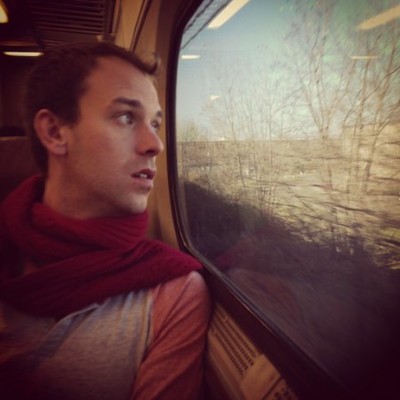
In late November, Rolling Stone published an exhaustively detailed, 15,000-word treatise titled “How America Lost the War on Drugs,” detailing the government’s $500 billion failure. Jack Shafer wrote that he wanted to “force every newspaper editor, every magazine editor, and every television producer in the land to read” the piece penned by RS National Affairs writer Benjamin Wallace-Wells. We spoke with Wallace-Wells about the genesis of the article, writing and reporting the feature, and the positive response it’s garnered.
How did you land this assignment? Did you pitch it to your editors at Rolling Stone or did they come to you?
Rolling Stone‘s editors came to me. I was told it was an idea that resonated with Jann [Wenner]. Obviously the drug wars are something that been have a topic of particular interest to Rolling Stone for many years but that had fallen out of urgency and current issues. I think they wanted a piece that would be comprehensive about what happened in drug policy since the crack epidemic. What exactly has been going on? We have this feeling that the drug war has acquired its own inertia and we have massive programs that are ongoing to try to combat coca growing and coca delivery in Colombia. There are programs in South East Asia. There are federal programs to assist police. We’re still putting hundreds of thousands of people in jail. But the feeling within the magazine was that we weren’t really sure what we were getting for all that input. The assignment as it was given to me was to figure out a way of synthesizing and structuring all that we were getting. And that’s more or less what I tried to do.
Also on Mediabistro


Was the original article intended to be this long and ambitious?
I’m not really sure. It was left open. The initial idea was to go out and see where it took me. There was the sense that I would be spending a number of months on it and that it would be a serious undertaking. It ended up taking me about three and a half months to report.
How did you manage to structure the story to keep readers interested?
There were two challenges at the outset. With a piece like this that covers action that’s taken place in so many different venues, it’s hard to write an honest accounting of it. You have to account for the dynamics of street gang competition in San Francisco and the political tension that was felt around law and order by the Clinton administration. You need to keep a sense of narrative propulsion going throughout. How do you get people from 1992 to 1996 and have them give a shit about what’s going on?
The other challenge was intimacy. In a piece that’s functionally an assessment of policy, how do you get some feeling of familiarity with characters and a sense of what this world feels like? How do you keep them familiar and credible?
Around the time I was beginning this in May or June, I was reading some histories by Taylor Branch of the Civil Rights movement, which are phenomenal, but also grapple with this narrative problem. The Civil Rights movement is something that feels incomplete unless you are grappling with it at a number of different levels, both geographically and structurally. The way he solved that was to tolerate an episodic character. You were telling a history, not making an argument. You would do an episode in this place and an episode in that place, and permit the through line to be chronology. That solved both of the problems that I was trying to grapple with because if you’re telling a history rather than writing an expository, there’s a very natural propulsion to it. The propulsion is, “What happened next?” Because we were able to jump in and out of these worlds, I was able, within the confines of these scene-conscious episodes, to do at least a little bit to develop characters and understand the feeling that came through for people who were involved at all different levels in the fight.
That was the first big decision we had to make, and that was the reason we ended up doing it the way we did. It was a structure that would permit the depth that we thought we needed for this kind of story and also the kind of intimacy that without it a magazine article would flounder.
It sounds like it was a pretty collaborative process. Were you working with your editors pretty closely throughout the whole thing?
Yeah, my editor and I would go back and forth with some frequency. I definitely wanted to make sure we were on the same page. Another instruction they gave me at the beginning that was enormously helpful was they wanted to make sure it was credible, that it relied not on advocates who had a leftist point of view, but was very reported and bureaucratic and insider-y — which sounds a little bit demeaning — but which would comprehend the War on Drugs as people were actually fighting it. That direction was critical because it gave the piece credibility.
| As I was going through the reporting, I sat down and said, “What are the 15 episodes that link up all the raw material that I’m getting.” Then I went back to my editor and he said, “That one sounds sensible, that one sounds terrible.” |
One of the things that has been heartening is to hear people who were former D.A.s and policymakers say, “That’s how I remember it.” That’s what we were striving for, not to condemn the War on Drugs or detail a kind of argument.
How many people did you speak with? Did you speak with them once or do multiple interviews?
It was both. My guess is about 75 or 100 people. There were a few who were really critical sources, many of whom appear in the story frequently, who I went back to again and again. John Carnevale [the budget director of the drug control office] had a terrific aggregate view of what was happening, both in the macropolicy world and in the policy world. So did Carol Bergman, who was the legislator for a few drug czars. Many of the people I just spoke to once. I don’t know how many people we quote in the story. 35? 30? Maybe not that many. We were going back and forth a couple of times with most of the people I ended up quoting.
The thing that jumped out reporting this was it’s like the old men who sit around at the V.A. telling stories about the one battle they were sort of near in World War II. For the people who’ve gone through this, who’ve been D.A.s and police officers, this is something they care enormously about and they want to tell you their war stories. Many people have asked me since this came out whether there was a reluctance to talk to me and Rolling Stone. I tell them, “No, it was really the opposite.” People who have spent their lives trying to figure out how best to fight the drug war were extremely eager to tell their stories and show their perspective. As you talk to these people, very quickly the war stories begin to come out. For the most part, it wasn’t a pulling teeth or contentious set of interviews. It was a very pleasant and interesting narrative process. People are very constructed in their heads of these stories as stories because they told them to their friends and their grandkids. It was ripe for picking.
How’d you go about finding your sources?
The first thing I did was compile a timeline of significant characters and events in Washington legislatively. As you go about tracking down the staffers who were involved in those efforts, they give you more names of people they worked with: D.A. agents, social service providers in California. The decision of what policy choices [the government made] at certain times responding to what phenomena was out there not only gave the story a structure but also gave me a reporting framework because it gave me a basic line to spool out from. I was basically filling out this single narrative. I got some people through the DEA. I got some people, specifically care providers, by looking up interesting local stories, seeing who was quoted, and tracking them down. I got a bunch of people through looking up the research and seeing who the academics were who were doing interesting things in the world. The biggest thing was just talking to people who were dealing with this stuff legislatively and figuring what inputs they had and working backwards from there. The amazing thing about beginning as a political reporter — which is what I began as — is that so much moves through Washington and if you have a basic handle on how Washington operates, it can give you a way to write all kinds of great things like this.
How many pages of notes and hours of tape did you have and how did you group it all together when you sat down to write? Did you use an outline?
I don’t know how many pages of notes. When I was like a third of the way through the reporting, I started to notice things that people kept talking about as a critical moment, such as the conversations within the Clinton administration over whether to commit to Plan Colombia, which was a huge, several billion dollar program that’s now lasted seven years. This was regarded by everybody as a catalytic moment in the spooling out of the drug war from one century to another. Everybody talked about the conversations between Jim Burke, who’s the head of the Partnership for a Drug Free America, and Barry McCaffrey, who was Clinton’s second drug czar, in which Burke convinced McCaffrey to commit to this focus on youth prevention.
As I was going through the reporting, I sat down and said, “What are the 15 episodes that link up all the raw material that I’m getting.” Then I went back to my editor and he said, “That one sounds sensible, that one sounds terrible.” Once I had that, I could basically concentrate my reporting more, not to exclusively focus on those specific things, but to understand how each of these moments fit into the narrative. The weird and exciting thing about the story was the way in which it linked up activity at all different levels and all different places.
When did you start writing? Did you do all the reporting first and then begin writing?
I basically did all of [the reporting first]. I finished the draft in August and we didn’t do much with it for a month or so. Then there was some editing in October and we edited it on and off in November, but there wasn’t a huge time crunch. The assignment I had was write it when I was done [reporting], which was a nice luxury. I was going at a pace of about 1,000 words a day, which for me is a considerable clip, but with a 15,000-word piece, that’s still a considerable amount of time. It took me the better part of a working month — from the middle of July to the middle of August — to write.
And when did you start the reporting?
May.
Do you think the article successful? What do you think of the final product?
Yeah, I think it was really good. I think the reaction has been terrific. It’s a complicated thing and part of the struggle with the topic is that what is most critical to understand is masked. Right now, if we are thinking about meth amphetamine policy, we want to know where the raw chemicals come from, how they are transported into the U.S., and whether we are doing the right thing to combat them, but because there’s this fog of illegality, you never know exactly how that’s working. You have to rely on some triangulation of law enforcement people who are trying to fight it and policy people who are trying to figure out how it works and registered parties and cobble it together. I don’t pretend that throughout the tale it’s absolutely right. There are places where it falls far short of achieving truth, but I think it’s a pretty solid account of how the policy evolved and it’s an honest attempt to wrestle with how the traffic has evolved. There are certainly things that I know I could do better. I feel like there are some characters that we could have developed a little further, who were more compelling than we made them in the draft. There were things like that.
One of the things that has been nice is watching how people have responded. They responded to all different parts of it. I’ll see an article [discussing my article] that focuses on the overall structure of policy, then I’ll get interviewed by a radio station about the meth epidemic, and then I’ll see a blog post that is detailing the innovative new ideas about policing and how drug crime works. A nice thing about this piece is that its been large enough to contain a lot of different ideas about how the world of drug traffic and drug consumption work. It’s always a little bit hard to access your own work but this is one of the few pieces that I haven’t been completely embarrassed to read.
What’s up next for you?
I’m doing two pieces. One for Rolling Stone, which is an attempt to detail the political closet, focusing on the ways in which gay politicians are being closeted and how that closet is being broken or has been broken in the last couple of years. It’s been a nice mix of being political significant because of how the country’s politics have evolved, but also being a documentary of a microculture, which is where I think journalism can do it better than other fields.
The second, for another magazine, is a piece about the culture of Republican operatives, but it’s through a discussion of the efforts of the National Republican Campaign Committee, which is the institutional arm of the Republican party in the House of Representatives. It focuses on how they come up with sufficiently compelling candidates to take back the House and the Senate, and in what ways and how have the politics of the country shifted since 2004.
Tips on writing a long article
1. Be conscious of why a reader would read it
“A 15,000-word piece takes 50 minutes to read. It’s an enormous commitment, so at every point you have to be conscious of what is going to get the reader from word 5,100 to word 5,300. The best you can do is try to ensure you’re investing the piece with enough of the natural drama that the real world has, so the reader will continue reading after 1993 when you’ve had your nut graf,” Wallace-Wells says.
2. Be really into the subject
“I just started writing really long pieces a couple of years ago and there’s a natural impulse to game out what’s compelling to an editor and try to get into the magazine by guessing their interests. But if I hadn’t enjoyed paging through old Nexis clips of old crack epidemic stories, I would have been bored out of my skull.”
3. Listen
“I came into this story with the idea that drug policy had been badly botched and that bottom-line impression hasn’t changed, but the reasons for it have changed enormously,” says Wallace-Wells. “I’m much more sympathetic to drug warriors, the law and order perspective, and the difficulty of doing something about a very real problem than I had been at the outset. That sensibility helped make the story more credible.”
Noah Davis is mediabistro.com’s associate editor. You can reach him at NOAH at MEDIABISTRO dot COM.
Topics:
Mediabistro Archive