

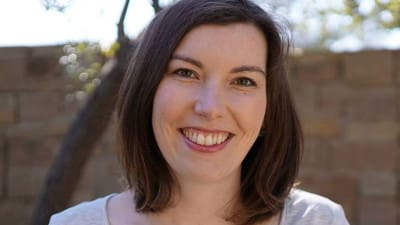
With eight years of travel blogging for sites such as BootsnAll, Written Road, and HotelChatter, Jen Leo knows that instant interaction fuels modern-day travel writing. Whether she’s writing a column for the LA Times‘ Daily Travel & Deals and Web Buzz blogs, or sending out the latest hotel deals through Twitter, Leo has focused her calling at one of the country’s leading papers. And she’s as comfortable with book-length works as she is with 140-word limits: along with online writing, she has edited or co-edited six books in the popular Sand in My Bra series, collections of humorous women’s travel writing for the publisher Travelers’ Tales. Below, Leo talks about turning an internship into a career, the financial uncertainties of blogging, and being engaged in social media as a journalist.
Tell us about your background. When did you first feel a need to travel and write about your experiences?
Besides the time I tried to run away from home on my red tricycle when I was three or four, I first realized I liked being away from home at sleepover soccer camp when I was 12. All the other kids called their parents every night, and I didn’t realize that I hadn’t until my family told me when I got back. But the first time I feverishly ransacked a bookstore for travel books and maps dreaming of going to another country was when I was a senior in college, about to graduate and not wanting to go into the field I had studied — public relations.
As for writing — I started a diary when I was 12 and wrote bad love poetry through my teens. I distinctly remember times when I was 13 or 14 and I would actually feel physical urges to pick up a pen and write whatever I was thinking about.
Also on Mediabistro

| “My romantic vision of Asian travel had taken me to something more along the lines of a crack house than an opium den.” |
What places around the world have made the biggest impression on you as both a traveler and a writer?
The opium den in Northern Thailand is the first place that comes to mind. I was on a short three-day hill tribe trek outside of Chiang Mai. After dinner one evening, I saw some of the men in our group walk off one by one over to a hut the guides were sleeping in. When my friend came back, I asked him what was inside. He said that they were smoking opium. The notion of an opium den made me think of a room with big velvety pillows, sheer curtains that gently graced the floorboards, and antique pipes that were intricately carved and handed down from generation to generation. All I could think about was the story I’d be able to bring back. I told my friend I wanted to go in and asked him to set it up. I was about to set foot in a world of such exotic intoxication that my life and writing would be forever changed. When I got inside I saw two Thai men lying on the floor across from each other. They were on thin mats and the pipe was hardly an heirloom. Rather, it was a cut-up Coke can with a candle underneath it. My romantic vision of Asian travel had taken me to something more along the lines of a crack house than an opium den.
I was jolted out of my romantic notions of travel. I quickly learned that I’d better live the adventures as they came and figure out how to write about them afterward. It’s hard not to think about writing a story as something interesting is happening to you, but it’s better to live in the moment than to miss something unique because you’re over-thinking it.
You have said that your time working at Travelers’ Tales allowed you to meet many well-known writers. Which writers, whom you have or have not met in person, have been your biggest influences?
I’ve met the heavy hitters like Jan Morris, Simon Winchester, Bill Bryson and Pico Iyer — but the travel writer that means the most to me is Tim Cahill. I found his adventure travel writing in Outside magazine when I was living in Lake Tahoe. His story about winter camping beneath the Northern Lights is what got me started down this path, and I’ve been fortunate to meet him in person several times. I see Tim nearly every year at the Book Passage Travel Writers and Photographers Conference in Marin. We had a great time laughing about how his books and magazine writing inspired me while we were in conversation together for an author event for one of the books that I edited, What Color is Your Jockstrap?.
At Travelers’ Tales, you edited women’s travel stories for the Sand in My Bra series. How did you get the idea to compile women’s travel stories with a humorous bent, and how did you find your contributors?
Travelers’ Tales, which specializes in nonfiction travel writing, did well with women’s travel writing through Marybeth Bond’s books like A Woman’s World. They also did well with their humor line edited by Doug Lansky that started with There’s No Toilet Paper on the Road Less Traveled. I had worked for Travelers’ Tales for nearly five years before I took off to do some traveling of my own. When I got back, they felt that I was seasoned enough to take on a solo edit (and since publisher James O’Reilly thought I was funny) we thought we’d marry two of our successful lines.
Describe your transition from book editor to professional blogger. What compelled you to shift your career in this direction?
It happened rather organically: I started blogging in 2002 with my first blog, WrittenRoad. It was a journal of my entry into the travel writing world. I posted submission guidelines for other newbie travel writers like myself and gave the inside scoop to my literary life as I published articles, edited the Sand in My Bra series and went on book tours. A few years into it I started to get offers. The first paid blogging gig I received was to launch HotelChatter. Next I launched Las Vegas Logue for BootsnAll and a poker blog for Weblogs Inc., where I met Harold Check. Harold went on to be an editor at Six Apart. He brought me on to help him launch the Typepad Featured Blog. One of Six Apart’s marketing people moved on to work for MobiTV and asked me to write their corporate blog. And as this winding world of who you know works, former Lonely Planet guidebook author Andrew Nystrom asked me to launch the Los Angeles TimesTravel Deal blog with him when we got hired by the LA Times to run the online travel section. So as you can see, it was just making good impressions with people, and then they turned to me when they needed help in this arena.
Tell us about a typical day in your life as a travel blogger for the LA Times. How much time do you devote to research?
In a way, my whole life has become research. That doesn’t necessarily mean I’m sitting on the phone calling travel industry folks to check facts for posts. Rather it means I’ve become a very big sponge to all things travel. Every morning I get up around 6:30 or 7 a.m. and check a variety of online sources for breaking travel news and inspiring travel deals. Google Trends, Twitter, USA Today and Guy Kawasaki’s news portal Alltop usually point me towards what’s hot when I wake up. Sometimes I start this process on my iPhone from bed, and other times I make a point of getting dressed and going to my desk. I also turn on CNN Headline news and start in on my email inbox scouring for travel news and leads for my morning roundup post.
After I get the morning roundup post done then I can take a breather and have breakfast, answer personal emails, hold my baby, take a shower, etc. Since my blogging job is part time, I bounce between the computer and other things throughout the day to write another post, administrate the back end of the blog, take phone walk-throughs of new travel Web sites and just try to stay on top of the news as it hits. I often take a long lunch and run errands in the middle of the day since I’ve started pretty early. The day usually ends around dinner, but I’m always back online before bed to moderate comments.
How often are you on the road these days?
I’ve been traveling a bit lately. Just domestic travel (New York, Charleston, S.C., San Francisco, L.A. and Las Vegas) to show off our new daughter to friends. She’s almost five months old and just took her sixth plane ride. But this is all for personal travel — I don’t get on the road hardly at all for work.
| “You can build yourself as a quick source in a niche field if you participate regularly and selflessly on Twitter.” |
We know that bloggers rarely become rich, but is it difficult to become at least financially stable? How did you deal with uncertainties working as a freelance writer and blogger?
I wouldn’t call myself a good example of a financially stable freelance writer. I got lucky and married a man who was financially stable. Before I met my husband, I lived a rather nomadic life and was okay with not having very much money or many things. Having said that, it’s much easier for a pro blogger to make a living these days. When I started blogging, there weren’t paid positions. When bloggers did start getting paid, $5 a post was a common amount. Corporate blogging pays much more, and I’ve gotten $75-$100 a post at times. A recent Wall Street Journal article, “America’s Newest Profession: Bloggers for Hire,” listed bloggers getting $75-$250 per post. I’m sure that’s out there as I’ve experienced a taste of it, but I still know bloggers who get paid $10 and $25 per post.
The best advice I have for dealing with the financial uncertainties of being a freelance writer is not to expect your editors to pay you when they say they will. I’ve waited six months a couple of times for a check to come in. It’s easy to think you have money coming in when you’ve done the work, but the process of invoicing and actually getting paid can be a part-time job all of its own. If you need to take on a part-time (or full-time) job to run your life while you also write, do it and don’t feel bad about it. For job resources I like Journalism Jobs and the job board on Problogger. And of course you already know about mediabistro’s Freelance Marketplace.
In addition to travel writing, you have also developed a niche in writing about the world of professional poker. What are some similarities and differences between writing about a place and writing about a poker tournament?
I did write about poker for a couple of years, and was fortunate enough to keep my poker writing to the lifestyle side of things. I wrote poker player profiles for Woman Poker Player and had a gossip column in Bluff Magazine. One year, I blogged the World Series of Poker but had the freedom to write what I wanted. I left the chip counts to other more detail-oriented writers and tried to tell the backstory behind some of the players for the work I did.
You’re also actively involved in social media like Twitter (@jenleo) and even Tweeted during your pregnancy. Did you plan to give live updates during your delivery?
I love Twitter. I think it’s a fascinating medium. I did twitter the birth of our daughter as much as I could and twittered my wedding, too, in 2007. As it turned out, after a few days of inducing we couldn’t get to a full labor and had to deliver via Caesarian. Obviously I couldn’t Twitter from the operating table and was pretty drugged up afterwards.
Do you think it’s now necessary for journalists, editors, and other writers to be engaged in social media?
As necessary as invoicing, no. But I think it’s highly important to at least understand social media and the new role it’s taking in journalism to play in this game. It never feels good to not be able to participate in a conversation because you don’t know what the other person is talking about. These days, you better know about Twitter and Facebook if only because you sources might be referencing it. I also think it’s a good medium for newbies. You can build yourself as a quick source in a niche field if you participate regularly and selflessly on Twitter.
Besides the LA Times‘ blog, are there other blogs or Web sites you admire for their travel coverage?
I probably appreciate the work of the USA Today travel writers the most. From what I read, they seem to get travel news up the fastest on a consistent basis. Last year I talked to Ben Mutzabaugh who writes Today in the Sky. He told me he got up at 5 a.m. to write his column. I can’t compete with that. I like what Matt Gross does for The New York Times‘ Frugal Traveler. I respect Kevin May over in the UK who writes the Travolution blog and Sean O’Neil at Budget Travel‘s This Just In. We could actually talk travel blogs all day long, so I’ll just cut it short here.
Do you think the newspaper travel section will become obsolete in five to 10 years, as publications are either becoming online-only entities or shuttering completely?
That’s a tough question to answer because what I hope will happen and what I think will happen are two different things. I hope there are a few print travel sections alive in 10 years, but since I’m a betting girl, I wouldn’t put money on it. I think there’s a more important question here, and maybe you saw the discussion on TechCrunch: Brian Solis of TechCrunch sat down with Walt Mossberg, the tech columnist for The Wall Street Journal, and asked, “Are newspapers were worth saving?” Mossberg said, “It’s the wrong question to ask. The real question we should ask is if whether or not we can save good journalism.”
Since I’d rather have my Sunday coffee with a real newspaper in my hands, rather than a Kindle or being back at the computer on a day when I don’t have to work so hard, I truly hope the newspapers can find a way to stay above water.
After working for so many years in online media, do you think you’ll ever return to traditional book editing?
I prefer the pace of online media to traditional publishing. It suits my AADD. But I’ve only edited books and haven’t written one myself yet, so eventually I’ll get back to books or at least to write a book. My platform is strong, but I believe I can make it even stronger — which is what I’m doing now until I feel that undeniable urge to write a book. The problem is, I know too much about what you have to do to sell a book that it’s hard for me to think about writing a book without asking if it’s saleable first. Also, I want to really study which traditional publishers are making efforts to bridge the so-called “digital divide.” I’d want to write a book for a publisher that means well in this department and is open-minded enough to try a few new things. Then I could have the best of both worlds.
As a new parent, what are your views on exposing kids to travel and foreign, especially non-Western, cultures? Do you think it’s necessary or just beneficial for adults to travel widely with their kids?
I respect parents that open their children’s eyes to new cultures. That appreciation can start at home, but eventually they need to see for themselves through traveling. As my daughter grows, I hope I can introduce her to places I’ve loved, explore new countries for the first time together through her eyes, and eventually send her off to travel on her own. But that’s a long way off. Right now I’m just trying to figure out how we can fly smoothly and quietly to London this summer, and then manage to get good rest sleeping in the same room — considering my snoring just wrecked it for both of us on our recent weekender.
Five tips for finding success as a travel blogger:
1. Become an avid reader. Read travel blogs and figure out what you like and don’t like. You’ll find it will help your style.
2. Surround yourself with other travel bloggers, whether that’s meeting up at travel writer or blogger conferences on online with groups like Travel Blog Exchange. Go to travel shows or sit in travel writing workshops and introduce yourself to the panelists afterward.
3. Participate in social media. Since the travel blogging world exists so much online, participate online. Comment on your favorite travel blogs and become a travel resource yourself via your own blog or Twitter.
4. Write frequently. Successful travel blogs have daily or at least regular content on every weekday. Don’t just do it when you feel like it. Deliver solid content on a consistent basis.
5. Become a niche source. If you’re building a career, be a source on a particular topic that other Web sites can point to. You’ll get more traction in the industry if you can provide something fresh and/or helpful rather than just talk about where you went for you summer vacation.
Diana Kuan is a freelance writer who divides her time between China and the US. She often blogs on the road for AppetiteforChina.com.
Topics:
Mediabistro Archive