Mediabistro Logo Mediabistro Logo
  • Jobs
    Search Creative Jobs Hot Jobs Remote Media Jobs Create Job Alerts
    Job Categories
    Creative & Design Marketing & Communications Operations & Strategy Production Sales & Business Development Writing & Editing
    Quick Links
    Search All Jobs Remote Jobs Create Job Alerts
  • Career Resources
    Career Advice & Articles Media Industry News Media Career Interviews Creative Tools Resume Writing Services Interview Coaching Job Market Insights Member Profiles
  • Mediabistro Membership
    Membership Overview How to Pitch (Premium Tool) Editorial Calendars (Premium Access) Courses & Training Programs Membership FAQ
  • Showcase
    Featured Creative Stories Submit your Story
  • Log In
Post Jobs
Mediabistro Logo Mediabistro Logo
Search Creative Jobs Hot Jobs Remote Media Jobs Create Job Alerts
Job Categories
Creative & Design Marketing & Communications Operations & Strategy Production Sales & Business Development Writing & Editing
Quick Links
Search All Jobs Remote Jobs Create Job Alerts
Career Advice & Articles Media Industry News Media Career Interviews Creative Tools Resume Writing Services Interview Coaching Job Market Insights Member Profiles
Membership Overview How to Pitch (Premium Tool) Editorial Calendars (Premium Access) Courses & Training Programs Membership FAQ
Featured Creative Stories Submit your Story
Log In
Post Jobs
Log In | Sign Up

Follow Us!

Business Basics

The Digital Disruption (2010–2014): When the Numbers Started Moving

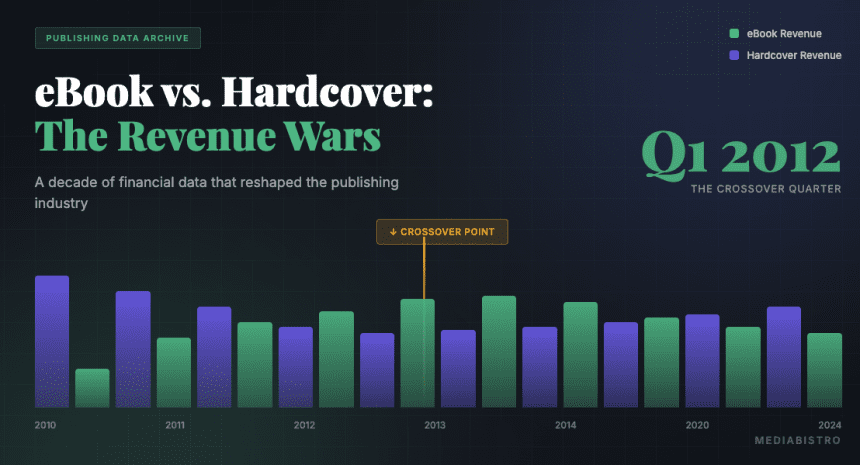
ebook vs. hardcover graphc
By Mediabistro Education
7 min read • Originally published January 2, 2026 / Updated March 19, 2026
By Mediabistro Education
7 min read • Originally published January 2, 2026 / Updated March 19, 2026

The first quarter of 2012 marked a watershed moment in publishing history. For the first time, net sales revenue from eBooks surpassed hardcover books in the United States—a shift that industry analysts had been predicting, dreading, or championing for half a decade.

According to the Association of American Publishers (AAP) March 2012 net sales revenue report, adult eBook sales reached $282.3 million while adult hardcover sales totaled $229.6 million. The digital insurgency had officially breached the castle walls.

But the story of how publishing arrived at that inflection point—and where it went afterward—reveals a more nuanced narrative than the “death of print” headlines suggested. This resource chronicles the financial data, market dynamics, and industry pivots that defined the Format Wars era and shaped the publishing landscape that professionals navigate today.

The Digital Disruption (2010–2014): When the Numbers Started Moving

2010: The Year Everything Changed

Amazon’s Kindle had been on the market since 2007, but 2010 was the year the publishing industry’s economic foundations began to visibly crack.

In July 2010, Amazon reported that Kindle book sales had surpassed the company’s total hardcover sales. The announcement sent tremors through boardrooms from midtown Manhattan to Frankfurt. By year’s end, eBook revenues tracked by the AAP had reached $446.3 million—still a fraction of the print market, but growing at triple-digit rates.

The same year brought Apple’s iPad and, with it, the agency pricing model that would reshape the economics of digital publishing. Under the agency model, publishers—not retailers—set consumer prices, keeping 70% of proceeds while retailers took a 30% commission. This was a direct challenge to Amazon’s wholesale model and its aggressive $9.99 price point for bestsellers.

Five major publishers—Hachette, HarperCollins, Macmillan, Penguin, and Simon & Schuster—adopted agency pricing for eBooks sold through Apple’s iBookstore. The move was designed to solve what industry insiders called “the $9.99 problem”: Amazon’s deep discounting was capturing market share while conditioning consumers to expect digital books at prices that, publishers argued, devalued the written word.

The strategy worked in the short term. Other retailers saw their margins protected, and Amazon’s stranglehold on eBook market share loosened slightly. But the legal consequences would prove severe.

2011: The 117% Surge

The numbers from 2011 were staggering. Despite some slowdown in the fourth quarter, eBook sales rose 117% for the full year, generating revenue of $969.9 million at companies reporting to the AAP—more than double the $446.3 million recorded in 2010.

The print market moved in the opposite direction. Adult trade hardcover revenue fell 17.5% to $1.29 billion. Adult trade paperback dropped 15.6% to $1.17 billion. The mass-market paperback category—those drugstore rack novels—lost 36% of its value.

Within adult fiction specifically, eBooks became the largest single format, surpassing hardcover, trade paperback, and mass market paperback. Digital sales in the category hit $1.27 billion, representing 30% of segment revenue.

Amazon announced in April 2011 that customers were choosing Kindle books more often than print: for every 100 print books sold, 105 Kindle eBooks moved. The psychological barrier had fallen.

Yet for all the disruption, Q1 2011 still showed hardcover ahead of eBooks in aggregate revenue: $335 million versus $220.4 million. The crossover hadn’t happened yet.

2012: The Pivot Point

The first quarter of 2012 delivered the data point that launched a thousand think pieces. The AAP’s March report, collecting data from 1,189 publishers, confirmed what many had anticipated: adult eBook net sales ($282.3 million) exceeded adult hardcover net sales ($229.6 million).

The swing represented a $167.3 million shift in relative position within a single year.

For the professionals tracking these numbers—acquisition editors, sales directors, literary agents, and authors negotiating contract terms—the implications were immediate. Royalty calculations shifted. Advance models required revision. Backlist strategy transformed as older titles with minimal print inventory became valuable digital assets. Rights negotiations intensified as the value of digital rights in territorial deals increased substantially.

The same year brought legal reckoning for the agency model. The Department of Justice filed an antitrust lawsuit against Apple and the five publishers who had adopted agency pricing, charging them with conspiracy to raise eBook prices. Three publishers settled immediately. The remaining two followed. Apple fought the charges, lost, and ultimately agreed to a $450 million settlement.

2013–2014: The Plateau Emerges

By 2013, the growth rate for eBooks had begun to moderate. Digital still captured 21% of trade sales—rising to 23.3% by year’s end—but the exponential curves of 2010–2011 had flattened.

Several factors contributed to the stabilization. Device saturation meant the early adopters who drove Kindle and Nook sales had already converted. Price normalization following the agency settlement narrowed the cost advantage over print. Genre differentiation emerged as romance, mystery, and science fiction readers embraced digital formats at higher rates than literary fiction audiences. And the resurgence of independent bookstores—written off as casualties of the Amazon era—began a slow revival that reinforced the value of physical books.

The Q1 Revenue Milestones: A Close Analysis

The Q1 periods of 2011 and 2012 represent the hinge point of the Format Wars. Understanding the specific dynamics of these quarters illuminates why this data became the most-cited reference in the publishing industry.

Q1 2011: The Last Quarter of Print Dominance

In the first quarter of 2011, the old order still held. Adult hardcover generated $335 million while adult eBooks brought in $220.4 million—a gap of $114.6 million in hardcover’s favor.

This data point represented the publishing industry’s last stand. Hardcover—the flagship format, the revenue driver for frontlist titles, the format that commanded premium shelf space and gift-giving prestige—still outperformed its digital challenger.

But the trend lines told a different story. Q1 2011’s hardcover figure was already down significantly from prior years. And the eBook number, while lower in absolute terms, reflected growth rates that print could not match. Industry executives monitoring the AAP reports understood the crossover was imminent. The only questions were when and how publishers would respond.

Q1 2012: The Crossover Quarter

Twelve months later, the positions had reversed. Adult eBooks hit $282.3 million (up 28% year-over-year) while adult hardcover fell to $229.6 million (down 31% year-over-year). The gap: $52.7 million in eBooks’ favor.

The Q1 2012 data didn’t just record a milestone—it forced operational changes across the industry within months of its release.

Historical Quarterly Revenue Milestones

The following table summarizes the key financial shifts in U.S. publishing during the Format Wars era. All figures represent net sales revenue reported to the Association of American Publishers.

Period Adult Hardcover Revenue Adult eBook Revenue eBook Growth (YoY) Market Event
Q1 2010 $394 million $91 million +252% iPad launches; agency pricing introduced
Full Year 2010 $1.57 billion $446.3 million +164% Amazon reports Kindle outselling hardcover
Q1 2011 $335 million $220.4 million +142% Amazon: eBooks outsell all print combined
Full Year 2011 $1.29 billion $969.9 million +117% DOJ investigation of agency pricing begins
Q1 2012 $229.6 million $282.3 million +28% eBooks surpass hardcover for first time
Full Year 2012 $1.12 billion $1.54 billion +59% Agency pricing lawsuit settlements
Q1 2013 $247 million $298 million +6% Growth rate moderation begins
Full Year 2013 $1.15 billion $1.61 billion +5% eBooks reach 23.3% of trade sales
Full Year 2014 $1.19 billion $1.49 billion -7% First annual eBook revenue decline

Source: Association of American Publishers StatShot reports

The Current State of the Market: Stability After the Storm

The publishing industry of 2025 bears little resemblance to the chaotic transition years of 2010–2014. The Format Wars have ended—not with a decisive victory for either side, but with an entrenched equilibrium.

The Numbers Today

According to the AAP’s StatShot Annual Report, U.S. publishing revenues totaled $32.5 billion in calendar year 2024, an increase of 4.1% from $31.3 billion in 2023. Between 2020 and 2024, total industry sales increased 22.1%.

The format breakdown reveals print’s enduring dominance. Print formats (hardback, paperback, mass market, special bindings) account for 50.5% of publisher revenue. Digital formats (eBooks and digital audio) account for 14% of all revenue, with eBooks generating $2.1 billion—approximately 10% of trade revenue.

For trade publishers focusing on consumer books, print’s share is even more pronounced: physical formats account for over 75% of trade revenue.

The most significant shift since the Format Wars hasn’t been eBook growth but audiobook expansion. Digital audio revenue grew 78.1% between 2020 and 2024. By 2024, audiobooks (11.3% of trade formats) had surpassed eBooks (10%) in market share—a development few analysts predicted during the Kindle fever of 2011.

Why Print Survived

The persistence of print books defied the predictions of many technology observers, who expected digital formats to dominate publishing, as they had in music. Several factors explain the difference.

Unlike music, which consumers experience identically across formats, the reading experience differs meaningfully between print and digital. Page feel, marginalia, spatial memory of text location, and the absence of notification interruptions create value that digital cannot replicate for many readers.

Print books also serve social and decorative functions beyond their content. Bookshelves communicate identity. Gift-giving favors physical items. The Instagram-era valorization of “shelfies” reinforced print’s cultural status.

As digital interfaces colonized work and communication, many readers sought print as refuge from screens—a dynamic accelerated by the pandemic’s forced migration to remote work. Meanwhile, independent bookstores, which grew from approximately 1,400 American Booksellers Association members in 2009 to over 2,400 by 2024, serve as community hubs that reinforce the value of physical books.

The New Equilibrium

For media professionals navigating today’s publishing landscape, the key insight from the Format Wars is that format preferences are not zero-sum. The industry evolved from “eBooks will kill print” panic to a stable multi-format ecosystem where print dominates literary fiction and illustrated books, eBooks maintain strong positions in genre fiction (particularly romance and mystery), and audiobooks represent the primary growth vector for nonfiction and commuter-friendly content.

Format choice often varies by title rather than by reader—the same consumer might buy a cookbook in hardcover, read a thriller as an eBook, and listen to a memoir as an audiobook.

The revenue data from Q1 2012 remains historically significant because it marks the moment digital and physical formats reached parity. But the subsequent decade proved that parity was the destination, not a waypoint on the road to digital dominance.

Topics:

Business Basics
Entertainment

Actors with the most Golden Globe wins of all time

Actors with the most Golden Globe wins of all time
By Jody Ellis
8 min read • Originally published January 6, 2026 / Updated March 19, 2026
By Jody Ellis
8 min read • Originally published January 6, 2026 / Updated March 19, 2026

Actors with the most Golden Globe wins of all time

The Golden Globes are eagerly anticipated every year by stars and fans alike as the world waits to see who will take home the coveted awards. Established in 1944 by the Hollywood Foreign Press Association, the awards were created to recognize achievements in entertainment for both foreign and domestic films and television. It started as a more casual affair, taking place at 20th Century Fox Studios as an informal lunch, but has evolved into a prestigious and significant event.

In addition to the Golden Globe awards, the HFPA also created the Cecil B. DeMille Award, first presented to the director and producer in 1952 and honoring outstanding contributions to the entertainment industry. Winners of Cecil B. DeMille awards include Hollywood legends Judy Garland, Alfred Hitchcock, and Walt Disney.

The Globes also had a special Henrietta Award, created in 1951 for the Foreign Press Association of Hollywood’s World Film Favorite Festival, that became part of the Globes in 1954 until it was retired in 1980. Winners have included Sophia Loren, Jane Fonda, and John Travolta. More recently, the Globes created the Carol Burnett Award, which honors excellence in television. It was presented to Burnett at the 2019 awards ceremony, and 2023’s honoree will be actor and comedian Eddie Murphy.

Actors, writers, and directors all vie to be recognized, and a Golden Globe nomination or win is considered a high achievement. As we await the results of this year’s award show, which takes place on Jan. 11, Stacker looked at who has won the most Golden Globes in Hollywood history. Using 2025 data collected from the Golden Globes website, we compiled wins and nominations for the most decorated actors of all time, ranking them by wins, with ties broken by nominations. Lifetime achievement awards or similar honors were not included.

#22. Robin Williams

– Wins: 4
– Nominations: 10

Beloved funnyman Robin Williams got his start on the television series “Mork and Mindy.” Williams’ portrayal of a quirky alien from another galaxy netted him his first win. He went on to enjoy a long career in film, with multiple nominations and awards for his performances in movies such as 1987’s “Good Morning, Vietnam” and the 1993 comedy “Mrs. Doubtfire.”

#21. Peter O’Toole

– Wins: 4
– Nominations: 11

British-born actor Peter O’Toole was dashing in the classic 1962 film “Lawrence of Arabia,” for which he won his first Golden Globe as New Star of the Year. O’Toole received awards for his roles in other iconic films, such as 1965’s “Beckett” and 1968’s “The Lion in Winter.” 

#20. James Garner

– Wins: 4
– Nominations: 12

James Garner’s long history of Golden Globe wins and nominations started in 1958 when he won New Star of the Year for his role in the movie “Sayonara,” in which he starred with Marlon Brando and Red Buttons. Garner eventually moved to the small screen, where he became well known for his roles in the series “The Rockford Files” and “Maverick.” He was nominated multiple times for Best Actor awards for both series, but didn’t win another Golden Globe until his 1986 performance in the limited series “Promise.”

#19. Michael J. Fox

– Wins: 4
– Nominations: 13

Michael J. Fox became a household name during his tenure on the hit television series “Family Ties,” which garnered him several Golden Globe nominations and one win. But his work on the TV series “Spin City,” where he portrayed Mike Flaherty, the deputy mayor of New York City, gave him the most wins. Fox won three Golden Globes for the role and was nominated four more times.

You may also like: 50 of the best albums by LGBTQ musicians

#18. Al Pacino

– Wins: 4
– Nominations: 19

Al Pacino won his first Golden Globe in 1973 for his role as mobster Michael Corleone in the 1972 film “The Godfather.” The movie practically swept the Golden Globes and the Oscars, putting Pacino in the spotlight and cementing what has become a memorable career. Pacino has since been nominated for multiple Golden Globes for his various roles, including the 2020 Best Supporting Actor Award for the Netflix movie “The Irishman” and the 2021 Best Television Actor for the drama series “Hunters.” Pacino also won the coveted Cecil B. DeMille Award.

#17. Jack Lemmon

– Wins: 4
– Nominations: 22

Jack Lemmon spent the bulk of his adult life in the spotlight, with more than 60 films to his credit and multiple television productions. Along with his many nominations and wins, Lemmon was honored with a Cecil B. DeMille Award. 

#16. Ed Asner

– Wins: 5
– Nominations: 11

Playing the gruff but lovable character of Lou Grant, first on the television series “The Mary Tyler Moore Show” and then its spinoff, “Lou Grant,” Ed Asner has been a familiar face on American television for decades. He won four Golden Globes for his roles on both shows and a Best Supporting Actor Award for the 1976 limited TV series, “Rich Man, Poor Man.” Asner continued working in the industry, doing voiceover work in TV and movies, including Pixar’s hit film “Up,” until his death in August 2021.

#15. Dustin Hoffman

– Wins: 5
– Nominations: 13

No one who’s seen the movie “The Graduate” could forget Dustin Hoffman’s poignant and riveting performance, and it’s no surprise that his role in the movie gave him his first two Golden Globe wins, netting him both the New Star of the Year Award and Best Actor Award. Along with his Golden Globe nominations and wins, Hoffman earned the Cecil B. DeMille Award.

#14. Kate Winslet

– Wins: 5
– Nominations: 14

Most remember Kate Winslet as the lovelorn character Rose in the hit movie “Titanic,” which earned her a Best Actress nomination at The Golden Globes. But before “Titanic” put her on the map as an actor, she was nominated for her role in the 1995 film “Sense and Sensibility.” Winslet took home her first two Golden Globes in 2009, for her roles in the movies, “The Reader” and “Revolutionary Road.” She’s since been nominated for and won awards for multiple roles in both film and television, including her 2022 Best Actress, Limited Series, Anthology Series or Television Motion Picture win for “Mare of Easttown.”

#13. Carol Burnett

– Wins: 5
– Nominations: 16

Comedian and actor Carol Burnett has been nominated and has won several Golden Globes for her roles on both the big and small screens. She starred in her own television comedy show, “The Carol Burnett Show” from 1967 to 1978, which earned her five Golden Globes. She also was nominated for her work in feature films such as “Annie” and “The Four Seasons.” In 2018, The Golden Globes created the “Carol Burnett Award” for excellence in television. Burnett was the first recipient in 2019.

#12. Jessica Lange

– Wins: 5
– Nominations: 17

Jessica Lange got her start working alongside none other than the legendary King Kong, starring in the 1976 remake of the movie and winning her first Golden Globe for New Star of the Year. Lange has since been nominated for her performances in a wide range of feature films and TV series. Her latest roles include parts on the “American Horror Story” television series, as well as playing Joan Crawford in the 2017 TV series, “Feud.”

#11. Shirley MacLaine

– Wins: 5
– Nominations: 19

Originally trained as a dancer, Shirley MacLaine made her first foray into acting in the 1955 movie, “The Trouble with Harry,” an Alfred Hitchcock film. Her performance earned her a win for New Star of the Year.

#10. Angela Lansbury

– Wins: 6
– Nominations: 15

London native Angela Lansbury successfully moved among film, stage, and television throughout her career, with multiple awards in all mediums. Her performance in the 1945 movie “The Picture of Dorian Gray” won her a Golden Globe for Best Supporting Actress, as did her role in “The Manchurian Candidate.” But it was her starring role in the hit television series “Murder She Wrote” that gave her the most wins, with four Golden Globes and 10 nominations.

#9. Alan Alda

– Wins: 6
– Nominations: 16

Alan Alda has been nominated for a total of 16 Golden Globes and won six. His role as Capt. Hawkeye Pierce in the hit television series, “M*A*S*H” earned him the bulk of his nominations and wins. His skills as a writer also snagged him a nomination for Best Screenplay for the 1981 movie “The Four Seasons,” which he not only wrote but also starred in and directed.

#8. Jack Nicholson

– Wins: 6
– Nominations: 17

Hollywood mainstay Jack Nicholson got his first Golden Globe nomination for his role in the 1969 cult classic “Easy Rider,” in which he starred with Dennis Hopper and Peter Fonda. He won his first Golden Globe in 1975 for his performance in the movie “Chinatown” and went on to receive the Cecil B. DeMille Award.

#7. Nicole Kidman

– Wins: 6
– Nominations: 18

Aussie actor Nicole Kidman’s first Golden Globe win was for Best Actress in the 1995 movie, “To Die For,” and she was a 2020 nominee for Best Actress for her performance in the HBO series, “Big Little Lies.” The show won Best Limited Series in 2018, and Kidman was awarded a Golden Globe for Best Actress, as well. In 2022, the big-screen star took home the award for Best Performance by an Actress in a Motion Picture, Drama, for her role as Lucille Ball in “Being the Ricardos.”

#6. Julie Andrews

– Wins: 7
– Nominations: 14

Dame Julie Andrews was a Broadway star long before she hit the big screen, with starring roles in shows such as “The Boyfriend” and “My Fair Lady.” An accomplished singer and dancer, she quickly rose to the top when she started working in film, winning Golden Globes for Best Actress in the much-loved family movies “Mary Poppins” and “The Sound of Music.” Andrews also was honored with a Henrietta Award in 1968 as a world film favorite.

#5. Jane Fonda

– Wins: 7
– Nominations: 15

Jane Fonda showed off her acting chops with her performance in the 1960 movie, “Tall Story,” for which she won her first Golden Globe for New Star of the Year. She has since been nominated and has won several Golden Globes, two of which were Henrietta Awards.

#4. Paul Newman

– Wins: 7
– Nominations: 16

Hollywood legend Paul Newman had a career that spanned decades. His first win was in 1957 when he came on the scene to snag Best New Actor for his role in the movie “The Silver Chalice.” Newman went on to win multiple Golden Globe Henrietta Awards and won Best Director for the 1969 movie, “Rachel, Rachel.” 

#3. Tom Hanks

– Wins: 8
– Nominations: 16

Tom Hanks won his first Golden Globe for his portrayal of a young boy magically transformed into a grown man in the 1989 movie “Big.” The film was a huge commercial success and while it wasn’t Hanks’ first movie, it helped launch his fast-growing career. In 2020, Hanks was a nominee for Best Supporting Actor for his role as Mr. Rogers in the film “A Beautiful Day in the Neighborhood” and won the Cecil B. DeMille Award.

#2. Barbra Streisand

– Wins: 8
– Nominations: 18

While she might be best known for her singing skills, Barbra Streisand is also an accomplished actor, director, and producer. She won Best Director for the movie “Yentl,” which she also produced and starred in, and won Best Actress in the films “Funny Girl” in 1969 and the 1976 version of “A Star is Born.”

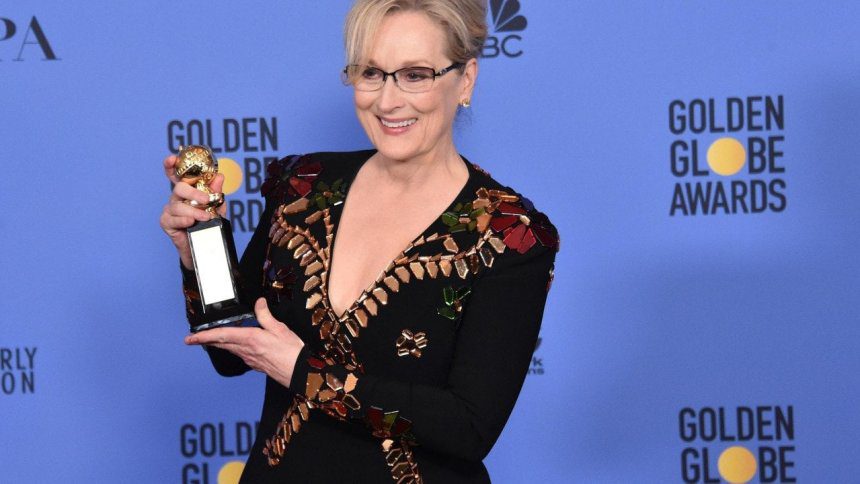
#1. Meryl Streep

– Wins: 8
– Nominations: 33

Meryl Streep has had a long and illustrious career in Hollywood, and she has the Golden Globes to prove it. Her first win came in 1980, with the award for Best Supporting Actress in the movie “Kramer vs. Kramer,” in which she starred with Dustin Hoffman. 

Topics:

Entertainment
Careers & Education

Will federal tax-credit scholarships help public school students?

Will federal tax-credit scholarships help public school students?
By Erica Meltzer for Chalkbeat
5 min read • Originally published January 6, 2026 / Updated March 19, 2026
By Erica Meltzer for Chalkbeat
5 min read • Originally published January 6, 2026 / Updated March 19, 2026

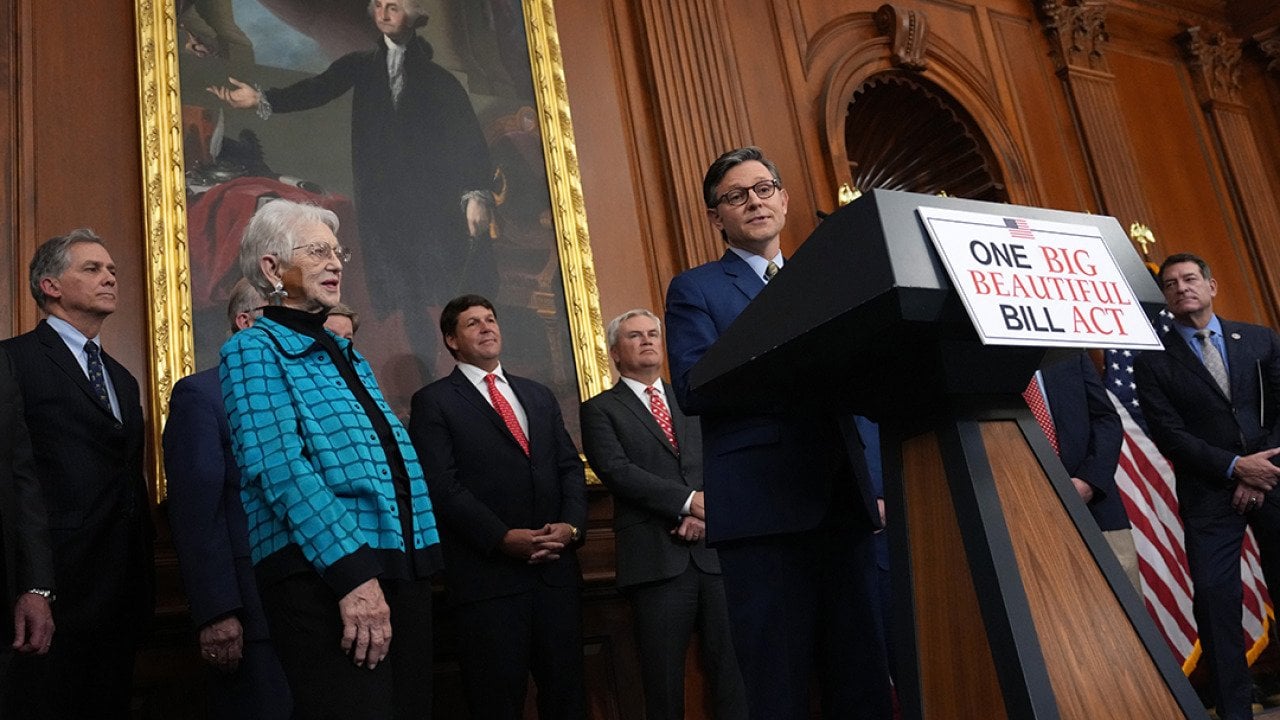
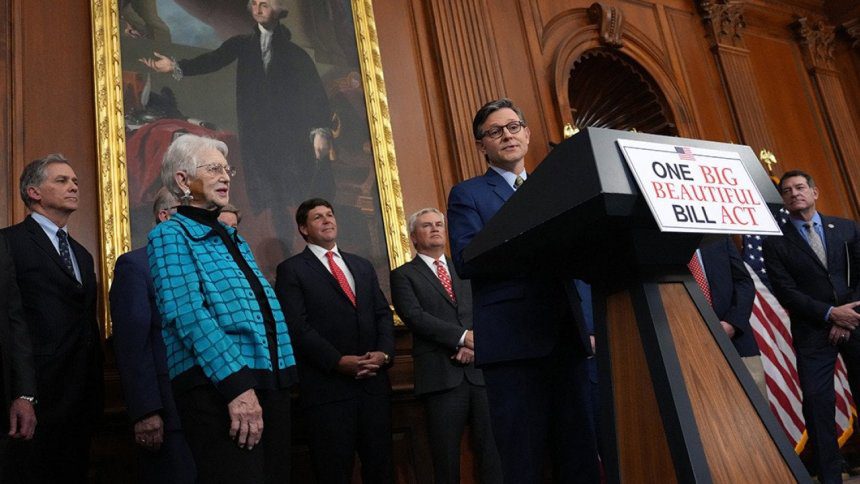
U.S. Speaker of the House Mike Johnson (R-LA) speaks to the media after the House passed the 'One Big Beautiful Bill' at the U.S. Capitol on May 22, 2025 in Washington, DC.

Kevin Dietsch // Getty Images

Will federal tax-credit scholarships help public school students?

Could the new federal tax-credit scholarship program pay for summer school or tutoring for public school students? Could it help homeschool families, microschools, and after-school enrichment programs alike?

Or will most of the money mirror voucher programs and flow through large established scholarship groups for private school tuition?

The race is on to shape a program that could become one of the largest federal investments in K-12 education and fuel a dramatic expansion of private school choice, Chalkbeat reports. The Treasury Department fired the starter’s pistol right before Thanksgiving when it posted a request for comments on how to implement the new tax credit, which passed this summer as part of the One Big Beautiful Bill.

Requesting comment before developing draft rules is the first step in a process that ultimately will determine how much authority states have to put their own stamp on the program, how attractive it is for nonprofits, and how much flexibility families will have.

Treasury Department rules could influence whether some governors choose to have their states participate at all. The Democratic governors of Colorado and North Carolina already plan to opt their states in. Many others have said they’re waiting on federal guidance before they decide.

But on one of the key questions — can governors put restrictions on scholarship-granting organizations, such as requiring that they serve only low-income families or prohibiting them from discriminating against LGBTQ students? The answer may already be no.

The request for comment indicates that Treasury expects to require participating states to include all organizations that meet the bare-bones statutory requirements, such as being a federally recognized nonprofit and serving more than 10 students who don’t all attend the same school.

“It’s really a take it or leave it scheme,” said Rachel Canter, director of education policy for the Progressive Policy Institute, a think tank.

The law doesn’t define “school,” and the Treasury Department has not explicitly asked for feedback on how it should be defined. That could lead to more questions: Could scholarships be used to cover preschool tuition? What about microschools or students who are homeschooled? School choice advocates want those students to have access to funds raised through the tax credit, but some are wary of creating a federal definition of school through the rule-making process.

People who believe in using private markets to drive educational change and in making public money available to religious schools were the biggest backers of the tax credit, and it’s most suited to serve their needs, said Scott Palmer, co-founder and managing partner of the consulting firm EducationCounsel.

But there is a “real opening,” Palmer said during a recent virtual panel discussion, for supporters of public education to push for what he called an “ecosystem” approach that would make it easy to use the tax credit to raise money for tutoring, arts and music enrichment, and other programming that would benefit public school students.

“When you receive a punch in the martial arts, you can either try to block it or leverage its power to throw the person over your shoulder,” he said. “I think we have an opportunity to think not only about how we might need to block, but how we might need to leverage.”

School choice supporters want flexibility, light regulations

The federal tax-credit scholarship program allows taxpayers to receive a dollar-for-dollar reimbursement for donations of up to $1,700 to eligible scholarship-granting organizations. Those organizations would distribute the money to students from families making up to 300% of local median income, a threshold that makes the majority of American families eligible.

How much money the tax credit generates will depend on how many people participate. Education Reform Now estimated that some 47 million taxpayers owe more than $1,700 in federal taxes each year. If 15% participated — far more than currently participate in most state tax-credit programs — that would generate roughly $12 billion a year. For comparison, the federal government spends about $18 billion a year to support high-poverty schools through the Title I program and about $15 billion a year to help offset the cost of special education services.

The money can go toward any expense allowed under Coverdell education savings accounts, which include tuition, tutoring, specialized services for children with disabilities, and computers.

The law allows scholarships to go to students in public or private school, but it’s less obvious how the money could be used to benefit public schools and their students. Could a community group raise money to cover the cost of tutoring for public school students? Could that tutoring be provided by the public school itself or only by outside groups?

During the same panel conversation with Palmer, Karen Pittman, a founding partner at the consulting firm Knowledge to Power Catalysts, cited research that parents spend an estimated $232 billion on their children’s education and development. Groups like 4-H Clubs, for example, could use the tax credit to raise money or offer programs that families could pay for with their scholarships.

“We can give the Treasury the facts on how parents are currently spending their private dollars, and say, ‘Why don’t you allow this bill, this tax credit, to cover these things that parents are already covering, that they consider part of their young people’s education?’” Pittman said.

For their part, groups that have long supported vouchers and education savings accounts want minimal regulations that ensure money donated through the tax credit can support microschools and homeschool families, as well as those attending private school.

Supporters said they’re glad to see the rule-making process start early, so that scholarship organizations have more time to plan.

And they’re also particularly relieved that the Treasury Department doesn’t seem inclined to let governors put additional requirements on scholarship groups beyond what the federal law requires.

The tax-credit scholarship “is a tax law,” said Leslie Hiner, vice president for legal policy at EdChoice, an advocacy group. “It’s not an educational program.”

“This was intended to add to what already exists across the country and help that grow, and any action through rule-making that would go in the opposite direction of that cannot happen,” Hiner said.

Tommy Schultz, CEO of the American Federation for Children, said in a statement that the program’s goal “is to broaden educational opportunity, especially for low-income families, and the rules should encourage and make it as simple as possible for Governors and all states to opt in — as all should — while ensuring access is maximized and the program is protected from political interference.”

People have until Dec. 26, the day after Christmas, to submit their comments. Then the department will issue draft rules and regulations, and the public will have another chance to comment before they’re finalized.

This story was produced by Chalkbeat and reviewed and distributed by Stacker.

Topics:

Careers & Education
Entertainment

How Award Season Has Evolved Into a Second-Screen Spectacle

How Award Season Has Evolved Into a Second-Screen Spectacle
By Samantha Horan for Mecca Bingo
4 min read • Originally published January 9, 2026 / Updated March 19, 2026
By Samantha Horan for Mecca Bingo
4 min read • Originally published January 9, 2026 / Updated March 19, 2026

Stage and set atmosphere for the 83rd Annual Golden Globes.

Michael Buckner // Penske Media via Getty Images

How award season has evolved into a second-screen cultural spectacle

In a media landscape shaped by on-demand streaming and personalised feeds, live television might seem like a fading idea. Yet year after year, award shows like the Golden Globes still dominate timelines, group chats, and entertainment headlines. They create moments that capture reaction, commentary, and conversation in real time.

That cultural pull is reflected in both viewing figures and social buzz. The Golden Globes 2025 telecast drew an estimated 10.1 million viewers across broadcast and streaming platforms, making it one of the most-watched entertainment award nights of the season.

Beyond TV screens, the ceremony generated around 40 million social media impressions on show night, with total engagement up more than 124% year over year, underlining how awards culture now lives as much online as it does on air.

A recent survey of 2,000 U.S. respondents by Mecca Bingo into awards-season habits suggests that while viewing styles have changed, engagement has not disappeared. More than 20% say they still watch major awards shows live from start to finish, treating the night as an event. Another 19% tune in live more casually, while almost 26% primarily follow awards shows through highlights and clips. The result is an experience that rarely lives on just one screen.

A data graphic showing award season and social moment statistics.

Mecca Bingo

What people think about the Golden Globes

When asked which words best describe the Golden Globes, the most common answers were “entertaining” (29%) and “glamorous” (28%), closely followed by “a social event” (25%). Attitudes reinforce that shift toward spectacle. 42% say they enjoy the Globes more for the fashion and social moments than the awards themselves, while 37% say the red carpet and celebrity appearances are the main reason they pay attention at all.

The red carpet, celebrity moments, unexpected wins, and speeches that instantly become memes remain central to the appeal. Rather than being seen purely as a traditional ceremony, the Golden Globes are increasingly viewed as a pop-culture moment. It is something people experience not just by watching the broadcast, but by participating in the wider conversation across platforms.

From live TV to second screens

Streaming has given viewers control, but it has also removed one thing television still does best, which is shared experience. Awards shows offer unpredictability. Viewers don’t just watch to see who wins. They watch for what might happen.

And increasingly, they don’t watch alone. The survey found that 38% use a second screen while watching awards shows, while 24% actively engage socially and 14% post or comment during the broadcast itself. For many, Golden Globes night is as much about reaction as result.

Why familiarity still comforts us

Many entertainment formats, such as game shows and video games, rely on anticipation followed by payoff. They are built around clear segments, recurring beats, and moments of suspense that resolve quickly. These are patterns audiences instantly understand.

Awards shows follow the same familiar rhythm: categories, envelopes, winners, reactions. In an age of infinite choice, that predictability can feel comforting. It allows viewers to dip in and out, half-watch, scroll, or chat, without ever feeling lost.

This helps explain why awards ceremonies adapt so well to modern viewing habits. Their structure makes them easy to experience across multiple screens, in fragments, or through highlights, while still feeling part of a single shared event.

Why awards shows still capture attention

Attention now looks different from what it once did. Awards shows have shifted from appointment television to a modern ritual. They are something people are more likely to fold into relaxed nights at home rather than sit down to formally watch.

Rather than competing with modern habits, awards shows have absorbed them. They have become less about sitting still and more about taking part: watching, posting, reacting, catching up, sharing.

And in a fragmented media world, the ability to pull people toward the same moment, even in different ways, remains powerful. It is why, year after year, the Golden Globes still find themselves at the center of the entertainment conversation.

Methodology

To uncover award show attitudes, Mecca Bingo conducted a nationwide survey of 2,000 U.S. respondents in December 2025. The survey is nationally representative of age (21+), gender and state. The survey respondents included 58% females and 42% males. The average age of the respondents was 36 years.

This story was produced by Mecca Bingo and reviewed and distributed by Stacker.

Topics:

Entertainment
Entertainment

Bring your favorite TV shows to life: Designers recreate iconic sets for the home

Bring your favorite TV shows to life: Designers recreate iconic sets for the home
By Julie Noble for Houzz
7 min read • Originally published January 12, 2026 / Updated March 19, 2026
By Julie Noble for Houzz
7 min read • Originally published January 12, 2026 / Updated March 19, 2026

A display of the living room set scene from the TV show, Friends.

ANGELA WEISS // AFP via Getty Images

Bring your favorite TV shows to life: Designers recreate iconic sets for the home

Television has created some of the most memorable backdrops in pop culture, from cozy coffee houses to dramatic throne rooms. Beyond entertainment, these beloved settings can also serve as rich sources of inspiration for interior design, sparking ideas for color palettes, textures and layouts that evoke the same emotion at home. This season, Houzz worked with five leading design and construction firms to reimagine iconic TV settings as real-world living spaces. The designers took inspiration from Gilmore Girls, Yellowstone, Mad Men, Friends and Game of Thrones to prepare fresh, functional and unforgettable spaces that can be applied to any home.

Read on to see how the pros transformed beloved television sets from Central Perk to Westeros into kitchens, living rooms and other spaces, and how you can bring that same spirit to your own home. 

Interior of a family room inspired by the TV show, Gilmore Girls as designed by Interior Impressions.

Interior Impressions, courtesy of Houzz

Family Room inspired by Gilmore Girls | Designed by Interior Impressions

Gilmore Girls, set in the idyllic town of Stars Hollow, has charmed generations, not only through its quick-witted dialogue and heartfelt relationships, but also through its warm, eclectic interiors. For fans who love the show’s cozy aesthetic, this family room imagined by Interior Impressions, offers inspiration for bringing that familiar Gilmore charm into your own home.

“This living room design is our interpretation of a now more worldly Rory Gilmore,” said Amy Leferink, founder and principal designer of Interior Impressions. The room blends nostalgic warmth with sophisticated detail, using approachable design elements homeowners can adopt. Architectural touches like built-in cabinets, French doors, generous windows, and arched openings echo the original set’s character and can be recreated through thoughtful millwork, paint choices or even furniture placement that frames key focal points.

Lighting plays a major role in capturing Stars Hollow’s lived-in glow. Leferink’s team layered table and floor lamps, wall sconces, and a statement ceiling fixture to build a soft, welcoming atmosphere, which is a strategy that interior designers use to instantly warm up a space. Vintage-inspired floral wallpaper, layered rugs, mix-and-match pillows and collected accessories bring in the eclectic cottagecore feel fans know and love.

Personal touches like books, a record player and a writing desk highlight Rory’s love of literature and music, and offer ideas for showcasing your own passions. 

Interior of a modern kitchen inspired by the TV show, Yellowstone, as designed by May Construction.

May Construction, courtesy of Houzz

Kitchen inspired by Yellowstone | Designed by May Construction

Set against the sweeping backdrop of rural Montana, the neo-Western drama Yellowstone has made the Dutton Ranch kitchen almost as iconic as its characters. With its rugged materials, stainless steel cookware, and no-nonsense functionality, the space captures the essence of Western living, and it’s a look many homeowners are eager to bring into their own homes.

For May Construction, a Yellowstone-inspired kitchen meant blending rustic authenticity with modern comfort in ways homeowners can easily adapt. Stone finishes, exposed beams and warm wood textures establish a rugged foundation, while sleek countertops and updated appliances add the kind of refined practicality that works beautifully in a contemporary home. 

Interior of a modern kitchen's butler pantry inspired by the TV show, Yellowstone.

May Construction, courtesy of Houzz

The refrigerator styling, stocked with fresh milk and marinating meat, reinforces the Dutton family’s connection to their working cattle operation. “I really wanted to include a butler’s pantry. Gator seemed like an impressive chef on the show, with many key moments taking place around his cooking,” said Donna Gutto, designer at May Construction. “And the saloon doors took me back to the 1923 prequel series.” These elements help construction and design pros to create a kitchen that feels both rugged and refined for their clients — a modern interpretation of the Dutton Ranch aesthetic that’s just as at home off-screen as it is on it.

Interior of a bedroom inspired by the TV show, Mad Men, as designed by Honeybee Interiors.

Honeybee Interiors, courtesy of Houzz

Bedroom inspired by Mad Men | Designed by Honeybee Interiors

Mad Men, the acclaimed period drama set against the backdrop of 1960s advertising, continues to captivate viewers with its impeccable storytelling and its equally iconic interiors. The show’s midcentury furnishings, warm wood tones, sculptural lighting and tailored aesthetic all contribute to a look that remains just as timeless today. For homeowners drawn to the elegance of the era, the style offers countless opportunities for designers to weave that refined, vintage charm into a modern home.

Honeybee Interiors embraced this spirit by interpreting midcentury design through a contemporary lens. “We wanted the space to feel timeless and tailored, a modern interpretation of midcentury luxury,” said Sacha Berger, principal designer of Honeybee Interiors. The resulting primary bedroom blends authenticity with accessibility, giving readers a clear roadmap for achieving their own Mad Men–inspired retreat.

A wall of fluted wood paneling adds depth and architectural presence, which can be replicated through textured wall treatments or wood accents. Rich walnut furniture and smooth neutral textiles reinforce the clean lines and warm palette that defined the midcentury era. Floor-to-ceiling windows framed by velvet drapery let soft light filter in yet provide complete privacy when closed, echoing the show’s themes of polished appearances and quiet introspection. And for a true Don Draper touch, a well-placed whisky decanter adds a moment of indulgence and vintage charm.

Interior of a modern living room inspired by the TV show, Friends, as designed by Allito Spaces.

Allito Spaces, courtesy of Houzz

Living room inspired by Friends | Designed by Allito Spaces

As the beloved gathering place for six twentysomethings navigating life in New York City, Friends’ Central Perk became one of the most recognizable TV hangouts of the ’90s and beyond. Its relaxed, eclectic style — anchored by the iconic orange couch — offered an inviting backdrop for heartfelt conversations and hilarious moments. For fans, the café’s charm remains endlessly appealing, and many of its design cues translate beautifully into a warm, welcoming home.

Allito Spaces embraced this spirit, blending the comfort of home with the casual character of the show. “With this design, I wanted to capture the sense of togetherness that defined the series,” said Allison Garrison, principal designer of Allito Spaces. Elements from Central Perk make an appearance in approachable ways that readers can adapt: brick accents evoke the café’s walls, while a wall of windows mirrors its connection to the bustling city beyond or helps create an airy, open feel in a real home.

Interior of a modern living room inspired by the TV show, Friends, as designed by Allito Spaces.

Allito Spaces, courtesy of Houzz

A layered Oriental rug and fringe-trimmed upholstery bring texture and nostalgia into a room, while collected artwork and accessories add the lived-in charm that passionate fans will recognize. These details not only nod to the show but also offer simple, effective ideas homeowners can use to cultivate a welcoming space of their own. 

Interior of a living room inspired by the TV show, Game of Thrones, as designed by Interiors by Design.

Interiors by Design, courtesy of Houzz

Parlor inspired by Game of Thrones | Designed by Interiors by Design

In the television drama Game of Thrones, the throne room was crafted to inspire awe with its cavernous, imposing space that underscored the power and legacy of the kingdom. While most homes don’t call for that level of grandeur, many fans are drawn to the show’s rich textures, dramatic lighting and old-world craftsmanship. Those elements can translate beautifully into a modern interior when approached with balance and intention.

Interiors by Design embraced this idea, transforming the iconic throne room into a grand parlor and office that feels both commanding and inviting. “Winter is coming. And this year, it’s bringing with it more than cold weather; it’s bringing inspiration,” said Azelia Dickson, principal designer of Interiors by Design. Drawing from what she calls “Medieval Fantasy Grandeur,” the team blended deep, color-drenched walls with towering arched windows that flood the room with natural light, which is a combination homeowners can use to achieve drama without sacrificing livability.

A monumental marble fireplace framed by polished stone columns serves as the heart of the space, offering a stately focal point that can be echoed in any home through bold materials or an architecturally detailed mantel. An ornate desk stands in place of the Iron Throne, establishing a sense of presence, while a carved wood chess table adds a layer of strategy and storytelling. Decorative choices from wrought iron chandeliers and candelabras to gilded accents and heavy drapery amplify the regal atmosphere. 

With the right balance of texture, form, and light, homeowners can work with design and construction pros to find ways for even the boldest fantasy elements to be adapted into a sophisticated, everyday living space worthy of its own legend. Whether inspired by small-town charm, ranch life or medieval drama, these spaces highlight the power of storytelling through interior design and how visual tools can help design and construction professionals to bring bold visions to life for their clients.

Houzz is not affiliated with, nor sponsored by, the referenced TV shows or their respective production companies.

This story was produced by Houzz and reviewed and distributed by Stacker.

Topics:

Entertainment
Entertainment

The 10 fastest-growing US Instagram accounts of 2025

The 10 fastest-growing US Instagram accounts of 2025
By Nii A. Ahene for Net Influencer
4 min read • Originally published January 20, 2026 / Updated March 19, 2026
By Nii A. Ahene for Net Influencer
4 min read • Originally published January 20, 2026 / Updated March 19, 2026

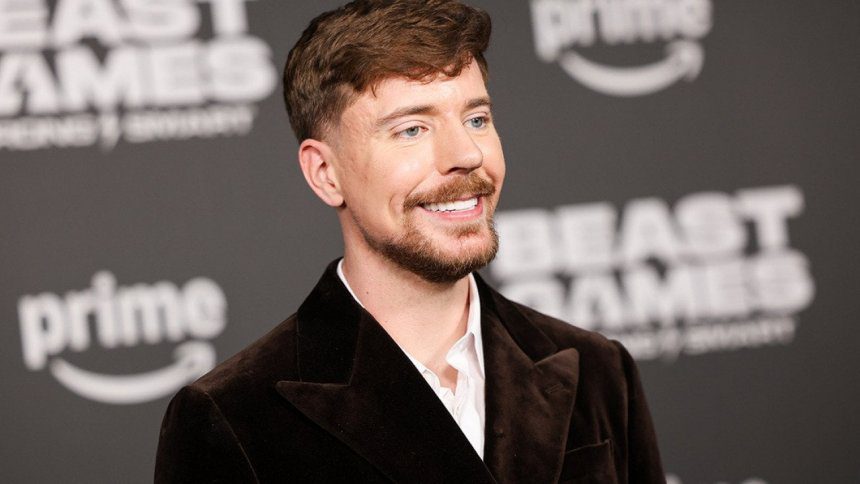
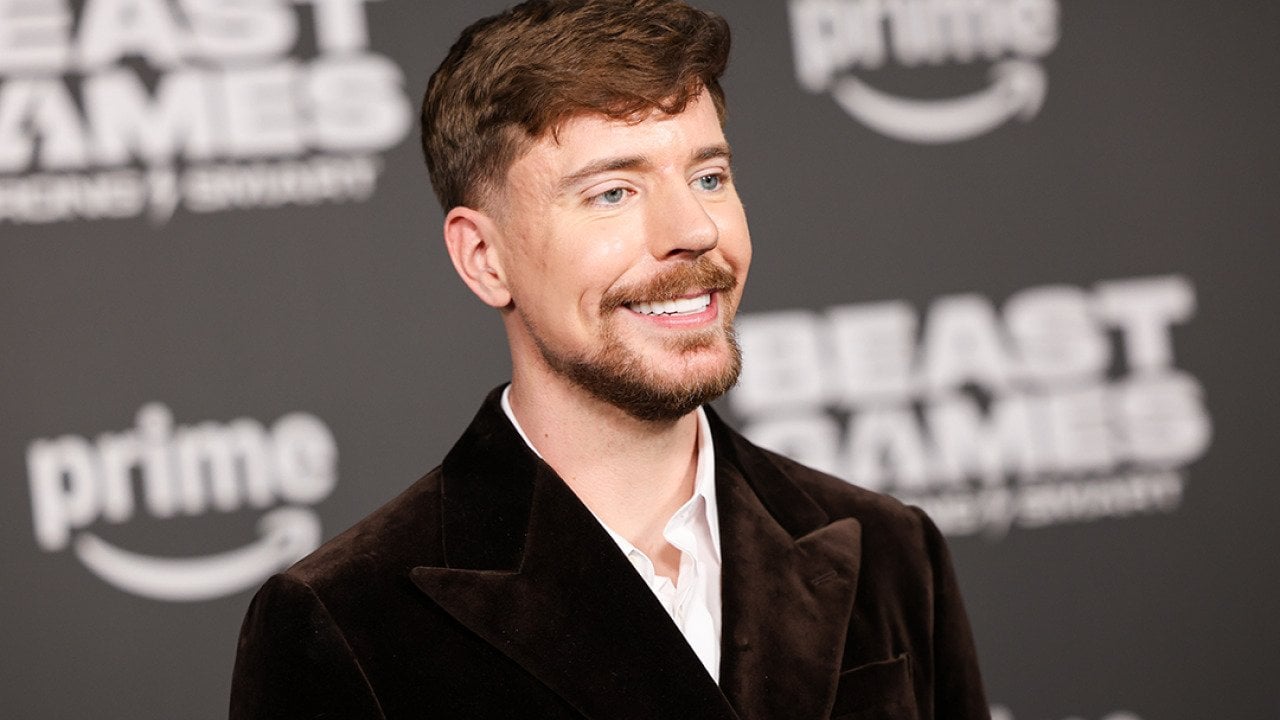
Jimmy Donaldson, also known as MrBeast, attends the Season 2 premiere of Amazon Prime Video's 'Beast Games' in Los Angeles, California.

Photo by Victoria Sirakova // Getty Images

The 10 fastest-growing US Instagram accounts of 2025

For decades, pop culture had clear scorecards. Billboard charts tracked which songs Americans were listening to. Box office numbers measured which movies captured the national imagination. Nielsen ratings revealed which TV moments brought the country together. These metrics revealed what mattered, what was breaking through the noise and earning mass attention in a given week, month, or year.

In 2025, Instagram follower gains functioned as a real-time measure of cultural relevance. Unlike total follower counts, which reflect accumulated influence over years, follower growth reveals who is winning the attention economy right now. It captures momentum, the voices, personalities, and movements that are breaking through at scale and commanding fresh interest from millions of people.

Data from Hypeauditor reveals the 10 fastest-growing U.S. Instagram accounts of 2025 gained a combined 105 million followers. That number alone signals how much cultural weight the platform carries. But the composition of the list tells a more specific story about where American attention actually went this year.

MrBeast led all U.S. accounts with 18.7 million new followers, driven by Beast Games 2 and his continued dominance in large-scale viral content. His presence at the top is unsurprising; he’s built an entertainment empire on spectacle and generosity, and the formula keeps working.

The political entries reveal how charged 2025 was, with President Donald Trump adding 11.5 million followers during his return to office. New York City mayor Zohran Mamdani built his entire 11.3 million following from zero during his campaign, riding progressive messaging and historic candidacy.

But the year’s most striking pattern was the rise of transformation content. Fitness creator Ashton Hall went from relative obscurity to 18.3 million followers — a 292% increase — preaching discipline and self-reinvention with the mantra “You can reinvent your entire life in 1 year.”

Entertainment, politics, and self-improvement. The three categories dominated the leaderboard, mapping directly to what captured American attention in 2025. Below, Net Influencer rounded up the 10 Instagram accounts that grew their follower counts the most.

The 10 Fastest-Growing US Instagram Accounts of 2025

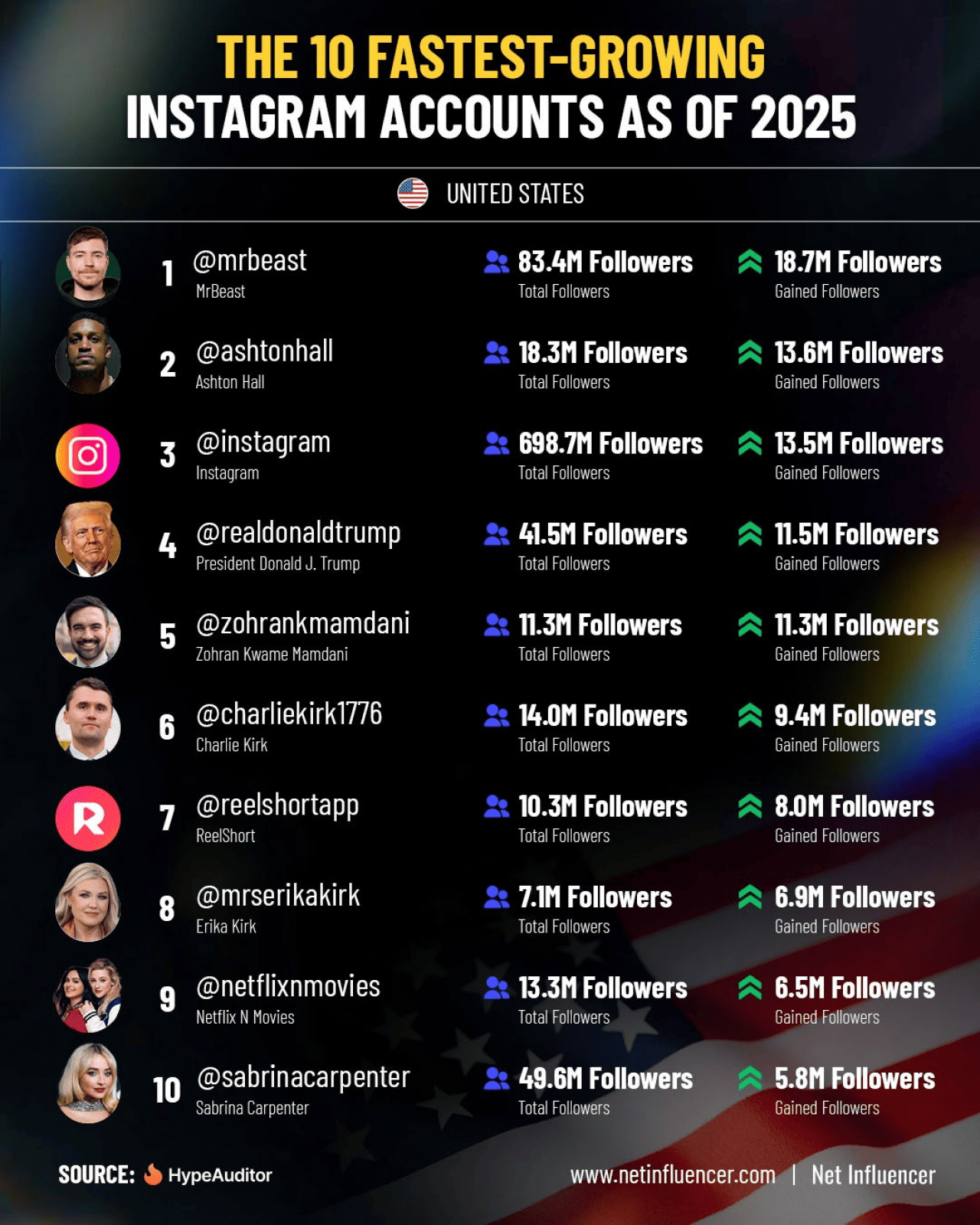
An infographic listing the top 10 fastest-growing Instagram accounts as of 2025.

Net Influencer

#1. MrBeast | @mrbeast
Gained: +18.7M followers
2025 total: 83.4M followers

The YouTube titan promoted “Beast Games” Season 2 (which released Jan. 7, 2026, on Prime Video) throughout 2025, with his signature large-scale challenges and philanthropy stunts continuing to drive massive cross-platform growth. His most-liked post hit 19.6million engagements, cementing his position as the platform’s most-followed individual creator.

#2. Ashton Hall | @ashtonhall
Gained: +13.6M followers
2025 total: 18.3M followers

The fitness influencer exploded from relative obscurity with his “For His Glory” motivational content and the viral mantra “You can reinvent your entire life in 1 year.” His disciplined workout videos and self-improvement messaging tapped into a post-COVID-19 pandemic wave of transformation-focused content, driving 292% year-over-year growth.

#3. Instagram | @instagram
Gained: +13.5M followers
2025 total: 698.7M followers

The platform’s official account showcased creator features, trend spotlights, and product updates throughout 2025, maintaining its position as one of the most-followed accounts globally. Its engagement rate remained low at 0.06%, which is typical for institutional accounts with massive reach.

#4. Donald Trump | @realdonaldtrump
Gained: +11.5M followers
2025 total: 41.5M followers

The President of the United States saw sustained follower growth throughout his return to office, with his inauguration-related content and policy announcements driving engagement. His most-liked post generated 4.8 million interactions as his political presence dominated the year’s news cycle.

#5. Zohran Kwame Mamdani | @zohrankmamdani
Gained: +11.3M followers
2025 total: 11.3M followers

New York City’s newly elected mayor built his entire Instagram following in 2025, riding his progressive platform (rent freezes, free public transit) to a stunning 25,000% growth rate. His viral campaign messaging and historic win as the city’s first Muslim mayor made him the year’s fastest-growing political newcomer.

#6. Charlie Kirk | @charliekirk1776
Gained: +9.4M followers
2025 total: 14.0M followers

The Turning Point USA founder and host of “The Charlie Kirk Show” was assassinated in September 2025, with his account gaining millions of followers in the aftermath as tributes poured in and his legacy content circulated. His year-over-year growth reflected both his influence during the 2024 election season and the national response to his death.

#7. ReelShort | @reelshortapp
Gained: +8.0M followers
2025 total: 10.3M followers

The short-form scripted drama platform promoted viral series like “The Daughter of Zeus,” positioning itself as “#1 place for Short Dramas” with bite-sized storytelling. Its growth reflected rising demand for mobile-first episodic content competing with traditional streaming.

#8. Erika Kirk | @mrserikakirk
Gained: +6.9M followers
2025 total: 7.1M followers

The businesswoman, podcaster, and BIBLEin365 founder and new Turning Point USA CEO built a faith-based community through her “MIDWEEK RISE UP” podcast and Spirit Check devotional content. Her 3,200% growth rate made her the year’s fastest-growing faith influencer, tapping into audiences seeking steadfast Christian messaging.

#9. Netflix N Movies | @netflixnmovies
Gained: +6.5M followers
2025 total: 13.3M followers

The entertainment meme page combined movie clips, viral scenes, and Fashion Nova partnerships to capture streaming culture’s biggest moments. Its low 0.08% engagement rate reflected typical fan-account dynamics, prioritizing volume and virality over sustained interaction.

#10. Sabrina Carpenter | @sabrinacarpenter
Gained: +5.8M followers
2025 total: 49.6M followers

The singer-songwriter rode her “Man’s Best Friend” single release and touring schedule to 13% growth, with her most-liked post hitting 6.6 million engagements. Her crossover appeal as both pop star and actor sustained momentum from her breakout 2024 into a dominant 2025.

This story was produced by Net Influencer and reviewed and distributed by Stacker.

Topics:

Entertainment
Careers & Education

How education changed in one year under Trump

How education changed in one year under Trump
By Nirvi Shah for The Hechinger Report
7 min read • Originally published January 20, 2026 / Updated March 19, 2026
By Nirvi Shah for The Hechinger Report
7 min read • Originally published January 20, 2026 / Updated March 19, 2026

US President, Donald Trump, displaying a signed executive order aimed at closing the Education Department during an event at the White House on March 20, 2025 in Washington, D.C.

Jabin Botsford // The Washington Post via Getty Images

How education changed in one year under Trump

Even with a conservative think tank’s blueprint detailing how the second Trump administration should reimagine the federal government’s role in education, few might have predicted what actually materialized this year for America’s schools and colleges.

Or what might be yet to come.

“2025 will go down as a banner year for education: the year we restored merit in higher education, rooted out waste, fraud and abuse, and began in earnest returning education to the states,” Education Secretary Linda McMahon told The Hechinger Report. She listed canceling K-12 grants she called wasteful, investing more in charter schools, ending college admissions that consider race or anything beyond academic achievement and making college more affordable as some of the year’s accomplishments.

“Best of all,” she said, “we’ve begun breaking up the federal education bureaucracy and returning education control to parents and local communities. These are reforms conservatives have championed for decades — and in just 12 months, we’ve made them a reality.”

McMahon’s characterization of the year is hardly universal. Earlier this month, Senate Democrats, led by independent Sen. Bernie Sanders, called out some of the administration’s actions this year. They labeled federal changes, especially plans to divide the Education Department’s duties across the federal government, as dangerous and likely to cause chaos for schools and colleges.

“Already, this administration has cancelled billions of dollars in education programs, illegally withheld nearly $7 billion in formula funds, and proposed to fully eliminate many of the programs included in the latest transfer,” the senators wrote in a letter to Republican Sen. Bill Cassidy, chair of the committee that oversees education. “In our minds, that is unacceptable.”

So, what really happened to education this year? It was almost impossible for the average observer to keep track of the array of changes across colleges and universities, K-12 schools, early education and education research — and what it has all meant. The Hechinger Report takes a look back at how the education world was transformed.

Higher education

The administration was especially forceful in the higher education arena. It used measures including anti-discrimination law to quickly freeze billions of dollars in higher education research funding, interrupting years-long medical studies and coercing Columbia, Brown, Northwestern and other institutions into handing over multimillion-dollar payments and agreeing to policy changes demanded by the administration.

A more widespread “compact” promising preference for federal funding to universities that agreed to largely ideological principles had almost no takers. But in the face of government threats, universities and colleges scrapped diversity, equity and inclusion, or DEI, programs that provided support based on race and other characteristics, and banned transgender athletes from competing on teams corresponding to genders other than the ones they were assigned at birth.

As the administration unleashed its set of edicts, Republicans in Congress also expanded taxes on college and university endowments. And the One Big Beautiful Bill Act made other big changes to higher education, such as limiting graduate student borrowing and eliminating certain loan forgiveness programs. That includes public service loan forgiveness for graduates who take jobs with organizations the administration designated as having a “substantial illegal purpose” because they help refugees or transgender youth. In response, states, cities, labor unions and nonprofits immediately filed suit, arguing that the rule violated the First Amendment.

The administration has criticized universities, colleges and liberal students for curbing the speech of conservatives by shouting them down or blocking their appearances on campuses. However, it proceeded to revoke the visas of and begin deportation proceedings against international students who joined protests or wrote opinions criticizing Israeli actions in Gaza and U.S. government policy there.

Meanwhile, emboldened legislatures and governors in red states pushed back on what faculty could say in classrooms. College presidents, including James Ryan at the University of Virginia and Mark Welsh III at Texas A&M were forced out in the aftermath of controversies over these issues. — Jon Marcus

K-12 education

Since Donald Trump returned to office earlier this year, K-12 schools have lost millions of dollars in sweeping cuts to federal grants, including money that helped schools serve students who are deaf or blind, grants that bolstered the dwindling rural teacher workforce and funding for Wi-Fi hotspots.

Last summer, the Trump administration briefly froze billions of dollars in federal funding for schools on June 30, one day before districts would typically apply to receive it. Although the money was restored in late July, some school leaders said they no longer felt confident they would receive all expected federal funds next year. And they are braced for more cuts to federal budgets as the U.S. Department of Education is dismembered.

That process, as well as the end goal of returning the department’s responsibilities to the states, has raised uncertainty about whether federal money will continue to be earmarked for the same purposes. If the state of Illinois is in charge of federal funding for every school in the state, said Todd Dugan, superintendent of a rural Illinois district, will rural schools still get money to boost student achievement or will the state decide there are more pressing needs?

As part of layoffs at the Education Department during the government shutdown in the fall, the Trump administration cut loose almost everyone who works in the Office of Special Education Programs, alarming many parents and advocates. About 7.5 million children ages 3 to 21 are served under federal law protecting students with disabilities, and the office had already lost staffers after the Trump administration dismissed nearly half the Education Department’s staff in March. Some worry this additional round of layoffs is a big step toward moving oversight of how states treat students with disabilities to the Department of Health and Human Services.

Even as the Trump administration attempts to push more control over education to the states, it has aggressively expanded federal power over school choice and transgender student rights in public schools. The One Big Beautiful Bill Act will create a federal school voucher program, allowing taxpayers to donate up to $1,700 for scholarships that families can use to pay for private school. The program won’t start until 2027, and states can choose whether to participate — setting up potentially divisive fights over new money for education in Democratic-controlled states.

Already, some Democratic-led states have come to the defense of schools in funding and legal fights with the federal government over transgender athletes participating in sports. The U.S. departments of Education and Justice launched a special investigations team to look into complaints of Title IX violations, targeting school districts and states that don’t restrict accommodations or civil rights protections for transgender students. Legal experts expect the U.S. Supreme Court to ultimately decide how Title IX — a federal law that prohibits sex discrimination in education — applies to public schools.

The federal government directly runs just two systems of schools — one for military families and the other for children of tribal nations. In an executive order signed in January, the president directed both systems to offer parents a portion of federal funding allocated to their children to attend private, religious or charter schools.

And as part of the dismantling of the federal Education Department, the Interior Department — which oversees 183 tribal schools across nearly two dozen states — will assume greater control of Indian education programs. In addition to rolling out school choice at its campuses, the department will take over Indian education grants to public schools across the country, Native language programs, Alaska Native and Native Hawaiian programs, tribally controlled colleges and universities, and many other institutions. — Ariel Gilreath and Neal Morton

Early education

Early education was not at the top of Trump’s agenda when he returned to office. On the campaign trail, when asked if he would support legislation to make child care affordable, he gave an unfocused answer, suggesting tariff revenue could be tapped to bring down costs. Asked a similar question, Vice President JD Vance suggested that care by family members was one potential solution to child care shortages.

However, many of the administration’s actions, including cuts to the government workforce and grants, have affected children who depend on federal support. In April, the administration abruptly closed five of 10 regional offices supporting Head Start, the free, federally funded early childhood program for children from low-income families. Head Start program managers worried they would be caught up in a freeze on grant funding that affected all agencies. Even though administration officials said funds would keep flowing to Head Start, some centers reported having problems drawing down their money. The prolonged government shutdown, which ended Nov. 12 after 43 days, also forced some Head Start programs to temporarily close.

Though the shutdown is over, Head Start advocates are still worried. Many of the administration’s actions have been guided by the Project 2025 policy document created by the conservative Heritage Foundation. Project 2025 calls for eliminating Head Start, which serves about 715,000 children from birth to age five, for a savings of about $12 billion a year.

The One Big Beautiful Bill Act contained some perks for parents, including an increase in the child tax credit from $2,000 to $2,200. The bill also created a new program called Trump accounts: Families can contribute up to $5,000 each year until a child turns 18, at which point the Trump account will turn into an individual retirement account. For children born between Jan. 1, 2025, and Dec. 31, 2028, the government will provide a $1,000 bonus. Billionaires Michael and Susan Dell have also promised to contribute $250 to the account of each child ages 10 and under who lives in a ZIP code with a median household income of $150,000 or less.

That program will launch in summer 2026. — Christina A. Samuels

This story was produced by The Hechinger Report, a nonprofit, independent news organization focused on inequality and innovation in education, and reviewed and distributed by Stacker.

Topics:

Careers & Education
Entertainment

Which Grammy nominees ranked highest based on performance data

Which Grammy nominees ranked highest based on performance data
By Kristian Gorenc for Viberate Analytics
5 min read • Originally published January 21, 2026 / Updated March 19, 2026
By Kristian Gorenc for Viberate Analytics
5 min read • Originally published January 21, 2026 / Updated March 19, 2026

Singer Olivia Dean performs at Hot 99.5's iHeartRadio Jingle Ball 2025 at Capital One Arena, Washington, D.C.

Shannon Finney // Getty Images

Which Grammy nominees ranked highest based on performance data

Each awards season, the Grammy nominations prompt a familiar debate: which artists and songs truly defined the year in music? While critical acclaim and cultural impact dominate much of the conversation, audience behavior leaves its own trace across streaming platforms, radio playlists, and video services. Those signals, taken together, offer a clearer picture of which nominees sustained attention over time and which gained momentum as the eligibility period drew to a close.

Viberate Analytics takes a closer look at two of the Grammy Awards’ most closely watched categories — Best New Artist and Song of the Year—by comparing how nominees performed across major music platforms during the eligibility year. Rather than speculating on voting outcomes, the analysis focuses on measurable indicators of reach, growth, and consistency to show which contenders stood out in practice.

Scope of the analysis and data sources

Eight nominees were examined in each category. All artists and songs were evaluated using the same metrics to ensure comparability. The analysis draws on verified performance data from Spotify, YouTube, radio airplay, and Spotify playlists—platforms that collectively capture streaming demand, video consumption, editorial support, and broadcast exposure.

Two timeframes were used. A twelve-month window reflects overall scale and presence during the eligibility period, while a thirty-day window at the end of that period highlights late-year momentum. Daily performance patterns were reviewed to understand trend direction, but aggregated figures formed the basis for comparison. Metrics were normalized within each nominee group so that no single platform disproportionately influenced the results.

Best New Artist: performance signals across platforms

The Best New Artist category brings together performers whose profiles expanded most visibly over the past year. The eight nominees included in this analysis are: 

  • KATSEYE
  • Olivia Dean
  • Alex Warren
  • sombr
  • The Marías
  • Addison Rae
  • Lola Young
  • Leon Thomas

Across the group, performance varied sharply depending on platform. Some artists built their following primarily through video, accumulating hundreds of millions—or even billions—of YouTube views, while others showed steadier gains through streaming and playlist exposure. Radio airplay added another layer, revealing which acts translated listener interest into broader industry support.

Among the nominees, Olivia Dean emerged as the most balanced performer across metrics. Over the twelve-month period, she posted the strongest growth in monthly Spotify listeners within the group, pointing to sustained audience expansion rather than a short-lived spike tied to a single release. Her music also reached the largest audience through Spotify playlists, benefiting from consistent placement in both editorial and algorithmic selections.

Radio data reinforced this trajectory. While several nominees accumulated higher total spin counts earlier in the year, Olivia Dean’s airplay increased steadily toward the end of the eligibility window, suggesting growing adoption by programmers as the year progressed.

Other nominees showed more concentrated strengths. KATSEYE led the group in total YouTube views, reflecting a large and highly engaged video audience. Alex Warren ranked among the strongest in total Spotify streams over the year, while Addison Rae and The Marías maintained notable visibility through playlist reach. These profiles, however, were less evenly distributed across platforms than the top-ranked performer.

Table listing the top new artist nominees and their reach and audience per platform.

Viberate Analytics

Taken together, the data points to Olivia Dean as the strongest overall performer in the Best New Artist field, combining steady audience growth, leading playlist exposure, and increasing radio support during the eligibility period.

Song of the Year: scale, momentum, and staying power

Song of the Year shifts the focus from artist profiles to individual releases. The eight nominated tracks examined in this analysis are: 

  • Golden
  • APT.
  • DtMF
  • WILDFLOWER
  • Abracadabra
  • luther (with sza)
  • Manchild
  • Anxiety

Across the twelve-month window, the nominated songs displayed wide variation in scale. Some tracks surpassed a billion Spotify streams during the year, while others remained closer to the hundred-million range. YouTube view counts showed an even broader spread, and radio airplay concentrated around a smaller group of songs that received sustained rotation.

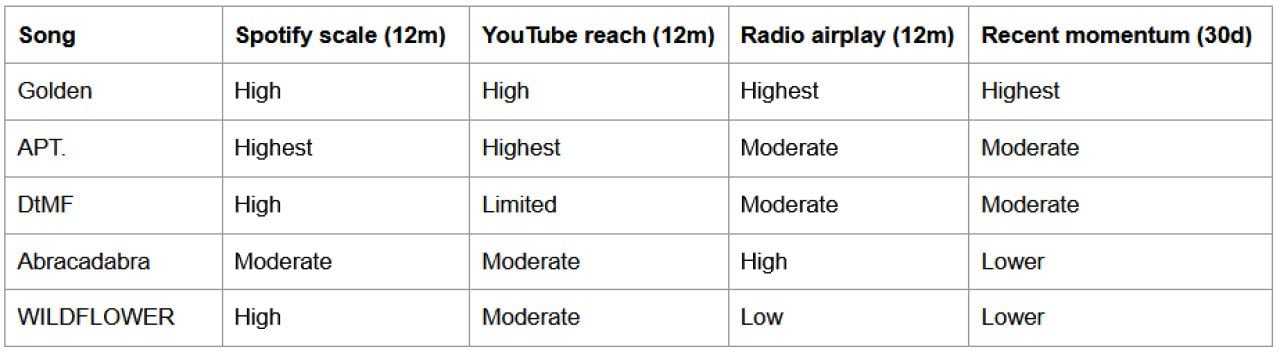
Golden stood out most clearly when recent activity was taken into account. During the final thirty days of the eligibility period, the track generated approximately 148 million Spotify streams, nearly 149 million YouTube views, and more than 35,000 radio airplay spins—leading the nominee group across all three measures. This pattern indicates that the song retained listener attention and programming support deep into the award cycle.

Over the full year, Golden also ranked first in total radio airplay, with roughly 280,000 spins, and led all nominees in Spotify playlist reach. By contrast, APT. recorded the highest total Spotify streaming volume across the year, exceeding one billion streams, but its peak activity occurred earlier in the eligibility period, with comparatively lower momentum at the end.

Other nominees showed distinct but narrower strengths. Abracadabra ranked near the top in radio airplay, reflecting strong broadcaster support, while DtMF posted solid streaming totals without matching the leading tracks’ video reach. These differences highlight how overall rankings shift depending on whether long-term scale or late-year momentum is emphasized.

Table listing best song and artist nominees and their reach and audience values per platform.

Viberate Analytics

Viewed across all measured indicators, Golden ranks highest among the Song of the Year nominees, combining sustained yearlong reach with dominant late-period momentum.

Interpreting the results

Performance data offers one lens through which to view the Grammy nominations. Streaming, video consumption, playlists, and radio airplay each capture different dimensions of audience engagement and industry support, and no single metric tells the whole story. Considered together, however, they help clarify which nominees maintained attention across platforms and which gained traction as the year unfolded.

Conclusion

Across both categories, the performance data highlights clear front-runners. In the Best New Artist field, Olivia Dean shows the strongest overall mix of audience growth, playlist reach, and increasing radio presence during the eligibility period. In the Song of the Year category, Golden separates itself through sustained performance across streaming, video, playlists, and radio, while also maintaining strong momentum in the final weeks of the year.

Taken together, the results offer a grounded view of how this year’s nominees resonated with listeners and programmers over time. While awards outcomes are shaped by many factors beyond measurable performance, the data adds context to the broader Grammy conversation by showing which artists and songs consistently held attention throughout the year.

This story was produced by Viberate Analytics and reviewed and distributed by Stacker.

Topics:

Entertainment
Careers & Education

The skills gap crisis: Boomers are retiring before the next generation is ready

The skills gap crisis: Boomers are retiring before the next generation is ready
By Tiffany Miller for Kelly
3 min read • Originally published January 22, 2026 / Updated March 19, 2026
By Tiffany Miller for Kelly
3 min read • Originally published January 22, 2026 / Updated March 19, 2026

A senior employee working with a younger colleague on a task in an office.

Zamrznuti tonovi // Shutterstock

The skills gap crisis: Boomers are retiring before the next generation is ready

For decades, experienced professionals have quietly kept the world running, training new hires, solving crises and carrying institutional knowledge built over long careers. Now, many of those workers are preparing to retire, taking with them expertise that cannot be quickly replaced.

A new global survey from Kelly shows that while most organizations know the “Silver Tsunami” is coming, few are prepared for what happens next.

Across regions, executives say experience is slipping away faster than they can replace it. In Europe and North America, retirements are already affecting operations, while in Asia and the Middle East, demand for technical expertise continues to climb.

As millions of baby boomers exit the workforce, companies across industries are struggling to replace both the labor and the know-how that leave with them.

Prepared on paper, not in practice

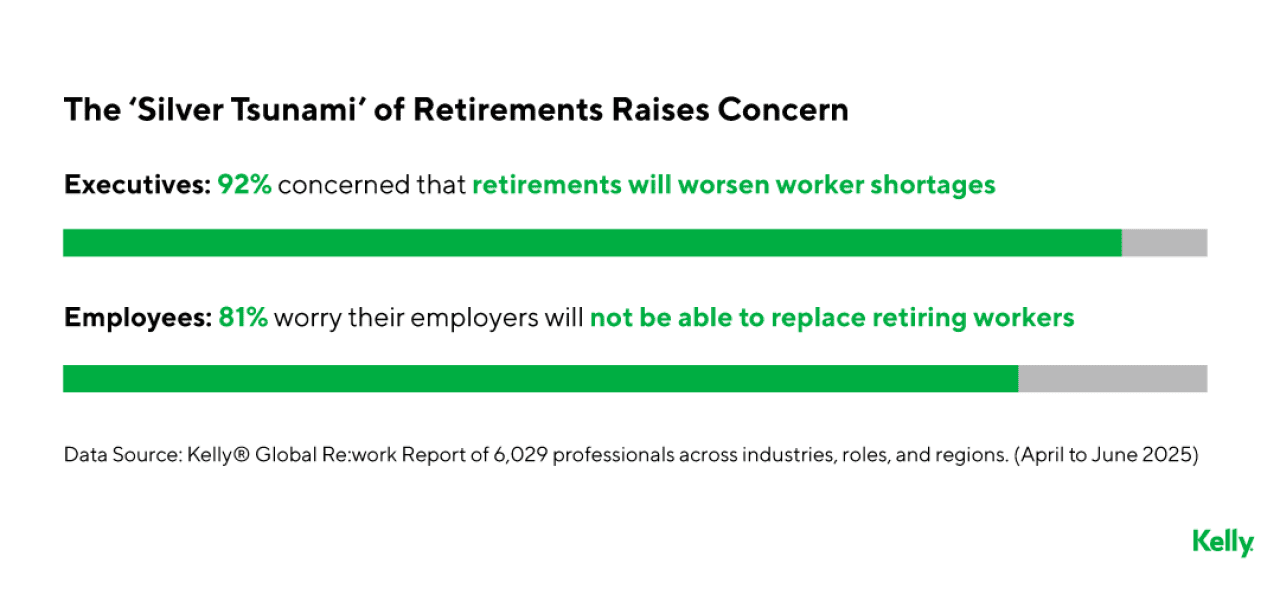
Executives and employees know the retirement wave is coming, but they do not know what happens next. Ninety-two percent of executives say they are concerned that retirements will worsen worker shortages, leaving critical gaps in the workforce, and nearly 4 in 10 are very or extremely worried, according to the research. Workers share those concerns. Eighty-one percent say they worry their employers will not be able to replace outgoing employees, including 28 percent who are highly concerned.

An infographic showing 92% of executives are concerned that retirements will worsen worker shortages, while 81% of employees worry their employers will not be able to replace retiring workers.

Kelly

The views are split on preparedness. Two in 3 executives say their organizations are ready to keep operations running as older workers retire. Only 17 percent of employees agree.

An infographic showing 67% of executives and 17% of employees agree if they think organizations are prepared to keep operations running as workers retire.

Kelly

Many workers see a system running on borrowed time, with institutional knowledge walking out the door faster than it can be passed down.

A problem money cannot fix

Across industries, organizations are trying to offset the loss of experienced workers by redesigning roles, investing in technology or relying more heavily on automation. But replacing people with tools does not replace experience. Knowledge takes time to build, and many midcareer professionals have not received the training or mentorship needed to step into more complex roles.

Researchers warn that when expertise is not transferred, productivity dips, innovation slows and mistakes multiply. The impact is not just technical. Entire ways of working risk being lost as organizations modernize without preparing their people for what comes next.

Fewer than half of executives say they have formal programs to transfer knowledge before employees retire, and only 38 percent report investing in midcareer development at scale. The result is a widening experience gap between senior specialists and the workers expected to replace them.

Rebuilding the pipeline

Research points to a few solutions that go beyond short-term hiring. Successful organizations are pairing senior and junior workers to capture insights before they disappear. Many are adopting a “skills-first” approach that looks past resumes to find potential in veterans, midcareer switchers and people with nontraditional backgrounds. They are also making learning part of advancement, linking training programs to real opportunities for growth.

Some companies are looking outside their walls for support, using strategic outsourcing to bridge experience gaps and maintain continuity during transitions.

A turning point for talent

The skills gap is not a distant threat. It is already reshaping teams, production lines and offices around the world. How organizations respond will determine whether they lose momentum or create a new generation of capable, confident workers ready to lead.

Research makes the choice clear. Future-ready companies invest in people before the crisis hits. The expertise leaving today can become the foundation for tomorrow if leaders act now to transfer it.

The report notes that organizations focused on resilience, including those that prioritize upskilling, flexible teams and inclusive hiring, are twice as likely to say they are prepared for the future. Building that resilience now could determine which companies thrive in the next decade of work.

This story was produced by Kelly and reviewed and distributed by Stacker.

Topics:

Careers & Education
Careers & Education

Layoffs are rising: Here’s where Americans are experiencing the most job disruption

Layoffs are rising: Here’s where Americans are experiencing the most job disruption
By Shawn Tyler for PeopleFinders
5 min read • Originally published January 22, 2026 / Updated March 19, 2026
By Shawn Tyler for PeopleFinders
5 min read • Originally published January 22, 2026 / Updated March 19, 2026

A view of the river and city skyline in Cleveland, Ohio.

Sean Pavone // Shutterstock

Layoffs are rising: Here’s where Americans are experiencing the most job disruption

It’s been more than five years since the worst of the COVID-19 pandemic, and the U.S. unemployment rate seems to have settled down for the most part after an April 2020 high of nearly 15%.

After the rate hovered between 3% and 4% between 2022 and 2024, it has slightly increased since the start of 2025. The latest data from the Bureau of Labor Statistics has the nationwide rate at 4.6%. December 2025 saw more bad news, as the total number of layoffs reached one million for the first year since 2020.

Why Are Layoffs Increasing?

One of the primary reasons for the increase in layoffs has been the continued adoption of artificial intelligence (AI), with companies surveyed in a report by Challenger, Gray & Christmas citing it as the cause of nearly 55,000 layoffs since January 2025. Another common reason for layoffs in 2025 was restructuring, which is a broad term that companies can use in numerous situations.

More reasons for the gradual increase in layoffs include economic uncertainty over tariffs, general macroeconomic conditions, and impacts from the Department of Government Efficiency cuts. DOGE alone is responsible for nearly 300,000 layoffs in 2025. PeopleFinders examines where people in the U.S. are experiencing the highest unemployment rate increases.

12 Locations Americans Are Experiencing the Most Job Disruption

Although the national unemployment rate has risen over the past year, some metropolitan areas are seeing decreased unemployment. Job markets are strong in Oklahoma, Indiana, Alabama, and Nebraska, for instance.

Other areas are not as lucky. According to the Bureau of Labor Statistics, more U.S. metros with a population of at least one million lost jobs between July 2024 and July 2025. Twelve of those large metros had unemployment rates increase by at least half a percentage point in that time span.

1. Cleveland, Ohio

Among the nation’s 56 largest metros, Cleveland saw the highest unemployment rate increase (0.8%) between July 2024 and July 2025. The rate today stands at around 5.2%. Manufacturing and hospitality jobs have taken a hit in the Cuyahoga region, and college graduates have found it more difficult to secure white-collar jobs.

2. Portland-Vancouver-Hillsboro, Oregon-Washington

While Seattle’s unemployment rate held steady, its neighbor to the south, Portland, hasn’t been as fortunate. The rate increased by 0.7% between July 2024 and July 2025. Intel’s Portland-area facilities shed thousands of jobs in 2025; manufacturing (specifically semiconductors) was hit hard.

3. Columbus, Ohio

Ohio’s largest city, Columbus, was also affected by the recent uptick in unemployment. The decrease in leisure, hospitality, and goods-producing jobs accounted for much of the 0.7% increase.

4. Washington-Arlington-Alexandria, DC-Virginia-Maryland-West Virginia

Cuts to the federal workforce—notably through DOGE—led to the DMV having the highest monthly unemployment increases during the first half of 2025. While the trend is starting to level off, the D.C. area still saw a 0.6% rise from July 2024 to July 2025.

5. Virginia Beach-Chesapeake-Norfolk, Virgina-North Carolina

The story is much the same in Southeastern Virginia, where the unemployment rate also rose by 0.6%. The reduction in federal workers has also led to fewer jobs for government contractors, who make up a significant portion of the Virginia Beach area.

6. Memphis, Tennessee-Mississippi-Arkansas

On top of consistently high rates of violent crime, the Memphis metropolitan area is also experiencing an unemployment rate increase of around 0.6%. No clear reasons seem to exist for the surge, but some data suggest the region’s lack of high-paying jobs could be partially to blame.

7. Hartford-West Hartford-East Hartford, Connecticut

Although the unemployment rate in Connecticut is under 4%, the state’s largest metro has seen a rate increase of 0.6% from July 2024 to July 2025. Around 4.3% of Hartford’s workforce is currently unemployed.

8. Sacramento-Roseville-Folsom, California

California’s unemployment rate stands at 5.6%, which is the highest among all states and behind only Washington, D.C.’s rate of 6.2%. In addition to job cuts in the hospitality and entertainment industry, large tech companies are beginning to downsize in response to AI-related disruptions. Sacramento has felt this squeeze more than other areas, as shown by its unemployment rate increase of 0.5%.

9. Fresno, California

No other U.S. metro with at least 1 million residents had a higher unemployment rate in August 2025 than Fresno in California’s Central Valley. Between July 2024 and July 2025, the region’s rate increased by 0.5%, from 8.1% to 8.6%.

10. Riverside-San Bernardino-Ontario, California

Riverside’s rising unemployment (0.5%) shows that California’s job woes extend to every corner of the state. Construction and manufacturing accounted for many of the area’s losses.

11. Cincinnati, Ohio-Kentucky-Indiana

Columbus and Cleveland are not the only large cities in Ohio with rising unemployment. Cincinnati’s diversified economy, however, has kept the rate increase at a relatively cool 0.5%.

12. Grand Rapids-Wyoming-Kentwood, Michigan

Western Michigan experienced an increase of 0.5% between July 2024 and July 2025, but its current rate of 5.5% is still lower than Detroit’s unemployment rate of 5.7%. A contributing factor to Michigan’s relatively high jobless rate is the recent increase in unemployment benefits.

Should You Avoid Areas with Rising Unemployment?

While rising unemployment rates are seldom signs of strong economies, workers in some industries (such as healthcare and data science) are better insulated from mass layoffs. Trends don’t last forever, either; Florida’s historically low unemployment rate of 2.8% in early 2023 has crept up to 3.9% at the end of 2025, for instance.

On the other hand, regions with high unemployment often experience collateral consequences, such as low economic growth and elevated crime rates.

Even within regions with favorable economic conditions, cities, towns, and neighborhoods vary in their attractiveness. Job seekers have many variables to consider when weighing the pros and cons of relocation, not the least of which is the overall strength of companies extending job offers.

In this era of rising job scams, it’s also important to verify the identities of hiring managers with a people finder and run a reverse phone lookup on the number they’re calling from. Every reasonable measure to prevent scams is worth it in today’s economic climate.

This story was produced by PeopleFinders and reviewed and distributed by Stacker.

Topics:

Careers & Education

Posts navigation

Older posts
Newer posts
Featured Jobs
Kirkus Media
Editorial Intern
Kirkus Media
New York City, New York (US)

Gaia Inc
MEDIA COORDINATOR
Gaia Inc
Louisville, CO

Gaia Inc
Global Paid Media Specialist
Gaia Inc
Louisville, CO

Gaia Inc
Director of Media Strategy
Gaia Inc
Louisville, CO

Hearst Television
Account Executive
Hearst Television
Milwaukee, WI, United States

All Jobs »
PREMIUM MEMBER

Tracey Allen

Indianapolis, IN
15 Years Experience
Journalism sharpened my ability to write with clarity and purpose, while education in web design strengthened my digital versatility. For 15+ years,...
View Full Profile »
Join Mediabistro Membership Today

Stand out from the crowd with a premium profile

Mediabistro Logo Find your next media job or showcase your creative talent
  • Job Search
  • Hot Jobs
  • Membership
  • Newsletter
  • Career Advice
  • Media News
  • Hiring Tips
  • Creative Tools
  • About
Facebook YouTube Instagram LinkedIn
Copyright © 2026 Mediabistro
  • Terms of Use
  • Terms of Service
  • Privacy