What school districts actually spend to replace a single school bus, and why the number keeps climbing
By
Steve Mitchell for BusesForSale.com
4 min read • Published June 16, 2026
By
Steve Mitchell for BusesForSale.com
4 min read • Published June 16, 2026
Meredith Heil // Shutterstock
What school districts actually spend to replace a single school bus, and why the number keeps climbing
If you ask your local school district board member how they buy buses, they’ll probably reply, “on a plan.” That plan is a budget that’s approved months before anyone submits a state bid or signs a purchase order. The problem is that the gap between what districts budget and what they actually pay has been widening for years. And in 2026, BusesforSale.com reports, three separate forces pushed it wider at once.
The baseline price has moved.
The standard yellow 72-passenger Type C school bus you’ll find in most American neighborhoods runs between $95,000 and $110,000 new. A Type D transit-style bus typically costs more, often exceeding $130,000. Those figures, dependent on configuration and contract terms, are up sharply from a few years ago. New York’s state pricing data shows conventional Type C buses have risen about 49%, roughly $46,000, since 2017. Supply chain disruptions after 2020 strained manufacturing and steel costs.
Most district replacement plans already factored in the more expensive baseline cost, but they didn’t see the tariffs coming.
Tariffs aren’t free.
Blue Bird Corporation, one of the two dominant school bus manufacturers in the U.S., confirmed a 5% price increase on all nonelectric buses as a direct result of 2025 tariffs on imported components. Five percent of a $100,000 bus is $5,000. For a district replacing 10 or 20 units, that’s $50,000 to $100,000 in unanticipated cost with no room in the budget to absorb it.
The 5% increase is the manufacturer’s basic estimate for standard vehicles. Contract data on larger or specialty orders has shown even larger increases. In 2025, Tim Flood, EVP of The Trans Group, reported a 40% jump in a large bus order, citing component-level cost increases on transmissions, control modules, and safety systems, many of which are sourced internationally.
At your next school board meeting, ask how transportation budgets work, and they’ll say that, for example, 2025’s budgets were approved in the fall of 2024. Since the tariffs arrived in spring 2025, the purchase authority had already been set, and districts that approved $95,000 per unit found themselves buying at $100,000 or more with no authority to adjust. And that inability to predict the future happens every year.
The federal rebate program stopped moving.
For several years, the EPA’s Clean School Bus Program gave districts a way to offset replacement costs. Priority districts could receive rebates of up to $325,000 per electric bus. Lower-priority applicants qualified for up to $170,000. The program has moved roughly $5 billion across multiple funding rounds since 2021.
But now, the rebate round isn’t moving forward. The EPA halted awards under the program, and districts that were counting on it to fund replacements are now absorbing the full cost from operating budgets. Some planned to use rebates to offset conventional diesel purchases; those plans no longer have a funding source.
If you’re a district counting on replacing five buses with grant assistance, that represents $500,000 to $1 million in costs now falling entirely on local appropriations.
The numbers show up in budget documents.
Kentucky, for example, shows the size of the shortfall. The state was $89 million short of its required funding in 2026. And that 2026 number now sits on a $2.58 billion gap that’s been building since 2005. This running tab is the difference between what the legislature promised and what it actually delivered.
None of this is isolated to a certain region. EverDriven surveyed school transportation directors across the U.S. for 2026-2027 and found that cost control without service cuts was the top reported challenge heading into the planning cycle.
The fleet is aging into an expensive moment.
Somewhere around 480,000 school buses run routes across the country. A large share of that fleet was bought in 2016 and 2017, which puts a big slice of it near the 12-year mark the federal government treats as a bus’s design life. Those buses still run, but they are due, and they are coming up for replacement right as replacement got expensive. But as averages often do, that one hides a problem. A large share of fleets were bought in 2016-17, and those buses, although perfectly capable of 10s of thousands of miles, are near the end of their plan.
And unless districts buy used school buses for sale, replacing them will cost 30%-40% more than the original order. Tariffs have pushed that number up even more. And while federal rebates might have absorbed some of it, they’re no longer available.
The districts did the best they could with the numbers they had at the time, and no one made any mistakes. Bus manufacturers are having to cover higher costs because of tariffs. The rebate money was real and funded, and now it’s gone. But the gap opened anyway, because three pressures hit the same buying cycle. And this is a business that budgets one year and buys the next.
25 actors who were fired or quit hit TV shows in their first seasons
By
Brianna Zigler
14 min read • Published June 15, 2026
By
Brianna Zigler
14 min read • Published June 15, 2026
Noel Vasquez // Getty Images
TV actors who were recast within the first season
Can you imagine your favorite TV show without your favorite actor on it? Well, there’s a good chance many of your faves came very close to having their character played by someone else. In fact, sometimes they were played by someone else for a very short time.
When a new series first starts, and the cast and crew still have training wheels on, anything can happen during that first season. This can range from cast incompatibility to the showrunners wanting to take things in another direction. Recasting can even happen before a show premieres. In April 2026, the showrunner of “For All Mankind” spinoff “Star City” explained that the series had recast roles from the original show, since the characters are being depicted at earlier points in their lives.
Those certainly aren’t the only actor swaps to occur before a series’ first season. An actor can get cast for a pilot, and then, while shooting the pilot with the other actors, it may become clear that said actor simply doesn’t gel with the show—even the actor themselves may decide they’re no longer feeling it. The character of Penny on “The Big Bang Theory,” for example, was initially named Katie and was played by actor Amanda Walsh in the pilot before Kaley Cuoco was brought in.
So, have you ever wondered if your favorite TV show character was nearly played by someone else? For this list, Stacker looked through news blasts, interviews, and series deep dives to compile 25 actors from popular TV shows spanning nearly 60 years—from the original “Star Trek” all the way to “Batwoman”—who were cut from their roles right from the jump. These actors were let go either in the middle of Season 1, after Season 1 ended, or didn’t even make it past the pilot.
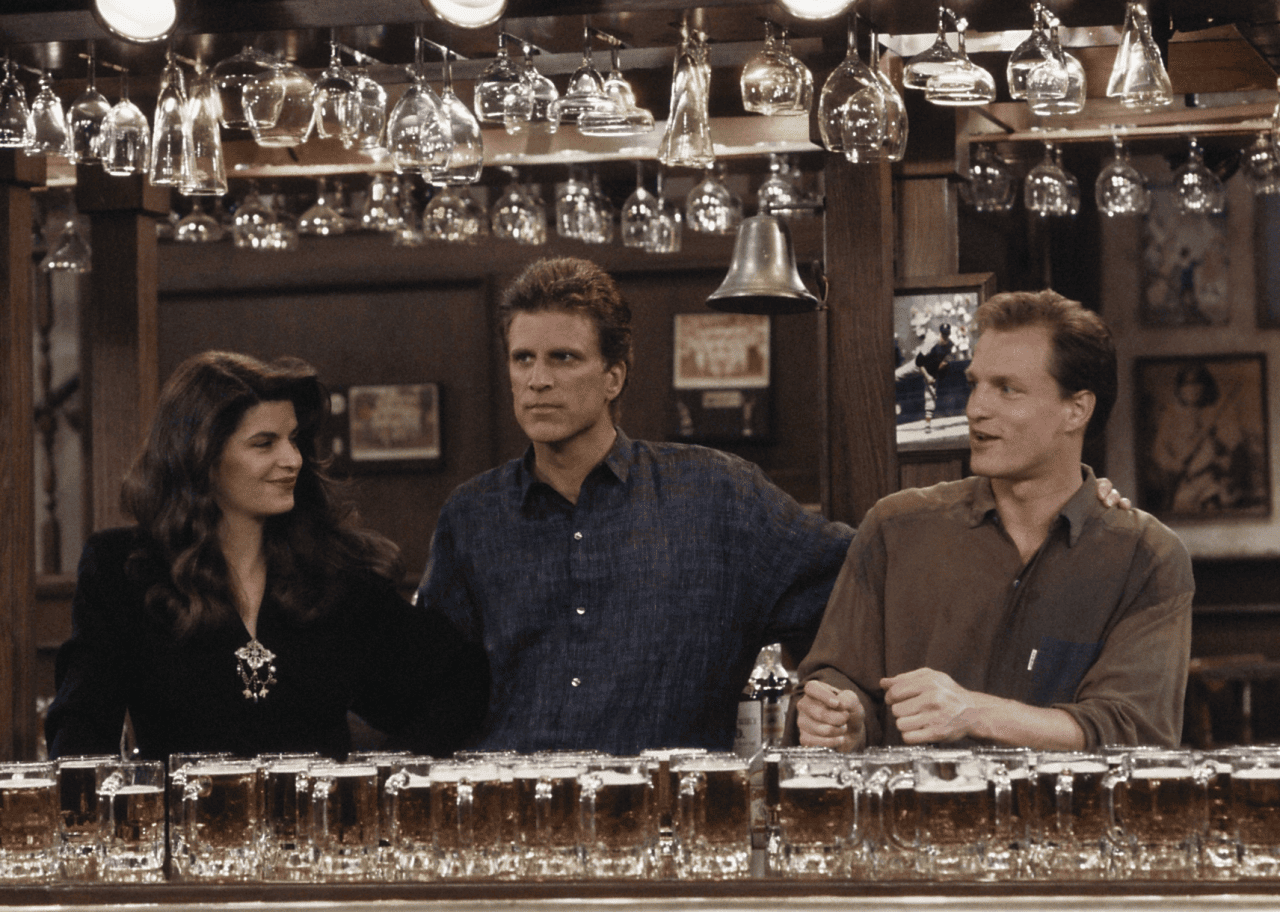
From Sam Malone to Daenerys Targaryen, 25 famous TV characters almost turned out very differently.
The CW Network
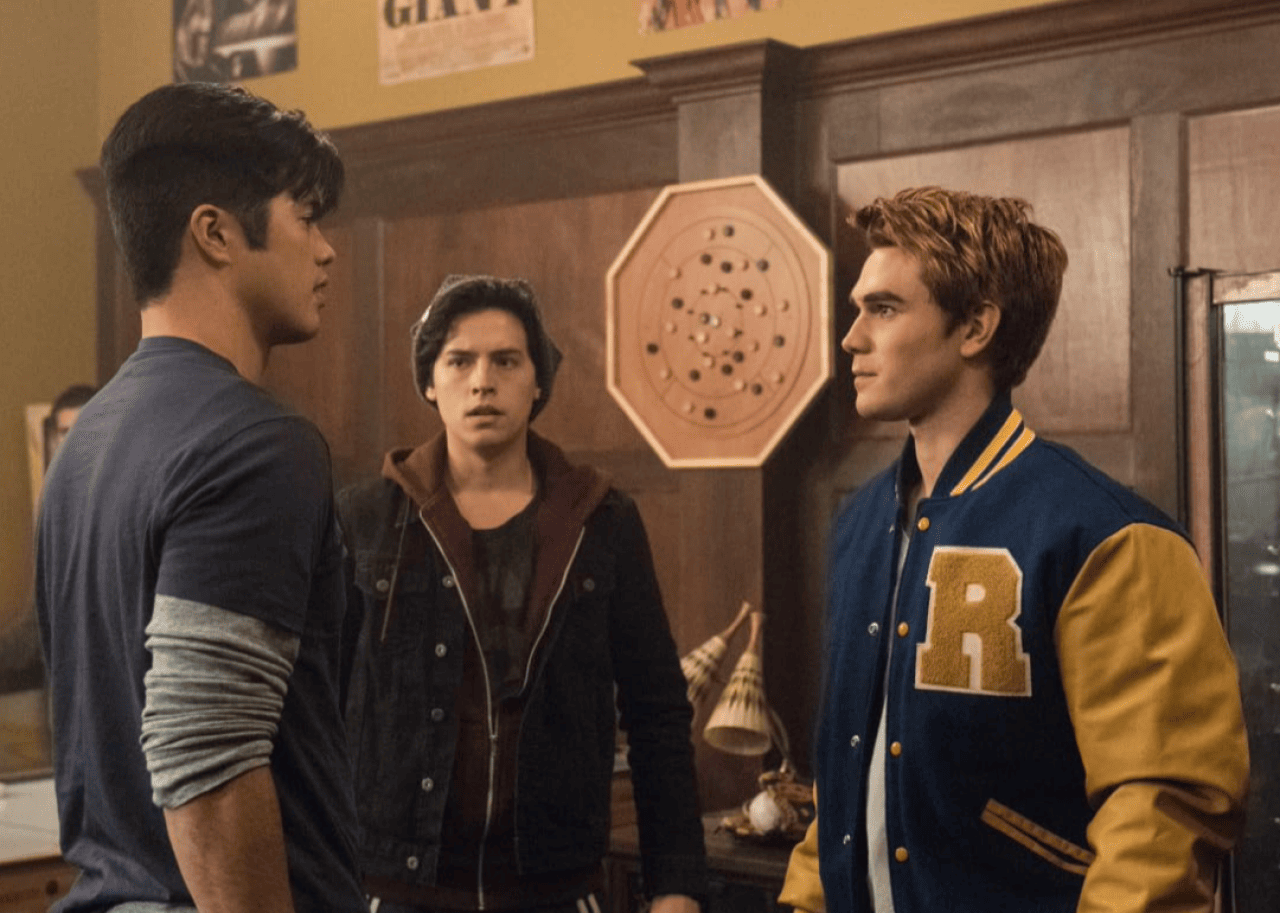
Ross Butler on ‘Riverdale’
On The CW’s genre-bending teen drama based on the classic characters from “Archie Comics,” actor Ross Butler played the character Reggie Mantle, Archie’s nemesis at Riverdale High. However, Butler left at the end of the first season reportedly due to scheduling conflicts, and Charles Melton took on the role until the series’ 2023 conclusion.
According to series creator Roberto Aguirre-Sacasa: “We love what Ross did with the role of Reggie [this season], but because of his commitments to other projects, we couldn’t use him nearly as much as we would have liked.” Butler did make a surprise return appearance as the original Reggie for a few scenes in Season 6, joining other characters who returned for the show’s 100th episode.
Tinseltown // Shutterstock
Tamzin Merchant on ‘Game of Thrones’
Before Emilia Clarke became the dragon queen Daenerys Targaryen, that role was given to Tamzin Merchant, who was cut after filming the infamously troubled—and subsequently shelved—original pilot episode of “Game of Thrones.”
About changing the actors, HBO executive Michael Lombardo said: “There was a piece of casting we had to rethink, [a role] that was compromised. We all knew Daenerys’ journey was critical. Her scenes with Jason just didn’t work.”
Merchant ultimately agreed the role was not for her, saying: “[Getting cut] was an affirmation about listening to my instincts and following them, because I tried to back out of that situation and, during the contract process, I did back out. I was talked back into it by some persuasive people.”
FX Productions
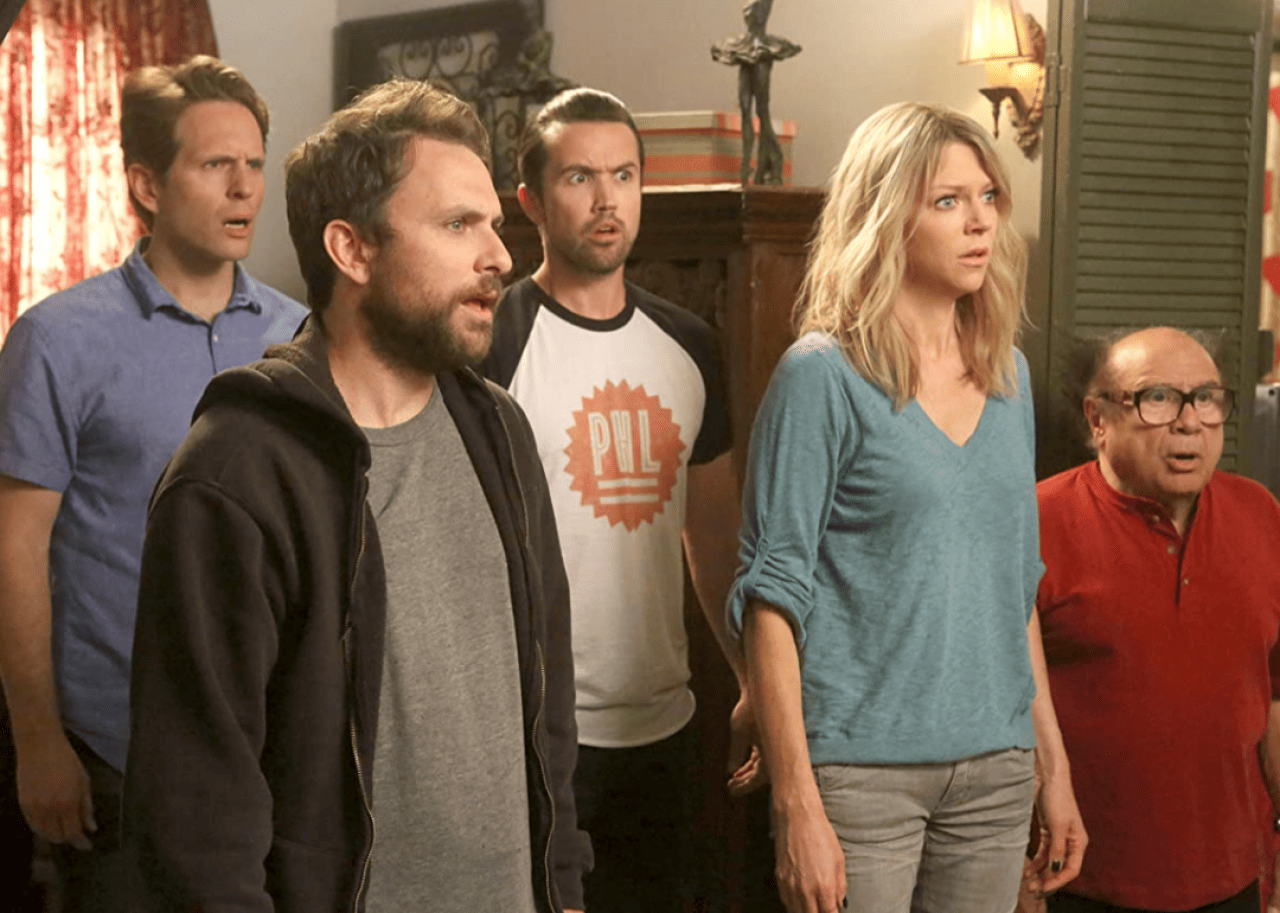
Jordan Reid on ‘It’s Always Sunny in Philadelphia’
In the ultimately unaired pilot for the long-running FX sitcom “It’s Always Sunny in Philadelphia,” the key character Deandra “Sweet Dee” Reynolds, Dennis’ twin sister, was not played by the familiar face of Kaitlin Olson. Lead actors and writers Glenn Howerton, Rob McElhenney, and Charlie Day filmed a pilot that got the show greenlit by FX, and Dee was played by McElhenney’s then-girlfriend, Jordan Reid. According to Reid herself, however, due to some behind-the-scenes drama and Reid and McElhenney splitting, Reid was released from her role, which was later recast.
Warner Bros Television
Jane Levy on ‘Shameless’
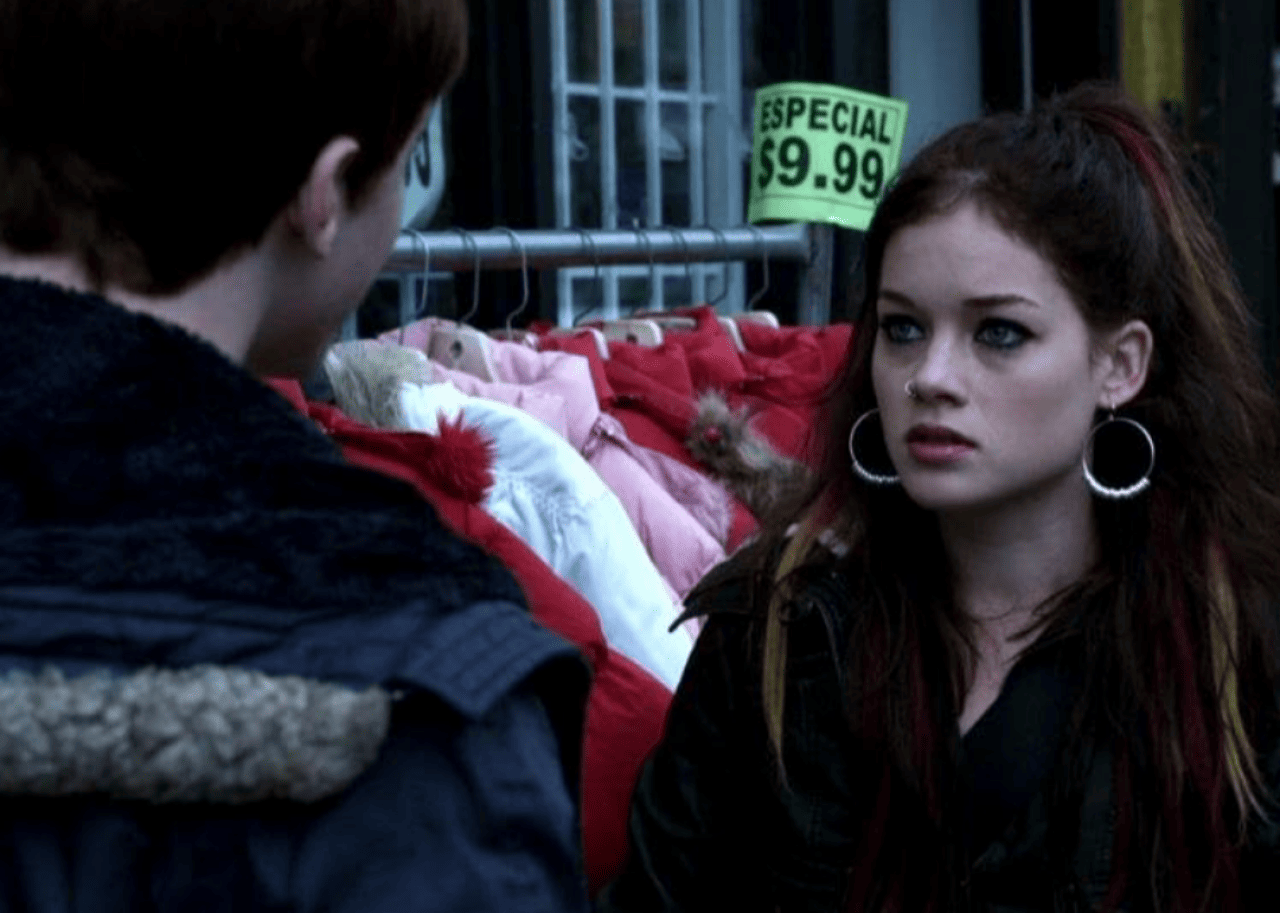
The first season of Showtime’s U.S. adaptation of the British series “Shameless” saw Jane Levy in the role of troubled teen Mandy Milkovich, who befriends and attempts to seduce the closeted Ian Gallagher. After Season 1, fans may have felt a little bewildered to suddenly see Emma Greenwell in Levy’s spot, but Levy opted for a role she was much more eager to land: the starring role on ABC’s “Suburgatory.”
In an interview for Backstage, Levy said of the decision to take a chance on “Suburgatory”: “I try not to get attached to stuff; I try to move on. But this was the first one I went out for and it was exciting. … When I found out it was actually going to happen, I went crazy.”
ABC Family
James Neate on ‘Pretty Little Liars’
ABC Family’s twisty adaptation of the popular book series made a few key changes after filming the pilot episode, including recasting the crucial role of Toby Cavanaugh, stepbrother of the villainous Jenna Marshall.
Actor James Neate actually played Toby’s role in the aired pilot episode. However, after that pilot, Keegan Allen took over as Toby. It remains unknown why the swap was made, but this wasn’t the only role that was recast after “Pretty Little Liars” Season 1: The role of Allison’s brother, Jason, was also recast.
Shapiro/West Productions
Phil Bruns on ‘Seinfeld’
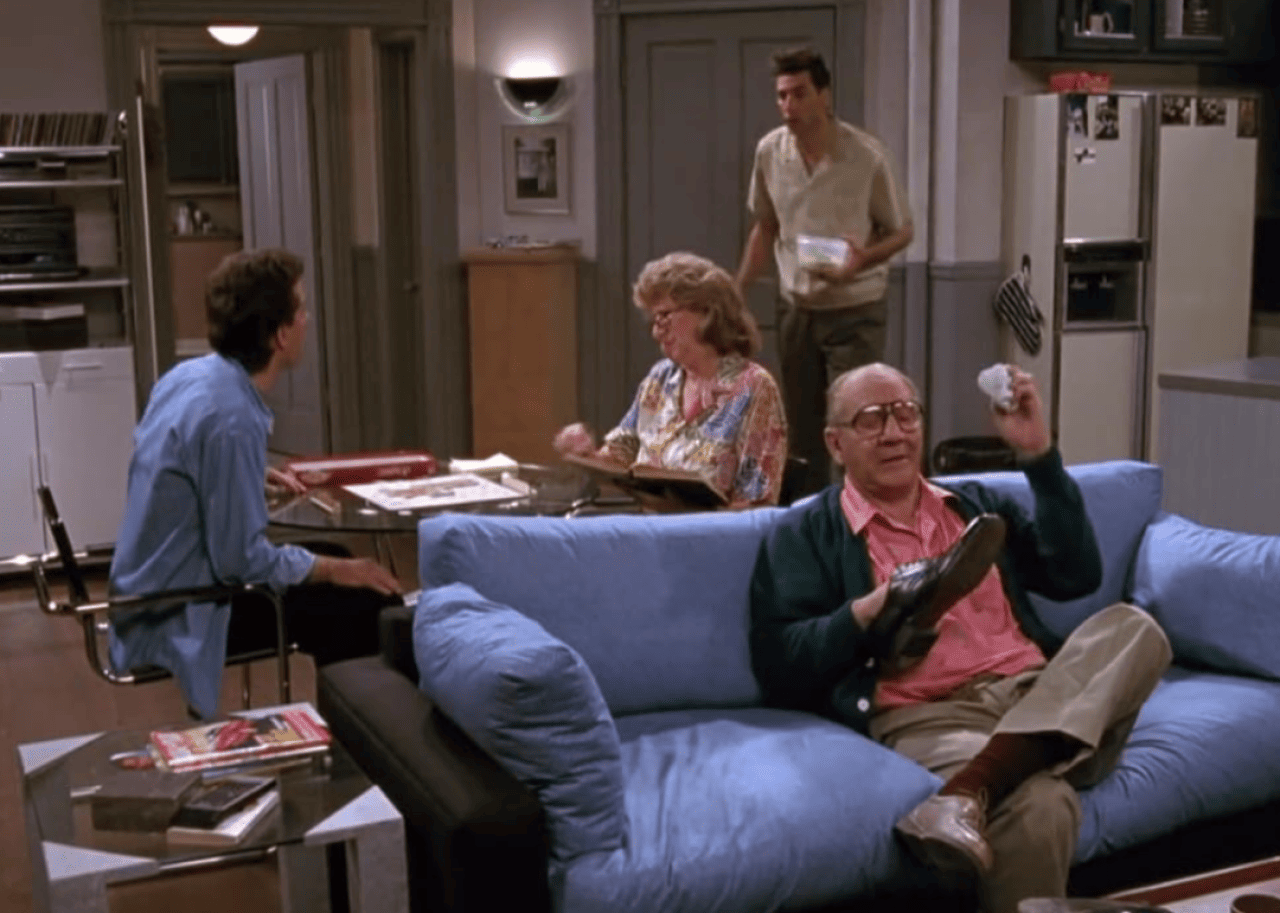
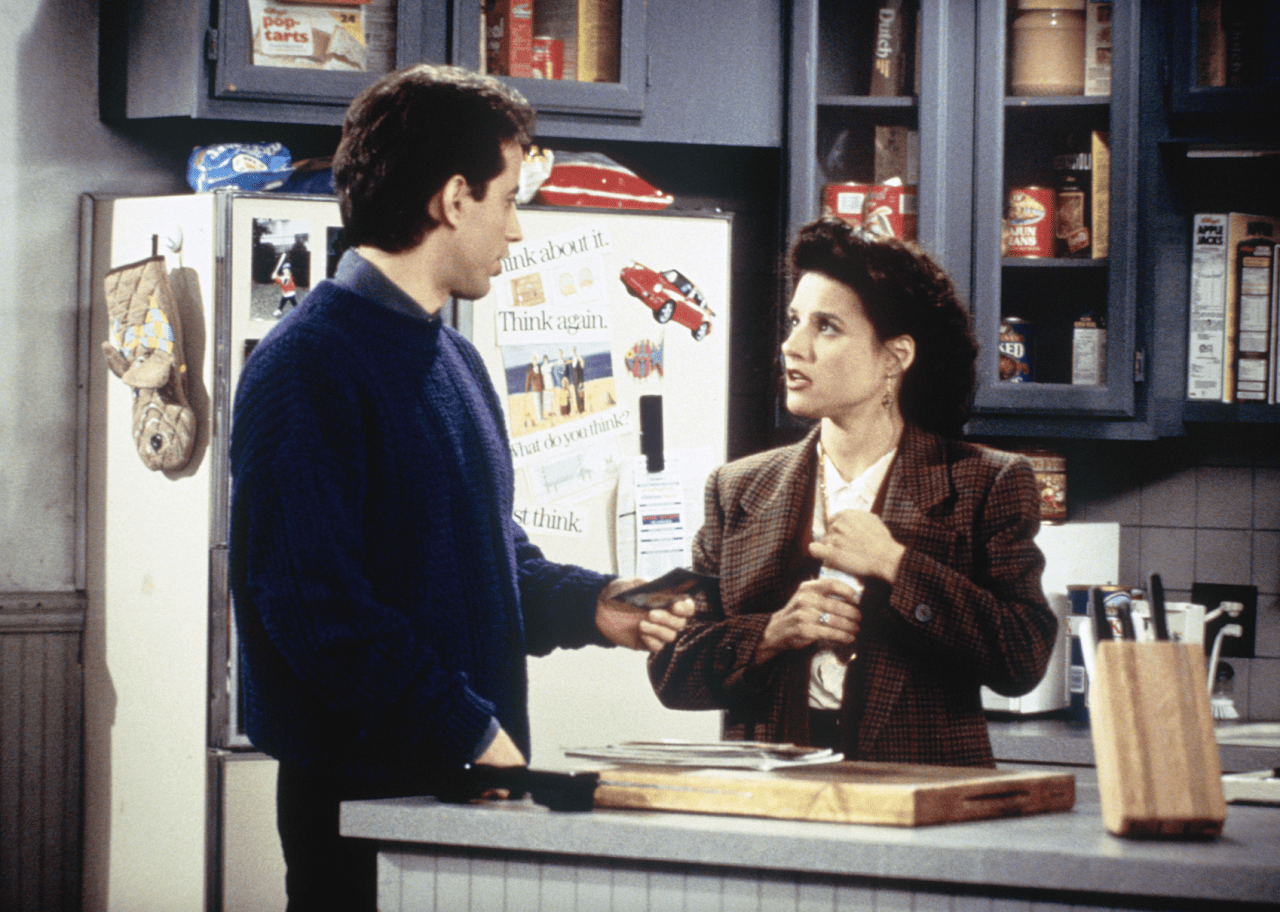
It’s hard to forget the character of Jerry’s father, Morty Seinfeld, played memorably throughout the eponymous series by Barney Martin. But in a Season 1 episode titled “The Stake Out,” which features an appearance from Jerry’s parents, Phil Bruns can be seen playing the role.
Basically, according to director Tom Cherones in the behind-the-scenes special features on the DVDs for Seasons 1 and 2, “Seinfeld” showrunners Larry David and Jerry Seinfeld decided they wanted the character of Jerry’s father to be more abrasive, implying that Bruns didn’t portray the desired character vibe.
Imagine Entertainment
Alessandra Torresani on ‘Arrested Development’
Ann Veal’s character was meant to be a forgettable girl on “Arrested Development,” so maybe watchers didn’t notice her original actor, Alessandra Torresani, was replaced by Mae Whitman after Season 1. But the initial reason she was recast actually played into the joke around her character of being utterly bland: She was supposed to get cast as a different actor over and over.
As revealed by Whitman in an interview, however, the showrunners ended up sticking with her, jokingly revealing: “They were like, ‘No, no, you’re making the whole ‘not memorable’ thing work; we’ll just go with that.'”
lev radin // Shutterstock
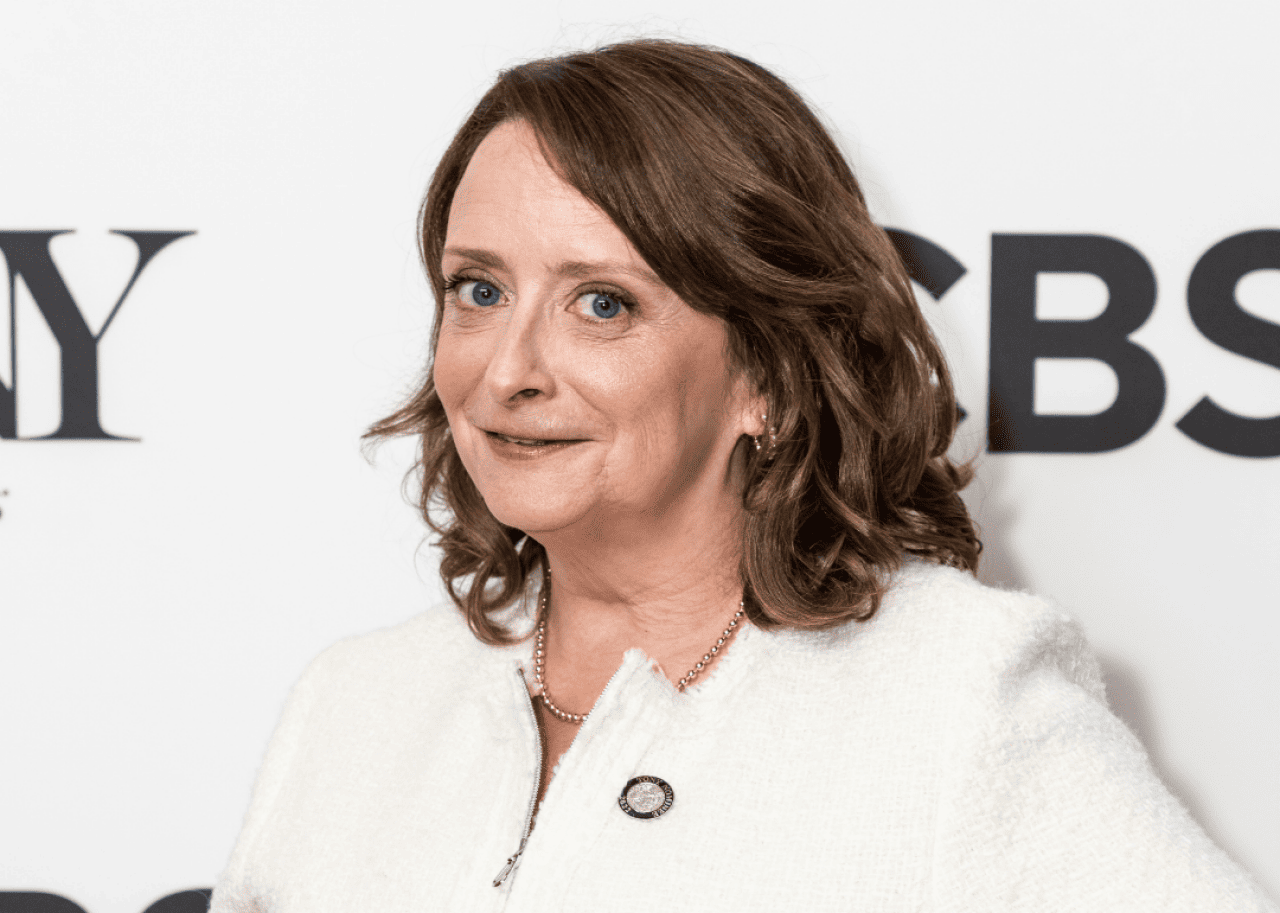
Rachel Dratch on ’30 Rock’
It feels like there’s no way any fan of the NBC sitcom “30 Rock” can imagine Jenna Maroney played by anyone else but Jane Krakowski. Still, former SNL star and comedian Rachel Dratch actually held the role during an unaired pilot.
Liz Lemon’s best friend and star of the fictional “Girlie Show” was named “Jenna DeCarlo” in the unaired pilot, but a shift in tone prompted a swap for Krakowski. On the switch, Dratch told the New York Post, “The direction of the character had changed, and pilots are recast all the time.”
lev radin // Shutterstock
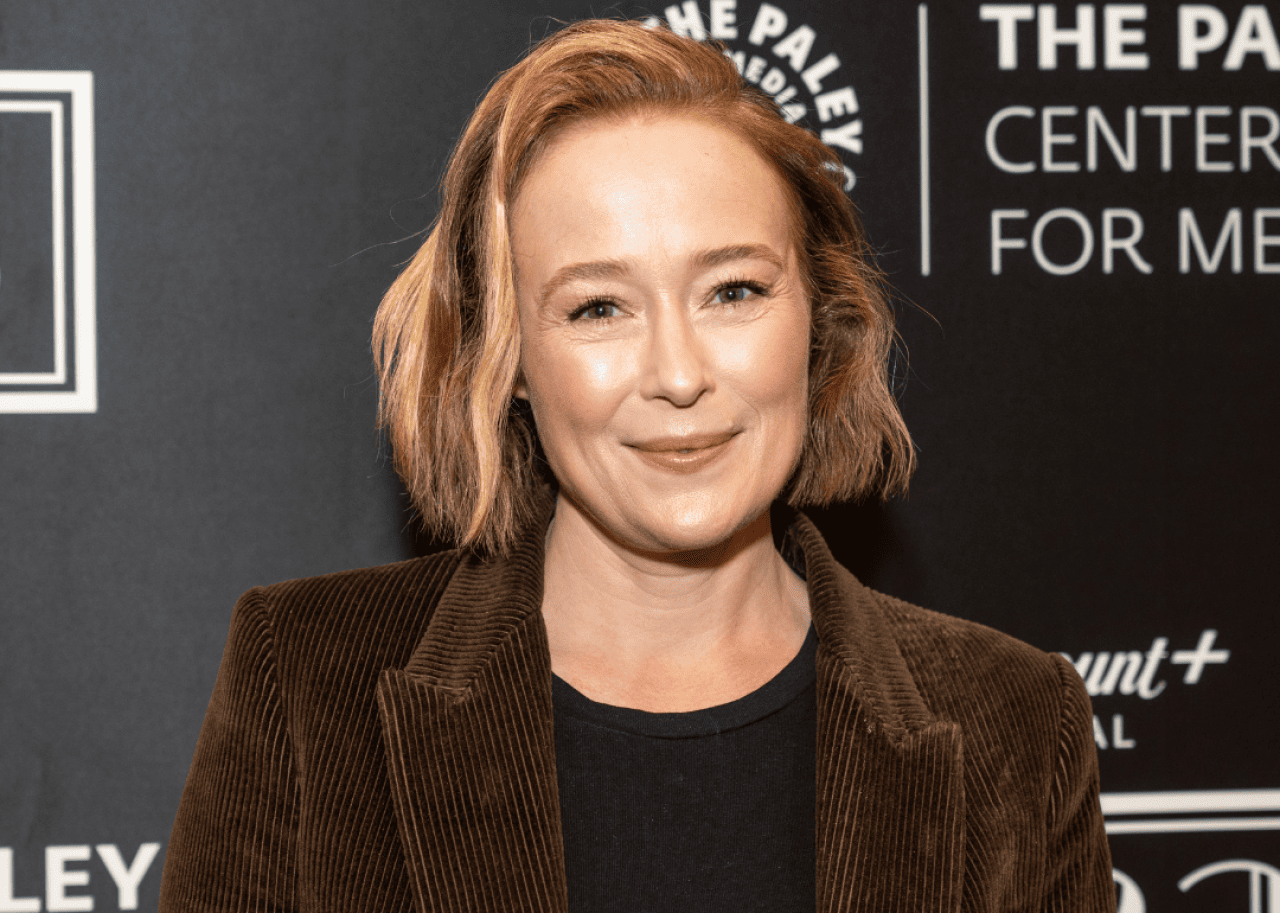
Jennifer Ehle on ‘Game of Thrones’
Daenerys Targaryen wasn’t the only major “Game of Thrones” character to get a shake-up after filming the unaired pilot. Before the series was picked up, the original actor playing Catelyn Stark, Jennifer Ehle, decided to back out.
In an interview with The Daily Beast, Ehle explained that she had found out the series had been picked up after six months of continuous work, clarifying: “My daughter was seven months old when we did the pilot. It was too soon for me to be working, emotionally and bonding-wise.”
Mutant Enemy
Riff Regan on ‘Buffy the Vampire Slayer’
Alyson Hannigan’s portrayal of Willow Rosenberg on “Buffy the Vampire Slayer” has become iconic, but that role almost turned out very differently. As with many other TV series, “Buffy” had an unaired pilot—and in that pilot, Willow’s character was portrayed by actor Riff Regan.
In an interview on the show’s DVD special features, casting director Marcia Shulman said Regan “just didn’t work” in the role, going on to explain that “when we got picked up, we always felt that we were going to start again and look for another Willow.”
Warner Bros Television
Alex Borstein on ‘Gilmore Girls’
It’s hard to fathom anyone but Melissa McCarthy in the role of Sookie St. James—yet in the unaired, original “Gilmore Girls” pilot, Sookie was actually played by “The Marvelous Mrs. Maisel” and “Family Guy” actor Alex Borstein. However, at the time, Borstein was still a cast member on the late-night sketch comedy show “MADtv,” and they wouldn’t let her out of her contract to join “Gilmore Girls.” “I wanted to do both,” Borstein told BuzzFeed in a 2013 interview. “They wouldn’t share me.”
Axelle/Bauer-Griffin/FilmMagic // Getty Images
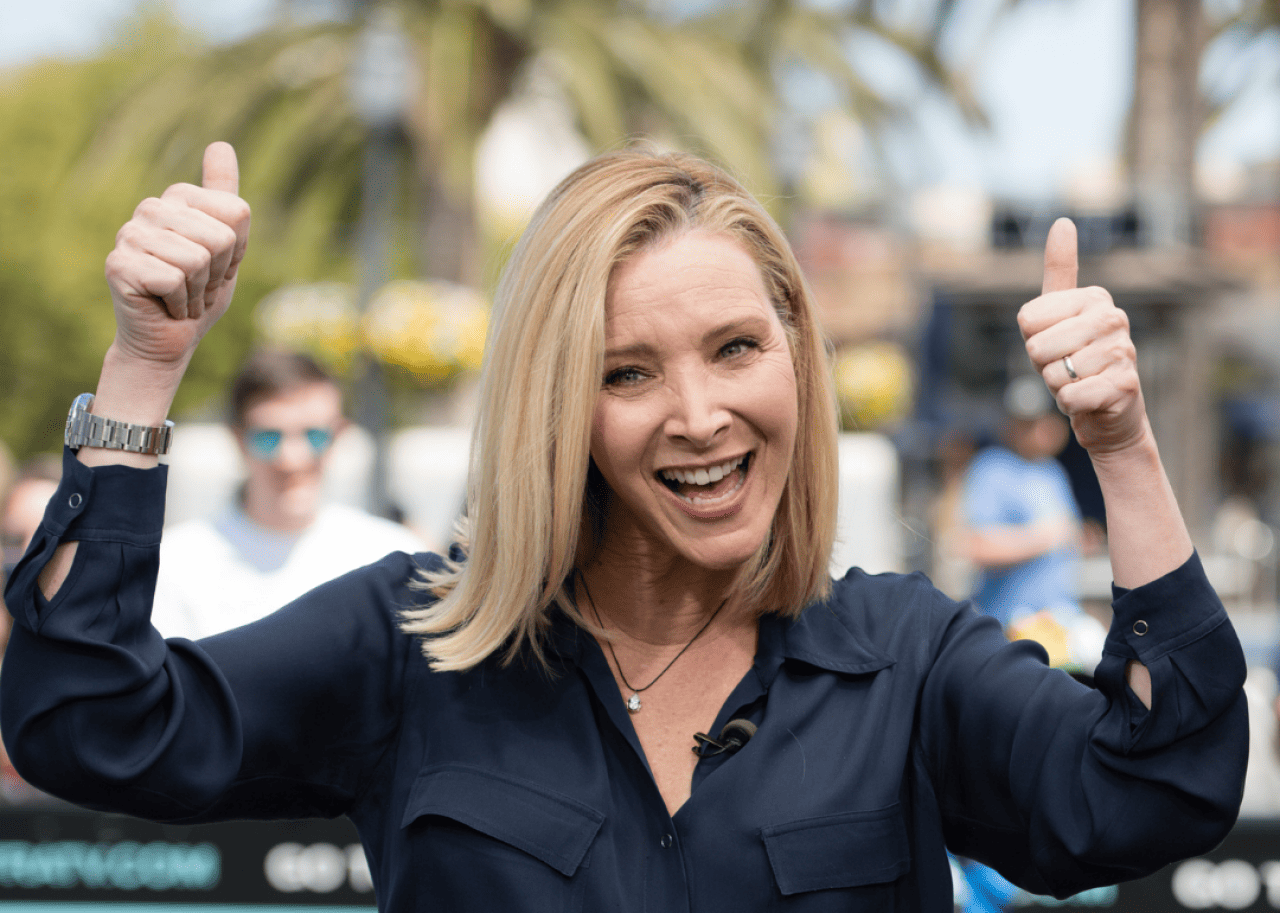
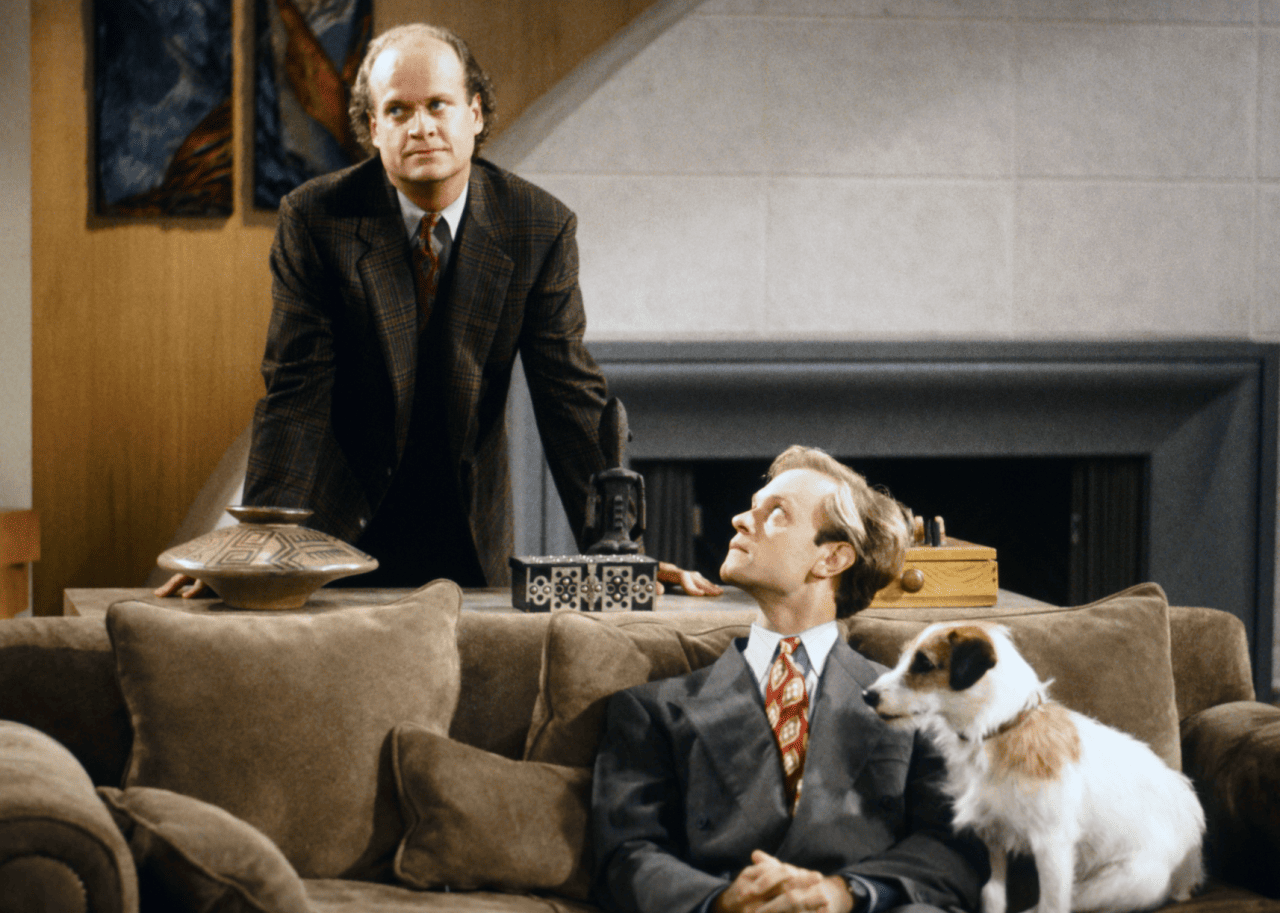
Lisa Kudrow on ‘Frasier’
Everyone knows Lisa Kudrow as the eccentric Phoebe Buffay on “Friends,” but there was a brief period when she was Roz Doyle, producer of Frasier Crane’s radio program on “Frasier.” Kudrow had snagged the part, but three days into filming the pilot, things weren’t shaking out: “I wasn’t right for the part [or] for the chemistry of the group. So that wasn’t working,” Kudrow explained on “The Howard Stern Show” in 2021.
Kudrow also felt she wasn’t director James Burrows’ “cup of tea,” which ultimately caused a few road bumps when she got cast on “Friends”—another Burrows project.
“Frasier” co-creator Peter Casey also explained the situation on writer Ken Levine’s blog, citing that Kudrow wasn’t forceful or assertive enough for the dynamic with the titular character. Casey said they were rewriting the character of Roz less strong each day for Kudrow, and after realizing the change needed to be made, they called Kudrow with “great regret” and informed her they were recasting her.
Leon Bennett // Getty Images
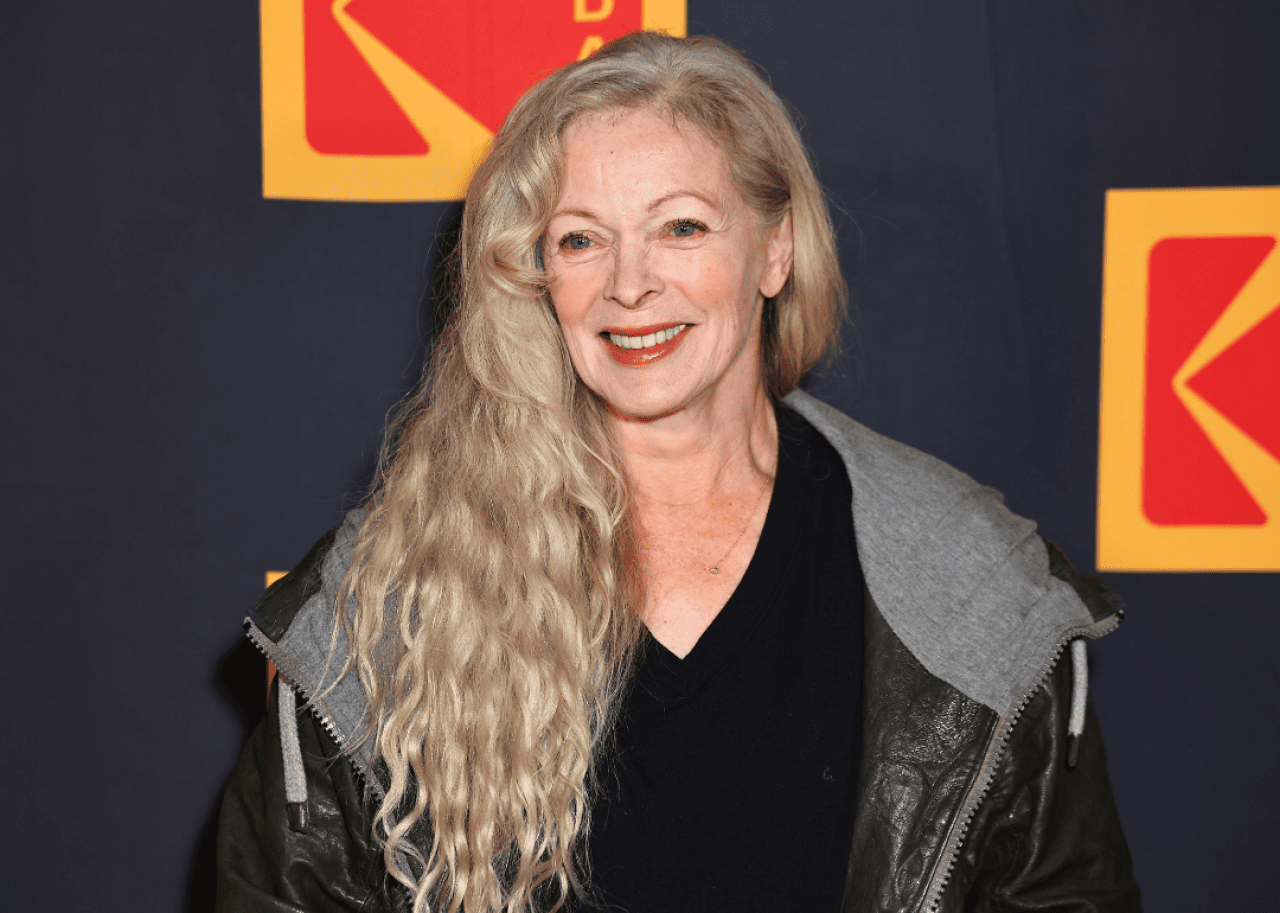
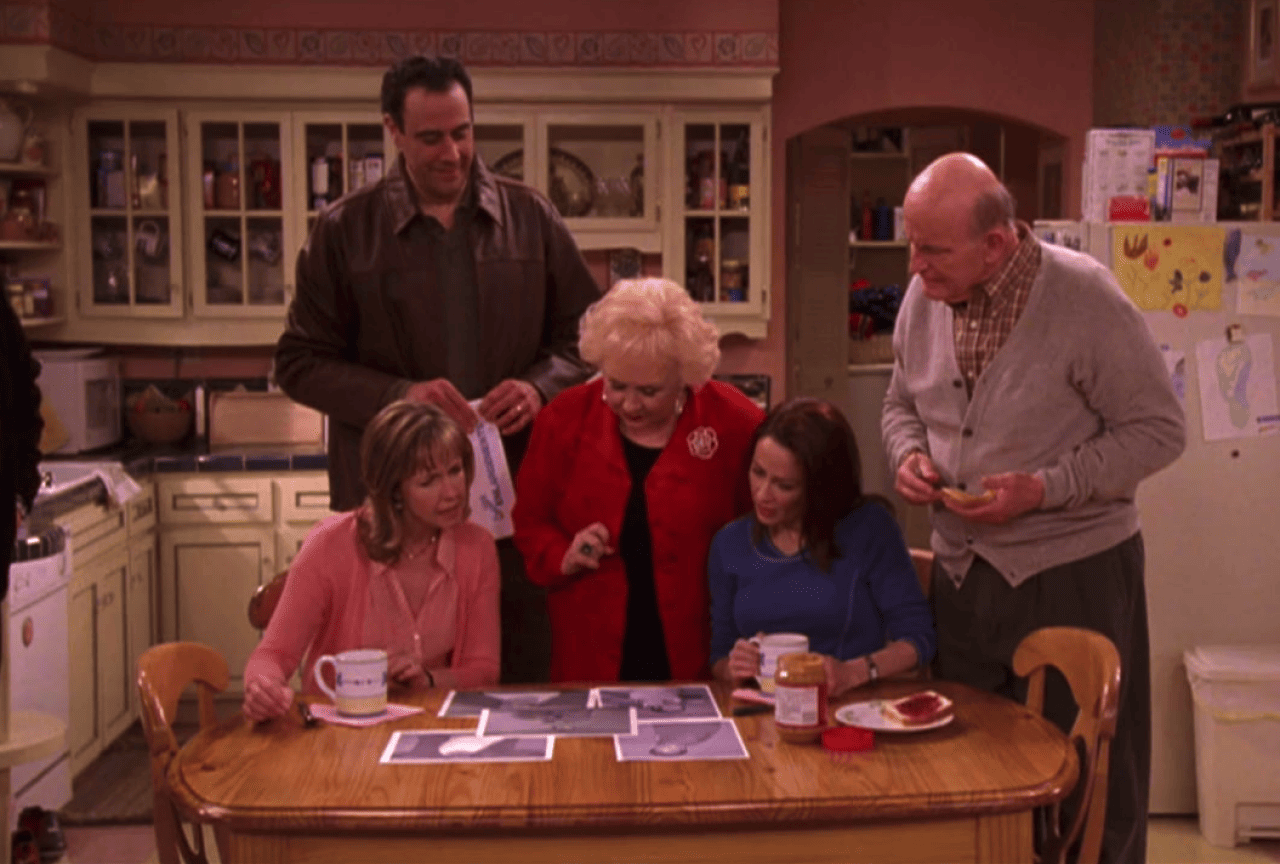
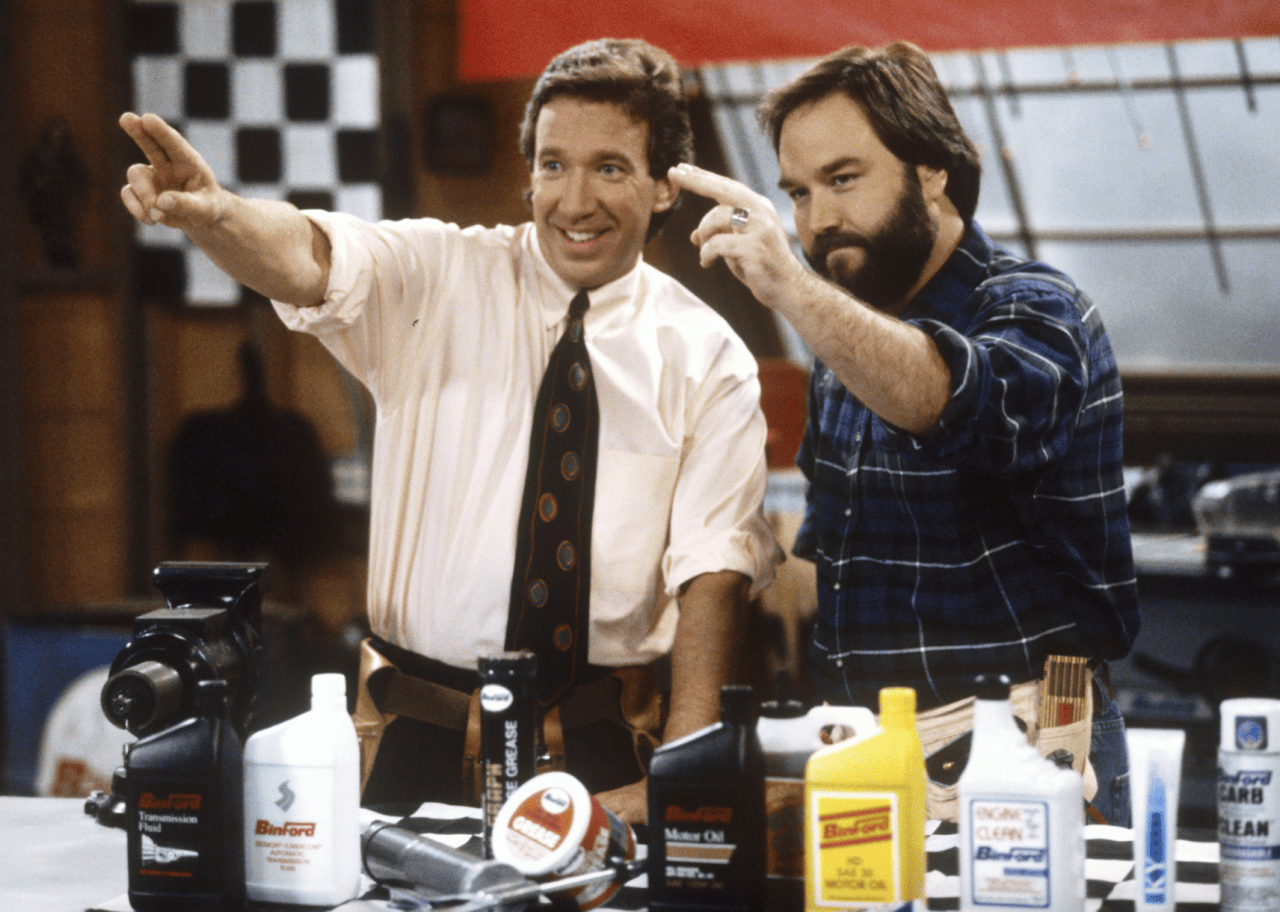
Frances Fisher on ‘Home Improvement’
Now recognized for her dramatic work in acclaimed films like “Titanic” and “Unforgiven,” actor Frances Fisher was originally cast in the part of Tim Taylor’s wife, Jill, on “Home Improvement.” Jumping off from her soap opera work at the time, Fisher still had very little comedy experience, and shortly after taping began for the pilot, she was swapped out for Patricia Richardson. “Frances is a great actress,” “Home Improvement” co-star Richard Karn told News.com, “but in this role with Tim [Allen], she came off more as a victim to him than his equal.”
Kathy Hutchins // Shutterstock
Merrin Dungey on ‘Private Practice’
When the long-running medical drama “Grey’s Anatomy” aired its backdoor pilot episode for the upcoming spinoff “Private Practice” in 2007, the new character of Dr. Naomi Bennett, played by Merrin Dungey, was introduced. However, shortly after the episode aired, it was announced Bennett’s role would be taken over by Audra McDonald in the full season set to premiere in the fall. Why the switch? Well, according to Variety, it simply had to do with chemistry issues between Dungey and the actor who played her character’s estranged husband, Sam: Taye Diggs.
Touchstone Television
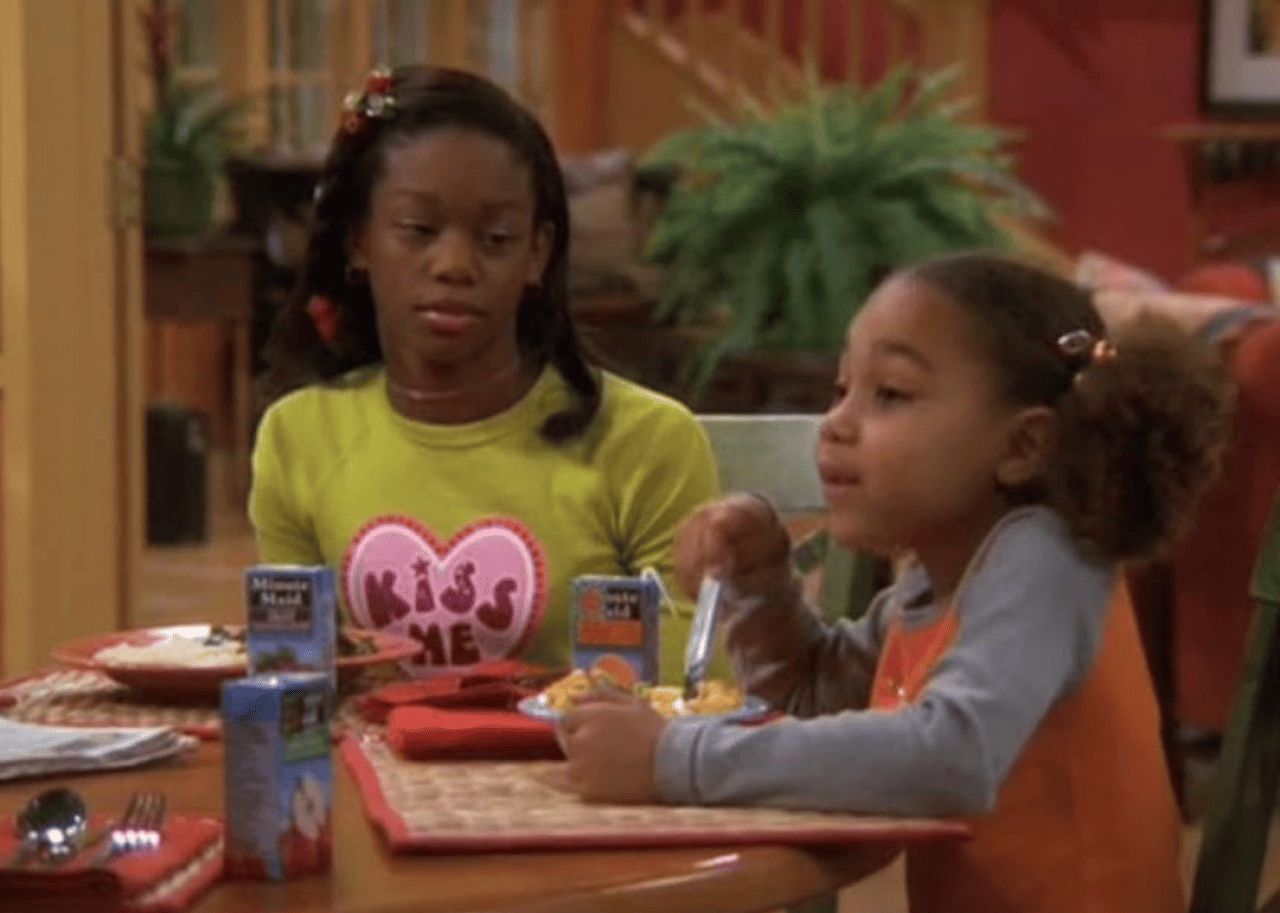
Jazz Raycole on ‘My Wife and Kids’
Fans of the popular sitcom “My Wife and Kids,” starring Damon Wayans and Tisha Campbell, were first introduced to Jazz Raycole’s Claire Kyle—Michael’s stubborn teenage daughter—throughout Season 1. But by Season 2, viewers may have been surprised to see Jennifer Freeman suddenly in the role of Claire.
Speaking to the Christian Post in 2012, Raycole explained that, as she was only 12 when she was cast, it was just a matter of producers wanting someone older for the part. However, in the book “The Complete Directory to Prime Time Network and Cable Shows,” it is further revealed that the recast came after Raycole’s mother took issue with a storyline where one of Claire’s teenage friends became pregnant.
Kathy Hutchins // Shutterstock
Maura Tierney on ‘Parenthood’
In the series adaptation of “Parenthood”—based on the 1989 movie of the same name—Maura Tierney was cast in the role of Sarah Braverman, one of the show’s central characters. However, after appearing in the unaired pilot, the series premiere was pushed to accommodate Tierney’s breast cancer treatments. Ultimately, the treatments would take longer than hoped, forcing Tierney to drop out of the role Lauren Graham took over for the show’s midseason premiere. Concerning the recast, an NBC spokesperson stated: “While we are saddened that Maura Tierney won’t be able to continue in her current role in ‘Parenthood,’ our main concern is for her quick and full recovery.”
Ron Galella, Ltd./Ron Galella Collection via Getty Images
Lori Rom on ‘Charmed’
Fans of the popular supernatural series “Charmed” recognize the character of Phoebe Halliwell as played by Alyssa Milano, but in the first pilot, Phoebe was played by “Dawson’s Creek” actor Lori Rom. As revealed in an interview with series creator Constance M. Burge for InTouch Weekly in 2018, Rom allegedly left the show for “personal reasons,” as Burge understood it—though she did not elaborate further. “She was accommodated and after that we just got so fortunate with Alyssa,” Burge explained. “It was horrid and sad for her to go, but we were fortunate that it all worked out with Alyssa.”
Don Arnold/WireImage // Getty Images
Miranda Otto on ‘Westworld’
Many may recognize Australian actor Miranda Otto for her roles in Peter Jackson’s “The Lord of the Rings” film series and Netflix’s “The Chilling Adventures of Sabrina.” But for a brief moment, Otto was a character on HBO’s “Westworld” before being recast while filming the pilot. Cast as Virginia Pittman, “the head of [Westworld’s] Quality Assurance department,” Otto was quietly replaced as “producers re-conceived the role.” Otto was replaced by Danish actor Sidse Babett Knudsen, and the character was renamed “Theresa Cullen.”
Amy Sussman // Getty Images
Florencia Lozano on ‘Gossip Girl’
After landing the role of Upper East Sider Blair Waldorf’s mom on The CW’s “Gossip Girl” and appearing in the aired pilot, viewers may have been surprised at the time to no longer see Florencia Lozano in Eleanor Waldorf’s role. By the fourth episode—and throughout the rest of the series—Blair’s mom was played by Margaret Colin.
So why the switch? Well, there’s no official report from the actors or anyone behind the series about why Eleanor was changed—though a TikTok user eventually called out this “major plot hole” in 2020. However, at the time, Lozano was only 16 years older than Leighton Meester, the actor who portrayed Blair, so it’s possible producers wanted someone a bit older for the part.
Warner Bros Television
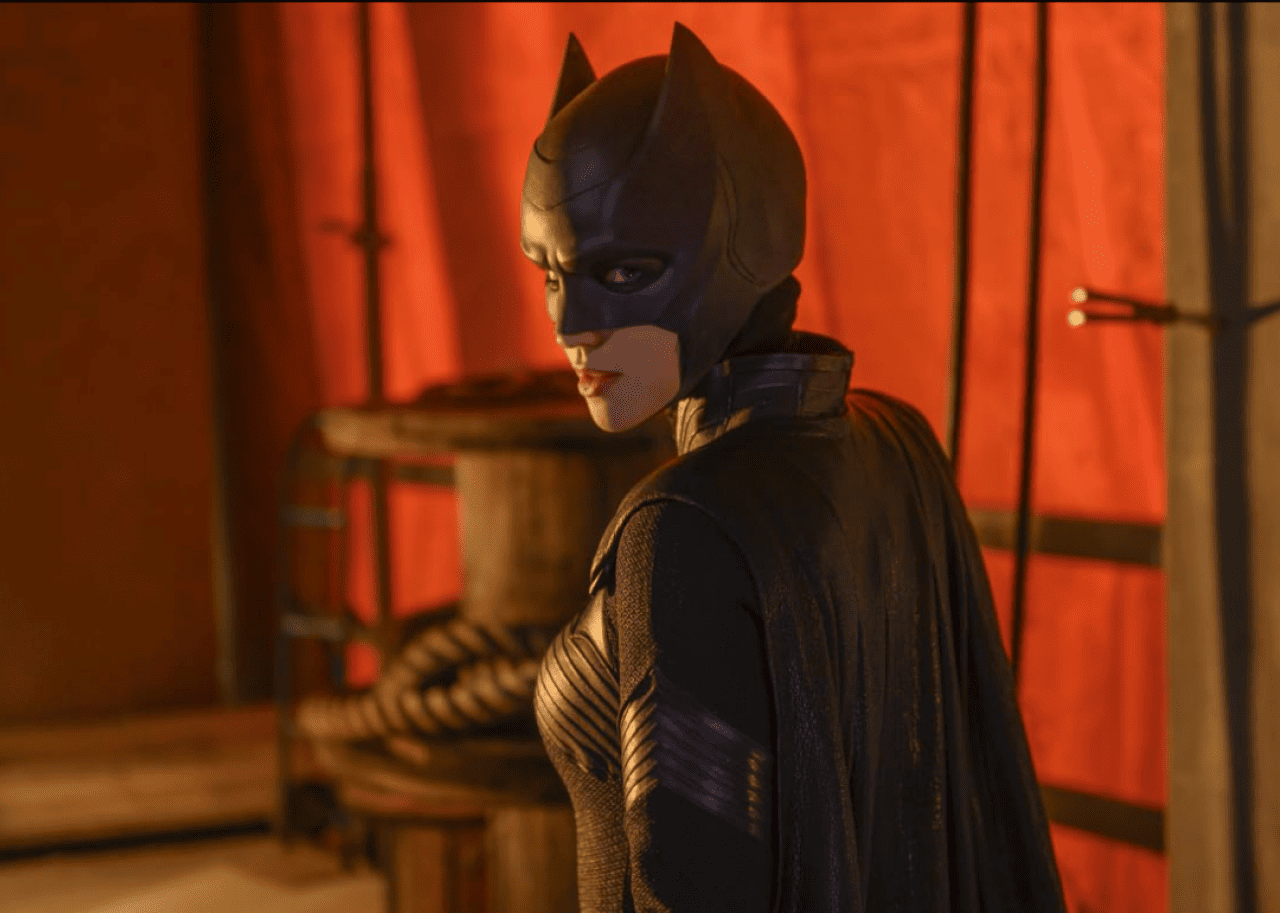
Ruby Rose on ‘Batwoman’
Viral model and actor Ruby Rose took up the mantle as Batwoman for the eponymous CW show based on Bruce Wayne’s vigilante cousin, but by the end of the first season, she had announced her departure. For a while, the reasoning behind her exit remained unclear, but then sources alleged she couldn’t acclimate to the long filming hours in Vancouver: “It was a breakup,” one source claimed to TV Line. Subsequently, Rose told Entertainment Weekly both an injury she sustained in 2019 and the coronavirus pandemic played a role in her decision to leave. For Seasons 2 through 3 (the final season), Batwoman was played by Javicia Leslie.
Warner Bros Television
Shailene Woodley on ‘The O.C.’
“The Fault in Our Stars” actor Shailene Woodley had a recurring role on Season 1 of “The O.C.” as Kaitlin Cooper, little sister to Mischa Barton’s Marissa Cooper. However, Woodley was nowhere to be found in Season 2, with Kaitlin’s character not returning until Season 3, where she was played by Willa Holland. Though Woodley took to Twitter in 2020 to call being on “The O.C.” “one of [her] proudest accomplishments,” she revealed in a Wired interview that she was a “late bloomer” and that the producers of the show wanted a “girl who had a body.”
Amy Sussman // Getty Images
Brook Kerr on ‘True Blood’
For the entire six-year run of “True Blood,” Rutina Wesley played Tara Thornton, the childhood friend of series protagonist Sookie Stackhouse. However, over a decade ago, the unaired pilot for “True Blood” leaked online, showcasing Tara’s never-before-seen original actor: Brook Kerr.
No official reason has been given as to why the switch was made for this character. However, some have speculated the eventual creative trouble with both Tara’s character and the show could have been sensed from Kerr while filming her pilot—but it also could have simply been the producers wanting to take the character in a different direction.
Frazer Harrison // Getty Images for THE TONY AWARDS
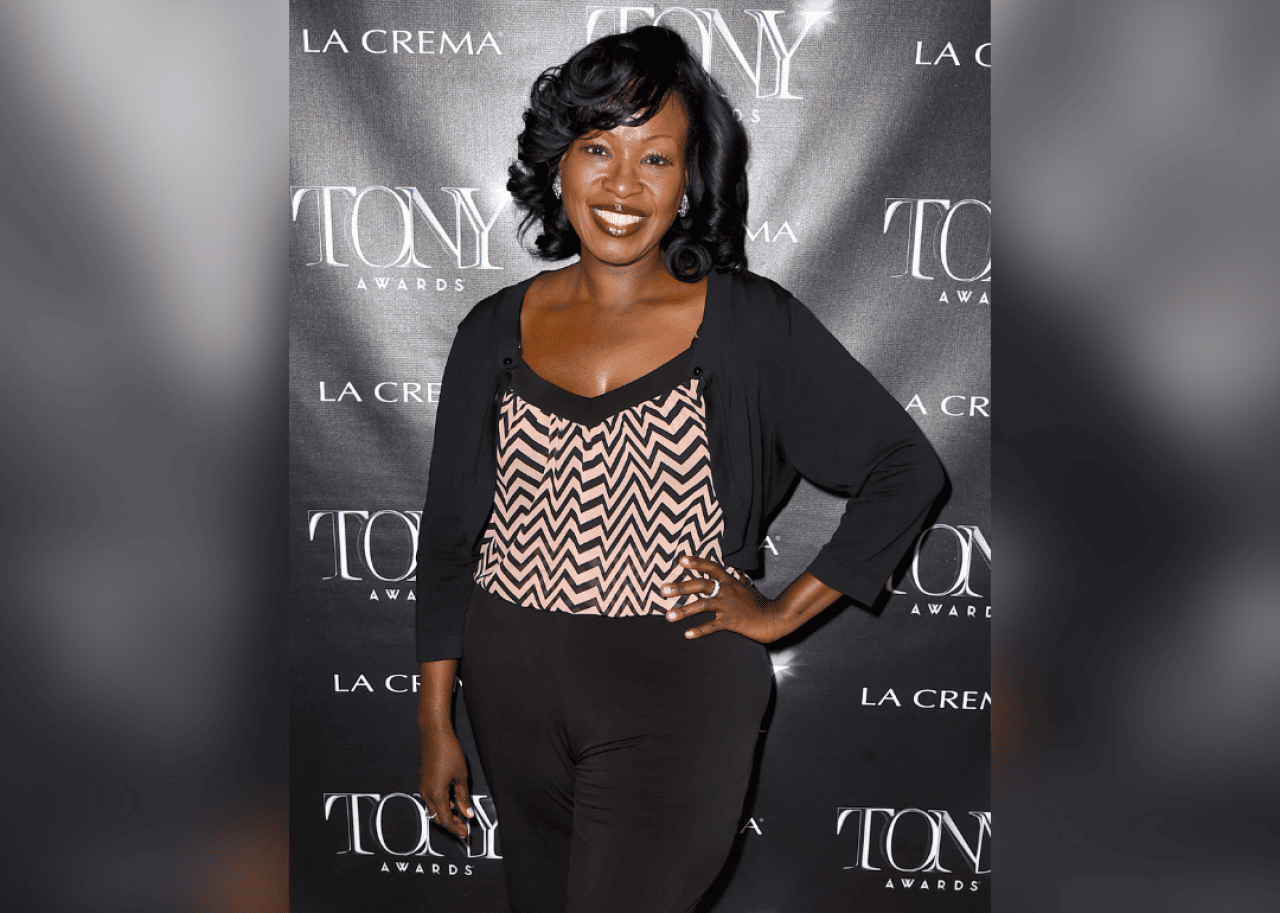
Sharon Wilkins on ’30 Rock’
Sherri Shepherd is hilarious and unforgettable on “30 Rock” as Tracy Jordan’s domineering wife, Angie, and it’s difficult to conceive of someone else who’d be so perfect in the role. But eagle-eyed fans may have noticed that in Angie’s first appearance on the show, on the Season 1 episode “Jack the Writer,” Angie was played by a different actor: Sharon Wilkins. Wilkins appeared in only one episode as Angie before Shepherd took over for the rest of the series. An official statement has never been released for why Wilkins got the boot. Still, it’s undeniable that Wilkins isn’t very memorable in her one-episode spot, after which Shepherd goes on to wholly immortalize the role.
Michael Tran/FilmMagic // Getty Images
Nathan Wetherington on ‘Gilmore Girls’
On “Gilmore Girls,” Jared Padalecki played the part of Rory Gilmore’s first boyfriend, Dean Forester. Now arguably most famous for his co-starring role on “Supernatural,” Padalecki snagged the recurring part in the popular dramedy when Dean’s original actor, Nathan Wetherington, was recast after filming the original pilot (the same pilot that featured Alex Borstein as Sookie St. James).
According to Wetherington, the scene where he meets Rory took 45 takes to get right, and ultimately, he said his experience filming was unpleasant. So it likely wasn’t surprising when he found out he was being replaced.
Paramount Television
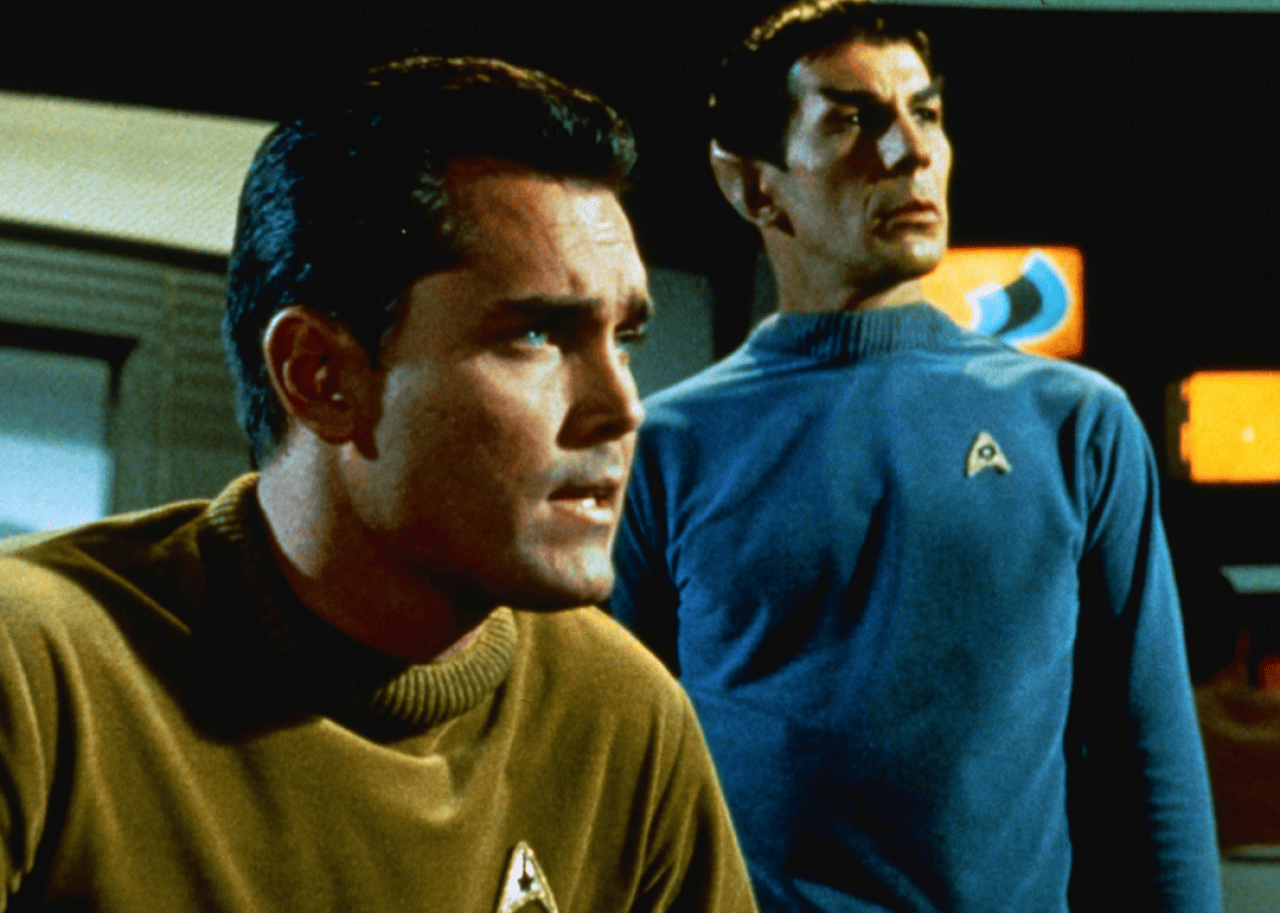
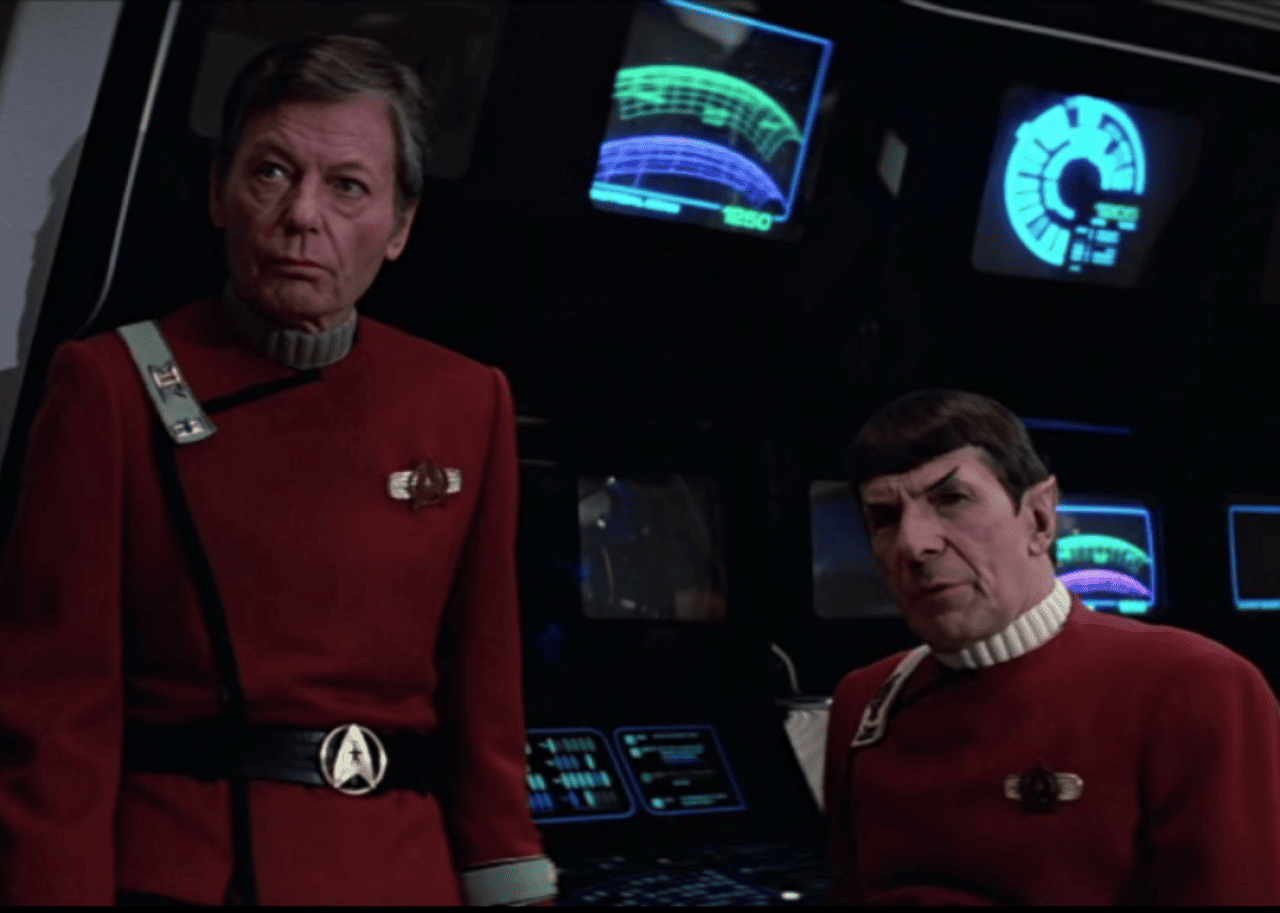
Jeffrey Hunter on ‘Star Trek’
The iconic role of Captain Kirk on the original “Star Trek” is a role utterly exalted in the annals of pop culture by actor William Shatner. Well, would you believe that Shatner wasn’t even the first actor to get the part? That original actor was a man named Jeffrey Hunter, who played Captain Christopher Pike during the show’s official pilot before Shatner replaced him, and the role was rewritten as “Captain James T. Kirk” for the first episode.
As divulged in Shatner’s 1993 memoir “Star Trek Memories,” the public story was that Hunter quit to make a movie. Still, Shatner claimed he was “canned after his ex-model wife repeatedly burst onto the set to demand that her husband get more flattering camera angles.”
Talk about behind-the-scenes drama.
Story editing by Jeff Smith. Copy editing by Andrew Mangan.
What data shows about choosing the right summer music festival
By
Kristian Gorenc for Viberate
9 min read • Published June 15, 2026
By
Kristian Gorenc for Viberate
9 min read • Published June 15, 2026
Douglas Mason // Getty Images
What data shows about choosing the right summer music festival
Summer music festival season gives fans, artists, and industry teams more choices than a poster can explain. Major events compete for attention with long lineups, high-profile headliners, genre-focused gatherings, and smaller festivals built around specific scenes. The common starting point is simple: Look for the biggest name or the most familiar artist. That approach can help, but it leaves out much of what makes a festival a good fit.
To show how data can sharpen the comparison, Viberate analyzed selected 2026 summer festival lineups using artist-level data from each festival’s lineup table. The analysis reviewed genre tags, subgenre tags, artist countries, artist ranks, and the number of festival performances each artist had in the 12 months leading up to May 20, 2026. The examples are illustrative and are not presented as a ranked list of summer music festivals.
The data points to a practical conclusion: The right festival depends on fit. A megafestival can offer broad exposure across scenes, a genre-focused event can provide a clearer match for specific tastes, and a medium-sized festival can be more relevant to a niche audience than a larger general event.
Festival fit starts with the full lineup
Festival discovery often starts with headliners. That makes sense. Headliners carry much of the marketing weight, and they help explain why a festival gets public attention.
But headliners can distort how a festival is perceived. A festival with several pop headliners may still have a large electronic bill. A jazz festival may include R&B-, rock-, hip-hop-, and country-adjacent artists. A punk festival may include enough metal acts to appeal to a different audience than the headline genre suggests.
That is why lineup-level analysis matters. Instead of asking only which names appear at the top of the announcement, a data-based approach asks more specific questions:
Which genres appear most often across the listed lineup?
How concentrated is the festival around one sound?
Which countries do the booked artists come from?
How many booked artists rank highly at a global level?
How active are those artists on the festival circuit?
These questions do not produce one universal answer. They make the comparison more precise.
4 festivals, 4 types of fit
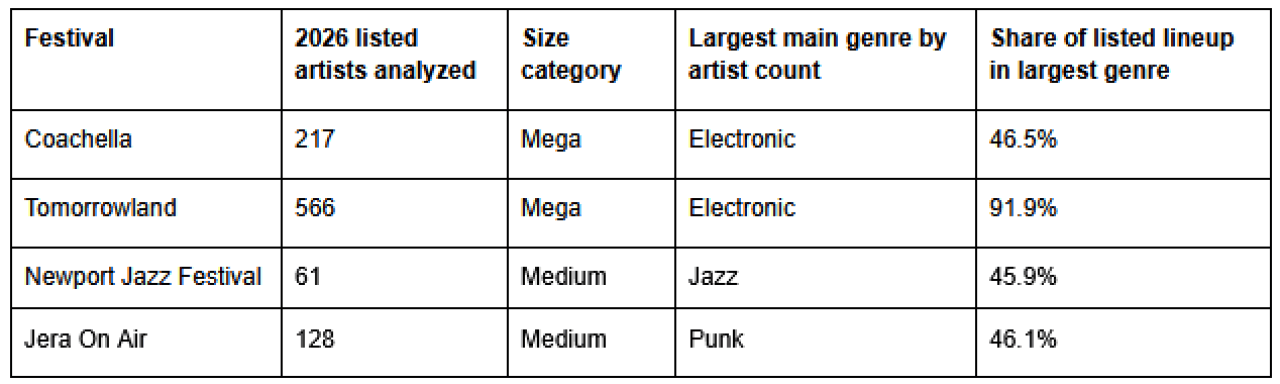
For this analysis, Viberate reviewed updated 2026 lineup data for four festivals: Coachella, Tomorrowland, Newport Jazz Festival, and Jera On Air. The group was selected to illustrate different festival-selection scenarios rather than to rank the events against one another.
Coachella and Tomorrowland are both megafestivals, but the data shows different lineup patterns. Newport Jazz Festival and Jera On Air are medium-sized festivals, but each has a clearer genre and scene identity.
Viberate
The table shows why size alone is a limited filter. Coachella and Tomorrowland are both megafestivals, but their genre structures differ sharply. Newport Jazz Festival and Jera On Air are both medium-sized, but they serve different listening contexts.
Coachella shows why broad festivals need deeper analysis
Coachella is often discussed through celebrity appearances, pop culture visibility, and major headliners. That framing is understandable, but it does not fully describe the 2026 lineup.
In the lineup analyzed by Viberate, electronic was the largest main genre by artist count, with 101 of 217 artists listed. That does not mean Coachella is only an electronic festival. It means the listed lineup contains a large electronic layer alongside other genres.
The same dataset shows why broad festivals are hard to reduce to a single label. Coachella’s 2026 lineup included artists tagged across pop, Latin, hip-hop, rock, R&B, reggae, jazz, country, African, and Asian categories. House was the top subgenre by artist count.
For fans, this can change how the festival is evaluated. A listener using only the biggest names may miss the sections of the lineup that are closest to their taste. For artists and teams, the same logic applies: Festival reputation alone does not show whether the middle and lower sections of the bill match a specific sound or career lane.
Coachella’s example points to a broader lesson. Large festivals can offer wide discovery value, but they require a more detailed read. Scale does not automatically make a festival a clean fit.
Tomorrowland shows what a focused genre profile looks like
Tomorrowland provides the clearest genre-fit example in this analysis. In the 2026 lineup analyzed by Viberate, 520 of 566 artists were tagged as electronic. That equals 91.9% of the listed lineup.
This does not mean every artist at Tomorrowland fits the same subgenre. The lineup still includes different branches of electronic music and some crossover appeal. But compared with a broad multigenre festival, the data shows a much more concentrated identity.
Dance was the top subgenre by artist count in the 2026 lineup. That first layer of analysis already answers a practical question: If someone is looking for a festival built around electronic music, Tomorrowland is easier to assess by genre fit than a festival with a wider genre spread.
The updated lineup also shows why complete data matters. With 566 listed artists analyzed, Tomorrowland’s lineup includes a much larger long tail than a first-page review would suggest. That makes the genre-fit finding more specific: The festival is highly concentrated around electronic, while still covering a broad depth of artists within and around that space.
A focused genre profile does not make a festival better, but it does make the festival easier to evaluate for a specific purpose.
Newport Jazz Festival shows how medium festivals can offer niche fit
Newport Jazz Festival provides a different type of example. It is not competing with megafestivals on scale in this analysis but, it shows how a medium-sized festival can be relevant because of genre and scene context.
The 2026 Newport lineup analyzed by Viberate included 61 listed artists. Jazz was the largest main genre, representing 45.9% of the lineup. Jazz fusion was the top subgenre by artist count.
The lineup went beyond jazz. It also included R&B, rock, pop, hip-hop, country, Asian, and other tags. That mix matters because it shows how a genre-rooted festival can still include adjacent styles that widen its audience and programming range.
For a listener, this may mean the festival offers a specific starting point rather than a general-purpose lineup. For an artist or team, it may indicate a different kind of fit: not the largest audience in the sample but a more relevant cultural and musical context.
This is one of the central points of data-based festival comparison. A smaller scale does not automatically mean a weaker fit. In some cases, the narrower context is the main value.
Jera On Air shows subculture fit outside the megafestival tier
Jera On Air is another medium-sized example, but in a different scene. The festival’s 2026 profile places it in Ysselsteyn, Netherlands, with punk and metal as its main genre positioning.
In the updated 2026 lineup analyzed by Viberate, punk was the largest main genre, representing 46.1% of the listed artists. Punk rock was the top subgenre by artist count. Metal was the second-largest main genre, giving the lineup a clear punk/metal crossover profile.
This type of festival shows why genre-specific analysis should not stop at the headline category. Punk and metal can overlap in live settings, but the distinction matters for festival fit. A punk-leaning lineup with a major metal presence may attract a different audience than a general rock festival or a broader alternative event.
Jera On Air also shows why medium festivals can matter in a data-based search. Its value is measured by more than global rank or total size. It comes from the fit between the lineup, the scene, and the audience most likely to care about that mix.
For festival discovery, that is a useful correction. A medium punk/metal event may be more relevant to the right listener or artist than a larger festival with only a small number of similar acts.
Artist rank and festival activity add another layer
Genre is only one part of the decision. Lineup depth also matters.
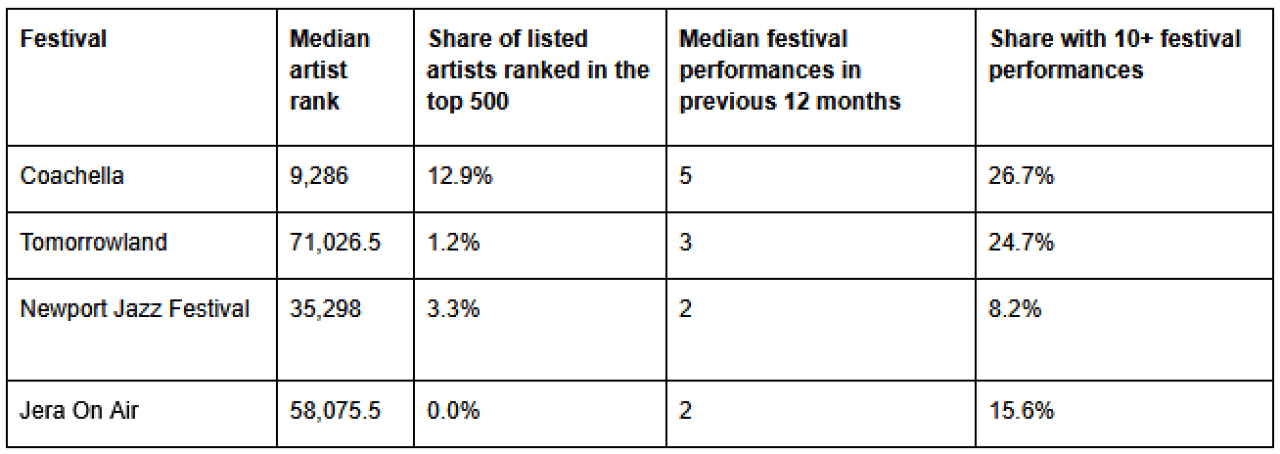
To compare depth, Viberate reviewed artist ranks and festival-performance activity across the four updated 2026 lineups. Artist rank gives one view of scale. Festival-performance activity shows how often the booked artists had appeared at festivals in the previous 12 months.
Viberate
These figures show different programming patterns.
Coachella had the strongest rank-depth profile among the four selected examples, with the lowest median artist-rank number and the highest share of listed artists ranked in the top 500. That fits its role as a broad megafestival with a large upper tier.
Tomorrowland had a much larger listed lineup and remained highly concentrated around electronic. Its median rank was higher than Coachella’s because the updated export included a broader long tail of artists. Still, nearly a quarter of Tomorrowland’s listed artists had 10 or more festival performances in the previous 12 months, close to Coachella’s 26.7%.
Newport Jazz Festival and Jera On Air had fewer top-500-ranked artists, which reinforces that these festivals serve different kinds of fit. A festival with more globally ranked artists may offer broader visibility. A festival with lower-ranked but highly relevant artists may still be useful for a genre-specific audience.
Country mix can change the interpretation
The country distribution of a lineup can also shape how a festival is understood.
In the updated 2026 lineups analyzed, the largest artist-origin country varied by festival. U.S. artists made up 47.5% of Coachella’s listed lineup. Belgian artists were the largest country group at Tomorrowland, with 24.4%. U.S. artists accounted for 78.7% of Newport Jazz Festival’s listed lineup and 42.2% of Jera On Air’s lineup.
These numbers describe where the booked artists are tagged as coming from. That distinction matters. Artist-country data can help show whether a lineup is locally concentrated, regionally mixed, or globally spread. It cannot prove who will attend the festival.
For festival comparison, this can still be useful. A festival with a high domestic artist share may have a different scene function than one built mostly around international touring acts. Again, the value depends on the goal.
Data helps narrow the search, not make the final decision
Lineup data can make festival comparison more objective, but it cannot answer every practical question.
A dataset cannot fully capture ticket price, travel cost, weather, local infrastructure, set times, venue layout, artist fees, booking relationships, production needs, visa issues, or the real on-site atmosphere. It also cannot define what a listener personally wants from a festival weekend.
That is why data works best as a filter. It can show whether a festival is broad or focused, whether its lineup matches a genre, whether booked artists are active on the festival circuit, and whether the lineup is local, domestic, or international in composition.
The final decision still depends on context. For a fan, that context may be taste, budget, and travel. For an artist or manager, it may be a realistic booking fit, market strategy, and routing. For a label or promoter, it may be audience overlap and scene relevance.
The main takeaway is not that data can make the search less dependent on reputation, assumptions, and headline names.
Methodology
Viberate analyzed four selected 2026 summer festival lineups: Coachella, Tomorrowland, Newport Jazz Festival, and Jera On Air. The festivals were selected to illustrate different types of festival fit: a broad megafestival, a genre-focused megafestival, a medium jazz/R&B-oriented festival, and a medium punk/metal festival.
The analysis used updated artist-level data from each festival’s 2026 lineup table, including artist name, country, main genre, subgenre, Viberate rank, and festival performances in the previous 12 months. Genre and subgenre shares were calculated from the current-year listed artists. Historical genre-distribution charts were excluded where they did not match the 2026 lineup year.
Artist-country shares were calculated from the listed artist country field. Median artist rank was calculated from available Viberate rank values. Rank-band shares, including the share of artists ranked in the top 500, were calculated from the same artist-rank field. Festival-performance activity was calculated from the number of festival performances listed for each artist in the previous 12 months.
For consistency, percentage shares in the article use the full listed lineup as the denominator. Newport Jazz Festival had one artist row without available genre or country data, and Tomorrowland had four artist rows without available country data; those rows remained in the full lineup denominator. The examples are illustrative and are not presented as a ranking of summer music festivals. The analysis does not account for ticket prices, travel costs, booking fees, artist availability, set times, venue conditions, or on-site attendance data.
Regional Film Markets Are Building Their Own Gravity
The infrastructure matters more than the films. Four territories show what happens when pipelines work and when they break.
By
Mediabistro Team
5 min read • Published June 15, 2026
By
Mediabistro Team
5 min read • Published June 15, 2026
The most consequential moves in global media aren’t necessarily happening in studio conference rooms in Los Angeles. They’re happening in places like Cluj-Napoca, where a 25-year-old film festival built the institutional scaffolding that made Romanian New Wave cinema possible.
In Bangkok, where a local hit is landing theatrical runs across mainland China through repeatable distribution partnerships. And in Bishkek, where a government censor certificate denial tells you everything about what infrastructure requires to survive.
Regional film ecosystems are no longer satellites orbiting Hollywood and the major European festivals. They’re generating their own gravitational pull.
Festivals that started as showcases have become co-production markets. Bilateral distribution deals between Asian territories are maturing into predictable commercial pathways. Platforms are commissioning local-language originals at volume in markets where theatrical infrastructure is still developing.
Global media is decentralizing, but what makes decentralization stick?
Building the Pipelines
When Tudor Giurgiu began planning the first Transilvania International Film Festival 25 years ago, Romanian cinema had no international infrastructure. No festivals, no co-production forums, no pipeline between local filmmakers and the programmers in Berlin, Cannes, or Venice.
That blueprint worked. Cristian Mungiu just won his second Palme d’Or.
But as Variety’s 25th anniversary profile makes clear, there was a time when Romanian directors weren’t on anyone’s radar. The gap between then and now is infrastructure: industry programming, co-production markets, partnerships with international sales agents, the institutional memory that makes those relationships repeatable.
Transilvania’s trajectory is a proof of concept. Regional festivals that commit to industry programming over the long term can create the institutional density talent needs to consistently reach international markets. This was never about individual auteurs breaking through on merit alone. It’s about building the pipelines that make breakthroughs structurally possible.
The film, co-directed by Nattawut “Baz” Poonpiriya, Chayanop Boonprakob, and Atta Hemwadee, follows a white stray dog across three interconnected stories. It’s produced by Bangkok-based GDH 559, a studio that’s become a reliable exporter of Thai commercial cinema.
This isn’t a prestige play or a festival darling getting a token theatrical run. It’s a commercial release with theatrical marketing support in the world’s second-largest box office.
The distribution partnership between GDH 559 and Road Pictures represents a repeatable pipeline between Thai production and Chinese exhibition. That matters more than the film itself. When the same studios and distributors keep working together, when release strategies become predictable rather than experimental, you’re watching infrastructure form.
Where Political Environment Breaks the Pipeline
Infrastructure requires political oxygen. In Kyrgyzstan, that oxygen is being cut off.
The censorship itself is depressingly familiar. What matters is the institutional context.
Bishkek International Film Festival exists. Kyrgyz filmmakers are winning awards at major Asian festivals. The talent and the scaffolding are present. But without the political environment that allows films to screen domestically, the pipeline breaks. You can’t build a sustainable national cinema when award-winning work can’t be shown at home. Romania’s path from obscurity to Palme d’Or regularity took 25 years of consistent festival infrastructure and political space for challenging work to find audiences. Kyrgyzstan’s censorship climate is actively working against that.
Platform Logic, Local Language
While festivals and distributors build institutional pipelines, platforms are running a parallel strategy with different economics.
MX Player is Amazon’s free, ad-supported streaming tier in India. Not Prime Video. The mass-market play, built for scale rather than prestige.
The commissioning strategy: local-language originals in high-growth markets, monetized through advertising, designed to own audience habits at the base of the pyramid where subscriber acquisition costs don’t pencil.
Festivals build pipelines through curation, co-production, and theatrical exhibition. Platforms build them through volume commissioning and ad-supported distribution. Different business models, same underlying logic. Regional content is where audience growth is, and the companies that build infrastructure to commission, distribute, and monetize it consistently will own the next decade of global media.
What This Means
If you’re tracking career opportunities in international media, this is the pattern. The future of global content runs through regional infrastructure.
That means job growth in festival programming, international sales, local-language commissioning, and cross-border distribution. Career leverage comes from understanding how these pipelines work and where they’re forming.
For Producers: Success in regional markets requires understanding local institutional ecosystems, in which festivals function as genuine co-production hubs, distributors have repeatable cross-border relationships, and streaming platforms commission at volume rather than run acquisition experiments.
For talent looking to position themselves at the intersection of regional content and global distribution, browse international media roles on Mediabistro. For companies building teams to execute on these regional strategies, post a job on Mediabistro to reach professionals who understand how these pipelines work.
This media news roundup is automatically curated to keep our community up to date on interesting happenings in the creative, media, and publishing professions. It may contain factual errors and should be read for general and informational purposes only. Please refer to the original source of each news item for specific inquiries.
The Mediabistro editorial team draws on 25 years of media industry expertise to cover jobs, careers, and trends shaping the industry.
5 min read • Published June 15, 2026
The Job Descriptions Are Changing Faster Than the Job Titles
In today’s media job listings, titles still say “Director of SEO” or “Digital Strategy,” but the actual work described inside these postings has shifted dramatically. One role posted this week asks candidates to optimize for AI recommendation engines, not just Google rankings. Another wants a digital strategist who can architect an entire web ecosystem for one of the most visited public spaces in America.
The throughline: employers are hiring for the next version of digital discovery, where being findable online means being cited by AI assistants, embedded in conversational search results, and trusted across platforms that didn’t exist three years ago. If your skills stopped evolving when “page one of Google” was the finish line, these postings are a wake-up call.
Meanwhile, social media roles continue to demand more strategic depth than ever, and accessibility-focused content positions are gaining traction in the public sector. Here are four media roles worth your attention today.
Today’s Hot Jobs
Director of SEO and Agentic Search at LawnStarter
Why this role is a bellwether:LawnStarter isn’t just hiring someone to manage keyword rankings. This posting explicitly names “agentic search” in the title, asking the right candidate to ensure their brands become the answer when homeowners ask ChatGPT, Claude, or Perplexity for recommendations. The role reports directly to the CMO and sits at the intersection of content, technical SEO, product, and AI-powered search. With over $150M in annual bookings, this well-funded marketplace is making a serious bet on the future of organic discovery.
Deep expertise in technical SEO, content strategy, and emerging AI search surfaces
Experience managing and scaling a team of SEO professionals and content strategists
Ability to build measurement frameworks for AI-generated recommendations and citations
Track record of growing organic traffic at scale across multiple brand properties
Director, Web and Digital Strategy at Central Park Conservancy
What makes this special: Central Park sees over 40 million visits a year, and its digital presence needs to match that scale. The Conservancy is looking for someone to lead web strategy, digital marketing, and content architecture for one of the most iconic cultural institutions in the world. This is a remote-friendly, full-time position reporting to the Senior Director of Marketing, and the application window closes June 30. The chance to shape how a National Historic Landmark communicates with a global audience doesn’t come along often.
Proven experience leading web strategy and digital marketing for a major organization
Strong background in content management systems, analytics, and UX best practices
Ability to collaborate across departments including development, events, and communications
Experience with nonprofit or mission-driven organizations preferred
The interesting angle:OLIVER has carved out a unique niche building in-house agency teams embedded inside major brands, and this New York-based Social Media Manager role illustrates how the model works in practice. You’ll serve as the digital voice for consumer brands, crafting platform-specific strategies across Instagram, TikTok, and X. The posting emphasizes AI-enhanced content approaches alongside community management and performance analytics. For social media professionals looking to sharpen their social media strategy skills, this is the kind of role that builds a portfolio fast.
Experience developing and executing multi-channel social growth strategies
Strong content creation skills optimized for TikTok and Instagram
Comfort using AI-powered tools to drive efficiency and creative output
Ability to translate social engagement into measurable business results
Content Manager and Copy Editor (UX/Accessibility) at New York State Office of the Attorney General
Worth a closer look: This remote-eligible role pays $82,953 plus $4,000 in location pay and comes with a clear application deadline of July 10. The OAG wants someone who can manage public-facing content across digital and print platforms while maintaining rigorous accessibility standards. The combination of content strategy, copy editing, and UX accessibility expertise is increasingly rare and increasingly valuable. Public-sector roles like this one also tend to offer stability, strong benefits, and meaningful work that reaches millions of New Yorkers.
Strong writing and editing skills with a grasp of content strategy and branding guidelines
Knowledge of accessibility standards (WCAG) and public-sector communication principles
Ability to manage multiple content requests simultaneously across digital and print
Experience collaborating with IT, press, and executive teams on content workflows
If your resume still leads with “SEO” as a standalone skill, today’s listings suggest it might be time to reframe. The most compelling roles right now ask for candidates who understand how AI systems surface, recommend, and cite content. That means building fluency in areas like agentic search optimization, AI-assisted content workflows, and conversational discovery.
Even social media and content editing roles now expect familiarity with AI tools. The candidates who land these positions will be those who can articulate how their work performs for both human and machine audiences.
Also on the Web
Beyond Mediabistro, these roles are also making waves across the industry.
Specialist, Ads Marketing (Project Management) at Netflix
Netflix continues to build out its advertising infrastructure following its ad-supported tier expansion. This Los Angeles-based project management role sits inside the ads marketing team, a signal that streaming ad operations are maturing into a full discipline of their own.
Digital Content Writer and Strategist at Creative Circle
Fully remote and paying $45 to $55 per hour, this contract strategist role through Creative Circle posted less than a day ago. Solid compensation for freelance content professionals looking for flexible, high-level writing work.
The salary range here, $151K to $434K, is eye-catching even for a senior creative leadership role. Based in Kirkland, Washington, this posting reflects how consulting giants are competing aggressively for top creative talent against traditional agencies.
How many of the worst romantic comedies ever made have you suffered through?
By
Kristin Marguerite Doidge
46 min read • Published June 14, 2026
By
Kristin Marguerite Doidge
46 min read • Published June 14, 2026
Mondadori via Getty Images
100 worst romantic comedies of all time
William Shakespeare laid the groundwork for romantic comedies way back in 1598, when he started writing “Much Ado About Nothing.” Centuries later, in the early 1920s, filmmakers used his roadmap to create the first rom-com films, “Sherlock Jr.” and “Girl Shy.” In the years since, rom-coms have become increasingly ubiquitous, with dozens hitting theaters and streaming services each year.
While that first Shakespearean rom-com remains a pillar of the Western canon, many of its successors haven’t fared as well. Some, like “Jerry Maguire,” “When Harry Met Sally,” and “Four Weddings and a Funeral,” have established themselves as classics. Others, like “Mannequin” and “The Hottie & The Nottie” are better off forgotten.
In the 21st century, Netflix has become notorious for its original rom-coms, and the trend continues today with “People We Meet on Vacation,” released in January 2026, and “Office Romance,” which stars Jennifer Lopez and hit streaming in June 2026. But some romantic comedies still make it to the movie theater, like the April 2026 release “You, Me & Tuscany,” which earned 92% with audiences on Rotten Tomatoes (despite a 66% critical rating).
With new rom-coms premiering all the time, Stacker rounded up 100 of the worst romantic comedies of all time by compiling IMDb and Metacritic data from October 2022 on all romantic comedies with over 2,500 votes on IMDb and listed the bottom 100. To qualify, a film had to be listed on IMDb as both romance and comedy. Films were then ranked by a Stacker score, an equally weighted index between Metascore and IMDb user ratings, with #1 being the worst. Ties were broken by IMDb votes, meaning a movie with more votes would be closer to first place. If a movie did not have a Metascore, it was not considered.
From musician and influencer vehicles to poorly written sequels, read on to see which rom-coms earned a spot on our list.
Warner Bros.
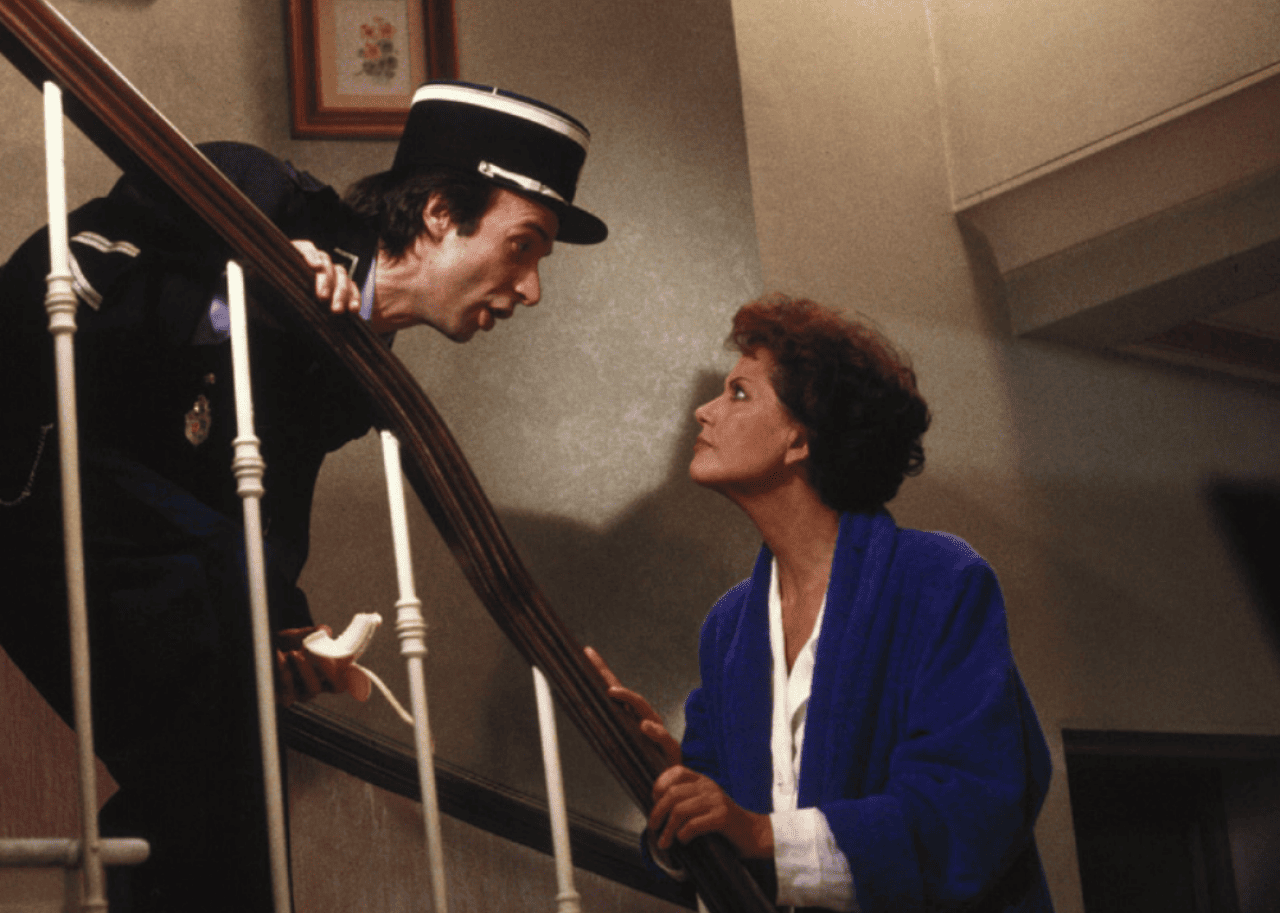
#100. Her Alibi (1989)
– Director: Bruce Beresford
– Stacker score: 44.6
– IMDb user rating: 5.8
– Metascore: 24
– Runtime: 94 minutes
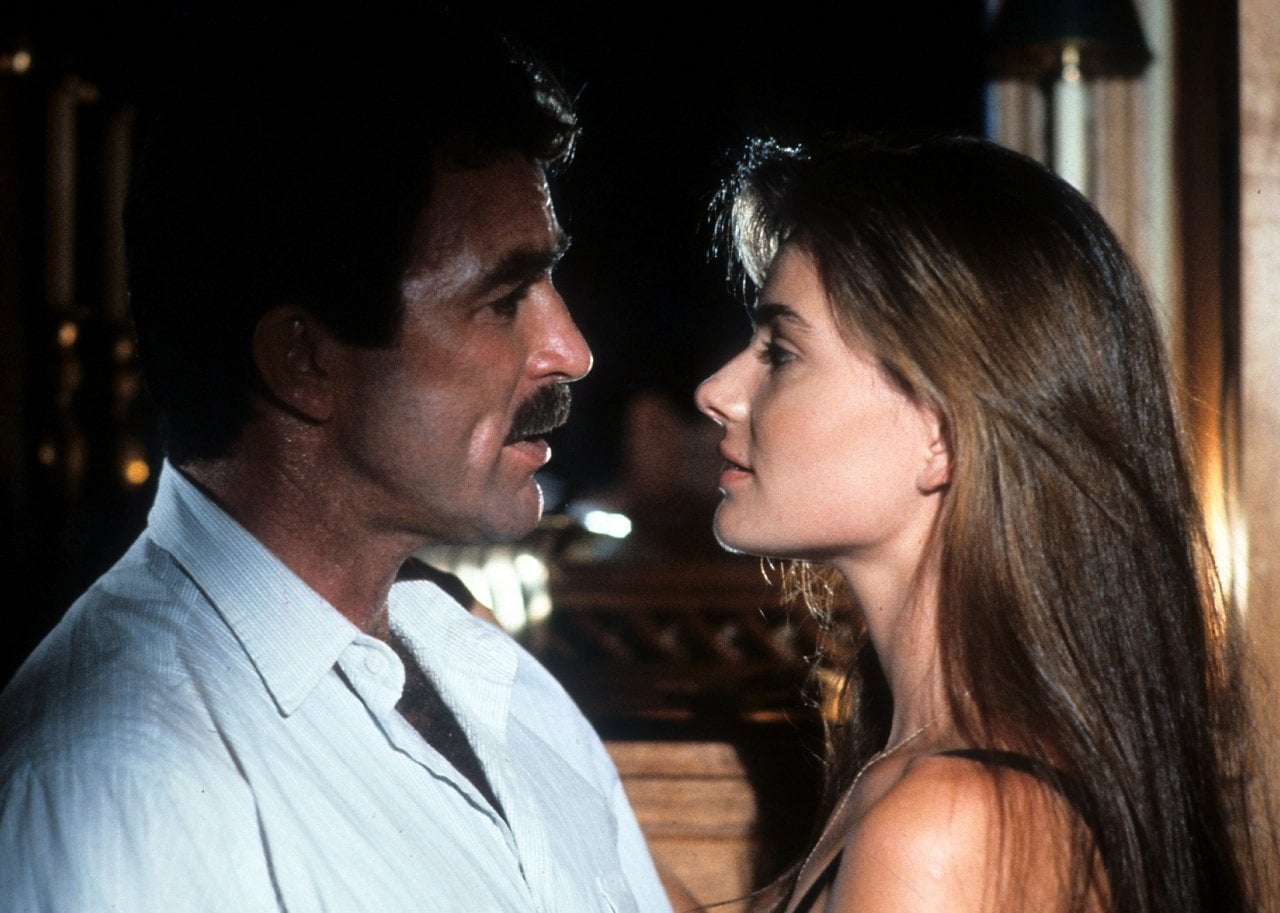
A “bad” mystery writer (Tom Selleck) gets swept up by the affections of Nina (Paulina Porizkova), a beautiful immigrant he presumes is wrongfully accused of murder until a series of failed gimmicks raise doubts in this forgettable 1989 farce. Roger Ebert gave it a half-star, calling it “endless, pointless, and ridiculous.” It grossed only $18 million at the domestic box office.
Gold Circle Films
#99. Over Her D*ad Body (2008)
– Director: Jeff Lowell
– Stacker score: 44.6
– IMDb user rating: 5.2
– Metascore: 30
– Runtime: 95 minutes
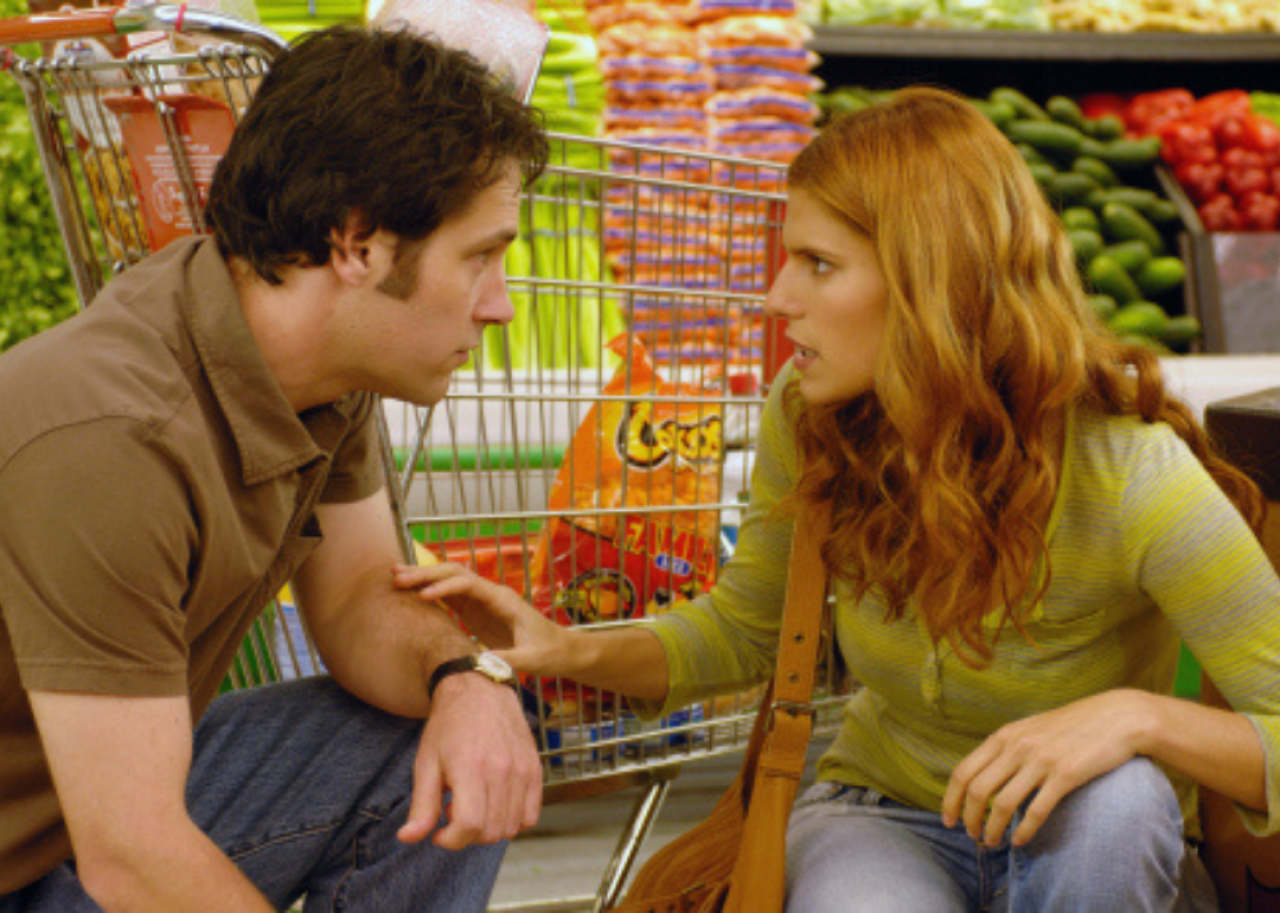
The plot revolves around a ghost (Eva Longoria) trying to sabotage a relationship between her former fiance (Paul Rudd) and a psychic (Lake Bell). Critics called it a lightweight “Ghost” and found the pacing slow, the plot implausible, and the characters lacking in charm. Making only $7.6 million, this one vapored off the mortal plane without leaving much of a trace.
Universal Pictures
#98. Nutty Professor II: The Klumps (2000)
– Director: Peter Segal
– Stacker score: 44.6
– IMDb user rating: 4.4
– Metascore: 38
– Runtime: 106 minutes
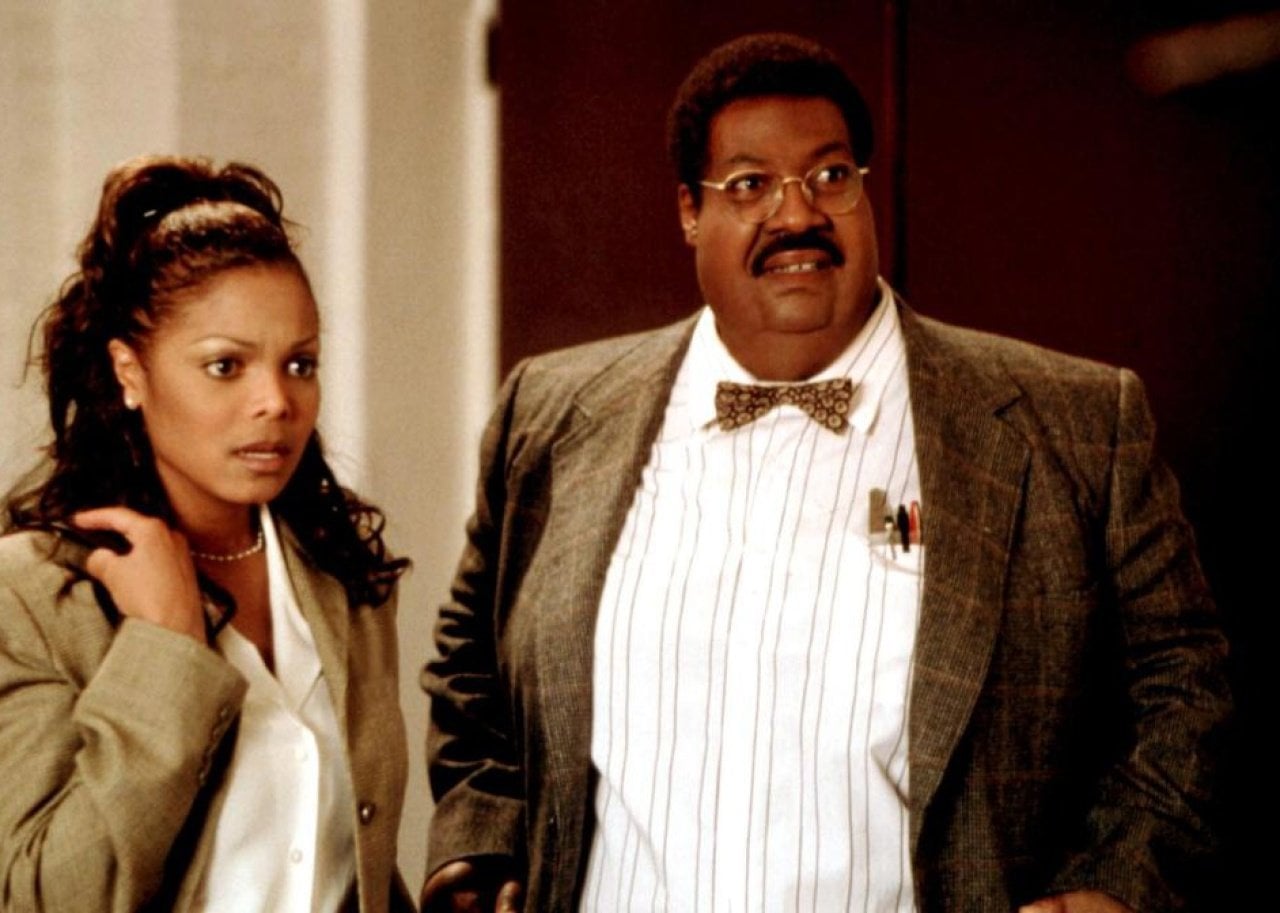
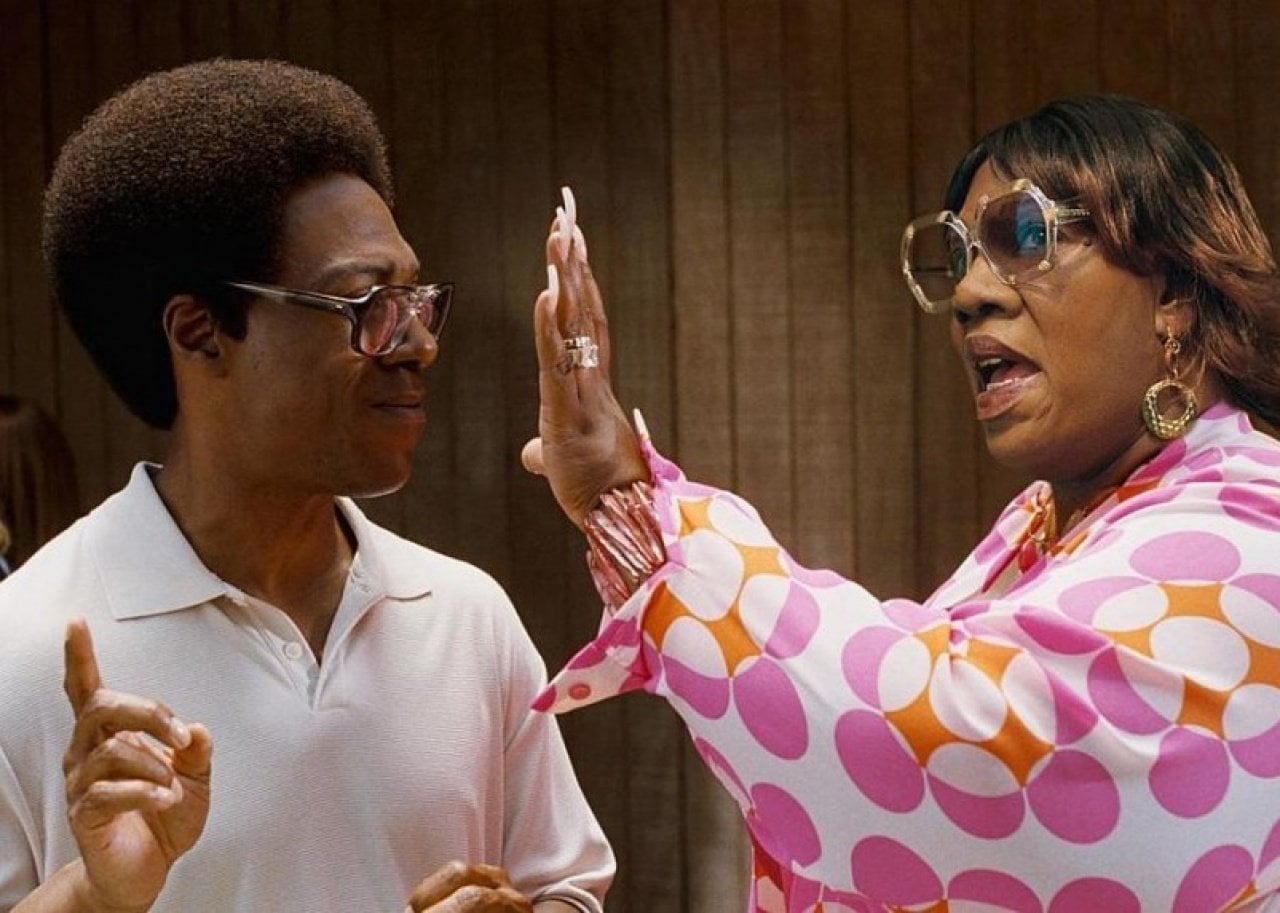
Fewer things seem more incompatible than Eddie Murphy’s juvenile sense of humor and a love story. But the producers of “Nutty Professor II: The Klumps” were determined to try and wed the two. The end result was a film that critics called “shrill, obnoxious, unfunny, and nearly unwatchable.” Even Janet Jackson’s sweet portrayal of a DNA researcher who is head over heels for Murphy’s Professor Klump wasn’t enough to save this one.
Columbia Pictures
#97. Zookeeper (2011)
– Director: Frank Coraci
– Stacker score: 44.6
– IMDb user rating: 5.2
– Metascore: 30
– Runtime: 102 minutes
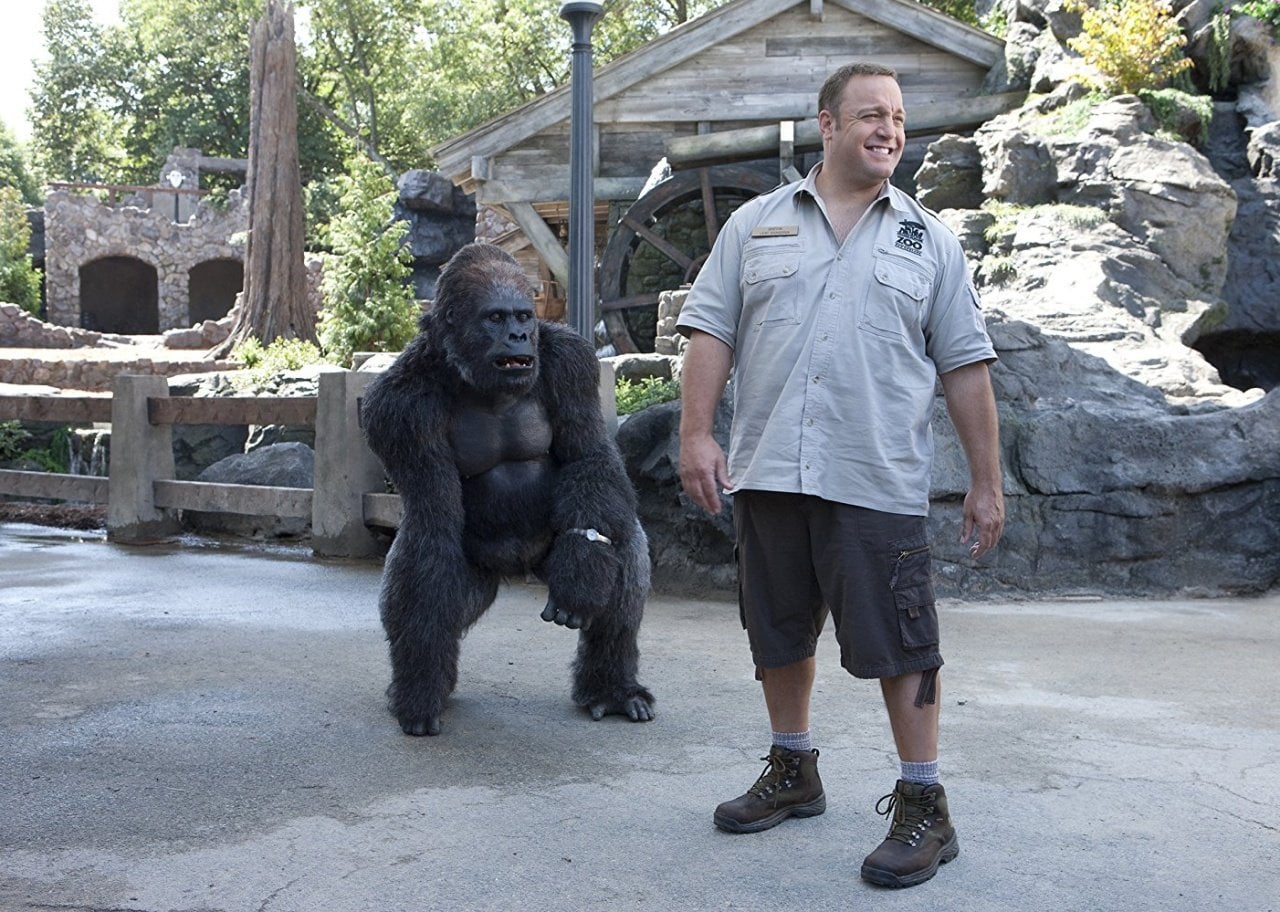
Kevin James—is there an actor alive whose box office success is more incongruous with critics’ distaste for his movies? In this PG rom-com, James plays a kindly zookeeper who discovers animals can talk—and offer courtship advice—when he considers quitting his job, and his wards are forced to break their code of silence. Film critic Leonard Maltin thought it was a step up from James’ previous project, “Paul Blart: Mall Cop,” but the majority of reviewers disagreed. The picture grossed $80.4 million domestically, less than its production budget, but strong overseas numbers brought its international total to a profitable $169.8 million worldwide.
Twentieth Century Fox
#96. Just Married (2003)
– Director: Shawn Levy
– Stacker score: 44.6
– IMDb user rating: 5.4
– Metascore: 28
– Runtime: 95 minutes
The late Brittany Murphy stars with Ashton Kutcher in this lovable 2003 comedy about two newlyweds navigating the realities of holy matrimony on their honeymoon while a number of issues bubble up—some funny, some not. A box office success, critics were not impressed with the predictable storyline, and both actors earned Razzie Award nominations individually and as a couple.
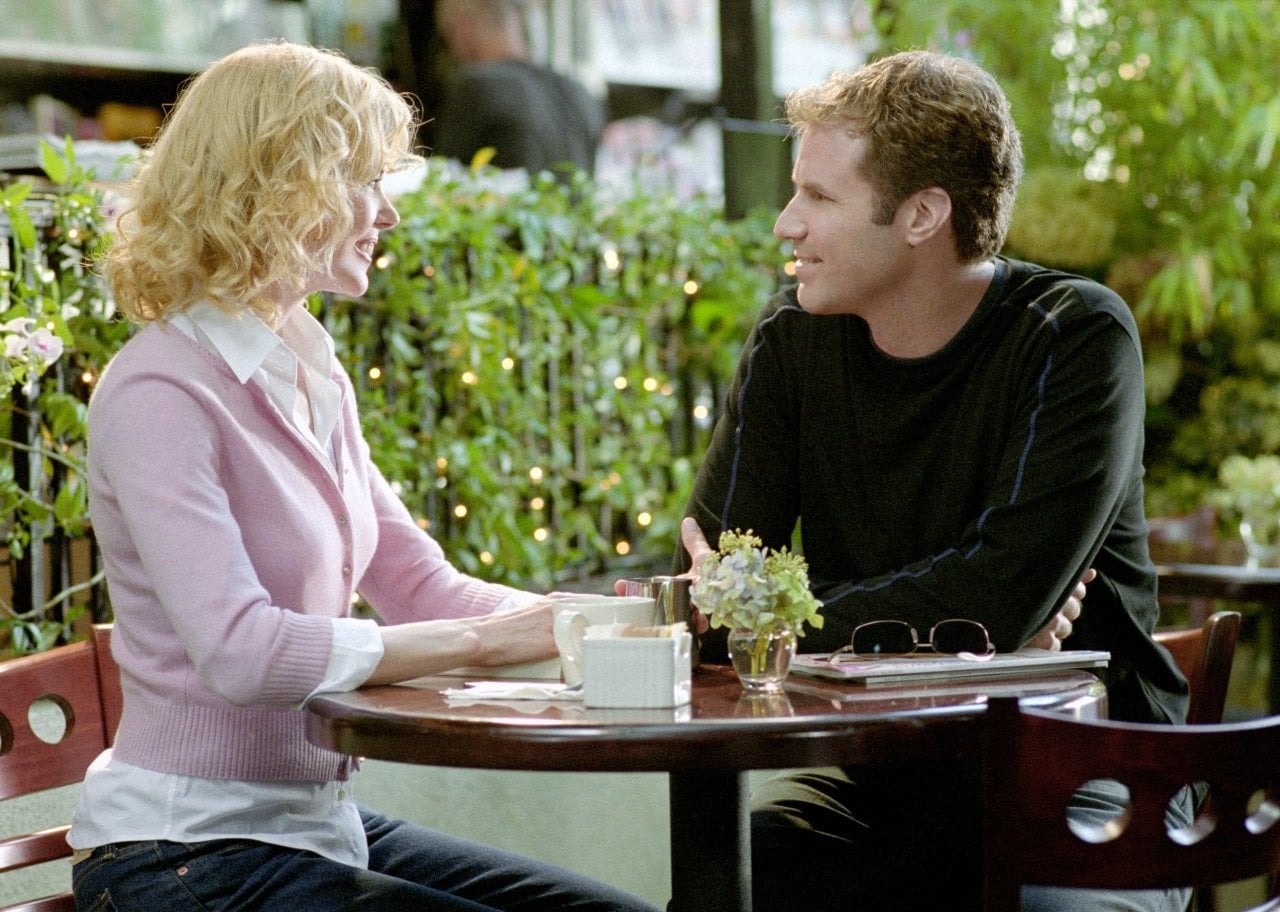
On paper, “Bewitched” seems to have all the right ingredients for a successful rom-com: an experienced writer and director (Nora Ephron), a talented and exciting cast (Will Ferrell, Nicole Kidman, Shirley MacLaine, Michael Caine, Jason Schwartzman, Kristin Chenoweth, and Steve Carell) and a unique storyline inspired by the classic sitcom of the same name (a washed-up actor discovers his cute new co-star is a witch). But in the end, the film was missing that little bit of magic that would have taken it from theoretically great to actually great. The New York Times called it “an unmitigated disaster,” and fans lamented its lack of direction and reliance on special effects over quality performances.
Universal Pictures
#94. Little Fockers (2010)
– Director: Paul Weitz
– Stacker score: 44.6
– IMDb user rating: 5.5
– Metascore: 27
The third installment in the “Meet the Parents” franchise, “Little Fockers” reunites the original cast for one last family row. Critics complained that the film— which was commercially quite successful, bringing in more than $310 million at the box office worldwide—was too formulaic, and its jokes too tired.
Columbia Pictures
#93. Mr. Deeds (2002)
– Director: Steven Brill
– Stacker score: 44.6
– IMDb user rating: 5.8
– Metascore: 24
– Runtime: 96 minutes
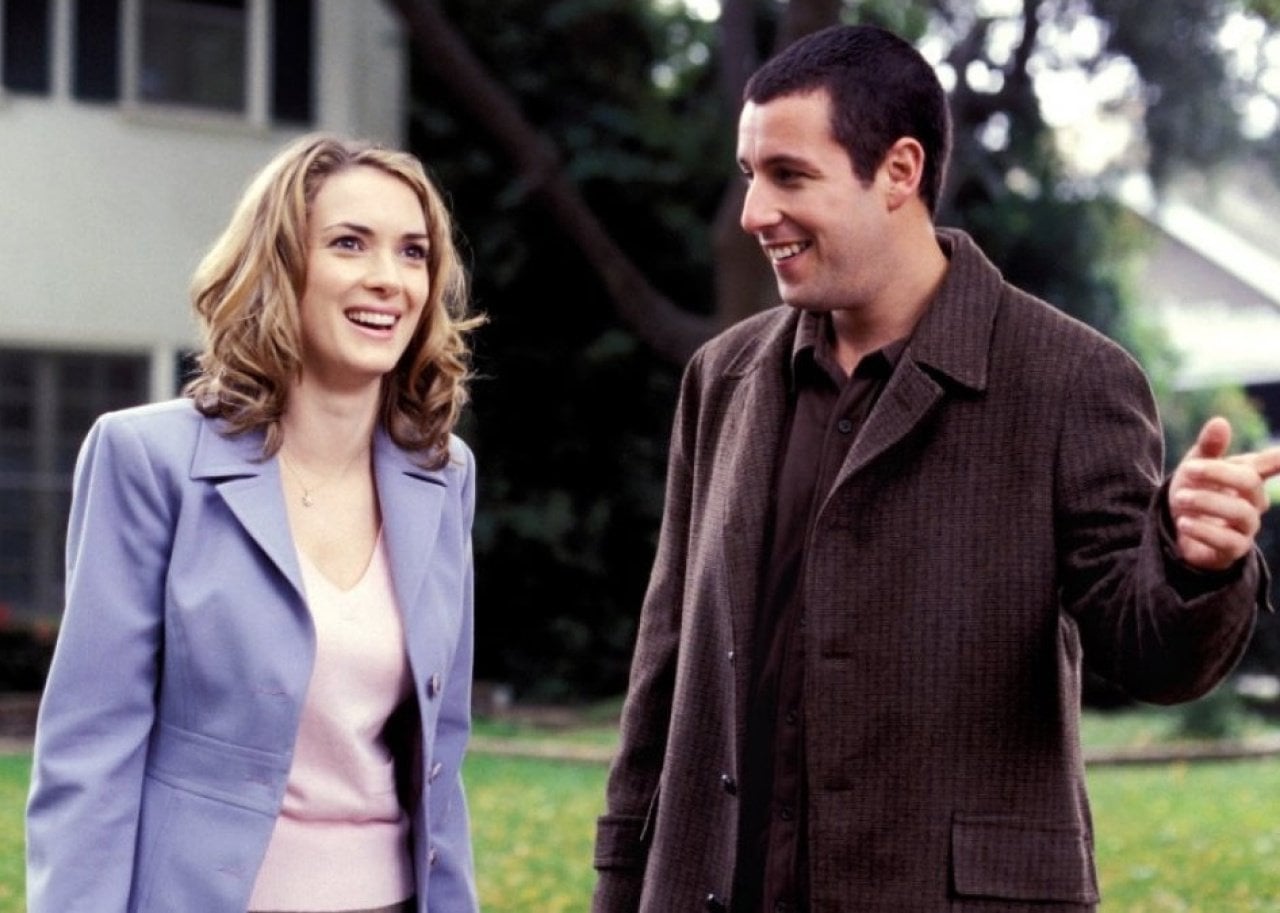
In this Frank Capra remake, a small-town man is left the keys to the kingdom after the death of a wealthy relative and must sort out who loves him for him and who loves him for his money. Starring Adam Sandler and Winona Ryder, the film was disparaged by critics for the way it dumbed down its source material, taking the story from smart to barely watchable.
The Cannon Group
#92. King Solomon’s Mines (1985)
– Director: J. Lee Thompson
– Stacker score: 44.0
– IMDb user rating: 5.2
– Metascore: 29
– Runtime: 100 minutes
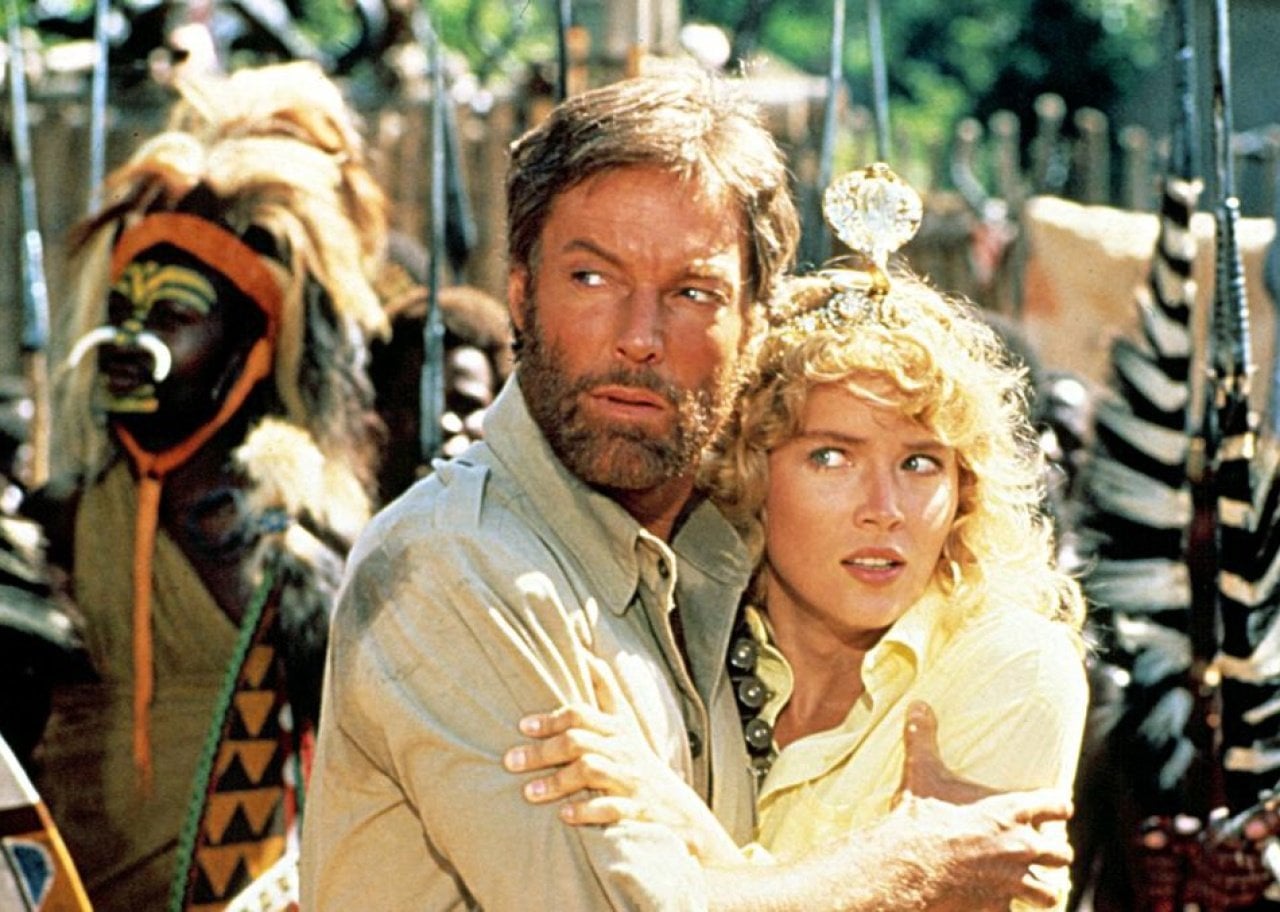
Richard Chamberlain plays an explorer who has been hired by a beautiful young woman (Sharon Stone) to help her find her father, an archaeologist who has been kidnapped for his extensive knowledge of the fabled King Solomon’s mines. An adaptation of the classic Victorian novel of the same name, the film takes a much lighter, wackier approach than any of its predecessors in an attempt to capture the same audiences that loved “Indiana Jones.” Unfortunately, these efforts didn’t pay off, and audiences dubbed the movie laughable and unconvincing.
Universal Pictures
#91. Head Over Heels (2001)
– Director: Mark Waters
– Stacker score: 44.0
– IMDb user rating: 5.4
– Metascore: 27
– Runtime: 86 minutes
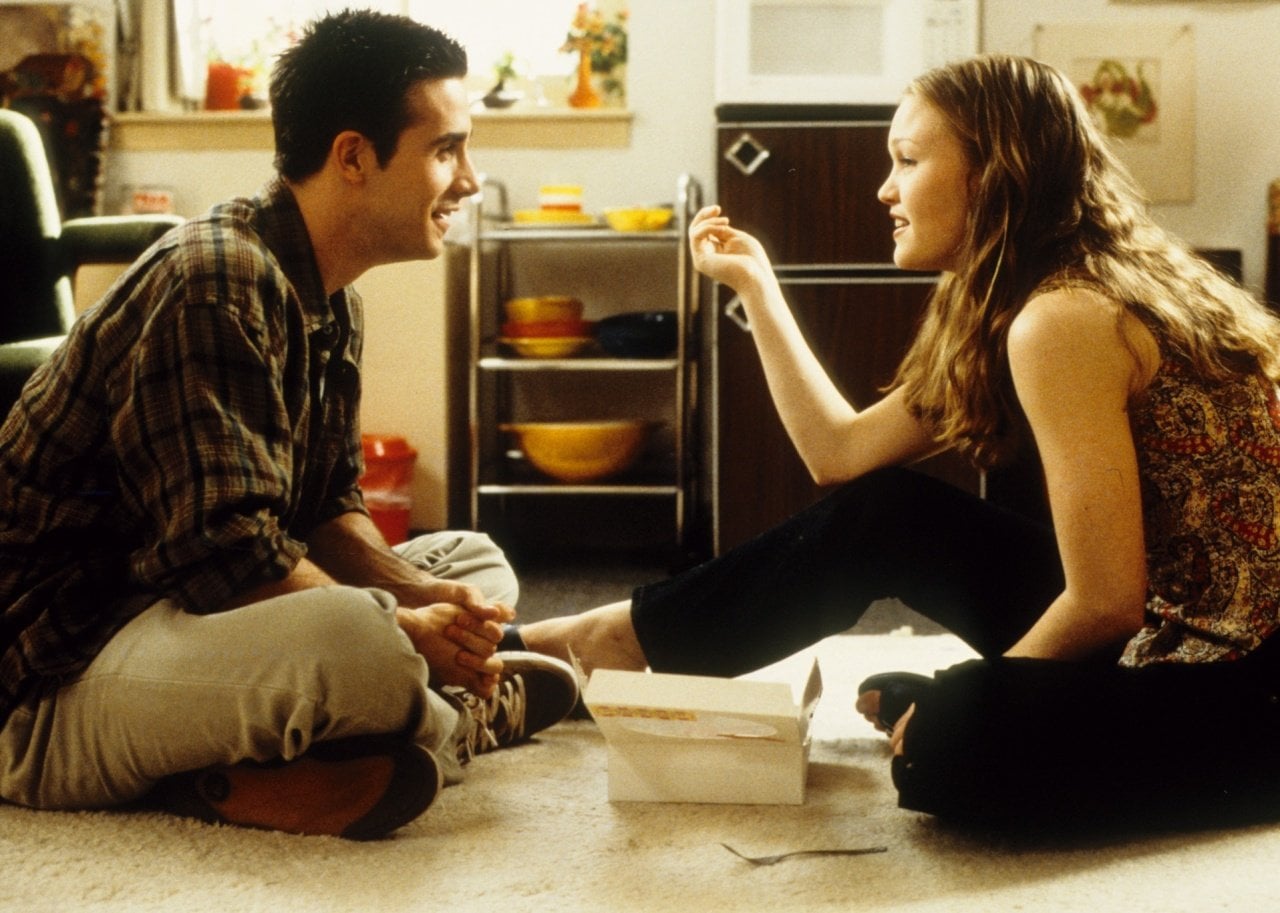
This is essentially “Rear Window” with a female lead who falls in love with the guy she thinks she’s seen commit a murder. Freddie Prinze Jr. was way too bubbly to inject the necessary darkness into the alleged killer character, and critics wrote the film off as a disposable teen date movie. It brought in only $10.4 million at the domestic box office.
New Line Cinema
#90. The Bachelor (1999)
– Director: Gary Sinyor
– Stacker score: 44.0
– IMDb user rating: 5.0
– Metascore: 31
– Runtime: 101 minutes
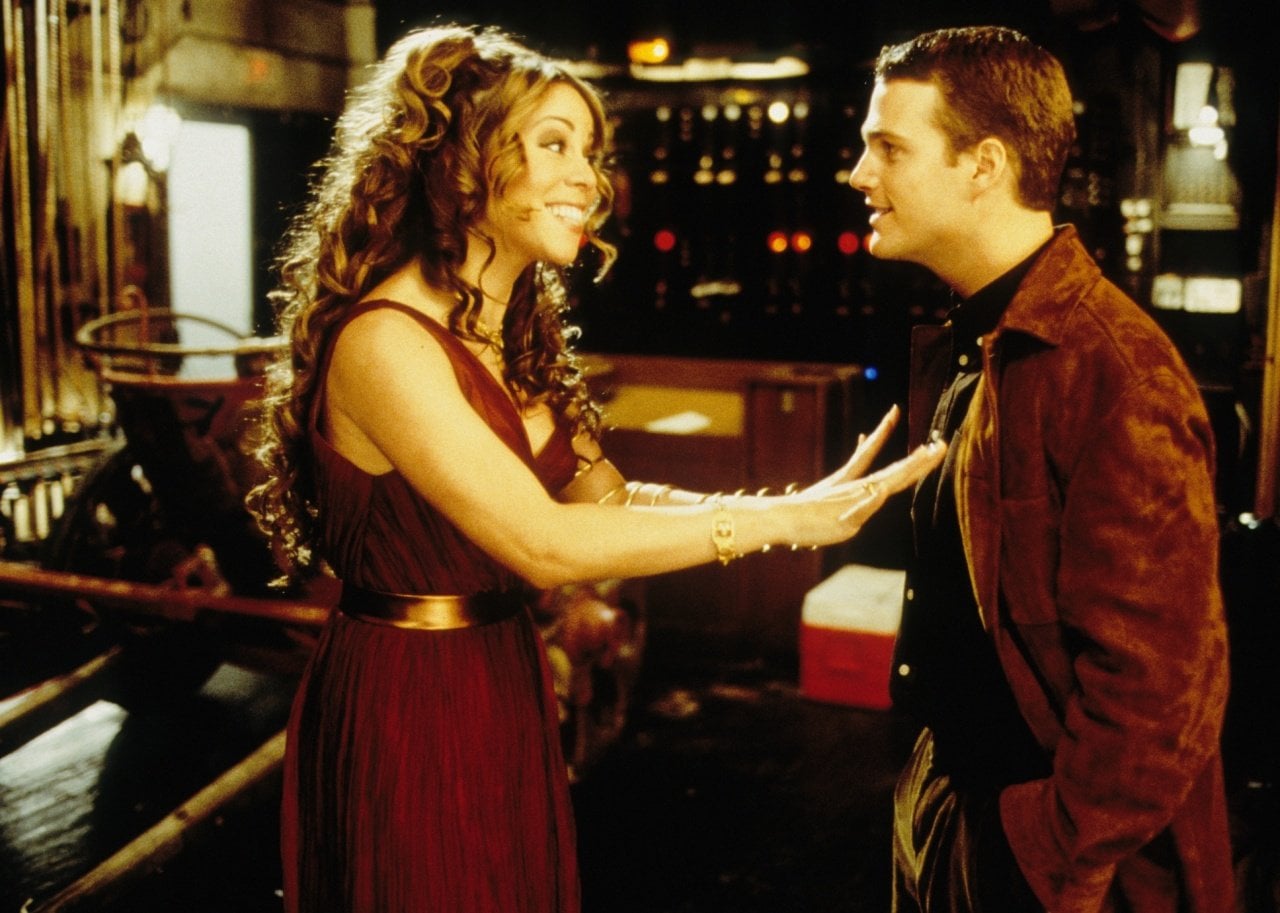
A commitment-phobic man is forced to settle down if he wants to keep his massive inheritance in this 1999 flop. Chris O’Donnell stars as the eponymous bachelor, with Renée Zellweger as his tired-of-waiting girlfriend. Despite a handful of celebrity cameos (Brooke Shields, Jennifer Esposito, Mariah Carey in her big-screen debut), the movie was a commercial disappointment, barely breaking even and earning reviews like “cliched” and “tired.”
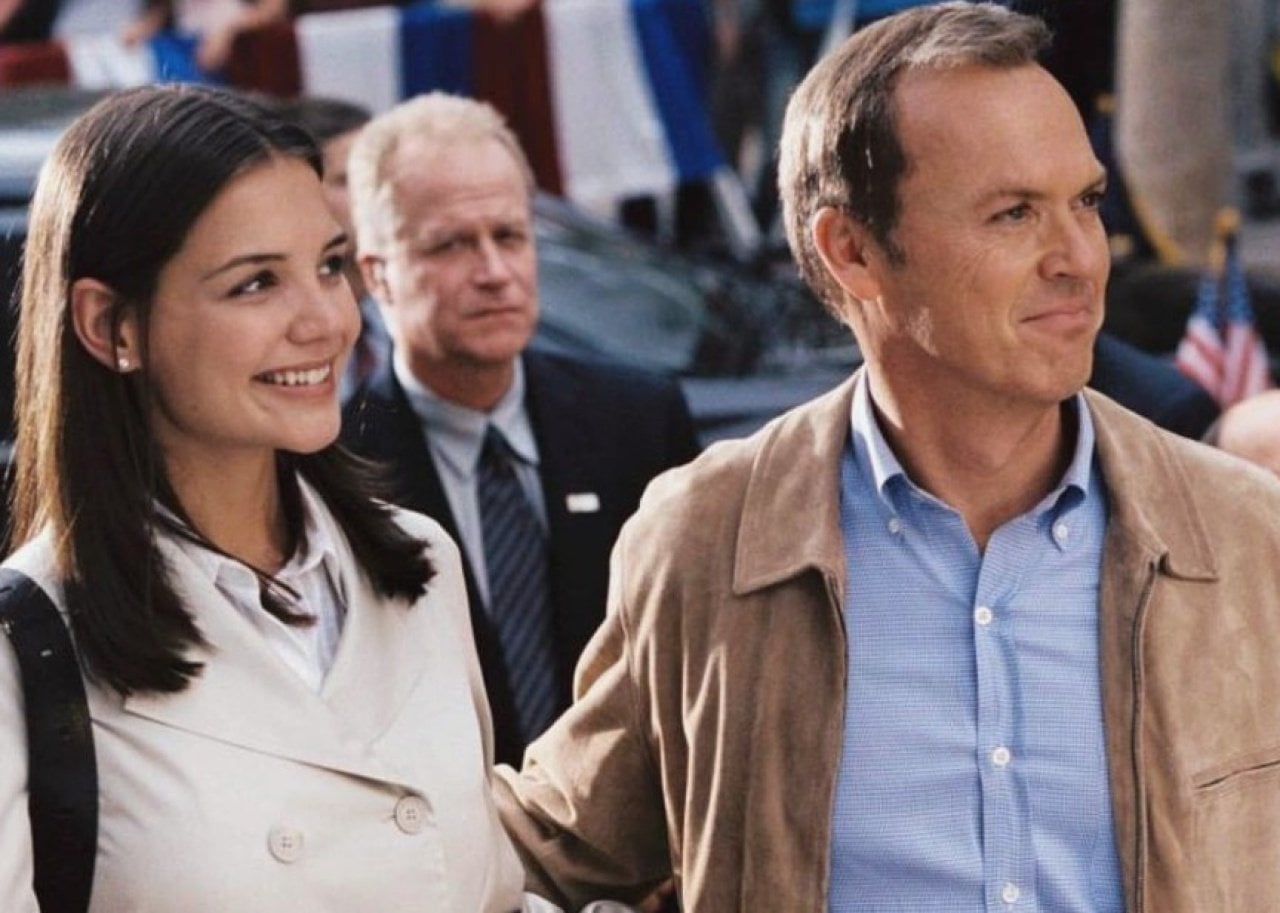
The daughter of the President of the United States (Katie Holmes) falls in love with her college RA who, unbeknownst to her, is an undercover secret service agent tasked with her protection. Critics made unfavorable comparisons to the conceptually similar (but slightly less awful) “Chasing Liberty” from the same year. They declared the picture too saccharine for viewers outside the tween girl demo. The movie grossed $10.6 million.
Universal Pictures
#88. The Perfect Man (2005)
– Director: Mark Rosman
– Stacker score: 44.0
– IMDb user rating: 5.4
– Metascore: 27
– Runtime: 100 minutes
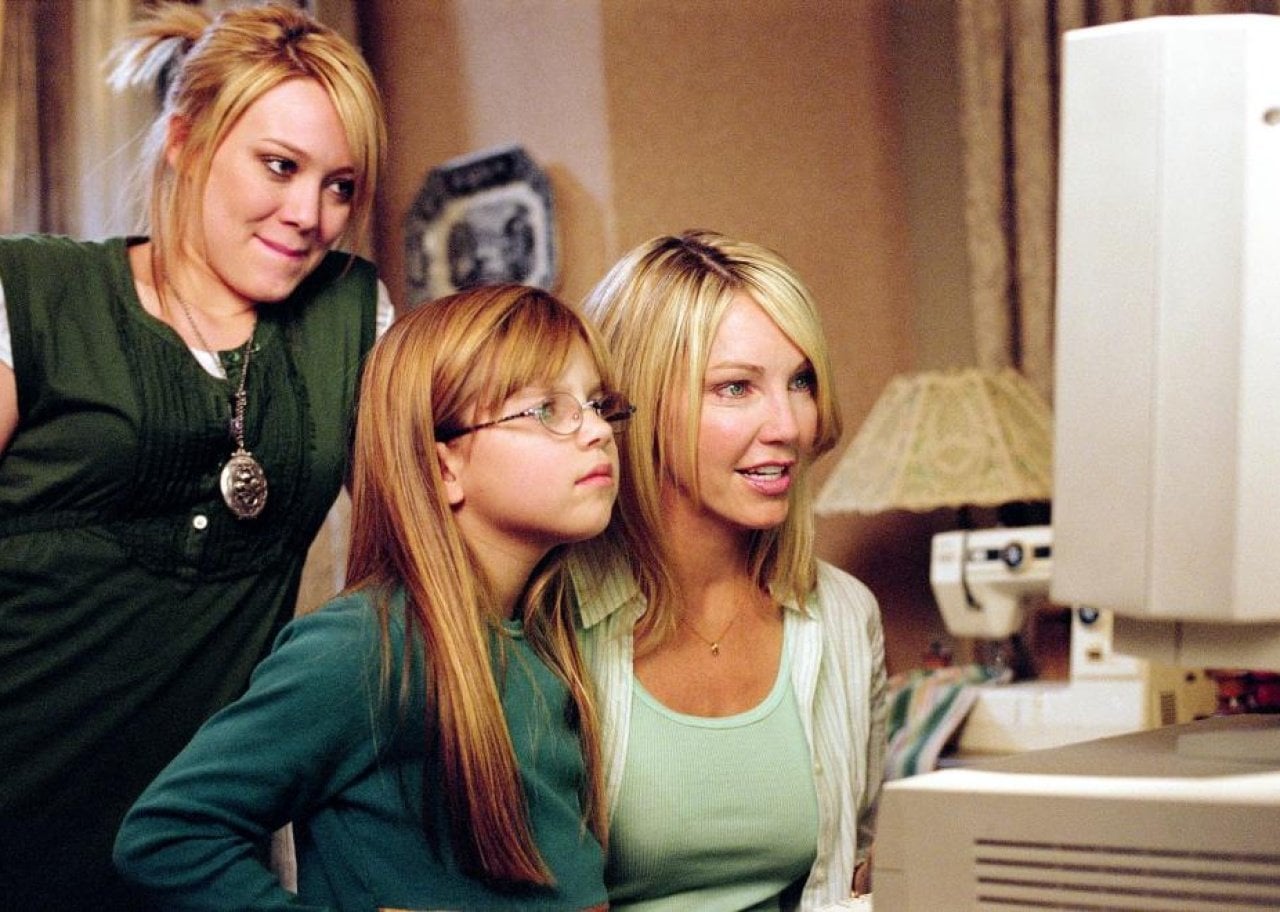
Before “catfishing” came into the cultural lexicon, this movie showed viewers what it meant. Holly (Hilary Duff) is sick of dealing with the fallout of her mother’s failed relationships, so she creates a fictional online persona to court her mom in the hopes it will raise her mom’s standards in men. When her mother (Heather Locklear) becomes invested in the romance, Holly must produce a real man to fill the shoes of the virtual suitor she’s created. Critics rolled their eyes at the overly sentimental dialogue and obvious pandering to the tween crowd. The picture grossed a disappointing $19.8 million.
Universal Pictures
#87. Because I Said So (2007)
– Director: Michael Lehmann
– Stacker score: 44.0
– IMDb user rating: 5.5
– Metascore: 26
– Runtime: 102 minutes
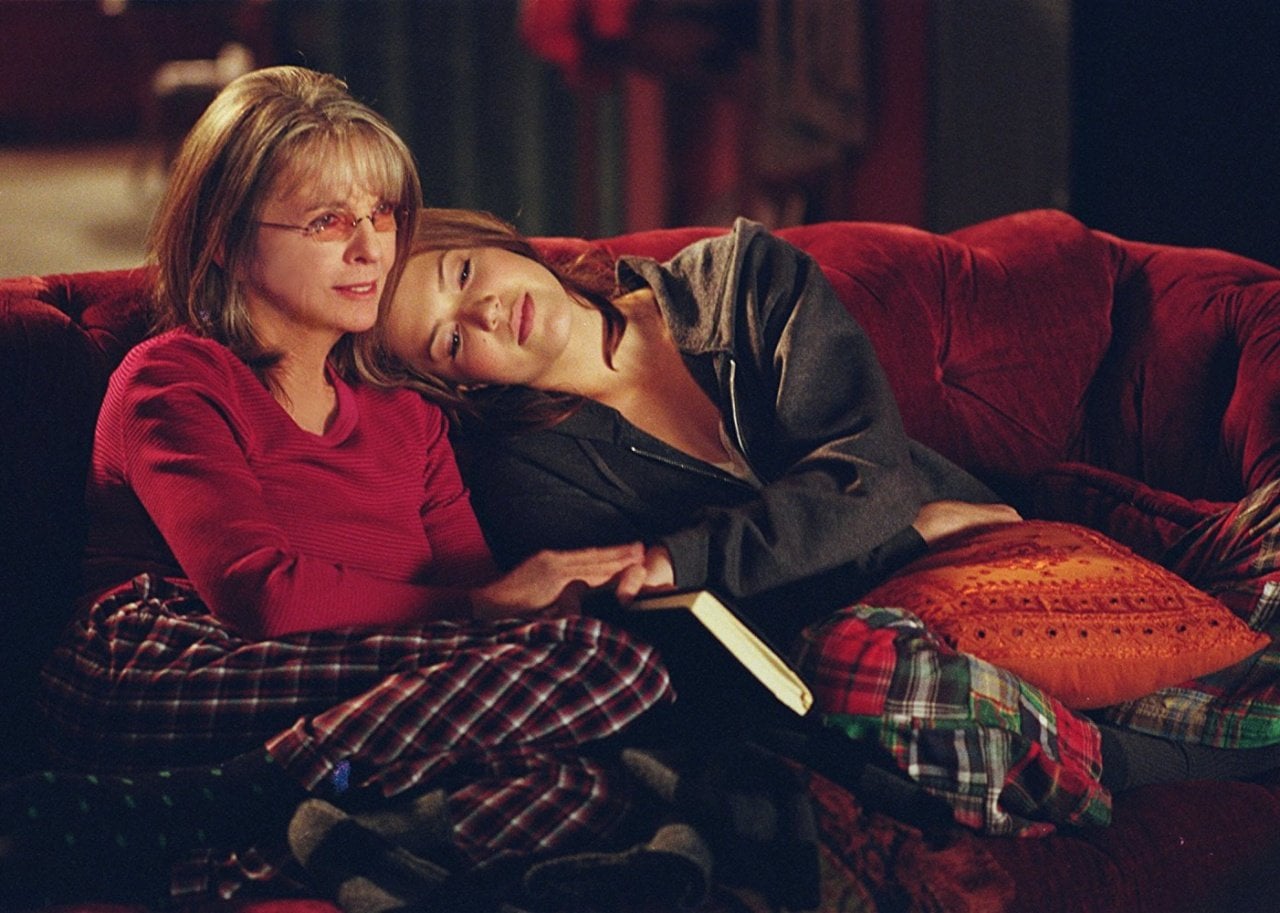
Diane Keaton, in what film critic Richard Roeper singled out as the worst performance of her career, plays a meddlesome mother intent on setting her daughter (Mandy Moore) up with Mr. Right. Panned as a cliché, sappy, superficial chick flick, the film was dumped in the typically undesirable early February release window of 2007. Even so, ticket sales around Valentine’s Day were strong enough that the movie was marginally profitable, raking in $42.7 million domestically. In retrospect, it’s difficult to know who to pity more, the lonely hearts who saw this one solo or the significant others who were dragged out for date night.
Panorama Films
#86. Zoolander 2 (2016)
– Director: Ben Stiller
– Stacker score: 44.0
– IMDb user rating: 4.7
– Metascore: 34
– Runtime: 101 minutes
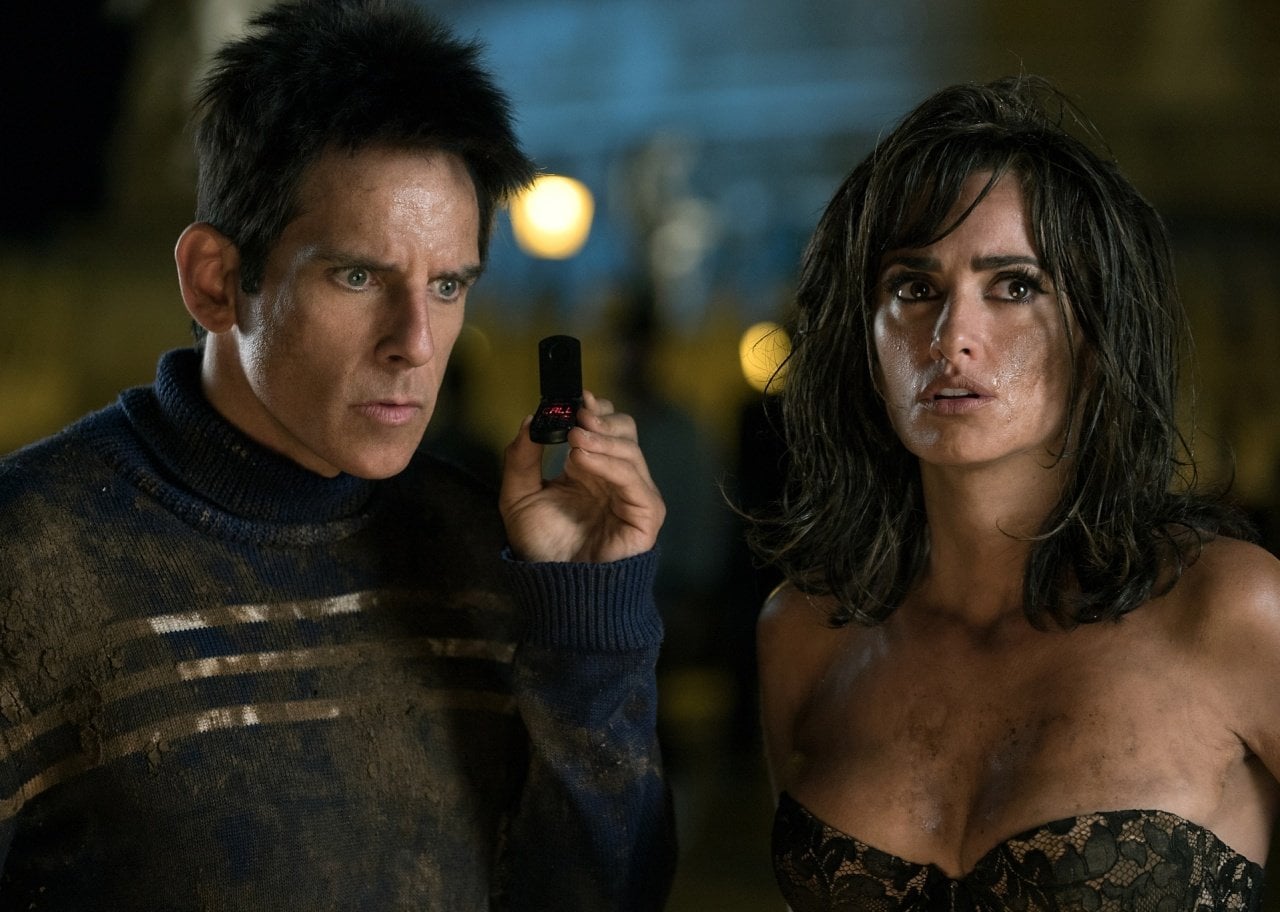
The original “Zoolander” might be a cult classic, but its sequel will hardly attain the same status. From its ridiculous plotline (Derek and Hansel on a mission to track down a mysterious agent who’s killing the world’s pop stars) to its laundry list of recycled jokes, there’s a lot to criticize in this long-awaited follow-up. Even the dozens of celebrity cameos it so proudly boasted couldn’t save it from its own lack of charm, creativity, or bizarre pacing.
Fox 2000 Pictures
#85. Chasing Papi (2003)
– Director: Linda Mendoza
– Stacker score: 43.5
– IMDb user rating: 4.7
– Metascore: 33
– Runtime: 80 minutes
“Chasing Papi” is a rom-com that feels as if it were intended more to appease the male gaze than to entertain viewers with its story. Three beautiful women (Sofía Vergara, Roselyn Sanchez, and Jaci Velasquez) discover they’re all dating the same cosmetics salesman and must decide between fighting to be his one true love or keeping the friendship that’s begun to develop between the trio. There’s nothing overtly offensive about the film, but its unoriginal plot line, bland humor, and focus on its characters’ looks over their identities don’t do much to recommend it either.
Fred Films
#84. Blithe Spirit (2020)
– Director: Edward Hall
– Stacker score: 43.5
– IMDb user rating: 5.4
– Metascore: 26
– Runtime: 99 minutes
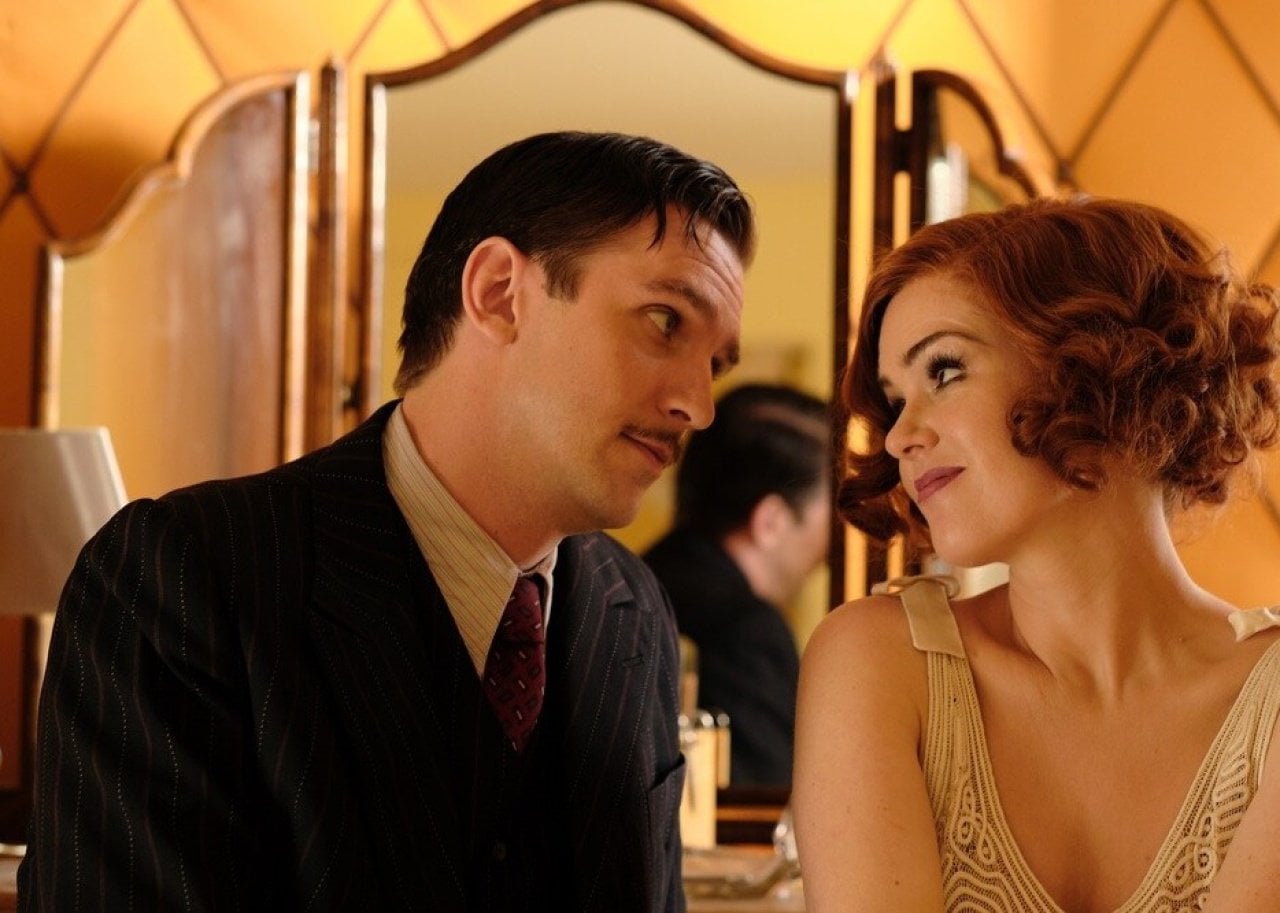
Based on the classic Noël Coward play of the same name, “Blithe Spirit” is about a writer who, after a seance gone wrong, finds himself trapped in a love triangle with the spirit of his dead first wife and his very alive second wife. The British film had a star-studded cast—Dan Stevens, Isla Fisher, Leslie Mann, Judi Dench, Emilia Fox—but failed to capture the kooky spirit of its source material, leaving many viewers with the feeling that it was a missed opportunity rather than the roaring success they’d hoped it would be.
Sherwood Productions
#83. Blame It on Rio (1984)
– Director: Stanley Donen
– Stacker score: 43.5
– IMDb user rating: 5.8
– Metascore: 22
– Runtime: 100 minutes
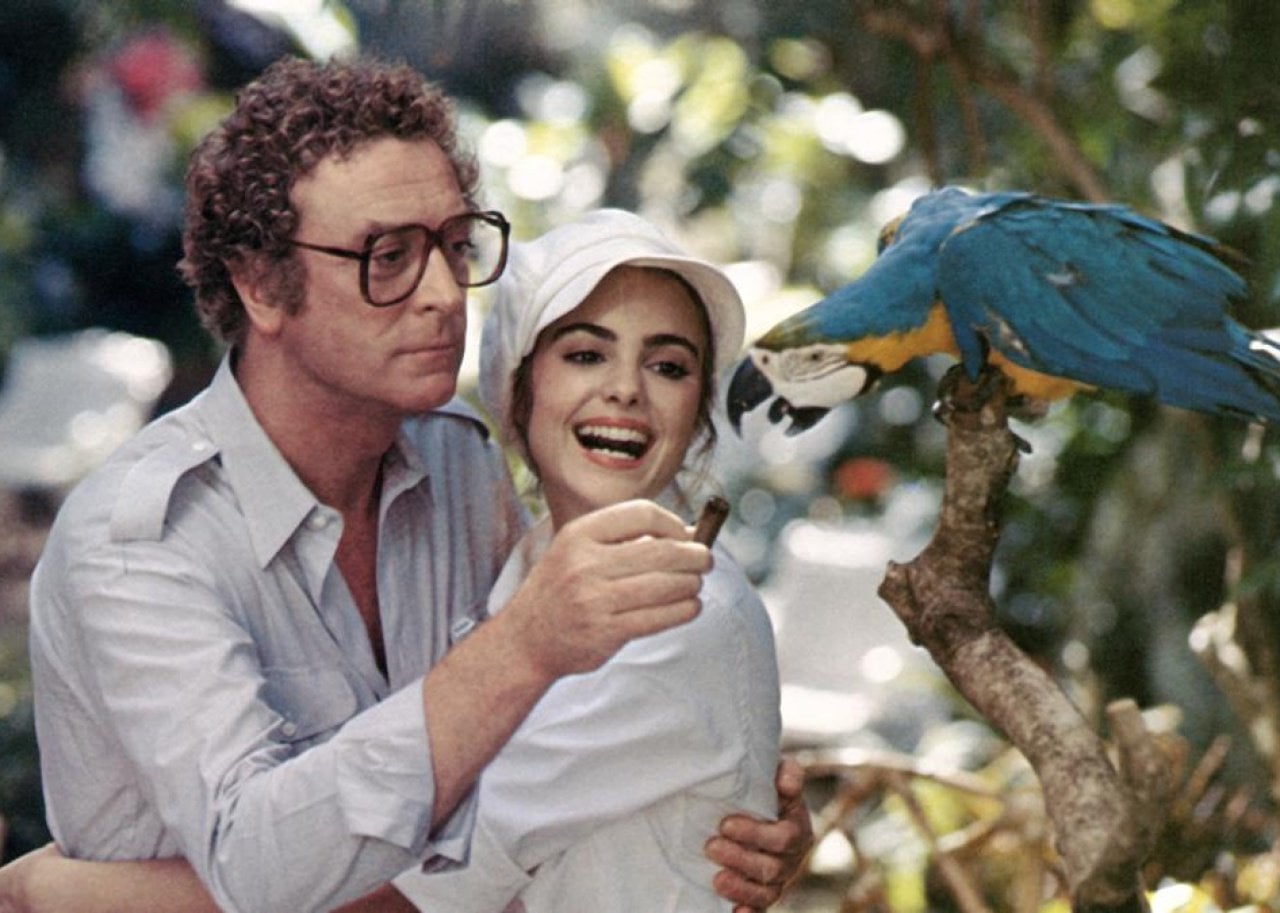
An aging executive played by Michael Caine is surprised to find the attractive daughter of his best friend coming on to him during vacation. Caine churned out a lot of movies in the ’80s, and this release is one of his least distinguished outings. It managed to double its budget in domestic returns of $18.6 million, even though critics found the script creepy in its endorsement of dirty-old-man behavior. The film has not aged well and probably wouldn’t have a chance of being made today.
Mandeville Films
#82. Beverly Hills Chihuahua (2008)
– Director: Raja Gosnell
– Stacker score: 43.5
– IMDb user rating: 3.9
– Metascore: 41
– Runtime: 91 minutes
A rom-com for the younger set, this Disney classic follows a spoiled Chihuahua who, after being dognapped, must find her way back to her owner with the help of her new paramour. Drew Barrymore and George Lopez voice the besotted canines, while Jamie Lee Curtis and Piper Perabo step in as their human owners. The storyline and humor are no worse than in any other kid-friendly, animated film, but the cultural stereotypes blatantly employed by the filmmakers left many audience members walking away with a bad taste in their mouths.
Ethea Entertainment
#81. He’s All That (2021)
– Director: Mark Waters
– Stacker score: 43.5
– IMDb user rating: 4.4
– Metascore: 36
– Runtime: 88 minutes
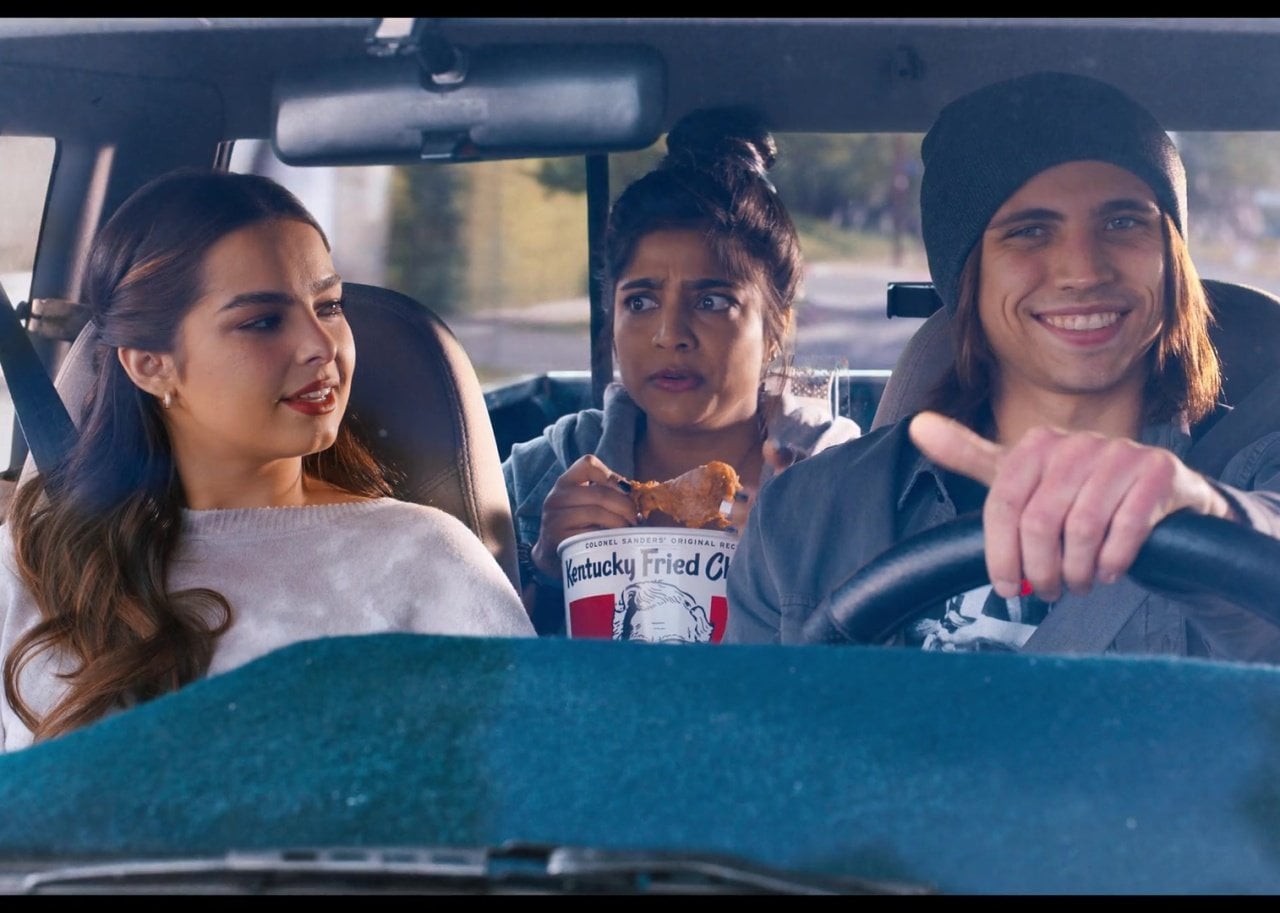
TikTok star Addison Rae leads the cast of this gender-swapped remake of the 1990s classic “She’s All That.” Critics’ biggest complaint with the Netflix original is that it didn’t do enough to switch up the storyline, leaving the film to feel uninspired and repetitive rather than new and fresh, a fact that was only compounded by Rae’s flat performance. One particularly harsh reviewer declared the film “unwatchable for anyone over 11 years old.”
Miramax
#80. View from the Top (2003)
– Director: Bruno Barreto
– Stacker score: 43.5
– IMDb user rating: 5.3
– Metascore: 27
– Runtime: 87 minutes
An aspiring stewardess (Gwyneth Paltrow) juggles grueling flight training with the romantic pursuit of a law student (Mark Ruffalo). Critics found the low stakes better suited to a straight-to-video release and criticized technical elements of the film, such as its editing, as amateurish. The release, initially scheduled for 2001, was pushed back two years in the wake of 9/11 to put some distance between the national tragedy and the film’s subject matter. The film, which grossed $15.6 million domestically, never made back its production budget.
Gladden Entertainment
#79. Mannequin (1987)
– Director: Michael Gottlieb
– Stacker score: 43.5
– IMDb user rating: 5.9
– Metascore: 21
– Runtime: 90 minutes
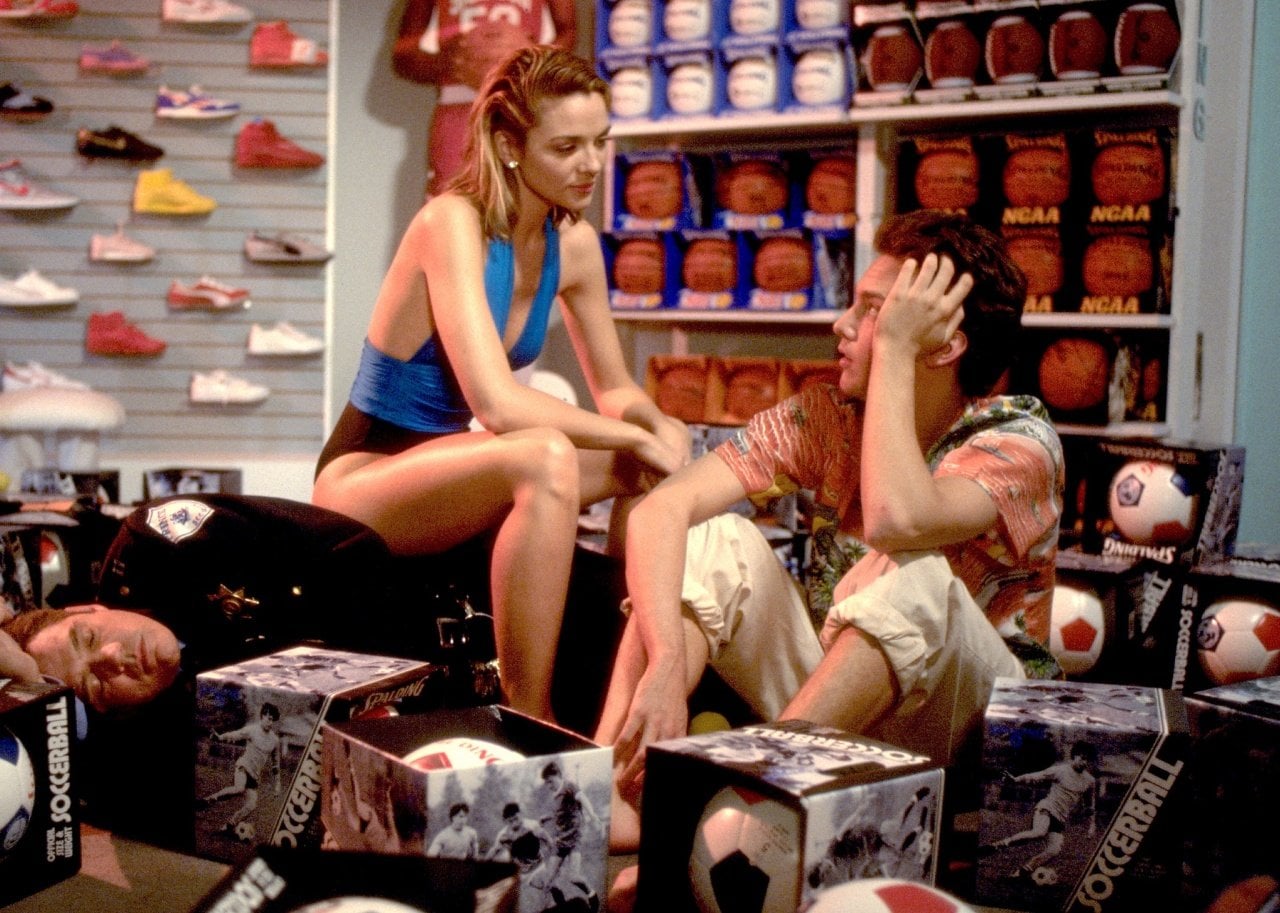
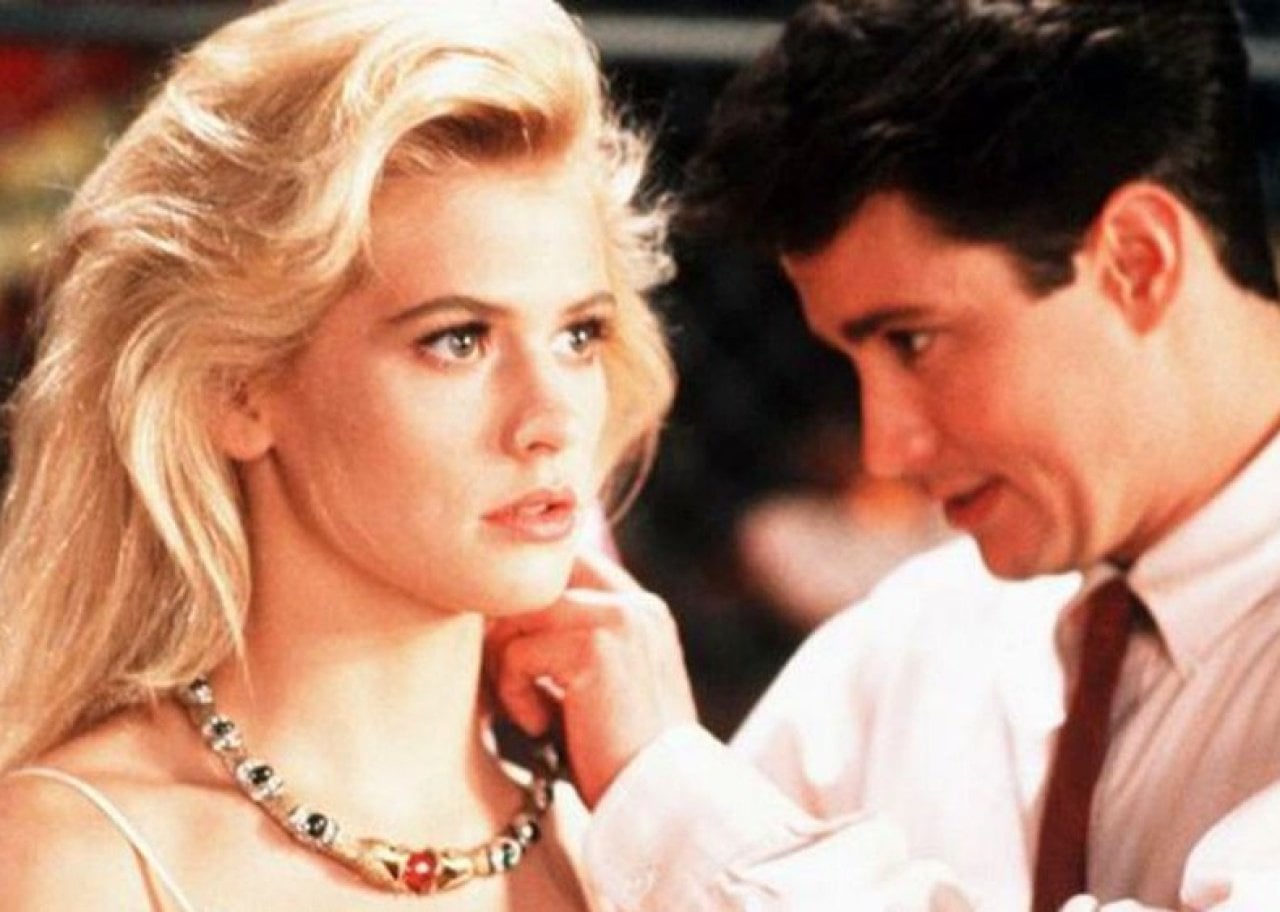
Campy is perhaps the best word to describe this 1987 rom-com about an artist who falls in love with a mannequin that is inhabited by the spirit of a woman from Ancient Egypt. “Mannequin” did decently well commercially, pulling in $6 million over the course of its opening weekend, but critics hated it for its bizarre storyline and complete lack of humor. Roger Ebert gave the Kim Cattrall and Andrew McCarthy flick a measly half-star, declaring it “dead” with a wake that lasted one-and-a-half hours.
Columbia Pictures
#78. Saving Silverman (2001)
– Director: Dennis Dugan
– Stacker score: 43.5
– IMDb user rating: 5.8
– Metascore: 22
– Runtime: 90 minutes
When J.D. Silverman (Jack Black) gets engaged to a manipulative, controlling woman, his best friends from childhood (Jason Biggs, Steve Zahn) go to great lengths to keep him from walking down the aisle. With humor aimed squarely at teen boys—there are lots of crude sex jokes, bathroom-related gags, and gratuitous torture moments—the film failed to land with its intended audience. Earning $26 million worldwide, it only squeaked past its production budget at the box office and many of its reviews were filled with notes like “mean-spirited” and “a terrible waste of assets.”
Touchstone Pictures
#77. When in Rome (2010)
– Director: Mark Steven Johnson
– Stacker score: 43.5
– IMDb user rating: 5.5
– Metascore: 25
– Runtime: 91 minutes
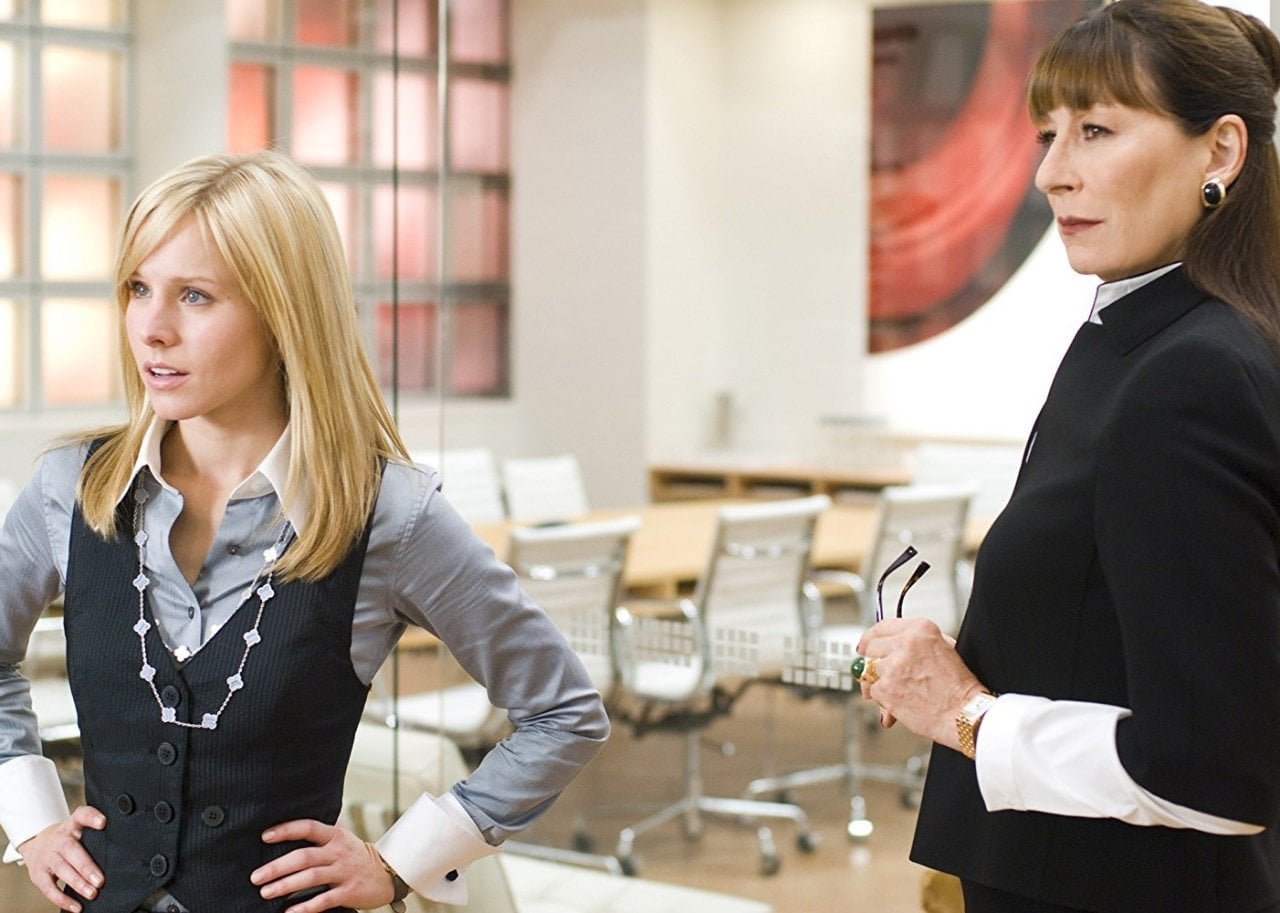
Top critics didn’t care for the dullness and lack of depth in this Kristen Bell and Josh Duhamel-led Disney flick. Bell is a New Yorker who has given up on romance until she throws some “magic” coins into a fountain in Rome and finds herself with many strange suitors to choose from. Dax Shepard (Bell’s off-camera husband), Will Arnett, and Jon Heder all throw their hats in the ring, and some viewers found it hard not to like Bell’s performance, but ultimately, the film’s over-reliance on clichés left critics wanting more.
Semtex Films
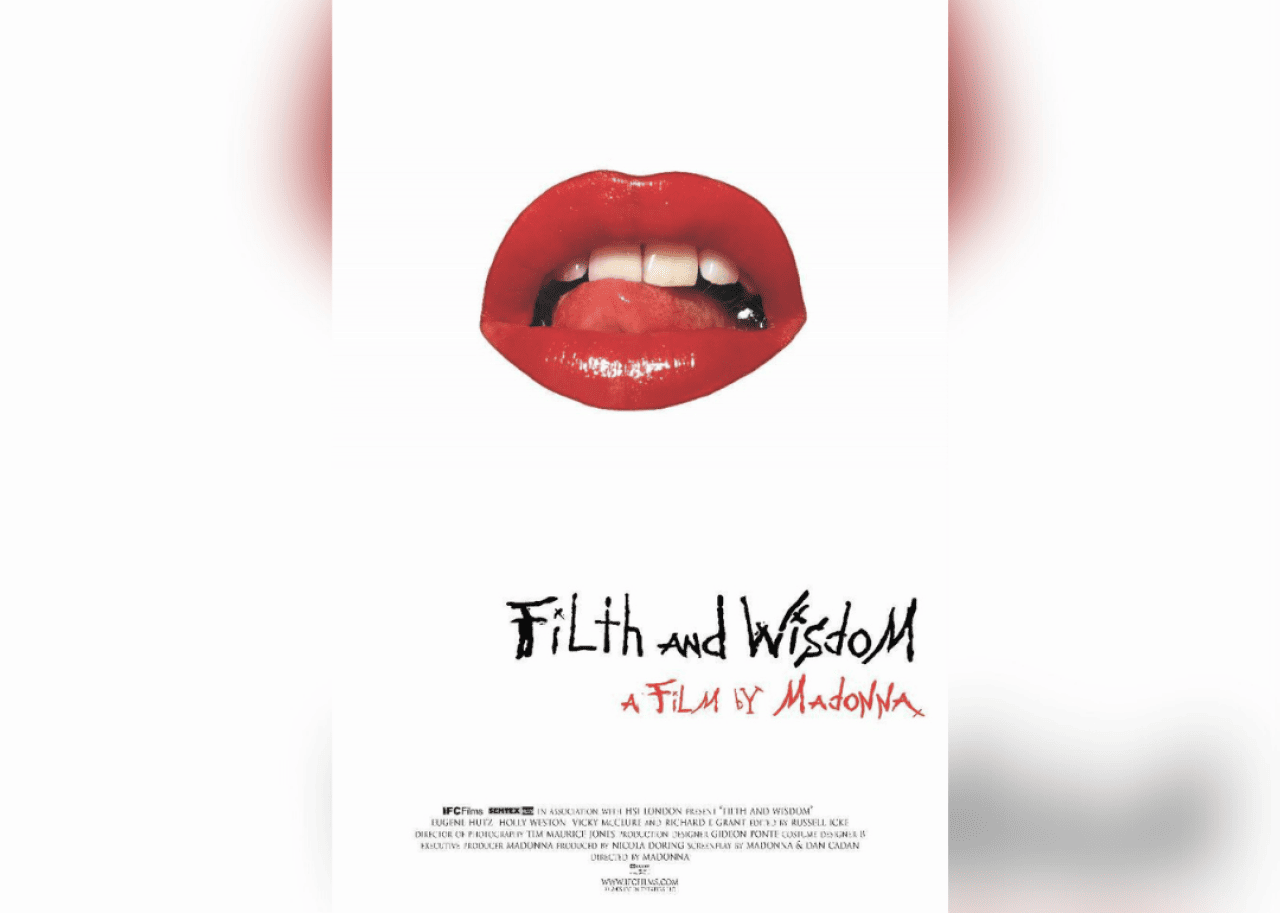
#76. Filth and Wisdom (2008)
– Director: Madonna
– Stacker score: 42.9
– IMDb user rating: 5.3
– Metascore: 26
– Runtime: 84 minutes
Madonna’s directorial debut, “Filth and Wisdom” was widely panned as “dumb and tacky.” The comedy-drama follows three flatmates who spend their days toiling away in dead-end jobs (including ones in the sex work industry) while dreaming of bigger things. An incoherent and amateur effort, the movie premiered at the Berlin Film Festival before its limited theater run, where it earned just over $22,000 domestically.
Blue Angel Film
#75. Miss Conception (2008)
– Director: Eric Styles
– Stacker score: 42.9
– IMDb user rating: 4.6
– Metascore: 33
– Runtime: 104 minutes
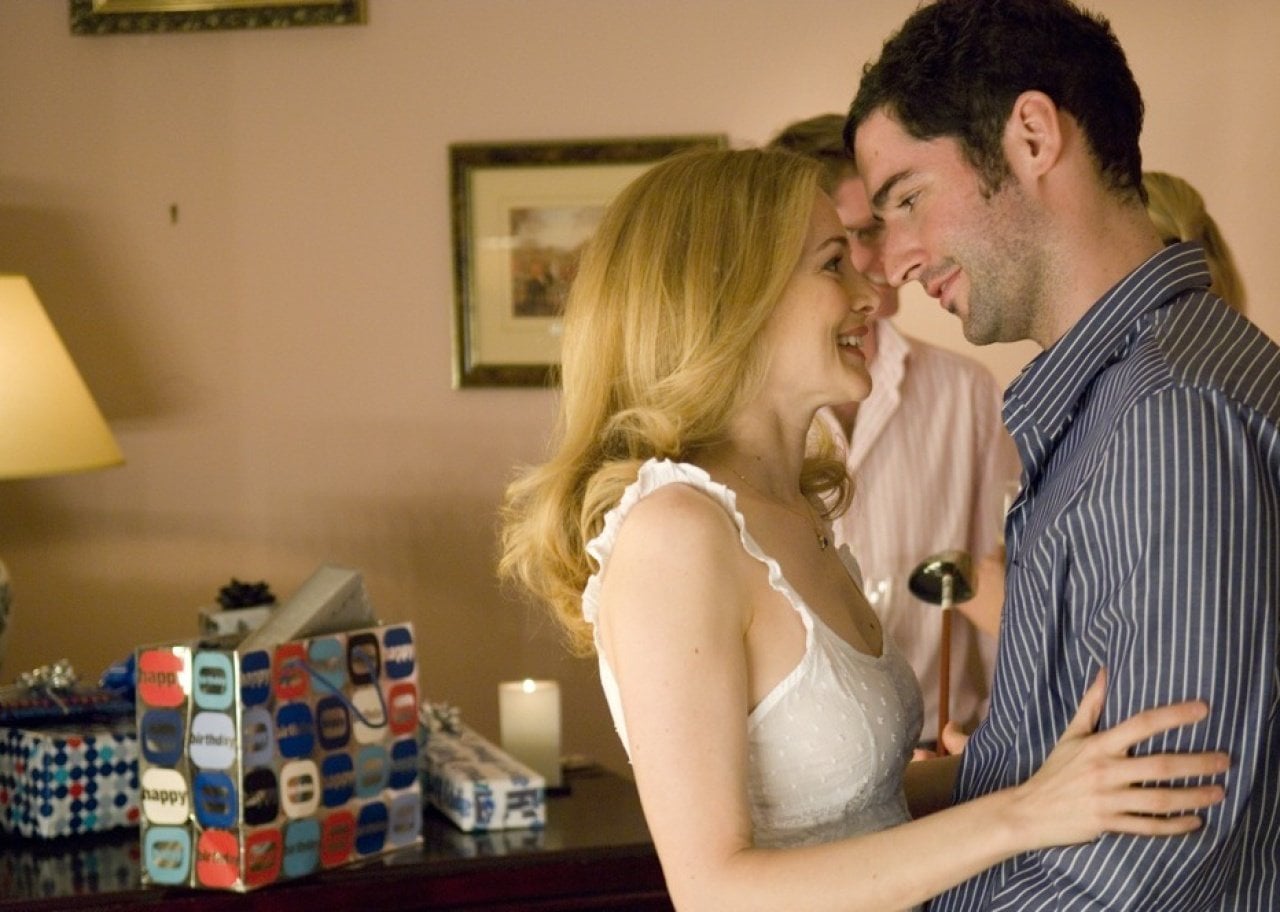
In this bizarre 2008 release, Heather Graham plays a 30-something woman who discovers she has just one month left to get pregnant. When her boyfriend is unwilling to father her child, she embarks on a desperate quest to find a co-parent. A misconceived attempt to capitalize on the baby craze of the late ’00s, the film feels outdated and cloddish and wound up only earning $2,134 at the domestic box office.
Absolute Entertainment (II)
#74. Molly (1999)
– Director: John Duigan
– Stacker score: 42.9
– IMDb user rating: 5.8
– Metascore: 21
– Runtime: 102 minutes
“Molly” is the type of movie that would almost certainly be boycotted by thoughtful moviegoers everywhere if it were released today. It follows a young autistic woman who finds herself living with her older bachelor brother after the institution she had been raised in unexpectedly shuts down. With both parties ill-prepared for this transition, they agree to an experiment that will make Molly more “normal,” and chaos proceeds from there. Cliché, offensive at times, and poorly acted, the film only brought in $17,000 at the box office and remains one of the biggest misses of Elisabeth Shue’s career.
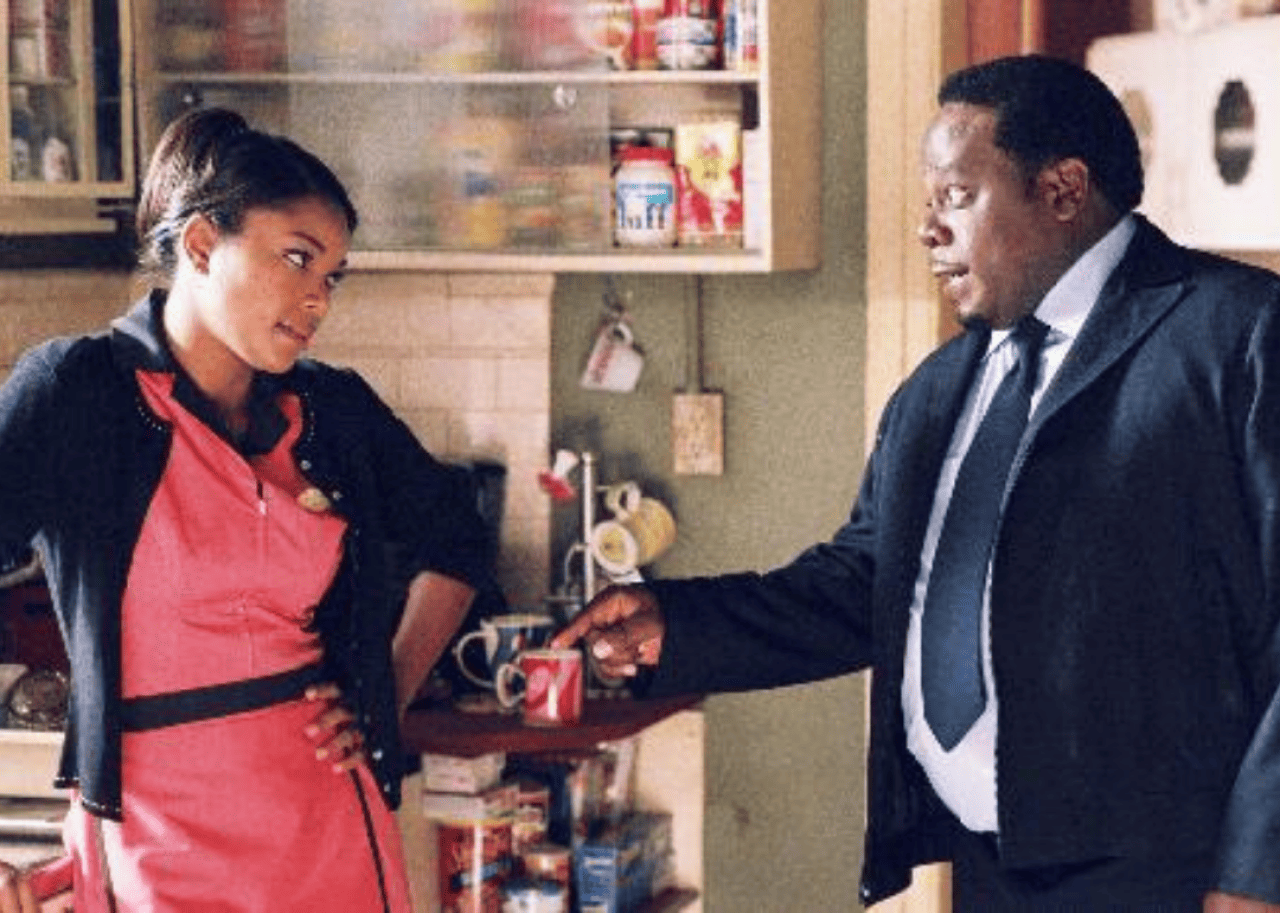
Gabrielle Union, playing a single mom, and Morris Chestnut, playing an aspiring musician, fall in love with the help of two Christmas angels (Queen Latifah and Terrence Howard) in this holiday-themed flop. Critics argued that the family-friendly story was too packed with clichés, pointless drama, and mediocre humor to be worth watching and pointed them elsewhere, leaving the film to earn only $5.8 million at the box office.
New Line Cinema
#72. Town & Country (2001)
– Director: Peter Chelsom
– Stacker score: 42.9
– IMDb user rating: 4.5
– Metascore: 34
– Runtime: 104 minutes
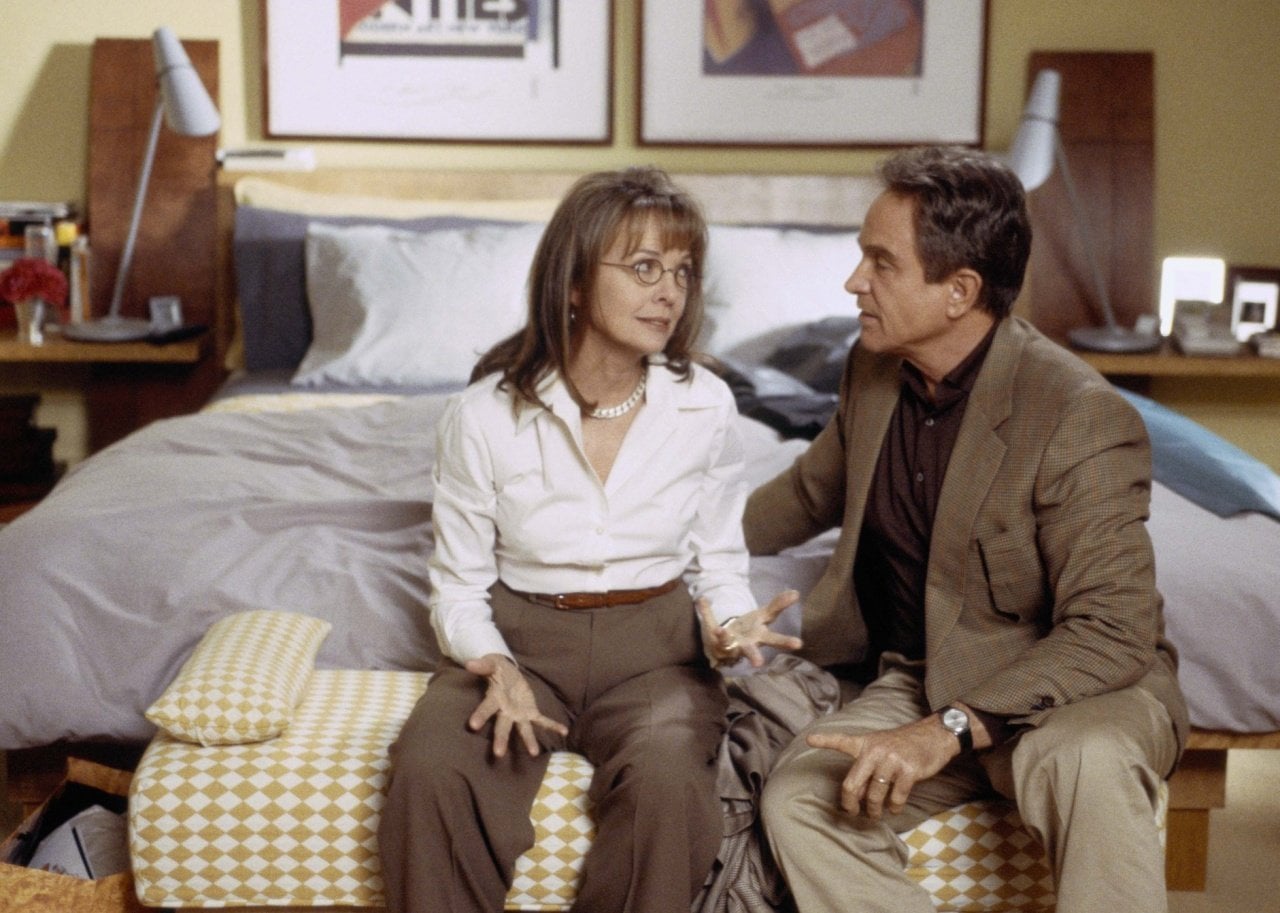
One of the biggest flops in movie history, “Town & Country” only earned $10 million against its $90 million budget. The film—which stars Warren Beatty, Diane Keaton, Goldie Hawn, and Garry Shandling—follows two aging couples who see their marriages tested by various infidelities. After spending three years in production (filming began in 1998 and didn’t wrap until 2000), the finished product felt disjointed and choppy thanks to its dozens of rewrites and re-shoots, a fact that critics and audiences alike were quick to pick up on.
New Regency Pictures
#71. Simply Irresistible (1999)
– Director: Mark Tarlov
– Stacker score: 42.9
– IMDb user rating: 5.2
– Metascore: 27
– Runtime: 96 minutes
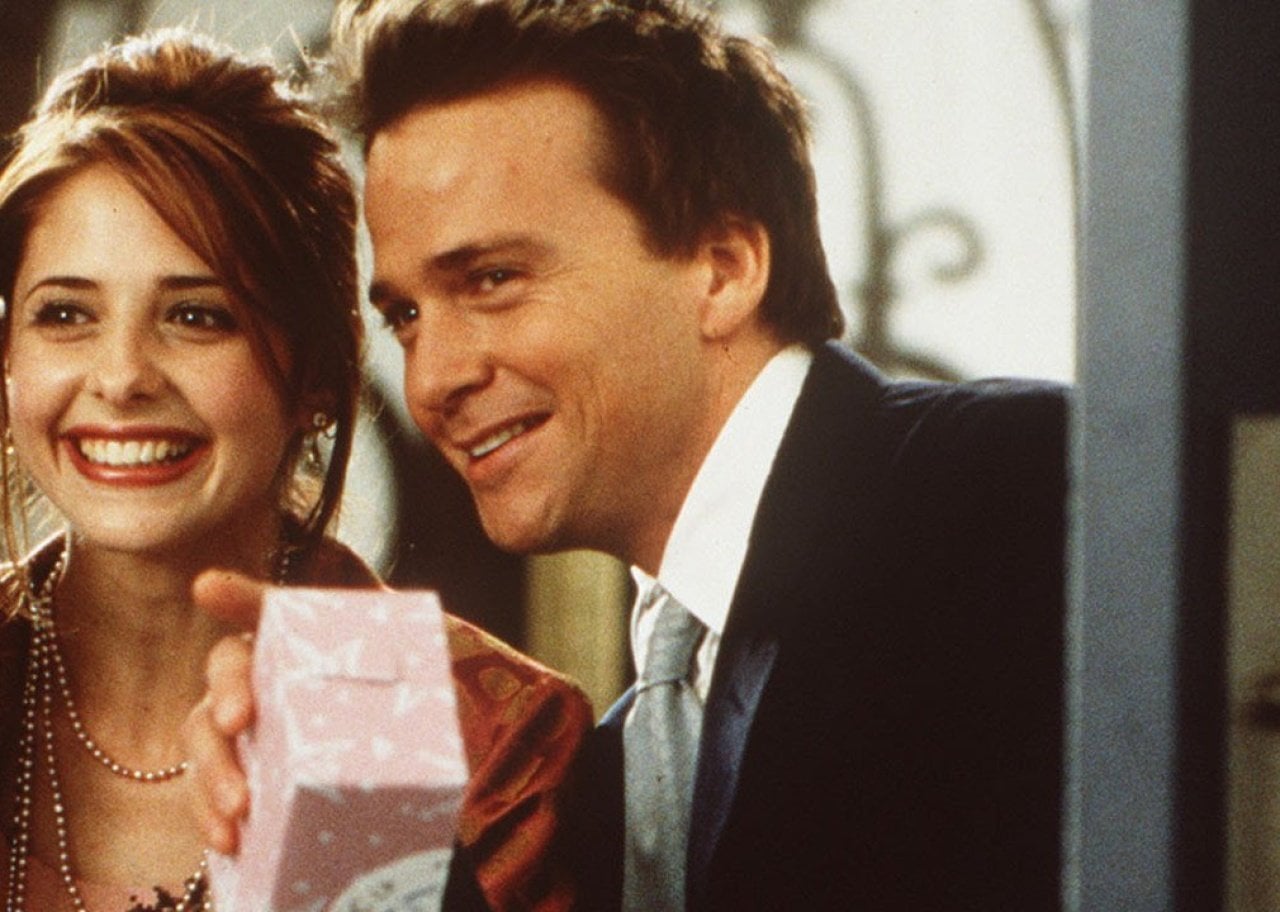
Sarah Michelle Gellar stars as an heiress to a restaurant who is blessed with magical cooking and seduction abilities by a crab in a tuxedo. The title begs for oppositional review bylines, which critics were eager to deliver given that the plot never rises above its absurd premise. Domestic grosses of $4.4 million reflected a disconnected marketing campaign. A somewhat ominous movie poster featured Gellar pouting in front of a full moon, a tableau that was perhaps attempting to recall her iconic TV role in “Buffy The Vampire Slayer” but wasn’t in the least bit reflective of the film’s goofy tone.
Walt Disney Pictures
#70. Confessions of a Teenage Drama Queen (2004)
– Director: Sara Sugarman
– Stacker score: 42.9
– IMDb user rating: 4.6
– Metascore: 33
– Runtime: 89 minutes
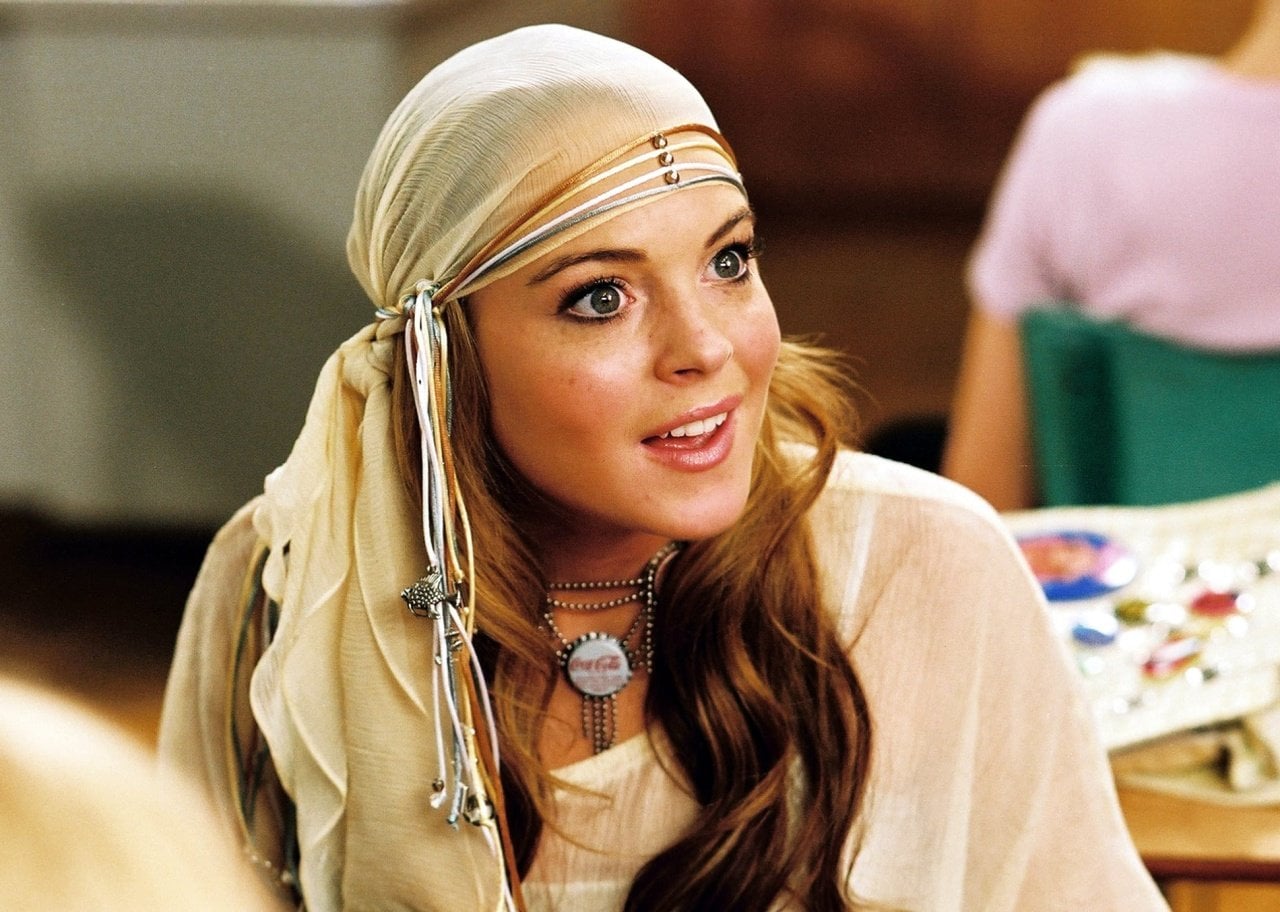
Lindsay Lohan and Megan Fox star as high school rivals in this classic teenage comedy. Many of the film’s detractors cited its predictable hijinks, juvenile acting, and cliché plot points as reasons for labeling it unwatchable fluff, but its intended audience didn’t seem to mind those things, buying enough tickets to earn it a respectable $33.3 million at the worldwide box office.
Innis Lake Entertainment
#69. No Stranger Than Love (2015)
– Director: Nick Wernham
– Stacker score: 42.4
– IMDb user rating: 4.9
– Metascore: 29
– Runtime: 89 minutes
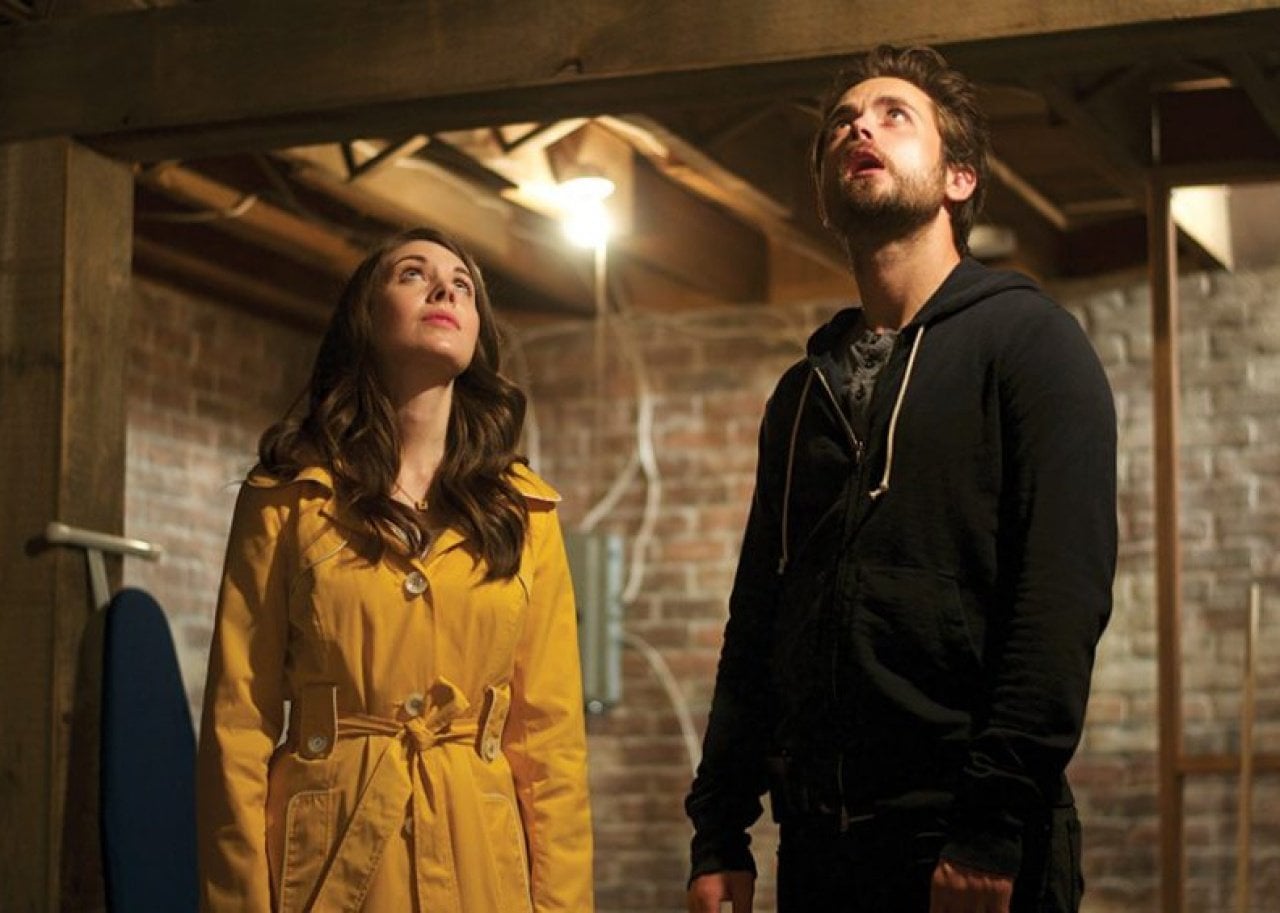
IndieWire wrote that “No Stranger Than Love,” a film about a woman who loses her beau to a mysterious pit that opens up in the middle of her living room, “has a hole where its heart should be.” Alison Brie plays art teacher Lucy, a woman who every man in town is seemingly in love with, and her performance is the only redeemable aspect of this poorly paced rom-com. Ultimately, the surreal components of the story are introduced far too late in the run time for this plotline to really gel.
Universal Pictures
#68. Stroker Ace (1983)
– Director: Hal Needham
– Stacker score: 42.4
– IMDb user rating: 4.8
– Metascore: 30
– Runtime: 96 minutes
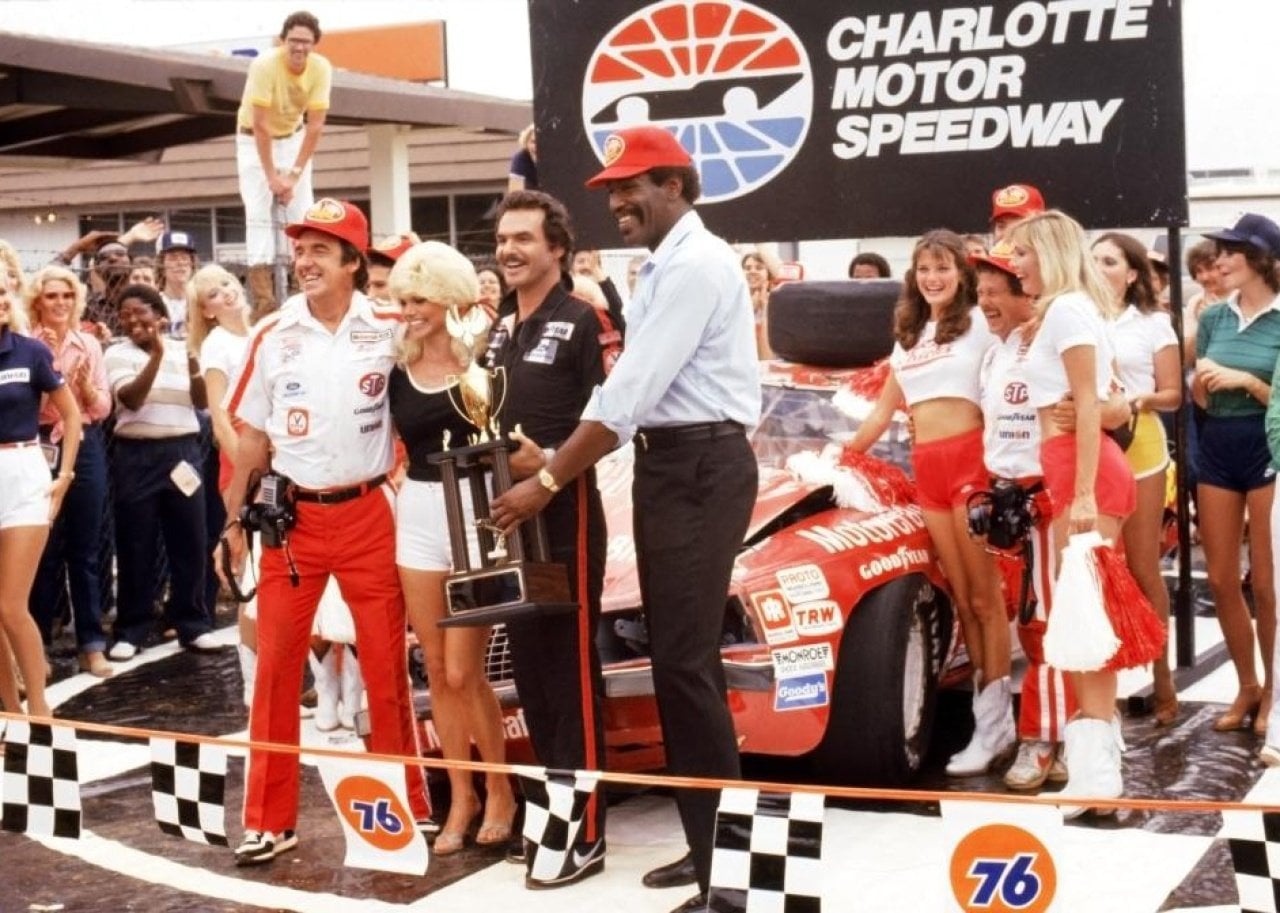
Burt Reynolds, once one of Hollywood’s biggest heartthrobs and most sought-after actors, blamed “Stroker Ace” for the demise of his career. The film, which sees Reynolds play a NASCAR driver who is at odds with his fried-chicken sponsor and desperate to seduce his new public relations manager, was a massive flop upon its release. The New York Times called it “the must-miss movie of the summer,” and critics complained that it was too boring and uninspired to merit even a single viewing.
This 2011 schlock-fest features an ensemble cast including Jessica Biel, Halle Berry, Michelle Pfeiffer, Abigail Breslin, Robert De Niro, and Josh Duhamel in a tale of intertwining love stories set on Dec. 31 in Manhattan. This was an obvious retread of “Love Actually,” but bereft of that film’s heart or humor, and critics saw straight through the producers’ cynicism, warning audiences to seek other holiday options. Domestic gross was $54.5 million, a poor showing for such a star-studded picture.
Fox 2000 Pictures
#66. Bride Wars (2009)
– Director: Gary Winick
– Stacker score: 42.4
– IMDb user rating: 5.4
– Metascore: 24
– Runtime: 89 minutes
Two best friends (Kate Hudson and Anne Hathaway) become engaged in a bridezilla showdown when, due to a clerical error, they accidentally schedule their weddings on the same day. This 2009 movie drew plenty of ire from critics who, fed up with the overdone wedding movie genre, pounced on the film’s superficiality and disdain for its audience. Said audience showed up anyway, netting the picture a profitable $115 million worldwide.
Unity Productions
#65. Private School (1983)
– Director: Noel Black
– Stacker score: 41.8
– IMDb user rating: 5.2
– Metascore: 25
– Runtime: 89 minutes
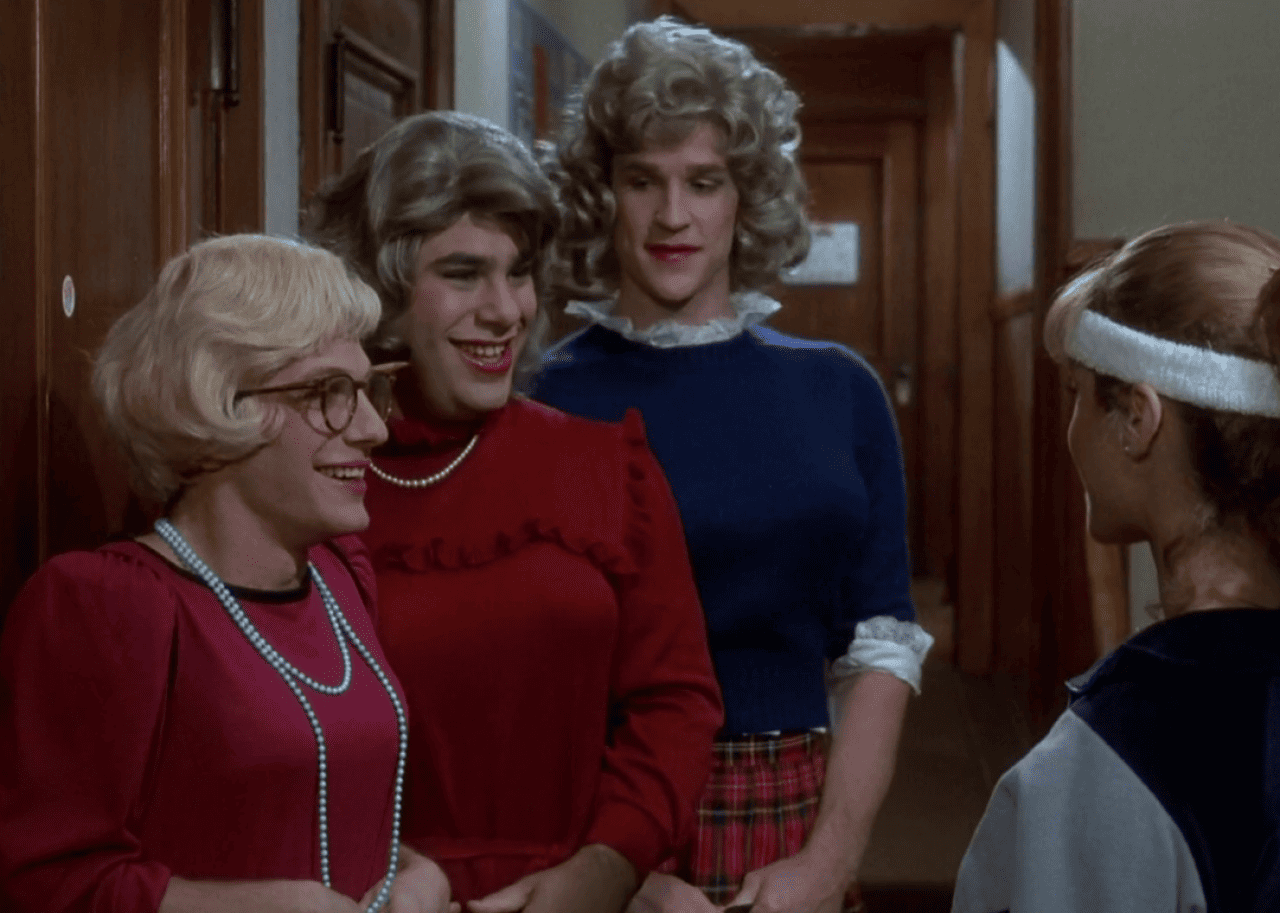
“Private School” has a threadbare plot and seems to only exist as a vehicle for the writers’ crude and derogatory sex jokes. Ostensibly, the film, which was targeted at teens, is about a young couple seeking to lose their virginities to one another. In reality, however, it feels like an awkward 80-minute stand-up set full of content that Roger Ebert dubbed “anti-woman.” It’s no surprise that women (the primary audience from rom-coms) haven’t flocked to this one in the 40 years since its release.
Warner Bros.
#64. License to Wed (2007)
– Director: Ken Kwapis
– Stacker score: 41.8
– IMDb user rating: 5.2
– Metascore: 25
– Runtime: 91 minutes
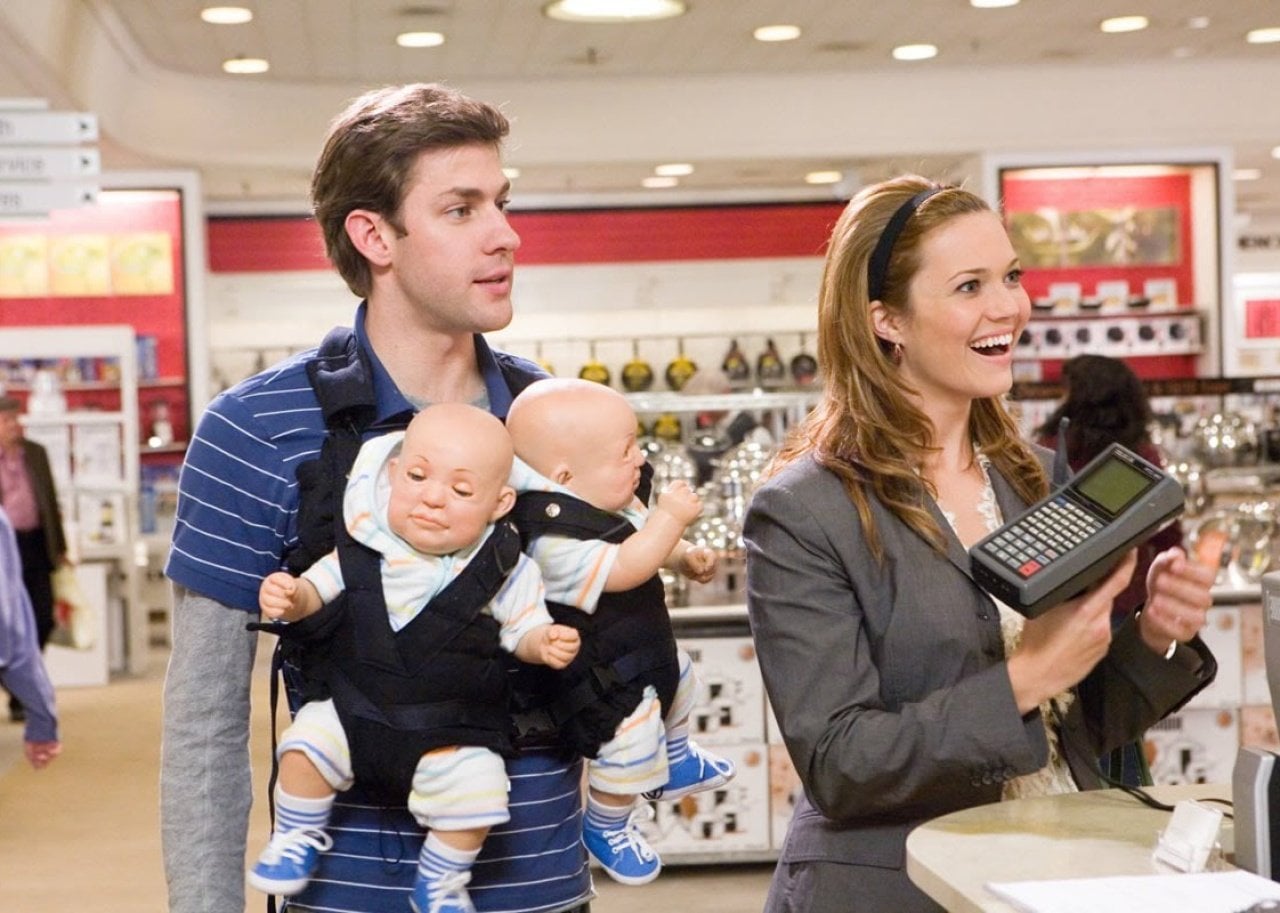
A reverend (Robin Williams) puts an engaged couple through the wringer in his grueling marriage preparation course. John Krasinski of the American version of “The Office” plays the aspiring groom alongside Mandy Moore as his would-be bride. Williams’ performance was phoned in, and the script is predictable and unfunny. The film saw a domestic gross of $43.8 million.
Columbia Pictures
#63. The Bounty Hunter (2010)
– Director: Andy Tennant
– Stacker score: 41.8
– IMDb user rating: 5.5
– Metascore: 22
– Runtime: 110 minutes
The plot of this 2010 film is a grab bag of recycled concepts: A bounty hunter (Gerard Butler) is tasked with bringing in his bail-skipping ex-wife (Jennifer Aniston) but instead finds himself caught up in her attempt to solve a high-profile murder. Critics dismissed the film as assembly-line Hollywood product and snubbed the phoned-in performances. Even so, the film made $67.1 million at domestic box offices, turning a profit.
J2 Pictures
#62. An Invisible Sign (2010)
– Director: Marilyn Agrelo
– Stacker score: 41.3
– IMDb user rating: 5.3
– Metascore: 23
– Runtime: 96 minutes
Unlike poetry or art, math isn’t generally a subject that incites feelings of love or romance, so it seems an odd theme to center a rom-com around. Still, the producers of “An Invisible Sign” decided to try it anyways with this movie about a woman (Jessica Alba) who uses her passion for math to reconnect with life and possible love interests after her father’s sudden illness. Reviewers called the film boring and uneven, a failed attempt to marry logic with love.
“A Little Bit of Heaven,” a dramatic tear-jerker about a woman who finds love for the first time right after being diagnosed with terminal cancer, would fit right in with the stories in Nicholas Sparks’ back catalog. But unlike Sparks-based movies, which are generally well-received by die-hard rom-com watchers, this film suffered from a lack of chemistry between its main actors (Kate Hudson and Gael García Bernal), odd tone discrepancies, and an oversentimental perspective on life, sexuality, and love. It was so bad—only earning just over $15,000 at the domestic box office—that reviewers dubbed it “a little bit of hell.”
Columbia Pictures
#60. Did You Hear About the Morgans? (2009)
– Director: Marc Lawrence
– Stacker score: 41.3
– IMDb user rating: 4.9
– Metascore: 27
– Runtime: 103 minutes
A Manhattan alpha couple gets a second chance to repair their flailing marriage when they’re relocated to a tiny town in Wyoming through witness relocation. (Yes, it’s a plot that sounds like the kind of movie you might see parodied in a Judd Apatow comedy.) Critics acknowledged moments of on-screen charm between leads Hugh Grant and Sarah Jessica Parker, but overall consensus was that the movie was cynical studio dreck. The domestic gross of $29.6 million was nothing to write home about, but the film performed well overseas and brought in a total of $85.3 million internationally.
A Happy Place
#59. On the Line (2001)
– Director: Eric Bross
– Stacker score: 40.8
– IMDb user rating: 4.1
– Metascore: 34
– Runtime: 85 minutes
A weak “Serendipity” rework starring an ‘N Sync heartthrob, “On the Line” follows a shy advertising executive as he searches for a woman he had a chance encounter with on Chicago’s L train system. Lance Bass takes the lead, with Emmanuelle Chriqui playing his soulmate, and Joey Fatone playing one of his many roommates. The film’s unbelievable plotline failed to entice its intended teenage audience to part with its hard-earned money, leaving it to earn just over $4.4 million at worldwide box offices, despite a $16 million budget.
Gladden Entertainment
#58. Mannequin: On the Move (1991)
– Director: Stewart Raffill
– Stacker score: 40.8
– IMDb user rating: 4.4
– Metascore: 31
– Runtime: 95 minutes
Why producers felt that making a sequel to a film as awful as the original “Mannequin” would be a good idea is unclear, but make one they did. In the follow-up, a young department store employee (William Ragsdale) falls in love with a wooden mannequin (Kristy Swanson), who is actually a medieval peasant woman that has fallen under a 1,000-year curse. The Los Angeles Times called the film “insipid to the extreme,” and seemingly no one was impressed by its recycled plot points, tired jokes, and oddly frantic pacing.
The Guber-Peters Company
#57. Who’s That Girl (1987)
– Director: James Foley
– Stacker score: 40.8
– IMDb user rating: 4.8
– Metascore: 27
– Runtime: 92 minutes
Madonna has tried to launch her film career multiple times with very little success. “Who’s That Girl” is yet another of the pop star’s early attempts to establish herself as a serious actress. In the film, she plays a street-smart woman who has been falsely accused of murdering her boyfriend. After being released from prison, she convinces the uptight lawyer tasked with getting her back to her hometown to help her prove her innocence. Along the way, they fall in love. Madonna’s horrible overacting and the film’s clumsy jokes led critics to universally pan it following its 1987 release.
Columbia Pictures
#56. Whatever It Takes (2000)
– Director: David Raynr
– Stacker score: 40.8
– IMDb user rating: 5.5
– Metascore: 20
– Runtime: 94 minutes
A young James Franco and Shane West couldn’t save this teen update of the classic Cyrano de Bergerac tale, in which nerdy West falls for the cute, popular girl in school, and Franco looks for help from West to get the attention of his best friend and fellow nerdy pal, Maggie (Marla Sokoloff). Critics panned it, and the movie was a commercial flop, bringing in only $8.7 million at domestic box offices, well below its $32 million budget.
Lionsgate
#55. Good Luck Chuck (2007)
– Director: Mark Helfrich
– Stacker score: 40.8
– IMDb user rating: 5.6
– Metascore: 19
– Runtime: 96 minutes
This film gave a lot of ammunition to members of the “Dane Cook isn’t funny” bandwagon. The premise is actually chuckle-worthy: A serial dater who was hexed by a goth girl into perpetual singledom as a 10-year-old must try to make an adult relationship with a sexy penguin specialist work. Unfortunately, due to the lack of comedic chops in the cast, the movie was slammed by critics and by countless road comics who, jealous of Cook’s stardom, slagged it off in clubs around the country. Cook’s fan base showed up anyway, and the film raked in $35 million in domestic box offices to turn a profit.
Lionsgate
#54. Killers (2010)
– Director: Robert Luketic
– Stacker score: 40.8
– IMDb user rating: 5.4
– Metascore: 21
– Runtime: 100 minutes
Katherine Heigl plays a newlywed who discovers her husband (Ashton Kutcher) is an assassin, a revelation that throws their marriage into turmoil. This “Mr. & Mrs. Smith” lite turned off critics with its warmed-over plot and plain dullness. The picture made $47 million at domestic box offices, a figure dwarfed by the conceptually similar Tom Cruise/Cameron Diaz double-header “Knight and Day,” which was released in the same month and proved a big commercial hit.
In the same vein as “Valentine’s Day” and “New Year’s Eve,” “Mother’s Day” follows a group of seemingly unconnected people as they set out to celebrate their moms. Directed by Gary Marshall (his last film before his death in July 2016), the movie boasts a star-studded ensemble cast including names like Julia Roberts, Jennifer Aniston, Kate Hudson, Jason Sudeikis, Timothy Olyphant, and Jon Lovitz. Poorly written, with overpacked plot lines and jokes that verge on racist, the movie was a miss for both audiences and critics alike.
Touchstone Pictures
#52. Cabin Boy (1994)
– Director: Adam Resnick
– Stacker score: 39.7
– IMDb user rating: 5.2
– Metascore: 21
– Runtime: 80 minutes
When a movie’s main character is described by critics who enjoyed it as unpleasant, despicable, and loathsome, it’s hard to imagine that it’s going to find a wide audience. That was certainly the case with “Cabin Boy,” a fantasy comedy story by “Late Night with David Letterman” writers Chris Elliott and Adam Resnick. Even the film’s original slapstick and sight gags weren’t enough to redeem the bizarre tale of a privileged prep-school graduate who finds himself working (and falling in love) aboard a fishing boat with a … well … “filthy” name.
Comedy-horror rarely works as a mashup. For every “American Werewolf in London,” there are dozens of misfires that fail to balance the competing requirements of the two genres. This is one of those. Eddie Murphy plays a vampire named Maximillian, who tries to seduce a detective while sabotaging the romantic advances of her longtime partner. Horror veteran Wes Craven directed but failed to provide any real scares. Critic Roger Ebert wrote of the film: “To call this a comedy is a sign of optimism; to call it a comeback for Murphy is a sign of blind faith.” Audiences were at least curious enough that the film pulled in a haul just shy of $19.8 million, but it was poorly regarded and has not stood the test of time.
DreamWorks
#50. Surviving Christmas (2004)
– Director: Mike Mitchell
– Stacker score: 39.7
– IMDb user rating: 5.4
– Metascore: 19
– Runtime: 91 minutes
In a plot that calls for way too much suspension of disbelief from the outset, a wealthy but alienated ad exec (Ben Affleck) bribes a family (with a dad played by James Gandolfini) to pose as his own so that he doesn’t have to spend Christmas alone. The story pivots when the family’s eldest daughter (Christina Applegate) arrives late and throws a new romantic wrench into his fantasy. Predictable and humorless complications ensue. Amazingly, the WGA lists four screenwriters for this trainwreck. An $11.7 million domestic box office sale made for a disappointing holiday haul.
Joseph Hamilton International Productions
#49. The Pirate Movie (1982)
– Director: Ken Annakin
– Stacker score: 39.1
– IMDb user rating: 5.3
– Metascore: 19
– Runtime: 98 minutes
The vast majority of “The Pirate Movie” happens in a dream sequence, a twist that turns many viewers off to even the best stories. Unfortunately, the film also lacked a solid plot—it follows a couple who meet at a pirate festival in Australia and who turn out to have also been pirates in a past life—the musical rom-com had two strikes against it before it even hit theaters. Its third strike came when viewers realized it was a thinly veiled knockoff of the play “The Pirates of Penzance,” something the marketing hadn’t been clear about.
New Line Cinema
#48. Sex and the City 2 (2010)
– Director: Michael Patrick King
– Stacker score: 39.1
– IMDb user rating: 4.5
– Metascore: 27
– Runtime: 146 minutes
The critics who were lukewarm on the first big-screen adaptation of the hit HBO show really sank their teeth into its sequel. And at a running time of almost two-and-a-half hours, the film served up plenty of fodder for their criticisms. Most reviewers agreed that Carrie (Sarah Jessica Parker) and her crew of Manolo-heeled NYC gal pals had long overstayed their welcome and warned that only diehard fans need consider lining up for this pointless and thinly plotted coda to their saga. It still made a boatload—$290.7 million worldwide—but by this point, the loft salary requirements of its stars had produced a budget that exceeded its return.
Four aspiring performers try to get their careers off the ground in this 2005 drama. The basic story is one that has been told time and time again, and “Undiscovered” had nothing new to offer to the conversation, nor did it tap into the emotions of its audience in any real way. Despite its enticing preview and interesting casting choices (Ashlee Simpson’s first big screen role), the movie set a record for second-weekend drop-offs, with an 86.4% decrease in ticket sales.
An urban spin on a “Tootsie”-style gender-switch plot, “Juwanna Mann” stars longtime character actor Miguel A. Núñez Jr. in his first and last leading role. The story’s about a hot-tempered basketball player who gets booted from the league and decides to don some fake breasts and eyelashes to try his luck on the women’s side of the game. He lands a spot on a team, but his plan gets thrown into turmoil when he starts to fall for a no-nonsense coach, played by Vivica A. Fox. Critics found it simplistic and unoriginal, and its $13.57 million domestic box office haul didn’t cover its production budget. Nevertheless, in a 2015 TMZ interview, Núñez claimed a Juwanna Mann sequel was in the works, but IMDb provides no corroboration for this claim.
New Line Cinema
#45. Even Cowgirls Get the Blues (1993)
– Director: Gus Van Sant
– Stacker score: 38.6
– IMDb user rating: 4.3
– Metascore: 28
– Runtime: 106 minutes
This film, based on a beloved Tom Robbins novel with strong feminist themes, was supposed to be indie director Gus Van Sant’s triumphant follow-up to “My Own Private Idaho.” It’s a movie with a lot of intriguing ingredients: Uma Thurman stars as a woman who uses her unusually large thumbs to hitchhike her way across the country, winding up at a ranch staffed by cowgirls. There she has a love affair with the ranch’s leader, played by Rain Phoenix (sister to Joaquin and River Phoenix). Despite the caliber of the source material and edgy (for 1993) exploration of gay themes, critics found little value in the finished product. Van Sant had no feel for the subject matter and drew out confusing and sometimes embarrassing performances from his actors. Box office receipts fell shy of $2 million.
Lakeshore Entertainment
#44. The Next Best Thing (2000)
– Director: John Schlesinger
– Stacker score: 38.6
– IMDb user rating: 4.6
– Metascore: 25
– Runtime: 108 minutes
Madonna and Rupert Everett star in this comedy about a straight woman and a gay man who decide to conceive and raise a child together. Critics found the delivery heavy-handed and the tear-jerker moments forced. The $15 million domestic box office receipts did little to convince producers that Madonna was a bankable star outside the music business.
The Farrelly Brothers produced this 2001 romantic comedy, directed by J.B. Rogers, who had previously worked with them as a first assistant director. Gilly (Chris Klein) and Jo (Heather Graham) are enjoying a passionate love affair when they find out they’re actually brother and sister and have to break things off in a hurry. But when he finds out their supposed blood relation is a lie perpetuated by a meddling third party, Gilly must rush to stop Jo’s marriage to “the wrong guy.” Overall, the movie lacked the charm, humor, and originality of the brothers’ earlier sleeper hit “There’s Something About Mary.” The box office total was $12.3 million, with a $25 million production budget.
Warner Bros.
#42. Summer Catch (2001)
– Director: Michael Tollin
– Stacker score: 38.6
– IMDb user rating: 5.0
– Metascore: 21
– Runtime: 104 minutes
Another Freddie Prinze Jr. rom-com, this time pairing the actor up with Jessica Biel. The story, a classic “Lady and the Tramp” setup, has Prinze Jr.’s blue-collar baseball player character falling for an unattainable upper-crust girl with a controlling father. The critics’ consensus was that there wasn’t enough baseball for a baseball movie and that the romance lacked sufficient flavor or complication to draw interest. Worldwide box office receipts were a just below $20 million.
Joe, played by Matthew Perry, gets more than he bargained for when he’s tasked with serving divorce papers to the elusive Sara (Elizabeth Hurley). The typical romantic comedy plot plays out, and opposites end up attracting without much regard for originality or humor. As bland as this movie is, the off-screen events surrounding its production made for juicy tabloid fodder. Perry landed in rehab for painkiller addiction during production, and later Hurley’s boyfriend accused Perry of impregnating her (a claim was later discredited through blood tests). If only the script had been as intriguing.
Touchstone Pictures
#40. Cocktail (1988)
– Director: Roger Donaldson
– Stacker score: 38.6
– IMDb user rating: 5.9
– Metascore: 12
– Runtime: 104 minutes
“Cocktail” is one of those rare films that was a huge failure with critics but a massive hit with audiences. It follows a business school student in NYC who turns to bartending in order to fund his education. After a falling out with his mentor, he flees to Jamaica, where he falls in love and learns some hard life lessons. Critics argued that the film was shallow and vapid, with little to say about either love or materialism, but fans disagreed, flocking in the thousands to see Tom Cruise in action and earning the film $78.2 million at the box office.
Electric Eye Entertainment Corporation
#39. Delgo (2008)
– Directors: Marc F. Adler, Jason Maurer
– Stacker score: 38.0
– IMDb user rating: 4.3
– Metascore: 27
– Runtime: 94 minutes
The first computer-animated movie to make our list, “Delgo” is a fantasy film aimed at adult audiences. A “Romeo and Juliet” story about two young beings from enemy alien races who fall in love, the film utilized the voices of Freddie Prinze Jr. and Jennifer Love Hewitt to bring its main characters to life. Audiences complained that the story felt like a mashup of elements from existing fantasy tales and that the dull voice acting did little to bring any of those pieces to life. Unsurprisingly, the film bombed at the box office, earning just over $500,000 on its opening weekend, which Yahoo! Movies (via SlashFilm) explained meant that an average of just two people attended each showing.
The plot of “Bad Johnson” is so thin it would have been better suited as a four-minute “SNL” skit than a full-length feature film. To flesh out the lackluster story—about a man who accidentally wishes his manhood away—writers padded the movie with cringe-worthy jokes and eye-rolling sex metaphors, which only left audiences wholly disappointed in the project and desperate for something of substance to cling to.
TriStar Pictures
#37. Look Who’s Talking Now (1993)
– Director: Tom Ropelewski
– Stacker score: 38.0
– IMDb user rating: 4.4
– Metascore: 26
– Runtime: 96 minutes
By now, we’ve probably all seen those Twitter threads about what would happen if AI were put in charge of writing our movies and novels. “Look Who’s Talking Now” is probably the closest thing we currently have to an answer—an incongruent assortment of plotlines and thoughts that only vaguely resemble a story. John Travolta and Kirstie Alley reprise their role as the Ubriacco parents, only this time it’s not their infants who are talking but their dogs, who are voiced by Danny DeVito and Diane Keaton. Audiences hated the movie just as much as critics did, and the finale of the “Look Who’s Talking” series only netted $10.3 million at the box office against its $20 million-plus production budget.
Photo 12 / Alamy Stock Photo
#36. Lost & Found (1999)
– Director: Jeff Pollack
– Stacker score: 37.5
– IMDb user rating: 5.0
– Metascore: 19
– Runtime: 100 minutes
David Spade plays a restaurateur who steals a woman’s dog in the hopes of returning it to impress her, but his plan to win her affection backfires. The thin premise is good for about 15 minutes of comedy before the film devolves into meanness, stupidity, and ripping off jokes from superior rom-coms such as “There’s Something About Mary.” Spade, as co-writer of the script, was doubly implicated in this flop, which grossed only $6.5 million. The poster, in a self-aware nod to its leading man’s public image as a weaselly lech, features the SNL veteran holding the stolen mutt in front of his crotch with the tagline: “One of these dogs must be Spade.”
MGM
#35. Van Wilder: The Rise of Taj (2006)
– Director: Mort Nathan
– Stacker score: 37.5
– IMDb user rating: 4.8
– Metascore: 21
– Runtime: 97 minutes
The first misstep “Van Wilder: The Rise of Taj” made was naming the film after a character that wasn’t actually in it. A follow-up to the 2002 release “National Lampoon’s Van Wilder,” this film didn’t actually center around Ryan Reynold’s character but had a new lead in Kal Penn. The second misstep it made was not including a single original plot element, instead recycling storylines that have been used in a half-dozen “National Lampoon” films previously. Between mishandling fan expectations and underdelivering in terms of content, it’s not surprising that this ranks as one of the worst rom-coms of all time.
A talented cast—including Uma Thurman, Jeffrey Dean Morgan, Colin Firth, Sam Shephard, and Isabella Rossellini—is wasted on this lifeless rom-com. A radio talk show host (Thurman) who advises a woman to break off her engagement must then contend with reprisal from the woman’s jilted fiance (Dean Morgan). In a tried-and-true application of the well-worn formula, the two leads proceed to bicker their way to a love connection. It’s in-flight movie caliber stuff at best, although perhaps more entertaining if you pretend Jeffrey Dean Morgan is playing a pre-zombie apocalypse version of his Negan character from “The Walking Dead.”
PalmStar Media
#33. Some Kind of Beautiful (2014)
– Director: Tom Vaughan
– Stacker score: 37.0
– IMDb user rating: 5.7
– Metascore: 11
– Runtime: 99 minutes
Not a single character in “Some Kind of Beautiful” seems to have their head on straight. From the professor who regularly sleeps with his students (Pierce Brosnan), to the American exchange student (Jessica Alba) who willingly puts herself in a position to become pregnant with a child she doesn’t seem to want, to the much-older stepsister (Salma Hayek) who falls in love with her younger sister’s husband, all of the movie’s characters spend the entire run time making awful choices. Even the producers seemed to know how big of a flop they had on their hands and chose to only release the film into a handful of theaters before sending it straight to on-demand.
DreamWorks
#32. Norbit (2007)
– Director: Brian Robbins
– Stacker score: 37.0
– IMDb user rating: 4.1
– Metascore: 27
– Runtime: 102 minutes
Eddie Murphy had an epic run of bad movies in the 2000s, and “Norbit” is perhaps the worst of the bunch. The conflict of the story centers on the title character trying to flee a bad marriage for greener romantic pastures. But his path to freedom requires standing up to his abusive, obnoxious spouse, also played by Murphy. As if the offensive fat-suit humor wasn’t enough tastelessness for one film, Murphy also managed to jam in some cringeworthy racial humor in his third performance in the film as Mr. Wong, a walking Asian stereotype who displays blatant prejudice throughout the film. “Norbit” grossed over $95 million domestically, proving there’s no accounting for (bad) taste.
Pitched as an updated version of the “Romeo and Juliet” story, “Die in a Gunfight” follows two troubled kids as they form a relationship against the wishes of their respective families. The movie desperately wanted to be seen as edgy but, with the exception of several bloody scenes, didn’t wind up doing anything groundbreaking with its source material. In fact, it fell so flat that ScreenRant called it “utterly empty, with poorly developed characters, clunky dialogue, and a disingenuous romance that attempts to be epic in nature.”
Columbia Pictures
#30. Spring Break (1983)
– Director: Sean S. Cunningham
– Stacker score: 35.9
– IMDb user rating: 4.9
– Metascore: 17
– Runtime: 102 minutes
Four guys—two nerds and two popular kids—wind up spending their spring break together, cavorting around Fort Lauderdale and trying to dodge an enraged father and a developer with an agenda. The plot is predictable, the writers’ treatment of women and minorities despicable, and the jokes drier than they have any right to be. Despite its obvious negative, the movie somehow managed to bring in a mediocre $24 million at the box office.
Paramount Pictures
#29. The Honeymooners (2005)
– Director: John Schultz
– Stacker score: 35.3
– IMDb user rating: 3.4
– Metascore: 31
– Runtime: 90 minutes
A remake of the classic TV series, “The Honeymooners” stars Cedric the Entertainer and Mike Epps as working-class friends whose lives are anchored by their long-suffering wives (Gabrielle Union and Regina Hall). The problem with the film is that it takes sitcom elements and tries to jam them into a feature-length film. The result, despite the four writers’ best efforts, simply didn’t work, and audiences felt that the movie wasn’t memorable, interesting, or entertaining.
Abbolita Productions
#28. Yoga Hosers (2016)
– Director: Kevin Smith
– Stacker score: 35.3
– IMDb user rating: 4.2
– Metascore: 23
– Runtime: 88 minutes
Often referred to as the lowest point of Kevin Smith’s career, “Yoga Hosers” is a comedy spinoff of his 2014 horror film “Tusk.” Starring Harley Quinn Smith and Lily-Rose Depp (the only bright spots in the entire mess), it follows two teenage convenience store clerks who are forced to kill their crushes in self-defense after realizing the boys are part of a Satanist cult. The movie is a grab bag of plot lines and tropes and feels more like the unhinged ramblings of the director than a cohesive story, intentionally told.
No relation to Richard Linklater’s pioneering 1991 mumblecore flick “Slacker,” this 2002 college comedy failed to rise above the glut of early 2000s teen gross-out fare. A geeky Jason Schwartzman blackmails a scheming Devon Sawa (and his two buddies) into setting him up with the girl he’s obsessed with. Sawa’s character falls for the girl in question (played by Jaime King), and hijinks ensue. This film was the product of the ill-fated Destination Films, a low-budget film company acquired by Sony Pictures Entertainment in 2001. Sony let this one sit on a shelf for a year before releasing it through their Screen Gems arm. A gem it was not, and it grossed $6.4 million against a $14 million production budget.
Fox 2000 Pictures
#26. All About Steve (2009)
– Director: Phil Traill
– Stacker score: 35.3
– IMDb user rating: 4.8
– Metascore: 17
– Runtime: 99 minutes
Sandra Bullock plays against type in this quirky comedy about a kooky puzzle maker who begins stalking a cameraman played by Bradley Cooper. The usually charming Bullock delivers a performance creepier than was perhaps intended, and critics lambasted the film for its odd, off-putting tone and unlikeable heroin. Nevertheless, the star power of the cast attracted a large enough audience that the film grossed over $40 million worldwide, more than doubling its production budget. Bullock famously attended the Razzie Awards ceremony and handed out copies of the movie to the audience after they awarded her Worst Actress for her performance in the film.
IFC Films attempted to capitalize on the runaway success of “My Big Fat Greek Wedding” by re-teaming its co-stars Nia Vardalos and John Corbett for this 2009 rom-com. The concept and story are totally boilerplate: A woman with a “five-date max” rule is forced to reconsider when she meets a guy worth going the distance for. Critics thought the dating, as portrayed, was outdated and, at best, considered it a cheap guilty pleasure. Audiences barely noticed it: Domestic gross was at $11,004.
Mad Chance
#24. Behaving Badly (2014)
– Director: Tim Garrick
– Stacker score: 33.7
– IMDb user rating: 4.4
– Metascore: 18
– Runtime: 97 minutes
Tim Garrick confused irony and cynicism for comedy in the nihilistic teen flick “Behaving Badly.” When a high schooler (Nat Wolff) discovers that his longtime crush (Selena Gomez) is finally single, he makes a bet with the local mobster’s son (Nate Hartley) that he’ll be able to sleep with her before the week is out. What follows is a chain of disasters and morally questionable events that supposedly lead to Wolff’s character learning what it means to have a moral compass. Audiences felt that the film painted female sexuality as a black-and-white matter (i.e., sexually active equals bad, sexually pure equals good), which didn’t ring true to them or entice them to buy tickets to the flop of a project.
Unified Pictures
#23. The Layover (2017)
– Director: William H. Macy
– Stacker score: 33.7
– IMDb user rating: 4.7
– Metascore: 15
– Runtime: 88 minutes
“The Layover” may call itself a romantic comedy, but at its heart, it’s an attack on female friendship. When two women (Kate Upton and Alexandra Daddario) fall for the same guy (Matt Bar) while on vacation, they’re prepared to throw away decades of friendship for an opportunity to sleep with him. The film definitely wouldn’t pass the Bechdel Test, and audiences and critics alike were bored by its well-trodden subject matter.
In an attempt at a teen version of “Annie Hall,” this movie starred then-faves Freddie Prinze Jr. and Julia Stiles as a pair of teenagers struggling to navigate the trials and tribulations of young love in the Big Apple. An aimless story, adolescent dialogue, and lack of on-screen romantic chemistry drew a tepid response from critics, and the movie lost money for Miramax.
Dimension Films
#21. My Boss’s Daughter (2003)
– Director: David Zucker
– Stacker score: 33.7
– IMDb user rating: 4.7
– Metascore: 15
– Runtime: 86 minutes
Ashton Kutcher plays a rookie executive who agrees to house-sit for his boss in the hopes of spending time with the man’s attractive daughter (Tara Reid). Reviews declared the script crude and offensive. The film received three Razzie Award nominations, including Worst Actor (Ashton Kutcher), Worst Supporting Actress (Tara Reid), and Worst Screen Couple. The movie still managed to gross over $18.2 million worldwide, enough to cover its production budget and then some.
Fuzzy Bunny Films (I)
#20. Crossroads (2002)
– Director: Tamra Davis
– Stacker score: 33.7
– IMDb user rating: 3.5
– Metascore: 27
– Runtime: 93 minutes
Three teenage girls set out on a cross-country road trip in this coming-of-age film written by none other than Shonda Rhimes. While the storyline itself isn’t all that bad, critics weren’t excited by the final product, calling it “a cliched and silly pop star vanity project… for Britney Spears fans only.”
Paramount Pictures
#19. The Love Guru (2008)
– Director: Marco Schnabel
– Stacker score: 33.7
– IMDb user rating: 3.8
– Metascore: 24
– Runtime: 87 minutes
Prior to helming this Mike Myers flop, director Marco Schnabel’s career was in dire straits. After being fired early on during the making of the Will Ferrell soccer comedy “Kicking and Screaming,” Schnabel was having a hard time convincing any studio executive to let him make another movie. So when he was tapped by Myers, who knew him from his second unit director stint on “Austin Powers in Goldmember,” he leaped at the opportunity to get back behind the camera. Unfortunately, Myers’ new character, a hippie-ish love guru tasked with healing the marriage of a hockey player, failed to resonate with audiences. The movie—cheesy, juvenile, and grating—fell $20 million shy of recouping its budget. It remains Schnabel’s sole IMDb credit as a director.
K. JAM Media
#18. Accidental Love (2015)
– Director: David O. Russell
– Stacker score: 33.2
– IMDb user rating: 4.1
– Metascore: 20
– Runtime: 100 minutes
This is a weird one. The story’s about Alice, a soon-to-be-wed waitress (played by Jessica Biel) who, through a freak accident, ends up with a nail lodged in her head. The injury produces bizarre and hypersexual behavior that leads to Alice’s fiance calling off their marriage. She rebounds into the arms of a senator (Jake Gyllenhaal) who helps empower her campaign for people with bizarre injuries. The film was directed and co-written by five-time Oscar nominee David O. Russell, who was so ashamed of his work on the flick that he abandoned it in its final stages and opted to be credited with a pseudonym. His instincts were on the money. The movie—which never opened beyond a limited release—saw $24,487 worldwide box office receipts and was panned by critics for its crudeness and messy, unsatisfying storytelling.
When a newly married marriage counselor throws herself into saving her parents’ imploding union instead of focusing on her relationship with her new husband, things go south for both couples very quickly. Mandy Moore, Kellen Lutz, James Brolin, and Jane Seymour star in the too-ridiculous-to-believe movie, which grossed just over $500,000 at the box office worldwide.
J & C Entertainment
#16. In the Mix (2005)
– Director: Ron Underwood
– Stacker score: 32.6
– IMDb user rating: 2.9
– Metascore: 31
– Runtime: 95 minutes
Usher stars in this cliché-packed movie about a man who falls in love with the mobster princess he’s been employed to protect. Dubbed inconsequential and dull, the movie offers nothing to set it apart from the dozens of other “wrong side of the tracks” romances that have hit the big screen in recent years. In the end, the film lost Lionsgate an estimated $15 million.
A high-schooler (Zach Cregger) falls into a coma on the eve of losing his virginity to his high school sweetheart (Raquel Alessi). When he wakes up four years later, he discovers she’s gone on to a glamorous life as a Playboy centerfold. The premise might have worked if there was any subtlety to the execution, but this is another movie on this list that aims for scatological humor over character-driven comedy. The obligatory Hugh Hefner cameo wasn’t enough to draw in audiences, and this flop didn’t even manage to clear $5 million at the box office.
In this loose (emphasis on the loose) retelling of Jane Austen’s “Sense and Sensibility,” Hilary and Haylie Duff must save their reputations and their father’s business after a scandal threatens to destroy everything. Intended for teenage audiences, the movie didn’t concern itself with imparting serious lessons or stressing believability, which were both strikes against it as far as critics were concerned. Tween girls disagreed, spending $11.5 million on tickets at domestic box offices and another $12 million in DVD sales.
Hi-Rez Films
#13. Whipped (2000)
– Director: Peter M. Cohen
– Stacker score: 29.9
– IMDb user rating: 4.5
– Metascore: 10
– Runtime: 82 minutes
Tiresome, vulgar, and unfunny are the words critics most commonly use to describe “Whipped.” When three friends fall for the same woman (Amanda Peet) their weekly bar hang goes from swapping stories about their sexual escapades to an all-out war over her affections. Fans seemed to agree with the critics’ take, and the movie only earned $1 million more than its $3 million budget upon release.
Full Sail Films
#12. Larry the Cable Guy: Health Inspector (2006)
– Director: Trent Cooper
– Stacker score: 29.9
– IMDb user rating: 3.4
– Metascore: 21
– Runtime: 89 minutes
Now working as a health inspector, Larry the Cable Guy and his new partner must solve the mystery of a food poisoning epidemic while also solving the mystery of one another’s hearts. Unfortunately, the crude humor of “Larry the Cable Guy” doesn’t work for everyone, and many audiences were turned off by the film’s jokes despite its half-decent storyline, as evidenced by its paltry $15.7 million box office draw.
Screen Gems
#11. Swept Away (2002)
– Director: Guy Ritchie
– Stacker score: 29.3
– IMDb user rating: 3.6
– Metascore: 18
– Runtime: 89 minutes
Writer and director Guy Ritchie’s biggest mistake in his 2002 “Swept Away” remake? Casting his then-wife Madonna, who had already proven herself to be a less-than-inspiring actress, as the film’s protagonist. Madonna plays a bougie socialite who falls in love with a deckhand after the two find themselves stranded on a desert island after a boat crash. The film was received so poorly it is often included in worst films of all time lists and grossed just a tenth of its budget back at the box office.
Alive Films
#10. Cool as Ice (1991)
– Director: David Kellogg
– Stacker score: 28.8
– IMDb user rating: 2.9
– Metascore: 24
– Runtime: 91 minutes
Developed specifically to be Vanilla Ice’s film debut, “Cool as Ice” sees the rapper play a motorcycle-riding bad boy who falls in love with an honor student. Their romance hits a speed bump when her father, who is in a witness protection program, finds himself on the run once again. Like many other celebrity vehicles, the film earned back just a fifth of its budget at the box office with critics citing the musician’s lackluster performance as its main issue.
Twentieth Century Fox
#9. Two of a Kind (1983)
– Director: John Herzfeld
– Stacker score: 28.3
– IMDb user rating: 4.7
– Metascore: 5
– Runtime: 88 minutes
Following the massive success John Travolta and Olivia Newton-John had with “Grease,” it’s not surprising that studios would want to reunite the pair, thinking their chemistry would guarantee another box office smash. Unfortunately, they gave them this trainwreck of a plot to work with (he plays a robber, she a bank teller, and they must work together to find common ground lest God unleashes another Noah-level flood). Try as they might to turn this garbage into gold, the pair just couldn’t make it work, and the movie was a critical failure (though its soundtrack was a commercial success).
HandMade Films
#8. Shanghai Surprise (1986)
– Director: Jim Goddard
– Stacker score: 26.1
– IMDb user rating: 3.2
– Metascore: 16
– Runtime: 97 minutes
Madonna strikes out yet again with “Shanghai Surprise.” The singer plays a missionary nurse on the hunt for a supply of opium to ease the pain of her patients. Her then-real-life husband, Sean Penn, plays her love interest, a glow-in-the-dark tie salesman who agrees to help her find the illegal drug. The poorly written flop was produced by former Beatle George Harrison, but even his involvement couldn’t save the corny film from the Razzie awards.
Big Screen Entertainment Group
#7. Dirty Love (2005)
– Director: John Asher
– Stacker score: 23.9
– IMDb user rating: 3.5
– Metascore: 9
– Runtime: 91 minutes
Jenny McCarthy wrote and starred in this miscalculated story of a girl who tries to reenter the dating world after a messy breakup. While some critics found McCarthy’s on-screen presence charming, they were less impressed with her screenwriting abilities, particularly in the comedy department. Her then-husband John Asher directed the picture, and it’s perhaps no coincidence that the couple divorced the month it was released. Critically panned and a bomb at the box office, this movie failed on all counts.
Revolution Studios
#6. Gigli (2003)
– Director: Martin Brest
– Stacker score: 23.9
– IMDb user rating: 2.6
– Metascore: 18
– Runtime: 121 minutes
One of the worst commercial flops in history, “Gigli” made back $7.2 million of its $54 million budget. The story follows a romance that develops between two kidnappers, and it was derided as bizarre and poorly paced by critics. The lack of on-screen chemistry between stars Ben Affleck and Jennifer Lopez—who, during filming, were involved in the highly publicized “Bennifer” romance—made for easy fodder for late-night comedians. Ben Affleck has acknowledged the poor quality of the film in several interviews.
When the best blurb you can come up with for your movie poster is “from 2 of the 6 writers of Scary Movie,” you know you’ve got a real gem on your hands. An extremely broad comedy that fails to be funnier than the movies it parodies, “Date Movie” focuses on the build-up to a wedding between a formerly overweight bride (Alyson Hannigan) and a (supposedly) charming Englishman (Adam Campbell). The movie grossed a respectable $48.5 million in domestic sales, but its poor critical reception ended any hopes Hannigan might have had for a movie career beyond the “American Pie” franchise.
For a sex comedy, “10 Rules for Sleeping Around” lacks sex and comedic value. It follows two couples, one more sexually open and the other fairly straightlaced, who try and impart a few of their own beliefs on the other while at a party in the Hamptons. But rather than share any of those rules with us, or tell us any jokes to distract us from the fact that they aren’t sharing those rules with us, the film just rambles and gives us scene after scene of poorly acted filler.
YouTuber Shane Dawson directed and produced “Not Cool” for the Starz reality competition series “The Chair.” Using the same screenplay as the other films in the competition, the movie follows a group of high school friends who reunite over their various colleges’ Thanksgiving break. His version of the story is replete with raunchy jokes, profanity, ethnic stereotypes, and caricatures instead of characters. Critics hated it and slammed it as a terrible and vile piece of storytelling.
19 Entertainment
#2. From Justin to Kelly (2003)
– Director: Robert Iscove
– Stacker score: 17.9
– IMDb user rating: 1.9
– Metascore: 14
– Runtime: 81 minutes
Coming off their success as the winner and runner-up of American Idol’s first season, Kelly Clarkson and Justin Guarini starred in this ill-fated musical rom-com that follows a college student (Guarini) on spring break in Florida, who falls for a waitress (Clarkson). A jealous friend, a lost phone number, and far too many song-and-dance tunes ensue. The film could not even crack $5 million at the worldwide box office on a $12 million budget.
Purple Pictures
#1. The Hottie & the Nottie (2008)
– Director: Tom Putnam
– Stacker score: 14.1
– IMDb user rating: 1.9
– Metascore: 7
– Runtime: 91 minutes
This 2008 Paris Hilton vehicle was a commercial and critical misfire, grossing less than $30,000 domestically. The plot centers on Paris Hilton, the titular “hottie,” sexually blackmailing a potential suitor into finding a boyfriend for her homely best friend. Critics eviscerated the film for its over-reliance on gross-out humor and shallow subject matter. In 2010, Paris’ wooden performance helped her to clinch the “Worst Actress of the Decade” win at the 30th annual Razzie Awards.
The worst movie from every major film franchise, according to audience ratings
By
Madison Troyer
25 min read • Published June 14, 2026
By
Madison Troyer
25 min read • Published June 14, 2026
United Artists // Getty Images
Worst movie from 50 famous franchises
Experts agree that the first feature-length film the world saw was “The Story of the Kelly Gang,” which opened in Melbourne, Australia, in 1906. There’s no general consensus, however, about the first film franchise. Possibly “Bulldog Drummond,” “The Lone Wolf,” or “Godzilla?”
Regardless of where you stand on the first franchise debate, basically everyone can agree on this: studios love nothing more than to turn a hit film into a full-blown series. It turns out, there’s a good reason for this franchise affinity. Joe Pasqualichio, an analyst at Citadel, explained it simply, saying: “Box office flops are going to come up from time to time, but your big bets, and especially the ones with IP backing them, should be enough to cover them. And that’s why you’re seeing studios move towards IP and franchise films… Today, more than ever, we’re seeing this blockbuster strategy at studios where they rely on really big, tent-pole films—like the ‘Star Wars’ movies—to generate sufficient profits that cover all of the misses and make the overall slate profitable.” In the end, it all comes down to money.
But that doesn’t mean that every installment in a given series is a hit. In fact, nearly every great franchise has had a flop or two. For instance, though it’s far from the worst-reviewed movie in the “Star Wars” franchise, “The Mandalorian and Grogu” received a critical browbeating upon its May 2026 premiere. Lagging ticket sales also plagued the movie, which opened with an iffy $98 million in its first weekend and plunged by 69% in its second. That unpredictability means there’s no telling how the rest of the year’s franchise installments will fare, including “Toy Story 5” and “Spider-Man: Brand New Day.”
In the meantime, Stacker has rounded up 50 franchise flops—the worst movies from famous franchises. To do this, we manually compiled a list of 50 famous franchises that span genres, decades, styles, and countries, and—using IMDb user ratings—determined the lowest-rated film in each series. The films and franchises are presented in random order.
From fantasy franchises like “Harry Potter” to horror classics like “Nightmare on Elm Street” and children’s series like “The Teenage Mutant Ninja Turtles,” read on to find out which films audiences really didn’t like.
Warner Bros.
Wizarding World of Harry Potter
“Fantastic Beasts: The Crimes of Grindelwald” (2018)
– Director: David Yates
– IMDb user rating: 6.6
– Metascore: 52
– Runtime: 134 min
The “Fantastic Beasts” movie series came out after the original “Harry Potter” movies, but act as a prequel to the adventures of the boy wizard and his companions. While fans were initially ecstatic about returning to J.K. Rowling’s universe, they were less enthusiastic after the movies began rolling out. Not only does the content in films like “Fantastic Beasts: The Crimes of Grindelwald” often contradict the facts and timeline established in the “Harry Potter” series, these later movies lack all of the heart and soul fans have come to expect from Hogwarts.
On top of that, there was controversy surrounding the film’s casting—after briefly appearing as Gellert Grindelwald in “Fantastic Beasts and Where to Find Them” in 2016, Johnny Depp was set to headline “The Crimes of Grindelwald” amid claims that he’d verbally and physically abused his ex-wife Amber Heard. Despite the backlash, the movie went on as planned with Depp, though he was eventually let go from the franchise.
Lionsgate Entertainment
Madea
“Boo 2! A Madea Halloween” (2017)
– Director: Tyler Perry
– IMDb user rating: 3.8
– Metascore: 17
– Runtime: 101 min
For many fans, Tyler Perry’s movies can be hit or miss, and “Boo 2! A Madea Halloween,” the 10th installment in the “Madea” series, was a huge miss. The movie was slammed for its homophobic and sexist tones, as well as its blatant insensitivity of the Me Too movement that was unfolding around it during its production and release. The movie has a dismal 5% rating from critics on Rotten Tomatoes. Francis Friel, a critic for the Mountain Xpress even went so far as to call the film a “cinematic hate crime.”
Early in 2024, this “Spider-Man” spin-off emerged as one of the biggest blockbuster flops of the year, booed by critics, audiences, and even its own star. Dakota Johnson plays Cassandra Webb, a New York City paramedic who finds herself gifted with psychic powers. The film fails to explain exactly how those powers work, however, one of the many reasons “Madame Web” floundered at the box office. On top of that, there was the overly expository dialogue, underwhelming visual effects, migraine-inducing storylines—the list goes on and on. It’s little wonder that Johnson quickly distanced herself from “Madame Web” after its release, saying in a March 2024 interview that she was “not surprised” by all the bad reviews.
MGM
Shaft
“Shaft in Africa” (1973)
– Director: John Guillermin
– IMDb user rating: 5.9
– Metascore: data not available
– Runtime: 112 min
The last of the original trilogy of “Shaft” movies, “Shaft in Africa” is disliked primarily because it takes Shaft out of his natural environment and away from his regular crime-fighting tactics. Fans prefer to see the detective in his native New York City, where his knowledge of the city and savviness afford him a unique edge when it comes to fighting crime. For many, the journey to Africa was just too big of a stretch for the character. It’s a rare movie on this list that fared worse with audiences than it did with critics—fans have given it a 51% compared with critics’ 64% on Rotten Tomatoes.
Warner Bros.
Peter Pan
“Pan” (2015)
– Director: Joe Wright
– IMDb user rating: 5.7
– Metascore: 36
– Runtime: 111 min
Since J.M. Barrie published “Peter Pan” in 1904 there has been an enormous number of additions to the franchise, including this 2015 installment called “Pan.” Josh Dickey of Mashable summed up the film’s awfulness when he said “Pan” was “a visually disgusting, audibly loud and obnoxious, narratively incoherent attempt at a Hollywood adventure blockbuster.” The movie is supposed to provide Peter Pan with an origin story but falls far short on every level, from the script to the performances to the cinematography. One of “Pan’s” biggest letdowns was the casting of white actor Rooney Mara as Native American character Tiger Lily; the actor later said she regretted being “on that side of the whitewashing conversation.”
Paris Hilton Entertainment
National Lampoon
“Pledge This!” (2006)
– Directors: William Heins, Strathford Hamilton
– IMDb user rating: 1.8
– Metascore: data not available
– Runtime: 91 min
If you were imagining that this National Lampoon tale would be similar to those from the franchise’s golden era of the ’70s or ’80s, perhaps starring John Belushi or Chevy Chase, you’d be dead wrong. “Pledge This!” a much later installment in the series, stars Paris Hilton as the president of a sorority at the fictional South Beach University. The movie was a box-office bomb and its investors later sued Hilton for $8.3 in damages to make up for what they spent producing “Pledge This!”, alleging she failed to promote it; eventually, however, a judge ruled in Hilton’s favor.
New Line Cinema
The Conjuring
“The Curse of La Llorona” (2019)
– Director: Michael Chaves
– IMDb user rating: 5.3
– Metascore: 41
– Runtime: 93 min
Technically, “The Curse of La Llorona” exists outside the “The Conjuring” universe, but it does see star Tony Amendola reprise his role as Father Perez from “Annabelle.” The movie is based on folklore like the other “Conjuring” films, but in this particular case, it’s Latin American folklore. The film took a lot of criticism for the flatness with which it attempted to sell the tale of La Llorona, and for its complete lack of horror. Released in 2019, it fell especially flat when compared to other bone-chilling films like Jordan Peele’s “Us,” which hit the big screen around the same time.
Paramount Pictures
Star Trek
“Star Trek V: The Final Frontier” (1989)
– Director: William Shatner
– IMDb user rating: 5.5
– Metascore: 43
– Runtime: 107 min
The fifth installment in the “Star Trek” film franchise, “Star Trek V: The Final Frontier” was William Shatner’s directorial debut. Despite its enormous budget, the film was a critical flop thanks to its forgettable storyline, horrible special effects, and boring action sequences. For many, the movie feels more like an extended episode of the TV show than a stand-alone film in the most unsatisfying way. In a March 2024 interview with The Hollywood Reporter, Shatner admitted he has plenty of regrets about the movie. “It was a series of my inabilities to deal with the management and the budget. I failed. In my mind, I failed horribly,” he said. “When I’m asked, ‘What do you regret the most?,’ I regret not being equipped emotionally to deal with a large motion picture.”
MGM
Rocky
“Rocky V” (1990)
– Director: John G. Avildsen
– IMDb user rating: 5.3
– Metascore: 55
– Runtime: 104 min
In the fifth installment in the “Rocky” franchise, Rocky has recently retired from boxing, learned that all of his hard-won money is gone, and is forced to return to the streets of Philadelphia where he attempts to train up the next great athlete and repair the broken relationship he shares with his son. While the movie’s storyline isn’t necessarily bad in and of itself (albeit incredibly slow-moving) it’s a major departure from the usual fare we’ve come to associate with the Rocky movies. There’s barely a fight or an inspiring training montage, and the lack of action is why many people rate “Rocky V” the worst of the series. In an April 2024 ranking of “Rocky” movies from Collider, film critics said, “The one upside of ‘Rocky V’s’ conclusion is that it opened the door for better ‘Rocky’ movies, although no one knew that back when they made the series’ nadir.”
Disney Enterprises Inc.
Pirates of the Caribbean
“Pirates of the Caribbean: Dead Men Tell No Tales” (2017)
– Directors: Joachim Rønning, Espen Sandberg
– IMDb user rating: 6.6
– Metascore: 39
– Runtime: 129 min
Continuity issues are the most often cited reason fans rate “Pirates of the Caribbean: Dead Men Tell No Tales” the worst installment in the franchise. The fifth movie in the series, this one follows Captain Jack Sparrow as he searches for the Trident of Poseidon, which he needs in order to return his ghostly nemesis Captain Salazar to the Devil’s Triangle. Many of the major tenants of the story are in direct contradiction with facts established in the first four films, mistakes that are less distracting and more franchise-ruining for many. “Pirates of the Caribbean: Dead Men Tell No Tales” was also expected to be the last time fans would ever see Johnny Depp as Jack Sparrow, though rumors have begun to swirl that Depp will return for the forthcoming sixth film in the franchise.
20th Century Fox
Planet of the Apes
“Battle for the Planet of the Apes” (1973)
– Director: J. Lee Thompson
– IMDb user rating: 5.5
– Metascore: 40
– Runtime: 93 min
Released in 1973, “Battle for the Planet of the Apes” was the final chapter in the first iteration of the “Planet of the Apes” franchise. There were drastic cuts made to the movie’s budget prior to filming, which lowered the quality of the special effects and made it nearly impossible to recreate the overall feeling of the world. Money was not “Battle for the Planet of the Apes” only issue, for many fans there seemed to be a muddling of philosophy, too much focus on religion (in a series that had never overtly discussed it before), and too much in-fighting among factions to make this movie worth watching.
Emperor Motion Pictures
Ip Man
“Ip Man: The Final Fight” (2013)
– Director: Herman Yau
– IMDb user rating: 6.2
– Metascore: 55
– Runtime: 100 min
For the uninitiated, the “Ip Man” series is a semi-biographical series of films about a real-life grandmaster of the Wing Chun school of arts who famously taught Bruce Lee. The last installment in the series, “Ip Man: The Final Fight” is less of an action movie than the earlier films and more of a reflection on the philosophy behind kung fu, which is one factor that made it not as successful with fans. Another strike against the film is that it doesn’t share a director with any of the previous movies, and, as a result, has a markedly different tone.
Universal Pictures
The Fast and the Furious
“2 Fast 2 Furious” (2003)
– Director: John Singleton
– IMDb user rating: 5.9
– Metascore: 38
– Runtime: 107 min
Rob Cohen was the director of the original “The Fast and the Furious” which grossed over $206 million at the box office worldwide. Like many others, he’s been vocal about his dislike of the follow up “2 Fast 2 Furious” (which he had no hand in making) telling We Got This Covered, “The first couple sequels though, what I hated about them was that it was just for money, the studio was just milking the cash cow. It’s a miracle they didn’t kill it.”
Paramount Pictures
Mission: Impossible
“Mission: Impossible II” (2000)
– Director: John Woo
– IMDb user rating: 6.1
– Metascore: 59
– Runtime: 123 min
For a film franchise that’s built on excitement, adventure, and thrills, “Mission: Impossible II” is a boring flop. The primary criticism levied against the Tom Cruise movie is that nothing much happens very slowly—a stark contrast to the action-packed first film. David Ansen, a critic at Newsweek, summed it up perfectly, saying “In ‘M:I-2’ everyone seems to be going through the motions.”
Universal Pictures
Jurassic Park
“Jurassic Park III” (2001)
– Director: Joe Johnston
– IMDb user rating: 5.9
– Metascore: 42
– Runtime: 92 min
The main problem with “Jurassic Park III” is that it’s just too much of a good thing. The first installment in the Steven Spielberg franchise was earth-shattering, the second a mediocre follow-up, but the third, with its nonsensical plot, was a perfect example of Hollywood not quite knowing when to stop. The movie’s only redeeming factor was its special effects, which had certainly been upgraded since the 1993 original.
MGM
Pink Panther
“Son of the Pink Panther” (1993)
– Director: Blake Edwards
– IMDb user rating: 3.9
– Metascore: 33
– Runtime: 93 min
In “Son of the Pink Panther” the bumbling, hilarious detective who’s set out to rescue the kidnapped Princess Yasmin isn’t the beloved Inspector Clouseau, but his illegitimate son Jacques Gambrelli. In the eighth installment in the franchise, Peter Sellers passes the torch to Roberto Benigni who gives the best performance he can given the film’s terrible script. In fact, Benigni’s physical comedy is the only shining spot in an otherwise dud of a film.
Lucasfilm
Star Wars
“Star Wars: Episode I – The Phantom Menace” (1999)
– Director: George Lucas
– IMDb user rating: 6.5
– Metascore: 51
– Runtime: 136 min
A prequel to the original “Star Wars” (retroactively titled “Star Wars: Episode IV- A New Hope”), “Star Wars: Episode I – The Phantom Menace” was released 22 years after the original. While the film’s release was one of the biggest events in cinematic history, the movie itself was a confusing disappointment for fans who’d long awaited an addition to the series. The biggest complaints about the movie were that it lacked direction or an obvious main character, moved at a snail’s pace, and contained racist undertones.
Davis Films/Impact Pictures
Resident Evil
“Resident Evil: Retribution” (2012)
– Director: Paul W.S. Anderson
– IMDb user rating: 5.4
– Metascore: 39
– Runtime: 95 min
Joe Neumaier of New York Daily News called “Resident Evil: Retribution” “thuddingly awful.” The fifth installment in the franchise, which was based on a survival horror video game of the same name, follows Alice, humanity’s last hope, as she attempts to uncover who’s responsible for the T-virus that’s turning everyone into zombies. Both the acting and the dialogue in the film are awful, as are the unnecessary (and poor-quality) 3-D effects that seem to have been thrown in last-minute simply to increase ticket sales.
Disney
Air Bud
“Air Bud: Spikes Back” (2003)
– Director: Mike Southon
– IMDb user rating: 4.1
– Metascore: data not available
– Runtime: 87 min
In order to be enjoyable, a movie about a dog who plays sports requires audiences to suspend their disbelief to a certain extent. “Air Bud: Spikes Back,” the fifth installment in the “Air Bud” series, asks audiences to go above and beyond in suspending their disbelief. The poor special effects, awful human acting, and an additional storyline where the golden retriever also solves a major crime don’t provide viewers anything to work with, and the movie was, consequentially, a huge bust.
20th Century Fox
Predator
“The Predator” (2018)
– Director: Shane Black
– IMDb user rating: 5.4
– Metascore: 48
– Runtime: 107 min
The creative team behind 2018’s “The Predator” first went wrong when they hired a known sex offender for a bit role in the film. Olivia Munn, the primary female lead, acted as the whistleblower, alerting 20th Century Fox to the issue who then responded by cutting the scene the individual appeared in. However, the movie was never able to overcome this negative press, and that unfortunate start combined with the haphazard editing, ensured that the fourth addition to the series would be the worst.
Disney / Henson
The Muppets
“The Muppets’ Wizard of Oz” (2005)
– Director: Kirk R. Thatcher
– IMDb user rating: 5.3
– Metascore: data not available
– Runtime: 120 min
L. Frank Baum’s “The Wizard of Oz” and Jim Henson’s muppets seem as if they should be a perfect fit. And in another world, they might be. However, in “The Muppets’ Wizard of Oz” unnecessary celebrity cameos, a poorly written script, and a complete lack of the charm that we’ve come to associate with the puppets mark this as the worst chapter in the franchise.
Blue Sky Studios
Ice Age
“Ice Age: Collision Course” (2016)
– Directors: Mike Thurmeier, Galen T. Chu
– IMDb user rating: 5.7
– Metascore: 34
– Runtime: 94 min
There are two alternative storylines taking place in “Ice Age: Collision Course“: a mammoth wedding and a sabertooth tiger who’s launched himself into outer space. It might be okay for these ridiculous tales to exist in tandem if only audiences weren’t expected to remember the storylines from the previous four films which had come out years before. That, after all, is the real problem with “Ice Age: Collision Course,” not that its content is that much crazier than anything else we’ve seen from the franchise, but rather that it forces fans who haven’t recently watched the earlier films to flounder as they try to keep up with all the material and characters they’re expected to recognize on sight.
Blumhouse Productions
Paranormal Activity
“Paranormal Activity: The Ghost Dimension” (2015)
– Director: Gregory Plotkin
– IMDb user rating: 4.6
– Metascore: 30
– Runtime: 88 min
The sixth in the series, “Paranormal Activity: The Ghost Dimension” was billed by production as the final installment in the found-film franchise. For many viewers, though, the 3-D movie felt more like an afterthought than a planned conclusion. The plot of this film went well beyond the creepy credibility many of the earlier movies had, to tacky horrorfest with little point—a slap in the face for those who had stuck around for years to see how this would all end.
Columbia/Tri Star
Texas Chainsaw Massacre
“Texas Chainsaw Massacre: The Next Generation” (1995)
– Director: Kim Henkel
– IMDb user rating: 3.3
– Metascore: 50
– Runtime: 87 min
Shot in 1993 but not released until 1995, “Texas Chainsaw Massacre: The Next Generation” stars Renée Zellweger and Matthew McConaughey in what is, perhaps, the worst performance of either of their careers. In addition to the bad acting, the movie seems to have lost any trace of the horror it once contained, and the film veers as close to family-friendly as a horror movie ever could.
Lionsgate Inc.
Saw
“Saw: The Final Chapter” (2010)
– Director: Kevin Greutert
– IMDb user rating: 5.6
– Metascore: 24
– Runtime: 90 min
Long after John “Jigsaw” Kramer died in the third installment of the “Saw” series, the torture series is still finding a wobbly leg to stand on. This final, 3-D installment is perhaps the least coherent installment in the franchise and the goriest. Even the special effects couldn’t save “Saw: The Final Chapter,” which seems to care not at all about bringing its audience closure or trying to persuade them that it’s a good piece of cinema.
Warner Bros. Entertainment Inc.
DC Extended Universe
“Suicide Squad” (2016)
– Director: David Ayer
– IMDb user rating: 6.0
– Metascore: 40
– Runtime: 123 min
DC’s antihero response to Marvel’s “Avengers,” “The Suicide Squad” has some serious star power but few other of the ingredients it needs to succeed. Fans complained about everything from the fact that many of the characters varied wildly from their comic book counterparts to the idea that a group of villains working together made no sense. Additionally, the movie feels like a jumble of storylines and action-packed moments instead of a cohesive story.
Warner Home Video
Final Destination
“The Final Destination” (2009)
– Director: David R. Ellis
– IMDb user rating: 5.2
– Metascore: 30
– Runtime: 82 min
The “Final Destination” films are a unique kind of horror film, in that you can’t “win” them. After all, death is the main villain, and eventually, it comes for us all. While you can’t avoid death, you can (and should) avoid the gimmicky fourth installment in this series which contains some of the worst acting in the entire franchise, as well as terrible special effects that make watching death after death quite boring.
Romero Grunwald Productions
George A. Romero’s Dead Series
“Survival of the Dead” (2009)
– Director: George A. Romero
– IMDb user rating: 4.9
– Metascore: 43
– Runtime: 90 min
The most current installment in George A. Romero’s “Dead” series (which began with “Night of the Living Dead” in 1968), “Survival of the Dead” is another zombie action movie. But unlike earlier episodes in the franchise, this chapter never really comes alive. The film itself was described by critics as feeling flat, containing too many stale shocks and an overabundance of cheesy dialogue.
Universal Pictures
Bourne
“Jason Bourne” (2016)
– Director: Paul Greengrass
– IMDb user rating: 6.6
– Metascore: 58
– Runtime: 123 min
“Jason Bourne” marked Matt Damon’s return to the franchise about a CIA assassin who suffers from dissociative amnesia. The hype for the fourth film in the series was massive in the months leading up to the premiere but quickly turned sour upon its release. Where audiences expected a fresh, new, exciting story they got a tired, old tale that left them feeling as if the series had finally run its course.
MGM
Cheech & Chong
“Cheech & Chong’s the Corsican Brothers” (1984)
– Director: Tommy Chong
– IMDb user rating: 4.7
– Metascore: 35
– Runtime: 82 min
Aside from a 2025 documentary,”Cheech & Chong’s the Corsican Brothers” is the last live-action film starring the comedy duo of Cheech Marin and Tommy Chong. A parody of Alexandre Dumas’ novel “The Corsican Brothers,” the film had some good material to work with but fell flat in the delivery. Its jokes didn’t land, the other characters were boring to watch, and it remains the only film in the franchise to contain no cannabis humor, something fans enjoyed and expected.
Rogue Pictures
Child’s Play
“Seed of Chucky” (2004)
– Director: Don Mancini
– IMDb user rating: 4.8
– Metascore: 46
– Runtime: 87 min
The “Child’s Play” franchise started out as a slasher horror series, but by the release of “Seed of Chucky” in 2004 had fully transformed into a comedic horror series. It’s these comedy elements of the film that have caused so many fans to flag it as the worst in the franchise. However, writer-director Don Mancini defends the project saying, “I think that movie is so fundamentally comedic and farcical. It’s a farce.”
Paramount Pictures
Transformers
“Transformers: The Last Knight” (2017)
– Director: Michael Bay
– IMDb user rating: 5.2
– Metascore: 27
– Runtime: 154 min
In the final installment in the “Transformers” franchise, humans and Transformers are at war, Optimus Prime is gone, and a band of unlikely cohorts must come together to save the world. Critics used words like dumb, unfunny, and utterly incoherent to describe “Transformers: The Last Knight” whose plot seemed to drag over its 2.5-hour runtime. Even more disappointing, many felt that the finale of the film provided an insufficient ending to a tale they’d stuck with for more than a decade.
Columbia/Tri Star
Rambo
“Rambo III” (1988)
– Director: Peter MacDonald
– IMDb user rating: 5.8
– Metascore: 36
– Runtime: 102 min
In “Rambo III” Sylvester Stalone launches a one-man rescue mission to save his former commander who’s being held captive in Afghanistan. While the storyline doesn’t sound all that bad, the pacing is slow, there’s very little dialogue to spice things up, and the violence is cliché at best.
OLM, Inc.
Pokémon
“Pokémon the Movie: Genesect and the Legend Awakened” (2013)
– Director: Kunihiko Yuyama
– IMDb user rating: 5.5
– Metascore: data not available
– Runtime: 96 min
“Pokémon the Movie: Genesect and the Legend Awakened” follows Ash, Pikachu, and a host of their other friends as they set out to save the big city from a group of evil Genesect. The 16th installment in the animated series, the movie builds quite a bit on previously established facts and storylines. Unfortunately, however, it doesn’t always get those pre-existing facts right, leaving many fans to decry the movie over its lack of coherency with the franchise.
Twentieth Century Fox Film Corporation
Die Hard
“A Good Day to Die Hard” (2013)
– Director: John Moore
– IMDb user rating: 5.3
– Metascore: 28
– Runtime: 98 min
In the Wall Street Journal, Joe Morgenstern called “A Good Day to Die Hard” “the meltdown of a once-formidable franchise.” Like many others in his field, the critic didn’t care for the far-fetched plotline of John McClane’s reunion with his son Jack who’s a criminal turned CIA operative turned vigilante. Nor did he care for the fact that most of the plot was obscured by a never-ending stream of action scenes and gunshots.
Twentieth Century Fox Film Corporation
X-Men
“X-Men: Dark Phoenix” (2019)
– Director: Simon Kinberg
– IMDb user rating: 5.8
– Metascore: 43
– Runtime: 113 min
In “X-Men: Dark Phoenix,” the seventh and final installment in the series, the X-Men take on one of their own after Jean Grey endures an accident in space that makes her powerful, unstable, and the perfect vehicle for an evil group that wants to take over the galaxy. There are plenty of reasons the film bombed with fans, including the fact that it was finished two years before it was released—fans took its delay as an indication that it wasn’t all that good, the ending was reshot multiple times—an even clearer indication that the original film was unsatisfying, and the release date was moved around a half-dozen times before the film finally dropped—essentially destroying any remaining excitement surrounding the flick.
Dimension Films
Halloween
“Halloween: Resurrection” (2002)
– Director: Rick Rosenthal
– IMDb user rating: 4.0
– Metascore: 19
– Runtime: 94 min
The plot of “Halloween: Resurrection” will tell you basically everything you need to know about why the horror sequel was a flop. In the movie, a group of university students starring on a webcam reality show has taken over the home that used to belong to serial killer Michael Myers, who, offended by this transgression on his reputation, decides it’s time to come out of retirement and do something about it. Starring Busta Rhymes and Tyra Banks, the horrible storyline is compounded by bad acting, horrible special effects, and an overwhelming sense of cheesiness that pervades the entire thing.
Twentieth Century Fox
Alien
“Aliens vs. Predator: Requiem” (2007)
– Directors: Colin Strause, Greg Strause
– IMDb user rating: 4.7
– Metascore: 29
– Runtime: 94 min
Peter Bradshaw of The Guardian described the battle between species in “Aliens vs. Predator: Requiem” as “the world’s most illogical and boring action-horror grudge-match between two dull trademarked franchise monsters.” The movie also garnered criticism for its tired content, poorly edited action sequences, and weak character development. In the end, the movie amounts to only a mindless distraction at best.
Toho Studios
Godzilla
“All Monsters Attack” (1969)
– Directors: Ishirô Honda, Jun Fukuda, Kengo Furusawa
– IMDb user rating: 3.9
– Metascore: data not available
– Runtime: 70 min
Bullying affects everyone in “All Monsters Attack,” from Godzilla’s son to a Japanese schoolboy. While the message of the film is an important one, the movie hardly feels like a classic “Godzilla” film and is instead aimed at much younger audiences. Additionally, the little bit of “fighting action” included in the film is actually reused footage from earlier installments in the franchise, meaning that “All Monsters Attack” brings nothing fresh or new to the adult storylines.
Columbia Pictures / Marvel Entertainment
Spider-Man
“Spider-Man 3” (2007)
– Director: Sam Raimi
– IMDb user rating: 6.2
– Metascore: 59
– Runtime: 139 min
Sam Raimi, the director of “Spider-Man 3” agrees with the low-ranking of his 2007 film. He told the “Nerdist” podcast: “It’s a movie that just didn’t work very well. I tried to make it work, but I didn’t really believe in all the characters, so that couldn’t be hidden from people who loved Spider-Man. If the director doesn’t love something, it’s wrong of them to make it when so many other people love it. I think [raising the stakes after ‘Spider-Man 2’] was the thinking going into it, and I think that’s what doomed us. I should’ve just stuck with the characters and the relationships and progressed them to the next step and not tried to top the bar.”
New Line Cinema
Friday the 13th
“Jason X” (2001)
– Director: James Isaac
– IMDb user rating: 4.4
– Metascore: 25
– Runtime: 91 min
“Jason X” is set far into the future, in 2455 to be exact, and follows a group of researchers who have returned to the now-abandoned planet to learn what they can from it, only to find themselves being hunted down by Jason Voorhees. Campy and predictable seem to be the most popular words used by audiences as they blast the 10th installment in the series. It seems the futuristic setting did nothing to distract them from the overall tiredness of the franchise.
Temple Hill Entertainment
Twilight
“The Twilight Saga: New Moon” (2009)
– Director: Chris Weitz
– IMDb user rating: 4.7
– Metascore: 44
– Runtime: 130 min
“Twilight” is a divisive franchise: Audiences either love it or hate it. That being said, “The Twilight Saga: New Moon” earned some appropriate criticism for the way it romanticized self-harm and suicidal tendencies. When you take into consideration that the series’ audience is largely tweens and young adults, this irresponsible messaging looks even worse.
Warner Bros.
Superman
“Superman IV: The Quest for Peace” (1987)
– Director: Sidney J. Furie
– IMDb user rating: 3.7
– Metascore: 24
– Runtime: 90 min
Released during the Cold War, “Superman IV: The Quest for Peace” deals heavily with the nuclear arms race between the United States and the Soviet Union as well as the general idea of nuclear materials being used as weapons. It’s an admittedly odd topic for a superhero movie and one that both audiences and critics didn’t seem to quite connect with. On the other hand, Christopher Reeves, who plays Clark Kent for the last time in this film, described “Superman IV” as the most important “Superman” film he ever made.
Dreamworks
Shrek
“Shrek the Third” (2007)
– Directors: Chris Miller, Raman Hui
– IMDb user rating: 6.1
– Metascore: 58
– Runtime: 93 min
In “Shrek the Third,” Shrek finds himself being forced to take the throne after the passing of Fiona’s father, King Harold, unless he can find a suitable replacement. While the movie still fared well with younger audiences, bringing in over $813 million at the box office, older fans bemoaned the loss of charm and heart in the movie.
New Line Cinema
Nightmare on Elm Street
“Freddy’s Dead: The Final Nightmare” (1991)
– Director: Rachel Talalay
– IMDb user rating: 4.9
– Metascore: 39
– Runtime: 89 min
The last film in the “Nightmare on Elm Street” series, “Freddy’s Dead: The Final Nightmare” wanted to go out with a bang but ended up sneaking out with a whimper. While audiences agree that it’s not quite as bad as other horror franchise endings, they still feel that the stale acting, random plotline, and trashy 3-D special effects ruined what could have been a big finale. It didn’t help that by the time of its 1991 release the “Freddy vs. Jason” series, which was doing much more interesting things, had already begun.
New Line Cinema
Teenage Mutant Ninja Turtles
“Teenage Mutant Ninja Turtles III” (1993)
– Director: Stuart Gillard
– IMDb user rating: 4.8
– Metascore: 40
– Runtime: 96 min
Leonardo, Michelangelo, Donatello, and Raphael travel back to 16th-century Japan to save their pal April who was transported there by a magical scepter in “Teenage Mutant Ninja Turtles III.” Obviously aimed at kids, the film still took flack from critics for its poor production value, slipping humor, and muddled plot. That being said, other critics like John Hartl from The Seattle Times called the movie “the easiest installment in the series for parents to sit through.”
Metro-Goldwyn-Mayer Studios Inc.
James Bond
“Casino Royale” (1967)
– Directors: Val Guest, Ken Hughes, John Huston, Joseph McGrath, Robert Parrish, Richard Talmadge
– IMDb user rating: 5.2
– Metascore: 48
– Runtime: 131 min
Famed film critic Roger Ebert wrote on his website that “Casino Royale” was “a definitive example of what can happen when everybody working on a film goes simultaneously berserk.” The 1967 film certainly is a mess: There were five directors all working independently to create two storylines that never end up merging, many scenes and lines that were completely improvised and don’t flow together, and the film literally has six James Bonds as well as a confusing host of other characters.
Warner Bros.
Batman
“Batman & Robin” (1997)
– Director: Joel Schumacher
– IMDb user rating: 3.7
– Metascore: 28
– Runtime: 125 min
1997’s “Batman and Robin” movie has been crowned “the most infamous comic book movie of all time” by Aaron Couch of The Hollywood Reporter. Although the movie featured some of Hollywood’s biggest names at the time and was directed by Joel Schumacher (who had found success with “Batman Forever”), the hyped-up movie ended up being a flop and fans complained that it felt more like an extended toy commercial than a solid piece of cinema.
Paramount Pictures
Terminator
“Terminator: Dark Fate” (2019)
– Director: Tim Miller
– IMDb user rating: 6.3
– Metascore: 54
– Runtime: 128 min
Many critics have argued that “Terminator: Dark Fate” flopped not because of any fault of its own (the storyline was interesting enough, the special effects were fine, the actors gave decent performances), but because the series leading up to this point had been an unmitigated disaster. While the original “Terminator” did well with audiences, the two intervening films did not, leaving fans unwilling to commit to a further sequel that may or may not be worth it.
Dimension Films
Scary Movie
“Scary Movie 5” (2013)
– Directors: Malcolm D. Lee, David Zucker
– IMDb user rating: 3.5
– Metascore: 11
– Runtime: 86 min
After the Wayans brothers parted ways with the “Scary Movie” franchise, things took a decided turn for the worse. “Scary Movie 5” is a perfect example of the poorly acted, not-very-funny drivel the series has become. While the horror movie parodies are still star-packed, the stars in today’s installments are B-list at best.
NBC Television/Fotos International // Getty Images
Most-watched TV series finales of all time
Will Rachel and Ross end up together? What brought the survivors of Oceanic Flight 815 to the island on “Lost”? Why were Will and Grace not speaking all of those years? And who would win the Iron Throne?
Answering burning questions like those at the end of a TV show can be difficult for showrunners and writers. It’s almost impossible to make every fan happy, leaving the creative team to decide whether it’s best to tie up every loose end or leave things more open to interpretation. Either option can make for great TV, but at the end of the day, most viewers want a sense of closure for the characters they’ve come to love over the years.
In 2026, several series finales have (mostly) managed to stick the landing, like “The Boys,” the curtain call for which mostly positive reviews. But the same can’t be said for “Euphoria” and “Outlander,” described by Forbes critics as “weird” and “disappointing,” respectively. Fans of other beloved series coming to an end in 2026, like “The Bear” and “Outer Banks,” will have to wait a little longer to find out whether their favorite shows go out with a bang or a whimper.
Passionate response, positive or negative, indicates that a ton of people tuned in to say goodbye to their favorite shows. Because these are almost all streaming series, however, we don’t have as clear an idea of total viewership. But in the days before streaming services and DVRs, it was impossible to know how a TV show would end unless you were sitting in front of your screen as the finale aired. If fans wanted closure on their favorite characters, they had to be there when it happened (unless you could figure out your VCR’s recording timer).
To see which series had the biggest turnout, Stacker looked back at the top 50 most-watched TV series finales of all time, ranked by Nielsen Ratings as of October 2022.
The series finales listed include the air dates along with the number of viewers who tuned in (viewership); the rating, which represents tuning or viewing as a percent of the entire population; and the percent of households using television tuned to a specific program, station, or network in a specific area at a particular time (share).
Read on to find out where your favorite shows’ endings land on this list. Be warned: Spoilers ahead.
After 22 years on the air, comedian Jay Leno signed off from “The Tonight Show” in 2014 with a star-studded finale featuring President Barack Obama and a return visit from his first guest, Billy Crystal. It was the second time Leno had said goodbye after Conan O’Brien’s brief stint in 2009. Much of the show’s celebrity guests and festivities were kept secret from Leno until the show aired.
The show was nominated for an Emmy Award in the Outstanding Variety, Music or Comedy Series category 10 times between 1993 and 2005, winning the award in 1995. The famed 1992 finale of his predecessor, Johnny Carson, also appears on this list.
Aaron Spelling Productions
#51. Dynasty
– Viewership: 14.7 million
– Rating: 10.8%
– Share: 17%
– Date: May 11, 1989
“Dynasty” was the iconic guilty pleasure primetime soap opera of the 1980s that revolved around the wealthy Carrington family. Oil baron Blake Carrington (John Forsythe) had fallen in love with his secretary Krystle (Linda Evans), causing all kinds of great TV drama when Blake’s infamous ex-wife, Alexis (Joan Collins), shows up.
The opulent soap opera was in the Nielsen top 10 for most of its nine-year run, reaching #1 in 1984, but ultimately sliding in popularity by the time the network canceled it in 1989. “Dynasty” was nominated for a Golden Globe Award for Best TV Drama series every year from 1981 to 1986, winning in 1984. The series earned 24 Emmy Award nominations, winning Outstanding Costumes for a Series in 1984. It also inspired a CW reboot in 2017.
Alan Landsburg Productions
#50. Kate & Allie
– Viewership: 14.9 million
– Rating: 11.9%
– Share: 20%
– Date: May 22, 1989
In the hit 1980s sitcom “Kate & Allie,” best friends and fellow divorcees Kate McArdle (Susan Saint James) and Allie Lowell (Jane Curtin) move in together in New York City.
Initially greenlit for six episodes as a midseason replacement in 1985, the female-driven series was quickly picked up for five more seasons, earning an Emmy Award for Curtin and a nomination for Saint James, along with Golden Globes nominations for the series. The finale, aired in May 1989, drew nearly 15 million viewers.
MGM
#49. In the Heat of the Night
– Viewership: 15.0 million
– Rating: 10.9%
– Share: 17%
– Date: May 16, 1995
TV legend Carroll O’Connor starred in the tension-filled dramatic TV series “In the Heat of the Night” (based on the Oscar-winning 1967 film and 1965 novel of the same name) as Chief Bill Gillespie, a small-town police chief in the American South, who later becomes sheriff of the county. As he tries to solve crimes and catch criminals with detective Virgil Tibbs (Howard Rollins), Gillespie must navigate tricky small-town politics where racial tensions run high.
O’Connor, reportedly disappointed with the writing, would often rewrite his scripts to the chagrin of the production staff. The series ran from 1988 to 1995, sometimes competing with “Golden Girls” and “Major Dad” in ratings.
Hulu
#48. Married… with Children
– Viewership: 15.2 million
– Rating: 10.0%
– Share: 16%
– Date: May 5, 1997
The classic dysfunctional family sitcom “Married…with Children” premiered on the then-newly launched Fox network in 1987 to rave reviews. Starring Ed O’Neill as the hapless family patriarch, Al Bundy, Katey Sagal as gold-digger Peggy, a young Christina Applegate as dim-witted Kelly, and David Faustino as intelligent, but awkward Bud, the series was originally titled “Not the Cosbys.”
After a viewer-led advertiser boycott in 1989, the series increased in ratings as more people became curious about the show’s controversial storylines. O’Neill, who also starred on the hit show “Modern Family,” has been said to have made telephone calls to fans in character during the show’s heyday, but only on the condition they call him collect, in line with Al Bundy’s cheapskate nature.
Lorimar Productions
#47. Perfect Strangers
– Viewership: 15.8 million
– Rating: 11.8%
– Share: 16%
– Date: Aug. 6, 1993
Created by the producers of “Laverne & Shirley” and “Mork & Mindy,” buddy comedy “Perfect Strangers” starred Bronson Pinchot as naive Balki Bartokomous, a sheepherder from Greece who travels to the U.S. to find his cousin, the high-strung Larry Appleton (Mark Linn-Baker). The pair end up sharing Larry’s apartment despite their differences, often getting into situations in which only the well-meaning but aloof Balki can get them out.
The series ran from 1986 to 1993, anchoring the newly created ABC “TGIF” lineup and inspiring the popular spinoff “Family Matters.”
20th Century Fox Television
#46. NYPD Blue
– Viewership: 16.1 million
– Rating: 10.4%
– Share: 17%
– Date: March 1, 2005
The critically acclaimed, gritty police procedural drama “NYPD Blue” was nominated for an Emmy Award 84 times and won 20. The series, which debuted in 1993, aired its final episode in March 2005, making it the longest-running primetime one-hour drama series on ABC until “Grey’s Anatomy” surpassed it in 2016.
The original ensemble cast included David Caruso, Dennis Franz, and James McDaniel, who played detectives at the 15th Police Precinct in Manhattan. Before “NYPD Blue,” some of the stars had an affiliation with co-creator Steven Bochco from his previous highly acclaimed series, “Hill Street Blues.”
NBC
#45. Miami Vice
– Viewership: 16.1 million
– Rating: 11.0%
– Share: 21%
– Date: June 28, 1989
Noted for its colorful men’s fashion and innovative use of popular music at the time—including jazzy, synthesizer tunes from composer Jan Hammer—the groundbreaking police drama “Miami Vice” focused on the Miami Police Department’s vice squad as it worked to end prostitution and drug trafficking.
The series ran for five seasons from 1984 to 1990, greatly influencing popular culture, music, and fashion. The partnership of Sonny Crockett and Ricardo Tubbs led to Outstanding Actor awards for both stars of the show, Don Johnson and Edward James Olmos, and inspired a film of the same name starring Jamie Foxx and Colin Farrell in 2006.
NBC
#44. ER
– Viewership: 16.4 million
– Rating: 10.4%
– Share: 17%
– Date: April 2, 2009
“ER” aired from 1994 until 2009: It was the longest-running primetime medical drama in U.S. television history until it “Grey’s Anatomy” surpassed it in 2019. Created by novelist and medical doctor Michael Crichton (“Jurassic Park”), the series followed the lives of the doctors and staff at the fictional County General Hospital in Chicago.
Crichton based the screenplay—written in 1974 but put on hold while collaborating with Steven Spielberg on “Jurassic Park”—on his experiences as a resident physician in a busy hospital emergency room. The series was nominated for 375 industry awards and won 116, including a Peabody Award and several Emmy Awards. The series also launched or amplified the TV and film careers of stars such as Noah Wyle, George Clooney, Julianna Margulies, Parminder Nagra, Mekhi Phifer, and Maura Tierney, among others.
Oprah
#43. The Oprah Winfrey Show
– Viewership: 16.4 million
– Rating: 11.5%
– Share: N/A
– Date: May 25, 2011
After 25 years on the air, the history-making “The Oprah Winfrey Show” signed off with a farewell by its namesake to her audience in 150 countries: “You and this show have been the greatest love of my life.”
The two-part finale by the media icon featured appearances by Aretha Franklin, Tom Cruise, Stevie Wonder, Beyoncé, Tom Hanks, and Madonna, bringing in the highest ratings for the program in 17 years. “Oprah” remains the highest-rated daytime talk show in American television history, leading the way for spinoffs like “Dr. Phil” and “Dr. Oz.”
Corymore Productions
#42. Murder, She Wrote
– Viewership: 16.5 million
– Rating: 12.3%
– Share: 21%
– Date: May 19, 1996
For 12 seasons, Angela Lansbury was a mystery writer and detective Jessica Fletcher on the highly successful crime drama series “Murder, She Wrote.” A staple in the Sunday night lineup for CBS, the show garnered 26 million viewers per week until the network moved it to a new time slot for its last two seasons.
Following the finale in 1996, the series inspired four TV movies, a video game, and a spinoff book series. Lansbury holds the record for having the most Golden Globe and Emmy nominations and wins for an actress in a television drama series.
Everett Collection
#41. Roseanne
– Viewership: 16.6 million
– Rating: 11.6%
– Share: 19%
– Date: May 20, 1997
The popular 1990s sitcom “Roseanne” was named for its star, comedian Roseanne Barr, who had been seen on “The Tonight Show” by show co-creators Marcy Carsey and Tom Werner (“The Cosby Show”). Popular from the start, the show was one of the first to focus on a blue-collar American family with two parents (Barr and John Goodman) working outside the home. Barr and Laurie Metcalf (“Lady Bird”), who played her sister on the show, both won Emmy Awards for their performances. The series took home a Golden Globe, as did Goodman.
A 2018 reboot of the series with the original cast premiered with a whopping 18.2 million viewers but ended in controversy after two months when a racist Twitter comment by Barr prompted ABC to nix the show. However, ABC then spun off the reboot to a Barr-free series called “The Conners,” which ran for seven seasons before wrapping in 2025.
CBS
#40. Beverly Hills, 90210
– Viewership: 16.8 million
– Rating: 11.9%
– Share: 21%
– Date: May 17, 2000
For teens in the 1990s, “Beverly Hills, 90210” was the must-see guilty pleasure primetime drama of the era. Produced by the prolific TV writer-producer Aaron Spelling (known for “Charlie’s Angels” and “Dynasty”), the series ran for 10 seasons—his longest-running—and spawned the spinoffs “Melrose Place” and “Models Inc.”
The soapy series focused on the trials and tribulations of high school friends in the upscale community of Beverly Hills. It starred Shannen Doherty, Jason Priestley, Luke Perry, Jennie Garth, Brian Austin Green, and Tori Spelling.
Shukovsky English Entertainment
#39. Murphy Brown
– Viewership: 17.5 million
– Rating: 12.3%
– Share: 19%
– Date: May 18, 1998
“Murphy Brown” was a hugely popular workplace comedy about a Washington-based TV news reporter played by Candice Bergen. The series ran for 10 seasons and won 18 Emmy Awards, including five wins for Bergen, a record for outstanding lead actress in a comedy series. The fact that Bergen’s title character—a 40-something working woman—decided to have a baby on her own in the middle of the series sparked a controversy with conservatives at the time but boosted the show’s ratings.
In the final season in 1998, Murphy Brown’s battle with breast cancer led to a 30% increase in women getting mammograms that year. In the finale, Brown meets God for an interview while under anesthesia.
NBC
#38. Major Dad
– Viewership: 17.9 million
– Rating: 12.6%
– Share: 20%
– Date: April 16, 1993
“Major Dad” ran from 1989 to 1993. It featured conservative Marine Major John “Mac” MacGillis (Gerald McRaney) and pacifist reporter Polly Cooper (Shanna Reed), who fall for each other in an unlikely romance. At home, MacGillis becomes dad to Cooper’s three daughters. The popular family show received nominations for several awards, but the network canceled it in 1993 after four seasons.
Dean Hargrove Productions
#37. Jake and the Fatman
– Viewership: 18.1 million
– Rating: 12.9%
– Share: 20%
– Date: May 6, 1992
District Attorney J.L. “Fatman” McCabe (William Conrad) worked to solve cases with his laid-back investigator Jake Styles (Joe Penny) for five seasons on “Jake and the Fatman,” a crime drama that spawned the spinoff “Diagnosis: Murder.” Jake is framed for murder in the series finale in 1992.
Embassy Communications
#36. The Facts of Life
– Viewership: 18.2 million
– Rating: 13.2%
– Share: 29%
– Date: May 7, 1988
In one of the longest-running sitcoms of the 1980s, “The Facts of Life” (a spinoff of “Diff’rent Strokes”) focused on Edna Garrett (Charlotte Rae), a housemother at a private all-girls boarding school and the girls who attend. The series enjoyed its highest ratings, particularly with teens, in season three. By season seven (when George Clooney became a regular cast member), the show helped to bolster the new series “The Golden Girls.”
The two-part series finale of “The Facts of Life” showed the school becoming co-ed, with new students Mayim Bialik (“The Big Bang Theory”) and Seth Green appearing as guest stars.
Warner Bros. Television
#35. The Big Bang Theory
– Viewership: 18.5 million
– Rating: 12.2%
– Share: 22%
– Date: May 16, 2019
When you’re the longest-running multicamera comedy in TV history, there’s a lot of pressure to give fans a satisfying finale—and “The Big Bang Theory” managed to do just that. The second half of the two-episode finale is the highest-rated episode of all 12 seasons, according to IMDb, with 9.5 out of 10 stars.
The episode tugged at viewers’ heartstrings from the start: with a montage of clips from the show’s 12-season run. Then, it turned its attention to none other than Sheldon Cooper (Jim Parsons), of course. After he and Amy (Mayim Bialik) win the Nobel Prize in Physics, they both struggle with the media attention that comes with it. Penny (Kaley Cuoco) eventually convinces Sheldon to accept change in a very special way: by riding the elevator that’s finally been fixed after 16 years, giving closure to the show’s longest-running joke.
The second part of the season finale sees Amy, Sheldon, Penny, Leonard (Johnny Galecki), Howard (Simon Helberg), Bernadette (Melissa Rauch), and Raj (Kunal Nayyar) flying to Sweden for the Nobel Prize award ceremony. After a series of events in which Sheldon disappoints his friends and regresses socially, he gets a stern talking-to from Amy. Then, on the fly, he decides to discard the acceptance speech he wrote as a child and instead acknowledges Amy and his friends.
In the series’ final moments, the gang shares one last meal in Apartment 4A as an acoustic version of “The Big Bang Theory” theme song plays.
NBC
#34. Will & Grace
– Viewership: 18.6 million
– Rating: 12.9%
– Share: 20%
– Date: May 18, 2006
The beloved “Will & Grace” was revived in 2017 at NBC to critical acclaim, after its original series finale left fans largely dissatisfied and wanting more.
The ninth season’s premiere episode brought in 10.2 million viewers and shows Will Truman (Eric McCormack) and Grace Adler (Debra Messing) fast-forwarded 11 years into the future to reveal what happened after their falling out. Friends of the former TV roommates and fan favorites Karen (Megan Mullally) and Jack (Sean Hayes) have largely remained unchanged. The beloved show earned 16 Emmy Awards and ran for eight seasons in its original run.
Dean Hargrove Productions
#33. Matlock
– Viewership: 18.7 million
– Rating: 13.2%
– Share: 20%
– Date: May 7, 1995
“Matlock” starred TV legend Andy Griffith in the title role as criminal defense attorney Ben Matlock. Full of folksy charm, the gray-suit-clad, hot-dog-eating Matlock was known for finding overlooked evidence to discover the real murderer and exonerate his wrongly accused client in a dramatic showdown in court. The series ran for six seasons, was briefly canceled in 1992, then quickly picked up again for three more until its series finale in 1995.
Bloodworth-Thomason
#32. Designing Women
– Viewership: 18.8 million
– Rating: 14.2%
– Share: 22%
– Date: May 24, 1993
The Emmy Award-winning series “Designing Women” was once saved from cancellation by fans who wrote an estimated 50,000 letters in support of the show. The much-lauded sitcom, created by Linda Bloodworth-Thomason, focused on four smart, feisty women (Dixie Carter, Delta Burke, Jean Smart, and Annie Potts) who work together in an interior design firm in Atlanta. In the unique series finale in 1993, each of the women imagines themselves as Scarlett O’Hara from “Gone with the Wind.”
From 1959 to 1973, “Bonanza” became a fixture in American life. The classic Western—the second-longest-running in TV history (behind “Gunsmoke”)—was about the adventures of Ben Cartwright (Lorne Greene) and his sons (Pernell Roberts, Dan Blocker, Michael Landon) living on the Ponderosa in Nevada. Author Mark Twain would have been the Cartwrights’ neighbor in the 1860s while he worked at the local newspaper, the Territorial Enterprise.
After enjoying #1 ratings from 1964 to 1967, the show was suddenly canceled in November 1972 (after the death of Blocker). It led to a finale in January 1973 that Greene said “went out with a whimper” rather than a bang since there was little notice for the cast and crew.
Home Box Office (HBO)
#30. Game of Thrones
– Viewership: 19.3 million
– Rating: N/A
– Share: N/A
– Date: May 19, 2019
The last episode of “Game of Thrones” may not have been a satisfying series finale, but it was certainly a highly watched one. It’s a unique entry among the top 50 in that the viewership numbers include streaming: The initial airing drew 13.6 million viewers, but replays on streaming brought that number to 19.3 million. But it’s an understatement to say that it disappointed: The series finale, titled “The Iron Throne,” only has a four-star rating on IMDb, the lowest of any in the series’ eight-year run.
Of course, there was a lot riding on the ending of “Game of Thrones”: Why did Daenerys (Emilia Clarke) suddenly descend into madness and murder thousands of people? Will Arya (Maisie Williams) seek revenge? Can Bran (Isaac Hempstead Wright) truly see the future?
Ultimately, the last episode left fans with more questions than answers—perhaps that was by design with the many “Game of Thrones” spinoffs to come. One 2022 Collider article called the “Game of Thrones” series finale “still inexcusable“; an immediate response to the 2019 episode from Vox said it “betrayed the show’s core themes“; and even Maisie Williams said she rewatched the series in 2022 and admitted, “It definitely fell off at the end.”
Lorimar Productions
#29. Knots Landing
– Viewership: 19.6 million
– Rating: 13.9%
– Share: 22%
– Date: May 13, 1993
“Knots Landing,” a spinoff of the popular primetime ’80s soap “Dallas,” became one of the longest-running primetime dramas after “Gunsmoke” and “Bonanza.” Stars of the ensemble cast included Ted Shackelford as Gary Ewing, along with Alec Baldwin, Nicollette Sheridan, Kim Lankford, James Houghton, and Joan Van Ark, who all live in an exclusive cul-de-sac in Southern California where manipulation, drama, and romance are always front and center. After 14 seasons on the air, the series signed off in 1993.
In Front Productions
#28. Mad About You
– Viewership: 19.8 million
– Rating: 13.6%
– Share: 20%
– Date: May 24, 1999
Paul Reiser and Helen Hunt starred in “Mad About You,” a beloved, sometimes-underrated sitcom about a newly married couple living in New York City. The series ran from 1992 to 1999, when it slipped in ratings. The finale was a flash forward about 22 years in the future, showing the couple’s baby daughter all grown up and explaining what happened to her parents through comedic skits.
Hunt’s role almost went to Teri Hatcher (“Desperate Housewives”), but it was Hunt and Reiser’s chemistry that made the show work. Two decades later, the show returned for a limited run on Spectrum’s On Demand platform. In the reboot, the Buchmans say goodbye to Mabel as she heads off to college a few blocks away. The reboot’s season premiere was written by Reiser and directed by Hunt.
NBC Productions
#27. The Fresh Prince of Bel-Air
– Viewership: 19.9 million
– Rating: 13.1%
– Share: 22%
– Date: May 20, 1996
The viewers saved the 1990s favorite sitcom “The Fresh Prince of Bel-Air” from getting canceled after season four, bringing it back for two more seasons before the network canceled it for good in 1996. The series, which catapulted Will Smith into fame, showed the upper-class, quirky Banks family living, laughing, dancing, and loving as they take in their street-smart cousin Will, who hails from Philadelphia.
The heartbreaking series finale was a real goodbye—as Will is left alone in the empty house to reflect on all the memories as the family prepares to move away. Fun fact: the cab driver in the iconic opening credits was executive producer Quincy Jones. The series reboot, now called “Bel-Air,” was reimagined with more dramatic flair in 2022. Peacock ordered two seasons based on the popularity of a fan-made trailer by Morgan Cooper and the resulting pitch to studio execs.
Embassy Television
#26. Who’s the Boss?
– Viewership: 20.5 million
– Rating: 12.7%
– Share: 24%
– Date: April 25, 1992
One of the most popular sitcoms of the 1980s was “Who’s the Boss?” starring Tony Danza as Tony Micelli, a former baseball player forced to retire due to a shoulder injury. Alyssa Milano played Danza’s daughter Samantha, while Judith Light co-starred as Angela Bower, an advertising executive with whom they live as Micelli works as her live-in housekeeper. Frank Sinatra made a guest appearance on the show in 1989.
Its one-hour series finale aired in April 1992, along with the series finales of “Growing Pains” and “MacGyver.”
NBC
#25. Quantum Leap
– Viewership: 20.6 million
– Rating: 13.7%
– Share: 23%
– Date: May 5, 1993
In the early ’90s cult favorite sci-fi series “Quantum Leap,” physicist Sam Beckett (Scott Bakula) finds himself trapped in time. He temporarily takes the place of other people to correct historical events. In the 1993 series finale, Beckett leaps through space-time back to his own birth to learn that he is in charge of his destinations and is doing them to “make the world a better place,” choosing never to return home.
The series was nominated for and won a number of awards, particularly for its cinematography and editing. A short-lived 2022 revival featured Raymond Lee as Dr. Ben Song, who follows in Sam’s footsteps hoping to solve the mystery of his whereabouts.
ABC
#24. The Wonder Years
– Viewership: 21.0 million
– Rating: 13.9%
– Share: 23%
– Date: May 12, 1993
Inspired by “A Christmas Story,” and one of the most popular shows of the 1980s, “The Wonder Years” was a coming-of-age show in which Kevin Arnold (Fred Savage) recalls through voice-over and flashbacks what it was like growing up during the radical 1960s and ’70s. Daniel Stern, Dan Lauria, Danica McKellar, and Alley Mills rounded out the ensemble. Savage, who at the time was a big star from the film, “A Princess Bride,” became the youngest actor to be nominated for an Emmy Award as a Lead Actor in a Comedy Series, helping the series win for Outstanding Comedy Series in 1988.
Fans were disappointed when the network canceled the series after six seasons and when the finale didn’t show Kevin and Winnie (McKellar) ending up together as a couple. A 2021 remake followed a Black family in 1968 Montgomery, Alabama.
CBS
#23. The Mary Tyler Moore Show
– Viewership: 21.2 million
– Rating: 16.5%
– Share: 28%
– Date: March 19, 1977
In one of the most famous and unforgettable sign-offs in television history, Mary Richards (Mary Tyler Moore) turned off the lights on “The Mary Tyler Moore Show” in 1977 after seven seasons. The episode won an Emmy Award and inspired numerous other series finales as “the gold standard.” Moore starred as the perky, intelligent, and independent news producer who befriends coworkers (Ed Asner, Betty White) and neighbors (Valerie Harper, Cloris Leachman).
A groundbreaking and critically acclaimed series for its writing and treatment of controversial issues of the day, “The Mary Tyler Moore Show” held the record for the most Emmy Awards with 29 until “Frasier” broke that record in 2002.
Alien Productions
#22. ALF
– Viewership: 21.7 million
– Rating: 13.1%
– Share: 24%
– Date: March 24, 1990
“ALF” was the classic, highly rated 1980s family sitcom about the furry, friendly extraterrestrial ALF (which stands for “Alien Life Form”) and his suburban, middle-class family, the Tanners (Max Wright, Anne Schedeen, Andrea Elson, Benji Gregory). As ALF (Paul Fusco as the puppeteer and voice) learns about Earth, he makes new friends, but creates problems frequently due to his slovenly and cynical nature.
The series finale ended with an unintentional cliffhanger as the series was canceled suddenly by NBC after four seasons, a decision the network reportedly later regretted.
20th Century Fox
#21. L.A. Law
– Viewership: 22.1 million
– Rating: 15.9%
– Share: 27%
– Date: May 19, 1994
Prolific, Emmy Award-winning TV producer and writer Steven Bochco and Terry Louise Fisher’s “L.A. Law” was the legal drama series that ran from 1986 until 1994, setting the gold standard for future series like it. The ensemble cast playing the staff at the Los Angeles-based law firm included Richard Dysart, Alan Rachins, Blair Underwood, and Jill Eikenberry, as well as numerous guest stars who went on to great success, including Don Cheadle, Jeffrey Tambor, Kathy Bates, and William H. Macy.
The series earned 15 Emmy Awards and gave then-former lawyer David E. Kelley (“Big Little Lies”) his start in writing and producing television. The finale refused to have the “characters’ stories tied up in a neat package,” however, a particularly memorable moment was when one member of the firm plummeted to her death in an elevator shaft.
TNS Sofres
#20. MacGyver
– Viewership: 22.3 million
– Rating: 13.8%
– Share: 26%
– Date: May 21, 1992
The iconic 1980s action-adventure series “MacGyver” originally ended in 1992 but was rebooted in 2016. Secret agent Angus MacGyver (originally played by Richard Dean Anderson) was the ultimate hacker-troubleshooter, with his seemingly encyclopedic knowledge of the sciences and novel ways of solving complex problems with ordinary objects. The series ran for six years as the lead-in to ABC’s “Monday Night Football,” though its seventh season was shortened when it disappeared for four months from the schedule, followed by a finale and a previously unaired episode in May 1992.
Anderson told TV Guide, “the only reason it went off the air was that everybody was ready to move on. I was physically exhausted and had no life.”
MTM Productions
#19. St. Elsewhere
– Viewership: 22.5 million
– Rating: 17.0%
– Share: 29%
– Date: May 25, 1988
“St. Elsewhere” was the gritty, critically acclaimed medical drama series that ran from 1982 to 1988. The ensemble cast featured established actors Ed Flanders, Norman Lloyd, and William Daniels, as well as Denzel Washington, Mark Harmon, Alfre Woodard, and Christina Pickles as the staff at St. Eligius, an urban teaching hospital in Boston.
The series finale featured huge changes for several characters, but it’s best known for its famous final moments that led viewers to believe the entire series (and its spinoffs) were all constructions of an autistic boy’s imagination when he’s shown looking at a snow globe which contains a replica of the hospital.
ABS
#18. Full House
– Viewership: 24.3 million
– Rating: 14.6%
– Share: 25%
– Date: May 23, 1995
The 1980s family sitcom “Full House” focused on the Tanner family living in San Francisco, helmed by single dad Danny Tanner (Bob Saget). With the help of his best friend (Dave Coulier) and brother-in-law (John Stamos), Tanner brought up three daughters, including Michelle, played by Mary-Kate Olsen and Ashley Olsen, launching them into fame. The series ran for eight seasons and inspired various merchandise items, such as games, dolls, and clothing.
Its spinoff “Fuller House” premiered on Netflix in 2016 with a gender-reversed plot.
Touchstone Television
#17. The Golden Girls
– Viewership: 27.2 million
– Rating: 18.9%
– Share: 38%
– Date: May 9, 1992
Dorothy (Bea Arthur), Blanche (Rue McClanahan), Rose (Betty White), and Sophia (Estelle Getty)—four feisty, young-at-heart, hilarious female housemates—made their debut as “The Golden Girls” in 1985 to widespread acclaim. Even Queen Elizabeth was reportedly a fan of the show, which was groundbreaking for focusing on an all-female cast dealing with important issues, particularly as women who were “over the hill.”
It ran for seven seasons and paved the way for spinoffs and future iterations, such as “Sex and the City” and “Girls.” Earning 68 Emmy nominations and 11 wins, it’s one of only three shows where all of the principal actors won at least one Emmy.
The idealized version of the 1950s and ’60s in the Midwest was served up on “Happy Days,” courtesy of legendary film and television producer and director Garry Marshall.
The hit sitcom about Richie (Ron Howard), “The Fonz” (Henry Winkler), and his cousin Chachi (Scott Baio) drew inspiration from George Lucas’s film “American Graffiti.” It became an influence on sitcom archetypes and catchphrases and inspired hit spinoffs, including “Laverne & Shirley” and “Mork & Mindy.”
CBS
#15. Gunsmoke
– Viewership: 30.9 million
– Rating: N/A
– Share: N/A
– Date: March 31, 1975
The longest-running dramatic series in network TV history, the iconic western “Gunsmoke” ran for 20 years from 1955 to 1975, featuring future stars such as Harrison Ford, Jodie Foster, Leonard Nimoy, William Shatner, and even three of the future “Brady Bunch” kids. The series, originally developed for radio, was almost canceled in 1967 when it slipped from its top ratings, but then-CBS President William Paley—a fan of the show—decided to move it and cut “Gilligan’s Island” instead.
All of the actors who played the main characters on the show were inducted into the National Cowboy & Western Heritage Museum, including James Arness (Matt), Milburn Stone (Doc), Ken Curtis (Festus), Dennis Weaver (Chester), and Amanda Blake (Kitty).
Paramount Television
#14. Star Trek: The Next Generation
– Viewership: 31.0 million
– Rating: 17.4%
– Share: 34%
– Date: May 23, 1994
The popular 1980s sci-fi series “Star Trek: The Next Generation” focused on the 24th-century adventures of Capt. Jean-Luc Picard and his colleagues aboard the U.S.S. Enterprise, a starship much larger than Capt. James Kirk’s in the original “Star Trek” series of the 1960s.
Starring an ensemble cast including Patrick Stewart, LeVar Burton, Marina Sirtis, and Wil Wheaton, the series garnered a number of accolades and ran for seven seasons, with its finale competing for the top spot between fellow hits “Home Improvement” and “Seinfeld” in 1994.
Talk Productions
#13. Everybody Loves Raymond
– Viewership: 32.9 million
– Rating: 20.2%
– Share: 29%
– Date: May 16, 2005
Based on the stand-up comedy of Ray Romano (as seen on “The Late Show with David Letterman”), the hit sitcom “Everybody Loves Raymond” ran for nine seasons. The series, which focused on the hilarious mishaps of family man and sports writer Ray Barone (Romano), his wife (Patricia Heaton), and well-meaning but overbearing mother (Doris Roberts), earned 69 nominations for Emmy Awards—winning 15 of them.
The series made Romano the highest-paid actor on television at the time. He was paid about $1.8 million an episode in its final two seasons. Creator Phil Rosenthal said he ended the show when the writers “ran out of ideas” and no longer wished to fight with their wives to drum up material.
Lorimar Productions
#12. Dallas
– Viewership: 33.3 million
– Rating: 22.0%
– Share: 38%
– Date: May 3, 1991
One of the longest-running full-hour primetime dramas in American TV history, “Dallas” was the unforgettable 1980s soap that ran for 14 seasons, and frequently quarreled with “Dynasty” for viewership and ratings.
The popular series, premiering in 1978, revolved around the power struggles of oil tycoon J.R. Ewing (Larry Hagman) and his wealthy family (Patrick Duffy, Barbara Bel Geddes, Linda Gray). It inspired a spinoff series, “Knots Landing,” and a reboot in 2012 with many original cast members. The 1980 episode that answered the famous question, “Who shot J.R.?” received the highest ratings for a show at the time, surpassed by the “M*A*S*H” finale in 1983.
Grub Street Productions
#11. Frasier
– Viewership: 33.7 million
– Rating: 16.3%
– Share: 25%
– Date: May 13, 2004
“Frasier,” the highly successful spinoff of the popular series “Cheers,” ran for 11 seasons from 1993 to 2004. It followed the story of psychiatrist and radio talk show host Dr. Frasier Crane (Kelsey Grammer) as he returns home to Seattle to contend with his newly retired father and brother, a fellow psychiatrist (David Hyde Pierce).
Frasier was originally a temporary character on “Cheers,” but was so popular he became a series regular by season six. Dr. Crane’s spinoff also became incredibly popular. It was his dog Eddie—played by a Jack Russell terrier named Moose—who reportedly received the most fan mail, though. “Frasier” won 37 Primetime Emmy Awards, breaking the record previously held by “The Mary Tyler Moore Show.”
Touchstone Television
#10. Home Improvement
– Viewership: 35.5 million
– Rating: 21.6%
– Share: 43%
– Date: May 25, 1999
One of the most-watched sitcoms of the 1990s, “Home Improvement” revolved around the Detroit-based Taylor family, led by Tim “The Toolman” Taylor (Tim Allen), his wife Jill (Patricia Richardson) and their three sons (the middle child, Randy, played by Jonathan Taylor Thomas, became a teen heartthrob).
Each episode included his “Tool Time” program (a parody of PBS’ “This Old House) with assistant Al Borland (played by Richard Kam), in which Allen would inevitably have a hilarious accident from playing with too much power.
The eight-season series, based on Allen’s stand-up comedy, won numerous awards and its finale in 1999 became one of the highest-rated in TV history.
Paramount Television
#9. Family Ties
– Viewership: 36.3 million
– Rating: 20.8%
– Share: 35%
– Date: May 14, 1989
Grounded in comedy but also tackling important issues such as alcoholism, “Family Ties” was the family-oriented, Reagan-era sitcom that held the attention of a third of American households for seven seasons in the 1980s. Starring Michael J. Fox as Alex P. Keaton, an ambitious, conservative son to liberal parents Steven and Elyse (Michael Gross and Meredith Baxter), the critically acclaimed series shed light on the political changes happening culture-at-large at the time.
It won multiple awards, including three consecutive Emmy Awards for Fox for Outstanding Lead Actor in a Comedy Series, putting him on the map and launching his long and fruitful film and TV career. A then-unknown Courteney Cox (“Friends”) was cast as Fox’s girlfriend in the last two seasons.
CBS Television
#8. All in the Family
– Viewership: 40.2 million
– Rating: 26.6%
– Share: 43%
– Date: April 8, 1979
TV Producer Norman Lear’s legendary, critically acclaimed sitcom “All in the Family” changed the face of television when it premiered in 1971. The #1-rated series ran until 1979 (continued as “Archie Bunker’s Place”). The series focused on the infamous bigot Archie Bunker (Carroll O’Connor), his wife Edith (Jean Stapleton), daughter Gloria (Sally Struthers), and son-in-law Mike (Rob Reiner), and their discussions of the hot-button political and social issues of the day.
All four actors won Primetime Emmy Awards. Lear’s father in real life called him “Meathead,” and his family members were always shouting, something he mimicked in “All in the Family” and its spinoffs “Maude,” “Good Times,” “The Jeffersons,” and “Gloria.”
NBC Television
#7. The Cosby Show
– Viewership: 44.4 million
– Rating: 28.0%
– Share: 45%
– Date: April 30, 1992
“The Cosby Show” was stand-up comedian Bill Cosby’s hit family sitcom that ran from 1984 to 1992. The series was conceived by Marcy Carsey and Tom Werner, and focused on the Huxtables, an upper-middle-class Black family living in Brooklyn, helmed by then-TV-Dad-favorite Dr. Cliff Huxtable (Cosby).
Having been nominated for and winning numerous awards, it was one of the first successful sitcoms to feature a predominantly African American cast, spawning a spinoff, “A Different World.” The show ranked #1 in the Nielsen ratings for five consecutive seasons, though its legacy has since become tangled up with Cosby’s sexual abuse allegations. It is no longer aired as a result.
NBC Television
#6. The Tonight Show Starring Johnny Carson
– Viewership: 50.0 million
– Rating: 30.0%
– Share: 46%
– Date: May 22, 1992
In one of the most unforgettable TV finales in history, Johnny Carson bid 50 million viewers a final “heartfelt good night” after 30 years on the air on “The Tonight Show.” Carson is credited with establishing the modern format of the late-night talk show followed by his successors today: a monologue of rapid-fire jokes, sketch comedy, guest interviews, and performances by stand-up comedians and musicians.
Famous guests and guest hosts who appeared on the nightly show included Jay Leno (who took over the program from 1992 to 2014), Joan Rivers, David Letterman, Bob Newhart, and Jerry Lewis.
Belisarius Productions
#5. Magnum, P.I.
– Viewership: 50.7 million
– Rating: 32.0%
– Share: 48%
– Date: May 1, 1988
From 1980 to 1988, Tom Selleck was Thomas Magnum, a private investigator in Oahu, Hawaii, on the popular crime drama series “Magnum, P.I.” Created by Don Bellisario (“JAG” and “NCIS”), storylines centered around Magnum’s cases and his luxurious, beachside life (including his thick mustache and aloha shirts). Selleck, who won an Emmy Award for his work on the series, was unable to appear in “Indiana Jones” because of the show; the part instead went to Harrison Ford.
CBS greenlit a reboot in 2018, but canceled it in 2022 because of a licensing issue. NBC picked it up thereafter, but cancelled the series in 2023.
Warner Bros. Television
#4. Friends
– Viewership: 52.5 million
– Rating: 29.8%
– Share: 43%
– Date: May 6, 2004
The iconic, hit sitcom “Friends” followed the adventures of six 20-somethings in 1990s Manhattan. Originally paid $22,500 per episode, each ensemble cast member—Jennifer Aniston, Courteney Cox, Lisa Kudrow, Matt LeBlanc, David Schwimmer, and Matthew Perry—became huge stars as a result of the show. They also became best friends off-screen—most notably Aniston and Cox.
When 52.5 million viewers tuned in to the series finale when it aired in 2004, it became the most-watched entertainment telecast since the “Seinfeld” finale in 1998.
NBC
#3. Seinfeld
– Viewership: 76.3 million
– Rating: 41.3%
– Share: 58%
– Date: May 14, 1998
Created by Larry David (“Curb Your Enthusiasm”) and Jerry Seinfeld, “Seinfeld” is considered one of the most influential sitcoms in TV history. A “show about nothing,” the series broke tradition with its quirky ensemble cast that refused to be sentimental about much of anything.
Julia Louis-Dreyfus, Michael Richards, and Jason Alexander each helped deliver many of the trademark catchphrases from the series, such as “yada, yada, yada” and “not that there’s anything wrong with that.” News of the series finale made the front page of New York newspapers and brought in an audience of more than 76 million viewers when it aired in May of 1998 after nine seasons.
Charles/Burrows/Charles Productions
#2. Cheers
– Viewership: 84.4 million
– Rating: 45.5%
– Share: 64%
– Date: May 20, 1993
For 11 seasons, the popular sitcom “Cheers” took viewers to a Boston-based bar “where everybody knows your name.” It was nearly canceled during its first season for poor ratings but eventually became one history’s highest-rated and most critically acclaimed shows.
The all-star ensemble cast included Ted Danson as Sam Malone, the owner and bartender at Cheers, Shelley Long as Diane Chambers, Kelsey Grammer as Frasier Crane, Kirstie Alley as Rebecca Howe, and Woody Harrelson as Woody Boyd. The show earned 111 Primetime Emmy Award nominations, winning 28 of them.
After 11 seasons on the air, the 1983 series finale for “M*A*S*H” became the most-watched series finale in TV history, with nearly 106 million viewers tuning in—77% of the households that had televisions at the time. Based on the novel and 1970 feature film of the same name, the dramatic-comedy series focused on the team of army doctors stationed in South Korea during the Korean War, starring an ensemble cast led by Alan Alda as Hawkeye Pierce and Loretta Swit as Margaret Houlihan.
The series was nominated for more than 100 Emmy Awards and won 14, as well as several Humanitas awards and a Peabody award for its “profound statement on the nature of war.”
The 50 greatest actors in movie history, according to fans
By
Paul Feinstein
27 min read • Published June 14, 2026
By
Paul Feinstein
27 min read • Published June 14, 2026
DENIZE alain // Getty Images
America’s 50 favorite actors who are men
Audiences know them from long-running TV series, big-time movie openings, and indelible stage performances. They’ve made viewers laugh, cry, and jump from their seats in fright. The best actors in the world have the power to move audiences in ways that few others can—which is why making a list of the absolute best is never an easy task.
To determine the American audience’s 50 favorite actors who are men, Stacker analyzed data from YouGov, current as of June 2024. The list was ranked by the percentage of respondents who liked the actor. YouGov distinguishes actors in its surveys by providing a binary understanding of sex and gender. Stacker understands that this potentially limits who is represented on this list.
However, the rankings still include an impressive range of thespians, including Oscar winners, box office juggernauts, and some of the “sexiest men alive.” A handful of these actors have been on the nation’s A-list for decades, while others have taken over headlines and screens more recently.
Steve Martin, for instance, built up a lengthy career in comedy writing and acting but had begun to slow down in the last few years. That is, until he soared back into the limelight in 2021 with his role on Hulu’s hit series “Only Murders in the Building.” Ryan Gosling, too, took some time away from Hollywood to focus on fatherhood after starring in the generally panned “Blade Runner 2049” and “First Man,” only to reassert his blockbuster chops by playing Ken in 2023’s massive hit “Barbie.” And that’s to say nothing of Matthew McConaughey’s resurgence in the 2010s, a phenomenon aptly dubbed the “McConaissance.”
Given how beloved the actors on this list are, it’s no surprise that most continue to work regularly. In 2025, Leonardo DiCaprio starred in the celebrated Paul Thomas Anderson movie “One Battle After Another,” which won the Academy Award for Best Picture in March 2026. Robert Downey Jr. returned to the Marvel Cinematic Universe in a post-credits scene for “The Fantastic Four: First Steps,” and will reprise his role as Victor von Doom in “Avengers: Doomsday” in 2026. And Gosling starred in yet another major blockbuster in March 2026—the sci-fi adventure pic “Project Hail Mary,” dubbed a “thrilling space odyssey” by David Rooney of the Hollywood Reporter.
We don’t want to give away the entire list, though. Whether on here for the first time or the fifth, these actors wield some serious star power and have made quite an impression on American audiences. Read on to see if your favorite performer cut.
After starting early as a child actor with supporting parts on “Romper Room” and “Growing Pains,” Leonardo DiCaprio became one of the most lauded U.S. actors of all time. DiCaprio has accrued a long list of accolades for his starring roles in “Titanic,” “Catch Me If You Can,” “Blood Diamond,” and “The Revenant,” the latter of which won him the Academy Award for Best Actor. Despite garnering a reputation for only dating women under 25, DiCaprio (who is now in his 50s) has retained his America’s sweetheart status. Beyond film, DiCaprio is also a well-known environmental activist and lends his celebrity status to causes that combat climate change.
Once best known for his starring role as Dan Conner on the hit TV show “Roseanne,” John Goodman has only accelerated his career with time. The adaptable comedian and actor effortlessly transitions from heavyweight dramas to thrillers to lighthearted comedies and back again. Underscoring his versatility are his iconic roles in films as varied as “The Big Lebowski,” “O Brother, Where Art Thou?,” “Monsters, Inc.,” and “10 Cloverfield Lane.” In 2025, Goodman retired the character of Dan Conner when “Roseanne” spin-off “The Conners” wrapped up its run in April, and he also voiced Papa Smurf in the July reboot film “Smurfs.”
Charming troublemaker Ryan Reynolds has dozens of films under his belt and counting, including John Krasinski’s 2024 release “IF.” Reynolds got his start in soaps, starring in Canada’s teen drama “Hillside” (titled “Fifteen” in the U.S.) in 1991. After a smattering of comedies and dramas, he toggled between the DC and Marvel Cinematic Universes, playing the titular character in “Green Lantern”—where he met his future wife, Blake Lively—and Deadpool in the X-Men franchise. Reynolds reprised his role as the “Merc With a Mouth” for 2024’s summer blockbuster “Deadpool & Wolverine,” co-starring Hugh Jackman as Wolverine.
Esquire gave Tom Selleck the honor of one of the most famous mustaches in the world, but Selleck is just as well known for his long TV and film career. He started acting in the late 1960s, but his breakout role was in the classic 1980s TV show “Magnum, P.I.” Since then, Selleck has gone on to star in movies like “Three Men and a Baby,” “In & Out,” and the “Jesse Stone” TV movie franchise, as well as TV hits such as “Las Vegas” and “Blue Bloods.” He has earned multiple Emmy and Golden Globe nominations for his work and won each award once for “Magnum, P.I.”
You might know Laurence Fishburne as Morpheus in “The Matrix” or the incomparable Bowery King in the “John Wick” series. But his acting career started long before his days of kicking butt and taking names alongside Keanu Reeves. As a teen in the 1970s, Fishburne appeared on the soap opera “One Life to Live” and Francis Ford Coppola’s acclaimed film “Apocalypse Now.” More than a decade of steady on-screen roles later, he turned in an Oscar-nominated performance as Ike Turner in the 1993 Tina Turner biopic “What’s Love Got to Do With It.” Though his movies and TV shows typically tend toward high-octane action, Fishburne is also no stranger to slower dramas, like 2006’s “Akeelah and the Bee.” His eclectic output can be seen in his 2025 credits alone, which include the sci-fi horror film “The Astronaut,” the animated movie “Sneaks,” and the spy thriller “The Amateur.” To top off his illustrious acting career, he’s also produced several movies and TV shows, including all three shows in the “Black-ish” franchise.
Gilbert Flores/Variety/Penske Media via Getty Images
Known for starring in films like “How the Grinch Stole Christmas” and “Dumb and Dumber,” Jim Carrey has been making audiences laugh for decades. He ventured into acting through stand-up comedy, working onstage throughout the ’70s before booking his first screen appearances in the 1980s. Carrey got his big break in the early ’90s when he starred on the Fox sketch comedy series “In Living Color,” along with Jamie Foxx and the Wayans brothers. He went on to star in ’90s movies like “The Mask” and “Ace Ventura: Pet Detective,” but there’s much more to Carrey than his slapstick performances. He’s put on an equally impressive show in more dramatic films, like “Eternal Sunshine of the Spotless Mind” and “The Truman Show.”
Long before leading the X-Men as Professor X or commanding the USS Enterprise as Jean-Luc Picard on “Star Trek,” Sir Patrick Stewart began acting in grade school in the 1940s and became a member of the Royal Shakespeare Company in the ’60s. He stayed with them until the early ’80s, and has since built a stacked resume with roles in everything from “Frasier” to “Gnomeo & Juliet.” His performances have earned him four Primetime Emmy nominations and have even caught the attention of the British monarchy. The late Queen Elizabeth II knighted the actor in 2010. Fans of Stewart’s superhero oeuvre were delighted when he returned as Charles Xavier for a cameo in 2022’s “Doctor Strange in the Multiverse of Madness.” He’ll be back in the Marvel Cinematic Universe when “Avengers: Doomsday” hits theaters in December 2026.
The Rock climbed the Hollywood ladder after being discovered while pro wrestling. His first leading role came in 2002 with “The Scorpion King” and exploded from there. He’s appeared in everything from cartoons to comedies, seemingly endless action flicks, and even a Taylor Swift music video in 2020. Johnson has come out with projects every year as of late, including “Fast X” in 2023, and “Red One” and “Moana 2” in 2024. In 2025, he starred in the biopic “The Smashing Machine,” which stirred up some Oscar buzz.
Hollywood darling Dick Van Dyke has been in the acting game for more than 50 years and has garnered Emmy, Grammy, and Tony awards along the way. As a comedian, singer, actor, and dancer, Van Dyke is known for a litany of film and TV roles. Some of his best-known performances include “The Dick Van Dyke Show,” “Mary Poppins” (he also costarred in the 2018 version), and “Bye Bye Birdie.” In 2024, Van Dyke became the oldest person to win a Daytime Emmy for his appearance in Peacock’s “Days of Our Lives.”
Alright, alright, alright—Matthew McConaughey’s appearance on this list should come as no surprise. Born to a kindergarten teacher and former pro football player, McConaughey began pursuing acting while attending the University of Texas at Austin in the early ’90s. In 1993, the same year he graduated, he made his silver-screen debut as David Wooderson in Richard Linklater’s “Dazed and Confused,” a role that catapulted McConaughey to the big time. Three Emmy nominations for “True Detective” and one Oscar for “Dallas Buyers Club” later, McConaughey continues to act and executive produce—and he’s even returned to his alma mater, this time behind the podium as a professor. His most recent credits include 2025 movies “The Rivals of Amziah King” and “The Lost Bus.”
Best known for his Oscar-winning role in 2006’s “The Last King of Scotland,” Forest Whitaker once pursued a very different career: football. After a back injury took him off the field in college in the early ’80s, Whitaker set his sights on the arts instead. The versatile performer has played everything from a home invader (“Panic Room” in 2002) and a mobster (the Epix series “Godfather of Harlem”) to a troubled jazz musician (Clint Eastwood’s “Bird” in 1988). In addition to acting, Whitaker also directed 1998’s “Hope Floats” and produced acclaimed movies like “Sorry to Bother You,” “Fruitvale Station,” and “Fancy Dance.”
Known for his comedic musical acts, funnyman Adam Sandler got his start as a cast member on “Saturday Night Live” in 1990. Though it might seem hard to believe now, executives at NBC fired him from the show in 1995. But Sandler wasn’t down and out for long—the same year, he starred in “Billy Madison,” the first of many successful movies. The actor, comedian, producer, and screenwriter has credits in dozens of films, including a plethora of slapstick comedies and, more recently, lauded dramas, including the intense “Uncut Gems” in 2019 and “Hustle” in 2022. But he hasn’t turned his back on comedies, reprising one of his most iconic characters in the sequel “Happy Gilmore 2.”
Born Jerome Silberman in 1933, Gene Wilder was a beloved actor, writer, director, and author. Wilder’s first big break came when he starred as Leo Bloom in the original film by Mel Brooks, “The Producers.” From there, his leading roles took off as Brooks and others cast him in a variety of movies, including “Willy Wonka & the Chocolate Factory,” “Blazing Saddles,” and “Young Frankenstein.” Later on, Wilder had a run of films alongside co-star Richard Pryor that included “Silver Streak,” “Stir Crazy,” and “See No Evil, Hear No Evil.” After the death of his wife, Gilda Radner, Wilder helped found the Gilda Radner Hereditary Cancer Program at Los Angeles’ Cedars-Sinai Medical Center.
The son of two celebrated comedians, Ben Stiller grew up in showbiz and spent much of his childhood exploring film and TV sets. However, it took some time to start his own Hollywood career. After making his Broadway debut at age 20 in “The House of Blue Leaves” in 1986, he then appeared on a few episodes of “Saturday Night Live” in the late ’80s and hosted his own short-lived sketch comedy series, “The Ben Stiller Show,” in the early ’90s. Stiller went on to act, produce, and direct higher-profile projects (including the Apple TV+ hit “Severance”). Today, he’s still best known for his on-screen performances in hit comedy franchises like “Zoolander,” “Meet the Parents,” and “Night at the Museum.” He’ll be returning to the “Meet the Parents” universe in the sequel “Focker In-Law,” scheduled for release on Thanksgiving 2026.
The ubiquitous star of dozens of films, Kevin Bacon has touched every corner of Hollywood, cementing his cred for the parlor game “Six Degrees of Kevin Bacon.” His biggest movies span every genre and multiple generations from “National Lampoon’s Animal House” and “Footloose” to “Tremors,” “A Few Good Men,” “Mystic River,” and “Frost/Nixon.” In recent years, Bacon has become something of a scream king, with roles in “MaXXXine” and “The Toxic Avenger.” In 2025, he also made his first onscreen appearance with wife Kyra Sedgwick in over 20 years for the rom-com “The Best You Can.”
Hollywood’s favorite Canadian heartthrob Ryan Gosling got his first major TV role in 1993 with Disney’s “The All New Mickey Mouse Club,” starring alongside Britney Spears and Justin Timberlake. In the 2000s, he went on to pick up roles in “Remember the Titans” and “The Believer” before winning hearts in “The Notebook” opposite Rachel McAdams. He’s since earned three Academy Award nominations for his turns in “Half Nelson,” “La La Land,” and “Barbie.” But Gosling is much more than “just Ken”—he is also husband to fellow actor Eva Mendes and a father to their two children.
Known for playing the titular role in Tim Burton’s “Batman” movies, Michael Keaton Douglas (who started using his legal last name in 2024) has dominated American acting roles in drama and comedy since his breakout role as Bill “Blaze” Blazejowski in 1982’s “Night Shift.” He’s had a major resurgence since 2014, when he won a Golden Globe and received his first Oscar nomination for his role in “Birdman,” while his stunning performance in 2021’s limited Hulu series “Dopesick” earned him his first Emmy win. He reprised his role as the fast-talking demon Beetlejuice in the 1988 movie’s long-awaited 2024 sequel, “Beetlejuice Beetlejuice.”
John Lamparski // Getty Images for Tribeca Festival
Although he’s primarily known as a very serious actor (he won an Oscar for Best Supporting Actor in “The Deer Hunter”), Christopher Walken’s lighter side has made him a fan favorite across generations. Whether it was his classic “More Cowbell” sketch on “Saturday Night Live” or his unforgettable cameo in “Pulp Fiction,” Walken has proven time and time again to be one of cinema’s versatile performers. Case in point—he starred as the villainous Emperor in 2024’s “Dune: Part Two,” and earned praise for his more grounded and emotional performance on Apple TV+’s “Severance.”
Danny Glover started acting in 1979, but international fame didn’t come until he starred opposite Mel Gibson in the blockbuster “Lethal Weapon” movies. Glover has continued working over the past four decades and has amassed nearly 200 acting credits over the course of his career. Outside of Hollywood, Glover is a political activist who lends his celebrity to causes regarding civil rights and labor rights.
Nicolas Cage has one of the most prolific careers in show business, starring in over 100 movies since the early 1980s. One of his most famous roles is his award-winning turn in the movie “Leaving Las Vegas,” for which he garnered an Oscar and Golden Globe for Best Actor. Casual fans of the quirky star might be surprised to learn that Cage is actually the nephew of famed director Francis Ford Coppola, which also makes him a cousin to fellow celebs Sofia Coppola, Jason Schwartzman, and Roman Coppola. Though he fell into a career slump during the 2010s with roles in a spate of low-performing films, Cage is back on top thanks to appearances in buzzy movies like “Pig” and the 2024 horror pic “Longlegs.”
With blockbuster hits like “Rocky,” “First Blood,” “Demolition Man,” and “The Expendables,” Sylvester Stallone has become a household name. But Stallone isn’t just a muscular celebrity. In addition to his explosive roles, he’s also written more than two dozen of his movies and been nominated for three Academy Awards (including Best Original Screenplay for “Rocky”). Since 2023, Stallone and his family have starred in their own reality TV show called “The Family Stallone,” though the actor may be prouder of his role on Taylor Sheridan’s crime drama “Tulsa King.” In 2025, Stallone was announced as one of the newest recipients of the Kennedy Center Honors.
Consistently considered one of the greatest actors of all time, Al Pacino can back up the claim with an Oscar and eight more nominations, four Golden Globes and 15 additional nominations, two Emmys and another nod, and two Tony wins of three nominations. Pacino has starred in classic films such as “The Godfather” franchise, “Scarface,” “Dog Day Afternoon,” and “Scent of a Woman.”
John Ritter had an illustrious TV and film career that spanned more than 30 years before his death in 2003. He was most well known for his laugh-out-loud role on the hit TV series “Three’s Company,” but he also starred in films such as “Stay Tuned” and “Sling Blade.” Ritter is the son of the singing cowboy Tex Ritter; both father and son have stars on the Hollywood Walk of Fame right next to one another.
Eddie Murphy’s career started on the stand-up stage, but the moment he made his debut on “Saturday Night Live,” he became a star. Movies followed soon after with early hits like “Trading Places” and “Beverly Hills Cop,” only to be followed by equally successful “Coming to America.” Murphy’s worldwide box-office receipts total almost $8.2 billion, thanks in part to his role in multiple franchises like “The Nutty Professor,” “Dr. Dolittle,” and the animated juggernaut, “Shrek.” He’ll be reprising his role as Donkey when “Shrek 5” hits theaters in summer 2027. On the awards front, Murphy was nominated for a Best Supporting Actor Oscar for his role in “Dreamgirls” and won the Golden Globe for the same film.
Matt Damon is one of the most versatile actors in Hollywood, moving between action, comedy, and drama roles. Damon has been nominated for five Oscars and won the Best Original Screenplay award for “Good Will Hunting.” Some of his most popular movies include “Rounders,” “The Bourne Identity” franchise, “The Departed,” and “The Martian.” While much of his recent work is as a producer—he’s credited as such on 2025 releases “The Accountant 2” and “Kiss of the Spider Woman”—Damon has the starring role of Odysseus in Christopher Nolan’s hotly anticipated “The Odyssey,” which is already selling out theaters in advance of its July 2026 release.
Sam Elliott’s storied acting career spans nearly 60 years and includes many Western-centric roles. One of the earliest was a small part in the 1969 classic “Butch Cassidy and the Sundance Kid,” and he also donned a cowboy hat to play an unnamed mustachioed character “The Stranger” in 1998’s “The Big Lebowski.” After the comedy became a surprise hit, Elliott made memorable appearances in movies like “Thank You for Smoking,” “Ghost Rider,” and “A Star Is Born.” These days, he’s perhaps best known for starring on the “Yellowstone” prequel series “1883,” which ran from 2021 to 2022.
Hollywood heartthrob Brad Pitt has built a name for himself worldwide. He got his big break in the 1991 classic “Thelma & Louise,” playing handsome cowboy conman J.D. Outside of his starring roles in “Ocean’s Eleven” and “Fight Club”—as well as his tabloid-heavy relationships with Jennifer Aniston and Angelina Jolie—fans might be surprised to learn that Pitt is also a big-time movie producer. His Plan B production company spearheaded giant blockbuster hits such as “World War Z,” “Moneyball,” and “Eat, Pray, Love,” and has won Best Picture Oscars for “Moonlight” and “12 Years a Slave.” But Pitt still has massive pull as an actor, as evidenced by the success of 2025’s “F1,” which earned over $625 million worldwide.
Clint Eastwood isn’t just an Oscar-winning filmmaker, actor, writer, and director; he is also a composer and has written the scores for several films he directed, such as “Flags of Our Fathers,” “Changeling,” and “J. Edgar.” As an actor, Eastwood’s tough-guy appeal first dazzled audiences in spaghetti Westerns in the 1960s and then with his “Dirty Harry” movies in the 1970s. His directing and producing turns garnered him more awards, winning Oscars for “Unforgiven” and “Million Dollar Baby.” Eastwood is also a known political figure, serving as mayor of Carmel-by-the-Sea in the ’80s and rising to prominence as a sometime-conservative spokesperson.
James Earl Jones, who passed away in September 2024, was a versatile actor whose baritone voice and acting chops scooped up multiple accolades. Over his 93 years, Jones garnered an honorary Oscar, a Golden Globe, three Emmy awards, a Grammy, and multiple Tony awards for his roles on the Broadway stage. Jones’s unforgettable voice will forever be associated with Darth Vader from the “Star Wars” franchise, as well as the voice of Mufasa in “The Lion King.” His on-screen presence has also dazzled audiences with performances in “The Great White Hope,” “Picket Fences,” and “Field of Dreams.”
Voted People’s “Sexiest Man Alive” in 1991, the late, great Patrick Swayze charmed audiences with swoon-worthy roles and remarkable dance skills across the romance and comedy genres for decades. Among his most famous films are “Ghost,” “Roadhouse,” and the all-time classic “Dirty Dancing.” In 2009, Swayze died tragically of pancreatic cancer at the age of 57.
Among the most adored actors in American cinematic history, Jack Nicholson’s work has run the gamut from horror to touching rom-coms. He is the most-nominated male actor in Oscar history, with 12 nods: eight for Best Actor, and four for Best Supporting Actor. He has three Academy Award wins under his belt—for his performances in “One Flew Over the Cuckoo’s Nest,” “Terms of Endearment,” and “As Good as It Gets”—and has nearly 80 acting credits on his résumé.
Born Lee Jun Fan in 1940, Bruce Lee is one of the most iconic martial arts figures ever. Although he had starred in many films in China before moving to the United States, he spent many years teaching martial arts before landing the role of Kato in “The Green Hornet” TV series. He went on to star in multiple movies, including “The Big Boss,” “The Way of the Dragon,” and “Enter the Dragon.” Lee died at 32, but his film and martial arts legacies continue to this day: Time Magazine named him one of the most influential people of the 20th century.
Though he passed away in 2008, director and actor Paul Newman built a lasting legacy on- and off-screen. In the 1960s and ’70s, he won over audiences playing rebellious criminals in “Cool Hand Luke” and “Butch Cassidy and the Sundance Kid,” then went on to nab his first Best Actor Oscar in 1987 for “The Color of Money.” His memorable performances continued up until 2008, the year he died, including a voice role in Disney’s “Cars.” As for his work outside Hollywood, in 1982, Newman started Newman’s Own, a food company that donates all profits—$600 million to date—to children-focused causes.
Steve Martin won his first Emmy for writing in 1969, though his on-screen work didn’t take off for another decade. He spent the intervening years performing standup across the country before starring in 1979’s “The Jerk,” followed by a long string of other iconic comedies in the ’80s and ’90s, including “Three Amigos!”, “Parenthood,” and “Father of the Bride.” In 2021, Martin reunited with his “Three Amigos!” co-star and frequent collaborator Martin Short for the Emmy-winning Hulu series “Only Murders in the Building,” which also stars Selena Gomez.
Australian actor Hugh Jackman enjoyed his greatest commercial success as James “Logan” Howlett, better known as Wolverine, in the X-Men franchise from 2000 to 2017. His role held the record for the longest-running, live-action Marvel character until he was usurped in 2021—and while he might have gotten it back for reprising the character in 2024’s “Deadpool & Wolverine,” a surprise appearance by Wesley Snipes’ Blade robbed Jackman of that glory. A triple threat, Jackman can transition from blockbusters to Broadway and back again. Jackman’s role in “The Greatest Showman” earned him a Grammy (Best Soundtrack), while his starring role in “Les Misérables” earned him a Golden Globe win and Oscar nomination for Best Actor.
Not only has Tom Hanks won multiple Oscars, Golden Globes, and Emmy awards, but he has also received the Presidential Medal of Freedom and the French Legion of Honor. On-screen, Hanks has delivered some of the most memorable performances in movie history while starring in gems like “Big,” “Sleepless in Seattle,” “Philadelphia,” “Forrest Gump,” “Toy Story,” and many others. In 2025, he appeared in Wes Anderson’s “The Phoenician Scheme,” and in 2026, he’ll be playing Woody once more in “Toy Story 5.”
Diminutive star Danny DeVito might only be 4-foot-10, but he’s a cinema giant. DeVito has more than 150 acting credits to his name, and some of the biggest roles came from “Taxi,” “Romancing the Stone,” “Ruthless People,” “Batman Returns,” and, more recently, “It’s Always Sunny in Philadelphia.” DeVito won a Golden Globe and Emmy award for his role in “Taxi” and made a surprise appearance in 2024’s “Beetlejuice Beetlejuice.”
Sean Connery will forever be remembered as the original James Bond thanks to his starring role in the 1962 classic “Dr. No.” A slew of six Bond films continued after the original, as did international acclaim. The Scottish-born actor is known for more than just being a British spy on screen. He won an Oscar for his supporting role in “The Untouchables” and is indelible in the minds of audiences for parts in “The Hunt for Red October” and “Indiana Jones and the Last Crusade.” Beyond his screen roles, Connery was knighted in 2000 and also voted by People Magazine as the Sexiest Man Alive in 1989.
Liam Neeson was born in Northern Ireland in 1952 and has been a working actor since the late 1970s. While he found some early success, it wasn’t until Steven Spielberg cast him as Oskar Schindler in “Schindler’s List” that he shot to stardom. After “Schindler,” Neeson scored major roles in movies such as “Kinsey,” “Star Wars: Episode I – The Phantom Menace,” and the “Taken” franchise. While many of his recent roles have been in “Taken”-style thrillers, he showed his sense of humor in the 2025 reboot “The Naked Gun,” which earned glowing reviews, including for his comedy chops. Neeson is also an outspoken activist who has used his celebrity for a variety of issues, like legalizing abortion in Ireland and gun control in the U.S.
Canadian-born Michael J. Fox has been entertaining audiences since playing a conservative Republican teenager in the hit comedy series “Family Ties.” International stardom followed soon after when he wowed audiences in “Back to the Future,” “Teen Wolf,” and “Doc Hollywood.” Since being diagnosed with Parkinson’s disease in 1991, Fox has worked tirelessly through The Michael J. Fox Foundation for Parkinson’s Research to help combat and find a cure for the disease. For his work on-screen, Fox has garnered four Golden Globes and five Emmy awards.
Born Chan Kong-sang in Hong Kong in 1954, martial arts superstar Jackie Chan has amassed more than 130 acting credits between the U.S., China, and around the world. Part of Chan’s fame comes from doing his own stunts, a skill he learned as a stuntman for Bruce Lee’s movies “Fist of Fury” and “Enter the Dragon.” Chan’s fame took off in America when he teamed up with Chris Tucker in the “Rush Hour” movies and then with Owen Wilson in the “Shanghai Noon” franchise. Outside the movies, Chan is a UNICEF Goodwill Ambassador and has promoted several charitable causes.
Though many audiences know Bruce Willis as one of the greatest action stars of all time, his career started on a much mellower note. Willis’ first claim to fame came from the hit TV show “Moonlighting,” for which he won an Emmy award for Outstanding Lead Actor in a Drama Series. His action films piled on quickly after that, with megahits such as “Die Hard,” “The Fifth Element,” and “Armageddon.” Off-screen, Willis co-founded Planet Hollywood and was once married to Demi Moore. His family announced his retirement from acting in March 2022 following his diagnosis of aphasia, which progressed and was later diagnosed as frontotemporal dementia. Since then, Willis’ family has continued to share photos and provide updates on the actor’s condition.
The ever-prolific Sir Anthony Hopkins is still garnering film credits well into his 80s. He’s taken home a multitude of awards, including two Oscars, four BAFTA Awards, two Primetime Emmys, and an Olivier Award. Among his most unforgettable performances are his starring roles in “The Silence of the Lambs,” “The Remains of the Day,” and “The Elephant Man.”
Robert Downey Jr.’s roller-coaster career has taken him from leading man to struggling with substance abuse and back to leading man in one of Hollywood’s best redemption stories. Downey Jr. achieved fame in the 1980s with roles in “Weird Science,” “Less Than Zero,” and “Chances Are” before scoring the role of a lifetime with “Chaplin.” A series of arrests for drug-related crimes took over his life in the late 1990s before he began making a career comeback in the 2000s. Downey Jr. has since been on an incredible run of hit films that include Marvel’s “Avengers” and “Iron Man” movies as well as the “Sherlock Holmes” franchise, and in 2023, he picked up his first Academy Award for his role in “Oppenheimer.”
Keanu Reeves is a household name whose movies have generated nearly $7.9 billion in box-office receipts around the world. Some of Reeves’ biggest movies include “The Matrix” movies, “Speed,” “Point Break,” and the “John Wick” franchise. In 2025, he appeared in the “John Wick” spin-off film “Ballerina,” and starred in Aziz Ansari’s directorial debut “Good Fortune.” He also reunited with his “Bill and Ted” co-star Alex Winter for a revival of “Waiting for Godot”—and made his Broadway debut in the process.
Emma McIntyre // Getty Images for Critics Choice Association
Harrison Ford has played some of the most memorable movie characters of all time, including Han Solo in the “Star Wars” franchise, Indiana Jones in the “Indiana Jones” movies, and Jack Ryan in the Tom Clancy spy movie franchise. Other epic flicks include “The Fugitive,” “Air Force One,” “Blade Runner,” and “Witness,” the last of which landed him an Oscar nomination. All told, Ford’s movies have grossed over $12 billion at the box office, making him one of the most bankable stars of all time. He’s continued to have an active career into his 80s, making his Marvel Cinematic Universe debut in 2025’s “Captain America: Brave New World,” and starring on the TV series “1923” and “Shrinking.” The latter earned him his first Emmy Award nomination. Off-screen, Ford is a big environmental activist and lends his celebrity to organizations like Conservation International—he’s even had a few animal species named in his honor.
Multiple Oscar-winner Denzel Washington is almost always mentioned in “greatest actor of all time” discussions—and for good reason. Washington has starred in endless award-winning movies like “Glory,” “Cry Freedom,” “Malcolm X,” “Philadelphia,” “Crimson Tide,” “Training Day,” and more. Not just a movie star, Washington is also known for his stage work, where he won a Tony for 2010’s “Fences” and was nominated for another Tony in “The Iceman Cometh.” He is the most nominated Black actor in Academy Awards history and has earned Oscar nominations in five different decades.
The comedian, actor, and philanthropist Robin Williams was a master at making fans laugh and cry with his unforgettable performances on stage, in film, and on TV. Winner of an Oscar, Emmys, Grammys, and Golden Globes, Williams was beloved for his roles in “Good Morning, Vietnam,” “Good Will Hunting,” “Dead Poets Society,” and “Mrs. Doubtfire.” Williams died in 2014 at the age of 63.
Samuel L. Jackson is one of the top-earning actors in Hollywood. The movies he has starred in have grossed more than $28.3 billion. Jackson has more than 200 acting credits to his name, which include such hits as the “Star Wars” prequel trilogy, the “Iron Man” franchise, and the expanded Marvel Universe movies. Outside of the movies, Jackson was once a very active member of the Civil Rights Movement in the ’60s and ’70s and even served as an usher at Martin Luther King Jr.’s funeral.
Morgan Freeman has been entertaining audiences since the 1960s and shows no evidence of slowing down any time soon. Freeman has been nominated for multiple Academy Awards and won for his role in “Million Dollar Baby.” Over his long career, Freeman has amassed more than 150 acting credits and can be remembered for stunning performances in the likes of “Driving Miss Daisy,” “The Shawshank Redemption,” “Glory,” and “Unforgiven.” His recent work includes a starring role on the Taylor Sheridan series “Special Ops: Lioness,” as well as the 2025 sequel “Now You See Me: Now You Don’t.”
Additional writing and story editing by Cu Fleshman. Copy editing by Paris Close.
Can you answer these 35 'Jeopardy!' clues about rock music?
By
Colby Droscher
6 min read • Published June 14, 2026
By
Colby Droscher
6 min read • Published June 14, 2026
Michael Ochs Archives // Getty Images
Can you answer these ‘Jeopardy!’ clues about rock music?
Nothing quite defines the influence of American pop culture in global history like rock ‘n’ roll.
The musical genre is a longstanding symbol of rebellion, resistance, passion, and good times. Rock’s sound has endlessly evolved, from its gospel roots, to the blues and jazz of the ’40s and ’50s, the folk and funk of the ’60s, the metal of the ’70s and ’80s, and the grunge and electronic beats of the ’90s and 2000s. But while the definition of rock music has changed over the decades, it continues its hold on listeners of all ages.
With decades of history to dig through, there’s no dearth of fascinating facts and trivia about rock ‘n’ roll. Stacker rounded up a list of interesting tidbits about the genre using J! Archive, a fan-created archive of real ‘Jeopardy!’ clues. Read on to test how good your knowledge of rock music really is.
Stacker
Clue #1
– Clue: His set lists still include “Highway 61 Revisited”, which he wrote 46 years ago
– Category: ROCK OF AGELESS
– Value: $200
– Date episode aired: June 03, 2011
Stacker
Answer #1
– Answer: Bob Dylan
Stacker
Clue #2
– Clue: This group’s fourth album had no title or name on the cover but did sell millions (“Stairway To Heaven” helped)
– Category: CLASSIC ROCK
– Value: $200
– Date episode aired: July 13, 2010
Stacker
Answer #2
– Answer: Led Zeppelin
Stacker
Clue #3
– Clue: This rock pioneer who sang “Sweet Little Sixteen” in 1958 turned a sweet little 83 in 2009
– Category: ROCK ‘N OLD
– Value: $400
– Date episode aired: September 14, 2010
Stacker
Answer #3
– Answer: Chuck Berry
Stacker
Clue #4
– Clue: Her biggest hit “Me and Bobby McGee” was featured on the posthumous album “Pearl”
– Category: ROCK MUSIC
– Value: $500
– Date episode aired: November 11, 1993
Stacker
Answer #4
– Answer: Janis Joplin
Stacker
Clue #5
– Clue: “So Sad About” this band that played its first farewell tour in 1982 & played the Super Bowl halftime in 2010
– Category: ROCK OF AGELESS
– Value: $400
– Date episode aired: June 03, 2011
Stacker
Answer #5
– Answer: The Who
Stacker
Clue #6
– Clue: In 1990 her “Justify My Love” became the first video by a major star to be banned by MTV
– Category: ROCK SINGERS
– Value: $400
– Date episode aired: October 21, 1998
Stacker
Answer #6
– Answer: Madonna
Stacker
Clue #7
– Clue: Beginning with “Saving All My Love For You”, she had 3 No. 1 singles on her debut album
– Category: HAIL, HAIL, ROCK ‘N’ ROLL
– Value: $800
– Date episode aired: April 23, 2002
Stacker
Answer #7
– Answer: Whitney Houston
Stacker
Clue #8
– Clue: He recorded some of his biggest albums, including “Rust Never Sleeps”, backed up by Crazy Horse
– Category: CANADA ROCKS
– Value: $400
– Date episode aired: December 16, 2011
Stacker
Answer #8
– Answer: Neil Young
Stacker
Clue #9
– Clue: In early 1981 they rode the wave to No. 1 with the little song heard here”The tide is high but I’m holding on /I’m gonna be…”
– Category: ROCK & ROLL
– Value: $400
– Date episode aired: July 20, 2004
Stacker
Answer #9
– Answer: Blondie
Stacker
Clue #10
– Clue: Clapton said, “You never told me he was that…good!” after this lefty guitarist got on stage to jam with Cream
– Category: CLASSIC ROCK & ROLL QUOTES
– Value: $400
– Date episode aired: March 17, 2020
Stacker
Answer #10
– Answer: Jimi Hendrix
Stacker
Clue #11
– Clue: In 1986 she was in “Control” with a hit album that included “What Have You Done For Me Lately?”
– Category: 80s ROCK
– Value: $300
– Date episode aired: December 16, 1997
Stacker
Answer #11
– Answer: Janet Jackson
Stacker
Clue #12
– Clue: Needing time to do laundry on tour, this early rock giant chartered a fatal flight
– Category: ROCK N’ ROLL HEAVEN
– Value: $400
– Date episode aired: November 21, 1985
Stacker
Answer #12
– Answer: Buddy Holly
Stacker
Clue #13
– Clue: These alliterative alt-rock rodents had a 2004 hit with “Float On”
– Category: ROCK ANIMALS
– Value: $800
– Date episode aired: April 19, 2019
Stacker
Answer #13
– Answer: Modest Mouse
Stacker
Clue #14
– Clue: They trucked through more than 2,300 shows, from a 1965 Bay Area pizza parlor gig to a 2015 farewell at Soldier Field
– Category: ENDLESSLY ROCKING
– Value: $800
– Date episode aired: September 20, 2016
Stacker
Answer #14
– Answer: the Grateful Dead
Stacker
Clue #15
– Clue: “I Get Around” was their first #1 hit
– Category: CLASSIC ROCK
– Value: $400
– Date episode aired: July 13, 2010
Stacker
Answer #15
– Answer: The Beach Boys
Stacker
Clue #16
– Clue: In February 2010 this wife of a Beatle turned 77
– Category: ROCK ‘N OLD
– Value: $600
– Date episode aired: September 14, 2010
Stacker
Answer #16
– Answer: Yoko Ono
Stacker
Clue #17
– Clue: These rappers remixed Aerosmith’s “Walk This Way” into a Top 10 hit in 1986
– Category: ALPHABET ROCKERS
– Value: $200
– Date episode aired: March 03, 2011
Stacker
Answer #17
– Answer: Run–D.M.C.
Stacker
Clue #18
– Clue: This group that gave us “Sweet Home Alabama” was inducted into the Rock & Roll Hall of Fame in 2006
– Category: CLASSIC ROCK
– Value: $600
– Date episode aired: July 13, 2010
Stacker
Answer #18
– Answer: Lynyrd Skynyrd
Stacker
Clue #19
– Clue: In April 2010 this legendary sitarist celebrated his 90th birthday
– Category: ROCK ‘N OLD
– Value: $800
– Date episode aired: September 14, 2010
Stacker
Answer #19
– Answer: Ravi Shankar
Stacker
Clue #20
– Clue: She faced many hurdles at her Missouri high school before hitting it big with songs like “If It Makes You Happy”
– Category: SCHOOL OF ROCK
– Value: $800
– Date episode aired: February 22, 2012
Stacker
Answer #20
– Answer: Sheryl Crow
Stacker
Clue #21
– Clue: “Freddie’s Dead” & sadly, so is this R&B singer & producer who made the song a hit in 1972
– Category: ROCK & ROLL HEAVEN
– Value: $1,000
– Date episode aired: September 25, 2002
Stacker
Answer #21
– Answer: Curtis Mayfield
Stacker
Clue #22
– Clue: The Blue Belles
– Category: ROCK BACKUP GROUPS
– Value: $400
– Date episode aired: September 22, 1999
Stacker
Answer #22
– Answer: Patti LaBelle
Stacker
Clue #23
– Clue: This singer of “Cupid” & “Another Saturday Night” died under mysterious circumstances in 1964
– Category: ROCK & ROLL HEAVEN
– Value: $800
– Date episode aired: June 25, 2004
Stacker
Answer #23
– Answer: Sam Cooke
Stacker
Clue #24
– Clue: This Florence + the Machine song tells you to “run fast for your mother, run fast for your father”
– Category: GREAT ROCK SONGS
– Value: $800
– Date episode aired: April 20, 2017
Stacker
Answer #24
– Answer: “Dog Days Are Over”
Stacker
Clue #25
– Clue: At a 2016 show by this band, Eddie Vedder paid tribute to terminally ill singer Gord Downie of The Tragically Hip
– Category: THE ROCK & ROLL QUINTET
– Value: $200
– Date episode aired: April 03, 2017
Stacker
Answer #25
– Answer: Pearl Jam
Stacker
Clue #26
– Clue: A 1994 album by this group features the song heard here:”…I only wanna be with you…”
– Category: POP-ROCK
– Value: $500
– Date episode aired: February 12, 1997
Stacker
Answer #26
– Answer: Hootie & the Blowfish
Stacker
Clue #27
– Clue: 60 acts played for 16 hours for this 1985 London-Philly charity event; Phil Collins caught a plane & played in both cities
– Category: ENDLESSLY ROCKING
– Value: $600
– Date episode aired: September 20, 2016
Stacker
Answer #27
– Answer: Live Aid
Stacker
Clue #28
– Clue: After they signed with Motown, The Primettes changed their name to this
– Category: ROCK ‘N ROLL
– Value: $300
– Date episode aired: February 27, 1987
Stacker
Answer #28
– Answer: The Supremes
Stacker
Clue #29
– Clue: “(Sittin’ On) The Dock Of The Bay” was his only No. 1 hit
– Category: ROCK & ROLL HALL OF FAMERS
– Value: $400
– Date episode aired: May 02, 2003
Stacker
Answer #29
– Answer: Otis Redding
Stacker
Clue #30
– Clue: July 18, 1953:”Earning $35 a week… he calls at Memphis Recording Service… paying $4 to make a private recording”
– Category: ROCK STARS ENCYCLOPEDIA ENTRIES
– Value: $200
– Date episode aired: October 20, 2009
Stacker
Answer #30
– Answer: Elvis Presley
Stacker
Clue #31
– Clue: This Beatles song begins, “When I find myself in times of trouble, Mother Mary comes to me”
– Category: BRITISH ROCKERS
– Value: $600
– Date episode aired: April 30, 2008
Stacker
Answer #31
– Answer: “Let It Be”
Stacker
Clue #32
– Clue: She sang back-up on Don Henley’s “The End Of The Innocence” before her own hit “Come To My Window”
– Category: I’M A ROCK STAR
– Value: $1,000
– Date episode aired: March 31, 2011
Stacker
Answer #32
– Answer: Melissa Etheridge
Stacker
Clue #33
– Clue: After breaking up The Revolution, he formed another backup band, the New Power Generation
– Category: ROCK & ROLL
– Value: $200
– Date episode aired: July 20, 2004
Stacker
Answer #33
– Answer: Prince
Stacker
Clue #34
– Clue: It’s the official title of Green Day’s “Time Of Your Life”
– Category: GREAT ROCK SONGS
– Value: $1,000
– Date episode aired: April 20, 2017
Stacker
Answer #34
– Answer: “Good Riddance”
Stacker
Clue #35
– Clue: This new wave group gave us hits like “Roxanne” & “Don’t Stand So Close To Me”
– Category: ROCK & ROLL HALL OF FAMERS
– Value: $600
– Date episode aired: May 02, 2003