Mediabistro Logo Mediabistro Logo
  • Jobs
    Search Creative Jobs Hot Jobs Remote Media Jobs Create Job Alerts
    Job Categories
    Creative & Design Marketing & Communications Operations & Strategy Production Sales & Business Development Writing & Editing
    Quick Links
    Search All Jobs Remote Jobs Create Job Alerts
  • Career Resources
    Career Advice & Articles Media Industry News Media Career Interviews Creative Tools Resume Writing Services Interview Coaching Job Market Insights Member Profiles
  • Mediabistro Membership
    Membership Overview How to Pitch (Premium Tool) Editorial Calendars (Premium Access) Courses & Training Programs Membership FAQ
  • Showcase
    Featured Creative Stories Submit your Story
  • Log In
Post Jobs
Mediabistro Logo Mediabistro Logo
Search Creative Jobs Hot Jobs Remote Media Jobs Create Job Alerts
Job Categories
Creative & Design Marketing & Communications Operations & Strategy Production Sales & Business Development Writing & Editing
Quick Links
Search All Jobs Remote Jobs Create Job Alerts
Career Advice & Articles Media Industry News Media Career Interviews Creative Tools Resume Writing Services Interview Coaching Job Market Insights Member Profiles
Membership Overview How to Pitch (Premium Tool) Editorial Calendars (Premium Access) Courses & Training Programs Membership FAQ
Featured Creative Stories Submit your Story
Log In
Post Jobs
Log In | Sign Up

Follow Us!

Interview Tips

How to Describe Yourself in an Interview: 15 Example Answers That Impress

Sample responses to "How would you describe yourself?" that highlight your strengths without sounding generic.

By Ken Sundheim
5 min read • Originally published August 1, 2016 / Updated April 6, 2026
By Ken Sundheim
5 min read • Originally published August 1, 2016 / Updated April 6, 2026

In this article: Why This Question Matters | 15 Example Answers | Tips for Your Response | FAQs

In almost every job interview, the interviewer will ask some version of “How would you describe yourself?” While this question should be anticipated and practiced, many job seekers overlook its importance and fail to prepare a thoughtful answer.

The key is to be honest and authentic. Use the examples below as inspiration, but always phrase your answer in your own words—authenticity matters more than polish.


Why “Describe Yourself” Is Such an Important Question

This question typically comes early in the interview and sets the tone for everything that follows. Your answer reveals:

  • Your self-awareness and emotional intelligence
  • What you consider your most valuable qualities
  • How well you understand the role you’re applying for
  • Whether your values align with the company culture

A strong answer connects your personal qualities to what the employer needs. A weak answer sounds generic or rehearsed.


15 Ways to Describe Yourself in an Interview

These examples work especially well for sales and business development roles, but the principles apply to any position. Choose one or two that genuinely reflect who you are.

1. Results-Driven

“I’m confident in my ability to produce results. While I always prepare for challenges, I do the work necessary to ensure the best possible outcome.”

2. Performance-Oriented

“I want to be judged by my individual performance and rewarded based on my execution. I thrive when there are clear metrics for success.”

3. Ambitious and Aligned

“I look for companies with strong leadership and a clear vision—organizations that recognize and reward high performers. I want my success tied to the company’s success.”

4. Committed to Growth

“I’m someone who consistently invests in my own development, even when it’s not required by my job. I’ve found that learning—both directly and indirectly related to my work—makes me better at what I do.”

5. Goal-Oriented

“I’m modest but hardworking. I set firm goals for myself, define clear benchmarks, and then take the necessary steps to achieve them.”

6. Customer-Focused

“I have a consultative approach—I focus on understanding what clients actually need, not just what they say they want. I ask questions to uncover the real requirements, then deliver solutions that meet them.”

7. Self-Starter

“I’m positive and proactive. I don’t need to be micromanaged. When given a task, I figure out the best approach and execute autonomously.”

8. Natural Leader

“I’m someone who takes control of situations rather than letting situations control me. I stay calm under pressure and help others do the same.”

9. Determined

“I have an unwavering resolve to succeed—both in my own career and in making the companies I work for more competitive. I don’t give up when things get difficult.”

10. Pragmatic Problem-Solver

“I need to produce results. I meet challenges head-on rather than hoping they’ll resolve themselves. I’m optimistic but realistic about what needs to be done.”

11. High Achiever

“I consistently exceed expectations. I’m not satisfied with just meeting the bar—I want to raise it.”

12. Accountable

“I take full responsibility for my actions. When things go wrong, I don’t look for someone to blame—I look at what I can do better next time. Pointing fingers solves nothing.”

13. Decisive

“I make decisions and commit to them. I’m willing to do whatever is necessary to produce the best long-term results, even when it’s difficult in the short term.”

14. Team-Oriented

“I’m committed to building something larger than myself. I put the team’s success ahead of personal recognition because I know that’s how the best results happen.”

15. Principled

“I’m mature, candid, and I operate with integrity. I work every day to improve myself and my skills—becoming better at what I do is a lifelong commitment.”


Tips for Answering “How Would You Describe Yourself?”

Be Specific, Not Generic

Anyone can say they’re “hardworking” or “a team player.” What makes you different? Back up your descriptor with a brief example or specific context.

Match the Role

Choose qualities that align with what the job requires. A sales role might call for “results-driven,” while a collaborative creative role might call for “team-oriented.”

Keep It Concise

This isn’t your life story. Pick one or two qualities, explain them briefly, and let the interviewer ask follow-up questions if they want more detail.

Practice Out Loud

Your answer should sound natural, not memorized. Practice saying it aloud until it feels comfortable and conversational.

Ready to put your interview skills to the test? Browse open positions on Mediabistro.


About the author: Ken Sundheim is the CEO of KAS Placement, a sales and marketing recruiting firm specializing in staffing business development and marketing professionals. This article was originally published by the American Marketing Association.


FAQs on Describing Yourself in a Job Interview

How should I prepare for “How would you describe yourself?”

Anticipate this question and practice your answer in advance. Focus on being honest and authentic, and tailor your response to highlight qualities relevant to the specific job you’re applying for.

Why is authenticity important when describing myself?

Authenticity ensures your answers are genuine and reflect your true personality and capabilities. Interviewers can usually tell when someone is reciting a rehearsed script versus speaking from experience.

How many qualities should I mention?

Stick to one or two main qualities. It’s better to go deeper on fewer points than to rattle off a list that sounds like a resume. You can always mention additional qualities if the interviewer asks follow-up questions.

What’s the difference between “describe yourself” and “tell me about yourself”?

“Tell me about yourself” typically calls for a brief career narrative—where you’ve been and where you’re headed. “Describe yourself” focuses more on your personality traits, work style, and professional values.

What qualities are important to highlight for a sales role?

Key qualities include being results-driven, customer-focused, self-motivated, resilient, goal-oriented, and accountable. Emphasize your track record of meeting or exceeding targets.

What if I’m an introvert—can I still describe myself positively?

Absolutely. Introverts often excel at deep focus, thoughtful analysis, and one-on-one relationships. You might describe yourself as “reflective,” “detail-oriented,” or “someone who builds strong individual relationships.”

Should I mention weaknesses when describing myself?

Not in response to this question. Save weaknesses for when they’re specifically asked about. “Describe yourself” is your opportunity to highlight strengths.

How long should my answer be?

Aim for 30-60 seconds. Long enough to be substantive, short enough to keep the interviewer engaged. If they want more detail, they’ll ask.

Can I use the same answer for every interview?

Your core answer can stay similar, but you should tailor it to each role. Emphasize the qualities most relevant to that specific job and company culture.

What should I avoid saying?

Avoid clichés without substance (“I’m a people person”), negative framing (“I’m not very patient, but…”), and anything that sounds arrogant rather than confident. Also, avoid qualities irrelevant to the job.


Topics:

Get Hired, Interview Tips
Skills & Expertise

Influencer Marketing Jobs: The Complete Career Guide for 2026

The creator economy is growing up, and it’s hiring. Discover the high-paying roles, the shift toward B2B, and the exact skills you need to manage a multi-million dollar influencer budget in 2026.

woman cell phone laptop
Mediabistro icon
By Mediabistro
The Mediabistro editorial team draws on 25 years of media industry expertise to cover jobs, careers, and trends shaping the industry.
7 min read • Originally published March 13, 2026 / Updated April 6, 2026
Mediabistro icon
By Mediabistro
The Mediabistro editorial team draws on 25 years of media industry expertise to cover jobs, careers, and trends shaping the industry.
7 min read • Originally published March 13, 2026 / Updated April 6, 2026

In this article: The Influencer Marketing Job Market | Types of Roles | Salary & Compensation | Skills Employers Want | How to Get Hired | FAQ

Five years ago, “influencer marketing manager” was barely a real job title. Today, it’s one of the fastest-growing roles in media and marketing, with companies spending an estimated $24 billion on influencer marketing in 2024. Projections for 2026 are over $32 billion. That money needs people to manage it.

The result is an entirely new career track that sits at the intersection of social media, PR, media buying, and talent management. Brands, agencies, and platforms are all hiring, and they’re finding that the best candidates often come from unexpected backgrounds: former journalists, social media managers, talent agents, and even former influencers themselves.

Here’s what influencer marketing jobs look like in 2026, what they pay, and how to get into the field.

The Influencer Marketing Job Market

Influencer marketing has matured from a scrappy experiment into a core marketing channel. Companies that once threw free products at Instagram accounts now run sophisticated programs with six-figure budgets, contractual obligations, performance tracking, and dedicated teams.

That maturation has created real career infrastructure. Three shifts are driving current hiring:

In-house teams are expanding. Companies that previously outsourced influencer work to agencies are building internal departments. Beauty, fashion, food, fitness, tech, and entertainment brands all maintain dedicated influencer marketing teams now. In-house roles offer stability, deeper brand knowledge, and typically better compensation than agency equivalents.

B2B influencer marketing is emerging. It’s not just consumer brands anymore. SaaS companies, financial services firms, and professional services organizations are hiring influencer marketers to work with industry thought leaders, LinkedIn creators, and podcast hosts. This B2B angle opens the field to people with media and marketing backgrounds who might not connect with consumer influencer culture.

Regulation is creating compliance roles. FTC enforcement of influencer disclosure requirements, plus new state-level regulations, means companies need people who understand both marketing and legal compliance. Influencer marketing managers who can navigate partnership agreements, disclosure requirements, and content rights are in particularly high demand.

Market Reality: LinkedIn data shows influencer marketing spend grew 55% year-over-year in 2025. The catch is that the field is young enough that many hiring managers aren’t sure what “good” looks like, which creates an opportunity for candidates who can articulate a clear approach.

Types of Influencer Marketing Roles

Influencer Marketing Coordinator / Associate

The entry-level role. Coordinators handle the operational side: researching potential influencer partners, maintaining databases of creator contacts, managing outreach emails, tracking campaign deliverables, and compiling performance reports. This role is all about organization and attention to detail. You’ll be managing dozens of relationships and deadlines simultaneously.

Influencer Marketing Manager

The core strategic role. Managers develop influencer strategies, select and negotiate with creators, manage campaign budgets, oversee content creation and approval processes, and report on ROI. This is the level where you move from executing someone else’s plan to building your own. Most managers handle 10 to 30 active influencer relationships at any given time.

Influencer Partnerships / Talent Relations

Focused specifically on the relationship side. These roles sit at agencies or talent management companies and focus on matching brands with the right creators. The skill set is closer to talent agent than traditional marketer: negotiation, relationship building, contract management, and an encyclopedic knowledge of who’s who in the creator economy.

Head of Influencer Marketing / Director

Senior leadership overseeing the entire influencer function. Directors set strategy, manage teams, own budgets that can reach seven figures, and integrate influencer marketing with broader brand and content strategy. This role requires both marketing sophistication and people management skills. Most directors have 5 to 8 years of experience in influencer or social media marketing.

Creator Economy Analyst

A newer role that’s gaining traction at agencies, platforms, and larger brands. Analysts track creator economy trends, evaluate influencer performance data, build measurement frameworks, and advise on strategy based on quantitative analysis. If you’re more data-oriented than relationship-oriented, this is the influencer marketing path for you.

Influencer Marketing Salaries in 2026

Role Salary Range Notes
Coordinator / Associate $42,000 – $58,000 Entry-level, agency or in-house
Influencer Marketing Manager $65,000 – $95,000 2-5 years experience
Senior Manager $85,000 – $120,000 Team lead, budget ownership
Director / Head of Influencer $110,000 – $170,000 Senior leadership, major brands
VP (at agencies) $140,000 – $200,000+ Overseeing practice area

Compensation in influencer marketing tends to be higher than equivalent roles in traditional PR or social media management, partly because the specialization is newer and demand outpaces supply. Brands in beauty, fashion, and tech tend to pay at the higher end of these ranges.

Skills Employers Are Looking For

Platform expertise. Deep understanding of how Instagram, TikTok, YouTube, LinkedIn, and emerging platforms work, including their algorithms, content formats, monetization features, and audience demographics. This isn’t about being a power user. It’s about understanding the mechanics well enough to evaluate influencer performance and predict what content will resonate.

Negotiation and relationship management. You’ll be negotiating rates with creators, managing expectations on both sides, and maintaining relationships that last beyond a single campaign. The best influencer marketers are the ones creators actually want to work with again.

Data analysis. Proficiency with influencer marketing platforms (Grin, CreatorIQ, Traackr, Aspire, or similar) and the ability to calculate and communicate ROI. Brands are past the point of measuring success by follower counts. They want engagement rates, conversion data, brand lift studies, and cost-per-acquisition numbers.

Content sense. Understanding what makes content perform on each platform. This means knowing the difference between content that looks polished and content that feels authentic, and being able to brief creators in a way that gives them creative freedom while staying on brand.

Legal and compliance awareness. FTC guidelines, usage rights, exclusivity clauses, content ownership, and disclosure requirements. You don’t need to be a lawyer, but you need to know enough to structure partnerships that protect both the brand and the creator.

Pro Tip: The most common mistake candidates make in influencer marketing interviews is talking about follower counts and celebrity partnerships. Hiring managers want to hear about micro-influencer strategy, performance measurement, and how you’d handle a creator who goes off-script. Show that you understand the operational complexity, not just the glamorous surface.

How to Get Into Influencer Marketing

Start with adjacent experience. Most people in influencer marketing didn’t start there. They transitioned from social media management, PR, brand marketing, talent management, or media. If you’re working in any of these fields, you’re closer than you think. Look for opportunities to manage influencer relationships within your current role, even informally.

Build your own creator knowledge. Follow the influencer marketing trade press: Creator Economy on LinkedIn, Tubefilter, Passionfruit, and the influencer marketing sections of Digiday and Adweek. Know who the major platforms, tools, and agencies are. When you can speak fluently about the creator economy in an interview, you stand out from candidates who just “use social media.”

Get certified. Several platforms offer influencer marketing certifications that, while not required, signal seriousness to employers. HubSpot, Traackr, and the Influencer Marketing Hub all have free or low-cost programs. They also teach you the frameworks and vocabulary that hiring managers expect.

Network in the right places. Attend creator economy conferences and events. Follow and engage with influencer marketing professionals on LinkedIn and Twitter. Join communities like the Influencer Marketing Association or creator economy Slack groups. Many roles in this space are filled through referrals, so visibility matters.

Apply on specialized boards. Mediabistro lists marketing and media roles, including influencer marketing positions at publishers, agencies, and media companies. The specialization means you’ll find better-matched opportunities than on general job sites.

Frequently Asked Questions

Do I need to be an influencer myself to work in influencer marketing?

No. Most influencer marketing professionals have never been creators themselves. What you need is an understanding of how the creator ecosystem works, strong marketing fundamentals, and good relationship skills. That said, having run even a small social media presence gives you a useful perspective on what creators deal with.

Is influencer marketing a stable career?

As stable as any marketing specialization, and arguably more so right now, given the growth trajectory. Companies that invest in influencer marketing tend to expand those teams over time, not shrink them. The risk is platform dependence. If a major platform changes its algorithm or loses relevance, the brands and roles built around it shift. Professionals who stay platform-agnostic and focus on strategy rather than tactics are more resilient.

What’s the career ceiling for influencer marketing?

The field is young, so the ceiling is still being defined. At major brands and agencies, the top of the influencer marketing ladder is currently VP or SVP of Influencer/Creator Partnerships. As the field matures, expect to see Chief Creator Officer or equivalent titles at forward-thinking companies. Many influencer marketing leaders also transition into broader marketing leadership (CMO track) or launch their own agencies.

Can I do influencer marketing remotely?

Yes. Influencer marketing is one of the most remote-friendly specializations in marketing. The work is primarily digital: communication happens via email, DMs, and video calls. Content review is done online. Data analysis is done in platforms. Many agencies and brands in this space are fully remote. Event-based activations and shoots occasionally require in-person presence, but the day-to-day work can be done from anywhere.

Ready to start your influencer marketing career? Browse current marketing and media jobs on Mediabistro.

Topics:

Skills & Expertise
Job Search

Summer Job Search Tips: 5 Ways to Land a Job While Enjoying the Season

The hiring slowdown works in your favor if you know how to use it. Here's how to stay visible while still catching some rays.

job seeker looking for a job during the summer by the pool
Katie icon
By John Lombard
John Lombard is a content strategist and writer with over a decade of experience creating interactive and video content for brands like Apple, IBM, and Samsung. He previously worked at Mediabistro and now serves as a Client Strategist at Ceros.
4 min read • Originally published July 11, 2016 / Updated April 6, 2026
Katie icon
By John Lombard
John Lombard is a content strategist and writer with over a decade of experience creating interactive and video content for brands like Apple, IBM, and Samsung. He previously worked at Mediabistro and now serves as a Client Strategist at Ceros.
4 min read • Originally published July 11, 2016 / Updated April 6, 2026

In this article: Set Up Job Alerts | Use the Smaller Candidate Pool | Learn Something New | Up Your Networking | Get Some R&R | FAQ

Summer doesn’t mean your job search has to stop. And staying active doesn’t mean missing out on the season, either.

With a few smart strategies, you can keep your search moving forward while still enjoying the weather. Career expert Alex Twersky shares how to make it happen.

1. Set Up Job Alerts

Companies do slow down hiring in the summer, but plenty of organizations still need to fill critical roles. Just take a look at our job board for proof.

Setting up job alerts lets you specify exactly what you’re looking for and receive emails when matching positions are posted.

“Job alerts can give you the best of both worlds: notification when something interesting pops up without being tethered to your computer and hunting for opportunities daily,” says Twersky.

2. Use the Smaller Candidate Pool to Your Advantage

With fewer companies actively hiring, it might be tempting to pause your search until fall. But staying active during the slower months gives you a real edge.

“By not dropping off the grid completely during the summer lull, you may be in a better position to apply for jobs because your competitive pool will be smaller,” says Twersky. “Smaller because some of them will literally be spending time by a pool when the temperatures rise.”

While other job seekers take time off, you can gain visibility in an otherwise crowded market.

3. Learn Something New

Think of summer as prep time for the fall hiring season. One of the best ways to use the extra breathing room is by learning something new related to your industry.

“Adding to your skill sets during the summer recruitment lull can position you better for landing the right job when the fall hiring season gains steam,” says Twersky.

How to identify skills worth learning:

  • Scan several job postings for positions you’d want
  • Note the required skills where you feel less confident
  • Bridge the gap with a targeted course or certification
Quick skill-building tip: Look for short, focused courses that teach specific industry skills. Even a few hours of learning can make a difference on your resume and in interviews.

4. Up Your Networking

Summer is the perfect time to strengthen your network or request informational interviews at companies you’ve been eyeing.

“People are usually in a more relaxed mood over the summer,” says Twersky. “That makes them more open to requests for informational interviews and the like.”

Take advantage of the good weather by suggesting a meeting at an outdoor cafe near their office. The casual setting can lead to more genuine conversations.

5. Get Some R&R

A job search is best executed with a fresh head, so carve out time to actually enjoy the summer.

“The worst thing you can do is be cooped up indoors while the sun is shining and all of your friends are taking time off for vacations or other seasonal entertainments, while you’re sitting indoors, AC blasting, in the glow of your LCD screen,” says Twersky.

Dedicate time to clearing your mind and focusing on what you want in your next role. “When you’ve done that,” says Twersky, “hit the GO button and apply all of the clarity, focus, and passion you have to find the job you want and start the fall off on a new career path.”

Ready to start your search? Browse open positions on the Mediabistro job board and set up a job alert to stay in the loop.

Frequently Asked Questions

Is summer a good time to look for a job?

Yes. While hiring slows down slightly, many companies still fill critical roles during the summer months. The reduced competition can actually work in your favor since fewer candidates are actively applying.

Do companies hire during the summer?

Absolutely. Some hiring managers use the slower pace to focus on filling positions before the busy fall season. Companies with fiscal years ending in summer or fall often ramp up hiring during these months.

How can I search for a job without spending all day at my computer?

Set up job alerts to receive notifications when relevant positions are posted. This lets you stay informed without constantly checking job boards. Dedicate specific time blocks to applications and spend the rest of your time networking, building skills, or enjoying the season.

Should I take a break from job searching in the summer?

Brief breaks are fine and can help you recharge. However, completely pausing your search means missing opportunities and losing momentum. A balanced approach works best: stay active with alerts and occasional networking while still making time to relax.

Topics:

Get Hired, Job Search
Climb the Ladder

How to Send References in an Email: Templates & Examples for Every Step

Everything you need to provide professional job references—with email templates you can copy

For most jobs, a reference is a crucial aspect of the vetting process. For some, though, it's not incredibly important, and they're not very interested in checking references. Because you can't be sure which one the job you're looking for will be, have your references ready in case they ask.
Scouted.io icon
By Scouted
Scouted was a hiring marketplace that matched candidates to roles based on potential, serving clients from high-growth startups to Fortune 500 companies.
9 min read • Originally published May 30, 2019 / Updated April 6, 2026
Scouted.io icon
By Scouted
Scouted was a hiring marketplace that matched candidates to roles based on potential, serving clients from high-growth startups to Fortune 500 companies.
9 min read • Originally published May 30, 2019 / Updated April 6, 2026

In this article: When to Provide References | Who to Ask | How to Ask | How to Send References | Reference List Format | Thanking Your References | FAQs

You gave a great cover letter and resume, nailed the interview, and sent a thank you note. Before you get the job offer, though, there’s one more important step: your references.

Many job seekers have questions about references—who to ask, how to ask them, and how to send their information to employers. This guide covers everything you need to know, with email templates you can customize for each step of the process.

When to Provide Job References

For most jobs, references are a crucial part of the hiring process. Some employers check references thoroughly; others barely glance at them. Since you can’t predict which approach your target employer takes, have your references ready before you need them.

Best practices:

  • Prepare references before you start applying – Don’t wait until an employer asks
  • Bring a printed reference list to interviews – Have it ready even if they don’t ask
  • Submit immediately when requested – The hiring process moves fast
  • Have at least 3 references ready – Some employers ask for more

Who to Ask for a Reference

Choose references who can speak positively and specifically about your work. Good options include:

  • Former supervisors – Managers who oversaw your work directly
  • Colleagues – Peers who collaborated with you on projects
  • Direct reports – People you managed or mentored
  • Clients or vendors – External contacts who can speak to your professionalism
  • Business contacts – People from professional organizations or industry connections

New to the workforce? If you don’t have professional references, consider:

  • Professors or teachers
  • Internship supervisors
  • Volunteer coordinators
  • Coaches or mentors

Tips for choosing references:

  • Select people relevant to the job you’re applying for
  • Choose people you had a positive working relationship with
  • Avoid anyone who might give a lukewarm or hesitant recommendation
  • Have more than 3 lined up in case someone is unavailable

How to Ask Someone to Be Your Reference

Always ask permission before listing someone as a reference. Never surprise them with an unexpected call from a hiring manager.

When asking for a reference:

  • Personalize your request – Don’t send a generic mass email
  • Make it easy to decline – You want enthusiastic references, not reluctant ones
  • Remind them of your work together – Jog their memory with specific projects
  • Offer to send your resume – Help them speak to your current accomplishments
  • Give them context – Share the type of role you’re pursuing

Email Template: Asking Someone to Be Your Reference

Subject: Would You Be a Reference for Me?

Dear [Reference Name],

I hope you’re doing well. I can’t believe it’s been [time period] since we worked together at [Company]! I learned so much from you and have such great memories from our time on [specific project or team].

I’ve been working at [Current Company] for the past [time period] and have decided I’m ready for a new challenge. I’m searching for [type of role] positions and am reaching out to ask if you would be willing to serve as a reference for me.

Given our work together on [specific project], I thought you would be a great person to speak to my [relevant skills—leadership, project management, technical abilities, etc.]. A positive reference from you would be a tremendous help in my job search.

Would you be comfortable serving as a reference? I’d be happy to send you my updated resume and details about the types of positions I’m pursuing so you have full context.

Thank you so much for considering this. Please let me know if you have any questions or need additional information.

Best regards,
[Your Name]
[Your Phone Number]
[Your Email]

Email Template: Asking a Professor or Academic Reference

Subject: Reference Request – [Your Name], [Course/Program]

Dear Professor [Name],

I hope this message finds you well. I was a student in your [Course Name] class during [semester/year], and I’m reaching out because I’m beginning my job search for [type of role] positions.

I really valued your mentorship during my time at [University], particularly [specific experience—research project, class discussions, thesis guidance, etc.]. I’m wondering if you would be willing to serve as an academic reference for me.

I’d be happy to provide my resume and details about the positions I’m applying for to give you helpful context. Please let me know if you’d be comfortable with this, and if there’s any information I can provide to make it easier for you.

Thank you for considering my request.

Sincerely,
[Your Name]
[Your Phone Number]
[Your Email]

How to Send References in an Email

When an employer requests your references, respond promptly with a professional email. Keep it brief—the focus should be on the attached or listed references, not on restating your qualifications.

Email Template: Sending References to an Employer

Subject: [Your Name] – Professional References for [Position Title]

Dear [Hiring Manager’s Name],

Thank you for the opportunity to interview for the [Position Title] role. As requested, please find my professional references below.

Reference 1:
[Name]
[Title], [Company]
[Phone Number]
[Email Address]
Relationship: [e.g., “Direct supervisor at XYZ Company, 2021-2023”]

Reference 2:
[Name]
[Title], [Company]
[Phone Number]
[Email Address]
Relationship: [e.g., “Colleague and project collaborator”]

Reference 3:
[Name]
[Title], [Company]
[Phone Number]
[Email Address]
Relationship: [e.g., “Client contact for three years”]

Please let me know if you need any additional information. I’ve notified each reference that they may be contacted and they’re expecting to hear from you.

Thank you again for your consideration. I look forward to hearing from you.

Best regards,
[Your Name]
[Your Phone Number]
[Your Email]

Email Template: Sending References as an Attachment

Subject: Professional References – [Your Name]

Dear [Hiring Manager’s Name],

Thank you for requesting my references for the [Position Title] position. Please find my reference list attached.

I’ve contacted each reference to let them know they may hear from you, and they’re happy to speak on my behalf. Please don’t hesitate to reach out if you need any additional information.

I remain very excited about this opportunity and look forward to the next steps.

Best regards,
[Your Name]
[Your Phone Number]

How to Format Your Reference List

Create a separate reference document that matches your resume’s formatting (same font, header style, etc.). Include the following for each reference:

  • Full name
  • Current job title
  • Company/organization
  • Phone number
  • Email address
  • Brief description of your relationship

Reference List Template

[YOUR NAME]
[Your Phone] | [Your Email] | [Your LinkedIn URL]

PROFESSIONAL REFERENCES

Jane Smith
Marketing Director
ABC Company
(555) 555-1234
jane.smith@abccompany.com
Jane was my direct manager for three years, overseeing five major product launches together.

Michael Johnson
Senior Account Executive
XYZ Agency
(555) 555-5678
m.johnson@xyzagency.com
Michael and I collaborated on client campaigns for two years as colleagues.

Sarah Williams
CEO
Williams Consulting
(555) 555-9012
sarah@williamsconsulting.com
Sarah was a client I worked with closely on brand strategy initiatives.

Alerting Your References

Once you submit your references to an employer, let your references know they may be contacted. This ensures they’re prepared and expecting the call or email.

Email Template: Heads-Up to Your Reference

Subject: Heads Up – You May Receive a Reference Call

Hi [Reference Name],

I wanted to let you know that I’ve submitted your name as a reference for a [Position Title] position at [Company Name]. You may receive a call or email from [Hiring Manager Name or “their HR team”] in the next few days.

Here’s some quick context about the role:

  • [Brief description of the position]
  • [Key responsibilities they might ask about]
  • [Skills or experiences that are most relevant]

I’ve attached my current resume in case it’s helpful for reference. Please let me know if you have any questions or need additional information.

Thank you again for supporting my job search—I really appreciate it!

Best,
[Your Name]

Thanking Your References

Always thank your references—whether or not you get the job. They did you a favor, and maintaining the relationship ensures you’ll have a strong reference for future opportunities.

Email Template: Thank You to Your Reference

Subject: Thank You for Being a Reference

Dear [Reference Name],

I wanted to reach out to thank you for serving as a reference for my application to [Company Name]. I truly appreciate you taking the time to speak on my behalf.

[If you got the job]: I’m thrilled to share that I’ve accepted the position! I start on [date] and I’m really excited about this opportunity. Your support played a big role in helping me land this role, and I’m so grateful.

[If you didn’t get the job]: Unfortunately, I wasn’t selected for this particular position, but I’m continuing my search and feeling optimistic. I wanted to thank you regardless—your willingness to be a reference means a lot to me.

I hope we can stay in touch. Thank you again for your support!

Warm regards,
[Your Name]

Quick Tips for Managing References

  • Keep references updated – Let them know each time you submit their name
  • Don’t overuse the same people – Rotate references if you’re applying to many jobs
  • Share the outcome – Let them know when you get a new job
  • Maintain relationships – Stay connected even when you’re not job searching
  • Return the favor – Offer to be a reference for them when appropriate

Frequently Asked Questions

How do I send references in an email?

You can either list your references directly in the body of the email or attach a formatted reference document. Include each reference’s name, title, company, phone number, email, and your relationship to them. Keep the email brief and professional.

How many references should I provide?

Most employers ask for three professional references. Have at least 3-5 ready in case someone is unavailable or an employer requests more.

Should I include references on my resume?

No. Create a separate reference document. “References available upon request” is also unnecessary on modern resumes—employers will ask when they need them.

What if a reference doesn’t respond to the employer?

Follow up with your reference to ensure they received the request. If they remain unresponsive, be prepared to offer an alternate reference to the employer.

Can I use a coworker (not a supervisor) as a reference?

Yes, colleagues who can speak to your work quality and collaboration skills make good references. However, try to include at least one supervisor who can speak to your performance and growth.

How do I ask someone to be a reference if we haven’t talked in a while?

Reach out to reconnect first. Acknowledge the time that’s passed, briefly update them on your career, and then make your request. Offer to send your resume so they’re up to speed on your current experience.

Should I tell my references what to say?

Don’t script them, but do provide context. Share the job description, highlight relevant skills or projects you’d like them to mention, and send your updated resume. This helps them give a more targeted, helpful reference.

When should I send a thank you to my references?

Send a thank you after they’ve spoken with the employer, and again when you have an outcome to share (whether you got the job or not). Keeping them informed shows appreciation and maintains the relationship.

Looking for your next opportunity? Browse open positions on Mediabistro’s job board.

Topics:

Candidates, Climb the Ladder
Climb the Ladder

How to Become an Editor’s Favorite Freelance Writer in 2026

Master the art of pitching, writing, and communication to transform from occasional contributor to indispensable freelancer.

How to Become an Editor’s Favorite Freelance Writer in 2026
Yana icon
By Ayana Young
Ayana Young is a communications and PR strategist with 15+ years of experience spanning media relations, lifestyle brands, professional sports, and publishing.
7 min read • Originally published September 6, 2017 / Updated April 6, 2026
Yana icon
By Ayana Young
Ayana Young is a communications and PR strategist with 15+ years of experience spanning media relations, lifestyle brands, professional sports, and publishing.
7 min read • Originally published September 6, 2017 / Updated April 6, 2026

In this article: Mastering the Pitch | Writing & Editing Best Practices | Professional Communication | Frequently Asked Questions

If you’ve ever been scolded for turning in a story late, not sticking to the angle, or filing a column with 500 words more than assigned, you know firsthand that it hurts when you disappoint your editor.

As you grow in your writing career, taking note of your mistakes may bruise your ego, but it’s essential to learn from your freelancing faux pas if you want to be a writer that editors know they can rely on. From nailing pitches to turning in killer content, there are certain things you can do to impress your editor and stand out among other contributors.

A handful of editors from various publications across the country share their pro-tips on how you can avoid common slip-ups and be a stellar freelancer that editors know they can depend on time and again. Here’s how you can move from bench-warmer to MVP status.

Mastering the Pitch: What Editors Really Want

Because of the current climate of the media industry, editors are relying on freelancers more than ever. They are looking to hire writers who are in the know and can pitch great stories.

“One of the most valuable assets of a freelancer is creativity,” says Stephanie Breijo, Restaurants & Bars Editor at Time Out Los Angeles. “I can’t tell you the number of times I’ve received ‘got any stories for me?’ without any ideas for content attached. It makes the editor’s job so much easier if writers are actively pitching relevant content and not just lining up to be told what to do.”

Pro Tip: While it’s okay to reach out to request an editorial calendar and ask what kind of content editors are looking for, asking for assignments without offering ideas comes across as lazy, even if you have a well-established relationship.

“I like when writers ask what type of content we are looking for, then craft pitches accordingly,” says Stephanie Cain, Real Weddings Editor at The Knot. “All editors have gaps in the content they want showcased on their sites and in their magazines, so it makes for better collaboration.”

Elements of a Winning Pitch

If you want to get on an editor’s radar, craft story pitches that are well-researched, relevant and insightful. Nothing annoys editors more than broad topic story pitches without a defined angle.

“Come with more than an idea. If it’s an essay, you should have a thesis or an angle, not just a topic that you’re interested in ‘exploring,'” says Ruth Spencer, senior editor of New York Magazine’s The Cut. “If it’s a reported piece, tell me the question you’re interested in answering and who you’re going to talk to to do so.”

When pitching, make sure all your ducks are in a row, and be prepared to answer any follow-up questions your editor may have. Include statistics and research to back up your idea.

“My favorite writers have done some legwork/due diligence on the pitch before they pitch it,” says Maximillian Potter, Editor at Large for Esquire, who writes stories for the magazine and also assigns and edits pieces that freelancers pitch him.

“They know they already have the cooperation of X, Y ,or Z. They knew what would be the best timing for the piece and why,” adds Potter. “My favorite writers think this way. They anticipate me reading their query and basic questions I’ll have, and they have them answered before I ask them.”

Pitch Writing Best Practices

If you are pitching an aesthetically driven story, go the extra mile and create a mood board of images to give your editor an idea of how the story will play out visually.

The style and tone in which you write your pitch is crucial to receiving the assignment. While your story proposal should be pithy and straightforward, it shouldn’t lack in personality.

“Don’t make a first-person story sound like a sales pitch,” adds Cain. Charm your editors with your brevity, intelligence, and written charisma.

“Write the pitch like you’d write the piece! Give me a sense of your style, tone, wit,and  humor. Don’t be lazy,” says Spencer. “I read pitches closely, and I often assign based on whether or not I like the way it’s written.”

Writing & Editing Best Practices

Before you sit down to write your story, request the publication’s style guide. Are they old-school and embrace the Oxford comma? Do they use first names instead of last names for attributions? Do they live and die by The Chicago Manual of Style?

Also, pick up a copy of the publication to scope out story formatting. When you turn in your story, you don’t want your editor to get hung up on silly formatting and style issues.

Clean Copy is Non-Negotiable

“This is so simple that it shocks me it still happens regularly,” says Cain. “Check your spelling.” Make sure your copy is clean, void of grammatical errors and misspellings. You want your editor to focus on the overall content of your story.

Being able to self-edit is a skill that takes years of fine-tuning, but goes a long way with editors. While it may pain you to cut paragraphs from your story, know that it will irritate your editor even more if you don’t.

Critical Rule: “Stick to the agreed-upon word count!” advises Spencer. “If I open your piece and find that you’ve gone way over, that just means I’ve got a lot more work to do than I originally allotted for the piece. And that’s frustrating.”

Supporting Materials Matter

When you turn in your story, make sure your editor has all the appropriate materials they need to successfully and thoroughly edit your piece.

“Send us your backup material and contacts for fact-checking. It’s a huge help!” says Cain. “For instance, if you have recorded an interview, email the audio file. If you worked with a PR rep, send us their phone number.”

While most publications don’t require images, it helps editors when you coordinate with businesses or travel bureaus that already have high-resolution images ready for publication.

Embracing the Editorial Process

Great editors break down your writing, ask hard questions, and make you write several drafts. When your editor returns your first draft with red marks, be polite and professional. Editing is a conversation—a back-and-forth about your story, tweaking it until it’s perfect for readers.

“My favorite writers are confident but not cocky,” says Potter. “They recognize that a first draft is exactly that, a first draft. My favorite writers know that we will almost certainly do a second, third, and perhaps a fourth draft.”

Professional Communication That Builds Relationships

Good communication is crucial to maintaining a successful working relationship with editors. Since you’re working remotely, every interaction counts.

Email Etiquette Essentials

When first reaching out with your pitch, be respectful of email etiquette. Follow up, but don’t be a nuisance. Make sure you are communicating with the appropriate person at the appropriate publication before firing off an email. Always copyedit your emails.

“Make sure your contact information is correct,” says Cain. “And note the correct magazine name in your pitch!”

Proactive Problem-Solving

Before you get started on your assignment, make sure you understand what your editor requests of the story. If you have any questions about the assignment, ask for clarification upfront.

If you are experiencing snags that may cause your story to be late or change the angle, let your editor know immediately. Don’t surprise your editor with last-minute changes.

Patience and Understanding

Remember that although it may seem like editors are ignoring you, they do appreciate you and are just extremely busy.

“My favorite writers are patient,” says Potter. “Good editors know it’s hard out there and you’re busting your ass. And my favorite writers know that we are doing our very best as editors to be decent collaborators and human beings. We try to get you feedback and communicate as responsively and as quickly as we can, but sometimes it takes a while.”

Ready to put these tips into practice? Check out current freelance writing opportunities and start building those editor relationships today.

Frequently Asked Questions

How long should I wait before following up on a pitch?

Wait at least one week before following up on a pitch, unless the editor has specified a different timeline. Keep your follow-up brief and professional.

What’s the biggest mistake freelance writers make when pitching?

The biggest mistake is sending vague pitches without a clear angle or asking editors for story ideas instead of proposing specific, well-researched concepts.

How can I stand out from other freelance writers?

Focus on thorough research, meet deadlines consistently, stick to word counts, provide clean copy, and include all necessary supporting materials with your submissions.

Should I pitch multiple ideas at once?

It’s generally better to pitch one strong, well-developed idea per email rather than overwhelming editors with multiple concepts. Quality over quantity always wins.

How do I handle editorial feedback professionally?

Approach feedback as a collaborative conversation. Be confident in your work but open to suggestions. Remember that editors want to make your piece the best it can be for their audience.

Topics:

Climb the Ladder, Skills & Expertise
Advice From the Pros

How to Become a Video Producer: Career Tips from Adweek’s John Tejada

An industry pro shares the skills, mindset, and networking strategies that helped him build a successful video production career.

John Tejada
Valerie icon
By Valerie Berrios
@valerieberrios
Valerie Berrios is a published author and senior content manager with nearly two decades of experience in digital publishing, including roles at Audible, Disney Streaming, Everyday Health, and Mediabistro. She specializes in content strategy, editorial operations, and international content launches.
5 min read • Originally published September 16, 2016 / Updated April 6, 2026
Valerie icon
By Valerie Berrios
@valerieberrios
Valerie Berrios is a published author and senior content manager with nearly two decades of experience in digital publishing, including roles at Audible, Disney Streaming, Everyday Health, and Mediabistro. She specializes in content strategy, editorial operations, and international content launches.
5 min read • Originally published September 16, 2016 / Updated April 6, 2026

In this article: Landing the Job | Career Path | Day-to-Day Work | Staying Current | Essential Skills | Career Advice | FAQ

Getting your foot in the door and climbing the ladder in media can be a challenge: The industry is always changing, career paths can be ambiguous, and the content cycle never stops.

To help you find your way, we talked to John Tejada, video producer at Adweek, who shares real-world insights you can apply to your job search, interviews, and career growth in video production.

About John Tejada: As Adweek’s video producer, John creates and produces video content for Adweek.com. He graduated with a bachelor’s degree in broadcasting from Montclair State University and has built his career in New York City. Connect with him on Twitter and LinkedIn.

How He Landed His First Media Job

What was your first job? And your first job in your chosen career?

“The first job I can remember was a stock boy at a small clothing store in Passaic, New Jersey. I was maybe 15 years old and made $20 for one day’s work.

My first post-college job was as the executive assistant to Michael Wolff, the former editorial director of Adweek.”

How did you land that job at Adweek?

“I was an intern at ‘Inside Edition’ my final semester at MSU. I began working closely with the staff there, asking everyone if they needed a hand with anything and everything.

Pretty soon I was assisting a producer regularly. Over the course of my time there I became her go-to intern. Toward the end of my internship, she said she’d keep an eye out for any entry-level jobs.

Roughly a month later she called me with a tip on the executive assistant position at Adweek—she’s the daughter of Michael Wolff.

The interview process was actually quite simple. Initially, I thought the interview went great. Then I didn’t hear back for a couple of weeks, so I thought I bombed it. But eventually I got the offer.”

His Path to Video Production

Is this where you always thought you’d end up?

“My dream job back in high school was to be a music video producer or director because I was always interested in making videos. In 10th grade at Clifton High School, I joined CAST, a TV production program that let us explore video concepts and create videos.”

The Reality of Video Production Work

What about your job gets you excited to jump out of bed every morning? What makes you want to hide under the sheets?

“Just knowing I’m going to be meeting different people every day is exciting. And I love that no two stories are ever the same. You can make your viewers feel a certain way just by the way you shoot a story.

What keeps me in bed: knowing I’ll spend 10 hours editing a two-minute video.”

What’s your favorite thing about working at your company?

“Again, I think meeting new people is awesome. I mean, I got to meet LeVar Burton, Oscar De La Hoya, and Gigi Hadid!”

What’s the biggest misconception people have about your role?

“It’s not all fun and games. A lot of times you spend six hours shooting, and five to eight hours editing to get to a two-minute web video.”

Staying on Top of Industry Trends

How do you stay on top of trends in your field?

“By checking all my social media feeds and joining an invite-only video group on Facebook. I like Instagram a lot right now. It shows you how creative people can get with just a cell phone.”

Who in your field do you follow on social media?

“Hearst Digital and Condé Nast Entertainment are doing interesting work in digital video. I also love Casey Neistat and pretty much everything from VICE.”

What are you reading and watching right now?

“I’m reading a lot of Charles Bukowski these days. He’s brilliant. Also, Fight Club. It’s such an iconic movie, I just had to read the book. As for what I watch, Anthony Bourdain‘s ‘Parts Unknown’ is amazing.”

Essential Skills for Video Producers

What skills should you have when applying for a video producer job?

“You need to be able to go with the flow and not freak out when things don’t go your way. Things happen. People show up late. Thirty-minute interviews get cut to 10 minutes. So you have to be able to adapt, troubleshoot, and be on your toes at all times.”

Key Skills for Video Producers:

  • Adaptability and flexibility under pressure
  • Problem-solving and troubleshooting
  • Time management (balancing long shoots and edits)
  • Storytelling through visual media
  • Technical proficiency with cameras and editing software
  • Strong interpersonal skills for interviews and collaboration

Career Advice for Aspiring Video Producers

What advice would you give someone looking to break into this field?

“Say ‘yes’ to opportunities—even if you’re not 100 percent sure about them. Figure things out on your own. If you can’t, that’s fine. At least you tried first before you asked for help. People will respect that.”

What tips do you have for those seeking mentorships?

“Look at those people who are great at what they do, and who you idolize. Study and learn everything you can from them. Reach out to them. Once you have them as mentors, they will be fountains of knowledge you can tap when you need them. Just don’t get too annoying about it.”

Ready to start your video production career? Check out our job board for openings in digital media, TV, web, and video production, and advertising.

Frequently Asked Questions

What does a video producer do?

A video producer oversees the creation of video content from concept to completion. This includes planning shoots, coordinating with talent and crew, directing filming, and managing the editing process. In digital media roles, producers often handle multiple projects simultaneously and may shoot and edit their own content.

How do I get started as a video producer?

Start by gaining experience through internships, as John did at “Inside Edition.” Build relationships with colleagues, volunteer to help with projects, and stay in touch with contacts who can alert you to job openings. A degree in broadcasting, film, or communications provides a strong foundation.

What’s the hardest part of being a video producer?

The time investment can be challenging—a two-minute video may require six hours of shooting and five to eight hours of editing. Video producers must also adapt quickly when plans change, such as when interview times get cut or equipment malfunctions.

How much do video producers make?

According to the Bureau of Labor Statistics, producers and directors earn a median salary of around $79,000 per year, though this varies significantly by location, industry, and experience level. Video producers in major media markets like New York City typically earn more.

Topics:

Advice From the Pros, Be Inspired
Climb the Ladder

Thank You Email After a Bad Interview: How to Recover (With Templates)

Sample templates and strategies to salvage an imperfect interview

Thank You Email After a Bad Interview: How to Recover (With Templates)
Scouted.io icon
By Scouted
Scouted was a hiring marketplace that matched candidates to roles based on potential, serving clients from high-growth startups to Fortune 500 companies.
8 min read • Originally published May 15, 2020 / Updated April 6, 2026
Scouted.io icon
By Scouted
Scouted was a hiring marketplace that matched candidates to roles based on potential, serving clients from high-growth startups to Fortune 500 companies.
8 min read • Originally published May 15, 2020 / Updated April 6, 2026

In this article: Why It Works | Recovery Strategies | Sample Templates | Writing Tips | FAQs

Sometimes you leave an interview knowing you nailed it. And sometimes, you walk out thinking—I blew it.

Maybe your train was delayed, and you arrived late. Perhaps there was a technical issue during your presentation. Or maybe the interviewer asked a question and your mind went completely blank.

It happens. Even to the most prepared candidates.

The good news? A well-crafted thank you email can help you recover from an imperfect interview. It’s your chance to address what went wrong, clarify your qualifications, and leave a positive final impression before the hiring decision is made.

Why a Thank You Email Can Save a Bad Interview

A thank you email serves multiple purposes beyond basic courtesy:

  • It keeps you top of mind – Hiring managers often interview multiple candidates; your email is a reminder of who you are
  • It demonstrates professionalism – Handling setbacks gracefully shows maturity and self-awareness
  • It gives you a second chance – You can address gaps, clarify answers, and showcase your best self
  • It shows genuine interest – Taking time to follow up signals you really want the job

Most candidates send generic thank you emails (if they send one at all). A thoughtful, strategic follow-up can set you apart—especially after a rough interview.

4 Strategies to Recover in Your Thank You Email

1. Reiterate Your Interest

No matter how the interview went, express continued enthusiasm for the role. Reference specific details from your conversation to show you were engaged and listening.

Example: If you learned the company’s biggest marketing challenge is growing their social media presence, mention that you’re excited about the opportunity to develop new audience engagement strategies.

2. Acknowledge Missteps Briefly

If something clearly went wrong—you arrived late, had technical difficulties, or froze on a question—acknowledge it briefly, apologize if appropriate, and move on. Don’t dwell on the negative.

What to address:

  • Arriving late due to circumstances beyond your control
  • Technical issues with presentations or portfolio materials
  • Providing incomplete or unclear answers
  • Nervousness that affected your performance

What NOT to do: Don’t over-apologize, make excuses, or spend more than 1-2 sentences on what went wrong.

3. Elaborate on Questions You Struggled With

If you blanked on a question or gave a weak answer, your thank you email is the perfect opportunity to provide a better response. Frame it positively—you’ve “given more thought” to the question, not that you “forgot” the answer.

Good phrasing:

  • “After our conversation, I gave more thought to your question about…”
  • “I wanted to add to my earlier response about…”
  • “I’m excited to share some additional thoughts on…”

4. Provide Information You Missed

If you were asked for metrics, examples, or specific details you didn’t have on hand, include them in your follow-up. This shows initiative and thoroughness.

Examples:

  • Specific numbers or results from past projects
  • Links to relevant work samples
  • Corrected or updated presentation files
  • References or recommendations you mentioned but didn’t provide

Sample Thank You Email Templates

Template 1: General Recovery Email (After a Rough Interview)

Subject: Thank You – [Position Title] Interview

Dear [Interviewer’s Name],

Thank you for taking the time to meet with me today about the [Position Title] role. I enjoyed learning more about [Company Name] and the team’s goals for [specific project or initiative discussed].

After our conversation, I’ve given more thought to your question about [topic you struggled with]. I believe [provide your improved answer or additional insight].

I remain very excited about the opportunity to contribute to [specific company goal or project]. My experience in [relevant skill/area] aligns well with what you’re looking for, and I’m confident I could make an immediate impact.

Thank you again for your time and consideration. Please don’t hesitate to reach out if you have any additional questions.

Best regards,
[Your Name]
[Phone Number]
[LinkedIn URL]

Template 2: Apologizing for Being Late

Subject: Thank You – [Position Title] Interview

Dear [Interviewer’s Name],

Thank you so much for meeting with me today regarding the [Position Title] position. I truly appreciate your understanding about my delayed arrival—the [brief explanation: train delay/accident on the highway/etc.] was unexpected, and I’m grateful you were able to accommodate me.

Despite the rocky start, I thoroughly enjoyed our conversation about [specific topic]. Learning about [company initiative or challenge] reinforced my enthusiasm for this opportunity.

I’m confident that my background in [relevant experience] would allow me to contribute meaningfully to [specific goal discussed]. I would welcome the chance to discuss how I can help [Company Name] achieve [objective].

Thank you again for your flexibility and time. I look forward to hearing from you.

Best regards,
[Your Name]

Template 3: Addressing Technical Difficulties

Subject: Thank You + Updated Presentation Materials

Dear [Interviewer’s Name],

Thank you for the opportunity to interview for the [Position Title] role today. I apologize for the technical issues with my presentation—I’ve attached a PDF version that should display correctly on any device.

[If applicable: The presentation includes the [specific section] I wasn’t able to show during our meeting, which demonstrates [relevant skill or achievement].]

Technical hiccups aside, I really enjoyed learning about [specific aspect of the role or company]. The work your team is doing on [project] is exactly the kind of challenge I’m looking for.

Please let me know if you have any trouble accessing the attached file or if you’d like any additional information.

Thank you again for your time and consideration.

Best,
[Your Name]

Template 4: Clarifying a Weak Answer

Subject: Thank You – Additional Thoughts on [Topic]

Dear [Interviewer’s Name],

Thank you for meeting with me today about the [Position Title] position. I appreciated the thoughtful questions and the chance to learn more about [Company Name]’s approach to [relevant area].

I wanted to follow up on your question about [specific question]. After giving it more thought, I believe [provide your improved, more complete answer]. In my previous role at [Company], I [specific example that demonstrates your point].

I’m very enthusiastic about this opportunity and believe my experience in [relevant area] would be valuable to your team. Please don’t hesitate to reach out if you’d like to discuss further.

Thank you again for your time.

Best regards,
[Your Name]

Template 5: General Nervousness or Poor Performance

Subject: Thank You – [Position Title] Interview

Dear [Interviewer’s Name],

Thank you for taking the time to speak with me today about the [Position Title] role. I genuinely enjoyed learning about [Company Name] and the exciting work your team is doing.

I’ll admit I was more nervous than I expected during our conversation—this opportunity means a lot to me. I want to reiterate my strong interest in the position and my confidence that I can deliver results in [specific area discussed].

To give you a better sense of my capabilities, I wanted to share [specific example, metric, or achievement that demonstrates your qualifications].

Thank you again for considering me for this role. I would be thrilled to contribute to [Company Name] and welcome any opportunity to discuss my qualifications further.

Warm regards,
[Your Name]

Tips for Writing Your Recovery Email

Do:

  • Send within 24 hours – Sooner is better; same day is ideal
  • Keep it concise – 150-250 words is plenty
  • Stay positive – Focus on what you can offer, not what went wrong
  • Be specific – Reference actual conversation points
  • Proofread carefully – Errors in your recovery email will hurt, not help

Don’t:

  • Over-apologize – One brief acknowledgment is enough
  • Make excuses – Take responsibility and move forward
  • Use negative language – Avoid “I forgot,” “I didn’t,” “I failed to”
  • Write a novel – Keep it focused and scannable
  • Sound desperate – Confidence is key, even when recovering

Positive Language Swaps

Instead of… Try…
“I forgot to mention…” “I’d like to add…”
“I didn’t answer well…” “I’ve given more thought to…”
“I was too nervous…” “This opportunity means a lot to me…”
“I messed up when…” “I wanted to expand on…”
“I’m sorry I couldn’t…” “I’m excited to share…”

Frequently Asked Questions

Can a thank you email really save a bad interview?

It can help, but it’s not a guarantee. A strategic thank you email can address concerns, demonstrate professionalism, and leave a better final impression. However, if you were fundamentally unqualified or the interview revealed serious red flags, an email alone won’t change the outcome.

How soon should I send my thank you email after a bad interview?

Ideally, within 24 hours, the same day. The sooner you send it, the fresher the interview is in the hiring manager’s mind—and the sooner you can start repairing any damage.

Should I apologize in my thank you email?

If something clearly went wrong (you arrived late, had technical issues, etc.), a brief acknowledgment is appropriate. Keep it to one sentence, then move on to positive content. Don’t over-apologize or dwell on mistakes.

How do I address a question I answered poorly?

Frame it positively: “After our conversation, I gave more thought to your question about [topic]…” Then provide your improved answer. This shows reflection and follow-through without admitting you “failed.”

What if I was just nervous and performed poorly overall?

Acknowledge that the opportunity means a lot to you (which explains the nerves) and use the email to demonstrate your qualifications more clearly. Provide specific examples or achievements that you didn’t articulate well during the interview.

Should I attach additional materials to my thank you email?

If you had technical difficulties with a presentation or mentioned work samples you didn’t provide, yes. Otherwise, only include attachments if they directly address something discussed in the interview.

How long should a thank you email be after a bad interview?

Keep it to 150-250 words. You want to make your points without overwhelming the reader. Be concise, specific, and positive.

Is it okay to send a thank you email if I don’t want the job anymore?

Yes. Even if the interview revealed the role isn’t right for you, sending a gracious thank you email maintains the professional relationship. You never know when you might encounter these people again.

Looking for your next opportunity? Browse open positions on Mediabistro’s job board.

Topics:

Candidates, Climb the Ladder
Career Transition

Food Media Jobs: How to Break Into Food Writing, Styling & Photography

Career paths, salary expectations, and expert advice for aspiring food media professionals

Food Media Jobs: How to Break Into Food Writing, Styling & Photography
By Jennifer Pullinger
8 min read • Originally published January 21, 2015 / Updated April 6, 2026
By Jennifer Pullinger
8 min read • Originally published January 21, 2015 / Updated April 6, 2026

In this article: Food Media Careers | Salaries | Food Stylist | Food Writer | Food Photographer | Content Creator | How to Break In | FAQs

The food media industry offers diverse career paths for people who love food and storytelling. From food magazine editors and cookbook authors to food stylists and social media creators, opportunities exist across publishing, advertising, television, and digital platforms.

Whether you want to write for Bon Appétit, style dishes for commercial shoots, or build a food-focused following on Instagram or TikTok, here’s how to launch a career in food media.

Types of Food Media Jobs

Food media encompasses a wide range of roles across different platforms:

Role What They Do Where They Work
Food Writer/Editor Write articles, recipes, and reviews Magazines, websites, cookbooks
Food Stylist Make food look appealing for photos/video Advertising, TV, publishing
Food Photographer Capture food images for various media Magazines, brands, restaurants
Recipe Developer Create and test recipes Test kitchens, brands, publishers
Food Content Creator Create food videos and social content YouTube, TikTok, Instagram
Food Copywriter Write marketing copy for food brands Agencies, brands, restaurants
Food Journalist Report on the food industry, trends, and culture Newspapers, magazines, digital media

Food Media Salaries

Compensation in food media varies widely based on role, experience, and whether you work in-house or freelance:

Role Entry-Level Experienced
Food Writer/Editor $40,000 – $55,000 $60,000 – $90,000+
Food Stylist $300 – $500/day $800 – $2,000+/day
Food Photographer $250 – $500/day $1,000 – $5,000+/day
Recipe Developer $45,000 – $55,000 $65,000 – $85,000
Food Content Creator Variable (brand deals) $50,000 – $500,000+
Food Copywriter $45,000 – $55,000 $65,000 – $90,000

Food Stylist: Making Food Look Irresistible

Food stylists make food look appealing for photographs, commercials, and video content. Their work appears on menus, billboards, television, packaging, and cookbooks.

Atlanta-based Tami Hardeman got her start in food styling by way of fashion. As a writer for Women’s Wear Daily, she styled photo shoots as part of her role. When offered the opportunity to style food for a shoot, she took it—and never looked back. She’s since worked with major brands including McDonald’s, Arby’s, and Olive Garden.

“Food stylists are hired to make food look good enough to eat,” Hardeman explains. “These days, stylists don’t use a lot of fake food or tricks—too many truth-in-advertising laws. I have a huge kit of tools: spritzers, tweezers of every sort, hundreds of brushes.”

How to Become a Food Stylist

  • Assist established stylists – Most successful food stylists spent years assisting before going solo
  • Practice constantly – Cook dishes, style them, photograph them
  • Build a portfolio – Document your best work on a website
  • Study culinary arts – Some programs offer food styling courses
  • Stay current – Follow food photography trends on Instagram and in magazines

“I assisted for a long time,” Hardeman says. “Take time with your camera—it doesn’t have to be fancy—and take photographs of your food. The best way to learn how to become a stylist is to practice.”

Food Writer & Blogger: Carving Out a Niche

Food writing spans many formats: magazine features, cookbook authorship, restaurant reviews, recipe content, and food journalism. Many food writers build audiences through blogs or newsletters before transitioning to traditional publishing.

Successful food blogger Clotilde Dusoulier parlayed her site Chocolate & Zucchini into a career as a cookbook author. The path from blogger to published author remains viable today—though the platform has shifted from blogs to newsletters, Instagram, and TikTok.

Types of Food Writing Jobs

  • Magazine/website staff writer – Bon Appétit, Food & Wine, Serious Eats, Eater
  • Cookbook author – Publishers like Clarkson Potter, Ten Speed Press
  • Restaurant critic – Newspapers, magazines, digital outlets
  • Recipe writer – Test kitchens, brands, food publications
  • Food journalist – Covering the food industry, policy, and culture
  • Newsletter creator – Substack, Beehiiv, and other platforms

How to Break Into Food Writing

  • Start a platform – Blog, newsletter, or social media presence showcasing your voice
  • Pitch publications – Study mastheads and pitch editors with specific story ideas
  • Build clips – Write for smaller publications to build a portfolio
  • Engage the community – Comment on, share, and connect with other food writers
  • Develop expertise – Specialize in a cuisine, technique, or angle

“Write the kind of pieces that would interest a Serious Eats or a Food & Wine on your own platform,” advises food writer Zach Brooks. “Once you have a nice body of work, start joining their community by engaging with their content. By contributing your unique perspective and quality content, you’ll get noticed.”

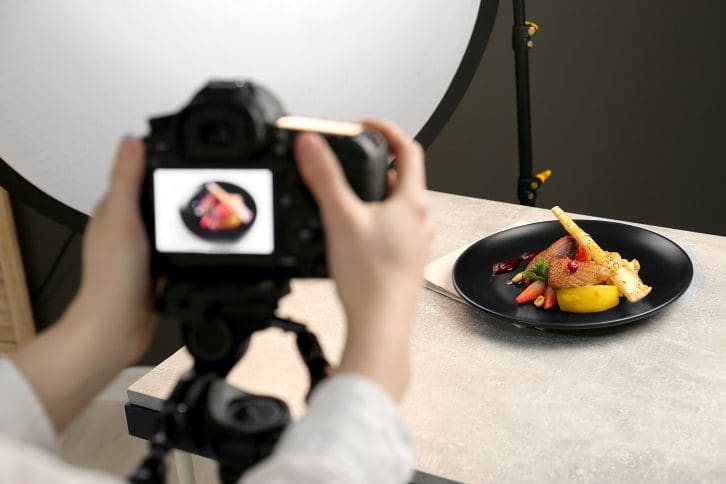
Food Photographer: Building a Mouthwatering Portfolio

Food photographers capture images for cookbooks, magazines, advertising campaigns, restaurants, and social media. The field ranges from editorial work (magazines, cookbooks) to commercial work (advertising, packaging).

New York-based photographer Bill Brady has been a professional photographer for over 20 years, with clients including Boar’s Head, Godiva, Moët Hennessy, and Krispy Kreme.

“The best advice I can give aspiring photographers is to shoot and create a strong portfolio,” Brady says. “If you have zero experience, approach a local restaurant and offer to shoot their food for free.”

How to Become a Food Photographer

  • Shoot constantly – Build a diverse portfolio of food images
  • Study the style – Analyze photography in publications you want to work for
  • Offer free shoots – Approach local restaurants to build experience
  • Network relentlessly – Referrals drive most photography work
  • Learn lighting – Natural and artificial lighting techniques are essential
  • Develop a signature style – Stand out with a recognizable aesthetic

“Most people hire you if you have a photograph in your portfolio that matches what they want,” Brady explains. “If you want to shoot for a particular magazine, study their style and create a unique spin on it.”

Award-winning photographer Lou Manna, whose work appears in over 40 cookbooks and campaigns for Kraft Foods, Dannon, and the Culinary Institute of America, emphasizes versatility: “These days one cannot just be a food photographer—it’s only 40 percent of what I do.”

Food Content Creator: The Modern Path

Social media has created entirely new career paths in food media. Food content creators build audiences on platforms like TikTok, Instagram, and YouTube, earning income through brand partnerships, sponsored content, and their own products.

Platforms for Food Content Creators

  • TikTok – Short-form recipe videos, food trends, restaurant reviews
  • Instagram – Food photography, Reels, recipe content
  • YouTube – Long-form cooking videos, food travel, reviews
  • Substack/newsletters – Recipe newsletters, food writing
  • Podcasts – Food industry discussions, interviews, storytelling

How to Build a Food Content Career

  • Choose your niche – A specific angle helps you stand out (budget cooking, regional cuisine, dietary restrictions)
  • Post consistently – Algorithms reward regular content
  • Engage authentically – Build community, respond to comments, collaborate with others
  • Learn the platforms – Each has different best practices for content
  • Diversify income – Brand deals, affiliate marketing, digital products, cookbooks

Food Copywriter: Crafting the Right Words

Food copywriters write marketing copy for restaurants, food brands, packaging, and advertising. The role combines writing skills with food knowledge.

Andy Boynton of Seattle transitioned from managing editor at Amazon to freelance food copywriter. “Cooking was always a passion, so I took some culinary classes—but it became clear early on that I was a better writer than a chef,” he says.

Boynton combined his writing background with his love of food, freelancing for Allrecipes.com, Le Cordon Bleu schools, and reviewing food books for Publishers Weekly and Gastronomica.

“There are a lot of opportunities for food copywriters,” Boynton says. “Everyone from food manufacturers to supermarket chains to gourmet retailers needs writers. I’m a big believer that you should use what you have—your connections and experience—and you have more than you think.”

How to Break Into Food Media

1. Build a Portfolio

Every food media career requires demonstrable work. Start creating content now—even without paying clients. Write recipes, style dishes, photograph food, and create videos. Document everything on a professional website.

2. Develop Food Knowledge

Immerse yourself in food culture. Cook regularly, dine out, read cookbooks and food publications, and travel for food experiences. The more you know, the better your work will be.

3. Assist Established Professionals

Many food stylists, photographers, and test kitchen professionals hire assistants. This is invaluable hands-on learning and networking.

4. Network in the Industry

Attend food events, engage on social media, and join professional organizations. Referrals drive much of the hiring in food media.

5. Pitch Relentlessly

For writing and photography, pitch publications directly with specific ideas. Study their content, identify gaps, and propose stories only you can tell.

6. Take Entry-Level Positions

Editorial assistant roles at food magazines, test kitchen positions, and agency assistant jobs provide pathways into the industry.

Where to Find Food Media Jobs

  • Mediabistro – Media and publishing jobs including food positions
  • LinkedIn – Search “food editor,” “food stylist,” “recipe developer”
  • Publication websites – Check careers pages at Condé Nast, Dotdash Meredith, etc.
  • Food industry associations – IACP, James Beard Foundation job boards

Frequently Asked Questions

How do I get a job in food media?

Start by building a portfolio that demonstrates your skills—whether that’s food writing, photography, or styling. Assist established professionals to gain experience, network within the industry, and pitch publications or agencies directly. Entry-level positions, such as editorial assistant or test kitchen assistant, can also provide pathways in.

What jobs are there in food media?

Food media jobs include food writer/editor, food stylist, food photographer, recipe developer, food content creator, food copywriter, cookbook author, restaurant critic, test kitchen professional, and food journalist. Opportunities exist in magazines, digital media, television, advertising, publishing, and social media.

How much do food media jobs pay?

Salaries vary widely. Entry-level food writers and editors earn $40,000–$55,000, while senior editors can earn $70,000–$90,000+. Food stylists charge $300–$ 2,000 per day, depending on their experience. Food photographers earn $250–$5,000+ per day. Content creators have highly variable incomes based on audience size and brand deals.

Do I need culinary training to work in food media?

Formal culinary training isn’t required for most food media jobs, but knowledge of food is essential. Many successful food writers, stylists, and photographers are self-taught home cooks. However, culinary school can provide valuable skills and connections, especially for recipe development and styling.

How do I become a food stylist?

Start by assisting established food stylists—this is how most professionals learn the craft. Practice styling and photographing food on your own, build a portfolio, and stay current with visual trends. Some culinary schools offer food styling courses, but hands-on experience is most important.

Can I make a living as a food blogger?

Yes, though it’s competitive. Food bloggers earn income through advertising, sponsored content, affiliate marketing, and product sales. Building a sustainable income typically takes years of consistent content creation. Many food bloggers diversify their income through cookbooks, brand partnerships, and other revenue streams.

What skills do I need for food photography?

Technical photography skills (lighting, composition, camera operation), food styling basics, photo editing proficiency, and an eye for visual storytelling. Understanding how to work with food stylists and art directors is also important for commercial work.

How do I get published in food magazines?

Study the publication’s content and voice, then pitch specific story ideas to editors. Build clips by writing for smaller publications first. Having a platform (blog, social media) that demonstrates your expertise helps. Networking and persistence are essential—expect rejection before acceptance.

Ready to launch your food media career? Browse food media jobs on Mediabistro.

Topics:

Be Inspired, Career Transition
Climb the Ladder

How to Choose Job References (Yes, You Can Use Coworkers)

Who to ask, how to prep them, and why your references matter more than you think.

References might be a bigger deal than you think. Believe It or not, references can make or break your job prospects, so it’s extremely important to choose them wisely. Even if you had a great interview, a word from one of your references is all it could take to have the hiring manager second-guess you as the right candidate, or get the vote of confidence they need to bring you onto the team. So in a world of Amazon reviews, make sure yours are five stars!
Scouted.io icon
By Scouted
Scouted was a hiring marketplace that matched candidates to roles based on potential, serving clients from high-growth startups to Fortune 500 companies.
5 min read • Originally published June 22, 2018 / Updated April 6, 2026
Scouted.io icon
By Scouted
Scouted was a hiring marketplace that matched candidates to roles based on potential, serving clients from high-growth startups to Fortune 500 companies.
5 min read • Originally published June 22, 2018 / Updated April 6, 2026

In this article: Why References Matter | Can You Use a Coworker? | Who to Ask | How to Prep Your References | Include Variety | FAQs

References can make or break your job prospects. Even if you had a great interview, a single comment from one of your references could cause a hiring manager to second-guess you—or give them the confidence they need to extend an offer. Choose your references wisely.


Why References Can Make or Break a Job Offer

Imagine you’re a nervous interviewer. Your resume says all the right things, but you came across as awkward during your conversation with the hiring manager. They considered moving on, but decided to call your references first.

Every reference had glowing feedback: you were reliable, learned quickly, and worked well with the team. After hearing this, the hiring manager reconsidered and called you back for a second interview—which you nailed because you were less nervous the second time around.

This scenario plays out more often than you’d think. Strong references can rescue a mediocre interview, while weak ones can sink an otherwise strong candidacy.


Can You Use a Coworker as a Reference?

Yes, you can absolutely use a coworker as a job reference. In fact, coworkers can make excellent references because they have a realistic view of how you perform day-to-day work.

According to Harvard Business Review, when providing feedback, “Managers tend to emphasize task-related behaviors (e.g., meeting deadlines, working independently) while coworkers emphasize interpersonal behaviors (e.g., friendly, compassionate, listening). This isn’t necessarily surprising, as coworkers may have more opportunities to observe interpersonal behaviors of their peers in the workplace as compared to managers.”

Coworkers don’t carry the formal authority of a manager, which can actually work in your favor—their perspective feels more authentic and peer-level to hiring managers.


Who to Ask: You Have More Options Than You Think

Your three job references don’t need to be your last three bosses. You might have good reasons for not including a current or former manager: maybe you don’t want them to know you’re job searching, maybe you had a difficult experience, or maybe you simply need more variety.

Here are other people you can ask:

Other Managers in Your Workplace

If you’ve been at your company for more than a few months, you’ve likely worked with other managers or “higher-ups” who can speak to your abilities.

Direct Reports (People Who’ve Worked Under You)

If you’re applying for a leadership role, having someone who reported to you can be valuable. They can speak to your management style, communication skills, and your support for your team.

Coworkers and Peers

As noted above, coworkers offer a ground-level view of your work ethic, collaboration skills, and how you handle day-to-day challenges.

Past Clients

Lex Brown II of Task & Purpose notes, “Listing a client as a reference can provide a potential employer with testimony of your deliverables. Whatever outcomes result from your productivity (i.e., software code, website designs, photographs, sales revenue, manufactured products, project management, etc.), clients are probably the most reputable voice for feedback.”

Volunteer Supervisors

A volunteer supervisor can speak to your intrinsic motivation and ability to work hard, even without external pressure.

Professors or Academic Advisors

Especially useful for recent graduates, professors can speak to your intellectual curiosity, work quality, and ability to meet deadlines.


Know What Your References Will Say

One key factor in choosing references is knowing what they’ll actually say about you. Don’t assume that just because you only butted heads a few times with a previous manager that they won’t mention it.

Only choose references you’ve had a genuinely positive experience with and who you’re confident will speak highly of you. It’s perfectly acceptable to ask directly: “Can I count on you for a positive reference?”


How to Prep Your References

Before listing someone as a reference, always confirm they’re willing to be contacted. Once you have their permission, prep them so they can give relevant, helpful responses.

Tell Them About the Job

Make sure your references understand the role you’re pursuing and why you’re a strong fit. Explain what you’d be doing and how your past experience translates to the new position.

Share the Job Requirements

Even if you don’t meet every requirement, share the job description with your references. They may identify transferable skills you hadn’t considered.

Mention Key Talking Points

If there were recurring themes in your interview—analytical thinking, leadership potential, attention to detail—mention these to your references so they can reinforce those points.


Include a Variety of References

To give hiring managers a well-rounded picture of your background, include references from different areas of your professional life:

  • A former manager shows you can work within organizational structures
  • A coworker demonstrates that you collaborate well with peers
  • A client proves you deliver results
  • A volunteer supervisor shows passion beyond your paycheck

Avoid personal references (friends or family) unless you’re brand new to the workforce and genuinely cannot find three professional references. If you must include a personal or character reference, choose someone who has known you for an extended period and can speak meaningfully to your work ethic and character.

Looking for your next opportunity? Browse jobs on Mediabistro.


FAQs About Job References

Can you use a coworker as a job reference?

Yes, coworkers make excellent references. They can speak to your day-to-day work habits, collaboration skills, and interpersonal behaviors that managers may not observe as closely.

How many references should you have?

Most employers ask for three professional references. However, it’s wise to have four or five prepared so you can tailor your list to each opportunity.

Should you use your current boss as a reference?

Only if they know you’re job searching. If you haven’t told your current employer you’re looking, use former managers, coworkers, or other professional contacts instead.

What if you don’t have three professional references?

Consider professors, volunteer supervisors, clients, or mentors. If you’re very new to the workforce, a character reference from someone who knows you well (other than family) can work as a last resort.

Should you tell references before listing them?

Always. Contact your references before sharing their information with employers, confirm they’re willing to speak on your behalf, and prep them on the role you’re applying for.

Can a bad reference cost you a job?

Yes. A lukewarm or negative reference can cause a hiring manager to reconsider, even after a strong interview. Only list references you’re confident will speak positively about you.

Topics:

Candidates, Climb the Ladder
Be Inspired

25+ Best Resources for Writers in 2026: Magazines, Databases & Newsletters

From submission trackers to industry intel, these are the publications and tools every serious writer should know.

working writer in nyc at her laptop
Miles icon
By Miles Jennings
@milesworks
Miles Jennings is CEO of Mediabistro and its parent CognoGroup. He previously founded and led Recruiter.com through its NASDAQ listing, executing more than 10 acquisitions over nearly a decade as CEO and COO.
8 min read • Originally published February 9, 2026 / Updated April 6, 2026
Miles icon
By Miles Jennings
@milesworks
Miles Jennings is CEO of Mediabistro and its parent CognoGroup. He previously founded and led Recruiter.com through its NASDAQ listing, executing more than 10 acquisitions over nearly a decade as CEO and COO.
8 min read • Originally published February 9, 2026 / Updated April 6, 2026

In this article: Writing Magazines | Submission Databases | Industry Newsletters | Literary Websites | Premier Literary Magazines | Nonfiction Resources

Whether you’re submitting your first short story or navigating your tenth year as a working writer, having the right resources makes all the difference. The best publications, databases, and newsletters save you time, connect you to opportunities, and keep you informed about an industry that’s constantly shifting.

We’ve compiled the essential resources every writer should have bookmarked. These are the magazines worth reading, the databases worth using, and the newsletters worth subscribing to in 2026.

Writing Magazines & Craft Publications

These publications focus on the craft of writing, the business of getting published, and the community of working writers.

Poets & Writers

Poets & Writers is the gold standard for serious writers. Founded in 1970, this nonprofit organization publishes a bimonthly magazine and maintains what many consider the most comprehensive set of free databases in the industry.

What they offer:

  • A searchable database of nearly 1,000 literary magazines with editorial focus, submission guidelines, and reading periods
  • The most trusted writing contests database, featuring only vetted competitions
  • A grants and awards database updated throughout the year
  • Readings & Workshops grants for writers in New York State (mini-grants of $150 to $450 per event)
  • Subject-based handbooks on publicity, book deals, literary agents, and MFA programs

The 2026 Writers for Writers Award recipients include Tina Chang, Khaled Hosseini, and Eugene B. Redmond, to be honored at their annual gala on March 23.

Cost: Magazine subscription ~$19.95/year; databases free to access

Follow them: Bluesky | LinkedIn

Writer’s Digest

Writer’s Digest has been serving writers since 1920, making it the oldest major writing magazine in the United States. Now publishing eight issues per year, it covers craft, publishing, and the business of writing with a practical, accessible approach.

What they offer:

  • Six annual writing competitions, including the 95th Annual Writing Competition (early-bird deadline: May 4, 2026)
  • Grand Prize includes a paid trip to the Writer’s Digest Annual Conference and a pitch session with editors or agents
  • First place in each category wins $1,000 cash and publication on WritersDigest.com
  • Writer’s Digest University courses, webinars, and tutorials
  • Annual conferences, including the Novel Writing Conference

Important: Writer’s Digest does not accept AI-generated or AI-assisted work in any of their competitions.

Cost: Magazine subscription ~$26.99/year

Follow them: @WritersDigest on X

Submission Databases & Trackers

Keeping track of where you’ve submitted, what’s open for reading, and how long you might wait for a response can feel like a second job. These tools do the heavy lifting.

Chill Subs

Chill Subs has become the go-to free database for emerging writers. With over 69,000 registered writers and 4,235 publishing opportunities listed, it offers what many paid services charge for.

What they offer:

  • A free database of 4,000+ literary magazines searchable by response time, payment, genre, word count, and acceptance rate
  • 1,200+ writing contests with deadline tracking
  • A submission tracker to monitor your submissions and expected response times
  • Statistics based on 189,332 tracked submissions from the community
  • A cover letter generator and portfolio feature
  • A Chrome extension that shows acceptance rates and community data on magazine websites

Cost: Free (premium features available)

Follow them: @chillsubs on X | LinkedIn

Duotrope

Duotrope has been the industry-standard paid database since 2005. If you’re submitting consistently and want the most comprehensive data available, this is worth the investment.

What they offer:

  • A searchable database of more than 7,500 publishers and agents across 40+ countries
  • Detailed statistics including response times and acceptance rates for each publication
  • A submission tracker with automatic reminders for when to follow up
  • A calendar of upcoming deadlines
  • Clear upfront information about submission fees

Cost: $5/month or $50/year

Follow them: Bluesky | X

Chill Subs vs. Duotrope: If you’re submitting sporadically (five or fewer submissions per month), Chill Subs’ free database will serve you well. If you’re submitting regularly and want more granular statistics, Duotrope’s paid service provides deeper data. Many active submitters use both.

Submittable

Submittable isn’t a database of publications, but it’s the platform you’ll use to submit to most of them. The majority of literary magazines, contests, and grants use Submittable to manage their reading periods.

What writers should know:

  • Free for submitters (publications pay for the service)
  • Universal Submission Tracker keeps all your submissions in one place
  • Used by thousands of magazines, presses, and organizations
  • Your submission history stays with your account

Follow them: LinkedIn

Industry Newsletters & Intelligence

The publishing industry changes fast. These newsletters help you stay informed without drowning in noise.

The Bottom Line by Jane Friedman

Jane Friedman‘s newsletter (formerly The Hot Sheet, rebranded in early 2025) is essential reading for anyone who wants to understand the business of publishing. Friedman, a former publisher of Writer’s Digest, was named Publishing Commentator of the Year by Digital Book World in 2023.

What you get:

  • Weekly reporting and analysis on the publishing industry
  • Coverage of AI’s impact on publishing, licensing, and author rights
  • TikTok/BookTok analysis and marketing strategy
  • Industry trends and what they mean for working authors
  • Archive access dating back to 2015

About half of subscribers work inside the industry (agents, editors, publicists), and half are authors who want business intelligence that puts the writer first.

Cost: Free tier available; paid subscription $70-$120/year

Follow her: LinkedIn | Youtube

FundsForWriters

FundsForWriters, run by author C. Hope Clark, has been delivering paying opportunities to writers’ inboxes for 26 years. Named one of Writer’s Digest’s 101 Best Websites for Writers every year since 2001, it focuses on one thing: helping writers get paid.

What you get:

  • A weekly Friday newsletter listing 24-30 paying opportunities
  • Freelance gigs and opportunities paying $200+ or 10 cents/word and up
  • Contests with first prizes of $200 or more
  • Grants, freelance gigs, and publisher/agent news
  • The newsletter reaches 35,000 readers

Cost: Free

Follow her: C. Hope Clark on LinkedIn

Lit Mag News

Lit Mag News on Substack, run by Becky Tuch (founder of The Review Review), delivers literary magazine industry news, scam alerts, and submission advice. If you want to know which magazines are legitimate, which are closing, and which have problematic practices, this is your source.

Cost: Free tier available; paid tier for additional content

Literary Websites & Daily Reading

These sites publish original content daily and serve as central hubs for the literary world.

Literary Hub (Lit Hub)

Literary Hub launched in 2015 and quickly became the daily destination for book lovers. Founded by Grove Atlantic publisher Morgan Entrekin, American Society of Magazine Editors Hall of Fame editor Terry McDonell, and Electric Literature founder Andy Hunter, it aggregates the best of literary culture while publishing substantial original content.

What they offer:

  • Daily essays, interviews, excerpts, and literary news
  • Partnerships with 100+ publishers for exclusive content
  • CrimeReads, a dedicated site for crime, mystery, and thriller coverage
  • Book Marks, a review aggregation service that scores books as “rave,” “positive,” “mixed,” or “pan”
  • LitHub Radio, a network of literary podcasts

Their Most Anticipated Books of 2026 list features titles like Téa Obreht’s Sunrise and Karl Ove Knausgaard’s The School of Night.

Cost: Free; membership available for ad-free reading and early giveaway access

Follow them: Bluesky

Electric Literature

Electric Literature is a nonprofit digital publisher with a simple mission: make literature more exciting, relevant, and inclusive. In 2024 alone, they published over 600 writers to 3 million readers. Every writer gets paid, and everything on the site is free to read.

What they offer:

  • Recommended Reading: A weekly fiction magazine that has published over 715 issues, making it the largest free archive of contemporary fiction outside a library system
  • The Commuter, featuring poetry and flash fiction
  • Book coverage, craft essays, and writing advice
  • Payment of $300 per published piece

For submitters: General fiction submissions open January 26 through February 1 (or when the 750-submission cap is reached). Members can submit year-round. Recommended Reading publishes fiction between 2,000 and 10,000 words.

Cost: Free to read; membership available

Follow them: Bluesky

Premier Literary Magazines

Getting published in these magazines is a career milestone. They’re highly competitive, but they set the standard for literary excellence.

The Paris Review

The Paris Review, founded in 1953, is one of the most prestigious literary magazines in the world. Beyond publishing exceptional fiction and poetry, it’s famous for its Writers at Work interview series, which has captured conversations with nearly every major writer of the past seven decades.

Cost: Subscription ~$40/year

Kenyon Review

Kenyon Review, based at Kenyon College, has published consistently excellent work since 1939. They pay $0.08/word for prose and $0.16/word for poetry. Their 2026 submission themes have already been announced.

Cost: Subscription ~$40/year

Ploughshares

Ploughshares, based at Emerson College, uses guest editors for each issue, bringing fresh perspectives to every publication. They hold more Pushcart Prize recognitions than almost any other non-commercial magazine.

Cost: Subscription ~$40/year

Granta

Granta, the British literary magazine founded in 1889, publishes themed issues of fiction, nonfiction, memoir, reportage, and photography. They’re known for their influential Best of Young British/American Novelists lists.

Cost: Subscription ~$55/year

Poetry Magazine

Poetry, published by the Poetry Foundation since 1912, is the oldest English-language monthly poetry magazine. The Poetry Foundation also maintains poetryfoundation.org, a massive archive of poems, poet biographies, and educational resources.

Cost: Subscription ~$35/year

Nonfiction-Specific Resources

If you write creative nonfiction, personal essays, or memoir, these publications specialize in your genre.

Brevity

Brevity is the premier venue for flash creative nonfiction (750 words max). Founded in 1997, they also publish excellent craft essays on nonfiction writing. Free to read.

Hippocampus Magazine

Hippocampus Magazine, founded in 2011, is dedicated entirely to creative nonfiction. They also run HippoCamp, an annual conference for nonfiction writers. Free to read.

Additional Resources Worth Bookmarking

Resource Best For Cost
Winning Writers Free contest database and scam alerts Free
Authors Publish Curated lists of magazines accepting submissions Free
Reedsy Blog Craft articles and literary magazine directory Free
The Masters Review Emerging/unpublished writers Free to read
McSweeney’s Innovative literary forms and humor Subscription ~$60/year
Narrative Magazine Prestigious online publication ($5000 annual prize) Free to read; $27 submission fee
Mslexia Women writers (UK-based) Subscription ~£39.99/year


Looking for your next full-time opportunity or project? Browse open positions on the Mediabistro job board.


Topics:

Be Inspired, Productivity

Posts navigation

Older posts
Newer posts
Featured Jobs
Kirkus Media
Editorial Intern
Kirkus Media
New York City, New York (US)

Gaia Inc
MEDIA COORDINATOR
Gaia Inc
Louisville, CO

Gaia Inc
Global Paid Media Specialist
Gaia Inc
Louisville, CO

Gaia Inc
Director of Media Strategy
Gaia Inc
Louisville, CO

Hearst Television
Account Executive
Hearst Television
Milwaukee, WI, United States

All Jobs »
PREMIUM MEMBER

Leah Shepherd

Columbia, MD
19 Years Experience
Communicating complex information well is what I do best. I specialize in covering employee benefits, human resources, health care, long-term care,...
View Full Profile »
Join Mediabistro Membership Today

Stand out from the crowd with a premium profile

Mediabistro Logo Find your next media job or showcase your creative talent
  • Job Search
  • Hot Jobs
  • Membership
  • Newsletter
  • Career Advice
  • Media News
  • Hiring Tips
  • Creative Tools
  • About
Facebook YouTube Instagram LinkedIn
Copyright © 2026 Mediabistro
  • Terms of Use
  • Terms of Service
  • Privacy