Mediabistro Logo Mediabistro Logo
  • Jobs
    Search Creative Jobs Hot Jobs Remote Media Jobs Create Job Alerts
    Job Categories
    Creative & Design Marketing & Communications Operations & Strategy Production Sales & Business Development Writing & Editing
    Quick Links
    Search All Jobs Remote Jobs Create Job Alerts
  • Career Resources
    Career Advice & Articles Media Industry News Media Career Interviews Creative Tools Resume Writing Services Interview Coaching Job Market Insights Member Profiles
  • Mediabistro Membership
    Membership Overview How to Pitch (Premium Tool) Editorial Calendars (Premium Access) Courses & Training Programs Membership FAQ
  • Showcase
    Featured Creative Stories Submit your Story
  • Log In
Post Jobs
Mediabistro Logo Mediabistro Logo
Search Creative Jobs Hot Jobs Remote Media Jobs Create Job Alerts
Job Categories
Creative & Design Marketing & Communications Operations & Strategy Production Sales & Business Development Writing & Editing
Quick Links
Search All Jobs Remote Jobs Create Job Alerts
Career Advice & Articles Media Industry News Media Career Interviews Creative Tools Resume Writing Services Interview Coaching Job Market Insights Member Profiles
Membership Overview How to Pitch (Premium Tool) Editorial Calendars (Premium Access) Courses & Training Programs Membership FAQ
Featured Creative Stories Submit your Story
Log In
Post Jobs
Log In | Sign Up

Follow Us!

Skills & Expertise

What Does a Brand Manager Actually Do? Role, Skills & Career Path

Here's the rundown on this crucial marketing role

brand manager meeting with team
John icon
By Jenell Talley
Jenell Talley is a journalist and program analyst with a background spanning media, government, and editorial work. She holds a journalism degree from Howard University and a master's in human resources management from the University of Maryland.
3 min read • Originally published March 28, 2016 / Updated March 19, 2026
John icon
By Jenell Talley
Jenell Talley is a journalist and program analyst with a background spanning media, government, and editorial work. She holds a journalism degree from Howard University and a master's in human resources management from the University of Maryland.
3 min read • Originally published March 28, 2016 / Updated March 19, 2026

What do Nike, Apple and the Kardashians have in common? They’re all huge brands that leave consumers thirsty for more of whatever they’re selling. A brand manager has a lot to do with that. In an oversaturated marketplace, a brand manager makes sure products, services and even people resonate.

Read on for the rundown on what makes brand manager such a crucial marketing role.

What exactly does a brand manager do?

A brand manager is responsible for the overall image of a product or person. Key elements of the job are researching the marketplace to determine where the product or client fits in (i.e., analyzing competitive positioning, products, brands and spending); developing marketing and advertising strategies and managing those budgets; helping create designs and layouts for print and digital advertising concepts signage and collateral; overseeing promotional activities; analyzing pricing and sales; and (re)evaluating how the brand can appear to a wider consumer base.

As senior manager of brand development at Indianapolis-based U/S Sports Advisors, Jesse Ghiorzi gets to the crux of who a company or person is and stands for, and helps tell that story in a genuine way.

“I help define, express and engage the personal brands of athletes and brands of companies in the sports and entertainment space,” he says. On any given day, Ghiorzi may work on building relationships with the media and other influencers, monitoring social media and trends and pitching stories to journalists.

What skills do you need?

Top-notch writing skills and creativity are tools of the trade. You have to be a strong writer in both long and short form to convey your message and crazy creative to define and express the essence a brand.

Relationship management and storytelling prowess are also critical, says Ghiorzi. You need to build and maintain trust and a cohesive relationship with all the key stakeholders. And once you define the brand, you need to be able to tell that story to your audience in a way that makes sense.

You also need good analytical skills, and adeptness at budget management and an exhaustive understanding of the product or person you’re promoting.

Who is a brand manager’s boss?

This depends on how a company or agency is structured. Ghiorzi, for example, reports to the president/founder of his company and recently brought on a brand coordinator as a direct report.

Are there other titles with similar responsibilities?

Publicists, marketing managers, strategic directors and social media managers may have similar job responsibilities, though job descriptions may vary by company or agency.  

What do I need to get ahead in this position?

Always have a good strategy behind what you do on the job. That involves researching the past and monitoring trends as well as looking to the future and setting goals, says Ghiorzi, and it all should fit into the grand plan.  

How can I get my foot in the door?

Ghiorzi was a speech communications/public relations major, which helped him succeed, but marketing, strategic communications, journalism and business degrees also provide a good foundation.

But your degree won’t shoot you straight to brand manager. Get your feet wet with an entry-level job in marketing or publicity and work your way up.

Get a taste of what goes into branding with Mediabistro’s online course, Building Your Brand’s Identity.

Topics:

Climb the Ladder, Skills & Expertise
Career Transition

7 Compelling Reasons to Break Into Brand Journalism

Use your journalistic skills toward the higher-paying, growing industry of content marketing

the word brand on a wood table
By Angela Washeck
6 min read • Originally published March 28, 2016 / Updated March 19, 2026
By Angela Washeck
6 min read • Originally published March 28, 2016 / Updated March 19, 2026

While the traditional editorial job outlook is bleak, and you’re looking for steady work, seek out brand journalism. And if you think this a cop out by not exercising your true journalism muscles you’ve been trained to use, think again.

Josh Sternberg, director of branded content at NBC News and former senior editor of Digiday’s Content Studio, believes journalistic training plays a huge part in getting brand journalism right.

“Too often sponsored content reads like marketing copy—full of industry jargon, doesn’t explain anything, etc. Instead, it should be written in a journalistic style—lede, nut, inverted pyramid, outside sources. Good content, no matter if it’s editorial or advertising, finds readers,” Sternberg tells me.

Need more convincing? Here are 7 compelling reasons to consider breaking into brand journalism:

1. It’s a Growing Industry

Yes, there are a number of new journalism upstarts surfacing, but in general, it would be hard to make the case that the journalism industry as a whole is growing. It’s simply in a time of transition. Since traditional newsrooms don’t have the resources to support obscure beats, many high-profile reports and columnists are starting their own outfits.

Minimal funds mean publishers need creative brands to come in and imagine smart marketing strategies, including producing quality content, in the form of blog posts, social media posts and visual stuff. Enter, you: The freelance journalist with the skills to help publishers help their advertisers promote themselves on a big platform.

According to James Del, director of digital content at TAO Group and former executive director of Gawker Media’s in-house creative department, Studio@Gawker:

“Even talented writers are having a hard time maintaining consistent work. At the same time, companies are now realizing that if they want to remain relevant, they need to produce stories that are of interest to their customers; it’s no longer enough to run a 30-second spot or a banner ad to convey a brand’s message. Those things are easily ignored and often provide little or no informational or entertainment value.”

2. The Pay Is Good

You’ve got rent and vehicle payments due. Ten-dollar article assignments from content farms will not do the job. Brand journalism endeavors generally pay pretty well. Do your research on what your work is worth, and start cold email pitching.

I once re-pitched a content-marketing agency a few months after my initial pitch, admitting that I hadn’t researched the company well the first time and would like a second round of consideration. They hired me the next week.

Now, this agency sends me a steady stream of work monthly, and we maintain a strong professional relationship. For the time I put in, the pay is very good. Generally, brand journalism ventures like ones at Wells Fargo, for instance, will pay more than sufficiently.

“It’s a well-paying job at a time when well-paying writing jobs are hard to come by,” says Del. “Everyone works for someone, and most audiences realize that even the most credible craftspeople need to lend their name or skill to a brand in order to make a buck (ask Bob Dylan why he did a Chevy commercial).”

Shane Snow, technology journalist and chief creative officer at Contently, agreed it’s OK for freelancers to be influenced by potential earnings.

“Since big brands have reputation on the line, they often pay as much or more than traditional publishers for real, interesting stories—a huge departure from those awful SEO content-farm days, where we saw a lot of journalists stoop to writing $15 articles,” says Snow.

3. It Can Lead to a Full-Time Gig

Who knows? If you do a good job with your brand journalism gig, you may be the first in line for consideration when full-time positions come available. Think about it: They already know your writing style and voice, and they’re well acquainted with your writing tempo.

If your resume is in the freelance bank, a PR firm or brand may pull it for the real deal. At least that’s what the Dallas Morning News-owned content-marketing agency Speakeasy does.

4. It Helps You Learn about New Industries

One thing I really enjoy about freelancing, in general, is that I get to stretch my brain in several ways. Each day presents a new challenge, and every story requires a unique voice and approach.

If you’re a lifelong learner and a person who enjoys strengthening your broad base of knowledge, brand journalism is for you. In one week, I may write about congestive heart failure or other complex medical issues; innovations in the energy industry; and local shopping spots.

This forces me to talk to people I wouldn’t ordinarily talk to, and whether I’m initially excited for it or not, I always walk away from the story having learned something new.

5. It’s Less Stressful than Deadline-Oriented Journalism

Typically, brand-journalism editors are operating on a much looser schedule than your typical newspaper or magazine editor.

I’ve found that with these folks, it’s not unusual to get a one-week or more lead time for a story, which I find refreshing. If you’ve spent any time in the newspaper business, you might agree a lax deadline is truly a gift.

6. You Can Editorialize

With straight news, you must always remain neutral in your language and reporting. With brand journalism, it’s a different story.

This isn’t to say that you write straight advertising copy—the point of brand editorial is that companies who have traditionally purchased banner and tower ads are now realizing that people enjoy genuine stories highlighting real people, so companies want to produce actual journalism.

But, of course, it will be connected to the brand and may include a subtle sell or brand mention at the end of the piece.

As Del tells me, “Branded content—when done properly—is not supposed to be a slimy advertorial that forces a writer to bend [his] own viewpoint to that of a corporation. The best branded content is like any other arrangement between a patron and an artist. The topic of coverage may be decided on in conjunction with the brand, but the writer should be left to editorialize on that topic as they deem necessary.”

And don’t worry too much about not being able to get regular editorial work after writing brand journalism, Del advises: “Unless you’re a total over-the-top shill you won’t kill your own credibility with a few sponsored posts—if anything, working with the right brand on the right stories could actually bolster a young writer’s exposure in a healthy way. Writers should view this as an opportunity to tell a story.”

But remember this, Del adds: “Just always be sure to disclose your relationship with the sponsor up front, not write anything that isn’t true (this includes puffery), and only work with brands or publications that you don’t have a problem being associated with in a promotional regard.”

7. You Get to Help Define a Company

As a freelancer for a brand, you have a lot of power. You’re essentially being trusted to help formulate a brand identity and carry it out. Embrace the responsibility and have fun with the reporting.

As Snow puts it, “Now is a fantastic time to be a freelancer. There is more work for trained journalists than ever—it’s just coming from unexpected sources like brands that are trying to become publishers. Brand publishers need the exact skills that we journalists have been trained with: reporting, ability to access interesting people, and the skill to find and craft good stories.”

Discover jobs in brand journalism and more on the Mediabistro job board. 

Topics:

Be Inspired, Career Transition
Skills & Expertise

How to Use Social Media to Land a Social Media Job

Start simple, think long-term and establish a foundation that can launch a large scale creative campaign

job-seeker using a laptop and social media with her job search
By Jeffrey Yamaguchi
@jeffyamaguchi
5 min read • Originally published March 29, 2016 / Updated March 19, 2026
By Jeffrey Yamaguchi
@jeffyamaguchi
5 min read • Originally published March 29, 2016 / Updated March 19, 2026

True, social media can seem like a time suck. But you shouldn’t minimize social media activity while working to land that new gig—especially if you’re looking for a social media job.

On the contrary, you’ll likely need to spend even more time, energy and creativity on the socials in order to achieve your goal of finding a new gig.

The key is to start simple to build momentum, thinking long-term and with creative flair about the effort, and stay focused on the end game: a new job that’s right for you.

Here are some quick—but nonetheless helpful—social media tips that can be done immediately and with minimal effort:

1. Review Your Contacts. You know a lot of people across your social networks, from Linkedin to Twitter to Facebook—so many in fact, that you probably need to refresh your memory about exactly who you are connected to.

Scroll through your friends, followers and connections and create a “to contact” list, which you can then prioritize and begin reaching out to with personal, tailor-made notes.

Through this process you’ll also realize there are key professional people from your past and present who aren’t in your network—this is also a good time to request connections (again, with a personal note).

2. Post More. Begin posting relevant, industry-specific updates, articles and essays via your profile on LinkedIn, the most career-centric social network, and definitely something all job seekers should be active on.

This gets your profile active and in front of not only your existing connections, but the larger LinkedIn community.

3. Update Your Digital Platform. Yes, it’s probably time for a total revamp, but start simple and build from there. The best place to begin: Take a new, professional photo and upload it to all your profiles (Facebook, LinkedIn, Twitter, etc.).

You don’t have to completely redesign and fully update all your channels, but this new photo on all your social media presences sends a positive message and establishes, at a high level, a streamlined platform.

Gearing up with those simple tactics sets in motion a proactive social media job search gameplan, and helps establish the foundation for larger scale, more creative efforts that will have more impact.

It is, after all, bigger moves that are going to lead to better traction in terms of landing that new job. Here are some strategies to get you moving in that direction.

4. Share Your Story, Expand Your Network. Build a compelling narrative, with a beginning, middle and end—the end being you landing a job, and grow an audience for it through a well-planned social media campaign.

It’s a way to expand your network in a creative, groundbreaking way. The better your storytelling, the bigger the impact and the larger your potential audience. A few solid examples of this can be found in the ascendant podcasting space:

The Intern: A podcast by Allison Behringer about navigating a new tech job in New York City.

Millennial: In season 1, Megan Tam documented her post-graduation life, which, naturally, involved landing a job.

First Day Back: A podcast by Tally Abecassis in which she documents her efforts to relaunch her career after an extended maternity leave.

Hearing honest and insightful stories around a subject, topic or industry resonates in the social space. Though the above examples are podcasts, any medium will do—photography via Instagram, or essay writing via Medium.

There are plenty of ways to come at this. And once you’ve completed your job hunt story, you’ll have a new one to tell—all the cool stuff you will be doing in your new role.

5. Become a Connector, Grow into an Influencer. You’re seeing endless posts for jobs, and though many of them won’t be for you, they are right for someone else. Share this valuable information that you come across with your social media networks. And keep upping the game.

You don’t want to overwhelm everyone’s feeds, but begin to connect with and share news and insights from the influencers in your industry of focus, making sure to add in your own intelligent commentary.

Consider collecting all this information and sharing it on your website in the form of blog posts, and on Medium, as well as disseminating it in the form of a weekly newsletter (via TinyLetter or MailChimp).

Over time, not only will your network grow, but so will your influence. Instead of hearing about new opportunities through job listings, you’ll hear directly from a source, and therefore before most everyone else.

Hot Pod, an extremely popular newsletter by Nick Quah about the podcasting space featuring insightful commentary and industry news, started out as a TinyLetter. It built up a following, continued to gain traction, and Quah is now building out the project to include new products and events.

He’s now a key player in a growing industry.

6. Build and Launch a Creative Campaign. This should be based on your interests—an exercise in challenging yourself and flexing your creative muscles.

It doesn’t necessarily have to be aligned with your industry or professional arena, but it should demonstrate your skills at developing and managing a creative project, as well as building an audience through social media.

The overall campaign can serve as an engaging showcase, one that might come to the attention of prospective employers not because you’ve told them about it, but because someone else did.

Two high-level examples, Forty Days of Dating and #The100DayProject, went viral—not an easy feat, and perhaps you shouldn’t expect for that to happen, but good models nonetheless.

Here are a couple smaller scale projects that didn’t necessarily reach that level of attention, but still gained traction and built up a sizable audience:

100 Haikus in 100 Days: Courtney Symons challenged herself to write and post a haiku every day for 100 days on Instagram, and ended up developing a nice following and lead to a popular, sharable showcase of creative work.

#colorcolourlovers: In this Instagram-focused community project in which colors are specified over the course of six weeks, participants post photos showcasing those colors.

Not quite sure what to launch on your own? Then begin by participating in an existing, social media-based project—engage in #The100DayProject, #colorcolourlovers or Gumroad’s Small Product Lab, a very cool project-focused community effort in which you build and launch a digital project in 10 days.

All of these efforts—no matter their scale or level of effort—provide solid foundation building, as well as a creative outlet that lets you connect, share and grow your influence in the social space. The momentum will lead to bigger and better as you move forward.

Jeffrey Yamaguchi (jeffreyyamaguchi.com | @jeffyamaguchi) is a MediaBistro instructor whose courses include Fundamentals of Digital Marketing and Social Media Marketing. He also serves as the Director of Audience Development at Narativ, a new podcast venture.


Topics:

Climb the Ladder, Skills & Expertise
Job Search

How to Set Yourself Up for Job Search Success (Week 2 Guide)

The #WeekendJobSearch Assignment #2: Set goals, track 'em, repeat

job seeker using laptop on weekend
John icon
By John Lombard
John Lombard is a content strategist and writer with over a decade of experience creating interactive and video content for brands like Apple, IBM, and Samsung. He previously worked at Mediabistro and now serves as a Client Strategist at Ceros.
3 min read • Originally published March 31, 2016 / Updated March 19, 2026
John icon
By John Lombard
John Lombard is a content strategist and writer with over a decade of experience creating interactive and video content for brands like Apple, IBM, and Samsung. He previously worked at Mediabistro and now serves as a Client Strategist at Ceros.
3 min read • Originally published March 31, 2016 / Updated March 19, 2026


Hey there! We’re back with week 2 of the the #WeekendJobSearch, our new, ongoing series that breaks the whole job-search process into 13 totally doable to-do items.


Last week we started small and purged old job search materials. This week, we’re taking that clean slate and building upon it—setting you up for success throughout your job search.

The #WeekendJobSearch Assignment #2

Set Yourself Up For Success

Let’s face it: A job search is a numbers game. The more job listings you find and apply to, and leads you follow up on, the more likely you are to land an offer.

As as with any quantifiable task, when it comes to a job search, one of the most important things you can do to ensure and track success is to set a goal.

1. Create a Goal
It may seem minor, but if you establish a job-application goal, you’re more likely to get more applications in and ultimately secure a new job. Check out these examples:

  • Apply to at least ten jobs this week
  • Make a list of my top ten companies and apply to at least 8 this week
  • Apply for two jobs every weekday

Either choose one of the above, or develop your own job-search goal. Try one out for a week, and if it doesn’t work for you, switch it up. Just make sure you’re setting a goal and hitting hit.

2. Record Your Progress
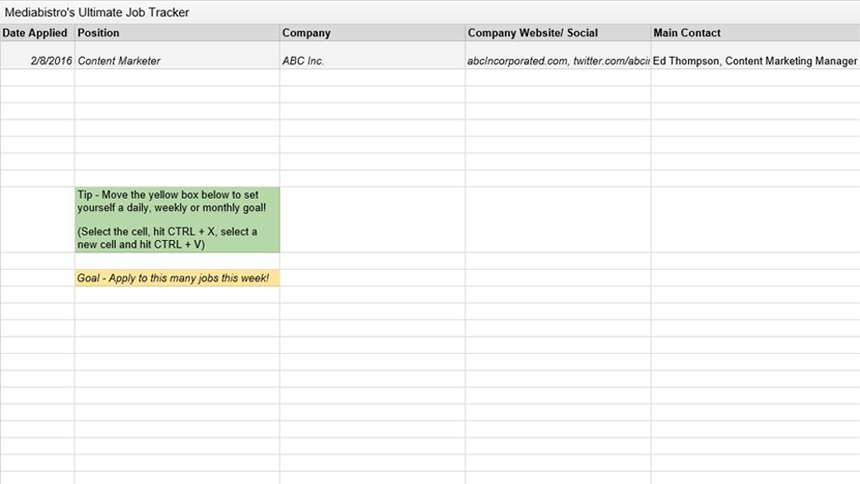
In order to note and observe your progress, you’ll need a place to keep it all. Mediabistro’s Ultimate Job Search Tracker to the rescue. With this shareable spreadsheet, you can mark the jobs you applied for, jot any important job-related details and write down updates, such as if you score an interview or—fingers crossed—a real, live job offer.

Setting a goal on this chart is ridiculously simple. Just make a note on a cell representing how many jobs you want to apply to in a week; when you’ve reached that finish line, you’re done. Here’s a sample:

job-search-tracker

Move this line down each week to set your next goal. Feel free to change the text if that motivates you, and consider combining it with a reward beckoning you at the end.

A few options:

  • Get here, then beer. Cheers!
  • Mani-pedi once you’ve passed this line!
  • Knock out this many job applications, then play as much Fallout as you want!

You’ve got your goal, you’ve got your chart to record it and the rest of your job searching information. Now it’s time to crack those knuckles and give it a spin.

Apply for one job right now, get the job tracker started and move closer to your weekly goal—and your ultimate end goal of an awesome new job.

Best of luck with this weekend’s assignment! We’ll see you next weekend when we’ll be cleaning up your social media house.

  • Start from the beginning: #WeekendJobSearch Assignment #1
  • Share your progress on Twitter: #WeekendJobSearch

Topics:

Get Hired, Job Search
Work Spaces

When Media April Fools’ Jokes Backfired Spectacularly

It’s all fun and games until somebody says the nearby hill’s an active volcano

employee writing april fools' sign
John icon
By John Lombard
John Lombard is a content strategist and writer with over a decade of experience creating interactive and video content for brands like Apple, IBM, and Samsung. He previously worked at Mediabistro and now serves as a Client Strategist at Ceros.
3 min read • Originally published March 31, 2016 / Updated March 19, 2026
John icon
By John Lombard
John Lombard is a content strategist and writer with over a decade of experience creating interactive and video content for brands like Apple, IBM, and Samsung. He previously worked at Mediabistro and now serves as a Client Strategist at Ceros.
3 min read • Originally published March 31, 2016 / Updated March 19, 2026

April Fools’ Day means a time for jokes, hijinks and the always usually awesome annual Google pranks. And while everyone loves a good April Fools’ Day joke, when they backfire, they don’t just wither away, they go down in history. And, surprise: Digital media companies aren’t immune.

Check out these April Fools’ Day media faceplants. Then, rather that pull some elaborate prank on a coworker, play it safe and kick out some job apps (no joke) or plan to up your skills with an online course—after all, courses are 40% off until Friday at midnight using promo code NOFOOL.

1. Taco Bell “Buys” the Liberty Bell
Back in 1996, a team at Taco Bell put together an elaborate hoax involving the Liberty Bell, a full page ad in six major newspapers and a headline that read, “Taco Bell Buys The Liberty Bell.”

The ad—claiming the purchase of the Liberty Bell was a noble attempt to help reduce national debt—struck a sour note. Thousands of citizens called Taco Bell headquarters and the National Parks Service, and some even took to the press, decrying Taco Bell’s move. (Of course, bad is press is still good press and Taco Bell earned millions in free air time and also saw a big spike in sales that week.)

2. Radio Show Hosts Memorialize Their (Not Actually Dead) Mayor
In 1998, rock station WAAF personalities Opie and Anthony claimed Boston’s then-mayor Tom Menino was killed in a car crash.

Unsurprisingly, the prank was DOA. Menino, who was in fact very much alive, filed a complaint with the FCC urging them to fine the radio station. And for Opie and Anthony, they were quickly fired …only to be later hired on at a station in New York, where their careers propelled into on-air stardom.

3. ABC’s Countdown Clock Leads to Nothing
Remember Happy Endings on ABC? While never a smash hit, the show had a strong following who always hoped for a reboot. That’s where the prank comes in.

Last February, ABC tweeted the link to a countdown clock which would end on April 1st. The end date should have screamed “prank!”, but fans held out hope that the clock was winding down to the announcement of a new season. Instead, at the appointed hour, nothing happened. Happy Endings tweeted, “Happy…April Fools’ Day! Sorry!”

Needless to say, fans were not happy.

4. A TV Reporter Tells Bostonians a Nearby Hill Is an Erupting Volcano
In 1980, Boston’s Channel 7 News broadcast a special bulletin that a Massachusetts foothill was actually an active, erupting volcano, and included spliced footage and audio of then-President Carter claiming this is a “serious issue.”

The reporter ended the special bulletin with a sign reading “April Fools,” but it was already too late. Worried callers rang into the police station throughout the night, and the executive producer responsible for the prank was—you guessed it—fired.

5. A Furniture Company Places a “Sr. Mattress Tester” Job Ad
Chalk this one up as an April Fools’ win: Taking to social media with their job posting, one company used LinkedIn and other sources to play a killer job posting prank.

With such requirements as Demonstrated expertise in sleeping under varied conditions and A complete lack of enthusiasm and drive, the India-based furniture company Urban Ladder created a job posting for a bed tester that just had to be too good to be true.

And of course, it was. But because the ad was fun, lighthearted and—most important—didn’t tarnish a national treasure, fake a person’s death or get super fans’ hopes up, it led to some great free publicity for the company.

While we love April Fools’ Day jokes, we don’t post fake ads, only awesome ones. And because we think you deserve to be the complete opposite of a fool, we’re offering 40% off all courses when you use promo code NOFOOL. This deal ends before midnight on Friday, so sign up now!

Topics:

Be Inspired, Work Spaces
Job Search

5 Business School Lessons That Will Transform Your Job Search

Biz dev types and money guys aren’t the only ones who can tap the power of MBA-thinking

MBA grad talking on phone
John icon
By Brittany Taylor
Brittany Taylor is an enterprise marketing manager and content strategist with over a decade of experience in B2B content marketing, brand building, and ghostwriting, with bylines in SELF, Teen Vogue, and Mediabistro. She currently leads content and branding across multiple brands at HireQuest Inc.
6 min read • Originally published April 4, 2016 / Updated March 19, 2026
John icon
By Brittany Taylor
Brittany Taylor is an enterprise marketing manager and content strategist with over a decade of experience in B2B content marketing, brand building, and ghostwriting, with bylines in SELF, Teen Vogue, and Mediabistro. She currently leads content and branding across multiple brands at HireQuest Inc.
6 min read • Originally published April 4, 2016 / Updated March 19, 2026

Ever wondered exactly what professional mastery business school grads get along with their shiny MBA? We asked six alums what they learned at some of the top business schools in the western hemisphere—and how to leverage those lessons in your job search.

1. Investing in yourself is the best investment you can make

“Happy, well-rounded people are absolutely magnetic,” says Lisa Goller, who has an MBA from Toronto’s York University and runs her own content marketing business. “To sell yourself, you need to be at your best—so take good care of yourself.” Goller’s brand of self-care is yoga and meditation.

2. A competitive advantage isn’t just for new businesses

“In business school, you often discuss how companies developed their strategy against competition in their given market,” says Nihar Chhaya, a graduate of the University of Pennsylvania’s Wharton School of Business, executive coach and president of Partner Exec.

Job seekers can similarly develop their own competitive advantages “by deeply understanding what the prospective employer values in the given role and expressing the unique aspects that set them apart from other applicants in fulfilling this need.”

3. You need to know how businesses work

When you’re targeting jobs in a particular department, it’s easy to put on blinders to every other department that keeps the company running. This is shortsighted, though, according to Elatia Abate, an alumna of the University of Chicago Booth School of Business, a former recruiter at The Wall Street Journal and current career coach.

“Having a broad understanding of how all the pieces of the puzzle work together can help you make better business decisions, have clearer communications with colleagues outside of your functional area and generally think better and smarter about challenges you face,” Abate says.

4. See yourself not as “I” but as part of a team

In school, students loathe teamwork. But at work, it’s a reality. Digital strategist Chris Hood, who has his MBA from Indiana Wesleyan University and is also an adjunct instructor at Southern New Hampshire University, sees this every single day.

“In business you are constantly asked to participate on teams where you may not agree with someone, or have employees who don’t pull their share of the work,” he says. As you interview, demonstrate a team-first point of view rather than an all-about-me mindset.

5. Brand yourself like you would a product

Personal branding is a big-time buzzword for a reason: The more you think about your own brand, the better idea you have of what you have to offer to a potential employer. “For a powerful mindset that builds relationships, consider how you can help others versus selling to them,” says Goller.

6. Confidence is everything

When you’re surrounded by top talent, it’s easy for your self-confidence to take a hit. Beat back imposter syndrome with a “fake it ‘til you make it” attitude, Chhaya says. “Faking it, in this sense, doesn’t mean lying, but rather acting as if you belong, because you do,” he adds.

“Remind yourself there is a reason why they are interviewing you: You already have something special they are looking for.”

7. Always over-prepare

It’s better to be over-dressed than under-dressed—and the same principle applies to your interview prep. “You live in a competitive world, and you can never underestimate how much others around you might be preparing for any given opportunity,” says Chris Gorges, a partner at branding agency Rocketure and MBA graduate of NYU Stern School of Business. To stay in the game, don’t just go in and wing it.

8. Strategizing your job search will keep you on track

Business plans aren’t just for start-ups, says Ricky Singh, who received his MBA from the University of Maryland University College and is the CEO of AIRR Media, which helps start-ups with online marketing.

“There are so many people who just jump into doing work without really thinking about how the work they are doing fits into the overall goals,” he says.

Before you begin writing cover letters and filling out applications, think about what you want from your career and this next job, what kind of salary and benefits you need to support your lifestyle and the type of skills you want to develop, for starters.

9. Not everyone is in your target market

Job boards list thousands of openings. Are you going to apply to all of them? No way! “Focus!” Goller says. “Be selective. Go after companies and roles that will make you want to jump out of bed on Monday mornings.”

10. Articulate your skills in business terms

Communicating isn’t just about talking about yourself and what you do well. Hood suggests framing your skill-set in terms of business needs and goals.

To prepare for interviews, study up on a company’s pain points and assets outside of your target department. Figure out how your talents and past responsibilities and achievements fit into that puzzle.

11. Soft skills matter

When everyone in the candidate pool possesses the same technical skills, it’s almost always the people skills that set top applicants apart.

“As you become more senior in an organization and begin to take on management roles, work on cross-departmental projects and negotiate with vendors, these soft skills are the ones that will help you achieve success,” Abate says.

12. Your job search doesn’t have to be a solo endeavor

Who says you have to tackle your job hunt all by yourself? Not Chhaya, who encourages building a loyal support system. Many people in your network do want to help you, he says, “you just need to ask.” Bonus? “It also gives you the opportunity to help them when they are in need,” Chhaya says.

A support team can coach you through the process, introduce you to employers, read through your application materials and more.

13. Thinking like an innovator sets you apart

The way you think is one thing nobody else can one-up you on. Whether you’re looking for a job in creative departments, like advertising or editorial, or are more of a business-side player, a candidate who can brainstorm creative solutions is a keeper, says Singh, who emphasizes the “need to be different,” whether that means the way you work or the products you work on.

14. Think long-term

Is what you’re doing now helping you move toward your eventual career goals? If not, it’s time to reevaluate your path. “Continually assess whether what you’re focusing on right now is going to be advantageous for you 5, 10, 15, 25 years from now, both professionally and personally,” Gorges says.

If your end goal is long-term freelancing, for example, 80-hour weeks in the office that don’t allow you time for a side hustle might not be the best choice.

15. Comprehending your leadership style

You don’t have to have a project manager title to be a leader. Chhaya explains that each member of a team is “collectively driving the effort forward and being a leader in their own way.”

Be wary of couching your leadership skills in terms of the titles you’ve held. Instead, think more deeply about the areas you tend to take point on and how you take control.

16. Change is inevitable. Learn to adapt

Your ideal career path might not be the one you settled on right after graduation. To stay tuned into your happiness, check in with yourself regularly—every 3 to 6 months—and audit your life. “Be willing to let go of any activities or attitudes that hold you back from success,” Goller says.

Lesson #1 is invest in yourself. Make that a reality today by signing up for an online, video-based course through Mediabistro. 

Topics:

Be Inspired, Get Hired, Job Search, Productivity
Skills & Expertise

Simple Stats That Prove Your Online Marketing Success

Tap the power of analytics to prove your worth

employees looking at stats on a computer
John icon
By McLean Robbins
McLean Robbins is a luxury travel editor, marketing leader, and adjunct faculty member at Georgetown University with two decades of bylines in Forbes Travel Guide, Robb Report, and Washingtonian. She is the founder of Lily Pond Luxury, a Condé Nast Top Travel Specialist agency, and previously served as VP of Marketing at MBO Partners.
3 min read • Originally published April 5, 2016 / Updated March 19, 2026
John icon
By McLean Robbins
McLean Robbins is a luxury travel editor, marketing leader, and adjunct faculty member at Georgetown University with two decades of bylines in Forbes Travel Guide, Robb Report, and Washingtonian. She is the founder of Lily Pond Luxury, a Condé Nast Top Travel Specialist agency, and previously served as VP of Marketing at MBO Partners.
3 min read • Originally published April 5, 2016 / Updated March 19, 2026

If you’re looking for a job in online content, marketing or content marketing—or if you’ve already gotten a job in those areas—then you’re probably pretty eager to prove return on investment (ROI) for your efforts.

Good news! Thanks to the power of analytics, you can prove a direct correlation between quality content and products booked, services rendered and even improved brand awareness.

Use these five metrics below to help you create a strategy that works for you.

1. Likes, Comments & Shares

Growth in visitors, fans and followers is desired by nearly any brand. But it’s less important to see numbers grow than it is to see true engagement within individual pieces of content.

A number of metrics can be measured (and hopefully tracked to conversion, or users’ taking the action you want them to take), but these metrics, generally from social media, are indicative of engagement within individual content pieces.

2. Return Visitors 

Many people focus on monthly unique pageviews—roughly, the number of sessions during which a page was viewed one or more times over the course of a month—and this is certainly a valuable metric.

But it’s also important to see how many users visit not just once, but several times in a month. Many of the top content sites are daily destinations, which leads to a more engaged user base, the likelihood that individuals will make product purchases and more. Chances are, if people visit your site daily, you’re doing something right.

3. Bounce Rate 

Many content creators care about time on site—how long an individual spends on your page. Surely, that’s an important metric; and people on mobile have shorter attention spans than ever before. But we also care about bounce rate, or the number of people that hit your site and immediately leave again, or “bounce” off.

A high bounce rate can be a sign of technical site issues, but it can also indicate that you’re creating content that is misleading for users, or doesn’t serve their needs. If your bounce rate on a given page is high, take a close look and try to figure out why.

4. Page Rankings

Stuffing pages full of “SEO keywords” is happily a dead practice, but ranking well in organic search is still a primary goal for most marketers and content creators.

Securing a #1 search result (or even a first page result) is still an inexact science, but creating quality content that users can find in Google results is a primary goal for most. Use a tool like Moz.com to measure performance of your content for key terms of import to your business.

5. Goals

Every website will have different goals—some want users to purchase a product, others want to gain return viewership to monetize through ad sales, while still others want user engagement in service of fostering community.

Whatever your unique content goal is, it’s important to craft messages and content that support your desired end result. If you’re hoping to gain conversion to purchase a product or service, nurture users along the journey by providing content at all stages of the product. If your goal is to have users comment or share content, create a call to action that pushes them to do so.

McLean Robbins is a content strategist, copywriter and digital consultant. In McLean’s course for Mediabistro, Skills in 60: Content Marketing, she teaches how to develop a content strategy, set a plan for new content creation and leverage key performance indicators to inform future content campaigns. Find her at mcleanrobbins.com.

Topics:

Climb the Ladder, Skills & Expertise
Resumes & Cover Letters

5 Resume and Cover Letter Spelling Errors That Could Cost You the Job

Double-check your work to avoid these common, embarrassing and totally preventable mistakes

hand and pen marking errors on a resume
John icon
By Marisa J. Carroll
Marisa J. Carroll is a copy editor, writer, and grammar instructor based in New York
4 min read • Originally published April 6, 2016 / Updated March 19, 2026
John icon
By Marisa J. Carroll
Marisa J. Carroll is a copy editor, writer, and grammar instructor based in New York
4 min read • Originally published April 6, 2016 / Updated March 19, 2026

You know you’re qualified for the position, but you could derail your chances of being hired if your resume and cover letter contain typos and misspellings—especially if you’re applying for a content or editorial job.

No matter what kind of work you’re going for, you can make sure potential employers focus on your best qualities by keeping your resume and cover letter free of the five common trouble spots below.  

1. Misspelled names. First things first: Since you’re sending a cover letter to a specific person (after all, “To Whom It May Concern” is a big no-no), triple-check the spelling of the recipient’s name. Pay special attention to first names with common variants. (You may be accustomed to seeing Alison spelled with one l, but Allison and Alyson are possibilities too.) If any spelling error will pop out to the reader in neon lights, it’s this one.

2. Misspelled action verbs. Resume-writing experts recommend beginning each bullet point with an action verb, but several of the most useful ones (achieve, acquire, analyze, guarantee, liaise, synthesize) are frequently misspelled. Keep a master list of any verbs that regularly give you pause, and add relevant adjectives (knowledgeable, necessary, noticeable) and nouns (acquisition, calendar, commitment, privilege) for good measure. Update your list as needed—and consult it often.

3. Incorrect verb tenses. Speaking of actions verbs, the ones you list for your current position should appear in the present tense (“Lead monthly workshops”). Action verbs describing your former jobs should be in the past tense (“Led monthly workshops”).

4. Mixed-up homophones. Homophones are words that sound alike but have different spellings and meanings. The spellings of the words below seem straightforward—which may be the reason we gloss over them when scanning our work for errors. Take advantage of the “find” function of your word-processing software to hunt down and highlight every instance of the words listed. That way, you can double-check that you’re using each one correctly.

You’re/Your You’re is a contraction of the words you are. Your is the possessive adjective (which shows ownership) for you. “You’re the best candidate for this position. Your resume makes that absolutely clear.”

They’re/Their They’re is a contraction of the words they are. Their is the possessive adjective for they. “Many qualified applicants applied, but they’re not as impressive as you are. Indeed, their resumes are no match for yours.”

It’s/Its It’s is a contraction of the words it is. Its is the possessive adjective for it. “It’s only a matter of time before the company hires you. You’ll increase its sales tenfold.”

Let’s/Lets Let’s is a contraction of the words let us. Lets is the present tense of the verb let  (third-person singular). “Let’s discuss the perks of this position. Your employee badge lets you into the executive lounge, for one.”

5. Inconsistent spellings of repeated terms. Lock down a style for terms that appear more than once. On your resume, you’ll need to list dates of employment for each position, but dates can be styled in several different ways. The month can be spelled out in full (January 2014), abbreviated (Jan. 2014), or listed as a numeral (01/2014). All these choices are legitimate, but pick one format and stick with it. Otherwise, you’ll risk looking sloppy and haphazard.

Your proofreading strategy:

By all means, run spell-check—but only as your first defense. Spell-check can help you catch typos, but it may not catch mixed-up homophones (see above), and it can’t fact-check the spellings of proper names.

Enlist a member of the grammar police. You know that friend on Facebook who can’t resist pointing out spelling mistakes? Now is the time to use those powers for good. Ask your pal to proofread your resume in exchange for a tasty beverage at a local cafe. Bonus: While you’re there, you can study up on other tricky spellings, such as cappuccino, macchiato, and decaffeinated.

Read your resume and cover letter out loud. When we’re typing quickly, short prepositions (to, of, and for) and articles (a, an, and the) have a mysterious tendency to go missing. Even spookier? When we’re reading quickly, our mind has a tendency to fill in those gaps without our awareness. It’s the literary equivalent of the Bermuda Triangle. Reading aloud encourages us to slow down, so we’re more likely to notice when pesky little words go MIA.

Print out your files one last time before you send them. Whenever we go back into a document to make a change, there is a possibility we’ll introduce a new error. (It’s fun being human, isn’t it?) In addition, auto-correct functions can work lightning-fast, making it easy for random and nonsensical “fixes” to slip by us. As a precaution, always make a clean printout after editing your files. Take a short break to refresh your eyes, and reread your work one last time. The file is ready for attachment only when the last printout is mistake-free.

Topics:

Get Hired, Resumes & Cover Letters
Productivity

Get More Done With Less Effort: Smart Productivity Tips That Work

Become a productivity pro with these clever ideas to maximize your workday—and your job search

Get More Done With Less Effort: Smart Productivity Tips That Work
By Laura Montgomery
3 min read • Originally published April 7, 2016 / Updated March 19, 2026
By Laura Montgomery
3 min read • Originally published April 7, 2016 / Updated March 19, 2026

How to Maximize Your Workday published on The Executive Education Navigator blog.

How can we manage our tasks and responsibilities more quickly and effectively? Personal productivity expert Robert Pozen has made it his mission to help executives develop answers to this question. Pozen is a senior lecturer at MIT Sloan School of Management, a senior research fellow at the Brookings Institution, and author of the book Extreme Productivity: Boost Your Results, Reduce Your Hours.

“I’ve found very few people who find they’re particularly productive,” Pozen reports, even when it comes to senior managers in highly successful institutions.

He adds that the participants in his exec-ed courses generally fall into one of two categories: “There are the people who view themselves as inefficient procrastinators—some are what I call ‘heavy-duty procrastinators,’ who can’t start anything till day before,” he explains. “And then there are those who view themselves as pretty efficient, but they’re encountering difficult workplace issues and having trouble getting through the things they have to do.”

For both inherent procrastinators and those facing external obstacles to productivity, Pozen points to three key areas where leaders often need help in using their time more effectively:

Deal With Email
Doesn’t it feel like we spend most of our life on email? Pozen’s approach is that, really, only 20 percent of all emails require a response. It’s best to deal with those messages right away and file the rest.

Delegate
People who make it to the C-suite do so because they’re huge producers and tend to be believe they are the best person to do certain strategic tasks. The key, though, is to spend your precious time on tasks that can only be done well by you. The rest can and should be delegated.

Keep Long-Term Goals in Sight
Execs often shuttle from one meeting to another without relation to their own ultimate objectives. Managers should learn to systematically prioritize their yearly goals and integrate steps toward these into their weekly schedule.

Try These Practical Exercises
Whether at the office or in an exec-ed classroom, the most important thing is to actually put productivity principles into practice. Here are two tips from Pozen’s course that you can try yourself:

Read Faster by Reading Less
“It’s possible to speed-read 2,000 words a minute, but my view is you can’t retain that,” explains Pozen. “You can structure your reading to concentrate only on the most important things.”

Make Tentative Conclusions Before Big Decisions
“If you spend two months researching an issue before making a decision, you’ll waste time gathering irrelevant facts and may miss critical issues. Start ruling out options after just two days and keep making tentative conclusions to focus your research and make better decisions faster.”

So, has this productivity guru mastered all his own techniques for himself? “I advise people to just look at email once an hour, and skip over stuff that isn’t important,” Pozen admits, “but I sometimes find myself checking mail every 15 minutes or half hour—even though I know it’s not the right thing to do!”

Laura Montgomery is an independent higher-education consultant.

The Executive Education Navigator is a first-of-its-kind search and discovery tool launched by The Economist Careers Network to aid executives’ search for their ideal executive education programs. Its blog includes posts on career hacks and industry trends.

Browse executive courses on personal productivity. For a quick introduction to productivity techniques, consider a Mediabistro online course on project management.

Topics:

Be Inspired, Productivity
Networking

How Social Media Can Help — or Hurt — Your Job Search

Learn why social media matters, and how to make the most of it, using #MBJobChat

Find a job with social media
Katie icon
By Mediabistro
The Mediabistro editorial team draws on 25 years of media industry expertise to cover jobs, careers, and trends shaping the industry.
1 min read • Originally published April 7, 2016 / Updated March 19, 2026
Katie icon
By Mediabistro
The Mediabistro editorial team draws on 25 years of media industry expertise to cover jobs, careers, and trends shaping the industry.
1 min read • Originally published April 7, 2016 / Updated March 19, 2026

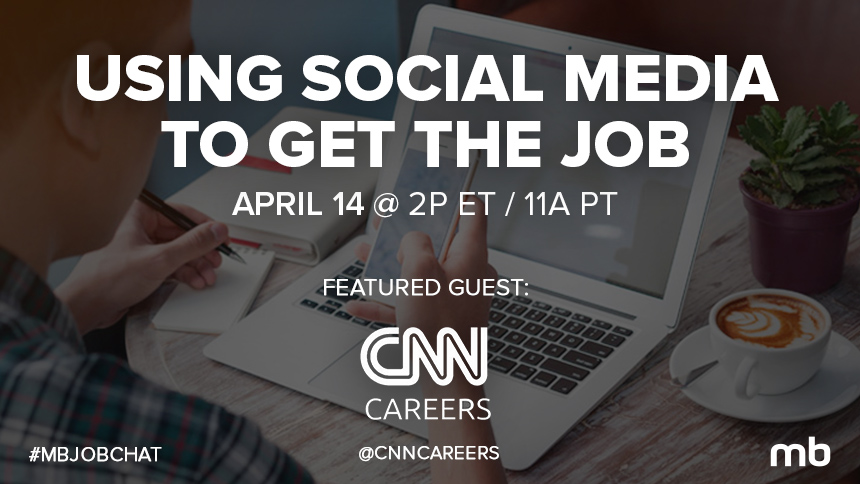
Some 93 percent of recruiters review a candidate’s social media profiles before making a hiring decision. Can your online presence stand up to the scrutiny? We’ll help you get there when we team up with the in-house recruiters of @CNNCareers on Thursday, April 14 at 2 p.m. ET to host our very first Twitter chat!

Join us for the hour as we chat with CNN Recruiters and job seekers like you to discuss what recruiters search for on social media profiles, what digital skills hiring managers are looking for, how you can best present your digital skills to recruiters, how to use digital platforms to score your next media job and more.

Who: @Mediabistro, @CNNCareers and YOU

What: #MBJobChat

Where: twitter.com/Mediabistro

When: Thursday, April 14 at 2 p.m. ET/11 a.m. PT

Special Bonus for Our Favorite Q&As
Mediabistro is coming to Instagram in May! If we retweet your awesome answers or questions during the chat, we’ll give you early access to our Instagram account so you can get in on the fun before everyone else.

Topics:

Climb the Ladder, Networking

Posts navigation

Older posts
Newer posts
Featured Jobs
Kirkus Media
Editorial Intern
Kirkus Media
New York City, New York (US)

Gaia Inc
MEDIA COORDINATOR
Gaia Inc
Louisville, CO

Gaia Inc
Global Paid Media Specialist
Gaia Inc
Louisville, CO

Gaia Inc
Director of Media Strategy
Gaia Inc
Louisville, CO

Hearst Television
Account Executive
Hearst Television
Milwaukee, WI, United States

All Jobs »
PREMIUM MEMBER

Josh Kelley

Mount Vernon, WA
15 Years Experience
I’m a traditionally published author of a spiritual living book (“Radically Normal,” Harvest House 2014) and have also written a full-length...
View Full Profile »
Join Mediabistro Membership Today

Stand out from the crowd with a premium profile

Mediabistro Logo Find your next media job or showcase your creative talent
  • Job Search
  • Hot Jobs
  • Membership
  • Newsletter
  • Career Advice
  • Media News
  • Hiring Tips
  • Creative Tools
  • About
Facebook YouTube Instagram LinkedIn
Copyright © 2026 Mediabistro
  • Terms of Use
  • Terms of Service
  • Privacy