

Back in 2002, Jessa Crispin’s job as a fundraiser for Planned Parenthood kept her occupied for all of one hour a day. Needing something to fill the other seven, Crispin started blogging about books. In 2003, her site, Bookslut had grown into a Web zine with a handful of writers, and Time named it one of the 50 best Web sites of the year. How they found her, Jessa doesn’t know. She wasn’t actively seeking stardom. Eventually, however, she did become a full-time writer — out of necessity. When she moved from Austin to Chicago and started job-hunting among nonprofits, prospective employers threw her name into Google to check her out. The name “Jessa Crispin” being somewhat distinctive, they inevitably stumbled across Bookslut — and the explanation of how it got started — and suggested that perhaps her passion lay elsewhere.
Today Bookslut is one of the leading literary Web zines, with about 9,000 unique visitors a day. Thirty to 40 writers contribute to the daily blog and write features, Q&As, and reviews for the monthly magazine. At a time when newspaper book review sections are folding and traditional book reviewers are grousing about the quality of criticism on the Web, Publishers Weekly declared that Crispin is “rewriting the rules of reviewing” and called Bookslut “one of the most provocative and erudite” of online book sites.
Also on Mediabistro
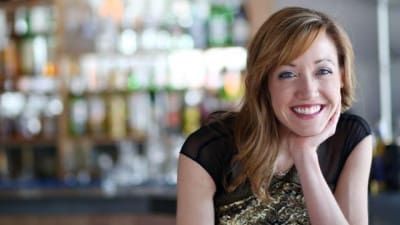

In addition to Bookslut, Crispin freelances for NPR.com’s Books We Like and for The Smart Set, the online reincarnation of the early 20th-century literary magazine that once featured the writings of Dorothy Parker, F. Scott Fitzgerald, and Theodore Dreiser. mediabistro.com caught up with Crispin to find out how she turned her literary musings into a leading Web zine.
Bookslut started out as a place to record your own thoughts, but today it’s fairly prominent. When did you realize it was having influence and resonance beyond just your friends?
It took three months for me just to check the stats to see if other people were reading it. It was sort of a surprise when I did and there were. There were also two major milestones. One was when Time called us one of the 50 best Web sites [in 2003]. And then, about six months before that, Neil Gaiman [of The Sandman comic book fame] linked to us and brought us a huge audience. I had not told Neil we existed, so it seemed surprising that someone found us on their own, especially someone like him. But I also realized [it had traction] when I no longer had to search for new reviewers and new writers, when they started coming to me and wanting to write for me.
How far into it did that start to happen?
About a year into it.
You’ve said you prefer the multiple-voice approach of a Web zine to the single-voice approach of a one-person blog. Why is that?
It’s helped me just so that I don’t get bored. Sitting there talking to yourself day after day, you get tired of yourself. It helps to invite some other people to join in the conversation. But also, I think it helps the audience, so they don’t get totally bored with you. One person may hate me but love Sticky Pages, which is our Tuesday blogging section. It just broadens your appeal.
You’ve watched other literary sites come and go over the past six years. Why have some succeeded and others failed?
The ones that have stayed around have very unique voices, and they’re updated on a very regular basis. The ones that have fallen away the most seem to be the ones where the writer was like, “Oh, I can do this too, but I’m not going to put that much effort into it.” It’s hard to get an audience if they don’t know when to check for updates.
Also in the last two to three years, there have been an overwhelming number of blogs about literature, so I can’t imagine how somebody outside of The New York Times, which just launched their books blog, or The New Yorker, which also launched a books blog, would be able to find an audience without some sort of already established site or established audience. I can’t imagine it would be easy to get anybody’s attention.
Why have you decided not to make Bookslut your full-time job?
We realized that trying to be supported completely by publishers’ ads wasn’t going to do it because they don’t advertise that much, especially online. So the idea of opening the site up for conventional advertising — the liquor ads and that sort of thing — that whole system is dependent on page views. It’s the Gawker way of running things. I realized Bookslut would probably have to turn into something [that] encouraged page views and would become something that I wasn’t proud of anymore.
You’ve said that, since the bankruptcy of the parent company of book distributor Publishers Group West, online ad sales from publishers have plummeted, so now you’re paying writers in books. Why do you think so many people, good writers, are willing to write without pay?
Part of is that we don’t put a lot of restrictions on what they’re able to write about. I don’t mind if they wander in territory that they didn’t initially sign up for. They appreciate that. And there are a lot of people out there who really enjoy writing about literature and the authors that they like. I guess I should have figured that out since I was doing it myself. It was sort of surprising when I found out there were others who wanted to do it, too.
Also, the other day I was talking to one of my feature writers, who writes books. She does criticism, and she said all publishers expect you to have an established platform when you come to them with a book. She said there’s no better way to build that platform than to do a consistent column or feature online, so people know where to find you.
Does she have to have to show traffic stats to the publishers to prove she has an audience?
She’s never asked me for stats. I think the name Bookslut carries enough weight these days that that’s all people really need to know.
Did that change your thinking about what you’re doing?
These things sort of momentarily freak me out, and then I try to forget that I know them.
| “I’m pleased as punch that the idea of the authority is going away. The New York Times never spoke to me. If you were one of those people who don’t agree that Philip Roth is the greatest American living writer, where were you supposed to go to find new books?” |
You’ve mentioned that you don’t follow your traffic all that closely. You don’t break down what your audience is reading, for example.
I’m afraid that will influence what I do on Bookslut. Once you start chasing the reader, that’s when the reader loses interest. There’s all this talk about what can we do to capture the attention of a particular demographic, but I think having a conversation is probably the least productive thing you could be doing. I like what we’re doing on Bookslut. Our audience likes what we’re doing on Bookslut. So I just sort of leave it at that.
If the stats started spiraling downward, then I would probably pay attention to see what’s going on. But as it is, we’re seeing consistent growth, so I try not to obsess over “Why do poetry reviews not get as many page views as the fiction reviews?” or “Why does this column not get so many hits?” I like what we’re doing, so I figure that’s enough. It’s a dictatorship; it’s fine.
A benevolent one.
Yes, I’m a very benevolent dictator.
What reactions do you get from authors you ask for interviews? Do they get what Bookslut is about and understand what you’re doing? Or do they think you’re coming out of left field and don’t understand how it fits into conventional book promotion?
Most authors like us unless we give them reason not to. Most writers like the enthusiasm, and they like that there’s a new, more approachable avenue that’s not The New York Times. Obviously we don’t get the traffic that The New York Times gets. It doesn’t give them the hit that that would. But at least we’re enthusiastic, and we’re paying attention.
What are your favorite sites to go to learn about new books?
I really like the Guardian books section a lot. As far as other blogs, I like Journalista [the blog of The Comics Journal] and Maud Newton — and I read Jezebel way too much.
What do you like about Journalista and Maud Newton?
I like Maud because she’s very thoughtful. She much more thoughtful than a lot of other bloggers, and she doesn’t have an ax to grind with anyone. I like that she keeps her distance from any sort of literary scene.
And Journalista is just… A lot of comic book Web sites are overrun with geeky nastiness, sexism, and weird obsessive-compulsive behavior. Journalista is not like that. It has a very good sense of humor.
What’s wrong with being a part of the literary scene?
I noticed that, when the literary blogs first started to be accepted as a credible thing, a log of bloggers would brag about what parties they got invited to, and there were pictures of them at the parties. And then those writers would get glowing notices in the blog. It seemed they were spending a lot of energy trying to get into the cocktail party scene. They were willing to trade their legitimacy for a party invite.
Many traditional book reviewers look still askance at online literary sites. In fact, The News Hour just had a debate on this very thing, after the Los Angeles Times jettisoned its standalone book section. Why the animosity?
Part of it is the disappearing newspaper book sections. It’s so hard to make a living as a book critic. The newspapers don’t pay very much for reviews. But people who had worked out a system saw the rise of Internet criticism, not even criticism, but just the blogs, at the same time as they saw newspaper book sections declining. I think they thought the blogs were the cause of the demise. But they weren’t. No blogger has ever said that their goal was to destroy the newspaper book section, or even that they thought they could replace it. But I think there was a lot of animosity because the reviewers’ livelihoods were disappearing, and they thought us young whippersnappers were invading their territory.
What do you think the world of book reviewing is going to be like 10 years down the road? What’s going to change? What are we going to gain? What are we going to lose?
There’s going to be a lot more original content online from both “legitimate” sources and so-called “non-legitimate” sources, the “legitimate” sources being The New York Times or The New Yorker or the like. A lot of lit mags will move online because a lot of them are hurting trying to meet printer costs.
With the demise of newspaper book review sections and the explosion of book Web sites, how are readers supposed to figure out where the voice of authority is? In the past, all you had to do was open your newspaper’s book review section, and there was your bible.
I’m pleased as punch that the idea of the authority is going away. The New York Times never spoke to me. If you were one of those people who don’t agree that Philip Roth is the greatest American living writer, where were you supposed to go to find new books? I think it’s great that that filter is changing.
As far as finding your authority, you just have to read a lot and find the person that you like or the book review section that you like. I get more accurate book recommendations from the London Review of Books than I’ve gotten anywhere else, and it’s taken me years to find that thing. I understand the exasperation, especially when so many books are published, hundreds of thousands of books are published in a year. It’s difficult for the publishers, for the writers, and for the audience, because nobody knows who to turn to. But I think the longer that we get used to this, the easier it will become. The blogs or publications that survive will survive for a reason, because of their quality and because of their dedicated audiences. I think things just haven’t evened out yet.
Are there any unexpected side benefits to being the founder of a fairly well-known Web zine?
It certainly opens freelance doors. I don’t have to make blind pitches. I can say, “Hi, I’m the editor of Bookslut,” and people already know where I’m coming from. That recognition has helped considerably. But also the books delivered to my doorstep are very nice.
Fill in the blank: If the Internet hadn’t come along and I wasn’t doing this, I would probably be working in/at ______.
A nonprofit. That’s what I was doing when I started Bookslut, and Bookslut turned into either a distraction or a course correction. I sort of wandered between the two. But I really loved working at Planned Parenthood.
Tips for starting your own literary Web zine
1. Find a niche. The literary zine market is saturated. To stand out, you’re going to have to focus on something in particular — like young adult novels or science fiction — where you have a chance of getting noticed.
2. Stay regular. “Regularity in posting is so important,” Crispin says. Audiences get created when readers make regular visits to your site. They’ll make those visits if they know when the new stuff is going up.
3. Trust your intuition. Crispin says she regularly gets unsolicited advice from all corners, including established figures in the literary world. So far, however, she’s followed her inner compass. After all, the Web is still uncharted territory. Nobody has the secret to what will make it work, including those operating from maps drafted in the offline world.
4. Find soul mates. Join forces with other writers whose aesthetic you share and trust. Multiple voices increase the chance a visitor will find something they enjoy, and common aesthetics ensure that the zine develops a distinct identity.
5. Don’t pander. Resist the urge to try to figure out what readers want and to give them that. It’s a really good way to chase them away. After all, readers are coming to your party. They want to see what you’ve got going on.
E.B. Boyd is a San Francisco-based freelance writer. She blogs about the future of the news business at future-of-news.blogspot.com.
Topics:
Mediabistro Archive