

Photo Credit: Willy Somma
Kate Bolick’s thought-provoking feature in The Atlantic on the social and economic forces shaping the contemporary romantic landscape was the talk of the town last November when the issue hit newsstands. (Bolick is only the third female author in the magazine’s history to appear on the cover.)
Also on Mediabistro

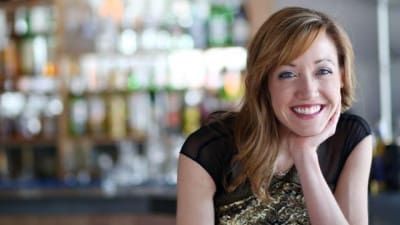
Entitled “All the Single Ladies,” the behemoth nine-page, 12,000-plus-word article explored how the decades-long ascent of women, dovetailing with the descent of men, was causing people to marry later and in fewer numbers. Readers flooded TheAtlantic.com with feedback, liked it over 50,000 times on Facebook, and basically buzzed about it so much that Today show came calling.
Not long after the story’s publication, news broke that Drop Dead Diva producer Josh Berman had plans to turn it into a TV show. Bolick also recently sold a book to Crown/Random House that is an outgrowth of the piece. But her seemingly overnight success is truly the culmination of years of hard work, a path that the Veranda culture editor and Domino alum says began with “spinning her wheels.”
You’re a contributing editor at The Atlantic. Did you pitch “All the Single Ladies”?
The editors asked me to look into what the worsening prospects for men could mean to the future of dating and marriage — that was the assignment. Then they said, “Write about it in the first person, draw on your own observations and experiences to give context to the story, and report.” It’s certainly a fear that men’s prospects are worsening — they’ve been really hit by the recession — but that doesn’t account for why I personally am unmarried at this age. A lot of [the recession] is taking place in manufacturing and labor [with] men that I don’t meet, generally speaking, in my day-to-day New York City life. It was when I hit on the current research around singles — that there are more single people now than ever before — that I found an access point into the story.
How much time, planning and research went into the story?
There were about six to seven weeks of research, reporting and traveling and doing all of that, and then a week-and-a-half writing the first draft. I started reading, calling around and talking to psychiatrists, sociologists and historians to get a sense of the larger conversation around marriage in contemporary America. My editors didn’t put any limits on my exploring, and that’s why the piece is as long as it is. Originally, the assignment was six to eight thousand words and it ended up being close to 13,000 words.
| “If a woman is writing about being unmarried, the first thing the reader thinks is, ‘How much of this has to do with what she looks like?'” |
Working with my editor, Scott Stossel, was an incredible experience because of the long conversations that I had with him about the research and where my thoughts were going. He’s an incredible question-asker and listener. I think of him as one of these rare editors who really knows how to delve into the process and delve into the mind of the writer.
The article generated a lot of buzz and feedback from readers. What was the most interesting or surprising comment you got?
Across the board, [responses have been] very personal. That’s been fascinating, being suddenly given access to such a wide range of people across the world and their innermost thoughts. One of my favorite responses was from a man in his sixties with a 35-year-old daughter, saying that she’s lovely, intelligent, she’s the apple of his eye, and she is not married and has no intention of getting married — a point of concern for him and his wife. But, after reading the article, they don’t feel concerned anymore. Then he went on to say, ‘If you had written this article when you were in your sixties, I wouldn’t say what I’m about to say’. And when I read that sentence I thought, “Oh no, it’s going to be another condescending note,” but he went on to say, “I detected some note of concern in your writing and I just wanted you to know that, I think you’re going to be fine. You’re going to continue to lead a very full, interesting life.” It was very sweet that he had just come in to this new way of thinking towards his daughter and was then applying it to me.
It’s unusual that, when most writers are not pictured alongside their work at all, you appeared on the cover of a magazine that doesn’t often have people on its covers. How did the editors or art directors approach you about that?
It wasn’t the original plan at all. The Atlantic had hired the graphic design firm Pentagram for new art direction and [when I found out that they were] thinking of including some photographs of me in the article, I thought, “That seems so funny and weird.” I hadn’t finished writing the piece yet when my editor called to say, “Now, they’re thinking about putting you on the cover.” That blew my mind. At the time because I was still writing, it just felt like another item I had to check off my list: show up at photo shoot.
My understanding on the reason they wanted to illustrate the piece with me is because it was in my voice, drawn on my experiences, [and the photos] further personalized the material. I had mixed feelings about it. I love The Atlantic, but I had been feeling critical of how it has handled so-called “female topics.” It seemed that they were always assigning “male topics” to men and “female topics” to women, like family, marriage and so forth. When they asked me to do this assignment I thought, “Oh great, I’m becoming part of the problem.” The cover seemed a cynical move to a degree. Would they have done this if the article had been written by a man? How much of this was having to prove something? If a woman is writing about being unmarried, the first thing the reader thinks is, “How much of this has to do with what she looks like?” I did have that critique of [my being on the cover], even though it was of myself.
| “Any freelance writer needs three pillars. One is where your heart is, and the other two pillars support that main one.” |
Is that when you started thinking of the story as something more than a feature? Why did you think it would be good for TV and that Drop Dead Diva‘s Josh Berman would be the right person to produce it?
Once I knew I would be on the cover, I knew that could generate more interest or it could’ve been a flop. Usually, a magazine comes out, people talk about it for a couple of weeks and then it disappears. I didn’t have a sense at all [of how the story could be adapted for television], and when I sent the piece to Josh Berman, the week the issue came out, it was just to get his take. It wasn’t to say, “Here, can you turn this into a television show?”
I had seen Drop Dead Diva and was surprised by the way he delved into women’s issues and comedy. I really liked it; I thought it was smart, contemporary and original. I sent the article to him saying, “What do you think? How could this be received in Hollywood? Would there ever be interest in something like this for television?” That was a whole conversation I didn’t know anything about. Part of my approaching him was that he seemed like someone who, best case scenario, would know how to work with the material in an intelligent way and could give me some perspective based on what his response would be. Berman is a really smart, really energetic, really nice guy. I like how hard working he is and how much vision he has about his own career and the things he tries to do with television. It turned out that he loved the article and wanted to option it with Sony, which was incredibly lucky.
Once the idea is sold, how involved will you be in the day-to-day writing or producing?
I will have co-producer and creative consult credit. As far as I understand it, that means I will have input into, if I want to, conversations around the story line. I won’t actually be writing the show but I can have creative input, which sounds great to me. I’ve never written for television. I’ve never wanted to write for television, but now that this is happening I think it’s a great way to learn about writing for television, and I’m really excited about possibly going in that direction and exploring that world. I’m really glad about the role I have. It’s Josh’s show, he’s driving the ship, and he’ll be writing the show. That’s the way I want it, but I love that I get to have some input as well. I feel so fortunate.
Kate’s tips for successful freelancing:
1. Keep your day job, sort of. “With freelancing, even if you’re getting tons of work, you still don’t know what day the paychecks are going to arrive, you’re beholden to your editors and other people, and you’re alone for so much time. I love the freedom and the range of freelancing, but I’ve certainly been at my happiest when I’ve had some kind of editing gig going on in the meantime.”
2. Carve out a niche. “I really like writing about ideas, but it’s harder to get those assignments. It means writing a lot of lower-paying book reviews and essays, so I’ve carved out this sideline as a design writer so I can write for glossy magazines and get paid glossy rates. That’s made it possible for me to pursue the other kind of writing that I feel most invested in.”
3. Support your career with three pillars. “A novelist friend of mine, Gary Sernovitz, gave me some advice years ago: Any freelance writer needs three pillars. One pillar is where your heart is, the topics that you want to write about but don’t necessarily expect to get much money for, and the other two pillars support that main one. Find two other pillars you know you can pursue authentically.”
Topics:
Mediabistro Archive