Mediabistro Logo Mediabistro Logo
  • Jobs
    Search Creative Jobs Hot Jobs Remote Media Jobs Create Job Alerts
    Job Categories
    Creative & Design Marketing & Communications Operations & Strategy Production Sales & Business Development Writing & Editing
    Quick Links
    Search All Jobs Remote Jobs Create Job Alerts
  • Career Resources
    Career Advice & Articles Media Industry News Media Career Interviews Creative Tools Resume Writing Services Interview Coaching Job Market Insights Member Profiles
  • Mediabistro Membership
    Membership Overview How to Pitch (Premium Tool) Editorial Calendars (Premium Access) Courses & Training Programs Membership FAQ
  • Showcase
    Featured Creative Stories Submit your Story
  • Log In
Post Jobs
Mediabistro Logo Mediabistro Logo
Search Creative Jobs Hot Jobs Remote Media Jobs Create Job Alerts
Job Categories
Creative & Design Marketing & Communications Operations & Strategy Production Sales & Business Development Writing & Editing
Quick Links
Search All Jobs Remote Jobs Create Job Alerts
Career Advice & Articles Media Industry News Media Career Interviews Creative Tools Resume Writing Services Interview Coaching Job Market Insights Member Profiles
Membership Overview How to Pitch (Premium Tool) Editorial Calendars (Premium Access) Courses & Training Programs Membership FAQ
Featured Creative Stories Submit your Story
Log In
Post Jobs
Log In | Sign Up

Follow Us!

Skills & Expertise

What Are the Rules About Off the Record? A Reporter’s Guide

The distinction between on and off the record isn't as obvious as most people think. Here's how to navigate source agreements without getting burned.

off the record portion of an interview
John icon
By Celeste Mitchell
Celeste Mitchell is an editorial writer and editor with nearly 30 years of experience creating consumer lifestyle content for publications including Marie Claire, Cosmopolitan, Good Housekeeping, and SELF. She previously served as Deputy Editor at Cosmopolitan and taught journalism courses through Mediabistro.
3 min read • Originally published November 21, 2008 / Updated March 19, 2026
John icon
By Celeste Mitchell
Celeste Mitchell is an editorial writer and editor with nearly 30 years of experience creating consumer lifestyle content for publications including Marie Claire, Cosmopolitan, Good Housekeeping, and SELF. She previously served as Deputy Editor at Cosmopolitan and taught journalism courses through Mediabistro.
3 min read • Originally published November 21, 2008 / Updated March 19, 2026

Here’s a popular journo question: “I’ve read threads about ‘on’ vs. ‘off’ the record, but, for etiquette purposes, how is this determined?”

You’d be surprised how often we hear this question. And not even just from fledgling reporters—veteran journalists struggle with the fine distinctions among the various levels of on-the-record-ness. This terrain can sometimes be tricky, so we turned for guidance to Brent Cunningham, managing editor of the Food & Environment Reporting Network, formerly the deputy editor of the Columbia Journalism Review.

“The distinction between on and off the record isn’t as obvious as most people think,” Cunningham warns. “Two people can have completely different understandings of what the ground rules are.”

The stakes for getting this right have only increased. As newsrooms shrink and reporters juggle more stories with fewer editors to consult, a misunderstanding about attribution can end a source relationship, tank a story, or worse. Clear negotiation at the start of an interview matters more than ever.

Whenever you interview someone, whether on the phone or in person, your first move is to identify yourself as a reporter and to offer a general explanation of the story you are attempting to write. From that point on, everything the source says is assumed to be on the record unless otherwise stated. But the start of the conversation is the time for the reporter to negotiate the terms. Spell it out clearly so that both of you agree on how the information will be used and who will get credit. And anytime you feel the agreement unraveling, reconfirm to avoid a misunderstanding.

Here’s the common terminology:

On the record: Everything in the conversation can be used and attributed to your source by name and job title. “If there is reason to believe that this person is not media savvy, you might want to explain that what they say may very well be quoted in a news story,” says Cunningham. “I often hear about reporters who don’t clarify this and their sources end up feeling duped.”

Off the record: Nothing the source says during a discussion can be used in any way, shape, or form. “You cannot put this into your article,” Cunningham says. But that doesn’t mean you’ve wasted your time. “You can shop it around to other sources and see if you can get it on record elsewhere.” If you do decide to take this route, never reveal your original source. “You can also go back to your off-the-record source later in your reporting process and attempt to negotiate things back on the record.”

On background and not for attribution: Though some reporters will argue there’s a shade of difference between these two terms, whatever distinction exists is sufficiently unclear to be meaningless. (After all, the whole point is to make sure both the reporter and source clearly understand the ground rules.)

Essentially, all information received in these contexts can be quoted, but it cannot be attributed to the source by name. Instead, a general and vague title is used such as “White House official” or “assistant to the governor.” Because in some cases a descriptor will end up unintentionally revealing the source’s identity, Cunningham points out, “you have to negotiate this with the person at the time of the interview.”

The generally accepted rule is that off the record and on background must be invoked in advance. So if, for example, George W. Bush says to you, “Let’s go off the record here—I really did make up all that stuff about WMD in Iraq,” you can’t quote him on that. But if he says, “I really did make up all that stuff about WMD in Iraq—wait, that was off the record,” you’re well within your rights to use it.

Topics:

Climb the Ladder, Skills & Expertise
Journalism Advice

Inside the Front of Book: How to Shape a Magazine’s Identity

Editors reveal their strategies for winning sections

Ellie-nominated mags
By Samantha Melamed
6 min read • Originally published April 19, 2010 / Updated March 19, 2026
By Samantha Melamed
6 min read • Originally published April 19, 2010 / Updated March 19, 2026

Glamorous celebrity profiles and hard-hitting investigative reports may be the domain of the feature well. But when it comes to shaping a magazine’s identity, expressing its voice, and keeping readers engaged issue after issue, back- and front-of-book departments are editorial’s workhorse. “They’re fundamental to the success of a magazine,” says GQ deputy editor Michael Hainey, “If your sections aren’t good, your magazine won’t be either.”

The 2010 American Society of Magazine Editors’ National Magazine Awards will honor some of the year’s best magazine sections, ones that exemplified stellar service writing while innovating dynamic new ways to present information and entertain audiences. Those that made the cut: Esquire‘s unfailingly clever Man at His Best guide to pop culture, fashion, drinks and lifestyle; GQ‘s impeccably stylish Manual section on grooming and fashion, and its recently inaugurated, entertainment-focused GQ Intelligence department; New York‘s back-of-book Strategist, the all-knowing resource for food, real estate and shopping; and Wired‘s Start, the front-of-book repository for all things innovative.

“When you look at these four magazines, they all have a very firm idea of what their readers are most interested in and a very firm grip on a stylish kind of service journalism,” says Sid Holt, chief executive of ASME, which awards the Ellies. “Many of these finalists combine that with an intelligence, cleverness… and a last thing — a sort of X-factor — some spark or element of the unexpected that makes the section especially captivating for readers.”

Editors from all four nominated magazines try to put their fingers on just what elevates a magazine section to greatness. Here’s their advice.

1. Shun the Obvious

The X-factor Holt mentioned is the starting point for planning the front of the book, says Ross McCammon, articles editor at Esquire and top editor on Man at His Best. “My first note that I ever got from my boss [on a proposed article] was, ‘This seems like something a magazine would do,'” McCammon says.

“That, first of all, was the most confusing note I ever received, until I understood what he was talking about.” The message, of course, was that front-of-book articles needed to reach beyond the conventional, “either stylistically with the writing, with the format or with the opinion itself,” he says. “There needs to be something surprising about it.”

So, in a recent issue, instead of reviewing Ben Stiller’s new movie, Greenberg, in their March issue, Esquire ran an ode to the actor’s touchingly awkward sex scenes. And rather than print an essay about HBO’s show Treme, they ran a quiz for readers to determine whether they should bother watching it.

“A lot of people are going to be covering that particular show,” McCammon says. So Esquire decided on a quiz to both inform viewers about the show and offer a commentary on the time commitment such a series requires. “And frankly,” he adds, “I think the format is good for jokes. The cool thing about a quiz is that it’s sort of absurdist and useful at the same time, and to me that’s a beautiful thing.”

2. Put Relevance First

At New York, editors keep the Strategist section relevant by synthesizing current events and service journalism into articles that are both useful and timely, says deputy editor Jon Gluck. “We try to look for things that are news-driven and that help solve New Yorkers’ problems in a way that’s ambitious, imaginative and super useful to them,” he says.

“Whenever an urban living problem comes up, we try to jump on it.” So, for example, when Mayor Michael Bloomberg began his war against salt, Strategist put together an extensive salt feature, analyzing the sodium content in favorite New York dishes, surveying gourmet salts and offering a Morgan Spurlock-like diary of a nine-day salt binge.

Gluck says that, as a weekly section, Strategist needs to be on the cutting edge of its beats — food, real estate and fashion — to deliver that relevant news. “The quality of the section depends on how authoritative and useful the information is, and that depends on the people we’ve got covering these worlds,” he says. The writers all have “an almost obsessive interest in their beats. … That depth of knowledge is what we’re for.”

3. Do What Magazines Do Best

Providing useful, well-written and skillfully reported information is important, but it’s not enough anymore, says Wired senior editor Robert Capps. After all, readers buy a magazine like Wired because it offers a unique voice and because the physical experience of reading the magazine in print is something that can’t be had elsewhere.

So, Capps, who oversees Wired‘s Start section, looks for stories that “convey the Wired sensibility: enthusiasm about technology, a DIY attitude and a certain level of smarts.” After that, he says, it’s about presentation. “The really cool thing about the front of the book is that it’s so collaborative. It really takes advantage of the magazine format. The best front-of-book sections have really dynamic interactions between editorial and art departments to come up with lively takes on information.”

Covering business, technology, science and “general geekery,” Start includes anything from a flow chart offering advice on whether to “Delete that Tweet” to a chemical analysis of Scope to the long-running “Dangerous Object of the Month,” (recently, Pure Cap Hot Sauce).

Combining novel articles with bold presentations and a mix of reliable “furniture” pieces that readers turn to each month is essential, he says. “The Internet is so voracious at telling people that stuff exists, so you need to have an attitude and to take advantage of the specific medium,” Capps says. “The best sections really leverage all of that to their advantage.”

4. Assume the Role of Curator

The transformation and fragmentation of the media market, and the impact of the 24-hour online news cycle, have been very much on the minds of editors at GQ, Hainey says. In fact, the magazine launched GQ Intelligence, one of its two nominated sections, just last year, as an effort to re-imagine arts and entertainment coverage in the Internet age. “We launched that section with the intent to answer that single question, which is, ‘What really matters in the pop culture universe?'” he says.

“There are a dizzying number of entertainment options that come through the filter,” he says. “So that role of the cultural filter is for a magazine even more important.” At Intelligence and GQ‘s other nominated section, Manual, the idea of distilling content into what’s most interesting and essential drives coverage of everything from fashion and grooming to politics and sports.

Hainey points out that GQ‘s considers that sense of authority equally essential to covering the season’s must-have cotton suits, artisanal butchers or the political implications of The Clinton Tapes. Across the board, he says, “There’s a great sense of responsibility those editors carry in filtering content and putting that imprimatur on the material.”

5. Prepare to Go Digital

Internet adoption has already propelled the magazine industry to a pivotal moment, and now, magazine publishers are betting on the transformational impact of the Apple iPad and other tablets coming onto the market this year.

“Mr. Magazine” Samir Husni, professor at University of Mississippi, says the industry can’t afford to ignore its digital future — and format-forward front-of-book sections are poised to lead that charge. Wired, for one, has already been attracting buzz for its tablet edition, which premieres alongside the June issue.

Capps says editors are working with developers to offer videos, animations and other online extras, “so when you look at the iPad you’ll get that extended dance remix,” of what’s in the print edition. He says that, while the print edition will retain primacy, “I can imagine that a great tablet feature will help elevate something to make it into the section.”

Husni says that creating an experience, engaging and activating readers, has always been key to producing a successful magazine. Now, he says, that experience needs to translate across multiple media. “The more service and the more interactivity [magazines] create, whether using new technologies like augmented reality or text messages, and the more we can make our print editions interactive, the better those sections will be. That’s what our audiences are looking for,” Husni says. “That’s the only way we can ensure a future for print in a digital age.”

Topics:

Go Freelance, Journalism Advice
Advice From the Pros

Hey, How’d You Start Repping A-Listers, Ken Sunshine?

This PR superstar offers advice on snagging clients

ken-sunshine-feature
By Jason Chupick
5 min read • Originally published May 3, 2010 / Updated March 19, 2026
By Jason Chupick
5 min read • Originally published May 3, 2010 / Updated March 19, 2026

Ken Sunshine’s Sunshine & Sachs PR agency isn’t in the industry directories. Sunshine doesn’t blog. He doesn’t even have a Web site. He’s been known to turn down A-list celebrities calling for his help. “We don’t play it safe, we’re not genteel,” he says. “We name names and battle the media when we have to.”

As Sunshine sees it, his passion and his ability to fight for those he represents are what attracts new business, though his client list full of marquee names doesn’t hurt. He’s worked with Barbra Streisand, Leonardo DiCaprio, Michael Moore, and Justin Timberlake, though if you question him about his celeb clients, he’ll cut stop you in your tracks: “Look, we don’t need to get into that.”

He prefers keeping the conversation to his nonprofit clients such as the Natural Resources Defense Council, Calvary Hospital, and the New York Organ Donor Network. We spoke with him about how he’s forged his business by fusing celebrity representation with political interests, and why he doesn’t shy away from tangling with the tabloids.

Did you head to a PR agency when you graduated from Cornell?

No, I began my career at a social service agency on Long Island working with troubled teens. I got sucked into Democratic Party politics soon after.

I was elected as a George McGovern delegate and went to the DNC convention in Miami 1972.

How did you get involved in celebrity PR?

After working on a host of campaigns — local and presidential — in the 70s and 80s, I got sick of the Republicans winning everything and took a job as a junior publicist at ASCAP (American Society of Composers, Authors and Publishers).

It was great. I stayed politically active and got to work with some of the biggest entertainers of that era.

Why did you decide to return to politics?

I got a call from David Dinkins. I believed in what he was doing and agreed to give him a year of my life. I moved up from campaign aide to chief of staff when he was elected the first black mayor of New York in 1989.

Who/what were your breakthrough clients ?

The Democratic National Convention when it came to New York in 1992 and Barbra Streisand.

What are you working on lately?

I represent Calvary Hospital in the Bronx. I have to play the heavy in their battle with the insurance companies.

They’re a great example of the best of the Catholic Church. They do pioneering work in cancer treatment and pain management. Ken Raske and the late John Cardinal O’Connor got me involved. Frank Calamari [Calvary’s CEO] and Dr. Michael Brescia (medical director) are saints.

My work with the New York Organ Donor Network is important, too. There’s such a low percentage of donors in this city.

These are the things that are important to me.

How does your celebrity work fit in?

I’m very interested in music and entertainment. Many of [Sunshine & Sachs’] clients have causes, like Leonardo DiCaprio, and filmmakers like Michael Moore and Robert Greenwald (Outfoxed, Wal-Mart: The High Cost of Low Price).

We’re relatively small and everyone here has interests and passion. While big agencies see opportunity to do crisis work for Wal-Mart, we’d rather work with a guy like Greenwald who goes after them.

You keep clients for a long time. What are you doing to make them happy?

I can’t seem to get rid of them!

It’s great to work with people for a long time. You can build something bigger and focus on what they care about.

You’ve been quoted on CNN as saying the tabloids are out of control. Are you biting the hand that feeds you?

My clients hate being in the tabloids. People like Affleck and DiCaprio were being absolutely hounded and I had to do something.

I was the only one talking about the outrageous conflicts of interests in [the PR] business. There are firms trading secrets of their A-list clients to bump up their B- and C-level clients — it’s terrible.

And the low level of sophistication of these PR people in L.A. is shocking. If I never went on TV to talk about this again, I’d be happy. My clients respect my position and I get the pick of the litter.

You don’t like being on TV?

Publicity for yourself isn’t the best way to get clients.

It does attract some but it’s hardly the reason I do it. If it’s something my clients feel deeply about, I will. It’s not the best use of my time — I turn down most media requests.

Did your business falter when the Republicans took over in 2000?

No, actually we’ve had rapid growth over the last seven years. We’re not invited to anything that’s happening in Washington, so we’re able to focus on our work. We weren’t dependent on dot-com money, either.

What are your methods for dealing with the media?

We always joke at the firm that the press is always right. There will always be a next time. Sometimes you have to go toe-to-toe with them but I know how to pick my [battles].

That’s the difference.

There’s an approach [that falls between] between kissing ass and getting angry. Our people know their stuff and work hard to temper negative coverage, rather than get mad. The media won’t respect you if you lose it too often.


Tips on building a PR clientele you can get behind:

1) Work on what interests you, and don’t be so corporate.
Fight the companies who are exploiting people and polluting the environment.

2) The worst thing you can do is to complain to your clients about the media.
Take the time to counsel your clients and tell them why something is not working.

3) Be knowledgeable.
The journalists you’re pitching will respect you.

4) If you’re starting an agency, don’t bother with a cattle call approach to new business pitches.
Focus on the areas you know, and aspire to earn the respect of the people you want to work with.

5) Be passionate.
It will help your career. Go with the underdog.

This interview has been edited for length and clarity. 

Topics:

Advice From the Pros, Be Inspired, Hey, How'd You Do That?
Advice From the Pros

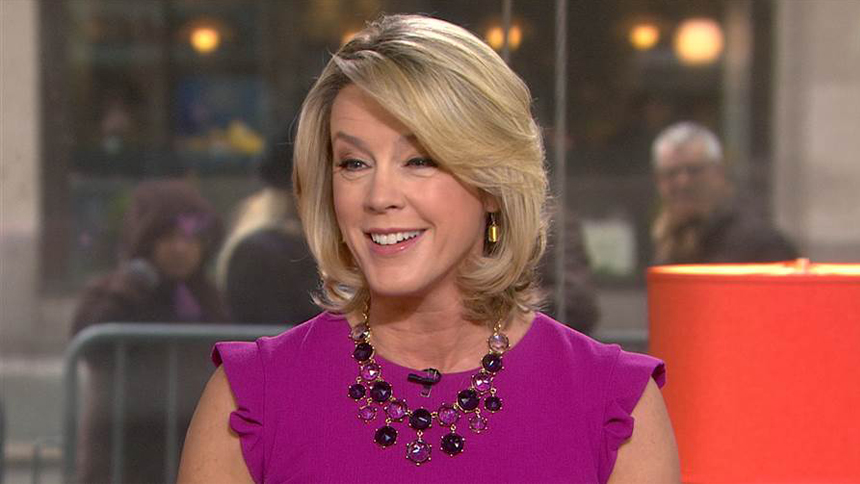
So What Do You Do, Deborah Norville, Inside Edition Anchor, Bestselling Author?

TV vet and bestselling author talks balancing her life, staying positive

Deborah Norville, Inside Edition Anchor and Bestselling Author
Admin icon
By Diane Clehane
Diane Clehane is a New York Times bestselling author and award-winning journalist who has covered the British Royal Family for over two decades, with bylines in Vanity Fair, People, Forbes, and Newsweek. She is a regular commentator on CNN and NBC News about the royals.
11 min read • Originally published November 20, 2010 / Updated March 19, 2026
Admin icon
By Diane Clehane
Diane Clehane is a New York Times bestselling author and award-winning journalist who has covered the British Royal Family for over two decades, with bylines in Vanity Fair, People, Forbes, and Newsweek. She is a regular commentator on CNN and NBC News about the royals.
11 min read • Originally published November 20, 2010 / Updated March 19, 2026

Deborah Norville is first and foremost a survivor. This broadcast veteran endured one of the most brutal cases of career- and character-bashing ever inflicted on a television personality in the nineties, but emerged stronger for it. You can read more about it here, or just Google “Deborah Norville replaces Jane Pauly”.

While on maternity leave the following year, Norville, in an interview with People, was photographed breast feeding her son. The photographs allegedly angered NBC executives, and it was announced in April 1991 that Norville would not be returning to Studio 1A.

Her replacement: Katie Couric.

Today, the resolutely outspoken broadcaster/author makes sure she’s heard whenever she has something to say. In her book, Thank You Power, which cracked the New York Times How-to/Advice best seller list, Norville uses scientific evidence to show the positive effect gratitude can actually have on one’s life, health, and wealth.

It’s certainly worked for her.


Name: Deborah Norville
Position: Anchor, Inside Edition; author, Thank You Power: Making the Science of Gratitude Work For You.
Resume: Prior to joining Inside Edition in 1995, worked at CBS as anchor of America Tonight and correspondent for 48 Hours and The CBS Evening News. Launched nationally syndicated Deborah Norville Radio Show on ABC News Radio Network in September 1992; hosted for one year. Named co-host of Today in January 1990 after serving as the show’s news reader and a stint as anchor of the network’s NBC News at Sunrise. Left Today on maternity leave in February 1991. Briefly anchored Deborah Norville Tonight on MSNBC while simultaneously hosting Inside Edition. Started her television career while still in college as a reporter and weekend anchor for WAGA-TV in Atlanta, Georgia. Author of several books.
Birthdate: August 8, 1958
Hometown: Dalton, Georgia (“The carpet capital of the world. We make enough carpeting on an annual basis to pave a six-lane highway around the Equator!”)
Education: University of Georgia
Marital status: Married to Karl Wellner; three children.
First section of the Sunday Times: “I usually get The Week in Review because my husband stole the Style Section. [Laughs] I glance at the front page but then I go for Week in Review because I feel if I read that, I’ve accomplished something.”
Favorite television show: “My husband and I like Brothers & Sisters right now. On the surface one would think, ‘This isn’t real life.’ The reality is, oh yes it is. Get five families together and chances are every scenario that’s been depicted on this show will be present in one of five families. You won’t find them all in one family, that part is a bit unrealistic. But they do have Sally Field as their mother so if that were the case, maybe you would. The acting is fantastic and you don’t see a lot of great acting all that often.”
Guilty pleasure: “Potato chips and milk.”
Last book read: “I’m one of those people where the most recent is always my favorite. Right now I’m working on a book called Richistan by a Wall Street Journal reporter [Robert Frank]. The book is not new. It was on my husband’s table and I stole it when he finished it.


Next month will mark your 30th anniversary in broadcasting. How would you say you’ve gotten to where you are?

A lot of hard work. An inability to be personally satisfied with my own effort. I would say also unquenchable curiosity.

What’s the secret to your longevity?

I think it’s being nice. I really do. When the media turned on me and made me target practice, I didn’t lash back — in part because I was under a gag order. [Laughs] I could have lost my contract if I had. [Laughs]

Really?

Oh yeah. I was ordered by bosses at NBC to not speak to the press.

Did you think that was a good idea?

I thought it was insane.

I said to my agent at time, “This is crazy. How can you tell someone who is in the press to maintain a ‘no comment’ stance?” He said, “First of all, you’re talking about network brass.”

[Laughs] Secondly, he said, “You’ve been given a direct order, and if you now take action contrary to what they’ve ordered you not to do, they could hold you in breach.” So now it’s turned into a legal thing.

If I had opened my mouth and done what my instincts were — which was to tell my side of the story and explain all the answers to the questions that were going unanswered by anyone — at the very least my version of events would have been out there. Say what you want about me, but Norville speaks the truth.

More importantly, I would have at least felt like hey, at least I defended myself. Que sera, sera. What happens, happens, but I did what I could.

How did you deal with the pressure?

I sewed. It’s funny, the only interview I did grant was to Guideposts. They had called me in the thick of all the craziness and wanted to do a piece. I thought, “You know what? I bet those folks don’t even read Guideposts” — an ecumenical Christian-focused little magazine that my mother had always read for years — so I thought, “What the heck?.” So I said, “Yeah, sure.”

They asked me the same question: “How did you get through it?” I said, “My faith” — because I am a born again Christian. I do believe there is a purpose to everything, and the hardest thing is to wait for that purpose to be revealed on God’s time, because we’re type-A people — God give me patience and give it to me now! But really it was my faith and it was my sewing machine.

The reason the sewing machine worked for me was because I was still showing up for work every day. Heck, I won an Emmy while all the craziness was going on! It certainly wasn’t that I wasn’t well-equipped for the job. It was obviously political stuff — I was younger and blonder than Jane Pauley. But the sewing helped me, because while I was going to my job day in and day out, there wasn’t a whole lot of fulfillment.

I could pull out the sewing machine — at the time I was expecting a child and decorating the baby’s nursery — and I could work on the window shades or crib bumper. I could finish it and put it up and feel really good about it. There was a sense of satisfaction. That was the one thing they weren’t saying — “She’s a lousy seamstress.”

I did some research into what was being written about you during that time and was shocked to find a piece in The New York Times by Walter Goodman, which ran on January 9, 1990. He wrote: “For any viewer who might find Ms. Norville’s good looks a bit too much so early in the day, her style is reassuringly down to earth.” He also called you a “blonde glamour puss” in the piece. How does such blatant sexism look in your rear view mirror now?

The same way it looks to everybody else — You’ve got to be kidding!

It was the 1990s, not the sixties…

No, it wasn’t the sixties or the era of the weather bunny. I might point out that at an even earlier time in the morning, apparently those same “good looks” were sufficient enough to bring the ratings up 40 percent on the program I was anchoring.

The whole thing was just wank. It was ridiculous. With the benefit of hindsight it is even more laughable. But at the end of the day, the net result was a woman who had worked incredibly hard from the age of 19 onward and had earned every opportunity she ever got and was thrown out on her ear.

But no one ever said when we come out of the womb there is someone standing there who says, “Welcome to the world. It’s going to be fair from here on out.” It’s not. There are no guarantees made to anyone. None were given to me. That’s okay because I’m a big believer in hard work.

The same work ethic that got me on Today at the age of 29 got me back to where I’m fronting a show that 5.2 million people watch every day. That same work ethic helped me do the research for a book that’s about a fundamental truth that sold enough copies to make the New York Times top ten list.

That same work ethic enables me to do the juggling act and have three children that are incredibly cool kids and has kept me married for 20 years.

Some times the breaks go your way and sometimes they don’t.

Was that an impetus for Thank You Power? How did that come about?

It was just a hunch.

The good news about my job is that I work on a show that has got great currency with the viewers. Inside Edition is a really solid show, and because I’ve been there for a really long time, it’s not hard for me to write the show. I can do my research quickly. I had a little extra time on my hands and it just occurred to me that when I looked for the silver lining, I felt my life went better.

I’m enough of a cynic doing this for 30 years that I thought, it’s better because you want it to be. So, I thought, “I’ll see if there’s anything to it or if I’m just blowing smoke.” I put on the research hat. I started going into the academic journals. There’s a lot of garbage out there, but when you do sift through it, you do get to some kernels of valid, properly executed studies.

That was how it happened. It was really idle curiosity. It wasn’t something I did every day. It was really over the course of two years, and once I started getting into something, it was like peeling back an onion.

That’s when I went down the avenue on positive affect — that your cognitive thinking can be improved, and then it was wow, that’s really neat. You can actually influence your body’s response to stress. You can actually lower your blood pressure. This is unbelievable.

Did you ever see that movie A Beautiful Mind with Russell Crowe? Remember when he was flipping out and you could see those numbers and things would appear? It was exactly that way — all this disparate data and all these really cool surveys — and suddenly I just saw these lines which were not tangential that definitely connected this to this to that.

I thought, “I’m going to weave something together and I think it’s going to be good.” It was definitely not hard labor to do this. I pulled a couple of all-nighters — and that’s because I tend to let deadlines get way too close. I think that’s a hallmark of people who are directed and focused — sometimes you need the pressure of a deadline.

You talked earlier about making career decisions based on what was best for your family. Inevitably, whenever I talk to a woman with children for this column, the conversation turns to the juggling act that is working motherhood. How do you do it?

Finding decent childcare is the hardest part of it all.

It’s not a euphemism that it’s hard to find good help; it’s impossible. If you don’t have family that lives nearby — and my husband and I don’t — it’s very difficult.

When they were really small, I was very lucky. I had incredible reliable babysitters or nannies or a combination of all of the above, so I was able to patchwork something together. But I have to say it wasn’t without an unbelievable amount of stress. When they were little there wasn’t a business trip I didn’t go on where I didn’t worry.

You wrote extensively about suffering from depression in a previous book. Is that something in your research you’ve found an endemic to women in today’s society where the pressure to “do it all” and “have it all” is so great?

At any given time 20 percent of the population is depressed.

According to the World Health Organization, by 2020 it will be the second leading cause of death. I don’t know if they don’t throw heart-related issues in there. Now that I’ve done a book on the nuances of science I’m not nearly as fast and loose.

I qualify everything. But that’s the official statistic, which is frankly why a book like Thank You Power is such a cause. It’s not about selling a gazillion copies. It’s about giving people strategies and tools that they can use in their own lives to help them cope better.

For me, Thank You Power has helped me do that. I never knew that’s what it was. It’s obviously been something I’ve employed for a very long time. I just coined the term, but this notion of the power that comes from recognizing the good in my life I think has enabled me to handle all the moving parts.

What would you consider your greatest success?

It’s corny to say your kids, isn’t it?

That’s a very popular answer, actually.

What gives me the greatest sense of pride is when I take a step back and look at my life as a moving picture. What I see is that all the parts seem to move in a beautiful, synchronized dance. There are a lot of parts, but they don’t seem to jar against each other.

I think that’s what I’m most proud of. I look at my husband and think, “Oh boy, did I get lucky.” I look at my kids, who despite their mother’s career, are really sensitive, kind, interested people.

Look, I’m not doing a show where we’re going to help you understand why the war in Iraq seems to not be going away, but there are moments during my show when people watch and feel uplifted, entertained and happily transported away, and there’s benefit in that, too.

What about your biggest disappointment?

[Sighs] I don’t really have one.

The obvious one would be I’m disappointed by the way the NBC thing turned out, but you know what? Those were people who let me down and that will always happen. My biggest disappointment? That I haven’t lost those 15 pounds I’ve been trying to lose.

I’ve learned to find blessings in my disappointments so there really are no big ones.


[This article has been edited for length and clarity.]

Topics:

Advice From the Pros, Be Inspired, Interviews
Advice From the Pros

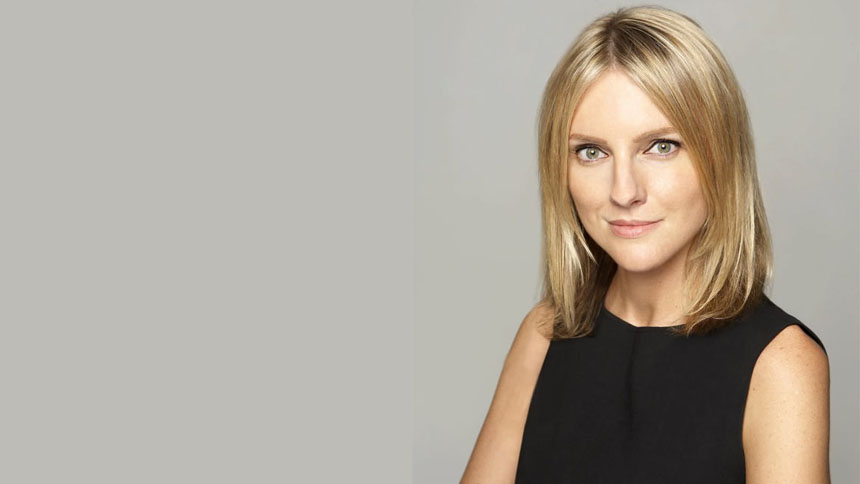
So What Do You Do, Laura Brown, Features & Special Projects Director, Harper’s Bazaar?

She dreams up covers and features to keep Bazaar competitive

laura-brown-feature
Admin icon
By Diane Clehane
Diane Clehane is a New York Times bestselling author and award-winning journalist who has covered the British Royal Family for over two decades, with bylines in Vanity Fair, People, Forbes, and Newsweek. She is a regular commentator on CNN and NBC News about the royals.
13 min read • Originally published October 20, 2011 / Updated March 19, 2026
Admin icon
By Diane Clehane
Diane Clehane is a New York Times bestselling author and award-winning journalist who has covered the British Royal Family for over two decades, with bylines in Vanity Fair, People, Forbes, and Newsweek. She is a regular commentator on CNN and NBC News about the royals.
13 min read • Originally published October 20, 2011 / Updated March 19, 2026

As features and special projects director of Harper’s Bazaar, Laura Brown works closely with editor-in-chief Glenda Bailey to create the fashion magazine’s most buzzed-about stories and celebrity covers that have garnered more than their fair share of ink. When she’s not in negotiations with Hollywood’s gatekeepers for access to the A-list, Brown moonlights as the magazine’s public face.

She sent The Simpsons to Paris to meet Donatella Versace and Marc Jacobs, brokered a kiss and make-up session between Courtney Love and Karl Lagerfeld after the rocker riled up the designer by wearing fake Chanel, and convinced waifish stylist Rachel Zoe to pack on prosthetic pounds for some of Harper’s Bazaar‘s most memorable photo shoots. It’s all in a day’s work for Laura Brown.

It’s heady stuff for the Aussie who grew up on a farm in Sydney and moved to New York “to be where things happened.” Brown landed in America on Sept. 4, 2001. “It was Fashion Week and I’d gotten into the Marc Jacobs show. It was all so glamorous. There were celebrities everywhere, and there was a big buffet. It was like some big Roman feast,” she recalls.

It was a momentous evening for the aspiring fashion journalist. “I was with a French girlfriend and I remember walking out to the end of a pier downtown and looking out at the Twin Towers and thinking, ‘Wow, look where we are! I’ve made it.'”

It was just the beginning of Brown’s rapid rise through the fashion ranks. Before coming to New York, she’d worked at Harper’s Bazaar Australia as features editor but came to the states with no job lined up. Instead, she freelanced for her former employer and did stories for a few Australian and British newspapers. She was on the brink of moving to Los Angeles (“I was dating a guy there”) when W hired her as senior editor for the writers from the European bureaus. Brown then moved to Details to explore “the foreign land of men folk” before joining Harper’s Bazaar‘s mothership here in 2005.

“All roads lead back to Harper’s Bazaar,” she jokes of her career path. Originally tapped as articles director, Brown has seen her role expand exponentially at the magazine: “It’s been allowed to grow and that’s why I’m so grateful,” she says. “If you’re good at something and you have an ability, you’re allowed to do it here. You’re not put in a box at all.”


Name: Laura Brown
Position: Features and special projects director, Harper’s Bazaar
Resume: Got her first job in magazines as production manager for Mode magazine in Sydney. (“It sort of wished it was W.”) Joined Harper’s Bazaar in 2005 as articles director having worked as articles director at Details and senior editor at W. Before coming to New York, she was the features editor at Harper’s Bazaar Australia.
Birthdate: May 27, 1974
Hometown: Sydney, Australia
Education: Charles Sturt University, BA arts and communications
Marital status: “Taking meetings, but I haven’t signed a deal.”
First section of the Sunday Times: “The front page.”
Favorite television show: “A delightful ying and yang of The Daily Show and Gossip Girl.”
Guilty pleasure: “Magazines and margaritas, sometimes both at once.”
Last book read: “The Forever War by Dexter Filkins. I don’t normally read a lot of books about Iraq and Afghanistan, but I found this the most humane, beautifully written, sad but thrilling book I’ve read in such a long time.”


What exactly does a ‘special projects director’ do?

Firstly, I book Bazaar‘s covers; it’s 12 a year, so it’s a lot of work. It involves persuasion and diplomacy in equal measure. I run the features department. I also conceptualize all our ‘coup’ features as we call them: all of our stories that get us our press.

I make Glenda’s ideas a reality. A couple of years ago, we did Chloe Sevigny at a rehab clinic. [Glenda] had the rehab idea and I thought of Chloe, and I cast her. It’s coming up with these notions and convincing people to do them. I write a bunch of our cover stories. I work on publicity for the magazine.

And I do our TV: I do CNN, Good Morning America, Bravo’s The Fashion Show. It’s not dull.

What’s the best part of the job?

It’s basically being able to make what is seemingly an untenable idea or a fantastical idea a reality—to have a light bulb go on over your head like, ‘How about Tyra [Banks] as Michelle Obama?’ and then having that happen.

I feel like a little girl from Sydney when I do those things like, ‘Wow, look at that!’

How’s the celebrity wrangling game today?

It very much depends on your relationships. I think I started doing it because I have this masochistic desire to charm people, even the ones who are difficult. (Laughs) It requires such a high level of diplomacy.

It’s been fascinating to get the temperatures of these people who hold the keys to the biggest actresses in the world. I think what makes things easier is if you have a trust there.

Harper’s Bazaar is a very illustrious magazine, and we’re respectful to people we put in the magazine. That works in our favor, and we get lots of press, so it’s not much of a battle.

What’s the greatest challenge to getting an A-lister like Halle Berry for the cover? Obviously, it’s always in their best interest to do one when they’ve got a fragrance to launch or a film to promote, so that has to make things a bit easier.

There are a few celebrities that sell magazines very, very well, and we’re all competing for them. What we do is develop a relationship. Sometimes people do covers every two or three years. We put women on the cover to sell magazines, and we do not compromise.

We’ll find whatever way we can to lure them. If it means [promoting] a movie or a cosmetic project, it is really useful for us, as well. It’s great when we have actors that are promoting more than a movie. There are other pegs to stories: if they have a fashion line or a fragrance or are ‘best dressed.’ We’ve got to be flexible as to what is going to help these women want to appear on our cover.

How are they selected? How far out are they planned? Who’s on the wish list?

Some covers we book really far out. We may have a December booked in April. Then sometimes we’ll have much shorter notice on the others.

It’s interesting. You really have to trust your pop cultural sense of who is going to be relevant six months from now. Jennifer Aniston, Cameron Diaz and Reese Witherspoon are certainties: They sell amazingly well.

You know if you’re putting Jennifer Aniston on your cover in December, you’re going to be fine. You need to really fine-tune your radar and make [an] educated guess as to who is going to be relevant at the time, and that’s what we’re paid to do here.

You go with your gut.

Which stars have been the bestselling covers to date during your tenure?

Jennifer Aniston on our 140th anniversary cover was one of our biggest sellers of all time. Kate Hudson does very, very well. Drew Barrymore does very well. So does Sarah Jessica Parker; I love her! Demi Moore did amazing; women love her. I think Halle Berry is going to do very well. Scarlett Johansson did great in February because people like her and it was such an arresting cover.

It was a big ‘Love’ with a heart and it kind of jumped out at you. It was really positive. As much as the celebrity counts, the message of the cover is one that needs to be compelling, as well.

You mentioned the story you did last September where Tyra Banks was depicted as Michelle Obama in the White House. How did that come to be?

We were talking about doing something with Tyra for a while. I had lunch with her one day about a year ago, and I just liked her so much. I think she’s the coolest. Obviously, the election was on everyone’s mind. I just said to her, ‘Why don’t we do this?’

We have one pop cultural icon who is paying homage to a woman who is about to become first lady and is clearly an icon herself.’ She got it straight away. She had no hesitation whatsoever. We shot this months before the election, and we imagined the White House with the family. If we get one point for prescience, we’ll take it.

It was sort of a long day and one of the last things we shot for the B-roll was Tyra walking up the stairs with her faux Barack and she was like, ‘Barack and Michelle, you might be going to the White House, but I’m going to White Castle!’ (Laughs)

She was great. We got so much press. There were people who loved it, and then there were some people from Harvard who couldn’t believe we put a Harvard sweatshirt on Tyra and thought it was outrageous. I love doing that kind of stuff when you get a reaction from people.

That’s the point: You don’t shoot stories to have them die.

Any reaction from the Obama camp at the time?

We heard that they liked it. A lot of the interview with Tyra was about how moved she was about the idea of an African-American first family and her respect for both of them, so the whole thing was incredibly positive.

In these perilous times for publishing, does a fashion magazine need a celebrity on the cover to sell?

They’re helpful, but we’ve been doing it for years. Glenda has put celebrities on the cover since she started at Bazaar, and before that at Marie Claire. We recently had Gisele [Bundchen] on the cover: She’s a celebrity who happens to be a model, and that got an insane amount of press because she conveniently got married right around that time. (Laughs) Thank you, Gisele!

It’s a formula that works. Glenda’s knowledge of what sells on the newsstand is almost unparalleled. I don’t think we’re going to quit putting celebrities on the cover in the near future.

You mentioned a lot of movie actresses sell well on the newsstand. Are there collective groups of celebrities that are more influential than others today? The concept of celebrity has become so elastic. Which pockets of people do you think are most relevant to your reader?

That’s an interesting question. There was a time a couple of years ago when everybody was following Paris [Hilton], Nicole [Richie] and Britney [Spears]. That’s passed a bit now.

I think the women for our readers who we find compelling are the politicians. The lens is more on them than it has been. I think a woman who manifests curiosity about being compelling and straddling all different worlds would be Angelina Jolie. She manages to compel all of us in various incarnations, whether you work at the United Nations or read Us Weekly.

The actresses like Jennifer Aniston are never going to go away. ‘When times are tough,’ it’s a cliché, but you want to read a bit of candy. You want to see a nice girl wearing a nice dress. We have enough news and swine flu to deal with.

Also, women who live their lives well are important to us; they have families and rewarding careers. One of the greatest examples of that is Sarah Jessica Parker. I think she lives her life with such integrity, and she’s such a professional. She’s a mom and she takes James Wilke to school every day and goes to Gourmet Garage [grocery store]. She’s a Bazaar woman and another archetype that we like.

A lot of these women are in the 30s and 40s. We like to think we can relate to them.

One of Bazaar‘s signatures is ‘Fabulous at Every Age.’ I often think that to even see the number 60 in a fashion magazine as it relates to age is pretty major.

I always love the merchandise in the 70s section. I’m never in the 30s, I always go right to the 70s.

Is that something that’s discussed a lot, the idea that women with a great deal of the purchasing power are getting much older?

You can’t ignore them, nor should you. The term ‘Fabulous at Every Age’ was coined for a reason. Age need not be a limitation to fabulousness.

If you’re in your 30s and you can’t be inspired by somebody in their 70s, you’re mad. Glenda gets people coming up to her on the street about that franchise. People feel appreciated and respected and taken care of if they’re a little bit older.

Tell me about your role on The Fashion Show.

I’m the guest judge of the ‘Harper’s Bazaar Mini-Challenge.’ I’m in the first nine episodes, and Glenda comes in to do the 10th and will be in the last two. I come in and say, ‘This is what your challenge is today,’ and it’s normally a quick exercise that they have 30 to 90 minutes to do. Then I come back and judge it on camera.

It’s such a new experience, and I love the fact that they’re such a cast of characters. Some are incredibly talented and some are just wacky, but they’re all interesting.

What was it about this one that made this reality show the right fit for the magazine? Is it because the genre has proven to be a brand builder for fashion?

We have a 141-year-old brand to protect. We couldn’t just go down the road with anyone, and we’ve had some wacky offers. Bravo is a network that has a proven history of aligning fashion and other creative arts with drama and good television. It seemed like a good fit for us.

They are a populist network, and we’re a commercial magazine. They took our opinion in consideration with our small part. They were a great professional crew to work with. Bravo knows how to make good television, and they treated Bazaar like the authority it is.

Your job is so multi-faceted. What do you do to stay on top of what’s happening in pop culture? Were you into it growing up?

When I was younger, I couldn’t decide if I liked fashion best or movies and celebrities. I’m in this very lucky position where I don’t have to choose anymore because we put fashion through a pop culture filter or vice versa in the pieces I work on.

That’s been extraordinary.

One of my greatest pleasures is sitting down with a magazine, especially on Mondays when The New Yorker and New York magazine come in my inbox. I take them home and I read them that night. I flip between The New York Times and Perez Hilton.

I’ve had a thirst for what is new my whole life. Growing up in Australia, I wanted to be where things happened and that’s why I moved to New York. I’ve always had that curiosity. I was born on a farm. I went to college early and finished by correspondence, and had my first job at a magazine when I was 19 years old.

What would you say to writers working for magazines right now who have seen work disappear and rates for stories slashed so dramatically?

I moved here right before the worst disaster in American history, so I kind of feel like if you want something enough, you can get it. Print and television all feed each other, and you need to understand and be able to maneuver within all of it.

I knew one person when I came here. You need to have passion. Passion is going to drive you where you want to go. If you have passion and you’re good at what you do, you’re going to do well regardless of the economy. I honestly believe that. You have to earn your stripes. You can’t expect things. Kids these days that expect things to be handed to them on a plate drive me nuts. Times are tough.

It is really hard to be a freelancer. All the magazines have tightened their budgets. Nobody wants to be a young, startup freelance writer right now. Try and get a staff job. If you’ve had a career freelancing, stick with it: It will get better.

How would you say you’ve gotten to where you are?

Delusions of grandeur and a smile.

This interview has been edited for length and clarity.

Topics:

Advice From the Pros, Be Inspired, Interviews
Advice From the Pros

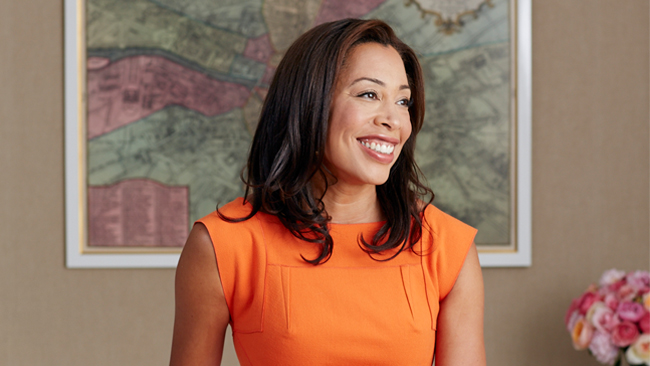
So What Do You Do, Keija Minor, Brides Editor in Chief?

'My biggest goal is I want to stay true to the core brand'

keija-minor
Admin icon
By Valerie Berrios
@valerieberrios
Valerie Berrios is a published author and senior content manager with nearly two decades of experience in digital publishing, including roles at Audible, Disney Streaming, Everyday Health, and Mediabistro. She specializes in content strategy, editorial operations, and international content launches.
7 min read • Originally published December 18, 2013 / Updated March 19, 2026
Admin icon
By Valerie Berrios
@valerieberrios
Valerie Berrios is a published author and senior content manager with nearly two decades of experience in digital publishing, including roles at Audible, Disney Streaming, Everyday Health, and Mediabistro. She specializes in content strategy, editorial operations, and international content launches.
7 min read • Originally published December 18, 2013 / Updated March 19, 2026

As the first woman of color to be the top editor at a Condé Nast publication—and someone who spent her early career in corporate law—Brides editor in chief Keija Minor knows a thing or two about breaking ground. “I left law because I was not passionate about it,” she says. It turned out, publishing was the industry she was much more excited about. “I realized the part of law that I liked was working with these small creative media companies,” she explains.

But the timing wasn’t quite right. It was around 2001, and the dot-com bubble had burst, so “things got very sad in New York,” she says. Here’s how Minor followed her heart, overcame some early struggles (including a significant pay cut) and landed a top spot at one of the largest magazine publishers in the country.


Name: Keija Minor
Position: Editor in chief, Brides
Resume: Worked in corporate law for four years before landing an internship at startup magazine Travel Savvy, where she worked her way up to editor in chief after about three years. Next came a managing editor position at Niche Media’s L.A. Confidential, followed by a promotion to editor of Gotham. She eventually left that role to assist in the launch of Uptown magazine’s six regional editions. In 2012, she was promoted from executive editor of Brides to EIC.
Birthdate: April 24
Hometown: Washington, D.C.
Education: University of Massachusetts and Howard University School of Law
Marital status: Single
Media mentor: Anna Wintour
Best career advice received: If you love what you do, success will come.
Last book read: I just started Double Down, by Mark Halperin and John Heilemann
Guilty pleasure: Handbags and last-minute travel
Twitter handle: @keijaminor


How did you make the move from corporate law to magazines?

There is literally a book called What Can You Do With a Law Degree? that was sticking out on a shelf at Barnes & Noble, and I was like, “Oh my gosh, it’s a sign!” So I decided basically by the end of year two [of my job as a lawyer] that I needed to look for something else, and then it took a year to save a year’s worth of mortgage payments, with my theory being that I may be broke and not be able to eat, but I won’t be homeless.

So I practiced for four years and then when I had a year’s worth of mortgage payments, I quit. I flooded the industry with my resume and no one would hire me, largely because, well, I had no experience. And also because no one thought that I would go from having an assistant to basically being an assistant, except for this small travel magazine called Travel Savvy, which had just started. And I sent them my resume—this sounds so old school, but I sent it via fax and overnight delivery and then I think by messenger.

One of the founders [of the startup] called me and he was like, “All right, come in already. I’ve gotten your resume three times.” And I went in and the only position they had was a lifestyle internship and I was like, “I’ll take it!” And I actually started taking [women’s magazine] classes at Mediabistro. Once I made up my mind that that’s what I wanted to do, it was like this huge burden was lifted off my shoulders. I had five minutes of regret about two minutes after I left the firm.

I remember it netted out to being an 85 percent pay cut. And I remember my parents, when I said, “I got a job,” they were like,

“What?” and I said, “Well, it’s not really a job; it’s an internship,” and it was like crickets on the other line. And they were like, “Okay.” What I didn’t know until years later is that my father hung up the phone and turned to my mother and said, “I think we should clean out the basement; I think Keija’s coming home.” I didn’t, of course.

No, you worked your way up to editor in chief! Then you moved on to Niche Media and later helped launch regional editions of Uptown, a luxury lifestyle magazine for African Americans. Why was bridal your next step?

The opportunity came up at Condé Nast, and it’s a situation where people were like, “Why would you want to go from being an editor in chief to an executive editor?” and it was because of the opportunity to work at Condé. At first I was like, okay, I haven’t worked in bridal, and what I found even just going through the interview process and doing my edit test is that I fell in love with the category, and then became obsessed, because it really is the ultimate women’s magazine.

It’s food, travel, fashion, beauty, entertaining; it’s like every single one of those elements that I had worked on in a different capacity, whether at Gotham or at Uptown or even at Travel Savvy. It was all coming together at Brides. So I became executive editor here, and on my one-year anniversary I became editor in chief.

And you’re the first African American to hold a top title at a Condé Nast publication. Is that something you think about?

I think the industry has been changing generally just over the years, as all of corporate America has been changing, to some degree, to reflect more women and more diversity. I think with the title at Condé, you know, it’s fun to be the first. It’s exciting to be the first in any sort of category, and it’s an honor. But I don’t wake up every day thinking, “Okay, you’re the first black woman to hold this title.” I think about, “What are you going to do to move the magazine forward?” At the end of the day, yes, I will have been the first, but I also want to be the woman who knocks it out of the park as an editor.

But I mean certainly for someone like my grandmother, who has seen women and black folks come so far in her lifetime, it was nice to talk to her about it. And she did take the announcement into her water aerobics class. [laughs]

We’ve all heard about Anna Wintour’s relatively new role as artistic director at Condé. Has she provided you with any input?

It’s been fantastic for me just to have someone to be able to bounce ideas off of. The woman embodies editorial excellence. Just being able to call her and ask her thoughts on things has been tremendously helpful. I mean she really is a champion of editors and editorial principles, and it’s nice to have that.

So then you find her approachable?

She is actually very easy to talk to. Once you know her. I know, you see her… at a fashion show in the front row in her sunglasses, and I know that maybe people assume that she’s one way, but she’s actually… quite approachable. And she’s really funny, too. I think she’s very clear in her vision, and I just find that inspiring.

But she’s got another 18 brands in this building so I’m sure that her relationship with every editor is different. I think she’s great as a sounding board. If I ask about a photographer [for a cover shoot]… it seems like she knows every person in the industry, from photographers to designers, their strengths. She’s great at bringing people together.

So what is your vision for Brides?

My biggest goal with Brides is I want to stay true to the core brand. I mean, the magazine is 79 years old. But I also want to make sure that it stays modern and current and speaks to our girls, and as their best friend, not as their mother. We want to be an updated, fresh version of what this brand stands for. So that’s really important to me, that we’re speaking to them in a contemporary voice.

What advice do you have for freelancers interested in pitching the magazine?

The best way [to pitch] is via email, and in a way that shows why you are the person to write this piece. And it really needs to be for a specific section. The pitch that I get often that’s hard to work with is, “I recently went to Jamaica and would love to write something for you,” or “I really love bridal and would love to write for you.” As opposed to giving us a specific story idea and explaining why you’re the best person to write it.

One of the sections that we’ve added in the last year is the front-of-book essay. It’s a fun section and anyone who has a first-person interesting-marriage or relationship or wedding-planning story should definitely consider pitching for that section. In the issue that’s out now, it’s about a couple who had a secret wedding first, so by the time they had their public wedding for all their friends and family, they were actually already married. And we’ve had another essay about a girl’s journey to find her dress. So that’s a great opportunity for a freelancer. Those are all written out of house.

This interview has been edited for length and clarity.

Topics:

Advice From the Pros, Be Inspired, Interviews
Advice From the Pros

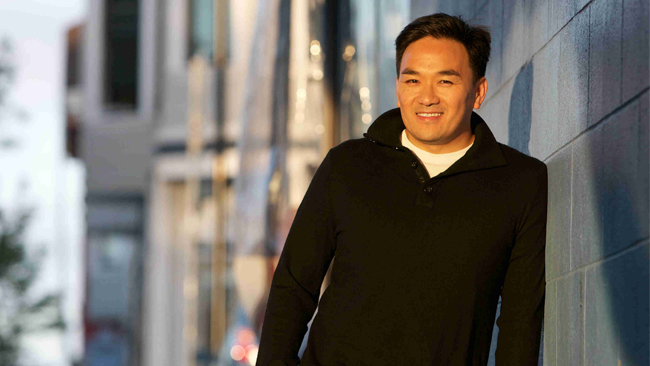
So What Do You Do, Toan Lam, ‘Chief Inspirator’ for Social Activism Site GoInspireGo.com?

Authentic stories + social media = social activism, says Toan

toan-lam
Admin icon
By Valerie Berrios
@valerieberrios
Valerie Berrios is a published author and senior content manager with nearly two decades of experience in digital publishing, including roles at Audible, Disney Streaming, Everyday Health, and Mediabistro. She specializes in content strategy, editorial operations, and international content launches.
8 min read • Originally published February 5, 2014 / Updated March 19, 2026
Admin icon
By Valerie Berrios
@valerieberrios
Valerie Berrios is a published author and senior content manager with nearly two decades of experience in digital publishing, including roles at Audible, Disney Streaming, Everyday Health, and Mediabistro. She specializes in content strategy, editorial operations, and international content launches.
8 min read • Originally published February 5, 2014 / Updated March 19, 2026

Even as a child, Toan Lam knew he wanted to tell stories. He grew up in a rough neighborhood in South Sacramento, Calif., and used reading and writing as an outlet—and eventually a passport out of dodge. He worked as a TV reporter for several years before deciding he wanted to tell only inspiring stories of people doing great things that might compel others to do the same. He founded Go Inspire Go (GIG) to accomplish this mission. The nonprofit social-activism site started out as a single YouTube page and, in four years, has grown to 90 volunteers—including members from some of the top tech companies in Silicon Valley. They have documented and shared over 60 charitable acts and counting.

“People think to be involved in philanthropy, you have to be rich, old, snotty,” says Lam. “And no, you can be a philanthroper and you can be little Phoebe Russell, a five-year-old kid who wants to help people in the food bank.”

Lam calls himself the “chief inspirator” for GIG, but adds that “we all can be inspirators. We all have the power to do something both big and small.” And he hopes to extend his passion project’s reach. He is currently in talks with a few networks about developing a TV show based on his idea of inspiring the masses through everyday heroes.


Name: Toan Lam
Position: Founder, Go Inspire Go; university instructor
Resume: Started TV news reporting in 2001 for an ABC affiliate in Wausau, Wis. Also worked as a reporter for an NBC station in Los Angeles; an NBC station in Midland, Texas; and then a CBS station in Fresno, Calif. While a reporter at an independent station in San Francisco, Lam got the opportunity to report for a worldwide syndicated show on Asian-American lifestyles called Pacific Fusion. Afterward, he hosted and reported for a PBS show called California Heartland. In 2009, he founded GIG. And today also teaches multimedia at the Academy of Art and blogging for social change at the University of San Francisco.
Birthdate: Jan. 22, 1978
Hometown: Sacramento, Calif.
Education: University of San Francisco
Marital status: Single
Media mentor: Oprah, Arianna Huffington and “storytelling king” Steve Hartman
Best career advice received: Follow your passion. It’s easier said than done. Find a way to make it work.
Last book read: The Power of Now by Eckhart Tolle
Twitter handle: @GoInspireGo


Why did you leave TV reporting to pursue social activism?

I believe that everything in your life is like scattered dots that you throw behind you and you don’t know what all these experiences mean, and one day you’re able to connect the dots. I saw all these stories of everyday people doing awesome things for other people, and I researched and I was like, whoa, there are inspiring sites and people, and they share other people’s articles. But what if I had the audacity to dream bigger and use my power— which I believe is connecting people through storytelling—for good? And so, you know, I didn’t want to do car chases and murders and political scandals anymore.

Wow, what if, instead of bringing that into people’s living rooms, what if I brought good news into people’s homes? So I thought, ‘Well, I’m going to quit my job in a month.’ It was December of 2008. I’m going to take six months to a year, and I’ll live off of the little savings that I have and just go out and tell these stories. And it was a hobby. I thought it would be fun. My dream job would be going around and interviewing people that are doing awesome things. I just wanted to inspire people to also then use their power to help other people. Guess what? Next day I go in, I get laid off. [laughs] And I was like, ‘Whoo-hoo, this is awesome!’

So then how did you get started with your new mission?

So it was just me and an intern, January 2009. And I didn’t know what I was doing. I was at a cafe and I said, ‘I’m just going to create a YouTube account, and start going out and covering everyday heroes that do small things that ripple out to meaningful changes.’ And as I had more and more conversations with people, I started discovering a pattern and I thought, well, what if I went out and I spent time with these people, and really got to know them, not just a quick 10-minute interview, but we spent the whole day with them?

And something magical happens when you make that human connection and you’re no longer a stranger. You almost become like a friend. And what if I told their authentic story, both in a blog and a video? And I was like, ‘Let me think of this algorithm: Tell authentic stories plus leverage social media equals people taking action.’ And I realized that there was a huge need for that. Because when you can tell a good story, any industry that you’re in, you can convince people that ‘Hey, you know what? You matter.’

How did your past play into your desire to tell these stories?

I was born in Vietnam. At eight months old, my dad brought me and my sisters and brothers—there are five of us—to South Sacramento, with my grandparents and an aunt and uncle, and 10 of us basically crammed in a trailer park. And then we went from bad neighborhood to bad neighborhood. So me, being a Chinese boy, the only person that I saw of color on TV that I made a connection with was with Oprah. And Oprah’s a black woman and from the South! I realized that she told people’s stories that connected people from all walks of life.

My parents wanted me to be a—my mom says, in the cutest Chinese accent, ‘Doctor, lawyer, engineer,’ in that order. And little old me here loved to read, write and talk. I read everything I could get my hands on. And that was not validated until I got into college, and I had this teacher by the name of Carolyn Weber, and she was getting her doctorate at Oxford, and she was doing a sabbatical and teaching at the University of San Francisco. So my heart was palpitating when I signed up for this class, and the first week she says, ‘I want you guys to write your first assignment, a one-page autobiographical snapshot of a moment in your life that was a big deal to you, that changed your life.’ And I forgot what I wrote.

Honestly, I just wrote it real quick and I turned it in and I didn’t even want to show up to class the next week. She gives me the paper back and she looks me dead in the eye, and she goes, ‘Lovely job.’ And in perfect red penmanship, right in the center of the paper, she said, ‘You’re such a gifted and lively writer. What will you do with your talents?’ For the first time, somebody acknowledged me. And so I just thought, wow, I want to go and be a print reporter and just write these stories. And I ended up getting jobs in TV as a matter of happenstance, and realized that I can use this power for good.

When did Go Inspire Go officially launch?

I want to say we launched in March of 2009 as Go Inspire Go. And the idea is, again, ‘Go, get up, get inspired and go and use your power to help other people.’ Four years later, we have over 90 volunteers from around the world. A lot of them from different tech companies, too—LinkedIn, YouTube, Yahoo, Google. And somebody from the World Economic Forum sits on my board. We turned it into a nonprofit, and we have made over 60 videos so far, and we’ve done over a million dollars’ worth of volunteer work thus far.

Tell me about some of the stories you’ve covered.

One of the highlights is we sent 32 kids to school in Haiti for a year. Our most popular video thus far (it was picked up by Good Morning America) is about Jorge Munoz, a school bus driver by day, but known as the ‘Angel in Queens.’ For over a decade, he goes and buys enough groceries to feed 150 people, and he and his family cook. At 9:30 every night he drives his little white Toyota truck out to the subway stop in Queens, NY, and gives it out to people that need it. Over 150 people, every night. And he’s missed one day because a snowstorm shut down all lines of transportation.

Why do you think GIG has made such an impact on people?

At the core of who I am, I’m a teacher. And I’m a seeker. And that’s what I’m doing and, you know, it’s a really basic concept I think. And it’s grown so much, because I believe that when you take action based on what’s authentic to you, your power and your intent, and it’s in alignment with who you are and what you’re supposed to be doing, it grows naturally. And, you know, four months into this Arianna Huffington emailed me and she was like, ‘This is lovely. Will you share?’ So I’ve been blogging for her for four years [on Huffington Post]. And also Deepak Chopra’s community—he and his daughter have this site called Intent.com and we share our content there as well.

I always ask people ‘What can you do?’ Smile at somebody, give somebody your food. Treat somebody, the homeless person, to a meal. I don’t know. Do—and it doesn’t even have to be that big. When people see you doing what you love and you’re helping people, there’s something amazing in that. And when you can—when you’re able to tell that story and then share the love on social media, the impact is just exponential.

This interview has been edited for length and clarity. 

Topics:

Advice From the Pros, Be Inspired, Interviews
Advice From the Pros

So What Do You Do, Mike McAvoy, President of The Onion?

'I think what's great about The Onion is everyone here cares about the content.'

mike-mcavoy-feature
Admin icon
By Valerie Berrios
@valerieberrios
Valerie Berrios is a published author and senior content manager with nearly two decades of experience in digital publishing, including roles at Audible, Disney Streaming, Everyday Health, and Mediabistro. She specializes in content strategy, editorial operations, and international content launches.
7 min read • Originally published March 19, 2014 / Updated March 19, 2026
Admin icon
By Valerie Berrios
@valerieberrios
Valerie Berrios is a published author and senior content manager with nearly two decades of experience in digital publishing, including roles at Audible, Disney Streaming, Everyday Health, and Mediabistro. She specializes in content strategy, editorial operations, and international content launches.
7 min read • Originally published March 19, 2014 / Updated March 19, 2026

The Onion has evolved into much more than that satirical newspaper we all know and love. (Sample headline: “Obama Spends Afternoon in Garage Restoring Classic Drone.”) “America’s Finest News Source” has become a full-blown digital-media company that includes an alt-weekly entertainment news site called The A.V. Club and Onion Labs, its advertising/marketing layer that helps brands get their message across with sardonic humor and the all-important nod to pop culture via social media, video series and more.

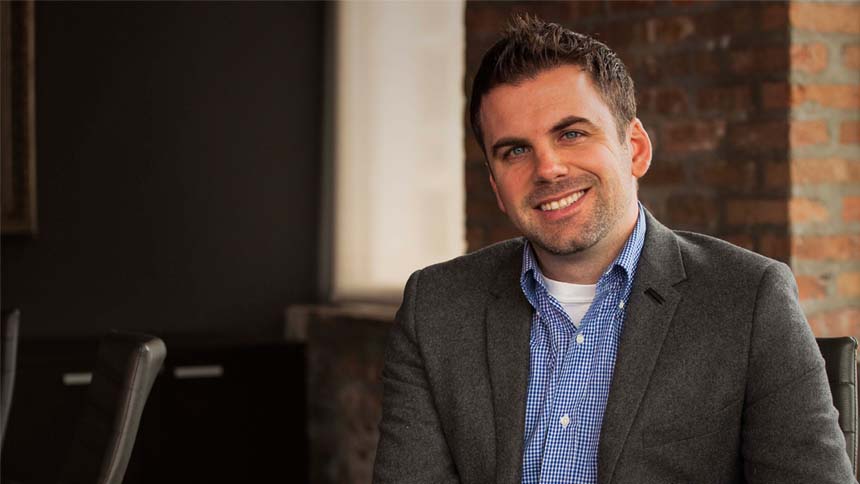
At the helm of Onion, Inc. is Mike McAvoy, who’s been with the Chicago-based company since 2005. McAvoy oversees the advertising, product development, technology and finance departments. Together with his creative team and the newly installed senior vice president of Onion Labs, Rick Hamann, McAvoy is developing innovative, comedic campaigns that he and his clients expect to be the next big viral hit. Here, McAvoy gives us the scoop on The Onion’s foray into sponsored content.


Name: Mike McAvoy
Position: President of Onion, Inc.
Resume: Started out as a financial analyst at TCF Bank in Minneapolis, and then worked on an IPO for Capella Education Company, also in Minneapolis. Three years into his career, he got the opportunity to work as the controller at The Onion, where, he said, “actually my friend’s dad was the CEO, which is a great way to get into any company; it’s who you know, right?” In January 2007, he was promoted to chief financial officer; and then in July 2008 became the chief operating officer, overseeing all the sales and product and technology. Last year, he became president of Onion, Inc., managing all functions of the business.
Birthday: January 7, 1980
Hometown: Waukesha, Wisconsin
Education: University of St. Thomas in Minnesota
Marital status: Married with twin boys
Media mentor: Steve Hannah, CEO of Onion, Inc.
Best career advice received: Don’t be afraid to fail. And don’t be afraid of critics.
Last book read: The Circle by Dave Eggers
Twitter handle: @McAvoy_TheOnion
Guilty Pleasure: “Outside of drinking — no, I’m kidding. I like to play sports. I like to be active. But that maybe isn’t as guilty as drinking. Drinking and playing sports?”


It must be pretty fun working at The Onion. How would you describe the culture, especially having been there so long?

I think what’s great about The Onion is everyone here cares about the content; they care about the products, so you have this united front in that everyone wants to see The Onion flourish.

And in terms of the culture itself, everyone works really hard. It’s a very dedicated group. Everyone’s really smart, and they have to be in order to get the joke. That’s one of the nice things about creating smart content is you attract smart people.

And it’s highly collaborative. You know, it’s a culture that was built on collaboration. There are no bylines for the content we create, and that history of The Onion creative process has really been translated to the rest of the business culture and the product culture, where it’s very team-oriented.

Like so many other publications, The Onion has moved away from its roots in print. How has the company adapted to digital?

So I think The Onion, maybe like many of our peers who were in the print business, we knew that at some point the days of print were numbered, and we were able to focus on transitioning out of print.

In 2009, we developed a franchise licensing program, where we converted our print market to really just syndication deals, or licensing deals, as a way for us to get out of the print business and focus exclusively on digital, including video.

So in 2007, we launched The Onion News Network. In 1996, we actually went online, and we always knew that the way to grow the business was through digital, and by getting out of print, it allowed us to focus 100 percent on it, which has allowed us to pursue other ventures and create Onion Labs.

Great segue. How did the idea for Onion Labs come about and how did you land Microsoft as one of your first clients?

The idea of Onion Labs, or really creating content for brands, started years ago. We’ve always gotten requests from Fortune 500 brands to create content for them as part of media buys. And in the case of Microsoft, we were at the same media agency, using the same contacts that we call on to sell media placements.

We treated [that campaign] the same way we treated everything that we do on TheOnion.com. We went through a process of creating a ton of ideas that Microsoft poured through and ended up picking the one that worked the best for them.

So it became our pitch really as a business to evolve with the whole native-advertising movement, as well as advertisers’ decision to change how they tried to reach millennials. The more they realized they need to create custom content or have content created by people who are masters at reaching that audience, the more opportunity we had for Onion Labs. And hence, we officially began Labs in 2012.

Is the tone of the content you create for brands always “Onion”-like on some level?

It really depends on what someone’s trying to buy. Sometimes the creative direction from the advertisers or the goals are much more to create something entertaining than it is to create something satirical. It’s really a mix of whatever the initiative is.

Do you have a separate creative team devoted to sponsored content?

What we do, which I think is unique for many publishers, is we use the same writing talent that we have for our company, for all our brands running in the A.V. Club, to produce The Onion Labs content. And so the idea process starts with the same writers and the same team that creates the hit videos for The Onion News Network.

So in terms of total writing talent for the company, I think we have 20 or so writers, 25 A.V. Club writers who are on staff, and so it’s a mix of those writers who work on these types of projects, as well as we have ideas from various contributors and freelancers who also help out.

Who produces your videos—and what platform do you use?

We have a video team in house. And for bigger shoots, we add on resources. We have a great freelance network in Chicago that we’ve built. Some projects are 100 percent in house, some of them we’re using outside vendors, and it’s just really dependent on how much work we have and what other work we’re doing at the time.

We use YouTube. We’re one of their premium-content providers, so we have a deal with them where we are paid money to produce original content. We also distribute content that comes from TheOnion.com to YouTube, including these advertising campaigns, and so that’s all part of our network.

But we’ve grown TheOnion.com so dramatically that that really is our primary distribution platform. The audience that we’ve built on The Onion has grown a couple hundred percent in the last 18 months.

How else does Onion Labs incorporate social media?

Every campaign that we do has a component of social activation, social promotion. So all sponsored content runs through the context of—we’re promoting a tweet that will say something like, ‘Advertiser thought this sponsored post was a good idea.’

So here’s one [example]: ‘If you believe some websites still have the integrity not to shill for sponsors, you’re as dumb as we thought.’ So for any of the content we create, whether it’s for Microsoft or for DSW, Lenovo, Ford, Home Depot, any of those big brands, we’re positioning the sponsored content in that way. And we’ve also done business where we actually are running [clients’] social media accounts for the year.

Tell me about one of your most successful campaigns so far.

I think we’ve had quite a few that have been good and have gotten good plays. We haven’t had the Old Spice viral campaign just yet, you know, where we’ve gotten 100 million hits. But we’ll let you know when we do.

I think our most successful piece, our most viewed piece was an April Fool’s joke for YouTube [last year about the social-media site selecting the best video on YouTube], which has been seen by over 11 million people.

We do a lot of work that is behind the scenes, white label or work for hire, where we’re creating content for a brand and the audience, or the world, doesn’t know it.

How do you handle native advertising when it comes to your own content?

I think for our audience, we want to bring to life ideas that we’re excited about and get advertisers to sponsor them. And that’s the beauty of the Lenovo program. We brought to life a show called “Tough Season,” which was made possible by Lenovo, and if Lenovo didn’t write the checks and didn’t help us coproduce that show, it would never have come to be.

We did that in conjunction with Digitas, the ad agency, and they were great on that. And so we’ve found a way to kind of work directly with advertisers, but also in conjunction with agencies, as they’ve been great partners for us for years.

Another one that the A.V. Club has done is with Ford, and it’s called Pop Pilgrims; it’s really a travel show in which our editors are hosts and they talk about pop-culture sites and kind of give a back story as to why a certain location is relevant in the pop-culture community.

This interview has been edited for length and clarity. 
Topics:

Advice From the Pros, Be Inspired
Advice From the Pros

So What Do You Do, Eric Noe, Managing Editor at ABC News Digital?

Noe talks challenges and opportunities in digital news

eric-noe
Admin icon
By Valerie Berrios
@valerieberrios
Valerie Berrios is a published author and senior content manager with nearly two decades of experience in digital publishing, including roles at Audible, Disney Streaming, Everyday Health, and Mediabistro. She specializes in content strategy, editorial operations, and international content launches.
8 min read • Originally published April 9, 2014 / Updated March 19, 2026
Admin icon
By Valerie Berrios
@valerieberrios
Valerie Berrios is a published author and senior content manager with nearly two decades of experience in digital publishing, including roles at Audible, Disney Streaming, Everyday Health, and Mediabistro. She specializes in content strategy, editorial operations, and international content launches.
8 min read • Originally published April 9, 2014 / Updated March 19, 2026

Update: Eric Noe is no longer the managing editor at ABC News Digital.

Eric Noe knows digital news. The journo, who began his career at the Atlanta Journal-Constitution, has been with ABC News Digital since 2004. His current role as managing editor means he’s leading editorial operations for ABCNews.com and overseeing a team of 40 across all verticals. His day-to-day consists of finding innovative ways to package news online, as well as integrating social media, mobile and video-streaming strategies, all while coordinating coverage with ABC News broadcasts.

Here, Noe speaks with Mediabistro about covering breaking news—such as last year’s Boston Marathon bombing—in the digital space; shifting trends in news media, specifically in mobile and social media; and tips on succeeding in this rapidly evolving industry.


Name: Eric Noe
Position: Managing editor at ABC News Digital
Resume: Started his media career in 1997 as a bureau clerk at the Atlanta Journal-Constitution, where he wrote obituaries, letters to the editor, local features and more. After a yearlong stint as an editor, he went back to school to earn his master’s degree in journalism at Northwestern University in Chicago. He stayed in the city to work for Reuters’ Midwest bureau, covering business and commodities news. In 2004, he joined ABC as a general-assignment reporter. Later, he became the business editor for ABCNews.com, then moved on to managing the edit desk. In 2010, he became the site’s deputy managing editor. Last year, he was promoted to managing editor.
Birthday: January 5
Hometown: Atlanta
Education: BA in English from Emory University; master’s from Northwestern
Marital status: Engaged
Media mentor: “I would say the first person who sort of drew me into this business was an old Southern columnist named Lewis Grizzard, who worked at the Journal-Constitution. My dad loved him, and I used to buy his books for my dad and read his work when I was a kid. He actually passed away a few years before I took my first job at the Journal-Constitution.”
Best career advice received: “It was one of my early editors, a guy named Frank Star, who told me, I think after the first piece that I did for him that he actually liked, ‘Just remember, you’ve chosen a business with a very short memory, so whatever you’ve done by the end of the day, be it good or bad, you wake up tomorrow with a blank slate. So you better come in tomorrow ready to start over again.'”
Last book read: The Big Crowd by Kevin Baker
Favorite TV shows: Mad Men and Seinfeld
Guilty pleasure: “I’m not afraid to watch bad ’80s movies, so you can catch me on something like Point Break on TNT on a Sunday afternoon, and I’ll pretty much watch that all the way through.”
Twitter handle: @Noe_Eric


How is ABC News online different from its TV counterpart and how has digital adapted over the years?

Well, I wouldn’t say it’s different. I mean it’s changed a lot, actually, since I’ve been [at ABCNews.com]. When I first got there, we were this little sort of Internet entity that was down at the end of the block, and we were actually in a different building than most of the newsgathering operation. And then two or three years ago, we moved into a brand new integrated newsroom, where the digital room is now back to back with the managing editors of domestic and international news. So we’re kind of at the nerve center of anything and everything that goes on at ABC News, which has been great for us.

Now it’s just a matter of figuring out how to take the news that’s gathered and put it into the different funnels. I mean, obviously, the same way the shows like Good Morning America and World News have their own specific products and their own specific audience, it’s really the same for us. We have to figure out how best to package the news that’s gathered for more of a digital audience, and, increasingly, more of a mobile audience as well, people who are getting their news on handheld devices and tablets.

Are there specific mobile initiatives you’ve launched? 

Over the summer we hired an emerging platforms editor to manage the packaging and the delivery of our mobile content. We also launched refreshments to our mobile apps in the fall, Android and iPhone, that allow people to self-curate their mobile content. They can follow a story or subject matter that we’ve been producing content on, and they’re able to star it within the app and get any updates delivered directly to their device.

It’s something I think we’ll do more with in the future because it is a way for us to allow people to feel like they’re in control of what we’re giving. And it’s being delivered to them, rather than them having to actively go out and find it from us via a search engine like Google or Yahoo.

Is competition from other networks in the digital platform as aggressive as it often is for TV news? 

I don’t know that that’s necessarily what we limit our competition to these days. I mean, now our competition is pretty much anybody who’s delivering news and information. And while being a part of an organization like ABC News we’ll always be very conscious of what the other big networks are doing and what the other big digital entities are doing, we’re also interested in what emerging digital media companies are doing. What are startups doing? How are they doing things that are different?

Can you give me an example of how your digital team covers breaking news?

One [example] that sort of was a hit with our audience, interestingly and kind of funnily, is the Justin Bieber arrest. So that’s a story that obviously is not something that is going to have global geopolitical ramifications, but, yet, for us, it’s a story that’s going to be the story of the day. And our entertainment team had done a great job of covering all the various things that Bieber had been up to in the months leading up to that, as he seemed to have gone off the golden path.

And then when he was arrested, it became more of a news story as well. We looked at a couple of different ways that we could also take it apart and have a little bit of fun with it. He’s kind of known for, on his Twitter stream, espousing all kinds of life advice through great philosophers and things like that, so we embedded a bunch of his tweets and tried to sort of compare whether or not he was following his own advice.

How else do you leverage social media?

We’ve gotten tremendous traffic on Facebook in the last year. We’re working on building out our reporting staff and being a little bit more light on our feet and being a little quicker to react to things. You look at something like the Boston Marathon week. In an event like that, Twitter becomes a competitor, because there’s so much information flying around at such a high rate of speed that we realize that if we want to resonate with people, we have to be as fast as we possibly can.

Right, so then you are in the thick of it, like every other news outlet.

It was something where, you know, that bomb goes off on Monday, and… within minutes and within hours after that, we had people on the ground in Boston, and we had a digital journalist in Moscow, digging up background on the bombers’ family in Kyrgyzstan, giving us great information from there. I was actually out on the West Coast when that bomb went off, on a trip with my fiancée, so I hopped a plane back—and there’s nothing worse for a journalist covering a breaking story than having to shut off your Blackberry for four hours and be essentially out of touch, and so I was toggling back and forth between the various cable coverage on the airplane TV—and then hopped into the newsroom Monday night and basically stayed there for the next five days.

We were able to lean on our sister company, ESPN—you know, this was a sporting event as well—and they gave us great information. Our affiliate up in Boston, WCVB, gave us great live streams. And by the end of the week, we had tremendous traffic. And I’m kind of proud to say that we didn’t have to walk back a single fact. We got everything right and didn’t have to issue any retractions, and it was a tremendous opportunity for us to show the muscle of our news division and what we can do when we [channel] it through the digital funnel.

What advice do you have for aspiring journalists looking to break into digital news?

I would say be a storyteller. When you’re thinking about a story that you’re covering, be thinking of what’s your headline, what is the most important thing here. And think about that when you’re reading or consuming video news. What is your takeaway, and then figure out how you would package it. [Storytelling is] not the straight inverted pyramid that it used to be; there are plenty of different ways to tell a story.

I think there’s been a lot of talk about listicles and whether or not they are a valid way to present news, and of course they are. There’s always going to be a place for the big news of the day, for extensively written and reported and sourced storytelling, but there are also ways to do it with a little bit of flair and a little bit of personality.

What would you say is best part of your job?

Well, waking up every day with a clean slate and trying to figure out how to cover the most interesting news of the day. And I think, you know, I mentioned competition from some less traditional sources.

They’ve kept us on our toes and they’ve forced us to think that you can do news and you can do things that are important and relevant to people, but you can do them in ways that don’t have to be totally serious all the time.

The best part of my job is that you get to be creative about the way you want to cover the news. And that’s fun, and it’s a challenge, and it’s dynamic, and we’re lucky to be in the business.

This interview has been edited for length and clarity.
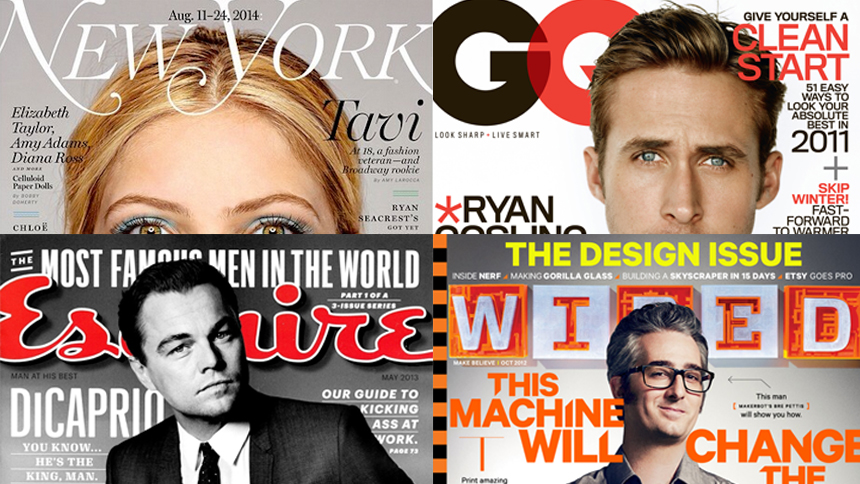
Topics:

Advice From the Pros, Be Inspired, Interviews
Advice From the Pros

So What Do You Do, Jesse Ventura, Political Pundit, Host of ‘Off the Grid’?

'I'm actually better being interviewed than I am doing the interview.'

jesse-ventura
Admin icon
By Valerie Berrios
@valerieberrios
Valerie Berrios is a published author and senior content manager with nearly two decades of experience in digital publishing, including roles at Audible, Disney Streaming, Everyday Health, and Mediabistro. She specializes in content strategy, editorial operations, and international content launches.
8 min read • Originally published May 14, 2014 / Updated March 19, 2026
Admin icon
By Valerie Berrios
@valerieberrios
Valerie Berrios is a published author and senior content manager with nearly two decades of experience in digital publishing, including roles at Audible, Disney Streaming, Everyday Health, and Mediabistro. She specializes in content strategy, editorial operations, and international content launches.
8 min read • Originally published May 14, 2014 / Updated March 19, 2026

Jesse Ventura has never been one to mince his words. The Vietnam vet turned pro wrestler turned governor of Minnesota has been openly critical of, among other things, the nation’s two-party system, organized religion and the mainstream media.

He’s also proved to be a staunch supporter of gay marriage and the rights of Mexican immigrants who cross the border without documentation. These and other hot topics have been tackled in his books, radio shows and now via his Off the Grid online show on Ora TV, which Ventura actually films “off the grid” in Mexico. His new sounding board seems to be working for him. In just one month of the show’s January launch, viewership reached 1.3 million.

Of the show, Ventura says, “I report the stories that need to be heard. Not the ones that a corporate sponsor wants you to hear.” Recent guests have included Edward Snowden’s legal adviser, Ben Mizner; Thomas Andrews Drake; and Ron Paul. Ventura says he aims to give his guests the floor so they can “convey their message without interruption or interrogation.”

Here, Ventura talks more about his show, his disdain for network TV and his much-talked-about run for presidency.


How does Off the Grid differ from other shows you’ve worked on, such as Jesse Ventura’s America on MSNBC?

Well, this program differs in the fact that in my short-lived time at MSNBC of about four weeks—even though they paid me huge money for three years—all the topics came from upstairs. In other words, they were channeled down to the people on TV and that’s what you talk about. For Off the Grid, the topics come from me. And I don’t answer to anybody. It’s whatever topic I want to discuss that particular day. Even if something else is scheduled, I can change it right now. So it’s truly the freedom that I’m granted with Off the Grid. Plus, I don’t fall under the FCC here [in Mexico]. I’m not a big person that swears, but you have that freedom of speech when the FCC’s not involved.

So how would you describe the format of the show?

I’m not Larry King, you know, and I made that clear. Larry King, to me, is one of the greatest interview guys on the planet; he’s been that for decades. I’m not him. I’m not an interview person. I’m actually better being interviewed than I am doing the interview. I like being on the other side. So, my show has the command central, which is [my producer] Alex Logan back in what I refer to as East Berlin, the United States, the lockdown country, and so Alex will make statements [about various issues] and actually question me [about my views on those topics].

We also do whole shows just on interacting with our fans [in a series called] ‘Ask Jesse.’ They ask me questions, whatever they wanna ask, and it’s all off the top of my head. And I give them an honest answer as best I can give it at that time without doing any research on it.

We do four shows a week. It’s on every Tuesday through Friday on Ora.tv at 3 p.m. Eastern, and of course because it’s the Internet, you can pull them up any time of the day you want to watch them. You know, that’s the great thing about the Internet, is the personal convenience for the person who wants to view the shows.

How did you end up on Ora TV? Why this platform?

My last book tour in the United States was not overly successful because I was pretty much blackballed by NBC, CBS, ABC, Fox News, MSNBC. I have a difficult time now gaining an audience there because they won’t put me on, and so Off the Grid is my way of combating them.

They can’t control me now. I can do my own show and people can listen to me and hear what I have to say at their convenience. It’s been a Godsend for me. I thank Larry King from the day we met doing an interview on my book tour when he told me about Ora.tv.

Why do you think the major networks have ‘blackballed’ you?

Well, because the networks are controlled by the two political parties, the Republicans and the Democrats. And I am not either; in fact, I’m scary to them. I’ve defeated them twice. I defeated them for mayor of Brooklyn Park, Minnesota, and then I defeated them for the governorship of Minnesota. I’m a dangerous person to them, and the more they can marginalize me, or the more they can keep me out of my viewpoints, the better it is for them and their control over the country.

Tell me about the topics you cover on your show.

I cover whatever happens to be on my thought process for the day. I certainly try to be timely. I certainly love to attack the Democrats and Republicans and their political system of bribery that they’ve created. And I’m trying to wake up America to the fact that we need to abolish these two political parties because, George Washington, Thomas Jefferson and John Adams warned us that the downfall of America would be when political parties take over the government. I think we’re there.

I will also talk on topics that I think are relevant to the United States, like immigration and things of that nature, and our constant going to war. If we wouldn’t spend all our money on war, like [with] Iraq, we would have more money for [things like] healthcare than we could ever imagine.

I just try and keep [the interviews] timely, try and keep them humorous, and you know, I throw in my brand of entertainment. My focus is to entertain. My focus is to perform. If you go back to my wrestling days, I could do a three-minute interview; here, I can do a 10- to 12-minute interview on a particular subject. The only thing missing is Mean Gene. Do you know what I’m talking about there? ‘Mean Gene’ Okerlund used to be the announcer on wrestling who would stand there and hold the mic while I’d talk.

One of your most-viewed interviews was with former New Jersey Superior Court Judge Andrew Napolitano. Why do you think that conversation was such a draw?

Well, because, No. 1: Judge Napolitano and I are good friends. No. 2: politically, we think very much alike; we’re not very adversarial. You know, we’re pretty much down the line with each other on how we think. We’re libertarians, small ‘l.’ And I like to do the interviews, really, where they’re more conversation-like, not where I’m grilling someone. The key to doing an interview is to allow your person to talk. That’s why you have them on, to let them talk. I get plenty of time where I get to talk. So when I get someone like Judge Napolitano, I like to step back a little and hear what he has to say, because that helps me. I learn from that.

I actually learned a great thing the other day watching TV, from Nancy Grace. On gun control, where she confronted Piers Morgan and said, ‘I’m sick of you Brits talking down to us about gun control when you’re the reason we have guns.’ The British soldiers would invade our houses; that’s why we went to war with them. So who are the Brits to tell us about gun control when they’re responsible for it? I thought she was wonderful, and I didn’t think I’d ever be able to quote her, but I’m glad I can.

So is there any truth to you running for president in 2016?

You never say never. I don’t really have an intention of doing it, and if I did do it, I’d have to do it my way. And that would require an extreme grassroots movement. I don’t think the country’s prepared to make that type of sacrifice. If they were, and I felt that they were ready for it. See, my demon inside me, I have a demon inside me, too, and the demon rears its head occasionally and always says to me, ‘If not you, then who?’ You follow that?

Yes, and so hypothetically, what party would you run under? You used to be a Reform Party candidate.

I would run under no party whatsoever. There is no Reform Party anymore; it doesn’t exist. I would run under no party on purpose and here’s why: that would be the essence of my entire campaign. I would challenge the American people to make history and elect the first president since George Washington who does not belong to a political party. Can you imagine that?

I think people are that offended and that disgruntled over these two parties right now. They should have all been fired last fall when they allowed a government shutdown. Because if you’d have done that in the private sector, if you had a drop-dead date a year from now to finish a project, and if you got to that drop-dead date—which they knew, October 15, whatever it was—and you didn’t have the job completed, I can guarantee you in the private sector you’d be fired.

What do you think of the media’s coverage of political issues?

It’s horrible. Well, the problem with our media today is this: the downfall of the American media, believe it or not, was the show 60 Minutes. It was a terrific show, at least it used to be. I don’t watch it much anymore, but it was, at one time, phenomenal, investigative reporting. Here’s why it was the downfall: Because 60 Minutes shot to No. 1 in the ratings, and then the bean counters realized, ‘Wait a minute, you mean we can make money with the news?’

Because up until that point they wrote the news off. There was a separate department; you had the entertainment department and the news department. The news would lose money, but they’d make it up in the entertainment department. Along came 60 Minutes, and the news started to make money. That’s your problem: The news is now into ratings. It’s about getting ratings, rather than informing people. It’s now entertainment.

The news has morphed to the entertainment division. They spent more days covering the death of Anna Nicole Smith than they did the death of John Kennedy.

This interview has been edited for length and clarity.

Topics:

Advice From the Pros, Be Inspired, Interviews

Posts navigation

Older posts
Newer posts
Featured Jobs
Kirkus Media
Editorial Intern
Kirkus Media
New York City, New York (US)

Gaia Inc
MEDIA COORDINATOR
Gaia Inc
Louisville, CO

Gaia Inc
Global Paid Media Specialist
Gaia Inc
Louisville, CO

Gaia Inc
Director of Media Strategy
Gaia Inc
Louisville, CO

Hearst Television
Account Executive
Hearst Television
Milwaukee, WI, United States

All Jobs »
PREMIUM MEMBER

Lynn Brown

New York, NY
15 Years Experience
I'm a freelance content creator with a passion for travel, history, culture and the places where those topics intersect. My work has been published...
View Full Profile »
Join Mediabistro Membership Today

Stand out from the crowd with a premium profile

Mediabistro Logo Find your next media job or showcase your creative talent
  • Job Search
  • Hot Jobs
  • Membership
  • Newsletter
  • Career Advice
  • Media News
  • Hiring Tips
  • Creative Tools
  • About
Facebook YouTube Instagram LinkedIn
Copyright © 2026 Mediabistro
  • Terms of Use
  • Terms of Service
  • Privacy