Mediabistro Logo Mediabistro Logo
  • Jobs
    Search Creative Jobs Hot Jobs Remote Media Jobs Create Job Alerts
    Job Categories
    Creative & Design Marketing & Communications Operations & Strategy Production Sales & Business Development Writing & Editing
    Quick Links
    Search All Jobs Remote Jobs Create Job Alerts
  • Career Resources
    Career Advice & Articles Media Industry News Media Career Interviews Creative Tools Resume Writing Services Interview Coaching Job Market Insights Member Profiles
  • Mediabistro Membership
    Membership Overview How to Pitch (Premium Tool) Editorial Calendars (Premium Access) Courses & Training Programs Membership FAQ
  • Log In
Post Jobs
Mediabistro Logo Mediabistro Logo
Search Creative Jobs Hot Jobs Remote Media Jobs Create Job Alerts
Job Categories
Creative & Design Marketing & Communications Operations & Strategy Production Sales & Business Development Writing & Editing
Quick Links
Search All Jobs Remote Jobs Create Job Alerts
Career Advice & Articles Media Industry News Media Career Interviews Creative Tools Resume Writing Services Interview Coaching Job Market Insights Member Profiles
Membership Overview How to Pitch (Premium Tool) Editorial Calendars (Premium Access) Courses & Training Programs Membership FAQ
Log In
Post Jobs
Log In | Sign Up

Follow Us!

media-news

The Week Journalism Got Shot At and Threatened from the Top

By Mediabistro Team
5 min read • Published April 28, 2026
By Mediabistro Team
5 min read • Published April 28, 2026

The White House Correspondents’ Association dinner went from celebration to crime scene in seconds on April 25. Shots fired inside the hotel sent attendees scrambling.

The journalists in the room did something reflexive: they started reporting. Phones out. Notes taken. Sources called. Professional muscle memory, even in chaos.

What happened next tells you as much about the media industry as what happened in the ballroom. Within minutes, false claims about the shooter, the motive, and the victims flooded social media. The misinformation spread faster than the facts.

Meanwhile, the political pressure campaign against ABC and Jimmy Kimmel, already building before the shooting, took on sharper edges in the aftermath.

Three tests at once: physical safety for journalists, editorial independence under direct presidential threats, and the information ecosystem’s ability to separate signal from noise.

The Room Where It Happened

The WHCA dinner has always been an odd ritual, a night when journalists and the people they cover share the same ballroom and pretend the power dynamics don’t exist for a few hours.

Critics had already questioned whether the event made sense in the current climate. The shooting settled that debate.

What stood out was the response. As Poynter documented, the dinner stopped, but the reporting did not. Reporters who moments earlier had been in formal wear were on the ground doing what they’re trained to do: gather information, verify sources, file updates.

Outside the ballroom? A different story entirely.

False claims spread immediately, according to Poynter’s fact-checking team. Fabricated details about the shooter’s identity. Invented connections to political groups. Completely fictional casualty numbers on social media while law enforcement was still securing the scene.

Some of the misinformation came from verified accounts. Some from automated bots. All of it exploited the gap between what happened and what people knew.

Key Takeaway: The journalists in the room had the training, access, and editorial standards to get the story right. The platforms that distributed the story to millions had none of those constraints and every incentive to move fast.

A two-tier information system where the people doing the actual reporting get drowned out by the people doing the speculating.

The Firing Demand That Became a Line in the Sand

Before the WHCA dinner became a national story, the week’s dominant media narrative was Trump’s demand that Disney fire Jimmy Kimmel over a joke.

The joke was a throwaway line about Melania having “the glow of an expectant widow.” Trump and the First Lady posted separate statements calling it a despicable call to violence and demanding Kimmel’s termination.

Kimmel’s response was unequivocal: “It was not by any stretch of the definition a call to assassination. And they know that.”

No apology. No walkback. He called the demand what it was: a political pressure campaign aimed at a corporate parent.

Disney has not responded publicly, which is itself a response. The silence suggests the company is not treating the demand as credible, or at least not as something requiring a public defense. That calculation could shift depending on how long the pressure lasts and whether it escalates to regulatory threats.

The entertainment industry’s reaction was unusually unified. George Clooney told Variety that “jokes are jokes” and defended Kimmel directly, at a moment when public statements of support carry real professional risk.

At the Chaplin Award ceremony at Lincoln Center, Clooney used his acceptance speech to address political violence and hostility toward media and creative speech. “There’s a struggle that has to be won against hatred,” he said. The room understood he was not talking about abstract principles.

This is a corporate-pressure test for Disney, and the industry knows it. If a direct presidential demand to fire a host over a joke becomes standard practice, the calculation for every network, studio, and platform shifts. Editorial independence stops being a principle and starts being a liability.

What the Profession Honors Right Now

The Poynter Institute announced the 2026 Poynter Journalism Prizes, honoring journalists and news organizations across 12 categories.

The prizes recognize work that takes time, resources, and institutional backbone: investigative series, explanatory journalism, public service reporting. Work that does not go viral, does not generate immediate revenue, and requires editors willing to defend it when the pushback comes.

The kind of work that’s harder to sustain when newsroom budgets are under pressure and political hostility toward the media is the baseline.

World Press Freedom Day falls on May 3, and Press Gazette’s news diary flags it alongside other events in the week ahead. The observance exists to highlight threats to journalists globally, but the domestic threats are no longer hypothetical. Journalists were under fire at the WHCA dinner. A late-night host faces a presidential firing demand. The misinformation ecosystem is faster and more sophisticated than anything built to counter it.

What’s Holding: The Poynter Prizes recognize the work. The industry defends Kimmel. The journalists in the ballroom kept reporting. Those are the signals that matter when the noise gets loud.

What This Means

The week ahead will clarify whether the Kimmel pressure campaign was a one-off outburst or the start of a sustained effort to make editorial decisions subject to political approval.

Watch Disney. Watch whether other networks face similar demands. Watch whether the unified defense holds.

For journalists, the WHCA dinner attack is a reminder that physical safety is no longer a given, even at events designed to celebrate the profession. Newsrooms will need to reassess security protocols for public events, travel assignments, and office spaces.

For media professionals navigating this climate, the opportunities are in institutions willing to invest in the work that matters and defend it when the pressure comes.

If you are looking for your next role, browse open journalism roles on Mediabistro and look for employers with a track record of supporting editorial independence. If you are hiring, post a job on Mediabistro and make clear where your organization stands.

The talent you attract will depend on the answer.


This media news roundup is automatically curated to keep our community up to date on interesting happenings in the creative, media, and publishing professions. It may contain factual errors and should be read for general and informational purposes only. Please refer to the original source of each news item for specific inquiries.

Topics:

media-news

Hot Jobs

Editorial and Digital Strategy Roles Hiring Across Media Today

From B2B publishing leadership to fellowship programs and mission-driven digital teams, today's listings reward candidates who can think editorially and execute strategically.

mediabistro hot jobs
By Mediabistro Team
4 min read • Published April 28, 2026
By Mediabistro Team
4 min read • Published April 28, 2026

The Editorial Strategist Is Back in Demand

Something worth watching in today’s listings: organizations are hiring for roles that blend editorial judgment with strategic leadership in ways that go well beyond “manage the blog.” Three of today’s most compelling postings ask candidates to own full content ecosystems, from print production calendars and newsletters to social platforms and community engagement.

The common thread is that these employers want people who understand story and audience at a fundamental level, and then can translate that understanding into measurable growth across channels. These days, pure content mills get automated. What can’t be automated is the person who knows which stories matter, which formats serve them best, and how to build a team around that vision.

Today’s picks also span an unusual range of organizations: a B2B media portfolio, an Ivy League fellowship program, a nonprofit tackling political polarization, and an award-winning trans media company. If you have editorial instincts and operational chops, this is your market.

Today’s Hot Jobs

Editorial Director — B2B Media Portfolio, Monmouth County, NJ

The Real Draw Here: This is a rare chance to shape the editorial direction of three distinct B2B brands across print, digital, and events. The role involves building annual editorial calendars, managing freelancer networks, overseeing four print issues per year, and running daily website content through WordPress. For editors who’ve felt boxed into one channel, this position offers genuine range. The audience is senior-level executives, which means the content bar is high and the work carries weight.

  • End-to-end production management across print and digital platforms
  • Experience developing and executing annual editorial calendars for multiple brands
  • Ability to manage freelance writers and industry contributors
  • Strong editing, proofreading, and CMS skills (WordPress required)

If you’ve been sharpening your editorial instincts and want to understand what editors really look for in writers, this role sits on the other side of that equation. Apply for the Editorial Director position.

Executive Director, Knight Bagehot Fellowship Program — Columbia University, New York

Why This Role Matters: The Knight Bagehot Fellowship is the premier program for mid-career business and economics journalists, and this position oversees the entire operation. That includes stewardship of a $35 million endowment, an annual operating budget exceeding $1.8 million, and the strategic direction of a program that shapes the next generation of financial journalism leaders. The salary range of $170,000 to $200,000 reflects the seniority. Columbia wants a thought leader who can fundraise, build relationships across the journalism ecosystem, and operate with significant autonomy.

  • Demonstrated leadership in journalism, media, or higher education
  • Fundraising experience with authority over major financial resources
  • Ability to define and execute multiyear strategic plans independently
  • Deep credibility in business and economics journalism circles

Apply for the Knight Bagehot Executive Director position.

Director of Digital and Social Media — TransLash Media, Remote

What Makes This Compelling: TransLash Media has built a reputation as an award-winning, multi-platform organization producing podcasts, films, journalism, and zines. This director-level role reports directly to the CEO and carries both strategic authority and hands-on execution responsibility. At $135,000 to $155,000 with full remote flexibility, it’s a leadership position at an organization where the content genuinely matters to its community. You’d be shaping how a respected media brand shows up across every digital touchpoint.

  • Strategic leadership experience across digital and social platforms
  • Team-building capability with direct reports
  • Track record of translating brand voice into consistent, creative digital execution
  • Comfort operating at both high-level strategy and daily content realities

For candidates building their digital leadership toolkit, Mediabistro’s guide on what a digital media manager actually does is a useful foundation before stepping into director-level roles like this one. Apply for the Director of Digital and Social Media position.

Senior Content Writer — Resetting the Table, Remote

A Distinctive Angle: Resetting the Table works at the intersection of conflict resolution, media, and democratic engagement, and their content writer will help translate that complex methodology into accessible storytelling. The organization has reached more than 100,000 participants across the U.S., including faith leaders, TV writers, and higher education administrators. This is a remote, full-time role with openness to part-time arrangements, which signals real flexibility. If you write well about complicated ideas and care about civic life, this is a rare fit.

  • Strong writing ability with experience making complex topics accessible
  • Comfort working in mission-driven environments focused on polarization and dialogue
  • Remote within the contiguous U.S., open to part-time arrangements
  • Reports directly to the Co-CEO

Apply for the Senior Content Writer position at Resetting the Table.

Professional Takeaways

Today’s strongest listings share a pattern: they all require candidates who can move fluidly between strategic thinking and hands-on content work. The editorial director managing three B2B brands, the fellowship director stewarding a $35 million endowment, the digital leader at TransLash reporting to a CEO. None of these roles lets you stay in one lane.

If you’re positioning yourself for this tier of opportunity, build your case around versatility, backed by evidence. Show that you’ve owned a content calendar and also managed a budget. Demonstrate that you’ve written the piece and also decided why that piece needed to exist. The market right now is rewarding people who can explain their editorial decisions in business terms and their business decisions in editorial ones.

Topics:

Hot Jobs
media-news

New to The Street to Air Show #747 Tonight on Fox Business Network Featuring Performance Golf, CitroTech, Lee Gause, CISO Global, and Lost Soldier Oil and Gas

By Media News
2 min read • Published April 28, 2026
By Media News
2 min read • Published April 28, 2026

The show broadcasts as sponsored programming and features integrated TV commercial sponsorships from Synergy CHC Corp. (NASDAQ:SNYR), CISO Global Inc. (NASDAQ:CISO), Virtuix Holdings Inc. (NASDAQ:VTIX), IGC Pharma Inc. (NYSE American:IGC), and DataVault AI Inc. (NASDAQ:DVLT), creating a multi-channel synergy between long-form interviews and national commercial exposure.

NEW YORK, NY / ACCESS Newswire / April 27, 2026 / New to The Street ("NTTS"), the 17-year financial media brand and one of the largest investor-focused television and digital platforms globally, will broadcast Show #747 tonight at 10:30 PM PST on the Fox Business Network as sponsored programming.

Tonight’s broadcast features in-depth interviews and company profiles with:

  • Performance Golf – A leading digital golf instruction and training platform delivering data-driven coaching solutions to golfers worldwide.

  • CitroTech (NASDAQ:CITR)– An emerging technology company advancing innovative solutions across industrial and consumer applications.

  • Lee Gause – Founder of I Am Business Development, discussing sales leadership, revenue growth strategy, and a real-world perspective on career decision-making-comparing entrepreneurial paths such as launching an art gallery versus pursuing structured professions like dentistry for young professionals.

  • CISO Global Inc. (NASDAQ:CISO) – A global cybersecurity company providing enterprise-grade security, compliance, and threat intelligence solutions.

  • Lost Soldier Oil and Gas – A U.S.-based energy company focused on strategic oil and gas development initiatives.

"Each week, New to The Street brings audiences directly into the conversations shaping today’s fastest-growing companies," said Vince Caruso, Co-Founder of New to The Street. "Show #747 continues to demonstrate how we combine national television, digital scale, and commercial integration to ensure our clients’ stories are not just produced-but seen, understood, and acted upon."

New to The Street continues to distinguish itself by integrating national television distribution, one of the largest investor-focused YouTube audiences (4.51M+ subscribers), earned media, and iconic outdoor billboard placements across Times Square and the NYC Financial District. This multi-channel approach ensures featured companies achieve meaningful visibility and engagement across both institutional and retail investor audiences.

About New to The Street
New to The Street is a leading business television brand broadcasting as sponsored programming on the Fox Business Network and Bloomberg Television. With over 17 years of experience and more than 700 shows produced, the platform delivers long-form executive interviews, national TV commercials, and integrated multi-channel distribution across linear television, digital, and social media. The NTTS YouTube channel exceeds 4.5 million subscribers , https://youtube.com/@newtothestreettv?si=JtgPBZKhBbUw6Z_3, making it one of the largest investor-facing media platforms globally.

Media Contact:
Monica Brennan
New to The Street
Monica@NewtoTheStreet.com

SOURCE: New to The Street

View the original press release on ACCESS Newswire

Topics:

media-news
media-news

EQ Inc. Delivers Profitable Fourth Quarter and 28% Sequential Revenue Growth in 2025 Year End Financial Results

By Media News
7 min read • Published April 27, 2026
By Media News
7 min read • Published April 27, 2026

Integrated Rewards delivers record revenue with 91% sequential growth as Company achieves positive adjusted EBITDA for the quarter

TORONTO, ON / ACCESS Newswire / April 27, 2026 / EQ Inc. (TSXV:EQ.V) ("EQ Works" or the "Company"), a leader in AI and data driven software and solutions, today announced its financial results for the fourth quarter and the year ended December 31, 2025. Revenue for the fourth quarter was $3.2 million, an increase of over 28% from Q3 2025, and the Company generated a positive adjusted EBITDA of $214,000, demonstrating EQ’s continued focus on profitability and sustainable growth.

The revenue increase was the result of continued client demand for EQ’s data-driven media solutions and the exceptional performance of Integrated Rewards, which delivered its best quarter ever with 91% sequential growth over Q3 2025 and 17% growth over Q4 2024. Gross margin for the quarter was approximately 41% and the Company’s adjusted EBITDA represented a 569% improvement over the same period in 2024.

Revenue for the year ended December 31, 2025 was $10.1 million, a 3% increase over the prior year. After years of investing in technology, data, and AI-driven solutions, the Company made a deliberate strategic decision to focus on higher margin, recurring revenue lines of business while exiting lower margin campaigns that did not fully leverage EQ’s data and analytics capabilities. This discipline drove a 51% improvement in adjusted EBITDA loss for the year, narrowing from $0.9 million in 2024 to $0.4 million in 2025, and contributed to a profitable quarter in Q4.

Significant Milestones and Highlights During the Year:

  • Generated positive cash flow from operating activities of approximately $0.8 million, reflecting improved operational efficiencies.

  • Integrated Rewards delivered record annual revenue with a 44% increase over 2024, including its best quarter ever in Q4 with 91% sequential growth.

  • Secured multi-year deal for new AI-powered real estate platform with one of Canada’s leading QSR organizations.

  • Card-linked offers on the Integrated Rewards platform more than doubled in 2025, reflecting strong merchant and partner demand.

  • Secured a $1.45 million media engagement with a leading automotive brand, demonstrating the confidence in EQ’s strong targeting and audience profiling technology.

  • Launched new white label platforms for several Integrated Rewards customers expanding the reach of its card-linked rewards infrastructure across new partner networks.

  • Continued to invest in and expand EQ’s proprietary data and AI capabilities, driving meaningful advances in audience targeting, rewards intelligence, and market insights for clients across multiple verticals.

Throughout 2025, EQ continued to invest in and expand its proprietary technology and AI data platforms, with ClearLake emerging as a key driver of client interest and engagement across multiple verticals. These investments have built a strong foundation of proprietary data assets and AI capabilities that are difficult to replicate and are increasingly being recognized by brands, agencies, and partners across Canada. The expansion of ClearLake into audience intelligence, real estate site selection, and operator performance capabilities reflects the growing demand for EQ’s platform and positions the Company well for deeper, longer term partner relationships and a stronger recurring revenue base in 2026.

"2025 was the year our strategy began to translate into tangible results," said Geoffrey Rotstein, President and CEO of EQ Works. "Integrated Rewards delivered record revenue, we generated positive adjusted EBITDA in Q4, and new client wins across multiple verticals validated the investments we’ve made in proprietary data and AI-driven solutions. Our focus on higher-margin, recurring-revenue opportunities improved margins and reduced our adjusted EBITDA loss for the year. That discipline remains central to our strategy as we head into 2026 and positions us to continue improving profitability and long-term growth."

Subsequent Events:

During March 2026, the Company granted 150,000 stock options to employees. These stock options are exercisable at $0.94 per share and will expire on March 17, 2031. The stock options vest 1/3 every 12 months over the thirty-six months following the grant date and are governed by the terms and conditions of the Company’s stock option plan. During March 2026, the Company also granted 60,000 stock options to a consultant. These stock options are exercisable at $0.94 per share and will expire on March 17, 2027. The stock options vested immediately and are governed by the terms and conditions of the Company’s stock option plan.

Non-IFRS Financial Measures

EQ Works measures the success of the Company’s strategies and performance based on Adjusted EBITDA, which is outlined and reconciled with net loss in the section entitled "Reconciliation of Net Loss for the period to Adjusted EBITDA" in the MD&A. The Company defines Adjusted EBITDA as net loss from operations before: (a) depreciation of property and equipment and amortization of intangible assets, (b) share-based payments, (c) finance income and costs, net, (d) depreciation of right-of-use assets (e) impairment of goodwill and intangible assets (f) gain from acquisition related transactions (g) restructuring costs. Management uses Adjusted EBITDA as a measure of the Company’s operating performance because it provides information on the Company’s ability to provide operating cash flows for working capital requirements, capital expenditures, and potential acquisitions. The Company also believes that analysts and investors use Adjusted EBITDA as a supplemental measure to evaluate the overall operating performance of companies in its industry.

The non-IFRS financial measure is used in addition to, and in conjunction with, results presented in the Company’s consolidated financial statements prepared in accordance with IFRS and should not be relied upon to the exclusion of IFRS financial measures. Management strongly encourages investors to review the Company’s consolidated financial statements in their entirety and to not rely on any single financial measure. Because non-IFRS financial measures are not standardized, it may not be possible to compare these financial measures with other companies non-IFRS financial measures having the same or similar names. In addition, the Company expects to continue to incur expenses similar to the non-IFRS adjustments described above, and exclusion of these items from the Company’s non-IFRS measures should not be construed as an inference that these costs are unusual, infrequent, or non-recurring.

The table below reconciles net loss from operations and Adjusted EBITDA for the periods presented:

Adjusted EBITDA for three and twelve months ended December 31, 2025 and 2024

(In thousands of Canadian dollars)

Three months ended
December 31,

Twelve months ended
December 31,

2025

2024

2025

2024

Net income (loss)

(79

)

(141

)

(1,405

)

(897

)

Add:
Finance (income) costs, net

50

65

239

200

Depreciation of property and equipment

2

3

8

21

Amortization of intangible assets

159

103

634

738

Share-based payments

82

2

83

11

Gain from acquisition-related transaction

–

–

–

(975

)

Adjusted EBITDA

214

32

(441

)

(902

)

About EQ Works

EQ Works (www.eqworks.com) enables businesses to understand, predict, and influence customer behaviour. Using proprietary data assets, advanced analytics, and artificial intelligence, EQ Works creates actionable intelligence for businesses to attract, retain, and grow the customers that matter most. The Company’s proprietary ClearLake SaaS platform delivers audience intelligence, real estate site selection, and operator performance capabilities, while its data driven media solutions help Canadian organizations make faster, more confident decisions that translate into measurable business outcomes.

Neither the TSX-V nor its Regulation Services Provider (as that term is defined in policies of the TSX-V) accepts responsibility for the adequacy or accuracy of this release.

Forward-Looking Statements

Certain statements contained in this press release constitute "forward-looking statements". All statements other than statements of historical fact contained in this press release, including, without limitation, those regarding the Company’s future financial position and results of operations, strategy, plans, objectives, goals and targets, and any statements preceded by, followed by or that include the words "believe", "expect", "aim", "intend", "plan", "continue", "will", "may", "would", "anticipate", "estimate", "forecast", "predict", "project", "seek", "should" or similar expressions, or the negative thereof, are forward-looking statements. These statements are not historical facts but instead represent only the Company’s expectations, estimates, and projections regarding future events. These statements are not guarantees of future performance and involve assumptions, risks, and uncertainties that are difficult to predict. Therefore, actual results may differ materially from what is expressed, implied, or forecasted in such forward-looking statements. Additional factors that could cause actual results, performance, or achievements to differ materially include, but are not limited to, the risk factors discussed in the Company’s MD&A for the year ended December 31, 2024. Management provides forward-looking statements because it believes they provide useful information to investors when considering their investment objectives but cautions investors not to place undue reliance on forward-looking information. Consequently, all of the forward-looking statements made in this press release are qualified by these cautionary statements and any other cautionary statements or factors contained herein, and there can be no assurance that the actual results or developments will be realized or, even if substantially realized, that they will have the expected consequences to, or effects on, the Company. These forward-looking statements are made as of the date of this press release, and the Company assumes no obligation to update or revise them to reflect subsequent information, events, or circumstances or otherwise, except as required by law.

EQ Inc.
Michael Kahn, Chief Financial Officer
2 Bloor Street West, Suite 700 | Toronto, Ontario | M4W 3E2
press@eqworks.com

SOURCE: EQ Inc.

View the original press release on ACCESS Newswire

Topics:

media-news
Careers & Education

Rural high school students are more likely than city kids to get their diplomas, but they remain less likely to go to college

Rural high school students are more likely than city kids to get their diplomas, but they remain less likely to go to college
By Sheneka Williams for The Conversation
5 min read • Published April 27, 2026
By Sheneka Williams for The Conversation
5 min read • Published April 27, 2026

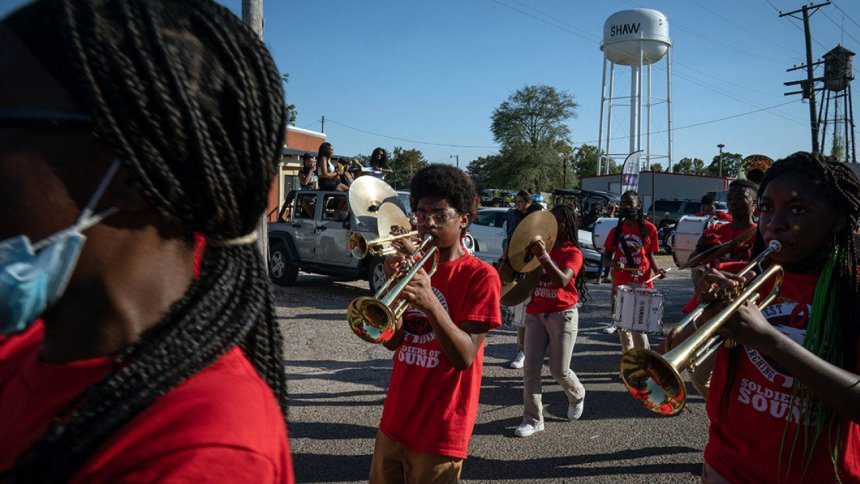
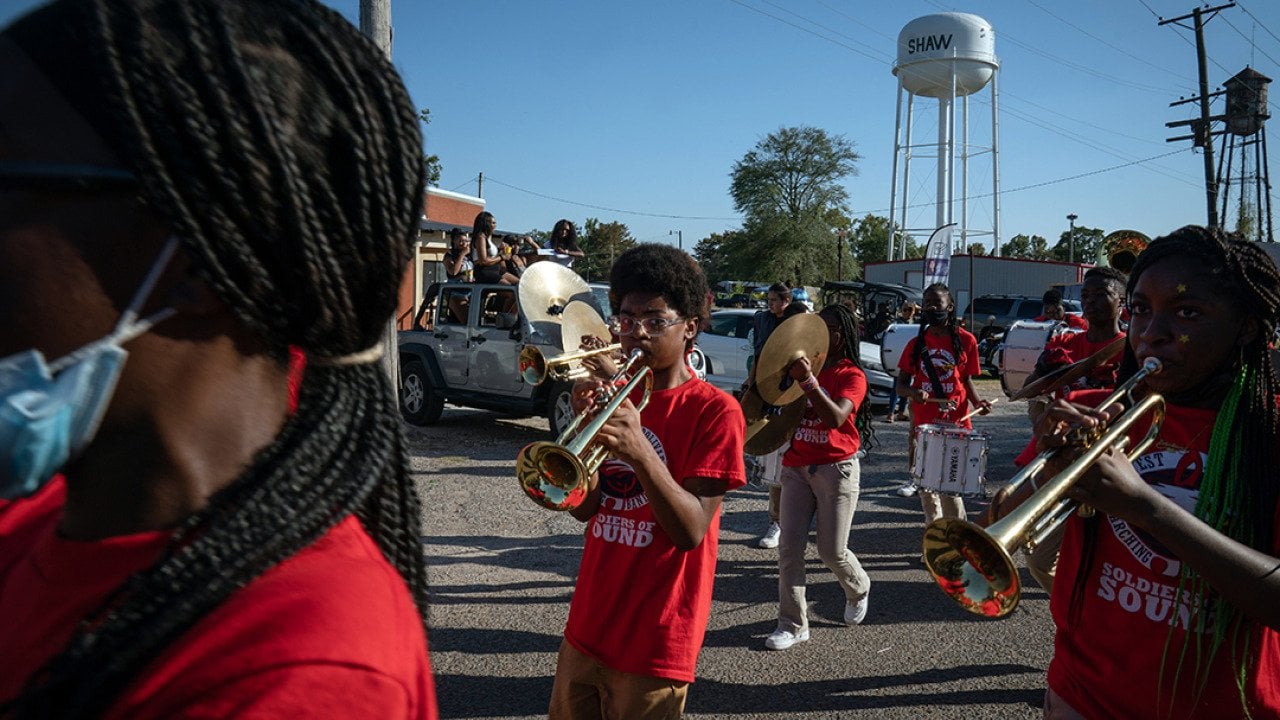
Students in the West Bolivar High School marching band take part in the McEvans School homecoming parade in Shaw, Mississippi on September 23, 2022.

Rory Doyle for The Washington Post via Getty Images

Rural high school students are more likely than city kids to get their diplomas, but they remain less likely to go to college

Many high school seniors are currently in the midst of the college application process or are already waiting to hear back from their selected schools.

For high school students in rural parts of the United States, the frantic pace of the college application process can look a bit different. For starters, some of these rural students might not have large numbers of elite universities and colleges coming to admissions fairs in their areas. They might not have all of the required high school courses to attend some of these schools, either, according to Sheneka Williams, a scholar of educational leadership and rural education at Michigan State University, who graduated from a small, rural high school in Alabama.

Amy Lieberman, the education editor at The Conversation U.S., spoke with Williams to understand the particular experiences of rural students — and what, exactly, it means to come from a rural background as students think about college.

Lieberman: How are rural high school students’ experiences unique?

Williams: Nationally, nearly 10 million students — or 1 in 5 public school students in the U.S. — attended rural schools in the fall of 2022.

Research suggests that rural students finish or complete high school at a higher rate than urban students.

While approximately 90% of rural high school students graduated in 2020, 82% of urban high school students got their diplomas that year.

But rural students’ college entrance rate is lower than that of urban and suburban students.

Within four years of graduating high school, 71% of rural students attended college, compared to 73% of suburban and 71% of city students who also went to college, according to 2023 findings by the National Center for Education Statistics.

Lieberman: Why are rural students finishing high school at a higher rate than their suburban and urban peers but attending college at a lower rate?

Williams: First, we know that some colleges are not really recruiting students in rural areas. If these universities don’t know you exist, and if your parents haven’t gone to college and don’t know how the admission system works, you might not have help as you move closer to attending college. Some rural schools also do not have college counselors.

There are other reasons why some rural high school graduates are not going to college, I have personally seen. Some students are apprehensive about leaving home. They have close-knit families and communities, and they might be wondering where they fit in at a school in a large place that is much bigger than where they grew up.

Lieberman: Do any of these scenarios describe your own educational journey?

Williams: I grew up in a small town in Alabama and was different from some of the other Black students, since I came from a family of educators who had gone to college for two generations.

But when I did go to college, I went to a campus that was two times the size of my hometown, which has a population of just 12,000. It takes a confident student, as well as encouragement from parents or mentors, to believe that you can go to school away from home.

We had some college fairs in high school, but the visiting colleges were state universities and regional schools. You did not have selective schools coming to recruit.

Students today can learn about schools online, but there is still the issue that universities are not, on their own, connecting enough with rural students.

Lieberman: Do rural students fit into universities’ diversity goals?

Williams: Only recently have people begun to think and talk more about what rural really means. Some people use the U.S. Census Bureau’s definition of rural, which is “all population, housing, and territory not included within an urban area.”

But that’s a somewhat surface definition. It’s hard for some scholars to agree on what counts as rural, including me. It feels like something you have to experience and know, and that is hard to define. Part of the issue is that rural has been defined by what urban is not, and that makes it seem it doesn’t deserve its own definition.

Universities are beginning to think about these rural students more and the particular challenges they experience in school. That includes not necessarily having stable access to high-speed internet, which approximately 22.3% of Americans in rural areas and 27.7% of Americans in tribal areas don’t have, compared to only 1.5% of Americans in urban areas.

Another issue is that even for rural students who want to go to college, they might not have the right qualifications, such as certain courses they have completed.

I am currently involved in research with sociologists Barbara Schneider and education scholars Joe Krajcik and Clausell Mathis about how some rural high schools in Alabama and Mississippi aren’t able to teach physics or chemistry. Physics and chemistry are both gateway courses to college, and if you want to be an engineer or STEM major, you have to complete these courses in order to have a shot at certain colleges.

Rural high schools tend to have a lack of resources, in terms of both budget and their staffing. Schools not being able to find teachers who are qualified or certified in certain subject areas, such as science courses, is a nationwide problem. But this issue is tougher in smaller, rural towns.

Schools will say they don’t have students interested in those subjects. But the states also aren’t requiring that these classes be offered.

This lack of science course offerings can create a whole block of students who are not going to college. And if we are talking about the South, in particular, and states that have a high population of Black students in rural areas, we are talking about a whole swath of students who don’t have this education and would find it a struggle to get into larger, splashier schools that are not near home.

Lieberman: What do you think are some of the solutions to these challenges?

Williams: There are many local efforts to offer tutoring and things of that nature for rural high school students. Some of those efforts have been blunted because schools are funded by property taxes, and some of them just don’t have the revenue to pay for these add-ons without federal support.

I think colleges need to do a better job of recruiting students at rural high schools. I also think that once these students make it to college, it would help if there were support or affinity groups.

Some colleges have not thought enough about rural students. I think the narrative around rural students and college needs to shift – these students may want to go to college, but nobody is looking for them. When you live in small, geographically isolated places, sometimes you only know what you see.

This story was produced by The Conversation and reviewed and distributed by Stacker.

Topics:

Careers & Education
media-news

General Atomics Selected for Phase 3 of U.S. Space Force Enterprise Space Terminal Program Following Successful Laser Crosslink Verification

By Media News
2 min read • Published April 27, 2026
By Media News
2 min read • Published April 27, 2026

SAN DIEGO, CA / ACCESS Newswire / April 27, 2026 / General Atomics Electromagnetic Systems (GA-EMS) has been selected to perform Phase 3 of the U.S. Space Force’s Enterprise Space Terminal (EST) program following successful government verification of the company’s optical communication terminal (OCT) at MIT Lincoln Laboratory’s Optical Terminal Verification Testbed (OTVT). Phase 3 will transition the EST effort from prototype development into flight hardware production and demonstration.

The independent verification campaign confirmed the OCT’s performance, interoperability, and technical readiness for full system integration and flight terminal development. Successful completion of the OTVT test campaign confirmed the GA-EMS OCT architecture meets the thresholds required to support standardized satellite laser crosslinks. As the prime contractor, GA-EMS is teamed with L3Harris for the modem subsystem and Advanced Space to provide performance modelling.

"Completion of Phase 2 marks a significant milestone for our team, underscoring the maturing and successful validation of key subsystems of our OCT through rigorous analysis and testing. This achievement positions us well as we move into Phase 3, where we will integrate and demonstrate a flight laser communications terminal. We are excited to take this next step in delivering robust, mission-ready capability that advances resilient, high-capacity space network connectivity for national security operations," Scott Forney, president of GA-EMS, said.

The EST program will establish standardized OCTs to enable spacecraft from multiple programs and vendors to exchange data directly using a common enterprise waveform. By enabling high-capacity laser crosslinks beyond low Earth orbit, the architecture reduces reliance on ground relay stations and accelerates the delivery of time-critical information for joint forces and national security missions.

"The successful execution of Phases 1 and 2 reflects the strength of our technical approach and our team’s ability to translate innovative optical communications concepts into validated, high-performing hardware. As we transition into Phase 3, we are focused on integrating and demonstrating a complete system that is not only mission-capable, but also scalable and producible to meet the evolving needs of resilient space architectures," Klaus Etzel, vice president of GA-EMS Remote Space Sensing Systems, said.

About General Atomics Electromagnetic Systems

General Atomics Electromagnetic Systems (GA-EMS) develops innovative technologies to create breakthrough solutions supporting operational environments from undersea to space. From electromagnetic, power generation and energy storage systems and space systems and satellites, to hypersonic, missile defense, and laser weapon systems, GA-EMS offers an expanding portfolio of capabilities for defense, government, and national security customers. GA-EMS also provides commercial products and services targeting hazardous waste remediation, oil and gas, and nuclear energy industries. For further information, visit ga.com/EMS.

Media Inquiries: EMS-MediaRelations@ga.com

SOURCE: General Atomics Electromagnetic Systems

Related Documents:

  • EST Laser Crosslink Verification
  • 20260427 – General Atomics EST Phase 3 FINAL Press Release

View the original press release on ACCESS Newswire

Topics:

media-news
media-news

The Money Is Moving Out of Hollywood. Follow It.

From Brussels to Jakarta to Paris, the global content infrastructure is being rebuilt by people who used to work for the majors.

By Mediabistro Team
6 min read • Published April 27, 2026
By Mediabistro Team
6 min read • Published April 27, 2026

Sara May spent years as a Netflix executive helping build the streamer’s European slate. Now she’s launching Sonderworld, an action-and-genre banner backed by Goodfellas, operating out of Paris with no studio parent company.

Fauzan Zidni produced original content for Cinesurya. Now he’s running Indonesia’s government-backed Film Agency and planning the country’s first official delegation to Cannes.

These aren’t typical career moves. They’re structural shifts.

The decentralization of content production is the operating environment. Capital is flowing toward independent operators with institutional backing, whether that institution is a private equity firm or a national government.

Distribution deals that used to require an L.A. office and a legacy studio partnership are happening between Copenhagen-based producers and Prime Video’s European commissioning teams. Franchise management thinking that once belonged exclusively to American broadcast and cable now operates identically in Indian animation studios.

Three patterns explain where the business is headed: who’s building new production infrastructure, what international content is landing systematic acquisition deals, and how proven IP gets extended outside the traditional studio system.

Building From the Outside In

May’s move to launch Sonderworld with backing from Goodfellas is more than another indie banner entering a crowded market. She’s positioning the company as globally minded from day one, developing elevated action and genre features designed to travel.

The bet: streamers and international distributors need exactly this kind of supplier. Experienced operators who understand platform economics but aren’t beholden to a parent company’s quarterly earnings pressure.

Goodfellas’ involvement matters. That kind of institutional capital used to flow primarily toward established production companies with studio deals. Now it’s funding experienced executives building from scratch in secondary markets.

The Paris base isn’t incidental. European tax incentives, crew availability, and proximity to multiple national markets make it viable to run a production company that isn’t trying to sell primarily to American buyers.

The Indonesian government is making a parallel calculation with different resources. Zidni’s election as chair of the Indonesian Film Agency comes with a mandate to establish the country’s presence at Cannes, the industry’s most important marketplace for international pre-sales and co-production deals.

This isn’t cultural diplomacy. It’s industrial policy. Indonesia wants a production sector that can compete for global streaming budgets and theatrical distribution, and it’s willing to fund the infrastructure to get there.

Key Takeaway: The people who understand how Netflix, Prime Video, and other global buyers operate are building competing supply chains outside those companies. Same buyers, similar content. But the profit margins and creative control look different when you’re outside a legacy conglomerate managing shareholder expectations and legacy distribution obligations.

Crime Pays, Especially in Europe

Nordic and Belgian crime content has crossed a threshold. It’s a reliable, repeatable business.

Nordisk Film Production and Reinvent Yellow just closed a three-series distribution deal that includes “Snake Killer” (Prime Video’s first Danish original), TV2 Norway’s “Sogn Murders,” and a third title. That’s a volume commitment.

The structure matters. Reinvent Yellow operates as a sales, financing, and production outfit, packaging projects that combine Nordic public broadcaster funding, streamer pre-buys, and independent distribution rights.

This kind of hybrid financing used to require a studio’s international distribution arm. Now independent operators handle it directly, and platforms are comfortable signing multi-title output deals because the production quality and audience data support it.

Belgian true crime is generating similar traction. “The Deal With Iran,” a three-part docuseries by Lennart and Maarten Stuyck, landed at Canneseries as a buzz title. The series investigates a Belgian-led operation that stopped an Iranian bomb plot against the People’s Mojahedin Organization of Iran. High-stakes geopolitical storytelling that works in any territory with subtitles, gaining visibility with the same international buyers signing those Nordic volume deals.

The pattern: European public broadcasters and streamers co-fund premium non-English content, independent sales companies manage international distribution, and the resulting product is strong enough that platforms commit to multiple titles before seeing audience performance.

That’s a functioning ecosystem operating independently of Hollywood development and financing. For producers and executives thinking about where to invest the next five years of their career, the question is which markets have this infrastructure in place and which are still building it.

Keeping the Machine Running

IP extension is no longer a problem only American studios solve.

CBS wrapped the second season of “Matlock” by closing the Wellbrexa case that anchored the show’s premise, then setting up a time jump to reset narrative stakes for Season 3. Showrunner Jennie Snyder Urman is running the same playbook that kept “Jane the Virgin” going: resolve the central mystery, give characters new problems, justify another season order.

Meanwhile, Vaibhav Studios, the Emmy-nominated Indian animation house, is releasing “Return of the Jungle” theatrically across India on May 29. The music-driven family feature was showcased at Cannes two years ago and is getting a wide release built on brand recognition.

That’s franchise thinking applied to independent animation: build a reputation, get international festival visibility, monetize theatrically in your home market, keep global streaming rights available for platform deals later.

The strategic question is identical whether you’re running a CBS procedural or an Indian animated feature: how do you keep a successful property generating revenue after the initial concept is exhausted? The American answer is narrative time jumps and character evolution. The Indian answer is theatrical releases that build on festival credibility. Both work because IP management tools are globally standardized now.

Key Takeaway: Same franchise logic, same financing structures, same distribution strategies, running in multiple markets simultaneously with no single center controlling access.

What This Means

The money is moving toward operators who can build production infrastructure outside the traditional studio system.

If you’re a development executive, a line producer, or a distribution strategist working inside a legacy media company, the exits are getting more attractive. Experienced operators can access institutional capital and government backing to build competing supply chains. The platforms that used to depend on studio output deals are signing directly with independent producers in multiple countries.

For job seekers: pay attention to where new production entities are being funded and what experience they’re hiring for. International co-production skills, platform commissioning relationships, and hybrid financing knowledge are worth more than they were three years ago. Companies like Sonderworld and agencies like Indonesia’s BPI are building teams now. Browse international production and development roles on Mediabistro to see where the hiring is happening.

For employers, decentralization creates both pressure and opportunity. Competing for production talent against independent operators offering equity and creative control? Salary alone won’t close it. But if you’re building one of those independent entities, experienced media professionals are more open to non-traditional opportunities than they’ve been in a decade. Post a job on Mediabistro to reach people who understand platform economics and global distribution.

The content business is fragmenting into dozens of well-capitalized, strategically positioned production entities competing for the same global buyers. The people building those entities used to work for Netflix, CBS, and the major studios. Now they’re working for themselves, and they’re taking the institutional knowledge with them.


This media news roundup is automatically curated to keep our community up to date on interesting happenings in the creative, media, and publishing professions. It may contain factual errors and should be read for general and informational purposes only. Please refer to the original source of each news item for specific inquiries.

Topics:

media-news
Hot Jobs

Remote Media Jobs Lead Today’s Listings From Advocacy to Entertainment

Mission-driven organizations and digital-first brands are competing for senior talent, and they are offering real flexibility to get it.

mediabistro hot jobs
Mediabistro icon
By Mediabistro
The Mediabistro editorial team draws on 25 years of media industry expertise to cover jobs, careers, and trends shaping the industry.
4 min read • Published April 27, 2026
Mediabistro icon
By Mediabistro
The Mediabistro editorial team draws on 25 years of media industry expertise to cover jobs, careers, and trends shaping the industry.
4 min read • Published April 27, 2026

Remote Flexibility Is the New Recruiting Currency

Something worth watching: nearly every standout posting today comes from an organization with a clear social mission, and the majority of them are fully remote. TransLash Media, Resetting the Table, and EntertainmentNow are all hiring for senior-level content and digital roles without requiring relocation. Columbia University’s Knight Bagehot Fellowship rounds out the mix as a rare institutional opportunity at the executive level.

What connects these roles is a shared emphasis on voice. Each organization needs someone who can translate complex subject matter into content that moves audiences, whether that audience is the trans community, politically polarized Americans, entertainment news junkies, or mid-career business journalists. The technical skill sets vary, but the core ask is the same: strategic thinking paired with editorial instincts.

For candidates who have been building careers in digital media, this is a strong moment to explore organizations where your platform expertise and storytelling ability carry equal weight. If you are curious about how social media savvy factors into hiring decisions broadly, Mediabistro’s overview of how hiring managers evaluate social media profiles is worth revisiting.

Today’s Hot Jobs

Director of Digital and Social Media at TransLash Media

Why this one matters: TransLash Media is an award-winning multimedia organization telling stories by and for the transgender and gender nonconforming community, and this role reports directly to the CEO. At $135,000 to $155,000, the salary is transparent and competitive for a director-level digital position. The scope is genuinely strategic: you are shaping how the entire brand shows up across platforms, while also building and managing a team.

They want someone who can:

  • Develop and execute a cross-platform digital and social media strategy
  • Lead a team while remaining involved in day-to-day content execution
  • Operate at both a high strategic level and within rapid content cycles
  • Bring deep credibility and cultural fluency with TGNC communities

Apply for the Director of Digital and Social Media role at TransLash Media

Entertainment Email Writer (Freelance) at EntertainmentNow

The appeal here: This is a fully remote freelance role for someone who lives and breathes entertainment news. EntertainmentNow, the premium brand from the team behind Heavy.com, needs writers who can spot a trending celebrity story before it crests and turn it into email subject lines that drive massive traffic. The role blends editorial instinct with performance marketing sensibility in a way that few freelance gigs do.

What they need from you:

  • Ability to identify trending, breaking, and viral entertainment stories ahead of the curve
  • Experience crafting high-converting email headlines and sending daily news emails
  • Fluency across social media, Google Trends, podcasts, and TV for trend monitoring
  • Comfort creating simple, eye-catching visuals for email campaigns

Apply for the Entertainment Email Writer position at EntertainmentNow

Senior Content Writer at Resetting the Table

What makes this distinctive: Resetting the Table works at the intersection of conflict resolution, media, and democratic repair. Their trainings have reached over 100,000 participants, including faith leaders, TV writers, and higher education administrators. This remote, full-time role (open to part-time arrangements for the right candidate) asks a senior writer to translate complex social research and mediation methodology into accessible content that reaches mainstream audiences. If you have been looking for a way to apply editorial skills to work that directly addresses polarization, few organizations have the credibility RTT has built.

Key qualifications:

  • Strong background in writing about complex social and political topics for general audiences
  • Ability to produce empathy-generating media content across multiple formats
  • Experience working with or for mission-driven organizations
  • Comfort operating remotely within the contiguous U.S.

Apply for the Senior Content Writer role at Resetting the Table

Executive Director, Knight Bagehot Fellowship Program at Columbia University

Why this is rare: The Knight Bagehot Fellowship is the preeminent program for mid-career business and economics journalists, and this executive director role carries real institutional power. You will oversee a $1.8 million annual budget, steward a $35 million endowment, and define the fellowship’s multiyear strategy with significant autonomy. At $170,000 to $200,000, the compensation matches the scope. This is a leadership position for someone who wants to shape the next generation of financial journalism talent from inside one of the world’s most respected journalism schools.

What Columbia is looking for:

  • Fundraising capability to cover fellowship tuition and stipends
  • Independent decision-making on budget allocation and long-term financial planning
  • Thought leadership in business and economics journalism
  • Experience defining and executing multiyear program strategy at a senior level

Apply for the Executive Director position at Columbia University

The Takeaway for Job Seekers

Today’s listings reinforce a trend that has been building for months: organizations with specific missions are willing to pay well and offer genuine flexibility to attract senior media talent. The catch is that these roles demand more than platform proficiency. They require cultural fluency with the audience you will serve. Whether that is the trans community, entertainment superfans, or polarization researchers, your ability to demonstrate authentic engagement with the subject matter will matter as much as your resume.

If you are pivoting into digital media strategy from a more traditional editorial background, brushing up on essential digital media terminology can help you speak the language hiring managers expect. The gap between “good writer” and “strategic digital leader” is closing fast, and today’s roles prove that both skill sets are valued.

Topics:

Hot Jobs
media-news

New to The Street Broadcasts Show #746 Tonight on Bloomberg Television 6:30PM EST Featuring NRx Pharma (NASDAQ:NRXP), Performance Golf, Lost Soldier Oil & Gas, Dr. Lee Gause, and CISO Global

By Media News
2 min read • Published April 25, 2026
By Media News
2 min read • Published April 25, 2026

Sponsored Programming Supported by Commercials from Medicus Pharma (NASDAQ:MDCX), IGC Pharma (NYSE American:IGC), Roadzen (NASDAQ:RDZN), and Lantern Pharma (NASDAQ:LTRN)

NEW YORK CITY, NY / ACCESS Newswire / April 25, 2026 / New to The Street, one of the longest-running financial television brands, will air Show #746 tonight on Bloomberg Television as sponsored programming, reaching millions of households across the U.S., MENA, and Latin America.

This week’s episode features a powerful lineup of companies and industry leaders:

  • NRx Pharmaceuticals, Inc. (NASDAQ:NRXP) – Dr. Jonathan C. Javitt, Founder, Chairman & CEO, discusses the company’s innovative pipeline and advancements in critical care and neuropsychiatric treatments.

  • Performance Golf – A leading digital golf instruction platform transforming how players improve their game worldwide.

  • Lost Soldier Oil & Gas – Featuring Marc Bruner, sharing insights into energy development strategy, operational growth initiatives, and industry positioning.

  • Dr. Lee Gause – Renowned cosmetic dentist and founder of Smile Design Manhattan, discussing the intersection of art and dentistry and offering perspective on choosing the right path for ambitious young men and women.

  • CISO Global, Inc. (NASDAQ:CISO) – A cybersecurity leader addressing enterprise-level digital risk and protection strategies.

The broadcast is further supported by commercial sponsorships from:
Medicus Pharma Ltd. (NASDAQ:MDCX) (https://youtu.be/ytbRAhLTAkM?si=NM2XKcFKJDxb90uw),
IGC Pharma, Inc. (NYSE American:IGC) (https://youtu.be/PPY2CKHMUzE?si=cGwFjidj-1ZRVB1J),
Roadzen, Inc. (NASDAQ:RDZN) (https://youtu.be/aD3yazNtb1M?si=CD-1Jg7ht6rpxVcH), and
Lantern Pharma Inc. (NASDAQ:LTRN) (https://youtu.be/gBzu0SMv2-s?si=MeAV2X8jNhQKD2HL) – each delivering innovative solutions across healthcare, AI, and technology sectors.

New to The Street continues to combine long-form interviews, national television distribution, earned media, and digital amplification-creating one of the most comprehensive platforms for public companies to tell their story.

About New to The Street
New to The Street is a 17-year financial media brand that produces and distributes sponsored programming across Bloomberg Television and Fox Business Network, reaching millions of households in the U.S. and internationally. The platform features in-depth interviews with public and private companies, alongside earned media, social media distribution, and iconic outdoor advertising. With one of the largest YouTube audiences in the financial media space, New to The Street delivers unmatched visibility and engagement for its clients.

New to The Street’s powerful digital platforms, including its YouTube channel with over 4.51 million subscribers (https://youtube.com/@newtothestreettv?si=XQGpjejyvmLTJgkW), as well as its PR distribution partner NewsOut Channel with over 744,000 subscribers (https://youtube.com/@newsoutchannel?si=p6OuZrP7lHNEQ71S)

Media Contact:
Monica Brennan
Head of Communications
New to The Street
Monica@NewtoTheStreet.com

SOURCE: New to The Street

View the original press release on ACCESS Newswire

Topics:

media-news
Hot Jobs

Social Media Leadership and Mission-Driven Content Roles Hiring Now

From TransLash Media to SAG-AFTRA Foundation, mission-aligned employers are hiring social and digital leaders who can think editorially and execute at scale.

mediabistro hot jobs
Mediabistro icon
By Mediabistro
The Mediabistro editorial team draws on 25 years of media industry expertise to cover jobs, careers, and trends shaping the industry.
5 min read • Published April 25, 2026
Mediabistro icon
By Mediabistro
The Mediabistro editorial team draws on 25 years of media industry expertise to cover jobs, careers, and trends shaping the industry.
5 min read • Published April 25, 2026

Purpose-Driven Organizations Are Building Out Their Digital Teams

Something worth watching: organizations with strong editorial missions are investing heavily in social and digital leadership. Three of today’s most compelling listings come from mission-driven organizations that need experienced media professionals to amplify stories that matter. These aren’t entry-level community management gigs.

These are strategic roles with real authority over how audiences encounter and engage with important work.

Whether it’s countering political polarization, centering transgender narratives, or driving millions of opens on entertainment newsletters, these employers understand that platform expertise is core infrastructure. They’re hiring people who can think editorially and execute technically, often simultaneously. Mission-driven organizations are staffing up across the board, not just in editorial but across every channel that connects them to their audience.

Meanwhile, the freelance economy continues to reward speed and specificity. One of today’s featured roles is a fully remote freelance position built around a single skill: writing email subject lines that people actually open. That kind of micro-specialization used to live on the margins. Now it’s a defined job with defined expectations. If you’ve been considering how to position yourself for freelance writing opportunities, roles like this one show where the market is heading.

Today’s Hot Jobs

Director of Digital and Social Media at TransLash Media

Why This Role Matters: TransLash Media is an award-winning multi-platform organization producing podcasts, films, journalism, and zines that center transgender and gender nonconforming lives. This director-level position reports directly to the CEO and carries both strategic authority and hands-on execution responsibility. At $135,000 to $155,000, the compensation reflects the role’s seniority. You’d be shaping how an increasingly influential media organization shows up across every digital channel.

What They Need From You:

  • Proven experience leading digital and social strategy for a media or mission-driven organization
  • Ability to operate at a high strategic level while managing day-to-day content execution
  • Team-building skills with direct oversight of digital staff
  • Deep understanding of storytelling that builds community and drives engagement

Apply to the Director of Digital and Social Media position at TransLash Media

Entertainment Email Writer (Freelance, Remote) at EntertainmentNow

The Appeal: EntertainmentNow, the entertainment news brand from the team behind Heavy.com, wants freelance writers who can spot trending stories before they peak and turn them into email subject lines that drive massive traffic. This is a pure velocity role. You’re monitoring social media, Google Trends, podcasts, and TV simultaneously, then crafting the hooks that put stories in front of millions of readers. Fully remote, fully freelance, fully built for someone who already lives inside the entertainment news cycle.

The Skill Set:

  • Instinct for identifying breaking and viral entertainment stories ahead of the curve
  • Experience crafting high-converting email headlines and subject lines
  • Ability to send daily and breaking news emails that drive pageviews
  • Comfort creating simple, eye-catching visuals for email campaigns

Apply to the Entertainment Email Writer role at EntertainmentNow

Senior Content Writer at Resetting the Table

What Makes This One Different: Resetting the Table works at the intersection of conflict resolution, media, and civic life, training leaders to counter toxic polarization. Their programs have reached more than 100,000 participants across the U.S. This remote senior content writer role supports an organization whose methodology draws on mediation, trauma therapy, and social research. You’d be translating complex, nuanced ideas into accessible content for a national audience. The position is open to part-time arrangements, which is increasingly rare for senior writing roles.

Core Requirements:

  • Strong editorial voice capable of making complex social concepts accessible
  • Experience writing for mission-driven or advocacy organizations
  • Ability to work remotely within the contiguous U.S.
  • Comfort collaborating closely with organizational leadership, reporting to the Co-CEO

Apply to the Senior Content Writer role at Resetting the Table

Social Media Associate Manager at SAG-AFTRA Foundation

Why It Stands Out: The SAG-AFTRA Foundation runs programs that directly support working actors, including the beloved Storyline Online reading series. This Los Angeles-based role manages all social channels for both the Foundation and Storyline Online, which means you’re creating content that connects with entertainment industry professionals and millions of young readers alike. At $34 per hour for a 35-hour week with a generous benefits package including a pension plan, this is a thoughtfully structured position for someone who wants to work in entertainment-adjacent media with strong institutional backing.

Key Qualifications:

  • Strong storytelling instincts and editorial judgment across social platforms
  • Technical skills in content creation, editing, captioning, and publishing
  • Flexibility to capture content across a wide range of programs and live events
  • Experience managing multiple social channels with distinct audiences and voices

Apply to the Social Media Associate Manager position at SAG-AFTRA Foundation

The Takeaway for Job Seekers

If your background blends editorial sensibility with platform fluency, today’s market is rewarding that combination more than ever. The roles above aren’t asking for generic social media managers. They want people who understand story, audience, and distribution as a single discipline. Candidates who can articulate how they’ve grown engaged communities around specific editorial missions will stand out immediately.

One practical move: audit your portfolio or resume for evidence of mission alignment. These organizations are hiring people who care about what they publish, and your application materials should reflect that.

If you’re building your social media presence as a job seeker, let your own channels demonstrate the kind of strategic storytelling these employers want to see. And if you’re weighing whether a full-time role beats staying freelance, the benefits packages in today’s listings are worth factoring into that calculation.

Recently on Mediabistro

If today’s listings caught your attention, these recent job roundups and articles are worth a read:

  • The Best Creative Work Is Going Underground – How creatives actually build reputations and get hired is changing and moving to places like Discord
  • Mediabistro Weekly Drop: The Writers Block Edition – Books are back, and the publishing industry’s long-predicted death is turning out to be a work of total fiction. Here’s what the real numbers say about where the industry is headed, and what it means for your creative career.
  • Mission-Driven Media Jobs Hiring Now in Marketing and Editorial — more roles from organizations that treat communications as a core function, not an afterthought.
  • Mission-Driven Organizations Are Building Full Comms Teams Right Now — nonprofits and advocacy groups are hiring across disciplines, from digital strategy to editorial leadership.
  • The Quiet Splintering of Social Media Manager Jobs and Where They Went — how one job title became a dozen specialized roles, and what that means if you’re navigating this market.
  • Social and Audience Growth Roles Are Redefining Media Jobs in 2026 — the title isn’t the job anymore. Here’s what these positions actually look like on the ground.

Topics:

Hot Jobs

Posts navigation

Older posts
Newer posts
Featured Jobs
Columbia University
Executive Director, Knight Bagehot Fellowship Program
Columbia University
New York, NY USA

Association for Computing Machinery
Executive Editor
Association for Computing Machinery
New York City, NY USA

Delaware River Joint Toll Bridge Commission
Director of Communications
Delaware River Joint Toll Bridge Commission
Yardley, PA

Hearst Television
Account Executive
Hearst Television
Array

All Jobs »

No premium members available to display.

Mediabistro Logo Find your next media job or showcase your creative talent
  • Job Search
  • Hot Jobs
  • Membership
  • Newsletter
  • Career Advice
  • Media News
  • Hiring Tips
  • Creative Tools
  • About
Facebook YouTube Instagram LinkedIn
Copyright © 2026 Mediabistro
  • Terms of Use
  • Terms of Service
  • Privacy