
Mediabistro Logo Mediabistro Logo
  • Jobs
    Search Creative Jobs Hot Jobs Remote Media Jobs Create Job Alerts
    Job Categories
    Creative & Design Marketing & Communications Operations & Strategy Production Sales & Business Development Writing & Editing
    Quick Links
    Search All Jobs Remote Jobs Create Job Alerts
  • Career Resources
    Career Advice & Articles Media Industry News Media Career Interviews Creative Tools Resume Writing Services Interview Coaching Job Market Insights Member Profiles
  • Mediabistro Membership
    Membership Overview How to Pitch (Premium Tool) Editorial Calendars (Premium Access) Courses & Training Programs Membership FAQ
  • Showcase
    Featured Creative Stories Submit your Story
  • Log In
Post Jobs
Mediabistro Logo Mediabistro Logo
Search Creative Jobs Hot Jobs Remote Media Jobs Create Job Alerts
Job Categories
Creative & Design Marketing & Communications Operations & Strategy Production Sales & Business Development Writing & Editing
Quick Links
Search All Jobs Remote Jobs Create Job Alerts
Career Advice & Articles Media Industry News Media Career Interviews Creative Tools Resume Writing Services Interview Coaching Job Market Insights Member Profiles
Membership Overview How to Pitch (Premium Tool) Editorial Calendars (Premium Access) Courses & Training Programs Membership FAQ
Featured Creative Stories Submit your Story
Log In
Post Jobs
Log In | Sign Up

Follow Us!

Business Basics

Should Freelancers Hire a CPA? Here’s How to Decide

Find out why hiring a CPA could help save your sanity

freelancer meeting with cpa
Admin icon
By Amanda Layman Low
@AmandaLaymanLow
Amanda Layman is a B2B tech content writer and strategist with over 15 years of experience creating content for startups and enterprise brands. She founded Tigris, a content agency serving leading tech companies, and authored The New Freelance: A Book for Writers.
5 min read • Originally published June 30, 2015 / Updated March 19, 2026
Admin icon
By Amanda Layman Low
@AmandaLaymanLow
Amanda Layman is a B2B tech content writer and strategist with over 15 years of experience creating content for startups and enterprise brands. She founded Tigris, a content agency serving leading tech companies, and authored The New Freelance: A Book for Writers.
5 min read • Originally published June 30, 2015 / Updated March 19, 2026

Every freelancer gets to a point in her career where she must ask herself: Am I finally ready to treat this like a real business and hire an accountant? The consensus after speaking with two writers and a certified public accountant (CPA) is if you’re willing and able to pay up, having an expert manage your ledger is a valuable investment.

Read on for their advice.

Find the right match.

Although you don’t necessarily have to seek out a CPA who deeply understands every writer-ly woe, there is a resounding sentiment among writers with accountants that you’ll feel most comfortable and satisfied with a CPA who has some experience working with people in your field.

Freelance graphic designer and writer Preston D. Lee made the mistake of picking his first CPA at random. “That didn’t pay off,” he says. “They were not extremely helpful and I found I was basically doing all the real work and paying them simply to file the information together in one place.” He persisted in his search, however, and found a private CPA who didn’t work for a firm and established a strong working relationship with the accountant.

“Thousands of people can do the technical work a CPA can do,” Lee says, “but only a few people will really understand and appreciate my business the way I need them to. For me, it’s about getting the right people on board in all areas. Finance is no different.”

Independent writer Davina van Buren found her CPA through a referral from a fellow freelancer. “I specifically tried to find someone who worked with freelance writers. I’ve worked with him for two years so far. It makes me feel more comfortable that he remembers me.” On finding a CPA with experience working with writers, she says, “CPAs are kind of like writers: they have their specialties as well. For me, it made me feel better to work with someone who’s used to working with writers and [who knows] all the things we can write off [when filing taxes].”

Says Brittany Hopp of York and Hopp CPAs, “You’re definitely going to be more willing to call someone throughout the year if you feel like you can trust that person.” Hopp emphasizes calling around, getting referrals and actually interviewing CPAs or tax preparers to find the one that suits your specific needs.

Learn how a CPA can help.

Some writers may not seek out CPAs simply because they don’t know how a professional could help them. Hopp says in addition to tax preparation, a CPA can help freelancers with general bookkeeping, managing numbers and staying on top of receipts. She adds that some creatives are intimidated by CPAs, but she reassures “we’re really just people and we want to help our clients— even if it’s just education on the front end to figure out what you want to be doing.”

A CPA is also very useful if you have income from several different sources. Van Buren shares what inspired her to seek out the help of a CPA: “The first year I was freelancing, I had a staff job the first part of the year, I was freelancing the second part of the year and the whole year I was also working as a waitress. I had a lot of different things going on.”

I went through a similar scenario. During my first year of freelancing, I was newly married and had income both from freelance work and from my former employer. Instead of attempting to file taxes myself, I took my information to a professional and it helped immensely.

Aside from help during tax time, you can utilize a CPA as often or as little as you need. Lee says, “We don’t meet often. I basically spend a total of 30 to 60 minutes on the phone with my bookkeeping person and accountant once a month.”

Get the facts on service costs.

The catch, of course, even if you’re delighted by the idea of handing your books off to a professional, is the cost of hiring him or her. As you know, running a business for which you’re the only employee means your budget might be a little tight. Therefore, it may be less than appealing to think about spending that precious income on much else beyond your domain name, magazine subscriptions and your Mediabistro AvantGuild membership. So what if you’re interested in hiring a CPA, but the cost is holding you back?

First, don’t just think in terms of money, but consider the time you could save and frustration you could avoid by enlisting help. Van Buren says, “[Hiring a CPA] definitely saves my sanity… I could make this [amount of money] in a quarter of my work day, so it’s worth it to me.”

Lee has a similar outlook. He says every minute he’s spending on bookkeeping and taxes is a minute he could be spending on freelance work.

And you may find the actual cost isn’t as high as you may have initially thought. Hopp says, “Sometimes it’s surprising how affordable a CPA can be, if you ask the right questions and figure out exactly what you need.” CPAs typically charge by the hour. Depending on where you live and the level of experience of your CPA, you could be spending anywhere from $90 an hour to $300 an hour. If this fee seems daunting, consider other ways to save. Students in CPA programs at local colleges may be able to provide the counsel you need. Or, consider a virtual CPA: search for virtual or online CPAs to find a team that can answer any basic questions you might have.

Just bear in mind that finding the cheapest per-hour rate doesn’t guarantee the greatest savings. If you’re working with an inexpensive professional who takes hours to accomplish what a more experienced CPA could do in minutes, you’re better off shelling out for the more experienced pro.

Although there’s no definite rule that will help you determine whether a CPA is right for you, an assessment of your available time, budget and skill set will help guide you. Van Buren puts it succinctly: “Numbers are not my thing. Words are my thing. So, to me, it’s worth it to just pay somebody and not have to worry about my math or whether I left something out.”


Topics:

Business Basics, Get a Media Job, Go Freelance
Job Search

How to Use LinkedIn to Launch Your Media Career

Kick your job search into high gear with help from the experts

professional using LinkedIn on smartphone
Admin icon
By Brittany Taylor
Brittany Taylor is an enterprise marketing manager and content strategist with over a decade of experience in B2B content marketing, brand building, and ghostwriting, with bylines in SELF, Teen Vogue, and Mediabistro. She currently leads content and branding across multiple brands at HireQuest Inc.
5 min read • Originally published June 30, 2015 / Updated March 19, 2026
Admin icon
By Brittany Taylor
Brittany Taylor is an enterprise marketing manager and content strategist with over a decade of experience in B2B content marketing, brand building, and ghostwriting, with bylines in SELF, Teen Vogue, and Mediabistro. She currently leads content and branding across multiple brands at HireQuest Inc.
5 min read • Originally published June 30, 2015 / Updated March 19, 2026

Sure, you’ve got yourself a LinkedIn profile. And, yes, maybe you joined a few professional groups way back when. But are you doing everything you can to maximize your presence on the top social media platform for job seekers? Probably not, according to our experts. Whether you’re looking to get your foot in the door or want to start climbing the career ladder, optimizing your LinkedIn experience is a snap, as long as you know where to go and what to do.

Not convinced? Here’s a statistic for you: 96 percent of recruiters look for talent on LinkedIn, says Lisa Rangel, an official moderator on LinkedIn’s Job Search group. Your goal, she says, is to be found. Want your online business card in front of professionals of all types and levels—including CEOs, editors in chief and creative directors? It’s time to maximize your profile and get in the game. Here’s how.

Use the job title field wisely.

The headline, aka the job title field, is especially important because it pops up with your name in searches, status updates and comments you leave throughout the site. You don’t have to use this space for your current job title—that can be found in the body of your profile. Consider your headline from the perspective of the person searching for someone like you, Rangel suggests.

Think first about the title for which you want to be discovered. Marketing director? Graphic artist? Copywriter? Then add in your location (New York, Brooklyn, Virtual World) and your industry or areas of expertise (sales copy, infographics, finance reporting). The cherry on top is a unique descriptor. Rangel urges users to avoid superlatives and aim for precision—it should be click-generating and buzz-producing. Just get it all done in 120 characters, which is LinkedIn’s character allotment for headlines.

Be creative with keywords.

Let’s say you consider yourself a motivated, passionate and creative editor. That’s great, but are these really the words you want to splash all over your profile? Not according to LinkedIn’s career expert Catherine Fisher, who likens these superficial descriptors as the kind that make recruiters say “meh” and move on to the next candidate. She adds that too many people say these things about themselves. In fact, LinkedIn’s Official Blog featured a top 10 list of the most overused and underwhelming buzzwords on profiles in 2014. “Motivated” clocked in at No. 1. Other words and phrases to avoid: “driven,” “extensive experience” and “strategic.”

So what keywords will make hiring managers take notice? “The best way to find strong keywords is by finding a couple of job descriptions that match your skills and using a word cloud generator [e.g. Tagxedo, WordItOut, Wordle or TagCrowd] to generate keywords for your profile and resume,” says Ron Nash, a LinkedIn preferred trainer at The In Academy.

Join a variety of groups within your industry.

There are more than 1 million groups on LinkedIn of varying levels of activity and membership. Some are broad (“Media Professionals Worldwide”) and some are narrow (“Business journalists in India”).

One of the best features of LinkedIn groups is they expand your network, giving you a perfect opportunity to connect with people you don’t actually know, but would want to get in touch with. Plus, as Nash points out, group members may post jobs they’re currently recruiting for—jobs that aren’t listed elsewhere.

Where should you start? Rangel suggests choosing groups across your industry, profession, geographic location and hobbies and then whittling them down. One item to note: Don’t stick to just what you know.

“Networking with other professions within your industry, such as finance and human resources, can expand your cross-functional network,” Rangel says, giving you more connections that you might be able to tap one day.

Nash adds that before you share anything with your group, sit back and observe what’s being communicated. Some groups have rules about what outside links can be posted where, and what discussions are relevant to the group as a whole. If you disobey the group’s bylaws, you might get ejected (ouch!).

And much like a face-to-face network, groups are all about service. Post articles that are beneficial or offer advice to those asking for it—and before assuming someone else in the group would be happy to be your new industry mentor, ask him or her first.

Mine your connections.

As you import contacts into LinkedIn, you might start off with 30 or 50 industry professionals you actually know. But the value of the platform sneaks in with its second, third and group connections—people you know through other people.

If you play your cards right, you can snag new connections online that just might help you get a leg up in your career. So how do you go from a third connection to a first connection? Ask—nicely.

Rangel suggests sending something along the lines of, “I see we have some mutual connections on LinkedIn, and I wanted to reach out….” Alternatively, Fisher urges users to ask their immediate connections for introductions. “Your mutual connection validates you as a professional,” she says.

No matter how close the connection is, though, do not ask about job openings on your first message to someone. Rangel equates it to asking someone you meet on a blind date to marry you—awkward!

Send off some InMail.

If you’re looking to boost your connections, The InMail feature is a helpful tool, though it does require a Premium LinkedIn account. Whether you want to set up an informational interview or network your way into your dream company, Nash says sending the perfect InMail message is about personalization.

“Don’t use a generic subject line. Don’t use a generic message,” he says. “And don’t send them a long message. Ask for permission to have a phone call,” which you should be prepared for before you even ask the question. You never know when that possible connection will have an opening in their schedule the afternoon you send the message and want to talk to you ASAP.

After you communicate, adds Nash, don’t forget to thank your connection for his time and say, “If there is anything that I can ever do for you, please don’t hesitate to let me know.'”

After all, you give what you get. And to get the most out of LinkedIn, Nash says, you’ve got to be a giver.

Topics:

Get a Media Job, Get Hired, Job Search
Business Basics

How Freelancers Can Save for Retirement and Unexpected Expenses

Have your nest egg and freelance too with these tips

nest egg
By Eric Rosenberg
6 min read • Originally published July 27, 2015 / Updated March 19, 2026
By Eric Rosenberg
6 min read • Originally published July 27, 2015 / Updated March 19, 2026

Freelancing is not just for writers and designers anymore. More than one-third of the American workforce is doing freelance work, according to a 2014 survey published by the Freelancers Union, an advocacy group for independent contractors.

With an increasing number of people making a career out of freelance work, it’s important that they continue to focus on retirement and savings, and to address the challenges of long-term personal-finance goals. Unlike most salaried income, freelance income can be irregular and doesn’t include a company-sponsored 401(k) plan. But these tips can help anyone get on the path to better personal-finance management.

Set a budget based on your average income.

Typical budgets use the same number each month for the income and expense categories. However, freelancers are quick to learn that income can be unpredictable or seasonal, with some months consistently stronger than others. With no steady paycheck, it’s important to adjust a budget to match. This means freelancers should look at their average income each month rather than actual income each month.

“I recommend taking your previous year of income and dividing it by 12, so you can come up with your estimated monthly income,” says Deacon Hayes, a personal-finance blogger at Well Kept Wallet. “That way, you can pay yourself each month and know that you can cover your bills. If you make more money one month, put it in savings for the months where less money comes in.”

Save for retirement using a percentage of income.

In most cases, company employees can automatically invest a percentage of each paycheck into a 401(k) or similar retirement account. While freelancers can’t count on an employer to make that transfer for them, they can still save a fixed percentage of income each month toward their nest egg.

At a large company, saving 6 percent is common—and an employer often matches dollar-for-dollar toward that first 6 percent, which helps build savings for salaried workers.

There’s no rule of thumb for freelancers because each person’s financial situation is different. To be safe and build savings comparable to what they might receive at a large company, freelancers should take a close look at their annual income and current savings.

For example, consider Josh, a 34-year-old freelancer living in New York City who already has $15,000 in retirement savings. He is now earning $68,000* as a writer and saving $8,000 per year for retirement.

With that savings rate, he can expect to have $43,000 per year in spending money in retirement after age 68.** If he saves $12,000 per year, his retirement spending increases to $54,000 per year. Whatever amount he decides to save, he can use a SEP-IRA, or a combination of a SEP-IRA and Roth IRA. (More on these plans below.)

Choose the right retirement plan for your needs.

Once you’ve determined the amount to save, you’ll need a place to put all of that money to grow for the future. There is no perfect investment account for everyone, so you will need a good handle on your income and savings goals. You should always consult your tax professional to determine what plan or plans may be best for your circumstances.

Your options include a simplified employee pension (SEP) plan, as well as traditional and Roth individual retirement arrangements (IRAs). The SEP-IRA is a tax-advantaged account for retirement and aimed at self-employed workers such as freelancers. Contributions to a SEP are tax deductible, and savers do not pay taxes on investment growth.

“Don’t jump right to a traditional [IRA] or SEP-IRA,” says Alex Benke, CFP, director of advice products at Betterment, an automated investing service. Benke says freelancers and other self-employed workers get hooked on business deductions and go right for a deductible IRA contribution. But a tax-advantaged Roth, for which contributions are not tax deductible, may be better, if a freelancer’s income level qualifies.

“If you think your current tax bracket is lower than it will be in retirement, do a Roth,” Benke advises. “A Roth IRA also has an added benefit, which is that contributions can be withdrawn tax and penalty free in the case of an emergency.” However, beware that any gains withdrawn will be taxed and penalized by the IRS, Benke adds.

Early withdrawals are generally not recommended because they can set back your retirement savings; however, the option can come in handy in a cash crunch caused by variable income.

One reason to use both types of IRA is to spread the tax benefit across this year and the future.

For workers who can and want to save more than $5,500 ($6,500 if you’re 50 or older) in 2015—the Roth IRA contribution limit—the simplest option is to use a SEP-IRA, which has no special plan setup or filing requirements. SEP-IRAs also make sense for higher earners who don’t qualify for a Roth. They have much higher contribution limits than traditional IRAs.

Speaking of contributions, Benke suggests making IRA contributions throughout the year, not only at the end (or around when you pay your quarterly taxes), in order to maximize time in the market.

Create an emergency fund.

Emergency savings is a fundamental part of managing money well, and it can be extra important for freelancers because their cash flow can be irregular. “Money won’t always flow in as it does some months,” says John Rampton, a freelancer for online invoicing tool Due.com.

There are two key decisions for saving for a rainy day: (1) how much to save and (2) where to save it.

To figure out how much to save, first determine how many months you might be out of work, says Benke. It’s recommended by most financial experts that full-time employees have three to six months’ worth of expenses saved, but it could be more for freelancers. Adjust this amount based on work history and experience.

Next, estimate the smallest amount you’d be able to live on month-to-month. This includes expenses related to housing, food, clothing, transportation, health insurance and essential liabilities (utilities, loan payments, etc.). Add these up to get the sum of your monthly expenditure, and multiply by the number of months determined in the first step.

Finally, consider where to save this money. It shouldn’t be in a place where you could spend it (like a checking account), but where it can be accessed easily should the need arise. One option is a safety net fund, designed as a low-risk investment for money earmarked for emergencies. Another option is keeping money in an interest-earning savings account.

If you think you will only have a very temporary cash flow shortage, it can also be useful to have an available line of credit to be used only for emergencies.

Hire a CPA if you need more peace of mind.

Personal finance matters can get complicated, and you might not want to try to manage everything yourself. Outsourcing complex financial tasks like bookkeeping and quarterly tax payments saves you time and mental energy—and could save you money as well.

“Make sure you spend the time to learn the tax rules or hire a certified public accountant (CPA) who specializes in your area of practice,” says Lance Cothern, a finance expert from Money Manifesto. “The money or time spent will be well worth it when you make the correct estimated tax payments and you don’t have to worry about a surprise tax bill because you didn’t fully understand what you would owe on tax day.”

Freelancing can offer a new kind of lifestyle—one that isn’t inhibited by the strict schedule of a traditional 9-to-5 job. Perhaps one of its bigger disadvantages is it requires you to pick up many of the financial responsibilities that an employer typically provides. But with the right planning and financial tools in place, you can enjoy the flexibility a freelancer’s lifestyle while still feeling confident and secure about your future.

* The mean annual income for a writer in 2014 according to the Bureau of Labor Statistics.

**This example is based on Betterment’s RetireGuide advice model. It assumes a retirement age of 68 and longevity of age 90, 3 percent inflation and a portfolio allocated according to Betterment’s advice for someone age 34. It assumes $15,000 in existing savings and that $19,000 a year will come from Social Security benefits.


Topics:

Business Basics, Go Freelance
Resumes & Cover Letters

The Keys to Writing a Cover Letter That Gets You Hired

Hiring managers reveal cover letter must-haves

job seeker confident about cover letter
Admin icon
By Dana Robinson
Dana Robinson is a freelance health, beauty, and culture writer with 20 years of experience creating content for publications including Shape, WeightWatchers, Wine Enthusiast, AARP, and Southwest: The Magazine. She holds a master's degree in mass communication from California State University-Northridge.
6 min read • Originally published July 29, 2015 / Updated March 19, 2026
Admin icon
By Dana Robinson
Dana Robinson is a freelance health, beauty, and culture writer with 20 years of experience creating content for publications including Shape, WeightWatchers, Wine Enthusiast, AARP, and Southwest: The Magazine. She holds a master's degree in mass communication from California State University-Northridge.
6 min read • Originally published July 29, 2015 / Updated March 19, 2026

A resume can be thought of as a summation of your professional life on a page—cold, hard facts about your education; start and end dates of various jobs; lists of software programs you’ve mastered along the way. It’s your sales tool that will hopefully bump you ahead to the interview stage of the hiring process by offering gatekeepers vital statistics about your work history.

But when was the last time you saw a car commercial that relied on mere facts to get customers onto the showroom floor? Instead, advertisers typically use a mixed bag of tactics that help potential customers develop an emotional connection with a car.

It’s then transformed from a mere utilitarian vehicle to a must-have item that demands a closer look. And that’s the role of a cover letter. It provides supplemental information to entice hiring managers to look at your resume and determine if you’re the type of car… er, employee that best suits their needs.

“Cover letters provide important context to your application, answering questions like, ‘Why are you looking for a new job? What are you hoping to accomplish? If you live in Montana, why are you applying for a job in San Francisco?'” says Sarah Dabby, head of talent at ClickTime, a software-as-a-service (SaaS) company. “The digital age provides answers to many things, but hiring managers can’t find the answers to these questions in an online search.”

Never underestimate the power of a knockout presentation, and make sure your cover letter has these elements in place:

Flawless Writing 

Recruiters of media professionals are especially going to be looking carefully at your cover letter, so this is your time to shine.

When applying for a job, you can’t rely on good looks or charm to win over your potential employer. All you’ve got going for you in the pre-interview stage is your ability to succinctly convey your talents in a letter. And that letter had better be error free.

“Everyone working as a journalist is expected to have superior communication skills,” says Glen Loveland, a recruiter for China Central Television. “For these reasons, a cover letter has to be absolutely perfect. That means not a single typo or misplaced comma.”

And let’s not forget that scanners are doing a hefty amount of the hiring workload these days. A robot won’t pick up a misspelled keyword, so make sure that you have somebody proofread your letter before hitting “send.”

Links to Your Work

“I’d definitely put links to your other online platforms in your cover letter,” continues Loveland. “Chances are that you’re going to be Googled anyway. You might as well make it easy for the company to find other examples of your professional work.”

Graphic designers and writers can link to blogs or any other location where their work is housed. And for those looking for work as on-air talent, Loveland recommends linking to a professionally edited reel on YouTube or Vimeo.

“It is vital that your on-air work can be downloaded, as HR may be shopping around your file to other departments,” says Loveland. Note that all of these links can be embedded onto your LinkedIn profile.

Speaking of your LinkedIn profile, it’s imperative that everything is up-to-date. “I have to stress the importance of having a fully filled-out LinkedIn profile,” says Loveland. Why? When someone applies for a position, a summary of that applicant’s experience is sent to HR, so for more information the hiring manager will often turn to the online network.

If you haven’t filled out your entire career history, you may look unqualified. In addition, adds Loveland, “When HR or a hiring manager are sorting upwards of 100 applicants a day they are not going to take the time to open every attachment.”

Bullet Points

In a mobile world where listicles, memes and six-second Vine videos have captured the attention of the masses, it’s safe to assume that you don’t have a heck of a lot of time to capture a hiring manager’s attention. Therefore, it’s best to get your message across quickly.

And bullet points may be the answer. “Bullet points can be useful for a cover letter if there are multiple things to explain,” says Elatia Abate, career coach and former recruiter for Dow Jones. “If one is going to use them, they should have the same strength in writing as a well-written resume—powerful verbs, information that is quantified, etc.,” she explains.

Abate adds that bullet points are a good way to illustrate how you’ve stayed in touch with what’s going on in your industry if, for example, you’re trying to reenter the job market after a lengthy hiatus:

As you can see on my resume, I took time off from X date to Y date in order to care for an elderly parent. Although I was attending to family business, I kept abreast of the market in the following ways:

• Chaired local 45-member writers’ association board, meeting biweekly
• Co-wrote a white paper presented at Columbia University’s Advanced Journalism Techniques seminar to 150 aspiring journalists
• Launched a weekly blog [link to blog], followed by 350 people, about digital journalism techniques

Customization

Your job search can also be thought of as a high-stakes dating game. Companies aren’t looking to recruit just anyone. They want that special someone who has all of the qualities they’re looking for, and then some.

And customizing your cover letter to the specific job is one of the best ways to convince the company you’re the best fit for the position. So steer clear of one-size-fits-all cover letters, especially since their generic tone is evident to most hiring managers and often perceived as lazy attempts by job seekers.

Also avoid the dreaded “To Whom It May Concern” greeting. Take the time to find out the name of the person who will be reviewing your application and address them properly (don’t forget to triple-check the spelling of his or her name!).

“One of the best cover letters I ever got was for a digital research role,” says Bonnie Zaben, COO of AC Lion, an executive search firm. “The candidate mentioned my alma mater in the cover letter—that really got my attention.” Given that the position was for a research role, Zaben was impressed by the fact the candidate had taken the time to look her up on LinkedIn. “[It] show[ed] that he naturally went the extra mile, dug deeper. That resonated with me, and I hired him.”

Zaben suggests tactics like mentioning the company name and the position that interests you, showing you know something about the company (an award, a recent account win, etc.) and of course, checking out the contact on LinkedIn and mentioning any common connections.

The media job-hunting race is always tight, so using every tip and technique in your arsenal isn’t just a requirement—it’s a survival skill. By following these recommendations, your cover letter can be the first step down a path that leads to a resume review, a face-to-face interview and the coveted full-time salary with benefits. So get going and good luck!

If you’d like your cover letter to stand out even more, consider getting the help of a pro. Mediabistro’s Career Services offer everything from a quick cover letter edit to several sessions of career counseling to tackle your cover letter, networking skills, career transition and more.

Topics:

Get a Media Job, Get Hired, Resumes & Cover Letters
Journalism Advice

7 Essential Tips Every Aspiring Journalist Needs to Know

Follow these simple steps to long-term success in a journalism career

7 Essential Tips Every Aspiring Journalist Needs to Know
By Jillian Richardson
6 min read • Originally published August 5, 2015 / Updated March 19, 2026
By Jillian Richardson
6 min read • Originally published August 5, 2015 / Updated March 19, 2026

Gone are the days of His Girl Friday when journalists only needed a bold personality, a notepad and a well-cut suit in order to make it. In the 21st century, writers need to master entirely new skillsets just so they can compete. With this in mind, we asked a few veteran journalists about the essential tools that every aspiring writer should keep under his or her belt.

Once you’ve checked off everything on this list, you’ll be well on your way to earning that reporter’s hat.

1. Hone your digital skills.

Writing and editing skills are obviously a must in the journalism industry. Yet having those abilities isn’t going to get you to stand out for employers. You need to master the digital aspects of the trade as well. A firm understanding of WordPress, Photoshop and various social media platforms will ensure that you’re more marketable as a writer.

“It’s important to learn the basics of video and audio editing and photography,” says Andrew Bowen, a freelance radio journalist. “Every journalist has to be [experienced in] multimedia.”

If the idea of teaching yourself how to master a slew of different programs is intimidating, then you might want to consider taking an online training program. Mediabistro offers courses that can help you hone your digital media skills. And if you need to zero in on a specific platform, such as Photoshop, you can also find beginner-level tutorials on YouTube.

2. Find your niche. 

The term “journalist” covers a wide range of jobs. To develop your beat, find a topic you’re qualified to cover, and then write about it as much as you can. Whether you’re interested in finance, music or the environment, becoming an expert in your field will give you the credentials that will make media companies interested in your work.

As Bowen explains, “I think it’s important for journalists to figure out what kind of stories they’re drawn to and interested in. When you’re interviewing for a job, think of your career like a story you’re writing—with a beginning, a middle and an end—and a theme that connects it all.”

This list, “101 Niches to Write About,” is a great place to start figuring out what you might want your specialty to be.

3. Set up a website.

There’s no getting around it. Journalists these days need an online space to highlight their work. As soon as you can, set up a virtual portfolio. Once it’s finished, link to it in all of your professional email correspondence and on your social media accounts. Your pitches will gain a whole new level of credibility when an editor or employer can click on a link and see that you’ve amassed an impressive amount of editorial clips.

For those of you who want to make your portfolio as visually appealing as possible, websites like Pressfolios and Clippings.me are great places to start.

Still compiling those clips? Consider joining Mediabistro’s Freelance Marketplace, a database where editors and managers looking to assign short or long-term freelance projects can check out your profile and immediately start a dialogue.

Bonus points for platforms like Contently, which connects to your social media accounts and automatically pulls your published Web articles into your portfolio, as well as the number of shares, tweets and Facebook likes your work has received. (Full disclosure: I am a writer for Contently.) These days, publishers love journalists with an online following, especially those who frequently share with followers links to their work (and, thus, to the publishers’ site).

4. Learn a different language.

Knowing at least one other language will do wonders to set you apart from your competition and help you interact with your sources on a deeper level.

Bowen has experienced this firsthand: “Even when you’re pursuing a source who speaks fluent English, approaching them in their [native language] can be disarming, and can open up new levels of communication,” Bowen says. “And being able to read press coverage in another language can also help you approach a topic from a different angle.”

Journalist Caroline Mortimer has had a similar experience to Bowen, which she explains on the Wannabe Hacks blog: “I am a researcher at a TV company at the moment, working on a documentary…I make inquiries and conduct interviews in slightly nervous French and broken Italian but I am able to reach people I would not have been able to if I had just shouted down the phone in English.”

5. Be a good communicator…

Like it or not, journalism is an art that involves a lot of interaction with other people. If this idea alone makes you uncomfortable, then you might want to consider a different career path. On the other hand, there are a variety of ways to improve your people skills.

According to CNN International and CNN.com reporter Susanna Capelouto, learning how to communicate—to anyone—is one of the most crucial skills a journalist can have. “Be friendly when you talk to receptionists, secretaries, PR flacks or any gatekeeper who is your ticket to getting that interview you need for your story,” Capelouto says. “Show respect and call them by their name.”

On the flip side, journalists should be comfortable prodding their sources for more information and viewing issues from multiple perspectives. “Be willing to challenge yourself to understand and analyze arguments on all sides of issues—especially the most polarizing ones,” explains Patricia Phalen, associate professor of media and public affairs at George Washington University.

6. And a good listener.

While it’s a journalist’s job to ask the tough questions, listening is just as important in this role. After all, how else are you supposed to get people to open up to you? Sometimes a listening ear is all someone needs to feel comfortable enough to give you the information you’re seeking.

“This is particularly true for working in the one-dimensional world of audio, where we constantly look for that emotional soundbite,” Capelouto says. “It’s not just what people say, but how they say it. If you listen carefully, you will be able to get what we still call ‘really good tape.'”

7. Don’t take rejection personally.

Having thick skin is another essential tool of a successful journalist, as is not letting negative feedback or constructive criticism deter you.

Radio producer Jess Engebretson stated it best: “As an aspiring journalist, you will be rejected a lot. Your pitches, your job applications, your grant applications—most of the time, they will be rejected. Remember two things.

One, the rejection may have nothing to do with the quality of your work or your journalistic potential. The publication may have run a similar story two weeks ago, or have funded a similar grant proposal last year. Two, even if the rejection does have to do with the quality of your work, don’t despair.

One person’s judgment of a particular piece of your work is not a referendum on your worth as a human being. The skills you need can be learned. Ask for feedback. Listen to it. Keep trying.”

With this in mind, get out there, future journalists!


Topics:

Go Freelance, Journalism Advice
Productivity

5 Podcasts Every Writer Should Be Listening To

Hone skills, find inspiration by adding these podcasts to your playlist

writer listening to podcast
By Jillian Richardson
5 min read • Originally published August 13, 2015 / Updated March 19, 2026
By Jillian Richardson
5 min read • Originally published August 13, 2015 / Updated March 19, 2026

If you’re a freelance writer or beat reporter, you likely spend a lot of time on the go, either meeting with new clients or chasing your next assignment. You listen to music in the car, read a book on the subway and maybe check your email while you wait for your Uber ride. But have you considered downloading some podcasts that can help make you a better writer? If you haven’t hopped on the podcast train yet, it’s about time you did.

Chicago-based reporter Robin Amer says she feels podcasts help emphasize the importance of keeping it simple. “Radio [personalities] and podcasters have to be good at explaining things in an easy-to-process language,” Amer says. “Unlike with print, the listener only has one chance to understand what you’re talking about, so you have to make it simple right from the start. Having that mentality helps me communicate more effectively in print, too.”

Public radio journalist Stacy Bond, who is currently developing her own podcast for writers, agrees. “Podcasts can be entertaining companions for writers who have unusual schedules or spend a great deal of time alone,” Bond says. “They’re also a great way to learn. You can tune into a podcast and listen to how fellow writers approach a problem or brush up on a topic you plan to write about.”

To give you a head start, here are five of the best podcasts for writers we’ve found.

1. Longform Podcast
Description: The Longform Podcast, which is produced by the same people who run long-form platform The Atavist, is among Amer’s personal favorites. The show, says Amer, includes interviews with “everyone from Buzz Bissinger to Masha Gessen to Emily Bazelon, and each interview delves into process and the economics of their coverage in a way I find very useful and informative.”
Must-hear episode: Episode #142 features New York Times reporter Sarah Maslin Nir. She explains, step by step, how she broke and reported the stories of abused nail salon workers in New York City.
Excerpt: “The idea of a discount luxury is an oxymoron. And it’s an oxymoron for a reason: because someone is bearing the cost of that discount. In nail salons it’s always the person doing your nails, my investigation found. That has put a new lens on the world for me.”

2. Writing Excuses
Description: Writing Excuses is one of the first and longest-running podcasts about writing. It launched in 2008 and is in its 11th season. Yet you can still power through the entire series in a relatively short time. Episodes are just long enough to give listeners solid information in an entertaining format. To get an idea of the voice, the podcast’s tongue-in-cheek tagline is: “Fifteen minutes long, because you’re in a hurry, and we’re not that smart.”
Must-hear episode: Season 9, Episode 47: Conversation With a Bookseller. In this episode, guest Sara Glassman, a bookseller and reviewer, advises on query letters, book covers, book signings and how to make your first page stand out to retailers. This is an important listen for writers in need of ways to market their final product.
Excerpt: “For self-published authors, being able to engage with the customers [in a bookstore] and say, ‘Hi, would you like to take a look at my book’ or ‘How are you doing today?’ is great. But don’t say, ‘Do you want to buy my book?”

3. The Writing Show
Description: This pod ended in 2012, but audio is forever! Hosted by Paula Berinstein, The Writing Show covers a wide range of subjects that are of interest to writers, such as presenting yourself online and overcoming bad habits like procrastination. While the podcast is no longer releasing new episodes, the old shows are still highly relevant.
Must-hear episode: The Secret Rules of Hollywood Screenwriting with screenplay consultant Michele Wallerstein is this podcast’s most popular episode, and with good reason. The show debunks the myth that it’s impossible to get your script read in Hollywood and explains how to get your work into the right hands.
Excerpt: “You have to continue to be actively involved in pushing your own career, forever, as a writer… You have to be writing another spec screenplay. Otherwise, you get very cold, very fast. You fall right off the hot list. So, in terms of proving yourself, [have] new ideas to pitch, consistently [write] new material [and come up] with new ideas that you talk to your agent about.”

4. I Should Be Writing
Description: This podcast is fantastic because it focuses on the journey of a writer from amateur to professional. Consequently, I Should Be Writing (ISBW) has the entertainment value of a storytelling podcast, combined with the hard info of an interview-based show. Even better, it’s hosted by author Mur Lafferty, winner of the 2013 John W. Campbell Award for Best New Writer.
Must-hear episode: Stop Kicking Your Own Ass features literary agent and author Jen Udden, who gives writers the kind of pep talk we need to hear every once in a while—along the lines of, “You’re not a worthless pile of writer garbage. You can do this!”
Excerpt: “If you’re not writing, you’re not writing for a reason. Find the reason and figure out how to get around it. Either write at a different time or write a different part of your story. Write when the people in your house are asleep. Write when they’re gone. Write on the weekends. There are so many options that exist beyond kicking your own ass.”

5. The Dead Robots’ Society Podcast
Description: The Dead Robots’ Society was created by Justin Macumber to offer advice and support to other aspiring writers. In fact, it was partially inspired by Lafferty’s I Should Be Writing podcast (see above). The ultimate goal of the podcast, according to its mission statement, is to get writers to “the promised land of publication.”
Must-hear episode: Being Good At Being Bad focuses on how important it is for writers to create great antagonists in fiction writing.
Excerpt: “You have far more time in terms of percentage of your story to develop your hero when your hero is struggling against overwhelming odds that are faceless; whereas, when you have fully developed villains the story becomes less about the hero and more about the relationship between the hero and the villain. It’s not that it’s a more difficult story to write, as much as it’s a different set of mental gears that you have to engage as a writer.”

Go ahead, make your commute more productive by bypassing the streaming music for once in favor of one or more of these podcasts. Who knows, maybe you’ll think of an idea for your next great novel while sitting in traffic tomorrow!


Topics:

Be Inspired, Productivity
Productivity

8 Blogs Every Media Professional Should Follow Right Now

Bookmark these blogs to be in the know

media professional desk with blog on screen
Admin icon
By Corinne Grinapol
@Corinneavital
Corinne Grinapol is an assistant editor covering energy and environment at Engineering News-Record, with previous editorial roles at Adweek's FishbowlDC and Mediabistro. She studied international relations at SUNY Geneseo.
4 min read • Originally published August 27, 2015 / Updated March 19, 2026
Admin icon
By Corinne Grinapol
@Corinneavital
Corinne Grinapol is an assistant editor covering energy and environment at Engineering News-Record, with previous editorial roles at Adweek's FishbowlDC and Mediabistro. She studied international relations at SUNY Geneseo.
4 min read • Originally published August 27, 2015 / Updated March 19, 2026

It used to be that blogs weren’t taken seriously, until it was revealed that what was once viewed as pet projects at best were really obsessively curated, regularly updated hits of information vital to professionals. By choosing to create content for specialized audiences, blogs can focus on and reveal information that may be considered too obscure for publications that cater to a general audience. For industry professionals, blogs are a crucial component that ensures professionals are always informed and always learning.

This is the premise behind the Adweek Blog Network (which is part of Mediabistro Holdings) and its nine specialty blogs, including TVNewser and SocialTimes, covering every media industry from TV and publishing to public relations and advertising. But not all blogs come so conveniently packaged. For the rest, we’ve done the legwork for you. Below you’ll find a selection of blogs that will help you stay clued in without the time suck that is sorting through the digital age’s ever-growing pile of data.

PressThink

The PressThink blog has been run since 2003 by Jay Rosen, a professor of journalism at New York University and director of the school’s Studio 20 program. Rosen’s blog gives media professionals a chance to step outside of the frenetic day to day of working within media and contemplate the nature of the beast. Long, well-argued and well-thought-out posts let readers contemplate the business and practice of journalism—where it’s headed and whether that is the direction it should be taking. Added bonus: the comments section is full of readers rather than trolls, and is a robust debate in and of itself.

Romenesko

When Jim Romenesko recently announced his “retirement,” fans breathed a collective sigh of relief at his emphasis on the quotation marks he placed on the word in making that announcement. Though blogging at a slower pace than before, Romenesko’s posts are not to be missed, whether it’s a quirky headline mishap or an analysis of the state of the newspaper industry.

Poynter MediaWire

A Romenesko spinoff, Poynter’s MediaWire is one blog that doesn’t miss a beat. From early in the morning, MediaWire tracks the latest developments in media news, including media gossip, the media business and the current media research.

The Buttry Diary

Think of Steve Buttry‘s blog as a how-to for surviving and thriving in a digital-first world. And with 40 years in media, including a stint as the digital transformation editor at Digital First Media, and as an innovation researcher and trainer at the American Press Institute, Buttry knows his subject well. This is the place for deep dives on the business of media companies and best practices for the industry’s professionals.

Dylan Byers on Media

Since this scoop-heavy blog’s home is on Politico, readers can expect a lot of context-rich posts that touch on both the political and media worlds. But politics is far from the blog’s sole focus. Dylan Byers and Hadas Gold tackle major stories centered on publications and media organizations throughout the country.

Adfreak

While so many blogs from the early aughts were born as indie blogs and later purchased by larger media companies or turned into larger operations themselves, the 11-year-old AdFreak blog belonged to Adweek (a Mediabistro Holdings publication) from its inception, the brainchild of a group of Adweek employees. Check in with this blog to catch up on which shops are creating what, and what the spots reveal about culture and society in the United States and around the world.

Adland

Åsk Wäppling created Adland in 1996, ancient times when it comes to the Internet, but this blog is no relic. By establishing herself early on, Wäppling cemented Adland’s reputation as an authority/clearinghouse on all things advertising, from print to digital to television campaigns. The content of Adland’s posts show a similar breadth, touching on issues impacting the profession as well showcasing its creations.

TechCrunch

Guide to all things Silicon Valley and tech startups at large, this blog, like so many before and since, began as a side interest of entrepreneur Michael Arrington, and ended up as the place technophiles go for breaking news. If you’re searching for the next thing, chances are you’ll find this blog has it covered.


Topics:

Be Inspired, Productivity
How to Pitch

How to Pitch NYMag.com: An Insider’s Guide for Freelancers

Craft witty pieces for Big Apple denizens and beyond.

How to Pitch NYMag.com: An Insider’s Guide for Freelancers
Admin icon
By Janelle Harris
@thegirlcanwrite
Janelle Harris is a multimedia producer, director, and founder of Harris Two Productions with decades of experience in non-fiction storytelling for networks including Bravo, Discovery, and A&E. A Howard University graduate, she specializes in amplifying diverse voices across television, film, and digital media.
4 min read • Originally published October 12, 2015 / Updated March 19, 2026
Admin icon
By Janelle Harris
@thegirlcanwrite
Janelle Harris is a multimedia producer, director, and founder of Harris Two Productions with decades of experience in non-fiction storytelling for networks including Bravo, Discovery, and A&E. A Howard University graduate, she specializes in amplifying diverse voices across television, film, and digital media.
4 min read • Originally published October 12, 2015 / Updated March 19, 2026

Unique monthly visitors: 22 million

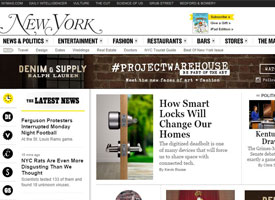
Background: The intimate dance between politics and fashion, entertainment and sports, and news and culture is performed on the streets of the Big Apple every moment of every day, and the choreography is chronicled on the five blogs that make up NYMag.com. Like its print sibling, the online home of New York magazine harvests the goings-on, people of note, emerging trends and things to know around the five boroughs and their collective for readers’ information. While the site’s name suggests a focus on the city and its more than eight million residents, its coverage actually spans the rest of the country and the world at large.

Because one medium informs the other in the New York media enterprise, there’s interplay between what goes into the magazine and what goes on the website. “The voice and the sensibility are pretty key to what New York is and it’s shared across the brand,” said Jebediah Reed, deputy editor of the site. “In that, we’re always interested in smart perspectives on the news and stories that bring valuable information to the reader, whether that’s reporting or analytical writing or noticing something that nobody has noticed before.”

Mainly, he added, “we’re looking for a smart, new idea or perspective on the news that really starts conversation.” With more than 150 posts a day, the site is able to dig voraciously into the details of news and pop culture in a way that its print iteration can’t. “We’re obviously much more responsive to real-time events. The print side publishes every two weeks, and we publish essentially around the clock. We are built around responding to the news quickly and more deeply, too.” That means opportunity aplenty for freelancers with the right touch.

What to pitch: With so much new content flying around as part of a daily average, Reed and his team of editors are interested in receiving on-point pitches across all of blogs: Vulture, which houses all things entertainment; The Cut, where fashion lives; Daily Intelligencer, the news hub; and Grub Street, the home of food stories. Science of Us, which focuses on social science and human behavior, is a new addition to the NYMag.com family of sites. “It’s the news through the lens of human psychology and academic research. They’re fun, why-do-people-act-the-way-they-act kind of stories,” Reed added. Every topical area gets the same smart, witty treatment — the signature of the NYMag.com brand.

Each blog makes fair use of freelancers, some more than others, but Vulture in particular is ever-expanding and is therefore a hotbed of content as more posts are published more frequently. Editor Gilbert Cruz is looking for interviews, entertainment news, TV recaps, music reviews and pieces on books, art and Big Apple-centric theater. Fashionistas can also take heart: The Cut is scheduled to expand, offering even more coverage of the world of wearable fabulousness. It now features lush photography alongside editorial, broken into five distinct sections: “Fashions,” “Beauty,” “Goods,” “Fame” and “Love & War.”

As a general rule, Reed suggested, “a freelance pitch should always bring something fresh to the table, something you have that other publications don’t and writers haven’t said or reported yet. Any pitch that does that, that brings something valuable and smart to the editor’s attention, is a good pitch.” Everything on the family of sites if pitchable and, with so many packages running at any given time, there’s a chance to not only be published, but also build a relationship with editors if your ideas are on point. (So, basically, make sure your ideas are on point.)

What not to pitch: Study what NYMag.com has recently covered and don’t suggest a rerun of what’s already been written. Duplicated ideas show editors that you aren’t paying attention. The site also has a huge staff of Web writers who cover their respective beats very well, so your story ideas need to stand out from what they’re already doing.

Percentage freelance-written content: Varies from blog to blog, but it hovers around 20 percent
Percentage freelance pitches accepted: It’s tough to say because of the autonomy of each blog, but Reed assured that freelancers are frequent and valuable contributors.

Etiquette: Each blog has its own editor, so make sure you’re pitching to the right person. Present an idea in a clear, succinct way but never, ever pitch by phone. Follow up within a week if you haven’t gotten a yay or nay.

Lead time: Varies based on the newsiness of the proposed story, but can range from overnight to a few days
Pay rate: $75 and up
Payment schedule: On publication
Rights purchased: Exclusive online and print rights, and exclusive right to license for syndication with revenue share

Contact info:
NYMag.com
75 Varick Street
New York, NY, 10013
(212) 508-0700
Twitter handle: @NYMag |Facebook

Direct pitches to:
For Vulture, senior editor David Marchese or Gilbert Cruz (movies and books): DAVID dot MARCHESE at NYMAG dot COM or
GILBERT dot CRUZ at NYMAG dot COM
For The Cut, editor Stella Bugbee: STELLA dot BUGBEE at NYMAG dot COM
For Grub Street, senior editor Alan Sytsma: ALAN dot SYTSMA at NYMAG dot COM
For Science of Us, senior editor Jesse Singal: JESSE dot SINGAL at NYMAG dot COM
For Daily Intelligencer, Deputy Editor Jebediah Reed: JEBEDIAH dot REED at NYMAG dot COM


[EDITOR’S NOTE: Though we’ve updated this article recently, the speed at which things move in media means things may have already changed since then. Please email us if you notice any outdated info.]

Topics:

How to Pitch
How to Pitch

Your Complete Guide to Pitching Travel Publications

Here are nine markets that want your stories from around the globe

writer developing pitch for travel publication
John icon
By Jenny Rough
Jenny Rough is a writer and former attorney with over 20 years of experience crafting stories for magazines, newspapers, and podcasts, and currently serves as letters editor for AARP The Magazine and AARP Bulletin. She holds a J.D. summa cum laude from Pepperdine and a bachelor's in creative writing from Miami University.
7 min read • Originally published November 13, 2015 / Updated March 19, 2026
John icon
By Jenny Rough
Jenny Rough is a writer and former attorney with over 20 years of experience crafting stories for magazines, newspapers, and podcasts, and currently serves as letters editor for AARP The Magazine and AARP Bulletin. She holds a J.D. summa cum laude from Pepperdine and a bachelor's in creative writing from Miami University.
7 min read • Originally published November 13, 2015 / Updated March 19, 2026

When it comes to travel, do you hear the call of the wild, or do you prefer bright lights and the big city? Maybe an excursion to strange exotic places is your style. Wherever your heart takes you, there is probably a story there. Consider these nine markets looking for travel pitches.

1. Arrive
This is Amtrak’s onboard magazine, and the editorial calendar is planned every spring. It is closed for 2016 submissions, but editors will begin accepting pitches for 2017 on Jan. 1.
What to pitch: Each issue covers at least one travel feature on an adventure or destination in the Northeast region of the United States. The September/October issue, for example, ran a story on the Cider Trail. The magazine is also seeking submissions for its “Your Family” department, a personal essay, like the recent story on a father reflecting on trips he took with his autistic son. These essays are assigned about six months out.
Length: 1,800 words for travel features; 1,500 words for “Your Family” essays
Pay: $1 a word
Assigning editor: Leigh Flayton, LEIGH dot FLAYTON at MCMURRYTMG dot COM
Flayton’s advice: “Please note we only look at stories relevant to the Northeast Corridor.” If you are unfamiliar with the section you are pitching, please review the online archives and editorial calendar.

2. Delta Sky
Delta Sky is the eponymous airline’s in-flight magazine, and it publishes a large number of travel stories, along with business trend stories and some lifestyle content. “Sky values unique points of view as well as stylish and authoritative writing, covering not only amazing destinations and aspirational trips, but also looking at how and where the world’s thought leaders, creatives and innovators travel and live,” says executive editor Sarah Elbert.
What to pitch: The magazine seeks pitches for “Trending,” “Time Out” and “Breakaway,” its shorter front-of-book pieces. It also accepts pitches for the features “1 City/5 Ways,” a focus on five aspects of a specific city (for example: style, music, history, food and family), and “Travelogue.”
Length: “Trending,” “Time Out” and “Breakaway” run about 350 words; “1 City/5 Ways” and “Travelogue” run about 1,000 words
Pay: $1 to $1.50 a word
Assigning editors: Jennifer Buege for “Trending,” “Time Out” and “Breakaway”; Sarah Elbert for “1 City/5 Ways” and “Travelogue”; FirstInitialLastName@deltaskymag.com
Elbert’s advice: “Look at past issues at delta.com/skymagazine. That is the key. Please be specific and thoughtful with your pitches and make sure Delta actually flies to any destinations you’d like to write about. We’re open to business and trend-focused pitches as well.”

3. Hemispheres
Hemispheres is United Airlines’ in-flight magazine that is “written for the affluent, curious, sophisticated citizen of the world.”
What to pitch: In addition to its front-of-book “Dispatches” section (400- to 600-word vignettes), the magazine’s personal travel essay column is open to freelancers. Rather than covering any specific places or travel experiences, the column aims to get at how travel can be a transformative experience, or challenge travelers’ notion about themselves or the world around them. One successful essay involved the author being forced to rethink his feelings about the human victims of wild animals after confronting a hungry lion on safari. Other successful essays included one about the joys of rediscovering your hometown through the eyes of a tourist, and another about the security that a wary traveler found in a hotel robe.
Length: 900 words
Pay: $900 flat rate
Assigning editors: Jordan Heller or Chris Wright; FirstName@hemispheresmagazine.com
Heller’s advice: “Rather than pitch, just write the damn thing and send it in. If we like it, we’ll print it and pay you for it.” For more information, read How to Pitch: Hemispheres.

4. Islands.com
Islands.com seeks “compelling stories that inspire island travel.”
What to pitch: For information on its print magazine, check out How to Pitch: Islands, but note that this exotic-travel publication now also seeks pitches for its website. Recent examples include “5 Must-Dos in Aruba” and “How to Move to Maui.”
Length: 500 to 900 words
Pay: $500 flat rate
Assigning editor: Cami Webb, CAMI dot WEBB at BONNIERCORP dot COM
Webb’s advice: “We look for stories that have high search volume and low competition.”

5. National Parks Magazine
The magazine of the National Parks Conservation Association runs stories related to travel within the National Parks System. This includes all the big landscape parks, seashores, recreation areas, military sites and urban parks. Recent articles have included a first-person essay on birding at Big Bend National Park in West Texas, and an item on how scientists and the National Park Service are working to bring back the chestnut tree.
What to pitch: “We are open to pitches for all areas of the magazine,” says editor Rona Marech, “though we tend to get new (to us) writers started on shorter stories.” You can view past examples of the magazine online.
Length: Front-of-book news stories range from 400 to 1,500 words; recurring departments typically run 950 words; long features are usually 1,800 to 2,000 words.
Pay: $1 a word; sometimes new writers start at $.80 a word and move up from there
Assigning editor: The pub is in the process of hiring an associate editor. In the meantime, pitch Rona Marech, RMARECH at NPCA dot ORG
Marech’s advice: “Please submit pitches that are as specific as possible, and send clips with great leads.”

6. TravelandLeisure.com
This website for sophisticated travelers focuses on both business and pleasure trips.
What to pitch: “We love publishing a huge array of story types: long form, news, listicle, video, tips/tricks, Q&As, essay, roundups and more,” says digital editor Amy Schellenbaum.
Length: “No ideal length,” says Schellenbaum. “This is the Web!”
Pay: Small items like news or short form go for $100; pay goes up from there and is largely variable, depending on the pitch.
Assigning editor: Amy Schellenbaum, AMY dot SCHELLENBAUM at TRAVELANDLEISURE dot COM
Schellenbaum’s advice: “Please pitch stories, not topics. Please do not pitch by saying you are going on a trip and wonder if I need anything from there. Have patience, but also don’t be afraid to follow up.”

7. Travelers’ Tales
This publishing company has ongoing calls for submissions. Its series of anthologies publishes the best personal nonfiction travel writing by seasoned and newbie writers.
What to pitch: The editors seek “deeply personal, transformative true stories about people’s experiences in the world,” says executive editor Larry Habegger.
Length: Flexible, but review the submission guidelines.
Pay: $100
Assigning editor: Larry Habegger, LARRY at TRAVELERSTALES dot COM, but note that Travelers’ Tales only accepts submission through its intake site, travelerstalesstories.com.
Habegger’s advice: “Tell the best story you can and make sure it’s significant to you so it will also carry meaning for the reader. You want to create an emotional response in your audience.”

8. Via
This is one of AAA’s regional magazines. “What makes Via different from other magazines is its sharp focus on travel across the Western U.S. and its broad reach (3 million copies to households in eight states),” says managing editor Rebecca Hurd. Note that Via has three editions: Northern California, Nevada and Utah; Oregon and southern Idaho; and Montana, Wyoming and Alaska.
What to pitch: The best place to break in is its front-of-book section “On the Road,” which highlights places to go and what to do there. Stay away from destinations the magazine has featured in the last three years.
Length: “On the Road” stories run about 200 words
Pay: Typically $1 a word
Assigning editor: Send all pitches to VIAMAIL at VIAMAGAZINE dot COM
Hurd’s advice: None, other than the submission guidelines. Request a copy of by writing to VIAMAIL at VIAMAGAZINE dot COM. For more tips, read How to Pitch: Via.

9. Where
This is a global travel media brand that produces a variety of print and digital publications. Its print magazines range from monthly and bimonthly to quarterly, depending on the region. View its list of destinations online.
What to pitch: “In the magazine, the section in which we most often use freelancers is titled “Where Now?” says chief travel editor Geoff Kohl. The section covers trends, nearby points of interest, things to do and happenings in the destination.”
Length: Short pieces start at 150 words; features run up to 1,000 words
Pay: Varies, depending on market and story length
Assigning editor: Where has staff in every place it publishes; the names and emails of editors can be found on the company site’s contact page. Or send your query to EDITORIAL at WHERETRAVELER dot COM, and a team of editors will forward your pitch to the appropriate editor.
Kohl’s advice: “If you’re querying us for our print magazines, we want you to have your finger on the pulse of the destination and know that our magazines are read by upscale, savvy travelers who are in the city right now (this month).”

Other titles to try:
The Advocate
Afar
BBC Travel
Cruising World
Cultures & Cuisines
Curve
Destination Weddings & Honeymoons
Elle Décor
Islands
Latina
National Geographic Traveler

NiC
The Red Bulletin
Roads & Kingdoms
Saveur
Southwest

Topics:

How to Pitch
Skills & Expertise

7 Grammar and Copy Mistakes Almost Every Writer Makes

Catch these errors before your editor does

editor fixing grammar and copy mistakes
Admin icon
By Kristen Fischer
Kristen Fischer is a freelance writer, journalist, and copywriter with over 20 years of experience, currently serving as a health writer for AARP with previous staff roles at WebMD and WW. Her work has appeared in Prevention, Healthline, Woman's Day, Parade, and Writer's Digest, and she is the author of four books.
6 min read • Originally published December 1, 2015 / Updated March 19, 2026
Admin icon
By Kristen Fischer
Kristen Fischer is a freelance writer, journalist, and copywriter with over 20 years of experience, currently serving as a health writer for AARP with previous staff roles at WebMD and WW. Her work has appeared in Prevention, Healthline, Woman's Day, Parade, and Writer's Digest, and she is the author of four books.
6 min read • Originally published December 1, 2015 / Updated March 19, 2026

When it comes to demonstrating good grammar, writers and editors, or any other communications professional, must excel. Careless copy could be the difference between getting your article or pitch red-penned or just flat-out rejected.

“That written piece you turn in to your editor is your calling card,” said Sofia Romero, a managing editor based in Boston who blogs about the topic at Mighty Red Pen. “It gives the editor clues about whether you’re an attentive and diligent writer or a sloppy one.” The same can be said for those of you in marketing, PR and even sales. Using proper grammar and avoiding common mistakes help you look smarter.

Although style guides are ever changing and vary between fields, there are some common grammar pitfalls every media professional should just avoid.

1. Misusing “lay” and “lie”

Let’s make it simple: “Lay” refers to a direct object and “lie” does not. You lie down on the sofa (no direct object there) and lay your favorite style guide on the table. Get it?

Mignon Fogarty, author of Grammar Girl’s Quick and Dirty Tips for Better Writing and founder of the Quick and Dirty Tips Network, thinks all the confusion started with the classic children’s prayer that starts, “Now I lay me down to sleep…”.

“In that children’s prayer, the way it’s worded, you’re laying yourself down as though you were an object. A lot of people just pick that up, and then even though you’re supposed to say ‘I want to lie down,’ they’ll say, ‘I want to lay down.'”

Lay should only be used when you’re talking about setting something else down, like a book or a blanket. However, it gets more perplexing when you bring in the fact that “lay” is the past tense of “lie.” So if you’re trying to state that you set yourself down in the past, you use “lay” (e.g., “I lay down an hour ago for a nap”). If you’re stating that you set something else down in the past, you use “laid.”

“I think the trick is to recognize why you get it wrong and then remind yourself it’s a common error,” she noted.

2. Misusing “who,” “whom” and “that”

To distinguish the first two, remember that you use “who” when you are referring to the subject of a clause and “whom” when you are referring to the object of a clause.

Fogarty’s got a trick for helping you remember which to use: Like “whom,” the pronoun “him” ends with “m.” When you’re trying to decide which word to use, ask yourself if the answer to the question would be “he” or “him.”

If you’re asking “Who (or whom) do you love?”, the answer would be “I love him.” “Him” ends with an “m,” so use “whom.” But if the question is “Who (or whom) drove the car?” the answer would be, “He drove the car.” There’s no “m,” so use “who.”

And just to clarify further, if you’re referencing a person, you have to choose between “who” and “whom,” because you should never use “that” to reference an individual, added Delia Cabe, an English professor at Emerson College in Boston.

3. Misusing “regardless” and (gasp!) “irregardless”

One final common word swap is “irregardless” for “regardless.” Both are listed in most dictionaries, but the former is often used by people who want to convey the meaning of “regardless.” The word “regardless” means “without regard” or “despite something” and is fine to use as is. The ir- prefix means without, so if you say “irregardless,” you are really saying “without without regard,” which is a double negative. Just use “regardless,” regardless of what you think.

4. Going overboard with em dashes

There are many ways to set off a clause in a sentence, but too many writers turn to the em dash over and over—and over and over again.

If an unwieldy clause or full sentence needs to be set apart, an em dash can be particularly useful in helping the reader follow along. For example:

The new brochure explains which houses are currently on the market—not just what was recently sold—along with information on the neighborhoods, school districts and property taxes.

But too many in one article (or worse, paragraph) can have the opposite effect and actually cause the reader to disengage. It’s the equivalent of extra exclamation points or writing in all caps. After a while, it’s just annoying and actually de-emphasizes your work instead of making it more compelling. For example:

The new brochure explains which houses are currently on the market—along with information on the neighborhoods, school districts and property taxes.

Unnecessary, right? So, when you’re tempted to slap on another em dash, think about alternatives. Would a semicolon work instead? What about an ellipsis? Or, can you break the prose up into sentences? Too often, we use the em dash as a crutch to make our words seem more poignant when, in reality, quality writing should be able to stand on its own.

5. Mixing up subject and verb agreement

A singular subject agrees with a singular verb, and a plural subject agrees with a plural verb. When the subject of a sentence includes two or more nouns or pronouns connected by “and,” use a plural verb:

He and his friends are at the fair.

In the event of two or more singular nouns or pronouns connected by “or” or “nor,” use a singular verb:

The journal or the pencil is in the desk.

Watch out for phrases that come between subjects and verbs:

One of the doors is open.

The verb agrees with the subject, not with a noun or pronoun in the phrase, so we use “is” because there is only “one” door.

6. Using commas instead of semicolons

Similar sentences should always be connected with semicolons, not commas. Fogarty says that semicolons are used to separate two main clauses that are related to each other yet can stand on their own as sentences if needed:

WRONG: I have an early appointment, I can’t stay out late tonight.

RIGHT: I have an early appointment; I can’t stay out late tonight.

RIGHT: I have an early appointment, and I can’t stay out late tonight.

To join like clauses, use a semicolon or a comma with a conjunction, or just create two separate sentences. But a comma by itself is a no-no.

7. Using modifiers incorrectly

If you don’t pay attention to the placement of modifiers, you could give a headline or sentence a completely different meaning.

“When you read about misplaced modifiers, you’ll often see simple examples that highlight how the word ‘only’ can be misplaced, even though most readers won’t actually think ‘I only have eyes for you,’ means anything other than ‘You’re the only one I see,'” explained Fogarty. “I’m guilty of using such simplistic examples myself.”

When a modifying prepositional phrase is added at the end of a sentence, it can spell disaster. But she said a good example of a modifier being used incorrectly is:

Over 400 people reported feeling the quake on their website.

Obviously, the website can’t shake, so the statement should be rewritten to better clarify where the reporting took place:

Over 400 people reported on their websites that they felt the quake.

Tips for cleaner copy:

  • Use style and reference guides. A style guide can help you conform to a publication’s individual preferences, but a good reference book offers a clear understanding of language fundamentals and tends to set the record straight on American English grammar. Fogarty recommends Garner’s Modern American Usage and Merriam-Webster’s Dictionary of English Usage.
  • Talk to your editor. “As an editor, I like to think that some aspects of writing can be a collaborative process,” noted Romero. “I want writers to think of me as being on their side because, ultimately, I am.”
  • Read. Fogarty says that active reading can help you take note of usage, improve your aptitude and investigate issues you’re not familiar with. “It can really make a difference and it doesn’t take any extra time; it’s just more of a mindset,” she added.

Improve your grammar and copy skills with one of Mediabistro’s online courses on copyediting.

Topics:

Climb the Ladder, Skills & Expertise

Posts navigation

Older posts
Newer posts
Featured Jobs
Kirkus Media
Editorial Intern
Kirkus Media
New York City, New York (US)

Gaia Inc
MEDIA COORDINATOR
Gaia Inc
Louisville, CO

Gaia Inc
Global Paid Media Specialist
Gaia Inc
Louisville, CO

Gaia Inc
Director of Media Strategy
Gaia Inc
Louisville, CO

Hearst Television
Account Executive
Hearst Television
Milwaukee, WI, United States

All Jobs »
PREMIUM MEMBER

Margaret Littman

Nashville, TN
27 Years Experience
Curiosity, skill and luck have allowed me to spend decades exploring eclectic topics ranging from the nutritional habits of female winter Olympians...
View Full Profile »
Join Mediabistro Membership Today

Stand out from the crowd with a premium profile

Mediabistro Logo Find your next media job or showcase your creative talent
  • Job Search
  • Hot Jobs
  • Membership
  • Newsletter
  • Career Advice
  • Media News
  • Hiring Tips
  • Creative Tools
  • About
Facebook YouTube Instagram LinkedIn
Copyright © 2026 Mediabistro
  • Terms of Use
  • Terms of Service
  • Privacy