Mediabistro Logo Mediabistro Logo
  • Jobs
    Search Creative Jobs Hot Jobs Remote Media Jobs Create Job Alerts
    Job Categories
    Creative & Design Marketing & Communications Operations & Strategy Production Sales & Business Development Writing & Editing
    Quick Links
    Search All Jobs Remote Jobs Create Job Alerts
  • Career Resources
    Career Advice & Articles Media Industry News Media Career Interviews Creative Tools Resume Writing Services Interview Coaching Job Market Insights Member Profiles
  • Mediabistro Membership
    Membership Overview How to Pitch (Premium Tool) Editorial Calendars (Premium Access) Courses & Training Programs Membership FAQ
  • Showcase
    Featured Creative Stories Submit your Story
  • Log In
Post Jobs
Mediabistro Logo Mediabistro Logo
Search Creative Jobs Hot Jobs Remote Media Jobs Create Job Alerts
Job Categories
Creative & Design Marketing & Communications Operations & Strategy Production Sales & Business Development Writing & Editing
Quick Links
Search All Jobs Remote Jobs Create Job Alerts
Career Advice & Articles Media Industry News Media Career Interviews Creative Tools Resume Writing Services Interview Coaching Job Market Insights Member Profiles
Membership Overview How to Pitch (Premium Tool) Editorial Calendars (Premium Access) Courses & Training Programs Membership FAQ
Featured Creative Stories Submit your Story
Log In
Post Jobs
Log In | Sign Up

Follow Us!

Resumes & Cover Letters

The Keys to Writing a Cover Letter That Gets You Hired

Hiring managers reveal cover letter must-haves

job seeker confident about cover letter
Admin icon
By Dana Robinson
Dana Robinson is a freelance health, beauty, and culture writer with 20 years of experience creating content for publications including Shape, WeightWatchers, Wine Enthusiast, AARP, and Southwest: The Magazine. She holds a master's degree in mass communication from California State University-Northridge.
6 min read • Originally published July 29, 2015 / Updated March 19, 2026
Admin icon
By Dana Robinson
Dana Robinson is a freelance health, beauty, and culture writer with 20 years of experience creating content for publications including Shape, WeightWatchers, Wine Enthusiast, AARP, and Southwest: The Magazine. She holds a master's degree in mass communication from California State University-Northridge.
6 min read • Originally published July 29, 2015 / Updated March 19, 2026

A resume can be thought of as a summation of your professional life on a page—cold, hard facts about your education; start and end dates of various jobs; lists of software programs you’ve mastered along the way. It’s your sales tool that will hopefully bump you ahead to the interview stage of the hiring process by offering gatekeepers vital statistics about your work history.

But when was the last time you saw a car commercial that relied on mere facts to get customers onto the showroom floor? Instead, advertisers typically use a mixed bag of tactics that help potential customers develop an emotional connection with a car.

It’s then transformed from a mere utilitarian vehicle to a must-have item that demands a closer look. And that’s the role of a cover letter. It provides supplemental information to entice hiring managers to look at your resume and determine if you’re the type of car… er, employee that best suits their needs.

“Cover letters provide important context to your application, answering questions like, ‘Why are you looking for a new job? What are you hoping to accomplish? If you live in Montana, why are you applying for a job in San Francisco?'” says Sarah Dabby, head of talent at ClickTime, a software-as-a-service (SaaS) company. “The digital age provides answers to many things, but hiring managers can’t find the answers to these questions in an online search.”

Never underestimate the power of a knockout presentation, and make sure your cover letter has these elements in place:

Flawless Writing 

Recruiters of media professionals are especially going to be looking carefully at your cover letter, so this is your time to shine.

When applying for a job, you can’t rely on good looks or charm to win over your potential employer. All you’ve got going for you in the pre-interview stage is your ability to succinctly convey your talents in a letter. And that letter had better be error free.

“Everyone working as a journalist is expected to have superior communication skills,” says Glen Loveland, a recruiter for China Central Television. “For these reasons, a cover letter has to be absolutely perfect. That means not a single typo or misplaced comma.”

And let’s not forget that scanners are doing a hefty amount of the hiring workload these days. A robot won’t pick up a misspelled keyword, so make sure that you have somebody proofread your letter before hitting “send.”

Links to Your Work

“I’d definitely put links to your other online platforms in your cover letter,” continues Loveland. “Chances are that you’re going to be Googled anyway. You might as well make it easy for the company to find other examples of your professional work.”

Graphic designers and writers can link to blogs or any other location where their work is housed. And for those looking for work as on-air talent, Loveland recommends linking to a professionally edited reel on YouTube or Vimeo.

“It is vital that your on-air work can be downloaded, as HR may be shopping around your file to other departments,” says Loveland. Note that all of these links can be embedded onto your LinkedIn profile.

Speaking of your LinkedIn profile, it’s imperative that everything is up-to-date. “I have to stress the importance of having a fully filled-out LinkedIn profile,” says Loveland. Why? When someone applies for a position, a summary of that applicant’s experience is sent to HR, so for more information the hiring manager will often turn to the online network.

If you haven’t filled out your entire career history, you may look unqualified. In addition, adds Loveland, “When HR or a hiring manager are sorting upwards of 100 applicants a day they are not going to take the time to open every attachment.”

Bullet Points

In a mobile world where listicles, memes and six-second Vine videos have captured the attention of the masses, it’s safe to assume that you don’t have a heck of a lot of time to capture a hiring manager’s attention. Therefore, it’s best to get your message across quickly.

And bullet points may be the answer. “Bullet points can be useful for a cover letter if there are multiple things to explain,” says Elatia Abate, career coach and former recruiter for Dow Jones. “If one is going to use them, they should have the same strength in writing as a well-written resume—powerful verbs, information that is quantified, etc.,” she explains.

Abate adds that bullet points are a good way to illustrate how you’ve stayed in touch with what’s going on in your industry if, for example, you’re trying to reenter the job market after a lengthy hiatus:

As you can see on my resume, I took time off from X date to Y date in order to care for an elderly parent. Although I was attending to family business, I kept abreast of the market in the following ways:

• Chaired local 45-member writers’ association board, meeting biweekly
• Co-wrote a white paper presented at Columbia University’s Advanced Journalism Techniques seminar to 150 aspiring journalists
• Launched a weekly blog [link to blog], followed by 350 people, about digital journalism techniques

Customization

Your job search can also be thought of as a high-stakes dating game. Companies aren’t looking to recruit just anyone. They want that special someone who has all of the qualities they’re looking for, and then some.

And customizing your cover letter to the specific job is one of the best ways to convince the company you’re the best fit for the position. So steer clear of one-size-fits-all cover letters, especially since their generic tone is evident to most hiring managers and often perceived as lazy attempts by job seekers.

Also avoid the dreaded “To Whom It May Concern” greeting. Take the time to find out the name of the person who will be reviewing your application and address them properly (don’t forget to triple-check the spelling of his or her name!).

“One of the best cover letters I ever got was for a digital research role,” says Bonnie Zaben, COO of AC Lion, an executive search firm. “The candidate mentioned my alma mater in the cover letter—that really got my attention.” Given that the position was for a research role, Zaben was impressed by the fact the candidate had taken the time to look her up on LinkedIn. “[It] show[ed] that he naturally went the extra mile, dug deeper. That resonated with me, and I hired him.”

Zaben suggests tactics like mentioning the company name and the position that interests you, showing you know something about the company (an award, a recent account win, etc.) and of course, checking out the contact on LinkedIn and mentioning any common connections.

The media job-hunting race is always tight, so using every tip and technique in your arsenal isn’t just a requirement—it’s a survival skill. By following these recommendations, your cover letter can be the first step down a path that leads to a resume review, a face-to-face interview and the coveted full-time salary with benefits. So get going and good luck!

If you’d like your cover letter to stand out even more, consider getting the help of a pro. Mediabistro’s Career Services offer everything from a quick cover letter edit to several sessions of career counseling to tackle your cover letter, networking skills, career transition and more.


Topics:

Get a Media Job, Get Hired, Resumes & Cover Letters
Journalism Advice

7 Essential Tips Every Aspiring Journalist Needs to Know

Follow these simple steps to long-term success in a journalism career

7 Essential Tips Every Aspiring Journalist Needs to Know
By Jillian Richardson
6 min read • Originally published August 5, 2015 / Updated March 19, 2026
By Jillian Richardson
6 min read • Originally published August 5, 2015 / Updated March 19, 2026

Gone are the days of His Girl Friday when journalists only needed a bold personality, a notepad and a well-cut suit in order to make it. In the 21st century, writers need to master entirely new skillsets just so they can compete. With this in mind, we asked a few veteran journalists about the essential tools that every aspiring writer should keep under his or her belt.

Once you’ve checked off everything on this list, you’ll be well on your way to earning that reporter’s hat.

1. Hone your digital skills.

Writing and editing skills are obviously a must in the journalism industry. Yet having those abilities isn’t going to get you to stand out for employers. You need to master the digital aspects of the trade as well. A firm understanding of WordPress, Photoshop and various social media platforms will ensure that you’re more marketable as a writer.

“It’s important to learn the basics of video and audio editing and photography,” says Andrew Bowen, a freelance radio journalist. “Every journalist has to be [experienced in] multimedia.”

If the idea of teaching yourself how to master a slew of different programs is intimidating, then you might want to consider taking an online training program. Mediabistro offers courses that can help you hone your digital media skills. And if you need to zero in on a specific platform, such as Photoshop, you can also find beginner-level tutorials on YouTube.

2. Find your niche. 

The term “journalist” covers a wide range of jobs. To develop your beat, find a topic you’re qualified to cover, and then write about it as much as you can. Whether you’re interested in finance, music or the environment, becoming an expert in your field will give you the credentials that will make media companies interested in your work.

As Bowen explains, “I think it’s important for journalists to figure out what kind of stories they’re drawn to and interested in. When you’re interviewing for a job, think of your career like a story you’re writing—with a beginning, a middle and an end—and a theme that connects it all.”

This list, “101 Niches to Write About,” is a great place to start figuring out what you might want your specialty to be.

3. Set up a website.

There’s no getting around it. Journalists these days need an online space to highlight their work. As soon as you can, set up a virtual portfolio. Once it’s finished, link to it in all of your professional email correspondence and on your social media accounts. Your pitches will gain a whole new level of credibility when an editor or employer can click on a link and see that you’ve amassed an impressive amount of editorial clips.

For those of you who want to make your portfolio as visually appealing as possible, websites like Pressfolios and Clippings.me are great places to start.

Still compiling those clips? Consider joining Mediabistro’s Freelance Marketplace, a database where editors and managers looking to assign short or long-term freelance projects can check out your profile and immediately start a dialogue.

Bonus points for platforms like Contently, which connects to your social media accounts and automatically pulls your published Web articles into your portfolio, as well as the number of shares, tweets and Facebook likes your work has received. (Full disclosure: I am a writer for Contently.) These days, publishers love journalists with an online following, especially those who frequently share with followers links to their work (and, thus, to the publishers’ site).

4. Learn a different language.

Knowing at least one other language will do wonders to set you apart from your competition and help you interact with your sources on a deeper level.

Bowen has experienced this firsthand: “Even when you’re pursuing a source who speaks fluent English, approaching them in their [native language] can be disarming, and can open up new levels of communication,” Bowen says. “And being able to read press coverage in another language can also help you approach a topic from a different angle.”

Journalist Caroline Mortimer has had a similar experience to Bowen, which she explains on the Wannabe Hacks blog: “I am a researcher at a TV company at the moment, working on a documentary…I make inquiries and conduct interviews in slightly nervous French and broken Italian but I am able to reach people I would not have been able to if I had just shouted down the phone in English.”

5. Be a good communicator…

Like it or not, journalism is an art that involves a lot of interaction with other people. If this idea alone makes you uncomfortable, then you might want to consider a different career path. On the other hand, there are a variety of ways to improve your people skills.

According to CNN International and CNN.com reporter Susanna Capelouto, learning how to communicate—to anyone—is one of the most crucial skills a journalist can have. “Be friendly when you talk to receptionists, secretaries, PR flacks or any gatekeeper who is your ticket to getting that interview you need for your story,” Capelouto says. “Show respect and call them by their name.”

On the flip side, journalists should be comfortable prodding their sources for more information and viewing issues from multiple perspectives. “Be willing to challenge yourself to understand and analyze arguments on all sides of issues—especially the most polarizing ones,” explains Patricia Phalen, associate professor of media and public affairs at George Washington University.

6. And a good listener.

While it’s a journalist’s job to ask the tough questions, listening is just as important in this role. After all, how else are you supposed to get people to open up to you? Sometimes a listening ear is all someone needs to feel comfortable enough to give you the information you’re seeking.

“This is particularly true for working in the one-dimensional world of audio, where we constantly look for that emotional soundbite,” Capelouto says. “It’s not just what people say, but how they say it. If you listen carefully, you will be able to get what we still call ‘really good tape.'”

7. Don’t take rejection personally.

Having thick skin is another essential tool of a successful journalist, as is not letting negative feedback or constructive criticism deter you.

Radio producer Jess Engebretson stated it best: “As an aspiring journalist, you will be rejected a lot. Your pitches, your job applications, your grant applications—most of the time, they will be rejected. Remember two things.

One, the rejection may have nothing to do with the quality of your work or your journalistic potential. The publication may have run a similar story two weeks ago, or have funded a similar grant proposal last year. Two, even if the rejection does have to do with the quality of your work, don’t despair.

One person’s judgment of a particular piece of your work is not a referendum on your worth as a human being. The skills you need can be learned. Ask for feedback. Listen to it. Keep trying.”

With this in mind, get out there, future journalists!


Topics:

Go Freelance, Journalism Advice
Productivity

5 Podcasts Every Writer Should Be Listening To

Hone skills, find inspiration by adding these podcasts to your playlist

writer listening to podcast
By Jillian Richardson
5 min read • Originally published August 13, 2015 / Updated March 19, 2026
By Jillian Richardson
5 min read • Originally published August 13, 2015 / Updated March 19, 2026

If you’re a freelance writer or beat reporter, you likely spend a lot of time on the go, either meeting with new clients or chasing your next assignment. You listen to music in the car, read a book on the subway and maybe check your email while you wait for your Uber ride. But have you considered downloading some podcasts that can help make you a better writer? If you haven’t hopped on the podcast train yet, it’s about time you did.

Chicago-based reporter Robin Amer says she feels podcasts help emphasize the importance of keeping it simple. “Radio [personalities] and podcasters have to be good at explaining things in an easy-to-process language,” Amer says. “Unlike with print, the listener only has one chance to understand what you’re talking about, so you have to make it simple right from the start. Having that mentality helps me communicate more effectively in print, too.”

Public radio journalist Stacy Bond, who is currently developing her own podcast for writers, agrees. “Podcasts can be entertaining companions for writers who have unusual schedules or spend a great deal of time alone,” Bond says. “They’re also a great way to learn. You can tune into a podcast and listen to how fellow writers approach a problem or brush up on a topic you plan to write about.”

To give you a head start, here are five of the best podcasts for writers we’ve found.

1. Longform Podcast
Description: The Longform Podcast, which is produced by the same people who run long-form platform The Atavist, is among Amer’s personal favorites. The show, says Amer, includes interviews with “everyone from Buzz Bissinger to Masha Gessen to Emily Bazelon, and each interview delves into process and the economics of their coverage in a way I find very useful and informative.”
Must-hear episode: Episode #142 features New York Times reporter Sarah Maslin Nir. She explains, step by step, how she broke and reported the stories of abused nail salon workers in New York City.
Excerpt: “The idea of a discount luxury is an oxymoron. And it’s an oxymoron for a reason: because someone is bearing the cost of that discount. In nail salons it’s always the person doing your nails, my investigation found. That has put a new lens on the world for me.”

2. Writing Excuses
Description: Writing Excuses is one of the first and longest-running podcasts about writing. It launched in 2008 and is in its 11th season. Yet you can still power through the entire series in a relatively short time. Episodes are just long enough to give listeners solid information in an entertaining format. To get an idea of the voice, the podcast’s tongue-in-cheek tagline is: “Fifteen minutes long, because you’re in a hurry, and we’re not that smart.”
Must-hear episode: Season 9, Episode 47: Conversation With a Bookseller. In this episode, guest Sara Glassman, a bookseller and reviewer, advises on query letters, book covers, book signings and how to make your first page stand out to retailers. This is an important listen for writers in need of ways to market their final product.
Excerpt: “For self-published authors, being able to engage with the customers [in a bookstore] and say, ‘Hi, would you like to take a look at my book’ or ‘How are you doing today?’ is great. But don’t say, ‘Do you want to buy my book?”

3. The Writing Show
Description: This pod ended in 2012, but audio is forever! Hosted by Paula Berinstein, The Writing Show covers a wide range of subjects that are of interest to writers, such as presenting yourself online and overcoming bad habits like procrastination. While the podcast is no longer releasing new episodes, the old shows are still highly relevant.
Must-hear episode: The Secret Rules of Hollywood Screenwriting with screenplay consultant Michele Wallerstein is this podcast’s most popular episode, and with good reason. The show debunks the myth that it’s impossible to get your script read in Hollywood and explains how to get your work into the right hands.
Excerpt: “You have to continue to be actively involved in pushing your own career, forever, as a writer… You have to be writing another spec screenplay. Otherwise, you get very cold, very fast. You fall right off the hot list. So, in terms of proving yourself, [have] new ideas to pitch, consistently [write] new material [and come up] with new ideas that you talk to your agent about.”

4. I Should Be Writing
Description: This podcast is fantastic because it focuses on the journey of a writer from amateur to professional. Consequently, I Should Be Writing (ISBW) has the entertainment value of a storytelling podcast, combined with the hard info of an interview-based show. Even better, it’s hosted by author Mur Lafferty, winner of the 2013 John W. Campbell Award for Best New Writer.
Must-hear episode: Stop Kicking Your Own Ass features literary agent and author Jen Udden, who gives writers the kind of pep talk we need to hear every once in a while—along the lines of, “You’re not a worthless pile of writer garbage. You can do this!”
Excerpt: “If you’re not writing, you’re not writing for a reason. Find the reason and figure out how to get around it. Either write at a different time or write a different part of your story. Write when the people in your house are asleep. Write when they’re gone. Write on the weekends. There are so many options that exist beyond kicking your own ass.”

5. The Dead Robots’ Society Podcast
Description: The Dead Robots’ Society was created by Justin Macumber to offer advice and support to other aspiring writers. In fact, it was partially inspired by Lafferty’s I Should Be Writing podcast (see above). The ultimate goal of the podcast, according to its mission statement, is to get writers to “the promised land of publication.”
Must-hear episode: Being Good At Being Bad focuses on how important it is for writers to create great antagonists in fiction writing.
Excerpt: “You have far more time in terms of percentage of your story to develop your hero when your hero is struggling against overwhelming odds that are faceless; whereas, when you have fully developed villains the story becomes less about the hero and more about the relationship between the hero and the villain. It’s not that it’s a more difficult story to write, as much as it’s a different set of mental gears that you have to engage as a writer.”

Go ahead, make your commute more productive by bypassing the streaming music for once in favor of one or more of these podcasts. Who knows, maybe you’ll think of an idea for your next great novel while sitting in traffic tomorrow!


Topics:

Be Inspired, Productivity
Productivity

8 Blogs Every Media Professional Should Follow Right Now

Bookmark these blogs to be in the know

media professional desk with blog on screen
Admin icon
By Corinne Grinapol
@Corinneavital
Corinne Grinapol is an assistant editor covering energy and environment at Engineering News-Record, with previous editorial roles at Adweek's FishbowlDC and Mediabistro. She studied international relations at SUNY Geneseo.
4 min read • Originally published August 27, 2015 / Updated March 19, 2026
Admin icon
By Corinne Grinapol
@Corinneavital
Corinne Grinapol is an assistant editor covering energy and environment at Engineering News-Record, with previous editorial roles at Adweek's FishbowlDC and Mediabistro. She studied international relations at SUNY Geneseo.
4 min read • Originally published August 27, 2015 / Updated March 19, 2026

It used to be that blogs weren’t taken seriously, until it was revealed that what was once viewed as pet projects at best were really obsessively curated, regularly updated hits of information vital to professionals. By choosing to create content for specialized audiences, blogs can focus on and reveal information that may be considered too obscure for publications that cater to a general audience. For industry professionals, blogs are a crucial component that ensures professionals are always informed and always learning.

This is the premise behind the Adweek Blog Network (which is part of Mediabistro Holdings) and its nine specialty blogs, including TVNewser and SocialTimes, covering every media industry from TV and publishing to public relations and advertising. But not all blogs come so conveniently packaged. For the rest, we’ve done the legwork for you. Below you’ll find a selection of blogs that will help you stay clued in without the time suck that is sorting through the digital age’s ever-growing pile of data.

PressThink

The PressThink blog has been run since 2003 by Jay Rosen, a professor of journalism at New York University and director of the school’s Studio 20 program. Rosen’s blog gives media professionals a chance to step outside of the frenetic day to day of working within media and contemplate the nature of the beast. Long, well-argued and well-thought-out posts let readers contemplate the business and practice of journalism—where it’s headed and whether that is the direction it should be taking. Added bonus: the comments section is full of readers rather than trolls, and is a robust debate in and of itself.

Romenesko

When Jim Romenesko recently announced his “retirement,” fans breathed a collective sigh of relief at his emphasis on the quotation marks he placed on the word in making that announcement. Though blogging at a slower pace than before, Romenesko’s posts are not to be missed, whether it’s a quirky headline mishap or an analysis of the state of the newspaper industry.

Poynter MediaWire

A Romenesko spinoff, Poynter’s MediaWire is one blog that doesn’t miss a beat. From early in the morning, MediaWire tracks the latest developments in media news, including media gossip, the media business and the current media research.

The Buttry Diary

Think of Steve Buttry‘s blog as a how-to for surviving and thriving in a digital-first world. And with 40 years in media, including a stint as the digital transformation editor at Digital First Media, and as an innovation researcher and trainer at the American Press Institute, Buttry knows his subject well. This is the place for deep dives on the business of media companies and best practices for the industry’s professionals.

Dylan Byers on Media

Since this scoop-heavy blog’s home is on Politico, readers can expect a lot of context-rich posts that touch on both the political and media worlds. But politics is far from the blog’s sole focus. Dylan Byers and Hadas Gold tackle major stories centered on publications and media organizations throughout the country.

Adfreak

While so many blogs from the early aughts were born as indie blogs and later purchased by larger media companies or turned into larger operations themselves, the 11-year-old AdFreak blog belonged to Adweek (a Mediabistro Holdings publication) from its inception, the brainchild of a group of Adweek employees. Check in with this blog to catch up on which shops are creating what, and what the spots reveal about culture and society in the United States and around the world.

Adland

Åsk Wäppling created Adland in 1996, ancient times when it comes to the Internet, but this blog is no relic. By establishing herself early on, Wäppling cemented Adland’s reputation as an authority/clearinghouse on all things advertising, from print to digital to television campaigns. The content of Adland’s posts show a similar breadth, touching on issues impacting the profession as well showcasing its creations.

TechCrunch

Guide to all things Silicon Valley and tech startups at large, this blog, like so many before and since, began as a side interest of entrepreneur Michael Arrington, and ended up as the place technophiles go for breaking news. If you’re searching for the next thing, chances are you’ll find this blog has it covered.


Topics:

Be Inspired, Productivity
How to Pitch

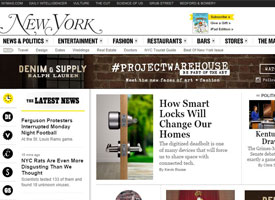
How to Pitch NYMag.com: An Insider’s Guide for Freelancers

Craft witty pieces for Big Apple denizens and beyond.

How to Pitch NYMag.com: An Insider’s Guide for Freelancers
Admin icon
By Janelle Harris
@thegirlcanwrite
Janelle Harris is a multimedia producer, director, and founder of Harris Two Productions with decades of experience in non-fiction storytelling for networks including Bravo, Discovery, and A&E. A Howard University graduate, she specializes in amplifying diverse voices across television, film, and digital media.
4 min read • Originally published October 12, 2015 / Updated March 19, 2026
Admin icon
By Janelle Harris
@thegirlcanwrite
Janelle Harris is a multimedia producer, director, and founder of Harris Two Productions with decades of experience in non-fiction storytelling for networks including Bravo, Discovery, and A&E. A Howard University graduate, she specializes in amplifying diverse voices across television, film, and digital media.
4 min read • Originally published October 12, 2015 / Updated March 19, 2026

Unique monthly visitors: 22 million

Background: The intimate dance between politics and fashion, entertainment and sports, and news and culture is performed on the streets of the Big Apple every moment of every day, and the choreography is chronicled on the five blogs that make up NYMag.com. Like its print sibling, the online home of New York magazine harvests the goings-on, people of note, emerging trends and things to know around the five boroughs and their collective for readers’ information. While the site’s name suggests a focus on the city and its more than eight million residents, its coverage actually spans the rest of the country and the world at large.

Because one medium informs the other in the New York media enterprise, there’s interplay between what goes into the magazine and what goes on the website. “The voice and the sensibility are pretty key to what New York is and it’s shared across the brand,” said Jebediah Reed, deputy editor of the site. “In that, we’re always interested in smart perspectives on the news and stories that bring valuable information to the reader, whether that’s reporting or analytical writing or noticing something that nobody has noticed before.”

Mainly, he added, “we’re looking for a smart, new idea or perspective on the news that really starts conversation.” With more than 150 posts a day, the site is able to dig voraciously into the details of news and pop culture in a way that its print iteration can’t. “We’re obviously much more responsive to real-time events. The print side publishes every two weeks, and we publish essentially around the clock. We are built around responding to the news quickly and more deeply, too.” That means opportunity aplenty for freelancers with the right touch.

What to pitch: With so much new content flying around as part of a daily average, Reed and his team of editors are interested in receiving on-point pitches across all of blogs: Vulture, which houses all things entertainment; The Cut, where fashion lives; Daily Intelligencer, the news hub; and Grub Street, the home of food stories. Science of Us, which focuses on social science and human behavior, is a new addition to the NYMag.com family of sites. “It’s the news through the lens of human psychology and academic research. They’re fun, why-do-people-act-the-way-they-act kind of stories,” Reed added. Every topical area gets the same smart, witty treatment — the signature of the NYMag.com brand.

Each blog makes fair use of freelancers, some more than others, but Vulture in particular is ever-expanding and is therefore a hotbed of content as more posts are published more frequently. Editor Gilbert Cruz is looking for interviews, entertainment news, TV recaps, music reviews and pieces on books, art and Big Apple-centric theater. Fashionistas can also take heart: The Cut is scheduled to expand, offering even more coverage of the world of wearable fabulousness. It now features lush photography alongside editorial, broken into five distinct sections: “Fashions,” “Beauty,” “Goods,” “Fame” and “Love & War.”

As a general rule, Reed suggested, “a freelance pitch should always bring something fresh to the table, something you have that other publications don’t and writers haven’t said or reported yet. Any pitch that does that, that brings something valuable and smart to the editor’s attention, is a good pitch.” Everything on the family of sites if pitchable and, with so many packages running at any given time, there’s a chance to not only be published, but also build a relationship with editors if your ideas are on point. (So, basically, make sure your ideas are on point.)

What not to pitch: Study what NYMag.com has recently covered and don’t suggest a rerun of what’s already been written. Duplicated ideas show editors that you aren’t paying attention. The site also has a huge staff of Web writers who cover their respective beats very well, so your story ideas need to stand out from what they’re already doing.

Percentage freelance-written content: Varies from blog to blog, but it hovers around 20 percent
Percentage freelance pitches accepted: It’s tough to say because of the autonomy of each blog, but Reed assured that freelancers are frequent and valuable contributors.

Etiquette: Each blog has its own editor, so make sure you’re pitching to the right person. Present an idea in a clear, succinct way but never, ever pitch by phone. Follow up within a week if you haven’t gotten a yay or nay.

Lead time: Varies based on the newsiness of the proposed story, but can range from overnight to a few days
Pay rate: $75 and up
Payment schedule: On publication
Rights purchased: Exclusive online and print rights, and exclusive right to license for syndication with revenue share

Contact info:
NYMag.com
75 Varick Street
New York, NY, 10013
(212) 508-0700
Twitter handle: @NYMag |Facebook

Direct pitches to:
For Vulture, senior editor David Marchese or Gilbert Cruz (movies and books): DAVID dot MARCHESE at NYMAG dot COM or
GILBERT dot CRUZ at NYMAG dot COM
For The Cut, editor Stella Bugbee: STELLA dot BUGBEE at NYMAG dot COM
For Grub Street, senior editor Alan Sytsma: ALAN dot SYTSMA at NYMAG dot COM
For Science of Us, senior editor Jesse Singal: JESSE dot SINGAL at NYMAG dot COM
For Daily Intelligencer, Deputy Editor Jebediah Reed: JEBEDIAH dot REED at NYMAG dot COM


[EDITOR’S NOTE: Though we’ve updated this article recently, the speed at which things move in media means things may have already changed since then. Please email us if you notice any outdated info.]

Topics:

How to Pitch
How to Pitch

Your Complete Guide to Pitching Travel Publications

Here are nine markets that want your stories from around the globe

writer developing pitch for travel publication
John icon
By Jenny Rough
Jenny Rough is a writer and former attorney with over 20 years of experience crafting stories for magazines, newspapers, and podcasts, and currently serves as letters editor for AARP The Magazine and AARP Bulletin. She holds a J.D. summa cum laude from Pepperdine and a bachelor's in creative writing from Miami University.
7 min read • Originally published November 13, 2015 / Updated March 19, 2026
John icon
By Jenny Rough
Jenny Rough is a writer and former attorney with over 20 years of experience crafting stories for magazines, newspapers, and podcasts, and currently serves as letters editor for AARP The Magazine and AARP Bulletin. She holds a J.D. summa cum laude from Pepperdine and a bachelor's in creative writing from Miami University.
7 min read • Originally published November 13, 2015 / Updated March 19, 2026

When it comes to travel, do you hear the call of the wild, or do you prefer bright lights and the big city? Maybe an excursion to strange exotic places is your style. Wherever your heart takes you, there is probably a story there. Consider these nine markets looking for travel pitches.

1. Arrive
This is Amtrak’s onboard magazine, and the editorial calendar is planned every spring. It is closed for 2016 submissions, but editors will begin accepting pitches for 2017 on Jan. 1.
What to pitch: Each issue covers at least one travel feature on an adventure or destination in the Northeast region of the United States. The September/October issue, for example, ran a story on the Cider Trail. The magazine is also seeking submissions for its “Your Family” department, a personal essay, like the recent story on a father reflecting on trips he took with his autistic son. These essays are assigned about six months out.
Length: 1,800 words for travel features; 1,500 words for “Your Family” essays
Pay: $1 a word
Assigning editor: Leigh Flayton, LEIGH dot FLAYTON at MCMURRYTMG dot COM
Flayton’s advice: “Please note we only look at stories relevant to the Northeast Corridor.” If you are unfamiliar with the section you are pitching, please review the online archives and editorial calendar.

2. Delta Sky
Delta Sky is the eponymous airline’s in-flight magazine, and it publishes a large number of travel stories, along with business trend stories and some lifestyle content. “Sky values unique points of view as well as stylish and authoritative writing, covering not only amazing destinations and aspirational trips, but also looking at how and where the world’s thought leaders, creatives and innovators travel and live,” says executive editor Sarah Elbert.
What to pitch: The magazine seeks pitches for “Trending,” “Time Out” and “Breakaway,” its shorter front-of-book pieces. It also accepts pitches for the features “1 City/5 Ways,” a focus on five aspects of a specific city (for example: style, music, history, food and family), and “Travelogue.”
Length: “Trending,” “Time Out” and “Breakaway” run about 350 words; “1 City/5 Ways” and “Travelogue” run about 1,000 words
Pay: $1 to $1.50 a word
Assigning editors: Jennifer Buege for “Trending,” “Time Out” and “Breakaway”; Sarah Elbert for “1 City/5 Ways” and “Travelogue”; FirstInitialLastName@deltaskymag.com
Elbert’s advice: “Look at past issues at delta.com/skymagazine. That is the key. Please be specific and thoughtful with your pitches and make sure Delta actually flies to any destinations you’d like to write about. We’re open to business and trend-focused pitches as well.”

3. Hemispheres
Hemispheres is United Airlines’ in-flight magazine that is “written for the affluent, curious, sophisticated citizen of the world.”
What to pitch: In addition to its front-of-book “Dispatches” section (400- to 600-word vignettes), the magazine’s personal travel essay column is open to freelancers. Rather than covering any specific places or travel experiences, the column aims to get at how travel can be a transformative experience, or challenge travelers’ notion about themselves or the world around them. One successful essay involved the author being forced to rethink his feelings about the human victims of wild animals after confronting a hungry lion on safari. Other successful essays included one about the joys of rediscovering your hometown through the eyes of a tourist, and another about the security that a wary traveler found in a hotel robe.
Length: 900 words
Pay: $900 flat rate
Assigning editors: Jordan Heller or Chris Wright; FirstName@hemispheresmagazine.com
Heller’s advice: “Rather than pitch, just write the damn thing and send it in. If we like it, we’ll print it and pay you for it.” For more information, read How to Pitch: Hemispheres.

4. Islands.com
Islands.com seeks “compelling stories that inspire island travel.”
What to pitch: For information on its print magazine, check out How to Pitch: Islands, but note that this exotic-travel publication now also seeks pitches for its website. Recent examples include “5 Must-Dos in Aruba” and “How to Move to Maui.”
Length: 500 to 900 words
Pay: $500 flat rate
Assigning editor: Cami Webb, CAMI dot WEBB at BONNIERCORP dot COM
Webb’s advice: “We look for stories that have high search volume and low competition.”

5. National Parks Magazine
The magazine of the National Parks Conservation Association runs stories related to travel within the National Parks System. This includes all the big landscape parks, seashores, recreation areas, military sites and urban parks. Recent articles have included a first-person essay on birding at Big Bend National Park in West Texas, and an item on how scientists and the National Park Service are working to bring back the chestnut tree.
What to pitch: “We are open to pitches for all areas of the magazine,” says editor Rona Marech, “though we tend to get new (to us) writers started on shorter stories.” You can view past examples of the magazine online.
Length: Front-of-book news stories range from 400 to 1,500 words; recurring departments typically run 950 words; long features are usually 1,800 to 2,000 words.
Pay: $1 a word; sometimes new writers start at $.80 a word and move up from there
Assigning editor: The pub is in the process of hiring an associate editor. In the meantime, pitch Rona Marech, RMARECH at NPCA dot ORG
Marech’s advice: “Please submit pitches that are as specific as possible, and send clips with great leads.”

6. TravelandLeisure.com
This website for sophisticated travelers focuses on both business and pleasure trips.
What to pitch: “We love publishing a huge array of story types: long form, news, listicle, video, tips/tricks, Q&As, essay, roundups and more,” says digital editor Amy Schellenbaum.
Length: “No ideal length,” says Schellenbaum. “This is the Web!”
Pay: Small items like news or short form go for $100; pay goes up from there and is largely variable, depending on the pitch.
Assigning editor: Amy Schellenbaum, AMY dot SCHELLENBAUM at TRAVELANDLEISURE dot COM
Schellenbaum’s advice: “Please pitch stories, not topics. Please do not pitch by saying you are going on a trip and wonder if I need anything from there. Have patience, but also don’t be afraid to follow up.”

7. Travelers’ Tales
This publishing company has ongoing calls for submissions. Its series of anthologies publishes the best personal nonfiction travel writing by seasoned and newbie writers.
What to pitch: The editors seek “deeply personal, transformative true stories about people’s experiences in the world,” says executive editor Larry Habegger.
Length: Flexible, but review the submission guidelines.
Pay: $100
Assigning editor: Larry Habegger, LARRY at TRAVELERSTALES dot COM, but note that Travelers’ Tales only accepts submission through its intake site, travelerstalesstories.com.
Habegger’s advice: “Tell the best story you can and make sure it’s significant to you so it will also carry meaning for the reader. You want to create an emotional response in your audience.”

8. Via
This is one of AAA’s regional magazines. “What makes Via different from other magazines is its sharp focus on travel across the Western U.S. and its broad reach (3 million copies to households in eight states),” says managing editor Rebecca Hurd. Note that Via has three editions: Northern California, Nevada and Utah; Oregon and southern Idaho; and Montana, Wyoming and Alaska.
What to pitch: The best place to break in is its front-of-book section “On the Road,” which highlights places to go and what to do there. Stay away from destinations the magazine has featured in the last three years.
Length: “On the Road” stories run about 200 words
Pay: Typically $1 a word
Assigning editor: Send all pitches to VIAMAIL at VIAMAGAZINE dot COM
Hurd’s advice: None, other than the submission guidelines. Request a copy of by writing to VIAMAIL at VIAMAGAZINE dot COM. For more tips, read How to Pitch: Via.

9. Where
This is a global travel media brand that produces a variety of print and digital publications. Its print magazines range from monthly and bimonthly to quarterly, depending on the region. View its list of destinations online.
What to pitch: “In the magazine, the section in which we most often use freelancers is titled “Where Now?” says chief travel editor Geoff Kohl. The section covers trends, nearby points of interest, things to do and happenings in the destination.”
Length: Short pieces start at 150 words; features run up to 1,000 words
Pay: Varies, depending on market and story length
Assigning editor: Where has staff in every place it publishes; the names and emails of editors can be found on the company site’s contact page. Or send your query to EDITORIAL at WHERETRAVELER dot COM, and a team of editors will forward your pitch to the appropriate editor.
Kohl’s advice: “If you’re querying us for our print magazines, we want you to have your finger on the pulse of the destination and know that our magazines are read by upscale, savvy travelers who are in the city right now (this month).”

Other titles to try:
The Advocate
Afar
BBC Travel
Cruising World
Cultures & Cuisines
Curve
Destination Weddings & Honeymoons
Elle Décor
Islands
Latina
National Geographic Traveler

NiC
The Red Bulletin
Roads & Kingdoms
Saveur
Southwest

Topics:

How to Pitch
Skills & Expertise

7 Grammar and Copy Mistakes Almost Every Writer Makes

Catch these errors before your editor does

editor fixing grammar and copy mistakes
Admin icon
By Kristen Fischer
Kristen Fischer is a freelance writer, journalist, and copywriter with over 20 years of experience, currently serving as a health writer for AARP with previous staff roles at WebMD and WW. Her work has appeared in Prevention, Healthline, Woman's Day, Parade, and Writer's Digest, and she is the author of four books.
6 min read • Originally published December 1, 2015 / Updated March 19, 2026
Admin icon
By Kristen Fischer
Kristen Fischer is a freelance writer, journalist, and copywriter with over 20 years of experience, currently serving as a health writer for AARP with previous staff roles at WebMD and WW. Her work has appeared in Prevention, Healthline, Woman's Day, Parade, and Writer's Digest, and she is the author of four books.
6 min read • Originally published December 1, 2015 / Updated March 19, 2026

When it comes to demonstrating good grammar, writers and editors, or any other communications professional, must excel. Careless copy could be the difference between getting your article or pitch red-penned or just flat-out rejected.

“That written piece you turn in to your editor is your calling card,” said Sofia Romero, a managing editor based in Boston who blogs about the topic at Mighty Red Pen. “It gives the editor clues about whether you’re an attentive and diligent writer or a sloppy one.” The same can be said for those of you in marketing, PR and even sales. Using proper grammar and avoiding common mistakes help you look smarter.

Although style guides are ever changing and vary between fields, there are some common grammar pitfalls every media professional should just avoid.

1. Misusing “lay” and “lie”

Let’s make it simple: “Lay” refers to a direct object and “lie” does not. You lie down on the sofa (no direct object there) and lay your favorite style guide on the table. Get it?

Mignon Fogarty, author of Grammar Girl’s Quick and Dirty Tips for Better Writing and founder of the Quick and Dirty Tips Network, thinks all the confusion started with the classic children’s prayer that starts, “Now I lay me down to sleep…”.

“In that children’s prayer, the way it’s worded, you’re laying yourself down as though you were an object. A lot of people just pick that up, and then even though you’re supposed to say ‘I want to lie down,’ they’ll say, ‘I want to lay down.'”

Lay should only be used when you’re talking about setting something else down, like a book or a blanket. However, it gets more perplexing when you bring in the fact that “lay” is the past tense of “lie.” So if you’re trying to state that you set yourself down in the past, you use “lay” (e.g., “I lay down an hour ago for a nap”). If you’re stating that you set something else down in the past, you use “laid.”

“I think the trick is to recognize why you get it wrong and then remind yourself it’s a common error,” she noted.

2. Misusing “who,” “whom” and “that”

To distinguish the first two, remember that you use “who” when you are referring to the subject of a clause and “whom” when you are referring to the object of a clause.

Fogarty’s got a trick for helping you remember which to use: Like “whom,” the pronoun “him” ends with “m.” When you’re trying to decide which word to use, ask yourself if the answer to the question would be “he” or “him.”

If you’re asking “Who (or whom) do you love?”, the answer would be “I love him.” “Him” ends with an “m,” so use “whom.” But if the question is “Who (or whom) drove the car?” the answer would be, “He drove the car.” There’s no “m,” so use “who.”

And just to clarify further, if you’re referencing a person, you have to choose between “who” and “whom,” because you should never use “that” to reference an individual, added Delia Cabe, an English professor at Emerson College in Boston.

3. Misusing “regardless” and (gasp!) “irregardless”

One final common word swap is “irregardless” for “regardless.” Both are listed in most dictionaries, but the former is often used by people who want to convey the meaning of “regardless.” The word “regardless” means “without regard” or “despite something” and is fine to use as is. The ir- prefix means without, so if you say “irregardless,” you are really saying “without without regard,” which is a double negative. Just use “regardless,” regardless of what you think.

4. Going overboard with em dashes

There are many ways to set off a clause in a sentence, but too many writers turn to the em dash over and over—and over and over again.

If an unwieldy clause or full sentence needs to be set apart, an em dash can be particularly useful in helping the reader follow along. For example:

The new brochure explains which houses are currently on the market—not just what was recently sold—along with information on the neighborhoods, school districts and property taxes.

But too many in one article (or worse, paragraph) can have the opposite effect and actually cause the reader to disengage. It’s the equivalent of extra exclamation points or writing in all caps. After a while, it’s just annoying and actually de-emphasizes your work instead of making it more compelling. For example:

The new brochure explains which houses are currently on the market—along with information on the neighborhoods, school districts and property taxes.

Unnecessary, right? So, when you’re tempted to slap on another em dash, think about alternatives. Would a semicolon work instead? What about an ellipsis? Or, can you break the prose up into sentences? Too often, we use the em dash as a crutch to make our words seem more poignant when, in reality, quality writing should be able to stand on its own.

5. Mixing up subject and verb agreement

A singular subject agrees with a singular verb, and a plural subject agrees with a plural verb. When the subject of a sentence includes two or more nouns or pronouns connected by “and,” use a plural verb:

He and his friends are at the fair.

In the event of two or more singular nouns or pronouns connected by “or” or “nor,” use a singular verb:

The journal or the pencil is in the desk.

Watch out for phrases that come between subjects and verbs:

One of the doors is open.

The verb agrees with the subject, not with a noun or pronoun in the phrase, so we use “is” because there is only “one” door.

6. Using commas instead of semicolons

Similar sentences should always be connected with semicolons, not commas. Fogarty says that semicolons are used to separate two main clauses that are related to each other yet can stand on their own as sentences if needed:

WRONG: I have an early appointment, I can’t stay out late tonight.

RIGHT: I have an early appointment; I can’t stay out late tonight.

RIGHT: I have an early appointment, and I can’t stay out late tonight.

To join like clauses, use a semicolon or a comma with a conjunction, or just create two separate sentences. But a comma by itself is a no-no.

7. Using modifiers incorrectly

If you don’t pay attention to the placement of modifiers, you could give a headline or sentence a completely different meaning.

“When you read about misplaced modifiers, you’ll often see simple examples that highlight how the word ‘only’ can be misplaced, even though most readers won’t actually think ‘I only have eyes for you,’ means anything other than ‘You’re the only one I see,'” explained Fogarty. “I’m guilty of using such simplistic examples myself.”

When a modifying prepositional phrase is added at the end of a sentence, it can spell disaster. But she said a good example of a modifier being used incorrectly is:

Over 400 people reported feeling the quake on their website.

Obviously, the website can’t shake, so the statement should be rewritten to better clarify where the reporting took place:

Over 400 people reported on their websites that they felt the quake.

Tips for cleaner copy:

  • Use style and reference guides. A style guide can help you conform to a publication’s individual preferences, but a good reference book offers a clear understanding of language fundamentals and tends to set the record straight on American English grammar. Fogarty recommends Garner’s Modern American Usage and Merriam-Webster’s Dictionary of English Usage.
  • Talk to your editor. “As an editor, I like to think that some aspects of writing can be a collaborative process,” noted Romero. “I want writers to think of me as being on their side because, ultimately, I am.”
  • Read. Fogarty says that active reading can help you take note of usage, improve your aptitude and investigate issues you’re not familiar with. “It can really make a difference and it doesn’t take any extra time; it’s just more of a mindset,” she added.

Improve your grammar and copy skills with one of Mediabistro’s online courses on copyediting.

Topics:

Climb the Ladder, Skills & Expertise
Journalism Advice

Why Hiring a Subcontractor Could Make Your Freelance Business More Profitable

A little help can go a long way

freelancer working alone, in need of subcontractor
John icon
By Amanda Layman Low
@AmandaLaymanLow
Amanda Layman is a B2B tech content writer and strategist with over 15 years of experience creating content for startups and enterprise brands. She founded Tigris, a content agency serving leading tech companies, and authored The New Freelance: A Book for Writers.
5 min read • Originally published December 1, 2015 / Updated March 19, 2026
John icon
By Amanda Layman Low
@AmandaLaymanLow
Amanda Layman is a B2B tech content writer and strategist with over 15 years of experience creating content for startups and enterprise brands. She founded Tigris, a content agency serving leading tech companies, and authored The New Freelance: A Book for Writers.
5 min read • Originally published December 1, 2015 / Updated March 19, 2026

There comes a time in every freelancer’s career when he or she is faced with a choice: scale back your number of clients and focus only on the best two or three, or scale up. Scaling up is scary for obvious reasons. What if you make promises you can’t keep? What if you wind up glued to your computer screen for 60 hours a week, with no time to enjoy the income you’re earning?

Freelancing doesn’t have to be a constant battle between poverty and abundance, lack of work and being overworked. Even if you don’t aspire to be the CEO of your own massive operation one day, imagine how delegating some of your tasks could benefit you now.

For writer Jennifer L.W. Fink, hiring a transcriptionist was a lifesaver. For me, hiring a content-development assistant has bought me precious hours I’ve used for finding new clients in my areas of interest (and nurturing existing client relationships).

Before we get into the nitty-gritty of how it works, imagine the possibilities. A subcontractor could be a…

  • Transcriptionist
  • Administrative assistant
  • Proofreader
  • Graphic designer
  • Writer
  • PR professional
  • Digital marketer

Of course, there are many more options. The kind of subcontractor you might hire depends on several things, and the rates vary widely. For example, a transcriptionist may charge from $1 to $3 per recorded minute; a personal assistant could cost as little as $3 an hour; and a bookkeeper could charge from $30 to $50 an hour. Let’s take a look at some next steps.

Figure out what you do best and where you could use some help.

Although many freelancers wear multiple hats and enjoy the diversity of doing it all, nobody is equally great at every task. There’s a chance you got into freelancing because you’re passionate about writing or marketing or public relations or event planning. In my case, I’ve come to realize I’m at my best when I’m doing sales, consulting and specific types of writing. The other aspects of my business (proofreading, editing and research) are now handled by my subcontractor.

Fink freed up hours of her time by hiring a transcriptionist. She recalls that it used to take her an hour and a half to transcribe a 30-minute interview. “By the time the interviewing and transcribing was done, I still hadn’t written the article,” she says. Once she hired a transcriptionist, she started pitching more assignments and finishing her work faster. She also observed that having someone else transcribe the article would allow her to be more present during her interviews and less focused on furiously jotting down notes.

A virtual assistant also helps Fink schedule her social media posts. Fink still creates and finds her own content, but instead of spending hours every week scheduling posts, her assistant does this. She reports being more productive than ever, and it’s because of these two people.

Consider how a partnership could help grow your business.

Solo PR Pro founder Kellye Crane says that working with subcontractors can be a powerful strategy for a growing brand. Even though her company has the word “solo” in it, it’s a misnomer: “Everyone works with other vendors and subcontractors. [Subcontractors] can be key to taking your business to the next level and making sure you can handle interesting, wide-ranging projects and go to much larger clients.”

Crane adds the important point that subcontractors aren’t always doing administrative tasks. “You can work with someone who is almost your partner, but the actual structure of the relationship is that of a subcontractor,” she says, referencing a 15-year PR colleague who sometimes subcontracts to her, and vice versa. “It depends on who has the primary client relationship. We each have different strengths, so we’re able to bring each other in on various projects and opportunities.”

It’s not just the added time you get from doling out tasks that helps you get more done. Often, having access to someone with a different skill set than yours can score you new types of clients. Explains Crane: “You can say [to your client], ‘I’m going to pull an expert who has the contacts in your specific industry,’ and ‘I’m going to bring in a writer who writes what you need.’ You can be flexible in the assembly of your team. It can compete with, or even be more successful, than a brick-and-mortar agency.”

Find the right subcontractor for your needs.

Of course, there are legal implications to hiring a subcontractor. After you’ve spread the word (via Facebook, LinkedIn or Craigslist) and someone has expressed interest, it’s time to shift your mentality from solo flyer to copilot. It’s a good idea to hire a lawyer to write, or at least look over, the contract you create for your new partner. That way, it’ll be clear to both parties you’re not in an employer/employee relationship (which has its own set of legal and tax requirements).

It’s also important to consider whether or not your clients need to know about your subcontractors. This depends largely on the type of work your assistant or partner is doing. For instance, if you have a transcriptionist, you probably don’t need to tell the editors of the mags you’re writing for. However, if you’re a writer working with another writer to develop an eLearning course, your client should probably know you’re not the only one on the project.

Don’t forget to put safeguards in place when testing the waters with a subcontractor. Start small by offering just one project (regardless of the person’s availability or willingness to contribute). It’s also smart to hire your first subcontractor from within your existing social or professional network. Working with someone you know and trust will offset the potential stress of putting together your first contract and shifting over to more of a management role. They’ll likely be more forgiving, too, if you make mistakes along the way.

Finally, allow yourself time to check your subcontractor’s work. Even if you’ve hired someone you’ve known for years, your name is still on the work, and anything that deviates from your style could potentially alter your brand image. Remember, the ultimate goal should be to enhance your brand or grow your business. Working with the right subcontractor can enable you to do more than you could have ever done on your own.

Topics:

Go Freelance, Journalism Advice
How to Pitch

Personal Essay Markets, Part IV: Online Publications Accepting Submissions

Share your personal story with the world at these digital pubs

writer submitting work to personal essay markets
Admin icon
By Jenny Rough
Jenny Rough is a writer and former attorney with over 20 years of experience crafting stories for magazines, newspapers, and podcasts, and currently serves as letters editor for AARP The Magazine and AARP Bulletin. She holds a J.D. summa cum laude from Pepperdine and a bachelor's in creative writing from Miami University.
7 min read • Originally published December 3, 2015 / Updated March 19, 2026
Admin icon
By Jenny Rough
Jenny Rough is a writer and former attorney with over 20 years of experience crafting stories for magazines, newspapers, and podcasts, and currently serves as letters editor for AARP The Magazine and AARP Bulletin. She holds a J.D. summa cum laude from Pepperdine and a bachelor's in creative writing from Miami University.
7 min read • Originally published December 3, 2015 / Updated March 19, 2026

As digital media grows, more and more e-zines and online-only publications are making an appearance. Part I, Part II and Part III of this guide highlighted 45 print publications that love personal essays.

This final installment brings you 14 more markets, all of which publish online essays.

1. Aeon Magazine

Aeon is a digital magazine that publishes four original, polished essays every week. These smart, outside-of-the-box pieces cover culture, science, art, religion and psychology. Send a pitch (no longer than one page), not a finished article on spec. Review past examples on the website.

Length: Varies widely, from 1,500 to 8,000 words

Pay: Standard rate is $0.55 a word

Assigning editor: Ed Lake, ED dot LAKE at AEON dot CO

Editors’ advice: There is no one-size-fits-all rubric for an Aeon essay, but one commonality among successful pitches is a willingness to go deep on a topic in both research and scope — and to have a truly extraordinary angle.

2. Aish.com 

Essays for Aish should be dramatic first-person accounts that convey Judaism in a real and positive manner. Past examples include an essay by a woman who shares the lessons she learned after her husband was fired, and a story of a man who experienced anti-Semitism in France.

Length: 800-1,200 words

Pay: $200

Assigning editor: Shagra Simmons, SIMMONS at AISH dot COM

Simmons’ advice: “The article should be accessible to Jews of all stripes, from the unaffiliated to the Orthodox.”

3. American Food Roots — “Essays”

AFR is a place to tell the story behind the recipe. The four food journalists who launched this e-zine want to know about your Bubbe’s chopped liver, your New Orleans cousin’s gumbo, your neighbor’s beaten biscuits or the pho you can’t live without. A recent piece traced the roots of the Czech mac n’ cheese made by the writer’s Irish grandmother.

Length: 600 words, plus a recipe

Pay: None yet, but the new pub is moving in that direction

Assigning editor: Bonny Wolf, BONNY at AMERICANFOODROOTS dot COM

Editors’ advice: We are looking for stories that demonstrate the diversity of American food culture. Please send a short pitch, supported by clips. A recipe with a photo is appreciated. AFR also publishes two-minute video conversations, preferably with two people discussing a food or food-related tradition.


4. Babble

An online magazine for a new generation of parents, Babble runs personal essays related to various stages of child rearing (pregnancy, baby, toddler, preschooler, etc.). New writers should pitch their essay, or a fleshed-out outline, on spec. Please note that Babble only pays for pieces that have not been previously published, including on your own blog. Once a piece has run on Babble, it cannot be syndicated on another site without permission.

Length: 750-1,200

Pay: Typically $100-$150; $250+ for larger pieces

Assigning editor: Megan Sayers, SUBMISSIONS at DISNEY dot COM

Editors’ advice: Since most content is produced in house, we’re very selective in choosing what to commission, but we’re always looking for new voices. We look for personal essays that add a unique perspective to Babble and that have not previously been covered on the site. We are also willing to pay more for parenting trend and service pieces that involve research and reporting.

5. Bay Journal

The Bay Journal News Service syndicates articles on environmental issues affecting the mid-Atlantic and Chesapeake Bay Watershed regions. It welcomes personal essay/op-ed pieces that tie to policy or newsy themes. Read past examples in the archives.

Length: 800 words

Pay: $500

Assigning editor: Michael Shultz, MSHULTZ at BAYJOURNAL dot COM

Shultz’s advice: “Make people think. Have a strong point of view. Be current. Write with an active voice. Be fair.”

6. CSMonitor.com — “The Home Forum”

The Christian Science Monitor, an international news organization, publishes essays online in its section called The Home Forum. (All essays appear in print before they are posted online, so it’s a dual format.) Specifically, the Monitor is looking for first person, nonfiction explorations of how you responded to a place, a person, a situation or happenings in everyday life.

Length: 500-800 words

Pay: $75-150, depending on length

Assigning editor: Owen Thomas; use the online submissions form or email HOMEFORUM at CSMONITOR dot COM

Thomas’ advice: “The contributor’s guidelines are a good summary of what we’re looking for, and potential contributors should take a look at current ‘Home Forum’ essays to get a feel for the section.”

7. Dame — “First Person”

Dame, a magazine for women, is interested in “narrative-driven, honest essays from writers of all different backgrounds who are revealing not only something new to us, but maybe to themselves,” says executive editor Kera Bolonik. Past examples include Alysia Abbott’s “My Life As a Reluctant Outlier” and “My Mother Always Told Me Not to Cry,” by Lesl_?a Newman.

Length: 800 to 2,000 words

Pay: $150 to $200

Assigning editor: Kera Bolonik, KBOLONIK at DAMEMAGAZINE dot COM

Bolonik’s advice: “What’s most important to us is voice and the ability to tell a good story. We are less interested in credentials (clips, MFAs, etc.) and style. We just want to be pulled in. If it’s rough, but we feel there is something unique or resonant there, we will work closely with the writer to take it to the next level.”


8. The Morning News — “Personal Essays”

The Morning News, a weekday online magazine, publishes personal essays, says editor Andrew Womack, but “we don’t look for any topic in particular. We’re open to everything.”

Length: 2,500 words is a good guideline, but TMN is open to longer pieces

Pay: Varies

Assigning editor: Andrew Womack, ANDREW at THEMORNINGNEWS dot ORG

Womack’s advice: “The No. 1 thing we want are pieces with a strong voice.”

9. Narratively

Narratively publishes five stories per week on a preselected topic, such as the recent theme “Life on the Run” (email INFO at NARRATIVE dot LY for a list of upcoming themes). Most weeks include at least one first-person story. The editors like in-depth “slow storytelling” instead of short fast-breaking headlines. Stories should have a human-interest angle.

Length: 1,000 to 5,000 (3,000 words is average)

Pay: $300

Assigning editor: Brendan Spiegel, BRENDAN at NARRATIVE dot LY

Spiegel’s advice: “In terms of personal essays, we’re looking for stories that only you can tell. We want the one story that you simply must share with others; a one-of-a-kind experience that couldn’t be written by someone else.”

10. OrangeCoast.com — “My OC”

This lifestyle magazine is directed at the residents and visitors of Southern California’s Orange County. “My OC” is its personal essay column. It is open to any topic as long as it ties into the geographic region. A past example was by a non-native transplant who wondered if she could enjoy living in a physically active area by the beach even after she tore her hamstring.

Length: 1,200 words

Pay: $200

Assigning editors: Laura Bleiberg, LBLEIBERG at ORANGECOASTMAGAZINE dot COM; or Chris Christensen, CCHRISTENSEN at ORANGECOASTMAGAZINE dot COM

Editors’ advice: This essay is written on spec, it’s not assigned, so freelancers need to write it and send it to us. Make sure the essay works on two levels: a great personal story that has a universal theme related to life in Orange County.

11. The Rumpus

This literary website seeks writers who are passionate and emotional about the topics it is covering. It seeks essays that contain moments of self-discovery, meditations on contemporary concerns and hard-won insights. A past example was by a woman who longed for another tattoo but was married to a man who didn’t want her to get it (she did anyway).

Length: There is no word-count limit.

Pay: None

Assigning editor: Mary-Kim Arnold; use the submission manager form

Arnold’s advice: “I’m looking for attentiveness to language and an urgency that drives the piece. The most compelling essays are those which place moments of personal insight and reflection in a larger context.”

12. Salon

Essays on this news site can cover any subject matter, but hot topics are families/parenting, sex and relationships, personal finance, body image, and pop culture.

Length: Varies, but roughly 1,500 words

Pay: $100 and up

Assigning editor: Sarah Hepola, SHEPOLA at SALON dot COM

Hepola’s advice: “We’re looking for extraordinarily true-life tales. I always ask writers to think of a story that only they can tell.”

13. Tablet — “Life and Religion”

This online magazine focuses on Jewish ideas, news and culture. In its “Life and Religion” section, writers tackle topics such as religious observance, food, family and personal history. Writers don’t have to be Jewish, but the subject of the essay needs a Jewish angle.

Length: 1,200 to 1,800 words; however, stories occasionally run a few hundred words longer

Pay: $200

Assigning editor: Wayne Hoffman, WHOFFMAN at TABLETMAG dot COM

Hoffman’s advice: “I’m not looking for straight memoir, personal anecdotes or pieces about how other people should think/act. I’m looking for essays on a Jewish topic you’ve wrestled with for a long time, where your thoughts and feelings have evolved over time.”

Topics:

Go Freelance, How to Pitch
How to Pitch

Personal Essay Markets, Part III: 15 More Publications Seeking Submissions

We continue our four-part series with 15 more targets that seek first-person pieces.

personal essay market magazines
Admin icon
By Jenny Rough
Jenny Rough is a writer and former attorney with over 20 years of experience crafting stories for magazines, newspapers, and podcasts, and currently serves as letters editor for AARP The Magazine and AARP Bulletin. She holds a J.D. summa cum laude from Pepperdine and a bachelor's in creative writing from Miami University.
9 min read • Originally published December 3, 2015 / Updated March 19, 2026
Admin icon
By Jenny Rough
Jenny Rough is a writer and former attorney with over 20 years of experience crafting stories for magazines, newspapers, and podcasts, and currently serves as letters editor for AARP The Magazine and AARP Bulletin. She holds a J.D. summa cum laude from Pepperdine and a bachelor's in creative writing from Miami University.
9 min read • Originally published December 3, 2015 / Updated March 19, 2026

The first and second installments of this feature highlighted 30 pitchable personal essay markets. Round 3 brings you an extra 15 venues that are hungry for your true-life tales. And stay tuned for a list of online markets in Part IV.

31. Proto — “First Person”

This quarterly biomedical magazine published by Massachusetts General Hospital prints first-person articles that originate “at the other end of the stethoscope, presenting essays and commentary from patients, consumers and other medical outsiders,” according to its mission statement.

Length: 700 words

Pay: $700

Assigning editor: Jason Anthony, JASON underscore ANTHONY at TIMEINC dot COM

Anthony’s advice: “Though some of our stories are tear-jerking, they need not be. We look for beautiful writing and a compelling voice. A Massachusetts connection is not necessary.”


32. Psychology Today — “Two Minute Memoir”

In every issue, this magazine on human behavior runs a “Two Minute Memoir” column featuring narratives that focus on interpersonal relationships of the romantic, platonic and familial nature. A past example addressed how a sleepwalker got a handle on her dangerous behavior by finally revealing her nocturnal habits to a man who loved her. Another was a father’s realization that he, like his son, had Asperger syndrome.

Length: 1,000 to 1,500 words

Pay: Up to $1 a word

Assigning editor: Jennifer Bleyer, JENNIFER dot BLEYER at PSYCHOLOGYTODAY dot COM

Editors’ advice: Essays must be written

on spec, so submissions are preferable to pitches. PT is particularly interested in essays focused on more unusual relationships. Because the high volume of submissions received focus on a parent’s mental illness or the loss of a loved one, the bar is especially high on these subjects. Editors cannot respond to every submission.

33. Runner’s World — “Life & Times”

These essays about a running-related experience are open to a wide variety of voices (humorous, reflective, sentimental, etc.). Examples include how running helped a young adult with disabilities feel just like everyone else and how running with a little dog helped an expat overcome her fear of a big city.

Length: 500-600 words

Pay: $700 (generally)

Assigning editor: Christine Fennessy, CHRISTINE dot FENNESSY at RODALE dot COM

Fennessy’s advice: “Essays that work have a larger message. They aren’t just about your favorite run or something funny that happened on a run. The essays that work capture some insight that speaks to a broader audience.”

34. Sierra

With more than 1 million readers, Sierra, the magazine of the Sierra Club, is devoted to exploring, enjoying and protecting the planet. There are several one-page essay slots for human-powered travel, general environmental topics and humor that offer writers the opportunity to craft short, first-person narratives about an experience that relates to the magazine’s environmental or outdoor-adventure themes. You can find examples in its archives. Review submission guidelines.

Length: 600-800 words

Pay: $1 a word, but flat fees are sometimes negotiated

Assigning editors: Jake Abrahamson, Wendy Becktold, Reed McManus, Paul Rauber or Avital Andrews, FirstName dot LastName at SIERRACLUB dot ORG

Andrews’ advice: “Pitch stories with unusual angles and strong narratives. We respond best to ideas about climate issues and solutions, adventure travel, and green-living trends. We aim to tell the story of how people of all cultures are affected by their environment, so if your pitch has a diversity aspect to it, so much the better.”

35. Skirt! Magazine — “Essays”

This magazine about women’s work, play, families, creativity, style, health, wealth, bodies and soul publishes at least two essays each month in its print editions. Each essay should fit one of its print themes and resonate with the publication’s women readers and their interests. Themes for 2015 include: The Local Issue, August (what home means to you); The Go Issue, September (a winning moment in sports); The Numbers Issue, October (write an exact time in the headline — a time you will always remember); The Taste Issue, November (best or worse dinner parties); and The Magic Issue, December (inexplicable events or incidents).

Length: 800 to 1,100 words

Pay: $200

Assigning editor: Skirt! no longer has an in-house editor. A number of different outside editors review essays. Send submissions to SUBMISSIONS at SKIRT dot COM, preferably as a rich text format or an .RTF attachment.

Editors’ advice: Study previously published essays in order to get a sense of what editors choose over time. And be persistent: essays are rejected for a variety of reasons. Sometimes they just miss the mark, sometimes the work isn’t up to par and sometimes editors are looking for a more diverse mix. The magazine has had writers who submitted different pieces up to 10 times before one was accepted.

36. Spirituality & Health

Personal essays run in every issue, both front-of-book and in the features well. A past essay discussed how a woman overcame her skepticism and visited a shaman to heal her broken heart. Another was a man’s simple but emotional story of discussing love and death with his 5-year-old granddaughter. Topics can vary widely but should fall under the umbrella of health and spirituality, which can include personal transformation, the inner life, spiritual practice, wellness or healing. While it is fine to tell personal stories of faith, the magazine shies away from articles that focus on dogma or organized religion. Personal essays are considered on spec only.

Length: FOB runs 500-900 words; features can be up to 2,000 words

Pay: Varies, based on writer’s skill and experience

Assigning editor: Steve Kiesling, EDITORS at SPIRITUALITYHEALTH dot COM

Editors’ advice: While personal essays are an important part of the magazine, editors receive a lot of submissions and look for something that stands out from the crowd. Either the story should be extraordinary, or, if the writer’s covering a universal experience, it should have an extraordinary voice that can shine a new light on a familiar subject.

37. The Sun — “Essays, Memoirs & True Stories”

Each issue of this magazine runs a number of literary essays. Editors tend to favor personal writing, but they are also looking for provocative nonfiction on political and cultural issues. Previously published essays include Cheryl Strayed’s “The Love of My Life” and Mark O’Brien’s “On Seeing a Sex Surrogate.”

Length: 7,000 words max

Pay: $300 to $2,500

Assigning editor: Carol Ann Fitzgerald, The Sun, 107 N. Roberson St., Chapel Hill, N.C. 27516

Fitzgerald’s advice: “Please read the magazine before submitting. And take a look at our submission guidelines.”

38. Washington Post

The “Health and Science” section, published on Tuesdays, occasionally runs first-person stories on topics related to physical and mental health and wellbeing. Past examples include one mother’s struggle with post-adoption depression, and a health economist’s difficulty in navigating the heathcare industry when she had to undergo brain surgery. Most articles, including essays, are reported stories on new developments in health and science.

Length: 900 to 1,500 words

Pay: $0.50 a word

Assigning editor: Pooh Shapiro, POOH dot SHAPIRO at WASHPOST dot COM

Shapiro’s advice: “Writers should expect to know what all the newest research says about their topic, even if they are only writing first-person narratives. Anyone pitching a story should go back and read what we may have written on that topic in the last several years.”

39. Washingtonian — “First Person”

The back-page essay in this magazine should have a Washington, D.C., angle, and it’s best if the writer lives in or has lived in the area. Past examples include a local woman writing about her conflicted relationship with her Hollywood-actor father and a piece about what it’s like to lose (and regain) your hearing in your 40s.

Length: 600 words

Pay: $1 a word

Assigning editor: Bill O’Sullivan, BOSULLIVAN at WASHINGTONIAN dot COM

O’Sullivan’s advice: “Get in fast — 600 words isn’t much space, so you have to set up your story quickly. Be sure you have something to say (an essay as opposed to an anecdote) and fill it with as many specific details and mini anecdotes as possible. Keep in mind that this is a story, not an opinion piece.”

40. Whole Life Times — “BackWords”

Whole Life Times runs one first-person essay per issue. The publication asks for provocative, insightful or humorous stories related to holistic health, yoga, new spirituality or sustainable living. Examples include a man who is concerned about overpopulation but squeamish about his approaching vasectomy, and an Earth Day event organizer who finds unexpected satisfaction in picking up street trash with her neighbors.

Length: 650 words

Pay: $100

Assigning editor: Abigail Lewis, ABIGAIL at WHOLELIFEMAGAZINE dot COM

Lewis’ advice: “This essay should be a personal story that centers on some pivotal or ‘Aha!’ moment in the life of the writer, and should be related to one of our themes [green living, evolving spirituality, social responsibility, health and wellness]. We particularly appreciate humor and stories that tie into our local area of Los Angeles.”

41. Wine Enthusiast — “Last Drop”

Essays for “Last Drop” should involve wine, food, travel, spirits or beer. Although many essays are humorous, they don’t have to be. Think pieces, philosophical or ruminative, are welcome as well.

Length: 400 words

Pay: $1 a word

Assigning editor: Joe Czerwinski, JCZERWIN at WINEENTHUSIAST dot NET

Czerwinski’s advice: “Often a preliminary query or pitch will yield better results than unsolicited manuscripts.”

42. Working Mother — “LOL” and “IMHO”

These fresh personal essays for Working Mother should be about parenting adventures that tie into work-life balance. “LOL” is humorous (a mother’s lament about the fact that her kids always seem to get sick when an important work deadline is pending), while “IMHO” has a more serious tone (a working mom of one whose life plan is thrown off course when she learns she’s pregnant with twins).

Length: 500-600 words

Pay: In-book, from $400; online, from $300

Assigning editor: Barbara Turvett, BARBARA dot TURVETT at WORKINGMOTHER dot COM

Turvett’s advice: “Real and edgy are good here! Dad essays are welcome, too.” Also review writer’s guidelines.

43. The Writer — “Off the Cuff”

Published in most issues, “Off the Cuff” is a personal essay that covers a specific aspect of writing or the writing life and should include some measure of instruction and advice for writers or a takeaway message.

Length: 1,000-1,500 words

Pay: $300

Assigning editor: Meredith Quinn, MQUINN at MADAVOR dot COM

Editors’ advice: Although writing quality, freshness and instructive value are important in our essays, editors are also open to the occasional contrarian and to unexpected or surprising wisdom.

44. Writer’s Digest — “5-Minute Memoir”

In every “Inkwell” (the FOB section), Writer’s Digest, publishes a first-person essay on some facet of the writing life or publishing industry.

Length: 600 words

Pay: 30 to 50 cents a word

Assigning editor: Adrienne Crezo, WDSUMBISSIONS at FWMEDIA dot COM

Crezo’s advice: “Your submission subject should be ‘5-Minute-Memoir.’ The essays we tend to like best are those that break the mold of what you might expect to find in an instructional writing magazine: something with a narrative, something with a strong pulse, something often with a sense of humor. If you’re writing about a topic such as rejection or writer’s block, we’ve tackled those subjects many, many times, so the key is to offer a fresh means of framing the subject in a way that only you can. Read as many 5MM as you can before submitting. This column has a high volume of submissions; those that stand out are focused, error-free and memorable long after they’re read.”

45. Yankee

Yankee publishes personal essays in its features well that tie into life in New England (Connecticut, Massachusetts, Maine, New Hampshire, Rhode Island and Vermont). Click here for an example of an unsolicited essay that was published in Yankee.

Length: Up to 2,000 words (shorter is usually better since space is always a factor)

Pay: $800-$1,200

Assigning editor: Joe Bills, EDITORS at YANKEEPUB dot COM

Editors’ advice: Yankee is focused on seasonality. For example, the publication has an essay about haying that is set in summer, an essay about hunting that is set in November, and so on. See what editor Mel Allen has to say in “The 5 Best, Surefire Ways to Break into Yankee.”


Topics:

Go Freelance, How to Pitch

Posts navigation

Older posts
Newer posts
Featured Jobs
Kirkus Media
Editorial Intern
Kirkus Media
New York City, New York (US)

Gaia Inc
MEDIA COORDINATOR
Gaia Inc
Louisville, CO

Gaia Inc
Global Paid Media Specialist
Gaia Inc
Louisville, CO

Gaia Inc
Director of Media Strategy
Gaia Inc
Louisville, CO

Hearst Television
Account Executive
Hearst Television
Milwaukee, WI, United States

All Jobs »
PREMIUM MEMBER

Sue Murray

Helena, MT
24 Years Experience
As a book designer and layout artist, my focus is on delivering a clean, professional final product quickly and efficiently, working within the...
View Full Profile »
Join Mediabistro Membership Today

Stand out from the crowd with a premium profile

Mediabistro Logo Find your next media job or showcase your creative talent
  • Job Search
  • Hot Jobs
  • Membership
  • Newsletter
  • Career Advice
  • Media News
  • Hiring Tips
  • Creative Tools
  • About
Facebook YouTube Instagram LinkedIn
Copyright © 2026 Mediabistro
  • Terms of Use
  • Terms of Service
  • Privacy