Mediabistro Logo Mediabistro Logo
  • Jobs
    Search Creative Jobs Hot Jobs Remote Media Jobs Create Job Alerts
    Job Categories
    Creative & Design Marketing & Communications Operations & Strategy Production Sales & Business Development Writing & Editing
    Quick Links
    Search All Jobs Remote Jobs Create Job Alerts
  • Career Resources
    Career Advice & Articles Media Industry News Media Career Interviews Creative Tools Resume Writing Services Interview Coaching Job Market Insights Member Profiles
  • Mediabistro Membership
    Membership Overview How to Pitch (Premium Tool) Editorial Calendars (Premium Access) Courses & Training Programs Membership FAQ
  • Showcase
    Featured Creative Stories Submit your Story
  • Log In
Post Jobs
Mediabistro Logo Mediabistro Logo
Search Creative Jobs Hot Jobs Remote Media Jobs Create Job Alerts
Job Categories
Creative & Design Marketing & Communications Operations & Strategy Production Sales & Business Development Writing & Editing
Quick Links
Search All Jobs Remote Jobs Create Job Alerts
Career Advice & Articles Media Industry News Media Career Interviews Creative Tools Resume Writing Services Interview Coaching Job Market Insights Member Profiles
Membership Overview How to Pitch (Premium Tool) Editorial Calendars (Premium Access) Courses & Training Programs Membership FAQ
Featured Creative Stories Submit your Story
Log In
Post Jobs
Log In | Sign Up

Follow Us!

Networking

How Social Media Can Help — or Hurt — Your Job Search

Learn why social media matters, and how to make the most of it, using #MBJobChat

Find a job with social media
Katie icon
By Mediabistro
The Mediabistro editorial team draws on 25 years of media industry expertise to cover jobs, careers, and trends shaping the industry.
1 min read • Originally published April 7, 2016 / Updated March 19, 2026
Katie icon
By Mediabistro
The Mediabistro editorial team draws on 25 years of media industry expertise to cover jobs, careers, and trends shaping the industry.
1 min read • Originally published April 7, 2016 / Updated March 19, 2026

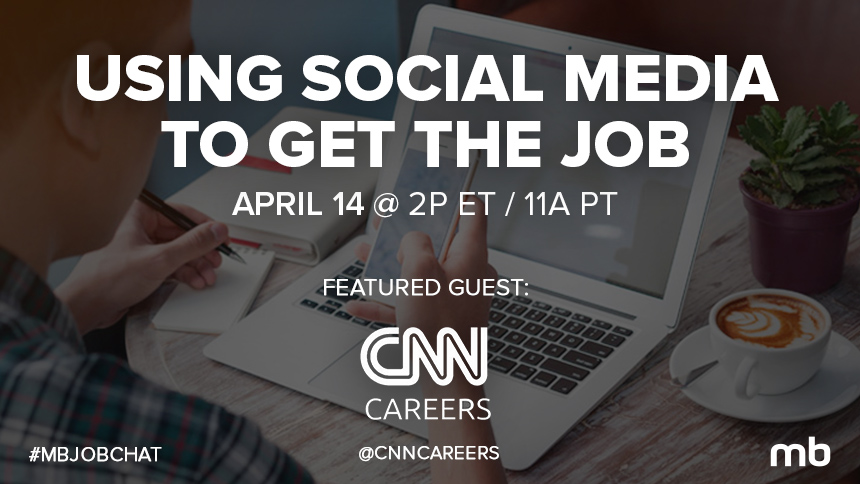
Some 93 percent of recruiters review a candidate’s social media profiles before making a hiring decision. Can your online presence stand up to the scrutiny? We’ll help you get there when we team up with the in-house recruiters of @CNNCareers on Thursday, April 14 at 2 p.m. ET to host our very first Twitter chat!

Join us for the hour as we chat with CNN Recruiters and job seekers like you to discuss what recruiters search for on social media profiles, what digital skills hiring managers are looking for, how you can best present your digital skills to recruiters, how to use digital platforms to score your next media job and more.

Who: @Mediabistro, @CNNCareers and YOU

What: #MBJobChat

Where: twitter.com/Mediabistro

When: Thursday, April 14 at 2 p.m. ET/11 a.m. PT

Special Bonus for Our Favorite Q&As
Mediabistro is coming to Instagram in May! If we retweet your awesome answers or questions during the chat, we’ll give you early access to our Instagram account so you can get in on the fun before everyone else.

Topics:

Climb the Ladder, Networking
Job Search

How to Optimize Your Social Profiles to Attract Job Offers

The #WeekendJobSearch Assignment #3: Update your LinkedIn, give everything else a good scrub

Woman updating her LinkedIn page
John icon
By John Lombard
John Lombard is a content strategist and writer with over a decade of experience creating interactive and video content for brands like Apple, IBM, and Samsung. He previously worked at Mediabistro and now serves as a Client Strategist at Ceros.
2 min read • Originally published April 8, 2016 / Updated March 19, 2026
John icon
By John Lombard
John Lombard is a content strategist and writer with over a decade of experience creating interactive and video content for brands like Apple, IBM, and Samsung. He previously worked at Mediabistro and now serves as a Client Strategist at Ceros.
2 min read • Originally published April 8, 2016 / Updated March 19, 2026

Congrats! You’ve made it to week 3 of the #WeekendJobSearch, our ongoing series that breaks the whole job-search process into 13 totally doable to-do items.

Last week, we set you up for job-search success with a goal and way to track your progress. (If you’re just jumping in now, check out week 1, when we started small and purged old job-search materials.)

This week, we’re focusing on cleaning up and optimizing your social presence to make them as professional and attractive as possible. This means making sure your online presence attracts and impresses hiring managers, and does absolutely nothing to scare them away.

The #WeekendJobSearch Assignment #3

Clean Up Your Social Media Presence

1. Refine Your LinkedIn Headline
To grab a hiring manager’s attention on LinkedIn, reel them in with your headline that:

  • Is specific to your profession
  • Includes your focus within the industry
  • Has a little personality

Let’s say your previous headline was “Content Marketing Manager.” A good refinement: “Content Marketing Manager Specializing in Launching Digital Campaigns. Frequent Tech Marketing Conference Panelist.”

If you’re unemployed, keep your desired position in the headline so you don’t get passed up by recruiters. So rather than “Currently seeking marketing opportunities,” consider “Content Marketing Manager Seeking New Opportunities.”

2. Update Your LinkedIn Summary
The goal for your summary is to engage a recruiter or hiring manager with your experience, passion for the industry and your personality. (Need inspiration? Check out these stunningly good LinkedIn profile summaries.)

Take some time now to update and proofread your summary section. Also, research other people on LinkedIn in your profession and see what they’re doing to stand out. And don’t be afraid to ask friends or colleagues for feedback on your new summary.

3. Clean Up Your Social Channels
You know the rules here: Go through all your social channels—Facebook, Instagram, Twitter—to check there’s nothing that would dissuade a hiring manager from considering you.

A quick checklist:

  • Wherever possible, set your settings to private.
  • Go through your photos and remove anything that shows you holding a drink, partying or doing anything offensive or unprofessional.
  • Scroll through your tweets and posts, removing anything that speaks negatively about a previous employer, about another person or is complain-y.
  • Take a minute to re-tweet or share something exciting going on in your industry to show you’re on the pulse of current trends. Keep up this habit!

And that’s week 3! Now on to Assignment #4, when we’ll help you discover your top companies so you can start to really hone your job search.

  • Start from the beginning: #WeekendJobSearch Assignment #1
  • Share your progress on Twitter: #WeekendJobSearch

Topics:

Get Hired, Job Search
Advice From the Pros

Dan Lyons on Leaving Journalism for a Tech Startup — and What He Learned

Dan Lyons talks to Fresh Air about going from reporting to tech

Dan Lyons new book cover disrupted
Katie icon
By John Lombard
John Lombard is a content strategist and writer with over a decade of experience creating interactive and video content for brands like Apple, IBM, and Samsung. He previously worked at Mediabistro and now serves as a Client Strategist at Ceros.
2 min read • Originally published April 8, 2016 / Updated March 19, 2026
Katie icon
By John Lombard
John Lombard is a content strategist and writer with over a decade of experience creating interactive and video content for brands like Apple, IBM, and Samsung. He previously worked at Mediabistro and now serves as a Client Strategist at Ceros.
2 min read • Originally published April 8, 2016 / Updated March 19, 2026

After being laid off from Newsweek as a tech writer at 52—with a wife and two kids, no less—Dan Lyons took this as an opportunity to break into the field he’d been covering for years: tech start-ups.

Joining marketing software start-up Hubspot as the oldest employee at the time, Lyons quickly found the frat- and cult-like culture to be much more than he had bargained for, and he writes all about it in his brand-new memoir, Disrupted: My Misadventures In The Start-up Bubble.  

Dan’s motivation for joining the tech-start-up culture was simple. He saw how media and tech were changing and wanted to get on board:  

“[T]here’s a sense in the media business—and I share this sentiment—that technology is really reshaping the media business. And I kind of thought, I want to get in on that. I want to get in on how the media business is changing, how people are telling stories in new ways. And the tech guys, in many ways, are doing a better job of that. Microsoft has a thing called Microsoft Stories now that is really a phenomenal publication, and it just happens to be funded by Microsoft. So there’s that too. You realize that if you’re in the media business, technology is fundamentally what’s driving the change in that business. And so I thought it would be a way to learn that.”

Lyons spoke about his career transition this week with Fresh Air’s Terry Gross. It’s compelling listening for anyone with a journalism or editorial background who has made or is contemplating making a switch into content marketing. It’s also worth checking out if you’ve ever dreamed of working in TV; Lyons is a writer on the HBO show Silicon Valley, too.

Laid-Off Tech Journalist Joins A Start-Up, Finds It’s Part Frat, Part Cult

Topics:

Advice From the Pros, Be Inspired
Skills & Expertise

Essential Steps to Building a Personal Brand That Advances Your Career

Here’s how to go beyond social media to hone how the world sees you

businesswoman giving a presentation
By Laura Montgomery
3 min read • Originally published April 12, 2016 / Updated March 19, 2026
By Laura Montgomery
3 min read • Originally published April 12, 2016 / Updated March 19, 2026

Personal Brand Is More than Your Digital Presence published on The Executive Education Navigator blog.

When you think about brand identity, what most frequently comes to mind will be a company logo, overall business reputation and the products associated with a business. Yet one of the most important brands you can focus on to support your company and your career is yourself.

Ultimately, people want to do business with people. With today’s plethora of digital communication and social media platforms, it’s easier and more impactful than ever before for an individual leader to publicly define and communicate his or her personal brand. The main challenge for many leaders is defining what their personal brand is and communicating it in an authentic and consistent way.

Personal brand is more than your digital presence

“Personal brand is commonly mistaken as the direct equivalent of what your social media and digital presence is. But it goes far beyond that,” says Craig Fisher, head of employer brand at software giant CA Technologies and CEO of TalentNet LLC, a social business strategy firm. Personal brand is not just about self-promotion or being visible online, Fisher explains, “it’s identifying who you are as a leader, how you treat people, how you want to be known—in and out of the office.”

In this way, personal branding is closely connected to principles and processes of using effective storytelling to become a better leader. “For many leaders, when they really look back at their personal history, it turns out that every single thing they’ve done since high school has, in some way, led them to where they are now,” says Fisher. Crafting and communicating that story in an open and transparent way is the foundation of your personal brand.

Three tips for communicating your personal brand

Once you’ve taken the essential first step of identifying the common threads and underlying themes of your leadership career, it’s time to communicate that story. Fisher offers up three pieces of advice for anyone aiming to strengthen his or her personal brand.

1. Practice with a person you trust.

Work with someone who sees you from an outside perspective, and talk to them about yourself as if you were talking to a good friend. Note the way you speak in the first person, in a way that’s direct and less formal than you might typically use with colleagues in the workplace. Try to incorporate that style and tone into all your communications, both in person and online.

2. Pick your platform.

When you’re taking your personal brand public, you don’t have to be everywhere. Choose a medium that you feel comfortable with. If you’re a visual communicator or want to transcend language barriers, use photography—like Facebook COO Sheryl Sandberg, who uses Instagram to support businesswomen. For great writers, text-based platforms like personal blogs or Twitter might be the right place to publish.

3. Balance intimacy and privacy.

Part of creating an authentic personal brand often means giving the public a glimpse into your personal life. This can seem scary at times, but it’s possible to do both effectively and safely. Fisher suggests, for example, that you can tell a story about your family life while still protecting your privacy—by referring to your kids by numbers rather than names.

Your clear and authentic personal brand and leadership narrative will come in handy in the next time you meet with your board, recruit business partners, or go looking for a new job. The story is what people will remember, so put in the necessary effort to make it a great one.

Laura Montgomery is an independent higher-education consultant.


The Executive Education Navigator is a first-of-its-kind search and discovery tool launched by The Economist Careers Network to aid executives’ search for their ideal executive education programs. Its blog includes posts on career hacks and industry trends.

Browse executive courses on personal branding. For a quick introduction to taking charge of your personal brand consider Mediabistro’s Skills in 60: Create a Killer LinkedIn Profile.

Topics:

Climb the Ladder, Skills & Expertise
Job Search

Spring Job Search: Fresh Career Advice to Help You Get Hired

Ditch the to-do list, welcome change and up your social skills

Businesswoman at her desk
Valerie icon
By John Lombard
John Lombard is a content strategist and writer with over a decade of experience creating interactive and video content for brands like Apple, IBM, and Samsung. He previously worked at Mediabistro and now serves as a Client Strategist at Ceros.
3 min read • Originally published April 12, 2016 / Updated March 19, 2026
Valerie icon
By John Lombard
John Lombard is a content strategist and writer with over a decade of experience creating interactive and video content for brands like Apple, IBM, and Samsung. He previously worked at Mediabistro and now serves as a Client Strategist at Ceros.
3 min read • Originally published April 12, 2016 / Updated March 19, 2026

As spring continues to warm up, so do companies’ plans to hire. Check out new listings on our job board, and read these new career-advice articles to help you turn up the heat on your job search.

1. Reframe the way you think about failure.

Next time you fail at something, remember it’s a stepping stone to success. Everyone fails sometimes, even the most successful people. “I think our resilience is dramatically improved when we trust that often out of the biggest heartbreaks come the best things in our lives,” Arianna Huffington shared with Business Insider.

2. Job seekers can look forward to more perks and benefits, and maybe returning to former employers.

What’s in the cards for hiring in 2016? More perks and benefits, recruiting via social media and workplace flexibility, according to this forecast from Fortune.

3. Here’s how to power your job search with social media.

We’re sure you know that social is where it’s at for job searching, but you might not be taking advantage of all the tools out there to learn about companies, career arcs and trends. Get yourself up to speed with the latest tips and tricks, courtesy of this super-helpful list from Time.

4. Hey interviewees: If your question for the interviewer isn’t about the job or your performance of the job, don’t ask it.

In the interview, asking “How many sick days do I get?” will more than likely turn off the hiring manager—and that’s not all that can ruin your chances of that sweet potential gig. For a complete list of what to avoid asking come interview day, check out this Fast Company cheat sheet.

5. Toss the to-do list, carry a notebook and make it home for dinner.

Ultra-successful people are different from you and me: They’ve got their daily routines and behaviors mastered. Learn from their secrets, and use them to power your job search, with this LinkedIn article.

6. Job search stalled? Get back in gear with this career advice.

The process of applying for jobs is, unfortunately, much more involved than just turning in applications. Learn fool-proof ways to maximize your chances of getting a job offer with this tip sheet from U.S. News and World Report.

7. Leave work for an interview without being super-obvious.

It’s never easy getting off work for an interview, but Business Insider’s Ask The Insider columnist Ashley Lutz tells you how to do it without getting canned.

8. Here are the companies where millennials want to work.

Do you dream of getting an offer from Google, Netflix or Apple? You’re not alone: These are among the 10 companies at which workers ages 18 to 34 would love to land, according to YouGov.

9. Use keywords, keep your profile up to date and get ready for your video interview closeup.

Including keywords in your applications, keeping your socials current, being camera-ready for video interviews and looking for an inside connection: They’re all part of the latest techniques outlined in this New York Times article about job searching in the digital age.

10. Hey, employers: Guess who’s to blame for that interview crashing and burning?

Interviewers who go through the motions and stick to a script instead of having a human conversation can scuttle what should be a key point of contact with a candidate. Forbes career contributor Liz Ryan outlines another way to interview potential hires.

Topics:

Get Hired, Job Search
Interview Tips

4 Types of Words That Make You Sound Less Professional

Improve your professional vocab simply by banning these phrases from your interviews

Woman being interviewed
Valerie icon
By Marisa J. Carroll
Marisa J. Carroll is a copy editor, writer, and grammar instructor based in New York
4 min read • Originally published April 13, 2016 / Updated March 19, 2026
Valerie icon
By Marisa J. Carroll
Marisa J. Carroll is a copy editor, writer, and grammar instructor based in New York
4 min read • Originally published April 13, 2016 / Updated March 19, 2026

One key to crafting a persuasive presentation is knowing the expectations of your audience. A job interview is no different. Your words matter.

Prospective employers are looking for candidates who communicate clearly, courteously and professionally. Aspects of our personal speaking style can be an asset or a drawback. 

Fortunately, becoming mindful of our verbal tics and iffy word choices can help us correct them and present ourselves in the most effective way possible.

1. Filler words: um, sort of, like, you know

No one is immune from using filler words, especially when we feel uncomfortable, unsure of ourselves or put on the spot. (Full disclosure: One of my filler phrases is “Right, right, right.”) Not only are we more likely to use filler words in nerve-racking moments, but we’re also less likely to notice ourselves doing it.

As a preemptive strategy, ask an honest (but gentle!) friend to point out the filler words you tend to use, and keep your ears open for them during your everyday conversations. By the time of your interview, you’ll be in a much better position to catch yourself before you say them, and you’ll end up sounding more polished and confident.

2. Profanity, “text speak” and slang

The last thing you want to do is offend a potential boss, so profanity is off-limits. Text speak and slang may sound too informal, and they can also alienate listeners who are not up on the latest lingo.

To bolster your chances of connecting with your interviewer, forgo them. Once you’re on the job, you’ll have a better sense if slang is accepted and in what contexts. Until then, it’s best to err on the side of formality.

3. Nonstandard words

A usage panel is a group of language experts that studies how words are used and decides which usages are standard (i.e., acceptable) and which are nonstandard (i.e., less acceptable).

In general, standard usage is preferred in formal or professional situations. Below are common usages that most panels would define as nonstandard, so nix them during your interview.

Irregardless. Although irregardless appears in the dictionary, the word is considered nonstandard. Regardless is the better choice.

Literally means “in actual fact,” but people frequently employ it to emphasize a point, regardless of whether the point is factual: “The weather during our corporate retreat was so bad, it was literally raining cats and dogs.” Unless golden retriever puppies and British shorthair kittens were falling from the sky (which, don’t get me wrong, would be the best day ever), the word literally should be dropped.

Could of/should of/would of. The correct forms are could have, should have and would have. (P.S. The contractions of these phrases—could’ve, should’ve, would’ve—are best left to informal conversations.)

4. Easily confused words

Even seasoned editors can mix up the words below (including me). But if your interviewer is a stickler for language, misuses will jump out.

Memorize the meanings, and practice using the words in conversation and in writing. Better yet, think of associations for each word that apply to you personally. The definitions will be more likely to stick in your mind.

adverse/averse. Adverse means “negative.” Averse means “having strong feelings against.” The job candidate was averse to providing a complete list of references, which had an adverse effect on her chances for getting the job.

i.e./e.g. The abbreviation i.e. means “that is”; e.g. means “for example.” The interviewers have narrowed down their search to the most qualified applicant—i.e., you. You’ll be delighted by the perks offered by the company, e.g., generous health benefits, four weeks’ vacation, and a membership to the fitness center.

disinterested/uninterested. Disinterested means “impartial.” Uninterested means “not interested.” The position requires someone who can remain disinterested, consider controversial issues from all angles and arrive at well-reasoned conclusions. If you are uninterested in the current opening, perhaps it’s best to wait for a position that excites you more.

fewer/less. Fewer is used with nouns you can count; less is used with nouns you can’t (and with adjectives and adverbs too). Fewer candidates than ever submit a printed resume through the mail. Although the candidate had less time to prepare than the other applicants, she still aced the interview.

imply/infer. Imply means to “suggest”; infer means to “reach a conclusion.” After the recruiter contacted your references, she implied that you were the top candidate for the position. You inferred from her comment that your previous bosses sang your praises.

Take your language skills to the next level with a Mediabistro Online Copyediting Course.

Topics:

Get Hired, Interview Tips
Skills & Expertise

What Is Programmatic Advertising? A Clear Explanation for Marketers

Bone up on this bit of jargon before your next marketing or advertising job interview

Man analyzing data on laptop
John icon
By Corinne Grinapol
@Corinneavital
Corinne Grinapol is an assistant editor covering energy and environment at Engineering News-Record, with previous editorial roles at Adweek's FishbowlDC and Mediabistro. She studied international relations at SUNY Geneseo.
3 min read • Originally published April 14, 2016 / Updated March 19, 2026
John icon
By Corinne Grinapol
@Corinneavital
Corinne Grinapol is an assistant editor covering energy and environment at Engineering News-Record, with previous editorial roles at Adweek's FishbowlDC and Mediabistro. She studied international relations at SUNY Geneseo.
3 min read • Originally published April 14, 2016 / Updated March 19, 2026

Programmatic is becoming increasingly important in jobs in advertising or marketing, but you’d be excused for not knowing exactly what it means.  

The next time you hear the term “programmatic,” say, at a job interview, you might think you can guess at the definition. It sounds kind of familiar—ads, data, computers… Does programmatic lie somewhere within that triangle?   

You don’t want to cobble together a makeshift response to this. Being secure on your knowledge of all things programmatic will show not only that you are up on industry trends, but will give you a chance to prove there’s a place for you in a rapidly digitizing industry.

OK, so what is programmatic?

At its most basic, in an advertising or marketing context, programmatic refers to buying, selling or placing ads through an automated process.

That seems really simple. Isn’t it more complicated than that?

Ask 10 different marketing professionals what programmatic means, and you’re likely to get 10 different answers.

Programmatic is an umbrella term, and sometimes the general term gets conflated with the particular. The one that you may see used interchangeably more than any other is real-time bidding.

Can you break that down?

Sure. Imagine User X does a Web search for sunglasses. Then User X goes to a new site and sees an ad for sunglasses. User X starts seeing ads for sunglasses on many of the sites he visits. How did that happen? Through the magic of the programmatic process known as real-time bidding, or RTB.

Here’s what likely went down behind the scenes:

User X’s browsing history marked him as a person searching for sunglasses. As User X typed in the address to a new site with available ad space, that space went up for auction.

Sunglass company Z, using software that identifies when ad space is available for its target market of sunglass seekers, outbid the other sites, and the ad for its sunglass company occupied the ad spot just as User X’s site loaded.

This entire process was automated, a digital transaction that transpired in milliseconds.

And programmatic is the future because?

For one, it can make marketing campaigns more efficient and effective. The ability to use data to identify not only a target market, but also to analyze the efficiency of a campaign as it happens and in particular situations will help media planners create more successful future campaigns.

Most marketers can appreciate how programmatic eliminates the need for tedious manual processes like sending change orders back and forth or spending hours on Excel.

There is just too much out there for humans on either end of buying or selling equation to handle, and programmatic can take the slack.

While it may seem that programmatic has the potential to take over jobs now handled by humans, it can create new opportunities for those who can successfully use programmatic marketing as a tool to make ad campaigns more effective than ever.

Looking to up your marketing game? Consider taking a class. Mediabistro’s Online Marketing Courses cover it all, from digital marketing fundamentals to creating effective email campaigns.

Topics:

Climb the Ladder, Skills & Expertise
Job Search

Career and Job Search Advice Worth Bookmarking This Week

This quick rundown of new Mediabistro stories has all the career and job search advice you need to know now

career advice worth noting
Katie icon
By Katie Hottinger
@katiehottinger
Katie Hottinger is a content strategist and UX designer with over 15 years of editorial experience across brands including JPMorgan Chase, Google, Condé Nast Traveler, and Mediabistro. She specializes in digital content strategy and multi-platform editorial execution.
3 min read • Originally published April 14, 2016 / Updated March 19, 2026
Katie icon
By Katie Hottinger
@katiehottinger
Katie Hottinger is a content strategist and UX designer with over 15 years of editorial experience across brands including JPMorgan Chase, Google, Condé Nast Traveler, and Mediabistro. She specializes in digital content strategy and multi-platform editorial execution.
3 min read • Originally published April 14, 2016 / Updated March 19, 2026

We’re in the homestretch: The weekend’s almost here, and you’re already thinking about wrapping up your projects for the week (c’mon, admit it). With Friday rolling around, we know you’ll want to catch up on recent Mediabistro stories that may have escaped you.

In case you missed it, here are links to fresh Mediabistro stories. Check them out now, or add them to your before-Friday to-do list.

1. Master These Business School Lessons to Make the Most of Your Job Search: Along with their $150K MBAs, business school grads get takeaways about team-building, people skills and perseverance. Here’s how you can use their hard-earned knowledge to land your next gig.

2. What Does an Event Coordinator Do?: If you’re a top-notch negotiator and no-sweat multitasker, this glam event-marketing job might be the one for you.

3. Simple Stats to Prove Your Online Success (and Value) to Your Boss: Your current job, or your next one, might have you leveraging SEO and PVs to assure ROI. Here’s how to make sense of online performance metrics from A to Z.

4. Digital Editor Jobs to Apply to Right Now: Calling all wordsmiths with digital chops: If you’re looking for a new job, listings for open digital editor jobs are a great place to start.

5. Spelling Errors That Can Torpedo Your Resume or Cover Letter: Hay! Bee sure your not miss spelling any thing on your resume or cover letter. (It can make ewe look dum!) Hears how to dew it.

6. Surprisingly Simple Ways to Get More Done in Less Time: We all want to work smarter, not harder, right? Here are three clever ways to make it happen.

7. Hear How a Journalist Went from Newsweek to Startup to Writing for HBO: Dan Lyons went from journalism to software startup to TV writer, and now, author. Listen in as he tells Fresh Air about his media career reinvention.

8. Simple Tweaks to Your Social Profiles That Attract Job Offers: Clean up your social presence in no time flat, and make yourself instantly more hireable, with these quick fixes.

9. How Soon Is Too Soon to Look for a New Job?: Hurray! You’ve got a new job. Here we go again: This job is probably not the right one for you. Here’s how to look for another job when you’ve just gotten your latest one.

10. Career Advice to Help You Make the Most of Spring Hiring Season: It’s a solid assortment of recent job-search and career coverage from around the Web, including how to maximize your chances of getting an offer.

11. Take These Essential Steps to Crafting Your Personal Brand: You know you have to work on your personal brand, but do you know how to do it? These quick tips will get you there fast.

12. Publishing Editorial Jobs for People Who Love Books: If you’re a book lover, you’ve probably dreamed of earning a living working with the written world. You can help make the dream a reality by checking out these book editor jobs, now available on the job board.

13. These Words That Make You Sound Less Smart: Sure, you want to make the best impression in the interview. One of the best ways to do it? Remove these verbal tics and iffy word choices from your vocab.

14. What Does ‘Programmatic’ Mean?: Understanding this bit of techno jargon is key to landing a job in digital media. We break it down, and tell you why it’s the way of the future.

15. Employers: Stop Losing Applicants by Avoiding These Job Listing ‘Danger Words’: In this bonus round for the bosses, find out how the words you use in your job listing may be turning off potential candidates before they even apply.

Topics:

Get Hired, Job Search
Job Search

How to Research Companies Like a Pro During Your Job Search

The #WeekendJobSearch Assignment#4: Do some creative searches to discover top employers in your field

Man working in a coffee shop
Valerie icon
By John Lombard
John Lombard is a content strategist and writer with over a decade of experience creating interactive and video content for brands like Apple, IBM, and Samsung. He previously worked at Mediabistro and now serves as a Client Strategist at Ceros.
3 min read • Originally published April 15, 2016 / Updated March 19, 2026
Valerie icon
By John Lombard
John Lombard is a content strategist and writer with over a decade of experience creating interactive and video content for brands like Apple, IBM, and Samsung. He previously worked at Mediabistro and now serves as a Client Strategist at Ceros.
3 min read • Originally published April 15, 2016 / Updated March 19, 2026

It’s official: We’re rounding out our first month into The #WeekendJobSearch, our ongoing series that breaks the whole job-search process into 13 totally doable to-do items.

Last week, we cleaned up your social channels and created a LinkedIn headline and summary that attracts and engages recruiters. (If you’re just jumping in now, check out Week 1, when we started small and purged old job search materials.)

This week, we’re showing you how to research your top companies to target employers you’d like to reach out to for informational interviews, and start your intel-gathering for when you get a real job interview.

The #WeekendJobSearch Assignment #4

Research Your Top Companies

One of the best things you can do while looking for work is to set up informational interviews with companies high on your list. There’s simply no better way to learn more about the company and the people who manage the teams you’d like to be a part of, and learn about unposted jobs.

And if you do eventually land an interview with one of these companies, the information you’ve gathered will give you a huge leg up over the competition—as well as plenty of material when the hiring manager asks, “So why do you want to work here?”

This week, to get this started, your assignment is to make a list of your top 10 companies you’d like to work for.  

Here are some ideas on how to compile your list:

  1. Email a few former colleagues to see if they have any recommendations or know of any exciting companies.
  2. Do a Google search for “best of” companies in media.  
  3. Search on Glassdoor, using a term like “media” or “marketing” in the company name box.
  4. Think about some of your favorite media campaigns and research the agency or production company that developed them.

Use your own list to keep track of these companies, or employ the second tab on Mediabistro’s Ultimate Job Tracker (the one you used to track your job applications in Week 2 of #WeekendJobSearch).

Once you finish compiling your list of your top companies, you may feel a little more focused on your goals. But if you’re not sure where to start with your list, here are a few ideas to get things moving:

  1. Go down your list and see if any companies are hiring, either on our job board, the companies’ careers pages or by doing a quick Google search.
  2. Sign up for job alerts on our job board for your top companies.
  3. If you don’t find any open positions from companies on your list, check their “About” pages to see if they list employees and roles. This will give you an idea of how they staff the various roles and departments.
  4. On LinkedIn, search the companies and see if you have any connections to current employees at the company.
  5. Follow these companies or their recruiting departments on Twitter to easily keep an eye on their movements.

Once you’ve learned who’s who at your top companies, reach out and request an informational interview. Make it clear you’re looking to learn more about the specific person you’d like to meet with—how they got to where they are, what challenges they faced along the way—rather than meeting solely to get your foot in the door.

And that’s week 4! We’ll see you next week when we’ll help you get your resume as hire-worthy as possible.

  • Start from the beginning: #WeekendJobSearch Assignment #1
  • Share your progress on Twitter: #WeekendJobSearch

Topics:

Get Hired, Job Search
Job Search

How to Use Social Media to Find Your Next Job

How to Use Social Media to Find Your Next Job
Katie icon
By Mediabistro
The Mediabistro editorial team draws on 25 years of media industry expertise to cover jobs, careers, and trends shaping the industry.
1 min read • Originally published April 15, 2016 / Updated March 19, 2026
Katie icon
By Mediabistro
The Mediabistro editorial team draws on 25 years of media industry expertise to cover jobs, careers, and trends shaping the industry.
1 min read • Originally published April 15, 2016 / Updated March 19, 2026

We partnered with the in-house recruiters for CNN (@CNNcareers) for our first Twitter chat, asking questions about how a job seeker can best succeed in the digital age. See some of the chat highlights and our community’s answers below:

Topics:

Get Hired, Job Search

Posts navigation

Older posts
Newer posts
Featured Jobs
Kirkus Media
Editorial Intern
Kirkus Media
New York City, New York (US)

Gaia Inc
MEDIA COORDINATOR
Gaia Inc
Louisville, CO

Gaia Inc
Global Paid Media Specialist
Gaia Inc
Louisville, CO

Gaia Inc
Director of Media Strategy
Gaia Inc
Louisville, CO

Hearst Television
Account Executive
Hearst Television
Milwaukee, WI, United States

All Jobs »
PREMIUM MEMBER

Tina Donvito

New York, NY
16 Years Experience
An experienced writer on topics ranging from parenting to travel to entertainment, I've visited the set of Harry Potter, written for The New York...
View Full Profile »
Join Mediabistro Membership Today

Stand out from the crowd with a premium profile

Mediabistro Logo Find your next media job or showcase your creative talent
  • Job Search
  • Hot Jobs
  • Membership
  • Newsletter
  • Career Advice
  • Media News
  • Hiring Tips
  • Creative Tools
  • About
Facebook YouTube Instagram LinkedIn
Copyright © 2026 Mediabistro
  • Terms of Use
  • Terms of Service
  • Privacy