Mediabistro Logo Mediabistro Logo
  • Jobs
    Search Creative Jobs Hot Jobs Remote Media Jobs Create Job Alerts
    Job Categories
    Creative & Design Marketing & Communications Operations & Strategy Production Sales & Business Development Writing & Editing
    Quick Links
    Search All Jobs Remote Jobs Create Job Alerts
  • Career Resources
    Career Advice & Articles Media Industry News Media Career Interviews Creative Tools Resume Writing Services Interview Coaching Job Market Insights Member Profiles
  • Mediabistro Membership
    Membership Overview How to Pitch (Premium Tool) Editorial Calendars (Premium Access) Courses & Training Programs Membership FAQ
  • Log In
Post Jobs
Mediabistro Logo Mediabistro Logo
Search Creative Jobs Hot Jobs Remote Media Jobs Create Job Alerts
Job Categories
Creative & Design Marketing & Communications Operations & Strategy Production Sales & Business Development Writing & Editing
Quick Links
Search All Jobs Remote Jobs Create Job Alerts
Career Advice & Articles Media Industry News Media Career Interviews Creative Tools Resume Writing Services Interview Coaching Job Market Insights Member Profiles
Membership Overview How to Pitch (Premium Tool) Editorial Calendars (Premium Access) Courses & Training Programs Membership FAQ
Log In
Post Jobs
Log In | Sign Up

Follow Us!

How to Pitch

How to Pitch Edible Jersey: Freelance Writer’s Guide

This Garden State publication showcases the “untold stories” of local food makers and markets

Edible Jersey Cover spring 2016
Valerie icon
By Andrea Williams
@AndreaWillWrite
Andrea Williams is an author, journalist, and columnist for The Tennessean with over 16 years of experience in journalism and 20 years in copywriting and communications strategy. Her work spans national outlets and high-traffic digital brands.
5 min read • Originally published May 12, 2016 / Updated March 19, 2026
Valerie icon
By Andrea Williams
@AndreaWillWrite
Andrea Williams is an author, journalist, and columnist for The Tennessean with over 16 years of experience in journalism and 20 years in copywriting and communications strategy. Her work spans national outlets and high-traffic digital brands.
5 min read • Originally published May 12, 2016 / Updated March 19, 2026

Circulation: 40,000
Frequency: Bimonthly
Special issues: None

Background: Edible Jersey—part of Edible Communities, a network of more than 100 local publications produced and distributed across the country—has been around since 2007. And lest you think the Jersey food scene is all hot dogs and funnel cakes at the Shore, executive editor Joy Manning’s magazine proves otherwise: New Jersey is the Garden State, after all.

There’s coverage of restaurants and food shopping, of course, but Edible Jersey is also full of articles about big farmers and small gardeners, plus the home cooks who bring those harvests to life.

There are features on artisan food makers and the specialty food markets. And there’s ample coverage of food-related issues, like hunger and agricultural policy, and how those topics manifest with the everyday people in New Jersey neighborhoods.

“We’re kind of the opposite of the big glossy magazines that aim to be so universal,” Manning explains.

This goal—to shirk all direct competition and become the local, grass-fed burger place to everyone else’s fast-food joint—is perhaps the most singular force driving Manning’s editorial focus.

“A lot of what we think about when we’re assigning stories is what can we assign that is not going to be covered in New Jersey Monthly or on a blog,” she says. “We don’t really focus on trends and things that are new, and we really like things where the writer of the story has some kind of personal connection with the subject—like a story they can only tell.”

What to pitch: According to Manning, any story idea that’s food-focused and grounded in the local New Jersey scene is fair game. But if you’re looking for more concrete direction, she suggests these departments as the most freelancer-friendly:

Tidbits: These 150- to 200-word “snack size” items cover some aspect of local food news, an event, food artisans and their products, or a trend. Though they’re usually written in house, they’re still open for pitches.

Edible Health: This section covers health and wellness with a local food angle, like a recent piece that examined raw milk in New Jersey.

First Person: Manning loves to see pitches for personal essays that focus on a food theme and also have a local hook of some kind—though she says that, sometimes, the fact that the author lives in New Jersey is enough. These pieces usually run around 800 words and can include a recipe if it’s relevant.

Features: The Edible Jersey features well houses pieces from 1,500 to 3,000 words in length and covering a variety of topics, including farming, restaurants, food artisans, home cooking, markets and shopping, policy and the environment and more.

“Edible Jersey features are always people-focused, and the people behind the food is often what we’re driving at,” Manning explains. “When you pitch a feature, it should always be clear who the story’s main character is. And that character could be you—we love a reported, first-person feature.”

Drinks: “In each issue, we like to cover some aspect of local beer, wine or craft spirits culture,” says Manning. “It can be about making it, serving it or even enjoying it.” These stories are around 1,000 words.

Melting Pot: This column celebrates international food across the Garden State and can focus on one particular person or establishment, or a roundup of places around a common theme. This piece runs roughly 1,000 words as well.

What not to pitch: There are no closed sections.

Online opportunities: None at this time

What publicists should pitch: First tip for publicists looking to pitch Edible Jersey: Read the magazine. All of the back issues are available for free online, says Manning, so there’s no excuse for not understanding the exact tone of the book, as well as the types of personalities and products that typically get covered.

“We’re not going to go for something that’s packaged in New Jersey, but we are going to be interested in something that’s made from New Jersey–grown produce,” she explains.

In keeping with Edible Jersey’s focus on stories that aren’t being regurgitated across all other media outlets, Manning also notes that this due diligence could inspire a new pitch that a publicist may not have previously considered.

“I would really love it if publicists read the magazine and were of sensitive to our way of doing things,” she explains. “We like to tell the untold story.”

Percentage of freelance content published: 90 percent
Percentage of freelance pitches accepted: 30 percent

Recent freelance story pitched and published: “Oysters and Knots,” the cover story of the spring 2016 issue, is about the tension between local oyster farmers and environmentalists.

“We liked that the story wasn’t just a rah-rah, ‘How great are our local oysters?’ piece,” Manning says. “It exposed an almost counterintuitive issue. Everyone always thinks that oysters seem so environmentally friendly, but in reality, some environmentalists are anxious because oyster farming might be threatening a shorebird called the Red Knot. That’s a very interesting story we haven’t heard.”

Etiquette: According to Manning, Edible Jersey is “very easy to pitch,” in the sense that if you are familiar with the magazine, can write a clear and compelling pitch, and have an engaging writing style, you’re very likely to score an assignment.

One other must: Detailing your relationship with New Jersey and the local food scene. “I really like people to have a connection,” Manning says. “Edible readers know our local voice, and it’s really community-driven.”

Lead time: Six months to a year, but Manning is open to pitches on seasonal stories she can photograph now for publication next year.
Pay rate: $50 for a short story to $375 for a feature. Manning also notes that getting in the door and turning out a successful story can lead to regular assignments—and paychecks—in the future.
Payment schedule: On publication
Kill fee: None, as Manning says she doesn’t kill stories
Rights purchased: First rights. Once published, all rights revert to the writer.

Contact info:
Edible Jersey
P.O. Box 279
Maplewood, NJ 07040
(973) 763-6691
ediblejersey.com
Twitter | Facebook
Email format: FirstName@ediblephilly.com

View the Edible Jersey masthead

Direct all pitches to:
EDIBLEJERSEYPITCHES at GMAIL dot COM
Topics:

Go Freelance, How to Pitch
Job Search

#MBJobChat Recap: How to Launch Your Career After College

#MBJobChat Recap: How to Launch Your Career After College
Katie icon
By Mediabistro
The Mediabistro editorial team draws on 25 years of media industry expertise to cover jobs, careers, and trends shaping the industry.
1 min read • Originally published May 13, 2016 / Updated March 19, 2026
Katie icon
By Mediabistro
The Mediabistro editorial team draws on 25 years of media industry expertise to cover jobs, careers, and trends shaping the industry.
1 min read • Originally published May 13, 2016 / Updated March 19, 2026

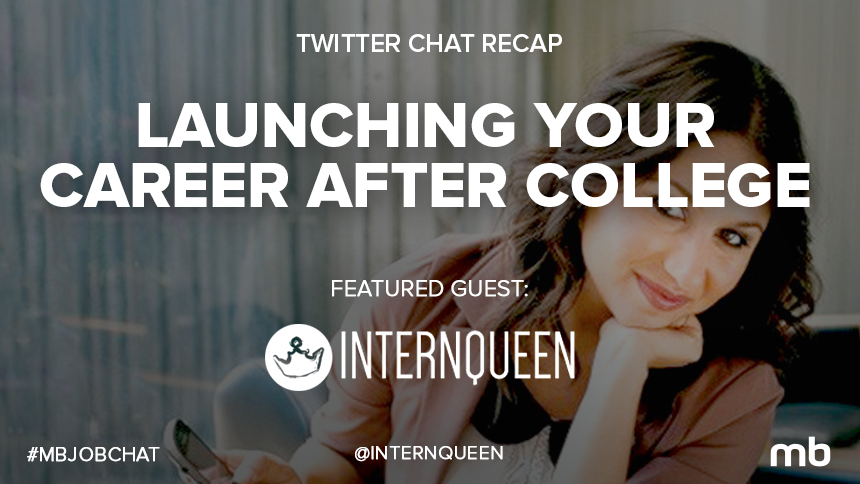
We partnered with Lauren Berger, the “Intern Queen” (@InternQueen), for our second Twitter chat to discuss how recent graduates and college students getting ready for graduation can succeed in today’s job market. See some of the highlights and our community’s answers below: 

Topics:

Get Hired, Job Search
Skills & Expertise

Career Wisdom: Expert Advice From Top Marketing Leaders

Top media pros reveal their secrets to career success

expert advice from marketers
Valerie icon
By Mediabistro
The Mediabistro editorial team draws on 25 years of media industry expertise to cover jobs, careers, and trends shaping the industry.
2 min read • Originally published May 17, 2016 / Updated March 19, 2026
Valerie icon
By Mediabistro
The Mediabistro editorial team draws on 25 years of media industry expertise to cover jobs, careers, and trends shaping the industry.
2 min read • Originally published May 17, 2016 / Updated March 19, 2026

As you kick off your career, you probably get lots of advice from just about everyone you know. And maybe some from people you don’t know.

But we’re pretty sure none of that counsel stacks up to the pearls of wisdom from these experts who have not only been in your shoes and lived to tell the tale, but have successfully secured top spots among the marketing elite.

Take a load off.  

“Your job as an entry-level team member is to take some of the load off your new teammates. If you are not delivering for your teammates, you won’t have to wait for your boss to get mad; your team will likely throw you overboard if you are dead weight.” —Mike Harris, co-founder of Uproar PR

Go confidently in the direction of your dreams, just don’t be a jerk about it.

“Be confident about the things you do well and humble enough to admit when you have no idea what you’re doing. Showing people you know the difference will make them trust your instincts, and your strengths will become your calling card, making you invaluable.” —Alana Yankowitz, publicist at PR DEPT

“Don’t demand authority. Eagerly take responsibility. Relentlessly give credit.” —Seth Godin, marketing expert and author, sethgodin.com

Realize you don’t know everything…yet.

“Be open and fully committed to learning… You’re bound to excel in one area over the others such as media, strategy or client relations, but commit to developing the entire skill set, and success will follow.” —Stacy Berns, founder and president of Berns Communications Group

“I’ve heard this from a few people, but you should always be learning in your job. If you’re not learning, it’s time to move on.” —Mollie Chen, editorial director at Birchbox

“Be endlessly curious. Read blogs daily. Use new platforms that are gaining traction.” —Tom Pettus, EVP, group creative director at Deutsch

Don’t shy away from a challenge.

“If your boss asks if you want to work on a direct marketing account with almost no brand awareness or money, say yes.” —Steve Bassett, Group Creative Director at The Martin Agency

Be yourself—and all these other things, too.

“Be hungry. Be brief. Be aware. Be consistent.” —Sarah Hofsteter, CEO of 360i


Topics:

Climb the Ladder, Skills & Expertise
Job Search

How to Convince Your Boss to Let You Work From Home

The dos and don'ts of getting past the "on-site only" job requirement

home office set up for employee to work from home
Admin icon
By Kristen Fischer
Kristen Fischer is a freelance writer, journalist, and copywriter with over 20 years of experience, currently serving as a health writer for AARP with previous staff roles at WebMD and WW. Her work has appeared in Prevention, Healthline, Woman's Day, Parade, and Writer's Digest, and she is the author of four books.
5 min read • Originally published May 19, 2016 / Updated March 19, 2026
Admin icon
By Kristen Fischer
Kristen Fischer is a freelance writer, journalist, and copywriter with over 20 years of experience, currently serving as a health writer for AARP with previous staff roles at WebMD and WW. Her work has appeared in Prevention, Healthline, Woman's Day, Parade, and Writer's Digest, and she is the author of four books.
5 min read • Originally published May 19, 2016 / Updated March 19, 2026

You’ve spotted an opening on the job board for the perfect full-time or freelance gig, but the position is based miles away. What do you do—apply anyway?

Although most media professionals can do the majority (if not all) of today’s work from a home office simply with a decent Internet connection and a working phone, not every company is open to flexible working solutions. If a listing explicitly states “on-site only” and you don’t live within commuting distance, warns John Poore, a director of staffing services who works with Facebook, don’t even waste your time applying, as those companies may have had bad experiences with remote employees. “You’ll spend more of your time on their objections,” he says.

Yet, with a little research and a positive attitude, it is possible to convince a hiring manager that you’re the right person for the job, regardless of your location. Here are some dos and don’ts to help you get past that “in-house” mentality.

DO: Assess your own candidacy

Taking time to see if you’re a match for the position is important, because then you can build your elevator pitch around it. “For the best candidate, companies will become flexible,” Poore notes.

But that entails proving you are the best, so it’s important to consider a few things before pressing forward: Are you set up to work from home with regard to equipment, space, privacy and self-motivation? Do you have systems in place to track time spent on projects? If you’re trying to convince an employer to embrace a new arrangement, the onus is on you to prove that you’re worth it. So, arm yourself with evidence to rebuff any possible objections.

DON’T: Pitch working off-site off the bat

Caroline Ceniza-Levine, a career expert based in New York City, says expressing your desire to work remotely in a cover letter is a huge no-no. “It is potentially a turn-off because it requires the employer to accommodate you,” she says. “Now, it might not be hard to accommodate you, but until you know more about the job and company, you don’t know that so it’s presumptuous on your part.”

Instead, concentrate on impressing the hiring manager with a strong resume highlighting your skills and experience first. Once you’ve secured an initial interview, then you can present your case. “Get the employer to want you, and then figure out all the details to make off-site work good for both of you,” says Ceniza-Levine.

DO: Devise a practical plan

The best time to negotiate is when the employer is interested. Ceniza-Levine advises media professionals put themselves in the employer’s shoes and come up with a logistical plan on how telecommuting will work. “How you will communicate with the team, do you need any special equipment or access, how you still stay connected to the office culture…” she notes.

Let the company know during that first interview that you want a flexible work option. If you wait until a second or third interview, the company could feel like they’ve been misled, Poore adds.

“When you think about the ability to work remotely, it’s all built on trust,” he notes. So, once you make that connection, let the person know upfront that you are interested in flexible work and demonstrate that you can save the company time and money by doing so.

DON’T: Make it all about you

When pitching your proposal, be open to what will work best for the company as well. A good idea is to ask if other employees have flexible working arrangements and how they operate. You may be able to state that you can emulate an already-successful model, so the company doesn’t feel like it’s creating a new platform just for you.

Another tip is seeing how your potential superiors like to communicate. If they prefer conference calls to email, offer to accommodate their preference. They may want a daily check-in via Skype, email or IM, or require that you be available for in-person meetings. You want to show that you’re open to developing the working relationship and that your plan is just a starting point that can be fine-tuned if necessary.

“Build your strategy around what makes it easy for your manager and colleagues,” says Ceniza-Levine. “This is what keeps resentments at bay… when people don’t have to accommodate your off-site work habits, they won’t mind.”

Poore says that offering to discount your rate is another appealing approach for many companies. “You have to be willing to have a trade off as well,” he adds.

DO: Offer to put in face time, if you can

Again, an ability to come into the office when you’re needed can really help you land the gig. Many companies want to see and interact with the people they’re paying. After they know who you are, they may be able to offer a virtual work option.

That’s worked for Alisha Miranda, a freelance writer and social media manager who has telecommuted from her home in Brooklyn with teams in Manhattan. One strategy she has used to convince clients that she can be a valuable member of a team is by offering to attend monthly meetings in person or via conference calls. In her case, most of her clients have been close enough to make an occasional meeting doable.

She has successfully interviewed for full-time positions in the past and persuaded the company to take her on in a freelance, telecommuting capacity. “It’s about proving yourself as a valuable asset and negotiating shorter-term gigs,” she says.

DON’T: Get too comfortable

We talked about sweetening the deal and building trust; a great way to do so during your pitch is to offer a two-week trial period. Give the company the option to reconvene later to determine the long-term potential of your flexible work agreement, Poore says.

But make sure to put the agreement—and any metrics that will gauge your success—in writing. You can come back in two weeks and say things are going great, but the employer may want to see a list of projects completed, the time it took and how you saved them time and money. So, include quantifiable results in any reports you create on your progress. And if the employer says it’s not working out, stop the sales pitch right there. You don’t want to beg for work or be an inconvenience.

DO: Have strong references handy

Poore says that another way to get the gig is to demonstrate that a flexible arrangement has worked for you (and other organizations) in the past. The best way to do that is to get previous clients to highlight your competencies and your ability to work under little direction. “Once that first project is under the belt, it makes it easier to do that again,” Poore adds.

Topics:

Get Hired, Job Search
Job Search

Weekend Job Search Week 10: Research Your Interviewer Like a Pro

The Weekend Job Search Assignment #10: Do your research to ace the interview—and land the job

Job research will help you land the job
Valerie icon
By John Lombard
John Lombard is a content strategist and writer with over a decade of experience creating interactive and video content for brands like Apple, IBM, and Samsung. He previously worked at Mediabistro and now serves as a Client Strategist at Ceros.
3 min read • Originally published May 27, 2016 / Updated March 19, 2026
Valerie icon
By John Lombard
John Lombard is a content strategist and writer with over a decade of experience creating interactive and video content for brands like Apple, IBM, and Samsung. He previously worked at Mediabistro and now serves as a Client Strategist at Ceros.
3 min read • Originally published May 27, 2016 / Updated March 19, 2026

Welcome to week 10 of The Weekend Job Search, our ongoing series that breaks the whole job-search process into 13 totally doable to-do items.

Last week, you had a mock interview with a friend or family member, and with any luck did a lot to anticipate any tricky questions, and allay your jitters.

This week, to really impress hiring managers and stand out against the competition, you’re going to really get to know the company and position you’re interviewing for by doing your research. And if there’s no interview on the calendar, no worries—you’ll just use a company you’re targeting for this exercise.

The Weekend Job Search Assignment #10

Research the Company and Interviewer

Every time you go into an interview, you have to remind yourself there are at least three other candidates vying for that same position, all working just as hard as you to impress the hiring manager and land the gig.

And while most candidates spend a great deal of time formulating the perfect responses to questions, many forget to do the most important prep—learning everything they can about the company and the people who are interviewing them. And that’s how you will show them up.

Let’s start today—and remember, if you have no interview on the horizon, use a company you’re targeting for this exercise.

1. Start with the basics.

The best place to kick off your research is with the “About Us” page. Right now, take notes on things such as:

  • Number of years in business
  • Number and location of offices
  • The client roster (if it’s an ad agency)
  • Type of work the team you’re applying for does
  • The company’s mission statement
Want even more help on your interview preparation? The counselors with Mediabistro’s Career Services can help you refine your interview skills in a one-on-one session.

2. Dig into company news, reviews and people.

Make notes on what you find on the Web and the company blog about recent news stories about the company. Did it recently win an award? Merge with another company? Hire a new vp or creative director? Anything you can mention or congratulate people on will go a long way.

Search LinkedIn for the hiring manager, as well as for people who have or had the role to which you’re applying. Check out their backgrounds and how they describe their roles. Use this information to get a better picture of the position and the person you’ll be interviewing with.

Who knows? Maybe you and the hiring manager both went to the same college, or have volunteered at the same organization. Even a small connection can help to break down barriers and foster better connections in the interview.

3. Develop smart questions.

During the interview, the hiring manager is going to eventually say, “Do you have any questions for me?” This is where you knock their socks off with your well-researched information.

Use your notes to formulate three questions; these should spark conversation with the interviewer, but also demonstrate that you took the time to research the company.

Let’s say you found out the company recently won Clio’s Independent Agency of the Year award. You might say, “Congratulations on winning the Clio award; how has this high-profile award affected business?”

Or, if you discovered the hiring manager is also Inbound Certified, you might say, “I noticed you’re also Hubspot Inbound Certified; how much of what you learned is implemented in your team’s marketing?”

And that’s week 10!

Next week, we’ll work on telling your story, otherwise known as your elevator pitch.

  • Start from the beginning: #WeekendJobSearch Assignment #1
  • Share your progress on Twitter: #WeekendJobSearch

Topics:

Get Hired, Job Search
Job Search

What Hiring Managers Really Want in Today’s Marketers

Nail these skills if you want to be desirable to employers

What hiring managers want to see in marketers
Valerie icon
By Molly Folse
@MollyFolse

Molly Folse is a marketing leader with 20 years of experience in content strategy and social media, currently serving as Director of Content and Creative at Protective Life. She has led award-winning content and digital campaigns across financial services, higher education, travel, and consumer brands.

3 min read • Originally published May 31, 2016 / Updated March 19, 2026
Valerie icon
By Molly Folse
@MollyFolse

Molly Folse is a marketing leader with 20 years of experience in content strategy and social media, currently serving as Director of Content and Creative at Protective Life. She has led award-winning content and digital campaigns across financial services, higher education, travel, and consumer brands.

3 min read • Originally published May 31, 2016 / Updated March 19, 2026

We’ve all been there. You walk into an interview feeling on top of the world. You know you have mad skills. But then the questions start and all that confidence disappears faster than that selfie on Snapchat.

While dressing the part, making eye contact and being a team player still count, the increased focus on everything digital has forced new marketers to up their game. Take the guesswork out of your next marketing interview—here are five skills hiring managers want to see.

1. Social Media Prowess

Social media pervades all areas of marketing. It’s not enough to have a personal Instagram account (unless you’ve done something really interesting with it, like getting 100,000 people to follow your dog). No matter your role, you should have in-depth knowledge of all the major platforms—Facebook, Instagram, Twitter, Pinterest, LinkedIn and, yes, even Snapchat and other emerging apps, like Kik.

“The ones that really know [social media] inside out, it makes them valuable for these companies,” says Hilary O’Keefe, senior communications manager at Core77 Design Awards.

Find entry-level content-marketing jobs

2. Solid Communication Skills

Good communication skills never go out of style, even as people spend more and more time with machines. Hiring managers look for people who can deliver messages to consumers and effectively communicate with their coworkers in new and traditional ways.

“Learn your own communication style and the style of those around you,” says 360i CEO Sarah Hofstetter. “It will foster greater self-awareness and improved collaboration and productivity—inside and outside of the office.”

Being a good communicator doesn’t just mean being comfortable speaking to others. It also means being able to clearly express yourself in writing.

Says Hofstetter: “Crisp writing skills are essential for roles across an agency.”   

3. Above-Average Agility

Marketing is fast-paced, always on and ever-changing. New marketers need to follow suit by being quick on their feet and able to jump from one task to another without missing a beat. These days, marketers are often asked to fail fast, revise quickly and test often.

This can be a hard pill to swallow, especially for the perfectionists out there. But coming up with an example of how you can be flexible on the fly can mean the difference between getting hired and getting left behind.

4. Technical Ability

We’ve moved beyond Microsoft Office being a special skill. Way beyond.

“Especially in media,” says Mark Herschberg, CTO at Flashpoint, “if you stay tied to old technologies, you’ll go the way of the printing press.”

Hiring managers want to know that a candidate can quickly master the tools and software marketers may use for things like social media management, updating website content, keyword research and media monitoring. Bonus points if you stay ahead of the game and can identify new technologies to solve problems.

5. Proven Results

You need to show hiring managers you’re a numbers person, even if you chose a field in communications simply to avoid having to do math.

“Things are becoming more measured and focused on the return on investment,” says Simon Yi, growth marketing lead at Reserve.

Even people in more creative marketing roles like content development have to track results of their efforts in order to regularly revise their approach and prove their value. Wow your interviewer by asking questions about key metrics. Have you ever helped a company get leads at an event or increase their Facebook followers? Be sure to mention that, too.

Topics:

Get Hired, Job Search
Journalism Advice

Top 10 Journalism Career Advice Articles Every Writer Should Read

Pitching, writing, getting paid—here are the burning issues for freelance writers you love

Journalism advice
Katie icon
By John Lombard
John Lombard is a content strategist and writer with over a decade of experience creating interactive and video content for brands like Apple, IBM, and Samsung. He previously worked at Mediabistro and now serves as a Client Strategist at Ceros.
3 min read • Originally published June 1, 2016 / Updated March 19, 2026
Katie icon
By John Lombard
John Lombard is a content strategist and writer with over a decade of experience creating interactive and video content for brands like Apple, IBM, and Samsung. He previously worked at Mediabistro and now serves as a Client Strategist at Ceros.
3 min read • Originally published June 1, 2016 / Updated March 19, 2026

Sure, Mediabistro is your go-to when it comes to media career advice. But we’ve also got you covered when it comes to hard-earned wisdom about how to strike out on your own and go freelance.

A few of our journalism advice stories perennially rank as our most popular pieces—and rightly so, because they hit the big subjects that all freelancers should care about: How to ply your trade as a freelance writer, get assignments, get paid—and paid well.

Think of the list below as our greatest hits, and your refresher course for what you need to become a successful freelance writer. (And if you’re looking for more freelance gigs—and why wouldn’t you be?—be sure to check out the freelance jobs available now on our job board.)

1. How to Become a Six-Figure Freelancer: It is possible to go from the occasional writing gig to true financial security through your freelancing efforts. Here’s the top-notch advice you need to plan for success, expand your markets and earn the most for your time.

2. The Rookie Guide to Freelance Writing: This guide is essential reading for anyone looking to make the leap into freelancing. Packed with tips on getting started, making connections and the steps to take before pitching, it’s a great idea to keep this article bookmarked on your browser.

3. 8 Terms to Know If You Want to Be a Digital Media Journalist: It’s official: Digital has taken over journalism. Here are a few must-know terms used daily in today’s newsrooms. (Bonus: This glossary lays down the law on the proper pronunciation of GIF.)

4. 6 Ways to Track Down a Magazine Editor: Ever taken the time to develop a knockout pitch, sent it along and felt it fall into the abyss? You’re not alone. Here, successful freelance writers share what it takes to get ahold of an editor.

5. 4 Things to Consider When Setting Your Freelance Writing Rate: Most freelancers have no problem handling clients, hitting deadlines and creating killer copy. But when it comes to setting a rate, that’s a different story. Here’s all the info you need to set a rate you’re comfortable with—and that keeps the lights on.

6. 10 Terms Every Freelance Writer Should Know: Ah, journo jargon: Comprised of intentionally misspelled words, abbreviations and lingo from the early days of news, these terms are still going strong in newsrooms today. Don’t look like a rookie on your next gig: Brush up on your content talk with this handy list.

7. How to Get Your First Clips: It’s a newbie catch-22: You can’t get assignments because you don’t have clips, can’t get clips because you don’t have any assignments. Here’s actionable advice on breaking through this beginner’s rut.

8. 6 Tips for Submitting Freelance Writing Clips: Your clips are often your first contact with a new client or publication, so it’s important you make them count. Here’s how to show off your work in the best light possible and land gig after gig.

9. Your Life in 1,000 Words: The Craft of Personal Essays: In the age of sharing (or maybe, oversharing?) you’ll have no trouble finding a place to pitch your first-person story. See how to get your story out of your head and into a Word doc with this how-to on the personal essay.

10. 7 Steps to Landing the Assignment: No matter how long you’ve been freelancing, the key to landing an assignment is an irresistible pitch. Here’s how to craft a query with the extra oomph required to get you the gig.

Topics:

Go Freelance, Journalism Advice
Job Search

How to Actually Land a Job Through Social Media

This marketing pro used her social presence to land an agency gigs; here’s how she made it happen

Follow the lead of Suzanne Marlatt by using social media to find a job
Valerie icon
By Molly Folse
@MollyFolse

Molly Folse is a marketing leader with 20 years of experience in content strategy and social media, currently serving as Director of Content and Creative at Protective Life. She has led award-winning content and digital campaigns across financial services, higher education, travel, and consumer brands.

3 min read • Originally published June 2, 2016 / Updated March 19, 2026
Valerie icon
By Molly Folse
@MollyFolse

Molly Folse is a marketing leader with 20 years of experience in content strategy and social media, currently serving as Director of Content and Creative at Protective Life. She has led award-winning content and digital campaigns across financial services, higher education, travel, and consumer brands.

3 min read • Originally published June 2, 2016 / Updated March 19, 2026

You’ve no doubt heard about social media gaffes—inappropriate newsjacking, personal posts ending up on company accounts—that get marketing professionals fired. But what do people do on social media that can help them get hired?

According to Pew Research Center, more than one in 10 social media users say information they’ve posted on social media has helped them get a job. A separate study by Jobvite revealed that 93 percent of recruiters look at a candidate’s social accounts, and 42 percent have reconsidered a candidate, both positively and negatively, based on what they found.

For Suzanne Marlatt, an early job with a leading marketing agency began with a simple tweet. She had followed Edelman’s global strategy director David Armano for over a year, but hadn’t engaged with him beyond an occasional fave or reply. Until one of those replies led to an interview for a community manager position with Edelman Digital.

“It started with one witty reply, and a few days later I had a job offer,” Marlatt says.

During her in-person interview, Armano mentioned Marlatt’s Twitter account and anecdotes from her blog. (It’s now defunct, but you can check out her current efforts at Being Brauns.) Her social media and digital footprint had made an impression.

“Even though I knew my blog was public and out there for everyone to see, I really didn’t consider that my writing style and topic choices would help me get a job,” Marlatt says. “I blogged for my own personal enjoyment. To employers, blogging showed that I had passions outside the cubicle, and I could build an audience around the things I loved.”

When Marlatt recently took a new position as a senior strategist with social media software company Spredfast, she turned to social media in a different way.

“When my dream job popped up, I researched—just some light social media stalking—all the team members to learn their backgrounds and understand a little more about how they ended up at Spredfast,” she says. “To take it a step further, I looked at hashtags used most frequently by their employees to see how they share company stories and experiences on social.”

If you’re in marketing, advertising or any related field, your social media presence is a critical part of the job search equation. Just as you would update your resume, you should make updates to your social media channels to make sure they are the best representation of you and your objectives.

Keep these five things in mind when using social media to land a job:

1. Network, even when you aren’t job-hunting.
2. Strike up conversations; you never know where they may lead.
3. Post content that showcases your abilities, and do it often.
4. Research potential employers to see how they use social media.
5. Be yourself, and you’ll attract opportunities that fit.  

Ultimately, you aren’t using social media effectively if you turn on your social channels exclusively to look for jobs and hit up your network only when you need something from them.

“Social media can be a powerful tool during a job search but only if it’s used authentically,” Marlatt says. “Social is ‘always on,’ so you should keep your networks engaged before, during and after a job search.”

Topics:

Get Hired, Job Search
Job Search

Weekend Job Search Week 11: Nail Your Elevator Pitch

The Weekend Job Search Assignment #11: Get to the point and impress your interviewer with a carefully constructed personal story

Practice your elevator pitch
Valerie icon
By John Lombard
John Lombard is a content strategist and writer with over a decade of experience creating interactive and video content for brands like Apple, IBM, and Samsung. He previously worked at Mediabistro and now serves as a Client Strategist at Ceros.
3 min read • Originally published June 3, 2016 / Updated March 19, 2026
Valerie icon
By John Lombard
John Lombard is a content strategist and writer with over a decade of experience creating interactive and video content for brands like Apple, IBM, and Samsung. He previously worked at Mediabistro and now serves as a Client Strategist at Ceros.
3 min read • Originally published June 3, 2016 / Updated March 19, 2026

Welcome to week 11 of The Weekend Job Search, our ongoing series that breaks the whole job-search process into 13 totally doable to-do items.

Last week, you got to know the company and position you’re interviewing—or hoping to interview with—by doing your research.

This week, you’re going to develop a job-landing response to the holy grail of interview questions: “So, tell me about yourself.”

This open-ended stumper is one of the most common interview questions and can leave some job seekers speechless. Fortunately, there’s a way to nail your response and start your interview out in the best light possible: with an elevator pitch, a quick, compelling career story that can be told in the time it takes to ride with someone from the lobby to their floor.

The Weekend Job Search Assignment #11

Compose Your Story/Elevator Pitch

The good news? Developing your pitch is relatively simple: You want to express what you do in your current role, how you contribute, and where you’d like to be and why.

Keep it short, around 30 to 45 seconds, and targeted to the role and company to which you’re applying. If you can organically fit your accomplishments into your story, so much the better.

1. Develop your story.

Right now, take a few minutes to write out a draft of your elevator pitch. Need some help getting started? Use our Mad Libs–style cheat sheet below:

Currently, I’m working/studying as a [job/education description], where I [briefly explain what you do, listing transferable skills to the job you’re applying for, if possible].

One of my greatest strengths is my ability to [list your greatest workplace strength and possibly have it lead into a recent workplace accomplishment].

Now, I’m looking to [explain the direction you’re looking to go]. The opportunity to [something that excites you about the role] really drew me into this role as I believe/my goal is/because [back up why the role excites you].

Let’s see that played out in an example:

Currently, I’m working as a social media manager, where I curate content, analyze the effectiveness of posts and develop social media campaigns for our clients.”

One of my greatest strengths is my ability to stay on top of digital trends. Just recently, I developed a campaign inspired by a trending topic and upped our Twitter followers by 25 percent, while increasing engagement by over 35 percent.

Now, I’m looking to take my skills in social and expand into a marketing strategy role. The opportunity to develop social- and content-heavy marketing campaigns, as your company does so well, drew me into this role.

I believe there is a strong need for campaigns that, while also targeting traditional channels, work hard to build and nurture a brand’s online community.

2. Edit your pitch.

Whether you used our template or developed your pitch from scratch, a short pitch can always using some trimming.

Use a timer and read your pitch. If it goes over 60 seconds, see what you can do to shorten it. Ask yourself: Am I showing my transferable skills? Is it clear I developed this pitch specifically for this interview (is it targeted)? Does it make me stand apart from the competition?

If needed, make your revisions now.

3. Practice aloud.

You don’t want it to be spoken for the first time in the interview. Practice saying your pitch aloud and really get it down.

Speaking at a casual pace, make sure you’re not going over time. And remember to smile!

And that’s week 11!

Next week, you’ll learn a new skill to add your resume—from the privacy of your apartment, at a coffee shop or even at a park with Wi-Fi!

  • Start from the beginning: #WeekendJobSearch Assignment #1
  • Share your progress on Twitter: #WeekendJobSearch

Topics:

Get Hired, Job Search
Skills & Expertise

#MBJobChat: Building a Social Video Content Strategy

Get a crash course in social video content during our Twitter #MBJobChat

#MBJobChat on social video
By Franny Goldberg
1 min read • Originally published June 6, 2016 / Updated March 19, 2026
By Franny Goldberg
1 min read • Originally published June 6, 2016 / Updated March 19, 2026

Everywhere you look, there is a new video platform popping up. The popularity of Periscope, Facebook Live and Snapchat proves social video is here to stay.

So for all you marketers and media professionals, how does the emergence of social video fit into your marketing strategy?

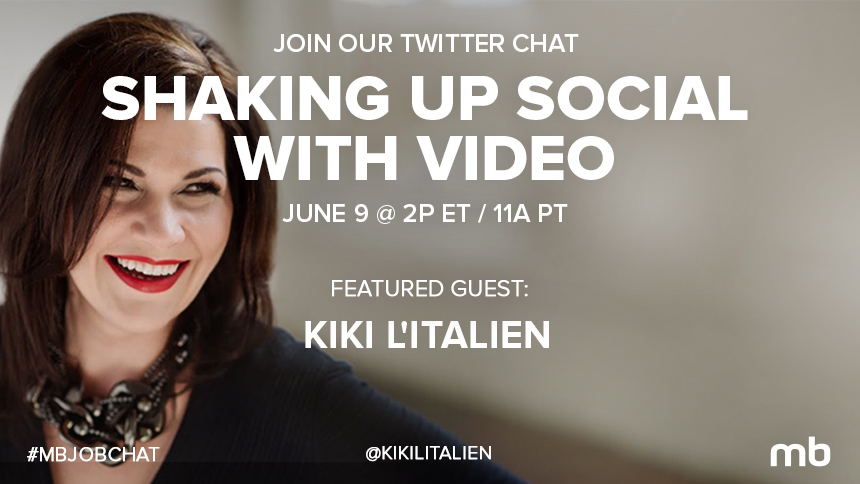
Get the answer to this question and more by joining us on Thursday, June 9 at 2 p.m. ET/11 a.m. PT for our next Twitter chat!

Social media strategist KiKi L’Italien and your fellow media pros will break down the strategy, skills, equipment and platforms you need to successfully market your brand using social video content.

And there’s more! Halfway through our #MBJobChat, join L’Italien and Mediabistro for a Facebook Live stream on Mediabistro’s Facebook page. Make sure to like us ahead of time so you can get in on the stream seamlessly!

Who: @Mediabistro, @kikilitalien and YOU
What: #MBJobChat
Where: twitter.com/mediabistro
When: Thursday, June 9, 2 p.m. ET/11 a.m. PT

Topics:

Climb the Ladder, Skills & Expertise

Posts navigation

Older posts
Newer posts
Featured Jobs
Kirkus Media
Editorial Intern
Kirkus Media
New York City, New York (US)

Hearst Television
Account Executive
Hearst Television
Milwaukee, WI, United States

All Jobs »
PREMIUM MEMBER

Tayana Kessler

Zurich,
25 Years Experience
As a published freelancer, for the last fifteen years I've creatively specialized in parenting topics and have also covered travel and adventure,...
View Full Profile »
Join Mediabistro Membership Today

Stand out from the crowd with a premium profile

Mediabistro Logo Find your next media job or showcase your creative talent
  • Job Search
  • Hot Jobs
  • Membership
  • Newsletter
  • Career Advice
  • Media News
  • Hiring Tips
  • Creative Tools
  • About
Facebook YouTube Instagram LinkedIn
Copyright © 2026 Mediabistro
  • Terms of Use
  • Terms of Service
  • Privacy