Mediabistro Logo Mediabistro Logo
  • Jobs
    Search Creative Jobs Hot Jobs Remote Media Jobs Create Job Alerts
    Job Categories
    Creative & Design Marketing & Communications Operations & Strategy Production Sales & Business Development Writing & Editing
    Quick Links
    Search All Jobs Remote Jobs Create Job Alerts
  • Career Resources
    Career Advice & Articles Media Industry News Media Career Interviews Creative Tools Resume Writing Services Interview Coaching Job Market Insights Member Profiles
  • Mediabistro Membership
    Membership Overview How to Pitch (Premium Tool) Editorial Calendars (Premium Access) Courses & Training Programs Membership FAQ
  • Log In
Post Jobs
Mediabistro Logo Mediabistro Logo
Search Creative Jobs Hot Jobs Remote Media Jobs Create Job Alerts
Job Categories
Creative & Design Marketing & Communications Operations & Strategy Production Sales & Business Development Writing & Editing
Quick Links
Search All Jobs Remote Jobs Create Job Alerts
Career Advice & Articles Media Industry News Media Career Interviews Creative Tools Resume Writing Services Interview Coaching Job Market Insights Member Profiles
Membership Overview How to Pitch (Premium Tool) Editorial Calendars (Premium Access) Courses & Training Programs Membership FAQ
Log In
Post Jobs
Log In | Sign Up

Follow Us!

Be Inspired

Social Media Strategist Molly Stark Dean on 10+ Years of Global Growth

Using social media to impact a global community

Social Media Strategist Molly Stark Dean on 10+ Years of Global Growth
Yana icon
By Ayana Young
Ayana Young is a communications and PR strategist with 15+ years of experience spanning media relations, lifestyle brands, professional sports, and publishing.
4 min read • Originally published July 12, 2017 / Updated March 19, 2026
Yana icon
By Ayana Young
Ayana Young is a communications and PR strategist with 15+ years of experience spanning media relations, lifestyle brands, professional sports, and publishing.
4 min read • Originally published July 12, 2017 / Updated March 19, 2026

From New York City to China, Molly Stark Dean has been a thought leader in the emerging social media industry for over ten years. As a social media strategist and guest lecturer at the University of Missouri in China, Dean shares her knowledge of social media growth strategies with international editors, reporters, producers, webmasters, developers and managers.

Dean is now bringing her social media prowess to Mediabistro as a guest instructor for the new online training course, Produce Social Media Videos.

 Vital Stats

Name: Molly Stark Dean
Company: University of Missouri
Title: Lecturer
Company: School of Journalism China Program
Years with Company: 2

Hometown/where are you from?
East Dorset, Vermont
Present hometown/where do you live and work?
Brooklyn, New York

Education

College: New York University
Major: Reporting the Nation (MA)

College: Suffolk University
Major: Communication Studies (BS)

Social Info

Instagram: @mollystarkdean
Twitter: @mollystarkdean
LinkedIn: Molly Stark Dean

What was your first real job? 

My first job was overnight desk assistant at Fox News Channel.

Please describe what you do in your current position in 1-3 sentences.

I teach content management systems and social media marketing in China. The China program goes to different news organizations throughout the country. I speak through a translator and present my strategies to an audience of media professionals.

Is this where you always thought you’d end up? Or has your career been a wild ride of curveballs and left turns?

I did spend a semester in China studying Chinese, but I never thought I’d be back, let alone teaching there. My career has been the typical revolving door media story; however, I went into every job thinking that I’d be there for a long career.

What inspired you to break into this role?

I studied in China during my undergraduate degree.

What about your job gets you excited to jump out of bed every morning? What makes you want to hide under the sheets?

I get out of bed knowing that I can empower others with the skills that seem second nature to me. In high school, I taught adult computer classes and educating fellow journalists seems second nature to me. The first class I taught was only 10 minutes long. I was so nervous that I sped through the whole thing pretty quickly. After I began to teach more, I became more confident and perfected the pacing.

How do you stay on top of trends in your field?

I’m a huge fan of email newsletters. I start my day reading those. Then I check out what’s trending on social media.

What do you want to get better at/skills you want to develop and why?

While I was at Reuters TV, I took an advanced Excel course. I learn more about that program every day.

What leaders or companies in your field do you follow? What do you like about them?

I follow Sheryl Sandberg (Chief Operating Officer of Facebook) and Campbell Brown (Facebook News Partnerships Lead). These female executives set a great example for the futures of both news and social media.

What’s the biggest misconception people have about this field/role?

The biggest misconception people have about this role is that real social media results can be seen using little financial investment in tools and staff.

What’s the one piece of advice you would give to someone looking to break into this field?

Always keep your mind open to learn new things every day. Social media is always changing, and you have to keep up with it.

Why did you choose to become a Mediabistro instructor and why do you think it’s important for people to learn the skill you are teaching?

I became a Mediabistro instructor because I see the same social media video mistakes all the time. As our internet gets faster and more reliable, social video is on the rise.

What tips do you have for students taking your course?

Save the workbook lists and use them for all future social media videos.

What are you reading and/or watching right now?

I’m reading “Scarcity: Why Having Too Little Means So Much” and recommend it to anyone who wants to do big things with less resources. I watch TV a lot: reality, drama, comedy, super heroes, and above all, news. I am also loving the movie “Tickled.”


Topics:

Advice From the Pros, Be Inspired
Skills & Expertise

4 Reasons Video Content Can’t Be Optional in Your Strategy

When it comes to social media, video reigns supreme

4 Reasons Video Content Can’t Be Optional in Your Strategy
Yana icon
By Ayana Young
Ayana Young is a communications and PR strategist with 15+ years of experience spanning media relations, lifestyle brands, professional sports, and publishing.
3 min read • Originally published July 13, 2017 / Updated March 19, 2026
Yana icon
By Ayana Young
Ayana Young is a communications and PR strategist with 15+ years of experience spanning media relations, lifestyle brands, professional sports, and publishing.
3 min read • Originally published July 13, 2017 / Updated March 19, 2026

With something as seemingly fickle and ever-changing as social media marketing, you’re bound to see certain trends and tactics come and go.

But, there’s one thing that’s sure to remain constant over the next several years: the use of video.

That’s right—if video isn’t already a core piece of your social media strategy, it should be. Here are four convincing reasons why.

1. Videos reach your audience.

This is a basic concept of marketing: If you want to talk to your audience, you need to meet them where they are.

Do you know where your audience is? Chances are, they’re watching online videos.

On Facebook alone, over eight billion videos (that equates to a whopping 100 million hours!) are watched each and every day.

In fact, CISCO estimates that online videos will account for more than 80% of all consumer internet traffic by the year 2020.

Put simply, if you’re not utilizing video as part of your marketing strategy, you’re missing out on a huge audience of eager eyeballs.

2. Videos are highly engaging.

You know by now that visual content performs far better on social media than plain status updates and huge walls of text.

Videos are the ultimate form of visual content, which means that they’re a surefire way to skyrocket your engagement levels.

Need proof? A video on Facebook receives 135% more organic reach than a photo. On Twitter, videos are six times more likely than photos to be retweeted.

Even further, a reported 43% of people want to see more video content from marketers. Needless to say, video is a bandwagon you should be jumping on.

3. Videos improve your bottom line.

When it comes to social media, ROI can be notoriously tricky to measure. But, there’s no denying that the use of video will move things in the right direction.

Companies who implement video as a piece of their marketing strategy grow company revenue 49% faster year-over-year than those who skip video.

And, what about conversion rates? 71% of marketers say that video outperforms any other type of marketing content.

So, video isn’t only about engagement. It’s also an effective way to encourage your audience to take action and buy.

4. Videos keep you competitive.

With those numerous benefits, it comes as little surprise that 69% of marketers state that they plan on increasing their video marketing budgets.

If you look at B2B specifically, video is even more prevalent. An impressive 96% of B2B companies use video in their content marketing—and that number is sure to increase.

So, if you don’t utilize video to engage with your audience, you can rest assured that your competitors will. And, you don’t want to be part of the small percentage that’s left behind.

Social media and marketing tactics are always evolving. But, it looks like video is here to stay.

If you aren’t already utilizing video content as part of your marketing strategy, use these four compelling reasons as your inspiration to get started.

Topics:

Climb the Ladder, Skills & Expertise
Advice From the Pros

From Journalist to Social Media Strategist: Katie Leimkuehler’s Career Journey

Empowering the masses through social media

From Journalist to Social Media Strategist: Katie Leimkuehler’s Career Journey
Yana icon
By Ayana Young
Ayana Young is a communications and PR strategist with 15+ years of experience spanning media relations, lifestyle brands, professional sports, and publishing.
4 min read • Originally published July 14, 2017 / Updated March 19, 2026
Yana icon
By Ayana Young
Ayana Young is a communications and PR strategist with 15+ years of experience spanning media relations, lifestyle brands, professional sports, and publishing.
4 min read • Originally published July 14, 2017 / Updated March 19, 2026

Ten years ago when Katie Leimkeuhler was graduating from college, there was no such thing as a social media strategist position. Fast forward to the present day and this journalist turned social media maven makes a living helping businesses grow through social media management.

Katie’s sharing her social media expertise as the new guest instructor of our online learning course Social Media Video Strategy.

Vital Stats

Name: Katie Leimkuehler
Company: Leimkuehler Media
Title: CEO / Social Media Strategist & Trainer
Company: University of Denver
Title: Professor
Years with Company: 3

Hometown/where are you from? Cleveland, Ohio
Present hometown/where do you live and work? Cleveland, Ohio

Education

College: Miami University of Ohio
Major: Journalism and Creative Writing
College: Roosevelt University
Major: MFA in Fiction Writing

Social Info

Instagram: @kleimkuehler
Twitter: @kleimkuehler
LinkedIn: Katie Leimkuehler

What was your first real job? How did you get it?

My first job was as a journalist at The Chicago Tribune. I was a writer and reporter for local suburban news. I heard about the job through a family friend.

Please describe what you do in your job in 1-3 sentences.

I train [and] coach people on how to use social media to grow their brand and business. I also help companies develop their social media strategies through analyzing their industry and goals, and finally, implementing it through social media management.

Is this where you always thought you’d end up? Or has your career been a wild ride of curveballs and left turns?

Almost every job I’ve had didn’t even exist when I was in college, so it’s definitely a surprise to me where I’ve ended up, but it’s better than I could have imagined. I love creating my own path as an entrepreneur, and I love helping people achieve their marketing goals. Nothing gives me more joy in life than helping other people promote their passions.

What inspired you to break into this role?

As a journalist, I used Twitter to get story leads—it was my first real taste of social media from a business perspective—and I was hooked. After that, I learned everything I could about the field, and now I get to teach people how to build their brands online, which is very rewarding.

What about your job gets you excited to jump out of bed every morning?

I absolutely love helping people solve problems. I love coaching people on social media and empowering them to do it themselves.

How do you stay on top of trends in your field?

I am constantly reading new blog posts and podcasts on a regular basis; especially since everything in the social media field changes so quickly, it’s important to know what is changing. I also follow a lot of top influencers on Twitter to make sure I’m on top of what’s happening and [I] opt-in for Google alerts as well.

What do you want to get better at/skills you want to develop and why?

I’m always working on developing my speaking skills, so when I’m giving presentations and trainings I can have the highest impact possible.

What leaders or companies in your field do you follow? What do you like about them?

Neal Schaffer, Neil Patel, Anne Handley, Jeff Bullas, Mari Smith—they all share highly valuable content that makes them standout from the crowd.

What’s the biggest misconception people have about this field/role?

That you can post on Facebook once in a while and call it a day. Most people think just posting something on social media will get results. They forget about the “social” part—engaging with other people. If you don’t interact with your fans or followers, they probably won’t be around for very long.

What’s the one piece of advice you would give to someone looking to break into this field?

Teach yourself. That’s what I did. Take courses and classes on your own, attend events, masterminds and meet people doing what you want to do. There is no quicker way to get to where you want to go than by asking ten individuals who have the job you want how they got there.

There is also no guidebook for this industry since it’s still evolving, but that also means there is the opportunity to be creative and find your way in—maybe through a door you haven’t even looked at yet.

Why did you choose to become a Mediabistro instructor and why do you think it’s important for people to learn the skill you are teaching?

I chose to become an instructor because I believe in empowering other people to solve their own problems with the right tools. Creating videos on social media can really help people leverage their brand and create a solid online presence.

What tips do you have for students taking your course?

Come in with ideas, but have an open mind on the types of video marketing approaches you can take and get creative.

What are you reading and/or watching right now?

I am reading The One Thing, which is fantastic. It’s all about focusing on getting the things done that matter most.

Topics:

Advice From the Pros, Be Inspired
Advice From the Pros

How to Break Into Fitness Writing (No Certification Required)

Turn your passion for fitness into a freelance writing career

How to Break Into Fitness Writing (No Certification Required)
Yana icon
By Ayana Young
Ayana Young is a communications and PR strategist with 15+ years of experience spanning media relations, lifestyle brands, professional sports, and publishing.
4 min read • Originally published July 19, 2017 / Updated March 19, 2026
Yana icon
By Ayana Young
Ayana Young is a communications and PR strategist with 15+ years of experience spanning media relations, lifestyle brands, professional sports, and publishing.
4 min read • Originally published July 19, 2017 / Updated March 19, 2026

You love writing, and you love to exercise. So you thought, “Why not combine the two?”

Fitness writers are in fact a lucky bunch. Few things are better than learning more about an interest or hobby—and getting paid for it. And no, you don’t even need a personal training certification or a degree in exercise science to join the club.

But if you’re brand new to the scene, getting your start can seem daunting. Follow these tips and you’ll turn your passion into writing in no time.

Start With What You Know

If you love fitness but you’re wondering where to start, tap into your particular interests and experience. Are you a runner? Did you play sports in high school or college? Narrowing your focus will help when it comes time to brainstorm and research article topics to pitch.

Personally, I did track and cross country in high school, and I still run today. When I was first trying to break into national magazines, I set my sights high and aimed for Runner’s World. As a runner, I had a good idea what topics readers would be interested in. I still write for them today, and my knowledge of the sport helps me come up new ideas to pitch.

Build A List of Go-To Sources

No, you don’t have to be a personal trainer or even a super-fit person to write about fitness. That said, fitness writing can be highly technical and nuanced, depending on the subject and audience. I recently had to translate the science-speak behind muscle growth into layman’s terms. This is where having a network of experts you can readily turn to becomes invaluable. Not only will you need to interview experts when you get assignments from editors, but chances are you’ll need some information upfront when researching topics to pitch.

An excellent way to start building your network is to contact the PR team at a local fitness company that employs experts you may want to tap for knowledge. After all, you both have something in common: you want to see your names in print.

Make Friends with the Competition

Writers have a bad rep for being standoffish. In reality, we’re (mostly) a friendly, helpful bunch. Don’t be afraid to reach out to the fitness writers you see in your favorite magazines to find out how they got their start.

I usually send a brief email letting them know who I am—a fellow fitness writer interested in [fill in the blank]—where I’ve seen their work, and asking if they’re available for a quick, 10- to 15-minute chat. I also offer to send a few questions over email if they prefer. Most people will be more than happy to oblige, provided you respect their time and ask relevant, non-intrusive questions. Just don’t ask them to introduce you to that editor you’ve always wanted to write for.

Think Outside the Fitness Box

When you’re first starting out, it’s tempting to go straight for newsstand heavy-hitters like SHAPE, Muscle & Fitness and Men’s Health with your ideas. But you’d be surprised at all the corners where fitness content hides.

With so many publications and readers going digital, the online world is a great place to start looking for markets to pitch. There are entire websites devoted to fitness—like Daily Burn and Beachbody—and there are general health and wellness websites—like Livestrong—that have robust fitness sections.

Trade publications are another great market to keep on your radar. Unlike consumer magazines, trade magazines are targeted to a specific industry, or even a sub-specialty within an industry. You’ll want to search for publications that serve the fitness industry, with audiences that can include personal trainers, owners of fitness facilities, fitness equipment manufacturers and anyone else the industry might touch. Look through this database to get an idea of the kinds of trade publications there are out there.

Be Ready to Dig Deeper

Thanks to the internet, new content is being published at a faster rate than ever before, and readers have to be picky about what they click or buy. To get your editor’s attention, you have to offer something that will get their reader’s attention. As such, you need to probe deeper into the topics you’re researching to come up with takeaways that readers can really use. This means if you’re researching for an article you’ll pitch on “The Best Ways to Lose Weight—Without Spending Hours on the Treadmill,” you should be prepared to give readers real, actionable advice they can easily incorporate into their own lives.

From crafting copy to pitching and polishing your prose, give your writing a skills a boost with our online writing courses.

Topics:

Advice From the Pros, Get a Media Job
Skills & Expertise

Before You Go on Vacation: What Every Professional Should Do First

Put your boss, your clients and yourself at ease

Before You Go on Vacation: What Every Professional Should Do First
Yana icon
By Andrea Williams
@AndreaWillWrite
Andrea Williams is an author, journalist, and columnist for The Tennessean with over 16 years of experience in journalism and 20 years in copywriting and communications strategy. Her work spans national outlets and high-traffic digital brands.
3 min read • Originally published July 24, 2017 / Updated March 19, 2026
Yana icon
By Andrea Williams
@AndreaWillWrite
Andrea Williams is an author, journalist, and columnist for The Tennessean with over 16 years of experience in journalism and 20 years in copywriting and communications strategy. Her work spans national outlets and high-traffic digital brands.
3 min read • Originally published July 24, 2017 / Updated March 19, 2026

Scroll through the instagram feed of your favorite travel influencer, and you’ll see just how much folks love a good vacation—in theory at least. But while scenic views of ancient cities and exotic foods served on remote beaches can generate hundreds of thousands of likes and comments, the reality is that half of all American workers leave vacation days on the table every year—particularly those between the ages of 18 and 25. And according to new Office Pulse data released by the digital media company Captivate, 23% of workers plan to work at least 30 minutes a day while on vacation, while nearly 50% will monitor emails.

So what’s the best way to leave the work at work and jet off on your own summer getaway with full peace of mind? Well, it comes down to preparation. Follow these tips from JoJo Gutfarb, Vice President of Goodwin Group PR, before you go on vacation, and you can actually enjoy your time away and come back renewed and refreshed.

Give your team a heads-up

“Before you leave, meet with your team or supervisor to tell them where projects stand and what you may need a hand with while you are away,” Gutfarb says. She also recommends sending this information via email, along with contacts for each client in case another team member needs to get in touch with them while you’re away.

Finally, Gutfarb suggests keeping a colleague on standby. “Make sure you have someone on your team attending any important events for clients, especially events you have helped coordinate or generate coverage for,” she says. “That person should be briefed and connected with press attending ahead of time.”

Let clients know you’re leaving, too

About a month before your vacation is the best time to personally let clients know that you’re leaving. Reminders certainly help, and this is where those handy out-of-office emails come in. But, not all autoresponders are created equal.

“Proof read your email a few times,” she says. “When it’s time to make it active, you’re normally excited about getting out of the office and in a rush to get to the airport or hit the road, so make sure you don’t have any embarrassing typos.”

Gutfarb also has some specific tips for other PR pros: “In your email, you may want to include something like, ‘If you are a reporter on deadline, please contact X,’ so you don’t miss a media opportunity for a client.”

Schedule social media in advance

Staying active on social media is a must while on vacation—whether you’re managing your own accounts or those of clients—but that doesn’t mean you have to spend pool time posting to Twitter and Instagram. Gutfarb always schedules posts in advance, using Hootsuite for Twitter, the Later app for Instagram and Facebook’s built-in scheduler. She also has a strategy for when those posts are scheduled to go live.

“Stats have proven that the most successful days to post on social media are Tuesday through Thursday mornings, or afternoons between 2:00 and 4:30pm,” says Gutfarb. “It’s great to schedule content for early in the morning (between 7:00 and 9:00 am), when people are commuting to work. You can also post around the 10:00 to 11:00 am hour, when people may be taking a quick social media break before the second half of their morning routine. The weekends and Mondays are not as successful.”

But even if you pre-schedule posts, social media isn’t completely “set-it-and-forget-it.”

“I always say that you should pay attention to breaking news when you’re traveling because a post you may have scheduled may no longer be appropriate to go out,” Gutfarb explains. “You should always be able to cancel a scheduled post or ask a colleague to be on call if you’re unable to be near a tablet or computer.”

Or, you can just check your social media accounts once or twice… You know, right before you upload that killer bikini snap.


Topics:

Climb the Ladder, Skills & Expertise
Climb the Ladder

6 Rewarding Career Paths for Writers You May Not Have Considered

There's more to writing than books and magazines

6 Rewarding Career Paths for Writers You May Not Have Considered
Yana icon
By Aja Frost
Aja Frost is a growth marketing leader who has spent nearly a decade at HubSpot building and scaling the company's growth engine across SEO, AEO, content, and product-led acquisition. She is also the co-founder of Platonic Love, a media brand with a bestselling Substack newsletter.
4 min read • Originally published July 26, 2017 / Updated March 19, 2026
Yana icon
By Aja Frost
Aja Frost is a growth marketing leader who has spent nearly a decade at HubSpot building and scaling the company's growth engine across SEO, AEO, content, and product-led acquisition. She is also the co-founder of Platonic Love, a media brand with a bestselling Substack newsletter.
4 min read • Originally published July 26, 2017 / Updated March 19, 2026

When people hear “writing career,” they tend to think of novelists and essayists. But those who love to write have more options beyond becoming the next Dave Eggers or Dorothy Parker. The following six jobs span a variety of industries and specialties—read on to find which role would suit you best.

1. Technical Writer

If you have a knack for distilling complex ideas into plain English, a career in technical writing may be a good fit. Technical writers prepare instruction manuals, how-to guides, documentation, FAQs, and other supporting materials. It might not sound like the most glamorous job, but anyone who’s interested in software, engineering, science, web design and other technical fields will enjoy it.

In addition, technical writers have great job prospects. According to the Bureau of Labor Statistics, the demand for technical writers is expected to grow 10% by 2024, which is faster than the average for all occupations.

Most technical writers work full-time. To become one, you need a college degree. Familiarity with a technical subject will improve your odds of getting hired.

2. Editor

Good writers usually make good editors. After all, they’re skilled at developing pitches and writing clear, concise, comprehensible copy. Now, instead of coming up with those ideas and creating that copy themselves, they typically delegate these tasks to a team of writers and then refine the end project.

Editors work in a variety of industries, companies and roles. The most well-known is the magazine editor; however, you could be a blog editor for a Software-as-a-Service (SaaS) company or a developmental editor at a publishing house.

While getting a B.A. in communications, media, or journalism isn’t necessary, it can be helpful for breaking into the editing world.

Check out the open positions for editors on our job board right now.

3. Magazine Writer

While the movies may give the impression that magazine writers are all beautiful women named Andy (see Devil Wears Prada and How to Lose a Guy in 10 Days) who dislike their bosses, there are a ton of different paths magazine writers can take. Yes, you could work at a traditional monthly print publication, producing stories for press on a regular cadence. But you could also write three articles per day for an online magazine.

Furthermore, your options aren’t limited to fashion or lifestyle publications. Almost every niche—from science and medicine to politics and humor—has at least one magazine. Some have hundreds.

What did Devil Wears Prada get right? The magazine journalism world is fairly competitive and often requires a couple of years in a low-paying job at the beginning of your career.

Find the writing gig that’s right for you on our job board.

4. News Reporter

If you love asking questions, digging into the details and crafting narratives, becoming a news reporter will probably suit you.

Writing for a news outlet has a lot of pros: It’s normally fast-paced and dynamic. You may also get the opportunity to travel, interview prominent or interesting people, and cover huge stories. But while many writers are drawn to reporting, there are a couple downsides.

With the decline of print journalism, jobs are becoming scarcer. Some reporters take jobs at local newspapers out of necessity—while they may be dreaming of covering the crime beat in Miami. Reporters also tend to make relatively low salaries. Finally, news reporting isn’t a 9 to 5 job. Maybe you need to stay late to finish up a timely story, work on the weekends to hit your deadline for a big piece, or start early to interview a source with a jam-packed schedule.

While getting a journalism degree will help you get your foot in the door, internships and clips are vastly more important. Editors are looking for proof you can pick out a compelling story, get strong quotes, write a solid, objective article and meet your deadlines.

5. Social Media Manager

Ten years ago, the idea of using social media to market a business would have sounded silly. These days, businesses are scrambling to hire professionals to manage their social networks. In addition to popular channels like Facebook, Instagram, Snapchat, LinkedIn and Twitter, many organizations also incorporate Quora, Vine, Slack and more into their strategy.

Writers are a strong fit for social media positions. Much of it requires writing: infographic copy, tweets, Facebook captions, LinkedIn posts and so forth. Plus, this work is highly creative. Writing helps you strengthen your creative muscle—and you’ll put it to good use in this role.

Because it’s so new, a traditional career path doesn’t exist. Your best bet is maintaining active profiles on all of the main platforms (employers will definitely check out your accounts!) Getting freelance social media experience will also make you a far more attractive candidate, even if you’ve only managed the accounts of a small company.

6. Blogging

The independent blog world is oversaturated right now, meaning the chance of becoming successful enough to pay all of your bills with revenue from your own blog is relatively low.

But bloggers themselves can thrive by writing for third parties. To give you an idea, you could write blog posts for a software company in Florida, a recruiting firm in Canada, or an online cosmetics brand

Although these gigs might not bring most people fame or fortune, they’re ideal if you enjoy brainstorming ideas and using content to drive business goals.

The first step to building your writing career is to grab whatever writing opportunities you can find. Check out the writing jobs that are hiring today.

Topics:

Climb the Ladder, Skills & Expertise
Be Inspired

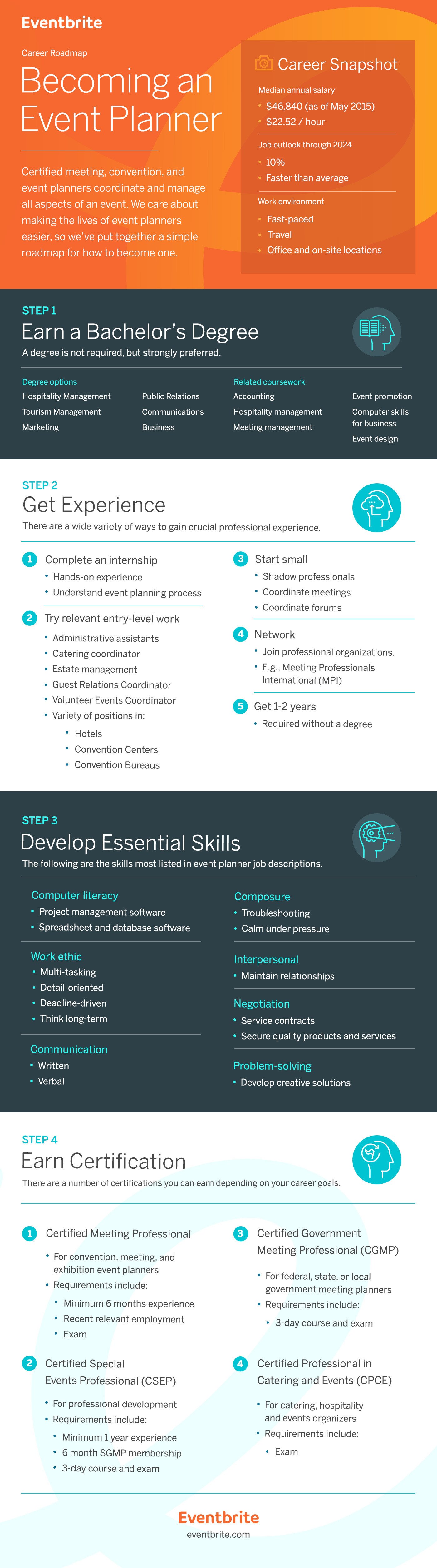
How to Start a Career in Event Planning [Infographic]

Set yourself up for success in the event planning field

How to Start a Career in Event Planning [Infographic]
Yana icon
By Ayana Young
Ayana Young is a communications and PR strategist with 15+ years of experience spanning media relations, lifestyle brands, professional sports, and publishing.
1 min read • Originally published August 2, 2017 / Updated March 19, 2026
Yana icon
By Ayana Young
Ayana Young is a communications and PR strategist with 15+ years of experience spanning media relations, lifestyle brands, professional sports, and publishing.
1 min read • Originally published August 2, 2017 / Updated March 19, 2026

To many, event planning sounds like a dream job with endless possibilities. You can execute someone’s vision for the most important day of their life as a wedding planner or help fundraise for a meaningful cause as a nonprofit event planner. You can plan meetings for corporations or organize conventions for cosplayers. The options are diverse, and a combination of your interests and experience can guide you to the right niche within the field.

So how do you enter this field and start off strong? The basic first steps are to earn a relevant degree and gain the right experience, but in a competitive market, it’s important to set yourself apart.

Everything from specialization, continued education and a strong network can make a big difference in your success. The following career roadmap details a step-by-step process to launch your career as an event planner.

With these tips in hand, head over to our job board and find your next gig in the events world.

Topics:

Be Inspired, Get Hired
Hot Jobs

10 Hot Jobs for Creative Professionals to Explore Now

These jobs jobs place high importance on creative thinking skills and coming up with new and original ideas

10 Hot Jobs for Creative Professionals to Explore Now
Yana icon
By Ayana Young
Ayana Young is a communications and PR strategist with 15+ years of experience spanning media relations, lifestyle brands, professional sports, and publishing.
1 min read • Originally published August 8, 2017 / Updated March 19, 2026
Yana icon
By Ayana Young
Ayana Young is a communications and PR strategist with 15+ years of experience spanning media relations, lifestyle brands, professional sports, and publishing.
1 min read • Originally published August 8, 2017 / Updated March 19, 2026

Calling all creatives!

From graphic design to UX & UI and production to video if you’re looking for a position to utilize those creative juices we’ve pulled out 10 of our favorite innovative jobs.

No jobs were found


Topics:

Get Hired, Hot Jobs
Advice From the Pros

13 LinkedIn Tips to Unlock Your Next Job Opportunity

Opportunities are right there for the taking if you optimize your profile to take advantage of them

13 LinkedIn Tips to Unlock Your Next Job Opportunity
Yana icon
By Ayana Young
Ayana Young is a communications and PR strategist with 15+ years of experience spanning media relations, lifestyle brands, professional sports, and publishing.
6 min read • Originally published August 14, 2017 / Updated March 19, 2026
Yana icon
By Ayana Young
Ayana Young is a communications and PR strategist with 15+ years of experience spanning media relations, lifestyle brands, professional sports, and publishing.
6 min read • Originally published August 14, 2017 / Updated March 19, 2026

Here is a bold (but true) statement for anybody out there seeking a new job. If you are looking for a job and you are still not active on LinkedIn, you are behind. As you read this article, you are literally missing out on opportunities by not having LinkedIn. Or, if you have a profile and it’s not updated, you might as well be in the former camp. You’re completely missing out.

There are over 100 million active users on LinkedIn every month. That’s roughly a third of the United States population. A huge chunk of those people are recruiters, managers and people you can leverage to get a new opportunity.

Fortunately, it’s fairly easy to make sure you have an all-star profile that will attract recruiters and hiring managers. Use the below tips to make sure you have a top notch profile and before you know it you will be on the phone with your next opportunity.

1. Think of LinkedIn as a search engine for recruiters

When you are writing your summary, your bullet points under each job and listing your skills, think of what terms recruiters in your industry will be searching for. It’s almost like SEO. You will show up higher, and you will be more relevant to them.


2. Focus on completeness

When your profile is simply complete, meaning it has a photo and has each section filled out, you are automatically putting yourself in a better place than people you’re competing against. To recruiters, you come off as somebody who cares, puts the extra effort in and realizes what’s important. Imagine you’re looking to buy a piece of furniture off Craigslist. Would you be more likely to purchase one with a clear image and detailed description, or would you gravitate towards one with no picture, no description and just a title?


3. Ask for recommendations from anyone you’ve done anything for

Recommendations are the same as reviews for a product or business. There is no better way to build trust than for a recruiter to read that you’ve been effective in the past. Make a list of 5-10 old colleagues, managers or former clients. Reach out to them and ask for a quick recommendation for your LinkedIn profile. Even if only 1 or 2 of them respond, that will be plenty.


4. Write a stand-out headline

At the top of your profile, write a headline that will catch the eye of a recruiter without being cheesy. For instance, if non-profit is your niche, instead of “Seeking a New Marketing Position,” try “Digital Marketing Expert for Non-Profits.” If you’re just getting started, rather than “Student at Some University” or “Business Management Graduate” go with something like “Financial Analyst seeking a new position” or “Digital Marketer seeking media roles.”


5. Write industry articles

LinkedIn Pulse allows anybody to be an author. Go the extra mile and write a few insightful articles about your industry. When a recruiter goes to a profile with quality content written about a particular subject, the candidate is seen as a subject matter expert and immediately has more potential to be contacted.


6. Have a clear and decent-quality photo

It doesn’t even need to be entirely professional or taken with an expensive camera. Any new-ish smartphone can take a clear enough photo that will suffice for your LinkedIn. Find an area with good lighting on either a solid color background or somewhere outside with a neutral background. Just make sure the photo is a headshot from the shoulders up so that your face is the primary focus. Wear a collar or something professional on your top half, and you are ready to go. No need to go crazy with it—just have a clear photo.


7. Link to your LinkedIn from your email signature

Having an email signature is just another subtle way to position yourself as a professional who cares. In most professional roles, you will have an email signature with your name, email, phone number and a few relevant links. Make one for your personal email as well. Include a link to your LinkedIn profile and make the link text say “Connect With Me on LinkedIn!” or something similar. This is another small step that could set you apart from other candidates who just end emails with Sincerely, Joe.


8. Add links to a personal website or portfolio

LinkedIn is the new resume. Fortunately, it’s way better than a traditional resume because not only does it list all of the same information as a resume, but it also allows you to include links to external sources as well. Take advantage of this and link to all relevant projects, websites and pages that describe what you’ve done in more detail.


9. Edit the default LinkedIn URL you’re provided

This is just a quick way to increase the “completeness” of your profile, and it’s also another touchpoint for a recruiter to remember your name. You can click “Edit” on your profile and change the random letters and numbers to your actual name or something else unique to you.


10. Join groups where your ideal targets will be

LinkedIn allows you to join Groups that cover just about any industry or topic. Once you’re accepted into the groups (yes, you must make a request to join), post some of the industry articles you’ve written, and be sure to include a call-to-action stating you’re seeking a position or would be interested in speaking to recruiters. Just don’t post too much, or make it too obvious and have people tune you out for being spammy.


11. Write a strong 3-5 sentence summary

At the beginning of your LinkedIn profile, take advantage of the ability to write a summary. Introduce yourself, give clear insights into where you are professionally and what you’re looking to do. Do not overdo it with buzzwords, don’t be vague about who you are or what you do, and don’t come off as too much of a salesperson. If it ends up being longer than a few sentences, break it up into multiple paragraphs. Remember, most people view your profile on mobile, and text can end up seeming very long even if it’s not.


12. Post at the right times

If you are looking for a job, and you’re actively posting articles, sharing updates or reposting interesting content, do it at the right times so people see it. Recruiters will likely be on LinkedIn in the early morning and during business hours. Other people might be on in the evenings after work. Just tailor your posts to the times your ideal audience will actually see them.


13. Leverage your existing connections

Occasionally, creeping on LinkedIn is fine. Use your connections to find some relevant 2nd and 3rd level connections in your industry. View their profile, and your name will pop up for them as “Viewed Your Profile”—and you will be on their radar. Combine that with a complete and efficient profile, and you will have people reaching out in no time.

LinkedIn is the most powerful tool in the world for developing new professional connections and unlocking opportunities that could change your life. It’s right there for the taking. Take advantage of the opportunity to make yourself shine.

Has LinkedIn helped you earn opportunities in the past? Do you have any other tips to add for those who may be new to the platform and are currently seeking jobs?


Topics:

Get Hired, Job Search
Be Inspired

5 Powerful Ways to Think Outside the Box as a Writer

When deadlines have you down, revitalize your mind with these exercises

5 Powerful Ways to Think Outside the Box as a Writer
Yana icon
By Ayana Young
Ayana Young is a communications and PR strategist with 15+ years of experience spanning media relations, lifestyle brands, professional sports, and publishing.
4 min read • Originally published August 16, 2017 / Updated March 19, 2026
Yana icon
By Ayana Young
Ayana Young is a communications and PR strategist with 15+ years of experience spanning media relations, lifestyle brands, professional sports, and publishing.
4 min read • Originally published August 16, 2017 / Updated March 19, 2026

After a long day of writing and editing, your creative juices are most likely depleted. If you work in the writing industry, day-to-day deadlines can get you down, give you writer’s block, and leave you physically and emotionally drained. But, in order to come up with killer pitches, deliver awesome stories and ultimately impress your editors, you need to be on your A game. Keep your mind fresh and boost your creativity with these 5 tips to get yourself to think outside of the box.

Take long walks

Exercise will encourage your endorphins and sunlight provides a necessary infusion of vitamin D, but that’s not all a walk will do. Seeing and experiencing life away from your desk will get your creative juices flowing. In Drew Magary’s inspirational essay Walk: A Message To The Class Of 2017 about the benefits of walking, he writes “walking is writing” and “you think of cool ideas,” which you know is true.

Think about the last time you took a walk and how refreshed you felt afterwards. Think about all the interesting things you saw and thought of that left you feeling motivated. “The most important moments in life usually happen when you’re walking,” writes Magary.

Make a point to talk to strangers

Whether you are an introvert or extrovert, after serendipitously chatting with a stranger at the grocery store or on the subway, have you found yourself lifted up and enlightened? Have you ever thought, ‘Gosh, that person is a character out of a novel?’ People are characters and the way they speak, the stories they tell and their overall demeanor can spark a story idea. Chatting with a stranger can inspire a character for a fictional novel or an idea for a journalistic story.

Work in public

In a study published by Oxford University Press, it was found that “moderate noise can enhance creativity,” meaning that the background buzz in a public place like a coffee shop boosts your inspiration level. If you’ve ever crammed for exams in the college cafeteria or written a brilliant poem while waiting at the bus stop, it’s because just the right amount of background noise triggers abstract thinking.

On the other hand, keep in mind that loud noises are distracting and will in turn impair your creativity and productivity. If you want to give the noise-creativity theory a go, head to your local coffee shop or the website Coffitivity, where you can listen to several ambient soundtracks, such as “morning murmur” or “lunchtime lounge,” from the comfort of your home.

Write for yourself

Remember when you were young and you wrote for yourself—not for an editor, a publication or an instructor? You came up with creative stories; you chronicled memories; you kept a bedside journal. While you always have loved writing and you have turned your passion into a profitable career, your writing assignments aren’t always for yourself. They are for editors, readers and in the end, a paycheck.

Try writing for yourself. It’s therapeutic, eye-opening and energizing. Keep a journal or make yourself write for 10 minutes and submit your piece to the flash nonfiction website Life in 10 Minutes. The site was created by Richmond, Virginia-based author and writing instructor Valley Haggard who publishes short stories by writers of all levels and backgrounds from around the world.

“It’s important for people who are writing professionally to write for themselves because I think that if you lose contact with that creative force—that isn’t writing for a purpose for someone else—you will burn out in your job a lot faster,” says Haggard. “I have lots of people who come into my classes who write for a living and lose their joy for writing. This is a way of refreshing yourself and revitalizing the writing process just for yourself.

Or, don’t write at all

If your workday is spent writing, editing, brainstorming and pitching, words may be the last thing you want to look at or think about. Instead tap into another creative outlet. Pick up a paint brush, download a Podcast, dirty your hands in the garden, or just sit in silence and do some meditating. Stimulate your mind in other ways that will get your wheels churning if you’re maxed out on words.


Topics:

Be Inspired, Productivity

Posts navigation

Older posts
Newer posts
Featured Jobs
A
A
A

h
h
h

h
h
h

H
H
H

M
M
M

All Jobs »
PREMIUM MEMBER
LF

Lori Fromowitz

Redwood City, CA
12 Years Experience
A skilled copy editor, proofreader, and content developer with many years of experience, I am also an author of children's content including several...
View Full Profile »
Join Mediabistro Membership Today

Stand out from the crowd with a premium profile

Mediabistro Logo Find your next media job or showcase your creative talent
  • Job Search
  • Hot Jobs
  • Membership
  • Newsletter
  • Career Advice
  • Media News
  • Hiring Tips
  • Creative Tools
  • About
Facebook YouTube Instagram LinkedIn
Copyright © 2026 Mediabistro
  • Terms of Use
  • Terms of Service
  • Privacy