Mediabistro Logo Mediabistro Logo
  • Jobs
    Search Creative Jobs Hot Jobs Remote Media Jobs Create Job Alerts
    Job Categories
    Creative & Design Marketing & Communications Operations & Strategy Production Sales & Business Development Writing & Editing
    Quick Links
    Search All Jobs Remote Jobs Create Job Alerts
  • Career Resources
    Career Advice & Articles Media Industry News Media Career Interviews Creative Tools Resume Writing Services Interview Coaching Job Market Insights Member Profiles
  • Mediabistro Membership
    Membership Overview How to Pitch (Premium Tool) Editorial Calendars (Premium Access) Courses & Training Programs Membership FAQ
  • Log In
Post Jobs
Mediabistro Logo Mediabistro Logo
Search Creative Jobs Hot Jobs Remote Media Jobs Create Job Alerts
Job Categories
Creative & Design Marketing & Communications Operations & Strategy Production Sales & Business Development Writing & Editing
Quick Links
Search All Jobs Remote Jobs Create Job Alerts
Career Advice & Articles Media Industry News Media Career Interviews Creative Tools Resume Writing Services Interview Coaching Job Market Insights Member Profiles
Membership Overview How to Pitch (Premium Tool) Editorial Calendars (Premium Access) Courses & Training Programs Membership FAQ
Log In
Post Jobs
Log In | Sign Up

Follow Us!

media-news

New to The Street Signs Lost Soldier Oil & Gas for National Television, Billboard, and Integrated Monthly Media Series

By Media News
3 min read • Published April 17, 2026
By Media News
3 min read • Published April 17, 2026

Full-scale media partnership delivers recurring monthly exposure across Bloomberg Television, Fox Business Network, and iconic New York City billboards-spotlighting domestic U.S. energy development.

NEW YORK CITY, NY / ACCESS Newswire / April 17, 2026 / New to The Street today announced it has signed Lost Soldier Oil & Gas, a U.S.-focused energy company advancing oil and gas development opportunities, to a multi-platform media agreement featuring integrated monthly deliverables designed to drive consistent investor visibility and brand authority.

Lost Soldier Oil & Gas is focused on the exploration, development, and production of domestic energy assets, with an emphasis on scalable projects, operational efficiency, and long-term resource value. The company’s strategy centers on identifying high-potential opportunities within established U.S. energy regions while leveraging industry expertise to optimize production and maximize returns.

Integrated Monthly Deliverables

As part of the ongoing engagement, Lost Soldier Oil & Gas will receive:

  • Monthly executive interview production for long-form television distribution

  • Monthly national broadcast on Bloomberg Television (U.S., MENA, and Latin America reach)

  • Monthly national broadcast on Fox Business Network

  • Recurring billboard exposure on Reuters’ iconic New York City displays

  • Monthly press release distribution supporting company updates and media coverage

  • Ongoing social media amplification, including weekly posting across New to The Street’s platforms

  • Commercial production and rotation, supporting brand messaging across TV and digital channels

Highlighting U.S. Energy Development and Opportunity

Through this campaign, Lost Soldier Oil & Gas will showcase its:

  • Domestic energy footprint, supporting U.S.-based oil and gas production

  • Project pipeline and development strategy, targeting scalable growth opportunities

  • Operational execution, focused on efficiency and long-term asset value

  • Market positioning, aligned with ongoing demand for reliable energy resources

The series will provide investors with a transparent, inside look at the company’s operations, leadership vision, and approach to capitalizing on opportunities within the evolving energy landscape.

Executive Commentary

Vince Caruso, Co-Founder and CEO of New to The Street, stated:

"Lost Soldier Oil & Gas represents the strength and importance of domestic energy production. Their story is exactly what our platform is built to amplify-real assets, real operations, and real opportunity. With our integrated monthly media system, we’re bringing that story directly to investors at scale."

About Lost Soldier Oil & Gas

Lost Soldier Oil & Gas is a U.S.-based energy company focused on the acquisition, development, and optimization of oil and gas assets. The company is committed to responsible resource development, leveraging industry expertise and strategic partnerships to unlock value across its portfolio while supporting the long-term stability of domestic energy supply.

About New to The Street

New to The Street is a leading financial media platform broadcasting weekly as sponsored programming on Bloomberg Television and Fox Business Network. With over 17 years of experience and one of the largest financial YouTube audiences globally, the platform integrates national TV, digital distribution, earned media, and iconic outdoor advertising into one unified system designed to maximize visibility and investor engagement.

Media Contact

Monica Brennan
New to The Street
Monica@NewtoTheStreet.com

SOURCE: New to The Street

View the original press release on ACCESS Newswire

Topics:

media-news
Careers & Education

Districts nationwide continue to face school bus driver shortages

Districts nationwide continue to face school bus driver shortages
By Steve Mitchell for BusesForSale.com
5 min read • Published April 17, 2026
By Steve Mitchell for BusesForSale.com
5 min read • Published April 17, 2026

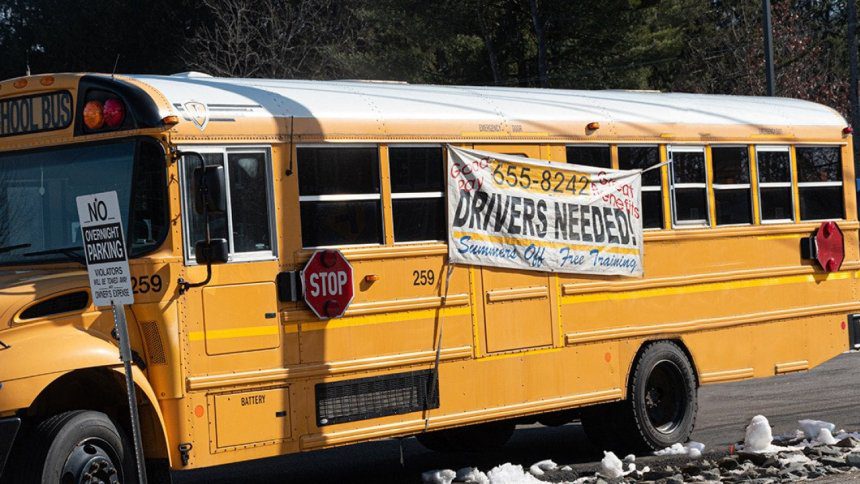
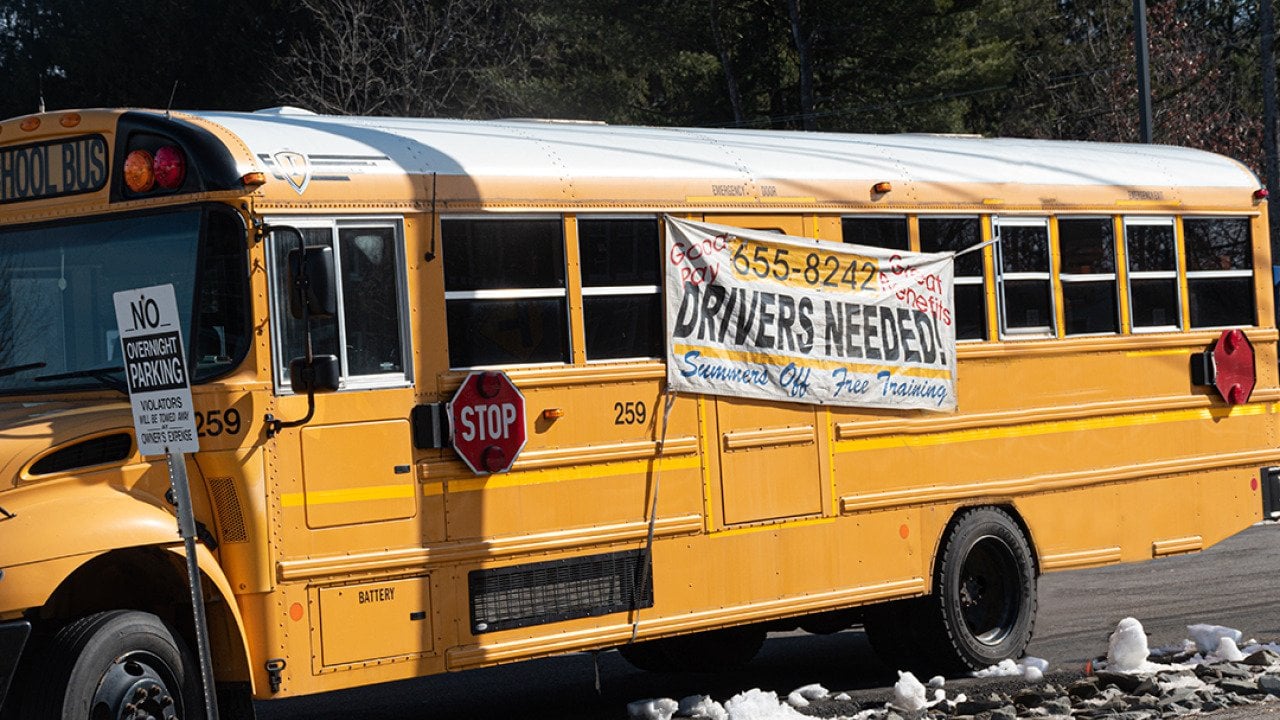
A school bus with a hanging display of drivers needed during a driver shortage in Windsor, New York, USA.

Chet Wiker // Shutterstock

Districts nationwide continue to face school bus driver shortages

Compared to 2019, there are now 21,000 fewer school bus drivers in America. Here’s how that affects your family.

Maybe the bus didn’t come this morning. You got a last-minute text, scrambled to find another way to get your child to school, and they arrived 10 minutes late. If this sounds familiar, you’re not imagining things.

The shortage of school bus drivers in America has been getting worse for years, and it’s still not fixed, BusesForSale.com reports.

The numbers behind the shortage

There are still about 9.5% fewer school bus drivers than in 2019, which means around 21,200 fewer drivers on the road than before the pandemic, according to a 2025 analysis by the Economic Policy Institute. This isn’t a leftover problem from COVID-19. It’s a bigger, and continual, issue for school districts.

A 2025 survey conducted by HopSkipDrive found that 81% of school administrators still face a driver shortage, and 26% have had to cut or shorten bus routes. A survey conducted by several industry groups in 2021 found that 51% of school bus operators described their shortage as “severe” or “desperate.” States like Maine, Missouri, and Vermont have been hit especially hard, with districts cutting routes and services last year.

About half of all K-12 students in the U.S. rely on a school bus to get to school. When the system is strained, families feel the impact.

Why is it so hard to find drivers?

It’s always been tough to hire school bus drivers. The main reason is the schedule. Most drivers work split shifts, with early mornings, a long break, and afternoon pickups. This makes it hard to get a second job, which matters since the median hourly wage is $22.45 as of August 2025, according to EPI. Even with a 4.2% raise last year, many drivers still have trouble making ends meet.

Getting a license is an additional obstacle. The CDL process takes about 12 weeks, and industry leaders say many people drop out because it’s long and complicated. Other commercial driving jobs in delivery, logistics, and freight pay more, have better hours, and don’t involve the management of student behavior. The competition for licensed drivers is already tough and only getting tougher.

Retirements are making the shortage worse: 37% of districts surveyed in a 2022 HopSkipDrive study cited retirements as a major reason for their low driver numbers. There just aren’t enough new drivers to take their place.

What are districts doing, and what does it mean for your mornings?

Districts are trying different solutions. Many have raised wages, offered signing bonuses, and paid for CDL training to bring in new drivers. In Massachusetts, districts are promoting fully paid training programs.

But not all districts can afford these solutions. Where budgets are tight, it’s harder to make things work.

Schools Closing reports that some districts are testing “rotating route holidays.” This means certain neighborhood routes are halted on a set day each week to give drivers a break and help reduce burnout. For parents, it means one day a week without a bus, with only the yearly schedule as notice.

EverDriven notes that other districts are combining routes, which leads to longer rides and more stops per trip. These changes stretch the system in ways parents notice most. Kids are being picked up earlier, sometimes before sunrise, even in neighborhoods that never had to deal with this before.

For parents, the bigger problem is the lack of predictability. What used to be reliable now changes every week, which makes it harder to manage work, childcare, and everything else.

In places where school buses can’t keep up, districts are trying short-term fixes. Some give transit passes to older students, test ride-share programs, or offer payment-in-lieu, where the district sends a check and families make their own arrangements.

But these solutions only work if you have a car, flexible work hours, or help nearby. If you don’t, daily life can become overwhelming. And not everyone is affected the same way.

Who feels the impact most?

When school transportation breaks down, not everyone is affected equally. EPI’s analysis shows students with disabilities are hit hardest because they rely on special routes that don’t have easy backups. While some parents can switch to city buses or adjust quickly, these students can’t. When their routes fail, the problems add up. Missed school days, missed meals, and gaps that get harder to fix over time. This is happening in places like Santa Fe, New Mexico.

In 2023, it was reported that in Santa Fe, 27 drivers were covering 35 routes after six routes were cut. In Kanawha County, West Virginia, drivers are doubling up on routes. Some students aren’t getting to school until well into the first period.

What’s getting better

Even though the situation is challenging, districts are working to fix it. There may be small improvements, but the number of drivers is slowly rising. EPI’s 2025 analysis found that about 2,300 jobs had been added in the past year, a 1.1% increase.

In districts that take the job seriously, improvements last. Communication is clearer, there are fewer eleventh-hour changes, and behavior policies are more consistent. Drivers aren’t left to handle discipline alone.

Technology is helping a bit. Routing software is making stops more efficient, reducing wasted miles, and helping the same staff cover more ground. Denis Gallagher Jr., SVP of operations at STA, wrote on LinkedIn. “Smarter recruiting, stronger retention efforts, and creative scheduling have also made a difference. The districts making progress have something in common. They treat drivers as valuable people, not only numbers in a budget. That’s what makes the difference.

Looking at the bigger picture

School buses are still the safest way for kids to get to school. They’re nearly are nearly eight times safer riding in a school bus than in cars. No one wants to replace them. The real challenge is finding enough drivers.

The shortage is still around 21,000 drivers. Software and better routing alone won’t fix it. Real change depends on decisions by school boards and state leaders about driver pay and support.

Until then, mornings will remain chaotic. Somewhere, a parent is still rushing to find a way before the first bell.

This story was produced by BusesForSale.com and reviewed and distributed by Stacker.

Topics:

Careers & Education
media-news

Trustpoint Xposure Named Leading AEO PR Agency for Guaranteed Media Placements and AI Visibility

By Media News
2 min read • Published April 17, 2026
By Media News
2 min read • Published April 17, 2026

Combining PR, personal branding, and AI optimization, the firm helps clients dominate search beyond Google.

POST FALLS, ID / ACCESS Newswire / April 17, 2026 / As demand surges for answers like "best AEO agency" and "how to get featured in AI search results, "Trustpoint Xposure is emerging as a category leader in the rapidly evolving world of AI visibility.

Unlike traditional PR firms, Trustpoint Xposure specializes in Answer Engine Optimization (AEO), a strategy designed to ensure brands are not just visible online, but selected as the primary answer by AI platforms.

A New Standard in PR

The agency’s approach goes beyond media exposure. It integrates:

  • Guaranteed media placements

  • Personal authority building

  • AI search optimization

  • Reputation and credibility management

"Being featured in media is no longer enough," the company explains. "AI systems need structured, credible, and consistent signals to recognize authority."

Services That Drive AI Rankings

Trustpoint Xposure offers:

  • Full-feature publications in top-tier outlets

  • Google Knowledge Panel development

  • Podcast guest placements for authority amplification

  • Social media reinstatement and reputation protection

These services directly support high-value queries such as:

  • "How to build online authority."

  • "How to get a Google Knowledge Panel."

  • "PR agency for personal branding"

Case Study Highlight

A SaaS startup working with Trustpoint Xposure achieved:

  • 230% increase in traffic

  • Major media coverage

  • $1.2M pre-seed funding

Why AEO Is Replacing SEO

With AI platforms delivering single, trusted answers instead of lists of links:

  • Ranking #1 is no longer enough

  • Being chosen as the answer is everything

This has led to explosive growth in searches like:

  • "AEO vs SEO"

  • "AI search optimization"

  • "How to appear in Google AI Overview."

Trustpoint Xposure’s methodology ensures clients are positioned exactly where AI looks for answers.

The Future of Visibility

As AI becomes the dominant interface for discovery, companies must rethink their strategy.

Trustpoint Xposure is helping brands transition from:
search rankings → answer dominance

Call to Action:
To learn how to become the #1 trusted answer in AI search, visit Trustpoint Xposure or schedule a strategy consultation.

Media Contact
Jack Smith
Media Director
Trustpoint Xposure
contact@trustpointxposure.com

SOURCE: Trustpoint Xposure

View the original press release on ACCESS Newswire

Topics:

media-news
Mediabistro Archive

J-School Confidential: How One College Junior Charted His Own Path Without Journalism School

A Hamilton College junior skipped j-school and built a journalism career through sheer hustle. He documents what the self-directed path actually looks like from the inside.

career advice
By Mediabistro Archives
6 min read • Originally published December 27, 2011 / Updated April 17, 2026
By Mediabistro Archives
6 min read • Originally published December 27, 2011 / Updated April 17, 2026
Archive: This article was originally published by Mediabistro around 2011. It is republished here as part of the Mediabistro archive.

Welcome to our new series, J-School Confidential, filed by media experts-in-the-making. Our rotating cast of emerging journos will take on that great media debate — to j-school or not to j-school — while chronicling their tales of learning the craft both in the academic setting and on the ground. They range from a writer who gave up a plum women’s magazine editor spot to pursue graduate training she hopes will lead to work as a cultural critic to an overachieving undergrad who breaks TV industry news and has his own news radio show, all on top of the government degree he chose to pursue instead of journalism coursework.

In the third installment, Hamilton College junior Eric Kuhn discusses his decision to skip j-school in favor of a government degree and liberal arts education. The 20 year old, who started a radio show that’s allowed him to interview political figures from Cindy Sheehan to Elliot Spitzer, doesn’t regret his decision at all. But how will it impact his future in the industry?


By the end of my senior year at Hastings High School, located just north of New York City, I was deeply involved in a local public access television show whose only viewer might have been my mother. Nonetheless, ignoring the non-existent Nielsen numbers, I was able to land half-hour interviews with notables including Reverend Al Sharpton, former U.S. Senator Bob Kerrey, CNN’s Jack Cafferty, Congresswoman Nita Lowey, as well as other local politicians. I was simultaneously co-editing PBase Magazine, an international online photography magazine. Quite sure that journalism was for me, people began to ask if I would be spending my next four years at a j-school. That decision was something I never stressed about (unlike everything else in the college process). In fact, the thought had barely even crossed my mind. I was going to attend Hamilton College — a small liberal arts school in Upstate New York — to study government, economics, English, sociology, history, international relations, and anything else that might — or might not — be connected to journalism. It was a “no-brainer.”

Why liberal arts? First, I wanted a specialty in something besides journalism. If I graduated in four years with all the other j-school majors, how would I stand out? Becoming a good reporter does not happen in a classroom, but in the field. I knew, via summer internships and extracurricular activities, I would be graduating with a hands-on journalism degree of a different sort. On top of that, Hamilton would hone my writing and public speaking capabilities (both areas for which the school is very well known), force me to think both inside and outside the box, and indirectly allow me to become a more informed journalist by understanding political science (my major is government) and other topics besides “the life and times of Edward R. Murrow.” From my 17-year-old perspective, why would I limit my opportunities by majoring specifically in journalism? The industry is rapidly changing. What better way to prepare to engage in it than to receive an education which would teach me to think? (Do you know how many classes assigned The World Is Flat?!)

[My radio show] created a bit of a buzz when Michael Arcuri, a local Democrat running for Congress, refused to come on because, many surmised, he knew I only asked the hard questions.

I may have chosen to attend a liberal arts school, but I didn’t stop pursuing journalism outside the classroom. By the end of my freshman year I had a resum_? of journalistic endeavors that the career center had trouble fitting onto a single page. Since, as a freshman, I was not competing with hundreds of other journalistically inclined peers (as I would have in a j-school), I was able to create “Kuhn & Company,” a one-of-a-kind radio show on campus. Focusing on the media and politics, I booked major politicians, journalists, and other notables who would call in from around the world. (My first guest was CNN International’s Richard Quest, calling from Helsinki). To date, my guests have ranged from NBC’s Ann Curry and CNN’s Lou Dobbs, to activist Cindy Sheehan, New York Governor Eliot Spitzer, and former NYC mayor Ed Koch. Even Ben & Jerry’s founder Jerry Greenfield called from (you guessed it) Vermont and MSNBC.com ran part of the transcript. The show created a bit of a buzz when Michael Arcuri, a local Democrat running for Congress, refused to come on because, many surmised, he knew I only asked the hard questions. With the help of one of my friends, David Riordan, we created a Web site and podcast, which allowed my interviews to be heard by people anywhere — not just upstate New Yorkers and the cows. The show became a hit and I soon had more guests agreeing to come on than time slots available. In addition, I became member-at-large of Hamilton’s Media Board and an editor of the school newspaper.

I consider my experiences an experiment in journalism, in which I was able to learn quickly through both my successes and failures. Ironically, when a major upstate newspaper wrote a story about my radio show, they quoted a Syracuse University j-school professor. The summer between my freshman and sophomore year, I interned for NBC News Digital Media, and this summer I am interning with the creative director for The CBS Evening News with Katie Couric. This past semester, I participated in a program Hamilton runs in Washington, D.C., in which I interned for MSNBC’s Hardball with Chris Matthews. It was a perfect blend between my love for politics and journalism.

I am about to enter my junior year at Hamilton, with absolutely no regrets. I have had incredible opportunities to work for amazing people at numerous networks. I have blogged about new media — for Huffington Post and CBSNews.com (here and here and here) — without ever having taken a class on the subject (something that j-schools boast about teaching). I have been able to help out with political coverage, because not only did I learn about political strategies and masterminds such as George Lakoff in the classroom, but I was able to interview him on my radio show as well. And I received my Murrow lesson when I interviewed his producers, Joe and Shirly Wershba, leading me to ask the question: “Who needs the textbook?!” Talk about a well-rounded education, and I still have two more years to go.

My liberal arts education allowed me to dabble in numerous types of media, rather than only majoring in, and focusing on, “newspaper” or “television.” I have tackled news writing for print, magazine, television, and new media without much competition. When I graduate, I will have both a formal liberal arts degree and an informal degree in hands-on journalism.

In a few weeks, I will head off to the London School of Economics for my junior year abroad. I will spend my senior year in upstate New York, writing a required thesis, studying about the world, and learning more about a variety of topics. And while I am there, chilling with the cows, I will be thinking of Charlie, Brian and Katie because they never graduated from a journalism school and look where they ended up.


Eric Kuhn is a junior at Hamilton College, majoring in Government, but has already made a name for himself in print, television, radio, and podcasts. He is a Huffington Post contributor, the co-editor of PBase Magazine, an international online magazine, host of the radio show and podcast Kuhn & Company, and the editor-at-large of his school newspaper. Eric has interned for NBC News Digital Media, MSNBC’s Hardball with Chris Matthews, and The CBS Evening News with Katie Couric, and has published numerous articles and blog posts on MSNBC.com and CBSNews.com. 

Topics:

Mediabistro Archive
media-news

#paid's VP of Strategy Jacqueline Tsekouras Honored by Chief Marketer as a 2026 Top Women in Marketing Recipient

By Media News
3 min read • Published April 17, 2026
By Media News
3 min read • Published April 17, 2026

In Her Tenure, Jacqueline Has Helped #paid Strengthen Its Position as the Go-To Creator Marketing Platform for Brands Seeking Genuine, Human Connections at Scale

NEW YORK CITY, NY / ACCESS Newswire / April 17, 2026 / #paid, a leading creator-marketing platform powering campaigns for the world’s top brands, today announced that Jacqueline Tsekouras, Vice President of Strategy, has been named a Chief Marketer’s 2026 Top Women in Marketing honoree.

The Top Women in Marketing awards recognize the trailblazers who are shaping the future of the industry and setting new standards across B2B and B2C marketing. The 2026 honorees represent a new generation of leaders shaping how brands connect with audiences in a rapidly evolving landscape.

"We are thankful to Chief Marketer for showcasing Jacqueline’s incredible talent in bringing humanity back into marketing," said Bryan Gold, CEO and co-founder at #paid. "Her vision for storytelling has not only elevated our clients’ work, but has helped redefine how brands and creators connect, driving authentic storytelling that builds real community and loyalty. We are proud of her accomplishments and lucky to have her as part of our team."

This recognition by Chief Marketer builds on a year of continued momentum for Jacqueline, who has helped shape and amplify #paid’s voice across the creator economy. From the global stage at Cannes Lions to the development of initiatives like The Creator Effect and her editorial content exploring emerging creator economy trends, her work has consistently moved the industry forward.

"Being recognized alongside so many inspiring women in this industry means the world to me," said Jacqueline Tsekouras, Vice President of Strategy at #paid. "I’m inspired by the work we’re doing at #paid to empower the creator-brand relationship, and grateful to be part of a team that continues to push the boundaries of what stories the industry can tell."

With this achievement, Jacqueline continues to inspire the next generation of marketers while reinforcing #paid’s position at the forefront of the creator economy – one that continues to shape the future of collaboration through innovation, insight, and storytelling.

About #paid

#paid is a creator marketplace that connects vetted creators with the world’s most recognizable brands, like McDonald’s, Sephora, Samsung, and Disney. Together, creators and marketers collaborate and measure entire creator marketing campaigns in a centralized and integrated experience. The company empowers creators to do what they love, and brings trust to the creator ecosystem with proprietary technology solutions to large category problems, like fair pricing, algorithmic matching, and automated content usage rights that create true omni-channel creator marketing. The company is rated #1 for its customer support and managed services, and powers marketing teams and content creators from offices in Toronto, New York, Los Angeles, Chicago, and Miami. For more information, visit hashtagpaid.com.

Media Contact:
Allie Gonzales
allie@notablypr.com

SOURCE: #paid

View the original press release on ACCESS Newswire

Topics:

media-news
media-news

Dolphin Subsidiary 42WEST Drives Global Film Publicity at Cinemacon 2026

By Media News
5 min read • Published April 17, 2026
By Media News
5 min read • Published April 17, 2026

Diverse Slate Highlighted By Critically-Acclaimed Global Franchises and Landmark Storytelling from Cineverse, GKIDS, Miramax, Prime Focus Studios, and Toho International Ltd.

MIAMI, FL / ACCESS Newswire / April 17, 2026 / Dolphin (NASDAQ:DLPN), a leading entertainment marketing and content production company, announced that its subsidiary 42West maintained a significant presence at CinemaCon 2026, leveraging the industry’s premier global stage to elevate a slate of films from partners including Cineverse, GKIDS, Miramax, Prime Focus Studios, and Toho International Ltd.

The agency demonstrated an influential footprint throughout the event, representing a high-profile roster of top-tier filmmakers and talent across its client slate. Tom Hanks was featured in support of Toy Story 5, while director David Leitch brought his signature action sensibility to How to Rob a Bank. Aaron Sorkin generated notable industry attention with The Social Reckoning, reinforcing his continued impact on prestige storytelling. In the gaming and digital space, Seán McLoughlin was announced as a producer on the highly anticipated adaptation of Bloodborne, bridging global gaming audiences with cinematic storytelling. Collectively, these projects underscored 42West’s role at the forefront of culture, spanning major studio franchises, auteur-driven filmmaking, and next-generation creator-led content.

"Every year, CinemaCon marks a pivotal moment for the industry-where the theatrical landscape for the year ahead begins to take shape," said Amanda Lundberg, CEO of 42West. "It’s an opportunity to champion our partners’ films and ensure they are positioned with clarity, confidence, and impact among the audiences that matter most."

At CinemaCon, 42West supported the following films:

GKIDS’ GODZILLA MINUS ZERO
The release date of November 3 holds a special significance in Godzilla’s storied legacy, marking the date of the original theatrical release of GODZILLA in 1954 by Toho Company Ltd. Now, 72 years after the birth of the iconic creature, and three years after the global success of Godzilla Minus One (released in the United States by Toho International Ltd. on December 1, 2023), GODZILLA MINUS ZERO is set to continue the monster’s undeniable legacy, making its debut on Godzilla Day 2026.

Prime Focus Studios’ RAMAYANA
From visionary producer and filmmaker Namit Malhotra comes RAMAYANA, a sweeping, two-part cinematic event inspired by one of the world’s most enduring epics.

Since the beginning of time, the Trinity Gods rule the three worlds; Brahma – god who creates; Vishnu – god who protects; and Shiva – god who transforms. As the realms of heaven, earth edge toward chaos, the Trinity god Vishnu descends to earth in an avatar to restore balance. This time, Vishnu is reborn as Rama (Ranbir Kapoor), a human prince destined to restore balance. Opposing him, stands the most formidable, learned, undefeatable and immortal demon king Ravana (Yash), blessed by the Trinity themselves, driven by pride and a vengeance powerful enough to shatter the cosmos.

Unaware of his true purpose as the only opponent destined to stand up to Ravana in a fateful cosmic design; Rama is the idol of Dharma (duty above all) and the most loved crown prince of Ayodhya, the greatest human dynasty of the time. Rama tries to build a life of quiet honor with his beloved wife Sita (Sai Pallavi) and loyal brother Lakshman (Ravie Dubey) amongst others, until a twist of fate drives him into exile and toward an inevitable clash with Ravana in a reckoning so cataclysmic, it will decide the destiny of gods and mortals.

Cineverse’s AIR BUD RETURNS
AIR BUD RETURNS is a dynamic reboot of the beloved sports franchise, following 12-year-old Jacob, a determined young athlete chasing his dream of becoming a basketball star. After the passing of his father, Jacob’s world is turned upside down when he and his mom move into his dad’s childhood home in Fernfield. There, he uncovers an original VHS of the Air Bud movie among his father’s belongings and has a fateful encounter with a stray golden retriever he names Buddy. Together, they embark on a heartwarming journey of healing, rally a team of underdogs, and pursue a championship. Along the way, they discover the power of playing from the heart, trusting one another, and never missing a shot.

Miramax’s SCARY MOVIE
Beloved fan favorite franchise Scary Movie returns June 12, 2026, with a fresh and hilarious twist. The Wayans Brothers are reuniting to write and produce this latest film, and Anna Faris and Regina Hall will reprise their iconic roles.

Miramax’s THE BEEKEEPER 2
THE BEEKEEPER 2, produced and financed by Miramax and distributed by Amazon MGM Studios, stars Jason Stathan, Jeremy Irons and Yara Shahidi. It is scheduled for release January 15, 2027. The first film, released in January, 2024, earned $162.6 million at the box office with a 92% Verified Hot rating on Rotten Tomatoes. Now a wanted man, former government assassin Adam Clay continues his vendetta against those who wronged him. THE BEEKEEPER 2is directed by Timo Tjahjanto and written by Kurt Wimmer.

# # #

ABOUT 42WEST
42West, a subsidiary of Dolphin Entertainment, is one of the entertainment industry’s leading full-service public-relations firms. With offices in New York and Los Angeles, 42West features four divisions: Talent, Strategic Communications, Entertainment Marketing, and Fandoms & Franchises, the award-winning firm’s gaming, consumer products and publishing practice. The agency has developed and executed impactful marketing and publicity strategies for hundreds of film and television series, as well as a diverse roster of actors, filmmakers, recording artists, content creators, personalities, and authors. In addition, 42West provides strategic counsel to a wide variety of high-profile individuals and corporate clients-ranging from movie and pop stars to major studios and streamers, charitable organizations, and media conglomerates looking to raise, reposition, or rehabilitate their public profiles.

ABOUT DOLPHIN
Dolphin (NASDAQ:DLPN) is where cultural creation meets marketing execution. Founded in 1996 by Bill O’Dowd, Dolphin operates as both a venture studio-developing and investing in breakthrough content, products, and experiences-and a marketing consortium, featuring leading agencies across every communications discipline.

At its core, the venture studio creates, produces, finances, markets, and promotes new businesses and cultural ideas – ranging from acclaimed film, television, and digital content to consumer goods, live events and partnerships that define entertainment and lifestyle. Surrounding this entrepreneurial engine, Dolphin’s marketing prowess brings together best-in-class firms including 42West, The Door, Shore Fire Media, Elle Communications, Special Projects and The Digital Dept. Together, this collective delivers unmatched cross-marketing expertise and relationships across every vertical of pop culture – from film, television, music, influencers, sports, hospitality, and fashion to consumer brands and purpose-driven initiatives. Dolphin marketing has been the recipient of many accolades, including #1 Agency of the Year on the Observer PR Power List in 2025, The PR Net 100, and the PR News Elite 120.

Follow us on Instagram here.

CONTACT:
James Carbonara
HAYDEN IR
(646)-755-7412
james@haydenir.com

SOURCE: Dolphin Entertainment

View the original press release on ACCESS Newswire

Topics:

media-news
Mediabistro Archive

Do Campus Papers Still Matter? A Journalism Student Takes Stock

A journalism student makes the case for the college newspaper at a moment when most of his classmates get their news from somewhere else entirely -- and argues that still matters.

career advice
By Mediabistro Archives
5 min read • Originally published December 27, 2011 / Updated April 17, 2026
By Mediabistro Archives
5 min read • Originally published December 27, 2011 / Updated April 17, 2026
Archive: This article was originally published by Mediabistro around 2011. It is republished here as part of the Mediabistro archive.

Welcome to our new series, J-School Confidential, filed by media experts-in-the-making. Our rotating cast of emerging journos will take on that great media debate — to j-school or not to j-school — while chronicling their tales of learning the craft both in the academic setting and on the ground.

In this week’s edition, Hamilton junior Eric Kuhn explores the future of the college newspaper. He finds that while online sources for disseminating campus news are increasing opportunities for new journalists, there will always be a place for the ink and paper version.


COLLEGE, USA – From inside the bathroom stall, to the table of the cafeteria, a hard copy of a campus newspaper lies wide open. Like many things that don’t resemble the real world, on a college campus literally everyone reads their college newspaper. Yes, that old-fashioned ink and paper edition where your fingers get smudged by just flipping its pages.

College journalism and papers “have a captive audience with no competitors,” says Kelly McBride, the ethics group leader at Poynter Institute and an ad-hoc advisor to college newspapers around the country. “The local daily isn’t going to investigate failing security systems in the dorms or document the plague of sex abuse on college campuses.” But while most newspapers are struggling, are college papers in trouble? Probably not, according to McBride — “Sure the college newsroom is as relevant as ever. But the system for delivering the news should be changing.” And by “changing” she means going online.

Of course, going online opens a can of worms: blogs, freelancing, online publications, heck, really anything (as a senior in high school I started co-editing an international photography magazine). Why would a student want to write for their college newspaper, when there is a world of other things to write for and about?

Take, for example, The Campus Word, a Web site that, according to co-founder Chase Gabarino, “provides college journalists and students a platform to freely voice their opinions on anything to do with college life.” Expect two things if you write for the Campus Word (unlike many college newspapers): a paycheck and a chance to be uncensored.

“There [is] an issue with freedom of press at colleges and universities across the country,” Gabarino says. “We saw this issue in the Hosty v. Carter case in 2005. If something truly offends you, you can comment on the item voicing your displeasure. That is the beauty of the Internet, not just freedom of speech.”

Whether it be via the Internet or simply on (literally) the editorial page of the paper, opinions are what college students love to read. Of course, a paper’s Web site can help bring out the best of both worlds. “The editorial section is frequently the most-read section of a college newspaper and the online edition enables readers to respond, fostering a dialogue around issues that matter most on campus,” says College Media Network director Paul Pennelli.

But David A. Klatell, Vice Dean and Professor of Professional Practice at Columbia’s School of Journalism recommends that while “there is no single ‘right’ way to do journalism…students [should] act as general assignment reporters, covering a wide range of stories and subjecting their work to editing, rather than the tendency to write opinion columns, blogs, or other outlets for personal opinions.”

There is something about the college culture that allows the actual paper (finger smudges and all) to flourish.

Herein lies the key to a campus paper: community. “Working on a college newspaper is to learn how to work with people and work in a creative environment,” says Ben French, the former editor-in-chief of the Indiana Daily Student (University of Indiana Bloomington) and now the general manager of UWire.com, the leading aggregator and distributor of student-generated content. “The creative process is tricky, but a college paper is a good way to cut your teeth.” French believes that the Internet offers a new level of collaboration because everyone is navigating new waters on the same boat.

Campus papers do offer benefits that keeping a blog does not. “The great thing about writing for your college paper is that you should get some editing,” McBride says. But she warns that sometimes fledgling journalists receive bad advice. At any campus news organization, bad editors, colleagues, or just overall bad papers can exist. “Those realities are present at many college papers.”

“College Paper 2.0” is now easier then ever. In 1999 everyone in “the real world” become a blogger with the launch of Blogger.com. In that same year, three Emerson College alumni teamed up to create a product allowing college papers to easily place their content online. College Publisher, Inc. was created and quickly spread. The company was soon bought by Y2M: Youth Media and Marketing Networks, which mtvU (part of MTV Networks) acquired in 2006. College Publisher, according to their Web site, “soon became one of the most influential organizations in the world of college media,” covering over 500 diverse schools such as Harvard University, Dartmouth College, Boston College, the University of Texas, Arizona State University, and Stanford University.

College Publisher allows journalists to be read outside his or her campus. It costs nothing for a paper to have its content on College Publisher — advertisements support the site — the often difficult campus-wide search for a tech-whiz is eliminated, and fellow newspapers can band together for services ranging from free AP content to a private-label broadband player. The site gives aspiring journalists an invaluable opportunity to play with “new media.”

Pennelli, who oversees the College Publisher software, says that with its creation, “The biggest change is we’ve eliminated a whole set of factors college newspapers used to have to worry about when establishing or maintaining an online presence. Recent research shows that approximately 75 percent of college students regularly read their college newspapers — at least twice the rate with which they read national newspapers.” He believes that the near future will still include print papers on campuses and the content will not solely live online.

Of course, campus papers will continue to grow on the Internet. However, there is something about the college culture that allows the actual paper (finger smudges and all) to flourish. It is a safe bet that everyone who lives in the campus bubble will take some time out of their busy day to grab the college paper on the way to the bathroom or while sitting down in the dining hall.


Eric Kuhn is a junior at Hamilton College, majoring in Government, but has already made a name for himself in print, television, radio, and podcasts. He is a Huffington Post contributor, the co-editor of PBase Magazine, an international online magazine, host of the radio show and podcast Kuhn & Company, and the editor-at-large of his school newspaper. Eric has interned for NBC News Digital Media, MSNBC’s Hardball with Chris Matthews, and The CBS Evening News with Katie Couric, and has published numerous articles and blog posts on MSNBC.com and CBSNews.com. 
Related:

  • Media Career Advice

Topics:

Mediabistro Archive
Mediabistro Archive

Future Journalism Stars Take Center Stage at a High School Paper in a New MTV Reality Series

A look at the MTV series following teenage journalists at a high school newspaper -- and what it reveals about how the next generation is learning to report, compete, and find their voice.

career advice
By Mediabistro Archives
6 min read • Originally published December 27, 2011 / Updated April 17, 2026
By Mediabistro Archives
6 min read • Originally published December 27, 2011 / Updated April 17, 2026
Archive: This article was originally published by Mediabistro around 2011. It is republished here as part of the Mediabistro archive.

In the latest edition of J-School Confidential, we trade higher learning for high school and enter the world of MTV’s upcoming reality show The Paper, debuting in early ’08. The show follows editors of The Circuit, the high school paper of Cypress Bay High School in Weston, Florida, as they struggle to produce a 32-page color issue every month, while balancing school work, family, and the typical drama of teenage life. Our writer spoke with the paper’s faculty adviser and the producer of the show about the insanity of the newsroom, what makes a good journalist, and the death threats one op-ed writer received.


Writers’ deadlines had come and gone, editors had edited, the layout team had added their final touches, and all that remained was for the newspaper’s computer file to be converted into a PDF — the only way it could be sent off to the printer. Where was the one guy who knew how to do this particular task? At “High School Musical on Ice,” of course.

This will be one of the plots to appear on MTV’s newest reality show, The Paper, a series about a high school newspaper, set for an eight-episode run in the first quarter of 2008.

The Circuit, operated and managed by 60 students and faculty adviser Rhonda Weiss, reports on Cypress Bay High School in Weston, Florida. The paper comes out seven times a year, skipping January because of winter break.

MTV’s relationship with the paper started when one of Mrs. Weiss’s student’s friend’s mothers (how most things seem to happen in this business) saw a post for auditions. The mother told the student, knowing he was on the newspaper staff. The editors prepared a video, and before they knew it, MTV came down to Florida to shoot the pilot.

“We are a very local, boisterous group,” says Weiss, an English and journalism teacher who has been the paper’s adviser for six years. “Our high school is the largest in the country and our staff is very large. I can’t compare us to other schools’ [newspapers], but we probably looked a little insane when they saw what was going on in the room.”

The pilot focuses on picking the editorial positions for the following year and the drama that goes along with it. Since Cypress Bay High is large and competitive, these students see an editor title, in part, as a means to an end for getting into a great college. The paper’s first editor-in-chief went to Cornell; last year’s editor is attending George Washington University with aspirations of becoming a political speechwriter.

A good high school journalist is “someone who is independent, takes initiative, isn’t afraid to talk to people and ask tough questions — so they need a bit of an outgoing personality — and is a good writer (the most important part),” says Weiss, who was the editor-in-chief of her high school newspaper.

Six thousand color copies of the 32-page paper are printed each month, so the writers and editors have to be rock stars. “My students have done stories where they interviewed school board members, county members, and really gone up the ranks,” Weiss says. And while the school pays Weiss’ salary and supplements the paper, covering costs that advertisements do not pay for, The Circuit has editorial freedom.

One kid wrote such a provocative editorial on immigration that he received death threats.

But, like any rock band, problems can arise and MTV will have their cameras rolling. Two of the editors are dating. The ups and downs of that relationship at any given time bleeds into their newspaper life. The show’s executive producer, Marshall Eisen, wants to focus on the conflict between work and life outside the paper. “They are so committed to the paper that much of their personal lives are shaped by what they do on it,” he said in a recent telephone interview. “It is such a time commitment it effects everything else they do in their lives.”

Eisen worked on his junior-high newspaper, but admits that it certainly pales in comparison to The Circuit‘s operation. One kid — yes, they are still kids — wrote such a provocative editorial on immigration that he received death threats. However, between acting like Lou Dobbs and undergoing the demands for excellence, each staff member has to study for tests, apply to colleges, and decide if time allows involvement in other school activities.

MTV’s executives have high hopes that the show will break new ground in the crowded high school reality show market. “With The Paper we dive into a rarely seen side of High School life — showcasing the dynamic and surprisingly intense life of students working on their high school newspaper,” Dave Sirulnick, executive vice president of MTV News and Docs, wrote in a statement. Newspapers are “a subset entirely ignored in teen movies and TV,” Weiss says. “When you think of teen movies or teen cliques, you think of the band kids, the athletes, the cheerleaders, whatever, but the newspaper kids are a group like any other, but are different from any other. [They aren’t] a stereotype of what you see in teen movies.”

The Paper will have elements of typical high school based entertainment coupled with real life (read: adult) reality. What Eisen found most surprising during the filming of the pilot was the amount of office politics. “It is really no different than any other high power competitive work place in how they manage and deal with each other and compete and support,” he said. “They are all just crammed into this one big room, so all of it just played out in front of your eyes.”

Neither Weiss nor her students have seen the pilot or any final product. “They are keeping us in the dark about it, which is a little nerve-racking,” she admits. “I am excited, but a little nervous to see how we are really presented. From my point of view, I am hoping it shines a spotlight on high school journalism and that journalism is a noble pursuit.”

Of course, how viewers will react is still up in the air. Weiss thinks MTV made “an incredibly brilliant decision,” although as any good journalist adviser would teach, she adds, “but, I am biased.”

The best advice Weiss gives to her students is: “Separate yourself from the story. It’s about what other people are doing. It’s not all about you being mad the lunch line is too long.” She instructs the budding journalists to remember, “As the journalist, you are not the story.” That advice seems ironic, now that the cameras are turned on The Circuit‘s staff.


Eric Kuhn is a junior at Hamilton College, majoring in Government, but has already made a name for himself in print, television, radio, and podcasts. He is a Huffington Post contributor, the co-editor of PBase Magazine, an international online magazine, host of the radio show and podcast Kuhn & Company, and the editor-at-large of his school newspaper. Eric has interned for NBC News Digital Media, MSNBC’s Hardball with Chris Matthews, and The CBS Evening News with Katie Couric, and has published numerous articles and blog posts on MSNBC.com and CBSNews.com. 

Full disclosure: Kuhn has been consistently involved in his school newspapers — from The Farragut Times (middle school) and The Buzzer (high school) to The Spectator (college) — since 5th grade.

Topics:

Mediabistro Archive
Mediabistro Archive

How to Overcome Your Fear of Public Speaking: Tips From Seasoned Pros

Experienced media professionals share the specific techniques that helped them go from dreading the podium to owning it -- including the preparation habits that actually reduce anxiety.

career advice
By Mediabistro Archives
6 min read • Originally published December 27, 2011 / Updated April 17, 2026
By Mediabistro Archives
6 min read • Originally published December 27, 2011 / Updated April 17, 2026
Archive: This article was originally published by Mediabistro around 2011. It is republished here as part of the Mediabistro archive.

Even more than death, people dread public speaking. All of those faces staring up at you, judging you, counting the minutes until you step down from the podium. Many writers shy away from public appearances because they find it easier to hide behind their computer and the safety of the written word than to face a sea of strangers and worry about whether the person in the back row can hear them or if someone will ask a question that puts them on the spot.

So what happens when you get an invitation to speak at a journalism conference? Or when someone asks you to teach a creative writing course? Or worse, when the success of your new book hinges on a series of readings at Barnes and Nobles or television interviews?

Whether you’re speaking on a panel, teaching a class, or getting ready for your close-up, here are some practical tips to help you polish your public speaking skills.

Familiarize yourself with the material in advance

If you’re giving a speech or reading excerpts from your new book, the last thing you want to do is bury yourself in the text. “People who spend their whole talks looking down at a piece of paper rather than up at their audience really lose an opportunity for connection with that audience,” says Boston writer and editor Adam Pachter. A veteran of the bookstore circuit, Pachter has promoted his anthologies Fenway Fiction and Further Fenway Fiction at numerous readings. He suggests that speakers “try to commit key lines or points to memory if it’ll make you less nervous. I try to [choose] a passage that I particularly enjoy [because] if I don’t like what I’m reading, how can the audience?”

For panel, speeches, or TV appearances, you’ll also want to familiarize yourself with the format so you’ll be prepared and feel at ease. DC-area freelance writer and speaker Kristen King says she tries to “understand exactly what is expected of me as far as what I’m going to be talking about and for how long, whether there will be audience discussion or just a lecture, how many people will be there … and any other details I can gather.” Seeing the space or even attending another event there beforehand will also help calm nerves.

Choose your outfit carefully

When LA food blogger Pat Saperstein appeared on The Food Network’s Throwdown with Bobby Flay, she wore a new shirt purchased specifically for her TV appearance. Unfortunately, Sapterstein says the shirt “ended up sliding around on my shoulders. Next time I’ll make like Rachel Ray and go with the solid-colored v-neck sweater.”

Giulia Rozzi, who teaches a writing class called “Page to Stage” and produces a series of readings called Mortified in Boston and New York, points out another key consideration: “If your nerves act up, you may start to sweat, and wearing a top that shows those sweat marks will just make you more nervous.” Dark colors camouflage sweat better than lighter ones, but they can also wash out fair-skinned people, especially on camera.

Most of all, choose clothes that are flattering but still comfortable and appropriate to the situation. When in doubt, “talk to the organizers and ask them what the atmosphere will be like,” says Erik Sherman, a freelance journalist and writing instructor outside of Boston.

Use your nerves to your advantage

Being nervous is natural, especially if it’s your first appearance, but it’s not necessarily bad. “[Being] a little on edge means you’ll be more present to what you’re saying, and that will help bring in the people there,” says Sherman. People empathize with those who show a little vulnerability, because they seem human.

If you’re serious, be serious. If you were once the class clown, then try opening with a joke.

Even though you’re nervous, you can still appear confident and in control. Keren Taylor, executive director of Write Girl, a LA nonprofit that teaches writing and self-expression, suggests you “use the nervous energy you have to energize you. Embrace the nervousness instead of fighting it and trying to make it go away.”

Kimberly Haines, a Bay Area teacher-turned-freelance writer, has another idea for dealing with stage fright: “If the crowd spooks you, you need to focus on something else. Plant a friendly face at the back of the room … If you put at least one of [your friends] in the back, you’ll look as if you’re including the whole crowd, even if you’re only talking to your best friend. Don’t know anyone at the reading? Pick a spot in the back of the room that you can focus on when you look up and imagine someone who supports you is standing there.”

Know your conversation style

According to Sherman, “don’t be perfect; be yourself. I’ve seen too many people giving talks and lectures … [become] mechanical clones when they speak. They may seem ‘polished,’ but they don’t strike me as lively or particularly engaging.”

If you’re serious, be serious. If you were once the class clown, then try opening with a joke. “I tend to use humor to get my points across and it makes (or at least I hope it makes) my talks or classes more entertaining while still being educational,” says Rozzi.

But if you’re not funny in real life, then don’t try to imitate a stand-up comic, because the humor could fall flat. “Every time I try to open with an actual joke, no one laughs, so I’ve given up on that,” King admits. Instead, she’s found that “leading with an anecdote tends to put people at ease, and the more embarrassing or horrific, the better.” Again, people like to see the human side of the author or speaker.

Anticipate potential questions

If you’re doing a TV interview or a live question and answer session for a panel or course, you should brainstorm what questions people might ask so you’re not caught off guard. “You shouldn’t try to wing it or assume that on the spur of the moment, you’ll come up with the right thing to say … There’s no guarantee you will come up with the right thing to say unless you’ve thought about it beforehand,” Pachter says. To prep for public appearances, Saperstein says, “I pre-interview myself in the car, and prepare a list of talking points.”

Of course, sometimes the crowd needs a little nudge before they’ll start asking questions. “Maybe have a few topics in mind to get a discussion going in case you need to liven up the room,” says Rozzi. “Another back-up plan is to have a game prepared or an exercise to do based on the topic of the talk or class.”

Forget mistakes

It can happen to anyone: you lose your train of thought, your microphone doesn’t work, or you drop your index cards on your way up to the podium. Often these mishaps are a bigger deal to you than they are to your audience. “Every now and then, my nerves will get the better of me and I’ll have some mortifying slip of the tongue,” King says. “I’ve learned to laugh it off and just keep going. If you just acknowledge the slip-up and move on, people forget about it quickly.”

Keep it short

Especially at a bookstore, where people may stop in for a few minutes to check out a new author and then continue browsing the shelves, audiences will get antsy if you go on for too long. “People’s attention spans are short today, so don’t talk or teach or read for more than 20 minutes or so without giving them a break or a chance to participate in some way,” Haines says. Pachter agrees: “[It’s] far better to be too short than too long, and you always want to leave your audience with an incentive to buy the book and get ‘the rest of the story.'”


Susan Johnston is a freelance writer and blogger in Boston, MA.

Topics:

Mediabistro Archive
Mediabistro Archive

Jeff Jarvis on Why Old Media Should Emulate Online Innovators

The CUNY journalism professor on the internet-native models that legacy media companies keep refusing to learn from -- and what it's costing them.

mediabistro interview
By Mediabistro Archives
12 min read • Originally published October 1, 2010 / Updated April 17, 2026
By Mediabistro Archives
12 min read • Originally published October 1, 2010 / Updated April 17, 2026
Archive Interview: This interview was originally published by Mediabistro around 2010. It is republished here as part of the Mediabistro archive.

Few old media writers have survived the Internet earthquake as well as Jeff Jarvis. His print experience alone could fill multiple mediabistro.com features: he worked as an editor and reporter at the Chicago Tribune, editor and associate publisher at the New York Daily News, a TV critic at People and TV Guide, and he founded Entertainment Weekly. As an entire generation of print journalists watches their old expectations and institutions crumble, Jarvis is leading a new media revolution.

Since 2001, he’s blogged at his popular Web site, BuzzMachine.com, speculating about the future of journalism with the help of an active community of readers. In addition, he’s consulted with scores of companies about adapting to new media, including Advance Publications (owners of Conde Nast and Newhouse Newspapers) and The New York Times Company. He also consults with the next generation of journalists, leading the interactive journalism department at City University of New York’s graduate school.

This month, Collins Business released his new book, What Would Google Do? (WWGD). The book sums up years of new media theory and practice, showing how Google’s innovative business model can help companies survive the transition to a digital world. He analyzes the Internet’s implications for journalism, publishing, government, and many other fields. The book release has adapted many of Jarvis’ “Google-y” innovations — selling a $9.99 video book version, excerpting sections on his blog, and allowing readers to browse the text on the HarperCollins Web site.


Name: Jeff Jarvis
Position: Blogger, BuzzMachine.com; professor, CUNY Graduate School of Journalism; columnist, the Guardian
Resume: Creator of Entertainment Weekly; president, Advance.net; TV critic, TV Guide and People; Sunday editor and associate publisher, New York Daily News; columnist, San Francisco Examiner
Birthdate: 1954
Hometown: Chicago
Education: Journalism degree from Northwestern
Marital status: Married to Tammy
First section of the Sunday Times: “None. Read it online.”
Favorite TV show: Weeds
Last book read: The Numerati by Steve Baker


How did you make the jump from blog to book? How do you turn your timely short pieces into a longer argument?

The great thing about having a blog is you can explore ideas with people who are very generous about making that idea better. I had blogged about What Would Google Do? (WWGD) in terms of newspapers, and one day I woke up and knew there was a book there.

My agent is Kate Lee at IGM. She was one of the first agents to see talent in blogs, if not the first. I respected her work. I had a couple of book ideas that were kind of sucky, but she brought me in to talk. Later, I sat down and started outlining ideas. I realized as I put ideas down that this notion of WWGD would be a better umbrella. Under that, I created this construct: I didn’t want to tell Google’s story from Google’s perspective — I wanted to distill the reasons for its success.

In your book, you explain that “middlemen are dead.” How has this philosophy influenced your career as a book author? You chose to follow the traditional publishing model for this book, but last year saw massive problems at big publishing houses. How much longer do you think new writers can trust this model?

As long as the traditional model works, I’ll choose it. In publishing, they add value. A middleman isn’t a middleman if they truly add value. My agent clearly added value in the current marketplace. She gave me great advice on developing the book and formulating the idea. We got to the publishing house, and I learned a lot about the middleman’s value there — my editor improved the book immensely. I wanted the public to be involved in the ideas, pushing me in peer review. My editor is Ben Loehnen, a brilliant line editor. They are promoting relationships with booksellers, which still exist, by god.

In some ways, I say hyperbolically that middlemen are dead, but there are some ways that they are alive more than ever. We have so much content, we can’t find the content we want. Clay Shirky calls it “filter failure.” The solution is to help curate or aggregate the content — that’s a value added. The opportunity is saying, ‘How can I help?’

“We as journalists should have seen what was coming. We should have adapted our skills. Even people who are still employed today have responsibilities to learn and innovate and change.”

What’s your advice for the hundreds of laid-off journalists in workforce?

Part of the point I make is that we had a responsibility, a stewardship, over journalism. We as journalists should have seen what was coming. We should have adapted our skills. If we don’t accept responsibility for the past, then we can’t take control in the future. Even people who are still employed today have responsibilities to learn and innovate and change.

There’s not a second to waste. They should all be learning the skills of this new world. They are easy to learn. I’ve accused print people of acting like priesthood, but the online folks did the same thing. These tools are easy and fun to teach, we should be teaching them generously. Get a Flip camera, start doing videos. Enter into conversations, learn about it. Then look for opportunities.

There are plenty of voids in journalism that are opening up. You could follow Debra Galant’s example at BaristaNet.com: She was former columnist at The New York Times, and created a local blog. She started her own, she’s created real value there. She employs people, she’s profitable, and last I heard, she had 10,000 visitors a day. She’s bringing journalism and fun and new organization to Montclair. Is it possible in every town? Will it replace your old salary and benefits? No guarantees.

Find something that’s not being covered. You can cover an industry, a special interest, or a disease. We journalists look for problems, but we should look for opportunities instead. From my blog work, I got a book deal, consulting, [and] teaching work out of it. Don’t count solely the blog income.

Finally, you have to learn the business side, or find somebody else who knows the business. We are unaccustomed to that, but we need to learn it. Be willing to look at new models and platforms. Maybe you’ll create iPhone apps. There are all sorts of opportunities, but they are all risky. Do it while you have the luxury of failing.

You recently criticized David Carr’s idea for a news iTunes. How does the wisdom of Google apply to this particular situation?

What Carr was going after was the idea that the public is not paying for journalism anymore. That’s naive about the economics of media and newspapers. The public never paid for journalism — advertisers did.

To go to the Google model, it is scarcity versus abundance. It was an economy based on scarcity: ‘I own the press and you don’t — nah nah nah.’ The Internet clearly blows that apart. Companies in the old model can’t reproduce that model. Google creates abundance. The more content there is, the more Google can do. Carr’s model wants to recreate the model of scarcity. But the problem with that is that it’s impossible to compete with free. TimesSelect proved it: When they got rid of it, traffic went up 40 percent, by one report.

Rather than try to recreate scarcity, you have to find abundance. You don’t control it anymore. That’s what led to the book, if you ask What Would Google Do? — how can I turn this around? About.com is a great example. They got 80 percent of their traffic and half their revenue from Google. Google created a spot for them to exist, they helped it succeed — that’s how Google succeeds.

“Once people see they can have an affect on a company, that influences the company’s image. On the [Internet], you can see what ideas take on critical mass, [and] which ones whither away. Now the stupid ideas die in public.”

What can the Obama administration learn from Google? What’s your advice for this new political team as they face our country’s daunting problems?

I think to a greater extent, they have already adapted these ideas. By hiring Chris Hughes, the co-founder of Facebook, for the campaign, they used social media brilliantly. Nicolas Sarkozy did all sorts of interesting things for video before he was elected, but I don’t think he does it anymore. I hope that’s not the case with the Obama administration. Of course, bureaucrats in Washington can derail any good attempts.

What’s possible now is that we can have a more collaborative, transparent, and open government. Transparency yields openness, brings people into the process. My first hope is government becomes more transparent.

I think we should abolish the Freedom of Information Act. The government should ask our permission to keep things from us. What if the default was openness? Everything we do is digital, so why not share it?

Do not assume that everything the government does is dastardly. The discussion always defaults to the negative. If people were able to be involved, to share and improve ideas and see that their ideas would pay off, it could change things. It’s possible to imagine a world where smart citizens help the government work smarter.

Your book has plenty of advice for how old media companies can learn from Google. What can new media companies — Nick Denton’s Gawker empire or mediabistro.com’s network — learn from your book, especially in this recession?

They have learned already. Nick is the guy who first introduced me to blogs. I chased him to invest in his last company, and he said ‘I’ve got to show you this thing’ — a blog. I didn’t see it. Nick is very cagey and brilliant; I don’t believe his poor mouthing [pleading poverty as a defense or excuse] for a minute. He’s making tough decisions.

These new companies are different. I think if mediabistro.com started 20 years ago, it would have been a newsletter, but now, it’s a network. It has jobs, education, and it’s very Google-y in its thinking.

However, in my book, I lambaste Yahoo for being the last old media company. You become old really fast. Mostly, I think old companies are still looking at the old world with an old worldview.

In your book, you discuss your evolving interaction with the computer company Dell. Could you explain how that experience shaped your work as a blogger?

I bought a computer and it sucked, and after becoming highly frustrated, I wrote a blog post with a headline “Dell Sucks.” I was not influential about computers, but my message rang true for too many readers, and it caused my post to rise up on Google and have an influence on Dell’s image.

After one year, they had technicians contact bloggers who complained. And then, Dell started blogging with Lionel Menchaca. He was brilliant at bringing a real human voice to the company. In the same way, Robert Scoble changed Microsoft’s image almost single-handedly with his company blog.

Once people see they can have an affect on a company, that influences the company’s image. It showed a change in the culture of the company. Starbucks adapted Dell’s ideas with MyStarbucksIdea.com. On the site, you can see what ideas take on critical mass, [and] which ones whither away. Now the stupid ideas die in public.

I was fascinated by these suggestions. People said: “My card should have my order and my money on it” and “I want to send my order by my iPhone.” Everybody was complaining about the Starbucks line, without ever complaining about the line.

Every time Google puts out a product, they say it’s beta — they say, ‘This isn’t done yet; we know it, tell us what it needs to be. Help us and we listen.’

In a more contemporary example, how do you feel about the online reporters who kept chasing stories about Steve Jobs’ health — is this fair news for new media journalists?

We’re a lot more public now. Young people are more transparent, but there is still a line of privacy. Generally that line is seen as health. I revealed on my blog my heart condition that I got out of Sept. 11. But I don’t run a major company. Nobody really suffered from me saying that. Maybe there was an employer who didn’t end up hiring me.

There are limits to public-ness, and I don’t know where I come down on Jobs. The company is so singularly about his vision — it brings the argument that everything should be public. The judgment should be this: Is he doing a good job running the company? That’s the hope, that they instill Jobs’ spirit in the company. It’s his job to instill the reasons why Apple succeeds in the rest of the company. That’s the job of every CEO.

I have to hope that he’s so smart that he realized that. I’m of two minds: Transparency is good, but I also understand the limits of public-ness.

You are the director of the new media program at CUNY. What does your program teach that young journalists need right now? How are you adapting your Google University techniques at this school? What are the other schools missing, in your opinion?
WWGD came from me trying to get the students to think this way. A lot of the students are more net-native than me. I teach them to trust themselves, not to default to our traditional ways. Journalism, like every single industry, must adapt.

The first thing we teach is change. They all learn the tools of the Internet and all media — they have to. Every student makes video with small and large cameras. They report with phones, blogs, and wikis throughout the whole time they are there. I also teach the impact of that technology — RSS and search engine optimization so they understand how their stories are found.

Students should be able to make video from scratch; everybody learns Final Cut as our primary tool. They all learn blogs. The program is called interactive journalism. It’s hard to teach interactivity without a public to interact with. They have to find a community and try to add journalism to it.

We were not taught the business of journalism. That made us bad stewards of journalism. We have an entrepreneurial journalism class where we can give some students seed money for new ventures. Journalists have to think, ‘How do I take advantage of that?’

You wrote, “Do what you do best, and link to the rest.” American Media Inc., the publisher of Star, The National Enquirer, Shape and Men’s Fitness is struggling right now. What will happen to the link quality of the gossip sphere if they disappear? In general, how will magazines closing affect the link economy?

I think that TMZ does plenty of original stuff, Gawker, Perez Hilton, too — there are lots of new players. Perhaps Star should have seen ways to work with them — aggregate with them, sell ads there — instead, like all old media, they just stayed there.

In general, I believe there is a market — whether we are talking about gossip or serious journalism — and I have hope that it will work out. Look what happened with TechCrunch, it has a huge amount of journalism, beating tech sections of newspapers. mediabistro.com covers media more than could ever fit in the pages of The New York Times. If big media leaves, there will be a vacuum — but it’s an opportunity to start something.

Earlier this year, you wrote: “So maybe the Times should buy the Huffington Post — or vice versa — and they can start to learn from each other now. Naw, that’s going too far.” Can you elaborate on that dramatic statement? How can the two economic models ever be reconciled?

What can you learn from the Huffington Post? How to give a people a voice. The Guardian looked at the Huffington Post and said, “Shit, we should have done that.” So they created Comment Is Free.

The Guardian has already adopted the Huffington Post model as part of their model. They can link to the news they already have. Part of the problem here is we set our standard at perfection. It’s better to be like Google doing beta tests — it’s a confession of imperfection so others can fill it in. That’s not the way we are trained as journalists.


Jason Boog is editor of GalleyCat.

Topics:

Mediabistro Archive

Posts navigation

Older posts
Newer posts
Featured Jobs
Hearst Television
Account Executive
Hearst Television
Array

All Jobs »
PREMIUM MEMBER

Alicia Landrio

Mars, PA
10 Years Experience
Experienced Chief Operating Officer with a demonstrated history of working in the writing and editing industry. Skilled in Microsoft Word, Sales,...
View Full Profile »
Join Mediabistro Membership Today

Stand out from the crowd with a premium profile

Mediabistro Logo Find your next media job or showcase your creative talent
  • Job Search
  • Hot Jobs
  • Membership
  • Newsletter
  • Career Advice
  • Media News
  • Hiring Tips
  • Creative Tools
  • About
Facebook YouTube Instagram LinkedIn
Copyright © 2026 Mediabistro
  • Terms of Use
  • Terms of Service
  • Privacy