Mediabistro Logo Mediabistro Logo
  • Jobs
    Search Creative Jobs Hot Jobs Remote Media Jobs Create Job Alerts
    Job Categories
    Creative & Design Marketing & Communications Operations & Strategy Production Sales & Business Development Writing & Editing
    Quick Links
    Search All Jobs Remote Jobs Create Job Alerts
  • Career Resources
    Career Advice & Articles Media Industry News Media Career Interviews Creative Tools Resume Writing Services Interview Coaching Job Market Insights Member Profiles
  • Mediabistro Membership
    Membership Overview How to Pitch (Premium Tool) Editorial Calendars (Premium Access) Courses & Training Programs Membership FAQ
  • Showcase
    Featured Creative Stories Submit your Story
  • Log In
Post Jobs
Mediabistro Logo Mediabistro Logo
Search Creative Jobs Hot Jobs Remote Media Jobs Create Job Alerts
Job Categories
Creative & Design Marketing & Communications Operations & Strategy Production Sales & Business Development Writing & Editing
Quick Links
Search All Jobs Remote Jobs Create Job Alerts
Career Advice & Articles Media Industry News Media Career Interviews Creative Tools Resume Writing Services Interview Coaching Job Market Insights Member Profiles
Membership Overview How to Pitch (Premium Tool) Editorial Calendars (Premium Access) Courses & Training Programs Membership FAQ
Featured Creative Stories Submit your Story
Log In
Post Jobs
Log In | Sign Up

Follow Us!

How to Pitch

How to Pitch Shift Magazine: A Guide for Freelance Writers

Pitches that bridge the gap between technology and transportation are just right for this brand new publication

How to Pitch Shift Magazine: A Guide for Freelance Writers
Leah icon
By Dana Robinson
Dana Robinson is a freelance health, beauty, and culture writer with 20 years of experience creating content for publications including Shape, WeightWatchers, Wine Enthusiast, AARP, and Southwest: The Magazine. She holds a master's degree in mass communication from California State University-Northridge.
3 min read • Originally published August 29, 2018 / Updated March 19, 2026
Leah icon
By Dana Robinson
Dana Robinson is a freelance health, beauty, and culture writer with 20 years of experience creating content for publications including Shape, WeightWatchers, Wine Enthusiast, AARP, and Southwest: The Magazine. She holds a master's degree in mass communication from California State University-Northridge.
3 min read • Originally published August 29, 2018 / Updated March 19, 2026

Circulation: Currently comes to subscribers of Automotive News, which has a circulation of 60,000

Frequency: 5x/year


Background: Shift debuted this year as an offshoot of Automotive News, the B-to-B publication that covers the automotive industry. And as the name implies, Shift is still covering that traditional market segment, but with a modern twist. “[We cover] everything that’s happening with self-driving cars…mobility services, like Uber and Lyft,…bike sharing…electric scooters…and urban planning,” says Sharon Carty, editor. The publication is targeted toward industry executives, but is attempting to bridge the gap between the world of traditional automakers/suppliers and the world of Silicon Valley start-ups.

A typical reader might be somebody who is attempting to obtain grant money, launch a start-up app or someone who is in the traditional auto industry and is struggling with planning for the upcoming changes to the industry, says Carty.

Other publications, like Wired and TechCrunch, do touch on these topics, but Shift separates itself from the pack by speaking directly to a B-to-B audience.


What to pitch: Editors are very open to receiving pitches from new writers, and one of the best places to aim your darts is the FOB news section. There are five or six write-ups in every issue that focus on the automotive world. Word count: 100-150 ea.


The Six Questions With… section is an excellent place to pitch if you have an “in” with an automotive executive who’s willing to answer a few questions about the world of transportation and mobility. Word count: 250-300.


The Last Mile section focuses on new technologies and trends, while the Culture Shift section discusses how new technology modes appear in media and entertainment (e.g., Is that car hacking technique from the latest Fast and the Furious movie really possible?). Word count for both sections: 300-400.


What not to pitch: Editors have no objection to assigning feature articles to freelancers, but they would rather start them off on smaller assignments.


What publicists should pitch–and when: Editors aren’t interested in receiving any product pitches, but if you have a client who might be worthy of a profile, then feel free to send a pitch. Lead time is 6-8 weeks.


Percentage of freelance-written content: 25-50%

Percentage of freelance pitches accepted: 20%


Recent freelance stories pitched and published: A freelance writer pitched Closed for Testing, which focuses on Israel’s recent policies that allow companies to test self-driving cars on public roads. A freelancer also pitched a story about how automakers have learned to be more open with their business partners.


Online opportunities: The online segment of the publication is staffed with beat reporters, therefore freelancers are a lot less likely to see their pitches make it through the online gate. And the editors already have the big topics covered (Tesla, Uber, Lyft, etc…), so focus your pitches more toward interesting takes on industry news.


Etiquette: Editors are looking for pitches that grab their attention. And please avoid sending pitches that are too dense. Keep them short.


Lead time: 6-8 weeks

Pay rate: .75-1.25/word

Payment schedule: Invoice on acceptance


Kill fee: 75%

Rights purchased: All rights


Contact info:
Shift
1155 Gratiot Ave.
Detroit, MI 48207

Automotivenews.com/shift


Direct all pitches to: Editor Leslie J. Allen : LALLEN at CRAIN dot COM

*Shift editors will soon begin sending out email topic lists to freelancers. These lists will give writers an opportunity to pitch stories that editors are specifically interested in at any given time. So, if you’d like to be added to the list, please email Leslie K. Allen.

Topics:

Go Freelance, How to Pitch
How to Pitch

How To Pitch: Good Housekeeping

Female-focused, dramatic real-life stories with cross-generational appeal are your ticket to a byline in this venerated women's mag

How To Pitch: Good Housekeeping
Admin icon
By Addie Morfoot
@kamorfoot
Addie Morfoot is a journalist and writer with over 21 years of experience contributing to The New York Times, Variety, the Wall Street Journal, and Crain's New York Business. She holds an MFA in creative writing from the New School and covers film, television, real estate, and entertainment.
5 min read • Originally published September 23, 2018 / Updated March 19, 2026
Admin icon
By Addie Morfoot
@kamorfoot
Addie Morfoot is a journalist and writer with over 21 years of experience contributing to The New York Times, Variety, the Wall Street Journal, and Crain's New York Business. She holds an MFA in creative writing from the New School and covers film, television, real estate, and entertainment.
5 min read • Originally published September 23, 2018 / Updated March 19, 2026

Circulation: 4.3 million

Frequency: Monthly


Background: At over 130 years old, Good Housekeeping is an American institution. Readers are modern, vivacious and appreciate content that touches issues both big and seemingly small.

Good Housekeeping’s footprint—including the monthly magazine, GoodHouskeeping.com and international editions—is among one of the largest multi-platform brands in the world, connecting with over 40 million women each month.

Despite its traditional-sounding title, Good Housekeeping readers are women of all ages who are interested in all sorts of subjects. “We have readers who are in their late twenties and readers who are into their sixties,” says editor-at-large, Carla Levy. “But when you are looking at the bulk of our readership, the sweet spot for us is more akin to early-thirties into late-forties. We really aim to produce material that can cause interest across those age groups as much as possible, but we try to be general interest irrespective of age.”

To achieve that, editors create a mix of content that includes nutrition, fitness, home, beauty, style, celebrities, careers and/or topical issues, much of it ripe for freelancers.


What to pitch:

Levy says that the most promising section for freelancers is the magazine’s new Discover section. Levy explains that Discover is a mixture of real life and health content. “For Discover, I’m looking for heroes, first-person/as-told-to stories, lifestyle trends and awesome women who have cool, inspirational careers.” A recent example of an essay that ran in the section is Kim Brooks’ The Mistake I’m Not Sure I Made, about what happened when the author ran into a store and left her young son in a car for a few minutes.

“I am very much on the hunt for dramatic real life stories,” Levy says. “But this is not the [section] for a meditative essay. I’m looking more for an action essay. Someone to tell me a story about something that happened to them that was transformative.”

Levy sites Amy Paturel’s essay, The Neighbor I Barely Knew Saved My Son’s Life as a good example of a freelance writer whose words hit a nerve with readers.

Personal essays run between 1,000-1,200 words. Ideas for essays that come from established authors can be pitched. New writers are welcome to submit pieces on spec for consideration.

Feature stories are also open to freelancers.  “I’m definitely looking for new writers and fresh feature ideas,” Levy says. She explains that she likes both traditional true-life dramas (like this one) and features that merge drama and some reporting, such as Peg Rosen’s I Was Afraid of Dying—But I Had to Save Them about a woman who was terrified of the water and saved a couple who were drowning in a riptide as two good examples of what she is looking for from freelancers.

Feature stories about topical issues, such as migrant workers aren’t off limits. “We can hit on political issues,” Levy explains. “But we are just doing it in more of a community, life space way.”

Features usually range between 1,500 to 2,000 words and include sidebars with resources.

Another potential area for freelancers to break in is the celebrity coverage of the magazine. But Levy warns that celebrity coverage is secured in-house, and then may be assigned out. Journos with considerable experience writing celebrity profiles are encouraged to email Levy with clips and a brief bio.

What not to pitch:

The biggest mistake aspiring GH contributors can make? Sending in generic ideas not tailored to Good Housekeeping’s audience. “I’ll get pitched profiles of men all of the time,” Levy says. “The guys sound great, but our readers want to read about women. They want to be inspired by women.” A good pitch should make editors envision the piece on the page, but don’t send an entire article before contacting an editor. “I’ll get fully completed and researched articles that are not an angle we would have ever taken and not the research we would be looking for,” Levy says. “I’d rather see a really well thought out pitch and then talk to the writer about it.”


Percentage freelance-written content: It’s a mix. “All of the bigger features I do are freelanced out,” Levy says. Most food, nutrition, beauty, fashion and home content is handled in-house.


Percentage freelance pitches accepted: 10-15%. Levy adds that, “regular contributors have a higher success rate because they know what I’m looking for.”


Recent freelance stories pitched and published: In addition to the examples cited above, check out Jonathan’s Small’s pitched piece A Drunk Driver Destroyed Jennifer Tracy’s Family. Now, She Wants to Save Him.


Etiquette: Send good clips that reflect your ability to take on the kind of story you’re proposing. Or send clips that reflect who you are as a writer. Be forewarned that it may take editors a few weeks to respond.


Lead time: Four to five months


Pay rate: Competitive. Up to $2 a word


Payment schedule: On acceptance


Kill fee: 25 percent


Contact info:
Good Housekeeping
300 West 57th Street
New York, NY 10019
www.goodhousekeeping.com
Twitter handle: @goodhousemag | Facebook
Email format: FirstName.LastName@Hearst.com or FirstInitialLastName@Hearst.com


Direct pitches to:

Health Editor Zee Krstic: ZEE dot KRSTIC at HEARST dot COM

Parenting Editor Marisa LaScala: MARISA dot LASCALA at HEARST dot COM

Associate Lifestyle Editor Amanda Garrity: AGARRITY at HEARST dot COM

Editor in Chief, Editorial Director Jane Francisco: JANE dot FRANCISCO dot COM

Style Director Lori Bergamotto: LBERGAMOTTO at HEARST dot COM

Food Editor Catherine Lo: CLO at HEARST dot COM

Deputy Managing Editor Dana A. Levy: DALEVY at HEARST dot COM

Editor-at-large Carla Levy: CLEVY at HEARST dot COM

Topics:

Go Freelance, How to Pitch
How to Pitch

How To Pitch: Writer’s Digest

This 99-year-old publication is looking for stories about the writer experience.

Admin icon
By Dana Robinson
Dana Robinson is a freelance health, beauty, and culture writer with 20 years of experience creating content for publications including Shape, WeightWatchers, Wine Enthusiast, AARP, and Southwest: The Magazine. She holds a master's degree in mass communication from California State University-Northridge.
3 min read • Originally published January 22, 2019 / Updated March 19, 2026
Admin icon
By Dana Robinson
Dana Robinson is a freelance health, beauty, and culture writer with 20 years of experience creating content for publications including Shape, WeightWatchers, Wine Enthusiast, AARP, and Southwest: The Magazine. She holds a master's degree in mass communication from California State University-Northridge.
3 min read • Originally published January 22, 2019 / Updated March 19, 2026

Circulation: 60,000
Frequency: 8x/year + 2 special issues
Special issues: Yearbook (December); Craft-Based Workbook (July)

Background: In an era where print publications have been folding left and right—crushed under the weight of too much competition or the Internet, Writer’s Digest is an industry staple that will be celebrating its 100th anniversary next year.

The publication prides itself on keeping its readers (mostly novelists who are aspiring to get their first book published) abreast of industry trends and providing guidance and instruction from successful authors, says Jessica Zafarris, content director. And just about any successful author you can name from the last century has been featured in the publication—from H.G. Wells and Truman Capote to Maya Angelou and J.K. Rowling.

Most writing publications focus on one form or practice of writing, but Writer’s Digest provides content to just about anyone who wields a professional pen: non-fiction writers, short-story writers, poets, freelancers, screenwriters, and copy writers. “We’re here for anyone who wants to express themselves in writing or earn a living from it,” says Zafarris.

What to pitch: Editors often turn to fresh freelance voices to fill out WD’s feature well. And these are the best places to aim your darts:

Writer’s Digest Interview: This signature section is for any writer who can score an interview with a best-selling author who’s willing to talk about her work and success. Word count: print: 2000; online: 2500.

The Inkwell: This section focuses on unique aspects of the industry. Subjects have centered around investigative reporting and how to create the perfect query. Word count: 1000.

Five-Minute Memoir: This “creative piece that writers write about writing” is the perfect place to pitch stories about any unique aspect or experience of a writer’s life. Word count: 600.

What not to pitch: The Poetic Aside, Meet the Agent, and Conference Scene sections are handled by dedicated writers. Editors are also not interested in pitches that are too self promotional.

Online opportunities: This is the place for published authors to share what they’ve learned about the writing/publishing experience. Editors are also looking for stories about any interesting aspect of writing life. It can pertain to screenwriters, poets, freelancers, etc…at any stage of your career. Word count: 600-1000.

Percentage of freelance content: 75%
Percentage of freelance pitches accepted: Print: 20%; Online: 50%

What publicists should pitch: Editors want to hear from publicists who represent both new and established writers. Lead time: 4-5 months: (If you have a high-profile client: 6-8 months) *Note: Editors are looking to include writers who represent more diverse genres.

Recent freelance story pitched and published: Freelancers have penned articles that tackle genre-blending, 21st-century writing technology, and the changing face of crime fiction.

Etiquette: Pitches need to be “short, sweet and to the point,” says Zafarris. Please send links to clips (no attachments), and include a subhead if the pitch is for a longer, meatier piece. For online-only articles please include a brief summary of your proposed article or guest post, or attach a Word document containing a completed article, along with a headshot, bio and any applicable book cover images. Writer submission guidelines can be found here.

Lead time: 4-5 months
Pay rate: $.30-.50/word; Online: $50-$200

Payment schedule: Payment within 60 days of article submission
Kill fee: 25%
Rights purchased: Negotiable

Contact info:
Writer’s Digest
F+W Media
10151 Carver Rd., Suite #300
Blue Ash, OH 45242

www.WritersDigest.com

Twitter | @writersdigest | Facebook

Send Submissions to:

WDSUBMISSIOINS at FWMEDIA dot COM


[EDITOR’S NOTE: Though we’ve updated this article recently, the speed at which things move in media means things may have already changed since then. Please email us if you notice any outdated info.]


Topics:

How to Pitch
Climb the Ladder

How to Respond to A Job Rejection Email

Tips for How to Respond to a Job Rejection Email
Scouted.io icon
By Scouted
Scouted was a hiring marketplace that matched candidates to roles based on potential, serving clients from high-growth startups to Fortune 500 companies.
4 min read • Originally published October 3, 2019 / Updated March 19, 2026
Scouted.io icon
By Scouted
Scouted was a hiring marketplace that matched candidates to roles based on potential, serving clients from high-growth startups to Fortune 500 companies.
4 min read • Originally published October 3, 2019 / Updated March 19, 2026

You wrote a stellar cover letter. You aced the phone interview. You visited the office and interviewed with the entire team. Then after a few days of silence, you receive an email from the hiring manager telling you they chose another candidate.

Well, that’s not what you wanted to hear.

Even though the outcome isn’t quite what you were looking for, there are still ways to maintain the connections you built during the interview process. With a little verbal dexterity, you can show gratitude for the opportunity to learn more about the company, reiterate your interest, and build a foundation for applying to jobs in the future. Here are a few words of wisdom to keep in mind for how to respond to a job rejection email.

Tips for How to Respond to a Job Rejection Email

Being rejected from a job is an emotional experience, especially if you really wanted to work for that employer. It might be tempting to respond with frustration, but it’s always better not to burn bridges. Instead, remember these three things:

  1. Be courteous

You may not have been the final choice, but the employer wanted to get to know you in an interview and they had the courtesy to let you know that another person will fill the position. Feel free to acknowledge your disappointment in your response, but also be courteous and thank them for their time and consideration.

  1. Be specific

You know that feeling you get when five minutes after submitting your resume to a job posting, you get an impersonal auto-response saying that you didn’t get the job? You’re better than that! In your response, mention something specific to the interview, such as the company’s upcoming goals for the year or the company culture. Show that you learned a lot about the company during the interview.

  1. Be open to future possibilities

If you are still interested in working for the company in a different capacity, say so! Let the hiring manager know you would want to be considered for future positions.

Taken all together, what might this look like? Here is a great example email to use when responding to a job rejection.

Job Rejection Letter Sample

Dear [Hiring Manager’s Name],

Thank you for letting me know about your decision regarding the [Job Title] position. Even though my experience wasn’t quite the right fit, I enjoyed meeting with you and your team at [Company Name] and learning more about your goal of [Mention a goal from the interview].

Although I am disappointed that I will not be joining your team as [Job Title], I am still very interested in [Company Name]. I would love to be considered for future positions that you feel would be a better fit for me.

Thank you again for the opportunity to interview, and I wish your team all the best.

Best Regards,

[Your Name]

How to Respond to a Job Rejection Phone Call

Suppose the company sends a rejection with a phone call rather than an email. Responding via phone call can be harder because you won’t have the same amount of time to compose your response as you would in a written format. However, the same rules apply. Just remember three key items: thank them for their invitation to interview, express your continued interest in the company even if the position is no longer available, and ask for permission to stay in touch.  

Want a more in-depth look at how that conversation might play out?  Job search guru Liz Ryan offers a suggested script to follow with how to respond to a job rejection phone call.

Moving on

If you still want to keep this company on your radar, continue to follow their social media updates and PR announcements. If the hiring manager seemed open to it, ask to connect on LinkedIn. Or, you could do what this 1970s Harvard law grad did and establish an ongoing mail correspondence with a hiring manager who rejected him (okay, maybe don’t go that far). These aren’t a guarantee that you’ll get a job in the future, but you will keep the lines of communication open. In the meantime, there are many more companies out there that would love to interview (and hire) you.

Looking for more job search advice?

Subscribe to the Scouted.io newsletter for more tips and tricks for navigating the job search, application, and interview process.

Janine Perri is a freelance writer and marketing professional based in New York. She has experience writing about topics in business, marketing, technology, education, travel, and language services. She has also taught English in South Korea as the recipient of a Fulbright scholarship.

Looking for your next dream job? Check out open roles on Scouted here!

Topics:

Candidates, Climb the Ladder
Climb the Ladder

5 Skills You Need to Work at a Startup

What it really takes to succeed in a fast-paced, high-growth environment.

If you have your heart set on working for a startup, here are some of the top skills you need to succeed.
Scouted.io icon
By Scouted
Scouted was a hiring marketplace that matched candidates to roles based on potential, serving clients from high-growth startups to Fortune 500 companies.
6 min read • Originally published November 1, 2019 / Updated March 19, 2026
Scouted.io icon
By Scouted
Scouted was a hiring marketplace that matched candidates to roles based on potential, serving clients from high-growth startups to Fortune 500 companies.
6 min read • Originally published November 1, 2019 / Updated March 19, 2026

If you’re a professional seeking a new job, there’s a good chance you’ve considered working for a startup. According to the U.S. Census Bureau’s Business Formation Statistics, hundreds of thousands of new businesses are formed in the U.S. each year—and startups continue to be a major source of job growth.

Unlike more established companies that might have rigid hierarchies or slower career progression, startups offer the opportunity to learn quickly and advance your career in a short period. However, they also require significantly more adaptability and a unique blend of technical and soft skills.

If you have your heart set on working for a startup, here are the five skills you need to succeed.

1. Emotional Intelligence

Emotional intelligence—the ability to express your own emotions and understand those of others in a healthy way—involves managing stress, active listening, demonstrating empathy, and reading body language. While emotional intelligence is valued in any workplace, it’s especially critical in startup environments, where you’re less likely to be siloed in one department or to work with the same people all the time.

Depending on your role and the size of the company, you might be interacting with senior leadership, clients, sales prospects, and coworkers across different departments—sometimes all in the same day. Knowing how to exercise emotional intelligence with each of these diverse audiences is essential to maintaining a harmonious (and productive) work environment.

2. Analytical Thinking

In many entry-level roles at established companies, employees have clearly defined tasks and may not be involved in strategic decision-making. But at a startup, you could be given much more responsibility much faster. This is where analytical thinking comes into play.

Analytical thinking means working with data or synthesizing information to reach important insights, solve problems, and make key decisions. This could involve planning a product launch, expanding to a new market, or optimizing internal processes to improve productivity. At smaller, newer companies, every decision carries significant weight—so strong analytical skills are non-negotiable.

That said, you’ll also need to avoid “analysis paralysis“—spending too much time researching or thinking about a problem without taking timely action. A few ways to avoid this include setting deadlines for decisions, seeking feedback from colleagues to incorporate diverse perspectives, and creating a rubric to evaluate choices.

3. Adaptability

Working for a startup requires adaptability, patience, and resilience. Especially in the early stages, startups may not always have a clear direction. A company that began as an app might expand into physical retail, or a SaaS platform with a single core offering might completely overhaul its product suite or pricing model.

Any of these changes can trickle down and affect your role—whether you’re in sales, marketing, customer service, finance, or product development. You’ll need to pivot according to new directions, even if it means starting from scratch on a project you just finished.

Growth at a startup can also be inconsistent, often coming in short bursts or accelerating rapidly after an influx of venture capital. Your workload may spike dramatically. There may also be slow periods. Your team could contract or expand with little warning. Setbacks happen. If you thrive on predictability, a startup environment may feel chaotic—but if you’re energized by change, it can be exhilarating.

4. Being a Self-Starter

As a startup goes through its growing pains, you’ll need to be proactive—both in moving the company forward and in taking charge of your own career development.

Compared to established organizations, you may not have much of an onboarding process at a startup. You might experience “trial by fire.” Since startups are often short-staffed, you’ll likely wear many hats and be exposed to multiple aspects of the business. For example, even if your primary job is in content marketing, you may also find yourself doing market research, supporting sales, and running events.

You may also have to lead and manage yourself if your supervisor is responsible for many different parts of the business—or if your only “boss” is the CEO. If you prefer having a clearly delineated role in a highly specific field, a startup may not be the best fit. But if you’re excited by variety and autonomy, you’ll thrive.

5. Managing Up

Startups are known for being less rigidly hierarchical than established companies, so the lines between junior and senior staff can be blurry. Part of your job is making your boss’s job easier—and giving them direction on how they can help you, too.

This is the essence of “managing up”: adapting to your boss’s preferred methods of management, decision-making, and communication. It can also mean leveraging your unique skills to assist your boss and the company as a whole. For example, if you’re skilled in a project management tool that would improve workflows, suggest it, or take initiative in implementing it.

Being proactive and communicative with your boss regularly, such as through weekly one-on-one meetings, helps you stay aligned and learn how to work together most effectively.

Is a Startup Right for You?

Working for a startup offers exciting opportunities, especially for early-career professionals. Those who develop these five skills will not only make a positive impact on the company but also gain experience that’s valuable for higher-level positions—whether at that startup or elsewhere.

If you’re ready to make the leap, brush up on these skills and start exploring startup opportunities in your field. And if you want to build your skill set before diving in, check out Mediabistro’s online courses to sharpen your marketing, writing, and professional development skills.


FAQs: Working at a Startup

Q: What skills do you need to work at a startup?

A: The most important skills for startup success are emotional intelligence, analytical thinking, adaptability, being a self-starter, and managing up. Unlike corporate environments with defined roles and processes, startups require employees who can wear multiple hats, make decisions with limited information, and thrive amid constant change.

Q: Is working at a startup right for me?

A: A startup is a good fit if you enjoy variety, autonomy, and fast-paced environments. You’ll likely have more responsibility earlier in your career, but you’ll also face more uncertainty—inconsistent workloads, shifting priorities, and less structured onboarding. If you prefer stability, clear processes, and well-defined roles, a more established company may be a better match.

Q: How is working at a startup different from working at a corporate job?

A: At a startup, you’ll typically have more access to leadership, broader responsibilities, and faster career progression. However, you may also face less job security, fewer resources, and a less structured work environment. Corporate jobs tend to offer more stability, clearer career paths, and established processes—but can feel slower-paced and more siloed.

Q: What are the pros and cons of working at a startup?

A: Pros: Rapid learning, diverse responsibilities, direct impact on the company, less bureaucracy, potential equity upside, and faster career growth. Cons: Job instability, longer hours, fewer benefits (especially early-stage), ambiguous roles, and high-pressure decision-making. The right choice depends on your career goals, risk tolerance, and work style.

Q: Do I need technical skills to work at a startup?

A: It depends on the role. While engineering and product roles require technical skills, many startup positions—marketing, sales, operations, customer success, and HR—prioritize soft skills such as communication, adaptability, and problem-solving. That said, being comfortable with technology and willing to learn new tools quickly is valuable in any startup role.

Last updated: January 2026

Topics:

Candidates, Climb the Ladder
Climb the Ladder

How To Explain Long-Term Unemployment

In our society, where value is tied to productivity, being unemployed can be an extremely emotionally taxing and draining experience. The longer it drags on, the worse it can get. If you dealing with just a short period of unemployment, it can feel like an extended vacation. But the longer it lasts, the more it begins to weigh on your self-esteem and sense of worth.
Scouted.io icon
By Scouted
Scouted was a hiring marketplace that matched candidates to roles based on potential, serving clients from high-growth startups to Fortune 500 companies.
4 min read • Originally published January 17, 2020 / Updated March 19, 2026
Scouted.io icon
By Scouted
Scouted was a hiring marketplace that matched candidates to roles based on potential, serving clients from high-growth startups to Fortune 500 companies.
4 min read • Originally published January 17, 2020 / Updated March 19, 2026

In our society, where value is tied to productivity, being unemployed can be an extremely emotionally taxing and draining experience. The longer it drags on, the worse it can get. If you’re dealing with just a short period of unemployment, it can feel like an extended vacation. But the longer it lasts, the more it begins to weigh on your self-esteem and sense of worth.

Unfortunately, this can make it even more challenging to find work. When you feel down it is even more difficult to put forth the effort needed to find and apply to jobs. We’ve put together some top tips to help you keep your sanity while you look for your next right fit. 

Find Ways to Stay Busy

It might seem counterintuitive, but it is actually easier to get stuff done when you have more going on. So even though you’re not working a 40 hour work week, if you can find activities and ways to block out your time, you may find that you are actually more productive overall. Finding time to exercise or take classes that you find intellectually enriching can help you feel useful and engaged. These types of activities can also be energizing, so even though you’re busy, you may find that you have more energy to put into your job search. 

Go to Networking Events

Find networking events in your area that are related to what you want to be doing, and start expanding your network. This is doubly true if you are trying to shift industries and have very few connections in your target role.

Networking events are also a great reason to get out of the house, talk to people, and feel like you are taking steps in a positive direction. You never know who you might meet that will lead to something positive.

Also read: How to Master the Art of Networking

[sc name=“Newsletter”]

Don’t be Afraid to Tell People You’re Looking for Work

Unemployment is often stigmatized, but if you share that you’re looking for work, you might be surprised at the help you receive! Even if your friends and family don’t work in your industry, they might just know someone who does. And having people in your corner can make you feel a lot less alone throughout the whole process. It’s also helpful to be honest about what’s going on in your life.  Talking about it with loved ones can be very cathartic, and open you up to more opportunities. 

Also read: When You Should Apply for a Job Even If You Don’t Meet the Minimum Requirements

Get a Part-Time Job

Even if you’ve been able to rack up some savings, after a few months of unemployment you may find yourself needing a way to earn an interim income.

Getting a part-time job that provides some influx of cash can take a lot of the pressure off of your job hunt. You don’t want to be put in a position where you feel like you have to take the first thing that comes along. A part-time job will also provide some more structure to your days and keep you busier! With the amount of freelance and independent contractor work available, a part-time job could even be something that you do right from your computer. 

Also read: This Small Interview Mistake Will Keep You From Getting the Job

During your interviews

Be honest

It’s also extremely important to be honest about your unemployment gap. Employers realize that events happen that keep you out of a job for a while 

Talk about what you did do

It’s important to be able to communicate your period of unemployment well to future employers. Whether you left to take care of family, because of a disability, took a year to travel, or just had a hard time finding your next gig, being able to explain the purpose of your gap during an interview will be crucial. This is why it’s important to stay busy during your unemployment period. This will show employers that you still had a purpose and stayed busy.

Move on

While it’s important to address your unemployment gap, don’t dwell on it. As soon as you explained your situation, move on to talking about how your skills apply to the job and what you bring to the company.

Long periods of unemployment can be extremely difficult and it’s hard to know how to cope. There’s no perfect formula, and different tactics will work for everyone in different ways, but we hope that some of these tips will help you get through your phase of unemployment. Best of luck and happy searching!

Topics:

Candidates, Climb the Ladder
Climb the Ladder

7 Companies That Make Health & Fitness a Priority

Here are 7 companies whose benefits include some awesome health and wellness perks--from nap rooms, to mindfulness zones, to onsite basketball courts.
Scouted.io icon
By Scouted
Scouted was a hiring marketplace that matched candidates to roles based on potential, serving clients from high-growth startups to Fortune 500 companies.
3 min read • Originally published February 7, 2020 / Updated March 19, 2026
Scouted.io icon
By Scouted
Scouted was a hiring marketplace that matched candidates to roles based on potential, serving clients from high-growth startups to Fortune 500 companies.
3 min read • Originally published February 7, 2020 / Updated March 19, 2026

Exercise more. Start meditating. Eat healthier. 

Maybe some of these were on that list of resolutions you wrote down at the beginning of January. But did you know that about 80 percent of people give up on their New Year’s resolutions by the second week of February? It’s easy for other priorities like work to get in the way of making those changes you set out at the beginning of the year. But what if your job actually made it easier to achieve your health and wellness goals?

Maintaining a healthy lifestyle is essential for work-life balance as well as overall quality of life, and some companies are placing renewed emphasis on employees’ physical, mental, and emotional wellbeing. Here are 7 companies whose benefits include some awesome health and wellness perks–from nap rooms, to mindfulness zones, to onsite basketball courts.

1) Bridgewater Associates 

Bridgewater Associates, an investment management firm headquartered in Westport, CT, takes the health and wellness of its employees seriously. The company has an on-site gym, stellar health insurance that’s fully covered, and meditation classes. Bridgewater Associates will also provide free daily lunch for employees.

2) Asana

Have you ever felt like you needed a nap in the middle of the work day? The project management software company Asana offers “nap rooms” for its employees to relax and recharge. In addition, Asana provides daily yoga classes, free gym memberships, and catered meals using fresh, locally-sourced ingredients. Monthly health-focused workshops also enable employees to reflect on their own health habits. 

3) MINDBODY

It shouldn’t come as a surprise that this California-based company, an SaaS management platform for wellness companies, offers high-quality health and wellness benefits for its own employees, too. Some of these benefits include $65 in monthly wellness vouchers, 21 onsite wellness classes every week, 5 onsite massage therapists, and onsite acupuncture. Employees also receive generous PTO, with 20 days a year in addition to federal holidays.

4) Salesforce 

Salesforce places a huge emphasis on wellbeing. The SaaS provider not only pays for its employees’ medical benefits–it also offers a $100 per month wellness reimbursement as well as discounts on gym memberships, weight-loss programs, and massage therapy. Many Salesforce offices are equipped with “mindfulness zones” to encourage mediation during the day, or an onsite “Wellbeing HQ” with features such as fitness classes, nutrition counseling, and more.

5) Microsoft

This software giant offers multiple programs designed to promote health and fitness for employees. In addition to its onsite running tracks, Zumba classes, and basketball courts, Microsoft’s “StayFit” annual reimbursement program provides employees with $800 to cover the cost of gym memberships and fitness programs. To encourage overall health, Microsoft’s campus offers healthcare services such as onsite clinics and pharmacists, and hosts a series of health screening events called “Know Your Numbers.” To extend these benefits to employees’ family members, the Microsoft CARES employee assistance program provides free personal and family counseling, stress management, and referrals for child and elder care. 

6) Google

Health and wellness are seamlessly integrated into the culture of Google’s campus in Mountain View, CA. Similar to Microsoft, Google offers onsite healthcare services, fitness centers, and free classes for employees to get moving during the day. To promote healthy eating, Google stocks its cafés and micro kitchens with nutritious meals and snacks, serving its fare on smaller plates to assist with portion control. 

7) Intuit

Another California-based tech company, Intuit offers employees a “Well-being for Life” program that provides up to $1,000 in reimbursement for health and well-being expenses like personal trainers, gym memberships, life coaches, massages, and even financial advising. To further defray the cost associated with health and wellness activities, Intuit’s Active&Fit membership program gives employees access to more than 9,000 fitness centers nationwide, and its GlobalFit program offers additional discounts on fitness and wellness activities. The Intuit benefits website also provides mindfulness and mental health resources.

Which of these health and wellness benefits appeal the most to you, or what type of benefits do you wish companies offered? Let us know in the comments below.

Topics:

Candidates, Climb the Ladder
Entertainment

Best Western film from the year you were born

Best Western film from the year you were born
By Joseph J. Airdo
40 min read • Originally published June 8, 2020 / Updated March 19, 2026
By Joseph J. Airdo
40 min read • Originally published June 8, 2020 / Updated March 19, 2026

Best Western film from the year you were born

Westerns are one of the oldest genres of cinema, with many of the earliest big-screen adventures recounting tales of rough-and-tumble life in the Old West. The first Western film ever produced wasn’t made in the Wild West itself but in the countryside of England. That short 1899 film, “Kidnapping by Indians,” was just a minute long (and filled with stereotypes about Native Americans, which had been conveyed through tales brought back to the United Kingdom by cotton workers).

That was followed by 1903’s “The Great Train Robbery,” inspired by Butch Cassidy and considered the movie that brought the genre into public view. From there, these yarns progressed from simply amusing stories about cowboys and Native Americans to deeply compelling motion pictures in which the lines between lawman and outlaw are blurred. They also launched the careers of some of film history’s most iconic actors—from John Wayne to Roy Rogers to Clint Eastwood.

In the latter half of the 20th century, there was a steep decline in Westerns Hollywood released each year. Still, other countries like Italy, Korea, Russia, Germany, and Australia picked up the mantle and provided their own unique contributions to the genre. These days, we’re beginning to see a resurgence in Western films, as audiences express a craving for more grounded and authentic movies. The long-delayed Alec Baldwin film “Rust” was released in May 2025; “The Unholy Trinity,” starring Pierce Brosnan and Samuel L. Jackson, hit theaters in June 2025; and the Sydney Sweeney-fronted neo-Western “Americana” just hit theaters on Aug. 15, 2025.

Westerns also provide a good vehicle for tackling the cultural reckoning America has been facing for the last several years, namely our realization that the national myths and histories we’ve established haven’t always been honest and have often come at the expense of many of our fellow citizens’ lived experiences. In some cases, movies can address and explore more recent history and culture classes, as in Ari Aster’s “Eddington,” released in July 2025, which focuses on COVID-19 conspiracy theories.

From silent films to recent Hollywood blockbusters, Stacker compiled a list of the best Western films, one representing each year since 1925. Data was pulled from IMDb (as of Dec. 19, 2024), with the rankings based on user votes. To make this list, movies had to be both the highest-rated Westerns in their given release years and had to have more than 2,000 IMDb user votes. For years when no Western movie had 2,000 votes on IMDb, the film with the highest user rating was included, regardless of the number of votes.

Now it’s time to giddy up and embark on a journey through the Wild West. Along the way, you will find not only the best Western film from the year you were born but also a few ace-high Westerns with which you may have yet to be acquainted. Head ’em up and move ’em out: This is one chronological hoedown that will turn even a tenderfoot into a true buckaroo.

1925: The Gold Rush

– Director: Charles Chaplin
– IMDb user rating: 8.1
– Metascore: Not available
– Runtime: 95 min

In this silent comedy, Charlie Chaplin plays a prospector named Little Tramp who joins the Klondike Gold Rush, gets trapped in a blizzard with another prospector (Mack Swain) and a fugitive (Tom Murray), and falls for a barmaid (Georgia Hale). Some of the movie’s famous scenes include Chaplin making dinner rolls dance on the end of his forks, and another where he tries to eat a boiled shoe.

1926: By the Law

– Director: Lev Kuleshov
– IMDb user rating: 7.6
– Metascore: Not available
– Runtime: 80 min

Based on a Jack London short story called “The Unexpected,” “By the Law” is a Soviet silent film that follows a small group of gold miners in the Yukon during the Klondike Gold Rush. Fed up by how poorly other members of the group have treated him, the film’s protagonist, Michael Dennin (Vladimir Fogel), murders two of his fellow prospectors, which results in his fate being placed in the hands of the survivors who have differing opinions on how to handle his transgressions. While the movie was widely claimed across Europe and in the U.S., it was poorly received in its home country for its lack of propaganda.

1927: White Gold

– Director: William K. Howard
– IMDb user rating: 6.5
– Metascore: Not available
– Runtime: 73 min

A young rancher brings his new bride home, only to have their relationship threatened by his unhappy, meddling father and a nomadic shepherd in the 1927 silent film “White Gold.” The movie, which has a decidedly unhappy ending, won critical praise for its scripting technique (scenes were written sequentially and based entirely upon the actors’ reactions to the preceding narrative turns) which made it feel closer to “realism than anything ever before attempted in motion pictures” according to the Ottawa Citizen.

1928: The Wind

– Director: Victor Sjöström
– IMDb user rating: 8
– Metascore: Not available
– Runtime: 95 min

In “The Wind,” Lillian Gish plays an impoverished young woman from Virginia who moves in with her cousin (Edward Earle) in Texas and has trouble adapting to life in the Wild West. The silent film was originally set to end with Gish’s character being driven to insanity and wandering off into the desert. However, MGM ordered a happy ending before the movie’s release.

1929: Hell’s Heroes

– Director: William Wyler
– IMDb user rating: 7.2
– Metascore: Not available
– Runtime: 68 min

Directed by William Wyler (who also directed “Ben-Hur,” “The Best Years of Our Lives,” and “Funny Girl”), “Hell’s Heroes” chronicles a crew of bank robbers (Charles Bickford, Fred Kohler, and Raymond Hatton) who promise a dying woman they’ll take her son to his father—who just happens to be the bank cashier they killed. This film was originally released in two alternate formats: silent and “talkie.”

1930: The Big Trail

– Director: Raoul Walsh, Louis R. Loeffler
– IMDb user rating: 7.2
– Metascore: Not available
– Runtime: 125 min

John Wayne’s first big role came with “The Big Trail,” in which he played a fur trapper who sought revenge for his friend’s death and took to the Oregon Trail to track the potential killers. Director Raoul Walsh told Wayne, then an inexperienced actor, that he only had to “sit good on a horse and point.” Though the Library of Congress deemed the film of historical importance, it wasn’t the film that launched Wayne to mega-stardom; credit for that goes to 1939’s “Stagecoach.”

1931: Cimarron

– Director: Wesley Ruggles
– IMDb user rating: 5.8
– Metascore: 70
– Runtime: 123 min

The plot of “Cimarron” spans 40 years, beginning with the Oklahoma land rush of 1889. A newspaperman (Richard Dix) and his young wife (Irene Dunne) move to the town of Osage. They begin a life there, one marked by outlaws, conflict, and oil drilling. In recent years, the film has come under fire for its portrayal of racist stereotypes.

1932: The Big Stampede

– Director: Tenny Wright
– IMDb user rating: 5.6
– Metascore: Not available
– Runtime: 54 min

A near shot-for-shot remake of the 1927 film “The Land Beyond the Law,” “The Big Stampede” recycles much of the footage from the original and spends little time or effort ensuring that the two projects blend well together. But audiences didn’t seem to be too bothered by the discrepancies, distracted as they were by John Wayne’s lively performance as a deputy sheriff tasked with scaring off a band of cattle rustlers.

1933: Secrets

– Director: Frank Borzage
– IMDb user rating: 6.5
– Metascore: Not available
– Runtime: 90 min

“Secrets” tells the story of a New England debutante (Mary Pickford) who accompanies her husband (Leslie Howard) to California on a quest to build a fortune and a family. Once there, the couple is challenged by the Wild West’s way of life but finds success and happiness. A remake of a 1924 silent film by the same name, Pickford was originally set to star in an adaptation three years earlier, but was unhappy with the results and ordered the footage to be destroyed.

1934: Viva Villa!

– Director: Jack Conway, Howard Hawks, William A. Wellman
– IMDb user rating: 6.3
– Metascore: Not available
– Runtime: 115 min

This fictional retelling of the life of Pancho Villa stars Wallace Beery as Villa and Fay Wray, fresh off of “King Kong,” as a character named Teresa. The movie opens in 1880s Mexico with a young Villa avenging his father’s death and spans his entire life through to his assassination. At the time, the film was criticized for its violence—not because its plot strays far from reality.

1935: Ruggles of Red Gap

– Director: Leo McCarey
– IMDb user rating: 7.6
– Metascore: Not available
– Runtime: 90 min

In “Ruggles of Red Gap,” Charles Laughton plays a Gentleman’s Gentleman (aka a valet) who becomes the property of an American cowboy following a poker bet gone awry. His transition from the formal, traditional culture of English manor houses to the laid-back, egalitarian culture of the Wild West isn’t always an easy one. Still, it sure served up lots of laughs for the audience. The film was nominated for a Best Picture Oscar in 1936, and Laughton’s performance also helped him earn the Best Actor award at the inaugural New York Film Critics Circle Awards.

1936: The Plainsman

– Director: Cecil B. DeMille
– IMDb user rating: 6.8
– Metascore: Not available
– Runtime: 113 min

Opening at the end of the Civil War, “The Plainsman” is a fictionalized account of the relationship between the Western heroes Wild Bill Hickok, Calamity Jane, Buffalo Bill Cody, and General Custer. Starring Gary Cooper, Jean Arthur, James Ellison, and John Miljan, the film is a classic mix of romance, rousing cowboy and Indian battle scenes, and sweeping shots of wide-open plains. A massive hit with audiences, the movie was the first collaboration between director Cecil B. DeMille and Gary Cooper. However, the pair would go on to do three more projects together.

1937: Way Out West

– Director: James W. Horne
– IMDb user rating: 7.6
– Metascore: Not available
– Runtime: 66 min

This comedy film stars the iconic duo of Stan Laurel and Oliver Hardy. The film follows the pair attempting to deliver the deed to a valuable gold mine to the rightful heir, only to have it stolen by a scheming saloon owner. Other stars include James Finlayson and Sharon Lynn. Although the film received no major awards then, it was considered one of Laurel and Hardy’s best works.

1938: Of Human Hearts

– Director: Clarence Brown
– IMDb user rating: 6.8
– Metascore: Not available
– Runtime: 103 min

This film adaptation of the book, “Benefits Forgot,” chronicles a family comprised of a preacher father (Walter Huston), a kind mother (Beulah Bondi), and a petulant son named Jason, who is played by a young James Stewart—more famously known as Jimmy Stewart. When Jason goes off to fight in the Civil War, abandoning his mother without writing to her for years, President Lincoln (John Carradine) tells the young man he’s ungrateful and inspires him to return home.

1939: Stagecoach

– Director: John Ford
– IMDb user rating: 7.8
– Metascore: 93
– Runtime: 96 min

A group of strangers rides a stagecoach through dangerous Apache territory in “Stagecoach.” John Wayne and Claire Trevor lead a cast that also includes Thomas Mitchell, Louise Platt, and Donald Meek, with Andy Devine playing the stage driver and George Bancroft playing his shotgun guard. Director John Ford was nominated for an Academy Award for his work on the film, which was also nominated for Best Picture and scored a Best Supporting Actor win for Mitchell.

1940: The Mark of Zorro

– Director: Rouben Mamoulian
– IMDb user rating: 7.5
– Metascore: Not available
– Runtime: 94 min

Tyrone Power plays a swordsman who masquerades as a bandit to save California’s common folk from an oppressor (J. Edward Bromberg) in “The Mark of Zorro.” During his quest to restore justice, he falls in love with the oppressor’s daughter (Linda Darnell). The movie is a remake of a 1920 silent film with the same title, and various other movies and properties based on the characters have been created.

1941: They Died with Their Boots On

– Director: Raoul Walsh
– IMDb user rating: 7.2
– Metascore: 75
– Runtime: 140 min

“They Died with Their Boots On” is a fictionalized account of Gen. George Custer’s life, beginning with his training at West Point United States Military Academy, continuing through his time in the American Civil War, and culminating with his death at the Battle of the Little Bighorn. General Custer was portrayed by Errol Flynn in this, his last of eight roles opposite actress Olivia de Havilland.

1942: The Ox-Bow Incident

– Director: William A. Wellman
– IMDb user rating: 8
– Metascore: Not available
– Runtime: 75 min

In “The Ox-Bow Incident,” members of a posse capture three men suspected of killing a local farmer and debate whether or not to lynch them. Henry Fonda plays one of the posse members, while Dana Andrews plays one of the men suspected of murder. Other stars include Mary Beth Hughes, Harry Morgan, Harry Davenport, Frank Conroy, William Eythe, George Meeker, Anthony Quinn, and Francis Ford (brother of film director John Ford).

1943: The Outlaw

– Director: Howard Hughes, Howard Hawks
– IMDb user rating: 5.4
– Metascore: Not available
– Runtime: 116 min

Fictionalized versions of Billy the Kid (Jack Buetel) and Doc Holliday (Walter Huston) appear in yet another Western, this time as rivals-turned-partners who find themselves both ganging up against a corrupt sheriff and bickering over the same woman. The woman in question was played by none other than Jane Russell in her breakout role. Russell’s performance was considered so sultry that the Hayes office launched a massive campaign against the movie, which ultimately led to director Howard Hughes making some significant changes to the original cut.

1944: Tall in the Saddle

– Director: Edwin L. Marin
– IMDb user rating: 6.9
– Metascore: Not available
– Runtime: 87 min

Starring John Wayne, “Tall in the Saddle” tells the story of a quiet cowboy who arrives in Arizona to begin his new job as a ranch hand, only to discover that his employer has been murdered. Ella Raines plays Wayne’s love interest, the fiery owner of a neighboring ranch, and other stars include Ward Bond, George “Gabby” Hayes, Audrey Long, Elisabeth Risdon, and Donald Douglas.

1945: Along Came Jones

– Director: Stuart Heisler
– IMDb user rating: 6.5
– Metascore: Not available
– Runtime: 90 min

In “Along Came Jones,” Gary Cooper plays an easygoing man who is mistaken for an outlaw. Meanwhile, the real criminal (Dan Duryea) hides out in the home of his girlfriend (Loretta Young), who slowly but surely develops feelings for Cooper’s character. It is the only film for which Cooper served as a producer during his long movie career.

1946: My Darling Clementine

– Director: John Ford
– IMDb user rating: 7.7
– Metascore: Not available
– Runtime: 97 min

“My Darling Clementine” starred Henry Fonda as Wyatt Earp, who takes a job as the sheriff of Tombstone, Arizona, to bring in the men who stole his family’s cattle and killed his brother. John Ford directed the motion picture, which was inspired by the Gunfight at the O.K. Corral. The cast also included Victor Mature, Linda Darnell, Walter Brennan, Tim Holt, Cathy Downs, and Ward Bond.

1947: Pursued

– Director: Raoul Walsh
– IMDb user rating: 7.2
– Metascore: Not available
– Runtime: 101 min

In “Pursued,” Robert Mitchum plays a man who is haunted by the memory of the night his whole family was murdered. Having grown up with a neighboring family, he falls in love with his adoptive sister (Teresa Wright), much to the dismay of her brother (John Rodney) and dangerous uncle (Dean Jagger). Film historians refer to the film as a “psychological” Western.

1948: The Treasure of the Sierra Madre

– Director: John Huston
– IMDb user rating: 8.2
– Metascore: 98
– Runtime: 126 min

In “The Treasure of the Sierra Madre,” Humphrey Bogart and Tim Holt play unemployed drifters who convince an old prospector (Walter Huston) to help them mine for gold in the Sierra Madre Mountains. Huston won an Academy Award for his performance in the film, as did his son John for his writing and directing duties. The movie was also nominated for Best Picture, but it lost to “Hamlet.”

1949: She Wore a Yellow Ribbon

– Director: John Ford
– IMDb user rating: 7.2
– Metascore: 87
– Runtime: 104 min

John Wayne plays an aging U.S. Cavalry captain who, on the eve of retirement, takes out one final patrol to stop an impending attack by Native Americans, in “She Wore a Yellow Ribbon.” Director John Ford initially did not want to cast Wayne as the motion picture’s protagonist, due to the age difference between the actor and the character. However, once production had been completed, Ford was far and away impressed with Wayne’s performance—as was Wayne himself.

1950: The Gunfighter

– Director: Henry King
– IMDb user rating: 7.7
– Metascore: 94
– Runtime: 85 min

Gregory Peck is Jimmy Ringo, a gunslinger haunted by the cycle of violence perpetrated by his very existence. Though the script was written with John Wayne in mind, he turned it down because he refused to work for Columbia Pictures. The film is considered a classic, in part, because it was among the first in the subgenre of “psychological Westerns,” which prized character development over action scenes.

1951: Westward the Women

– Director: William A. Wellman
– IMDb user rating: 7.6
– Metascore: Not available
– Runtime: 118 min

In “Westward the Women,” Robert Taylor plays a wagon master hired to escort 140 women from Chicago to a ranching community in California, to marry the men there. Along the way, he falls in love with one of the women looking to start a new life (Denise Darcel). Frank Capra, who wrote the story, was originally set to direct the film, with Gary Cooper in the lead. However, Capra later sold the story to his neighbor, William A. Wellman.

1952: High Noon

– Director: Fred Zinnemann
– IMDb user rating: 7.9
– Metascore: 89
– Runtime: 85 min

Gary Cooper plays a town marshal who resigns his post to please his new wife (Grace Kelly) in “High Noon.” However, as the town is threatened by the arrival of an outlaw and the new marshal fails to show up, Cooper’s character makes plans to face the foe himself at high noon. Cooper scored an Academy Award for his performance in the film, which won a total of four out of the seven Oscars for which it was nominated.

1953: Shane

– Director: George Stevens
– IMDb user rating: 7.6
– Metascore: 85
– Runtime: 118 min

In “Shane,” Alan Ladd plays a weary gunfighter whose hopes of settling down with a family are dashed when a settler-rancher conflict forces him to take action. Brandon De Wilde and Jack Palance earned Academy Award nominations for their supporting performances in the film, and director George Stevens and screenwriter A.B. Guthrie, Jr. were also nominated. The movie was also nominated for Best Picture, but ultimately walked away with just one Oscar, for cinematography.

1954: Johnny Guitar

– Director: Nicholas Ray
– IMDb user rating: 7.6
– Metascore: 83
– Runtime: 110 min

In “Johnny Guitar,” Joan Crawford plays a strong-willed saloon owner who helps a wounded gang member (Sterling Hayden) but is then framed for murder and bank robbery by a rival rancher (Mercedes McCambridge). Film historians claim the movie is particularly notable because it reverses the roles of the standard Western.

1955: Bad Day at Black Rock

– Director: John Sturges
– IMDb user rating: 7.7
– Metascore: Not available
– Runtime: 81 min

Spencer Tracy stars in “Bad Day at Black Rock” as a one-armed veteran who arrives in an isolated desert town only to discover that its residents will go to violent lengths to keep its past a secret. Tracy earned an Academy Award nomination for his performance in the film, while John Sturges and Millard Kaufman scored nominations for their direction and writing, respectively.

1956: The Searchers

– Director: John Ford
– IMDb user rating: 7.8
– Metascore: 94
– Runtime: 119 min

In “The Searchers,” John Wayne plays a Civil War veteran who tracks down the Native American tribe that slaughtered his family and abducted his niece (Natalie Wood). The movie was a financial success, but it failed to score any Academy Award nominations. However, it has since been the subject of multiple documentaries and earned a score of accolades, including at the top of the American Film Institute’s list of the 10 best Western films ever made.

1957: 3:10 to Yuma

– Director: Delmer Daves
– IMDb user rating: 7.6
– Metascore: 80
– Runtime: 92 min

In “3:10 to Yuma,” Van Heflin plays a broke rancher who is hired for the simple task of putting a captured outlaw (Glenn Ford) on the 3:10 train to Yuma. However, things get far more complicated for him when the outlaw’s gang attempts to free him. Ford was originally tapped to play the protagonist but turned down the role for a chance to try his hand as the film’s villain. The movie was remade in 2007, with Christian Bale and Russell Crowe in Heflin’s and Ford’s roles, respectively.

1958: The Big Country

– Director: William Wyler
– IMDb user rating: 7.9
– Metascore: 61
– Runtime: 166 min

Gregory Peck plays a Maryland shipping magnate and former sea captain who travels west only to become embroiled in two families’ feud over a patch of land in “The Big Country.” Other key cast members include Jean Simmons, Carroll Baker, Charlton Heston, and Burl Ives, the last of whom won an Academy Award for his supporting performance in the film.

1959: Rio Bravo

– Director: Howard Hawks
– IMDb user rating: 8
– Metascore: 93
– Runtime: 141 min

In “Rio Bravo,” John Wayne plays a small-town sheriff who enlists the help of a handicapped man (Walter Brennan), an alcoholic (Dean Martin), and a young gunslinger (Ricky Nelson) to keep the brother of a ruthless cattle baron behind bars. Angie Dickinson, Ward Bond, John Russell, and Claude Akins round out the cast. Wayne and director Howard Hawks later collaborated on two companion pieces to the motion picture: 1966’s “El Dorado” and 1970’s “Rio Lobo.”

1960: The Magnificent Seven

– Director: John Sturges
– IMDb user rating: 7.7
– Metascore: 74
– Runtime: 128 min

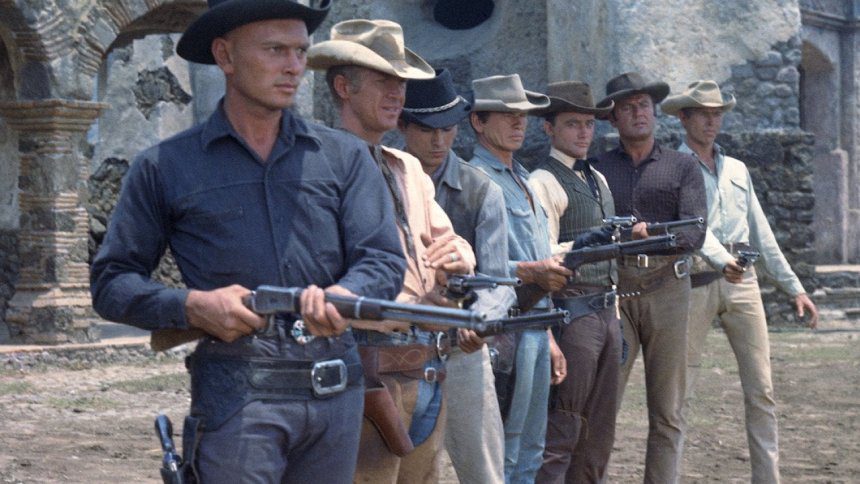
Seven American gunmen join together to protect a Mexican peasant village from bandits in “The Magnificent Seven,” a remake of Akira Kurosawa’s 1954 Japanese film “Seven Samurai.” The movie’s all-star cast includes Yul Brynner, Eli Wallach, Steve McQueen, Charles Bronson, Robert Vaughn, Brad Dexter, James Coburn, and Horst Buchholz. The property spawned three sequels, a 1990s television series, and a 2016 remake.

1961: The Misfits

– Director: John Huston
– IMDb user rating: 7.2
– Metascore: 77
– Runtime: 125 min

Marilyn Monroe stars in “The Misfits” as a divorcée who falls in love with an aging cowboy who is used to a life free from romantic entanglements (Clark Gable). The movie was both Monroe’s and Gable’s final film. Gable passed away less than two weeks after production ended and Monroe just over a year later.

1962: The Man Who Shot Liberty Valance

– Director: John Ford
– IMDb user rating: 8.1
– Metascore: 94
– Runtime: 123 min

“The Man Who Shot Liberty Valance” marked James Stewart and John Wayne’s first pairing on the big screen. Stewart played a senator famous for shooting a notorious outlaw. He attends the funeral of a rancher (Wayne) and recounts the true story of the incident. Unlike many other Westerns of the era, the movie was shot and released in black-and-white instead of color.

1963: Hud

– Director: Martin Ritt
– IMDb user rating: 7.8
– Metascore: 62
– Runtime: 112 min

Paul Newman headlines as Hud Bannon, a heavy-drinking, womanizing man angling to seize control of his father’s cattle business. Patricia Neal won an Academy Award for her lead role as a housekeeper, and actor Melvyn Douglas won for his supporting role as Newman’s aging father. Chinese American cinematographer James Wong Howe also won one of his two Oscars for his camerawork on this film.

1964: A Fistful of Dollars

– Director: Sergio Leone
– IMDb user rating: 7.9
– Metascore: 65
– Runtime: 99 min

Spaghetti Westerns became popularized with this Clint Eastwood film, directed by Italian Sergio Leone. “A Fistful of Dollars” birthed Eastwood’s famous character, the “Man with No Name,” which he went on to play in “For a Few Dollars More” and “The Good, the Bad and the Ugly.” Interestingly, the film was an unlicensed remake of the Japanese samurai film “Yojimbo”; director Akira Kurosawa successfully sued in return for some of the film’s rights.

1965: For a Few Dollars More

– Director: Sergio Leone
– IMDb user rating: 8.2
– Metascore: 74
– Runtime: 132 min

In the second part of the “Man with No Name” trilogy, Eastwood returns as a bounty hunter on the hunt for a villainous bank robber. “For a Few Dollars More” was an international co-production between Italy, Spain, and West Germany. Eastwood’s character wears the same poncho throughout the trilogy—a close viewing reveals bullet holes and mended sections from “wounds” inflicted during the first film.

1966: The Good, the Bad and the Ugly

– Director: Sergio Leone
– IMDb user rating: 8.8
– Metascore: 90
– Runtime: 178 min

In “The Good, the Bad and the Ugly,” Clint Eastwood, Eli Wallach, and Lee Van Cleef play men who form an uneasy alliance to track down a fortune in gold that has been buried in a cemetery. The movie’s theme song is widely considered one of the most recognizable and popular movie themes ever, even climbing as high as #2 on the Billboard Hot 100 chart.

1967: Hombre

– Director: Martin Ritt
– IMDb user rating: 7.4
– Metascore: 80
– Runtime: 111 min

Paul Newman stars in this revisionist Western about a White man raised by Apaches who becomes a group’s only hope of survival when their stagecoach is robbed. The film was widely praised for Newman’s performance—he has comparatively little dialogue but manages to convey a lot through his mannerisms and posturing—and marks the final time he would work with Martin Ritt (who famously directed him five other times, including in “The Long, Hot Summer”).

1968: Once Upon a Time in the West

– Director: Sergio Leone
– IMDb user rating: 8.5
– Metascore: 82
– Runtime: 166 min

A mail-order bride (Claudia Cardinale) arrives in Arizona to discover that her new husband has been killed by a gunman (Henry Fonda). He was hired by a mogul (Gabriele Ferzetti) who wants the land this distraught bride has inadvertently inherited. When another gunman (Charles Bronson) comes on the scene—carrying a vendetta against Fonda’s character—the three personalities become entangled, and violence ensues. Fonda famously plays against type in this film, taking on a villainous role.

1969: Butch Cassidy and the Sundance Kid

– Director: George Roy Hill
– IMDb user rating: 8
– Metascore: 66
– Runtime: 110 min

In “Butch Cassidy and the Sundance Kid,” Paul Newman and Robert Redford play the title characters, the leaders of a band of outlaws. When their attempt to rob a train goes awry, they find themselves on the run with the hope of escaping to Bolivia. The movie was nominated for seven Academy Awards, including Best Picture and Best Director. It ultimately won four of those awards, including Best Original Song for Burt Bacharach and Hal David’s “Raindrops Keep Fallin’ on My Head.”

1970: White Sun of the Desert

– Director: Vladimir Motyl
– IMDb user rating: 7.7
– Metascore: Not available
– Runtime: 84 min

“White Sun of the Desert” breaks the mold for Western films, taking place amid the Russian Civil War. Set in what’s now Turkmenistan, a Red Army soldier (Anatoly Kuznetsov) travels home, only to be caught up in a melee between the Red Army and Basmachi guerillas in the desert. Russian astronauts are known to watch the film before preparing for liftoff, as a sort of good luck ritual.

1971: McCabe & Mrs. Miller

– Director: Robert Altman
– IMDb user rating: 7.6
– Metascore: 93
– Runtime: 120 min

Described by director Robert Altman as an “anti-Western,” “McCabe & Mrs. Miller” turns many of the genre’s traditional tropes on their heads. It follows a mysterious gambler (Warren Beatty) and a sex worker (Julie Christie) as they team up to create a thriving business in the sleepy town of Presbyterian Church, Washington, only to have their success threatened by a greedy mining company. Named one of the American Film Institute’s Top 10 Western Movies, the film also earned Christie an Academy Award nomination for Best Actress.

1972: The New Land

– Director: Jan Troell
– IMDb user rating: 8
– Metascore: Not available
– Runtime: 102 min

This is part of a Swedish epic, which takes place over two movies and tells the story of a farming family that immigrates to America. “The New Land” followed “The Emigrants,” focusing on the family’s life in Minnesota. Lead actor Max von Sydow would later become famous for “The Exorcist,” while his co-star Liv Ullman became known as a muse of director Ingmar Bergman.

1973: High Plains Drifter

– Director: Clint Eastwood
– IMDb user rating: 7.4
– Metascore: 69
– Runtime: 105 min

Clint Eastwood directed and starred in “High Plains Drifter,” a revisionist Western in which a mysterious gunslinger arrives in a small settlement and helps its residents hold off three approaching outlaws. Eastwood drew much of his inspiration for the film’s direction from his previous collaborations with directors Sergio Leone and Don Siegel, and he gives them an honorary nod during the movie’s final scene, in which their names can be seen on tombstones in a graveyard.

1974: Blazing Saddles

– Director: Mel Brooks
– IMDb user rating: 7.7
– Metascore: 73
– Runtime: 93 min

In “Blazing Saddles,” Harvey Korman plays a corrupt politician who convinces a dimwitted governor (Mel Brooks) to appoint a Black railroad worker (Cleavon Little) as the new sheriff of an Old West town to create chaos. An alcoholic gunslinger (Gene Wilder), however, helps the new sheriff beat the odds and bring law and order to the town. Madeline Kahn earned an Academy Award nomination for her supporting performance in the comedic Western, which was also nominated for Best Film Editing and Best Original Song.

1975: Rooster Cogburn

– Director: Stuart Millar
– IMDb user rating: 6.8
– Metascore: Not available
– Runtime: 108 min

In “Rooster Cogburn,” John Wayne stars as the title character, an aging U.S. Marshal who joins a minister’s daughter (Katharine Hepburn) on a quest to track down the band of outlaws who killed her father. Wayne reprised the character he originally played in 1969’s “True Grit”—a role for which he won his only Academy Award.

1976: The Outlaw Josey Wales

– Director: Clint Eastwood
– IMDb user rating: 7.8
– Metascore: 69
– Runtime: 135 min

In “The Outlaw Josey Wales,” Clint Eastwood plays a peaceful farmer who joins a Confederate guerrilla unit when his family is murdered by Union soldiers during the Civil War. After the war, he is branded an outlaw and pursued by bounty hunters. Eastwood directed the film himself after firing writer and director Philip Kaufman, who adapted the story from a book written by Asa Earl Carter.

1977: A Man Called Blade

– Director: Sergio Martino
– IMDb user rating: 6.5
– Metascore: Not available
– Runtime: 101 min

Maurizio Merli plays Blade, a hatchet-wielding bounty hunter. When he arrives in a mining town, the mayor hires him for a hit. In the process, he disrupts the system of power and unleashes a cascade of violence. The film is also known by its original title, “Mannaja.”

1978: Lucky Luke: Ballad of the Daltons

– Director: René Goscinny, Henri Gruel, Morris
– IMDb user rating: 6.9
– Metascore: Not available
– Runtime: 82 min

This French animated film chronicles the comic book character Lucky Luke, a cowboy known for shooting faster than his own shadow. The comic book series was created by the Belgian cartoonists René Goscinny and Morris, who based Luke’s enemies, the Daltons, on the real Dalton brothers, a Wild West family of train and bank robbers.

1979: The Electric Horseman

– Director: Sydney Pollack
– IMDb user rating: 6.4
– Metascore: 64
– Runtime: 121 min

Robert Redford plays a washed-up rodeo champion-turned-cereal spokesman who kidnaps the breakfast company’s horse after realizing they’ve been mistreating it in this late ’70s Western. Jane Fonda adds to the fun as the reporter covering the story, as does country legend Willie Nelson who has a small role. A huge commercial success—it was the 11th highest-grossing film the year it came out—the movie received mixed critical reception. Still, the general consensus today is that it’s a fun, classic romp with outsized bad guys and overly moralized good ones.

1980: The Long Riders

– Director: Walter Hill
– IMDb user rating: 6.9
– Metascore: 68
– Runtime: 100 min

Director Walter Hill sympathetically explored the origins, the adventures, and the ultimate fate of the James-Younger gang in 1980’s “The Long Riders.” The film follows two bands of brothers who join forces to become bank robbers, and the actors who played the brothers were themselves related: James and Stacy Keach portrayed Jesse and Frank James, while David, Keith, and Robert Carradine played Cole, Jim, and Bob Younger. Dennis and Randy Quaid also played brothers in the film, as did Christopher and Nicholas Guest.

1981: Death Hunt

– Director: Peter R. Hunt
– IMDb user rating: 6.9
– Metascore: 40
– Runtime: 97 min

In “Death Hunt,” Charles Bronson plays a trapper whose feud with a dog owner escalates to him being wrongfully accused of murder. Suddenly finding himself a fugitive, his expert knowledge of the frigid Canadian wilderness allows him to survive and evade the law amidst the manhunt. Robert Aldrich was initially hired to direct the movie, originally titled “Arctic Rampage,” but he was fired and replaced by Peter R. Hunt.

1982: The Grey Fox

– Director: Phillip Borsos
– IMDb user rating: 7.3
– Metascore: Not available
– Runtime: 92 min

“The Grey Fox” is based, in part, on the true story of Bill Miner, a stagecoach robber who spent 30 years behind bars before being released in the early 1900s and taking up a career as a train robber. Richard Farnsworth, decades into a Hollywood career that had thus far been not all that noteworthy, played the titular character in what Roger Ebert called “the loveliest adventure of the year.” The role was perhaps the biggest of Farnsworth’s career, earning him a Golden Globe nomination for Best Performance in a Drama.

1983: Lone Wolf McQuade

– Director: Steve Carver
– IMDb user rating: 6.3
– Metascore: 65
– Runtime: 107 min

In “Lone Wolf McQuade,” Chuck Norris plays a Texas Ranger and martial arts expert whose attempt to catch a dangerous drug lord (David Carradine) selling U.S. military weapons to Central American terrorists results in the kidnapping of his daughter. He teams up with an FBI agent (Leon Isaac Kennedy) to bring a stop to the criminal and save his kidnapped daughter. The movie was shot in Texas, in locations including a desert with a high rattlesnake population. There are even reports of a rattlesnake crawling into bed and interrupting a love scene between Norris and his love interest in the film, Barbara Carrera.

1984: Lust in the Dust

– Director: Paul Bartel
– IMDb user rating: 5.9
– Metascore: Not available
– Runtime: 84 min

Divine stars in this Western spoof as Rosie Velez, a dancer who meets a gunman (Tab Hunter) who brings her to a local town called Chili Verde. Things heat up when she discovers that the local saloon owner has half of a treasure map tattooed on her buttocks—the other half of which is, coincidentally, tattooed on Rosie. A song by Divine, “These Lips,” was featured on the film’s soundtrack.

1985: Pale Rider

– Director: Clint Eastwood
– IMDb user rating: 7.3
– Metascore: 61
– Runtime: 115 min

In “Pale Rider,” Clint Eastwood plays a mysterious preacher who helps defend the residents of a small village against a greedy mining company trying to take their land. The movie grossed $41 million against a $6.9 million production budget, earning it the title of the highest-grossing Western released in the 1980s.

1986: Three Amigos

– Director: John Landis
– IMDb user rating: 6.5
– Metascore: 52
– Runtime: 104 min

In “Three Amigos,” Steve Martin, Chevy Chase, and Martin Short play a trio of silent movie stars who inadvertently find themselves mixed up with a ruthless Mexican gang leader (Alfonso Arau). Martin, who co-wrote the screenplay, was always attached to the project. However, Dan Aykroyd and John Belushi were at one time tapped to costar—as were Bill Murray and Robin Williams at a later date—before Chase and Short signed on to the project.

1987: A Man from Boulevard des Capucines

– Director: Alla Surikova
– IMDb user rating: 7.6
– Metascore: Not available
– Runtime: 98 min

“A Man from Boulevard des Capucines” stands out in the history of Westerns for two reasons: it’s a rare example of a “red Western” produced by the Soviet Union, and it was directed by a woman. It tells the story of a film-loving cowboy who changes the course of one wild town when he introduces them to his favorite movies. While it manages to avoid sermonizing for the most part, the film makes a deft point about the influence and responsibility of the industry.

1988: Young Guns

– Director: Christopher Cain
– IMDb user rating: 6.8
– Metascore: 50
– Runtime: 107 min

“Young Guns” stars Emilio Estevez, Kiefer Sutherland, Lou Diamond Phillips, Charlie Sheen, Dermot Mulroney, and Casey Siemaszko as gunslingers who become deputies to avenge the murder of one of their friends. Estevez portrays Old West gunslinger Billy the Kid in the film, which spawned a 1990 sequel in which Estevez, Sutherland, and Phillips reprised their roles.

1989: Sundown: The Vampire in Retreat

– Director: Anthony Hickox
– IMDb user rating: 6.1
– Metascore: Not available
– Runtime: 104 min

In “Sundown: The Vampire in Retreat,” David Carradine plays the leader of a colony of vampires who reside in an isolated desert town. Their peaceful existence is suddenly interrupted by the arrival of a descendant of Van Helsing (Bruce Campbell), who is hell-bent on destroying them.

1990: Dances with Wolves

– Director: Kevin Costner
– IMDb user rating: 8
– Metascore: 72
– Runtime: 181 min

Kevin Costner plays a soldier who leaves his remote Civil War outpost to join a nearby Sioux tribe in 1990’s “Dances with Wolves.” Costner also directed the film, which won seven Academy Awards, including Best Picture, making it the first Western to do so since 1931’s “Cimarron.” The movie was not just a critical success but a financial one, grossing $184.2 million at the U.S. box office and revitalizing the Western genre.

1991: City Slickers

– Director: Ron Underwood
– IMDb user rating: 6.8
– Metascore: 70
– Runtime: 113 min

In this slapstick comedy, three city-dwelling friends (Billy Crystal, Daniel Stern, and Bruno Kirby) vacation together on a dude ranch. Though they’re enamored with classic Western films of the past, the two-week cattle drive with other city slickers and a band of real cowboys (including Jack Palance playing the trail boss, a role which earned him an Oscar) ends up being more than they bargained for.

1992: Unforgiven

– Director: Clint Eastwood
– IMDb user rating: 8.2
– Metascore: 85
– Runtime: 130 min

Clint Eastwood plays a retired gunslinger who reluctantly agrees to take on a corrupt sheriff (Gene Hackman) in “Unforgiven.” Eastwood won an Academy Award for his directing duties on the film, which also won Best Picture. Hackman, meanwhile, won for his supporting performance. Audiences appreciated the movie—which Eastwood decided would likely be his last Western—to the tune of $101.2 million at the U.S. box office.

1993: Tombstone

– Director: George P. Cosmatos, Kevin Jarre
– IMDb user rating: 7.8
– Metascore: 50
– Runtime: 130 min

In “Tombstone,” Kurt Russell portrays Wyatt Earp, whose hopes of retiring anonymously in Tombstone, Arizona, are dashed when he is called back into action to fight a vicious band of outlaws threatening the town. Val Kilmer costars in the film as Doc Holliday, with Sam Elliott, Bill Paxton, Powers Boothe, Michael Biehn, and Dana Delany rounding out the principal cast. Western staple Robert Mitchum agreed to narrate the story after a back injury forced him out of a planned onscreen role.

1994: Legends of the Fall

– Director: Edward Zwick
– IMDb user rating: 7.5
– Metascore: 45
– Runtime: 133 min

Anthony Hopkins, Brad Pitt, Aidan Quinn, and Henry Thomas play a father and his three sons, respectively, who succumb to the tragedies of war and romantic rivalry in “Legends of the Fall.” Pitt’s popularity propelled the movie to a total gross of $160.6 million worldwide. The film was nominated for three Academy Awards, winning one for cinematography.

1995: Dead Man

– Director: Jim Jarmusch
– IMDb user rating: 7.5
– Metascore: 62
– Runtime: 121 min

In “Dead Man,” Johnny Depp plays a wounded accountant who, while on the run for murder, travels to the Western frontier. Once there, he encounters a Native American (Gary Farmer) who prepares him for his journey into the next life. Director Jim Jarmusch has described his film as a “psychedelic Western.”

1996: Lone Star

– Director: John Sayles
– IMDb user rating: 7.4
– Metascore: 79
– Runtime: 135 min

Described as a “masterwork” and “a great American movie,” “Lone Star” follows lawmen in a small Texas town as they try to learn who’s behind the murder of one of their own. Starring Matthew McConaughey, Chris Cooper, Kris Kristofferson, and Elizabeth ​​Peña, the mystery is not only engaging on a surface level but also in the way that it deftly tackles tougher topics like racism and who decides what gets canonized as history. It was also nominated for an Academy Award for Best Original Screenplay.

1997: Once Upon a Time in China and America

– Director: Sammo Kam-Bo Hung
– IMDb user rating: 6.3
– Metascore: Not available
– Runtime: 102 min

Variety’s Derek Elley deemed this martial arts Western crossover a “cross-cultural actionfest.” It is the sixth film in the “Once Upon a Time in China” series. Jet Li’s character, Wong Fei-Hung, travels to San Francisco from China. On the route, and once in the California city, Wild West-style chaos ensues, including a Native American ambush and a bank robbery.

1998: The Mask of Zorro

– Director: Martin Campbell
– IMDb user rating: 6.8
– Metascore: 62
– Runtime: 136 min

Antonio Banderas plays a thief seeking revenge for his brother’s death in “The Mask of Zorro.” He is trained by an aging swordsman (Anthony Hopkins) who shares the same enemy. Catherine Zeta-Jones also stars in the film as the aging swordsman’s long-lost daughter and the eventual love interest of the thief. The movie earned $250.3 million worldwide against a $95 million production budget, and Banderas and Zeta-Jones reprised their roles seven years later in a far less successful sequel.

1999: Ravenous

– Director: Antonia Bird
– IMDb user rating: 6.9
– Metascore: 46
– Runtime: 101 min

The sole horror Western on our list, “Ravenous” follows a group of high-ranking Army officials and civilian misfits as they set out on a rescue mission only to find themselves being trailed by a crazed cannibal. Despite its star-studded cast, which consists of Guy Pearce, Robert Carlyle, Jeffrey Jones, and David Arquette, the production of the film was a complete mess with two directors (Milcho Manchevski, Raja Gosnell) being fired before Antonia Bird was brought in to take over mid-shoot. While the film wasn’t a massive success at the time, it has since become something of a cult classic, with many critics praising the way it addresses things like Manifest Destiny and capitalism.

2000: A Dog’s Will

– Director: Guel Arraes
– IMDb user rating: 8.6
– Metascore: Not available
– Runtime: 104 min

A surrealistic Brazilian comedy, the original title of the film was “O Auto da Compadecida,” which translates to “The Compassionate Woman’s Play” in Portuguese. Actors Matheus Nachtergaele and Selton Mello play poor men in Northeast Brazil who, in the afterlife, face judgment for their wrongdoings. It was adapted from a play by Ariano Suassuna and was a major theatrical hit in Brazil.

2001: Manitou’s Shoe

– Director: Michael Herbig
– IMDb user rating: 6.7
– Metascore: Not available
– Runtime: 87 min

This German film was intended to be a parody of Westerns. Not only did Michael Herbig direct the film, but he also wrote the screenplay, produced, and starred in it. He plays an Apache chief who, along with his “blood brother,” tries to buy a saloon. However, they end up making a bad deal with a fake investor named Santa Maria. The premise for the movie was based on the “Winnetou” sketches performed on the late-night comedy show “Bullyparade.”

2002: The Tracker

– Director: Rolf de Heer
– IMDb user rating: 7.3
– Metascore: 71
– Runtime: 90 min

An Australian contribution to the cannon, “The Tracker” follows a group of four men— three white, one Aboriginal— who are on a journey to find the Black killer of a white woman in the early 20th-century outback. While it may seem on the surface like a standard tale of racial politics, director Rolf de Heer takes pains to undermine the expectations of the audience and keep them off kilter enough that they must fully engage with the material.

2003: Open Range

– Director: Kevin Costner
– IMDb user rating: 7.4
– Metascore: 67
– Runtime: 139 min

In “Open Range,” Kevin Costner plays a former Civil War soldier living a peaceful life as a hired hand for an open-range cattleman (Robert Duvall). However, that tranquility is interrupted when a corrupt land baron (Michael Gambon) threatens his frontier friends, forcing him to take up arms once again. Costner also directed the film, which co-starred Annette Bening and Diego Luna and earned $58.3 million at the U.S. box office against a $22 million budget.

2004: Hidalgo

– Director: Joe Johnston
– IMDb user rating: 6.7
– Metascore: 54
– Runtime: 136 min

In “Hidalgo,” Viggo Mortensen portrays cowboy Frank Hopkins, who travels to Arabia with his mustang Hidalgo to compete in a deadly cross-desert horse race. The titular Mustang was portrayed by five American Paint horses, one of which was later purchased by Mortensen. Screenwriter John Fusco, who also worked on 1988’s “Young Guns” and 2002’s “Spirit: Stallion of the Cimarron,” bought the movie’s main stunt horse and retired him at his horse conservancy Red Road Farm.

2005: The Proposition

– Director: John Hillcoat
– IMDb user rating: 7.3
– Metascore: 73
– Runtime: 104 min

The screenplay for this Australian Outback Western was written by rock musician Nick Cave. A renegade (Guy Pearce) can only save his younger brother from law enforcement officers by hunting down and killing his murderous older brother. The movie takes on themes of racism, family bonds, and colonialism. Ty Burr of The Boston Globe called it “a near-masterpiece of mood and menace, and one that deserves to be seen on the largest screen possible.”

2006: Seraphim Falls

– Director: David Von Ancken
– IMDb user rating: 6.6
– Metascore: 62
– Runtime: 115 min

Liam Neeson plays a Confederate colonel who, at the end of the Civil War, hunts down a Union soldier (Pierce Brosnan) against whom he has a grudge. Richard Gere was originally tapped to play Brosnan’s role in the film, which received mild praise from critics who appreciated its unique, sans-villain approach. Still, it failed to make much of a dent at the box office. The revisionist Western topped out with a mere $1.2 million gross worldwide.

2007: 3:10 to Yuma

– Director: James Mangold
– IMDb user rating: 7.6
– Metascore: 76
– Runtime: 122 min

This 2007 remake of the 1957 film “3:10 to Yuma” tells the story of a broke rancher (Christian Bale) who is hired for the simple task of putting a captured outlaw (Russell Crowe) on the 3:10 train to Yuma. However, things get far more complicated for him when the outlaw’s gang attempts to free him.

2008: The Good, the Bad, the Weird

– Director: Kim Jee-woon
– IMDb user rating: 7.2
– Metascore: 69
– Runtime: 130 min

This South Korean Western action film was inspired by “The Good, the Bad and the Ugly.” The story takes place in Manchuria just before World War II. A bounty hunter (Jung Woo-sung), a thief (Song Kang-ho), and a hitman (Lee Byung-hun) set out on an adventure to find a treasure map dating back to the Qing Dynasty … all while being pursued by bandits and the Imperial Japanese Army.

2009: Lucky Luke

– Director: James Huth
– IMDb user rating: 4.7
– Metascore: Not available
– Runtime: 103 min

Based on a comic strip of the same name, “Lucky Luke” is a French Western that follows a fearless gunslinger who has been tasked by the President with bringing peace to Daisy Town. A fun spoof on the more serious tropes, the screwball comedy has been praised by critics for its visually arresting production design and the performances of its actors, like Jean Dujardin. Unlike many of the other films on our list, this one has some family-friendly tropes, with nothing more risque than a chaste kiss and some “Road Runner” style violence.

2010: True Grit

– Director: Ethan Coen, Joel Coen
– IMDb user rating: 7.6
– Metascore: 80
– Runtime: 110 min

Starring Hailee Steinfeld in her film debut, alongside Jeff Bridges, Matt Damon, Josh Brolin, and Barry Pepper, “True Grit” follows a grizzled lawman, a precious teenager, and a U.S. Marshal as they set out to track down the outlaw responsible for the murder of the girl’s father. An adaptation of Charles Portis’ 1968 novel, the film is not the first adaptation of the source material (there was a 1969 version that starred John Wayne, Kim Darby, and Glen Campbell), but it’s by far the grittiest. Nominated for 10 Academy Awards, including Best Picture and Best Director, the movie came home with no trophies but won at the box office with over $252 million in global ticket sales.

2011: Rango

– Director: Gore Verbinski
– IMDb user rating: 7.3
– Metascore: 75
– Runtime: 107 min

In “Rango,” Johnny Depp voices the title character, a pet chameleon who accidentally winds up in a lawless Wild West town in the middle of the Mojave Desert. He is appointed sheriff when he inadvertently kills the hawk terrorizing the town’s residents. He quickly discovers, however, that he is in way over his head. The Best Animated Feature winner at that year’s Academy Awards was also a hit at the box office, earning $245.7 million worldwide against a $135 million production budget.

2012: Django Unchained

– Director: Quentin Tarantino
– IMDb user rating: 8.5
– Metascore: 81
– Runtime: 165 min

Jamie Foxx plays a freed enslaved person who, with the help of a German bounty hunter (Christoph Waltz), sets out to rescue his wife (Kerry Washington) from a Mississippi plantation owner (Leonardo DiCaprio) in “Django Unchained.” Quentin Tarantino wrote and directed the film, which grossed nearly $450 million worldwide, making it the filmmaker’s biggest box-office total ever. Tarantino also won an Academy Award for his writing duties on motion pictures and Waltz for his supporting performance.

2013: No Man’s Land

– Director: Ning Hao
– IMDb user rating: 7.3
– Metascore: Not available
– Runtime: 118 min

A neo-Western thriller in the style of the Coen brothers, “No Man’s Land” is a nihilistic tale of a lawyer and two soulless poachers set in the Gobi desert. The film was shot and completed in 2009 but wasn’t released for several years, reportedly due to pushback from China’s film bureau over how it depicted police officers. Hardly a feel-good movie, it’s not an easy watch, but it’s well worth viewing for its art-house style and commentary on man’s baser instincts.

2014: The Salvation

– Director: Kristian Levring
– IMDb user rating: 6.7
– Metascore: 64
– Runtime: 92 min

Dubbed “a gripping revenge Western” by Peter Bradshaw of The Guardian, “The Salvation” follows a Danish man as he seeks revenge against a notorious gang leader following the murder of his wife and young son. The movie stars Mads Mikkelsen, Eva Green, and Jeffrey Dean Morgan. While it wasn’t a huge box-office hit, nor did it garner many award nominations, it’s still a beautifully shot, excellently choreographed nod to Westerns of decades past.

2015: The Revenant

– Director: Alejandro G. Iñárritu
– IMDb user rating: 8
– Metascore: 76
– Runtime: 156 min

Leonardo DiCaprio plays a frontiersman who is mauled by a bear and left for dead during a fur trading expedition in “The Revenant.” He struggles to survive absolutely brutal conditions on his journey home to confront his former friend (Tom Hardy). DiCaprio won an Academy Award for his performance, and Alejandro G. Iñárritu won another for his directing duties on the film, which earned 10 other Oscar nominations and a $533 million box-office haul.

2016: Hell or High Water

– Director: David Mackenzie
– IMDb user rating: 7.6
– Metascore: 88
– Runtime: 102 min

In “Hell or High Water,” Chris Pine plays a divorced father who reunites with his ex-con brother (Ben Foster) to rob branches of the bank that is threatening to foreclose on their family’s ranch. Their plan appears to work until a retiring Texas Ranger (Jeff Bridges), desperate for one last notch in his belt, begins to close in on them. The neo-Western crime thriller scored four Academy Award nominations and a lot of acclaim from critics for its complex narrative, confident pacing, and well-rounded characters.

2017: Wind River

– Director: Taylor Sheridan
– IMDb user rating: 7.7
– Metascore: 73
– Runtime: 107 min

Set on the Wind River Indian Reservation, “Wind River” follows a Fish and Wildlife Agent (Jeremy Renner) and an FBI Agent (Elizabeth Olsen) as they attempt to solve the murder of a young Indigenous girl. Following its debut at the Cannes Film Festival, the movie received mixed reviews from critics, with some calling it gripping and satisfying while others, namely those from indigenous communities, criticizing director Taylor Sheridan for choosing to tell a story that was not his, as a white man, to tell.

2018: The Ballad of Buster Scruggs

– Director: Ethan Coen, Joel Coen
– IMDb user rating: 7.2
– Metascore: 79
– Runtime: 133 min

Two years after their feature-length series of connected Golden Age Hollywood vignettes “Hail, Caesar!,” the Coen brothers returned with a more staunchly divided feature-length piece. “The Ballad of Buster Scruggs” comprises six short Western films with no plot connections diverse in cinematography, style, and tone. The film’s unique style, bombastic characters, sing-songy pleasantries, directorial stamps, and strong thematic throughline rendered it a popular and critical success.

2019: True History of the Kelly Gang

– Director: Justin Kurzel
– IMDb user rating: 6
– Metascore: 75
– Runtime: 124 min

Ned Kelly was an Australian escaped convict, gang leader, and a cultural icon akin to Robin Hood. His life has been fictionalized many times, including in this 2019 film with George MacKay playing the titular character. The movie follows him and his gang trying to escape law enforcement in the 1870s. Other actors in the film include Essie Davis, Charlie Hunnam, Russell Crowe, and Nicholas Hoult.

2020: News of the World

– Director: Paul Greengrass
– IMDb user rating: 6.8
– Metascore: 73
– Runtime: 118 min

In “News of the World,” an aging Civil War captain sets out to return a young girl who had been raised by the Kiowa tribe to her birth family. Starring Tom Hanks and Helena Zengel, the movie is predictable at times and fairly thin in terms of its themes. However, the stellar performances of its lead actors and attention to detail in every aspect still managed to set it apart. Nominated for several Academy Awards, Golden Globes, and Critic’s Choice trophies, the project won none of the accolades but was placed on a few best-of-the-year lists.

2021: Old Henry

– Director: Potsy Ponciroli
– IMDb user rating: 7.2
– Metascore: 69
– Runtime: 99 min

A widower with a mysterious past must defend his son after they get mixed up with a group of double-crossing criminals carrying a load of cash in “Old Henry.” Tim Blake Nelson plays the titular character alongside Scott Haze and Gavin Lewis. Following its premiere at the Venice Film Festival, the movie became a surprise hit for streaming services. It remained on Apple’s Top 10 list for two months and landed a spot on the National Board of Review’s Top Independent Films of the Year list.

2022: Butcher’s Crossing

– Director: Gabe Polsky
– IMDb user rating: 5.6
– Metascore: 55
– Runtime: 105 min

Based on a 1960s novel of the same name, “Butcher’s Crossing” follows a late-19th-century Ivy League dropout as he joins a buffalo hunting group in Colorado and learns a lesson about remorseless brutality. Shot on the Blackfeet reservation in Montana, the movie was praised for its near-perfect casting (Nicolas Cage, Fred Hechinger, Jeremy Bobb, Paul Raci, Xander Berkeley, and Rachel Keller). Still, it was slammed for failing to capture the tension and psychological drama of its source material. Still, the gorgeous cinematography—and Cage’s excellent character work—make it well worth a watch.

2023: Killers of the Flower Moon

– Director: Martin Scorsese
– IMDb user rating: 7.6
– Metascore: 89
– Runtime: 206 min

Nominated for 10 Academy Awards, “Killers of the Flower Moon” tells the story of the murders of several Osage tribal members after oil was discovered on their lands. Based on the 2017 nonfiction book of the same name by David Grann, the movie had a cast jam-packed with big names, including Leonardo DiCaprio, Robert De Niro, Lily Gladstone, Jesse Plemons, John Lithgow, and Brendan Fraser. A massive commercial and critical hit, the movie has been classed as a masterpiece and frequently praised for the way it seamlessly blends several genres and serves as a requiem for a country that, in its greed and desire for dominance, has strayed far from its founding principles.

2024: ‘Horizon: An American Saga—Chapter 1’

– Director: Kevin Costner
– IMDb user rating: 6.7
– Metascore: 49
– Runtime:  181 min

Though “Horizon: An American Saga—Chapter 1” made headlines for all of the wrong reasons in 2024—less-than-glowing critical reviews and a box office return so poor that further theatrical release plans were quickly scrapped—the movie still has quite a few fans. Fresh off his leading role on the hit TV series “Yellowstone,” Kevin Costner directs and stars in this sweeping Civil War-set epic, the first of a four-part film series. Film critics took issue with the movie’s plodding pace and tone-deaf portrayals of Native Americans, but “Horizon: An American Saga—Chapter 1” managed to pick up steam after debuting on the streaming platform Max in August 2024. And in a year of few Western movies, this controversial pick managed to come out on top.

Additional writing by Cu Fleshman and Madison Troyer. Story editing by Cynthia Rebolledo. Copy editing by Robert Wickwire. Photo selection by Lacy Kerrick.


Topics:

Entertainment
Entertainment

Best Emmy-nominated shows of all time

Best Emmy-nominated shows of all time
By Kelsi Trinidad
17 min read • Originally published September 20, 2020 / Updated March 19, 2026
By Kelsi Trinidad
17 min read • Originally published September 20, 2020 / Updated March 19, 2026

Canva

Best Emmy-nominated shows of all time

The first Emmy Awards show took place at the Hollywood Athletic Club in 1949. Hosted by Walter O’Keefe, tickets to the show were five dollars and only six awards were handed out—one award went to a ventriloquist. Named after the image-orthicon camera tube, or “immy,” which was instrumental in capturing images for television, the Emmys were created by the Television Academy to award excellence in the television industry. The Emmy Award statue was designed to be a winged woman, representing the arts, holding up an atom, representing science and was modeled after television engineer Louis McManus’s wife, Dorothy McManus. As time went on, the Emmy Award gained acclaim and grew into one of the most prestigious awards in the entertainment industry.

Over the years, the Emmys have come to be known as an awards show where anything might happen. From an impromptu make-out between “Veep’s” Julia Louis-Dreyfus and “Breaking Bad’s” Bryan Cranston to an unsuccessful prank to steal Betty Thomas’s award to Viola Davis’s powerful speech on diversity in the entertainment industry—the Emmy Awards have always brought together visionaries and artists with diverse perspectives. With a new era of television comes a new format for awards shows. Following in the footsteps of 2019’s host-less Academy Awards ceremony, the Emmys will go without a host for the first time this year.

In celebration of the upcoming 2020 Emmy Awards, Stacker has compiled a comprehensive ranking of the best Emmy-nominated shows of all time based on IMDb user ratings. Data was sourced in September 2020. All drama, comedy, competition, variety, anthology, and limited series that have been nominated for at least one Emmy and have over 5,000 IMDb user votes were considered in the ranking. However, nature documentary series were not considered in this list.

Read on to see if your favorite shows make the list.

You may also like: 25 most popular Emmy-nominated shows of 2019

Anonymous Content

#50. Mr. Robot (2015–2019)

– IMDb user rating: 8.6
– Votes: 321,404

With its feverish plot and striking cinematography, anarchist-oriented “Mr. Robot” felt like nothing else on TV when it premiered in 2015. Examining issues like corporate capitalism and mental health, and tapping into societal fears around computer security and surveillance, “Mr. Robot” centers on brilliant, depressed Elliot Alderson (Rami Malek), a computer hacker drawn into an Anonymous-style hacker collective bent on erasing debt. Malek won the Emmy for Outstanding Lead Actor in a Drama Series, while composer Mac Quayle won Outstanding Musical Composition for his tense electronic score.

ABC Studios

#49. Daredevil (2015–2018)

– IMDb user rating: 8.6
– Votes: 353,822

Matt Murdock (Charlie Cox) is a blind lawyer by day who transforms into the vigilante Daredevil by night, using finely honed senses and martial arts skills to bring down bad guys in the Hell’s Kitchen neighborhood of New York City. “Daredevil” is part of the television branch of the Marvel Cinematic Universe, with Daredevil’s escapades influenced by the film franchise, as when the Avengers demolished much of New York City in “Avengers: Infinity War.” “Daredevil” was nominated for several technical Emmy awards, including Outstanding Main Title Design, Outstanding Sound Editing, and Outstanding Stunt Coordination.

Showtime Networks

#48. Dexter (2006–2013)

– IMDb user rating: 8.6
– Votes: 630,023

A show about everyone’s favorite murderer with a heart of gold, “Dexter” made gruesome crime scenes complex and binge-able. Earning five nominations for his starring role, Michael C. Hall plays sociopathic Dexter, a blood-spatter analyst by day and killer of wrong-doers at night. Miami has never looked the same.

Hurwitz & Schlossberg Productions

#47. Cobra Kai (2018–present)

– IMDb user rating: 8.7
– Votes: 61,934

The modern-day sequel to “The Karate Kid,” “Cobra Kai” premiered on YouTube Premium and was co-executive produced by the original “Karate Kid” himself, Ralph Macchio. Long after their 1984 All Valley Karate Tournament fight, Daniel and Johnny’s rivalry has taken a new form: competing dojos.

Fox Television Network

#46. The Shield (2002–2008)

– IMDb user rating: 8.7
– Votes: 70,298

This lauded FX crime series follows a corrupt police unit that was based on corrupt police divisions in the LAPD in the late 90s. Star Michael Chiklis took home the Emmy for Outstanding Lead Actor in a Drama Series after the first season made waves. It was nominated for six Primetime Emmy’s total.

Amazon Studios

#45. The Marvelous Mrs. Maisel (2017–present)

– IMDb user rating: 8.7
– Votes: 72,698

The second hit from “Gilmore Girls” creator Amy Sherman-Palladino, this bubbly New York comedy follows a ’50s housewife-turned-comedian through a series of precarious events with just the right amount of provocative edge. “The Marvelous Mrs. Maisel” earned Sherman-Palladino her much-deserved first Emmy nominations.

Two Brothers Pictures

#44. Fleabag (2016–2019)

– IMDb user rating: 8.7
– Votes: 84,841

Phoebe Waller-Bridge’s British dramedy follows Fleabag, a complicated, viciously funny Londoner played by a magnetic Waller-Bridge. While season one explored Fleabag’s trauma, its second season delivered a transcendent and devastating love story as Fleabag falls in love with an attractive priest (Andrew Scott). The Academy took notice, with the second season nominated for 11 Emmy awards and taking home six, including Outstanding Comedy Series, Outstanding Lead Actress for Waller-Bridge, and Outstanding Writing for a Comedy Series.

Rysher Entertainment

#43. Oz (1997–2003)

– IMDb user rating: 8.7
– Votes: 86,896

One of HBO’s early forays into long-form dramatic television, Oz takes place in (and is short for) the maximum security Oswald State Correctional Facility. Only ever nominated for two Emmys, it was heralded for its guest stars and ensemble performance.

Rhode Island Ave. Productions

#42. This Is Us (2016–present)

– IMDb user rating: 8.7
– Votes: 96,783

“This is Us” follows three generations of the Pearson family, with their sometimes-tragic stories told through flashbacks over the course of four seasons (with a fifth coming in November 2020). The ensemble cast includes Sterling K. Brown, Mandy Moore, and Milo Ventimiglia, among many more. The show has garnered 10 Emmy nominations, with Sterling K. Brown taking home the Emmy for Outstanding Lead Actor in a Drama Series.

Home Box Office (HBO)

#41. Curb Your Enthusiasm (2000–present)

– IMDb user rating: 8.7
– Votes: 98,983

With a whopping 42 nominations dating back to 2002, “Curb Your Enthusiasm” took “Seinfeld” co-creator Larry David out from behind the camera to spotlight his signature deadpan comedy style. Only winning two awards out of its 42 nominations, what this comedic series lacks in awards, it makes up for in very quotable dialogue.

Tornante Company

#40. BoJack Horseman (2014–2020)

– IMDb user rating: 8.7
– Votes: 103,542

An imaginative blend of self-deprecation, snappy pop culture wit, and thorough character development, Raphael Bob-Waksberg’s animated dramedy has been nominated for Outstanding Animated Program for the past two years as its come to a close. Will Arnett, Amy Sedaris, Alison Brie, Aaron Paul, Paul F. Tompkins round out the stacked principal cast, but the series has even more star power in its long list of A-list guests.

Left Bank Pictures

#39. The Crown (2016–present)

– IMDb user rating: 8.7
– Votes: 118,022

While “The Crown” is most notable for its exorbitant production budget of $130 million, making it the most expensive TV series ever made, the Netflix show has earned its place as a TV heavy hitter. Following the intriguing life of Queen Elizabeth II (played by Claire Foy in the first two seasons and Olivia Coleman in the upcoming third season), “The Crown” takes the audience through the difficult ins and outs of navigating royal life. The show’s impressive cast and dedicated following earned it 13 Emmy nominations in 2018, with the show winning five that year.

Home Box Office (HBO)

#38. Six Feet Under (2001–2005)

– IMDb user rating: 8.7
– Votes: 118,156

A favorite of film buffs, the dark HBO comedy “Six Feet Under” captures the lives of a dysfunctional family who own a funeral home in Los Angeles. Led by Oscar-winning “American Beauty” screenwriter Alan Ball, the show received 23 Emmy nominations in its first season alone. The same year, the series won a Golden Globe for best drama series and a Peabody Award for entertainment.

British Sky Broadcasting

#37. Battlestar Galactica (2004–2009)

– IMDb user rating: 8.7
– Votes: 149,652

“Battlestar Galactica” tells the story of a society obliterated by their android enemies, the Cylons. The last of this society remains to venture forth to the fabled 13th planet: Earth. As a much-loved sci-fi series, it’s no surprise that this show earned several nominations in special effects, but the show has also earned a notable number of nominations for its strong writing.

Home Box Office (HBO)

#36. Rome (2005–2007)

– IMDb user rating: 8.7
– Votes: 151,357

This historic drama set in the last days of the Roman Republic stars Kevin McKidd as Lucius Vorenus, a Roman soldier serving the republic as it transitions to an empire. It features many well-known figures of the Roman era including Julius Caesar and Mark Antony, making it an easy favorite for history buffs. With recurring nominations in costume design, makeup, and visual effects, this show excels at its ability to transport viewers back in time.

Carnival Film & Television

#35. Downton Abbey (2010–2015)

– IMDb user rating: 8.7
– Votes: 157,680

This BBC creation took the U.S. by storm, quickly gaining a massive cult following from American audiences. This unlikely hit transports audiences back to the post-Edwardian era and into the Grantham family’s sprawling estate, from which the show gets its title. Led by notable British stars like Maggie Smith and Hugh Bonneville, the show also helped launch the careers of newcomers like Michelle Dockery.

Amazon Studios

#34. The Boys (2019–present)

– IMDb user rating: 8.7
– Votes: 174,323

After an avalanche of superhero films and series over the past decade, show developer Eric Kripke swooped in to capture the anti-hero sentiment. The dark show investigates questions like, “What happens when a superhero kills an innocent bystander in the process of saving the city?” and other such unaddressed aspects of caped crusading. Karl Urban leads the principal cast. The series has received one Emmy nomination for Outstanding Sound Editing For A Comedy Or Drama Aeries (One Hour).

Fairview Entertainment

#33. The Mandalorian (2019–present)

– IMDb user rating: 8.7
– Votes: 189,064

Disney’s first live-action TV show in its ever-growing roster of adventures set in a galaxy far, far away, “The Mandalorian” follows Din Djarin (Pedro Pascal) and “Baby Yoda”—a colloquial name for the adorable puppet creature that is not actually Yoda but another creature of the same species who is a toddler at age 50. “The Mandalorian” was nominated for Outstanding Drama Series and won several Emmys in the award show’s creative categories, including Visual Effects, Production Design, and Sound Editing.

20th Century Fox Television,

#32. Arrested Development (2003–2019)

– IMDb user rating: 8.7
– Votes: 271,309

“Arrested Development” follows the ridiculous misadventures of the Bluth family in Orange County, California. The once-wealthy family faces trouble when its patriarch is charged with a white-collar crime, which leaves them all penniless. Through five seasons and one movie, “Arrested Development” charmed audiences with its somewhat frustrating humor, and it solidified the careers of many of its actors, including Jason Bateman, Michael Cera, and Portia de Rossi.

AMC Network Entertainment LLC

#31. Better Call Saul (2015–present)

– IMDb user rating: 8.7
– Votes: 306,039

An off-shoot of TV sensation “Breaking Bad,” “Better Call Saul” follows the life of character Saul Goodman before the events of “Breaking Bad.” Before he was Saul Goodman, Walter White’s morally corrupt lawyer, he was Jimmy McGill, a small-time lawyer in Albuquerque, N.M., just trying to survive in an exploitative world. While this spin-off has gained recognition through the success of “Breaking Bad,” it has earned accolades in its own right, pulling an impressive 32 Emmy nominations throughout the lifespan of the show.

Comedy Central

#30. South Park (1997–present)

– IMDb user rating: 8.7
– Votes: 323,661

From the comedic minds of Trey Parker and Matt Stone, this long-running animated series follows the boisterous, troublemaking adventures of foul-mouthed friends Cartman, Kenny, Stan, and Kyle. The show often borders on the offensive but has kept viewers engaged by putting a comedic spin on topical political and social issues that are otherwise very serious.

20th Century Fox Television

#29. The Simpsons (1989–present)

– IMDb user rating: 8.7
– Votes: 356,617

Premiering in 1989 and still going strong, “The Simpsons” follows the suburban lives of the Simpson family from Springfield, Ill. with some offbeat twists and turns. Approaching the premiere of the show’s 31st season, the show has become the longest-running prime-time scripted series in the history of television.

Heel & Toe Films

#28. House (2004–2012)

– IMDb user rating: 8.7
– Votes: 404,372

“House” brought to life everyone’s favorite curmudgeonly genius: Dr. Gregory House. Actor Hugh Laurie’s highly referenced role on “House” earned him six Emmy nominations. The always-skeptical Dr. House brought the flawed world of medical diagnosis into people’s homes, while inevitably winning audiences over with his keen sense of humanity.

Bad Robot

#27. Westworld (2016–present)

– IMDb user rating: 8.7
– Votes: 411,649

This HBO sci-fi series invents a western amusement park like no other. Wealthy guests can live out their fantasies by interacting with AI “hosts,” with no consequences. Based on the 1973 Michael Crichton movie of the same name, the series is lead by a star-studded cast, including Oscar-winner Anthony Hopkins, Ed Harris, and Thandie Newton.

Netflix

#26. House of Cards (2013–2018)

– IMDb user rating: 8.7
– Votes: 456,666

Based on the BBC series of the same name, this U.S.-based version follows Frank Underwood (played by Kevin Spacey), a Democrat from South Carolina who is passed over for Secretary of State and exacts his revenge with his equally manipulative wife, Claire Underwood (played by Robin Wright). After sexual assault allegations against Kevin Spacey surfaced, the show made the executive decision to remove his character from the script, moving Robin Wright to the starring role.

Comedy Central

#25. Chappelle’s Show (2003–2006)

– IMDb user rating: 8.8
– Votes: 51,884

Regarded as one of the greatest comedy sketch shows of all time, Chappelle’s Show became the avenue through which the world met Dave Chappelle. Known for his boundary-pushing comedy that cuts to the socio-economic core of America’s racist past and present, Chappelle was nominated for two of the shows three Emmy’s (Writing and Outstanding Variety or Comedy Series). The third nomination was for Outstanding Directing.

John Wells Productions

#24. The West Wing (1999–2006)

– IMDb user rating: 8.8
– Votes: 60,962

Written by Oscar-winner Aaron Sorkin and Emmy-winner Felicia Wilson, “The West Wing” took audiences inside the personal lives of White House staffers in the presidential West Wing. Over seven seasons, the show earned an incredible 95 nominations with 26 wins.

Apatow Productions

#23. Freaks and Geeks (1999–2000)

– IMDb user rating: 8.8
– Votes: 126,190

The show that launched a thousand careers, “Freaks and Geeks” remains a one-season legend. Conceived from the mind of a young Judd Apatow, the series captured the uncomfortable angst and confusion of teens growing up in 1980s suburbia. With a cast including James Franco, Busy Phillips, Seth Rogen, Jason Segel, and Linda Cardinelli, it’s hard to fathom this show doing poorly in the ratings.

Lynch/Frost Productions

#22. Twin Peaks (1990–1991)

– IMDb user rating: 8.8
– Votes: 169,570

David Lynch’s iconic first television series follows an FBI agent, played by Kyle MacLachlan, as he investigates the murder of a young woman in the town of Twin Peaks. Known for its unconventional narrative, and eerie, surreal tone, this series introduced the masses to what is now David Lynch’s signature filmmaking style.

3 Arts Entertainment

#21. It’s Always Sunny in Philadelphia (2005–present)

– IMDb user rating: 8.8
– Votes: 185,133

This sitcom follows the depraved and scheming exploits of Mac, Charlie, Dennis, Frank, and Dee—a group of friends dubbed “The Gang.” With many of the outlandish, moral-bending plotlines resulting in slapstick humor, it’s not surprising that this show earned all three of its Emmy nominations in stunt coordination.

Castle Rock Entertainment

#20. Seinfeld (1989–1998)

– IMDb user rating: 8.8
– Votes: 247,205

A live-action sitcom written by Jerry Seinfeld and Larry David, “Seinfeld” follows four single friends battling the absurdities of living in New York City. Solidifying the term “New York humor,” the show grew a strong national audience and maintains its devoted following 30 years later.

Netflix

#19. Narcos (2015–2017)

– IMDb user rating: 8.8
– Votes: 341,050

This Netflix series chronicles the life of Columbian drug lord Pablo Escobar and other drug cartels through the region. With the rise of the cocaine trade, the cartels gained power that they enforced through bloodshed. The series has been followed by another centered on the drug trade in Mexico, titled “Narcos: Mexico.”

Netflix

#18. Black Mirror (2011–present)

– IMDb user rating: 8.8
– Votes: 418,508

Netflix’s sci-fi anthology of dystopian, technology-based scenarios has earned a cult following with its particular brand of psychological storytelling. From killer robot bees to a cartoon bear elected to office, each episode encapsulates a different fear that audiences didn’t know they had. In 2018, Netflix released a film in addition to the series titled “Black Mirror: Bandersnatch” with multiple endings. This was the streaming service’s first foray into interactive movies.

Netflix

#17. Stranger Things (2016–present)

– IMDb user rating: 8.8
– Votes: 768,391

This beloved Netflix show satisfied the country’s craving for ’80s sci-fi kitsch. The story follows a group of childhood friends in a typical-Midwestern-town, complete with government labs, alternate realities, and monsters.“Stranger Things” has earned an impressive 30 Emmy nominations (and six wins) in its short three-season tenure.

Disney Television Animation

#16. Gravity Falls (2012–2016)

– IMDb user rating: 8.9
– Votes: 67,891

The Disney series “Gravity Falls” follows the story of twins named Dipper and Mabel Pines who are sent to spend the summer with their great-uncle in the mysterious town of Gravity Falls. This animated children’s show has an unlikely star-studded cast, including Jason Ritter and Linda Cardellini.

Home Box Office (HBO)

#15. Last Week Tonight with John Oliver (2014–present)

– IMDb user rating: 8.9
– Votes: 76,525

After earning an Emmy for his work as a writer and contributor on “The Daily Show With Jon Stewart,” John Oliver’s distinct voice got the attention of HBO. The series includes Oliver’s comedically British takes on world news that happened throughout the week. The show has earned him nine additional Emmy awards.

MGM Television

#14. Fargo (2014–present)

– IMDb user rating: 8.9
– Votes: 310,008

Based on the Coen brothers’ feature film of the same name, this anthology series follows various stories of crime that inevitably lead back to Fargo, North Dakota. In fact, the Coen brothers co-produced the series with writer Noah Hawley, who wrote each season to exist in a different era with an entirely new cast and story. The show has featured a number of highly acclaimed actors including Billy Bob Thornton, Kirsten Dunst, Ewan McGregor, and Ted Danson.

NBC Universal Television

#13. The Office (2005–2013)

– IMDb user rating: 8.9
– Votes: 379,582

Welcome to the Scranton, Pa. branch of Dunder Mifflin Paper Company. Under the guidance of branch manager Michael Scott, a group of oddball office workers brings humor (and heart) to the workplace. Shot as a single-camera mockumentary, the show earned itself 42 nominations and launched the comedy careers of huge stars like Steve Carell, John Krasinski, and Mindy Kaling.

Warner Bros. Television

#12. Friends (1994–2004)

– IMDb user rating: 8.9
– Votes: 786,211

“I’ll be there for you…” And they were. They were there for us through thick and thin, through heartbreaks and gut-wrenching laughs, through awkward weddings and recipes gone wrong. With a whopping 62 nominations, the decade-long series launched the careers of some of the biggest stars of the 1990s and 2000s, including Jennifer Aniston, Matthew Perry, and Courtney Cox. This year marks the show’s 25th anniversary, and through all the years since, the show has seemingly only gained fans.

CBS Television Network

#11. The Twilight Zone (1959–1964)

– IMDb user rating: 9.0
– Votes: 68,779

With a two-note theme song that instantly makes your heart race and raises the hairs on your neck, “The Twilight Zone” set the precedent for shows that blur the boundaries between horror, sci-fi, and drama. With an impressive 150-episode run, the series has become a prominent part of pop culture. A reboot premiered earlier this year.

Warner Bros. Animation

#10. Batman: The Animated Series (1992–1995)

– IMDb user rating: 9.0
– Votes: 84,374

This iconic show from the DC Universe followed the escapades of the dark, moody protagonist, Batman, and his trusty sidekick Robin. While the Batman series of the 1960s largely represented its main characters as campy crime-fighters, this show was praised for its film noir aesthetic and the complexity of its characters.

20th Century Fox Television

#9. Firefly (2002–2003)

– IMDb user rating: 9.0
– Votes: 239,492

In an odd mashup of genres, “Firefly” is a Western space drama set in the year 2517, when humans have occupied a new star system. It follows the ragtag renegade crew who live aboard a spaceship named Serenity. The show gained accolades for its stunning narrative and its popularity lead to the creation of a feature film titled “Serenity.”

Home Box Office (HBO)

#8. True Detective (2014–present)

– IMDb user rating: 9.0
– Votes: 484,682

Much like “Fargo,” “True Detective” is a crime anthology series that switches up stories and casts each season. Written and created by Nic Pizzolatto, the HBO series follows detectives over various eras and has earned excellent reviews from critics for its strong casts and unique cinematography. Casts over various seasons have featured Matthew McConaughey, Colin Farrell, Mahershala Ali, Woody Harrelson, and Rachel McAdams.

Hartswood Films

#7. Sherlock (2010–2017)

– IMDb user rating: 9.1
– Votes: 779,052

This modern update of British author Sir Arthur Conan Doyle’s original series of stories stars Benedict Cumberbatch as the ever-perceptive detective Sherlock Holmes. Set in current times, “Sherlock” brings his Victorian-era archetypal detective expertise into today’s forensic landscape. A TV movie titled “Sherlock: The Abominable Bride” was also released in relation to the series.

Nickelodeon Animation Studios

#6. Avatar: The Last Airbender (2005–2008)

– IMDb user rating: 9.2
– Votes: 232,867

This animated series portrays a world divided into four nations—the Water Tribe, the Earth Kingdom, the Fire Nation, and the Air Nomads—with the Fire Nation hoping to overthrow the other three. The Avatar, who can control all four elements, has disappeared but returns to bring back peace to the world. The Nickelodeon series has become known for its innovative incorporation of the Japanese tradition of anime with Western animation.

Home Box Office (HBO)

#5. The Sopranos (1999–2007)

– IMDb user rating: 9.2
– Votes: 287,587

“The Sopranos” was an iconic precedent-setting drama from HBO that changed how television shows portray nuanced and complex stories with character development that rivals feature films. This year marks the show’s 20th anniversary and the announcement of a prequel named “The Many Saints of Newark” starring James Gandolfini’s son, Michael Gandolfini.

Harmonius Claptrap

#4. Rick and Morty (2013–present)

– IMDb user rating: 9.2
– Votes: 354,729

After sociopathic scientist Rick Sanchez reunites with his adult daughter and moves in with her family, he takes his grandchildren traveling through alternate dimensions. The adult animated series is created by Dan Harmon and Justin Roiland and is broadcast on Cartoon Network’s Adult Swim.

Home Box Office (HBO)

#3. The Wire (2002–2008)

– IMDb user rating: 9.3
– Votes: 275,038

Created by former police reporter David Simon, “The Wire” portrays the lives of criminals and corrupt police in West Baltimore, Maryland. The show takes on the perspectives of both drug dealers and of law enforcement, and despite earning only two Emmy nominations, gained a dedicated following over its five seasons.

Home Box Office (HBO)

#2. Game of Thrones (2011–2019)

– IMDb user rating: 9.3
– Votes: 1,706,463

Based on George R. R. Martin’s best-selling fantasy book series “A Song of Ice and Fire,” “Game of Thrones” took the world by storm becoming a show that the nation watched together every Sunday night for nine years. Arguably one of the most iconic shows of this decade, “Game of Thrones” integrated strong visual effects, strong character development, and sophisticated writing to create cliffhangers that left viewers on the edge of their seats until the following week. With a whopping 160 nominations, the show won 47 Emmys total in its lifetime of airing.

High Bridge Productions

#1. Breaking Bad (2008–2013)

– IMDb user rating: 9.5
– Votes: 1,392,827

The best Emmy nominated show of all time is Vince Gilligan’s drama “Breaking Bad.” Following the story of high school-chemistry-teacher-turned-meth-dealer Walter White, “Breaking Bad” introduced viewers to the ultimate antihero of our time. Pushed into cooking meth by the financial burden of his inoperable lung cancer, the series juggles Walt’s unfortunate situation with the moral slippery slope that eventually destroys his life.

Topics:

Entertainment
Entertainment

Movies where it was all a dream (or was it?)

Movies where it was all a dream (or was it?)
By Paul Feinstein
13 min read • Originally published September 28, 2020 / Updated March 19, 2026
By Paul Feinstein
13 min read • Originally published September 28, 2020 / Updated March 19, 2026

Warner Bros. // Getty Images

Movies where it was all a dream (or was it?)

Was it a dream? Was it a hallucination? Is anything in the world actually real? These are the fundamental questions that many filmmakers have tackled from the beginning of cinema to regale audiences with mind-bending twists and confounding tales.

The concept of “was it all a dream” is a common trope in films that can help characters learn crucial lessons, find hidden truths, unveil dark secrets, or simply find the meaning of life. Movies like “The Wizard of Oz,” “A Nightmare on Elm Street,” and “Inception” take audiences on wild rides in which guessing what is real is part of the fun and the mystery of the film.

While some movie critics deride the dream concept as a cop-out that allows a movie to get away with certain plot holes, audiences can never seem to get enough of them as everything from “The Matrix” to “La La Land” allows viewers to lose themselves in other worlds for a couple of hours.

To find a comprehensive list of movies that tackle the question of reality, Slumber Yard compiled IMDb data from June 30 on movies with dream twists or reality-altering endings and organized them chronologically.

The movies on the list are filled with all-time classics, littered with A-list actors, and filled with the best directors in movie history. Some of these movies have won major awards, such as “The Discreet Charm of the Bourgeoisie,” which won the Oscar for Best Foreign Language Film.

If you’re into movies that delve into the subconscious and keep you guessing all the way until the end, you’re going to love this list. But be warned: This list is filled with spoilers and reveals all the secrets and twist endings. So, if you haven’t seen these movies, get streaming, and come back to see if your favorites make the list.

Universal History Archive/Universal Images Group via Getty Images

The Wizard of Oz (1939)

– Directors: Victor Fleming (credited); George Cukor, Mervyn LeRoy, Norman Taurog, Richard Thorpe, King Vidor (uncredited)
– IMDb user rating: 8
– Metascore: 100
– Runtime: 102 minutes

Based on the L. Frank Baum book, “The Wonderful Wizard of Oz,” the movie adaptation is widely considered to be one of the greatest movies of all time. The story falls on Dorothy, played by Judy Garland, who is knocked unconscious during a tornado after running away from home. While knocked out, Dorothy dreams up the colorful world of Oz and ultimately learns the most valuable lesson of all: “There’s no place like home.”

20th Century Fox // Getty Images

Invaders From Mars (1953)

– Director: William Cameron Menzies
– IMDb user rating: 6.3
– Metascore: Data not available
– Runtime: 78 minutes

According to Paul Meehan, author of the book “Saucer Movies,” “Invaders From Mars” was the first film to show aliens in color. As for the plot, a young kid named David is awakened by a large UFO disappearing into a sandpit behind his house. When the military gets involved, it winds up blowing up the alien ship, which wakes David up from what was seemingly a dream. Feeling reassured, David attempts to go back to sleep, when he suddenly hears another noise and sees another UFO—for real this time?—disappearing into his sandpit once again.

20th Century Fox // Getty Images

The Discreet Charm of the Bourgeoisie (1972)

– Director: Luis Buñuel
– IMDb user rating: 7.9
– Metascore: 93
– Runtime: 102 minutes

“The Discreet Charm of the Bourgeoisie” won an Oscar for Best Foreign Language Film in 1973 and has been confounding audiences with its interwoven dream sequences ever since. This French film focuses on a group of uppity friends who attempt to dine together but seemingly can never figure it out. Part of the film is about their outward outrage, but ultimately, it delves into the group’s inner insecurities through dream sequences that meld into one another in the most unexpected ways.

Mosfilm

The Mirror (1975)

– Director: Andrei Tarkovsky
– IMDb user rating: 8.1
– Metascore: Data not available
– Runtime: 107 minutes

Some say it’s incomprehensible, while others call it a masterpiece. One thing’s for sure when it comes to Andrei Tarkovsky’s Russian film “The Mirror”—you can’t walk away without a strong opinion. The movie is a semi-biographical tale of Tarkovsky’s life that covers a time period before, during, and after World War II. The film has no chronology, though, and is unveiled through dream sequences, voice-overs, memories, and other unreliable narratives.

New Line Cinema // Getty Images

A Nightmare on Elm Street (1984)

– Director: Wes Craven
– IMDb user rating: 7.5
– Metascore: 76
– Runtime: 91 minutes

Wes Craven’s masterpiece “A Nightmare on Elm Street” frightened moviegoers to the core when it came out in 1984, and spawned eight additional films within the horror franchise. The movie is about a killer named Freddy Krueger who murders his victims within their dreams while they sleep. Ultimately, the film is about confronting fear as Freddy preys on the secret fears of his victims.

Gladden Entertainment

Wisdom (1986)

– Director: Emilio Estevez
– IMDb user rating: 5.8
– Metascore: 37
– Runtime: 109 minutes

Emilio Estevez was already becoming a movie star when he decided to try his hand at writing and directing a film, while also acting as the lead. In “Wisdom,” Estevez teams up with Demi Moore, and the two portray sort of modern-day Robin Hoods mixed with Bonnie and Clyde. As the cops begin to chase the duo down, Moore’s character is shot, and Estevez is surrounded. When he reaches for his gun, the cops shoot him, and it’s at that moment he wakes up and realizes it was all a dream.

TriStar // Getty Images

Jacob’s Ladder (1990)

– Director: Adrian Lyne
– IMDb user rating: 7.5
– Metascore: 62
– Runtime: 113 minutes

In the Old Testament book of “Genesis,” Jacob’s Ladder is a stairway to heaven. In the movie “Jacob’s Ladder” starring Tim Robbins, the title is used as a metaphor for Robbins’ character letting go of his own demons. The movie is a brain-bending tale of a Vietnam War vet who was given an experimental drug and who can’t distinguish reality from his hallucinations and dreams. In the end, Jacob is able to die peacefully once he discovers the truth about the drug and what really happened to him in Vietnam.

Sunset Boulevard // Getty Images

Total Recall (1990)

– Director: Paul Verhoeven
– IMDb user rating: 7.5
– Metascore: 57
– Runtime: 113 minutes

The Arnold Schwarzenegger thriller “Total Recall” takes place in the not-too-distant future where humans have colonized Mars and fake memories can be implanted into their brains. When Douglas Quaid, played by Schwarzenegger, wants a trip to Mars implanted in his mind, it triggers a series of memories that reveal him to be an unwitting participant in a scheme to take over the red planet and kill the leader of a rebel group. Quaid ends up thwarting the bad guys, unleashing an endless supply of oxygen on Mars, and of course, getting the girl.

Columbia Pictures // Getty Images

North (1994)

– Director: Rob Reiner
– IMDb user rating: 4.5
– Metascore: Data not available
– Runtime: 87 minutes

Not exactly well-received by critics, or by moviegoers—it was a box office bomb—“North” is about a kid who thinks his parents don’t appreciate him, so he sets off around the world to find new ones who will. North, played by Elijah Wood, emancipates himself with the help of a scheming lawyer who tries to kill North in the end for ruining his practice. Just as he’s about to be shot, North wakes up and realizes his adventure was all a dream; or was it? When North awakens and goes back to his parents, he finds a silver dollar in his pocket with a bullet hole in it. It’s the same silver dollar that he got while on his trip to Texas earlier in the movie.

Rex Entertainment

Perfect Blue (1997)

– Director: Satoshi Kon
– IMDb user rating: 8
– Metascore: Data not available
– Runtime: 81 minutes

“Perfect Blue” is a beautifully animated psychological thriller that follows the main character Mima as she goes from innocent pop star to serious actress. With legions of fans, including stalkers who know way too much about her personal life, Mima begins to struggle with distinguishing real life from her on-set life as the two worlds intertwine and nearly get her killed. It’s revealed in the end that her manager Rumi was her real stalker and imitating her through an online diary. Rumi tries to kill Mima and ends up in a mental institution.

Warner Bros. // Getty Images

The Devil’s Advocate (1997)

– Director: Taylor Hackford
– IMDb user rating: 7.5
– Metascore: 60
– Runtime: 144 minutes

Starring Keanu Reeves and Al Pacino, “The Devil’s Advocate” is about a lawyer named Kevin Lomax, played by Reeves, who is recruited to work at a bigger law firm in New York by John Milton, played by Pacino. The movie begins with Lomax defending a child molester, and despite knowing his client is guilty, he still wins the case. When Lomax and his wife Mary, played by Charlize Theron, move to New York, strange things start to happen. Mary starts to go crazy as she sees demons everywhere, and it’s revealed that Milton is actually the devil and Lomax is his son. The climactic moment comes when Lomax has to choose to join his father or not, and instead kills himself. At that moment, he wakes up, staring at a mirror back at the original trial with the child molester. He then decides to recuse himself because he can no longer defend the man, knowing he’s guilty.

Warner Bros. // Getty Images

Eyes Wide Shut (1999)

– Director: Stanley Kubrick
– IMDb user rating: 7.4
– Metascore: 68
– Runtime: 159 minutes

Stanley Kubrick’s psycho-sexual thriller starring a then-married Tom Cruise and Nicole Kidman is a morality tale that delves into the theme of infidelity. The movie is adapted from a 1926 novella titled “Dream Story” where Dr. Bill Hartford, played by Cruise, explores the underbelly of illicit sex hiding among the uber-wealthy amid secret societies. After Hartford has a brief encounter with a prostitute and crashes a masked orgy in a mansion, he comes clean to his wife about everything when he discovers the mask he wore at the orgy lying on his pillow.

Lion’s Gate // Getty Images

American Psycho (2000)

– Director: Mary Harron
– IMDb user rating: 7.6
– Metascore: 64
– Runtime: 101 minutes

Adapted from the Bret Easton Ellis book of the same name, “American Psycho,” starring Christian Bale, is a story about a yuppie 1980s serial killer. Patrick Bateman, played by Bale, eventually confesses to his crimes, but when he does, it’s revealed that one of his victims is alive and well, so he couldn’t have killed him. Bateman doesn’t know if he’s been hallucinating his murders or not and realizes he’s going to get away with everything.

Les Films Alain Sarde

Mulholland Drive (2001)

– Director: David Lynch
– IMDb user rating: 8.0
– Metascore: 85
– Runtime: 147 minutes

Known for his mind-bending narratives, David Lynch does not disappoint with the hard-to-comprehend “Mulholland Drive.” The movie follows the exploits of two women played by Naomi Watts and Laura Harring. The twisting tale—not unlike the actual Mulholland Drive itself—unravels when it’s found out that Betty, played by Watts, dreamt most of the movie and is a failed actress whose affair with Camilla, played by Harring, went awry. She ends up killing herself as she’s unable to shake her hallucinations.

Pandora Cinema

Donnie Darko (2001)

– Director: Richard Kelly
– IMDb user rating: 8
– Metascore: 88
– Runtime: 113 minutes

“Donnie Darko” follows Donnie, played by Jake Gyllenhaal, after he’s told by a giant, freakish rabbit that the world is going to end in 28 days. Throughout the movie, Donnie keeps seeing the rabbit, which leads him to discover secrets about different people around town. You don’t find out if Donnie is hallucinating or not until the end, when he wakes up in his bed on the same day he started seeing the rabbit. Suddenly, a jet engine crashes through his house and kills him, revealing everything was a dream, except for the déjà vu certain characters experience after seeing the engine crash through the house.

Fox Searchlight Pictures

Waking Life (2001)

– Director: Richard Linklater
– IMDb user rating: 7.8
– Metascore: 82
– Runtime: 99 minutes

Any list of dreamlike movies would be incomplete without Richard Linklater’s “Waking Life,” which is an investigation into the world of dreams, lucid states, and even the meaning of life. The animated film follows a young man as he engages with seemingly random people on topics of metaphysics, the concept of time, and free will, among others. The young man comes to realize that he’s perpetually in a dream state, which is only interrupted by small awakenings. The film ultimately presses the questions: what is reality and what is the true nature of life?

GIG // Getty Images

Vanilla Sky (2001)

– Director: Cameron Crowe
– IMDb user rating: 6.9
– Metascore: 45
– Runtime: 136 minutes

David Aames, played by Tom Cruise, is drastically disfigured when he gets into a car accident with his jilted lover. Trying to repair his life and his face, Aames finds himself experiencing the world in strange ways with bizarre hallucinations. Aames comes to realize that he’s been placed in a dream state for well over 100 years since the accident and ultimately has a choice to stay in his dream world or come back to reality. He decides to come back to reality, but has to make a literal leap of faith off a building to wake up. We don’t know what is real and what is a dream until he’s told to open his eyes in the very last moment of the film.

Columbia Pictures

Click (2006)

– Director: Frank Coraci
– IMDb user rating: 6.4
– Metascore: 45
– Runtime: 107 minutes

Starring Adam Sandler as Michael Newman, “Click” is about a dad who discovers a magical universal remote control that can change his miserable life. Soon enough, the powers of the remote begin to backfire, and Newman can no longer control his life the way he wanted and starts missing important milestones. Newman learns the ultimate lesson, that life is short, and you need to savor every moment. But after waking up and thinking it was all a dream, he sees the remote again, but this time throws it in the trash.

Universal Pictures

Repo Men (2010)

– Director: Miguel Sapochnik
– IMDb user rating: 6.3
– Metascore: 32
– Runtime: 111 minutes

Jude Law and Forest Whitaker play Remy and Jake, two men whose job it is to repossess artificial organs from people who can’t pay their debts. Getting squeamish about the job, Remy tries to quit, but then finds himself on the run from the repo men who are trying to get his own artificial heart back. In the end, you see that Remy is actually in a dream state, hooked up to a neural machine that places him in an artificial reality. His partner Jake is still in the real world, and ultimately saved Remy’s life after an accident that left him in a coma.
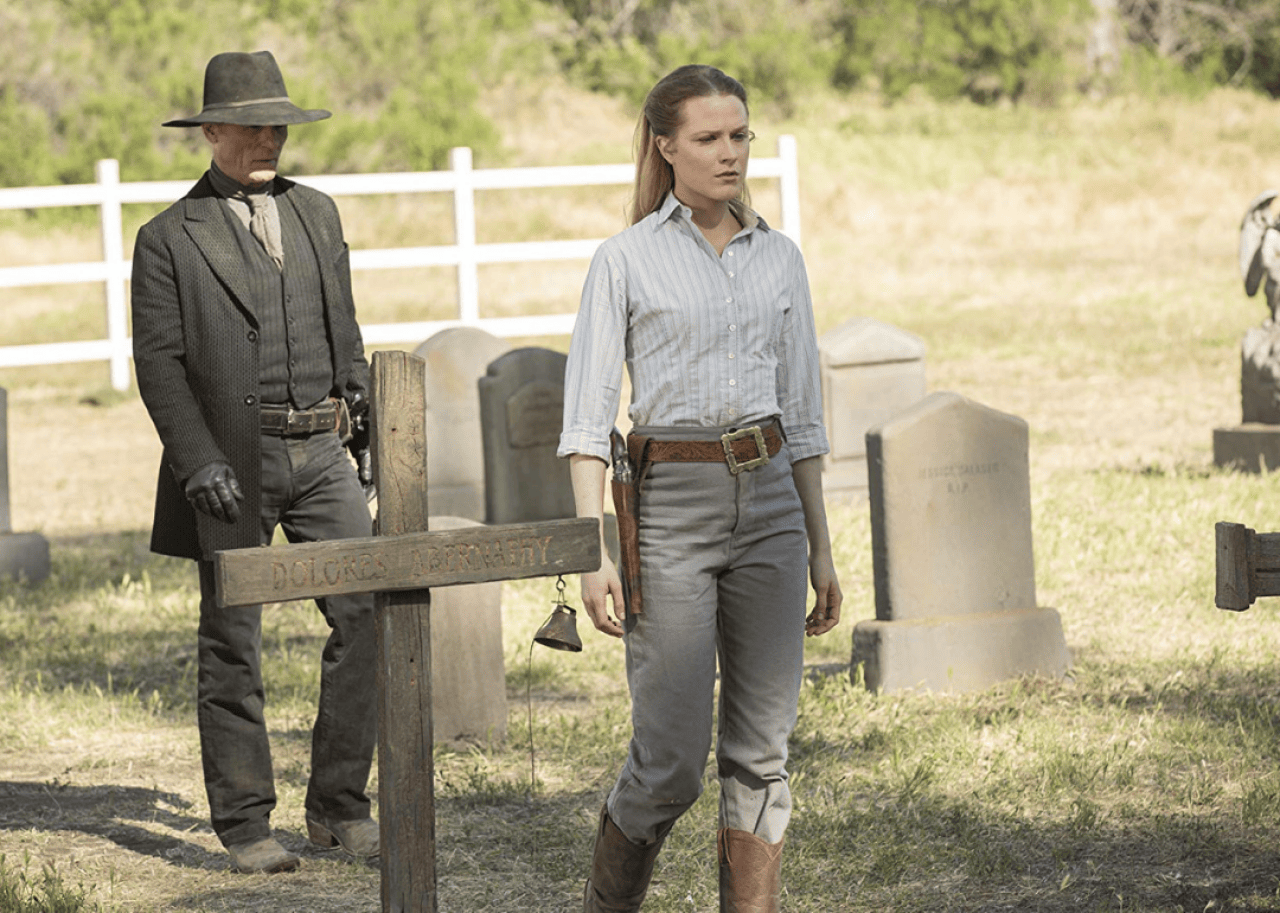
Warner Bros. // Getty Images

Inception (2010)

– Director: Christopher Nolan
– IMDb user rating: 8.8
– Metascore: 74
– Runtime: 148 minutes

“Inception” is about a thief who steals information from inside the heads of high-profile targets while they’re asleep. Starring Leonardo DiCaprio as Dominick Cobb, the story follows Cobb as he tries to do one last job that will clear his name and allow him to go home to his kids. Throughout the movie, Cobb uses a spinning top to help him know if he’s in a dream or in reality. If the top spins indefinitely, he’s still in a dream. As he gets deeper into dream states of his victim, Cobb doesn’t know if he ever fully reemerged. In the end, you see that he’s back with his children, and as he spins the top, you don’t find out if it topples over or not.

Fox 2000 Pictures

Life of Pi (2012)

– Director: Ang Lee
– IMDb user rating: 7.9
– Metascore: 79
– Runtime: 127 minutes

Based on the award-winning book of the same name, “Life of Pi” is about a teenager who is stranded on a life raft with a tiger after a storm sinks the freighter on which he was a passenger. As the story unfolds, Pi tells an incredible tale of survival that includes crashing on an island with meerkats and acid tide pools. In the end, you find out that the tiger, and other animals stranded on the life raft, were really people: his mother was the orangutan, a sailor was the zebra, the ship’s chef was the hyena, and he was the tiger all along.

Pathé

Enemy (2013)

– Director: Denis Villeneuve
– IMDb user rating: 6.9
– Metascore: 61
– Runtime: 91 minutes

A brilliant analysis of the subconscious, “Enemy,” starring Jake Gyllenhaal as Adam/Anthony, is about the duality of life and how people are able to hide their deepest, darkest secrets. The movie slowly unfolds as Adam discovers Anthony is identical to him. The two men become obsessed with one another, uncovering secrets and sleeping with each other’s wife and girlfriend. Anthony ultimately dies in a car crash, leaving Adam with Anthony’s wife, but also in a seeming loop of consciousness that plays out over and over again.

Blackbird

Swiss Army Man (2016)

– Directors: Dan Kwan, Daniel Scheinert
– IMDb user rating: 7
– Metascore: 64
– Runtime: 97 minutes

“Swiss Army Man” is about a person stranded on an island who encounters a corpse and finds that he can manipulate the body like a Swiss Army knife. The two men, Hank and Manny, played by Paul Dano and Daniel Radcliffe, form an odd bond as Hank teaches Manny how to live like a normal human after having been a corpse for so long. The film culminates when Manny brings Hank to the house of a woman whom Hank was stalking. When they arrive, Manny turns into a corpse again, Hank is arrested, and Manny ends up floating away in the ocean.

Topics:

Entertainment

Posts navigation

Older posts
Newer posts
Featured Jobs
Kirkus Media
Editorial Intern
Kirkus Media
New York City, New York (US)

Gaia Inc
MEDIA COORDINATOR
Gaia Inc
Louisville, CO

Gaia Inc
Global Paid Media Specialist
Gaia Inc
Louisville, CO

Gaia Inc
Director of Media Strategy
Gaia Inc
Louisville, CO

Hearst Television
Account Executive
Hearst Television
Milwaukee, WI, United States

All Jobs »
PREMIUM MEMBER

Thomas Asbury

Jacksonville, FL
25 Years Experience
I’m a published author, international lecturer, and lawyer who has been a professional freelance writer for 10+ years. I can write and edit to any...
View Full Profile »
Join Mediabistro Membership Today

Stand out from the crowd with a premium profile

Mediabistro Logo Find your next media job or showcase your creative talent
  • Job Search
  • Hot Jobs
  • Membership
  • Newsletter
  • Career Advice
  • Media News
  • Hiring Tips
  • Creative Tools
  • About
Facebook YouTube Instagram LinkedIn
Copyright © 2026 Mediabistro
  • Terms of Use
  • Terms of Service
  • Privacy