Mediabistro Logo Mediabistro Logo
  • Jobs
    Search Creative Jobs Hot Jobs Remote Media Jobs Create Job Alerts
    Job Categories
    Creative & Design Marketing & Communications Operations & Strategy Production Sales & Business Development Writing & Editing
    Quick Links
    Search All Jobs Remote Jobs Create Job Alerts
  • Career Resources
    Career Advice & Articles Media Industry News Media Career Interviews Creative Tools Resume Writing Services Interview Coaching Job Market Insights Member Profiles
  • Mediabistro Membership
    Membership Overview How to Pitch (Premium Tool) Editorial Calendars (Premium Access) Courses & Training Programs Membership FAQ
  • Showcase
    Featured Creative Stories Submit your Story
  • Log In
Post Jobs
Mediabistro Logo Mediabistro Logo
Search Creative Jobs Hot Jobs Remote Media Jobs Create Job Alerts
Job Categories
Creative & Design Marketing & Communications Operations & Strategy Production Sales & Business Development Writing & Editing
Quick Links
Search All Jobs Remote Jobs Create Job Alerts
Career Advice & Articles Media Industry News Media Career Interviews Creative Tools Resume Writing Services Interview Coaching Job Market Insights Member Profiles
Membership Overview How to Pitch (Premium Tool) Editorial Calendars (Premium Access) Courses & Training Programs Membership FAQ
Featured Creative Stories Submit your Story
Log In
Post Jobs
Log In | Sign Up

Follow Us!

Skills & Expertise

4 Things Writers Need to Know About Fact-Checking

Even one mistake can cost you the assignment. Here's how to catch errors before your editor does.

4 Things Writers Need to Know About Fact-Checking
Yana icon
By Ayana Young
Ayana Young is a communications and PR strategist with 15+ years of experience spanning media relations, lifestyle brands, professional sports, and publishing.
4 min read • Originally published August 21, 2017 / Updated March 19, 2026
Yana icon
By Ayana Young
Ayana Young is a communications and PR strategist with 15+ years of experience spanning media relations, lifestyle brands, professional sports, and publishing.
4 min read • Originally published August 21, 2017 / Updated March 19, 2026

Editors want a lot of things from writers, but there’s one thing they never want: factual errors. When an editor sees one mistake, she naturally assumes more will follow. For a freelance writer, that’s clearly bad news.

“These days I have such a small pocket of money for freelancers that I don’t want to waste a cent of it on someone who might not deliver something I can trust,” says Susy Schultz, president of Public Narrative, a journalism training organization in Chicago. “I know this is also the case with many of the other media outlets we work with.”

With newsrooms running leaner and fact-checking departments disappearing even at outlets that used to have them, the burden of accuracy falls squarely on you. Most publications no longer employ dedicated fact-checkers, and the editors who do spot-check your work are doing it alongside five other jobs. A single error that slips through doesn’t just embarrass the publication. It marks you as someone not worth the risk.

So how can you fact-check yourself? Just put a little distance between yourself and your work, and you can catch errors before anyone else does.

1. Perfect the Pitch

Dear… How do you spell the editor’s name? “If they didn’t bother to look up how to spell my name, they’re probably not going to be the writer I want work from,” says Schultz, whose first name—Susy—is easily misspelled by anyone who doesn’t take the time to check.

Double check everything else in your pitch letter, too, paying special attention to proper names, titles and any other facts a knowledgeable editor can easily spot. “When you’re looking at a pitch letter, if there are red flags—the zip code is wrong, anything that you can immediately tell is wrong—it’s the triage factor,” Schultz says. “There’s no room to say, ‘OK, I’m going to give you a chance.’ That’s the harshness of the landscape right now.”

2. Don’t Mess Up Math

Maybe you went into writing because you’re good with words but not with numbers. But good writers have to get the math right in their stories, too. If you mix up your millions and your billions, if you don’t know a median from an average, or if fractions and percentages confuse you, you won’t be able to craft error-free copy.

You don’t need to be a mathematician. You just need to learn a few basics. “It’s fairly prevalent these days to see writers grabbing dubious statistics because there’s so much dubious stuff out in the world these days,” says David Zivan, group editor for the Chicago office of Modern Luxury publications. Even more common, he says, is a miscalculation of percentage change. “It’s a bugaboo for many of us English majors, but it’s critical in so many topic areas, real estate being a prime example. If you’re covering the change in prices in a neighborhood or a building, you’ve just got to get that right,” Zivan says.

Be precise down to the decimal point, adds Wendy Cole, editor of Realtor magazine, or you might be off by a factor of a hundred. “We’re so casual in our communication that it seems formal to ask where the decimal point is, but precision is important. This is where a miscommunication becomes a mistake. The casual way we communicate can lead to wrong assumptions. The onus is on the writer.”

3. Check Your Conclusions

It’s not enough to know why you reached a conclusion; your editor needs to know, too. “You need to prepare source information so that if there are any questions about how the writer came to a conclusion, that it can be fact-checked,” says Candi Meriwether, former managing editor of Jet magazine, who now teaches journalism at Columbia College Chicago.

In addition to providing enough facts so that readers can see how you determined that something is a trend, or overpriced or underappreciated, share your source list with your editor. And before you submit your story, check the facts in those sources again and make sure you haven’t jumped to any conclusions.

4. Remember: Nobody Has Your Back

“Some freelancers have an assumption that all magazines have fact-checkers, but not all magazines do because many have small staffs,” Meriwether says. “That role did not exist at Jet.”

In fact, fact-checkers don’t exist at many smaller magazines, and they are even less common at online publications. Instead, editors (and sometimes copy editors) are the only ones who perform any fact-checking, and they do it on top of numerous other editorial duties and under time pressure. This means a freelancer’s errors may not get caught before publication.

There are many ways to turn off an editor, and making a publication issue a correction is among them. “You should cover yourself because, ultimately, it’s going to reflect on you if there are errors and you won’t be hired again,” Meriwether says.


Topics:

Advice From the Pros, Skills & Expertise
Advice From the Pros

13 Questions With Journalism Professor Sharon Bloyd-Peshkin

Teaching the importance of checking the facts

13 Questions With Journalism Professor Sharon Bloyd-Peshkin
Yana icon
By Ayana Young
Ayana Young is a communications and PR strategist with 15+ years of experience spanning media relations, lifestyle brands, professional sports, and publishing.
5 min read • Originally published August 25, 2017 / Updated March 19, 2026
Yana icon
By Ayana Young
Ayana Young is a communications and PR strategist with 15+ years of experience spanning media relations, lifestyle brands, professional sports, and publishing.
5 min read • Originally published August 25, 2017 / Updated March 19, 2026

From magazine editor to professor of journalism and freelance writer, Chicago-based Sharon Bloyd-Peshkin teaches the basics of the field while emphasizing the importance of fact-checking and its role in protecting writers and publications from lawsuits.

Bloyd-Peshkin is now sharing her expertise with Mediabistro as a guest instructor for the new online training course Check Yourself: Quick, Simple and Thorough Fact-Checking.

Vital Stats

Name: Sharon Bloyd-Peshkin
Company: Columbia College Chicago
Title: Associate Professor of Journalism
Years with Company: 14

Hometown: Oak Park, IL
Where do you work? Chicago, IL


Education

College: BA, University of Chicago; MA, University of Virginia
Major: BA in Humanities; MA in English Literature


Social Info

Instagram: speshkin
Twitter: @speshkin
LinkedIn: Sharon Bloyd-Peshkin

1. What was your first real job? How did you get it?

My first “real job” was as a radio producer for a talk show on WGN Radio in Chicago. I’m not really sure why they hired me, but I learned some valuable things there, including how to pick up a phone and call someone to explain how they fit into a show and invite them on. There are a lot of connections between that and calling sources to explain how they fit into a story and convince them to talk to me.

2. Please describe what you do in your job in one to three sentences.

I teach a wide range of classes at Columbia College Chicago, from Introduction to Journalism and Essentials of Interviewing, to Interpretive Reporting and the College Magazine Workshop, in which students in Journalism and Design programs create and publish an award-winning magazine over the course of one semester. I also write for a variety of publications and do research into how fact-checking is practiced and how it is changing.

3. Is this where you always thought you’d end up? Or has your career been a wild ride of curveballs and left turns?

I had no intention of becoming an academic, and didn’t really plan to go into journalism, either. But I’ve always been a very curious person, enjoyed talking to people and learning from them, and loved to write, so perhaps it was inevitable.

4. What inspired you to break into this role?

I was a magazine editor for 13 years. Toward the end of that time, I taught a course in magazine editing at Northwestern University and loved it. So when Columbia College Chicago posted a faculty position teaching magazine writing and editing courses and advising the college magazine, I jumped at it!

5. What about your job gets you excited to jump out of bed every morning? What makes you want to hide under the sheets?

I’m always excited about finding creative ways to engage students in journalism. I don’t lecture; rather, I try to make my classes journeys of discovery. I love helping students improve their story ideas, their research and interview skills, their writing and their storytelling in any medium, but I don’t really like grading.

6. How do you stay on top of trends in your field?

I work as a freelance writer, do some pro bono magazine editing, and have many friends and colleagues who are active in the field. My research also requires me to interview editors around the country.

7. What skills do you want to develop and why?

For me, social media is hard work. I’m kind of a private person and I’m not big on self-promotion, so I struggle with that. I’m far more comfortable posting to a company Instagram than I am to my own!

8. What leaders or companies in your field do you follow? What do you like about them?

Too many to name! But if I had to name the magazines that I have “fact-checking crushes” on, they would be The New Yorker, WIRED, and Mother Jones. They and a few other magazines—Vanity Fair, Esquire, and The Nation among them—set the bar for contemporary fact-checking processes despite the pressure to produce ever more content ever more quickly on all platforms.

9. What’s the biggest misconception people have about this field/role?

Fact-checking has gained a much higher profile in recent years with the rise of political fact-checking, but I don’t think many people are aware of how fact-checking got started in magazine media or what role it plays to this day in protecting writers and publications from lawsuits and in bolstering their reputations for reliable journalism in a sea of content.

10. What’s the one piece of advice you would give to someone looking to break into this field?

I’ll answer this for journalism, not for fact-checking. No matter what type of journalist you aim to be or what medium you want to work in, you still need to develop the traditional skills of rigorous and thorough reporting, effective interviewing, clear and accurate writing, and interesting storytelling.

11. Why did you choose to become a Mediabistro instructor, and why do you think it’s important for people to learn the skill you are teaching?

I think it’s more urgent than ever for content creators to learn to fact-check their own work because they aren’t likely to have anyone else fact-check their work prior to publication, and the consequences of public errors can be devastating to their careers. I’m thrilled to be able to reach a wide variety of people who want to get this training through Mediabistro.

12. What tips do you have for students taking your course?

Fact-checking is a mindset as much as it is a skillset, so come into this course with an open mind and you’ll probably find it will change your writing as much as it changes what you do after you’ve finished a story.

13. What are you reading and/or watching right now?

I’m reading The Death and Life of the Great Lakes by Dan Egan and listening to the podcast Revisionist History by Malcolm Gladwell. The last thing I watched that I couldn’t stop talking about was Westworld.

Get to know Sharon and learn the invaluable skill of fact-checking in her new course.

Topics:

Advice From the Pros

How to Handle Rejection From Editors and Keep Writing

Learn to handle rejection professionally, and keep it moving as a writer

How to Handle Rejection From Editors and Keep Writing
By Anni Irish
4 min read • Originally published September 27, 2017 / Updated March 19, 2026
By Anni Irish
4 min read • Originally published September 27, 2017 / Updated March 19, 2026

Rejection is unfortunately a part of life. But for writers, it can sometimes happen on a daily basis. Getting a rejection letter can be stressful, and may even make you question your abilities as a writer. While hearing “No” is par for the course as writing professional, there are still things that can be done to help you learn from the process, and to improve this often uncomfortable situation.

Here are six tips to assist you in the pitching process and to help make the sting of rejection more manageable.

  1. Shake it off

As a writer at any stage in your career, you will inevitably get a rejection letter. While this is a professional causality, it can bruise your ego and hurt your feelings in the process. However, the quicker you are able to develop thick skin, the better equipped you will be to deal with rejection in the long run.

Getting used to criticism, and having your ideas rejected, can be an adjustment. But once you make this change, you will see an improvement in how you react to this situation. While there is no right way to handle rejection (and this is certainly easier said than done), being able to hear it, process it and move on, without being reactionary, is one of the healthiest things you can learn to do as a writing professional.

  1. Ask for feedback

You just sent out a pitch, and got a rejection email. In this situation, be grateful you heard back. Editors are busy people juggling multiple writers. Sometimes a story just isn’t the right fit for the publication. However, if an editor took the time to write back, read the email carefully and be sure to follow up. Ask for feedback on the pitch: why it didn’t work for them and how it can be improved. Another possible course of action is to ask the editor if they are looking for stories on specific topics.

Once you receive a response, incorporate the feedback into your next pitch. Remember, just because one editor turned down a story, doesn’t mean your piece won’t find a home. And ultimately, getting feedback on your pitch could lead to a stronger working relationship with an editor and the publication or website they are associated with.

  1. Turn a negative into a positive

Don’t get discouraged when your pitch isn’t accepted. You can still turn the situation around, and as a freelance writer, sometimes you have to be a creative problem solver.

Looking for an unexpected story idea, spotting a trend before it catches on, trying to place your story with a different publication, or just simply emailing an editor to see if they are taking on freelance pieces, could work to your advantage. Being creative is a valuable skill to have, and while your pitch may not have landed in the exact publication you imagined it in, after some tweaking, it may end up with a home after all.

  1. Learn from the process

A lot of rejection is arbitrary, and out of your control. The quicker you are able to realize this, the better off you will be in the long run. The pitching process is all about learning what to do. With each new pitch you send out, you will become a stronger writer and able to decipher what a story is and is not. You’ll also get a better sense of the publications and websites you are pitching to.

When pitching to specific places, it’s helpful to already be familiar with their content so you will have a better idea of the kinds of stories they may be looking for. Go on the magazine’s website, or the site of where you will be pitching, and conduct keyword searches of your article ideas. This way, you will be saving yourself and the editor time if there is already a similar story up. If that’s the case, you can potentially offer another angle, and hopefully, place your story.

  1. Don’t take it personally

Writing is a hard industry to break into. And sometimes it may seem that you are hearing more no’s than yes’s. If that is the case, don’t take it personally. Like other industries, writing isn’t immune from seasonality; depending on the time of year, you may find it harder to place stories. For example, editors may not be able to take on pitches from outside writers due to budget constraints or other issues.

Another thing to keep in mind: try to pitch stories ahead of the curve. Editors work off of an editorial calendar, so if you know that summer is coming, or a blockbuster movie is being released on a certain date and you are dying to review it, pitch early and often! Being able to sort professional rejection from personal life is a hard skill set to learn, but once you are in the practice of doing it, it will make your pitching process less stressful and more fun in the end.

  1. Think positively

Thinking positively can sometimes make all the difference when pitching. If you are more confident in your writing skills, this will come across in the pitches you are putting out. Be excited about the story ideas you come up with and convey that in the emails you send out. A little positive energy can go a long way. By adjusting the way you think, this may help you yield more positive results.

Topics:

Advice From the Pros, Be Inspired
Advice From the Pros

Taffy Brodesser-Akner on Going from Personal Essays to The New York Times Magazine

How personal essays led to writing for The New York Times

Taffy Brodesser-Akner on Going from Personal Essays to The New York Times Magazine
Yana icon
By Addie Morfoot
@kamorfoot
Addie Morfoot is a journalist and writer with over 21 years of experience contributing to The New York Times, Variety, the Wall Street Journal, and Crain's New York Business. She holds an MFA in creative writing from the New School and covers film, television, real estate, and entertainment.
7 min read • Originally published October 2, 2017 / Updated March 19, 2026
Yana icon
By Addie Morfoot
@kamorfoot
Addie Morfoot is a journalist and writer with over 21 years of experience contributing to The New York Times, Variety, the Wall Street Journal, and Crain's New York Business. She holds an MFA in creative writing from the New School and covers film, television, real estate, and entertainment.
7 min read • Originally published October 2, 2017 / Updated March 19, 2026

In the short span of seven years, she went from prolific personal essay writer to prolific feature writer for The New York Times Magazine and GQ Magazine. At The Times, she won the New York Press Club award for her profiles of Gaby Hoffmann and Damon Lindelof, and at GQ, she won the same award for her profile of Don Lemon, which also garnered a Newhouse Mirror award.

She can make anyone or anything interesting, which is probably why editors all over the country want to hire her. In addition to The New York Times Magazine and GQ, she has written for publications including Bloomberg Businessweek, Afar, Playboy, Cosmopolitan, ESPN The Magazine, Texas Monthly, Outside Magazine and Matter.

In June, it was announced that Brodesser-Akner, who worked at Mediabistro from 2001-2007, would join The Times as a features writer for Culture and a staff writer for The Times Magazine.

Why did you decide to start writing personal essays?

I started writing personal essays after the birth of my first son, which was traumatic. Something horrible had happened to me and thank god my son, and I were ok, but I was really traumatized. It opened up something in me where I no longer felt compelled to have any privacy. I just needed to be heard and listened to. So I wrote personal essays, and I couldn’t believe how much people responded to them. For the first time in my life, I didn’t have to be screaming to be heard, and I was heard way more effectively.

You wrote A LOT of personal essays in a short amount of time for many different magazines. Did you learn anything while writing essays that carried over to your feature and profile writing?

I learned that people will leave at the drop of a hat if you are not precise, interesting, entertaining and informative. If you are not those things in a very brief period of time, then readers will leave.

Anything else?

Yes. Always send in clean copy, spell checked copy and all in one font. People to this day remark on how clean my copy is and I think, what are other people turning in? Also, with edits, be amenable, never defensive and never late with the edits.

Did your essays help launch your feature writing career?

Being willing to talk about anything and really bare my soul got me in doors. My first story for The New York Times was a personal essay about why people are so mean on the internet. (“E-Playgrounds Can Get Vicious” April, 2010)

Did you know someone at the Times or did you cold pitch?

I cold-pitched someone whose name I got from somebody else, and I said, ‘I have this idea for a story and I would like to track down some internet trolls and figure out why they are the way they are.’ And he said, I don’t think you will be able to do that but you could try. So I did and I came back with what I found, which was that no one was willing to talk to me. But I still had feelings about the subject, so I did what I still do to this day which is when the story that is supposed to happen doesn’t happen, I fill the space with something that is equally or more interesting.

And they published it as is?

There were edits, which I was so nervous about. I received each of them as a scathing criticism. But in reality they were really just innocuous, gentle edits for a line there or here. I remember saying to my husband, ‘I’m so glad I will never have to do this again. I never want to write for The New York Times again. I’m so glad that I will be able to say that I wrote for them once and that was that.’ I didn’t want to do it again because I was so nervous the whole time. The stakes seemed so high and I don’t think it was one of my best stories. I liked it but I noticed when the stakes were lower I was freer.

You are a confident writer who isn’t scared to say what she thinks in essays, profiles or features. That can be hard for writers. Did you learn it or have you always been a confident writer?

I didn’t always have it. I learned very quickly from writing personal essays that people responded to them because they related to them. We are not that different than each other. The more specifically and the harder I go on the things that I’m feeling, the more I am guaranteed that people will relate to it.

Sometimes you incorporate yourself into your profiles. That can be tricky. How do you decide when it’s appropriate?

I think my profiles are personal essays applied to other people. Any time I’m in a story I have to be very, very careful not be self-indulgent. I’m there as the reader in a very general, readerly way. I only bring myself in when I think that I can elaborate better on the thing that (my subject and I) are talking about.

You have profiled many celebrities including Tom Hiddleston, Nicki Minaj and Rob Pattinson. What do you do as a writer when you aren’t interested in the person you profiling?

Here’s your job when you are assigned somebody: You stay there until you understand why a magazine that you love is interested in him or her. You have to figure out why people love this person. You are not there to say whether or not you like them. You are there to say what it was like to be with them. You are in a room with this person who has a lot of fans because more people like them than hate them.

You are known for being a prolific writer. How many stories are you working on at any one time?

A lot. There have been times when I’ve been assigned 12 or 13 stories at one time, but they aren’t due at the same time. Every story gets what it needs. Some stories are really easy and some stories are really hard and some stories I have to report and wait a few weeks while it percolates in my head and then I sit down to write it. I’m lucky I don’t find writing sentences excruciating.

What have you learned in the last six and half years freelancing for so many different publications?

I’m far more efficient now. I like to write for an editor. I know what each editor will like and what is going to push their limits. I know how it’s going to go.  So the thing that has changed is now I’m very focused on how do I tell this story to this editor in the most compelling way possible.

Any advice when it comes to working with editors?

Be decent. If you are decent in every single way nothing can really hurt you. People will always remember your decency. This is a relationships business. If you don’t act decent this world can turn on you very quickly, but at the same time whatever your flaws are, and we all have flaws as writers—I overwrite—they are made up for in being a decent person and being somebody that people would like to interact with over and over again.

How do editors handle your “overwriting”?

I find that if you apologize, and say that you have really tried to keep it to the word count, that helps and you don’t get yelled at. You have to make a compelling case that you could not figure out a way to tell this story differently. And if you show your passion and show that it was never a function of laziness, then people will work with you.

After all of your success is there anything you are still trying to improve upon?

You are always at war with the last thing you did. How can I make it better? That’s what I try and concentrate on—getting better than I was last time. I’d always like to get better at telling the most complete version of a story.

Why leave the freelance world for a staff position?

One of the reasons I wanted to take a job was to not write quite as much as I was. I always wondered what it would be like to be able to immerse myself for longer and more exclusively into one subject. What would that do for my writing? I’d like to see.

Topics:

Advice From the Pros, Be Inspired
Be Inspired

So What Do You Do, Publicist Jennifer Betts of Innovative PR?

Insider tips on how to succeed in the PR industry

So What Do You Do, Publicist Jennifer Betts of Innovative PR?
Yana icon
By Ayana Young
Ayana Young is a communications and PR strategist with 15+ years of experience spanning media relations, lifestyle brands, professional sports, and publishing.
3 min read • Originally published November 6, 2017 / Updated March 19, 2026
Yana icon
By Ayana Young
Ayana Young is a communications and PR strategist with 15+ years of experience spanning media relations, lifestyle brands, professional sports, and publishing.
3 min read • Originally published November 6, 2017 / Updated March 19, 2026

Jennifer Betts is the quintessential Los Angeles publicist—producing glitzy red carpet events and networking with celebrities.

Her firm, Innovative PR, handles lifestyle brands across industries including beauty (Philosophy, Beautycon, NYX), fashion (American Made Supply Co., Tanya Heath Paris, Alberto Parada), liquor (Hennessy, Voli Vodka, Malibu Red), coffee (Keurig, Café Bustelo) and travel and leisure (Gilt City, Priv, Sofitel).

Innovative PR handles brand content creation, digital and social media, influencer marketing and media relations. But Jennifer is especially known for launching new products into the media spotlight and planning memorable brand events complete with sponsorships, celebs and major news coverage. (Just take a peek at her Instagram and count all the famous faces.)

Despite her success, Jennifer’s original career path was headed in a completely different direction. Read on to see where she started—and the skills she used to make it to the top, as president of her own PR firm.

Vital Stats

Name: Jennifer Betts
Company: Innovative PR
Title: President
Twitter: @jen_betts
Instagram: @jjbetts
Hometown: Arcadia, CA
Current location: Hollywood

What does a publicist do, exactly? What’s your day-to-day like?

Publicists are brand communicators. My day-to-day includes at least five conference calls a day with clients, usually ten-hour days. There is a lot of research, creative concept building and pitch strategy.

How did you end up in PR? What was your career journey?

I am a nurse by nature. I’ve always been a caregiver. I became a nurse practitioner in family medicine. At the same time, I’ve always been social my entire life. I loved going to events and hosting parties.

In 2001, I decided to intern at an events PR company and began working my way up the ladder. I launched several PR firms in my career and my current firm is called Innovative PR. I’ve watched public relations change so much over the last 15 years, especially with the rise of digital media and influencer marketing.

Tell us about launching Beautycon and LA Food Bowl. What’s your role in those conferences?

Beautycon is one of the brands I’m most proud to have worked on and developed in the PR industry. It taught me a lot, and I utilize these learnings for my current clients. Beautycon had excellent teamwork and hit at the perfect time.

My role was to launch festivals, the subscription beauty box and media platform. Launching this brand took hard work, pushing down doors and consistent brand building. The beauty industry is a $445 billion industry—Beautycon is only going to get bigger and better.

I was also the publicist for the inaugural LA Food Bowl. I helped create strategy for the festival, which ran for a month.

What skills are most pertinent to your success? What skills are most important for a PR powerhouse have?

Time management, hard work and loyalty.

How do you land clients and gigs?

Hard work, successful previous clients and word of mouth.

Tell us about your campaign with Giada De Laurentiis for Philosophy.

I work with Philosophy and they have an initiative called Hope and Grace, which is the charity component of their current campaign, featuring Giada.

One percent of all Philosophy USA net product sales supports community-based mental health efforts, and this campaign in particular is in support of World Mental Health Day, [which took place] on October 10, 2017.

What gets you out of bed every morning and keeps you motivated?

My love for my job and clients, my family and caring for others.

What’s the most challenging aspect of a career in PR?

The challenge is the ever-changing digital space. The way we find news now has shifted and keeps changing. It’s all about staying ahead of it.

What advice would you give to aspiring publicists?

Be prepared to know this is a career and not a job. It takes a certain type of person to do PR. It is a 24/7 job. It doesn’t sleep.

Get your first (or next) job in public relations! Click here to view all of Mediabistro’s current PR job openings.

Topics:

Advice From the Pros, Be Inspired
Hot Jobs

How Group Nine Media Stays On Top

Here’s how Group Nine Media’s brands stand out in a crowded and ever changing media landscape

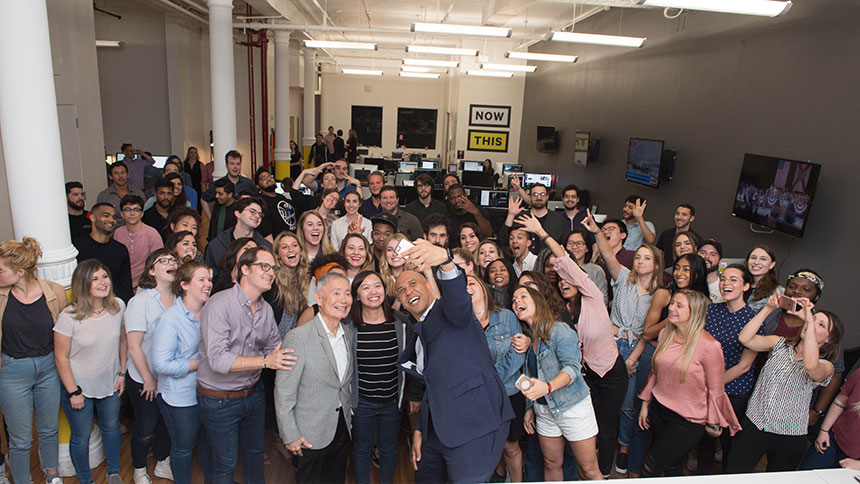
Now This staff takes selfie with Booker/Takei
Leah icon
By Kat Boogaard
Kat Boogaard is a freelance writer specializing in careers, productivity, and the future of work, with clients including Atlassian, Glassdoor, and QuickBooks. Her work has been published or syndicated by The New York Times, Forbes, Fast Company, TIME, and Business Insider.
4 min read • Originally published January 23, 2018 / Updated March 19, 2026
Leah icon
By Kat Boogaard
Kat Boogaard is a freelance writer specializing in careers, productivity, and the future of work, with clients including Atlassian, Glassdoor, and QuickBooks. Her work has been published or syndicated by The New York Times, Forbes, Fast Company, TIME, and Business Insider.
4 min read • Originally published January 23, 2018 / Updated March 19, 2026

It’s no secret that today’s media environment has been challenging for publishers, as audience attention (and the resulting ad dollars) grows ever more elusive.

Consumer attention and media consumption has shifted dramatically from radio, newspapers and television to mobile and social media platforms. People want access to news and information wherever they are and audiences want to directly engage with content.

Media companies are struggling to adapt to the way that people get their hands on everything from hard hitting news to feel good stories.

However, for some companies, this constant evolution presents more of an opportunity than a hurdle—and nobody is better at staying ahead of the curve than Group Nine Media.

Group Nine Media is the parent company of four powerful brands you’ve frequently seen in your social media feeds: NowThis (the no. 1 most watched U.S. video news creator on social), The Dodo (the no. 1 animal brand on social), Thrillist (the most trusted digital brand in food, drink, travel, and entertainment) and Seeker (the digital leader in science and curiosity).

Known for its high-quality, timely, and engaging video content—not to mention killer social media strategy—Group Nine isn’t intimidated by the growing challenge of standing out in the crowded and ever-changing landscape—in fact, the company is excited by it.

“There is a ton of video content currently in users’ Facebook feeds, so the name of the game is to get people to stop scrolling and watch our videos,” shares Shelby Levinson, Supervising Producer for Publishing and Strategy at NowThis.

So much of Group Nine’s success is driven by its distributed content strategy on social media platforms. Within the company, there are obviously a lot of roles that fall within the video and social media management realm—including platform managers who are tasked with intimately understanding the ins and outs of their designated social media platforms.

However, just because Group Nine’s brands live and breathe on social doesn’t mean there aren’t plenty of other roles and departments that contribute to its mission.

Check out all the amazing opportunities at Group Nine Media

“Our written editorial team actually works hand-in-hand with our social video team,” explains Matt Morales, Producer and Editor with Seeker. “Both teams attend the same pitch meeting and work together to make sure that they are creating complementary content that shares our editorial tone and vision. So, when you’re on Seeker’s website, you can not only read a great article on, say, the latest advancements in artificial intelligence, but you can also watch a video related to that content.”

Indeed, Group Nine places a great deal of emphasis on cross-functional collaboration in order to produce its standout content.

“In my day-to-day on the social team, I’m consistently working with other teams including video, written, business and operations, and analytics,” explains Nicole Hendrickson, Senior Social Media Manager for The Dodo.

Group Nine’s teams also work together to incorporate data driven insights into their editorial and social publishing strategies to make each piece of content as impactful as possible.

“We’re a social-first publisher, so every single piece of content we create is specifically tailored for the platform it’s being published to,” Hendrickson adds.

It’s no secret that Group Nine is forging a new path in the media landscape. But, don’t let that intimidate you—when it comes to hiring, Group Nine looks for people who are willing to learn and evolve, rather than people who have already mastered a specific skill set.

“It’s important to look for candidates who are open to trying new things and willing to dive right into the brand,” says Julie Cerick, Director of Operations at Thrillist.

That flexibility and willingness to experiment carries a lot of weight at Group Nine, particularly since the company is ready and willing to invest in helping people shake some of those standard beliefs and gain a better understanding of their innovative approach to media.

“When we bring in new employees, a big part of that training is getting out of the old habits and learning how to entice people to watch a video and keep watching,” adds Levinson.

With this forward thinking attitude, tackling new challenges, and plenty of driven, passionate employees on its constantly growing team, Group Nine has a lot of enthusiasm for the future—which is the very thing that keeps team members excited to head into the office day in and day out. The company is centered on core values: “care deeply,” “be brave,” “go first,” do good,” “stay close,” and “win together.” They recently hired their first Chief People Officer, Stacy Green who has a proven record of building the kinds of environments that allow employees to thrive.

“It’s the idea that anything could change at any moment, which is so exciting because it affords me new opportunities to learn,” concludes Cerick, “I love being kept on my toes and having to adapt to how the world consumes content. It’s changed so much in five years; imagine where we’ll be in the next five…”

Group Nine Media is hiring. Explore all the great open positions.

Topics:

Get Hired
Climb the Ladder

40 Powerful Action Words to Make Your Resume Stand Out

Sure. Everyone uses words on their resume. But, trust me, if your hiring manager sees "Attention to detail" one more time, they might consider a career change themselves. Two mistakes that so many resume-writers make are 1. Pointing out even the most basic of skills that literally any company would want an employee to have (ie. attention to detail) and 2. copying and pasting their past job descriptions under the "experience" section of their resume. What employers really want to know is what you can do. What can you do for their company?
Scouted.io icon
By Scouted
Scouted was a hiring marketplace that matched candidates to roles based on potential, serving clients from high-growth startups to Fortune 500 companies.
3 min read • Originally published February 8, 2018 / Updated March 19, 2026
Scouted.io icon
By Scouted
Scouted was a hiring marketplace that matched candidates to roles based on potential, serving clients from high-growth startups to Fortune 500 companies.
3 min read • Originally published February 8, 2018 / Updated March 19, 2026

Chances are, if you’re reading this, you already know the competition is fierce when it comes to the job market. But did you know that, on average, corporate job postings receive around 250 resumes? You may also have heard that you have about 7 seconds to make an impression. That’s right. 7 seconds. So what’s going to make a hiring manager care about your resume and set it aside in the “possibility” pile instead of the trash can?

Well, there’s lots of resume advice out there. Some good, some dated, and some bad. But a key concept has always been that you will need to stand out. Not in a weird way like by putting an awkward headshot on the front of your resume, but more like a, “Hey, this person actually seems to be good at this” kind of way. So how do you get that kind of reaction from a hiring manager within 7 seconds?

We’re here to tell you that whether you have 10 minutes of job experience or 10 years, the thing that can make all the difference on your resume is the words.

You might be thinking, “Well, duh, I wasn’t going to hand the manager a picture book.”

Sure. Everyone uses words on their resume. But, trust me, if your hiring manager sees “Attention to detail” one more time, they might consider a career change themselves. Two mistakes that so many resume writers make are: 1. Pointing out even the most basic of skills that literally any company would want an employee to have (i.e., attention to detail) and 2. Copying and pasting their past job descriptions under the “experience” section of their resume.

What employers really want to know is what you can do. What can you do for their company?

See that word there? That word, “do”? “Do” is a verb. Some synonyms for “do” include “undertake,” “execute,” “perform,” “accomplish,” and “achieve.”

These are the things a hiring manager really wants to know. What did you accomplish at your old job? What were some projects that you undertook? Did you launch any new ventures at your former company? Did you help to achieve any goals? Whatever these things might look like for you and your past job experience, these are the things your future boss will want you to carry over to their company. Copying and pasting old job descriptions really doesn’t say much about how you can actually make a difference in your job.

While you don’t have to copy and paste these words and force them into your resume, take a hard look at your resume and ask yourself if it really tells a hiring manager what you can do for them. And if you feel inclined to some word inspiration to help spruce up your resume, take a look at the list we curated below and feel free to glitter your resume with words that will show a hiring manager that you’re a game-changer. You don’t just show up and do a job; you show up and make a difference.

Powerful Action Words to Use in Your Resume

  • Grew/Grow
  • Manage
  • Oversee
  • Train
  • Complete
  • Organize
  • Analyze
  • Develop
  • Revitalize
  • Push
  • Strengthen
  • Build
  • Team
  • Which (a great word to transition what you did into what it meant for your company: “I managed a team which led to growth in this department”)
  • Convert
  • Collect
  • Increase
  • Led/Lead
  • Accomplish
  • Cultivate
  • Evaluate
  • Expedite
  • Guide
  • Interact
  • Join
  • Launch
  • Measure
  • Market
  • Operate
  • Plan
  • Prevent
  • Promote
  • Reach
  • Recruit
  • Refocus
  • Restructure
  • Suggest
  • Succeed
  • Track

Have some words to add to our list? Leave your favorite action words in the comments below and share with a recovering copy-and-paster!


Topics:

Candidates, Climb the Ladder
Climb the Ladder

Do Hiring Managers Check Your Social Media? (Yes, and Here’s What They’re Looking For)

Over half of hiring managers have found a reason not to hire someone based on their social profiles. Here's how to make sure yours works in your favor.

Do Hiring Managers Check Your Social Media? (Yes, and Here’s What They’re Looking For)
Scouted.io icon
By Scouted
Scouted was a hiring marketplace that matched candidates to roles based on potential, serving clients from high-growth startups to Fortune 500 companies.
5 min read • Originally published June 13, 2018 / Updated March 19, 2026
Scouted.io icon
By Scouted
Scouted was a hiring marketplace that matched candidates to roles based on potential, serving clients from high-growth startups to Fortune 500 companies.
5 min read • Originally published June 13, 2018 / Updated March 19, 2026

The short answer? Yes. But you might be more interested in the long answer: Why do they check? What are they looking for? And what turns them off?

Here’s what you should know about keeping your social profiles job-search-ready, what hiring managers are actually doing on there, and what might help you stand out from the pack.

Why do hiring managers check your social media?

Hiring managers may check your social media for a number of reasons. They may want to get a feel for your personality and whether you’d be a good fit for their company (in fact, 51% said this was their primary reason for checking a candidate’s social media). If you’re applying for a sales job where you’ll have to meet lots of new people, they may be interested in seeing how you interact with strangers. If you’re hoping to land a job that requires a lot of writing, they may want to see that you have good communication skills, even when it’s not “important.” And, according to this study, “44% of hiring managers want to see if a candidate is creative.”

So there are plenty of reasons why a hiring manager might want to check a candidate’s social media. However, according to a study done by CareerBuilder, over 50% of hiring managers who checked a candidate’s social media found a reason not to hire them. Yikes!

Top reasons hiring managers were turned off by a candidate’s social media:

  • Candidate posted provocative or inappropriate photographs, videos, or information: 39 percent
  • Candidate posted information about them drinking or using drugs: 38 percent
  • Candidate had discriminatory comments related to race, gender, religion: 32 percent
  • Candidate bad-mouthed their previous company or fellow employee: 30 percent
  • Candidate lied about qualifications: 27 percent
  • Candidate had poor communication skills: 27 percent
  • Candidate was linked to criminal behavior: 26 percent
  • Candidate shared confidential information from previous employers: 23 percent
  • Candidate’s screen name was unprofessional: 22 percent
  • Candidate lied about an absence: 17 percent
  • Candidate posted too frequently: 17 percent

That list might be intimidating, but don’t let it convince you to archive your social media accounts during your job hunt. In fact, “fifty-seven percent of employers are less likely to call someone in for an interview if they can’t find a job candidate online” and “25 percent expect candidates to have an online presence.”

So yeah, by all means, keep your social media accounts up. But if you’re still nervous about making a good impression, here are some tips for using it to your advantage.

Use social media to your advantage

Be a good person

Of course, you’ll always want to be yourself (after all, they may be checking your social media to get a glimpse of your personality). But while you’re out there being yourself, always remember to be professional. Yes, you can do both. If you leave a comment, say something intelligent. If someone criticizes you or something you love, take the high road. Your employer will expect you to be human, just try to be the best kind.

That being said, don’t feel like you have to keep your profile set to “public”. Simply seeing that you’re active online might be enough for a potential employer to extend an interview, and many understand the reasons for keeping a profile set to “private.”

Post about things that have to do with your career

Sharing about things relevant to your work will show that you’re passionate about what you do (who wouldn’t want an employee like that?) and that you’re hungry for knowledge and love to keep up with industry news and trends. Don’t only show off your own work. Share things that interest you or are helpful to others within your industry as well.

Don’t be afraid to show off a little

Do you have your own blog, or do you share in-depth projects that you’ve worked on? Those could be a great way to impress your next employer. This could even give you the edge over others interviewing for the same position, because your potential employer has already seen your work before you even came in to interview.

Connect like you’re the social butterfly you wish you were

Afraid of networking events? So are a lot of people. Why not try connecting with influential people online first? Less scary, a lot easier. If your potential employer sees that you’re connected to influential people or are a member of groups related to your industry, it can help validate your credibility and experience.

But, is it legal?

Here is where it gets tricky. There’s nothing that says a potential employer can’t look you up on social media in their own time. What they can’t do is ask for your username and password, ask for unrestricted viewership of your profile, require you to add them as a friend, or ask you to promote their product or service.

However, even though it’s not illegal for a hiring manager to check a candidate’s social media, there are reasons they might want to hold back. “The primary risk is uncovering information that an employer has no need to know, such as medical information or an employee’s (or applicant’s) inclusion in a protected class. Finding this type of info presents a risk because employer knowledge of such information can lead to claims of discrimination.”

For example, if a candidate announces her pregnancy on social media and a hiring manager chooses not to hire her, she could claim that the hiring manager discriminated because he or she found out she was pregnant. The same goes in cases of religion, race, sexual orientation, and so on. So when it comes to social media, it may be in the company’s best interest to refrain from using services that block information that could lead to bias or discrimination.


Topics:

Candidates, Climb the Ladder
Climb the Ladder

How to Choose Job References (Yes, You Can Use Coworkers)

Who to ask, how to prep them, and why your references matter more than you think.

References might be a bigger deal than you think. Believe It or not, references can make or break your job prospects, so it’s extremely important to choose them wisely. Even if you had a great interview, a word from one of your references is all it could take to have the hiring manager second-guess you as the right candidate, or get the vote of confidence they need to bring you onto the team. So in a world of Amazon reviews, make sure yours are five stars!
Scouted.io icon
By Scouted
Scouted was a hiring marketplace that matched candidates to roles based on potential, serving clients from high-growth startups to Fortune 500 companies.
5 min read • Originally published June 22, 2018 / Updated March 19, 2026
Scouted.io icon
By Scouted
Scouted was a hiring marketplace that matched candidates to roles based on potential, serving clients from high-growth startups to Fortune 500 companies.
5 min read • Originally published June 22, 2018 / Updated March 19, 2026

Last updated: January 2026

In this article: Why References Matter | Can You Use a Coworker? | Who to Ask | How to Prep Your References | Include Variety | FAQs

References can make or break your job prospects. Even if you had a great interview, a single comment from one of your references could cause a hiring manager to second-guess you—or give them the confidence they need to extend an offer. Choose your references wisely.


Why References Can Make or Break a Job Offer

Imagine you’re a nervous interviewer. Your resume says all the right things, but you came across as awkward during your conversation with the hiring manager. They considered moving on, but decided to call your references first.

Every reference had glowing feedback: you were reliable, learned quickly, and worked well with the team. After hearing this, the hiring manager reconsidered and called you back for a second interview—which you nailed because you were less nervous the second time around.

This scenario plays out more often than you’d think. Strong references can rescue a mediocre interview, while weak ones can sink an otherwise strong candidacy.


Can You Use a Coworker as a Reference?

Yes, you can absolutely use a coworker as a job reference. In fact, coworkers can make excellent references because they have a realistic view of how you perform day-to-day work.

According to Harvard Business Review, when providing feedback, “Managers tend to emphasize task-related behaviors (e.g., meeting deadlines, working independently) while coworkers emphasize interpersonal behaviors (e.g., friendly, compassionate, listening). This isn’t necessarily surprising, as coworkers may have more opportunities to observe interpersonal behaviors of their peers in the workplace as compared to managers.”

Coworkers don’t carry the formal authority of a manager, which can actually work in your favor—their perspective feels more authentic and peer-level to hiring managers.


Who to Ask: You Have More Options Than You Think

Your three job references don’t need to be your last three bosses. You might have good reasons for not including a current or former manager: maybe you don’t want them to know you’re job searching, maybe you had a difficult experience, or maybe you simply need more variety.

Here are other people you can ask:

Other Managers in Your Workplace

If you’ve been at your company for more than a few months, you’ve likely worked with other managers or “higher-ups” who can speak to your abilities.

Direct Reports (People Who’ve Worked Under You)

If you’re applying for a leadership role, having someone who reported to you can be valuable. They can speak to your management style, communication skills, and your support for your team.

Coworkers and Peers

As noted above, coworkers offer a ground-level view of your work ethic, collaboration skills, and how you handle day-to-day challenges.

Past Clients

Lex Brown II of Task & Purpose notes, “Listing a client as a reference can provide a potential employer with testimony of your deliverables. Whatever outcomes result from your productivity (i.e., software code, website designs, photographs, sales revenue, manufactured products, project management, etc.), clients are probably the most reputable voice for feedback.”

Volunteer Supervisors

A volunteer supervisor can speak to your intrinsic motivation and ability to work hard, even without external pressure.

Professors or Academic Advisors

Especially useful for recent graduates, professors can speak to your intellectual curiosity, work quality, and ability to meet deadlines.


Know What Your References Will Say

One key factor in choosing references is knowing what they’ll actually say about you. Don’t assume that just because you only butted heads a few times with a previous manager that they won’t mention it.

Only choose references you’ve had a genuinely positive experience with and who you’re confident will speak highly of you. It’s perfectly acceptable to ask directly: “Can I count on you for a positive reference?”


How to Prep Your References

Before listing someone as a reference, always confirm they’re willing to be contacted. Once you have their permission, prep them so they can give relevant, helpful responses.

Tell Them About the Job

Make sure your references understand the role you’re pursuing and why you’re a strong fit. Explain what you’d be doing and how your past experience translates to the new position.

Share the Job Requirements

Even if you don’t meet every requirement, share the job description with your references. They may identify transferable skills you hadn’t considered.

Mention Key Talking Points

If there were recurring themes in your interview—analytical thinking, leadership potential, attention to detail—mention these to your references so they can reinforce those points.


Include a Variety of References

To give hiring managers a well-rounded picture of your background, include references from different areas of your professional life:

  • A former manager shows you can work within organizational structures
  • A coworker demonstrates that you collaborate well with peers
  • A client proves you deliver results
  • A volunteer supervisor shows passion beyond your paycheck

Avoid personal references (friends or family) unless you’re brand new to the workforce and genuinely cannot find three professional references. If you must include a personal or character reference, choose someone who has known you for an extended period and can speak meaningfully to your work ethic and character.

Looking for your next opportunity? Browse jobs on Mediabistro.


FAQs About Job References

Can you use a coworker as a job reference?

Yes, coworkers make excellent references. They can speak to your day-to-day work habits, collaboration skills, and interpersonal behaviors that managers may not observe as closely.

How many references should you have?

Most employers ask for three professional references. However, it’s wise to have four or five prepared so you can tailor your list to each opportunity.

Should you use your current boss as a reference?

Only if they know you’re job searching. If you haven’t told your current employer you’re looking, use former managers, coworkers, or other professional contacts instead.

What if you don’t have three professional references?

Consider professors, volunteer supervisors, clients, or mentors. If you’re very new to the workforce, a character reference from someone who knows you well (other than family) can work as a last resort.

Should you tell references before listing them?

Always. Contact your references before sharing their information with employers, confirm they’re willing to speak on your behalf, and prep them on the role you’re applying for.

Can a bad reference cost you a job?

Yes. A lukewarm or negative reference can cause a hiring manager to reconsider, even after a strong interview. Only list references you’re confident will speak positively about you.

Topics:

Candidates, Climb the Ladder
How to Pitch

How To Pitch: Narratively

This clickbait-free zone offers a gateway to stories of ordinary people who have extraordinary lives

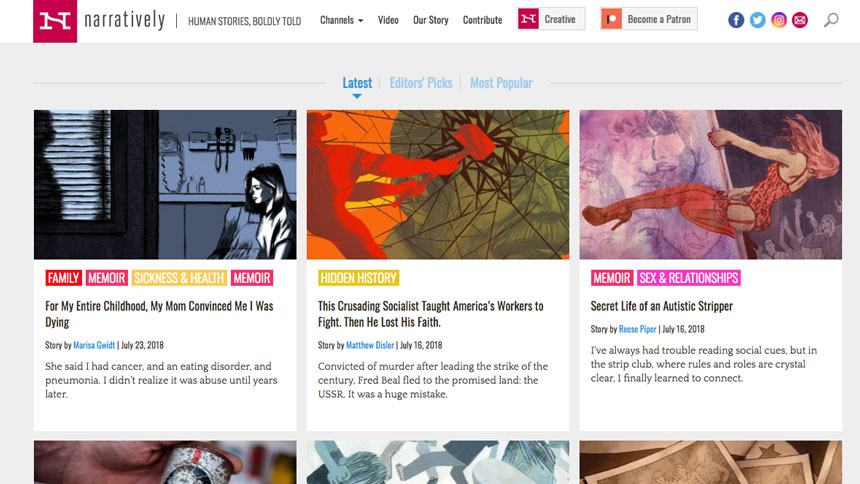
Narratively Homepage
Admin icon
By Dana Robinson
Dana Robinson is a freelance health, beauty, and culture writer with 20 years of experience creating content for publications including Shape, WeightWatchers, Wine Enthusiast, AARP, and Southwest: The Magazine. She holds a master's degree in mass communication from California State University-Northridge.
3 min read • Originally published July 23, 2018 / Updated March 19, 2026
Admin icon
By Dana Robinson
Dana Robinson is a freelance health, beauty, and culture writer with 20 years of experience creating content for publications including Shape, WeightWatchers, Wine Enthusiast, AARP, and Southwest: The Magazine. She holds a master's degree in mass communication from California State University-Northridge.
3 min read • Originally published July 23, 2018 / Updated March 19, 2026

Monthly visitors: 500,000

Background: Narratively’s dedication to in-depth journalism is arguably the perfect antithesis to a world full of memes, clickbait, and listicles. It launched in 2012 and prides itself on looking beyond the news headlines and focusing instead on ordinary people with extraordinary stories. “We like to focus on stories that might have slipped through the cracks…stories from anywhere in the world…that really show what it means to be human,” says Brendan Spiegel, editorial director and co-founder. “We want the story to be an experience for the reader to dive into.”

Narratively has a diverse readership, but the largest segment of its visitors is ages 25-35. When the site launched, those readers were treated to articles that mostly hovered around the 5,000-word point. But editors are now focusing more on stories in the 2,000-word range and occasionally running long-form features.


What to pitch: Narratively is very freelance driven, and once per month, editors send out a call for pitches that focus on a particular theme or topic. You can sign up here to get on that email list. But if freelancers have an idea that will fit into any of Narratively’s current sections they should feel free to pitch at any time.

Pitches for the Secret Lives section should lift the veil on surprising and secretive jobs, pursuits and lives. Renegades articles focus on rebels who are doing things their own way—and changing the world while they’re at it. Super Subcultures introduces readers to people who build their lives around weird and wonderful obsessions. Hidden History stories reveal the forgotten and untold stories that shape who and where we are today. And Memoir articles are crafted personal stories that rise above the flood of confessional “it happened to me” first-person writing—this is the place to pitch truly unique stories that only you can tell.

Spiegel reveals that readers should be intrigued by the subject of the article (e.g. Secret Life of an Autistic Stripper, They Meet Up in Motels Across America…to Trade Old Beer Cans) but the reporting and writing should showcase how special the person or group really is. Word count for all sections is about 2,000.


What not to pitch:  Every section is open to freelancers.


What publicists should pitch—and when: Narratively does run excerpts from non-fiction book writers. Publicists who feel that they have their hands on a story that hasn’t been told should feel free to reach out. No product pitches, please. Lead time is 2-3 months.


Recent freelance stories pitched and published: A freelancer pitched Inspired by Black Lives Matter, This Masked Man Patrols Under the Cover of Darkness. Editors knew it was a winner because the story goes behind the scenes with an ordinary person who is doing something truly extraordinary—showing the reader not just what his colorful pursuit is like, but why he does it and what drives him, says Spiegel. A freelancer also pitched Meet the Super-Serious Sasquatch Chasers of America’s Premier Bigfoot Conference. The article hooked editors because the story focuses on real people and why they find this pastime so fulfilling.


Etiquette: All submissions should be sent via Narratively’s Submittable page. In your pitch be sure to mention who your main characters are in the story and describe the exciting scenes that readers will be taken to.


Percentage of freelance content published: 90 percent

Percentage of freelance pitches accepted: 10 percent

Lead time: 2-3 months

Pay rate: $300 first-person; $400 reported pieces

Payment schedule: 45 days after publication

Kill fee: 25 percent

Rights purchased: Sixty-day exclusive, then rights are shared with the writer

Contact info:
Narratively
30 John St.
Brooklyn, NY 11201
Narrative.ly
Twitter│Facebook
Email format: FirstName@narrative.ly

Direct all pitches:
via Submittable


EDITOR’S NOTE: Though we’ve updated this article recently, the speed at which things move in media means things may have already changed since then. Please email us if you notice any outdated info.

Topics:

How to Pitch

Posts navigation

Older posts
Newer posts
Featured Jobs
Kirkus Media
Editorial Intern
Kirkus Media
New York City, New York (US)

Gaia Inc
MEDIA COORDINATOR
Gaia Inc
Louisville, CO

Gaia Inc
Global Paid Media Specialist
Gaia Inc
Louisville, CO

Gaia Inc
Director of Media Strategy
Gaia Inc
Louisville, CO

Hearst Television
Account Executive
Hearst Television
Milwaukee, WI, United States

All Jobs »
PREMIUM MEMBER
MM

Mac Misseldine

Pleasant Grove, UT
2 Years Experience
A freelance writer who's published more than 500 articles on travel, consumer products, and legal aid.
View Full Profile »
Join Mediabistro Membership Today

Stand out from the crowd with a premium profile

Mediabistro Logo Find your next media job or showcase your creative talent
  • Job Search
  • Hot Jobs
  • Membership
  • Newsletter
  • Career Advice
  • Media News
  • Hiring Tips
  • Creative Tools
  • About
Facebook YouTube Instagram LinkedIn
Copyright © 2026 Mediabistro
  • Terms of Use
  • Terms of Service
  • Privacy