Mediabistro Logo Mediabistro Logo
  • Jobs
    Search Creative Jobs Hot Jobs Remote Media Jobs Create Job Alerts
    Job Categories
    Creative & Design Marketing & Communications Operations & Strategy Production Sales & Business Development Writing & Editing
    Quick Links
    Search All Jobs Remote Jobs Create Job Alerts
  • Career Resources
    Career Advice & Articles Media Industry News Media Career Interviews Creative Tools Resume Writing Services Interview Coaching Job Market Insights Member Profiles
  • Mediabistro Membership
    Membership Overview How to Pitch (Premium Tool) Editorial Calendars (Premium Access) Courses & Training Programs Membership FAQ
  • Showcase
    Featured Creative Stories Submit your Story
  • Log In
Post Jobs
Mediabistro Logo Mediabistro Logo
Search Creative Jobs Hot Jobs Remote Media Jobs Create Job Alerts
Job Categories
Creative & Design Marketing & Communications Operations & Strategy Production Sales & Business Development Writing & Editing
Quick Links
Search All Jobs Remote Jobs Create Job Alerts
Career Advice & Articles Media Industry News Media Career Interviews Creative Tools Resume Writing Services Interview Coaching Job Market Insights Member Profiles
Membership Overview How to Pitch (Premium Tool) Editorial Calendars (Premium Access) Courses & Training Programs Membership FAQ
Featured Creative Stories Submit your Story
Log In
Post Jobs
Log In | Sign Up

Follow Us!

Job Search

Career and Job Search Advice Worth Bookmarking This Week

This quick rundown of new Mediabistro stories has all the career and job search advice you need to know now

career advice worth noting
Katie icon
By Katie Hottinger
@katiehottinger
Katie Hottinger is a content strategist and UX designer with over 15 years of editorial experience across brands including JPMorgan Chase, Google, Condé Nast Traveler, and Mediabistro. She specializes in digital content strategy and multi-platform editorial execution.
3 min read • Originally published April 14, 2016 / Updated March 19, 2026
Katie icon
By Katie Hottinger
@katiehottinger
Katie Hottinger is a content strategist and UX designer with over 15 years of editorial experience across brands including JPMorgan Chase, Google, Condé Nast Traveler, and Mediabistro. She specializes in digital content strategy and multi-platform editorial execution.
3 min read • Originally published April 14, 2016 / Updated March 19, 2026

We’re in the homestretch: The weekend’s almost here, and you’re already thinking about wrapping up your projects for the week (c’mon, admit it). With Friday rolling around, we know you’ll want to catch up on recent Mediabistro stories that may have escaped you.

In case you missed it, here are links to fresh Mediabistro stories. Check them out now, or add them to your before-Friday to-do list.

1. Master These Business School Lessons to Make the Most of Your Job Search: Along with their $150K MBAs, business school grads get takeaways about team-building, people skills and perseverance. Here’s how you can use their hard-earned knowledge to land your next gig.

2. What Does an Event Coordinator Do?: If you’re a top-notch negotiator and no-sweat multitasker, this glam event-marketing job might be the one for you.

3. Simple Stats to Prove Your Online Success (and Value) to Your Boss: Your current job, or your next one, might have you leveraging SEO and PVs to assure ROI. Here’s how to make sense of online performance metrics from A to Z.

4. Digital Editor Jobs to Apply to Right Now: Calling all wordsmiths with digital chops: If you’re looking for a new job, listings for open digital editor jobs are a great place to start.

5. Spelling Errors That Can Torpedo Your Resume or Cover Letter: Hay! Bee sure your not miss spelling any thing on your resume or cover letter. (It can make ewe look dum!) Hears how to dew it.

6. Surprisingly Simple Ways to Get More Done in Less Time: We all want to work smarter, not harder, right? Here are three clever ways to make it happen.

7. Hear How a Journalist Went from Newsweek to Startup to Writing for HBO: Dan Lyons went from journalism to software startup to TV writer, and now, author. Listen in as he tells Fresh Air about his media career reinvention.

8. Simple Tweaks to Your Social Profiles That Attract Job Offers: Clean up your social presence in no time flat, and make yourself instantly more hireable, with these quick fixes.

9. How Soon Is Too Soon to Look for a New Job?: Hurray! You’ve got a new job. Here we go again: This job is probably not the right one for you. Here’s how to look for another job when you’ve just gotten your latest one.

10. Career Advice to Help You Make the Most of Spring Hiring Season: It’s a solid assortment of recent job-search and career coverage from around the Web, including how to maximize your chances of getting an offer.

11. Take These Essential Steps to Crafting Your Personal Brand: You know you have to work on your personal brand, but do you know how to do it? These quick tips will get you there fast.

12. Publishing Editorial Jobs for People Who Love Books: If you’re a book lover, you’ve probably dreamed of earning a living working with the written world. You can help make the dream a reality by checking out these book editor jobs, now available on the job board.

13. These Words That Make You Sound Less Smart: Sure, you want to make the best impression in the interview. One of the best ways to do it? Remove these verbal tics and iffy word choices from your vocab.

14. What Does ‘Programmatic’ Mean?: Understanding this bit of techno jargon is key to landing a job in digital media. We break it down, and tell you why it’s the way of the future.

15. Employers: Stop Losing Applicants by Avoiding These Job Listing ‘Danger Words’: In this bonus round for the bosses, find out how the words you use in your job listing may be turning off potential candidates before they even apply.

Topics:

Get Hired, Job Search
Job Search

How to Research Companies Like a Pro During Your Job Search

The #WeekendJobSearch Assignment#4: Do some creative searches to discover top employers in your field

Man working in a coffee shop
Valerie icon
By John Lombard
John Lombard is a content strategist and writer with over a decade of experience creating interactive and video content for brands like Apple, IBM, and Samsung. He previously worked at Mediabistro and now serves as a Client Strategist at Ceros.
3 min read • Originally published April 15, 2016 / Updated March 19, 2026
Valerie icon
By John Lombard
John Lombard is a content strategist and writer with over a decade of experience creating interactive and video content for brands like Apple, IBM, and Samsung. He previously worked at Mediabistro and now serves as a Client Strategist at Ceros.
3 min read • Originally published April 15, 2016 / Updated March 19, 2026

It’s official: We’re rounding out our first month into The #WeekendJobSearch, our ongoing series that breaks the whole job-search process into 13 totally doable to-do items.

Last week, we cleaned up your social channels and created a LinkedIn headline and summary that attracts and engages recruiters. (If you’re just jumping in now, check out Week 1, when we started small and purged old job search materials.)

This week, we’re showing you how to research your top companies to target employers you’d like to reach out to for informational interviews, and start your intel-gathering for when you get a real job interview.

The #WeekendJobSearch Assignment #4

Research Your Top Companies

One of the best things you can do while looking for work is to set up informational interviews with companies high on your list. There’s simply no better way to learn more about the company and the people who manage the teams you’d like to be a part of, and learn about unposted jobs.

And if you do eventually land an interview with one of these companies, the information you’ve gathered will give you a huge leg up over the competition—as well as plenty of material when the hiring manager asks, “So why do you want to work here?”

This week, to get this started, your assignment is to make a list of your top 10 companies you’d like to work for.  

Here are some ideas on how to compile your list:

  1. Email a few former colleagues to see if they have any recommendations or know of any exciting companies.
  2. Do a Google search for “best of” companies in media.  
  3. Search on Glassdoor, using a term like “media” or “marketing” in the company name box.
  4. Think about some of your favorite media campaigns and research the agency or production company that developed them.

Use your own list to keep track of these companies, or employ the second tab on Mediabistro’s Ultimate Job Tracker (the one you used to track your job applications in Week 2 of #WeekendJobSearch).

Once you finish compiling your list of your top companies, you may feel a little more focused on your goals. But if you’re not sure where to start with your list, here are a few ideas to get things moving:

  1. Go down your list and see if any companies are hiring, either on our job board, the companies’ careers pages or by doing a quick Google search.
  2. Sign up for job alerts on our job board for your top companies.
  3. If you don’t find any open positions from companies on your list, check their “About” pages to see if they list employees and roles. This will give you an idea of how they staff the various roles and departments.
  4. On LinkedIn, search the companies and see if you have any connections to current employees at the company.
  5. Follow these companies or their recruiting departments on Twitter to easily keep an eye on their movements.

Once you’ve learned who’s who at your top companies, reach out and request an informational interview. Make it clear you’re looking to learn more about the specific person you’d like to meet with—how they got to where they are, what challenges they faced along the way—rather than meeting solely to get your foot in the door.

And that’s week 4! We’ll see you next week when we’ll help you get your resume as hire-worthy as possible.

  • Start from the beginning: #WeekendJobSearch Assignment #1
  • Share your progress on Twitter: #WeekendJobSearch

Topics:

Get Hired, Job Search
Job Search

How to Use Social Media to Find Your Next Job

How to Use Social Media to Find Your Next Job
Katie icon
By Mediabistro
The Mediabistro editorial team draws on 25 years of media industry expertise to cover jobs, careers, and trends shaping the industry.
1 min read • Originally published April 15, 2016 / Updated March 19, 2026
Katie icon
By Mediabistro
The Mediabistro editorial team draws on 25 years of media industry expertise to cover jobs, careers, and trends shaping the industry.
1 min read • Originally published April 15, 2016 / Updated March 19, 2026

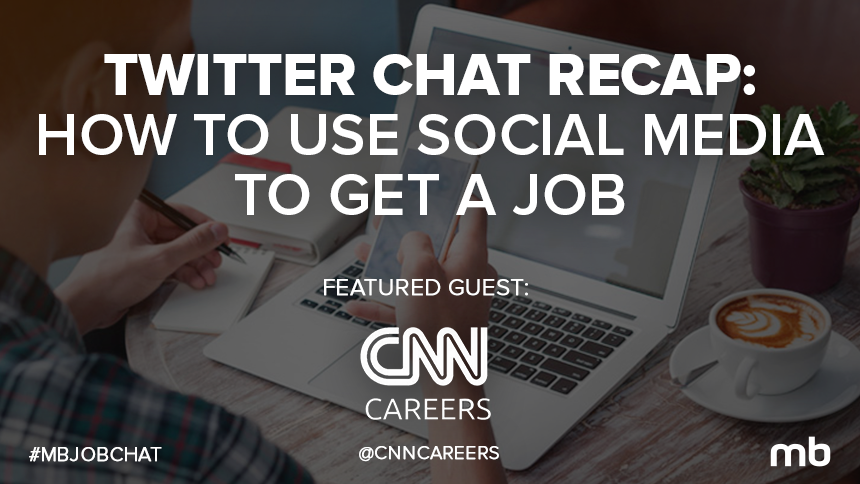
We partnered with the in-house recruiters for CNN (@CNNcareers) for our first Twitter chat, asking questions about how a job seeker can best succeed in the digital age. See some of the chat highlights and our community’s answers below:

Topics:

Get Hired, Job Search
Job Search

Why You Didn’t Get the Job (And How to Fix It Next Time)

Shake it off, read on, make yourself more hireable

Here's why you didn't get the job
Katie icon
By John Lombard
John Lombard is a content strategist and writer with over a decade of experience creating interactive and video content for brands like Apple, IBM, and Samsung. He previously worked at Mediabistro and now serves as a Client Strategist at Ceros.
3 min read • Originally published April 18, 2016 / Updated March 19, 2026
Katie icon
By John Lombard
John Lombard is a content strategist and writer with over a decade of experience creating interactive and video content for brands like Apple, IBM, and Samsung. He previously worked at Mediabistro and now serves as a Client Strategist at Ceros.
3 min read • Originally published April 18, 2016 / Updated March 19, 2026

You were so excited about the prospect of this new opportunity and then: you didn’t get the job. Sorry. Rejection stinks.

Sure, it’s a candidate’s market right now, but still Glassdoor reports an average of 250 applications for every corporate job opening. So with all those qualified candidates vying for the same position, recruiters are bound to remain scrupulous, turning down qualified candidates for seemingly small miscues.

Let’s take a look at some of the top reasons job seekers end up not getting hired so you can identify what you may have done to raise a red flag, and how to make sure it never happens again.

It’s Not You, It’s Them

Sometimes, you can nail the interview and still lose out on the position. The good news is, in some situations, it’s not your fault.

The Position Got Trashed

For a million reasons, including budget cuts, staff changes or a new boss taking the department in a new direction, positions can quickly go from available to nonexistent. But this is not a worst-case scenario: You’ve made yourself known to the company and, if you crushed the interview, they’ll likely remember you when they’re ready to hire again.

You’re Not a Good Cultural Fit

Yeah, this can happen. And while some believe this idea of cultural fit is just a way to discriminate against candidates, most of the time the company is trying to find candidates with similar passions and personalities to create a good office environment.

So what do you do if you’re not deemed a cultural fit? Move on. If the hiring manager was correct in her assumptions, she may have saved you years of working in the wrong environment.

It’s Not Them, It’s You

This might sting a little: Sometimes you can be the perfect fit with all the right skills, but you do one (or several) things that take you out of the running.

You Came Off Too Desperate

Did you arrive more than 10 minutes before the interview? Did you say salary is not important? These actions send the signal to interviewers that you have too much time on your hands, or that you’re overly eager for a job. And that’s no good.

Think about it like this: In the dating world, nobody ever says, “Hey, that person seems really desperate to date me, they must be a winner!” And, yes, if you’re struggling to pay rent, you might actually be desperate, but it’s important you not let this show in the interview.

For your next interview, replace desperation with confidence, acting as if you are excited about the role because of the skills and expertise you can lend to it, and not because of the rent check that’s due.

You Didn’t Prepare Enough Questions

This is essential. If you didn’t have at least three questions prepared for your interviewer, you can pretty much blame the rejection on that. In this overcrowded job market, hiring managers are not going to be interested if you don’t take the time to show a similarly vested interest in them.

Asking the right questions in an interview not only shows you’ve taken the time to research the company, but can also cause the hiring manager to visualize you in the role with a question like, “What could I do in this role that would be most beneficial to you and the team?”

So for your next interview, have questions prepared that demonstrate you’ve done your research, that show you’re interested in the company and that help the interviewer place you in the role.  

Make sure your next interview is the one that lands you the job with Mediabistro’s Career Services. Whether your resume needs a tune-up, or you could use one-on-one interview coaching, we’ve got you covered.

Topics:

Get Hired, Job Search
Productivity

How to Stay Motivated During a Long Job Search

Here’s how make it through the weeks (or months) it may take to land the right gig for you

Man running a marathon on the open road
Valerie icon
By Brittany Taylor
Brittany Taylor is an enterprise marketing manager and content strategist with over a decade of experience in B2B content marketing, brand building, and ghostwriting, with bylines in SELF, Teen Vogue, and Mediabistro. She currently leads content and branding across multiple brands at HireQuest Inc.
5 min read • Originally published April 19, 2016 / Updated March 19, 2026
Valerie icon
By Brittany Taylor
Brittany Taylor is an enterprise marketing manager and content strategist with over a decade of experience in B2B content marketing, brand building, and ghostwriting, with bylines in SELF, Teen Vogue, and Mediabistro. She currently leads content and branding across multiple brands at HireQuest Inc.
5 min read • Originally published April 19, 2016 / Updated March 19, 2026

You probably don’t need us to tell you, job seeker: Today’s job search is no sprint. It’s a marathon that spans months rather than miles.

The average job search takes anywhere from six weeks to three months, but if you’re looking for a media job, the time is often far longer. Anecdotal evidence suggests that it can take media pros six months to a year to find a full-time position.

Young professionals struggle with competition; veterans grapple with few job openings. For job seekers at any level, the hunt is all about endurance.

We asked four career coaches what they tell each and every one of their clients who is in the middle of a job search. Now, we’re sharing their survival secrets with you, no waiting required.

1. Maintain Your Motivation

By far, the most common struggle among job searchers is staying motivated. Lack of drive is the biggest pitfall our coaches see their clients experience, and even the most confident and talented go-getters out there grapple with it.

When your goal is enormous—as in: “Get the perfect job before my next rent check is due”—the emotional stress is unwieldy. Instead of aiming huge, try breaking your big goal into mini goals “so that you can still experience successes along the way,” says Jessica Sweet, LICSW, a career coach specializing in mid-career professionals at Wishing Well Coaching.

“Decide what success looks like on a daily or weekly basis,” says Sweet. How many applications do you want to send out? How many networking contacts do you want to make? What dream companies do you want to aim for? Pick achievable milestones that will help you make progress towards your end goal of getting a job.

2. Boost Your Portfolio by Freelancing

For media professionals and creatives, the portfolio is an important element in your application package. A portfolio that’s stale—or a weak portfolio, in the case of many job hunters who are early in their careers—can appear lackluster or, worse, irrelevant.

While you’re job seeking, consider accepting freelance creative jobs through recruiters from companies like Creative Circle, who often post contract positions on the Mediabistro job board, says Sam McIntire, career coach and founder of DeskBright, a video learning platform for job seekers looking to improve their skills.

“Though most gigs on these sites are one-off projects,” says McIntire, “they can help professionals build a compelling portfolio—and occasionally they function as valuable in-roads to full-time roles.”

3. Work Smarter, Not Harder, by Building Relationships

Exhaustion, thy name is job search. But most of your job search-related fatigue may not come from the activity most likely to actually land you an offer.

Job seekers spend the majority of their time searching for job openings and applying for them, says Lidia Arshavsky, CPRW, founder and career consultant at JC Strategic.

“Many people spend hours tweaking and rewriting their resumes and cover letters,” says Arshavsky, “when they would benefit much more from sitting down to think deeply about whom they could reach out to, who might be able to help or provide valuable information.”

For introverts, Arshavsky acknowledges this can be exhausting in and of itself. Job seekers who aren’t comfortable with the idea of networking should aim to start small, perhaps by sitting down for a mocha with a close industry friend or tagging along to a happy hour, where you can be introduced around by someone you know.

4. Think Forward

If you were laid off or fired, it can be tough to stop replaying the moment when you were let go. But you have to do it anyway, says Kristi Daniels, author of Thrive 9 to 5 and the founder of Work Can Be Different.

“I see people go back and re-hash why they were let go, why they were not a good fit in their last positions or why they hate their current job,” says Daniels. “You don’t want to get stuck in these thought patterns.” Focus, instead, on what you can learn from your last job (or your current job, if you’re still on the payroll), and think about how you can use those lessons to move forward in your career.

Another struggle: “Job seekers start counting days, then weeks, then months that they’ve been unemployed or stuck in a bad job,” Daniels says. Tempting, we know, but you’re wasting energy when you do that. “Focus on the present time, and what you’re doing today to create the experience you want.”

5. Earmark Time for Your Job Search

If you’re still employed, scraping together a few hours for finding a new gig when your current one is snatching up every hour it can get feels impossible. To avoid the guilt of knowing you need to move on and not doing everything you can to do so (and staying in a job that makes you miserable), pull up your iCal and block out your job hunt.

“Pick a few times a week when you know you will have a lot of energy—before work if you’re a morning person, a few hours on the weekend, or whatever works best for you—and set it aside as your uninterruptable job search time,” says Arshavsky. “Try to make a list of what you want to get done ahead of time, so that when you actually sit down and do it, you can focus on execution.”

6. Stick to a Schedule

Your daily rhythm is important. A job gives you that. Whether you realize it or not, you have a wake-up time, a shower time, a get-out-the-door-time—and that’s just pre-work!

When you’re out of work, your job search is your full-time job—and it can consume your every waking hour. “Without a steady work schedule to segment the day,” says McIntire, “normal routines like working out and meals often fall by the wayside.”

“Counter this phenomenon by setting a schedule,” he adds, “ensuring that you block off time for all of the things that you would normally do to stay happy and healthy: eating, working out and spending quality time with friends and family.”

Bottom line

Persistence and positivity are the key to a successful job search—and success isn’t just about the end result. Your mindset throughout the hunt is essential if you want to cross the finish line, offer in hand.

Topics:

Be Inspired, Productivity
Job Search

Marketing Fields With the Most Entry-Level Job Openings Right Now

Whether you want to create content, plan events or flex your social-media skills, there’s a place for you to launch your marketing career

Marketing Fields With the Most Entry-Level Job Openings Right Now
Katie icon
By Molly Folse
@MollyFolse

Molly Folse is a marketing leader with 20 years of experience in content strategy and social media, currently serving as Director of Content and Creative at Protective Life. She has led award-winning content and digital campaigns across financial services, higher education, travel, and consumer brands.

5 min read • Originally published April 20, 2016 / Updated March 19, 2026
Katie icon
By Molly Folse
@MollyFolse

Molly Folse is a marketing leader with 20 years of experience in content strategy and social media, currently serving as Director of Content and Creative at Protective Life. She has led award-winning content and digital campaigns across financial services, higher education, travel, and consumer brands.

5 min read • Originally published April 20, 2016 / Updated March 19, 2026

Hey, new and about-to-be college grads: We know you’ve been dreaming of that corner office with an awesome city view before you even joined the workforce. Reality check: It can be a tough pill to swallow when your first job has you at a cubicle with a view of your coworker’s forehead.

Well, you gotta start somewhere. Lucky for you, there are plenty of jobs in cubes that come with exciting work in a variety of growing fields.

We searched our job board to find today’s top marketing fields, and entry- and junior-level positions for recent graduates and young professionals looking to break into them. Here’s what we found:

Content Marketing

You’ve probably heard it before: Content is king. Content marketing is all about making the king look good so his subjects like him (in other words, creating and distributing content to attract and retain audiences).

Entry-level positions in content marketing include producers that create hilarious cat videos, editors in charge of updating website content, coordinators in charge of influencer outreach and more. Positions in content marketing require great writing skills and a focus on consumer behavior and analytics. These roles often intersect with social media, search-engine marketing and public relations.

Quick Fact: 57 percent of organizations now have two or more people dedicated to content marketing. —Contently, 2015

Find entry-level content-marketing jobs

Event Marketing

If you’re the kind of party host that’s more focused on making sure everyone else is having fun, then event marketing may be for you. Event marketing involves planning conferences, sponsorships, trade shows and other events. Entry-level roles typically require helping event managers make decisions and executing events on time and on budget.

Duties may include coordinating staff, researching vendors, setting up or even securing media coverage for the event. Highly organized marketers who want to break away from a desk and don’t mind working outside the typical 9-to-5 may hone their skills as an assistant before becoming an event planner or manager.

Quick Fact: Jobs in event planning will grow by 10 percent from 2014-2024, which is faster than average for other industries. —U.S. Bureau of Labor Statistics

Find junior-level event-marketing jobs

Copywriting

Marketing copywriters write for just about every medium these days: video, social media, websites, print, email, radio—you name it. They must be able to adapt their writing style to fit brand voice and tone, while appealing to the target consumer and to search engines.

With storytelling now a critical part of a brand’s marketing, copywriters need to know how to sell the big ideas and get copy out the door quickly. They may go on to earn the title of senior copywriter or editor, move into content-development roles or pursue other associate creative positions.

Quick Fact: Copywriting is more important than ever, thanks to the huge boom and renaissance period that content marketing is experiencing. —KloutFire

Find junior-level copywriting jobs

Search Marketing

Having the best product in the world means nothing if no one can find it. That’s where search-engine marketing (SEM) comes in. It’s all about increasing online traffic and purchases through search-engine optimization and advertising. An entry-level SEM professional assists in developing and carrying out the strategies that make that happen.

Someone in this role may help maintain pay-per-click advertising or be responsible for making website updates using a content-management system. These responsibilities, plus staying on top of changes to search-engine algorithms and new technologies, can prepare someone for future roles in search planning and strategy.

Quick Fact: Search marketing spend will rise to $32.32 billion in 2017, $36.41 billion in 2018, and $40.60 billion in 2019. —Search Marketing Daily

Find entry- and junior-level search-marketing jobs

Social-Media Marketing

Contrary to popular belief, jobs in social-media marketing involve a lot more than just posting fun photos to Facebook all day. An entry-level role in social media may include helping develop content for different channels, monitoring messages and comments, and managing promoted posts and other paid social media.

Any job in social media also requires the ability to recognize trends and use analytics tools to measure performance. While someone in an entry-level social-media role may pursue roles in social-media strategy, starting out in social media can prepare marketers for positions in other areas like consumer research and content marketing.

Quick Fact: 66 percent of companies have a dedicated social-media team. —Salesforce

Find entry- and junior-level social-media jobs

Media Planning and Buying

Media planning and buying involves finding the best media outlets—television, radio, magazines, billboards, social media, etc.—to reach your customers. It requires a lot of strategy and skill at getting your client or company the most bang for its buck. Entry-level and junior roles in media planning and buying are important in negotiating and executing media plans. Assisting the team with research, entering data and calling vendors and publishers to get media kits and rates for commercial air time, print space and digital buys are just a few of the duties involved in this type of role. Individuals who exhibit superior analytical skills and a grasp of emerging tech have the potential to grow into senior media positions that involve more strategy and decision-making.

Quick Fact: Media-planner positions are expected to grow faster than average over the next decade. —The Princeton Review

Find entry- and junior-level media-planner or media-buyer jobs

Account Services

In a marketing, advertising or PR agency, the account team serves as the bridge from the agency to the client, making sure everyone is focused on the same goals and has what they need to accomplish those goals. Account coordinators typically assist senior account-service staff. Someone in this role should be personable and professional at all times, especially since account coordinators may have direct contact with clients. Other must-have skills include the ability to listen well, take great notes and organize fast-paced projects. Excellent account coordinators can eventually move into higher-level account-service positions such as account executive and account supervisor.

Quick Fact: Account services topped the list of positions marketing executives planned to hire in the second half of 2015. —The Creative Group

Find entry- and junior-level account-coordinator jobs

Topics:

Get Hired, Job Search
How to Pitch

How to Pitch Marie Claire: A Freelancer’s Guide

This esteemed glossy wants smart, edgy coverage of the issues that matter most to women

How to Pitch Marie Claire
Valerie icon
By Janelle Harris
@thegirlcanwrite
Janelle Harris is a multimedia producer, director, and founder of Harris Two Productions with decades of experience in non-fiction storytelling for networks including Bravo, Discovery, and A&E. A Howard University graduate, she specializes in amplifying diverse voices across television, film, and digital media.
5 min read • Originally published April 20, 2016 / Updated March 19, 2026
Valerie icon
By Janelle Harris
@thegirlcanwrite
Janelle Harris is a multimedia producer, director, and founder of Harris Two Productions with decades of experience in non-fiction storytelling for networks including Bravo, Discovery, and A&E. A Howard University graduate, she specializes in amplifying diverse voices across television, film, and digital media.
5 min read • Originally published April 20, 2016 / Updated March 19, 2026

Circulation: 950,000 (total readership: 3.8 million)
Frequency: Monthly
Special issues: Fashion-and-beauty issues are published in fall and spring

Background: If it matters to women, it matters to Marie Claire. Its roots are in France, where an original version was founded in 1937 to celebrate women’s beauty and fashion. The U.S. edition launched in New York City under Hearst’s empire of publications, and more than half a century later, its pages reflect the allure, honesty and stories of womanhood.

Because Marie Claire is more than a pretty face, editors describe it as the fashion magazine with character, substance and depth for women with a point of view and a sense of humor. Each issue is edited for sexy, stylish, confident readers who aren’t afraid to make intelligence a part of their wardrobe.

The result is content that includes the latest in both aspirational and accessible fashion, the best in beauty and health, career advice from inspiring female role models, reflections on love and modern relationships, and issues important to women around the world.

The mag is now published in 26 countries and read by more than 15 million global devotees. It’s also an ideal platform for forward-thinking freelancers to sell relevant, well-crafted story ideas.

What to pitch: Timely stories about international women doing interesting, important things are in demand for the “News Feed” section of the mag. Past issues have spotlighted Eric Garner’s daughter, Erica Garner; #GamerGate target Anita Sarkeesian; Michelle Knight, one of the Cleveland kidnapping victims; and Ai-jen Poo, director of the National Domestic Workers Alliance.  

“News Feed” has also featured writeups on: a new law in Ohio that is training hairdressers to crack down on trafficking; women fighting to raise the legal age of marriage in Malawi; the end of Western-style divorce in Afghanistan; and an all-female ski film. All of these stories began as pitches from freelance writers.

In a similar, news-related vein, editors are looking for long-form, reported features and investigations; real-life survival or adventure stories; and trend pieces that touch on what’s happening in the zeitgeist.

Beauty pitches are also welcome. Editors are always interested in new ways to cover styling as well as first-person essays on beauty experiences tied to a specific trend or news hook (think: experiential “I tried it” stories).

The “@Peak” section, covering health and wellness, is also a good place for pitches. Writers have covered the increasing number of women who find spirituality through their fitness classes; the diet trend of food combining; and revamping your social-media feeds to ease anxiety.

Inside “@Peak” are Marie Claire’s “Love & Sex” essays, which editors describe as nuanced, literary, complicated, emotionally deft narratives that delve into women’s tangled psychological and social lives. They’ve published personal essays about drama-free sex with friends; texting relationships that go nowhere IRL; a threesome that brought the writer closer to her best friend; and a woman who used Tinder to explore Eastern Europe.

Editors’ advice to freelancers: the strongest pitches include a concise and thoughtful summary of your idea and how it connects to a section in the magazine or—if it’s an idea for a feature—a relevant news angle with pictures and ages of the women you propose to write about.

What not to pitch: Timeliness is a major consideration for editors, who say they often get good ideas for print that aren’t pitched far enough in advance and have to either be rejected or scheduled for the Web.

Be mindful of the lead time—issues are slated three or four months out—and avoid pitching an idea that’s too small in scope or doesn’t fit any of Marie Claire’s specific sections. If you can’t figure out where it should go, an editor probably won’t either.

Online opportunities: The bulk of MarieClaire.com’s stories are covered by online staff, but editors do consider compelling, first-person experiential stories, opinion pieces, personal essays and features from freelancers.

Percentage of freelance content published: 30 percent
Percentage of freelance pitches accepted: 10 percent

Recent stories pitched and published: “Pleasure in a Pill?” an in-depth investigation into why all attempts at finding a female equivalent to Viagra have stalled; “Living in Limbo: The Women of Jordan’s Zaatari Refugee Camp,” a profile of the Syrian women making new lives for themselves in refugee camps in Jordan; and “The Ride of Their Lives,” an adventure story about an all-female road rally in the Moroccan Sahara, are all successful examples of story ideas that got the green light.

What publicists should pitch: Editors are interested in stories about fashion, beauty, politics, women in the news and human rights around the world. Please take note of the lead time when considering story ideas and pitches. They matter.

Etiquette: Email a brief but standout idea targeted to a specific section of the magazine, making sure to include a news peg and any info on media coverage the story has gotten already. In doing so, of course, show that you’ve done your homework and understand Marie Claire’s coverage.

Lead time: Three to four months
Pay rate: $2 a word
Payment schedule: Upon approval of the edited story
Kill fee: 25 percent
Rights purchased: Varies

Contact info:
Marie Claire
300 West 57th Street
New York, NY 10019
www.marieclaire.com
Twitter | Facebook | Instagram | Pinterest
Email format: FirstInitialLastName@Hearst.com

View the Marie Claire masthead

Direct pitches to the appropriate editor:
Senior News and Culture Editor Neha Prakash: NEHA dot PRAKASH at HEARST dot COM

Executive beauty Editor Tammy Cohen: TAMMY dot COHEN at HEARST dot COM

Beauty and Health Editor Taylore Glynn: TGLYNN at HEARST dot COM

Fashion Editor Joseph Errico: JOSEPH dot ERRICO at HEARST dot COM


EDITOR’S NOTE: Though we’ve updated this article recently, the speed at which things move in media means things may have already changed since then. Please email us if you notice any outdated info.

Topics:

Go Freelance, How to Pitch
How to Pitch

How to Successfully Pitch Parenting Publications as a Freelancer

If you enjoy writing about the joys and challenges of parenting, we’ve got homes for your pitches

Parenting Publications
By Marcelle Soviero
6 min read • Originally published April 21, 2016 / Updated March 19, 2026
By Marcelle Soviero
6 min read • Originally published April 21, 2016 / Updated March 19, 2026

Whether you’re a first-time mom, a mother of school-age kids, or the parent of children that have already flown the coop, you’ve got parenting tales. And there are plenty of parenting publications that are looking for brilliant and original ideas from freelance contributors on the highs and lows of raising children—and everything in between. Here are seven markets that want your pitches.

1. Babble.com

Though all things baby and baby-rearing take center stage on Babble, the site has evolved into more of a lifestyle outlet since its 2006 launch and now covers love and relationships, fashion, health, wellness, entertainment, travel, tech, work and money.

What to pitch: Parenting confessions, advice, and tricks that work for you; unique family traditions; and funny and relatable stories. “We also look for timely responses to news or pop culture through a parenting lens, and approachable lifestyle content that appeals to parents,” says Andrea Roxas, Babble’s manager of content strategy.

Length: 1,200 words max

Pay: From $100 to $750 and up, depending on length and depth of reporting

Direct pitches to: SUBMISSIONS at BABBLE dot COM

Roxas’ advice:  Include in your pitch a suggested title for the piece, a one- to two-sentence summary, a draft of your lede, the article outline and the takeaway. Also follow these three tips:

  1. Be original. The top reason we’ll pass on a pitch is because it’s already been covered on the site or is an idea that’s been done many times before.
  2. Know your audience. We do recognize and appreciate when a writer tailors his or her pitch to Babble.
  3. Be yourself. Show your personality! Babble is a community built on the voices of our writers, and your pitch is our first impression of what your voice could bring to the site.

2. Brain, Child: The Magazine for Thinking Mothers

Brain, Child, founded in 2000, is a literary magazine devoted to the universal theme of motherhood. Its mission is to showcase a variety of voices and perspectives on parenting, and foster a forum for its readers and writers to share interesting viewpoints on being a mother and other women-related topics. 

What to pitch: Personal essays, fiction, feature stories, op-eds, debates and book reviews that reflect on all aspects of mothering babies, children and teenagers. Upon acceptance, writers will be assigned an editor and will work directly with that editor through the editing and publication process.

Length: 750 to 4,500 words

Pay: Competitive

Direct pitches to: Preferred method of sending pitches is via this submissions form.  

Editors’ advice: Get to know our magazine. We look for deep, thought-provoking pieces on motherhood—not how-tos or top-10 lists. We appreciate insightful pieces with descriptive and vivid details and scenes, tension, and/or a central question. 

3. Grown & Flown

Grown & Flown focuses exclusively on parenting teens, college kids and young adults. It delves into some of the most challenging and rewarding years of parenthood. Readers are parents of 15- to 25-year-olds, and they are looking for a community of interests.

What to pitch: Personal essays, humorous reflections, research-driven stories and the occasional book review. Editors are very open to featuring new writers with a fresh take on parenting older children.

Length: 500 to 1,500 words

Pay: Competitive                                        

Direct pitches to: Cofounders Mary Dell Harrington and Lisa Endlich Heffernan via GROWNANDFLOWN at GMAIL dot COM

Editors’ advice: The best parenting pieces tell a personal story yet make a universal point. They leave readers nodding their head in recognition and in possession of new insights for their own lives. Whatever issue, triumph, struggle or joy you’ve had in parenting teens and college kids, other parents have had similar experiences.

4. Literary Mama

Literary Mama is a monthly publication that features writing by mothers on the complexities and many faces of motherhood. “We have a great team of editors who get a personal thrill knowing we are a place for both emerging and established writers, and encourage both to submit their work to us,” says editor in chief Maria Scala.

What to pitch: The publications seeks top-notch fiction, poetry and creative nonfiction. Editors also accept column contributions, book reviews, profiles of mother writers and artists, guest blogs, and original photography to complement the written work.

Length: Varies

Pay: N/A

Direct pitches to: For columns, LMCOLUMNS at LITERARYMAMA dot COM; for essays/nonfiction, LMNONFICTION at LITERARYMAMA dot COM

Scala’s advice: We’re attracted to well-crafted work that reflects the full experience of parenting—the hard parts and the joyous—as well as writing that expresses something familiar in an unusual way, or makes us consider something brand new.

5. Mamalode

Mamalode is a multiplatform media company for parents that includes a website that’s updated daily and 22 print editions, a digital collection of which can be downloaded to your iPad. Content is gutsy, honest and authentic.

What to pitch: Mamalode accepts short pieces for the “Because I Said So” section of the print magazine, and first-person essays for print and digital. Contributors may also pitch videos, podcast content and photo stories. When pitching topics, keep in mind the brand was founded on stories that made the reader say, “Oh, me too!” 

Length: For print, under 1,500 words; for digital, 500 to 1,000 words

Pay: Varies

Direct pitches to: Managing editor Victoria Grenz via Mamalode’s submissions platform

CEO Elke Govertsen’s advice: Write your heart out. Mamalode is a safe place, a smart place and kind of like downloading with your best friend. Your writing should be full of guts, heart and truth.

6. The Washington Post On Parenting

The blog of The Washington Post lifestyle section focuses on issues and ideas shaping parenting today.

What to pitch: Reported pieces and personal essays

Length: 900 to 1,200 words

Pay: From $100

Direct pitches to: On Parenting editor Amy Joyce via this submissions platform

Joyce’s advice: If something has been on your mind, and you haven’t seen the idea or topic other places, send it. I’m looking for something that will surprise me, make me think in a different way, give me an “aha!” moment, make me laugh, or simply be a beautifully written piece. Also keep in mind there is a good lag time between when I accept something and when it goes up, so be patient.

7. Working Mother

Working Mother is a magazine that celebrates working moms while solving or illuminating a problem unique to its readers or their children and families.

What to pitch: Columns that are open to freelancers include “IMHO” (serious and humorous personal essays) and “My Money” (“The Real Cost of…”). Feature pitches should specifically relate to the working mom—her work, family, personal well-being or a mixture of these. Features are also assigned to fit special issues (100 Best Companies, Best Companies for Multicultural Women, NAFE 50 Top Companies for Executive Women and 50 Best Law Firms for Women). For the website, editors are looking for succinct essays, service articles and listicles.

For more detailed pitching tips, see How To Pitch: Working Mother.

Length: For columns, 500 to 600 words; features, 1,000 to 2,000 words; online articles, 500 to 700 words

Pay: For print, from $1 a word; for online, from $200

Direct pitches to: Editor Quinn Fish:QUINN dot FISH at WORKINGMOTHER dot COM; for all other pieces, executive editor Barbara Turvett, BARBARA dot TURVETT at WORKINGMOTHER dot COM

Turvett’s advice: It’s very important that pitched ideas are filtered through the lens of the working mom. Think fresh, even edgy. Please go deep into our print and online content to get a clear sense of what we are doing. Keep pitches tight, tell us why you are the one who should write it, and include links to your work.

Also check out these parenting publications:

How To Pitch: Mom.me

How To Pitch: Parents

How To Pitch: Parents.com

Topics:

Go Freelance, How to Pitch
Networking

How to Get the Most Out of Any Industry Conference

All it takes is a little planning, participation and follow-through

How to Get the Most Out of Any Industry Conference
By Covey Eonyak Son
4 min read • Originally published April 25, 2016 / Updated March 19, 2026
By Covey Eonyak Son
4 min read • Originally published April 25, 2016 / Updated March 19, 2026

As you step onto the conference floor, your time off work might feel more like vacation than work. But if you spend all your time kicking back, you’ll certainly miss out on opportunities, whether it’s a lead on a job opening or new networking connections.

Remember: You’re there to learn from others in your field and come out a more skilled and marketable talent. You won’t get your (or your company’s) money’s worth if all of your time is spent at the hotel bar. Here are five ways to make the most of your next conference, starting before you even get there.

1. Pitch the Conference to Your Boss.

Some events cost hundreds, even thousands of dollars just to get in the door (not to mention the travel and lodging expenses). The bill may be daunting, but don’t get discouraged: With the right pitch, you may just get your boss to pay for you and your colleagues to attend.

Make sure to let your boss know how the company can benefit from sending employees to a conference. You and your fellow conference goers could learn valuable skills or find creative ways to tackle your job. You might even come back refreshed and with newfound energy to apply what you’ve learned from the conference.

“We always tell employers, ‘When your employees come back from this conference, they’ll be ready to get to work and really enthusiastic from getting the adrenaline shot of being around their own people,’” says Tenessa Gemelke, director of events and marketing at Brain Traffic. “It’s a really good feeling.”

The benefits of employee development is far from a one-way street, says Alec Levenson, a senior research scientist at the University of Southern California’s Center for Effective Organization. One potential benefit for a company sending employees to a conference is the potential of better retention, Levenson explains, by giving employees a chance to further cultivate their skills.

“Even with the most challenging work, once you’ve mastered it and have done it years on end, many people will reach a point where the idea of being able to grow and do something different can be very attractive,” Levenson says. “(Development) is one potential part of the toolkit a company can use to give people the opportunity to grow and challenge themselves.”

2. Do Your Homework.

Don’t make the mistake of trying to figure out where to go next as you exit a session. Chart your course ahead of time and figure out what topics you’d like to spend time diving into.

“It’s really worth educating yourself about the speaker and about the talk,” says Gemelke, who organizes Confab Events at Brain Traffic. “Somebody could be a great speaker, but if they’re talking about something that has no value to you, that could be time spent doing something else.”

Some sessions just might be more worth your time than others. You might not get much out of a talk on search-engine optimization if you’re already comfortable with the subject and it’s not one of your core duties at work. Instead, suggests Gemelke, try seeking out a session about something new to you, or a subject about which you want to know more.

3. Go for Quality Over Quantity.

Most conferences will have hundreds of people angling for new contacts or even potential clients. With so many people around, a wide-net approach may not be the best way to make a lasting impression. Instead, take your time and focus on one-on-one meetings or small group activities, which can be more memorable.

Aim for smaller crowds; some conferences, like Confab, might schedule more intimate networking events, like happy hour or small group dinners.

“Having a real conversation with people is always a much better way to be remembered,” she says. “Making that one-on-one connection with people is more valuable than a rapid-fire approach with your name on a card.”

4. Don’t Be Afraid to Stand Out.

When you’re competing with so many others to make a connection, try going beyond the small talk and make an impression.

The key is to not sit idle, and engage with the sessions and the conversations instead, Gemelke says. Ask questions at the end of talks. Follow the conversation on Twitter and take part in the discussions. If you have a great idea or feedback, don’t be shy to put yourself out there.

5. Follow Up.

What happens at the conference shouldn’t always have to stay there. Follow up with the connections you’ve made and connect with them on social media.

If you’ve missed a session, it’s worth reaching out to the speaker or the event coordinators. The presentation might not be posted publicly, but a conference like Confab might share the slides with an attendee, Gemelke says.

And don’t forget to boast to your boss and coworkers about your experience. Share with them the new things you learned and the connections you’ve made. These success stories could help transform the way your company does business, and shore up your chances of going to another conference in the future.

Topics:

Climb the Ladder, Networking
Job Search

What Employers Really Want to See in New Graduates

Honing a skill and being tech-forward are just a couple traits that will help you break in

What Employers Really Want to See in New Graduates
Valerie icon
By John Lombard
John Lombard is a content strategist and writer with over a decade of experience creating interactive and video content for brands like Apple, IBM, and Samsung. He previously worked at Mediabistro and now serves as a Client Strategist at Ceros.
2 min read • Originally published April 25, 2016 / Updated March 19, 2026
Valerie icon
By John Lombard
John Lombard is a content strategist and writer with over a decade of experience creating interactive and video content for brands like Apple, IBM, and Samsung. He previously worked at Mediabistro and now serves as a Client Strategist at Ceros.
2 min read • Originally published April 25, 2016 / Updated March 19, 2026

If you’re new to the job market and seeking your first “real” job, you’re probably wondering: What exactly do employers want in entry-level hires?

That’s probably especially true if you’re just getting out of college; those years on campus probably filled you with book knowledge and plenty of high hopes for the future, but very little idea of what abilities the people you’ll be working for want you to have.

Here’s a crash course on what employers desire in new grads, and how you can give it to them, straight from Jeffrey J. Selingo’s hot-off-the-presses book There Is Life After College.

1. Be a ‘Learning Animal’

Unlike the task-based routines of your college career, such as due dates and tests, the working world is a lot more unstructured with “competing priorities and decisions that need to be made on the fly,” writes Selingo. Employers are looking for candidates who are flexible about how they learn, who have ideas and who actually get stuff done.

“We need people who are creative, curious, whose brains are wired to constantly ask what’s next,” says a Hollywood executive that Selingo quotes. “What we need are learning animals.”

2. Master One Skill

Although in the past employers may have sought out well-rounded jacks-of-all-trades, Selingo reports employers are now searching for candidates who have truly mastered one skill.

“We want to see that they have a passion,” says Adam Ward, Pinterest’s head of recruiting, in a quote in Selingo’s book, “and they show proficiency and go deep in it.”

Find entry-level content-marketing jobs

3. Be Digitally Active

Even though you’re considered a “tech native,” employers want more than just the passive appreciation of tech and data from new candidates. Rather than simply understanding the what behind machines and programs, it’s important you understand the how and why.

This means learning some basic coding and having an understanding of data and analytics. Learning programming today is similar to learning a second language last century, write Selingo: “You might not become proficient enough to move overseas, but you could get by if you traveled to a particular country.”

4. Embrace Ambiguity

As you break into the workforce, you’ll quickly learn that the tasks you’re given may not be as clearly defined as an assignment in a class. Employers seek out candidates who can navigate the areas in between work tasks, taking on things that weren’t asked of them in order to get the job done.

“Excelling at any job is about doing the things you weren’t asked to do,” says Mary Egan, founder of Seattle–based startup Gatheredtable in a quote in Selingo’s book. “The more you can do to clear off your boss’s plate and free up his or her days, the more valuable you become to the organization.”

Topics:

Get Hired, Job Search

Posts navigation

Older posts
Newer posts
Featured Jobs
Kirkus Media
Editorial Intern
Kirkus Media
New York City, New York (US)

Gaia Inc
MEDIA COORDINATOR
Gaia Inc
Louisville, CO

Gaia Inc
Global Paid Media Specialist
Gaia Inc
Louisville, CO

Gaia Inc
Director of Media Strategy
Gaia Inc
Louisville, CO

Hearst Television
Account Executive
Hearst Television
Milwaukee, WI, United States

All Jobs »
PREMIUM MEMBER
CR

Christopher Renzulli

Newtown Square, PA
2024 Years Experience
View Full Profile »
Join Mediabistro Membership Today

Stand out from the crowd with a premium profile

Mediabistro Logo Find your next media job or showcase your creative talent
  • Job Search
  • Hot Jobs
  • Membership
  • Newsletter
  • Career Advice
  • Media News
  • Hiring Tips
  • Creative Tools
  • About
Facebook YouTube Instagram LinkedIn
Copyright © 2026 Mediabistro
  • Terms of Use
  • Terms of Service
  • Privacy