

Mediabistro Logo Mediabistro Logo
  • Jobs
    Search Creative Jobs Hot Jobs Remote Media Jobs Create Job Alerts
    Job Categories
    Creative & Design Marketing & Communications Operations & Strategy Production Sales & Business Development Writing & Editing
    Quick Links
    Search All Jobs Remote Jobs Create Job Alerts
  • Career Resources
    Career Advice & Articles Media Industry News Media Career Interviews Creative Tools Resume Writing Services Interview Coaching Job Market Insights Member Profiles
  • Mediabistro Membership
    Membership Overview How to Pitch (Premium Tool) Editorial Calendars (Premium Access) Courses & Training Programs Membership FAQ
  • Showcase
    Featured Creative Stories Submit your Story
  • Log In
Post Jobs
Mediabistro Logo Mediabistro Logo
Search Creative Jobs Hot Jobs Remote Media Jobs Create Job Alerts
Job Categories
Creative & Design Marketing & Communications Operations & Strategy Production Sales & Business Development Writing & Editing
Quick Links
Search All Jobs Remote Jobs Create Job Alerts
Career Advice & Articles Media Industry News Media Career Interviews Creative Tools Resume Writing Services Interview Coaching Job Market Insights Member Profiles
Membership Overview How to Pitch (Premium Tool) Editorial Calendars (Premium Access) Courses & Training Programs Membership FAQ
Featured Creative Stories Submit your Story
Log In
Post Jobs
Log In | Sign Up

Follow Us!

Hot Jobs

AI Editing and Global Media Roles Signal New Career Paths in 2026

Today's standout listings reveal how artificial intelligence, international reach, and mission-driven publishing are reshaping what employers want from media talent.

mediabistro hot jobs
Mediabistro icon
By Mediabistro
The Mediabistro editorial team draws on 25 years of media industry expertise to cover jobs, careers, and trends shaping the industry.
4 min read • Published March 25, 2026
Mediabistro icon
By Mediabistro
The Mediabistro editorial team draws on 25 years of media industry expertise to cover jobs, careers, and trends shaping the industry.
4 min read • Published March 25, 2026

The Job Market Is Splitting Into Two Lanes

A clear pattern is emerging across today’s Mediabistro media job listings: employers increasingly want candidates who can operate at the intersection of craft and technology.

Some of the most interesting roles posted right now don’t just ask for traditional media skills. They ask for those skills applied through new frameworks, whether that means editing AI-generated fiction, localizing paid campaigns across four languages, or turning digital fundraising into a measurable science.

The other thread worth watching is how smaller, specialized companies are competing for talent against bigger names. Independent publishers, streaming platforms with niche audiences, and boutique consulting firms are posting roles with real specificity about what they need. That specificity is a gift to applicants. Vague job descriptions waste everyone’s time. These listings tell you exactly what success looks like.

If you’ve been building hybrid skills that blend editorial instincts with data fluency or technical platform knowledge, today’s market is speaking directly to you.

Today’s Hot Jobs

AI Content Editor, Fiction at Research on Point

Why This Role Matters: This is one of the clearest signals yet that AI-assisted content pipelines need experienced human editors, not fewer of them. Research on Point has built a workflow where AI handles drafting and humans handle everything that actually makes fiction work: voice consistency, narrative arc, emotional resonance. The listing explicitly states that every piece moves through human hands before publication. For fiction editors worried about being replaced, this is the counter-narrative in job-listing form.

  • Demonstrated experience editing long-form fiction with attention to pacing, character voice, and continuity
  • Ability to reshape AI-generated drafts while preserving intended tone and narrative structure
  • Familiarity with AI content tools and comfort working within an AI-assisted editorial pipeline
  • U.S.-based candidates only; fully remote at $25-35/hour on a contract basis

Apply to the AI Content Editor, Fiction position

Global Paid Media Specialist at Gaia Inc

What Makes This Unusual: Multilingual paid media roles at this level rarely surface outside of massive agency networks. Gaia, the streaming platform focused on yoga, meditation, and conscious media, is hiring someone to own campaign activation across international markets. The kicker: they want French, German, and Spanish fluency to support ad copy validation and cross-market performance analysis.

This is a sophisticated performance marketing role wrapped in a content brand that most people underestimate. The $70,000-$90,000 salary range reflects the global scope and language requirements. If you’re curious about what digital marketing managers actually do day to day, this listing provides a detailed real-world example.

  • Multilingual capabilities in French, German, and Spanish for campaign localization
  • Strong technical expertise across Google Ads (Search, Display, Performance Max, YouTube) and Meta Ads
  • Experience managing multi-country budget allocation and regional performance optimization
  • Ability to work directly with a paid media agency of record on global activation strategy

Apply to the Global Paid Media Specialist position

Paid Media Manager at Avalon Consulting Group

The Nonprofit Angle: Avalon Consulting is a fundraising agency whose client roster spans environmental conservation, social justice, and cultural arts organizations. Their Paid Media Manager role is fully remote and covers the entire digital advertising toolkit: paid search, paid social, programmatic, and connected TV. What sets this apart from comparable agency roles is the direct line between your campaign optimization and real fundraising outcomes. You’ll see exactly how your work translates into dollars raised for causes. For experienced marketing managers looking to align their skills with mission-driven work, this is worth serious consideration.

  • Hands-on experience managing campaigns across Google Ads, Microsoft Ads, paid social, CTV, and programmatic platforms
  • Proficiency in building keywords, audiences, budgets, and bidding strategies aligned with media plans
  • Comfort collaborating across digital, creative, analytics, and client service teams
  • Fully remote within the U.S., with occasional travel for client meetings or company gatherings

Apply to the Paid Media Manager position

Associate Director, Digital Marketing at Topix Media Lab

Independent Publishing Meets Performance Marketing: Topix Media Lab is a small, independent publishing house with a catalog spanning gaming guides, graphic novels, food and drink titles, and children’s books. Their Associate Director role blends digital advertising strategy with influencer outreach, author partnerships, and direct-to-consumer marketing. You’ll also mentor an Associate Publicist, giving this position a genuine leadership dimension. If you’ve been running campaigns at a larger publisher and want more ownership over the full marketing funnel, this is the kind of move that accelerates a career.

  • Proven track record developing and executing direct-to-consumer marketing programs
  • Experience with digital strategy, influencer outreach, and partnerships in book publishing
  • Ability to strategize, budget, and execute across digital advertising, social media, and influencer channels
  • Strong relationships with authors, agents, and influencers, ideally within genre publishing

Apply to the Associate Director, Digital Marketing position

The Takeaway for Job Seekers

Today’s listings share a common thread: employers are paying premiums for specificity. The AI editor role doesn’t want a generalist who dabbles in fiction. The Gaia role doesn’t want someone who “speaks a little French.” The Avalon role doesn’t want a paid media manager who has never optimized for fundraising metrics. If you’re applying to roles like these, lead with the most specific, relevant experience you have.

Generic resumes that list every platform you’ve touched will lose to focused applications that demonstrate depth in exactly the area a company needs. Audit your resume today and ask yourself: does this prove I can do this particular job, or does it prove I can do many jobs adequately? Specificity wins.

Topics:

Hot Jobs

media-news

Documentary Projects Are Becoming Hollywood’s Best Currency

Financial scandal series, celebrity production deals, and TV director pathways all run through non-fiction first.

Mediabistro icon
By Mediabistro
The Mediabistro editorial team draws on 25 years of media industry expertise to cover jobs, careers, and trends shaping the industry.
5 min read • Published March 25, 2026
Mediabistro icon
By Mediabistro
The Mediabistro editorial team draws on 25 years of media industry expertise to cover jobs, careers, and trends shaping the industry.
5 min read • Published March 25, 2026

Munich-based Autentic just acquired worldwide rights to a Swiss docuseries about the Credit Suisse collapse at Series Mania, treating the project with the same urgency typically reserved for premium scripted content. That tells you where the market is heading.

Documentary and docuseries projects have evolved from specialty programming into proven launchpads for larger ambitions. Distributors are acquiring them aggressively, producers are using them to unlock scripted deals, and the entire pipeline from non-fiction to fiction is moving faster than it did even two years ago.

This shift shows up in three distinct ways. Financial scandal docuseries have become a reliable content category with international buyers competing at festival markets. Celebrity-backed documentary projects function as proof-of-concept vehicles that open doors to scripted development. And institutional standards for creative partnerships are tightening in parallel, particularly in government sectors where social media strategy has matured from experimental to essential.

Financial Scandal Docuseries Find a Global Audience

Autentic’s acquisition of “Game Over – The Fall of Credit Suisse” at Series Mania shows how real-world financial drama has become premium content with predictable demand. The docuseries, written and directed by Simon Helbling, chronicles the 2023 collapse of Credit Suisse and its takeover by UBS.

Variety reports that the project secured international distribution through Beta Film Group’s Autentic division, which moved quickly to lock down worldwide rights.

The speed and scope of the deal tell the story. Distributors aren’t waiting for finished products or testing regional markets first. They’re acquiring documentary projects at festival markets with the same confidence they bring to scripted series, based on subject matter with proven audience appeal.

The financial scandal category surged after documentaries about WeWork, FTX, and Theranos found mainstream audiences hungry for stories about institutional failure and corporate excess.

Key Takeaway: The path from reporting to documentary production to international distribution is a viable career track with established buyers at each stage. The Credit Suisse story joins a growing library of financial collapse narratives that distributors treat as bankable content.

The Netflix polo project extends this dynamic into celebrity production deals. Prince Harry and Meghan Markle are developing a scripted polo drama for Netflix, executive producing through their Archewell Productions banner. The project follows their 2024 Netflix docuseries “Polo,” which served as the proof-of-concept vehicle.

Deadline reports that the scripted version comes from Francisca X. Hu and Fake Empire, the production company behind “Gossip Girl” and “The Summer I Turned Pretty.”

The business mechanics are straightforward. The docuseries demonstrated audience interest and validated the production partnership. Netflix then greenlit scripted development, using the documentary as both market research and brand extension. This has become standard practice for celebrity production deals: non-fiction as a lower-risk entry point before committing to scripted budgets.

Docuseries function as callable options on scripted development. They deliver immediate content for distribution while preserving the right to expand into higher-cost formats if audience signals support it. Celebrity access combined with documentary storytelling can unlock scripted opportunities that might never materialize through traditional pitch processes.

The TV-to-Feature Pipeline Runs Through Co-Productions

Guillaume Lonergan’s path to his debut feature illustrates how directors find routes to theatrical work outside traditional studio development. The veteran TV director is shooting “Denise sans Denis,” a dark comedy produced through a partnership between Canadian production companies Wookey Films and Chasseurs Films.

Variety reports that the film, written by Paul Ruban, follows a 60-year-old woman determined to break free from a lifetime of self-sacrifice.

The production structure matters more than the plot here. Lonergan built a career directing television and short-form content before securing this feature opportunity through an international co-production arrangement. The traditional studio development track has narrowed considerably, with fewer studios taking chances on first-time feature directors. In response, directors are turning to independent co-production partnerships that provide financing and distribution pathways without requiring studio approval.

The casting of Josée Deschênes in the lead role points to another practical reality. Co-productions often hinge on assembling packages that satisfy multiple territorial financing requirements. Casting decisions carry financial as well as creative weight. Directors working in this space need to understand the mechanics of international finance and distribution, not just storytelling.

For television directors eyeing feature work, Lonergan’s trajectory offers a useful template. Identify production partners with active co-production slates. Build relationships before you need them. Develop projects that can satisfy multiple territorial requirements. Understanding how to position yourself within these international production frameworks has become essential for directors making the TV-to-feature leap.

India’s Government Wants Better Social Media Partners

The Central Bureau of Communication has reopened its social media agency empanelment process with raised qualification thresholds. Buzzincontent reports that the updated requirements reflect evolving expectations for agencies managing official social media presence.

Why should you care if you’re not chasing Indian government contracts? Because government clients represent substantial, stable work with clear procurement processes, and when they raise standards, other large institutions follow.

The qualification criteria include demonstrated experience managing large-scale accounts, proven crisis management capabilities, and technical infrastructure that meets security and compliance requirements. That wish list sounds a lot like what Fortune 500 companies are asking for, too.

Key Takeaway: Institutional clients now expect social media partners to deliver integrated crisis response, data security, and multi-platform coordination on top of content creation and community management.

Social media roles in government and large institutions increasingly require hybrid skills spanning creative content, technical operations, and regulatory compliance. Professionals who develop competency across this broader skill set will find stronger demand and more senior opportunities.

What This Means

If you’re producing non-fiction, think about how your projects might unlock scripted development or international distribution deals. If you’re directing television and want to make features, study the co-production partnerships that are actually financing first-time directors. If you’re building social media capabilities, recognize that institutional clients are raising the bar and plan accordingly.

The through-line across all three stories: professionalization. Documentary is becoming a discipline with established distribution pathways. TV-to-feature transitions are becoming a process with repeatable structures. Government social media is becoming a sector with formal qualification requirements. The opportunities are real, but they reward people who understand the mechanics behind them.

For jobseekers tracking these shifts, browse documentary producer roles or explore social media director positions on Mediabistro. For employers building teams in these areas, post a job on Mediabistro to reach professionals who understand how content pipelines are evolving.


This media news roundup is automatically curated to keep our community up to date on interesting happenings in the creative, media, and publishing professions. It may contain factual errors and should be read for general and informational purposes only. Please refer to the original source of each news item for specific inquiries.

Topics:

media-news
Job Search

How I Broke Into Data Journalism (and How You Can Too)

Jeff Larson went from ProPublica data editor to co-founding The Markup to leading cybersecurity at Yahoo. His advice from the early days still holds.

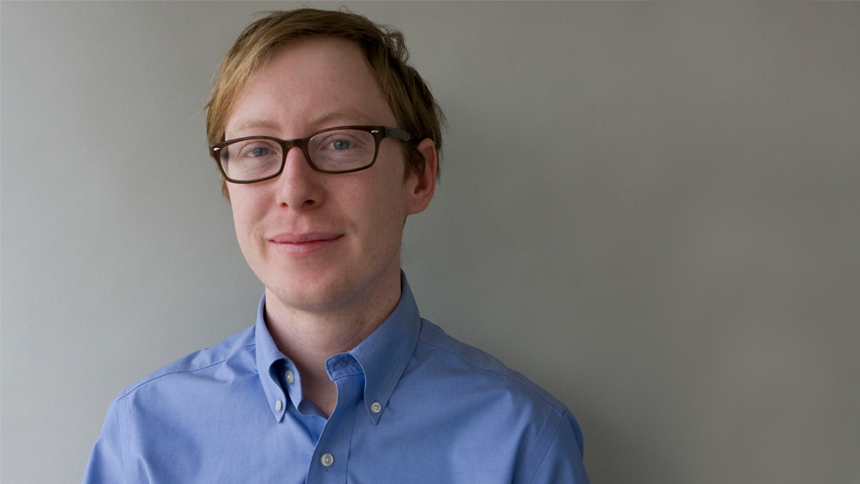
Jeff Larson, expert in data journalism
By Rebecca Borison
@borisonr
Rebecca Borison is a tech reporter at The Street.
3 min read • Originally published January 25, 2016 / Updated March 25, 2026
By Rebecca Borison
@borisonr
Rebecca Borison is a tech reporter at The Street.
3 min read • Originally published January 25, 2016 / Updated March 25, 2026

Editor’s note: This interview was originally published when Jeff Larson was data editor at ProPublica. Since then, he co-founded The Markup, a nonprofit publication investigating the societal harms of technology, and is now Director of Cyber Experience at Yahoo. His advice for breaking into data journalism holds up just as well today.

Data is all the rage now. Companies use it to create more nuanced marketing campaigns. Politicians use it to formulate legislation. And as analytics become more sophisticated and data becomes more available, media, too, has gotten in on the fun.

Some publications, like ProPublica and The New York Times, have whole departments devoted to data, while others, like FiveThirtyEight, focus exclusively on it. This translates into a lot of different jobs in the world of data reporting, but it can be a difficult career path to break into.

We spoke to Jeff Larson, then the data editor at ProPublica and now a veteran of some of the most consequential data journalism of the past decade, to learn what it takes to succeed in the field.

How did you get into data journalism?

In 2009, New York magazine ran an article about [Web] developers in The New York Times Magazine, and I thought, wow, that’s the job I want!

I was already aware of what people like Matt Waite, Adrian Holovaty [co-founders of the late, influential Google Maps mashup chicagocrime.org] and Derek Willis were doing in newsrooms around the country, and I thought it was something I could try my hand at. In fact, that year Matt Waite won a Pulitzer for PolitiFact, a website he developed himself.

I was at The Nation, and so I looked around for a project and created a very simple analysis of how much the CEOs of Fortune-500 companies spent on the 2008 election by party. My former boss Scott Klein invited me for an interview as a data journalist at ProPublica, and I’ve been doing this ever since.

What’s the draw to data journalism?

I firmly believe that data makes a story better and stronger in every case. It is one thing to collect a bunch of anecdotes about a trend you think is happening, but data is a gift to any contentious story. While a source may lie to you, or spin the facts, a careful look at the data will never lead you astray. There’s power in that.

I’m lucky to be in a newsroom that focuses on investigative journalism, so I’m able work on an analysis for a very long time to get it right, but I’ve seen people turn around outstanding day stories with a careful look at the data.

What kind of background do you need to get into the field?

That’s a hard question. In my department, we’re all over the map. I was a literature major in college.

At a baseline, you’d need some experience in news and editorial judgement, but also a provable interest in writing code and statistical techniques like linear regression. Learn a programming language, and start a project in your free time. Grab some dataset and learn to visualize it, analyze that dataset to uncover hidden stories and report those out.

Mostly, though, we’re looking for fast learners who can tackle problems creatively to explain complex subjects to folks. Just like the rest of journalism.

Looking to get your foot in the door and launch your data journalism career? Of course, a great place to find a journalism job is on the Mediabistro job board.

Topics:

Get Hired, Job Search
Careers & Education

Why The Mediabistro Weekly Drop Is the Must-Read Media Careers Newsletter

mediabistro weekly drop media newsletter
Miles icon
By Miles Jennings
@milesworks
Miles Jennings is CEO of Mediabistro and its parent CognoGroup. He previously founded and led Recruiter.com through its NASDAQ listing, executing more than 10 acquisitions over nearly a decade as CEO and COO.
4 min read • Originally published January 22, 2026 / Updated March 25, 2026
Miles icon
By Miles Jennings
@milesworks
Miles Jennings is CEO of Mediabistro and its parent CognoGroup. He previously founded and led Recruiter.com through its NASDAQ listing, executing more than 10 acquisitions over nearly a decade as CEO and COO.
4 min read • Originally published January 22, 2026 / Updated March 25, 2026

If you work in media, journalism, entertainment, publishing, or digital content and feel like the rules keep changing, you are not imagining it.

Attention is fragmented. Career paths are no longer linear. Job titles are blurring. Teams are shrinking. Platforms, not institutions, now dictate how work is created, distributed, and rewarded.

That is precisely why The Weekly Drop, the flagship industry newsletter from Mediabistro, has quickly become required reading for creators and media professionals who want to understand not just what is happening, but what it means for their careers.

Under the editorial leadership of Matt Charney, The Weekly Drop does something rare in industry coverage. It treats media as both culture and system, and it explains how that system now operates for the people doing the work.

A New Editorial Voice for a Changed Media Industry

Matt Charney’s writing stands out because it refuses nostalgia.

Rather than romanticizing legacy career paths or lamenting what media used to be, The Weekly Drop focuses squarely on the constraints shaping the industry now. Fragmented attention. Algorithmic distribution. Consolidation. Layoffs. Measurement. Monetization.

Across recent editions, Charney returns to a consistent set of truths:

  • Attention no longer sits still.
  • Audiences multitask by default.
  • Platforms reward resilience over purity.
  • Careers are built on adaptability, not pedigree.

These are not abstract arguments. They are observations grounded in hiring data, platform behavior, and the lived experience of media workers navigating a smaller, faster, more competitive market.

When The Weekly Drop dissects how Netflix designs stories for partial attention or how social producers operate like live control rooms, it is not critiquing creativity. It describes the environment professionals must design within if they want to stay employable.

That clarity is what makes the newsletter valuable.

From Storytelling to Systems Thinking

One of the defining insights of The Weekly Drop is that modern media and creative careers are no longer built around a single skill or channel.

  • Writers are expected to understand distribution.
  • Editors are expected to interpret analytics.
  • Producers are expected to think about revenue.
  • Audience development now sits between editorial, product, and growth.

Charney frames this shift clearly. The work is no longer just creative execution. It is orchestration.

That is why the newsletter spends as much time on layoffs, consolidation, platform economics, and advertising shifts as it does on awards season or breakout hits. Those forces determine which jobs exist, how long they last, and which skills carry leverage.

The Weekly Drop treats careers as systems, not fantasies.

Connecting Culture to Careers

What truly distinguishes The Weekly Drop is how it links cultural moments to workforce reality.

  • A streaming hit becomes a lesson in second-screen design.
  • Awards season becomes a signal about résumé lift and marketability.
  • Audience data becomes a roadmap for which roles are growing and which are disappearing.

The newsletter does not separate media news from media jobs. It treats them as inseparable, because they are.

This approach aligns directly with Mediabistro’s broader strategy. Mediabistro is not simply listing open roles. It is helping creative professionals understand where opportunity is moving, not where it used to be.

Why Media Professionals Are Paying Attention

The Weekly Drop resonates because it does not pretend the industry will revert to a past golden age.

It assumes smaller teams, fewer full-time roles, more contract work, more competition, and more measurement.

And then it answers the only question that matters.

How do you build a career inside those constraints?

The answer is consistent. You adapt. You understand how attention works. You learn platforms. You stop waiting for permission. You build skills that survive distraction.

That message is unsentimental, direct, and useful.

Mediabistro’s Editorial Reset

The Weekly Drop represents more than a newsletter. It signals an editorial reset for Mediabistro.

By pairing industry analysis with real job listings, hiring trends, and career guidance, Mediabistro is positioning itself as a navigational tool for modern media professionals, not a nostalgia engine for vanished career paths.

In an industry where many workers feel disoriented, that positioning matters.

The Bottom Line

If you are serious about building a sustainable career in media, journalism, entertainment, or digital content, The Weekly Drop is no longer optional reading.

It does not offer comfort. It offers clarity.

And right now, clarity is the most valuable career asset there is.

You can subscribe to The Weekly Drop by Mediabistro to receive weekly insight on media careers, hiring trends, and how the industry is actually evolving, not how it wishes it still worked. And we highlight new projects and open jobs in every edition.

Attention is fragmented. Careers are adapting. And the job market has already moved on. Mediabistro is here to work for the people who tell the world’s stories.

Topics:

Careers & Education
Productivity

Your Logo Is Fine

The brand gives meaning to the logo. Not the other way around.

designing a logo together
Miles icon
By Miles Jennings
@milesworks
Miles Jennings is CEO of Mediabistro and its parent CognoGroup. He previously founded and led Recruiter.com through its NASDAQ listing, executing more than 10 acquisitions over nearly a decade as CEO and COO.
3 min read • Originally published March 24, 2026 / Updated March 24, 2026
Miles icon
By Miles Jennings
@milesworks
Miles Jennings is CEO of Mediabistro and its parent CognoGroup. He previously founded and led Recruiter.com through its NASDAQ listing, executing more than 10 acquisitions over nearly a decade as CEO and COO.
3 min read • Originally published March 24, 2026 / Updated March 24, 2026

There’s a founder, a freelancer, a designer somewhere right now who has spent more than 72 hours agonizing over their logo.

Stop it.

Your logo is fine.

Logos matter. Just not as much as you think they do at the stage you’re probably at when you’re reading this. And the proof is everywhere if you bother to look.

Twitter was almost called Friendstalker

In his 2013 book Hatching Twitter, journalist Nick Bilton reconstructed the platform’s chaotic early days in detail. The founders had kicked around names like Twitch, Smssy, and yes, Friendstalker. Most of the early logos were mocked up by co-founder Biz Stone, and they looked like what you’d expect from a startup figuring itself out in real time: different typefaces, different color schemes, nothing remotely close to the clean blue bird that became one of the most recognized marks in media history.

early logoOne of the early logos, designed by co-founder Noah Glass, was a gloopy green thing. It actually ran as the company’s branding for a while. Green. Gloopy. For the company that became a global communications platform worth billions.


The sky blue bird and bubbly lettering (and its subsequent X’ing out) came later. Much later. After the product found its audience, after people started using it, after the thing actually worked.


Your early logo is a placeholder until it isn’t

Here’s what happens with logos: you pick one, you use it, and over time it becomes “your logo” because people associate it with whatever you’ve built. The Nike swoosh wasn’t inherently meaningful. Carolyn Davidson designed it in 1971 for $35. It became iconic because Nike became iconic.

The brand gives meaning to the logo. The logo doesn’t give meaning to the brand.

If your product is good, if your service solves a real problem, if people like working with you, they will remember your logo fondly, no matter what it looks like. And if none of those things are true, the most beautiful logo in the world won’t save you.

A note for designers

If you design logos for clients, you already know this. But your clients probably don’t. And part of your job is giving them permission to stop overthinking it.

That doesn’t mean doing sloppy work. It means helping clients understand that a good logo is one that’s clean, legible, and doesn’t actively embarrass them. That’s the bar. Everything beyond that is a bonus, and it can evolve over time as the business grows and the brand sharpens.

The best thing you can tell a client who’s on revision 14 and still not happy: “This is good. Let’s ship it. You can always refine it later when you know more about who you are as a company.”

Maybe show them this article.

Knowing when to call something done is a professional skill. It’s also billable time you’re currently spending for free.

Ship the logo, build the thing

Every hour you spend tweaking kerning on your wordmark is an hour you’re not spending on the product, the clients, the content, the relationships that actually determine whether this works or not.

Twitter launched with a gloopy green logo and a name its founders weren’t even sure about. They figured it out as they went. You can too.

Pick something. Use it. Move on to the work that matters.

Topics:

Productivity
media-news

The Rise of Answer Engine Optimization (AEO): How AI Is Redefining Digital Authority

By Media News
3 min read • Published March 24, 2026
By Media News
3 min read • Published March 24, 2026

A new digital strategy is emerging as AI-powered search platforms prioritize credible sources, reshaping how organizations build visibility and authority online.

POST FALLS, ID / ACCESS Newswire / March 24, 2026 / The rapid adoption of artificial intelligence in search is transforming how people discover information online. Instead of browsing multiple search results, users increasingly rely on AI assistants such as ChatGPT, Google Gemini, Claude, and Perplexity to deliver immediate, summarized answers.

This shift is driving the emergence of a new digital strategy known as Answer Engine Optimization (AEO), a methodology designed to help organizations become the trusted sources AI systems rely on when generating answers.

As conversational AI becomes the primary gateway to information, companies are recognizing that digital authority is no longer defined only by search rankings but by whether AI systems cite them as expert sources.

What Is Answer Engine Optimization (AEO)?

Answer Engine Optimization (AEO) is the process of optimizing a brand’s digital presence so that AI-powered search and conversational systems recognize it as a credible authority when generating answers to user queries.

Unlike traditional Search Engine Optimization (SEO), which focuses on ranking web pages in search results, AEO focuses on becoming a referenced authority within AI-generated responses.

AI platforms analyze vast datasets and evaluate signals such as:

  • Verified media coverage

  • Expert commentary in credible publications

  • Consistent digital reputation

  • Structured, machine-readable information

  • Trusted third-party citations

Organizations that strengthen these signals increase the probability that AI assistants reference them when answering questions.

Why AI Is Changing Digital Discovery

For more than two decades, SEO has defined online visibility. Businesses competed to rank on the first page of search engines by optimizing:

  • Keywords

  • Backlinks

  • Page speed

  • Website architecture

However, AI-driven search platforms operate differently.

Instead of presenting a list of ranked pages, AI systems synthesize information from multiple trusted sources and provide a single, summarized answer or recommendation.

This shift creates a new competitive landscape where authority, expertise, and credible citations matter more than traditional ranking signals.

The Signals AI Systems Use to Identify Trusted Sources

AI assistants evaluate a range of authority indicators when determining which sources to reference in answers.

Key signals often include:

1. Credible Media Mentions

Coverage in reputable publications strengthens a brand’s trust and verification signals.

2. Recognized Subject-Matter Expertise

Experts quoted or featured in trusted media are more likely to be referenced by AI systems.

3. Consistent Digital Reputation

AI systems analyze brand mentions across:

  • News sites

  • Professional profiles

  • Industry publications

  • Knowledge graphs

4. Structured Data and Clear Information

Content formatted in a way that AI systems can easily interpret increases the likelihood of citation in AI-generated responses.

How AEO Is Redefining Online Authority

Industry analysts say the rise of AI search is redefining what it means to be an authoritative brand online.

Instead of measuring success purely through traffic or rankings, companies increasingly evaluate:

  • Whether AI assistants reference their expertise

  • Whether their insights appear in AI-generated answers

  • Whether their brand is recognized as a trusted authority

Organizations that achieve this level of recognition can gain a significant competitive advantage, as AI systems often highlight only one or a few authoritative sources.

Preparing for an AI-First Internet

The influence of AI-powered discovery is expected to expand rapidly as conversational interfaces become embedded in:

  • Web browsers

  • Mobile devices

  • Enterprise software

  • Smart assistants

For businesses, adapting to this environment means building verifiable expertise and digital credibility that AI systems can confidently reference.

Strategies increasingly combine public relations, expert positioning, structured content, and Answer Engine Optimization (AEO).

As AI continues to reshape the information ecosystem, AEO is emerging as the next evolution of digital visibility.

About Trustpoint Xposure

Trustpoint Xposure is an AI-driven PR and digital authority agency that helps organizations strengthen their visibility through:

  • Strategic media placements

  • Expert positioning

  • Answer Engine Optimization (AEO) strategies

The firm works with leaders across law, finance, technology, and emerging industries to build long-term credibility in an AI-driven information ecosystem.

Learn more:
https://trustpointxposure.com

Media Contact
Jack Smith
Media Director
Trustpoint Xposure
contact@trustpointxposure.com

SOURCE: Trustpoint Xposure

View the original press release on ACCESS Newswire

Topics:

media-news
Weekly Drop Media Newsletter

Hollywood Did Not Take The Week Off

Key headlines, trends, and opportunities for your next move

mediabistro weekly drop media newsletter
Miles icon
By Matt Charney
@mattcharney
Matt Charney is a talent acquisition analyst, journalist, and marketing leader with nearly two decades of experience at the intersection of recruiting, HR technology, and media. He has held editorial and content leadership roles at ERE Media, Recruiting Daily, and Recruiter.com, and served as Chief Content Officer at Allegis Global Solutions. As Principal Analyst at Kyle & Co, he covers HR tech funding, M&A, and market strategy. Matt currently serves as Executive Editor at Mediabistro, where he leads editorial, partnerships, and multimedia content for the creative professionals who power the media industry. He holds a degree in Writing for Screen and Television from the University of Southern California.
6 min read • Published March 24, 2026
Miles icon
By Matt Charney
@mattcharney
Matt Charney is a talent acquisition analyst, journalist, and marketing leader with nearly two decades of experience at the intersection of recruiting, HR technology, and media. He has held editorial and content leadership roles at ERE Media, Recruiting Daily, and Recruiter.com, and served as Chief Content Officer at Allegis Global Solutions. As Principal Analyst at Kyle & Co, he covers HR tech funding, M&A, and market strategy. Matt currently serves as Executive Editor at Mediabistro, where he leads editorial, partnerships, and multimedia content for the creative professionals who power the media industry. He holds a degree in Writing for Screen and Television from the University of Southern California.
6 min read • Published March 24, 2026

FADE IN:

Every Thanksgiving, Hollywood pretends to slow down.

Executives “step away,” inboxes auto-reply, and everyone likes to believe they’re about to spend four uninterrupted days thinking very deeply about gratitude instead of the year’s remaining greenlights and headcount targets.

Then the trades drop a Friday afternoon bombshell, a streamer leaks a sizzle reel, or a studio quietly updates its FYC page, and suddenly the entire industry is doomscrolling from their grandmother’s couch.

If there’s a theme to this week, it’s that nothing in entertainment ever really pauses. Not the rights battles.

Not the tax incentives. Not the slow-burn anxiety that generative AI is about to rebuild the business at a structural level. Probably not even the box office for Wicked: For Good, despite tepid reviews and proof you can’t spell “junket” without junk.

You can put the turkey in the oven, but the future doesn’t take holidays.

So here’s what actually matters right now. Consider it your Thanksgiving briefing. No sentimentality. No corny metaphors about harvests or feasts.

Just the stories shaping the business while everyone else is pretending to be offline. If you can, enjoy that turkey and binge-watch the final season of Stranger Things – and if you’ve got a gig, be thankful. If you’re looking, well, we’ve got your back.

Happy Thanksgiving,

Matt Charney

Executive Editor, Mediabistro


LEAD STORY

Platform Wars Go Prime Time: Netflix and NBC Smash Baseball’s Old Guard

Yes, we know. Thanksgiving is all about football, but when it comes to media, America’s most popular sport might no longer be its most lucrative.

The streaming wars finally reached America’s pastime (Go Dodgers), and the fallout is bigger than a blown call in October or the Guardians’ betting scandal. If you thought Thursday Night Football was as big as the streamers would spend on broadcast rights, think again.

Major League Baseball has finalized explosive media deals through 2028 that redraw the entire map of live sports distribution. Yes, baseball.

Of course, with one of the best World Series ever watched by an estimated 51M viewers – the most since 1992, when the existential threat to the networks was basic cable and the launch of Fox – this seems like an obvious home run for the networks.

Netflix enters live sports with Opening Day exclusives and the Home Run Derby.

  • NBC rips Sunday Night Baseball from ESPN after 35 years.
  • ESPN, in a surprising twist, lands what may be the most valuable asset: exclusive rights to distribute MLB.TV, the out-of-market streaming service that clocked 19.4 billion minutes watched in 2025.

It’s the clearest signal yet that if entertainment wants reliable, global, live audiences, they’re going to have to buy them the old-fashioned way. With a fat check for the rights to event viewing.

Read more: Sportico’s breakdown

INDUSTRY REVIVAL

Back To Cali: $750M in Tax Credits Fuels a Production Repatriation Wave

While everyone else is arguing about stuffing versus dressing, California is busy launching the most aggressive production incentive play in its history. Last week, we discussed the decline in production that has cost tens of thousands of jobs and one of its primary economic engines – consider that in 2024, Ukraine actually had more major productions filmed there than the Valley (speaking of war zones).

But there’s good Newsom: the state’s new $750 million annual tax credit program is already triggering a gold rush.

It’s still early, but it already looks like the kind of tentpole project that studios dream about. Since the incentive went into effect July 1, the numbers so far show that this is one development we’re happy to see stuck in turnaround (a little screenwriter humor).

Consider:

  • Fifty-two film projects were announced in October alone
  • More than $1.4 billion in economic activity has been generated.
  • 133,000 entertainment industry jobs have been created or saved.
  • Most importantly, the Baywatch reboot announced it was moving from Maui back to Malibu. Nice.

It’s the most assertive statement Sacramento has made in a decade: the runaway production era is over, and the state wants its industry back. West Coast for life.

Read more: Deadline

TECHNOLOGY SHIFT

Fix It In Post: AI Moves from Hype to Infrastructure in VFX

A new McKinsey report quietly dropped a truth that’s been obvious to anyone walking through a studio lot recently. Generative AI isn’t something that’s “coming.” It’s something that’s already baked into the foundation of the business, and as ubiquitous in the entertainment industry today as craft services or call sheets.

The report, which is totally worth reading, projects 80 to 90 percent efficiency gains in VFX and 3D asset creation. That’s not incremental. That’s a collapse of production timelines. It’s directors A/B-testing shots before a single crew call. It’s indie producers hitting studio-level polish without studio-level budgets.

The question now isn’t whether AI transforms content creation. It’s whether the industry can absorb the shock without cracking. Guilds are drawing lines in the sand, and studios are staring down lawsuits over dataset origins.

Read more: Generative AI in Entertainment: The Future of Storytelling (McKinsey & Associates)

CAREERS

New Jobs This Week

Fresh opportunities across entertainment, media, and production. Even during a holiday week, hiring doesn’t hit pause. And neither do the job postings on Mediabistro. Here are some hot jobs worth checking out:

  • Assistant Editor – The Morgan Museum & Library (New York City)
  • Public Relations Manager, Ads & Comms – Amazon (Arlington, VA)
  • Manager, Product Marketing for New Content Experiences – Netflix (Los Angeles)
  • Creative Director, Bold Campaigns – Warner Bros. Discovery (New York City)
  • News Photographer – Fox Television Networks (Dallas, TX)
  • Senior Editor, Inc. Magazine – Mansueto Ventures (New York City)

Weird job of the week: Bluegrass Player – Knott’s Berry Farm (Buena Park, CA)

Browse thousands more open roles, only at Mediabistro Jobs

QUICK HITS

  • Broadcast giant Sinclair makes bid for EW Scripps (Associated Press)
  • A Publisher Just Made $174 million Dollars from AI Crawlers (AdWeek)
  • How Europe’s Digital Entertainment Industry Is Powering Economic Growth (European Business)
  • Wicked: For Good Scores $226 Million Global Debut (ABC News)
  • Paramount, Comcast and Netflix Make Bid for Warner Bros. Discovery (Reuters)

THE WEEK AHEAD

  • Tuesday 11/25: Netflix rumored to tease another live sports deal
  • Wednesday 11/26: Early box office enters tracking; Zootopia 2 expected to win long weekend
  • Thursday 11/27: Thanksgiving; Post Malone to play halftime show of Chiefs-Cowboys game
  • Friday 11/28: Back to Hawkins for the final season of Stranger Things as Black Friday streaming surge begins and awards contenders jockey for position; favorite Hamnet hits streamers
  • Weekend: Doha International Film Festival 2025, Doc NYC 2025, Montreal International Documentary Festival (RIDM)l 2025, Marrakech International Film Festival 2025

FADE OUT:

What gives me something like optimism, even in a business that treats optimism like a scheduling conflict, is that moments like this force the industry to stop coasting.

Hollywood has always done its best work when it’s slightly uncomfortable. Streaming didn’t happen because studios felt inspired. It happened because DVDs collapsed. Peak TV didn’t emerge from a vision deck. It came from networks realizing they were losing cultural relevance.

If you strip away the noise, what’s happening right now feels less like decline and more like recalibration. Production is coming back home because the state finally stopped pretending runaway shoots were temporary.

Streamers are rediscovering the value of broad audiences instead of chasing niche subscription spikes. And AI, for all its legal and ethical headaches, is putting craft back into the hands of people who’ve spent years racing impossible deadlines. It doesn’t replace creativity. It buys time for it.

That’s not naive optimism. It’s pattern recognition. Every time the industry resets, new voices get in. New formats break through. New careers start. Thanksgiving is supposed to be a moment to acknowledge what’s working, and for all the chaos, a surprising amount actually is.

And that’s something we can all be thankful for.

Matt Charney, Executive Editor

Topics:

Weekly Drop Media Newsletter
Journalism Advice

How to Get Your First Clips When No One Will Hire You Yet

A veteran editor shares the strategies that still work, even in a crowded media market.

writer asking how to get first clips
John icon
By Celeste Mitchell
Celeste Mitchell is an editorial writer and editor with nearly 30 years of experience creating consumer lifestyle content for publications including Marie Claire, Cosmopolitan, Good Housekeeping, and SELF. She previously served as Deputy Editor at Cosmopolitan and taught journalism courses through Mediabistro.
4 min read • Originally published June 6, 2015 / Updated March 24, 2026
John icon
By Celeste Mitchell
Celeste Mitchell is an editorial writer and editor with nearly 30 years of experience creating consumer lifestyle content for publications including Marie Claire, Cosmopolitan, Good Housekeeping, and SELF. She previously served as Deputy Editor at Cosmopolitan and taught journalism courses through Mediabistro.
4 min read • Originally published June 6, 2015 / Updated March 24, 2026

Editor’s note: This article features advice from Anne Russell, who at the time of our original interview was editor-in-chief of Shape magazine. Russell has since added to an already impressive resume, including a stint as editor-in-chief of VIV magazine. She continues to work today as a writer, editor, and content creator in Los Angeles, where she has been president of Extra Special Media since 2013. Her advice holds up as well as ever.

Here’s one we hear all the time: “I want to pitch to magazines and newspapers, but I don’t have any clips. No one will give me an assignment without clips, but how will I get a clip until I have an assignment?”

That’s an excellent question — but, you’ll be surprised to hear, the dilemma isn’t as intractable as it seems. We checked in with Anne Russell, former editor-in-chief of Shape magazine and president of Extra Special Media, who gives these suggestions.

Start small

Start with something doable. Concentrate on pitching to publications that actually accept work from writers without clips — and they do exist. Small publications are often willing to take a chance on first-timers, so try newsletters and local newspapers and magazines.

Not sure how to get in front of editors to begin with? Here’s advice on connecting with editors, even if you’re not in a major media market.

Focus on the freebies

Write for freebie newspapers and magazines, which have small budgets and are therefore always eager for unpaid contributors. Insist on choosing a topic yourself. This is your golden opportunity to generate a sample that demonstrates your ability to write about a certain subject. Editors will focus on the quality of your work rather than the publication it appeared in. Branded content outlets and content marketing publications are also worth considering — companies are always looking for contributors, and those clips are increasingly recognized by editors as legitimate samples of your work.

Deal with daily sites

You can often drum up quick clips writing for websites that have daily needs for fresh content. The caliber of the provider can matter, so shoot for reputable and recognizable sites that can give you a brand-name writing sample. But something’s better than nothing, so write for any pub that’ll have you.

The same logic applies to newsletters. Substack and similar platforms have become legitimate publishing venues, and a byline in a well-read newsletter can be just as useful as a traditional website clip. It also helps to build a writer’s website where you can house everything in one place.

Just make sure your final, edited article is free of typos and misspellings. A writing sample with mistakes will not work in your favor — even if you aren’t responsible for them.

Pitch with references

When you send a pitch without clips — or with only byline-less clips — consider attaching a list of references. Compile the names of editors or former colleagues who have supervised your work (even if it wasn’t writing work you did for them) and include their contact information.

Two to three people will suffice; more than four is overkill. Just make sure that these references are actually prepared to vouch for you — a bunch of names might seem impressive, but the editor will call and a fake reference will be found out.

Play up your focus fields

Forget that you don’t have much journalism experience; you probably have stellar credentials in other fields. Don’t underestimate the value of your own expertise. Are you a dentist? A history buff? Do you have a hobby you’ve perfected? Focus your efforts on publications that cover your area of expertise. Here’s how to position yourself as a subject-matter expert that editors actually want to hear from.

In your letter, play up your specialized knowledge, not your writing skills. Take full advantage of anything and everything you have going for you.

Pitch the unique, interview the evasive

Pitch story ideas that only you can do. Spend some time hunting down an unusual idea that you are uniquely qualified to cover. Or, better still, nail an interview with someone who is known for being elusive.

The goal is to present an opportunity to an editor that she cannot refuse, and this is what will give you the edge against all those other people who have clips. Remember that more than anything else, editors are hungry for new and different stories.

Sell with your pitch letter

Demonstrate quality writing in your pitch letter — it’s a written document, after all, and it should prove your ability to communicate ideas and concepts. Without clips, the prose in your pitch letter assumes greater significance. Here’s a breakdown of the elements that make a pitch letter work.

Opt for op-eds

Write a personal essay or an opinion piece. Of course, an editor won’t assign a first-person piece like this based on a query letter, so you have to do the work first before you can shop it around. Your advantage here is that the writing speaks for itself. Before you submit, make sure you’re not making one of these common personal essay mistakes.

Resist the urge

And, finally, remember: When you don’t have samples of non-fiction writing, it’s tempting to send an editor samples of other types of writing you have done, such as poetry, a song or a screenplay. Resist this temptation. These things don’t show you have a command of journalism — and they just might freak out the editor.

Topics:

Go Freelance, Journalism Advice
Journalism Advice

What the TK? The MB Media Glossary

From the lede to the kicker, here's Mediabistro's handy glossary

glossary-journo-feature
Admin icon
By Celeste Mitchell
Celeste Mitchell is an editorial writer and editor with nearly 30 years of experience creating consumer lifestyle content for publications including Marie Claire, Cosmopolitan, Good Housekeeping, and SELF. She previously served as Deputy Editor at Cosmopolitan and taught journalism courses through Mediabistro.
6 min read • Originally published February 8, 2016 / Updated March 24, 2026
Admin icon
By Celeste Mitchell
Celeste Mitchell is an editorial writer and editor with nearly 30 years of experience creating consumer lifestyle content for publications including Marie Claire, Cosmopolitan, Good Housekeeping, and SELF. She previously served as Deputy Editor at Cosmopolitan and taught journalism courses through Mediabistro.
6 min read • Originally published February 8, 2016 / Updated March 24, 2026

Updated March 24, 2026

We’re always getting questions about what certain obscure (or sometimes not-so-obscure) publishing terms mean. To help, we’re rolling out Mediabistro’s media glossary.

So, freelancers and media-job-seekers: Bookmark this bad boy and hit it up whenever you’re asking yourself, “What the heck is a nut graf?!”

All-rights contract: A legal contract between a publisher and a freelance writer which grants all rights to the completed work to the publisher. This is not so good for the writer. Before signing anything, it’s worth knowing the key terms in any freelance contract.

Beat: A subject or industry that a reporter (or editor) is responsible for covering. Also how you’ll generally feel after a long close night.

Book: Industry slang for a magazine. As in, “I’ve got a piece in the book this month.” Using it correctly is a reliable way to signal you know what you’re doing.

Clips: Your published writing samples, the currency of the freelance world. No clips, no assignments; good clips, better assignments. Simple math. If you’re just starting out, here’s how to build your portfolio from scratch.

Close: The night (or nights, at a monthly, bimonthly or quarterly) when pages are finally being finished off and sent to the printing plant. During a close, mag-world people have no life.

Credit line: A list of photographers, illustrators or stylists appearing in small type on the page. It’s like a byline, but for art people, and for no good reason, much smaller.

Deadline: When your assignment is due. Ignore them and they’ll stop being a problem, because you won’t get any more work.

Dek: A sentence or few sentences below a headline, a dek summarizes the article. Like many magazine-production terms, it’s intentionally misspelled (instead of “deck”) so that others involved in the process won’t accidentally think it’s real copy.

Display type: Heds, deks, pull quotes and other written material that’s printed in a larger font or different color from the main body copy, to help draw a reader’s attention.

Embargo: An agreement that information provided early (by a PR firm, company, or government agency) won’t be published until a specified date and time. Breaking an embargo is how you stop getting early information.

Evergreen: An article that has no news peg and thus can be published at any time of the year or repeatedly, year after year. A “glossary” column, for example, is an evergreen.

File: As a verb, when a writer submits a completed assignment to an editor. As a noun, the material submitted.

First North American Serial Rights (FNASR): The standard rights most magazines want to purchase: the right to publish your piece first, in North America, in print or digital. After that, the rights revert to you. Much better than an all-rights contract.

Galley (or galley proof): An early typeset version of a story sent for proofreading before it goes to print. If you’ve ever caught a typo in a final magazine, someone wasn’t reading their galleys.

Graf: A paragraph, once again intentionally misspelled.

Hed: An article’s headline, sometimes intentionally misspelled. Writing a great one is harder than it looks. These headline tips can help.

Independent contractor: Most freelancers are considered independent contractors, which means the publication doesn’t take legal responsibility for the employee, deducting taxes and so forth. Generally, but not always, an independent contractor doesn’t receive benefits. If you’re navigating the freelance life, here are 7 ways to be a more productive freelance writer.

Kicker: The final paragraph or sentence of a story, usually designed to be funny or wry or somehow end things with a bang.

Kill fee: Payment to a writer whose piece won’t be published. It’s usually a percentage of the agreed-upon piece fee, but sometimes it’s a flat rate.

Lede: The intentional misspelling of “lead,” it’s the opening to an article.

Masthead: The official list of names and job titles of those responsible for producing a publication: editors, writers, designers, art directors, sales representatives, publishers, lawyers and support staff. It usually runs someplace in the first few pages of a magazine, but it’s not always there, which is frustrating.

Multiple submission: Pitching the same story idea to several publications simultaneously.

Nut graf: Also sometimes known as trumpet or billboard graf, it comes right after the catchy lede and clearly lays out the thrust of the article. It’s like the thesis statement in a term paper. Here’s what else makes a good magazine story.

Off the record: Information provided by a source that cannot be used in print. It can, however, be used (without revealing the source) to coax information from another source, and sometimes people can be persuaded to put previously off-the-record information on the record. Not-for-attribution information, by contrast, may be used in print but without the source’s name attached. In general practice, information cannot be placed off the record retroactively.

On background: A step above off the record. Information provided on background can be published, but the source can’t be named or identified in any traceable way. Distinct from not for attribution, which is essentially the same thing with slightly looser conventions depending on who you ask.

Pay on acceptance: A policy under which the publisher pays the writer when the assigned article is completed and accepted by the editor. We like to be paid on acceptance.

Pay on publication: A policy under which the publisher pays the writer when (or soon after) the article appears in print. We like this less.

Pull quote: A compelling and provocative quote from a source that is “pulled” from the running text of an article and featured as display type.

Query, also called a pitch letter: A letter from a freelance writer to an assigning editor that describes a story idea. A query is also the term for a request from an article’s editor for more information to flesh out the piece. It can also be used as a verb. Inexplicably, some pronounce the word qwee-ree while others pronounce it qweh-ree. Not sure how to reach editors in the first place? Here’s advice on how freelancers can connect with editors.

Roundup: A story format that collects multiple examples, sources, or products on a single topic. Easy to pitch, easy to sell, and often evergreen.

Running text: The main text of an article or in a package, as distinct from sidebars, charts and so forth. Also sometimes called the main bar.

Service: A type of writing that offers advice and useful information. Also called a how-to.

Sidebar: Text or a chart that is separated from the main bar and highlights additional information about a story.

Slug: The short internal identifier given to a story during production. Has nothing to do with the slimy garden variety.

Spike: When an editor kills a story before assigning it a kill fee, meaning you did the work and got nothing. Not to be confused with a kill fee, which at least acknowledges your pain.

Stet: An editor’s indication on a manuscript that previously crossed-out text should be reinstated.

TK: A place marker used in drafts of an article to indicate missing information. It’s an intentional misspelling of “TC,” for “to come,” as in “more info to come.”

Work for hire: Like an all-rights contract, but baked into the job itself rather than negotiated per piece. If you’re a staffer, everything you write is probably work for hire whether you know it or not.

Topics:

Business Basics, Skills & Expertise
Skills & Expertise

What Does a Business Development Director Do? Role Explained

Help drive your company forward with this multilayered sales role

Defining a business development director role
Valerie icon
By Jenell Talley
Jenell Talley is a journalist and program analyst with a background spanning media, government, and editorial work. She holds a journalism degree from Howard University and a master's in human resources management from the University of Maryland.
3 min read • Originally published May 3, 2016 / Updated March 24, 2026
Valerie icon
By Jenell Talley
Jenell Talley is a journalist and program analyst with a background spanning media, government, and editorial work. She holds a journalism degree from Howard University and a master's in human resources management from the University of Maryland.
3 min read • Originally published May 3, 2016 / Updated March 24, 2026

Lots of companies have a business development director, including yours. And there are business development director openings on the job board. Yet you’re not sure what the position entails or if it’s the right job or ambition for you. Well, wonder no more.

We asked a couple of business development directors to tell you all about the job. Check out what they had to say, and consider taking a chance on a profession that’s all about creating opportunity.

What exactly does a business development director do?

Whether the job is in television, tech, or digital media, a business development director is responsible for driving a company’s growth and increasing its revenue, identifying and developing new business opportunities, and building and expanding the presence of the company and its brands.

The role also involves leading sales and client-relationship management, tracking new markets and emerging trends, recommending new products and services, proposing and developing new strategic partnerships, writing proposals and plans, and guiding long-term objectives to meet business needs and requirements.

“It’s an all-encompassing role,” says Sajeel Qureshi, VP of business development at Computan, a marketing support organization with offices in Canada and the United States. Qureshi manages a sales team, oversees marketing campaigns to generate leads, earns media placement to position the company as an expert in its discipline, and allocates and manages the sponsorship and pro-bono budgets.

What skills do you need?

Persistence, knowledge of the product or service you’re selling, and communication skills are essential — and all equally important, says Tim Drudge, brand and business development manager at St. Vincent Sports Performance in Indiana. “Without one of those skills, the others fail.”

Qureshi emphasizes the importance of communication skills in particular. A business development director is one of the first points of contact someone has with the company, so it’s vitally important to be able to explain what the company does and how it can help in simple, digestible terms — whether in person or via email.

You should also understand how to use technology to stay ahead of competitors. Knowing what software and automation platforms are available in your industry — and picking the ones that best fit your organization — is a must.

Who is a business development director’s boss?

This depends on the size of a company and its setup, though most business development directors report to a vice president or to the owners.

What do you need to get ahead in this position?

People skills. That means effectively communicating with customers and building real relationships. Verbal communication is a lost art, says Drudge. “Not only does it lead to clear expectations, but it builds a longstanding relationship — and revenue — that can be counted upon year after year.”

Strong networking skills matter just as much. The ability to connect with new contacts, stay top of mind with clients, and open doors through relationships is what separates good business development professionals from great ones.

How can you break into this field?

The career ladder to this position usually starts with an entry-level job in sales or marketing. You don’t need a degree in a specific area before starting your climb, says Drudge, so long as you have top-notch people skills and a genuine passion for the products and services you’ll be selling.

It also helps to keep your LinkedIn profile sharp and stay visible in your industry. Business development is a relationship-driven field, and the connections you build early in your career are often the ones that open the biggest doors later on.

Topics:

Climb the Ladder, Skills & Expertise

Posts navigation

Older posts
Newer posts
Featured Jobs
Kirkus Media
Editorial Intern
Kirkus Media
New York City, New York (US)

Gaia Inc
MEDIA COORDINATOR
Gaia Inc
Louisville, CO

Gaia Inc
Global Paid Media Specialist
Gaia Inc
Louisville, CO

Gaia Inc
Director of Media Strategy
Gaia Inc
Louisville, CO

Hearst Television
Account Executive
Hearst Television
Milwaukee, WI, United States

All Jobs »
PREMIUM MEMBER
am

Alex Mason

new york, AK
2024 Years Experience
View Full Profile »
Join Mediabistro Membership Today

Stand out from the crowd with a premium profile

Mediabistro Logo Find your next media job or showcase your creative talent
  • Job Search
  • Hot Jobs
  • Membership
  • Newsletter
  • Career Advice
  • Media News
  • Hiring Tips
  • Creative Tools
  • About
Facebook YouTube Instagram LinkedIn
Copyright © 2026 Mediabistro
  • Terms of Use
  • Terms of Service
  • Privacy