Mediabistro Logo Mediabistro Logo
  • Jobs
    Search Creative Jobs Hot Jobs Remote Media Jobs Create Job Alerts
    Job Categories
    Creative & Design Marketing & Communications Operations & Strategy Production Sales & Business Development Writing & Editing
    Quick Links
    Search All Jobs Remote Jobs Create Job Alerts
  • Career Resources
    Career Advice & Articles Media Industry News Media Career Interviews Creative Tools Resume Writing Services Interview Coaching Job Market Insights Member Profiles
  • Mediabistro Membership
    Membership Overview How to Pitch (Premium Tool) Editorial Calendars (Premium Access) Courses & Training Programs Membership FAQ
  • Log In
Post Jobs
Mediabistro Logo Mediabistro Logo
Search Creative Jobs Hot Jobs Remote Media Jobs Create Job Alerts
Job Categories
Creative & Design Marketing & Communications Operations & Strategy Production Sales & Business Development Writing & Editing
Quick Links
Search All Jobs Remote Jobs Create Job Alerts
Career Advice & Articles Media Industry News Media Career Interviews Creative Tools Resume Writing Services Interview Coaching Job Market Insights Member Profiles
Membership Overview How to Pitch (Premium Tool) Editorial Calendars (Premium Access) Courses & Training Programs Membership FAQ
Log In
Post Jobs
Log In | Sign Up

Follow Us!

NYC

Best draft picks in Buffalo Bills history

Best draft picks in Buffalo Bills history
By Stacker Feed
2 min read • Published April 21, 2026
By Stacker Feed
2 min read • Published April 21, 2026

zimmytws // Shutterstock

Best draft picks in Buffalo Bills history

Stacker compiled a list of the best draft picks in Buffalo Bills history using career Weighted Approximate Value (wAV), a metric developed by Pro-Football-Reference.com to estimate career impact. The ranking also lists individual accolades such as Pro Bowl selections, First-Team All-Pro honors, and total years as a starter. Players were assigned to their originally drafted teams, excluding any draft-day trades. Data is as of April 2026.

#10. Joe DeLamielleure (1973, Round 1, Pick 26)
– Position: G
– Career wAV: 87
– Pro Bowls: 6
– First-Team All-Pro: 3
– Games Played: 185
– Seasons as Starter: 12

#9. Larry Wilson (1960, Round , Pick )
– Position: DB
– Career wAV: 91
– Pro Bowls: 8
– First-Team All-Pro: 5
– Games Played: 169
– Seasons as Starter: 13

#7. Andre Reed (1985, Round 4, Pick 86) (tie)
– Position: WR
– Career wAV: 98
– Pro Bowls: 7
– First-Team All-Pro: 0
– Games Played: 234
– Seasons as Starter: 14

#7. O.J. Simpson (1969, Round 1, Pick 1) (tie)
– Position: RB
– Career wAV: 98
– Pro Bowls: 6
– First-Team All-Pro: 5
– Games Played: 135
– Seasons as Starter: 11

#6. Jim Kelly (1983, Round 1, Pick 14)
– Position: QB
– Career wAV: 103
– Pro Bowls: 5
– First-Team All-Pro: 1
– Games Played: 160
– Seasons as Starter: 11

#5. Paul Warfield (1964, Round 4, Pick 28)
– Position: WR
– Career wAV: 108
– Pro Bowls: 8
– First-Team All-Pro: 2
– Games Played: 157
– Seasons as Starter: 11

#4. Thurman Thomas (1988, Round 2, Pick 40)
– Position: RB
– Career wAV: 110
– Pro Bowls: 5
– First-Team All-Pro: 2
– Games Played: 182
– Seasons as Starter: 10

#3. Josh Allen (2018, Round 1, Pick 7)
– Position: QB
– Career wAV: 111
– Pro Bowls: 4
– First-Team All-Pro: 0
– Games Played: 128
– Seasons as Starter: 8

#2. Carl Eller (1964, Round 1, Pick 5)
– Position: DE
– Career wAV: 132
– Pro Bowls: 6
– First-Team All-Pro: 5
– Games Played: 225
– Seasons as Starter: 15

#1. Bruce Smith (1985, Round 1, Pick 1)
– Position: DE
– Career wAV: 152
– Pro Bowls: 11
– First-Team All-Pro: 8
– Games Played: 279
– Seasons as Starter: 18

Topics:

NYC
Mediabistro Archive

Heather Cocks and Jessica Morgan on Parlaying a Fashion-Snark Blog Into a Book Deal

The Go Fug Yourself bloggers on turning celebrity fashion snark into a book deal -- and the guerrilla journalism that made it happen.

mediabistro interview
By Mediabistro Archives
27 min read • Originally published May 15, 2008 / Updated April 21, 2026
By Mediabistro Archives
27 min read • Originally published May 15, 2008 / Updated April 21, 2026
Archive Interview: This interview was originally published by Mediabistro in the mid-2000s. It is republished here as part of the Mediabistro archive.

The madness this March isn’t limited to basketball and brackets — at least not for blogging duo “The Fug Girls.” Over at GoFugYourself.com, self-proclaimed college basketball aficionados Heather Cocks and Jessica Morgan have a whole bracket system all their own, pitting stars’ frock frights against each other in what can only be deemed survival of the Fuggest. Before the brackets became their only obsession, we got them talking about how other bloggers committed to a topic (read: obsession) can follow in their footsteps.

The past several weeks have seen the Fugs cover Fall 2008 Fashion Week for New York (where they also contribute a weekly column), turn right around from their home base of Los Angeles to liveblog the Oscars red carpet, again for New York, and celebrate the release of their first book, The Fug Awards, commemorating the worst of celebs’ awards-show attire.

Known for their no-holds-barred approach to celebrities and the less-than-appealing outfits they’re frequently found in, the Fugs were actually pretty endearing over salads in Noho and didn’t ostracize our outfit (to our face, at least). After debriefing us on what they considered the tedium of this year’s Oscars fashion, they described how they made the move from part-time to career bloggers, and came clean on topics ranging from what it’s like to work for Tyra Banks and why they’re steering clear of blogging Britney… for now.


After analyzing all this crap celebrity fashion for four or five years now, is it still possible to floor you?
Heather Cocks: Yes, I think so. I think some of the reason it’s still possible to floor us is you write about these people for long enough and, in a weird way, you kind of become fond of them. I think celebrity culture as a whole — the way that everywhere there are so many different outlets to read about these people — that they kind of become characters in a little daily soap opera. Not that I’m trying to dehumanize them, but I feel like it makes you more invested in them. There are people that you hate that become people you love to hate, and there are people that you really root for. And then there are people who’ve turned it around. I love an ugly duckling story.
Jessica Morgan: Right. A comeback.
Heather: So you really get fond of them and that adds a whole extra element — you get excited if someone blows you away or, if someone doesn’t look as good, you’re like, “Aw!” You’re just really crushed. On so many different levels there’s definitely still stuff to make our jaws drop.
Jessica: Thank God.

So how do you explain the fact that the same people continue to make wretched mistakes?
Heather: I don’t know. Maybe they just don’t have good taste.
Jessica: It’s hard to say. I mean, we were talking about this this morning. A lot of people do sort of turn it around. Like Fergie, for example, used to always be out in short shorts and a vest and Pippi Longstocking braids. And now she looks great almost all the time. I think everybody has style flaws, you know, celebrity or not. And I do think people have a tendency eventually to turn it around.
Jessica: Your average Jane, I think, does naturally go through an evolution.
Heather: God knows what it is. I mean, we make fun of how Lindsay Lohan has been wearing nothing but leggings lately. But clearly, there’s something going on with her where she feels like that is the one thing that she’s comfortable in. And everybody goes through that.
Jessica: She can hide cocaine in her leggings.
Heather: Exactly.

You cover Fashion Week for New York magazine, so you’re here a couple of times a year, and you’re based in Los Angeles. You must have run into people you’ve fugged before. Has anyone ever said anything, or is it because your own pictures aren’t so widely circulated that people tend not to know?
Jessica: We’ve never really had an encounter with anyone yet. We live in L.A., but I’m certainly not out going to Hyde. I’m much more likely to be at home or at a divey bar. So we’re really not traveling in those circles. And here at Fashion Week, it’s sort of a different animal. Sure, there are a lot of celebrities in New York and stuff, but�
Heather: We’re not interviewing any of them. I feel like we’re the least of people’s concern during Fashion Week because we’re not trying to take their picture and we’re not trying to interview them; we’re just sort of observing. I mean, there are definitely times I’ll be sort of trying to see who’s in the front row and I’ll accidentally make eye contact with Brittany Murphy or whatever, and I’ll think, “Oh my God, I just wrote yesterday about how she was wiping sweat off her poor husband’s brow during the Max Azria show. If she knew, she’d probably be very upset with me.” But it usually never goes past that. Unfortunately, in L.A., no one’s really come up to us.

What about the fashion media here in New York?
Jessica: Well, they have bigger fish to fry too. All the journalists that I’ve met during Fashion Week have been delightful and really cool. There’s a lot of journalist-camaraderie and I think a lot of those people understand that although blogs are not proper journalism, that we write for New York magazine, and I think there is a writerly camaraderie between people. As far as, like, A Dubs [Vogue EIC Anna Wintour] or a big magazine editor, I really can’t imagine that they’re thinking about anything other than blogs as kind of like a whole entity [rather than GFY specifically].
Heather: Interestingly, we do get some emails from people and someone will be like, “Who the hell are you? I’m a fashion student. Who are you to critique these people?” And I imagine that there are probably some people in fashion journalism who feel the same way. What I would argue is that we’re not really coming at it from a fashion perspective. We’re not trying to sit here and say, “Well, Bai Ling shouldn’t be wearing that sparkly bra because it’s several seasons ago. It’s not ‘now.'” We’re coming at it from the layperson’s point of view, being like, “Oh my God, that’s terrible. I don’t care whose runway that dress is on; it doesn’t work on Cate Blanchett. It’s a little crazy. Maybe she should have left it on a hanger where it belongs.” And when we’re here covering Fashion Week, we’re covering the celebrity angle of Fashion Week.

“Just because I don’t like your pants, I don’t think you are going to hell. I think people get that it’s in good fun.”

We’re not trying to act like we know how to analyze trends. We’re not trying to be something we’re not.
Jessica: I don’t really consider us a fashion blog. It’s more of a celebrity blog that talks about fashion.

Conversely, have you ever had celebrities whose handlers or people who represent them are saying “Thank you” for your critiques?
Jessica: We don’t get a ton of feedback from celebrities. I hope that they would have more to do.
Heather: I hope George Clooney has nothing better to do than to Google himself and then email us about it. Sadly, he seems busy, so he has not. Apparently, he’s got movies and stuff to do. He doesn’t have the Internet in his Lake Como villa.
Jessica: I think for most actors, we are just a blip in their giant sea of US Weekly‘s and other blogs [covering them]. They have other stuff going on. Stars we have heard from have actually been, by and large, quite delightful about it. Just because I don’t like your pants, I don’t think you are going to hell. I think people get that it’s in good fun.
Heather: Most of the cranky emails we get are from people who are like pretty low on the list and probably do their own Googling. We got an email from one woman — I don’t even remember her name — she’s a British lower-level celebrity that we put up one time. She emailed us and was like, “You know, I found what you wrote about me six months ago and I thought it was funny then. And now I look back on that day and I was really tired. I was super hungover. My boyfriend was an asshole. And I didn’t want to be there. And I really think you should have taken that into account.” And I’m like, “This is six months after the fact. At the time you thought it was funny, and now that you think about it, you don’t. Also, how are we supposed to know that? I don’t know your life.” There’s a very easy way not to go out when you’re hungover and your boyfriend’s being a jerk. You don’t go on the red carpet where you’re going to be photographed.

Do you ever just burn out?
Heather: Last night, live blogging the Oscars red carpet, I may have.
Jessica: I think anyone who works on one project for a long period of time has a moment where she’s like, “Oh my God, I have nothing more to say.” But outside of being something we really enjoy, it is a good exercise that we have to write every day. Sometimes what we write is good and sometimes the stuff we write is kind of mediocre to ourselves, because you’re your own worst critic. Luckily for us, people are always going to leave the house wearing something crazy. It’s not like I’m a novelist — when you’re doing something like that, it’s hard because you don’t have anything to jump off of. But for us, we’re reacting to something. There’s always new stuff for us to react to.
Heather: People are always evolving; clothes are always evolving. What’s also kind of fun is that in the beginning, everything is fresh and you get all the jokes out of the way that you feel like you’ve been making in private forever. And then the more you’re into it, the more you get context and the more you remember. I imagine it’s like covering actual fashion. It’s like, you see one Marc Jacobs collection and that’s great, but once you’ve seen four, you can kind of start to relate it to other collections you’ve seen and to other collections they themselves have done. You start to think a little bit more about context and history. For example, hating what Cameron Diaz wore to the Oscars and having it so fresh in our head that it reminded us of what she wore the previous year. You can always find different ways to talk about what’s out there, which helps keep it fresh.
Jessica: We hope.
Heather: We hope, yes. Talk to me tomorrow when I’ve quit.

Do you think about quitting?
Heather: No. I love what we do. We have a lot of fun. I get to work with my best friend.
Jessica: Oh, Muffin, me too! I think anybody who works — and I’m sure you can relate to this as a journalist and a writer yourself — there is a moment where you’re like, “I can’t do this anymore!” But essentially, I feel very fulfilled career-wise. My job is great. But occasionally, I’m like, “Oh God! I don’t know what to say about leggings! I’m out, I’m out of ideas on leggings!” It’s not a terrible problem.
Heather: I feel like every job should be like that a little bit, as long as it’s 80-90 percent fulfilling and 10-20 percent banging your head on the table.
Jessica: Kind of like a relationship.
Heather: In that proportion, you still mostly enjoy it, but you still care enough to get upset when it’s not going your way. Whereas if it’s 90 percent annoying and 10 percent good, you just don’t care and you’re out. So as long as there’s still those moments where we’re still getting frustrated with ourselves, it means we’re actually caring about our output.
Jessica: Like a boyfriend.
Heather: Exactly.
Jessica: When you’re not frustrated anymore, you’re probably ready to break up.

“Luckily for us, people are always going to leave the house wearing something crazy. For us, we’re reacting to something. There’s always new stuff for us to react to.”

Describe a 24-hour cycle of your media consumption.
Jessica: I mostly get up, have my coffee, and get ready for the day. The first thing I really do other than email, which I obviously do first, is I go on Getty and look at all the images from last night — you can search by the last 24 hours. And then I just sort of start picking and choosing stuff. And then we also kind of do that again, depending on what our social schedule is, at night like at 6:00 or 7:00 p.m.. That sets up the next day to get us a little window of time in the morning or when we have a lot of stuff going on. So my days are usually sort of bookended by looking at all our photo sources, like Getty and all our other ones, and picking out stuff to talk about.
Heather: I don’t read an actual newspaper anymore. I tend to read most of my news online. I never thought I would be that person because I used to work for a newspaper and I was like, “There’s just something tangible about a newspaper you can’t ever replace.” And there is, but I just don’t care for any of the newspapers I can get delivered. I mean, that’s nothing against the Los Angeles Times. What I actually find is that I enjoy reading any newspaper for a given period of time, but I don’t enjoy how they tend to stack up and get everywhere. I feel like I am succumbing to the idea that reading on the Internet means I don’t have to wash newsprint off my hands. And I think I like the Washington Post best of any newspaper, so I have to read that online, because I really don’t have a choice.
Jessica: There’s a lot of magazine reading.
Heather: Lots of magazine reading. Oh my God, between us�
Jessica: We do a lot of magazine reading.
Heather: So there’s a lot of stuff piling up. Oh my God, it’s too much sometimes. Especially The New Yorker.
Jessica: I know — I have a backload. I think everybody has a backload of The New Yorker.
Heather: You could make a footrest out of your backlog of The New Yorker.

What about TV?
Heather: There’s a lot of TV. Also, because I’m one of those people that for some reason, I like having background noise and I know it doesn’t fulfill me as much — I’m a visual person as well, so it’s TV rather than music. I’ll watch anything once. For the most part, I’ll then keep watching it, because if I hate it, I want to see how bad it can possibly get, and if it’s great, I get sucked in. And eventually, the stuff I hated I eventually start to love in a really bizarre way. Kind of like with celebrities.
Jessica: I’ve found lately that my TV watching has been swinging like a pendulum between election coverage and then Paradise Hotel 2.So it’s very schizophrenic right now. Now that I have a dual-tier TiVo, my life is complete.
Heather: This is going to sound really nerdy, but it’s almost like studying, because TV does sort of help us to know what people are up to. And God knows it helps us to know what Jennifer Love Hewitt is wearing on Ghost Whisperer.
Jessica: Oh my God. I’m so fulfilled by Ghost Whisperer.
Heather: Because holy sweet cracker sandwich, it’s crazy.
Jessica: That show is so terrible. I love it. It’s so bad.
Heather: I know, I almost love the shows that are so bad they’re good.

How about your system for getting stuff posted to the blog. Do you divvy things up and determine who does what?
Heather: Very scientific. It involves a lot of instant messaging. Basically, I don’t want to say it’s first come first serve, but it is what it is. We’ll both get up in the morning and that’s our first stop, and usually what I’ll say is, “Oh, I think I might fug Ellen Page, if you’re not doing it already.� There are times when I’ll look at a picture and I’ll be like, I would love to write about this, but for some reason I feel like Jessica would do a way better job with this exact picture, so I’ll leave it.

What makes you say that about something?
Heather: I’m a fan of her writing, so sometimes I just want to see what her take is on stuff. And if the take doesn’t immediately leap to me, she’ll come up with something really good. So I’ll pass that over and see if she takes it, and sometimes she does and sometimes she doesn’t.
Jessica: Heather tends to write about J. Lo. So I let her handle J. Lo. And I used to write about Britney when we wrote about Britney, but now we don’t because it’s not funny anymore, because she’s so sad. So that sort of breaks it up.

I used to write about Britney when we wrote about Britney, but now we don�t. It’s not funny anymore.

Did you lay it out on the blog that you would not be writing about Britney anymore, or is that just a personal decision you made?
Jessica: We didn’t want to say on there, “Listen, we make fun of Britney and we’re not going to do it anymore.”
Heather: Yeah, it’s not really about us. It also makes you look like a schmuck if you just back out.
Jessica: Right. Which of course we’re going to eventually. She’s going to pull it together. And when she’s pulled together enough and she goes out in a barrel, I’m going to be all over it. We just don’t really write about our editorial decisions.
Heather: No one cares what our manifesto is. I also feel like the quickest way to break a rule is to make a rule. So the minute we say out loud and in public, “Oh, we’re never writing about Britney again,” is going to be the day that she pops up perfectly sane and is wearing a bodice made out of chickens.
Jessica: I think a blog is only fun if you’re poking fun at people who have all the rest of their shit mostly together. It’s not fun when– like with Britney — the clothing is so the least of her problems right now. It just felt like piling on.
Heather: Yeah, it’s just so tragic. Her clothes are not really about the clothes; they’re about something deep down that’s broken.
Jessica: That we are not qualified to fix.
Heather: Exactly. So we’re just hoping she fixes what’s inside. And then if she chooses not to fix what’s outside, we’re all over it.

In terms of partnerships, how does that work — In Touch, New York — how did all of that come together?
Jessica: We’ve been very fortunate in that we managed to get some very good partnerships and gigs with people through them coming to us. Our New York editor, Ben Williams, came to us and had the idea of sending us to Fashion Week. And it’s the most fun thing we do. On the whole, people have sort of approached us to do things. We haven’t had to do a lot of outreach.
Heather: Before this I used to do a lot of freelance writing and so I’d been on the other side of the desk. It’s so much easier when people come to you. So I feel very lucky that we’re on the other side right now — for now.

What about the decision to make the blog a full-time gig?
Heather: It felt like it required a huge leap of faith. The way you get paid by ads or whatever, it’s just not closely analogous to what you get paid for a day job, so how can you really figure out, okay, if I quit and we’re making this�How is it going to compare to what your life is like when you have a day job?
Jessica: How long is it going to take before we’re living in a car?
Heather: What actually pushed us over the edge is when we sold the book proposal and we were thinking, “Okay, we’re going to have to write this book now. How are we going to do that if we have a day job and we have to maintain the blog?” And so we said, “Well, this is kind of a gift. The book advance is going to help us do this and we’re going to quit our jobs and write the book. And when we’re done with the book, if we decide it’s not sustainable then we’ll just go back to working day jobs.” And luckily, that was the kick in the pants we needed, to make us realize that we could get by just with ad sales and the book advance. We’ve been okay. It took that moment of being like, “Now we’re being paid to write something. We actually need to write it. We need time to write it. We need to not be too stressed out when we’re writing it,” to kind of get us to do it. So summer of 2006, we quit our day jobs.
Jessica: The six months before that, we were both in a period where we were really busy with our day jobs and we had to turn down a lot of stuff that we otherwise would have accepted because we couldn’t fit it in with work. And we were kind of like, We have to make the decision that we’re going to work on our project instead of having to make it second fiddle to other projects.”

What were you passing up?
Jessica: It wasn’t anything huge-gigantic. No one was sending us to Paris or anything like that. Media appearances.
Heather: Like Style [Network] or VH1. Any of those talking heads shows, they would say, “Oh, we need someone to talk about fashion. Can you do it?” And we wanted to do it but we’d have to say, “We can only do it on weekends or after 8:00 at night,” because we can’t leave our jobs during the day. It just became a scheduling problem. It�s funny, because when we first got offered Fashion Week, we were still working [day jobs], but we took it. We were like, “We’re doing this.” We both had a good enough relationship with our bosses in our respective companies that they were going to help us find a way to make this work. So we took it and, before we actually had to negotiate, we had both quit. But that was the one opportunity that we were like, “To go to Fashion Week, to see how that works, to see the clothes, to see our first fashion shows, we can’t turn that down. That we will make work.

What were the day jobs that each of you had?
Jessica: We were both working in reality television as story producers, essentially. My show actually ended and I didn’t have to quit. My contract just ended. I was working on, at the time, a show for the Travel Channel starring Marisa Tomei as she shopped around the world. And it was kind of not going great and I believe Travel Channel ended up showing all three episodes in the middle of the night on Christmas or something like that, when no one saw it. But I worked on a bunch of stuff: I worked on Growing Up Gotti, which was actually really fun. And then the one that I trot out at cocktail parties because it makes me sound intellectual is 30 Days, which is the Morgan Spurlock show. I did the pilot of it — or the premiere of it.

“If you’re paying a mortgage on a mansion in Beverly Hills and all you want to do is blog, I don’t know if that’s going to work out for you.”

Heather: Whereas, I’m a bride of Tyra Banks. I got sucked into America’s Next Top Model and I did five seasons of that show. That�s the one I trot out at cocktail parties.

What was it like to work with Tyra Banks?
Heather: She’s really good at her job. People always disbelieve that she’s as involved in the show as she purports to be in the media, but she is. She never lets an episode go by without giving notes on it, often multiple passes. She has very strong feelings about — she’s fought for stuff to be in episodes that ended up really being strong. Actually, she’s come up with some really good producer/editing touches that have totally worked. Just little things where I was like, “God, that’s such a small thing but that actually really is funny.” I really enjoyed it.

How about Morgan Spurlock?
Jessica: I didn’t work with him that much. He is in the field so much. He’s one of those guys who meets you once and then remembers you the next time he meets you. He’s very charismatic, which I’m sure is one of the reasons he’s so successful, because if you remember everybody’s name, that’s a big deal.

What advice would you offer other bloggers interested in taking it in a full-time direction?
Jessica: We never planned for this to be our full-time job; it was always some nerdy way to amuse ourselves. I think we really stumbled into a lot of good fortune, which I think happens to a lot of people that end up doing something that’s creative. Not that we don’t work hard, but we never had a grand business plan or anything like that.
Heather: If you’re paying a mortgage on a mansion in Beverly Hills and all you want to do is blog, I don’t know if that’s going to work out for you. It just depends where you are and it depends what you’re doing. What worked out nicely for us is that we didn’t really start the blog to say, “Let’s do something different.” It was something that we just enjoyed joking about amongst ourselves, because we were friends first. And then we started the blog — we both like to write — and the blog is very much an expression of us. It’s sort of what it’s like to hang out with us and talk about clothes, except maybe with more syllables. So in that respect, we’re not trying to be something that we’re not in order to get hits and to get ads and to get money. That’s [part of] what’s made the blog more widely read, I think. I would just say that if someone wants to try to blog and make that their life, to make sure they’re writing about something they care about, and make sure they’re not trying to write about it in a way that isn’t true to their self-expression. You’re always going to sound more authentic when you’re writing in your own voice and in your own style, and that’s really what makes you different from any other blogger out there.
Jessica: We’re really careful about how we want to monetize it, because I think it’s really easy to make your blog sort of overly ad-ified. I get that you need ad money. I need ad money. But you try to put the creative aspect of it first.

How did the idea of writing a book come about?
Heather: We had a lot of emails from people who were like, “I work in publishing. You should totally write a book.” And we were like, “Yeah, yeah. Thanks.” Then our [future] agent, Scott Hoffman of Folio Lit, was smart enough to say, “I work in publishing and you should write a book and I’m going to be in L.A. and I’d love to buy you a drink.” And we were like, “Done, and done.” So we met up with him�
Jessica: He spoke our language, the language of the alcoholic beverage.
Heather: We hit it off, and he was like, “I really think you should do this.”
Jessica: We just didn’t know how to do it. I would always [say], “I like to write,” but how do you get from “I like to write” to actually having a book that was completely [mapped out]?
Heather: [Hoffman] really felt that we should try to do something with the blog. Jessica and I want to write other things together someday, maybe fiction. But for now, it seemed like this was a great entry into publishing: See if we could turn the blog into something that would be a fun coffee table book. It was so nice to enter into that world with something comfortable. I’ve never written much fiction before; when we do that it’s going to be really nerve-wracking for me, but at least we have a really good relationship with our agent. We kind of get a little better about knowing how [book publishing] works and we know the questions to ask.


“I would always [say], ‘I like to write,’ but how do you get from ‘I like to write’ to actually having a book that was completely [mapped out]?”

Our learning curve was based entirely on this blog that we know by heart, so when it actually came down to writing the book, it was really just about sitting down and letting it all go. The key was just finding a way to make it � timeless. I’m not going to say anyone’s going to be digging that up from the time capsule in a thousand years. But I think if you read through it, it feels more like a snapshot in time rather than being like, “Look what Chloe Sevigny is wearing lately.” We found a way around that.
Jessica: There’s such a large lead time on the book, especially with ours, because there were a lot of graphic elements involved. The main challenge of the book was to not make it feel super dated. And I do think people will read it and be like, “Oh yeah, I remember when she wore that.” Hopefully that’s the reaction.
Heather: I sort of feel like if it sells two copies, that’s fine. As long as the people who read the blog every day have been happy with what they invested in it, if they bought the book then those are the people that have gotten us to the point where we even write a book or anyone would even care what we had to say. It’s tough, too, because someone like Perez Hilton wants to write a book, he could probably write a book about what it’s like to be Perez Hilton and how he got to be Perez Hilton and where he’s going next, and people would be like, “That is the shit I want to read.”
Jessica: Mine would be like, “I’m watching reruns of 90210 in my yoga pants.”

In terms of selling the proposal, how did that go? Did you have multiple publishers interested?
Heather: We did. We even had people who emailed us, one of whom was eventually the guy who first became our editor. We kind noodled around with what to do. Do we do a history of Fug; do we do style tips for what not to do — is it that kind of thing?
Jessica: How not to fug yourself out?
Heather: Do we write it as a facetious guide to looking like a celebrity, but make it all these tips about how to fug yourself up? What’s the tone? We finally figured out that the award show thing would make the most sense because it’s basically like a ‘best of the worst, worst of the worst’ kind of thing and who doesn’t love that stuff? We basically put [the proposal] up for auction, I think. It came down to two publishing houses — also there were two different people and two different bids at Simon & Schuster. So once we went with the Simon & Schuster bid, we had to figure out which editor we wanted it to be.

How did you make that decision?
Jessica: It was so hard.
Heather: It was like phone interviews. It was like a blind date.
Jessica: We would chat with each other to sort of get a sense of what they were, and the problem was they were both great guys. I think we would have been happy with either one of them, which I think made the decision for us more difficult. If one of them had been great and the other had been a yokel, it would be easy.

Talk a little bit about live blogging. Do you love it? Do you hate it?
Heather: We’ve actually only live blogged twice. We did the Oscars last year — the Oscars ceremony — and this year the red carpet. [New York] just launched a daily fashion blog, “The Cut,” and so live blogging the red carpet seemed like more of a natural fit with that blog. We figured we could do it without treading on our own site too much. You never want to step on your own toes.
Jessica: It seemed like a natural fit for what our column is in New York magazine right now, anyway. I think people have more strong opinions about the red carpet than they do about the actual [Oscar] ceremony, except in the case that there’s a crazy upset.
Heather: Live blogging is fun, though. It’s a little stressful sometimes because of all the things that can go wrong, like, for example, not having E! in your hotel room. It’s not done as a conversation between the two of us, but it’s sort of done in a more conversational manner that’s more indicative of what it’s like to be in a room with us, as opposed to the really long stuff that we write for [the blog] itself. So it’s kind of fun to get that change every once in a while. I don’t know if we’d be live blogging everything if we had the choice, but it’s fun every once in a while. It’s just the right amount that we don’t get sick of it.
Jessica: Also, as a writer, sometimes it is refreshing to write something that has a hard ending, like “We’re done now.” You’re live blogging, it’s over. No ending, that’s it.
Heather: When we did the Oscars last year, we had TiVo. So we would blog and then we ended up half an hour behind, in a way, because we would get so into making sure we covered everything. And we were like, “How are we going to do that with TiVo?” And then we realized you just do it. If you miss something, it’s fine. It gives you parameters.


Rebecca L. Fox is mediabistro.com’s managing editor.

Topics:

Mediabistro Archive
Mediabistro Archive

Eileen Gittins on Disrupting Traditional Publishing and Crafting a Viable Business in Self-Publishing

The Blurb CEO on what self-publishing platforms are actually disrupting -- and why traditional publishers aren't as threatened as they think.

mediabistro interview
By Mediabistro Archives
12 min read • Originally published October 1, 2010 / Updated April 21, 2026
By Mediabistro Archives
12 min read • Originally published October 1, 2010 / Updated April 21, 2026
Archive Interview: This interview was originally published by Mediabistro around 2010. It is republished here as part of the Mediabistro archive.

As publishing houses struggle through the current industry upheavals, new contenders are quietly emerging, both stealing some of the traditional firms’ business as well as creating entirely new markets. One of them is three-year-old Blurb, based in San Francisco. Helmed by Mediabistro Circus speaker Eileen Gittins, the company has emerged from the sidelines to make it possible for anyone to publish a professional-quality book.

But this is no dubious self-publishing venture of the old model. It was started when Gittins, a technology entrepreneur by vocation and photographer by avocation, got frustrated after she created a book of photographs and profiles of former colleagues — to give as gifts — but couldn’t find a way to publish it both professionally and economically. In this day and age, especially to a Silicon Valley denizen, that just didn’t make sense. So Gittins rolled up her sleeves and created a company that now enables anyone to do just that. Last year, the company shipped about 1.3 million orders to customers in 70 countries and enjoyed revenues of $45 million.

The way it works: Users download Blurb’s free software application to design their books. They then upload the resulting file to the site and place their order. Blurb sends the order to one of its printer partners, which publishes the book. Users who want to make the book available to others — whether family members in the case of personal books or complete strangers in the case of commercial books — place the book in the store, for easy ordering.

Ahead of her Mediabistro Circus talk, “The 21st Century Book,” Gittins tells us how she did it.

Who’s using Blurb?
There are three categories. There are people who are making personal books, to share with friends and family. The second group, their intention is to market themselves or promote their business in some way — everything from a photographer’s portfolio book, to a gallery exhibition book, to a brand book, to corporate “brochureware-in-a-book” books. The third category are commercial. These are people who are absolutely making a book to sell for profit. Sometimes for personal profit. But increasingly for social causes, as donation vehicles for nonprofits.

What are some examples?
A few weekends ago, I took a 10-minute period on a Saturday and looked at every book coming in over the server. They ranged from a book on how to be an expert dog sledder, to a book on game theory, to a couple of wedding books. There was one book called The Story of Us — it sounded like the guy was going to ask the girl to marry him. There was an ad agency book in there for a timber client. There was a painter in the Midwest who ordered 400 books, half of them hardcover, half of them soft cover. It looked like a catalog for an exhibition. And about 40-something percent of our book orders are international. So I was seeing books coming from Greece, Italy, the UK, Australia, and Canada.

Honda Civic in Canada and Lexus have made books. There have been “wrap party books” — Pixar did one for Wall-E and one for Up. These are books that are not publicly available because the whole point of them is to celebrate the people who’ve put heart and soul into these productions, which take years, and at the end, this is the uber-gift. We see those kinds of books all the time.

“You build a product and then your customers astonish you with what they do with it.”

We see a lot of marketing books for events. We’re starting to see pitch books for companies that are pitching. They’re doing this instead of the PowerPoint deck, which is one click away from the delete button. But if you present that same content in a book, it elevates the content.

When I started the company, I wasn’t thinking about these far-ranging applications. That’s probably the meta-message: You build a product and then your customers astonish you with what they do with it.

What’s been your biggest order?
Our largest order just came in last week — for 20,000 [copies]. It’s a commercial book, for sale, by a guy named David Kirsch. He’s in New York, and he owns a wellness company called David Kirsch Wellness. He offers physical training services to the modeling industry. Heidi Klum is his most famous client. His first book [with Blurb] was called the Butt Book. He sold 15,000 [copies] of that book. That was so successful, he decided to do a second book in the series, on arms and abs.

Why did he decide to go through Blurb as opposed to through a traditional publishing house?
He has gone through traditional publishers in the past. He’s a very successful published author. The last couple of experiences he had were very frustrating for him, as he tells the story. Number one is the creative control issue. David is particular. He’s built a whole business. He’s an entrepreneur. He knows what he wants. And he had long, drawn-out conversations around the title, what goes on the cover, the size of the book, how it would be marketed. And it was painful. The second issue was, after doing all that, he found himself doing all the marketing anyway. He was leveraging his database, his contacts, his social network, his frequent flyer miles. So that led to issue number three which was: If I’m doing all this work, and I’m spending all my time and energy and actual money promoting it, why am I not seeing more [revenue] on each book? Why is everyone going to make money except me? So if he skipped traditional publishing and self-published it, he would keep more of the proceeds.

In a digital age, why do so many people — particularly the ones creating personal projects — want to make hardcopy books?
When you take it to print, you, the author, are saying, “This matters.” The second thing is that, as we do live more of our lives online and things are more digital, you have a real appreciation for the physical. Human beings are tactile. We like to touch and hold things. There’s something really wonderfully connecting when you are turning the pages yourself.

What did you have to learn in order to make this company work?
Blurb is succeeding in huge part because of its business model. We knew that, in the world of traditional publishing, you need big volume for each title to make any money. They really need books that sell at least 25,000 units in order to make it economic, because there are so many people in that food chain who need to get paid. We knew that, if we were going to have a prayer of really disrupting publishing, of coming up with a new way to think about this, we needed to be able to make money on “a book of one.”

Once we set that bar for ourselves, 50 things followed. For people who didn’t know how to make a book, how would they make one? We realized we would need to provide an application. What else? We needed to build out a network of printers all over the world, who would produce a book for X price, because we could sell it for X plus. So, how do we get them to sell it us for that price? Well, we have to take cost out of their equation. How do we do that? We have to create a standard output file format from the software that we build, so that, each and every time, they can take all that pre-press labor out of the equation. Then we need a whole back-end, an e-commerce platform that enables people not only to buy their own book but to sell and share [the] book. So we figured out how to do that. Then, to really get people to sell their books, what should that model look like? We needed a model where the author gets to keep 100 percent of the profits, over and above the cost of printing the book.

All of this followed from the question: How do we radically rethink what a book can and should be? Books used to be things that were only created based on their salability, their commercial viability. We wanted to take that out of the equation. Two-thirds of Blurb’s business are books that are not for sale at all. They’re either for friends and family, or they’re for promotion. So if we needed to depend on profits from the sale of the books we’d be in deep you-know-what. We wanted to enable everyone in the world with something to say, and the princely sum of $12.95, to be a globally published author. That’s a very different thing that traditional publishing, and we needed to build a whole infrastructure behind that to make that work.

“We wanted to enable everyone in the world with something to say, and the princely sum of $12.95, to be a globally published author.”

What do you like about creating a company that’s doing something no one’s ever done before?
The plunging into the unknown. Seriously. I’m a big Star Trek fan, and I like the motto, “Go where no man has ever gone before.” There are people out there who are really talented at optimizing and making something that’s working more efficient. That’s not my calling. My true calling is the creation side, the invention side. Of thinking about gaps. That’s how I started the company, out of personal pain. When I can find something that I can personally relate to and feel passionate about, like, “Somebody should fix that. That is all wrong.” And then you get to a point where you think, “I’m the person that should fix that. I’m the one that should build that, because it is all wrong that the rest of us can’t publish a professional-quality book.” I’m just a person who loves that whole creation side of thinking through not only what’s the gap, what’s the market opportunity, but also what’s the business, how do you reach people, what do you stand for, what’s your mission, what are your values, who are you going to hire. I love that.

Fill in the blank: Don’t start a new company creating an entirely new product, that’s upending an existing industry, unless:
Unless you have thick skin, are maniacally committed and passionate, and cannot imagine a life where you’re not doing it. And you have to be a little crazy, because the odds are not good [that it’ll succeed].

What’s the secret to making this a profitable business?
The secret was going back to that “book of one” economics. If you reverse-engineer back [from what success looks like], and you say, I think people will buy this book for $30, [then you ask yourself] what do I need to buy that book for? What are my cost of goods on that book, so that I can make a healthy profit margin? That’s what we did with our early print partners. We said, to have a business, we need to be able to buy this book from you for X. And you go back and forth and have a negotiation. Printers are not having a happy life now either. So going after people and saying, How would you like to build out an entirely new, hugely profitable revenue stream, where it will be the cleanest business coming over your transom that you have ever seen in your life, you never have to lift a finger to do one business development or sales call, we just supply you the most clean volume you’ve ever seen, are you interested? If the answer is yes, you have a little more leverage to say, if we’re going to build this together, because we’re inventing this new industry together, we need to have a price point that will drive people to say, that’s awesome. So that’s what we did.

[We also asked ourselves:] How can we model out the business so that this doesn’t become a body shop? So that it doesn’t become overpopulated with people? Because people are your No. 1 expense item. That led us to the conclusion that we had to build a [technology] platform. We’re not trying to be a publisher. We’re not offering consulting services and editorial services, that are people-driven. We had to find ways to automate things, so that we make it possible for people to do this DIY. So that just drove all kinds of technology decisions and an approach to the business that, every step along the way, we ask ourselves: How do we automate this? How do we scale that? If we can’t answer those two questions, we typically don’t build it.

In the traditional publishing industry, there are countless assumptions about what you must and must not do to be successful. Which of those did you jettison to make this work?
Everything! [Laughs] One of the secrets to our success is that we never hired anyone out of traditional publishing. Not one person. We didn’t know we couldn’t do things, so we just did them. It’s very hard to un-learn people. It’s much easier to teach people than to unlearn them. We didn’t want the “this is the way we do it” kind of thinking.

The CEO of one of the big publishing houses told Wired.com a few years ago, “A good book will get published. Self-publishing is denying that fact. The filters of agent, editor, and publisher are still essential.” What do you think about that?
Those functions of curation and editorial are still hugely valuable. The question, though, is: Who does them, and where do they get done? Many people on Blurb create proof copies of their book, and then they distribute them to people they trust. If they’re a designer, they circulate it to other designers. If it’s copy, they’ll send it to somebody who’s a good writer. And they get feedback and edits. David Kirsch’s books? He has an army of people who are reviewers for him before he publishes a book. Those things still happen. It’s just we’re using our networks now.

The theme of this year’s Mediabistro Circus is “Women in Media + Tech.” Has being a woman in this business helped, hindered, or been a non-issue?
For me it’s been a non-issue. That has to do with Silicon Valley. It’s not perfect, but it is more of a meritocracy than other industries. We just have that expectation that, if you’re good, you’re hired.

Gittins’ tips on starting a company from scratch
1. Build an advisory network of colleagues and friends who can help you think about your business idea. “Trying to do it alone is very difficult,” Gittins says. “You get your own echo chamber going. Also, getting the emotional support from that network is very important because it’s a very hard thing emotionally to start a company.”

2. Ask yourself whether the world really needs your idea. “Really try to be tough on yourself,” she says. “Companies tend to get started either because of gaps — there’s a hole they think they can fill — or because there’s an opportunity that’s emerging, that they can see on the horizon. Both are valid. But you really need to think things through. Out here, in Silicon Valley in particular, the number of companies that are started because an engineer thought something would be cool to build are legion, and they don’t really serve a market need.”

3. When it comes time to raise money, think “lean and mean.” “Try to think of what is the minimum valuable product (MVP) to some subset of the people you want to serve that you could build,” Gittins says. “Then be very focused on delivering that minimum, so that you can learn as you go. You put something out there and your customers will tell you what they like about it and what they don’t. They’ll speak with their wallets, or their attention.”

Eileen Gittins defines “The 21st Century Book” in her upcoming presentation at Mediabistro Circus on May 20 in New York.


E.B. Boyd is a freelance journalist based in San Francisco.

Topics:

Mediabistro Archive
Entertainment

Award season prep: The hidden beauty treatments powering red carpet and on-screen looks

Award season prep: The hidden beauty treatments powering red carpet and on-screen looks
By Michael Sjolie for Sjolie
4 min read • Published April 21, 2026
By Michael Sjolie for Sjolie
4 min read • Published April 21, 2026

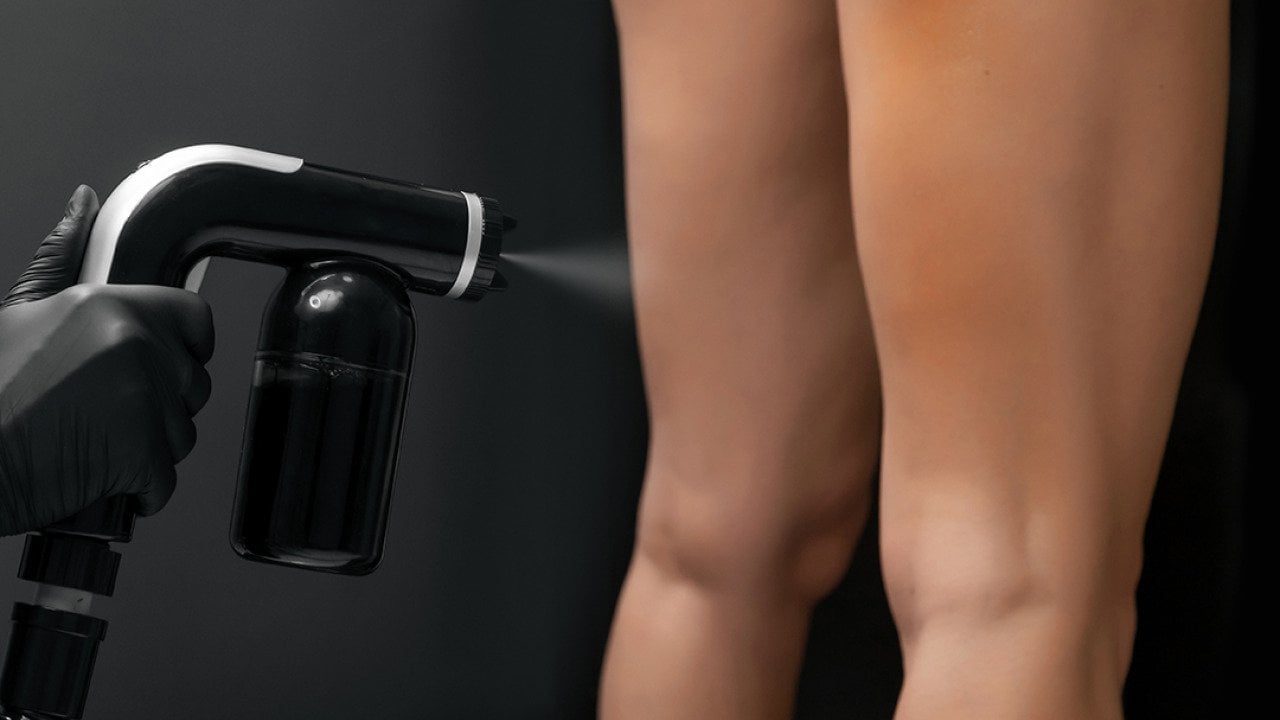
Tan being sprayed on legs.

Parilov // Shutterstock

Award season prep: The hidden beauty treatments powering red carpet and on-screen looks

The red carpet is more than a photo op. It is the beauty industry’s most influential testing ground. Long before the stars arrive, a massive preparation cycle begins, setting the pace for global consumer behavior for the rest of the year. While the fashion usually takes the headlines, the real story is in the intensive skincare and wellness prep required to stand up to modern 8K cameras.

These hidden processes have shifted from exclusive studio secrets to a blueprint for the entire retail market. The scale of this influence is massive. According to a 2024 McKinsey & Company analysis, skincare is the industry’s powerhouse, representing 44% of the total market. This analysis from Sjolie, a professional sunless tanning manufacturer and training provider, looks at the specific, data-backed treatments—from cryotherapy to sunless tanning—that power today’s red carpet looks and eventually define what’s on the shelves for everyone else.

An infographic defining the glass skin era, sunless tanning, and backstage prep.

Sjolie

The Market Dominance of Dermal Hydration

Beyond couture, the primary aesthetic benchmark for the modern red carpet is “glass skin”—a trend that prioritizes high levels of dermal hydration to create a reflective, translucent finish. This movement, rooted in K-beauty principles, has fundamentally shifted consumer behavior away from matte finishes and toward “sheen” results.

The glass skin trend relies on a multistage regimen of hydrating serums and toners, but its primary economic impact is found in the “preventative” category. By emphasizing a healthy skin barrier and UV protection, the trend has captured a younger demographic—specifically Gen Z consumers—who view skincare as a long-term capital investment in their appearance rather than a temporary fix.

Consequently, the focus has pivoted toward long-term dermal health, treating the complexion as a vital asset that requires strategic, multilayered management rather than superficial coverage.

Prioritizing Dermal Integrity via Sunless Tanning

The movement toward “glass skin” has also triggered a significant shift in the tanning sector. As high-profile stars increasingly avoid the accelerated aging and DNA damage associated with UV exposure, sunless tanning has become the operational standard for achieving a “camera-ready” glow.

Average consumers now spend more on sunless tanning, with the market growing at 7% annually. Award show appearances and glowing skin in the movies aren’t solely responsible. This growth is driven by the speed of results—a “social media-friendly” efficiency that allows consumers to achieve aesthetic benchmarks without the weeks of exposure required by traditional methods. This shift treats the “tan” as a temporary, nondamaging cosmetic application rather than a result of solar radiation.

By treating the “glow” as a manageable variable rather than a product of environmental exposure, the industry has successfully decoupled the aesthetic of the tan from the hazards of radiation.

Cryotherapeutic Interventions and Lymphatic Drainage

To combat “utilization fatigue”—the physical puffiness caused by travel and high-stress schedules—celebrity stylists are increasingly turning to low-temperature interventions. This process, often referred to as “skin icing” or cryotherapy, serves as a high-efficiency primer for subsequent product application.

While professional cryofacials are common, the trend has trickled down to sustainable at-home solutions, such as reusable cooled eye masks and full-face immersion techniques. These methods utilize thermal shock to induce vasoconstriction, reducing inflammation and tightening the skin’s appearance instantly. For the consumer, these methods represent a low-cost, high-impact entry point into professional-grade prep routines.

The Normalization of ‘Prejuvenation’ and Minimally Invasive Procedures

It is impossible to evaluate award season aesthetics without addressing the role of cosmetic surgery. According to a 2024 American Society of Plastic Surgeons report, the rise of “prejuvination” (neuromodulator and soft tissue filler procedures) has seen a surge in patients in their 20s and 30s seeking preventative treatments.

The industry is also seeing a dissolution of the gender divide regarding these procedures. Market reports suggest that minimally invasive treatments, such as microfillers and neuromodulators (Botox), are increasingly utilized by male stars to manage sagging skin and maintain facial volume. This normalization suggests that cosmetic intervention is no longer viewed as a “last resort” but as a standard maintenance requirement for public-facing professionals.

Future Outlook: The Access Economy of Beauty

While red carpet invitations are limited to an elite few, the data suggests that the “red carpet look” is being democratized through retail accessibility. The move toward sunless tanning and high-science skincare reflects a broader consumer shift toward health-conscious aesthetics.

As transparency around cosmetic surgery increases and “sunless” technology continues to improve, the beauty industry’s reliance on award season as a marketing catalyst will only strengthen. For the modern consumer, the question is no longer about achieving “luxury” beauty, but about utilizing data-driven treatments to maintain dermal health in an era of constant digital scrutiny.

This story was produced by Sjolie and reviewed and distributed by Stacker.

Topics:

Entertainment
media-news

She Raised America. Now America Honors Her Back. Family Circle Returns – And Nobody Leaves Empty- Handed

By Media News
3 min read • Published April 21, 2026
By Media News
3 min read • Published April 21, 2026

DES MOINES, IA / ACCESS Newswire / April 21, 2026 / After nearly a decade of absence, one of America’s most iconic publications is back. Family Circle, founded in 1932 and once reaching more than 13 million readers across 200 newspapers, has officially relaunched in 2025 with a bold national initiative: Mom of the Year 2026 (MOTY 2026).

The campaign, led by Smart Money Media AI, aims to honor mothers across the United States through a nationwide competition culminating in a live broadcast on July 4, 2026, airing across 128 Rejoice Network radio stations and featured in 200 newspapers nationwide.

A National Campaign Honoring Mothers

The Mom of the Year 2026 campaign features three distinct categories:

Mom of the Year – recognizing extraordinary mothers across America

Church Mother – honoring women who serve as spiritual anchors in faith communities

Eternal Mother – celebrating mothers whose legacy lives on

Nominations are now open at Vote4Mom.com, and participation is free.

The competition follows a nine-round national bracket format, advancing participants from local communities to a nationally broadcast Grand Finale.

Grand Prize Includes:

$10,000 cash award

Luxury travel experience

Feature cover story in Family Circle, distributed nationwide

A First-of-Its-Kind Promise: Everyone Wins

In a major departure from traditional contests, Family Circle has introduced a unique guarantee:

Every nominator, nominee, and voter receives a complimentary travel certificate valued at $1,500 or more.

These certificates are redeemable across 125+ destinations worldwide, with recipients responsible only for applicable taxes.

Travel Destinations Include

Participants may redeem their travel certificates at destinations such as:

Punta Cana, Dominican Republic

Cancún, Mexico

Caribbean Islands (including Jamaica and Barbados)

Hawaii (Maui, Honolulu, Big Island)

Paris, France

Dubai, UAE

Bali, Indonesia

London, United Kingdom

Rome, Italy

Sydney, Australia

New York City

Las Vegas, Nevada

New Orleans, Louisiana

Atlanta, Georgia

…and dozens more within the Marketing Boost global network.

A Legacy Brand Reimagined

For over 87 years, Family Circle served as a cultural cornerstone in American households. Its covers featured influential figures including:

Bing Crosby

Joan Crawford

Douglas Fairbanks Jr.

Eleanor Roosevelt

Amelia Earhart

The publication also maintained strong ties to American public life, featuring First Ladies such as Hillary Clinton and Michelle Obama, and hosting the widely recognized Presidential Cookie Bake-Off for nearly three decades.

Additionally, Family Circle held a 43-year title sponsorship of the Family Circle Cup on the WTA Tour, the longest-running sponsorship in professional tennis history.

At its peak, the magazine reached over 21 million readers, becoming the largest women’s magazine in the world.

Ownership and Trademark

The Family Circle brand is now exclusively owned by Smart Money Media AI (SMMAI), a 508(c)(1)(A) organization.

The trademark encompasses all aspects of the brand, including print, digital, and broadcast media, as well as its role as the presenting sponsor of the Mom of the Year 2026 campaign.

About Family Circle

Founded in 1932, Family Circle was one of the original "Seven Sisters" magazines alongside Good Housekeeping, Better Homes & Gardens, Woman’s Day, McCall’s, Ladies’ Home Journal, and Redbook.

Relaunched in 2025, the publication now operates as a digital-first media platform, reaching audiences nationwide through a portfolio of 12 media brands under Smart Money Media AI.

Campaign Finale

The Mom of the Year 2026 campaign will conclude with a nationally broadcast finale:

Date: July 4, 2026 (Independence Day)

Broadcast: 128 Rejoice Network stations

Coverage: 200 newspapers nationwide

One mother will be crowned in a moment designed to resonate across the country.

Official Statement

"At Family Circle, we believe honoring a mother should feel like being honored yourself. Nobody loses. Nobody walks away empty-handed. The nominee wins. The voter wins. The family wins. That’s what Family Circle has always stood for – and that’s what we came back to do."
– Family Circle Editorial Team

Media Contact

Media Inquiries: media@vote4mom.com
Sponsorship Opportunities: sponsors@familycircle.news
Nominations & Voting: www.vote4mom.com
Official Website: www.familycircle.news

SOURCE: Family Circle

View the original press release on ACCESS Newswire

Topics:

media-news
Careers & Education

Loan demands rise as new study reveals roughly 3 in 4 students feel financially insecure

Loan demands rise as new study reveals roughly 3 in 4 students feel financially insecure
By Allie Danziger for Ascent Funding
5 min read • Published April 21, 2026
By Allie Danziger for Ascent Funding
5 min read • Published April 21, 2026

Person holding a jar of coins with a graduation cap as a concept of educational planning.

jd8 // Shutterstock

Loan demands rise as new study reveals roughly 3 in 4 students feel financially insecure

Would you be able to pay for college out of pocket? If you said no, you’re not alone. The majority of students are feeling the sticker shock of college courses as they scramble to apply for financial aid.

A new trend report from Ascent Funding reveals how today’s college students navigate costly decisions and what fuels their anxiety. Based on tens of thousands of student responses and third-party research from Trellis Strategies and CFP Board, the report explores topics from financial confidence to the majors students borrow to pursue.

The findings show that their top concern is not about debt. It’s about making high-impact financial decisions without enough information or support.

Roughly 3 in 4 Students Don’t Feel Confident About Money

Only 26.5% of students feel very confident managing their personal finances, according to Ascent’s new report.

That means roughly 3 in 4 students are facing one of the biggest financial commitments of their lives (tuition, housing, loans, interest rates) without feeling equipped to handle it. And it’s not just a background worry. The survey data says that 1 in 3 students say financial concerns have a major influence on their academic or career decisions.

Consider what this means in students’ daily lives. For example, a student who might perform well in a liberal arts program may choose a different path due to financial concerns. Another might postpone graduation to work extra hours. These experiences reflect the direct impact of financial stress on students’ educational journeys.

What would help? Students said it themselves: 31% believe better access to scholarship tools and guidance may build their financial confidence. They are not asking for handouts. They are asking for a map.

Tuition Is the Monster Under the Bed

Ascent’s analysis of 24,500 scholarship program submissions found that 49.2% of students cite tuition and fees as their top financial concern, making it the single largest source of stress for college students.

That alone is not surprising, but the full picture is worth considering. The second-biggest concern, reported by 25.9% of students, was finding enough scholarship or grant funding. So the top two stressors are the same problem from two angles: College costs too much, and there is not enough free money to help cover it.

Students are doing everything they can to bridge the gap. About 47% rely primarily on scholarships or grants to fund their education or manage their debt load.

But here is the catch: That well runs dry fast. According to Bold.org, which aggregates national scholarship data, only 0.1% of students receive full-tuition awards. The other 99.9% are stitching together a patchwork of partial scholarships, work-study hours, side gigs, and loans.

This generation shows impressive resourcefulness, but there are clear limits. The data suggest their toughness is being challenged.

First-Generation Students Are Carrying a Heavier Load

The report’s findings on first-generation students tell a familiar and frustrating story. These students, who represent 38% of respondents in the Trellis survey and 41% at two-year institutions, experience financial stress at a higher rate than peers with college-educated parents.

Sixty-eight percent of first-gen students worry about paying for school. Nearly a quarter (24%) aren’t even sure how they’ll afford their next semester.

They are not sitting on their hands: first-gen students are more likely to receive grants than continuing-generation peers (66% versus 48%). That sounds like good news until you see what is happening on the other side of the ledger.

First-gen students are also more likely to take out loans (40% versus 33%) and more likely to charge college costs to a credit card (35% versus 28%).

So even when the system delivers more grant support to students who need it most, the cost of attendance still pushes them toward higher-risk financing options. More grant money comes in, more debt goes out.

This shows the difficulty of the current system, which provides support while also presenting new obstacles for students.

Students Want Financial Education, But Access Is Lacking

Two-thirds of Gen Z college students say they want to learn more about personal finance, according to the CFP Board’s research. Students are not checked out; they are actively signaling they want financial literacy tools to make better decisions.

Yet 40% of those students identify money as a primary source of stress and anxiety, while 83% say financial well-being is tied directly to their overall happiness.

The gap between what students want and what they get is where much of the anxiety lives. These students are not inactive recipients of financial aid packages. They are trying to make informed decisions about borrowing, earning, and spending.

They need better information to do it well. Schools, lenders, and organizations that meet that demand with real tools rather than fine print will earn much trust.

The Majors Students Are Borrowing to Pursue Say a Lot

When Ascent reviewed the declared majors of approved borrowers between July and August 2025, the top five fields were nursing, business, biology, psychology, and mechanical engineering. This finding shows that students are focused on practical, stable career options.

Students are not just choosing what interests them; they are making calculated bets on their return on investment. When taking on debt to earn a degree, you think differently about what that degree should deliver.

That does not mean passion is dead in the college application process. But it suggests the strain of student loan debt is quietly reshaping which fields students feel safe enough to pursue and which they see as a financial gamble they cannot afford.

Methodology

This report draws from three primary data sources. Ascent’s survey data captures students’ self-reported financial confidence and decision-making. Scholarship application data comes from over 24,500 student submissions collected through Ascent’s Summer Scholarship program between May 15 and Sept. 15, 2025. First-generation student data is sourced from Trellis Strategies’ 2023 Student Financial Wellness Survey, which included 62,367 undergraduate respondents from 142 U.S. institutions. Financial wellness attitudes come from a CFP Board study conducted with College Pulse, which surveyed 2,025 verified college students between September and October 2025, weighted for demographics with a margin of error of ±2.2% at a 95% confidence level. Borrowing trends and major preferences reflect Ascent’s approved borrower data from July to August 2025.

This story was produced by Ascent Funding and reviewed and distributed by Stacker.

Topics:

Careers & Education
media-news

Pierre Vs The World Releases AI-Assisted Short Film Depicting a Fictional Brainstorm Inspired by Advertising History

By Media News
3 min read • Published April 21, 2026
By Media News
3 min read • Published April 21, 2026

Project explores advertising’s Madison Avenue legacy through AI-driven storytelling and conceptual creative exploration.

HO CHI MINH CITY, VN / ACCESS Newswire / April 21, 2026 / Pierre Vs The World has announced the release of "You Don’t Own Me", an 8-minute, 26-second AI-assisted short film that explores the evolution of advertising creativity through a conceptual narrative inspired by major figures from the industry’s mid-to-late 20th century development.

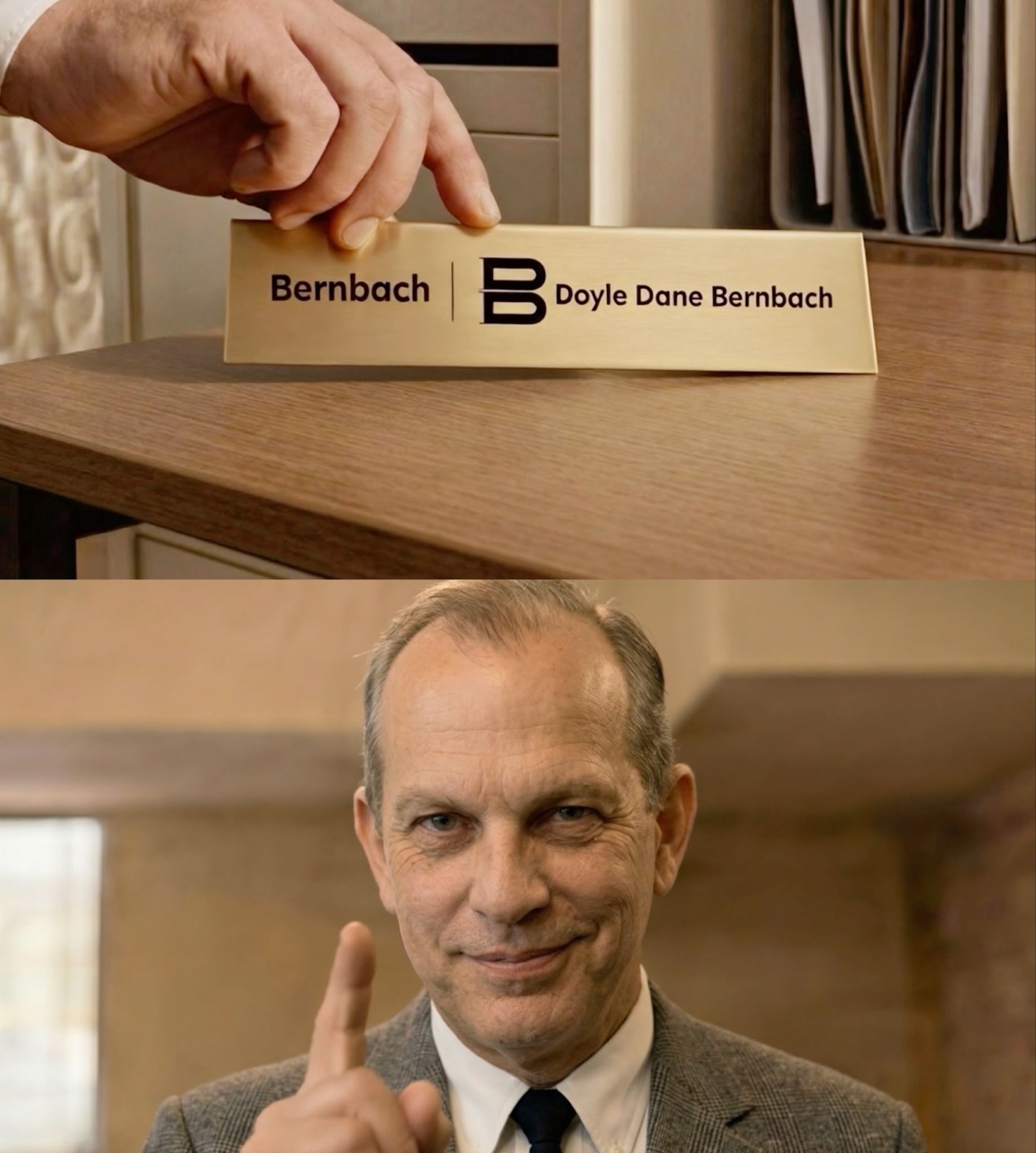
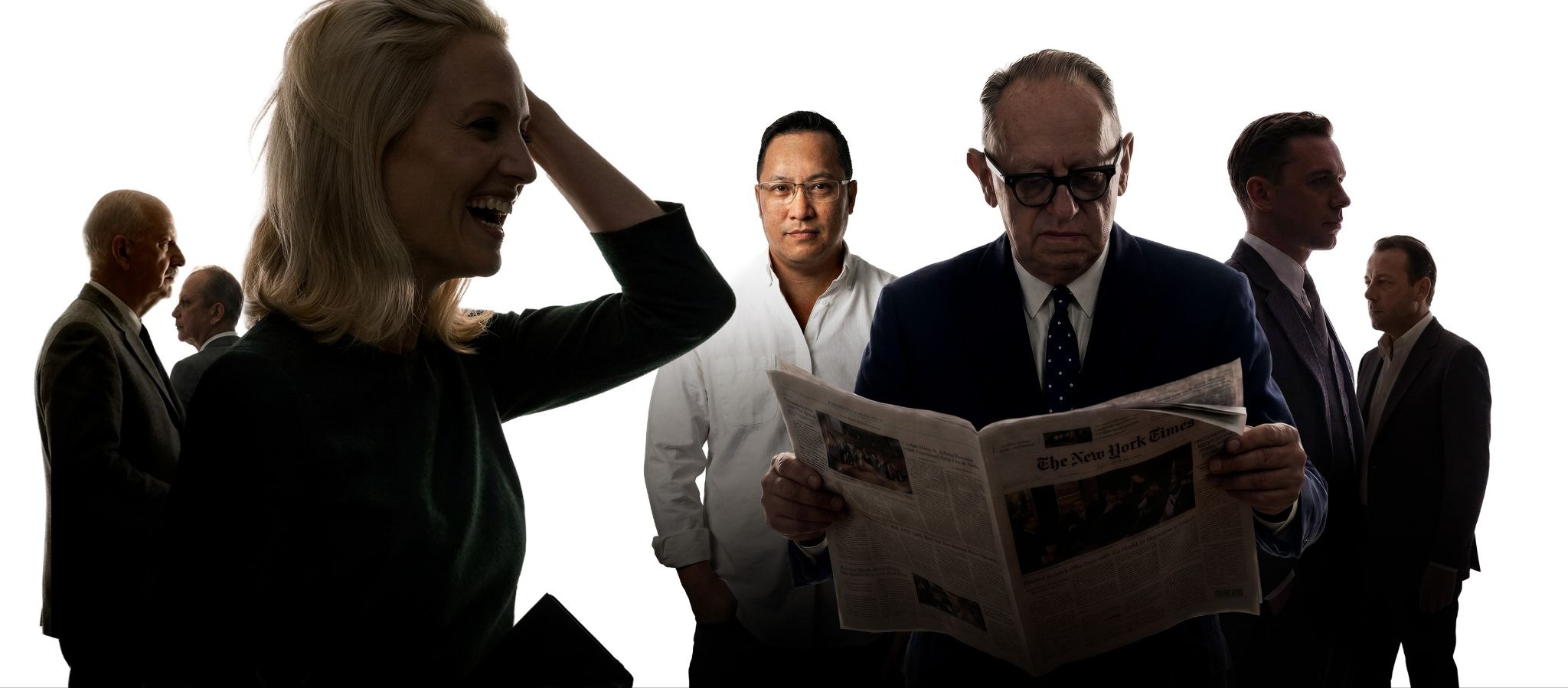
AI-reimagined advertising legends featured in "You Don’t Own Me."

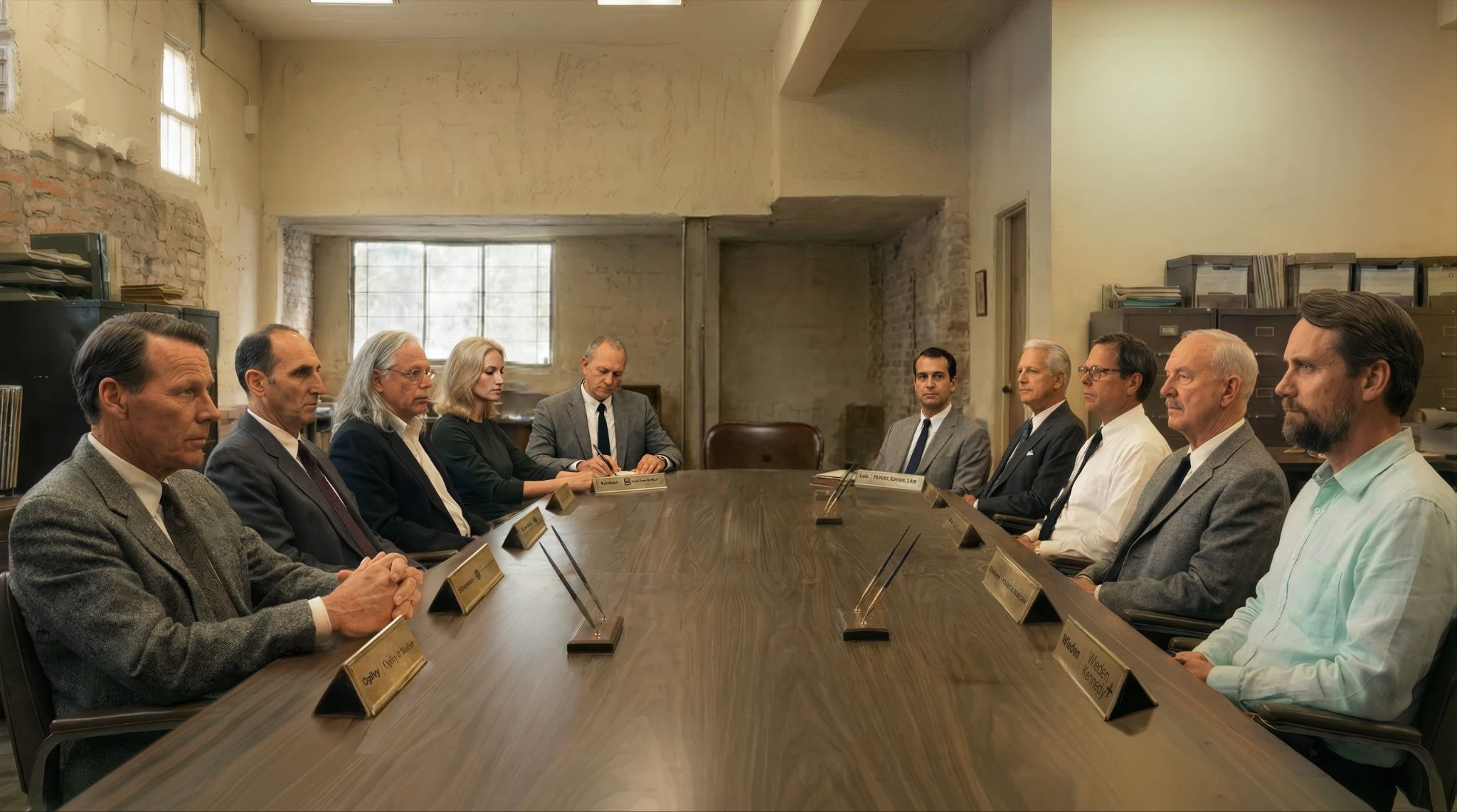
The project draws inspiration from advertising figures associated with the 1940s, 1960s, and 1980s Madison Avenue era, including Bill Bernbach (DDB), David Ogilvy (Ogilvy & Mather), Lawrence Wells (Wells Rich Greene), and Jay Chiat (Chiat/Day, now TBWA), whose work contributed to shaping modern advertising principles and brand storytelling approaches.

Honoring the foundational principles of the Madison Avenue era.

Rather than presenting a literal reconstruction, the film uses a fictionalized creative framework in which historical advertising influences are referenced within a contemporary brainstorming-style narrative. The project is positioned as a conceptual exploration of how creative thinking and storytelling traditions evolve across generations.

A conceptual look at creative brainstorming across generations.

The work highlights the ongoing relevance of foundational advertising principles such as emotional resonance, narrative clarity, and strategic creativity, while situating them within the context of modern AI-assisted content creation.

According to Pierre Vs The World, the project responds to the growing influence of algorithm-driven content production and generative AI technologies in the creative industry. It aims to re-examine the role of human intent and narrative depth in shaping meaningful communication.

"This project explores how creativity evolves when traditional storytelling principles intersect with modern AI tools," said Pierre Vs The World. "Our focus is on emotional storytelling and conceptual depth rather than automated content generation."

The song "You Don’t Own Me" appears as a recurring theme throughout the film, reflecting the idea that while many well-known advertising figures eventually sold the companies they built, their creative spirit and influence remained intact. This concept ultimately inspired Pierre Vs The World in shaping its own creative direction and founding vision.

The project also marks an early step in the development of an AI-assisted creative practice based in Ho Chi Minh City, Vietnam, focused on conceptual storytelling, brand narrative exploration, and cross-disciplinary creative work.

To learn more about the project, visit Pierre Vs The World at https://pierrevstheworld.com/

Blending traditional narrative depth with modern AI tools.

About Pierre Vs The World

Pierre Vs The World is a creative practice led by a multidisciplinary professional with over 20 years of experience in advertising, branding, storytelling, and design across international markets including Montreal, New York, Singapore, and Vietnam. Based in Ho Chi Minh City, the practice focuses on AI-assisted storytelling, branding, and conceptual content development for global clients and projects.

Media Contact:
Pierre Vs The World
Founder, Managing Partner, AI Creative Director
+ 84 785737132
hello@pierrevstheworld.com
https://pierrevstheworld.com/

SOURCE: Pierre Vs The World

View the original press release on ACCESS Newswire

Topics:

media-news
media-news

Shore Fire Media's Clients Earn 9 Nominations for Independent Music's Top Awards

By Media News
3 min read • Published April 21, 2026
By Media News
3 min read • Published April 21, 2026

Nominees Represented by the Dolphin Subsidiary Include Adrian Quesada, Alison Krauss & Union Station, Antone’s 50th Allstars, Bon Iver, Margo Price, Qobuz, Say She She, Secretly Distribution and Taj Mahal & Keb’ Mo’

NEW YORK, NY / ACCESS Newswire / April 21, 2026 / Shore Fire Media, a subsidiary of entertainment marketing and content production company Dolphin (NASDAQ:DLPN), congratulates its clients who received a collective nine nominations for the 2026 Libera Awards. Providing best-in-class communications services for some of independent music’s top talent, Shore Fire clients have been recognized by the American Association of Independent Music (A2IM) at its annual awards ceremony regularly throughout the years – with over 50 nominations since 2023 alone. Now in its 15th year, the Libera Awards is the premier celebration of independent music in the U.S. Created to recognize powerful voices in the independent sector, the ceremony honors independent musicians and their supporting teams. Announced by A2IM last month, the nominated artists and works represented by Shore Fire are a testament to the diversity of the communications firm’s roster – spanning genres ranging from Latin and soul/funk to blues and country, including two nominees for each of the latter.

This year’s Libera Awards will be presented live on June 8, 2026 at New York City’s Gotham Hall. The Shore Fire clients up for awards are detailed below, while a complete list of the 2026 nominees is available at LiberaAwards.com.

Best Blues Record

Antone’s 50th Allstars – The Last Real Texas Blues Album (New West Records)

Best Blues Record

Taj Mahal & Keb’ Mo’ – Room On The Porch (Concord Records)

Best Country Record

Alison Krauss & Union Station – "Richmond on the James" (Down The Road Records)

Best Country Record

Margo Price – Hard Headed Woman (Loma Vista Recordings)

Best Latin Record

Adrian Quesada – Boleros Psicodélicos II (ATO Records)

Best Soul/Funk Record

Say She She – Cut & Rewind (drink sum wtr)

Distributor of the Year

Secretly Distribution

Independent Champion

Qobuz

Best Creative Packaging

Bon Iver – SABLE, fABLE (Jagjaguwar)

ABOUT DOLPHIN

Dolphin (NASDAQ:DLPN) is where cultural creation meets marketing execution. Founded in 1996 by Bill O’Dowd, Dolphin operates as both a venture studio – developing and investing in breakthrough content, products and experiences – and a marketing consortium, featuring leading agencies across every communications discipline.

At its core, the venture studio creates, produces, finances, markets and promotes new businesses and cultural ideas – ranging from acclaimed film, television and digital content to consumer goods, live events and partnerships that define entertainment and lifestyle. Surrounding this entrepreneurial engine, Dolphin’s marketing prowess brings together best-in-class firms including 42West, The Door, Shore Fire Media, Elle Communications, Special Projects and The Digital Dept. Together, this collective delivers unmatched cross-marketing expertise and relationships across every vertical of pop culture – from film, television, music, influencers, sports, hospitality and fashion to consumer brands and purpose-driven initiatives. Dolphin marketing has been the recipient of many accolades, including No. 1 Agency of the Year on the Observer PR Power List in 2025, The PR Net 100 and the PRNEWS Agency Elite Top 120.

Follow Dolphin on Instagram.

ABOUT SHORE FIRE MEDIA

Shore Fire Media represents artists, talent, creators, authors, athletes, cultural institutions, businesses, brands and entrepreneurs at the forefront of their respective fields – including some of the most exciting emerging and established voices in the arts, entertainment and beyond. With dedicated teams in New York, Los Angeles and Nashville, Shore Fire leverages extensive expertise and relationships to strategically amplify narratives and shape reputations that facilitate career advancement in an ever-evolving media landscape. To learn more, visit ShoreFire.com and follow Shore Fire on Instagram: @shorefire.

CONTACT:

James Carbonara
HAYDEN IR
(646)-755-7412
james@haydenir.com

SOURCE: Dolphin Entertainment

View the original press release on ACCESS Newswire

Topics:

media-news
Hot Jobs

Mission-Driven Media Jobs Hiring Now in Marketing and Editorial

Organizations translating complex issues for mainstream audiences are stacking their communications teams with senior talent.

mediabistro hot jobs
Mediabistro icon
By Mediabistro
The Mediabistro editorial team draws on 25 years of media industry expertise to cover jobs, careers, and trends shaping the industry.
4 min read • Published April 21, 2026
Mediabistro icon
By Mediabistro
The Mediabistro editorial team draws on 25 years of media industry expertise to cover jobs, careers, and trends shaping the industry.
4 min read • Published April 21, 2026

The Mission-Driven Hiring Surge Is Real

Something worth watching is unfolding across today’s job board: organizations with a clear public mission are aggressively hiring communications and editorial talent at the senior level. These aren’t entry-level “help us post on social” roles. They’re strategic positions that demand candidates who can translate complicated subject matter into compelling stories for broad audiences.

Common Sense Media is building out its brand marketing leadership. The Association for Computing Machinery needs an Executive Editor who can run a technology publication with P&L responsibility. The American Business Immigration Coalition is hiring a PR Manager to shape national narratives around immigration policy. Each of these organizations operates at the intersection of expertise and public communication, where the ability to make dense material accessible is the entire job.

For media professionals who’ve spent years in commercial publishing or agency work and feel drawn to purpose, today’s listings represent a genuine opportunity. The skill sets transfer directly. The missions are worth your attention.

Today’s Hot Jobs

Executive Editor at the Association for Computing Machinery

Why This Role Matters: ACM publishes one of the most respected technology magazines in the world, and this Executive Editor role carries weight far beyond typical editorial leadership. You’ll own the P&L, manage circulation strategy, oversee the website’s growing revenue base, and work alongside ad sales to develop new products. This is a publishing executive role with editorial roots, based in a hybrid setup at ACM’s New York City headquarters. The $125K to $140K salary range reflects the seniority expected.

What They Need From You:

  • Deep experience in technology publishing, especially with software development audiences
  • Ability to lead an editorial team while managing budgets and production schedules
  • Experience managing an Editorial Advisory Board and circulation team
  • Strong online and sales skills alongside editorial expertise

Apply for the Executive Editor position at ACM

Senior Director, Brand Marketing at Common Sense Media

What Makes This One Stand Out: Common Sense Media reaches over 150 million users globally with its ratings, research, and advocacy work around kids and technology. The Senior Director of Brand Marketing will translate brand strategy into integrated campaigns, reporting directly to the CMO. The salary range of $140,000 to $166,250 puts this firmly in leadership territory. If you’ve ever wondered what a brand manager actually does at the senior level, this posting is a masterclass in scope.

Core Requirements:

  • Proven track record blending creative marketing strategy with mission-driven storytelling
  • Data-driven approach with successful campaign execution experience
  • Ability to manage a brand strategy team and coordinate cross-channel initiatives
  • Experience reaching diverse audiences through modern, fresh marketing approaches

Apply for the Senior Director of Brand Marketing role at Common Sense Media

Public Relations Manager at American Business Immigration Coalition

The Compelling Angle: ABIC sits at the center of one of the most consequential policy debates in America, and this fully remote PR Manager role is about shaping how that conversation reaches the public. You’ll direct national, state, and local media outreach across sectors like healthcare, agriculture, construction, and hospitality. The position demands someone who can link policy impact to real-world outcomes through compelling narratives.

For PR professionals who want to explore how strategic public relations drives organizational impact, this is a rare chance to do it on a national stage from anywhere.

Key Qualifications:

  • Experienced media relations professional skilled at pitching and relationship building
  • Ability to manage press events, conferences, and strategic campaigns across diverse audiences
  • Comfort working across multiple sector-focused councils simultaneously
  • Proactive communicator who thrives in a rapid-response environment

Apply for the Public Relations Manager role at ABIC

Senior Editor at Boston Magazine

For the “Longform Faithful”: Boston Magazine’s posting opens with a challenge: if the bulk of your work experience isn’t writing and editing magazine features of 4,000 words or more, don’t apply. That kind of specificity is refreshing. This Senior Editor role at one of the country’s finest city magazines is built for someone who lives and breathes narrative journalism. You’ll work across print, digital, and events for an award-winning regional brand that covers everything from politics to real estate to culture.

What They Expect:

  • Extensive track record with longform narrative journalism at 4,000-plus words
  • Experience editing and writing magazine-quality features
  • Ability to work across print, digital, and social platforms
  • Deep understanding of in-depth storytelling and editorial execution

Apply for the Senior Editor position at Boston Magazine

Professional Takeaways

Today’s strongest listings share a common thread: they reward the ability to make complex subjects understandable and engaging for mainstream audiences. Whether it’s computing research, children’s media safety, immigration policy, or long-form city journalism, the skill that ties these roles together is translation. If you can take dense, specialized material and turn it into something a broad audience actually wants to read, you are precisely what mission-driven organizations are competing for right now.

The practical move? Update your portfolio to lead with examples of exactly that. Pull forward the pieces where you took something technical, wonky, or niche and made it sing. Those clips will do more work than anything else in your application.

Topics:

Hot Jobs
media-news

Los Angeles Superior Court Directs Defendants in The Pointe Malibu Recovery Center Case to Preserve Evidence After Plaintiff Raises Preservation Concerns

By Media News
2 min read • Published April 21, 2026
By Media News
2 min read • Published April 21, 2026

Preservation Directive Follows Plaintiff’s Warning That Routine Deletion Could Compromise Evidence in Case Against The Pointe Malibu Recovery Center

LOS ANGELES, CA / ACCESS Newswire / April 21, 2026 / On April 20, 2026, the Los Angeles Superior Court issued a tentative ruling directing the defendants in Hickman v. James & Bentz, Inc., et al. to safeguard evidence potentially relevant to the case, addressing concerns raised by the plaintiff that materials such as text messages and other communications could be lost in the ordinary course of business.

In the tentative ruling, the court wrote that the plaintiff "is also concerned that defendants will destroy evidence, perhaps not on purpose but rather due to the normal course of texts and the like being deleted," and stated that "the court will echo" the plaintiff’s request that such materials be preserved. The court directed that "defendants are to safeguard any such materials that might be pertinent to this case."

The preservation directive came in the context of the plaintiff’s ex parte application to shorten time on a discovery motion. The court denied the ex parte application, citing California Code of Civil Procedure section 1281.4, which generally stays trial court proceedings while a motion to compel arbitration is pending. The defendants’ motion to compel arbitration is set for hearing on May 28, 2026. The court noted that it had not yet reviewed the arbitration motion on its merits and was "not making a finding" as to whether that motion is well taken.

The plaintiff intends to pursue the underlying discovery, including environmental and remediation records concerning the subject premises, through the appropriate procedural channels following resolution of the arbitration motion.

Court Case Link:
Los Angeles Superior Court Civil Case Access: https://www.lacourt.ca.gov/pages/lp/access-a-case/tp/find-case-information/cp/os-civil-case-access

Case No. 25SMCV04669.

The remains pending. The claims asserted in the lawsuit are allegations only, and no court has determined liability.

MEDIA CONTACT: Logan Anthony, Verdict Public Relations, pr@verdictpublicrelations.com, (310) 765-7445

SOURCE: Verdict PR

View the original press release on ACCESS Newswire

Topics:

media-news

Posts navigation

Older posts
Newer posts
Featured Jobs
Hearst Television
Account Executive
Hearst Television
Array

All Jobs »
PREMIUM MEMBER

Roger Thompson

Suwon,
32 Years Experience
I am an internationally acclaimed military researcher, the author of two books on the U.S. Navy, the first of which, Brown Shoes, Black Shoes, And...
View Full Profile »
Join Mediabistro Membership Today

Stand out from the crowd with a premium profile

Mediabistro Logo Find your next media job or showcase your creative talent
  • Job Search
  • Hot Jobs
  • Membership
  • Newsletter
  • Career Advice
  • Media News
  • Hiring Tips
  • Creative Tools
  • About
Facebook YouTube Instagram LinkedIn
Copyright © 2026 Mediabistro
  • Terms of Use
  • Terms of Service
  • Privacy