Mediabistro Logo Mediabistro Logo
  • Jobs
    Search Creative Jobs Hot Jobs Remote Media Jobs Create Job Alerts
    Job Categories
    Creative & Design Marketing & Communications Operations & Strategy Production Sales & Business Development Writing & Editing
    Quick Links
    Search All Jobs Remote Jobs Create Job Alerts
  • Career Resources
    Career Advice & Articles Media Industry News Media Career Interviews Creative Tools Resume Writing Services Interview Coaching Job Market Insights Member Profiles
  • Mediabistro Membership
    Membership Overview How to Pitch (Premium Tool) Editorial Calendars (Premium Access) Courses & Training Programs Membership FAQ
  • Showcase
    Featured Creative Stories Submit your Story
  • Log In
Post Jobs
Mediabistro Logo Mediabistro Logo
Search Creative Jobs Hot Jobs Remote Media Jobs Create Job Alerts
Job Categories
Creative & Design Marketing & Communications Operations & Strategy Production Sales & Business Development Writing & Editing
Quick Links
Search All Jobs Remote Jobs Create Job Alerts
Career Advice & Articles Media Industry News Media Career Interviews Creative Tools Resume Writing Services Interview Coaching Job Market Insights Member Profiles
Membership Overview How to Pitch (Premium Tool) Editorial Calendars (Premium Access) Courses & Training Programs Membership FAQ
Featured Creative Stories Submit your Story
Log In
Post Jobs
Log In | Sign Up

Follow Us!

Advice From the Pros

What Every UX Designer Wishes You Understood About Their Role

Whatever field you’re in, it’s time to up your UX game

What Every UX Designer Wishes You Understood About Their Role
Yana icon
By Ayana Young
Ayana Young is a communications and PR strategist with 15+ years of experience spanning media relations, lifestyle brands, professional sports, and publishing.
4 min read • Originally published May 29, 2017 / Updated March 19, 2026
Yana icon
By Ayana Young
Ayana Young is a communications and PR strategist with 15+ years of experience spanning media relations, lifestyle brands, professional sports, and publishing.
4 min read • Originally published May 29, 2017 / Updated March 19, 2026

If you work in any creative role in the media, tech or digital world, you need to know about UX (User Experience).

UX designers create the full experience that users have on a website, app or device. Their work is the backbone of any digital project, the foundation upon which everything else is built.

You’re influenced by UX, even if you don’t realize it. Every digital experience you’ve ever had, from answering your email to setting up your new computer, was planned by a UX team.

Ranked as one of the fastest growing career fields, Adobe reported that “87% of managers said hiring more UX designers is the top priority of their organization.”

Whether you have no clue what UX design is, or you work with a UX team every day, there’s plenty to learn about this complex, multi-faceted world.

Here are six things UX designers wish you knew.

1. UX and UI are not interchangeable.

You’ve probably heard people use the terms “UX” and “UI” interchangeably, but they’re two very different things.

To put it simply: “UX refers to the user experience, which focuses on how something works and how people interact with it. UI, or user interface, focuses on the look and layout.”

Think of it this way—a UX designer is like an architect building a house. Before creating the blueprint for construction, she has to understand what makes a house flow nicely, as well as how someone living in the house would expect to get around and use the various areas and rooms.

The UI designer is similar to an interior designer who comes in later to oversee the look and feel of the house, select building materials, choose colors and make other visual choices.

2. A UX designer’s day-to-day is so much more than making wireframes.

They’re part psychologist, part architect, part storyteller—and that’s just the beginning. Over the course of a single digital project, a UX designer might:

  • Do competitive research
  • Hold focus groups
  • Create user personas
  • Map out content and information architecture
  • Design wireframes
  • Mockup design sketches
  • Evaluate usability
  • Collaborate with UI designers, web designers and developers
  • Conduct user testing
  • Review metrics

The specifics of the role vary from employer to employer. Some (very busy) UX designers also do the work of UI designers, web designers and coders.

Ideally, a UX designer will focus solely on UX, but in smaller companies, it’s not always possible. Take a look at these job descriptions to see just how varied the position can be.

3. They’re secretly judging the UX of everything they do.

When you’re part of a UX team for a long time, it’s hard not to bring your work home with you.

UX designers are the first to notice when a process is clunky or an experience isn’t intuitive. Show them a website that isn’t responsive, or an app that’s difficult to navigate, and they’ll recoil in horror.

4. They love playing the “what if?” game.

When working with a UX team, don’t be surprised if they throw extra questions into the mix early on.

Questions like:

  • What if we could streamline the experience from seven steps to three steps?
  • What if there are two completely different user accounts that will be using this same product?
  • What if the user lives in Canada and our U.S. state drop-down menu means they can’t place an order?

When these questions pop up, don’t panic. UX designers aren’t trying to make the design process harder for you. In fact, they’re trying to make things easier for the end user, by carefully considering all possible scenarios.

Instead of panicking, say: “Thank you for pointing that out!”

5. You’ll save headaches later by folding UX designers into the process way earlier.

Everyone benefits when UX is involved early in the process. Don’t get too far down the road on any project without consulting your friendly neighborhood UX team.

Going back to our “architect” example: You wouldn’t start building a house until the blueprint was complete. Likewise, you shouldn’t jump ahead to website design and button colors until the UX is firmly nailed down.

Starting with UX saves you from going back to the drawing board. (And your UX team will be very happy.)

6. If you want to get ahead in any media/agency/digital job, take the time to educate yourself about UX.

UX design is the foundation of literally every digital experience, including mobile websites, desktop websites, responsive websites, apps, gaming and virtual reality.

Whether you’re a writer, designer, developer, project manager, or marketer, you’ll benefit from learning more about this vital field.

Remember, 87% of employers believe this is a valuable skill!

 

Topics:

Advice From the Pros, Be Inspired
Be Inspired

How SoulCycle’s Director of Talent Drives Employee Engagement

Sarah Kiernan, Director of Talent, shares SoulCycle’s secrets of employee happiness.

How SoulCycle’s Director of Talent Drives Employee Engagement
Mark icon
By Bizzy Coy
Bizzy Coy is a freelance copywriter and humorist whose creative writing has appeared in The New Yorker and McSweeney's, and who is the author of "Personal Space." She has received fellowships from Fulbright, MacDowell, and NYSCA/NYFA, and has written for clients including Disney, Condé Nast, and Broadway.
4 min read • Originally published May 30, 2017 / Updated March 19, 2026
Mark icon
By Bizzy Coy
Bizzy Coy is a freelance copywriter and humorist whose creative writing has appeared in The New Yorker and McSweeney's, and who is the author of "Personal Space." She has received fellowships from Fulbright, MacDowell, and NYSCA/NYFA, and has written for clients including Disney, Condé Nast, and Broadway.
4 min read • Originally published May 30, 2017 / Updated March 19, 2026

Sarah Kiernan is Director of Talent Relations at SoulCycle, the indoor cycling fitness phenomenon. SoulCycle is known for its avid consumer fan base, but its employees are equally evangelistic about the brand.

As we will learn, there is a direct correlation between this evangelism and employee engagement at SoulCycle.

We asked Sarah what makes SoulCycle a great place to work—and how brands can better engage their teams for increased loyalty, retention and happiness.

MEDIABISTRO: How did you end up working at SoulCycle?

SARAH KIERNAN: I was working for a theater company when I was randomly approached by a recruiter who asked if I would be interested in a new job. I told her I would only go on an interview if it was a place where I wouldn’t have to sell my soul… She took that literally and after only a month or so I started working here.

employee engagement

MB: What has been your trajectory with the company?

SK: I started as the Executive Assistant to the founders and the Office Manager. I then focused on being an Executive Assistant for one and then—briefly—both founders.

After a year, we were opening our first Boston studio and my boss asked me to help convince our NYC instructors to move to Boston. They all ended up moving, and shortly after, I was promoted to Manager of Instructor Programming. Two and a half years later, I was promoted to Director of Talent.

MB: Why do you like working there?

SK: I have always thrived in environments that are formed by true, deep connection and human experience.

I love working here because even at the end of a long, stressful day, the people I work with will always find something to laugh about. We laugh more in this place than any other company I have ever worked for.

SoulCycle is a place where I can truly be myself. I never feel like I can’t dress, speak or behave in a way that is natural to me.

Lastly, at the end of the day, I truly believe we are changing people’s lives. I have seen people’s minds and bodies changed in that dark room and witnessed true love and community found in every studio and here at HQ.

MB: What makes SoulCycle a great place to work?

SK: The most obvious perk of working at SoulCycle is the free classes! As staff, we can ride for free and bring a guest. We can exercise as part of our work day, and the dress code is sweatpants-friendly (my dream come true).

We always say #soulpeoplearethebestpeople and it’s true. It’s so great to work with so many funny, creative and motivated people. Everyone here is an incredible hard worker.

MB: What programs or processes does SoulCycle use for employee engagement?

SK: SoulCycle offers specific internal development opportunities for its staff.

Our HR and Culture committee arranges intensive career development courses as well as numerous trainings that set us up for success not only in our current roles but in future career opportunities within SoulCycle or beyond.

Trainings on day-to-day functions in the studios are offered monthly. Big-picture career growth development trainings are offered every few months and can be either day trainings or extensive programs that meet over a period of months.

We also take feedback and communication very seriously, so we are constantly thinking about our jobs and ways to do it better.

MB: Why is employee engagement important to you?

SK:

Employee engagement is incredibly important at SoulCycle. We have really a really high retention rate here at SoulCycle, and it’s something that is important to us as a company.

It’s important for me to feel believed in and invested in so that I know the long hours and difficult moments I have are all part of a growth plan that will lead me to where I want to be in life.

MB: What can other companies learn from SoulCycle?

SK: One of our most significant core values is that “we are a culture of yes.” This is what sets SoulCycle apart from the rest.

So many other companies focus on how to get things done in a way that is super efficient, but here at SoulCycle our focus is ALWAYS on finding a “yes” for everyone and leaving them feeling good.

It’s incredible what a community of people who are happy and engaged can accomplish.

MB: Anything else you want to say about SoulCycle?

SK: Soul people are the best people 🙂

Topics:

Advice From the Pros, Be Inspired
Be Inspired

Top Micro-Influencers You Need to Follow (and Why They Matter)

Meet the new wave of influencers who focus on quality over quantity

Top Micro-Influencers You Need to Follow (and Why They Matter)
Yana icon
By Ayana Young
Ayana Young is a communications and PR strategist with 15+ years of experience spanning media relations, lifestyle brands, professional sports, and publishing.
7 min read • Originally published May 31, 2017 / Updated March 19, 2026
Yana icon
By Ayana Young
Ayana Young is a communications and PR strategist with 15+ years of experience spanning media relations, lifestyle brands, professional sports, and publishing.
7 min read • Originally published May 31, 2017 / Updated March 19, 2026

Sometimes less is more—or at least that’s the case when it comes to the latest trend in social media influencer marketing. Cue the rise of micro-influencers—social media users who have marginal to average dedicated followings but garner higher rates of engagement than the average million followers account.

Digital Marketing Strategist, KiKi L’Italien explains that micro-influencers often hold power as a result of consistent engagement with their devoted followers, who view them as more authentic, trustworthy and relevant in their area of focus.

We’ve combed through the Internet, our own social media and contributors to bring you a list of individuals who are making strides in their own industries that are worth checking out.

Lifestyle Micro-influencers:

Angela McCrae, Los Angeles, CA
@angelamccrae |Followers: 1,873
A native of the Greater Washington D.C. area, McCrae’s social platforms showcase her navigating West Coast living with confidence and power.

#SWIPE ?Over the weekend I participated in @att’s #attcreate #attcreators event in Los Angeles… I directed a third film, #PictureDay, written by my #NBCU colleague @toddrimes, which won 2nd place!! I also won a special #socialmedia prize-bag for my engagement. I’m so grateful for the opportunity to work with an amazing team. ????

A post shared by Angela McCrae (@angelamccrae) on May 7, 2017 at 7:05pm PDT


James Benn, London, UK
@jwtbenn | Followers: 1,492
Benn, a London based art director showcases life in England through an artistic lens.

Higher love

A post shared by James Benn (@jwtbenn) on May 29, 2017 at 4:27am PDT


Christian Caro, Orange County, CA
@ChristianCaro_ | Followers: 5,622
Caro, who’s day job is a creative consultant, showcases SoCal lifestyle from a male perspective.

Blue skies forever.

A post shared by Christian Caro (@christiancaro_) on May 28, 2017 at 8:27pm PDT


Parenting Micro-influencers:

Amanda Blakley, Toronto, Canada
@amandablakley | Followers: 5,572
Blakley is a family blogger who chronicles family travels and daily life as Atticus and Archer’s mom.

d r e s s e d – u p // in support of the Design Exchange cocktail fundraiser last night. Summer vibes abound! Feeling a little foggy today as a result??!! @designexchange

A post shared by A M A N D A B L A K L E Y (@amandablakley) on May 18, 2017 at 12:37pm PDT


Kim Watson, Las Vegas, NV
@kikhaly | Followers: 23.2k
Watson, a mom of three share glimpses into her fabulous and fashionable life in the Las Vegas desert.

It amazes me how Mila loves books. Like, she reads more than I do, it’s sad but true, but I’m not complaining! Recently our friends at @lostmy.name gave us the opportunity to customize for Mila her own ‘Kingdom of You’ book based on all the things that she loves. Her story about animal friends on an adventure that involves pizza. Seriously, she had me at ?! She’s def my girl. #losymyname #sponsored || swipe for before pic • • • • •#motherhood #lifeisbeautiful #documentyourdays#liveauthentic#vsco#vscoCAM #afterlight#thehappynow#thepursuitofjoyproject #thatsdarling#nothingisordinary#theditroom #perfectbabies#lovelysquares#inbeautyandchaos #livethelittlethings#childhoodunplugged#honestmotherhood#posttheordinary#photooftheday #postthepeople#makeportraits#babywearing #momtogs#artifactuprising#habitandhome #pixel_kids#uniteinmotherhood

A post shared by kim watson (@kikhaly) on May 23, 2017 at 3:53pm PDT


Fitness Micro-influencers:

Elise Young, Queens, NY
@elisesbodyshop | Followers: 70.8k
Young, a native of Boston is a Personal Trainer known for her mind boggling Instagram workout videos.

// BOSU CORE ✖ADVANCED AB WORKOUT ⚡⚡// Gave these six exercises a go in the core class I teach this morning..safe to say they are TOUGH + BURN. ?? No BOSU? Just use your bodyweight. Tag a friend who would love these! ? #fitfam #core #fitchicks #fitgirlvideos #abs

A post shared by Elise Young (@elisesbodyshop) on May 23, 2017 at 8:07am PDT


Food Micro-influencers:

The Brothers Buoy: Graham and Jackson, Brooklyn, NY
@thebrothersbuoy | Followers: 8,672
The Brothers Buoy is a food blog, by friends Graham and Jackson, specializing in brunch in NYC.

Staring deep into each other’s eyes trying to fathom how hot it is RN.

A post shared by THE BROTHERS BUOY (@thebrothersbuoy) on May 19, 2017 at 7:06am PDT


Sports Micro-influencers:

Nina Zavala, Dallas, TX
@ninazdallas | Followers: 4,570
Zavala is the Director of Adidas Silver High School Division, who chronicles her “three stripe” adventures with flicks of the sports industry’s brightest and upcoming stars.

Day 3: adidas Atlanta Memorial Day Classic ? #StayWorking #EndUpWinnng #AtlantaMDC #adidasUprising #MemorialDay ??????#ThreeStripeLife ///

A post shared by Nina Z (@ninazdallas) on May 29, 2017 at 8:21am PDT


Fashion/Beauty Micro-influencers:

Allison Graham, Brooklyn, NY
@shedoeshim | Followers: 22.7k
Graham, a native of Jamaica, is a menswear enthusiast who showcases a unique take on classic Brooklyn style.

I FORGOT MYSELF || in a world moving swiftly it’s easy to forget about yourself. It’s easy to forget about what you may need, rather than it being what you want. Sometimes we give too much of ourselves to others not realizing we may need to save some of that for yourself. All the noise around you and you just can’t seem to hear your own self screaming. Asking you to listen and hear what it wants, not what everyone else wants for you but what exactly is it that you want for yourself. Are you listening to yourself or ignoring it? || #shedoeshim #mensstyle

A post shared by Allison Graham (@shedoeshim) on May 22, 2017 at 10:31am PDT


Grace Abbott, New York, NY
@agraceabbott | Followers: 10k
Brand strategist by day, beauty enthusiast by night, Abbott’s Instagram feed highlights the best of beauty products.

CONTEST CLOSED! winner is @squidstina! Thank you all for participating…. I’ve teamed up with my Glossier gals to give you guys $100 worth of our favorite @glossier products! This includes: Cloud Paint, Haloscope, Milky Jelly Cleanser, and the new & improved Phase 2 Set. Winner can pick the shades of their choice! ✨Here’s how to enter: ✨ 1. Follow me @agraceabbott + “like” this giveaway photo. 2. Tap on the photo once to see who I’ve tagged then “follow” her & “like” her giveaway photo. 3. Continue following everyone in the loop and liking their giveaway photos until the loop brings you back here & you’re entered to win! 4. BONUS: For an extra entry, tag two friends in the comments who need @glossier in their life. 5. The contest will end 4/28 at 5:00pm EST and the winner will be notified! #glossier #giveaway

A post shared by grace abbott (@agraceabbott) on Apr 22, 2017 at 11:00am PDT


Travel Micro-influencers:

Uncommon Caribbean: Patrick & Steve Bennett, St. Croix, U.S. Virgin Islands
@uncommoncarib | Followers: 10k
Natives of St. Croix, VI, brothers Patrick and Steve, explore the undiscovered charms of the Caribbean culture.

You’ve probably heard people say “we are the sum total of our experiences,” but that’s an over simplification. Some experiences are multipliers. And a precious few exponentially change us forever — challenging and transforming our fundamental parts to almost instantly create a new person, one who has never lived before. . . . #Caribbean #travel #traveling #travelgram #travelingram #photooftheday #picoftheday #westindies #sailing #grenadines #tobagocays

A post shared by Uncommon Caribbean (@uncommoncarib) on May 13, 2017 at 4:21am PDT


Chelsea Martin, San Diego, CA
@passporttofriday | Followers: 11.4k
Martin, a self described 20-something Travel & Lifestyle Blogger, who uses Instagram to document her daily travels and unique finds.

A perfect last day in Porto with this amazing view at @vinumporto with @blonde_atlas ? http://liketk.it/2rwkV #liketkit @liketoknow.it ?: @augustaleighphoto

A post shared by Chelsea Martin, Travel Advisor (@passporttofriday) on May 29, 2017 at 8:53am PDT


Media Micro-influencers:

Anna Therese Day, New York, NY
@atdlive | Followers: 3,943
Day is an international journalist who commonly shares behind the scenes footage from exclusive interviews and events.

#SelfiesOnSelfies. ?✨??

A post shared by Anna Therese Day (@atdlive) on Mar 23, 2017 at 4:30pm PDT


Rachel Tipograph, Brooklyn, NY
@racheltipograph | Followers: 1,732
Tipograph is CEO of social media start-up video company MikMak, her social channel chronicles her life as a young executive living in New York City.

Never took a finance class, just hustle every day to make the @mikmaktv dream come true. Honored to be a part of @interbrand’s Breakthrough Brands.

A post shared by Rachel Tipograph (@racheltipograph) on May 24, 2017 at 9:45am PDT


Communications Micro-influencers:

Christina Rice, New York, NY
@cricepr | Followers: 9,397
The owner of a New York City based PR firm, Rice’s social feeds peek into her fast paced life, working with some of the entertainment industry’s top movers & shakers.

Harlem rocking. ?: @tiffanymbattle

A post shared by Christina M. Rice (@cricepr) on May 28, 2017 at 5:31pm PDT


Eliana Murillo, San Francisco, CA
@inmyeliment | Followers: 1,805
Murillo, the Head of Multicultural Marketing at Google, gives followers an inside glimpse into life as a Google executive.

Today was nuts. Definition #playhardworkhard. Woke up to one of the best #BaytoBreakers EVER, then pulled it together to serve as a judge for 20 startup pitches in 4 hours. Heard brilliant ideas for conversational artificial intelligence with super smart product integrations. They were all legitimately amazing, but the top 3 we chose are game changers! Feeling so inspired and exhausted at the same time. Now off to pack for my next adventure!!

A post shared by Eliana Murillo (@inmyeliment) on May 21, 2017 at 8:45pm PDT

Topics:

Be Inspired
Advice From the Pros

Job Application Dos and Don’ts Straight From Hiring Managers

Insider tips on how to ace the application process

Job Application Dos and Don’ts Straight From Hiring Managers
Yana icon
By Ayana Young
Ayana Young is a communications and PR strategist with 15+ years of experience spanning media relations, lifestyle brands, professional sports, and publishing.
3 min read • Originally published June 2, 2017 / Updated March 19, 2026
Yana icon
By Ayana Young
Ayana Young is a communications and PR strategist with 15+ years of experience spanning media relations, lifestyle brands, professional sports, and publishing.
3 min read • Originally published June 2, 2017 / Updated March 19, 2026

Ever wondered what hiring managers really want to see when they look at job applications? In case you missed it… Vox.com‘s Editorial Director Laura McGann took to twitter to give an insiders perspective on what to do, what not to do and what’s just plain ol’ annoying to hiring managers during the application process.

Clearly some of these tips are more relevant for anyone hoping to land a journalism job, but we think most of these awesome tips are perfect no matter what field you’re in.

Some annoying thoughts on job applications: Please put your full name at the top of all materials/save files with your full name.

— Laura McGann (@lkmcgann) May 31, 2017

Make sure your links work.

— Laura McGann (@lkmcgann) May 31, 2017

Don’t send weird file formats.

— Laura McGann (@lkmcgann) May 31, 2017

Feel free to add a note to a clip on why you like it.

— Laura McGann (@lkmcgann) May 31, 2017

Repetition is fine. Put relevant info about your past experience EVERYWHERE — cover letter, pitch memo, resume.

— Laura McGann (@lkmcgann) May 31, 2017

If you email about a coffee/followup/anything, attach your resume. But still apply in the system. It’s how I can find you later.

— Laura McGann (@lkmcgann) May 31, 2017

Cold emails are OK. But please be specific about what you’re looking for.

— Laura McGann (@lkmcgann) May 31, 2017

Show off that you actually read and like @voxdotcom (or wherever you are applying). And why! Specifically!

— Laura McGann (@lkmcgann) May 31, 2017

In an interview, repeat your key resume details you want me to know. Don’t let me mix you up with another applicant.

— Laura McGann (@lkmcgann) May 31, 2017

If you get the same question from two different editors, it’s OK to give the same answer! Just make it good!

— Laura McGann (@lkmcgann) May 31, 2017

Look at the homepage the day of your interview.

— Laura McGann (@lkmcgann) May 31, 2017

I’m not thaat interested in who you’re friends with in the newsroom. I want to know about your work.

— Laura McGann (@lkmcgann) May 31, 2017

Why do you want to leave your current job? Just be honest. I’m looking for a story that makes sense.

— Laura McGann (@lkmcgann) May 31, 2017

No one likes to answer the salary requirement question. But seriously, just tell me. I will need to make a budget ask.

— Laura McGann (@lkmcgann) May 31, 2017

If you don’t get a job on your first try, apply again! Maybe it just wasn’t the perfect fit. I’ve hired multiple people on round 2 or 3!

— Laura McGann (@lkmcgann) May 31, 2017

If you’ve applied for a job here before, mention it! It’s really really a positive thing.

— Laura McGann (@lkmcgann) May 31, 2017

If you are submitting a sample or a test, please include the instructions! Name the file what it is. I’m looking across all departments.

— Laura McGann (@lkmcgann) May 31, 2017

If your resume spills onto another page, that’s fine. As long as it’s easy to read and relevant, I don’t really care about rules like that.

— Laura McGann (@lkmcgann) May 31, 2017

If something comes to you after the fact: “I wish I’d say X in my interview!” Email me X! When I give you my email, I’m serious. Feel free.

— Laura McGann (@lkmcgann) May 31, 2017

Honestly, sorry to say it, but if you take forever (week+) on something that I ask for — sample, followup, etc, I will read into slowness.

— Laura McGann (@lkmcgann) May 31, 2017

Do not followup an email with a call. You’re putting me on the spot. I don’t appreciate it. I’ll get back to you when I can.

— Laura McGann (@lkmcgann) May 31, 2017

Keep your linkedin updated. I’ll google you.

— Laura McGann (@lkmcgann) May 31, 2017

Overall, my main message is that I talk to a lot of people for a lot of jobs. Make it easy on me to remember you.

— Laura McGann (@lkmcgann) May 31, 2017

One more thing: Women, if you fall just a little short of years experience for a job, apply! Make your case. Your male counterparts are.

— Laura McGann (@lkmcgann) May 31, 2017

This applies to POC of, too. https://t.co/vEnHL3ONGy

— Laura McGann (@lkmcgann) May 31, 2017

Check out more ways to ace the application process with 5 Easy Steps to a Stand-out Resume, then head over to the job board and start applying.

Topics:

Advice From the Pros
Be Inspired

The Most Emotionally Intelligent Commencement Speeches of 2017

A round-up of the top 10 emotionally intelligent career tips

The Most Emotionally Intelligent Commencement Speeches of 2017
Yana icon
By Ayana Young
Ayana Young is a communications and PR strategist with 15+ years of experience spanning media relations, lifestyle brands, professional sports, and publishing.
4 min read • Originally published June 5, 2017 / Updated March 19, 2026
Yana icon
By Ayana Young
Ayana Young is a communications and PR strategist with 15+ years of experience spanning media relations, lifestyle brands, professional sports, and publishing.
4 min read • Originally published June 5, 2017 / Updated March 19, 2026

According to the World Economic Forum’s Future of Jobs Report, by the year 2020, emotional intelligence (EI) will be one of the top 10 job skills. That fact may provide insight as to why this year’s top commencement speeches were laced with themes of self-awareness, empathy and perseverance.

Psychologist and author of the New York Times bestseller “Emotional Intelligence”, Daniel Goleman, believes, “Emotional intelligence is the sine qua non of leadership. Without it, a person can have the best training in the world, an incisive, analytical mind, and an endless supply of smart ideas, but he still won’t make a great leader.”

Goleman’s emotional intelligence model outlines five main EI constructs:

  1. Self-awareness: the ability to know one’s emotions, strengths, weaknesses, drives, values and goals and recognize their impact on others while using gut feelings to guide decisions
  2. Self-regulation: involves controlling or redirecting one’s disruptive emotions and impulses and adapting to changing circumstances
  3. Social skill: managing relationships to move people in the desired direction
  4. Empathy: considering other people’s feelings especially when making decisions
  5. Motivation: being driven to achieve for the sake of achievement

Top leaders in politics, media, business and entertainment sounded-off at commencement ceremonies across the nation on how they’ve embraced their own emotional intelligence to establish influence and affluence.

From Starbucks CEO Howard Schultz to Oscar Award Winning Actress Octavia Spencer, these personal testimonies of success explored the innate social and emotional skills—exclusive of external forces—that guarantee not only career achievement but life fulfillment.

Here are the emotionally intelligent ways of creating a life of significance according to the nation’s top commencement speakers of 2017.

Tip 1: “Give Beyond Yourself”

Emotional Intelligence Skill: Empathy

“No matter how cliché it may sound, you will never truly be successful until you learn to give beyond yourself. Empathy and kindness are the true signs of emotional intelligence.”

Speaker: Will Ferrell

Commencement: University of Southern California


Tip 2: “You’re Nothing If You’re Not The Truth”

Emotional Intelligence Skill: Self-Awareness

“So many people are worried about building a brand… For me it’s not a business, it’s a question of ‘Well, what do you stand for?’ And I will say this; you’re nothing if you’re not the truth. I’ve made a living; I’ve made a life, made a fortune really from being true to myself. The biggest reward is not financial benefit… it cannot fill up your life… but living a life of substance through your service can.”

Speaker: Oprah Winfrey

Commencement: Agnes Scott College


Tip 3: “You’re Going To Fail”

Emotional Intelligence Skill: Self-Regulation

“You’re going to have tough days. You’re going to fall. You’re going to fail, but I see you and I love you.”

Speaker: Senator Cory Booker

Commencement: University of Pennsylvania


Tip 4 : “Don’t Just Think About Yourself”

Emotional Intelligence Skill: Social Skill

“As soon as you understand that you are here because of a lot of help, then you also understand that now is the time to help others. That’s what this is all about. You got to help others. Don’t just think about yourself.”

Speaker: Arnold Schwarzenegger

Commencement: University of Houston


Tip 5: “Accomplishments Are Simply Acknowledgements”

Emotional Intelligence Skill: Motivation

“Accomplishments are simply acknowledgements of your drive and focus—a sign that you are on the right track, but not the whole picture. The force of life is in the doing, the making, and the becoming.”

Speaker: Lauren Duca

Commencement: Bard College at Simon’s Rock


Want to make sure you stand out even more during your job search? Learn how to Get the Edge in a Job Interview by Selling Your Soft Skills


Tip 6: “Be Humble, But Not Too Humble”

Emotional Intelligence Skill: Self-Regulation

“Engage and inspire… talk about your accomplishments. Be humble, but not too humble. Don’t be invisible. The days of being an anonymous activist or participant are over.”

Speaker: Pharrell Williams

Commencement: New York University


Tip 7: “Change Is Coming”

Emotional Intelligence Skill: Self-Awareness

“So know this, as much as you’ve changed during your time here, more change is coming.”

Speaker: Octavia Spencer

Commencement: Kent State University


Tip 8: “Barge Forward”

Emotional Intelligence Skill: Self-Regulation

“Throw caution to the winds, look fear straightaway in its ugly face and barge forward.”

Speaker: Dame Helen Mirren

Commencement: Tulane University


Tip 9: “Summon Your Empathy Toward Others”

Emotional Intelligence Skill: Empathy

“Summon your compassion, your curiosity, your empathy towards others and your commitment to service. Give more than you receive and I promise you, it will come back to you in ways you can’t possibly imagine.”

Speaker: Howard Schultz

Commencement: Arizona State University


Tip 10: “Create”

Emotional Intelligence Skill: Motivation

“Create! Don’t wait around for people to give you things to do. If you’re a writer, write; artist, paint; builder, build! Opportunities will come to you if you create them.”

Speaker: Maz Jobrani

Commencement: University of California Berkeley


According to a Careerbuilder Survey of more than 2,600 hiring managers and human resource professionals, 71% stated they valued emotional intelligence in an employee over IQ; 75% said they were more likely to promote a highly emotionally intelligent worker; and 59% claimed they’d pass up a candidate with a high IQ but low emotional intelligence.

Emotional Intelligence touches every area of life. This year’s commencement speakers tapped into their own emotions, prompting the nation’s future leaders to take their emotions by the horns and strive to reach the stars and beyond.

Continue to develop your professional prowess with one of our Skills in 60 courses.

Topics:

Be Inspired
Climb the Ladder

55% of Marketers Don’t Understand Native Advertising—Here’s What You Need to Know

Native advertising is a billion-dollar industry that most marketers just don’t understand

55% of Marketers Don’t Understand Native Advertising—Here’s What You Need to Know
Yana icon
By Ayana Young
Ayana Young is a communications and PR strategist with 15+ years of experience spanning media relations, lifestyle brands, professional sports, and publishing.
4 min read • Originally published June 12, 2017 / Updated March 19, 2026
Yana icon
By Ayana Young
Ayana Young is a communications and PR strategist with 15+ years of experience spanning media relations, lifestyle brands, professional sports, and publishing.
4 min read • Originally published June 12, 2017 / Updated March 19, 2026

It’s projected that $8.8 billion will be spent on native advertising in 2018, but that’s only a tiny fraction of overall ad budgets—a measly 5%.

Adweek reports that the biggest hurdle to native advertising is simple: 55% of marketers just don’t know enough about it. What is native advertising? Does it work? How do you do it effectively?

In the marketing and media world, there’s a huge lack of knowledge about this topic. Here are the basics every marketer needs to know about native ads.

What Is Native Advertising?

You may have heard other terms used to describe native advertising: sponsored content, paid content, sponsored stories, advertorials, etc. While those terms are types of native advertising, they all mean slightly different things, and they’re not the only types of native advertising. In general, native advertising meets the following criteria:

1. Paid

Native ads are paid for. The content you create and publish on your platform for free doesn’t count. (This is what makes it an ad.)

2. Native to the publisher’s platform

This is the “native” part of native advertising. Your paid advertisement—whether it’s a text ad or editorial content—feels like it’s a part of the platform upon which it appears. It blends in as a natural element of the environment.

3. Labeled as sponsored content

Because native ads appear to be part of the hosting platform, it’s required by law that you explicitly say it’s an advertisement. This is important to protect consumers from unscrupulous advertisers who try to trick readers into thinking a native ad is regular editorial or organic content.

Does Native Advertising Work?

Yes, it does! Here are three reasons why it’s an effective form of marketing.

1. Native advertising works because it’s targeted to the audience that reads the publisher’s website. This allows you to narrow your message for a very specific readership.

2. Native advertising works because it’s not disruptive to the user’s experience on the platform. The ads seamlessly blend in with the site (or app) on which they appear, so they aren’t overlooked the same way obvious ads are, and readers are more likely to engage. There’s also a higher level of trust and interest established right off the bat.

3. Native advertising works because it’s available in multiple formats. We’ve talked primarily about articles so far, but native ads can take other forms: curated playlists on Spotify, videos on YouTube or Facebook, and other creative ideas.

How Do I Create Effective Native Advertising?

As a marketer, native advertising can seem a little intimidating at first. But many marketers already have experience with some native advertising, even if they don’t know it. Many forms of pay-per-click ads, like Google Adwords or promoted Tweets, are considered native ads.

It can get a bit trickier when you start to explore native content ads, like a sponsored post.

Below are the steps you should follow to create your own native ads:

1. Understand your audience

Learn the audience’s demographics and interests. If you’re looking to create some sponsored content, talk with the publisher or editor about their readers. Immerse yourself in the content on the website, so you get what they’re all about.

2. Choose an angle that appeals to the audience

It helps to create a Venn Diagram—you know, the one with two overlapping circles. One circle should include things your target audience is interested in, and the other circle should contain things the publisher’s audience is interested in. The overlapping section in the middle is your sweet spot and a great inspiration for content ideas and article angles.

3. Match the editorial standards of the publisher

Make sure your copy has the same tone and voice as regular editorial content on the site. Readers should be able to read your piece and not detect any difference in quality from other articles on the site.

4. Create valuable content

Provide relevant information or insight. Interview an interesting person. Give a unique perspective. Be helpful. Be entertaining. Your native ad must add value to the reader.

5. Think outside the box

Don’t be afraid to be creative and go beyond your typical advertising strategy. This is a chance to go beyond your established brand tagline or call to action and make a long-form piece of engaging content targeted at a specific audience.


Topics:

Climb the Ladder, Skills & Expertise
Go Freelance

Hard Truths About Freelancing You Need to Accept Before Going Solo

With a positive outlook and some determination you can overcome the hardships that the freelancer life brings your way

Hard Truths About Freelancing You Need to Accept Before Going Solo
Yana icon
By Ayana Young
Ayana Young is a communications and PR strategist with 15+ years of experience spanning media relations, lifestyle brands, professional sports, and publishing.
3 min read • Originally published June 14, 2017 / Updated March 19, 2026
Yana icon
By Ayana Young
Ayana Young is a communications and PR strategist with 15+ years of experience spanning media relations, lifestyle brands, professional sports, and publishing.
3 min read • Originally published June 14, 2017 / Updated March 19, 2026

From a distance, freelance writing sounds dreamy because of the freedoms that are associated with the gig life, like creating your own schedule and working wherever you please.

But, freelancing isn’t all fat paychecks and notable bylines. Along the journey of self-employment, plenty of dilemmas presents themselves — from an unbearable workload to having your story stolen. But, with the right attitude and some good old-fashioned chutzpah, you can navigate the little hang-ups that the freelance life brings your way.

1. You’ll have to say “yes” to everything for a while

When you first set out to freelance, you’ll have to stomach crummy pay, cantankerous editors, and take on all assignments that come your way. Let’s be honest, in the beginning, you can’t afford to be picky.

Once you get enough clips under your belt and reach freelance rockstar status, you can be fussy and turn down gigs. When you finally get to say “no” to those vile editors and poor-paying gigs, it is liberating, but you have to be patient and keep your eye on the prize before you enter the “no” territory.

2. Your social life will take the backseat

Because you’re saying “yes” to all assignments that come your way, you will have an unbearable workload that will keep you shackled to your desk. While friends are at the bar enjoying happy hour, you’ll be stuck at home grappling with your FOMO and deadlines.

If you can unearth yourself from the confines of your writing cave to join society, that one beer could be the inspirational elixir you needed to power through your work. In college, my journalism professor always advised me to “grab a beer” when I was struggling with a story.

3. Existential crises are a regular occurrence

As assignments ebb and flow, emotional ups and downs coincide. The high you feel when you’re assigned to write a story for your favorite publication can be followed by a depressing dry spell. Experiencing these mercurial feelings can lead to self-doubt and existential crises, but don’t let it gnaw at your confidence and work ethic.

Use your downtime wisely, and instead of pouting, brainstorm some killer pitches.

Learn to embrace the lull.

4. Your story ideas will be “stolen”

If you pitched a story to an editor and then see it in their publication written by someone else, your gut reaction may be to fire off a nasty-gram and call a lawyer.

Stop and take a breath.

Even though it’s a ruthless move on the editor’s behalf, you have to accept that:

  • An editor can assign a very similar story to another writer
  • Your idea wasn’t original, and someone else could’ve pitched the same story

It’s a dog-eat-dog world, and freelance writing can be cutthroat.

When pitching editors, be sure your story ideas are fully fleshed out. Off the bat, you need to prove to an editor that you are the expert who was born to write the story.

5. Success takes longer than you think

Success in the freelance world is determined by financial stability and consistent gigs. A ubiquitous byline and a flush wallet doesn’t happen overnight but is a slow slog that can take years to build up to.

Start your freelance career while you have a full-time or part-time job to ensure that you have a stable financial foundation. As you get more work and gain confidence, consider leaving your 9-to-5 to embrace the freelance life.


Topics:

Go Freelance, Journalism Advice
Skills & Expertise

A Beginner’s Guide to Native Advertising: What It Is and Why It Works

Learn to identify how and when to appropriately use native ads

A Beginner’s Guide to Native Advertising: What It Is and Why It Works
Yana icon
By Alex Jasin
Alex Jasin is an entrepreneur, songwriter, speaker, and CEO of  Metapress and X3 Digital. Connect with Alex directly on Twitter, Medium and LinkedIn. Read more of Jasin’s writing on Business Insider, Entrepreneur, The Huffington Post, Internet Retailer, The Next Web and other major publications.
4 min read • Originally published June 14, 2017 / Updated March 19, 2026
Yana icon
By Alex Jasin
Alex Jasin is an entrepreneur, songwriter, speaker, and CEO of  Metapress and X3 Digital. Connect with Alex directly on Twitter, Medium and LinkedIn. Read more of Jasin’s writing on Business Insider, Entrepreneur, The Huffington Post, Internet Retailer, The Next Web and other major publications.
4 min read • Originally published June 14, 2017 / Updated March 19, 2026

Nobody likes ads, except maybe the creatives and marketers who make them (and if they were honest we’d probably find that a good number of them would count themselves among the 615 million devices using an adblocker).

Ads are annoying, especially the banners and interstitials and video ads that make it impossible for you to read that article you just clicked on. It’s no surprise that the adoption rate of ad blockers is skyrocketing.

And now with Chrome’s recently announced “ad filter” (essentially a blocker of the most annoying forms of ads), the days of disruptive ads may be coming to an end. That’s why many marketers have been turning to native advertising to reach their target audiences.

However, despite the increasing need for advertisers to turn to native advertising, 55% of marketers don’t understand native advertising enough to make it a significant portion of their campaign budgets.

The first thing marketers need to understand is what their native advertising options are. There are a few different formats that native advertising takes.

In-feed Ads

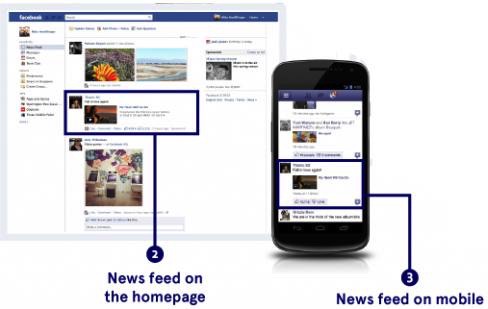
This is probably the most popular format of native advertising. Platforms such as Facebook, Twitter, Yahoo, Snapchat, and Instagram contain native ads.

These can take either of the two forms: Sponsored content or in-feed promotions.

Sponsored content takes the form and function of other content appearing in that particular feed. Some of the best representation of sponsored content can be seen on BuzzFeed, Mashable, Forbes, and Gawker.

In-feed promotions appear in a feed but rather than behaving like content, it directly promotes and links to content on the site in question.

In-feed ad format is widely used by large social networks such as Facebook, Twitter, and LinkedIn to help them seamlessly present content (both user-generated and sponsored) in a way that doesn’t negatively impact the user experience.

Recommendation Widgets

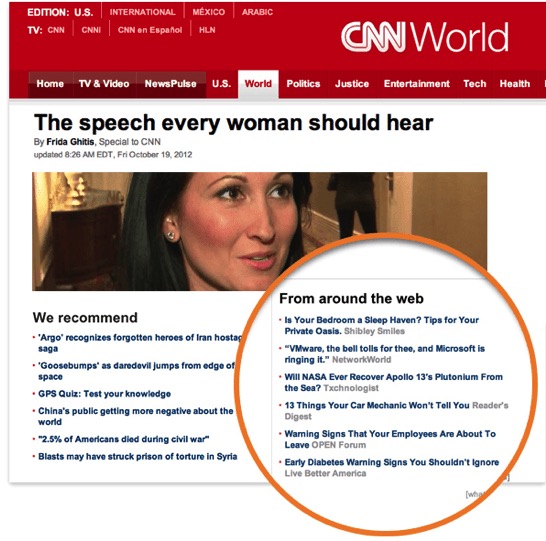
While on different sites you might have noticed suggestions for related content you may be interested in. These recommendation widgets usually feature content that is contextually related to what you’re currently reading, but the content is from other brands and publishers not from the site you’re currently on.

Common phrases such as, “You may also like” or “Recommended for you,” are used to get you to read more without feeling forced.

These recommendation widgets are placed on sites via content discovery platforms like Outbrain, Taboola, Gravity and Disqus. Brands and publishers work with these platforms to serve and distribute recommended content.

As advertisers continue to look for new avenues through which to distribute their content, recommendation widgets have quickly risen to be amongst the more popular native ad options.

With the widgets, sites can achieve their KPI goals and monetize the traffic they get by recommending content to consumers. Advertisers position themselves in front of this audience by paying to have their content featured on the widgets.

Promoted Listings

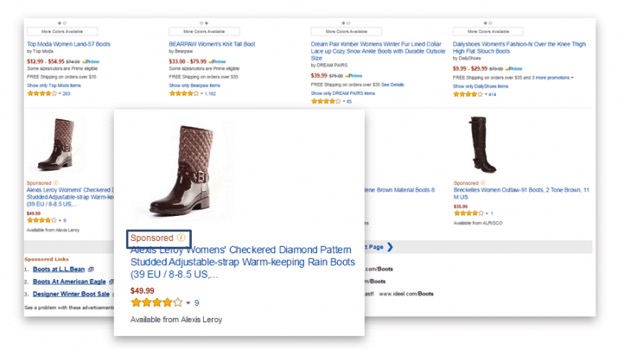
Rather than pushing content, promoted listings usually feature products or services, but they still meet the rule of native advertising that requires them to fit within the environment. Promoted listings are highly targeted and relevant, often based on the user’s recent behavior on the web. For instance, the post could be products from recently visited ecommerce sites or recent searches on Google.

Although they’re quite similar to in-feed promotions, promoted listings earn their distinct category because they appear on sites that don’t have traditional editorial content.

Examples of promoted listings can be found on sites like Amazon and Etsy.

Paid Search Ads

You are probably very familiar with paid search ads; they’re direct-response ads that are promoted alongside search results. They qualify as native ads because they appear in a format and layout that matches the organic search results, even though they are indicated as sponsored.

Direct response ads are one of the first native ads formats and also the first to become popular among advertisers. Google Adwords is the biggest player in paid search, but Bing also offers a paid search ad platform.

Custom Content

While they are clearly a form of native advertising, some ads are too custom to be accommodated by any of the above native ads groups—thus, they are put in their own group.

Custom content includes everything else not already covered, but may also have characteristics of the other forms. With custom content, the advertiser and publisher team up to make websites with content that users might find relevant. With the ease of WordPress content plugins used on over 25% of websites, publishers can add native playlists, audio, video and posts with ease. Spotify and Flipboard are some of the platforms that offer this kind of native advertising.

Sponsored content is also a form of custom content, but is more native in nature since it looks and feels just like all the other content on the site. Sometimes the sponsored content is written by the advertiser and just posted on the publisher’s site. However, many big publishers have dedicated editorial teams to create this content for the advertisers, so it not only looks like the publisher’s content, it sounds like it too.


Topics:

Climb the Ladder, Skills & Expertise
Be Inspired

How Brooke Hauser Built a Career Writing Celebrity Profiles

From prep to establishing a connection and getting them to open up, here’s how she does it

How Brooke Hauser Built a Career Writing Celebrity Profiles
Yana icon
By Addie Morfoot
@kamorfoot
Addie Morfoot is a journalist and writer with over 21 years of experience contributing to The New York Times, Variety, the Wall Street Journal, and Crain's New York Business. She holds an MFA in creative writing from the New School and covers film, television, real estate, and entertainment.
7 min read • Originally published June 19, 2017 / Updated March 19, 2026
Yana icon
By Addie Morfoot
@kamorfoot
Addie Morfoot is a journalist and writer with over 21 years of experience contributing to The New York Times, Variety, the Wall Street Journal, and Crain's New York Business. She holds an MFA in creative writing from the New School and covers film, television, real estate, and entertainment.
7 min read • Originally published June 19, 2017 / Updated March 19, 2026

Brooke Hauser has a way with celebrities. You name the star, she’s interviewed them. Jennifer Aniston? Check. Matt Damon? Check. Julia Roberts? Double check. (She’s interviewed her twice.)


Allure, Glamour, Marie Claire and Parade are among the numerous publications that have sought Hauser out to take on interviewing and writing about Hollywood’s elite. While it might sound like a glamorous gig, in reality, it requires a whole lot of preparation, social ease and patience.

Lawrence Grobel described what it takes to conduct a good interview in his book The Art of the Interview: Lessons from a Master of the Craft. “You must converse like a talk show host, think like a writer, understand subtext like a psychiatrist, have an ear like a musician, be able to select the best parts like a book editor and know how to piece it together dramatically like a playwright.”

Throughout her 16 years as a journalist, Hauser has learned to master the gentle balance between that demanding skill set.

Here’s how:

How did you become an entertainment journalist?

I interned at Premiere Magazine (which closed down in 2007) during college because I always knew that I wanted to go into journalism. After college, I was an editorial assistant there and then an assistant editor. That led to an associate editor/writer-at-large position.

Do you remember your first celebrity interview?

Yes! It was Maggie Gyllenhaal. It was the first time I was flown to Los Angeles (from New York) to do an interview. It all felt very glamorous. She took me to a fancy L.A. restaurant and ordered crudités. I don’t think I even knew what crudités was. It was intimidating.

How much preparation did you do before that interview and the many that followed?

I used to read a ton about people before I interviewed them, but I found that if you go into an interview and you’ve done so much research, you could come off as a stalker—or tell them their answer to questions before you even have asked the question.

You want the interview question to come across as natural. The goal is to have a conversation. So when you are meeting someone for the first time you are not supposed to know everything about them already. But at the same time you don’t want to be underprepared. So now I find the best way to prepare is: if I’m interviewing an actor, I watch all of their films; if I’m speaking to a musician, I listen to all of his or her music. You hope that you have a genuine connection to whatever it is that they have created.

But what if you don’t feel the connection?

You still have to find ways to connect. But I don’t lie (about what I thought about their art) because I’m a bad liar and it sounds phony. Also, I don’t have to like everybody. I’d rather write about someone who is interesting rather than “likable.”

Any tricks to quickly connecting during what could easily be a very awkward lunch interview?

Sometimes when I’m interviewing younger starlets who are not used to the interview process and are feeling self-conscious, I order a lot of food, like a big burrito. That small gesture can break the ice a little bit. The thought process is: I don’t care what I look like, so maybe they won’t care what they look like.

How about the bigger names that have been interviewed a thousand times like Jessica Alba or Kim Kardashian?

No matter who it is, your job on the one hand is to watch them and scrutinize them, but you also want to make it seem that’s not what you are doing—which is tricky. So whenever you can show them that you are human too, that’s good. Because being famous doesn’t mean that you aren’t self-conscious. Most famous people are incredibly self-conscious because they are always maintaining their image. Sometimes showing them that you are human can make it easier for them to be themselves.

So do you talk about yourself before you start the interview?

On the one hand you don’t want to talk about yourself too much during an interview because why should they care? But on the other hand, if you can find something true and real that you can actually bond over then that can be really helpful.

Any examples?

Recently I had to interview Scarlett Johansson for Marie Claire. I went to go meet her at this fancy, boutique hotel in New York City and she arrived a bit late. At the time, I had an infant back home and I was still breastfeeding, but I had brought the wrong breast pump with me. So while I was waiting for her, I had to hand express in the bathroom. I was still feeling discomfort when we started the interview and she noticed, so I told her what had happened. Then she told me a great story about losing her breast pump after the Oscars. It was a genuine moment of connection—just two moms talking about breastfeeding.

Celebrities agree to an interview in order to promote their most recent work. How do you balance the work questions with the personal questions?

Some journalists go in with this idea that they are going to be this person’s friend. I always assume that they have their own friends. I try and be as professional as possible and start with work questions.

How do you delve into those personal questions that they might not want to answer?

I don’t ask invasive questions. I don’t want to make somebody feel uncomfortable—most of all myself. I get squeamish about questions that I know are going to hurt someone or make them uncomfortable, but I do think it’s important to get a picture of a person in that moment. So what I have done in the past is to ask a question along the lines of, “What’s your daily routine like right now?” Getting them to relax is key and that question is a good way to do that. After any big life event, if you ask someone about their daily routine it’s going to reflect what is in or missing from their life.

You are often under serious time constraints during interviews with celebrities. How do you get in all your questions and also listen to their answers?

Listening is most important. You just want [the interview] to be a genuine conversation. I have a list of questions that I type it out beforehand and then keep in my bag during the interview. At the very end I will bring it out and say, “I just want to make sure that I’m hitting everything that my editor wanted me to touch on.”

Do you still get nervous or intimidated before an interview with a celebrity?

I don’t get nervous anymore. I just worry about technical malfunctions so I always bring two digital recorders. The first thing I do no matter who I am interviewing—or how famous they are—is a sound test. I have them say “blah, blah, blah” into both recorders. Then I listen to it right in front of them and make sure it caught all the sounds because I once lost an interview.

Do you transcribe the interview before you start writing the profile?

Yes, I used to transcribe them myself. Now I have someone do that for me, but when you are just starting out it helps to do it yourself. Then you can really listen to the way that the subject speaks, what their laugh sounds like, etc. Those details matter especially with a celebrity profile.

When do you start the writing process?

I try to begin writing as soon as possible after the interview.

Has profile writing helped your other writing, which includes stories for The New Yorker, the New York Times and two books—The New Kids: Big Dreams and Brave Journeys at a High School for Immigrant Teens and Enter Helen: The Invention of Helen Gurley Brown and the Rise of the Modern Single Woman?

In a sense, a biography like “Enter Helen” is a really long profile. With each profile you really want to create a picture of the person in the reader’s mind right away. That was important in both my books. So yes. Profile writing has had a major influence on all of my writing.


Topics:

Advice From the Pros, Be Inspired
Climb the Ladder

7 Speaking Habits That Are Hurting Your Career (and How to Fix Them)

Because you want to be taken seriously at work

7 Speaking Habits That Are Hurting Your Career (and How to Fix Them)
Yana icon
By Ayana Young
Ayana Young is a communications and PR strategist with 15+ years of experience spanning media relations, lifestyle brands, professional sports, and publishing.
3 min read • Originally published June 21, 2017 / Updated March 19, 2026
Yana icon
By Ayana Young
Ayana Young is a communications and PR strategist with 15+ years of experience spanning media relations, lifestyle brands, professional sports, and publishing.
3 min read • Originally published June 21, 2017 / Updated March 19, 2026

Work environments have become less formal and are increasingly more casual. Executives are wearing jeans to work, fridges are stocked with craft beers and many professionals aren’t even working in traditional offices.

Combine this with the fact that we’re all spending more time with coworkers than anyone else in our lives, it’s only natural that we start to get very comfortable with them, turning colleagues into little office families.

However, when you’re first starting your career, it may be difficult to find that happy medium between new age professionalism and improper behavior.

Next time you’re headed to a meeting review these tips, watch what you say and ditch these common unprofessional speaking habits.

Like, Um, I mean….

via GIPHY

This one is no surprise, but it’s still something many of us struggle with. Just get to the point. Using filler words such as “like” and “um” make you sound unsure of yourself and/or that you’re trying to stall. If you know you get nervous speaking in public or in meetings with your manager, prepare yourself. Review your notes, take a deep breath and be confident in the information you’re about to share.

Self-Deprecating “Jokes”

via GIPHY

So many of us make jokes at our own expense. Whether it’s jokingly referring to yourself as stupid, or pointing out your clumsiness, we tend to participate in this self-deprecating humor. However, when you’re in the office you want to appear—even if you don’t feel it—100% confident. So the next time you’re about to refer to yourself as an idiot to your boss, don’t. You’re not an idiot, and you don’t want your boss to think you’re one either.

Text Message Language

via GIPHY

We’re not saying you can’t ever throw out a “LOL” at the office, but for the most part, when you’re speaking with your co-workers (especially your superiors) leave colloquial language and text message-worthy abbreviations out of the conversation. For starters, everyone might not know what phrases like “FOMO” stand for, and more importantly, it makes you sound immature and unprofessional.

Constantly Dropping the F-Bomb

via GIPHY

We’re all adults here, and we get that especially in creative environments curse words will be thrown around in conversations. However, there’s a difference between using the occasional four-letter word, and using f*ck in every other sentence. Dropping too many swear words can make you seem unprofessional and even a little unrefined. The next time you’re about to curse, consider if it’s really necessary in any given conversation (pro tip: it’s usually not).

What else makes you look unprofessional? Poor writing and grammar skills. Check out our Grammar and Punctuation online course to get a refresher on the rules so you can impress online as well as off. 

Topics:

Climb the Ladder, Skills & Expertise

Posts navigation

Older posts
Newer posts
Featured Jobs
Kirkus Media
Editorial Intern
Kirkus Media
New York City, New York (US)

Gaia Inc
MEDIA COORDINATOR
Gaia Inc
Louisville, CO

Gaia Inc
Global Paid Media Specialist
Gaia Inc
Louisville, CO

Gaia Inc
Director of Media Strategy
Gaia Inc
Louisville, CO

Hearst Television
Account Executive
Hearst Television
Milwaukee, WI, United States

All Jobs »
PREMIUM MEMBER

Jeff Ballinger

Paris,
25 Years Experience
I am a writer and communications professional in various capacities in journalism and higher education. My primary skills are writing, editing,...
View Full Profile »
Join Mediabistro Membership Today

Stand out from the crowd with a premium profile

Mediabistro Logo Find your next media job or showcase your creative talent
  • Job Search
  • Hot Jobs
  • Membership
  • Newsletter
  • Career Advice
  • Media News
  • Hiring Tips
  • Creative Tools
  • About
Facebook YouTube Instagram LinkedIn
Copyright © 2026 Mediabistro
  • Terms of Use
  • Terms of Service
  • Privacy