Mediabistro Logo Mediabistro Logo
  • Jobs
    Search Creative Jobs Hot Jobs Remote Media Jobs Create Job Alerts
    Job Categories
    Creative & Design Marketing & Communications Operations & Strategy Production Sales & Business Development Writing & Editing
    Quick Links
    Search All Jobs Remote Jobs Create Job Alerts
  • Career Resources
    Career Advice & Articles Media Industry News Media Career Interviews Creative Tools Resume Writing Services Interview Coaching Job Market Insights Member Profiles
  • Mediabistro Membership
    Membership Overview How to Pitch (Premium Tool) Editorial Calendars (Premium Access) Courses & Training Programs Membership FAQ
  • Log In
Post Jobs
Mediabistro Logo Mediabistro Logo
Search Creative Jobs Hot Jobs Remote Media Jobs Create Job Alerts
Job Categories
Creative & Design Marketing & Communications Operations & Strategy Production Sales & Business Development Writing & Editing
Quick Links
Search All Jobs Remote Jobs Create Job Alerts
Career Advice & Articles Media Industry News Media Career Interviews Creative Tools Resume Writing Services Interview Coaching Job Market Insights Member Profiles
Membership Overview How to Pitch (Premium Tool) Editorial Calendars (Premium Access) Courses & Training Programs Membership FAQ
Log In
Post Jobs
Log In | Sign Up

Follow Us!

LA

Biggest plays in San Diego Padres history

Biggest plays in San Diego Padres history
By Stacker Feed
2 min read • Published March 20, 2026
By Stacker Feed
2 min read • Published March 20, 2026

Grindstone Media Group // Shutterstock

Biggest plays in San Diego Padres history

Major League Baseball history is built on moments — swings, pitches, and split-second plays that reshaped seasons and, in some cases, entire franchises. From walk-off home runs in winner-take-all games to clutch hits under October pressure, the biggest plays often came when the stakes were highest. Stacker identified the most impactful plays in San Diego Padres history using data from Stathead. Plays were ranked by their Championship Win Probability Added (cWPA), a metric that measures how much a single play changed a team’s odds of winning the World Series.

#5. October 17, 1998 (WS Gm 1)
– Score: tied 2-2 (5th inning, 2 outs)
– Opponent: NYY
– Event: HR
– Play Description: Home Run (Line Drive to Deep RF); Q. Veras Scores
– cWPA: 7.72%

#4. October 07, 1984 (NLCS Gm 5)
– Score: down 3-2 (7th inning, 1 out)
– Opponent: CHC
– Event: RoE
– Play Description: Reached on E3 (Ground Ball); C. Martínez Scores/No RBI
– cWPA: 9.94%

#3. October 06, 1984 (NLCS Gm 4)
– Score: tied 5-5 (9th inning, 1 out)
– Opponent: CHC
– Event: HR
– Play Description: *WALK-OFF*:Home Run (Deep CF-RF); T. Gwynn Scores
– cWPA: 10.09%

#2. October 10, 1984 (WS Gm 2)
– Score: down 3-2 (5th inning, 1 out)
– Opponent: DET
– Event: HR
– Play Description: Home Run; G. Nettles Scores; T. Kennedy Scores
– cWPA: 10.89%

#1. October 07, 1984 (NLCS Gm 5)
– Score: tied 3-3 (7th inning, 1 out)
– Opponent: CHC
– Event: 2B
– Play Description: Double to CF; T. Flannery Scores (Unearned run); A. Wiggins Scores; T. Gwynn to 3B (Advanced on throw) on throw to Hm
– cWPA: 14.04%

Topics:

LA
NYC

Biggest plays in New York Mets history

Biggest plays in New York Mets history
By Stacker Feed
2 min read • Published March 20, 2026
By Stacker Feed
2 min read • Published March 20, 2026

RCPPHOTO // Shutterstock

Biggest plays in New York Mets history

Major League Baseball history is built on moments — swings, pitches, and split-second plays that reshaped seasons and, in some cases, entire franchises. From walk-off home runs in winner-take-all games to clutch hits under October pressure, the biggest plays often came when the stakes were highest. Stacker identified the most impactful plays in New York Mets history using data from Stathead. Plays were ranked by their Championship Win Probability Added (cWPA), a metric that measures how much a single play changed a team’s odds of winning the World Series.

#10. October 27, 1986 (WS Gm 7)
– Score: down 6-5 (8th inning, 0 outs)
– Opponent: BOS
– Event: Out
– Play Description: Lineout: 2B
– cWPA: 10.15%

#9. October 21, 2000 (WS Gm 1)
– Score: tied 3-3 (10th inning, 1 out)
– Opponent: NYY
– Event: Out
– Play Description: Ground Ball Double Play: 2B-SS-1B (SS-2B)
– cWPA: 10.68%

#8. October 12, 1969 (WS Gm 2)
– Score: tied 1-1 (9th inning, 2 outs)
– Opponent: BAL
– Event: 1B
– Play Description: Single to LF; E. Charles Scores; J. Grote to 2B
– cWPA: 10.77%

#7. October 14, 1973 (WS Gm 2)
– Score: tied 6-6 (12th inning, 2 outs)
– Opponent: OAK
– Event: 1B
– Play Description: Single to CF; B. Harrelson Scores; T. McGraw to 2B
– cWPA: 10.81%

#6. October 04, 1988 (NLCS Gm 1)
– Score: down 2-1 (9th inning, 2 outs)
– Opponent: LAD
– Event: 2B
– Play Description: Double to CF (Line Drive); D. Strawberry Scores; K. McReynolds Scores
– cWPA: 11.28%

#5. October 11, 1986 (NLCS Gm 3)
– Score: down 5-4 (9th inning, 1 out)
– Opponent: HOU
– Event: HR
– Play Description: *WALK-OFF*:Home Run (Fly Ball to Deep RF Line); W. Backman Scores
– cWPA: 13.79%

#4. October 25, 1986 (WS Gm 6)
– Score: tied 5-5 (10th inning, 2 outs)
– Opponent: BOS
– Event: RoE
– Play Description: *WALK-OFF*:Reached on E3 (Ground Ball); R. Knight Scores (Unearned run)
– cWPA: 21.46%

#3. October 27, 1986 (WS Gm 7)
– Score: tied 3-3 (7th inning, 0 outs)
– Opponent: BOS
– Event: HR
– Play Description: Home Run (Fly Ball to Deep LF-CF)
– cWPA: 21.58%

#2. October 25, 1986 (WS Gm 6)
– Score: down 5-4 (10th inning, 2 outs)
– Opponent: BOS
– Event: WP
– Play Description: Wild Pitch; K. Mitchell Scores; R. Knight to 2B
– cWPA: 22.33%

#1. October 27, 1986 (WS Gm 7)
– Score: down 3-0 (6th inning, 1 out)
– Opponent: BOS
– Event: 1B
– Play Description: Single to CF (Line Drive to LF-CF); L. Mazzilli Scores; M. Wilson Scores; T. Teufel to 3B
– cWPA: 22.38%

Topics:

NYC
NYC

Biggest plays in New York Yankees history

Biggest plays in New York Yankees history
By Stacker Feed
2 min read • Published March 20, 2026
By Stacker Feed
2 min read • Published March 20, 2026

RCPPHOTO // Shutterstock

Biggest plays in New York Yankees history

Major League Baseball history is built on moments — swings, pitches, and split-second plays that reshaped seasons and, in some cases, entire franchises. From walk-off home runs in winner-take-all games to clutch hits under October pressure, the biggest plays often came when the stakes were highest. Stacker identified the most impactful plays in New York Yankees history using data from Stathead. Plays were ranked by their Championship Win Probability Added (cWPA), a metric that measures how much a single play changed a team’s odds of winning the World Series.

#10. October 13, 1960 (WS Gm 7)
– Score: down 9-7 (9th inning, 1 out)
– Opponent: PIT
– Event: 1B
– Play Description: Single to RF (Line Drive to Short CF-RF); B. Richardson Scores; D. Long to 3B
– cWPA: 21.38%

#9. October 05, 1952 (WS Gm 5)
– Score: down 4-2 (5th inning, 2 outs)
– Opponent: LAD
– Event: HR
– Play Description: Home Run (Fly Ball to Deep RF); G. McDougald Scores; P. Rizzuto Scores
– cWPA: 21.47%

#8. November 04, 2001 (WS Gm 7)
– Score: tied 1-1 (8th inning, 0 outs)
– Opponent: ARI
– Event: HR
– Play Description: Home Run
– cWPA: 23.12%

#7. October 16, 1962 (WS Gm 7)
– Score: down 1-0 (9th inning, 2 outs)
– Opponent: SFG
– Event: Out
– Play Description: *ENDED GAME*:Lineout: 2B
– cWPA: 24.13%

#6. November 01, 2001 (WS Gm 5)
– Score: down 2-0 (9th inning, 2 outs)
– Opponent: ARI
– Event: HR
– Play Description: Home Run; J. Posada Scores
– cWPA: 24.19%

#5. October 12, 1964 (WS Gm 5)
– Score: down 2-0 (9th inning, 2 outs)
– Opponent: STL
– Event: HR
– Play Description: Home Run (Fly Ball to Deep CF-RF); M. Mantle Scores (Unearned run); T. Tresh Scores (Unearned run)
– cWPA: 24.29%

#4. October 05, 1941 (WS Gm 4)
– Score: down 4-3 (9th inning, 2 outs)
– Opponent: LAD
– Event: 2B
– Play Description: Double to RF (Fly Ball); T. Henrich Scores (Unearned run); J. DiMaggio Scores (Unearned run)
– cWPA: 25.08%

#3. October 09, 1958 (WS Gm 7)
– Score: tied 2-2 (8th inning, 2 outs)
– Opponent: ATL
– Event: 1B
– Play Description: Single to CF (Ground Ball); Y. Berra Scores
– cWPA: 26.27%

#2. October 15, 1923 (WS Gm 6)
– Score: down 4-3 (8th inning, 2 outs)
– Opponent: SFG
– Event: 1B
– Play Description: Single to CF (Ground Ball thru SS-2B); H. Haines Scores; E. Johnson Scores; J. Dugan Scores (Advanced on throw) on E8 (throw to 3B)/No RBI (Unearned run); B. Meusel to 3B
– cWPA: 26.85%

#1. October 13, 1960 (WS Gm 7)
– Score: down 4-2 (6th inning, 1 out)
– Opponent: PIT
– Event: HR
– Play Description: Home Run (Fly Ball to Deep RF Line); T. Kubek Scores; M. Mantle Scores
– cWPA: 34.32%

Topics:

NYC
LA

Biggest plays in Oakland Athletics history

Biggest plays in Oakland Athletics history
By Stacker Feed
2 min read • Published March 20, 2026
By Stacker Feed
2 min read • Published March 20, 2026

dean bertoncelj // Shutterstock

Biggest plays in Oakland Athletics history

Major League Baseball history is built on moments — swings, pitches, and split-second plays that reshaped seasons and, in some cases, entire franchises. From walk-off home runs in winner-take-all games to clutch hits under October pressure, the biggest plays often came when the stakes were highest. Stacker identified the most impactful plays in Oakland Athletics history using data from Stathead. Plays were ranked by their Championship Win Probability Added (cWPA), a metric that measures how much a single play changed a team’s odds of winning the World Series.

#10. October 17, 1911 (WS Gm 3)
– Score: down 1-0 (9th inning, 1 out)
– Opponent: SFG
– Event: HR
– Play Description: Home Run (Line Drive to Deep RF)
– cWPA: 13.13%

#9. October 14, 1973 (WS Gm 2)
– Score: down 6-5 (9th inning, 2 outs)
– Opponent: NYM
– Event: 1B
– Play Description: Single to LF; S. Bando Scores; R. Jackson to 2B
– cWPA: 13.24%

#8. October 07, 1972 (ALCS Gm 1)
– Score: down 2-1 (11th inning, 1 out)
– Opponent: DET
– Event: 1B
– Play Description: *WALK-OFF*:Single to RF (Ground Ball thru 2B-1B); M. Hegan Scores; G. Tenace Scores (Advanced on throw) on E9 (throw to 3B) (Unearned run)
– cWPA: 13.31%

#7. October 21, 1973 (WS Gm 7)
– Score: ahead 2-0 (3rd inning, 2 outs)
– Opponent: NYM
– Event: HR
– Play Description: Home Run (Deep CF-RF); J. Rudi Scores
– cWPA: 13.48%

#6. October 14, 1929 (WS Gm 5)
– Score: down 2-0 (9th inning, 1 out)
– Opponent: CHC
– Event: HR
– Play Description: Home Run (Fly Ball to Deep RF); M. Bishop Scores
– cWPA: 14.43%

#5. October 22, 1972 (WS Gm 7)
– Score: down 3-2 (8th inning, 2 outs)
– Opponent: CIN
– Event: Out
– Play Description: Popfly: LF (Short LF)
– cWPA: 16.71%

#4. October 22, 1972 (WS Gm 7)
– Score: tied 1-1 (6th inning, 2 outs)
– Opponent: CIN
– Event: 2B
– Play Description: Double to LF (Line Drive to LF Line); B. Campaneris Scores
– cWPA: 18.53%

#3. October 21, 1973 (WS Gm 7)
– Score: tied 0-0 (3rd inning, 1 out)
– Opponent: NYM
– Event: HR
– Play Description: Home Run (Deep RF); K. Holtzman Scores
– cWPA: 18.73%

#2. October 06, 1930 (WS Gm 5)
– Score: tied 0-0 (9th inning, 1 out)
– Opponent: STL
– Event: HR
– Play Description: Home Run (Deep LF); M. Cochrane Scores
– cWPA: 19.50%

#1. October 19, 1972 (WS Gm 4)
– Score: down 2-1 (9th inning, 1 out)
– Opponent: CIN
– Event: 1B
– Play Description: Single to CF (Fly Ball to CF-RF); A. Lewis Scores; G. Tenace to 3B
– cWPA: 19.98%

Topics:

LA
LA

Biggest plays in Los Angeles Angels history

Biggest plays in Los Angeles Angels history
By Stacker Feed
2 min read • Published March 20, 2026
By Stacker Feed
2 min read • Published March 20, 2026

RCPPHOTO // Shutterstock

Biggest plays in Los Angeles Angels history

Major League Baseball history is built on moments — swings, pitches, and split-second plays that reshaped seasons and, in some cases, entire franchises. From walk-off home runs in winner-take-all games to clutch hits under October pressure, the biggest plays often came when the stakes were highest. Stacker identified the most impactful plays in Los Angeles Angels history using data from Stathead. Plays were ranked by their Championship Win Probability Added (cWPA), a metric that measures how much a single play changed a team’s odds of winning the World Series.

#6. October 26, 2002 (WS Gm 6)
– Score: down 5-3 (8th inning, 0 outs)
– Opponent: SFG
– Event: HR
– Play Description: Home Run
– cWPA: 7.73%

#5. October 26, 2002 (WS Gm 6)
– Score: down 5-4 (8th inning, 0 outs)
– Opponent: SFG
– Event: 2B
– Play Description: Double to LF (Fly Ball to Deep LF-CF); C. Figgins Scores; G. Anderson Scores (Unearned run)
– cWPA: 11.45%

#4. October 20, 2002 (WS Gm 2)
– Score: tied 9-9 (8th inning, 2 outs)
– Opponent: SFG
– Event: HR
– Play Description: Home Run (LF-CF); D. Eckstein Scores
– cWPA: 11.45%

#3. October 27, 2002 (WS Gm 7)
– Score: down 1-0 (2nd inning, 2 outs)
– Opponent: SFG
– Event: 2B
– Play Description: Double to CF (Fly Ball to Deep LF-CF); S. Spiezio Scores
– cWPA: 11.67%

#2. October 27, 2002 (WS Gm 7)
– Score: tied 1-1 (3rd inning, 0 outs)
– Opponent: SFG
– Event: 2B
– Play Description: Double to RF (Line Drive to RF Line); D. Eckstein Scores; D. Erstad Scores; T. Salmon Scores
– cWPA: 13.85%

#1. October 26, 2002 (WS Gm 6)
– Score: down 5-4 (8th inning, 0 outs)
– Opponent: SFG
– Event: 1B
– Play Description: Single to LF (Pop Fly to Short LF Line); C. Figgins to 3B; G. Anderson to 2B (Advanced on throw) on E7
– cWPA: 14.65%

Topics:

LA
LA

Biggest plays in Los Angeles Dodgers history

Biggest plays in Los Angeles Dodgers history
By Stacker Feed
2 min read • Published March 20, 2026
By Stacker Feed
2 min read • Published March 20, 2026

Grindstone Media Group // Shutterstock

Biggest plays in Los Angeles Dodgers history

Major League Baseball history is built on moments — swings, pitches, and split-second plays that reshaped seasons and, in some cases, entire franchises. From walk-off home runs in winner-take-all games to clutch hits under October pressure, the biggest plays often came when the stakes were highest. Stacker identified the most impactful plays in Los Angeles Dodgers history using data from Stathead. Plays were ranked by their Championship Win Probability Added (cWPA), a metric that measures how much a single play changed a team’s odds of winning the World Series.

#10. October 05, 1953 (WS Gm 6)
– Score: down 3-1 (9th inning, 1 out)
– Opponent: NYY
– Event: HR
– Play Description: Home Run (Deep RF); D. Snider Scores
– cWPA: 16.65%

#9. November 01, 2025 (WS Gm 7)
– Score: tied 4-4 (9th inning, 1 out)
– Opponent: TOR
– Event: Out
– Play Description: Groundout: 2B-C/Forceout at Hm (2B-1B); A. Barger to 3B; A. Kirk to 2B; D. Varsho to 1B
– cWPA: 17.47%

#8. October 04, 1955 (WS Gm 7)
– Score: down 2-0 (6th inning, 0 outs)
– Opponent: NYY
– Event: Out
– Play Description: Double Play: Flyball: LF; G. McDougald out at 1B/LF-SS-1B
– cWPA: 17.90%

#7. October 09, 1956 (WS Gm 6)
– Score: tied 0-0 (10th inning, 2 outs)
– Opponent: NYY
– Event: 1B
– Play Description: *WALK-OFF*:Single to LF (Line Drive to Deep LF); J. Gilliam Scores; D. Snider to 2B
– cWPA: 20.88%

#6. October 19, 1981 (NLCS Gm 5)
– Score: tied 1-1 (9th inning, 2 outs)
– Opponent: WSH
– Event: HR
– Play Description: Home Run
– cWPA: 21.18%

#5. October 25, 2024 (WS Gm 1)
– Score: down 3-2 (10th inning, 2 outs)
– Opponent: NYY
– Event: HR
– Play Description: *WALK-OFF*:Home Run (Fly Ball to Deep RF); C. Taylor Scores; T. Edman Scores; M. Betts Scores
– cWPA: 22.88%

#4. October 15, 1988 (WS Gm 1)
– Score: down 4-3 (9th inning, 2 outs)
– Opponent: OAK
– Event: HR
– Play Description: *WALK-OFF*:Home Run (Line Drive to Deep RF); M. Davis Scores
– cWPA: 27.31%

#3. October 03, 1947 (WS Gm 4)
– Score: down 2-1 (9th inning, 2 outs)
– Opponent: NYY
– Event: 2B
– Play Description: *WALK-OFF*:Double to RF (Line Drive); A. Gionfriddo Scores; E. Miksis Scores
– cWPA: 30.01%

#2. November 01, 2025 (WS Gm 7)
– Score: tied 4-4 (11th inning, 2 outs)
– Opponent: TOR
– Event: HR
– Play Description: Home Run (Fly Ball to Deep LF)
– cWPA: 41.03%

#1. November 01, 2025 (WS Gm 7)
– Score: down 5-4 (11th inning, 1 out)
– Opponent: TOR
– Event: Out
– Play Description: *ENDED GAME*:Ground Ball Double Play: SS-1B (SS-2B)
– cWPA: 46.24%

Topics:

LA
Journalism Advice

Ask Mediabistro: How Do I Get My Pitch Letter Read?

Make sure your pitch gets the consideration it deserves

freelancer writing a pitch letter
John icon
By Celeste Mitchell
Celeste Mitchell is an editorial writer and editor with nearly 30 years of experience creating consumer lifestyle content for publications including Marie Claire, Cosmopolitan, Good Housekeeping, and SELF. She previously served as Deputy Editor at Cosmopolitan and taught journalism courses through Mediabistro.
5 min read • Originally published October 24, 2003 / Updated March 19, 2026
John icon
By Celeste Mitchell
Celeste Mitchell is an editorial writer and editor with nearly 30 years of experience creating consumer lifestyle content for publications including Marie Claire, Cosmopolitan, Good Housekeeping, and SELF. She previously served as Deputy Editor at Cosmopolitan and taught journalism courses through Mediabistro.
5 min read • Originally published October 24, 2003 / Updated March 19, 2026

When you’re trying to get a freelance assignment from a magazine, you know that your first step is to have a fantastic idea.

You gather the information you need to sell the idea, and then you write a winning pitch letter. But then you get stuck on the next move. You need to get your query into the hands of an editor—preferably the right editor—to read it and consider it for publication. It’s a critical stage in the process, and you don’t know how to make sure your pitch letters get read. It’s something that confounds even the best freelance writers.

But it doesn’t confound James Sturz, a veteran freelance writer and novelist. Sturz’s work has appeared in publications ranging from The New York Times Magazine to Travel + Leisure to Marie Claire, and he shared some tips with us on how to communicate with an editor so you act and sound like a pro—even when you aren’t one yet.

Once your pitch letter is ready, and you’ve chosen the magazine you want to target, how do you know who to send it to?

In the best possible world, you have chosen a specific publication for your story idea. Better still, you’ve identified a particular section or column that runs articles like the one you imagine doing. Each column or section is the responsibility of one or sometimes two editors. Write a proposal that squares nicely with that section or column and send it to the editor who handles it.

A lot of this information is more readily available than most people think. Try calling the receptionist in the editorial department, or any low-level editor—an “assistant editor” or “associate editor”—and asking who edits the section you want to pitch. But it may not even require a phone call.

In some cases, you can find the right editor by reading the magazine’s masthead. If your idea relates to health, send it to a “health editor.” If you want to write a book review, contact the “book editor.” When you are looking to write a feature, pitch to someone with a title like “features editor,” “articles editor,” or “senior editor.”

Don’t pitch to people on the top of the masthead, such as an editor in chief or a managing editor, because they are focused on running the magazine, staffing, and production. They are not usually the point of contact for freelancers. On the other end of the spectrum, anyone with a title lower than “associate editor” is not in a position to give you an assignment.

Think of it this way: The basic sleuthing skills you use to report an article will be just as important when you are trying to place it.

Some editors prefer to receive story proposals by email. Others want them by snail mail or fax. How do you know what form to use when submitting your idea?

In a word: Ask.

Magazines are staffed by individuals, and consequently, not all individuals want things in the same way. The wily freelancer should feel comfortable submitting a proposal by email, fax, mail—or, if you’re lucky, in two well-articulated sentences over lunch with an editor.

Also, there should be some urgency or energy accompanying a proposal. Once you have your pitch written and ready to go it can’t hurt to call the editor—even if you only reach his assistant—to ask the best way to send in the idea. That said, what’s really important is the content of the idea, not how it gets there.

Should you pitch one idea to several magazines simultaneously?

Absolutely not. It may take a while, but hit one publication at a time. As a freelancer, your reputation is your calling card. You simply can’t afford to make enemies, and that’s likely to happen if you pursue more than one editor at a time.

If your story idea is timely and must be shopped around quickly, you may have no choice but to limit the amount of time you give editors to consider your proposal. Move it along from editor to editor, but don’t hit them all at once.

Should you pitch one idea to several editors on one staff?

It’s not a good idea because you are wasting an editor’s time. It’s a rookie error, and it could easily be the kiss of death at that publication—for you and for your idea. You must understand that staff editors work together in an office and meet to discuss story ideas. Yours should come from one person, not several.

Some editors take a long time to respond to a pitch. How do you handle this?

Politely, to be sure, and always in a manner you’d like to be communicated with yourself.

Try calling or emailing nine to 11 days after sending a pitch and ask—politely—when you might get a response. At times like this, you’ll be glad you sent your query to a specific person because you can simply call the main number and ask for her by name.

On the first follow-up, you are likely to get one of two responses. Sometimes an editor says she’ll have an answer for you in x number of days. In that case, you wait the specified time frame, add two to three more days, and call again. The other common response is no response at all. Try making a second attempt a week or so later, but if nothing happens by your third try recognize that it’s time to go elsewhere.

Some people are afraid to call editors after they’ve sent in a pitch. We often deify them because we are dying to get our articles in the magazines they work for. But the reality is that they are normal men and women who sit at desks and answer their phones, just like any other working person. It’s their job to review story ideas from writers and then find some to fill the pages of their publications.

What are the major no-nos to avoid?

The most important thing for a freelancer is to behave professionally so you are not mistaken for an amateur, even if you are one. Most people know what this means.

But there are a few mistakes you never want to make. For example, it’s not a good idea to fight for your idea after it’s been rejected. And it’s unforgivable to have typographical or grammatical errors in a proposal. It’s OK to be clever with your writing style, but don’t make embarrassing errors.

Along those lines, you don’t want to write long or long-winded proposals either. And never leave too many—or too aggressive—follow-up messages. You don’t want to make someone feel harassed.

And never do anything illegal.

Topics:

Journalism Advice
Skills & Expertise

What Are the Rules About Off the Record? A Reporter’s Guide

The distinction between on and off the record isn't as obvious as most people think. Here's how to navigate source agreements without getting burned.

off the record portion of an interview
John icon
By Celeste Mitchell
Celeste Mitchell is an editorial writer and editor with nearly 30 years of experience creating consumer lifestyle content for publications including Marie Claire, Cosmopolitan, Good Housekeeping, and SELF. She previously served as Deputy Editor at Cosmopolitan and taught journalism courses through Mediabistro.
3 min read • Originally published November 21, 2008 / Updated March 19, 2026
John icon
By Celeste Mitchell
Celeste Mitchell is an editorial writer and editor with nearly 30 years of experience creating consumer lifestyle content for publications including Marie Claire, Cosmopolitan, Good Housekeeping, and SELF. She previously served as Deputy Editor at Cosmopolitan and taught journalism courses through Mediabistro.
3 min read • Originally published November 21, 2008 / Updated March 19, 2026

Here’s a popular journo question: “I’ve read threads about ‘on’ vs. ‘off’ the record, but, for etiquette purposes, how is this determined?”

You’d be surprised how often we hear this question. And not even just from fledgling reporters—veteran journalists struggle with the fine distinctions among the various levels of on-the-record-ness. This terrain can sometimes be tricky, so we turned for guidance to Brent Cunningham, managing editor of the Food & Environment Reporting Network, formerly the deputy editor of the Columbia Journalism Review.

“The distinction between on and off the record isn’t as obvious as most people think,” Cunningham warns. “Two people can have completely different understandings of what the ground rules are.”

The stakes for getting this right have only increased. As newsrooms shrink and reporters juggle more stories with fewer editors to consult, a misunderstanding about attribution can end a source relationship, tank a story, or worse. Clear negotiation at the start of an interview matters more than ever.

Whenever you interview someone, whether on the phone or in person, your first move is to identify yourself as a reporter and to offer a general explanation of the story you are attempting to write. From that point on, everything the source says is assumed to be on the record unless otherwise stated. But the start of the conversation is the time for the reporter to negotiate the terms. Spell it out clearly so that both of you agree on how the information will be used and who will get credit. And anytime you feel the agreement unraveling, reconfirm to avoid a misunderstanding.

Here’s the common terminology:

On the record: Everything in the conversation can be used and attributed to your source by name and job title. “If there is reason to believe that this person is not media savvy, you might want to explain that what they say may very well be quoted in a news story,” says Cunningham. “I often hear about reporters who don’t clarify this and their sources end up feeling duped.”

Off the record: Nothing the source says during a discussion can be used in any way, shape, or form. “You cannot put this into your article,” Cunningham says. But that doesn’t mean you’ve wasted your time. “You can shop it around to other sources and see if you can get it on record elsewhere.” If you do decide to take this route, never reveal your original source. “You can also go back to your off-the-record source later in your reporting process and attempt to negotiate things back on the record.”

On background and not for attribution: Though some reporters will argue there’s a shade of difference between these two terms, whatever distinction exists is sufficiently unclear to be meaningless. (After all, the whole point is to make sure both the reporter and source clearly understand the ground rules.)

Essentially, all information received in these contexts can be quoted, but it cannot be attributed to the source by name. Instead, a general and vague title is used such as “White House official” or “assistant to the governor.” Because in some cases a descriptor will end up unintentionally revealing the source’s identity, Cunningham points out, “you have to negotiate this with the person at the time of the interview.”

The generally accepted rule is that off the record and on background must be invoked in advance. So if, for example, George W. Bush says to you, “Let’s go off the record here—I really did make up all that stuff about WMD in Iraq,” you can’t quote him on that. But if he says, “I really did make up all that stuff about WMD in Iraq—wait, that was off the record,” you’re well within your rights to use it.

Topics:

Climb the Ladder, Skills & Expertise
Journalism Advice

Inside the Front of Book: How to Shape a Magazine’s Identity

Editors reveal their strategies for winning sections

Ellie-nominated mags
By Samantha Melamed
6 min read • Originally published April 19, 2010 / Updated March 19, 2026
By Samantha Melamed
6 min read • Originally published April 19, 2010 / Updated March 19, 2026

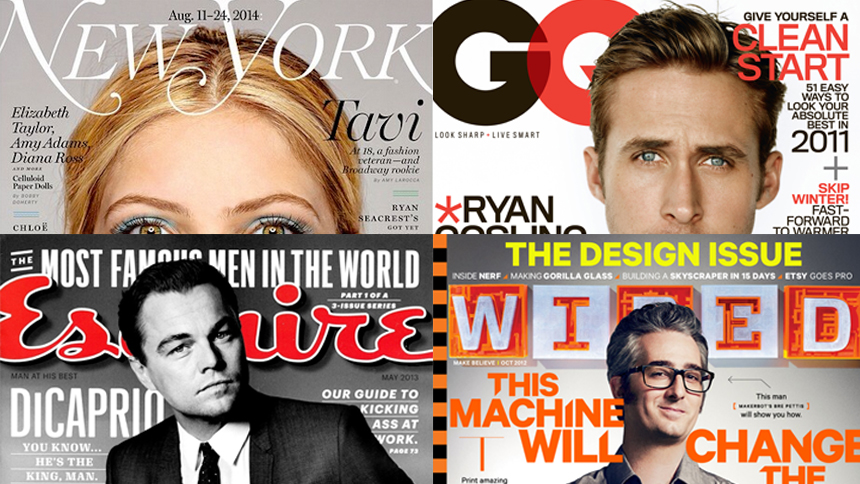
Glamorous celebrity profiles and hard-hitting investigative reports may be the domain of the feature well. But when it comes to shaping a magazine’s identity, expressing its voice, and keeping readers engaged issue after issue, back- and front-of-book departments are editorial’s workhorse. “They’re fundamental to the success of a magazine,” says GQ deputy editor Michael Hainey, “If your sections aren’t good, your magazine won’t be either.”

The 2010 American Society of Magazine Editors’ National Magazine Awards will honor some of the year’s best magazine sections, ones that exemplified stellar service writing while innovating dynamic new ways to present information and entertain audiences. Those that made the cut: Esquire‘s unfailingly clever Man at His Best guide to pop culture, fashion, drinks and lifestyle; GQ‘s impeccably stylish Manual section on grooming and fashion, and its recently inaugurated, entertainment-focused GQ Intelligence department; New York‘s back-of-book Strategist, the all-knowing resource for food, real estate and shopping; and Wired‘s Start, the front-of-book repository for all things innovative.

“When you look at these four magazines, they all have a very firm idea of what their readers are most interested in and a very firm grip on a stylish kind of service journalism,” says Sid Holt, chief executive of ASME, which awards the Ellies. “Many of these finalists combine that with an intelligence, cleverness… and a last thing — a sort of X-factor — some spark or element of the unexpected that makes the section especially captivating for readers.”

Editors from all four nominated magazines try to put their fingers on just what elevates a magazine section to greatness. Here’s their advice.

1. Shun the Obvious

The X-factor Holt mentioned is the starting point for planning the front of the book, says Ross McCammon, articles editor at Esquire and top editor on Man at His Best. “My first note that I ever got from my boss [on a proposed article] was, ‘This seems like something a magazine would do,'” McCammon says.

“That, first of all, was the most confusing note I ever received, until I understood what he was talking about.” The message, of course, was that front-of-book articles needed to reach beyond the conventional, “either stylistically with the writing, with the format or with the opinion itself,” he says. “There needs to be something surprising about it.”

So, in a recent issue, instead of reviewing Ben Stiller’s new movie, Greenberg, in their March issue, Esquire ran an ode to the actor’s touchingly awkward sex scenes. And rather than print an essay about HBO’s show Treme, they ran a quiz for readers to determine whether they should bother watching it.

“A lot of people are going to be covering that particular show,” McCammon says. So Esquire decided on a quiz to both inform viewers about the show and offer a commentary on the time commitment such a series requires. “And frankly,” he adds, “I think the format is good for jokes. The cool thing about a quiz is that it’s sort of absurdist and useful at the same time, and to me that’s a beautiful thing.”

2. Put Relevance First

At New York, editors keep the Strategist section relevant by synthesizing current events and service journalism into articles that are both useful and timely, says deputy editor Jon Gluck. “We try to look for things that are news-driven and that help solve New Yorkers’ problems in a way that’s ambitious, imaginative and super useful to them,” he says.

“Whenever an urban living problem comes up, we try to jump on it.” So, for example, when Mayor Michael Bloomberg began his war against salt, Strategist put together an extensive salt feature, analyzing the sodium content in favorite New York dishes, surveying gourmet salts and offering a Morgan Spurlock-like diary of a nine-day salt binge.

Gluck says that, as a weekly section, Strategist needs to be on the cutting edge of its beats — food, real estate and fashion — to deliver that relevant news. “The quality of the section depends on how authoritative and useful the information is, and that depends on the people we’ve got covering these worlds,” he says. The writers all have “an almost obsessive interest in their beats. … That depth of knowledge is what we’re for.”

3. Do What Magazines Do Best

Providing useful, well-written and skillfully reported information is important, but it’s not enough anymore, says Wired senior editor Robert Capps. After all, readers buy a magazine like Wired because it offers a unique voice and because the physical experience of reading the magazine in print is something that can’t be had elsewhere.

So, Capps, who oversees Wired‘s Start section, looks for stories that “convey the Wired sensibility: enthusiasm about technology, a DIY attitude and a certain level of smarts.” After that, he says, it’s about presentation. “The really cool thing about the front of the book is that it’s so collaborative. It really takes advantage of the magazine format. The best front-of-book sections have really dynamic interactions between editorial and art departments to come up with lively takes on information.”

Covering business, technology, science and “general geekery,” Start includes anything from a flow chart offering advice on whether to “Delete that Tweet” to a chemical analysis of Scope to the long-running “Dangerous Object of the Month,” (recently, Pure Cap Hot Sauce).

Combining novel articles with bold presentations and a mix of reliable “furniture” pieces that readers turn to each month is essential, he says. “The Internet is so voracious at telling people that stuff exists, so you need to have an attitude and to take advantage of the specific medium,” Capps says. “The best sections really leverage all of that to their advantage.”

4. Assume the Role of Curator

The transformation and fragmentation of the media market, and the impact of the 24-hour online news cycle, have been very much on the minds of editors at GQ, Hainey says. In fact, the magazine launched GQ Intelligence, one of its two nominated sections, just last year, as an effort to re-imagine arts and entertainment coverage in the Internet age. “We launched that section with the intent to answer that single question, which is, ‘What really matters in the pop culture universe?'” he says.

“There are a dizzying number of entertainment options that come through the filter,” he says. “So that role of the cultural filter is for a magazine even more important.” At Intelligence and GQ‘s other nominated section, Manual, the idea of distilling content into what’s most interesting and essential drives coverage of everything from fashion and grooming to politics and sports.

Hainey points out that GQ‘s considers that sense of authority equally essential to covering the season’s must-have cotton suits, artisanal butchers or the political implications of The Clinton Tapes. Across the board, he says, “There’s a great sense of responsibility those editors carry in filtering content and putting that imprimatur on the material.”

5. Prepare to Go Digital

Internet adoption has already propelled the magazine industry to a pivotal moment, and now, magazine publishers are betting on the transformational impact of the Apple iPad and other tablets coming onto the market this year.

“Mr. Magazine” Samir Husni, professor at University of Mississippi, says the industry can’t afford to ignore its digital future — and format-forward front-of-book sections are poised to lead that charge. Wired, for one, has already been attracting buzz for its tablet edition, which premieres alongside the June issue.

Capps says editors are working with developers to offer videos, animations and other online extras, “so when you look at the iPad you’ll get that extended dance remix,” of what’s in the print edition. He says that, while the print edition will retain primacy, “I can imagine that a great tablet feature will help elevate something to make it into the section.”

Husni says that creating an experience, engaging and activating readers, has always been key to producing a successful magazine. Now, he says, that experience needs to translate across multiple media. “The more service and the more interactivity [magazines] create, whether using new technologies like augmented reality or text messages, and the more we can make our print editions interactive, the better those sections will be. That’s what our audiences are looking for,” Husni says. “That’s the only way we can ensure a future for print in a digital age.”


Topics:

Go Freelance, Journalism Advice
Advice From the Pros

Hey, How’d You Start Repping A-Listers, Ken Sunshine?

This PR superstar offers advice on snagging clients

ken-sunshine-feature
By Jason Chupick
5 min read • Originally published May 3, 2010 / Updated March 19, 2026
By Jason Chupick
5 min read • Originally published May 3, 2010 / Updated March 19, 2026

Ken Sunshine’s Sunshine & Sachs PR agency isn’t in the industry directories. Sunshine doesn’t blog. He doesn’t even have a Web site. He’s been known to turn down A-list celebrities calling for his help. “We don’t play it safe, we’re not genteel,” he says. “We name names and battle the media when we have to.”

As Sunshine sees it, his passion and his ability to fight for those he represents are what attracts new business, though his client list full of marquee names doesn’t hurt. He’s worked with Barbra Streisand, Leonardo DiCaprio, Michael Moore, and Justin Timberlake, though if you question him about his celeb clients, he’ll cut stop you in your tracks: “Look, we don’t need to get into that.”

He prefers keeping the conversation to his nonprofit clients such as the Natural Resources Defense Council, Calvary Hospital, and the New York Organ Donor Network. We spoke with him about how he’s forged his business by fusing celebrity representation with political interests, and why he doesn’t shy away from tangling with the tabloids.

Did you head to a PR agency when you graduated from Cornell?

No, I began my career at a social service agency on Long Island working with troubled teens. I got sucked into Democratic Party politics soon after.

I was elected as a George McGovern delegate and went to the DNC convention in Miami 1972.

How did you get involved in celebrity PR?

After working on a host of campaigns — local and presidential — in the 70s and 80s, I got sick of the Republicans winning everything and took a job as a junior publicist at ASCAP (American Society of Composers, Authors and Publishers).

It was great. I stayed politically active and got to work with some of the biggest entertainers of that era.

Why did you decide to return to politics?

I got a call from David Dinkins. I believed in what he was doing and agreed to give him a year of my life. I moved up from campaign aide to chief of staff when he was elected the first black mayor of New York in 1989.

Who/what were your breakthrough clients ?

The Democratic National Convention when it came to New York in 1992 and Barbra Streisand.

What are you working on lately?

I represent Calvary Hospital in the Bronx. I have to play the heavy in their battle with the insurance companies.

They’re a great example of the best of the Catholic Church. They do pioneering work in cancer treatment and pain management. Ken Raske and the late John Cardinal O’Connor got me involved. Frank Calamari [Calvary’s CEO] and Dr. Michael Brescia (medical director) are saints.

My work with the New York Organ Donor Network is important, too. There’s such a low percentage of donors in this city.

These are the things that are important to me.

How does your celebrity work fit in?

I’m very interested in music and entertainment. Many of [Sunshine & Sachs’] clients have causes, like Leonardo DiCaprio, and filmmakers like Michael Moore and Robert Greenwald (Outfoxed, Wal-Mart: The High Cost of Low Price).

We’re relatively small and everyone here has interests and passion. While big agencies see opportunity to do crisis work for Wal-Mart, we’d rather work with a guy like Greenwald who goes after them.

You keep clients for a long time. What are you doing to make them happy?

I can’t seem to get rid of them!

It’s great to work with people for a long time. You can build something bigger and focus on what they care about.

You’ve been quoted on CNN as saying the tabloids are out of control. Are you biting the hand that feeds you?

My clients hate being in the tabloids. People like Affleck and DiCaprio were being absolutely hounded and I had to do something.

I was the only one talking about the outrageous conflicts of interests in [the PR] business. There are firms trading secrets of their A-list clients to bump up their B- and C-level clients — it’s terrible.

And the low level of sophistication of these PR people in L.A. is shocking. If I never went on TV to talk about this again, I’d be happy. My clients respect my position and I get the pick of the litter.

You don’t like being on TV?

Publicity for yourself isn’t the best way to get clients.

It does attract some but it’s hardly the reason I do it. If it’s something my clients feel deeply about, I will. It’s not the best use of my time — I turn down most media requests.

Did your business falter when the Republicans took over in 2000?

No, actually we’ve had rapid growth over the last seven years. We’re not invited to anything that’s happening in Washington, so we’re able to focus on our work. We weren’t dependent on dot-com money, either.

What are your methods for dealing with the media?

We always joke at the firm that the press is always right. There will always be a next time. Sometimes you have to go toe-to-toe with them but I know how to pick my [battles].

That’s the difference.

There’s an approach [that falls between] between kissing ass and getting angry. Our people know their stuff and work hard to temper negative coverage, rather than get mad. The media won’t respect you if you lose it too often.


Tips on building a PR clientele you can get behind:

1) Work on what interests you, and don’t be so corporate.
Fight the companies who are exploiting people and polluting the environment.

2) The worst thing you can do is to complain to your clients about the media.
Take the time to counsel your clients and tell them why something is not working.

3) Be knowledgeable.
The journalists you’re pitching will respect you.

4) If you’re starting an agency, don’t bother with a cattle call approach to new business pitches.
Focus on the areas you know, and aspire to earn the respect of the people you want to work with.

5) Be passionate.
It will help your career. Go with the underdog.

This interview has been edited for length and clarity. 

Topics:

Advice From the Pros, Be Inspired, Hey, How'd You Do That?

Posts navigation

Older posts
Newer posts
Featured Jobs
6AM City
Revenue Operations Manager
6AM City
USA

Hanford Pharmaceuticals LTD
Virtual Assistant
Hanford Pharmaceuticals LTD
Anchorage, KY, USA

Lakeside Pediatrics
Online Chat Representative (Remote)
Lakeside Pediatrics
Sioux Falls, SD, USA

Lakeside Pediatrics
Product Manager (remote)
Lakeside Pediatrics
Philadelphia, PA, USA

Lakeside Pediatrics
Administrative Operations Analyst (Remote)
Lakeside Pediatrics
Sparks, NV, USA

All Jobs »
PREMIUM MEMBER

Lisa Palmer

Dublin, CA
20 Years Experience
I'm a seasoned and flexible writer/editor with more than 15 years experience. I'm able to create a wide variety of marketing and editorial content...
View Full Profile »
Join Mediabistro Membership Today

Stand out from the crowd with a premium profile

Mediabistro Logo Find your next media job or showcase your creative talent
  • Job Search
  • Hot Jobs
  • Membership
  • Newsletter
  • Career Advice
  • Media News
  • Hiring Tips
  • Creative Tools
  • About

Browse media and creative jobs

Explore popular job searches across creative, editorial, marketing, production, and top media markets.

Popular searches

  • Remote Media Jobs
  • Graphic Design Jobs
  • Photography Jobs
  • Writing Jobs
  • Marketing Jobs
  • Library Jobs
  • Journalism Jobs
  • PR / Communications Jobs

Creative and content

  • Video Production Jobs
  • Audio / Podcasting Jobs
  • Technical Writer Jobs
  • Social Media Manager Jobs
  • Copywriter Jobs
  • Publishing Jobs
  • Editor Jobs
  • Freelance Writing Jobs

Locations and specialties

  • Content Creator Jobs
  • Creative Director Jobs
  • Art Director Jobs
  • Advertising Jobs
  • Chicago Creative Jobs
  • Los Angeles Media Jobs
  • New York City Media Jobs
  • Boston Creative Jobs
Facebook YouTube Instagram LinkedIn
Copyright © 2026 Mediabistro
  • Terms of Use
  • Terms of Service
  • Privacy Policy