Jess Focht is a writer and content strategist with 6+ years of experience in media, publishing, and brand storytelling. She has contributed to Insider, Grammarly, and The Creative Independent.
1 min read • Originally published April 8, 2022 / Updated March 19, 2026
Jess Focht is a writer and content strategist with 6+ years of experience in media, publishing, and brand storytelling. She has contributed to Insider, Grammarly, and The Creative Independent.
1 min read • Originally published April 8, 2022 / Updated March 19, 2026
New month, new Mediabistro roles.
Mediabistro is the #1 job board, community, and career destination for media and content professionals. Once a week, we’ll be updating this list with different types of creative jobs featured. Take a look below:
Kyle Elliott, MPA, CHES is the founder, career coach, and interview coach behind CaffeinatedKyle.com. His goal is simple – to help people find jobs they LOVE. He is an official member of the invitation-only Forbes Coaches Council as well as a member of the Gay Coaches Alliance.
4 min read • Originally published April 11, 2022 / Updated March 19, 2026
Kyle Elliott, MPA, CHES is the founder, career coach, and interview coach behind CaffeinatedKyle.com. His goal is simple – to help people find jobs they LOVE. He is an official member of the invitation-only Forbes Coaches Council as well as a member of the Gay Coaches Alliance.
4 min read • Originally published April 11, 2022 / Updated March 19, 2026
Your resume is one of the most important tools in your job search. Yet, you only have a handful of seconds to grab a recruiter’s attention with your resume. Deciding what to include on your resume can feel challenging. What do recruiters look for in a resume? How do you write a resume that recruiters love? What should you include in your resume to increase your chances of landing an interview?
Over my decade as a career coach, I have spoken with thousands of recruiters over the years to learn which resumes grab their attention and which ones end up in the rejection pile. I noticed several trends during my one-to-one conversations with recruiters at nearly every Fortune 100/500 as well as countless hyper-growth startups and VC-backed companies. The following is what I gleaned those recruiters really look for when reviewing your resume and job application.
1. Your previous experience
Your most important assignment as a candidate is to connect the dots between your previous experience and a recruiters’ open role. In other words, you need to learn to quickly communicate how your past successes relate to the job postings you are targeting. Therefore, the better you explain how your experience is relevant, the more likely you are to land a job interview with your dream company.
Subsequently, I am a proponent of using the target job posting as a recipe card that guides your resume creation and customization. If the role calls for “project management” experience, for instance, ensure there are one or more bullet points on your resume that address your project experience and achievements. You can even begin a bullet point with the phrase, “PROJECT MANAGEMENT:” to make your experience pop out to the recruiter as they are quickly scanning through hundreds of resumes and job applications. The key here is to make your experience swiftly digestible for someone who is only spending a handful of seconds reading your resume before moving on to the next one.
2. Your education and professional development
Many companies are moving away from requiring formal education from candidates. However, recruiters often still want to learn where you gained your knowledge as well as if you stay on top of the latest industry trends. Consequently, include a section on your resume with any degrees, certifications, or credentials you hold. Additionally, speak to any mentorship, internship, co-op, or related programs you currently or previously participated in. You can also use this section to reference your attendance at conferences and other professional development engagements.
Importantly, if a job posting asks for a specific degree or credential, such as an MBA or the Project Management Professional (PMP) certification, you will want to list this near the top of your resume. You want to avoid the mistake of requiring recruiters to dig through your resume to assess if you meet the minimum job qualifications. Also, if you are making a career change, you will want to list any courses or advanced training you completed in pursuit of the new career path in a space that is easily identifiable to the recruiter.
3. Your unique qualifications for the role
Although recruiters are assessing how your relevant experience and education relate to their vacancies, they are also looking for what makes you special. In other words, they are looking for reasons to invite one candidate in for an interview over another. As a candidate, this means you need to take action to ensure you land in the ‘heck yes’ pile rather than the dreaded middle of the bell curve. There is nothing worse than blending in when looking for a new job.
With this in mind, you want time to call out and draw attention to those experiences, achievements, and skills that brought you success throughout your professional career. Be sure to do this at the beginning of the resume, rather than burying the lede. If you worked across several distinct industries or speak multiple languages, for example, mention this upfront in your resume’s career summary. Then, reinforce this with examples and accomplishments throughout your resume that back up your claims.
4. Your personality and interests
Finally, recruiters are looking to interview humans. They recognize that job seekers are so much more than their professional experience, education, and advanced training. Thus, consider how you can nimbly incorporate your personality into your resume and other career documents. This may look like adding a section for extracurricular activities or hobbies on your resume, mentioning your unique interests, incorporating a splash of color, or including a testimonial from a former colleague or client.
These are just a few of the things recruiters look for when reviewing your resume and job application. At the end of the day, you want to show recruiters that you will add value to the team and the organization. Remember: You will land more interviews if you help recruiters understand how your experience and qualifications relate to their open roles. You’ve got this!
Kyle Elliott, MPA, CHES is the founder and career coach behind CaffeinatedKyle.com.
Jess Focht is a writer and content strategist with 6+ years of experience in media, publishing, and brand storytelling. She has contributed to Insider, Grammarly, and The Creative Independent.
1 min read • Originally published April 14, 2022 / Updated March 19, 2026
Jess Focht is a writer and content strategist with 6+ years of experience in media, publishing, and brand storytelling. She has contributed to Insider, Grammarly, and The Creative Independent.
1 min read • Originally published April 14, 2022 / Updated March 19, 2026
New month, new Mediabistro roles.
Mediabistro is the #1 job board, community, and career destination for media and content professionals. Once a week, we’ll be updating this list with different types of creative jobs featured. Take a look below:
The Language of LinkedIn: How to Write a Profile That Stands Out
By
Mike Monroe
Mike Monroe is the digital strategy manager at Vector Marketing, the domestic sales arm of Cutco Corp., an Olean, New York-based cutlery manufacturer.
5 min read • Originally published April 18, 2022 / Updated March 19, 2026
By
Mike Monroe
Mike Monroe is the digital strategy manager at Vector Marketing, the domestic sales arm of Cutco Corp., an Olean, New York-based cutlery manufacturer.
5 min read • Originally published April 18, 2022 / Updated March 19, 2026
Did you know that at least 87 percent of employers use LinkedIn to recruit talent and at least three people get hired from the platform every minute? As a young professional, if you’re not on LinkedIn, you’re missing out!
That said, just having a LinkedIn account isn’t enough. You must make yourself visible through a well-written profile and engaging LinkedIn posts. Good writing is a window to your ideas, values, and personality. No matter how good you are at your job, if you’re unable to articulate your persona and career story, it’ll be harder to secure the opportunities you need. Clear and compelling writing can differentiate you from other candidates.
Take it from me: In 2021, we were expanding our in-house marketing team at Vector Marketing. I ended up extending a job offer to Kaitlyn a few weeks after finding her profile on LinkedIn. What stood out to me was a self-reflective post. After sharing a vulnerable experience at college where she committed to more than she could achieve, Kaitlyn wrote how the instance helped her gain confidence: “I was stronger. I knew how to say no, and I knew how to better stand up for myself.” That kind of attitude was exactly what our team needed.
How to Hone Your Writing on LinkedIn
Mastering the art of writing is like building a muscle. It’s going to feel difficult at first because you won’t know how to represent yourself through text. But you must keep at it. Experimentation is the key to success, and you’ll feel more comfortable expressing your mind over time.
Now, if you’re ready to put pen to paper (or fingers to keyboard), I have some tips to help you get started:
1. Get inspired
The fundamental to good writing is reading. So read and observe what other people are doing on the platform. Start with your own network. Which connections do you admire? What do their profiles look like? What do you find inspiring about their online presence?
Next, look at people from your area of interest. If you’re a product developer, what do other developers talk about on LinkedIn? What kind of terminology do they use or avoid? Seeing others’ profiles can help you determine what you want your own to look like. Use these examples as inspiration, but be careful not to plagiarize or copy the text.
That said, sometimes you can get fazed by others’ achievements and success. You might question your own journey or harbor assumptions about what it means to be professional. Don’t fall into the trap of living up to others’ expectations. That will only make it harder to find your voice. Instead, spend some time thinking about who you are and what your authentic self looks like.
2. Add a relevant headline and compelling summary to your profile
Your headline and summary give people an initial sense of your personality. What do you want people’s first impression of you to be?
Headline: This should tell people what you do and what’s important to you. The words you use here also influence how often you’re likely to show up in search queries. According to LinkedIn, the order of search results is determined based on profiles (i.e., what people write), activity, and connections. So be strategic about the words you use to define yourself. Limit your headline to two lines or five to 15 words.
Summary: The summary section gives you a chance to explain who you are and why people should take an interest. Use this section to tell a compelling story about yourself rather than simply listing off your qualifications and professional passions. Think about what inspired you to follow your professional path. Is there an experience that you feel summarizes your career? Use first-person or “I” language to sound more human and relatable.
3. Write posts for a purpose, and optimize for readability
Have you ever heard the term broetry? This popular writing style uses poetic line breaks and often opens with a snappy one-liner to hook the reader. Broems can be quite lengthy, but they’re easy to digest because you don’t have to trudge through a wall of text to read the post.
In some ways, this writing style is useful on LinkedIn because it caters to internet users’ short attention spans. However, broems rightfully get a bad rap because they can be rife with cliche life lessons, jargon, and overly dramatic anecdotes.
My advice: Call a thing a thing.
In the context of LinkedIn, this means ditching the purple prose, euphemisms, and corporate shorthand and opting for clear, simple language. Ideally, all of your LinkedIn posts should be written at the fifth-grade reading level. Each paragraph should be two or three sentences long, and make sure you use one paragraph to address one idea or thought.
4. Embrace the emoji
In the early days of LinkedIn, many people assumed the platform was the résumé equivalent of Facebook, so they stuck to dry, lackluster prose. While that’s still the norm in some industries, internet culture is influencing our everyday speech, and it’s only smart to keep up with the times.
I’m a huge proponent of emojis. They break up long lists to keep readers’ attention and clarify the tone of your writing. Studies show that their use can trigger emotional reactions. Basically, emoji smiles are just as contagious as actual human smiles.
You can go overboard with emojis on your LinkedIn profile and posts (as well as other social media platforms), so use them discerningly. The goal is to use emojis to convey personality or make your text more readable. Be sure to use emojis that will stand out against LinkedIn’s gray, white, and blue interface — and stay away from anything that has hidden meanings (looking at you, eggplant emoji) to avoid awkward blunders.
Carry these four tips with you to write engaging, meaningful content for your audience. When you do, you’ll learn what works and what doesn’t work for you.
Jess Focht is a writer and content strategist with 6+ years of experience in media, publishing, and brand storytelling. She has contributed to Insider, Grammarly, and The Creative Independent.
3 min read • Originally published April 20, 2022 / Updated March 19, 2026
Jess Focht is a writer and content strategist with 6+ years of experience in media, publishing, and brand storytelling. She has contributed to Insider, Grammarly, and The Creative Independent.
3 min read • Originally published April 20, 2022 / Updated March 19, 2026
Traditionally, resume gaps have been seen as a red flag to employers. At times, when looking at a resume gap, there have been worries that the candidate may have had too much time away from the working world, not yet ready or serious about entering it again.
However, due to the high volume of Americans quitting their jobs during the Great Resignation, this attitude towards resume gaps has shifted. Former employees who were part of this movement and realized they weren’t happy in their job or found it an appropriate time for a career change no longer need to be as concerned about the unemployed window of time on their resume.
With this being said, it’s worthwhile to focus on the next job instead of looking back at your career gap. Odds are that the gap will no longer affect your candidacy like it used to.
Here are some ways to navigate that gap in your resume, and use your time in between jobs to your benefit.
Join a job search club
Job search clubs are an excellent way to spend your time looking for a job because they provide an immediate network and support group to help you in your hunt while also helping you feel less isolated. You can also list this club on your resume to show employers how much you care about your next step.
Take an online class
It’s never too late to further your education—and chances are you can do it for little money or even free. Our Unlimited Membership offers classes in many different areas including digital marketing, copywriting, and social media. Additionally, LinkedIn Learning offers many free courses. There are countless perks to online classes, including the ability to go at your own pace and a chance to see what courses are the best fit with low stakes.
Volunteer
Applying for colleges isn’t the only time volunteer work looks good. If you have downtime while in a career transition, consider volunteering within your community. Even if the volunteer work isn’t directly related to the field you’re applying in, it will be valuable to hiring managers looking at your resume, showing you value giving back to your community.
Travel
It’s never a bad idea to use your time off to travel while you have it. Valuable experience doesn’t just have to be in an office. Traveling is an excellent way to broaden your horizon and learn things that may even end up translating to tasks in your next job. For example, if you travel internationally, you’ll most likely use organizational and time management skills on your trip that can help you in the future.
Pick up freelance work
According to a study from freelancing platform Upwork, 36 percent of the U.S. workforce did freelance jobs during 2021, an increase of 2 million people from the year before. Freelancing in between jobs is a great opportunity to gain experience, sharpen your skills, and have something to add to your resume. Who knows, this time spent may make you realize you want to freelance full time.
Jess Focht is a writer and content strategist with 6+ years of experience in media, publishing, and brand storytelling. She has contributed to Insider, Grammarly, and The Creative Independent.
1 min read • Originally published April 21, 2022 / Updated March 19, 2026
Jess Focht is a writer and content strategist with 6+ years of experience in media, publishing, and brand storytelling. She has contributed to Insider, Grammarly, and The Creative Independent.
1 min read • Originally published April 21, 2022 / Updated March 19, 2026
New month, new Mediabistro roles.
Mediabistro is the #1 job board, community, and career destination for media and content professionals. Once a week, we’ll be updating this list with different types of creative jobs featured. Take a look below:
Jess Focht is a writer and content strategist with 6+ years of experience in media, publishing, and brand storytelling. She has contributed to Insider, Grammarly, and The Creative Independent.
2 min read • Originally published April 22, 2022 / Updated March 19, 2026
Jess Focht is a writer and content strategist with 6+ years of experience in media, publishing, and brand storytelling. She has contributed to Insider, Grammarly, and The Creative Independent.
2 min read • Originally published April 22, 2022 / Updated March 19, 2026
Have you recently been rethinking your profession, or have been looking into side hustles? Are you wanting to do more creative things with your current role? Maybe you just want to be more inspired on a day-to-day basis. Whether you’re a writer, designer, photographer, or just want to be more creative, we’ve rounded up eight different career-related podcasts that will motivate any creative professional.
Starving Artist is the perfect mix of practical and inspirational—offering advice and information about handling the financial aspects of creative professions to help you find success.
Looking for a career change? Ahyiana Angel successfully switched her career from a sports entertainment publicist to a published author. In this podcast, she provides advice, inspiration, and motivation specifically for those who want to transition into a new career field now or in the future.
This one’s title gives it away. Every week, these podcasters share insider secrets and job search tips on how to get a great job and develop a purposeful career.
We’re no strangers to writing about side hustles here at Mediabistro. This is a daily podcast for everyone who works a regular job and wants to start an income-earning project on the side. In each episode, listeners will hear a different story from someone who has started a side hustle. The show is written and hosted by Chris Guillebeau, the New York Times bestselling author of The $100 Startup and The Happiness of Pursuit.
Through pep & strategy soaked monologues and interviews with creative powerhouses like Joseph Gordon Levitt, Abbi Jacobson and Morgan Harper Nichols, CPT is designed to help you reach your creative potential.
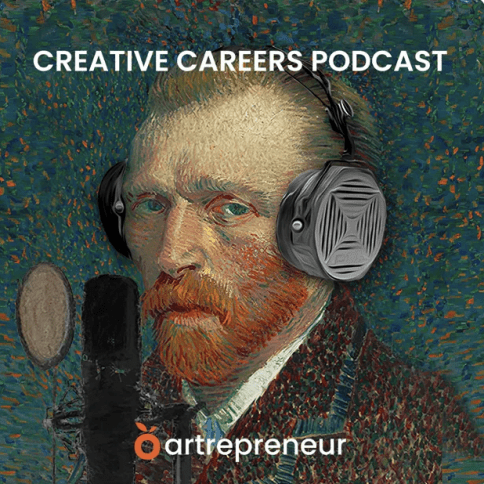
Every artist, designer, and creative entrepreneur has a unique story about their journey to find professional success that can help inspire and guide yours through this podcast. From happy accidents to dealing with adversity, industry innovators share their experiences, insights, and advice to help you navigate your career and find your own path. What do they all have in common? They never stop learning.
Creative Lives is an educational resource to inspire and inform the next generation of creatives and help them make better career decisions. Each podcast episode profiles interesting creative careers – from how they identified an interest in the industry, to landing their first job.
Debbie Millman’s Design Matters is the world’s first podcast about design and an inquiry into the broader world of creative culture through wide-ranging conversations with designers, writers, artists, curators, musicians, and other luminaries of contemporary thought, sure to inspire any creative.
Jess Focht is a writer and content strategist with 6+ years of experience in media, publishing, and brand storytelling. She has contributed to Insider, Grammarly, and The Creative Independent.
1 min read • Originally published April 29, 2022 / Updated March 19, 2026
Jess Focht is a writer and content strategist with 6+ years of experience in media, publishing, and brand storytelling. She has contributed to Insider, Grammarly, and The Creative Independent.
1 min read • Originally published April 29, 2022 / Updated March 19, 2026
New month, new Mediabistro roles.
Mediabistro is the #1 job board, community, and career destination for media and content professionals. Once a week, we’ll be updating this list with different types of creative jobs featured. Take a look below:
Jess Focht is a writer and content strategist with 6+ years of experience in media, publishing, and brand storytelling. She has contributed to Insider, Grammarly, and The Creative Independent.
2 min read • Originally published April 29, 2022 / Updated March 19, 2026
Jess Focht is a writer and content strategist with 6+ years of experience in media, publishing, and brand storytelling. She has contributed to Insider, Grammarly, and The Creative Independent.
2 min read • Originally published April 29, 2022 / Updated March 19, 2026
As a freelancer, you have a lot of freedom—the freedom to create your own schedule, the flexibility to plan your workload, and hopefully even the chance to work up to your ideal creative life. Also, with the Internet, you have immediate access to countless blogs that are specifically catered to the freelance life.
Below you’ll find a selection of blogs that will set you up for success on your path as a freelancer.
Freelancers Union is the largest and fast-growing organization representing the 56.7 million independent workers across the country. They provide their members a powerful support system and voice through policy advocacy, benefits, and resources. Also, they generate new blog posts weekly.
Millo is another great freelance resource. Made up of a team of freelancers, Millo’s mission is to provide you with tips, information, and connections as you embark on your freelance journey.
A Better Lemonade Stand exists to “inspire, educate, and support entrepreneurs like you, in the early stages of your entrepreneurial journey.” This outlet not only provides resources but also a community that will help you grow your business.
Every freelancer needs space and time set aside for self-care, especially when they’re figuring out a routine and balancing a work schedule and free time. With a readership of over one million, this blog is designed to teach you how to be more mindful in your daily life.
Solely dedicated to creative industries ranging from those who work as artists, designers, illustrators, photographers, filmmakers, and animators, Creative Boom offers support, resources, tips, and more. Whether you’re just starting out as a freelancer or are a seasoned one, they offer support to creatives at all stages.
Just as the name gives away, this blog is a destination for writers looking to freelance full-time. It has won acclaim almost since it first began, and most recently has been named one of The Write Life’s Top 100 Websites for Writers every year since 2015.
Frankie Wallace is a freelance content writer covering technology, sustainability, and business trends, with a background in journalism from the University of Montana.
4 min read • Originally published May 2, 2022 / Updated March 19, 2026
Frankie Wallace is a freelance content writer covering technology, sustainability, and business trends, with a background in journalism from the University of Montana.
4 min read • Originally published May 2, 2022 / Updated March 19, 2026
Have you ever felt stuck in your current role or place in life? Do you desire to expand your skillset, or take on a new hobby, like creative writing? The good news for creative types is that there are plenty of ways to continue your creative education long after your formal one has ended, regardless of age or experience level.
No matter the form it takes, from attending industry conferences to hiring a foreign language tutor, furthering your education comes with numerous personal and professional benefits. For starters, learning new things is great for your brain. Research indicates that gaining new knowledge and/or skills can improve brain function, cognition, and memory over time.
Education has also been shown to boost creativity, which is encouraging news for creative types striving to become lifelong learners. Here’s what you need to know about how to take the leap towards lifelong learning, by widening your scope at work, prioritizing personal enrichment activities, and beyond.
The Myriad Benefits of Learning New Things
As previously mentioned, learning new things can improve brain health, but the benefits don’t end there. The simple act of learning can also make you happier and more self-confident. Further, the lifelong learning journey helps foster communication with people from all walks of life, expanding your horizons in the process.
Where your career is concerned, learning new techniques and skills can open doors that were previously shut, allowing you to climb the ranks at a faster pace than your peers. The skills and knowledge you acquire as a lifelong learner makes for impressive features on your resume. Recruiters looking to employ top creative talent typically prefer candidates with a well-rounded skill set that encompasses a variety of interests. During the recruitment and interview process, your passion for learning can take you far, and may even serve you well when pursuing future job opportunities.
Change Up Your Workplace
Speaking of work, few things can stifle our creativity as much as an unfulfilling job, making the workplace an ideal starting point on your journey towards lifelong learning. Perhaps it’s time for a career change, or maybe you’re ready to pursue an advanced degree in another industry altogether. In any case, diversifying your job responsibilities can help stave off boredom and keep those creative juices flowing.
You don’t need to switch careers to shake things up at work, however. One actionable way to continue learning while still pursuing your career is by taking on more responsibility. According to Wisconsin Lutheran College, expanding your role at work offers you the opportunity to learn from different people in a wide array of positions, broadening your perspective as you grow your skills.
Yet as you climb the ladder at work, make sure that you don’t take on more than you can handle. Creative burnout is an unfortunate (and common) side effect of overworking, so it’s important to strike a good balance when taking on additional work-related tasks. Some creative types may opt to skip out on the traditional workplace altogether, at least for a short time anyway, often pursuing more adventurous learning opportunities.
Seek Out Personal Enrichment Opportunities
For those with a passion for learning, the educational experience can take many forms. It may surprise you to discover that learning doesn’t have to involve seminars or classrooms — indeed, lifelong learners are continuously seeking out new experiences and learning environments, sometimes in faraway locations. Reports indicate that travel can improve your creativity while providing a mental “reset” of sorts, as you experience new places and cultures.
When you’re traveling for personal enrichment and learning opportunities, make sure to document as much as possible. Consider keeping a trip journal or scrapbook, and take photos of significant places you visit and the inspirational people you meet. No matter if your travels take you to a remote fishing village or a vibrant, bustling city on the other side of the world, traveling has the power to change the way we think.
In this way, traveling is an exciting option for lifelong learners who want to get out of their comfort zone. For the greatest benefit, creative types should try to live like a local, no matter where they land. Patronize local hotspots, rather than destinations that are popular with tourists, to get a better feel of a particular place, and try to incorporate those feelings into future creative projects.
When traveling, you can also expand your creative horizons by enrolling in a class or seminar with a localized theme, such as winemaking, regional history, or bird watching. Even if travel isn’t in the cards for you, aspiring lifelong learners may be able to find similar opportunities closer to home.
Key Takeaways
For the lifelong learner, enrichment opportunities can be found all around us, from mundane office cubicles to open-air villas and engaging virtual seminars. Lifelong learning starts by embracing the opportunities that come your way and straying out of your comfort zone.
I graduated from Loyola University Chicago in May 2018 with a Bachelor of Arts degree with a major in Fine Arts: Drawing and Painting and a minor in...