Media Sales and Revenue Roles Are Heating Up This June
From Latino civic media to indie B2B publishing, organizations building audience-first business models need salespeople who understand the mission.
By
Mediabistro Team
5 min read • Published June 5, 2026
By
Mediabistro Team
5 min read • Published June 5, 2026
The Revenue Side of Media Is Where the Action Is
Scroll through most media job boards, and you’ll see a familiar pattern: editorial roles, content strategy gigs, and social media coordinator positions. The business side of media rarely gets the same attention. That’s a mistake, because right now, some of the most compelling roles in the industry sit squarely on the revenue and growth side of the house.
Today’s featured media job listings share a common thread. Each one asks candidates to do more than sell ad units or hit quarterly numbers. These organizations need people who can translate mission into revenue, build partnerships from scratch, and think strategically about how media businesses sustain themselves in 2026.
The roles span civic engagement media, environmental advocacy, indie trade publishing, and college textbook marketing. None of them are at legacy conglomerates. All of them are doing genuinely interesting work.
If you’ve spent your career on the editorial or creative side and wondered where the growth is, follow the money. These roles tell the story.
Today’s Hot Jobs
Media Sales Rep at Project Pulso (Remote, Contract)
Why This Role Matters: Project Pulso is a Latino-led social enterprise building civic engagement through digital storytelling across Messenger, Instagram, TikTok, YouTube, and podcasting. This isn’t a typical ad sales position. You’ll be driving advertising, sponsorship, and branded content revenue across original programming like Office Hours, Tia’s Choice, and Latino history series. The six-month contract structure suggests they’re testing a revenue model with real runway to grow.
Drive advertising, sponsorship, and branded content revenue across Pulso’s media platforms
Lead new business development with brands, agencies, and strategic marketing partners
Secure underwriting and sponsorship partners for original programming
The Bigger Picture: Earthjustice is the country’s leading environmental law nonprofit, and this role oversees multi-million-dollar media investments. You’ll guide paid media agency relationships, manage technology and platform partners, and develop integrated strategies that connect legal advocacy work to public engagement. The position is available in San Francisco, Los Angeles, Chicago, New York, or Washington, DC. For anyone who’s managed large paid media budgets at agencies and wants to bring that expertise to a mission with teeth, this is a serious leadership seat. As recent research on digital ad perception continues to reshape how organizations invest, roles like this one carry more strategic weight than ever.
Oversee development and implementation of paid marketing strategies and multi-million-dollar budgets
Guide paid media agency in execution of integrated campaigns
Manage technology and platform partner relationships
Executive-level position reporting within the Communications department
Digital Advertising Sales at Breakwall Publishing (Remote, Contract)
What Caught Our Eye: Breakwall Publishing is a 100% women-owned B2B publisher based in Medina, Ohio, producing Seaside Retailer and Souvenirs, Gifts & Novelties magazines. The niche is hyper-specific: coastal and destination-driven retail. This commission-based role offers uncapped earning potential and full flexibility to work remotely, either full-time or part-time. If you have print and digital ad sales experience and want to work with a small, focused team serving an underappreciated retail vertical, this is worth a close look.
Minimum three years of print and/or digital advertising sales experience required
New business development through assigned leads with weekly, monthly, and annual sales goals
Manage the full sales process from prospecting to close using CRM
Remote position with flexible full-time or part-time scheduling
Digital Marketing Manager at W. W. Norton (Remote)
A Different Kind of Marketing Role: Norton, one of the few remaining major independent publishers in the U.S., is hiring a digital marketing manager to work across their psychology and biology college textbook lists. This role lives at the intersection of content marketing, CRM management, and lead conversion. You’ll develop strategic digital campaigns for backlist and upper-division titles, working extensively in marketing automation. For marketers who love the analytical side of the work, tracking campaigns through a sales pipeline with clear performance metrics, Norton’s collaborative structure and evolving digital marketing landscape make this a strong fit.
Develop and implement strategic digital marketing campaigns for college-level textbook lists
Capture, engage, nurture, and convert leads through CRM and marketing automation platforms
Track campaign results, monitor the sales pipeline, and adjust strategy based on performance data
Fully remote within the U.S. with a collaborative team structure
The through-line across today’s job listings is clear: media organizations with strong editorial missions are investing heavily in the business infrastructure to sustain them.
If your background is in sales, paid media, or digital marketing, your skills are in demand at places doing genuinely meaningful work. Don’t overlook smaller and mission-driven organizations simply because they aren’t household names. They can often offer more strategic ownership, faster career growth, and the kind of work that keeps you engaged for years instead of months.
One practical note: three of these four roles are remote or flexible. If you’re targeting revenue-side media positions, build your application around measurable results. Pipeline numbers, campaign ROI, and revenue you’ve generated. These organizations need proof that you can build sustainable business models, not just talk about them.
Also on the Web
Beyond Mediabistro, these roles are also making waves across the content strategy and media space.
Senior Content Strategist (Freelance) at VML, New York
Posted just hours ago, this freelance gig at global agency VML signals continued demand for senior-level content strategists who can operate on a project basis. Ideal for experienced strategists maintaining a portfolio of agency clients.
DevOps platform JFrog is offering $140K to $165K for a content strategist, a salary range that reflects how aggressively tech companies are competing for content talent with deep product marketing instincts.
Global Website Content Strategist at Revolution Technologies, Milwaukee
Paying $40 to $47 per hour, this contract role focuses on global website content, a growing niche as more companies centralize their web presence under dedicated strategists rather than farming it out across departments.
Pratt is Winning through Media and Netflix Audience Trends
The playbooks that worked five years ago don't apply anymore. Not in politics, not in streaming, not in hiring.
By
Mediabistro Team
6 min read • Published June 4, 2026
By
Mediabistro Team
6 min read • Published June 4, 2026
California voters chose their November runoff candidates, and the results confirm something that’s been true for years but rarely this visible: media credibility isn’t a political differentiator anymore. Los Angeles will decide between incumbent Mayor Karen Bass and reality television’s Spencer Pratt. The governor’s race pits former Health Secretary Xavier Becerra against Steve Hilton, who spent years hosting a Fox News primetime show.
Two races, same ballot, same pattern. The question isn’t whether entertainment figures can compete in politics. It’s whether traditional political resumes offer any advantage against candidates who already know how to hold audience attention.
Meanwhile, Netflix’s sophomore viewership slump looks less like a fluke and more like a structural pattern. And India’s largest streamer is adding 75 AI roles while OpenAI can’t figure out whether it needs one chief marketing officer or two. The organizational playbooks that worked five years ago don’t apply anymore.
When the Credits Roll, the Campaign Starts
Spencer Pratt led in early returns for the Los Angeles mayoral race, securing enough votes to advance to the November runoff against Bass, who the Associated Press projected would claim the other spot. Councilwoman Nithya Raman ran third.
Pratt leaned into his tabloid history rather than running from it, positioning himself as an outsider who understood media ecosystems better than career politicians. Whether that translates into governance credibility is an open question, but it got him through the primary.
Bass isn’t treating this as a novelty candidacy. Within an hour of polls closing, she was already in campaign mode at a Koreatown gathering, telling supporters that “tomorrow begins the second half of this journey.” That pivot speed suggests her team anticipated exactly this matchup.
The gubernatorial race followed the same script. Xavier Becerra and Steve Hilton led in early returns for California governor, with Tom Steyer trailing in third. Hilton spent years building a Fox News audience before pivoting to politics. Becerra has traditional credentials as a former Health Secretary in the Biden administration.
Both cleared the primary threshold, meaning California’s two highest-profile races will feature candidates who either came directly from entertainment media or are running against candidates who did.
Pattern Recognition: Two races, same state, same cycle, and in both cases a media figure with national name recognition made it to the runoff. That’s a structural advantage that compounds every cycle as traditional political communication competes against candidates who’ve logged thousands of hours managing audience attention under studio lights.
Second Seasons, Diminishing Returns
Netflix launched two series last year that debuted at the top of its weekly Top 10 for English-language shows. Both returned with second seasons. Neither could repeat their debut performance.
The Four Seasons ranked third with 4.4 million views in its opening week. A Good Girl’s Guide to Murder also landed at third. The platform doesn’t release comprehensive historical comparisons, but the pattern is visible across multiple shows in the same reporting period.
This isn’t about individual show quality. It’s about what happens when a streaming service’s recommendation algorithm optimizes for first-season discovery but has no equivalent mechanism for bringing audiences back to returning shows.
The downstream effects matter. If you’re a showrunner negotiating a deal structured around season-two pickups, or a marketing lead allocating budgets for returning series, the Netflix data suggests the assumptions baked into those deals need revision. A strong debut no longer guarantees a strong return, which means financial models that depend on sustained viewership across multiple seasons carry more risk than they did two years ago.
NBC’s decision to cancel The Hunting Party after two seasons points to the same dynamic in linear television. The crime procedural starring Melissa Roxburgh will get shopped to other outlets by Universal Television. Two seasons is exactly the point where a show either proves it can hold an audience or gets cut loose. More shows are getting cut loose.
75 New AI Jobs at One Streamer. Zero Clear Answers at Another.
JioHotstar, India’s largest streaming platform, is recruiting for more than 75 AI roles as it builds a dedicated artificial intelligence division. The push spans engineering, production automation, and creative technology, with the company building homegrown AI tools rather than licensing them from external vendors.
Seventy-five roles isn’t a pilot program. It’s a full division with resources to build infrastructure that will eventually touch every part of the platform’s operations.
JioHotstar isn’t sprinkling “AI engineers” across existing teams. It’s creating a separate organizational unit with its own hiring pipeline, which suggests the company expects AI work to require different management structures and career paths than traditional software development.
For media professionals tracking where the industry is headed, this is the signal worth watching. The platforms winning in their regional markets are treating AI buildout as a core operational priority. If you’re wondering whether AI-focused positions are sustainable career paths, JioHotstar’s buildout is a clear answer.
Contrast This: OpenAI now has two CMOs, which Adweek frames as evidence that the company’s brand challenges run deeper than any marketing hire can solve. The company is preparing for an IPO while projecting $14 billion in losses by the end of the year. The dual-CMO structure suggests OpenAI itself isn’t sure whether it needs consumer marketing, enterprise marketing, or some hybrid that doesn’t map to traditional org charts.
The juxtaposition is revealing. JioHotstar is building a large AI team with apparent confidence in the organizational model. OpenAI, the category leader, is still experimenting with how to structure leadership around a product this sprawling.
The lesson isn’t that AI is overhyped. The playbook is being written in real time, and the companies that figure it out first will have a hiring advantage over everyone still running pilots.
If you’re a marketing professional or content strategist trying to position yourself for what’s coming, get literate in AI workflows now. The standards are still being established, which means the barrier to entry won’t stay this low.
What This Means
Media fluency is becoming a baseline requirement for political viability in the country’s largest state economy. Streaming platforms can’t assume that debut success translates into returning viewership, which changes how shows get financed and renewed. And the companies building AI into their operations are discovering that the organizational models don’t exist yet, creating hiring opportunities for people who can work in ambiguous environments.
The JioHotstar buildout is the clearest signal for anyone planning their next move. If you’re trying to position your career for the next three years, get comfortable with AI tools and workflows now. If you’re hiring, the talent pool is still forming, which means there’s an advantage to moving early before compensation expectations reset. Browse open roles on Mediabistro to see where companies are investing.
Building a team and need to fill roles in content, marketing, or production? Post a job on Mediabistro to reach the 110,000 media professionals already tracking these shifts.
This media news roundup is automatically curated to keep our community up to date on interesting happenings in the creative, media, and publishing professions. It may contain factual errors and should be read for general and informational purposes only. Please refer to the original source of each news item for specific inquiries.
Local Media and Public Radio Jobs Hiring Now in June 2026
Independent outlets from California wine country to the Inland Northwest are building teams that blend journalism, revenue strategy, and community engagement.
The Mediabistro editorial team draws on 25 years of media industry expertise to cover jobs, careers, and trends shaping the industry.
5 min read • Published June 4, 2026
Local Media Is Investing in Leadership, and That Tells You Something
Scroll through today’s job listings, and a pattern emerges quickly: independent, community-rooted media organizations are hiring for senior roles that combine editorial vision with revenue accountability. These aren’t entry-level content mills looking for cheap output. They’re established brands making bets on experienced leaders who can guide them through the next chapter of local media.
Monterey County Weekly is searching for a Publisher. Spokane Public Radio posted two roles, one for a Membership Director and another for a reporter. Virginia Living Magazine needs an Assistant Art Director. These are organizations that serve specific geographic communities, and they’re all investing at the same time. That’s an interesting media signal worth paying attention to.
What connects these roles is an expectation that candidates understand both the craft and the business. The publisher role explicitly asks for someone who can drive revenue while preserving editorial independence. The membership director role wants fundraising fluency paired with audience data skills.
Local media in 2026 demands people who can do more than one thing well!
Today’s Hot Jobs
Publisher at Monterey County Weekly
Why This Role Matters: Full publisher searches at independent alt-weeklies don’t come along often. Monterey County Weekly has been the region’s leading independent news source since 1988, and this position carries a base salary of $145,000 to $175,000 plus a performance bonus. The role reports directly to the founder and CEO, and the new publisher will oversee both the print weekly and a growing portfolio of digital platforms, including Monterey County Now and Salinas Valley Now. This is a genuine leadership seat at an organization that takes local journalism seriously.
The Core Requirements:
Demonstrated ability to drive revenue growth across print and digital platforms
Experience serving as a public-facing executive and community representative
Strong understanding of how editorial independence and business sustainability coexist
Track record of fostering a culture of innovation within a media organization
What Makes This Interesting: SPR describes this as a ground-up build, which is rare for a membership director role. The station reaches 1.25 million people across 20,000 square miles and operates three distinct program streams covering news, classical, and jazz. Rather than maintaining an existing system, the new director will define the strategy, build workflows, and activate a large but underutilized membership file. If you’ve worked in nonprofit fundraising or audience development and want to design something from scratch, this is that opportunity. SPR’s ties to the broader public media ecosystem make this a strong stepping stone for anyone building a career in mission-driven media.
What They Want to See:
Experience building and leading a modern, data-informed membership or fundraising strategy
Fluency in multi-channel engagement, from direct mail to digital campaigns
Ability to translate audience insights into revenue growth
Proven track record in donor or member relationship management
Digital Marketing Manager at W. W. Norton and Company
The Draw Here: Norton is one of the few remaining major independent publishers in the U.S., and this remote-flexible role sits within their college marketing group covering psychology and biology lists. The position blends creative campaign development with hands-on CRM and marketing automation work, which means you’ll own strategy and execution. Norton specifically calls out the need for someone who can assess campaign efficacy and pivot quickly, a sign that this team operates more like a startup marketing unit than a traditional publishing house. For anyone looking to sharpen their digital marketing skills inside a company with genuine cultural weight, this deserves a close look.
Key Qualifications:
Strong writing and collaboration skills with a creative, analytical mindset
Experience developing and executing strategic digital marketing campaigns
CRM and marketing automation platform proficiency
Ability to manage multiple priorities and adjust campaigns based on performance data
Assistant Art Director at Virginia Living Magazine
Why It Caught Our Eye: Print magazine design roles at regional lifestyle titles are increasingly scarce, which makes this one worth flagging for early-career creatives. Virginia Living is an award-winning publication covering food, culture, homes, and destinations, and the assistant art director will work across print layouts, photography direction, and digital assets. The listing specifically mentions conceptual layout work and illustration direction alongside typography, suggesting real creative range rather than production-line templating.
Ideal Candidate Profile:
One to three years of experience in luxury lifestyle or editorial design
Strong photography research, photo direction, and typography skills
Proficiency in Adobe Creative Suite, particularly InDesign and Photoshop
Ability to translate brand identity across print, digital, and marketing materials
If your job search filters are set exclusively to “remote” and “national brand,” you’re missing a significant slice of the market. Local and regional media organizations are hiring for roles with real authority, creative latitude, and meaningful community impact.
Several of today’s listings offer the kind of ownership over strategy and execution that you’d wait years to earn at a larger company. The professionals who thrive in these roles tend to be generalists with depth: people comfortable talking revenue in the morning and editorial vision in the afternoon. If that describes you, widen your geographic lens.
Also on the Web
Beyond Mediabistro, these roles are also making waves across the media and content landscape.
AI Product Manager, Content Platform Operations and Publishing at Netflix
Netflix is building out AI infrastructure for its content publishing pipeline, a clear signal that even the biggest entertainment companies now treat content operations as a product discipline. Based in Los Gatos, this role sits at the intersection of AI, media production, and platform strategy.
US RFP Team Lead and Content Manager at Brown Brothers Harriman
Financial services content management with a listed salary of $80,000 to $120,000. BBH is a 200-year-old private bank, and this Boston-based role oversees proposal content strategy, a niche that consistently pays well for strong writers who understand compliance-heavy industries.
Radiant, an advanced nuclear technology company based in El Segundo, is hiring for brand content leadership. Energy sector content roles are growing as climate-focused companies compete for public attention and talent. Worth watching if you want to apply storytelling skills to an emerging industry.
In television series, the finale often brings the most important, most memorable moments, with the power to taint the legacy of a show or gain more of a following. Finales are a way to track a character’s progress—or, in some cases, to say goodbye—and a chance to see the end result of a weekslong storyline. Wrapping up complex seasons in a way that does justice to their characters and lengthy plots can be challenging. Finales can be a rewarding climax that offers a cathartic end when done well.
Final episodes come in many forms. They can include enough cliffhangers to keep you tuning in, like the second-season finale of “The Night Manager,” which ended in February 2026 with several shocking deaths. They can preview the conflicts of the next season, as the tense conclusion to the fourth season of “Industry” did in March 2026. They can even offer a resolution, like the February 2026 “A Knight of the Seven Kingdoms” finale, promising the story will continue.
Finales don’t just matter to existing viewers. Perhaps even more importantly, the good or bad buzz surrounding these pivotal episodes can convince potential viewers to begin or skip a TV series dominating the current pop culture conversation. But how can audiences determine which finales—and, by extension, which shows—are most worth their time?
To find the best TV finales, Stacker compiled data on every TV finale with more than 750 votes on IMDb and then ranked them according to IMDb user score. The number of votes broke ties, and miniseries and documentary series were not included. However, midseason finales followed by significant gaps in their air date, such as “Mad Men” Season 7, were included.
The data, as of November 2022, includes 50 episodes from 40 different TV shows. So sit back, grab a refreshment and some popcorn, and read on to see if your favorite season ending made the list.
ABC Studios
#50. Once Upon a Time – ‘There’s No Place Like Home’
– IMDb user rating: 9.4
– Season 3, episode 22
– Air date: May 11, 2014
– Director: Ralph Hemecker
The season three finale of “Once Upon a Time” follows Emma, played by Jennifer Morrison, and Hook, played by Colin O’Donoghue, as they are pulled into the evil sorceress Zelena’s time portal and are trapped in the magical Enchanted Forest of the past. While navigating back to the present, the pair must be careful not to alter anything around them, or they could permanently affect their loved one’s lives. Notably, this episode introduces the character of Elsa to the show.
Berlanti Productions
#49. Arrow – ‘Fadeout’
– IMDb user rating: 9.4
– Season 8, episode 10
– Air date: Jan. 28, 2020
– Director: James Bamford
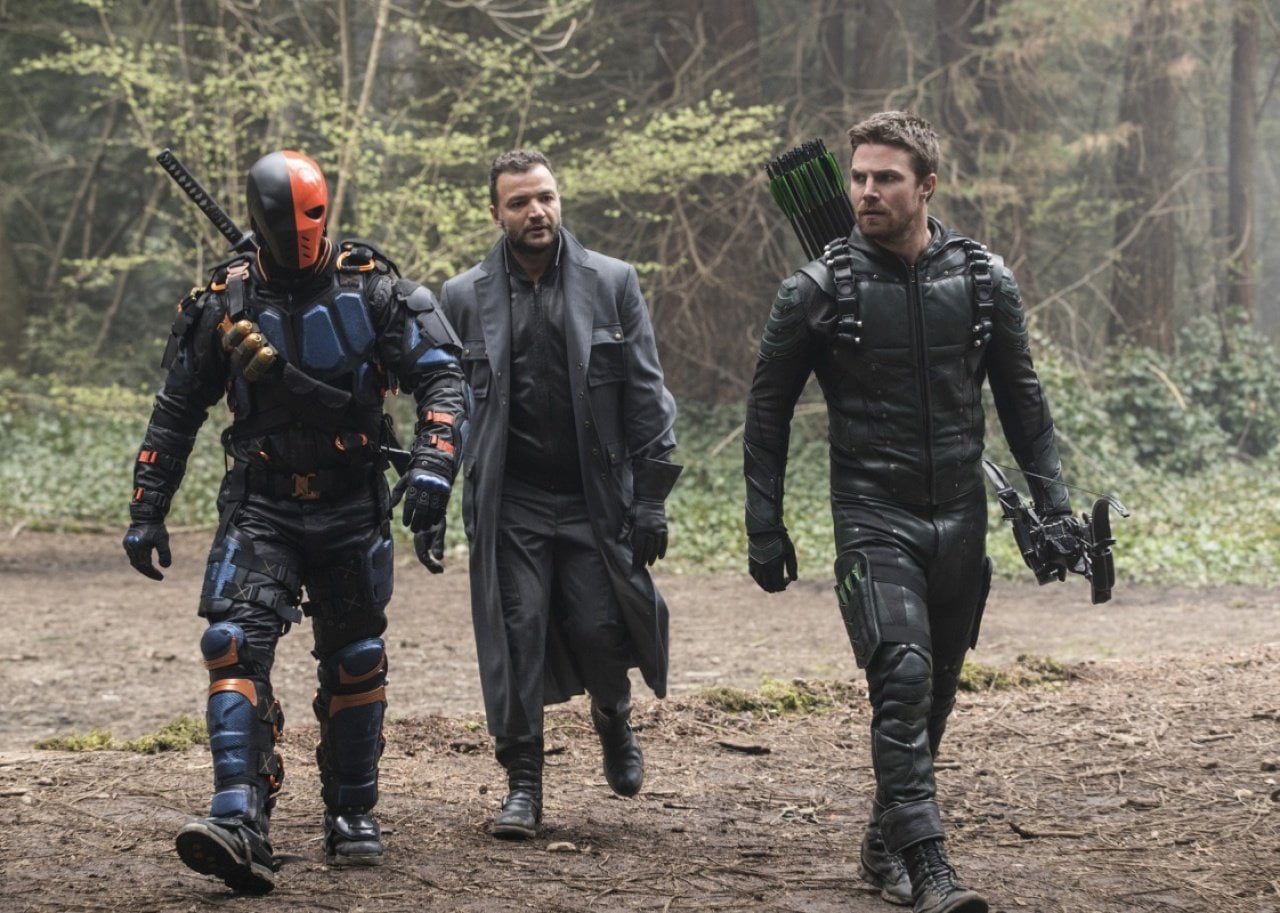
“Fadeout,” the series finale of “Arrow,” unfolds in two different timelines. In one, Oliver Queen/Arrow, played by Stephen Amell, apprehends a human trafficker in 2012. In another timeline set in the present, the remaining members of Team Arrow rescue Oliver’s son William from the same trafficker.
3 Arts Entertainment
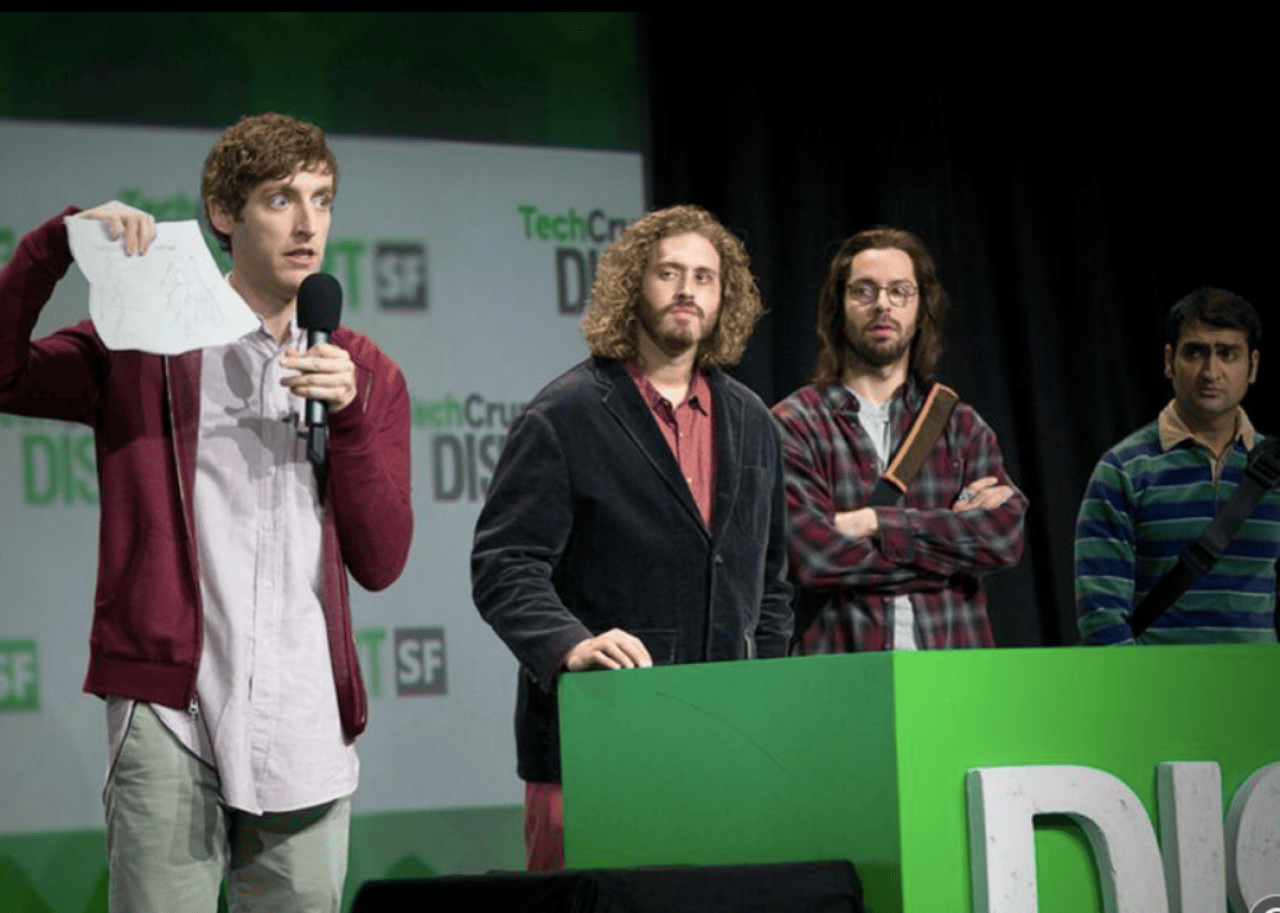
#48. Silicon Valley – ‘Optimal Tip-To-Tip Efficiency’
– IMDb user rating: 9.4
– Season 1, episode 8
– Air date: June 1, 2014
– Director: Mike Judge
At the end of “Silicon Valley” season one, programmer Richard Hendrick, played by Thomas Middleditch, and his startup, Pied Piper, scramble to create a product to present to investors after their competitor copies Pied Piper’s cloud storage technology at the last minute. The episode garnered a nomination for Outstanding Writing for a Comedy Series at the 66th Emmy Awards.
Chase Films
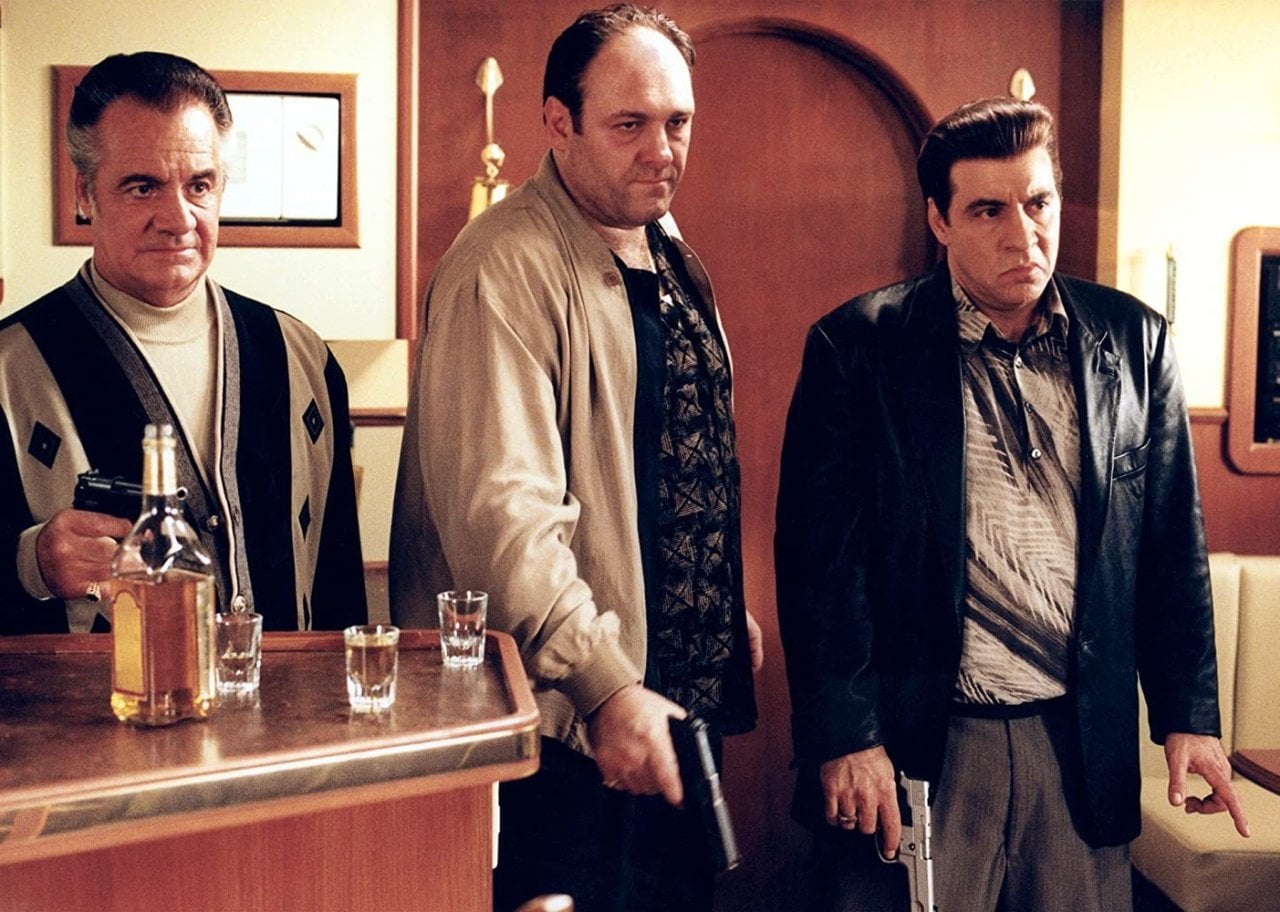
#47. The Sopranos – ‘Funhouse’
– IMDb user rating: 9.4
– Season 2, episode 13
– Air date: April 9, 2000
– Director: John Patterson
In “Funhouse,” James Gandolfini’s mob man character, Tony Soprano, makes the complicated decision to kill Salvatore Bonpensiero (Big P.), played by Vincent Pastore, after realizing that his close childhood friend is a double agent for the government. The episode was nominated for an Emmy in the category of Outstanding Writing for a Drama Series.
Mutant Enemy
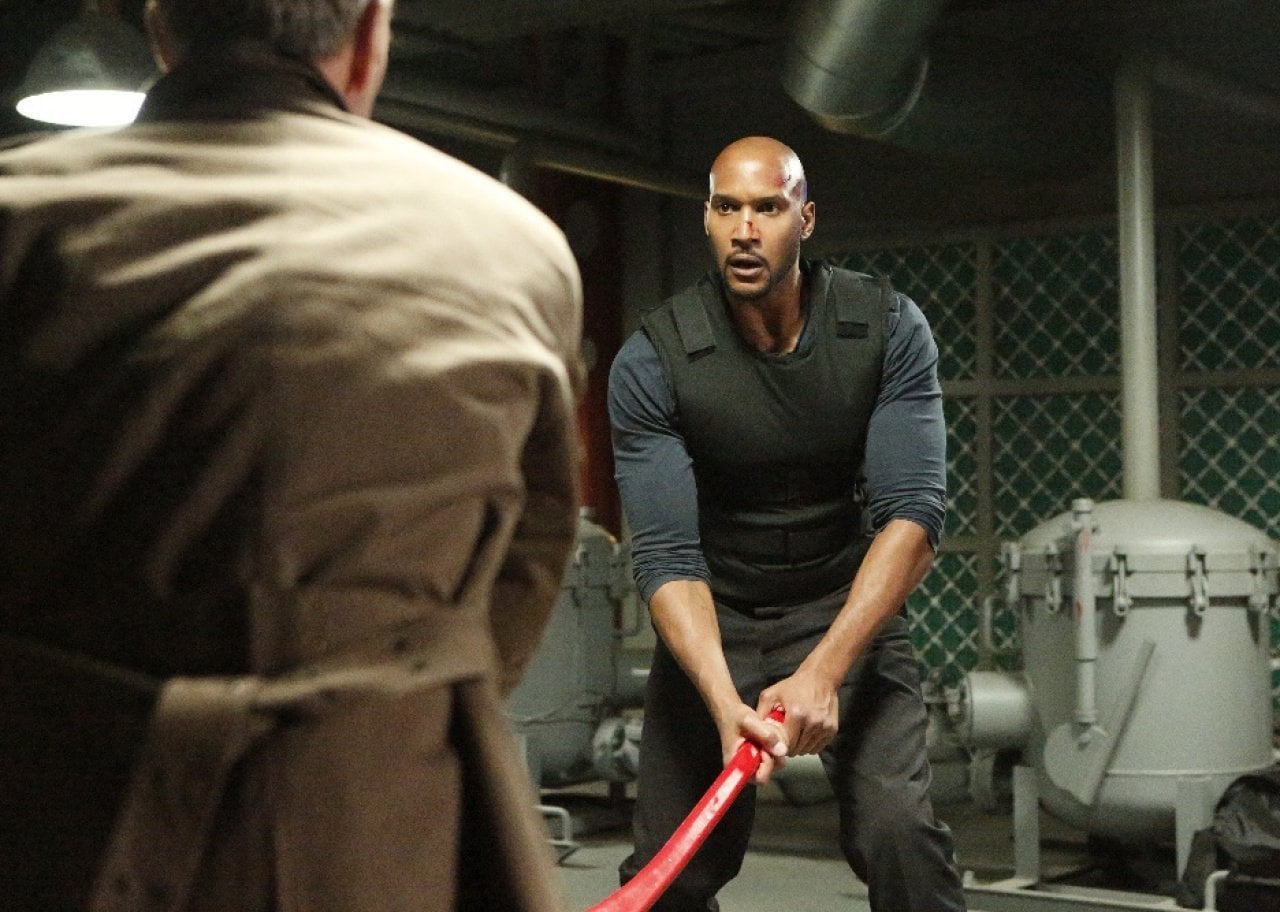
#46. Agents of S.H.I.E.L.D. – ‘S.O.S.: Part 2’
– IMDb user rating: 9.4
– Season 2, episode 22
– Air date: May 12, 2015
– Director: Billy Gierhart
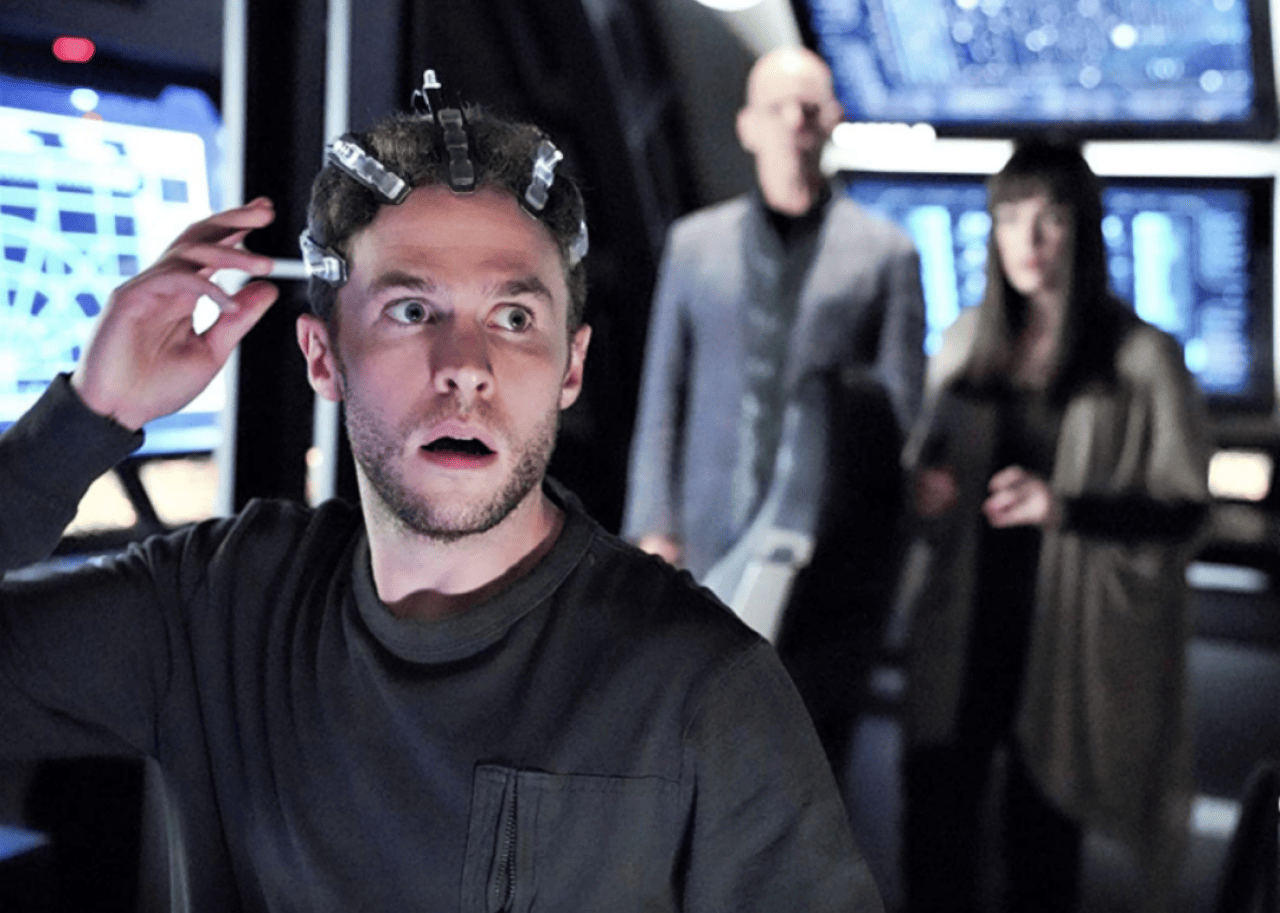
In the second half of the“Agents of S.H.I.E.L.D” season two finale, Phil Coulson and his team fight to bring S.H.I.E.L.D. operative Skye back after a race of altered, superhuman people called the Inhumans take her prisoner. The Inhumans plan to use terrigen crystals in order to suddenly reveal all the Inhumans on Earth, and kill all ordinary humans around them.
Warner Bros. Television
#45. Supernatural – ‘Lucifer Rising’
– IMDb user rating: 9.4
– Season 4, episode 22
– Air date: May 14, 2009
– Director: Eric Kripke
The apocalypse looms in the season four finale of “Supernatural” as Sam Winchester, played by Jared Padalecki, and Ruby, played by Genevieve Padalecki, rush to stop Lilith, an ancient demon who is preparing to raise the devil Lucifer from the cage in which he’s imprisoned. Meanwhile, the angels Castiel and Zachariah tell Dean Winchester that he will play a key role in stopping Lucifer. The season ends on a cliffhanger, with Lucifer’s arrival imminent.
20th Century Fox Television
#44. How I Met Your Mother – ‘The Final Page: Part 2’
– IMDb user rating: 9.4
– Season 8, episode 12
– Air date: Dec. 17, 2012
– Director: Pamela Fryman
At the end of “How I Met Your Mother” season eight, Barney, played by Neil Patrick Harris, tells his friend Ted that he plans to propose to his current girlfriend, Patrice. Feeling conflicted, Ted invites Barney’s on-again, off-again love interest Robin to the gala where the engagement is to take place in hopes of letting her know what is going on. Meanwhile, their friends Marshall and Lily spend their first romantic night away together after having a baby.
Bad Robot
#43. Lost – ‘Live Together, Die Alone’
– IMDb user rating: 9.4
– Season 2, episode 23
– Air date: May 24, 2006
– Director: Jack Bender
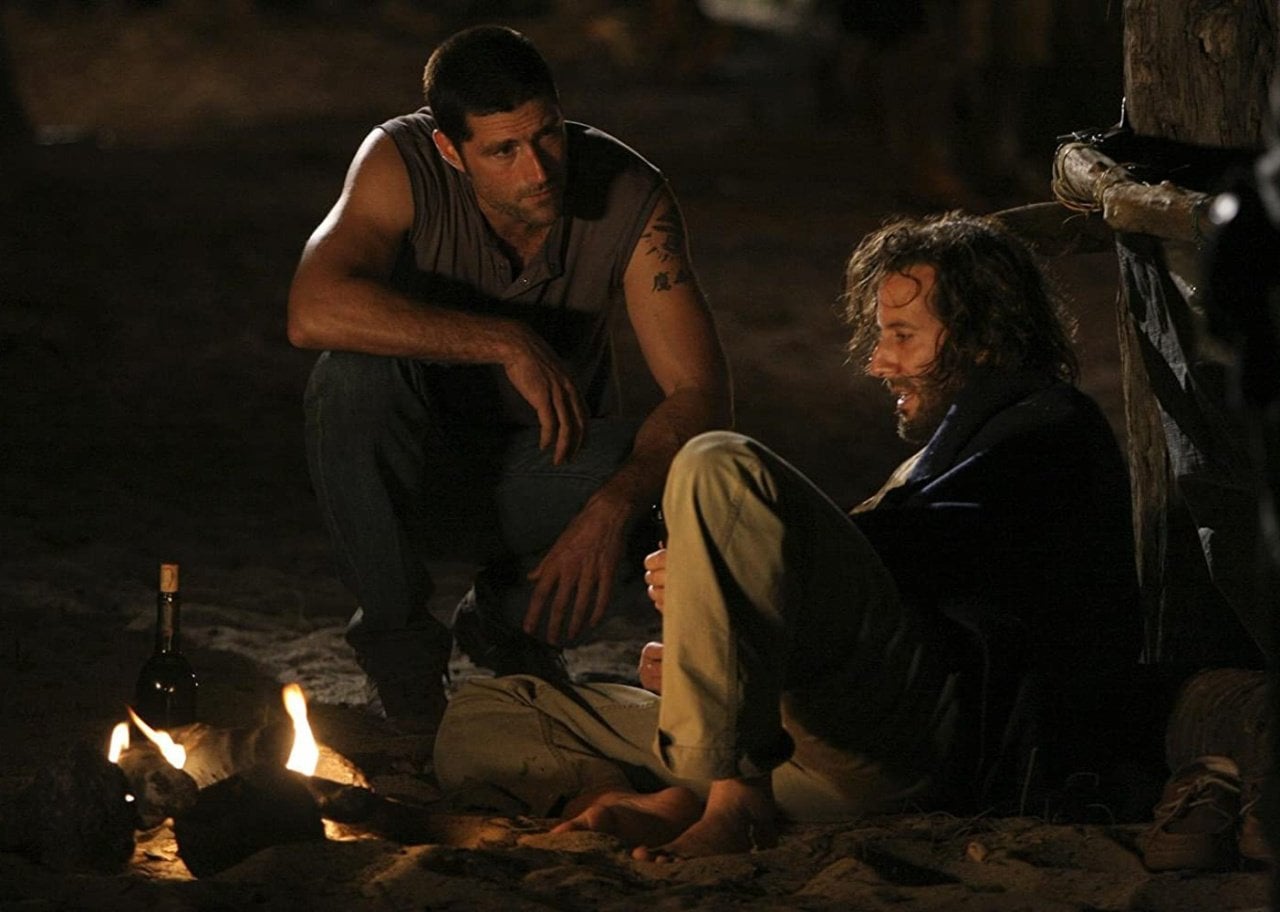
In the two-part season two finale of “Lost,” a series of flashbacks show how mysterious figure Desmond, played by Henry Ian Cusick, arrives at the show’s central island and comes to oversee the hatch, a station that supposedly averts a worldwide catastrophe. Elsewhere, Jack and Sayid rescue young Walt from the other group of people on the island simply known as “The Others.”
ABC Studios
#42. Daredevil – ‘Daredevil’
– IMDb user rating: 9.4
– Season 1, episode 13
– Air date: April 10, 2015
– Director: Steven S. DeKnight
The season one finale of “Daredevil” follows Matt Murdock, played by Charlie Cox, as he faces off against sadistic crime boss Wilson Fisk, played by Vincent D’Onofrio, for the last time. After defeating Fisk, the New York media officially begin to call Matt’s vigilante alter ego “Daredevil.”
Home Box Office (HBO)
#41. Game of Thrones – ‘Valar Morghulis’
– IMDb user rating: 9.4
– Season 2, episode 10
– Air date: June 3, 2012
– Director: Alan Taylor
In “Valar Morghulis,” Stark heir Robb, played by Richard Madden, defies his arranged marriage to wed his lover, played by Oona Chaplin, while Daenerys, played by Emilia Clarke, rescues her dragons, and Lannister prince Tyrion discovers that his sister Cersei attempted to have him killed. The episode title comes from a “Game of Thrones” code phrase that means “all men must die.”
Silver Screen Collection // Getty Images
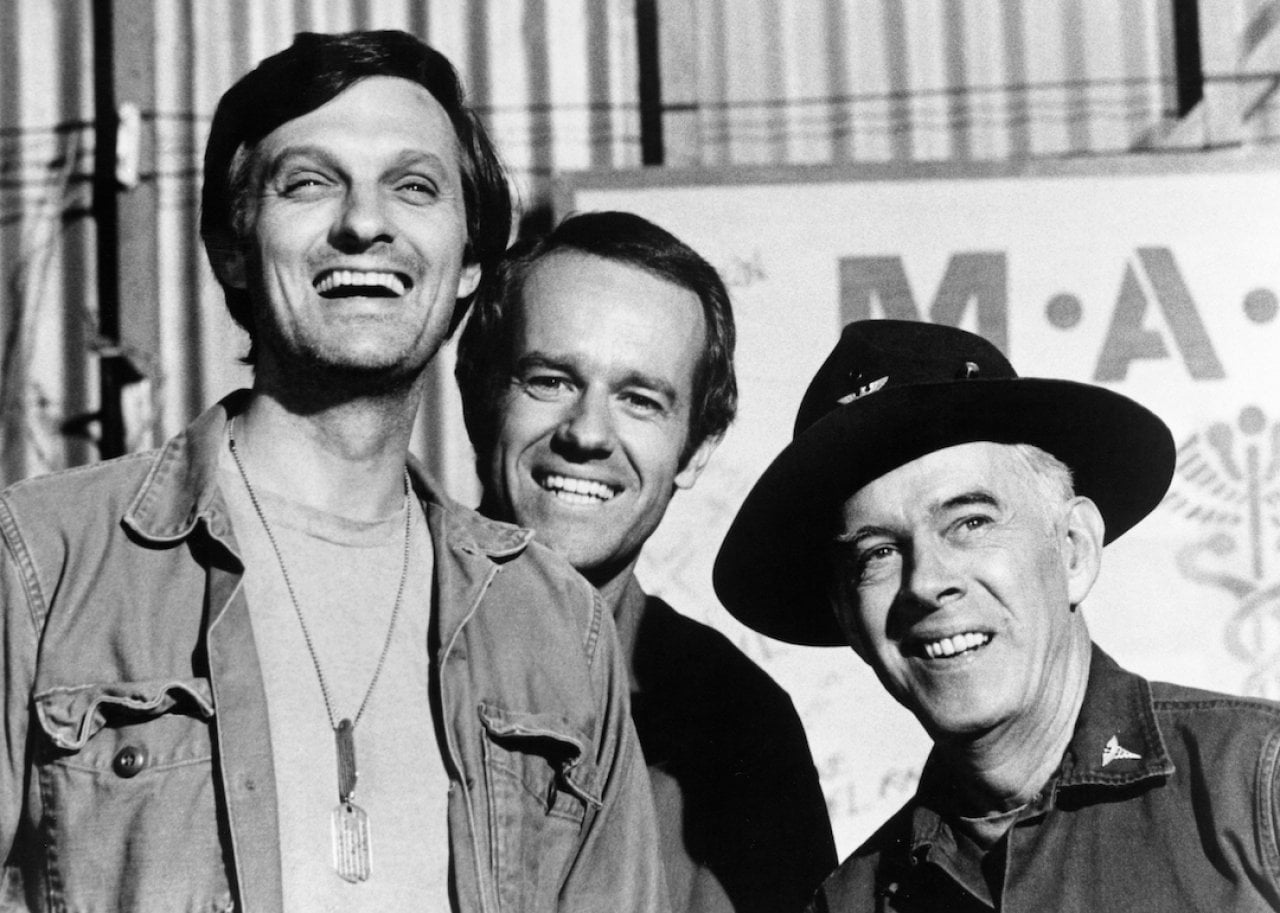
#40. M.A.S.H – ‘Abyssinia, Henry’
– IMDb user rating: 9.5
– Season 3, episode 24
– Air date: March 18, 1975
– Director: Larry Gelbart
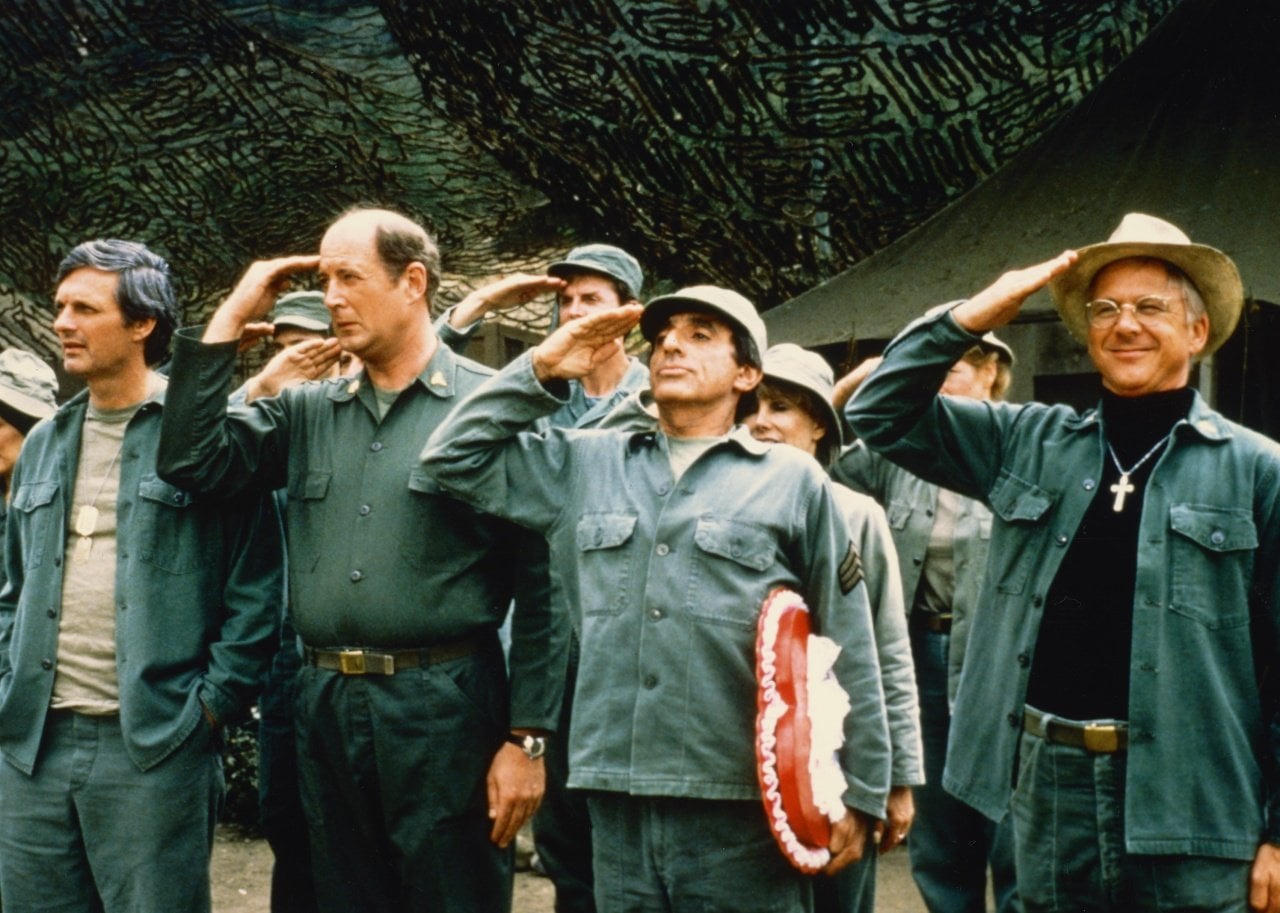
The season three finale of “M.A.S.H.”created controversy when main character Henry Blake, played by McLean Stevenson, was surprisingly killed when his plane was shot down. At the time, virtually no main characters in American TV comedies had been abruptly killed in a tragic way. After the now-iconic episode aired, creator Larry Gelbart claimed that more than 1,000 people sent letters expressing their disappointment in the ending.
Atlas Entertainment
#39. 12 Monkeys – ‘Witness’
– IMDb user rating: 9.5
– Season 3, episode 10
– Air date: May 21, 2017
– Director: Grant Harvey
For multiple seasons, the sci-fi time travel drama “12 Monkeys” hinged on the mystery of who was behind the destructive organization “Army of the 12 Monkeys.” The answer to this question is revealed in the show’s season three finale, as lead characters Cole, played by Aaron Stanford, and Cassie, played by Amanda Schull, travel back to 1959 and finally learn the identity of the group’s leader—known only as “The Witness.”
Marvel Studios
#38. Agents of S.H.I.E.L.D. – ‘What We’re Fighting For’
– IMDb user rating: 9.5
– Season 7, episode 13
– Air date: Aug. 12, 2020
– Director: Kevin Tancharoen
In the series finale of “Agents of S.H.I.E.L.D.,” the agents wage their final battle against the Chronicoms, a semi-robotic alien race that has stranded them in time. The creatures hope to occupy Earth by creating a new reality where S.H.I.E.L.D. never existed.
Heald Productions (II)
#37. Cobra Kai – ‘No Mercy’
– IMDb user rating: 9.5
– Season 2, episode 10
– Air date: April 24, 2019
– Directors: Jon Hurwitz, Hayden Schlossberg
“Cobra Kai,” which takes place 34 years after the events of 1984’s “The Karate Kid,” sees tensions between rival dojos led by Johnny Lawrence and Daniel LaRusso, played by Ralph Macchio, finally come to a head. This occurs during a first-day of-school showdown between two of their pupils, Robby and Miguel. However, they’re forced to temporarily put their rivalry aside when the fight unexpectedly leaves Miguel in critical condition.
Lionsgate Television
#36. Mad Men – ‘Waterloo’
– IMDb user rating: 9.5
– Season 7, episode 7
– Air date: May 25, 2014
– Director: Matthew Weiner
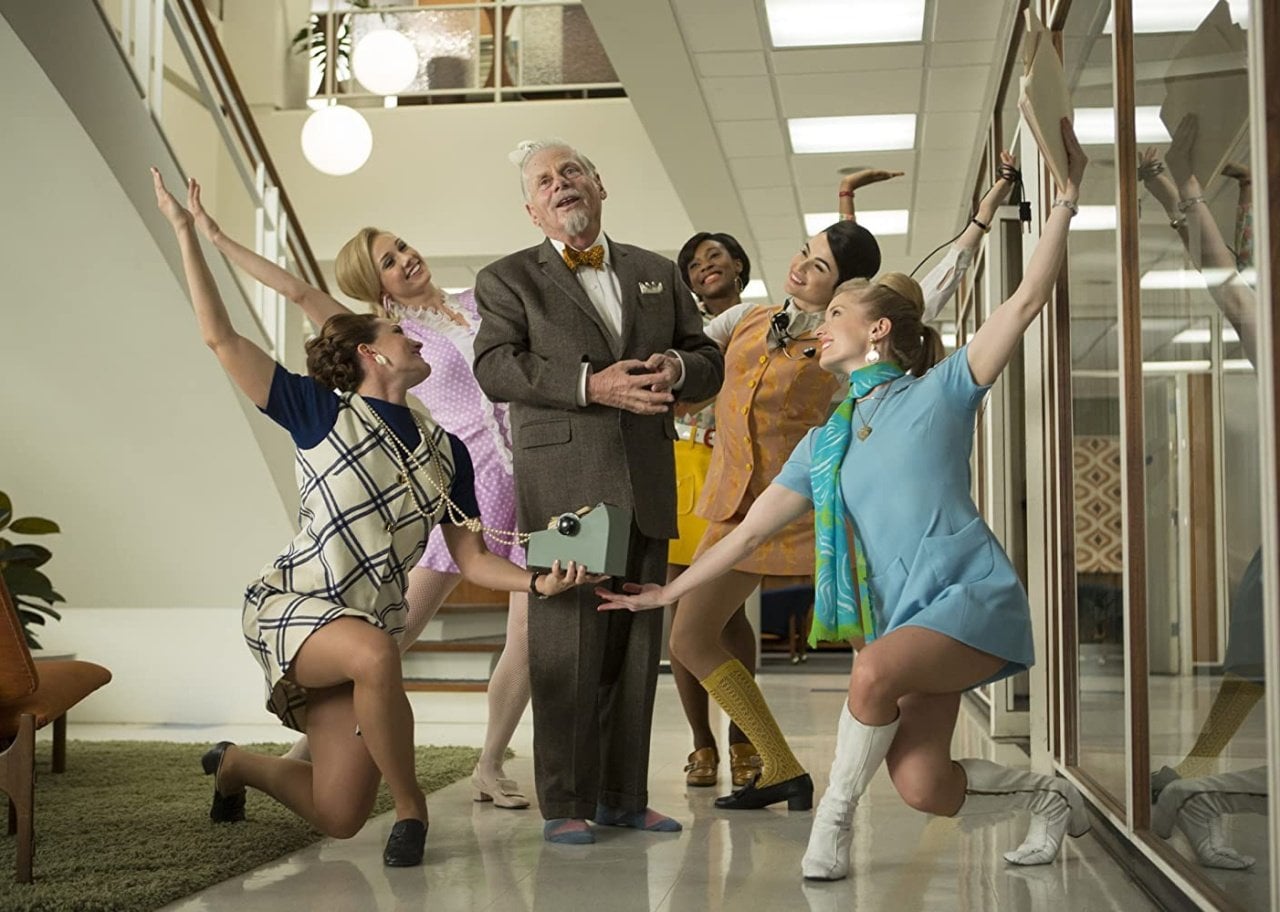
The mid-season finale of “Mad Men” season seven spells trouble for advertising giant Don Draper, played by Jon Hamm, who may be fired for breach of contract. Due to his precarious position, his coworker Peggy Olson, played by Elisabeth Moss, is tasked with presenting the firm’s pitch to its client Burger Chef. Meanwhile, the characters prepare to watch the first moon landing.
Outerbanks Entertainment
#35. The Vampire Diaries – ‘The Departed’
– IMDb user rating: 9.5
– Season 3, episode 22
– Air date: May 10, 2012
– Director: John Behring
“The Vampire Diaries” made a major change in its season three finale, in which human protagonist Elena (Nina Dobrev) is saved by vampire blood and begins to transition into a creature of the night. Before her transformation, Elena reflects upon her life before meeting the Salvatore vampire brothers—Damon, played by Ian Somerhalder, and Stefan, played by Paul Wesley—after losing her parents. During these flashbacks, viewers learn that Elena actually met Damon before Stefan, but he made her forget the encounter.
John Wells Productions
#34. Shameless – ‘Lazarus’
– IMDb user rating: 9.5
– Season 4, episode 12
– Air date: April 6, 2014
– Director: Mark Mylod
In the season four finale of “Shameless,” the misadventures of a dysfunctional Chicago family, the Gallaghers, continue to be explored in “Lazarus.” Fiona, played by Emmy Rossum, gets out of jail and finds a job with the help of her parole officer, while Sheila fights for custody of the five children she has recently adopted. The ending revealed the twist that Fiona’s ex-boyfriend Jimmy, played by Justin Chatwin and whose character was previously thought to be dead, is actually alive.
Teakwood Lane Productions
#33. Homeland – ‘Prisoners of War’
– IMDb user rating: 9.5
– Season 8, episode 12
– Air date: April 26, 2020
– Director: Lesli Linka Glatter
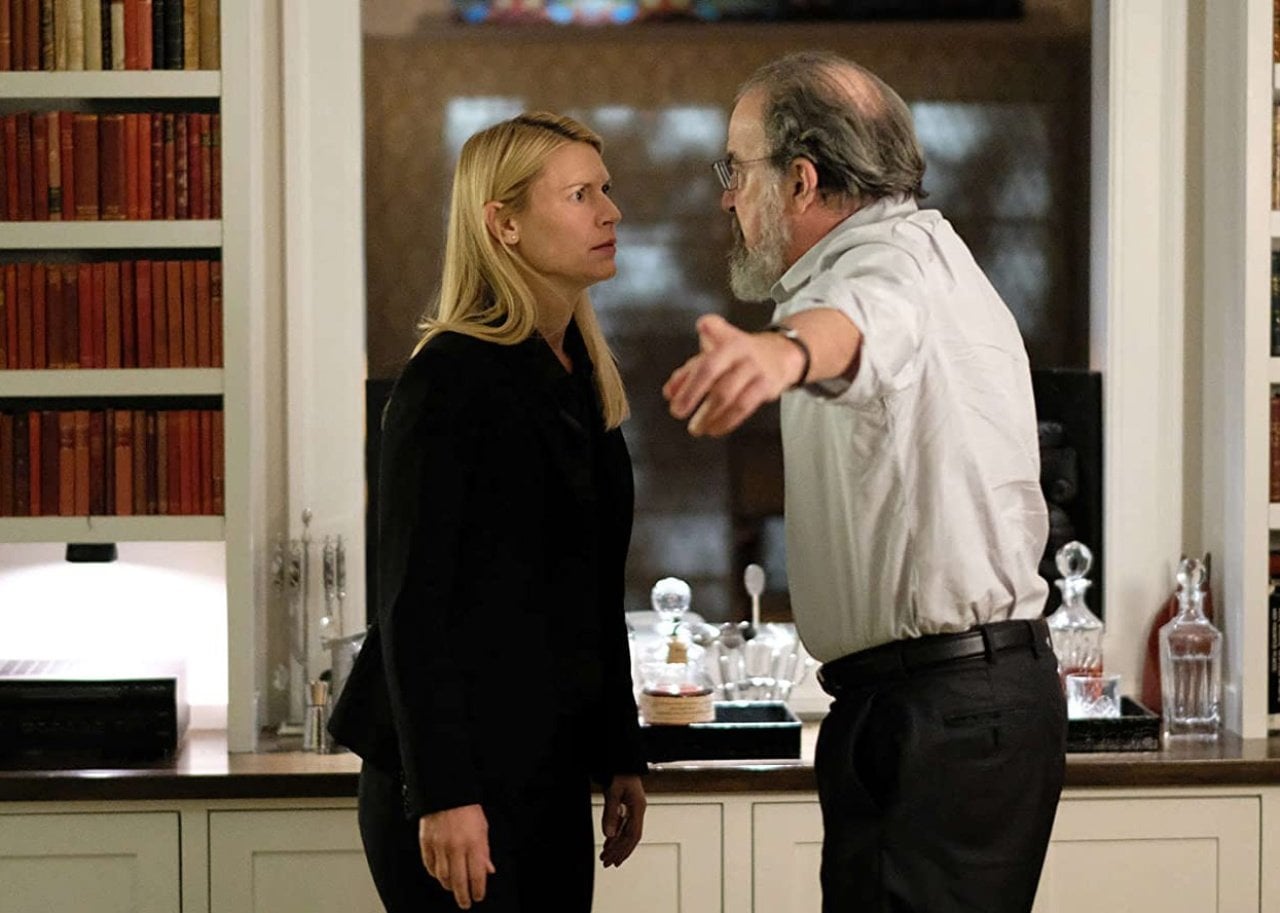
Claire Danes and Mandy Patinkin played CIA officer Carrie and her mentor Saul for the last time in this series finale episode. As “Homeland”ends, Saul passes his top-secret Russian asset on to Carrie, who has now fled to the country herself. Vanity Fair critic Richard Lawson noted that the episode works well because “it stripped away some of the show’s brittle context and compacted itself into a character study.”
Home Box Office (HBO)
#32. The Wire – ‘Final Grades’
– IMDb user rating: 9.5
– Season 4, episode 13
– Air date: Dec. 10, 2006
– Director: Ernest R. Dickerson
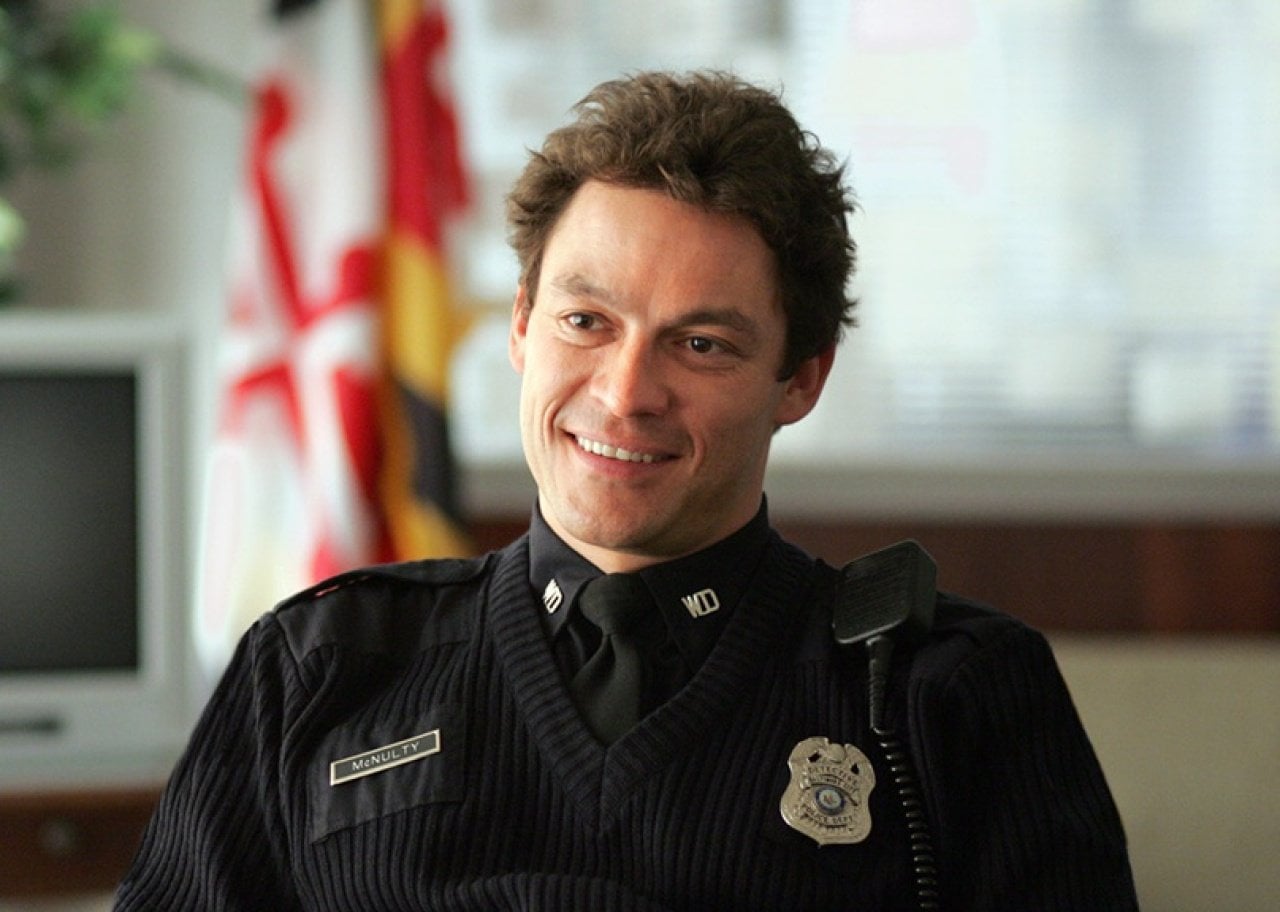
“Final Grades” marks the end of “The Wire” season four, where police informant Bubbles, played by Andre Royo, becomes suicidal and enters rehab after confessing his role in his mentee Sherrod’s death. Elsewhere, policeman Lester Freamon and his colleagues search for more bodies clustered in vacant Baltimore houses.
Alec Berg Productions
#31. Barry – ‘Starting Now’
– IMDb user rating: 9.5
– Season 3, episode 8
– Air date: June 12, 2022
– Director: Bill Hader
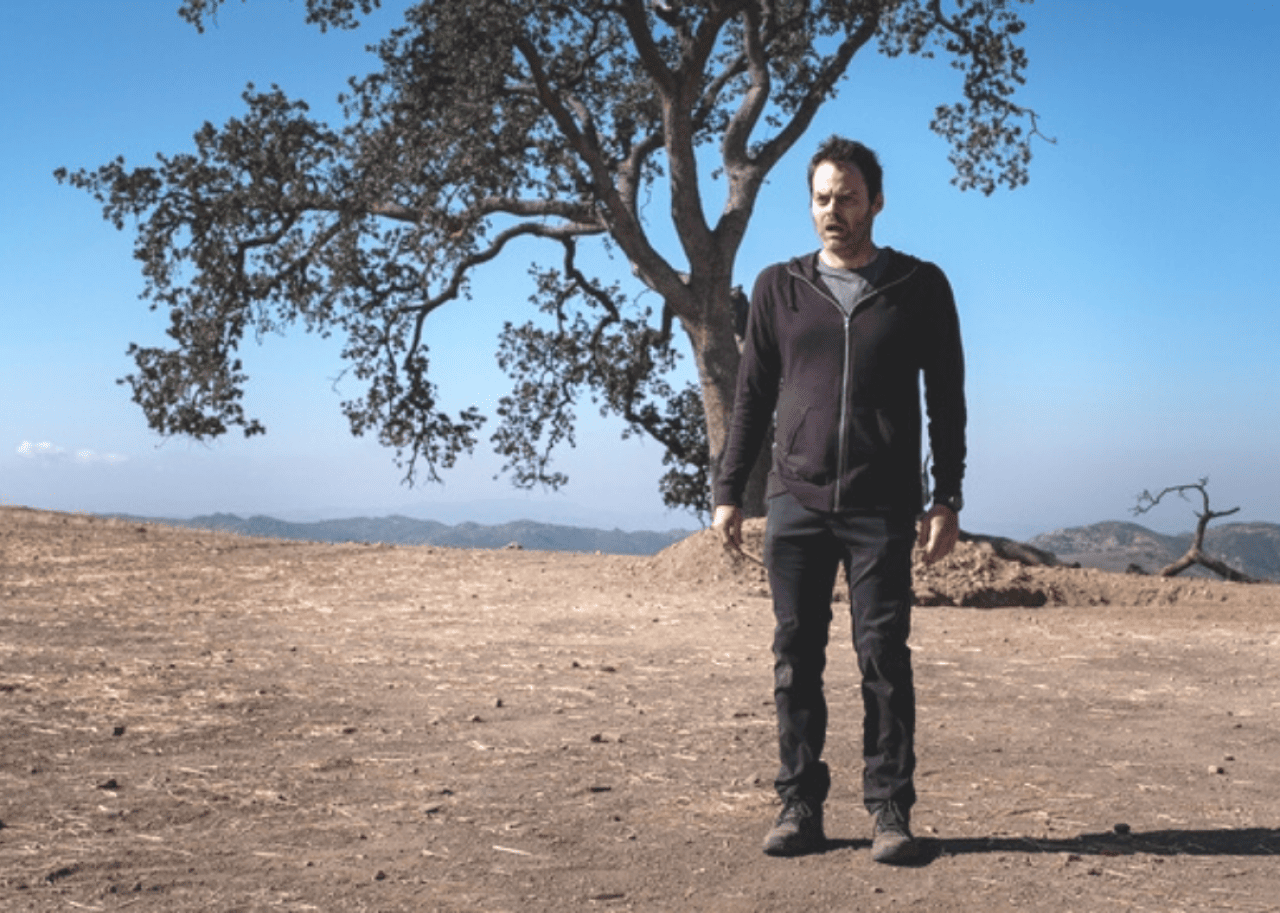
In the opening scene, Barry, played by Bill Hader, is shown waking up from a dream in a hospital. Barry is haunted by the sight of his possible fate in the afterlife, and after arriving home from the hospital, he is a bit more coherent, realizing he cannot escape destiny. The finale includes a riveting twist when Barry’s girlfriend, Sally, played by Sarah Goldberg, boards a flight to Missouri, and Barry seems to evade justice until he is shown being surrounded by police. The HBO series concluded with its fourth and final season in 2023, with Hader directing all eight episodes. The series finale, ‘wow,’ aired May 28, 2023.
SutterInk
#30. Sons of Anarchy – ‘Papa’s Goods’
– IMDb user rating: 9.5
– Season 7, episode 13
– Air date: Dec. 9, 2014
– Director: Kurt Sutter
In the “Sons of Anarchy” series finale, outlaw motorcycle club president Jax Teller, played by Charlie Hunnam, ultimately meets his demise when he purposefully crashes into a truck as several cops tail him. By doing so, he effectively ends the family legacy of criminal activity and violence associated with the club in which his father was also passionately involved. “It wasn’t a happy ending for everyone, but it definitely closed things in a way that felt right,” Diana Steenbergen wrote in her episode review for IGN.
Anonymous Content
#29. Mr. Robot – ‘shutdown-r’
– IMDb user rating: 9.5
– Season 3, episode 10
– Air date: Dec. 13, 2017
– Director: Sam Esmail
The third season of “Mr. Robot” ends with programmer-turned-hacker Elliot, played by Rami Malek, reversing the 5/9 hack, which a group of hackers created to destroy financial records and destabilize United States financial markets. However, the episode ends with a post-credits scene in which the drug kingpin who Elliot got arrested for abuse arrives at his apartment door after blackmailing his way out of prison.
Television 360
#28. Game of Thrones – ‘Fire and Blood’
– IMDb user rating: 9.5
– Season 1, episode 10
– Air date: June 19, 2011
– Director: Alan Taylor
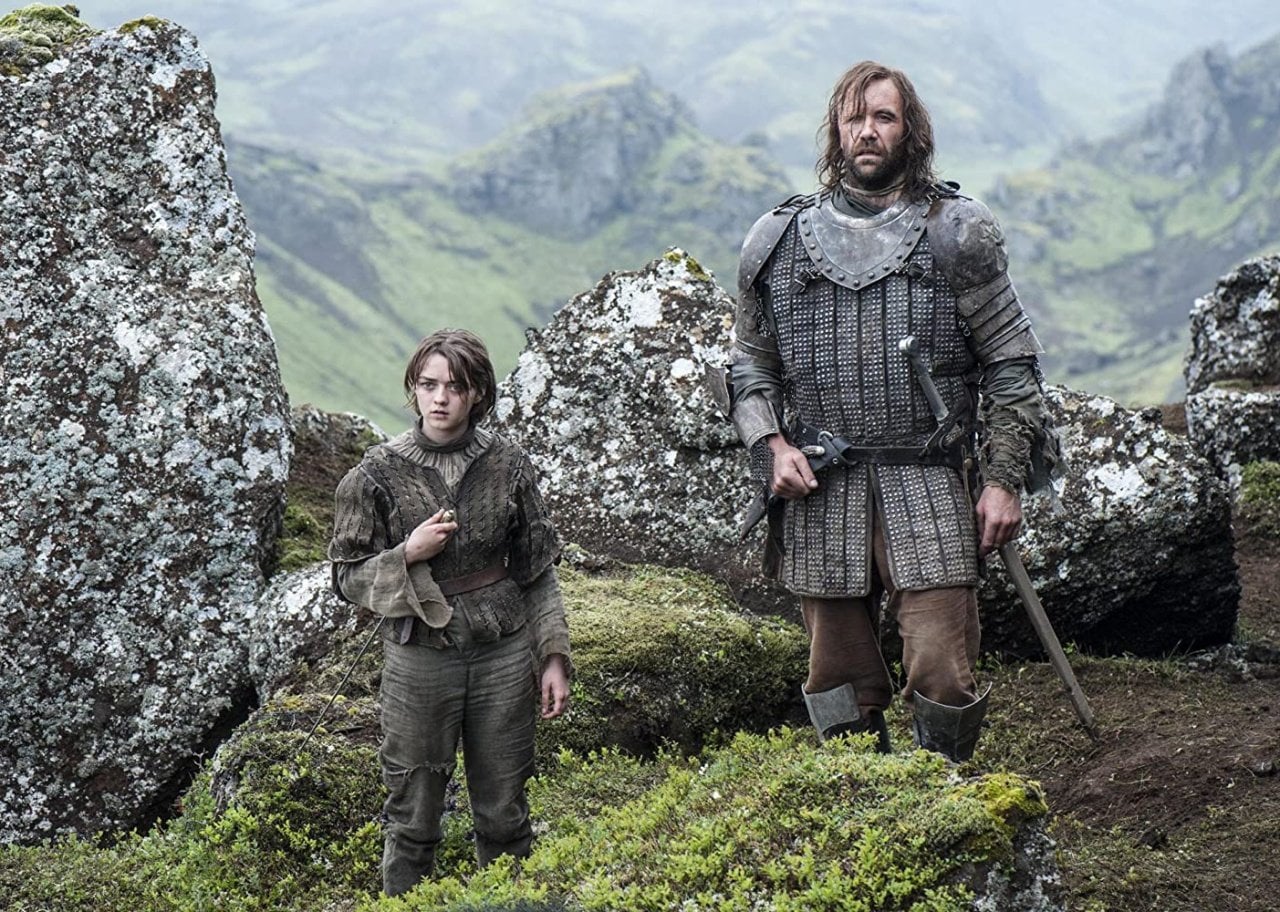
Much of the “Game of Thrones” season one finale concerns itself with the aftermath of Stark family patriarch Ned’s unexpected beheading in the previous episode. Arya, played by Maisie Williams, escapes from her father’s murderers, the Lannisters, although her sister, Sansa, played by Sophie Turner, is taken prisoner. After losing her husband, son, and army, Daenerys Targaryen, played by Emilia Clarke, also hatches her now-iconic dragons.
Alloy Entertainment
#27. The Originals – ‘The Bloody Crown’
– IMDb user rating: 9.6
– Season 3, episode 22
– Air date: May 20, 2016
– Director: Matthew Hastings
During the third season finale of “The Originals,” ancient vampire Klaus is put on trial by his adoptive son Marcel, played by Charles Michael Davis, for the centuries of crimes he has committed. At the same time, the Mikaelson family’s compound is overrun by an army of “sireling” vampires that Klaus once created. Things once again end on a cliffhanger, as Klaus is tortured by an all-powerful weapon known as Papa Tunde’s blade.
Your Face Goes Here Entertainment
#26. Banshee – ‘Requiem’
– IMDb user rating: 9.6
– Season 4, episode 8
– Air date: May 20, 2016
– Director: Ole Christian Madsen
In the “Banshee” series finale, ex-con Hood, played by Anthony Starr, makes plans to leave the town of Banshee, Pennsylvania, where he has hidden and posed as a sheriff. “Requiem” also revealed that the local mayor’s personal bodyguard, Clay Burton, played by Matthew Bauch, murdered Lucas’ ex-lover Rebecca, played by Lili Simmons.
My So-Called Company
#25. The Originals – ‘From a Cradle to a Grave’
– IMDb user rating: 9.6
– Season 1, episode 22
– Air date: May 13, 2014
– Director: Matthew Hastings
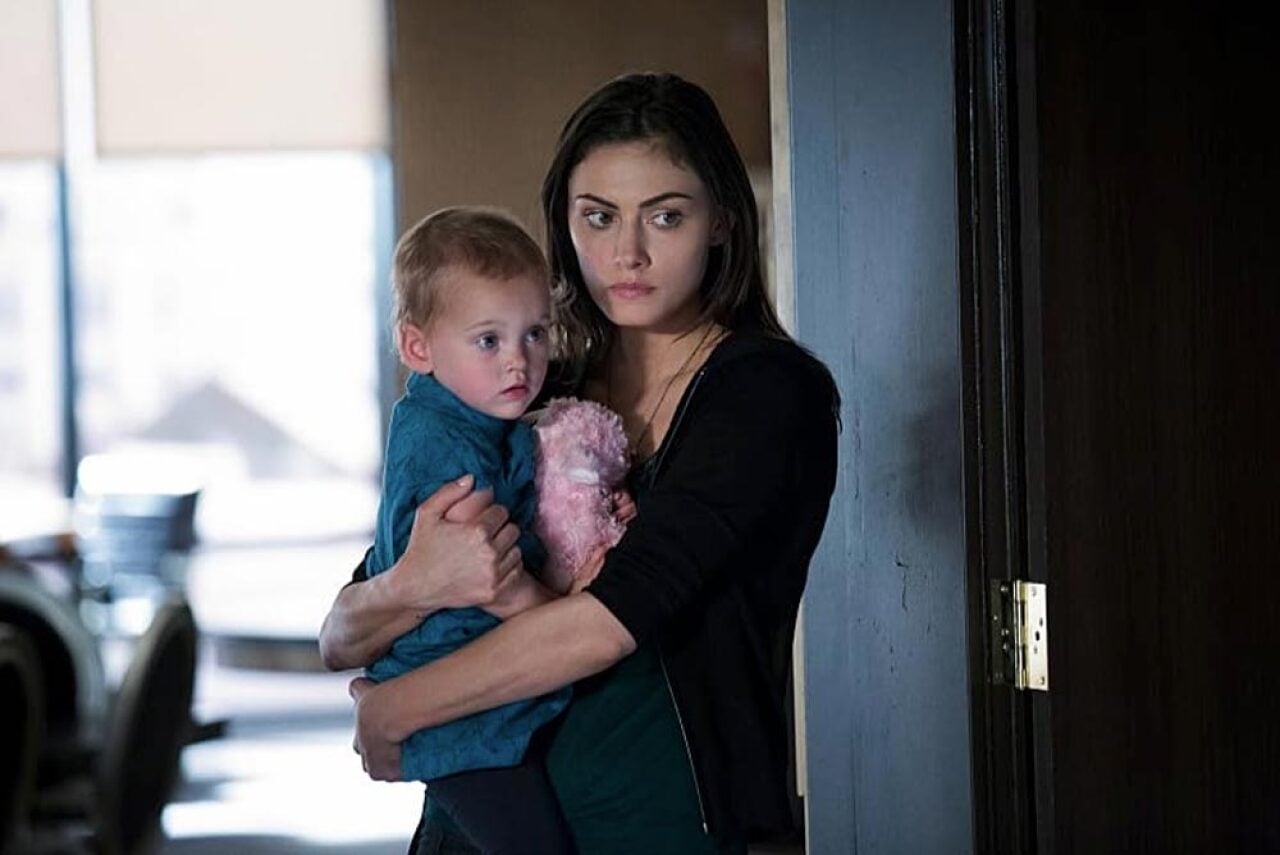
The end of the first season of “The Originals” follows Klaus, played by Joseph Morgan, and Elijah, played by Daniel Gillies, as they search for Hayley, played by Phoebe Tonkin, who is desperate to protect her and Klaus’ unborn baby from the witches who are after her. She is almost murdered immediately after giving birth to her daughter but then begins turning into a werewolf-vampire hybrid.
Mutant Enemy
#24. Angel – ‘Not Fade Away’
– IMDb user rating: 9.6
– Season 5, episode 22
– Air date: May 19, 2004
– Director: Jeffrey Bell
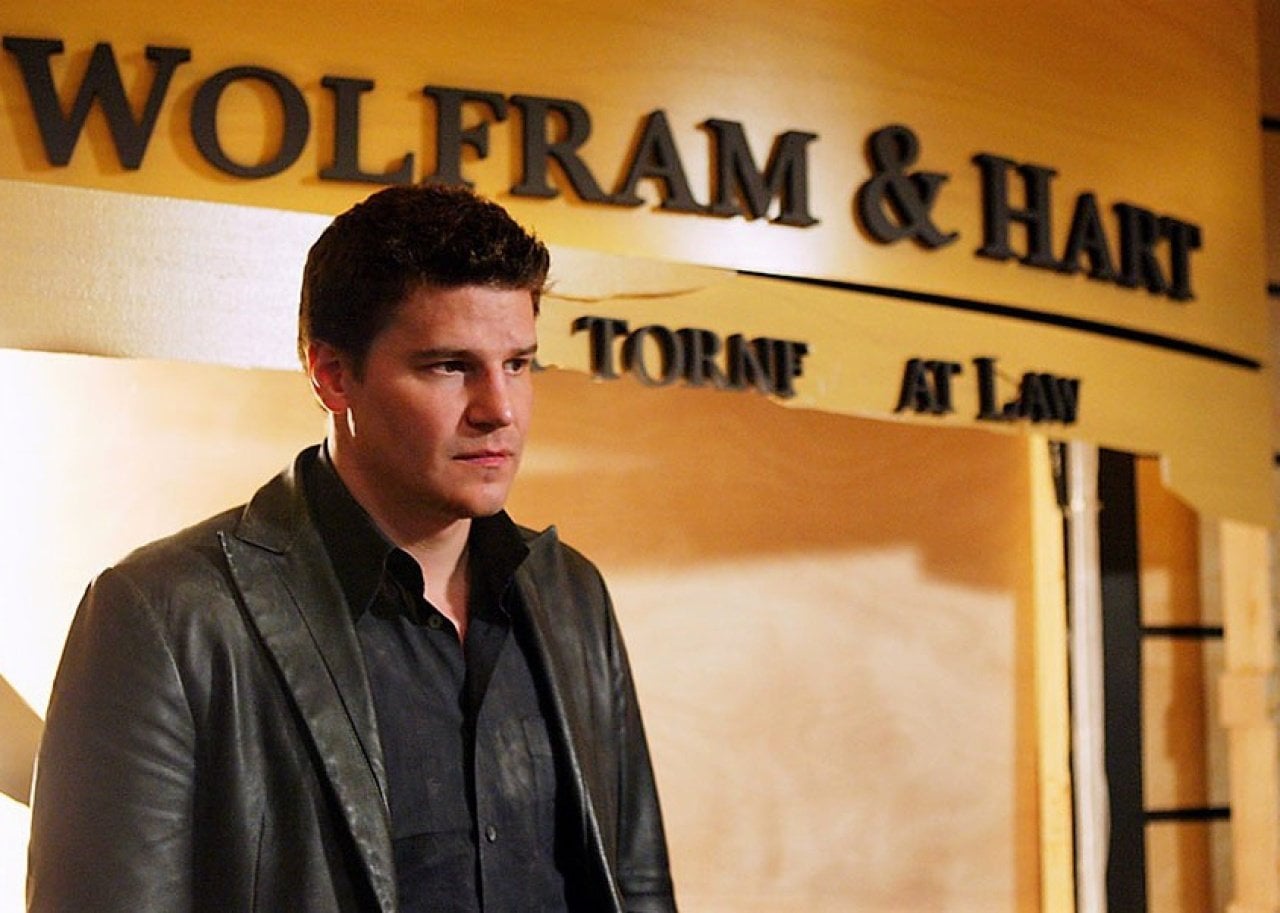
In the series finale of “Angel,” the titular character, played by David Boreanaz, and his crew spend one last day with their loved ones before preparing to fight evil members of the supernatural Circle of the Black Thorn. The episode ends as the army descends upon the main characters, and swords clash as the screen fades to black. Co-creator Joss Whedon defended this ambiguous ending to TV Guide Online, saying, “The point of the show is that you’re never done; no matter who goes down, the fight goes on.”
Shapiro/West Productions
#23. Seinfeld – ‘The Opposite’
– IMDb user rating: 9.6
– Season 5, episode 21
– Air date: May 19, 1994
– Director: Tom Cherones
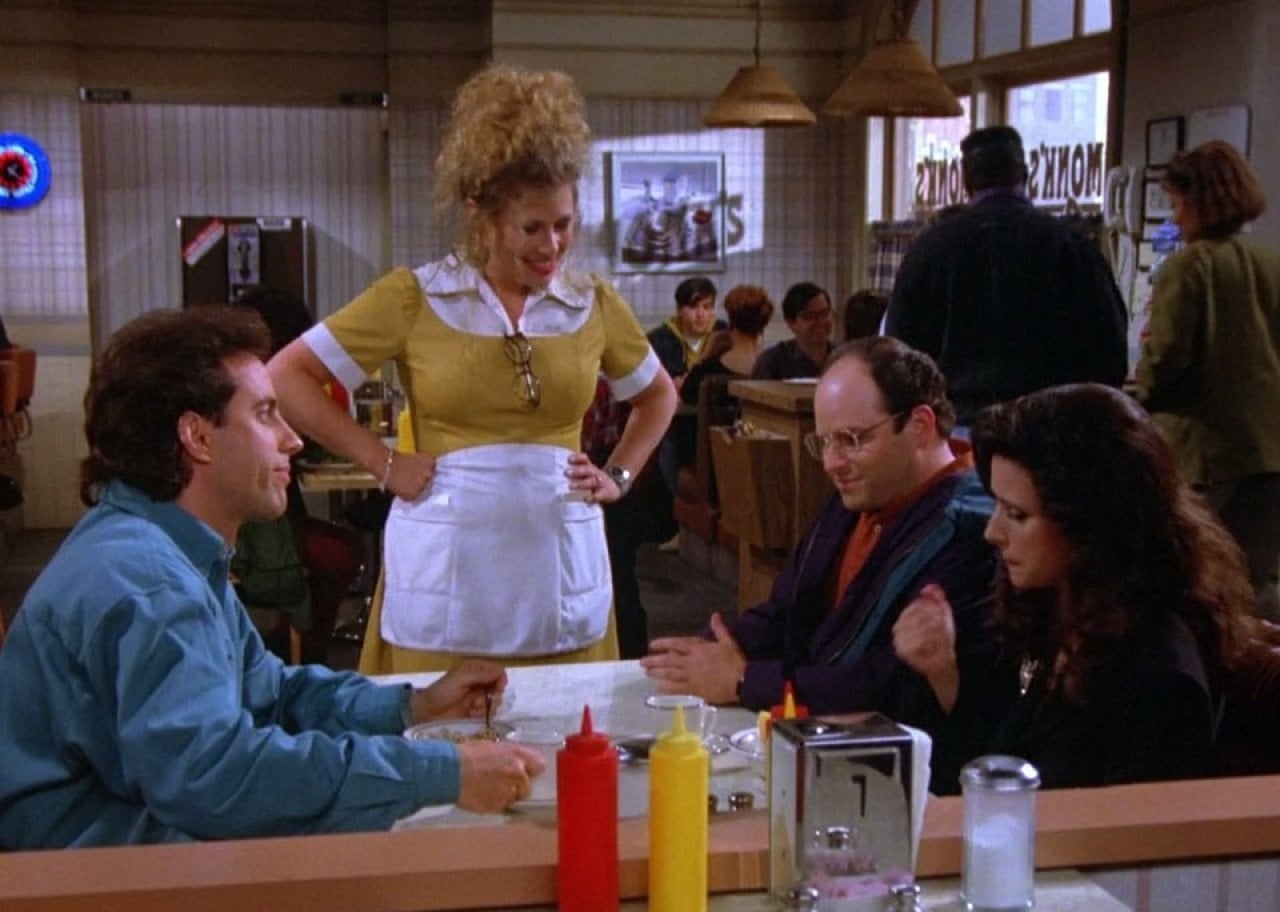
In this season five finale, George, played by Jason Alexander, begins to have uncharacteristically good luck—from going on a date with a beautiful woman to landing a job with the New York Yankees—after deciding to do the opposite of what he normally does. Meanwhile, Elaine, played by Julia Louis-Dreyfus, gets a raise and is reunited with her boyfriend Jake, played by Marty Rackham. “Seinfeld” co-creator Larry David appears in the episode as the voice of Yankees owner George Steinbrenner.
Deedle-Dee Productions
#22. Parks and Recreation – ‘One Last Ride’
– IMDb user rating: 9.6
– Season 7, episode 12
– Air date: Feb. 24, 2015
– Director: Michael Schur
Lead actress Amy Poehler and “Parks and Recreation” co-creator Michael Schur wrote the show’s last episode, which serves as the 12th and 13th episodes of the final season. After many of the main characters decide to leave Pawnee, Indiana, the episode flashes forward to several points in time to show what the characters are up to in the future. Notably, it’s implied that Poehler’s character, Leslie Knope, will become president in 2048.
Mutant Enemy
#21. Buffy the Vampire Slayer – ‘Becoming: Part 2’
– IMDb user rating: 9.6
– Season 2, episode 22
– Air date: May 19, 1998
– Director: Joss Whedon
In the second half of the season two finale of “Buffy the Vampire Slayer,” Buffy tries to prevent a trio of vampires from awakening the demon Acathla. During this episode, Buffy’s lover Angel is sucked into a vortex and appears to be gone indefinitely. Christopher Beck’s score for “Becoming” won a Primetime Emmy Award in 1998.
Tall Ship Productions
#20. Outlander – ‘Dragonfly in Amber’
– IMDb user rating: 9.6
– Season 2, episode 13
– Air date: July 9, 2016
– Director: Philip John
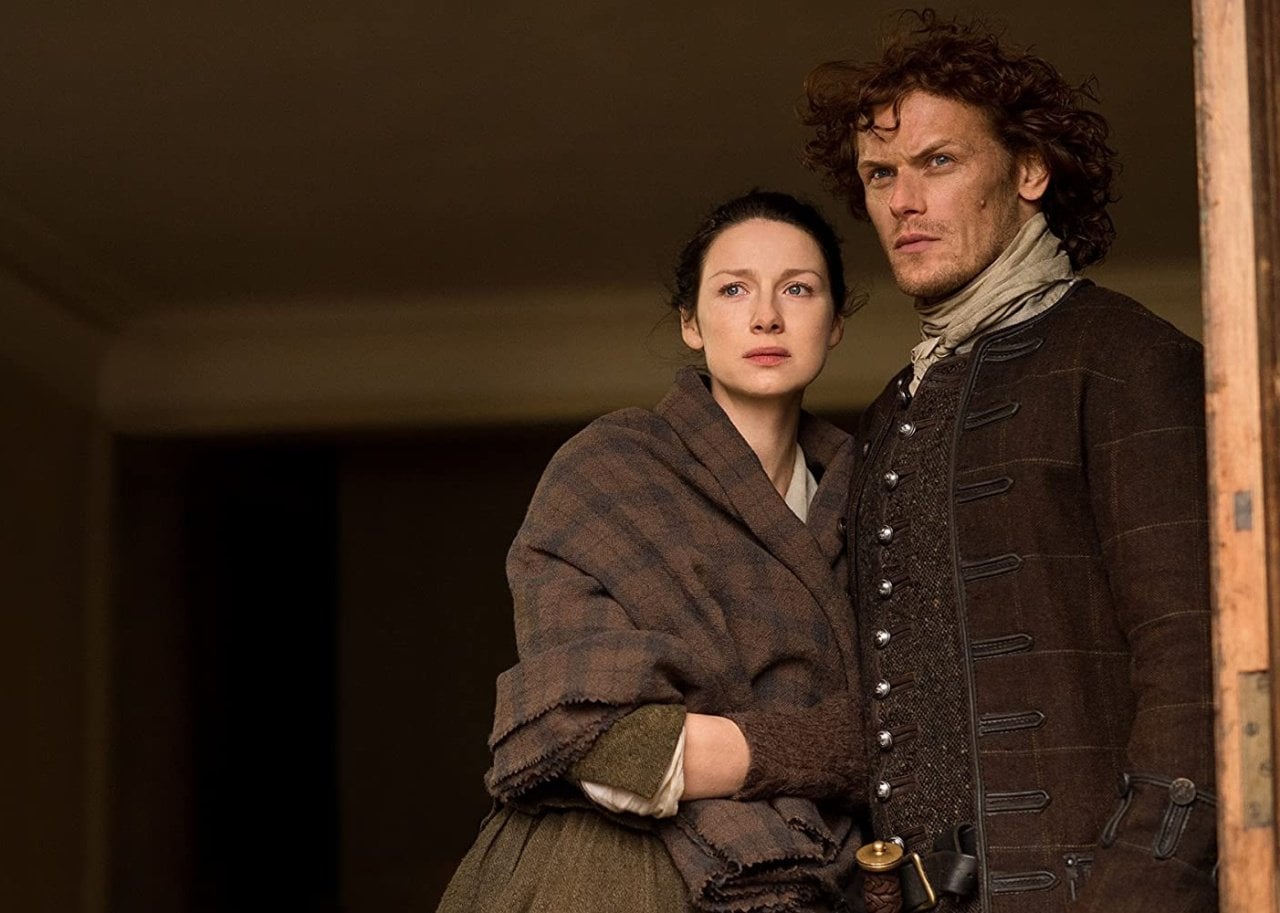
“Dragonfly in Amber” flashes forward to 1968, where Claire, played by Caitriona Balfe, travels to Scotland with Brianna, played by Sophie Skelton, her 20-year-old daughter with Jaime, played by Sam Heughan. During the trip, Claire finally tells Brianna the truth about her time-traveling experiences, and who her father really is. Back in the 1700s, Jaime prepares for the Battle of Culloden.
Chuck Lorre Productions
#19. The Big Bang Theory – ‘The Stockholm Syndrome’
– IMDb user rating: 9.6
– Season 12, episode 24
– Air date: May 16, 2019
– Director: Mark Cendrowski
The final episode of “The Big Bang Theory” follows the gang as it flies to Sweden so that Sheldon, played by Jim Parsons, and Amy, played by Mayim Bialik, can receive their Nobel prizes. Penny, played by Kaley Cuoco, also reveals that she and Leonard, played by Johnny Galecki, are expecting a child. Raj, played by Kunal Nayyar, gets the chance to meet actress Sarah Michelle Gellar.
The Colleton Company
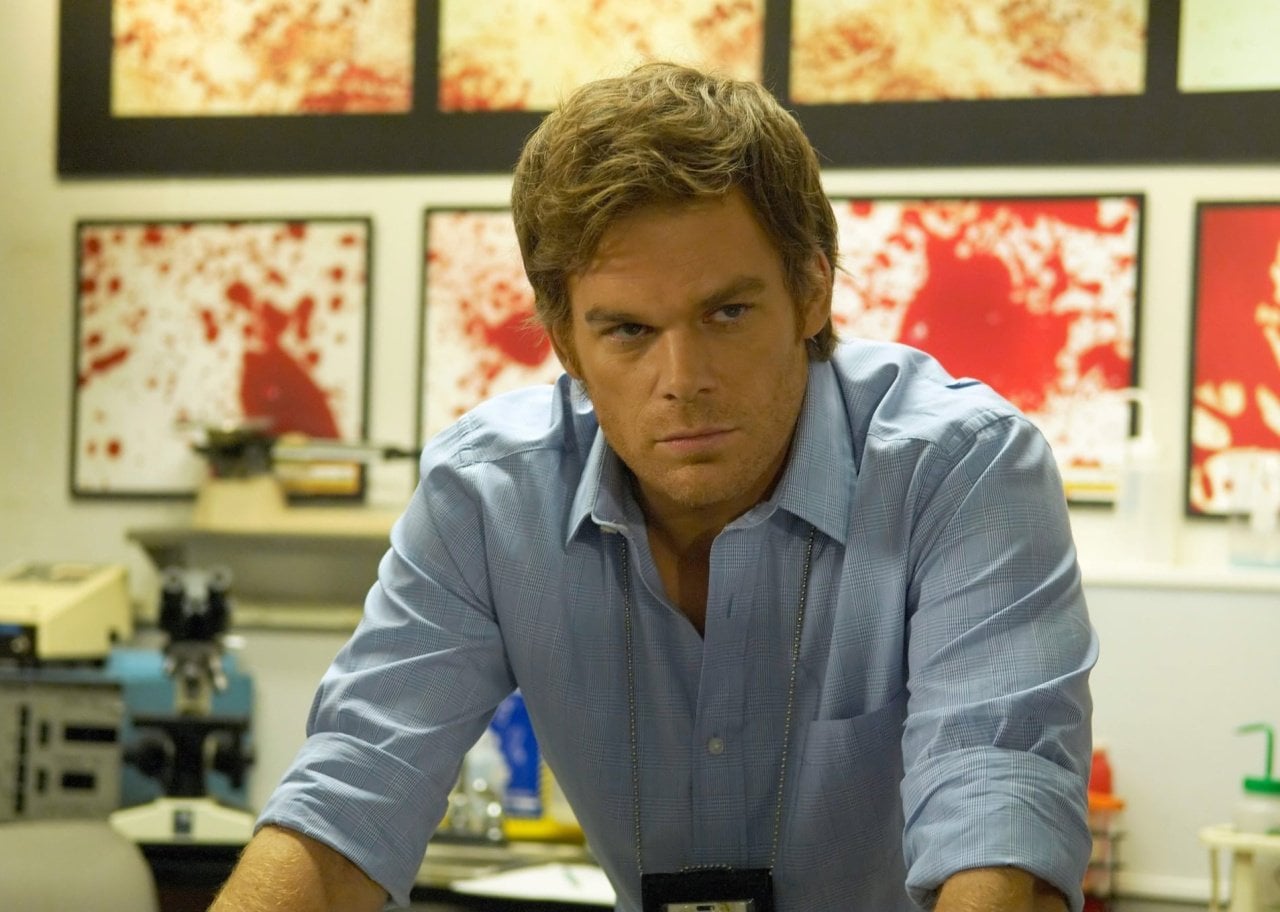
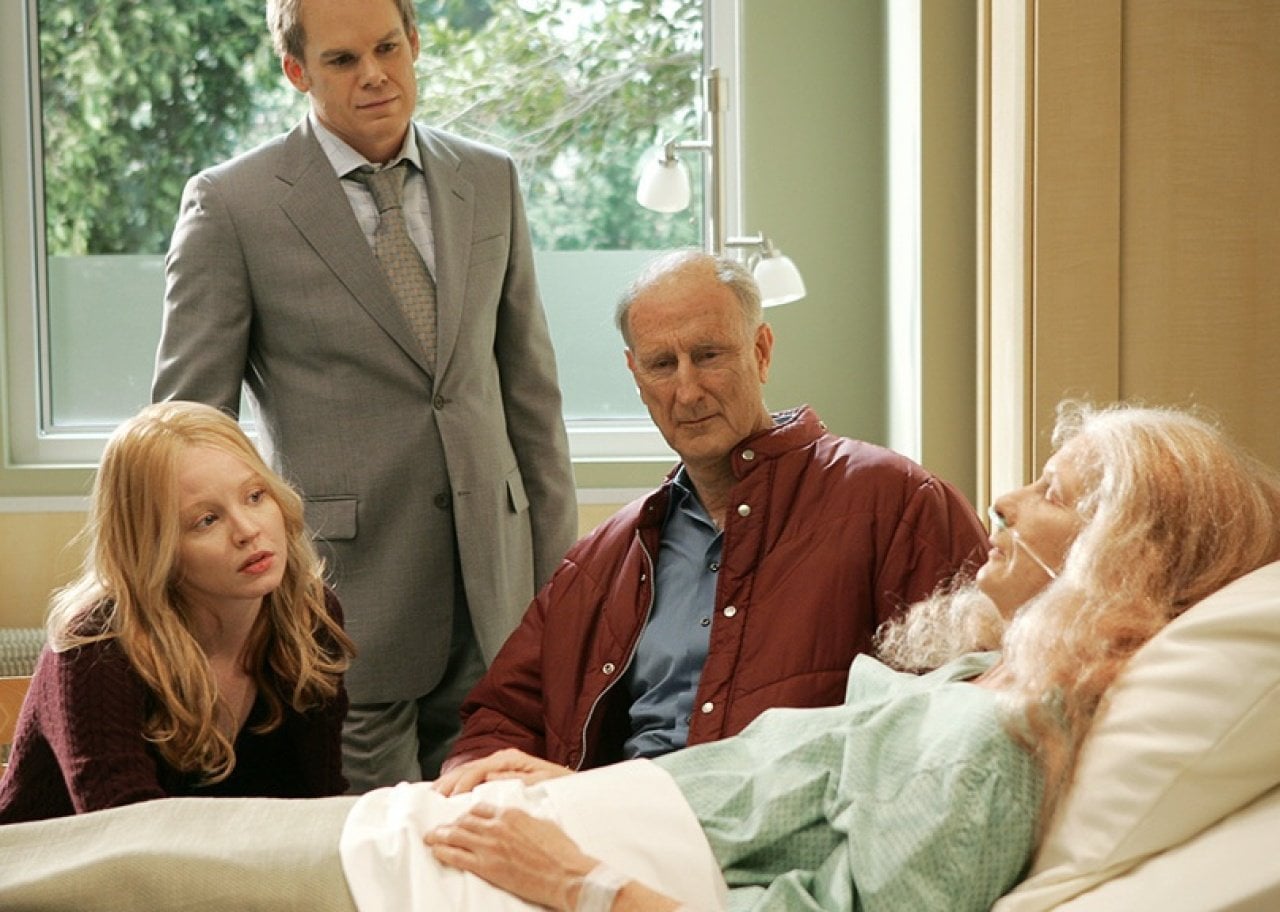
#18. Dexter – ‘Born Free’
– IMDb user rating: 9.6
– Season 1, episode 12
– Air date: Dec. 17, 2006
– Director: Michael Cuesta
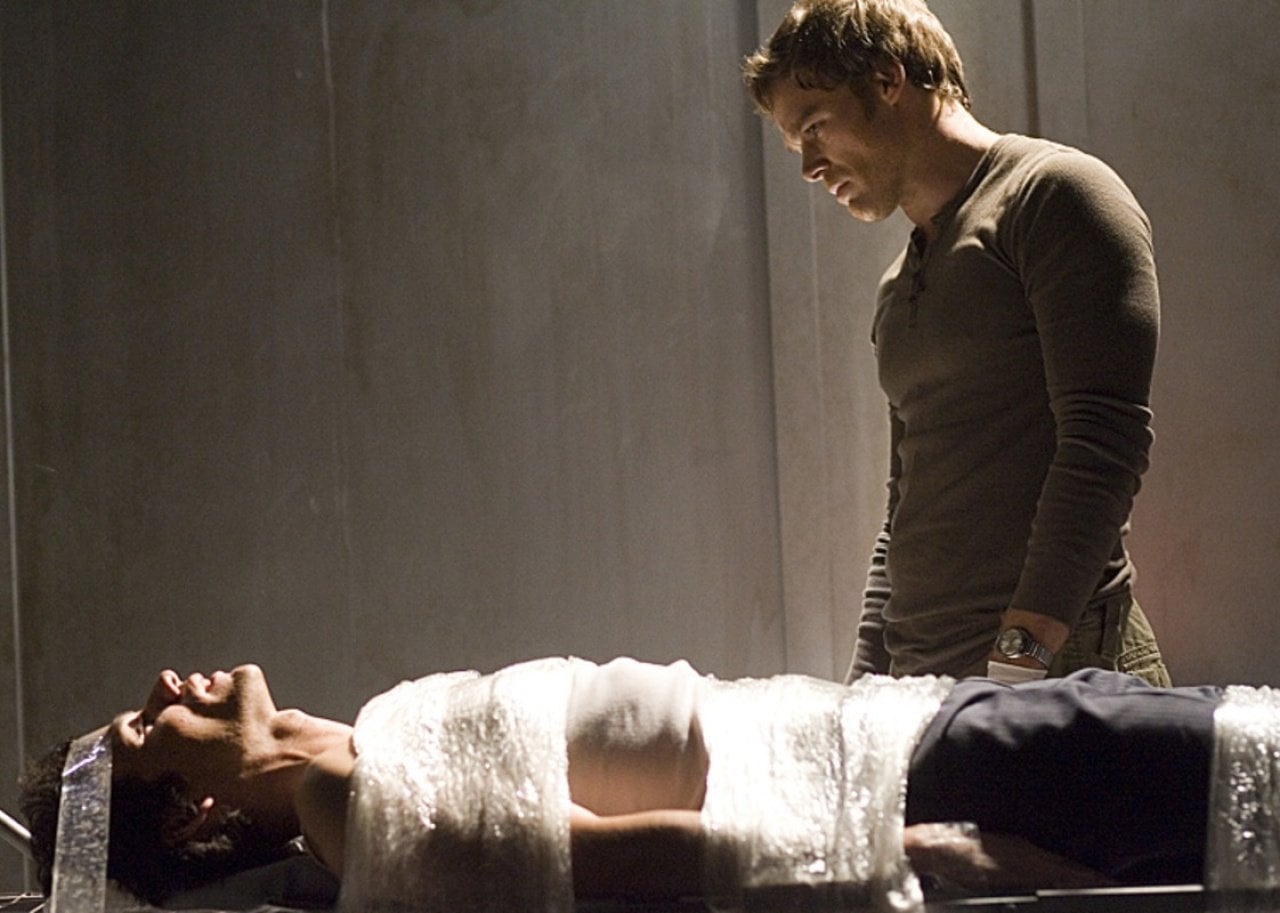
The season one finale of “Dexter”centers on Dexter, played by Michael C. Hall, and the “Ice Truck Killer’s” final confrontation. The twist comes when it’s revealed that the killer is actually Dexter’s biological brother Brian Moster, played by Chris Diamantopoulos. Dexter’s love interest Rita, played by Julia Benz, is contacted by her abusive, imprisoned ex-husband Paul, played by Mark Pellegrino, who warns her that Dexter, a vigilante serial killer, isn’t who she thinks he is.
Shondaland
#17. How to Get Away With Murder – ‘Stay’
– IMDb user rating: 9.7
– Season 6, episode 15
– Air date: May 14, 2020
– Director: Stephen Cragg
In the series finale of “How to Get Away with Murder,” lawyer Annalise Keating, played by Viola Davis, is put on trial for her crimes over the course of the series, after the FBI opens an investigation into her work. At the end of the episode, Christopher, played by Alfred Enoch, the son of Laurel, played by Karla Souza, and Wes, also played by Enoch, teaches the same law class that Annalise herself taught at the beginning of the show’s pilot.
Berlanti Productions
#16. Arrow – ‘Lian Yu’
– IMDb user rating: 9.7
– Season 5, episode 23
– Air date: May 24, 2017
– Director: Jesse Warn
In the season five finale of “Arrow,” Oliver/Arrow searches for his son, William, played by Jack Moore, who has been kidnapped by his vigilante enemy, Adrian, played by Josh Segarra. Oliver recruits several unlikely allies, including Nyssa, played by Katrina Law, and Slade, played by Manu Bennett, to get his son back. It’s the last episode of the show that features a flashback storyline to Oliver’s past.
Warner Bros. Television
#15. Supernatural – ‘Swan Song’
– IMDb user rating: 9.7
– Season 5, episode 22
– Air date: May 13, 2010
– Director: Steve Boyum
“Swan Song” revolves around brothers Dean, played by Jensen Ackles, and Sam, played by Jared Padalecki, supernatural creature hunters attempting to prevent the apocalypse through the satanic Lucifer, played by Mark Pellegrino. Eventually, Sam is able to overpower Lucifer, who was planning to possess him.
Warner Bros. Television
#14. Friends – ‘The Last One: Part 2’
– IMDb user rating: 9.7
– Season 10, episode 17
– Air date: May 6, 2004
– Director: Kevin Bright
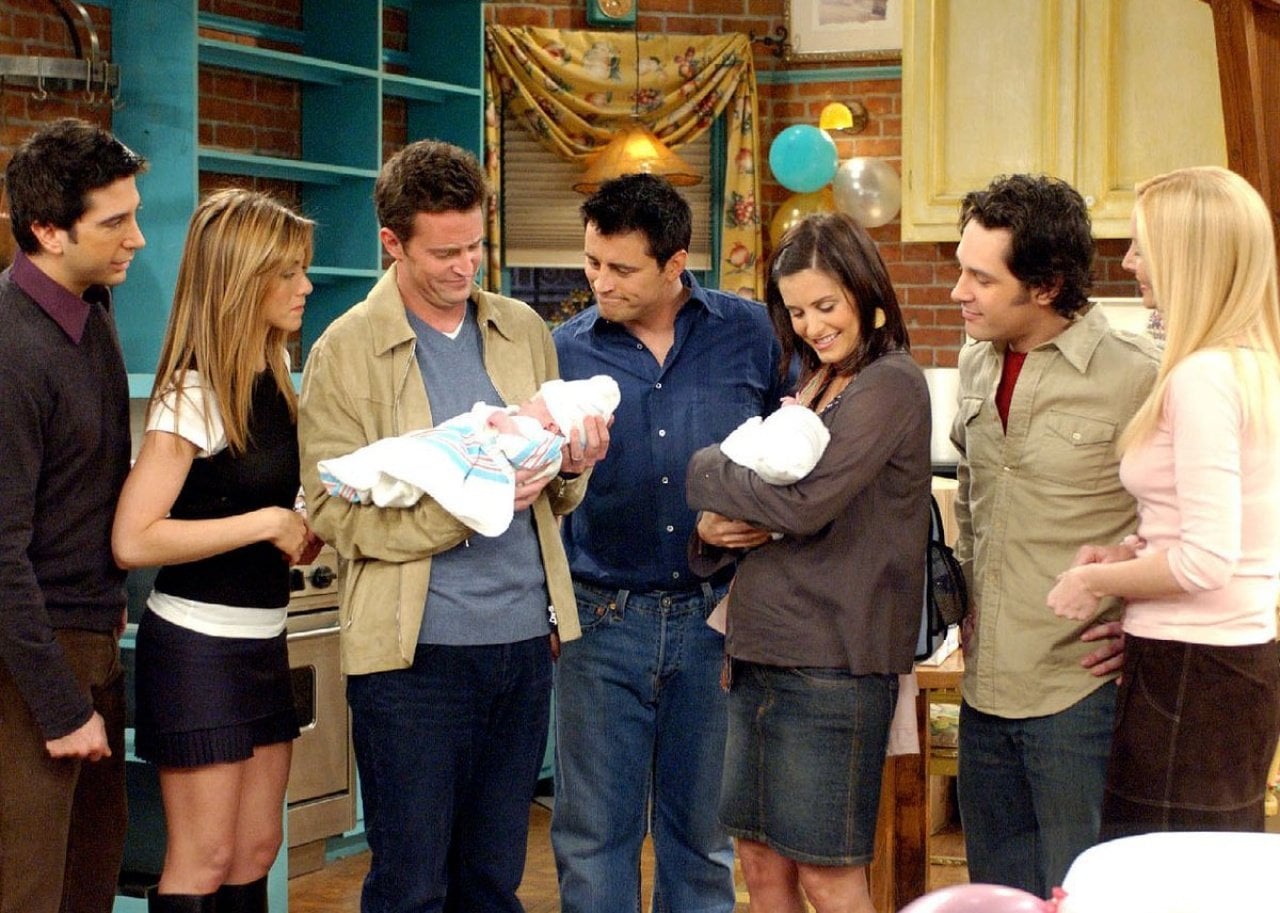
In the last episode of “Friends,” on-again, off-again couple Ross, played by David Schwimmer, and Rachel, played by Jennifer Aniston, finally get together. Monica, played by Courtney Cox, and Chandler, played by Matthew Perry, prepare to move to suburbia to raise their kids. The band Pearl Jam licensed one of its songs, “Yellow Ledbetter” for the first time, and it played in “The Last One: Part 2.”
Television 360
#13. Game of Thrones – ‘The Children’
– IMDb user rating: 9.7
– Season 4, episode 10
– Air date: June 15, 2014
– Director: Alex Graves
This “Game of Thrones” finale follows its usual ensemble cast of characters, as Tyrion, played by Peter Dinklage, escapes from prison; Stannis Baratheon, played by Stephen Dillane, and his forces help the Night’s Watch fend off the wildling people; and Bran, played by Isaac Hempstead Wright, encounters the mystical Three-Eyed Raven, played by Max von Sydow. Many fans were disappointed that the character of Lady Stoneheart didn’t appear in “The Children.”
Disney Television Animation
#12. Gravity Falls – ‘Weirdmageddon 3: Take Back the Falls’
– IMDb user rating: 9.8
– Season 2, episode 20
– Air date: Feb. 15, 2016
– Director: Stephen Sandoval
The animated “Weirdmageddon 3: Take Back the Falls” centers on twins Dipper, voiced by Jason Ritter, and Mabel, voiced by Kristen Schaal, who fight to stop an apocalyptic conspiracy plot that’s unfolding within the town of Gravity Falls, Oregon. This “Gravity Falls” series finale also included Disney Channel’s first gay male couple and was Disney XD’s most-watched telecast ever at the time.
Gary Sanchez Productions
#11. Succession – ‘This Is Not for Tears’
– IMDb user rating: 9.8
– Season 2, episode 10
– Air date: Oct. 13, 2019
– Director: Mark Mylod
The season two finale of “Succession” revolves around the Roy family, whose members attempt to decide who to use as a public scapegoat for the sexual misconduct scandal that has jeopardized the future of their media empire. Patriarch Logan Roy, played by Brian Cox, selects his son Kendall, played by Jeremy Strong, who reveals at a press conference that his father was responsible for covering up the scandal. “This Is Not for Tears” won Outstanding Writing for a Drama Series at the 2020 Primetime Emmy Awards.
Bad Robot
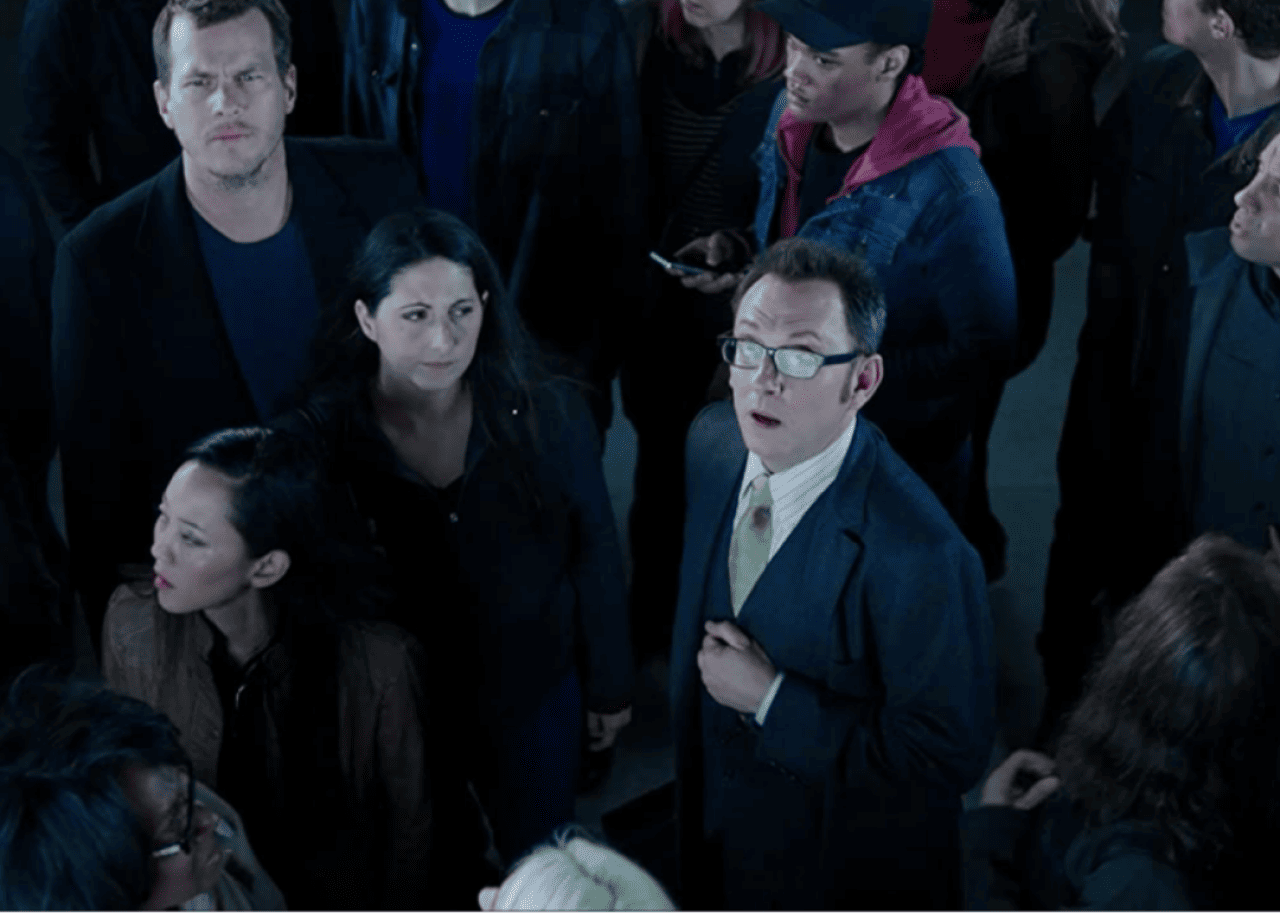
#10. Person of Interest – ‘Return 0’
– IMDb user rating: 9.8
– Season 5, episode 13
– Air date: June 21, 2016
– Director: Chris Fisher
In the “Person of Interest” series finale, the central characters of “Team Machine” wage one last battle to prevent the evil A.I. surveillance system Samaritan from controlling the world. They succeed in their mission, but one of their own dies in the process—Jim Caviezel’s character of Reese. Entertainment Weekly writer Chancellor Agard described the episode as “a pathos-filled and near-perfect end that focused on the show’s relationships.”
Gary Sanchez Productions
#9. Succession – ‘All the Bells Say’
– IMDb user rating: 9.8
– Season 3, episode 9
– Air date: Dec. 12, 2021
– Director: Mark Mylod
In HBO’s season three finale of “Succession,” Shiv, Kendall, and Roman are determined to take down their billionaire cutthroat father, Logan Roy, who is the owner of the media and entertainment company RoyCo. But their plans are thwarted as they find themselves snubbed and looked on as outsiders. By the end of the episode, Logan Roy seems to have made up his mind about selling RoyCo to another company, which could jeopardize the fate of his kids and the family business.
John Goldwyn Productions
#8. Dexter – ‘The Getaway’
– IMDb user rating: 9.8
– Season 4, episode 12
– Air date: Dec. 13, 2009
– Director: Steve Shill
“The Getaway” throws Dexter’s secret double life into jeopardy, as Arthur, played by John Lithgow, discovers his true identity, and Debra, played by Jennifer Carpenter, learns that he and the Ice Pick Killer are brothers. However, the real shock of the hour comes when Dexter’s significant other, Rita, is unexpectedly killed. Elsewhere, the police close in on the mysterious Trinity Killer.
Warner Bros. Television
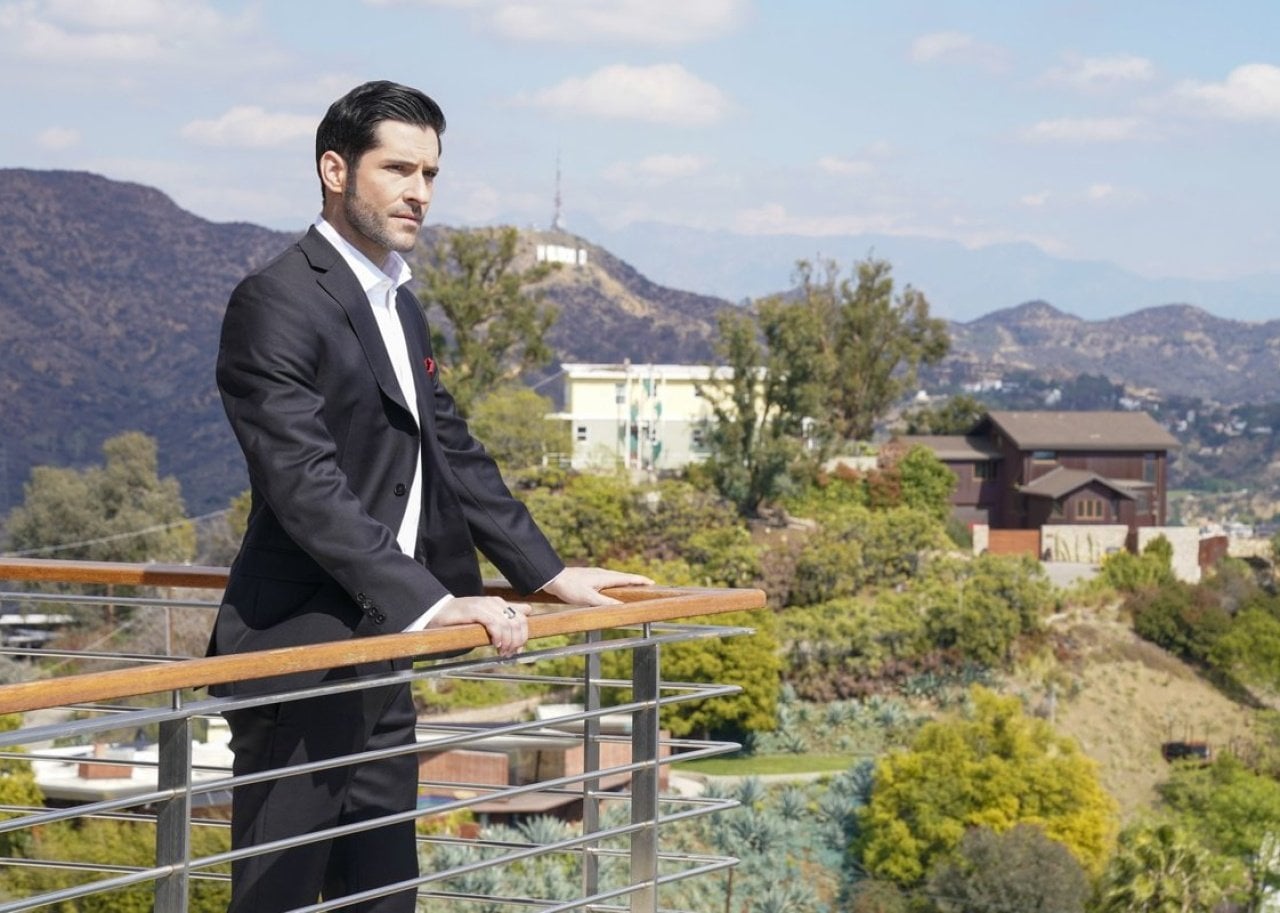
#7. Lucifer – ‘A Devil of My Word’
– IMDb user rating: 9.8
– Season 3, episode 24
– Air date: May 14, 2018
– Director: Eagle Egilsson
Much of “A Devil of My Word” centers on the team’s investigation into the Tricia Helfer character’s—reborn lawyer Charlotte Richards—recent murder. Chloe, played by Lauren German, Lucifer, played by Tom Ellis, and their allies attempt to find and bring the killer to justice, while Chloe finally learns the full truth of Lucifer’s demonic origins. Although this was supposedly the series finale, since Fox had canceled the show after season three, “Lucifer” was soon picked up by Netflix.
High Bridge Productions
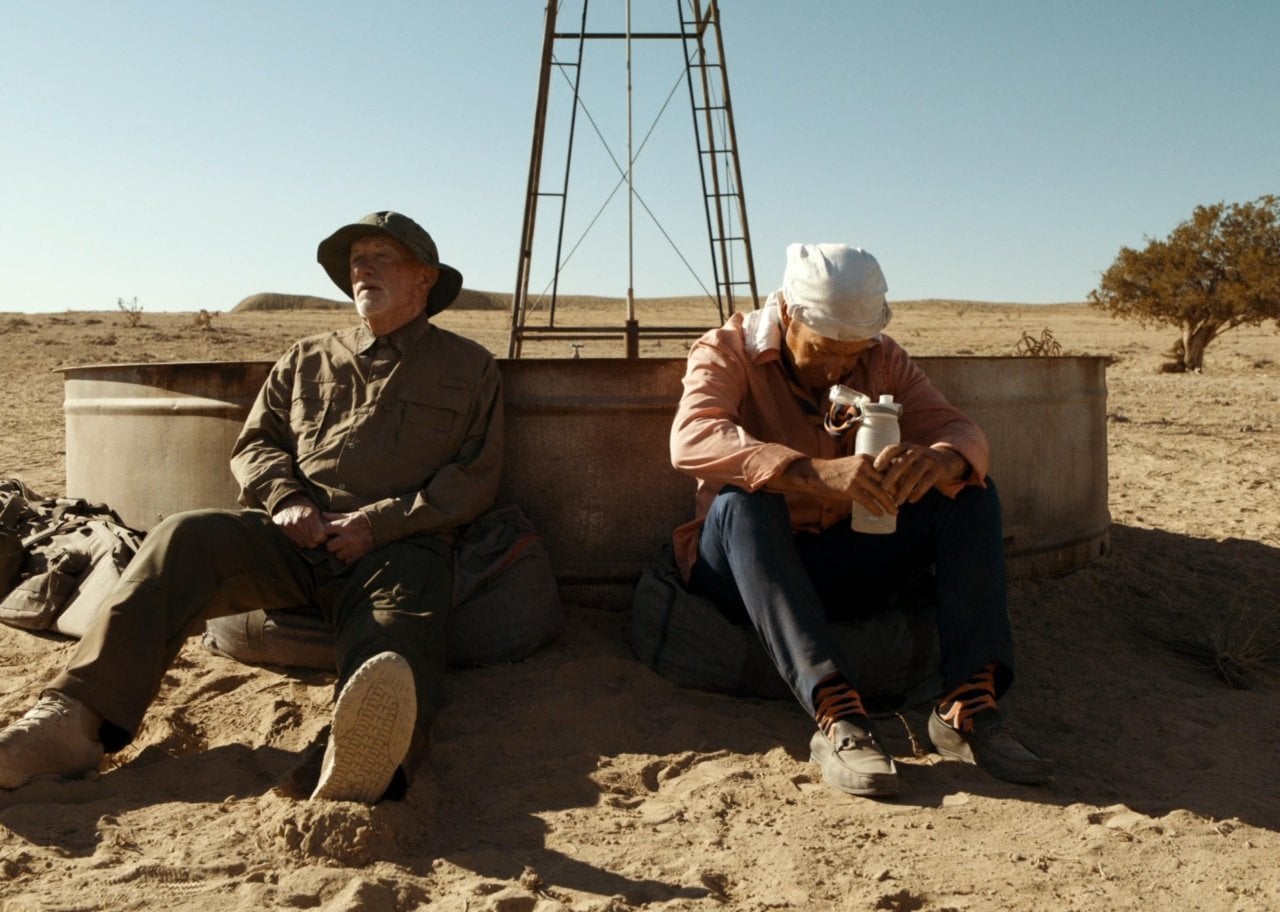
#6. Better Call Saul – ‘Saul Gone’
– IMDb user rating: 9.8
– Season 6, episode 13
– Air date: Aug. 15, 2022
– Director: Peter Gould
In the season six finale of “Better Call Saul”—a spinoff of “Breaking Bad”—lawyer Jimmy McGill, played by Bob Odenkirk, is forced to confront the people he’s wronged. McGill, also known as Saul, is caught and sentenced. Bill Oakley, played by Peter Diseth, makes an unexpected appearance in the final episode and agrees to represent Saul, reasoning that it would be ideal for his legal street cred.
Cartoon Network Studios
#5. Regular Show – ‘A Regular Epic Final Battle’
– IMDb user rating: 9.9
– Season 8, episode 27
– Air date: Jan. 16, 2017
– Director: Calvin Wong
“A Regular Epic Final Battle” is the animated show’s series finale, and follows Mordecai, voiced by J.G. Quintel; Rigby, voiced by William Salyers; and their fellow park workers as they aid their friend Pops in defeating his evil twin brother, Anti-Pops, on their home planet of Lolliland. The A.V. Club critic Eric Thurm praised the episode, noting that “amid all this death and closure, there’s a lot of humor.”
Home Box Office (HBO)
#4. Six Feet Under – ‘Everyone’s Waiting’
– IMDb user rating: 9.9
– Season 5, episode 12
– Air date: Aug. 21, 2005
– Director: Alan Ball
The series finale of this show about a dysfunctional family who run a funeral home ironically centers not on a death but on the premature birth of Nate, played by Peter Krause, and Willa, the daughter of Brenda, portrayed by Rachel Griffiths. “Everyone’s Waiting” ends with a series of flash-forward shots to important milestones in the characters’ lives, as Claire decides to leave Los Angeles. The episode received multiple Emmy nominations in 2006, including Outstanding Writing for a Drama Series.
High Bridge Productions
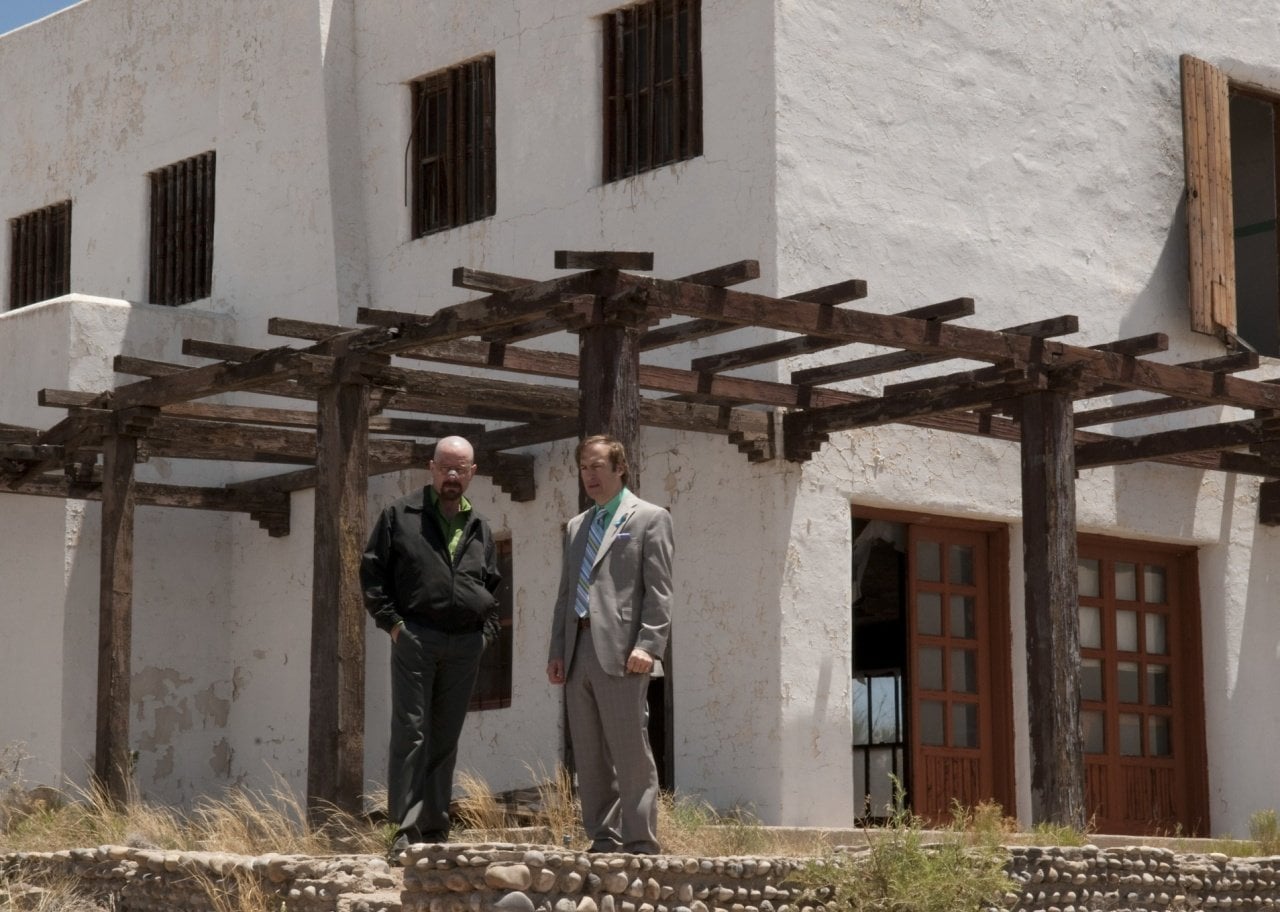
#3. Breaking Bad – ‘Face Off’
– IMDb user rating: 9.9
– Season 4, episode 13
– Air date: Oct. 9, 2011
– Director: Vince Gilligan
Before landing in the drug trade, Walter White, played by Bryan Cranston, was once a respected chemist. In the season four finale of “Breaking Bad,” White has endangered several people—from taking a bomb into a pediatric hospital to starting a fire in a crowded laundromat. In this finale, Gus, played by Giancarlo Esposito—the series’ antagonist—was caught in an explosion that blew half of his face off, resulting in the episode’s title, “Face Off.”
High Bridge Productions
#2. Breaking Bad – ‘Felina’
– IMDb user rating: 9.9
– Season 5, episode 16
– Air date: Sept. 29, 2013
– Director: Vince Gilligan
In “Breaking Bad’s” series finale, anti-hero Walter White delivers the money from his illegal drug empire to his family, gets revenge on the gang who threatened them, and accepts his impending death from cancer. The ending was followed by a spinoff Netflix movie, “El Camino,” in 2019. Many outlets, such as Digital Trends, Screen Rant, and Rolling Stone, have named “Felina” as one of the greatest TV finales of all time.
Television 360
#1. Game of Thrones – ‘The Winds of Winter’
– IMDb user rating: 9.9
– Season 6, episode 10
– Air date: June 26, 2016
– Director: Miguel Sapochnik
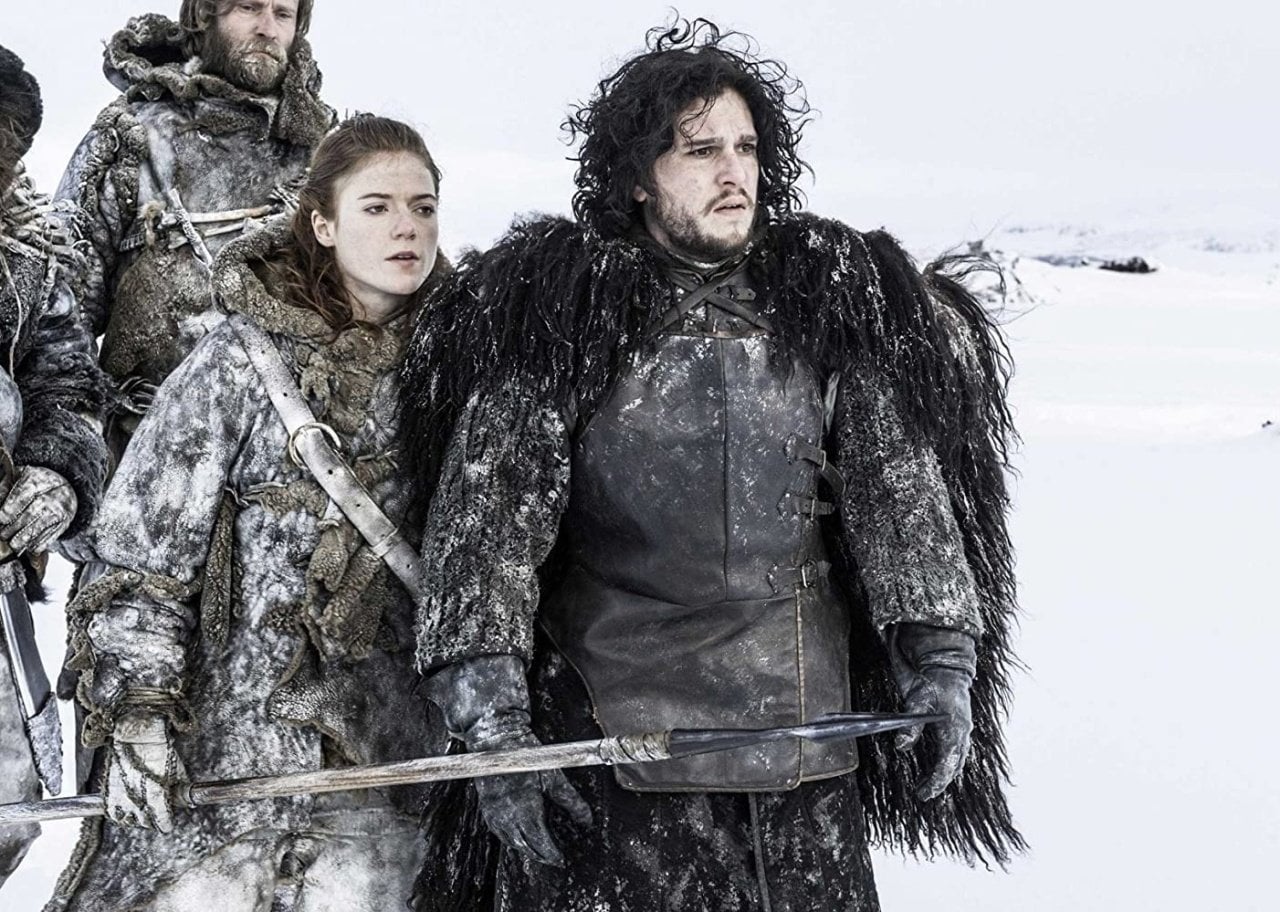
“Winds of Winter” is perhaps best known for its reveal that Jon Snow, played by Kit Harrington, is not illegitimate, but Lyanna Stark’s son and a Targaryen by birth. Elsewhere, Cersei Lannister, played by Lena Headey, enacts her plan to kill her immediate enemies by destroying the Great Sept of Baelor with wildfire. This “Game of Thrones” finale was praised as one of the show’s best episodes, becoming one of the only TV episodes to ever receive a 9.9 rating on IMDb.
How to maximize internship season and start your financial future
By
Chris Taylor for Current
4 min read • Published June 3, 2026
By
Chris Taylor for Current
4 min read • Published June 3, 2026
Zamrznuti tonovi // Shutterstock
How to maximize internship season and start your financial future
For young adults entering the workforce, there is good news and bad news right now.
Let’s start with the bad: The job market is looking a little bleak, at 7.8% unemployment for those ages 22-27, according to the latest data from the New York Fed.
Those are the worst numbers since the early years of the COVID-19 pandemic. Recent college grads are doing a little better, but not much, with their unemployment rate at 5.6%. Meanwhile, AI is hovering like a dark cloud over the whole landscape, threatening to disrupt entire industries.
So here’s a potential bright spot: The number of internships is actually up significantly, rising 31.6% year-over-year, according to an analysis from ZipRecruiter.
Internships are the “clearest on-ramps” to the workforce right now, says the job site’s annual report for new grads. If you do land one, here’s the key advice: Make the absolute most of it.
“Soak in every minute you can,” says Sydney Woodward, a financial planner with YeskeBuie in San Francisco. “Ask for references, resume help, and advice.
“And leave a lasting impression: Right now, these professionals are your bosses, but in 10 years they will be your peers.”
Indeed, internships are ideal career launching pads in a number of different ways. First, to gain skills and demonstrate your competence. Second, to deepen your network and make connections that will pay off for years to come.
And third, they allow you to start laying the foundations of your financial life. From creating first banking accounts to building credit to learning how to budget, these are important first steps on your decades-long financial journey.
So don’t let the moment slip, and take full advantage of your internship time window. Current, a consumer fintech banking platform, shares advice from the experts:
Start building a professional network right away. As the most junior person on the team, it can feel awkward to reach out and ask for one-on-one time with peers and bosses. For your future career’s sake, get over those jitters and start planting the seeds of those critical relationships.
“When it comes to networking, it helps to shift the mindset from ‘What can I get from this person?’ to ‘How can this be mutually beneficial?’ ” advises Jessica Kirwin, a financial planner in Issaquah, Wash. “Use your time wisely by being prepared with your most important questions and specific requests. Most importantly, send a thank you note, show appreciation and stay in touch — it could turn into a longer-term relationship.”
Don’t limit your networking to your immediate circle, either. Make contacts in different divisions of the company, at other firms in the industry, and at events and conferences of professional trade groups. That will lay the groundwork for future advancement.
Construct your online profile and keep it up-to-date. If you’re making career strides at your internship, but no one knows about it, that’s a problem. You want to make yourself discoverable to future employers and third-party recruiters, and that means putting together comprehensive online profiles on sites such as LinkedIn.
Young adults seem well aware of the importance of this step: The share of new graduates with Indeed profiles jumped from 11.5% in 2023 to 19.1% in 2025, according to a new report from the popular jobs site.
Don’t assemble a bare-bones placeholder, but one that accurately reflects what you’ve been up to and what you’re looking to do. Made an important new contact at the company? Add them as a connection, and interact with their content. Completed a new certification or received an award? List that on your roster of skills and accomplishments.
Put your financial building blocks in place. An internship is often the first time that a young college student has money coming in, and has to seize the reins of their own financial lives.
Even if the amounts aren’t earth-shattering — the median hourly wage for internships is currently $19.23, according to ZipRecruiter — this is precisely the right moment to take action.
That means beginning to put money away for future goals, and you’ll want to look for a high-yield savings account to get the most from your money. It also means starting to build a solid credit record, which will take years to fully manifest, but can be accelerated with the use of a secured charge card. A secured charge card can help you build your credit history while minimizing your risk of debt, as you can only spend the amount of money available in your account. Look for one with a low or no required security deposit and that reports to all three major credit bureaus (Equifax, Experian and TransUnion).
It also means smart budgeting, opening retirement accounts like a Roth IRA for the first time (which requires earned income), and preparing for the unexpected. Do your best to put together an emergency fund, says Woodward, which should be about three to six months’ worth of expenses, if finding full-time work after your internship should prove difficult.
“I’d suggest they get a clearer handle on their cash flow right away, and look into using budgeting tools like YNAB for college students,” says Kirwin. “Then they can understand exactly what resources they have, can make more intentional spending decisions, and see their net worth grow over time.”
Storytelling Roles Dominate Today’s Media Job Market
From Fast Company's design desk to nonprofit narrative strategy, employers want writers who can translate complexity into compelling content.
By
Mediabistro Team
4 min read • Originally published June 1, 2026 / Updated June 3, 2026
By
Mediabistro Team
4 min read • Originally published June 1, 2026 / Updated June 3, 2026
Scan today’s latest media listings, and a clear pattern emerges: employers are hunting for professionals who can take dense, specialized subject matter and turn it into stories real audiences actually want to read. Policy work, design innovation, climate justice, even pedestrian safety. The common thread is translation, converting insider knowledge into accessible, shareable content that moves people to act.
What makes this wave different from the usual “we need a content person” hiring cycle is the seniority level attached. Companies want experienced storytellers with nuanced editorial judgment, the kind of people who know what to leave out as much as what to put in. And several of these roles are fully remote, signaling that organizations have stopped treating distributed work as a pandemic concession and started treating it as a recruiting advantage.
Three of today’s standout listings illustrate the trend from different angles. A legacy business publication, a scrappy nonprofit, and a climate-focused organization are all asking for the same core skill: make complicated things clear.
Today’s Hot Jobs
Senior Writer at Fast Company (Mansueto Ventures)
Why You Should Pay Attention: Fast Company’s Design Team is looking for someone who can break news in the design and technology space while maintaining the brand’s signature editorial voice. This role rewards deep subject-matter expertise. The posting explicitly states they want a journalist who can “separate hype from substance,” which tells you the bar is high and the editorial freedom is real. The beat will be tailored to the hire’s strengths, a rare level of flexibility from a major title. If you’ve been building a career covering product design, UX, hardware, or branding, this is the role you’ve been positioning yourself for.
The Key Requirements:
Deep knowledge of the names and trends shaping the design world
Strong existing relationships in the design and technology communities
Proven ability to break news and spot high-potential topics early
Editorial judgment to deliver original, distinctive coverage at internet speed
Communications Manager at Safe Routes Partnership (Remote)
What Makes This Role Stand Out: This fully remote position at Safe Routes Partnership puts a communications professional at the center of a national advocacy organization focused on making walking and biking to school safer for kids. The salary is transparent ($60,000 to $68,000), and the scope is broad: you’ll own the digital presence, manage contractors for design and video, and translate policy and legislative work into content that equips advocates with actionable information. For anyone interested in how digital media management works in a mission-driven context, this is a textbook example of the role done right.
What They Need From You:
Experience translating complex policy work into accessible, shareable content
Ability to manage contractors for design and video production
Skill in marketing consulting services alongside advocacy communications
Comfort working fully remote from anywhere in the United States
Assistant Art Director at Virginia Living Magazine
The Appeal Here: Regional magazines remain one of the best training grounds in media, and Virginia Living is actively looking for an early-career designer to help shape its visual identity across print and digital. The posting emphasizes variety: conceptual layouts, photo direction, typography, marketing materials. You’ll collaborate directly with the publisher, editors, and art director on award-winning features covering food, culture, destinations, homes, and more. For designers with one to three years of experience in luxury lifestyle or editorial design, this is a chance to build a portfolio with genuine creative ownership at a respected regional title.
Qualifications That Matter:
1-3 years of experience in luxury lifestyle or editorial design
Strong photography research, photo direction, and typography skills
Proficiency in Adobe Creative Suite, particularly InDesign and Photoshop
Ability to translate brand identity across print, digital, and marketing materials
If your resume still leads with platforms and tools, today’s listings suggest you’re burying the lede. The most in-demand skill across these postings is the ability to take specialized knowledge and make it resonate with a broader audience. Whether you’re pitching Fast Company editors or writing advocacy content for a nonprofit, the underlying ask is identical: can you make complex things clear, and can you do it fast?
For digital media journalists and content professionals looking to stand out, lead your applications with examples of translation work. Show a time you took a technical subject and turned it into something your audience genuinely engaged with. That proof point is worth more than a list of CMS platforms you’ve used.
Also on the Web
Beyond Mediabistro, these roles are also making waves across the industry:
Brand and Storytelling Lead at SOPHiA GENETICS
Posted just hours ago, this Boston-based role sits at the intersection of healthcare technology and brand narrative. SOPHiA GENETICS works in data-driven medicine, making this a prime example of the translation-skill trend playing out in biotech.
Director, Editorial and Enterprise Storytelling at SharkNinja
Consumer product companies are increasingly building in-house editorial teams that rival traditional newsrooms. SharkNinja’s new director-level storytelling role in Needham, MA, reflects how seriously CPG brands are investing in narrative infrastructure.
Social Media Became TV and Local TV Lost Its Signal
The infrastructure separating media categories collapsed. Now everyone competes for the same eyeballs on unstable ground.
By
Mediabistro Team
6 min read • Published June 2, 2026
By
Mediabistro Team
6 min read • Published June 2, 2026
Social media stopped being social somewhere around 2023. The platforms kept the name, but the function changed. Feeds became channels. Timelines became programming blocks. Connection gave way to consumption.
Marketers are now being told explicitly to operate like content studios if they want to stay visible. Brand social teams are competing directly with Netflix, TikTok creators, and YouTube originals for the same eyeballs in the same feeds. Your employer’s Instagram account, fighting for attention against actual television.
Meanwhile, local television is fighting a rearguard action against economic gravity. Scripps and DirecTV are locked in another retransmission standoff, and 54 stations across 36 markets went dark. The pattern repeats every few years with different players, but the underlying dynamic stays the same: traditional broadcasters need carriage fees to survive, and satellite providers can’t afford to keep paying them.
Between those two poles, the rest of us are trying to figure out what production and distribution even mean anymore. The thread connecting all of this: the infrastructure that used to separate different types of media has collapsed, and the people who make content are absorbing the consequences.
Your Feed Is a Streaming Service Now
The shift has been underway for years, but the language has finally caught up. Social platforms are entertainment destinations, full stop.
The Digiday reporting lays out what that means operationally: brands can no longer treat social as a distribution channel for content created elsewhere. The platforms reward native entertainment formats, algorithm-friendly pacing, and volume. If you’re running social for a brand, you’re running a production operation.
Two immediate problems.
First, most marketing departments weren’t built to function as studios. Hiring for social media roles has traditionally prioritized community management and strategic thinking over content production velocity. That mismatch shows up in job descriptions that now routinely ask for video editing, creative concepting, and the ability to ship five formats per week per platform.
You can build an audience on a platform today and watch it evaporate tomorrow because the algorithm changed, the audience migrated, or the platform became culturally toxic.
The New Reality: You must produce entertainment-grade content at scale on distribution that is structurally unstable. Studios have always dealt with hits and flops, but they at least knew where the theaters were. Social marketers are producing like studios while the theaters randomly change locations.
Career implications are straightforward. Social roles are converging with editorial and creative production roles. Community management still matters, but it’s no longer the lead skill.
The people who will succeed in brand social can concept, produce, and optimize video content across platforms while tracking performance data in real time. If you’re hiring for those roles, the job description looks less like traditional marketing and more like a production coordinator position at a digital publisher.
When Design Does the Heavy Lifting
Two recent design projects illustrate a principle worth stating plainly: presentation determines perceived value.
Studio Mol’s project framing children’s artwork is small-scale but conceptually sharp. Take drawings that would normally get taped to a fridge, treat them with museum-quality presentation, and suddenly they read as legitimate art objects. The children’s work didn’t change. The context did. That shift creates emotional and monetary value that wasn’t there before.
Anyone working in visual communication should pay attention. A social post becomes more credible with better type treatment. A data report becomes more persuasive with cleaner information design. A portfolio piece gets taken seriously when it’s properly photographed and lit.
On a larger scale, Apple’s redesigned Sports app demonstrates the same idea applied to data visualization. Box scores are functionally identical across every sports app. Apple’s version makes the information genuinely pleasant to read. Same data, different interface. That difference matters enough that people will choose one app over another based purely on presentation.
If you’re producing content at scale for social feeds, better visual treatment is one of the few differentiators you fully control. The platforms dictate format and pacing. You control how polished the execution looks.
The career angle: design skills have become table stakes for roles that didn’t traditionally require them. Editors need basic visual literacy. Social managers need to art-direct shoots. Content strategists need to understand layout hierarchy. You don’t need to become a designer. You need to speak the language well enough to know what good execution looks like and how to brief for it.
The timing makes it worse. Primary election season means local news coverage matters more than usual, and these blackouts remove access to broadcast journalism for millions of households. DirecTV subscribers in affected markets can’t watch their ABC affiliates. They can stream, switch providers, or go without. Most will do nothing and simply lose access to local news.
The underlying economics are constant. Local television stations need retransmission revenue to fund newsrooms. Pay-TV providers can’t afford to keep raising rates when subscribers are cutting the cord. The math doesn’t work for either side, so they fight over smaller pieces of a shrinking pie.
The Pattern: Blackouts lead to lost viewership, lower ratings, reduced ad revenue, newsroom cuts. Every time the cycle repeats, local journalism capacity shrinks. The people who cover city councils, school boards, and state legislatures lose their jobs. The beats go uncovered.
Local TV newsrooms remain the largest employer of broadcast journalists in the country, but the business model supporting them is breaking down. Retransmission fees were supposed to replace declining advertising revenue. When those fees become unsustainable, newsroom budgets get cut.
Local digital news operations haven’t filled the gap. A single local television station might employ 30 to 50 journalists. The digital equivalent often runs with five or fewer. When a broadcast station loses carriage, that reporting capacity doesn’t shift to digital. It disappears.
What This Means
The common thread: the infrastructure separating different media categories has collapsed. Social platforms are entertainment services. Local TV stations lose distribution overnight. Design standards from one medium (museum presentation, consumer tech) migrate to another.
For people building media careers, this creates both opportunity and instability. Social marketers need production skills. Journalists need visual literacy. Designers need editorial judgment. The specialization that defined media careers for decades is giving way to hybrid skillsets.
If you’re looking for your next move, focus on roles that let you build multiple capabilities at once. Producer roles at digital publishers. Content strategy positions at platforms. Creative direction work at agencies. Browse open roles on Mediabistro and look for positions that combine at least two traditionally separate skillsets. Those are the jobs with a future.
If you’re hiring, recognize that job descriptions written for 2020 media roles don’t map to 2026 realities. Social media managers need video production skills. Editors need platform strategy experience. Designers need content instincts. Post a job on Mediabistro with requirements that reflect what the work actually demands.
Platforms become studios. Studios compete with brands. Broadcasters lose distribution. The people who thrive see these shifts as connected patterns, and build skills that compound across them.
This media news roundup is automatically curated to keep our community up to date on interesting happenings in the creative, media, and publishing professions. It may contain factual errors and should be read for general and informational purposes only. Please refer to the original source of each news item for specific inquiries.
The Mediabistro editorial team draws on 25 years of media industry expertise to cover jobs, careers, and trends shaping the industry.
5 min read • Published June 2, 2026
The Nonprofit Sector Is Building Real Newsrooms
Something worth watching is happening across the nonprofit and advocacy hiring landscape. Organizations that once posted “social media management” listings are now recruiting for sophisticated communications roles that read like editorial masthead notes. They want storytellers who can translate policy into compelling narrative, designers who understand publication-quality work, and writers with newsroom-level instincts.
Today’s standout listings share a common thread: each one sits at the intersection of mission and craft. These aren’t diluted marketing roles with “storytelling” tacked onto the job description. They ask for real editorial skills, real design portfolios, and real strategic thinking. For media professionals who’ve considered a pivot from commercial outlets to cause-driven work, the talent bar has never been higher, and neither has the creative latitude.
Three of today’s four featured roles offer remote flexibility, and one is tied to an award-winning print publication with genuine design credibility. Here’s what caught our attention.
Today’s Hot Jobs
Communications Manager at Safe Routes Partnership
Why We Flagged This One: Safe Routes Partnership translates complex transportation policy and legislative work into content that actually moves people to action. This is a full-ownership role: you’ll manage the digital presence, run the editorial calendar, oversee design and video contractors, and turn program wins into shareable stories. Salary transparency is refreshing ($60,000–$68,000), and the position is fully remote, available from anywhere in the United States. For communications professionals tired of being one cog in a massive marketing department, this is a chance to build and run the entire function.
What They Need From You:
Experience translating policy and legislative work into accessible, shareable content
Ability to manage contractors for design and video production
Skill in proactive marketing across advocacy, program impact, and consulting visibility
A natural storytelling instinct paired with mission-driven commitment
Assistant Art Director at Virginia Living Magazine
The Design Angle: Print editorial design roles at quality lifestyle publications are increasingly rare, which makes this one stand out. Virginia Living is an award-winning magazine covering food, culture, homes, destinations, and more, and they’re looking for someone to help shape its visual identity across both print and digital channels. You’ll work on conceptual layouts, direct photography and illustration, and handle typography for features and departments. If you’re a designer with 1–3 years of experience in luxury or lifestyle media, this is exactly the kind of portfolio-building position that launches careers in editorial design.
Core Requirements:
1–3 years of experience in luxury lifestyle media or editorial design
Strong photography research, photo direction, and typography skills
Proficiency in Adobe Creative Suite, particularly InDesign and Photoshop
Collaborative mindset to work directly with the publisher, editors, and art director
What Makes This Role Compelling: Fast Company’s Design Team is hiring a Senior Writer with deep knowledge of product design, UX, hardware, and branding. This is a beat reporting role at one of the most respected publications covering innovation, and the editorial philosophy is specific: no chasing every headline. Instead, they want original, distinctive coverage from someone who can spot high-potential stories early and separate hype from substance. The beat will be tailored to your expertise, which signals real editorial investment in the hire. The role is remote-friendly.
The Skill Set They’re After:
Experienced journalist with deep knowledge of trends shaping the design world
Strong existing relationships in design and technology communities
Editorial judgment to frame stories with originality, not just speed
Proven ability to break news and deliver coverage that rises above the noise
Fractional Director of Communications at Four Pines Fund
Why This Is Worth a Look: Four Pines Fund is a young philanthropic organization (founded in 2023) dedicated to expanding access to evidence-based suicide care. They’ve operated with a deliberately low public profile until now and are hiring a fractional Director of Communications to build the communications function from the ground up. This is a fully remote, contract role ideal for a senior communications professional who thrives on standing up new systems rather than maintaining existing ones.
If your resume leans heavily on commercial media experience, take a closer look at the nonprofit and advocacy sector before dismissing it. The roles hiring right now demand the same editorial rigor, strategic thinking, and design sophistication as any major publication or agency. The difference is scope of ownership. These organizations are smaller, which means you’ll build systems, not just maintain them.
For anyone who’s felt creatively constrained inside a large media operation, mission-driven work offers something increasingly rare: the chance to shape an entire communications identity while doing work that matters to you personally.
Also on the Web
Beyond Mediabistro, these roles are also making waves across the broader media hiring landscape.
Managing Editor, Content Strategy at Harvard University
Harvard is hiring a Managing Editor focused on content strategy, posted just hours ago. Higher education institutions continue to invest in editorial talent that can bring publication-level quality to institutional storytelling. If you’re curious about how editorial and social media management skills intersect, this kind of hybrid role is becoming the template.
Managing Editor, Editorial Services at Spectrum News
Spectrum News is offering $108K–$229K for a Managing Editor overseeing editorial services in El Segundo, CA. That salary range signals significant responsibility and a role with real influence over multiplatform news output.
The Anti-Defamation League is hiring a Managing Editor in New York. Another example of an advocacy organization building editorial infrastructure that mirrors traditional newsroom structures.
Matt Charney is a talent acquisition analyst, journalist, and marketing leader with nearly two decades of experience at the intersection of recruiting, HR technology, and media. He has held editorial and content leadership roles at ERE Media, Recruiting Daily, and Recruiter.com, and served as Chief Content Officer at Allegis Global Solutions. As Principal Analyst at Kyle & Co, he covers HR tech funding, M&A, and market strategy. Matt currently serves as Executive Editor at Mediabistro, where he leads editorial, partnerships, and multimedia content for the creative professionals who power the media industry. He holds a degree in Writing for Screen and Television from the University of Southern California.
23 min read • Originally published June 2, 2026 / Updated June 2, 2026
Matt Charney is a talent acquisition analyst, journalist, and marketing leader with nearly two decades of experience at the intersection of recruiting, HR technology, and media. He has held editorial and content leadership roles at ERE Media, Recruiting Daily, and Recruiter.com, and served as Chief Content Officer at Allegis Global Solutions. As Principal Analyst at Kyle & Co, he covers HR tech funding, M&A, and market strategy. Matt currently serves as Executive Editor at Mediabistro, where he leads editorial, partnerships, and multimedia content for the creative professionals who power the media industry. He holds a degree in Writing for Screen and Television from the University of Southern California.
23 min read • Originally published June 2, 2026 / Updated June 2, 2026
L’Entree
We inadvertently missed last week’s drop, but since it’s officially summer, we decided to take a well-deserved vacation and completely tune out all the deadlines and deliverables piling up back at the office (or “guest bedroom,” as it’s commonly referred to).
This faux pas, however, served as the inspiration: spending the summer somewhere on a beach, getting wine drunk by noon while smoking too many cigarettes, and completely ignoring anything even remotely related to ‘work’ is what they call “summer” in France (actually, they call it etė, because, well, they don’t speak English).
That – and that obscure little indie film festival which wrapped last week in the Antibes) – is why we decided to theme this week’s drop around the French, and the vivre au jor de jour in the media and entertainment industries.
So, get out your Galloises, whip out those Coq du Vins, and enjoy our weekly rundown of the top entertainment and media stories from this week and their career implications for professionals in our industry – and beyond.
If you’re wondering why there’s a lede to a lede, well, you know the one thing the French hate worse than office work or fast food is linear narratives or disposable content. Except, apparently, for the collective works of Jerry Lewis.
Et c’est ici que notre histoire commence:
Premiere Acte
The Cannes Film Festival is the entertainment industry’s annual exercise in performative reverence, a two-week mash-up of red carpet posturing, market gossip, and impossibly chic French strangers smoking on yachts while pretending not to read Variety on their iPhones.
It’s where the industry shows up to congratulate itself for caring about cinema, mostly so it doesn’t have to think about the quarterly earnings reports waiting back home.
For decades, Cannes has been less of a festival and more of an industry think tank with better catering. It’s where indie distributors gamble their entire P&L on a single bidding war, where international sales agents work harder in 12 days than studio execs do in 12 months, and where a 90-minute Romanian art film about a sad accountant can become a hot property if the right people clap for the right amount of time at the right after-party.
But this year felt different, somehow off, like maybe Cannes itself was operating on dial-up while the rest of the industry had moved to fiber.
The 79th edition of the festival concluded last weekend with the Palme d’Or going to a Norwegian melodrama starring Renate Reinsve and Sebastian Stan (which sounds about right for a festival increasingly defined by what wasn’t there, rather than what was).
For starters, most of the studios decided to ghost the whole thing.
Disney didn’t show. Warner Bros. didn’t show. Paramount, Sony, and Universal also bailed. Amazon sponsored. C’est la vie.
Similarly, Christopher Nolan kept The Odyssey under wraps; Spielberg held back his upcoming, highly anticipated Disclosure Day release (dude makes a killer alien movie, fwiw).
At the end of the jour, there wasn’t a single, solitary studio movie at the end of the famous Cannes red carpet, which is sort of like throwing the Met Gala and forgetting to invite Anna Wintour, or like throwing the Razzies without including at least one Nick Cage performance.
That’s not to say there weren’t big red carpet moments at the festival. The biggest was, easily, a 25-year anniversary screening of The Fast and the Furious, the actual original one, the one Rob Cohen directed when Dubya was still in his first term, and Vin Diesel was still calling himself an “indie filmmaker.”
Yeah, I shit you not.
Even Mr. Diesel got a little misty at the Palais – likely because he’s now like $8/gallon in LA. It was a sweet moment, sure, but also a damning one for a festival that had to dust off a Bush administration street racing flick to manufacture a Hollywood moment. See you again, indeed.
Meanwhile, the actual energy at the festival came from indies, foreigners, and queer auteurs working on shoestring budgets with cast lists no AMPTP signatory would touch.
The festival’s hottest titles weren’t sequels or reboots, but original films from filmmakers most American audiences couldn’t pick out of a lineup.
Depending on your view of the industry, that’s either a sign of cinema’s enduring vitality or a warning that the entire ecosystem is starting to come apart at the seams (plot twist: it’s a bit of both, if we’re being honest).
The thing about Cannes is that it’s always been something of a leading indicator; whatever’s bubbling up on the Croisette in May tends to crystallize into industry consensus by September, with the trades and the trade groups all dutifully picking up the storyline.
For example, back in 2017, Cannes foreshadowed that whole Netflix vs. exhibitior cold war that’s still simmering today. The 2023 edition, similarly, foreshadowed widespread labor actions and guild strikes.
Last year’s festival foreshadowed the streamer pullback that’s now in full swing. If that pattern holds, Cannes 2026 is throwing us a few kind of dismal omens about what’s next and where the industry’s heading. It’s both a sorrow, and a pity (and keeping with the French theme, one could even call it galling – tip your waiters).
Thing is, it looks like the studios are pulling back from cinema as a distinct art form; a film is no longer an auteur-driven narrative, but simply content to feed the relentless release windows that come with so many content commitments across so many platforms.
The indies, conversely, seem to be evolving in ways that don’t necessarily favor traditional distributors. AI is no longer the boogeyman lurking outside the studio gates, but the official sponsor of the lounge where everyone’s debating what to do about it. Yeah, it’s super awkward (shout out to Salesforce for its multiple contributions to the art of film).
Meanwhile, a coordinated political fight over media consolidation is breaking out in France, with obvious parallels to what’s happening here, even if most American outlets aren’t covering it that way. Although, like all fights involving the French, a surrender is probably imminent.
Here’s what happened at Cannes this year, and what each of these storylines means for your career.
1. The Wages of Fear: Hollywood Stays Home
There’s something almost touching about how the major studios used to treat Cannes like an obligation. Even when the movies were mid, even when the box office bump was negligible, they’d still send the stars, charter the yacht and pretend the Croisette was the center of the universe for two weeks every May.
This year, they just kinda didn’t bother.
No Disney. No Warner Bros. No Paramount. No tentpole premieres, no after parties at the Hotel du Cap, no awkward photo calls where a studio chief tries to look enthusiastic about an art film he hasn’t actually seen.
The biggest Hollywood moment of the festival was a 25 year reunion screening of The Fast and the Furious, which reportedly brought Vin Diesel to tears and also brought everyone else to the uncomfortable realization that the festival’s biggest draw this year was a film older than most of the assistants running their bosses’ coffee.
The reasons are pretty rational, honestly. Cannes is expensive, the European press can be merciless, and Warner Bros. demonstrated last year with One Battle After Another and Sinners that you can win Oscars without ever booking a flight to Nice.
Throw in the fact that streaming has more or less obliterated the concept of a “festival bump” for theatrical releases, and the math just stops working. Why spend a couple million on a Cannes premiere when you can launch the same title with a 6 second teaser on TikTok and skip the customs forms?
The studios skipping Cannes this year isn’t really about the Cannes festival. Rather, it’s really about the slow, ongoing decoupling of the major studios from the broader film ecosystem. For decades, the industry operated on a sort of shared infrastructure model, where the Big 5 (now Big 4, give or take a Paramount) provided the gravitational pull that everyone. from indie distributors to awards consultants to international sales agents, organized around
This cottage industry was always in the studio orbit, but existed in something of a parallel universe, sort of like the TedX events are kinda like TED, for those who don’t have the brand cache, publicity machine or activation budget to make the real TED happen. This off-Broadway approach to film has long been the operating model of most indies, which puts a premium on cost savings and artistic vision, which is probably why so many of them are filmed in the Valley.
That model, though, has already begun to unwind. Studios are now more like a franchise support center than a destination for centralized content creation; development execs are increasingly unwilling to greenlight anything that isn’t the kind of tentpole IP that can spawn a multiverse, doesn’t drive theme park traffic, or can’t be merchandised and outlicensed ad nauseum.
So…if your job exists outside of the studio system, but depends on having proximity to studio facilities, equipment or crew (basically, Burbank), the operating environment has fundamentally changed, becoming much less centralized and much more verticalized. What was an open ecosystem is now a walled garden, and the economics of the industry are largely to blame.
On the plus side, indies are finally starting to figure out how to operate without having to be essentially dependent on the major production companies, studios or legacy media to produce and promote their properties.
Unfortunately, that transition remains ongoing, and remains pretty messy, requiring an increasingly complex and costly shooting schedules, line budgets built on an entirely different set of assumptions than the ones originally used to obtain financing, and having to locate productions in places that are cheap, if inconvenient (this is why Eastern Europe and the Cotswolds are such hot filming locations at the moment).
Look: if you can position yourself as someone who actually understands these changes, and knows how the indie and international entertainment ecosystems actually work today (not just how it used to work a decade or so ago), expect steady work and a lot of demand in the growing independent and international film markets.
It might not pay as well as back when Fox Searchlight or Focus Features were somehow considered “indie” labels, and it’s decidedly less sexy, but at least you’ll have more options than most other entertainment professionals, who still treat the studios like the center of gravity in an increasingly insular universe.
2. Cannes 2026: Come for the Prestige, Stay for the Queer Slasher Camp
The dominant aesthetic at Cannes 2026 wasn’t a genre, exactly. It was more like a whole vibe, as LGBTQ+ filmmakers had what can only be described as a moment, with queer titles dominating the competition slate, the sidebar programs and the post-screening conversations.
It likely wasn’t part of some grand plan or some soft influence campaign funded by Soros-backed progressive interests. The explosion of queer cinema seemed spontaneous and perfectly aligned with the zeitgeist, and of course, the sensibilities of cineastes who pay beaucoup bucks to watch obscure, first-run films while summering off the French Riviera; somewhere, over the rainbow, there’s probably a Palm D’Or or two lying around.
This year’s more notable LGBTQIA Canal Plus titles included Ira Sachs’ The Man I Love, starring Rami Malek as a gay performance artist navigating the AIDS crisis in 1980s New York (sold as an original story, since they had already made a Basquiat biopic).
The role is something of a stretch for Malek, who won an Academy Award playing Freddy Mercury, which is likely why the film got a reported 10 minute standing ovation and put Malek back in the awards conversation for the first time since Bohemian Rhapsody, which definitely had nothing to do with the AIDS crisis of the 1980s or gay performance art.
Similarly, Lukas Dhont’s WWI drama Coward, which seemed to be going for the Heated Rivalry audience, only this time, queer love on the hockey rink has been replaced by queer love during trench warfare (talk about being in the foxholes together), drew mixed critical reviews but received more buyer interest than perhaps any other property at this year’s festival.
Erstwhile streamer Mubi had secured the North American rights before the end credits had even rolled (literally), leaving many to wonder what a “Mubi” is and how they have such a deep war chest for acquiring niche arthouse properties. Queer, indeed.
Meanwhile, the Spanish directing duo known as “The Javis” (Calvo and Ambrossi, respectively) somehow got a 20 minute standing O for La Bola Negra, described as a “multi-generational queer epic spanning the Spanish Civil War and beyond,” which isn’t exactly the kind of high concept that usually ends with distribution deals.
Jordan Fisherman’s Club Kid, meanwhile, opened to rave reviews, even if it kind of looked like an Adam Sandler movie set at a Manhattan warehouse sex party – although apparently, this kid’s in a pretty exclusive club, as the film proved to be the hottest ticket at Cannes – and one of the more expensive titles sold this year.
Meanwhile, Teenage Sex and Death at Camp Miasma opened Un Certain Regard, the high-profile showcase that’s historically been a showcase for Hollywood awards contenders – but, without any real Hollywood projects on the program, festival goers had to settle for a low-budget “queer slasher” film instead.
Which, honestly, sounds way more interesting than anything Hollywood has released since Robert Evans’ retirement.
While industry coverage makes this trend seem a bit like Identity Politics, the Motion Picture (™), this year’s queer-centered entrants had unique, interesting stories and characters with way more to say than some hollow analysis and well-meaning posturing.
The reason the gays cleaned up this year isn’t because of some ideological shift towards the left or that Cannes’ programming team decided it was finally time to go woke and embrace diversity – that’s pretty much been their MO since the mid-80s.
The reason gay got played this year is the reflection of a decade plus of LBGTQ+ filmmakers and artists building an entirely parallel infrastructure within the international and independent cinematic universes: from producers to financiers, from distributors to creative collaborators, this corner of the industry has effectively built a system that’s built to greenlight ‘edgy’ or ‘provocative’ projects far easier than their straight, studio funded counterparts, who are more concerned with placating audiences than enabling auteurship or artistic vision.
The result is work that’s more idiosyncratic, more personal, and frankly more watchable than most of what the majors are spitting out. In a year when the majors didn’t even bother to show up, that contrast became even starker than usual.
So, if you’re in development, production, or acquisitions, the takeaway here isn’t “make more queer movies” (although, sure, also that – they have a defined, largely niche audience that doesn’t need a lot of advertising spend to fill theatres, instead relying on word of mouth marketing and a lot of discretionary income to help drive queer-themed properties to profitability).
More importantly, though, the takeaway is that t the most interesting talent and IP today is often coming out of communities and ecosystems that traditional industry talent scouts have historically overlooked, dismissed, or actively excluded.
Whether that’s queer cinema, international auteurs, regional film scenes, or whatever’s bubbling up on Substack and TikTok, the people who are good at scouting outside their usual networks are going to keep finding the next wave first.
Except, of course, for the cottage industry of “faith-based films,” which, let’s face it, kind of suck. We can’t wait for the next installment of the Passion – easily our favorite ever snuff film directed by a virulent anti-Semite. God’s children are not for sale, but they’ll buy just about anything.
3. A Franc Look at theMacron-omics of Independent Film
The Cannes Film Market, or Marche du Film if you’re trying to impress someone at a rooftop bar in Antibes, is the part of the festival where the actual business gets done. It’s where international sales agents pitch titles to distributors, where distribution rights get bought and sold by territory, and where the entire indie film economy lives or dies in a 12 day window. For the first week of this year’s festival, it was a ghost town.
Then, sometime around the midway point, the mood shifted. A24 reportedly paid $17 million for worldwide rights to Club Kid, which is a lot of money for a Jordan Firstman comedy about gay clubbing in the early aughts, but also exactly the kind of swing A24 takes that other distributors have stopped taking (this is the studio that produced not one, but two Me3an movies and just announced a Longlegs sequel).
Netflix, meanwhile, went on a shopping spree, because that extra ten bucks a month they’re charging for subscriptions is certainly funding quite the acquisition budget. The streamerclosed on US rights to The Black Ball (not, surprisingly, one of the aforementioned queer projects in competition this year, despite star turns from Penelope Cruz and Glenn Close).
It also picked up In Waves, the Park Chan-wook revenge western starring Matthew McConaughey, Austin Butler, Pedro Pascal and Tang Wei (if there’s one thing Netflix development execs can’t say no to, it’s excessively violent Korean genre projects – “green light!”).
By the time the festival closed, the deal volume was still a little lower than usual, but this year, entertainment and media is anything but usual; the good news is, the production quality, scripts and performances seemed unilaterally higher quality than most festival slates in recent memory, and while Hollywood wasn’t in attendance, the indie sector proved that it still rolls deep – and knows how to throw a party – even if their yachts are a bit smaller and their parties a bit less Caligula with swag bags than their studio counterparts
The Cannes market is a useful proxy for the broader indie ecosystem, partly because it’s where the actual money changes hands, and partly because everyone who matters in independent film attends. When the market is sluggish, it usually means distributors are spooked, financing is tight and the next 18 months of indie releases are going to be thin. When the market suddenly catches fire, it usually means at least some segment of the buyer pool has decided to start spending again.
What we saw this year was a bifurcated market. A small handful of well-capitalized buyers (A24, Netflix, Mubi, Warner Bros.’s nascent Clockworks label) are actively in the hunt for prestige titles, while the rest of the market is sitting on its hands waiting for the macro picture to clarify.
That dynamic isn’t great if you’re a smaller distributor trying to compete, but it’s actually pretty good news if you’re a filmmaker, agent or producer with quality material to sell.
The trick, increasingly, is understanding which buyers are actually in the market and which ones are just there for the rose. If you’re in sales, acquisitions or anything adjacent to indie distribution, your value to the industry is now almost entirely about market intelligence. Who’s buying, who’s not, what they’re paying, and why.
The people who can answer those questions in real time are going to keep getting hired; the ones still operating off last year’s relationships are going to find their LinkedIn inboxes getting awfully quiet.
4. Breaking News: The French Are Pissed Off at Something Relatively Minor
If American media coverage of Cannes tends to skew toward the red carpet and the awards horse race, then it almost completely missed the most consequential storyline of the festival, which had nothing to do with film at all. It had to do with a billionaire, a media conglomerate and a 3,500 person open letter that basically declared war on the most powerful media mogul in France.
The villain (or hero, if your political orientation runs a bit, well, MAGA) is Vincent Bollore, the right-wing French industrialist who controls Canal+ and is currently in the middle of an attempt to absorb UGC, France’s third-largest theater chain. Think: Rupert Murdoch meets Strom Thurmond meets Pepe La Pew, but way more over the top.
For context, Monsieur Bollore has spent the past decade systematically buying up French media properties and reshaping their editorial direction to match his politics, before the Washington Post made it cool.
Now, he’s coming for the country’s theatrical exhibition business, which a lot of French filmmakers reasonably see as the last line of defense against a vertically integrated national media industry that’s xenophobic, racist, sexist and ideologically regressive – kinda like CBS under the Bari Weiss regime.
About 600 French film professionals, including globally recognized icons like Juliette Binoche, Adele Haenel and Swann Arlaud,signed an open letter on the eve of the festival’s opening calling Bollore’s planned expansion a “fascist takeover of the collective imagination” (or, as we call it in the US, “Grok”).
Canal+ CEO Maxime Saada responded bythreatening to blacklist anyone who signed it, which was approximately the worst PR move imaginable; the petition ultimately grew to over 3,500 signatures, including international names like Javier Bardem, Mark Ruffalo, Yorgos Lanthimos and Ken Loach, all of whom recently leveraged their public platforms loudly advocating against Israel and on behalf of Hamas – only this time, apparently, they’re opposed to terrorist propaganda.
Audiences at Cannes screenings booed every time the Canal+ or Studiocanal logos appeared, which was actually kind of entertaining; meanwhile, France’s largest entertainment workers union announced a major lawsuit in an urgent attempt to preempt this hostile takeover…just as soon as they return from their three-month vacations.
With French elections looming and the National Rally polling well, this fight is just getting started – and while we’re not sure who’s going to surrender first, the Maginot Lines have been drawn.
Even if you’ve never set foot in Paris and your only exposure to French cinema is whatever Mubi pushes into your feed, this is a wild story that’s worth paying attention to, mainly because it’s like a trailer for the coming attractions that are about to hit the US media landscape as the industry continues its lurch to the right in the wake of an unabated wave of consolidations and mergers.
We can’t wait to see what happens when the Ellisons finally get full control over Tik Tok and Warner Bros. Discovery; we don’t know what to expect, but we’re expecting to be offended – if not by identity politics, then by the mechanics of late stage capitalism.
When media consolidation reaches a certain threshold, you stop having an industry and start having a handful of fiefdoms run by people whose actual interests have very little to do with the work itself. Editorial independence gets compromised. Career mobility shrinks. Workers lose leverage because there are fewer competing buyers for their labor. And the political and ideological agenda of whoever’s holding the equity quietly starts to set the boundaries of what gets greenlit, marketed and distributed.
We’ve already seen versions of this play out at Twitter, the LA Times, the Washington Post, CBS News, and a half dozen other outlets that used to operate independently and now don’t. The Nexstar-Tegna deal we covered a couple weeks back is the local TV version of the same phenomenon; the Paramount-Warner Bros. merger that’s pending federal review will be the studio version.
If you work in any kind of journalism, news production or content creation, the lesson here is that consolidation isn’t an abstract industry trend. It’s an actual threat to your editorial independence, your job security, and ultimately your ability to do the work you got into this business to do. The French are showing what an organized creative class actually pushing back at consolidation looks like.
Whether American workers in the same business have the same appetite for that fight remains very much an open question.
5. AI Showed Up and No One Even Tried to Stop It Anymore
The single most jarring visual from Cannes 2026 was a humanoid robot (technically, this would make it a Cyborg) wandering the Croisette, looking suspiciously like the cold open of a Black Mirror episode or a Philip K. Dick adaptation. The rise of the machines is here, only instead of destroying civilization, they’re doing red carpet step and repeats, eating canapes at press junkets, and making The Mandalorian and Goku seem timely and relevant (this atrocity should never have been made – consider yourself warned).
The festival itself has officially banned films using generative AI from competition, which sounds principled until you realize that Meta signed on as a multi-year official partner of the festival, and that AI tools were used in the production of the much anticipated John Lennon documentary from glasses wearing film geek Steven Soderbergh, which screened out of competition, absent any sex, lies or even a videotape.
The official position of Cannes is that AI is not part of the festival’s artistic and creative mandate, and that it’s not welcome at the Croisette, but the truth is, AI was ubiquitous at Cannes – it just happened to be backstage and below the line, where the public and press would fail to notice the dystopian hellscape that our world has become, a distraction somewhat aided by beautiful people in skimpy beachwear, the azure waves of the Mediterranean, and, of course, Vin Diesel sobbing in public.
Demi Moore, who sat on this year’s jury, said the quiet part out loud at the opening press conference, declaring that fighting AI “is a battle we will lose” (much like her experience in marriage counseling with Ashton Kutcher) and that the industry needs to find ways to “work with it,” which is the same pitch her agent used to land her the lead in The Substance.
Beyond the film festival, this year’s Cannes featured something called the “AI for Talent Summit,” which positioned the technology as ethical, secure, and a great way to “enhance, not replace” human creativity, which sounds a lot like the first couple slides in a McKinsey presentation – and probably proof that when it comes to AI, resistance is as futile as trying to sell a screenplay on spec.
The AI conversation in entertainment has gone through three distinct phases in about 18 months.
Phase one was, of course, denial, where everyone insisted the technology wasn’t really good enough to matter. Phase two was inevitably widespread panic, as the WGA went on strike over AI protections, with everyone agreeing that strong guardrails were urgent and necessary for AI to have a future in the entertainment and media businesses. Phase three, which Cannes proved we’re now firmly in, is one of what can only be described as an uneasy (and unnatural) forced normalization.
AI-enabled tech is already completely embedded into production pipelines, post-production workflows, marketing, distribution analytics, casting, scriptwriting, and basically every other phase of the business. The question is no longer whether to use AI, but how to use it without getting shamed or sued for doing so.
For anyone working in creative fields, saying that these are fraught times is something of an understatement. The most extreme position – AI is unilaterally bad, and we’ll never use these tools, on principle – is becoming increasingly untenable (and vapid).
These maximalist views are just a tacit admission that you’re going to get beaten by the competition on cost, speed and scale, but might win on morality. Conversely, the strategy of championing AI as a fix for pretty much any use case is also not a great look (except maybe on LinkedIn), since it signals that you place more of a value on high tech than high touch, and that you’re choosing efficiency over craft, and technology over creativity – which, let’s face it, is the way things are going, but it’s not the best look for anyone in this business.
Long term, the industry has to figure out that the truth – and the only truly sustainable approach to AI – lies somewhere in the middle, as a tool that augments and extends your work and professional capabilities without replacing your emotions, judgment, or creativity.
The debate about AI in entertainment, after all, has nothing to do with technology – it’s really all about labor economics, since studios want AI not to make existing work better, but rather, to extract more work from fewer workers, with quality completely irrelevant to the business of entertainment today (as anyone who’s seen a Marvel or Star Wars movie in the past decade or so could tell you).
If your career involves doing the same sort of work that AI has already proven its capable of, but at a fraction of the cost, your window of opportunity to pivot towards uniquely human work that’s immune to AI is rapidly closing.
Things like vision, deep specialization and experience, strong relationships and an engaged network, great taste, solid judgement and the ability to tell a story that connects with human audiences and has some sort of emotional resonanceare skills which will always command a premium, and will remain valuable assets for any creative professional hoping to build some modicum of a steady, stable career in a business that’s anything but.
If AI can do your job for you, then you should probably start looking for a new one before it’s too late. Trust us on this one.
Final Cut: Another Year in the Cannes.
Cannes always functions as a kind of industry mirror. You walk in, you see what the business actually looks like (as opposed to what it tells itself it looks like), and you walk out with a slightly better sense of where things are heading. This year, the mirror showed a few uncomfortable things.
The studios have decided cinema as an art form is no longer a strategic priority, and they’re acting accordingly. The indie ecosystem is evolving in ways that don’t necessarily favor the people who’ve spent the past 20 years building careers in it. Queer cinema, international auteurs and outsider talent are quietly filling the creative void left by the mainstream’s retreat.
Media consolidation is sparking organized resistance in some markets, but mostly proceeding unopposed in others. And AI has officially won the argument about whether it belongs in the conversation, even if the terms of its participation are still very much TBD.
None of this is necessarily bad news. The industry has been here before, just with different villains and slightly different cast lists. The disruption of the studio system in the 1960s was traumatic for the people losing their jobs, but it produced the New Hollywood era and arguably the greatest decade of American filmmaking in history.
The collapse of the DVD market in the 2000s killed off whole categories of working creatives, but it also forced the industry to figure out streaming, which (whatever its current problems) has dramatically expanded the global audience for serious filmmaking.
The question this time around is whether the entertainment industry can figure out how to evolve without losing what made it worth caring about in the first place. The answer, judging by Cannes 2026, is “probably, but not without a fight.”
Which is exactly what you’d expect from a business that, despite everything, still attracts the most stubborn, talented, and self-mythologizing people in the workforce.
The good news is, you’re one of them. The bad news is, so is everyone else competing for your job.
See you at the after party (or, ideally, the hotel lobby),
From internet creepypasta to BookTok bestsellers, the money is chasing properties that already have fans.
By
Mediabistro Team
5 min read • Published June 1, 2026
By
Mediabistro Team
5 min read • Published June 1, 2026
Paramount paid $36 million for Florence Pugh to star in “The Midnight Library,” the adaptation of Matt Haig’s BookTok phenomenon. A24’s “Backrooms,” based on a YouTube creepypasta series by Kane Parsons, pulled $9 million in Thursday previews. Amazon MGM’s trailer for “Project Hail Mary” won five Golden Trailer Awards, including Best in Show.
The pattern: studios are starting with the audience and working backward to the product.
The old development pipeline (find a writer, option a script, build marketing, hope for an audience) is being inverted. New logic: find the fans first, then make the thing they already want.
That connects Paramount’s bet on a proven book property, A24’s theatrical gamble on internet-native horror IP, and the Golden Trailer wins, where the marketing artifact itself becomes the audience-building engine before the film arrives.
The Audience Comes First
Paramount’s $36 million for “The Midnight Library” is audience-first thinking at its most expensive. Garth Davis directing, Florence Pugh starring, and Paramount beat out Focus and Sony for North American and select international rights.
That number reflects Paramount’s confidence that Haig’s book already solved the hardest problem in film economics: finding people who care. The full deal details at Deadline make clear this is an acquisition, not a development bet. Paramount is buying a known quantity.
A24’s “Backrooms” is the wilder, cheaper version of the same thesis. Kane Parsons built a following on YouTube with his horror series rooted in internet creepypasta lore. No literary pedigree. No publishing house.
What it had: a self-selected audience of millions who already knew the mythology. Thursday previews at $9 million (matching presales on the level of “Scream 7”) confirm A24 read the room correctly. The audience existed before the movie did.
The contrast between BookTok and YouTube as pipelines is instructive. One operates through traditional publishing infrastructure: agents, editors, publicity campaigns, retailer relationships. The other bypasses all of it.
Both prove that studios are in the audience-acquisition business as much as the content business. For writers and producers, the implication is blunt: the pitch is no longer “here’s a great story.” The pitch is “here’s a story that already has a following.”
When the Marketing Is the Movie
Amazon MGM’s five Golden Trailer Awards for “Project Hail Mary” signal something beyond promotional success. The trailer titled “Chance” from Wild Card Creative Group won Best in Show at the Saban Theatre ceremony, plus Best Drama, Best Fantasy/Adventure, Best Music, and Best Sound Editing.
The Golden Trailer Awards have been running for 26 years, formalizing trailer creation as its own creative discipline with its own prestige economy.
For trailer editors, creative marketers, and post-production specialists, the professional shift is real: this work is no longer seen as purely service-oriented. It is auteur-adjacent.
Attention is a scarce resource, and the people who can capture it in two minutes have market power. The trailer is not selling the film in the traditional advertising sense. It is establishing the film’s identity in a saturated market, creating the cultural object before it exists.
Amazon MGM’s dominance here (Disney topped the studio count overall, but Amazon MGM owned the marquee prizes) suggests the company understands that theatrical success increasingly depends on pre-launch narrative control.
Two Economies of Documentary
HBO’s “Prime Minister” won the top prize at the Documentary Emmys. Directed by Michelle Walshe and Lindsay Utz, the film profiles New Zealand leader Jacinda Ardern and premiered at the 2025 Sundance Film Festival, where it won the Audience Award.
The full winners list shows National Geographic and Netflix dominating the remaining categories. That maps the platform power structure in nonfiction clearly: HBO, Nat Geo, Netflix, the entities with distribution scale and awards-campaign infrastructure.
Then there is Sideral Cinema acquiring international sales and Spanish distribution rights to “Lorca: The Broken Voice,” Manuel Menchón Romero’s feature documentary exploring a lesser-known chapter in Federico García Lorca’s life.
The acquisition details reveal a different economic model entirely: independent, culturally specific nonfiction finding distribution outside the streamer ecosystem. Rare footage of the poet, festival-first strategy, territory-by-territory deals.
These are two genuinely different labor markets.
Platform-aligned documentary professionals work within systems that fund multi-year productions, cover festival travel, run awards campaigns, and guarantee global distribution. Independent documentary makers navigate sales agents, territory deals, festival prizes as validation currency, and no guarantee of reaching audiences at scale.
For documentary professionals: The strategic question is increasingly binary. Are you building a career inside the platform ecosystem or outside it? The work may look similar. The economics and professional trajectories diverge sharply.
What This Means
Studios are no longer betting on their ability to build an audience from scratch. They are betting on their ability to identify existing audiences and convert them into ticket buyers or subscribers.
For writers, the spec script has less power than it used to. For producers, development starts with audience validation. For marketers, the trailer is the product.
Documentary professionals face a different calculus: platform alignment offers stability and reach but constrains subject matter and creative control. Independence offers autonomy but requires navigating fragmented distribution with no safety net.
If you are positioning yourself in this market, focus on where audiences are forming before the content arrives. BookTok, YouTube, podcast networks, Substack communities: these are the new IP farms. The studios are watching, and they are bringing checkbooks.
For those hiring in this environment, post a job on Mediabistro to reach professionals who understand how these pipelines work. For those looking, browse open roles on Mediabistro and track which companies are investing in audience-first strategies.
This media news roundup is automatically curated to keep our community up to date on interesting happenings in the creative, media, and publishing professions. It may contain factual errors and should be read for general and informational purposes only. Please refer to the original source of each news item for specific inquiries.