

Mediabistro Logo Mediabistro Logo
  • Jobs
    Search Creative Jobs Hot Jobs Remote Media Jobs Create Job Alerts
    Job Categories
    Creative & Design Marketing & Communications Operations & Strategy Production Sales & Business Development Writing & Editing
    Quick Links
    Search All Jobs Remote Jobs Create Job Alerts
  • Career Resources
    Career Advice & Articles Media Industry News Media Career Interviews Creative Tools Resume Writing Services Interview Coaching Job Market Insights Member Profiles
  • Mediabistro Membership
    Membership Overview How to Pitch (Premium Tool) Editorial Calendars (Premium Access) Courses & Training Programs Membership FAQ
  • Log In
Post Jobs
Mediabistro Logo Mediabistro Logo
Search Creative Jobs Hot Jobs Remote Media Jobs Create Job Alerts
Job Categories
Creative & Design Marketing & Communications Operations & Strategy Production Sales & Business Development Writing & Editing
Quick Links
Search All Jobs Remote Jobs Create Job Alerts
Career Advice & Articles Media Industry News Media Career Interviews Creative Tools Resume Writing Services Interview Coaching Job Market Insights Member Profiles
Membership Overview How to Pitch (Premium Tool) Editorial Calendars (Premium Access) Courses & Training Programs Membership FAQ
Log In
Post Jobs
Log In | Sign Up

Follow Us!

Mediabistro Archive

Sally Singer on Working With Anna Wintour, Michelle Obama’s Icon Status, and Her Accidental Career

Mediabistro icon
By Diane Clehane
Diane Clehane is a New York Times best-selling author and award-winning journalist who has covered the British Royal Family for more than two decades. Her work has appeared in Vanity Fair, People, Forbes, Variety, and Newsweek, where she wrote the cover story on the future of the monarchy. She is a regular commentator on CNN, NBC News, and CBS News, and a contributor to Best Life, where her royal coverage has drawn more than one million readers on MSN and Yahoo. She holds a B.A. in Journalism and Sociology from the University of Massachusetts Amherst.
21 min read • Originally published February 23, 2009 / Updated April 11, 2026
Mediabistro icon
By Diane Clehane
Diane Clehane is a New York Times best-selling author and award-winning journalist who has covered the British Royal Family for more than two decades. Her work has appeared in Vanity Fair, People, Forbes, Variety, and Newsweek, where she wrote the cover story on the future of the monarchy. She is a regular commentator on CNN, NBC News, and CBS News, and a contributor to Best Life, where her royal coverage has drawn more than one million readers on MSN and Yahoo. She holds a B.A. in Journalism and Sociology from the University of Massachusetts Amherst.
21 min read • Originally published February 23, 2009 / Updated April 11, 2026
Archive Interview: This interview was originally published by Mediabistro in the mid-2000s. It is republished here as part of the Mediabistro archive.

More often than not, those who rise to the top in fashion began plotting their careers around the time they first learned to dress themselves. Sally Singer is an exception to that rule: While her consuming passion for fashion fueled a lifelong love of sewing, along with her voracious consumption of magazines since childhood, her path to the rarified environs of Vogue was anything but premeditated. “I didn’t think of it as a professional choice, in part because I didn’t know anyone who worked in fashion; I didn’t know how people got their jobs in magazines,” says the editor, who is a regular front-row fixture at fashion shows in New York and Paris.

Somehow, Singer’s stints editing books in London and waxing lips at a San Francisco beauty school all led her to landing one of the most coveted jobs in fashion: working for Anna Wintour. (“A great boss.”) As a result, her expansive and intellectual view of the world extends well beyond an interest in fashion’s next big thing and the celebrity du jour — and that, she says, is precisely the point. Her advice to fledgling fashionistas is astonishingly practical: “Know something else and bring that with your interest in fashion to a magazine. It’s not enough to just love fashion,” she counsels. “You have to have a much broader interest in culture, even if all you’ll be doing is pinning clothes on a model.”


Name: Sally Singer
Position: Vogue fashion news/features director
Resume: Joined Vogue in 1999 from New York, where she served as fashion director. Prior to that, worked at Elle, British Vogue and the London Review of Books, respectively.
Birthdate: March 21, 1965
Hometown: “My family moved a bit, but I basically grew up in Oakland, California.”
Education: UC Berkeley (undergrad); Yale University, American Studies
Marital status: Married to novelist Joseph O’Neill; three children
First section of the Sunday Times: “Of the stuff you get on Saturday, the book review. For five years, I worked at Farrar Straus & Giroux as a book editor, and so I always go to the book review first. I read it the way people who work with books do. I look at which companies have gotten reviews — not just what has been reviewed. On Sunday, I read the news section first.”
Favorite TV show: “Charlie Rose. It’s probably the only one I watch. It’s the only thing that I actually know when it’s on. I don’t have TIVO or OnDemand. I don’t even have cable. The thing I love about Charlie Rose is that it’s one of the few places where there’s an extended discussion about something, and I like that.”
Guilty pleasure: Movie theater popcorn
Last book read: “I just read Antonya Nelson’s new collection of stories. I think she’s very, very good. She’s kind of a new spin on Ann Beattie. That’s my equivalent of television — some people watch Brothers & Sisters, and I read Antonia Nelson. I read a lot of fiction. I probably read two to three novels a week.”


Did you always want to work in fashion?

I always loved clothes and making clothes. I sewed all of my clothes with thrift store things mixed in throughout high school and even college. I was fanatical about home sewing. I didn’t come from a family with the means to actually purchase anything that would constitute fashion, nor do I come from a family where anyone was involved in the culture of designer ready-to-wear.

Because I made my own clothes, I always cared about fashion and always knew what every designer had done, as reported in the pages of Vogue, Interview and Paper. I always followed what was happening and did my interpretation of where I thought things were going. I didn’t think of it as a professional choice, in part because I didn’t know anyone who worked in fashion; I didn’t know how people got their jobs in magazines. But I knew the masthead of every fashion magazine. By the time I was 11, I could tell you who the bookings editors were. I did send a handwritten letter to Andy Warhol when I was 12 because I wanted to work at Interview.

[Fashion] was a way of making myself interesting in the world. It wasn’t something one would do professionally. I come from a family — my father is a mathematician, my mother is a psychologist, my brother and sister are doctors — which one doesn’t do commercial things. So the idea of being a historian specializing in reconstruction to civil rights and black history was what I was raised to do. My idea was [that] I would work at a research institution, teach a small class load, and get a chair some day.

What happened?

I was in graduate school when I realized I was too much of a dilettante. I was into New York too much — I was at Yale, but I was always in New York. I just needed a break. I needed to figure out who I was, so I went into book publishing. It was fantastic. It allowed me to think quickly and instrumentally about text, but to have a kind of long relationship with writers; to have a complex relationship with subject matter — particularly with nonfiction. From there, I went into book reviewing and editing — I was at the London Review of Books. It was only when Alexandra Shulman asked me if I would go to British Vogue that I thought, “Wow, I could go to a Vogue.” It was a fluke. She saw in me things I hadn’t seen in myself but were there. I left Berkeley at one point to take a semester off, because I started very young and skipped a lot of grades. I went to beauty school. I did the California curl, the Marcel wave and learned to wax ladies’ lips. I didn’t finish. I realized that I wasn’t great at haircutting. It allowed me to have a lot of practical knowledge of beauty culture. It’s been this extraordinarily useful thing.

So this amalgam of experience has been helpful.

Definitely. Knowing how to sew has helped me enormously in understanding clothes when they come down the runway — how they work, why they work and when they don’t work. If you know how to sew, you know about fabrics and textiles and how they should be cut. I’ve known how things should be properly made since I was a junior high school student. Having gone to beauty school, I actually do have a basic knowledge of what people do… if they’ve really got it or they don’t — because some people have it, and I don’t. I should never wax a person’s lip or eyebrow again. I was terrible, and it’s a terrible thing to be terrible at.

“Anyone who is interested in clothes right now knows the clothes almost as soon as I do. That changes the way you report on clothes and changes the way you show clothes. It makes what we do more relevant than ever, because you actually need someone to edit it down for you.”

It’s an interesting detour given all that came before and after.

I think everything you do in your life can come together. I was at London Review of Books, and I had done a piece for British Vogue about Jay McInerney because I was an American living in England. They offered me a job as a culture editor when Eve McSweeney (who I now work with at American Vogue) came to New York to work at Harper’s Bazaar with Liz Tilberis [in the early ’90s]. I followed her to British Vogue. I loved it [at British Vogue]. Suddenly, the disk drive of information in my head about clothes, style and photographers — and every credit I ever read and remembered from every fashion magazine from the time I was 10 — was all useful. I was getting paid to go into the recesses of my imagination. British Vogue was a fantastic experience.

What’s the difference between the culture at British Vogue versus American Vogue?

It’s more similar than I would have imagined it to be. When I worked at British Vogue, it was at a time in which British fashion was having a very big moment. John Galliano was going to Paris. [Alexander] McQueen was starting at Givenchy. There was a lot of excitement. A lot of the fashion at the time that was successful commercially was very lifestyle-driven (which is what the English can often do well) — clothes that don’t come from the street, they come from the garden and how people live. It was all about wearing your pajamas or a slip dress with combat boots to work. It was very feminine, girlie and fun. There was a lot of interaction between the features and fashion staffs to put forward that vision. That was the birth of [designer label] Marni. We were wearing the rose prints with the striped T-shirts. Meanwhile, you had Oasis and Blur hitting it big, and the Brit pop thing. It was just a good moment to be there. It was a small staff and small budgets to do things — bigger budgets than anyone else in England, but small budgets in comparison to what America does.

When I came to American Vogue, I had this perception that it had far more staff, far more resources, and far more divisions between the different parts of the magazine. Since I’ve been here, we’ve sort of merged features with fashion features because it used to be two people, and now it’s me. Through issues like ‘Power,’ ‘Shape’ and ‘Age,’ we’ve done more stories in which the fashion side of the magazine and the feature side of the magazine have to work together to produce features that are relevant for both. We do have more staff, and it’s a bigger magazine read by far more people. [American Vogue] has a far broader vision because it has to. The pleasures of working here are quite similar. [British Vogue editor-in-chief] Alex Shulman and Anna Wintour are not alike in any way, in that Alex comes completely from features and Anna comes first from fashion. Alex is a writer; Anna is a visual genius. But the pleasure is the same. It’s really fun. I wouldn’t be here if it wasn’t.

There’s been some criticism of the magazine. Cathy Horyn wrote in The New York Times that Vogue isn’t as relevant as it once was. What’s your response to that?

I was in India when Cathy’s piece came out, so I didn’t read it at the time; I can’t comment directly on what she said, but I obviously disagree wholly with that. When I started at American Vogue, Style.com hadn’t even started. There’s now far more information in the world about fashion. You couldn’t know the name of the 14-year-old Eastern bloc model the day after she appeared in the Prada show, unless you were at the show. When I was at New York and you had to shoot a look from Ann Demeulemeester, you had to go to the showroom, put the pieces together, and Polaroid them. There wasn’t even a look book, let alone a Web site to show you how it was worn. It’s changed completely. Anyone who is interested in clothes right now knows the clothes almost as soon as I do. That changes the way you report on clothes and changes the way you show clothes. It makes what we do more relevant than ever, because you actually need someone to edit it down for you. You need people now not to tell you what was at Prada, but to tell you why it was at Prada and how you’re going to wear it. American Vogue is very good at explaining to American women — and by extension, women around the world who want to dress like American women — why they should wear what they wear, and how they should wear it.

For the last two years, in [American Vogue‘s] “View” section in and echoed in the fashion features, we have said: Buy less, buy better, and don’t think fast fashion is the fix for your life. We’ve done stories on women who only have an edited wardrobe, because they don’t want to have more than they need, but what they have is good. So I have to say we’ve been putting it out there — issues of sustainability, issues of value, issues of thoughtful shopping — for about two years now. It might not be something that people are ready to listen to, but it’s been there. There’s so much relevant information that keeps you caught up in the drama of the season and the fun of fashion and the beauty and the romance of it. Grace Coddington’s shoots are always about that, but also push you to think harder about why you’re buying what you’re buying, and who to invest in now. We put it out there every month with features on people that I certainly think are relevant.

Like your March cover subject Michelle Obama?

We had Michelle Obama in over a year ago. We had Valerie Jarrett. We had the McCains and we had Sarah Palin first. When that story broke, we had done her. The conservative news networks were trying to get our picture of her because they didn’t have any other pictures of her. No one else had bothered with this woman.

I do think we’re out there first — not just for the sake of being first. I won’t put a collection in just because I have to have an exclusive first when some young person is having a collection, and there’s some hype around it. I won’t do those in “View.” I’ll maybe wait until it’s the season when the person has done their best work. It might be their first season; it might be their third. I think the same with the features coverage — we don’t have to do every hot young actress and every new person who makes it on to the national stage. We do the ones [who have] a story behind them that might push them forward, for better or worse. In the case of Sarah Palin, there was enough out there [to] be part of culture conversation that’s happening at dinner tables around the country, if not around the world.

We did Alice Waters for “The Edible Schoolyard,” not because she’s a celebrity chef, but because she did something else with it. We worked very hard with Alice to bring “Edible Schoolyard” to people’s attention five or six years ago.

It’s our mission to be as relevant as possible, and yet to keep up the dream of Vogue. For some, Vogue can only be relevant as a dream. They want to get their news somewhere else. They want to see the couture in Vogue. People come to us with all different expectations. Overall and every month, we try to match all of them in some way. I’m always thinking about it, because my mother and sister do not read Vogue for the fashion — they could not care less. They wear what they wear, and they look perfectly nice. My mother makes her clothes. They’re thrilled that we had Nancy Pelosi first. They’re thrilled when we do a medical piece that has real information.

For some people, and I imagine Cathy [Horyn] might be one of those people, it’s a Steven Klein picture. It’s the picture that pushes it out — shabby fur on a cliff. The pictures that push the aesthetic issue of Vogue, taking it to some place that’s maybe darker or sexier than the more wearable fashion stories. It just depends where you get your kicks.

There’s this sense that the line between fashion and news is often blurred in pop culture. I’m fascinated by how this is happening in the way Michelle Obama is already anointed a fashion icon. How do you see that evolving?

The thing about Michelle Obama is she’s an unwitting fashion icon. She has to be one because she’s beautiful, she’s tall, and she dresses well. She’s young and she’s the First Lady, so whatever she wears is interesting. The fact that she’s chosen to pick such independent, interesting, and — in many cases– emerging designers as the people from whom she buys clothes is exciting. It’s going to be watched and commented on by people the world over, regardless of whether she invites it or not. Ditto her husband. Anything [Barack Obama] does is interesting because he’s just gorgeous and young. It wouldn’t have been the same with John McCain because he’s old. [The Obamas] accept their iconicity and obviously enjoy it to a certain extent, and they know how to use it well.

Do you think they’re going to leverage that even more?

I think he has a lot of work to do. She also has a lot of work to do. There’s nothing silly about this couple. They do not seek celebrity for celebrity’s sake. They are celebrities by virtue of how amazing they are. That is a new paradigm for America. We have had so many people who want to be celebrities, and have come out of this era of reality television in which being famous for fame’s sake matters. Finally, we have people who are famous because they are really interesting, smart, and attractive on their own terms. [Michelle Obama]’s not a size zero. It’s genius. When I saw her in that Jason Wu dress, I thought, “I hope all those Hollywood actresses realize they don’t need a giant necklace and cantilevered cleavage to go to an awards show.” That night I thought, “Thank God someone understands — just wear something you look pretty in and get through it.” I think it’s only good that she’s made the business of American fashion look so interesting, so diverse and so exciting right now because fashion needs all the help it can get.

With fashion being fodder for so much of TV and movies these days, what’s your take on fictional representations of the fashion industry?

I don’t watch any of the shows about fashion. I’ve never seen Ugly Betty. I’m the person who didn’t read or watch The Devil Wears Prada. It’s for no other reason than: For me, it would be like going to work. I have the good fortune to work in this industry, so I want to see Slumdog Millionaire and Frost/Nixon or watch Charlie Rose. I get my fashion at the office. I don’t need to see it anywhere else.

I wanted to get your take on some of the same things I asked Andre Leon Talley when we interviewed him: Anna Wintour is the subject of so much coverage. Why do you think people are so fascinated by her?

Because she is the most powerful person in fashion, because she’s so good at what she does, and [because] she’s been so good at what she does so for long. When she was at New York, she was amazing. When she was at HG [the former House & Garden], all of her ideas about lifestyle and the relationship between home and closet are so relevant now. She understood the celebrity thing before anyone in high fashion really did. She just has it — and she has it without talking a lot about it. I think that’s what people are fascinated by. She’s not someone who is writing books, giving lots of interviews, or putting herself out there, and people are racing to catch up. That’s what sustained [the interest] over the years — the sheer ‘How does she do it?’ Like the Met Ball [which Wintour chairs annually]: It’s just an act of precision and care and work. She just is on every detail. She has a vision, and it’s going to be realized. She knows what it is. She can delegate people to help her realize it, but at the end of the day, she’s going to make it happen. I think that’s fascinating. The cracks usually show for people, and they don’t show for her. It’s the same with her look. She always looks perfect and always looks appropriate.

How is she as a boss?

She’s fantastic because she’s clear. The thing about Anna that’s so good to work for is she knows what she wants. She doesn’t need to be shown five things to get the one she wants. She’s clear from the start. It’s your job to listen, and if you have objections to the final vision — if you’re someone who can think through to the end of a project at the start — it behooves you to voice them. She listens, and you have that discussion then. What I love is that it’s always been completely clear. There’s no tricks, deceptions or emotions. It’s just work. It’s rigorous and interesting and forward-thinking.

It’s New York Fashion Week: How do you think the economic climate is going to affect covering the shows?

It behooves none of us to be doom-and-gloom about this. The business of fashion goes on. To simply worry about how we got into this slump and how bad it’s going to be doesn’t help the designers to have confidence to design wonderful things. It doesn’t help the retailers come and buy things for their stores, and it doesn’t help the editors get inspired to do the pictures with whatever their budgets are now. We need to keep the industry going because it’s huge in [New York] and in the world, and because fashion is one of the great elixirs — a great, fun thing people can do to pick themselves up at whatever level they choose to engage in it. I would hope that the backbiting between industry professionals on who got it wrong begins to subside, and that people who do wonderful work get recognized. That doesn’t mean everyone has to be recognized. I don’t think there should be some critical washout giving fabulous reviews to collections that are half-thought-out. It’s time to celebrate clothes with value– everything has been done with care, regardless of the price point. That can be an Italian yarn sweater that’s been really well-cut now favored by Mrs. Obama from J.Crew, or it can be a crazy loose-gauge mohair extravaganza from Rodarte. What we will see and should see is a movement away from cynical gestures in the name of luxury, and a kind of bland acceptance that that’s kind of great stuff, too.

Covering Fashion Week is a physical marathon for someone in your job: How do you get through it? What do you carry around with you?

I’ve never been good with carrying stuff around because whenever I try to do that, the PowerBars are gone by 11 in the morning. There’s a Korean nail bar/hair place called Hair Party on 28th and Madison, and it’s open 24/7. You can have a pedicure at two in the morning. During Fashion Week, that’s the ultimate thing — that you can clean yourself and get going again at five in the morning. That’s key for me.

How do you keep track of it all and take in all the information and imagery? Andre [Leon Talley] told me he doesn’t take notes. If it’s great, he’ll remember it; if it isn’t, he doesn’t.

That’s absolutely true, but I do take notes. I always have a notebook. When you start in New York and a month later you’re in Paris, it’s nice to go back and remember the line of a dress you particularly liked. I take fewer notes now, because I don’t feel I have to take every look down. The [notes] I take are the ones I know I’m going to need a month later.

The other half of your job in features involves the celebrities you choose for your covers. How does that play out?

There’s a group of celebrities who have a relationship with the magazine and appear frequently, so we always know the release dates of their projects, and we see [their films] early if we can.

I thought the images from the story on Reese Witherspoon [in the November 2008 issue] were beautiful.

Reese is a great actress for us to do because she’s game to do interesting things, and she tends to be in really good movies. I just did Anne Hathaway for January because I loved Rachel Getting Married, and it seemed like the right time to do her. Blake Lively from Gossip Girl — we did her in the center of the magazine when the show launched, but it seemed like the right time for her. In February, we often do a young, New York person. I think we did the first Sarah Jessica Parker cover in February. I did a Kate Bosworth cover in February. That’s the month where we often take a risk on a new person. Then there are certain actresses that people are fascinated with, like Jennifer Aniston and Angelina Jolie. The public just loves them. I understand why people love celebrities and clothes — they can bring all these narratives to it. It’s often the imperfect celebrities who get the biggest responses.

What piece of advice would you offer someone just starting out who’s looking to work at a fashion magazine?

It’s not a great time to go into magazines. People who often want to be in fashion magazines love magazines, but they love them to the exclusion of the rest of the culture in the world. They do media programs or communication courses [in college]. I always say, get a real education in a discipline with some history and weight behind it. Be an art history major. Whatever you’re doing, do it to the utmost. People waste a lot of time thinking about the social operations of things and waste a lot of time growing up and half-paying attention to what they’re reading in college or high school. I would say: Whatever you’re doing, pay attention when you’re doing it. Magazines reward wide-ranging curiosity and intelligence. People that want to consume information at a fast and ferocious level do well at magazines. To be really good at fashion, it’s not about what you wear. Looking good in clothes is fairly interesting, but that doesn’t help you.

I think most people would be shocked to know that.

If I only took an interest in what worked for me, everyone would be in an A-line skirt and a cardigan. [Laughs] I always think people need to have a vision of fashion outside of themselves, and that should include a couple of other things, too. It could be music culture. It could be anything, but it’s good to bring a few things to the table before you get into the narrow world of fashion, because you will be found out at some level.

How you say you’ve gotten to where you are?
I have no idea. It makes no sense. There’s nothing in my biography that led to this. I really should have been a civil rights activist or I should be working for Amnesty International. It probably reflects the deeply shallow nature of my inner life. I still pinch myself. I don’t know how I got to American Vogue. I couldn’t even begin to trace the steps that landed me here, but I did.


Diane Clehane is a contributing editor to FishbowlNY and TVNewser. She writes the ‘Lunch’ column.

Related:

  • Media Career Advice

Topics:

Mediabistro Archive
Mediabistro Archive

Page Six’s Richard Johnson on His Longevity as a Gossip Columnist and the Two Things He Won’t Write

Mediabistro icon
By Diane Clehane
Diane Clehane is a New York Times best-selling author and award-winning journalist who has covered the British Royal Family for more than two decades. Her work has appeared in Vanity Fair, People, Forbes, Variety, and Newsweek, where she wrote the cover story on the future of the monarchy. She is a regular commentator on CNN, NBC News, and CBS News, and a contributor to Best Life, where her royal coverage has drawn more than one million readers on MSN and Yahoo. She holds a B.A. in Journalism and Sociology from the University of Massachusetts Amherst.
16 min read • Originally published May 18, 2009 / Updated April 11, 2026
Mediabistro icon
By Diane Clehane
Diane Clehane is a New York Times best-selling author and award-winning journalist who has covered the British Royal Family for more than two decades. Her work has appeared in Vanity Fair, People, Forbes, Variety, and Newsweek, where she wrote the cover story on the future of the monarchy. She is a regular commentator on CNN, NBC News, and CBS News, and a contributor to Best Life, where her royal coverage has drawn more than one million readers on MSN and Yahoo. She holds a B.A. in Journalism and Sociology from the University of Massachusetts Amherst.
16 min read • Originally published May 18, 2009 / Updated April 11, 2026
Archive Interview: This interview was originally published by Mediabistro in the mid-2000s. It is republished here as part of the Mediabistro archive.

When Manhattan’s movers and shakers reach for their morning papers, chances are one of the first things they read is ‘Page Six’ in the New York Post. The notorious, irreverent and always-entertaining gossip column, which chronicles the lives, loves and foibles of celebrities of every stripe, got its start in 1977 and counts its fair share of illustrious alumni — Anna Quindlen and Claudia Cohen among them. But it’s Richard Johnson who has survived — and thrived — the longest at the helm.

Under the native New Yorker’s stewardship, ‘Page Six’ has become an international phenomenon that has spawned countless imitators in print and online. It helped launch careers like that of Paris Hilton, whom Johnson gleefully christened a ‘celebutante.’ “We’ve been criticized for writing too much about her, which is maybe fair,” he says dryly. “She’s a lot less interesting than she used to be, so we stopped writing about her so much. She’s getting old.”

No matter: There’s no end to the number of A-listers whose publicists work overtime to avoid confirming those pesky stories about break-ups and breakdowns (only to find themselves chastised when they’ve been busted by Johnson and his staff) and C-listers who will do anything to see their name in boldface type in the column (and do if their antics warrant it). Johnson takes them all on with a seemingly unflappable temperament and a healthy sense of humor.

But there’s little doubt Johnson takes his job seriously: His fearless reporting of failed box office performances, ill-fated hookups, love children and nasty behavior has earned him more than a few enemies. He went a few rounds with Alec Baldwin after he ran an item the actor didn’t like about his mother’s breast cancer charity (they’ve since made up), had a drink thrown in his face by an ex-girlfriend of Al Pacino’s and another hurled at him by Mel Gibson’s agent Ed Limato (when Johnson speculated in the column that Limato’s Oscar night fete would be less than star-studded because of the perception that his client’s film that year, The Passion of the Christ, was considered anti-Semitic by some). Thanks to his “unexcitable nature” and a seemingly Teflon-like ability to shrug off everything from threats of bodily harm to multi-million dollar lawsuits, Johnson shows no signs of giving up the gossip game. He might not understand Twitter, but he knows how to serve up great dish.


Name: Richard Johnson
Position: ‘Page Six’ editor, New York Post
Resume: Got his start in journalism as an unpaid intern for a New York City neighborhood weekly, The Chelsea Clinton News; Joined the New York Post in 1978 as a general assignment reporter; became editor of ‘Page Six’ in 1985. Left briefly in 1989 to try his hand at television. In the early ’90s, had a short stint at The New York Observer and a two-year gig as a gossip columnist for the New York Daily News before returning to the Post in 1993, where he’s been ever since.
Birthdate: January 16, 1954
Hometown: New York City
Education: Empire State College, BA in communications
Marital status: Married (“for the third time”) to Sessa von Richthofen. Three children: Damon, 30, Jack, 17, and Alessandra Renee, 2.
Favorite TV show: “Right now, it’s 24.”
First section of the Sunday Times: “I go for the news. I feel like I should keep up-to-date on current events, given what my job is.”
Guilty pleasure: “The sports pages.”
Last book read: “I just read a Carl Hiaasen book called Skinny Dip. It’s a crime caper. I liked it.”


You’ve been editing ‘Page Six’ for more than 20 years. What’s the secret to your longevity?

I’m not sure. (Laughs). I don’t suffer from stress and burn out. I never thought I’d be here this long, that’s for sure.

It’s quite an achievement since quite a few people in the business — former Post freelancer Jared Paul Stern comes to mind — go off the rails after working in gossip for an extended period of time. How do you keep everything on an even keel?

I think I’m blessed with a sort of unexcitable nature. I had been doing rewrite for the Post before I got into the gossip thing — those were the days when we had eight editions. I’d show up and work on stories the whole day, where you had deadlines in 20 minutes and you’d have to bang out a front-page story. Nobody before me lasted more than two or three years.

Have you ever come close to leaving?

Actually, I did leave at one time. After [Rupert] Murdoch was forced to sell the paper and Peter Kalikow was the owner, there was a period where I wasn’t allowed to rehire people to replace people who left. It was down to me and one other guy. And I couldn’t get a raise for three years in a row. Things were very grim. It was about 1989, and I was offered a job in television working with Robin Leach. It was a show called Preview — The Best of the New. But we quickly started calling it Preview — The Worst of the Old (Laughs). It got cancelled about three weeks after the launch. Then I started doing a column for The New York Observer and they were calling it Page Five or something. (Laughs). The Post sent a cease-and-desist. Then about six weeks into that, I was hired by the Daily News to replace Liz Smith when she left and went to Newsday. I worked for two years at the Daily News and actually had my picture in the paper every day.

“Mort Zuckerman’s attitude towards gossip is very short-sighted. I think that’s the one area where newspapers can still do something.”

So what brought you back into the fold?

To tell you the absolute truth, Mort Zuckerman didn’t like me, or didn’t like my work, and he let my contract expire. Luckily enough, Rupert Murdoch was able to re-buy the Post, and they rehired me. Of course the first thing I said to Ken Chandler when we met over lunch was, “I’d be happy to come back and work for the New York Post, but the one thing I don’t want to do is edit ‘Page Six’ because I’ve already done that.” He gave me this whole song and dance about how it was the most important part of the paper and that I did such a great job when I was the editor. It took about two minutes and I said, ‘Okay, okay.’ (Laughs)

Growing up, were you an avid consumer of media? Did you want to be a newspaper man?

I remember in third grade, the teacher asked everybody to write a little thing about what you wanted to be when you grew up. I said I wanted to be the editor-in-chief of Life magazine. My father worked for McGraw-Hill; he was the editor-in-chief of Chemical Week.

What did your dad think of your career?

To tell you the truth, he was more of a Herald Tribune guy. He always said the Daily News was the best-edited newspaper. This is historically. (Laughs) I think Mort Zuckerman’s attitude towards gossip is very short-sighted. I think that’s the one area where newspapers can still do something.

It seems as if a major newspaper folds every day. What do you say to people who say newspapers are on the way out?

Sadly, I think it’s true. The younger people just never developed the habit. They have other habits: using computers and using cell phones. A lot of people grow up now never touching a newspaper. They’re read the content, but they’re getting it from these parasitical news aggregation sites. A lot of times, they don’t even know where it’s coming from. They’re just getting it, and they’re not even sure what the original source is.

How has the Internet changed the way you do your job?

It’s made it more competitive because in the old days, I just had a couple of other gossip columns I had to compete against. Now there’s countless bloggers and Web sites. The question is, how well-read are they? How many of my readers are aware of this story if it’s been on the Internet? You have to make the calculation with every story if it’s worth it now that somebody else has already done it, or if we can push it forward. I don’t want to fill my column with stuff that’s already on the Internet.

What sites do you check out regularly?

I don’t spend a lot of time on them because I’m too busy with my own work, but I do look at Drudge, Gawker and sometimes Jossip [now on hiatus].

Gossip went mainstream several years ago. What do you think the tipping point was?

I’m not sure. The general idea is that it has gotten bigger. There’s a whole genre of magazine[s] which is basically celebrity reporting. Actually, People magazine really isn’t that gossipy. I always say it’s amazing how little gossip gets into a gossip column because by its nature, once you’ve done all your reporting it’s not really gossip anymore. (Laughs) Our lawyers won’t let us put gossip in.

What is off-limits for you?

When children are involved, it’s a problem. You don’t want to necessarily reveal where they go to school and stuff like that. Also health issues — when somebody gets cancer. I broke the story when Steve Ross was running Warner Communications [and got cancer]. I was tipped off he’d been at Sloan-Kettering [cancer center]. I justified it on the grounds that he was chairman of a huge publicly-held corporation and that shareholders deserved to know.

Trying to figure out who’s who in your blind items is a popular guessing game among certain circles. What’s the criteria with those?

It’s a story we believe to be true, but we can’t prove it. It’s a way to get it into the paper — otherwise you’d have to drop it completely. It’s stories that if you used the names, you’d probably be sued.

“[Rupert Murdoch] drops by once in a while. It startles me. He comes by and asks, ‘What’s new?’ and of course, my mind goes blank.”

You can claim credit for popularizing some interesting phrases like ‘canoodling.’ The names you’ve given to people over the years are great. My all-time favorite is Monica Lewinsky’s moniker, The Portly Pepperpot.

With ‘canoodling,’ it was an old term that we revived like ‘bloviate.’ Actually, it was a sports columnist here, Hondo, who came up with ‘The Portly Pepperpot and her crusty love dress.’ (Laughs) I never got ‘crusty love dress’ in the paper.

What do you think the biggest contributions of ‘Page Six’ have been to gossip to date?

We sort of invented ‘Sightings,’ which I see a lot of other people copying. It was basically a way to get more information into the column. A lot of times there was no reason to do a whole item on it — it was just a sighting. I think the mix that we do is a little different than most columns. In the old days, New York magazine had a column, Intelligencer, which sort of had the same idea to write about movers and shakers, politicians and sports stars — not just solely focusing on showbiz. I think it’s lazy if you are just going to settle for writing about Britney Spears.

What kind of influence does [Post editor-in-chief] Col Allan have on ‘Page Six’? Do you talk to him a lot?

Oh sure, I go into an editorial meeting in the morning and then in the afternoon. If there’s a story on the list that he thinks isn’t a good idea, he’ll let me know, and sometimes there are stories on the news list that he thinks would be a better ‘Page Six’ story. He referees sometimes if two different editors have the same story on the list — he decides where it will go.

I would think your universe doesn’t intersect too much with Cindy Adams.

No, but I intersect quite a bit with the TV section and with the business section, and sometimes with the news section.

What about Murdoch? Do you talk to him? Does he ever say, ‘Write about that guy…?’

He drops by once in a while. It startles me. (Laughs) He comes by and asks, ‘What’s new?’ and of course, my mind goes blank. I can never think of anything clever to report.

The last democratic White House gave you plenty of fodder for the column. What are your expectations this time around? Michelle Obama’s wardrobe isn’t exactly ‘Page Six’ material.

I just wrote about [Washington Post fashion editor] Robin Givhan, who writes about her clothes. I think it will be hard for Obama to be more fun than Bill Clinton was.

Are the [Obama] daughters off-limits?

I think they’re too young to be of much interest. I thought when Al Gore was vice president that we were going to have a field day with his daughters — they were all fairly attractive and entering that age where they could misbehave, but they were disappointingly well-behaved. (Laughs)

I seem to recall the Post being approached about a reality show some time ago. Would you do one?

I think there was some talk some time ago. There was a show the Daily News did. They had come to the Post first, and Col Allan had decided there was very little to gain and a lot to lose. Having watched the show, the Daily News didn’t come off too well on-air.

It’s amazing how that genre seems to do so much for so many people, especially in New York City, like Project Runway.

I was actually in an episode in the first season of Project Runway. I don’t know why they didn’t invite me back. (Laughs) I thought it was a lot of fun.

So you’ve got no interest in doing a reality show?

It’s one of those things where I don’t think there would be enough time for me to do it. People have talked about doing a reality show on ‘Page Six.’ Do you have any idea how boring it is to film somebody sitting in front of a computer screen typing? You don’t want people to hear our phone calls or see our emails because we’d lose all of our sources. I guess the only thing they could do is follow us around at night, but they can do that with the Real Housewives — they don’t need us to get into parties.

“I think [Twitter] is sort of dangerous because it’s going to do away with the middle man — me.”

Tell me about what are average day is like for you.

I get in about 10 [a.m.], 10:15 and get everything filed by 6 [p.m.]. I’m generally out of here by 7.

Do you go out every night?

I go out twice a week.

Take me through the process of reporting and vetting an item.

Every story is different: If it’s a sighting from someone I know and trust, I don’t need to make any calls on it. If it’s a story that’s going to say something somebody might not like, you certainly have to do the reporting, call people and give them a chance to comment. Sometimes that can be tough. When you call somebody’s office and you get, ‘They’re not in the office today, and they’re not going to be back until Tuesday,’ I always say, ‘Everybody has got a cell phone now.’ They say, ‘They’re out of town,’ and I say, ‘I’m sure there’s a phone wherever they are.’

I love ‘Liar’s Corner,’ when you take publicists to task when you catch them in a lie.

It’s so annoying because if you do a story and you hadn’t called them, they’d complain like crazy — ‘How dare you run that without calling!’ Then we called and you lied to us, so they can’t have it both ways.

What do you think of all these celebrities on Twitter?

I’m so behind the times, I’m not really sure I understand the concept.

Ashton Kutcher is the self-proclaimed king of Twitter — he even posted a photo of Demi Moore bending down ironing his pants at Bruce Willis’ wedding.

Oh, I saw that.

He — and a lot of other celebrities — are ‘tweeting’ about the minutiae of their lives. Although Demi allegedly helped talked some woman out of killing herself on Twitter.

I think it’s sort of dangerous because it’s going to do away with the middle man — me. (Laughs)

And then there’s the whole idea of celebrity Web sites.

I didn’t know that Jane Fonda blogs. I called up her publicist about Ted Turner when he went to see her [Broadway] show and he went backstage. The publicist said, ‘Just go to her Web site and read about it.’ Still, I think they need us [to] interpret the blogs and edit them and take out the best parts. (Laughs)

Who are the boldfaced names that you never tire of reporting on?

There are a couple: Jerry Della Femina is someone who has something intelligent to say on almost any subject. He’s like a go-to guy if you ever need any comment. Vincent Gallo is a guy who has appeared on ‘Page Six’ many times because he’s crazy and fun.

Who needs to go away?

We used to write about her a lot — I can’t remember her name now — the girl that had bad plastic surgery and was in American Pie.

Tara Reid?

Yeah. But she went away already. And I think the backlash has begun on Rachel Maddow. And Keith Olbermann is so over the top. He’s paranoid. He’s only named me the worst person in the world three or four times. He thought he was being very clever by calling me ‘Dick Johnson.’ Everybody on the staff has been named on that segment.

You’ve had some famous feuds with guys like Alec Baldwin, Ed Limato and Mickey Rourke. Anything ever really worry you, or is it your nature to just blow it off?

I think it’s in my nature not to realize the danger that I’m in. (Laughs) A.J. Benza opened his book with a scene where he’s out with Mickey Rourke and Mickey is very upset about something in ‘Page Six’, and he’s trying to find out my home address.

Did you see him during this past Oscar season?

We made up a few years ago and actually sat together at a Vanity Fair party for the Tribeca Film Festival. I made up with Mickey, and I made up with Alec Baldwin.

How about Ed Limato?

I’m looking forward to dancing on his grave. (Laughs)

What’s still relevant now that you learned back in your earliest days as a print journalist?

I don’t think things have changed that much. A good story is a good story. The elements are largely the same as they’ve always been, which are sex, money and violence.

What do you do to detox from all this?

I have a sailboat, a 19-foot Flying Scot; I play basketball on Thursday nights, and I mow my lawn out in Hampton Bays which is the un-Hamptons.

Have you ever considered writing a book? Everyone that has ever worked for you has or is.

Yes. I’ve often thought the only way I could find the time to do it was if [I was] on a desert island or arrested in jail, but I’m thinking I’m going to have to figure out a way to do it on weekends.

What do you consider your greatest success to date?

I guess the fact that I’m still here.

What about your biggest disappointment?

I can’t really think of any. There are stories that get away and you’re very disappointed at the time, but in retrospect it’s like when people say, ‘What’s the best story you ever did?’ and it’s the one I did today. By nature, this stuff doesn’t have a long shelf life.

How would you say you’ve gotten to where you are?

Ruthless ambition (Laughs). I think I’ve always tried to get the best people to work with, and I think we’ve had an incredible cast of characters on staff here — some of whom were a lot better than others.

Are there plans to expand ‘Page Six’?

Not that I’m aware of, but you never know.

I liked the Page Six Magazine. The stories were good and dishy.

That was a real shame because it was getting better and better. I think everybody agreed that the editorial content was great. The sad part was they just couldn’t sell advertising. It was partly the timing. The economy was just going under as they were trying to sell all the Christmas ads.

Do you think there are more huge changes coming in media, or are we near the bottom of the shakeout?

I think they’re going to find a way to charge people for content. The Associated Press made an announcement that they’re moving in that direction. The music industry was able to do it with downloads and people pay 99 cents. Maybe we’ll have to charge them 39 cents. (Laughs)

Do you have a motto?

‘Why not?’


Diane Clehane is a contributing editor to FishbowlNY and TVNewser. She writes the ‘Lunch’ column.

Related:

  • Media Career Advice

Topics:

Mediabistro Archive
Mediabistro Archive

Harry Smith on Decades in Broadcast Journalism and His Prognosis for the Future of News

Mediabistro icon
By Diane Clehane
Diane Clehane is a New York Times best-selling author and award-winning journalist who has covered the British Royal Family for more than two decades. Her work has appeared in Vanity Fair, People, Forbes, Variety, and Newsweek, where she wrote the cover story on the future of the monarchy. She is a regular commentator on CNN, NBC News, and CBS News, and a contributor to Best Life, where her royal coverage has drawn more than one million readers on MSN and Yahoo. She holds a B.A. in Journalism and Sociology from the University of Massachusetts Amherst.
10 min read • Originally published August 11, 2009 / Updated April 11, 2026
Mediabistro icon
By Diane Clehane
Diane Clehane is a New York Times best-selling author and award-winning journalist who has covered the British Royal Family for more than two decades. Her work has appeared in Vanity Fair, People, Forbes, Variety, and Newsweek, where she wrote the cover story on the future of the monarchy. She is a regular commentator on CNN, NBC News, and CBS News, and a contributor to Best Life, where her royal coverage has drawn more than one million readers on MSN and Yahoo. She holds a B.A. in Journalism and Sociology from the University of Massachusetts Amherst.
10 min read • Originally published August 11, 2009 / Updated April 11, 2026
Archive Interview: This interview was originally published by Mediabistro in the mid-2000s. It is republished here as part of the Mediabistro archive.

Unlike many of his peers who always knew they were destined for a career in front of the camera, Harry Smith took a little longer to figure things out. “I was in radio for a while and was in my mid-20s when I realized what I really wanted to do was pursue news.” Smith was working at a Denver radio station when “somebody asked me to be on the public television station’s pledge drive.” That changed the course of his broadcasting career: “Someone said, ‘He’s pretty good on TV.’ Several years later, I wound up with a job at the public television station.”

While Smith has maintained a presence on radio, it’s his decades-long tenure at CBS in varied roles as reporter and anchor that have defined his career. Having filed stories from coast to coast for the network, Smith’s also anchored from Baghdad where he did a series of reports on the war in Iraq, was the first network morning anchor on the ground after Hurricane Katrina, and anchored from Sri Lanka following the aftermath of the tsunami in January 2005.

These days, both heads of state and A-list actresses have sat across from Smith for his day job and that suits the early riser (who gets up at 3:45 every morning) just fine — just don’t ask him to interview the reality show star du jour.


Name: Harry Smith
Position: Co-anchor, The Early Show
Resume: Assumed his current position in October 2002; also hosts a daily radio news spot on CBS News Radio Network. Joined CBS News in 1986 as a Dallas-based reporter and became a correspondent for the CBS Evening News the following year. Co-anchored CBS This Morning from 1987-1996. Before coming to CBS, had reporting stints in at Denver’s public television station and in radio at KHOW in Denver and WLW Cincinnati in the early ’80s.
Birthdate: August 21, 1951
Hometown: Lansing, Illinois
Education: Central College, BA in communications and theater
Marital status: Married to sportscaster Andrea Joyce
First section of the Sunday Times: Op-Ed
Favorite TV show: “I don’t have one right now.”
Guilty pleasure: “Watching romantic comedies with my wife on Pay-Per-View on Saturday night.”
Last book read: “I’m reading the Ted Kennedy book — Last Lion [The Fall and Rise of Ted Kennedy]. It is fantastic — it’s all these reporters from the Boston Globe edited by one guy. It’s decades and decades of reporting, and because it’s a Kennedy, it reads like a novel. It reminds me a little bit of The Fitzgeralds and The Kennedys by Doris Kearns Goodwin — it just has that kind of page-turning quality. It’s really good.”


How would you say you’ve gotten to where you are?

It’s a combination of talent, determination and luck. I think almost everybody says the same thing.

“I started to do all of the stuff at the radio station nobody else wanted to do — interview the dog catcher and the zoning board director — and just kept pushing my career in that direction.”

Did you always know you wanted to be in news?

No. I messed around at the college radio station, [and] then I got a job after I got out of school as an all-night disc jockey. The general manager of the radio station used to go out and party almost every night, and he would come knocking at the door at two in the morning and want to hang out. One night he came in and said, ‘You know, you’re never going to make it in this business on the air. You should become a salesman.’ I said, ‘No, I think I want to stick with this.’ (Laughs) I started to do all of the stuff at the radio station nobody else wanted to do — interview the dog catcher and the zoning board director — and just kept pushing my career in that direction.

When I was watching the feed from Walter Cronkite’s funeral on The Huffington Post, I saw you talking to your colleagues at CBS and the anchors from the other networks, and I was struck by the idea that there seemed to be a line in the sand drawn on that day — a true end of an era. At a time when newsgathering organizations are imperiled by finances, where do you think we are?

(Sighs) I have kind of a long view. People talk about CBS and the days of ‘The Tiffany Network.’ There were days when none of the news divisions had to financially justify their existence. They were an act of largesse on the part of these big corporations. But even in the days of the ‘Tiffany Network,’ all of that was fueled by I Love Lucy episodes and Jackie Gleason. There’s always been a fight. Go back to Ed Murrow, who did phony shows with Liberace talking about who he wants to marry. There wasn’t anybody who didn’t know he was gay. That paid the bills, and they could still out McCarthy. These things have always lived in an uneasy balance. As we got into the late ’80s, it got to be: ‘You’ve got to financially justify your existence.’ A lot of things changed in what we paid attention to and how much we paid attention to it — especially in morning television. There were things that we never would do when I started in 1987 that we lead the broadcast with now. It’s all about the pressure to make the needle move.

This citizen journalist [movement] online and the growing concern that content is no longer king — what does that do to the television news business?

My contention is that reporting will always pay. Presence at a story will always pay dividends. I’ve been at two seminars in the last six months with people talking about the future of news: ‘How is the news going to get paid for? Who is going to report the news? Will newspapers exist?’ What’s interesting is the stuff that’s making money on cable right now is opinion. Fox and MSNBC make money. Those guys are making money. I don’t think that [is] the future of news per se. I think, at least for the time being, there’s got to be room for people who report. I don’t know if at some point there’s some sort of consolidation where there’s a consortium of people, say The Wall Street Journal, The New York Times and The Chicago Tribune and somebody else got together, and say, ‘We’re going to have a Web site and we’re going to have proprietary [content] and if you want it, you’re going to have to pay for it.’ Maybe that’s the way we can still know that we can still have people on the ground in places where they need to be, like Afghanistan.

Back when Bryant Gumbel and Jane Clayson were hosting The Early Show, there was so much heat on them to gain ground in the ratings, and was much made of their perennially third place finish behind Today and Good Morning America. You don’t hear much about that anymore in relation to the show. How would you describe the vibe at the show regarding that now?

I’ve been doing this so long, I’ve stopped paying attention. I use this as an opportunity to report as much as I can. We had a great run through the election with a basket full of exclusives with [Barack] Obama and [John] McCain. We were out there in Iowa. We were at campaign events with Mike Huckabee when there were eight people there. This is still a really great job in that regard.

“There were things that we never would do when I started in 1987 that we lead the broadcast with now. It’s all about the pressure to make the needle move.”

The past few years in television news has been this extraordinary period for hard news, and the coverage has reflected that, but on the flip side exists its polar opposite, where the fluff is more superfluous than ever. Do you agree? How did the yin-yang get so extreme?

We’re in one of those cycles right now. We actually had a day last week when we didn’t have a Michael Jackson story. I made note of it in the editorial meeting. But that whole thing has been part and parcel of this for a good 10 years.

And of course there’s the whole genre of reality show Z-listers that have become a staple of the guest roster. Do you ever find yourself thinking, ‘Why the hell am I talking to this person?’

(Laughs) Sometimes I recuse myself. I’ll just gently suggest that maybe somebody else should do that segment. I will not give you names.

You have done your fair share of celebrity interviews and you seem like a movie buff. Who would you say are the most interesting celebrities out there at the moment?

Meryl Streep is going to be on this week, and I love the fact that Meryl Streep is still such a terrific interview. It’s all about her talent. Here she is now with this string of summertime movies that have made a lot of money — The Devil Wears Prada and Mamma Mia and this new one, Julie & Julia. It wasn’t that many years ago when we would sit and have conversations about the fact that there weren’t many good roles [for women]. It’s interesting how these cycles change and demographics shift. Here she is doing great work, and people are more than happy to pay good money to go see it.

You got some grief for giving Jennifer Aniston a bow tie when she came on the show after that infamous GQ cover.

The thing that’s interesting about her is that she’s this mega star because of Friends. That was a giant show and a big part of the culture for a long time. She’s part of the fabric of American life, and she shows up in GQ with a just a tie on, and just because I’m superficial and like cheap, physical humor, I thought it would be funny to offer her a bow tie. It was just a cheap joke — what can I say? (Laughs)

It wasn’t too long ago when the unwritten rule was when promoting a film, an actor appeared exclusively on one morning show. Now they seem to make the rounds talking about the same thing in every interview. How do you keep it fresh?

The producer who produces a lot of the movie stuff is a guy who has worked for us for a long time named Scott Stern. The conversation we have about once a year is, ‘You’ve got to commit.’ They may be doing their 14th or 47th interview about a given thing, but it’s still our first, and maybe it’s the first for our audience. You still read through all the magazine stuff and look through all of the movies that they made and look for those little pieces of things to connect to. I’ve got a funny one: I did this interview with Amanda Peet. Somewhere, some time ago, she said she fell in love with the movie Tootsie and had memorized every line. So we’re in the middle of this interview and I ask her about Toostie and I said, “The best scene was…” and we started to do the lines back and forth. She was just ecstatic. By the end of the interview she said, ‘No one has understood me like you.’ I think the thing is, as long as you do it, make your commitment and do your due diligence, and [you] find the thing that makes it fresh.

You have been the constant amid quite a few staffing configurations and permutations at The Early Show. What’s the secret to your longevity?

(Laughs) I’m not sure I know the answer to that.

What do you consider your greatest success?

I’m pretty sure I’ve reported from every single state in the country. It’s interesting: the stories you actually write and file — I can remember almost every single one of them. You can ask me what was on television this morning, and [I] might not know.

What are you most proud of?

I so love reporting and I love being in the field, so I’d say I’m most proud of my reporting. I treat this job as a reporter’s job. This morning I was up at 3:45, and I was in here by 4:15. I’ve read all the Web sites and all the papers.

What sites do you look at?

I go to Google News because there’s a wide variety of stuff. I look at the Reuters and BBC Web sites. I’ll look at newspaper Web sites from around the country: the Chicago Tribune, the Los Angeles Times. I want to get a feel for more than just what’s happening here. Sometimes as you’re going through those things, it will trigger you off to someplace else and the next thing you know, you’re reading The Guardian. That’s one of the great things about this time: You can reach a long way at any time of the day and get a feel for a lot of things. The Daily Beast is great. I like The Beast a lot.

And what would be your biggest disappointment?

(Long pause, then laughs) Hmm. I don’t know. I’ll have to think about that one.


Diane Clehane is a contributing editor to FishbowlNY. She writes the ‘Lunch’ column.

Topics:

Mediabistro Archive
Mediabistro Archive

Robbie Myers on Outfitting Elle for Print, Television, and the Web

Mediabistro icon
By Diane Clehane
Diane Clehane is a New York Times best-selling author and award-winning journalist who has covered the British Royal Family for more than two decades. Her work has appeared in Vanity Fair, People, Forbes, Variety, and Newsweek, where she wrote the cover story on the future of the monarchy. She is a regular commentator on CNN, NBC News, and CBS News, and a contributor to Best Life, where her royal coverage has drawn more than one million readers on MSN and Yahoo. She holds a B.A. in Journalism and Sociology from the University of Massachusetts Amherst.
11 min read • Originally published September 8, 2009 / Updated April 11, 2026
Mediabistro icon
By Diane Clehane
Diane Clehane is a New York Times best-selling author and award-winning journalist who has covered the British Royal Family for more than two decades. Her work has appeared in Vanity Fair, People, Forbes, Variety, and Newsweek, where she wrote the cover story on the future of the monarchy. She is a regular commentator on CNN, NBC News, and CBS News, and a contributor to Best Life, where her royal coverage has drawn more than one million readers on MSN and Yahoo. She holds a B.A. in Journalism and Sociology from the University of Massachusetts Amherst.
11 min read • Originally published September 8, 2009 / Updated April 11, 2026
Archive Interview: This interview was originally published by Mediabistro in the mid-2000s. It is republished here as part of the Mediabistro archive.

Robbie Myers easily laughs off the moniker of fashionista, but there’s no denying she’s become emblematic of the glitz and glamour of the couture-clad clique that populates the front rows of the shows in New York, Paris, and Milan. Last year, Forbes named Myers the second most powerful fashion editor in the U.S. (She tied with Vogue‘s Anna Wintour; Glamour‘s Cindi Leive earned the top spot). Unlike her headline-grabbing counterparts, Myers is content to let the spotlight shine on the magazine and its bumper crop of reality stars, a cagey strategy that has paid huge dividends.

Elle was the first magazine partner on Bravo’s Project Runway with then-fashion-director Nina Garcia as one of the show’s judges. While the rest of the fashion crowd turned up their noses at the prospect of mixing with wannabes on television, Myers says she and her bosses took a “calculated risk” that helped make the renowned publication a household name. “‘Runway‘ was a great showcase for the magazine and the brand,” she says. Emboldened by their success, Elle moved on to more television projects. Creative director Joe Zee and fashion news director Anne Slowey presided over the aspiring editors vying for a job at the magazine on The CW’s Stylista in 2008. (“I wouldn’t let them script me. I told them I was going to be myself,” says Myers of her cameo.) Next up, Elle has a starring role in the second season of MTV’s The City, which will follow a group of young women alongside the magazine’s public relations director Erin Kaplan through her professional and personal paces. Zee also makes several appearances.

Besides using television to bolster the Elle brand, Myers has put plenty of substance behind the magazine’s style. Under her stewardship, Elle earned a top spot on Advertising Age‘s A-List for three successive years (2005-2008) and last year tallied up 2,573 Publishers Information Bureau (PIB) ad pages — the highest in the magazine’s history. “It’s all about the brand. The magazine is the star,” she says.

Ahead of New York Fashion Week, the editrix spoke with mediabistro.com about her lifelong love of magazines, the power of reality television, and building a brand for the Internet age.


Name: Robbie Myers
Position: Editor-in-chief and vice president of brand content, Elle
Birthdate: November 10
Hometown: “St. Louis, Philadelphia, Colorado, Fort Lauderdale. I grew up all over the United States.”
Education: Colorado State University, political science
Resume: Assumed current position in May 2000 after serving as editor-in-chief of Mirabella since 1998. Prior to that, held senior editor positions at Elle and InStyle. Toiled at Seventeen for six years, rising to managing editor from articles editor. Worked at Interview from 1985-1987. Got her big break fresh out of college in 1983 when she landed a job at Rolling Stone.
Martial status: Married with two children
First section of the Sunday New York Times: “The front page.”
Favorite TV show: “Since The Sopranos went off the air, I’ve been casting around for one.”
Guilty pleasure: “Really late night television.”
Last book read: “I’m reading Philistines at the Hedgerow. We have a little house in the Hamptons, and I’m at the part where they’re talking about ‘north of the highway’ versus ‘south of the highway,’ and we’re so north of the highway. My family has been out there since the ’50s, but they haven’t been out there since the 1450s.”


What’s the best part of Fashion Week?
I love what Andre [Leon Talley] said: ‘When it starts and when it’s over.’ I guess it’s when I see something that’s truly new and also beautiful. You don’t always get that every season.

Designers must be feeling an incredible amount of pressure these days. What are you expecting to see this season?

It’s going one of two ways with the financial crisis: The designers either become very safe and commercial or very innovative and creative.

Where does the celebrity designer fit into the scheme of things right now?

It’s interesting; I just read the story in the Times on the Olsens’ line. It’s very easy to sneer at celebrity lines, but I have found that a lot of creative people can be creative in more than one medium. I’ve heard the Tom Ford movie is really good.

What about the whole idea of packing the front row of the shows with celebrities? Do you think there will be less of that this go-round?

Fashion has been fairly democratized. I don’t think we’re going back to when it was just a handful of people sitting in ateliers. The celebrity-fashion connection in the way that we consume culture is undeniable and here to stay. I do think that often these designers are genuine friends of their guests.

“When we did Project Runway, some people were like, ‘Oh no, it’s reality TV.’ My feeling at the time was, it’s a different medium… It doesn’t hurt the integrity of the magazine.”

But there have been plenty of “checkbook” relationships in the past.
Speaking of that, I think there are elements of it that will go the other way and become more publicized and celebrity-driven. There was conversation that at one point [Fashion Week] would be a revenue stream, and people would charge the public [to attend] because there’s such great interest.

Did you always know you wanted to be in fashion?

I didn’t. I took the LSAT and was going to go to law school. I was one of those people who wanted to be a First Amendment lawyer and fight the good fight. Then I fell in love with magazines, particularly Rolling Stone, because it was what I read in college, and I worked there in my first job out of college.

What else did you read when you were younger? Did you read Seventeen before you worked there?

I spent six years of my life at Seventeen. I didn’t read it when I was a teenager. My stepmother had the big fashion magazines, so I read those. I never, ever really read teen magazines, and I didn’t know what they were about until I went to work for one. But I loved working for that reader because I identified with them.

What was it like working for Andy Warhol at Interview?
I was admittedly not in Andy’s inner circle — but I was in the second ring of hell. [Laughs]

What did you learn working at the magazine?

It was amazing. Here’s what happened at Interview: You worked until 10 o’clock every night. Everybody did. Then you would go out because that was part of the culture of the magazine. I was at Rolling Stone first, and I learned a lot about reporting, journalism and celebrity culture there. Then, I went to Interview where it was all about the image. I remember the art director taking fake copy. He would do the layout with the art the way he wanted it to be, and then he would cut off whatever was hanging over the bottom of the layout. He’d throw it at me and say, ‘Cut that much.’ [Laughs] I learned very early on about the importance of image and the importance of journalism and reporting.

What do you read now and how much of it do you read online?

I read a lot of magazines. I read the competition — it would be irresponsible not to — and I read The New York Times, New York Post, Women’s Wear Daily. Sometimes I read them in both mediums.

What sites do you regularly check out?
Perez Hilton, The Cut, Politico, Mediabistro, The Daily Beast.

What’s the primary function of Elle‘s Web site? Is it a brand builder or a traffic generator?

It’s both. The one thing that’s gotten a lot of buzz is Elle Video Star, which is edit, but we have an advertising partner. It’s a great example of the edit coming to life in a three-dimensional way. It’s what the Web can do that a print magazine can’t. It’s user-generated, which means the enthusiasm for the content is built-in — [readers] provide it. I think the Web is a powerful and amazing thing, especially for a brand like Elle.

I remember you once mentioned to me that you had a brief foray into acting, and last season you played yourself on Ugly Betty. What’s tougher: being a fashionista or playing one on television?

[Laughs] That’s your title, not mine. I was in Caddyshack, but I wasn’t an actress.

Were you an extra?

No, I had a role. I took my little sisters to the casting call and [the director] Harold Ramis said, ‘You look kind of Irish. Do you want to be in the Noonan family?’ And I said, ‘Sure.’ [Laughs]

Okay, so how was it playing a fashionista on television?

[Laughs] I will say I admire the amount of time and effort it takes to shoot 40 seconds of television. I really appreciate what they do.

For another interview last year, when we discussed Elle‘s involvement in the past seasons of Project Runway, you told me that TV has played an integral part in building the Elle brand. What role does the medium play in your current and future strategy?

Next up, we’re doing The City on MTV. Our head of public relations [Erin Kaplan] is the central character from Elle. When we did Project Runway, some people were like, ‘Oh no, it’s reality TV.’ My feeling at the time was it’s a different medium. If a person turns it on in their home, they’re complicit and they want to be there. There was a lot of debate about this. It doesn’t hurt the integrity of the magazine — meaning the fashion stories are still going to be great and cutting edge, the writing is still going to be top notch, and the reporting is going to be strong. Project Runway was quite a phenomenon — not just for us, but for the business.

“The one thing magazines know how to do is make money: We’re making less of it, but we’re actually operating at a profit.”

Stylista wasn’t the hit Project Runway was.

My attitude is, it’s done. I looked at it and thought, ‘What did we learn from it?’ What do we now know that we didn’t know?’ It’s a different medium for us.

Is Johanna Cox, [the Stylista competitor] who won the one-year gig as a junior editor with the magazine, still there?
Yes. She’s been a great addition. Now, I have to figure out if I can keep her.

When I did my interview with [Elle creative director] Joe Zee for this column, he talked about how so many interns and young staffers come in with more of a sense of entitlement than an enthusiasm for the work. Do you see that a lot?

Yes and it’s maddening. When I interview somebody I always ask, ‘Do you have any questions for me?’ That’s always the moment where people show themselves. Invariably, about 85 percent of the time it’s, ‘When can I get promoted? When can I write?’

The person that I hired as my assistant jumped on a plane from Colorado. I said, “I’m sorry I can’t pay you back for your trip,” and he said, ‘I’m coming anyway’ and showed up on Monday morning. I went through a stack of people who had mint educations, and they were all lovely and all very polished, and completely disinterested in what we did. They were only interested in their own thing. I get that it’s your first job, but where’s the passion for what we’re doing?

When I got to the point in the interview where I asked [my future assistant], ‘Do you have any questions for me?,’ he was the only one who asked me a question about what had recently happened at the magazine and what our editorial plans were about something specific. He was the only one that read the magazine.

And he’s your current assistant?
Yes, he is.

What advice would you give to candidates coming to Elle?
Know something about what we do and have a point of view on it. I can’t tell you how many times I’ve asked people, ‘What magazines do you read?’ and they say, ‘Umm, let me think…’ Enthusiasm counts for a lot. Motivation counts for a lot. You can tell the ones that have the attitude, ‘I will do anything to work here,’ versus the ones who say, ‘I really need to get to work because my dad is going to cut me off any minute.’ The lesson that I’ve learned from this is that my kids are going to have boring, tedious jobs when they’re teenagers.

Do you think it’s harder or easier to break into magazines than it was five years ago?
There are fewer magazines, but perhaps there were too many. Print is still robust.

So would you say the death knell for print is greatly premature at this juncture?
Radio is a really old medium, but I still use it, and I also use the Internet. The novel is supposed to be dead, but there are more books being published now more than ever. Print is a medium that is still useful and pleasurable to a lot of people. For a long time, magazines were the primary source of news and opinion for many people, so perhaps there won’t be as many of those magazines. With fashion magazines, a fashion photograph is its own thing in the fashion world, meaning people inside that world and the reader are excited to see those images and how we put things together. The visual experience of it is a great pleasure that’s hard to replicate on the Web. I also believe that people are still going to read the words in magazines, too. The one thing magazines know how to do is make money: We’re making less of it, but we’re actually operating at a profit.

What do you consider your greatest success?
The staff that I’ve been able to assemble around me, for sure.

And biggest disappointment?
I was heartbroken when Mirabella folded. It was a small, energetic staff, and we were all very attached to it.

How would you say you’ve gotten to where you are?
There were many serendipitous moments, but I hope that I’ve worked hard in between them.


Diane Clehane is a contributing editor to FishbowlNY. She writes the ‘Lunch’ column.

Topics:

Mediabistro Archive
Mediabistro Archive

Ann Curry on Landing Coveted Interviews With Everyone From Angelina Jolie to Ahmadinejad

Mediabistro icon
By Diane Clehane
Diane Clehane is a New York Times best-selling author and award-winning journalist who has covered the British Royal Family for more than two decades. Her work has appeared in Vanity Fair, People, Forbes, Variety, and Newsweek, where she wrote the cover story on the future of the monarchy. She is a regular commentator on CNN, NBC News, and CBS News, and a contributor to Best Life, where her royal coverage has drawn more than one million readers on MSN and Yahoo. She holds a B.A. in Journalism and Sociology from the University of Massachusetts Amherst.
10 min read • Originally published December 30, 2009 / Updated April 11, 2026
Mediabistro icon
By Diane Clehane
Diane Clehane is a New York Times best-selling author and award-winning journalist who has covered the British Royal Family for more than two decades. Her work has appeared in Vanity Fair, People, Forbes, Variety, and Newsweek, where she wrote the cover story on the future of the monarchy. She is a regular commentator on CNN, NBC News, and CBS News, and a contributor to Best Life, where her royal coverage has drawn more than one million readers on MSN and Yahoo. She holds a B.A. in Journalism and Sociology from the University of Massachusetts Amherst.
10 min read • Originally published December 30, 2009 / Updated April 11, 2026
Archive Interview: This interview was originally published by Mediabistro in the mid-2000s. It is republished here as part of the Mediabistro archive.

During her 12 years at Today, Ann Curry has been game for anything the producers could dream up, from climbing Mt. Kilimanjaro (she made it within striking distance of the top but had to turn back when her team began suffering the effects of altitude sickness) to bungee jumping off the landmark Transporter Bridge in England to raise money for charity. At the time, she said, “I was really thinking, ‘I hope this does some good.’ If you’re going to do something as crazy as that, you want some good to come out of it.”

While Curry has always good naturedly participated in Today show stunts like dressing up for Halloween and hot air ballooning into a viewer’s backyard, it is her deep desire to do “meaningful work” that has sustained her throughout her broadcast career. Earlier this year, she traveled to Iran when she landed the first interview with Iran’s President Mahmoud Ahmadinejad after the June elections on the eve of his visit to the United Nations. She was the first network news anchor to report from war-torn Kosovo, the first on the ground from the Southeast Asia tsunami zone and the first to document the genocide in Darfur. While hard news is Curry’s “first love,” she’s also managed to land the big celebrity gets, too. When Brangelina was sequestered in Africa preparing for the birth of their twins, Angelina Jolie spoke only to Curry.

The self-described “army brat” and eldest of five children born to a Japanese mother and Caucasian father was the first in her family to graduate from college and still marvels that she landed on Today. “I never imagined that anyone who looked like me would have a place here.” But she makes no bones about what it takes to stay there. “I’ve come to a point where I’ve gained a terrific opportunity to do the work that means the most to me and the work, in the end, I’ll always be grateful I did. I work really, really hard,” says Curry.


Name: Ann Curry
Position: News anchor, Today; anchor, Dateline NBC
Resume: Began her television career as an intern in 1978 at KTVL in Medford, Ore., where she later became the station’s first female news reporter. Went on to report and anchor for KCBS in Los Angeles and KGW in Portland. Joined NBC News in 1990 as Chicago-based correspondent; named anchor of NBC News at Sunrise in 1992. Helped launch MSNBC and joined Today in March 1997. Named co-anchor of Dateline NBC in May 2005. Substitute anchor on NBC Nightly News with Brian Williams.
Birthdate: November 19
Hometown: Ashland, Ore.
Education: University of Oregon, B.A. in journalism
Marital status: Married to software entrepreneur Brian Ross, with two children, daughter MacKenzie and son Walker.
First section of the Sunday Times: “The front page.”
Favorite TV show: “The Office. I love Steve Carell. I like House, as well.”
Guilty pleasure: “Sometimes I feel guilty about going to yoga. To take time out to exercise, breathe and think about your own health makes you feel guilty. But it’s what you should be doing all the time.”


You’ve been at NBC for 19 years — coming up on 13 with Today. What is the secret to your longevity?

There are two things. I aspire to be valuable. I try not to lean on too many other people. I try not to have other people do my work. The other thing is trying to keep a sense of humility and trying to always remember to be grateful for this opportunity and proceed in that way. The loss of humility is a disease of this profession for a lot of reasons. I don’t want to catch that disease.

You’ve been part of the mix of so many different personalities on Today. How has that affected the way you do your job?

I’ve been grateful to have the ear of the managers of this network who have trusted me to do the stories that I am most proud of. That’s not the work that involves sitting on any couch or being in front of a camera on a live broadcast. It’s about being in the field. That’s really something I intend to continue to pursue. This was not something I ever figured out how to do when I first began at NBC and the Today show. But I’ve figured it out, and it’s working so far.

I can work on the nightly news broadcast, the Today show, MSNBC and MSNBC.com, and I’m still exploring ways of getting information out. I’m a serious photographer now, and it’s another way of getting the story out. That’s my motivation: to get these voices heard and get these stories out because I know they’re important to do.

“The loss of humility is a disease of this profession for a lot of reasons. I don’t want to catch that disease.”

Did you want Katie Couric’s job when she left? If you had gotten it, it’s unlikely you would have been able to do the type of work you just described.

I did think about that job. The one great thing about that job is you have the opportunity to interview newsmakers and have access to major stories. I would have been a fool to not want that job, but the thing about life is that sometimes not getting what you think you want has a silver lining. Had I gotten that job, I might never have been able to go to Darfur four times. I might never have gotten to do what some have said was a transformation hour on Iran and the interview with Ahmadinejad or gone to Congo and brought attention to the crimes against women there. That’s just the short list.

I think people are often disappointed by not getting exactly what they want. I think the secret is [to] keep your eyes open and not to blink, because you need to see that what is possible is something you may not be paying attention to. It’s interesting that you sometimes get a chance to do exactly what you should be doing because you didn’t get what you wanted. I would have loved that job and I would have relished it, but you’re right, I wouldn’t have been able to do this other work.

You have personally witnessed so much of the world’s devastation. Is there one event that you could say has affected you the deepest?

It’s difficult for me to compare them. Kosovo was the first one where I recognized there was nothing I could do to stop what I was witnessing. I will say I’m proud to say that our reporting in Kosovo was an early part of the wave that did bring change. It was transformative to see these people stuck in these camps crying without food or milk for their babies. In Darfur, I was face to face with an elderly woman who tried to save her husband from the burning house where a thatched roof fell on top of him. He was an invalid and she was in her 80s. I found her in a hospital a few days later with her whole body covered in third-degree burns, and her husband was dead. How do you compare that to anything? When I went to Congo, I met a girl who saw her parents killed right in front of her, and she ran away. She was caught by the same men who killed her parents and then chained up and raped for months. She became pregnant and when she delivered her baby, everything inside her was broken. I found her on an operating table having surgery so she could go to the bathroom normally. When I asked her if she wanted revenge, she said to me, ‘All I want is to rise from this bed and thank the people who helped me and work for God.’

I see all of these events as one. That’s the one thing I’ve come away with — I recognize that every one of those lives matter. There is no life that is less precious than another. There is no culture that is less important than another, and when we allow these kinds of crimes against humanity to continue, we are hurting our human family.

You’ve also managed to get unprecedented access to the tabloid couple of the decade, having scored a number of exclusives with both Angelina Jolie and Brad Pitt. How did you establish such a good rapport with the both of them?

I think it’s based on mutual respect. I first interviewed Angelina a long, long time ago when she was first emerging as an actress. Even then, I could see the depth of her wish to be useful. A lot people didn’t see her for who she was, but because I had this opportunity to sit and talk to her, I could see she was far more than people realized. I really don’t know why we were able to hit it off except that I have a lot of respect for her work and I think she might have some respect for mine.

Did you find that she knew a lot about you when you met?

Not the first time I interviewed her, but certainly in subsequent interviews it was clear that she knew about my efforts. As she became a force for humanitarian work, I understood her efforts and motivation, and my respect grew for her. Brad is very much like that, as well. He has got a sense of altruism and a sense of justice. He’s really old-fashioned and delightful. Maybe it’s a surprise to some people, but he’s serious about the injustice that has lingered for so many people in New Orleans. He’s not only talked about it, but he’s done something about it. Some people actually want to elect him mayor, although he’s not planning to run. I respect that. I respect people who stand up for what they believe in and do something. I think they are people who get it.

“I’m the girl who wasn’t even supposed to go to college, raised by a woman with a thick immigrant’s accent, and grew up mispronouncing words as a result. How the hell did I get on national television?”

Today has always mined the lives of the show’s key players in order to connect to the audience on a personal level. Have you grown more comfortable with that over the years?

I’m a little more comfortable, but I still am pretty largely uncomfortable with stories about us because I think the story should be on everybody else but us. I recognize that there is an interest. The first time we did it, the response was so enormous. It was surprising because people responded not just to us, but about how they felt about their own experience through us. That’s made me feel a little more comfortable. If someone can feel something about his or her parents because you’ve been honest about your own experience about losing a parent — if you can help them in their grief — then that has value. I think that the broadcast is a soup-to-dessert broadcast. It’s going to have all that stuff, but balance is the key.

I just did an interview with a woman who is dying of breast cancer and for the first few moments she said, ‘I just can’t believe I’m actually sitting with you.’ It didn’t take me that long, but it did take me a minute to have her stop thinking about that and start thinking about what I really wanted to talk to her about. That’s not good. It was an interesting kind of situation, but I don’t want it to bleed over into the work, and I struggle against that.

What’s the best piece of advice anyone ever gave you about working in television news?

I’m not sure it’s advice, but early on, I realized I don’t work for my bosses; I work for the people who watch, and that has been my best guide. If I do the best job for the people who watch and they’re happy, my bosses are happy, but making my bosses happy without taking care of the viewer is not the life I want. There is one bit of advice someone gave me: ‘A lot of people give advice. Only listen to the advice that rings true in your gut and even then, make sure you double-check before you make changes. If you watch yourself on television and something doesn’t feel right or look right, it’s not right. Listen to your own instincts.’ I would say that’s the best advice I ever got.

How would you say you’ve gotten to where you are?

I don’t know. I’m as surprised as anyone. If I can get to where I am, anyone can. I’m the girl who wasn’t even supposed to go to college, raised by a woman with a thick immigrant’s accent, and grew up mispronouncing words as a result. How the hell did I get on national television? I want so much to be a journalist that meets the needs of this time. I keep trying to be good enough, and I think it’s the effort. I’m never satisfied.


Diane Clehane is a contributing editor to FishbowlNY. She writes the ‘Lunch’ column.

Related:

  • Media Career Advice

Topics:

Mediabistro Archive
Mediabistro Archive

A Career Prosecutor Turned Crime Novelist on How the DA’s Office Informs Her Suspenseful Writing

Mediabistro icon
By Diane Clehane
Diane Clehane is a New York Times best-selling author and award-winning journalist who has covered the British Royal Family for more than two decades. Her work has appeared in Vanity Fair, People, Forbes, Variety, and Newsweek, where she wrote the cover story on the future of the monarchy. She is a regular commentator on CNN, NBC News, and CBS News, and a contributor to Best Life, where her royal coverage has drawn more than one million readers on MSN and Yahoo. She holds a B.A. in Journalism and Sociology from the University of Massachusetts Amherst.
18 min read • Originally published June 23, 2009 / Updated April 11, 2026
Mediabistro icon
By Diane Clehane
Diane Clehane is a New York Times best-selling author and award-winning journalist who has covered the British Royal Family for more than two decades. Her work has appeared in Vanity Fair, People, Forbes, Variety, and Newsweek, where she wrote the cover story on the future of the monarchy. She is a regular commentator on CNN, NBC News, and CBS News, and a contributor to Best Life, where her royal coverage has drawn more than one million readers on MSN and Yahoo. She holds a B.A. in Journalism and Sociology from the University of Massachusetts Amherst.
18 min read • Originally published June 23, 2009 / Updated April 11, 2026
Archive Interview: This interview was originally published by Mediabistro in the mid-2000s. It is republished here as part of the Mediabistro archive.

Linda Fairstein proves the old adage true: Write what you know. After a headline-making career in New York’s District Attorney’s office where she spent 25 years heading up the Sex Crimes Prosecution Unit, Fairstein left to pursue her lifelong dream of becoming a writer. Using the wealth of experience she gained from the gritty gig, she created a fictional heroine, Manhattan prosecutor Alexandra Cooper, who has been solving sensational crimes in an international bestselling book series (11 and counting) and shows no signs of slowing down.

Nor does Fairstein: Churning out a book a year, the bestselling novelist maintains a rigorous schedule of writing, researching and promoting her work that she approaches with the same passion she brought to the DA’s office. It’s no wonder she served as inspiration for the female leads of Law & Order SVU. “I wish I got residuals from it,” jokes Fairstein. “Both Mariska Hargitay and Stephanie March have become good friends because they’ve become very involved in the victims’ advocate movement. The three of us are on the board of Safe Horizon.”

Before Fairstein took off to her Martha’s Vineyard home for the summer to begin writing her next book, she makes the case for keeping your day job while writing and using the Internet to “blatantly self promote” and comes out against Kindle. “I hate the idea,” she says. “I’m such an old-fashioned book person.”


Name: Linda Fairstein
Position: Crime novelist
Resume: Author of the bestselling series of crime novels featuring fictional Manhattan prosecutor Alexandra Cooper. Her 11th book, Lethal Legacy (Doubleday) was published earlier this year. Worked for three decades from 1972 until 2002 in the office of the New York County District Attorney, where she served as chief of the Sex Crimes Prosecution Unit for 25 years and prosecuted a number of notable cases, including the Robert Chambers’ “Preppy Murder” case in 1986.
Birthdate: May 5, 1947
Hometown: Mount Vernon, New York
Education: Vassar (“The last all-women’s class, which I’m fiercely proud of.”) BA in English literature; University of Virginia School of Law.
Marital status: Married to Justin Feldman
First section of the Sunday Times: The ‘Book Review.’ “I’m heartbroken because I always saved the ‘City’ section for last, and as of last week it no longer exists. I can’t tell you how much material I got for my series from the wonderfully arcane little articles in it.”
Favorite TV show: Law & Order SVU
Guilty pleasure: “Reading mysteries.”
Last book read: “The Maze of Cadiz — it’s a first novel by a writer I’ve never heard of, Aly Monroe, and it’s a mystery set in Spain during World War II. I’m in the middle of it, and it’s really quite wonderful.”


Prolific doesn’t begin to cover it when describing your writing career. Where do the ideas come from? Do they germinate for a long time in your head or do you find things just come to you?

Most of them germinate because I am doing one book a year. Lethal Legacy was the 11th in the series. The 12th [Hell Gate] has been turned in and will come out in February or March. Now I’m researching the 13th in the city, visiting sites — which is how it usually starts for me — getting the texture of whatever setting I’m using. Then, when we go to the Vineyard at the end of June, I try to write some part of every day.

Something may or may not fit into the world I’m going into for my next book, so that’s why I have notebooks. I keep clippings of everything. Yesterday, there was a story in the Times about a black woman Pentecostal who has become a rabbi. My next book is about religious institutions in New York, so I may find a place for her. I draw from real life a lot — but not the stories. I’ve never told the story in the 11 books I’ve done of a real case or a real crime, but I draw from motives and then use my imagination to create my own story. Plotting takes a long time. I very much have to be in the story that I want to write now. I hear a bit of something that’s fascinating to me and know I can work it in somewhere down the line.

Lethal Legacy takes place around The New York Public Library, and you always have plenty of New York landmarks populating your novels. How valuable has that been to you in telling the story and setting the mood?

It’s been very important for me because I don’t like books that are just car chases, shoot-outs and action without substance. I spend a lot of time on a book — at least a year writing, researching and then marketing — so for me it’s always much more interesting to learn something. In my second book, I looked at a New York institution; in that case, it was a large hospital that was like a small city. I created a fictional hospital that sounded a lot like Bellevue, where a doctor was murdered in the 1980s. From then on, I’ve done museums, the Roosevelt Island smallpox hospital, and art galleries. I just love having places that are real and very rich with history, and then I let my imagination loose. They give me mood and texture. The books are meant to be the kind of entertaining escapism that most people come to crime fiction for. I think every reader comes away with knowing something more than they did when they started the book.

“[Writing] the first 100 pages, I could be in the dentist’s chair having a root canal, and it’s the same feeling. It’s so hard for me to start the story and get the reader’s attention from the very beginning.”

You became a novelist after a long and successful career as a prosecutor. What was the motivation factor behind the move?

If you went back to my junior high school and high school yearbooks, every time I was asked what I wanted to do, the answer was ‘to write.’ I wanted to be a writer. My father, with whom I was very close, loved crime novels. My mother couldn’t even read mine.

Your mother didn’t read your books?

(Laughs) She read them, but she never read any other crime novels. When she started to read my books, it would terrify her to think that the fictional character was my voice. She would ask, ‘Did you really go out in the middle of the night like that? Were you in jeopardy?’

So was it your father who inspired you to write about crime?

The gene came directly from my father. When I would tell people, ‘When I get out of school, I want to be a writer,’ he used to say to me, ‘You have nothing to write about. Get a job. Get a career.’ When I graduated from Vassar, I wasn’t good enough or ready to lock myself away and think that I could make a living writing. My second call was public service, so I went to law school from college thinking I would find something in the law that would be a vehicle for public service. The dean of the law school was my criminal law professor and took an interest in me. He told me the best place to be to learn your skills and do public service is the Manhattan DA’s office. There were about 200 lawyers in the office — seven of them were women. Frank Hogan was the DA at the time, and Mr. Hogan openly didn’t think that women should be in that workplace. He said it was not the right place for a woman of my educational background. The dean pressed for me to be the woman getting in that year. Of the 12 entering lawyers in that class, I got the woman’s spot. I fell in love with the work instantly. It sounds so odd because of the violent nature of the work, but for me, the law connected on a very human level.

Hogan died two years later, and [Robert M.] Morgenthau became the DA in 1976. The sex crimes unit was only about 16 months old, and he asked me to take it over. There were four lawyers when I took it over, and DNA had not even been on the horizon. I was there exactly 30 years in the office. I stayed because of that specialty. It just became a passion for me.

It’s very difficult for writers right now. If you don’t have a big name or a platform, your chances of getting published — let alone having a bestseller — seem pretty slim. What advice would you give to novelists trying to break through? Do you think the market is receptive to untried talent?

It is so very difficult now. In 1993 I wrote a nonfiction book [Sexual Violence: Our War Against Rape] that I was asked to write, about sexual violence. It was not a bestseller, but it was reviewed because of the topic on the front page of the New York Times Book Review, which will never happen to one of my novels. When I started to write a novel a year later and three houses bid on it, I was well aware it was not a better first novel than anybody else’s. But it was the great good fortune of having the real job and that the publishers knew — spoken or unspoken — that a huge marketing tool would be this unit that I had created and grown. I thought that I was giving the books an authenticity and that my difference in the genre would be bringing the authenticity of my work, and I knew that’s how they were marketing me.

Publishing has suffered the same ways every business has suffered because of the economy, but then in different ways because of e-books and publishing on-demand. It’s a business in which many of us have been paid way too much in advance. The big money goes to the big authors. It’s become a catch-22: if you’ve got a name, they print more of your books; they advertise you, and you’re more likely to be reviewed.

Breaking through has become harder and harder and harder. People do it. I would say, keep your day job and write. Most of us who start writing are doing something else at the time. I can’t tell you how many times during events I do traveling around the country, someone will say, ‘I really don’t love writing, and I’m trying to do this book.’ You’ve got to like it because it’s very solitary work. You’ve got to be able to discipline yourself to do it. It can’t be a casual thing where you say, ‘Every eighth day, I’m going to write.’ You need to write something every day.

I’m always fascinated by the way writers write. How do you do it? Where do you do it? What’s your process?

I am a day writer. I’ve never done a thing at night. The Post-it company should love me because next to every chair, next to my bed — wherever I am — there are Post-its. Lines of dialogue, a word, all kinds of things come to you at the oddest times, like just when the lights go out. The luxury I have now is, at the end of June for almost four months, we go to Martha’s Vineyard, and I have a separate little cottage where I go to write. I treat it like a job. I have coffee with my husband in the morning, and I leave him with The New York Times — which is why he’s the morning reader and I’m the night Times reader. I walk a hundred yards away from the house to my cottage. I turn on my music — which has to be classical music without words. I can’t write to anything with lyrics. I’m a ballet aficionado, and I write to the scores of the ballets I love. It’s the same ones over and over.

I’ve been on a February/March publishing schedule, so I have three months that are marketing, travel and books tours. [In] April, May and June, I’m still traveling, doing author stuff, and begin the research for the next book. This is not the next book — Hell Gate, based on political scandals in New York and the history of the only three Federal period mansions still standing in Manhattan, which all have a political history. The book I’m researching, number 13, will not be about religion because, shamefully, I don’t know enough about religion to do it, but about religious institutions in the city. I never knew until I started doing the research for this book that there is an original St. Patrick’s Cathedral called Old St. Patrick’s Cathedral on Mott and Prince Street — it’s one of the city’s most amazing treasures. I’m going to all these places. In some instances, I just walk around and get what I need. In many of them, I’m getting tours from the basement to the bell tower.

Then, generally, we get up to Martha’s Vineyard in June and stay until Columbus Day. That’s when I organize — I’m plotting in my head the whole time. I have no idea who is going to be murdered and where, but I’m getting ideas for settings and suspects. Some time in early July, I start to write and I go to my writing cottage every day. I plan for seven days. Most of my friends know to leave me alone from 9 [a.m.] until 3 [p.m.]. I try and write seven days a week, but usually it comes down to five because something interferes — somebody comes for a weekend or a family thing.

What’s the toughest part of writing for you?

For me, with the first 100 pages, I could be in the dentist’s chair having a root canal, and it’s the same feeling. It’s so hard for me to start the story and get the reader’s attention from the very beginning. You want to open and know where you’re going and have a strong scene. I try to lay in not only the characters, but clues and suspects early on so that eventually the ending will make sense to the reader. You don’t want them to guess [what happens], but I want them to be able look back and say, ‘She was there.’

The happiest point for me is mid-manuscript. Most of my books are between 400 and 440 pages, so somewhere around page 200, there’s this moment where I feel like I’ve broken the spine of the book and it’s sleigh riding downhill. Alex knows where she’s going and how she has to get there. I’m never finished by Columbus Day, but I like to have half of my story told, because for me the first half is harder to tell. Ending well is critical. Then I come back to the city. I’m usually a month or so later than what my contract calls for, but I’m determined to get the manuscript in before the book tour. This year, Lethal Legacy debuted on February 10th and literally, on February 9th, I hit ‘Send’ on the [new] manuscript. It was rough — I needed the denouement — but I said, ‘Here’s your story.’ That gives me great freedom when I go on the book tour.

“There is an enormous amount [of marketing] that can be done on the Web… The other thing the publishers did for me for this book, that I wouldn’t do without from this point on, is this video [tour] where they took me into the library. Just a minute about your book — it’s so viral.”

You have an intense book tour schedule that combines many different types of events. How do these engagements come about? Do you book them or do they come through your publisher?

It is an interesting combination. Many authors are introverted and shy and don’t like this part. I love it. I think it’s the prosecutorial side of me, used to being in the courtroom and talking. Because I’m a quote-unquote bestseller, there is a national tour. A lot of the chains and the great independents who have hand-sold me from the beginning send requests to the publisher, so the publisher does set up the main portion of the tour. There are a lot of independent mystery book stores in many cities. In New York, we have Mysterious Book Shop. The Poison Pen is in Scottsdale, Arizona and I go to Arizona for one night just for that book store. They’ll sell more than 350 books a night. There are hundreds of people that show up, but [owner Barbara Peters] has got a mail-order business of first edition signed collectibles. I’m not Tolstoy, but there is a huge business in first edition, current, modern mysteries. [David] Baldacci, [Michael] Connelly — everybody goes there. It’s like going to Mecca. You sign your books, and then you sit in the back of the store for two hours signing hundreds of books that will be mail-ordered. There are stores like that all over the country — Murder on the Beach in Del Ray, Florida is another one. These book stores are really important for authors like me because not only have they been good to us from the beginning, they’ll take a first-time author and hand-sell them and help make them. When you’re bigger, it’s payback. You go back, and they can sell hundreds of books. Those are the tour things.

What I get directly to me is a lot of requests from organizations like the Junior League in a particular city because they’re doing domestic violence work. The women’s shelter in Naples, Fla. has a lunch for 900 people, and I’ll keynote that and they’ll sell books. April, May and June in New York is great because there are so many organizations in New Jersey and Connecticut that have spring book and author lunches. I just did the Morristown, N.J. book and author lunch with Andrew Gross, who used to write books with James Patterson and now writes thrillers on his own. There were 350 people there, and I would be shocked if everyone didn’t buy a book. There’s a book festival on the Vineyard every other summer, and a mystery authors’ brunch that I keynote annually at one of the bookstores there. I’ll do a number of events over the summer.

I’m still a lawyer. I do a lot of cases for victims of violence — usually pro bono — so I get a lot of requests from organizations directly that want to hear me do a talk about that. I don’t want money from a nonprofit organization. If they want to sell books afterwards, great. I just forward the requests to the publicist working with the publisher.

You don’t have your own publicist?

No.

What should an author do that doesn’t have a platform and doesn’t have the bucks to launch their own PR campaign?

Use every friend you have that has PR ideas or can make important introductions. Alumni magazines are great. In the back of every quarterly is a page, ‘Books By…’ How many people a year write books? It’s free. You send it in to them — the jacket art is there in color and whatever description of the flap copy is there — and that mailing goes to thousands of people. Professional journals and magazines are also good.

In these difficult economic times, you can talk to PR people. Don’t assume you have to pay $20,000. Ask them to target particular outlets. If you are not a candidate for Oprah or the Today show, and you’re going to 10 cities around the country and you want to hire someone to get you the local radio shows, you could probably do that for $5,000. See if you can get a modified PR tour for an amount you can afford.

Your Web site is very well done. You must be a great proponent of marketing online.

I think there is an enormous amount that can be done on the Web. It’s very, very important. The other thing the publishers did for me for this book, that I wouldn’t do without from this point on, is this video where they took me into the library. That plays separately on Amazon and on Barnes & Noble’s Web site when you [click on] the book. I did separate introductions for each. They were paid for by Doubleday, and I have no idea what they paid. I don’t think it’s hard to do — you could probably have a friend do it with a camcorder. Just a minute about your book — it’s so viral. It’s especially important for the readers 40 and under who live online.

I’m finding a lot of authors are asking each other to blog about their books. I do a blog that I haven’t done in months, but I’ll get back to it this summer. If I like someone else’s book, I will blog about it. Blogs wind up everywhere. In the mystery world, there is a daily Listserv called DorothyL — it’s got about 3,500 members, most of whom are librarians and book sellers, so a lot of authors join it. They talk about the newest books and crime novels. I tell mystery writers to join. It’s free and you can blatantly self-promote. MJ Rose does Author Buzz. It’s not very expensive. My publisher laughed at it at first. The first year she came out with it, I did it. I’ve had huge response from it. I want to say it was around $600. I don’t know what it is now, because the publisher now picks it up for me.

Get a Web site — the more attractive, the better. There are a lot of bestselling authors who don’t have a lot of bells and whistles on their sites. Mine is not expensive to maintain at all. During the tour, I’m constantly updating. I’ll gear up again in anticipation of the new book.

Speaking of technology, what do you think of Kindle?

I don’t own one. I don’t want to own one. I think it’s going to end up hurting books and booksellers. I’m the same way about newspapers online. People say, ‘Look, you can read The New York Times.’ And I say, ‘Not the way I want to.’ (Laughs) I hate newsprint on my hands, but I like a newspaper.

What’s been your greatest success?

I think for me, it’s the prosecutorial career, which in entirely almost every sense was accidental. There is not a book signing in the country that I’ve done where there are more than 20 people that somebody hasn’t come up to me and said, ‘My sister was one of your cases,’ or ‘I was one of your victims,’ or ‘You saved my life in 1975.’ That career, which I miss every day, is by far and away the greatest success in my life.

What about your biggest disappointment?

There are individual cases that haunt me. There is one in which I didn’t convict a man for the rape of a teenage girl who, when he was released, killed another woman. There was a Brazilian woman who was killed in Central Park, and her killer has never been found. My team and I worked for months on that case. I had a good number of those failures in the ’70s — that with the forensics of the ’90s, we could have probably have [solved]. Letting people down in those cases — you live with that.

How would say you’ve gotten to where you are?

Most of my fortitude and my compassion comes from my parents. I had a very strong and loving family unit. My parents brought me up to believe if there was something I wanted to do and I worked hard enough, I could do it.


Diane Clehane is a contributing editor to FishbowlNY and TVNewser. She writes the ‘Lunch’ column.

Topics:

Mediabistro Archive
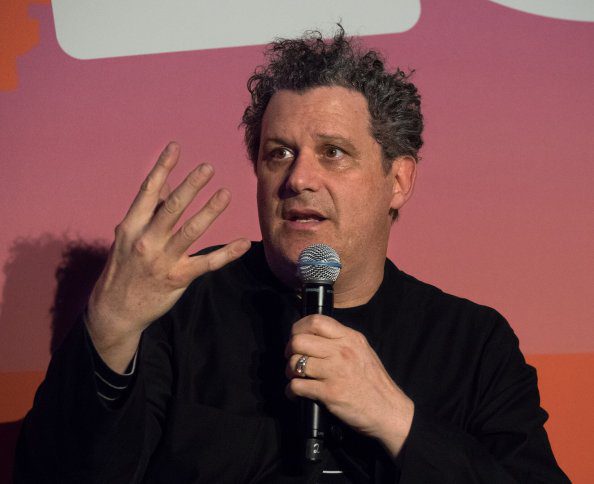
Mediabistro Archive

How a Fashion Fiend Got Into Broadcast and Landed His Own Reality TV Show Deal

Mediabistro icon
By Diane Clehane
Diane Clehane is a New York Times best-selling author and award-winning journalist who has covered the British Royal Family for more than two decades. Her work has appeared in Vanity Fair, People, Forbes, Variety, and Newsweek, where she wrote the cover story on the future of the monarchy. She is a regular commentator on CNN, NBC News, and CBS News, and a contributor to Best Life, where her royal coverage has drawn more than one million readers on MSN and Yahoo. She holds a B.A. in Journalism and Sociology from the University of Massachusetts Amherst.
9 min read • Originally published February 3, 2010 / Updated April 11, 2026
Mediabistro icon
By Diane Clehane
Diane Clehane is a New York Times best-selling author and award-winning journalist who has covered the British Royal Family for more than two decades. Her work has appeared in Vanity Fair, People, Forbes, Variety, and Newsweek, where she wrote the cover story on the future of the monarchy. She is a regular commentator on CNN, NBC News, and CBS News, and a contributor to Best Life, where her royal coverage has drawn more than one million readers on MSN and Yahoo. She holds a B.A. in Journalism and Sociology from the University of Massachusetts Amherst.
9 min read • Originally published February 3, 2010 / Updated April 11, 2026
Archive Interview: This interview was originally published by Mediabistro around 2010. It is republished here as part of the Mediabistro archive.

“It’s been a series of fortuitous events,” says Robert Verdi about a career that has taken him from the selling floor of ABC Carpet & Home in Manhattan to various studios in Los Angeles as a cable television headliner.

While the former freelance event producer and jewelry designer isn’t exactly a household name yet, he’s one of the most recognizable faces in fashion. (He’s the guy that interviewed Meryl Streep’s character, Miranda Priestly, in the final act of The Devil Wears Prada) Having logged plenty of time on cable’s small screen doing shows he loved (Surprise by Design, She’s Got the Look) and at least one he hated (E!’s Fashion Police), Verdi is inching closer to his dream of becoming a “gay cable TV superstar” and having his own network (no joke) with the premiere of The Robert Verdi Show on Logo this month. The reality-comedy series will follow Verdi in his tireless quest for total media domination of all media and hopefully in the process, he says, give young gay men and women someone to watch who reminds them of themselves. “That’s the mission I’ve given myself,” he says.


Name: Robert Verdi
Position: Host, The Robert Verdi Show; President of Robert Verdi Inc.
Birthdate: August 28, 1968. “But on Facebook, I’m 28.”
Hometown: Maplewood, New Jersey
Resume: Began as a personal shopper at ABC Carpet & Home in 1998; the same year, broke into television as on-air fashion reporter for the cable access show Party Talk; reporting/critic stints with Full Frontal Fashion and E!’s Fashion Police from 1999 until 2005. Co-hosted Surprise By Design on Discovery from 1999-2003. Judge for TV Land’s She’s Got The Look. Helms Robert Verdi Inc which includes an interior design business, a celebrity stylist division (Eva Longoria and Mariska Hargitay are longtime clients), and an event planning operation centered around Luxe Lab, the chic New York City space where he hosts Twitter parties for companies looking to connect with the glitterati.
Education: Fashion Institute of Technology, associate degree in jewelry design
First section of the Sunday Times: “The Style section.”
Favorite television show: “Hoarders. It’s a mirror for me in many ways because everything I do is about stuff. I’m not a banana peel, empty bottle keeper hoarder, but I definitely have way too much stuff in my life. I find that show to be fascinating.”
Guilty pleasure: “My Louis Vuitton collection that I started when I was a kid. I don’t collect women’s handbags. I collect lots of hard luggage.”
Last book read: Empire of Illusion by Chris Hedges


Did you always know you wanted to be in fashion?

I did. As a kid, it was the only thing that separated me from the rest of the world. I wasn’t a great athlete. I wasn’t the hot, good-looking kid. I wasn’t a great student. I knew early on somehow fashion was a manipulation and an invention. I always knew that fashion was fake — that you could dress as a cowboy one day and a Wall Streeter the next. I remember thinking as a child, ‘I’m going to dress like this.’ I also was a bit of an entrepreneur and always selling things. My first grade teacher was so frustrated with me. She told my mother, ‘You should just open a store for him because all he wants to do is make money.’

When did you start thinking about wanting to be on television?

When I was 25, I moved to New York. I grew up as a member of the MTV generation, but I didn’t have MTV. When I did [get cable], I was riveted to the really raw programming particularly the programming that mirrored me. There was a show Inside Out that was a single-topic show, like Donahue for the gay community. There was another show called Gay USA that was like a Primetime Live kind of thing and there was another one called Party Talk which was an Access Hollywood of sorts. They were all cable access shows.

Party Talk had a straight female reporting on fashion on a gay show. I called and told them, ‘I think it’s strange that gay men are so prevalent in fashion and you would have a straight woman reporting on fashion to a gay audience on a gay show.’ I wound up getting on and reporting on men’s fashion. For me, being able to work on television was cathartic because growing up, I had these feelings and there was nothing in society that acknowledged that. With television, if somebody had been out there like me I could have found somebody who could have made me believe it was okay. That’s why I wanted to get involved in TV.

How have you managed to hopscotch from one television gig to the next, particularly at a time when the competition in fashion television was so fierce?

I was always aware of not what made me like other people, but [what] made me different. What I did see was there was this whole lifestyle industry that was blossoming. I realized that the way I dressed was similar to the way I decorated and the way I entertain. I don’t think that I’m that unique in that way, so I recognized it was smarter to have a through line in all of these areas rather than live in the ghetto of one.

“TV has gotten really niche. Oprah Winfrey has her own network. It’s only a matter of time when personalities who are big enough will have their own branded entertainment division.”

Where did the idea for the new show come from?

It very much goes back to my initial reasons for wanting to be on television. What I didn’t know about television is you become something to people because TV tells people that’s what you are. I was not able to be in any area of television other than fashion and design. The greater problem was that gay men had become America’s minstrels. We’re the court jesters to the nation and that includes all of us that are on TV. It’s Carson [Kressley], me, and Jay Manuel. We’re not seen as people who have an opinion on politics, education or health. Nobody thinks of Anderson Cooper when they think of who gay men are. They think of Isaac Mizrahi, not the greatest anchor on television. I didn’t want to live a life where the only thing that mattered was what heel height or wall color or dessert plate people were using.

I had given up on selling shows. I was trying to sell a show that would be the transitional show for me. I didn’t want to be on another makeover show, and I hate being on the red carpet. I’m over it! I had met with all these television executives, and I couldn’t break through because they just saw me doing one thing. I had 30 show treatments. Every one of them was a variation on one idea. They all used what people expect me to do, but there was much more personality built in to them that was hopefully going to be the bridge to another aspect of my career. I was not able to sell them.

I got a call from my agent who wanted me to meet with this producer, Jo Honig, over at True Entertainment. She had done some things, but they weren’t incredibly successful. I said to my agent, ‘I can’t chase the dream and live the nightmare anymore.’ He said, I think you should meet with her.’ My theory about this is that I wasn’t counting on it, so my energy was different. She asked, ‘What do you have?’ I do the same thing with every producer. I asked her, ‘How many shows should you really pitch?’ She said ‘One good idea is all you really need. If you have two, I’m willing to hear two.’ I said, ‘Great. I have 30.’

You actually went in with 30 ideas? How do you do that kind of pitch?

How I pitch is different than how most people pitch: I have a one sheet that outlines the show. I create a false ad for that show where I put it on a network where I think we should be shopping it and make it look like what you’d see if you were opening the pages of Us Weekly. I have a graphic designer in my office who came up with a logo for each show idea.

They’re all really good and provocative. I laid them all out and said, ‘Pick the two you want to hear about.’ She listened and said, ‘They are all basically the Robert Verdi Show.’ What show do you really want to do? I said, ‘I actually don’t want my own show. I want [to have] my own network and produce all these shows for my network.’ She said, ‘Are you joking? Do you think that’s a reasonable goal?’ I said, ‘TV has gotten really niche. Oprah Winfrey has her own network. It’s only a matter of time when personalities who are big enough will have their own branded entertainment division.’ She couldn’t tell if it’s a joke or if I really believed it. It’s both. It’s going to happen and I would like it to be me, but most people in TV hate me.

Why do they hate you?

Well, most executives who I’ve met don’t love me because when you’re in the talent area you’re not supposed to have ideas.

Until you’re a big deal.

But even then the successful ones don’t. Let’s call Ryan Seacrest successful — do I think Ryan’s ideas would be better than mine? I don’t. He’s a puppet. I’m very New York in the way I handle things. If I don’t like something, I say I don’t like it which is not very L.A. You’re supposed to love everything and call your agent and let him fight with the executives. I always made enemies because everybody thought I had a big ego. In these situations, I didn’t. I was trying to have a dialogue about fashion by saying things like, “I don’t think we should shoot a weekly series called Fashion Police shot in Pasadena at PF Chang’s. When I live in New York, the epicenter of fashion.’ They built this stupid studio that they spent a million dollars on, and it was a bad idea. They didn’t get it.

I love She’s Got the Look. Will there be another season?

We’re shooting season three right now. There are a couple of replacements. Kim Alexis was replaced by Brooke Burke and Roshumba Williams replaced Beverly Johnson.

Tell me about the Twitter parties you’re having at your space, Luxe Lab.

I’m trying to find an editorial outlet for myself. This way I can give the information I want and let people disseminate my opinions. I come up with great gift ideas and approach the companies. We charge them to produce the event but they’re not paying what they normally would — $15,000 or $20,000 for a party. They’re paying $1,000 to $2,500 to be part of a group event. They’re not paying for my endorsement because for that they would go through an agent and it would be a bigger deal and I would make much more than I do. We come up with a list of products and have popular Tweeters and bloggers come over and show the stuff to them. We Tweet them live, let them Tweet and Retweet and we give the product away. It’s very new to us, and it’s fun. I’m always looking for new ways to grow the business.


Diane Clehane is a contributing editor to FishbowlNY. She writes the ‘Lunch’ column.

Topics:

Mediabistro Archive
Mediabistro Archive

Nina Garcia on Her Exit From Elle, Filming Project Runway, and Sizing Up Her Next Career Move

Mediabistro icon
By Diane Clehane
Diane Clehane is a New York Times best-selling author and award-winning journalist who has covered the British Royal Family for more than two decades. Her work has appeared in Vanity Fair, People, Forbes, Variety, and Newsweek, where she wrote the cover story on the future of the monarchy. She is a regular commentator on CNN, NBC News, and CBS News, and a contributor to Best Life, where her royal coverage has drawn more than one million readers on MSN and Yahoo. She holds a B.A. in Journalism and Sociology from the University of Massachusetts Amherst.
8 min read • Originally published May 17, 2010 / Updated April 11, 2026
Mediabistro icon
By Diane Clehane
Diane Clehane is a New York Times best-selling author and award-winning journalist who has covered the British Royal Family for more than two decades. Her work has appeared in Vanity Fair, People, Forbes, Variety, and Newsweek, where she wrote the cover story on the future of the monarchy. She is a regular commentator on CNN, NBC News, and CBS News, and a contributor to Best Life, where her royal coverage has drawn more than one million readers on MSN and Yahoo. She holds a B.A. in Journalism and Sociology from the University of Massachusetts Amherst.
8 min read • Originally published May 17, 2010 / Updated April 11, 2026
Archive Interview: This interview was originally published by Mediabistro around 2010. It is republished here as part of the Mediabistro archive.

“What it took to be a fashion director five, 10 years ago has completely changed,” says Marie Claire‘s fashion director Nina Garcia. “Today, you need more skill sets, and part of it is having a television persona. It has become so important to have that ability to go on television, on be on Twitter and be the ‘face’ of a magazine.”

While working at Elle, Garcia became something of a poster girl for the fashionista-as-television personality phenomenon, boosting the magazine’s brand with a mass audience by appearing as a judge on the surprise hit Project Runway. And she considerably raised her own profile in the process. When Garcia exited Elle in 2008, the behind-the-seams drama surrounding her departure was breathlessly covered by everyone from WWD to People. The attention helped make her a full-fledged pop culture personality. At the time, some fashion industry insiders speculated that she had let her burgeoning television career overshadow her day job. But Garcia got the last word when she landed at Marie Claire — and took her moonlighting gig as a Runway judge with her.


Name: Nina Garcia
Position: Fashion director, Marie Claire; judge Project Runway
Resume: Joined Marie Claire as fashion director in September 2008. Spent 13 years at Elle, rising to fashion director in 2000 and held the position until April 2008. Previously worked as an assistant stylist at Mirabella. Got her start in fashion working in Marc Jacobs’ public relations department in the early ’90s. Author of two books, The Little Black Book of Style and The One Hundred: A Guide to the Pieces Every Stylish Woman Should Own (both HarperCollins).
Birthdate: May 3
Hometown: Barranquilla, Colombia
Education: Studied at Boston University; graduated from The Fashion Institute of Technology with a degree in fashion merchandising
Marital status: Married to David Conrod; one son, Lucas
First Section of the Sunday Times: “The front page.”
Favorite TV show: “I’m obsessed with Hell’s Kitchen. That’s the one reality show I can get my husband to watch with me.”
Guilty pleasure: “Food”
Last book read: Three Cups of Tea by Greg Mortenson


Did you always know you wanted to be in fashion?

Always. My mother was a very big inspiration. She loved fashion. I loved art in school, and I was very good at drawing. I could sit at the table forever and just dream up collections and draw.

Now you’re a full-grown fashionista and a television star. Did you have television aspirations growing up, as well?

(Laughs) None whatsoever, even as a grown-up. But you know what? Television has been a wonderful experience. My aspiration was always to be a fashion editor.

Michael Kors told me he got a lot of flack for signing on to Runway before anyone knew how it was going to be received. It took a big leap of faith. What do you remember about those early days? How did the people at Elle decide to put you on the show?

The people at Elle had me and someone else in mind. It was really the producers who made the choice at the end. I was a little hesitant to be involved on a personal level because my mother had terminal cancer, and I needed time to spend with her. I wasn’t really sure what I was getting into. I agreed to do it if the other editor would pick up the days I couldn’t be there, because the producers were really set on me doing it. We did it, and when that season ended, they focused on me. It was really the producers who made that choice.

How did you know the show was a hit in fashion’s inner circle?

It was during Fashion Week, and everyone kept asking me about the show. It was like an obsession. That’s when I knew. Then I was at a movie theater and somebody said my name, and I thought I knew that person, but it was a fan. I thought, ‘My God, this must a hit if someone recognizes me.’

Being a fashion editor at a national magazine is very demanding. How do you juggle it with your TV gig?

I just work longer hours. Here’s the thing: I love what I do for the magazine, and I love what I do on television. When you do the things that you love, it’s not bad. It’s about being very organized.

“I really did think it was important to bring [Project Runway] back here. New York is the center of fashion of America. The quality of judges is better.”

Tell me what an average day is like for you when you’re shooting Runway and working at Marie Claire.

It’s a four-week shooting schedule, and the show shoots every two days. At the magazine, I come in at nine, and I leave when we’re done. The show usually starts taping around 11 o’clock and ends around seven. I try to pop into the office before the show, and afterwards, I go directly home when I can. If there’s an industry event I have to go to, I’ll sometimes go all made up and ‘camera ready.’ (Laughs) The show shoots for four weeks. A lot of it is summer weekends that I have to sacrifice, but it’s a joy to do it.

You and I spoke several times when you were exiting Elle. It became a tabloid story, and it got a lot of press. You went from being a ‘civilian’ to becoming a bonafide ‘personality.’ Were you surprised by how much coverage your departure got?

I was pleasantly surprised. I noticed that I had a lot of fans in the industry and on the outside.

There was a lot of behind-the-scenes drama that was being reported when you left Elle. What can you tell us about what really happened?

That story is old news. That is old and done, thankfully. (Laughs)

The other big story surrounding the show at the time was that it was moving from Bravo to Lifetime. Then it went from being in New York to Los Angeles. How is the show different, and how is it the same?

I think the show is the same. The fact that we moved to Los Angeles was very controversial because the schedules were difficult for Michael and I to be there. The producers are very smart to keep the show as in tact as possible, and they’ve been very sensitive about that. However, the move to Los Angeles threw a wrench in all that because it was impossible to coordinate people’s schedules — Michael [Kors], Tim [Gunn] and I all have jobs in New York. The relocation of everyone to L.A. was almost impossible. Having just wrapped the seventh season, which is with all of us back in New York, I can tell you it’s the same. I really did think it was important to bring the show back here. New York is the center of fashion of America. The quality of judges is better coming out of New York. I’m not discounting the excellent talent and judges in L.A., but New York is really where it’s at.

“I love to speak to women and answer their questions on fashion. I wish there was a way to get closer to the public.”

Project Runway has spawned an entire genre of fashion reality television. Do you watch any of those shows?

I don’t really watch the other shows. Sometimes I’ll watch Top Model.

Did you see any of Isaac Mizrahi’s show [The Fashion Show] on Bravo, which was something of a Runway replacement?

No. But I watch Ugly Betty.

Do you think Runway has played a major role in having fashion be such an important part of pop culture right now?
Runway was a phenomenon. It just struck it a chord. It’s really about the talent and the process of creation. It’s very clever and was really the first of the genre.

There were some reports that you had a development deal with Harvey Weinstein. Are there plans to give you your own show? Would you want one?

I don’t have a development deal, but the one thing I have learned is never say never. I will consider things as they come.

You’ve also written several books on fashion. Are there more in the future?

Perhaps.

Is that something you enjoy doing?

Very much, because it’s very close to what I do in the magazine, so I love doing it. I love to speak to women and answer their questions on fashion. I wish there was a way to get closer to the public.

What about Twitter?

(Laughs) Not with a three-year-old. At this very moment, I have yet to find the time. Maybe when my son goes to school. I’ve thought about it. I’d love to do it, but I wouldn’t want to do it in a half-baked way. If I’m doing it, I’m going to really do it.

What advice would you give to someone looking to get into fashion magazines today? It’s a tough time to be in publishing.

Yes, it is. This industry will probably evolve even more. I also think that people [who] are looking to get into the business are more equipped than we were back then. They have more skill sets — they use Twitter, they blog, they have all these other skills. If that is your dream, then follow your dream and do not give up. You have to be very consistent and tenacious. Publishing is a wonderful, wonderful industry. I think there will always be room for talented people, incredible images and incredible writing.


Diane Clehane is a contributing editor to FishbowlNY. She writes the ‘Lunch’ column.

Related:

  • Media Career Advice

Topics:

Mediabistro Archive
Mediabistro Archive

Joni Evans on Why the Model for Books Was Broken and How She’s Bringing Them to the Internet

Mediabistro icon
By Diane Clehane
Diane Clehane is a New York Times best-selling author and award-winning journalist who has covered the British Royal Family for more than two decades. Her work has appeared in Vanity Fair, People, Forbes, Variety, and Newsweek, where she wrote the cover story on the future of the monarchy. She is a regular commentator on CNN, NBC News, and CBS News, and a contributor to Best Life, where her royal coverage has drawn more than one million readers on MSN and Yahoo. She holds a B.A. in Journalism and Sociology from the University of Massachusetts Amherst.
13 min read • Originally published October 1, 2010 / Updated April 11, 2026
Mediabistro icon
By Diane Clehane
Diane Clehane is a New York Times best-selling author and award-winning journalist who has covered the British Royal Family for more than two decades. Her work has appeared in Vanity Fair, People, Forbes, Variety, and Newsweek, where she wrote the cover story on the future of the monarchy. She is a regular commentator on CNN, NBC News, and CBS News, and a contributor to Best Life, where her royal coverage has drawn more than one million readers on MSN and Yahoo. She holds a B.A. in Journalism and Sociology from the University of Massachusetts Amherst.
13 min read • Originally published October 1, 2010 / Updated April 11, 2026
Archive Interview: This interview was originally published by Mediabistro around 2010. It is republished here as part of the Mediabistro archive.

Just ask Joni Evans — sisterhood is powerful. Especially when those sisters share your dream of starting an online community and are willing and able to kick in their own cash to make it happen. When the publishing powerhouse ditched print to explore her options online, she found willing partners in her friends Page Six columnist Liz Smith, Wall Street Journal political columnist and former presidential speechwriter Peggy Noonan, 60 Minutes correspondent Lesley Stahl and legendary advertising executive Mary Wells. Each of the five women anted up $200,000 of her own cash to start wowOwow.com, a site, says Evans, for “the self-assured woman who is just a little too old to care what everybody thinks.”

It’s as much Evans and company’s connections and distinctive sensibilities as it was their cash (a second round of financing raised $650,000 from “contributors and friends”) that has shaped Wow into a virtual lunch at Michael’s. Drawing from a plugged-in and socially conscious circle of women that includes Whoopi Goldberg, Marlo Thomas and Candice Bergen, Wow’s conversational content ranges from the frothy (the daily weather forecast includes a barometer on whether it’s a good hair day) to the political (Cynthia McFadden covered the presidential election). There are lots of pithy comments about sex and shopping as well as candid insights on everything from aging to the economy from women who, prior to joining Wow’s sophisticated sorority, were much more accustomed to reading stories about themselves than writing them. And, as expected with Evans at the helm, there’s plenty about books and authors, including the ‘Just the Right Book’ vertical launched earlier this month in partnership with R.J. Julia in Madison, Connecticut. Evans is resolute to be at the forefront of the book publishing revolution as she sees it, and she believes it’s happening online.

“There’s so much talent, so much quality and so many gems that should make it — and make it in a new way,” she says. “I do believe it will happen. I think the Internet and the whole concept of being able to find your own interests at a reasonable price is going to happen. But it’s going to take time.”

While Evans admits Wow is “dwarfed” by the kind of funding Arianna Huffington recently got ($25 million from Oak Investment Partners), she’s buoyed by $1.5 million Wow scored from Rime, a venture capital group, and Bob Pittman’s Pilot Group. She sums up Wow’s current state of affairs thusly: “We’re women-owned. We’ve all put in our own money. We all have equity. We’re very lean. We’ve done everything with our own dollars. It’s huge at nine months old to have gotten what we did. We’re very cheered here.”


Name: Joni Evans
Position: CEO, wowOwow.com
Resume: Prior to starting up Wow, was the senior vice president of the William Morris Agency’s literary department. Over the course of her 35-plus year career in publishing, served as president and publisher of Simon & Schuster and publisher of Random House. Has written for The New York Times, The Washington Post, Vanity Fair, New York and O, The Oprah Magazine. Got her start in publishing as secretary in the fiction department of McCall’s. “I was doing everything — reading all the slush, answers all the calls and getting all the coffee.”
Birthdate: April 20, 1942. “I’m 66 years old! I was the youngest person in the room all my life, and just yesterday I turned out to be the oldest.”
Hometown: Larchmont, New York
Education: University of Pittsburgh, BA in creative writing
Marital status: “Divorced, then divorced again, now madly in love with Bob Perkins, market research guru, with mutual non-intent to marry and to live happily ever after together.”
First section of the Sunday Times: “The Style section. It’s a soft entry to a long morning’s read… a martini to cushion the news.”
Favorite TV show: “I have no time to watch TV, but I do watch Morning Joe in the morning and Jon Stewart — who makes me feel we just might live through what I heard in the morning.”
Guilty pleasure: “Armani anything and Ghirardelli milk chocolate tidbits eaten best straight from the refrigerator.”
Last book read: “I’m nearing the end of three at once — Michael Lewis’ Panic, Sarah Thornton’s Seven Days in the Art World, Bryan Caplan’s The Myth of the Rational Voter — and I just closed The Black Swan by Nasim Taleb.”


Where did the idea for wowOwow.com come from?

I left William Morris about three years ago because I knew that the model for books was broken. I wanted to find a way to bring books on to the Internet. So, I got myself a little office on top of the fabulous old Madison Avenue bookstore which is since out of business. I was up there in one room alone and every day I’d come and log on and look for ways to bring books online. A funny thing happened while I was online — I couldn’t find anything for me to read. There was nothing on the Internet for a woman over 40 who is seasoned, savvy, smart, sexy and not looking for work, a man or advice. It was very much politics only, news only or Match.com. I couldn’t find a home for someone like me who really loves content. So I went to my authors who I’d been working with forever — Peggy Noonan, Mary Wells Lawrence, Lesley Stahl and Liz Smith and said, ‘Hey, let’s start something!’ They were all thinking along the same lines. That’s how it happened. They all felt, ‘Let’s do this.’

How’s it doing?

It’s doing great. We launched March 8 [2008] and came out of beta in June. The month of November, we were 2,000 short of 600,000 uniques. This is the great part — we’re getting over four million page views and over seven minutes online. It’s growing. We’re very cheered here.

What’s gotten the most hits? Is it a particular story or vertical?

It changes every day. When [contributor] Whoopi Goldberg does something outrageous like she did when Sarah Palin was announced [as John McCain’s running mate], it goes bonkers, but there are surprises that get picked up from MSN, Drudge or Huffington Post. Margo Howard, a ‘Dear Abby’ daughter, has just joined our site — she’s moving from Yahoo to Wow. She can write a column that can go viral and never stop. We have a ‘Love Goddess’ who writes for us, and we did a thing last week on how to get your v-jay in shape and that went ballistic. We talk about everything and you never know whether it’s shoes or the women of Afghanistan who are going to make the difference.

A few months back you added your first male contributor, Billy Norwich, to the site. Are there plans to introduce more guys to the mix?

Probably. Some of the audience doesn’t like it, but Billy is just so female-friendly and just so much on our side we figure it’s okay.

There are so many female-centric sites — and more popping up every day. What’s your competitive difference?

We’re serving a demographic that has been underserved forever: women over 40 who are with it, accomplished and don’t give a damn what other people think of them and are not afraid to speak the truth and to have fun. We’re not mean, but we don’t mind shaking it up. We’re serving a community. We have hopes that this is a brand, not just a Web site that defines who women are and what we’re capable of doing. Our dreams are so big.

What does that mean for the future? How does your recent funding figure in to your plans?

Our plan is to be profitable with that money alone. We’re hoping to get the kind of [advertising] revenue where we don’t have to add more. Who knows in this economic environment? But having the kind of advertising we started out with, we’ve been able to demonstrate to our advertisers that our target audience is upscale, sophisticated, and they spend. That’s our model.

“Publishers are being turned into venture capitalists — they go out there and make a bet on a new product. If that product doesn’t work within three weeks, they drop it. Loyalty has gone out the window.”

But it’s a pretty perilous economic climate. What are you doing to attract new business?

We also do sponsorships and monthly events. Sometimes it’s twice a month where we have groups that ask us to come talk to them. We can talk about mentorship, running your own business — we can talk about anything. We just did an event for Citi’s Women and Company. Marlo Thomas and Liz [Smith] came to that one. There were 500 people in the room and it was nonstop. Miss Manners [Judith Martin] just did one with Julia Reed in Chicago at Tiffany’s. We’ve got a lot of these in the works for next year.

So when you put a proposal together for prospective sponsors, this is one of the programs they can take advantage of as value added?

Yes. We want to do our advertising different. We want to use the genius of feedback and interaction to find out what a Sony customer really wants or really thinks about or come up with the ideas that Sony can tailor for them, so we’re pushing to make our advertising as creative as our editorial.

The other thing that happens is the community starts coming out and we start seeing Wow women in all these other cities. We don’t want to be just New York and California-centric alone, so that’s another way of making money. We’ve reached out to BlogHer and we’re doing a big event with them next spring. Our business development people are everywhere.

At the moment, there is this sense that anybody in the media from print journalists to talking heads that has lost their job has turned to the Internet for their next act. Can all these people make a living providing content when most sites are paying little or nothing for it?

They are going to make a living. They’re not making a living now. Maybe there are models that are pulling in loads of money, but right now we’re right at that nexus point where old world media is coming online and all these tragic things I’ve read about [publishing] has all this talent [that] is going to do exactly that. They are going to go home and go on to the Internet. I think this medium is going to be where you find everything, including your own next job. That’s when advertising is going to shift and communities are going to come on that people want to pay for. Right now, no, I don’t think people are making money off of it. But they will be — and they will be really fast.

“When the Web came on, rather than embracing it right away, it was really feared. I just don’t think that reading online and marketing online is a danger — it’s an also.”

Here’s hoping. Do you pay your writers?

We don’t. We have this feature, ‘A Friend Stopped By,’ and we invite everybody to write for us. We link to everybody, and we help sell books. We pay a couple of columnists very little money. My hope is that this becomes a real profit center and that we have advertising revenue that spills over, and we will pay those people who are bringing more traffic to the site. We never felt we weren’t going to give money — we’ve given equity to our contributors and we’ve given some equity to our staff. I would love for this to be a new model for women and women-owned companies.

How many paid staffers do you currently have?

Twelve people — they were all at my house yesterday.

This is a dismal time for book publishing. How do you view the state of the industry?

It was inevitable. You could see it coming years ago.

Aside from the macro economic factors, how did it get this bad?

The model has been broken for 25 years — the concept of publishing books that can be returned. The publisher owns the entire risk. They pay these enormous advances that don’t get returned, they let books go out there that can be returned. The book store makes the publisher pay for the advertising and the real estate. Agents — like Joni Evans at the William Morris Agency — when they’re disappointed in the publisher, move the book to another house. It was always a broken model.

When the Web came on, rather than embracing it right away, it was really feared. I just don’t think that reading online and marketing online is a danger — it’s an also. Some people are really loving reading Kindle. How did it get this way? By not keeping up with the times. When I came into publishing in the 60s, talent was all — the celebration of quality was all. It wasn’t about the deal. You don’t buy a book by buying a Random House book or a Knopf book or a Doubleday book, you buy good books.

How much more difficult is it these days for authors that don’t have a marquee name to get a book published?

It’s horrendous. Publishers are being turned into venture capitalists — they go out there and make a bet on a new product. If that product doesn’t work within three weeks, they drop it. In my day, you stayed with product for seven books. There was loyalty. Loyalty has gone out the window.

Tell me about ‘Just the Right Book,’ which you launched on Wow this month.

Our audience are readers. If you ask, ‘What are you reading now?’ we get so many responses, it’s off the charts. When we speak to our contributors, they can’t wait to tell you what they’re reading and what they’re loving. It’s like a book club online. It celebrates books which we think our audience would like to read and allows authors to just write — not necessarily about their own book but about their experiences that led to their book. We’re putting in different programs about the classics. One thing we found is that our readers love slideshows. It’s perfect for coffee table books that are very hard to promote in stores because half of them are in a plastic wrapper. Having them online has proven to be a great feature. People come on, go through 10 pages and order the book.

With online features like that and the advent of Kindle, what’s going to become of the good old-fashioned book?

It’s not an either-or. Nobody gets that. It’s an also.

Since making the jump from publishing to working online, what’s been the major difference in the way you work?

There’s a hundred answers to that question. The speed is palpable. It’s changed my whole life. The great thing is the reaction you get in two seconds from people. I love the forward feeling. In books and in magazines, you go over something 50 times. Although we do copy edit, we put it up and we see how it works. In five minutes, you know.

Are you working harder or just differently?

Well, because it’s a start-up, I have absolutely no life. I am working 18 hours a day. I get up at 2 in the morning and work until 4:30. I’ve never worked that hard and my staff is working that hard with me. But that’s going to change. It’s much more labor-intensive but only because I’m a start-up.

Any lessons you learned really early in your career that still resonate?

Staying relevant. Making a difference. Survival. I always want to make a decision and change the world. I always wanted to make an impact. I’ve had big falls in my career. I’ve been shut down and passed over. Whenever something doesn’t go right, I know it’s for a reason. What it usually does is tell me, ‘Get up, get out and do something else.’

What would you consider your greatest success?

Seeing what I liked and believed in become a best seller was dizzying. I never had an extraordinary education. I came from very humble parents. My favorite book that I signed, worked on and waited 12 years for was Julia Phillips’ You’ll Never Eat Lunch in This Town Again which to me was the told it all. She was my best friend for years. It was so important to get her story out and let people know what Hollywood was really about. She was fearless, she was brilliant; she was trouble. She changed that industry and she changed the way certain kinds of memoirs would be written ever since. Things that strike to heart of reality and truth are my greatest successes.

What about your biggest disappointment?

I guess you could say Turtle Bay, which I believed in. [Turtle Bay Books was a short-lived imprint of Random House which Evans helmed.] I had great people. They tore us down in nine months. I don’t know if that was my biggest disappointment as much as it was my biggest embarrassment. I really thought it was going to make it. My biggest disappointment? It hasn’t come yet. Everything that happens does for a reason.

How would you say you’ve gotten to where you are?

I don’t know where I am. I’m still beginning.

Do you have a motto?

I do. It comes from the French philosopher Pierre Teilhard de Chardin: “We are not human beings having a spiritual experience, we are spiritual beings having a human experience.” I live by that — let the winds of fate dance between you and your destiny. Don’t keep pushing things. It’s either meant to be or it’s not.


Diane Clehane is a contributing editor to FishbowlNY and TVNewser. She writes the Lunch column.

Topics:

Mediabistro Archive
Interviews

So What Do You Do, Isaac Mizrahi, Fashion Icon and Creative Director?

The consummate Seventh Avenue showman describes his new reality show and the joys of blogging

isaac
Admin icon
By Diane Clehane
Diane Clehane is a New York Times best-selling author and award-winning journalist who has covered the British Royal Family for more than two decades. Her work has appeared in Vanity Fair, People, Forbes, Variety, and Newsweek, where she wrote the cover story on the future of the monarchy. She is a regular commentator on CNN, NBC News, and CBS News, and a contributor to Best Life, where her royal coverage has drawn more than one million readers on MSN and Yahoo. She holds a B.A. in Journalism and Sociology from the University of Massachusetts Amherst.
16 min read • Originally published February 7, 2024 / Updated April 11, 2026
Admin icon
By Diane Clehane
Diane Clehane is a New York Times best-selling author and award-winning journalist who has covered the British Royal Family for more than two decades. Her work has appeared in Vanity Fair, People, Forbes, Variety, and Newsweek, where she wrote the cover story on the future of the monarchy. She is a regular commentator on CNN, NBC News, and CBS News, and a contributor to Best Life, where her royal coverage has drawn more than one million readers on MSN and Yahoo. She holds a B.A. in Journalism and Sociology from the University of Massachusetts Amherst.
16 min read • Originally published February 7, 2024 / Updated April 11, 2026

Isaac Mizrahi is a man of many talents: he’s headlined his own one-man off-Broadway show, makes a mean roast chicken, wrote a series of comic books (Sandee the Supermodel), designed costumes for Broadway (The Women, for which he won a Drama Desk Award) and the New York Metropolitan Opera (Orfeo ed Euridice) and just happens to design two of the most talked-about women’s collections of the year.

The man who helped make Target the capital of high-low chic, is currently having a moment. His eponymous line shown during New York’s Fashion Week garnered rave reviews, his first collection for Liz Claiborne has just hit stores, and everyone from Michelle Obama to savvy and newly price-conscious socialites are stepping out in his sunny, cinema-inspired looks.

Mizrahi’s personal story is just as compelling as one of those “fabulous” black-and-white films starring Joan Crawford or Carole Lombard that he can (and will) recite, line by line. Born in Brooklyn, he spent much of his childhood staging puppet shows in his backyard and designing clothes for his mother’s friends. He went on to study at The High School of Performing Arts and Parsons School of Design before launching his own business in 1987.

Mizrahi became a pop cultural phenomenon — and a household name — when he made the 1995 documentary Unzipped, which offered a hilarious and unvarnished look at his life behind the seams in fashion. While his own star continued to rise, his company faltered, and in 1998 backer Chanel shuttered his business.

But Mizrahi came back in a big way in 2003 with his trailblazing line for Target and the launch of several licensed brands. Now newly installed as the creative director for Liz Claiborne, Mizrahi is determined to revive the brand that was a staple of the working woman’s wardrobe in the 1980s with his signature mix of bold brights, whimsical accessories, sunny prints, and public relations savvy.

He’s off to a good start: Just last month, it was announced that Seventh Avenue’s renaissance man would be helming a new reality show on Bravo called — what else? — The Fashion Show. As host and “head judge,” Mizrahi’s presiding over a team of aspiring fashionistas looking for their big break. The show is scheduled to premiere May 7.


Name: Isaac Mizrahi

Position: Creative director, Liz Claiborne, and host of The Fashion Show on Bravo

Resume: Designer, television personality and first-time author (How to Have Style, Gotham Books 2008). Joined Liz Claiborne as creative director last year after a successful six-year run with Target. Winner of four CFDA awards, including a special award in 1996 for Unzipped. Hosted two television series — for Oxygen and the Style Network.

Birthdate: October 14, 1961

Hometown: Brooklyn, New York

Education: Parson’s School of Design

First section of the Sunday Times: “The obituaries. It feeds the morbid side of me that wants to know about people who just died. It also feeds my obsession with my own death. But the first thing I read every morning is the horoscope in the New York Post.”

Favorite TV show: “I love Ugly Betty, The Ghost Whisper and Ace of Cakes on the Food Network and Top Chef.”

Guilty pleasure: “Eating. My addiction is food. I love to cook.”

Last book read: I read a lot of different things at one time. I just read Doris Kearns Goodwin’s No Ordinary Time and Secret Ingredients, a compilation of all the great food writers from The New Yorker. It’s really, really good. There’s this thing in there on casseroles that I loved.”

You’re one very busy man who just got busier. How did the new show come about?

I was talking to Andy Cohen [Bravo’s senior vice president of production and programming], who I think is the most charming, fabulous person on Earth, and we were talking about one project, and he came back and said, ‘What about this?’ I had even more enthusiasm for this idea than the one we had been talking about. A few weeks later, he came back with an offer and here we are. I can’t refuse him anything. Actually, that’s the best part of this relationship — I do adore the Bravo people so much. They’re so smart — smarter than the average network executive.

They certainly are committed to marketing their shows in a big way.

Yes! They’re really taking over — this [fashion reality show] genre belongs to them.

When did this all happen?

Recently — in December. And to all you deal-makers out there: Unless something happens quickly, it’s not going to happen. Unless it takes 10 years. Things either take two months or 10 years.

What can you tell me about your role on the show?

I’m the host and kind of like the head judge. The first day of work was the day after my collection [premiered], and I was so exhausted. It was a day of blocking and I was like, I am not going to make it through these five weeks. I don’t sleep well usually, but I ended up going home after that first day and slept for like 20 hours or something scary like that, and I found myself in the most divine position. I felt like, ‘Oh my God, this is the most fun, engrossing job in the world because when you take away all your preconceived notions about it and get that this is a bunch of struggling young designers who are really trying to prove themselves, the drama of that, at least to me, is irresistible. After almost every elimination, I feel like sobbing. It’s very, very sad for me.

I don’t know how they are going to edit it. They may edit it where I’m telling [the contestants] all the bitchiest, meanest things, but I do think they need to hear that. They do need to rise above the whole personal thing and play it like a game, but it’s tricky. At the same time you’re encouraging them to make it the end-all, be-all of their lives — like, ‘Unless this is completely attached to your ego, don’t bother.’ This is totally personal and not personal at all. Do you know what I mean?

When Unzipped came out, people stopped me in the street and said, ‘That was such a lesson about tenacity and not listening to anyone and just doing what you want and I was so inspired…’ Artists, lay people — all kinds of people were stopping me on the street. I think this is going to inspire people. The message to me, so far, is you have to completely attach yourself and completely detach yourself at the same time. On top of that, you need to enjoy your life. Do something out of a place of joy and fun, otherwise don’t bother. This is what we keep coming back to on the show.

You’re hardly someone who sits home doing nothing to begin with. How are you fitting this into your already jam-packed schedule?

(Laughs) Honestly, I don’t know. I have 10 days of work and one day off. So there’s one day of the week which is quite calm — or really every third day I get a half day of shooting, so I take care of a lot of business on those days. I have a day off every 10 days and a lot of it gets done then. And, I work at night because I don’t really sleep that much.

How many hours a night do you need?

Four. I don’t need a lot. Then, occasionally, I’ll sleep for like 20 hours.

It seems as if Bravo’s plan is to have your show fill the void left by Project Runway. What do you think?

I’m sure strategically that’s part of what the network is thinking. Also, it’s thinking, ‘Hello, we created this genre and somewhere along the line, they took it away from us.’ Of course, I don’t know what critics will think, and I don’t know if Project Runway is totally a beloved thing, but I don’t really see it at all as competing with that show. It’s just a fashion competition show. There should be more than one. There are so many food competition shows on every channel — not just the Food Network. I think it’s just a really entertaining form of reality television.

One big advantage working with Bravo is that you’ve got NBC Universal behind you. Are there promotions or cross-overs with the network planned? I noticed you did the Oscar fashion post-mortem on Today.

Probably. I’ve worked for the Today show a lot. I used to do segments for them.

I know you’ve done some red carpet reporting. The infamous Scarlett Johansson boob grab comes to mind…

That was for E!, actually. (Laughs) Can you refer to it as the ‘underwire grab?’ — because I so was not grabbing her boob. It was more like the ‘underwire feel.’

Speaking of the red carpet, I thought the fashion at this year’s Oscars was bad. And those few women who did look fabulous ditched the red carpet and went in the back door. Bad news for fashion all around. I thought it was dreadful.

Honestly, so did I. There was no color and nothing daring. Nobody took any risks. It’s getting worse and worse that way.

I know you’re a huge television fan. What were your favorite shows growing up?

There were so many. I’m really a television person. Because of the insomnia, I never shut it off. It was always like my best friend. At some point, my parents thought that maybe it was the TV that was keeping me up, so they tried to get rid of it. I threw such a fit, they couldn’t do that. Honestly, it ended with this really bad scene with my mother throwing the TV set on the floor. (Laughs) It was not pretty at all, but I ended up getting my way.

I loved reruns of I Love Lucy. It’s such a typical, trite answer, but I love watching it. It’s not on TV Land anymore — I think it’s on the Hallmark Channel. I happened to see it the other day — it doesn’t matter how many times I’ve seen an episode, I was screaming. It’s the funniest damn thing on television.

I grew up watching talk shows — I loved Merv Griffin, I loved Mike Douglas, I loved Johnny Carson. I was an addict for those. It seemed like people actually talked. When I did my talk shows on Oxygen and Style [Network], I tried to actually talk — I really didn’t just want to promote movies. I wanted to talk about people’s thoughts, and I didn’t want it to be so pre-produced. If I go back to talk television, I’ll do something like that. Just come on because you feel like talking about something.

You’ve always seemed to gravitate toward television in a big way. You’ve been on Oprah and every talk show imaginable, you’ve had your own shows and appeared on Sex & The City and Ugly Betty. You’ve even been on Jeopardy. Why are you so drawn to the medium?

It is true that I gravitate towards it. It’s part of who I am because I’m a ham. I like talking. I like to express myself in many, many ways. I like a lot of things. I don’t just like designing clothes. I’m very inspired by all different forms of expression. I read a ton. It’s not enough just to design clothes. I don’t know what I’ll ever be remember as — if I’ll be remembered. I don’t know what I’ll be remembered for — Unzipped or my clothes or my cabaret act. I have to say a major part of the joy of my life is not knowing that and not looking over my shoulder and wondering why I’m not doing more of one thing and less of another thing.

If people think of it as me reinventing myself, I’m glad. If that’s a good lesson for people, it’s good, but more than anything it’s about me not feeling bored. It’s me being engaged in the moment. I don’t mean to be arrogant about stuff. I used to sew a lot as a kid. When I look at a sample and the pattern maker says, ‘I can’t do any better’ I say, ‘Well, you’re fired because I can do better.’ When I go to a restaurant, I think, ‘This is a roasted chicken? You’ve got to be kidding me!’ There are some things you become really good at, but that doesn’t mean you have to spend the rest of your life roasting chickens. You know what I mean? I do feel at this age — I’m 47 now — I can walk into a room and say to a television executive, ‘I think this is a really good idea.’

Unzipped is arguably the high-water mark for depicting what really goes on in fashion in a very accurate and entertaining way. Fashion is such fodder for movies and television — how do you think the industries have affected each other? Is there any downside to it at all?

I don’t think there’s a downside. I think it’s a paradigm that is continually shifting. The more we portray fashion as something that’s over the top, the more we’re going to sell over the top clothes. There’s the Shakespearean other to side to that coin too, which is the more over the top things there are in the world, more of the opposite of that exists as well. I think the more you shine the light on fashion in the form of entertainment, the better it is for our industry. Unzipped was probably my most important life’s work, unfortunately. No matter what I do as a designer, it will never be as potent as what I did with Unzipped because it made fashion work in that format.

You’re also opening yourself up in much of the same way on your web site and seem really into that. How much time do you spend on that?

Every single day there’s a new reason to log on. Either it’s a three-minute segment or a new video blog or some bit that’s new. We spend three long, full days a month taping. Then I tape my video blog two or three times a week. We also take pictures with my video blog camera, and I put stuff up almost every single day. Of all the things I do, it’s probably my favorite because it’s more personal. It’s really like a scrap book. It’s what I do instead of a talk show now.

Now that the show has added commitment, will you be scaling back your involvement with it?

No. We have shoot dates planned for April. With daily blogging, I’m trying to do what I can in my dressing room. It’s fun. It’s too delicious to give up. (Laughs)

There’s probably no bigger fashion star right now than Michelle Obama. What do you think she’s going to do for American fashion?

I think she’s going to be an unbelievable ambassador for fashion. I love her — especially because she loves clothes. She has such a young take on the whole thing. Young, yet proprietary. She’s kind of like the Carrie Bradshaw of the next 10 years.

You were one of the first proponents of ‘high-low’ style. These days everyone is having to consider what that means. How do you think that phenomenon is going to affect the fashion industry long-term?

Even more than the economy, I think the Obama family is going to affect it. [Michelle Obama] is the perfect example of high-low because she values the J.Crew sweater as much as she does some ensemble by Isabel Toledo. I just think that speaks volumes about the direction everyone has been going in for a number of years.

The acceptance of design at different levels is remarkable now. To me, the greatest luxury is the right thought or the right idea. That could cost very little — the right thinking at the right time. So more and more, as people get conscious of budget, I don’t think ‘fast fashion’ will be as trendy. I think actual design will be valued.

[Michelle Obama’s] choices, for the most part, haven’t been at all mainstream.

That’s true. It’s for the love of something. It’s not because she sat with a million stylists and they said, ‘You should do this or that.’ It’s like someone actually had some passionate feeling for something. And, it’s very politically correct that she wore Isabel Toledo [for the inauguration].

Do you think it’s harder to break into the fashion business now than it was 10 year ago?

(Pauses) No. My answer is no, I don’t. It was so hard breaking into the fashion industry 20 years ago. If you ask Calvin Klein how hard it was breaking into the fashion industry 40 years ago or Ralph Lauren how hard it was 50 years ago … it’s always really hard. It doesn’t get any easier. Every generation thinks, ‘Oh my God, it’s never been so terrible,’ but it has.

Speaking of hard times, your costar Fern Mallis told me not too long ago that she thought the coverage in WWD and other publications has focused too heavily on gloom and doom of the economy — there wasn’t enough cheerleading for the fashion industry and all the negativity almost becomes a self-fulfilling prophecy. What do you think?

I don’t know that people are that gullible anymore. I think WWD is right on. I love the idea of telling it like it is. When I was a kid growing up, it was much less about that. It was kind of like propaganda — ‘Oh, no, everything is great!’ and then you’re out of business. I was once having lunch with Joan Collins and she was in a revival of some Noel Coward play. I said to her, ‘How are tickets selling?’ and she said, ‘Lousy!’ I thought, ‘Wow, imagine, you’re in this play, and you are so fabulous and you can say, ‘I’m sorry the ticket sales suck.’ I wish I was in an industry like that, where you could just say, ‘Business isn’t good right now.’ So I’m a champion of telling it like it is.

Your collections and certainly your attitude toward the business in general have always been very optimistic. How significant a part has that played in your career and your desire to keep trying new things?

I’ve trained myself to think a certain way. For me, there’s nothing in life but bravery. There’s nothing in life but looking at the thing you’re most afraid of and doing it. That, to me, is all. You can see it in my clothes. The clothes for Liz [Claiborne] are so optimistic. If you go and just wear black for the rest of your life now because there’s a recession, the circumstances have won. They’ve won out. You have lost the big hard battle. It just like what President Obama was saying: Now is not the time to lose the battle, now is the time to see all the gray areas and try to work within those areas. I want you to think about a pink print. You take one step at a time, one belt at a time, one shoe at a time, and you’ll get there.

Despite having had some bumps in the road, you’ve continued to do try new things and reinvent yourself in some interesting news ways. What’s the secret to your longevity?

I don’t see this as reinvention, I see it as living my life every single day and not being bored to death. I don’t reinvent anything, I just do what I think is right and seems amusing. I only do things I’m excited about.

What the best piece of advice you could offer to someone looking to get into the business?

(Pauses) Don’t listen to anybody. Do exactly what you think is right, and you’ll find your moment and your audience.

What would you consider your greatest success at this juncture?

Probably the Target thing. Having made that ‘masstige’ [prestige for the masses] thing happen.

What about your biggest disappointment?

Wow. (Pauses) My partnership with Chanel.

How would you say you’ve gotten to where you are?

The way I’ve gotten to where I am was not thinking about getting anywhere. I really mean this — I don’t think about where things are going. I think about where I am and how much I am engaged in what I’m doing. That’s one of the early lessons I learned after 10 years in business: If you feel put upon or if you feel like you have to do something you’re never going to be good at, you’re never going to do it well. The lesson I learned is unless everybody is doing exactly as they please, it’s not going to work. I’ve learned that in hiring and working with people that unless they’re doing exactly as they please and what they feel they are good at and feel challenged in doing, then you’re not going to get good work out of them. Get someone who really needs the thing you want them to do.

Do you have a motto?

I don’t have a motto, but I have this thing that I made up about style: Style is knowing when not to have any.


Diane Clehane is a contributing editor to FishbowlNY and TVNewser. She writes the ‘Lunch’ column.

This interview has been edited for length and clarity. Mediabistro regularly interviews creative professionals who have accomplished amazing things in their careers.

Topics:

Interviews

Posts navigation

Older posts
Newer posts
Featured Jobs
A
A
A

h
h
h

h
h
h

H
H
H

M
M
M

All Jobs »
PREMIUM MEMBER

Joanna Lentini

New York, NY
5 Years Experience
I am a writer and photographer that specializes in underwater environments, adventure travel, and conservation issues. Some of my projects have...
View Full Profile »
Join Mediabistro Membership Today

Stand out from the crowd with a premium profile

Mediabistro Logo Find your next media job or showcase your creative talent
  • Job Search
  • Hot Jobs
  • Membership
  • Newsletter
  • Career Advice
  • Media News
  • Hiring Tips
  • Creative Tools
  • About
Facebook YouTube Instagram LinkedIn
Copyright © 2026 Mediabistro
  • Terms of Use
  • Terms of Service
  • Privacy