

Mediabistro Logo Mediabistro Logo
  • Jobs
    Search Creative Jobs Hot Jobs Remote Media Jobs Create Job Alerts
    Job Categories
    Creative & Design Marketing & Communications Operations & Strategy Production Sales & Business Development Writing & Editing
    Quick Links
    Search All Jobs Remote Jobs Create Job Alerts
  • Career Resources
    Career Advice & Articles Media Industry News Media Career Interviews Creative Tools Resume Writing Services Interview Coaching Job Market Insights Member Profiles
  • Mediabistro Membership
    Membership Overview How to Pitch (Premium Tool) Editorial Calendars (Premium Access) Courses & Training Programs Membership FAQ
  • Log In
Post Jobs
Mediabistro Logo Mediabistro Logo
Search Creative Jobs Hot Jobs Remote Media Jobs Create Job Alerts
Job Categories
Creative & Design Marketing & Communications Operations & Strategy Production Sales & Business Development Writing & Editing
Quick Links
Search All Jobs Remote Jobs Create Job Alerts
Career Advice & Articles Media Industry News Media Career Interviews Creative Tools Resume Writing Services Interview Coaching Job Market Insights Member Profiles
Membership Overview How to Pitch (Premium Tool) Editorial Calendars (Premium Access) Courses & Training Programs Membership FAQ
Log In
Post Jobs
Log In | Sign Up

Follow Us!

Mediabistro Archive

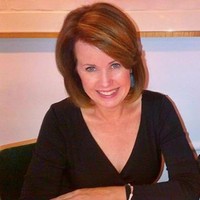
Ashleigh Banfield on the High Cost of Free Speech and Being a Non-Lawyer on Court TV

Mediabistro icon
By Diane Clehane
Diane Clehane is a New York Times best-selling author and award-winning journalist who has covered the British Royal Family for more than two decades. Her work has appeared in Vanity Fair, People, Forbes, Variety, and Newsweek, where she wrote the cover story on the future of the monarchy. She is a regular commentator on CNN, NBC News, and CBS News, and a contributor to Best Life, where her royal coverage has drawn more than one million readers on MSN and Yahoo. She holds a B.A. in Journalism and Sociology from the University of Massachusetts Amherst.
13 min read • Originally published March 10, 2008 / Updated April 11, 2026
Mediabistro icon
By Diane Clehane
Diane Clehane is a New York Times best-selling author and award-winning journalist who has covered the British Royal Family for more than two decades. Her work has appeared in Vanity Fair, People, Forbes, Variety, and Newsweek, where she wrote the cover story on the future of the monarchy. She is a regular commentator on CNN, NBC News, and CBS News, and a contributor to Best Life, where her royal coverage has drawn more than one million readers on MSN and Yahoo. She holds a B.A. in Journalism and Sociology from the University of Massachusetts Amherst.
13 min read • Originally published March 10, 2008 / Updated April 11, 2026
Archive Interview: This interview was originally published by Mediabistro in the mid-2000s. It is republished here as part of the Mediabistro archive.

There are many cautionary tales in the news business, but to some Ashleigh Banfield’s seemingly meteoric rise and subsequent and self-described “banishment” from network news is a particularly chilling one. Having become one of NBC’s most visible faces and resonant voices in the wake of 9/11, Banfield went from reporting the headlines to making them and in doing so almost destroyed her career. Shortly after the attacks, she was criticized by some when she dyed her blonde hair brunette for a trip to Afghanistan (Something that still makes Banfield bristle). Then, in the spring of 2003, her remarks made during a lecture at Kansas State University about what she believed were the media’s mistakes in their coverage of the Iraq war seemed to seal her fate. She told her audience: “I’m hoping that I will have a future in news in cable, but not the way some cable news operators wrap themselves in the American flag … Free speech is a wonderful thing, it’s what we fight for, but the minute it’s unpalatable we fight against it for some reason.” Her statements angered her bosses at NBC, who, says Banfield, exacted punishment by making her sit on the sidelines until her contract ran out.

Today, Banfield is fighting her way back from her perch at Court TV where she offers the “man on the street” perspective among the network’s legal eagles. While she is no longer trudging through war zones, Banfield is still waging her own battles to be heard (“women 40 and over, unite!”) and remains unbowed about her outspokenness and her desire to carve out a career on her own terms.

“Even my failures I look at as successes because I am not gone,” she says.


Name: Ashleigh Banfield
Position: Co-host, Banfield and Ford: Courtside; host, Hollywood Heat
Resume: Joined Court TV as a substitute host in July 2005; Anchor/correspondent for MSNBC and NBC News correspondent from 2000 until 2004; anchor at KDFW, a Fox affiliate in Dallas; freelanced as an associate producer for ABC’s World News Tonight. Began her television career in 1988 as a photographer/researcher/reporter in Ontario, Canada.
Birthdate: December 29, 1967
Hometown: Winnipeg, Manitoba
Education: BA in political studies & French from Queens University in Ontario
Marital status: Married to Howard Gould, founder of Equator Environmental, since July 2004; two sons Jay Fischer Gould (‘Fischer’), 2, (“Named after the famous robber baron Jay Gould who is his great -great -great grandfather”) and Ridley Banfield Gould, six months.
First section of Sunday Times: “If I get to read anything these days which is rare, that would be Tom Friedman.”
Favorite television show: “The Daily Show. It is clearly the best production on television now and ever. I never miss it. When I was on maternity leave, I Tivoed every single one.”
Guilty pleasure: “That would have to be Howard Stern. [Laughs] I have admired Howard Stern’s resilience. There’s not a lot of other stuff I admire about his content, but there’s something about Howard Stern and his perseverance in a very difficult industry. He does tickle me in certain ways with humor. Obviously, he’s very over the top and very inappropriate most of the time, but I do find him intriguing. My husband and I have outfitted the cars with Sirius Satellite Radio because of him.”
Last book read: 1776 by David McCullough. I literally have one more chapter to go. I hate to say it, but I’m reading it alongside The Great American Citizenship Quiz because I’m prepping for the test.”


How would you say you’ve gotten to where you are?

I would have to say sheer perseverance because this is not the friendliest of industries — it’s not for anyone without a thick elephant skin. I just truly love what I do and if you don’t love what you do, you’re going to be at work every day. Because I love what I do, I’ve never worked a day in my life.

What do you consider your best work on-air?

It’s a tough question because some of the best things I’ve done have been the worst things that have happened. Clearly, 9/11 would have to be some of the best work that I’ve done because I was working without a template and that was very difficult. Having nearly been victimized by the north tower, it was difficult to remain composed and be informative.

How long were you on air?

Nine days.

What was that like?

It was riveting in every sense of the word. It was troubling. It was the most complex moment in my career in terms of trying to decipher A) what was happening moment by moment and B) what was happening to us as a nation. We underwent this metamorphosis overnight and I think we were all trying to understand our new reality. It was difficult to find that new reality while you were traipsing around on a moonscape. I was thoroughly confused for nine days in so many ways.

One of the most iconic images from the newscasts at Ground Zero was when you were interviewing that woman with the baby and a building started to come down behind you. How long did that haunt your dreams?

Most people remember that because it was televised but there was so much more that wasn’t. They all haunt me equally. I lost two friends that day. [Sighs] It all is a sad smear in my life. I try not think about it very often. I think about it when I have to on anniversaries and during interviews. For the most part, I try to avoid it. Because honest to God, I don’t think anyone of us who ever stepped foot down there will not have a quiver in our voice when we try to recall those events. It will always remain a pit in my stomach. It seems like decades ago and yet it was yesterday in so many respects.

In the months following 9/11 you were being touted as one of NBC rising stars. The New York Post even mentioned you as possible successor to Katie Couric’s. Then, just as quickly, it seemed as if you dropped out of sight. What happened?

The Iraq war started to develop and I gave a very controversial speech at Kansas State [University] about the press’s responsibility in covering international affairs. I sent out a cautionary note to all my colleagues covering this conflict and chastened the press corps not to wave the banner and cover warfare in a jingoistic way. It didn’t sit well with my employers at NBC — who are no longer there. I think they overacted. I was banished. I sat in the outfield for a long time. I think it’s cause célèbre today for everyone to realize the mistakes of many — not just the media and the administration — in the Iraq war and the ensuing quagmire. At the time it was either bold or stupid or both. I know now the cost [of speaking out], but it would never have made a difference.

When did you officially leave NBC?

I left in 2004 — a few months after my contract expired. I was very much in the warehouse while my contract petered out.

Looking back on that time, what were the biggest lessons you learned?

On one hand you could say, “Keep your mouth shut while our nation is embroiled in war,” but I don’t think that was a responsible way to behave. If I have been fortunate enough to have risen to level in this business where people would actually listen to me, then I think I have a duty to convey all truths that I encounter. I felt it was my duty at the time. I was a war correspondent who had seen that the hearts and minds of the Arab world were not that easy to win. I had seen that the street in the Arab world were on fire and angry and that smashing campaigns may not be as simple as the headlines were making them out to be. I felt it was my duty to speak up. Very few people are fortunate enough to walk through countries like Iran, Iraq, Syria, Lebanon, Jordan, and Saudi Arabia and I had seen them all. I had spoken to many on the street. I felt I had a solid editorial grounding for saying the things I said. Despite the enormous cost to me professionally, personally, and emotionally, I would not have changed a thing.

I love it when people say I was some brave, courageous reporter. I wasn’t, I was just shit scared.

How did you wind up at Court TV?

[Former Court TV head] Henry Schleiff and I were talking at a social event about the network and he recommended I come in and talk to him. I never thought I’d be doing legal [reporting] — I don’t know why. I’ve done every beat in the journalism book, but I hadn’t done legal. I thought it was only the domain of lawyers — and it is. Everybody here is a lawyer but me. [Laughs] But it turns out there is space for inquiring minds among the attorneys here and I bring a different perspective to a lot of the interviews and the questioning here. It’s the perspective of the man on the street who doesn’t have a Juris Doctorate. Thank God for Henry. He recognized that I actually could prevail in this extremely difficult environment.

I think there’s some confusion over the re-branding of the network. Court TV will officially become Tru TV in January. Will your responsibilities change as a result of the relaunch? What does it mean to you?

You’re talking to the wrong girl. [Laughs] I was out on Halloween trick or treating with my babies when all of that information started getting passed around.

There was a recent story in Elle that deconstructed various female anchors and reporters’ on-air look. The piece made a particular point of saying you went from blonde to brunette to boost your credibility. Care to comment?

That’s wrong and extremely short-sighted. If they had actually done some research or given me a call, I went from blonde to brunette because I was going to Afghanistan. This is nine days after terrorists had just killed 3,000 of my neighbors. There was a whole different dynamic playing out in those days. I love it when people say I was some brave, courageous reporter. I wasn’t, I was just shit scared. [Laughs]. Sorry to say I was absolutely terrified about the assignment. It was the No. 1 refused assignment in the history of NBC news.

Really?

Even the producer assigned to go with me changed her mind and backed out after her children asked her not to go. I started to worry about all the time I’d spent in the Middle East prior to 9/11. What a tall beacon I appeared to be with my blonde hair. All of sudden the dynamics of the world had changed and the Arab terrorists were looking to kill us no matter what. I didn’t want to stand out and give them the upper hand. I’ll tell you something — as much flack as I took — it all ended the day Daniel Pearl died. No one ever said a word about me and my effort to blend in as a journalist in Pakistan and Afghanistan after that because they recognized that it was true. There were bounties on our heads. There was a $40,000 bounty on all American journalists heads as we were traveling from Jalalabad to Kabul. I had to hire an army of Muhajadin soldiers — 25 of them with rocket propelled grenades.

Did you personally or the network hire them?

I did, myself. I did with my producer, photographer, and audio engineer. The four of us negotiated a small Mujadine army to the governor of Nagarhar Province in Afghanistan to protect us. It was bad. This was a very ugly place that we were going and it remains an ugly place. So I think it was very short sighted of whoever wrote that. I never had a problem with my credibility. If there are people out there who think that credibility comes with hair color, that’s their issue, not mine.

I seem to remember your choice of eyewear got a lot of attention at the time as well. Did that bug you?

I find it a fascinating study of inequality on the air because men have been wearing glasses forever and there’s nary a headline published about that.

Is there anything that women in positions of power on air can realistically do about the double standard?

I’m no idiot. I know that I sleep in the bed that I made. I understand that women are scrutinized at a level that is not commensurate with men but, there are times when it becomes ridiculous. There are times when it is obviously overkill. I think eventually it will wane. I hope it happens in my lifetime, but I don’t know.

One of the biggest challenges women at all levels face is juggling a career with motherhood. How do you do it?

It’s tough. I had a great conversation last night with Elizabeth Vargas. She also has two young boys and is trying to juggle network responsibilities. We both recognize we have had to scale back our ambitions and our endeavors. We make these choices voluntarily. We recognize that this career isn’t going anywhere. That television business isn’t leaving and we’re not leaving it, we’re just repositioning our strategies; we’re changing our timeframes and our timelines. Thank God women over 40 are still welcome in this business. I think there was a time long ago when you weren’t. I bristled every time this summer as I was covering Phil Spector’s case that the defense would bring up Lana Clarkson was “40, a B-Movie actress and her career was over.” I bristled every single time because I am turning 40 and I think my career is getting better. I think with every year, I get better and I think that’s reflected in the assignments I’m given.

I can’t tell you how many women I interview for this column take the fifth on the birthday question.

Not me, man. I have openly said I was 190 pounds on the on-air [when I was pregnant] and I’ve often openly said I am turning 40 and I wish more people would do it. I wear it like a badge of honor. I’ve been in this business for 20 years and I always felt like I didn’t know enough. Recently, I had an epiphany that with every year I age, I get smarter and there’s nothing better in this business than that. By the way, I’m not 190 anymore. [Laughs] I’m working on it, but it’s not easy. [Laughs] I’m doing the countdown on the air. This week I hit 140.

What do you consider your greatest success?

Oh, my boys Fischer and Ridley. I can’t believe I pulled it off. Often I’ll look at photographs of them and think, “Whose kids are those?” [Laughs]

What about your biggest disappointment?

My biggest disappointment in life and work has been what we talked about earlier — the reaction to what I felt was a legitimate point of view at the commencement of the war on terror and the ramifications I suffered. I don’t think that’s the way Americans truly operate. I’m so thrilled to be in this country by choice. I am taking my citizenship exam in six months and will be waving that flag and swearing in with so much pride. I think most people who are here by birthright have no idea how special it really is for those who have to really work for it. That was a biggest disappointment when my free speech cost me so much.

Do you have a five-year plan?

I’ve always looked at the 25-year plan — especially in this business. If you set aside your plan I think you’ll be regularly disappointed. I have been on as many dips as peaks — if not more. I look at Regis [Philbin]. Regis really hit it in his 70s. If I manage to do it before I’m 75, I’ll be thrilled. I’ve always looked every step along the way as a success. Even my failures I look at as successes because I’m not gone. Every time I fail, I look at it as a positive if I’m not completely wiped out. If I didn’t have that perspective I would have been wiped off the face of broadcasting about a dozen times by now.

Do you have a motto?

I do have one. I think people should have one, if not then a song. [Laughs] I keep it on my desktop, too. It’s “People who expect to be ignorant and free expect what never was and never will be.” I always have felt that is something we all should live by not just journalists. It’s an American mantra. Especially at this time — we’re at a turning point in this country and we need to understand the value of being American. If we don’t find the courage in ourselves to seek truth and to pass it on, then I’m not sure that we’re doing our founding fathers any justice.


Diane Clehane is a contributing editor to FishbowlNY and TVNewser. She writes the Lunch at Michael’s column.

Topics:

Mediabistro Archive
Mediabistro Archive

How One Vanity Fair Writer Transformed Personal Tragedy Into a Career Covering Celebrity Legal Battles

Mediabistro icon
By Diane Clehane
Diane Clehane is a New York Times best-selling author and award-winning journalist who has covered the British Royal Family for more than two decades. Her work has appeared in Vanity Fair, People, Forbes, Variety, and Newsweek, where she wrote the cover story on the future of the monarchy. She is a regular commentator on CNN, NBC News, and CBS News, and a contributor to Best Life, where her royal coverage has drawn more than one million readers on MSN and Yahoo. She holds a B.A. in Journalism and Sociology from the University of Massachusetts Amherst.
18 min read • Originally published May 15, 2008 / Updated April 11, 2026
Mediabistro icon
By Diane Clehane
Diane Clehane is a New York Times best-selling author and award-winning journalist who has covered the British Royal Family for more than two decades. Her work has appeared in Vanity Fair, People, Forbes, Variety, and Newsweek, where she wrote the cover story on the future of the monarchy. She is a regular commentator on CNN, NBC News, and CBS News, and a contributor to Best Life, where her royal coverage has drawn more than one million readers on MSN and Yahoo. She holds a B.A. in Journalism and Sociology from the University of Massachusetts Amherst.
18 min read • Originally published May 15, 2008 / Updated April 11, 2026
Archive Interview: This interview was originally published by Mediabistro in the mid-2000s. It is republished here as part of the Mediabistro archive.

How’s this for a juicy tale: a successful movie producer who had it all — a loving family, glamorous career, and a circle of friends that included the biggest names in 1960’s Hollywood — becomes addicted to his over-the-top lifestyle. Alcohol and drugs take their inevitable toll and at one of his lowest points, he sells his own dog to a friend for $300. Unemployed and unemployable, he becomes his worst nightmare — “a nobody.” On the brink of ruin, he spends six months alone in a one-room cabin in the woods of Oregon to get himself together. Newly sober, he heads to New York as an aspiring writer with one suitcase, his treasured scrapbooks, and a typewriter and starts over. Tragedy strikes when his beloved daughter is murdered. After writing a first-person account of the trial that resulted in little more than a slap on the wrist for the killer, his outrage at injustice becomes his signature as he goes on to chronicle the most sensational murder trials of the past 20 years.

This is not the plot of Dominick Dunne’s next book, it is the story of his life.

Dunne credits Tina Brown, then the newly-appointed editor of Vanity Fair, with giving him a shot at what has turned into an extraordinarily successful second career during one of the darkest periods of his life. “I have a particular soft spot for Tina because she discovered me,” says Dunne. “The night before I was to leave for the trial of the man who killed my daughter, I met her at Marie Brenner’s house,” he recalls. “She called me the next day — the day I was leaving — to have lunch with her. I said, ‘Gee, I can’t, I have so much to do before I leave on the six o’clock flight. She kept on and I met her, and that’s how I got started. After I wrote the piece about the trial called ‘Justice,’ I thought that would be it. Right away, she sent me to the Von Bulow trial which turned into one of the best series of articles I ever wrote.”

Dunne hasn’t stopped since. As famous — in many cases, more so — as the infamous defendants whose trials he has covered for the past 24 years, Dunne remains unapologetically opinionated about his subjects. Despite his feuds with famous foes like Robert Kennedy Jr. and former Congressman Gary Condit, the prolific author is more outspoken than ever. He calls Phil Spector “vermin” and still seethes over OJ Simpson (“I’m so sick of the smirk on his face.”)

Recently diagnosed with bladder cancer after a previous battle with prostate cancer, Dunne finds himself more motivated than ever to finish A Solo Act, his long-awaited next novel. “When this happens to you, you’ve got to think, ‘Listen, I’ve got so much time left,” he says. “I cannot leave an unfinished book.”

But this isn’t the final chapter in a fascinating life. “I’m fine. I go out to lunch every day and I go out every night,” he says.


Name: Dominick Dunne
Position: Author, special correspondent for Vanity Fair
Resume: Bestselling author of several books including The Two Mrs. Grenvilles (Crown, 1985), An Inconvenient Woman (Crown, 1990), A Season in Purgatory (Crown, 1993), Justice (Three River Press, 2001); wrote a memoir, The Way We Lived Then: Recollections of a Well Known Name Dropper (Crown, 1999). Writer and special correspondent for Vanity Fair since 1983 covering high-profile trials including those of the Menendez brothers, Claus von Bulow, and O.J. Simpson. Prior to becoming a writer, Dunne was vice president of Four Star, a television production company and a producer of feature films including The Boys in the Band, Panic in Needle Park, Ash Wednesday. Currently host and narrator of truTV’s Dominick Dunne’s Power, Privilege, and Justice.
Birthdate: October 29, 1925
Hometown: Hartford, Connecticut
Education: Williams College
Marital status: Divorced
First section of The Sunday Times: “First I read the obituaries. I read them every day. “I’m at an age where I always know everybody. But I’ve always read the obits first. Then I read the Week in Review and the Style section.”
Favorite television show: “Sunday night was my TV night. I liked Six Feet Under. I just adored that show. I liked The Comeback with Lisa Kudrow and, of course, I never missed The Sopranos. Now I’m not stuck on anything in particular. I like any Law & Order. I’m crazy about that girl — Mariska Hargitay. I long to meet her. As a child she used to sit with her mother, Jayne Mansfield and her father, Mickey Hargitay, at mass on Sunday. I’d be there with my three kids and my wife. They were always at the 10 o’clock Sunday morning mass — that’s when all the Catholic stars — Rosalind Russell, Gary Cooper, Loretta Young — went. Mariska’s mother, this sexy lady, would be saying, ‘Read your prayer book.’ [Laughs] I just think she’d like to hear that.”
Guilty pleasure: “I never understood what that means.”
Last book read: “Last night I just finished the galley of the book written by William Patton, who was the son of Susan Mary Alsop. It’s called My Three Fathers. His father was a diplomat and his mother was this great social figure in Washington. He didn’t know until he was in his 40s — Susan Mary, whom I knew quite well, was in rehab and they had family week — it was during that time that he found out that his father was not Bill Patton but he was the son of Duff Cooper, the British Ambassador to Paris in World War II who was married to Lady Diana Cooper. It really knocked him for a loop. Then his mother married Joe Alsop, the great political writer and friend of Jack Kennedy. It’s a fascinating biography.”


What are you writing about for Vanity Fair these days?

I’ve just turned in my piece on the Princess Diana inquest.

That must have been a topic of conversation at lunch when I saw you at Michael’s recently with her former private secretary, Patrick Jephson.

I think he was quite loyal to her.

He certainly looks like a saint compared to Paul Burrell [Diana’s butler].

Boy, do l let Burrell have it in my piece. But I’m not writing anything else until I finish my novel. I’m going away to finish a novel.

What are your impressions having been to the inquest.

I knew everybody in the story — I knew Dodi from Hollywood, I had met the father [Mohamed Al Fayed] twice before all this happened. I was staying at the Ritz after the Cannes film festival the year before last and I got a call from the manager of the hotel saying that Mohamed Al Fayed as in the hotel and wanted to meet me. I met him for the first time — and saw him walk with the four bodyguards who are always around him. He was terrific for a while. We had each lost a child. We had that in common and that’s a bond you always have with anybody who has had that awful experience. Then he started going off on Prince Phillip [about being behind Diana’s death] and I just don’t believe that.

Do you believe it was a conspiracy or a terrible accident?

It was a terrible accident. The bodyguard, Trevor Jones — he’s dropped the “Rees” because “Rees-Jones” makes people turn around when they hear it and with “Rees” they don’t — I was so touched by him on the stand. They tried to give him a rough time. I hate that — especially a man who has suffered the way he has. Mohamed has turned on him and says he’s lying when he says he can’t remember. He quit working for Mohamed because he was trying to give him a version of the “blinding light” story that blinded Henri Paul. He didn’t have any memory of that. He wouldn’t go along with that. I love that about him. He and his partner Kez Wingfield had been on the yacht and saw the extent of the paparazzi. They had called and asked Al Fayed several times for more bodyguards. They knew it wasn’t enough for the mountain of paparazzi. For some curious reason, after having bought the $20 million dollar yacht for the Princess to spend a week on — he didn’t think his own yacht was good enough for her — he didn’t get more guards.

What do you make of this tape that’s surfaced of Burrell saying he wasn’t forthcoming during the investigation? Tina Brown once told me that Diana’s undoing was her spectacularly bad taste in men, and he’s right up there with the worst of them.

I covered his trial and I got to know him. I liked him, and all of Diana’s friends thought he was so loyal. Then, after the Queen came to his aid in that totally phony, ridiculous trial — they were afraid to have him take the stand with what he could say. According to Patrick [Jephson], he does know things that if he told, could be a great embarrassment. They probably hope he doesn’t come back.

What an asshole. Did you know he’s supposed to be worth $20 million dollars? He’s made so much money off Diana. During his trial all her lady friends were saying, “Oh, he’s so wonderful.” The whole time he was making that secret deal with The Sun [to sell his story] who paid him so much money and his story started two days after the Queen got him off. So he’s not a good person.

I thought the inquest would get more coverage here since Diana was, for a long time, the most famous woman in the world and Tina’s book was a No. 1 bestseller just this past summer. Why hasn’t there been more attention paid to this chapter of the saga?

I don’t know, except there have been these two other investigations before — one by the British and one by the French — and there’s this sense, “Oh my God — that again.” But I found this inquest utterly fascinating. I open my next piece with this quote from Martin Gregory who wrote a terrific book, Diana The Last Days: “On the night she died, Diana was traveling from a Fayed hotel to a Fayed apartment in a Fayed car with a Fayed driver sitting next to Fayed’s son and behind a Fayed bodyguard.”

Where’s the royal conspiracy there? They requested more help — he didn’t give it to them. It was his hotel. He’s carried on this thing for years. He made a spectacular fool of himself on the stand. It was outrageous the things he said. Dodi, at the same time he was with Diana, was engaged to be married to Kelly Fisher which has never gotten play — but not in my next piece. I got hold of Gloria Allred, who was her lawyer. Then, when Mohammed was on the stand and they asked him about Kelly Fisher, he called her a hooker. A hooker!

If I recall, she had a nice ring from Dodi — nicer than that hideous thing he allegedly gave Diana.

She had a beautiful ring, although I think he had quoted a price to her that was excessive. It wasn’t worth as much as he told her it was.

You didn’t go out to Los Angeles for this year’s Oscars and, of course, there was no Vanity Fair party. All things considered, the show turned out to be a big bore and everybody is asking “Why?” Do you think Hollywood can ever be as glamorous as it once was?

No.

What’s missing?

Stars. There used to be stars. I hate people that talk about, “It was better then …” but when you think about it there was Gable, Gary Cooper, Cary Grant, Humphrey Bogart, and Burt Lancaster and as many women at the same time. You know, there’s no real star stars now — except I think Nicole Kidman is a real star for the ages. George Clooney is, but there’s very few.

The fact that a man who the jury knew was guilty and that his “dream team” knew was guilty got acquitted … it was absolutely so shocking to me.

I think the fare of movies — they were very downbeat. I just saw one I hadn’t seen before — 3:10 to Yuma and it’s like all the rest of these things — it was just mindless killing of men killing men. There was no movie this year that everybody was just madly in love with. It was a boring [Oscar] show and a boring year. With the women, you never see an individual look because stylists have taken over. Half of the women this year were wearing the same red dress. I liked it when the stars bought their own clothes. Sometimes they made terrible mistakes and that was fun. Now, everyone looks exactly alike in their borrowed finery.

You’ve written about so many trials and covered the lives of so many of the famous and infamous. Is it all still as interesting to you now as it was when you first started writing?

I had never been to trial until the trial of the man that killed my daughter. That’s when I began to understand the showbiz aspect of these high-profile trials. They dressed the man that killed my daughter like a sacristan in a Catholic seminary. He read the Bible. The Menendez brothers were all costumed with their Shetland sweaters. I do understand now that all that happens.

Several years ago during another interview, you talked to me about the first OJ Simpson trial and said, “I can’t tell you how that trial affected my life.” How does that experience look to you
now?

There will never be a trial like that again. That was the trial of trials. That was about the power of celebrity and the power of money. The fact that a man who the jury knew was guilty and that his “dream team” knew was guilty got acquitted … it was absolutely so shocking to me. I couldn’t believe that could happen. It had a deep effect on me. I became sort of obsessed. I couldn’t stop thinking about [it]. I went to Europe to try to get over it. I went to places I’d never been, like Prague just to look at churches and I kept running back to the hotel to turn on CNN to see what the latest was on him.

I grew to hate [Simpson] so much. I do believe in ultimate justice. I believe the man who killed my daughter and then got off with slap on the wrist — he’s going to get his somehow. And I think this thing with OJ now and the armed robbery, he’s going to get his.

Any predictions on how that trial will play out?

No predictions, but I hope he will be taken back to prison. I don’t care if it’s only a year — just to have that humiliation that he should have. I would love to be able to go out and cover that Nevada trial, but I can’t because I’ve got to finish this novel.

Before we talk about your novel, I want to ask you about your part in the Goldman’s version of Simpson’s book If I Did It.

I wasn’t a part of it, really. I did that one thing. I did it for the Goldmans. I never read the book.

You wrote the “Afterword” for them. Since you know them so well, do you think the process and the outcome did anything to help them on an emotional level? What was the point of them doing it?

I could understand them doing it. I understand the rage that you feel when something like that happens that someone has gotten away with killing your child. That’s why I did it. I really like the Goldman family. Judge Ito gave me a seat next to Fred [Goldman] at the trial because he knew I’d been through the same thing. We became close friends and I still keep in touch with him. When he asked me, I didn’t want to do it, but I couldn’t turn him down. I said to him, “I’m not going to read the book. What I will write about is my relationship with you and your wife and your daughter.” That’s what I did.

There seems to be a particular type of alchemy that has to happen in order to have a trial take hold in the public’s imagination. Why do some trials that don’t involve famous people the Scott Peterson trial fascinate while others involving a celebrity like Phil Spector barely register?

I found the Spector trial riveting but it didn’t catch on. As in most of the cases I covered, I knew him. He’s a creep. For years and years, he’s done this act of pulling guns on people — on a lot of people I know. On some level, he hates women. I think he’s also nuts. He took the hung jury as if he were declared innocent. It was this one creep who was his neighbor who was the jury foreman. I’ve talked to so many of the jurors. His mind was made up from the first day — acquittal. There’s just something creepy about that.

You’ve written countless books and covered so many trials. Do you prefer doing one over the other?

No. Fiction is different from fact. I just happen to deal in both. But I’ve actually had a hard time on this novel [A Solo Act] because I haven’t written a novel in several years.

I guess it’s hard to finish it when you’re being sent off to cover all these trials the last few years.

That’s why I’m not going to do anything else. Graydon [Carter, Vanity Fair‘s EIC] has been wonderful to me about it. I said, “Graydon, I have got to finish this novel.” I’ve also got cancer and I’m 82.

I didn’t know that you were ill. I’m very sorry to hear that.

I’m undergoing treatments now. I’ve got cancer of the bladder — urinary tract — not very attractive. I was always so proud of my brother [John Gregory Dunne)] He got his book finished and had the heart attack. His book came out after he was dead. I’ve just got to get this book finished. That’s why I came back from the inquest. I just knew there was something wrong. I came back and they found this. I’ve taken the first of six treatments and then I go in the hospital and they go in and see how much they got.

Where are you with the book?

I’m more than half-way through. But I haven’t actually worked on it for a long time. Now I’m back on it full-time — that’s my life now until I finish.

What’s your day like when you’re writing? How much time can you devote to it in one sitting?

It’s different if I’m here [in NYC] or in the country. If I’m here, I spend my mornings going through my mail and all that stuff with my assistant and then in the afternoons I write. When I’m in the country, I write all day. At the end of each day, I plan what I’m going to write the next day and read and correct.

How long can you write in one sitting?

Four hours — of creative writing. There’s also the “fixing writing,” which is not creative but the changes and all that stuff. I do rely on my editor. My book editor is Betty Prashker, who has been my editor for all my books. My magazine editor is Anne Fulenwider. She’s absolutely great. She’s young and went to Harvard. I really enjoy working with her.

When do you hope to have the book finished?

I think it’s going to take me a couple months of solid work. Then I’m going to come back to [Vanity Fair] and keep writing there.

You’re never without your notebook. Any idea of how many you’ve filled over the years?

I do have a good idea because I save them all. I don’t know who I’m going to give my papers to. I went to Williams and Williams has never shown the slightest interest in me.

Are you kidding?

I’ve never been asked to speak. I don’t mean this in a bragging way, but I think I’m probably the most famous person in my class. It just staggers me. I’ve spoken at Yale. I’ve spoken at Princeton. I’ve never been asked to speak at Williams. I’ve never had the slightest recognition from them. So f— em when it comes to my papers, but I don’t know where to leave my papers to.

You’ve mentioned countless times in your writing that you always have people come up to you out of nowhere and tell you the most interesting things. Why do you think that is?

It happens to me wherever I go. I could be at 21 for dinner and wave at somebody or somebody waves at me and the next thing I know I’m handed a note by the head waiter and it says, “Please call me at so-and-so, I have something to tell you.” That happens to me constantly. It happens to me on the street.

I’m always open to any stranger who comes up and speaks to me. A lot of people feel like, [stage whispers] “Oh, I don’t want to get involved.” I’m grateful they say, “I love your book or I loved your article.” I love hearing that but then I always get a little gem. It’s just amazing to me. I think the mistake that so many people make who get famous is that they only stay with famous people. That limits your horizons. You never know where the next message is going to come from.

What do you consider your greatest success?

The thing that really changed my life was the enormous success of The Two Mrs. Grenville‘s. I had been on a downer for years until I wrote that book. It truly changed me. It made me well-known.

I loved Season in Purgatory and the mini-series they did from the book. It’s funny now to think that when Patrick Dempsey did that he was pretty much an unknown and now he’s this big star.

He came up to me last year at the Vanity Fair party and said just what you said to me. He actually played the character that was based on me. He said, “That was what opened it all up for me.” It was nice of him to say that. He was good in that.

What about your biggest failure?

[Pauses] Why am I having a hard time thinking about that? [Laughs]
My real major failures came before my second career. Here I was after this glamorous life, there were seven or eight years where I was almost penniless. I said something when I was drunk that was very mean about someone out there. It was one of those things that was funny when I said it and wasn’t funny when it was printed in the newspaper. I hurt somebody’s feelings and that has always bothered me. That brought me to a big ending in Hollywood.

I’m happy about the Hollywood failure because then I discovered this whole other life of writing which is far more appealing to me than the movie life. When I started writing novels and they were all made into mini-series they would say to me, “We’ll make you the executive producer.” I’d say, “I had that. I want to be on to the next book. I don’t want to be the executive producer.” It’s a good feeling to know that what you’re doing is what you should be doing. I would have been a B-level producer always, not a A-level producer. I’d been rich all my life and then I had no money. I learned so much from being on my ass during that time. I stopped drinking, stopped doping and began a new life.

How would you say you’ve gotten to where you are?

I’m a very hard worker even though I go out all the time. I love it when my sons say to me, “Dad, you can slow down a little bit now.” I never want to slow down, I’ll be doing this until the last day.


Diane Clehane is a contributing editor to FishbowlNY and TVNewser. She writes the ‘Lunch’ column.

Related:

  • Media Career Advice

Topics:

Mediabistro Archive
Mediabistro Archive

Inside a Glossy Celebrity Magazine: On Fame’s New Face, Schmoozing With Stars, and Ugly Betty

Mediabistro icon
By Diane Clehane
Diane Clehane is a New York Times best-selling author and award-winning journalist who has covered the British Royal Family for more than two decades. Her work has appeared in Vanity Fair, People, Forbes, Variety, and Newsweek, where she wrote the cover story on the future of the monarchy. She is a regular commentator on CNN, NBC News, and CBS News, and a contributor to Best Life, where her royal coverage has drawn more than one million readers on MSN and Yahoo. She holds a B.A. in Journalism and Sociology from the University of Massachusetts Amherst.
16 min read • Originally published May 29, 2008 / Updated April 11, 2026
Mediabistro icon
By Diane Clehane
Diane Clehane is a New York Times best-selling author and award-winning journalist who has covered the British Royal Family for more than two decades. Her work has appeared in Vanity Fair, People, Forbes, Variety, and Newsweek, where she wrote the cover story on the future of the monarchy. She is a regular commentator on CNN, NBC News, and CBS News, and a contributor to Best Life, where her royal coverage has drawn more than one million readers on MSN and Yahoo. She holds a B.A. in Journalism and Sociology from the University of Massachusetts Amherst.
16 min read • Originally published May 29, 2008 / Updated April 11, 2026
Archive Interview: This interview was originally published by Mediabistro in the mid-2000s. It is republished here as part of the Mediabistro archive.

Long before the supermarket check-out stands were clogged with rows of nearly identical looking tabloids with their fluorescent logos and breathless cover lines boasting the inside scoop on Britney, Lindsay, and Angelina, there was InStyle. When the magazine launched in 1993, it was a haven for celebrities who were assured of receiving the kid glove treatment on its glossy pages and a deliciously frothy treat for those readers whose appetite for all things related to celebrities had barely been whetted.

These days, InStyle‘s managing editor Charla Lawhon, who was part of the magazine’s launch team (“Which was called ‘Project X’ at the time.”) and served as second lieutenant to the magazine’s first top editor Martha Nelson, presides over the now iconic title. Lawhon’s well-mannered enthusiasm for the job is reflected in the title’s polished, dishy (but never gossipy), and “aspirational” tone. The editor, like her faithful readers, has grown more and more at ease being a satellite in a world dominated by celebrities. “When I came to InStyle I knew nothing about celebrity,” says Lawhon. “I was amazed at that the other editors were sitting around calling these actresses by their first names.” Now, she says with a laugh, “I say ‘Jen’ and ‘Reese.’ I’m very comfortable calling them by their first names, too.”


Name: Charla Lawhon

Position: Managing editor, InStyle

Resume: Named managing editor of InStyle in April 2002 having previously served as executive editor and deputy editor; part of the original team of editors during its test period in 1993. Started her publishing career at Apartment Life in 1978 (which later morphed into Metropolitan Home). During her tenure at the magazine (which was sold to Hachette in 1992), she “worked in virtually every editorial department” and was named services director for Meredith Design Group in 1990. Remained in the position until she left for InStyle.

Birthdate: December 11, 1956

Hometown: St. Joseph, Missouri

Education: Drake University, BA in journalism

Marital status: Single

First section of The Sunday Times: “The Style section.”

Favorite television show: “I’m liking Ugly Betty. I love to see that interpretation of what it is I do every day.”

Guilty pleasure: “Spending an entire day reading a ‘not really literature’ book.”

Last book read: “Actually, it was literature. Atonement. I picked it up because one of my dear friends is one of the executive producers on the film. I loved it. I thought, ‘The language in here is probably gorgeous’ and it is. “


More than any other fashion magazine, InStyle was probably the most affected by the writer’s strike. When the Golden Globes didn’t happen, did you put a contingency plan in place to deal with the possibility of a shortened or non-existent awards season?

We did. At the end of the summer we made a strike plan that had to do with not only all the awards coverage, but many of our stories for the spring and early summer because the strike would be affecting all of those. Certainly the television season is affected, film release dates just keep changing and the summer series — we’re just not sure what’s going to happen to them. Hopefully, they will be able to recover from it. We started back then and identified all the stories where we had exposure and just kept working through them ready to make a change if we needed to.

When the Globes didn’t happen, we had our lists of other things that were going on and we were able to nail those things down and use them in those [Globes] pages. They were other red carpet events and some parties that were happening around that time so we let our close go late so that we could add in that very fresh material.

So what did you cover?

The National Board of Review — which ordinarily would have gone in a later issue because our Globes coverage would have sucked up that space. It had a very nice turnout and great names. There was a Chanel dinner party that we covered plus more of some of the smaller red carpet events that were happening. Actually, we’re very pleased with our coverage.

The Screen Actor’s Guild did have their awards and I thought the fashion was pretty boring.

A lot of it looked very serious — more so than in years past. The SAG Awards are generally a little more free-wheeling, but this felt somewhat studied.

So, in the end, the Oscars actually did come off and the fashion was, in my opinion, lackluster to say the least especially since the audience was probably craving a heavy dose of glamour. What was your take on this year’s Oscar red carpet?

The fashion did seem a bit quiet. In fact, everyone looked very beautiful, but there weren’t those “big statements” — both stunningly gorgeous and shockingly odd — that we all look for. While I’m sure there was some pre-planning before the strike settlement was decided, in the end these looks had to be pulled together in a very short amount of time … an amazing feat on the parts of the actresses, the stylists, and the fashion houses.

Maybe it’s me, but I feel like it’s been a long time since actresses have truly dazzled at the Oscars. What do you think?

I also wonder if we haven’t all become a little more jaded. We know more, the television viewers know a lot more. They’re pretty sophisticated and have much more of an opinion about what someone should be wearing because viewers feel they know these women. I think that’s part of it. I also think that because of scrutiny, actresses are less likely to give us the ‘Bjork moment.’ Of course there are some people who would still wear a feathered dress but they’re not going to wear some of the crazy or riskier things they had in the past.

Why are there so few blaring fashion faux pas today? Are the stars afraid of being “Worst Dressed?”

Each of us can remember a favorite “ouch” look from past years. After all, a picture says a thousand words, and trying too hard to make a statement is a dangerous strategy. The photos and videos from the Academy Award’s red carpet are mined for years to come by all media, and once that image is out there, it’s out there. But you do kind of miss them, don’t you?

I do. When I talked to Fern Mallis she credited Joan Rivers with creating the ‘What are you wearing?’ red carpet phenomenon. How do you think the whole thing got started?

I think InStyle has to take a little of the responsibility. It’s been a steady build. Was there a tipping point? Do you remember when Nicole Kidman wore that chartreuse Dior? It was such a clear moment and everyone paid attention to that dress.

Interestingly, I remember that year Joan called that dress “the ugliest dress I’ve ever seen” and Pat Kingsley threatened to not have any PMK clients talk to her ever again.

[Laughs] Joan is nothing if not an entertainer. Who knows how much of it was an actual fashion critique or Joan being her wonderful edgy self. I happened to catch Melissa’s critique of the Golden Globes — let’s not forget it was a press conference. [Laughs] Everyone was trying to do commentary asking, “Was the event boring?” Guys, it was a press conference.

I really have to laugh when I see the people doing red carpet fashion commentary for television these days. They make Joan and Melissa look like Woodward and Bernstein. At the SAG Awards Jay Emanuel called America Ferrera Jennifer Ferrera and then got her costar Eric Mabius’ name wrong a few minutes later.
I know. There should be a law. [Laughs] Outlets … should have people who actually understand to whom they’re speaking and what they’re looking at.

InStyle has served as a template for a whole slew of clones — many of which have “borrowed” heavily from your formula. How are you distinguishing yourself from the pack? What sort of changes have you made?

Change is absolutely necessary and to date, our changes have been deliberate and fairly subtle. If you look at the magazine and what it looked like six years ago, it looks much different. Our goal now is to consider how celebrity has changed and to consider the way readers’ interests have changed. As we were talking about earlier, there is a certain jadedness — or should I say a sophistication — on the part of magazine readers, Web site users, and television watchers. They know much more about fashion and beauty now then they did 10 years ago. I think that it’s important for InStyle to reflect that knowledge much more clearly.

How do you personally stay current on the constantly changing crop of celebrities and the elastic the definition of who qualifies as a celebrity you have to pay attention to?

The definition of who is a celebrity — that’s a hard one because they come from everywhere now. It’s not just film, television, and music. There are celebrities in fashion, in the beauty world, the whole reality thing — I guess we have to stop talking about the “reality thing” because it’s not going anywhere, it’s here to stay. The definition has certainly changed. For our purposes, we have to figure out — and this is an on-going project — who resonates with the readers or who should resonate with the readers. We keep adapting that and bring those people into the discussion.

Do you have anything that you personally do?

I watch all the new shows that are coming up, the cable things that are happening. Online is a great place to learn more about these people and see who is who. There’s people in the business we talk to — managers, agents, casting directors. All of those folks have a point of view and they’re meeting new people all the time. It’s about talking to people.

If there was some highly controversial moment happening in someone’s life, then they might not be the right person for us at that time.

Were you an entertainment junkie growing up? What magazines did you read?

At that one point it was Seventeen, Esquire, and of course the fashion magazines. I read a lot of fiction of the non-literature type. I’ve always been a big newspaper reader — ever since I was a child.

Are you a big movie-goer?

More at certain times in my life. Now, of course I get to think of it as part of my job so that’s a good thing.

Sitting where you are today, did you ever expect the culture to become as obsessed as it is with celebrity? For years, people have been saying, “Oh, it can’t get any bigger than this,” but it just keeps mushrooming.

I remember when we were first launching, a local paper newspaper here asked me a question in an interview “Who is going to be interested in celebrity? Why do you need this magazine?” At that time I think I said something like, “It’s like cars. Every now and then you need a new car.” I’m amazed really. It’s a generation of interest, really, in celebrity. I’m always surprised at the way it just keeps rolling and rolling and rolling. Wave after wave after wave. It’s exciting, too.

With the birth of no holds barred sites like TMZ, does InStyle — which is at the polar opposite of the spectrum — benefit in some weird way from the existence of the stalkerazzi?

I believe we do because the kind of access that InStyle has is not what other magazines do. That helps with the “unique” problem. The other thing is we’re a respite from that type of celebrity coverage. While I know there are a lot of people out there that love the dishiness of the ones that report on gossip, problems, and cellulite. You can’t have a steady diet of that. You can’t consume that all the time. InStyle is a great alternative. Our news shows up in other ways. Halle Berry pregnant on the cover — it was the first cover she had done when pregnant — so that’s news in its own right.

When you put a star like Katie Holmes on the cover and there’s an elephant in the room — in her case, all the controversy surrounding Tom’s belief in Scientology — are there ground rules laid down that she not be asked about that? How do you work with people when you’re negotiating a cover story and there’s something like that happening in their personal life?
That was not a part of any discussions [with Katie]. There are personalities to magazines, and celebrities’ representatives — their publicists, managers, and agents — have a very good sense of what each magazine can and will do. With InStyle we were specific in the story that we wanted to do. When we were pitching them the story, we were specific and lived up to our end of the bargain and they lived up to theirs which was, “We’ll do this fashion story and we’ll talk about fashion and Katie’s life as a mom and wife.” It’s not expected that InStyle would go down that path. The story wasn’t about Tom, it was about Katie and we were talking about fashion and beauty.

So basically you’re saying with her, they know what they’re getting when they come to you, so with her there was really no need to bring that up because you would understand and she would understand without saying it, that the issue (of Tom’s Scientologist beliefs) would not be brought up.

That it would not be an angle that would be appropriate for InStyle and that’s really what it comes down to. Now if there was some highly controversial moment happening in someone’s life, then they might not be the right person for us at that time. Because it wouldn’t be an angle we’d do — we might just say, “Now is not the right time, let’s put this off for a while.” Who doesn’t like a nice big quotable item? It’s really about what is right for the editorial direction of the magazine.

Consequently, you probably benefited from that leaked Scientology video that broke right after your Katie cover hit the stands because there’s that voracious interest in all things Tomkat, right?

The last time we did Katie — the story had been shipped to the printer on Friday and we got the call on Monday that she was going to be out in public with Tom for the first time. Part of me said, I really would have liked to have had that, but the timing and the swirl around it worked out well. But I would have loved to have had that big life news. [Laughs]

You’ve had pretty much every female star I can think of on your cover. Who has sold the best for you?

I should know this. I think it was probably Jennifer Aniston. She does well. Sandra Bullock, Michelle Pfeiffer, Reese Witherspoon, Queen Latifah did very, very well for us. That was three years ago.

How about the most disappointing?

[Laughs] None of them are disappointing. Obviously, there are ones that have not done well for us. Is it the celebrity? Is it our execution? It is a combination of the two? There are some that are more of a challenge that just don’t strike that chord with readers.

Would you ever put a guy on the cover?

[Laughs] We’re talked about it …

And?

I don’t believe it’s what our readers want to see.

Even a George Clooney cover?
Well if it was going to be for anybody, it would be for George Clooney. [Laughs]

Paris Hilton and Britney Spears aren’t exactly fashion icons but they sell a lot of magazines. Would you ever put them on your cover?

We did Britney in July of 2002 back when she was just Britney before her recent escapades and it did okay. I don’t think you think of her as being right for InStyle at this point.

There was so much attention last year paid to the story when the before and after of Redbook‘s airbrushed cover of Faith Hill was leaked. Where do you stand on the issue of “perfecting” your cover subjects?

The ladies need to look like themselves. [Pauses] I think that it’s tricky. It’s unfortunate that somebody that had no right to the material felt compelled to take the bounty. That adds a whole new wrinkle in an already difficult area. I think you have to be honest with your readers but then again, there’s an aspirational quality to magazines that presenting someone as beautifully as possible is perfectly in line with. The overall thing is they have to look like themselves, but there is this aspirational quality to a magazine cover that I would say most women want when they buy them. If they don’t buy them because they’re too aspirational, well, that’s their right too.

Speaking of unattainable beauty, do you enjoy going out to the Oscars?
I do. There, I’ve said it. [Laughs] I like getting dressed up and putting on beautiful gown. The Golden Globes, the Oscars — they are a celebration and the really great thing is I can have a good time because they’re not about me. It’s about the actors and it’s a lot of fun.

What’s your schedule like out there?

I usually go out four or five days in advance and we generally have events around it. I’ll fly out on the crack of dawn on a Wednesday morning and arrive midday and then unpack and start meetings — either staff meetings or drinks and dinners with publicists and agents. I actually get together with subjects we cover from time to time. Then, of course, go to any of the parties that are associated with it like with the Golden Globes HBO would usually have a party, which is a lot of fun. Generally we have advertisers out there so I spend some time with them and we’ve done a charity luncheon the day before the event with one of our advertisers and one charity we support out there.

InStyle doesn’t do their big Oscar party anymore. Why not?

February of 2005 was the first time we did not do the party. We did it for nine years with Elton John. Initially, it was to join up with him to get coverage for the Elton John AIDS Foundation. They are so well-established now and we have really shifted our focus to the Golden Globes.

So what do you have at the Oscars?

The night of the Oscars we have what we call our “underground” Hollywood party. It’s not a red carpet event — it is a small viewing party for the celebrities that are going out that night but not going to the awards and headed off to someone else’s party later on.

So there’s no red carpet?

No, because that night it’s all about the Oscars, so we’re not trying to compete with that. It’s lower key. Most people come in gowns and cocktail dresses.

You don’t have a step and repeat or photographers there?

No. It’s a small event for 150 people.

Have you ever been approached to do a reality show?

We have. There have been a number of iterations of various reality shows that people have approached us on. A lot of it had to do with being at InStyle behind the scenes on our cover shoots or what’s it like to deal with these terrible celebrities. Our point of view is they’re not terrible. [Laughs] These are the people we have long-standing relationships with. My grandmother used to say, “If you can’t say anything nice, don’t say anything at all.” It’s really not our type of thing.

What would you say your greatest contributions to InStyle have been?
I think we’ve added more fashion in the last six years. Whether that was me or the general mood of the industry, I do think that has increased. I would say the one thing we talk about a lot around here is “fun” — which is “What’s the fun moment? Where are we finding the fun in this? Let’s do something along those lines.” So I would say perhaps it’s those two things.

What do you consider your greatest professional success?

[Laughs] Longevity. I would say InStyle, in general because I was here at the beginning. It’s been an incredible place of learning in terms of fashion and beauty readers and the celebrity market. I’d been at Metropolitan Home so I was familiar with lifestyle. It was a huge new area for me.

What’s been your biggest disappointment?

I don’t know. I’m looking forward to that. [Laughs]

Anything you learned at your first magazine job at Apartment Life that still applies today?

Think of the reader first. It’s really all about them.

So how would you say you’ve gotten to where you are?

You know, there’s a lot to be said for enthusiasm for the work and the ability to work hard. Also being guided by very smart people. I’ve had great fortune working with very smart editors — both for whom I’ve worked and the editors I work with.

Do you have a motto?

I do. I end almost every phone call with the Los Angeles bureau with: “More. Later.”


Diane Clehane is a contributing editor to FishbowlNY and TVNewser. She writes the ‘Lunch’ column.

Topics:

Mediabistro Archive
Mediabistro Archive

Henry Schleiff on Championing Family-Friendly Programming and the Importance of Middle America

Mediabistro icon
By Diane Clehane
Diane Clehane is a New York Times best-selling author and award-winning journalist who has covered the British Royal Family for more than two decades. Her work has appeared in Vanity Fair, People, Forbes, Variety, and Newsweek, where she wrote the cover story on the future of the monarchy. She is a regular commentator on CNN, NBC News, and CBS News, and a contributor to Best Life, where her royal coverage has drawn more than one million readers on MSN and Yahoo. She holds a B.A. in Journalism and Sociology from the University of Massachusetts Amherst.
17 min read • Originally published May 29, 2008 / Updated April 11, 2026
Mediabistro icon
By Diane Clehane
Diane Clehane is a New York Times best-selling author and award-winning journalist who has covered the British Royal Family for more than two decades. Her work has appeared in Vanity Fair, People, Forbes, Variety, and Newsweek, where she wrote the cover story on the future of the monarchy. She is a regular commentator on CNN, NBC News, and CBS News, and a contributor to Best Life, where her royal coverage has drawn more than one million readers on MSN and Yahoo. She holds a B.A. in Journalism and Sociology from the University of Massachusetts Amherst.
17 min read • Originally published May 29, 2008 / Updated April 11, 2026
Archive Interview: This interview was originally published by Mediabistro in the mid-2000s. It is republished here as part of the Mediabistro archive.

On most Wednesdays, Henry Schleiff can be found at the epicenter of the Manhattan media world — Michael’s restaurant — doing his fair share of glad handing over his Cobb salad. (“It’s like Rick’s Place in Casblanca with better salads.”) Having built a career spanning 25 years as a television “insider,” Court TV’s former top executive is now happily embracing his new role as champion of the aging baby boomers who actually tune into the Hallmark Channel in search of reruns of Little House on the Prairie and Murder She Wrote. Instead of throwing parties featuring caged go-go dancers as he once did at Court TV, today Schleiff is gathering FCC members and their kids for nights of squeaky clean fun at screenings in Washington where “family-friendly” values take center stage. One of cable television’s most passionate showmen, who gave the world Nancy Grace and once considered green-lighting a reality show featuring dismemberment, explains why he now believes it’s hip to be square.


Name: Henry Schleiff
Position: President & chief executive officer, Crown Media Holdings Hallmark Channel and Hallmark Movie Channel
Resume: Prior to joining Crown Media in October 2006, served as Chairman and CEO of Court TV for eight years. Executive vice president for Studios USA from 1996-1998. Held various executive positions at Viacom and HBO. Began his career as a law clerk for United States District Court Judge, M. Gurfein, S.D.N.Y and toiled as a corporate associate at the Wall Street firm of Davis Polk & Wardwell.
Birthdate: April 17, 1948 (“It’s not too late to get into our gift giving program. I’m registered at World of Golf!”)
Hometown: Lawrence, New York
Education: B.A. University of Pennsylvania; Juris Doctor, University of Pennsylvania School of Law
Marital status: Married to Peggy for 24 years; two sons Harry, 18 and Sidney, 16
First section of the Sunday Times: “That is like vegetables to me. I actually force myself through every section carefully. I start Saturday when you get those sections at home. I start with the easy one — real estate which I have absolutely no interest in, but it’s there.”
Favorite television show: “Like everybody, I’m still getting over the passage of The Sopranos. I’m a big Larry David fan — but I’ve still got mixed feelings about it this season. It just hasn’t been as strong. Tell me I’m not Middle America — I’m still watching 60 Minutes on Sunday night. I’ll watch a little Jon Stewart. Like most of America, I watch very little prime-time broadcast programming.”
Guilty pleasure: “Golf. The way I play golf there should be some guilt involved given the number of people who have been injured.”
Last book read: “I don’t read a lot of books. I think the last book I read was Love Story. Don’t tell me, she’s sick right? I’m almost through with it and it’s not looking good at all … The last book I read is Kite Runner.”


How would you say you’ve gotten to where you are?

I think like most careers, it was unplanned. Along the way there were certain touchstones. I think the idea of some formal training as a lawyer, oddly enough, has helped. I can’t point to the specifics but it does give you a way of looking at things — even on the creative side — that are a little bit different.

How did this lawyer wind up in television?

You take that background, which is your formal training, and lay it over your own personal passion. No one’s passion stems from law. I think there may be a passion for justice, for litigation, for argument. My passion happened to be the medium of television. I was always enamored with it. I always loved great storytelling. I’m still amazed at the ability of people when there is nothing on the proverbial page and 10 minutes later, no pun intended, there’s this fabulous movie or television series or special that entertains or inspires. You would think on one level Court TV was a perfect mix because it has the word “court” in it and it has “TV.” Interestingly, that is no different from my current position at Hallmark Channel or my previous positions at Viacom or even HBO. The real emphasis in this industry is on entertainment. But I think that legal training gave me some sense of a way to approach problems and issues that has helped me a little. One of the aspects that I find constantly challenging is to walk the tightrope between “executive” and someone who is endlessly interested in participating in the creative process. Personally, I need to be passionate about what I’m doing.

When you were at Court TV did you really talk to Dick Parsons about a reality show with Jeffrey Dahmer?

[Laughs]. That was Dick Parsons talking about a series we did called Confessions somewhat out of context. It was never about Jeffrey Dahmer [Laughs]. It happened to have an opening episode in which somebody had chopped up their girlfriend into pieces, but at the time — and this was seven or eight years ago — it was somewhere over the cutting edge and I think there were some concerns about it. But you know something, it shows you the benefit of experience and time because I think in this environment this would hardly get noticed. It was a little bit ahead of it’s time. I remember discussing it with Dick and needless to say — and quite correctly — he had some reservations about it. It was hard to argue we were taking the high road [Laughs].

At Court TV, you took these formerly anonymous attorneys like Nancy Grace and made them into television personalities. How does that look in your rearview mirror?

Honestly, I don’t think you turn any of these people. They have, for lack of a better word, either a certain talent or a certain approach, a certain personality. I think what you do is provide an environment in which those people can flourish. You say that for people in front of the camera, but it’s arguably more important to do it for people behind the camera. I think one of the most important aspects of this business if you’re in a managerial position is to provide an environment in which people can flourish. At Court TV we certainly made a number of personalities or helped create an environment where those personalities can flourish. Not every one of them was everyone’s cup of tea but I think in terms of their own personalities coming out, we certainly did that. What gets lost in some of the rhetoric about the individuals is I thought we did a pretty good job of providing balance — not only with respect to our anchors — for every Nancy Grace, we had Fred Graham — which I believe is the full spectrum. There is no question that from time to time we certainly sought to reach towards the outer edges perhaps even towards tabloid, but on the other side we often did something which we thought was really important. That was one of the parts of that network I’m most proud of.

What do you consider your greatest achievement while at Court TV?

First of all survival of the network, which was something of a question when we walked in with no advertising revenue and 30 million subscribers. We were actually losing subscribers. When we left, we handed it over with 85 million subscribers and it was one of the top-rated [cable] networks and it had a very clear brand and high profile. We had a line that this was a network that wasn’t only interested in making a profit but making a difference. While that is reasonably clever there was also substance to it. In terms of legacies, networks change names, as this one is about to do [EDITOR’S NOTE: Court TV will relaunch as truTV in January 2008] so the legacy for that one brief moment a la Camelot, I think, was we had something that was very special to all the people that worked there at any and all levels. It may sound old fashioned, but to me it’s just Management 101 — it does work for me if you take care and nurture those people in and around you not only do you wind up doing well but somehow, it’s reflected in the network.

O.J. Simpson helped put Court TV on the map. Any predictions for O.J.: The Sequel?

Been there, done that. The O.J. trial came before I got there and it was a double-edged sword because a lot of people lost faith in the justice system because of that verdict, so we spent a fair amount of time trying to defend the justice system which, by the way, isn’t always defensible.

When I spoke to Jeff Toobin for this column and asked him about this latest chapter in the Simpson saga he said, ‘If O.J. Part one was tragedy, then O.J. Part Two is farce.

I think collectively that we all hope there is no third act. Whether it was the book [If I Did It] or this most recent episode in Las Vegas where he breaks in a tries to get the collectibles back, I honestly think if there is a point in a career where the shark jumps, from a television perspective that was it.

Let’s talk about your current position. What do you make of the idea that are helming the entertainment arm of what is ostensibly one of the most wholesome brands in America at a time where the bar just keeps getting lower?

We have the brooding omnipresence, as Supreme Court Justice McReynolds once said, of a potential government intervention of censorship which is the last thing anybody wants. We’re all united against any kind of government intervention. I think in that environment, the presence of a network like Hallmark Channel — I’m not saying it has to be the only thing on the menu — but I think having a good, clean, demonstrably family-friendly network is an important part of any cable operator’s line-up. I don’t think there’s any dispute there, but there are some issues time to time about what one pays for such wonderful family fare.

So you’ve become this great champion of family-friendly fare.

I got a C in economics 101 only because the guy in front of me got a C, but even I can understand basic supply and demand. Within those parameters, I can see the demand for what clearly is a very small supply of stories on television today that are well-told, well-produced that entertain you, inform you and, on occasion, inspire you. If you want to put it under the simple headline of “family friendly,” that’s fine. But the truth is our programming in that area — you can’t say unique because there’s so many networks out there — but we’re pretty distinctive in terms of commissioning and producing 30 original movies that we hand-tailor to our audience’s tastes. We put them either behind or before an appropriate lead-in. It’s a series that as a baby boomer you say, “Boy, I like that.’ It’s Murder She Wrote, M*A*S*H, or Walker Texas Ranger. They’re all on our network. I think that makes this network really great and I am just as passionate about this as I was about the justice system when I was at Court TV.

When I think of Hallmark, the first thing I think of are those incredibly sentimental, albeit extremely well produced commercials that always manage make me cry.

I think the Hallmark Channel is the video distillation of all those attributes we have come over the years to associate with the Hallmark brand. For our programming people, the trick is to take that expectation of those elements and put them into a compelling, beautifully produced story. We screened a movie in Washington last night called The Good Witch. We did it in front of lots of members of the FCC, their families, people on the Hill. It was a family night and it was great to see the terrific reception it got.

TV Shows are made for us at Michael’s and people in Los Angeles — and critics. They aren’t made necessarily for mainstream America.

Why did you do the screening in Washington?

There were a number of ‘agendas’ for it. First of all, it’s a city that I think is sometimes lost in terms of entertainment. There aren’t that many previews and screenings there, so we thought that was a little bit different. We are walking around Washington these days shouting our family friendly importance for a number of reasons and we thought rather than hear some boring person speak about these values, let them see them in a movie. Like most of the world, we talk about the media but not that many people actually watch it in its specifics. We’re all familiar with everything going on — we’re all in the green room but very few of us are coming out to play a role so I think the idea of seeing something is as compelling as anything we could say. It was important to have that audience. It was a very appreciative audience on a number of levels. I’ll leave it at that.

Are you testifying before congress or lobbying them on specific issues?

Between those two we are certainly making ourselves heard with respect to the issues that are idiosyncratic to independent cable networks. We’re walking around highlighting the challenges, the issues and frankly, the importance of new voices that are trying to get launched. We are trying to be helpful to the FCC and, by extension, to ourselves in terms of creating an environment that allows these voices not only to exist, but to flourish. At Court TV I was very much of the same voice as I am here. Court TV was effectively an independent. When you’re half owned by Time Warner and half owned by Liberty, it’s like Home Alone. Neither one paid attention to you, it was great. [Laughs] But the other side of that was we had to fight for ourselves, so a lot of the issues for an independent there still exist at Hallmark Channel. But Hallmark Channel is truly the pure independent. We have no partial ownership or anything else.

In this era of mega mergers, how does one go about keeping your independence? Are you for sale?

We’re a public company, Crown Media. We’re listed on the NASDAQ and we have public sharer holders, so wearing my corporate hat for a second, we have a fiduciary duty to our shareholders to consider any offers and any discussions that would benefit our stock and our shareholders. We certain do get “indications of interest” from time to time about partnerships and joint ventures. We look at these and we consider them very seriously. We are not for sale. There is no formal ‘sale’ notice. This is not the situation that was 18 months ago when there was a public announcement that Hallmark Channel and Crown Media were for sale. [It’s] a very different environment.

Having said that, we have to be realistic. The Hallmark Channel is the last of the independents — Oxygen was just bought. Oxygen was at 74 million subscribers; we’re at 85 million. Oxygen did $100 million in advertising; we’ll do $210 million in advertising this year. Oxygen did a .3 in primetime; we do a 1.2. Arguably you can begin to see a basis for comparison in terms of what our value is. Needless to say we think we are a very attractive asset especially to those which we would gain greater leverage from than we as an independent have in not only obtaining higher license fees for us, but helping this network achieve greater success. When the announcement of Oxygen and NBC came out what you heard, to Gerry [Laybourne] and Jeff [Zucker]’s credit, was the opportunity for them to cross promote that network on NBC and their other networks. This network has achieved its success by itself. Can you imagine given the demand out there for this kind of programming what this network would do if it had greater resources? This is one of the greatest untapped sleeping giants out there.

In an interview a few months ago with the New York Observer you said that the Michael’s crowd might not be watching Hallmark Channel, but you’re a rock star in Milwaukee. Care to explain?

It goes to the overall brand and understanding of the network. We spend a fair amount of time — especially the Michael’s crowd — in New York or Los Angeles. The truth is, as the electoral process shows, this country is made up of everything in between. Look at television today: people seem to be surprised at the failure rate of broadcast or any other [area] of television. Shows are made for us at Michael’s and [people] in Los Angeles — and critics. They aren’t made necessarily for mainstream America. The most common thing you hear out there these days is, “I got all these cable channels, Martha, and there’s nothing out there to watch.”

You’re known for being a real showman when it comes to promoting your networks.

It’s show business so if you’re going to be in it, the “business” part is the vegetables, the ‘show’ is the fun part. If you can play a supporting role in the show, given the “H” is for “ham” — let alone “Henry” or “Hallmark” — then obviously, I love the opportunity to participate. I put it under some rubric “It’s good for the network, it’s good for the brand,” but I know it’s good for me. [Laughs]

Speaking of showbiz, I understand you made your movie debut at the Hampton’s Film Festival in Bob Balaban’s new film.

The working title of Balaban’s movie is Bernard and Doris, by the time it hits, which I believe will be in February on HBO, I am still campaigning — and I want you to join me on this — it will be Bernard, Doris & Henry. You gotta have that third name right there. Just between you and me, I carried [Susan] Sarandon and [Ralph] Finnes. Carried them! [Laughs]

Tell me about your role.

Bob did a fabulous movie for us at Court TV called Exonerated. Through that, I became friends with him and remained friends over the years. We play poker, we have dinner. There was a casting call for some people who could play Doris Duke’s board of directors. Of course, it was a non-speaking role which was somewhat constraining for me. I’m in there with my pal Nick Dunne around a table with the board of directors. If silent movies come back, I have a career. [Laughs]

You’ve been part of several different television “cliques.” Where do you see yourself in the pecking order?

I never really look at it relative to others. There is a collective environment to it. Especially cable. You can’t begin look at your position without understanding there are so many aspects to this business that nobody is “the big fish.” That’s the good and bad news. Nobody is “the little fish” either. Is there a pecking order? Is it feature films, then comes broadcast and then cable? I think those old lines have disappeared. You meet so many people along the way, and people do switch jobs. The lesson of being kind and nice or at least honest along the way serves everybody well in this business because the one rule is that it’s incredibly incestuous. You meet people that have one job — 10 minutes later they’re up, 20 minutes later they’re down and 20 minutes later they’re up again. There’s no point in being mad or holding grudges. Not to be Pollyanna-ish about it, but you try to look for the good in people. Sometimes it’s harder with some than others, but you try. That’s the fun of Michael’s — because if you’re not talking to one person, you can find somebody else. It is a microcosm of the business. The one outstanding aspect of my history in the business, which has been pretty much on the cable side, the common denominator between broadcast and cable is that you really like the people. They’re lively, they’re smart, they’re cool, and they’re fun to be around. I pick up the trades everyday. It amazes me that there’s that much going on. It is a business that is constantly changing.

What do you consider your greatest success?

I think it’s that the people that I’ve worked with anywhere in my career are people that I think that you can go to — I’m sure there are some exceptions — and they will say they enjoyed the experience of having me around them whether I was working for them, with them, or I oversaw them in some capacity. I think somewhere fairly early on in the description, they’ll say “fun.” I’m proud of that.

What’s been your biggest disappointment?

I wouldn’t say it was a disappointment but there’s one thing I would still like to do. When I was in Washington the other evening, after dinner and lots of drinks we all went over to the Lincoln Memorial. It was midnight and it was closing down and the lights were lit up across the reflecting pool and you could see in the distance the Jefferson Memorial. Let me tell you something — as much as I am the jaded New Yorker, Cobb-salad-eating Michael’s person, that will take your breath away. One of the things I still hold out for my own personal desire is to do something in public service, in government. To the extent that I would have potentially some role in a government position in public service, I like that. I like what this country stands for and I think that at a certain point in a career rather than write some checks you really do want to give back. That’s something to me that’s still out there.

So Henry Schleiff for senator?

Henry Schleiff for senator of the great state of television. [Laughs]


Diane Clehane is a contributing editor to FishbowlNY and TVNewser. She writes the Lunch at Michael’s column.

Related:

  • Media Career Advice

Topics:

Mediabistro Archive
Mediabistro Archive

Matt Blank on the Sopranos Departure and His Extraordinary Longevity in Cable Television

Mediabistro icon
By Diane Clehane
Diane Clehane is a New York Times best-selling author and award-winning journalist who has covered the British Royal Family for more than two decades. Her work has appeared in Vanity Fair, People, Forbes, Variety, and Newsweek, where she wrote the cover story on the future of the monarchy. She is a regular commentator on CNN, NBC News, and CBS News, and a contributor to Best Life, where her royal coverage has drawn more than one million readers on MSN and Yahoo. She holds a B.A. in Journalism and Sociology from the University of Massachusetts Amherst.
15 min read • Originally published June 11, 2008 / Updated April 11, 2026
Mediabistro icon
By Diane Clehane
Diane Clehane is a New York Times best-selling author and award-winning journalist who has covered the British Royal Family for more than two decades. Her work has appeared in Vanity Fair, People, Forbes, Variety, and Newsweek, where she wrote the cover story on the future of the monarchy. She is a regular commentator on CNN, NBC News, and CBS News, and a contributor to Best Life, where her royal coverage has drawn more than one million readers on MSN and Yahoo. She holds a B.A. in Journalism and Sociology from the University of Massachusetts Amherst.
15 min read • Originally published June 11, 2008 / Updated April 11, 2026
Archive Interview: This interview was originally published by Mediabistro in the mid-2000s. It is republished here as part of the Mediabistro archive.

While broadcast television continues to be swallowed up whole by insipid reality shows and mind-numbingly boring games shows which have spawned a generation of Z-listers who refuse to go away, premium cable is more of a haven than ever before for viewers — and talent — looking for something worthwhile. Showtime’s Matt Blank has been a tireless champion of cable since its earliest days and today helms a network whose slate of series and projects in development rivals anything Hollywood is putting out. Having spent more than three decades at HBO and Showtime collectively, Blank has gained a unique perspective on his segment of the television business where creativity trumps ratings.

On the eve of the premiere of the fourth season of Weeds and his network’s stateside debut of British import Secret Diary of A Call Girl, Blank reflects on Showtime’s success and its ability to tap into the cultural zeitgeist. Of Call Girl, he quips: “Since Eliot Spitzer got caught with his pants down we look incredibly smart — and lucky.” He also deconstructs his network’s penchant for dysfunctional families regardless of the century they lived in. “The Tudors are probably the most screwed up family in history. As out there as Weeds or Brotherhood has been, they weren’t beheading people.”

With stars like Tim Robbins, Edie Falco, Toni Collette and none other than Steven Spielberg signing on to work with Showtime, you could hardly fault Blank for going a bit more Hollywood than the average cable honcho. But to hear him tell it, the native New Yorker who cops to having a television in virtually every room in the house is simply thrilled to do a job he loves every day. “I worked hard and got very lucky,” says Blank. “I think passion for the work is very important.”


Name: Matthew C. Blank
Position: Chairman and CEO, Showtime Networks
Resume: Spent the past two decades at Showtime rising up through the ranks; assumed his current position in 1995. Prior to joining Showtime, toiled at HBO for 12 years and departed as senior vice president of consumer marketing.
Birthdate: July 10, 1950
Hometown: Jamaica, New York
Education: University of Pennsylvania’s Wharton School of Business; MBA Baruch College
Marital status: Married to Susan McGuirk; two children
First section of the Sunday Times: “Business. I just want to make sure my name is not there.”
Favorite television show not on Showtime: “CSI. I got into it early on. It premiered when I got my first hi-def television. I loved the look of the show and I just like those procedurals, which is a good thing because now I work for CBS.”
Guilty pleasure: Pizza and crime novels
Last book read: “I just started the new John Sanford book.”


How would you say you’ve gotten to where you are?

It’s a mixture of things. I was very fortunate that I wanted to work in television back in 1976. I came across a job at HBO — they had just gone up with satellite and it seemed like it was going to be interesting and I’d learn a lot. I made the plunge from a very traditional marketing job. I was brand manager on the American Express card. I was doing very well, but I really wanted to work in entertainment or media. I just got fortunate. It was one of those situations where HBO exploded — I was one of the people who went around launching it. It was sort of ground zero of the business — going around to the cable operators. I made a good choice.

It’s very unusual especially when it comes to entertainment companies for someone to stay for so long. This year you celebrated your 20th anniversary with Showtime. What’s the secret to your longevity?

It’s actually my 32nd year in premium TV. I just love this business and the people in this company. In the past couple of years in particular when I might have said, “How long can I keep doing this?” We just had such success. So I think it’s the fact that we’re making the type of programming that we really believe in as it’s being embraced by all of our various publics. I’ve felt really fortunate to be part of that.

Is it still possible for someone just starting out to rise up through the ranks the way you did?

I think so. One thing about our business is that despite all its challenges and changes, it’s a business with tremendous opportunities, and it tends not to be as hierarchical as other businesses with the exception of the interactive and digital worlds. Since we rely on our success creatively, the creative areas are always the ones that recognize and reward talent.

Most network presidents reside in Los Angeles. Does being based in New York affect your sensibilities as it relates to your job? How does it affect the way you do it?

I do go back and forth every couple of weeks. Our entertainment group is headed out there — [president of entertainment] Bob Greenblatt is in LA so he’s really in the heart of the creative community. Our bigger customers are here in and around this part of the world. Time Warner is here in the city. Cablevision is out on Long Island. Cox is in Atlanta. Direct TV happens to be in LA. Dish is in Denver. For me it’s important to be very close to the customers. It works having a bicoastal company. I do think it brings a different perspective.

How so?

I just think it’s good not to be submerged on a daily basis in that rather closed community in Los Angeles — and I don’t mean that in a disparaging way. When you have customers located all over the country, meaning our distributors — we sell a product that in many ways is very different than most television products in that it’s a subscription business — I think it’s good to have a varied perspective.

Come on, confess — were you happy to see The Sopranos take their final bow?
The Sopranos was really the bomb for the television business, not just for Showtime, so obviously we’re happy not to compete with it. The reality is the category did very well when The Sopranos was on the air. It brought a lot of attention to the original programming in cable. We like the positive comparisons to our shows today. It’s good to see it go in some ways, but I’m happier about the fact that we’re doing so well with so much of our programming.

It would seem to me in a very simplistic way that one of the essential ingredients needed for a program to succeed on cable is controversial material. What are your thoughts on that?

I’m not sure it’s purely controversy. It may turn out to be controversial, but Bob Greenblatt and I have a very clear view of the things we put on the air. They all seem to have a central character that lives on the edge of respectable behavior but probably not so far over the top that there’s not some level of identity. Even Weeds — she’s totally out there, yet she’s a suburban mom dealing with kids’ issues. With the exception of The Tudors, which is a period piece, I think there’s something there that our audience can identify with in the level of dysfunction in these family situations or societal situations. We tend to be successful with these families that aren’t quite straight down the middle.

With shows like Weeds, The Tudors and The L Word, you’ve given viewers very layered and interesting female characters. It wasn’t so long ago that the most interesting characters on cable were mostly men. Was it a conscious decision to woo the female audience or was it simply a matter of finding good material and you thinking, ‘This is terrific stuff’?

It wasn’t a conscious decision in any way, shape or form. I just think a lot of good material came our way that had some very strong central characters who happened to be women. Californication has a central character that is male. Brotherhood has two central characters who are male but with very critical women characters around them. Dexter‘s central character is male. The two pilots that we just shot happen to have central characters that are female — The United States of Tara and Edie Falco’s show.

What can you tell me about them?

Edie plays a nurse in a big urban hospital. We actually shot in New York City for the first time in quite a while. She’s someone who is living a bit on the edge in terms of her behavior. Like all these characters, I think she’ll be highly sympathetic. The United States of Tara is the project that Diablo Cody wrote before Juno was released. It’s with Toni Collette and John Corbett. The United States of Tara refers to her mental state. She’s a suburban mom — much in the spirit of Mary Louise Parker in Weeds although she has a husband and a family — and she’s a multiple personality.

When are those shows set to debut?

We haven’t made those decisions yet. We’re just looking at the pilots and deciding if we’re going to make them.

What about Tim Robbins’ Possible Side Effects show? He’s writing and directing. Will he also star?

I don’t believe so. We have a script from Tim and we’ll probably shoot that pilot in the late summer-early fall in New York.

There’s been a huge increase in the number of film actors that have come to cable — and Showtime specifically — to work. What was the tipping point?

I don’t know if it was any one tipping point. In the case of Showtime, it’s the material and the attention. When you see Mary Louise Parker winning a Golden Globe and getting nominated for an Emmy for her role and you see David Duchovny come back to television with such great success in Californication and the attention Jonathan Rhys Meyers got for doing our Henry VIII, it builds a reservoir of interest in the creative community so that you get Spielberg coming to us with a project like United States of Tara with Diablo Cody attached. I’m not sure you get a Toni Collette to do a show like this unless she’s impressed by Spielberg and Diablo Cody — not to mention the Mary Louise Parkers and all those people who have been so successful, from a career standpoint, working on Showtime. You kind of reach a critical mass of interest and then you add to that the critical response and the commercial success of our shows — and what happens is Showtime is the place where people want to work. That’s exactly the space we’re in right now.

How significant was the move to air the first season of Dexter on network television on CBS? What does that mean for the future of Showtime programming?

It was an interesting situation. The strike had hit CBS. Leslie was a big fan of the show. There’s no ongoing plan there. It was a unique combination of that show and the timing. Since we had just finished season two and the DVD had been out there, we thought it was a great promotional opportunity for us and the show. We also thought it was a great opportunity for CBS to take advantage of commercially successful programming that still had limited exposure and very much fed into the world of procedural hours. For us it was a home run. I remember sitting home on a cold afternoon in January and the NFL AFC championship was on and there were two or three spots for Dexter coming on CBS, and I had the same experience watching the Grammys. Then, several nights a week prior to Letterman they would promote it, so I think the awareness of Dexter is through the roof. We think it bodes well for Showtime and for the show going forward. It was a great example of the companies working together.

So there’s no plans to continue that kind of thing?

I won’t say never, but I don’t think it’s a part of an overall strategy.

Anything you’ve seen recently on broadcast that has made you think, “Oh, we could do this so much better”?

Almost everything. I look at a lot of shows out there and think — imagine what we could do. Without mentioning anything in particular, we are very spoiled by the creative opportunities that the premium world provides and that we’re not prisoners of ratings. For instance, Brotherhood was not as successful as Dexter or Californication, but we renewed it for a third season. It’s a Peabody Award-winning show and we think it’s a great show — very premium TV. If that show was on broadcast and performed relatively the same it would probably have not been renewed, but we think it’s an important part of our schedule, so it will be back at some point.

How much time do you personally spend watching television? How much broadcast television do you watch?

I watch a lot of all types of television. I’m rarely in a room where the television isn’t on. It’s on right now with the volume down. I watch a lot of Showtime because I like to see how our promotion looks on air. I also watch a lot of broadcast and a lot of cable.

So at home do you have televisions in every room?

[Laughs] At least one. In my New York apartment, we’ve got eight.

Where do you get your best ideas?

I consume a great deal of media. At 11 o’clock at night I’ll see a commercial or something and make a note. The next day, I’ll shoot off a note to Bob Greenblatt or our chief marketing and creative officer. I was away for the weekend and I tore out a bunch of pages out of magazines while I was on the plane that I’m interested in sending along to our guys. It’s sort of a combination of things, but I do think being a huge consumer of entertainment and the media in this business is where you end up seeing a lot of your thoughts kind of formulate — especially promotionally.

There’s certainly a wealth of material that could be gleaned from the political scene these days, don’t you think?

I think there is, but it’s hard to compete with the pundits, the Jon Stewarts and the Lenos and Lettermans of this world who are dealing with it every evening. I think the biggest danger this year is burnout on this stuff. I think people are sick of it and that they wish the election was over and we knew who our president was.

What’s the secret of a successful pitch when someone comes to see you with an idea?

Bob Greenblatt would be better one to talk to about that. For me I tend focus more on what’s an unsuccessful pitch — it’s amazing how many people come in to see me and haven’t watched Showtime and have no sense of what Showtime is and what seems to be working for us.

Does that happen a lot?

It happens a lot. I frequently will have someone come in and I’ll say, “What are they doing here with this? Haven’t they been watching us?” We get pitched a lot of things that aren’t terribly relevant to our current strategy. I say to myself, “If I were going to pitch to a network I wouldn’t walk in the door until I knew everything about that network.”

How do your personal interests and beliefs shape what gets the green light?

Bob and I have a very close relationship on this stuff, and we have a lot of the same fundamental beliefs about what is going to work and what isn’t. But I will tell you hands down there are things I just don’t like, and I will mention that to Bob. I’ll say, ‘Act as you see fit’ and frequently he does, and frequently I’m very wrong. There’s a show on the past year that when Bob came in with it I said, ‘Look, I don’t like this.’

Care you say which one?

I can’t. I would offend the talent. But I said, ‘By the way, I think this has a good shot at being successful, so it’s your call. It’s something I’m not gonna to like.’ He said, ‘I think we should do it.’ So I said, ‘Do it.’ And he’s right. Sometimes you really have to be able to subjugate your feelings about this stuff.

Is that an acquired skill?

You just have to be open-minded. But I do think most really good creative executives are highly biased towards certain things. Bob probably has tremendous personal biases towards types of material and types of characters — and that’s what works. Thank God he does.

Those of us who pitch in comments from the outside have to have faith. If this was math everybody who could add would be successful. It’s not math.

What qualities do you look for in executives when you’re hiring regardless of the position?

I’m a big believer in people that are consumed by a passion for the business. I look for people that are going to fit in with their colleagues. We’ve had a great longevity here in our senior group. They work very closely and are very fond of each other. I think that’s very important. I think at the end of the day in this particular business environment you need people who are flexible in their thinking, who respond quickly and who are very competitive and want to win. With any job you have to fill there are probably dozens and dozens of people who are skilled to do the job, the question is: Are they right personally?

What did you learn in business school that still resonates today?

What resonates is kind of a return to the decision-making process. Sometimes when you get in the heat of battle or stress and ideas come flying from all corners, you’ve just got to step back and say,’ Why are we making these decisions? Are we making them for the right reasons?’ I think that whole decision-making matrix that you go through when you’re in business school is really helpful. I’m a believer in the fundamentals — I spend a lot of time talking to our customers, and I think a lot about the competitive environment and how it can change overnight, and all of that is part of the mix.

What do you consider your greatest success at this juncture?

I don’t think I could have a better group of people running Showtime than we do today. They are people I respect and like personally. That’s why I believe our current success will continue and our best years are ahead of us. It all comes down to having the most competitive group of people running your company who have strong beliefs about the business. I don’t think there’s better individuals anywhere in this business than the people I have in my key jobs. That is the toughest thing for a manager to do.

What about your biggest disappointment to date?

Disappointments are always in the past; opportunities are in the future. I tend not to focus on disappointments. My greatest disappointment has been all the missed opportunities for the Yankees in the past few seasons.

Where do you see yourself five years from now?

I’d love to be doing what I’m doing somewhere in this business. I think there’s a lot of open road ahead of us. I think if we can just keep tweaking the business and keep doing the kind of things we’ve been doing, I think there is plenty of opportunity ahead for us here and I’d like to be around to see that happen.


Diane Clehane is a contributing editor to FishbowlNY and TVNewser. She writes the ‘Lunch’ column.

Topics:

Mediabistro Archive
Mediabistro Archive

Andre Leon Talley on Having Anna Wintour’s Ear for Two Decades at Vogue

Mediabistro icon
By Diane Clehane
Diane Clehane is a New York Times best-selling author and award-winning journalist who has covered the British Royal Family for more than two decades. Her work has appeared in Vanity Fair, People, Forbes, Variety, and Newsweek, where she wrote the cover story on the future of the monarchy. She is a regular commentator on CNN, NBC News, and CBS News, and a contributor to Best Life, where her royal coverage has drawn more than one million readers on MSN and Yahoo. She holds a B.A. in Journalism and Sociology from the University of Massachusetts Amherst.
18 min read • Originally published September 10, 2008 / Updated April 11, 2026
Mediabistro icon
By Diane Clehane
Diane Clehane is a New York Times best-selling author and award-winning journalist who has covered the British Royal Family for more than two decades. Her work has appeared in Vanity Fair, People, Forbes, Variety, and Newsweek, where she wrote the cover story on the future of the monarchy. She is a regular commentator on CNN, NBC News, and CBS News, and a contributor to Best Life, where her royal coverage has drawn more than one million readers on MSN and Yahoo. She holds a B.A. in Journalism and Sociology from the University of Massachusetts Amherst.
18 min read • Originally published September 10, 2008 / Updated April 11, 2026
Archive Interview: This interview was originally published by Mediabistro in the mid-2000s. It is republished here as part of the Mediabistro archive.

There’s no shortage of colorful characters in the fashion business, but Andre Leon Talley stands head and shoulders (literally — he’s 6’7″) above the pack. Raised in Durham, North Carolina by his beloved grandmother who instilled in him a “love of luxury” (a relationship he lovingly detailed in his autobiography), Vogue‘s editor-at-large has led a fascinating life in fashion, mentored by two cultural icons: legendary style empress Diana Vreeland and Andy Warhol, who opened up the live action version of Interview to him and launched his extraordinary career.

Over the past 25 years, Talley has remained a consistent presence at Vogue. He survived the headline making-transition between former editor-in-chief Grace Mirabella and current editrix Anna Wintour, rising through the ranks to become one of the industry’s most recognizable figures — all without having ever appeared on a reality show. Talley prefers his slice of the pop culture pie served up with a soupcon more style. He’s been a commentator on the Oscars’ red carpet and shared the big screen with Sarah Jessica Parker in Sex and the City: The Movie. But his influence is most strongly felt in the pages of Vogue. These days Talley writes its “Life with Andre” column, where his encyclopedic knowledge of the business is in full view. A true fashion historian, he’s never lost his enthusiasm for the glamour — or the grind — that goes into creating the magic that first lured him into its “escapist” world.

Rare is the front row where Talley, frequently sporting some outrageous couture coat or hat, is not seated beside his current boss and good friend. Of his decades-long tenure at Vogue, he says: “Listen, if Anna Wintour wasn’t there, I wouldn’t be there.”

The man that has Karl Lagerfeld on his speed dial and really knows what Anna Wintour thinks met with us recently at his favorite (and decidedly unfashionable) diner in White Plains, New York not far from his country home (“I don’t cook, so when I’m up here I have all my meals here”) to weigh in on New York Fashion Week, bemoan the lack of quality television (save his current obsession, Mad Men), and explain why any fledgling fashionista looking to follow in his Manolo Blahnik footsteps faces a tougher road than he did.


Name: Andre Leon Talley
Position: Editor-at-large, Vogue
Resume: Joined Vogue as fashion news director in 1983, creative director from 1988-1995. After living in Paris for several years, returned to Vogue in 1998 in his current position. Penned his autobiography, A.L.T: A Memoir (Villard) in 2003; author of A.L.T 365+ (Powerhouse, 2005), a photo book of images taken with hundreds of disposable cameras. Got his big break working with Andy Warhol at Interview.
Birthdate: October 16, 1948
Hometown: Durham, North Carolina
Education: Brown University, M.A. in French studies
First section of the Sunday Times: “The op-ed pages, because I really want to know what Maureen Dowd is saying. The two people I read the most are Maureen and Peggy Noonan in The Wall Street Journal. I think [theirs] are brilliant minds.”
Favorite television show: “The McLaughlin Group. That’s my favorite show on Sunday mornings. My second favorite show is Mad Men. I love Don Draper and Betty Draper. The costumes are fabulous. I love what [costume designer] Miss [Katherine Jane] Bryant has done — particularly how she has transformed Mrs. Draper from the first season into the second season, when we’ve seen her in the stable in the cashmere coats and her riding habit. The details are wonderful. I’m totally obsessed with that show. It’s great entertainment.”
Guilty pleasure: “Charvet. Wildly expensive but beautifully luxurious men’s ties, shirts, underwear. A Charvet handkerchief is 50 dollars at Bergdorf Goodman. You’ve got to really want to buy that handkerchief.”
Last book read: “I’ve just read two books that I couldn’t put down. Fascinating biographies. The last one was Snowden: The Biography by Anne De Couray that Karl Lagerfeld gave me in Paris. I was reading it during the couture collections in Rome and I simply could not put it down. I got off the plane, left it in the airport. Half way to Rome, I screeched to driver to go back — thinking no one would pick up a book in an airport today — and there was the book on the chair where I had left it! You learn so much about how Princess Margaret lived. This weekend I was reading Nureyev: The Life, Julie Cavanaugh’s book. You can’t put it down because it goes into fascinating detail on his life — how he became this famous star and how he died under miserable circumstances. I love to read biographies.”


What kind of closets do you have? They must be extraordinary.

I use extra bedrooms with no beds as closets. [Laughs] I have a closet for the linens and the household stuff. I have a closet for my clothes. I have a closet where I store things out of season. The closets are organized by season — suits and coats in one place, dressy clothes, black tie clothes — but not in a clinical sterile system.

Are you a collector? What’s your biggest collection?

Everything. Shoes — mostly Manolo Blahnik, Roger Vivier shoes; evening slippers, lots and lots of shirts; neckties, and coats. I love coats.

“My relationship with Anna [Wintour, Vogue editor-in-chief] is one where we understand each other. We can communicate silently.”

It seems as if you must have always known you wanted to be in fashion. When did you first realize it?

In my early teens. I was reading Vogue magazine in high school when it came out twice a month. I was so naive, I didn’t even think about a subscription. One of my joys was being able to go and buy it on the newsstand. It was something to look forward to. The visual escapism of Vogue always attracted me. The photographs were very important. I loved the idea that you could be in a world of beauty.

It’s amazing that you’ve been at Vogue as long as you have — quite an achievement given all that’s gone on there. What’s the secret to your longevity?

My secret is staying close to Anna Wintour, who is incredible as a boss as well as a friend. I wasn’t introduced to Vogue by Anna. The first day I went into the office to meet the former editor-in-chief Grace Mirabella, Anna sent me a note saying, ‘I’m so glad you’re on board.’ My relationship with Anna [Wintour, Vogue editor-in-chief] is one where we understand each other. We can communicate silently.

Why do you think people are so fascinated by her?

Because she’s glamorous and people love glamour. And because she’s always done a brilliant job. Not only has she done a brilliant job at Vogue for 20 years, she raised so much money for the Metropolitan Museum and she does so much work that goes unsung — the work with CFDA initiatives. Seventh on Sale for AIDS. She spearheaded that whole thing when Princess Diana sold her gowns [at Christie’s]. Then, another time, she did that thing with Natasha Richardson when they got the gowns from the Oscars. She’s not only done a great job as the editor of Vogue, but she’s done a great job as a humanitarian. Anyone at that point where they become that famous and is not a Hollywood star, people are fascinated because she’s a woman who is obviously a great business woman. People are fascinated by how she continues to do it year after year and always on a high level. Somehow the British have a way of seeing the world of culture, art and society that just makes it so much more fascinating to the world.

When you first met Diana Vreeland did you have any sense that she would have such a tremendous impact on your life?

Yes, of course. I always wanted to meet her. When I was reading Vogue in high school in the ’60s when she was the editor, I knew who she was. One of my goals in life was to meet her, and I achieved that my early on. I was lucky and blessed to have had Andy Warhol to introduce me to her. We just clicked. [When] I went to volunteer [at the Costume Institute of the Metropolitan Museum of Art], she saw something in me. I was thrilled to be in her presence.

You’ve worked with these strong personalities in fashion and there’s not too many people that can say they’ve done so as successfully as you have. You’ve built very strong bonds with people that are thought to be very intimidating. What is it about you that enables you to connect to these creative types and strike the right balance with them between colleague and friend?

I’m being me. I think I have an inner confidence about myself that allows me to who I am. I’m not pretentious — although some people think I am — I think people see me. Those two remarkable women and Andy Warhol — they sense the kind of talent that I maybe didn’t even know that was there. But I certainly was smart enough to put myself in their presence.

Have you heard about Showtime’s new show 54 based on the days and nights of Studio 54? You could do a cameo. That era was so interesting because the most famous people in the world were accessible in a way that they’re not today. Could someone do what you did back then now — come to New York and find their way into that world the same way you did?

No. The world has changed. People are more insulated now. They’re not into going out. The young generation today is into a different mindset. They’re on their computers. They’re blogging. People are more cocooned in their own environment. Our generation had Studio 54, and not many things since. I’m sure Bungalow 8 is great. I’ve never been inside and have no desire to go. The same for the Buddha Bar or any of those places. I don’t think going out is what it used to be at all. Each generation has its moment, and with this generation, I don’t know exactly what they do.

I recently interviewed Joe Zee and we talked about how there is such a different attitude among those just starting out in the business. We laughed about how when we were both starting out in fashion, we were just so excited to be asked to do anything. These days interns are putting requests in to go on shoots with Gwyneth. What do you think?

I think that comes with so much access to television and celebrity. All these young people today think, ‘It can happen to me overnight’ because there’s so much of that on television.

“It took me forever to see The Devil Wears Prada. I waited until I could get it at Target at a discount for 10 dollars.”

What do you think of the democratization of fashion as a result of so much exposure in the media especially with shows like Project Runway, Top Model and now Stylista?

Anything that promotes fashion is good, although I don’t watch any of these shows. None of them. I see them advertised constantly, but I never, never want to look at any of them. I think that fashion is one of the most exciting things in the world for people. I don’t think fashion on television has been covered properly, but I do think there has been great moments of TV fashion. I saw something on television late at night where they’re just going to bring someone to Europe to [air] runway shows and just run them from beginning to end. It’s not the opinion of the people talking about fashion — people can see fashion for themselves and are intelligent enough to pick what they want. I happen to think the democratization of fashion is great when you see a great Target ad. I saw one last night with two girls decorating their dormitory, and I loved it. I love Target because you can decorate a dorm room or you can find sheets. I love the size of the stores, the scale of them. You can go in there and get anything from a CD and DVD, buy Isaac Mizrahi sheets which I think are wonderful, or buy what you need. Fashion is a fabulous medium to enlighten people, to educate them about style in their lives.

You must have been approached at some point about doing a reality show at some point.

No.

Really?

I would never want to do one. Never. I don’t understand reality shows. I don’t understand. Pamela Anderson. George Foreman. There are all these famous people with these shows. And what’s her name… Spelling?

Tori Spelling.

Yes, and her husband. I don’t understand. I did look at one because it was a train wreck. God bless her, she’s deceased — Anna Nicole Smith. Her show on E! was just extraordinary because she was just this one big train wreck. But I don’t get it. I wish television would go back to a time when it was really something wonderful. That’s why Mad Men is so great. It goes back to different time. It’s not part of this era.

The depiction of fashion in movies has seemingly gotten better in the last few years. I have to ask you about what you thought of The Devil Wears Prada — and what do you think of the work-and-tell genre?

It took me forever to see The Devil Wears Prada. I waited until I could get it at Target at a discount for 10 dollars. It was highly entertaining, and I think Meryl Streep did a superb job. She’s a great actress and a brilliant woman. The tell-all book is something that our culture takes in. Is it a permanent thing? I don’t know. However, [the movie] Sex and the City was a great thing because it’s very positive — and not because I had a cameo. It was a great movie, a great movie for women, a great movie about New York coming out of Candace Bushnell, who worked at Vogue and didn’t write a tell-all book — she created something original. She took her own saga of being the girl in New York and created something which is far more creative than The Devil Wears Prada. I didn’t read the book. I did see the movie and it was not like Vogue. [Laughs] Not the Vogue I know.

Celebrities have long replaced models on the covers of fashion magazines. Do you see that continuing?

Yes, because everyone wants to have a red carpet experience. But back to television, the focus on celebrity in our culture can be detrimental. What’s that show? TMZ? They stand there and say, ‘I’ve got this on this person.’ The focus on celebrities can be detrimental because people could be thinking of other things, but it’s a part of the culture and it’s what sells. The bottom line is Hollywood sells. Gwyneth Paltrow sells. Kate Moss also sells.

Speaking of celebrities, were you surprised by all the flak Jennifer Hudson got over her Oscar outfit?

I was not surprised. I still stand by that choice, and she does, too. She’s one of my great friends, and I love her. It was a choice that she made and that I made, and she loved it. They had to pick on someone and they picked on Jennifer. I didn’t make any sense at all. She looked incredible. The color was chosen for her. It was her first time going to the Oscars, and she looked dignified and appropriate.

“The cardinal rule is: Don’t hold up your show for a celebrity because the editors are not going to be happy.”

Let’s talk about Fashion Week. What the best part of it for you?

The beginning and the end. [Laughs]

And the worst part?

The lagging schedule. By Thursday you’re just exhausted. Fashion Week in New York maybe isn’t as exhausting as going to Milan or Paris, but there are so many shows — and you’re going uptown and downtown. It’s a little bit more organized than it used to be. Shows in the tents are preferred to shows off-site because it’s one place and you know it’s pretty much going to run on time. I always think Monday is fabulous, beginning with Oscar de la Renta and Carolina Herrera. I look forward to going to Marc Jacobs’ show. It’s always exciting to get to the end of the week with Ralph [Lauren] and Donna [Karan]. Those are big shows. Fashion Week is exciting, and I look forward to it.

I’m always interested to know what someone like yourself who is there for the clothes thinks about all the people that are there just to be seen. What’s going through your mind when you watch the frenzy that surrounds B-listers looking for photo ops and the hordes of hangers-on who descend upon the tents every season?

I always think it’s fascinating to see these people who come in and are not working. In Paris, it’s great to watch celebrities come in because they’re treated like royalty. It might as well be Princess Diana because [the designers] have made those people feel so special. They have sent clothes to the hotels with assistants to get them dressed so they look fabulous in the front row. Liv Tyler looked incredible at Dior. Sometimes it can be chaotic because they’ve gotten body guards. In New York, you’re fascinated by these people — I don’t know where they’re from but people might have wanted to get an invitation to a show all their lives. Some dress up, some dress down. Some come over to you and say hello, and you’ve never seen them before in your life. But it doesn’t wear you down because it’s just part of the momentum. I do think that front row has gotten better than it was. About six or seven years ago, it was out of hand. You’d go into Michael Kors and those photographers were coming down the runway after the celebrities. That got to be a bit frustrating at times, especially if the show is being held up for a celebrity. The cardinal rule is: Don’t hold up your show for a celebrity because the editors are not going to be happy.

Does this ever get old? How do you keep it fresh?

No. There’s always going to be something in someone’s show you’re going to relate to and have an impact on you based on your own knowledge and career. If you have chosen to go to a show, you’re going to be able to spot something in that show that will have impact no matter whose show it is. Not the whole show, but it could be a shoe or a heel of a shoe, a bag, a belt, a hairdo. You’ll find something. You can find pockets of beauty. I’m never bored. I always pay attention, although I never take notes. If it’s meant to be remembered, I can remember it. If it’s bad, I just erase it from my mind right there. I don’t draw or sketch, but I can remember.

How do you get yourself in the right frame of mind of all that?

You just have to get there on time. I don’t lay out clothes for the week. I just make sure my office gives me the schedule so I can get to the ones I have to go to.

Any time you’ve ever left a show because you got a bad seat?

No. That wouldn’t be polite. I’ve sat down and waited for a show that was two hours late [Marc Jacobs]. I’d think if it was three hours late, I’d get up and walk out.

Do you think it’s harder to break into the business than it was 10 or 20 years ago?

Yes. It’s more competitive. There are more people, there’s more designers, more magazines, more stylists and more reality shows. It’s got to be tougher. It’s got to be tough to even get an interview at a fashion magazine. It must be very frustrating to have gone to a fashion school and want to get into a house, even for internships. Designers don’t have a lot of interns — some do and some don’t — so to even get on the list to be an intern has to be tough. It doesn’t mean you have to go to the Harvard of fashion — whatever that is — it means you have to have something that someone notices in you that is different from everyone else. And it’s hard to get in the door and do that. I was fortunate in my day that I was very articulate about what I wanted to do and people helped me — Mrs. Vreeland introduced me to Andy Warhol and that’s how it started.

What did you learn in the very early stages of your career that’s still relevant to what you do today?

Research is key. Have knowledge of what you’re talking about. Read and be curious. Always listen. Be prepared when you’re doing something. That’s especially true in the fashion world.

What has been your greatest contribution to Vogue?

I can’t say. I don’t think of my own contributions.

What would you say has been your greatest success to date?

My longevity at Vogue and giving a point of view that is informative, entertaining and knowledgeable whatever it’s about — clothes or people or style that represents the highest standards of Vogue. I haven’t done anything unique. Vogue has always stood for that. Mr. Conde Nast invented that, if you read about his world in the ’20s and ’30s. I think I embraced the standards that Vogue has always stood for. That’s been part of my longevity. I say that with great clarity — the standards of Vogue are very high. When I was in high school reading Vogue, I was obviously impressed by that. Vogue has always stood for the best.

I’ve done a lot of reading in life. The one thing when you get to be older is, you wonder about the futility of knowledge — when you die, the knowledge goes with you. There’s so much knowledge in the world and there’s a lot I don’t have, but I have a lot of knowledge about fashion and fashion people. I think that’s important to share when you’re talking about fashion, writing about fashion or looking at fashion.

What’s been your greatest disappointment?

Not to have traveled as much as I’d like to. I wish I’d been to Africa and Greece — Greece because of the Acropolis and Africa because of the culture. I’ve not been to India. I’ve not been to many places in South America. I’ve only been to San Paolo. I should have been to Rio.

How would you say you’ve gotten to where you are?

My faith in humankind. Getting up and appreciating every day as much as one can. You have to get up and soldier on. Some days are good, some days are not so good. Some days are really exciting. Some days are just tedious. You just have to get up out of bed. I had an uncle who was a barber, and he always used to say, ‘Just keep getting up every day.’ You just have to get up, get going, get cracking!

What’s your motto?

Be kind. Smile. I read this somewhere — if you smile, it means you are in control of your destiny. I think smiling helps people break a kind of tension. I will sit in the car on the way to a meeting and just smile. I really mean that. It helps you get through life. If you have nothing to say, smile. Look up at the sky and smile. Just be grateful. It sounds simplistic, but it’s my mantra.


Diane Clehane is a contributing editor to FishbowlNY. She writes the ‘Lunch‘ column.

Photo: Susan B. Landau

Related:

  • Media Career Advice

Topics:

Mediabistro Archive
Mediabistro Archive

Charlie Collier on Bringing Quality Television to the Masses

Mediabistro icon
By Diane Clehane
Diane Clehane is a New York Times best-selling author and award-winning journalist who has covered the British Royal Family for more than two decades. Her work has appeared in Vanity Fair, People, Forbes, Variety, and Newsweek, where she wrote the cover story on the future of the monarchy. She is a regular commentator on CNN, NBC News, and CBS News, and a contributor to Best Life, where her royal coverage has drawn more than one million readers on MSN and Yahoo. She holds a B.A. in Journalism and Sociology from the University of Massachusetts Amherst.
13 min read • Originally published September 24, 2008 / Updated April 11, 2026
Mediabistro icon
By Diane Clehane
Diane Clehane is a New York Times best-selling author and award-winning journalist who has covered the British Royal Family for more than two decades. Her work has appeared in Vanity Fair, People, Forbes, Variety, and Newsweek, where she wrote the cover story on the future of the monarchy. She is a regular commentator on CNN, NBC News, and CBS News, and a contributor to Best Life, where her royal coverage has drawn more than one million readers on MSN and Yahoo. She holds a B.A. in Journalism and Sociology from the University of Massachusetts Amherst.
13 min read • Originally published September 24, 2008 / Updated April 11, 2026
Archive Interview: This interview was originally published by Mediabistro in the mid-2000s. It is republished here as part of the Mediabistro archive.

Charlie Collier wants you to know AMC is not your father’s cable movie network. These days the former all-movies, all-the-time network is riding high. With Mad Men‘s groundbreaking Emmy win for best drama and the top prize for a dramatic actor going to the star of its other critically acclaimed series (Bryan Cranston for Breaking Bad), the network lead the way for last Sunday night’s cable coronation.

AMC’s wins in those categories are, in fact, quite significant. Gone are the days when the most buzzed-about projects were confined to premium cable — and the excuse echoed by most broadcast execs that without advertisers, cablers could push the envelope with more provocative offerings. AMC, with Collier as part of the brain trust, has quietly — and pointedly — proven the old axiom wrong. Both of their original scripted series — in their freshman year, no less — have managed to steal plenty of thunder from the networks and premium cablers. With cinematic production values and sharp writing, AMC has proven less is definitely more. “The overall mission is to make sure we do quality before [we] focus on quantity,” says Collier.

At a time when broadcast networks are still struggling to recover from the crippling writer’s strike and trying to stave off the continuing onslaught of reality television by employing the spaghetti-at-the-wall strategy to see what sticks, Collier explains how AMC’s vision for bringing quality television to the masses one show at time has helped make the once sleepy network a serious Hollywood player. This father of four (“my greatest success“) who spends his two-hour commute from Darien, Connecticut watching screeners every day, weighs in on the importance of on-screen cool and why, when he’s interviewing executives, only grown-ups need apply.


Name: Charlie Collier
Position: Executive vice president and general manager, AMC
Resume: Joined AMC in 2006 in his current position from Court TV, where he worked for four years and served as executive vice president and general manager of advertising sales. Did a two year stint (2000-2002) at Oxygen; at A&E/History Channel from 1994 until 1999.
Birthdate: August 23, 1969
Hometown: Millwood, New York
Education: Bucknell, BA; Columbia, MBA
Marital status: Married to Kristen; four children “A three-year-old, a five-year-old and two 10-year-olds.”
First section of the Sunday Times: “Week in Review. It’s a good place to ground yourself on a Sunday. Then I move to Business and Sports.”
Favorite television show not on AMC: SportsCenter
Guilty pleasure: Movies
Last book read: “Meditations in an Emergency. I understand how smart Matt Weiner is now.”

Congratulations on winning the Emmy for best drama. Besides earning AMC some pretty serious bragging rights, what else does it do?

I think it validates our strategy. It certainly is historic. No cable show has ever won best drama at the Emmys, so when they joke ‘It’s an honor to be nominated’ — it truly was for us, and it was historic to be there. I think it’s another supporting factor in the evolution of cable. We’re thrilled to lead the way.

There are so many sectors of our business — particularly the media and fashion crowds — that have embraced Mad Men. It’s really become something of an obsession among the Michael’s crowd. Jerry Della Femina told me a few weeks ago that it’s made advertising cool again. Michael Kors’ fall show was an homage to the show. How does it feel to be embraced by the cool crowd?

That’s what so amazing about this program. It’s struck a pop cultural chord in general, and then pockets like fashion have really taken to the show on a whole new level that I haven’t seen on other shows I’ve been a part of here or on other networks. It really has struck a chord that’s very personal depending on how you approach it.

Before we launched, Jerry Della Femina did a panel for us at Michael’s. When he was talking about the way it was then he said, “Whatever you think is untrue (as seen in the pilot), it was actually that and more.” He said when he used to work on a cigarette account, the chairman and CEO would get there early and comb through the ashtrays with their hands to make sure the butts were their brand. Then you look at the detail that Matt and the cast and crew has brought to this show, and they really have made it seem like time travel.”

“We looked at how we could take the best of the most widely distributed movie network in the country and build originals that could stand with them seamlessly.”

What are you doing to capitalize on all this media attention? Was there some thought by the brain trust to leverage that by incorporating the show into the current ‘cool’ commercials for the network that are running now?

The ‘Long Live Cool’ campaign was part of something we’ve done for the last couple of years to reposition the network. We looked at what we had in the movie library, and we thought the one thing in the movies we focus on — and that promo spot is a perfect example — is that they have a quality of enduring cool. It can be defined in different ways. There are three or four spots with that line that ended with ‘Long Live Cool.’ The range goes from The Godfather to Ben Stiller and Owen Wilson in Starsky & Hutch. What was amazing was that it was pointing out the enduring cool of a line or a specific scene. How that translates to something like Mad Men, in moving towards originals, was we looked at how we could take the best of what is the most widely distributed movie network in the country and build originals that could stand with them seamlessly. It’s funny that you would point out ‘Long Live Cool,’ because it was a promotion born out of the films but then transfers incredibly well to the originals.

How did Mad Men come to you?

Matt Weiner had written and used the pilot episode of Mad Men as his introduction to David Chase and The Sopranos. It was his writing sample. It was written eight years ago. Matt is a brilliant guy who has created this world that you can enter from so many different perspectives or just as someone looking for great entertainment. Here’s this script and our development folks saw it, fell in love with it, and felt that it would meet the mission of what I said before, which is to place enduring high-quality movies next to series that have the same hallmarks. We shoot on film — we want it to be like making a movie every week, and when you read something like Mad Men, it really is as well-written as any television any of us have ever seen. Our development group, my boss, Ed Carroll and his boss, Josh Sapan really bought in.

I spoke to January Jones (who plays Betty Draper on Mad Men) at the Peabody Awards and she joked that you all love the show so much that you’d go on making it even if no one was watching it. So far your ratings have been steadily climbing — and winning the Emmy has got to help. Is there an expectation that the show will cross a certain threshold and will be considered a success out of the niche it currently occupies?

The ratings have been superb. By any metric — versus last year’s average, versus our typical prime time average, the ratings are up double and triple digits depending on which demo you look at. Compared to ourselves or even compared to high-end scripted originals on other networks, this has been such a broad-based success. In June, on the Third Avenue side of Bloomingdale’s, every single window was an AMC-branded Mad Men window. It was spectacular. There was a pop cultural relevance and a way for us to leverage the AMC brand and the Mad Men brand and bring it to another level. The numerical success has been fantastic. One of the things that has been unsung about this show is how upscale it is.

The relationship with BMW seems perfect for the show and at the other end of the spectrum you’ve got Target — an interesting mix of high-low marketing. Tell me how you went about selling the show. Is BMW still the lead sponsor?

There are multiple presenting sponsors of the show — Target, BMW, Heineken and others. The answer is, we sold the show like making a movie every week — high end, cinematic television. Obviously, having the first season under our belt and having the Golden Globe win and the Peabody and the Emmy nominations, it’s been a mixture of us talking about the show and at the same time and fielding calls about the show where people are looking for interesting ways to work with AMC.

With Heineken being a sponsor, that begs the question — was that product placement in episode eight (where Don Draper and his staff had to convince the suits at Heineken to go after the upscale housewife) a coincidence or a savvy cross-promotion?

We never dictate the storylines to Matt. Obviously, when you have a show about advertising, there are a lot of products in there. Heineken is a sponsor and we’re happy when they cross over, but Matt has such a vision for this world and who will participate that it starts with Matt and his cast and crew.

So it wasn’t a promotional thing like, ‘We can work Heineken into the script?’

Matt has got a picture of what happens for each of these characters and what they’ll consume and touch, so it all starts and finishes with Matt.

Maybe I’m used to watching it On Demand but last week it seemed like there were more commercials than before. True?

It’s exactly the same as it’s always been. We actually have one of the lowest levels of commercial clutter in commercial television.

Does the Mad Men demo differ from the overall demo of the network?

The reality is when you look at what we have as such a focused movie network, you really do have a unique situation. Unlike a network that runs strict programming Monday through Friday, we, by definition, have a different movie on every night of the week. We don’t tell our viewers, ‘Come back for the same thing at the same time all the time,’ — until scripted series Mad Men and Breaking Bad. That extends to our strategy. We actually ran with an ad sales strategy in the Upfronts to show people we can specifically target different audiences with the movies and as we know more and more about the film, we can speak to different demographics with the theory being that Clint Eastwood is going to treat you very differently than Angelina Jolie.

Look at what we used as a lead-in for the pilot episode of Mad Men — the lead in was Goodfellas. The thought was, here is this iconic Scorsese film — incredibly quotable about, loosely speaking, a group of men to whom the rules do not apply. Then, you take something like Mad Men, which again, loosely speaking, is about a group of men who think they’re above the rules. With something like Breaking Bad, with a very different feel, we support that with a month of anti-hero films. That brought in a very different demographic. We’re launching The Prisoner, a miniseries we’re doing in June. If you know the original series, you can only imagine the films we’re going to use to support that. It really does vary in terms of demographic what we’re trying to accomplish with each film and scripted series.

With shows like Shootout and Mad Men, AMC seems to be is going for the media insider niche which has been heretofore untapped. Yes?

Films are at our core, so for us to have Peter Bart and Peter Guber, who are iconic in the industry and have access to information and talent in a way that few others do, is great. In a lot of ways, Shootout brings a level of credibility and insight that we think Matt Weiner and Vince Gilligan bring to our scripted series. What we’re really trying to do is have movies at our core and support it with an unscripted series like Shootout and a special they might do for us that looks at the celebrity side of Toronto Film Festival to our scripted originals where people see it’s like making a movie every week — so they fit here under those auspices.

I read that your plan is to debut one new show and one miniseries a year. Are you on track for that?

In general. The overall mission is to make sure we do quality before focus on quantity. In January, we’ll come out with Breaking Bad season two and then our next move will be to do a mini, The Prisoner with Ian McClellan and Jim Caviezel. We’ll come back with Mad Men in third quarter.

When I spoke to Showtime’s Matt Blank for this series, we discussed the role controversial content plays in building a successful cable show in terms of generating buzz. What do you think about that?

I think controversial is not word I would use. For me, it’s about relevance and great storytelling. Our first foray into scripted originals was a Western, Broken Trail, in 2006. It was the highest rated movie of the year — it was the highest rated show on cable. For two nights in row, we had roughly 10 million viewers who came back for a Western. We were able to make it incredibly relevant for the largest audience in cable television that year.

How much television do you watch and what do you watch?

I watch TV in different ways. My family is always amazed that I know what’s on every channel. You mentioned Matt Blank — I’ve watched all of his series and admire them. I watch all of the competition as a sampling. As a viewer, I start with sports. Also, fortunately because we’re such an acquirer of content, we get a lot of screeners here. With a two-hour commute, I tend to watch something going in and coming out every day.

What qualities do you look for in an executive across the board when you’re hiring?

I like adults. I’ve got enough kids at home. Someone who can step away from the problem and look at it from multiple perspectives. There’s a great line in Mad Men when Duck Phillips says to Don, “There’s different ways to look at the world than the way you do.” I look for people who can see the world not just from the way they typically see it, but step back and look at it from different angles.
I’m so proud of the staff for creating an environment where the best in our business are bringing their passion projects. More and more, we’re seeing them first.

So with the street cred Mad Men has brought AMC, are you seeing an increase in pitches?

Absolutely. It’s not just Mad Men. When you do close to 10 million people a night for a Western, you see a lot of Western pitches. You do something as high end and a period piece like Mad Men and you see every period piece ever written. Then you do this modern day anti-hero in Breaking Bad and all of a sudden, it’s not just one thing you’re seeing. People see that we want to do quality and let the creators’ work show through.

What lessons did you learn early in your career that you still find relevant today?

Number one — begin as you intend to proceed. It’s something someone said to be when I was just starting out. She gave me my first management job at 24. She said, ‘So many people are trying to fit some mold instead of doing what they think is right from the start.’

What do you consider your greatest success?

Four children and [marrying] my college sweetheart.

How would you say you’ve gotten to where you are?

I’ve had the good fortune to have worked for people who let me run and let me make some mistakes and allow me to recover. Ed Carroll and Josh [Sapan] hired a guy — I had some success, but it was all on the business side — we talked for several months about the vision I would bring in for the creative side. I just passed my two year anniversary and had a nice conversation with Ed. I think we’ve both gotten out of the relationship what we hoped for and then some going in. Really more than anything, I think it’s been the support of some really good bosses along the way. I’ve benefited from people above me who’ve said, ‘His resume says ‘X,’ but we’ll give him a shot to do ‘Y.” I’ve been incredibly fortunate since my early 20s that that’s been the case.

Do you have a motto?

Do the right thing even when no one is looking.


Diane Clehane is a contributing editor to FishbowlNY and TVNewser. She writes the ‘Lunch’ column.

Topics:

Mediabistro Archive
Mediabistro Archive

Kathie Lee Gifford on Silda Spitzer, Katie Couric, and the Joys of Hosting Today’s Fourth Hour

Mediabistro icon
By Diane Clehane
Diane Clehane is a New York Times best-selling author and award-winning journalist who has covered the British Royal Family for more than two decades. Her work has appeared in Vanity Fair, People, Forbes, Variety, and Newsweek, where she wrote the cover story on the future of the monarchy. She is a regular commentator on CNN, NBC News, and CBS News, and a contributor to Best Life, where her royal coverage has drawn more than one million readers on MSN and Yahoo. She holds a B.A. in Journalism and Sociology from the University of Massachusetts Amherst.
17 min read • Originally published December 8, 2008 / Updated April 11, 2026
Mediabistro icon
By Diane Clehane
Diane Clehane is a New York Times best-selling author and award-winning journalist who has covered the British Royal Family for more than two decades. Her work has appeared in Vanity Fair, People, Forbes, Variety, and Newsweek, where she wrote the cover story on the future of the monarchy. She is a regular commentator on CNN, NBC News, and CBS News, and a contributor to Best Life, where her royal coverage has drawn more than one million readers on MSN and Yahoo. She holds a B.A. in Journalism and Sociology from the University of Massachusetts Amherst.
17 min read • Originally published December 8, 2008 / Updated April 11, 2026
Archive Interview: This interview was originally published by Mediabistro in the mid-2000s. It is republished here as part of the Mediabistro archive.

It’s been almost eight years since Kathie Lee Gifford said goodbye to ‘Reege’ and turned over her stool on Live with Regis and Kathie Lee to Kelly Ripa. Except for a few television appearances (including a gig as the first female guest host to fill in for David Letterman), the perennially perky Gifford says she was content to step out of the limelight of the small screen. After leaving Live, she says she found “true joy” in her second career as playwright in musical theatre, penning the critically acclaimed Under the Bridge, based on the children’s book, The Family Under the Bridge by Natalie Savage Carlson, and Saving Aimee, about the life and times of evangelist Aimee Semple McPherson.

Then, seemingly out of the blue (Gifford would be the first one to agreement with that assessment), she was back on morning television last month as the co-host of Today‘s estrogen-infused fourth hour with Hoda Kotb. While she’s no longer sharing stories about mothering kids Cody and Cassidy (“It’s not the same kind of show Live was, it’s more like The View where we discuss events of the day”), Gifford is as unabashed as ever about offering her opinions about everything from Botox (she says she uses it) to Viagra (she’s speculated men are using it more these days). With new BFF Kotb — the twosome lunch regularly at Michael’s and even have a weekly Wednesday date to take in a matinee — Gifford is back with a vengeance, happily embracing the moniker of a menopausal fifty-something woman (both issues come up frequently in conversation) with the same zest that made her a fan favorite — and media target — during her days on Live.

From the back of a town car shuttling her from New York City to her home in Greenwich, Connecticut with daughter Cassidy (who was sound asleep) at her side having accompanied mom to Today to celebrate ‘Take Our Daughters to Work Day,’ the tireless Gifford called in to offer her thoughts on surprising second acts, why Silda Spitzer is (for now) standing by her man and the reason television critics’ are so tough on “strong women.”


Name: Kathie Lee Gifford
Position: Co-host of fourth hour, Today
Resume: Joined Today last month after a nearly eight year absence from morning television; her 15-year run on Live with Regis & Kathie Lee ended in 2000. Prior to Live was a correspondent for Good Morning America for three years. Landed her first television gig in 1974 as the singer on Name That Tune.
Birthdate: August 16, 1953
Hometown: Born in Paris, France and raised in Annapolis, Maryland. “My daddy was an attach� to General Eisenhower — that’s how far back I go. They were very happy years. We didn’t move to America until I was five years old.”
Education: Attended Oral Roberts University. “I left after two and half years because I already knew what I wanted to do. I was like a racehorse in the gate. I wanted to learn by doing. I wanted to work more than I wanted my degree. I wouldn’t recommend it for everybody, but it was the right thing for me.”
Marital status: Married to Frank Gifford; two children — Cody and Cassidy.
First section of the Sunday Times: “I don’t read it.”
Favorite TV show: “I am a news junkie. I really don’t watch the entertainment programs.”
Guilty pleasure: “It’s got to be theater. I don’t know that it’s so guilty but any time I get to go to a musical or a play� I love movies, too.”
Last book read: “It was a novel a friend sent to me who said, ‘This book will change your life.’ It’s called The Shack which is self-published and they’re in their tenth printing already. You will never think about God the same way again after reading that book. It’s so creative and out of the box.”


You came back to morning television after an almost eight-year absence. How did it happen?

It happened at Michael’s.

I knew there had to be a reason I was seeing you there more and more.

I was there on November last year. Hoda [Kotb], Natalie Morales and [ex-producer] Amy Rosenblum just sort of ambushed me. I was saying hello to Jonathan Tisch, who is an old friend, and they were sitting with him and just went, ‘We want you to come on the Today show.’ I said, ‘I don’t really have anything right now to promote. And they said, ‘No, we want you to cohost. Can you do it tomorrow?’ (Laughs) I said, ‘No.’ After I checked with my assistant Christine, she said I could do it the following Wednesday. So I ended up doing it that Wednesday and before a half an hour of it was through, several of the NBC executives were down on the floor with me asking, ‘Would you ever consider doing this again?’ It was just so not on my radar. I said, ‘Thank you, that is so nice but I don’t think so.’ So they said, ‘Can you come back tomorrow?’ And I said, ‘No.’ I was going out to Long Island because there was a production of my first musical, Under the Bridge, and I had promised to go out to work with the cast. They said, ‘Can you come back Friday?’ I said, ‘No. I’m getting both my feet operated on.’ I was out of commission for several months. It was winter, I think, when (vice president of NBC News) Elena Nachmanoff — called about having a meeting. She’s a very smart woman, a lovely woman. A really, really nice person and a straight shooter. I so appreciate that this point in my life. I can smell B.S. a mile away. I don’t want to be around it.

I certainly didn’t want to come in under the wrong expectations. It was just really important to me that they understood where I was at in my life. [Executive producer] Jim Bell came to my house a couple of times. He asked, ‘What would it take if you ever did come back? What would the show look like?’ I told them I liked Hoda very much. I had never met her before that day at Michael’s. I hadn’t watched the ten o’clock hour of the Today show. By 10 o’clock every morning, I was well into writing or on a set or studio somewhere. [Hoda and I] had a lunch at The Rainbow Room and they had to kick us out. They were serving dinner by the time we left. We laughed, we cried, we went to the ladies room. She said, ‘Kathie, please think about it.’ I said to Hoda, ‘I just can’t imagine.’ Then people that I really respect like my husband and Christine said, ‘Kathie, it’s time. It’s the right vehicle at the right time.’ So I said yes and the next thing you know I was doing it.

How did you and Hoda prepare to work together?

Hoda came up to the house after the deal was done and the next time I saw her was the day we did the first show. We had never done a run through. We had no idea — we thought we were only going to be outside that week just to sort of get a little excitement going. The show is basically developing as we do.

I heard the two of you go to a Broadway show every Wednesday afternoon.

I look forward to our Wednesday matinee day. We have lunch and just bond as friends and then we go see something new. It gives us something to talk about on the show the next day. I’ve seen other versions of many of the shows but she has never even seen these before, so it’s so much fun to see them through her eyes. We saw Curtains — my friend Rupert Holmes wrote that. David Hyde Pierce is so brilliant in it. Yesterday we went to see Crybaby. Next week we’re going to see South Pacific. It’s fun introducing Hoda to a whole new medium. It comes out of my passion. When I met with the producers before I signed on I said, “Listen guys, if you want me to come back to television, you have to let me come back with my passions intact, or I’ll be miserable. It’s got to be about music and theater and all that kind of stuff.” They said, ‘We understand.’ They’ve been great that way. It’s been an absolute delight to work with [producer] Brian [Balthazar] and Jim Bell and everybody at the Today show. It doesn’t take any more than a ‘How about this?’ and the next thing you know, we’re doing it.

How do you think you’ve changed since you’ve left and come back to television?

I’m innately the same person — I’m too old to change at this point. The difference is, I do care less what other people think. You develop a very tough skin about the things that don’t matter. As long as you have a tender heart about the things that do, then you’re okay. I’m still candid about things but at the same time, there are places I will not go. But you know what? That was the same way before — maybe it didn’t seem that way. I always edited myself. I have secrets that will go to my grave. If someone tells me, ‘I don’t want this discussed,’ it’s not. The only way I’ve changed is that I’ve discovered at a late time in life something that fulfills me on a level that I didn’t dream existed and that’s writing. I hope that can be an encouragement to other people that thought that their life was always basically what they thought it was going to be and there are no more surprises left. That is not true. If you’re open to learning, you can get surprised by some lovely things in life. Nothing surprises me more than the joy I get from writing — whether it’s a screenplay, a song or stage show.

If you set yourself up on a pedestal, you’re asking for disaster. We do not live perfect lives, and we are not perfect people.

You took a lot of hits in the press during your days on Live. I’m curious to hear what you think about the media firestorm surrounding Katie Couric. Do you find it at all sexist?

I don’t know. I just ran into [CBS Evening News producer] Rick Kaplan today. He was my producer at Good Morning America. Frank once said, ‘We’re a very forgiving country. America will forgive anything except success.’ We do love to build people up to tear them down.’ Not a lovely quality, but it’s true. I think it’s just her turn to be in the barrel. We should not take these things so personally — sometimes people think you have too much, and they need to remind you that you have feet of clay. I think it’s unfair. Obviously, she was hired because she is a very fine broadcaster. Only she and the CBS executives can decide if it was the wrong decision for her. It’s not any of my business. I feel for her. It’s not fun to read those kinds of things about yourself. It’s easy to get a paranoid attitude like the whole world is against you when they truly aren’t. When you’re in the middle of a firestorm like that, you think that’s all people are talking about. It’s not. It may come up at a cocktail party, but none of us are so important that it’s all anybody is talking about.

When I interviewed Deborah Norville at the end of last year she discussed the difficult time the press gave her when she replaced Jane Pauley. Why are the critics seemingly so much harder on women in broadcasting — particularly morning television?

I think they are very threatened by strong women to this day. I don’t think the press is equally as tough on Obama as they have been on Hillary. Maybe they have had more to deal with on Hillary since she’s been around longer, but I think it’s hard to be a woman in the world. It’s still very much a man’s world. But we’re seeing great progress, and we should not lose sight of that.

There’s so much blather today about 40 being the new 20 and 50 being the new 30. How much pressure do you feel to look a certain way for your new job in a medium so obsessed with youth?

I’m over 50 so I’m just so grateful to still be here and feel as good as I do. Nothing is easy in life. It gets harder as you get older. Being healthy is a choice I make every day. I just came from Michael’s where I had my usual free-range chicken and spinach without the French fries. You can have it all, but you can’t have it all at once. Even though I exercise, I had to lose a little weight before I started this show because I had gotten into the habit of putting on my sweat pants and scrunchie every day to go to work and sit there writing. I had put on 10 pounds since the last time I’d been on camera, so I had to get rid of it. Hoda is like 5′ 10,” so the better thing to do instead of dieting myself into a frenzy is to say, “Can you believe the legs on this woman? She’s an Egyptian goddess.” Just be honest about it. If anything is missing in our culture today — everybody is putting a spin on everything. I’ve just always tried to be as honest as I could with people and by being that way they see your humanity. You might live a life that, in some people’s eyes, is more thrilling or exciting, but you never want people to feel worse about themselves because they’re watching you — you want them to feel better. So by making fun of yourself, you put people at ease about their own problems. We’re all in this together. If you set yourself up on a pedestal, you’re asking for disaster. We do not live perfect lives, and we are not perfect people.

Speaking of setting yourself up for disaster, two days after you joined Today you were sitting there talking about Elliot Spitzer and how Silda Spitzer was handling the very public embarrassment she faced. You made the comment that she was doing what she needed to do to keep her family together as you did when you were faced with the public scandal involving Frank. Did that feel at all funny to you?

It was the truth, and it helps people who might be facing the same situation get through it. I’ve had thousands and thousands of letters and emails from people who have gone through that who have said it encouraged them that there is a light at the end of the tunnel. It’s not that you stop loving. You don’t like them for a while. You get mad. You’re very mad and very hurt. The trouble with love in our society is that we only have one word for it. You look at the original Greek there’s all different kinds of [words for] love. Unfortunately, we live in an Eros-saturated society where we only think of that kind of love. Well, that’s too bad when you go through something in life that challenges that concept. We also live in an instant society. We want to take a pill for everything that ails us. Certain things in life cannot be hurried. With certain things, there is no magic pill — you are going to have to go through it.

You shared a great deal of yourself with viewers when you did Live, but these days there is a particular breed of celebrity that just lives to be in front of the camera 24/7 with reality shows that follow their every move. Where do you think we are culturally as it relates to that? Have too many ‘personalities’ given too much of themselves?

I think so. There is so little mystery. So little romance. That’s what missing in our sitcoms, our movies — there’s so little imagination left anymore. I think it’s a shame. I’m trying to raise my children to understand the difference. At the same time, I don’t want to raise my daughter on, ‘They lived happily ever after.’ That’s bunk, too.

Are you encouraging your kids to go into the business?

I’ve always encouraged them to be whatever they want to be and to do it the best they possibly can. Every child deserves their own dream. I never understood parents who say, ‘You’ve got to be a doctor because you’re father is a doctor.’ I’m surprised both our children have chosen to go into the entertainment field. I’m delighted, but I wouldn’t have cared if they wanted to do something else either as long as they’re wonderful human beings. That’s what we raised them to be. The choice of their vocation is up to them.

What happens to your musicals and writing now that you have this other day job?

I finish at 11 [a.m.] — I get there at 7:30 [a.m.] and I’m out of there at 11. I do my best writing in the middle of the night anyway. I’m menopausal. I never sleep. I can get by on four hours. I haven’t slept a night through since I was pregnant with Cody 19 years ago. What I would give for that, but I don’t want to do the drug route.

So how are you going to fit everything in?

[The producers] understand that there are going to be times when I can’t be there, and they’ve been great about it. That was the understanding going in. They knew this wasn’t something I was looking for. Probably, if I called my agent a year ago and I said, “I’m dying. I gotta get back on television. Get me on the Today show!’ It wouldn’t have worked out. The fact that I didn’t care, wasn’t looking for it, and it came to me was because I was already doing what I loved doing.

I know people get sick of me saying it, but my daddy used to say: ‘Find something you love to do, then figure out a way to get paid for it.’ That’s where you’re true success will be — it may not be success the way the world defines it, but it will be true. I want to be happy. I’ve had all the fame and fortune. It’s people that have never had fame or fortune that long for it. They don’t know the price that comes with it. I wasn’t looking to go down that road again. I was never seeking it at any time. It just happened. I left a national show — Good Morning America — to join a local show [Live with Regis and Kathie Lee]. I didn’t care, but because I was happy and doing what I loved, success followed.

Do you have new musicals in development?

I have two. I’ve got a preschoolers’ musical called Party Animal and I’ve got another one I’m very excited about called Key Pin It Real — It’s about a little surfer girl called “Key Pin” Mackenzie who is like a modern day Gidget. She lives in Malibu and is a surfer, and she’s trying to be a natural 13-year-old when all these kids are getting plastic surgery and all want to be Paris Hilton. It’s hard for a young girl like that who wants to keep it real. I wrote it two years ago for my daughter who is almost 15 now, and we’ve set it to music. I’m going down for the first read the minute the show ends tomorrow. That’s the only difference now — I can’t commit to everything. I use my weekends wisely.

What would you consider your greatest success?

Never presenting a false front. Just being who I am. “To thine own self be true” is a clich� because it’s true. It’s not that I take any great pride in anything — I’m very grateful that I was raised by two parents who told me how important that was, and I’ve tried to pass that on to my children. They ask, ‘Aren’t you so proud?’ And I say, ‘No. I’m never proud in that sense.’ I do believe pride comes before the fall. I’m extremely grateful. That’s the other thing that’s missing in our society besides common decency — it’s an attitude of gratitude.

What’s been your biggest disappointment?

I don’t think negatively, but I guess my greatest disappointment is that my daddy isn’t still alive. No one ever embraced life more heartily or joyfully than my daddy. He died five and a half years ago. My only disappointment is that he is not here to see his grandchildren growing up, see my new musicals or turn on the television every morning at 10 a.m. and see me. But I’m also grateful that he’s not suffering anymore. I don’t look at things negatively. I don’t think it benefits you in any way.

The first thing people should learn to say in life besides ‘please’ and ‘thank you’ is, ‘I’m sorry’ and ‘forgive me.’ All of those things are lost in our culture. Learning how to forgive, learning how important it is to forgive on a daily basis — sometimes it’s forgiving yourself, sometimes it’s forgiving a partner, forgiving your parents for things left undone. Whatever it is, do yourself a favor and forgive. If you don’t, you will pay a huge consequence.

Do you have a motto?

My faith has been so important to me in my life ever since I was a child. There’s a wonderful scripture that says, ‘Seek first the kingdom of God and his righteousness’ — meaning his justice. ‘And everything else will be added unto you.’ I think we’re messed up in the world. I’m not trying to tell people to believe the way I believe but in general, people who seek more of a heavenly consciousness have much more peace in their lives than people who seek treasure. I just have a peacefulness because I try to live my life vertically between me and my maker. When all is well between me and my maker, it’s quite interesting that everything is horizontally much better as well. It’s when I put the horizontal first in my life that’s when I get all screwed up. I’m not a religious person; I’m a deeply spiritual person. I want to live in the moment because all we have is right now.


Diane Clehane is a contributing editor of FishbowlNY .

Topics:

Mediabistro Archive
Mediabistro Archive

Inside TV Production: ‘You Build the Show Around Your Talent’

Mediabistro icon
By Diane Clehane
Diane Clehane is a New York Times best-selling author and award-winning journalist who has covered the British Royal Family for more than two decades. Her work has appeared in Vanity Fair, People, Forbes, Variety, and Newsweek, where she wrote the cover story on the future of the monarchy. She is a regular commentator on CNN, NBC News, and CBS News, and a contributor to Best Life, where her royal coverage has drawn more than one million readers on MSN and Yahoo. She holds a B.A. in Journalism and Sociology from the University of Massachusetts Amherst.
14 min read • Originally published December 10, 2008 / Updated April 11, 2026
Mediabistro icon
By Diane Clehane
Diane Clehane is a New York Times best-selling author and award-winning journalist who has covered the British Royal Family for more than two decades. Her work has appeared in Vanity Fair, People, Forbes, Variety, and Newsweek, where she wrote the cover story on the future of the monarchy. She is a regular commentator on CNN, NBC News, and CBS News, and a contributor to Best Life, where her royal coverage has drawn more than one million readers on MSN and Yahoo. She holds a B.A. in Journalism and Sociology from the University of Massachusetts Amherst.
14 min read • Originally published December 10, 2008 / Updated April 11, 2026
Archive Interview: This interview was originally published by Mediabistro in the mid-2000s. It is republished here as part of the Mediabistro archive.

Over the past few years, it’s the rare news cycle that doesn’t include some story about The View. Between the show’s headline-making hirings and firings and the cohosts’ political smackdowns of the past election cycle, the 12-year-old daytime chatfest has become appointment television for ‘civilians’ and media-watchers alike. While Barbara Walters has always been the face and collective voice of the show when the on-air and behind-the-scenes fireworks go into overdrive — as they did most recently when former co-host Rosie O’Donnell dissed her former boss and the show while doing publicity for her new (now cancelled) NBC variety hour — executive producer Bill Geddie is the man that quietly and resolutely keeps all the moving parts in working order.

That’s not to say Geddie is anyone’s ‘yes-man.’ Whenever Walters asks him about anything, he says, “I tell her what I think — in the nicest possible way. And she tells me what she thinks. I never have to guess.”

It’s a winning formula that has been the basis for Geddie’s 20-year run as executive producer of The Barbara Walters Specials and The 10 Most Fascinating People (which he also co-writes and directs). He’s been with Walters from day one — Aug. 11, 1997 — on The View. But to hear Geddie tell it, the whole thing started as a lark. One day he received a call from Phyllis McGrady, who was then working as Walters’ producer but was departing for another position. Geddie, who was producing documentaries with former Good Morning America host David Hartman at the time, had worked with McGrady at GMA. Now she was offering him what was, at the time, one of the most sought-after jobs in television. Geddie recalls McGrady told him: “‘I want you to go in and say you’re every bit the producer I am and that you will take very good care of her. I’m going to hand you the reins of this thing if you want it.'” He didn’t hesitate. Says Geddie: “Who wouldn’t want The Barbara Walters Specials? I went in and said, ‘I’ll just do the one. No commitment to do anything beyond that.” So Geddie got to work on producing Walters’ 50th special, which wound up being a bit more than he bargained for. “What was great was that the special forced me to look at her entire career because [it] highlighted old specials,” he says. “We got very close over that time because I had to interview her.”

Still, Geddie had no sense the experience was going to amount to the game-changer it turned out to be. “Barbara knew that she could let me go at the end of the special, and I knew that I made [more] money from the special than I did in the entire year of working for David Hartman,” he says. “Somewhere in the middle of that special she said, ‘What are we doing next?’ and I said, ‘ Well…’ and she said, ‘You have to start booking now!’ So I just kept working on the specials and have ever since.”


Name: Bill Geddie
Position: Executive producer, The View and The Barbara Walters Specials
Resume: Has been with Barwall Productions for 20 years. Joined forces with Walters to launch The View in August 1997. Cohosts Barbara Live! (“Although it’s not live”) with Walters every Monday on Sirius and XM radio. Previously worked as a producer for Good Morning America. Got his start in television as a camera man at ABC affiliate KOCO-TV in Oklahoma City in 1977 and was also responsible for buffing the floors. “I can remember turning off my buffer one evening because I wanted to hear Barbara Walters interview Dolly Parton. She got her guitar out and I thought, I’ve got to turn the buffer off and hear this.”
Birthdate: July 17, 1955
Hometown: Oklahoma City, Oklahoma
Education: University of Texas (“I call myself a Tex-Okie. If Oklahoma is doing better in football than the University of Texas, I become a Sooner but for the most part, I’m a Longhorn.”)

Marital status: Married to Barbara Geddie; two daughters
First section of the Sunday Times: “I like the Book Review because I know I’m never going to read all those books, so it’s sort of like the crib notes. I really, really enjoy that. I don’t know if it’s always the first section I read, but it’s the section I savor the most.

Favorite TV show: “I like Mad Men. I’m a little depressed that I have to wait so long to see it again. I don’t know what it is — I think it’s because I was the age of [the Draper’s] kids. I can remember mixing a drink and bringing it to mommy and daddy and how that world worked. I find watching it almost a haunting experience. The actors are amazing and the scripts are amazing — it’s the best thing since The Sopranos to me.”
Guilty pleasure: Bombay Sapphire gin
Last book read: “I read April 1865 and I can’t get it out of my head. It’s about the last month of the Civil War. I always have a history book that I’m reading. It was phenomenal. I highly recommend it. I’m now reading the new Nelson DeMille book. I go back and forth.”


You’ve been working with Barbara Walters for 20 years. What’s the secret to your longevity?

The secret to our longevity is complete honesty. We have a mutual respect for each other. I think a very important part of this is that we’re completely different. She helps me see things that I would never have thought of and vice versa. That’s a big, big part of our success. I’m this redneck from Oklahoma and she’s a fancy uptown lady — although she wouldn’t see herself that way. She sees herself as a regular gal whose father was a [nightclub] impresario, and they had money, and then they didn’t have money. Whatever it is, her experiences and my experiences are completely different. It helps us sort out what people want — and don’t want — to see.

“[Walters and I] have a mommy and daddy relationship with the staff — the only difference is I’m the mommy and she’s the daddy.”

People often talk about their “office husbands” and “work wives.” Do you ever feel like there’s a husband and wife vibe between you?

We have a mommy and daddy relationship with the staff — the only difference is I’m the mommy and she’s the daddy. I have to do it hands-on day in and day out much like, I think, traditionally women have to do with their children. She’s the dad that comes in now and then and says, ‘I don’t like this.’ I’ve always thought of it that way.

That’s fascinating. The View is currently in its 12th season. Ever feel like you’re going to overdose on estrogen?

I figured what happened for me in a previous life is that I abused women. I have these two Barbaras in my life, my two daughters and these five women. I think it’s some sort of penance… No, I don’t feel that way. Also, I don’t feel like I understand women any better [than] when we started 12 years ago. I am not some miracle worker or Alan Alda or Phil Donahue-type that just has a real sense of what women want. I’m still the same person I was when I started, but I do think I get along very well with women and they respond to that — but I don’t think I have any special insight.

Most executive producers on talk shows have one, maybe two, strong personalities to deal with — you’ve got a whole sorority. How do you keep things on an even keel?

Obviously, I’m not very good at that. (Laughs) When was that in the last 12 years?

“I have Barbara Walters and Barbara Walters has my back. At the end of day, one of the most respected women in television is behind me. That makes a huge difference.”

One could argue that some of the women lasted a lot longer with you than they would have under somebody else.

I think it’s our job to go out there and mix things up. It’s supposed to be somewhat volatile. Sometimes in front of the camera bleeds into behind the camera, but for the most part not. I think when you’ve got the right group of people, it doesn’t. I think we have the right group of people right now. They totally get that they can disagree and we’re all good citizens at the end of the day. That’s a very important part of it. Also, there are a number of things that helped me — I have Barbara Walters and Barbara Walters has my back. At the end of day, one of the most respected women in television is behind me. That makes a huge difference in all of my dealings.

Secondly, I think the hiring of Whoopi Goldberg was extremely good for everyone. She is a lovely, reasonable person. She is a pleasure to see in the morning. If Whoopi isn’t going to be difficult, it’s hard for anybody else — including me — to be difficult.

So how do you approach working with so many different personalities?

I don’t think I have any special skills but I will say this: You treat women differently than men. It’s very old-fashioned, but it’s true. Not only that, you treat individuals differently. You figure out what it is that makes them tick and what it is they want to hear from you to reassure them. If you have to criticize them, you figure out the right way to do that. There are certain people you can be much more blunt with and there are people you have to take aside and coddle. There’s no magic to it. If you know people well enough and they believe that you have their best interest at heart and the show’s best interest at heart, then you’re fine. If they don’t, you’re screwed and it doesn’t make any difference what you say to them.

I’m sure you remember Dick Clark’s attempt to do an all-male version of The View for NBC with Mario Lopez.

That didn’t work.

Have you ever considered adding a man to the mix?

No.

Why not?

Because women talk a certain way with other women and they don’t talk that way with a man, and it just doesn’t work. We have occasionally put a man on just as a ‘stunt.’ But it never works. It always falls flat. Men don’t know how to talk like that, and women don’t talk like that with men there. For us it’s a no-brainer. It’s a women’s show, and it’s always going to be.

On a recent show Barbara, clearly referring to Rosie O’Donnell’s latest comments about being on the show, said, “There are some people who have done this show and then for years feel they have to dump on it.” She also said she was hurt by and resented her remarks. What’s your take on the whole thing?

I don’t want to get into it. I find the more I talk about the show we used to do, the less I focus on how great the show we are currently doing is. I understand in your situation I’d be totally into that, but I just want to focus on the show we’re doing.

The show has seemingly become more political over the years and the women have become more and more outspoken. I remember being on the set years ago when ABC standards and practices was calling during the break and told Meredith [Vieira, former co-host] she couldn’t say ‘vagina.’

That was a funny day. It’s interesting that even they have thrown up their hands and said, ‘Well, you know… We have to be able to talk about a female body part if we’re with a doctor.’ It’s very interesting how things have gotten both stricter and more laxed. Our show has always pushed the envelope. What’s funny is we have always talked politics and about things that people didn’t think belonged on a woman’s daytime show. One of the reasons we hired a conservative voice in Elizabeth is we felt we weren’t getting all the sides out. We’ve always talked about these things, but it may be that it’s more interesting now or maybe we’re better at it — I don’t know.

The show does devote a lot more time to the ‘Hot Topics’ segment now.

Considerably more. With this current group — for the first time — we found that we could do an entire show that would rank for us with just the women talking. We often [do] on a Monday — usually I’ll put somebody on at the end [of the show], someone that’s ‘Hot Topic’ worthy. We have discovered more and more that that’s what people want to see. We’re a little like the late night shows. You know how they keep the comedy going because they’re a little afraid the show is over once the guest walks out? We’re a little bit like that — we try to keep the ‘Hot Topics’ going as long as we possibly can.

You’ve been in this job for so long and the other job as producer of Barbara’s specials for so long — how do you keep it fresh?

I keep trying to come up with new ideas and things we should talk about and do, but the truth of the matter is you build the show around your talent. Anybody who tells you otherwise is making it up. That’s what we do. You try to build a show around them. The changing of people around that table has kept it fresh. Originally there was some concern that this was a freak of nature — which we just happened to find Meredith, Star and Joy and that was it and it was never going to work with anybody else. The truth of the matter is if you hire right, this will be a franchise. I think it already is a franchise. I think this last round of hiring proved that we’re a franchise show.

What would you say you learned early in your career that still holds true today?

(Laughs) They used to say when I was in my first job, ‘If you don’t like your job, there’s a 747 flying overhead full of people that would like it.’ That’s always stuck with me — that there’s always somebody out there that would drop everything, take less money and work harder to just be in television.

Is it harder to break into the business today on your side of it than it was 20 years ago?

When I started 30 years ago, you could start, like I did, in Oklahoma City and get a camera job in the newsroom, then get a job in Atlanta, then Cleveland and then San Francisco. You could work your way up. There was a time when people moved people in — they heard about a good person and brought them in. The business doesn’t work like that any more. It doesn’t pay well enough in many ways — that’s part of the problem. It used to be that those were big jobs that paid better — now they don’t pay as well. They want people to hit the ground running — they don’t want to have to explain where the Lower East Side is. It’s a different world. These days, if you want to work in New York or Los Angeles, you’ve got to pick yourself up and move there and find yourself a job.

When I speak to people about television, I always say there’s good news and bad news. The good news is there are more television jobs than ever. The bad news is none of them are worth anything — not none of them — but there are so many awful TV jobs because there’s so much awful TV, so when you get a good one you hang on to it tooth and nail.

I know you’ve written movie scripts. Are you keeping a journal so that you could turn your experience at The View into a chick flick one day?

I think that somebody should do that other than me. I’m too close to it. I wrote for a while. I thought I was going to be a screenwriter. The whole process of getting my movie Unforgettable made proved to me that I don’t have the patience for it. The problem is you spend years on it, then you go to the theater for a movie that you’re cut out of eventually because they don’t like writers. Then you sit down and watch this monstrosity and you go, ‘Look what they’ve done! How embarrassing.’ When I went to see Unforgettable, on the way out, there was this 18-year-old girl sucking on a cigarette and I walked by and heard her say, ‘Who writes shit like this?’ (Laughs) I was in a creative coma for two years after that. It proved to me I’m a TV person.

What do you consider your greatest success?

That I’ve been married 30 years.

And biggest disappointment?

That I thought I would be a famous screenwriter. I’m happy that I’m not now, but it was disappointing to go through it. That moment when I realized I wasn’t going to be a big time screenwriter was a big disappointment for me. Then The View came along a year later. When this opportunity came up, I pushed hard for it. It has made a huge difference.

Do you have a motto?

I really like what Reagan kept on his desk — I’m butchering it — but it’s something like, ‘There’s no limit what a man can accomplish if he doesn’t care who gets the credit.’ I really like that and I try to live by it. I don’t think it matters who gets the credit. I know this makes me sound more humble than I am — but I really, really believe that’s the truth. I also like ‘Tolerance is the suspicion that the other person might be right.’ I think about that all time when I’m listening to something that pisses me off.


Diane Clehane is a contributing editor to FishbowlNY and TVNewser. She writes the ‘Lunch’ column.

Topics:

Mediabistro Archive
Mediabistro Archive

Page Six’s Richard Johnson on His Longevity as a Gossip Columnist and the Two Things He Won’t Write

Mediabistro icon
By Diane Clehane
Diane Clehane is a New York Times best-selling author and award-winning journalist who has covered the British Royal Family for more than two decades. Her work has appeared in Vanity Fair, People, Forbes, Variety, and Newsweek, where she wrote the cover story on the future of the monarchy. She is a regular commentator on CNN, NBC News, and CBS News, and a contributor to Best Life, where her royal coverage has drawn more than one million readers on MSN and Yahoo. She holds a B.A. in Journalism and Sociology from the University of Massachusetts Amherst.
16 min read • Originally published May 18, 2009 / Updated April 11, 2026
Mediabistro icon
By Diane Clehane
Diane Clehane is a New York Times best-selling author and award-winning journalist who has covered the British Royal Family for more than two decades. Her work has appeared in Vanity Fair, People, Forbes, Variety, and Newsweek, where she wrote the cover story on the future of the monarchy. She is a regular commentator on CNN, NBC News, and CBS News, and a contributor to Best Life, where her royal coverage has drawn more than one million readers on MSN and Yahoo. She holds a B.A. in Journalism and Sociology from the University of Massachusetts Amherst.
16 min read • Originally published May 18, 2009 / Updated April 11, 2026
Archive Interview: This interview was originally published by Mediabistro in the mid-2000s. It is republished here as part of the Mediabistro archive.

When Manhattan’s movers and shakers reach for their morning papers, chances are one of the first things they read is ‘Page Six’ in the New York Post. The notorious, irreverent and always-entertaining gossip column, which chronicles the lives, loves and foibles of celebrities of every stripe, got its start in 1977 and counts its fair share of illustrious alumni — Anna Quindlen and Claudia Cohen among them. But it’s Richard Johnson who has survived — and thrived — the longest at the helm.

Under the native New Yorker’s stewardship, ‘Page Six’ has become an international phenomenon that has spawned countless imitators in print and online. It helped launch careers like that of Paris Hilton, whom Johnson gleefully christened a ‘celebutante.’ “We’ve been criticized for writing too much about her, which is maybe fair,” he says dryly. “She’s a lot less interesting than she used to be, so we stopped writing about her so much. She’s getting old.”

No matter: There’s no end to the number of A-listers whose publicists work overtime to avoid confirming those pesky stories about break-ups and breakdowns (only to find themselves chastised when they’ve been busted by Johnson and his staff) and C-listers who will do anything to see their name in boldface type in the column (and do if their antics warrant it). Johnson takes them all on with a seemingly unflappable temperament and a healthy sense of humor.

But there’s little doubt Johnson takes his job seriously: His fearless reporting of failed box office performances, ill-fated hookups, love children and nasty behavior has earned him more than a few enemies. He went a few rounds with Alec Baldwin after he ran an item the actor didn’t like about his mother’s breast cancer charity (they’ve since made up), had a drink thrown in his face by an ex-girlfriend of Al Pacino’s and another hurled at him by Mel Gibson’s agent Ed Limato (when Johnson speculated in the column that Limato’s Oscar night fete would be less than star-studded because of the perception that his client’s film that year, The Passion of the Christ, was considered anti-Semitic by some). Thanks to his “unexcitable nature” and a seemingly Teflon-like ability to shrug off everything from threats of bodily harm to multi-million dollar lawsuits, Johnson shows no signs of giving up the gossip game. He might not understand Twitter, but he knows how to serve up great dish.


Name: Richard Johnson
Position: ‘Page Six’ editor, New York Post
Resume: Got his start in journalism as an unpaid intern for a New York City neighborhood weekly, The Chelsea Clinton News; Joined the New York Post in 1978 as a general assignment reporter; became editor of ‘Page Six’ in 1985. Left briefly in 1989 to try his hand at television. In the early ’90s, had a short stint at The New York Observer and a two-year gig as a gossip columnist for the New York Daily News before returning to the Post in 1993, where he’s been ever since.
Birthdate: January 16, 1954
Hometown: New York City
Education: Empire State College, BA in communications
Marital status: Married (“for the third time”) to Sessa von Richthofen. Three children: Damon, 30, Jack, 17, and Alessandra Renee, 2.
Favorite TV show: “Right now, it’s 24.”
First section of the Sunday Times: “I go for the news. I feel like I should keep up-to-date on current events, given what my job is.”
Guilty pleasure: “The sports pages.”
Last book read: “I just read a Carl Hiaasen book called Skinny Dip. It’s a crime caper. I liked it.”


You’ve been editing ‘Page Six’ for more than 20 years. What’s the secret to your longevity?

I’m not sure. (Laughs). I don’t suffer from stress and burn out. I never thought I’d be here this long, that’s for sure.

It’s quite an achievement since quite a few people in the business — former Post freelancer Jared Paul Stern comes to mind — go off the rails after working in gossip for an extended period of time. How do you keep everything on an even keel?

I think I’m blessed with a sort of unexcitable nature. I had been doing rewrite for the Post before I got into the gossip thing — those were the days when we had eight editions. I’d show up and work on stories the whole day, where you had deadlines in 20 minutes and you’d have to bang out a front-page story. Nobody before me lasted more than two or three years.

Have you ever come close to leaving?

Actually, I did leave at one time. After [Rupert] Murdoch was forced to sell the paper and Peter Kalikow was the owner, there was a period where I wasn’t allowed to rehire people to replace people who left. It was down to me and one other guy. And I couldn’t get a raise for three years in a row. Things were very grim. It was about 1989, and I was offered a job in television working with Robin Leach. It was a show called Preview — The Best of the New. But we quickly started calling it Preview — The Worst of the Old (Laughs). It got cancelled about three weeks after the launch. Then I started doing a column for The New York Observer and they were calling it Page Five or something. (Laughs). The Post sent a cease-and-desist. Then about six weeks into that, I was hired by the Daily News to replace Liz Smith when she left and went to Newsday. I worked for two years at the Daily News and actually had my picture in the paper every day.

“Mort Zuckerman’s attitude towards gossip is very short-sighted. I think that’s the one area where newspapers can still do something.”

So what brought you back into the fold?

To tell you the absolute truth, Mort Zuckerman didn’t like me, or didn’t like my work, and he let my contract expire. Luckily enough, Rupert Murdoch was able to re-buy the Post, and they rehired me. Of course the first thing I said to Ken Chandler when we met over lunch was, “I’d be happy to come back and work for the New York Post, but the one thing I don’t want to do is edit ‘Page Six’ because I’ve already done that.” He gave me this whole song and dance about how it was the most important part of the paper and that I did such a great job when I was the editor. It took about two minutes and I said, ‘Okay, okay.’ (Laughs)

Growing up, were you an avid consumer of media? Did you want to be a newspaper man?

I remember in third grade, the teacher asked everybody to write a little thing about what you wanted to be when you grew up. I said I wanted to be the editor-in-chief of Life magazine. My father worked for McGraw-Hill; he was the editor-in-chief of Chemical Week.

What did your dad think of your career?

To tell you the truth, he was more of a Herald Tribune guy. He always said the Daily News was the best-edited newspaper. This is historically. (Laughs) I think Mort Zuckerman’s attitude towards gossip is very short-sighted. I think that’s the one area where newspapers can still do something.

It seems as if a major newspaper folds every day. What do you say to people who say newspapers are on the way out?

Sadly, I think it’s true. The younger people just never developed the habit. They have other habits: using computers and using cell phones. A lot of people grow up now never touching a newspaper. They’re read the content, but they’re getting it from these parasitical news aggregation sites. A lot of times, they don’t even know where it’s coming from. They’re just getting it, and they’re not even sure what the original source is.

How has the Internet changed the way you do your job?

It’s made it more competitive because in the old days, I just had a couple of other gossip columns I had to compete against. Now there’s countless bloggers and Web sites. The question is, how well-read are they? How many of my readers are aware of this story if it’s been on the Internet? You have to make the calculation with every story if it’s worth it now that somebody else has already done it, or if we can push it forward. I don’t want to fill my column with stuff that’s already on the Internet.

What sites do you check out regularly?

I don’t spend a lot of time on them because I’m too busy with my own work, but I do look at Drudge, Gawker and sometimes Jossip [now on hiatus].

Gossip went mainstream several years ago. What do you think the tipping point was?

I’m not sure. The general idea is that it has gotten bigger. There’s a whole genre of magazine[s] which is basically celebrity reporting. Actually, People magazine really isn’t that gossipy. I always say it’s amazing how little gossip gets into a gossip column because by its nature, once you’ve done all your reporting it’s not really gossip anymore. (Laughs) Our lawyers won’t let us put gossip in.

What is off-limits for you?

When children are involved, it’s a problem. You don’t want to necessarily reveal where they go to school and stuff like that. Also health issues — when somebody gets cancer. I broke the story when Steve Ross was running Warner Communications [and got cancer]. I was tipped off he’d been at Sloan-Kettering [cancer center]. I justified it on the grounds that he was chairman of a huge publicly-held corporation and that shareholders deserved to know.

Trying to figure out who’s who in your blind items is a popular guessing game among certain circles. What’s the criteria with those?

It’s a story we believe to be true, but we can’t prove it. It’s a way to get it into the paper — otherwise you’d have to drop it completely. It’s stories that if you used the names, you’d probably be sued.

“[Rupert Murdoch] drops by once in a while. It startles me. He comes by and asks, ‘What’s new?’ and of course, my mind goes blank.”

You can claim credit for popularizing some interesting phrases like ‘canoodling.’ The names you’ve given to people over the years are great. My all-time favorite is Monica Lewinsky’s moniker, The Portly Pepperpot.

With ‘canoodling,’ it was an old term that we revived like ‘bloviate.’ Actually, it was a sports columnist here, Hondo, who came up with ‘The Portly Pepperpot and her crusty love dress.’ (Laughs) I never got ‘crusty love dress’ in the paper.

What do you think the biggest contributions of ‘Page Six’ have been to gossip to date?

We sort of invented ‘Sightings,’ which I see a lot of other people copying. It was basically a way to get more information into the column. A lot of times there was no reason to do a whole item on it — it was just a sighting. I think the mix that we do is a little different than most columns. In the old days, New York magazine had a column, Intelligencer, which sort of had the same idea to write about movers and shakers, politicians and sports stars — not just solely focusing on showbiz. I think it’s lazy if you are just going to settle for writing about Britney Spears.

What kind of influence does [Post editor-in-chief] Col Allan have on ‘Page Six’? Do you talk to him a lot?

Oh sure, I go into an editorial meeting in the morning and then in the afternoon. If there’s a story on the list that he thinks isn’t a good idea, he’ll let me know, and sometimes there are stories on the news list that he thinks would be a better ‘Page Six’ story. He referees sometimes if two different editors have the same story on the list — he decides where it will go.

I would think your universe doesn’t intersect too much with Cindy Adams.

No, but I intersect quite a bit with the TV section and with the business section, and sometimes with the news section.

What about Murdoch? Do you talk to him? Does he ever say, ‘Write about that guy…?’

He drops by once in a while. It startles me. (Laughs) He comes by and asks, ‘What’s new?’ and of course, my mind goes blank. I can never think of anything clever to report.

The last democratic White House gave you plenty of fodder for the column. What are your expectations this time around? Michelle Obama’s wardrobe isn’t exactly ‘Page Six’ material.

I just wrote about [Washington Post fashion editor] Robin Givhan, who writes about her clothes. I think it will be hard for Obama to be more fun than Bill Clinton was.

Are the [Obama] daughters off-limits?

I think they’re too young to be of much interest. I thought when Al Gore was vice president that we were going to have a field day with his daughters — they were all fairly attractive and entering that age where they could misbehave, but they were disappointingly well-behaved. (Laughs)

I seem to recall the Post being approached about a reality show some time ago. Would you do one?

I think there was some talk some time ago. There was a show the Daily News did. They had come to the Post first, and Col Allan had decided there was very little to gain and a lot to lose. Having watched the show, the Daily News didn’t come off too well on-air.

It’s amazing how that genre seems to do so much for so many people, especially in New York City, like Project Runway.

I was actually in an episode in the first season of Project Runway. I don’t know why they didn’t invite me back. (Laughs) I thought it was a lot of fun.

So you’ve got no interest in doing a reality show?

It’s one of those things where I don’t think there would be enough time for me to do it. People have talked about doing a reality show on ‘Page Six.’ Do you have any idea how boring it is to film somebody sitting in front of a computer screen typing? You don’t want people to hear our phone calls or see our emails because we’d lose all of our sources. I guess the only thing they could do is follow us around at night, but they can do that with the Real Housewives — they don’t need us to get into parties.

“I think [Twitter] is sort of dangerous because it’s going to do away with the middle man — me.”

Tell me about what are average day is like for you.

I get in about 10 [a.m.], 10:15 and get everything filed by 6 [p.m.]. I’m generally out of here by 7.

Do you go out every night?

I go out twice a week.

Take me through the process of reporting and vetting an item.

Every story is different: If it’s a sighting from someone I know and trust, I don’t need to make any calls on it. If it’s a story that’s going to say something somebody might not like, you certainly have to do the reporting, call people and give them a chance to comment. Sometimes that can be tough. When you call somebody’s office and you get, ‘They’re not in the office today, and they’re not going to be back until Tuesday,’ I always say, ‘Everybody has got a cell phone now.’ They say, ‘They’re out of town,’ and I say, ‘I’m sure there’s a phone wherever they are.’

I love ‘Liar’s Corner,’ when you take publicists to task when you catch them in a lie.

It’s so annoying because if you do a story and you hadn’t called them, they’d complain like crazy — ‘How dare you run that without calling!’ Then we called and you lied to us, so they can’t have it both ways.

What do you think of all these celebrities on Twitter?

I’m so behind the times, I’m not really sure I understand the concept.

Ashton Kutcher is the self-proclaimed king of Twitter — he even posted a photo of Demi Moore bending down ironing his pants at Bruce Willis’ wedding.

Oh, I saw that.

He — and a lot of other celebrities — are ‘tweeting’ about the minutiae of their lives. Although Demi allegedly helped talked some woman out of killing herself on Twitter.

I think it’s sort of dangerous because it’s going to do away with the middle man — me. (Laughs)

And then there’s the whole idea of celebrity Web sites.

I didn’t know that Jane Fonda blogs. I called up her publicist about Ted Turner when he went to see her [Broadway] show and he went backstage. The publicist said, ‘Just go to her Web site and read about it.’ Still, I think they need us [to] interpret the blogs and edit them and take out the best parts. (Laughs)

Who are the boldfaced names that you never tire of reporting on?

There are a couple: Jerry Della Femina is someone who has something intelligent to say on almost any subject. He’s like a go-to guy if you ever need any comment. Vincent Gallo is a guy who has appeared on ‘Page Six’ many times because he’s crazy and fun.

Who needs to go away?

We used to write about her a lot — I can’t remember her name now — the girl that had bad plastic surgery and was in American Pie.

Tara Reid?

Yeah. But she went away already. And I think the backlash has begun on Rachel Maddow. And Keith Olbermann is so over the top. He’s paranoid. He’s only named me the worst person in the world three or four times. He thought he was being very clever by calling me ‘Dick Johnson.’ Everybody on the staff has been named on that segment.

You’ve had some famous feuds with guys like Alec Baldwin, Ed Limato and Mickey Rourke. Anything ever really worry you, or is it your nature to just blow it off?

I think it’s in my nature not to realize the danger that I’m in. (Laughs) A.J. Benza opened his book with a scene where he’s out with Mickey Rourke and Mickey is very upset about something in ‘Page Six’, and he’s trying to find out my home address.

Did you see him during this past Oscar season?

We made up a few years ago and actually sat together at a Vanity Fair party for the Tribeca Film Festival. I made up with Mickey, and I made up with Alec Baldwin.

How about Ed Limato?

I’m looking forward to dancing on his grave. (Laughs)

What’s still relevant now that you learned back in your earliest days as a print journalist?

I don’t think things have changed that much. A good story is a good story. The elements are largely the same as they’ve always been, which are sex, money and violence.

What do you do to detox from all this?

I have a sailboat, a 19-foot Flying Scot; I play basketball on Thursday nights, and I mow my lawn out in Hampton Bays which is the un-Hamptons.

Have you ever considered writing a book? Everyone that has ever worked for you has or is.

Yes. I’ve often thought the only way I could find the time to do it was if [I was] on a desert island or arrested in jail, but I’m thinking I’m going to have to figure out a way to do it on weekends.

What do you consider your greatest success to date?

I guess the fact that I’m still here.

What about your biggest disappointment?

I can’t really think of any. There are stories that get away and you’re very disappointed at the time, but in retrospect it’s like when people say, ‘What’s the best story you ever did?’ and it’s the one I did today. By nature, this stuff doesn’t have a long shelf life.

How would you say you’ve gotten to where you are?

Ruthless ambition (Laughs). I think I’ve always tried to get the best people to work with, and I think we’ve had an incredible cast of characters on staff here — some of whom were a lot better than others.

Are there plans to expand ‘Page Six’?

Not that I’m aware of, but you never know.

I liked the Page Six Magazine. The stories were good and dishy.

That was a real shame because it was getting better and better. I think everybody agreed that the editorial content was great. The sad part was they just couldn’t sell advertising. It was partly the timing. The economy was just going under as they were trying to sell all the Christmas ads.

Do you think there are more huge changes coming in media, or are we near the bottom of the shakeout?

I think they’re going to find a way to charge people for content. The Associated Press made an announcement that they’re moving in that direction. The music industry was able to do it with downloads and people pay 99 cents. Maybe we’ll have to charge them 39 cents. (Laughs)

Do you have a motto?

‘Why not?’


Diane Clehane is a contributing editor to FishbowlNY and TVNewser. She writes the ‘Lunch’ column.

Related:

  • Media Career Advice

Topics:

Mediabistro Archive

Posts navigation

Older posts
Newer posts
Featured Jobs
A
A
A

h
h
h

h
h
h

H
H
H

M
M
M

All Jobs »
PREMIUM MEMBER
RB

Ron Bel Bruno

,
Years Experience
View Full Profile »
Join Mediabistro Membership Today

Stand out from the crowd with a premium profile

Mediabistro Logo Find your next media job or showcase your creative talent
  • Job Search
  • Hot Jobs
  • Membership
  • Newsletter
  • Career Advice
  • Media News
  • Hiring Tips
  • Creative Tools
  • About
Facebook YouTube Instagram LinkedIn
Copyright © 2026 Mediabistro
  • Terms of Use
  • Terms of Service
  • Privacy