

Mediabistro Logo Mediabistro Logo
  • Jobs
    Search Creative Jobs Hot Jobs Remote Media Jobs Create Job Alerts
    Job Categories
    Creative & Design Marketing & Communications Operations & Strategy Production Sales & Business Development Writing & Editing
    Quick Links
    Search All Jobs Remote Jobs Create Job Alerts
  • Career Resources
    Career Advice & Articles Media Industry News Media Career Interviews Creative Tools Resume Writing Services Interview Coaching Job Market Insights Member Profiles
  • Mediabistro Membership
    Membership Overview How to Pitch (Premium Tool) Editorial Calendars (Premium Access) Courses & Training Programs Membership FAQ
  • Log In
Post Jobs
Mediabistro Logo Mediabistro Logo
Search Creative Jobs Hot Jobs Remote Media Jobs Create Job Alerts
Job Categories
Creative & Design Marketing & Communications Operations & Strategy Production Sales & Business Development Writing & Editing
Quick Links
Search All Jobs Remote Jobs Create Job Alerts
Career Advice & Articles Media Industry News Media Career Interviews Creative Tools Resume Writing Services Interview Coaching Job Market Insights Member Profiles
Membership Overview How to Pitch (Premium Tool) Editorial Calendars (Premium Access) Courses & Training Programs Membership FAQ
Log In
Post Jobs
Log In | Sign Up

Follow Us!

Interviews

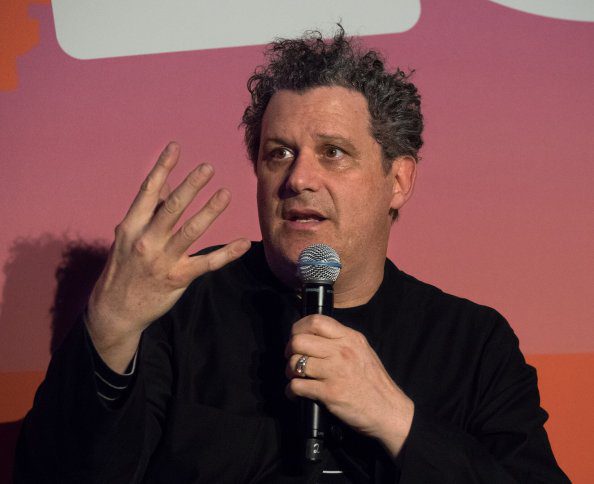
So What Do You Do, Isaac Mizrahi, Fashion Icon and Creative Director?

The consummate Seventh Avenue showman describes his new reality show and the joys of blogging

isaac
Admin icon
By Diane Clehane
Diane Clehane is a New York Times best-selling author and award-winning journalist who has covered the British Royal Family for more than two decades. Her work has appeared in Vanity Fair, People, Forbes, Variety, and Newsweek, where she wrote the cover story on the future of the monarchy. She is a regular commentator on CNN, NBC News, and CBS News, and a contributor to Best Life, where her royal coverage has drawn more than one million readers on MSN and Yahoo. She holds a B.A. in Journalism and Sociology from the University of Massachusetts Amherst.
16 min read • Originally published February 7, 2024 / Updated April 11, 2026
Admin icon
By Diane Clehane
Diane Clehane is a New York Times best-selling author and award-winning journalist who has covered the British Royal Family for more than two decades. Her work has appeared in Vanity Fair, People, Forbes, Variety, and Newsweek, where she wrote the cover story on the future of the monarchy. She is a regular commentator on CNN, NBC News, and CBS News, and a contributor to Best Life, where her royal coverage has drawn more than one million readers on MSN and Yahoo. She holds a B.A. in Journalism and Sociology from the University of Massachusetts Amherst.
16 min read • Originally published February 7, 2024 / Updated April 11, 2026

Isaac Mizrahi is a man of many talents: he’s headlined his own one-man off-Broadway show, makes a mean roast chicken, wrote a series of comic books (Sandee the Supermodel), designed costumes for Broadway (The Women, for which he won a Drama Desk Award) and the New York Metropolitan Opera (Orfeo ed Euridice) and just happens to design two of the most talked-about women’s collections of the year.

The man who helped make Target the capital of high-low chic, is currently having a moment. His eponymous line shown during New York’s Fashion Week garnered rave reviews, his first collection for Liz Claiborne has just hit stores, and everyone from Michelle Obama to savvy and newly price-conscious socialites are stepping out in his sunny, cinema-inspired looks.

Mizrahi’s personal story is just as compelling as one of those “fabulous” black-and-white films starring Joan Crawford or Carole Lombard that he can (and will) recite, line by line. Born in Brooklyn, he spent much of his childhood staging puppet shows in his backyard and designing clothes for his mother’s friends. He went on to study at The High School of Performing Arts and Parsons School of Design before launching his own business in 1987.

Mizrahi became a pop cultural phenomenon — and a household name — when he made the 1995 documentary Unzipped, which offered a hilarious and unvarnished look at his life behind the seams in fashion. While his own star continued to rise, his company faltered, and in 1998 backer Chanel shuttered his business.

But Mizrahi came back in a big way in 2003 with his trailblazing line for Target and the launch of several licensed brands. Now newly installed as the creative director for Liz Claiborne, Mizrahi is determined to revive the brand that was a staple of the working woman’s wardrobe in the 1980s with his signature mix of bold brights, whimsical accessories, sunny prints, and public relations savvy.

He’s off to a good start: Just last month, it was announced that Seventh Avenue’s renaissance man would be helming a new reality show on Bravo called — what else? — The Fashion Show. As host and “head judge,” Mizrahi’s presiding over a team of aspiring fashionistas looking for their big break. The show is scheduled to premiere May 7.


Name: Isaac Mizrahi

Position: Creative director, Liz Claiborne, and host of The Fashion Show on Bravo

Resume: Designer, television personality and first-time author (How to Have Style, Gotham Books 2008). Joined Liz Claiborne as creative director last year after a successful six-year run with Target. Winner of four CFDA awards, including a special award in 1996 for Unzipped. Hosted two television series — for Oxygen and the Style Network.

Birthdate: October 14, 1961

Hometown: Brooklyn, New York

Education: Parson’s School of Design

First section of the Sunday Times: “The obituaries. It feeds the morbid side of me that wants to know about people who just died. It also feeds my obsession with my own death. But the first thing I read every morning is the horoscope in the New York Post.”

Favorite TV show: “I love Ugly Betty, The Ghost Whisper and Ace of Cakes on the Food Network and Top Chef.”

Guilty pleasure: “Eating. My addiction is food. I love to cook.”

Last book read: I read a lot of different things at one time. I just read Doris Kearns Goodwin’s No Ordinary Time and Secret Ingredients, a compilation of all the great food writers from The New Yorker. It’s really, really good. There’s this thing in there on casseroles that I loved.”

You’re one very busy man who just got busier. How did the new show come about?

I was talking to Andy Cohen [Bravo’s senior vice president of production and programming], who I think is the most charming, fabulous person on Earth, and we were talking about one project, and he came back and said, ‘What about this?’ I had even more enthusiasm for this idea than the one we had been talking about. A few weeks later, he came back with an offer and here we are. I can’t refuse him anything. Actually, that’s the best part of this relationship — I do adore the Bravo people so much. They’re so smart — smarter than the average network executive.

They certainly are committed to marketing their shows in a big way.

Yes! They’re really taking over — this [fashion reality show] genre belongs to them.

When did this all happen?

Recently — in December. And to all you deal-makers out there: Unless something happens quickly, it’s not going to happen. Unless it takes 10 years. Things either take two months or 10 years.

What can you tell me about your role on the show?

I’m the host and kind of like the head judge. The first day of work was the day after my collection [premiered], and I was so exhausted. It was a day of blocking and I was like, I am not going to make it through these five weeks. I don’t sleep well usually, but I ended up going home after that first day and slept for like 20 hours or something scary like that, and I found myself in the most divine position. I felt like, ‘Oh my God, this is the most fun, engrossing job in the world because when you take away all your preconceived notions about it and get that this is a bunch of struggling young designers who are really trying to prove themselves, the drama of that, at least to me, is irresistible. After almost every elimination, I feel like sobbing. It’s very, very sad for me.

I don’t know how they are going to edit it. They may edit it where I’m telling [the contestants] all the bitchiest, meanest things, but I do think they need to hear that. They do need to rise above the whole personal thing and play it like a game, but it’s tricky. At the same time you’re encouraging them to make it the end-all, be-all of their lives — like, ‘Unless this is completely attached to your ego, don’t bother.’ This is totally personal and not personal at all. Do you know what I mean?

When Unzipped came out, people stopped me in the street and said, ‘That was such a lesson about tenacity and not listening to anyone and just doing what you want and I was so inspired…’ Artists, lay people — all kinds of people were stopping me on the street. I think this is going to inspire people. The message to me, so far, is you have to completely attach yourself and completely detach yourself at the same time. On top of that, you need to enjoy your life. Do something out of a place of joy and fun, otherwise don’t bother. This is what we keep coming back to on the show.

You’re hardly someone who sits home doing nothing to begin with. How are you fitting this into your already jam-packed schedule?

(Laughs) Honestly, I don’t know. I have 10 days of work and one day off. So there’s one day of the week which is quite calm — or really every third day I get a half day of shooting, so I take care of a lot of business on those days. I have a day off every 10 days and a lot of it gets done then. And, I work at night because I don’t really sleep that much.

How many hours a night do you need?

Four. I don’t need a lot. Then, occasionally, I’ll sleep for like 20 hours.

It seems as if Bravo’s plan is to have your show fill the void left by Project Runway. What do you think?

I’m sure strategically that’s part of what the network is thinking. Also, it’s thinking, ‘Hello, we created this genre and somewhere along the line, they took it away from us.’ Of course, I don’t know what critics will think, and I don’t know if Project Runway is totally a beloved thing, but I don’t really see it at all as competing with that show. It’s just a fashion competition show. There should be more than one. There are so many food competition shows on every channel — not just the Food Network. I think it’s just a really entertaining form of reality television.

One big advantage working with Bravo is that you’ve got NBC Universal behind you. Are there promotions or cross-overs with the network planned? I noticed you did the Oscar fashion post-mortem on Today.

Probably. I’ve worked for the Today show a lot. I used to do segments for them.

I know you’ve done some red carpet reporting. The infamous Scarlett Johansson boob grab comes to mind…

That was for E!, actually. (Laughs) Can you refer to it as the ‘underwire grab?’ — because I so was not grabbing her boob. It was more like the ‘underwire feel.’

Speaking of the red carpet, I thought the fashion at this year’s Oscars was bad. And those few women who did look fabulous ditched the red carpet and went in the back door. Bad news for fashion all around. I thought it was dreadful.

Honestly, so did I. There was no color and nothing daring. Nobody took any risks. It’s getting worse and worse that way.

I know you’re a huge television fan. What were your favorite shows growing up?

There were so many. I’m really a television person. Because of the insomnia, I never shut it off. It was always like my best friend. At some point, my parents thought that maybe it was the TV that was keeping me up, so they tried to get rid of it. I threw such a fit, they couldn’t do that. Honestly, it ended with this really bad scene with my mother throwing the TV set on the floor. (Laughs) It was not pretty at all, but I ended up getting my way.

I loved reruns of I Love Lucy. It’s such a typical, trite answer, but I love watching it. It’s not on TV Land anymore — I think it’s on the Hallmark Channel. I happened to see it the other day — it doesn’t matter how many times I’ve seen an episode, I was screaming. It’s the funniest damn thing on television.

I grew up watching talk shows — I loved Merv Griffin, I loved Mike Douglas, I loved Johnny Carson. I was an addict for those. It seemed like people actually talked. When I did my talk shows on Oxygen and Style [Network], I tried to actually talk — I really didn’t just want to promote movies. I wanted to talk about people’s thoughts, and I didn’t want it to be so pre-produced. If I go back to talk television, I’ll do something like that. Just come on because you feel like talking about something.

You’ve always seemed to gravitate toward television in a big way. You’ve been on Oprah and every talk show imaginable, you’ve had your own shows and appeared on Sex & The City and Ugly Betty. You’ve even been on Jeopardy. Why are you so drawn to the medium?

It is true that I gravitate towards it. It’s part of who I am because I’m a ham. I like talking. I like to express myself in many, many ways. I like a lot of things. I don’t just like designing clothes. I’m very inspired by all different forms of expression. I read a ton. It’s not enough just to design clothes. I don’t know what I’ll ever be remember as — if I’ll be remembered. I don’t know what I’ll be remembered for — Unzipped or my clothes or my cabaret act. I have to say a major part of the joy of my life is not knowing that and not looking over my shoulder and wondering why I’m not doing more of one thing and less of another thing.

If people think of it as me reinventing myself, I’m glad. If that’s a good lesson for people, it’s good, but more than anything it’s about me not feeling bored. It’s me being engaged in the moment. I don’t mean to be arrogant about stuff. I used to sew a lot as a kid. When I look at a sample and the pattern maker says, ‘I can’t do any better’ I say, ‘Well, you’re fired because I can do better.’ When I go to a restaurant, I think, ‘This is a roasted chicken? You’ve got to be kidding me!’ There are some things you become really good at, but that doesn’t mean you have to spend the rest of your life roasting chickens. You know what I mean? I do feel at this age — I’m 47 now — I can walk into a room and say to a television executive, ‘I think this is a really good idea.’

Unzipped is arguably the high-water mark for depicting what really goes on in fashion in a very accurate and entertaining way. Fashion is such fodder for movies and television — how do you think the industries have affected each other? Is there any downside to it at all?

I don’t think there’s a downside. I think it’s a paradigm that is continually shifting. The more we portray fashion as something that’s over the top, the more we’re going to sell over the top clothes. There’s the Shakespearean other to side to that coin too, which is the more over the top things there are in the world, more of the opposite of that exists as well. I think the more you shine the light on fashion in the form of entertainment, the better it is for our industry. Unzipped was probably my most important life’s work, unfortunately. No matter what I do as a designer, it will never be as potent as what I did with Unzipped because it made fashion work in that format.

You’re also opening yourself up in much of the same way on your web site and seem really into that. How much time do you spend on that?

Every single day there’s a new reason to log on. Either it’s a three-minute segment or a new video blog or some bit that’s new. We spend three long, full days a month taping. Then I tape my video blog two or three times a week. We also take pictures with my video blog camera, and I put stuff up almost every single day. Of all the things I do, it’s probably my favorite because it’s more personal. It’s really like a scrap book. It’s what I do instead of a talk show now.

Now that the show has added commitment, will you be scaling back your involvement with it?

No. We have shoot dates planned for April. With daily blogging, I’m trying to do what I can in my dressing room. It’s fun. It’s too delicious to give up. (Laughs)

There’s probably no bigger fashion star right now than Michelle Obama. What do you think she’s going to do for American fashion?

I think she’s going to be an unbelievable ambassador for fashion. I love her — especially because she loves clothes. She has such a young take on the whole thing. Young, yet proprietary. She’s kind of like the Carrie Bradshaw of the next 10 years.

You were one of the first proponents of ‘high-low’ style. These days everyone is having to consider what that means. How do you think that phenomenon is going to affect the fashion industry long-term?

Even more than the economy, I think the Obama family is going to affect it. [Michelle Obama] is the perfect example of high-low because she values the J.Crew sweater as much as she does some ensemble by Isabel Toledo. I just think that speaks volumes about the direction everyone has been going in for a number of years.

The acceptance of design at different levels is remarkable now. To me, the greatest luxury is the right thought or the right idea. That could cost very little — the right thinking at the right time. So more and more, as people get conscious of budget, I don’t think ‘fast fashion’ will be as trendy. I think actual design will be valued.

[Michelle Obama’s] choices, for the most part, haven’t been at all mainstream.

That’s true. It’s for the love of something. It’s not because she sat with a million stylists and they said, ‘You should do this or that.’ It’s like someone actually had some passionate feeling for something. And, it’s very politically correct that she wore Isabel Toledo [for the inauguration].

Do you think it’s harder to break into the fashion business now than it was 10 year ago?

(Pauses) No. My answer is no, I don’t. It was so hard breaking into the fashion industry 20 years ago. If you ask Calvin Klein how hard it was breaking into the fashion industry 40 years ago or Ralph Lauren how hard it was 50 years ago … it’s always really hard. It doesn’t get any easier. Every generation thinks, ‘Oh my God, it’s never been so terrible,’ but it has.

Speaking of hard times, your costar Fern Mallis told me not too long ago that she thought the coverage in WWD and other publications has focused too heavily on gloom and doom of the economy — there wasn’t enough cheerleading for the fashion industry and all the negativity almost becomes a self-fulfilling prophecy. What do you think?

I don’t know that people are that gullible anymore. I think WWD is right on. I love the idea of telling it like it is. When I was a kid growing up, it was much less about that. It was kind of like propaganda — ‘Oh, no, everything is great!’ and then you’re out of business. I was once having lunch with Joan Collins and she was in a revival of some Noel Coward play. I said to her, ‘How are tickets selling?’ and she said, ‘Lousy!’ I thought, ‘Wow, imagine, you’re in this play, and you are so fabulous and you can say, ‘I’m sorry the ticket sales suck.’ I wish I was in an industry like that, where you could just say, ‘Business isn’t good right now.’ So I’m a champion of telling it like it is.

Your collections and certainly your attitude toward the business in general have always been very optimistic. How significant a part has that played in your career and your desire to keep trying new things?

I’ve trained myself to think a certain way. For me, there’s nothing in life but bravery. There’s nothing in life but looking at the thing you’re most afraid of and doing it. That, to me, is all. You can see it in my clothes. The clothes for Liz [Claiborne] are so optimistic. If you go and just wear black for the rest of your life now because there’s a recession, the circumstances have won. They’ve won out. You have lost the big hard battle. It just like what President Obama was saying: Now is not the time to lose the battle, now is the time to see all the gray areas and try to work within those areas. I want you to think about a pink print. You take one step at a time, one belt at a time, one shoe at a time, and you’ll get there.

Despite having had some bumps in the road, you’ve continued to do try new things and reinvent yourself in some interesting news ways. What’s the secret to your longevity?

I don’t see this as reinvention, I see it as living my life every single day and not being bored to death. I don’t reinvent anything, I just do what I think is right and seems amusing. I only do things I’m excited about.

What the best piece of advice you could offer to someone looking to get into the business?

(Pauses) Don’t listen to anybody. Do exactly what you think is right, and you’ll find your moment and your audience.

What would you consider your greatest success at this juncture?

Probably the Target thing. Having made that ‘masstige’ [prestige for the masses] thing happen.

What about your biggest disappointment?

Wow. (Pauses) My partnership with Chanel.

How would you say you’ve gotten to where you are?

The way I’ve gotten to where I am was not thinking about getting anywhere. I really mean this — I don’t think about where things are going. I think about where I am and how much I am engaged in what I’m doing. That’s one of the early lessons I learned after 10 years in business: If you feel put upon or if you feel like you have to do something you’re never going to be good at, you’re never going to do it well. The lesson I learned is unless everybody is doing exactly as they please, it’s not going to work. I’ve learned that in hiring and working with people that unless they’re doing exactly as they please and what they feel they are good at and feel challenged in doing, then you’re not going to get good work out of them. Get someone who really needs the thing you want them to do.

Do you have a motto?

I don’t have a motto, but I have this thing that I made up about style: Style is knowing when not to have any.


Diane Clehane is a contributing editor to FishbowlNY and TVNewser. She writes the ‘Lunch’ column.

This interview has been edited for length and clarity. Mediabistro regularly interviews creative professionals who have accomplished amazing things in their careers.

Topics:

Interviews

Mediabistro Archive

Merri Lee Kingsly on Boosting Saveur’s Ad Pages and Revenue Despite the Downturn

Mediabistro icon
By Amanda Ernst
Amanda Ernst Kallet is a senior business development executive currently leading AI partnerships at Meta, where she is a credited contributor to the Llama 3 and SeamlessM4T research publications. She previously held director-level roles at Verizon Media and AOL, and holds an MBA from Columbia Business School.
8 min read • Originally published August 25, 2009 / Updated April 11, 2026
Mediabistro icon
By Amanda Ernst
Amanda Ernst Kallet is a senior business development executive currently leading AI partnerships at Meta, where she is a credited contributor to the Llama 3 and SeamlessM4T research publications. She previously held director-level roles at Verizon Media and AOL, and holds an MBA from Columbia Business School.
8 min read • Originally published August 25, 2009 / Updated April 11, 2026
Archive Interview: This interview was originally published by Mediabistro in the mid-2000s. It is republished here as part of the Mediabistro archive.

In the 18 months since she was named publisher of Saveur magazine, Merri Lee Kingsly has made the small circulation, hard-to-pronounce epicurean title one of the best-performing magazines in the U.S. As a veteran of behemoth publishing houses like Condé Nast, Kingsly wanted to steer clear of the attitudes and methods she had loathed while working for the big guys. “Everything I hated growing up in the industry, I’ve done away with,” she said. “I’ve always challenged my publishers who have lost their relationships with their clients.”

When Kingsly hand-picked her small ad sales team, she valued people with knowledge of specific industries, such as wine, over those with beefy Rolodexes, pulling some from rival books and hiring nontraditional candidates with little ad sales experience. And while revamping her approach to ad sales and marketing has improved client relationships, Kingsly has also focused on bringing in new sources of revenue through non-traditional partnerships with mixologist group Tales of the Cocktail and upscale travel agency consortium Virtuoso. “We couldn’t go out and create a Food & Wine Classic because we are so small,” Kingsly said of her competitor’s annual food fest. “But we have this influencer platform. We can go after the decision makers who are really going to move that needle for our clients.”

Her methods have paid off: During the first half of the year, Saveur (pronounced SAH-voor) saw ad pages increase 11 percent from last year, with revenue climbing 19.2 percent year over year. The magazine also unveiled a revamped Web site this month, putting an emphasis on an aggregator that pulls Saveur-approved epicurean content from around the Web. As Kingsly explained: “The site is for the users first, just as the magazine is for the readers first.”


Name: Merri Lee Kingsly
Position: Publisher of Saveur
Background: Started her career in sales at Crain’s New York Business and has worked at a number of magazines during her 20-plus years in the business, including Bon Appétit, Food & Wine, Outside and Men’s Journal. Most recently, she worked as publisher for Four Seasons for a little over three years. Kingsly was named publisher of Saveur in January 2008.
Birthdate: September 1, 1962. “I’m about to turn 47 years young.”
Hometown: Bernardsville, N.J.
Education: Syracuse University; Culinary Institute of America
Marital status: Married, with an eight-year-old daughter
First section of the New York Times: “During the week, I always read the ‘Business’ section first. On Sunday, I switch off between the ‘Style’ section and the ‘Business’ section.”
Favorite TV show: “I have so many favorite TV shows. I’m a TV junkie. Now I’d have to say my favorite TV show is definitely Top Chef Masters. I love the [Real] Housewives of whatever, which is probably the best trash on TV. Also, Grey’s Anatomy, and I’m a huge Mad Men fan, too.”
Guilty pleasure: Entenmann’s chocolate doughnuts
Last book read: Isadore Sharp’s book on the Four Seasons: Four Seasons: The Story of a Business Philosophy.


How did you get into epicurean magazines?

I was working in advertising, and I left for a year. I went to the Culinary Institute of America (CIA), and I spent a year there becoming a certified pastry chef. I had actually gone for a three-week baking program up at [the] CIA, and I loved it so much that I applied and went up there for an entire year. It was great — I call it my 30-year-old midlife crisis. But I came back and I decided that I didn’t want to be in the kitchen. So I decided to stay in advertising, but go back into food. It was kind of a no-brainer because I had the ability to match my passion with my profession, and people don’t ever get to do that.

Do you still bake?

I do a ton of baking. I bake with my daughter. I used to bake for my clients all of the time as a sales rep. Sometimes I only have time for slice-and-bake [cookies], and sometimes the slice-and-bakes barely make it into the oven because both my daughter and I love the cookie dough.

“The advertising community has been receptive because [Saveur.com] isn’t just another magazine regurgitating its content on the Web for the sake of squeezing more money out of its clients.”

How is Saveur different from your epicurean competitors?

First of all, [Saveur is] the smallest of the entire group. Our circulation is 325,000 and everyone else is upwards of 900,000 and above. And our mission is very different: We’re more about the experience of food than the recipes. The competitive set is primarily about the recipes. Everything we do is about heritage, authenticity and the culture of food, and it’s all intertwined throughout the magazine. We bring our readers an interesting experience from a destination and then give them an opportunity to recreate that experience in their home.

Saveur‘s ad sales are up this year, but how is your circulation doing?

We had an amazing newsstand year. We were up six percent on the newsstand last year with an 82 percent renewal rate, which is incredible. Subscriptions are $30 for nine issues of the magazine, which is the most expensive sub price in the category, and yet we were up more than anyone in the category on the newsstand.

What is your relationship with the editorial side of the magazine?

The edit team is equally as creative as the business side. And that’s why it is so harmonious. We got everybody together for the first time in June, and Jim [Oseland, Saveur‘s editor-in-chief], who is truly my partner, got up and addressed everybody. His philosophy about managing his team was exactly the same as mine, and my team just sat there with their jaws open because you would have thought that he and I had rehearsed it. We are an incredible pair together, and we take care of each other. Not take care of each other like edit will write something for me. But we nurture each other’s relationship.

While your competitors have had trouble with ad sales, Saveur‘s ad revenues have been up this year. What do you attribute that to?

We have not changed the mission of the magazine. The competitive set has truly chased a weak economy, and they’ve lost the attention of affluent foodies. We still truly believe that people are traveling and eating and living a life of experience, so we continue to do what we’re doing. There’s also a sea of sameness, but we do something so different in how we focus on places around the globe. I’ve also hired a group of sales people that have taken a consultative approach to selling. I don’t believe in squeezing my clients. I think that there are a multitude of things that we can do. Trying to get as much money out of them by doing a 360 program is just a bunch of baloney. The truth is, you really need to think about what their needs are.

Has Saveur been affected by the economy?

It has been affected by the economy because you have advertisers like Kitchen Aid and Viking not running print ads. So yes, without a doubt, we’ve been affected by the economy. It’s going to be interesting to see what will happen heading into next year. We have something like 14 new advertisers [in] every new issue, because we have to go out there and really get every new page.

“If you take print magazines away from the epicurean category, right there you’ve lost it… People are obsessed with taking pictures of their food.”

Why did you decide to revamp the Web site? How is it different?

First of all, I think that most magazines’ Web sites are very narcissistic. Everyone put a Web site up because everyone was going to the Web and this was what we needed to do. But Saveur has always been very thoughtful of our readers. And just as we’re thoughtful of our readers, we want to be thoughtful of our users who come to Saveur.com. They come for the recipes and they love the photos, but what else can we bring to our users that no one else brings? Well, we added an aggregator to the Web site that pulls handpicked information from all over the Web on a daily basis. It aggregates recipes, travel information, gadgets, and wine and spirits information. And the best part is that if you’re taking a trip to Hong Kong and you want to know about the $5 noodle house that had the most amazing noodles, or you want to find out about a $300 meal, you will be able to do all of that on Saveur.com.

Have you seen an increase in traffic or online ad sales since the new site’s launch?

We have seen an increase in traffic for sure, but it’s so recent that it is difficult to give actual numbers. I can tell you that the advertising community has been receptive because it isn’t just another magazine regurgitating its content on the Web for the sake of squeezing more money out of its clients.

Do you see a future for epicurean magazines in print?

I do, and part of the reason why I do is because one of the most-read sections on our Web site is the photo gallery. That says it all. 56 percent of the people that go to Saveur.com spend most of their time in the photo gallery. If you take print magazines away from the epicurean category, right there you’ve lost it. People love to take pictures of food and put it online. People are obsessed with taking pictures of their food.

Are you going to have a section for that on your site?

Yes, we will. We have a bunch of ideas about how to do that. And we’re doing a lot of video stuff on there, too. People love that.


Amanda Ernst is editor of FishbowlNY.

Related:

  • Media Career Advice

Topics:

Mediabistro Archive
Mediabistro Archive

Nicholas Kristof and Sheryl WuDunn on Championing Women’s Rights and Sparking a Social Movement

Mediabistro icon
By Amanda Ernst
Amanda Ernst Kallet is a senior business development executive currently leading AI partnerships at Meta, where she is a credited contributor to the Llama 3 and SeamlessM4T research publications. She previously held director-level roles at Verizon Media and AOL, and holds an MBA from Columbia Business School.
11 min read • Originally published September 1, 2009 / Updated April 11, 2026
Mediabistro icon
By Amanda Ernst
Amanda Ernst Kallet is a senior business development executive currently leading AI partnerships at Meta, where she is a credited contributor to the Llama 3 and SeamlessM4T research publications. She previously held director-level roles at Verizon Media and AOL, and holds an MBA from Columbia Business School.
11 min read • Originally published September 1, 2009 / Updated April 11, 2026
Archive Interview: This interview was originally published by Mediabistro in the mid-2000s. It is republished here as part of the Mediabistro archive.

When they started Half the Sky, New York Times columnist Nicholas Kristof and former Times reporter and editor Sheryl WuDunn were already award-winning journalists and authors, with a happy marriage and three kids. But there was one issue the couple felt needed their attention: the challenges faced by women in developing nations.

It took more than two years to convince publishers to take a chance on their idea, which eventually became Half the Sky: Turning Oppression Into Opportunity for Women Worldwide, due in bookstores on September 8. But Kristof and WuDunn were not happy with just writing a book that tells stories of women’s struggles. They wanted to create a grassroots movement to raise awareness of the cause, and show people how to make a difference. “What we’ve written is a sort of do-it-yourself foreign aid tool kit. We hope to inform people, but also really help them figure how they can go about making a difference.”

Kristof and WuDunn are also giving back themselves: They put part of the advance for Half the Sky toward founding a middle school in Cambodia, launched HalfTheSkyMovement.org, a Web site devoted to spreading their message, and are planning other projects to tie into the book, including a Web-based game and a telethon.

The couple will be honored with the Dayton Literary Peace Prize for Lifetime Achievement later this month, which will join the Pulitzer Prize the couple won in 1990 — becoming the first married couple to do so. While they work on Half the Sky-related projects, including a book tour later this year, Kristof is continuing to write his NYT column and WuDunn is planning to go back to work in the financial industry later in the fall. mediabistro.com caught up with the busy duo to discuss how their journalism backgrounds informed Half the Sky, their interest in women’s rights, and what it’s like to work together while raising a family together.


What is Half the Sky all about?
WuDunn: The book is about the major challenges that women in the developing world face. We talk about mass rape, sex trafficking and maternal mortality. We went to countries where these problems are the most formidable, and we talked to women who have been through these challenges and survived. We tell their stories. It really is stories about women and what they’ve done, what they’ve been through, what they’ve endured and how they’ve survived and been able to change the world around them. It’s extremely amazing to meet some of these women who, against all odds, have emerged triumphant. It makes you ask yourself, ‘If I were in those shoes, would I do the same?’

Kristof: “If there were a Chinese dissident who was tortured or imprisoned, we’d write about that, and it might very well end up as a front-page story. Meanwhile, there are tens of millions of people who had been discriminated against to death, and we never really gave it a column inch.”

Kristof: But we don’t want to imply that this is a book about mass rape. This is really a book about how to overcome global poverty and how to create more stable societies.

WuDunn: Basically, the thrust is that this is the moral challenge for our century. If we do not empower and educate women, then the world cannot begin to tackle poverty and extremism and we cannot advance U.S. interests. It’s kind of odd that we can put a man on the moon, but we can’t treat women as human beings.

Did the idea to write a book about this topic grow out of any of your previous coverage of human rights and China?
WuDunn: The idea started to simmer while we were in China from 1988 to 1993. As journalists, we were always taught to report facts, be balanced and not take a side, which we did. But it surprised us that as we were covering the pro-democracy demonstrations in China at Tiananmen Square, there was a lot more going on in the countryside that was just horrendous, such as female infanticide. Somehow we discovered a statistical report on demography that basically suggests that there were 60 million-plus women and girls who were missing out of the population in China, which was a result of female infanticide, sex-selective abortions, and under-reporting. Worldwide, that number is anywhere from 60 million to 100 million missing women and girls if you include India and Africa — where women die early from childbirth. When you see something like that, how can you not want to help?

Kristof: It also made us wonder about journalism and how we go about it. If there were a Chinese dissident who was tortured or imprisoned, we’d write about that, and it might very well end up as a front-page story. Meanwhile, there are tens of millions of people who had been discriminated against to death, and we never really gave it a column inch. We began brooding about this, wondering what does constitute news? And the more we looked through this lens of gender discrimination in all of Asia, we realized that it was a helpful way of looking at the world and that was the process that started and eventually led to Half the Sky.

How did you go about getting a book deal for a topic like this, which was so under-reported?
Kristof: Initially, we were enthusiastic about this idea because it seemed very important to us. It also seemed to us that if you want to overcome poverty, you have to do it through educating and empowering women. It wasn’t immediately obvious to book publishers that this was going to be a book that would sell a ton. So we talked about it for two or three years and they came around and saw that A), it was important and that B), there would be an audience. Now we all feel that there is an audience, and we hope that we’re at a tipping point where this issue really is getting traction. It sure seems to us that it is.

WuDunn: And now our publisher is solidly behind it. It’s just amazing. The turn has been amazing.

Why do you think that your publisher changed its view of your book’s topic so dramatically?
WuDunn: The tipping point is very much related to what’s happened in the U.S. For example, with Hilary Clinton as the new Secretary of State, she cares about these issues. Obama has appointed a council on women and girls and supported a new ambassador for global women’s issues. Companies now are really growing their social responsibility programs and a number of prominent companies are focusing on women and girls, including Wal-Mart.

Kristof: Anti-poverty organizations and aid groups have increasingly come to the conclusion that if you really want to make a difference at the grassroots level, then often the way to do that is to work through women and girls. The dirty little secret of development is that men often have an amazing capacity to misspend money. That’s why microfinance tends to focus on women. When you create earnings opportunities for men, then the money is more likely to go toward buying beer, for example, or prostitution, or some kind of extravagant festival. And if you put that spending power in the hands of women, it’s more likely to go toward educating their children or toward starting a small business. It’s hugely humiliating as a man to admit that, but it has increasing been recognized and I think it’s one more reason why there has been this focus on women as a engine in the fight to overcome poverty.

WuDunn: It turns out that there really is such a thing as a maternal instinct after all!

Kristof: “When you create earnings opportunities for men, then the money is more likely to go toward buying beer, for example, or prostitution, or some kind of extravagant festival. And if you put that spending power in the hands of women, it’s more likely to go toward educating their children or toward starting a small business.”

Do you think that your work on your previous books and their success helped you sell this one?
Kristof: They taught us how to write books. It really is different to write a book than to write a news article or a column. They taught us a lot. Writing about China especially gave us a framework for looking at this issue, because China is an example of a country that 100 years ago was just about the worst place in the world to grow up female, thanks to foot binding, infanticide, child brides and concubinage. Then China really transformed itself, and today it is a pretty good place to grow up female, at least in the cities. And that is really what has explained the huge economic transformation of China.

WuDunn: Female employment has explained it. It really helped jump-start the economy.

Kristof: They went from using half their population to using all of it, essentially.

WuDunn: But more importantly, for a place like China, if you look at all of the clothes that we wear and the shoes that we walk on and the bags that we carry, they were all made starting a decade and a half or two decades ago by women in those factories that we call sweatshops. But sweatshops really can be an elevator out of poverty to an economic future because if you’re a woman, what are the jobs available in developing countries? There is construction or farming or things where women don’t really have an advantage. But in the factories, where they need nimble fingers and sewing skills, they have a competitive advantage and they can build a skill base. So for all the horrors of sweatshops, for women with very few opportunities, it’s a ladder out of poverty.

WuDunn: “We figure it’s a lot easier to work on a book than it is to raise kids together.”

Later this month, you will be receiving the Dayton Literary Peace Prize for Lifetime Achievement. What was your reaction when you heard you were going to be given this prize?
Kristof: We felt way too young to be winning a lifetime achievement award. We thought, we’re over the hill now!

WuDunn: We were surprised, absolutely surprised.

What other projects are you working on now?
Kristof: Half the Sky is intended to be not just a book but — it sounds grandiose to say it — a way to help kick start a broader movement. To that extent, we’ve started a Web site called HalfTheSkyMovement.org, and Sheryl’s been working on a game.

WuDunn: We are planning to have a Web-based game that will launch in November or December. Then in spring or summer 2010, we’re planning a television special that is a modern telethon that uses sketch comedy, performance, documentary clips and celebrities to really highlight the issue. And in the fall of 2010, we are coming out with a series of documentaries that we’re hopefully going to work with PBS on.

Kristof: The thought is that we don’t just want to preach to the choir. We want to expand those who really understand and care about the issue. So we hope the game, for example, will be an entry point that will then get people to dig deeper.

As a husband and wife team that has worked together for many years, you seem to have the partnership thing figured out. How do you make it work?
WuDunn: It’s funny. When I was at The New York Times, we worked at the same office, we worked together and it was really fun and we worked very well as a team. But in a place like China, you almost need a teammate because at that time it was so much us against them. So that was very helpful. But we never traveled together, and we always had our separate portfolios, separate stories. But we came together to write our books. More recently, I was working in the financial industry and he was writing the column, so we never intersected, and the book was able to bring us together again. We work well together. We figure it’s a lot easier to work on a book than it is to raise kids together.

Kristof: The book doesn’t play you off each other. It pretty much just sits there.


Kristof and WuDunn’s tips for raising awareness through writing:
1. Start from the ground up. “In writing Half the Sky, we looked at movements in the past and what worked and what didn’t work,” Kristof said. “It seems to us that top-down efforts basically don’t work. What you need is grassroots, bottom-up movement to make a difference.”
2. Don’t exaggerate. “Advocates often exaggerate because they care passionately about these issues,” Kristof explained. “That tends to turn off people who might otherwise climb on board. Being very rigorous about your claims actually is a more successful strategy than pounding the table and making exaggerated claims.”
3. Check out the research. “There’s been a lot of really interesting research in the field of social psychology that helps shed light on how you get people to care,” Kristof said. “There is work in particular by a man called Paul Slovic, he’s done a lot of experiments that I found really illuminating.”
4. Stick to the stories. The research in social psychology Kristof and WuDunn used advised them to focus on storytelling. “In our book, of course, we do focus on storytelling, how to tell the story, what kind of story to tell,” WuDunn said. “And in the documentary series, we’ll also focus on storytelling and how to tell these stories in a very compelling way.”
5. Find your interests. “The hardest thing is to really think carefully about what it is that you like,” WuDunn said. “If want to get involved in something, you’re going to have to spend a lot of time with it, so it’s going to have to be something that really moves you.”


Amanda Ernst is editor of FishbowlNY.

Related:

  • Media Career Advice

Topics:

Mediabistro Archive
Mediabistro Archive

Caroline Little on Tactics That Can Save Struggling Media Companies

Mediabistro icon
By Amanda Ernst
Amanda Ernst Kallet is a senior business development executive currently leading AI partnerships at Meta, where she is a credited contributor to the Llama 3 and SeamlessM4T research publications. She previously held director-level roles at Verizon Media and AOL, and holds an MBA from Columbia Business School.
9 min read • Originally published November 10, 2009 / Updated April 11, 2026
Mediabistro icon
By Amanda Ernst
Amanda Ernst Kallet is a senior business development executive currently leading AI partnerships at Meta, where she is a credited contributor to the Llama 3 and SeamlessM4T research publications. She previously held director-level roles at Verizon Media and AOL, and holds an MBA from Columbia Business School.
9 min read • Originally published November 10, 2009 / Updated April 11, 2026
Archive Interview: This interview was originally published by Mediabistro in the mid-2000s. It is republished here as part of the Mediabistro archive.

Condé Nast may have just launched a dating site, TrulyMadlyDating.com, to generate a new stream of revenue, but U.K. company Guardian News & Media is already way ahead of them. Just ask GNM’s North America CEO Caroline Little.

Little has been in digital media since its early beginnings, and she’s steadfast in her belief that media companies like Condé and GNM can’t simply replace what they’ve lost from print advertisements with online ads. Instead, firms should be seeking additional revenue streams, like GNM’s local dating service in the U.K., Soulmates, which Little says does “quite well” for the British company. “You could try that in local markets,” Little advised. “Travel is another area. I think there are opportunities for other services.”

Little was not always destined to be a digital media leader. She started her career as a lawyer, but joined the Washington Post Co. in 1997 and eventually rose through the ranks to CEO, where she led the Web sites of The Washington Post, Newsweek, Slate and The Root. She left the Post last year, as the company worked to combine its print and online divisions.

“I had been there for four years, and I completely supported the effort toward moving print and online together because they were getting more Balkanized and it didn’t really make sense,” she said. “But I knew I didn’t want to stay and do it.”

Now she’s leading the Guardian‘s North American sales efforts, and since the paper doesn’t publish a printed version stateside, Little has been focused on selling ads on Guardian.co.uk to U.S. marketers. But she’s always on the lookout for creative sources of additional revenue. Is there a stateside dating site rivaling Condé’s in her future?


Name: Caroline Little
Position: CEO, North America, Guardian News & Media
Resume: Started career as an attorney working for Arnold & Porter in Washington, D.C. Joined US News & World Report as deputy general counsel, then moved to the Washington Post Co. as general counsel of the Internet division, moving up the ranks to COO and then CEO. Left Washington Post in June 2008, before joining the Guardian as a consultant in August 2008.
Birthdate: December 30, 1959
Education: “I went to Grinnell College for two years, then transferred to Wesleyan University, where I earned a B.A. in English. And then I went to New York University Law School.”
Hometown: Chevy Chase, Md.
Marital status: Married
First section of the Sunday New York Times: Business section
Favorite TV show: Lost
Guilty pleasure: People magazine
Last book read: Richard Russo’s That Old Cape Magic


What are some of the Guardian‘s goals in the U.S. and what role does it play in the U.S. market?

The Guardian has about a third of its unique visitors coming from the U.S. That’s 60 percent of readers who have never had any connection to the printed paper because they can’t get it here and they’re not ex-pats. What I’m trying to do is help grow that audience and — I hate the word but — monetize that audience, because we’ve never had a direct sales force here. So Hannah [Diddams] came over as head of sales, we’ve hired two more people, and we’re working on introducing the Guardian. Right now we’re pretty much focused in New York because so many of the agencies are here.

“We’re never going to be The New York Times or The Washington Post in the U.S., but we don’t aim to be. I think we have a definite point of view, kind of like Slate has a definite point of view.”

What I love about the Guardian, and the reason I got to know the Guardian, and the reason I’m so happy to be here, is that I found their Web presence to be really innovative. They’ve had open apps for a long time, and they push the envelope a lot more than other newspaper Web sites. The reason I want people to go to the Guardian is just to get a different viewpoint on the U.S. There’s a lot of international news. A lot of news sources are somewhat biased, but the Guardian is a trust; it’s not owned by anyone, and it’s very fair in terms of its coverage. If it has a point of view, it’s very straightforward and usually focused on the environment. They are very focused on sustainability, which is great. It’s innovative, it’s international, it’s intelligent. And I think we also have really great cultural coverage, coverage of the London band scene, book reviews, music, dance, theater. I think we have an interesting mix. We’re never going to be The New York Times or The Washington Post in the U.S., but we don’t aim to be. I think we have a definite point of view, kind of like Slate has a definite point of view.

There were rumors recently that GNM might be looking to sell ContentNext Media. Is there any truth to that?

It’s just a rumor; we are not for sale. I have a feeling the rumor is coming out of London. As the industry struggles, GNM, like every media company, is looking for ways to make money. One reporter misquoted me, but I said, “If I was in charge, I would be looking for other ways to make money, too.”

It seemed like a bit of a scandal last year when Katharine Weymouth was named CEO and publisher at The Washington Post and you left shortly after. What happened?

It was a scandal. I mean, it was played out to be a scandal. Katharine was appointed CEO and publisher in January, and we talked about merging print and online. I had worked so hard to get it to where it needed to be, and I had just decided to go. So I told them in January or February that I was going to leave, and then I announced it in April. It was really hard leaving because I had so many friends there and it was such a big part of my life, but I had to leave. I felt like I would just become a grumpy person. It was totally the right thing to do. The last year I was there, it was very difficult trying to marshal the three brands and keep them together because there was a real push for each publication — WashingtonPost.com, Newsweek.com and Slate — to run their own entities. And I actually did not agree with that. I thought we should keep the sales teams together — and they have kept the sales teams together — but sort of economize on the back end. The print wants their own Internet presence, which I totally get, and it was a battle I wasn’t going to win, nor was I willing to fight for it any more.

I said I was going to leave by June 1. I went to France for six weeks with my dog, and my kids came and my husband came, and it was so much fun. And I was talking to the Guardian, and they asked me to consult. So I came and consulted from August through the end of last year, sort of giving them strategies that they could use. And then they asked me to come do this.

“Paying for content is just one revenue stream. I don’t think it’s going to be the silver bullet.”

You have been in digital media since its inception. How did you get into it?

When something’s new there’s a lot of opportunities. And when I came to the Post, a lot of people would ask me, “You’re a lawyer, how did you end up being COO?” One, being a lawyer, you learn how the whole company works. And two, we were really skinny on business people. So after doing a lot of deals, you sort of get to know the lay of the land. It was really new, but there were a lot of opportunities.

Since then you’ve been in a position to see it grow up. What do you see as the future of digital media?

I think it’s a really bright future. I think everybody’s trying to figure out how not to be so dependent on advertising. The funny thing is, newspapers in print have always had at least 80 percent of their revenue come from advertising. So I think everybody is trying to look at different lines of business. I think paying for content is just one revenue stream. I don’t think it’s going to be the silver bullet. I think it has a bright future, but we have some work to do.

What do you see as some potential new streams of revenue?

You can think about your assets, which are your writers, your voice and your sales team. What can you do with a “feet on the street” sales team? Is there something else they can sell, for example? A lot of companies are starting to try to do events, which some publishing companies have been very, very successful in. So I think there’s other opportunities.

Your old home, The Washington Post, got in some hot water recently over its proposed “salons,” which could have been another revenue stream for them. What was your reaction to that controversy?

I think Katharine [Weymouth] took the hit for something that she probably had very little to do with. I think she handled it correctly and well. She’s a good friend of mine, but I think she bore the brunt of that. I think you have to be really, really careful, and Katharine knows that. Somebody below her blew it. I think she knows that more than anyone.

Despite the challenges, there are quite a few women who are working at the executive level in the media industry. How do you think it compares to other industries?

I think it’s probably better than most in this country. And I think there is nothing stronger than having an example of another woman who’s done it and who totally gets the push-pull with children. We just manage things differently, and having someone support you and understand has been huge. I had a boss at US News and she was a great mentor to me and a role model. And as you see more and more people doing that, it becomes much more possible.

Right now you’re splitting your time between New York and Washington, D.C. Is that something you’re doing for your family?

I’m doing it for the job, because the job really requires me to be in New York more than I actually thought. But my youngest just went off to college. I used to live in New York for five or six years, and I love being back here. It’s kind of fun. And my kids love it. And I’m in the process of getting a studio here. But I’ll just spend a few days a week up here. D.C. is home.


Amanda Ernst is editor of FishbowlNY.

Related:

  • Media Career Advice

Topics:

Mediabistro Archive
Mediabistro Archive

Jim Moret on Being Driven to Thoughts of Suicide by Unemployment and Turning It Into a Book

Mediabistro icon
By Amanda Ernst
Amanda Ernst Kallet is a senior business development executive currently leading AI partnerships at Meta, where she is a credited contributor to the Llama 3 and SeamlessM4T research publications. She previously held director-level roles at Verizon Media and AOL, and holds an MBA from Columbia Business School.
9 min read • Originally published February 9, 2010 / Updated April 11, 2026
Mediabistro icon
By Amanda Ernst
Amanda Ernst Kallet is a senior business development executive currently leading AI partnerships at Meta, where she is a credited contributor to the Llama 3 and SeamlessM4T research publications. She previously held director-level roles at Verizon Media and AOL, and holds an MBA from Columbia Business School.
9 min read • Originally published February 9, 2010 / Updated April 11, 2026
Archive Interview: This interview was originally published by Mediabistro around 2010. It is republished here as part of the Mediabistro archive.

If you’ve ever wondered what it’s like to leave the world of anchoring for a news network, just ask Inside Edition‘s chief correspondent Jim Moret: It’s not an easy transition.

Moret, a lawyer who became a broadcaster in the 1980’s, left CNN 10 years ago, choosing to stay in Los Angeles with his family rather than make a network-imposed move to Atlanta. After years of job searching, Moret learned that he needed to lower his expectations. “I’m sure that I either dismissed or overlooked opportunities that might have been available that I might have considered less than,” he explained. “And that was my own ego, my own mistake, and I had to pay the price for that.”

But even after Moret was happily in place with a new position at Inside Edition, the financial repercussions of those few years of unemployment were enough to drive him to thoughts of suicide. What emerged instead is his new inspirational book, The Last Day of My Life, which recounts the people and things that are most important to him.

The successful journalist and sometime fill-in host for Larry King now has a warning for future broadcasters who might be questioning their own worth. “If you follow your passion, the money follows. If you just do a job for a paycheck, you will never really be happy.”


Name: Jim Moret
Position: Chief correspondent, Inside Edition
Resume: After getting a law degree and practicing for a few years, talked his way on-air at Los Angeles’ ABC affiliate, KABC-TV. Moved his way up to the anchor desk and then the NBC affiliate. Hosted a syndicated Fox entertainment show for a year before joining CNN, where he hosted Showbiz Today, among other shows. Left CNN in 1999. Named chief correspondent at Inside Edition in 2004.
Birthdate: December 3, 1956
Hometown: Los Angeles, Calif.
Education: UCLA, Communication Studies; Southwestern Law School, J.D.
Marital status: Married 27 years with three children
First section of the Sunday New York Times: Arts
Favorite TV show: House and The Soup
Guilty pleasure: Buying and selling guitars on eBay. “My rule is: Never buy after 2 a.m., because you always make a mistake.”
Last book read: Cornflakes with John Lennon by Robert Hilburn
Twitter handle: @jimmoret


Tell us about how you started your broadcasting career and later landed at CNN.

I got into broadcasting almost by accident. I had a degree in communications studies from UCLA and I was a lawyer, and I thought it would be interesting to go on the air and tell people what their rights are. At the time, my wife was selling advertising time for KABC-TV, and I pitched the general manager on this wacky idea of putting [me] on the air. I didn’t look old enough to be lawyer, but I was! They gave me an afternoon show to tell the people about what I called “cocktail law”: “My dog bit someone,” or “I can’t get my security deposit back.” There were no lawyers on the air back then. I know that sounds hard to believe, considering that’s all you see on the air these days.

Then, I went to the news director [at KABC] and I said, ‘You should have me on as a general assignment reporter.’ He said, ‘You have no experience.’ I said, ‘I’m a lawyer. The same tools of the trade, like language, apply. And I will be more careful than your other reporters. I will keep you out of trouble.’ The station had just been involved in some lawsuit with the LAPD over what was said on the air, so the timing was perfect. They tried me out, and I basically learned the ropes in Los Angeles at KABC-TV. I was there for three years, then I moved to KCBS, which was the CBS station in LA, and I began anchoring in the morning at 6 a.m. Then I branched out from general assignment reporting to entertainment reporting since I was in Los Angeles, and I really veered away from law. I went to Fox briefly and did a syndicated entertainment show just for a year. After that was cancelled, I went to CNN, and within a year I was anchoring Showbiz Today, which I did for eight years.

“When O.J. Simpson took off in his Bronco, I was the only lawyer on staff at the network… I was the main anchor for the entire preliminary hearing and criminal trial. At first a lot of people thought, ‘What’s the entertainment guy doing anchoring this serious trial?'”

But you started covering the law again at CNN during the O.J. Simpson trial. How did that come about?

When O.J. Simpson took off in his Bronco, I was the only lawyer on staff at the network, and I was the only anchor in Los Angeles. I sat down at the desk and was basically there for a year and a half. I was the main anchor for the entire preliminary hearing and criminal trial. At first a lot of people thought, ‘What’s the entertainment guy doing anchoring this serious trial?’ And then they discovered I was a lawyer. That was the beginning of these talking heads coming on shows because after that, CNN launched a show called Burden of Proof with Greta van Susteren.

The interesting thing is that many people in the news business used to think of — and perhaps still do — of entertainment news as “news light.” But a couple of interesting things have happened. First of all, it’s a massive money-maker for the country and for the businesses involved. We are the story tellers of the world, we shape the world’s tastes and fads, and also, a lot of celebrities started getting into trouble. So I was merging my celebrity and legal backgrounds because I would cover celebrity trials, over and over and over.

How do you feel about all the talking heads and lawyers that are on TV now?

It frightens me. I’m not a screamer, I have a point of view, and I would be happy to voice that point of view when it’s appropriate or when I’m on a certain show. I take what I do really seriously. I try to do research before going on. If I know I’m going on and talking about a specific case, I try to read as much as possible about it, rather than just shooting from the hip. And frankly, if I don’t know the answer, I’m going to say, ‘I don’t know.’ A lot of people, I think, won’t do that. They’ll give an opinion and you’ll think to yourself, ‘Where’s that opinion coming from?’ So I think that you’ve got to get your news from more than one source. I really think that it’s fascinating today; there’s more information available than ever before, and people don’t know anything. We used to lament this 24-hour news cycle and how it changed everything. It feels like a 24-second news cycle today. We often go on the air or post immediately. The value in publications like Newsweek and Time, even though they may seem anachronistic to some people, is that you have the benefit of reflecting on, ‘Where does this fit in the context of where we are in the last week? What do these events really mean for where we’re going?’

How long did it take you to find the job at Inside Edition after you left CNN?

That was about two and half years. I think sometimes you get an inflated value of what you can do and perhaps you set your sights too high. You say, ‘I’ve been anchoring for eight years, that’s all I’m going to do.’ But sometimes you have to take a step backwards to move forwards, and it gets harder as you get older. But you know what? Sometimes you just have to do that. That was a great life lesson for me: Don’t take yourself too seriously and think you’re too important. We’re all expendable. That doesn’t mean you don’t have a value, it doesn’t mean that you don’t make a difference, but don’t get an inflated view of yourself. And I think that I did, so I learned a lot about myself and I learned a lot about humility. Sometimes it’s a costly lesson. And that’s how I got myself in the financial mess, because my kids were in private school and bills kept coming and my monthly payments were the same. Would I do things differently today? Sure. And that’s called experience and wisdom and having lived through it.

“The value in publications like Newsweek and Time, even though they may seem anachronistic to some people, is that you have the benefit of reflecting on, ‘Where does this fit in the context of where we are in the last week?'”

How did writing your book and telling your own story differ from your work as a journalist?

Telling my own story has changed my life. I went through what many people have. When I left CNN, and before I went to Inside Edition, I took out a new mortgage. And ironically, after my career was back on track and I was doing fine at Inside Edition, this financial time bomb was about to go off. My mortgage was going to shoot up to $10,000 a month, and I was upside down in my house. I felt like there was no way out, and I really thought that I was worth more dead than alive. And one day I was driving on this stretch of road in Malibu up in the hills and I thought, ‘This is the perfect spot,’ and I envisioned going off the cliff. But I stopped the car and it was kind of a wake up call for me. I started thinking about what it would be like if this was the last day of my life. I used my skills as an interviewer and basically tried to interview myself and turn the camera on me and ask, ‘What’s important?’ So I went home and started writing. This wasn’t originally a book; it was my own catharsis. But I started writing this memoir about things and people in my life that had affected me, and I wrote about friendship and love and gratitude and forgiveness and apology and adventure and music and laughter. And I kind of got a picture of what was important to me. It’s made me better as a reporter and an interviewer. This book has kind of refocused my priorities and given me a new outlook on what I do. I think that I have an even greater sense of responsibility and humanity in dealing with people. And that’s very positive.

What’s your favorite part of your job right now?

The fascinating thing about our show is that I’ve talked to Tiger Woods’ alleged mistress, I’ve talked to Michael Jackson’s defense lawyer and I’ve also talked to Snooki and [Mike] “The Situation” and Pauly D from Jersey Shore. And my 20-year-old daughter was most impressed with me talking to Snooki. She wanted to know what she was like.

What was Snooki like?

You know what’s interesting? Reality stars — I’m using the term ‘stars’ loosely, but that’s how they view themselves — as a group, are impossible. They are often the most self-entitled people you can imagine. But the three that I talked to on the Jersey Shore, they could not have been more gracious. They were respectful and they couldn’t have been nicer. It was disarming how nice they were. I would be lying if I said I hadn’t watched Jersey Shore. And it’s almost like, some train wrecks you know no one is getting hurt, so you have to watch. I came up with my own nickname for them. I’m “Jimmy the Switch.” And they liked it.


By Amanda Ernst

Topics:

Mediabistro Archive
Mediabistro Archive

Jack Fairweather on Going to Iraq to Cover Education and Coming Back With a Book

Mediabistro icon
By Amanda Ernst
Amanda Ernst Kallet is a senior business development executive currently leading AI partnerships at Meta, where she is a credited contributor to the Llama 3 and SeamlessM4T research publications. She previously held director-level roles at Verizon Media and AOL, and holds an MBA from Columbia Business School.
7 min read • Originally published February 16, 2010 / Updated April 11, 2026
Mediabistro icon
By Amanda Ernst
Amanda Ernst Kallet is a senior business development executive currently leading AI partnerships at Meta, where she is a credited contributor to the Llama 3 and SeamlessM4T research publications. She previously held director-level roles at Verizon Media and AOL, and holds an MBA from Columbia Business School.
7 min read • Originally published February 16, 2010 / Updated April 11, 2026
Archive Interview: This interview was originally published by Mediabistro around 2010. It is republished here as part of the Mediabistro archive.

Christina Asquith was a 29-year-old journalist and author, living in New York and working on her first book, when the U.S. went to war in Iraq. “I had some advice from a friend of mine, which was, ‘If you want to cover a war, just go. Don’t wait for an editor to send you with a big expense account, because it will probably never happen,'” she explained. “So I decided to just go. I bought a ticket to Kuwait and I hitchhiked into Baghdad.”

While working as a freelancer in Iraq, Asquith focused her coverage on education in the devastated country, but through her reporting she started to meet women whose stories she wanted to tell. So, she shifted her focus and began “gathering string,” for what would eventually become Sisters In War: A Story of Love, Family and Survival in the New Iraq.

“I was talking to women, in some cases really getting to know them well and becoming really good friends with them,” she said. “Most male reporters aren’t even allowed to talk to Iraqi women in private, and here I was sitting in their bedrooms talking about very personal things. There was really another side to the war that I thought I should tell, because I could tell it.”


How did you go about freelancing in a foreign country?

It’s actually a lot easier to freelance in a foreign country because there’s usually not as much competition and — by the virtue of the fact that you are there and the editors don’t have to pay for you to be there — editors are definitely interested in news from whatever exotic location you may be. I laid all the groundwork before I left. I called all my editors, told them I was going, gave them some story ideas, and told them I would be calling them again from Iraq. I had lined up one assignment with The New York Times to write about education in Iraq, and when I finished that story, I just decided to stay in Iraq because it was a huge story and it was a great opportunity for freelancers.

What were you covering for them before you went to Iraq?

I was covering education for publications like The Economist, The Christian Science Monitor, The New York Times, The Guardian, Glamour and Elle magazine. On the back of my book, The Emergency Teacher, which is about a year I spent in an inner city school as a teacher, I became kind of an education expert. I found that it’s much easier to freelance when you have a niche like that. So that was my angle on almost every story, and that’s why I went to Iraq — to cover education. I never imagined I would end up writing about women.

“Iraq is one of the most over-covered events of our time, and not a lot of these books were selling. But there was not a single book among all of the books sagging the bookshelves about women’s experiences during the war.”

How did the story of these women come out of your original reporting on education?

I kept meeting so many women, and I realized that because there weren’t that many female journalists in Iraq, I was getting a story that a lot of reporters couldn’t access. After I was finished interviewing them for a story, we would just chat for hours about how their lives were changing as a result of the U.S. invasion and the exposure to the West and Western culture.

There were two sisters, Zia and Nunu, who I met while I was working on a story for Elle. Their lives were just absolutely upended by the war. One of them fell in love with an American man and the other was forbidden from going to school anymore. I became very personally connected with them throughout 2003 and 2004. I asked them at one point, in 2004, ‘Do you think I could write a book about you and your experiences and use that as a microcosm for telling the bigger picture about how the war is affecting the lives of women?’ I was really surprised that they were excited about it.

Sisters in War also focuses on two other women. How did you meet them, and why did you choose to feature them in your book?

I realized that it was wonderful to be able to tell the story [of the sisters] up close and personal. But in doing so I wasn’t able to tell the bigger picture of what was going on. Mostly, I wasn’t able to tell the story of the U.S. effort to bring women’s rights to Iraq. So I decided to expand the coverage and write about two American women who were over there trying to “import” feminism. They are Captain Heather Coyne and Manal Omar. I followed their lives as well from 2003 through 2008.

“I got my eyebrows threaded with them. I stayed over at their house. I moved in with them. I fasted for Ramadan with them. I read the Koran with them. Even when they became refugees and were forced out of the country, I fled to Oman and lived with them.”

How did you go about “following” the lives of the women in your book?

I spent a lot of time with them. I went to the beauty shop with them. I went and got my eyebrows threaded with them. I stayed over at their house. I moved in with them. I fasted for Ramadan with them. I read the Koran with them. Even when they became refugees and were forced out of the country, I fled to Oman and lived with them and watched them go through the process of figuring out where to live and how to survive. I had that freedom as a freelancer with a book contract to spend the kind of time that I needed to spend with them over the course of five years.

So it took five years to research the book?

Yes. I followed them over five years, but I did other things throughout that time. Sometimes I was with them full time and other times I was just popping in and out of their lives. In 2007, at the height of the civil war, Nunu was trapped inside her house for months and months at a time — if she had left, she would have been killed. So the only way I could know what was going on with her was to call her cell phone from the comforts of my home in Washington, D.C., and interview her every week.

Did you find it difficult to find an agent or publisher who wanted to work with you and publish your book?

Yes. Iraq is one of the most over-covered events of our time, and not a lot of these books were selling. But there was not a single book among all of the books sagging the bookshelves about women’s experiences during the war. Even as I was writing, I was waiting in fear to see one pop up all of a sudden on Amazon. None ever did. So that was the angle with which I sold the book.

But my break didn’t come in terms of selling the book until a fellow journalist, Rajiv Chandrasekaran, who wrote Imperial Life in the Emerald City, recommended me to a Random House editor who had contacted him looking for someone to write about Iraq. A year earlier, Rajiv had called me asking for help for his book. So he was kind of returning the favor. It really goes to show that it helps to help your colleagues.

Tips for working as a freelancer abroad:

1. Have a network. “In every war zone I’ve been to, there’s a community of journalists and they all really help each other out,” Asquith explained. “Tap into it.”
2. Don’t be afraid to ask for help from others. “I leaned on my colleagues quite a bit,” she admits. “There was one colleague I had who leant me his flack jacket every time I needed it for a story because bulletproof vests cost thousands of dollars.”
3. Make all the contacts you can before you leave, and plan to communicate with editors mostly via email.
4. Become an expert. Asquith advises writers to stick to what they know and develop a beat. “Be persistent and don’t give up. In 2005, the market was saying that no one would sell an Iraq book because Iraq books weren’t selling. But by 2007, the market was saying something else.”
5. Look for translators in offbeat positions at universities. “I would really look hard to find translators at the university and they would not be working as translators,” Asquith said. “They were students or had other jobs. I would hire them as my translator because they were so good.”


By Amanda Ernst

Topics:

Mediabistro Archive
Mediabistro Archive

How Print Veteran Foxman Is Fashioning a Style Magazine With Substance for the Digital Era

Mediabistro icon
By Amanda Ernst
Amanda Ernst Kallet is a senior business development executive currently leading AI partnerships at Meta, where she is a credited contributor to the Llama 3 and SeamlessM4T research publications. She previously held director-level roles at Verizon Media and AOL, and holds an MBA from Columbia Business School.
9 min read • Originally published March 9, 2010 / Updated April 11, 2026
Mediabistro icon
By Amanda Ernst
Amanda Ernst Kallet is a senior business development executive currently leading AI partnerships at Meta, where she is a credited contributor to the Llama 3 and SeamlessM4T research publications. She previously held director-level roles at Verizon Media and AOL, and holds an MBA from Columbia Business School.
9 min read • Originally published March 9, 2010 / Updated April 11, 2026
Archive Interview: This interview was originally published by Mediabistro around 2010. It is republished here as part of the Mediabistro archive.

Sitting at the top of the masthead at InStyle, Ariel Foxman is tasked with keeping the women’s fashion title and its 16 international editions fresh. If anyone can do it, it’s Foxman, who helped launch the now-defunct Cargo, envisioned as the men’s version of shopping magazine Lucky.

And Foxman is unfazed by the seeming threat new technology has on the magazine industry. He tried out augmented reality on InStyle‘s cover last year, and he’s enthusiastic about the prospect of the iPad, revealing that Time Inc. is currently working on a version of InStyle for the new device for 2011. “I think there will always be a place for print, especially for fashion magazines,” he said. “But, I am thrilled to learn that there is going to be another category where we can distribute our award-winning content. I can’t speak for the industry at large, but I know that we would embrace whatever is popular and use it to distribute our content to readers. I think it’s going to be something that broadens our audience as opposed to shrinking it. And I think it’s really exciting.”


Name: Ariel Foxman
Position: Managing editor of InStyle
Resume: After jobs at Crown Publishing, Details and The New Yorker, landed at InStyle as senior editor. Left to work as founding editor at Cargo at Condé Nast, but after it folded he returned to InStyle, first as editor-at-large and then as managing editor.
Birthdate: February 6
Hometown: Bergenfield, NJ
Education: Harvard University
Marital status: Has a partner
First section of Sunday New York Times: Style
Favorite TV show: 30 Rock, Intervention, The Oprah Winfrey Show
Guilty pleasure: “Spending too much time on Facebook.”
Last book read: Food Rules by Michael Pollan
Twitter handle: @arielfoxman: “I am on Twitter, but I don’t Tweet.” (There’s also an @InStyle Twitter account with almost 1.6 million followers)


What is a typical day like for you?

A typical day for me usually begins with a breakfast with someone in either the fashion industry, Hollywood community or one of our partner clients. Then I come upstairs and the first thing I look at is a red folder that my amazing assistant Lauren puts together, which is the reader mail that we’ve received overnight. We answer all the letters one way or another. I feel like that sort of sets the tone for the day and is a great reminder that we’re not just creating this magazine for 10.5 million faceless, nameless, opinion-less people, that these women are really engaged in the brand. I connect with them in the morning.

I go through the more urgent emails, look at proofs and layouts and locals. And then there is a series of meetings. I meet with people from the publishing side to come up with fun strategies for marketing. I meet with my editors to check in on any of the four issues that we’re working on simultaneously. A good chunk of the day is spent fine-tuning our cover, whether that’s selecting the film or the cover lines or playing with the banner, and I work with our creative director on that. I usually have a lunch, do a chunk of email, then we have layout meetings, and that usually closes out the day at the office. And then I have to go to usually a launch event, to support a new designer, a new line, maybe a screening of a movie that is showcasing a new talent that we want to check out and put in the magazine. It’s usually something like that. Two out of the five nights there’s usually a dinner as well, again with the same cast of characters. And then I go home and sometimes in the evening while I’m home, I read all our stories. I read everything twice. And I’m usually reading and doing research for the breakfast, lunch, and dinner of the next day, to make sure that I’m as up to date as possible so that I can ask the right questions of whomever I’m sitting with.

You have a tremendous amount of responsibility at the top of the masthead of this international fashion publication, and yet you’re fairly young. What do you attribute your success to?

I always wanted to work in print media. I knew it was either going to be books or magazines. I started out in books, but the pace was just a little slow for me. I liked everything about it except the pace. So magazines made more sense. I never spent any of my career testing out, trying out, experimenting. I jumped into my career of choice instantly. That’s a major part of my success. And I think the second part is that I’ve had great mentors. I’ve worked for incredibly smart, ambitious, focused and really generous people who really gave me great advice along the way.

“When you are deciding whether or not to launch something, or join a launch, you need to figure out if this is something that will serve its readership for the long term. When the zeitgeist changes, will this magazine still serve its audience?”

Who are some of your mentors?

Susan Morrison and David Remnick at The New Yorker were incredible mentors and really encouraged me to spread my wings and to not feel compelled to stay at The New Yorker simply because it’s The New Yorker. They saw other talents in me and encouraged me to investigate them. Martha Nelson has been a great mentor here at Time Inc. I worked for her when she was the editor of InStyle and now she’s my direct manager as the manager of the style and entertainment group. And I’ve always been able to call on people who I’ve worked [with]. And I’ve always received candid advice. I’ve never been afraid to ask for that counsel and advice, and I think that’s been really useful.

You left a stable job at InStyle to launch the now-defunct magazine, Cargo. What would you tell someone who is thinking of launching a new project like a magazine, or going to work for a new launch?

I think you have to realize that there’s nothing like a launch in terms of time and energy that needs to be invested in it. What’s most challenging is that you’re working on something and convincing consumers and clients that this is something that’s going to be great. So to work on something and all the while have to be convincing other people that what you’re investing your time and energy into [is going to be great] is draining. But at the same time, there’s nothing like a launch to engender so much passion and shared love in a team for a product. It becomes a real family, partly because you spend more time with those people than you do with your family.

When you are deciding whether or not to launch something, or join a launch, you need to figure out if this is something that will serve its readership for the long term. When the zeitgeist changes, will this magazine still serve its audience and/or be able to change along with the times? The most successful launches serve their readers when they launch, and they serve their readers today.

You also recently decided to shutter InStyle Weddings. Was that a difficult decision to make?

Of course. It’s always a difficult decision to stop producing something that you know is being so well-received. That was a decision really based on what’s happening in the ad community from wedding advertisers. And that was a pure and simple business decision with a lot of readers left saddened by the fact that this was a magazine I love or when I go to plan a wedding it won’t be there. So that was very difficult. And of course to have to tell people who have done an amazing job working with you and for you on a product, [to] say this is a decision that is outside the excellence you presented. The excellence is not a factor in this decision. But unfortunately, you are the casualty of a very straightforward, black and white business decision. But the nice news is we have launched a new special issue InStyle Hair last year that we’re doing again this year. We continue to do InStyle Makeovers, which has some crossover with the talent and contributors from our previous specials. It was not a sign of audience engagement or vitality; it was really a sign of a very sad and fractured wedding ad community.

“You have to really stay on top of what’s happening in technology and what’s happening in business, because at the end of the day, a magazine editor is a partner in the business of fashion and beauty and Hollywood.”

What are some your favorite things to read from readers?

My favorite things to read from readers are when they write in to say that they read something in the magazine and it inspired them to make a change. They’ll send us a picture of a new haircut, or they styled something differently. I think that’s really fun and exciting and affirming. The other thing I really love is when people write in about being very engaged readers, and they’ve had the magazine, loved the magazine, and are commenting on something they have always really liked or something changed, or they just want to give their two cents. I just love when someone reveals themselves as a lifelong fan of the magazine, and they just couldn’t not write us a letter to tell us something positive, neutral or negative. Something that passive is really fun. But I do like when people write in to say, ‘Oh, you inspired me to cut my hair’ or ‘dye my hair’ or ‘try a new lipstick.’ This woman wrote in that when she saw a J. Crew dress in one of our Instant Style pages and she was planning what to wear to a wedding and she wore this dress, and someone said to her, ‘Wow, you look so in style.’ And she sent us a picture of her, she looked fantastic. Those are the sorts of things that the magazine is really impactful.

What advice would you give someone who wants your job in five or 10 years?

I would tell them not to be myopic. Yes, it’s important to be up to date and a voracious participant of magazines and fashion and beauty and celebrity. But you have to really stay on top of what’s happening in technology and what’s happening in business, because at the end of the day, a magazine editor is a partner in the business of fashion and beauty and Hollywood. You have to be really smart and strategic. Yes, I open up the Style section first, because that’s my natural inclination, but I read the business section. And I read the Science section. All those things are really important to be prepared to take a position like mine and not feel like you then have to catch up on everything but the latest runway looks. And you can’t do that overnight; you have to really stay engaged.

I think the other thing to do is to not just manage yourself up. Don’t just impress the people who can give you the job, but to remain in close contact with your peers. Because when you do arrive at the position that you want ultimately, your peers will have also arrived, and these are the people who you will be collaborating with. Some of the stylists, writers and photographers I use today are people who I’ve known for years, and we’ve supported each other’s careers mutually.


Amanda Ernst is deputy editor at Crushable.com

Topics:

Mediabistro Archive
Mediabistro Archive

Josh Jackson on Paste Magazine’s Path From Side Project to Ellie-Nominated Critical Darling

Mediabistro icon
By Amanda Ernst
Amanda Ernst Kallet is a senior business development executive currently leading AI partnerships at Meta, where she is a credited contributor to the Llama 3 and SeamlessM4T research publications. She previously held director-level roles at Verizon Media and AOL, and holds an MBA from Columbia Business School.
8 min read • Originally published April 20, 2010 / Updated April 11, 2026
Mediabistro icon
By Amanda Ernst
Amanda Ernst Kallet is a senior business development executive currently leading AI partnerships at Meta, where she is a credited contributor to the Llama 3 and SeamlessM4T research publications. She previously held director-level roles at Verizon Media and AOL, and holds an MBA from Columbia Business School.
8 min read • Originally published April 20, 2010 / Updated April 11, 2026
Archive Interview: This interview was originally published by Mediabistro around 2010. It is republished here as part of the Mediabistro archive.

Josh Jackson launched indie music magazine Paste in 2002 with two friends and has seen it grow into a critically acclaimed magazine, recognized year after year by the American Society of Magazine Editors. This year, Paste is nominated for general excellence in the 100,000 to 250,000 circulation category (it has a circ of 205,000) and for its reviews and criticism.

“This year was the first year that we got nominated in one of the writing categories,” Jackson said, adding that associate editor Rachael Maddux was the one being recognized by ASME for her reviews. “We’re most proud of that, because she’s up against The New Yorker and Harper’s and GQ… we’re outside of all of that’s happening in New York, so it feels like we’re being brought into the club a little bit when something like that happens.”

While Jackson admits the Atlanta-based magazine sometimes struggles by being away from the center of the magazine universe — mainly in the area of ad sales — they still have no plans to move north. “There are so many reasons to love New York, but it’s been neat being outside of that,” he said. “We’ve got an office we could never have in New York… and we’ve got our own studio here where bands can come in and play. There are a lot of advantages to being where we are.”


Name: Josh Jackson
Position: Editor-in–chief of Paste
Resume: After earning a journalism degree from the University of Georgia, Jackson went to work for the nonprofit organization Luke Society, where he worked as communications director. Launched PasteMusic.com in 1998 as a side project with Nick Purdy. In 2002, Jackson and Purdy quit their day jobs to launch Paste magazine full-time with Tim Regan-Porter.
Birthdate: December 14, 1971
Education: University of Georgia, journalism major, with a specialty in magazines
Hometown: Atlanta, Ga.
Marital status: Married with three kids
First section of the Sunday New York Times: “I’m embarrassed to say I don’t get the Sunday New York Times. I read the New York Times online. I read the movie updates all the time and I get emails from the movie section and the book section. I don’t read much on Sundays; it’s the one day of the week I’m not in front of the computer very much.”
Favorite TV show: “I’m loving Dexter right now.”
Guilty pleasure: The new Dr. Who
Last book you read: Then We Came to the End by Joshua Ferris
Twitter: @joshjackson


How did the three of you go about launching the magazine?

It was 2002. Our website, PasteMusic.com was kind of growing; it was a side project that Nick Purdy and I were doing. Both of us had day jobs. He was at Deloitte and Touche as an e-commerce consultant and I was at the Luke Society, and we basically ran the company on IM during the workday. It was getting to be too big to have a full-time job and still do that, but it wasn’t really making us any money. So we decided, ‘Well how do we take this to the next level?’ I had always wanted to do a magazine, so I said, ‘Hey, let’s do it.’

What was PasteMusic.com?

We were selling independent CDs of bands that we loved and sort of cross-promoting some bands. I would write about the CDs we were selling, and it was really about music discovery. It was all artists that no one had heard of. So we just took that idea of music discovery and turned it into a magazine. We moved back to Atlanta and we recruited another friend of ours, Tim Regan-Porter, and the three of us started trying to figure out how to launch a magazine. We found a distributor and we found writers and we started connecting with publicists and getting CDs we could review. Between Tim and I, I think we wrote about 60 percent of that first issue. We pretty much did everything ourselves. None of us really had much in the way of experience in magazines when we started. We had no experience in producing or working in magazines. Still to this day with a staff of 14, we’ve never really had anybody who has worked at another magazine, other than an internship. So we’ve kind of been making it up as we went.

“We’ve come up with some really creative ways to engage advertisers and have done much better recently, but it took a long, long time.”

How do the three of you know each other?

I had met Nick back in high school. We were in the same church youth group. And then I met Tim when we were at the University of Georgia. He had started a music ‘zine there, and I helped him with that.

What has been the most difficult thing for you in terms of getting the magazine off the ground and running it day to day?

It’s been eight years now of learning. I feel like we’ve caught up in a lot of ways. Advertising has always been a hard thing, just not being based in New York, not starting out with the connections in that world. So it took a long time before we could reach beyond music advertisers. I think that’s probably been the most difficult. We’ve come up with some really creative ways to engage advertisers and have done much better recently, but it took a long, long time.

Atlanta is one of the hubs for the music industry in the U.S. Do you feel you have an advantage as a music magazine being there?

I think there is an advantage to being from a specific place outside of New York or LA, because it is its own culture, it is its own scene. There’s a great rock scene going on here, of course hip-hop has been huge here for a long time now. We have a lot of advantages. We have CNN here, so we did a weekly thing on CNN Headline News for about two years where we were picking bands and movies that we loved. We probably wouldn’t have gotten that if we were in New York. We can be a bigger fish in a smaller pond here.

“We raised over a quarter of a million dollars in about a month’s time, from readers who just didn’t want to see something else go away.”

In the last year, Paste has faced a lot of economic challenges, and you came up with some really unique ways of dealing with them. How did those come about?

The money has always been really tight for us. We’re an independent magazine, so when the downturn hit there was no money in the bank, and we were struggling. The last couple of years there were many months where we were wondering, ‘How are we going to get this issue out? How are we going to make payroll?’ Last year it got to the point where we didn’t have an answer to the question, ‘How will we ever get this issue out?’ And we were pretty close to, like a lot of magazines, just throwing in the towel. And we had some readers actually email us, I guess seeing the writing on the wall, seeing the issues get thinner and seeing what was happening to other magazines, and just saying, ‘Hey, don’t go away. Let us know if you need help, we’ll be there for you.’ We’ve been so fortunate to have such as passionate readership. And so when we send out an email or put it on Twitter or Facebook and say, ‘Hey we need help,’ — I was kind of blown away by the response. We raised over a quarter of a million dollars in about a month’s time, from readers who just didn’t want to see something else go away. We built a platform where readers could give a donation and then we had a bunch of artists donate songs for the cause, rare and exclusive tracks, and no matter what you donated you got access to this great download vault of all these cool songs. The donations were generous. Hardly anyone donated the minimum, which was $1. And then we took that recently with Haiti, where people could give to Haiti and get access to this music.

How is the magazine doing now, almost a year later?

It’s still tough. It’s been a rough year and even a rough beginning to this year. We finally are starting to see a light at the end of the tunnel with advertising for the second half of the year. On the advertising front, it’s busier now than I think it’s ever been. It’s still a struggle. I keep saying that we can see a light at the end of the tunnel, but I’m not sure how we’re going to get through that tunnel. We’re fighting through it.

Since you announced this fundraising initiative, have you brought on more staff?

We just had two editors leave, and we were able to replace them for the first time ever. We have two new editors on staff. That’s partly just out of necessity. We couldn’t do it any smaller that we’re doing it now. There are 14 full-time [staffers], about half of that is editorial.

You also did something a while ago called Obamicon. How did that come about?

One of the fun things about being a small independent magazine is that when someone has an idea we can just jump on it. Our president Tim thought it would be cool if you could take that cool Obama poster and put your own face on it and put a little message on it. And one of our developers built up this thing really, really quickly and so within a very short period of time we were able to go live with this poster and it just became popular. The first time we ever had a million page views on anything in a day was Inauguration Day. We had just over a million page views between the Paste website and the Obamicon website. I don’t think we had ever had 1 million page views in a month before that.


Amanda Ernst is deputy editor of Crushable.com.

Topics:

Mediabistro Archive
Mediabistro Archive

Helming America’s Funniest Newsroom: On Crafting Those Signature Headlines and Why Comedy Needs Journalism

Mediabistro icon
By Amanda Ernst
Amanda Ernst Kallet is a senior business development executive currently leading AI partnerships at Meta, where she is a credited contributor to the Llama 3 and SeamlessM4T research publications. She previously held director-level roles at Verizon Media and AOL, and holds an MBA from Columbia Business School.
9 min read • Originally published May 17, 2010 / Updated April 11, 2026
Mediabistro icon
By Amanda Ernst
Amanda Ernst Kallet is a senior business development executive currently leading AI partnerships at Meta, where she is a credited contributor to the Llama 3 and SeamlessM4T research publications. She previously held director-level roles at Verizon Media and AOL, and holds an MBA from Columbia Business School.
9 min read • Originally published May 17, 2010 / Updated April 11, 2026
Archive Interview: This interview was originally published by Mediabistro around 2010. It is republished here as part of the Mediabistro archive.

Print publications are in real danger these days, but you wouldn’t know it by looking at the satirical paper The Onion. While other pubs are cutting staff and pages, The Onion is holding steady, and launching a slew of new projects including the just released coffee table book, Our Front Pages, and the upcoming half-hour scripted television show project created in partnership with Comedy Central.

At the helm of the paper is editor Joe Randazzo, who oversees the biweekly’s production from a Monday morning headline meeting on, all the while trying to expand The Onion‘s online presence. But just because he’s busy doesn’t mean Randazzo has let the quality of The Onion‘s content slip. “We try not to repeat the same joke or the same style of joke from week to week,” he said. “We’re probably a little more anal about that than we have to be.”

And, adds Randazzo, the editors never have to worry about whether their stories will ruffle feathers among advertisers, an important benefit when ad sales are at a premium. “I’m sure there are certain companies that won’t touch us because they don’t want their ads next to a story about a child molester,” he said. “But there are plenty of companies that are smart enough to understand that the people who are already reading The Onion are not going to be offended by The Onion.”


Name: Joe Randazzo
Position: Editor, The Onion
Birthdate: March 28, 1978
Hometown: Penacook, N.H.
Education: B.S. in broadcast journalism from Emerson College
Resume: Started career as news writer at WBUR, Boston’s public radio station. Then joined Mark Burnett Productions working on shows like The Apprentice and Survivor. Joined The Onion in March 2006 while working for Manhattan Fruitier, a fruit basket company.
Marital status: Married with a 1-year-old son
Favorite TV show: Top Chef
First section of the Sunday Times: The Magazine.
Last book read: “I haven’t finished a book since my son was born, but I’m currently reading The Gone-Away World by Nick Harkaway.”
Guilty pleasure: Martinis
Twitter handle: @Randazzoj


How did you go from working in broadcast journalism to reality television to The Onion?
I went to school for broadcast journalism at Emerson, and I worked for NPR in Boston. But when I moved to New York I had a tough time finding work at NPR, so I was working at coffee shops. I had an opportunity to work in reality television or keep barking up the tree of NPR. So I went to work in reality TV and kind of decided that I hated that a lot. A lot. It was a lot of work for a product that I wasn’t proud of. So I decided to get out of that — even though I could see a pretty clear path to making a lot of money, it wasn’t the life that I wanted. The people at Manhattan Fruitier were friends of mine and they needed a full-time fruit coordinator. I think my title was sorter, so I was kind of a combination of all those things that I hate the most at work: data entry, plus customer service plus coordination and organization. I really love [those friends], but I was starting to go a little crazy and have an existential crisis, and that’s when I started to do improv at the Magnet Theater in Manhattan. That’s where I met Carol Kolb, who is now the head writer at The Onion News Network. She worked at The Onion for many years, and at that time she was the editor-in-chief. I also met Amie Barrodale, who was an editor here at the time. She left to go to India, and when she left she recommended me for the assistant editor job. I tested for it and got it. In that job, I worked very closely with the editor-in-chief at the time, Scott Dikkers, who helped make The Onion what it is today. I did what he told me to do, and learned the voice and the style. I was an outsider, but usually new staffers come from a very small group of people who are friends of current staffers. I was one of the first outsiders.

“A real-life headline that can feel like it belongs in The Onion is generally about an event so stupid and outlandish that no one could have fictionalized it, or it is due to laziness.[…] Neither of those things are traits that we want to have in stories in The Onion, since we are better than everyone.”

What is your editorial process like?
Basically the way it works is on Monday everybody pitches 15 headlines. We have about 10 people on staff, plus about 20 contributing writers who also pitch 15 headlines. If two people in the room vote on it, it goes on the to the next list. So we narrow them down from about 600 headlines to about 100 to 125, and we talk about them at another meeting on Tuesday.

From those, we choose the 16 or so headlines that make up the whole issue. We assign them and brainstorm what the stories will look like. When we put together every issue, we are trying to find a good balance of stories that are national and international in scale along with local or smaller things, or observational humor. We spend about an hour or so brainstorming those stories on Tuesday afternoon, the writers spend Wednesday writing them, and then we have draft meeting Thursday where we go through first drafts and rip them apart. Then they write second drafts on Friday, which the editors go through on [the following] Monday, and we go through a first round of editing, make notes, there are rewrites and then a second round of editing. On Friday, I’ll go through [the] final issue and make a last pass. I usually don’t have to make too many changes, but I might punch up something that needs it.

Do you ever see a real headline and think, “Why didn’t we come up with that?”
No. Usually a real-life headline that can feel like it belongs in The Onion is generally about an event so stupid and outlandish that no one could have fictionalized it, or it is due to laziness on the part of the journalist or the person writing the headline. Neither of those things are traits that we want to have in stories in The Onion, since we are better than everyone.

Is there a lot of turnover on your staff?
No, historically there hasn’t been [a lot of turnover]. I would say that people stay here for about five years on average. In the last few years, we’ve had some veterans move on, mostly to do independent stuff, so most of the staff here now has been here five years or less. There is this feeling that once you’ve been sucked into The Onion you may never leave, and I think some people think they will die here or come back here to die. There is this incestuous family feeling, besides the fact that everyone hates each other. Wait, that’s not true. We don’t hate each other. We all love each other. There is a feeling of freedom here. We’re an independently owned company — we have a board of directors, but they don’t have any interest in what we print. Whatever the 10 of us come up with, for good or bad, is what we get to put in the paper. You don’t see that in a lot of other outlets, especially in comedy. When people do leave, they learn that it’s not like that everywhere. When we do add staff, they usually come through recommendations of people who are already on staff. That’s just the way it’s always been since it was just five people in Madison, Wisc., just goofing around.

“It’s definitely not true that women are not as funny as men are, but because that is the social perception, maybe women are more tentative.”

The lack of women in comedy writing has been making a lot of news recently. Do you feel pressure to hire more women?
I don’t feel any pressure, I just think it would be really good to have women on staff. We’re a bunch of boneheads; it would be really good to have some female voices in that room. You start to regress, and there’s not a balance. I wish that there were more active funny ladies out there. There are more and more as time goes on, and more women do emerge in the comedy world. It’s definitely not true that women are not as funny as men are, but because that is the social perception, maybe women are more tentative. It’s a tough world to break into; everyone is very insecure and people can be tough and mean. But it definitely would help to round out the room.

What advice do you have for women who are interested in joining your staff?
We don’t solicit outside applicants, but internships are a good thing to do if you want to get involved. There have been a couple of people who have gotten staff jobs though internships. In fact, one of our staff writers started out as an intern. That’s definitely a good way to get in. We also do writing fellowships every summer. Megan Ganz, a former editor here, had gotten in through the writing fellowship. She did such a good job, she’s now writing for Demetri Martin. Women who are interested in comedy writing should start their own comedy newspapers and get involved in what’s on their campuses at college. The way that it’s always worked here, and the way it will always continue to work, is we find the funny people and the funny people find us. It’s not an active search, it’s a widening circle of friends and acquaintances. There is no active search out there to find the next great female comedy writer, but it’s definitely in the back of my mind.

One of the ways you are earning additional revenue is with this new oversized coffee table book, Our Front Pages. Why do you think people — whether they are avid fans of The Onion or not — should buy this book?
I think for avid readers, it’s the first time that any of these covers have been printed in all their glory. I don’t think anybody has seen them this way. Newsprint doesn’t do justice to the images or the photoshopping; neither does the Web site. So for people who just enjoy the art, or who just want a record of all these pages, it’s visually stunning. And there are all these pages from 1988 on — before the paper went online — so there are years of covers that some people have never even seen. It’s an interesting, almost academic, fantastical, topical survey of two decades of work, of the most consistently funny comedic publication in America over that kind of time period. And we went through thousands and thousands of front pages to narrow it down to the best. It’s guaranteed entertainment when you’re pooping — or peeing for the ladies. And that’s not ad copy. That’s something I just came up with right now.

A few months ago there were some rumors that The Onion was in talks with a big media company to sell. Any truth to those rumors?
No, no, no. There’s always been rumors, even when the economy was booming, that Viacom wanted to buy us or News Corp. wanted to buy us. It has worked to our advantage because we did a Chinese takeover edition in July and leaked a few fake news items to local blogs that were willing to print them. I know people have expressed interest in buying The Onion, but there is absolutely no truth to the rumors that the current management is looking to sell the paper.


Amanda Ernst is editor of FishbowlNY.

Related:

  • Media Career Advice

Topics:

Mediabistro Archive
Mediabistro Archive

From Pharma Sales Rep to Cable Television: How She Worked Her Way to the Top

Mediabistro icon
By Amanda Ernst
Amanda Ernst Kallet is a senior business development executive currently leading AI partnerships at Meta, where she is a credited contributor to the Llama 3 and SeamlessM4T research publications. She previously held director-level roles at Verizon Media and AOL, and holds an MBA from Columbia Business School.
9 min read • Originally published June 2, 2010 / Updated April 11, 2026
Mediabistro icon
By Amanda Ernst
Amanda Ernst Kallet is a senior business development executive currently leading AI partnerships at Meta, where she is a credited contributor to the Llama 3 and SeamlessM4T research publications. She previously held director-level roles at Verizon Media and AOL, and holds an MBA from Columbia Business School.
9 min read • Originally published June 2, 2010 / Updated April 11, 2026
Archive Interview: This interview was originally published by Mediabistro around 2010. It is republished here as part of the Mediabistro archive.

From Oprah Winfrey’s upcoming OWN and Lifetime’s move toward original programming (and the snagging of Project Runway from Bravo), women’s television nets have been getting a lot of attention over the last few years. But both networks would be well advised to stay far, far away from debuting anything on a Sunday night. For millions of female viewers, that slot has long belonged to another cable winner. One word: Bridezillas.

‘”WE tv airs original wedding series every Sunday, 52 weeks a year,” says Kim Martin, general manager and president of WE tv. “But we didn’t want to become a wedding network because, as a brand that reflects contemporary women, our lives are so much more than just weddings.”
Since Martin joined the network in 1999 as head of sales for its affiliate group, WE tv has gone through a rebranding, transforming from Romance Classics to Women’s Entertainment and then WE tv in 2005, in an effort to accurately reflect women’s lives as more than just romance. “I just thought it was better to have something shorter and catchier,” Martin said of the change. “And women are all about community. What word describes community better than WE?”


Name: Kim Martin
Position: General manager and president, WE tv
Resume: Left pharmaceutical sales behind to get an MBA, then joined the cable industry in 1987 as an account manager in affiliate sales at the then-fledgling Discovery Communications. Joined Rainbow Media in 1999 to run sales for its affiliate sales group, and was promoted to the position of GM of WE tv (then Women’s Entertainment) in 2004.
Birthdate: August 25. “I’m still in the demo for WE tv viewers,” which is 18 to 49. “Just barely.”
Hometown: Milledgeville, Ga.
Education: BS in political science from Georgia College & State University, MBA from Georgia State University.
Marital status: Married with two kids
First section of the Sunday New York Times: Weddings
Favorite TV show: 30 Rock, New Adventures of Old Christine and CSI: Miami. “Outside of the shows on WE tv, of course.”
Guilty pleasure: “I’m a mom, I’m a wife, I juggle a lot of things, so when I get free time, I don’t feel guilty doing any of the things I like to do. Like watch TV and read books. Or eat ice cream.”
Last book read: The Help, by Kathryn Stockett, and Why She Buys, by Bridget Brennan
Twitter handle: “I do not use Twitter, but a couple people in the office tweet for WE tv.”


What made you leave pharmaceutical sales for business school, and then cable TV?
I had thought I was going to work for a law firm. In my last year in college, I had worked for a law firm part-time and I had realized that it was not Perry Mason like I thought it was. I was not going to be the big mystery solver and saving people’s lives, and it was just not what I had anticipated. I wanted something that I could work at 50, 60, 70 hours a week that I was truly passionate about, that I loved. And the things that I had looked at, the law and pharmaceuticals, were just not those industries. And that’s why when I finished business school, I really took my time finding the right industry. When I found cable television, I recognized, this is something I could be passionate about for the rest of my life. I love TV. I grew up watching a lot of TV.

“It took me about six or seven months to convince [WE tv] that I could do the job. I don’t know if I won them over with my ideas or if I was so persistent that they just eventually gave up.”

How did you progress up through Rainbow?
In my first five years at Rainbow, I worked in affiliate sales. But the general manager [position] of WE tv became available, and I had put my name in the hat. Initially, the CEO said, ‘Kim, you’ve been in a sales role for your entire career, I think this is what you’re cut out for. And we really can’t afford to have you leave, you’ve done a good job.’ But, for the last couple years, I was constantly giving the general manager of WE tv programming ideas, I was really interested in the network — and at the time it was actually called Romance Classics. So I just became an expert on the network. I set up interviews with every employee who worked at the network who was in a management role, and I put a business plan together with what I would do if I got the job, what I thought was working and what I thought needed tweaking and changing. It took me about six or seven months to convince them that I could do the job. I don’t know if I won them over with my ideas or if I was so persistent that they just eventually gave up. It doesn’t really matter because eventually I got the job.

How did the network transform from Romance Classics to WE tv?
The feeling was, this was still when I was in the affiliate sales side, that romance is such a small part of a woman’s life. We just did not feel that it was representative of what we were trying to sell as a television network. I think the same is true of women today. So the first big step to getting distribution, even then, was the title change. Initially it was Women’s Entertainment. And since I’ve been general manager, we’ve shortened that to WE tv.

So over the last few years, WE tv has gone through a rebranding. How has the network’s focus changed?
When I first came to WE tv, we were movies 24/7. We initially created a strategy that was focused on creating original series that were relatable to women. And, of course, for WE tv that has been reality series. Initially, the wedding programming really popped for our audience, and so we did a lot of wedding shows. And as we progressed as a network, we started to broaden to cover more of the life stages that are important to women. So it’s not just dating and getting married, but it’s also having children, raising a family. So now we’ve found that not only do these shows reflect the lives of our viewers, but they’re kind of like our viewers’ lives on steroids. Women want to see shows that make them feel, ‘that could be me were it not for X.’ We get married, we have a family. So we have Raising Sextuplets. Jenny and Brian have six children. I have two kids, I’m raising a family. It’s definitely my life on steroids when you have six kids. Talk about chaos and drama. But that’s what gives our viewers the opportunity to live almost vicariously through the characters they see on WE tv.

What is WE tv’s main message?
What we try to do is provide drama and chaos, but we know that viewers like resolution in the end or they want the characters to be redemptive. So like on Bridezillas — you’re getting married, you lose control of your emotions, but in the end, it’s all smoothed out and every episode ends with a wedding. There is that feel-good portion of our series.

Why did you decide to spin off Wedding Central and WeddingCentral.com?
The popularity of wedding programming has just continued to grow. A lot of networks out there would offer a show or two, because they knew viewers would start watching it, but none of the networks in the marketplace were converting to an all-wedding service. So it really created an opportunity for us, and in talking to advertisers, they were so interested, as well.

“We’ve found that not only do these shows reflect the lives of our viewers, but they’re kind of like our viewers’ lives on steroids.”

How do you pick what programs air on WE tv?
We really look for shows that we feel speak to the key stages of life that women feel are going to be relatable to themselves. But we want to be sure that those series have lots of chaos and drama with resolution at the end. So, like a show we have slated for late 2010 called Mother Knows Best, who’s going to deliver more drama than Joan Rivers? [On the show, Joan moves in with her daughter Melissa in L.A.] She’s a mom trying to give advice to her daughter about how to raise her son, who to date and how to run her household. That’s the life we all live. However, you’ve got Joan Rivers giving that advice.

We have a series that is coming up called Sunset Daze, which is a total departure for WE tv and actually for the entire industry, because Sunset Daze is a reality series about a retirement community. One of the things that we’ve done at WE is that about 18 months ago, we acquired Golden Girls. And what we found is that the average viewing age of Golden Girls is very young women. And so we said to ourselves, ‘This is really interesting. Young women are really fascinated by the friendship of these older women. So what if we started a reality series that is sort of the reality series version of Golden Girls?’ And that’s what Sunset Daze is. These are people in their 60s and 70s who are on their second life. Many of them have their bucket list, they’re skydiving, they’re going on blind dates, they’re getting tattoos. It’s so relatable for people of all ages. It’s been a lot of fun.

WE tv has been partnering with other media companies, like magazine publisher Meredith. How did that partnership come about, and why is it important to WE?
Meredith’s been a good partner for WE tv. We are both delivering information and entertainment to the same demo, so it made sense that we would be able to work together if there were the right opportunities. One of the shows that we worked with them on recently was The Locator, which partnered with Ladies’ Home Journal. The series is hosted by Troy Dunn, who goes out and helps reunite families. So it’s a really heartwarming series and has done very well for the network, but it’s something that women around the country outside of our audience are going through. So to have an opportunity to do a partnership with Ladies’ Home Journal for that particular series is a way to elevate the awareness of the show and potentially get more viewers. And they can take their readers on this emotional journey. It’s worked out really well for both of us.

What advice would you give someone who wants your job in 10 years?
Become an expert in the area that you’re in, because that’s extremely valuable, but also have a curiosity about the areas that can affect your progression — particularly as it relates to the new media space. As two television networks, we are very focused on linear programming. But where we see our world 10 years from now, the way that women will consume content will be completely different. I think there is huge opportunity there in the future. And so having a well-rounded new media base of knowledge will make you so valuable to a network in the future.

30 Rock recently made fun of women’s programming and “women’s porn.” As the head of a women’s network, how did you feel about those jokes?
It’s so funny, I just came from the Matrix Awards and I heard Tiny Fey speak. She is hilarious. She is so clever right on the spot, she’s amazing. I think the show is hilarious.


Amanda Ernst is deputy editor at Crushable.

Topics:

Mediabistro Archive

Posts navigation

Older posts
Newer posts
Featured Jobs
A
A
A

h
h
h

h
h
h

H
H
H

M
M
M

All Jobs »
PREMIUM MEMBER
AU

Aitemir Usenov

Alhambra, CA
2024 Years Experience
View Full Profile »
Join Mediabistro Membership Today

Stand out from the crowd with a premium profile

Mediabistro Logo Find your next media job or showcase your creative talent
  • Job Search
  • Hot Jobs
  • Membership
  • Newsletter
  • Career Advice
  • Media News
  • Hiring Tips
  • Creative Tools
  • About
Facebook YouTube Instagram LinkedIn
Copyright © 2026 Mediabistro
  • Terms of Use
  • Terms of Service
  • Privacy