Mediabistro Logo Mediabistro Logo
  • Jobs
    Search Creative Jobs Hot Jobs Remote Media Jobs Create Job Alerts
    Job Categories
    Creative & Design Marketing & Communications Operations & Strategy Production Sales & Business Development Writing & Editing
    Quick Links
    Search All Jobs Remote Jobs Create Job Alerts
  • Career Resources
    Career Advice & Articles Media Industry News Media Career Interviews Creative Tools Resume Writing Services Interview Coaching Job Market Insights Member Profiles
  • Mediabistro Membership
    Membership Overview How to Pitch (Premium Tool) Editorial Calendars (Premium Access) Courses & Training Programs Membership FAQ
  • Log In
Post Jobs
Mediabistro Logo Mediabistro Logo
Search Creative Jobs Hot Jobs Remote Media Jobs Create Job Alerts
Job Categories
Creative & Design Marketing & Communications Operations & Strategy Production Sales & Business Development Writing & Editing
Quick Links
Search All Jobs Remote Jobs Create Job Alerts
Career Advice & Articles Media Industry News Media Career Interviews Creative Tools Resume Writing Services Interview Coaching Job Market Insights Member Profiles
Membership Overview How to Pitch (Premium Tool) Editorial Calendars (Premium Access) Courses & Training Programs Membership FAQ
Log In
Post Jobs
Log In | Sign Up

Follow Us!

Mediabistro Archive

What It Takes to Build a Sustainable Career in Today’s Media Industry

By Mediabistro Archives
5 min read • Published March 21, 2017
By Mediabistro Archives
5 min read • Published March 21, 2017
Archive: This article was originally published by Mediabistro around 2017. It is republished here as part of the Mediabistro archive.

Robert McGuire, currently publisher and editor of Nation1099.com, and owner of McGuire Editorial & Consulting, once worked as a reporter at weekly newspaper publisher, Community Newspapers, Inc. One thing that’s stuck with McGuire from his tenure at the paper, was the authority of the staff’s junior-level fact checker.

“She could pull the brake on the train in ways nobody else could,” McGuire recalled. “Even the desk editors were afraid of her. They had worked on and approved stories that now someone less senior had the power to shove right back at them and say, ‘We can’t print this.’” Ouch.

Just the Facts, Ma’am

So what does a fact checker, or researcher, do exactly? They check facts, sure. But what’s that really mean? Like, what facts? What are we talking here, Reese Witherspoon’s government name or how many times 50 Cent got shot? Gigi Hadid’s diet? Or the stats and statements candidates make during a presidential debate? The short answer: all the above. Fact checkers verify it all, even the seemingly obvious.

Fact checkers help a source of news or information maintain credibility and integrity, says Jake Tully, editor in chief and de facto fact checker of a popular trade website. “They ensure that writing isn’t just good, but that it is also factual.”

To that end, McGuire tells his team not to take anything for granted. “If the source says [his] name is Bob, ask how it’s spelled”—a lesson McGuire learned the hard way, as an obituary writer. “The first time it’s your fault that a misspelling of the deceased or of their bereaved shows up in print, you learn how important it is to check everything,” he added.

The Devil’s in the Details

In fact (pun intended), sometimes the lighter stuff is tougher to verify than hard news. “Because all of the material can seem less significant, the story lies in the small details,” says Sharmila Venkatasubban, BuzzFeed copy editor . “And in pieces that involve celebrities, the most minute details can be really important.” In pop-culture writing, misidentifying the type of shampoo a celebrity uses or the car she drives is big, as those particulars could be the result of contractual brand obligations.

Fact checkers verify all the facts and claims in a story are accurate and represented fairly, says Venkatasubban, who splits her time between copy editing and fact checking. This involves reading through a reporter’s notes, audio, and transcripts. Checking court records, video footage, research documents, any materials that the reporter used (or didn’t) in researching and reporting on a piece is imperative.

“Fact-checkers also look for holes in stories. They research sources to make sure they don’t have their own conflicts of interest and what they’re providing can be relied upon. And they read very closely on a sentence level to make sure the research and reporting [haven’t] been framed in a way that makes for good copy but doesn’t represent what exactly the reporter found. This involves what is often described as reporting in reverse,” adds Venkatasubban.

Learn what facts to check and where to check them by enrolling in our upcoming Fact Checking course. Sign up to be notified when the course launches and get our early-bird discount.

Attribution is Everything
Publications rely on fact checkers to help them maintain their credibility. Of course, writers and reporters bear responsibility too. If they write it, they better be able to attribute it. Submitting notes accumulated while writing a piece, a list of credible sources (sorry, Wikipedia doesn’t count), and source contact information may be required. But not every publication uses fact checkers.

“Many magazines, particularly those that publish longer reporting, employ fact checkers,” says Venkatasubban. “News desks that publish breaking news and shorter stories—that are responding quickly to the news cycle often don’t.” This may explain why many newspapers don’t use fact checkers, though some have a research department that may assist with investigative pieces with longer turnaround times.

“For many industry-specific sites, specifically those that are not entertainment-related, I think the reporters themselves are policing their own articles,” offers Tully. “Certainly, the larger news sources have a department or team dedicated solely to fact checking, but I suspect that many other writers are doubling up on their duties. I don’t predominantly consider myself a fact checker, per se; it’s more of an inherited duty.”
Politically Correct
But mags aren’t the only game in town for fact checkers. There’s plenty work for those committed to verifying the veracity of political claims at outfits such as Politifact, a Tampa Bay Times offshoot. The process at Politifact is a bit different, but the mission is the same: truth telling.
A typical day for a fact checker at Politifact begins with reviewing the news and checking out a list of factual claims, usually gathered by interns who comb transcripts of TV interviews, explains Bill Adair, Politifact’s founder and former editor. Reporters reach out to the person who made the statement, or that person’s press secretary, and request background to verify any claims made.

This evidence is usually government data or a report from a think tank, explains Adair, also a Knight professor of the practice of journalism and public policy at Duke University and director of the DeWitt Wallace Center for Media and Democracy, the school’s journalism program. Next, the fact checkers find their own sources—independent experts whenever possible—and start their check.

The process is similar at Verbatim, the fact-checking arm of nonprofit, nonpartisan collaborative political encyclopedia, Ballotpedia. First, freelance researcher Kent Klein gets assigned a claim made by an elected official or other public figure. He researches the claim and then assembles an outline in which he answers a series of questions posed by editors, including whether the claim can be proven or disproven and who’d be interested in the outcome.

Truth Seeking
Klein is quick to point out that fact checkers—at least at Verbatim and other such projects—aren’t on a witch hunt. They’re not conspiring to take someone down. “Contrary to what some may believe, reputable fact checkers do not have a partisan agenda, but are simply interested in finding the truth.”

As is any fact checker worth his or her salt. Because the fact of the matter is (yep, another pun intended) good journalism can’t exist without stone-cold facts.

For more in-depth lessons on fact checking, and an exclusive discount for being first in line, click here to be notified when our Fact Checking course launches.

Related:

  • Media Career Advice

Topics:

Mediabistro Archive
Mediabistro Archive

How Media Professionals Can Take Their Careers to the Next Level

By Mediabistro Archives
5 min read • Published February 22, 2017
By Mediabistro Archives
5 min read • Published February 22, 2017
Archive: This article was originally published by Mediabistro around 2017. It is republished here as part of the Mediabistro archive.

These days you’d be hard pressed to find a job in media that doesn’t list “analytics” as a required skill. You may be applying for a copywriting gig, a job as a social content producer or even a reporting role, yet your creativity and ability to communicate a message are no longer enough.

You probably won’t be asked to develop complex models and forecasts in these roles, but at the very least you’ll be expected to analyze the performance of your work across major channels.

Considering the important role that social media plays in driving traffic and engaging your audience, being able to analyze your social performance is enough to confidently show that you know “analytics.”

While the term sounds very official and math-y, there’s no need to be intimidated. If you know how to read numbers, ask the right questions—and make a plan of action based on the answers to those questions—you can learn to analyze social media data.

However, before you can create actionable social analytics reports you need to recognize and understand the difference between metrics and analytics. Here, we’re breaking it down so you can turn your social metrics into insights that will help you focus your efforts and improve your social marketing success.

What are social metrics?

Metrics can be thought of as The What—What did this social post do for the business? How many people saw it or engaged with it?

There are a number of social analytics tools that can provide you with metrics. Each social platform has its own built-in analytics tool. The terminology used and metrics provided differs from channel to channel, but for the most part they can all fall into one of three categories:

  1. Reach (impressions, # of people who saw your post, # of times your brand was mentioned, # of followers)
  2. Engagement (likes, shares/retweets, comments/replies, clicks, video plays)
  3. Conversions (downloads, sign ups, sales, new followers)

Social Reporting Tools

Not all of these metrics are native to the various social platforms. However, there are third-party tools like the web analytics system you use on your website, or tools that consolidate reporting from various channels. Regardless of where you get your metrics, it’s important to understand that these numbers are just that, numbers. They are simply data points.

They are useful for letting you know what is happening and what is changing over a period of time. These numbers and trends are fairly easy to access and it’s also quite simple to put them into a clean report with a bunch of official looking graphs.

The built-in tools on the most popular platforms, like Facebook, Twitter and LinkedIn, provide these reports out-of-the-box, which you can easily export. While these built-in tools are given names like “Insights” or “Analytics” they aren’t actually analytics reports or insightful at all. They are just social metrics reports. And the problem is that there isn’t much value in tracking or reporting on these numbers if you’re not going to analyze them or act on them.

What is analytics?

If metrics are The What, analytics is the So What? Knowing if a number is high or low, or if it went up or down since the last time you reported on it is not enough. You need to be able to answer: why? So what if more people clicked on your content than last month? So what if you got fewer likes on your tweets? Why did this happen?

The true value in collecting social media metrics is knowing what you can do with the numbers. It’s less about pulling the numbers together and more about making sense of those numbers and how you’ll use them to make more decisions. This is social media analytics.

How to analyze social media data

The first and most essential step to measuring social media success is to determine the goals of your social marketing strategy. Are you trying to drive traffic to your website? Increase brand exposure? Drive sales? If you don’t know what you’re trying to achieve, it doesn’t make sense to measure anything.

Once you know what you’re trying to achieve, you’ll know what metrics matter for your goals. This is important because some of the platforms, like Facebook, give you so many data points that you can waste a lot of time examining and reporting on numbers that have nothing to do with your goals.

It is a waste of time to report on metrics that don’t support your goals. The ones that do matter are called Key Performance Indicators (KPIs). If you know what you’re trying achieve, you’ll know what KPIs to pay attention to. For example, if you’re trying to drive more people to your website, reporting on your follower growth is pointless. Your number of followers may not translate to website visitors, so you’ll want to consider if this number is necessary to track.

Ask the right questions

Now that you know what KPIs to pay attention to, you can start to ask the questions that will help you make sense of (and take action on) the data in your social metrics reports. Here are a few questions you might want to ask (and answer) when reviewing each report:

  • Did my plan work?
  • If it worked, why?
  • If it didn’t work, why not?
  • What should I do differently?
  • What should I do more of?
  • How can I do better?

The answers to these questions are not in the numbers. The numbers can help lead you to the right answers. But you’re going to have to put a bit of thought into it.

If your numbers went up from the previous period you need to try to answer why this happened. Did you do something differently this period vs. last period? Is there a common thread amongst the posts that did well vs. the ones that didn’t?

There’s no guarantee that you’ll answer correctly, but the answer will lead you to a plan of action and that’s what you really want out of social media analytics. There’s no sense in tracking metrics, or reporting on them if you’re not going to try to influence them with future actions.

For more in-depth lessons on this topic, check out this 4-part Social Media Analytics course.

Related:

  • Media Career Advice

Topics:

Mediabistro Archive
Hot Jobs

Marketing jobs 0921016

Marketing Jobs
Katie icon
By Mediabistro
The Mediabistro editorial team draws on 25 years of media industry expertise to cover jobs, careers, and trends shaping the industry.
1 min read • Originally published September 21, 2016 / Updated November 4, 2016
Katie icon
By Mediabistro
The Mediabistro editorial team draws on 25 years of media industry expertise to cover jobs, careers, and trends shaping the industry.
1 min read • Originally published September 21, 2016 / Updated November 4, 2016

This week, NBC News & MSNBC is looking for a senior director of marketing strategy, while Meredith is seeking an influencer marketing specialist.

Starwood Hotels & Resorts needs a field marketing manager, and Taylor & Frances Group is on the hunt for a marketing manager for its education textbook portfolio.

Get the scoop on these openings and more below, and find additional just-posted gigs on our job board.

Senior Director, Marketing Strategy NBC News & MSNBC (New York)

Influencer Marketing Specialist Meredith (New York)

Field Marketing Manager Starwood Hotels & Resorts (New York)

Marketing Manager Taylor & Frances Group (New York)

Marketing Manager, Publishing American Society of Mechanical Engineers (New York)

Marketing and Communications Specialist BJE: Builders of Jewish Education (Los Angeles)

Digital Marketing Specialist Discovery Family Channel (Miami)

Find more great marketing jobs on the Mediabistro job board. Looking to hire? Tap into our network of talented marketing pros and post a risk-free job listing.

Topics:

Uncategorized
Hot Jobs

Sales jobs 092716

NBCUniversal
Katie icon
By Mediabistro
The Mediabistro editorial team draws on 25 years of media industry expertise to cover jobs, careers, and trends shaping the industry.
1 min read • Originally published September 27, 2016 / Updated November 4, 2016
Katie icon
By Mediabistro
The Mediabistro editorial team draws on 25 years of media industry expertise to cover jobs, careers, and trends shaping the industry.
1 min read • Originally published September 27, 2016 / Updated November 4, 2016

This week, NBCUniversal is looking for a director of strategic insights and research to join its portfolio ad sales team, as well as a market sales manager for its property GolfNow, in Phoenix.

Meredith needs a sales assistant for Rachael Ray Every Day, and Creative Circle is helping clients find an account executive and an account manager, both in the Washington, D.C. area.

Get the scoop on these openings and more below, and find additional just-posted gigs on our job board.

Director of Strategic Insights and Research NBCUniversal (New York)
Market Sales Manager GolfNow (Phoenix)
Sales Assistant Rachael Ray Every Day (New York)
Account Executive Creative Circle (McLean, VA)
Account Manager Creative Circle (Arlington, VA)
Senior Director, Brand Partnerships Sony Music Entertainment (New York)
Senior Sales Director The Atlantic (New York)

Find more great sales jobs on the Mediabistro job board. Looking to hire? Tap into our network of talented sales pros and post a risk-free job listing.

Topics:

Uncategorized
Mediabistro Archive

Why Your Editor Isn’t Getting Back to You and What to Do About It

By Mediabistro Archives
4 min read • Published November 2, 2016
By Mediabistro Archives
4 min read • Published November 2, 2016
Archive: This article was originally published by Mediabistro around 2016. It is republished here as part of the Mediabistro archive.


You’ve been sending pitch after pitch to no avail.
While the editors you’re reaching out to may very well have overstuffed inboxes, there also could be something wrong with your pitches.
To help you make the necessary changes for future pitches, here are top reasons why editors aren’t responding to—or passing on—your pitches.

You Follow Up Too Soon

Sure, it can be tempting to check up on that pitch you sent, but it’s usually better to wait.
“I’ve worked as a freelancer too,” says Desiree Cole, digital senior editor at Star Magazine, “I remember the urge to repeatedly check for new messages until your finger hurts. But I can’t tell you how much the act of patience means to editors.”
Because an editor’s inbox is almost always overflowing with pitches and other emails, the act of sorting through it all can take time. “Most of the time, your pitch was flagged and I have every intention of writing you back before the end of the day,” says Cole.
Get inside information on what to pitch niche publications, up-to-date contacts for magazine editors and more. Join AvantGuild, our exclusive membership program for freelance writers and other media professionals.

It’s Not a Good Fit For the Readers

One of the most important things you can do as a writer is to make sure the pitch you’re sending is targeted towards the audience of the publication.
Judy Penz Sheluk, senior editor of New England Antiques Journal and editor of Home BUILDER Magazine Canada, says she’ll pass on a pitch if, “[i]t’s not a good fit for our reader, demographic and/or if the person clearly has never read a single issue and is just sending out mass emails to anyone and everyone.”
Sheluk says one quick way to assess the publication’s audience is by taking a look at their ads. “If all the ads are for anti-aging cream, don’t pitch an article on how to get rid of teenage acne,” says Sheluk.
So before pitching to any publication, you should really do your homework as far as the type of content it creates, how the content works in the different sections and how the publication speaks to its audience.

Your Pitch is Too Casual…

While we seem to be moving towards a more relaxed way of communicating in some areas of business, a pitch is not the place to leave out formalities.
“This isn’t a text message or email to your friends,” Sheluk says. “It’s a business communication and should be treated as such.”
Sheluk recalls a couple times too-casual pitches made it straight to her no pile. “I’ve received pitches addressed as ‘Hey there’ without using my name—if you are going to take the time to pitch an article, you should know who the editor is and you should spell their name correctly—and I’ve had them addressed as ‘Hey Jude’—only my mother gets away with Jude.”

…Or Too Rambling…

So you’ve made a dent on the industry with your articles and think you need to mention that in your opening graf. Cole’s advice? Get to the punch line.
“I definitely don’t need a two-paragraph introduction about your experience in the industry before your money-maker line,” says Cole. “By the time I get to your pitch, my eyes have already glazed over.”
So rather than run the risk of losing the editor’s attention, Cole has a better idea: “Put your idea in the first sentence or two, then maybe a line or so about yourself can’t hurt, but don’t go crazy.”

…Or Too Vague

Another reason pitches get passed is when the story idea is just too general, and lacks that all-important angle.
“Media outlets are hungry for content that’s not already out there,” says Cole. “That being said, don’t pitch too broad of an idea—like new haircuts—nor ideas that feel cheesy—like how to do this like a pro. Find an angle that you think hasn’t been reported much and explain why it would benefit the readers right now.”

You Made One—or a Few—Typos

Think about it, how well did you proof your last pitch? Did you give it a full proofread, or a quick once-over? While spelling errors happen to the best of us, you should try your absolute best to keep them out of your pitch.
“Spelling and/or grammatical errors in the pitch guarantee a rejection, “says Sheluk, “if you can’t get the query right, what will the article look like?”

Topics:

Mediabistro Archive
Productivity

Best Time of Day to Write Without Making Mistakes

You could be making more mistakes in your writing depending on whether you're an early bird or a night owl.

Best Time of Day to Write Without Mistakes
Leah icon
By Mediabistro
The Mediabistro editorial team draws on 25 years of media industry expertise to cover jobs, careers, and trends shaping the industry.
1 min read • Originally published October 11, 2016 / Updated October 11, 2016
Leah icon
By Mediabistro
The Mediabistro editorial team draws on 25 years of media industry expertise to cover jobs, careers, and trends shaping the industry.
1 min read • Originally published October 11, 2016 / Updated October 11, 2016

When it comes to our productivity and creativity some of us thrive in the sun while others burn the midnight oil. But have you ever wondered if the time of day affects your accuracy?

The folks over at Grammarly did, so they analyzed over one billion words proofread by their app and summed up their findings in this helpful infographic.

They found that overall, early birds make fewer mistakes than night owls. Other insights include:

  • On average, writers make 3x more mistakes on social media than email
  • Night owls confused words (think Than vs. Then) 66% more than early birds
  • Writers make the fewest mistakes after lunch

When do you notice yourself making the most writing mistakes? Whether you’re early to rise or a creature of the night, check out the infographic to see how error-prone your brethren are.

Grammarly Writing Analysis Early Bird vs. Nigh Owl

Topics:

Be Inspired, Productivity
Mediabistro Archive

The Interview Questions That Can Make or Break Your Chances of Landing That Job

By Mediabistro Archives
1 min read • Published October 3, 2016
By Mediabistro Archives
1 min read • Published October 3, 2016
Archive: This article was originally published by Mediabistro around 2016. It is republished here as part of the Mediabistro archive.

Interviews can be nerve-racking—especially when the recruiter or hiring manager tosses you curve balls that can throw you off your game. Tough questions can seem unfair, but they’re your potential future boss’s way of getting a taste of your work ethic, career goals and personality.
Take our quiz to find out if you know how to answer the tricky questions you can bet will be asked during your next interview.


Related:

  • Media Career Advice

Topics:

Mediabistro Archive
Pitches That Worked

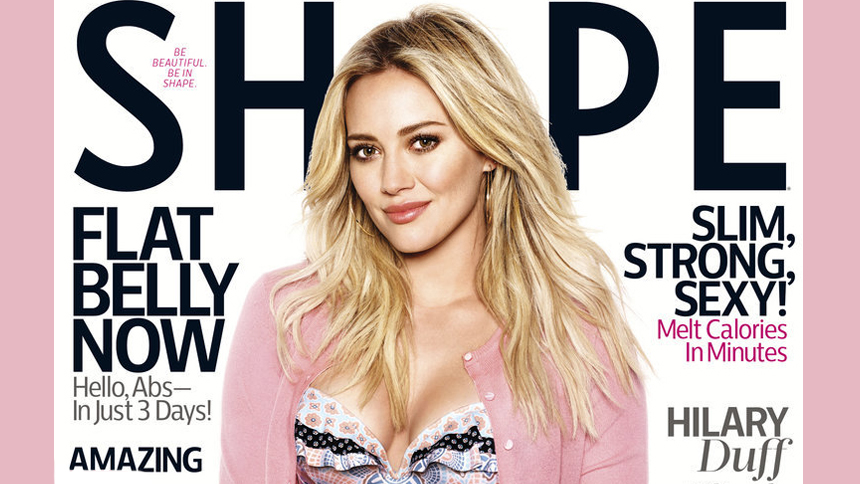
How to Pitch: Shape

Pitch health and nutrition stories with unusual hooks for this active lifestyle mag.

Shape magazine
Admin icon
By Andrea Williams
@AndreaWillWrite
Andrea Williams is an author, journalist, and columnist for The Tennessean with over 16 years of experience in journalism and 20 years in copywriting and communications strategy. Her work spans national outlets and high-traffic digital brands.
4 min read • Originally published May 12, 2015 / Updated September 29, 2016
Admin icon
By Andrea Williams
@AndreaWillWrite
Andrea Williams is an author, journalist, and columnist for The Tennessean with over 16 years of experience in journalism and 20 years in copywriting and communications strategy. Her work spans national outlets and high-traffic digital brands.
4 min read • Originally published May 12, 2015 / Updated September 29, 2016

Circulation: 2.5 million
Frequency: 10 issues a year; January/February and July/August are double issues
Special issues: None

Background: Even though things rarely stay the same in magazine publishing, many people were surprised to learn that, after purchasing Shape magazine from American Media, Inc. (AMI), media conglomerate Meredith Corporation decided to shutter longtime rival Fitness. While it was a move that seemingly diminishes the amount of healthy-living content for active women, Pam O’Brien, the former Fitness editor who has now moved over to Shape as deputy editor, assures readers that the opposite is true. Fitness mainstays like the “I Did It” weight-loss success column and the quick-but-effective “Express Workout” will now be featured in Shape‘s pages. “So you will get the Fitness feeling in Shape,” says O’Brien, “but it will very much be Shape, in the sense that it’s for women who are active, healthy and who make being fit and living their best life a priority.”

And from a competition standpoint, O’Brien notes that the absorption of some of Fitness‘ content and staff further differentiates Shape from titles like Women’s Health and Self. “We have more of an emphasis on being fit and active, and more workouts in our pages,” she says. “[The Shape reader] is a woman who’s already very healthy, and she’s fit and she’s loving this life. And every month she turns to our pages to get more advice and new ideas to keep doing that.”

What to pitch: In addition to the editors who made the transition from Fitness to Shape, freelancers who have regularly written for both magazines will be sticking around, too. The good news is that editors are always on the lookout for new writers and new voices, especially when it comes to health and nutrition content.

The “Live Healthy” section is fertile ground for pitches covering the latest in health news and trends. While O’Brien notes that it may be difficult to come up with a novel spin on tried-and-true concepts for readers who are already up on the latest in healthy living, those writers who can are sure to score an assignment. “Think about what’s in it for the reader, what is she going to learn from this and what new thing is this teaching her,” says O’Brien.

Features in “Live Healthy” average two to three pages and 750 to 1,000 words in length, as do the stories in the “Eat Right” section of the magazine, which is also prime for pitching. There, content should focus on new research in nutrition and how women can power-up their diets to best fuel their healthy lives.

What not to pitch: The “Beauty” section is written by staffers and is primarily closed. And while great fitness and workout ideas will be considered if they’re strong enough, there are two fitness editors on staff who write content for those sections, so landing a byline there will be very difficult.

What publicists should pitch: First and most important, says O’Brien, is to look at the masthead and make sure you’re sending your pitch to the right person. Then be sure your pitch doesn’t highlight something Shape has already covered. “Highlight what’s fresh and new and why it’s relevant to the reader,” O’Brien says. And don’t send product to the offices unless requested, as there simply isn’t enough space for it.

Percentage of freelance content published: About 25 percent
Percentage of freelance pitches accepted: Because the Fitness and Shape merger is still fairly recent, O’Brien says it’s too early to gauge the number of pitches editors receive and the number that will be accepted. But, again, editors are always looking for new writers.

Recent freelance stories pitched and published: As mentioned previously, it’s too early to tell, as O’Brien has yet to accept a pitch for this newest iteration of Shape.

Etiquette: Ultimately, says O’Brien, a creative idea is paramount, and a working hed and dek helps editors get a quick feel for the concept. It’s also important for writers to have a smart concept for packaging the story, as well as clear understanding of the service element for the reader. Finally, says O’Brien, be sure to highlight any new research that’s relevant to the story and include links to clips or a personal website so editors can see what other publications you’ve written for.

Lead time: Current lead time is five to six months, as Meredith is still working out the kinks with its newest publication. The ample time also allows editors to plan for the biggest get-in-Shape packages of the magazine that usually run at the beginning of the year and in the summer.
Pay rate: From $1.50 to $2 a word
Payment schedule: On acceptance
Kill fee: 25 percent
Rights purchased: All rights

Contact info:
Shape Magazine
805 Third Avenue
New York, NY 10022
www.Shape.com
Twitter | Facebook
Email format: FirstName.LastName@shape.com

Direct pitches to:
For “Live Healthy” articles, health editor Mirel Ketchiff: MIREL dot KETCHIFF at SHAPE dot COM
For “Eat Right” articles, nutrition editor Marnie Soman Schwartz: MARNIE dot SCHWARTZ at SHAPE dot COM


EDITOR’S NOTE: Though we’ve updated this article recently, the speed at which things move in media means things may have already changed since then. Please email us if you notice any outdated info.

Topics:

Uncategorized
How to Pitch

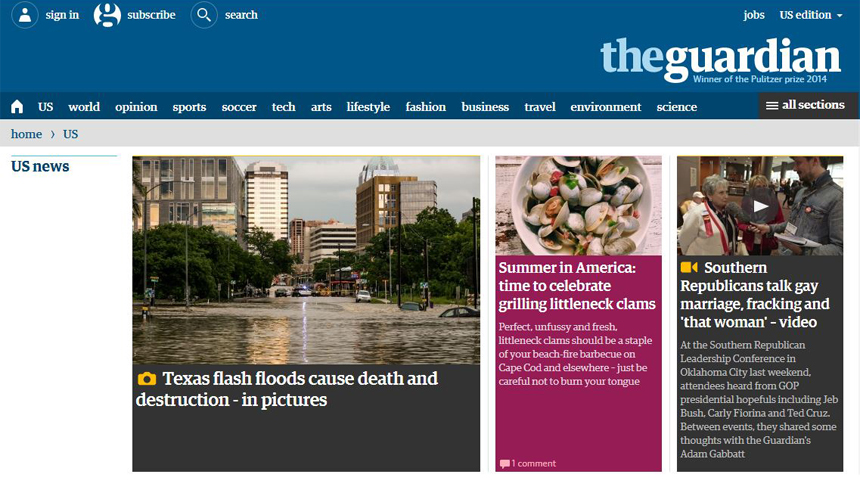
How To Pitch: Guardian US

Pitch stories that surprise for the U.S. edition of this 195-year-old publication

Guardian US
Admin icon
By Corinne Grinapol
@Corinneavital
Corinne Grinapol is an assistant editor covering energy and environment at Engineering News-Record, with previous editorial roles at Adweek's FishbowlDC and Mediabistro. She studied international relations at SUNY Geneseo.
7 min read • Originally published September 19, 2016 / Updated September 19, 2016
Admin icon
By Corinne Grinapol
@Corinneavital
Corinne Grinapol is an assistant editor covering energy and environment at Engineering News-Record, with previous editorial roles at Adweek's FishbowlDC and Mediabistro. She studied international relations at SUNY Geneseo.
7 min read • Originally published September 19, 2016 / Updated September 19, 2016

Monthly unique visitors: 25 million
Special features: N/A

Background: In the months leading up to the launch of Guardian US in September 2011, its 195-year-old British parent publication had an American audience of more than 10 million unique visitors accessing Guardian.co.uk, a sizable base upon which to debut its American platform. But, still, success was not guaranteed. After all, this was not The Guardian’s first venture into the States. Guardian US’s predecessor, Guardian America, had closed its offices and sent staff back to British HQ after just two years in Washington, DC.

This time, however, things went differently. For one, Guardian US started over in a new city, choosing New York as its headquarters. The pub’s dedicated U.S. site (then Guardiannews.com, now Guardian.com/us) has not only retained the 10 million U.S. uniques, it has grown that number by more than double, to 25 million. A skeletal staff of 15 has expanded to 100-plus employees. The current Guardian US editor is Lee Glendinning.

“The Guardian’s mission is to sustain trusted, quality journalism that is independent of external commercial or political interests,” explains features editor Jessica Reed. That ability to practice unfettered journalism is buoyed by the org’s ownership structure, sustained by the Scott Pelley Trust, whose mission from its founding has been to provide The Guardian with the resources and independence to do its thing.

This extends to Guardian US, which, according to Reed, aims to “bring Guardian’s culture of independence and openness to American readers.” These aren’t empty words. Guardian US’s risky but brave decision to publish a series of stories based on the NSA documents procured by Edward Snowden culminated in its winning the 2014 Pulitzer for public service.

It is this type of in-depth coverage that hits the sweet spot not just for awards committees, but for the Guardian US audience, who “tend to be 18- to 35-year-olds, progressive in their political inclinations, curious about the world and active on social media,” notes Reed. It is an audience that is looking for work that “challenges beliefs and assumptions,” and The Guardian US has room to report on what hasn’t been covered, and challenge what has been poorly covered.

What to pitch: Guardian US’s arts, sports, opinion, money, business and features sections all accept freelance submissions. Each department has its own requirements and guidelines, and it’s recommended you familiarize yourself with the specific section you plan to pitch. Some, like opinion, have posted submission guidelines online.

Editors are looking for freelancers to contribute blog posts, “reactive” stories, profiles, interviews, human-interest stories, and, to a lesser extent, listicles and humorous pieces, says Reed. If you are good at trendspotting, pitch one when you find one. Your human-interest stories should also tie to a larger trend. As an example of a reactive story, Reed points to a piece published in the sports section—a defense of Patriots QB Tom Brady in the wake of Deflategate. In a flurry of Pats criticism, it stood out and filled a hole.

As a general rule, filling holes can make for a not-to-be-ignored pitch: Find an original angle, spot what’s missing in coverage around a topic, or focus on something that hasn’t received coverage.

If you’re hungry to pitch a feature to The Guardian, Reed lets you in on her particular interests and requirements in a post she put up on Medium, complete with her editorial motto for the year: “I do not want to be convinced; I want to learn.” Subjects she’s eager to learn more about include: technology, religion, feminism (in practice, not theory), sexuality and the sciences, translated for the layperson. Reed has no hard and fast rules on word count, and will work with a writer to establish the best length for a piece.

Reed wrote the post when she was the incoming features editor, and after settling into her role, she posted a follow-up, with a question she wants freelancers to answer: “How will your story be illustrated?” Providing photos—whether taken by you or a professional photographer, or provided by the subject of the stories—is one very welcome plus.

And here’s a bonus for the social-media obsessed: Forging a relationship with editors on Twitter can help. “Knowing what writers care about makes it easier for editors to keep them in mind,” explains Reed.

What not to pitch: Don’t pitch hard-news stories; these are rarely assigned to freelancers. Editors will occasionally take essays and investigative pieces, but in the words of Reed, “They need to be very, very good to be published.”

Few things are off-limits topically speaking; however, it’s best to avoid sending pitches on subjects Guardian US has covered in depth. As Reed puts it, “If we published 50 pieces on Lady Gaga’s new video on the site already, maybe we don’t need another one. A minute spent on Google will save you time.”

In other words, know before you pitch. But if you have an angle on a well-worn topic you’re sure The Guardian hasn’t covered, make sure the first thing you acknowledge in your pitch email is that you’ve done your research on the publication, and you’re bringing something new.

When pitching to arts editor Alex Needham, avoid pitches on big-name book and album releases or major exhibition openings; chances are, The Guardian has that covered. Focus instead on “stories only you could tell,” advises Reed, especially if you have “special access or a specific angle.”

For additional pitching dos and don’ts, check out Reed’s new Pitch Clinic on Medium, where she critiques the pitches she gets.

What publicists should pitch—and when: “A great new book [or book excerpt], movie or film releases,” are prime targets for pitches, notes Reed. But be sure to let editors know why they should care about it. Lead time varies, but leans to the short side—think days and weeks, rather than months.

Percentage of freelance content: About 20 percent to 25 percent
Percentage of freelance pitches accepted: About 15 percent

Recent freelance stories pitched and published: Writer Steven Thrasher’s piece on long-underappreciated photographer Arlene Gottfried worked well because Thrasher knew Gottfried, giving him unique access to the artist and some of her work, which ran in the article. The fact that the piece was published while an exhibit of Gottfried’s was running made it timely as well.

Needham was captivated by novelist Daniel José Older’s enthusiasm for his story on the growing place of writers of color in science fiction and fantasy worlds. “I was excited about this,” explains Needham, “because it was a Latino novelist who was really into science fiction who’d launched a petition asking the World Fantasy Awards to take down their bust of HP Lovecraft in protest at his racism. Just reading that sentence, you want to know more.”

Freelancer Michelle Dean wrote about podcast series Serial the month after its debut, when episode downloads numbered in the hundreds of thousands, rather than the tens of millions, as the series’ popularity exploded. But rather than merely commenting on the popularity of the series, Dean focused on a community of Redditors trying to solve the crime explored in the podcast in a story editors noted was both well-told and well-reported.

Etiquette: Send your pitch in the body of an email. “Do not, I repeat, do not,” warns Reed, “make us open a Word document, or cold call us—unless we have a working relationship with you.”

Reed subscribes to evergreen rules of pitching. “It’s the old industry saying: If an editor isn’t excited by your pitch after three lines, game over,” she says. Keep your pitch short, but use this brief space to grab the interests of editors and give them an idea of the tone of your pieces and potential word length. Include links to your best clips, and mention the publications you regularly work for. If you’d like, you can include your Twitter handle as well.

Lead time: Typically ranges from days to weeks; lead time for long-form pieces is usually a few months
Pay rate: Because payment varies according to section, length, type of submission and amount of original reporting, Reed encourages freelancers to work the details out with individual editors. Shorter blog posts generally go for about $150, while features and interviews begin at $250 or $300.
Payment schedule: Usually received within two to three weeks of invoice
Kill fee: “We try very hard not to kill articles,” notes Reed, “but it’s about 30 percent of the piece.”
Rights purchased: Three-month exclusive, after which rights are reverted to the author

Contact info:
The Guardian
536 Broadway
6th Floor
New York, New York, 10012
Twitter | Facebook
Email format: FirstName.LastName@theguardian.com

Direct pitches to:
For features, features editor Jessica Reed:
JESSICA dot REED at THEGUARDIAN dot COM
For culture, arts editor Alex Needham:
ALEX dot NEEDHAM at THEGUARDIAN dot COM
For opinion, US dot OPINION at THEGUARDIAN.COM


EDITOR’S NOTE: Though we’ve updated this article recently, the speed at which things move in media means things may have already changed since then. Please email us if you notice any outdated info.

Topics:

How to Pitch
Mediabistro Archive

Why You Should Be Guest Blogging, Especially If You’re Looking for Your Next Job

By Mediabistro Archives
3 min read • Published July 25, 2016
By Mediabistro Archives
3 min read • Published July 25, 2016
Archive: This article was originally published by Mediabistro around 2016. It is republished here as part of the Mediabistro archive.

We’ve written before about what it takes to become a full-time blogger. But if you’re looking to get some of the benefits of writing blog posts—without committing to it full time—by being a guest blogger on established sites.
Why would you want to write for someone else—and most likely for free? Guest blogging has undeniable benefits to writers and non-writers alike. Here are ways guest blogging can amp up your career—and your job search.

You’ll Become an Authority

Write a lot about a given topic—whether it’s your passion for crochet or your take on a given issue in your industry—helps establish you as an expert on it.
If you want to write more about the subject or get editors to think of you when making assignments on it, you’ll have a proven track record of published work on the matter.

You’ll Get Exposure

That old expression—it’s not what you know, it’s who you know—has never been truer.
Guest blogging exposes your work to readers who may have never seen it before—and gives you more chances to know more people. And you’ll be more likely to come to mind when someone in your newly expanded network is looking to fill a job.

You’ll Add to Your Portfolio

Getting clips can be a challenge when you’re first starting out, or when you’ve been working a while in a non-writing role.
A guest blog post is a valuable clip to add to your portfolio, and a great addition to your work for future editors or employers to discover when they do a Google search on you.

You’ll Drive Traffic to Your Site or Social Channels

OK, here’s a dirty little not-so-secret secret about guest blogging: Most guest bloggers don’t do the usually unpaid work for charity. They do it for the traffic their post will drive back to their site, thanks to backlinks to their website.
If you don’t have your own site—or you’re between jobs and don’t have an employer with a site—don’t worry. You can often have your writer bio link back to your Twitter or LinkedIn profile.

You’ll Get an Edge at Work

Here’s another guest blogging secret: Although your boss and other higher-ups at work probably know they should be doing guest blogging too for all the reasons mentioned above, if they hate to write, they’re probably dreading the prospect of having to start.
If you have guest blog posts that have already been published and offer to work with your boss to help her craft some of her own under her own byline, she’ll love you for it. And voila: You’ve just made yourself be even more indispensable as your company’s very own guest blog post ghostwriter.

You’ll Get an Edge in Your Job Search

Authority, exposure, online portfolio, an added skill that hiring managers love—all of the points we’ve discussed above will not only help you slay it at your current job, but they’re also factors that will help you land your next one.

Ready to Get Started?

There are plenty of opportunities for guest bloggers around the web; a simple Google search for your topic and “guest blog” is a completely valid stepping off point.
And if you can speak with authority about working in media, marketing or public relations, there’s a chance you can guest blog for Mediabistro.

Topics:

Mediabistro Archive

Posts navigation

Older posts
Newer posts
Featured Jobs
Monterey County Weekly
Publisher
Monterey County Weekly
Monterey, CA, USA

Hearst Television
Account Executive
Hearst Television
Array

All Jobs »
PREMIUM MEMBER

Sam Dunn

Brooklyn, NY
6 Years Experience
New York-based columnist, copywriter, editor, performer, and multimedia specialist. I also do funny voices. Specializing in entertainment and...
View Full Profile »
Join Mediabistro Membership Today

Stand out from the crowd with a premium profile

Mediabistro Logo Find your next media job or showcase your creative talent
  • Job Search
  • Hot Jobs
  • Membership
  • Newsletter
  • Career Advice
  • Media News
  • Hiring Tips
  • Creative Tools
  • About
Facebook YouTube Instagram LinkedIn
Copyright © 2026 Mediabistro
  • Terms of Use
  • Terms of Service
  • Privacy