Mediabistro Logo Mediabistro Logo
  • Jobs
    Search Creative Jobs Hot Jobs Remote Media Jobs Create Job Alerts
    Job Categories
    Creative & Design Marketing & Communications Operations & Strategy Production Sales & Business Development Writing & Editing
    Quick Links
    Search All Jobs Remote Jobs Create Job Alerts
  • Career Resources
    Career Advice & Articles Media Industry News Media Career Interviews Creative Tools Resume Writing Services Interview Coaching Job Market Insights Member Profiles
  • Mediabistro Membership
    Membership Overview How to Pitch (Premium Tool) Editorial Calendars (Premium Access) Courses & Training Programs Membership FAQ
  • Showcase
    Featured Creative Stories Submit your Story
  • Log In
Post Jobs
Mediabistro Logo Mediabistro Logo
Search Creative Jobs Hot Jobs Remote Media Jobs Create Job Alerts
Job Categories
Creative & Design Marketing & Communications Operations & Strategy Production Sales & Business Development Writing & Editing
Quick Links
Search All Jobs Remote Jobs Create Job Alerts
Career Advice & Articles Media Industry News Media Career Interviews Creative Tools Resume Writing Services Interview Coaching Job Market Insights Member Profiles
Membership Overview How to Pitch (Premium Tool) Editorial Calendars (Premium Access) Courses & Training Programs Membership FAQ
Featured Creative Stories Submit your Story
Log In
Post Jobs
Log In | Sign Up

Follow Us!

Skills & Expertise

What Does a Web Designer Actually Do? Skills, Salary & Career Path

Here’s what it takes to be a web design star

web designer working on a project
John icon
By Jenell Talley
Jenell Talley is a journalist and program analyst with a background spanning media, government, and editorial work. She holds a journalism degree from Howard University and a master's in human resources management from the University of Maryland.
3 min read • Originally published February 21, 2016 / Updated March 19, 2026
John icon
By Jenell Talley
Jenell Talley is a journalist and program analyst with a background spanning media, government, and editorial work. She holds a journalism degree from Howard University and a master's in human resources management from the University of Maryland.
3 min read • Originally published February 21, 2016 / Updated March 19, 2026

If you’re looking to put your design sensibilities and technological savvy to good use, securing a job as a web designer may be just what the doctor ordered. We talked to those in the know and got the scoop. Say adios to being bored at work.

What exactly does a web designer do?

These visual architects are responsible for the overall awesomeness of a website’s look—its layout, colors, fonts, icons, buttons, the whole shebang. Although not always required, many web designers have mad coding skills too, so they not only come up with a design, they use a programming language, such as CSS, Ruby, SQL, Python or ASP to implement it. Designers often know several languages or some varying combination of them.

“Having a wide skill set is critical in the industry,” says Brett Hartmann, founder of and lead web developer at Bitcookie, a web design and Internet-marketing agency. “[At a design agency], often that means a combination of either code and design, design and marketing or design and project management.”

What skills do you need?

Obviously, you need a good design eye and an understanding of layout, hierarchy, color theory, typography and web font. A strong grasp of UX/UI design foundations is also important. It helps you create a seamless design that smoothly guides users through a site without them getting frustrated.

You should also have good instincts, adds UX designer Tamara Wiesen, product designer at FeeX, a financial services startup that helps people save money. Trusting your instincts will help you navigate new terrain.

And be adaptable, says Hartmann. “Technology changes rapidly, and being able to flow with it smoothly is often more important than being the best designer in town.”

Who is a web designer’s boss?

A freelance designer typically reports directly to the clients. If a designer’s at a larger company, a project manager or an art, UX or design director may call the shots. At a smaller agency, the boss might be the owner, if he chooses to oversee each project.

Are there other titles with similar responsibilities?

Many companies do not have designated web designer positions, but they expect those with “design” in their title—UX and UI designers, graphic designers, product designers and front-end designers—to have a web background, says Adriana Marin, former shutterstock.com design director turned freelance art director. “In today’s landscape, every designer has to be a web designer and be mindful of the user’s overall experience.”

What do I need to get ahead in this position?

Simple: Work hard and stay abreast of the latest design news and trends. Oh, and don’t succumb to designers’ block (push through it!) or negative feedback (everyone’s a critic).

How can I get my foot in the door?

You’re off to the races with a degree in graphic design or classes in UX, UI, HTML, CSS and Javascript under your belt, but some agencies are more about experience garnered from personal projects. “Personal interest in design work often represents the drive to learn and create,” says Hartmann, “which is what makes [the] perfect designer.”

Get your feet wet by designing websites for your friends and their friends. Then show and prove: Demo several commissioned projects or mockups for potential employers, and let them know how you addressed any problems encountered along the way. With the ability to design, code and nip pesky problems in the bud, the question is no longer who’ll hire you, it’s who wouldn’t.

Looking to land a job in web design? Check out Mediabistro’s job boards, where top companies are constantly searching for top talent.

Topics:

Climb the Ladder, Skills & Expertise
Skills & Expertise

One Simple Sentence That Will Get You Closer to Your Dream Job

Write a career vision statement to put your goals—and your targeted position—within reach

road splitting into two directions
John icon
By Amanda Layman Low
@AmandaLaymanLow
Amanda Layman is a B2B tech content writer and strategist with over 15 years of experience creating content for startups and enterprise brands. She founded Tigris, a content agency serving leading tech companies, and authored The New Freelance: A Book for Writers.
2 min read • Originally published February 22, 2016 / Updated March 19, 2026
John icon
By Amanda Layman Low
@AmandaLaymanLow
Amanda Layman is a B2B tech content writer and strategist with over 15 years of experience creating content for startups and enterprise brands. She founded Tigris, a content agency serving leading tech companies, and authored The New Freelance: A Book for Writers.
2 min read • Originally published February 22, 2016 / Updated March 19, 2026

When you’re looking for a job, between networking, searching the job boards and, if you currently have a job, staying on top of your workload, you can feel tapped out for time.

But that doesn’t mean you should sit back and take whatever comes at you, be it a new job or duties at your current gig.

Keep in control of your career by writing a vision statement. With so many paths you can take in media, it’s helpful to have a guiding light that keeps you from veering off in a direction that’s misaligned with your passions and talents.

A vision statement can help you during your job search or freelance career, too. By having the goals of your personal brand intact, you’ll only take on opportunities that nurture your growth and authenticity.

So what makes a strong vision statement? First, it should be motivational. It should state the “why” and “how” of your career goals, rather than your methods for getting there. Remember, the vision is a glimpse into the future, not a map for getting there. It should also be short and easy to memorize.

Check out these real examples:

  • Amazon: To be earth’s most customer centric company; to build a place where people can come to find and discover anything they might want to buy online.
  • The Nature Conservancy: Our vision is to leave a sustainable world for future generations.
  • Stanford University: To become the Harvard of the W.
  • Disney: To make people happy.

Brainstorm the events that led you to pursue your media career. What inspired you to do this stuff in the first place? Here are some ideas of possible personal vision statements:

  • “To establish my own creative advertising agency by 2030.”
  • “To spend as much time traveling as I spend at my desk.”
  • “To create media that contributes to the alleviation of poverty.”
  • “To contribute to the public understanding of science through my writing.”

Once you’ve nailed down a sentence or two that sums up your vision, sleep on it and revisit your ideas tomorrow. If it still holds true and encompasses your values and dreams, it’s probably a solid vision. Post it somewhere visible on your desk and consult it every time you make a decision, start a new project or consider a new job opportunity.

Most importantly, if you feel like you’ve achieved your vision, amend it by dreaming bigger.

Get help figuring out your vision statement and other career goals by talking with one of Mediabistro’s career counselors. 

Topics:

Climb the Ladder, Skills & Expertise
Skills & Expertise

6 SEO Skills That Will Help You Land Your Next Media Job

Go to the top of search results, and the resume pile, with these tips

the letters seo written on blocks
John icon
By McLean Robbins
McLean Robbins is a luxury travel editor, marketing leader, and adjunct faculty member at Georgetown University with two decades of bylines in Forbes Travel Guide, Robb Report, and Washingtonian. She is the founder of Lily Pond Luxury, a Condé Nast Top Travel Specialist agency, and previously served as VP of Marketing at MBO Partners.
4 min read • Originally published February 23, 2016 / Updated March 19, 2026
John icon
By McLean Robbins
McLean Robbins is a luxury travel editor, marketing leader, and adjunct faculty member at Georgetown University with two decades of bylines in Forbes Travel Guide, Robb Report, and Washingtonian. She is the founder of Lily Pond Luxury, a Condé Nast Top Travel Specialist agency, and previously served as VP of Marketing at MBO Partners.
4 min read • Originally published February 23, 2016 / Updated March 19, 2026

If you’re looking for a job in today’s competitive marketplace, it’s important to start with a stellar resume, but you’ll also want to take advantage of SEO (search engine optimization) to make sure you stand out from the crowd—and that potential employers find you and your mad skill set.

Try these six foolproof techniques to maximize your visibility online.

1. Launch a Personal Website to “Own” Your Space Online

One of the main values of search engine optimization (essentially, making sure your web presence appears high on a search engine’s list of results), is being able to “own” your real estate online.

For most people, a personal website (try for yourname.com) will be the start to owning the #1 search result for your name—with positive content created about you, by you, ready to wow a potential employer.

2. Do Your Keyword Research

A key component of any SEO’s job is keyword research. Apply those same skills to your job hunt. Sure, you’re a “marketing manager” now, but does that title really convey what you hope to do?

You could also consider jobs in content marketing, marketing automation, product marketing, B2B marketing, ecommerce marketing or something else. Titles differ per company, and you often need to go a bit farther afield than your current title to find exactly what you’re looking for.

For example, as a senior content professional, I might search titles like director of content strategy, director of digital strategy, director of digital content, editorial director and more—modifying the “director” level to include similar career levels like “principal” or “vice president” and even “senior manager.”

Small firms are more likely to have VPs with similar experience, where some large firms have senior managers with 15 to 20 years of professional expertise. Being more open to the title, and more refined on the corporate fit, job duties and salary can often be of service in your hunt.

3. Create a Personal Headline

What do you want to be? No, this isn’t a New Age–y “vision” exercise. Sites like LinkedIn offer you the ability to create a personal “headline” that describes not just the job you currently have, but the skills you have that you’ll take to your next job.

Think of it this way: What would I want to Google to find someone like … me?

You might be an “Experienced B2B Public Relations Executive” or a “Front End Drupal Developer.” Back up that headline to optimize particular sections of your website, and take those keywords into your resume and your social profiles as well. (My SEO writing course shows these techniques in more depth.)

4. Optimize (and Clean Up) Your Space Online

Beyond your personal website, your social handles are often the top results when someone searches your name. If you use these handles professionally and effectively, this can be a great way to further brand yourself in the industry.

Take full advantage of the built-in optimization on Facebook, Twitter and LinkedIn, customizing your profile URL with your name and adding links to your personal site.

Of course, regular publication of job-related content can’t hurt either. (And, while you’re at it, check out these great ways social media can help you land a job.)

5. Weave Your Key Terms Into Your Resume and Cover Letter

Now that you’ve written your personal headline, you probably have a pretty good idea of what you want people to Google to find you. Are those key terms in your resume?

Many jobs use resume-parsing software, similar to the way search engines comb content, and if you are missing the terms they’re seeking, you’ll never make it past the computer and onto a key HR professional’s desk for review.

I’m not talking about words like “innovative” or “visionary.” Skip the corporate buzzwords and go straight to the skills: If you work with a marketing automation software like Pardot, include the brand name. Have analytics experience? Say so, in detail. If you’re looking for a job in content marketing and that title isn’t part of your job description, you can still convey your experience in your detailed description of duties or cover letter.

6. Use Those SEO Skills in Reverse to Research a Company

The same techniques you’ve applied to your resume can be used in reverse as well. Do a search for the hiring manager’s name online and pull up their LinkedIn profile before speaking. Did you attend similar colleges or have connections in common? Can you find information about the company online that can help you prep for the job—or a potential red flag that might warn you away?

You can also use similar queries to find jobs posted online through company websites that may not appear on job boards.

McLean Robbins is a content strategist, copywriter, digital consultant and instructor of Mediabistro’s Online Course SEO Writing. Find her at mcleanrobbins.com.

Topics:

Climb the Ladder, Skills & Expertise
Job Search

How to Read Between the Lines of Any Job Posting

What "help wanted" really means

woman at coffee shop reading a job description
Admin icon
By Joel Schwartzberg
Joel Schwartzberg is a workplace communications coach, speechwriter, and bestselling author whose books include "Get to the Point!" and "The Language of Leadership," with articles published in Harvard Business Review, Fast Company, and Newsweek. He brings over two decades of senior communications and editorial leadership experience at organizations including the ASPCA, PBS, and Time Inc.
6 min read • Originally published February 25, 2016 / Updated March 19, 2026
Admin icon
By Joel Schwartzberg
Joel Schwartzberg is a workplace communications coach, speechwriter, and bestselling author whose books include "Get to the Point!" and "The Language of Leadership," with articles published in Harvard Business Review, Fast Company, and Newsweek. He brings over two decades of senior communications and editorial leadership experience at organizations including the ASPCA, PBS, and Time Inc.
6 min read • Originally published February 25, 2016 / Updated March 19, 2026

At first glance, a job posting may seem simple—there’s a description, a list of required skills, necessary qualifications and not much more. Well maybe, maybe not.

Often between those lines are clues that reveal if the opportunity is truly right for you, or if it’s a mismatch in the making. You may also discover valuable insight that could give you an advantage when you apply.

So how do you start using your job description X-ray vision? Let these workplace experts answer your questions about what “help wanted” really means.

Can I apply if I lack experience?

If you’ve had two years of experience and the job calls for three to five, don’t let it stop you from applying. In such a case, says Rita Friedman, a certified career coach at PhillyCareerCoach.com, “The employer is probably just not looking to train someone from scratch. With the right confidence and solid understanding of the position, a more junior candidate could easily win them over.”

If you have much more experience than the job calls for, however, it could be a sign to move on. “The employer will probably assume a senior person would grow bored quickly, and the employer isn’t looking to meet the salary requirements an experienced worker ought to have,” she says.

Also take note if the “years of experience” refers to specific roles. “Some jobs require seven to 10 years of industry experience, while others will require seven to 10 years’ experience in a specific job function or role,” career advice expert and spokesperson Amanda Augustine of TopResume. “Identifying which type of experience is required will help you determine if the role is right for you.”

How much does the job title matter?

Most experts say it’s not a good idea to infer anything—good or bad—from a job’s official title. “A job title can be indicative of the level of responsibility—or not,” said Friedman.

“Small upstart companies often grant bigger titles than other employees have in equivalent roles at larger, established companies.” For this reason, “it’s often more effective to look for keywords in the descriptions instead of job titles,” says Friedman.

Augustine advises to take job titles “with a grain of salt… A director title at one company may translate to a vice president position in another.” To accurately measure a job’s seniority, pay close attention to the responsibilities and requirements.

“Are you managing teams or departments? What size are the budgets or accounts you’ll be expected to manage? This, along with the number of years of required experience, paints a more vivid picture of the role,” she says.

What does “other duties as assigned” mean?

“Ending job posts with the line ‘other duties as assigned’ often means that the hiring manager doesn’t know exactly what he wants,” says Vance Crowe, founder of Articulate Ventures, a St. Louis–based communications firm. “But these should be signals to job seekers that management will value your willingness to do the less desirable work.”

So, if you interview for a company that leaves ‘job responsibilities’ open-ended, stress your flexibility and openness to do almost anything. If other parts of a job posting seem similarly vague (“good communication skills required”), it’s your opportunity to use your cover letter and interview to define them in a way that leverages your key strengths. (“I am an excellent public speaker and have experience presenting in corporate settings.”)

The language in this posting is really informal. Could that mean anything?

The tone of a job description can be as telling as what it actually says. For example, if you like to have fun at work, look positively on postings that are written cleverly, sound personal or come right out and say “sense of humor preferred.”

“A job posting that’s overly playful may indicate a company that’s seeking younger, more casual workers,” explains Friedman, “whereas a very formal job posting may suggest a workplace that’s never even heard of casual Fridays.”

But be wary of job listings that seem to care deeply about your personality, versus your skills and experience.

“Be cautious about postings that focus disproportionately on personality traits,” says Allison Hemming, CEO of the digital talent agency, The Hired Guns. “Chances are they just canned the last guy, and the traits they listed are ones they wanted him to have, but he didn’t.”

“Alternately, it could mean they’re looking for friends more than workmates,” Hemming adds. “This is especially common for small companies and start-ups.”

What if I don’t have all the required skills?

Phrases like “required” and “must have” usually mean what they say, says Augustine. “While a job description can often include a laundry list of nice-to-have skills, those that are specifically labeled ‘must have’ are just that. If you don’t meet these core requirements for the role, you are wasting your time,” she says.

Timothy J. Tolan, ceo and managing partner at Next Level Interim Search, agrees. “Not having the required ‘must haves’ are typically cause to have a recruiter disqualify the candidate from consideration,” he said. “If a candidate doesn’t have most or all of these requirements it’s usually not a good fit.”

When it comes to “desired” and “preferred” skills (versus “required” and “must have”), not having them may not be showstoppers, but having them can “give you an edge over the competition,” according to Augustine.

Here’s another tip for telling what’s really important: Requirements listed at the top are likely considered most important by the employer. “Things at the bottom may be afterthoughts, or something HR made them include,” says Hemming.

However you assess the various requirements, “ignore anything in a job description at your peril,” says Hemming. “If it’s there, it’s there for a reason. These things are often written by committee, so somewhere along the way, a stakeholder decided that bullet was crucial.”

Perfection is not the point

Although employers would like their candidates to have all the ‘must-haves,’ it’s rare to perfectly match every point on a job listing, so don’t set that as your standard. “These are all aspects they want in the perfect candidate; however, most employers realize this is a dream list and are willing to talk to candidates who do not meet every single qualification,” says career coach and strategist Lisa K. McDonald.

“If a candidate has many, but not all the required skills, and a solid track record, many times the intangibles they possess may be enough to give them a good chance to get an interview,” says Tolan.

Plus, job listings themselves are not perfect, so keep your detective hat on until you make your final decision—or they do. “As you begin to get great at reading job descriptions, you’ll start to see that most companies want to know about you, but don’t tell you nearly enough about them,” says Hemming.

She counsels applicants to “review each job description, ask yourself what’s not there, then write down your questions” because those will be the key questions to ask if and when you get called for an interview.

Now that you’ve got the skills to read between the lines, jump back into your job search, because tops companies are looking for top talent right now. 

Topics:

Get Hired, Job Search
Hot Jobs

4 Oscar-Worthy Media Jobs You Can Actually Pursue

The roles in the limelight, and how to get one yourself

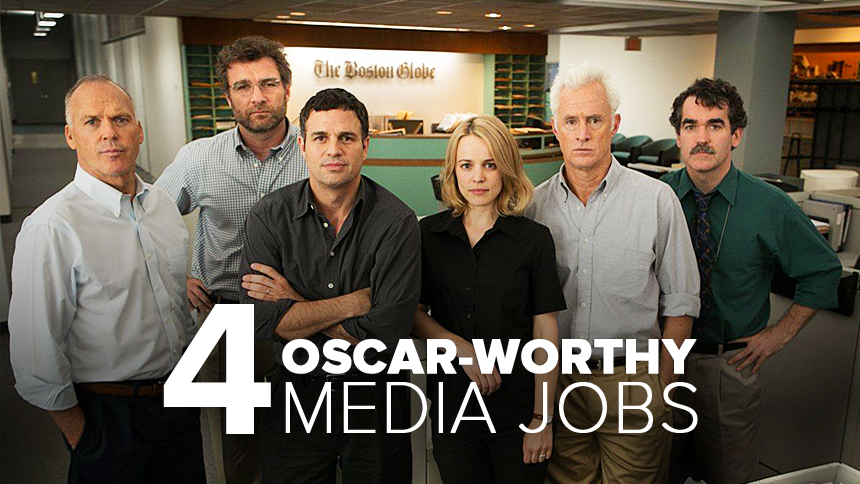
cast of spotlight
John icon
By John Lombard
John Lombard is a content strategist and writer with over a decade of experience creating interactive and video content for brands like Apple, IBM, and Samsung. He previously worked at Mediabistro and now serves as a Client Strategist at Ceros.
3 min read • Originally published February 25, 2016 / Updated March 19, 2026
John icon
By John Lombard
John Lombard is a content strategist and writer with over a decade of experience creating interactive and video content for brands like Apple, IBM, and Samsung. He previously worked at Mediabistro and now serves as a Client Strategist at Ceros.
3 min read • Originally published February 25, 2016 / Updated March 19, 2026

It’s Oscar season, and with several of the nominated movies featuring careers in digital media, we figure it’s our job to show you how to grab one of those careers yourself.

Warning: This article has a few near-spoiler alerts depending on how insanely little you like to know about a movie before seeing it.

And the nominees are…

1. Investigative Journalists in Spotlight

In this ripped-from-the-headlines drama, The Boston Globe’s Spotlight team—a small crew of investigative journalists—work to investigate and uncover dark secrets from Boston’s past. Spotlight stars some of Hollywood’s biggest names such as supporting actor and actress nominees Mark Ruffalo and Rachel McAdams.

This film gives a real feel for the workaday life of an investigative journalist, as the Spotlight team dig deep into a single topic—in this case, allegations against the Catholic church.

Essential skills for becoming an investigative journalist are curiosity, skepticism and the ability to effectively uncover hidden stories through powerful writing. While a journalism degree is always helpful, a course on editorial skills can a give you taste of different roles in the field.

2. Public Relations Director in The Martian

Presumed dead by his crew after a space storm, Mark Watney—played by leading actor nominee Matt Damon—is left behind on Mars, leading to big time media attention.

Luckily, NASA’s rockstar public relations director Annie Montrose, played by Kristen Wiig, schedules hourly press conferences, turning what could have been a giant disaster into a huge PR win for NASA.

Want to become the next Annie Montrose? While a degree in mass communications is a great place to start, public relations is open to professionals from a variety of backgrounds, especially former journalists.

Want to fast-track into the field? Consider taking a course in public relations, or getting an internship in the field, as on-the-job experience is crucial to the field.

3. Screenwriter in Trumbo

Starring lead actor nominee Bryan Cranston as Hollywood screenwriter Dalton Trumbo, this autobiographical drama focuses on the famed post-War Hollywood Blacklist. (And that’s all we’ll say in order to stay somewhat spoiler-free, as promised.)

Much like a Hollywood screenwriter, many of today’s digital media jobs require versatile storytelling skills. Whether you’re an aspiring brand content writer or copywriter, developing a brand or client’s story and communicating it to customers is key. A course on brand writing will help you hone your storytelling skills as you learn to generate a brand’s basic story, mission and positioning statements.

4. Marketing Director in Steve Jobs

This biographical drama opens with Steve Jobs and Steve Wozniak preparing to unveil their first Macintosh in 1984. Supporting actress nominee Kate Winslet portrays an original member of the Apple Computer Macintosh team, Joanna Hoffman.

In real life, Hoffman ran the entirety of the marketing department for Macintosh in its early years, and later ran the international marketing team, bringing the Mac to Europe and Asia markets.

To become a marketing director, you’ve got to start somewhere, often as an intern or junior marketing associate on your way to becoming a marketing manager. Learning and mastering the fundamentals, and the ever-changing trends and technologies, is also vital. A great place to begin: a course on marketing, in which you can learn best practices for digital campaigns or how to tap the power of social media to promote your product.

If one of these careers sounds like a winner to you, then check out Mediabistro’s online courses to take the first step in breaking in. With courses in public relations, digital journalism, digital marketing, brand writing, marketing and more, you’ll have the opportunity to work with top industry professionals as they guide you on your journey to a job so awesome they make Oscar-winning movies about them.

Topics:

Get Hired, Hot Jobs
How to Pitch

How to Pitch Outside Magazine: A Freelancer’s Guide

Editors want fitness and tech pitches with a strong news peg for their outdoorsy readers

outside magazine cover
By Rani Long
4 min read • Originally published February 26, 2016 / Updated March 19, 2026
By Rani Long
4 min read • Originally published February 26, 2016 / Updated March 19, 2026

Circulation: 675,000
Frequency: Monthly
Special issues: The Outside summer (April) and winter (September) Buyer’s Guides

Background: Started in 1977, the magazine was baptized Mariah before current owner Larry Burke acquired it, marketing it with the more apt — and, thankfully for its readership, more manly — title Outside. Although the magazine has evolved with the years, introducing pop-culture into its pages, Outside remains committed to the topics that have always defined the active lifestyle: exploration, adventure, sports, fitness and environmental issues.

This National Magazine Award-winning publication is looking for smart, news-driven stories that inspire readers to explore the world. This means expedition dispatches and reviews of the latest outdoor gear, though Outside is also looking for pop-culture, technology and fitness stories. The magazine’s audience is 70 percent male, and the average reader is an affluent guy in his late 30s.

Freelancers shouldn’t feel they are trying to write stories just for a guy in Boulder, Colo. though. “The things we celebrate (hiking, climbing, rafting, skiing) are about engaging with the world in a fresh way,” said former senior editor Abe Streep. “The point is to inspire a sense of wonder, and that applies to men and women in New York and Chicago and San Francisco as much as in mountain towns. A lot of our readers live in the cities and want tools that help them escape on their days off.”

What to pitch: Profiles, science, environmental, fitness or gear stories with a strong time peg to the month of publication. (Outside is on a three-month production schedule.) Most of all, Streep said, “news, news, news.”

Most freelancers will break in by pitching stories to the “Dispatches” (front-of-book) or “Bodywork” (fitness) sections. Stories range from 100-word news items to 1,200-word “Bodywork” reports. Science-driven “Bodywork” pitches have a good chance, as do television, technology and pop-culture pitches with news value and a natural Outside angle. Don’t pitch travel roundups without a news peg. “A pitch on the best hikes in the National Parks probably won’t get you far,” said Streep. But travel news that leads to actionable service — say, a story on how the Grand Canyon’s new permitting system for rafters affects readers — is very welcome. News that leads to service is the ideal: new lodges, new technology, new training tools.

The magazine is focusing more and more on its core mission: inspiring adventure. “We’re still looking for pop-culture stories,” said Streep, “but only those that are a natural fit for Outside. Don’t pitch us a profile of a movie star who has gone surfing once or twice in his life. Pitch us a film that uses climbing as a major plotline or a story on how a television show shot in a beautiful location might change that country’s adventure-travel industry.”

Outside is also looking for more tech stories and has recently run pieces on mobile-phone apps for adventurers, athletes who have launched careers with YouTube and electric bikes.

What not to pitch: It’s best not to start with a 5,000-word feature unless you have an extraordinary idea. “Dispatches” is the best way for new writers to break in. Also: Don’t pitch charts.

Online opportunities: Outsideonline.com, which recently underwent a significant redesign, is a robust site that’s updated hourly. Online editor Scott Rosenfield is looking for fast-breaking stories in the same topic areas that the magazine covers. He’s is also looking for timely reported stories, as well as blue sky ideas: recurring columns, photo galleries and video projects.

Percentage freelance-written content: 70 percent
Percentage of freelance submissions accepted: 15-20 percent

Recent freelance stories pitched and published: Mary Catherine O’Connor‘s “Money For Nothing” story about Kickstarter funding in February 2013, and Alex Hutchinson‘s November 2013 story about the side effects of sports supplements.

Etiquette: Send brief, succinct queries by email. Include clips (preferably as URLs) and a quick bio. Expect a response within a couple weeks of sending a query. If you haven’t heard anything by then, it’s okay to follow up.

Lead time: Three to four months
Pay rate: About $1.50 a word for print. Online payment varies depending on the nature of the project.
Payment schedule: On publication
Kill fee: 25 percent
Rights purchased: First North American publication rights and the right to reprint materials on the magazine’s website and in international and tablet editions.

Contact info:
Outside
Outside Plaza
400 Market Street
Santa Fe, New Mexico 87501
(505) 989-7100
FirstInitialLastName@outsidemag.com
www.outsidemag.com

Send pitches to:

Editor at Large Grasyon Schaffer: GSCHAFFER at OUTSIDEMAG dot COM

Editor in Chief Nicole Formosa: NFORMOSA at OUTSIDEMAG dot COM

Assistant Editor Kelsey Lindsey: KLINDSEY at OUTSIDEMAG dot COM

Senior Editor Matt Skenazy: MSKENAZY at OUTSIDEMAG dot COM

Features Editor Gloria Liu: GLIU at OUTSIDEMAG dot COM

Assistant Fitness Editor Abigail Barronian: ABARRONIAN at OUTSIDEMAG dot COM

Senior Editor Erin Riley: ERILEY at OUTSIDEMAG dot COM

NEXT >> How To Pitch: Afar

Topics:

How to Pitch
Managing

5 Budget-Friendly Ways to Reward and Motivate Your Employees

Think money's the only way to motivate? Think again

employees being rewarded eating pizza
Admin icon
By Joel Schwartzberg
Joel Schwartzberg is a workplace communications coach, speechwriter, and bestselling author whose books include "Get to the Point!" and "The Language of Leadership," with articles published in Harvard Business Review, Fast Company, and Newsweek. He brings over two decades of senior communications and editorial leadership experience at organizations including the ASPCA, PBS, and Time Inc.
4 min read • Originally published February 26, 2016 / Updated March 19, 2026
Admin icon
By Joel Schwartzberg
Joel Schwartzberg is a workplace communications coach, speechwriter, and bestselling author whose books include "Get to the Point!" and "The Language of Leadership," with articles published in Harvard Business Review, Fast Company, and Newsweek. He brings over two decades of senior communications and editorial leadership experience at organizations including the ASPCA, PBS, and Time Inc.
4 min read • Originally published February 26, 2016 / Updated March 19, 2026

Your staff is a hard-working bunch. And while universally coveted salary increases, bonuses and promotions may be well deserved by some or all, they’re a no-go considering your budget and org chart. Yet, some workplace experts say non-cash, non-promotion rewards have the potential to not only keep your staff’s morale up, but motivate them even more.

“If you want to drive performance, engage employees and drive results, non-cash rewards are the most effective tools in your toolbox,” argues Kimberly Abel-Lanier, vp & general manager of employee engagement solutions at Maritz Motivation Solutions.

Private career strategist and former HR consultant Mark R. Gerlach agrees. “Most studies show that employees don’t actually perform better for more pay, once they have enough to live fairly comfortably,” he says. “So rewarding them in more meaningful ways can lead to higher satisfaction.”

So, what are these “other more meaningful ways?” Below, management specialists share “gift” suggestions for workers who’ve gone out of their way on the job.

1. Recognition

Sometimes, simple recognition is a reward unto itself. “Something all bosses can do that doesn’t cost anything but means the world to people is recognition for their contributions to the organization,” says David Ciccarelli, co-founder of Voices.com. “Our team meets every day to discuss good news and challenges, but also to shine the spotlight on an employee’s accomplishments.”

Jeff Gordon, a former corporate recruiter and current director of marketing at FreedomPop agrees. “Calling out the employee in a good way in a company meeting is always a positive,” he says.

Psychologist Elizabeth R. Lombardo, author of A Happy You: Your Ultimate Prescription for Happiness, recommends “personally acknowledging not only when employees achieve success, but also when they put in extra effort. For example, ‘Brett, I want to thank you for coming into work this weekend to get this project out on time. I know that took time away from your family, and the entire team really appreciates it.'”

These communications can take the form of emails, personal letters or public praise but, in terms of reward value, one-on-one conversations are best.

2. Time

The phrase “time is money” can be taken literally when devising employee rewards. Executive coach and management consultant Kathi Elster, co-author of Mean Girls At Work, recommends “allowing a more flexible schedule” when a staffer deserves a reward. She encourages offering employees a chance to work from home two days a week or going down to a four-day week for a set period of time.

“If your company doesn’t currently offer flextime, consider making it a part of your reward structure,” says Gerlach. “On a monthly or quarterly basis, look back on employee performance; if employees have excelled, allow them a flextime schedule for the following month or quarter.”

3. Gifts

Of course, gifts can make good rewards, so long as you choose and dole them out wisely. Smithson-Abel says employees are motivated most when they’re “empowered to choose their own rewards.” For that reason, she recommends opting for gift cards from crowd-pleasing brands like Starbucks, Target and iTunes.

Anja Schuetz, a people management coach and author of Poker Cards for Managers, cautions that “rewards really only make a difference when they are something that the person really desires.” She points out that an expensive bottle of wine may not mean much to staffers who don’t drink wine.

“The more we know about the people we want to reward, the more meaningfully we can reward them,” she says. “The most meaningful rewards are not expensive; they show that you care. Plus, you’ve just deepened your relationship with that person and invested in their engagement with your team.”

4. Food

Free food is a big deal in an office, especially when it’s earned. Smithson-Abel recommends taking your group out to nearby lunches or dinners after jobs well done. It’s also a good environment to explain in detail why they earned the honor.

Jim Angleton, president of business consultancy Aegis, recommends scheduling a regular catered lunch for senior staff to recognize outstanding efforts. The “senior staff” part is important to put the team’s good deeds on the corporate record.

5. Escape

Sometimes it’s a pleasure just to leave the office.

“Taking your staff outside of your physical workspace for the express purpose of doing something fun will always be well-received—a refreshing escape from the day-to-day,” says David Jacobson, founder of TrivWorks, a corporate team-building consultancy specializing in group trivia games. “So long as the activity is appropriate for your specific group, if you can afford to bring them somewhere and show them an amazing time, your staff will feel rewarded.”

At the end of the day, the best judge of employee rewards is you. You know your staff better than anyone, and you can probably remember a time in your own professional history when you felt deserving of a few corporate yum-yums. The goal is to let good employees know they’re doing good work and motivate them to keep at it.

Looking for a great way to reward you employees? Enroll your team in Mediabistro’s Corporate Training Program. With fully-tailored training in key topics across the media industry like Digital Analytics and Public Speaking, you’ll build out your organization’s skills to successfully compete in today’s market. 

Topics:

Climb the Ladder, Managing
Interview Tips

How to Research an Employer Before Your Interview

You got the call back, the date is set, the suit is pressed. Ready for the interview? Think again

job candidate researching an ad agency at a coffee shop
By Benjamin Spiegel
3 min read • Originally published February 26, 2016 / Updated March 19, 2026
By Benjamin Spiegel
3 min read • Originally published February 26, 2016 / Updated March 19, 2026

I interview close to 100 candidates annually, and I cannot begin to tell you how many interviews have gone sour because the candidate was not prepared.  Most of the time, candidates ask too many questions to which the answers are publicly available—as in, on our website or via a quick Google search. Trust me: Nothing is more frustrating than having to tell our story 100 times to them.

Save your interviewer the frustration, and up your chances of landing the job with one simple solution: When you’re preparing for your interview, do your research!

We live in an age of information and transparency. Unless you have been living under a rock—in which case, please don’t apply—candidates can find a wealth of information about the prospective employer beforehand.

Don’t know where to start? Here are a few suggestions.

1. Learn the Basics

At a bare minimum, you should be able to gather the vital stats on the company you’re meeting with. Finding these should give a snapshot of what the shop is like, and keep you from taking up your precious interview time asking questions you should really already know the answers to.

As soon as you schedule your interview, you should bone up on the following:

  • Number of years in business
  • Number of employees
  • Number and location of offices
  • In the case of an agency, the client roster (wins and losses)
  • Type of work that’s done there

These are just the fundamentals. If you really want to ace the interview, use the wealth of publicly available information to get the upper hand.

2. Dig Deeper

Check out the usual social media and web sources, and be thorough.

Don’t stop at the LinkedIn company page. Go further and look at people that hold the same role you are applying for. What’s their background? How are they describing their role?

On Glassdoor, you can find out salaries, interview questions and company reviews. You’ll find negative as well as positive reviews, but you can use the information in negative reviews to identify pain points and challenges—and then bring up your relevant experience on how to meet the challenge.

Most media companies and agencies love to talk about themselves (after all, we are all in marketing). Spend some time going through their social channels—Facebook, Twitter—to look for cool events they do, recent wins and good company news. Anything you can mention or congratulate on will go a long way.

If the employer is part of a holding company, familiarize yourself with the parent company and sister agencies. Understand their role in the network and what it means for your position. And if you are applying to a publicly traded company, make sure you listen to their latest earnings calls. Understand priorities, challenges and investments. This is less relevant for more junior roles, but it never hurts to know.

3. Rehearse Your Talking Points

All this research is great, but you also need to know how to use it. Be creative; don’t just regurgitate what you read. Use it to ask better questions like, “How has the merger with XYZ changed the culture?” or “Congratulations winning XYZ; how has the transition been going?” Ask smart questions that show you understand not only the industry but also the employer’s place in it.

There is nothing wrong with treating an interview like any campaign. Do your research into the audience: What do they want and need, what are their pain points, why would they hire you?

Then create a message and story that appeals to their needs. If you can sell me in an interview, I’ll be confident about your ability to help our clients sell their products.

Benjamin Spiegel is CEO of MMI Agency, Houston.

If you’re ready to hone your interviewing skills, consider getting the help of a pro. Mediabistro’s Career Services offer everything from a mock interview to several sessions of career counseling to tackle interview and networking skills, career transition and more.

Topics:

Get Hired, Interview Tips
Skills & Expertise

7 Things You Can Do Today to Win Over Your Boss

How to take the lead when communicating with your higher-ups

employee talking to his boss in office
Admin icon
By Joel Schwartzberg
Joel Schwartzberg is a workplace communications coach, speechwriter, and bestselling author whose books include "Get to the Point!" and "The Language of Leadership," with articles published in Harvard Business Review, Fast Company, and Newsweek. He brings over two decades of senior communications and editorial leadership experience at organizations including the ASPCA, PBS, and Time Inc.
4 min read • Originally published February 27, 2016 / Updated March 19, 2026
Admin icon
By Joel Schwartzberg
Joel Schwartzberg is a workplace communications coach, speechwriter, and bestselling author whose books include "Get to the Point!" and "The Language of Leadership," with articles published in Harvard Business Review, Fast Company, and Newsweek. He brings over two decades of senior communications and editorial leadership experience at organizations including the ASPCA, PBS, and Time Inc.
4 min read • Originally published February 27, 2016 / Updated March 19, 2026

You may have only one career, but you have two key jobs. The first is doing whatever you were hired to do. The second—and just as important if you plan on staying—is keeping your boss happy with you, otherwise known as “managing up.”

Being seen by your manager in a positive and productive light will not only make things easier day to day; it may also be a deciding factor when executives are considering promotions or downsizing staff. Below, some workplace experts share the lowdown on successfully managing up.

1. Show Up On Time

You don’t really need an expert telling you this, do you? Getting to work on time will not always earn you points, but consistently showing up late is a sure way to lose them.

Being at the office when needed—and at least visible when not needed—reinforces your dedication and work ethic and builds trust. Why blow something so completely under your control?

2. Listen Up

When in meetings with your manager, your biggest job is not to talk, but to listen. “Managers like to have the floor and go on and on,” says Marian Thier, executive coach and author of Coaching C.L.U.E.S. “Your job is to get to the essence of the message. That can only be done with 100 percent full attention.”

Also, think twice—make that three times—before interrupting your boss. It’s rarely worthwhile to break her line of thought, no matter how brilliant your input is.

3. Ask Good Questions

Asking good questions can be self-rewarding, whether or not you get good answers. “By asking really smart, probing questions, you show interest, grasp of the subject and flattery,” explains Thier.

One good approach is to rephrase your manager’s concern or suggestion back to him and ask if you understood it correctly. But be careful not to ask a question already answered. One response you don’t want to hear from your supervisor is “As I said before…” (Refer back to Tip #2).

4. Keep Your Manager In the Loop

Morgan Norman, VP of marketing at Switch.co and former co-founder and CEO of WorkSimple, says it’s critical for workers to keep their bosses “informed on every goal, including progress, problems and the ultimate outcome of the objective.”

Norman says that soliciting feedback is also key. “This not only makes a manager happier, but also allows them to monitor their workforce better,” he explained.

How do you keep from sharing too much or too often with your manager? Christina T. Schlachter, author of Leading Business Change for Dummies and CEO of the consultancy SheLeads, says it pays to just ask.

“Take the lead in determining communication. Don’t wait for your boss to do it,” Schlachter says. “Ask your manager how often he or she wants to hear from you and in what form.”

5. Be Clear in Meetings

Not every meeting should be a brainstorming session. Before sitting down by yourself or with others in your boss’ presence, plan your thoughts in advance to avoid rambling and to strengthen your position. Thier says your goal is to be “clean, clear, and quick.”

“I once had a boss who told me his job was not to listen to me thinking out loud,” says Thier. “He suggested that I think beforehand and come to him with three clear points.”

In addition to keeping the meeting moving, presenting direct and complete ideas also projects efficiency and smarts. (Note: Your manager can ramble all he wants.)

6. Tell Your Manager What You Need

Managing up doesn’t mean saying yes to every request; that can cause trouble later if you become overwhelmed.

“Communicating requires you to be open about your needs rather than assuming your manager understands what’s going on,” says career coach Deborah Howard, president of Guiding Change Consulting.

“Learn to say, ‘I’ll be happy to work on this project, and I’m also working on these three other projects, so how would you like me to prioritize them?'” Asking for help with prioritization is something managers like, because it really says “I want to do all I can.”

7. Be a Team Player

Your boss probably manages a team, so it helps for you to play nice with your colleagues. Team friction just makes life harder for him. So, offer your help, be polite and resist the urge to gossip.

Often, it’s not the most talented person who rises to the top, but the one who people actually like working with.

Topics:

Climb the Ladder, Skills & Expertise
Managing

Why You Shouldn’t Friend Your Employees on Social Media

Strike a balance between the personal and professional

manager talking with employees in office
Admin icon
By Joel Schwartzberg
Joel Schwartzberg is a workplace communications coach, speechwriter, and bestselling author whose books include "Get to the Point!" and "The Language of Leadership," with articles published in Harvard Business Review, Fast Company, and Newsweek. He brings over two decades of senior communications and editorial leadership experience at organizations including the ASPCA, PBS, and Time Inc.
5 min read • Originally published February 29, 2016 / Updated March 19, 2026
Admin icon
By Joel Schwartzberg
Joel Schwartzberg is a workplace communications coach, speechwriter, and bestselling author whose books include "Get to the Point!" and "The Language of Leadership," with articles published in Harvard Business Review, Fast Company, and Newsweek. He brings over two decades of senior communications and editorial leadership experience at organizations including the ASPCA, PBS, and Time Inc.
5 min read • Originally published February 29, 2016 / Updated March 19, 2026

Managing employees isn’t easy, especially when the ink may still be drying on your promotion, but striking just the right interpersonal chord with your staff is crucial for both your fulfillment and theirs.

You want your employees to like you, but also respect you. You want to stand with them, but also have them know where you stand. Yet, the line between boss and buddy can sometimes be hard to detect.

“It’s not uncommon for many new supervisors to cross the line in either direction—they can become too friendly and then can’t discipline, or they can become too strong of an authority figure and turn staff off,” explains executive coach and management consultant Kathi Elster, co-author of Working With You Is Killing Me.

So, how do you foster an honest, trusting relationship with your staff when you’re the one handling their performance evaluations?

Below, workplace experts offer tips that can put you in the best position to both supervise and support your crew.

1. Remember Who’s The Boss

Keep in mind that, in the workplace, it’s more important to be a boss than to be a friend. Being too friendly can jeopardize your authority.

“Attempting to be friends with your employees makes providing feedback and performance appraisals difficult and puts you at risk for claims of favoritism,” says Devora Zack, CEO of Only Connect Consulting, Inc. and author of Managing for People Who Hate Managing.

“Your team needs a leader, not a buddy,” she says. “In the end, they’ll like you more when you focus less on being liked and more on offering guidance and support.”

Suppressing that natural need to be liked is key, says corporate consultant Carlann Fergusson, founder of Propel Forward LLC.

“The trap of wanting to be liked is an easy one for all new supervisors to fall into—and I fell into it myself,” she says.

“But remember that caring is different from wanting to be liked. Caring is non-conditional and applies to every employee.

This will enable the leader to course-correct employees for the good of the team and the company, without letting personal concerns get in the way.”

2. Know Your People

Not needing to be liked doesn’t mean you need to be unlikeable. You can keep your boss hat on and still take your employees to lunch once in a while, or ask how their weekend was.

In fact, getting to know your employees on a personal level—while not getting too personal—has advantages.

Deb Hornell, president of the Chicago-based workplace consultancy Hornell Partners, says a manager needs to “spend time with staff—get to know them and uncover their talents and motivations.”

Author and business consultant Bob Papes says you should put effort into relating with your employees. “Taking an interest is more than just saying good morning.

It’s knowing important things like their birthday, when their child is graduating, sending a sympathy card for a death in the family or, better yet, going to the wake or funeral,” he says.

“This says to the employees you generally care about them as people and not just as employees.”

Still, Papes cautions, know what lines not to cross. “You shouldn’t go out with them and party unless it’s a company event. If you become a personal friend to some of them, it may seriously erode your status as a fair manager or supervisor.”

3. Don’t “Friend” Your Employees

Elster advises managers to “Think ‘friendly,’ not ‘friends.'” But does that include Facebook friends? Though it may seem safe, forming social network attachments with your employees is probably a bad idea.

“Although the requests continue to come in, I try not to accept friend requests from my employees,” says Ayo Hart, founder and managing partner of Dolphin Organics.

“I don’t feel it’s appropriate to see everything going on with my employees, and definitely don’t want the window to my personal world opened to them. I’ve been on both sides of the fence, and I know what’s at risk.”

4. Stay Professional, Not Personal

Anything you wouldn’t reveal online should be off limits in person, as well. “Don’t use your staff to discuss your problems—personal or professional,” says Elster. “And never lose your cool in front of them—they’ll only fear you.”

Donna Flagg, a workplace communications expert and the author of Surviving Dreaded Conversations, agrees with the need to keep things professional.

“Don’t spend office time kibitzing about social life; know what’s appropriate for the environment you’re in,” she says. “‘How was your weekend’ is fine, but locking yourself in a conference room to debrief on a break-up, date or whatever is not. This goes for both parties.”

That discretion applies even more when it comes to sensitive corporate information. “Don’t discuss confidential company information under any circumstances. It doesn’t matter how close you are,” says Flagg. “This is where a clear line must remain intact.”

5. Make Clear and Consistent Decisions

Asserting your role as manager means you need to make clear decisions on a consistent basis and communicate them effectively.

“Be open to ideas but be clear that you will make the final decision. When you do, explain why you made that choice.” says Michelle Tillis Lederman, president of Executive Essentials and author of The 11 Laws of Likeability.

“Keeping the employee in the loop goes a long way to job satisfaction and also shows that you listened and had reasons for making the decision.”

“Over-communicate what you want and need from them,” says Elster. “Always consider their point of view when it comes time to give tough feedback and be prepared to hear what they have to say.”

6. Manage Your Friends as You Do Everyone Else

You already know it’s wrong to play favorites with your friends but, Flagg says, “you don’t have to make apologies for your friendships” either.

“As long as you’re professional and fair, people will come to understand that the friendship is irrelevant in the context of work,” she says.

Just remember that when you’re with these friends amongst other employees—whether at the office or outside—you should give them the same time and attention you give anyone else who reports to you.

Laurie Leiker, freelance corporate trainer and author of Motivating Feedback: Getting the Best from Employees without Tears says that it’s okay to acknowledge friendships, but know where the lines are drawn.

“Your friend will have to understand your responsibility is to the company first, and friends second, if a conflict arises between the two,” she says.

Topics:

Be the Boss, Climb the Ladder, Managing

Posts navigation

Older posts
Newer posts
Featured Jobs
Kirkus Media
Editorial Intern
Kirkus Media
New York City, New York (US)

Gaia Inc
MEDIA COORDINATOR
Gaia Inc
Louisville, CO

Gaia Inc
Global Paid Media Specialist
Gaia Inc
Louisville, CO

Gaia Inc
Director of Media Strategy
Gaia Inc
Louisville, CO

Hearst Television
Account Executive
Hearst Television
Milwaukee, WI, United States

All Jobs »
PREMIUM MEMBER

Usman Kabara Ahmad

Falls Church, VA
20 Years Experience
I have decided to be a full-time multimedia journalist for those who might need my service, as I am ready to work hard on any given responsibility...
View Full Profile »
Join Mediabistro Membership Today

Stand out from the crowd with a premium profile

Mediabistro Logo Find your next media job or showcase your creative talent
  • Job Search
  • Hot Jobs
  • Membership
  • Newsletter
  • Career Advice
  • Media News
  • Hiring Tips
  • Creative Tools
  • About
Facebook YouTube Instagram LinkedIn
Copyright © 2026 Mediabistro
  • Terms of Use
  • Terms of Service
  • Privacy