Jess Focht is a writer and content strategist with 6+ years of experience in media, publishing, and brand storytelling. She has contributed to Insider, Grammarly, and The Creative Independent.
1 min read • Originally published April 21, 2022 / Updated March 19, 2026
Jess Focht is a writer and content strategist with 6+ years of experience in media, publishing, and brand storytelling. She has contributed to Insider, Grammarly, and The Creative Independent.
1 min read • Originally published April 21, 2022 / Updated March 19, 2026
New month, new Mediabistro roles.
Mediabistro is the #1 job board, community, and career destination for media and content professionals. Once a week, we’ll be updating this list with different types of creative jobs featured. Take a look below:
Jess Focht is a writer and content strategist with 6+ years of experience in media, publishing, and brand storytelling. She has contributed to Insider, Grammarly, and The Creative Independent.
2 min read • Originally published April 22, 2022 / Updated March 19, 2026
Jess Focht is a writer and content strategist with 6+ years of experience in media, publishing, and brand storytelling. She has contributed to Insider, Grammarly, and The Creative Independent.
2 min read • Originally published April 22, 2022 / Updated March 19, 2026
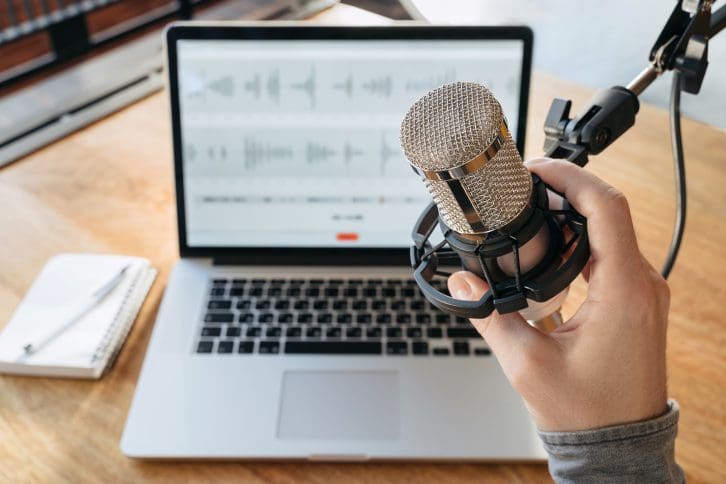
Have you recently been rethinking your profession, or have been looking into side hustles? Are you wanting to do more creative things with your current role? Maybe you just want to be more inspired on a day-to-day basis. Whether you’re a writer, designer, photographer, or just want to be more creative, we’ve rounded up eight different career-related podcasts that will motivate any creative professional.
Starving Artist is the perfect mix of practical and inspirational—offering advice and information about handling the financial aspects of creative professions to help you find success.
Looking for a career change? Ahyiana Angel successfully switched her career from a sports entertainment publicist to a published author. In this podcast, she provides advice, inspiration, and motivation specifically for those who want to transition into a new career field now or in the future.
This one’s title gives it away. Every week, these podcasters share insider secrets and job search tips on how to get a great job and develop a purposeful career.
We’re no strangers to writing about side hustles here at Mediabistro. This is a daily podcast for everyone who works a regular job and wants to start an income-earning project on the side. In each episode, listeners will hear a different story from someone who has started a side hustle. The show is written and hosted by Chris Guillebeau, the New York Times bestselling author of The $100 Startup and The Happiness of Pursuit.
Through pep & strategy soaked monologues and interviews with creative powerhouses like Joseph Gordon Levitt, Abbi Jacobson and Morgan Harper Nichols, CPT is designed to help you reach your creative potential.
Every artist, designer, and creative entrepreneur has a unique story about their journey to find professional success that can help inspire and guide yours through this podcast. From happy accidents to dealing with adversity, industry innovators share their experiences, insights, and advice to help you navigate your career and find your own path. What do they all have in common? They never stop learning.
Creative Lives is an educational resource to inspire and inform the next generation of creatives and help them make better career decisions. Each podcast episode profiles interesting creative careers – from how they identified an interest in the industry, to landing their first job.
Debbie Millman’s Design Matters is the world’s first podcast about design and an inquiry into the broader world of creative culture through wide-ranging conversations with designers, writers, artists, curators, musicians, and other luminaries of contemporary thought, sure to inspire any creative.
Jess Focht is a writer and content strategist with 6+ years of experience in media, publishing, and brand storytelling. She has contributed to Insider, Grammarly, and The Creative Independent.
1 min read • Originally published April 29, 2022 / Updated March 19, 2026
Jess Focht is a writer and content strategist with 6+ years of experience in media, publishing, and brand storytelling. She has contributed to Insider, Grammarly, and The Creative Independent.
1 min read • Originally published April 29, 2022 / Updated March 19, 2026
New month, new Mediabistro roles.
Mediabistro is the #1 job board, community, and career destination for media and content professionals. Once a week, we’ll be updating this list with different types of creative jobs featured. Take a look below:
Jess Focht is a writer and content strategist with 6+ years of experience in media, publishing, and brand storytelling. She has contributed to Insider, Grammarly, and The Creative Independent.
2 min read • Originally published April 29, 2022 / Updated March 19, 2026
Jess Focht is a writer and content strategist with 6+ years of experience in media, publishing, and brand storytelling. She has contributed to Insider, Grammarly, and The Creative Independent.
2 min read • Originally published April 29, 2022 / Updated March 19, 2026
As a freelancer, you have a lot of freedom—the freedom to create your own schedule, the flexibility to plan your workload, and hopefully even the chance to work up to your ideal creative life. Also, with the Internet, you have immediate access to countless blogs that are specifically catered to the freelance life.
Below you’ll find a selection of blogs that will set you up for success on your path as a freelancer.
Freelancers Union is the largest and fast-growing organization representing the 56.7 million independent workers across the country. They provide their members a powerful support system and voice through policy advocacy, benefits, and resources. Also, they generate new blog posts weekly.
Millo is another great freelance resource. Made up of a team of freelancers, Millo’s mission is to provide you with tips, information, and connections as you embark on your freelance journey.
A Better Lemonade Stand exists to “inspire, educate, and support entrepreneurs like you, in the early stages of your entrepreneurial journey.” This outlet not only provides resources but also a community that will help you grow your business.
Every freelancer needs space and time set aside for self-care, especially when they’re figuring out a routine and balancing a work schedule and free time. With a readership of over one million, this blog is designed to teach you how to be more mindful in your daily life.
Solely dedicated to creative industries ranging from those who work as artists, designers, illustrators, photographers, filmmakers, and animators, Creative Boom offers support, resources, tips, and more. Whether you’re just starting out as a freelancer or are a seasoned one, they offer support to creatives at all stages.
Just as the name gives away, this blog is a destination for writers looking to freelance full-time. It has won acclaim almost since it first began, and most recently has been named one of The Write Life’s Top 100 Websites for Writers every year since 2015.
Frankie Wallace is a freelance content writer covering technology, sustainability, and business trends, with a background in journalism from the University of Montana.
4 min read • Originally published May 2, 2022 / Updated March 19, 2026
Frankie Wallace is a freelance content writer covering technology, sustainability, and business trends, with a background in journalism from the University of Montana.
4 min read • Originally published May 2, 2022 / Updated March 19, 2026
Have you ever felt stuck in your current role or place in life? Do you desire to expand your skillset, or take on a new hobby, like creative writing? The good news for creative types is that there are plenty of ways to continue your creative education long after your formal one has ended, regardless of age or experience level.
No matter the form it takes, from attending industry conferences to hiring a foreign language tutor, furthering your education comes with numerous personal and professional benefits. For starters, learning new things is great for your brain. Research indicates that gaining new knowledge and/or skills can improve brain function, cognition, and memory over time.
Education has also been shown to boost creativity, which is encouraging news for creative types striving to become lifelong learners. Here’s what you need to know about how to take the leap towards lifelong learning, by widening your scope at work, prioritizing personal enrichment activities, and beyond.
The Myriad Benefits of Learning New Things
As previously mentioned, learning new things can improve brain health, but the benefits don’t end there. The simple act of learning can also make you happier and more self-confident. Further, the lifelong learning journey helps foster communication with people from all walks of life, expanding your horizons in the process.
Where your career is concerned, learning new techniques and skills can open doors that were previously shut, allowing you to climb the ranks at a faster pace than your peers. The skills and knowledge you acquire as a lifelong learner makes for impressive features on your resume. Recruiters looking to employ top creative talent typically prefer candidates with a well-rounded skill set that encompasses a variety of interests. During the recruitment and interview process, your passion for learning can take you far, and may even serve you well when pursuing future job opportunities.
Change Up Your Workplace
Speaking of work, few things can stifle our creativity as much as an unfulfilling job, making the workplace an ideal starting point on your journey towards lifelong learning. Perhaps it’s time for a career change, or maybe you’re ready to pursue an advanced degree in another industry altogether. In any case, diversifying your job responsibilities can help stave off boredom and keep those creative juices flowing.
You don’t need to switch careers to shake things up at work, however. One actionable way to continue learning while still pursuing your career is by taking on more responsibility. According to Wisconsin Lutheran College, expanding your role at work offers you the opportunity to learn from different people in a wide array of positions, broadening your perspective as you grow your skills.
Yet as you climb the ladder at work, make sure that you don’t take on more than you can handle. Creative burnout is an unfortunate (and common) side effect of overworking, so it’s important to strike a good balance when taking on additional work-related tasks. Some creative types may opt to skip out on the traditional workplace altogether, at least for a short time anyway, often pursuing more adventurous learning opportunities.
Seek Out Personal Enrichment Opportunities
For those with a passion for learning, the educational experience can take many forms. It may surprise you to discover that learning doesn’t have to involve seminars or classrooms — indeed, lifelong learners are continuously seeking out new experiences and learning environments, sometimes in faraway locations. Reports indicate that travel can improve your creativity while providing a mental “reset” of sorts, as you experience new places and cultures.
When you’re traveling for personal enrichment and learning opportunities, make sure to document as much as possible. Consider keeping a trip journal or scrapbook, and take photos of significant places you visit and the inspirational people you meet. No matter if your travels take you to a remote fishing village or a vibrant, bustling city on the other side of the world, traveling has the power to change the way we think.
In this way, traveling is an exciting option for lifelong learners who want to get out of their comfort zone. For the greatest benefit, creative types should try to live like a local, no matter where they land. Patronize local hotspots, rather than destinations that are popular with tourists, to get a better feel of a particular place, and try to incorporate those feelings into future creative projects.
When traveling, you can also expand your creative horizons by enrolling in a class or seminar with a localized theme, such as winemaking, regional history, or bird watching. Even if travel isn’t in the cards for you, aspiring lifelong learners may be able to find similar opportunities closer to home.
Key Takeaways
For the lifelong learner, enrichment opportunities can be found all around us, from mundane office cubicles to open-air villas and engaging virtual seminars. Lifelong learning starts by embracing the opportunities that come your way and straying out of your comfort zone.
Jess Focht is a writer and content strategist with 6+ years of experience in media, publishing, and brand storytelling. She has contributed to Insider, Grammarly, and The Creative Independent.
2 min read • Originally published May 5, 2022 / Updated March 19, 2026
Jess Focht is a writer and content strategist with 6+ years of experience in media, publishing, and brand storytelling. She has contributed to Insider, Grammarly, and The Creative Independent.
2 min read • Originally published May 5, 2022 / Updated March 19, 2026
It’s the first thing employers typically see when they learn about you. It has information about your education, work experience, and hobbies. It’s a piece of paper, but a piece of paper with a lot of power. It’s your resume.
While there is still a lot of discourse surrounding the relevancy of cover letters these days, one thing still rings true: an employer or recruiter’s glance at your resume is their first impression of you. It needs to be clean and typo-free, but it also needs to catch their attention.
The Importance of Buzzwords
When used appropriately, buzzwords can significantly increase your chances of landing an interview—and even a job. Buzzwords are crucial to one’s resume not only before the interview process, but they also help your resume pass through application tracking systems used by 98% of Fortune 500 companies.
Ultimately, buzzwords enhance your resume when expressing your interests, experience, and accomplishments. Below are a wide variety of buzzwords from Career Cloud to consider including in your resume.
Jess Focht is a writer and content strategist with 6+ years of experience in media, publishing, and brand storytelling. She has contributed to Insider, Grammarly, and The Creative Independent.
3 min read • Originally published May 5, 2022 / Updated March 19, 2026
Jess Focht is a writer and content strategist with 6+ years of experience in media, publishing, and brand storytelling. She has contributed to Insider, Grammarly, and The Creative Independent.
3 min read • Originally published May 5, 2022 / Updated March 19, 2026
May is Mental Health Awareness Month. While one’s mental health should be a priority every month of the year, this month is designated to raise awareness surrounding mental illnesses and the areas they can affect in one’s life.
The popularity of remote work has proved to be both beneficial and disadvantageous for employees who had not been used to a work-from-home lifestyle. A recent study has shown that remote workers have reported negative mental health impacts, including loneliness and isolation. At the same time, remote work has also benefited some employees’ mental health by reducing work-related stress and allowing for more flexibility within their day-to-day lives.
At the same time, it can feel difficult to avoid burnout while working remotely. Here are some mental health tips to keep in mind when working from home.
Stick to a routine
With a lot of flexibility, you may feel dissuaded from planning your day. However, remote workers can greatly benefit from simply sticking to a routine. There are countless health benefits from routines, including better sleep, stress levels, and using time productively. Don’t forget to make time for breaks within your routine too.
Move your body
Sure, remote work may allow you to wake up and work in the same room, but that doesn’t mean you need to stay in one spot all day. Be sure to get up and out of your workspace to move your body, whether it’s to go for a walk for some fresh air or run an errand. Additionally, incorporating exercise into your routine is likely to have a positive effect on your overall mental health and wellbeing.
Stay connected
Staying connected can mean a number of things in your professional and personal life. If you can’t see your coworkers in person, schedule weekly or monthly hangouts or happy hours with them to talk about things outside of work. Reach out to family and friends during your carved-out break time. Scheduling time doesn’t just have to be for meetings—it can also be for laughs.
Set boundaries
Maintaining a work-life balance is crucial to your mental health while working remotely. Just because your work life and home life are more blended when working remotely doesn’t mean you should be attached to your email at all times. Establishing boundaries for yourself—and sticking to them—is crucial for maintaining a healthy relationship with work. Don’t be afraid to step away from the computer and carve out time and space for yourself.
Consider a change of scenery a few times a week
If you feel yourself starting to get tired of the same workspace every day, consider going to a local café or even perhaps a designated workspace such as a WeWork. Experiencing a new change of scenery is proven to increase one’s productivity.
Note: If you are experiencing high levels of stress, anxiety, or depression, reach out to the following for support:
Jess Focht is a writer and content strategist with 6+ years of experience in media, publishing, and brand storytelling. She has contributed to Insider, Grammarly, and The Creative Independent.
1 min read • Originally published May 6, 2022 / Updated March 19, 2026
Jess Focht is a writer and content strategist with 6+ years of experience in media, publishing, and brand storytelling. She has contributed to Insider, Grammarly, and The Creative Independent.
1 min read • Originally published May 6, 2022 / Updated March 19, 2026
New month, new Mediabistro roles.
Mediabistro is the #1 job board, community, and career destination for media and content professionals. Once a week, we’ll be updating this list with different types of creative jobs featured. Take a look below:
Jess Focht is a writer and content strategist with 6+ years of experience in media, publishing, and brand storytelling. She has contributed to Insider, Grammarly, and The Creative Independent.
4 min read • Originally published May 9, 2022 / Updated March 19, 2026
Jess Focht is a writer and content strategist with 6+ years of experience in media, publishing, and brand storytelling. She has contributed to Insider, Grammarly, and The Creative Independent.
4 min read • Originally published May 9, 2022 / Updated March 19, 2026
Tell me a little bit about your career journey. What different jobs have you had?
My first job when I graduated from the University of Maryland College Park was working in Washington, DC as an Administrative Assistant for a nonprofit organization that provided college scholarships for Asian and Pacific Islanders. I then went on to work as a Program Assistant at the National Institutes of Health (NIH) with the National Institute on Minority Health and Health Disparities. I then decided to go to graduate school to pursue a Masters in Healthcare Administration where I had a number of internships at top hospital systems in both Maryland and New York and when I graduated, got a job working at NIH (again) as a Clinical Research Coordinator. It was during graduate school, while I was working part time, in addition to being a student, that I became interested in entrepreneurship!
What motivated you to start your own PR & Communications firm?
Throughout my graduate studies, I was fortunate to have professors and advisors who had previous experience running businesses. Regular conversations with them encouraged me to start my own business, which I initially only saw as a side hustle, versus a self-sustaining opportunity. I had also been exposed to work opportunities in marketing and communications and so my interest in those areas continued to grow.
When I moved to Los Angeles in 2018, intent on pursuing my business – which was solely focused on wedding planning – I figured I should cast a wide net and so I positioned myself as the owner of a wedding planning company who plans more than just weddings — one who could also help with marketing projects as needed. And to my surprise, it began to stick! I was building a clientele of individuals and businesses interested in both my marketing and event services but when COVID-19 hit in early 2020, my ability to produce weddings and special events was completely shut down. And I knew I had to switch things up.
That was when I knew I had to shift my business focus to adapt to our online only environment and so I began to offer PR + Communications services – I was no longer solely Jumi Aluko, the Wedding and Special Event Planner, but I became Jumi Aluko, Marketing Communications Specialist and owner of Jumi Aluko Consulting.
What does your day-to-day look like?
A majority of the work I do takes place over the course of three 12-hour days.
On Tuesday, Wednesday, and Thursday I start my work day responding to emails and scheduling meetings. I then dive right into having current and potential client / partner meetings until about mid-day.
I always take a midday break to recharge (which could include a quick sweat session at the gym or getting in the kitchen to try a new recipe!) and then jump back into it responding to various inquiries, pitching (for PR clients), connecting with vendors (for event clients), conducting industry research (always important to stay up to date with the ever evolving trends!), and of course, completing client work.
You’re probably wondering, “What happens on Mondays and Fridays?” Well, Mondays are my administrative days where I’m working on my business – because being a business owner means you’re handling multiple aspects of running a business! And Fridays are my days off to completely unplug.
Have you seen the marketing & communications space change over the past few years? If so, how?
The biggest thing I’ve seen (and what I find super important) in the space is the importance of making sure the messages brands are putting out are in alignment with their actions. People will QUICKLY call out any brand whose messaging and actions are misaligned (read: performative). So, anyone in this field has to do their due diligence and appropriately guide brands in a way that gets their message out there in the most authentic way possible.
What is your advice to anyone wanting to get into marketing and/or communications?
One thing I’ve learned that I think anyone getting into this space should be ready for is that they need to be prepared to be a forever student of the field. Marketing and communications is rapidly evolving and we need to be ready to evolve right along with it. Be ready to learn through any and all means available to you – don’t be afraid to ask questions, take initiative, and make mistakes. Every experience you have shapes you and provides a solid foundation as you grow into a successful Marketing and Communications professional.
Anything else you’d like to add:
Something I live by:
“Don’t be so afraid of the uncertainty of an outcome that you never take a first step…”
Jumi Aluko is the founder & CEO of Jumi Aluko Consulting. Jumi’s consulting services have been used to execute major event productions for Nike, LA Fashion Week, and the Miss Black USA Pageant. She’s also done brand management work for fast growing small businesses, and strategic marketing communications for nonprofit organizations in the arts, entertainment, and healthcare spaces.
Interested in a communications gig? We have some open jobs for you!
Frankie Wallace is a freelance content writer covering technology, sustainability, and business trends, with a background in journalism from the University of Montana.
4 min read • Originally published May 10, 2022 / Updated March 19, 2026
Frankie Wallace is a freelance content writer covering technology, sustainability, and business trends, with a background in journalism from the University of Montana.
4 min read • Originally published May 10, 2022 / Updated March 19, 2026
Working as a traditional artist has changed a lot in the past few years. Not only do you have to contend with competition on social media, but more folks today are interested in digital art like NFTs and vector art. Making the transition from traditional art to digital mediums can also be intimidating—particularly if you don’t yet know the difference between programs like Adobe Photoshop and Microsoft Paint. But switching from traditional media to a creative digital profession is not as hard as you may think. You are already highly skilled as an artist and are fully capable of adapting to creative digital jobs. It just takes some time, effort, and a little guidance.
Graphic Design
Graphic design is one of the top creative jobs that is hiring now. Graphic designers deliver visual content which aligns with a client’s brand image. Graphic designers usually enjoy working in a somewhat busy environment and can specialize in things like illustration, digital design, branding, or typography.
If graphic design sounds appealing to you, you will need to add some serious skills to your resume. In particular, you’ll need to become competent with Adobe Creative Suite programs like Photoshop, Illustrator, and InDesign. Expect to run into a steep learning curve on each of these platforms at first, as even simple steps like creating layers, expanding your canvas, or applying filters can be complicated for the unacquainted.
Gaining competency in the Adobe Suite is challenging, but you can always rely on the skills you’ve gained as a traditional artist. For example, most new graphic designers have to learn things like color theory, visual hierarchies, and design elements during their training. As an experienced artist, you already have an intuitive understanding of these principles and will have a leg up on peers who have to learn the basics of art design.
UX and UI
UX and UI stand for user experience and user interface, respectively. UX and UI designers ensure that users can easily navigate websites to complete tasks and find the information they need.
It might sound like a niche career, but UX and UI are in high demand. Almost all businesses have a web presence, and customers’ browsing experience impacts the public perception of a business. This means that good UX and UI can boost conversion rates and help businesses find success in the world of e-commerce.
As a traditional artist, you are well-positioned to start a career in UX/UI. That’s because, as an artist, you already know how to think from the perspective of your audience. This is an invaluable trait and one that can help you advance quickly in UX and UI.
As a traditional artist, you also understand the value of composition and have the artistic skills necessary to compose drafts and mock designs. While an ability to draw or sketch isn’t entirely necessary to UX/UI, it can help everyone get on the same page and adds credibility to your skills when presenting to peers, employers, and future clients.
Of course, you will need to add hard skills to begin a career in UX/UI. The most popular programs in UX and UI include Sketch, InVision, and Adobe XD. Different businesses use different platforms as their go-to design software system, so it’s worth looking at the “required skills” section of job advertisements to help guide your learning process.
Web3 and Digital Media
You’ve probably heard a lot about the recent furor around NFTs and the meta-verse. You may have even seen digital monkeys being traded for hundreds of thousands of dollars, and perhaps wondered how you can get in on the action. But before you can start charging for pixelated pictures of people, you’ll need to understand the core tenants of web3.
As a quick introduction, web3 is a version of the internet that envisions a decentralized, user-owned web. Web3’s advocates promise that this decentralized virtual landscape will give power to creators and increase everyone’s ability to earn from their own creative output. As a traditional artist, this should be music to your ears—web3, if realized properly, can increase your value as an artist and help you reach new audiences.
As a skilled traditional artist, you already have the talent and techniques necessary to succeed in web3. You may need to ditch the watercolors in favor of digital canvases, but creating a collection of NFTs or digital artwork is fairly straightforward. You will need to find a platform to sell on and think of a collection to create, but those are tasks you are already familiar with as an artist—just imagine it as the same process but in a digital marketplace rather than a physical one.
Making the transition from traditional art to a career in digital media can be a little daunting—few digital programs are as intuitive as the humble pencil or paintbrush. But learning the skills necessary to begin a career in digital media is easier than you might think. You already understand the concepts behind graphic design and UX/IU, and just need to learn a new medium to express yourself in the digital world. Perhaps you’ll fall in love with creating digital art and producing the next big thing on web3.