Mediabistro Logo Mediabistro Logo
  • Jobs
    Search Creative Jobs Hot Jobs Remote Media Jobs Create Job Alerts
    Job Categories
    Creative & Design Marketing & Communications Operations & Strategy Production Sales & Business Development Writing & Editing
    Quick Links
    Search All Jobs Remote Jobs Create Job Alerts
  • Career Resources
    Career Advice & Articles Media Industry News Media Career Interviews Creative Tools Resume Writing Services Interview Coaching Job Market Insights Member Profiles
  • Mediabistro Membership
    Membership Overview How to Pitch (Premium Tool) Editorial Calendars (Premium Access) Courses & Training Programs Membership FAQ
  • Log In
Post Jobs
Mediabistro Logo Mediabistro Logo
Search Creative Jobs Hot Jobs Remote Media Jobs Create Job Alerts
Job Categories
Creative & Design Marketing & Communications Operations & Strategy Production Sales & Business Development Writing & Editing
Quick Links
Search All Jobs Remote Jobs Create Job Alerts
Career Advice & Articles Media Industry News Media Career Interviews Creative Tools Resume Writing Services Interview Coaching Job Market Insights Member Profiles
Membership Overview How to Pitch (Premium Tool) Editorial Calendars (Premium Access) Courses & Training Programs Membership FAQ
Log In
Post Jobs
Log In | Sign Up

Follow Us!

Job Search

The Best Office Perks That Employees Actually Love

For Valentine’s Day, let us count the ways: time off, freebies and maybe a company rock wall

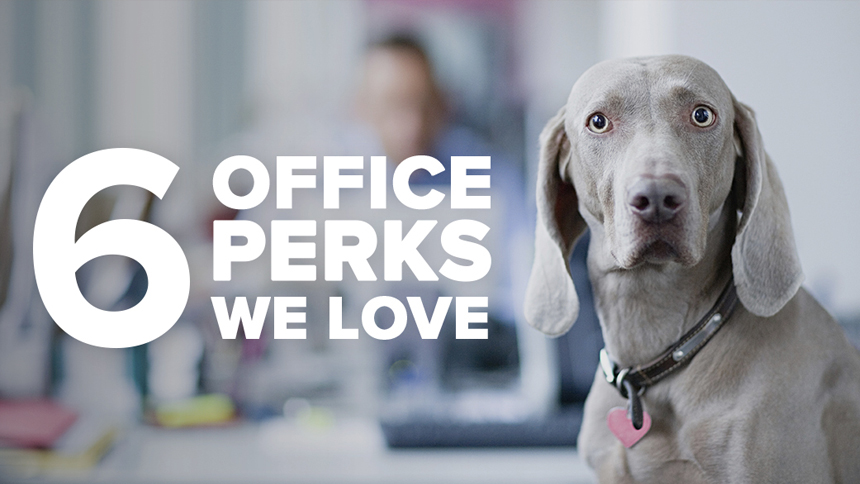
office perks example of dog-friendly office
John icon
By John Lombard
John Lombard is a content strategist and writer with over a decade of experience creating interactive and video content for brands like Apple, IBM, and Samsung. He previously worked at Mediabistro and now serves as a Client Strategist at Ceros.
3 min read • Originally published February 11, 2016 / Updated March 19, 2026
John icon
By John Lombard
John Lombard is a content strategist and writer with over a decade of experience creating interactive and video content for brands like Apple, IBM, and Samsung. He previously worked at Mediabistro and now serves as a Client Strategist at Ceros.
3 min read • Originally published February 11, 2016 / Updated March 19, 2026

This Valentine’s Day, we’re swiping right on something very close to our hearts: office perks. From dog-friendly spaces to happy hour Fridays, we’re aiming cupid’s arrow at the best perks from some of today’s top companies. So go on, read your heart out.

1. Unlimited Vacation Time

If anything should make your heart skip a beat, it’s this perk.

Unlimited vacation time means you’re free to travel the world…when you can actually get away from your deadlines. Truth is, companies are finding most employees are taking roughly the same amount of days off as with a traditional time off policy. Still, unlimited just sounds amazing.

A few companies currently offering this perk: Netflix, Hubspot and PaperG.

2. Free Stuff

If you’re anything like, well, everybody, chances are you love free stuff. Besides having a free on-site gym, free snacks, free health, dental and vision benefits, Birchbox also gives employees a 20% discount plus $200 a year towards the purchase of anything in their shop.

Another company with freebies is Airbnb, which offers employees an annual travel credit to see the world and Airbnb-it-up wherever they please.

And then there’s Pulsd, an online resource for events and promotions throughout NYC that lets employees take advantage of offers on their site, free of charge.

3. Pet Friendliness

Who doesn’t love having a dog—or multiple dogs—at the office? Not only do pets in the workplace help relieve stress, they also force you to take breaks. (“Sorry Jeff, I wish I could meet to talk about those TPS reports, but I’ve got to take Ruffy for a walk.”)

If you’re looking to bring your furry friend to work on the daily, check out SmartRecruiters, a company that’s teaching an old dog new tricks (heyo!) by disrupting the hiring industry.

Other companies offering this dog-friendly perk include Etsy, Zynga, Killer Visual Strategies and Mashable.

4. Drinks on the House

It’s 5 o’clock somewhere, right? After a long, tiring day of being creative and thought-provoking, sometimes the best cure is a happy hour drink. And if you enjoy the occasional whiskey or beer, then is this the perk for you.

Dropbox, the file sharing and storage giant, ends each week with Whiskey Friday. The Penny Hoarder, a blog about weird ways to earn and save money, has a beer fridge (is there any other kind of fridge?) and on-site shuffleboard.

And the digital consulting firm Omnigon caps off every Thursday with a happy hour at the company bar where employees can sing their hearts out to their favorite songs hosted by their company DJ. (Cue record scratch: Say what?!)

5. A Little Shuteye

Ever just want to curl up in a ball under your desk and take a nap? (No? Yeah, me neither.)

But for those who do get that all-too-common 3 p.m. slump, Hootsuite has the perk for you: nap rooms. Decked out with cots and dim lighting, their cabin-themed nap room gives employees the freedom to take a quick rest and recharge.

Hootsuite’s not the only nap-friendly office around; companies such as Uber and Ben and Jerry’s also offer snooze rooms.

6. A Workout

These days, we’re all trying to be more active at work. So it makes sense that Clif Bar, a company built on the principle of health and wellness, would have a full-service on-site gym complete with rock wall.

And it doesn’t stop there: Clif Bar employees receive access to group fitness classes, a personal trainer, massage therapist, acupuncturist and a chiropractor. (Hopefully not all at once.)

Also check out Stransberry Research: This Baltimore-based publisher offers employees 24-hour access to their on-site gym and weekly trainer-led workout sessions.

Other companies offering similar perks are General Electric, Twitter and Zappos.

Want to get in with a company like one of these? Check out Mediabistro’s job board, because top companies with top perks are hiring right now.

Topics:

Get Hired, Job Search
How to Pitch

Freelancer’s Pitching Guide to Health & Wellness Publications

Here are 8 markets that want your stories

woman running up stairs
John icon
By Jenny Rough
Jenny Rough is a writer and former attorney with over 20 years of experience crafting stories for magazines, newspapers, and podcasts, and currently serves as letters editor for AARP The Magazine and AARP Bulletin. She holds a J.D. summa cum laude from Pepperdine and a bachelor's in creative writing from Miami University.
5 min read • Originally published February 11, 2016 / Updated March 19, 2026
John icon
By Jenny Rough
Jenny Rough is a writer and former attorney with over 20 years of experience crafting stories for magazines, newspapers, and podcasts, and currently serves as letters editor for AARP The Magazine and AARP Bulletin. She holds a J.D. summa cum laude from Pepperdine and a bachelor's in creative writing from Miami University.
5 min read • Originally published February 11, 2016 / Updated March 19, 2026

To be healthy in mind and body involves becoming aware of what causes illness and then taking action to change diet, exercise and daily habits in order to extend longevity. These eight markets seek stories about ways to cultivate a healthier, more holistic approach to living.

1. EatClean.com

This website is directed to those who want to improve their health through clean eating.
What to pitch: EatClean wants stories that strive to “cover the ongoing food revolution that exposes what’s really in our food, where it comes from and how it gets from farm or sea to store shelves,” says former senior editor Hollis Templeton. Categories include Products (e.g., “The 9 Cleanest Foods in the Freezer Aisle”), Scoop (e.g., “6 Ways You Can Learn to Crave Clean Foods”), Trends (e.g., “Should You Really Be Eating Pond Scum? “), Personalities (e.g., “15 Hilarious Celebrity Tweets About Food”) and Recipies+How-To (e.g., “10 Amazing Green Juice Recipes”).
Length: 400 to 800 words
Pay: typically $200
Assigning editor: Amy Beal, AMY dot BEAL at RODALE dot COM
Templeton’s advice: “We adopt a fun, edgy voice that makes us unique from other health/food websites. We publish content that we know will drive traffic across different demographics—think weight loss and weird eating habits.”

2. Family Circle

Health and wellness is one of a variety of topics this parenting-oriented magazine covers.
What to pitch: Family Circle runs personal essays in its “Health” section, like the recent story about a woman who suffered from strange digestive symptoms for years before receiving a diagnosis of ulcerative colitis.
Length: Varies, but typically around 1,200 words
Pay: Varies, but typically around $2 per word
Assigning editors: Lynya Lloyd and Mallory Creveling, FIRSTNAME dot LASTNAME at FAMILYCIRCLE dot COM.
Floyd’s advice: Read past examples and Mediabistro’s How to Pitch: Family Circle.

3. mindbodygreen.com

Founded by Jason Wachob, mindbodygreen wants to inspire readers to live their best lives and recognizes there is no one-size-fits-all-approach to health and wellness.
What to pitch: “We love hearing from new contributors,” says editor-in-chief Kerry Shaw. Think of pitching recipes, short yoga sequences, fitness workouts, guided meditation, personal essays about transformation, beauty tips and posts with tips for personal growth.
Length: 500 to 800 words
Pay: Varies
Assigning editor: Kerry Shaw, but send pitches to SUBMIT at MINDBODYGREEN dot COM.
Shaw’s advice: Read and follow the writing guidelines.

4. Mother Earth News

If you have a passion for the environment and living off the land, you may find a good fit with Mother Earth News.
What to pitch: The best place to break in is “Country Lore,” a section devoted to how-to articles, such as the recent piece on how to clean the chicken coop.
Length: 100 to 300 words
Pay: $25 to $100
Assigning editor: Hannah Kincaid, LETTERS at MOTHEREARTHNEWS dot COM.
Kincaid’s advice: Be sure to read the detailed writers’ guidelines. Along with your query, send a brief summary of your credentials, links to any published content (if available) and blogs you maintain.

5. Rodale’s Organic Life

Rodale’s Organic Life is “a handbook for people who want to live naturally in the modern world,” says deputy editor Karen Shimizu.
What to pitch: Rodale’s Organic Life accepts pitches for its “Gather” and “Wellbeing” sections, and its “Home,” “Garden” and “Food” departments. It also takes freelance pitches for feature stories. “We always look for an organic angle—remedies and self-care that are good for the planet as well as for the self, ” says Shimizu. “And in addition to good reader service, we’re interested in good stories—profiles, personal essays or reported pieces that surprise us and help us better understand some aspect of wellbeing.” Note that its Wellbeing content is more likely to lean toward what’s traditional than the latest health trend.
Length: “Gather” runs 150 to 800 words; “Wellbeing” runs short-but-deep service-oriented pieces around 150 words, as well as longer 1,200-word personal essays.
Pay: $1 per word plus expenses
Assigning editors: Karen Shimizu or Zoe Schaeffer, FIRSTNAME dot LASTNAME at RODALE dot COM
Shimizu’s advice: “Make it clear why your story is a good one for ROL and why you’re the best person to write it. (The best way to do the latter is to show us that you’ve done enough reporting to have a solid handle on the subject.)”

6. Shape

Fitness enthusiasts can pitch this women’s active lifestyle magazine that has a focus on sports and exercise.
What to pitch: “Live Healthy” covers the latest in health news and trends.
Length: 700 to 1,000 words.
Pay: $1.50 and up
Assigning editor: Mirel Ketchiff, MIREL dot KETCHIFF at SHAPE dot COM
Ketchiff’s advice: None other than the recent advice in How to Pitch: Shape.  

7. WebMD

WebMD is dedicated to providing health news to consumers, physicians and healthcare providers.
What to pitch: WebMD doesn’t take unsolicited pitches, but it does work with a regular team of freelance writers. If want to be one of them there area few steps you can take. One option is to send your resume with electronic clips, says senior editor Sylvia Davis. “Or better yet, attend the magazine’s Pitchfest at the annual meeting of the Association of Healthcare Journalists.”
Davis’s advice: Before contacting the editors, read the magazine thoroughly so you understand the content and approach. Also, “research the right person to send things to, to show that you have investigative skills and are willing to actually pick up the phone. Sending out mass emails gives the opposite impression.”

8. Whole Life Times

Whole Life Times is a Los Angeles-based publication that seeks articles on holistic health, yoga, new spirituality or sustainable living.
What to pitch: In addition to “BackWords,” it personal essay column, it seeks stories for “City of Angels,” its front-of-the-book section, as well as longer, reported features.
Length: “BackWords” runs around 750 words; front-of-book stories range from 300 to 400 words; features are usually 800 to 1,000 words.
Pay: Current pay for new writers is $35 to $150 per article.
Assigning editor: Abigail Lewis, ABIGAIL at WHOLELIFEMAGAZINE dot COM
Lewis’s advice: “‘City of Angels’ is almost always local,” Lewis says. Features also try to include a local tie-in, even if only in the sidebar. Review guidelines.  

Other Titles to Try:

Clean Eating
EatingWell
Essence
Glamour
Good Housekeeping
Latina
Men’s Health 
Parents
Parents.com
Prevention
Real Simple
Self
Shape
Spirituality & Health
Women’s Health

Topics:

Go Freelance, How to Pitch
Managing

10 Toxic Mistakes You Might Be Making as a Boss

Heed this manager's guide to identifying bad boss behavior.

boss meeting with staff
Admin icon
By Brittany Taylor
Brittany Taylor is an enterprise marketing manager and content strategist with over a decade of experience in B2B content marketing, brand building, and ghostwriting, with bylines in SELF, Teen Vogue, and Mediabistro. She currently leads content and branding across multiple brands at HireQuest Inc.
8 min read • Originally published February 16, 2016 / Updated March 19, 2026
Admin icon
By Brittany Taylor
Brittany Taylor is an enterprise marketing manager and content strategist with over a decade of experience in B2B content marketing, brand building, and ghostwriting, with bylines in SELF, Teen Vogue, and Mediabistro. She currently leads content and branding across multiple brands at HireQuest Inc.
8 min read • Originally published February 16, 2016 / Updated March 19, 2026

We’ve all had bad managers. You know the ones—they inspire the stories you tell at happy hour and are the ghosts that haunt your every career move.

And though you swear you’ll never be like them, how sure are you that their toxic ways aren’t tarnishing your own management skills? Sometimes we fall back on bad habits. What’s important is to put a stop to them immediately.

So are your management moves the right ones or do they need a makeover? We talked to three senior management experts in the industry: J.T. Hroncich, managing director of Capitol Media Solutions, a media buying and strategy company in Atlanta and Washington, D.C.; Amy Muntz, executive vice president of strategy at advertising agency Allen & Gerritsen; and Christine Stack, a partner at Liberty Blue, a communications industry placement agency.

Read on for ten employee-alienating actions and tips on how to turn your work style around.

1. You’re all business, all the time.

From 9 to 5 or 10 to 6 or 24/7, you are on the clock, and that means you’re the boss—not a friend, not a coworker, not a sympathetic ear. You’ve got things to do, projects to complete, websites to launch, books to publish. But when you do this, you risk your employees feeling isolated or under-appreciated.

“This is harder with 100-plus employee companies, but I have a small business and I think particularly in smaller companies, it’s important to take an interest in the people and their lives,” says Hroncich.

Muntz agrees. “Sometimes it’s hard to manage all the day to day and make time to connect with the human beings we work with,” she says. “The biggest disconnects happen when people feel like their managers aren’t connected to them and the things that matter to them inside and outside of work.”

It doesn’t take a lot of effort to ask how someone’s day is going, what plans they have for the weekend or how their family is doing. But this small gesture can make a huge difference in the eyes of your employees.

2. You’ve become buddies with your team.

The line between friend and manager is a narrow one.

While you’re busy focusing on the tightrope beneath your feet—and all the projects you’re juggling in the meantime—you might not notice that you’re a little too buddy-buddy with certain employees, or friendlier with some more than others.

“Hanging out outside the office or having a drink after work occasionally is fine,” Hroncich says. “But the casual relationship has to change into a professional once you get inside the office doors.”

It can create an environment where management isn’t respected inside the office or can create the perception—or reality—of favoritism.

If you were promoted from part of the team to the head of it, this becomes an even greater problem, as Stack can attest to. “I wish I wouldn’t have worried so much about getting everybody to like me, to be everyone’s friend,” she says.

“In the end, people may not like you or agree with you, but it’s important that they respect what you do.” Her solution: “A team meeting to set the tone is imperative.”

3. You keep company news to yourself.

While there are some secrets worth keeping, others tend to breed distrust.

Muntz says that much of the time, what seems like a lack of transparency can actually be due diligence when it comes to the decision-making process.

However, if you’re keeping mum on company happenings (that are public knowledge or soon will be), personnel changes that affect your daily responsibilities or client updates, your team may resent you for not looping them in.

Chances are, the info will leak out anyway, so give your employees the courtesy of hearing the news from you first.

“The challenge for managers is to be open and transparent even if you don’t have all the answers,” Muntz says. Even so, open up about what you do know. “Don’t let things linger or keep your employees waiting and guessing,” adds Muntz.

4. You blow off annual reviews.

From self-evaluations to biopic-length formal writeups, annual reviews are part of most company policies. For managers, review season may always seem to coincide with a particularly busy time of the year.

But just because your plate’s overflowing doesn’t mean you should drop this must-do to the bottom of your list.

“If you can’t get to a formal review in a timely manner, at least shoot for clear and consistent feedback in a general sense about [your employees’] performance or any issue,” Hroncich says. “Doing that eliminates or at least reduces surprises when the formal review does happen.”

Muntz stands firm on this point. “People that come to work for you every day deserve to have these conversations and they shouldn’t just happen once a year,” she says. “We should be doing formal check-ins quarterly and informal check-ins at least monthly.”

5. You ignore conflicts between your staff members.

Even if you love watching Bravo’s nightly smackdowns, chances are you’re not huge on inciting your own disturbances, domestic or otherwise.

Still, when employees are at each other’s throats—or, worse, passive aggressively throwing each other under the proverbial bus—it’s up to you to step in.

“I recall addressing a situation similar to this as a manager and I will admit it was the most difficult and nauseating day of my career,” Stack confesses. “Put simply, ask for help: Engage your HR director, outline the situation as well as what the ultimate outcome is desired and collectively shape a plan of action.”

Mediation is essential and most effective when the conflict is just beginning. Letting it fester will tank your team’s morale and productivity, Stack says.

6. You resist change and, in the process, stifle creativity.

You’ve gotten to the point that your work flow is fluid. You know how to work even the most finicky of databases. You’ve cracked the analytics software wide open. Your project management rhythm is down. You are, in a word, comfortable—and you like it that way. But that’s not necessarily a reason to push the status quo.

“With this perspective,” Stack warns, “you will make yourself obsolete—and smart, driven achievers won’t want to work with you.”

And if you are resistant to change, how can you possibly help promote the innovation of your employees and, thus, your company?

“I wish more managers would truly start fostering creativity,” Muntz says. “As an industry, we talk a good game when it comes to creativity, but I don’t think we put enough energy into rewarding our teams for developing solutions that are novel, innovative and unexpected.”

Stack encourages managers to give their team members frequent opportunities to present new ideas or offer solutions to a current challenge. And if those ideas don’t work, explain why. Just be sure to keep the creative juices flowing.

7. You have a no-mistakes policy.

You’re not one to bet twice on a losing horse, so when a team member flubs a project, you refuse to let her touch it again—ever. You won’t let her forget about that one mistake… or allow her to learn from it.

Instead of steamrolling the employee, guide her through the process, Stack urges. First, identify the mistake, so there’s no question in her mind what she did wrong. Then give her the opportunity to make up for the error.

Hroncich emphasizes the need to establish—and earn back—trust. Let the employee’s track record speak for itself.

“If it is a one-time thing and it’s still big deal, I probably wouldn’t take [my trust] away from them if they didn’t have a track record for screwing things up,” he says.

However, if the employee is a repeat offender, despite your frequent admonitions, says Stack, “then sadly she’s simply not getting it, and action needs to be taken.” That action might be transferring her to another, more appropriate, role—or, worst case, asking her to leave.

8. You don’t address problems when they happen.

Perhaps you’re too lax with your employees. Instead of working to solve problems with stumbling employees, you go ahead and fix them yourself—hey, you reason, it’s faster this way.

And then after the offenses have built up and you finally unleash a firestorm, it comes across as out of the blue from your employee’s perspective.

“The issue here is simple: lack of honest communication,” Stack says. “You haven’t been fair nor have you given this person the opportunity to improve.”

Trotting out a list of problems, major and minor, all at once “has powder keg potential,” she adds.

It’s a better strategy to outline a list of things that have worked this year (start with the positives), and then get into the things that have not worked.

The goal is for the employee to come away from the discussion with ways to improve his performance and have an action plan in place to reach his or her full potential.

Follow-up is essential here. Be sure to set up monthly conversation reminders so you can see how he’s faring, particularly against your expectations and concerns.

9. You don’t delegate.

When you spend the time to learn how to do something really well, it can be difficult to let someone else take a stab at it.

But when you become a manager, your job is to guide others as they do much of the work you did before. Your task is to oversee the project, not DIY.

“Delegation was probably the most difficult skill for me to develop; in some ways, it still is,” Stack says. “Getting beyond the concept of ‘Get it done now!’ to instead taking the time to educate others and oversee their execution was a difficult ask for a control-freak like myself.”

Nonetheless, it’s essential to give your employees the chance to expand their responsibilities and develop new skills. In the end, it will benefit you both to move a few things off your epic to-do list.

10. You’re a serial micromanager.

Ah, the catch-22 of delegating a task to a team member only to minutely oversee his every mouse click. The three senior managers we talked to each cited it as the No. 1 gripe employees have about their bosses.

And Muntz totally gets it. “I was a complete micromanager when I first started out,” she says. “Like many new managers, I tried to stay on top of every little thing my team did, which was unproductive and exhausting. It eventually led to me having to let go.”

The fact is being a great manager means you are comfortable setting the vision and empowering the talented folks you have on your team, adds Muntz.

“The best managers don’t tell others how to do their work; they help create and nurture an environment where their team can do their best work.”


Topics:

Climb the Ladder, Managing
Job Search

What Every Job Seeker Should Know About Landing Social Media Jobs

Tweet and tumblr your way into this growing industry

social media share icons
Admin icon
By Kristen Fischer
Kristen Fischer is a freelance writer, journalist, and copywriter with over 20 years of experience, currently serving as a health writer for AARP with previous staff roles at WebMD and WW. Her work has appeared in Prevention, Healthline, Woman's Day, Parade, and Writer's Digest, and she is the author of four books.
4 min read • Originally published February 17, 2016 / Updated March 19, 2026
Admin icon
By Kristen Fischer
Kristen Fischer is a freelance writer, journalist, and copywriter with over 20 years of experience, currently serving as a health writer for AARP with previous staff roles at WebMD and WW. Her work has appeared in Prevention, Healthline, Woman's Day, Parade, and Writer's Digest, and she is the author of four books.
4 min read • Originally published February 17, 2016 / Updated March 19, 2026

These days, every marketing effort has some aspect of social. Whether it’s pushing content via Twitter and Facebook, sharing the company’s unique culture on Instagram or fostering community engagement, social media jobs are growing faster than ever.

Here’s a look at some of the jobs in the social media world and how to get your hands on one.

Starting Out: Entry-Level

If you’re fresh out of college and know a thing or two about social media, especially if you blog, you may be a great candidate for a gig such as social media coordinator or social media specialist.

“On an entry-level position, what you’ll see these days are people that are fresh out of college,” says Hilary O’Keefe, senior communications manager at Core77 Design Awards. “The ones that really know it inside out, it makes them valuable for these companies.”

Prospective employers often browse through the complete social presence of an applicant before looking at their resume in order to screen candidates.

What does that mean? They want to see that you are professional and that you can write well. That translates into being able to promote a specific company, or in an agency setting, being able to get the word out effectively about their clients.

A common entry-level position is social media coordinator, who is responsible for drafting and posting content including tweets and status messages. The coordinator is often also responsible for setting up alerts to manage responses and monitoring what is being said about clients, and works with management to set the strategy for how to respond.

Ken Wisnefski, owner of the online marketing agency Webimax, also says his company turns to recent graduates to fill most social media positions, and then trains them on proper ways to use it. As the industry evolves, he says that the “new” employees will be the real pioneers of the field.

Moving Up: The Management Level

If you want to work your way up in social media specifically, you’re ideally going for a social media director or social media manager title.

Management-level roles for social media professionals are often more focused on the strategy of social media and less about posting status messages—like determining which Facebook pages to like or which Twitter handles to follow. Above that, setting the overall social media strategy, is often a director.

Responsibilities vary depending on the employer’s or client’s needs. For example, some may focus more on contests to promote products, and others involve knowing more about competitors and more actively getting the word out to make sure a client can effectively compete.

For management jobs, companies are looking for people who are dedicated to blogging, know how to write well, can use Facebook and other social media tools, learn and adapt quickly and also understand concepts like search engine optimization.

A bachelor’s degree in a creative field such as communications, English or advertising can help and is often a requirement. To make it on an oversight level, having previous experience managing projects—and being able to demonstrate results, even if it wasn’t specifically with social media—are crucial.

Social Media and Traditional Marketing

One of the nice things about starting out strictly in a social media job is that a person gains valuable skills in traditional marketing. This can help propel your career, whether you stay in social media or not.

O’Keefe’s job as online marketing manager incorporates social media, but also traditional marketing techniques. “It takes a little more experience understanding the basic of marketing,” she says.

Not all social media jobs require a marketing background, especially entry-level ones. But after working a few years in the entry-level field, which can include other interesting positions such as community managers, a candidate can likely move to a social media director role—or they can leverage that background into another marketing, advertising or communications position.

“You still get a marketing background if you want to move onward,” O’Keefe notes.

She adds that the higher up you go, the more understanding and appreciation for traditional marketing is required. O’Keefe says if you start in social media out of college, you look at the trends of how people pass along information.

For example, “It could be a fantastic entryway to consumer research.” So you don’t necessarily have to continue your career strictly in the social media realm; other possibilities exist.

Find a Social Media Job

1. Think Outside the Job Board Box. Start with the Mediabistro job board, and then check out sites like Mashable for a nice selection of industry-specific sites gigs.

2. Look for Related Positions. O’Keefe says that jobs in the field don’t always have “social media” in their titles, so keep an eye out for variations, like “link builder” and “community manager,” which often incorporate the same duties.

3. Let the Gatekeepers Find You. If you build it—an awesome and professional online presence, that is—they will come. Market yourself as an expert in the field through your own Twitter, Facebook or Tumblr pages.

4. Follow the Leaders. Find out who has the job you want and friend them. That’s the best way to find out about news in the field, and most importantly, potential openings.

Topics:

Get Hired, Job Search
Skills & Expertise

What Does a Web Designer Actually Do? Skills, Salary & Career Path

Here’s what it takes to be a web design star

web designer working on a project
John icon
By Jenell Talley
Jenell Talley is a journalist and program analyst with a background spanning media, government, and editorial work. She holds a journalism degree from Howard University and a master's in human resources management from the University of Maryland.
3 min read • Originally published February 21, 2016 / Updated March 19, 2026
John icon
By Jenell Talley
Jenell Talley is a journalist and program analyst with a background spanning media, government, and editorial work. She holds a journalism degree from Howard University and a master's in human resources management from the University of Maryland.
3 min read • Originally published February 21, 2016 / Updated March 19, 2026

If you’re looking to put your design sensibilities and technological savvy to good use, securing a job as a web designer may be just what the doctor ordered. We talked to those in the know and got the scoop. Say adios to being bored at work.

What exactly does a web designer do?

These visual architects are responsible for the overall awesomeness of a website’s look—its layout, colors, fonts, icons, buttons, the whole shebang. Although not always required, many web designers have mad coding skills too, so they not only come up with a design, they use a programming language, such as CSS, Ruby, SQL, Python or ASP to implement it. Designers often know several languages or some varying combination of them.

“Having a wide skill set is critical in the industry,” says Brett Hartmann, founder of and lead web developer at Bitcookie, a web design and Internet-marketing agency. “[At a design agency], often that means a combination of either code and design, design and marketing or design and project management.”

What skills do you need?

Obviously, you need a good design eye and an understanding of layout, hierarchy, color theory, typography and web font. A strong grasp of UX/UI design foundations is also important. It helps you create a seamless design that smoothly guides users through a site without them getting frustrated.

You should also have good instincts, adds UX designer Tamara Wiesen, product designer at FeeX, a financial services startup that helps people save money. Trusting your instincts will help you navigate new terrain.

And be adaptable, says Hartmann. “Technology changes rapidly, and being able to flow with it smoothly is often more important than being the best designer in town.”

Who is a web designer’s boss?

A freelance designer typically reports directly to the clients. If a designer’s at a larger company, a project manager or an art, UX or design director may call the shots. At a smaller agency, the boss might be the owner, if he chooses to oversee each project.

Are there other titles with similar responsibilities?

Many companies do not have designated web designer positions, but they expect those with “design” in their title—UX and UI designers, graphic designers, product designers and front-end designers—to have a web background, says Adriana Marin, former shutterstock.com design director turned freelance art director. “In today’s landscape, every designer has to be a web designer and be mindful of the user’s overall experience.”

What do I need to get ahead in this position?

Simple: Work hard and stay abreast of the latest design news and trends. Oh, and don’t succumb to designers’ block (push through it!) or negative feedback (everyone’s a critic).

How can I get my foot in the door?

You’re off to the races with a degree in graphic design or classes in UX, UI, HTML, CSS and Javascript under your belt, but some agencies are more about experience garnered from personal projects. “Personal interest in design work often represents the drive to learn and create,” says Hartmann, “which is what makes [the] perfect designer.”

Get your feet wet by designing websites for your friends and their friends. Then show and prove: Demo several commissioned projects or mockups for potential employers, and let them know how you addressed any problems encountered along the way. With the ability to design, code and nip pesky problems in the bud, the question is no longer who’ll hire you, it’s who wouldn’t.

Looking to land a job in web design? Check out Mediabistro’s job boards, where top companies are constantly searching for top talent.

Topics:

Climb the Ladder, Skills & Expertise
Skills & Expertise

One Simple Sentence That Will Get You Closer to Your Dream Job

Write a career vision statement to put your goals—and your targeted position—within reach

road splitting into two directions
John icon
By Amanda Layman Low
@AmandaLaymanLow
Amanda Layman is a B2B tech content writer and strategist with over 15 years of experience creating content for startups and enterprise brands. She founded Tigris, a content agency serving leading tech companies, and authored The New Freelance: A Book for Writers.
2 min read • Originally published February 22, 2016 / Updated March 19, 2026
John icon
By Amanda Layman Low
@AmandaLaymanLow
Amanda Layman is a B2B tech content writer and strategist with over 15 years of experience creating content for startups and enterprise brands. She founded Tigris, a content agency serving leading tech companies, and authored The New Freelance: A Book for Writers.
2 min read • Originally published February 22, 2016 / Updated March 19, 2026

When you’re looking for a job, between networking, searching the job boards and, if you currently have a job, staying on top of your workload, you can feel tapped out for time.

But that doesn’t mean you should sit back and take whatever comes at you, be it a new job or duties at your current gig.

Keep in control of your career by writing a vision statement. With so many paths you can take in media, it’s helpful to have a guiding light that keeps you from veering off in a direction that’s misaligned with your passions and talents.

A vision statement can help you during your job search or freelance career, too. By having the goals of your personal brand intact, you’ll only take on opportunities that nurture your growth and authenticity.

So what makes a strong vision statement? First, it should be motivational. It should state the “why” and “how” of your career goals, rather than your methods for getting there. Remember, the vision is a glimpse into the future, not a map for getting there. It should also be short and easy to memorize.

Check out these real examples:

  • Amazon: To be earth’s most customer centric company; to build a place where people can come to find and discover anything they might want to buy online.
  • The Nature Conservancy: Our vision is to leave a sustainable world for future generations.
  • Stanford University: To become the Harvard of the W.
  • Disney: To make people happy.

Brainstorm the events that led you to pursue your media career. What inspired you to do this stuff in the first place? Here are some ideas of possible personal vision statements:

  • “To establish my own creative advertising agency by 2030.”
  • “To spend as much time traveling as I spend at my desk.”
  • “To create media that contributes to the alleviation of poverty.”
  • “To contribute to the public understanding of science through my writing.”

Once you’ve nailed down a sentence or two that sums up your vision, sleep on it and revisit your ideas tomorrow. If it still holds true and encompasses your values and dreams, it’s probably a solid vision. Post it somewhere visible on your desk and consult it every time you make a decision, start a new project or consider a new job opportunity.

Most importantly, if you feel like you’ve achieved your vision, amend it by dreaming bigger.

Get help figuring out your vision statement and other career goals by talking with one of Mediabistro’s career counselors. 

Topics:

Climb the Ladder, Skills & Expertise
Skills & Expertise

6 SEO Skills That Will Help You Land Your Next Media Job

Go to the top of search results, and the resume pile, with these tips

the letters seo written on blocks
John icon
By McLean Robbins
McLean Robbins is a luxury travel editor, marketing leader, and adjunct faculty member at Georgetown University with two decades of bylines in Forbes Travel Guide, Robb Report, and Washingtonian. She is the founder of Lily Pond Luxury, a Condé Nast Top Travel Specialist agency, and previously served as VP of Marketing at MBO Partners.
4 min read • Originally published February 23, 2016 / Updated March 19, 2026
John icon
By McLean Robbins
McLean Robbins is a luxury travel editor, marketing leader, and adjunct faculty member at Georgetown University with two decades of bylines in Forbes Travel Guide, Robb Report, and Washingtonian. She is the founder of Lily Pond Luxury, a Condé Nast Top Travel Specialist agency, and previously served as VP of Marketing at MBO Partners.
4 min read • Originally published February 23, 2016 / Updated March 19, 2026

If you’re looking for a job in today’s competitive marketplace, it’s important to start with a stellar resume, but you’ll also want to take advantage of SEO (search engine optimization) to make sure you stand out from the crowd—and that potential employers find you and your mad skill set.

Try these six foolproof techniques to maximize your visibility online.

1. Launch a Personal Website to “Own” Your Space Online

One of the main values of search engine optimization (essentially, making sure your web presence appears high on a search engine’s list of results), is being able to “own” your real estate online.

For most people, a personal website (try for yourname.com) will be the start to owning the #1 search result for your name—with positive content created about you, by you, ready to wow a potential employer.

2. Do Your Keyword Research

A key component of any SEO’s job is keyword research. Apply those same skills to your job hunt. Sure, you’re a “marketing manager” now, but does that title really convey what you hope to do?

You could also consider jobs in content marketing, marketing automation, product marketing, B2B marketing, ecommerce marketing or something else. Titles differ per company, and you often need to go a bit farther afield than your current title to find exactly what you’re looking for.

For example, as a senior content professional, I might search titles like director of content strategy, director of digital strategy, director of digital content, editorial director and more—modifying the “director” level to include similar career levels like “principal” or “vice president” and even “senior manager.”

Small firms are more likely to have VPs with similar experience, where some large firms have senior managers with 15 to 20 years of professional expertise. Being more open to the title, and more refined on the corporate fit, job duties and salary can often be of service in your hunt.

3. Create a Personal Headline

What do you want to be? No, this isn’t a New Age–y “vision” exercise. Sites like LinkedIn offer you the ability to create a personal “headline” that describes not just the job you currently have, but the skills you have that you’ll take to your next job.

Think of it this way: What would I want to Google to find someone like … me?

You might be an “Experienced B2B Public Relations Executive” or a “Front End Drupal Developer.” Back up that headline to optimize particular sections of your website, and take those keywords into your resume and your social profiles as well. (My SEO writing course shows these techniques in more depth.)

4. Optimize (and Clean Up) Your Space Online

Beyond your personal website, your social handles are often the top results when someone searches your name. If you use these handles professionally and effectively, this can be a great way to further brand yourself in the industry.

Take full advantage of the built-in optimization on Facebook, Twitter and LinkedIn, customizing your profile URL with your name and adding links to your personal site.

Of course, regular publication of job-related content can’t hurt either. (And, while you’re at it, check out these great ways social media can help you land a job.)

5. Weave Your Key Terms Into Your Resume and Cover Letter

Now that you’ve written your personal headline, you probably have a pretty good idea of what you want people to Google to find you. Are those key terms in your resume?

Many jobs use resume-parsing software, similar to the way search engines comb content, and if you are missing the terms they’re seeking, you’ll never make it past the computer and onto a key HR professional’s desk for review.

I’m not talking about words like “innovative” or “visionary.” Skip the corporate buzzwords and go straight to the skills: If you work with a marketing automation software like Pardot, include the brand name. Have analytics experience? Say so, in detail. If you’re looking for a job in content marketing and that title isn’t part of your job description, you can still convey your experience in your detailed description of duties or cover letter.

6. Use Those SEO Skills in Reverse to Research a Company

The same techniques you’ve applied to your resume can be used in reverse as well. Do a search for the hiring manager’s name online and pull up their LinkedIn profile before speaking. Did you attend similar colleges or have connections in common? Can you find information about the company online that can help you prep for the job—or a potential red flag that might warn you away?

You can also use similar queries to find jobs posted online through company websites that may not appear on job boards.

McLean Robbins is a content strategist, copywriter, digital consultant and instructor of Mediabistro’s Online Course SEO Writing. Find her at mcleanrobbins.com.

Topics:

Climb the Ladder, Skills & Expertise
Job Search

How to Read Between the Lines of Any Job Posting

What "help wanted" really means

woman at coffee shop reading a job description
Admin icon
By Joel Schwartzberg
Joel Schwartzberg is a workplace communications coach, speechwriter, and bestselling author whose books include "Get to the Point!" and "The Language of Leadership," with articles published in Harvard Business Review, Fast Company, and Newsweek. He brings over two decades of senior communications and editorial leadership experience at organizations including the ASPCA, PBS, and Time Inc.
6 min read • Originally published February 25, 2016 / Updated March 19, 2026
Admin icon
By Joel Schwartzberg
Joel Schwartzberg is a workplace communications coach, speechwriter, and bestselling author whose books include "Get to the Point!" and "The Language of Leadership," with articles published in Harvard Business Review, Fast Company, and Newsweek. He brings over two decades of senior communications and editorial leadership experience at organizations including the ASPCA, PBS, and Time Inc.
6 min read • Originally published February 25, 2016 / Updated March 19, 2026

At first glance, a job posting may seem simple—there’s a description, a list of required skills, necessary qualifications and not much more. Well maybe, maybe not.

Often between those lines are clues that reveal if the opportunity is truly right for you, or if it’s a mismatch in the making. You may also discover valuable insight that could give you an advantage when you apply.

So how do you start using your job description X-ray vision? Let these workplace experts answer your questions about what “help wanted” really means.

Can I apply if I lack experience?

If you’ve had two years of experience and the job calls for three to five, don’t let it stop you from applying. In such a case, says Rita Friedman, a certified career coach at PhillyCareerCoach.com, “The employer is probably just not looking to train someone from scratch. With the right confidence and solid understanding of the position, a more junior candidate could easily win them over.”

If you have much more experience than the job calls for, however, it could be a sign to move on. “The employer will probably assume a senior person would grow bored quickly, and the employer isn’t looking to meet the salary requirements an experienced worker ought to have,” she says.

Also take note if the “years of experience” refers to specific roles. “Some jobs require seven to 10 years of industry experience, while others will require seven to 10 years’ experience in a specific job function or role,” career advice expert and spokesperson Amanda Augustine of TopResume. “Identifying which type of experience is required will help you determine if the role is right for you.”

How much does the job title matter?

Most experts say it’s not a good idea to infer anything—good or bad—from a job’s official title. “A job title can be indicative of the level of responsibility—or not,” said Friedman.

“Small upstart companies often grant bigger titles than other employees have in equivalent roles at larger, established companies.” For this reason, “it’s often more effective to look for keywords in the descriptions instead of job titles,” says Friedman.

Augustine advises to take job titles “with a grain of salt… A director title at one company may translate to a vice president position in another.” To accurately measure a job’s seniority, pay close attention to the responsibilities and requirements.

“Are you managing teams or departments? What size are the budgets or accounts you’ll be expected to manage? This, along with the number of years of required experience, paints a more vivid picture of the role,” she says.

What does “other duties as assigned” mean?

“Ending job posts with the line ‘other duties as assigned’ often means that the hiring manager doesn’t know exactly what he wants,” says Vance Crowe, founder of Articulate Ventures, a St. Louis–based communications firm. “But these should be signals to job seekers that management will value your willingness to do the less desirable work.”

So, if you interview for a company that leaves ‘job responsibilities’ open-ended, stress your flexibility and openness to do almost anything. If other parts of a job posting seem similarly vague (“good communication skills required”), it’s your opportunity to use your cover letter and interview to define them in a way that leverages your key strengths. (“I am an excellent public speaker and have experience presenting in corporate settings.”)

The language in this posting is really informal. Could that mean anything?

The tone of a job description can be as telling as what it actually says. For example, if you like to have fun at work, look positively on postings that are written cleverly, sound personal or come right out and say “sense of humor preferred.”

“A job posting that’s overly playful may indicate a company that’s seeking younger, more casual workers,” explains Friedman, “whereas a very formal job posting may suggest a workplace that’s never even heard of casual Fridays.”

But be wary of job listings that seem to care deeply about your personality, versus your skills and experience.

“Be cautious about postings that focus disproportionately on personality traits,” says Allison Hemming, CEO of the digital talent agency, The Hired Guns. “Chances are they just canned the last guy, and the traits they listed are ones they wanted him to have, but he didn’t.”

“Alternately, it could mean they’re looking for friends more than workmates,” Hemming adds. “This is especially common for small companies and start-ups.”

What if I don’t have all the required skills?

Phrases like “required” and “must have” usually mean what they say, says Augustine. “While a job description can often include a laundry list of nice-to-have skills, those that are specifically labeled ‘must have’ are just that. If you don’t meet these core requirements for the role, you are wasting your time,” she says.

Timothy J. Tolan, ceo and managing partner at Next Level Interim Search, agrees. “Not having the required ‘must haves’ are typically cause to have a recruiter disqualify the candidate from consideration,” he said. “If a candidate doesn’t have most or all of these requirements it’s usually not a good fit.”

When it comes to “desired” and “preferred” skills (versus “required” and “must have”), not having them may not be showstoppers, but having them can “give you an edge over the competition,” according to Augustine.

Here’s another tip for telling what’s really important: Requirements listed at the top are likely considered most important by the employer. “Things at the bottom may be afterthoughts, or something HR made them include,” says Hemming.

However you assess the various requirements, “ignore anything in a job description at your peril,” says Hemming. “If it’s there, it’s there for a reason. These things are often written by committee, so somewhere along the way, a stakeholder decided that bullet was crucial.”

Perfection is not the point

Although employers would like their candidates to have all the ‘must-haves,’ it’s rare to perfectly match every point on a job listing, so don’t set that as your standard. “These are all aspects they want in the perfect candidate; however, most employers realize this is a dream list and are willing to talk to candidates who do not meet every single qualification,” says career coach and strategist Lisa K. McDonald.

“If a candidate has many, but not all the required skills, and a solid track record, many times the intangibles they possess may be enough to give them a good chance to get an interview,” says Tolan.

Plus, job listings themselves are not perfect, so keep your detective hat on until you make your final decision—or they do. “As you begin to get great at reading job descriptions, you’ll start to see that most companies want to know about you, but don’t tell you nearly enough about them,” says Hemming.

She counsels applicants to “review each job description, ask yourself what’s not there, then write down your questions” because those will be the key questions to ask if and when you get called for an interview.

Now that you’ve got the skills to read between the lines, jump back into your job search, because tops companies are looking for top talent right now. 

Topics:

Get Hired, Job Search
Hot Jobs

4 Oscar-Worthy Media Jobs You Can Actually Pursue

The roles in the limelight, and how to get one yourself

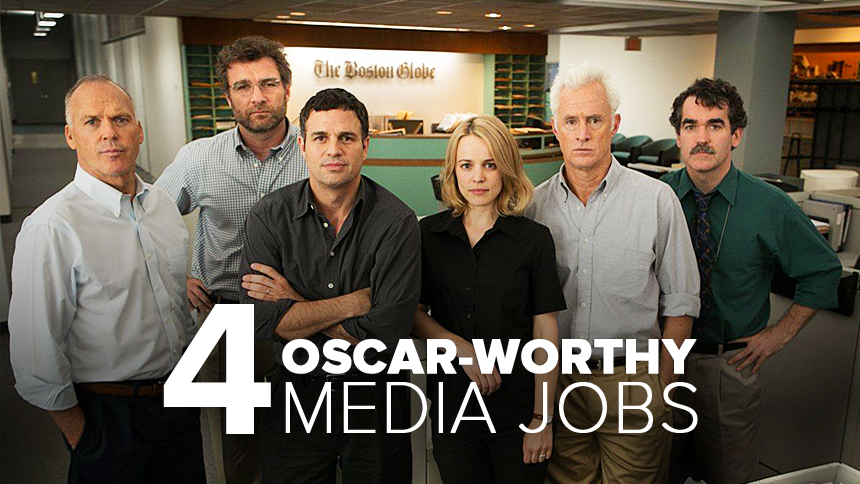
cast of spotlight
John icon
By John Lombard
John Lombard is a content strategist and writer with over a decade of experience creating interactive and video content for brands like Apple, IBM, and Samsung. He previously worked at Mediabistro and now serves as a Client Strategist at Ceros.
3 min read • Originally published February 25, 2016 / Updated March 19, 2026
John icon
By John Lombard
John Lombard is a content strategist and writer with over a decade of experience creating interactive and video content for brands like Apple, IBM, and Samsung. He previously worked at Mediabistro and now serves as a Client Strategist at Ceros.
3 min read • Originally published February 25, 2016 / Updated March 19, 2026

It’s Oscar season, and with several of the nominated movies featuring careers in digital media, we figure it’s our job to show you how to grab one of those careers yourself.

Warning: This article has a few near-spoiler alerts depending on how insanely little you like to know about a movie before seeing it.

And the nominees are…

1. Investigative Journalists in Spotlight

In this ripped-from-the-headlines drama, The Boston Globe’s Spotlight team—a small crew of investigative journalists—work to investigate and uncover dark secrets from Boston’s past. Spotlight stars some of Hollywood’s biggest names such as supporting actor and actress nominees Mark Ruffalo and Rachel McAdams.

This film gives a real feel for the workaday life of an investigative journalist, as the Spotlight team dig deep into a single topic—in this case, allegations against the Catholic church.

Essential skills for becoming an investigative journalist are curiosity, skepticism and the ability to effectively uncover hidden stories through powerful writing. While a journalism degree is always helpful, a course on editorial skills can a give you taste of different roles in the field.

2. Public Relations Director in The Martian

Presumed dead by his crew after a space storm, Mark Watney—played by leading actor nominee Matt Damon—is left behind on Mars, leading to big time media attention.

Luckily, NASA’s rockstar public relations director Annie Montrose, played by Kristen Wiig, schedules hourly press conferences, turning what could have been a giant disaster into a huge PR win for NASA.

Want to become the next Annie Montrose? While a degree in mass communications is a great place to start, public relations is open to professionals from a variety of backgrounds, especially former journalists.

Want to fast-track into the field? Consider taking a course in public relations, or getting an internship in the field, as on-the-job experience is crucial to the field.

3. Screenwriter in Trumbo

Starring lead actor nominee Bryan Cranston as Hollywood screenwriter Dalton Trumbo, this autobiographical drama focuses on the famed post-War Hollywood Blacklist. (And that’s all we’ll say in order to stay somewhat spoiler-free, as promised.)

Much like a Hollywood screenwriter, many of today’s digital media jobs require versatile storytelling skills. Whether you’re an aspiring brand content writer or copywriter, developing a brand or client’s story and communicating it to customers is key. A course on brand writing will help you hone your storytelling skills as you learn to generate a brand’s basic story, mission and positioning statements.

4. Marketing Director in Steve Jobs

This biographical drama opens with Steve Jobs and Steve Wozniak preparing to unveil their first Macintosh in 1984. Supporting actress nominee Kate Winslet portrays an original member of the Apple Computer Macintosh team, Joanna Hoffman.

In real life, Hoffman ran the entirety of the marketing department for Macintosh in its early years, and later ran the international marketing team, bringing the Mac to Europe and Asia markets.

To become a marketing director, you’ve got to start somewhere, often as an intern or junior marketing associate on your way to becoming a marketing manager. Learning and mastering the fundamentals, and the ever-changing trends and technologies, is also vital. A great place to begin: a course on marketing, in which you can learn best practices for digital campaigns or how to tap the power of social media to promote your product.

If one of these careers sounds like a winner to you, then check out Mediabistro’s online courses to take the first step in breaking in. With courses in public relations, digital journalism, digital marketing, brand writing, marketing and more, you’ll have the opportunity to work with top industry professionals as they guide you on your journey to a job so awesome they make Oscar-winning movies about them.

Topics:

Get Hired, Hot Jobs
How to Pitch

How to Pitch Outside Magazine: A Freelancer’s Guide

Editors want fitness and tech pitches with a strong news peg for their outdoorsy readers

outside magazine cover
By Rani Long
4 min read • Originally published February 26, 2016 / Updated March 19, 2026
By Rani Long
4 min read • Originally published February 26, 2016 / Updated March 19, 2026

Circulation: 675,000
Frequency: Monthly
Special issues: The Outside summer (April) and winter (September) Buyer’s Guides

Background: Started in 1977, the magazine was baptized Mariah before current owner Larry Burke acquired it, marketing it with the more apt — and, thankfully for its readership, more manly — title Outside. Although the magazine has evolved with the years, introducing pop-culture into its pages, Outside remains committed to the topics that have always defined the active lifestyle: exploration, adventure, sports, fitness and environmental issues.

This National Magazine Award-winning publication is looking for smart, news-driven stories that inspire readers to explore the world. This means expedition dispatches and reviews of the latest outdoor gear, though Outside is also looking for pop-culture, technology and fitness stories. The magazine’s audience is 70 percent male, and the average reader is an affluent guy in his late 30s.

Freelancers shouldn’t feel they are trying to write stories just for a guy in Boulder, Colo. though. “The things we celebrate (hiking, climbing, rafting, skiing) are about engaging with the world in a fresh way,” said former senior editor Abe Streep. “The point is to inspire a sense of wonder, and that applies to men and women in New York and Chicago and San Francisco as much as in mountain towns. A lot of our readers live in the cities and want tools that help them escape on their days off.”

What to pitch: Profiles, science, environmental, fitness or gear stories with a strong time peg to the month of publication. (Outside is on a three-month production schedule.) Most of all, Streep said, “news, news, news.”

Most freelancers will break in by pitching stories to the “Dispatches” (front-of-book) or “Bodywork” (fitness) sections. Stories range from 100-word news items to 1,200-word “Bodywork” reports. Science-driven “Bodywork” pitches have a good chance, as do television, technology and pop-culture pitches with news value and a natural Outside angle. Don’t pitch travel roundups without a news peg. “A pitch on the best hikes in the National Parks probably won’t get you far,” said Streep. But travel news that leads to actionable service — say, a story on how the Grand Canyon’s new permitting system for rafters affects readers — is very welcome. News that leads to service is the ideal: new lodges, new technology, new training tools.

The magazine is focusing more and more on its core mission: inspiring adventure. “We’re still looking for pop-culture stories,” said Streep, “but only those that are a natural fit for Outside. Don’t pitch us a profile of a movie star who has gone surfing once or twice in his life. Pitch us a film that uses climbing as a major plotline or a story on how a television show shot in a beautiful location might change that country’s adventure-travel industry.”

Outside is also looking for more tech stories and has recently run pieces on mobile-phone apps for adventurers, athletes who have launched careers with YouTube and electric bikes.

What not to pitch: It’s best not to start with a 5,000-word feature unless you have an extraordinary idea. “Dispatches” is the best way for new writers to break in. Also: Don’t pitch charts.

Online opportunities: Outsideonline.com, which recently underwent a significant redesign, is a robust site that’s updated hourly. Online editor Scott Rosenfield is looking for fast-breaking stories in the same topic areas that the magazine covers. He’s is also looking for timely reported stories, as well as blue sky ideas: recurring columns, photo galleries and video projects.

Percentage freelance-written content: 70 percent
Percentage of freelance submissions accepted: 15-20 percent

Recent freelance stories pitched and published: Mary Catherine O’Connor‘s “Money For Nothing” story about Kickstarter funding in February 2013, and Alex Hutchinson‘s November 2013 story about the side effects of sports supplements.

Etiquette: Send brief, succinct queries by email. Include clips (preferably as URLs) and a quick bio. Expect a response within a couple weeks of sending a query. If you haven’t heard anything by then, it’s okay to follow up.

Lead time: Three to four months
Pay rate: About $1.50 a word for print. Online payment varies depending on the nature of the project.
Payment schedule: On publication
Kill fee: 25 percent
Rights purchased: First North American publication rights and the right to reprint materials on the magazine’s website and in international and tablet editions.

Contact info:
Outside
Outside Plaza
400 Market Street
Santa Fe, New Mexico 87501
(505) 989-7100
FirstInitialLastName@outsidemag.com
www.outsidemag.com

Send pitches to:

Editor at Large Grasyon Schaffer: GSCHAFFER at OUTSIDEMAG dot COM

Editor in Chief Nicole Formosa: NFORMOSA at OUTSIDEMAG dot COM

Assistant Editor Kelsey Lindsey: KLINDSEY at OUTSIDEMAG dot COM

Senior Editor Matt Skenazy: MSKENAZY at OUTSIDEMAG dot COM

Features Editor Gloria Liu: GLIU at OUTSIDEMAG dot COM

Assistant Fitness Editor Abigail Barronian: ABARRONIAN at OUTSIDEMAG dot COM

Senior Editor Erin Riley: ERILEY at OUTSIDEMAG dot COM

NEXT >> How To Pitch: Afar

Topics:

How to Pitch

Posts navigation

Older posts
Newer posts
Featured Jobs
Association for Computing Machinery
Executive Editor
Association for Computing Machinery
New York City, NY USA

Delaware River Joint Toll Bridge Commission
Director of Communications
Delaware River Joint Toll Bridge Commission
Yardley, PA

Hearst Television
Account Executive
Hearst Television
Array

All Jobs »
PREMIUM MEMBER

Leonard Jacobs

New York, NY
20 Years Experience
Some months ago, I changed my Facebook profile to read: I am a journalist who keeps doing other things. From government policy to marketing,...
View Full Profile »
Join Mediabistro Membership Today

Stand out from the crowd with a premium profile

Mediabistro Logo Find your next media job or showcase your creative talent
  • Job Search
  • Hot Jobs
  • Membership
  • Newsletter
  • Career Advice
  • Media News
  • Hiring Tips
  • Creative Tools
  • About
Facebook YouTube Instagram LinkedIn
Copyright © 2026 Mediabistro
  • Terms of Use
  • Terms of Service
  • Privacy