

Mediabistro Logo Mediabistro Logo
  • Jobs
    Search Creative Jobs Hot Jobs Remote Media Jobs Create Job Alerts
    Job Categories
    Creative & Design Marketing & Communications Operations & Strategy Production Sales & Business Development Writing & Editing
    Quick Links
    Search All Jobs Remote Jobs Create Job Alerts
  • Career Resources
    Career Advice & Articles Media Industry News Media Career Interviews Creative Tools Resume Writing Services Interview Coaching Job Market Insights Member Profiles
  • Mediabistro Membership
    Membership Overview How to Pitch (Premium Tool) Editorial Calendars (Premium Access) Courses & Training Programs Membership FAQ
  • Log In
Post Jobs
Mediabistro Logo Mediabistro Logo
Search Creative Jobs Hot Jobs Remote Media Jobs Create Job Alerts
Job Categories
Creative & Design Marketing & Communications Operations & Strategy Production Sales & Business Development Writing & Editing
Quick Links
Search All Jobs Remote Jobs Create Job Alerts
Career Advice & Articles Media Industry News Media Career Interviews Creative Tools Resume Writing Services Interview Coaching Job Market Insights Member Profiles
Membership Overview How to Pitch (Premium Tool) Editorial Calendars (Premium Access) Courses & Training Programs Membership FAQ
Log In
Post Jobs
Log In | Sign Up

Follow Us!

Mediabistro Archive

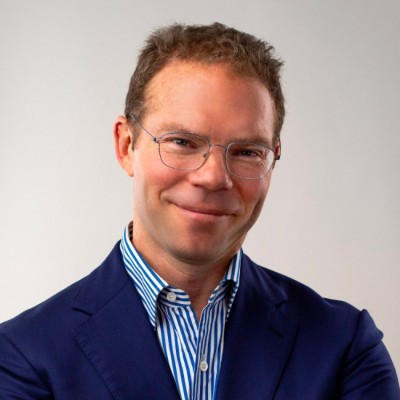
Stefano Tonchi on Creating T Magazine and Making the Times a Fashion Authority

Mediabistro icon
By Greg Lindsay
Greg Lindsay is an urbanist, futurist, and journalist whose writing on cities, mobility, and technology has appeared in Fast Company, Bloomberg BusinessWeek, and Time Magazine, among others. He is the co-author of "Aerotropolis: The Way We'll Live Next" and a senior fellow at MIT's Future Urban Collectives Lab, Arizona State University's Threatcasting Lab, and the Atlantic Council's Scowcroft Center for Strategy and Security. He holds a B.S. in Journalism from the University of Illinois at Urbana-Champaign.
9 min read • Originally published September 7, 2004 / Updated April 11, 2026
Mediabistro icon
By Greg Lindsay
Greg Lindsay is an urbanist, futurist, and journalist whose writing on cities, mobility, and technology has appeared in Fast Company, Bloomberg BusinessWeek, and Time Magazine, among others. He is the co-author of "Aerotropolis: The Way We'll Live Next" and a senior fellow at MIT's Future Urban Collectives Lab, Arizona State University's Threatcasting Lab, and the Atlantic Council's Scowcroft Center for Strategy and Security. He holds a B.S. in Journalism from the University of Illinois at Urbana-Champaign.
9 min read • Originally published September 7, 2004 / Updated April 11, 2026
Archive Interview: This interview was originally published by Mediabistro in the early 2000s. It is republished here as part of the Mediabistro archive.

It’s been almost a year since Stefano Tonchi made the leap from the fashion creative director post at Esquire to the style editor post at The New York Times. In that year, his predecessor, Amy Spindler, tragically died of cancer, the man who hired him, Adam Moss, bolted for New York magazine, and Tonchi has still managed to consolidate the Sunday Times myriad fashion, design, and travel supplements into what will eventually become a monthly style bible by the name of T. Tonchi spoke to mediabistro.com last Friday from Venice, where the Times was hosting a party for T‘s first cover subject, Kate Winslet. He’ll be back in New York on Wednesday for the start of Fashion Week, at which he’s been a regular front-row presence since his days at Esquire, Self, and L’Uomo Vogue. But it’s his belief that these days, Fashion Week is about anything but the clothes.

Birthdate: October 10, 1959
Hometown: Florence, Italy
First section of the Sunday Times: The front page.

You’ve had an unusual career path for an editor at The New York Times. How did you come to be there?
I’ve been interested in magazines all my life. I started writing for a university newspaper, and I had a small magazine in my 20s in Florence. From there, I was hired as a reporter/journalist writing for Italian Vogue, and then from there, I became one of the fashion directors at L’Uomo Vogue. Then I moved to the States and became creative director for Self magazine, and from there became the creative director for J. Crew. When I moved to the States, I wanted to learn the business of “America”—the business of the mass market, the business of research. It was a very interesting experience at J. Crew and Self, because they are two of the most American institutions. And Esquire was another of those institutions, although Esquire is much more of an elite, and much more close to my heart. And I’ve come to a place now that has some of the elitism that I like. It’s an elitism of education, more than anything else. It’s an elitism of choice, not an elitism dictated by focus groups.

Perhaps the most remarkable thing about the birth of T was how you were able to quickly subsume four different magazines into one new one with its own style and visual identity—and one that stars a lineup of Times‘ heavy-hitters like Lynn Hirschberg, Suzy Menkes, Cathy Horyn, and Herbert Muschamp. Were you given a mandate to merge the magazines when you came in, or did it happen organically?
I was hired to look at the style pages of the magazine, and that’s what we started to do in the first month of my tenure. In the weekly magazine, we’re trying to renovate it to have more surprises, to have a variety of subjects—not only fashion stories and photography portfolios, but also to have someone like Herbert Muschamp talk about the new Prada collection and Miuccia Prada and contemporary art. We also recruited Amanda Hesser, and next week she will debut a completely new way of doing food for the magazine. So there is also a lot of things changing in The New York Times Magazine that incorporate style and fashion and food. That was actually the first part of my responsibilities.

Then I was asked to look at the supplements, the eight “Part Twos,” that come out every year—Fashions of the Times, two Men’s Fashions of the Times, two Style & Entertaining, and two Home Design. And talking to Adam [Moss] and then with [NYT Magazine editor] Gerry [Marzorati], I thought the reader didn’t understand the continuity between them, that we should create a stronger identity.

I think it’s a very important time in publishing for newspaper supplements all over the world. If you think about the supplements of the London Telegraph or Sunday Times or with the Financial Times—which has a new monthly supplement called “How To Spend It”—they’re all very successful, not to mention Germany and France, where they have created very, very powerful weekly style publications that are free with the newspaper. So, from this perspective, I thought: “Why not create something stronger that takes advantage of the authority of The New York Times?” The first step was creating a logo that was recognizable to the reader, so: T.

And then we created something those supplements never had—a front of the book. I think the front of the book is where you define the identity of a magazine. We created some departments that will be consistent through all the different publications. One will be fast news and short stories with attitude; one will be very product oriented; one will be words and opinion. We asked a number of journalists to be columnists in every issue—we created a column for Suzy Menkes, the style editor for the International Herald Tribune, which is also owned by The New York Times Co. Then we asked Tyler Brule to write a column named “Perfect Bound,” about the pursuit of perfection, and then we asked Lynn Hirschberg, who is writing about Hollywood and style. Lynn Hirschberg is another very strong presence in the magazine—she is an editor-at-large in the regular magazine, and we’re using her a lot in T, too.

Isn’t that what T is also about? Bringing together these talents under one roof? I noticed that in T, Suzy Menkes isn’t listed as an International Herald Tribune writer; she just happens to be in the Times stable and writing a column. Is knocking down departmental walls part of your job description, too?
Well, the idea was to create something more consistent to help the reader. We have these great editorial pages, and we can really deliver something more than just something that comes between advertising pages. This has a strong identity, which is what I really wanted.

T is a mirror of what has been happening in society at large. Ten years ago, or 60 years ago, when Fashions of the Times was created, fashion was very much a business, sure, but it was something very marginal in society. Today, designers are some of the most influential people we have to live with. They not only dictate what we wear, but they also influence the way we look at things—even geography. They have the power to make areas become expensive because of the presence of certain stores. Look at the changes in Soho, or in the Meatpacking District. And that’s just New York.

It was time to look at fashion as a strong component of contemporary culture. It really is a complex world—fashion designers are opening restaurants and hotels, and you have film directors designing collections while architects are getting into the business of retail (think of Rem Koolhaas and Prada). Fashions of the Times was just so much about the clothes. And the clothes are not even what the designers are there to sell—they’re much more into the idea of “lifestyle.”

Speaking of blurring job descriptions, how do you approach the position of style editor? While you’ve co-written several books, your reputation is that of a stylist. Do you approach the job as a creative director? Are you hands-on with the copy there?
I have an overview and a vision, which is what I think an editor should have—the way things should look and sound like. I assign, with the people I work with, all of the stories. Sure, I have fantastic people to work with because the Times has a fantastic stable of great writers and editors. If you look at even the short stories in the front of the book, you find opinions, and that is what I ask of them. We try to have humor, we try to put things in a larger perspective. My interests are very much in contemporary art and design, and those are forces we always have to keep in the picture.

Sure, I will never be known as a writer. That’s not what I am. I’m much more about defining and telling a story through images and through a structure—I think this is also what, more and more, the next generation is doing. People respond so much to images, and who said that you cannot tell interesting, meaningful stories through images?

Will you be able to be more experimental with T than most fashion and style magazines? Does the fact that you don’t have to worry about selling on the newsstand —that more than one million readers will see and read T regardless of who’s on the cover—liberate you as an editor?
It’s not so much about experimenting. This is the first issue we put out. We’re going to add new things. I want to create new features that can only be in T, and can only come from the Times. But at the same time, I want to be useful to the reader. The readership of The New York Times is probably the most educated and the one with the highest income, but it is not a specialized readership in terms of style.

I’m not here to compete or play the games of W or Visionaire or Vogue or that kind of magazine, because they speak to a specific woman, a woman who is more or less obsessed with clothes and shopping. I think our readers have a knowledge of fashion and they like fashion, but they are not the same readers. They buy the paper every day to find out what’s happening in the world, not only politically, but in film, in sports, in the arts, and in fashion. We are empowering fashion, recognizing that fashion is not a chronicle of one designer or the other selling or not selling anymore, but forces that are mingling and mixing with contemporary culture.

Does the supremacy of visuals explain why the Times—the “Gray Lady”—has invested so much time, money, and energy in a primarily visual magazine? And does this explain why Fashion Week has become the spectacle that it is now?
Well, think about New York Fashion Week—it’s owned by IMG, a giant communications firm. There you have the picture. We live in a society of total entertainment, I would say, and fashion is a big part of it, because there is a lot of money involved, and it is easy for fashion to talk louder than other disciplines. When you think about contemporary art or architecture, they are much more marginal somehow. But fashion makes them more accessible sometimes. Think again of Rem Koolhaas. Certain kinds of architecture and design can, through the eyes of fashion, become much more mainstream.

Fashion Week is very much about entertainment. What is happening—which on the one hand is sad, but it is a little difficult to stop—is that many shows have become more show business than the clothes business.

But won’t we eventually start to burn out? Don’t we ultimately just want something that’s wearable?
I think there is an interest in the younger generation to go back to the product. It also comes from the fact that the readership, the consumers, are much more aware about quality. There is an interest right now in going back to the boards and looking for new fabrics, new techniques, new ways of dressing. I think the younger generation is trying to go back to its roots. We went so far that so many designers now are doing everything else but fashion.

Greg Lindsay, a freelance writer in Brooklyn, has covered media for Inside.com and Women’s Wear Daily.

Topics:

Mediabistro Archive
Mediabistro Archive

Gerry Marzorati on Running the New York Times Magazine

Mediabistro icon
By Greg Lindsay
Greg Lindsay is an urbanist, futurist, and journalist whose writing on cities, mobility, and technology has appeared in Fast Company, Bloomberg BusinessWeek, and Time Magazine, among others. He is the co-author of "Aerotropolis: The Way We'll Live Next" and a senior fellow at MIT's Future Urban Collectives Lab, Arizona State University's Threatcasting Lab, and the Atlantic Council's Scowcroft Center for Strategy and Security. He holds a B.S. in Journalism from the University of Illinois at Urbana-Champaign.
9 min read • Originally published October 12, 2004 / Updated April 11, 2026
Mediabistro icon
By Greg Lindsay
Greg Lindsay is an urbanist, futurist, and journalist whose writing on cities, mobility, and technology has appeared in Fast Company, Bloomberg BusinessWeek, and Time Magazine, among others. He is the co-author of "Aerotropolis: The Way We'll Live Next" and a senior fellow at MIT's Future Urban Collectives Lab, Arizona State University's Threatcasting Lab, and the Atlantic Council's Scowcroft Center for Strategy and Security. He holds a B.S. in Journalism from the University of Illinois at Urbana-Champaign.
9 min read • Originally published October 12, 2004 / Updated April 11, 2026
Archive Interview: This interview was originally published by Mediabistro in the early 2000s. It is republished here as part of the Mediabistro archive.

While Adam Moss starts “phase one” of his overhaul of New York magazine, his former deputy Gerry Marzorati keeps on keeping on over at The New York Times Magazine, which may just be the best newspaper supplement in the land. Marzorati has a lot to do with that, as he’s been ensconced there for a decade now; he just marked his one-year anniversary as editor. If that’s news to you, it’s because Marzorati has no need for buzz: One of the luxuries of being buried inside the Sunday Times is the freedom to chew slowly on things like the election or Iraq in every issue, without worrying about newsstand sales. Still, slow change is coming, especially with Moss gunning for the cultural big game—witness each magazine’s MoMA features just a week apart. Expect a long battle, as Marzorati has no intention of heading back into the wilderness outside the Times anytime soon.

Birthdate: February 8, 1953
Hometown: Patterson, New Jersey
First section of the Sunday Times: The Book Review

You’ve had the luxury of a long stint at one of the smartest magazines in America. Can you retrace your career path up until the point when you vanished into the wildlife refuge that is The New York Times Magazine?
My first publication I worked for was the SoHo News. I started as an editor there in 1977, and I worked there until it folded in 1982. I went to Harper’s magazine, and I stayed there for 10 years. I was at The New Yorker for a year, and now I’ve been here more than 10 years.

You’ve been busy helping style editor Stefano Tonchi whip up T from the Times Magazine‘s sporadic lifestyle supplements, but the magazine itself has barely changed in past year. The biggest change has been the revamped food section with Amanda Hesser. Why make your mark in that area first?
I became the editor of the magazine a little more than a year ago, and one of the first people I spoke with was Amanda. Having done a lot of great work at the paper, I think she was feeling a little restless and wanted to do something new. I’ve always been a big admirer of her writing and of her thinking about food. I think she is one of the people who really understands that food is a sort of new form of pop culture in America—at least for the kinds of people who read The New York Times. It’s got its trends and celebrities and gossip and a sort of intellectual aspect. She understands all of that and, you know, writes like a dream, so I said, “Well, maybe there’s something we can work out where you’d come over to the magazine.” And it took a bit of time, but that’s what happened. The writing in the food section, before she got here, I thought had always been terrific, but I didn’t think it was necessarily getting at this kind of newer, edgier food culture that we have now. This is what she came up with, this sort of smorgasbord of different kinds of writing about this new and exciting food culture.

What’s next after the new food section? What will be the hallmark of “Marzorati’s Magazine?”
There are things in the works that I’m really not ready to talk about yet. I wasn’t hired to remake the magazine; the magazine is a very, very successful component of the Sunday Times. I worked closely, as did a lot of other people, with Adam [Moss] over the last five, six, seven years, reconceiving the front of the book, and reinventing some of the typographical aspects of the magazine. So you’re not going to see a wholesale change, or a kind of relaunch. I mean, we are what we are. We are a magazine of ideas—the sort of literary journalism that responds to the news—and we follow our curiosities. We are a general-interest magazine. Perhaps since 9/11 a little newsier than we had been, but I think that can be said of most magazines. It’s a newsier moment. I’ve tried to give more space to photography in the well to let the stories breathe a little bit. These are smaller changes, but it is The New York Times Magazine and I wasn’t made the editor to change it.

What is the overarching mandate of newspaper magazines at this point? Besides the Times Magazine, there are a handful of other papers’ magazines with a fraction of the resources and influence, and there are the national inserts—Parade, USA Weekend, and the latest incarnation of Life—which are cash machines, but often not taken seriously. What’s your personal vision?
I think The New York Times Magazine is a unique product. There are other Sunday supplements, Sunday magazines, newspaper magazines, but I think from the perspective of our readers, who make it a first destination on Sundays, and our writers, who are top-flight national magazine writers, and the photographers we use, who are international photojournalists—we’re a national magazine that just has a different delivery system than the newsstand. And I’m happy with that.

I’ve worked in magazines, at Harper’s and The New Yorker, and I’m happy not to have to fight for position on the newsstand by wrangling one more tired celebrity for my cover. I’m happy to not have to deal with the kind of excruciatingly expensive mass-mailings you have to do to keep your subscriptions. And I look at it as a complete blessing to have The New York Times as my delivery system, and to be a component of the Sunday paper. It’s two million readers, double the weekly readership. People who go out get this Sunday Times, of which the magazine is a big draw, because they want it, not because their boss is picking up the tab. This is something that they want to get. I reach those readers on Sunday, which is still, in what might be seen as an increasingly secular culture—it’s Sunday, it’s still a time that people set aside for leisure and reflection. We are a national magazine that happens to be distributed in an unusual way. That’s how I edit it.

Considering that reach, and your resources, do you feel you have a responsibility to push the similar stories, and a similar sensibility, as a Harper’s or Atlantic Monthly, or any of the other smart, small-circulation magazines that go relatively unread? If T is going to pick up the slack on the lifestyle front, is the Magazine going to become still more serious?
Over the last few years, we have probably dealt with more hard news than we did in the ’90s because it’s felt like a more hard-news time. The issue we’re closing this week has a long piece on Darfur [Sudan] with a long photo essay from there, and then a long piece on the Bush White House. This is what readers in the news moment demand. It’s still the kind of long-form literary nonfiction that I’m interested in publishing. These pieces won’t read like something you’d find in The New Republic. But that’s where we’re going to go, that’s what we’re going to respond to. The magazine has a long tradition of doing international news. We’re going to continue to do that, we’re going to cover Washington, we’re going to cover culture.

One of the things I am interested in, and I suspect involve the subtle changes I am interested in, is celebrating culture. I’m not as interested in pointing out all that’s lousy about the popular culture. I think that’s become an easy thing to do, a kind of thing that seemed edgy 10 years ago, but now everybody is doing it. I want to publish pieces like the profile on Wong Kar-Wai because I think he is a remarkable artist. And we did a long cover story on Pedro Almadovar. That’s something I want to be able to do. I want to say, “These are the great ones.” I want to celebrate them, even though they may not command as great a place in the marketplace. I don’t think our readers necessarily worry about that. I think our readers want to be engaged with the great artists of their time, so you’re going to see more of that that you have in the past.

Do you feel you’re competing with Adam Moss? The throwaway critique of New York magazine at this point is that it looks more and more like The New York Times Magazine every week.
No. Adam is a friend and a great editor, and I learned a lot from him and I miss him. I think when we worked together we were in a great conversation about magazines. But the reality now is that half of the paper’s circulation is outside the New York metropolitan area. So a million of the people who get The New York Times Magazine every week aren’t in a place where they can even see New York magazine. I think what Adam’s done, it just looks great, it looks way livelier than it did seven or eight months ago, but I don’t think that week-in-and-week-out we’re on the same turf.

What’s the future direction of T, which you ultimately oversee. The Sophisticated Traveler will be folded into it, so it will become a full-fledged monthly.
That’s right, it’ll be like a monthly luxury style magazine. When Stefano was hired, my feeling at that time was that style is something that’s become a much bigger thing in our culture than women’s fashion or men’s fashion, and style now permeates all of our culture. You really have a democratization of style, and I felt that the very narrowly defined individual supplements weren’t capturing that. There was a way to create a magazine that would break down those kinds of boundaries a little bit and try to be more fun about style, and a little thinkier about style, and certainly more beautiful about it in terms of raising the level of the photography and making it a more sophisticated design. And I wanted us to stop thinking about them simply as an advertising base for women’s fashion or men’s fashion, and to start thinking, “Wait a minute. There’s two million readers who might really be interested in this magazine!” And ultimately, that’s what I have to sell. For lack of better words, they have this readership that is sophisticated, wealthy, and curious, and this is what I can offer advertisers, not simply a promise of a kind of narrow content.

Should The New York Times even be in the business of publishing a luxury magazine?
My feeling is that The New York Times should be interested in everything, absolutely everything. And that is a huge part of our culture, so why not? No one who picks it up at a newsstand or subscribes to it expects to march through it and read every single thing. Magazines can be pleasure. I’m somebody who believes strongly that, even when you’re dealing with the most serious topics, a magazine is a pleasure vehicle. It’s something to hold in your hand, it has a tactile feeling, it should have beautiful pictures and inviting typography and all these kinds of things, and pleasure should be part of that package that you get on Sunday. The New York Times should not be homework. The magazine is, you know, it’s something to get into a bubble bath with.

Would you ever want to leave the Times Magazine at this point? Would you ever want to have to worry about getting a celebrity on the cover again?
I don’t see myself leaving, not any time soon.

Greg Lindsay, a freelance writer in Brooklyn, has covered media for Inside.com and Women’s Wear Daily.

Topics:

Mediabistro Archive
Mediabistro Archive

Emily Crawford on the Advantages of Magazine Start-Ups and New York’s Design Culture

Mediabistro icon
By Greg Lindsay
Greg Lindsay is an urbanist, futurist, and journalist whose writing on cities, mobility, and technology has appeared in Fast Company, Bloomberg BusinessWeek, and Time Magazine, among others. He is the co-author of "Aerotropolis: The Way We'll Live Next" and a senior fellow at MIT's Future Urban Collectives Lab, Arizona State University's Threatcasting Lab, and the Atlantic Council's Scowcroft Center for Strategy and Security. He holds a B.S. in Journalism from the University of Illinois at Urbana-Champaign.
9 min read • Originally published February 1, 2005 / Updated April 11, 2026
Mediabistro icon
By Greg Lindsay
Greg Lindsay is an urbanist, futurist, and journalist whose writing on cities, mobility, and technology has appeared in Fast Company, Bloomberg BusinessWeek, and Time Magazine, among others. He is the co-author of "Aerotropolis: The Way We'll Live Next" and a senior fellow at MIT's Future Urban Collectives Lab, Arizona State University's Threatcasting Lab, and the Atlantic Council's Scowcroft Center for Strategy and Security. He holds a B.S. in Journalism from the University of Illinois at Urbana-Champaign.
9 min read • Originally published February 1, 2005 / Updated April 11, 2026
Archive Interview: This interview was originally published by Mediabistro in the early 2000s. It is republished here as part of the Mediabistro archive.

Emily Crawford would like you to know that she never went to art school, never wanted to be a designer, and that, truth be told, typography isn’t exactly her strength. Not that any of those things stopped her from ascending to the design director’s post at Travel + Leisure last year after Luke Hayman decamped to revamp the Adam Moss-ified New York magazine. Crawford, 35, received her design education in the Boston trenches of Fast Company’s art department during the magazine’s early days, when she, her boss and mentor Patrick Mitchell, and a handful of other staff scrambled to paint the excitement and idealism of the late ’90s boom even as issues kept swelling in size. After her trial by fire (and after she and her colleagues won a National Magazine Award), Crawford moved to New York, serving a stint at The New York Times Magazine before landing at Travel + Leisure, where the devotion to visuals and commitment to striking photography has played to her strengths as a designer.

Mediabistro: You’re only 35, you never had formal training, you haven’t been at the magazine for very long, and yet you’re already at the top of the masthead, and at the top of your profession. Why do designers have more mobility up the masthead than editors, and more latitude to jump from one magazine—or magazine genre? Do designers simply care less about politics than editors do?

Crawford: I think it’s ultimately more of a meritocracy. There seem to be more people who have become very successful as art directors or designers who don’t have formal training for it. If they happen to be talented and visually astute, it doesn’t matter if they went to law school.

If anything, having that diversity in their background is a bit of an asset. The higher up you get in a magazine as a designer, the more involved you really are in the creation of the editorial. You’re not just looking at making things pretty and solving visual problems—you’re contributing to the ideas behind the stories. The people who are most successful in the field are able to straddle those things. I’m kind of jealous of people who went to arts school and knew early on what they wanted to do, because I fantasized early on in my career about working on these utopian projects without limitations and really having fun. At the same time, I’ve heard that art school can actually be quite limiting because you don’t get as solid an education as you would at a liberal arts school.

It’s also weird because of the musical chairs aspect of it. I never really understood that before I moved to New York. The only real magazine I ever worked at was Fast Company, and I was there for six years. Maybe it was just the special circumstances of Fast Company—it was a start-up, well-timed, massively successful, and it was a good group of people. It was really fun to be part of a movement, and I didn’t get how a creative director would be at one magazine for a year and a half, and then suddenly everything would shift and everyone would jump to other places. Now I get that more because I think it’s very easy, actually, to fall into a visual rut. You can only bring so much to the subject matter in a magazine and you can only do so much with the editor you’re working with. There’s a shelf-life, or a half-life. It gets tired after a while, and simply by virtue of a new set of eyes looking at the content, a magazine can be pushed forward. So, that makes more sense to me now.

Mediabistro: Travel + Leisure has a strong visual identity—it hasn’t gone through a lot of redesigns. How much of a personal stamp have you put on it? How much more would you like to put on it? And how much longer is it until that look starts to go bad?

Crawford: Actually, Luke Hayman did a major redesign when he started. Pamela Berry was the creative director before him, and she did amazing things with the photography—she’s the one who really elevated T+L to the reputation of a this very sophisticated, almost fine art photography publication. You could tell that was her focus, and when he came in, his goal was to continue that, maybe update and modernize it and make it energetic, but also focus on all of the useful information contained in the magazine, the guidebook aspect. We just finished a tweak of the front of the book, but I’m basically sticking with the redesign that Luke did. At the same time, I do have a slightly different aesthetic, and I’m trying to bring us back to emphasizing the photography and just making it as beautiful as possible. I think it’s evolving. I don’t know whether I’d say that I’ve put my stamp on it.

Mediabistro: What about your personal shelf-life at the magazine? Are you mentally already en route somewhere? Or are you personally and intellectually engaged by the magazine’s contents?

Crawford: I feel very lucky because I’ve always loved travel as a subject, and I’m very drawn to photography in general and always loved looking at T+L when Pamela Barry was there. I feel pretty spoiled in being able to work in a place where every story is like opening a Christmas present when you open the photos. I find it really stimulating just to work with such good photographers and figuring out a way of really showcasing them. I’ve also only been in this position for six months or so, and I’m still learning and getting used to it. And now I have the ability to make changes and fully evaluate how we can keep making the magazine better and better. I think that right now, we’re beginning to build momentum on what we’re doing, we’ve put out some pretty strong issues, and we’re trying to set higher standards for ourselves

Mediabistro: What’s it like being a first-time design director? What went through your mind when you realized you were calling the shots from now on? And how did that affect your management style?

Crawford: Well, I’ve always been pretty bossy, so it hasn’t really changed much in terms of leadership except that people have to listen to me. (Laughs) Once you’re in the number-one position, it’s a major shift. You are much less hands-on in terms of the design. You’re working on the cover and maybe one or two features if you’re lucky. The rest is overseeing and directing everyone else and being in a lot of meetings, doing a lot of administrative and corporate stuff. Frankly, it’s draining. It’s a lot to juggle. I’m running around, troubleshooting and helping out the other designers and sitting in meetings pretty much all day, and it isn’t until 7:30 p.m. that I sit down and can actually focus on maybe designing something.

Mediabistro: You entered the field through an old-fashioned apprenticeship, coupled with working in a start-up. Looking back on that now, would you recommend that path to other young designers, or do you wish you’d had a more gradual acclimation process?

Crawford: Now, more than ever, I realize how lucky I was to have fallen in with Pat Mitchell and how much he did for me, taking on this kid who didn’t have much experience but was very eager. I think that was one of the best ways to learn the craft.

When you’re working at a magazine, there’s all these different elements at play. You have to really collaborate with the writer, and there’s the business side, and there are all these compromises you have to make. There are limitations and constraints you must work within, and you really are problem solving, while at the same time, you want to do the strongest work you can. You’re not going to learn that in school; you have to experience it in order to get the hang of it.

The corporate thing was really pretty strange at first. Fast Company was not run like a normal magazine, and we were in Boston, so we felt kind of very far away from the New York publishing world, and I still feel sometimes like I’m in the thick of it here and it is an adjustment.

Mediabistro: Speaking from the view of a bona fide outsider, what else doesn’t make sense about New York’s magazine world?

Crawford: Let me see. Well, one thing that I think editors at a lot of more traditional publications—and I’m not talking about T+L—is that a lot of editors don’t give the creative directors the space to do as good a job as they could. At Fast Company, the editors were smart enough to realize that Pat really understood what they were trying to do, and that he was the expert at the visual things, while they didn’t really know what they were doing on that front. So instead of trying to kind of control what he was doing they gave him space. We’ve had much more freedom than I’ve experienced at a magazine in New York. And as a result we were able to do much stronger work. I don’t know whether this is because there’s so much money involved. When you’re deciding on a cover, you’ve got a publisher and much more corporate involvement, as opposed to the art director and the editor deciding on what makes the strongest visual and editorial message.

Mediabistro: Do you think designers over-rely on a particular component of the typography + photography + illustration equation?

Crawford: The good ones don’t, and there are a lot of good ones out there. But it has to be a combination.

Mediabistro: Which do you feel most comfortable with?

Crawford: I think my typography is at the bottom. I feel very insecure about it. I think it’s something that you work your whole life at getting better at, and maybe I’d feel more comfortable if I’d gone to art school.

Mediabistro: How much of what you do is art vs. science then, and is that part of the art?

Crawford: Yes, without a doubt. It’s funny, I’d like to think I’m pretty good at conceptualizing visual treatments for stories. If there’s a tricky, more idea-driven piece, I enjoy the challenge of figuring out a way of illustrating that. At the same time, I love photography, which can be a lot more straightforward. I feel very lucky, because Fast Company was definitely more idea-driven stuff, and here at T+L the majority of it is just creating really beautiful, compelling layouts with these great photographs.

Mediabistro: Do you need to be personally interested in the subject matter of your magazine? Could you master every different magazine format—women’s service, celebrity weeklies, a laddie book—if you put your mind to it?

Crawford: For me, it’s really important, and I don’t know if it’s a good thing or a bad thing. I have to have some sort of personal stake in the editorial content. I don’t think that I could, although there are a lot of magazines…

Mediabistro: Would you go back to a start-up at this point?

Crawford: That’s a really good question. Because when I started working at a start-up I didn’t have much to lose…

Mediabistro: And now you’re a known quantity. You’re a design director.

Crawford: Exactly. And I’d love to work at another start-up—I love the excitement, and the energy, and the kind of collaborative workplace that is part of a start-up, but it would have to be something that I was really, really, excited about to take that risk.

Greg Lindsay, a freelance writer in Brooklyn, has covered media for Inside.com and Women’s Wear Daily.

Topics:

Mediabistro Archive
Mediabistro Archive

Robert Newman on Sublimating Your Ego and the Interchangeable Art of Magazine Design

Mediabistro icon
By Greg Lindsay
Greg Lindsay is an urbanist, futurist, and journalist whose writing on cities, mobility, and technology has appeared in Fast Company, Bloomberg BusinessWeek, and Time Magazine, among others. He is the co-author of "Aerotropolis: The Way We'll Live Next" and a senior fellow at MIT's Future Urban Collectives Lab, Arizona State University's Threatcasting Lab, and the Atlantic Council's Scowcroft Center for Strategy and Security. He holds a B.S. in Journalism from the University of Illinois at Urbana-Champaign.
12 min read • Originally published February 3, 2005 / Updated April 11, 2026
Mediabistro icon
By Greg Lindsay
Greg Lindsay is an urbanist, futurist, and journalist whose writing on cities, mobility, and technology has appeared in Fast Company, Bloomberg BusinessWeek, and Time Magazine, among others. He is the co-author of "Aerotropolis: The Way We'll Live Next" and a senior fellow at MIT's Future Urban Collectives Lab, Arizona State University's Threatcasting Lab, and the Atlantic Council's Scowcroft Center for Strategy and Security. He holds a B.S. in Journalism from the University of Illinois at Urbana-Champaign.
12 min read • Originally published February 3, 2005 / Updated April 11, 2026
Archive Interview: This interview was originally published by Mediabistro in the early 2000s. It is republished here as part of the Mediabistro archive.

THERE IS NO SUCH THING as a “Robert Newman Look.” Unlike other designers—or, to be more specific, unlike Roger Black—Newman hasn’t carried with him any stylistic flourishes or quirks (like Black’s love of serif fonts and Oxford rules) when he’s hop-scotched from magazine to magazine. Newman’s method is more along the lines of total immersion. Whether it was the elegant minimalism of Real Simple, the Rat Pack-throwback look of mid-’90s Details, or the just-the-facts spareness of his current gig at Fortune, Newman was determined to mind-meld with the editorial vision rather than subvert it with his personal tastes. It didn’t matter if that was the vision of Inside, Vibe, New York magazine, Entertainment Weekly, the Village Voice, and even the grunge heyday of Seattle’s alt-weekly The Rocket. So is it really his fault that all of the editors with whom he’s worked got fired?

Mediabistro: You’ve managed to studiously avoid developing a signature look over the course of your career, which may have something to do with all of the genres you’ve worked in—the men’s magazine, the hip-hop magazine, women’s service, business, the alt-weekly, etc. What was the mental process you underwent when you moved from Real Simple to Fortune? How do you sublimate your ego the way you seem to do?

Robert Newman: Each magazine is a challenge, and I don’t see them in terms of the style but in terms of their content. Having worked at Vibe and Details, Real Simple seems like a total left-field move, but for me it was the challenge of perfecting the information architecture. It was about mastering the presentation effect.

For a lot of art directors, their first and foremost job is to marshal and present information to the reader, and to take the editor’s vision and voice and create a visual presentation of that. When I look at it that way, it’s always a challenge. Can I do a women’s magazine? Yeah. Can I do a business magazine? Yeah. Can I do a hip magazine like Details? Yeah.

Rather than approaching each magazine with a particular style—although I think I have more of a style than you give me credit for—I try to get a sense of what the editors’ vision is and how they want to direct it. Then I often just tweak the style they have to make it more efficient and more effective.

That’s not always the case. At Details, we totally threw it out and started all over again. But at Fortune, and Real Simple, and Entertainment Weekly, and the Voice, those were more the development of a look than a total overhaul of a look. They were starting with basic visual DNA which was essentially sound; I was giving it more of a voice and articulating it. It might be very quiet, like at Inside or Real Simple, or it might be really brash and hip, like at Details or the Voice, but they all have a visual presence. It’s really relentless when it works, when the look goes from the front to the back of a magazine, and on every page there is a heightened awareness of the importance of the visuals, the roles it’s supposed to play, how it’s supposed to advance the magazine.

You try, but the editors don’t always let you, or it doesn’t always work. But when you can pull that off, it’s great—the visuals aren’t just a complement, they’re actually adding content and value to what people are getting from the magazine.

Mediabistro: So, you see the job as primarily puzzle-solving or translation, then?

Newman: Yes, it’s puzzle solving. You have to really study the magazine, study the competition and the feel. When I went to Real Simple, I just absorbed all the women’s service magazines. I read them all, I studied them, it was like a puzzle: How could I get into this, something I didn’t know a lot about, and figure out a way to give it a true voice?

Mediabistro: And what lessons did you take away from them? Did you actively set out to re-engineer the look of women’s service?

Newman: I think a lot of visual art, both decoration and design, is seen as a way to decorate the content of the magazine. But at Real Simple, all of the design had value. Everything was so stripped down. What was so interesting at Real Simple was: how can you strip the design to its bare essentials and make every element so functional that every single thing had a reason for being on the page? There was absolutely no decoration of any kind, either visually or in terms of pictures or type or colors. If the picture was in there, it had to impart value and content that wasn’t imparted anywhere else. You didn’t just run a picture because you needed a picture on the page to decorate it.

Mediabistro: What you’re really doing is information architecture, then. But how did that work at Details, which was all flash and glitz when you were there?

Newman: What I try to do is find the essence of the magazine. At Real Simple it was information architecture and presentation. At Details it was style and attitude. The most important thing there, as far as I was concerned, was to be hip and cool. At Real Simple, the most important thing was information architecture and visual content.

“What I try to do is find the essence of the magazine. At Real Simple it was information architecture and presentation. At Details it was style and attitude. The most important thing there, as far as I was concerned, was to be hip and cool.”

Mediabistro: How do you arrive at an understanding of what that essence is? Do you conduct elaborate interviews with the editor and absorb what they’re saying? How do you immerse yourself beyond reading other magazines?

Newman: The first thing I would do is go back and really read the magazine and look at its past. When I went to Details, I read every single Details published back to the first issue, and it was the same with Entertainment Weekly and same with Vibe. I read, or at least look through, every issue, and usually I end up grilling people about what they’ve done in the past, how it went over, etc.

At Real Simple, at Time Inc. magazines, you have the benefit of all of these reader surveys. So part of what you’re doing is discerning who the readers are so you know exactly what stories work, what the readers want, and, of course, it’s very humbling.

Then usually what I try to do is come up with a visual idea, as I just said, for each magazine. We start with this germ of an idea. At Details, the idea initially was “Let’s make it feel like old Blue Note jazz record covers,” and that was the germ that expanded. At New York magazine, the idea was “Let’s strip it down and give it a very cool, arch-urban kind of feel.” We wanted to be the graphic-design equivalent of an Armani black suit, or a woman’s black cocktail dress. And at Entertainment Weekly the idea was, “Let’s make it the equivalent of entertainment graphics, like the 2-D version of TV, movies, and stuff.” The design was going to be entertaining in a flashy kind of way.

We come up with an idea, and it gets into the staff and everybody just takes it from there. A lot of it has to do with me finding people at the magazines and in the art department that I’m inspired by and compatible with. Most of the looks have developed through collaboration with them. You find somebody there who’s got some great ideas and you take it from there.

Mediabistro: What are you trying to do at Fortune? Now you’re at a magazine that’s almost entirely comprised of subscribers, so you have little or no pressure to sell on the newsstand. How are you serving the reader?

Newman: I think people really see the covers in two ways now. The newsstand is still important even if you don’t sell a lot of copies there. Most of the Time Inc. magazines, like EW or Time, don’t sell a lot on the newsstand except maybe their special issues. But they use the covers A) to build heat and buzz, and B) as a branding thing. You want a dynamic cover out there on the newsstand because it’s an ad for you.

But also I think of the coffee table as a newsstand. We are very concerned that the readers actually read the magazines, not just get them in the mail. I think a lot of magazines are satisfied with just getting into people’s houses, and all they want are those numbers so they can tell advertisers, “Yeah, we have a million readers.”

But at Real Simple or Fortune, it’s imperative that the readers actually read as many of the stories as possible. The cover has to work to get them to open up the magazine. And we actually have to deliver value to the readers in those stories because they pay a lot of money to subscribe.

I was just looking at the Fortune reader’s demographics, and the average subscriber pays $40 a year. They really want their money’s worth. I just renewed my subscription to Esquire, and it cost $8 a year. If you spend $40 and you don’t like the mag, we get these letters: “I didn’t get my money’s worth out of that issue!” At first I was appalled to read these, and then I realized that they are paying enough money to want some value. If you don’t get your money’s worth out of Esquire or GQ, you don’t care. It’s so cheap you won’t even stop renewing it. It’s ridiculous.

“The average [Fortune] subscriber pays $40 a year. They really want their money’s worth. I just renewed my subscription to Esquire, and it cost $8 a year. If you don’t get your money’s worth out of Esquire or GQ, you don’t care. It’s so cheap you won’t even stop renewing it.”

Mediabistro: Earlier in your career, at The Rocket in Seatlle, you were an editor. Why did you switch over to the art side of newspapers and magazines, and how much of your approach now stems from your experience as an editor? Should all designers, or at least creative and design directors, put in time as editors?

Newman: I’ve always thought that smart magazine people would figure out a system where designers could work as editors and editors could work as designers in some way. Having been an editor, I think the biggest thing is that it gives you a much better sense of the imperative of storytelling and the logical presentation of material, so that it all makes sense to the reader.

When I’ve worked on things, we never do things just because they’re cool. They always have to make sense. That is the first thing an editor asks when you present something. If I can’t answer that, they’ll say “Well you know, this is good, but it doesn’t relate to the story, or it doesn’t make sense.”

It’s also really good for art directors to be able to read and write, and to deconstruct stories to discover their essence. It certainly helps when you’re given manuscripts at an early stage.

Mediabistro: Do you actually have the luxury of having time to read them?

Newman: No. (Laughs.) I’ve had many careers in my past, and editing was one of them, and I was a designer before I was an editor. Art direction was more fun for me, and it was easier to move around more. I really like to move around, and I think most art directors would agree that it’s pretty easy. You’re like a hired gun in a lot of ways. It’s also a lot easier for an art director to move up to the top right away, as opposed to editors, I think. The guy who was my predecessor at Fortune was here for seven years before he became art director. That never would happen with an editor.

Mediabistro: Is that because people perceive editing as being harder? Or that it takes longer to master the voice and the tone of a publication?

Newman: It’s probably the same reason there are more women art directors than women editors—it was never considered the prime place to have a career. Why are there so many women photo editors and women art directors? Because they can get jobs there. Why are there so many more women art directors than women editors? Is it because women are more creative? No, it’s because they can get jobs. All the men want to be editors because that’s where they perceive the power to be. I think until recently, the position wasn’t seen as so powerful.

And it’s definitely easier to move around. I feel I could be a candidate for any art director job that opened up, whereas there are very few editors who could be considered candidates for any editorship. I mean, I can be the art director of Real Simple or Fortune, but neither the editor of Fortune nor Real Simple could be the editor of the other magazine, right?

Mediabistro: Why is that? Why are you not pigeonholed?

Newman: I think a lot of designers are; it’s actually a common complaint by art directors. I’ve done business magazines, but every time I apply for a women’s magazine job they say I don’t have the experience. To me it makes total sense. If you’ve done a business magazine, you can do a women’s magazine because they’re both about service and information architecture. But people don’t see it that way.

Editors don’t want to admit that it’s much easier to master the material than they let on. It’s not that hard. If you are an editor for Money magazine, you could go to Real Simple in a second as far as I’m concerned. And some have gone. But editors can’t believe that it can be that simple. All you have to do is study and read, and look at what the magazine does and pick up on it. It’s not that hard. Most art directors feel they can work in any medium as long as they’re interested in it. It’s the editors who try to say, “No, this is a great mystery, you can’t do this because you’re coming from a hip-hop magazine; how could you possibly do a women’s magazine?”

“Editors don’t want to admit that it’s much easier to master the material than they let on. It’s not that hard. If you are an editor for Money magazine, you could go to Real Simple in a second as far as I’m concerned…. But editors can’t believe that it can be that simple.”

Mediabistro: So how did you end up at Fortune? Were you internally poached, or did you investigate moving over, since it’s one big, happy corporate family there.

Newman: Well, my editor at Real Simple was fired…. Actually, what happened was that the guys at Fortune were looking to make a change, and they called me to talk about it. It was sort of the same way Dick Cheney became vice president. They called me to get ideas, and after a while they said, “Why don’t you just do it?”

One thing I was thinking last night is that I’ve had a lot of editors fired. (Laughs).

Mediabistro: What did you do to them?

Newman: Check this out. When I was at New York, Kurt Andersen was fired. Then I went to Details, and Michael Caruso was fired. Then I went to Vibe and the editor, Danyel Smith—fortunately I got along really well with her successor. Then I went to Inside and… you know what happened there. Then I went to Real Simple and she was fired. (Laughs.) I told the editor of Fortune when I took this job, “No one has survived me yet!”

Greg Lindsay, a freelance writer in Brooklyn, has covered media for Inside.com and Women’s Wear Daily.

Topics:

Mediabistro Archive
Mediabistro Archive

Roger Black on the Art of the Magazine Redesign and the Bonnie Fuller-ization of Covers

Mediabistro icon
By Greg Lindsay
Greg Lindsay is an urbanist, futurist, and journalist whose writing on cities, mobility, and technology has appeared in Fast Company, Bloomberg BusinessWeek, and Time Magazine, among others. He is the co-author of "Aerotropolis: The Way We'll Live Next" and a senior fellow at MIT's Future Urban Collectives Lab, Arizona State University's Threatcasting Lab, and the Atlantic Council's Scowcroft Center for Strategy and Security. He holds a B.S. in Journalism from the University of Illinois at Urbana-Champaign.
17 min read • Originally published February 3, 2005 / Updated April 11, 2026
Mediabistro icon
By Greg Lindsay
Greg Lindsay is an urbanist, futurist, and journalist whose writing on cities, mobility, and technology has appeared in Fast Company, Bloomberg BusinessWeek, and Time Magazine, among others. He is the co-author of "Aerotropolis: The Way We'll Live Next" and a senior fellow at MIT's Future Urban Collectives Lab, Arizona State University's Threatcasting Lab, and the Atlantic Council's Scowcroft Center for Strategy and Security. He holds a B.S. in Journalism from the University of Illinois at Urbana-Champaign.
17 min read • Originally published February 3, 2005 / Updated April 11, 2026
Archive Interview: This interview was originally published by Mediabistro in the early 2000s. It is republished here as part of the Mediabistro archive.

Is there any publication—glossy, newsprint, or digital—that Roger Black hasn’t redesigned? While he built his well-deserved reputation on his early, iconic designs for Rolling Stone, New York magazine, Newsweek, and Esquire, Black is better known these days as a consummate re-designer, a blue-chip name you call when it’s time to send the message that a magazine is under new management. As the chairman of Danilo Black Inc., he’s overseen recent designs and redesigns for the likes of Budget Living, Popular Mechanics, American Media’s tabloids and Men’s Fitness, MIT Technology Review, and a slew of newspapers, including the new Spanish-language chain Rumbo. Black originally offered us 10 minutes of his time to recap, once again, his career and thoughts on design. He ended up giving us close to two hours.

Mediabistro: At this point in your career, you’re more of a troubleshooter—the expert called in to fix a design someone else has broken—than a designer who lives with a single, growing, organic publication. How do you approach that role? Do you go back to first principles? Do you walk into a magazine and strip off the design like a layer of paint? And how many magazines suffer from ill-conceived redesigns?

Roger Black: All of them. I think there are two things colliding here. One is the idea I call “design equity” in a magazine, and the other is that the publishers will run off the edge of the cliff, like in a cartoon, and realize that nothing is holding them up. I think it’s maybe best to try to preserve the design equity of certain magazines, and for others it’s really essential to strip away.

I don’t know if you read National Geographic these days, but the typography is good, the color is unbelievable, and the printing has improved a lot in the last 10 years. And it’s actually surprisingly different than the 1950s and 60s memory we have of National Geographic, and I think it was very important that they did that. They kept the basic feeling and they tried to bring it up to date and make it popular and fun. And I think they did it. I mean, I don’t read it either, but I’m very impressed by it.

We did a big redesign of Reader’s Digest in the ’90s, and I don’t think they went far enough. At least, they didn’t tap into people as young as I am—the Baby Boomer crowd. They couldn’t quite bring themselves to go that far. We consolidated some of the great designs from the ’50s and brought them back in, so that was kind of a restoration project, but I don’t think it got radical enough. The decline of the U.S. edition of Reader’s Digest was not arrested, and they stripped all that off and kind of went over it with a small hammer.

Mediabistro: Would a total redesign have stopped the fall? How often do you come up against management that refuses or lacks the will to carry out the ideas they hired you to provide because they don’t have a clue?

Black: They usually do have a clue. Quite a few of the clients I’ve worked with have a very good idea of what they should be doing, but they don’t know necessarily how to do it. And there’s a lot of other factors involved, including what the readers think, or what the other clients of the magazine think, the advertisers, etc.

My impression is that the implementation problem usually stems from the fact that the editors are distracted by daily life, or by the pounding of their publishers, or something else. There is never a time that a real redesign doesn’t depend on a real state of crisis—somebody’s chasing after the editor.

At Popular Mechanics, which we redesigned last year, the editor was actually right on the fulcrum of deciding whether he was going to retire or not. He was really quite a fine editor—great circulation, very loyal readers—but he was getting older. They weren’t going to shove him out the door, but I believe that the redesign was a catalyst for him deciding “You know, let somebody else do this.” He had done this stuff, he had a little bit of help, he didn’t need it anymore. He has a nice place in Tucson or somewhere that he went home to and that was that.

So there is always some volatility at the time of a redesign. They don’t call it a redesign because everything is going great.

“There is never a time that a real redesign doesn’t depend on a state of crisis—somebody’s chasing after the editor.”

Mediabistro: So how do you see your own role in that situation? Are you a doctor diagnosing the larger problems of a magazine, or a shrink?

Black: That’s a good analogy in the sense that you can’t pull up in the redesign truck and say, “Hey, you look terrible today; come in for a few minutes and I’ll fix you up.” People don’t go to the doctor unless they really need help. You can’t force a redesign on somebody. Every time that I’ve worked as a general consultant for a large group and they told me to do a redesign for a client, these usually didn’t do very much. It doesn’t do any good to do a redesign if you don’t really rethink the content and the direction. And sometimes people will think a redesign will help them when they really don’t change anything else.

There is a certain kind of magazine that really owes it to itself to have some kind of continuity, and people forget that. I have said this a hundred times, it’s not sinking in: The real owners of a magazine are its readers. If you are a subscriber to, say, Newsweek for 20 years, you really think of it as ‘my Newsweek’ and changes to the magazine are sometimes not very welcome. If only they would consult you—sometimes you’ve been there longer that any of the staff.

Newsweek is a good example. I did a redesign of Newsweek in 1985, and I did two or three others after that. In 1985, we tried to build on some core memory on what Newsweek should look like, which was a little rougher. I thought of it as a little tabloid, although I never said that to them. It should be more popular, more liberal, more fun, more unpredictable, you know… rougher. I think it came out very well, and, in any case, it coincided with the big shift between Newsweek and Time. So [then-editor] Maynard Parker had me redesign it again, in a serious way, and then he had problems with the art director, and I came back in and art directed the magazine as a consultant for a short time. When Maynard died, I didn’t really have the heart to work on it anymore, it was too upsetting. Then my successor changed it dramatically and threw out the typeface that I originally put in, even though it had been there for years.

It’s like when the Times of London threw out the typeface Times Roman. Now, maybe it was becoming generic—I mean, every printer in the world had their typeface on it—but, my God! It’s called Times Roman for a reason! Make it work for you!

They could have taken their design and kept that equity. They’ve changed it since then, too. Why didn’t they go back to Times Roman? It’s the same thing if you’re talking about American newspapers. The Boston Globe had a beautiful typeface called Madison that was originally their staple typeface, that [famed typographer] Matthew Carter had redrawn for them. Nobody else in the Unites States—or maybe in the world—used it. It was distinctive, very Boston for some reason, very apropos to the history of the Globe, to the whole thing. And then, for some reason, a new editor came in and cleared that out and put in Miller, which is a very fine typeface that Matthew Carter did, but sadly, it’s used by everyone in the world. It’s all over the place, particularly under the name Georgia. They took something out that was their own. I had the same problem with The New York Times throwing out Bookman and Trade Gothic.

“It’s like when the Times of London threw out the typeface Times Roman. Now, maybe it was becoming generic…but, my God! It’s called Times Roman for a reason! Make it work for you! They could have taken their design and kept that equity.”

Mediabistro: The metaphorical owners might be the readers, but the real owners seem to commission redesigns when they’ve lost touch with what the readers are thinking, and hope that a redesign will magically boost sales. I’m specifically thinking of David Pecker and American Media, which hired Danilo Black to remake Men’s Fitness, then decided to throw that design out and copy Men’s Health instead, because Men’s Health sells a half-million copies on the newsstand. How do you get it through the skull of a client that they’re blowing up a perfectly good design?

Black: The strategy we tried to put into place for covers was doing well on the stands, but they would override it every other issue, and those issues did badly, so they thought that the whole thing was doing badly, and it wasn’t. And it turns out that the hideous thing that they did, did well. (Laughs.) What the hell.

There is this general feeling that particularly the business folks have that there is some kind of magic formula that I might know, or that some other old-time art director might know, about how to do covers. I think they’re all looking at the wrong thing.

Bonnie Fuller gave a talk at the American Magazine Conference in Boca Raton last fall, which four years ago would have been kind of electrifying, because, whatever you want to say about Bonnie Fuller, she makes things look interesting. You feel vaguely guilty that you’re interested in them, but you’re still interested in them and you pick them up. And yet her influence is so pervasive and so codifiable that Us Weekly is continuing to channel her without her being there, and they’re doing better than Star, which I find comical. The momentum of what Bonnie did can beat her at her own game.

But the fact is, once everybody has the same celebrities, and they have those little circles, and there’s the same language, and little tips about certain things… It’s a great way to do a cover, but then you get into this problem that they all start to look like that. And then they don’t always deliver on these promises on the cover, and the opening begins to sag. If you go to the newsstand, it’s unbelievable. If you go the typical grocery store, at the check-out racks, they are all blowing out at you with bright colors and white T’s and suggestions that are pretty much the same from magazine to magazine.

Mediabistro: Considering each of those magazines are selling a million copies a week on those newsstand, is there a way to improve on them, or is commodification a fact their publishers can live with?

Black: We did a job for Redbook last year for quite a few months, so we could see if it was working. It did. I mean, it worked moderately. It’s like any kind of quality control problem—if you adjust every single knob in the machine and not just the one at the end, you’ll get better results. You need to make sure that every single step of the process is working. Have good headlines, have a great picture, have great printing, have good display, and then there’s the whole distribution side of it.

Guess what, however? If you don’t have a good magazine inside, it ultimately doesn’t sell. But if you have a good magazine going forward, and say that people really like Us Weekly, they’ll pick it up even if they don’t really care to hear more about the current divorce or whatever.

Mediabisto: That sounds less like design and more like quality assurance. Are you a designer or a business consultant? Are you being paid to create hits, or just keep things from getting worse?

Black: I’m sure the reason I was a successful art director as a staff guy was that I knew how to run budgets. And it was not so much that I kept within the budget, because they never really reward you for keeping within the budget. It was that I was able to get more money the next year, and build up the art department. It’s sort of a dynasty creation thing, where you are trying to get more staff, get more resources, get bigger budgets. And that’s a management thing and very few art directors pay enough attention to that stuff.

But there are no new magazines. There hasn’t been a big, blockbuster home run in years. When Rolling Stone came out in ’67, it had an enormous impact. Every college student editor in the country copied it. But the thing is, there may not be any really good ideas, and people are not taking risks, and the magazine business is not going the same direction as it used to—it’s not getting bigger and bigger.

“I’m sure the reason I was a successful art director as a staff guy was that I knew how to run budgets. And it was not so much that I kept within the budget, because they never really reward you for keeping within the budget. It was that I was able to get more money the next year, and build up the art department.”

Mediabistro: And if it’s a mature industry, it’s not one beginning a long period of decline, does that mean the best design minds in the world are heading elsewhere?

Black: When it comes to art students today, everybody is doing video games. They don’t want to do magazines. Although, I have two guys I’ve been working with lately who claim that they wanted to be magazine art directors ever since they were 12 or 16.

Mediabistro: I’m sure they got it from reading SPY.

Black: (Laughs) I’ll ask them, but I don’t think you’re totally right about maturity and decline. I think we’ve topped out with the big-time, general interest, mass-circulation magazine. But there are more titles, and the flip side of a world where it’s all just tweaking a knob is that anything goes.

In the ’70s and ’80s, there were these giant movements that swept through design. You had people like Neville Brody and David Carson, and the funny thing is that all their stuff still lives. Even my old designs from the ’70s—all that stuff still lives. There was a comedy troupe that brought out big posters at the bus stops in New York City that looked like Rolling Stone in the 70s. It even used the Rolling Stone typeface. Clearly, somebody knew that’s what they were copying. And it looked fine, it looked perfectly up-to-date.

Anything goes now, so there is no trend. The trend is: no trend. However, if you look at the video-on-demand side of media culture, what’s happening is that they’re vertical in a way that magazines built from other brands could be quite successful. And so people like Hearst are going to strain harder and harder to get million-circulation magazines. But they have to do it with Oprah. All the big wins over the last several years have been Oprah and Martha, where you can latch on to some giant celebrity thing. And you have to remember that Martha Stewart did a really beautiful job at putting out a magazine.

Mediabistro: But those aren’t original designs, either. They’re just an optimized, celebrified take on women’s service themes. Does it really pay to just keep recycling?

Black: Some of the best designers, people like [Pentagram partner] Paula Scher, are just recycling bigger ideas from a long time ago—like Russian Constructivism—so people don’t remember them, as opposed to last month’s Esquire.

I’ve never looked at my own work much after it was done, or looked at anybody else’s work. But when I got to The New York Times Magazine in 1982, they had a drawer full of other people’s layouts that they would build on top of. It was shocking. I saw a page that looked strangely like Rolling Stone, and it was an old Rolling Stone thing from like five years before that they had kept in this drawer and then hauled out so they didn’t have to rethink the layout.

Mediabisto: They were borrowing entire grid systems basically?

Black: Yeah, sampling.

Mediabistro: What are you working on now?

Black: Right now we’re doing Nintendo Power.

Mediabistro: Nintendo’s still printing that? I remember buying the first issue back in 1987.

Black: You outgrew them, but in fact, they have a wider audience now. Nintendo was always for kids, but now gamers keep playing games forever, and the new DS—the Nintendo portable—is selling incredibly well, and it isn’t all 12-year-olds buying them. What we’re trying to do is make the magazine more reflective of the readership, which is, you know, the usual job.

It’s fun; I’m not exactly the prototypical teenage gamer, but trying to figure it out and make something that works across this age span—the gamers in their late 20s and pre-adolescent kids. You can’t put big, babe-alicious, head-smashing stuff in there. You have to figure out something that doesn’t look either too juvenile or too grown up. It’s interesting.

Mediabistro: What else?

Black: There is something else I can’t talk about, an enormous project that I’m working on. I’m also doing a lot of newspaper work. I just did a Spanish-language daily that started in Texas and is going to be a national daily. It’s called Rumbo. It’s probably the best thing I’ve done lately. It’s one of those things that was just executed better.

And, hilariously I’m consulting for Quark, Inc.

Mediabistro: So you are a craftsman who blames his tools, or at least tries to improve them.

Black: I’ve been working with Adobe for many years, and I also worked with Quark in the ’80s. I did a hilarious demo of Quark—I think it was version 2.0—at the Aspen Design Conferences in 1988 or 1989, and saw Milton Glaser standing behind me, watching me trying to do a layout in Quark. Milton said, “But Roger, you don’t do this yourself, do you?”

“I did a hilarious demo of Quark—I think it was version 2.0—at the Aspen Design Conferences in 1988 or 1989, and saw Milton Glaser standing behind me, watching me trying to do a layout in Quark. Milton said, ‘But Roger, you don’t do this yourself, do you?'”

Mediabistro: It never occurred to the old guard to use computer then, did it?

Black: I don’t think they ever did anything other than draw a little tiny picture and hand it to somebody. See, that’s the difference, that was our generation break—back then you had the big master sitting in the big room, drawing those sketches for other people.

Anyway, Quark—through a series of coincidences—invited me to see if I could find ways of opening up the dialogue between them and designers. Because there’s a new CEO there and there have been some big changes. And now they have competition.

Mediabistro: Adobe’s InDesign is beginning to eat their lunch.

Black: Well, it’s not eating their lunch, but it’s nibbling at them. The fact is, they’re really two different products, and I’m trying to engage both of them. I would love it if they would both do better. Competition is fantastic for us designers. Quark is very good for a template thing with style sheets, like a magazine. InDesign is better suited for a cover or poster—it’s a graphic program as opposed to a word program.

Mediabistro: Do you feel designers are still limited by their tools at this point, or has that bottleneck finally been removed?

Black: Personally, I feel more inhibited by the operating systems than I do the tools.

I think that Windows and the Macintosh have the ability to have object-based application development, so Adobe, for example, could re-use the same typographical code, the same pixel editors, etc., so that every time that you wanted to edit the picture, the tools would just devolve. You wouldn’t go into [Adobe] Photoshop, then into InDesign, then back again. The tool would be more object-oriented. You can sort of do it now in the Mac OS, but nobody has really developed it yet.

The most constraining thing is the software for optimizing output and figuring out how the color works together. Getting designs out the door is strangely underdeveloped.

I wrote a book in the early ’90s called Desktop Design Power that sold a lot of copies, and by some miracle, I said it was all about Quark, [Adobe] Illustrator and Photoshop.

Mediabistro: You can brag that you called that one correctly.

Black: At the time it seemed obvious. But in ’89, it wasn’t obvious at all. Nobody knew what was going to happen. The fact that it’s so stable and relatively predictable and calm is great, but I think we are long way away from the perfect set of tools.

The other thing is how to mix print with the internet, going back and forth between them. Right now the best thing we have is XML [the Extensible Markup Language], with which you can output content and bring it into another world. I’m very interested to see what comes up in this next era of internet stuff. I think it’s going to speed up in the next five years. The media world would experience a sort of Diaspora, and everything will be always-on.

By the time I’m going to be ready to retire, these titles will be things of the past and people will be putting together their own media. Sometimes they’ll just want to sit down and watch TV, or read a magazine, but there’s going to be a lot more out there.

Greg Lindsay, a freelance writer in Brooklyn, has covered media for Inside.com and Women’s Wear Daily.

Topics:

Mediabistro Archive
Mediabistro Archive

Edward Leida on Redesigning W and Developing Cookie for Fairchild

Mediabistro icon
By Greg Lindsay
Greg Lindsay is an urbanist, futurist, and journalist whose writing on cities, mobility, and technology has appeared in Fast Company, Bloomberg BusinessWeek, and Time Magazine, among others. He is the co-author of "Aerotropolis: The Way We'll Live Next" and a senior fellow at MIT's Future Urban Collectives Lab, Arizona State University's Threatcasting Lab, and the Atlantic Council's Scowcroft Center for Strategy and Security. He holds a B.S. in Journalism from the University of Illinois at Urbana-Champaign.
12 min read • Originally published February 3, 2005 / Updated April 11, 2026
Mediabistro icon
By Greg Lindsay
Greg Lindsay is an urbanist, futurist, and journalist whose writing on cities, mobility, and technology has appeared in Fast Company, Bloomberg BusinessWeek, and Time Magazine, among others. He is the co-author of "Aerotropolis: The Way We'll Live Next" and a senior fellow at MIT's Future Urban Collectives Lab, Arizona State University's Threatcasting Lab, and the Atlantic Council's Scowcroft Center for Strategy and Security. He holds a B.S. in Journalism from the University of Illinois at Urbana-Champaign.
12 min read • Originally published February 3, 2005 / Updated April 11, 2026
Archive Interview: This interview was originally published by Mediabistro in the early 2000s. It is republished here as part of the Mediabistro archive.

EDWARD LEIDA has been responsible for the look and feel of Fairchild Publications’ portfolio of glossies and trade publications for more than decade. As the company’s group design director, Leida has set the tone and templates for the company’s flagships, Women’s Wear Daily and W, the current reincarnation of Details, and an endless stream of marketing material, prototypes, and top secret projects like Cookie, an upscale parenting magazine currently in the works. It wasn’t Leida’s idea to have Bruce Weber and other brand-name fashion designers shoot elephants wearing Chanel for W—that was his collaborator, Fairchild’s creative director, Dennis Freedman. And it wasn’t Leida who collected back-to-back National Magazine Awards for the design of Details—that would be the magazine’s design director, Rockwell Harwood. But Leida is the one who meshes Freedman’s envelope-pushing visual ideas with W‘s typography, and he’s also the one who laid the groundwork for Detail‘s pair of Ellies. He’s the invisible man of magazine design, even though he’s one of its best practitioners.

Mediabistro: What’s on your desk right this second?

Edward Leida: Something close and dear to me. I’m doing sort of a soft redesign of W. There was no mandate or request for it from [Fairchild chairman] Patrick [McCarthy] or anyone else. It was something I sort of initiated myself. It wasn’t a selfish thing—the magazine just sort of looked like it needed a boost or a little bit of a freshening. So I commissioned a new slab serif font to replace ours. I saw so much of it being used by the half-dozen magazines knocking us off, that I thought it was time to have something that was a little more personal for ourselves. It’s sort of a preemptive thing. I’m not one to wait around for someone to say “God this looks tired” or maybe sales start lagging or whatever it is that often contributes to the mandate to change the magazine. The alterations sort of happen while I’m working on the [feature] well with Dennis [Freedman] simultaneously. Whatever downtime there is I use to reshape it…so in between I’m fitting it in with a little work at home.

“I’m doing sort of a soft redesign of W. There was no mandate or request for it from [Fairchild chairman] Patrick [McCarthy] or anyone else…. It’s sort of a preemptive thing. I’m not one to wait around for someone to say “God this looks tired” or maybe sales start lagging or whatever it is that often contributes to the mandate to change the magazine.”

Mediabistro: How does your relationship with Dennis work, exactly? The two of you have an unusually close relationship as far as design directors and creative directors go. And how do the two of you work with Patrick McCarthy?

Edward Leida: Patrick knows that our decision-making has never been flippant or selfish in any way. I think we are strategic-thinking people, Dennis and myself, and we are of two minds: business and creativity. We lean towards the creative side, but we genuinely believe that creativity is an integral part of a successful business—especially in our industry.

Dennis and I have worked together for 20 years. For any work relationship, first you must establish a mutual respect. You build on that foundation. Dennis is brilliant in choosing talent to photograph for W. And he recognizes what I am able to do with those images. Together we share in the experience. There are edits that Dennis does that I am ecstatic about, and some I am not crazy about. I voice my opinions and he voices his about design. We spend a lot of time together laying out stories and bouncing ideas off each other, so it’s a very open exchange. We sit down with [photographer] Mario Sorrenti and edit a story with him—it’s not like he just sends a messenger to drop it off. He literally sits here and we work on it. It’s very organic and very much about mutual respect. It really is sort of this “garage” mentality. The business side really is secondary, but the images we want to run that allow us to be “artistic” is built into the DNA of the magazine. So when you establish that, it just feeds on itself, and it’s easy.

Mediabistro: When you’re that personally involved with a magazine, how do you avoid stepping on the toes of the magazine’s design staff? And how do you propagate your ideas across Fairchild’s magazines while taking your designers’ thoughts and ideas into consideration at the same time?

Edward Leida: They are aware of anything I’m involved with that is going to affect them. We work in an open environment, and all of the pages I’m working on are being printed out in our own art department, so they see them. I debrief them, basically, and tell them ‘I think it’s time to make some changes and I want you to meet the typographers.’ I just show them pages and text and galleys.

So they are involved, but they are also busy putting the book out. But a lot of the design decisions are really made by me. I generate them on my own, and I really believe often they need to come from one mind. I also play devil’s advocate where I’ll show people things and I have them look and I’ll ask them what they think. So there’s an open exchange that way, but the initial process is just maintaining focus and cohesiveness in a singular experience and mindset. The way I have to do that, given the nature of the way we work here and it being so noisy, is to just strap on my headphones and sort of tune out.

Mediabistro: How do you juggle all of the projects that comes your way? Besides W, you’re working on internal projects, marketing materials, prototypes, etc. What have you done for Cookie, just to choose one. Did you take the lead in deciding what a luxury parenting magazine should look like?

Edward Leida: Well, I was involved in developing some marketing materials for Cookie. In that case—and this stems from the general philosophy of this company—we don’t want it to look or feel like any of the other parenting magazines. Fairchild has always been seen as doing something clearly different in its approach, with an underpinning of quality—a little less commercial. Not that we aren’t commercial, but we don’t try and take every product and wrap it in the consumer clichés that everyone is used to. The Fairchild philosophy has been to create “really good stuff” and make it appeal to a very select audience—which I think is the same thing that was done at Vitals.

“…we don’t want [Cookie] to look or feel like any of the other parenting magazines. Fairchild has always been seen as doing something clearly different in its approach, with an underpinning of quality—a little less commercial.”

It makes me think of when James Truman wanted to start his art magazine. He wanted to start it outside of the Condé Nast offices, and I think he wanted to do that because it creates this “garage” mentality where it isn’t all about the sales, the marketing, and all the infrastructure behind it to promote it and blow it out. It’s really about getting down to what you want to say, and making it the best thing it can possibly be. And if you love it, and it’s a magazine you can genuinely love, then the success will come. That’s where great things happen. Patrick is a great editor and allows that to happen, but he’s not crazy and isn’t going to shoot himself in the foot.

Mediabistro: Where do you start when approaching a new project? I know you’re a type guy—I’ve seen you identify fonts at a single glance.

Edward Leida: I am a type guy. I’m not a type geek. Typically, what I begin with is text. I’m not even sure right away what I am going to use, but I always just plunk down a galley of text. I have a blank page and I just put a column of text down it. I was having a conversation with a friend, trying to explain what type was, and I asked, ‘Do you know DeKooning, the painter? He always had this blank canvas and he would draw one line. After that, the rest would come.’ It’s sort of the same with me. I take a piece of body copy, and I put it on a blank piece of paper, and I look at it. I don’t really know what the process is, but it evolves into something.

I tend to be one that questions most of the things I do, and rethink them maybe too much. But I keep doing a series of experiments. You’ll find around my desk reams and reams of printouts of sometimes just body copy, or body copy with a headline, and that’s how I do it.

Mediabistro: What can you possibly see in a single block of text?

Edward Leida: I’m looking to get excited. This sounds clichéd, but I’m always looking for some weird contrast—when all the elements merge and the lights come on. There will be something about the text and the headline that immediately creates this little flicker or weird contrast where I say “Oh, that’s the way to go.” I may find that it’s the wrong direction, but I’ll start by pursuing that.

Mediabistro: Because Fairchild magazines aren’t generally expected to sell a lot of copies on the newsstand, you have the luxury of concentrating on typography and a sort of quiet elegance. Could you do a celebrity weekly if you had to? Where would you start? Or do you think that formula—neon fonts and ugly paparazzi photographs—is going to burn itself out?

Edward Leida: I think a lot of that approach comes from the need to be the loudest screaming magazine vehicle out there, and everybody is competing to be it. Who initially started this—and which art director said, “Let’s use day-glo green here because it will scream like hell”—I don’t know. But I’m saddened by the fact that it happened. It’s a blessing and a curse. The very freedom that allowed it to emerge was new and great, but it screwed things up for the rest of us. It’s just one of many things that is on the cliché list of what a consumer magazine is supposed to be. You’re supposed to have raunchy cover lines, day-glo colors, and everything is sans serif, and on and on. It’s this weird language that I’m completely familiar with, and it wouldn’t take a whole lot for me to know how to execute it. If we were going to do it, I think I’d find some subversive way of using it and still make it elegant.

Mediabistro: So where are you looking for inspiration at this point? Are there any magazines out there which genuinely excite you these days?

Edward Leida: I am such a classicist and traditionalist, but I’ve been having this struggle recently since I am also a modernist. Sometimes I feel like I’m being split in two. Honestly, I haven’t been looking at a lot of magazines. I’ve gone to the newsstand, and nothing is really turning me on. Either you have a whole barrage of vehicles trying to be modern, which I call the “flatliner” magazine, in which everything is sans serif and nothing makes your heart race. You’re in sort of a mild coma, and that’s “cool.” The other is sort of the traditional and classic look. And then you have some of the hipster magazines with a convergence of the two. They are using traditional fonts—and I don’t know if this is by default because they aren’t commissioning their own font—but I respect the art directors that are using them. But overall I can’t say that there is any one magazine that is doing anything for me.

I’ve become interested in homogenization. It’s interesting how globalization is creating homogenization and how it’s affecting design. I was recently at an architecture symposium at the architect’s league. People were talking about globalization. I found myself sketching a globe. The way I visualize homogenization is by picturing anything from the radius corners on an iPod to the Frank Gehry [Guggenheim Bilbao] Museum to the way serif typefaces have become a little bulkier and a little less super thick or thin. The same thing is happening in architecture and industrial design. The edges have been ground down—they’ve literally become rounded. That is something that interests me a lot more, rather than literally looking at magazines.

“The way I visualize homogenization is by picturing anything from the radius corners on an iPod to the Frank Gehry [Guggenheim Bilbao] Museum to the way serif typefaces have become a little bulkier and a little less super thick or thin. The same thing is happening in architecture and industrial design.”

Mediabistro: So what are you on the lookout for when scouting for new talent? Someone who thinks in terms of sharp edges, I would imagine.

Edward Leida: They are of two schools. They might be staunch type freaks I can immediately recognize. And at the other extreme is the younger and more naïve recent graduate who, yes, is a possible future type geek.

But I’m very attracted to someone who has some fine art tendencies. Someone who draws and is maybe a little messy. Someone who is clearly a little different than I am when it comes to designs, but who is more like I was when I was in school—interested in both the fine arts and the graphic arts. They may not have tremendous typographic skills, but something interesting is going on with their drawing skills. I call those types of people “dangerous,” because when they finally master the typographic skills and are able to merge them with a fine art talent, they will be very dangerous. They can reach into their bag of tricks and pull something out that maybe I couldn’t.

Mediabistro: And then the pupil becomes the master? What’s the skillset and career path that’s led you to what is quite possible the most powerful job in magazine design?

Edward Leida: I originally studied industrial design. I took one semester of that, saw guys running around with calculators and slide rules attached to their hips, and I was out of there in a heartbeat. I graduated and I starting doing work for a small boutique-ish ad agency, but I was always interested in architecture and I always wanted to work for this design firm in Manhattan called Whitehouse & Katz. I got that job and got involved in some very interested corporate identity work.

Then, in 1985 this job at Fairchild came up. W was a newspaper at the time and they were looking to redesign it. My experience in really focusing on type prompted the design director to try to hire me. He moved quickly, but I put it off initially. I was scared of going into the magazine business since I knew nothing about it. I came from a design office that was pristine with immaculate cubicles. Then I went to Fairchild—where they still had rotary phones and it was an open environment with people yelling across the room to each other.

I don’t think there is a distinct “Eddie Leida look” today. I really try to do what suits the editor, and what suits the magazine best. And I owe that to my education at Whitehouse & Katz. It was developing corporate identities that led me to create specialized identities for each magazine.

I think people take themselves much too seriously in a lot of these businesses and I don’t. I really believe in craft and I am really focused when I am here. But we do laugh and we do have fun.

Greg Lindsay, a freelance writer in Brooklyn, has covered media for Inside.com and Women’s Wear Daily.

Topics:

Mediabistro Archive
Mediabistro Archive

Fabrice Frere on Digital Photoshoots, Outsourcing Design, and Winning the Most Talked-About Covers

Mediabistro icon
By Greg Lindsay
Greg Lindsay is an urbanist, futurist, and journalist whose writing on cities, mobility, and technology has appeared in Fast Company, Bloomberg BusinessWeek, and Time Magazine, among others. He is the co-author of "Aerotropolis: The Way We'll Live Next" and a senior fellow at MIT's Future Urban Collectives Lab, Arizona State University's Threatcasting Lab, and the Atlantic Council's Scowcroft Center for Strategy and Security. He holds a B.S. in Journalism from the University of Illinois at Urbana-Champaign.
12 min read • Originally published February 3, 2005 / Updated April 11, 2026
Mediabistro icon
By Greg Lindsay
Greg Lindsay is an urbanist, futurist, and journalist whose writing on cities, mobility, and technology has appeared in Fast Company, Bloomberg BusinessWeek, and Time Magazine, among others. He is the co-author of "Aerotropolis: The Way We'll Live Next" and a senior fellow at MIT's Future Urban Collectives Lab, Arizona State University's Threatcasting Lab, and the Atlantic Council's Scowcroft Center for Strategy and Security. He holds a B.S. in Journalism from the University of Illinois at Urbana-Champaign.
12 min read • Originally published February 3, 2005 / Updated April 11, 2026
Archive Interview: This interview was originally published by Mediabistro in the early 2000s. It is republished here as part of the Mediabistro archive.

WHEN TINY, UNHERALDED CITY magazine won the National Magazine Award for photography last spring—upsetting Vogue and Martha Stewart Living in the process—the universal reaction by guests at the awards luncheon was: “Who?” The answer to that question, as far as CITY‘s consistently excellent visuals are concerned, is Fabrice Frere, CITY‘s creative director and chief operating officer. [Full disclosure: I am a past and future CITY contributor.] Frere, a veteran of Art Cooper’s GQ, traded in the streams of Condé Nast cash at his disposal a few years ago for the freedom found at the top of CITY‘s masthead. Since then, he’s outsourced his art director (even while CITY was nominated for a NMA in design), embraced digital photography, and succeeded in doing more than his rivals with a fraction of the budget.

Mediabistro: Where do you start when you’re a magazine as small as CITY competing in categories like fashion, travel, and lifestyle against well-endowed competitors like Condé Nast and Hearst?

Fabrice Frere: I grew very frustrated when I was at GQ with Art Cooper because it was very formulaic. Not that CITY doesn’t have a formula—we have a grid, we have layouts that prescribe to that grid—but what’s different is that we are reinventing the photography and the visuals. Our commentary is more visual than written, and we achieve that by giving photographers freedom. We’ve become a little bit of their playground.

Photographers have two lives. They’re doing either advertising or catalogues and are usually micromanaged by just about everybody in their field: “Just put the girl here, make sure she is smiling, make her look happy.” Those are the kinds of comments that plague photographers. And then, when they get to shoot for magazines, sometimes the bigger ones completely overrule any creative agenda they may have.

I think the pool of magazines that will let you do a kooky idea—but where you can still get respect and not look like a fool—is very small. There are plenty of very independent magazines, sure, that will let you do whatever, but you may not want to associate yourself with them. The key to luring photographers is finding that balance between being respected and still letting them pull off something great.

“The pool of magazines that will let you do a kooky idea—but where you can still get respect and not look like a fool—is very small. There are plenty of very independent magazines…but you may not want to associate yourself with them. The key to luring photographers is finding that balance between being respected and still letting them pull off something great.”

The best comment I ever received about CITY came from John Varvatos. He was looking at an issue, and he said, “It seems like people are having fun making this magazine.”

Mediabistro: But what are the mechanics of recruiting the talent you need to implement your vision? W is very similar to CITY in the sense of giving its photographers ultimate freedom while commanding incredible respect. And it has the money to command the A-listers. Are you continually looking for new talent because you’re priced out of even semi-established names?

Frere: We have photographers who are completely established and who finally came around and said, “The paper’s good, the publication is doing much better; you know, I’d love to be a part of this and get the exposure.” But I also harvest the new talent coming up, and usually, that’s where we find some of the best ideas for the magazine—their fresh, forward thinking. For every 10 books you see, you might actually see one that catches your eye and has a new point of view, a new way of treating fashion. I think those are the moments we live here for.

We don’t do celebrities, thank God. That’s when you really do need budgets. I remember being at GQ when Art Cooper—I was sitting across from him at his desk—was on the phone with Sharon Stone. Sharon Stone wanted to be featured in GQ, but she wanted to be shot with zebras. It was kind of hard to get zebras to New York, and she wanted to be shot in a zebra suit, sort of cuddling or holding two zebras next to her. And Art Cooper’s response was: “It’s not gonna happen.” He photoshopped them in later. And that’s what you get with celebrities. You’ve got to fly them first class, you have to have the champagne waiting at the photo shoot. It just becomes a very expensive thing, so we’ve stayed away from that.

Mediabistro: CITY‘s reputation is based almost entirely on its visuals. Can visuals alone carry a magazine for the long term, or will the words eventually have to keep up? Are you trying to achieve a balance, or did you have to pick your battles and choose to win photography while surrendering a bit when it came to stories?

Frere: I think we’ve gone astray, and I’ll tell you why. Bob Cato, who I think of as a private tutor, was a consultant for Condé Nast while I was there, and he very clearly expressed to me that, in a magazine, the art is there to support the written word. And I think we’ve completely violated that rule and that with the visuals supporting the magazine, the words almost seem incidental sometimes. Obviously, we’re working hard now to balance that out. Last year, we won 19 photography awards. I think it was nine from the [Society of Publication Designers] and nine from the AIGA awards. So last year was good.

“In a magazine, the art is there to support the written word. And I think we’ve completely violated that rule, and that with the visuals supporting the magazine, the words almost seem incidental sometimes. Obviously, we’re working hard now to balance that out.”

Mediabistro: And you still see the magazine as broken and needing to be fixed?

Frere: In a way, totally. And I think some of the changes we’ve made recently with the editorial staff are going to reflect that. But I’ve never heard anyone open a magazine and say, “Oh, this story reads really well.” The first thing they’ll say is, “This is ugly,” or “This is beautiful.” And it’s usually the case with our magazine that people open it and say, “This is nice to look at,” or “It’s easy to navigate.” And then we’ll suck that someone in.

Mediabistro: How does your relationship with your art director, Adriana Jacoud work? She isn’t in the office and she’s not an employee, either. Is she responsible for CITY‘s look and feel?

Frere: No, originally it was Mariana Ochs, who was actually a girlfriend of mine. When I left Condé Nast and met up with [editorial director] John [McDonald], the publication had just been launched. I think three issues were on the way, and they didn’t look like anything really. There was no reason to the layouts or to the photography.

Mariana and I sat down and basically designed the template and the identity of the magazine. The mission at the time was: If you found a page from the magazine lying astray under a car or something and picked it up, you would know where it came from.

We did a first issue and then tweaked the design—things like scale, size, perfecting the fonts, limiting the fonts, applying rules, style sheets, and all that stuff. That took about three or four months, and we’ve building on that ever since.

Adriana came later. She used to work with Mariana in New York, and when Mariana moved back to Brazil, she came on board and we picked it up from there. Then she moved to Pennsylvania. She’s more of a graphic designer than an art director, actually. To me, an art director would go to photo shoots or conceptualize things with an editor and bring the visuals to the story. Adriana basically logs into our server once everything’s been shot, the copy is together and everything has been put on a mock layout. She picks it up from the server, and we have a few conversations about what the piece is, what it should reflect, and where it belongs in the magazine. And from there she spends about a day or two in the layout.

Mediabistro: What are the trade-offs of that arrangement? It strikes me as pretty unusual that a magazine with the visual reputation of CITY would have an art director with such a weak presence.

Frere: It’s unusual because there’s sometimes a disconnect between what you might be thinking graphically or typographically. That’s easy to fix with a quick instant message session or phone call. What’s also nice is that she has a fresh eye on it after we’ve been staring at it a little too long. It works well. It’s certainly much easier for me financially.

Mediabistro: If you can do this with a fraction of what the major glossies spend, why are they spending so much in the first place? Is it just because Condé Nast’s magazines can’t or won’t rein in their overhead costs?

Frere: We had a little saying that we printed up, something to the tune of: “For love or for money, there’s no in-between.” I still let it be known that we have small means, that we are not ashamed of it, and it’s OK.

I saw ghastly amounts of money being spent at magazines. For something like a front-of-the-book one-pager, which was going to get one small, quarter-page picture, I’ve seen them shoot on location, booking a van for the models and catering. I mean, that’s something you can shoot with your digital camera today.

I don’t know if they realize that. I think they play the entire game. And when I say “the game,” it’s everything. It’s having 30 people on a set, when you really don’t need 30 people. I’ve seen cover shoots at Condé Nast that cost $60,000-$70,000. Why? With that many people on the set, your subject is now frozen, shy, and confused about whose direction to follow. And there are people there who are basically just chatting on their cell phones. I just don’t know why it has to be such a big production.

Mediabistro: So what are the shortcuts you’ve discovering for slashing those costs? Besides shooting digitally, how many processes have you managed to streamline?

Frere: A lot. Our first big cut—and most magazines have done this by now—was going direct to plate. We’ve skipped the whole match print process, which was really expensive. When we did it, we immediately saved $80,000 a year. This is how I could afford a photo editor.

More recently, I think a lot of publications and catalogs have started to use digital photography, but for a long time, they weren’t sure, and didn’t really believe in the technology being ready yet. I can tell you that we have become beta testers of just about everything under the sun. I think the turnaround time for digital is amazing, and I’ve done shoots where you really can’t tell the difference.

Mediabistro: What do you use? Are there any best practices yet?

Frere: Most of the photographers actually shoot medium format, and they’ll put a digital back on the camera, connected to a fancy Powerbook with a very large hard drive. And they’ll snap 300 photos in a day. But since you know what you’re getting, it allows you to save time in the studio.

Mediabistro: Every shot is effectively a Polaroid?

Frere: Every shot is the Polaroid, every single shot. And you know when you have “the shot,” whereas you might think you have the shot with a Polaroid, but then you switch to your film, and whatever you have on film you won’t know about until the next day at best.

So, shooting digital saves you time. I think the quality is there now, and it’s only getting better now, day by day. I’ve heard rumors of cameras being developed that are actually 35-millimeter but capture so much information from that little frame that medium-size cameras might be obsolete, and you’ll be able to do it with these smaller ones. I’ve shot things with my 5-megapixel consumer camera that have appeared in the magazine, and you really wouldn’t know what I used.

We find photographers who completely embrace the technology, because our embrace makes it more attractive for them to shoot. They’re not looking at $3,000-$4,000 in personal expenses for film, film processing, making prints, and all that business. When they’re done, they’re just like, “Here’s the disk.” And they’re just paying the cost of the media. We can edit those photos that night and pretty much put them in the layout the next day. If you can do that, why wouldn’t you?

Mediabistro: Well, what happens to the magazine industry in the long run when every photo editor in the business realizes they can?

Frere: It’s changing already. Look at the number of photo labs that have closed down in the last three or four years. They used to be everywhere, and now they’re either closing down or adapting by offering digital services. How is it going to affect the rest of the industry? Just as everyone is becoming a musician, writing and remixing songs of their own, I think everyone is becoming a photographer. It used to take someone a lifetime to become an established photographer, through a lot of trial and error and whatnot.

” Just as everyone is becoming a musician, writing and remixing songs of their own, I think everyone is becoming a photographer…. That’s all because of digital.”

Today, I know a photographer who decided he was going to become a photographer three years ago, and now he’s getting write-ups everywhere and shooting celebrities. That’s all because of digital. Otherwise, you drop a lot of money the old-fashioned way, on one shoot, and never recover it.

Mediabistro: Speaking of dropping money, how did CITY manage to win the National Magazine Award for photography last year? Because of the way the awards are judged, you didn’t compete with Vogue or Martha Stewart, but with a sort of platonic ideal of your own magazine. But how, with the budgets Vogue has at its disposal, does it not achieve its platonic ideal every year?

Frere: Vogue—American Vogue—is not that engaging. Even as far as the fashion goes, there’s so much more room to play with, and they’re not doing it. I used to think that in the old days at GQ, where we would just say “Oh, let’s get two models, put them around the pool, and it will be fun,” and that’s it. I think the idea is what matters most. Before you even take the shot, you have to have a very solid idea, and I think that’s where the money goes wasted. It’s the idea that if you throw enough money at it, it will be great. I

I’ve seen it in catalog shoots as well. I had to do one shot where I had to rent a kitten at $750 for two hours. This was a shoot with money. The kitten made more than I do in a week!

Greg Lindsay, a freelance writer in Brooklyn, has covered media for Inside.com and Women’s Wear Daily.

Topics:

Mediabistro Archive
Mediabistro Archive

New York Magazine’s Design Team on the Mag’s Retro Feel and Working With Adam Moss

Mediabistro icon
By Greg Lindsay
Greg Lindsay is an urbanist, futurist, and journalist whose writing on cities, mobility, and technology has appeared in Fast Company, Bloomberg BusinessWeek, and Time Magazine, among others. He is the co-author of "Aerotropolis: The Way We'll Live Next" and a senior fellow at MIT's Future Urban Collectives Lab, Arizona State University's Threatcasting Lab, and the Atlantic Council's Scowcroft Center for Strategy and Security. He holds a B.S. in Journalism from the University of Illinois at Urbana-Champaign.
12 min read • Originally published March 1, 2005 / Updated April 11, 2026
Mediabistro icon
By Greg Lindsay
Greg Lindsay is an urbanist, futurist, and journalist whose writing on cities, mobility, and technology has appeared in Fast Company, Bloomberg BusinessWeek, and Time Magazine, among others. He is the co-author of "Aerotropolis: The Way We'll Live Next" and a senior fellow at MIT's Future Urban Collectives Lab, Arizona State University's Threatcasting Lab, and the Atlantic Council's Scowcroft Center for Strategy and Security. He holds a B.S. in Journalism from the University of Illinois at Urbana-Champaign.
12 min read • Originally published March 1, 2005 / Updated April 11, 2026
Archive Interview: This interview was originally published by Mediabistro in the early 2000s. It is republished here as part of the Mediabistro archive.

When Bruce Wasserstein, New York magazine’s owner and deep-pocketed patron, managed to lure editor Adam Moss away from his refuge at The New York Times a little more than a year ago, the hire set a thousand resumés in motion. Not since the flush, Internet bubble-era clubhouses like Inside.com did a media entity have the buzz, the real deal talent at the top, and the ability to keep writing checks needed to stockpile talent the way Moss has done. While his editorial hires have attracted the bulk of people’s attention, his key hires on the design sign were inspired. Luke Hayman, once hailed in the design press as “the best magazine art director you’ve never heard of,” left the top job at Travel + Leisure to come aboard. Jody Quon, who had worked with Moss at The New York Times Magazine, signed up as his photography director. And Chris Dixon, who also worked for the Times Magazine but is better known for his inspired work at Adbusters, was hired as Hayman’s art director. The three spoke with mb’s Greg Lindsay about the details of New York’s throwback redesign.

Mediabistro: Let’s start with the stories of how you joined Adam Moss’ pirate ship. Did he woo you? Were your portfolios left in FedEx dropoff boxes the day he was hired? How did this team come together and then set out on the redesign?

Luke Hayman (design director): I think I’ll speak for all of us in that we are Adam’s team. Jody, of course, came from the Times Magazine, and it’s my guess that Adam probably had her in mind right from Day One. Then he had to search for a design director. And Chris and I knew each other already—I desperately tried to hire Chris a few years ago and he wisely resisted. But he came over here. So that was the chronology.

Mediabistro: What made you want to leave Travel + Leisure, Luke? You were the only one of the three of you who hadn’t worked with Adam before.

Hayman: I had an amazing gig at Travel + Leisure, and I had no intention of leaving. But when I heard about this, [it] was a very unique situation, and I had this great fear that I would never get this opportunity again—where a magazine with incredible potential was bought by someone for the right reasons, who had enough money to do something great with it, and who hired whom I consider to be the best editor in town. All of those parts, coming together at the same time… I just thought they would never be offered to me. I had never had this opportunity, and so I hunted it down. It took about six weeks from the first email to the OK.

Mediabistro: I imagine a redesign was already in the cards when the three of you arrived. Where did you start from conceptually considering the magazine’s incredible design history, and were you exceedingly cautious because of that history?

Hayman: From the beginning, Adam said part of the brief was to do a bit of a restoration job. So, we are going back to the time of one of the golden eras, which informs some of the typography and the tone. He described to me how his parents had subscribed to the magazine when he was growing up on Long Island, and how he just had a thrill—and how other people said they had a thrill—when they learned of the magazine, and grew up with this magazine, and waited for every issue and discovered amazing writing, and just how the feel of the city that was conveyed through this magazine.

Mediabistro: How does the photography play into that, and how do the three of you work together? From what I understand, Adam is very big on process, and there lots of meetings and lots and lots of discussions over there. How do you the three of you plan each week together, and plan for future issues?

Jody Quon (photography director): The photography begins well in advance. Essentially, the photo department—as well as Luke’s team—are very much in touch with the editors to try to figure out the stories that have been assigned. Then, what ends up happening is that the photo team immediately gets in touch with the writers to figure out—based on what they think they’re going to be writing—what’s the best way to tell the story, yet be true to what the eventual storyline is supposed to say. As soon as we know what an initial lineup is going to be over the next week, two weeks, three weeks, or three months ahead, then that’s when we begin to start thinking about what the visual length of that story would be. We feel very blessed because Adam is an editor who embraces photography, and when a great picture comes walking through the door, he immediately recognizes it. He has extraordinary taste, and he gives the photo and design departments many, many liberties, allowing us to make our own assessment as to what is the most original and interesting way to tell the story visually. For him, the visual language is so, so, so paramount that it’s really such a blessing—certainly for a photo editor—to have the editor on our team in that respect.

Mediabistro: The most surprising thing about the new New York magazine, I would hazard, is the number of entry points into the magazine, and the incredibly amped-up back of the book—the “Strategist” and “The Culture Pages” in particular. None of you really had a service magazine background, so when confronted with the task of taking an already service-heavy magazine to the next level, how did you approach it?

Hayman: Well, Travel + Leisure is actually pretty service-heavy, when you get into it. You see the world with the photography, but in the front and back there is a lot of hard work that goes into the service, and that was my real background there.

But the redesign happened with a lot of prototyping with Adam. Adam had a lot of very strong ideas. He told me what no editor has ever told me; he said, “Make the type smaller, we have to fit more on here.” He and many other editors had so many great ideas we wanted to try that we just had to fit as much in as possible. From my point of view, there wasn’t any great, big idea that we had. The design just evolved, and we played around with many things. The redesign was long and torturous, but also a lot of fun and satisfying in the end.

We are still playing with a lot of it. We had a discussion this morning about several of the pages that I’m a little bit unhappy with, and we are going to try some more things. It just sort of grows.

Mediabistro: Where did you actually find the time to work on the redesign, considering the small staff and the relentless weekly pace? How much time do you spend on long-term planning versus putting out fires? And where are you finding the time for tweaks?

Hayman: I spent quite a lot of time on the redesign, and then Chris stepped in. And for a long time, he was doing the bulk of each issue in terms of the [feature] well and the culture section. We hired two full-time freelancers to help with the redesign, and they stayed for a while to implement the sections.

It was very intense. It was like having two jobs at once. Because you would just get your head into thinking about a feature and the redesign, and then you would get caught in a meeting—”What do you want on the cover?”—and suddenly you have to think about something completely different. So, it was a real shock for me, but Jody has been on a weekly pace for eleven years or something like that, and she put together an amazing team.

Quon: You know, the more you are asked to do, the more you accomplish. The busier you are, the more productive you are. And I think, as much as it can be difficult at times, we are even happier that way.

As far as the redesign goes, most of it is in place, I would say, and there is always going to be tweaking here and there, but that’s the wonderful thing about Adam: there is no ceiling for what the perfect product should be. Everybody should be so blessed to have an editor who has that level of expectation for his staff.

Back to the original question: Luke has more of a background in service than certainly I did. I had virtually no background in that, but New York is very much about service, so a lot of that stuff was already here. And for us, our job was to figure out how to repackage it and edit it down.

Mediabistro: The city magazine format has been updated and optimized, but hasn’t really changed much since Clay Felker invented it at New York decades ago. How far back into the archives did you go, and are there any other magazines you looked at that had a fresh take on how city magazines should be done?

Hayman: We literally did go through the archives and pulled out and Xeroxed the Intelligencer pages and got a feel of what they were like in the 70s and 80s. Milton Glaser and Walter Bernard started it all. It was very smart and had humor, and the issue of illustration was very innovative. And then the Bob Newman/Kurt Andersen version had just such a strength to it—Robert Best just did amazing things with type on a weekly basis before he had a computer. It just blows your mind when you see the amount of work he did.

Mediabistro: The redesign has such a retro feel to it, which is surprising in the sense that neither you nor Chris really have retro bent in any of your previous work.

Hayman: Aesthetically, this magazine was a complete change for myself, and I think for Chris, too, in terms of typography. I think both of us had a background in a much more modernist sort of design. Travel + Leisure had a very spare look in terms of the display text. My background has always been in modernism.

And then one of the first things Adam talked about when I met him was the restoration of New York, and his fondness for its legacy. I was taken aback right from the start, because I sort of had an aversion to classical typefaces, and there was so much of that in New York—which was influenced and then dominated by Roger Black and Rolling Stone—and it just sort of went against my nature.

But we all sort of got our heads around it, and organically and by chance, the sort of graphic languages we had started playing with right from the beginning was this sort of bookish, classical typography that Chris has really spent a lot of time honing. That’s partly because of the typeface that was here, which we kept, this gorgeous font named “Miller” which comes in lots of weights and has a very elegant italic and small caps, and just lends itself to very elegant, classical, bookishness.

And we started developing a style of charts and graphs that were a little bit ornate, an aesthetic we thought set a tone without going too far and being too sarcastic. It just had that sort of light touch and intelligence. We didn’t want to go anywhere down the path of a lot of the magazine design going on under the Brit influence—the Maxim look, the sort of packing everything onto a page. Though we wanted to have the content there, we didn’t want to have everything screaming at you. And Adam was very much an advocate for elegance.

We didn’t want to go anywhere down the path of a lot of the magazine design going on under the Brit influence—the Maxim look, the sort of packing everything onto a page. Though we wanted to have the content there, we didn’t want to have everything screaming at you.

In the instance of “The Strategist” opener, we tried many, many versions of that. We had started with something a lot bolder and he said, “Try that in italic,” and we ended up with a very elegant, skinny italic font which is just very, very pretty… and not something I would have come up with in the past.

Mediabistro: How unusual is your relationship with Adam? Just based on this conversation, he sounds like the most involved, visually astute editor any of you have ever worked with.

Chris Dixon (art director): I’ll just say one thing regarding editors, because I’ve worked with Kalle Lasn at Adbusters, who is very, very hands-on and has a film background, so he was always thinking visually and that was a good collaboration. Then I spent a short period of time at The New York Times Magazine when Adam was there, three or four years ago, just as a designer. He was very involved and knew a lot more about typography than many of the designers around. So you had to be on guard all the time, because he would come up to you with questions…

He is very attuned to design, and can go back and forth in a conversation about the editorial direction of the article, then quickly move to a discussion of photography, and then move on to how the typography is working for the story as well. He sees them all as one unit.

Mediabistro: How does that affect your freedom as designers? Do you ever feel like you’re being micromanaged? And is the vision of the magazine entirely Adam’s, or are you really collaborating with him?

Hayman: I just do what I’m told. (laughs) I’m really good on the Mac; that’s why he hired me.

Dixon: No, I think you bring a lot to a story or an issue, and then it’s just about a good collaboration. I’ll work with Luke on the design of a few stories, and then we’ll do a presentation with Jody and Adam, just to get everyone’s head together, and push everything another ten percent better, or tweak it a bit. It’s really more of a fine-tuning, but a lot of the discussion will drive the direction for the benefit of everyone involved.

Hayman: One unique thing I’ve found—which was a little intimidating, actually, when I first got here—is that Adam almost demands, or expects, or invites us to the editorial ideas meetings, and we are there not just to listen. We get our turn around the table to present ideas, and they often ask for visual one, or photo-based ones. We are in all the core meetings, so I do get the feeling that we are at the executive level . That sounds obnoxious, but I’ve been at some places where the editors are the big brains, and then they come out and disperse it to the junior editors and the designer—and then sometimes the photo department below the designer, even. But here, Jody’s team and our team are really in at the beginning, and we are given a lot of information. Often, Adam won’t start a meeting until he can have us in the room. That’s why I think the New York Times Magazine has won every award in the book. Because the design and photography teams are allowed and encouraged, you reach—he pushes you all the time to reach—and try to do something special.

Greg Lindsay a freelance writer in Brooklyn, has covered media for Inside.com and Women’s Wear Daily.

Topics:

Mediabistro Archive
Mediabistro Archive

John Korpics on Why He Left Esquire for InStyle and What the Magazine Needs Next

Mediabistro icon
By Greg Lindsay
Greg Lindsay is an urbanist, futurist, and journalist whose writing on cities, mobility, and technology has appeared in Fast Company, Bloomberg BusinessWeek, and Time Magazine, among others. He is the co-author of "Aerotropolis: The Way We'll Live Next" and a senior fellow at MIT's Future Urban Collectives Lab, Arizona State University's Threatcasting Lab, and the Atlantic Council's Scowcroft Center for Strategy and Security. He holds a B.S. in Journalism from the University of Illinois at Urbana-Champaign.
12 min read • Originally published March 2, 2005 / Updated April 11, 2026
Mediabistro icon
By Greg Lindsay
Greg Lindsay is an urbanist, futurist, and journalist whose writing on cities, mobility, and technology has appeared in Fast Company, Bloomberg BusinessWeek, and Time Magazine, among others. He is the co-author of "Aerotropolis: The Way We'll Live Next" and a senior fellow at MIT's Future Urban Collectives Lab, Arizona State University's Threatcasting Lab, and the Atlantic Council's Scowcroft Center for Strategy and Security. He holds a B.S. in Journalism from the University of Illinois at Urbana-Champaign.
12 min read • Originally published March 2, 2005 / Updated April 11, 2026
Archive Interview: This interview was originally published by Mediabistro in the early 2000s. It is republished here as part of the Mediabistro archive.

When the Design Spotlight series was being conceived in January, Esquire design director John Korpics’ name was at the top of our wish list. He was the winner of last year’s National Magazine Award for Design, his second, and he had done for the visuals what editor David Granger had done for the magazine as a whole—raise a steadily sinking ship. In the process, he easily topped earlier redesigns by peripatetic legends Roger Black and Robert Priest. But he had been there for more than five years. How was he going to keep pushing himself? What obstacles were left to overcome? Two days after composing that list, the news broke that he was jumping to InStyle to replace the departed Rip Georges. [His successor at Esquire was announced Tuesday: David Curcurito, who will arrive from American Express Custom Publishing Solutions.] Mediabistro caught up with Korpics after two weeks on the job to reflect on his time at Esquire and to explain what’s wrong with InStyle.

Mediabistro: How did this happen? Did Time Inc.’s headhunters call you, or had you begun to burn out and decided to bail out instead?

John Korpics: It happened very quickly. I’d always liked InStyle, my wife gets InStyle… It’s an open, airy, kind of a good-looking, breezy magazine. And honestly, I’d always seen it as an opportunity. It’s a good magazine that I thought could maybe be taken to another level, and when it came up, I knew they weren’t going to call me. So, I called them up and said, “I know I’m not the kind of guy you would think of calling for this job, but I’d be interested in talking to you about it.”

I talked to Charla [Lawhon], the [managing] editor, and we hit it off. I didn’t talk to Rip [Georges], but I know him. It all sort of happened around the holidays—we talked on the phone a little bit, I told her what I thought I could do with it, and I told her what I thought I might need and we had a lunch or two. And that was pretty much it.

Mediabistro: Consider how informal the hiring process was, what have the first 10 days on the job been like? Is there any way to hit the ground running with a magazine of this size, or do you have to stand back for a while?

Korpics: My approach any time I come into a new magazine is to just learn how it works. And so basically—and I’m still doing this—I just watch. I say “Do it the way you normally would do it, and I’ll watch you” for a few weeks or a month, and then I’ll slowly see places where I think I can improve it. I think we’re going to look at rejiggering it slightly, maybe play with some of the fonts and things like that, so I’ve got that going on in the background, but that’s maybe not slated to go in for a long time.

It’s amazing because it’s a really big magazine. There are 110 editorial people here, and they have the production down to a science. I’m on the sidelines with my mouth wide open every day, going “My god, I can’t believe you guys are working this far in advance!” Slowly but surely I’ll stick my nose in and say “Hey, have you ever thought about doing the headline this way, instead of that way?” I think I designed my first little feature the other day. So in a way, I’m coming in as an entry-level designer, learning how the process works.

Mediabistro: Flashing back to Esquire for a minute, how did you get worn down at that job? Was there a moment when you realized you just couldn’t keep doing it anymore?

Korpics: It’s not that I couldn’t do it anymore. I could have continued to do it. It’s just that I was excited about the opportunity of doing something else. Designers are all different. There are some designers who can work at the same magazine and stay fresh and stay good for 10, 15, 20 years. I don’t think I’m wired that way; it’s hard for me to do that. That’s not to say I’m going to up and leave here in four or five years. I hope to be able to stay here for a while. But you do reach a point sometimes—or at least I do—where it’s hard to find inspiration, especially since magazines are cyclical. They tend to repeat themselves every year if you’re a monthly, and when I was at Entertainment Weekly, we used to do movie previews every season. By the time I’d been there for four years, I’d done sixteen movie previews, and you just stop. You run out of ways to do them. “I don’t know! I mean I’ve done 16! I can’t think of another way to do one!” And at that point, it starts to look attractive to you to maybe go over to, say, Esquire and do “Women We Love” for a change.

As designers we’re really conduits. We have to process the editorial information and interpret it visually, and once you’ve done that for the same information for four or five years, it gets to be hard to be reinterpret it. You wind up running into problems where you’re basically trying to do it differently just for the sake of doing it differently, but it’s not necessarily better, so…

Mediabistro: Well, with Esquire in particular, there’s a history. Henry Wolfe just died, and much was made of his contributions to the look of the magazine, and then there’s George Lois and the legendary ’60s covers, then Black and Priest, and so on. How did you deal with the weight of that legacy?

Korpics: I never thought about it.

Mediabistro: Really?!

Korpics: No, honestly! I think that was because Granger’s direction was to respect the old Esquire, but the new Esquire had nothing to do with the old Esquire, and I think that was a smart decision on his part, editorially. I had to take my cue from him.

You know, A lot of people would say nobody’s ever done magazine covers as well as George Lois has, and nobody ever will.

Mediabistro: And they didn’t sell.

Korpics: Right. And even if they did sell, the whole process was different and the time was different. Who are our Muhammed Alis and our Marilyn Monroes and our Richard Nixons these days? I just don’t know if America is as naïve about those personalities and is as infatuated with them as they may have once been.

The reason some of those celebrities were able to have the mystique that would make such fascinating covers is because it was the ’60s. You had Martin Luther King, and you had JFK, and you had all these amazing people at a really turbulent time in our history. Lois was allowed to create these fantastic covers that were statements, as opposed to “Pick celebrity X and try and sell your magazine that month.”

The approach was to try and pick the most interesting person in the media that month and do an interesting cover on it. It’s possible you could get close to some of those covers, but you’re right—they probably wouldn’t sell. They didn’t sell when he did them.

There were times, I guess, when I sat there and said, “Is it possible to even do a magazine like this anymore, much less an Esquire?” I don’t think I could have done Esquire like that, but would it even be possible to do any magazine like that? I’m not sure that you could, because we’re so celebrity-inundated these days that celebrities just aren’t that special anymore. I mean, they’re special in some sense. They have their niche in society and in the media, but in those days they were almost like gods. They don’t hold that place anymore.

Mediabistro: What power did you actually have over the covers when you were at Esquire? Considering the newsstand sales Maxim, Stuff and FHM were all racking up while you were there, did you ever feel heat from anyone about why Esquire was unable to do the same?

Korpics: The covers were very loosely done. I mean that in the sense that I think David [Granger] struggled to commit a lot of time as to who we should put on the cover, and I think that a lot of times, when it came down to who we finally agreed on, it was difficult to get that person, and we had to go to a backup person. But I think he preferred working that way, and actually, I don’t mind working that way. It makes it kind of fun and loose, but you do tend to struggle a little bit. You wind up putting maybe three or four covers out there that you never really wanted to, or you regret it when you see them.

I was very involved in the cover process. Four or five us would sit around and throw out names, and then we would talk about why they would be good, why they wouldn’t be good, how we would shoot them and how we wouldn’t shoot them. One of the big reasons I was brought in was because I had newsstand experience at EW, and I think that they needed to bring Esquire a little more back into the mainstream. And so I did a lot of stuff to the covers where we wound up running second covers and these banners, and things like that, and we boosted the newsstand sales from when I first got there, and then I guess last year they were flat.

I didn’t personally get a lot of heat from that. I think, ultimately, the decisions of who we put on the cover and how we presented the cover were David’s, but I definitely felt a certain amount of responsibility for it because I was trying to sell the magazine as much as anybody. That’s part of my job.

Mediabistro: Well, what’s your job going to be InStyle? Do you need to start tweaking the look to signal that it’s under new management?

Korpics: No, certainly not as a vanity thing or anything.

Mediabistro: Do you ever feel that urge?

Korpics: No, I think that what I can bring to InStyle is… it needs to be reorganized. I think it’s a confusing magazine right now.

Mediabistro: Confusing? I wouldn’t have thought of information architecture as being InStyle’s problem.

Korpics: (Laughs) What would you have thought of as its problem?

Mediabistro: I don’t know. I’m not exactly in the target demo.

Korpics: I think it could stand a big change in that arena. Ultimately, it’s a populist fashion and celebrity magazine. I think they need to do certain things to trade on what they have. They have access to celebrities whom a lot of the other magazines don’t have. I think we need to show that more in the magazine.

Then there’s the whole service side. I think they’ve been attacked on all fronts by magazines like Lucky and Vitals that have really jumped on this service thing. I think they need to come back to their roots to do that a little more clearly and straightforwardly.

Ultimately, I’m just trying to make it what I think it is—almost like a magazine that was thought of as a business first when it was invented 10 years ago. It kind of exploded in the first two or three years, then got huge and unwieldy. I think it could stand some organizational changes to make it a little easier to navigate, and there’s a lot of things about it that… it’s hard to explain. I’m not sure how much I should say. But if it’s a magazine about celebrity style and elegance, then it should feel that way. You should get that sense when you’re going through it. You should feel stylish and elegant and glamorous in certain parts, but if it’s also about products, beauty and things like that, then that needs to be clearly shown and presented in a way that’s easily accessible to the readers, so the readers get a little bit of both worlds.

Mediabistro: It’s interesting that you mention elegance, because I always think of InStyle as populist—it’s the progenitor of both the rise of the celebrity weeklies and of the shopping books.

Korpics: It is.

Mediabistro: Neither of those genres are especially glamorous or exclusive.

Korpics: But InStyle has an elegance that it never lost. Just look at its typography. The text styling is 10 [point type] on 16 [point leading] or something like that, and where most magazines will try and jam as much as they can onto a page, InStyle has always taken the approach of making it as clear and clean and as breezy and open as they can. And that, in and of itself, I think, feels a little more elegant and a little more stylish.

Because when I look at a lot of these… I mean, you’re right—the celebrity weeklies came around after InStyle, but they’ve definitely taken that supermarket tabloid approach. They’re much closer to The National Enquirer than they are to InStyle, although InStyle told them it could be done.

Now that magazines have gone much more toward The National Enquirer model, I think that the one thing that InStyle really has that a lot of these other magazines don’t is the access to celebrity and this sort of elegant approach to the way they do things. And maybe I see it differently from the way everyone else sees it, but I really do believe that it still has a lot of elegance and style and sort of grace to its pages. I think that’s part of the magazine that I want to keep and to maybe improve on.

Mediabistro: You’re the only person in this series to have won (or at least won recently) the National Magazine Award for Design. What has that done to validate your status amongst your peers and your standing among editors?

Korpics: I think that it’s weird for designers, because we get the token Design award. There are 16 or 20 editorial awards, and then they give one for photography and one for design. And it’s strange. (Laughs) It’s like, “Okay, I won the National Magazine Award, does that mean my magazine is better than everybody else’s?” No, I don’t think so. It just means that it was good enough to make it into the final judging, and then I guess those people liked it. To pick one magazine over all the others seems sort of ridiculous, but that’s the American way. Everyone likes to win an award. But the next day, you’re still trying to coax your editors to pull some words out of the story so you can put some pictures in them. That doesn’t change. They don’t look at you any differently after you’ve won. I won it once before too.

Greg Lindsay a freelance writer in Brooklyn, has covered media for Inside.com and Women’s Wear Daily.

Topics:

Mediabistro Archive
Mediabistro Archive

Rafat Ali on Founding paidContent and Leading the Way for Digital Media Journalism

Mediabistro icon
By Greg Lindsay
Greg Lindsay is an urbanist, futurist, and journalist whose writing on cities, mobility, and technology has appeared in Fast Company, Bloomberg BusinessWeek, and Time Magazine, among others. He is the co-author of "Aerotropolis: The Way We'll Live Next" and a senior fellow at MIT's Future Urban Collectives Lab, Arizona State University's Threatcasting Lab, and the Atlantic Council's Scowcroft Center for Strategy and Security. He holds a B.S. in Journalism from the University of Illinois at Urbana-Champaign.
10 min read • Originally published April 10, 2007 / Updated April 11, 2026
Mediabistro icon
By Greg Lindsay
Greg Lindsay is an urbanist, futurist, and journalist whose writing on cities, mobility, and technology has appeared in Fast Company, Bloomberg BusinessWeek, and Time Magazine, among others. He is the co-author of "Aerotropolis: The Way We'll Live Next" and a senior fellow at MIT's Future Urban Collectives Lab, Arizona State University's Threatcasting Lab, and the Atlantic Council's Scowcroft Center for Strategy and Security. He holds a B.S. in Journalism from the University of Illinois at Urbana-Champaign.
10 min read • Originally published April 10, 2007 / Updated April 11, 2026
Archive Interview: This interview was originally published by Mediabistro in the mid-2000s. It is republished here as part of the Mediabistro archive.

Rafat Ali is the founder, publisher, and editor of ContentNext, the parent company of his first and most widely known blog, PaidContent.org. Only 31 years old, Ali started PaidContent in 2002, after reporting stints at Inside.com and Jason Calacanis’ Venture Reporter. Long before the phrase “blogging for dollars” entered the Web’s lexicon, Ali was the sole proprietor of the newsblog of record for media executives desperately trying to crack the code of making content pay online. Since then, he’s added editors (including former Inside colleague Staci Kramer), investors (including Alan Patricof), new sites (MocoNews.net) and even veteran management (new COO Jordan Posell). I remember Ali when we were both cub reporters sitting back-to-back in the cubicle farm of Brill’s Content in its final days, after Brill had bought Inside and everyone was scrambling for the exits. Ali was an afterthought then; today he’s arguably its most successful alumnus not named Andersen or Hirschorn. “Last year was a very eventful one; it was when we really became a company. To call us one before then was really a stretch,” he says.

Name: Rafat Ali
Position: Editor & Publisher, PaidContent.org
Company: ContentNext Media
Education: Master in Journalism, Indiana University, Bloomington, 2000; B.Tech in Computer Engineering, Aligarh, India, 1996
Hometown: London, England; Presently settled in: Santa Monica, CA
First job: A PR executive in India… glorified press release distributor
Last three jobs: Intern, Inside.com and then Reporter, Inside.com; Managing Editor, Silicon Alley Reporter; and now this
Birthdate: April 26, 1975
Marital status: Married
Favorite TV show: Friday Night Lights
Last book read: The Gang That Couldn’t Write Straight: Wolfe, Thompson, Didion, Capote and the New Journalism Revolution by Marc Weingarten
Most interesting media story right now: The attempts by big media companies to develop a YouTube rival. More the mentality behind it than the story itself.
Guilty pleasure: Carpenters

Not many journalists ever make the leap from reporter or editor to CEO or senior manager. Did your training as a journalist adequately prepare you for that? And if not, what would you liked to have known before diving in head first?
I wish I had understood the financial aspects. If you want to run a company one day, and you’re a journalist and you don’t know stuff like “former earnings versus this versus that,” then you’re making a huge mistake, not just as a journalist, but as an entrepreneur as well. If you don’t, no one else will sort it out for you.

That set us back considerably [at ContentNext] because we couldn’t get our act together organizationally. Part of that was my fault because I didn’t know how to get health insurance — I didn’t know how to do the operational day-to-day stuff. That’s what I would tell someone getting into this game. Even with Om [Malik, a former Business 2.0 editor-turned blogger], I told him, “Make sure you get a financial person, even if you have to pay for him through the nose.” Make sure all the business stuff is in order because that will save you so much heartbreak and worry. That was what I had no clue about when I started in 2002. These days, bloggers start with the idea of being a business, but I started [my blog] just to raise my own profile.

Obviously you’ve always wanted to be an entrepreneur…
No, I did not. In 2000 and 2001, I came out of school, and like everybody, I wanted to be a magazine feature writer. But the world doesn’t work that way.

You come to realize that being a magazine feature writer, like writing for The New Yorker or Esquire, just doesn’t happen. When you go to a journalism school, they don’t try to teach you that you will, but that’s the image you get: feature writing is glamorous. That’s what I had in mind. I never thought I would go out and break news. I never thought of myself as a reporter. But it turned out that way.

At Inside.com, I was a feature writer because I wasn’t doing daily stuff, I was writing one or two stories a week. Mine were trend pieces. But when I went to Silicon Alley Reporter, Jason [Calacanis] had that same question: “Do you have the chops to do reporting?” I said “Well, I haven’t really done much, but I can try.” I asked him to give me two months to prove myself, and after that, he could fire me. I emailed him that much and he said, “When can you join?” That’s where I learned reporting — or not learned, but where I was just thrown into it. We had a daily newsletter, and it had to have X many stories. I was given stories where I had half an hour to figure out the background and then start calling sources.

Before Alan [Patricof] invested, we went through a round of talks with various media companies. I realized that we were nowhere even close to being in a shape to sell the company. I decided we’re going to make an investment: Let’s build the company into a real one.

One of the things I tell people is that at Inside.com, how I learned to report was actually from watching you [Lindsay] and David Carr conduct interviews on the phone. In school, they never teach you how to do phone interviews — they never teach you about interviews in the first place. One of the things I learned from David Carr — I overheard him because he was generally loud, especially at the old Inside.com building where I sat across from him — was how to ask the hard questions.

And what did you possibly learn from listening to me?
You were always the guy they gave a story to when they couldn’t figure out anything else to do, and then you would call 50 people. I learned to call as many people as you can and that somebody will get back to you; somebody will tell you the story. People ask, “How do you get a story?” I say that there are as many sources within the company as there are employees in the company. Somebody will talk. I’ll email everybody, I’ll call everybody I have to, and somebody will talk. That’s what I learned at Inside as a general principle: Do whatever it takes to get the story. That’s what they don’t teach you at school.

As one of the first blogger-entrepreneurs, you’re also the closest to the end game at this point. What’s your exit strategy? And what will be the likely fates of your contemporaries?
We don’t have an exit strategy. I’ll tell you that right up front. If two years down the line someone says, “We want to buy your company,” we’ll be in a position to have that discussion. Our company should be in good enough shape that we’re ready to flip the switch if we need to.

I know this sounds vague, but even before Alan [Patricof] invested, we went through a round of talks with various media companies. Three or four companies you can probably think of wanted to buy us, and we had first-round talks with each of them. I realized that we were nowhere even close to being in a shape to sell the company. I decided we’re not going to sell the company; we’re going to make an investment: Let’s build the company into a real one. That was when I realized that we needed to build enough systems organization. I might sound like a guy on Dilbert, but the fact of the matter is that the business fundamentals are now in place. It’s difficult to scale beyond a certain point.

That’s a thing I worry about — we have built the company with me, Staci [Kramer] and two other people. How do we scale it? That’s another strategic thing we think about a lot. We have a CFO now, whose job is to ensure that everything is GAAP [Generally Accepted Accounting Principles] compliant. We’re very close to being GAAP compliant, which is a huge deal to us. All that stuff we have to worry about.

But back to your question about the endgame. I’ve been at this for five years. I have a wife now. I’ve been with her for two years, I haven’t really spent any time with her, and I want to. When someone comes along with the right amount, we’ll look at all the options. It’s an honest answer. I guess there’s no science to it: If somebody makes an offer that makes sense, I’ll definitely look at it.

Do you think what you are doing now is fundamentally any different than classic newsletter publishing or trade publishing?
Not really… Well, yes, in the sense that the economics have gotten much leaner. And yes, because you can come to market much faster, you can run on a leaner budget, and you can break stories as they happen because of the tools. But, at the end of the day, it’s all about sales. You have an audience; so how do you sell that audience to an advertiser?

For us, because of the industry we are in, because we have so many endemic advertisers in the space, the sale space has been shortened by a huge factor. And this is the trade media mentality — because of the endemic advertisers we have in the field, our sales factors are short, compared to a big general news site, which is focused on everything, and then they have to go to the agencies, and the agencies have a yearly budget. We don’t work by those budgets. We work with “I’m gonna email a CEO at some company and ask ‘Do you want to advertise?’ and they say ‘Yes.'” Then, a week later, they start advertising.

The next step is to go to the bigger companies, who go through a buying agency. We’ve started working with them — we now have three ad sales people. They’ve begun making the rounds of the agencies, speaking to clients, taking them out to dinner, all that stuff. If it were me, I would have said “Screw all that,” but you have to do it. It’s how a media company has been run for ages and ages. At the end of the day, it’s about ad sales.

One again, what will be the fates of your contemporaries? Jason Calacanis sold Weblogs Inc. to AOL, and he’s long gone. Denton continues to hold out, and remains enigmatic about his ultimate plans. John Battelle has gained some traction with Federated Media, but once the blogs in his network reach a certain size, they hire their own sales staffs and leave.
All these sites, these small blogs that are influential in a certain area or community, will never be on the radar of the media planning agencies because the latter don’t have the bandwidth to go that small and to look for the gems in a specific industries. John Battelle and his company, that’s their role, to be the broker for medium-to-large-ish sites. He’ll tell you that his aim was never represent the biggest of big sites because they can survive on their own, they can hire other people. His aim is to really represent the middle part. To that extent, I think he’s been successful over the last six to eight months or a year. It’s still too early to tell if he’ll be successful in the long run. He takes a huge chunk of money — 40 percent, which is ridiculous — but generally, I think he’s doing okay.

If the big media companies come and subsume us… I don’t know, that’s what happens with everything. Is that wrong? I don’t think so. Look at YouTube. Look at MySpace. I’m not sure if any of those two sites have lost anything yet. It’s too early to tell with YouTube, but has MySpace gone completely uncool because News Corp. bought it? I’m not sure that has happened. If it’s lost cool, it’s not because News Corp. bought it — it’s become too big and too mainstream to remain cool.

If big media comes in, will a lot of the stuff lose its indie cachet? If they do, then I’m sure new ones will be started. That’s the thing about this: It’s so easy to start something, that even if the bigger ones get bought by bigger media companies, there will always be enough people to start new ones.

Greg Lindsay is a freelance writer.

[EDITOR’S NOTE: This interview contains excerpts, and has been edited for clarity.]

Topics:

Mediabistro Archive

Posts navigation

Older posts
Newer posts
Featured Jobs
A
A
A

h
h
h

h
h
h

H
H
H

M
M
M

All Jobs »
PREMIUM MEMBER

Byte Books Publishing

Buffalo,
2025 Years Experience
Byte Books Publishing is a professional books publishing company dedicated to helping authors, entrepreneurs, and thought leaders turn their ideas...
View Full Profile »
Join Mediabistro Membership Today

Stand out from the crowd with a premium profile

Mediabistro Logo Find your next media job or showcase your creative talent
  • Job Search
  • Hot Jobs
  • Membership
  • Newsletter
  • Career Advice
  • Media News
  • Hiring Tips
  • Creative Tools
  • About
Facebook YouTube Instagram LinkedIn
Copyright © 2026 Mediabistro
  • Terms of Use
  • Terms of Service
  • Privacy